Ecological Restoration Zoning Based on the “Importance–Vulnerability” Framework for Ecosystem Services



Abstract
1. Introduction
2. Materials and Methods
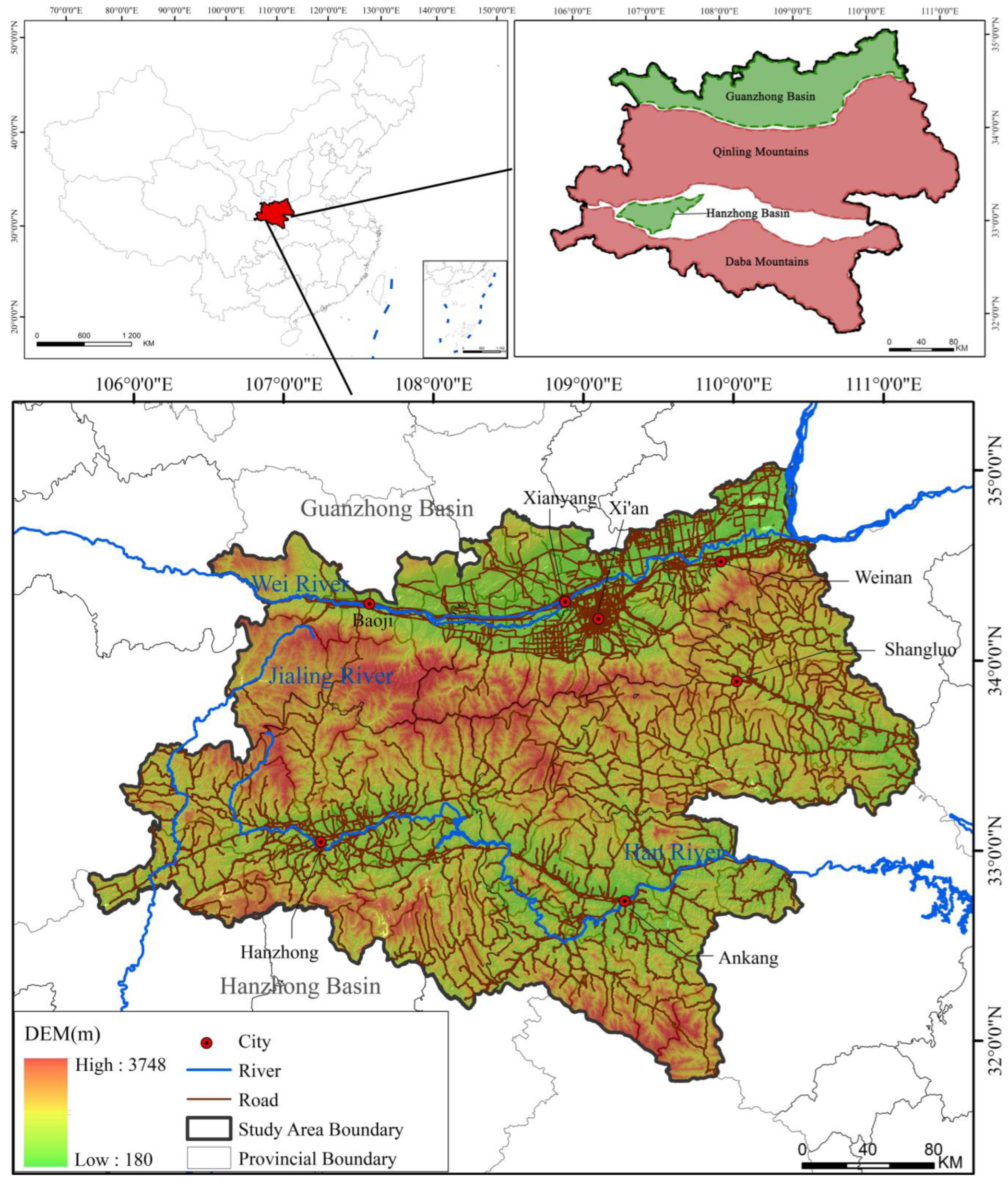
2.1. Study Area
2.2. Datasets
- (1)
- DEM data
- (2)
- Land use and land cover data
- (3)
- Meteorological data
- (4)
- Vegetation cover data
- (5)
- Socio-economic data
- (6)
- Soil data
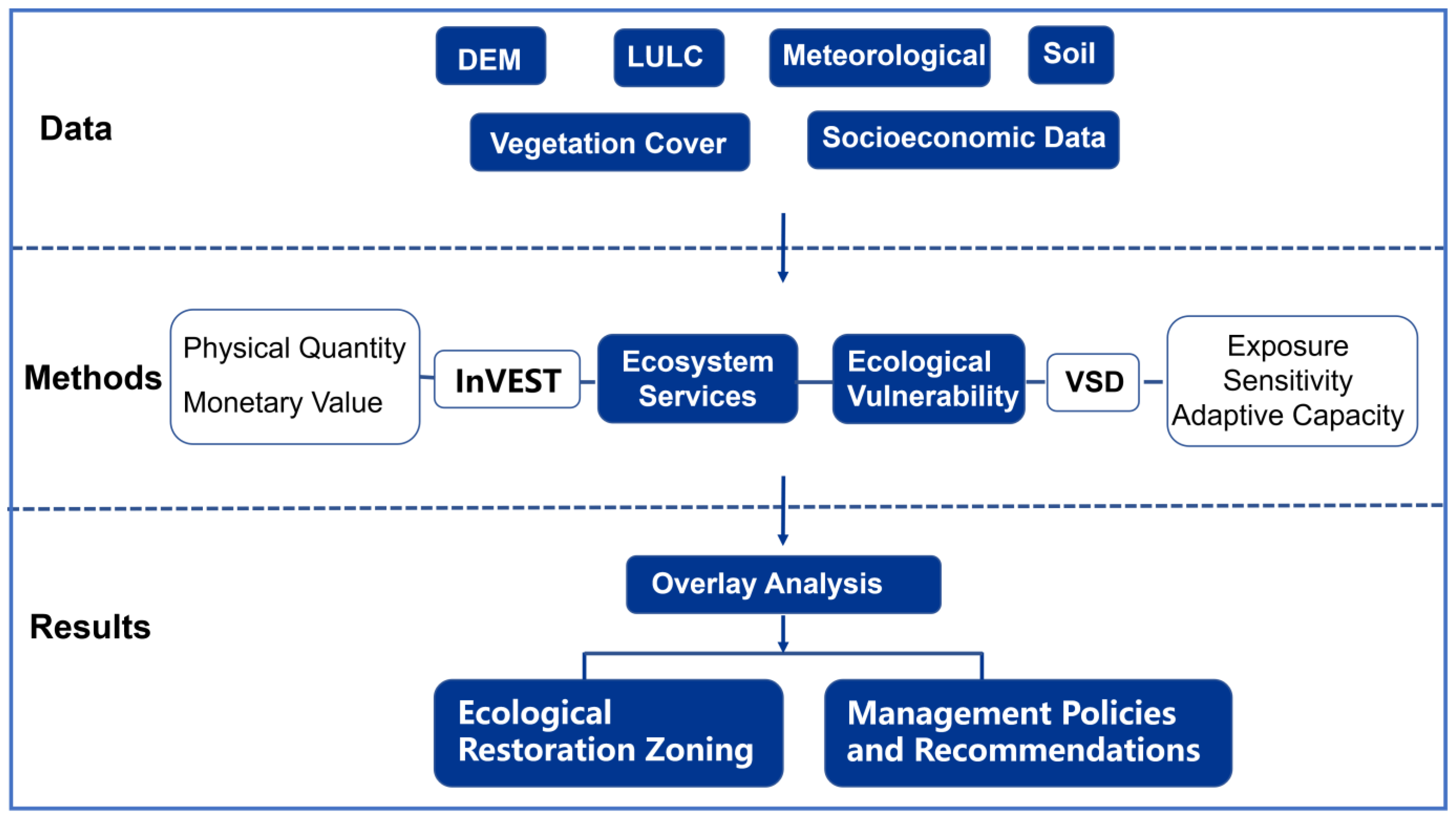
2.3. Methods
2.3.1. Ecological Vulnerability Calculation
- (1)
- Construction of the index system
- (2)
- Determination of indicator weights
2.3.2. Ecosystem Service Estimation
- (1)
- Food supply service
- (2)
- Carbon storage service
- (3)
- Water source conservation service
- (4)
- Soil conservation service
- (5)
- Vegetation net primary productivity service
2.3.3. Ecological Restoration Zoning Procedure
- (1)
- Ecological vulnerability and ecosystem service values were classified at the pixel level using ArcGIS 10.5, applying the natural breaks method for both.
- (2)
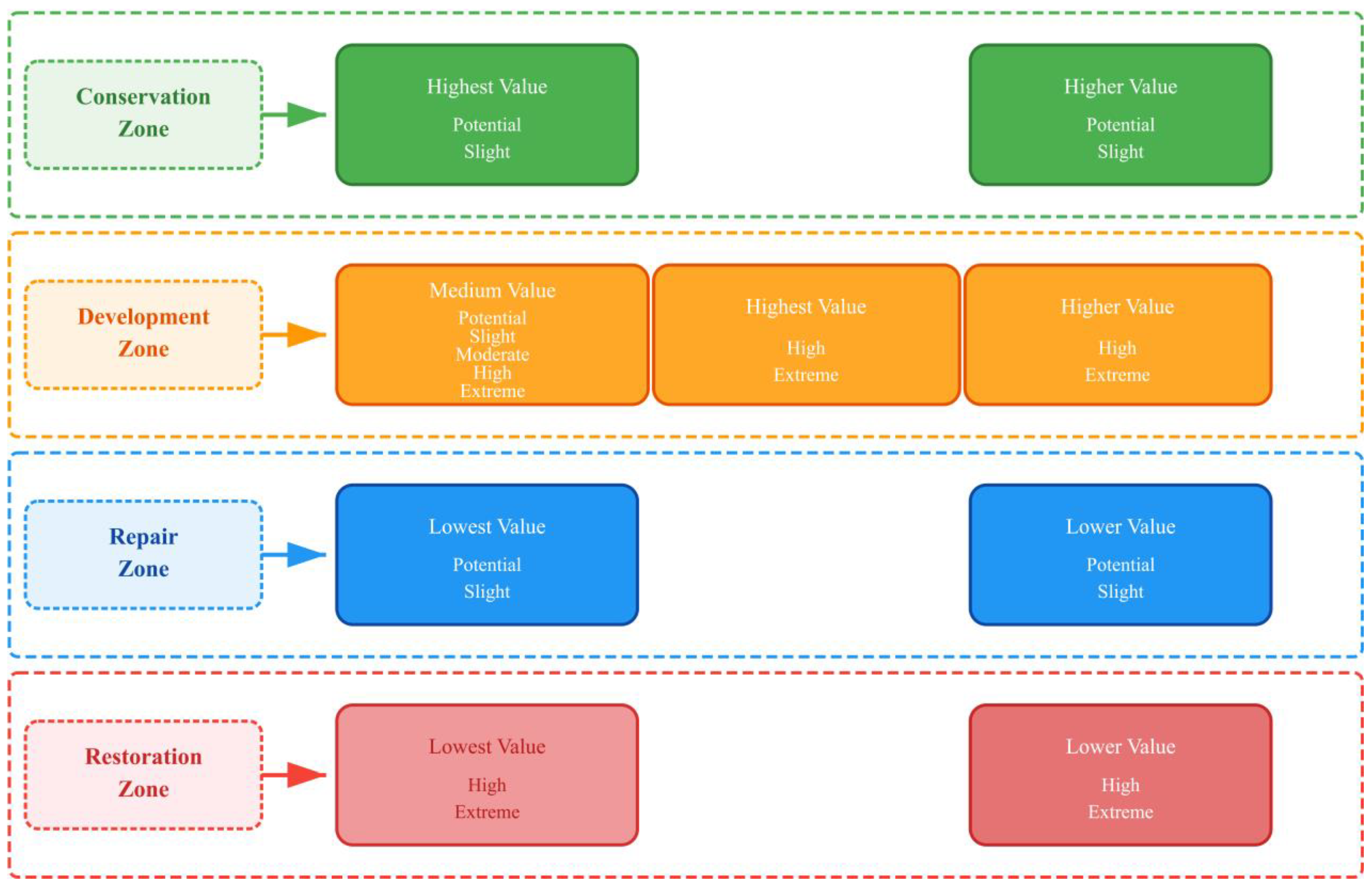
- Overlaying and Analyzing Layers: The classified layers for ecological vulnerability and ecosystem services were overlaid and analyzed to identify regions with different combinations of vulnerability and service levels (Table 6).
- (3)
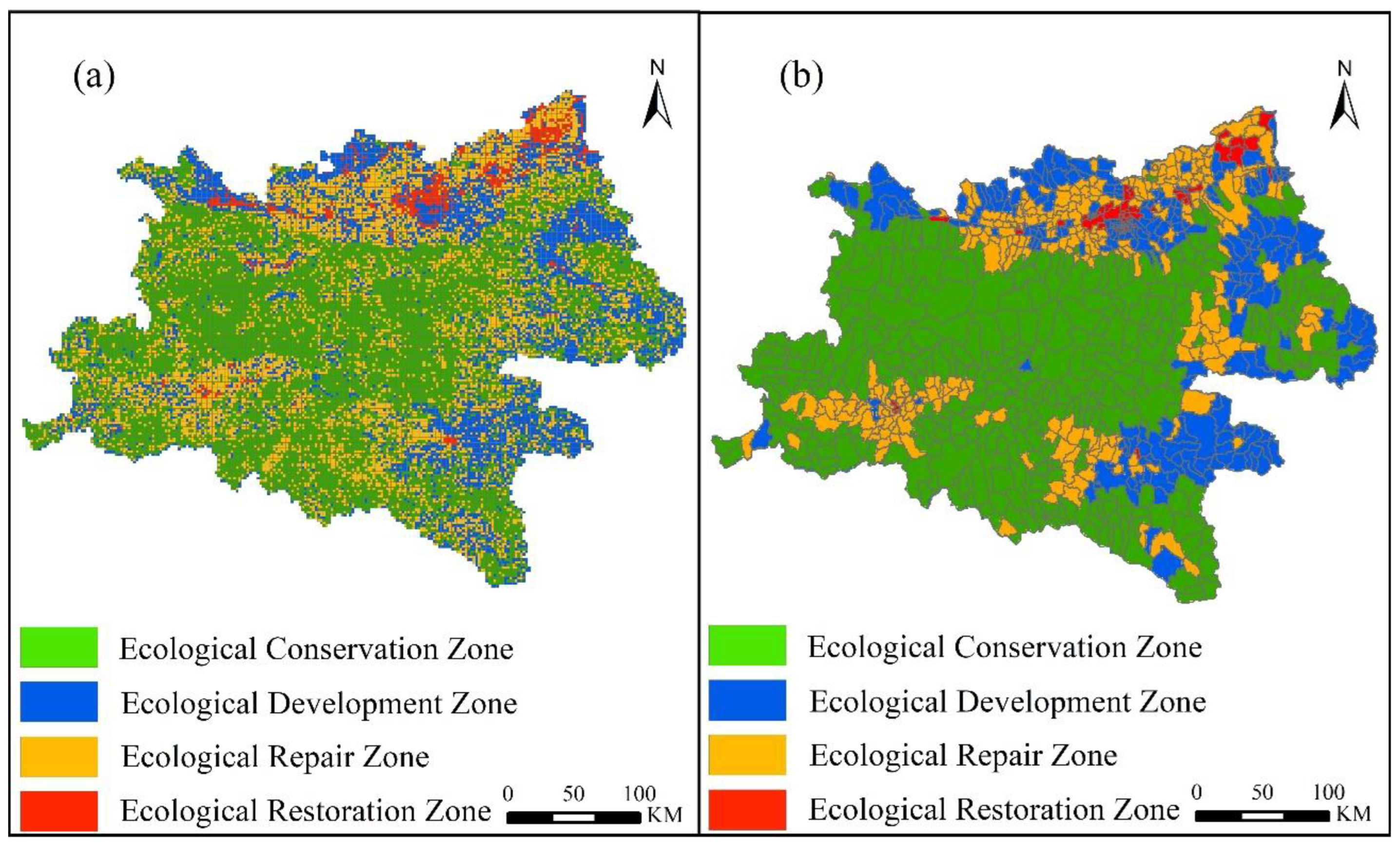
- Pixel-based zoning results often appear fragmented and are less practical for regional planning. Therefore, we aggregated the zoning results to the township scale using a majority-area principle:
3. Results
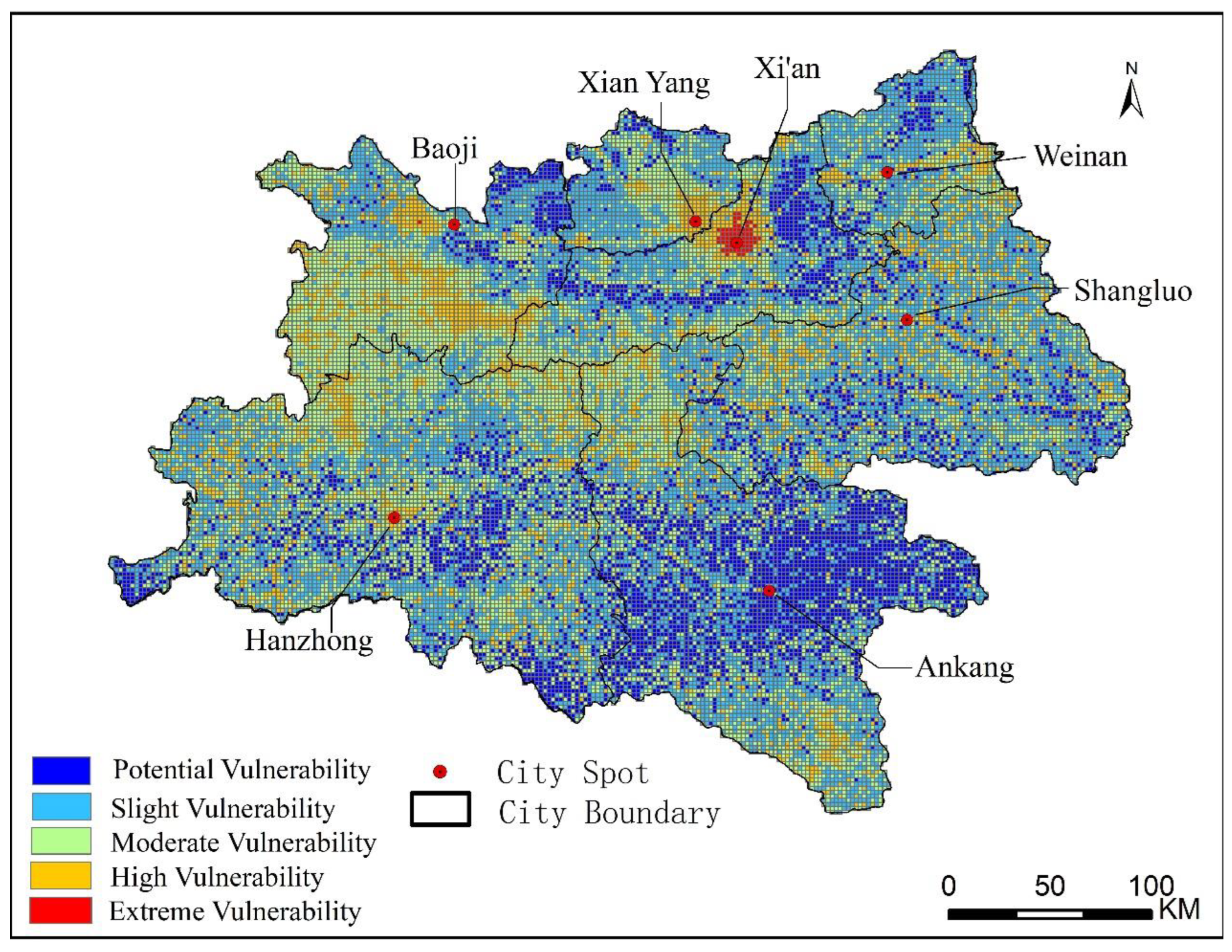
3.1. Spatial Distribution Characteristics of Ecological Vulnerability
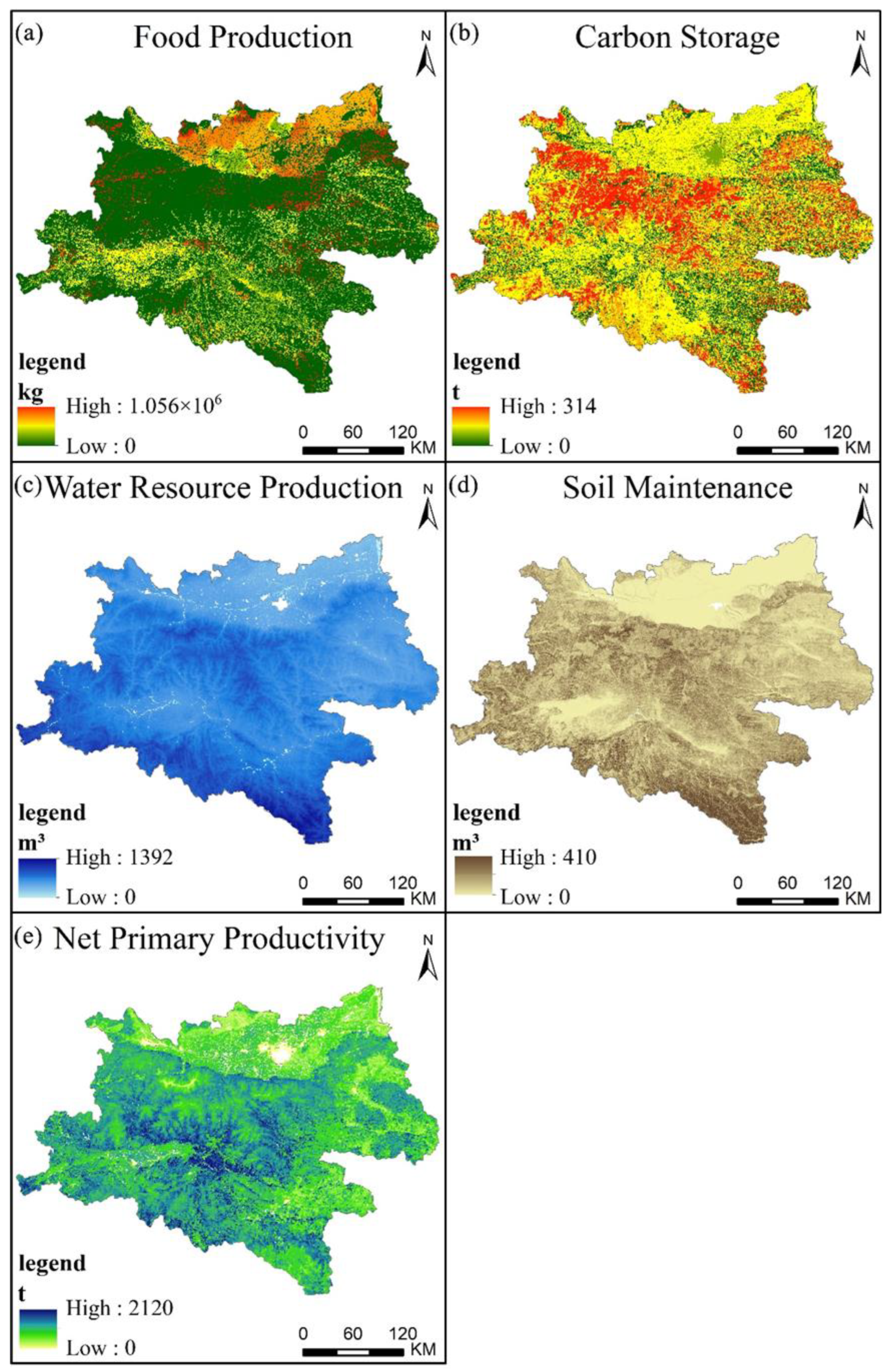
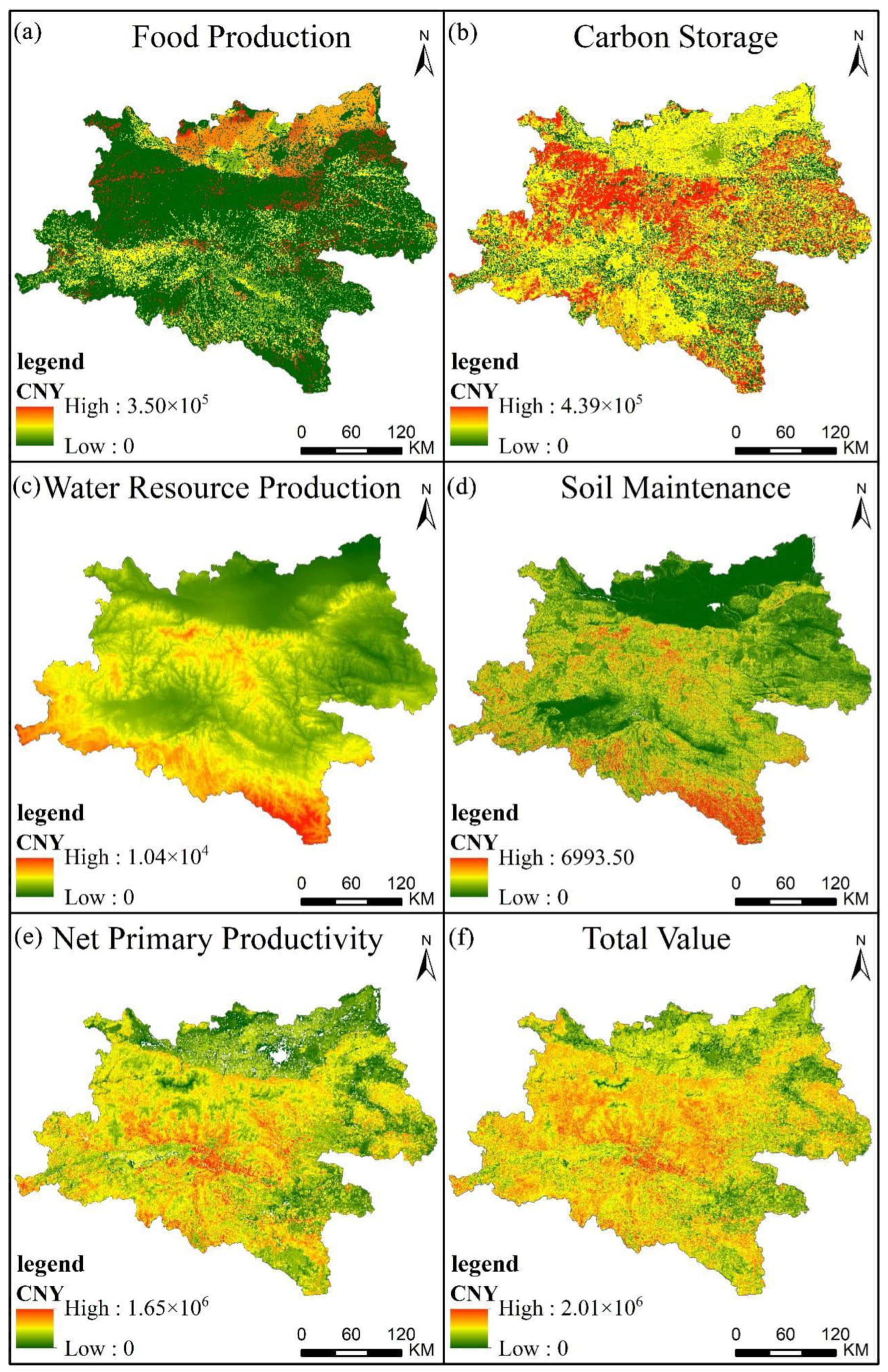
3.2. Ecosystem Service Quantification
- (1)
- Food supply service
- (2)
- Carbon storage service
- (3)
- Water source conservation service
- (4)
- Soil conservation service
- (5)
- Vegetation net primary productivity service
- (6)
- Total value of ecosystem services
3.3. Ecological Restoration Zoning
- (1)
- Ecological restoration zone (2.8%, 2820 km2)
- (2)
- Ecological repair zone (31.0%, 31,584 km2)
- (3)
- Ecological development zone (21.5%, 21,909 km2)
- (4)
- Ecological conservation zone (44.8%, 45,616 km2)
4. Discussion
4.1. Prominent Ecological Issues in Various Zones
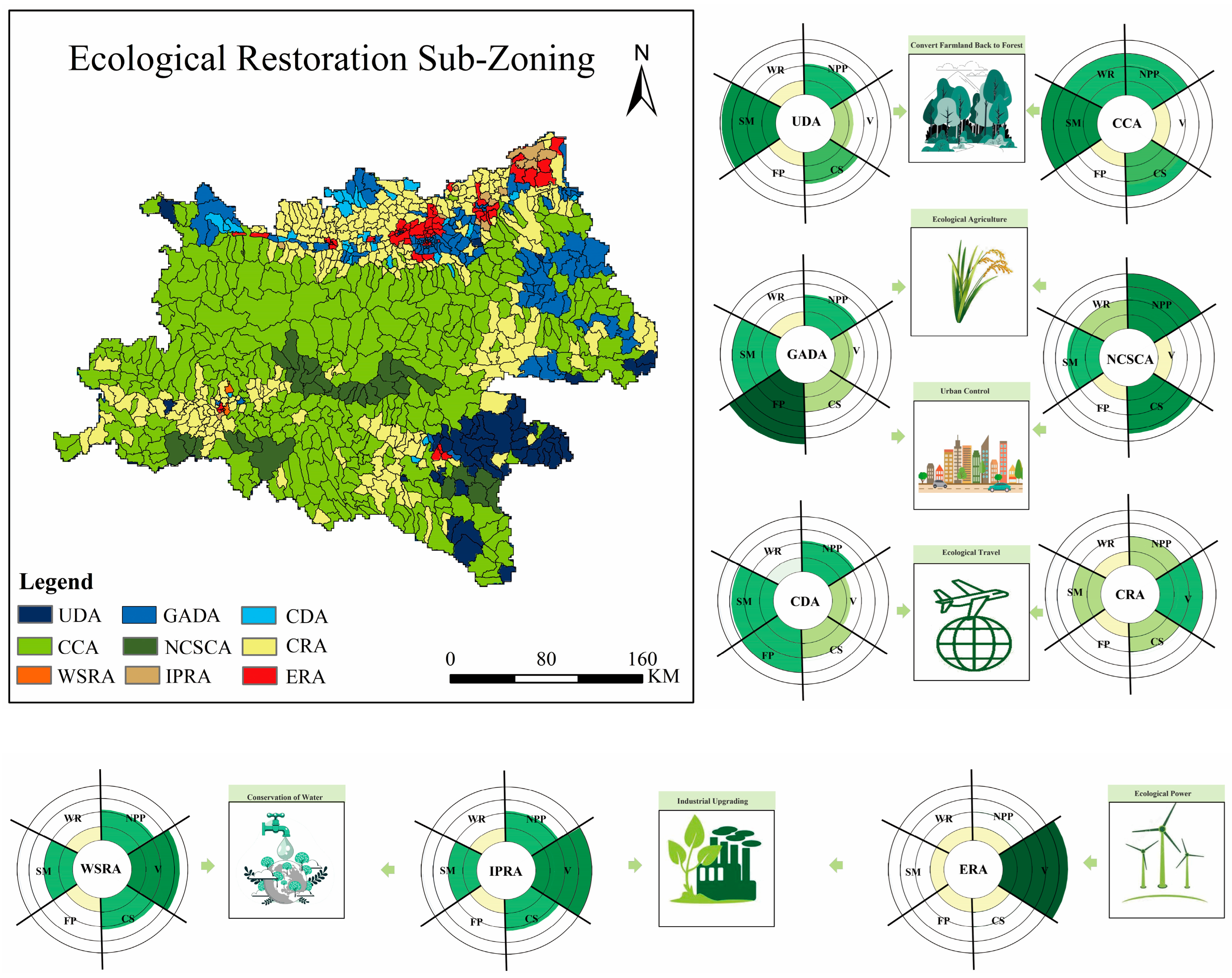
4.2. Empirical Zoning and Strategies
4.3. Highlights and Limitations
5. Conclusions
- (1)
- Spatial pattern of ecological vulnerability.
- (2)
- Spatial differentiation of ecosystem service values.
- (3)
- Ecological restoration zoning and differentiated management strategies.
Author Contributions
Funding
Institutional Review Board Statement
Informed Consent Statement
Data Availability Statement
Conflicts of Interest
References
- Millennium Ecosystem Assessment. Ecosystems and Human Well-Being: Wetlands and Water—Synthesis; World Resources Institute: Washington, DC, USA, 2005. [Google Scholar]
- Lindborg, R.; Gordon, L.J.; Malinga, R.; Bengtsson, J.; Peterson, G.; Bommarco, R.; Deutsch, L.; Gren, Å.; Rundlöf, M.; Smith, H.G. How spatial scale shapes the generation and management of multiple ecosystem services. Ecosphere 2017, 8, e01741. [Google Scholar] [CrossRef]
- Liu, C.L.; Li, W.; Xu, J.; Zhou, H.; Li, C.; Wang, W. Global trends and characteristics of ecological security research in the early 21st century: A literature review and bibliometric analysis. Ecol. Indic. 2022, 137, 108734. [Google Scholar] [CrossRef]
- Van der Biest, K.; Meire, P.; Schellekens, T.; D’Hondt, B.; Bonte, D.; Vanagt, T.; Ysebaert, T. Aligning biodiversity conservation and ecosystem services in spatial planning: Focus on ecosystem processes. Sci. Total Environ. 2020, 712, 136350. [Google Scholar] [CrossRef] [PubMed]
- Rillig, M.C.; van der Heijden, M.G.A.; Berdugo, M.; Liu, Y.R.; Riedo, J.; Sanz-Lazaro, C.; Moreno-Jiménez, E.; Romero, F.; Tedersoo, L.; Delgado-Baquerizo, M. Increasing the number of stressors reduces soil ecosystem services worldwide. Nat. Clim. Change 2023, 13, 478–483. [Google Scholar] [CrossRef]
- Pandey, R.; Bardsley, D.K. Social-ecological vulnerability to climate change in the Nepali Himalaya. Appl. Geogr. 2015, 64, 74–86. [Google Scholar] [CrossRef]
- Dainese, M.; Crepaz, H.; Bottarin, R.; Fontana, V.; Guariento, E.; Hilpold, A.; Niedrist, G. Global change experiments in mountain ecosystems: A systematic review. Ecol. Monogr. 2024, 94, e1632. [Google Scholar] [CrossRef]
- Xu, W.; Xiao, Y.; Zhang, J.; Yang, W.; Zhang, L.; Hull, V.; Wang, Z.; Zheng, H.; Liu, J.; Polasky, S.; et al. Strengthening protected areas for biodiversity and ecosystem services in China. Proc. Natl. Acad. Sci. USA 2017, 114, 1601–1606. [Google Scholar] [CrossRef]
- Zhang, Z.-P.; Duan, K.-Q.; Liu, H.-C.; Meng, Y.-L.; Chen, R.; Li, D.-W.; Li, S.-S. Runoff projections of the Qinling Mountains and their impact on water demand of Guanzhong region in Northwest China. J. Mt. Sci. 2022, 19, 2272–2285. [Google Scholar] [CrossRef]
- Xu, X.; Lin, D.; Yang, Y.; Liu, J.; Zou, C.; Lin, N.; Zhang, K. Identification of degradation risk areas and delineation of key ecological function areas in Qinling region. Sci. Rep. 2025, 15, 4374. [Google Scholar] [CrossRef] [PubMed]
- Gann, G.D.; McDonald, T.; Walder, B.; Aronson, J.; Nelson, C.R.; Jonson, J.; Hallett, J.G.; Eisenberg, C.; Guariguata, M.R.; Liu, J. International principles and standards for the practice of ecological restoration. Restor. Ecol. 2019, 27, S1–S46. [Google Scholar] [CrossRef]
- Wang, P.; Zhao, W. Typical Karst Region Ecological Restoration Zoning: A Case Study of the Maotiao River Basin. J. Nat. Resour. 2022, 37, 2403–2417. [Google Scholar] [CrossRef]
- Liu, Y.; Huang, J.; Lin, W. Zoning strategies for ecological restoration in the karst region of Guangdong province, China: A perspective from the “social-ecological system”. Front. Environ. Sci. 2024, 12, 1369635. [Google Scholar] [CrossRef]
- He, L.; Shen, J.; Zhang, Y. Ecological vulnerability assessment for ecological conservation and environmental management. J. Environ. Manag. 2018, 206, 1115–1125. [Google Scholar] [CrossRef] [PubMed]
- Zhang, X.; Li, X.; Wang, Z.; Liu, Y.; Yao, L. A study on matching supply and demand of ecosystem services in the Hexi region of China based on multi-source data. Sci. Rep. 2024, 14, 1332. [Google Scholar] [CrossRef] [PubMed]
- Xu, Y.; Zhao, X.; Huang, P.; Wang, J.; Liu, C. A new framework for multi-level territorial spatial zoning management: Integrating ecosystem services supply-demand balance and land use structure. J. Clean. Prod. 2024, 441, 141053. [Google Scholar] [CrossRef]
- Zhu, Y.H.; Hou, Z.D.; Xu, C.X.; Li, J. Ecological risk identification and management based on ecosystem service supply and demand relationship in the Bailongjiang river watershed of Gansu Province. Sci. Geogr. Sin. 2023, 43, 423–433. [Google Scholar]
- Sen, C.; Mehmood, M.S.; Liu, S.; Gao, Y. Dominance of Socioeconomic Drivers in Local Ecological Transformations Over Two Decades A VSD Model Study in the Qinba Mountains. SSRN Electron. J. 2024. [Google Scholar] [CrossRef]
- Xiang, T.; Meng, X.; Wang, X.; Xiong, J.; Xu, Z. Spatiotemporal Changes and Driving Factors of Ecosystem Health in the Qinling-Daba Mountains. ISPRS Int. J. Geo-Inf. 2022, 11, 600. [Google Scholar] [CrossRef]
- Hu, Z.; Li, N.; Zhang, M.; Miao, M. Bayesian Network Analysis: Assessing and Restoring Ecological Vulnerability in the Shaanxi Section of the Qinling-Daba Mountains Under Global Warming Influences. Sustainability 2024, 16, 10021. [Google Scholar] [CrossRef]
- Zhang, P.; Song, M.; Lu, Q. Mapping Ecological Security Patterns Based on Ecosystem Service Valuation in the Qinling-Daba Mountain Area, China: A Multi-Scenario Study for Development and Conservation Tradeoffs. Land 2024, 13, 1629. [Google Scholar] [CrossRef]
- Yu, F.; Li, C.; Yuan, Z.; Luo, Y.; Yin, Q.; Wang, Q.; Hao, Z. How do mountain ecosystem services respond to changes in vegetation and climate? An evidence from the Qinling Mountains, China. Ecol. Indic. 2023, 154, 110922. [Google Scholar] [CrossRef]
- Xiao, J.; Qiao, J.; Han, D.; Liu, Y.; Pan, T. Spatial Coupling Relationship and Driving Mechanism of Population and Economy in Rural Areas in the Qinling-Daba Mountains, China. Chin. Geogr. Sci. 2023, 33, 779–795. [Google Scholar] [CrossRef]
- Füssel, H.-M. Vulnerability: A generally applicable conceptual framework for climate change research. Glob. Environ. Change 2007, 17, 155–167. [Google Scholar] [CrossRef]
- Luers, A.L.; Lobell, D.B.; Sklar, L.S.; Addams, C.L.; Matson, P.A. A method for quantifying vulnerability, applied to the agricultural system of the Yaqui Valley, Mexico. Glob. Environ. Change 2003, 13, 255–267. [Google Scholar] [CrossRef]
- Polsky, C.; Neff, R.; Yarnal, B. Building comparable global change vulnerability assessments: The vulnerability scoping diagram. Glob. Environ. Change 2007, 17, 472–485. [Google Scholar] [CrossRef]
- He, H.; Shen, L.; Du, X.; Liu, Y. Analysis of temporal and spatial evolution of tourism resource carrying capacity performance in China. Ecol. Indic. 2023, 147, 109951. [Google Scholar] [CrossRef]
- Zhang, P.; Hu, Q. Shaanxi Statistical Yearbook-2020; China Statistics Press: Beijing, China, 2020; pp. 18–19. [Google Scholar]
- Li, M.; Liang, D.; Xia, J.; Song, J.; Cheng, D.; Wu, J.; Cao, Y.; Sun, H.; Li, Q. Evaluation of water conservation function of Danjiang River Basin in Qinling Mountains, China based on InVEST model. J. Environ. Manag. 2021, 286, 112212. [Google Scholar] [CrossRef] [PubMed]
- Li, P.; Liu, J. Water security in the Qinling Mountains: Current status, climate and human influences, and adaptive strategies. Int. J. Water Resour. Dev. 2025, 41, 1045–1074. [Google Scholar] [CrossRef]
- Li, H.; Zhang, P.; Cheng, Y. Concepts and Assessment Methods of Vulnerability. Prog. Geogr. 2008, 27, 18–25. [Google Scholar]
- Wu, C.; Huang, C.; Liu, G.; Liu, Q. Assessment of ecological vulnerability in the Yellow River Delta using the Fuzzy Analytic Hierarchy Process. Acta Ecol. Sin. 2018, 38, 4584–4595. [Google Scholar] [CrossRef]
- Zhang, X.; Yu, W.; Cai, H.; Guo, X. Review of the evaluation methods of regional eco-environmental vulnerability. Acta Ecol. Sin. 2018, 38, 5970–5981. [Google Scholar] [CrossRef]
- Roshani; Sajjad, H.; Rahaman, H.; Masroor; Sharma, Y.; Sharma, A.; Saha, T.K. Vulnerability assessment of forest ecosystem based on exposure, sensitivity and adaptive capacity in the Valmiki Tiger Reserve, India: A geospatial analysis. Ecol. Inform. 2024, 2024, 102494. [Google Scholar] [CrossRef]
- Hwang, C.L.; Yoon, K. Multiple Attribute Decision Making: Methods and Applications; Springer: Berlin/Heidelberg, Germany, 1981. [Google Scholar]
- Sharp, R.; Tallis, H.; Ricketts, T. InVEST User’s Guide; Stanford University/The Nature Conservancy/WWF/University of Minnesota: Stanford, CA, USA, 2018. [Google Scholar]
- Ouyang, Z.; Zheng, H.; Xiao, Y.; Polasky, S.; Liu, J.; Xu, W.; Wang, Q.; Zhang, L.; Xiao, Y.; Rao, E.; et al. Improvements in ecosystem services from investments in natural capital. Science 2016, 352, 1455–1459. [Google Scholar] [CrossRef]
- Chen, S.; Zheng, R.; Tian, L.; Wu, F.X.; Li, M. A posterior probability based Bayesian method for single-cell RNA-seq data imputation. Methods 2023, 216, 21–38. [Google Scholar] [CrossRef] [PubMed]
- Turna, İ. A safety risk assessment for ship boarding parties from fuzzy Bayesian networks perspective. Marit. Policy Manag. 2022, 51, 1–14. [Google Scholar] [CrossRef]
- Liu, W.; Yu, J. Densely connected semi-Bayesian network for machinery fault diagnosis with non-ideal data. Mech. Syst. Signal Process. 2023, 202, 110678. [Google Scholar] [CrossRef]
- Gao, J.; Wang, Y.; Zou, C. Measurement of ecosystem services value and its spatiotemporal changes in Hainan Province. Acta Ecol. Sin. 2020, 40, 3430–3443. [Google Scholar]
- Wang, J.; Xv, C. Geodetector: Principle and prospective. Acta Geogr. Sin. 2017, 72, 116–134. [Google Scholar] [CrossRef]
- Weng, G.; Zhao, X.; Pan, Y. Measurement and Spatio-temporal Evolution of the Integration Level of Manufacturing Industry and Modern Service Industry in Beijing-Tianjin-Hebei Urban Agglomeration. Geogr. Geo-Inf. Sci. 2022, 38, 119–125. [Google Scholar]
- Wischmeier, W.H.; Smith, D.D. Predicting Rainfall Erosion Losses: A Guide to Conservation Planning; United States Department of Agriculture: Washington, DC, USA, 1978. [Google Scholar]
- Williams, J.R. Sediment-Yield Prediction with Universal Equation Using Runoff Energy Factor. In Present and Prospective Technology for Predicting Sediment Yield and Sources; U.S. Department of Agriculture, ARS-S-40: Washington, DC, USA, 1975; pp. 244–252. [Google Scholar]
- Potter, C.S.; Randerson, J.T.; Field, C.B.; Matson, P.A.; Vitousek, P.M.; Mooney, H.A.; Klooster, S.A. Terrestrial ecosystem production: A process model based on global satellite and surface data. Glob. Biogeochem. Cycles 1993, 7, 811–841. [Google Scholar] [CrossRef]
- Liu, Y.; Fu, B.; Wang, S.; Zhao, W. Ecosystem service assessment under ecological restoration programs: A systematic review of studies from China. Front. Ecol. Evol. 2023, 11, 1152907. [Google Scholar] [CrossRef]
- Xiang, H.; Li, X.; Xiao, R.; Chen, J.; Dai, W. Is dredging an effective ecological restoration method to improve water quality in freshwater ecosystems? Ecol. Eng. 2025, 209, 107425. [Google Scholar] [CrossRef]
- Han, D.; Huang, J.; Ding, L.; Zhang, G.; Liu, X.; Li, C.; Yang, F. Breaking the Ecosystem Balance Over the Tibetan Plateau. Earth’s Future 2022, 10, e2022EF002890. [Google Scholar] [CrossRef]
- Zhang, F.; Sarker, M.N.I.; Lv, Y. Coupling Coordination of the Regional Economy, Tourism Industry, and the Ecological Environment: Evidence from Western China. Sustainability 2022, 14, 1654. [Google Scholar] [CrossRef]
- Kim, C.; Son, Y.; Lee, W.K.; Jeong, J.; Noh, N.J. Influences of forest tending works on carbon distribution and cycling in a Pinus densiflora S. et Z. stand in Korea. For. Ecol. Manag. 2009, 257, 1420–1426. [Google Scholar] [CrossRef]
- Dong, Y.; Shi, X.; Sun, S.; Sun, J.; Hui, B.; He, D.; Chong, F.; Yang, Z. Co-evolution of the Cenozoic tectonics, geomorphology, environment and ecosystem in the Qinling Mountains and adjacent areas, Central China. Geosyst. Geoenviron. 2022, 1, 100032. [Google Scholar] [CrossRef]
- Zou, C.; Zhu, J.; Lou, K.; Yang, L. Coupling coordination and spatiotemporal heterogeneity between urbanization and ecological environment in Shaanxi Province, China. Ecol. Indic. 2022, 141, 109152. [Google Scholar] [CrossRef]
- Wei, X.; Eboy, O.V.; Xu, L.; Yu, D. Ecological vulnerability of the Guanzhong Plain urban agglomeration under urbanization. Sustainability 2023, 15, 4804. [Google Scholar] [CrossRef]
- Gauquelin, T.; Michon, G.; Joffre, R.; Duponnois, R.; Génin, D.; Fady, B.; Bou Dagher-Kharrat, M.; Derridj, A.; Slimani, S.; Badri, W. Mediterranean forests, land use and climate change: A social-ecological perspective. Reg. Environ. Change 2018, 18, 623–636. [Google Scholar] [CrossRef]
- Wang, H.; Liu, X.; Zhao, C.; Chang, Y.; Liu, Y.; Zang, F. Spatial-temporal pattern analysis of landscape ecological risk assessment based on land use/land cover change in Baishuijiang National Nature Reserve in Gansu Province, China. Ecol. Indic. 2021, 124, 107454. [Google Scholar] [CrossRef]
- Ren, Z.; Li, J. The Valuation of Ecological Services from the Vegetation Ecosystems in the Qinling-Daba Mountains. Acta Geogr. Sin. 2003, 58, 503–511. [Google Scholar] [CrossRef]
- Zhang, W.; Zhou, L.; Zhang, Y.; Chen, Z.; Hu, F. Impacts of Ecological Migration on Land Use and Vegetation Restoration in Arid Zones. Land 2022, 11, 891. [Google Scholar] [CrossRef]





| Dataset | Data Source | Year(s) | Spatial Resolution |
|---|---|---|---|
| DEM | Geospatial Data Cloud (http://www.gscloud.cn/) (accessed on 23 July 2023) | 2020 | 30 m |
| Land use/land cover | Resource and Environment Science Data Center, CAS (Landsat 8) | 2020 | 30 m |
| Annual precipitation | Resource and Environment Science Data Center, CAS | 2020 | 1 km |
| Mean air temperature | Resource and Environment Science Data Center, CAS | 2020 | 1 km |
| Solar radiation | National Earth System Science Data Center | 2020 | 1 km |
| Actual evapotranspiration (ET) | National Earth System Science Data Center | 2020 | 1 km |
| Potential ET | Global Aridity and PET Database | 2020 | 1 km |
| NDVI | Resource and Environment Science Data Center, CAS (SPOT/VEGETATION, MVC) | 2020 | 1 km |
| Population density | Resource and Environment Science Data Center, CAS | 2020 | 1 km |
| GDP density | Resource and Environment Science Data Center, CAS | 2020 | 1 km |
| Soil texture/content | Harmonized World Soil Database | — | 1 km |
| Root depth (root limiting layer) | Climate Change Data Center (BNU) | — | 1 km |
| Target | Guidelines Layer | Indicators | Metrics | Weight | Rationale |
|---|---|---|---|---|---|
| Vulnerability (V) | Exposure (E) | + | population | 0.11 | Reflects human pressure; widely used in urban/regional ecological vulnerability studies |
| + | GDP | 0.22 | Captures economic development intensity and environmental burden | ||
| + | Industrial wastewater emissions | 0.05 | Water pollution key driver in vulnerability scoring | ||
| + | Sulfur dioxide emissions | 0.03 | Common air pollutant used in ecological health models | ||
| + | agricultural water consumption | 0.02 | Reflects irrigation pressure—a rural ecological stressor | ||
| + | Industrial water consumption | 0.03 | Indicates industrial demands on water—a key exposure metric | ||
| - | Ecosystem water consumption | 0.003 | Buffers ecological flow, mitigating vulnerability | ||
| + | land use | 0.06 | Land expansion signals loss of natural cover | ||
| + | road density | 0.14 | Infrastructure fragmentation impacts habitats | ||
| Sensitivity (S) | + | DEM | 0.02 | Steeper slopes have a higher erosion risk | |
| - | NDVI | 0.12 | Proxy for vegetation health; core sensitivity metric | ||
| - | TEM | 0.02 | Climate extremes are key stress variables | ||
| - | PRE | 0.004 | Water availability indicator in sensitivity | ||
| Adaptation (A) | + | food production | 0.01 | Reflects farming resilience; used in agri-vulnerability studies | |
| + | fiscal revenue | 0.11 | Indicates the local government’s resource support potential | ||
| + | Resident Storage | 0.08 | Financial reserves buffer against environmental shocks |
| Land Use Type | Aboveground | Belowground | Soil | Dead Organic Matter |
|---|---|---|---|---|
| Cultivated Land | 17.0 | 80.7 | 108.4 | 9.82 |
| Forest Land | 42.4 | 115.9 | 158.8 | 14.11 |
| Grassland | 35.3 | 86.5 | 99.9 | 7.28 |
| Water Bodies | 0.3 | 0 | 0 | 0 |
| Built-up Land | 2.5 | 27.5 | 0 | 0 |
| Unutilized Land | 1.3 | 0 | 21.6 | 0 |
| Land Use Type | Evapotranspiration (mm) | iRoot Depth (mm) |
|---|---|---|
| Dryland | 750 | 300 |
| Paddy Field | 700 | 300 |
| Forest | 1000 | 5000 |
| Grassland | 600 | 500 |
| Water Body | 1000 | 0 |
| Built-up Area | 1 | 1 |
| Unused Land | 1 | 1 |
| Service Type | Main Parameters | Calculation Summary | References |
|---|---|---|---|
| Food Supply | NDVI, land use, crop yield, grain price | Allocate food production by land-use yield weighted by NDVI. | [37] |
| Carbon Storage | Land use, carbon densities of four pools | Assign carbon densities to land types and sum four pools by area. | [38] |
| Water Source Conservation | Precipitation, AET, Z, vegetation coefficient, soil water capacity | Use Budyko model to compute water yield and convert to value via reservoir cost. | [40] |
| Soil Conservation | RUSLE factors (R, K, L, S, C, P), DEM, land use | Estimate soil conservation using RUSLE difference between potential and actual erosion. | [44] |
| NPP | APAR, ε, remote sensing | Apply CASA model to estimate NPP and convert to value via energy equivalence. | [46] |
| Ecosystem Service Value | Potential Vulnerability | Slight Vulnerability | Moderate Vulnerability | High Vulnerability | Extreme Vulnerability |
|---|---|---|---|---|---|
| Lowest Value | Ecological Development Zone | Ecological Development Zone | Ecological Development Zone | Ecological Restoration Zone | Ecological Restoration Zone |
| Lower Value | Ecological Development Zone | Ecological Development Zone | Ecological Development Zone | Ecological Restoration Zone | Ecological Restoration Zone |
| Medium Value | Ecological Repair Zone | Ecological Repair Zone | Ecological Repair Zone | Ecological Repair Zone | Ecological Repair Zone |
| Higher Value | Ecological Conservation Zone | Ecological Conservation Zone | Ecological Repair Zone | Ecological Repair Zone | Ecological Repair Zone |
| Highest Value | Ecological Conservation Zone | Ecological Conservation Zone | Ecological Repair Zone | Ecological Repair Zone | Ecological Repair Zone |
| Rank | Potential Vulnerability (%) | Slight Vulnerability (%) | Moderate Vulnerability (%) | High Vulnerability (%) | Extreme Vulnerability (%) |
|---|---|---|---|---|---|
| Proportion | 18.9 | 36.9 | 31.5 | 12.4 | 0.3 |
| LUCC | ZONE (km2) | |||
|---|---|---|---|---|
| Development | Conservation | Repair | Restoration | |
| Agriculture | 7960 (36.3%) | 8775 (19.2%) | 11,680 (37.0%) | 1370 (48.6%) |
| Forest | 3850 (17.6%) | 19,905 (43.6%) | 8295 (26.3%) | 100 (3.5%) |
| Meadow | 8945 (40.8%) | 16,800 (36.8%) | 10,336 (32.7%) | 503 (17.8%) |
| Unutilized | 72 (0.3%) | 8 (0.02%) | 29 (0.1%) | 31 (1.1%) |
| Urban | 1080 (4.9%) | 125 (0.3%) | 1245 (3.9%) | 810 (28.7%) |
Disclaimer/Publisher’s Note: The statements, opinions and data contained in all publications are solely those of the individual author(s) and contributor(s) and not of MDPI and/or the editor(s). MDPI and/or the editor(s) disclaim responsibility for any injury to people or property resulting from any ideas, methods, instructions or products referred to in the content. |
© 2026 by the authors. Licensee MDPI, Basel, Switzerland. This article is an open access article distributed under the terms and conditions of the Creative Commons Attribution (CC BY) license.
Share and Cite
Li, N.; Hu, Z.; Zhang, M.; Wang, B.; Zhang, T. Ecological Restoration Zoning Based on the “Importance–Vulnerability” Framework for Ecosystem Services. Sustainability 2026, 18, 648. https://doi.org/10.3390/su18020648
Li N, Hu Z, Zhang M, Wang B, Zhang T. Ecological Restoration Zoning Based on the “Importance–Vulnerability” Framework for Ecosystem Services. Sustainability. 2026; 18(2):648. https://doi.org/10.3390/su18020648
Chicago/Turabian StyleLi, Nan, Zezhou Hu, Miao Zhang, Bei Wang, and Tian Zhang. 2026. "Ecological Restoration Zoning Based on the “Importance–Vulnerability” Framework for Ecosystem Services" Sustainability 18, no. 2: 648. https://doi.org/10.3390/su18020648
APA StyleLi, N., Hu, Z., Zhang, M., Wang, B., & Zhang, T. (2026). Ecological Restoration Zoning Based on the “Importance–Vulnerability” Framework for Ecosystem Services. Sustainability, 18(2), 648. https://doi.org/10.3390/su18020648