1. Introduction
Recently, the EU Commission adopted the new Circular Economy Action Plan [
1] and, subsequently, the Ecodesign Regulation [
2], prioritizing different value chains including furniture. In the Ecodesign Regulation (June 2024), the Commission highlights how product design often fails to promote sustainability throughout the life cycle, leading to frequent replacements, high resource use, missed opportunities for value-retaining operations, limited demand for secondary materials, and difficult adoption of circular business models [
2]. A key obstacle identified is the limited access to relevant sustainability information for both economic operators and consumers [
2].
The European furniture industry employs about 1 million workers, mainly in SMEs, and produces about 25% of the world’s furniture, an EUR 84 billion market equal to about 10.5 million tonnes of yearly consumption [
3]. However, the sector faces significant sustainability challenges along the supply chain. Numerous LCAs show that 80–90% of environmental impacts are linked to furniture materials and components, and that specifying recycled materials can reduce this impact [
4]. In addition to the intensive use of primary raw materials, the sector relies on energy-intensive polymerisation processes and extensive use of adhesives, dyes, and coatings, which generate VOCs or toxic substances and hinder recycling [
5]. Consequently, 80–90% of furniture waste in the EU is still landfilled or incinerated, and only 10% is recycled [
3].
The sector therefore requires a stronger implementation of circular economy (CE) principles (the 9R strategies according to UNEP [
6]) across value-chain actors and life cycle phases, especially at the design stage, which influences up to 80% of environmental impacts [
1] and should maximize resource efficiency and circularity.
However, despite growing knowledge about the CE, reuse and recycling practices in the European and Italian furniture sector remain limited, as does the adoption of product and process certifications [
7,
8,
9]. This is mainly due to insufficient financial resources [
10], ineffective information systems, and limited skills to plan and manage resource reduction, reuse, and recycling [
11], as well as difficulties in reorganizing value chains to support sustainable practices [
8]. This is particularly evident for companies unfamiliar with innovation and design practices, which tend to perceive circularity as a cost rather than a source of competitive advantage [
12].
To extend material life cycles and increase circularity levels, improved traceability of materials and transparency of information are priorities in sectors including construction [
13] and furniture [
14]. The development of digital tools for information sharing among supply chain actors is therefore essential, as digital platforms are key enablers of the circular economy [
15], especially in sectors like furniture, where life cycle approaches and circular design, though introduced decades ago, are still rarely practiced, and the transition toward circularity remains ongoing [
15].
2. Research Aims and Methodology
2.1. Research Aims and Knowledge Gap
The research presented in this paper was conducted by a multidisciplinary team—composed of designers, environmental technology architects, and computer scientists—within the ongoing project “From waste to manufacturing: digital tools to establish virtuous cycles”, led by Sapienza University of Rome within the MICS (Made in Italy Circolare e Sostenibile) Extended Partnership, financed by MUR (Ministry of University and Research) with EU funds (NextGenerationEU—PNRR programme). The project aims to promote the use of circular materials in the Italian furniture industry by enabling the connection among different stakeholders in the value chain. The research’s final goal is to create a digital tool fostering data exchange related to materials, enabling waste valorisation into circular materials and products. This sub-project, in particular, is an applied research project which focuses on the industrial sector of furniture manufacturing and the role of digital tools in minimizing negative environmental impacts and maximizing the content of circular materials in new furniture products.
While there is a regulatory push requiring furniture producers to meet certain environmental standards in order to be eligible for public procurement, and there are various enterprises and tools specialized in helping manufacturers achieve circular production, the necessary time and effort is still challenging, especially in the case of small-scale productions or tailor-made interior design projects, where investing years in R&D is often not feasible. The research starts from the hypothesis that R&D for sustainable furniture development might be significantly improved with better digital tools, particularly if the contemporary possibilities of AI-driven data processing and generative AI capabilities are appropriately used for compensating human limitations.
The aim of the research is to develop digital tools that effectively bridge the gap of knowledge necessary to make Made-in-Italy furniture productions more circular and sustainable. In particular, it seeks to understand the current stakeholder needs and regulatory requirements on the one hand, and the current state of the art of digital tools and AI interaction paradigms on the other hand. Finally, the research aims to explore possibilities for improving digital tools for facilitating sustainable furniture design and supply chains in the Italian context, in particular, experimenting with meaningful AI-enabled workflows.
2.2. Methodology
In line with the outlined research aims, the mixed methodology includes both quantitative and qualitative analysis in order to understand relevant human and technological aspects, leading to a progressive definition and development of functionalities, which are evaluated in a final phase. Therefore, it was necessary to combine desk research, helping to understand the regulatory context as well as current tools and operational models for sustainable production, with field research to gather insights about the needs directly from the relevant stakeholders of the furniture ecosystem, and finally, experimental research to validate the relevance of the newly developed digital tools in a controlled environment. The paper’s sections after
Section 1. “Introduction” and
Section 2. “Research aims and methodology” follow the main phases of the research:
Section 3. “Desk research results”,
Section 4. “Field research results”, and
Section 5. “Experimental research results”, closing the article with
Section 6. “Discussion” and
Section 7. “Conclusions”. The core sections of the article (
Section 3,
Section 4 and
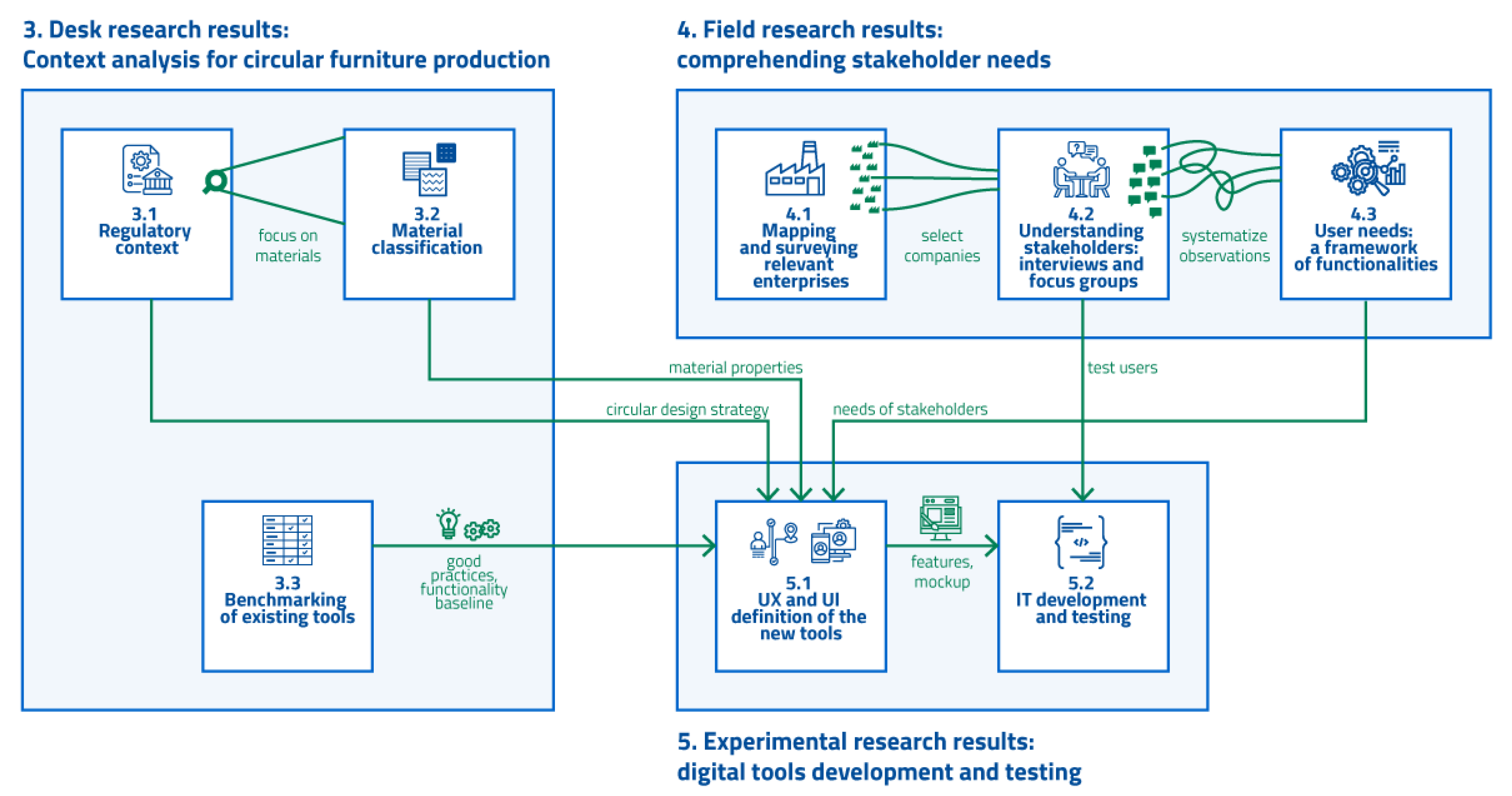
Section 5) corresponding to the main research phases are illustrated in
Figure 1, which highlight the relationship between these core activities.
The research started with the desk research (3) phase, aiming to analyze the general context of circular furniture production. This phase involved different activities aiming at critical analysis of the state of the art of circularity and sustainability in the Made-in-Italy furniture sector. These included the following: a literature review; an analysis of the regulatory context; an investigation of the databases of sustainability/circularity material/product certifications; and the mapping of existing digital tools supporting circular design.
The results of these different research activities have led to the definition of a methodological framework, with the modelling of different steps, actions, and flows of materials, data, and information needed to ensure a fully circular furniture value chain. The objective is to exemplify the potential models of interaction between the different stakeholders for the valorisation of waste materials through circular design and the strategies related to the 9 Rs. This will subsequently enable the strategic development of digital tools to support the exchange of information between stakeholders.
Special attention was paid to the regulatory context (
Section 3.1), which defines requirements, processes, and certification pathways, all of which determine possibilities for development. While acknowledging the complexity of flows and multiplicity of possible sustainability strategies, the project chose to limit the scope to the phases of material and component production, where a major integration of circular materials would be beneficial. Therefore, further focus of the initial desk research was on materials (
Section 3.2), in particular, through the classification of relevant waste materials, categorizing them by material type, conditions, volume, location, current disposal, and possible target industries. In order to provide an adequate basis, benchmarking (
Section 3.3) of existing digital tools was carried out, including analysis by materials and industries, scope, services offered, user experiences, and interfaces.
The subsequent field research (
Section 4) phase aimed at comprehending stakeholder needs in the Made-in-Italy furniture industry, considering designers, furniture manufacturers, and waste transformers (circular/secondary raw material producers). For each category, the research analyzed current processes, information needs, and existing tools. This was revealed through both quantitative and qualitative methods, starting with mapping and a survey of potentially interested enterprises and professionals (
Section 4.1), a selection of whom were interviewed subsequently (
Section 4.2). The field research led to a framework of user needs (
Section 4.3), which served as requirements for the following activities.
The experimental research phase (
Section 5) developed a novel set of digital tools, comprising a web platform and a CAD tool, both enhanced by AI features. Subsequently, leveraging all previous results and multidisciplinary teamwork, a detailed design phase (
Section 5.1) defined the general user experience (UX design), use cases, and multiple iterations of mock-ups (UI design) of digital tools or services considering specific workflows for the identified stakeholders among designers, manufacturers, and material producers. Finally, the mock-ups were implemented in a phase of IT development (
Section 5.2) of the overall platform, with the goal of achieving a sufficiently functional testbed for testing the most innovative, AI-driven features. The digital tools were tested, first in an isolated way with test subjects to evaluate the effectiveness of some key AI features, then with representatives of the previously mentioned three categories of stakeholders.
In this article, the description of field, desk, and experimental research results (
Section 3,
Section 4 and
Section 5) will be followed by the Discussion (
Section 6) section to provide a critical analysis of the experience and the Conclusion (
Section 7) to highlight the innovative value as well as the limitations and future work.
3. Desk Research Results: Context Analysis—Towards a Circular Furniture Production
The Italian furniture industry represents a significant part of the EU’s industry, with a production value of about EUR 17.5 billion per year, ranking only behind Germany, the UK, and Poland [
3]. Moreover, it is a key pillar of Made in Italy, renowned for quality and design, greatly contributing to exports. The industry reflects how the Italian manufacturing industry is structured, dominated by micro-sized companies, more diffuse in the North, organized both in industrial districts (for furniture production) and in non-district areas (for building materials and lighting). Today, the sector’s major challenges include rising costs of energy, raw materials, and semi-finished products.
In this scenario, the need to use secondary raw materials emerges, a strategy that, as shown in a report by the Symbola Foundation and Federlegno Arredo [
16], has brought the Italian wood-furniture industry to the first place in Europe for the adoption of CE solutions. The Italian furniture sector has long been at the forefront worldwide for the high content of recycled material in its wood products. Italian chipboard, a basic component for many products, is made with techniques allowing for the use of a higher share of recycled wood than the EU average. About 67% of companies use materials or semi-finished products made with recycled products and one in four exceeds the share of 25%. Furthermore, 81% of companies use wood produced in a sustainable way, with the whole sector producing fewer emissions than other large countries: 26 kg every thousand EUR of production [
16].
However, the broader Italian furniture sector lacks full circular economy implementation, with companies mainly focused on activities directly related to business efficiency and immediate economic benefits such as reducing raw materials or energy consumption (40%) and developing low-resource production processes (36%) and environmental criteria for supplier selection (33%) [
17].
3.1. Regulatory Framework: Mandatory Green Public Procurement Criteria for Furniture as a Driver for Circular Materials
To support the circular transition, a key driver, which can push the use of other recycled materials as well as the demand for reuse and remanufactured items, is the mandatory Green Public Procurement (GPP) [
3], especially with the public market comprising 14% of the EU GDP [
2]. Italy’s GPP Minimum Environmental Criteria (MEC), mandatory since 2016 (for the first time in the EU), aid in ecodesign and furniture production by requiring renewable or recycled materials and modularity and non-destructive disassembly to allow for the recovery of parts or recycling of materials in authorized plants, valorising resources in compliance with all different regulations. GPP MEC for urban and indoor furniture, published by the Ministry of the Environment in 2015 and 2017, respectively, and updated by Ministerial Decree 7 February 2023 [
18] and Ministerial Decree 23 June 2022 [
19], offer a framework for advancing circular materials in the sector, though better stakeholder interaction is needed for their effective implementation. Such GPP MEC require public bodies to include environmental criteria in furniture tenders to promote sustainable products. Companies must comply with the MEC to participate, entailing that any innovative support tool should be in line with their requirements. Since the average application rate of the MEC is not yet entirely satisfactory among national public administrations (around 60%, according to Legambiente [
20]), there is room for growth in the market for furniture products with recycled content and eco-sustainability characteristics.
In fact, the request for proving compliance to the MEC regarding minimum recycled content in specific materials through environmental certifications, for example, has been a relevant driver for the diffusion of Environmental Product Declarations (EPDs) in Italy. In fact, the Italian programme operator [
21] registered an increase from 175 EPDs in 2021 to 509 in 2024, mainly in the construction sector, with over 70% being from Italian companies. This increase means that a growing number of products are being subjected to Life Cycle Assessment studies, thus ensuring a progressive rise in awareness of the environmental impacts of products, which could foster growth in environmental sustainability and circularity levels, also thanks to competition among companies.
Criteria for indoor and outdoor furniture cover various aspects, including materials (recycled, certified or low environmental impact) and/or products reconditioned and prepared for reuse; harmful substances, with limitations on the use of hazardous substances and preference for low VOC products; disassemblability and recyclability at the end of life; and energy efficiency and reduction (for outdoor furniture including lighting elements). Looking, in particular, at the criteria relevant to circular design approaches, summarized in
Table 1 for indoor and
Table 2 for urban furniture, we note how these regard different materials and extend to packaging. The criteria specify minimum recycled content, in percentage of the weight of the product, for wood, plastic, and packaging for indoor furniture and additionally for rubber, asphalt, concrete, and ceramics for urban furniture. The quantity ranges from 100% for wood products to 30% for plastics and ceramics and to 5% for concrete products. Based on the characteristics of the products available in the Italian market, the recycled content requirements are subject to periodic updates, becoming stricter as the companies improve their performances.
It should be noted that the methods for proving compliance with the criteria include different and targeted types of certifications aimed at ensuring transparency and traceability of the recycled content, which manufacturers will necessarily need to equip themselves with. These methods include the EPD, based on the LCA study of the material/component/product, and more specific certifications on recycled content, based on mass balance.
The research considers these requirements as a strategic framework to orient the selection of contents that should be provided in the digital toolkit under development.
3.2. Recycled Materials’ Certifications: Analysis of a Recycled Content Product Certification Catalogue
A fundamental tool for the market uptake of circular materials, semi-finished products, and products are specific certifications. In Italy, such strategies are environmental certification schemes such as ReMade in Italy or Plastica seconda Vita, certifying the recycled and by-product content, and more holistic schemes like Cradle to Cradle (C2C), which considers different aspects of circularity including material health. The research reviewed databases of certified furniture materials, components, and products, including EU Ecolabel, C2C, ReMade in Italy, Plastica seconda Vita, and EPDItaly, to map certified items. Here, the results of the analysis of the ReMade in Italy catalogue are presented, as this database contains the larger number of national certified furniture products.
ReMade in Italy, established in 2013, is the first national certification scheme for verifying the content of recycled materials and by-products in material, semi-finished, or finished products of any sector and is composed of different components. It requires manufacturers to prepare a traceability plan for material flows within the production process, the continuous monitoring of suppliers, and the classification of incoming materials. The ReMade label specifies the recycled content in each component in the case of multi-material products and highlights the environmental impacts of using recycled versus primary materials, including reduced energy consumption and avoided CO2 emissions. Certified products comply with the GPP MEC and benefit from tax relief and incentives for the purchase of recycled products.
The catalogue of certified products [
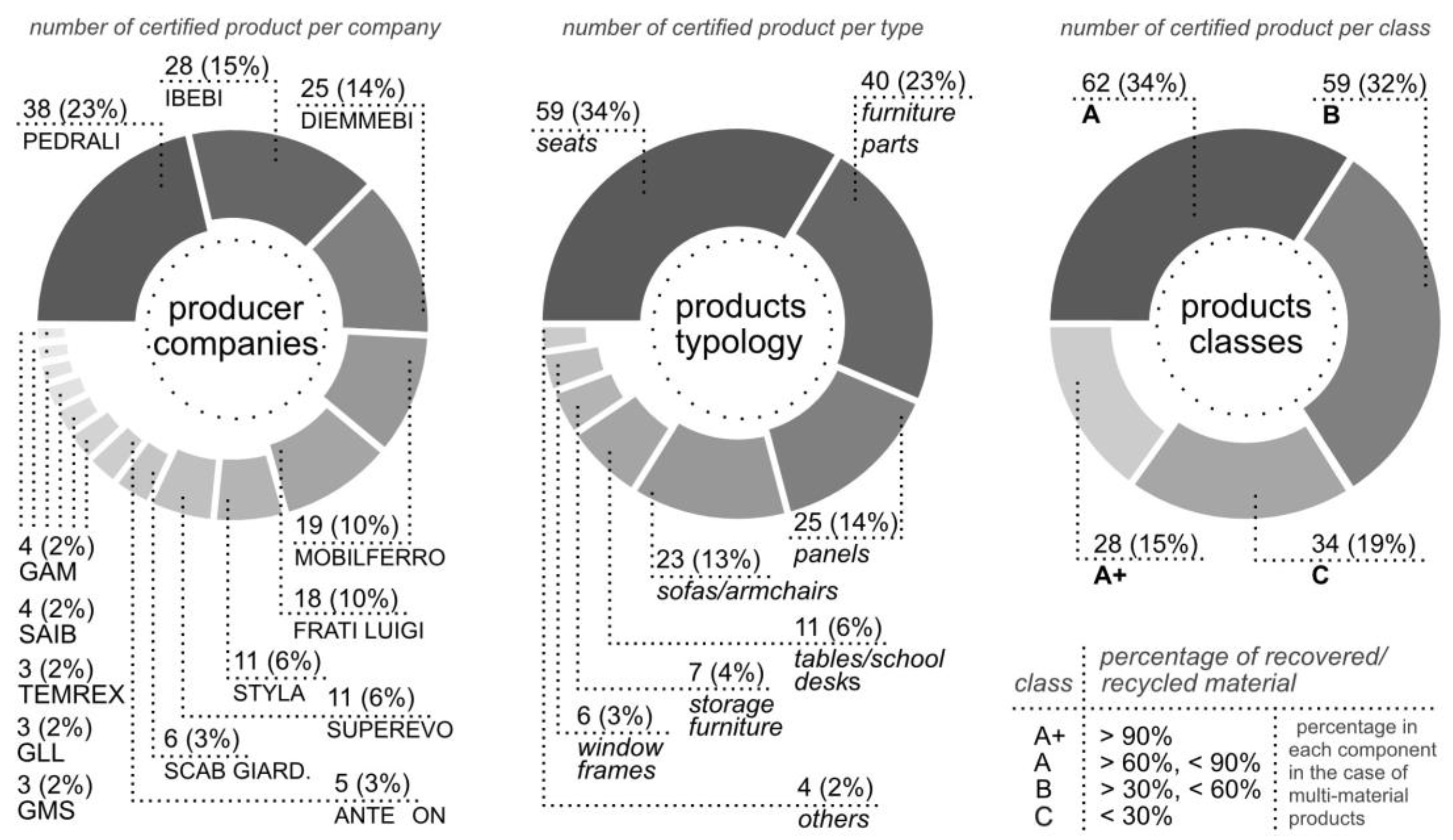
24] in the indoor furniture section has reached 184 units after a decade. Most are seats (59, i.e., 34%) and general school furniture (77, 42%), even if a large presence in the catalogue is made up of semi-finished products and components (40, 22%), including wood panels (
Figure 2). Of all the certified furniture products, 70% comes from five companies, indicating how only a few large companies have adopted the certification scheme with multiple products. Only 15% of certified products are classified as A+, meaning they contain more than 90% recycled content, such as the cabinet with doors by Mobilferro, which contains 90.1% recycled material.
Half of the certified products for interiors have a more than 60% recycled content, such as the school tables and seats by MobilFerro, which have a variable composition of wood, metal, and plastic ranging from 63 to 82% of recovered/recycled material.
Looking in more detail at the materials, most certified products use plastic, wood, or metal, showing the sector’s difficulty in effectively closing the loop for other secondary materials. The presence of many products in plastic and wood is also justified by the relative criteria in the MEC for indoor furniture. Finally, the fact that there are no products where recycled materials are used to make coatings is reflected in the fact that, in the MEC, the relevant criterion is an awarding one and is not mandatory.
Other types of recyclable materials in the furniture sector include paper, aluminum, glass, fabric, and potentially other waste materials from different industries, which could be shared by adopting solutions like industrial symbiosis. For example, the Italian company Artigo, a manufacturer of rubber paved surfaces, recently obtained the C2C certification (aiming at safer, more sustainable circular products considering factors such as material health, material reutilization, renewable energy and carbon management, water stewardship, and social fairness) for some of its products. To achieve this, the company has introduced marble powders—wastes from marble extraction from Carrara Quarries—instead of Calcium Carbonate in the paving recipe, which means no need to mine for material and, at the same time, the reuse of industrial waste from another industrial sector. Furthermore, Artigo has implemented new and improved waste diversion methods to incorporate different kinds of wastes, pre- and post-processed, into their flooring, such as raw compounds, grinded off-cuts and trimmings, and raw and cured powders. For 5 mm flooring, these strategies have brought the recycled and reused content to 46.5% (30% recycled = marble powders, 16.5% by-products = in-house scraps). Such innovation requires a complex process to qualify the waste as a secondary material and accept it in the production process, which is one of the issues that the research is addressing.
3.3. Benchmarking of Existing Tools: Circular Design Digital Tools’ Definition of Operation Models
One crucial activity for the analysis of the state of the art was the benchmarking of existing tools supporting the use of circular materials in the built environment. This was developed through the selection, analysis, and comparison of existing digital tools to support the circular project aimed at building a framework of needs underlying the development of the new tool tailored to the Italian furniture value chain [
14].
This activity has been articulated in six steps: (1) collection of digital tools supporting the circular design of various types and for different sectors. (2) Selection of specific categories of tools for benchmarking purposes for the development of the new tool (digital platforms, online marketplaces, databases of certified products, and software for material information collection). (3) Analysis of the single tools. (4) Comparative analysis. (5) Conceptual modelling of the different types of platforms. (6) Identification of the requirements for the new tool and definition of the model.
In step 1 of the research, about 25 of the main digital design support tools with a circularity perspective were considered, investigating the heterogeneous panorama of software and platforms involved in the selection, sourcing, and evaluation of material performance in both the product design and construction sectors; some tools that are currently being finalized (such as Decorum by ENEA) and categories of specific tools such as LCA software (such as OpenLCA and SimaPro) or platforms aimed at technology transfer (such as Symbiosis, the Italian platform for Industrial Symbiosis developed by ENEA) were also analyzed [
25].
Subsequently, to understand which characteristics and processes were most useful in terms of transferability in the definition and development of the research tool, the most comprehensive and relevant tools within the international and cross-sectoral panorama were examined in detail.
The nine selected platforms of national and international impact and concerning both the construction sector and the industrial sphere from different supply chains (furniture, textiles, metals, and plastics) were then analyzed in detail with regard to the types of materials they include (new, semi-finished, biobased, recycled, by-products, reclaimed, and dead stock) and the operating patterns regarding data input–output, including the figures involved in the upload and download of material information. In addition to manufacturers and designers, some tools require the intervention of specialists—certifying bodies that verify the veracity of certain information—and of Counsellors—specialized consultants supporting the circular project (
Table 3).
Through the in-depth study of these dynamics, we arrived at the definition of five operation models of digital tools, differing both in the type of data and its mode of exchange and in the subjects involved and the relationships between the parties involved; these models are also outlined by the role of the platform within the life cycle—both in relation to products and buildings—and by the positioning of the tool in the broader design cycle.
3.3.1. Type I—Specialist-to-Company/Designer Platforms
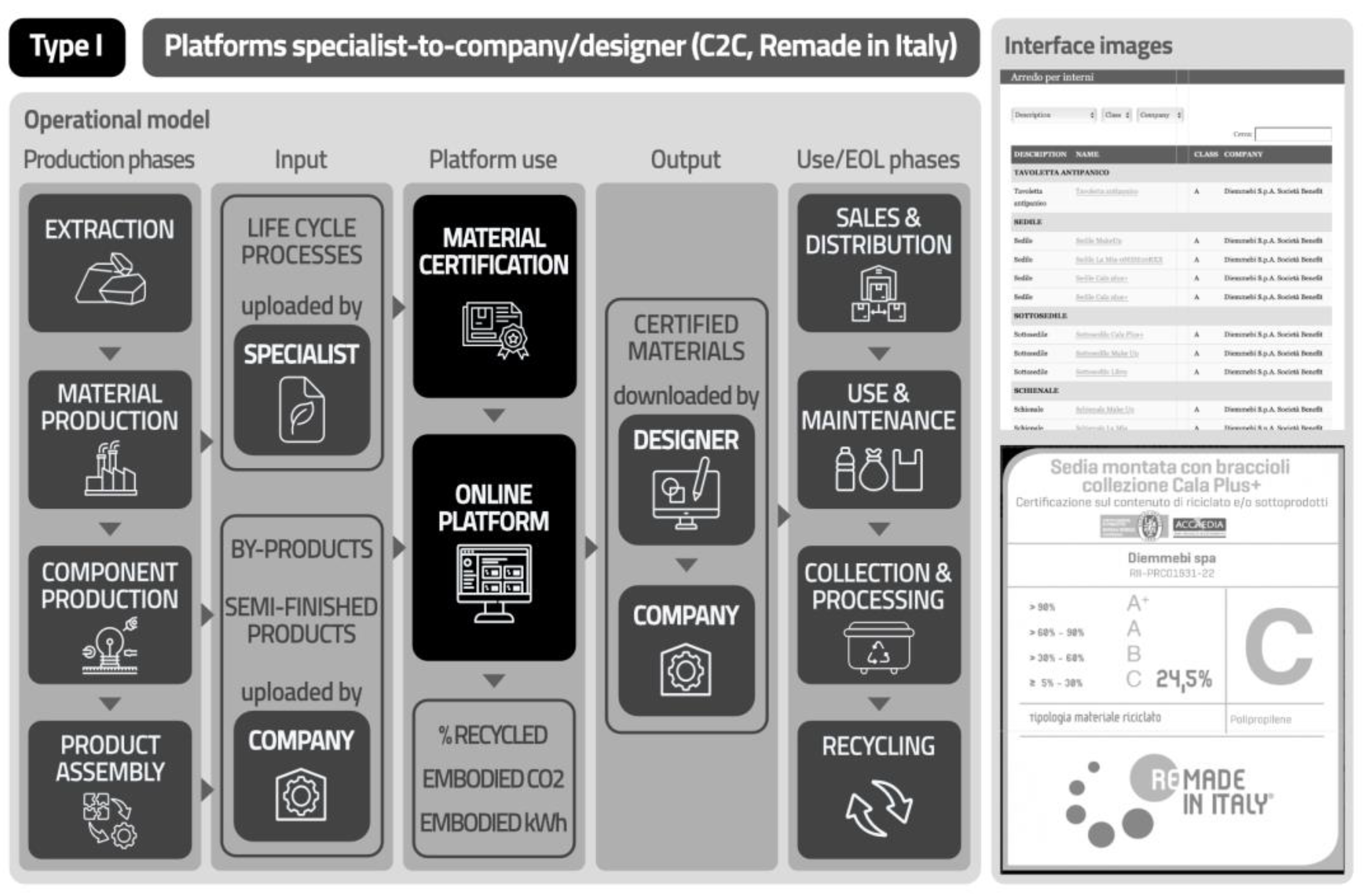
The Type I operating model (
Figure 3) involves a certifying body that, through the figure of a specialist, uploads the certifications related to materials and the life cycle processes that affect them to the online platform; information about the certified materials is then available to manufacturers and designers. Part of this model is C2C Certified [
26], the historic certification institution that, through its database, promotes companies committed to circularity and evaluates materials by awarding a label ranging from bronze to platinum based on numerous parameters related to energy consumption, emissions, sustainable use of water and resources, and ethical working conditions for employees. At the national level, the ReMade in Italy certification [
24] is relevant: it assigns a label from C to A+ to materials, components, and products manufactured by Italian companies from different supply chains according to their increasing recycled content.
3.3.2. Type II—Designer-to-Designer Platforms
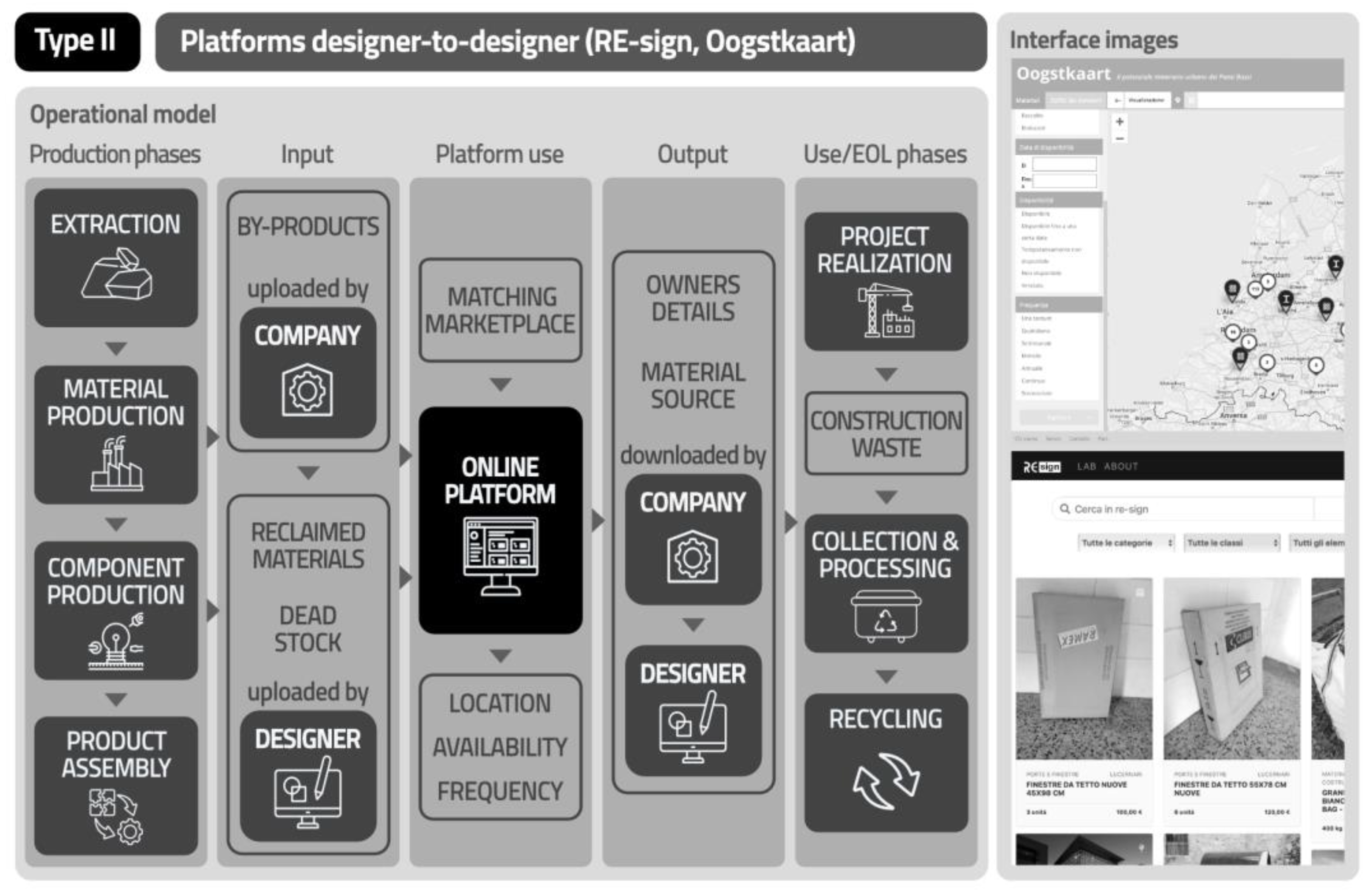
The Type II operating model (
Figure 4) is based on the direct exchange of building materials between designers interacting at different stages of the construction process through an online platform based on the geographical location of available materials. In this way, surplus materials related to construction and demolition processes can be used for new operations through a recovery that takes place directly from storage and construction sites. Included in this model are Oogstkaart [
27], a platform directly derived from the Harvest Map developed by Superuse Studios for the Dutch region, and RE-sign [
28], the result of an Italian research project that had little response, partly as a consequence of regulatory obstacles that do not allow the direct use of such materials, as is the case in other European countries.
3.3.3. Type III—Business-to-Business Platforms
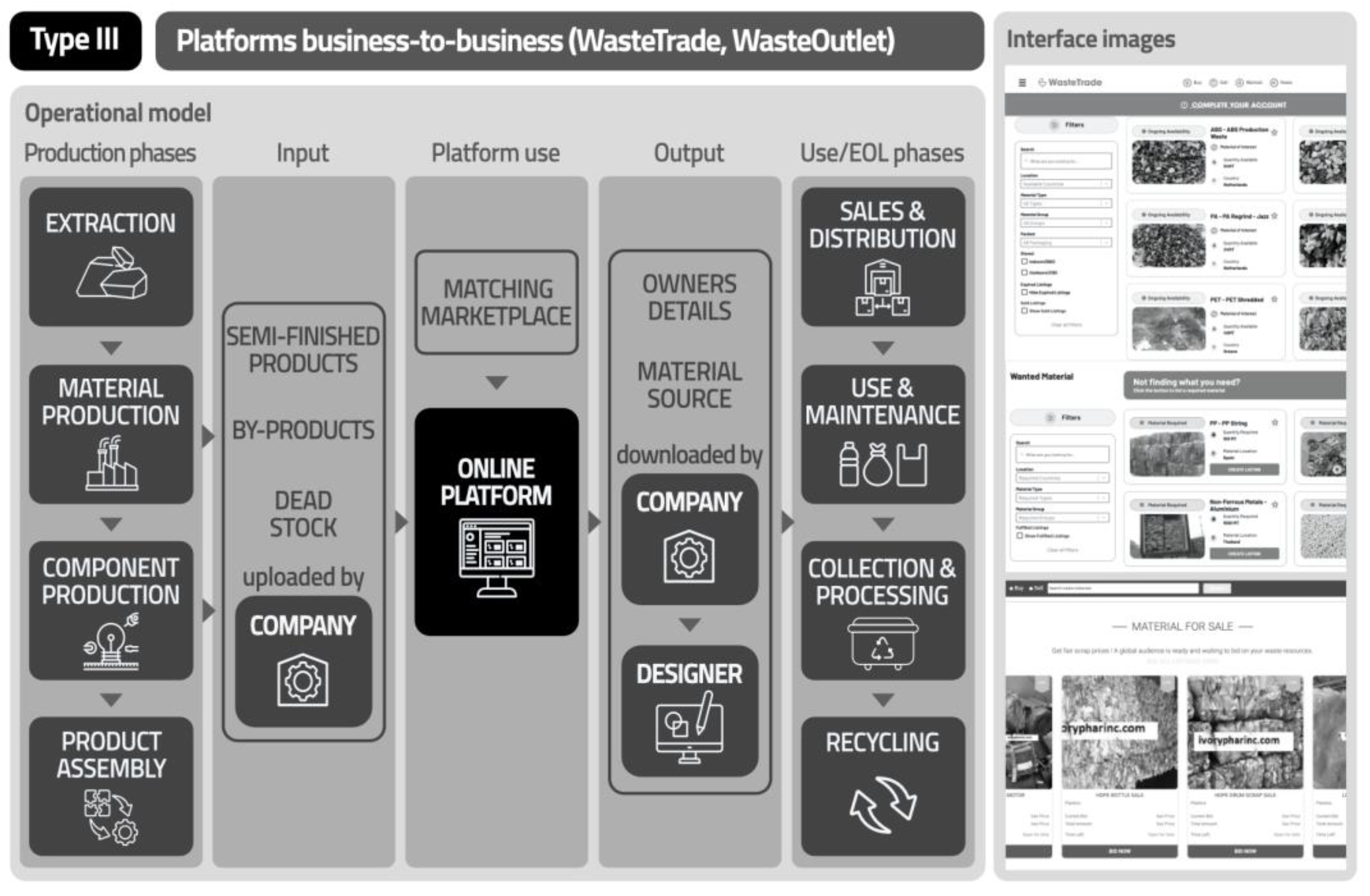
The Type III operation model (
Figure 5) involves the exchange of semi-finished products, by-products, and scraps from different supply chains, facilitating communication between different manufacturers who interconnect in the input and output of data on materials for sale. Included in this model are WasteOutlet [
29], a platform with an international scope based on an auction system that recently closed its portal, and WasteTrade [
30], a platform with an intercontinental reach that oversees buyers being able to request those materials that are not on the site through the “Wanted” function.
3.3.4. Type IV—Software Designer-to-Designer Platforms
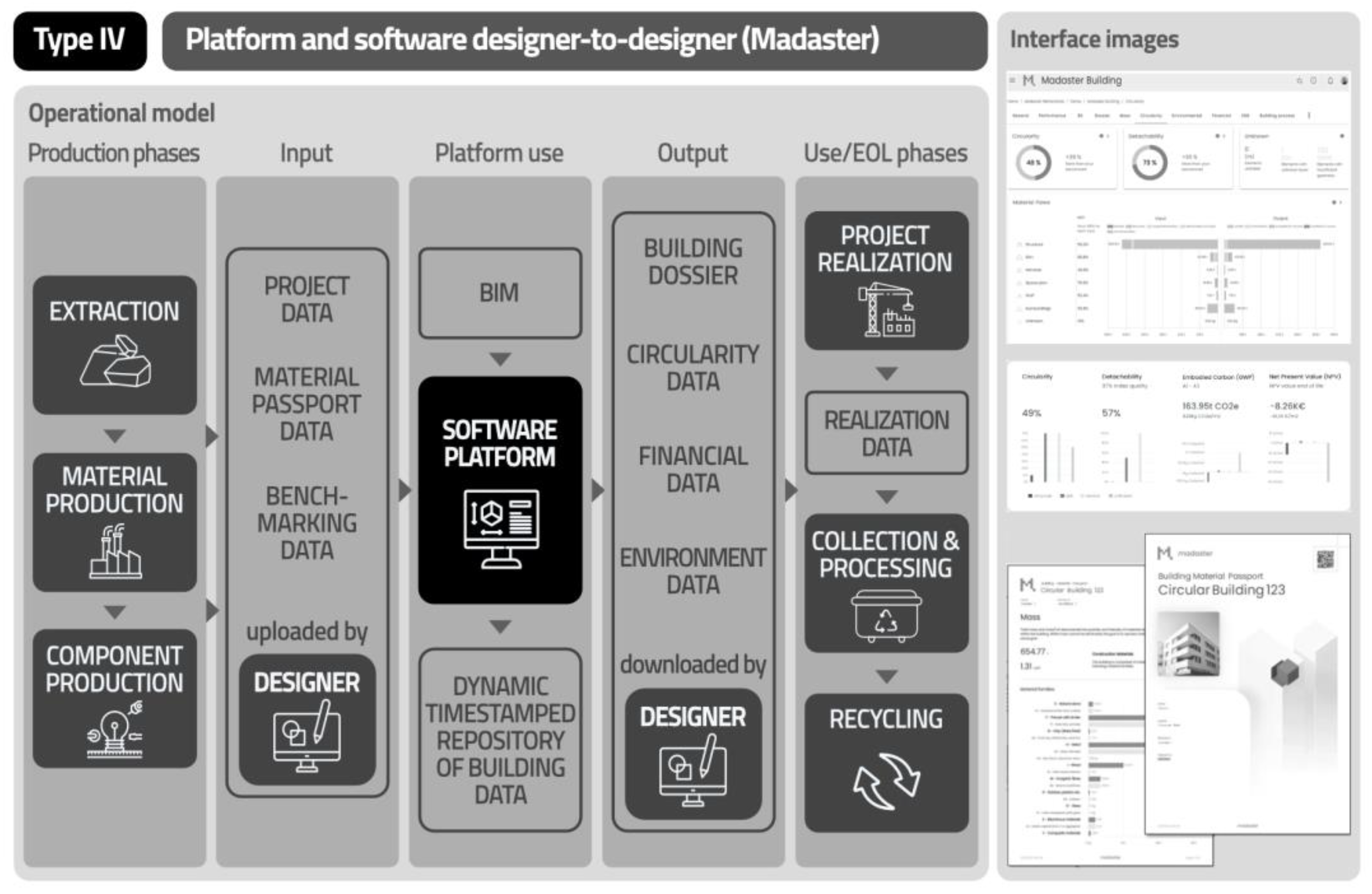
The Type IV model of operation (
Figure 6) does not involve the exchange of goods between different parties but the support of the design process through integration of BIM software with a series of information related to the circularity and origin of building materials (project data, material passports); in this case, there is only one figure taking part in the process, as the data are uploaded and then processed by the designers themselves. The Madaster [
31] platform features, as an output, the establishment of a Building Dossier that outputs circular, financial, and environmental data related to the designed building.
3.3.5. Type V—Counsellor-to-Designer Platforms
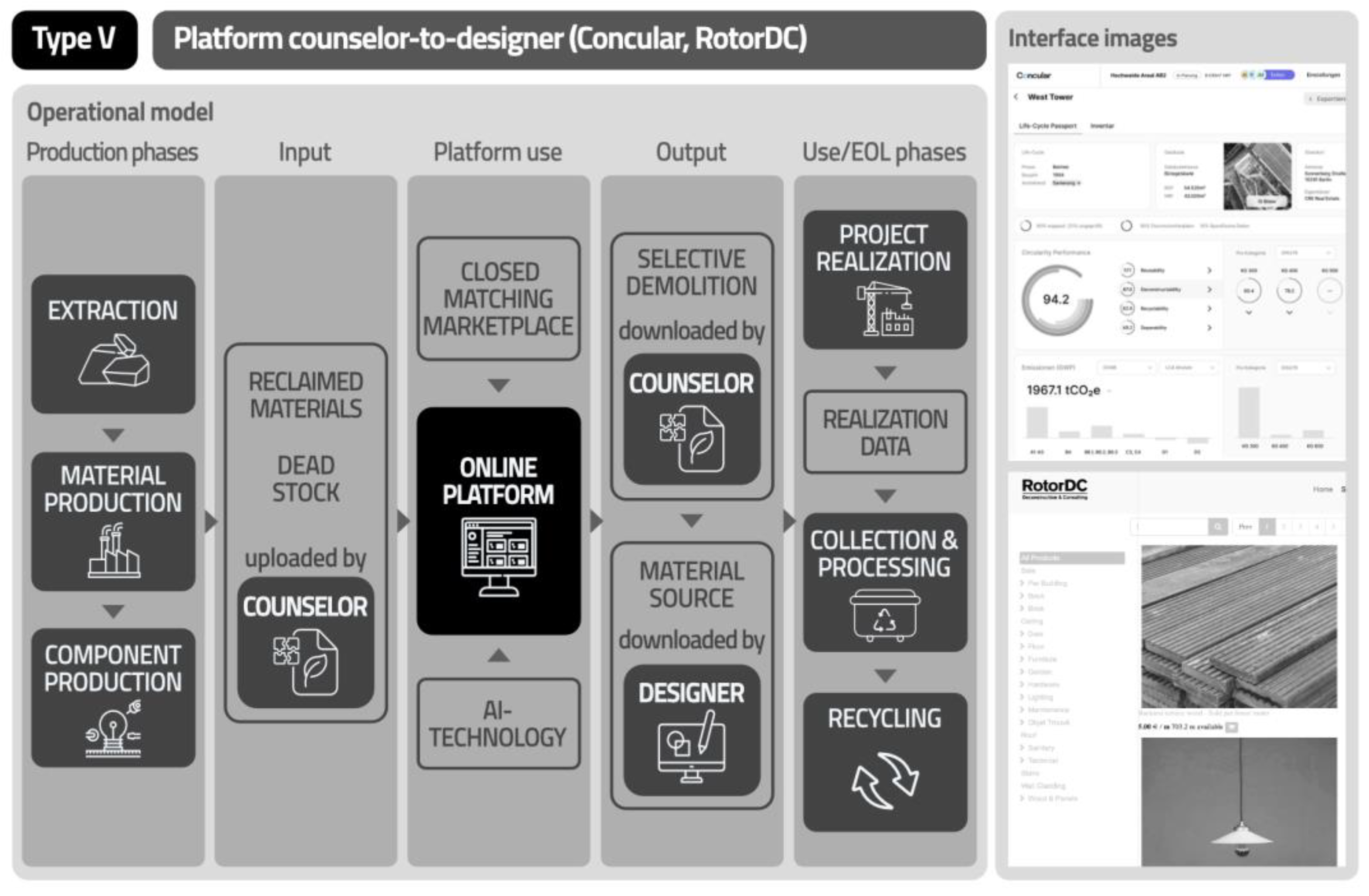
The Type V operating model (
Figure 7) includes a counselling phase to support the designer in defining the project according to circular logic; data on new and recovered building materials are uploaded by a Counsellor who analyzes and suggests potential implementations to the designer. According to this model, the Concular [
32] platform offers both a dedicated marketplace of circular building materials and support to the designer using AI technologies. The cooperative company RotorDC [
33] offers consulting services on the selective demolition, salvage, and sorting of materials, complementing this service with the ability to buy and sell reclaimed materials on its online marketplace.
3.4. Discussion: Definition a Methodological Framework for Waste Valorization in the Furniture Value Chain and the Related Operational Model
The analysis of the state of the art in terms of regulations, catalogues of available certified materials, and models of digital platforms for the exchange of materials and information led to the definition of a methodological framework for furniture products’ life cycles and, consequently, made it possible to determine how the role that the tool developed in the research can play in the current landscape.
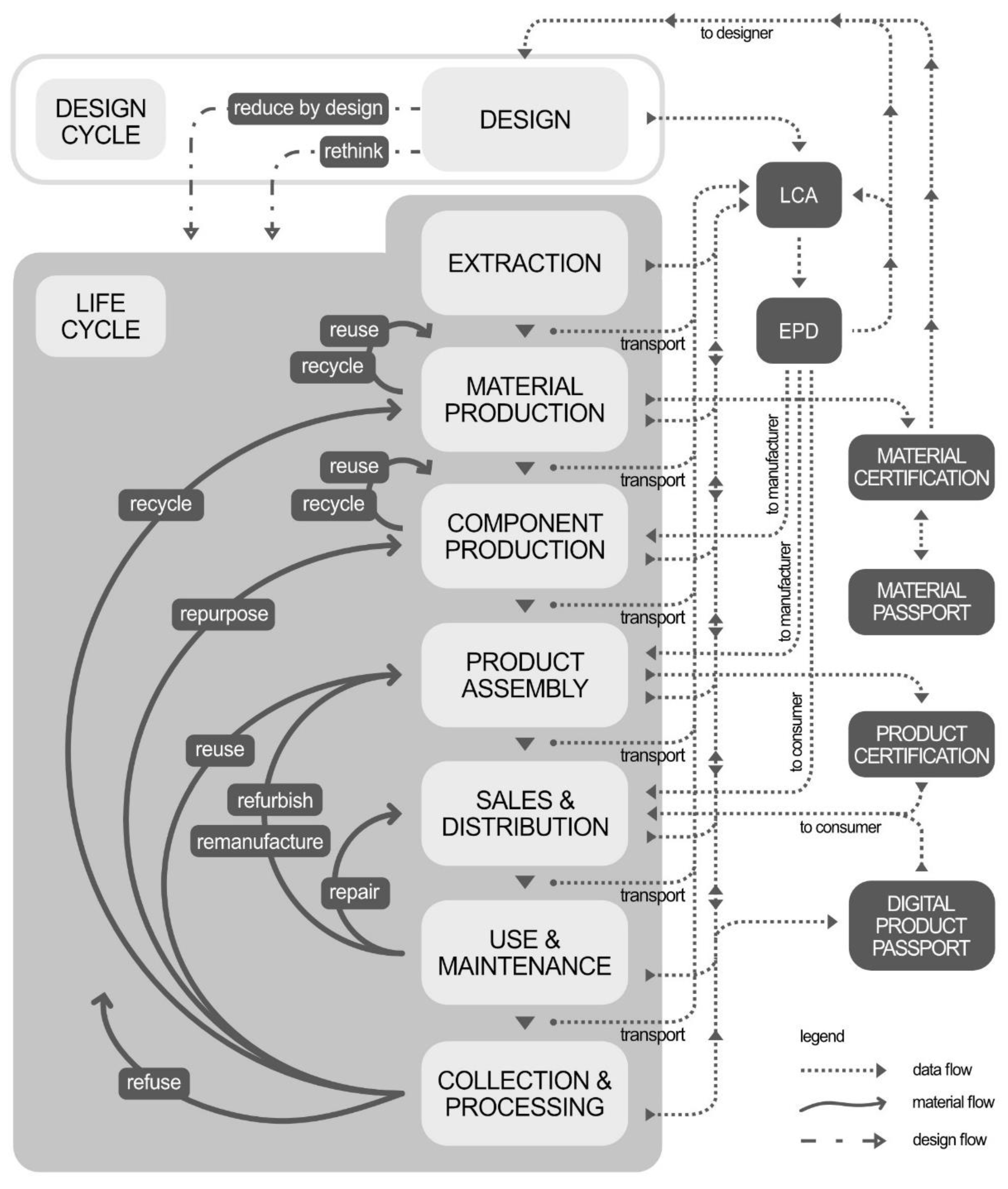
The framework models the entire life cycle and project cycle of a furniture product, including the flows of materials and waste products, components and materials, and their secondary cycles activated by the 9 Rs (Refuse, Reduce (by design), Reuse, Repair, Refurbish, Remanufacture, Repurpose, and Recycle) [
34] and, at the same time, introduces all the different information flows needed to enable them (
Figure 8).
Overall, the diagram is showing a multiplicity of potential material/product flows on the left and the relative massive amount of data needed to enable them. This again highlights how the transition toward a more circular economy is intertwined with its digital transformation [
35]. The framework considers the actions related to the following:
Internal company by-products and waste reuse and recycling, with waste directly becoming resources for other companies (B2B);
End-of-life products that can be reused after repair, remanufacture, or refurbish actions to be implemented along the value chain;
Post-consumer waste re-processed after products’ end of life and collection;
Refuse as a choice to by the consumers, which allow for the avoidance of production;
The rethink and reduce by design approaches, which can guarantee a greater material resource efficiency from the same product conception.
The diagram shows all the stages that contribute to the development of a circular material—from the recovery and classification of the waste/by-product to the production and certification of semi-finished and finished products. This complex process requires the characterization of waste materials, the tracing of their pathway, their environmental study, and their technical/legal framing. For each identified step, there are multiple actors involved (in addition to the designer, the supply chain, the manufacturing company, reclaimers, transporters, laboratories for material testing, intermediaries for the regulatory and certification parts, etc.), whose needs and any support tools already used must be coordinated with each other, reconciling requirements and solving eventual criticalities. In this sense, the role of specific professionals, such as mediators between different companies facilitating waste resources exchange and LCA analysts, becomes crucial.
In this model, designers’ work adopts a life cycle-oriented ecodesign methodology, entailing their involvement not just strictly in the project cycle but also in the broader perspective of the production process and in consideration of all the life cycle stages, using smart tools to source secondary materials, to valorize refused components and parts, to assess the environmental profile of the designed product, etc.
In this scenario, customers, be they businesses or consumers, need more detailed information about products and their sustainable characteristics, including life cycle environmental indicators. Public administrations need to access reliable documentation compliant with the GPP. This is provided through LCA studies, EPDs (based on LCA), and material and product certifications such as Digital Product Passports and Material Passports. All of these strategic documents collect information from different sources in different steps of the production process and product’s life cycle, including, for example, the waste/end-of-life management-related data. Data collection from each process thus entails an appropriate digital infrastructure and procedures ensuring traceability, and security.
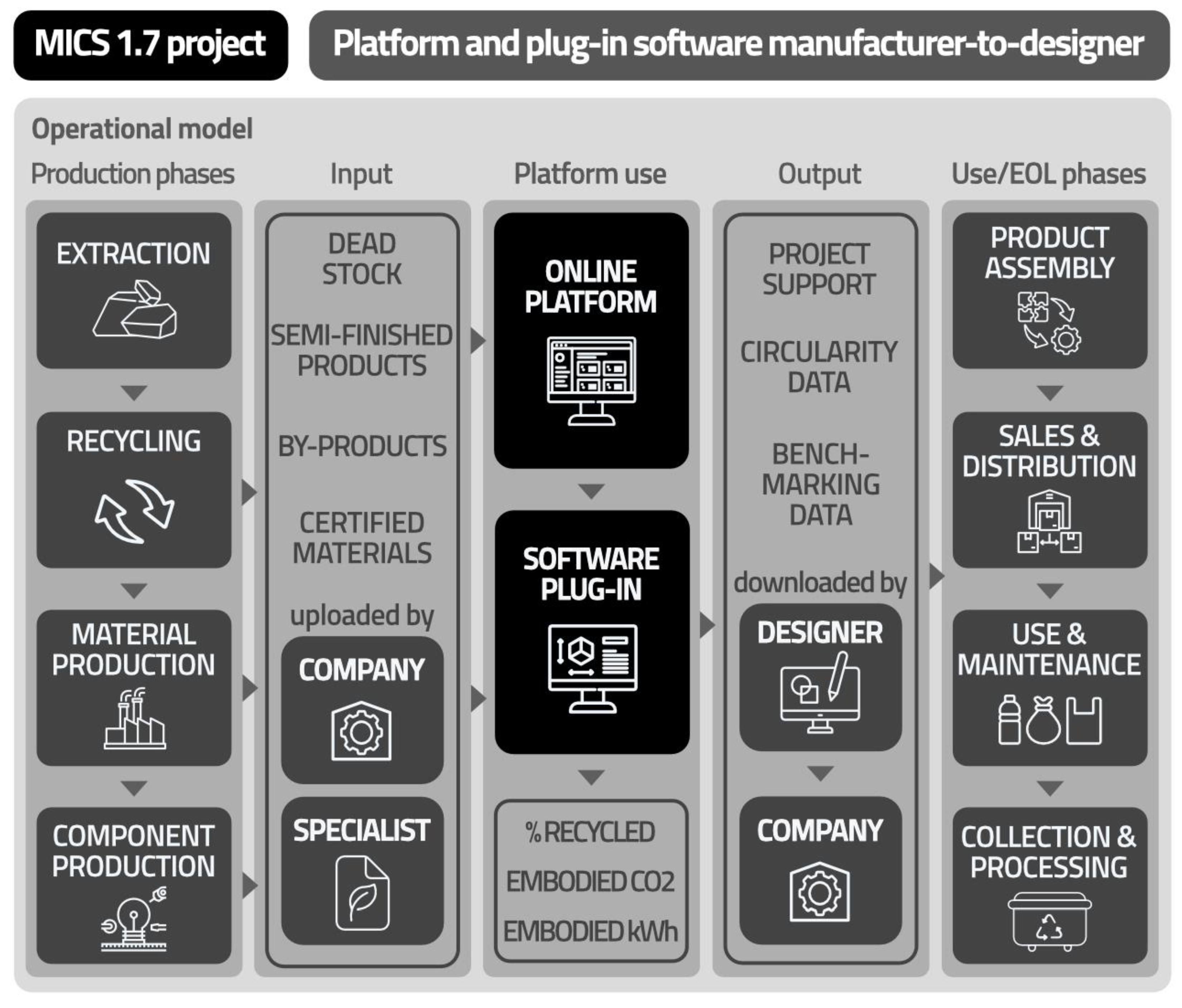
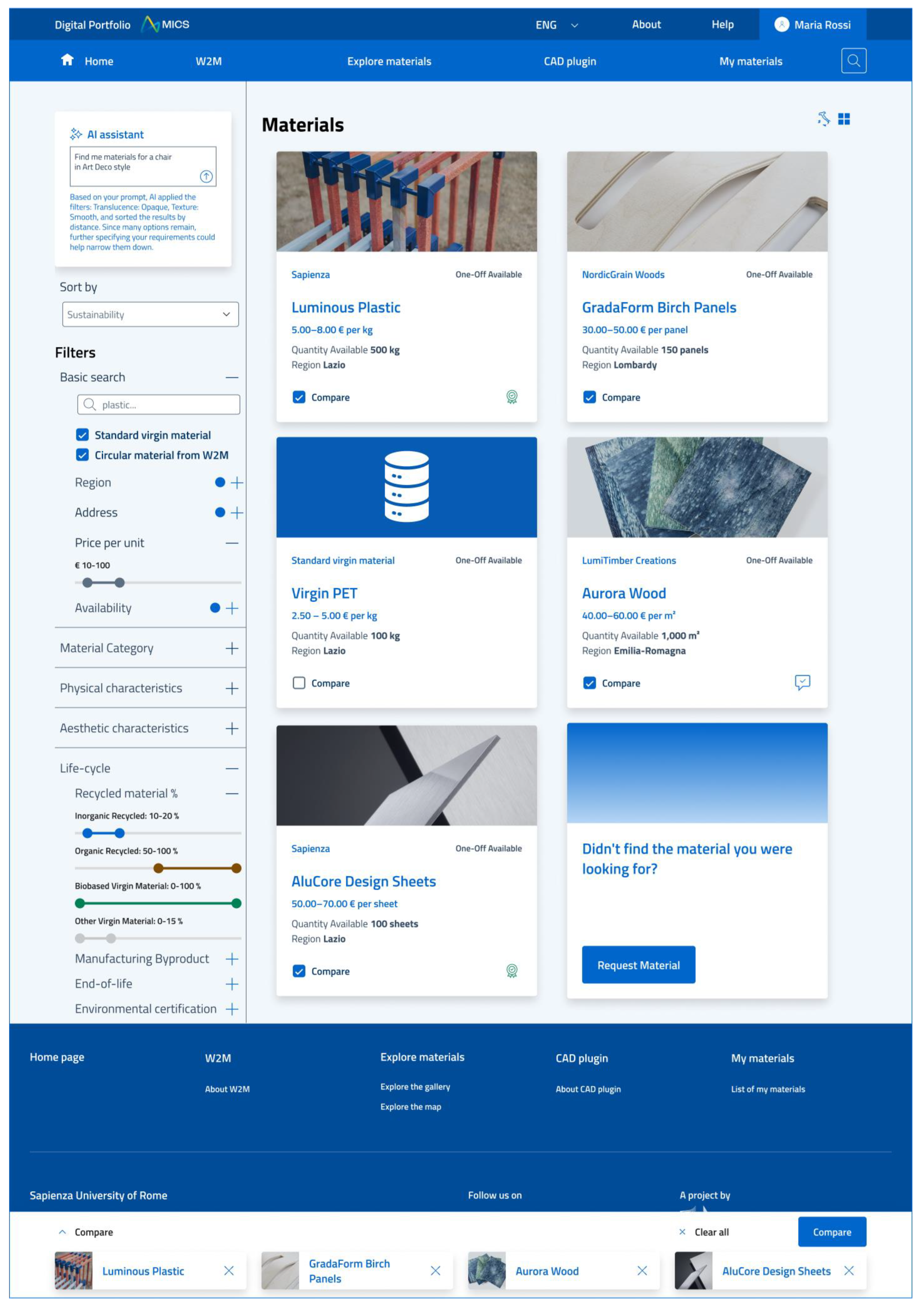
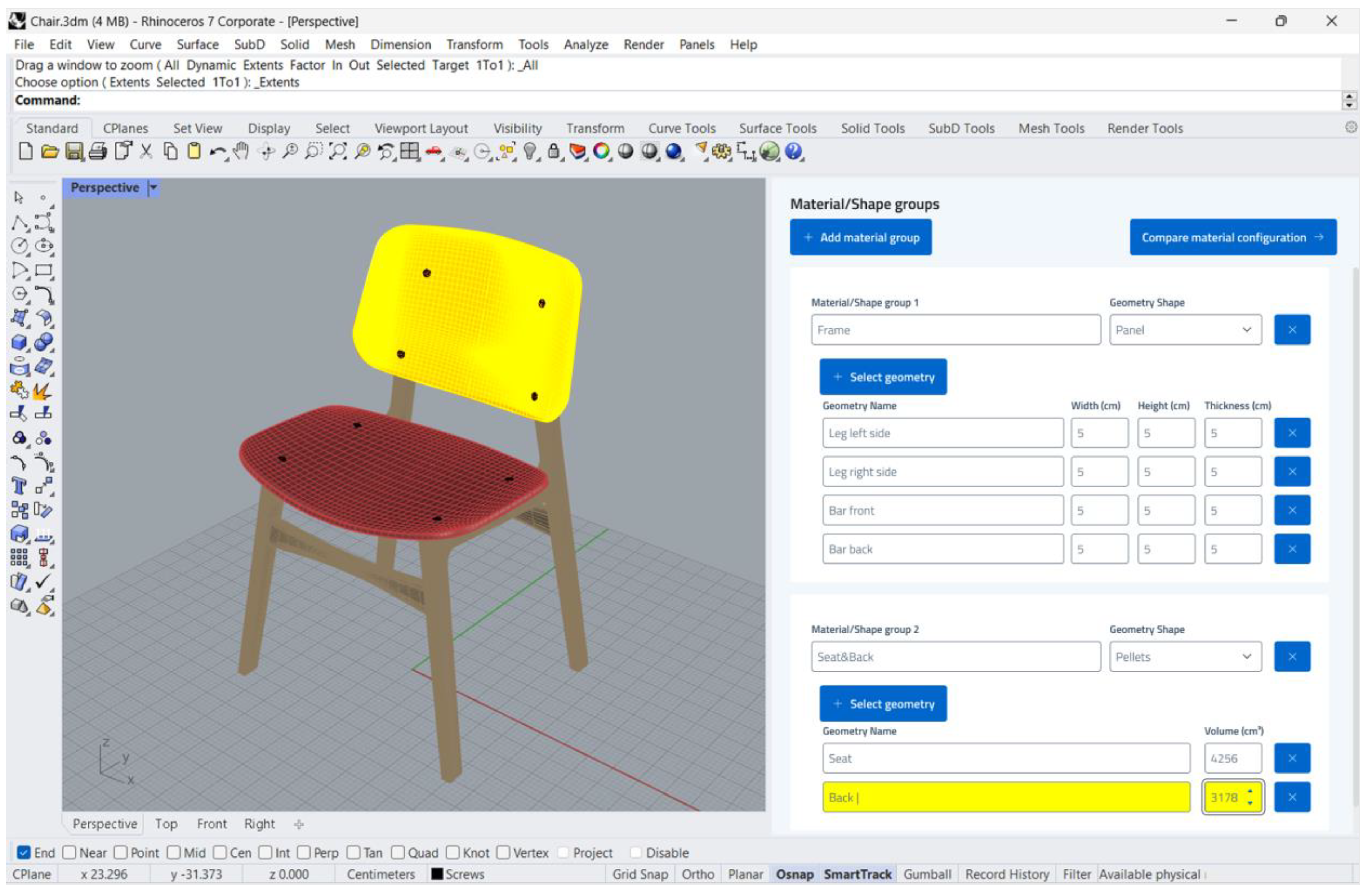
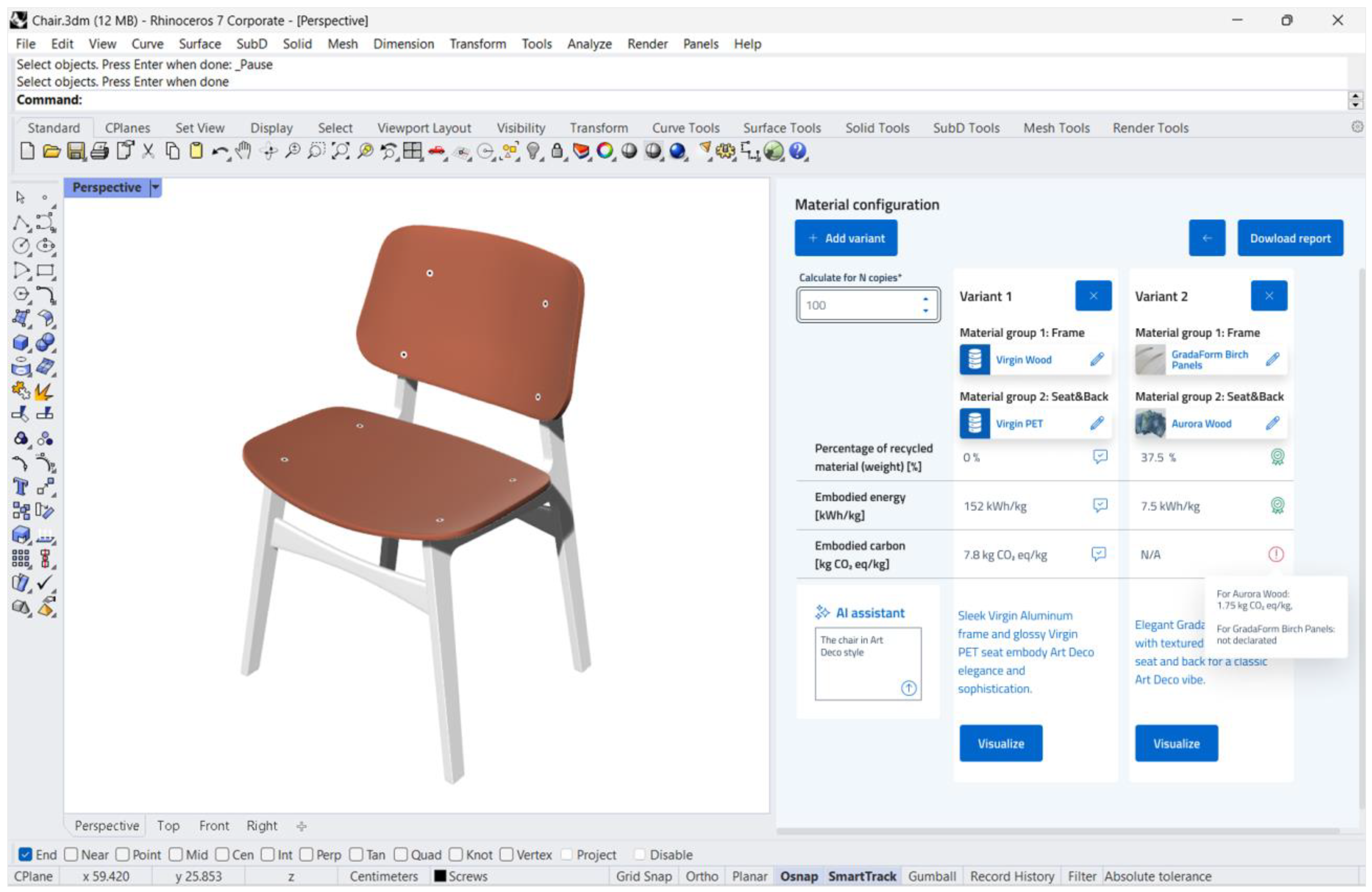
According to this scenario, the new tool therefore systemises several features of the platforms examined in the benchmarking phase in order to develop a specific tool for designers in the Made-in-Italy furniture sector to simultaneously offer them information on circular materials on different levels: availability, market, performance, and technical and environmental (with certifications to be highlighted, if present). The platform has been designed to enable the establishment of a direct relationship between manufacturers and designers through an online marketplace (for the sale of bio-based materials, semi-finished products, by-products, dead stock, and reclaimed and recycled materials) directly connected to a plug-in for 3D modelling software. The plug-in provides designers with real-time information on the circularity of their furniture projects, also with the support of AI technologies (
Figure 9). The platform can therefore put the designer at the centre of the entire process, as this actor is able to investigate and guide new flows of information and resources with the aim of increasing the level of circularity in the sector, for instance, by requesting materials not available directly from potentially interested companies.
4. Field Research Results: Comprehending Stakeholder Needs
Initially, the research structured a systematic examination of existing waste exchange platforms and the development of a comprehensive classification system for waste materials within the Italian context, with particular attention to management infrastructure and operational protocols. The study incorporated an analysis of digital technologies and human–computer interaction methodologies designed to enhance circularity within product life cycles. The research scope encompassed Italy’s national recycling infrastructure, examining key institutional actors and material flow patterns associated with the Made-in-Italy manufacturing sector.
The methodological approach involved the systematic classification of waste materials, identification of strategic material categories, and establishment of connections between waste-generating industries and relevant stakeholder networks. This process aligned with both European Union regulatory frameworks and national policy guidelines, incorporating stakeholder perspectives through structured survey methodologies. The research establishes a foundation for implementing digital technologies and design strategies to improve manufacturing circularity while promoting environmental sustainability awareness across production networks.
4.1. Mapping and Surveying Relevant Enterprises
The study employs a qualitative analytical framework to examine circular economy principles, reconceptualizing waste materials as valuable resources for new product development and sustainable manufacturing practices. This perspective shift represents a fundamental reorientation from traditional linear production models toward circular systems that maximize resource utilization and minimize environmental impact. The research methodology incorporated the identification and analysis of European Waste Catalogue (EWC) codes [
36] associated with regional manufacturing entities, resulting in the categorization of stakeholders into distinct groups based on their roles in waste management and generation processes. This classification system provides the foundation for subsequent relationship assessment through structured interview protocols and stakeholder engagement activities.
Effective data exchange mechanisms among stakeholders require systematic waste classification systems and relevant selection indicators derived from national recycling infrastructure and European regulatory frameworks. The research prioritized EWC codes, which represent standardized European Union numerical sequences that specify waste categories based on their originating production processes and material characteristics. The emphasis on EWC classification resulted in the selection of 13 primary categories, with particular focus on non-hazardous materials (
Table 4). Despite non-hazardous materials representing the majority of waste volume (93.53%) according to ISPRA [
37] data, this selection criterion was adopted to facilitate the development of new circular supply chains and design-driven artefacts based on genuinely reusable and processable waste streams. Geographic analysis methodologies support the identification of regions with elevated waste density concentrations, enabling the precise mapping of specific waste streams and their regional distribution patterns. Additional selection indicators emerge from diverse industrial processes and activities, including bio-based raw material processing operations, landfill diversion initiatives, recycling process residues, and post-incineration material recovery systems.
European Union directives, including the Action Plan for the Circular Economy [
1] and the Waste Framework Directive, fundamentally transform the conceptualization of waste materials into valuable resources. These policy frameworks promote extended product life cycles and establish hierarchical approaches to waste prevention and management designed to foster symbiotic relationships among diverse stakeholder groups. The research supports these objectives by establishing systematic connections between national economic activity classifications (identified through Italian ATECO codes) and European Waste Catalogue systems. This component of the investigation was structured through the comprehensive analysis of prominent waste exchange platforms while examining the classification of relevant waste materials to define stakeholder populations for subsequent needs analysis. The analysis encompassed 4800 companies, with desk research identifying 113 specialized consortia and enterprises, some achieving revenue levels exceeding EUR 800 million. These organizations function as intermediary entities, serving as associations, aggregators, production facilitators, and disposal coordinators. The research evaluated these entities based on financial stability and operational capacity to ensure reliable participation in circular economy initiatives.
Multi-stakeholder networks require comprehensive understanding of cross-sectoral collaboration importance to provide optimal features for facilitating opportunities and international market reach [
38]. The qualitative research phase incorporated adaptive methodologies to ensure timely and relevant data collection across various disciplinary settings [
39]. This phase included semi-structured interview protocols designed to examine information retrieved during the preliminary desk research phase in greater depth [
40]. Through qualitative analysis of semi-structured interviews with key stakeholders, valuable insights and perspectives from individuals directly involved in the system were collected and subsequently clustered and analyzed according to project-grounded methodological approaches [
41]. This analysis provides preliminary insights into the common knowledge base that producers and manufacturers possess regarding waste management within Made-in-Italy production chains.
For stakeholder mapping purposes, the research analyzed regulatory frameworks and identified waste-generating processes using ATECO codes, which classify economic activities in Italy and define eligibility criteria for tax benefits and sustainability compliance measures. The study identified 56 ATECO codes connected to 487 industries relevant to waste management operations. Specialized consortia demonstrate significant importance in intermediate recycling activities, providing support to designers in sustainable product development initiatives. These organizations serve as crucial bridges between waste generators and potential end users, facilitating material flow and knowledge transfer across industry boundaries. For waste management entities, research focused on ATECO 38.32 (“Collection and sorting of materials”), identifying 113 companies with 40 selected based on financial stability criteria. Additionally, 45 manufacturing-related codes were analyzed, with particular emphasis on fashion and furniture sectors, identifying 374 companies including 141 enterprises in the Lazio region selected for strategic collaboration potential. For design professionals, the study prioritized practitioners integrated into existing production chains. Eight ATECO codes covering consultancy and research activities were identified for potential external collaboration opportunities, recognizing the critical role of design expertise in facilitating circular economy transitions.
The research continued with a comparative analysis process examining two classification typologies in relation to the Italian furniture manufacturing sector. Beginning with EWC codes identified as relevant to the project and remaining within the spectrum of Mirror Non-hazardous (MN) and Absolute Non-hazardous (AN) categories, materials were selected and compared with ATECO codes potentially involved in processes related to specific EWC classifications. This analysis involved research into current possibilities for utilizing waste materials and gathering information about existing reuse and consumption practices of waste materials in manufacturing and material research sectors. These practices are often associated with recycling initiatives and experimental applications, including amateur usage within digital fabrication communities. A production ATECO code strongly affected by the relevant EWC code was therefore associated with each waste category. In the “Italian ATECO codes” classification, production sectors that typically utilize production processes related to the reference EWC code were selected and systematized (
Table 5). This systematic approach enables the identification of potential material flows between different industrial sectors, creating opportunities for industrial symbiosis and circular material exchanges that were previously unrecognized or unexploited.
4.2. Understanding Stakeholders: Interviews and Focus Groups
Following the stakeholder mapping process, the research implemented a structured interview protocol involving diverse participants representing different aspects of the circular economy ecosystem. The interview cohort comprised eight participants: two independent design professionals and six stakeholders representing various sectors within the waste management and manufacturing value chain.
The design professionals included two independent practitioners with distinct specializations. The first designer operates across multiple disciplines including product design, packaging, and strategic design consultation, providing a comprehensive perspective on design integration within circular systems. The second designer focuses specifically on product design with specialized expertise in bathroom furniture design, offering insights into sector-specific material requirements and design constraints.
The stakeholder group represented a diverse range of organizational types and operational focuses.
The manufacturing stakeholder produces indoor rubber floor coverings primarily utilized in public buildings and private facilities, providing insights into material performance requirements and market constraints. An environmental services intermediary combines operational services with technical and scientific consultation to reduce the environmental impact for client organizations, representing the advisory sector within circular economy networks.
A consulting and research organization specializing in material and product sustainability contributes expertise in defining metrics for circular economy measurement, highlighting the critical role of assessment methodologies in system implementation. Two trade associations were included: one representing inert waste recyclers focused on developing recycled aggregate markets, and another dedicated to rubber and elastomer recovery sector operators, both demonstrating the importance of collective representation in fostering industry development.
A manufacturer of modular shop fittings, accessories, display windows, furnishing elements, and mannequins completed the stakeholder group, providing a perspective on manufacturing processes and market requirements within the retail and commercial sectors.
The interview process revealed significant complexity in stakeholder role definitions, challenging initial categorical distinctions between designers, waste managers, and manufacturers. The research identified frequent role overlap, making strict classifications problematic within circular economy contexts. Manufacturing entities often simultaneously function as waste generators, managing production residues while seeking valorisation opportunities for their by-products. Several stakeholders demonstrated hybrid operational models, particularly intermediary organizations providing consulting and technical services while maintaining direct involvement in waste material product chains. Trade associations similarly exhibited dual functions, representing collective interests while actively participating in material recovery and processing activities. This role fluidity reflects the interconnected nature of circular economy systems, where organizations may occupy multiple positions throughout their operational cycles. The interview data analysis revealed consistent patterns across stakeholder responses, enabling the identification of three primary thematic clusters: awareness, communication, and market adoption; quality, availability, and certification of information; and product development, evaluation, and production processes. These themes represent fundamental challenges and opportunities within circular economy implementation.
4.2.1. Awareness, Communication, and Market Adoption Challenges
The research identified significant deficiencies in market awareness and acceptance of circular materials as a primary implementation barrier. Trade association representatives emphasized the necessity for specialized marketing channels and strategic public engagement initiatives to improve product perception, noting that recycled materials frequently experience undervaluation in conventional markets. Manufacturing stakeholders highlighted the importance of narrative development in promoting circular economy practices, observing that materials derived from industrial by-products, such as MDF powder, are commonly perceived as waste rather than valuable resources, thereby limiting commercialization potential. This perception gap represents a significant obstacle to market development and material valorization. Design professionals emphasized the necessity for direct technical dialogue to enable better alignment between design specifications and production constraints. However, they identified persistent company reluctance to adopt sustainable materials due to multiple factors including elevated costs, limited availability, insufficient certification, and aesthetic concerns. Business hesitation often stems from process adaptation challenges and efficiency concerns associated with material transitions.
The analysis revealed that product design serves a strategic function in developing engaging communication strategies, acting as a tool for facilitating sustainable material integration through narrative development. Multi-stakeholder interface design can enhance the exchange of intelligible and reliable material-related information among manufacturers, suppliers, and end users.
4.2.2. Information Quality, Availability, and Certification Issues
The research identified substantial challenges related to verified and accessible information about material traceability, significantly affecting circularity and sustainability implementation. Environmental services and consulting stakeholders emphasized the necessity for Digital Product Passports to improve transparency, noting that manufacturers frequently codify material information to protect supplier data, creating trust issues in material selection processes. Manufacturing stakeholders reported complex and time-consuming certification processes that delay market entry for sustainable products. ESG data collection remains predominantly manual and inefficient, lacking structured methodologies for Life Cycle Assessment and carbon footprint calculations. Many companies claim zero-waste production, complicating material availability assessment and sustainability impact evaluation. Design professionals proposed implementing comparative approaches based on sustainability metrics to enhance sustainable material adoption among manufacturers.
Cross-referenced data integration throughout the design and production stages could ensure accessibility and usability for design professionals. Incorporating objective sustainability assessments would support informed decision-making and foster responsible material choices in design processes.
4.2.3. Product Development, Evaluation, and Production Process Complexities
Stakeholder analysis revealed significant challenges in managing multiple material attributes including cost, performance, quantity, aesthetics, environmental impact, and logistics. The difficulty of evaluating and visualizing material properties in clear and intelligible data formats represents a major implementation barrier. Consulting stakeholders suggested that automated material recommendation systems and improved demand–supply matching could address these challenges. Manufacturing stakeholders highlighted difficulties in scaling sustainable innovations, citing elevated production costs and manufacturing chain innovation requirements. This includes integrating digital fabrication processes and adopting adaptive and modular panel systems to ensure reliable traceability and regulatory compliance, necessitating robust tracking system integration. Design professionals emphasized the need for tools supporting material sustainability assessment, option comparison, and assembly guidance with reuse considerations while enabling product longevity estimation. They identified that digital tools enhanced by well-trained AI evaluation systems could enable informed material choices, ensuring alignment with sustainability goals while optimizing performance, longevity, and recyclability. Direct communication channels between designers and manufacturers were identified as essential for streamlining file preparation, preventing misinterpretations, and improving production efficiency.
4.2.4. Development Pathway
Based on interview analysis, the research outlines a development pathway for transitioning from linear to circular production models. This transformation requires shared responsibility in recycling and design approaches that prioritize circularity from the initial conception. Integration of sustainability data, supply chain optimization, and cost-effectiveness maintenance are essential for preserving competitiveness within sustainable Made-in-Italy production systems.
Key strategic actions include Digital Product Passport implementation for enhanced traceability, strengthened legislative support systems, and marketing campaigns designed to shift perceptions of recycled materials. AI-driven tools for material selection, durability assessment, and assembly guidance can enhance operational efficiency, while fostering direct collaboration between designers and diverse stakeholders will streamline sustainable production processes.
4.3. User Needs: A Framework of Functionalities
Building on the analysis of different perspectives—covering stakeholders’ interviews and focus groups, regulatory frameworks, and digital platforms analysis—this section translates the identified opportunities into a framework of functionalities. The functionalities follow the insights’ structure, consisting of three points.
The first group, awareness, highlighted the problem with the perception of circular materials. This issue can be addressed by a digital tool, although this falls outside the scope of the current project. Waste exchange platforms already exist, but none address the specific context of Made-in-Italy furniture. Moreover, participants noted the need to distinguish user roles and adapt tool functionalities accordingly.
The second issue is focused on the verification and certification of information. Trustworthy information is scarce across marketplaces, since data is not yet strongly regulated. Even if EU legislation introduced the Digital Product Passports, there are two main issues with them. First, information on material sources is sensitive for companies, as it gives them a competitive advantage. Second, there is broad mistrust regarding how rigorously companies comply with sustainability standards. Better digital tools can help to avoid the unintentional omission of relevant details and actively encourage users to monitor relevant indicators, thus potentially improving practices.
The final group of issues highlights the problems with product development processes and evaluation methods. At present, developing circular materials is slow and costly, since it requires sustainability experts to establish a reliable supply chain. Digital tools, especially enhanced by AI, can bridge this gap by providing sustainability knowledge that improves supply chain information, especially when it is given at an adequate point in the product design and engineering processes. For in-house software solutions, interoperability is key. Therefore, new tools should be open and modular—via open source or public APIs (Application Programming Interfaces)—to allow seamless integration. To ensure an efficient workflow, the digital tool could integrate with CAD software, enabling designers to embed circular materials directly into their design process.
6. Discussion
The developed tool concretely operationalizes circular design principles within the Made-in-Italy furniture value chain. By integrating AI-assisted material selection and CAD-based workflows, it supports the use of secondary resources, compliance with Green Public Procurement criteria, and strengthens collaboration among stakeholders toward sustainable production models.
The benchmarking of existing digital tools supporting circular design practices revealed that most available platforms operate as static repositories or marketplaces, primarily relying on manual data entry and search processes. These instruments, while relevant in mapping material flows, remain limited in their ability to support design decision-making and stakeholder interaction. Furthermore, their cross-sectoral scope—addressing multiple industries and material types—hinders their capacity to respond to the specific needs of the furniture design and manufacturing ecosystem. Building upon these findings, the platform developed within this research establishes more efficient exchanges between stakeholders in the Italian furniture value chain. Artificial intelligence is employed to facilitate the accessibility and usability of the system. Through AI-assisted form compilation and recommendation mechanisms, the platform aims to facilitate the upload process for input users and enhance the quality and consistency of data provided by waste managers, while making data more accessible for output users. In contrast to generalized databases, the proposed tool integrates circular design logic, CAD-based workflows, and environmental evaluation. It provides a framework in which sustainability parameters guide material comparison and selection, thus positioning the tool as a domain-specific and research-driven model for advancing digital circularity within the furniture sector.
The usability testing with the three stakeholder categories confirmed the platform’s strong potential to support collaboration among designers, waste managers, and manufacturers. Participants reported a clear and coherent interface, efficient task performance, and valuable AI-assisted features, reflected in a high System Usability Scale score (80.9) and a positive Net Promoter Score (+16.7). Feedback emphasized the usefulness of material comparison and upload functions while suggesting richer data (e.g., delivery times, certificates) and improved visual integration with CAD tools. Despite limitations related to the brief simulated tasks and the mock-up status of the CAD plug-in, findings indicate promising usability and user acceptance of the prototype.
Overall, the results confirm that the proposed tool effectively responds to the sector’s needs, demonstrating strong usability, high user acceptance, and potential to foster a more data-driven and sustainable furniture design ecosystem. However, in order to validate the tool’s real-world effectiveness, it would be necessary to carry out long-term testing directly at the stakeholders’ offices, using their own projects rather than the test tasks setup for lab testing.
7. Conclusions
The research presented here, like the whole MICS project, shows how integrating diverse competencies is essential for addressing sustainability complexities, which requires systemic approaches enabled by interdisciplinary collaboration. The development of a digital tool for material circularity that facilitates connections between waste managers, designers, and producers exemplifies this systemic logic, positioning itself as catalytic infrastructure for complementary initiatives. By 2030, designers should apply life cycle thinking and ecodesign, relying on tools that assess environmental profiles and on data from a highly connected, digitized company ecosystem. However, results show that, although much data on secondary materials for the furniture value chain exists, accessibility remains limited for many stakeholders, particularly designers, hindering circular opportunities. Desk research also highlighted that catalogues like ReMade in Italy mainly serve companies and public administration not designers, though information on semi-finished products should be available from early design stages. Another crucial aspect is the need for training designers and supply chain professionals on circularity and sustainability. This can be supported by customized tools promoting knowledge and technical information tailored to stakeholders [
53], such as the one developed within the MICS project.
Regarding the tool’s features, some limitations should be acknowledged. Reliability of declared material information may be an issue, particularly environmental indicators from certifications, LCA reports, or EPDs, which may require specialist interpretation. From a technical perspective, the current development stage was sufficient for functional verification, while database robustness and scalability were not yet optimized.
Confirming the tool’s practical utility will require extended field trials within stakeholder organizations to ensure integration with existing tools and workflows, including the CAD plug-in.
Looking ahead, significant impact will require an actor supervising the platform and mediating among stakeholders, particularly for material exchange, which may demand a commercial entity. Once operational, the challenge will be creating mechanisms and incentives to rapidly build a comprehensive material database including major circular material producers, ensuring usefulness for designers and manufacturers. Given the limited resources of SMEs, support through public initiatives, such as the SAWYER EU-funded project, is crucial. Finally, linking the platform with new national tools, e.g., the National LCA Database (Arcadia Project) [
54], which contains 180 datasets on 23 national production chains, opens promising research perspectives, enabling synergies between circular design support tools and ensuring the use of reliable and representative data.





 ,
,