Article

Bidirectional Influence of the Computational Modelling and Real-World: Theorising Coevolution of Agent-Based Models for Studying Energy Communities


by
Javanshir Fouladvand
Copernicus Institute of Sustainable Development, Utrecht University, 3584 CB Utrecht, The Netherlands
Sustainability 2026, 18(17), 9095; https://doi.org/10.3390/su18179095
Submission received: 28 May 2026 / Revised: 17 August 2026 / Accepted: 24 August 2026 / Published: 4 September 2026
(This article belongs to the Section Sustainable Engineering and Science)

Abstract

This study hypothesises and explores the co-evolutionary patterns and potentially the bidirectional influence between computational modelling exercises and real-world practices by employing the elements of the co-evolutionary framework (i.e., technologies, formal institutions, user practices, business strategies and ecosystems) and focusing on the literature on the application of agent-based modelling and simulation (ABMS) for studying community energy systems (CESs). The study shows that modelling exercises are becoming more complex, including more elements and conditions from the real world. The results confirmed the co-evolutionary patterns and demonstrated that the evolution of technologies (e.g., from solar PV alone to multiple energy sources) and business strategies (e.g., peer-to-peer, real-time pricing and day-ahead market) is more significant than the other three elements. On the other hand, formal institutions and ecosystem elements received limited attention. The evolution of models of collective energy security is analysed as an example, further highlighting the evolution of technologies element. Given the detailed analysis of models developed to study CESs and the evolution of modelling practices, this study sheds light on the aspects and complexities that future studies should consider. The study and its findings contribute to strengthening modelling practices in the energy transition and, more broadly, in sustainability.

1. Introduction

Throughout history, scientists have used various research approaches to study different systems and phenomena, including observational, theoretical, experimental, applied, empirical, and, recently, computational modelling [1].
For various reasons, including recent technical developments and advances in exploring scenarios and settings without affecting the real world, computational modelling has gained momentum as one of the dominant research approaches, particularly in fields such as energy system modelling [2,3]. In addition to studies such as [1,4], which focus on the overall philosophy of modelling, a few studies have addressed the emerging questions about the philosophy and applications of computational modelling across different branches of science. For instance, the philosophy of modelling in the biology literature is explored in [5]; the philosophy of environmental modelling is structured in [6], and the philosophy of complex climate modelling is presented in [7]. In addition to such philosophical discussions of computational modelling and simulation, various studies provide critical, systematic literature reviews to better understand the application of computational modelling. For instance, a comparison of modelling paradigms for large-scale systems modelling is presented in [2], while other studies focused on a specific branch of science, such as [8] on Earth system models, refs [9,10] on climate systems and climate change modelling, and [11,12] on energy system modelling.
In all such studies, the common view of computational modelling is that it is influenced by the conditions the real world imposes on it or constrains it. This means that such studies mainly focus on the different purposes of these models to study a system or phenomenon (as discussed in detail in [13]). While this common view emphasises the influence of such computational modelling exercises on the real world, leading to the development of different models, the influence of real-world conditions on these practices is understudied. In other words, evolution and the increasing complexity of modelling practices, driven by modellers’ more detailed understanding of the real world (or potentially by the evolution of the real world/phenomenon towards complexity), are understudied. Therefore, this study hypothesises and explores co-evolutionary patterns and potentially bidirectional influence between computational modelling exercises and real-world practices.
This study explores this hypothesis by employing the co-evolutionary framework and its five elements, namely (i) technologies, (ii) formal institutions, (iii) business strategies, (iv) user practices and (v) ecosystem [14]. This framework would facilitate understanding of the co-evolution of different elements in the real world and the simulation environment. To focus on a specific case and provide concrete insights, the study focuses on a specific branch of literature as a case study: community energy systems as real-world systems and agent-based modelling and simulation as the computational modelling approach. Community energy systems, also referred to as energy communities or decentralised collective renewable energy systems, constitute key elements of the local energy transition [15]. The term encompasses initiatives aimed at the local and collective generation, distribution, and consumption of renewable energy, alongside energy-saving measures, for the benefit of all participating actors [16]. CESs offer a promising approach to addressing the complexities of the sustainable energy transition at the local level, while also challenging and reshaping established conceptions of energy, such as the notion of energy as a common good rather than a commodity [17,18].
Agent-based Modelling and Simulation (ABMS) is a computational modelling approach used to study the complexities of establishing and functioning CESs [19]. As a simplified representation of reality [20] ABMS represent artificial societies of autonomous agents, such as individual households, energy companies, and municipalities, in the context of CESs, to investigate various dynamics, patterns and settings [21,22]. By mimicking the real world, the agents can learn from and interact with one another while retaining their heterogeneity, autonomy and capacity for individual decision-making [21,23]. Moreover, ABMS enables the incorporation of a temporal dimension, facilitating the examination of different scenarios over time and the analysis of the system’s emergent behaviour [20,22]. For these reasons, different studies employed ABMS to study the complexities inherent in CESs, as elaborated on in [19].
By applying the co-evolutionary framework to the literature on the application of ABMS to studying CESs, this study explores patterns and the bidirectional influence between computational modelling and the real world, and delves into co-evolutionary modelling to provide avenues for future research. This approach would lead to an understanding of the co-evolution of real-world practices and computational modelling exercises. Therefore, through its novel approach, the study provides analysis and insights for modelling philosophers and practitioners while demonstrating the evolution of the CESs and ABMS as a tool for studying these systems, ultimately contributing to further understanding, analysis, and development of sustainable energy systems.
The structure of the paper is as follows: Section 2 describes the research approach, including the research method and the (co-)evolution framework. Section 3 explains the (co-)evolution of the CESs. Section 4 is dedicated to structuring and analysing the studies employed by ABMS for studying CESs. Finally, conclusions and future research avenues are presented in Section 5.

2. Research Approach

To achieve its aim of demonstrating the (patterns of) bidirectional influence between computational modelling exercises and real-world practices, and to theorise the (co-)evolution of ABMS applications on CESs, the study reviews, analyses, and synthesises the existing literature. First, this section describes the literature review process. This is followed by an elaboration of the co-evolutionary framework, which provides the study’s theoretical foundation. Finally, the application of ABMs to the study of energy security in CESs is presented.

2.1. Literature Review

An extensive literature search was conducted on the application of ABMS to CESs. The literature review was based on academic publications retrieved from www.scopus.com and www.webofknowledge.com, published up to the beginning of April 2025, using combinations of the following keywords, as presented in Table 1.
The literature search yielded 139 documents, of which 115 were unique after duplicates were removed. Following studies such as [24], the selection of keywords is intended to encompass studies addressing collective, small-scale and bottom-up renewable energy systems (e.g., “energy community”, “local energy system”, “collective action”, and “bottom-up”), rather than focusing on a specific energy technology (e.g., solar energy or geothermal valves).
In order to provide a descriptive analysis of this literature, as an overview of the literature, the dominating topics (i.e., common repeating words) in these 115 articles were identified by using Vosviewer (version 1.6.20), which is a software tool for creating, visualising and exploring maps based on network data (e.g., scientific publications) [25]. Following studies such as [24], and since the study does not focus on keyword importance ranking, the software is set to its default for co-occurrence analysis of all keywords, with a minimum co-occurrence of five for each repeating word. Therefore, any word in the abstracts, titles, and articles’ suggested keywords that have been repeated in at least five different articles is reported. For the next step, peer-reviewed English-language articles published as full-length journal articles are considered to provide structured analyses of the ABMS (e.g., decision-making processes and various parameters and factors) and their evolution. The total number of peer-reviewed English full-length journal articles is 51, which are studied in detail. For the final step, five agent-based models (ABMs) focused on CESs’ energy security are analysed in detail to demonstrate this evolution, as discussed in Section 2.3.

2.2. Co-Evolutionary Framework

The co-evolutionary framework presented in [14] captures the complexities and dimensions of the co-evolution of complex (energy) systems. This framework has the following five main elements:
Technologies refer to the technological systems that transfer matter, energy, and information. In the context of energy systems (including CESs), they can be translated into energy conversion, supply and end-use technologies.
Formal institutions refer to the formal rules, such as policies and regulations, which govern a certain system. In the context of energy systems (including CESs), they include energy policies (e.g., taxes and subsidies) and energy-related behaviours.
Business strategies refer to the means and processes by which the actors organise their activities to fulfil their purposes. In the context of energy systems (including CESs), this can relate to different business models, such as energy utility or energy service company models.
User practices refer to the informal rules, cultural norms and embedded patterns of behaviours relating to fulfilling certain needs. In the context of energy systems (including CESs), energy-related behaviours and social practices related to heating, cooking, and appliance use are associated with this element.
Ecosystems refer to the interactions and impacts of a certain system on its surrounding environment. In the context of energy systems (including CESs), impacts on local air quality, noise, and land use, as well as on global carbon emissions, could be linked to ecosystems.
By employing the co-evolutionary framework, the study investigates how each element has evolved within computational modelling exercises (and in real-world practices, as presented in Section 3)—for instance, how the (energy) technologies element has evolved in the application of ABMS for studying CESs over time. Through such an approach, different parts of the same model and study could be connected to one of the elements of the co-evolutionary framework. Therefore, the overall analysis would provide a broader picture of how each element has evolved over time. In the next step, the co-evolutionary patterns and potentially the bidirectional influence between computational modelling and real-world practices could be investigated.
The co-evolutionary framework is deliberately chosen and compared to the other frameworks, aiming for an analysis of the complexities of (socio-technical) energy systems, such as the multi-level perspective (MLP) [26], which is more in line with the aim of this study. Furthermore, studies such as [19,27] employed the ODD protocol [28] to structure the literature on the application of ABMS on local energy systems. However, to build up on such studies and as the study focuses on both co-evolution patterns of real-world practices and computational modelling exercises, the co-evolutionary framework is more instrumental than the available frameworks for describing and structuring the ABMs, such as MAIA [29], Mesa [30] and the ODD protocol [28], which could be seen as another contribution of the current study.

2.3. ABMS for Studying Collective Energy Security as a Case Study

To further elucidate the (co-)evolution of ABMS on studying CESs, ABMs for CESs’ energy security (i.e., collective energy security) are studied in detail as an illustrative example. In total, five models focusing on collective energy security have been identified, and they are presented in [31,32,33,34,35]. Along with the importance of energy security for the CESs [36], this topic is the only one among the 51 documents in which five distinct models are developed specifically to study it, making it a suitable example for studying evolutionary patterns. All five ABMs are based on input data from the Dutch context, highlighting the relevance of collective energy security in the Netherlands while also indicating a geographical limitation in the existing literature. Analysing these five models of collective energy security, as an example of co-evolutionary analysis of ABMS for CESs, reveals how different aspects, including modelling purposes, technologies, and formal institutions, have evolved over time. Although this topic cannot be considered representative of the broader field, this case illustrates how ABMS applications have evolved within the context of CESs.

3. Community Energy System Evolution and Practices

As key actors in the local energy transition, CESs have evolved over the past decades. Following the co-evolutionary framework presented in Section 2.2 and inspired by studies such as [15,18,24,37,38] (which all provide an overview of CESs), this section aims to provide an overview of the different co-evolution of elements of CESs.
Technologies: The technological systems that generate, distribute and consume renewable energy sources have evolved significantly. Such trends can specifically be seen in countries such as the Netherlands, which has a large number of CESs, as elaborated on in [39]. From an energy generation perspective, solar photovoltaic (solar PV) and wind energy were the initial technologies for CESs [40]. In recent years, other energy resources and technologies, such as geothermal and heat pumps, have also received attention [15]. Such evolution was also reflected in the distribution technologies, which were mainly based on microgrids (for distributing electricity from solar PV and wind) and now also included district heating (for distributing thermal energy from geothermal and heat pumps). Consumption technologies have also evolved over time, and smart meters, the Internet of Things (IoT), and insulation systems are advanced in this element.
Formal institutions: Depending on the region and country where CESs operate, policies and regulations have evolved significantly [37]. While countries such as Iran, Turkey and Vietnam have not yet introduced specific regulations for CESs, the European Union and its member countries (such as the Netherlands) have introduced specific regulations and mechanisms to support CESs (e.g., specific subsidy schemes) over time [41]. Furthermore, for the first time in the Netherlands, CESs have been officially recognised in the legislation. Furthermore, due to climate change and international agreements, most countries adjusted their regulations in the last few decades to support more RETs, potentially contributing to the development of CESs [42].
Business strategies: As collective action is a key characteristic of CESs, these communities primarily use business strategies to meet their members’ energy demands. However, other forms of CESs have been introduced and evolved for different purposes, each requiring a distinct business strategy [43]. As elaborated on in [44], specific factors (e.g., value proposition, key partners and cost structure) influence CES’s business strategies. Such factors lead to different business strategies (e.g., collective self-consumption and cooperative energy supply), which have evolved over time [45]. For instance, energy cooperatives are focused on economic benefits for the CESs, which do not necessarily address members’ energy demand and instead emphasise the economic benefits of selling the generated energy on the market (within and outside the community). Such cooperatives have different business strategies and characteristics (e.g., investment procedures and benefits division). On the other hand, the energy initiatives, as another specific type of CESs, mainly focus on increasing renewable energy generation for members and non-members without emphasising the economic issues [15,43].
User practices: Along with the evolution and development of the other elements, climate change and economic considerations have also driven changes in user practices. For instance, the first established CESs mainly focused on environmental concerns, while the latter are more financially driven [15,43]. The recent literature also highlights the role of other norms and attributes, such as energy independence and trust [46]. Furthermore, user practices have other facets, such as participation and informal rules, such as mutual agreements (e.g., [24,47]), and engagement strategies and technologies such as open data [48].
Ecosystems: This element in the co-evolution of CESs is potentially the most constant, as it has been demonstrated in various studies that developing CESs reduces the impact of energy systems on their surrounding environment (e.g., carbon footprint) [49]. Due to technological developments and the diversification of energy systems in CESs, their interactions with the ecosystem have increased (potentially with greater positive impacts). However, beyond the CO2 emission reduction estimates, the measures and data on such impacts are largely missing (e.g., other environmental impacts, such as water and land). Furthermore, the impact of integration of several CESs, scaling up of CESs and the broader environmental impacts of CESs (e.g., through the whole value chain) are not fully known [18,19].

4. Results

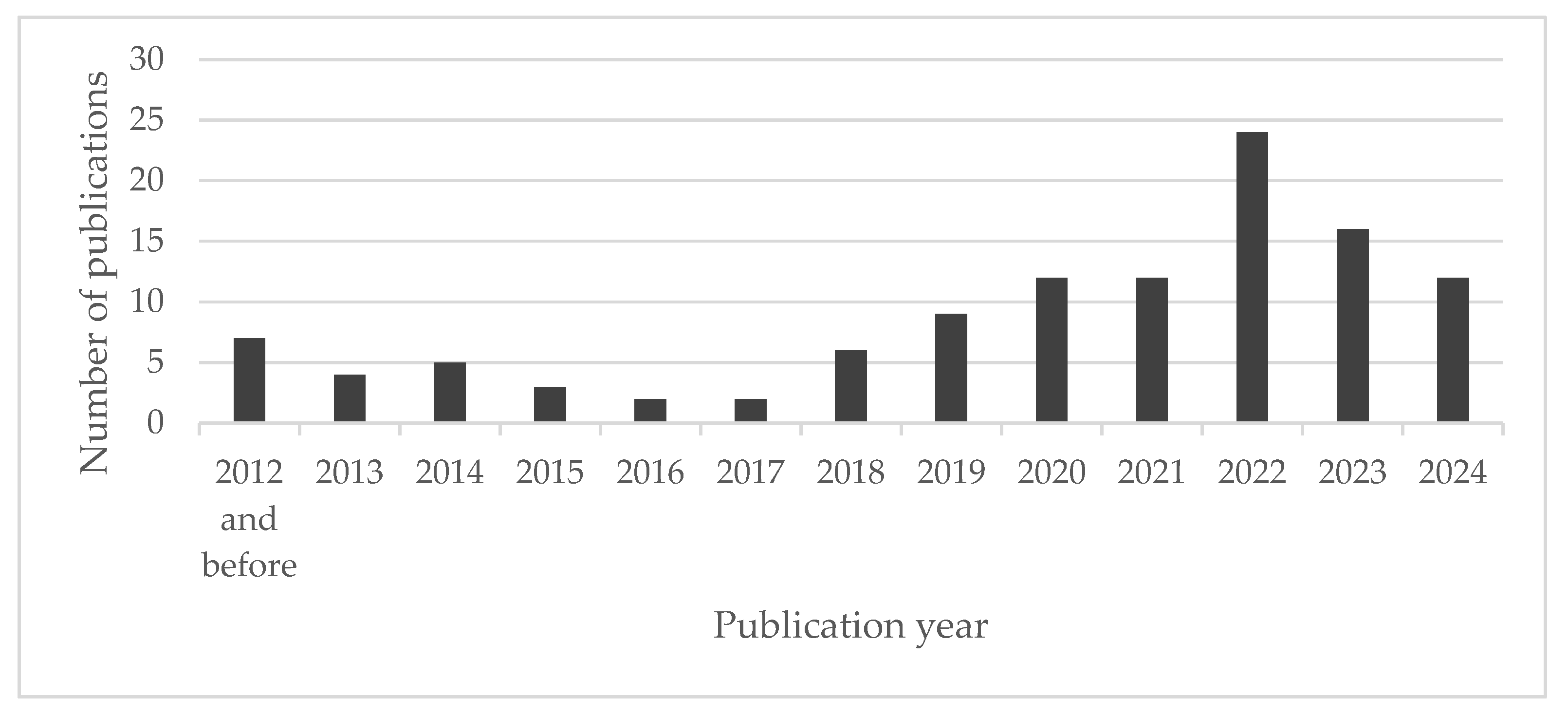
Before analysing the literature in detail, an overview of the publication timeline and the corresponding scientific disciplines of the selected articles is presented. As illustrated in Figure 1, although this branch of literature is relatively new, it has grown rapidly. The first article was published in 2005 (i.e., [50]), while approximately half of the articles were published in 2022 and after.
The majority of these studies focused on European countries (particularly the Netherlands and Germany), demonstrating the development of this approach in this geographical location. At the same time, this geographical concentration can potentially point to the need to extend such computational modelling approaches to other countries and regions.
From a scientific discipline perspective, most studies investigate topics related to economic and technological configurations. For instance, [51] is focused on energy and economic indicators (e.g., self-sufficiency and annual energy cost savings). The economic implications of electric vehicles in CESs are investigated using ABMS in [52], while [53] explores energy market shocks and their effects on CESs. An ABMS is presented in [54] to analyse the expected socio-economic outcomes from a local energy market operation under a double-sided auction with uniform pricing.
Few studies have also focused on the institutional settings and behavioural attributes that underpin the establishment and functioning of CESs. For instance, [55] explores the institutional conditions for establishing industrial CESs; [31] investigates the influence of environmentally friendly behaviour on the collective energy security of CESs. Furthermore, a comprehensive ABMS is presented in [49] based on three theories: (i) the Institutional Analysis and Development (IAD) framework [56] to analyse the decision-making processes, (ii) the four-layer model of Williamson [57] to structure the actors, and (iii) the behavioural reasoning theory (BRT) [58] to structure the agent’s reasoning for the establishment and functioning of CESs.
As a final part of the overview, as elaborated on in Section 2, the most frequently used words in these 115 articles were extracted using VOSviewer. The results of VOSviewer showed 64 common repeated words, excluding the initial keywords used to find the articles (presented in Table 1), which are categorised and presented in Table 2. While considering the results of studies such as [24,38,59] contributed to suggesting the categories; these suggested categories have mainly emerged from the commonly repeated words themselves.
As Table 2 demonstrates, while various topics such as collective action and energy policy are identified in the literature, the (local) energy market, the most frequently repeated topic, is the one studied most. Such a trend emphasises the importance of the CESs’ market design and interactions within the market, potentially evolving the energy market as a whole. Furthermore, from the final energy service/application perspective, the identified repeated common words are mainly directed towards electricity (or are neutral without specifying the final energy service/application).

4.1. The Evolution of Agent-Based Models for Studying CESs

This section presents an overview of the 51 peer-reviewed journal articles that employed ABMS to study CESs and analyse them through the elements of the co-evolutionary framework (see Section 2.2 for the different elements of the co-evolutionary framework).
From the technologies element perspective, the first models were dominated by solar PV as the energy generation technology (e.g., [60]), whereas this element has evolved to include other technologies (e.g., solar PV and storage in [61] and electric vehicles in [52]). Different energy technologies and resources (e.g., solar, geothermal and biomass) and different actors (e.g., municipalities and community boards) are presented in the more recently published ABMs (e.g., [33,62]), while they were missing in the earlier published ABMs. Such evolution not only influenced various RETs but also affected other technological elements, such as energy storage, consumption, and built environment integration (an example is presented in [51]). The same applies to the distribution and consumption technologies, where technologies such as district heating have been included only in recent studies (e.g., [35,63]), mirroring the trends observed in real-world practices, as explained in Section 3. Furthermore, the latest ABMs, such as [35,64], include various technological options (e.g., solar PV, ATES, bio-CHP, and heat pumps) and have evolved into even more complex models.
Formal institutions and user practices have also evolved in recent years. Primary ABMs, such as [65], mainly studied the technical aspects, with formal rules not being the main focus. However, more recent studies, such as [31,49,55], are explicitly developed to explore the roles of institutional design and participants’ attributes in the establishment and functioning of CESs across different settings. Particularly, refs [49,66] study such aspects in urban communities, while [55,62] study the institutional design in industrial CESs. Furthermore, studies such as [63,67] explored factors influencing collective decision-making within CESs, while [68] investigated the role of leadership within CESs. Furthermore, computational modelling exercises also evolved to capture the complexities of agents’ decision-making processes (i.e., the simulation of user practices) in greater detail. For instance, from only focusing on the motivation of households in participating in CESs in earlier studies, recent studies (e.g., [31,63]) include more realistic and detailed decision-making processes.
While all the developed ABMs emphasised the collective-action nature of the CESs, they studied different business strategies and economic considerations within them. For instance, refs [69,70] are focused on the optimal solution for peer-to-peer (P2P) trading within the CESs, while studies such as [34,68] mainly focus on the financial feasibility of the CESs (i.e., studying the prices, rather than making them financially profitable for the joiners). Other studies, such as [71,72], also focus on the other market conditions (e.g., real-time pricing) for the establishment and functioning of CESs. On the other hand, the ecosystems that all these ABMs present are either the CESs themselves (e.g., [32]), multiple CESs, i.e., a city (e.g., [33]) or the entire national energy system (e.g., [53]). A few studies focused on the integration of CESs within the national energy system (e.g., [72]). However, none of these ABMs is considered an element of broader natural ecosystems, such as land, water, and (critical) materials used to establish and function CESs. This might be a shortcoming that falls on the purposes for which such ABMs are developed, which are explained in detail in studies such as [19].
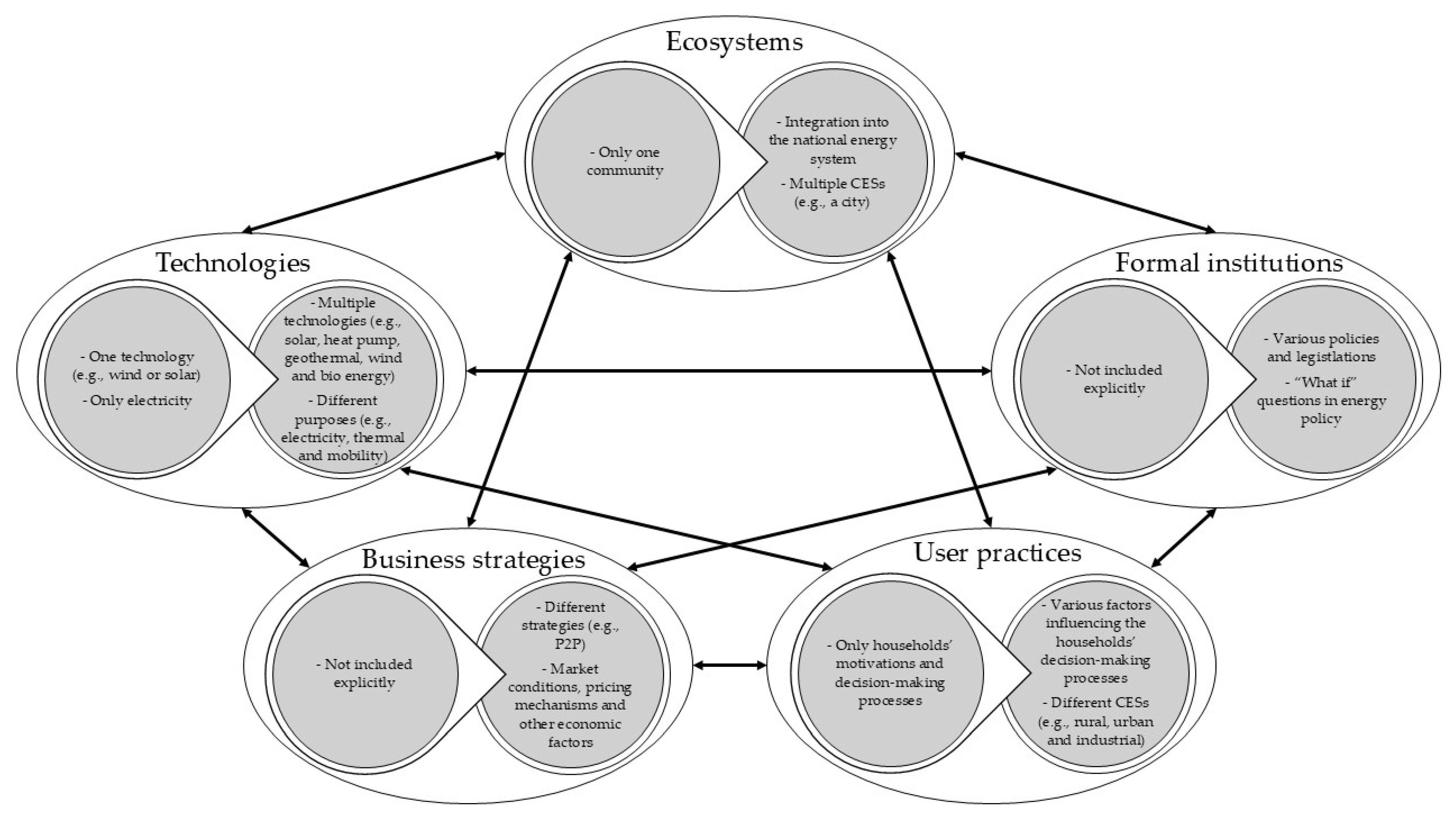
Such trends demonstrate a clear co-evolutionary pattern among different elements of the models (and studies) and real-world practices over time. Figure 2 summarises this co-evolution, using the elements of the co-evolutionary framework.
Along with such patterns, more recent studies are becoming increasingly complex in their approaches and theoretical foundations. For instance, the most recent studies such as [73] integrate ABMS with system dynamics and discrete-event simulation to optimise the techno-economic design of CESs in Italy, exemplifying a complex multi-modelling approach. On the other hand, [35] employed different frameworks, including the Multi-level Governance framework [74], the Institutional Analysis and Development (IAD) framework [56], and the Social Value Orientation (SVO) theory [75] to study the influence of the availability of alternative energy choices on households’ and CESs’ energy transition.

4.2. Demonstration Through the Case of ABMS Application on Collective Energy Security

As explained in Section 3, to provide a concrete example of the evolution of ABMS for studying CESs and to demonstrate the co-evolution of computational modelling and the real world, the five models that study collective energy security are studied in detail. The overview of these models is presented in Table 3.
The model presented in [32] is the first of its kind to study CESs’ energy security using ABMS. It constitutes an exploratory modelling exercise that delineates the application and insights the ABMS could bring to the real world for studying collective energy security. The model includes households as the only agent type, and it is built on the 4As energy security concept (i.e., availability, affordability, accessibility, and acceptability) to study CESs based on solar PV and heat pumps.
In the next attempt, this ABM is extended in [31] to explore and explain how the behavioural attributes of CES participants influence collective energy security, while retaining the 4A energy security framework as its central conceptual foundation. The model incorporates greater complexity in terms of technologies, user practices, and institutional arrangements. For instance, the model also captured bioenergy, geothermal valves, solar energy and heat pumps. The complexities of heterogeneity and decision-making processes also evolved through the adoption of the Social Value Orientation (SVO) theory [75] and the Behavioural Reasoning Theory (BRT) [58].
The ABM presented in [33] was further developed to incorporate a broader range of energy security dimensions, seven in total, based on Ang’s energy security concept (i.e., energy availability, energy prices, infrastructure, societal impact, environment, governance and energy efficiency) [76]. The inclusion of additional energy security dimensions increases the model’s complexity and can therefore be regarded as an evolution in computational modelling practices. While the SVO theory was employed to conceptualise the households’ heterogeneity, the IAD framework structured the decision-making processes in detail. The model also represents further development from the perspectives of CESs and modelling elements, incorporating six energy technologies (i.e., solar energy, heat pump, wood pellet, geothermal valves, combined heat and power, and waste heat from water treatment). Furthermore, in addition to households, it includes municipalities and community boards; thus, it comprises three types of agents representing various actors within the simulation.
Building upon this model, the ABM presented in [34] is purposed to investigate and illustrate the prioritisation of the energy security dimensions in the CES context. Although the model (and the input data) is mostly the same compared to [33], by its novel statistical analysis, the study illustrates that government and infrastructure are more important energy security dimensions in the CES context. Finally, the ABM presented in [35] focuses on explaining and describing the influence of the availability of alternative energy sources, particularly natural gas, on households’ behaviour and on their contribution to the energy transition, with a focus on collective energy security. The model is more complex from a technological perspective as it includes various natural gas sources. Therefore, within this example, the (co-)evolutionary patterns can be identified.

5. Discussions and Conclusions

Computational modelling and simulation have become one of the dominating research approaches in science. While the common view emphasises the influence of such modelling practices on the real world, the influence of real-world conditions on these practices is understudied. Therefore, this study hypothesises and explores the co-evolution of computational modelling exercises and real-world practices and, ultimately, their bidirectional influence. To address this, the study employs the co-evolutionary framework and its five elements: (i) technologies, (ii) formal institutions, (iii) business strategies, (iv) user practices and (v) ecosystem [14], and focuses on the application of agent-based modelling and simulation (ABMS) to study community energy systems (CESs) as its case study.
As the results show, this branch of literature is relatively new (i.e., the oldest journal publication dates to 2005), while around half of the studies were published during and after 2022. As presented in Section 4, most of these models and studies focus on questions related to the technical aspects (e.g., technical design and configurations) and economic issues (e.g., local energy market design) of CESs. Although the insights are useful for the relevant stakeholders, they largely neglect certain elements, such as institutional and environmental settings. Furthermore, most studies used case studies from European countries.
From the co-evolution perspective, the CESs and the ABMs have evolved and become more complex. Section 3 and Section 4 demonstrate both the concept of CESs and the application of ABMS for studying such complex systems that have evolved over time. Following the co-evolutionary framework elaborated in the previous sections, technologies and business strategies have evolved significantly in both real-world practices and computational modelling exercises. For instance, beyond solar PV, the CESs and ABMs included other options such as heat pumps, biomass, and geothermal. It can be speculated that real-world applications have driven this evolution, and the ABMS is used to provide insights into how they should function (e.g., technological design and market settings). However, this differs for formal institutions and user practices, where ABMs are more exploratory and address “what if” questions to explore different possibilities. Therefore, the real world learns from such experiments to facilitate the establishment and functioning of CESs. Formal institutions and ecosystems are the least evolved elements in both, indicating a considerable gap in this branch of the literature. By studying five ABMs developed for studying the collective energy security of CESs, the study demonstrated a clear analysis as an example of the evolution of the models.
Through its unique approach, the study demonstrated the influence of co-evolutionary patterns between computational modelling exercises and real-world practices, which were the study’s main aim and hypothesis. The findings added to previous studies, such as [19,27], which only focused on the modelling aspects and did not analyse the models’ evolution (and studies such as [15], which did not address the evolution in CESs). Such an approach provides a new perspective for understanding how modelling exercises may influence real-world practices and vice versa. However, considering that modelling purposes have been limited so far, as demonstrated in [19], such influences are limited. Therefore, it is necessary to repeat the analysis after the literature has been further expanded and other elements of the co-evolutionary framework have also evolved, both in computational modelling exercises and in real-world practices.

5.1. Limitations

Although the study provides valuable insights, it has certain limitations. Firstly, focusing on the literature on the application of ABMS to CESs is a limitation. Although this example highlights the (co-)evolutionary patterns of the models, it still relies on a specific underlying system and a limited set of models. Furthermore, given the recent emergence of this field, its evolutionary trajectory has not yet fully crystallised. Therefore, as the literature matures, future research should revisit the objective of this study and further investigate its co-evolutionary dynamics. Future research could also investigate the hypothesis of this study (i.e., co-evolution of computational modelling exercises and real-world practices, and their bidirectional influences) in other domains and methods (e.g., optimisation and system dynamics in energy systems). In addition, further research could also investigate the causal mechanisms and dynamics underlying such co-evolution.
Particularly, delving into the application of ABMS to collective energy security is another limitation. Although studying collective energy security is a concrete example of this evolution (with five models, it has among the highest numbers of models developed for a given topic in this branch of the literature), it does not cover all ABMs and topics in this branch of the literature. Therefore, in future studies, additional computational models and other topics (e.g., social acceptance and participation) could be examined to help confirm the findings of the current study.
Thirdly, the study theoretically employed the co-evolutionary framework presented in [14]. However, there are other frameworks, such as the Overview, Design Concepts and Details (ODD) [34] and MAIA [29], that could be used for this analysis of the ABMs. Although such a detailed analysis of the models was not the purpose of the current study (and studies such as [19,27] and have already performed this analysis), such an analysis could provide a detailed analysis that could potentially contribute to a deeper understanding of the modelling evolution.
Furthermore, the study does not explicitly cover all elements of the modelling practices and the CES’s real-world conditions, including temporal and spatial ones. For instance, while the spatial scale of CESs and the modelling elements associated with it (e.g., the number of simulated households, CESs, and cities) are discussed, they have not been analysed in detail. Therefore, future research could focus on such elements and conditions and study them more explicitly.
Finally, it should be noted that keyword selection plays a crucial role in the literature under investigation. As explained in Section 2, the keywords were deliberately chosen to identify literature concerning CESs and ABMS as a computational modelling approach. Future research could instead focus on specific renewable energy technologies or resources, such as solar or geothermal energy, and incorporate corresponding technology-specific keywords. Moreover, this study was limited to peer-reviewed journal articles published in English. Future reviews could broaden the scope by including other types of publications, such as book chapters and policy documents (also in other languages).

5.2. Recommendations and Future Work

Through its structured approach, employing a co-evolutionary framework and focusing on the literature on the application of ABMS to CESs, the study aimed to understand the bidirectional influence between modelling practices and the real world. Such perspectives have not been applied in the literature, leading to a discussion of the concept and modelling of CESs. This is yet another contribution of the current study, as it demonstrates the usefulness of these frameworks for structuring and theorising the co-evolution of CESs and ABMS.
Based on the results and insights, the following observations and recommendations for future research are formulated:
There is a co-evolutionary pattern between real-world practices and computational modelling exercises. Such patterns are dynamic and may be driven by the real world or by modelling practices.
From the co-evolutionary perspective, there is a need to include and study the latest status of each element. Although computational modelling exercises are always a simpler version of reality, incorporating the latest status and developments for each element could make the insights more useful, particularly for models used for description, illustration, and explanation.
The CES practices in the real world and the ABMS as computational modelling tools for studying them are co-evolving. It is necessary to connect this co-evolution to better understand the changes.
The analysed literature is dominated by studies focusing on technologies, business strategies and user practice elements. Formal institutions and ecosystem elements are largely neglected and need to be more fully incorporated into modelling exercises.
Although the study brought new insights to light and provided concrete recommendations, it is important to remember that it is one of the first attempts of its kind. Therefore, it should be seen as a starting point for crystallising the co-evolution between modelling practices and the real world, a process that requires further investigation. In this vein, the application of LLMs could be useful, as suggested by studies such as [77]. Along with the mentioned recommendations, which can also be seen as avenues for future research, the limitations are also discussed in Section 5.1. These could also be seen as recommendations to be explored. By adopting the co-evolutionary perspective and delving into details of the application of ABMS for studying CESs, the study and its insights contributed to the literature on (i) computational social simulation, particularly ABMS, and (ii) the literature on community energy systems, complex energy transition and sustainability in general.

Funding

This research received no external funding.

Institutional Review Board Statement

Not applicable.

Informed Consent Statement

Not applicable.

Data Availability Statement

The datasets used and/or analysed during the current study are available from the corresponding author on reasonable request.

Acknowledgments

Although the author is fully responsible for the study, its approach and its results, the author would like to thank Amineh Ghorbani, Christopher Frantz, Bruce Edmonds and Harko Verhagen for their constructive and inspiring discussions at the beginning of this study. In addition, the support of Martin Junginger and Ernst Worrell for this study was highly appreciated.

Conflicts of Interest

The author declares no conflicts of interest.

References

  1. Button, T.; Walsh, S. Philosophy and Model Theory; Oxford University Press: Oxford, UK, 2018. [Google Scholar] [CrossRef] [Scilit]
  2. Schweiger, G.; Nilsson, H.; Schoeggl, J.; Birk, W.; Posch, A. Modeling and simulation of large-scale systems: A systematic comparison of modeling paradigms. Appl. Math. Comput. 2020, 365, 124713. [Google Scholar] [CrossRef] [Scilit]
  3. Lenhard, J. Computer Simulation: The Cooperation between Experimenting and Modeling. Philos. Sci. 2007, 74, 176–194. [Google Scholar] [CrossRef] [Scilit]
  4. Edwards, M.; Hoosain, H. The Philosophy of Modelling. In Proceedings of the Staple Inn Actuarial Society, London, UK, 18 October 2012. [Google Scholar]
  5. Orzack, S.H. The philosophy of modelling or does the philosophy of biology have any use? Philos. Trans. R. Soc. B Biol. Sci. 2012, 367, 170–180. [Google Scholar] [CrossRef] [Scilit]
  6. Beven, K.; Mathematical, S.P.; Sciences, E. Towards a Coherent Philosophy for Modelling the Environment Linked references are available on JSTOR for this article: Towards a coherent philosophy for modelling the environment. Proc. Math. Phys. Eng. Sci. 2026, 458, 2465–2484. [Google Scholar]
  7. Schmidt, G.A.; Sherwood, S. A practical philosophy of complex climate modelling. Eur. J. Philos. Sci. 2014, 5, 149–169. [Google Scholar] [CrossRef] [Scilit]
  8. Randall, D.A.; Bitz, C.M.; Danabasoglu, G.; Denning, A.S.; Gent, P.R.; Gettelman, A.; Griffies, S.M.; Lynch, P.; Morrison, H.; Pincus, R.; et al. 100 Years of Earth System Model Development. Meteorol. Monogr. 2019, 59, 12.1–12.66. [Google Scholar] [CrossRef] [Scilit]
  9. Bordoni, S.; Kang, S.M.; Shaw, T.A.; Simpson, I.R.; Zanna, L. The futures of climate modeling. npj Clim. Atmos. Sci. 2025, 8, 99. [Google Scholar] [CrossRef] [Scilit]
  10. Rawat, A.; Kumar, D.; Khati, B.S. A review on climate change impacts, models, and its consequences on different sectors: A systematic approach. J. Water Clim. Change 2023, 15, 104–126. [Google Scholar] [CrossRef] [Scilit]
  11. Subramanian, A.S.R.; Gundersen, T.; Adams, T.A. Modeling and Simulation of Energy Systems: A Review. Processes 2018, 6, 238. [Google Scholar] [CrossRef] [Scilit]
  12. Ma, T.; Nakamori, Y. Modeling technological change in energy systems—From optimization to agent-based modeling. Energy 2009, 34, 873–879. [Google Scholar] [CrossRef] [Scilit]
  13. Edmonds, B.; Page, C.L.; Bithell, M.; Grimm, V.; Meyer, R.; Montañola, C.; Ormerod, P.; Root, H.; Squazzoni, F. Different Modelling Purposes. J. Artif. Soc. Soc. Simul. 2018, 22, 6. [Google Scholar] [CrossRef] [Scilit]
  14. Foxon, T.J. A coevolutionary framework for analysing a transition to a sustainable low carbon economy. Ecol. Econ. 2011, 70, 2258–2267. [Google Scholar] [CrossRef] [Scilit]
  15. Bauwens, T.; Schraven, D.; Drewing, E.; Radtke, J.; Holstenkamp, L.; Gotchev, B.; Yildiz, Ö. Conceptualizing community in energy systems: A systematic review of 183 definitions. Renew. Sustain. Energy Rev. 2022, 156, 111999. [Google Scholar] [CrossRef] [Scilit]
  16. Oteman, M.; Wiering, M.; Helderman, J.-K. The institutional space of community initiatives for renewable energy: A comparative case study of the Netherlands, Germany and Denmark. Energy Sustain. Soc. 2014, 4, 11. [Google Scholar] [CrossRef] [Scilit]
  17. Fouladvand, J.; Bauwens, T.; Ghorbani, A. The Energy Commons and Commoning: Collective Action in Energy Transitions. Int. J. Commons 2026, 20, 90–95. [Google Scholar] [CrossRef] [Scilit]
  18. Bauwens, T.; Wade, R.; Burke, M. The energy commons: A systematic review, paradoxes, and ways forward. Energy Res. Soc. Sci. 2024, 118, 103776. [Google Scholar] [CrossRef] [Scilit]
  19. Fouladvand, J. Why and how can agent-based modelling be applied to community energy systems? A systematic and critical review. Energy Res. Soc. Sci. 2024, 114, 103572. [Google Scholar] [CrossRef] [Scilit]
  20. Bonabeau, E. Agent-based modeling: Methods and techniques for simulating human systems. Proc. Natl. Acad. Sci. USA 2002, 99, 7280–7287. [Google Scholar] [CrossRef] [Scilit]
  21. Railsback, S.F.; Grimm, V. Agent-Based and Individual-Based Modeling: A Practical Introduction; Princeton University Press: Princeton, NJ, USA, 2012. [Google Scholar]
  22. Wilensky, U.; Rand, W. An Introduction to Agent-Based Modeling; The MIT Press: Cambridge, MA, USA, 2015. [Google Scholar]
  23. DeAngelis, D.L.; Grimm, V. Individual-based models in ecology after four decades. F1000Prime Rep. 2014, 6, 39. [Google Scholar] [CrossRef] [Scilit]
  24. Fouladvand, J.; Ghorbani, A.; Mouter, N.; Herder, P. Analysing community-based initiatives for heating and cooling: A systematic and critical review. Energy Res. Soc. Sci. 2022, 88, 102507. [Google Scholar] [CrossRef] [Scilit]
  25. van Eck, N.J.; Waltman, L. VOSviewer Manual; Univeristeit Leiden: Leiden, The Netherlands, 2013; Available online: http://www.vosviewer.com/documentation/Manual_VOSviewer_1.6.1.pdf (accessed on 27 January 2026).
  26. Geels, F.W.; Schot, J. Typology of sociotechnical transition pathways. Res. Policy 2007, 33, 399–417. [Google Scholar] [CrossRef] [Scilit]
  27. Akhatova, A.; Kranzl, L.; Schipfer, F.; Heendeniya, C.B. Agent-Based Modelling of Urban District Energy System Decarbonisation—A Systematic Literature Review. Energies 2022, 15, 554. [Google Scholar] [CrossRef] [Scilit]
  28. Grimm, V.; Berger, U.; Bastiansen, F.; Eliassen, S.; Ginot, V.; Giske, J.; Goss-Custard, J.; Grand, T.; Heinz, S.K.; Huse, G.; et al. A standard protocol for describing individual-based and agent-based models. Ecol. Model. 2006, 198, 115–126. [Google Scholar] [CrossRef] [Scilit]
  29. Ghorbani, A.; Bots, P.; Dignum, V.; Dijkema, G. MAIA: A Framework for Developing Agent-Based Social Simulations. J. Artif. Soc. Soc. Simul. 2013, 16, 9. [Google Scholar] [CrossRef] [Scilit]
  30. Masad, D.; Kazil, J. Mesa: An Agent-Based Modeling Framework. SciPy. 2015, pp. 51–58. Available online: https://pub.curvenote.com/019072c5-228a-75b1-be8f-42081b76576f/public/jacqueline_kazil-370aef50969e07e118a2830526947995.pdf (accessed on 27 May 2026).
  31. Fouladvand, J. Behavioural attributes towards collective energy security in thermal energy communities: Environmental-friendly behaviour matters. Energy 2022, 261, 125353. [Google Scholar] [CrossRef] [Scilit]
  32. Fouladvand, J.; Verkerk, D.; Nikolic, I.; Ghorbani, A. Modelling Energy Security: The Case of Dutch Urban Energy Communities; Springer International Publishing: Berlin/Heidelberg, Germany, 2022. [Google Scholar] [CrossRef] [Scilit]
  33. Fouladvand, J.; Ghorbani, A.; Sarı, Y.; Hoppe, T.; Kunneke, R.; Herder, P. Energy security in community energy systems: An agent-based modelling approach. J. Clean. Prod. 2022, 366, 132765. [Google Scholar] [CrossRef] [Scilit]
  34. Fouladvand, J.; Sarı, Y.; Ghorbani, A. Infrastructure and governance: Prioritising energy security dimensions for community energy systems. Energy Res. Soc. Sci. 2024, 116, 103676. [Google Scholar] [CrossRef] [Scilit]
  35. Fouladvand, J.; Ateş, E.; Sarı, Y.; Okur, Ö. Does the availability of alternative energy choices lead to more environmentally friendly outcomes? The case of thermal energy communities and natural gas consumption. Appl. Energy 2024, 374, 123932. [Google Scholar] [CrossRef] [Scilit]
  36. Lowitzsch, J.; Croonenbroeck, C.; Novo, R. Feeding bees according to desired honey type: Tailoring support for European Energy Communities to their function to escape the energy trilemma. Energy Res. Soc. Sci. 2024, 114, 103579. [Google Scholar] [CrossRef] [Scilit]
  37. Koltunov, M.; Pezzutto, S.; Bisello, A.; Lettner, G.; Hiesl, A.; van Sark, W.; Louwen, A.; Wilczynski, E. Mapping of Energy Communities in Europe: Status Quo and Review of Existing Classifications. Sustainability 2023, 15, 8201. [Google Scholar] [CrossRef] [Scilit]
  38. Koirala, B.P.; Koliou, E.; Friege, J.; Hakvoort, R.A.; Herder, P.M. Energetic communities for community energy: A review of key issues and trends shaping integrated community energy systems. Renew. Sustain. Energy Rev. 2016, 56, 722–744. [Google Scholar] [CrossRef] [Scilit]
  39. Hier Report on Energy Communities 2025. Bewonersinitiatieven in Beeld Bewonersiniti-Atieven in de Energietransitie Inhoud Colofon. Available online: https://www.hier.nu/system/files/inline/Bewonersinitiatieven_in_beeld_HIER_.pdf (accessed on 27 May 2026).
  40. Eriksson Berggren, S.; Witt, T.; Van der Linden, E.; Saes, L.; Arvefjord, L.E.; Heckenberg, D.; Iglauer, T.; Sutinen, L.; Hanning, E.; Melin, G. Energy Communities. 2023. Available online: https://pub.norden.org/nordicenergyresearch2023-03/ (accessed on 27 May 2026).
  41. CEER. Regulatory Aspects of Self-Consumption and Energy Communities; Ref: C18-CRM9_DS7-05-03; Council of European Energy Regulators: Brussels, Belgium, 2019; Available online: https://www.ceer.eu/wp-content/uploads/2024/04/C18-CRM9_DS7-05-03_Report-on-Regulatory-Aspects-of-Self-Consumption-and-Energy-Communities_final.pdf (accessed on 27 May 2026).
  42. European Commission, Directorate-General for Energy. Barriers and Action Drivers for the Development of Energy Communities & Their Activities. Energy Communities Repository. 2024. Available online: https://energy-communities-repository.ec.europa.eu/report-barriers-and-action-drivers-development-energy-communities-their-activities_en (accessed on 27 May 2026).
  43. European Commission, BUILD-UP. Energy Communities Repository: A Roadmap to Developing a Policy and Legal Framework That Enables the Development of Energy Communities. 2024. Available online: https://build-up.ec.europa.eu/system/files/2024-03/c6990021-e30c-4b29-9dd9-147989a1869b_en.pdf (accessed on 27 May 2026).
  44. Iazzolino, G.; Sorrentino, N.; Menniti, D.; Pinnarelli, A.; De Carolis, M.; Mendicino, L. Energy communities and key features emerged from business models review. Energy Policy 2022, 165, 112929. [Google Scholar] [CrossRef] [Scilit]
  45. Vernay, A.-L.; Sebi, C.; Arroyo, F. Energy community business models and their impact on the energy transition: Lessons learnt from France. Energy Policy 2023, 175, 113473. [Google Scholar] [CrossRef] [Scilit]
  46. Koirala, B.P.; Araghi, Y.; Kroesen, M.; Ghorbani, A.; Hakvoort, R.A.; Herder, P.M. Trust, awareness, and independence: Insights from a socio-psychological factor analysis of citizen knowledge and participation in community energy systems. Energy Res. Soc. Sci. 2018, 38, 33–40. [Google Scholar] [CrossRef] [Scilit]
  47. Brouwer, B.; van Bergem, R.; Renes, S.; Kamp, L.M.; Hoppe, T. Does local ownership matter? A comparative analysis of fourteen wind energy projects in the Netherlands. Energy Res. Soc. Sci. 2025, 120, 103891. [Google Scholar] [CrossRef] [Scilit]
  48. Kazmi, H.; Munné-Collado, Í.; Mehmood, F.; Syed, T.A.; Driesen, J. Towards data-driven energy communities: A review of open-source datasets, models and tools. Renew. Sustain. Energy Rev. 2021, 148, 111290. [Google Scholar] [CrossRef] [Scilit]
  49. Fouladvand, J.; Rojas, M.A.; Hoppe, T.; Ghorbani, A. Simulating thermal energy community formation: Institutional enablers outplaying technological choice. Appl. Energy 2022, 306, 117897. [Google Scholar] [CrossRef] [Scilit]
  50. Lum, R.; Kotak, D.; Gruver, W. Multi-agent coordination of distributed energy systems. In 2005 IEEE International Conference on Systems, Man and Cybernetics; IEEE: New York, NY, USA, 2005; Volume 3, pp. 2584–2589. [Google Scholar] [CrossRef] [Scilit]
  51. Mussawar, O.; Urs, R.R.; Mayyas, A.; Azar, E. Performance and prospects of urban energy communities conditioned by the built form and function: A systematic investigation using agent-based modeling. Sustain. Cities Soc. 2023, 99, 104957. [Google Scholar] [CrossRef] [Scilit]
  52. Faia, R.; Ribeiro, B.; Goncalves, C.; Gomes, L.; Vale, Z. Multi-agent based energy community cost optimization considering high electric vehicles penetration. Sustain. Energy Technol. Assess. 2023, 59, 103402. [Google Scholar] [CrossRef] [Scilit]
  53. Madler, J.; Harding, S.; Weibelzahl, M. A multi-agent model of urban microgrids: Assessing the effects of energy-market shocks using real-world data. Appl. Energy 2023, 343, 121180. [Google Scholar] [CrossRef] [Scilit]
  54. Beattie, S.; Chan, W.V.; Wei, Z.; Zhu, Z. Simulation Analysis of a Double Auction-Based Local Energy Market in Socio-Economic Context. Sustainability 2022, 14, 7642. [Google Scholar] [CrossRef] [Scilit]
  55. Eslamizadeh, S.; Ghorbani, A.; Weijnen, M. Establishing industrial community energy systems: Simulating the role of institutional designs and societal attributes. J. Clean. Prod. 2023, 419, 138009. [Google Scholar] [CrossRef] [Scilit]
  56. Ostrom, E. Background on the Institutional Analysis and Development Framework. Policy Stud. J. 2011, 39, 7–27. [Google Scholar] [CrossRef] [Scilit]
  57. Williamson, O.E. Transaction cost economics: How it works; where it is headed. De Econ. 1998, 146, 23–58. [Google Scholar] [CrossRef] [Scilit]
  58. Westaby, J.D. Behavioral reasoning theory: Identifying new linkages underlying intentions and behavior. Organ. Behav. Hum. Decis. Process. 2005, 98, 97–120. [Google Scholar] [CrossRef] [Scilit]
  59. Van Summeren, L.F.; Wieczorek, A.J.; Verbong, G.P. The merits of becoming smart: How Flemish and Dutch energy communities mobilise digital technology to enhance their agency in the energy transition. Energy Res. Soc. Sci. 2021, 79, 102160. [Google Scholar] [CrossRef] [Scilit]
  60. Bellekom, S.; Arentsen, M.; van Gorkum, K. Prosumption and the distribution and supply of electricity. Energy Sustain. Soc. 2016, 6, 22. [Google Scholar] [CrossRef] [Scilit]
  61. Mussawar, O.; Mayyas, A.; Azar, E. Energy storage enabling renewable energy communities: An urban context-aware approach and case study using agent-based modeling and optimization. Sustain. Cities Soc. 2024, 115, 105813. [Google Scholar] [CrossRef] [Scilit]
  62. Eslamizadeh, S.; Ghorbani, A.; Costa, R.C.B.F.; Künneke, R.; Weijnen, M. Industrial community energy systems: Simulating the role of financial incentives and societal attributes. Front. Environ. Sci. 2022, 10, 924509. [Google Scholar] [CrossRef] [Scilit]
  63. Mu, X.; Yang, D.; Han, Q. Collective heat-transition voting: An agent-based model integrating bounded confidence, social pressure, and information diffusion. Energy Strategy Rev. 2025, 63, 102001. [Google Scholar] [CrossRef] [Scilit]
  64. Zhou, Y.; Liu, J. Advances in emerging digital technologies for energy efficiency and energy integration in smart cities. Energy Build. 2024, 315, 114289. [Google Scholar] [CrossRef] [Scilit]
  65. Jiang, Z. Agent-based power sharing scheme for active hybrid power sources. J. Power Sources 2008, 177, 231–238. [Google Scholar] [CrossRef] [Scilit]
  66. Fichera, A.; Marrasso, E.; Sasso, M.; Volpe, R. Energy, environmental and economic performance of an urban community hybrid distributed energy system. Energies 2020, 13, 2545. [Google Scholar] [CrossRef] [Scilit]
  67. Nava-Guerrero, G.-D.; Hansen, H.H.; Korevaar, G.; Lukszo, Z. The effect of group decisions in heat transitions: An agent-based approach. Energy Policy 2021, 156, 112306. [Google Scholar] [CrossRef] [Scilit]
  68. Ghorbani, A.; Nascimento, L.; Filatova, T. Growing community energy initiatives from the bottom up: Simulating the role of behavioural attitudes and leadership in the Netherlands. Energy Res. Soc. Sci. 2020, 70, 101782. [Google Scholar] [CrossRef] [Scilit]
  69. Pereira, H.; Gomes, L.; Vale, Z. Peer-to-peer energy trading optimization in energy communities using multi-agent deep reinforcement learning. Energy Inform. 2022, 5, 44. [Google Scholar] [CrossRef] [Scilit]
  70. Lovati, M.; Zhang, X.; Huang, P.; Olsmats, C.; Maturi, L. Optimal simulation of three peer to peer (P2P) business models for individual PV prosumers in a local electricity market using agent-based modelling. Buildings 2020, 10, 138. [Google Scholar] [CrossRef] [Scilit]
  71. Algarvio, H. Management of local citizen energy communities and bilateral contracting in multi-agent electricity markets. Smart Cities 2021, 4, 1437–1453. [Google Scholar] [CrossRef] [Scilit]
  72. Sarfarazi, S.; Sasanpour, S.; Bertsch, V. Integration of energy communities in the electricity market: A hybrid agent-based modeling and bilevel optimization approach. Energy Rep. 2024, 12, 1178–1196. [Google Scholar] [CrossRef] [Scilit]
  73. Sanfilippo, S.; Farina, L.; Vito, P.D.E. Multi-Method Simulation and Optimisation for Maximising Benefits in Renewable Energy Communities: A Real-World Case Study from. Balt. J. Mod. Comput. 2025, 13, 200–220. [Google Scholar] [CrossRef] [Scilit]
  74. Scharpf, F.W. Introduction: The problem-solving capacity of multi-level governance. J. Eur. Public Policy 1997, 4, 520–538. [Google Scholar] [CrossRef] [Scilit]
  75. Murphy, R.O.; Ackermann, K.A.; Handgraaf, M.J.J. Measuring Social Value Orientation. Judgm. Decis. Mak. 2011, 6, 771–781. [Google Scholar] [CrossRef] [Scilit]
  76. Ang, B.; Choong, W.; Ng, T. Energy security: Definitions, dimensions and indexes. Renew. Sustain. Energy Rev. 2015, 42, 1077–1093. [Google Scholar] [CrossRef] [Scilit]
  77. Lu, Z.; Wang, W.; Guo, T.; Li, Y.; Wang, F. Decoding urban policies: NLP-driven concise explanations. Environ. Plan. B Urban Anal. City Sci. 2025, 53, 125–142. [Google Scholar] [CrossRef] [Scilit]
Figure 1. Timeline of published articles.
Sustainability 18 09095 g001
Figure 2. Co-evolution of computational modelling exercises and real-world practices.
Sustainability 18 09095 g002
Table 1. Keywords used for the literature review.
Combinations of the KeywordsNumber of Articles
“agent-based” AND “energy community”65
“agent-based” AND “community energy system”16
“agent-based” AND “energy initiative”3
“agent-based” AND “energy cooperative”1
“agent-based” AND “local energy system”7
“agent-based” AND “distributed energy system”17
“agent-based” AND “decentralised energy system”5
“agent-based” AND “energy” AND “collective action”12
“agent-based” AND “renewable energy” AND “bottom-up”13
Total, excluding the duplicates115
Table 2. Overview of repeated common words (i.e., topics) in the studied literature.
Suggested CategoryIdentified Repeated Common Words
Economics and the marketpower markets, energy markets, local energy market, investments, economics
Energy systemsenergy management, energy efficiency, energy conservation, energy utilisation, electric industry
Other theoretical backgroundsenergy policy, decision-making, collective action, demand response, commerce, consumer behaviour
Research approachreinforcement learning, learning systems, optimisation
Type of networkpeer-to-peer
Energy technologiessmart power grids, smart grid, electric energy storage, microgrids, energy storage, electric power distribution, wind power, electric power transmission networks, digital storage
General keywords related to modelling and simulationautonomous agents, multi-agent systems, multi-agent, computational methods, simulation platform
General keywords related to the energy systemsalternative energy, energy systems, energy use, energy transitions, heating
Table 3. Overview of ABMs on collective energy security.
The StudyModelling PurposeAgentsSizeEnergy TechnologiesBackbone Concepts
[32]Explore and describeOnly Households (HH)1 Neighbourhood (500 HH) Solar PV + Heat Pumps4As concept
SVO theory
[31]Explore and explainOnly Households (HH)1 Neighbourhood (750 HH) Biogas, ATES, Solar PV + Heat Pumps, Wood pellet4As concept
SVO theory
BRT
[33]ExploreHouseholds (HH) & Leader
& Municipality
A city, Several Neighbourhoods (600 HH/N) Biogas, ATES, Solar PV + Heat Pumps, Wood pellet7 Energy Security dimensions
SVO theory
IAD framework
[34]Investigate and illustrate Households (HH) & Leader
& Municipality
A city, Several Neighbourhoods (600 HH/N) Biogas, ATES, Solar PV + Heat Pumps, Wood pellet7 Energy Security dimensions
SVO theory
IAD framework
[35]Explain and describeHouseholds (HH) & Leader
& Municipality
A city, Several Neighbourhoods (600 HH/N) Biogas, ATES, Solar PV + Heat Pumps, Wood pellet7 Energy Security dimensions
Multi-level governance
SVO theory
IAD framework
Disclaimer/Publisher’s Note: The statements, opinions and data contained in all publications are solely those of the individual author(s) and contributor(s) and not of MDPI and/or the editor(s). MDPI and/or the editor(s) disclaim responsibility for any injury to people or property resulting from any ideas, methods, instructions or products referred to in the content.