1. Introduction
Textile waste is one of the major environmental challenges associated with changing patterns of production and consumption in the textile industry. Rising clothing production and consumption, particularly in the context of fast fashion, generate substantial quantities of textile waste, with a significant proportion of discarded textiles ending up in landfills or being incinerated. These practices are associated with soil, water and air pollution, as well as increased greenhouse gas emissions. The textile and fashion sector is one of the largest industrial sectors worldwide, and its environmental footprint is characterised by high energy and water consumption, intensive use of raw materials and the generation of considerable quantities of waste. Accelerating production and consumption patterns place increasing pressure on existing waste management systems and hinder the achievement of sustainable development goals [
1,
2].
Textile waste comprises various types of discarded textile products generated throughout the production, distribution, and consumption stages of the textile value chain. Within the framework of the circular economy, textile products are increasingly regarded as valuable resources that should remain in use for as long as possible through reuse, repair, and recycling. Kalambura et al. [
3] emphasise that effective textile waste management is an essential prerequisite for conserving natural resources and reducing adverse environmental impacts. However, achieving these objectives requires not only technological solutions and appropriate collection and recycling infrastructure but also changes in consumer behaviour and greater awareness of the consequences of excessive consumption.
According to the European Parliament, the average resident of the European Union purchases approximately 26 kg of textiles each year, while around 11 kg is discarded as waste. It is estimated that approximately 92 million tonnes of textile waste is generated globally each year, with this figure projected to increase to 134 million tonnes by 2030 [
2,
4]. Most discarded textiles still end up in landfills or are incinerated, while only a small proportion is reused or recycled. These figures highlight the challenges associated with establishing effective separate textile waste collection systems, expanding reuse and recycling capacities, and promoting more sustainable patterns of production and consumption.
One of the principal drivers of increasing textile waste generation is fast fashion. Fast fashion is defined as a clothing production and retail model characterised by a rapid response to current fashion trends, frequent changes in collections, and low product prices [
5]. While this business model enables consumers to purchase clothing more frequently, it also contributes to shorter product lifespans and consequently increased textile waste generation. Centobelli et al. [
1] argue that fast fashion is driven by high rates of production and consumption, resulting in increased pressure on natural resources and the generation of substantial quantities of textile waste. More recently, this model has evolved into ultra-fast fashion and increasingly digitalised forms of consumption. Online platforms and brands such as SHEIN combine rapid product turnover with continuous online availability and digitally mediated marketing, while mobile applications and social media further reduce the distance between exposure to fashion trends and purchasing decisions [
6,
7]. These mechanisms are particularly relevant for younger, digitally engaged consumers and may contribute to frequent and convenience-driven fashion purchasing. Recent research on Generation Z consumers of SHEIN illustrates how digital fast-fashion consumption can coexist with environmental concern, further highlighting the complexity of translating sustainability awareness into purchasing behaviour [
8].
Furthermore, the development of global supply chains has enabled the relocation of textile production to countries with lower labour costs, making clothing more affordable and accessible to a broader consumer market. However, this production model is frequently associated with poor working conditions, low wages, and inadequate protection of workers’ rights [
9]. A substantial proportion of the textile industry workforce consists of women, particularly in developing countries, who are often exposed to insecure working conditions and various forms of discrimination [
10]. Consequently, fast fashion is not only an environmental challenge but also has important social and economic dimensions, particularly with regard to working conditions and the protection of workers’ rights. The impacts of fast fashion are also reflected in the intensive use of natural resources. The textile industry is associated with high water consumption, greenhouse gas emissions, wastewater discharge, and microplastic pollution. The fashion industry is estimated to account for a significant share of global carbon dioxide emissions and is recognised as one of the largest consumers of water among industrial sectors [
11]. At the same time, limited textile recycling capacities contribute to the continuous accumulation of textile waste in landfills and incineration facilities. Although sustainable fashion, circular economy principles, and the environmental impacts of fast fashion have received increasing attention, empirical evidence on how young consumers connect environmental awareness with their everyday purchasing and textile disposal practices remains limited in the Croatian context. Students are a relevant group in this respect because they represent young consumers who are exposed to rapidly changing fashion trends and increasingly digitalised forms of consumption, while their purchasing decisions may still be strongly influenced by price and accessibility. Previous research on younger generations has also shown that positive environmental attitudes do not necessarily translate into sustainable fashion consumption, indicating a persistent attitude–behaviour gap [
12,
13,
14,
15]. Recent experimental research with Generation Z further suggests that targeted behavioural interventions can encourage more sustainable fashion choices [
16].
The Croatian context adds a practical dimension to this issue. The transition towards more circular textile management depends not only on consumers’ willingness to purchase, reuse, and dispose of clothing more responsibly, but also on the availability of appropriate collection and recovery systems. This has become particularly relevant following the introduction of mandatory separate collection of textile waste across the European Union from January 2025 [
17]. For Croatia, where separate textile collection and recycling infrastructure is still developing [
18], understanding how consumers perceive textile waste and what prevents more sustainable practices is particularly relevant as these new requirements are being implemented. Against this background, the present study addresses a specific gap by examining environmental awareness, attitudes towards sustainable fashion, purchasing intentions, and self-reported textile management practices among a sample of students in Croatia. Particular attention is given to whether environmental concern is reflected in attitudes towards sustainable practices and whether respondents are willing to modify their consumption patterns. By examining these relationships alongside perceived barriers to more sustainable textile management, the study aims to contribute to a better understanding of the conditions that may support or constrain the transition from environmental awareness to more sustainable consumer practices.
3. Materials and Methods
Generative AI was used exclusively to support the visual creation of the graphical abstract, based on the scientific content and detailed input parameters provided by the authors. It was not used for the study design, data generation or modification, data collection, analysis, interpretation of the results, or manuscript writing.
3.1. Research Aim, Research Questions and Hypotheses
The aim of this study was to examine students’ perceptions of the environmental impacts of fast fashion and textile waste, as well as their awareness of sustainable practices and willingness to modify their consumption patterns.
In accordance with the research aim, the following hypotheses were formulated:
H1. There are differences in attitudes towards sustainable practices related to textile waste according to the level of environmental concern.
H2. Sustainability-related consumption responses differ according to students’ level of education.
In addition to the hypotheses, the following research questions were defined:
RQ1: What are students’ perceptions of the environmental impacts of fast fashion and textile waste?
RQ2: To what extent are students willing to modify their consumption behaviour to support more sustainable textile consumption?
RQ3: Which measures do students perceive as being the most effective for reducing textile waste and promoting sustainable textile management?
The research questions address the broader descriptive part of the study and were used to explore students’ perceptions, willingness to change their consumption behaviour, and views on measures for improving textile waste management. H1 and H2 focus on two specific relationships examined statistically using the questionnaire data. The research questions are therefore exploratory and descriptive, while the hypotheses represent the inferential part of the study.
3.2. Research Methods
The literature review was based on an analysis of relevant scientific and professional publications, together with official statistical sources, addressing global and national trends related to textile waste, fast fashion, and sustainable textile management practices. The empirical component of the study was conducted using a questionnaire survey administered to students enrolled in different study programmes in Croatia. The questionnaire collected data on students’ attitudes, consumption behaviours, and level of awareness regarding the environmental impacts of fast fashion and textile waste, as well as their willingness to adopt more sustainable consumption patterns. The collected data were statistically analysed using IBM SPSS Statistics for Windows, Version 29.0, USA. Descriptive statistics were used to summarise respondents’ characteristics and questionnaire responses, while chi-square tests of independence were used to examine associations between the categorical variables included in the hypothesis testing. Cramer’s V was used as a measure of effect size. Statistical significance was set at p < 0.05.
3.3. Study Sample
A total of 79 respondents participated in the study. Three respondents did not report their gender. They were retained in the dataset and included in all analyses for which valid responses were available; gender data were therefore available for 76 respondents. A non-probability convenience sampling approach was used. Eligibility was based on current student status and voluntary participation in the survey. No additional exclusion criteria were applied. Participants represented different levels and years of higher education and a range of study programmes, with Sanitary Engineering and Crisis Management being the most represented fields. Participants were recruited through several student communication channels. The invitation to participate and the link to the online questionnaire were distributed by e-mail, through academic staff, the Student Council, and student groups. The initial e-mail distribution reached approximately 200 student addresses. As the questionnaire link was also circulated through other student communication channels, the total number of students who received or viewed the invitation could not be determined reliably. Consequently, a precise response rate could not be calculated. Participation was voluntary, and no incentives were provided.
Given the non-probability sampling approach and the relatively small sample size, the sample should not be considered representative of the Croatian student population. The findings should therefore be interpreted as exploratory and primarily in relation to the surveyed sample. The sociodemographic characteristics of the respondents were collected through the questionnaire and are presented together with the descriptive results.
3.4. Research Instrument
The empirical part of the study was conducted using a structured questionnaire developed specifically for this research. The questionnaire was designed based on the objectives of the study and a review of the relevant literature on sustainable fashion consumption, textile waste, and consumer behaviour. Prior to data collection, the questionnaire was reviewed by an academic expert from Portugal with experience in the field. The review focused on the relevance and clarity of the questions and their alignment with the objectives of the study. No formal psychometric validation of the instrument was conducted.
The questionnaire comprised 20 items covering several areas relevant to the study. The first four questions collected sociodemographic and educational information, including gender, level of education, study programme, and year of study. Environmental concern was assessed separately using four response categories, ranging from concern to a large extent to no concern at all. Attitudes towards sustainable fashion were assessed using five response categories, from very supportive to very unsupportive. Purchasing intentions and price sensitivity were examined through questions on willingness to purchase sustainable clothing and willingness to pay a higher price for such products.
Additional questions addressed factors influencing clothing purchases, preferred purchasing channels, consideration of environmental impacts when purchasing clothing, purchasing frequency, and the potential influence of sustainability labelling. Knowledge and practices related to textile waste were examined through questions on second-hand clothing purchases, knowledge of textile waste, and the ways in which respondents manage clothing they no longer use. Respondents were also asked about perceived barriers to appropriate textile waste management and about the potential role of education and awareness-raising activities in encouraging more sustainable practices.
The questionnaire was designed to examine several distinct dimensions of respondents’ awareness, attitudes, intentions, and self-reported behaviour rather than to function as a single psychometric scale. Accordingly, individual questionnaire items were analysed according to their respective response formats and analytical purpose, and no composite score was calculated. For the inferential analyses, environmental concern was measured by Q5, “How concerned are you about the environment/pollution/waste?”, using four response categories ranging from “Concerned to a large extent” to “Not concerned at all”. Support for sustainable fashion was measured by Q6, “How supportive are you of sustainable fashion?”, using five response categories ranging from “Very supportive” to “Very unsupportive”. Willingness to pay more for sustainable fashion was measured by Q8, “How much extra would you be willing to pay for more sustainable fashion compared to normal fashion?”, with seven response categories ranging from 5% to more than 100%. Level of education was obtained from Q2 and included four categories: Bachelor’s Degree, Master, PhD, and Postgraduate. These items were analysed directly and were not combined into composite variables.
Data were collected electronically during 2025 using an online questionnaire administered through Google Forms. Participation was voluntary and anonymous. Before completing the questionnaire, respondents were informed about the purpose of the study and that the collected data would be used exclusively for scientific research purposes. Completion of the questionnaire was considered informed consent to participate in the study.
3.5. Data Analysis
All 79 submitted questionnaires were retained in the dataset and included in the analysis; no questionnaires were excluded. Most questionnaire items required a single response, while four items allowed respondents to select multiple response options. These items addressed factors influencing fashion purchases, practices regarding clothing no longer in use, reasons for inappropriate textile waste disposal, and preferred strategies for improving awareness and textile waste management. For these multiple-response items, each response option was analysed separately, and the reported percentages therefore do not necessarily sum to 100%. Descriptive and inferential statistical methods were used for data analysis. The results are presented using frequencies, percentages, and tabular and graphical displays. To test H1, the association between respondents’ level of environmental concern and their support for sustainable fashion was examined using a chi-square test of independence. H2 was examined using chi-square tests of independence to assess the relationship between respondents’ level of education and sustainability-related consumption responses. Given the small sample and the presence of low expected frequencies in several contingency-table cells, Monte Carlo estimates were used to complement the Pearson chi-square results. Cramer’s V was reported as a measure of effect size, following Cohen [
36]. Statistical significance was set at
p < 0.05.
4. Results
4.1. Sociodemographic Characteristics of the Respondents
Among the 79 respondents, the majority were female (65.8%), while three respondents preferred not to report their gender. Gender data were therefore available for 76 respondents. More than half of the respondents had completed undergraduate education (53.2%). The most represented fields of study were Sanitary Engineering (21.5%) and Crisis Management (16.5%). In terms of the year of study, most respondents were enrolled in the third year (46.8%), followed by the fourth year (27.8%), while first- and second-year students accounted for a smaller proportion of the sample.
4.2. Respondents’ Attitudes Towards the Environment and Sustainable Fashion
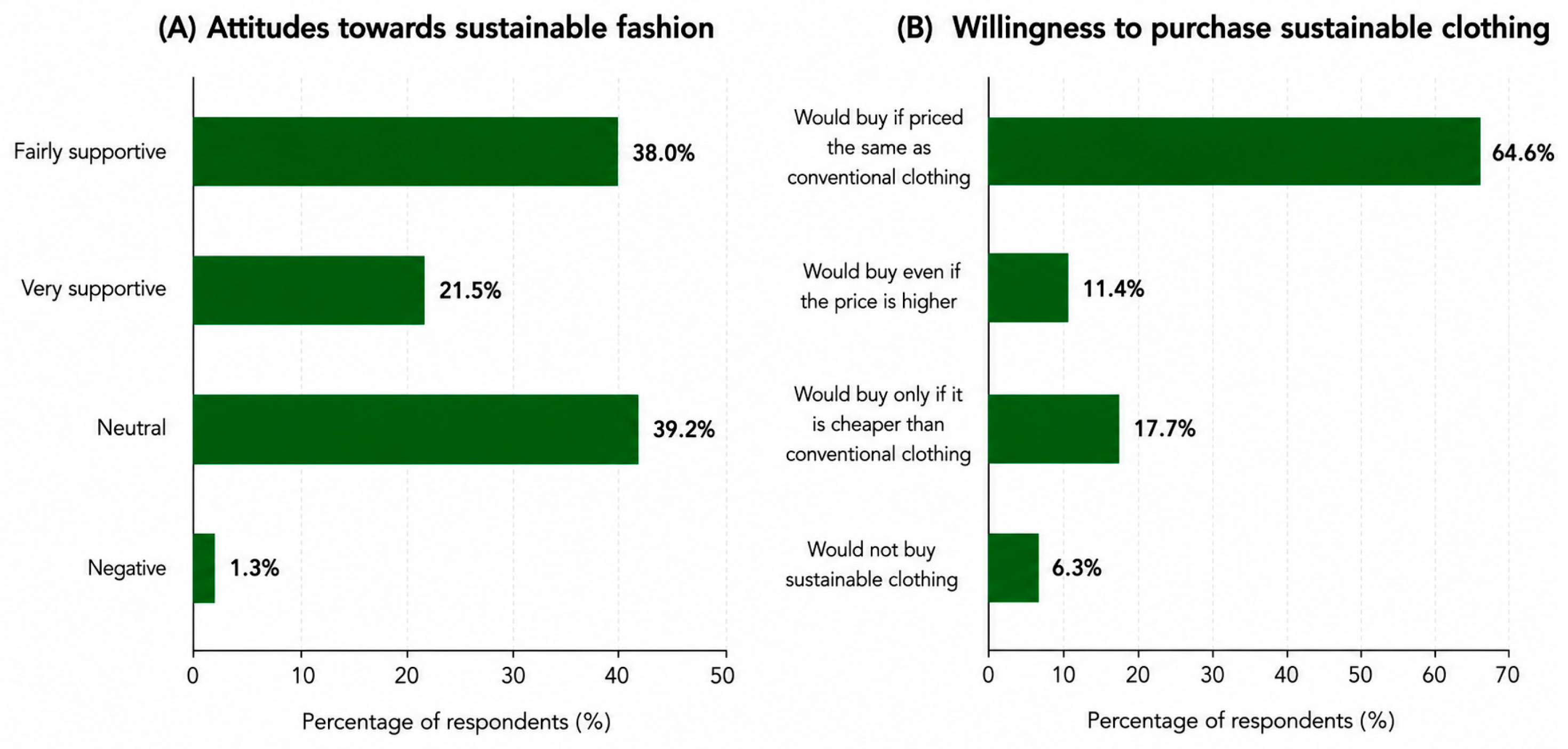
Most respondents expressed concern about environmental issues, pollution, and waste. More than four-fifths of the sample reported at least some degree of environmental concern, whereas only a small minority stated that they were not concerned. Respondents also generally expressed positive attitudes towards sustainable fashion. Approximately three-fifths indicated that they supported sustainable fashion, while almost two-fifths reported a neutral attitude and only one respondent expressed a negative opinion.
Although respondents generally supported sustainable fashion, their willingness to pay a higher price for sustainable clothing was more limited. The largest proportion of respondents (38.0%) reported that they would be willing to pay up to 5% more, followed by 27.8% who were willing to pay up to 10% more. Only a minority were willing to pay substantially more. A similar pattern was observed when respondents were asked about their purchasing intentions. Nearly two-thirds (64.6%) stated that they would purchase sustainable clothing if it were offered at the same price as conventional products, whereas only 11.4% indicated that they would purchase sustainable clothing even if it were more expensive. In contrast, 17.7% would prefer sustainable clothing only if it were less expensive, while 6.3% reported that they would not purchase sustainable clothing regardless of price. Overall, these findings suggest that although respondents generally hold favourable attitudes towards sustainable fashion, price remains an important factor influencing their purchasing decisions (
Figure 1).
4.3. Respondents’ Purchasing Behaviours
Price was by far the most important factor influencing respondents’ clothing purchasing decisions, with 96.2% identifying it as an important consideration. Other frequently reported factors included product quality (51.9%), the materials used to manufacture the clothing (49.4%), and garment size and fit (45.6%).
Most respondents preferred purchasing clothing in physical stores (49.4%), while almost one-third (30.4%) combined online and in-store shopping. Exclusive online purchasing was less common and was reported by 20.3% of respondents. Environmental considerations played a relatively limited role in purchasing decisions. Although 40.5% of respondents reported that they sometimes considered the environmental impacts of clothing purchases, 44.3% stated that they rarely or never took these aspects into account. In contrast, only 15.2% indicated that they almost always or always considered environmental impacts when purchasing clothing. Most respondents (62.0%) purchased new clothing several times a year, whereas 29.1% reported purchasing clothing monthly. Weekly purchasing was uncommon (1.3%), and only 7.6% reported purchasing clothing rarely.
Respondents generally viewed sustainability labelling positively. More than three-quarters of the sample indicated that sustainability labels would at least encourage them to purchase sustainable clothing, with 22.8% reporting that such labels would definitely influence their purchasing decisions.
4.4. Textile Waste and Clothing Disposal Practices
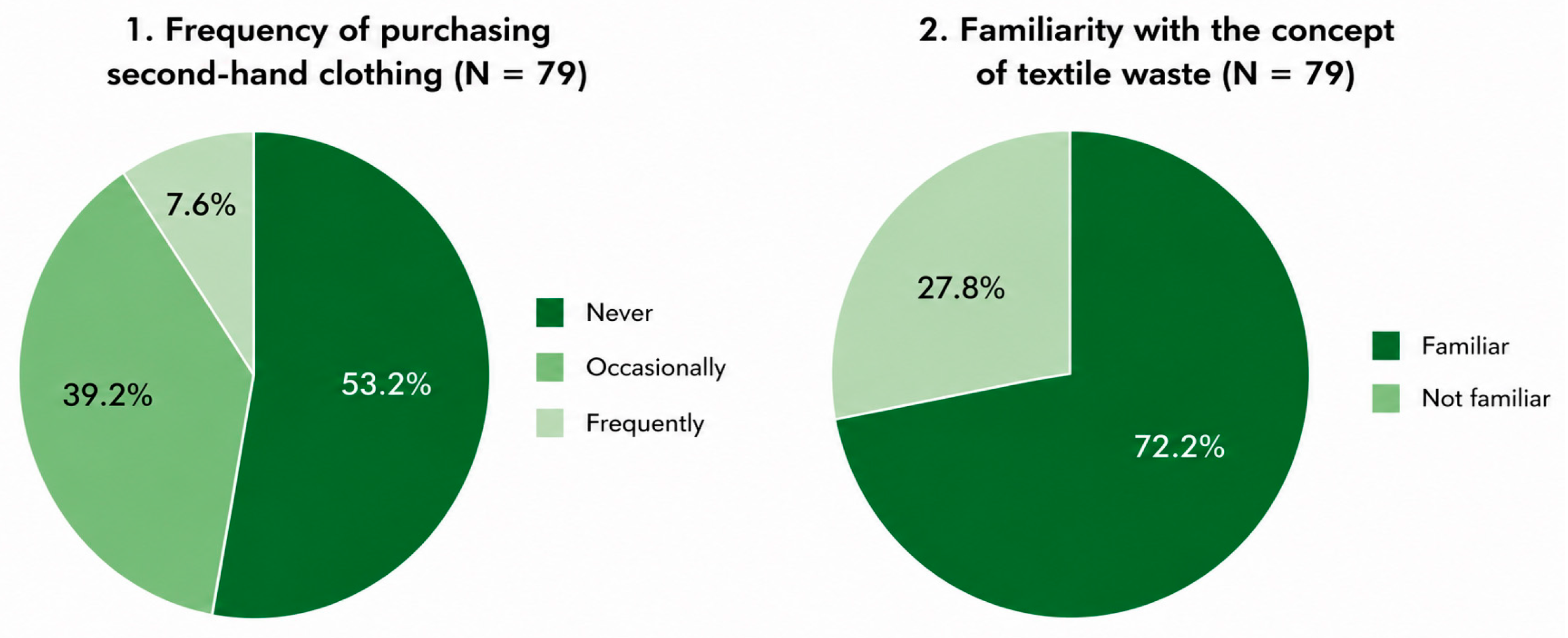
More than half of the respondents (53.2%) reported that they never purchased second-hand clothing, while 39.2% did so occasionally. Only 7.6% reported purchasing second-hand clothing frequently. In addition, 72.2% of respondents were familiar with the concept of textile waste, whereas 27.8% were not familiar with the concept (
Figure 2).
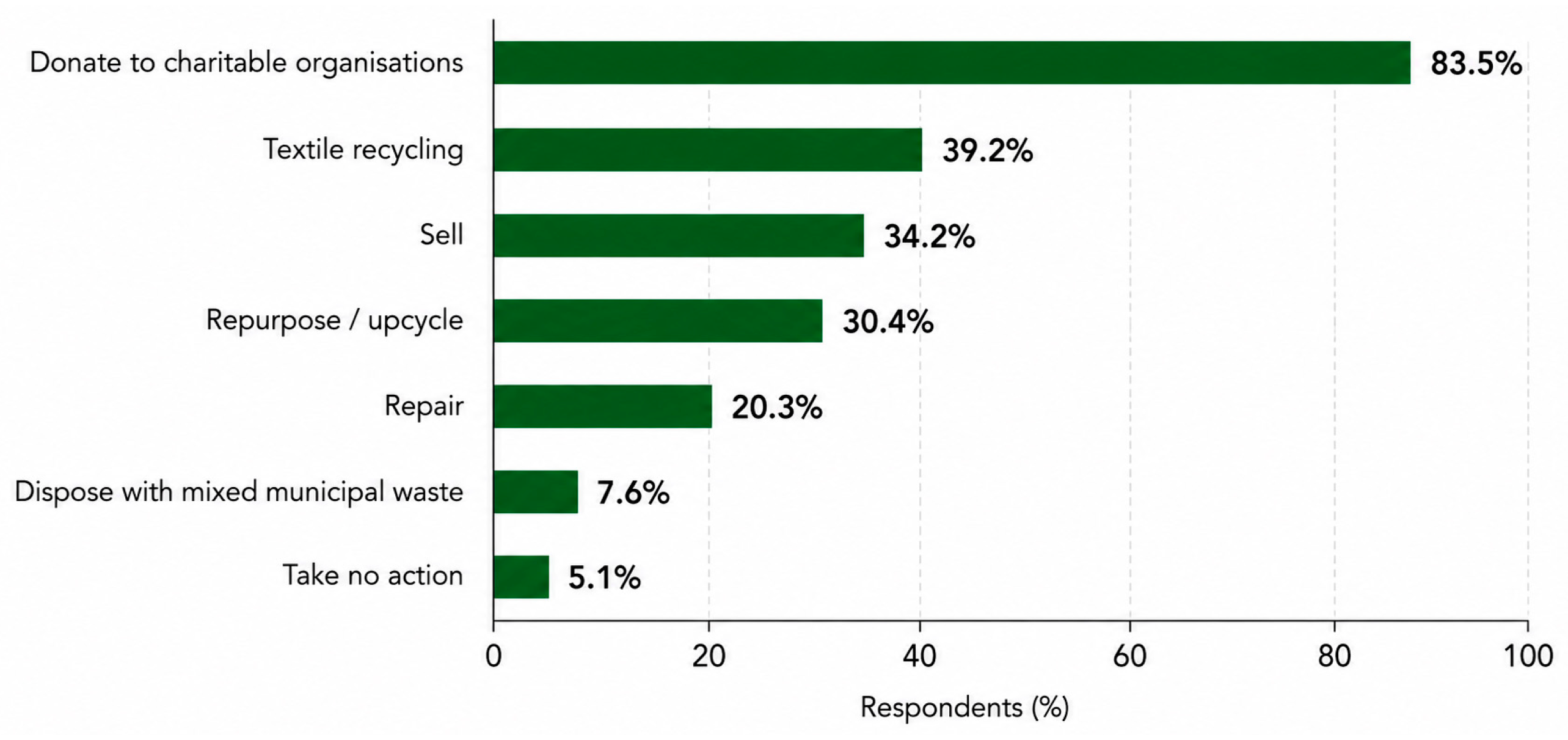
The most common way of handling clothing that respondents no longer used was donation to charitable organisations (83.5%). Some respondents reported using multiple disposal options, including recycling, selling, or repurposing clothing. Only 7.6% disposed of unwanted clothing with mixed municipal waste, while 5.1% reported taking no action regarding its disposal or reuse (
Figure 3).
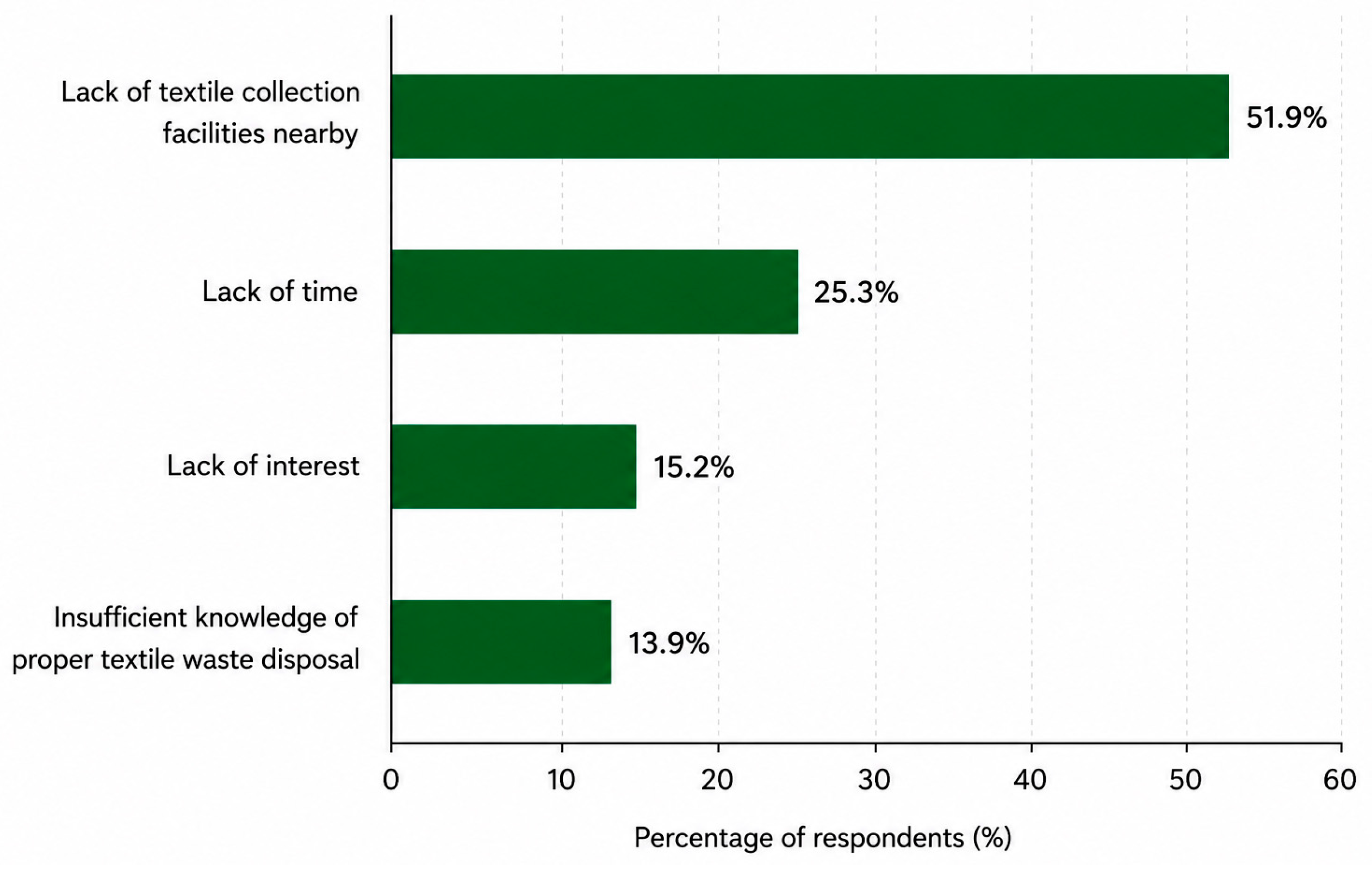
The most frequently reported reason for the improper disposal of textile waste was the lack of textile collection facilities in respondents’ local areas (51.9%). Other reasons included a lack of time (25.3%), a lack of interest (15.2%), and insufficient knowledge of the proper disposal of textile waste (13.9%). Overall, infrastructural barriers were reported more frequently than a lack of interest as reasons for the improper management of textile waste (
Figure 4).
Most respondents (63.3%) believed that level of education influences attitudes towards textile waste, whereas 17.7% disagreed. A further 19.0% of respondents were uncertain whether such a relationship existed. With regard to potential strategies for improving textile waste management, respondents most frequently supported a combination of educational campaigns and increased visibility of textile collection facilities (39.2%). A further 24.1% emphasised the importance of improving the accessibility of textile waste collection facilities.
4.5. Hypothesis Testing
Hypothesis H1 examined whether respondents’ attitudes towards sustainable practices differed according to their level of environmental concern. The association between environmental concern and support for sustainable fashion was therefore examined directly using a chi-square test of independence (
Table 1). The analysis did not indicate a statistically significant association between the two variables (χ
2 = 12.161, df = 9, Pearson
p = 0.204, Cramer’s V = 0.227). Because several expected cell frequencies were low, a Monte Carlo estimate was also calculated. The result remained non-significant (
p = 0.162). Thus, although some variation in support for sustainable fashion was observed across levels of environmental concern, the data did not provide sufficient evidence of a statistically significant association. H1 was therefore not supported.
Hypothesis H2 examined whether sustainability-related consumption responses differed according to respondents’ level of education (
Table 2).
The chi-square analysis did not indicate a statistically significant association between level of education and willingness to pay a higher price for sustainable fashion (χ2 = 15.772, df = 15, Pearson p = 0.397, Cramer’s V = 0.258). A second analysis examining the association between level of education and support for sustainable fashion likewise showed no statistically significant relationship (χ2 = 4.168, df = 9, Pearson p = 0.900, Cramer’s V = 0.133). Because several expected cell frequencies were low, Monte Carlo estimates were also calculated. The results remained non-significant (p = 0.348 and p = 0.874, respectively). Overall, the analyses did not provide sufficient evidence that the examined sustainability-related responses differed systematically according to respondents’ level of education. H2 was therefore not supported.
5. Discussion
The findings indicate that most respondents were familiar with the concept of textile waste and expressed concern about its environmental impact. Although some variation in attitudes towards sustainable practices was observed among respondents, the statistical analyses did not confirm statistically significant differences between the examined groups. Previous studies have also shown that environmental awareness and sustainable purchasing and disposal practices may differ between consumer groups [
3,
37]. However, the fact that the observed differences in the present study did not reach statistical significance suggests that environmental awareness alone may not explain differences in sustainable attitudes and behaviour. Other factors, such as personal values, access to information, and prevailing social norms, may also be important. This interpretation is consistent with the findings of Vassalo et al. [
38], who showed that environmental concern is related to sustainable behaviour intentions, while knowledge of sustainable fashion practices also plays an important role in supporting more sustainable consumption. These findings suggest that promoting sustainable textile consumption requires approaches that extend beyond environmental awareness and also strengthen environmental knowledge and access to sustainable options.
The findings can also be interpreted in the context of the attitude–behaviour gap in sustainable consumption. Although most respondents expressed positive attitudes towards sustainability and concern about environmental issues, this was not fully reflected in their purchasing intentions. While 64.6% indicated that they would purchase sustainable clothing if it were offered at the same price as conventional products, only 11.4% were willing to purchase it if it were more expensive. These findings suggest a clear discrepancy between expressed support for sustainability and the willingness to adopt more sustainable consumption patterns. Similar observations were reported by Nguyen et al. [
9] and Portus et al. [
39], who argued that awareness of the negative impacts of fast fashion does not necessarily translate into changes in consumer behaviour. The limited willingness to pay more for sustainable clothing provides one of the clearest indications of the attitude–behaviour gap observed in this study. Although respondents generally expressed environmental concern and positive attitudes towards more sustainable practices, these attitudes did not consistently translate into a willingness to accept higher purchasing costs. This suggests that environmental concern competes with more immediate economic considerations when actual consumption choices are made. Similar discrepancies between sustainability attitudes and purchasing behaviour have been reported among younger consumers, with price, convenience, and accessibility frequently identified as factors that can weaken the translation of positive environmental attitudes into sustainable purchasing decisions [
13,
14,
33]. From the perspective of the attitude–behaviour gap discussed in
Section 2.4, positive attitudes may therefore represent a necessary but insufficient condition for behavioural change when sustainable alternatives are perceived as less affordable or accessible. Recent research further suggests that sustainable fashion purchasing behaviour is influenced by a combination of personal, social, behavioural, and product-related factors rather than environmental concern alone [
35]. This suggests that increasing environmental knowledge alone is unlikely to be sufficient. Effective interventions should also address practical barriers by improving access to sustainable alternatives, strengthening textile collection infrastructure, and encouraging purchasing choices that are both environmentally responsible and economically accessible.
The purchasing patterns observed in this study suggest that price remains the dominant factor influencing clothing choices, whereas environmental considerations play a secondary role. Furthermore, more than half of the respondents reported never purchasing second-hand clothing, indicating that more sustainable consumption practices have not yet become part of everyday consumer behaviour [
31]. The reported barriers to appropriate textile waste disposal further highlight the importance of the practical conditions in which sustainable behaviour is expected to occur. Respondents more frequently identified infrastructural barriers than a lack of interest, particularly the limited availability and accessibility of textile collection facilities. This distinction is important because it suggests that improving awareness alone may have limited effects if consumers do not have convenient opportunities to act on that awareness. In this sense, the findings are consistent with the attitude–behaviour perspective discussed in
Section 2.4, according to which behaviour may be shaped not only by individual attitudes and intentions but also by the contextual conditions that facilitate or constrain action. Similar patterns were reported by Ribeiro et al. [
40], who found that consumers tended to prioritise practical and economic considerations over sustainability when purchasing textile products. These findings can be interpreted within the broader context of fast fashion, which has been recognised as one of the principal drivers of textile waste generation. Centobelli et al. [
1] argued that the fast fashion business model is based on accelerated production and consumption cycles, resulting in shorter garment lifespans and increasing pressure on natural resources. Similarly, Girish [
5] emphasised that the widespread availability and affordability of clothing encourage excessive consumption, with garments often being discarded after only a short period of use. The findings support these observations, suggesting that purchasing decisions continue to be driven primarily by economic considerations, despite respondents’ generally positive attitudes towards sustainability.
Although the present study primarily examined environmental attitudes and textile waste management practices, these findings should be interpreted within the broader concept of sustainability, which also includes important social and economic dimensions. Nguyen et al. [
9] and Vijeyarasa and Liu [
10] noted that a substantial proportion of textile production takes place in developing countries, where workers are often exposed to low wages, insecure working conditions, and various forms of discrimination. Women are particularly affected, as they constitute the majority of the workforce in the textile industry. These findings also remind us that promoting more sustainable consumption is not only an environmental issue but also involves supporting more socially responsible and ethical supply chains.
The barriers identified by respondents are consistent with broader challenges reported for textile waste management in Croatia. Although Croatia generates smaller quantities of textile waste than the largest European producers, the low rate of separate collection and recycling remains a significant challenge. Similar conclusions were reported by Hartmann et al. [
18], who argued that the current textile waste management system in Croatia is still insufficiently developed to effectively support the objectives of the circular economy. Together with the present findings, these observations highlight the need for more efficient systems for textile collection, sorting, and reuse, as well as for improved accessibility of collection facilities and closer alignment of national policies with European Union objectives. This is particularly relevant following the introduction of mandatory separate textile waste collection in the European Union from 2025. The findings suggest that regulatory requirements need to be accompanied by accessible collection infrastructure to enable consumers to translate positive environmental attitudes and intentions into more sustainable textile disposal practices. From an attitude–behaviour perspective, this suggests that positive environmental attitudes may be insufficient to produce behavioural change when the practical conditions needed to act on those attitudes, such as accessible textile collection options, are limited.
The respondents’ support for educational measures and improved textile collection infrastructure suggests considerable potential for strengthening sustainable textile waste management practices. Examples such as the social cooperative Humana Nova demonstrate how circular economy principles can be successfully implemented through textile collection, reuse, and recycling activities. Such initiatives not only contribute to waste reduction but also generate broader social benefits by creating employment opportunities for vulnerable groups and supporting local community development. In this context, the wider adoption of similar models could represent an important approach for the future development of textile waste management systems in Croatia. Wider implementation of such initiatives could help address several of the barriers identified in this study by improving opportunities for textile reuse and supporting the transition towards a more circular textile economy.
The findings indicate that respondents consider education and access to information to be important factors in fostering more responsible attitudes towards textile waste. Educational campaigns, improved visibility of textile collection points, and clear information on opportunities for textile reuse and recycling were identified as measures that could improve current textile waste management practices. These findings support the concept of education for sustainable development, which emphasises the importance of empowering individuals to make informed decisions and actively participate in addressing contemporary environmental challenges. The results also suggest that textile waste should not be viewed solely as a waste management issue. Rather, it represents a complex challenge shaped by production and consumption patterns, the availability of sustainable alternatives, the regulatory framework, and the level of public awareness and engagement. Reducing textile waste therefore requires an integrated approach that combines the development of circular textile management systems, the promotion of more sustainable consumption practices, and the implementation of public policies aimed at preventing waste generation.
The present study contributes to the growing body of research on textile waste by providing exploratory evidence on environmental awareness, purchasing intentions and self-reported practices among the surveyed students in Croatia. Despite providing valuable insights into respondents’ perceptions of the environmental impacts of fast fashion and textile waste, this study has several limitations. First, the research relied on respondents’ self-reported data; consequently, the findings reflect participants’ attitudes and perceptions rather than their actual purchasing, use, and disposal behaviours. Second, the study sample was not representative of the Croatian population, limiting the generalisability of the findings. In addition, the relatively small sample size and the unequal distribution of respondents across certain categories may have reduced the statistical power of the analyses and limited the ability to detect potentially meaningful differences between groups. Furthermore, the study did not include objective measures of purchasing or disposal behaviour, preventing direct verification of respondents’ self-reported practices. Finally, because the study was conducted at a single point in time, it does not capture changes in attitudes and behaviours over time. These limitations require the findings to be interpreted with appropriate caution. In particular, the observed patterns should not be understood as population-level estimates or as evidence of causal relationships between environmental awareness, attitudes, and behaviour. Rather, they provide exploratory evidence that can inform future research using larger and more representative samples, longitudinal designs, and objective behavioural measures.
Although the findings cannot be generalised to the broader Croatian student population, they indicate several areas that may warrant further attention in education and textile waste policy. Universities provide a potentially relevant setting for connecting environmental knowledge with everyday consumption practices through sustainability education, awareness campaigns, clothing reuse and exchange initiatives, and clearer information on local textile collection options. However, educational measures should be accompanied by practical opportunities for sustainable behaviour. Improving the visibility and accessibility of textile collection facilities, strengthening local reuse and second-hand systems, and providing clearer information on appropriate textile disposal may reduce some of the contextual barriers identified by respondents.
These considerations are particularly relevant in the Croatian context following the implementation of the EU requirement for the separate collection of textile waste from 2025. The effectiveness of separate collection depends not only on regulatory requirements and waste-management infrastructure but also on consumers’ ability and willingness to participate in the system. The present findings therefore support an integrated approach in which consumer education, accessible collection infrastructure, reuse initiatives, and circular textile policy are developed in parallel. Such measures should also be considered within the broader systemic transition promoted by the EU Circular Economy Action Plan and the EU Strategy for Sustainable and Circular Textiles, in which waste prevention, longer product lifetimes, reuse, recycling, and circular product design represent complementary elements of the transition towards more sustainable production and consumption [
41]. Emerging digital technologies, including generative artificial intelligence, may also contribute to innovation in textile and fashion design. Recent research has demonstrated the potential of generative AI to support the development of new textile designs and facilitate the fashion design process [
42]. However, these supply-side developments extend beyond the consumer-focused scope of the present study and represent a relevant direction for future interdisciplinary research. Given the exploratory nature of the present study, these implications should be regarded as directions for further investigation and policy development rather than as population-level conclusions.
Future research should include larger and more diverse samples and complement self-reported perceptions with objective measures of consumer behaviour. Longitudinal studies would also be valuable for examining how attitudes and purchasing behaviours evolve over time and in response to educational initiatives or policy measures. Such approaches would provide a more comprehensive understanding of the relationship between environmental awareness and actual sustainable practices and support the development of more effective strategies for textile waste prevention and sustainable consumption.
6. Conclusions
Textile waste represents a significant environmental challenge associated with contemporary patterns of textile production and consumption, while fast fashion continues to accelerate the generation of discarded textiles and increase pressure on natural resources. The findings of this study reinforce the view that textile waste should not be regarded solely as a waste management issue but rather as a complex environmental and societal challenge shaped by production and consumption patterns, public awareness, and the effectiveness of textile waste management systems.
The surveyed students were generally familiar with the concept of textile waste and aware of its environmental consequences. At the same time, the findings indicate an attitude–behaviour gap, as respondents’ generally positive attitudes towards sustainability were not consistently reflected in their reported purchasing intentions and practices. This suggests that environmental awareness alone may not be sufficient to encourage more sustainable consumer behaviour, particularly when practical and economic barriers are present.
When considered alongside previous research and official data, the findings underline the relevance of consumer behaviour to the broader challenges associated with fast fashion and textile waste management and point to the need for effective systems for textile collection, reuse, and recycling. Good practice examples, such as the activities of the social cooperative Humana Nova, demonstrate that applying circular economy principles can generate both environmental and social benefits.
This study contributes to the understanding of environmental awareness, purchasing decisions, and self-reported textile management practices among the surveyed students. The findings point to the importance of stronger collaboration among educational institutions, policymakers, businesses, and citizens in creating conditions that support more sustainable textile consumption and management practices. In this context, continuous education, accessible infrastructure for separate textile collection, and measures that encourage responsible consumer behaviour may contribute to the broader implementation of circular economy principles in the textile sector.
Future research should include larger and more diverse samples and combine self-reported attitudes, intentions, and practices with objective measures of consumer behaviour and, where possible, textile waste generation and disposal. Longitudinal research could further examine whether changes in environmental awareness and attitudes are followed by measurable changes in purchasing and textile management practices over time. Given the EU requirement for the separate collection of textile waste, the findings provide timely exploratory evidence that may help inform future educational initiatives, public awareness campaigns, and policy measures aimed at supporting more sustainable textile consumption and management practices in Croatia.