1. Introduction
Contemporary education has increasingly evolved within an informational environment that has undergone profound transformation, in which the emergence of generative Artificial Intelligence (AI) challenges traditional assumptions regarding knowledge, teaching, and the role of the teacher.
In 2015, the World Economic Forum argued that access to the internet would increasingly determine the divide between rich and poor across the world. More recently, the pandemic highlighted the importance of digital connectivity in maintaining educational activities in (relative) operation, whilst also demonstrating precisely what the World Economic Forum had anticipated: those without access to a digital device, or unable to access the internet, could become entirely excluded from the educational process unless alternative analogue strategies were provided.
Within this context, it becomes relevant to establish a parallel between what, only a few years ago, was identified as a critical factor of inequality—access to the internet—and the emerging challenge associated with the integration of AI within educational settings. Just as internet access proved decisive in ensuring the continuity—and, in many cases, the very possibility—of the educational process, access to new agents such as AI similarly constitutes a new axis of inclusion or exclusion. As noted by [
1], “new devices will enable new ways to talk, to translate, to remember, and to learn. But advances in technology will reproduce existing inequalities among those who cannot afford these devices” (p. 60). Consequently, the issue goes beyond providing technology. Educational systems must create conditions that help students and teachers understand, critically examine, and integrate AI into teaching and learning processes, while avoiding the reinforcement of existing inequalities.
More importantly, it is necessary to move beyond a merely instrumental perspective of AI, since “knowledge is power only when translated into action” [
2] (p. 202). It is therefore important not to overlook the fact that AI constitutes a new form of agency rather than intelligence [
2]. In other words, AI should not be regarded as a substitute form of intelligence, but rather as a new modality of agency capable of acting effectively in the world without depending upon human cognitive processes.
Such preparation must begin in schools and renders the reconfiguration of educational processes increasingly urgent. AI can be understood as a potential partner in teaching and learning [
3]. However, this requires teachers and students to integrate it as a non-human actor that supports new pedagogical approaches and knowledge-construction processes. In this way, it becomes apparent that AI possesses the potential not only to modify current educational processes but also to transform the very way the objectives of those processes are conceptualised [
4]. Teachers will need to assume the roles of mediator, critical interpreter, and regulator of AI use. To do so, they must necessarily understand how AI functions and how its potential may be aligned with educational processes. Indeed, the role of the teacher is not diminished; rather, it is transformed and becomes more complex. This is clearly one of the major educational challenges of this decade, as the integration of AI in education should be understood not as a simple technological innovation but as part of a broader transformation in action, knowledge, and pedagogical mediation within the context of the infosphere.
In this regard, if AI becomes integrated into educational ecosystems as a non-human actor endowed with agency, then the decisive issue is no longer simple access to technology but rather the capacity of individuals to interact with it in a conscious, critical, and intentional manner. Within educational environments increasingly immersed in this infosphere, it is insufficient merely to provide digital devices or platforms. It is, above all, necessary to develop competences that enable individuals to understand how these systems operate, interpret their outputs, critique them, and integrate their potential into teaching and learning processes.
From an ecological perspective, this competence cannot be reduced to a set of technical skills associated with the use of AI applications. Contemporary learning ecosystems involve interactions among multiple human and non-human actors. Similarly, AI competences should be seen as relational and contextual capacities that enable individuals to act, learn, and make decisions in hybrid environments where intelligent systems contribute to knowledge construction. This perspective aligns closely with that developed by [
5], which argues that AI literacy entails not only the ability to use intelligent systems but also the capacity to understand their foundations, critically evaluate their social and ethical impacts, and employ them to promote the common good and civic participation.
The emergence of these new hybrid learning ecosystems makes evident that the relationship between humans and AI must be conceptualised through a logic of co-agency. As Latour’s
Actor-Network Theory argues, educational processes result from the collective action of a multiplicity of actors that influence ways of thinking, communicating, and learning [
6]. In this context, generative AI systems are more than educational resources. They act as cognitive mediators that influence learning pathways, knowledge production, and educational interactions. Inhabiting these environments therefore requires the development of competences that enable teachers to understand the nature of such mediation, analyse its effects, and critically regulate the interactions established through it.
The OECD
Digital Education Outlook 2026 [
7] emphasises precisely this necessity by demonstrating that the benefits of AI in education do not arise automatically from its use. The OECD argues that the central issue no longer consists of determining whether students use AI, but rather in understanding how such use can promote processes of thinking, reflection, and learning, thereby preventing AI from becoming merely a cognitive shortcut [
7]. From this perspective, AI competences are associated with the capacity to employ these systems in ways that expand, rather than replace, human cognition.
It is precisely at this point that the ecological dimension of AI competences assumes particular relevance. Within an educational ecosystem, learning does not simply involve acquiring information; rather, it entails participation in a network of cognitive, social, and technological relationships through which meaning is collectively constructed. AI competences should therefore empower individuals to engage in dialogue with artificial agents, critically interpret the outputs they generate, identify their limitations, and utilise intelligent systems as resources that support reflection and creativity.
In this vein, UNESCO’s recent framework organises AI competences around several dimensions that clearly transcend an instrumental view of technology. These include understanding the principles and operation of AI, the ethical and responsible use of intelligent systems, the capacity for creation and innovation through AI, and critical reflection on its impacts upon society and education [
5]. These dimensions converge with the ecological perspective advanced here by recognising that engagement with AI is not limited to functional interaction with a technology but constitutes a form of participation in a complex informational environment in which issues of power, knowledge, ethics, citizenship, and sustainability intersect.
In other words, rather than merely learning how to use specific tools, it is essential to develop a perspective of ecological competence in AI. Such competence enables individuals to inhabit the infosphere critically and consciously, understand the flows of information that traverse digital ecosystems, and act ethically and responsibly within the hybrid networks that characterise contemporary education. Ultimately, the fundamental question is no longer whether AI will become part of educational processes, but rather how teachers and students may build pedagogical relationships with it that enhance autonomy, creativity, and the human capacity to understand and transform the world.
The decision to adopt the
Pedagogical DigCompEdu Reloaded framework [
8] in the present study is therefore justified by the fact that it moves beyond an instrumental conception of digital competences and proposes an ecological approach capable of addressing the challenges posed by AI within contemporary educational ecosystems. The framework is grounded in the principle that digital environments constitute habitable and relational spaces in which multiple human and non-human actors interact, assigning AI a significant role in shaping teaching and learning processes.
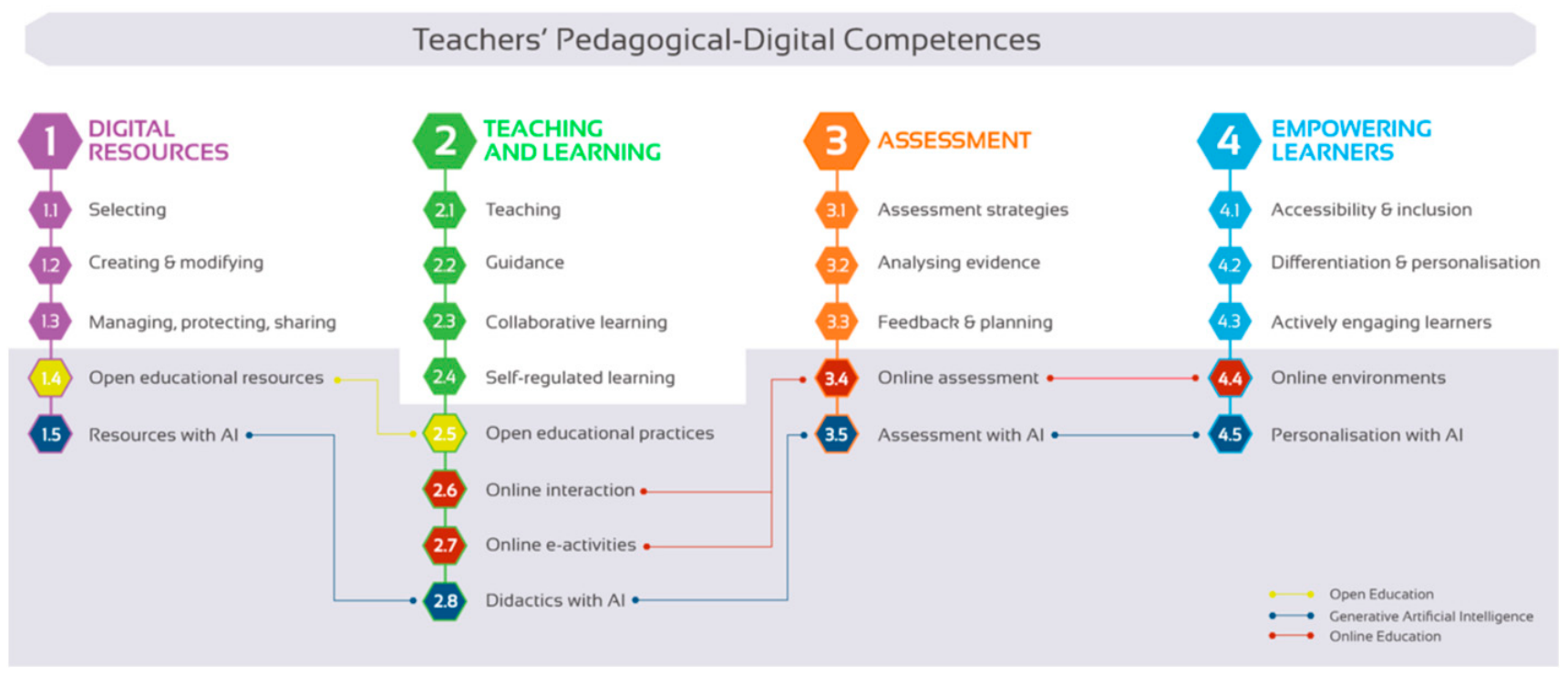
Furthermore, this framework is particularly suitable for the objectives of the present study because it explicitly incorporates generative AI as one of the central dimensions of teachers’ pedagogical–digital competences. By conceptualising AI as a non-human agent participating in knowledge-construction networks, the Pedagogical DigCompEdu Reloaded framework situates the development of AI competences within a logic of mediation, presence, interaction, and the construction of sustainable learning ecosystems. In this way, it enables analysis not only of teachers’ ability to use AI systems, but, above all, of their capacity to promote critical and transformative pedagogical practices capable of enhancing student learning in educational territories that are increasingly hybrid and inhabited by artificial agents. From this perspective, developing teachers’ AI competences is not only a matter of technological innovation, but also a prerequisite for the sustainability of contemporary educational ecosystems.
Despite the growing body of research examining teachers’ digital competences and, more recently, their preparedness to integrate Artificial Intelligence into educational practices, most studies have been conducted within single national contexts. Consequently, the extent to which the challenges associated with AI-related pedagogical competences reflect context-specific conditions or broader educational trends remains insufficiently understood. A comparative analysis between Portugal and Brazil offers a particularly valuable opportunity to address this gap. Although both countries share a common language and important cultural affinities, they differ substantially in terms of educational policies, institutional structures, teacher professional development systems, and socio-educational realities. Comparing these contexts therefore makes it possible to identify whether the limitations and training needs associated with AI integration are primarily shaped by national factors or whether they constitute more transversal challenges affecting contemporary educational systems. In this sense, the present study contributes not only to the literature on teachers’ digital competences and AI in education but also to a broader understanding of how emerging technological transformations are being experienced across different educational ecosystems.
Building on previous research conducted separately in Portugal and Brazil, this study advances the field by providing a comparative analysis of teachers’ AI-related pedagogical-digital competences across the two contexts. Using the Pedagogical DigCompEdu Reloaded Framework [
8], the study seeks to identify common patterns, contextual differences, and shared professional development needs associated with the pedagogical integration of Artificial Intelligence.
To the best of our knowledge, this is the first study to compare AI-related pedagogical-digital competences of teachers in Portugal and Brazil using a common analytical framework.
4. Discussion
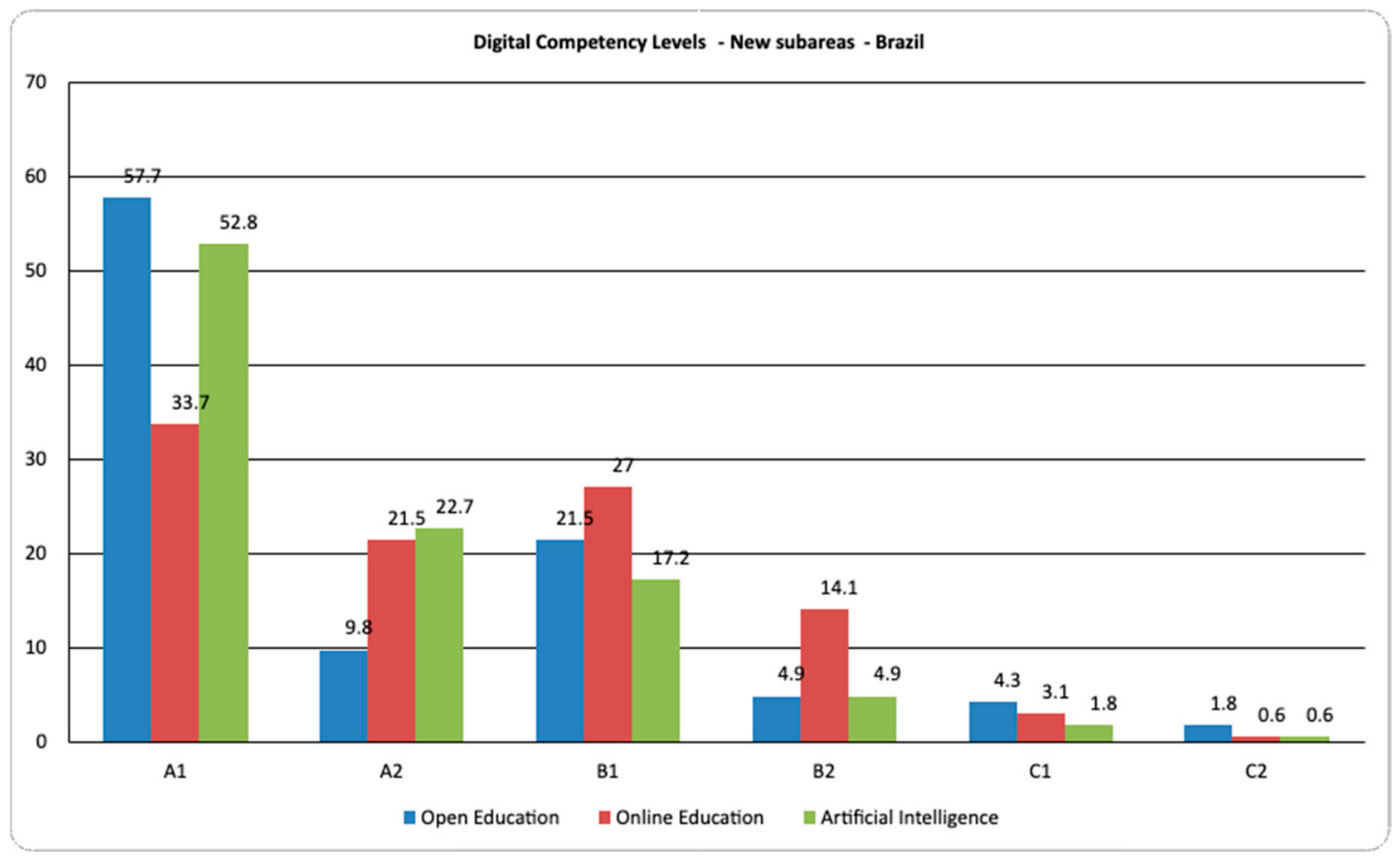
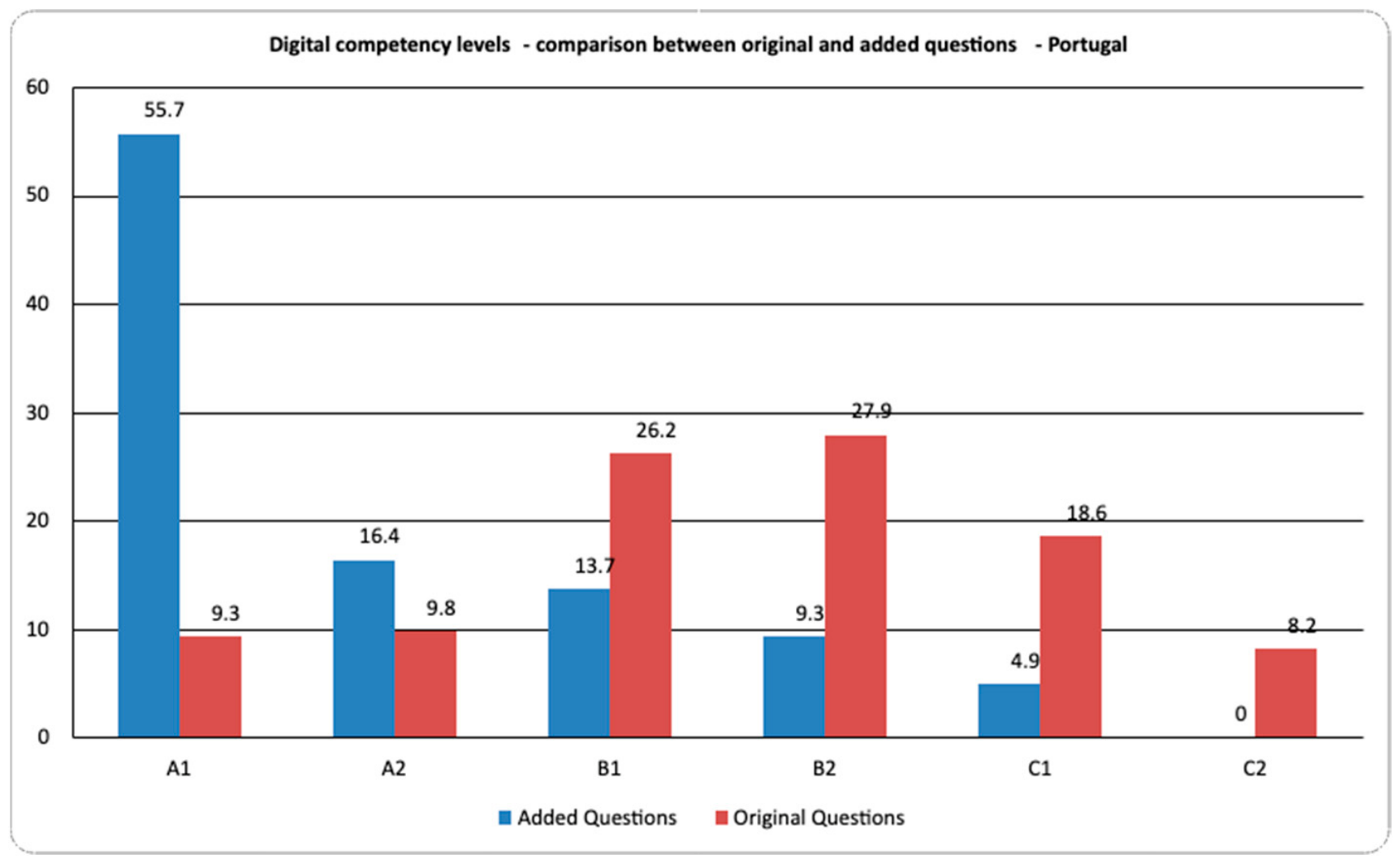
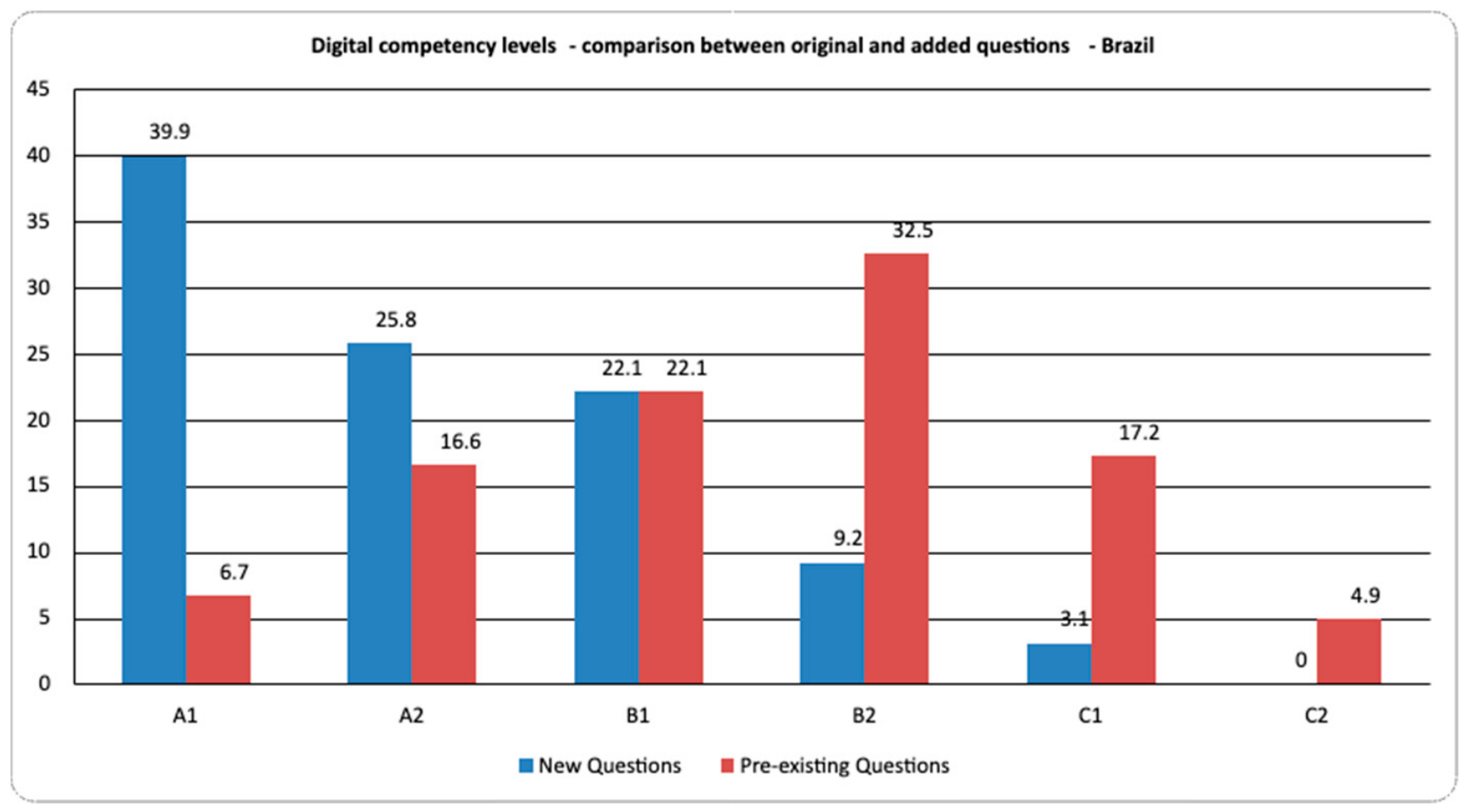
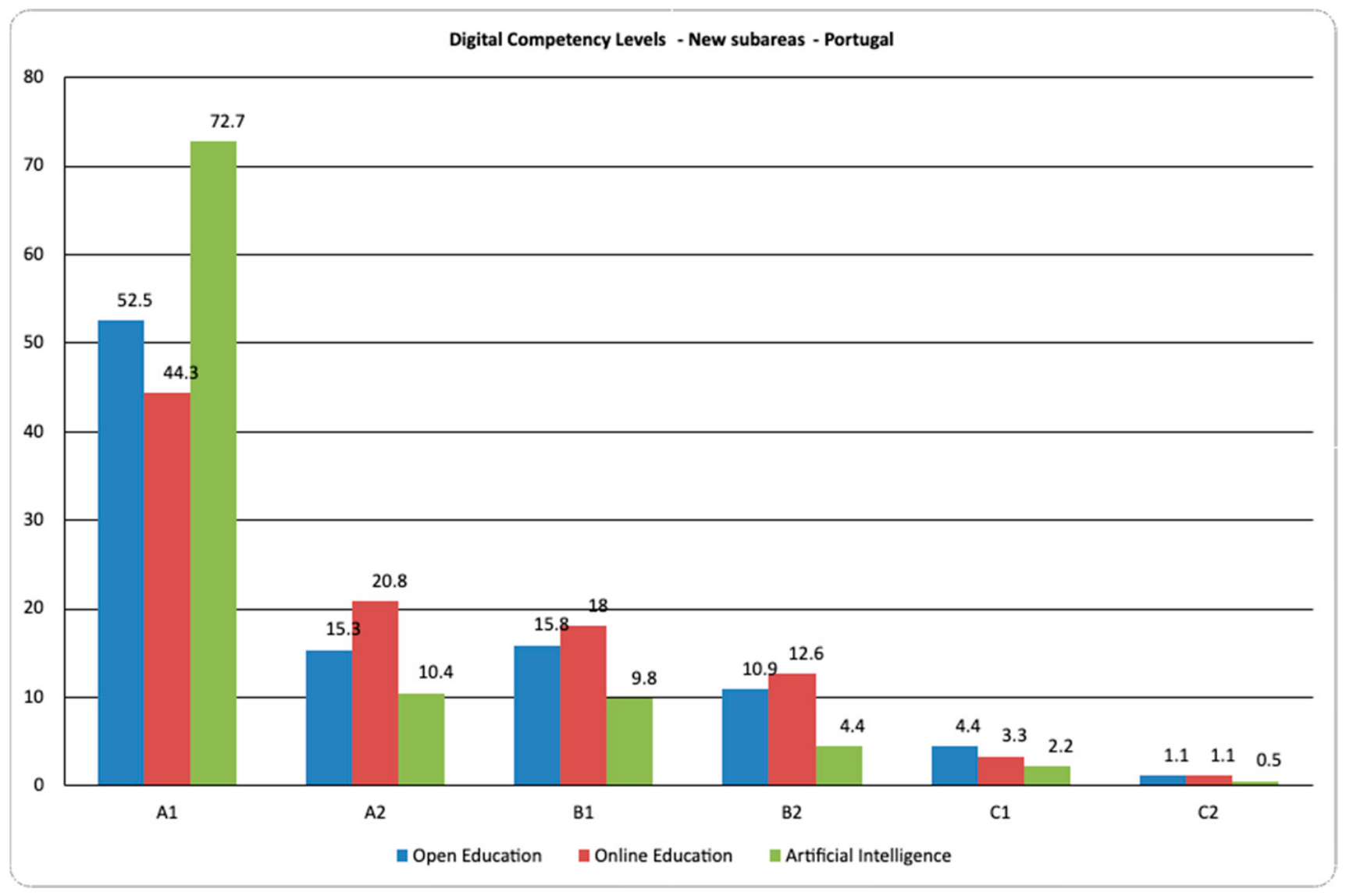
The data presented reveal the difference between established and emerging areas, highlighting a gap between already consolidated practices and new digital demands. Indeed, among the three emerging areas (Online Education, Open Education, and AI), the digital competence items associated with AI (
Figure 5 and
Figure 6) are those displaying the lowest levels (55.7% in Portugal and 39.9% in Brazil at the A1 level), demonstrating a clear weakness in this specific domain and suggesting the need for a stronger investment in professional development in this area. These results may reflect what is genuinely a “novelty” within the educational field. In fact, both Open Education and Online Education have been the subject of educational practice and research for a longer period; however, in the specific case of the integration of generative AI in education, attention was initially focused primarily on Higher Education [
10] and, until 2022, only seven countries had developed AI frameworks for teachers [
11]. Nevertheless, within a short period of time, this has become a field that has transformed ways of being, working, and learning, characterised by a duality of vast opportunities and complex challenges [
9].
Within this context, various studies have demonstrated the positive effects of professional development initiatives in the field of teachers’ digital competences [
12,
13,
14], contributing to increased proficiency levels across all areas of digital competence. Similar patterns can be observed in the present study, particularly in the results presented in
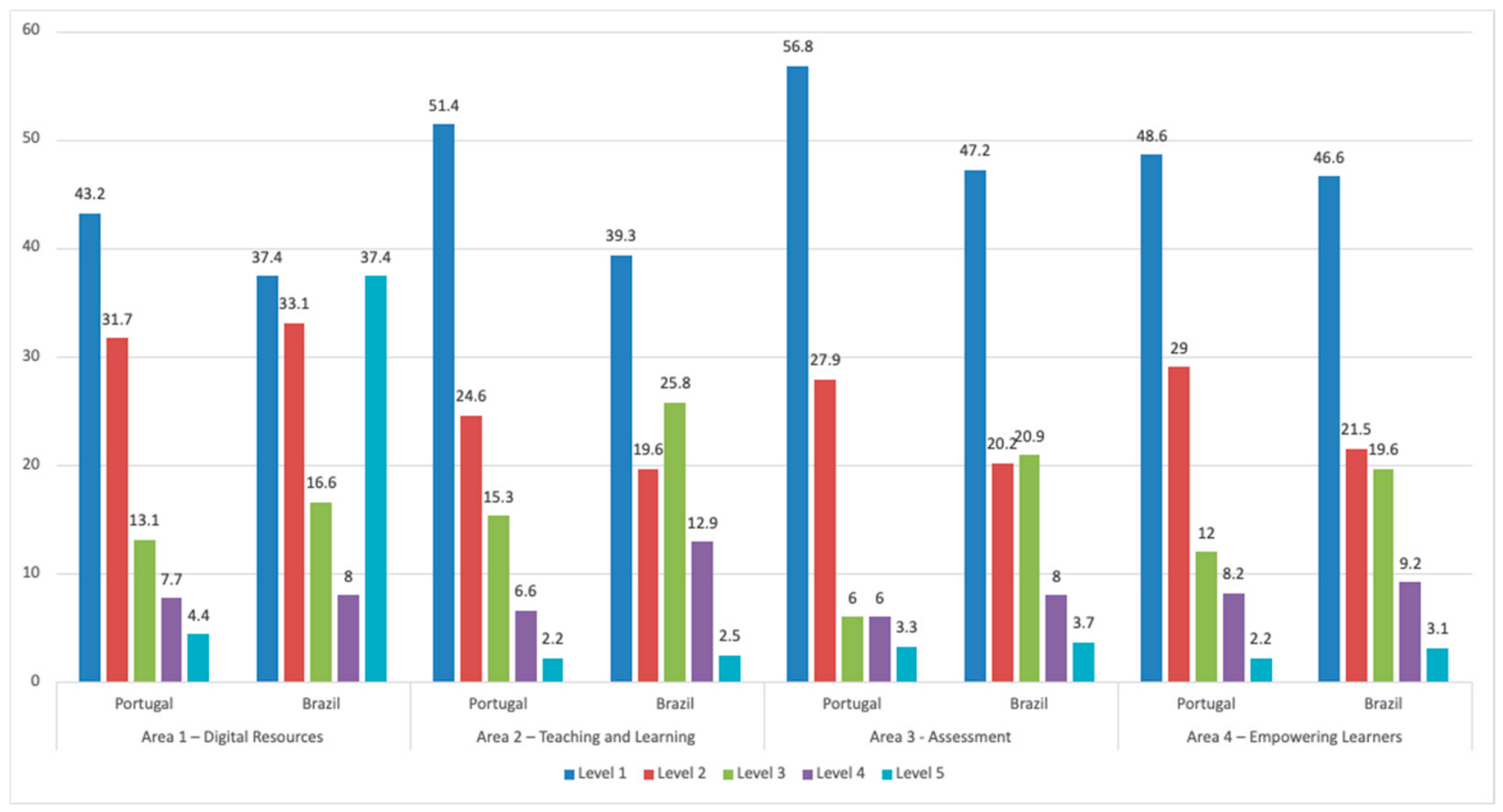
Figure 2,
Figure 3 and
Figure 4.
It is therefore necessary to introduce into the educational ecosystem a critical, ethical, and pedagogical perspective. This requires a genuine paradigm shift rather than an unreflective adoption of technology which, if reduced to an instrumental use, ultimately fails to play a meaningful role in transforming educational processes. Indeed, “underpinning this approach is a desire to be critical, yet balanced, and to get beneath the hype and exaggeration that often pervade discussions of technology” [
15] (pp. vi–vii). The results presented here clearly demonstrate the need for sustained professional development programmes, particularly in this new area dedicated to AI, so that teachers are adequately prepared to work with this resource in an effective and ethical manner [
10].
Indeed, other studies conducted in recent years have also highlighted the relevance of self-perceived digital competences as a basis for subsequent participation in professional development activities that effectively contribute to improving teachers’ digital competences (e.g., [
16,
17,
18,
19,
20,
21]). However, it is important that such professional development extends beyond preparation for the instrumental use of technology. As noted by [
16], “such use of technology also requires teachers to be equipped with a whole new skill set and perspective connected to the application of digital competences in the areas of teaching and learning” (p. 2).
Figure 8 also provides detailed results for the four AI competence items, which are consistent with findings obtained in previous studies, particularly in demonstrating that the greatest weakness lies in assessment. In fact, studies conducted in both Portugal and Brazil, based on the DigCompEdu framework, identified this as the area exhibiting the greatest vulnerabilities [
22,
23]. Although this is not a new issue, UNESCO has identified a renewed need to rethink assessment processes, highlighting the importance of providing “space for teachers to experiment with validated AI tools and new pedagogical methodologies” [
10] (p. 21). For this purpose, teacher education should include preparation for integrating new assessment methods within pedagogical approaches that meaningfully incorporate Artificial Intelligence [
10]. Teachers should also learn to design assessment tasks that “require higher-order thinking skills, critical analysis, and original insights—skills that go beyond the current capabilities of generative AI” [
5] (p. 20).
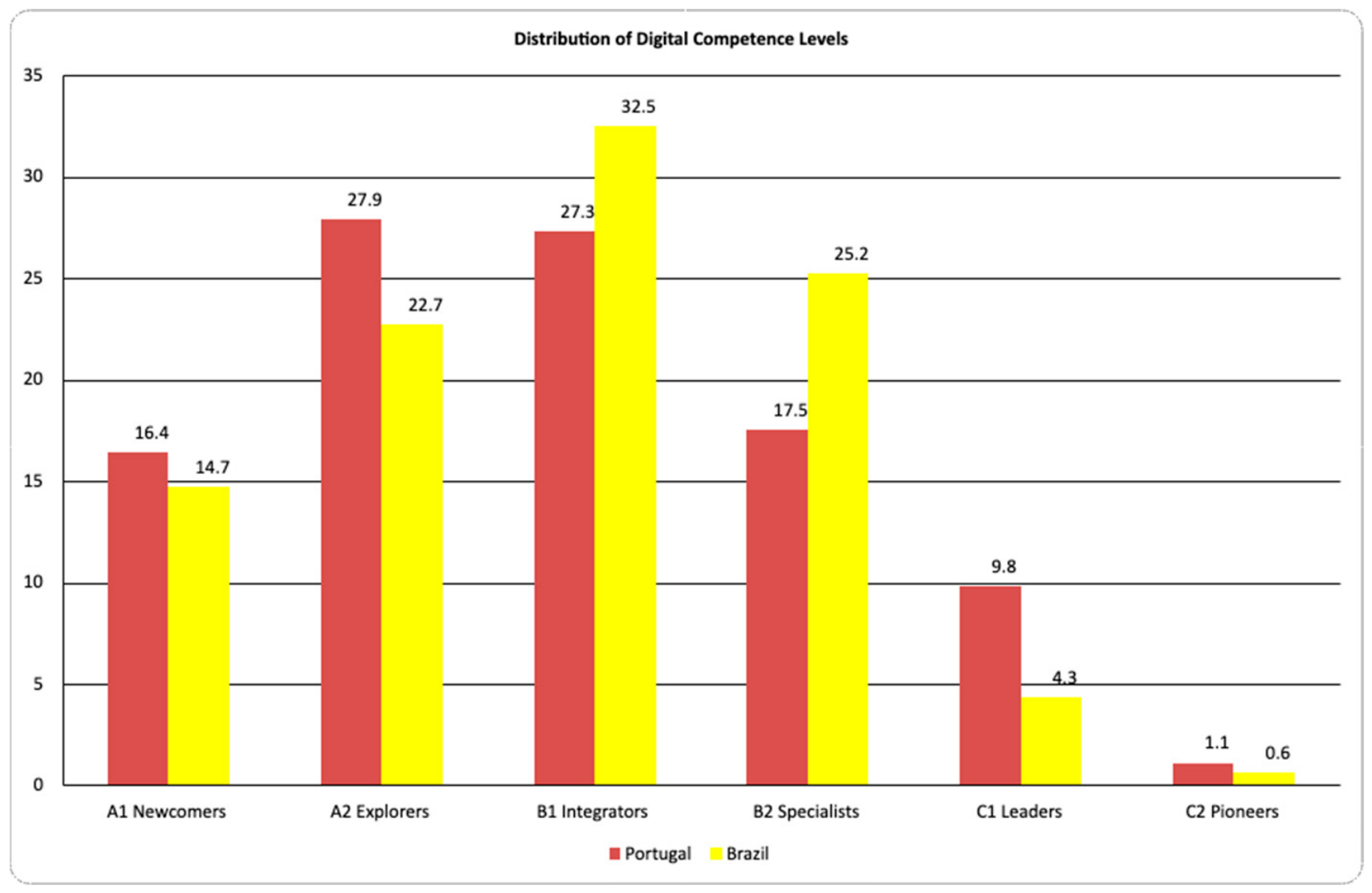
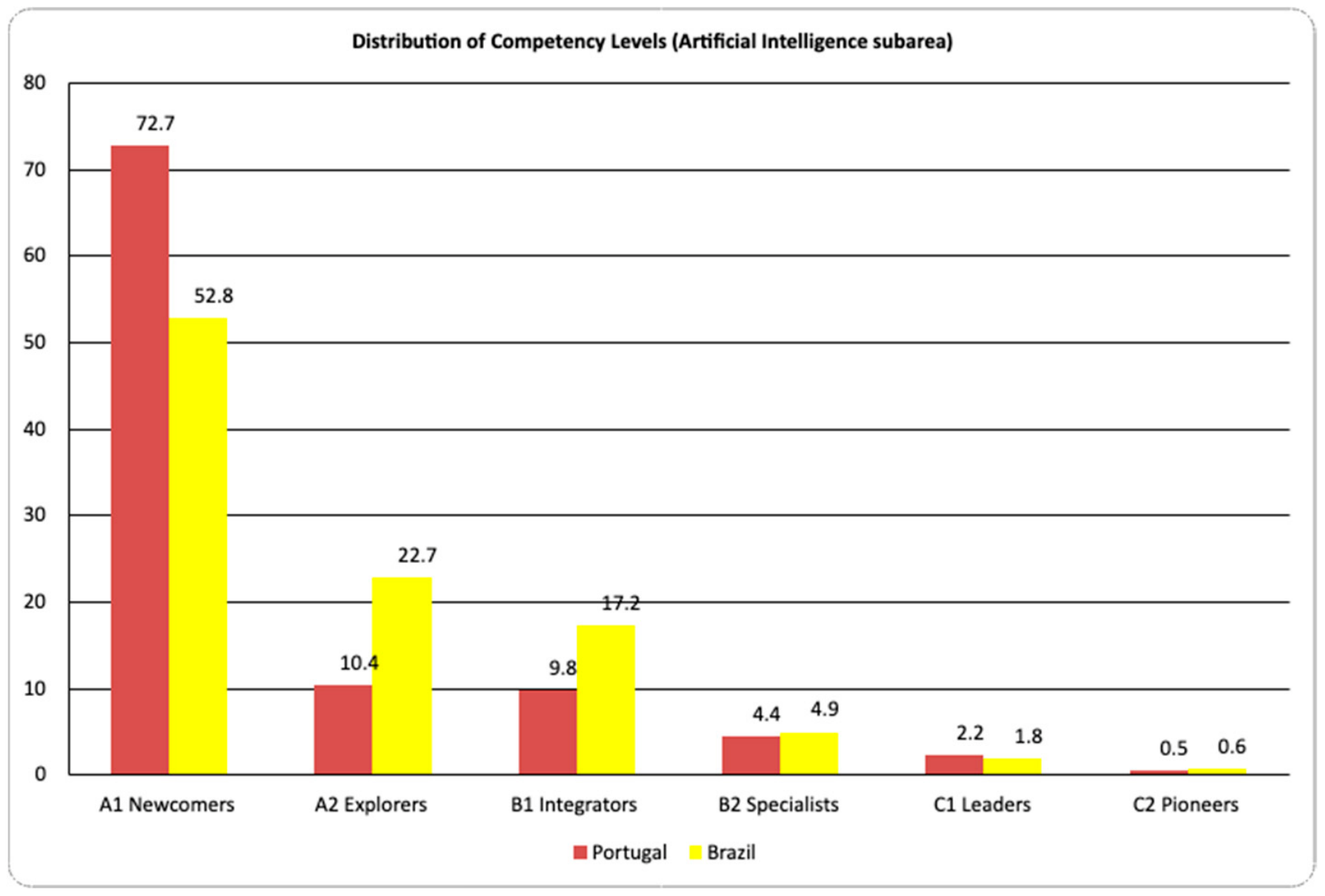
The results presented in
Figure 7 further indicate that there are no significant differences between the two countries, a finding that is consistent with previous studies and suggests that the constraints identified are transversal rather than dependent on a specific context, thus aligning with the results reported by [
24].
To complement the descriptive analysis, the overall Pedagogical DigCompEdu Reloaded scores of Portuguese and Brazilian teachers were compared using a Mann–Whitney U test. Portuguese teachers obtained slightly higher scores (M = 41.22, SD = 19.14) than Brazilian teachers (M = 36.98, SD = 14.89). However, the difference was not statistically significant (U = 16,515, p = 0.085). Furthermore, the effect size was negligible (r = 0.093), indicating a high degree of similarity between the two samples. These results support the interpretation that the challenges and opportunities associated with teachers’ pedagogical–digital competences, particularly those related to Artificial Intelligence, are broadly shared across the two educational contexts.
Considering these findings, two key perceptions emerge. On the one hand, there is the risk of new forms of digital inequality [
5,
7]. Just as access to the Internet constituted a source of inequality in the past [
25], Artificial Intelligence may now become a new factor of educational inequality. As ref. [
15] argues, one of the most immediate external pressures regarding the use of digital technologies in education is the need to “keep up” with developments in contemporary life, assuming that “One of the most immediate ‘external’ imperatives for the educational use of digital technology is seen to be the straightforward priority of ‘keeping up’ with the rest of modern life” (p. 26). The issue at stake is not simply access to this resource (particularly as higher levels of access are often associated with paid services and greater data-processing capabilities), but also the capacity to understand and integrate it pedagogically. Schools should constitute privileged spaces for the construction of values and reference frameworks, while also preparing students for contexts characterised by constant transformation, notably through the development of competences that enable them to understand and critically integrate Artificial Intelligence [
8,
26]. Thus, “by adapting teaching strategies and assessment methods, educators can harness the power of generative Artificial Intelligence to enhance learning while mitigating the risks of academic dishonesty” [
5] (p. 20).
While AI offers a wide range of possibilities, teacher education is required if these possibilities are to contribute to a meaningful and positive transformation of the educational paradigm [
27]. UNESCO explicitly recognises this importance, stating that “Teachers are the primary users of AI in education and the main mediators responsible for ensuring the appropriate redefinition and balance in the gradual evolution of the relationship between humans and technology in general, and between knowledge and learning in particular” [
7] (p. 16). This underlines the importance of teacher education, since teachers’ confidence in their ability to teach with the support of AI has a significant impact on their intention to integrate it into their practices [
28,
29], as was already the case with other digital technologies. As has been observed for the pre-existing areas of this framework, as discussed above, it is considered essential to strengthen professional development programs focused on AI and other emerging domains.
6. Conclusions
The results of this study allow several particularly relevant conclusions to be drawn regarding the challenges that AI integration currently poses to the educational systems of Portugal and Brazil. Despite the differences between the two countries in terms of territorial size, educational system organisation, socioeconomic realities, and cultural contexts, the data obtained reveal a surprisingly similar scenario regarding teachers’ pedagogical-digital competences, particularly in the emerging areas analysed. In both contexts, AI-related competences display very low proficiency levels, with most teachers concentrated at the initial levels of digital competence and only a marginal presence at the more advanced levels. This convergence of results suggests that the challenges associated with the pedagogical integration of AI do not arise exclusively from contextual or structural factors specific to each country, but rather reflect a cross-cutting need for teacher capacity-building in response to a global phenomenon that is evolving at a pace faster than that of traditional professional development processes.
These findings assume particular significance when analysed through the ecological perspective adopted in this study. If AI is understood as a non-human actor participating in hybrid learning ecosystems, then the low levels of competence identified do not merely represent difficulties in using a particular technology. Rather, they reveal limitations in the capacity to understand, regulate, and pedagogically integrate new forms of agency that increasingly participate in the construction of knowledge. This situation becomes even more concerning when considering that the results relating to Online Education, although slightly higher than those for AI, remain concentrated at the lower levels of digital competence.
This finding is particularly important because the pedagogical integration of AI occurs largely within the very digital and online ecosystems where artificial agents operate. The integration of AI presupposes that teachers already possess competences related to the design of online learning experiences, the management of synchronous and asynchronous interactions, the creation of networked collaborative activities, digital pedagogical mediation, and the construction of healthy and safe learning environments. In other words, it will not be possible to fully develop competences in AI without simultaneously strengthening competences in Online Education. AI does not emerge within a pedagogical vacuum; it emerges and operates within complex digital ecosystems, requiring teachers to be capable of designing educational contexts in which interactions between humans and artificial agents can effectively generate educational value.
In this regard, the findings point to the urgent need to develop continuing professional development programmes that integrate competences in AI and Online Education in a coherent manner. More than training teachers in the instrumental use of tools, it is necessary to enable them to understand the foundations, limitations, and pedagogical potential of these new learning environments, while developing competences in mediation, assessment, critical regulation, and pedagogical design appropriate to the realities of the contemporary digital education paradigm.
The highly similar results obtained in Portugal and Brazil also create important opportunities for the development of joint teacher education initiatives. The shared language constitutes a strategic advantage that facilitates the creation, implementation, and dissemination of common professional development programmes, fostering the exchange of knowledge, experiences, and good practices among educational communities in both countries. Linguistic proximity also enables the optimisation of human, scientific, and technological resources, supporting the development of transnational networks for teacher professional development focused on the challenges of AI and digital education.
Such programmes may take different forms, according to the characteristics of the target audiences and the intended professional development objectives. Depending on the training model adopted and the scale of the intended interventions, these may include micro-credentials designed to address specific short-term needs, continuing professional development courses aimed at deepening competences within specific institutional contexts, or MOOCs capable of engaging large numbers of teachers in broad-based capacity-building initiatives. Regardless of the format selected, the findings of this study suggest a clear and shared need in both countries to invest in the development of pedagogical–digital competences related to AI and Online Education, creating conditions that enable teachers to participate critically, ethically, and pedagogically in the new educational ecosystems.
It is important to note that this study did not directly assess educational sustainability or the sustainability of educational ecosystems. Rather, it examined teachers’ pedagogical-digital competences, including those related to the pedagogical integration of Artificial Intelligence. Therefore, the relationship established between the findings and sustainable educational ecosystems should be understood as a theoretical and practical implication rather than as an empirical outcome of the study itself. From this perspective, strengthening teachers’ pedagogical-digital competences may be considered a relevant condition for supporting more inclusive, adaptive, and resilient educational systems capable of responding to ongoing technological transformation.
In summary, the findings suggest that Portugal and Brazil face similar challenges in response to the emergence of AI in education. The integration of AI in educational settings cannot be understood merely as an issue of technological adoption. Rather, it is a pedagogical and ecological challenge, related not only to teachers’ capacity to inhabit, understand, and transform hybrid educational environments in which humans and artificial agents coexist and co-construct knowledge. It also refers to the capacity of educational systems to create conditions that enable teachers and students to participate critically, ethically, and meaningfully in the hybrid ecosystems that increasingly characterise contemporary learning environments. It is within this context that teacher education assumes a decisive role, constituting a fundamental condition for ensuring that AI can effectively contribute to the development of more inclusive, sustainable, collaborative, and socially relevant educational ecosystems within the Portuguese-speaking world. From this perspective, the development of pedagogical competences related to AI should be understood as a key dimension of educational sustainability, enabling teachers not only to integrate artificial intelligence in a critical, ethical, and pedagogically meaningful manner, but also to reduce emerging forms of digital inequality and strengthen the capacity of educational ecosystems to respond to continuous processes of technological and social transformation.