Article

Green Technological Innovation to Improve New Product Development Performance: Moderating Role of Project Characteristics

1
Department of Business Administration, Tamkang University, 151 Ying-Chuan Rd., Tamsui Dist., New Taipei City 251, Taiwan
2
Department of Management Sciences, Tamkang University, 151 Ying-Chuan Rd., Tamsui Dist., New Taipei City 251, Taiwan
*
Author to whom correspondence should be addressed.
Sustainability 2026, 18(16), 8027; https://doi.org/10.3390/su18168027
Submission received: 3 July 2026 / Revised: 30 July 2026 / Accepted: 5 August 2026 / Published: 7 August 2026

Abstract

Green technological innovation (GTI) has emerged as a critical driver for achieving strategic objectives of projects, particularly in the context of sustainable new product development (NPD). Although prior studies have suggested that innovation can enhance project outcomes, limited attention has been given to clarifying the contribution of GTI to NPD performance. The lack of conclusive evidence regarding the effectiveness of GTI may partly explain its relatively limited adoption in practice. Therefore, this study aims to investigate the impact of GTI implementation on NPD performance and further explores the moderating influence of project characteristics on this relationship. The empirical findings reveal that multiple dimensions of GTI implementation—including green resource allocation, green manufacturing, green organizational practices, and green planning—significantly improve both product performance and market performance. Furthermore, the findings indicate that project characteristics, such as team size, R&D type, information availability, and material availability, significantly moderate the relationship between overall GTI implementation and NPD performance, suggesting that the effectiveness of GTI depends on specific project characteristics.

1. Introduction

In today’s highly competitive business environment, continuous innovation has become essential for organizational survival and long-term competitiveness [1]. Firms that fail to develop new products or upgrade existing technologies are more likely to lose their market position and competitive advantage [2]. Although innovation is widely recognized as a key driver of sustainable growth, only a small proportion of innovative ideas are successfully commercialized, while many fail during the product development process [3,4]. Consequently, improving the effectiveness of new product development (NPD) has become a critical challenge for both researchers and practitioners.
Recent advances in technology have fundamentally transformed NPD practices, enabling firms to develop products more efficiently and respond more rapidly to changing customer needs. At the same time, growing environmental awareness among consumers, investors, and regulatory authorities has accelerated the integration of sustainability into corporate innovation strategies. More stringent environmental regulations and stakeholder expectations have encouraged organizations to adopt environmentally responsible technologies that reduce resource consumption, minimize production waste, and improve environmental performance. Beyond regulatory compliance, green innovation can strengthen corporate reputation, enhance market competitiveness, and create long-term business value [5,6]. Consequently, green technological innovation (GTI) has emerged as an important strategic capability for organizations seeking to achieve both sustainability and superior NPD performance.
Despite the growing recognition of green innovation, its specific contribution to NPD performance remains insufficiently understood. Existing studies generally indicate that green innovation contributes to competitive advantage by enabling firms to differentiate their products, improve operational efficiency, and respond more effectively to evolving market demands [7,8]. However, most prior research has focused on the environmental, organizational, or operational outcomes of green innovation, while relatively little attention has been paid to its role in improving NPD performance. As a result, the mechanisms through which GTI influences product development outcomes have not yet been fully established.
Moreover, the effectiveness of innovation practices is unlikely to be uniform across projects because NPD projects differ substantially in their characteristics. Factors such as team size, product newness, R&D type, information availability, and material availability may influence how effectively GTI can be implemented and translated into project success. Although previous studies have suggested that project-specific factors may shape the relationship between innovation practices and NPD outcomes, empirical evidence remains limited [9]. Therefore, it is necessary to examine whether project characteristics strengthen or weaken the impact of GTI on NPD performance.
Although prior studies have demonstrated the positive relationship between green technological innovation and new product development performance, they have largely treated GTI as a universally beneficial capability. However, the effectiveness of GTI may depend on project-specific conditions that shape how green innovation practices are implemented and translated into performance outcomes. Therefore, this study adopts a contingency perspective to investigate when and under what project conditions GTI creates greater value for NPD performance.
To address these research gaps, this study investigates the relationship between green technological innovation and NPD performance while examining the moderating role of project characteristics. Specifically, it seeks to identify the dimensions of GTI that contribute most significantly to successful product development and to determine under what project conditions GTI is most effective. Accordingly, this study has two primary objectives: (1) to examine the impact of green technological innovation on NPD performance, and (2) to investigate how project characteristics moderate the relationship between GTI implementation and NPD outcomes.
By providing empirical evidence on these relationships, this study contributes to the literature in several ways. First, it extends current knowledge by clarifying the role of GTI in enhancing NPD performance, an area that has received relatively limited attention. Second, it demonstrates how project characteristics influence the effectiveness of GTI implementation, thereby offering a more comprehensive understanding of the conditions under which green innovation generates superior project outcomes. Finally, the findings provide practical guidance for managers seeking to align GTI initiatives with project characteristics to improve the success of NPD projects, particularly in high-technology industries.

2. Conceptual Framework and Research Hypotheses

Innovation has long been regarded as a fundamental driver of organizational competitiveness and sustainable growth [10]. Broadly defined, innovation refers to the introduction or adoption of new ideas, technologies, processes, products, or managerial practices that are perceived as novel within a particular organizational context [11]. Rather than being viewed as a single activity, innovation reflects an organization’s capability to acquire external knowledge, integrate diverse resources, and transform them into valuable products, services, or operational improvements [12,13]. Consequently, innovation has become a key strategic mechanism that enables organizations to respond to changing customer demands, technological advances, and increasingly dynamic market environments.
The innovation literature generally distinguishes innovation from two complementary perspectives: innovation as a process and innovation as an outcome [14]. From the process perspective, innovation emphasizes how organizations generate, acquire, and implement new knowledge through interactions among internal capabilities and external stakeholders [15]. Conversely, the outcome perspective focuses on the results of innovation, including its degree of novelty, classification, and impact on organizational performance. Innovation may also be classified according to its nature. Technological innovation primarily involves the development or improvement of products, production technologies, and service delivery methods, whereas managerial innovation focuses on organizational structures, administrative systems, and management practices that facilitate organizational effectiveness [16,17].
Among these categories, technological innovation has attracted considerable attention because of its direct contribution to product development and competitive advantage. Technological innovation encompasses advances in production technologies, product design, manufacturing processes, organizational knowledge, and technical capabilities [18]. Its successful implementation depends not only on strong research and development (R&D) capabilities but also on effective coordination among manufacturing, marketing, strategic planning, organizational learning, and resource allocation functions [19]. Accordingly, firms with superior technological innovation capabilities are generally more capable of responding to technological uncertainty, satisfying evolving customer requirements, and accelerating NPD activities [20,21].
With sustainability becoming an increasingly important strategic priority, technological innovation has evolved toward environmentally responsible practices. Green technological innovation (GTI) refers to the development and application of technologies, products, and production processes that minimize environmental impacts while maintaining or improving organizational competitiveness [22]. Compared with conventional technological innovation, GTI emphasizes reducing resource consumption, preventing pollution, minimizing waste generation, and improving environmental performance throughout the product life cycle. In addition to ensuring compliance with environmental regulations, GTI enables organizations to strengthen corporate reputation, improve stakeholder relationships, reduce operational costs, and create long-term strategic value [23].
Previous studies have consistently suggested that innovation capability is an important determinant of organizational performance [24]. Firms with stronger innovation capabilities are generally better able to develop differentiated products, enter new markets, improve operational efficiency, and sustain competitive advantages [25]. In particular, organizations that actively adopt green innovation often gain first-mover advantages by introducing environmentally friendly products that satisfy growing market demand for sustainable solutions [26,27]. Furthermore, effective environmental management contributes not only to regulatory compliance but also to an enhanced corporate image, stronger customer trust, expanded market opportunities, and superior competitive positioning [28,29,30,31]. Collectively, these findings suggest that integrating green technological innovation into NPD activities can improve both product performance and market performance. Accordingly, the following hypothesis is proposed:
H1. 
The implementation of green technological innovation has a positive effect on NPD performance.
Although innovation generally enhances project performance, its effectiveness is unlikely to be uniform across all projects. According to contingency theory, the effectiveness of managerial practices depends on the contextual conditions in which they are applied rather than producing identical outcomes across different organizational settings [32,33,34]. Therefore, the benefits derived from GTI are expected to vary according to specific project characteristics.
In the context of NPD, previous studies have identified several project-related characteristics that influence project outcomes, including industry sector, product newness, R&D type, project duration, schedule flexibility, project complexity, team size, information availability, team relationships, material availability, and price positioning. These characteristics shape project execution by influencing resource allocation, communication effectiveness, knowledge integration, coordination efficiency, and managerial decision-making throughout the product development process. Consequently, the positive effects of GTI on NPD performance may differ across projects with varying characteristics.
Building upon the contingency perspective, this study proposes that project characteristics moderate the relationship between GTI implementation and NPD performance. Specifically, GTI is expected to generate stronger performance improvements when project conditions facilitate effective collaboration, efficient resource utilization, and successful technological integration. Conversely, under less favorable project conditions, the positive effects of GTI may be weakened. Therefore, the following hypothesis is proposed:
H2. 
Project characteristics moderate the relationship between green technological innovation implementation and NPD performance.

3. Methodology

3.1. Survey Instrument

A questionnaire survey was conducted to collect empirical data on the implementation of green technological innovation and its impact on new product development performance. To ensure that respondents evaluated an actual and representative project, each participant was asked to select a recently completed or currently ongoing NPD project in which they had been directly involved.
The questionnaire consisted of four sections. The first section assessed the level of GTI implementation, the second evaluated NPD performance, the third collected information on project characteristics, and the final section gathered respondents’ demographic and professional information.
To examine the moderating effect of project characteristics, each project was classified according to eleven project-related variables [32,33]: industry sector, product newness, R&D type, project duration, schedule availability, project complexity, team size, information availability, team relationship, material availability, and price positioning. These variables were selected based on prior studies in project management and new product development, as they represent important contextual factors that may influence project execution and performance.
Industry sector was categorized into integrated circuits (ICs), computer hardware and peripherals, communication equipment, optoelectronics, precision machinery, biotechnology, and other high-tech industries. Product newness was classified into six categories, including completely new products, new product lines, product line extensions, product improvements, product repositioning, and cost-reduction products. R&D activities were categorized as basic research, applied research, or continuous improvement projects. Project duration was measured using six time intervals ranging from less than three months to more than twenty-four months. Schedule availability, project complexity, information availability, team relationship, material availability, and price positioning were each measured using a three-point scale representing low, medium, and high levels. Team size was classified according to the number of core members involved in the NPD project.

3.2. Sampling and Data Collection

The target population consisted of high-technology firms in Taiwan, including companies operating in the integrated circuit, computer hardware, communication equipment, optoelectronics, precision machinery, and biotechnology industries. As these firms are predominantly located within Taiwan’s major science parks, the sampling frame was established using company directories from the Hsinchu Science Park, Central Taiwan Science Park, and Southern Taiwan Science Park.
Data were collected between November 2025 and February 2026 through a self-administered questionnaire using an online survey method. To ensure that respondents possessed comprehensive knowledge of the selected project, only individuals who had participated throughout the entire NPD project life cycle were invited to complete the survey. This criterion helped ensure that respondents were familiar with project planning, execution, and outcomes across multiple functional areas.
Participants represented a wide range of organizational roles, including engineers, specialists, directors, assistant managers, deputy managers, and managers. This diversity of professional experience enabled the study to capture multiple perspectives on GTI implementation and NPD performance.
A total of more than 250 NPD projects were initially included in the survey. After removing incomplete questionnaires, 210 valid NPD projects were retained for statistical analysis. The distribution of the sampled projects is presented in Table 1, and the demographic characteristics of the respondents are summarized in Table 2.

3.3. Measurement of Research Constructs

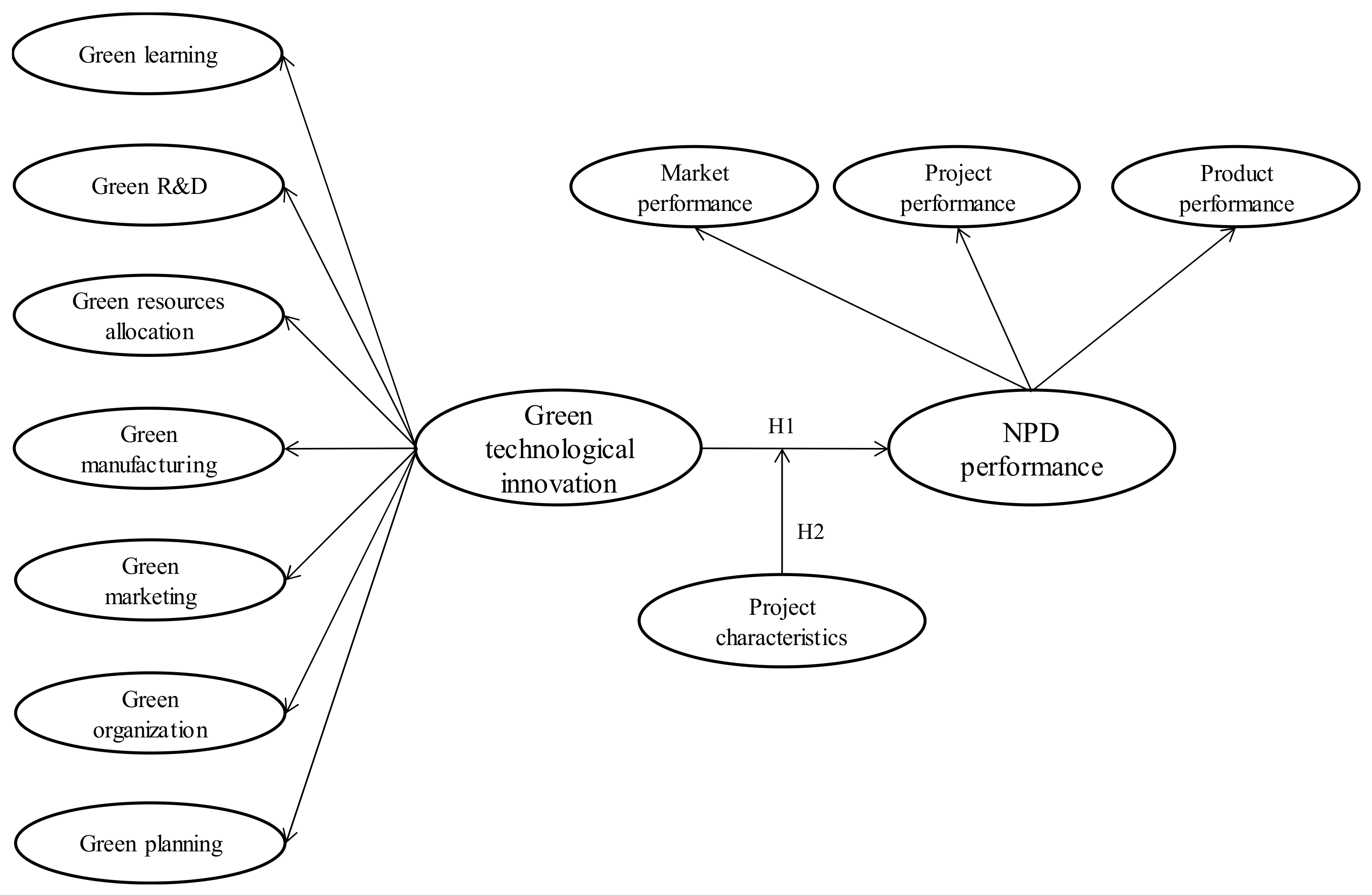
The measurement model was developed by adopting validated multi-item scales from prior studies. Following the conceptual framework presented in Figure 1, GTI implementation was operationalized through seven dimensions derived from previous research on technological innovation: green learning, green R&D, green resource allocation, green manufacturing, green marketing, green organization, and green planning [20].
NPD performance was measured using validated scales adapted from previous studies and comprised three dimensions: market performance, project performance, and product performance [35,36]. These dimensions collectively assess both the commercial success of new products and the effectiveness of project execution.
All measurement items were assessed using a seven-point Likert scale ranging from 1 (“strongly disagree”) to 7 (“strongly agree”). A seven-point Likert scale was adopted because it provides greater measurement sensitivity, reduces central tendency bias, and enables respondents to express varying degrees of agreement more accurately.
To establish content validity, the questionnaire was developed through an extensive review of the relevant literature and subsequently refined through interviews with five experienced NPD practitioners, each with more than 20 years of industry experience. Their feedback was used to evaluate the relevance, completeness, and practical applicability of the measurement items. Based on their suggestions, the questionnaire was revised and subsequently reviewed by three university professors specializing in new product development and innovation management. Their recommendations regarding item wording, clarity, and overall questionnaire structure were incorporated into the final version of the survey instrument prior to data collection.

4. Results and Analysis

4.1. Measurement Model Evaluation

Confirmatory factor analysis (CFA) was conducted to assess the reliability and validity of the measurement model and to examine the construct validity of the proposed research framework. All statistical analyses were conducted using AMOS 20.0 and SPSS statistical software 21.0. Model adequacy was assessed by examining several commonly accepted goodness-of-fit (GOF) indices, including the goodness-of-fit index (GFI), adjusted goodness-of-fit index (AGFI), comparative fit index (CFI), and normed fit index (NFI) [37].
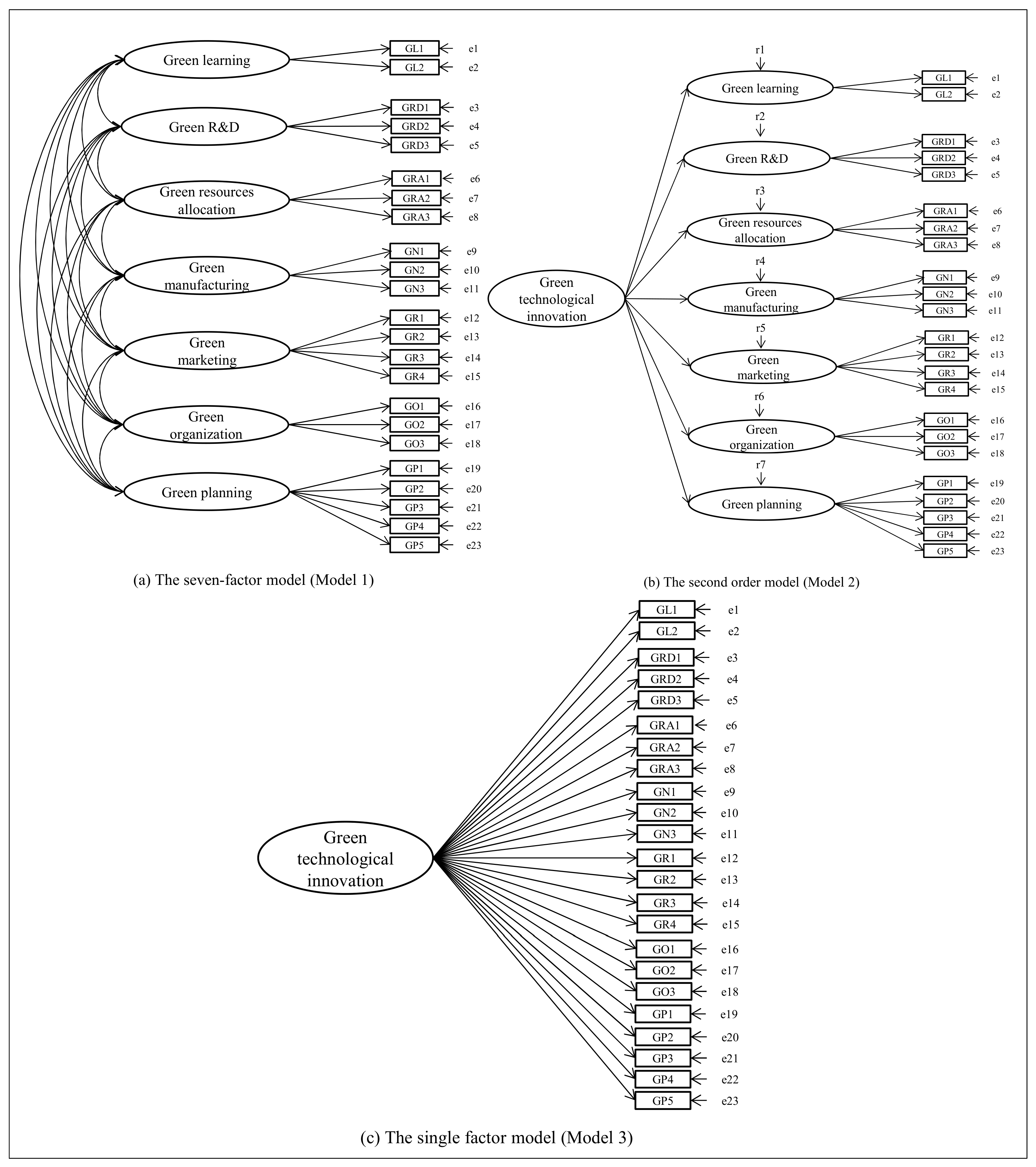
For the green technological innovation construct, three competing measurement models were developed and compared to determine the most appropriate factor structure. The first model specified GTI as a first-order construct consisting of seven correlated dimensions (Model 1). The second model conceptualized GTI as a second-order construct in which the seven first-order dimensions served as underlying factors (Model 2). The third model treated all measurement items as indicators of a single first-order latent construct (Model 3). The three alternative measurement models and their corresponding factor structures are presented in Figure 2.
The initial CFA results indicated that the seven-factor measurement model provided a better fit to the data compared with the alternative specifications. Although the original model did not achieve the recommended goodness-of-fit thresholds (GFI = 0.604, AGFI = 0.478, CFI = 0.663, and NFI = 0.636), its overall performance exceeded that of both the second-order model (GFI = 0.570, AGFI = 0.468, CFI = 0.622, NFI = 0.594) and the single-factor model (GFI = 0.519, AGFI = 0.418, CFI = 0.563, NFI = 0.537). These comparative results provide empirical support for conceptualizing GTI as a multidimensional construct comprising several distinct but related dimensions rather than as a single underlying factor [38].
GTI is conceptualized as a reflective second-order construct. Specifically, GTI represents an underlying organizational capability that reflects a project’s overall ability to pursue environmentally oriented technological innovation. The seven first-order dimensions, including green learning, green R&D, green resource allocation, green manufacturing, green marketing, green organization, and green planning, are conceptualized as manifestations of this higher-order capability. This specification is theoretically supported by the dynamic capability perspective, which views organizational capabilities as latent capabilities that are manifested through multiple interrelated organizational routines and practices. Accordingly, projects with stronger GTI capability are expected to demonstrate higher levels of green learning, green R&D activities, green manufacturing practices, and other related green innovation activities.
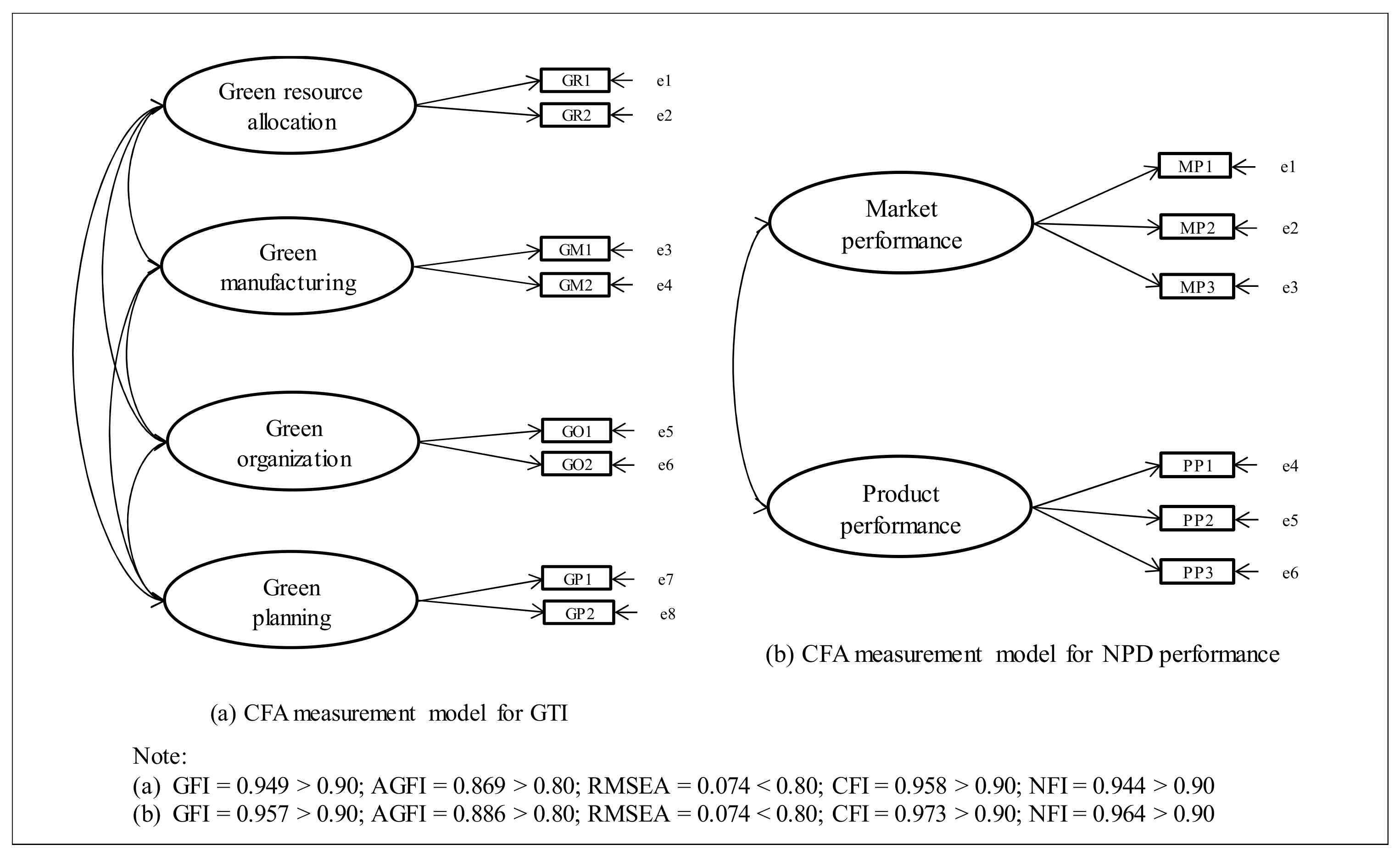
To improve model adequacy, model refinement was performed based on modification indices (MI). Parameters associated with large MI values indicate potential improvements in overall model fit if appropriately released. Following several rounds of refinement, measurement items exhibiting consistently high MI values were removed to enhance model parsimony and adequacy [39,40]. To improve model fit, item refinement was conducted based on both statistical and theoretical considerations. Specifically, items with low standardized factor loadings and/or high modification indices indicating substantial cross-loadings or correlated measurement errors were sequentially removed. A total of 15 items were deleted (see Table 3) while preserving the theoretical meaning and conceptual coverage of each GTI dimension. After eliminating the 15 measurement items, the revised seven-factor model achieved satisfactory fit according to commonly accepted criteria (GFI = 0.949, AGFI = 0.869, CFI = 0.958, and NFI = 0.944). Green learning, green R&D, and green marketing were removed before achieving an acceptable CFA fit. Although green learning, green R&D, and green marketing are important antecedents of green technological innovation, the Natural Resource-Based View [41] suggests that superior performance is ultimately achieved through organizational capabilities that effectively deploy and integrate green resources into operational activities. Consistent with this perspective, the retained dimensions—green resource allocation, green organization, green manufacturing, and green planning—represent the implementation capabilities through which GTI contributes to NPD performance. Although 15 items were removed, the remaining items continue to represent the theoretical meaning and domain coverage. In other words, the refinement process improved the measurement quality while maintaining the conceptual integrity of the GTI construct. The final GTI measurement model is presented in Figure 3a, and the standardized factor loadings of the retained items are reported in Table 4.
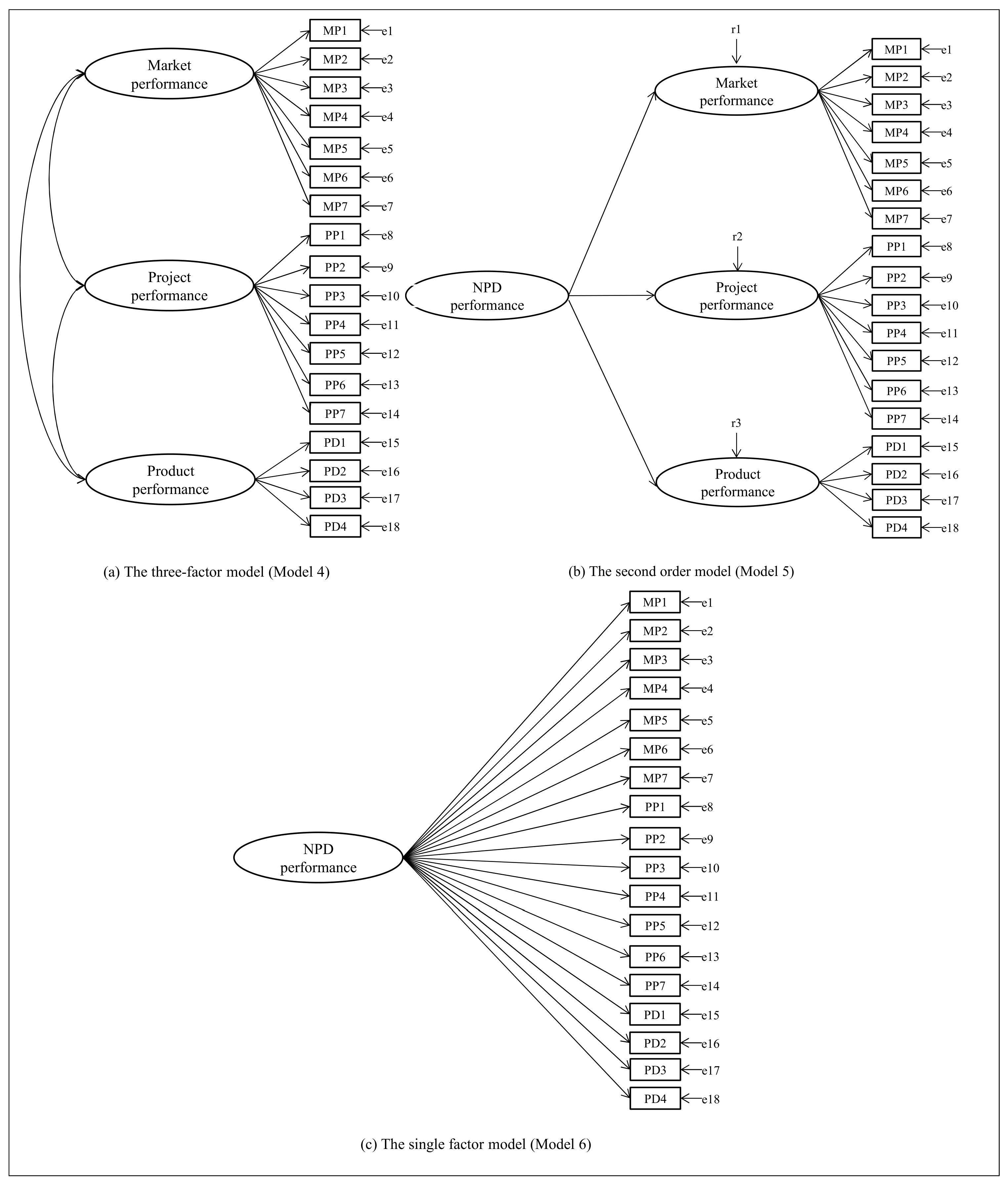
The same CFA procedure was subsequently applied to the NPD performance construct. Three competing measurement models were estimated, including a three-factor first-order model (Model 4), a second-order model (Model 5), and a single-factor model (Model 6), as illustrated in Figure 4. The comparison results indicated that the three-factor first-order model provided the best representation of the observed data. Subsequent model refinement based on modification indices further improved model fit, and the final measurement model is shown in Figure 3b. The standardized factor loadings for the refined model are summarized in Table 4. Project performance was not included in the final validated measurement model because the corresponding measurement items did not meet the required reliability and validity criteria.
Reliability and construct validity were further assessed using composite reliability (CR), convergent validity, and discriminant validity. All constructs achieved composite reliability values above the recommended threshold of 0.70, demonstrating satisfactory internal consistency reliability [42]. Furthermore, all retained measurement items exhibited statistically significant standardized factor loadings exceeding 0.50, providing evidence of adequate convergent validity.
Discriminant validity was examined using chi-square difference tests following the procedure recommended in previous studies [43,44]. Specifically, each pair of constructs was estimated under both constrained and unconstrained conditions. The unconstrained models consistently demonstrated significantly lower chi-square values than their corresponding constrained models, indicating that the constructs were statistically distinguishable and represented conceptually distinct dimensions.

4.2. Assessment of Common Method Bias

Because all survey data were obtained from individual respondents using a self-administered questionnaire, the potential influence of common method bias (CMB) was assessed prior to hypothesis testing [45,46]. Harman’s single-factor test was conducted following the procedures recommended in the literature. The results indicated that the single-factor model demonstrated poor model fit (NFI = 0.326, CFI = 0.346, GFI = 0.334, and AGFI = 0.264), suggesting that a single latent factor was insufficient to explain the covariance among all measurement items [47]. Therefore, common method variance was unlikely to represent a serious concern in this study, and the validity of the subsequent empirical analyses was unlikely to be substantially affected.

4.3. Structural Model Evaluation

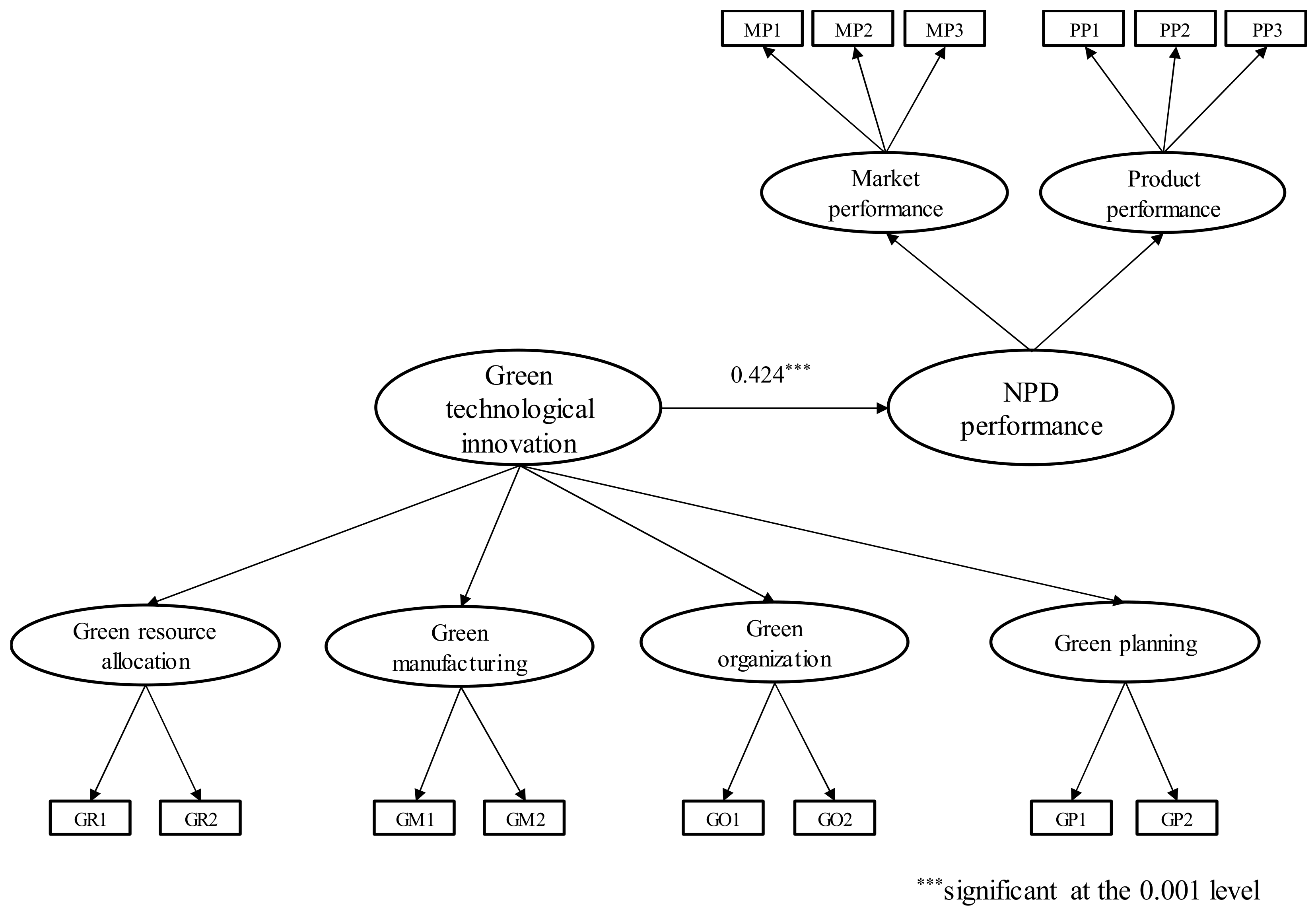
Following validation of the measurement model, structural equation modeling (SEM) was employed to examine the hypothesized relationships among the latent constructs and test the proposed research model. The structural model, illustrated in Figure 5, specifies the hypothesized causal relationship between GTI implementation and NPD performance and estimates the corresponding standardized path coefficient.
The adequacy of the structural model was evaluated using the same goodness-of-fit indices applied in the measurement model assessment [48]. The results indicated that the proposed structural model achieved an acceptable level of model fit, with all major indices exceeding the recommended cutoff values (GFI = 0.933, AGFI = 0.823, CFI = 0.942, and NFI = 0.931). Concerning the hypothesized relationships, the path coefficient from GTI implementation to NPD performance was positive and statistically significant (β = 0.424, p < 0.001). Therefore, Hypothesis 1 was supported, indicating that the implementation of green technological innovation significantly enhances NPD performance in terms of marketing performance and product performance. These findings suggest that GTI serves as an important strategic capability that enables firms to improve product development outcomes and achieve superior project performance.
Overall, the structural model provided an adequate representation of the empirical data and confirmed the proposed theoretical relationship between GTI implementation and NPD performance, providing a foundation for further examination of the moderating effects of project characteristics.

4.4. Moderating Effects of Project Characteristics

This section examines whether project characteristics moderate the relationship between green technological innovation and new product development performance, as proposed in Hypothesis 2. The moderating variables include industry sector, product newness, R&D type, project duration, schedule adequacy, project complexity, team size, information availability, team relationship quality, and material availability.
To test the moderating effects, a multi-group structural equation modeling (SEM) approach was conducted using AMOS [49]. This approach enables researchers to determine whether the strength of the structural relationship between GTI implementation and NPD performance differs significantly across groups defined by specific project characteristics. The analyses excluded subgroups with insufficient sample sizes to improve the stability and reliability of the parameter estimates.
This study conducted a multi-group confirmatory factor analysis to examine measurement invariance across groups before performing the multi-group SEM analysis. The results supported configural invariance, indicating that the same factor structure was applicable across all comparison groups and that the constructs were conceptualized similarly. However, metric invariance was not fully supported. Modification indices indicated that a small number of factor loadings differed across groups. Following Byrne et al. [50], these constraints were released, resulting in partial metric invariance. Since most factor loadings remained invariant, the subsequent structural comparisons were considered appropriate.

4.4.1. Team Size as a Moderator

Team size was first examined as an illustrative example of the moderation analysis procedure. Respondents were classified into three groups according to the number of core project members: small teams (fewer than 11 members), medium-sized teams (11–20 members), and large teams (more than 20 members). A two-step procedure was applied.
In the first step, an unconstrained baseline model was estimated, allowing the path coefficient between GTI implementation and NPD performance to vary freely across the three groups. In the second step, a constrained model was estimated by restricting the structural path coefficient to be equal across all groups. The difference between the unconstrained and constrained models was then evaluated using chi-square difference tests. The results revealed a statistically significant difference between the two models (p < 0.05), confirming that team size significantly moderates the relationship between GTI implementation and NPD performance (see Table 5 and Table 6).
To reduce the risk of Type I errors associated with multiple subgroup comparisons, this study applied the Benjamini–Hochberg procedure to control the False Discovery Rate (FDR) and calculated FDR-adjusted p-values for all multiple subgroup comparisons.
Further examination of path estimates revealed that GTI implementation had a significant positive effect on NPD performance across all team-size groups. However, the strength of this relationship varied across groups. The effect was strongest in small teams (β = 0.641, p < 0.001), followed closely by medium-sized teams (β = 0.613, p < 0.001), and was comparatively weaker in large teams (β = 0.446, p < 0.001). These findings suggest that smaller and medium-sized teams may be more effective in converting GTI initiatives into improved NPD outcomes, potentially due to greater communication efficiency, coordination flexibility, and knowledge integration capability (see Table 7).

4.4.2. Other Project Characteristics as Moderators

As shown in Table 5, Table 6 and Table 7, in addition to team size, several other project characteristics significantly moderated the relationship between GTI implementation and NPD performance. Specifically, R&D type, information availability, and material availability demonstrated significant moderating effects.
With respect to R&D type, GTI exhibited stronger effects on NPD performance in basic research and continuous improvement projects than in applied research projects. This result implies that projects involving greater knowledge exploration or incremental enhancement may provide more favorable conditions for realizing the benefits of green technological innovation.
In terms of information and resource conditions, GTI effectiveness varies across different levels of information/material availability. This finding indicates that GTI may serve a compensatory function by helping firms overcome information uncertainty and resource constraints through improved technological capability and resource utilization.
However, not all project characteristics demonstrated significant moderating effects. Variables such as industry sector, project duration, schedule adequacy, project complexity, and team relationship did not show statistically significant interactions with GTI in influencing NPD performance.

4.4.3. Summary of Moderation Effects

Moderation analyses were conducted for all project characteristics included in the study, namely industry sector, product newness, R&D type, project duration, schedule adequacy, project complexity, team size, information availability, team relationship quality, and material availability, and price positioning. Among these variables, only four—team size, R&D type, information availability, and material availability—showed significant moderating effects. These project characteristics serve as important boundary conditions that influence the strength of the relationship between overall GTI implementation and NPD performance.
Overall, the findings provide partial support for Hypothesis 2. While several project characteristics significantly moderate the relationship between GTI and NPD performance, others do not exhibit a significant moderating influence. These results demonstrate that the performance benefits of GTI are context-dependent and vary according to specific project conditions.
Therefore, successful implementation of GTI requires not only technological capability but also appropriate alignment between innovation practices and project-specific characteristics.

5. Conclusions and Discussion

5.1. Key Findings and Theoretical Contributions

Although green innovation has been widely recognized as an important driver of organizational sustainability and performance, the specific mechanisms through which green technological innovation enhances new product development outcomes remain insufficiently understood. In particular, prior research has provided limited empirical evidence regarding how GTI contributes to project-level performance within NPD and project management contexts. This study addresses this research gap by empirically investigating the relationship between GTI implementation and NPD performance and examining the contextual conditions under which GTI generates superior outcomes.
This study advances GTI research by moving beyond the question of whether GTI improves NPD performance and addressing the more nuanced question of when GTI is most effective. By identifying project characteristics as boundary conditions, this study demonstrates that the value of GTI is context-dependent rather than universally realized.
The findings demonstrate that GTI implementation has a significant positive influence on both market performance and product performance in NPD projects. Specifically, four dimensions of GTI implementation—green resource allocation, green manufacturing, green organizational practices, and green planning—contribute significantly to improved NPD outcomes. These findings extend previous research by demonstrating that environmentally oriented innovation capabilities serve not only as mechanisms for achieving sustainability objectives but also as strategic capabilities for enhancing commercial success and product development effectiveness [41].
Furthermore, the findings reveal that the impact of GTI on NPD performance is contingent upon specific project conditions rather than being universally applicable across all NPD projects. The relationship between GTI and NPD performance was stronger in projects involving small and medium-sized teams, indicating that organizational structure and coordination capability influence the effectiveness of GTI implementation. The stronger effect of GTI in smaller teams may be explained by their greater organizational agility and lower coordination costs. Consistent with the digitalization literature [51,52,53,54,55], smaller teams can leverage scalable digital tools to facilitate knowledge sharing, cross-functional collaboration, and rapid decision-making. These advantages may enable small teams to more effectively translate GTI practices into new product development outcomes.
Rather than uniformly promoting GTI across all NPD projects, managers should prioritize GTI investments in project environments where the benefits are likely to be greatest. The findings suggest that smaller teams are better positioned to convert GTI practices into superior product and market performance. However, successful implementation of green technological innovation depends not only on the adoption of green technologies but also on several organizational and contextual factors, including technology maturity, organizational readiness, implementation costs, and environmental conditions [56]. Accordingly, firms should allocate GTI resources strategically according to project characteristics rather than assuming that identical investments will yield similar outcomes across all projects. In addition, successful GTI implementation depends not only on the technology itself but also on organizational readiness. Managers should ensure that adequate organizational capabilities, implementation resources, and supportive organizational environments are in place before introducing GTI initiatives.
Previous research [57] has suggested that applied research provides greater opportunities for sustainability transformation. However, our findings indicate that GTI generates stronger performance benefits in “continuous improvement” projects. This difference may be attributed to the fact that “continuous improvement” projects can leverage existing technological knowledge and organizational capabilities, allowing firms to translate green innovation practices into measurable outcomes more efficiently.
Moreover, R&D type, information availability, and material availability were found to significantly moderate the GTI–NPD performance relationship. These findings provide empirical support for contingency theory by demonstrating that the value generated by innovation practices depends on the alignment between technological initiatives and project-specific conditions.

5.2. Managerial Implications

This study offers several practical implications for managers in high-technology industries seeking to improve NPD performance through green innovation practices. First, effective implementation of GTI requires the integration of cross-functional expertise in areas such as R&D, manufacturing, marketing, and organizational coordination. Ensuring adequate financial and organizational support for green initiatives is also essential for successful implementation.
Second, different dimensions of GTI require specific managerial attention. For instance, green manufacturing capability depends on the availability of skilled personnel who can translate R&D outputs into environmentally friendly production processes. Similarly, effective green organizational practices rely on strong coordination mechanisms that enable collaboration across functional departments, particularly when managing multiple innovation activities simultaneously. In addition, green planning requires project teams to continuously monitor external environmental conditions and respond flexibly to emerging opportunities and threats.
Third, the results suggest that smaller and medium-sized teams are more effective in leveraging GTI to improve NPD performance. This may be attributed to lower coordination complexity and more efficient communication structures compared to larger teams. Large projects often involve multiple stakeholders, external partners, and complex coordination mechanisms, which may increase uncertainty and reduce the effectiveness of innovation implementation [58]. In addition, the findings indicate that firms should prioritize cross-functional green planning and strengthen green organizational capabilities to maximize the benefits of GTI implementation. In particular, smaller NPD teams may leverage their flexibility and lower coordination complexity to effectively integrate green practices. Furthermore, developing employees with green manufacturing expertise is critical for translating green technological initiatives into tangible product and market benefits, especially in incremental innovation projects.
Fourth, GTI plays an especially important role in projects characterized by limited information and material availability. In such contexts, GTI may facilitate knowledge integration across departments and improve coordination efficiency, thereby compensating for resource constraints and enhancing overall project performance. The stronger GTI effect under medium material availability may reflect an optimal constraint condition. Excessive material availability may reduce the motivation to search for alternative solutions and improve resource efficiency, whereas insufficient availability may limit implementation capability. Moderate material constraints may therefore encourage innovation efforts while maintaining sufficient resources for GTI implementation.
In sum, smaller teams may benefit more from GTI due to lower coordination costs and greater organizational agility; continuous improvement projects may better translate GTI into performance outcomes because they involve lower technological uncertainty and greater knowledge accumulation; and limited information availability may increase the value of GTI by encouraging knowledge search, learning, and problem-solving capabilities. Rather than uniformly promoting GTI across all NPD projects, managers should prioritize GTI investments in project environments where the benefits are likely to be greatest. The findings suggest that smaller teams are better positioned to convert GTI practices into superior product and market performance. Accordingly, firms should allocate GTI resources strategically according to project characteristics rather than assuming that identical investments will yield similar outcomes across all projects. In addition, successful GTI implementation depends not only on the technology itself but also on organizational readiness. Managers should ensure that adequate organizational capabilities, implementation resources, and supportive organizational environments are in place before introducing GTI initiatives.

5.3. Limitations and Future Research Directions

Despite its contributions, this study has several limitations that should be acknowledged. First, although the proposed model was supported empirically, additional control variables (e.g., firm size, R&D intensity, prior NPD success, and industry characteristics) were not included in the analysis. Future studies should incorporate these variables to further reduce omitted-variable bias.
Second, both GTI implementation and NPD performance were measured using self-reported questionnaires completed by the same respondents. Although procedural remedies and statistical tests suggested that common method bias was not a serious concern, future studies are encouraged to collect multi-source or longitudinal data to strengthen causal inference and reduce the possibility of reverse causality.
Third, future research could integrate life cycle assessment (LCA)-based environmental indicators or archival environmental data to further validate the environmental impacts of GTI. Specifically, the integration of LCA indicators, eco-design practices, life cycle emissions, energy/material intensity measures, and supply-chain transparency mechanisms (e.g., bill of materials (BOM)-based sustainability tracking) could provide more objective evidence of GTI’s environmental impacts and reduce potential greenwashing risks. Additionally, future research could incorporate objective indicators, such as procurement lead times, supplier risk measures, inventory records, and NPD process data, to triangulate survey findings and provide stronger evidence regarding how resource constraints influence the effectiveness of GTI.
Fourth, the empirical data were collected from individual respondents who had direct involvement in NPD projects. While these respondents possess valuable project-level knowledge, future research could adopt a multi-stakeholder approach by incorporating perspectives from different functional roles within the organization to provide a more comprehensive understanding of GTI implementation.
Fifth, the study focuses exclusively on the high-technology industry in Taiwan. Although this context is appropriate for examining innovation-intensive environments, the generalizability of the findings to other industries or geographical regions may be limited. Future studies are encouraged to replicate this research in different industrial and cultural contexts to enhance external validity.
Sixth, the data are based on single-informant perceptions, which may raise concerns regarding common method bias. However, several procedural and statistical measures were adopted to mitigate this issue [59,60]. A common latent factor (CLF) was incorporated into the measurement model, with paths specified from the CLF to all observed indicators to capture potential common method variance. The standardized factor loadings and structural path coefficients remained largely unchanged after including the CLF, suggesting that common method bias is unlikely to have materially affected the results [47]. Future research could further strengthen methodological rigor by using multi-source or longitudinal data to capture dynamic changes in GTI implementation and project performance over time. Specifically, the effectiveness of GTI may vary over time because environmental performance is influenced by dynamic technological, regulatory, and market conditions. Although this study provides evidence of the positive relationship between GTI and NPD performance, a cross-sectional design limits the ability to capture the long-term effects of GTI implementation. Future research could employ longitudinal designs or incorporate time-sensitive factors, such as regulatory changes and environmental policy shocks, to better understand the evolving impact of GTI.
Seventh, although efforts were made to ensure the reliability and validity of the measurement model, future studies may benefit from integrating objective performance indicators or archival project data to complement survey-based measures and improve robustness.
Eighth, although this study identifies project characteristics as important boundary conditions influencing GTI effectiveness, the findings should be interpreted within the context of Taiwan’s high-technology industry. Taiwan provides a relatively mature innovation ecosystem with strong technological capabilities, established supply chains, and supportive institutional environments. Consequently, the relationships observed in this study may not be directly generalizable to developing economies or industries with lower technological capabilities or weaker institutional support. Future research is encouraged to validate the proposed framework across different countries, industrial sectors, and institutional contexts to enhance the external validity of GTI research.
Finally, although GTI was found to enhance market performance, improved market outcomes may partly reflect stakeholders’ perceptions of sustainability rather than verified environmental improvements. Therefore, firms should avoid relying solely on sustainability communication and should ensure that green innovation practices generate measurable environmental benefits. Future research could integrate objective environmental indicators, such as LCA-based measures, carbon reduction, and resource efficiency indicators, to distinguish genuine environmental improvements from perception-based effects.

Author Contributions

Investigation, H.-C.C.; resources, H.-C.C.; validation, H.-C.C.; writing—original draft preparation, L.-R.Y.; writing—review and editing, L.-R.Y., I.-F.C. and H.-C.C. All authors have read and agreed to the published version of the manuscript.

Funding

This research was funded by the National Science and Technology Council, Grant Number NSTC 114-2625-M-032-002.

Institutional Review Board Statement

Ethical review and approval were waived for this study by the College of Business and Management at Tamkang University, as the study consists of an anonymous questionnaire that does not involve any content exposing participants to legal, civil, or reputational harm. This type of research is exempt from formal ethics approval.

Informed Consent Statement

Informed consent was obtained from all subjects involved in the study.

Data Availability Statement

The data presented in this study are available on request from the corresponding author due to privacy concerns.

Conflicts of Interest

The authors declare no conflicts of interest.

References

  1. Cooper, R.G. Product Leadership: Creating and Launching Superior New Products; Perseus Books: New York, NY, USA, 1998. [Google Scholar]
  2. Vafaei-Zadeh, A.; Buhari, N.; Hanifah, H.; Thurasamy, R.; Chanda, R.C. Blockchain technology adoption in Malaysian manufacturing companies: An empirical study using SEM and FSQCA. Int. J. Inf. Technol. Decis. Mak. 2026, 25, 545–585. [Google Scholar]
  3. Tomala, F.; Sénéchal, O. Innovation management: A synthesis of academic and industrial points of view. Int. J. Proj. Manag. 2004, 22, 281–287. [Google Scholar] [CrossRef]
  4. Liberatone, M.J.; Stylianou, A.C. Expert support systems for new product development decision making: A modeling framework and applications. Manag. Sci. 1995, 41, 1296–1316. [Google Scholar] [CrossRef]
  5. Chen, Y.; Lai, S.; Wen, C. The influence of green innovation performance on corporate advantage in Taiwan. J. Bus. Ethics 2006, 67, 331–339. [Google Scholar] [CrossRef]
  6. Clark, K.; Wheelwright, S. Leading Product Development; Free Press: New York, NY, USA, 1995. [Google Scholar]
  7. Porter, M.E.; van der Linde, C. Green and competitive. Harv. Bus. Rev. 1995, 73, 120–134. [Google Scholar]
  8. Porter, M.E. The contributions of industrial organization to strategic management. Acad. Manag. Rev. 1981, 6, 609–620. [Google Scholar] [CrossRef]
  9. Pheng, L.S.; Chuan, Q.T. Environmental factors and work performance of project managers in the construction industry. Int. J. Proj. Manag. 2006, 24, 24–37. [Google Scholar] [CrossRef]
  10. Rogers, E.M. Diffusion of Innovations; Free Press: New York, NY, USA, 1995. [Google Scholar]
  11. Chang, S.; Lee, M.S. The linkage between knowledge accumulation capability and organizational innovation. J. Knowl. Manag. 2008, 12, 3–20. [Google Scholar] [CrossRef]
  12. Cohen, W.M.; Levinthal, D.A. Absorptive capacity: A new perspective on learning and innovation. Adm. Sci. Q. 1990, 35, 128–152. [Google Scholar] [CrossRef]
  13. Green, S.G.; Gavin, M.B.; Aiman-Smith, L. Assessing a multidimensional measure of radical technological innovation. IEEE Trans. Eng. Manag. 1995, 42, 203–214. [Google Scholar] [CrossRef]
  14. Crossan, M.M.; Apaydin, M. A multi-dimensional framework of organizational innovation: A systematic review of the literature. J. Manag. Stud. 2010, 47, 1154–1191. [Google Scholar] [CrossRef]
  15. Mention, A. Intellectual capital, innovation and performance: A systematic review of the literature. Bus. Econ. Res. 2012, 2, 1–37. [Google Scholar] [CrossRef]
  16. Damanpour, F. Organizational innovation: A meta-analysis of effects of determinants and moderators. Acad. Manag. J. 1991, 34, 555–590. [Google Scholar] [CrossRef] [PubMed]
  17. Damanpour, F.; Evan, W.E. Organizational innovation and performance: The problem of organizational lag. Adm. Sci. Q. 1984, 29, 392–409. [Google Scholar] [CrossRef]
  18. Guan, J.; Ma, N. Innovative capability and export performance of Chinese firms. Technovation 2003, 23, 737–747. [Google Scholar] [CrossRef]
  19. Evangelista, R.; Perani, G.; Rapiti, F.; Archibugi, D. Nature and impact of innovation in manufacturing: Some evidence from the Italian innovation survey. Res. Policy 1997, 26, 521–536. [Google Scholar] [CrossRef]
  20. Yam, R.C.M.; Lo, W.; Tang, E.P.Y.; Lau, A.K.W. Analysis of sources of innovation, technological innovation capabilities, and performance: An empirical study of Hong Kong manufacturing industries. Res. Policy 2011, 40, 391–402. [Google Scholar] [CrossRef]
  21. Adler, P.S.; Shenbar, A. Adapting your technological base: The organizational challenge. Sloan Manag. Rev. 1990, 32, 25–37. [Google Scholar]
  22. Huang, Y.; Ding, H.; Kao, M. Salient stakeholder voices: Family business and green innovation adoption. J. Manag. Organ. 2009, 15, 309–326. [Google Scholar] [CrossRef]
  23. Maynard, C. Sustainability—What and why. J. Commer. 2008, 9, 40. [Google Scholar]
  24. Linder, J.C.; Jarvenpaa, S.; Davenport, T.H. Toward an innovation sourcing strategy. MIT Sloan Manag. Rev. 2003, 44, 43–49. [Google Scholar]
  25. Robinson, W.T.; Min, S. Is the first to market the first to fail? J. Mark. Res. 2002, 34, 120–128. [Google Scholar] [CrossRef]
  26. Kmieciak, R.; Michna, A.; Męczyńska, A. Innovativeness, empowerment and IT capability: Evidence from SMEs. Ind. Manag. Data Syst. 2012, 112, 707–728. [Google Scholar] [CrossRef]
  27. Chang, Y.; Hughes, M.; Hotho, S. Internal and external antecedents of SMEs’ innovation ambidexterity outcomes. Manag. Decis. 2011, 49, 1658–1676. [Google Scholar] [CrossRef]
  28. Shankar, V.; Carpenter, G.S.; Krishnamurthi, L. Late mover advantage: How innovative late entrants outsell pioneers. J. Mark. Res. 1998, 35, 54–70. [Google Scholar] [CrossRef]
  29. Danneels, E. The dynamics of product innovation and firm competences. Strateg. Manag. J. 2002, 23, 1095–1121. [Google Scholar] [CrossRef]
  30. Gladwin, T.N.; Kennelly, J.J.; Krause, T.S. Shifting paradigms for sustainable development: Implications for management theory and research. Acad. Manag. Rev. 1995, 20, 874–907. [Google Scholar] [CrossRef]
  31. Chen, Y. The driver of green innovation and green image—Green core competence. J. Bus. Ethics 2008, 81, 531–543. [Google Scholar] [CrossRef]
  32. Yang, L.; O’Connor, J.T.; Wang, C. Technology utilization on different sizes of projects and associated impacts on composite project success. Int. J. Proj. Manag. 2006, 24, 96–105. [Google Scholar] [CrossRef]
  33. Müller, R.; Turner, J.R. Matching the project manager’s leadership style to project type. Int. J. Proj. Manag. 2007, 25, 21–32. [Google Scholar] [CrossRef]
  34. Patel, P.C.; Cardon, M.S. Adopting HRM practices and their effectiveness in small firms facing product-market competition. Hum. Resour. Manag. 2010, 49, 265–290. [Google Scholar] [CrossRef]
  35. Atuahene-Gima, K. An exploratory analysis of the impact of market orientation on new product performance—A contingency approach. J. Product. Innov. Manag. 1995, 12, 275–293. [Google Scholar] [CrossRef]
  36. Olson, E.M.; Walker, O.C.; Ruekert, R.W. Organizing of effective new product development: The moderating role of product innovativeness. J. Mark. 1995, 59, 48–62. [Google Scholar] [CrossRef] [PubMed]
  37. Delisi, M.; Hochstetler, A.L.; Murphy, D.S. Self control behind bars: A validation study of the Grasmick et al. Scale. Justice Q. 2003, 20, 241–263. [Google Scholar] [CrossRef]
  38. Vahedi, S.; Farrokhi, F.; Bevrani, H. A confirmatory factor analysis of the structure of statistics anxiety measure: An examination of four alternative models. Iran. J. Psychiatry 2011, 6, 92–98. [Google Scholar] [PubMed]
  39. Lei, P.; Wu, Q. Introduction to structural equation modeling: Issues and practical considerations. Educ. Meas. Issues Pract. 2007, 26, 33–43. [Google Scholar] [CrossRef]
  40. Christodoulides, G.; de Chernatony, L.; Furrer, O.; Shiu, E.; Abimbola, T. Conceptualising and measuring the equity of online brands. J. Mark. Manag. 2006, 22, 799–825. [Google Scholar] [CrossRef]
  41. Hart, S.L. A natural-resource-based view of the firm. Acad. Manag. Rev. 1995, 20, 986–1014. [Google Scholar] [CrossRef]
  42. Hair, J.F.; Black, W.C.; Babin, B.J.; Anderson, R.E.; Tatham, R.L. Multivariate Data Analysis, 6th ed.; Prentice-Hall: Upper Saddle River, NJ, USA, 2006. [Google Scholar]
  43. Bagozzi, R.P.; Phillips, L.W. Representing and testing organizational theories: A holistic construal. Adm. Sci. Q. 1982, 27, 459–489. [Google Scholar] [CrossRef]
  44. Li, T.; Cavusgil, S.T. Decomposing the effects of market knowledge competence in new product export. Eur. J. Mark. 2000, 34, 57–80. [Google Scholar] [CrossRef]
  45. Lu, Y.; Zhou, L.; Bruton, G.; Li, W. Capabilities as a mediator linking resources and the international performance of entrepreneurial firms in an emerging economy. J. Int. Bus. Stud. 2010, 41, 419–436. [Google Scholar] [CrossRef]
  46. Richardson, H.A.; Simmering, M.J.; Sturman, M.C. A tale of three perspectives: Examining post hoc statistical techniques for detection and correction of common method variance. Organ. Res. Methods 2009, 12, 762–800. [Google Scholar]
  47. Podsakoff, P.M.; MacKenzie, S.B.; Lee, J.Y.; Podsakoff, N.P. Common method biases in behavioral research: A critical review of the literature and recommended remedies. J. Appl. Psychol. 2003, 88, 879–903. [Google Scholar] [CrossRef] [PubMed]
  48. Molenaar, K.; Washington, S.; Diekmann, J. Structural equation model of construction contract dispute potential. J. Constr. Eng. Manag. 2000, 126, 268–277. [Google Scholar] [CrossRef]
  49. Cheung, G.W.; Rensvold, R.B. Evaluating goodness-of-fit indexes for testing measurement invariance. Struct. Equ. Model. 2002, 9, 233–255. [Google Scholar] [CrossRef] [PubMed]
  50. Byrne, B.M.; Shavelson, R.J.; Muthén, B. Testing for the equivalence of factor covariance and mean structures: The issue of partial measurement invariance. Psychol. Bull. 1989, 105, 456–466. [Google Scholar] [CrossRef]
  51. Ciampi, F.; Faraoni, M.; Ballerini, J.; Meli, F. The co-evolutionary relationship between digitalization and organizational agility: Ongoing debates, theoretical developments and future research perspectives. Technol. Forecast. Soc. Change 2022, 176, 121383. [Google Scholar] [CrossRef]
  52. Walter, A.-T. Organizational agility: Ill-defined and somewhat confusing? A systematic literature review and conceptualization. Manag. Rev. Q. 2021, 71, 343–391. [Google Scholar] [CrossRef]
  53. Liu, S.; Chan, F.T.S.; Yang, J.; Niu, B. Understanding the effect of cloud computing on organizational agility: An empirical examination. Int. J. Inf. Manag. 2018, 43, 98–111. [Google Scholar] [CrossRef]
  54. Nazir, S.; Pinsonneault, A. Relating agility and electronic integration: The role of knowledge and process coordination mechanisms. J. Strateg. Inf. Syst. 2021, 30, 101654. [Google Scholar] [CrossRef]
  55. Fang, Y.; Neufeld, D.; Zhang, X. Knowledge coordination via digital artefacts in highly dispersed teams. Inf. Syst. J. 2021, 21, 520–543. [Google Scholar] [CrossRef]
  56. Shoomal, A.; Jahanbakht, M.; Componation, P.J. An analytical framework for evaluating blockchain and IoT use cases in sustainable supply chains. Supply Chain Anal. 2026, 13, 100198. [Google Scholar] [CrossRef]
  57. OECD Frascati Manual 2015: Guidelines for Collecting and Reporting Data on Research and Experimental Development. In The Measurement of Scientific, Technological and Innovation Activities; OECD Publishing: Paris, France, 2015.
  58. Kerzner, H. Project Management: A Systems Approach to Planning, Scheduling and Controlling; Van Nostrand Reinhold: New York, NY, USA, 1992. [Google Scholar]
  59. Van Dyne, L.; LePine, J.A. Helping and voice extra-role behaviors: Evidence of construct and predictive validity. Acad. Manag. J. 1998, 41, 108–119. [Google Scholar] [CrossRef]
  60. Podsakoff, P.M.; Organ, D.W. Self-reports in organizational research: Problems and prospects. J. Manag. 1986, 12, 531–544. [Google Scholar] [CrossRef]
Figure 1. Proposed research model.
Sustainability 18 08027 g001
Figure 2. CFA Measurement Models for Green Technological Innovation.
Sustainability 18 08027 g002
Figure 3. The Refined CFA Measurement Models.
Sustainability 18 08027 g003
Figure 4. CFA Measurement Models for NPD Performance.
Sustainability 18 08027 g004
Figure 5. Research Model Estimation Results.
Sustainability 18 08027 g005
Table 1. Type of Sampled Projects.
CharacteristicClassNumberPercent
Industry sectorIC178.1
Industry sectorComputer hardware and peripherals6430.5
Industry sectorCommunication equipment104.8
Industry sectorOptoelectronics4119.5
Industry sectorPrecision machine136.2
Industry sectorBiotechnology4220.0
Industry sectorOther2311.0
Product newnessNew innovations4220.0
Product newnessNew product lines to the firm4421.0
Product newnessLine extensions7736.7
Product newnessImprovements/revisions to existing products2712.9
Product newnessRepositioning52.4
Product newnessCost reductions157.1
R&D typeBasic research10047.6
R&D typeApplied research4822.9
R&D typeContinuous improvement6229.5
Project duration<6 months5827.6
Project duration6–12 months8038.1
Project duration13–18 months3416.2
Project duration19–24 months136.2
Project duration>24 months2511.9
Time availabilityRealistic duration4320.5
Time availabilityMedium15573.8
Time availabilityUnrealistic duration125.7
Product complexityHigh8138.6
Product complexityMedium11956.7
Product complexityLow104.8
Number of team members<1111755.7
Number of team members11–206330.0
Number of team members21–30125.7
Number of team members>30188.6
Information availabilityEnough10851.4
Information availabilityMedium9243.8
Information availabilityNot enough104.8
Team relationshipGood16679.0
Team relationshipMedium4421.0
Team relationshipNot good00.0
Material availabilityEnough12660.0
Material availabilityMedium7937.6
Material availabilityNot enough52.4
Price positioningHigh10349.0
Price positioningMedium10248.6
Price positioningLow52.4
Table 2. Profile of Respondents.
VariableCategoryNumberPercentage
Role in NPDMarketing5124.3
Role in NPDR&D10550.0
Role in NPDSupervision5425.8
PositionEngineer/specialist6832.4
PositionDirector5023.8
PositionManager/deputy manager6832.3
PositionAssistant vice president2411.4
Age<3052.4
Age31–353315.7
Age36–40178.1
Age41–455827.6
Age>459746.2
Years of relative experience<64621.9
Years of relative experience6–105626.7
Years of relative experience11–155727.1
Years of relative experience16–202813.3
Years of relative experience>202311.0
EducationAssociate’s degree52.4
EducationBachelor’s degree6631.4
EducationMaster’s degree12358.6
EducationPh.D. degree167.6
Table 3. Removed items for GTI.
Construct and Item
Green technological innovation–Green learning (GI)
Our project team identified opportunities for improvement in green products.
Our project team adopted environmental knowledge into the project activities.
Green technological innovation–Green R&D (GR)
Our project had high-quality and quick feedback on green products from manufacturing to design and engineering.
Our project had good mechanisms for transferring technology from research to product development.
Our project had a great extent of market and customer feedback in the green technological innovation process.
Green technological innovation–Green resources allocation (RA)
Our project attached importance to green human resources.
Green technological innovation–Green manufacturing (GM)
Our project effectively applied advanced manufacturing methods.
Green technological innovation–Green marketing (GMA)
Our project had close relationship management with the owner.
Our project had good knowledge of different market segments.
Our project had a highly efficient sales force.
Our project provided excellent after-sales services.
Green technological innovation–Green organization (GO)
Our project had high-level integration of the green concept with the company.
Green technological innovation–Green planning (GP)
Our project could identify strengths and weaknesses of the green product.
Our project had clear environmental goals.
Our project had a clear environmental plan.
Table 4. Results of CFA.
Construct and ItemStandardized Factor Loading
Green technological innovation–Green resource allocation (RA)--
RA 1: Our project team selected key personnel in each functional department into the green innovation process.0.699
RA 2: Our project team had steady capital supplements for green innovation activity.0.780
Green technological innovation–Green manufacturing (GM)--
GM 1: Our project had the ability to transform R&D output into green manufacturing.0.706
GM 2: Our project had capable green manufacturing personnel.0.938
Green technological innovation–Green organization (GO)--
GO1: Our project team handled multiple green innovation activities in parallel.0.808
GO2: Our project had good coordination and cooperation among green R&D, marketing, and manufacturing departments.0.804
Green technological innovation–Green planning (GP)--
GP1: Our project could identify external opportunities and threats when developing the green product.0.811
GP2: Our project was highly adapted and responsive to the external environment.0.718
NPD performance–Market performance (MP)--
MP1: The new product had better profit relative to the objective.0.777
MP2: The new product had a greater number of subscribers relative to the objective.0.964
MP3: The new product has been successful in the time it took to reach the break-even point after introduction.0.874
NPD performance–Product performance (PP)--
PP1: The new product created much technical knowledge.0.773
PP2: The new product created many new market opportunities based on the knowledge.0.815
PP3: The new product created much market knowledge.0.851
Table 5. Goodness of Fit Statistics for Baseline and Constrained Models.
VariableModelχ2dfpNFICFIGFI
Number of team membersBaseline188.771240.0000.7840.8010.806
Constrained210.612260.0000.7590.7770.793
R&D typeBaseline104.443240.0000.8660.8910.871
Constrained112.498260.0000.8560.8830.860
Information availabilityBaseline81.681160.0000.8860.9050.906
Constrained92.088170.0000.8720.8910.888
Material availabilityBaseline110.980160.0000.8400.8570.881
Constrained121.711170.0000.8250.8420.864
Table 6. Chi-square Difference Tests for the Moderating Effect.
VariableHypothesized Moderated PathBaseline ModelConstrained ModelChi-Square Difference Test
χ2dfχ2dfΔχ2Δdfp
Number of team membersGTI → NPD performance188.77124210.6122621.84120.000
R&D typeGTI → NPD performance104.44324112.498268.05520.018
Information availabilityGTI → NPD performance81.6811692.0881710.40710.001
Material availabilityGTI → NPD performance110.98016121.7111710.73210.001
Table 7. Regression Weights for the Link between GTI and NPD Performance.
Project TypeClassβp
Number of team members<110.641<0.001
Number of team members11–200.613<0.001
Number of team members>200.446<0.001
R&D typeBasic research0.755<0.001
R&D typeApplied research0.248<0.001
R&D typeContinuous improvement0.871<0.001
Information availabilityEnough0.629<0.001
Information availabilityMedium0.768<0.001
Material availabilityEnough0.3420.004
Material availabilityMedium1.397<0.001
Disclaimer/Publisher’s Note: The statements, opinions and data contained in all publications are solely those of the individual author(s) and contributor(s) and not of MDPI and/or the editor(s). MDPI and/or the editor(s) disclaim responsibility for any injury to people or property resulting from any ideas, methods, instructions or products referred to in the content.