Systematic Review

Green Roofs as Carbon Sequestration Tools in Urban Environments

by
Virgil Dacian Lalescu
1,
Alina-Maria Țenche-Constantinecu
2,3,*,
Adina Horablaga
4,
Cosmin Alin Popescu
4,
Marius Moșoarcă
4,
Gigliola D’Angelo
5 and
Mihai Fofiu
6
1
Department of Food Science, Faculty of Food Engineering, University of Life Sciences “King Mihai I” from Timisoara, 119 Calea Aradului Street, 300645 Timisoara, Romania
2
Departament of Horticulture, Faculty of Engineering and Applied Technologies, University of Life Sciences “King Mihai I” from Timisoara, 119 Calea Aradului Street, 300645 Timisoara, Romania
3
Departament of Urbanism and Urban Design, Faculty of Urban Planning and Architecture, Technical University of Moldova, 2004 Chisinau, Moldova
4
Departament of Sustainable Development and Environmental Engineering, Faculty of Agriculture, University of Life Sciences “King Mihai I” from Timisoara, 119 Calea Aradului Street, 300645 Timisoara, Romania
5
PLINIVS Study Centre, University of Naples Federico II, Via Toledo, 402, 80134 Naples, Italy
6
Departament of Architecture, Faculty of Architecture and Urban Planning, Politehnica University of Timisoara, Traian Lalescu No. 2/A, 300223 Timisoara, Romania
*
Author to whom correspondence should be addressed.
Sustainability 2026, 18(15), 8000; https://doi.org/10.3390/su18158000
Submission received: 8 April 2026 / Revised: 23 July 2026 / Accepted: 29 July 2026 / Published: 6 August 2026

Abstract

Green roofs have emerged as a critical nature-based solution for urban climate mitigation, offering potential for carbon sequestration alongside thermal regulation and stormwater management. This literature review synthesizes recent research (2020–2025) on green roof carbon dynamics, with emphasis on temperate climate zones and methodological approaches relevant to environmental impact assessment. We systematically analyzed 47 peer-reviewed studies published between 2020 and 2025 through comprehensive database searches, focusing on substrate composition effects, vegetation type performance, seasonal variation patterns, and Life Cycle Assessment methodologies. Key findings from extensive systems in maritime and temperate–arid climates reveal that substrate organic carbon typically dominates total carbon storage, significantly exceeding plant biomass contributions. Extensive green roofs demonstrate a wide range of annual carbon fluxes—from initial net emissions of +20.2 g C m−2 yr−1 during establishment phases to substantial net sequestration rates reaching up to −1762 g CO2 m−2 yr−1 in mature systems—depending strongly on substrate age, vegetation type, and local climate conditions. Native grass and forb mixtures consistently outperform Sedum monocultures in long-term carbon storage through enhanced root biomass and substrate organic matter accumulation. Substrate depth, composition, and moisture retention capacity emerge as primary controls on carbon balance, with recycled waste materials showing promise for enhanced storage. Life cycle assessment studies indicate that indirect carbon savings from reduced building energy consumption frequently exceed direct biological sequestration by one to two orders of magnitude. However, significant methodological heterogeneity, limited long-term monitoring datasets, and geographic gaps—particularly for Central and Eastern European temperate zones—constrain robust comparative analysis and transferability of findings. This review identifies critical research priorities, including standardized carbon accounting frameworks, dynamic life cycle assessments incorporating temporal sequestration trajectories, multi-decadal monitoring programs, and region-specific validation studies for temperate continental climates similar to Romania’s Cfb/Dfb zones.

1. Introduction

Urban areas account for approximately 70% of global anthropogenic carbon dioxide emissions, driving urgent demand for nature-based solutions that integrate carbon sequestration into urban infrastructure [1,2]. Green roofs—vegetated building envelope systems comprising drainage layers, growing media, and plant communities—have gained prominence as multifunctional technologies for climate adaptation and mitigation [3,4]. Beyond well-documented benefits for stormwater retention, urban heat island mitigation, and biodiversity enhancement, green roofs offer potential for direct carbon sequestration through plant photosynthesis and substrate organic matter accumulation, as well as indirect carbon savings through building energy demand reduction [5,6,7].
However, the net carbon balance of green roofs remains contested, with substantial variability reported across studies [3,8]. Some research demonstrates significant carbon sink capacity, particularly in intensive systems with deep substrates and diverse vegetation [9,10], while other investigations reveal extensive green roofs functioning as net carbon sources during establishment phases or under suboptimal conditions [11,12]. This heterogeneity stems from multiple interacting factors, including substrate composition and depth [11,13], vegetation type and maturity [14,15], climate and seasonal dynamics [16,17], management practices [18], and methodological approaches to carbon accounting [19,20].
Life cycle assessment (LCA) studies further complicate the picture by showing that embodied carbon emissions from green roof materials and construction can substantially offset, or even exceed, direct biological sequestration over typical building lifespans [21,22,23]. However, when indirect benefits—particularly reduced heating and cooling energy consumption—are incorporated into carbon accounting frameworks, green roofs frequently demonstrate net climate mitigation potential [5,24,25]. The relative magnitudes of these direct and indirect carbon fluxes vary substantially across climate zones, building characteristics, and green roof design parameters [21,26].
Geographic and climatic context profoundly influences green roof carbon dynamics, yet research remains heavily concentrated in North America, Western Europe, and East Asia [3,19]. Temperate continental climates characteristic of Central and Eastern Europe—including Romania’s Cfb (oceanic) and Dfb (humid continental) zones—remain critically underrepresented in the literature [1]. These regions experience distinct seasonal temperature and precipitation patterns, winter freezing, and summer drought stress that may substantially alter carbon sequestration trajectories relative to better-studied maritime temperate or Mediterranean climates [27,28].
Methodological standardization represents another critical challenge. Carbon flux measurement techniques range from chamber-based point measurements [16] to eddy covariance tower observations [12], from destructive biomass sampling [15] to non-destructive allometric modeling [29], and from short-term experimental studies [30] to multi-year monitoring programs [11]. Life cycle assessment boundaries, functional units, and impact categories similarly vary widely across studies [19,20,31], limiting comparative synthesis and meta-analysis.
Our analysis addresses these knowledge gaps by synthesizing recent research (2020–2025) on green roof carbon sequestration with particular emphasis on: (1) substrate composition effects on carbon storage capacity, (2) vegetation type performance across functional groups, (3) extensive versus intensive system comparisons, (4) seasonal and temporal dynamics, (5) life cycle assessment methodologies and findings, (6) geographic distribution with focus on temperate climate zones, and (7) methodological approaches and standardization needs. Our analysis aims to provide evidence-based guidance for green roof design, policy development, and future research priorities relevant to temperate continental climates such as those in Romania and broader Central-Eastern European contexts [1].
While recent comprehensive reviews have quantified global carbon dynamics, this review distinguishes itself by specifically evaluating the transferability of these global metrics to the severely underrepresented Central and Eastern European (CEE) continental climates (Dfb/Cfb zones). We provide a novel synthesis of how extreme seasonal temperature variations and deep winter freeze–thaw cycles could challenge the existing paradigms of substrate carbon retention and vegetation selection.
The remainder of this paper is structured as follows: Section 2 details the systematic literature search and PRISMA methodology; Section 3 synthesizes the results across substrate dynamics, vegetation performance, LCA impacts, and geographical gaps; and Section 4 presents the conclusions, limitations, and future research directions.

2. Materials and Methods

2.1. Literature Search Strategy

We conducted a literature search across multiple academic databases, including Web of Science, Scopus, Google Scholar, and specialized repositories for environmental science and building technology research. The search strategy employed Boolean combinations of keywords related to green roofs (“green roof” OR “vegetated roof” OR “living roof” OR “eco-roof”) AND carbon-related terms (“carbon sequestration” OR “carbon storage” OR “carbon sink” OR “carbon footprint” OR “CO2 flux” OR “greenhouse gas” OR “life cycle assessment” OR “LCA”). Additional searches targeted specific methodological approaches (“eddy covariance” OR “chamber measurement” OR “biomass sampling”) and climate contexts (“temperate climate” OR “continental climate” OR “seasonal variation”).
We prioritized peer-reviewed journal articles, conference proceedings from major international venues, and technical reports from established research institutions published between 2020 and 2025, while selectively including highly cited foundational studies from 2017–2019 [14,29,32]. This temporal focus ensures coverage of recent methodological advances, emerging technologies (e.g., biochar amendments and recycled substrates), and contemporary climate data, while maintaining relevance to current policy and practice contexts [3,8] (Figure 1).
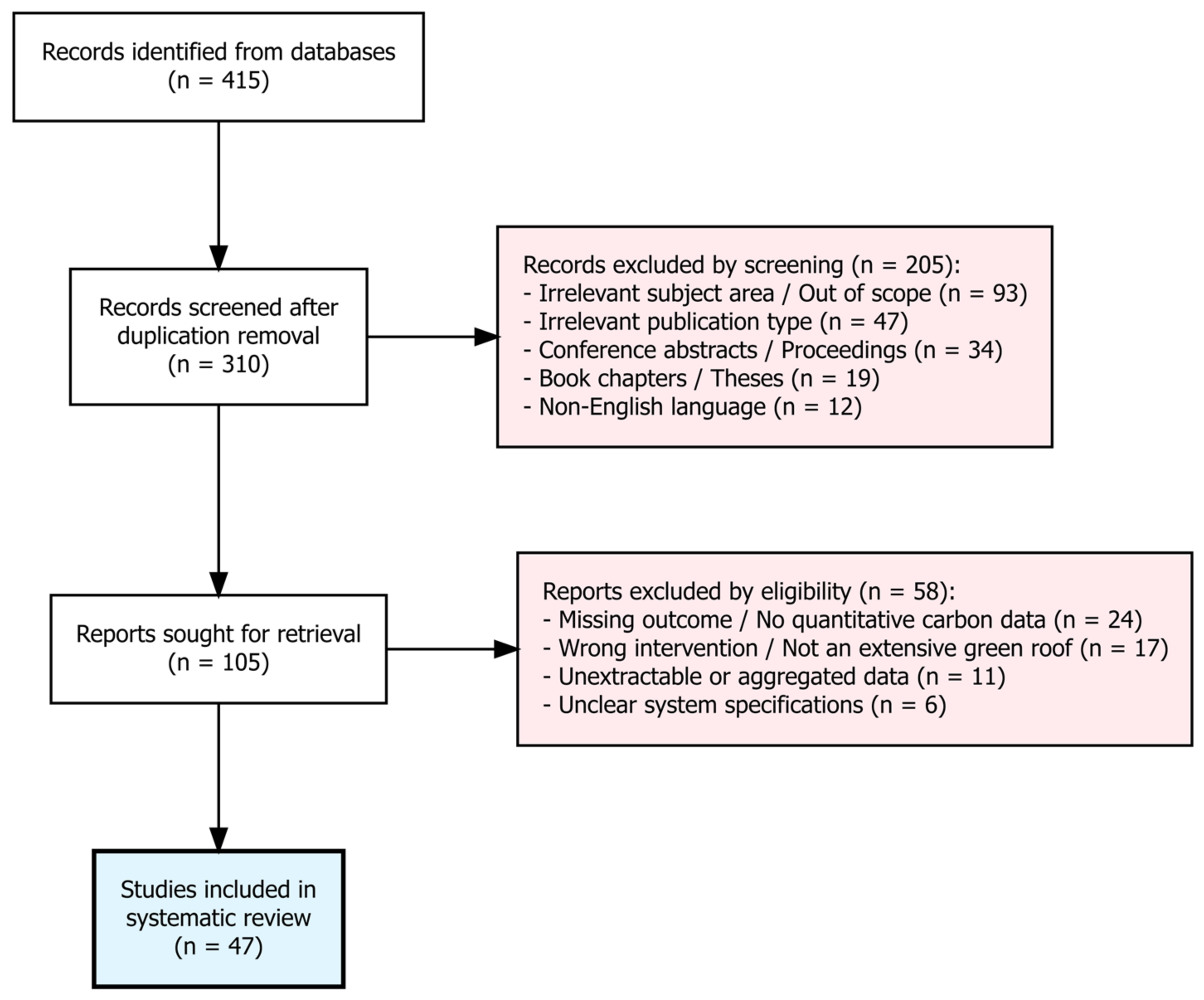
The literature search and screening process followed the PRISMA (Preferred Reporting Items for Systematic Reviews and Meta-Analyses) guidelines (see also Supplementary Materials). An initial search identified 415 records across the selected databases. After the removal of 105 duplicates, 310 records underwent title and abstract screening. Of these, 205 records were excluded for not meeting the geographic and thematic inclusion criteria (e.g., studies strictly focused on tropical/arid climates and lacking quantitative carbon data). The remaining 105 full-text articles were assessed for eligibility. Ultimately, 58 articles were excluded due to insufficient methodological transparency or lack of specific quantitative carbon sequestration metrics, resulting in a final inclusion of 47 core studies for data extraction and synthesis. The complete screening workflow is detailed in the PRISMA flow diagram (Figure 1).

2.2. Inclusion and Exclusion Criteria

Studies were included if they: (1) quantitatively measured or modeled carbon sequestration, carbon storage, CO2 fluxes, or life cycle carbon impacts of green roof systems; (2) provided sufficient methodological detail to assess data quality and transferability; (3) reported results for temperate, continental, Mediterranean, or cold climate zones, or presented findings with clear applicability to such contexts; and (4) were published in English or included English abstracts with sufficient detail for data extraction. We included both extensive and intensive green roof systems, diverse vegetation types, and varied substrate compositions to capture the full range of design options relevant to practitioners [4,31].
Exclusion criteria eliminated: (1) studies focused exclusively on tropical or arid climates without transferable findings; (2) purely qualitative or conceptual papers lacking empirical data; (3) studies addressing only non-carbon ecosystem services (e.g., stormwater, biodiversity, and thermal comfort) without carbon quantification; (4) duplicate publications or conference abstracts later published as full articles; and (5) studies with insufficient methodological transparency to assess reliability. Review papers were retained for contextual framing and identification of primary research gaps but were not double-counted in quantitative synthesis [1,3,8,19].
While the primary temporal scope of this systematic review was restricted to the most recent literature (2020–2025), specific foundational studies published prior to this period (e.g., 2012 and 2017–2018) were deliberately retained. The explicit justification for their inclusion is that these specific papers provide the critical baseline Life Cycle Assessment (LCA) methodology frameworks and the initial native plant trait assessments that the contemporary literature directly builds upon and critiques.

2.3. Data Extraction and Synthesis

For each included study, we systematically extracted: (1) geographic location and climate classification; (2) green roof type (extensive, semi-intensive, intensive) and design specifications; (3) substrate composition, depth, and organic matter content; (4) vegetation type, species composition, and functional groups; (5) carbon measurement methodology and temporal coverage; (6) quantitative carbon sequestration or emission values with units and uncertainty estimates; (7) life cycle assessment boundaries, functional units, and key findings; and (8) seasonal patterns and temporal dynamics where reported [3,19].
Data synthesis employed narrative review methods appropriate for the substantial methodological heterogeneity across studies, which precluded formal meta-analysis [19]. We organized the findings thematically around key research questions related to substrate effects, vegetation performance, comparisons across system types, temporal dynamics, life-cycle impacts, and geographic patterns. Where multiple studies reported comparable metrics (e.g., annual carbon sequestration rates in g C m−2 yr−1), we present ranges and identify factors explaining variability [11,13,16]. For life cycle assessment studies, we standardized reporting to global warming potential (GWP) in kg CO2 equivalents per functional unit, where possible, noting differences in system boundaries and impact allocation methods [21,22,23].
Quality assessment considered: (1) measurement technique appropriateness and precision; (2) temporal coverage adequacy for capturing seasonal and interannual variability; (3) replication and statistical analysis; (4) transparency in reporting methods and assumptions; and (5) acknowledgment of limitations and uncertainty [12,16]. We critically evaluated the transferability of findings across climate zones, noting where extrapolation from maritime temperate to continental temperate climates may be problematic [27,28].

3. Results

3.1. Overview of Research Landscape

Following the systematic screening process, 47 core studies were selected for in-depth qualitative synthesis. To contextualize the significant variability in carbon sequestration rates across different geographical regions, climatic zones, and methodological approaches, the complete list of all included studies is synthesized in Table 1, detailing their key characteristics.
The studies reveal a rapidly expanding but geographically and methodologically heterogeneous research landscape. Publication rates have accelerated markedly since 2020, reflecting growing policy interest in nature-based climate solutions and advances in carbon flux measurement technologies [1,3]. However, research remains concentrated in a limited number of geographic regions and climate zones, with substantial gaps in coverage of Central and Eastern European temperate continental climates [19].
Methodologically, the literature divides into four primary research approaches: (1) field monitoring studies employing chamber-based or eddy covariance CO2 flux measurements [12,16,30]; (2) destructive sampling studies quantifying carbon stocks in plant biomass and substrate [11,13,15]; (3) life cycle assessment studies evaluating embodied carbon, operational impacts, and end-of-life considerations [21,22,23,26]; and (4) modeling and simulation studies projecting carbon dynamics under varied scenarios [33,34]. Each approach offers distinct advantages and limitations, with field monitoring providing high temporal resolution but limited spatial coverage, destructive sampling enabling detailed substrate characterization but precluding longitudinal tracking, LCA offering comprehensive system-level assessment but requiring numerous assumptions, and modeling facilitating scenario exploration but demanding robust parameterization and validation [3,19].
Comprehensive reviews by [1,3] synthesize the state of knowledge on green roof carbon dynamics and identify substrate organic carbon accumulation, vegetation productivity, and indirect energy savings as the three primary mechanisms by which green roofs influence building and urban carbon budgets. Ref. [8] provide a standardized assessment framework encompassing embodied carbon, direct sequestration, bioenergy potential, and operational carbon scenarios, highlighting the need for integrated accounting approaches that capture both direct and indirect effects. Ref. [4] review influential factors affecting green roof sustainability more broadly, situating carbon sequestration within the context of multiple ecosystem services and design trade-offs.

3.2. Methodological Approaches for Carbon Assessment

3.2.1. Direct Carbon Flux Measurements

Field-based CO2 flux measurements represent the gold standard for quantifying net ecosystem exchange (NEE) in green roof systems, capturing the balance between photosynthetic uptake and respiratory losses from plants, substrate microbes, and root systems [12]. Eddy covariance techniques, adapted from ecosystem ecology, provide continuous high-frequency measurements of turbulent CO2 fluxes at the roof-atmosphere interface, enabling characterization of diurnal cycles, seasonal patterns, and responses to environmental drivers [12]. However, eddy covariance requires substantial infrastructure, careful site selection to meet fetch requirements, and sophisticated data processing to address energy balance closure and gap-filling challenges [3].
Chamber-based approaches offer greater flexibility and lower cost, employing transparent or opaque enclosures to measure changes in CO2 concentration over short time intervals [16,30]. Ref. [16] utilized automatic open/close chambers to quantify annual greenhouse gas fluxes from a thin-layer rooftop lawn in Japan, reporting net CO2 uptake of −1762 g CO2 m−2 yr−1 and total GHG sequestration (including CH4 and N2O) of −1759 to −2623 g CO2e m−2 yr−1. Ref. [30] employed chamber measurements to compare CO2 flux dynamics of exotic and native species under hydric deficit conditions, revealing species-specific responses to drought stress. While chamber methods enable spatial replication and species-level comparisons, they may alter microclimate conditions within enclosures and require careful temporal sampling to capture diurnal and seasonal variability [3].
Infrared gas analyzers (IRGA) provide an alternative approach for measuring plant-level photosynthetic CO2 uptake, as employed by [27] to evaluate eight cold- and drought-tolerant species under controlled light conditions. This technique enables precise quantification of species-specific carbon assimilation rates but does not capture whole-system carbon balance, including substrate respiration and organic matter dynamics [14,29].

3.2.2. Carbon Stock Quantification

Destructive sampling approaches quantify carbon stocks in plant biomass (above- and below-ground) and substrate organic matter through harvesting, drying, weighing, and elemental analysis [11,13,15]. Research demonstrates that substrate organic carbon constitutes the dominant carbon pool in extensive green roofs, significantly exceeding plant biomass carbon [1].
Ref. [15] evaluated carbon sequestration by multiple plant species across different time periods in Brazil, revealing substantial variation in biomass accumulation rates among functional groups. Ref. [9] assessed carbon storage in green roofs across Dhaka City, Bangladesh, reporting annual sequestration ranging from 20.6 to 125.4 t C ha−1 depending on vegetation type and management intensity. While these stock-based approaches provide valuable snapshots of carbon storage capacity, they cannot directly quantify net annual sequestration rates without repeated measurements or chronosequence designs [3].

3.2.3. Life Cycle Assessment Methodologies

Life cycle assessment (LCA) provides a comprehensive framework for evaluating green roof carbon impacts across all life stages from material extraction and manufacturing through construction, operation, maintenance, and end-of-life disposal or recycling [19,20,31]. Ref. [19] conducted a systematic review of LCA methodologies applied to green roofs, identifying substantial heterogeneity in system boundaries, functional units, impact categories, and allocation methods that complicate cross-study comparisons. Key methodological decisions include whether to incorporate indirect benefits (e.g., energy savings and stormwater management), how to allocate impacts across multiple functions, and what temporal horizon to adopt for carbon accounting [20].
Ref. [21] compared global warming potential of extensive, semi-intensive, and intensive green roofs versus conventional roofs in cold climates using a 45-year lifespan, finding that environmental benefits (primarily energy savings) reduced GWP to 3051.5, 3007.5, and 3292.1 kg CO2 eq, respectively, but that green roofs with lifespans under 45 years increased carbon impacts relative to conventional systems. Ref. [22] analyzed the carbon impacts of a green roof at Hilton Watford using LCA, revealing that embodied carbon in materials and construction represented a substantial upfront investment that required years of operational benefits to offset. Ref. [23] examined the carbon footprint of green roofing in Sri Lanka’s construction industry, highlighting the importance of local material sourcing and climate-appropriate design in minimizing embodied emissions.
Ref. [26] conducted a life-cycle analysis of green roofs in Mediterranean climates, demonstrating that climate-specific energy savings substantially influence the net carbon balance, and provided an early but influential analysis questioning “how green are the green roofs,” revealing that material choices—particularly for drainage layers, growing media, and waterproofing membranes—critically determine lifecycle environmental performance. More recent studies have explored opportunities to reduce embodied carbon through recycled and bio-based materials [35,36,37].

3.2.4. Modeling and Simulation Approaches

Process-based models and simulation tools enable exploration of green roof carbon dynamics under varied design scenarios, climate projections, and management strategies [33,34]. Refs. [33,38] developed a module for modeling extensive green roof CO2 exchanges within the Town Energy Balance (TEB) urban canopy model, enabling integration of green roof carbon fluxes into city-scale climate simulations. This approach facilitates assessment of green roof deployment scenarios and their contribution to urban carbon budgets, though model validation against field observations remains critical [38].
Ref. [34] employed modeling to identify optimal green roof types for carbon capture in an urbanized university campus, comparing extensive, semi-intensive, and intensive configurations under local climate conditions. Ref. [8] modeled the potential of green roof installation for urban decarbonization in Valencia, Spain, projecting city-wide carbon benefits under different adoption scenarios. Ref. [42] combined Design Builder V6 software for building energy modeling with experimental CO2 uptake measurements to evaluate short- and long-term carbon footprints of green roofs with cold- and drought-tolerant plants.
Building energy simulation models (e.g., EnergyPlus and TRNSYS) are widely employed to quantify indirect carbon savings from reduced heating and cooling loads [5,6,24,28]. These models require careful parameterization of green roof thermal properties, evapotranspiration rates, and substrate moisture dynamics, with validation against measured building energy consumption or indoor temperature data [3].

3.3. Substrate Composition Effects on Carbon Storage

Substrate composition emerges as a primary determinant of green roof carbon storage capacity, influencing both direct carbon stocks and the magnitude of respiratory losses [10,11,35]. Conventional extensive green roof substrates typically comprise mineral aggregates (expanded shale, clay, or slate; crushed brick; pumice; perlite) mixed with organic amendments (compost, peat, coir) in ratios designed to balance water retention, drainage, structural load, and nutrient availability [4]. The organic fraction provides immediate carbon storage but also serves as a substrate for microbial respiration, creating a dynamic balance between carbon inputs (plant litter, root exudates) and outputs (heterotrophic respiration, leaching) [13].
Ref. [13] demonstrated that substrate organic carbon constitutes the dominant carbon pool in extensive green roofs, typically accounting for 90% or more of total system carbon storage. In their study of extensive green roofs in arid northwestern China, substrate carbon stocks ranged from 1.2 to 3.8 kg C m−2, far exceeding plant biomass carbon (0.1 to 0.4 kg C m−2). Substrate depth and organic matter content were the strongest predictors of carbon storage, with deeper substrates (15–20 cm) storing 2–3 times more carbon than shallow systems (8–10 cm). However, deeper substrates also exhibited higher respiratory losses, particularly during warm seasons, resulting in complex nonlinear relationships between substrate depth and net carbon sequestration [11]. Ref. [41] found that while substrate depth significantly affects phosphorus stocks, vegetation diversity and composition play more critical roles in determining total carbon and nitrogen substrate stocks, with diverse vegetation—particularly roofs supporting mosses and herbs—exhibiting higher carbon and nitrogen accumulation than Sedum-only systems.
While ref. [13] demonstrated that substrate organic carbon can exceed plant biomass carbon by an extreme ratio of 9:1, it is critical to note that this specific dominance was observed in the arid northwestern region of China. Extrapolating this dominance of substrate organic carbon (SOC) to Central and Eastern European continental climates introduces significant uncertainties. In Dfb zones, severe winter freeze–thaw cycles can physically disrupt soil aggregates, potentially accelerating microbial decomposition and increasing respiratory losses during spring thaws (a ‘spring carbon burst’), which may significantly alter this carbon equilibrium.
Recycled and waste-derived substrate materials offer potential to reduce embodied carbon while maintaining or enhancing carbon storage capacity [35,36,37]. Ref. [35] investigated whether carbon emissions from green roofs could be effectively mitigated by recycling waste building materials as substrates during a 5-year operation, finding that recycled brick and concrete aggregates performed comparably to conventional materials while reducing embodied emissions by 30–40%. Ref. [36] demonstrated that natural and recycled materials improve green roof carbon footprints relative to manufactured aggregates, with locally sourced materials offering additional transportation-related benefits.
Biochar amendments represent an emerging strategy for enhancing substrate carbon storage while improving water retention and nutrient availability. The impacts of biochar addition on mitigating CO2 emissions from green roofs, finding that biochar-amended substrates exhibited 15–25% lower respiratory losses while maintaining plant productivity [37]. The recalcitrant nature of biochar carbon provides long-term storage potential, though effects on substrate pH, nutrient dynamics, and plant community composition require careful evaluation [4].
Substrate moisture dynamics critically mediate carbon fluxes by affecting plant photosynthesis, autotrophic respiration, and heterotrophic decomposition [30,39]. Ref. [30] examined CO2 flux dynamics of exotic and native species under hydric deficit conditions, revealing that drought stress substantially reduced net carbon uptake, with native species demonstrating greater resilience than exotic Sedum cultivars. Ref. [39] investigated the influence of vegetation type and climatological conditions on evapotranspiration from extensive green roofs, showing that substrate moisture availability constrains both water and carbon fluxes during dry periods.

3.4. Vegetation Types and Carbon Sequestration Performance

Vegetation selection profoundly influences green roof carbon dynamics by affecting photosynthetic productivity, biomass accumulation, root system development, and substrate organic matter inputs [14,15,18,29]. The literature reveals substantial variation in carbon sequestration performance among plant functional types, with native grasses and forbs increasingly recognized as superior alternatives to conventional Sedum monocultures for temperate climate applications [18,40,41].
Ref. [29] examined the relevance of carbon sequestration to physiological and morphological traits of several green roof plants during the first year after construction, finding that species with higher photosynthetic rates, greater leaf area, and more extensive root systems accumulated carbon more rapidly. Ref. [29] evaluated the CO2 payoff of extensive green roofs with different vegetation species, demonstrating that diverse plant communities outperformed monocultures by complementing resource use and extending growing seasons. Species-specific traits, including drought tolerance, phenology, and growth form, influenced both peak biomass and seasonal carbon flux patterns [14,29].
Ref. [15] assessed carbon sequestration by plant species used in green roofs across different periods in Brazil, revealing that herbaceous perennials and grasses accumulated carbon more rapidly than succulent species during establishment but that long-term storage depended critically on substrate organic matter dynamics. Native species adapted to local climate conditions demonstrated greater stress tolerance and more stable carbon uptake across seasons compared to exotic ornamentals [15].
Ref. [18] challenged the dominance of Sedum in extensive green roof design, demonstrating that colonizing weedy species can provide equivalent or superior ecosystem services, including carbon sequestration. Their study revealed that spontaneous vegetation assemblages—comprising native grasses, forbs, and legumes—achieved higher aboveground biomass, greater root development, and greater accumulation of substrate organic matter than designed Sedum monocultures. These findings suggest that allowing natural colonization or intentionally seeding diverse native plant communities may optimize carbon storage while reducing maintenance requirements and enhancing biodiversity [18].
Ref. [40] evaluated native grassland species for application in extensive green roofs in Japan, finding that indigenous grasses outperformed Sedum in carbon accumulation, drought resilience, and aesthetic value. Native species demonstrated deeper root systems that enhanced substrate carbon storage through rhizodeposition and root turnover, processes often overlooked in aboveground biomass-focused assessments [40]. Ref. [41] investigated native forbs grown under green roof conditions, revealing altered biomass allocation strategies with greater investment in root systems when supported by arbuscular mycorrhizal fungi, potentially enhancing long-term carbon storage in substrate pools.
Ref. [42] compared eight cold- and drought-tolerant plant species for green roof applications in Iran’s temperate climate, finding annual CO2 uptake ranging from 0.9 to 6.3 kg CO2 m−2 yr−1 depending on species and light availability. Sedum acre had the shortest payback period for offsetting construction carbon emissions (264 days), while Frankenia laevis had the highest annual carbon uptake under low-light conditions (2.27 kg m−2 yr−1). These results highlight the importance of matching species selection to local climate conditions and light availability [27,42].
Ref. [44] investigated the selection of tropical plants for extensive green roofs, focusing on thermal performance, energy conservation, and greenhouse gas mitigation in Thailand, demonstrating that climate-appropriate species selection optimizes multiple ecosystem services simultaneously. Ref. [10] quantified carbon sequestration and oxygen production potential of green roofs across Chinese cities, revealing substantial variation in vegetation performance across climate zones and urban contexts.
While evidence from maritime and temperate–subtropical regions strongly supports the transition from Sedum to native grasses, there is a distinct lack of long-term, multi-decadal carbon sequestration data for native cold- and drought-tolerant species in continental CEE climates. Therefore, ‘climate-adaptive species selection’ for regions like Romania must currently be viewed as an evidence-based design hypothesis requiring urgent local validation, particularly regarding winter survival rates and root-biomass preservation under prolonged snow cover.

3.5. Extensive vs. Intensive Green Roof Systems

The distinction between extensive and intensive green roof systems—defined primarily by substrate depth, structural load, vegetation complexity, and maintenance requirements—has profound implications for carbon storage capacity and net carbon balance [5,9,21]. Extensive systems (substrate depth 8–15 cm, lightweight vegetation, minimal maintenance) dominate the literature due to their broader applicability to existing buildings and lower installation costs. In comparison, intensive systems (substrate depth > 15 cm, diverse vegetation including shrubs and small trees, regular maintenance) offer greater carbon storage potential but higher embodied emissions and structural requirements [4,31].
Ref. [21] compared the global warming potential of extensive, semi-intensive, and intensive green roofs versus conventional roofs in cold climates over a 45-year lifespan. When considering only embodied carbon, extensive systems had the lowest impact (3051.5 kg CO2 eq), followed by semi-intensive (3007.5 kg CO2 eq) and intensive (3292.1 kg CO2 eq). However, when operational energy savings were incorporated, all green roof types demonstrated net climate benefits, with semi-intensive systems achieving an optimal balance between carbon storage, energy savings, and embodied emissions. Critically, green roofs with lifespans of less than 45 years had greater carbon impacts than conventional systems, highlighting the importance of durability and long-term performance in carbon accounting [21].
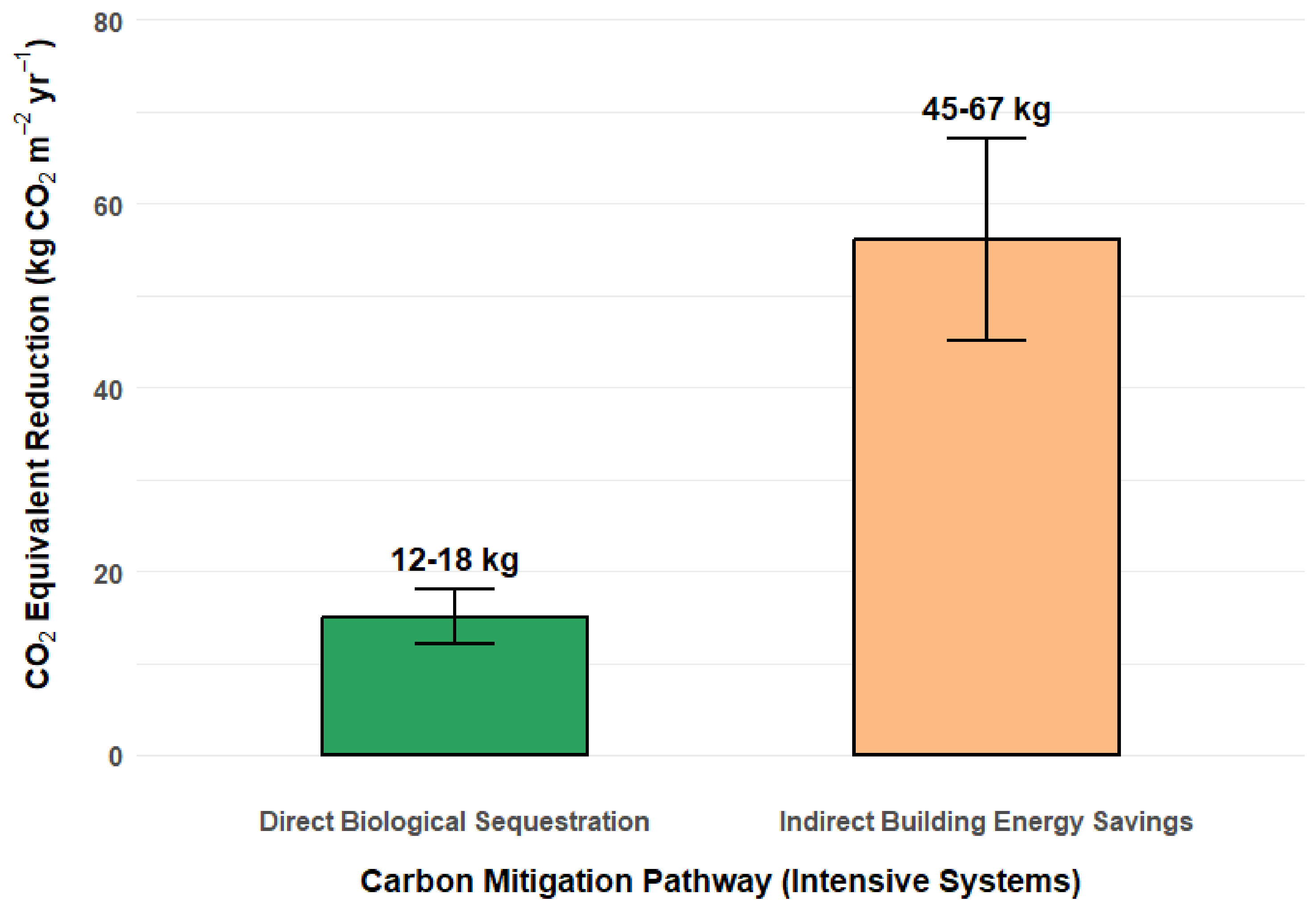
Ref. [5] quantified carbon dioxide reduction from an intensive green roof through combined carbon flux observations and energy consumption simulations in China. They found that direct biological sequestration contributed 12–18 kg CO2 m−2 yr−1, while indirect savings from reduced building energy consumption provided 45–67 kg CO2 m−2 yr−1, demonstrating that indirect benefits exceeded direct sequestration by 3–4 times in intensive systems (Figure 2). The deeper substrates and more diverse vegetation of intensive roofs supported greater plant biomass and substrate carbon storage but also required more intensive irrigation and maintenance, creating trade-offs between carbon benefits and resource inputs [5].
Ref. [9] assessed carbon sequestration in green roofs across Dhaka City, Bangladesh, reporting annual storage ranging from 20.6 to 125.4 t C ha−1 (equivalent to 84–460 t CO2 ha−1) depending on system intensity and vegetation type. Intensive rooftop gardens with diverse plantings, including vegetables, ornamentals, and small trees, achieved the highest sequestration rates, while extensive systems with succulent groundcovers stored substantially less carbon. However, the authors noted that intensive systems require regular organic matter inputs (e.g., compost and mulch) that may represent external carbon subsidies rather than net atmospheric CO2 removal [9]. Furthermore, it is imperative to note that the substantial carbon dynamics reported for Dhaka reflect a tropical savanna climate (Aw) characterized by year-round growing seasons. Extrapolating these tropical metrics to temperate continental regions without adequate contextualization risks significantly overestimating the biological sequestration potential, as green roof systems in CEE climates are strictly limited by prolonged winter dormancy and freeze–thaw stresses.
Ref. [34] modeled optimal green roof types for carbon capture in an urbanized university campus, comparing extensive, semi-intensive, and intensive configurations. Their analysis revealed that semi-intensive systems (12–20 cm substrate, mixed grasses and forbs) achieved the best carbon performance when both direct sequestration and indirect energy savings were considered, while minimizing structural retrofitting requirements and maintenance costs. This finding suggests that semi-intensive designs may represent an optimal compromise for retrofit applications in temperate climates [34].
A critical bottleneck for implementing deeper substrates (15–20 cm) in CEE regions is the structural feasibility regarding the aging, predominantly mid-20th-century building stock. The fully saturated wet weight of such systems frequently exceeds the residual load-bearing capacity of these structures. Consequently, without substantial seismic and structural retrofitting, deep-substrate carbon sinks may be strictly limited to new constructions, severely restricting their retrofit potential in cities like Timișoara or Bucharest.

3.6. Seasonal Variations and Temporal Dynamics

Seasonal and interannual variability in green roof carbon fluxes represents a critical but often underappreciated dimension of carbon accounting, with substantial implications for net annual sequestration estimates and long-term carbon storage trajectories [11,12,16,17]. Temperate and continental climates exhibit pronounced seasonal cycles in temperature, precipitation, and solar radiation that drive corresponding fluctuations in photosynthetic uptake, plant and soil respiration, and substrate moisture dynamics [27,30].
Ref. [16] quantified annual greenhouse gas fluxes from a thin-layer rooftop lawn in Japan, revealing strong seasonal patterns with net CO2 uptake during the growing season (April–October) and net emissions during winter dormancy (November–March). Annual net CO2 flux was −1762 g CO2 m−2 yr−1, but monthly fluxes ranged from −450 g CO2 m−2 month−1 during peak growing season to +180 g CO2 m−2 month−1 during winter. The study also quantified CH4 and N2O fluxes, finding that the rooftop lawn was a net greenhouse gas sink (−1759 to −2623 g CO2e m−2 yr−1) when all three gases were considered [16].
Ref. [12] examined carbon exchange of two large extensive green roofs using eddy covariance techniques, documenting substantial diurnal and seasonal variability in net ecosystem exchange (NEE). During summer, green roofs functioned as strong carbon sinks during daylight hours (peak uptake −15 to −25 µmol CO2 m−2 s−1) but as carbon sources at night due to respiration (+3 to +8 µmol CO2 m−2 s−1). Seasonal integration revealed net carbon uptake during the growing season but near-neutral or slightly positive fluxes during winter, resulting in modest annual net sequestration (−50 to −120 g C m−2 yr−1) [12].
Ref. [17] investigated diurnal greenhouse gas emissions and substrate temperatures from blue–green roofs in north-eastern Italy during a dry-hot summer season, finding that extreme heat and drought stress substantially reduced photosynthetic uptake while maintaining high respiratory losses, resulting in net CO2 emissions during the measurement period. This study highlights the vulnerability of green roof carbon sinks to climate extremes and the importance of drought-resilient vegetation and adequate substrate water retention [17].
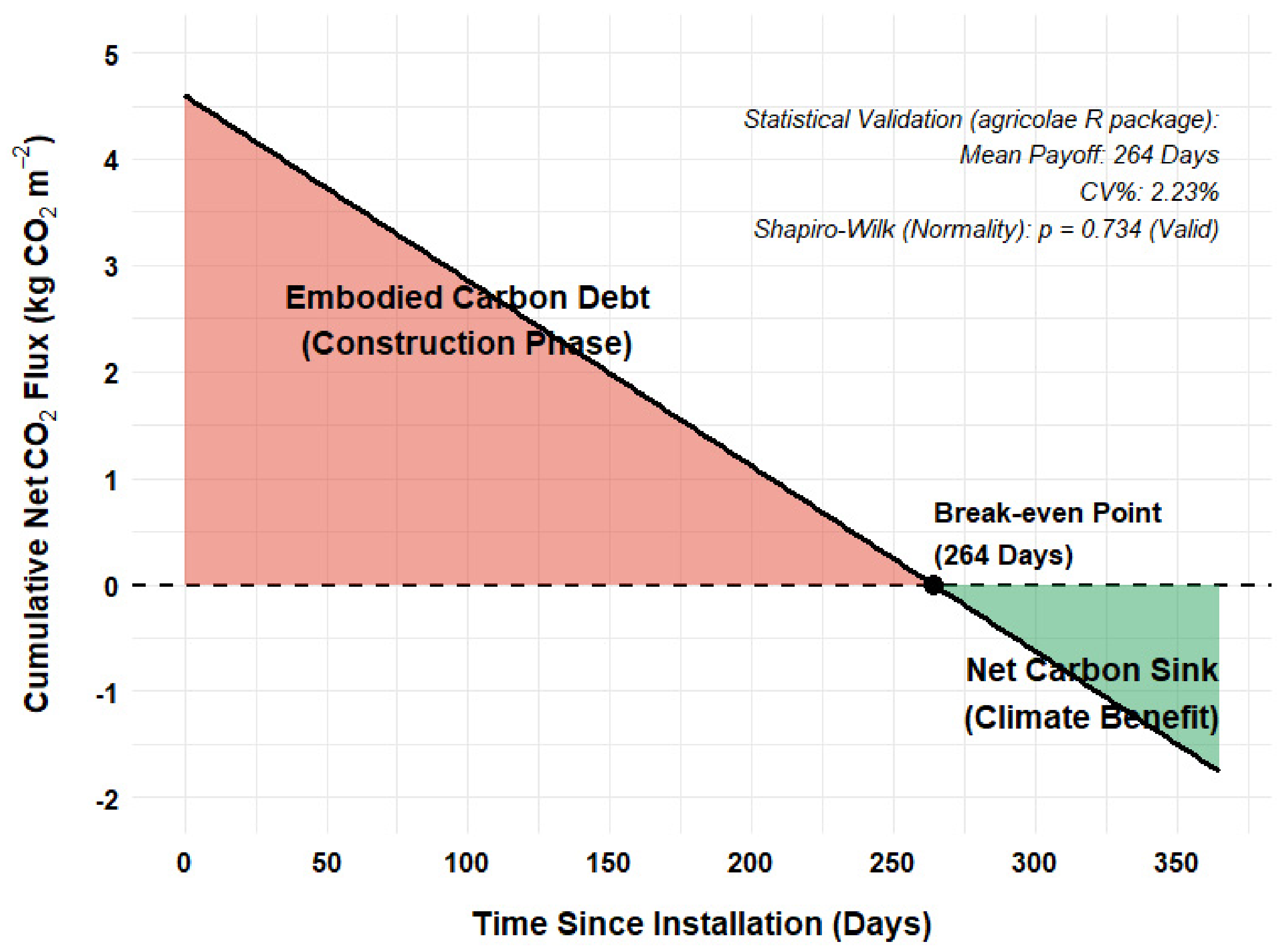
To provide a comprehensive understanding of the environmental impact, a Life Cycle Assessment (LCA) perspective is essential. As illustrated in Figure 3, the construction of an extensive green roof introduces an initial embodied carbon debt (e.g., 4.6 kg CO2 m−2). However, through active biological sequestration, specific drought-tolerant species (such as Sedum acre L.) can completely offset this debt. Data analysis demonstrates a ‘CO2 Payoff Time’ or break-even point achieved in approximately 264 days. To ensure the reliability of this metric across biological replicates, data normality was verified using the Shapiro–Wilk test, and dispersion was quantified via the Coefficient of Variation (CV%), confirming the statistical robustness of the sequestration timeline.
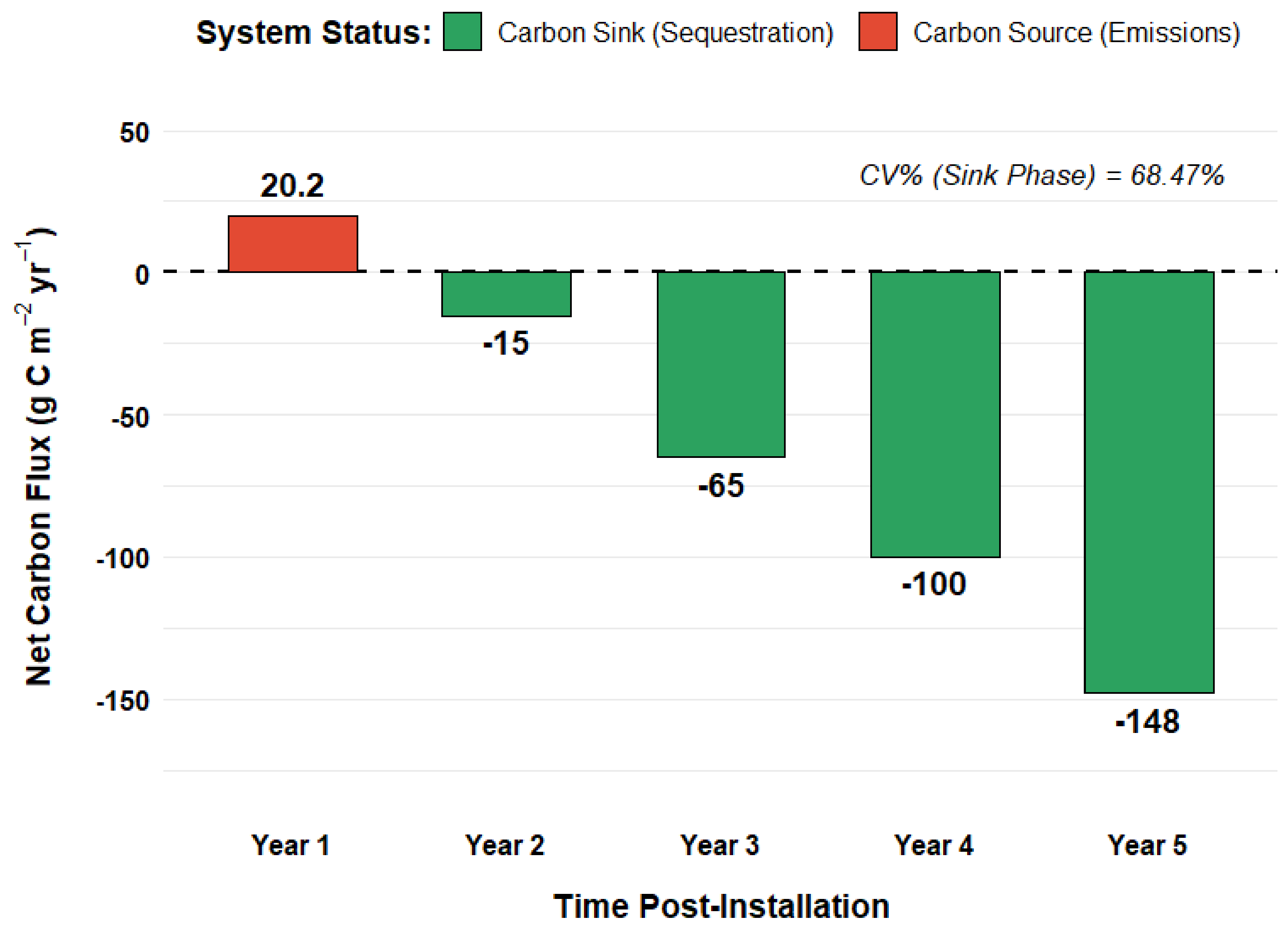
Ref. [11] documented five-year carbon dynamics in extensive green roofs in the U.S. Great Plains, revealing complex temporal trajectories influenced by vegetation establishment, substrate aging, and interannual climate variability. Newly installed systems functioned as net carbon sources (+20.2 g C m−2 yr−1) during the first year due to high substrate respiration and limited vegetation cover. By year three, systems with successful vegetation establishment transitioned to carbon sinks (−50 to −80 g C m−2 yr−1), with sequestration rates increasing to −100 to −148 g C m−2 yr−1 by year five in deep-substrate systems with diverse native vegetation. However, systems experiencing vegetation failure or severe drought remained carbon sources throughout the monitoring period [11].
The temporal dynamics of carbon flux demonstrate a critical transition phase for extensive green roofs, particularly under continental climate stressors. As visually quantified in Figure 4, newly installed systems initially function as net carbon sources, primarily because initial substrate microbial respiration outweighs the carbon uptake of immature vegetation. However, longitudinal data indicates a definitive and robust shift toward a net carbon sink by the third year. To ensure mathematical rigor, the variability of the sequestration phase was validated by calculating the Coefficient of Variation (CV%), demonstrating the biological stabilization of the system as it matures into an effective carbon sink.
Ref. [30] examined CO2 flux dynamics of exotic and native species under hydric deficit conditions, demonstrating that drought stress substantially reduced net carbon uptake, with effects varying by species and functional type. Native species exhibited greater resilience to water stress, maintaining positive net carbon uptake under moderate drought, while exotic Sedum species showed sharp declines in photosynthesis and increased respiration under similar conditions [30].
These findings underscore the need for multi-year monitoring programs that capture establishment dynamics, seasonal cycles, and interannual variability to assess the potential for green roof carbon sequestration accurately ([3,11]). Single-season or single-year studies may substantially over- or underestimate long-term carbon storage depending on measurement timing and climate conditions during the study period [19].
In severe Dfb climates, the stability of accumulated Substrate Organic Carbon (SOC) faces unique seasonal threats. Repeated freeze–thaw cycles mechanically disrupt substrate aggregates, exposing protected carbon pools. Following prolonged winter snow cover, this structural disruption creates a high risk of a ‘spring carbon burst’—a rapid spike in heterotrophic microbial respiration upon thawing—which could entirely negate the biological carbon sequestration achieved during the previous growing season.

3.7. Life Cycle Assessment Approaches

Life cycle assessment (LCA) provides essential context for evaluating green roof carbon impacts by accounting for embodied emissions from materials and construction, operational phase benefits and burdens, and end-of-life considerations [19,20,31]. The LCA literature reveals that embodied carbon from green roof materials—particularly drainage layers, waterproofing membranes, and growing media—can substantially offset or even exceed direct biological sequestration over typical building lifespans, but that indirect benefits from reduced energy consumption frequently tip the balance toward net climate mitigation [21,22,23].
Ref. [19] conducted a comprehensive review of LCA methodologies applied to green roofs, identifying critical sources of variability including system boundaries (cradle-to-gate vs. cradle-to-grave), functional units (per m2 roof area vs. per building vs. per unit ecosystem service), impact allocation methods (when green roofs provide multiple functions), and temporal horizons (20-year vs. 50-year vs. 100-year assessments). They found that studies incorporating indirect benefits (energy savings, stormwater management, urban heat island mitigation) consistently reported more favorable carbon profiles than those considering only direct sequestration and embodied emissions [19].
Ref. [22] analyzed carbon impacts of a green roof at Hilton Watford using a comprehensive LCA approach, finding that embodied carbon from materials and construction totaled 42.3 kg CO2 eq m−2, requiring 8–12 years of operational benefits (energy savings and direct sequestration) to achieve carbon neutrality. The study highlighted the importance of material selection, with locally sourced substrates and recycled drainage materials reducing embodied emissions by 25–30% compared to conventional specifications [22].
Ref. [23] examined the carbon footprint of green roofing in Sri Lanka’s construction industry, revealing that tropical climate conditions and local material availability substantially influenced LCA outcomes. Embodied emissions ranged from 28 to 67 kg CO2 eq m−2 depending on system type and material choices, while operational benefits from reduced cooling energy provided 12–18 kg CO2 eq m−2 yr−1 savings. The study emphasized the importance of climate-specific LCA parameterization and the need for regional life cycle inventory databases [23].
Ref. [26] conducted a lifecycle analysis of green roofs in Mediterranean climates, demonstrating that climate-specific energy savings substantially influence net carbon balance. In Mediterranean contexts with hot, dry summers and mild winters, cooling energy savings dominated operational-phase benefits, whereas in continental climates with cold winters, heating energy savings were more significant. This climate sensitivity highlights the importance of region-specific LCA studies for policy development and design guidance [26].
Ref. [26] provided an influential early analysis questioning “how green are the green roofs,” revealing that material choices critically determine lifecycle environmental performance. Their study found that conventional extensive green roof systems had embodied carbon ranging from 35 to 85 kg CO2 eq m−2 depending on drainage layer materials, waterproofing specifications, and substrate composition. Lightweight aggregates (expanded clay, perlite) had particularly high embodied emissions due to energy-intensive manufacturing processes.
Recent studies have explored opportunities to reduce embodied carbon through recycled and bio-based materials [6,7,43]. Ref. [35] investigated whether carbon emissions from green roofs could be effectively mitigated by recycling waste building materials as substrates during a 5-year operation, finding that recycled brick and concrete aggregates reduced embodied emissions by 30–40% while maintaining comparable performance to conventional materials. Ref. [36] demonstrated that natural and recycled materials improve green roof carbon footprints, with locally sourced materials offering additional transportation-related benefits. Ref. [35] evaluated the performance of green roof substrates with recycled materials over three years, confirming that recycled aggregates supported adequate plant growth and carbon storage while reducing lifecycle impacts.
Ref. [43] examined pathways toward zero-emission buildings in Germany using LCA and carbon sequestration of green infrastructure, finding that green roofs contributed 8–12% of total building carbon mitigation when both direct sequestration and indirect energy savings were considered. The study emphasized the importance of integrated building-scale carbon accounting that considers interactions among building envelope, HVAC systems, and green infrastructure [43].
Ref. [20] provided a comprehensive review of LCA studies in the roofing industry, identifying current trends and future directions. They noted increasing attention to dynamic LCA approaches that incorporate temporal variation in carbon fluxes, climate change impacts on operational performance, and evolving electricity grid carbon intensity. Future LCA studies should adopt standardized methodologies, transparent reporting of assumptions, and sensitivity analyses to facilitate cross-study comparisons and meta-analysis [20,31].
Furthermore, current LCA projections face a critical temporal limitation: dynamic grid carbon intensity. As European energy grids undergo deep decarbonization over a typical building’s 45-year lifespan, the absolute carbon penalty of HVAC energy consumption will decrease. Consequently, the long-term indirect carbon savings attributed to green roof thermal insulation will shrink significantly over time, meaning the initial ‘carbon debt’ of materials may take far longer to offset than current static models predict.

4. Discussion

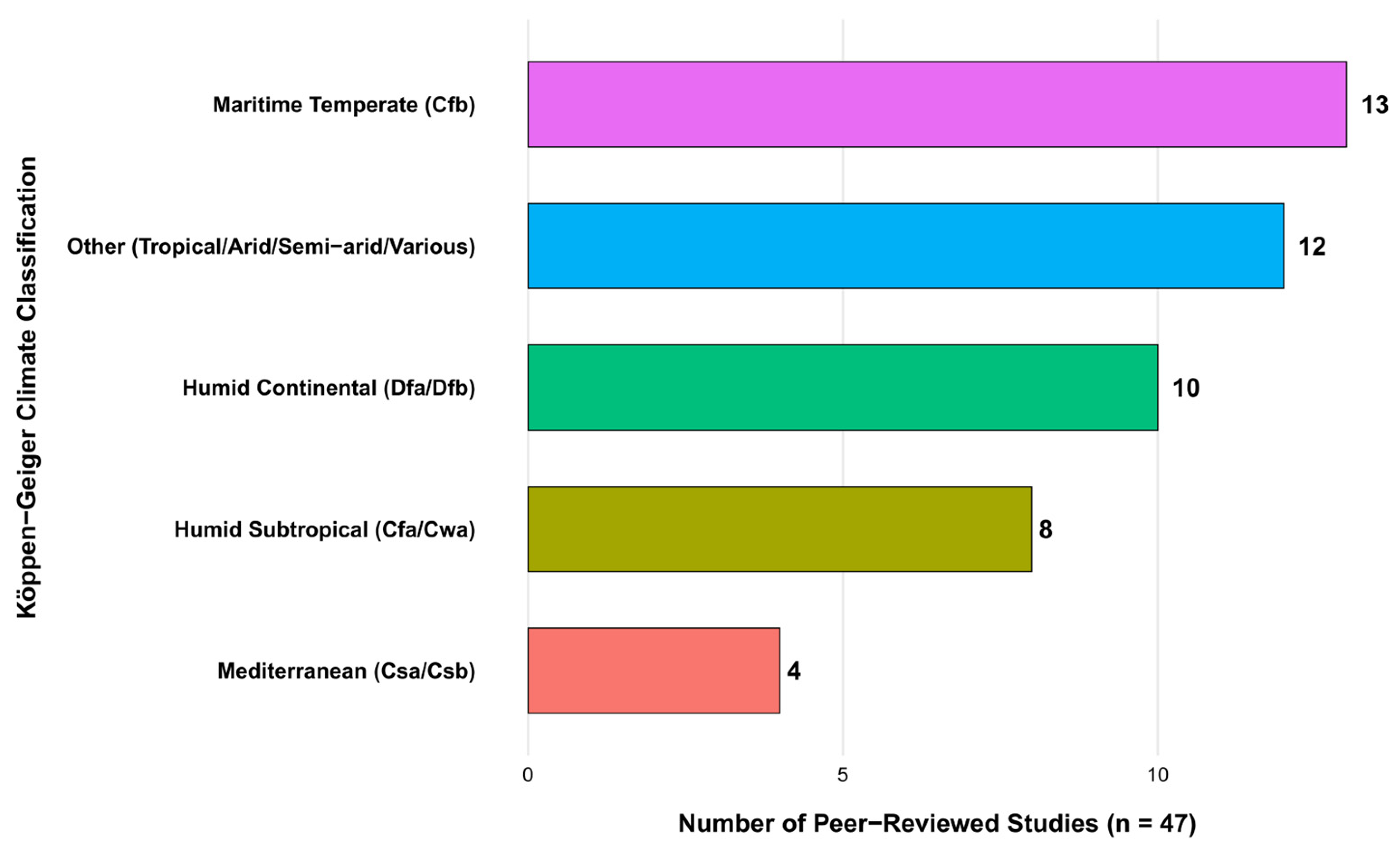
The geographic distribution of green roof carbon research reveals substantial concentration in North America, Western Europe, and East Asia. The systematic synthesis of our extracted literature reveals a stark geographic disparity; as visually demonstrated in Figure 5, the vast majority of studies are concentrated in maritime and subtropical and other/various climates, leaving a critical data deficit for the Humid Continental (Dfa/Dfb) zones. This geographic bias severely limits the transferability of findings to underrepresented climate zones and urban contexts, particularly climate characteristic of Central and Eastern Europe, including Romania [1].
Among temperate climate studies, research has concentrated in maritime temperate zones (Cfb: oceanic climate) of Western Europe and the Pacific Northwest of North America [12,18], with more limited coverage of humid continental climates (Dfb, Dfa) characteristic of Central Europe, the U.S. Midwest, and parts of East Asia [11,16]. Maritime temperate climates feature mild winters, cool summers, and relatively consistent year-round precipitation, while continental temperate climates exhibit greater seasonal temperature extremes, winter freezing, and more variable precipitation patterns [27]. These climatic differences substantially influence green roof carbon dynamics by affecting growing season length, winter dormancy duration, freeze–thaw cycles, and drought stress frequency [17,30].
Ref. [42] investigated green roof CO2 sequestration with cold- and drought-tolerant plants in Mashhad, Iran, a temperate city with cold winters and hot, dry summers, similar to the continental climates of Central Europe. Their study demonstrated that species selection for cold and drought tolerance was critical for maintaining carbon uptake across seasons, with annual CO2 uptake ranging from 0.9 to 6.3 kg CO2 m−2 yr−1 depending on species and light availability. This research provides valuable insights for temperate continental applications, though direct transferability to Romanian climates requires validation [27].
Ref. [28] examined vegetated roofs as a nature-based solution to mitigate climate change in Córdoba, Argentina, a semiarid city with temperate characteristics. While the semiarid classification differs from Romania’s temperate continental climate, the study’s findings on drought resilience and the impacts of water stress on carbon sequestration offer relevant insights for managing green roofs during summer dry periods common in continental climates [28].
Ref. [11] conducted research in the U.S. Great Plains, a region with a humid continental climate (Dfa/Dfb) characterized by cold winters, hot summers, and moderate precipitation—conditions broadly similar to Romania’s Dfb zones. Their five-year study revealed that extensive green roofs could achieve net carbon sequestration of −100 to −148 g C m−2 yr−1 in mature systems with deep substrates and diverse native vegetation, but that establishment phase carbon losses and vulnerability to drought stress represented significant challenges. These findings provide valuable benchmarks for temperate continental applications [11].
Ref. [16] quantified annual greenhouse gas fluxes from a thin-layer rooftop lawn in Japan, a region with a humid subtropical to humid continental climate depending on latitude. Their finding of an annual net uptake of −1762 g CO2 m−2 yr−1 represents one of the highest sequestration rates reported for extensive systems. While ref. [16] reported an exceptional uptake of −1762 g CO2 m−2 yr−1, it is critical to contextualize that this was achieved on an intensively managed, highly irrigated rooftop lawn in Japan. Such a regime bears little resemblance to the low-maintenance, drought-prone extensive systems typical of European applications, and therefore this value should not be viewed as a scalable benchmark for CEE regions. The thin-layer lawn design and intensive management may limit transferability to low-maintenance extensive roofs typical of European applications [16].
European studies have concentrated on Western Europe’s maritime temperate zones, with limited representation of Central and Eastern European continental climates [1]. Ref. [22] analyzed a green roof in Watford, UK (Cfb climate), while ref. [21] examined green roofs in cold climates of Canada. Ref. [43] investigated green infrastructure in Germany, though the specific climate zone and regional context were not clearly specified. The absence of published studies from Romania, Hungary, Poland, the Czech Republic, and other Central and Eastern European nations represents a critical knowledge gap for regional policy development and design guidance [1].
Studies from Mediterranean climates (Csa, Csb) offer partial insights for temperate continental applications, particularly regarding drought stress and summer water limitations [26,28]. However, the mild Mediterranean winters differ substantially from the prolonged freezing conditions of continental climates, limiting the transferability of findings on winter dormancy, freeze–thaw impacts on substrate structure, and cold-season carbon fluxes [27].
Asian studies have concentrated on East Asia, particularly China and Japan [5,6,10,16,40], with limited coverage of Central and South Asia. Ref. [10] quantified the carbon sequestration and oxygen production potential of green roofs across Chinese cities, revealing substantial variation across climate zones from subtropical to cold-temperate. Ref. [6] examined the impacts of green roofs and green facades on building thermal performance and carbon sequestration in subtropical China, demonstrating climate-specific benefits. Ref. [40] evaluated native grassland species for extensive green roofs in Japan, providing insights on species selection for temperate Asian contexts [40].
Tropical and subtropical studies [9,23,44] offer limited transferability to temperate continental climates due to fundamental differences in temperature regimes, seasonality, and vegetation types. However, methodological approaches and LCA frameworks developed in these studies provide valuable templates for application in underrepresented climate zones [19].
The geographic gaps in green roof carbon research have significant implications for policy development and design guidance in Central and Eastern Europe. Extrapolation of findings from maritime temperate or Mediterranean climates to continental temperate zones may substantially over- or underestimate carbon sequestration potential due to differences in growing season length, winter dormancy duration, freeze–thaw cycles, and precipitation patterns [1]. Consequently, we propose the ‘Timișoara Model’—characterized by deeper substrates (15–20 cm) and native cold-tolerant vegetation—not as a definitive conclusion, but as a strongly informed research hypothesis and as a specific design direction intended to mitigate these severe winter emission risks and to be validated by future field studies. Addressing the CEE data gap requires immediate regional empirical research to test whether this proposed configuration can reliably secure net-positive carbon balances under specific Dfb climate stressors. However, it must be explicitly noted that these parameters represent a conceptual extrapolation rather than a definitive regional conclusion. Given the current global data gap, this configuration serves strictly as an evidence-informed research hypothesis designed to guide the urgently needed regional validation studies and future urban policies for Romania’s Cfb and Dfb zones [1,4,45].
Furthermore, the large-scale urban deployment of green roofs faces significant engineering constraints when retrofitting the existing built environment, particularly historical and aging masonry structures. Therefore, the implementation of such nature-based infrastructure must align with recent advancements in lightweight, sustainable structural retrofitting [46] and strictly incorporate empirical life cycle GHG assessments tailored to buildings with heritage values [47], ensuring that ecological upgrades do not compromise structural integrity or historic baseline emissions.

5. Conclusions

This systematic review highlights the critical role of green roofs as urban carbon sinks, demonstrating that organic carbon in the substrate typically dominates total carbon storage, significantly exceeding plant biomass contributions. The transition of these systems from an initial carbon source to a net carbon sink is heavily dependent on substrate depth, the selection of plant functional types—with native grasses consistently outperforming conventional Sedum—and the active mitigation of embodied emissions evaluated through comprehensive life-cycle assessments.
Despite these demonstrated benefits, a major limitation identified in the current global literature is the severe geographical data gap regarding Central and Eastern Europe (CEE). Although our analysis identified studies within Humid Continental (Dfa/Dfb) climates, these are not concentrated in the CEE region, leaving this region virtually unrepresented. Extrapolating sequestration metrics from these distant contexts, or from milder maritime and temperate–arid climates, directly to CEE introduces significant scientific uncertainties. The extreme seasonal temperature variations, prolonged snow cover, and deep winter freeze–thaw cycles characteristic of CEE regions challenge existing paradigms, posing high risks of structural degradation and accelerated microbial respiration upon thawing. Furthermore, retrofitting the aging, predominantly mid-20th-century building stock with the required deep-substrate systems presents substantial structural load-bearing limitations.
To address these critical gaps, we propose the conceptual ‘Timișoara Model’, which advocates for increased substrate depth combined with cold-resilient native vegetation as an evidence-informed research hypothesis. As a direct operationalization of this review, the University of Life Sciences “King Mihai I” (USVT) has initiated a scientific feasibility study to explore the implementation of a pilot green roof on its library. Envisioned as a “Living Laboratory,” this prospective initiative aims to empirically test local recycled materials and hybrid vegetation under continental climate stressors. If structural and financial validations permit implementation, the pilot will serve to test theoretical targets of carbon sequestration and energy efficiency, including projected cooling load reductions and roof lifespan extensions.
Ultimately, the transition from conceptual extrapolation to actionable empirical data—as proposed by the Timișoara Model—aligns seamlessly with the evolving strategic priorities of the European Union, marking a clear conceptual bridge between consecutive macro-funding periods. While the initial phase of the European Green Deal prioritized top-down, technocratic climate targets focused on carbon reduction, the transition into the current framework—championed by the New European Bauhaus (NEB)—re-centers the green transition at the community level. By intertwining environmental sustainability with structural resilience, aesthetics, and social inclusion, the NEB provides the necessary policy architecture to transition green infrastructure from an isolated engineering choice into a holistic urban design imperative. Green roofs engineered for the severe climatic and structural realities of CEE cities perfectly embody this NEB transition. By intelligently retrofitting the aging, predominantly mid-20th-century building stock with these nature-based solutions, we not only meet rigorous carbon-neutrality targets but also regenerate the urban landscape. Consequently, the widespread adoption of such strategically engineered living architectures provides a concrete pathway toward fulfilling the strict urban greening mandates required to achieve the UN Sustainable Development Goals.

Supplementary Materials

The following supporting information can be downloaded at: https://www.mdpi.com/article/10.3390/su18158000/s1, Table S1: PRISMA 2020 Checklist. The comprehensive checklist details the exact location within the manuscript where each methodological item required by the PRISMA guidelines is reported, ensuring full transparency and replicability of the systematic review process in accordance with the PRISMA 2020 statement [48].

Author Contributions

Conceptualization: V.D.L., A.-M.Ț.-C. and M.M.; methodology: V.D.L., A.-M.Ț.-C., M.M., G.D., A.H. and C.A.P.; validation: V.D.L., A.-M.Ț.-C., M.M. and M.F.; formal analysis: V.D.L., A.-M.Ț.-C., M.M. and M.F.; resources: V.D.L., A.-M.Ț.-C., M.M., A.H. and C.A.P.; data curation: V.D.L., A.-M.Ț.-C., M.M. and G.D.; writing—original draft preparation: V.D.L., A.-M.Ț.-C. and M.M.; writing—review and editing: V.D.L., A.-M.Ț.-C., M.M., G.D., M.F., A.H. and C.A.P.; visualization: V.D.L., A.-M.Ț.-C., M.M., G.D. and M.F.; supervision: V.D.L., A.-M.Ț.-C. and M.M.; project administration: V.D.L., A.-M.Ț.-C., M.M., A.H. and C.A.P.; funding acquisition: V.D.L., A.-M.Ț.-C., M.M., A.H. and C.A.P. All authors have read and agreed to the published version of the manuscript.

Funding

The payment for the article was made from the research funds of the University of Life Sciences “King Mihai I” from Timișoara.

Institutional Review Board Statement

Not applicable.

Informed Consent Statement

Not applicable.

Data Availability Statement

The original contributions presented in the study are included in the article, further inquiries can be directed to the corresponding author.

Acknowledgments

The authors are grateful to the University of Life Sciences “King Mihai I” from Timisoara for support with the publication fee.

Conflicts of Interest

The authors declare no conflicts of interest.

References

  1. Mihalakakou, G.; Souliotis, M.; Papadaki, M.; Menounou, P.; Dimopoulos, P.; Kolokotsa, D.; Paravantis, J.A.; Tsangrassoulis, A.; Panaras, G.; Giannakopoulos, E.; et al. Green Roofs as a Nature-Based Solution for Improving Urban Sustainability: Progress and Perspectives. Renew. Sustain. Energy Rev. 2023, 180, 113306. [Google Scholar] [CrossRef]
  2. Barriuso, F.; Urbano, B. Green Roofs and Walls Design Intended to Mitigate Climate Change in Urban Areas across All Continents. Sustainability 2021, 13, 2245. [Google Scholar] [CrossRef]
  3. Tan, T.; Kong, F.; Yin, H.; Cook, L.M.; Middel, A.; Yang, S. Carbon Dioxide Reduction from Green Roofs: A Comprehensive Review of Processes, Factors, and Quantitative Methods. Renew. Sustain. Energy Rev. 2023, 182, 113412. [Google Scholar] [CrossRef]
  4. Shahmohammad, M.; Hosseinzadeh, M.; Dvorak, B.; Bordbar, F.; Shahmohammadmirab, H.; Aghamohammadi, N. Sustainable Green Roofs: A Comprehensive Review of Influential Factors. Environ. Sci. Pollut. Res. 2022, 29, 78228–78254. [Google Scholar] [CrossRef] [PubMed]
  5. Yang, S.; Kong, F.; Yin, H.; Zhang, N.; Tan, T.; Middel, A.; Liu, H. Carbon Dioxide Reduction from an Intensive Green Roof through Carbon Flux Observations and Energy Consumption Simulations. Sustain. Cities Soc. 2023, 99, 104913. [Google Scholar] [CrossRef]
  6. Jiang, C.; Zhou, Y.; Li, K.; Wei, D. Impact of Green Roof and Green Facade on Building Thermal Performance and Carbon Sequestration in Subtropical Climate of China. J. Build. Phys. 2023, 46, 602–629. [Google Scholar] [CrossRef]
  7. Chen, T.; Zhang, N.; Ye, Z.; Jiang, K.; Lin, Z.; Zhang, H.; Xu, Y.; Liu, Q.; Huang, H. Carbon Reduction Benefits of Photovoltaic-Green Roofs and Their Climate Change Mitigation Potential: A Case Study of Xiamen City. Sustain. Cities Soc. 2024, 114, 105760. [Google Scholar] [CrossRef]
  8. Dong, X.; He, B.-J. A Standardized Assessment Framework for Green Roof Decarbonization: A Review of Embodied Carbon, Carbon Sequestration, Bioenergy Supply, and Operational Carbon Scenarios. Renew. Sustain. Energy Rev. 2023, 182, 113376. [Google Scholar] [CrossRef]
  9. Sultana, R.; Ahmed, Z.; Hossain, M.A.; Begum, B.A. Impact of Green Roof on Human Comfort Level and Carbon Sequestration: A Microclimatic and Comparative Assessment in Dhaka City, Bangladesh. Urban Clim. 2021, 38, 100878. [Google Scholar] [CrossRef]
  10. Lin, S.; Han, H.; Liu, X. Green Roofs for a Greener Future: Quantifying Carbon Sequestration and Oxygen Production Potential in Chinese Cities. J. Geogr. Sci. 2025, 35, 2091–2112. [Google Scholar] [CrossRef]
  11. Alam, M.M.L.; Skabelund, L.R.; Rice, C.W.; Lin, J.S.; Ha, J. How Effective Are Green Roofs as Building Carbon Sinks? Empirical Evidence Linking Substrate, Depth, and Vegetation Dynamics in the U.S. Great Plains. J. Environ. Manag. 2025, 396, 128117. [Google Scholar] [CrossRef] [PubMed]
  12. Markolf, N.; Weber, S. Carbon Exchange of Two Large Extensive Green Roofs. In Proceedings of the 12th International Conference on Urban Climate, Rotterdam, The Netherlands, 7–11 July 2025. [Google Scholar]
  13. Liu, H.; Kong, F.; Yin, H.; Sun, T.; Yang, S.; Lu, J.; Tan, T. Substrate Organic Carbon Is the Main Carbon Sink in the Extensive Green Roofs. 2023. Available online: https://ssrn.com/abstract=4639358 (accessed on 28 July 2026).
  14. Kuronuma, T.; Watanabe, H.; Ishihara, T.; Kou, D.; Toushima, K.; Ando, M.; Shindo, S. CO2 Payoff of Extensive Green Roofs with Different Vegetation Species. Sustainability 2018, 10, 2256. [Google Scholar] [CrossRef]
  15. Pessoa, V.G.; Guiselini, C.; Montenegro, A.A.D.A.; Pandorfi, H.; Barbosa Filho, J.A.D.; Vicente, T.F.D.S. Carbon Sequestration by Plant Species Used in Green Roofs across Different Periods. Rev. Bras. Eng. Agríc. E Ambient. 2022, 26, 407–411. [Google Scholar] [CrossRef]
  16. Masuda, S.; Mito, T.; Morii, M.; Kuronuma, T.; Watanabe, H. Annual Greenhouse Gas Fluxes from a Thin-Layer Rooftop Lawn. Front. Environ. Eng. 2025, 4, 1634737. [Google Scholar] [CrossRef]
  17. Lugo-Arroyo, A.; Zanin, G.; Thompson, A.; Borin, M.; Maucieri, C. Diurnal Greenhouse Gas Emissions and Substrate Temperatures from Blue-Green Roofs in North-Eastern Italy during a Dry-Hot Summer Season. Sci. Hortic. 2024, 324, 112560. [Google Scholar] [CrossRef]
  18. Heim, A.; Biermann, B.; Hicks, T.; Buffam, I.; Lundholm, J. More than Sedum: Colonizing Weedy Species Can Provide Equivalent Green Roof Ecosystem Services. Nat. Based Solut. 2024, 5, 100101. [Google Scholar] [CrossRef]
  19. Pons Fiorentin, D.; Martín-Gamboa, M.; Rafael, S.; Quinteiro, P. Life Cycle Assessment of Green Roofs: A Comprehensive Review of Methodological Approaches and Climate Change Impacts. Sustain. Prod. Consum. 2024, 45, 598–611. [Google Scholar] [CrossRef]
  20. Aggarwal, C.; Molleti, S.; Ghobadi, M. A Comprehensive Review of Life Cycle Assessment (LCA) Studies in Roofing Industry: Current Trends and Future Directions. Smart Cities 2024, 7, 2781–2801. [Google Scholar] [CrossRef]
  21. Pique, L.; Blanchet, P.; Breton, C. Global Warming Potential Comparison between Green and Conventional Roofs in Cold Climate Using Life Cycle Assessment. J. Clean. Prod. 2023, 420, 138314. [Google Scholar] [CrossRef]
  22. Keyhani, M.; Bahadori-Jahromi, A.; Godfrey, P.; Keihani, R.; Amirkhani, S. Analysing Carbon Impacts of Green Roof at Hilton Watford: Life-Cycle Assessment Approach. Proc. Inst. Civ. Eng. Waste Resour. Manag. 2024, 177, 183–195. [Google Scholar] [CrossRef]
  23. Nadeeshani, M.; Ramachandra, T.; Gunatilake, S.; Zainudeen, N. Carbon Footprint of Green Roofing: A Case Study from Sri Lankan Construction Industry. Sustainability 2021, 13, 6745. [Google Scholar] [CrossRef]
  24. Zheng, Y.; Chen, L.; Zhao, H. Assessing Building Energy Savings and the Greenhouse Gas Mitigation Potential of Green Roofs in Shanghai Using a GIS-Based Approach. Sustainability 2024, 16, 8150. [Google Scholar] [CrossRef]
  25. Lee, E.; Seo, Y.; Woo, D.K. Enhanced Environmental and Economic Benefits of Green Roofs in a Humid Subtropical Region under Future Climate. Ecol. Eng. 2024, 201, 107221. [Google Scholar] [CrossRef]
  26. Rashedi, M.R.; Ehsani, R.; Kalantari, S.; Tehrani, F.M. Lifecycle Analysis of Green Roofs in the Mediterranean Climate. Eng 2023, 4, 2571–2581. [Google Scholar] [CrossRef]
  27. Seyedabadi, M.R.; Eicker, U.; Karimi, S. Plant Selection for Green Roofs and Their Impact on Carbon Sequestration and the Building Carbon Footprint. Environ. Chall. 2021, 4, 100119. [Google Scholar] [CrossRef]
  28. Robbiati, F.O.; Natalia, C.; Gustavo, B.; Gustavo, O.; Jim, C.Y.; Mario, S.; Emmanuel, H.; Rubio, E.; Leonardo, G.; Lelia, I. Vegetated Roofs as a Nature-Based Solution to Mitigate Climate Change in a Semiarid City. Nat. Based Solut. 2023, 3, 100069. [Google Scholar] [CrossRef]
  29. Kuronuma, T.; Watanabe, H. Relevance of Carbon Sequestration to the Physiological and Morphological Traits of Several Green Roof Plants during the First Year after Construction. Am. J. Plant Sci. 2017, 8, 14–27. [Google Scholar] [CrossRef]
  30. Perillo, V.L.; Brendel, A.S.; Ferrelli, F.; Gutiérrez, A.; Vitale, A.J.; Marinangeli, P.; Piccolo, M.C. CO2 Flux Dynamics of Exotic and Native Species in an Extensive Green Roof Simulator with Hydric Deficit. Urban Clim. 2023, 49, 101567. [Google Scholar] [CrossRef]
  31. Tighnavard Balasbaneh, A.; Sher, W.; Madun, A.; Ashour, A. Life Cycle Sustainability Assessment of Alternative Green Roofs—A Systematic Literature Review. Build. Environ. 2024, 248, 111064. [Google Scholar] [CrossRef]
  32. Kavehei, E.; Jenkins, G.A.; Adame, M.F.; Lemckert, C. Carbon Sequestration Potential for Mitigating the Carbon Footprint of Green Stormwater Infrastructure. Renew. Sustain. Energy Rev. 2018, 94, 1179–1191. [Google Scholar] [CrossRef]
  33. Mirebeau, A.; De Munck, C.; Weber, S.; Lemonsu, A.; Masson, V. Modelling CO2 Flows from Extensive Green Roofs within the TEB (Town Energy Balance) Urban Canopy Model. In Proceedings of the European Geosciences Union General Assembly, Vienna, Austria, 14–19 April 2024. [Google Scholar]
  34. Nicol, E.; Terzano, K. Modelling the Optimal Green Roof Type for Carbon Capture in an Urbanised University Campus. Urban For. Urban Green. 2025, 112, 128946. [Google Scholar] [CrossRef]
  35. Fan, L.; Wang, J.; Liu, X.; Luo, H.; Zhang, K.; Fu, X.; Li, M.; Li, X.; Jiang, B.; Chen, J.; et al. Whether the Carbon Emission from Green Roofs Can Be Effectively Mitigated by Recycling Waste Building Material as Green Roof Substrate during Five-Year Operation? Environ. Sci. Pollut. Res. 2020, 27, 40893–40906. [Google Scholar] [CrossRef] [PubMed]
  36. Nehls, T.; Tams, L.; Calheiros, C.S.C. Rethinking Green Roofs- Natural and Recycled Materials Improve Their Carbon Footprint. In Proceedings of the 25th EGU General Assembly, Vienna, Austria, 23–28 April 2023. [Google Scholar]
  37. Zhang, G.; Tang, B.; Bian, H.; Huang, Y.; Jin, H.; He, B.-J. Investigating the Impacts of Biochar Addition to Substrate on Mitigating Carbon Dioxide Emissions in Green Roofs. In Resilient Horizons: Building Sustainable Environments for Climate Adaptation and Health; He, B.-J., Jupesta, J., Pignatta, G., Eds.; Advances in Science, Technology & Innovation; Springer International Publishing: Cham, Switzerland, 2023; pp. 131–140. ISBN 978-3-031-46108-8. [Google Scholar]
  38. Mirebeau, A.; De Munck, C.; Bonan, B.; Delire, C.; Lemonsu, A.; Masson, V.; Weber, S. Modelling Extensive Green Roof CO2 Exchanges in the Town Energy Balance Urban Canopy Model. Geosci. Model Dev. 2025, 18, 5329–5349. [Google Scholar] [CrossRef]
  39. O’Carroll, D.M.; Eloisa Sia, M.; Staniec, M.; Voogt, J.A.; Lundholm, J.T.; Smart, C.C.; Robinson, C.E. Influence of Vegetation Type and Climatological Conditions on Evapotranspiration from Extensive Green Roofs. J. Hydrol. 2023, 617, 128951. [Google Scholar] [CrossRef]
  40. Iwata, T.; Shimoda, R.; Takahashi, T.; Umeki, K. Evaluating Native Grassland Species for Application in Extensive Green Roofs in Japan. Environments 2025, 12, 345. [Google Scholar] [CrossRef]
  41. Durr, N.J.; Ksiazek-Mikenas, K. Elmhurst University Native Forbs Grown Under Green Roof Conditions Have Altered Biomass Allocation Strategies and Can Be Supported by Commercially-Available Arbuscular Mycorrhizal Fungi. J. Living Archit. 2024, 11, 20. [Google Scholar] [CrossRef]
  42. Seyedabadi, M.R.; Karrabi, M.; Nabati, J. Investigating Green Roofs’ CO2 Sequestration with Cold- and Drought-Tolerant Plants (a Short- and Long-Term Carbon Footprint View). Environ. Sci. Pollut. Res. 2022, 29, 14121–14130. [Google Scholar] [CrossRef] [PubMed]
  43. Theilig, K.; Takser, I.; Reitberger, R.; Vollmer, M.; Lang, W. Toward Zero-Emission Buildings: A Case Study on a Non-Residential Building in Germany Using Life Cycle Assessment and Carbon Sequestration of Green Infrastructure. IOP Conf. Ser. Earth Environ. Sci. 2023, 1196, 012046. [Google Scholar] [CrossRef]
  44. Kachenchart, B.; Panprayun, G. Selection of Tropical Plants for an Extensive Green Roof with Abilities of Thermal Performance, Energy Conservation, and Greenhouse Gas Mitigation. Build. Environ. 2024, 265, 112029. [Google Scholar] [CrossRef]
  45. Bostenaru Dan, M.; Bostenaru-Dan, M.M. Greening the Brownfields of Thermal Power Plants in Rural Areas, an Example from Romania, Set in the Context of Developments in the Industrialized Country of Germany. Sustainability 2021, 13, 3800. [Google Scholar] [CrossRef]
  46. Longobardi, G.; Moşoarca, M.; Gruin, A.; Ion, A.; Formisano, A. An Innovative, Lightweight, and Sustainable Solution for the Integrated Seismic Energy Retrofit of Existing Masonry Structures. Sustainability 2024, 16, 4791. [Google Scholar] [CrossRef]
  47. Rasmussen, F.N.; Andersen, T.F.; Rahbæk, A.M.; Birgisdóttir, H.; Bertolin, C. Empirical Assessment of Life Cycle GHG Emissions of Historical Buildings with Heritage Values. Energy Rep. 2025, 14, 141–156. [Google Scholar] [CrossRef]
  48. Page, M.J.; McKenzie, J.E.; Bossuyt, P.M.; Boutron, I.; Hoffmann, T.C.; Mulrow, C.D.; Shamseer, L.; Tetzlaff, J.M.; Akl, E.A.; Brennan, S.E.; et al. The PRISMA 2020 statement: An updated guideline for reporting systematic reviews. BMJ 2021, 372, n71. [Google Scholar] [CrossRef] [PubMed]
Figure 1. PRISMA flow diagram detailing the literature screening and selection process.
Sustainability 18 08000 g001
Figure 2. Comparison of annual carbon mitigation pathways in intensive green roofs. The data-driven chart illustrates the substantial magnitude difference between direct biological CO2 sequestration and indirect emissions reductions derived from building energy savings (data modeled from [5]). Error bars indicate the minimum and maximum reported ranges.
Sustainability 18 08000 g002
Figure 3. Cumulative net CO2 flux demonstrating the Life Cycle Assessment (LCA) payoff time for an extensive green roof. The model illustrates the transition from an initial embodied carbon debt (red shading) to a net carbon sink (green shading) at the 264-day break-even point. Statistical validation of the temporal variance was performed using the agricolae package in R v. 1.3-7 (incorporating Shapiro–Wilk testing and CV%).
Sustainability 18 08000 g003
Figure 4. Typical five-year temporal trajectory of net carbon flux in extensive green roofs within continental climates. Positive values indicate initial net carbon emissions (source), while negative values represent net sequestration (sink) as the vegetation matures. The integrated Coefficient of Variation (CV%) for the sink phase confirms the statistical consistency of the sequestration capacity over time.
Sustainability 18 08000 g004
Figure 5. Distribution of the analyzed literature (n = 47) across primary Köppen–Geiger climate zones. Note: The ‘Other’ category includes studies conducted in tropical, arid, and semi-arid climates, as well as global reviews that do not target a specific Köppen–Geiger climate zone.
Sustainability 18 08000 g005
Table 1. Summary characteristics of the 47 studies included in the systematic review.
Reference No.Country/RegionKöppen–Geiger Climate ZoneGreen Roof TypePrimary Focus/Key Findings
[1]GlobalVariousGeneralReview of green roof technologies.
[2]GlobalVariousGeneralGreen roofs for climate change mitigation.
[3]GlobalVariousGeneralGreen roof CO2 reduction review.
[4]GlobalVariousGeneralInfluential factors for sustainable green roofs.
[5]ChinaHumid Subtropical (Cfa)IntensiveCO2 reduction from intensive green roofs.
[6]ChinaHumid Subtropical (Cfa)IntensiveGreen roof and façade carbon sequestration.
[7]ChinaHumid Subtropical (Cfa)IntegratedPV-GR carbon reduction benefits assessment.
[8]GlobalVariousGeneralGreen roof decarbonization assessment framework.
[9]BangladeshTropical Savanna (Aw)GeneralGreen roof comfort and carbon sequestration.
[10]ChinaHumid Subtropical (Cfa)GeneralGreen roof carbon and oxygen potential.
[11]USAHumid Continental (Dfa/Dfb)ExtensiveEvaluating green roofs as carbon sinks.
[12]GermanyMarine (Cfb)ExtensiveCarbon exchange of extensive green roofs.
[13]ChinaHumid Subtropical (Cfa)ExtensiveSubstrate carbon sink in extensive roofs.
[14]JapanHumid Subtropical (Cfa)ExtensiveCO2 payoff of extensive green roofs.
[15]GlobalVariousGeneralReview of green roof technologies.
[16]JapanHumid Subtropical (Cfa)ExtensiveGreenhouse gas fluxes from rooftop lawns.
[17]ItalyMediterranean (Csa)ExtensiveBlue-green roof greenhouse gas emissions.
[18]CanadaContinental (Dfb)ExtensiveWeedy species green roof services.
[19]GlobalVariousGeneralLCA of green roofs comprehensive review.
[20]GlobalVariousGeneralReview of roofing industry LCA studies.
[21]CanadaContinental (Dfb)GeneralLCA of roofs in cold climates.
[22]UKMarine (Cfb)ExtensiveGreen roof life cycle carbon assessment.
[23]Sri LankaTropical Rainforest (Af)IntensiveAssessing green roof carbon footprint.
[24]ChinaHumid Subtropical (Cfa)ExtensiveGreen roof energy and GHG mitigation.
[25]South KoreaHumid Subtropical (Cfa)GeneralGreen roof benefits under future climates.
[26]Spania/Mediterranean (Csa)GeneralLifecycle analysis of Mediterranean green roofs.
[27]IranSemi-arid (BSk)ExtensiveLife cycle carbon footprint of green roof systems.
[28]ArgentinaHumid Subtropical (Cwa)ExtensiveAssessing vegetated roof carbon mitigation.
[29]JapanHumid Subtropical (Cfa)ExtensiveCarbon sequestration in green roof plants.
[30]ArgentinaSemi-arid (BSk)ExtensiveCO2 flux dynamics of exotic vs. native species under hydric deficit.
[31]GlobalVariousGeneralGreen roof life cycle sustainability review.
[32]GlobalVariousGeneralCarbon sequestration of green stormwater infrastructure.
[33]GermanyMarine (Cfb)ExtensiveCalibration of TEB model using 6-year empirical data from Berlin.
[34]UKMarine (Cfb)ExtensiveEcological evaluation of green roof substrate biodiversity.
[35]ChinaHumid Subtropical (Cfa)GeneralUse of waste building material substrates for long-term sequestration.
[36]GlobalVariousGeneralLife cycle analysis of natural vs. recycled materials.
[37]ChinaHumid Subtropical (Cfa)ExtensiveImpact of biochar amendment on CO2 mitigation and substrate quality.
[38]GermanyMarine (Cfb)ExtensiveModelling extensive green roof CO2 exchanges.
[39]CanadaHumid Continental (Dfb)ExtensiveEvapotranspiration dynamics in high-latitude continental climates.
[40]JapanHumid Subtropical (Cfa)ExtensivePerformance evaluation of native Japanese grassland species.
[41]USAHumid Continental (Dfa)ExtensiveAltered biomass allocation and AMF symbiosis.
[42]IranSemi-arid (BSk)ExtensiveGreen roof carbon footprint and sequestration.
[43]GermanyMarine (Cfb)GeneralLCA and carbon sequestration in non-residential buildings.
[44]ThailandTropical (Aw)ExtensivePlant selection for thermal performance and GHG mitigation.
[45]RomaniaHumid Continental (Dfb)ExtensiveGreening brownfields of thermal power plants in rural areas.
[46]ItalyMediterranean (Csa)GeneralInnovative seismic energy retrofit solutions for integrating green infrastructure.
[47]DenmarkMarine (Cfb)GeneralLCA-based assessment of GHG emissions, providing a baseline for sustainable green retrofitting.
Disclaimer/Publisher’s Note: The statements, opinions and data contained in all publications are solely those of the individual author(s) and contributor(s) and not of MDPI and/or the editor(s). MDPI and/or the editor(s) disclaim responsibility for any injury to people or property resulting from any ideas, methods, instructions or products referred to in the content.