Article

Top Management Team Digital Attention and Export Performance

School of Business, Chengdu University of Technology, Chengdu 610059, China
*
Author to whom correspondence should be addressed.
These authors contributed equally to this work.
Sustainability 2026, 18(15), 7921; https://doi.org/10.3390/su18157921
Submission received: 14 June 2026 / Revised: 20 July 2026 / Accepted: 28 July 2026 / Published: 4 August 2026
(This article belongs to the Collection International Economy and Sustainable Development)

Abstract

Past studies have confirmed that managerial attention significantly shapes firm strategy yet have overlooked the heterogeneity of managerial attention. Thus, this study delineates the types of top management team (TMT) digital attention, examines the effects of TMT digital attention on firm export performance, and analyzes the moderating effects of foreign ownership and internationalization speed on this relationship. Based on panel data from publicly listed Chinese firms spanning 2013 to 2023, this study conducts empirical regression analyses using a two-way fixed-effects model to verify the aforementioned relationship. Grounded in the attention-based view (ABV), this study analyzes the total time and effort that TMTs dedicate to digital transformation across three dimensions: sustainability, breadth, and intensity. The results show that the sustainability of TMT digital attention positively impacts export performance, while the breadth of TMT digital attention limits export growth. Additionally, an inverted U-shaped relationship exists between the intensity of TMT digital attention and export performance. This research enriches and extends the study of TMT digital attention to international strategy, providing practical insights for companies seeking to improve their export performance.

1. Introduction

Confronted with a dynamic and increasingly complex global trade environment, firms have begun using digitalization as a pivotal strategy for internationalization and for building sustainable organizational competitiveness [1]. Currently, firms face numerous barriers to overseas trade, such as intensified trade friction, unstable international trade policies, cultural and institutional differences, and unpredictable public health events, all of which influence their intent to internationalize. Advances in digital technologies, coupled with the worldwide use of the internet and social media, have increasingly contributed to breaking down these barriers when firms operate beyond national boundaries [2]. Owing to this digital trend, firms are adopting and expanding their use of digitalization while pursuing internationalization, which presents foreseen and unforeseen opportunities and challenges [3].
Notably, digitalization is a long-term transformation process characterized by high financial costs and technological complexity. Firms need to determine when, what, and how to carry out digital transformation [4]. The high risks and uncertainties of digitalization increase firms’ dependence on the decision-making capabilities of the top management team (TMT). According to the attention-based view (ABV), TMT attention constitutes a scarce and critical strategic resource that determines firms’ resource allocation and strategic orientation, fundamentally driving corporate behavioral choices and performance outcomes. In the digital era, TMT digital attention, which reflects the overall time, energy, and strategic focus that executives devote to digital development, has become a vital intangible resource that determines the rate of internationalization [4].
However, existing research on digitalization and export performance is predominantly grounded in the resource-based view and technology empowerment theory, which mainly examine how objective resource factors, including digital investment and technology adoption, affect firms’ export outcomes [5]. Nevertheless, most of the above research concentrates on short-term digital outcomes, ignoring the long-term strategic benefits of digitalization and the decisive effects of TMT attention allocation on the implementation of digital strategies. Fundamentally, digital resources and technologies merely serve as latent capability endowments that cannot be autonomously translated into cross-border competitive advantages. The realization of their value hinges heavily on top executives’ recognition and interpretation of digital agendas and corresponding strategic resource deployment. Accordingly, it is theoretically necessary to systematically unpack the underlying mechanism through which TMT digital attention shapes export performance from the lens of the attention-based view.
Although some recent studies investigate the effects of TMT digital attention and corporate international outcomes, the results have been far from conclusive, and the underlying theoretical mechanisms remain unclear. Some studies have demonstrated that TMT digital attention significantly improves digital resource integration and cross-border capability cultivation, thereby facilitating firms’ internationalization, such as export sales [6], internationalization breadth [7], and internationalization commitment, whereas other studies argue that TMT digital attention negatively affects international performance [8]. The rationale behind such negative effects is speculated to be economic, that is, the costs of digitalization outweigh the potential benefits [5].
We argue that a critical reason for the inconsistent findings in the extant literature may be the widespread homogeneous assumption that TMT digital attention is a homogeneous construct. Prior studies predominantly treated TMT digital attention as a single, unified construct and failed to capture its multidimensional heterogeneity. In fact, building on recent developments in the ABV [4], TMT digital attention may vary significantly in terms of sustainability, breadth, and intensity, and each dimension may exert distinct, even opposing, influences on export performance. Accordingly, this study subdivides TMT digital attention into three distinct dimensions, providing a refined theoretical perspective to explain the inconsistent relationships in the extant research.
Specifically, this study systematically explores how the sustainability, breadth, and intensity of TMT digital attention affect firm export performance. Furthermore, considering China’s ongoing capital market liberalization and the complexity of corporate cross-border expansion, this study introduces foreign ownership and internationalization speed as critical contingent factors [9]. Foreign ownership profoundly shapes corporate governance efficiency and strategic implementation effectiveness, while internationalization speed reflects the rhythm and risk of cross-border operations, jointly configuring the boundary conditions under which digital attention exerts export value. both factors may amplify the benefits of sustained digital focus or exacerbate the drawbacks of scattered digital attention under resource-constrained and complex global environments. Therefore, this study further examines the moderating effects of foreign ownership and internationalization speed on the focal relationship.
The potential contributions of this study are threefold. First, it adds to the research on international business by exploring the direct effects of TMT digital attention on export performance and by extending the attention-based view to the context of internationalization. Second, this study conceptualizes TMT digital attention as comprising three distinct dimensions (sustainability, breadth, and intensity) and explains the differential impacts of each dimension on export performance, thereby enriching the literature on the attention-based view. Third, it tests the contingency effects of foreign ownership and internationalization speed on the relationship between TMT digital attention and export performance, thereby enriching the existing literature on digitalization and internationalization.

2. Theory Background and Literature Review

2.1. The Attention-Based View

The attention-based view (ABV) is an important theoretical perspective in organizational behavior and management research. Organizational attention is not a commodity but rather an evolving process encompassing perception, identification, legitimization, and exploration of external information [4,10]. Scholars posit that information itself is not scarce; rather, the capacity to process information is a scarce resource [11]. Based on this perspective, Ocasio proposed the ABV, suggesting that decision-makers’ choices depend on the issues and answers on which they focus. Attention involves the time and effort that decision-makers invest in strategic decision-making processes, including focusing, encoding, interpreting, and thinking. Under the assumption of bounded rationality, organizational decision-making depends largely on where attention is focused [12]. Therefore, the attention allocation of decision-makers is a crucial factor influencing strategy and behavior.
Most scholars so far have regarded attention as a single, holistic construct. Specifically, earlier research has investigated whether individuals or organizations would pay heightened attention to certain stimuli [13]. The core idea of such studies is that issues garnering greater managerial focus are more likely to elicit organizational responses [14]. These studies primarily focus on the concentration of attention, attempting to reveal how different organizations react to various issues.
Recent studies have reconceptualized attention as a multidimensional rather than a unitary construct [4]. This emerging perspective decomposes attention into three independent dimensions based on temporal, scope, and intensity attributes [15]. First, attention sustainability captures the temporal nature of attention allocation. It reflects managers’ stable, continuous, and long-term focus on specific strategic issues and information. Unlike temporary or accidental attention input, sustainability emphasizes the persistence of attentional engagement. It demonstrates firms’ strategic consistency and long-term resource commitment toward core strategic agendas [16].
Second, attention breadth represents the spatial scope attribute of attention. It describes the distribution and degree of dispersion of managerial attention across diverse business and technological domains [17]. Greater breadth indicates dispersed attention across multiple fields [18]. Narrower breadth implies concentrated attention on limited core areas. This dimension may exhibit a dual-edged effect. Moderate breadth facilitates diverse information acquisition and cross-domain opportunity identification. However, excessive attention dispersion dilutes limited cognitive and decision-making resources. Consequently, it leads to insufficient in-depth exploration of core businesses and superficial strategic judgments.
Third, attention intensity refers to the depth of cognitive engagement and resource dedication that managers devote to specific issues within a given period [19]. Distinct from the temporal feature of sustainability, intensity highlights the concentration and priority of strategic attention. Recent ABV advancements confirm that attention intensity does not linearly enhance organizational performance. Instead, it exerts a nonlinear influence on strategic outcomes. Moderately intensive attention deepens problem analysis and improves decision quality. By contrast, excessively intensive focus triggers resource redundancy and strategic rigidity. It further inhibits organizational flexibility and diversified development.
Accordingly, given the distinctive temporal, scope, and intensity attributes of attention, it is essential to separately examine how the three dimensions of TMT digital attention, namely sustainability, breadth, and intensity, shape corporate export performance.

2.2. TMT Digital Attention and Export Performance

TMT digital attention refers to the total time, energy, and strategic priorities executives allocate to digital development. It acts as a core intangible resource shaping firms’ international operations. Existing studies rarely conduct direct empirical tests of how TMT digital attention affects corporate exports. Most prior studies adopt the resource-based view and technology empowerment theory. They regard digital transformation driven by digital investment and technology adoption as a rare, hard-to-imitate strategic asset. Such an asset strengthens firms’ market adaptability and global competitiveness [20,21]. In the digital economy, artificial intelligence, big data, and information technology reshape corporate production workflows. They improve precision in product design and manufacturing and improve product stability and reliability. These upgrades help products meet strict international standards, build brand reputation, and expand overseas market shares [22]. Yet these works only examine short-term digital initiatives. They overlook the long-term value of systematic digital strategic planning.
Other scholars measure digital transformation via textual analysis due to data limitations. This indicator actually captures TMT digital attention instead of tangible digital spending or technology deployment. Empirical evidence using this proxy has yielded inconsistent and ambiguous conclusions, with unclear internal mechanisms. For instance, Qin et al. (2026) [6] used digital keyword frequencies in annual reports as a proxy for digital transformation. Their evidence showed that digitalization builds open resource networks and integration advantages, which broaden firms’ international scope. Zhang et al. (2026) [23] also used annual report keyword counts. They found that short-term digital expansion raised capital outlays and debt burdens. This crowds out financial resources for international strategies. The contradictory results stem from two flaws in textual measurement. First, textual analysis usually gauges managerial attention [12]. It cannot reflect the actual implementation progress of digital transformation. Second, existing measures adopt single-dimensional designs. They fail to fully extract information on long-term digital strategies disclosed in annual reports. The attention-based view points out that TMT digital attention exhibits multidimensional heterogeneity. It comprises three distinct dimensions: sustainability, breadth, and intensity. Each dimension exerts divergent, even opposing, effects on export performance. This study therefore decomposes TMT digital attention into three independent sub-dimensions. It offers a refined theoretical framework to reconcile the conflicting findings in prior research.

3. Research Hypotheses

3.1. Sustainability of TMT Digital Attention and Export Performance

This study proposes a positive association between the sustainability of TMT digital attention and firms’ export performance, grounded in the long-term organizational learning mechanism unique to sustained attentional input.
First, sustained TMT digital attention enables continuous iterative organizational learning in cross-border digital scenarios. Unlike short-term sporadic attention, which only captures superficial market signals, long-run consistent TMT attention drives firms to accumulate layered experiential knowledge about overseas digital demand, cross-border e-commerce rules, and foreign consumer preferences over multiple operating cycles [24]. This persistent learning cycle helps enterprises timely perceive latent digital internationalization opportunities and dynamically adjust business models to match global market demands, raising their willingness to expand overseas operations.
Second, sustained TMT digital attention guarantees continuous resource allocation for digital capability construction. Continuous investment in digital R&D, platform upgrading, and data analysis tools gradually strengthens durable digital operation capabilities [25]. Such accumulated digital strengths reduce the trial-and-error costs of cross-border expansion and accelerate overseas market penetration. Supported by mature digital technologies and global data analysis systems, firms efficiently interpret overseas user demands, anticipate potential operational risks, develop standardized cross-border products and services, and cultivate stable international brand reputations, all of which directly lift export volumes [26].
Third, sustained TMT digital attention substantially improves corporate information transparency, mitigating stakeholder information asymmetry and reducing information search costs [27]. Stable information transmission deepens external stakeholders’ long-term trust in the enterprise, reduces cross-border transaction matching costs and credit risk premiums, and creates a stable overseas operating ecosystem [28]. From the perspective of overseas consumer responses, persistent digital strategic efforts continuously optimize firms’ international brand perceptions and generate positive consumer sentiment among foreign buyers. This aligns with the conclusions of Dogar et al. (2026) [29], who confirmed that corporate strategic signals jointly build organizational reputation and positive consumer sentiment, ultimately stimulating market purchasing behavior. Therefore, this study proposes the following hypothesis:
Hypothesis 1. 
The sustainability of TMT digital attention positively impacts export performance.

3.2. Breadth of TMT Digital Attention and Export Performance

This study hypothesizes that TMT digital attention breadth negatively predicts export performance, with its core theoretical logic rooted in information overload and attentional dispersion arising from a multi-domain strategic focus.
In the digital economy, digital technologies cover fragmented fields including artificial intelligence, big data, the IoT, machine learning, and privacy computing. The breadth of TMT digital attention measures the number of disparate digital tracks covered by top managers, reflecting the dispersion scope of their strategic cognition. As established by core attention-based view research, executive cognitive capacity is a rigid and scarce resource [30]. When TMTs spread limited cognitive energy across excessive unrelated digital segments, widespread attentional dispersion triggers severe information overload: the team cannot conduct in-depth screening, absorption, and refinement of heterogeneous technical information. Firms only carry out superficial exploration of each digital field, failing to form deep technical accumulation. This cognitive dilution problem generates prominent negative impacts on cross-border operations. Digital technologies feature fast iteration and high industry specificity in overseas markets. Scattered attention across multiple digital tracks leaves TMTs unable to identify the digital tools that match their core export businesses. Enterprises lack targeted digital solutions for foreign customer operations, cross-border logistics, and overseas marketing, which damages firms’ overall international image and weakens positive consumer sentiment among overseas buyers [29], leading to slow market responses and missed overseas expansion opportunities.
In addition, each digital technology category requires dedicated supporting manpower, capital, and technical trial costs [31]. Excessively broad digital attention forces firms to allocate limited operating resources to dozens of scattered digital projects. No single digital track can obtain sufficient resource support to form export-oriented digital capabilities. Scattered resource allocation raises overall digital transformation operating costs and crowds out special funds dedicated to overseas market development [32]. Meanwhile, ambiguous multidimensional digital strategic positioning confuses overseas partners’ perceptions of firms’ core advantages, weakening stable cooperative intentions and eroding cross-border competitive advantages [33]. In short, overly broad TMT digital attention triggers executive information overload and scattered resource allocation, hindering the formation of targeted export digital capabilities and impairing firms’ overseas market competitiveness. Therefore, this study proposes the following hypothesis:
Hypothesis 2. 
The breadth of TMT digital attention negatively affects export performance.

3.3. Intensity of TMT Digital Attention and Export Performance

The intensity of TMT digital attention reflects the degree to which firms focus on digital transformation. This study posits that an inverted U-shaped relationship exists between TMT digital attention intensity and export performance, which is theoretically anchored in resource constraints and the marginal diminishing return mechanism.
When TMT digital attention intensity remains at a low level, executives allocate limited cognitive resources to digital planning, failing to form systematic digital operation capabilities and ultimately suppressing export competitiveness. Empirical evidence from manufacturing panel data shows that low digital input cannot effectively eliminate cross-border information asymmetry and overseas matching costs [5]. From the attention-based view, scarce managerial attention means firms lack sustained investment in digital platforms, cross-border data analysis tools, and overseas consumer insight systems [34]. Meanwhile, weak digital attention also restrains the improvement of total factor productivity and aggravates financing constraints, both of which hinder export upgrading [5]. Firms with minimal digital strategic focus fail to leverage digitalization to reduce transaction costs, so their export scale cannot achieve sustained improvement.
The moderate intensity of TMT digital attention is positively related to export performance. Specifically, digitalization, as a long-term transformation process, is characterized by high financial costs and technological complexity. Moderate TMT digital attention intensity enables executives to strike a balance in resource allocation: firms neither ignore digital strategic planning nor divert all internal capital and talent to digital construction [8]. Under moderate intensity, executives can rationally screen high-value digital projects that match overseas business demands, steadily build cross-border data operation systems, and precisely identify foreign user demands to optimize export performance [35].
Extremely high TMT digital attention demands heavy upfront capital, specialized technicians, and sustained managerial efforts. This creates binding resource constraints and diminishing strategic returns, thereby hurting export performance [36]. Faced with fixed resource endowments, enterprises suffer severe resource crowd-out effects: funds originally reserved for overseas market development, cross-border brand promotion, and foreign channel expansion are fully diverted to digital R&D and system iteration. This resource squeeze directly weakens firms’ overseas market expansion capacity. Beyond resource crowd-out, extremely high TMT digital attention generates single-dimensional cognitive bias. When TMTs overwhelmingly fixate on digital technical iteration, they overlook shifts in foreign consumer demand, trade tariffs, and cross-border competition [21]. Delayed overseas responses and higher global operational risks eliminate digital benefits, dragging down export performance once attention surpasses the optimal threshold. Consistent with this logic, Capelleras et al. (2025) [8] adopted multi-country emerging-market enterprise data and found that after digital input exceeds the inflection point, its marginal promotion effect on export propensity turns negative. Therefore, this study proposes the following hypothesis:
Hypothesis 3. 
The intensity of TMT digital attention has an inverted U-shaped relationship with export performance.

3.4. The Moderating Role of Foreign Ownership

Foreign ownership significantly shapes TMT composition and further affects corporate performance. With global visions and rich managerial experience, foreign investors prioritize firms’ sustainable development and effectively optimize corporate governance and strategic decision-making [37]. Accordingly, this study argues that foreign ownership exerts a contingent moderating effect on the relationships between TMT digital attention and export performance. The relevant hypotheses are developed as follows:
(1)
The interaction between the sustainability of TMT digital attention and foreign ownership
This paper proposes that foreign ownership positively moderates the relationship between the sustainability of TMT digital attention and export performance. First, higher foreign ownership incentivizes firm internationalization and facilitates the capture of cross-border digital opportunities. Rather than merely pursuing financial returns, foreign shareholders aim to build global competitive capabilities and explore overseas markets [38]. Hence, they actively support invested domestic firms in expanding international businesses.
Second, foreign ownership empowers firms to translate digital capabilities into sustainable international competitive advantages. Leveraging their abundant international trade experience, global knowledge, and resource endowments, foreign investors assist firms in developing differentiated digital products and services, thereby enhancing digital-driven export performance.
Furthermore, the global trade and resource networks of foreign shareholders mitigate cross-border information asymmetry. This reduces firms’ information search and communication costs with overseas partners and customers [39], further amplifying the positive effect of sustained TMT digital attention on export performance. Therefore, this study proposes the following hypothesis:
Hypothesis 4. 
Foreign ownership strengthens the positive relationship between the sustainability of TMT digital attention and export performance.
(2)
The interaction between the breadth of TMT digital attention and foreign ownership
This paper proposes that foreign ownership attenuates the negative relationship between the breadth of TMT digital attention and export performance. First, foreign ownership improves corporate governance, professionalism, and international experience [38]. These advantages mitigate the adverse impacts of dispersed digital attention, strengthen market responsiveness, and facilitate the capture of international expansion opportunities.
Second, foreign shareholders possess advanced foreign market technologies and knowledge. They support firms in the effective deployment and utilization of diverse digital technologies, empowering digital capabilities for international expansion and offsetting the efficiency losses caused by scattered TMT attention [40].
Furthermore, foreign investors provide valuable social networks and relational resources, which alleviate cross-stakeholder information asymmetry and improve internal and external communication efficiency. Therefore, this study proposes the following hypothesis:
Hypothesis 5. 
Foreign ownership weakens the negative relationship between the breadth of TMT digital attention and export performance.
(3)
The interaction between the intensity of TMT digital attention and foreign ownership
This paper hypothesizes that foreign ownership will strengthen the inverted U-shaped relationship between the intensity of TMT digital attention and export performance. On the one hand, foreign ownership amplifies the positive effect of moderate TMT digital attention intensity on export performance. As noted above, foreign shareholders provide superior international experience, overseas market knowledge, and technological advantages, all of which reinforce the benefits of moderate digital attention for export growth.
On the other hand, foreign ownership exacerbates the negative effects of excessive TMT digital attention intensity. Foreign investors have strong incentives for international expansion, which is inherently risky and may divert firm resources away from digital transformation. Higher foreign ownership intensifies such internationalization-driven resource constraints and operational uncertainty. In turn, it magnifies the drawbacks of overly concentrated digital attention, ultimately suppressing export performance. Therefore, this study proposes the following hypothesis:
Hypothesis 6. 
Foreign ownership strengthens the inverted U-shaped relationship between the intensity of TMT digital attention and export performance.

3.5. The Moderating Role of Internationalization Speed

Internationalization speed reflects the pace of firms’ overseas market expansion, measured as the number of foreign investment host countries divided by the years elapsed since a firm’s first overseas investment. This indicator captures the dynamic acceleration of internationalization, a prominent feature of emerging-market firms like Chinese listed enterprises. Rapid internationalization inevitably brings resource constraints, operational uncertainty, and cross-cultural adaptation challenges [41]. From the attention-based view, faster internationalization increases external environmental complexity, demanding more efficient allocation of TMT digital attention to cope with global market volatility and institutional heterogeneity. Accordingly, this study further explores the moderating effect of internationalization speed on the relationship between TMT digital attention and export performance to expand the boundary conditions of the attention-based view. The relevant hypotheses are proposed as follows:
(4)
The interaction between the sustainability of TMT digital attention and internationalization speed
Regarding the sustainability dimension, high internationalization speed strengthens its positive effect on export performance. Firms undergoing rapid cross-border expansion face greater uncertainty, including coordination challenges across multiple national markets and cross-cultural differences. In such dynamic international contexts, sustained TMT digital attention facilitates the accumulation of digital capabilities—such as big data analytics for understanding global demand—enabling firms to adapt to changes in a timely manner and thereby enhance export performance [42].
Such sustained focus promotes resource synchronization, buffers against the risks of rapid expansion, reinforces positive performance outcomes, and helps firms integrate internal knowledge to cope with external pressures. In high-speed internationalization contexts, sustained digital attention acts as a strategic anchor, ensuring that digital transformation is aligned with the pace of international expansion. By contrast, firms with slow internationalization operate in relatively stable environments and depend less on sustained digital attention. Accordingly, we propose:
Hypothesis 7. 
Internationalization speed strengthens the positive relationship between the sustainability of TMT digital attention and export performance.
(5)
The interaction between the breadth of TMT digital attention and internationalization speed
For the breadth dimension of TMT digital attention, high internationalization speed strengthens its negative effect on export performance. Rapid cross-border expansion already strains corporate resources. Excessively broad digital attention covering artificial intelligence, big data, and the Internet of Things induces information overload and inefficient decision-making, which aggravates export risks such as brand adaptation failure.
Furthermore, dispersed attention breadth under rapid internationalization weakens strategic and marketing agility, hinders cross-domain learning, and inhibits innovation output [43]. Such disadvantages are more pronounced for emerging-market firms, where rapid overseas expansion amplifies the performance penalties of limited attentional resources. By contrast, low internationalization speed facilitates adequate resource integration and alleviates these negative outcomes. Accordingly, this study proposes the following hypothesis:
Hypothesis 8. 
Internationalization speed strengthens the negative relationship between the breadth of TMT digital attention and export performance.
(6)
The interaction between the intensity of TMT digital attention and internationalization speed
Regarding the intensity dimension, high internationalization speed strengthens the inverted U-shaped relationship between TMT digital attention intensity and export performance. In fast-paced international environments, moderate digital attention intensity enables timely market responses through digital platforms. In contrast, excessive attention intensity increases cognitive burden and wastes organizational resources, aggravating the negative side of the nonlinear relationship.
For emerging-market firms, such moderating effects are contingent on knowledge asset endowments. Under high internationalization speed, limited slack resources exacerbate the drawbacks of excessive attention intensity and degrade decision quality [44]. Moderate attention intensity balances exploratory and exploitative learning, and rapid internationalization further amplifies this nonlinear trend. In contrast, low internationalization speed lowers environmental uncertainty and flattens the inverted U-shaped curve. Based on the above reasoning, this study proposes the following hypothesis:
Hypothesis 9. 
Internationalization speed strengthens the inverted U-shaped relationship between the intensity of TMT digital attention and export performance.

4. Research Design

4.1. Data Sources and Sample

This study obtained its sample from the China Stock Market & Accounting Research (CSMAR) database, which includes data on publicly listed Chinese companies from 2013 to 2023. The primary samples were screened by (1) excluding companies with abnormal or missing data and (2) excluding ST and ST* delisted companies with abnormal financial conditions and other financial irregularities. Among these, ST refers to a special treatment risk warning issued by the China Securities Regulatory Commission (CSRC) for listed firms experiencing financial distress or other abnormal conditions. ST* denotes a more severe warning status than ST, indicating a delisting risk warning for firms facing heightened delisting risks.
At the same time, to overcome the possible influence of extreme values on the regression results, a 1% Winsorization was performed on continuous variables. Following the above steps, unbalanced panel data were obtained, and no indicators had missing data. The final sample size consisted of 2088 firms, with a total of 12,952 observations.

4.2. Research Variables

(1)
Dependent variable
Export performance (export) was measured using the ratio of export sales to total operating revenue, with a higher value indicating better export performance. Additionally, considering the lagging effect of strategies on export performance, this dependent variable was lagged by one period [45].
(2)
Independent variables
TMT digital attention. We used a textual analysis method to measure TMTs’ attention to digital transformation. This method has been frequently used to quantitatively study public firms’ strategic decision making, such as their entrepreneurial attention [46] and their attention to transformation strategies [12]. In terms of text selection, this approach differs from the use of ‘Letters to shareholders’ in most foreign countries. ‘Letters to shareholders’ are not common in annual reports of listed companies in China. Instead, Management Discussion and Analysis (MD&A) is often used as the original material for measuring TMT attention [47]. This is because this content is a fixed chapter that every listed company must provide in their annual report. The content involves the firm’s TMT’s interpretation of the main operating conditions during the reporting period, public policy analysis, the evolving competitive landscape of the industry, as well as the firm’s future strategic development. Given the influence of Confucian culture, TMTs of Chinese public firms often refrain from displaying the differences in their strategic assessments [48], and accordingly the strategic assessments and plans they make public in MD&A serve as a good reference for the strategic priorities on which they can agree as a team. In addition, managerial subjective intentions exert a substantial influence on the content of MD&A, creating a divergence between disclosed textual descriptions and firms’ actual digital operations, which renders such disclosures an inadequate reflection of actual digital investment levels. Therefore, using MD&A in the firm’s annual report to measure TMT attention can ensure the validity of the measurement results.
Following the methodology of Axenbeck et al. (2023) [49], we applied Python 3.12 to extract digitalization-related keywords from the annual reports of listed firms. Building on this approach and prior literature, this study examines how three dimensions of TMT digital attention—sustainability, breadth, and intensity—shape export performance. Keyword selection was grounded in established theories and policy frameworks to ensure robust operationalization of TMT digital attention. Specifically, keywords were structured along two dimensions: digital technology types and digital technology application stages. This dual framework captures both core technological enablers and their real-world integration into business processes, consistent with multidimensional conceptualizations of digital transformation.
For digital technology types, root terms including artificial intelligence, big data, cloud computing, blockchain, the Internet of Things, internet, digitalization, informatization, virtualization, and digital twins were selected. These terms represent foundational enabling technologies emphasized in official policy documents (e.g., by the State Council and the Ministry of Industry and Information Technology of China) as pillars of industrial digitalization and are widely employed in academic research as indicators of digital strategic focus. In textual analysis of corporate disclosures, the frequency of these terms reflects the firm’s resource commitment and managerial attention to emerging digital technologies [50]. For digital technology application stages, root terms including procurement, logistics, inventory, supply chain, products, R&D, and business operations were chosen to reflect how digital technologies are embedded in core operational and strategic functions. This selection draws on supply chain and operations management literature, in which digital transformation is operationalized through functional adoption in supply chain coordination, R&D, and operational efficiency improvement to enhance productivity, reduce costs, and strengthen competitiveness [51]. By including application-oriented keywords, the measurement avoids overemphasizing technical adoption alone and instead captures the scope and depth of TMT attention to digital deployment in practice.
These keywords were used to construct the three indicators of TMT digital attention. Detailed variable measurements are defined as follows:
  • Sustainability of TMT digital attention (sustainability): The number of consecutive years during which digital-related keywords appear in the MD&A section of the annual report.
  • Breadth of TMT digital attention (breadth): The variety of distinct digital-related keywords in the MD&A section of the annual report, covering diverse digital technologies and digital applications.
  • Intensity of TMT digital attention (intensity): The ratio of sentences containing digital-related keywords to the total number of sentences in the MD&A section of the annual report.
(3)
Moderating variables
Foreign ownership. Foreign ownership is calculated as the proportion of foreign ownership in the total share capital of the company. Foreign institutional investors enhance corporate investment efficiency through information provision and improved corporate governance [52].
Internationalization speed (speed). Internationalization speed measures the rate at which firms expand into geographically diverse overseas markets per unit of time. Drawing on the study of Chetty et al. (2014) [53], this study operationalizes this variable as the number of overseas investment host countries divided by the difference between the current year and the firm’s first year of outward investment. This variable reflects firms’ strategic preferences for overseas markets, the geographic scope of their foreign investment, and resource constraints arising from international operations.
(4)
Control variables
We controlled for factors that may influence firms’ export performance. At the firm level, we controlled for firm history, state-owned enterprise status, ROA, firm scale, prior export performance, digital investment, and digital innovation. We also controlled for TMT size, TMT average age, and TMT overseas experience. At the industry level, we controlled for supply chain concentration and market concentration. At the country level, we controlled for the regional business environment, government digital attention, internet user proportion, and per capita GDP. For the variable definitions, refer to Table 1.

4.3. Results Analysis

Table 2 reports the descriptive statistics and correlation matrix for all variables in this study. The results indicate that all pairwise correlation coefficients are below 0.7. We further calculated the variance inflation factor (VIF) for each variable. The VIF values ranged from 1.03 to 4.14, which is well below the conventional empirical cutoff of 10. Accordingly, the probability of multicollinearity among variables is not a concern.
Table 3 reports the estimates of export performance. Model 1 included the control variables. Model 2 tested the effects of TMT digital attention on export performance. The results show that TMT digital attention sustainability positively influences export performance (β = 0.079, p < 0.01), whereas TMT digital attention breadth is negatively correlated with export performance (β = −0.083, p < 0.05). Hypotheses 1 and 2 are both supported. Additionally, the effect of TMT digital attention intensity is positive but not significant (β = 0.719, p > 0.1), whereas the effect of its squared term is negative and significant (β = −9.681, p < 0.01). These results strongly support Hypothesis 3, which posited that TMT digital attention intensity has an inverted U-shaped relationship with export performance. Model 3 incorporated the moderating variables, namely foreign ownership and internationalization speed. The results for Hypotheses 1 to 3 remain robust in this specification.
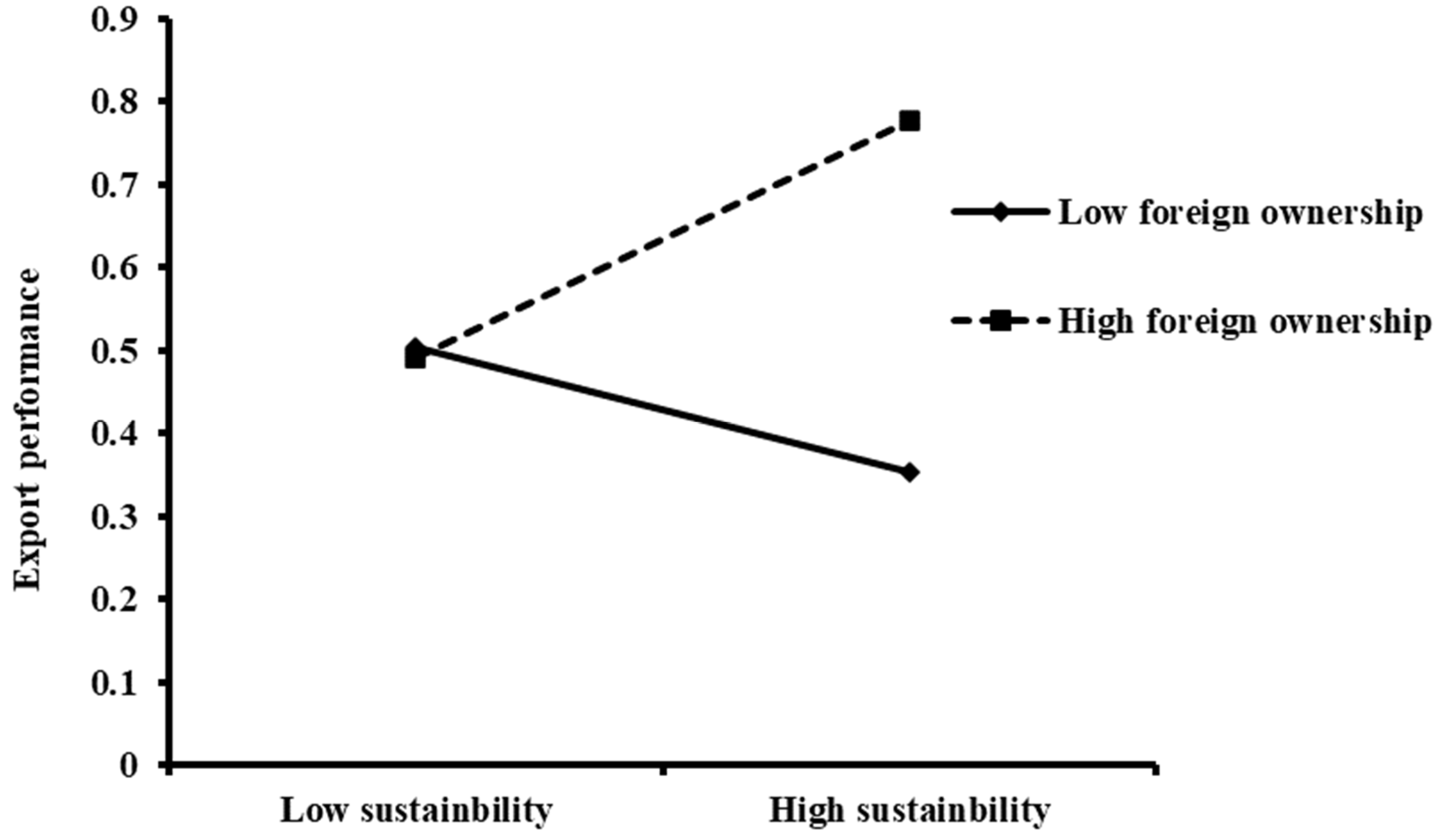
Hypothesis 4 predicted that foreign ownership strengthens the positive relationship between the sustainability of TMT digital attention and export performance. As shown in Table 3, the interaction between the proportion of foreign ownership and TMT digital attention sustainability in Model 4 is positively significant (β = 0.195, p < 0.05), providing support for Hypothesis 4. To further probe this finding, this paper plotted the results in Figure 1. As shown in Figure 1, the slope of the sustainability of TMT digital attention and export performance is steeper with the high proportion of foreign ownership than with the low proportion of foreign ownership.
Hypothesis 5 posited that foreign ownership weakens the negative relationship between the breadth of TMT digital attention and export performance. However, the interaction between foreign ownership and TMT digital attention breadth is not significant (β = 0.034, p > 0.1). Thus, Hypothesis 5 is not supported. From a global perspective, similar insignificant moderating effects have been documented in other emerging markets such as India, where foreign ownership improves governance but cannot fully offset the costs of attentional dispersion in volatile export markets. This pattern implies that the moderating role of foreign ownership is context-specific, warranting future research into boundary conditions such as industry type or firm size. Overall, this non-significant result highlights the nuanced limitations of foreign ownership in addressing the challenges associated with broad TMT digital attention, likely due to resource constraints or strategic misalignment.
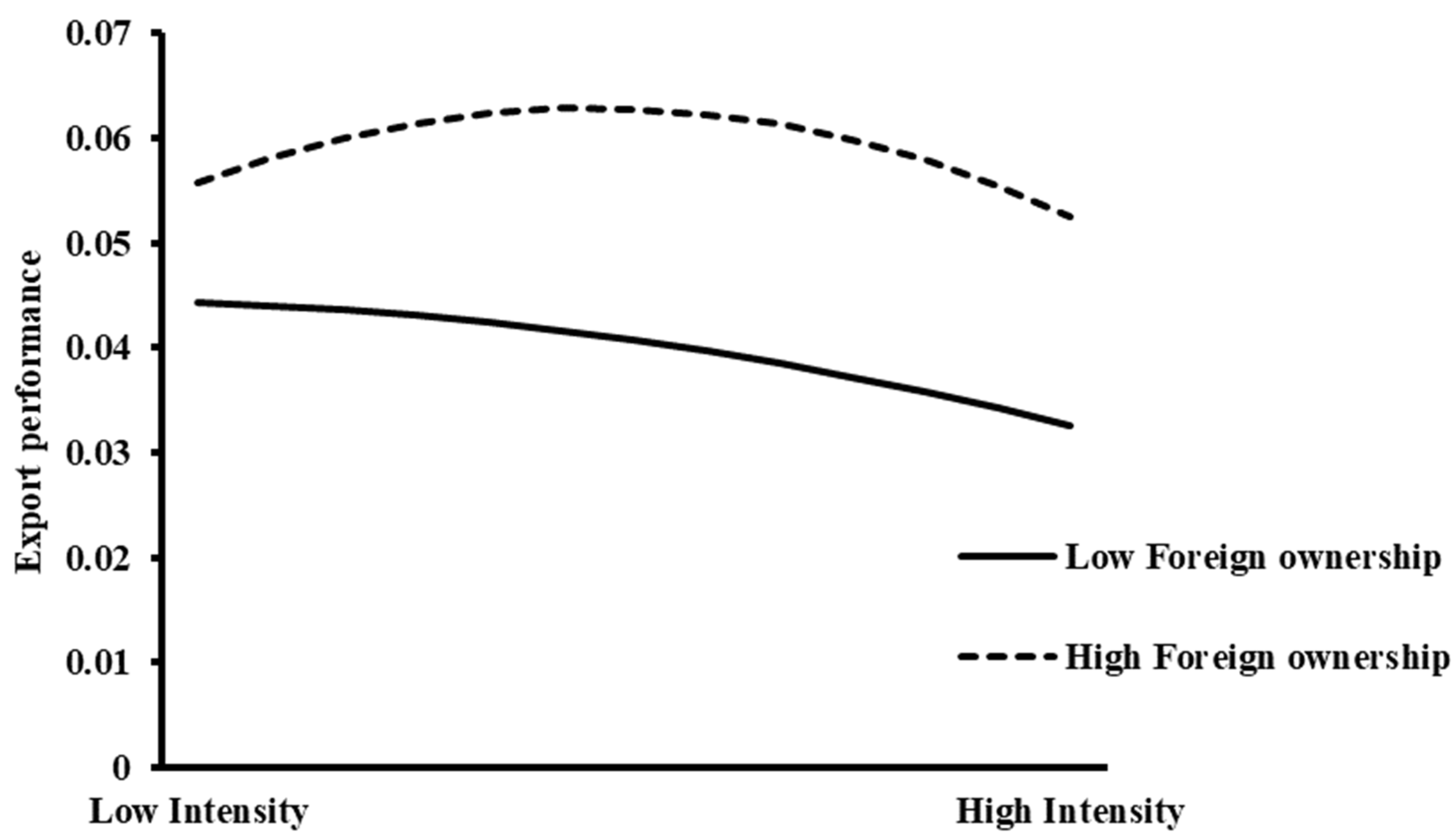
Hypothesis 6 proposed that foreign ownership strengthens the inverted U-shaped relationship between the intensity of TMT digital attention and export performance. The interaction between foreign ownership and TMT digital attention intensity is positive and significant (β = 0.193, p < 0.05), whereas the interaction between the squared term of TMT digital attention intensity and foreign ownership is negative and significant (β = −0.179, p < 0.01), further confirming the moderating effect of foreign ownership on the curvilinear relationship and thus supporting Hypothesis 6. Similarly, Figure 2 is plotted to further examine this finding. Figure 2 shows that when foreign ownership is high, the relationship between the intensity of TMT digital attention and export performance follows a stronger inverted U-shaped pattern.
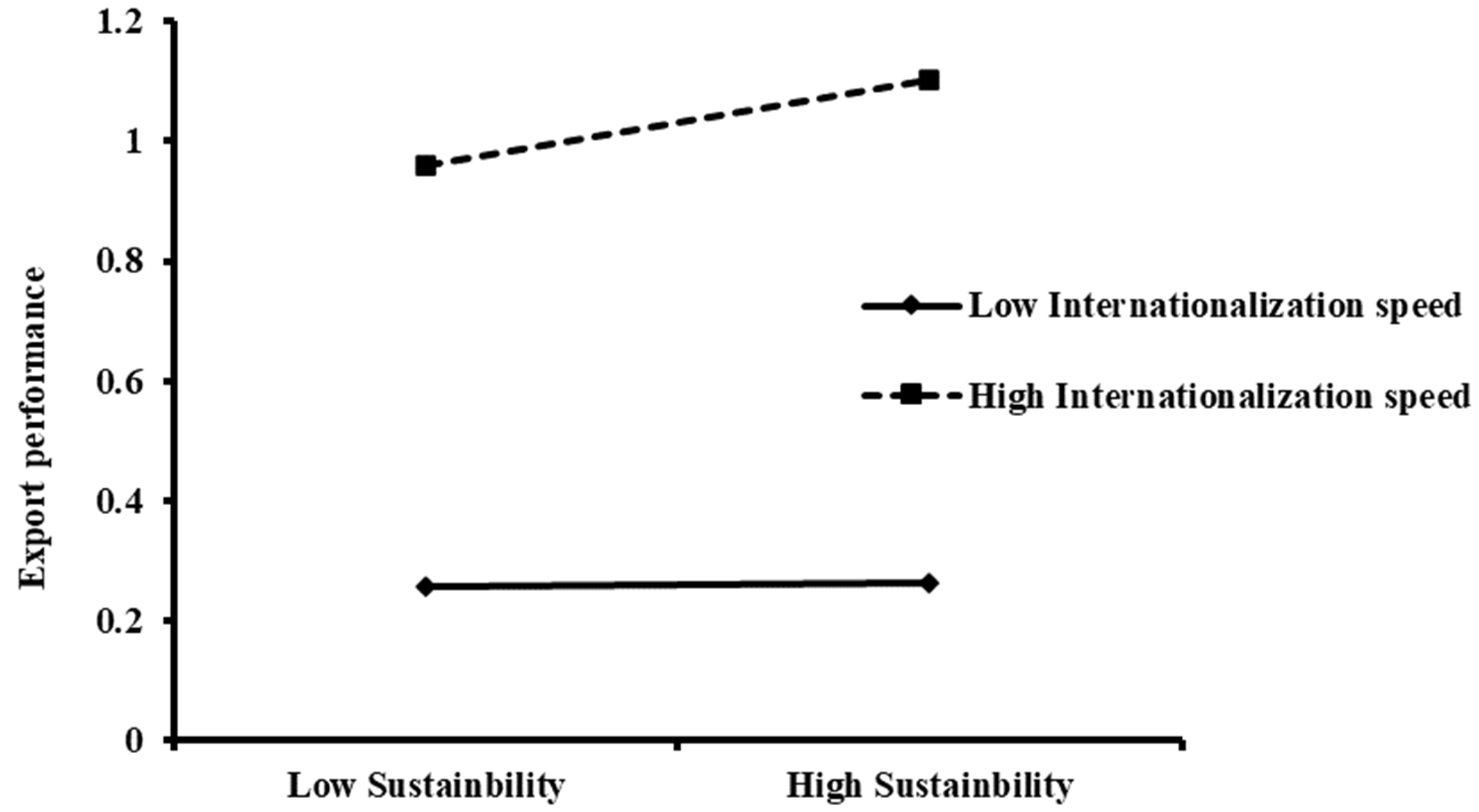
Hypothesis 7 posited that internationalization speed strengthens the positive relationship between TMT digital attention sustainability and export performance. As shown in Table 3, the interaction term between internationalization speed and sustainability in Model 5 is positive and significant (β = 0.255, p < 0.01), providing support for Hypothesis 7. The interaction effect is further illustrated in Figure 3. The positive slope linking sustainability to export performance is steeper at higher levels of internationalization speed and relatively flatter at lower levels.
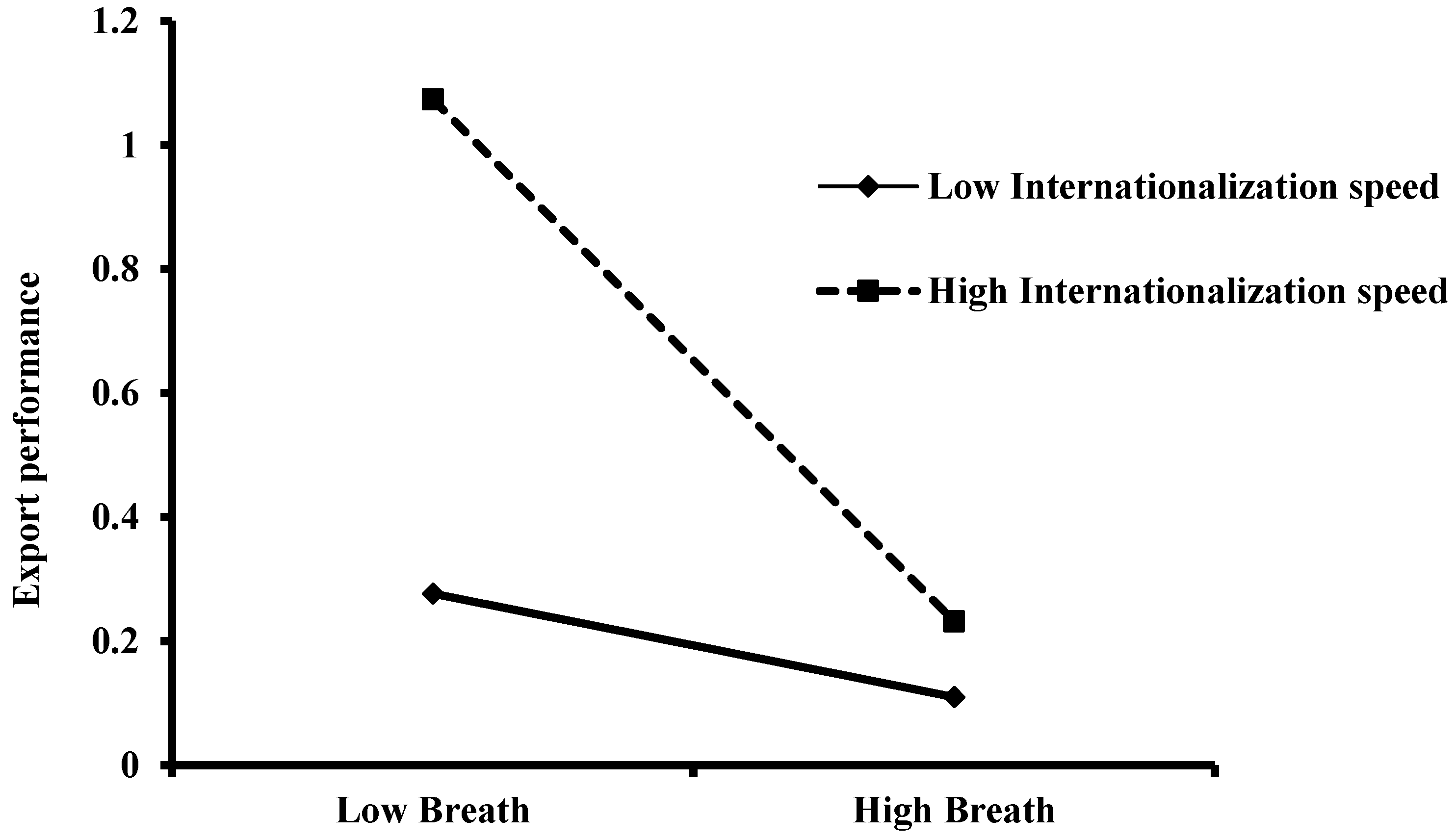
Hypothesis 8 posited that internationalization speed strengthens the negative relationship between TMT digital attention breadth and export performance. As shown in Table 3, the interaction between internationalization speed and breadth in Model 5 is negative and significant (β = −0.171, p < 0.01), supporting Hypothesis 8. This interaction is visualized in Figure 4. The negative slope between TMT digital attention breadth and export performance becomes steeper at higher levels of internationalization speed and milder at lower levels.
Hypothesis 9 proposed that internationalization speed strengthens the inverted U-shaped relationship between TMT digital attention intensity and export performance. However, neither the interaction between internationalization speed and intensity (β = 0.005, p > 0.1) nor the interaction between squared intensity and internationalization speed (β = −0.007, p > 0.1) is significant. Therefore, Hypothesis 9 is not supported. This insignificant result may stem from resource synchronization constraints. Specifically, internationalization speed captures the rate of cross-border expansion. Under conditions of high-intensity digital attention, the amplification of the inverted U-shaped relationship may be constrained by lags in resource coordination and deployment [54].

4.4. Robustness Checks and Endogeneity Test

(1)
Robustness Checks
In order to further verify the reliability of the research conclusions and the validity of the theoretical model, this study conducts a robustness test by replacing the measurement method of the dependent variable. First, this study employs the proportion of overseas subsidiaries as a proxy for export performance. This indicator reflects the breadth of firms’ cross-border market layout and global resource allocation, which can effectively characterize the level of corporate international competitiveness and export expansion capability. From the results of the robustness test in Model 2 of Table 4, the conclusions obtained are essentially consistent with the previous ones, which proves that the overall robustness of this study is good.
Second, export profit is adopted as another alternative measurement indicator of export performance. Unlike export scale, which focuses on operational volume, export profit focuses on the quality and profitability of export business, which can capture the high-quality development level of corporate exports and make up for the deficiency of a single-scale indicator. This indicator reflects the actual profit creation ability of enterprises in cross-border trade, effectively evaluating the substantive performance of export business, and is a core, reliable indicator for measuring corporate export performance in emerging-market firms. As shown in Table 4, although TMT digital attention breadth is negatively associated with export performance and is statistically insignificant (β = −0.002, p > 0.1) in Model 4, the signs and significance levels of all other core explanatory variables remain highly consistent with the baseline regression results. These results further demonstrate that the main research conclusions of this study are robust.
(2)
Endogeneity Test
To mitigate potential endogeneity biases, this study adopts multiple strategies to address endogeneity concerns. First, to alleviate potential reverse causality between the independent and dependent variables, this study lags the dependent variable (export performance) by one period. Specifically, corporate export performance in period t + 1 cannot affect TMT digital attention in period t, which effectively eliminates reverse causality interference.
Second, although panel data can partially alleviate omitted variable biases, it cannot fully eliminate estimation errors caused by unobserved variables. Following mainstream research practices [55], this study applies the instrumental variable (IV) approach. Specifically, the mean value of TMT digital attention of other firms within the same industry, province, and year is constructed as the instrumental variable. The results of Model 1 in Table 5 show that the IV regression results are highly consistent with the baseline fixed-effects results, which verifies the robustness of the main research conclusions.
Furthermore, following existing studies [4], this study employs the Heckman two-stage estimation method [56] to correct for potential sample selection bias. In the first stage, a Probit model is established with a dummy variable of TMT digital attention (coded as 1 if a firm has TMT digital attention and 0 otherwise). CEO duality is selected as the exogenous variable to predict the likelihood of firms generating TMT digital attention. The CEO duality indicator satisfies the exclusion restriction. Specifically, CEO duality improves corporate decision-making efficiency [4] and facilitates the cultivation of TMT digital attention, while it has no direct correlation with firms’ export performance. The inverse Mills ratio calculated from the first-stage regression is incorporated into the second-stage model to control for sample selection bias.
As presented in Table 5, the coefficient signs and significance levels of core variables remain stable in the Heckman two-stage estimation and are consistent with the main regression outcomes in Models 2 to 3. These findings confirm that the research conclusions are not disturbed by sample selection bias and exhibit robustness.

5. Conclusions and Discussion

5.1. Research Conclusions

This study adopts the attention-based view to examine the impact of TMT digital attention on firm export performance and the moderating effects of foreign ownership and internationalization speed. Several key conclusions are drawn. First, TMT digital attention sustainability positively promotes export performance, whereas digital attention breadth inhibits it. Second, TMT digital attention intensity exhibits an inverted U-shaped relationship with export performance. Third, foreign ownership enhances the positive association between digital attention sustainability and export performance and reinforces the inverted U-shaped linkage between TMT digital attention intensity and export performance. Internationalization speed strengthens both the positive effect of TMT digital attention sustainability and the negative effect of TMT digital attention breadth on export performance.

5.2. Theoretical Contributions

This study contributes to the extant research in several ways. First, this study adopts the attention-based view to empirically examine digital transformation and export performance. It extends the boundary of ABV application, establishes new theoretical insights into the relationship between digitalization and internationalization, and enriches contemporary international business research. Existing studies on digitalization and export performance mainly rely on the resource-based view and technology empowerment theory. They overly focus on tangible digital resources, such as digital investment and technology adoption, while neglecting the critical strategic function of TMT cognitive allocation in digital strategy implementation and cross-border activities. As a core strategic decision-making theory, the ABV regards managerial attention as a scarce resource that governs firms’ resource allocation and strategic orientation [12]. Empirically, this study confirms that TMT digital attention sustainability and moderate TMT digital attention intensity significantly improve export performance. The results highlight the essential value of executive resource allocation in cultivating firms’ cross-border competitive advantages. Overall, this ABV-based analysis advances the theoretical understanding of digital-era international business practices.
Second, this study advances digitalization research by conceptualizing TMT digital attention as comprising three distinct dimensions: sustainability, breadth, and intensity. Prior studies generally treated TMT digital attention as a single unified construct. They overlooked the multidimensional heterogeneity of TMT attention allocation in strategic decision-making, yielding inconsistent empirical results concerning digital attention’s positive, negative, or insignificant effects on export performance. Drawing on recent advances in the ABV, this study empirically verifies that the three dimensions of TMT digital attention exert distinct effects on export performance. Specifically, TMT digital attention sustainability improves export performance, TMT digital attention breadth restrains export growth, and TMT digital attention intensity has an inverted U-shaped relationship with export performance. This multidimensional framework addresses the drawbacks of the traditional unidimensional measurement paradigm. It uncovers the asymmetric mechanisms through which varied TMT digital attention traits shape cross-border performance, thus reconciling contradictory findings in the extant literature [57]. Hence, these findings provide a more nuanced understanding of how TMT digital attention contributes to firms’ export performance.
Third, this study incorporates two key contextual factors, foreign ownership and internationalization speed, to expand the contingent boundaries of the relationship between TMT digital attention and export performance. Empirical findings clarify the distinct moderating effects of corporate governance and internationalization attributes and deepen the mechanism through which TMT digital attention shapes export performance. Thus, this research further improves the contingent applicability of the attention-based view, broadens the research scope of foreign capital governance and internationalization speed, and enriches relevant studies in international business [58].

5.3. Practical Implications

This study provides refined managerial guidelines for firms seeking to cultivate and implement TMT digital attention and ultimately improve export performance.
First, firms should systematically cultivate and rationally configure TMT digital attention to sustain export development. Firms can reshape executives’ digital cognition by optimizing TMT composition, recruiting managers with digital expertise, and launching regular digital strategy reviews. These approaches consolidate sustained digital attention and deepen executives’ strategic cognition of digital transformation. In practice, firms should guide TMTs to maintain focused, long-term digital attention allocation, avoid excessively broad and scattered digital concerns, and sustain a moderate intensity of digital strategic input. Such targeted management mitigates inefficient cognitive dispersion and excessive digital investment, thereby stabilizing and strengthening firms’ cross-border export advantages.
Second, firms should dynamically adjust their digital attention strategies in accordance with equity governance attributes and internationalization rhythms. Firms with foreign ownership can leverage foreign investors’ governance advantages to amplify the strategic value of TMTs’ sustained and moderate-intensity digital attention in facilitating export growth. For firms with rapid internationalization, TMTs need to further streamline digital attention allocation. Specifically, firms should consolidate continuous digital focus and constrain dispersed attention breadth, as accelerated cross-border expansion strengthens both the positive outcomes of sustained attention and the detrimental effects of unfocused attention. Aligning TMT digital attention configuration with internal equity structure and internationalization speed effectively unlocks the export value of executive digital cognition and supports stable cross-border development.

5.4. Research Limitations and Future Directions

This study has several limitations that offer promising avenues for future research.
First, this study primarily focuses on linear relationships and only examines a single inverted U-shaped nonlinear effect between TMT digital attention and export performance. In line with the attention-based view, managerial attention is inherently context-dependent and may generate more sophisticated nonlinear patterns. Future research can explore additional nonlinear relationships, such as S-shaped curves and threshold effects, as well as heterogeneous nonlinear mechanisms across different contextual conditions. Such extensions can effectively enrich and expand the theoretical boundary of the ABV in explaining firms’ international strategic outcomes.
Second, this study measures TMT digital attention through textual keyword extraction from annual reports. Although such textual indicators are widely applied in managerial attention research, they may reflect firms’ digital disclosure rhetoric rather than fully capturing TMTs’ substantive digital attention and practical digital implementation. Future research can further distinguish corporate digital disclosure behavior from actual digital strategic engagement and examine their distinct effects on export performance. Such differentiation can yield more rigorous empirical evidence and provide a more nuanced understanding of the digitalization–international performance relationship.
Third, this study focuses on the international consequences of TMT digital attention, without systematically distinguishing it from firms’ digital strategic orientation. Although TMT digital attention partially reflects strategic tendencies, the two constructs are conceptually different. Future research can draw on strategic management theories to independently examine the influence of digital strategic orientation on firm internationalization. Such extensions can refine the theoretical boundary of digitalization–internationalization research and provide a more nuanced understanding of related strategic mechanisms.

Author Contributions

Conceptualization, F.F. and L.S.; methodology, F.F., L.S. and R.Y.; software, F.F. and R.Y.; data curation, F.F. and L.S.; writing—original draft preparation, F.F., L.S. and R.Y.; writing—review and editing, F.F., L.S. and R.Y.; funding acquisition, F.F. All authors have read and agreed to the published version of the manuscript.

Funding

This work was financed by the Philosophy and Social Science Research Fund of Chengdu University of Technology (grant no. YJ2026-QN013)

Data Availability Statement

The raw data supporting the conclusions of this article will be made available by the authors on request.

Conflicts of Interest

The authors declare no conflicts of interest.

References

  1. Lee, J.Y.; Yang, Y.S.; Ghauri, P.N.; Park, B.I. The Impact of Social Media and Digital Platforms Experience on SME International Orientation: The Moderating Role of COVID-19 Pandemic. J. Int. Manag. 2022, 28, 100950. [Google Scholar]
  2. Katsikeas, C.; Leonidou, L.; Zeriti, A. Revisiting International Marketing Strategy in a Digital Era: Opportunities, Challenges, and Research Directions. Int. Mark. Rev. 2020, 37, 405–424. [Google Scholar]
  3. Caon, M.; Panetti, E.; Meier, E.; Baldegger, R.J. The Dual Effect Of COVID-19: Diverse Digitalization Approaches in Micro-and Small Businesses. J. Int. Counc. Small Bus. 2025, 6, 216–228. [Google Scholar]
  4. Li, J.; Pan, Y.; Yang, Y.; Tse, C.H. Digital Platform Attention and International Sales: An Attention-Based View. J. Int. Bus. Stud. 2022, 53, 1817–1835. [Google Scholar] [CrossRef]
  5. Kong, Q.; Wu, P.; Wang, Z.; Peng, D. Digital Transformation and Export Product Quality: The Roles of Production Efficiency and Financing Constraints. J. Int. Financ. Manag. Account. 2026, 37, 151–170. [Google Scholar]
  6. Qin, Y.; Wu, X.; Wen, X. Digital Transformation and Internationalization Strategy: The Moderating Role of Political Connection and Environmental Dynamics. J. Ind. Eng. Eng. Manag. 2026, 40, 48–62. [Google Scholar]
  7. Wang, M.L.; Song, Y.Y.; Yan, H.F. Impact of Digital Transformation on The Scope of Firm Internationalization: The Mediating Role of Dynamic Capability. Foreign Econ. Manag. 2022, 44, 33–47. [Google Scholar]
  8. Capelleras, J.-L.; Martin-Sanchez, V.; Zhang, C. The Curvilinear Relationship Between Digitalization and Export Propensity: The Role of Home Country Corruption in Emerging Economies. Technol. Forecast. Soc. Change 2025, 214, 124043. [Google Scholar] [CrossRef]
  9. Zhong, X.; Song, T.; Chen, W.; Weng, Y. Foreign Shareholding, Negative Gaps and Enterprise Internationalization Process. Manag. Rev. 2021, 33, 245–255. [Google Scholar]
  10. Seidl, D.; Splitter, V.; Whittington, R. Quality over Quantity of Attention! Towards a Qualitative Attention-Based View. J. Manag. Stud. 2026, early view. [Google Scholar]
  11. Ocasio, W. Towards an Attention-Based View of The Firm. Strateg. Manag. J. 1997, 18, 187–206. [Google Scholar]
  12. Wang, S.-Q.; Zhang, S.; Shang, G.-Y. Impact of Subsidiary TMT Network Attention on Innovation: The Moderating Role of Subsidiary Autonomy. Manag. Organ. Rev. 2022, 18, 1077–1115. [Google Scholar]
  13. Bikard, M. Made in Academia: The Effect of Institutional Origin on Inventors’ Attention to Science. Organ. Sci. 2018, 29, 818–836. [Google Scholar]
  14. Eggers, J.P.; Kaplan, S. Cognition and Capabilities: A Multi-Level Perspective. Acad. Manag. Ann. 2013, 7, 295–340. [Google Scholar]
  15. Alhawamdeh, H.M.; Alsmairat, M.A. Strategic Decision Making and Organization Performance: A Literature Review. Int. Rev. Manag. Mark. 2019, 9, 95. [Google Scholar]
  16. McKelvie, A.; Wiklund, J.; McMullen, J.S.; Palubinskas, A.P. A Dynamic Model of Entrepreneurial Opportunity: Integrating Kirzner’s and Mises’s Approaches to Entrepreneurial Action. Q. J. Austrian Econ. 2020, 23, 499–541. [Google Scholar] [CrossRef]
  17. Laureiro-Martinez, D. Call for Papers: Special Issue of Strategic Organization: Research Frontiers on The Attention-Based View of The Firm. Strateg. Organ. 2021, 19, 176–180. [Google Scholar] [CrossRef]
  18. Eklund, J.C.; Mannor, M.J. Keep Your Eye on the Ball or on the Field? Exploring the Performance Implications of Executive Strategic Attention. Acad. Manag. J. 2020, 64, 1685–1713. [Google Scholar]
  19. Ocasio, W.; Joseph, J. The Attention-Based View of Great Strategies. Strategy Sci. 2018, 3, 289–294. [Google Scholar]
  20. Wamba, S.F.; Gunasekaran, A.; Akter, S.; Ren, S.J.-f.; Dubey, R.; Childe, S.J. Big Data Analytics and Firm Performance: Effects of Dynamic Capabilities. J. Bus. Res. 2017, 70, 356–365. [Google Scholar]
  21. Wang, Z.; Peng, D.; Kong, Q.; Tan, F. Digital Infrastructure and Economic Growth: Evidence from Corporate Investment Efficiency. Int. Rev. Econ. Financ. 2025, 98, 103854. [Google Scholar]
  22. Shao, Y.; Xie, W. Exporting and Innovation in a Digital Age: An Attention-Based Perspective. Int. J. Technol. Manag. 2025, 98, 78–104. [Google Scholar]
  23. Zhang, Y.; Gao, D.; Zhang, Y. Does Digital Transformation Promote the Internationalization of Specialized and Sophisticated SMEs? J. Technol. Econ. 2026, 45, 125–139. Available online: https://openurl.ebsco.com/EPDB%3Agcd%3A5%3A31439637/detailv2?sid=ebsco%3Aplink%3Acrawler-gcd&id=ebsco%3Agcd%3A194405866&crl=c&jrnl=1002980X&link_origin=scholar.google.com.sg (accessed on 27 July 2026).
  24. Rhee, L. CEO Attentional Vigilance: Behavioral Implications for the Pursuit of Exploration. Acad. Manag. J. 2024, 67, 1463–1487. [Google Scholar]
  25. Brieger, S.A.; Chowdhury, F.; Hechavarria, D.M.; Muralidharan, E.; Pathak, S.; Lam, Y.T. Digitalization, Institutions and New Venture Internationalization. J. Int. Manag. 2022, 28, 100949. [Google Scholar]
  26. Clark, D.R.; Li, D.; Shepherd, D.A. Country Familiarity in The Initial Stage of Foreign Market Selection. J. Int. Bus. Stud. 2018, 49, 442–472. [Google Scholar]
  27. Qi, Y.; Liu, H. A Study on the Factor Property and the Market-Oriented Allocation Mechanism of Data in Digital Economy. Econ. Perspect. 2020, 11, 63–76. [Google Scholar]
  28. Lin, Y.L.; Shi, W.; Prescott, J.E.; Yang, H. In the Eye of the Beholder: Top Managers’ Long-Term Orientation, Industry Context, and Decision-Making Processes. J. Manag. 2018, 45, 3114–3145. [Google Scholar]
  29. Dogar, S.M.; Huang, H.; Saqib, Z.A. Corporate Social Responsibility as a Driver of Sustainable Consumption: The Roles of Consumer Happiness and Corporate Image. Sustainability 2026, 18, 5527. [Google Scholar] [CrossRef]
  30. Loewenstein, G.; Wojtowicz, Z. The Economics of Attention. J. Econ. Lit. 2025, 63, 1038–1089. [Google Scholar] [CrossRef]
  31. Kurbatska, L.; Kvasova, L.; Lozovyi, D. Implementation of the Diversification Strategy for the Formation of the Adaptability of the Enterprise. Green Blue Digit. Econ. J. 2024, 5, 14–20. [Google Scholar] [CrossRef] [PubMed]
  32. López-Muñoz, J.F. Executives’ Role in Digital Transformation. Int. J. Inf. Syst. Proj. Manag. 2022, 10, 84–103. [Google Scholar] [CrossRef]
  33. El Ghoul, S.; Guedhami, O.; Mansi, S.A.; Yoon, H.J. Institutional Investor Attention, Agency Conflicts, and the Cost of Debt. Manag. Sci. 2023, 69, 4973–5693. [Google Scholar] [CrossRef]
  34. Zhu, Z.; Kang, Y. A Far-Reaching Parental Love? Co-Governance of Intergenerational Succession and Innovation Activities in Chinese Family Firms. Manag. Organ. Rev. 2022, 18, 358–394. [Google Scholar] [CrossRef]
  35. Coviello, N.; Kano, L.; Liesch, P.W. Adapting the Uppsala Model to A Modern World: Macro-Context and Micro-foundations. J. Int. Bus. Stud. 2017, 48, 1151–1164. [Google Scholar] [CrossRef]
  36. Liu, S.C.; Yan, J.C.; Zhang, S.X. Can Corporate Digital Transformation Promote Input-Output Efficiency? Manag. World 2021, 37, 170–190+113. [Google Scholar]
  37. Brouthers, K.D.; Chen, L.; Li, S.; Shaheer, N. Charting New Courses to Enter Foreign Markets: Conceptualization, Theoretical Framework, And Research Directions on Non-Traditional Entry Modes. J. Int. Bus. Stud. 2022, 53, 2088–2115. [Google Scholar] [CrossRef] [PubMed]
  38. Singla, C.; George, R.; Veliyath, R. Ownership Structure and Internationalization of Indian Firms. J. Bus. Res. 2017, 81, 130–143. [Google Scholar] [CrossRef]
  39. Deng, P.; Yang, M. Cross-border Mergers and Acquisitions by Emerging Market Firms: A Comparative Investigation. Int. Bus. Rev. 2015, 24, 157–172. [Google Scholar] [CrossRef]
  40. Yi, J.; Hong, J.; Hsu, W.C.; Wang, C. The Role of State Ownership and Institutions in The Innovation Performance of Emerging Market Enterprises: Evidence from China. Technovation 2017, 62–63, 4–13. [Google Scholar] [CrossRef]
  41. Saikia, A.; Bhattacharya, S.N.; Dwivedi, R. Institutional Theory and Multinational Corporation Internationalization Strategy: A Systematic Review and Future Research Agenda. Int. J. Emerg. Mark. 2025, 20, 3170–3192. [Google Scholar] [CrossRef]
  42. Huang, S.; Zhu, Y.; Ding, Z.; Chen, C. Internationalization Speed and International Performance among International New Ventures: The Moderating Role of Resource Synchronization. Br. J. Manag. 2023, 34, 2234–2262. [Google Scholar] [CrossRef]
  43. Jancenelle, V.E. Exploring the Relationship Between Strategic Attention Breadth and Performance: The Role of Corporate Social Responsibility. J. Manag. Organ. 2025, 31, 330–345. [Google Scholar] [CrossRef]
  44. Purkayastha, A.; Karna, A.; Sharma, S.; Bhadra, D. Role of Resource Investment Management and Strategic Resource Deployment Capabilities in Internationalization-Performance Relationship. J. Int. Manag. 2024, 30, 101122. [Google Scholar] [CrossRef]
  45. Liang, T.; Lei, P.; Chen, X. The Influence of Managerial Incentives on Firm R&D Efficiency: Evidences from Industrial Listed Companies in China. Manag. Rev. 2015, 27, 145–156. [Google Scholar]
  46. Theresa, S.C.; Hambrick, D.C. Attention as The Mediator Between Top Management Team Characteristics and Strategic Change: The Case of Airline Deregulation. Oper. Sci. 2007, 17, 417–526. [Google Scholar] [CrossRef]
  47. Wu, J.; Guan, B. The Effect of Top Management Team Characteristics on International Market Entry Mode: The Mediating Role of Attention. Manag. Rev. 2015, 27, 118. [Google Scholar]
  48. Wang, H.; Zhao, Y.; Liu, W.; Zheng, M. Female in Top Management Teams, Ownership and Firm Internationalization: Evidence from China. Manag. Int. Rev. 2026. Epub ahead of printing. [Google Scholar]
  49. Axenbeck, J.; Bertschek, I.; Breithaupt, P.; Erdsiek, D. Firm Digitalisation and Mobility—Do COVID-19-Related Changes Persist? ZEW Discussion Papers, No. 23-011; ZEW—Leibniz-Zentrum für Europäische Wirtschaftsforschung: Mannheim, Germany, 2023. [Google Scholar]
  50. Zhang, C.; He, P.; Zhou, Z. Environmental Regulation, Digital Transformation, and Corporate ESG Performance: Evidence from The Implementation of China’s NEPL. Financ. Res. Lett. 2024, 69, 106090. [Google Scholar] [CrossRef]
  51. Li, X.; Zhou, T.; Cao, S. Digital Transformation, Supply Chain Collaboration, and Corporate Innovation Boundaries. Int. Rev. Econ. Financ. 2025, 104, 104628. [Google Scholar] [CrossRef]
  52. Salehi, M.; Zimon, G.; Arianpoor, A.; Gholezoo, F.E. The Impact of Investment Efficiency on Firm Value and Moderating Role of Institutional Ownership and Board Independence. J. Risk Financ. Manag. 2022, 15, 170. [Google Scholar] [CrossRef]
  53. Chetty, S.; Johanson, M.; Martin, O.M. Speed of Internationalization: Conceptualization, Measurement and Validation. J. World Bus. 2014, 49, 633–650. [Google Scholar] [CrossRef]
  54. Hilmersson, M.; Schweizer, R.; Chetty, S. The Relationship Between Timing, Speed, and Performance in Foreign Market Network Entry. Manag. Int. Rev. 2022, 62, 325–349. [Google Scholar] [CrossRef]
  55. Yang, Y.; Wei, J.; Luo, L.J. Who is Using Government Subsidies for Innovation? Jt. Moderating Eff. Ownersh. Factor Mark. Distortion Manag. World 2015, 1, 75–98. [Google Scholar]
  56. Heckman, J.J. Sample Selection Bias as a Specification Error. Econometrica 1979, 47, 153–161. [Google Scholar] [CrossRef] [PubMed]
  57. Higón, D.A.; Bonvin, D. Digitalization and Trade Participation of SMEs. Small Bus. Econ. 2024, 62, 857–877. [Google Scholar] [CrossRef]
  58. Li, H.; Yi, X.; Cui, G. Emerging Market Firms’ Internationalization: How Do Firms’ Inward Activities Affect Their Outward Activities? Strateg. Manag. J. 2017, 38, 2704–2725. [Google Scholar] [CrossRef]
Figure 1. Sustainability of TMT digital attention and export performance: the moderating role of foreign ownership. Note: sustainability = sustainability of TMT digital attention.
Sustainability 18 07921 g001
Figure 2. Intensity of TMT digital attention and export performance: the moderating role of foreign ownership. Note: intensity = intensity of TMT digital attention.
Sustainability 18 07921 g002
Figure 3. Sustainability of TMT digital attention and export performance: the moderating role of internationalization speed. Note: sustainability = sustainability of TMT digital attention.
Sustainability 18 07921 g003
Figure 4. Breadth of TMT digital attention and export performance: the moderating role of internationalization speed. Note: breadth = breadth of TMT digital attention.
Sustainability 18 07921 g004
Table 1. Variable definitions.
SymbolVariable NameVariable Definition
ExportExport performanceRatio of export sales to total operating revenue
SustainabilitySustainability of TMT
digital attention
Count of consecutive years during which digital-related keywords are mentioned in the MD&A section.
BreadthBreadth of TMT digital attentionCategories of digital technologies and digital applications mentioned in the MD&A section
IntensityIntensity of TMT digital attentionRatio of the word count of digital-related keywords to the total word count in the MD&A section
Foreign
Speed
Foreign ownership
Internationalization speed
Proportion of foreign ownership in the total share capital
Number of overseas investment host countries/(Current year − First year of outward investment)
HistoryFirm historyLogarithm of (current year − year of company’s listing + 1)
SOEState-owned enterprise status1 for state-owned enterprises
0 for non-state-owned enterprises
ROAReturn on assetsNet profits/Total assets
Firm scaleNumber of employeesLogarithm of the number of employees
TMT sizeTMT sizeNumber of top management teams
TMT average ageTMT average ageAverage age of top management teams
OverseasOverseas background of directors and supervisors1 = overseas work experience
2 = overseas study experience
0 = no overseas background
Digital InvestmentDigital investmentProportion of intangible
assets associated with digital economy activities
Digital InnovationDigital inventionsNumber of obtained key digital technology inventions in the current year
SCCSupply chain concentrationProportion of procurement amount from the top five suppliers in the total procurement amount
HHIMarket concentrationMain operating revenue of the focal firm/aggregate main operating revenue of all firms within the industry
RBERegional business environmentNumber of local business environment-related documents
Digital policyGovernment digital attentionNumber of digital-related normative documents issued by the province
InternetInternet user proportionProportion of mobile internet users to the total population in the province
GDPPer capita GDPTotal annual provincial GDP/Average resident population in the province
Prior exportPrior export performanceExport performance in the prior year
Table 2. Mean, standard deviation, and Pearson correlation coefficient of the main variables.
(a)
VariableMeanSD123456789
Export0.1520.2211
Sustainability2.0712.4120.060 ***1
Breadth1.2701.6200.072 ***0.620 ***1
Intensity0.0660.0750.065 ***0.371 ***0.480 ***1
Foreign 2.0658.6930.120 ***−0.039 ***0.044 ***0.0111
Speed0.2030.6100.243 ***0.098 ***0.082 ***0.113 ***0.035 ***1
History15.7975.424−0.026 ***−0.016 **−0.095 ***0.072 ***−0.088 ***0.030 ***1
SOE0.2750.447−0.044 ***−0.048 ***−0.029 ***−0.049 ***−0.0060.010.169 ***1
ROA0.0490.051−0.014 *−0.079 ***0.0040.010.092 ***0.016 **−0.060 ***−0.026 ***1
Firm scale7.6611.1280.081 ***0.100 ***0.031 ***0.036 ***−0.043 ***0.172 ***0.164 ***0.211 ***−0.039 ***
TMT size6.3352.201−0.031 ***0.01 4 *0.007−0.008−0.041 ***0.088 ***0.013 *0.048 ***0.019 **
TMT average age48.7603.142−0.092 ***−0.013−0.088 ***−0.049 ***−0.0120.0040.274 ***0.193* **−0.012
Overseas0.5760.4940.110 ***0.068 ***0.060 ***0.067 ***0.100 ***0.103 ***0.006−0.061 ***0.034 ***
Digital investment0.0460.1170.0070.116 ***0.163 ***0.232 ***0.066 ***0.036 ***−0.030 ***−0.020 **0.021 ***
Digital innovation0.4000.8300.070 ***0.262 ***0.248 ***0.270 ***−0.018 **0.128 ***0.041 ***−0.018 **−0.012
SCC27.79916.7940.099 ***0.0080.014 *0.075 ***0.047 ***−0.031 ***0.059 ***−0.159 ***0.026 ***
HHI0.1670.126−0.036 ***−0.017 **−0.012−0.0060.046 ***−0.015 *−0.0110.011−0.025 ***
RBE4.2491.1180.104 ***0.057 ***0.019 **0.287 ***0.0030.115 ***0.332 ***−0.063 ***0.050 ***
Digital policy3.6561.1150.151 ***0.015 *0.0010.143 ***0.022 ***0.064 ***0.131 ***−0.066 ***0.065 ***
Internet 0.5540.1330.115 ***0.151 ***0.112 ***0.273 ***0.044 ***0.102 ***0.222 ***−0.061 ***0.058 ***
GDP9.1433.933−0.060 ***−0.078 ***−0.034 ***−0.110 ***−0.007−0.066 ***−0.178 ***0.026 ***−0.036 ***
Prior export0.1510.2240.521 ***0.060 ***0.080 ***0.069 ***0.117 ***0.238 ***−0.020 **−0.036 ***−0.013 *
(b)
Variable101112131415161718192021
Firm scale1
TMT size0.282 ***1
TMT average age0.277 ***0.091 ***1
Overseas0.053 ***0.076 ***−0.011
Digital investment−0.055 ***-0.01−0.098 ***0.028 ***1
Digital innovation0.199 ***0.154 ***0.041 ***0.096 ***0.102 ***1
SCC−0.288 ***−0.122 ***−0.026 ***0.028 ***0.036 ***−0.016 **1
HHI0.075 ***−0.034 ***−0.01−0.020 **0.009−0.056 ***0.013 *1
RBE−0.001−0.060 ***0.088 ***0.067 ***0.089 ***0.109 ***0.288 ***−0.042 ***1
Digital policy−0.030 ***−0.063 ***−0.016 *−0.015 *0.0090.023 ***0.169 ***−0.010.615 ***1
Internet −0.044 ***−0.077 ***0.057 ***0.142 ***0.144 ***0.149 ***0.228 ***−0.043 ***0.572 ***0.164 ***1
GDP0.0010.037 ***−0.096 ***−0.062 ***−0.040 ***−0.069 ***−0.170 ***0.025 ***−0.420 ***−0.189 ***−0.478 ***1
Prior export0.085 ***−0.030 ***−0.078 ***0.113 ***0.014 *0.068 ***0.101 ***−0.028 ***0.113 ***0.149 ***0.117 ***−0.078 ***
* p < 0.1, ** p < 0.05, *** p < 0.01; export = export performance; sustainability = sustainability of TMT digital attention; breadth = breadth of TMT digital attention; intensity = intensity of TMT digital attention; foreign = foreign ownership; speed = internationalization speed.
Table 3. Panel fixed-effects regression results.
VariableExport Performance
Model 1Model 2Model 3Model 4Model 5
Sustainability 0.079 ***0.084 ***0.130 ***0.113 ***
(0.025)(0.025)(0.029)(0.029)
Breadth −0.083 **−0.086 **−0.122 ***−0.121 ***
(0.037)(0.037)(0.043)(0.043)
Intensity 0.7190.9450.820.651
(1.409)(1.438)(1.649)(1.650)
Intensity squared −9.651 ***−10.720 ***−18.530 ***−17.180 ***
(3.715)(3.811)(4.374)(4.376)
Foreign 0.010.037 ***0.015 **
(0.006)(0.009)(0.007)
Speed 0.342 ***0.684 ***0.594 ***
(0.072)(0.083)(0.098)
Foreign * Sustainability 0.195 **
(0.091)
Foreign * Breadth 0.034
(0.068)
Foreign * Intensity 0.193 **
(0.084)
Foreign * Intensity squared −0.179 ***
(0.041)
Speed * Sustainability 0.255 ***
(0.057)
Speed * Breadth −0.171 ***
(0.062)
Speed * Intensity 0.005
(0.082)
Speed * Intensity squared −0.007
(0.031)
History0.0950.0650.0570.2120.200
(0.132)(0.132)(0.135)(0.155)(0.155)
SOE−1.781−1.739−1.677−1.229−1.157
(3.716)(3.707)(3.710)(4.251)(4.253)
ROA−0.66−0.665−0.466−2.307 **−2.351 **
(0.966)(0.970)(1.007)(1.154)(1.153)
Firm scale0.496 ***0.479 ***0.439 ***0.676 ***0.661 ***
(0.100)(0.101)(0.103)(0.118)(0.118)
TMT size−0.038−0.035−0.039−0.013−0.015
(0.027)(0.027)(0.028)(0.032)(0.032)
TMT average age−0.040 *−0.041 *−0.045 *−0.011−0.01
(0.024)(0.024)(0.025)(0.028)(0.028)
Overseas0.0090.0330.0090.0570.073
(0.103)(0.103)(0.105)(0.120)(0.120)
Digital investment−0.995 **−0.915 **−0.936 **−1.226 **−1.311 **
(0.449)(0.451)(0.457)(0.524)(0.524)
Digital innovation0.180 **0.170 **0.169 **0.253 ***0.230 ***
(0.074)(0.075)(0.076)(0.087)(0.087)
SCC0.0020.0020.0020.0040.004
(0.003)(0.003)(0.003)(0.004)(0.004)
HHI0.6510.832 *0.838 *1.429 ***1.379 **
(0.458)(0.459)(0.469)(0.537)(0.537)
RBE0.1880.1860.190.394 ***0.419 ***
(0.128)(0.128)(0.129)(0.148)(0.148)
Digital policy0.0750.0750.085−0.0040.006
(0.069)(0.070)(0.070)(0.080)(0.081)
Internet2.801 **2.975 **3.395 ***7.399 ***7.271 ***
(1.286)(1.286)(1.307)(1.496)(1.496)
GDP−0.006−0.005−0.003−0.004−0.004
(0.017)(0.017)(0.017)(0.019)(0.019)
Prior export0.509 ***0.507 ***0.498 ***0.496 ***0.497 ***
(0.008)(0.008)(0.009)(0.009)(0.009)
YearControlControlControlControlControl
IndustryControlControlControlControlControl
_cons−4.007 *−3.549−3.275−10.870 ***−10.670 ***
(2.248)(2.246)(2.279)(2.608)(2.610)
R-sq0.2620.2630.2650.2650.267
adj. R-sq0.1210.1220.1240.1240.125
Note: * p < 0.1, ** p < 0.05, *** p < 0.01; export = export performance; sustainability = sustainability of TMT digital attention; breadth = breadth of TMT digital attention; intensity = intensity of TMT digital attention; foreign = foreign ownership; speed = internationalization speed.
Table 4. Results of robustness test.
VariableOverseas SubsidiariesExport Profit
Model 1Model 2Model 3Model 4
Sustainability 0.002 *** 0.014 ***
(0.000) (0.002)
Breadth −0.002 ** −0.002
(0.001) (0.003)
Intensity 0.031 0.280 **
(0.032) (0.134)
Intensity squared −0.182 ** −1.219 ***
(0.085) (0.354)
Prior overseas subsidiaries0.349 ***0.348 ***
(0.008)(0.008)
Prior export profit 0.429 ***0.425 ***
(0.009)(0.009)
Control variablesControlControlControlControl
YearControlControlControlControl
IndustryControlControlControlControl
_cons−0.038−0.0310.1550.152
(0.053)(0.053)(0.203)(0.203)
R-sq0.1940.1970.3790.381
adj. R-sq0.1180.1210.2390.240
Note: ** p < 0.05, *** p < 0.01; sustainability = sustainability of TMT digital attention; breadth = breadth of TMT digital attention; intensity = intensity of TMT digital attention.
Table 5. Results of endogeneity test.
VariableIV Approach1st Stage2st Stage
Model 1Model 2Model 4
CEO duality 0.126 ***
(0.033)
Sustainability0.079 *** 0.084 ***
(0.024) (0.025)
Breadth−0.082 ** −0.083 **
(0.039) (0.037)
Intensity0.714 0.759
(1.564) (1.410)
Intensity squared−9.644 ** −9.610 ***
(4.317) (3.715)
Prior export0.507 *** 0.506 ***
(0.023) (0.009)
IMR −5.365 ***
(0.884)
Control variablesControlControlControl
YearControlControlControl
IndustryControlControlControl
_cons −1.484 ***−2.184
(0.259)(2.529)
R-sq0.265 0.264
adj. R-sq0.128 0.122
Note: ** p < 0.05, *** p < 0.01; esustainability = sustainability of TMT digital attention; breadth = breadth of TMT digital attention; Intensity = intensity of TMT digital attention..
Disclaimer/Publisher’s Note: The statements, opinions and data contained in all publications are solely those of the individual author(s) and contributor(s) and not of MDPI and/or the editor(s). MDPI and/or the editor(s) disclaim responsibility for any injury to people or property resulting from any ideas, methods, instructions or products referred to in the content.