1. Introduction
Urban transport hubs are no longer understood solely as infrastructures for passenger throughput; they increasingly function as public cultural interfaces in which regional identity, collective memory, and cultural continuity are continuously negotiated through everyday mobility experiences. However, contemporary transportation environments are increasingly characterized by visual and spatial homogenization under standardized infrastructure development, resulting in the gradual weakening of regional distinctiveness and the erosion of culturally sustainable spatial experiences [
1,
2]. From the perspective of cultural sustainability, such homogenized mobility environments may reduce opportunities for users to perceive, recognize, and remember regional cultural meanings during transient journeys.
High-speed railway stations are frequently criticized as “non-places,” where rapid circulation, standardized spatial systems, and temporary user relationships weaken emotional attachment and diminish the continuity of place-based cultural identity [
3]. Existing transportation design approaches have primarily emphasized operational efficiency, passenger throughput, spatial orientation, environmental readability, and navigational clarity, while comparatively limited attention has been paid to how mobility infrastructures can support the communication and visibility of regional culture [
4]. Meanwhile, research related to cultural sustainability has largely focused on heritage preservation, symbolic interpretation, and regional cultural representation within relatively static public spaces [
5]. Although recent studies have begun to explore the integration of cultural symbols into transportation environments, limited empirical attention has been given to how culturally embedded wayfinding systems influence users’ perceptions of cultural sustainability and regional identity within high-speed mobility spaces [
6].
From a semiotic perspective, the homogenization of transportation spaces can be interpreted as a failure in the encoding, perception, and sustained transmission of cultural meanings within spatial systems [
7]. Cultural sustainability in mobility environments therefore depends not merely on the superficial presence of regional visual elements, but on whether cultural symbols can be systematically integrated into spatial guidance processes and continuously perceived, interpreted, remembered, and recognized by users during navigation and movement. In this context, regional cultural signifiers should not function as decorative additions detached from circulation systems, but as active spatial communication mechanisms capable of strengthening cultural memory, regional recognizability, and place-related perception within high-mobility environments [
8].
Furthermore, current research rarely examines transportation infrastructures as spatial communication platforms for regional culture and cultural representation. Existing studies also lack empirical investigations into the relationship between cultural-symbol integration, spatial cognition, and users’ perceptual responses in railway environments. In particular, few studies have systematically explored how visual hierarchy strategies within guidance systems may contribute to cultural recognition and perceived cultural sustainability without reducing navigation efficiency. These limitations reveal three primary research gaps: the dominance of efficiency-oriented perspectives in transportation wayfinding studies, the tendency of cultural sustainability research to focus on static environments, and the limited empirical investigation of visual hierarchy strategies in high-speed railway infrastructures.
Despite growing interest in cultural sustainability and regional identity preservation, transportation infrastructures remain underexplored as cultural interfaces through which regional identities are communicated. Existing studies have primarily focused on either operational efficiency in wayfinding design or cultural representation in relatively static public environments, resulting in limited understanding of how cultural-symbol integration within mobility infrastructures influences users’ perceptions of cultural sustainability. Furthermore, empirical evidence remains scarce regarding whether culturally embedded wayfinding systems can simultaneously enhance cultural recognition while maintaining navigational effectiveness.
To address these gaps, this study proposes a cultural sustainability-oriented wayfinding framework that integrates regional semiotics with visual hierarchy theory. Rather than treating cultural symbols as decorative additions, the framework conceptualizes transportation wayfinding systems as dynamic communication media through which regional culture can be continuously perceived, interpreted, and transmitted during everyday mobility experiences. This study applies cultural sustainability theory to the design of high-speed railway wayfinding systems and explores how regional culture can be communicated through everyday mobility experiences.
Taking Qiantang Station, located in Hangzhou, Zhejiang Province, China, as a case study, this research investigates how regional cultural narratives can be translated into culturally embedded wayfinding systems within a contemporary high-speed railway environment. As one of the rapidly developing transportation hubs in the Yangtze River Delta region, Qiantang Station provides an appropriate context for examining the relationship between cultural communication, spatial cognition, and cultural sustainability.
This study makes three principal contributions. First, it develops an integrated theoretical framework connecting regional semiotics, visual hierarchy strategies, and cultural sustainability within transportation infrastructures. Second, it reconceptualizes high-speed railway stations as dynamic media for cultural communication and living heritage transmission. Third, it provides empirical evidence demonstrating the effectiveness of culturally embedded wayfinding systems in enhancing cultural sustainability perception without compromising navigational performance.
The remainder of this paper is organized as follows.
Section 2 reviews the theoretical foundations of travel experience, cultural sustainability, regional semiotics, and cultural perception.
Section 3 presents the research framework, regional cultural extraction process, visual hierarchy design strategy, and experimental methodology.
Section 4 reports the empirical results of the scenario-based experiment.
Section 5 discusses the theoretical and practical implications of culturally embedded wayfinding systems for transportation infrastructures and cultural sustainability. It should also be noted that the culturally embedded wayfinding framework proposed in this study has been incorporated into the ongoing design and construction process of Qiantang Station. At the current stage, because the station has not yet entered full operation, real-world passenger testing could not be conducted. Therefore, a scenario-based experimental approach using rendered visual stimuli was adopted as a preliminary validation method. Future post-occupancy evaluations conducted after the completion and operation of Qiantang Station will provide opportunities to examine user behavior, cultural recognition, and place-related responses under actual mobility conditions, thereby further validating and refining the findings reported in this study.
2. Travel Experience as a Medium for Cultural Sustainability
Travel experience constitutes an indispensable dimension of contemporary public transportation service development and increasingly serves as a critical indicator for evaluating the quality, cultural value, and human-centered performance of transportation infrastructures. Rather than being limited to the functional process of movement, travel experience is a multidimensional phenomenon encompassing passengers’ sensory perception, environmental cognition, emotional response, spatial behavior, symbolic interpretation, and cultural recall memory throughout mobility processes [
9]. In this study, travel experience is understood not merely as a functional mobility process, but as a continuous experiential medium through which regional culture can be repeatedly perceived, cognitively processed, emotionally internalized, and communicated within everyday transportation environments. As transportation systems continue to evolve toward greater efficiency and larger scales of circulation, passengers’ expectations toward public infrastructures have gradually expanded beyond operational performance toward emotional engagement, environmental quality, cultural meaning, and culturally sustainable spatial experiences [
10].
Within this context, railway stations occupy a particularly significant position in urban public life. Due to their large passenger flows, extensive public visibility, and strategic spatial role connecting cities and regions, railway stations increasingly serve as public cultural interfaces in addition to their transportation function through which regional identity, collective memory, and cultural continuity are communicated. In high-speed railway systems especially, station environments increasingly operate as symbolic gateways representing the cultural character, developmental image, and social values of a city [
11]. Consequently, the design of railway stations carries responsibilities extending beyond transportation efficiency toward broader goals of cultural sustainability and regional cultural communication.
Regional railway stations, as core nodes within contemporary mobility networks, possess unique potential for sustainable cultural communication because of their high degree of public accessibility and continuous population circulation. Unlike conventional cultural venues such as museums or memorial spaces, transportation infrastructures expose large and diverse populations to regional cultural information through repeated everyday mobility experiences [
12]. Through continuous travel encounters, railway stations may therefore function as dynamic cultural communication platforms capable of strengthening public awareness of regional identity and cultural memory retention. Unlike one-time cultural exhibitions, railway stations provide continuous and repeated exposure to regional cultural symbols through everyday mobility processes. Such repetitive experiential encounters enable transportation infrastructures to operate as cultural-information retention mechanisms, supporting the gradual internalization of regional identity and the continued visibility of local cultural narratives within transportation environments [
13]. Repeated travel experiences within culturally embedded transportation environments may gradually strengthen passengers’ symbolic familiarity and cultural memory retention, enabling regional culture to persist within everyday cognitive processes rather than remaining as isolated visual decoration.
However, many contemporary transportation hubs have increasingly evolved into highly standardized and homogenized environments characterized by repetitive architectural language, generic visual systems, and weak emotional attachment. Such infrastructures are frequently criticized as “non-places,” where spatial identity is reduced to operational functionality and local cultural specificity becomes increasingly invisible. From the perspective of cultural sustainability, such homogenized mobility environments risk interrupting the long-term transmission of regional culture by weakening opportunities for users to perceive, emotionally engage with, and remember local cultural meanings during transient journeys. Within this context, the integration of regional culture into railway station environments becomes particularly significant as a strategy for sustaining cultural continuity within contemporary mobility systems. Embedding regional cultural characteristics into transportation infrastructures enables mobility spaces to regain symbolic distinctiveness, environmental recognizability, emotional meaning, and cultural recall visibility within highly transient urban conditions [
14].
The incorporation of regional characteristics into railway station design therefore should not be understood merely as decorative embellishment. Instead, it represents a process through which local cultural narratives are translated into spatially embedded symbolic systems capable of continuously communicating regional identity through environmental experience. By integrating cultural symbols into architectural forms, visual guidance systems, spatial sequences, materials, environmental graphics, media installations, and atmospheric design, transportation environments may operate simultaneously as circulation systems and semiotic communication media [
15]. In this process, regional culture becomes perceptible through visual and sensory interaction, enabling passengers to repeatedly encounter local identity during movement through space. Such repeated encounters are particularly important for cultural sustainability because they transform mobility spaces into everyday environments for cultural recall exposure and experiential cultural learning.
Viewing railway stations as spatial media further strengthens their role in shaping regional identity and public cultural perception. Transportation environments do not passively contain cultural information; rather, they actively construct symbolic relationships between passengers and place through environmental cognition and experiential interaction [
16]. Through the semiotic translation of cultural narratives into visual and spatial expressions, passengers are provided not only with functional guidance but also with emotionally and aesthetically meaningful experiences capable of strengthening cultural recall engagement. Such experiences may foster emotional resonance, strengthen place attachment, reinforce collective cultural memory, and contribute to passengers’ perception of regional belonging within otherwise anonymous mobility environments [
17]. More importantly, repeated emotional and cognitive interaction with culturally embedded environments enables regional cultural meanings to remain continuously perceivable and socially relevant within contemporary mobility systems.
Moreover, the transformation of cultural narratives into contemporary artistic and environmental expressions allows traditional regional culture to remain adaptable and continuously transmissible within rapidly modernizing transportation systems. Instead of directly reproducing historical imagery, contemporary railway station design may reinterpret regional culture through abstract symbolic language, digital media technologies, immersive environmental interfaces, and visual hierarchy systems [
18]. This approach enables transportation spaces to maintain cultural visibility while simultaneously responding to the functional and perceptual requirements of contemporary mobility environments. By embedding regional culture into everyday travel experience rather than isolated cultural representation, transportation infrastructures may provide recurring opportunities for communicating regional identity through everyday mobility experiences [
19].
From the perspective of culturally sustainable development, the integration of regional culture and travel experience contributes to constructing transportation infrastructures that are not only operationally efficient but also culturally recognizable, emotionally meaningful, and capable of sustaining cultural continuity. Such an approach reflects the broader transition from purely function-oriented infrastructure development toward culture-led and sustainability-oriented public-space design in the new era [
20]. By embedding regional identity into mobility experience systems, railway stations may evolve beyond anonymous transit nodes into culturally sustainable public interfaces capable of reinforcing urban distinctiveness, collective memory, living heritage visibility, and perceived support for cultural-information retention within contemporary high-speed transportation networks.
In this study, Cultural Sustainability Perception (CSP) is defined as an individual’s immediate evaluation of the extent to which a transportation environment supports the visibility and communication of regional culture during a single exposure episode (
Table 1). It does not measure long-term cultural sustainability outcomes or cultural recall over extended periods. Rather, it examines passengers’ subjective assessments of whether a culturally embedded wayfinding system facilitates the recognition and communication of regional culture within a specific environmental context.
Unlike cultural sustainability itself, which refers to a long-term societal process involving the preservation and transmission of cultural resources across generations, CSP represents a short-term perceptual construct reflecting users’ immediate judgments. Therefore, the present study does not directly measure cultural sustainability outcomes; it examines passengers’ perceptions of the cultural-supportive capacity of a culturally embedded wayfinding system within the temporal boundaries of a single experimental session.
2.1. Definition and Influencing Factors of Travel Experience
Travel is not merely a process of physical displacement but a complex integration of activities, services, environmental interactions, and psychological responses occurring throughout mobility processes. Accordingly, travel experience may be understood as the cumulative sensory, cognitive, behavioral, and emotional influences perceived by passengers during their journey [
24]. Within contemporary transportation systems, travel experience increasingly functions as a critical indicator for evaluating the quality, efficiency, and human-centered performance of public transportation infrastructures.
Public transportation hubs connecting cities primarily include air, rail, and road transportation systems. Among these, rail transportation—particularly high-speed railway systems—has become one of the most influential drivers of China’s contemporary urbanization and regional integration processes. The rapid expansion of high-speed railway networks has profoundly reshaped intercity mobility patterns, accelerated the spatial reorganization of urban agglomerations, and promoted the coordinated development of regional economies [
25]. As transportation infrastructures increasingly operate as strategic public interfaces between cities and populations, high-speed railway stations have evolved beyond purely functional transit facilities into complex public environments that integrate mobility, social interaction, information exchange, commercial activities, and cultural communication.
Against the backdrop of continuous high-speed railway development, passenger volumes and circulation density within station environments have increased substantially. This transformation imposes higher requirements on spatial organization, environmental cognition, operational efficiency, and user-centered service design within transportation infrastructures. Consequently, contemporary station design must not only satisfy functional transportation demands but also address passengers’ perceptual, emotional, and psychological needs within highly dynamic and information-intensive environments.
Passenger travel experience, as a core indicator of transportation service quality, encompasses the entirety of users’ sensory and emotional responses before, during, and after movement through transportation space. Existing research generally conceptualizes travel experience through four interrelated dimensions: safety, convenience, comfort, and pleasure [
26]. Safety refers to passengers’ perception of physical security, environmental reliability, and operational stability during travel processes. Convenience concerns the efficiency and clarity of spatial circulation, wayfinding systems, information accessibility, and behavioral continuity within transportation environments [
27]. Comfort reflects both physical and psychological states generated through environmental conditions such as spatial scale, lighting, acoustics, thermal quality, waiting conditions, and visual order [
28]. Pleasure represents the emotional and aesthetic dimension of travel experience, encompassing environmental atmosphere, symbolic perception, sensory enjoyment, and emotional engagement during mobility processes [
29].
Importantly, these four dimensions do not operate independently but collectively shape passengers’ environmental cognition and overall perception of transportation space. Within high-speed railway stations characterized by compressed decision-making time and large-scale passenger flow, even minor deficiencies in environmental legibility or spatial continuity may significantly affect users’ psychological stress, orientation efficiency, and emotional satisfaction [
30]. Consequently, transportation environments must be designed not only for operational performance but also for cognitive accessibility and emotional adaptability.
The factors influencing travel experience are highly multidimensional and involve both subjective and objective variables. Subjective dimensions include passengers’ emotional states, prior travel experience, expectations, cultural background, cognitive habits, and psychological sensitivity to environmental stimuli. Objective dimensions include architectural configuration, environmental quality, circulation efficiency, infrastructure performance, service systems, waiting conditions, visual order, and the clarity of wayfinding information. Together, these variables form a complex interaction mechanism through which transportation environments influence passengers’ behavioral responses and experiential evaluation.
Because individual psychological differences are difficult to standardize or experimentally control, the present study focuses primarily on the objective environmental dimensions of travel experience, particularly the influence of internal station spatial design and visual guidance systems on passengers’ perceptual and emotional responses. Special attention is given to how regional cultural symbols embedded within wayfinding systems may influence passengers’ environmental cognition, spatial orientation efficiency, emotional resonance, and perception of place identity within high-speed mobility environments. By examining the integration of cultural communication and navigational functionality, the study seeks to explore how transportation infrastructures may evolve beyond purely operational systems into socially sustainable public environments capable of strengthening regional identity and enhancing passengers’ overall travel experience.
2.2. The Construction of Urban Cultural Experience Modes
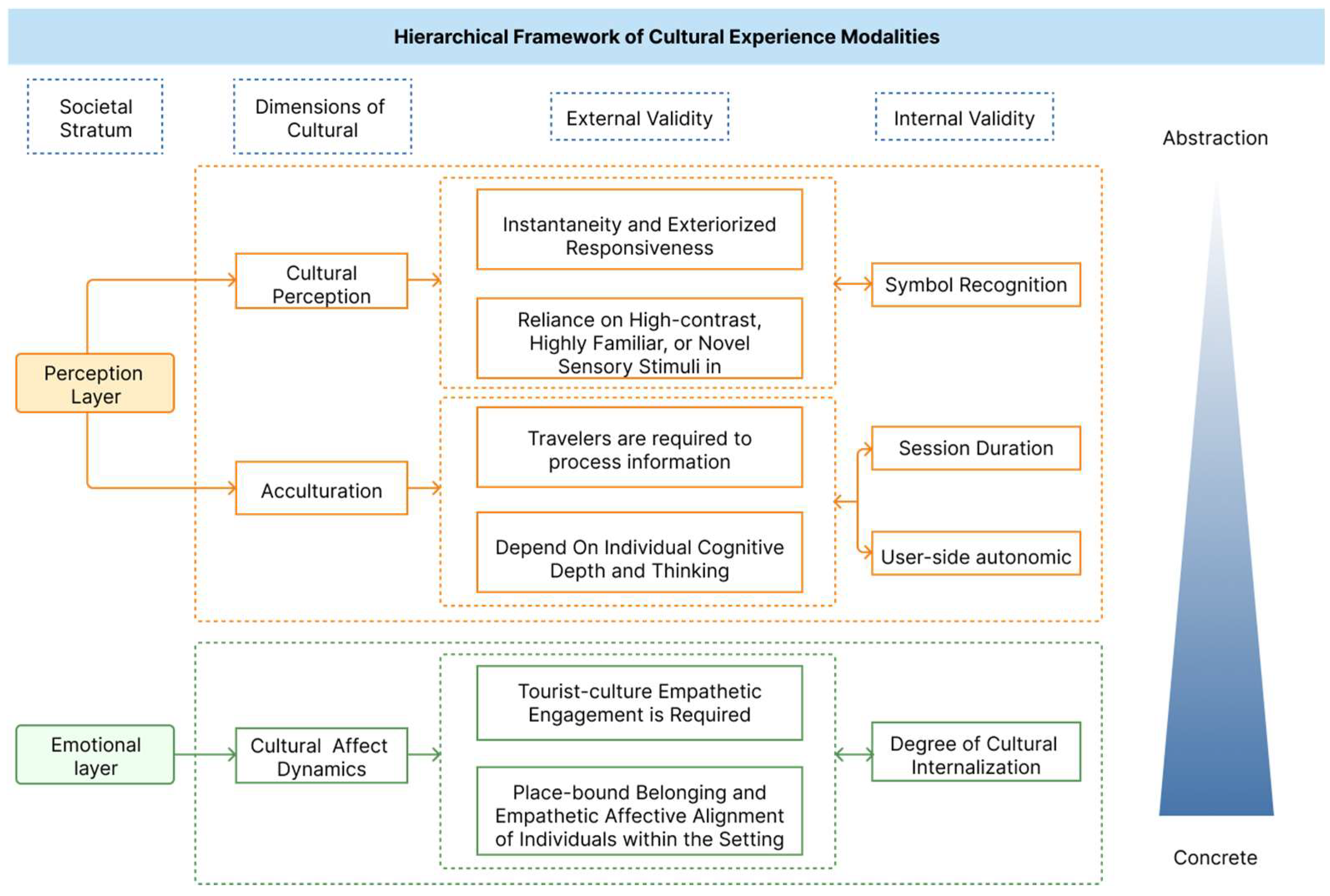
Cultural experience is a multidimensional construct that can be analytically decomposed into three interrelated strata: cultural perception, cultural learning, and cultural affection. Anchored in the classical sociological paradigm of “cognition–affect–behavior”, these strata collectively constitute a progressive experiential trajectory that evolves from immediate sensory cognition toward deeper emotional identification and symbolic belonging [
31]. Rather than functioning as isolated psychological states, the three dimensions continuously interact throughout passengers’ movement within transportation environments, forming a dynamic process through which regional culture is gradually perceived, interpreted, internalized, and emotionally recognized.
Within high-speed railway stations, this progression is particularly significant because passengers experience space under conditions characterized by rapid circulation, compressed decision-making time, and high-density information exposure. Consequently, cultural experience must be synchronized with passengers’ behavioral sequences and spatial cognition processes in order to remain perceptible within transient mobility conditions. In this context, regional culture cannot rely solely on static visual representation; instead, it must be translated into semantically recognizable spatial signifiers capable of operating within complex wayfinding systems and large-scale circulation environments.
Cultural perception functions as the initial cognitive anchor of cultural sustainability, where immediate sensory stimuli initiate the first dialogue between passengers and regional identity. At this stage, passengers rapidly acquire fragmented yet symbolically meaningful impressions through environmental graphics, spatial atmosphere, color systems, architectural forms, lighting conditions, materials, media installations, and directional interfaces. Because the temporal-spatial exposure window in transportation environments is extremely limited, the effectiveness of cultural perception largely depends on the salience, recognizability, and visual accessibility of symbolic stimuli. High-contrast visual hierarchy, intuitive symbolic abstraction, and culturally familiar environmental cues therefore become essential mechanisms through which regional culture achieves immediate perceptual visibility within transient mobility spaces [
32]. From the perspective of cultural sustainability, this perceptual layer ensures that regional cultural identity remains publicly visible rather than being dissolved within increasingly homogenized transportation infrastructures.
Building upon cultural perception, cultural learning represents a deeper stage of interpretative engagement in which passengers begin processing, associating, and cognitively reconstructing the symbolic information encountered during movement. At this level, cultural symbols no longer function merely as perceptual stimuli but become semiotic carriers capable of communicating local narratives, historical memory, social values, and regional characteristics. Through repeated exposure to visual signifiers distributed across circulation sequences, passengers gradually establish cognitive associations between environmental elements and regional cultural meanings [
33]. This process transforms fragmented sensory impressions into structured cultural understanding. The depth and effectiveness of cultural learning depend largely on whether symbolic information can be successfully translated into accessible cognitive content without imposing excessive interpretative burden on users. Consequently, spatial guidance systems must balance symbolic richness with navigational clarity, enabling passengers to transition smoothly from superficial recognition toward deeper comprehension and reflection within limited mobility timeframes.
Cultural affection constitutes the terminal and most profound stage of cultural experience. Grounded in social identity theory, this dimension reflects the emotional resonance and affective attachment generated when passengers perceive symbolic affinity between themselves and the represented cultural environment. Individuals possess an inherent tendency to affiliate with socially and culturally recognizable groups, places, and symbolic systems [
17]. When regional cultural signifiers evoke familiarity, collective memory, or shared cultural imagination, passengers are more likely to develop emotional identification with the transportation environment and, by extension, with the represented locality itself [
34]. Within this process, transportation spaces gradually shift from anonymous transit infrastructures toward emotionally meaningful public environments.
Importantly, cultural affection extends beyond momentary emotional pleasure. In high-speed railway stations, affective resonance contributes to strengthening passengers’ sense of place identity, spatial belonging, and emotional comfort within highly transient environments. Culturally embedded transportation spaces may alleviate the psychological fatigue commonly associated with long-distance mobility by creating atmospheres of familiarity, continuity, and symbolic coherence. Such emotional engagement is particularly significant within contemporary public infrastructures increasingly criticized as standardized “non-places” lacking social meaning and regional specificity.
From the perspective of social sustainability, the progression from cultural perception to cultural affection establishes a critical mechanism through which transportation environments can maintain cultural visibility within contemporary mobility systems. By integrating regional symbolic communication into passengers’ behavioral circulation and environmental cognition processes, high-speed railway stations may function not merely as infrastructural transit nodes but as socially meaningful cultural interfaces capable of strengthening collective identity, public emotional connection, and long-term regional cultural recognition (see
Figure 1).
Cultural experience is a complex and multidimensional perceptual process whose progressive unfolding must remain synchronized with passengers’ behavioral circulation within transportation environments. In high-speed railway stations, passengers continuously transition between perception, orientation, waiting, circulation, and departure within compressed temporal conditions and highly saturated informational environments. Consequently, cultural experience cannot rely solely on static symbolic decoration or isolated visual representation. Instead, it must be gradually embedded into passengers’ mobility sequences so that cultural perception evolves from immediate sensory recognition toward deeper cognitive understanding and emotional identification during movement through space.
As interstitial infrastructures connecting cities, regions, and populations, high-speed railway terminals increasingly function not only as transportation facilities but also as symbolic public interfaces through which regional identity is communicated. A city’s cultural distinctiveness is fundamentally rooted in its regional culture, which emerges from the long-term interaction between geography, social organization, historical memory, economic structure, and collective behavioral patterns within a specific territorial context [
35]. Regional culture may therefore be understood as the cumulative totality of behavioral, cognitive, symbolic, and emotional characteristics developed by a particular population within a defined spatial environment. Because these processes are shaped by localized historical and environmental conditions, regional culture inherently possesses irreplaceable uniqueness and symbolic specificity.
Within contemporary transportation environments, regional culture becomes perceptible primarily through symbolic mediation. Cultural meanings are transformed into visual, material, spatial, and environmental signifiers that communicate local values, collective memory, and regional narratives through sensory experience. From a semiotic perspective, these cultural symbols function simultaneously as carriers of meaning and mechanisms of environmental cognition. Passengers do not encounter regional culture directly; rather, they perceive encoded symbolic representations embedded within architectural forms, spatial sequences, visual guidance systems, environmental graphics, materials, colors, media interfaces, and atmospheric conditions. The effectiveness of cultural communication therefore depends on whether symbolic elements can achieve both perceptual recognizability and semantic interpretability within high-speed mobility conditions.
The expression of regional culture within transportation environments may be structured according to three interrelated principles. The first is the principle of natural-environment adaptation. Regional cultures originate from long-term human responses to local ecological conditions, including topography, hydrology, climate, soil composition, and biological systems. Human activities such as construction, production, circulation, and settlement historically evolved through adaptation to these environmental constraints. Consequently, regional cultural expression within station environments should maintain continuity with local ecological characteristics and spatial geography, thereby reinforcing the relationship between human activity, environmental perception, and territorial identity. Such ecological continuity is also closely associated with cultural sustainability because it preserves the spatial memory and environmental specificity of a region within rapidly modernizing urban infrastructures.
The second principle is the presentation of humanistic characteristics and historical continuity. Regional identity is not static but continuously reconstructed through historical transformation, migration, economic exchange, and collective memory accumulation. Cultural expression within transportation spaces should therefore not merely replicate historical imagery in superficial form. Instead, it should selectively distill culturally recognizable symbolic structures capable of connecting inherited traditions with contemporary social contexts. Long-standing cultural elements gain renewed vitality when reinterpreted through contemporary visual language, media technologies, and public spatial systems. This process enables transportation spaces to function as dynamic platforms for public communication of cultural heritage rather than passive containers of historical symbolism.
The third principle is the integration of modern technology and regional cultural innovation. China’s rapid transition from an agrarian civilization toward a technologically driven urban society has profoundly transformed the mechanisms through which regional cultures are represented, disseminated, and experienced. Because China’s vast territory contains highly heterogeneous geographical conditions, economic systems, and cultural traditions, different regions exhibit distinct pathways for integrating technological development with local cultural identity. Within contemporary high-speed railway infrastructures, digital media systems, intelligent interfaces, interactive environmental technologies, and multimedia installations provide new possibilities for embedding regional culture into mobility experiences. Technology therefore should not be understood as opposing cultural continuity; rather, it can operate as an enabling medium through which traditional cultural meanings are translated into contemporary perceptual forms capable of engaging modern public audiences.
From the perspective of social sustainability, the synchronization of cultural experience with mobility behavior is particularly significant in overcoming the growing homogenization of contemporary transportation infrastructures. Many large-scale transit environments have increasingly evolved into anonymous and emotionally detached “non-places” characterized by standardized visual systems and weakened regional identity. Embedding regional cultural symbols into passengers’ behavioral circulation processes enables transportation environments to regain symbolic distinctiveness, emotional recognizability, and social meaning. Through the coordinated integration of semiotic communication, spatial guidance, and environmental perception, high-speed railway stations may therefore evolve beyond purely functional infrastructures into culturally recognizable public environments that strengthen regional belonging, collective memory, and may contribute to cultural continuity within contemporary mobility systems.
2.3. Research Hypotheses
Based on the theoretical framework of cultural sustainability, place perception, and visual semiotics in transportation environments, this study proposes the following research hypotheses and question.
H1. Culturally embedded wayfinding systems significantly enhance users’ perceptions of regional cultural recognition while maintaining spatial cognition efficiency.
H2. Culturally embedded wayfinding strategies positively influence users’ perceptions of cultural sustainability in mobility environments.
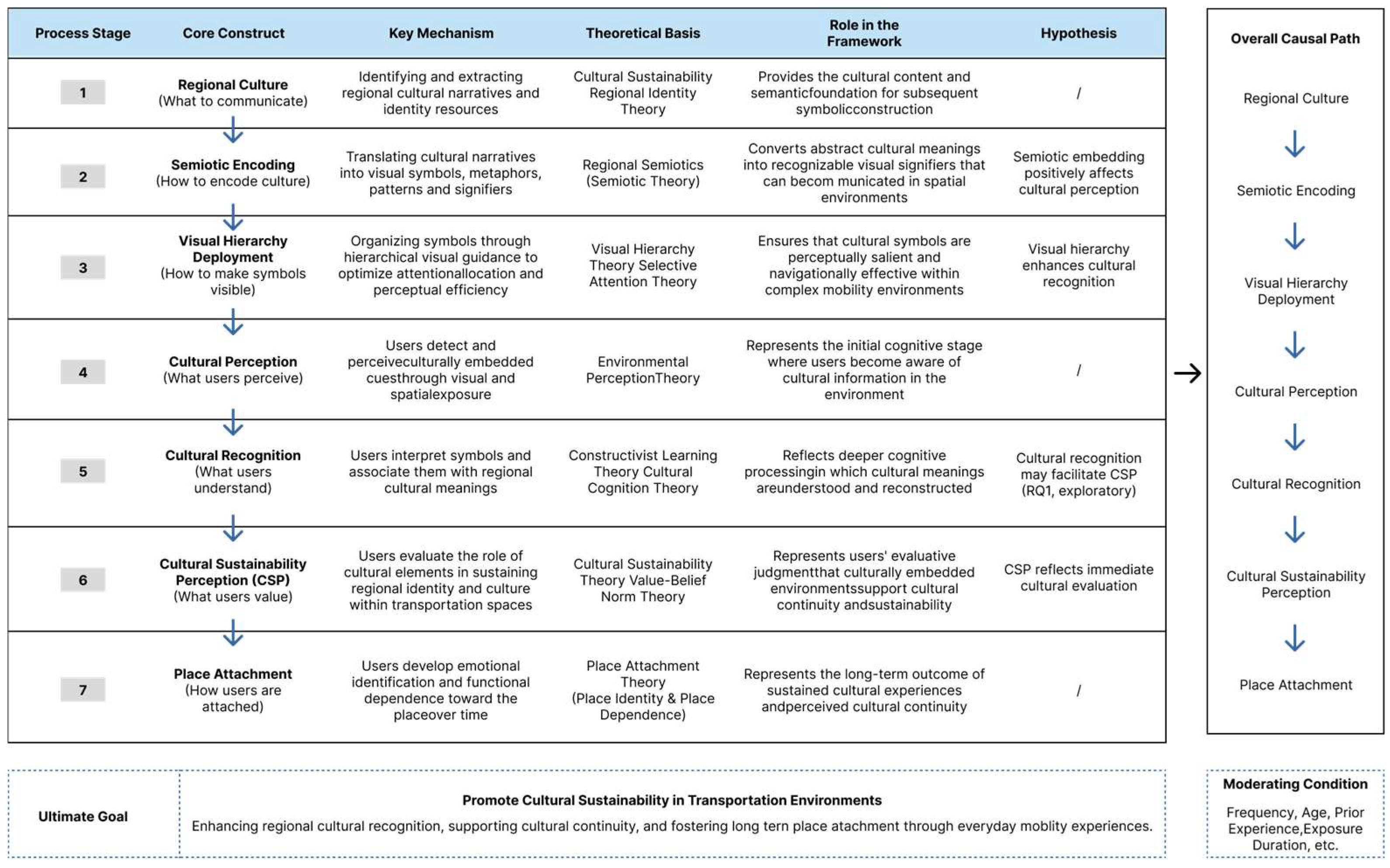
In addition, the conceptual framework (
Figure 2) posits that cultural recognition serves as a cognitive mediator between cultural-symbol embedding and perceived cultural sustainability. Because the present experimental design does not include an independent manipulation of cultural recognition, this relationship is examined as an exploratory research question rather than a formal hypothesis:
RQ1. Is cultural recognition positively associated with perceived cultural sustainability within transportation environments?
H1 and H2 are tested through experimental group comparison, whereas RQ1 is addressed through theoretical elaboration of the observed pattern of results in relation to the proposed framework.
2.4. Conceptual Research Framework
Based on the theoretical relationships identified in previous studies on cultural sustainability, spatial cognition, and transportation wayfinding systems, this study proposes a conceptual research framework illustrating the relationship between cultural-symbol embedding, regional cultural recognition, and perceived cultural sustainability within high-speed railway environments.
The framework assumes that the integration of regional cultural symbols into wayfinding systems functions not only as a navigational strategy but also as a medium for cultural communication within mobility infrastructures. Through visual hierarchy integration and culturally embedded spatial cues, users may develop stronger perceptions of regional cultural recognition and cultural continuity while maintaining effective spatial cognition efficiency.
Furthermore, the framework suggests that culturally embedded guidance systems contribute to perceived cultural sustainability primarily through enhancing users’ cognitive awareness of local cultural characteristics rather than through immediate formation of long-term emotional attachment. Accordingly, this study empirically examines the influence of culturally embedded wayfinding systems on cultural perception, spatial recognition, and perceived cultural sustainability within high-speed transportation spaces.
3. Designing Culturally Sustainable Mobility Experiences in Qiantang Station
Travel experience is a multifaceted phenomenon that carries diverse meanings for passengers. Integrating regional cultural expression into a rationally designed circulation layout within the station can not only provide passengers with an overall optimal routing solution but also offer an aesthetically rich atmosphere during their dwell time. Simultaneously, it showcases the regional image and cultural connotation of the area, serving as a calling card for the presentation of local identity.
3.1. Research Framework
The core function of a high-speed railway station lies in its capacity to efficiently respond to passengers’ mobility demands while maintaining clear and accessible spatial organization. Contemporary transportation infrastructures, however, are increasingly expected to support not only operational efficiency but also culturally sustainable public experiences. Within highly transient mobility environments, regional culture is often weakened by standardized architectural language and homogenized visual systems, resulting in reduced place identity and diminished cultural recognizability. In response to this issue, this study proposes a cultural sustainability-oriented visual hierarchy framework that integrates regional semiotic signifiers into the way-finding system of Qiantang Station.
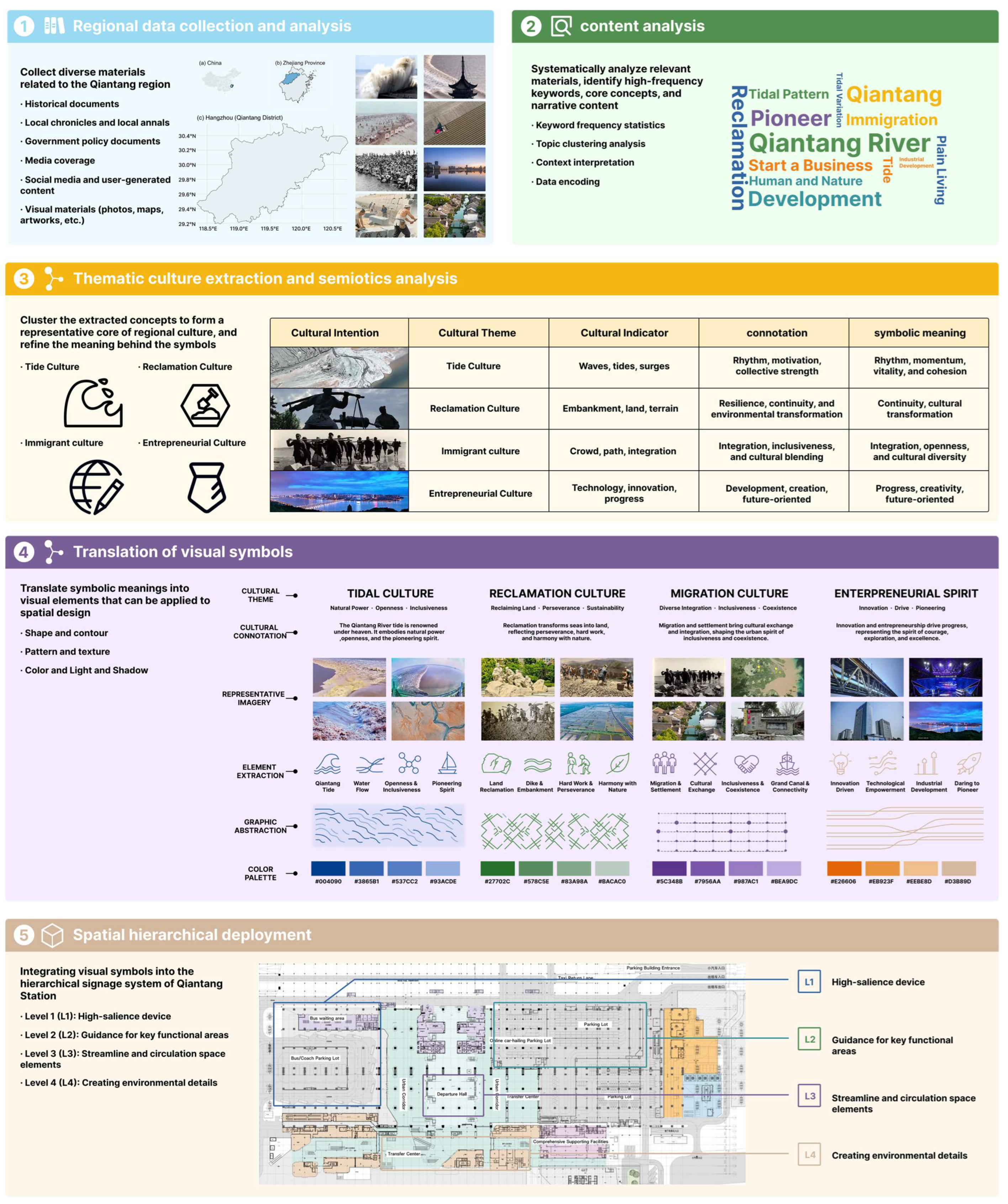
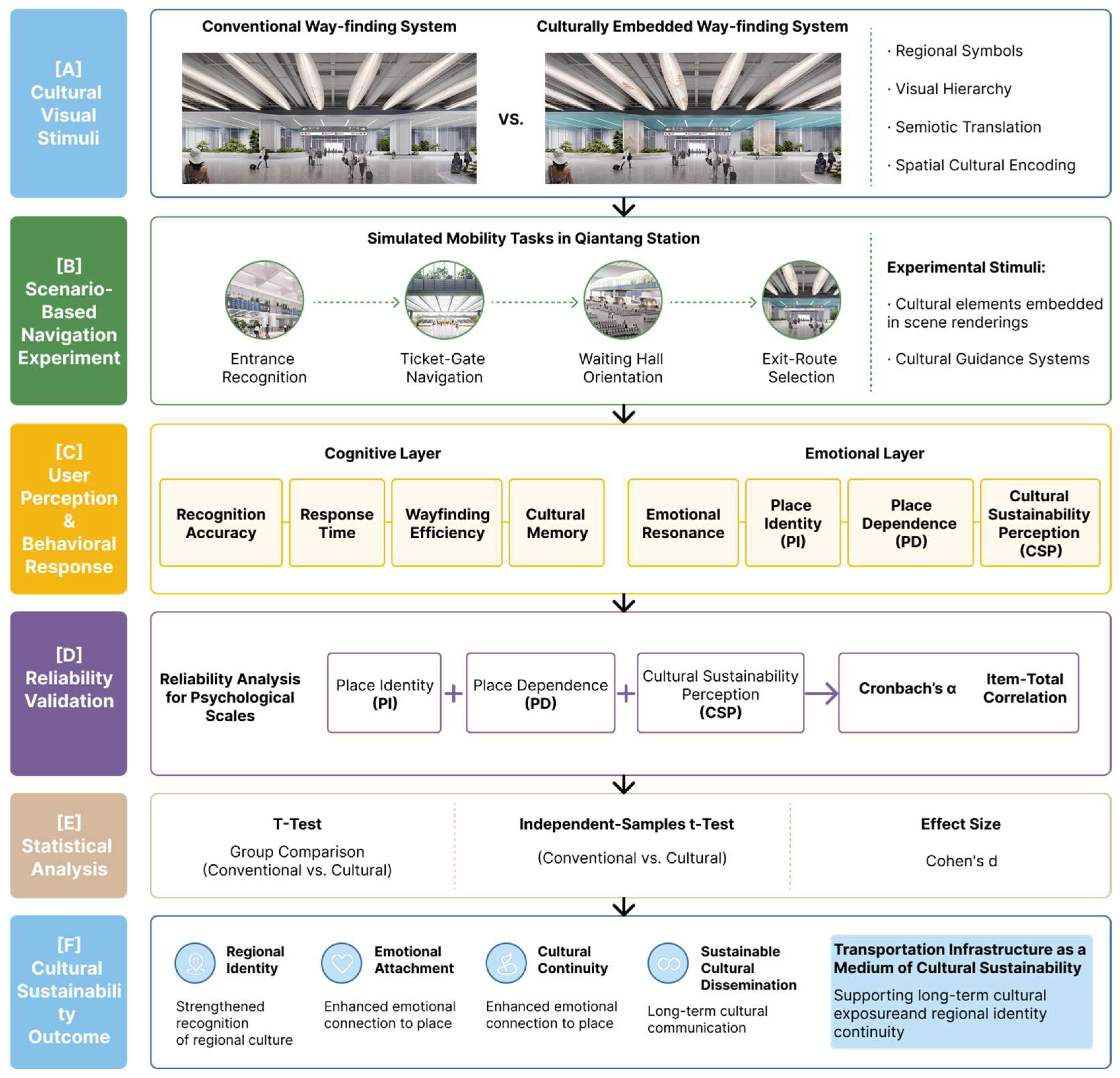
Rather than treating regional culture as decorative supplementation, the proposed framework positions cultural signifiers as active spatial communication media embedded within passengers’ everyday travel experience. Through repeated exposure during navigation processes, transportation infrastructures may operate as cultural communication platforms capable of strengthening regional identity, cultural memory retention, and perceptions of cultural continuity within high-mobility environments (see
Figure 3).
Figure 3 illustrates the overall methodological framework of the study. The research adopts a sequential process consisting of regional data collection, cultural-theme extraction, semiotic abstraction, visual-symbol translation, spatial hierarchy deployment, and user-perception evaluation. Through this framework, regional cultural narratives are systematically transformed into spatially embedded visual signifiers and subsequently evaluated within simulated mobility scenarios in Qiantang Station.
The study addresses the following research questions:
RQ2: Can culturally embedded visual hierarchy systems significantly enhance passengers’ recognition of regional culture within high-speed railway environments?
RQ3: How does culturally embedded wayfinding influence wayfinding efficiency and emotional response?
RQ4: Can repeated exposure to regional cultural signifiers within transportation environments enhance passengers’ perceptions of regional cultural recognition and cultural sustainability?
To evaluate the effectiveness of cultural visual guidance under complex mobility conditions, this study adopted a scenario-based method. Participants were presented with a series of rendered spatial design scenarios containing different levels and types of regional cultural elements embedded within the visual hierarchy system. These rendered images functioned as experimental stimuli for user perception and navigation assessment. Participants were asked to evaluate the recognizability and interpretability of cultural elements while completing simulated wayfinding tasks. In addition, the visual recognition duration at different spatial nodes was analyzed to examine the efficiency of information acquisition under varying levels of cultural-symbol integration. Participants were also asked to select the cultural elements they perceived most clearly at different circulation points, thereby evaluating the effectiveness of semiotic encoding and the hierarchy of cultural communication within the station environment.
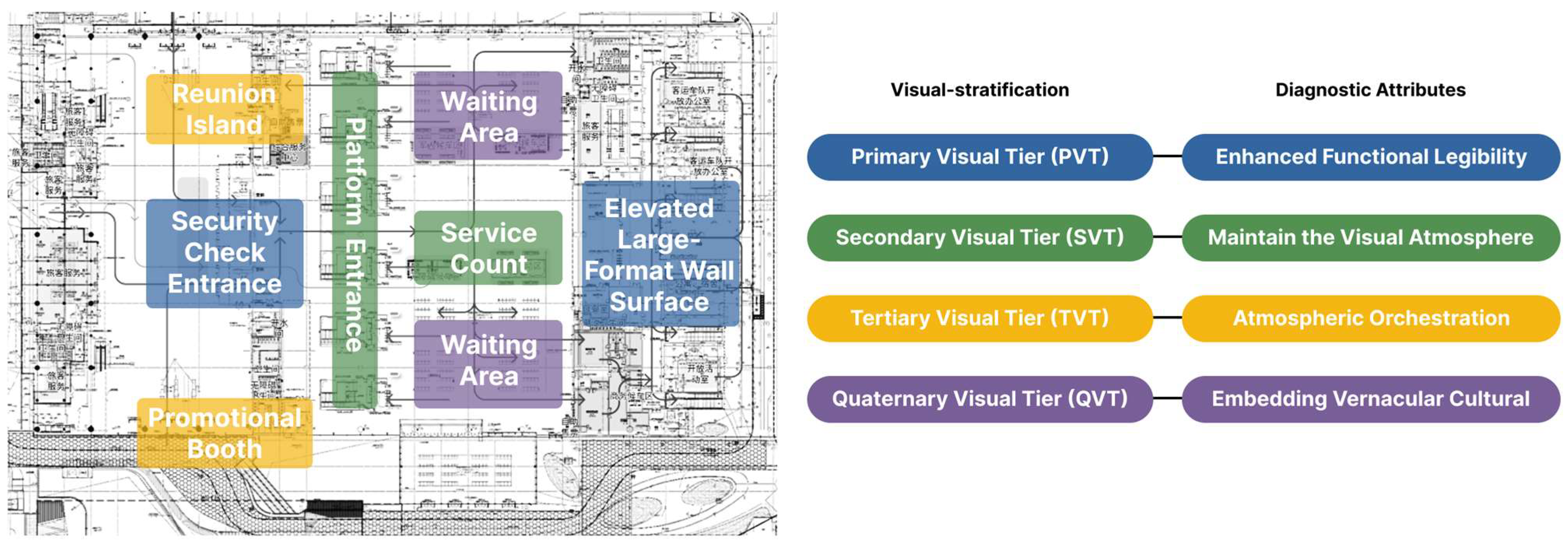
To resolve circulation conflicts inherent in passenger behaviour, spatial design must furnish explicit visual guidance. Drawing upon the “selective-attention theory” in cognitive psychology, deliberately manipulated visual variables—colour, scale, location and semantic connotation—can be deployed to channel inbound passenger behaviour, optimise flow lines, alleviate bottlenecks and elevate overall experience (see
Figure 4). This design strategy not only augments spatial legibility and wayfinding performance but also induces passengers to advance along predetermined trajectories in an orderly manner, thereby achieving both efficient management of the station precinct and a high-quality experiential outcome.
3.2. Spatial Challenges in Qiantang Station
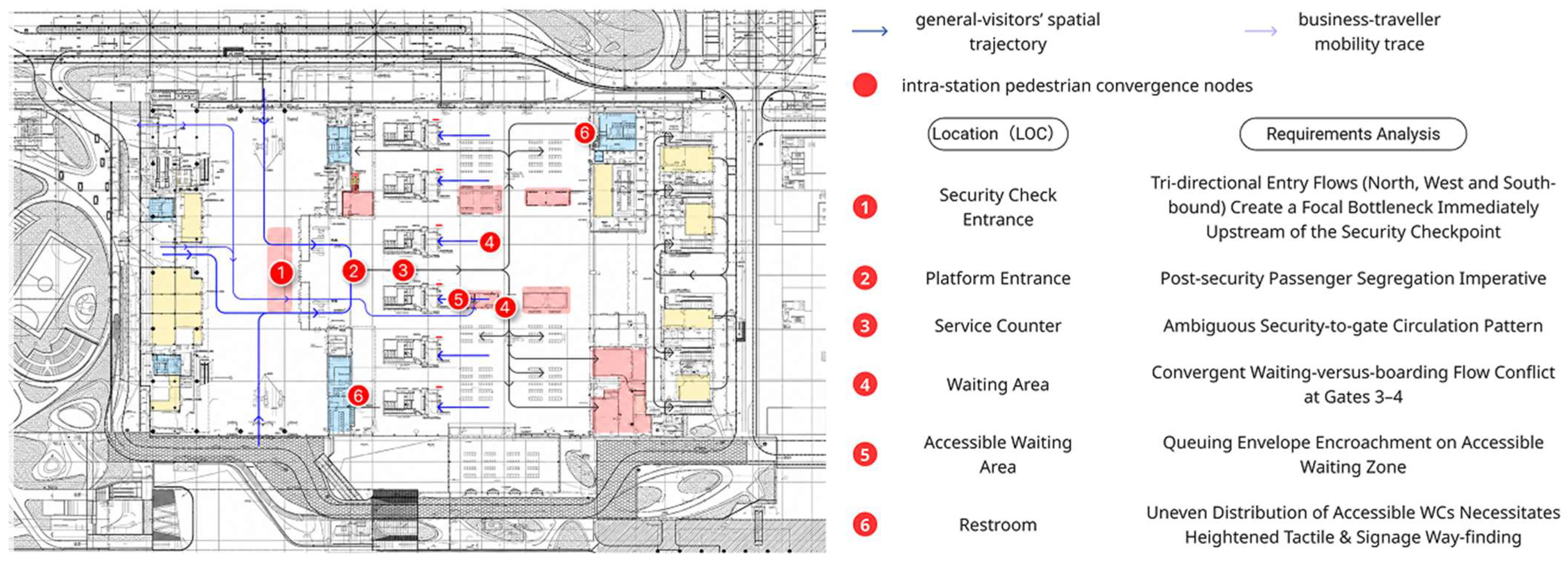
The spatial organization of Qiantang Station is divided into the arrival level, platform level, and departure level, among which the arrival level accommodates the largest passenger flow and the most intensive navigational demands. Due to the coexistence of multiple circulation paths, rapid decision-making requirements, and dense passenger movement, several circulation conflicts and wayfinding challenges exist within the station environment.
Specifically, passengers enter the station through three major entrances, resulting in congestion around the security checkpoint area during peak travel periods. After security screening, directional clarity toward corresponding ticket gates is relatively weak, which may lead to temporary crowd accumulation and circulation blockage. In addition, the spatial demands of queuing passengers occasionally conflict with accessible waiting areas, while circulation routes for waiting and ticket-checking passengers intersect at several transfer nodes (see
Figure 5).
To identify the key intervention areas for cultural wayfinding deployment, this study conducted a spatial analysis of passenger circulation patterns and information density distribution within the station environment.
Figure 5 presents the analysis of key entry points and circulation intersections.
Drawing upon selective-attention theory in cognitive psychology [
36], the study assumes that visually salient environmental stimuli are more likely to attract user attention within high-information mobility environments. Accordingly, visual variables including color, scale, location, semantic prominence, and symbolic intensity were strategically manipulated to improve spatial legibility, optimize circulation efficiency, and strengthen the recognizability of regional cultural information.
Rather than functioning solely as navigational aids, the visual-guidance elements were designed to operate simultaneously as semiotic communication interfaces capable of supporting cultural exposure during mobility processes.
3.3. Regional Cultural Extraction and Semiotic Translation
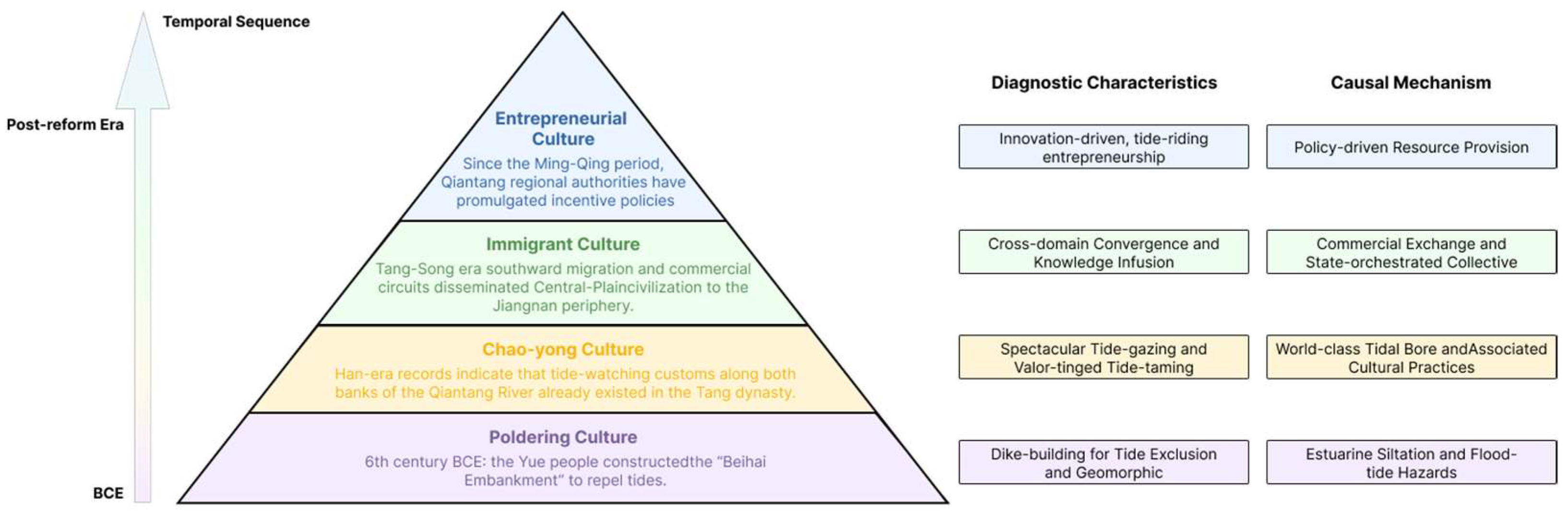
The extraction of regional culture in the Qiantang area was conducted through a semiotic framework that identifies culturally significant narratives and translates them into spatially embedded visual signifiers [
37]. As seen in
Figure 6, our representative cultural domains were identified through regional document analysis, cultural content review, and symbolic abstraction: Reclamation culture, Tidal-bore culture, Migration culture, Entrepreneurship culture.
Rather than directly reproducing historical imagery, the study focuses on extracting symbolic characteristics that can be reinterpreted within contemporary transportation environments while maintaining both recognizability and adaptability in high-mobility spatial systems.
Each cultural domain was analyzed according to its symbolic meaning and its potential contribution to spatial perception and cultural continuity.
Tidal-bore culture is associated with rhythm, movement, periodicity, and collective dynamism, making it particularly compatible with circulation-oriented transportation environments [
38]. These characteristics were translated into flowing spatial forms, directional visual patterns, and dynamic media expressions.
Entrepreneurship culture represents innovation, technological development, and future-oriented regional identity. Such characteristics were encoded through digital installations, contemporary graphic systems, and high-visibility multimedia interfaces.
Migration culture emphasizes mobility, inclusiveness, and cultural hybridity, reflecting the dynamic population movement intrinsic to transportation environments. Reclamation culture symbolizes resilience, continuity, and collective environmental transformation, supporting the conceptual connection between regional development and perceived cultural sustainability and cultural recall.
3.4. Visual Hierarchy Framework and Variable Construction
For this initial experimental validation, the four-tier framework was operationalized as a binary comparison: the conventional guidance system (representing L1-level minimal cultural embedding) versus the culturally embedded system (integrating L2-L4-level symbolic elements). This design enables a controlled examination of whether cultural embedding per se enhances user perception, prior to investigating the differential effects of individual hierarchy levels.
The following descriptions represent conceptual design characteristics of the proposed hierarchy framework rather than independently tested experimental conditions.
At L1, cultural elements were minimally integrated and the guidance system remained primarily functional, with cultural information appearing only in subtle graphic details and low-intensity environmental cues. At L2 and L3, regional cultural elements were progressively incorporated into directional signage, circulation interfaces, architectural transitions, and environmental graphics, increasing the visibility of regional cultural characteristics within the station environment. At L4, immersive cultural installations and large-scale visual interfaces became dominant spatial features shaping the overall atmosphere of the station space. Cultural elements became highly visible throughout the environment, transforming the station from a purely functional transportation infrastructure into a culturally recognizable public space.
3.5. Experimental Design
To evaluate the effectiveness of the proposed visual hierarchy framework, this study adopted a between-group experimental design combined with a scenario-based perception experiment to compare the cognitive and emotional effects of culturally embedded guidance systems and conventional guidance systems within high-speed railway environments (see
Figure 7).
Prior to the formal experiment, a preliminary questionnaire survey was conducted to collect participants’ basic information and their familiarity with high-speed railway environments [
39]. After screening the validity of the questionnaire responses, participants with valid and complete responses were retained for further analysis (
Table 2). Baseline equivalence analyses indicated that the conventional-guidance group and the culturally embedded-guidance group were highly comparable in terms of gender composition, age distribution, and travel-frequency characteristics. The observed effect sizes were trivial to small (Cramer’s V < 0.20), suggesting that demographic differences between groups were unlikely to confound the experimental outcomes. Therefore, subsequent differences in cultural sustainability perception can be more confidently attributed to the guidance intervention rather than pre-existing participant characteristics.
Based on their frequency of high-speed railway usage, participants were subsequently categorized into different travel-frequency groups. Individuals who traveled by high-speed rail only once every few years or approximately five times per year were classified as the low-frequency travel group, whereas participants who used high-speed rail fifteen times or more annually were classified as the high-frequency travel group. Each group consisted of N = 20 participants. The participant sample covered a broad age range, including individuals under 18 years old as well as participants over 50 years old. Guidance type was treated as a between-subjects variable, while travel frequency served as a grouping variable. Experimental stimuli were developed based on the core spatial nodes identified in the architectural planning drawings of Qiantang Railway Station, including the ticket gate, station entrance, waiting hall, and exit area, all of which represent spaces characterized by intensive information recognition demands and prolonged passenger dwell time.
The conventional guidance group was presented with simulated renderings without culturally embedded guidance symbols, whereas the culturally embedded guidance group was exposed to renderings incorporating visual symbols derived from Qiantang regional culture. To ensure experimental validity, the overall visual presentation of the two sets of stimuli was controlled to remain consistent, thereby ensuring that perceptual differences primarily originated from the integration of cultural symbols.
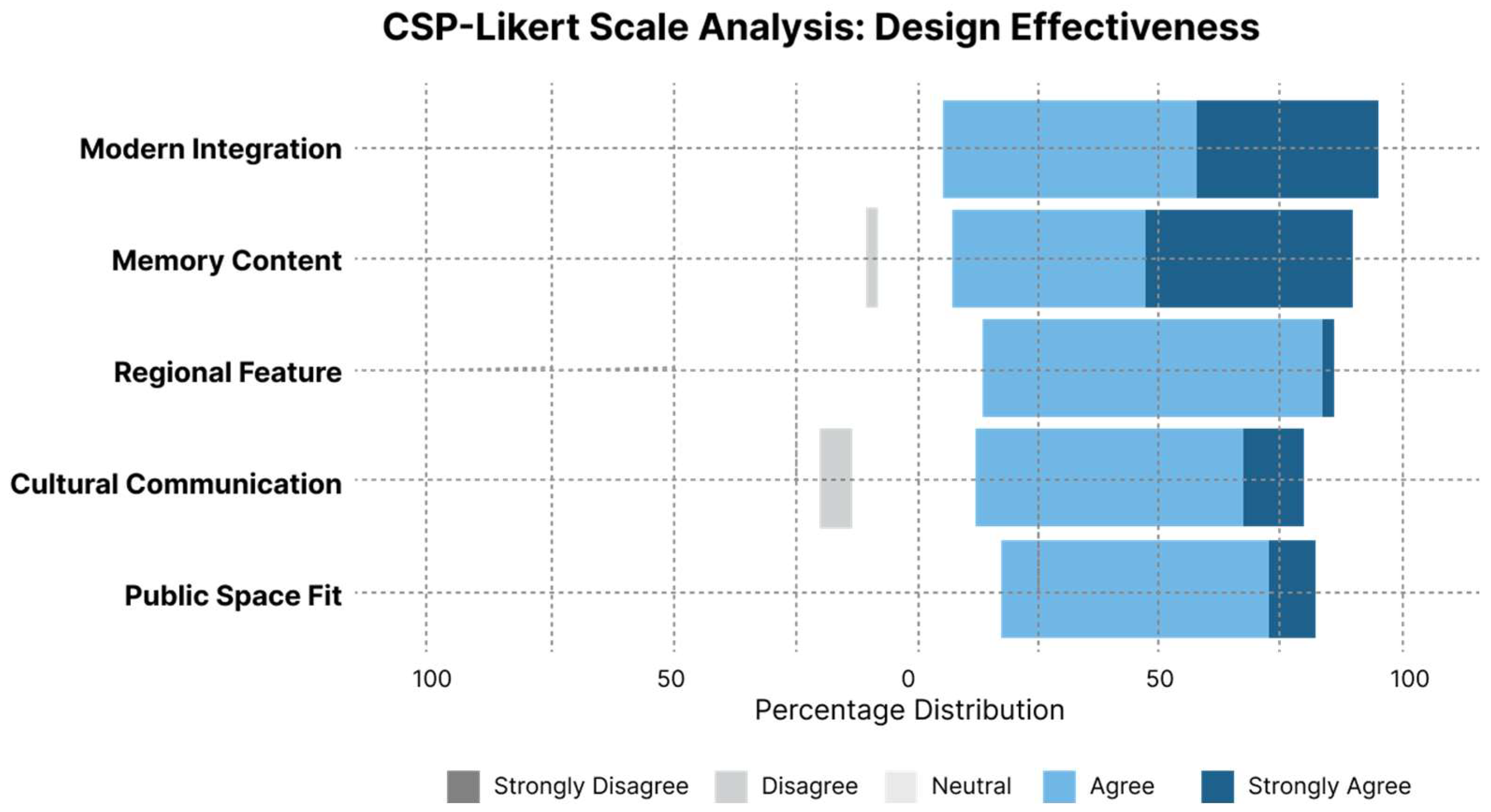
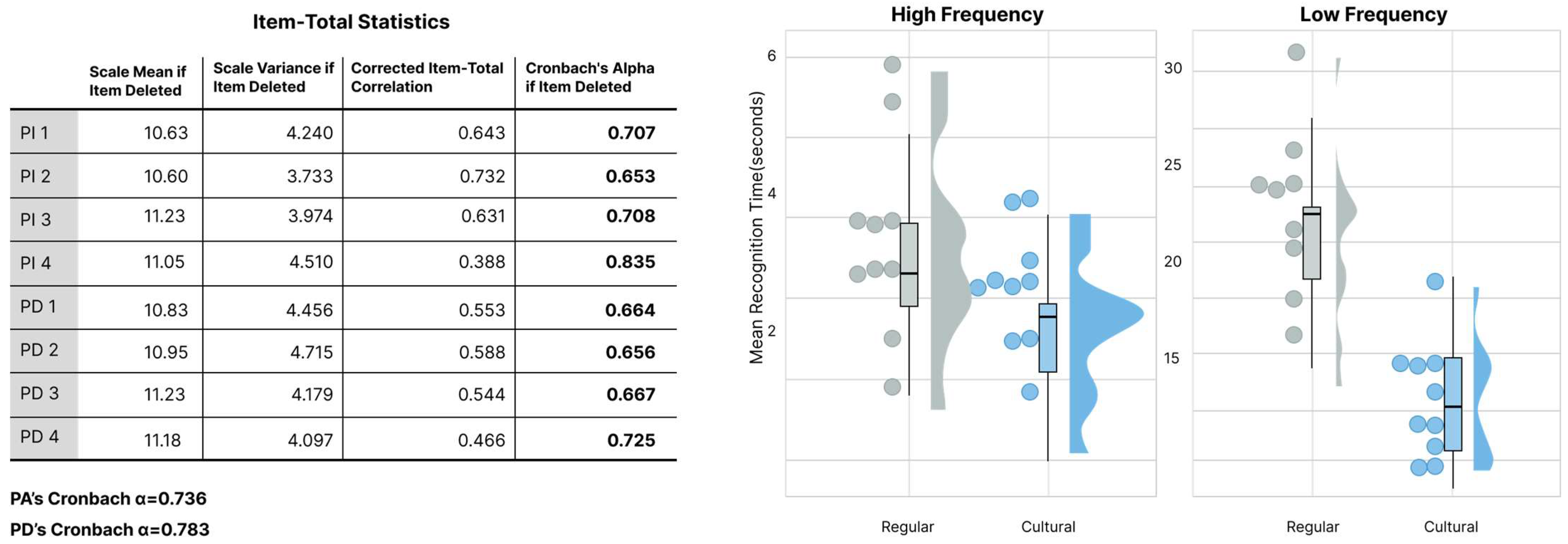
The results of the key spatial-node recognition experiment demonstrated that the overall recognition time of the conventional group across the four spatial nodes was consistently longer than that of the culturally embedded group. In highly information-dense environments such as high-speed railway stations, rapid information recognition is essential; however, it is equally important to avoid excessive cognitive load caused by information overload. Therefore, following the spatial-node recognition tasks, participants were further assessed using the Cultural Sustainability Perception (CSP) scale. The CSP results demonstrated that participants generally expressed positive perceptions toward the role of culturally embedded wayfinding systems in supporting perceived cultural sustainability and the continued visibility of regional cultural information within transportation environments. Most responses were concentrated within the “agree” and “strongly agree” categories across all five measurement items, indicating that participants perceived the guidance system as effective in communicating regional cultural characteristics, enhancing cultural memory retention, and facilitating the communication of local cultural information within public mobility spaces. The results of the independent-samples t-test revealed significant differences between the conventional guidance condition and the culturally embedded guidance condition in terms of CSP. Participants in the culturally embedded guidance condition reported significantly higher CSP scores (M = 4.13, SD = 0.25) compared with those in the conventional guidance condition (M = 3.78, SD = 0.41), t(38) = −3.29, p = 0.002. The findings indicate that the integration of regional cultural symbols within the station guidance system positively enhanced participants’ perceptions of cultural recognition, regional identity awareness, and cultural sustainability within transportation environments. In contrast, no significant differences were observed between the two groups in Place Identity (PI) or Place Dependence (PD). However, the absence of statistical significance should not be interpreted as evidence of the absence of an effect. Given the relatively small sample size (N = 40), the present study may have been underpowered to detect small-to-moderate effects. Accordingly, the findings related to PI and PD should be interpreted with caution. Future studies employing larger samples are needed to obtain more precise estimates and further examine the potential influence of culturally embedded wayfinding systems on place attachment dimensions. Participants in the conventional guidance condition reported PI scores of M = 3.79 (SD = 0.59), while participants in the culturally embedded guidance condition reported PI scores of M = 3.75 (SD = 0.73), t(38) = 0.18, p = 0.859. Given the modest sample size (N = 20 per group), this effect size estimate should be interpreted with caution; replication with larger samples is warranted. Similarly, no significant difference was observed in PD scores between the conventional guidance condition (M = 3.74, SD = 0.59) and the culturally embedded guidance condition (M = 3.63, SD = 0.75), t(38) = 0.53, p = 0.601.
To facilitate the interpretation of non-significant findings, effect sizes and 95% confidence intervals are reported for all dependent variables (
Table 3). For CSP, the observed effect was moderate-to-large (Cohen’s d = 0.74, 95% CI [0.30, 1.18]). For PI and PD, the effects were trivial to small (PI: d = 0.06, 95% CI [−0.37, 0.49]; PD: d = 0.17, 95% CI [−0.26, 0.60]), with confidence intervals spanning both positive and negative values. Given the sample size of N = 40, the minimum detectable effect size (MDES) for an independent-samples
t-test at α = 0.05 (two-tailed) and power = 0.80 was d = 0.90 (G*Power 3.1) [
40]. The observed effect size for CSP was substantial (d = 0.74) and statistically significant. Although this value falls below the conventional MDES of 0.90 (power = 0.80), the achieved power for an effect of this magnitude at N = 40 is approximately 0.65–0.70, which is generally considered adequate for detecting medium-to-large effects in exploratory research. In contrast, the observed effect sizes for PI and PD fell substantially below the MDES, indicating that the study was underpowered to detect small effects for these dimensions. These results indicate that the study was adequately powered to detect relatively large effects but underpowered to detect small-to-medium effects for place attachment dimensions. Consequently, the non-significant findings for PI and PD should not be interpreted as evidence of null effects. Descriptive statistics and inferential metrics for all dependent variables are summarized in
Table 3.
These findings suggest that culturally embedded visual guidance systems can effectively enhance users’ perceptions of cultural sustainability and regional cultural awareness in high-speed transportation environments. However, short-term exposure to culturally embedded spatial cues may not be sufficient to significantly influence deeper dimensions of place attachment, such as long-term emotional identity and functional dependence. The results further indicate that cultural-symbol integration within mobility infrastructures primarily operates at the level of perceptual and cognitive cultural recognition rather than sustained emotional attachment formation (see
Figure 8). Exploratory Elaboration for RQ1. The pattern of results—reduced recognition time and elevated CSP scores in the culturally embedded condition—is consistent with RQ1’s proposition that cultural recognition facilitates perceived cultural sustainability. This interpretation remains theoretical, as the present design does not permit causal inference.
To further examine whether the culturally embedded design elements of Qiantang Railway Station could generate persistent cultural impressions and support the cultural sustainability function of high-speed railway infrastructure, a supplementary follow-up assessment was conducted. After completing the spatial recognition experiment, participants in the conventional-guidance condition were additionally exposed to the culturally embedded visual stimuli to ensure that all participants had experienced the cultural-design intervention. Twenty-four hours later, all participants were invited to complete a follow-up survey assessing place-related perceptions and cultural recall.
The purpose of this delayed assessment was not to establish causal changes in place attachment, but rather to explore whether the cultural information conveyed through the embedded visual cues remained cognitively accessible after a period of time. The results indicate that participants were still able to recall and recognize cultural elements associated with the station environment after the 24 h interval. These findings provide preliminary evidence that culturally embedded wayfinding systems may facilitate short-term cultural-information retention and contribute to the continued perception of regional cultural identity. However, the results should not be interpreted as definitive evidence of long-term place attachment formation, as enduring place attachment typically develops through repeated exposure and sustained interactions with a physical environment. The place attachment experiment included two dimensions: PI and PD. The results yielded average scores of M
PA =3.79 and M
PD =3.74; the results from both sets of data indicate that the cultural embedding-based guidance system within the space of Qiantang Station can bring positive feelings to users. Reliability analysis of the place attachment scale was conducted using Cronbach’s alpha coefficients, resulting in a Cronbach’s α value of 0.787 for PI and 0.736 for PD, indicating satisfactory internal consistency and reliability for both dimensions [
41]. The findings of the place attachment scale further suggest that the incorporation of cultural elements into the visual wayfinding system did not impose significant additional cognitive burdens on users. On the contrary, participants reported comparatively higher evaluations in terms of cultural memory and cultural attachment (see
Figure 9).
The figure illustrates the comparative evaluation results of PI and PD among participants exposed to the culturally embedded wayfinding system. While the culturally embedded guidance environment enhanced users’ perceptions of regional cultural recognition and perceived cultural sustainability, no statistically significant differences were observed in long-term emotional attachment dimensions such as PI and PD. The findings suggest that culturally embedded wayfinding systems primarily influence perceptual and cognitive cultural awareness rather than immediate emotional attachment formation.
Recognition time data indicated that cultural embedding did not impair wayfinding performance, suggesting functional compatibility between cultural communication and navigational functionality. The findings indicate that culturally embedded wayfinding systems can significantly enhance passengers’ perceptions of cultural sustainability and improve the retention of regional cultural information after exposure. While the present study does not directly demonstrate long-term cultural sustainability outcomes, the observed 24 h retention effect suggests that culturally embedded transportation environments may support the persistence of cultural impressions beyond immediate interaction.
The exploratory elaboration of RQ1 suggests that the observed reduction in recognition time and elevation in CSP scores are consistent with the theoretical proposition that cultural recognition facilitates perceived cultural sustainability. However, this interpretation remains speculative in the absence of independent manipulations of cultural recognition. Future studies should employ mediation designs or structural equation modeling to empirically test this pathway.
4. Discussion
This study reconceptualizes the integration of regional culture in transportation infrastructure as a semiotic process of meaning construction rather than a purely aesthetic or decorative intervention. The experimental findings indicate that culturally embedded wayfinding systems can significantly enhance users’ perceptions of regional cultural recognition and perceived cultural sustainability within high-speed railway environments. Participants exposed to the culturally embedded guidance condition reported significantly higher CSP scores than those exposed to the conventional guidance condition, suggesting that the integration of regional cultural symbols into navigational systems may effectively strengthen users’ awareness of local cultural characteristics within mobility spaces.
However, the results also revealed that no statistically significant differences were observed in the dimensions of PI and PD. This suggests that short-term exposure to culturally embedded spatial cues may not be sufficient to immediately establish deeper forms of emotional attachment or long-term functional dependence toward transportation environments. Rather, the influence of culturally embedded wayfinding systems appears to operate primarily at the perceptual and cognitive level by improving cultural recognition and symbolic awareness during navigation processes. Travel frequency was included as a grouping variable to ensure sample heterogeneity; however, given the modest sample size, formal interaction analysis was deferred to future research with larger samples. An additional delayed assessment conducted 24 h after the initial exposure indicated that participants were still able to recognize and recall key regional cultural elements embedded within the wayfinding system, suggesting that cultural impressions remained cognitively accessible beyond the initial exposure period. Although a 24 h interval cannot be considered evidence of long-term cultural sustainability, it extends beyond the temporal scope of sensory memory and short-term working memory commonly discussed in cognitive psychology. Therefore, the findings provide preliminary evidence that culturally embedded wayfinding systems may facilitate the retention of cultural information beyond immediate exposure and contribute to the persistence of cultural impressions within transportation environments. The supplementary 24 h assessment was conducted using the same measurement framework as the initial evaluation; however, its primary purpose was not to establish causal changes in Place Identity or Place Dependence. Rather, it served as an exploratory assessment of whether culturally embedded visual cues remained cognitively accessible after a period of delayed recall. Accordingly, the results should be interpreted as preliminary evidence of cultural-information retention rather than definitive evidence of long-term place-attachment formation.
The findings further demonstrate that visual hierarchy strategies play an important role in balancing navigational clarity and cultural communication. By embedding culturally recognizable visual elements within functional guidance systems, transportation infrastructures may communicate regional identity without reducing wayfinding efficiency. From a design perspective, these findings suggest that the tested configuration operated within a range where cultural enrichment enhanced rather than impaired wayfinding performance [
42]. The experimental results indicate that moderate levels of symbolic integration can strengthen spatial recognizability and cultural perception while maintaining efficient information acquisition during navigation tasks. This supports the argument that cultural sustainability in mobility environments should not rely solely on decorative cultural representation, but should instead emerge through the integration of cultural information into operational spatial systems.
At the same time, the study highlights the necessity of maintaining equilibrium between symbolic abstraction and semantic recognizability [
43]. Although abstraction allows cultural symbols to adapt to contemporary visual environments, excessive abstraction may reduce users’ interpretive accessibility during rapid navigation processes. Designers should therefore remain cautious about excessive cultural-symbol density and overly immersive symbolic environments, particularly under L4-level integration conditions, where intensified visual stimulation may theoretically introduce sensory overload or increase cognitive decoding pressure during high-speed mobility processes. Although the present study did not directly test extreme high-intensity symbolic conditions, the findings suggest that future transportation-space design should carefully balance symbolic richness, perceptual clarity, and navigational efficiency within complex public infrastructures.
Furthermore, the findings suggest that transportation infrastructures should be understood not only as functional circulation systems but also as dynamic media for cultural communication. Through culturally embedded wayfinding systems, mobility environments may enhance users’ awareness and recognition of regional cultural characteristics while simultaneously supporting usability, spatial cognition, and public environmental recognition. The integration of regional cultural signifiers into everyday travel experiences creates opportunities for cultural exposure during each encounter, which may contribute to the immediate perception of regional identity within single mobility episodes.
The findings of this study have broader implications for the design of large-scale public infrastructure. They suggest that cultural expression should be embedded within functional systems such as wayfinding, rather than treated as an independent decorative layer. By integrating cultural signifiers into navigational logic, design can simultaneously enhance usability and cultural communication, thereby addressing both social and cultural dimensions of sustainability. More importantly, this approach reframes transportation infrastructure as an active participant in the continuity of regional culture rather than a neutral background for mobility activities.
Nevertheless, this study is limited by its focus on a single case and its reliance on scenario-based perceptual evaluation. Although the present study adopted a scenario-based experimental approach using rendered station environments, the design framework has already been incorporated into the actual construction process of Qiantang Station. Therefore, the experimental stimuli were developed based on real architectural layouts and operational requirements rather than hypothetical scenarios. Nevertheless, the current evaluation was conducted prior to station operation and could not capture contextual factors such as crowd density, dynamic information updates, noise interference, and time pressure. Future post-occupancy evaluations conducted after station operation may provide additional evidence regarding the real-world effectiveness of culturally embedded wayfinding systems. Future research could incorporate larger participant samples, longitudinal exposure experiments, and cross-cultural comparative studies to further examine how culturally embedded environments influence emotional attachment, symbolic interpretation, and long-term perceptions of cultural sustainability over time. Additional empirical investigation into different hierarchy intensities and symbolic densities may also help clarify the threshold at which cultural enrichment begins to interfere with navigational cognition in high-density transportation environments.
In conclusion, this study demonstrates that a semiotic approach provides a valuable framework for understanding and evaluating perceptions of cultural sustainability in spatial design. By emphasizing the relationships between symbols, meanings, navigation processes, and user perception, it offers a more nuanced perspective on how regional identity can be effectively communicated within contemporary public infrastructures. The study further suggests that culturally embedded wayfinding systems can operate as cultural interfaces capable of enhancing public cultural recognition and strengthening awareness of regional identity within single mobility episodes. While the present findings do not directly demonstrate long-term cultural sustainability outcomes, they provide preliminary evidence that culturally embedded transportation environments may contribute to the persistence of cultural impressions beyond immediate exposure.
The present study employed a relatively small sample (N = 40), which may limit the statistical power to detect small-to-medium effects, particularly for Place Identity and Place Dependence. Therefore, non-significant findings should not be interpreted as evidence of no effect. Future studies with larger samples are needed to verify the robustness of these results. Another limitation concerns the relatively small sample size used in the scenario-based experiment. Although statistically significant effects were observed for CSP, the sample size may not have provided sufficient statistical power to reliably detect small-to-moderate effects in PI and PD. Consequently, the non-significant findings for place attachment should not be interpreted as conclusive evidence of the absence of an effect. Future studies should employ larger and more diverse participant samples to improve statistical power, estimate precision, and the generalizability of the findings. Although the sample size was relatively limited, statistically significant differences were still observed for CSP. Therefore, the findings should be interpreted as preliminary but meaningful evidence of the potential influence of culturally embedded wayfinding systems on cultural recognition and perceived cultural sustainability. Future studies employing larger samples and higher statistical power are needed to verify the robustness and generalizability of these effects.
5. Managerial Implications
The findings of this study provide several practical implications for transportation planners, railway station operators, environmental designers, and cultural policymakers seeking to enhance cultural sustainability within contemporary mobility infrastructures.
First, the results suggest that regional cultural symbols can be effectively integrated into wayfinding systems without reducing navigational efficiency. Transportation planners should therefore move beyond purely functional approaches to wayfinding design and consider guidance systems as potential media for cultural communication. By embedding culturally meaningful visual cues into circulation routes, transportation infrastructures may simultaneously support efficient passenger movement and enhance regional cultural visibility.
Second, the visual hierarchy framework proposed in this study offers a practical strategy for organizing cultural information within complex transportation environments. Rather than relying on isolated decorative elements, designers may distribute cultural symbols across different spatial levels and passenger touchpoints, allowing cultural narratives to be perceived progressively throughout the travel experience. Such an approach may improve both environmental legibility and users’ awareness of local cultural characteristics.
Third, railway station operators may utilize culturally embedded wayfinding systems as a cost-effective method for strengthening station identity and improving passengers’ experiential quality. Because guidance systems are encountered repeatedly during navigation processes, they provide continuous opportunities for communicating regional culture to large and diverse user groups without requiring additional exhibition spaces or independent cultural installations.
Finally, from a policy and management perspective, the findings support the incorporation of cultural sustainability objectives into transportation infrastructure planning and evaluation. As mobility hubs increasingly function as public cultural interfaces, transportation projects should be assessed not only according to operational performance but also according to their capacity to communicate regional identity, support cultural continuity, and contribute to sustainable cultural development.
Overall, the study demonstrates that culturally embedded wayfinding systems can serve as practical tools for enhancing cultural visibility and supporting cultural sustainability within contemporary transportation environments.
6. Conclusions
This study investigated the role of culturally embedded wayfinding systems in enhancing perceived cultural sustainability within high-speed railway environments. By integrating regional cultural symbols into navigational systems through visual hierarchy strategies, the research examined how transportation infrastructures may function not only as operational mobility spaces but also as environments for regional cultural communication.
The findings demonstrate that culturally embedded wayfinding systems can significantly improve users’ perceptions of regional cultural recognition and perceived cultural sustainability. Participants exposed to culturally embedded guidance environments reported significantly higher CSP scores compared with those exposed to conventional guidance systems. These results indicate that regional cultural information can be effectively communicated through operational spatial systems without compromising navigational clarity.
However, the study also revealed that short-term exposure to culturally embedded environmental cues did not produce statistically significant differences in Place Identity (PI) or Place Dependence (PD). This suggests that culturally embedded guidance systems primarily influence perceptual cultural awareness and symbolic recognition rather than immediate long-term emotional attachment formation. The findings therefore highlight the distinction between short-term cultural perception and deeper place-attachment development within mobility environments. Although no statistically significant differences were observed for Place Identity and Place Dependence, these findings should be interpreted with caution. Given the relatively small sample size of the present study, the absence of statistical significance does not necessarily indicate the absence of an effect.
From a theoretical perspective, this research contributes an interdisciplinary framework connecting cultural sustainability, spatial cognition, environmental perception, and transportation-space design. The study further expands existing discussions of transportation sustainability beyond operational efficiency by emphasizing the importance of cultural communication and symbolic perception within high-speed mobility infrastructures.
From a practical perspective, the research provides a transferable design strategy for integrating regional culture into transportation guidance systems through culturally embedded visual hierarchy methods. The framework developed in this study may provide methodological reference for future transportation infrastructures seeking to balance navigational usability, regional identity communication, and cultural sustainability within large-scale public environments.
Future research may further investigate the long-term influence of culturally embedded transportation environments through longitudinal studies, immersive virtual-reality simulations, cross-cultural comparisons, and multimodal behavioral experiments. Additional empirical research may also explore how different levels of cultural-symbol abstraction influence navigation efficiency, cultural recognition, and environmental perception within high-mobility public spaces.