Article

Promoting Urban Renewable Energy Utilization Through Green Finance: Mechanisms, Consequences and Sustainable Strategies

Research Center of Management Science and Engineering, Jiangxi Normal University, Nanchang 330022, China
*
Author to whom correspondence should be addressed.
These authors contributed equally to this work.
Sustainability 2026, 18(13), 6474; https://doi.org/10.3390/su18136474 (registering DOI)
Submission received: 4 June 2026 / Revised: 13 June 2026 / Accepted: 15 June 2026 / Published: 25 June 2026

Abstract

Under the “dual carbon” targets, using green finance to support renewable energy use is an important way to reduce extreme climate risks. This study builds a balanced panel dataset of 271 Chinese cities from 2010 to 2021. We measured the level of Green Finance (GF) and renewable energy utilization (RE). Employing two-way fixed effects, the Spatial Durbin Model (SDM), and the Heterogeneous Spatial Autoregressive (HSAR) model, we systematically examine the promoting effects, transmission mechanisms, spatial heterogeneity, and economic–environmental consequences of GF on RE. The empirical results reveal that GF significantly enhances RE and generates pronounced positive spatial spillovers. Mechanism analysis indicates that R&D investment and environmental regulation serve as the primary transmission channels. The promotion effect is more pronounced in the eastern and central regions, as well as in areas with higher R&D investment and stricter environmental regulation, whereas the spatial spillover effect is particularly evident in coastal regions. Further consequence analysis demonstrates that GF contributes to reducing conventional energy intensity, improving green total factor productivity, and alleviating extreme climate events. Building on these findings, this study proposes spatially differentiated and sustainability-oriented policy strategies to advance China’s energy transition and foster coordinated economic and environmental sustainability.

1. Introduction

Escalating carbon emissions have intensified the frequency and severity of extreme climate events, placing the global energy transition at the forefront of policy and academic discourse. As a cornerstone of sustainable energy systems, renewable energy has become a central strategic instrument for countries seeking to advance energy transitions and confront climate change challenges [1]. At present, fossil fuels account for approximately 75% of global greenhouse gas emissions and 90% of carbon dioxide emissions, constituting a primary driver of global warming [2]. In response, the United Nations Sustainable Development Goals (SDGs), particularly Goals 7 and 13, emphasize affordable and clean energy alongside urgent climate action, advocating the expansion of renewable energy to mitigate carbon emissions and climate risks [3]. Against this backdrop, the Chinese government has articulated the “dual carbon” targets—peaking carbon emissions by 2030 and achieving carbon neutrality by 2060—while further reinforcing its commitment through the Guiding Opinions on Energy Work in 2025, which call for a coordinated transition toward a green and low-carbon energy system and accelerated substitution of fossil fuels with renewables [4]. Within this policy framework, GF has emerged as a pivotal enabler of sustainable energy development, offering irreplaceable strategic value in promoting renewable energy deployment [4]. However, the capital-intensive nature of renewable energy industries poses substantial financing challenges, as conventional financial systems often fail to provide long-term and stable funding support [4,5]. In contrast, as a driving force for renewable energy development, GF helps integrate capital investment with technological support to implement environmentally sustainable projects, thereby reducing climate risks and enhancing environmental performance [6]. At the urban scale, cities function as key economic agents in the energy transition process and bear substantial responsibility in leveraging GF to promote RE. Similarly, at the corporate level, ESG-oriented risk management can significantly drive green growth, particularly in terms of environmental benefits and resource efficiency [7]. However, differences in geography and economic development create clear regional gaps in renewable energy adoption [8]. Therefore, it is still necessary to study how GF affects renewable energy use and what results it brings, and to design policy strategies that fit different regions.
Within the context of the “dual carbon” targets, GF is an important tool for guiding resources into green and low-carbon sectors [4]. It also plays an important role in energy system transformation. Existing studies mainly focus on its mechanisms and effects from energy structure change and energy efficiency improvement. The literature shows that GF helps improve the energy mix. It works through financing scale and technological progress [9]. From the view of carbon reduction, GF reduces carbon emissions by changing energy consumption patterns. On the production side, it reduces investment in high-pollution, high-energy-use, and overcapacity industries. At the same time, it directs capital into clean energy production and use, which improves the energy structure [10]. At the global level, GF also promotes decarbonization and supports energy transition [11]. More research shows a close link between GF and renewable energy. Studies on their coordination show that the level of synergy increases over time and across regions [12]. Empirical results also show that GF supports renewable energy by reducing financing constraints and increasing investment in renewable energy projects worldwide [13]. In terms of energy structure change, GF increases the share of renewable energy and improves energy efficiency, which speeds up the shift to low-carbon energy systems [14,15]. Taken together, past studies show that GF supports renewable energy and energy structure change. However, there is still limited understanding of its mechanisms, wider effects, and differences across regions, so further research is needed.
Overall, it is important to understand how GF affects renewable energy use. This study adds to the literature in several ways. First, in terms of scale, most previous studies look at the country or province level [4,16]. This study uses city-level data, so it can show more detailed spatial differences and has clearer policy meaning. Second, in terms of research focus, many studies only look at how GF promotes RE [4]. This study also looks at wider effects and regional differences, and it builds related policy suggestions for different regions. In terms of method, this study uses several empirical tools. It uses the entropy method and existing renewable energy data to build indicators for GF and RE. It uses exploratory spatiotemporal data analysis (ESTDA) and GIS methods to show the spatial and time patterns of GF and RE. Then it uses a two-way fixed effects model to test the effect of GF on RE and to study the mechanism behind it. It also uses a Spatial Durbin Model (SDM) to test spatial spillover effects and possible geographic limits. In addition, it uses grouped regression and a Heterogeneous Spatial Autoregressive (HSAR) model to test regional differences. Finally, it studies the wider effects of GF on energy transition, including energy intensity, green total factor productivity, and renewable energy investment, and then gives policy suggestions for different regions.

2. Theoretical Analysis and Research Hypotheses

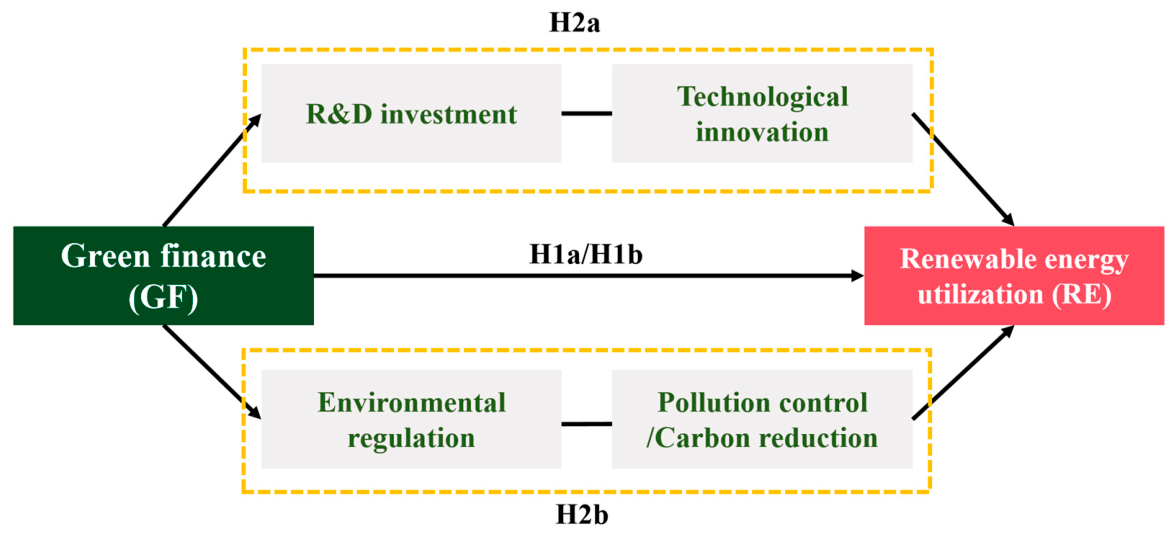
With the growing global climate problems and the fast energy transition, GF has become an important tool for directing resources to low-carbon and green sectors. It has a strong effect on renewable energy use [4]. Based on this background, this study explains how GF supports renewable energy adoption in a clear way and builds the related research hypotheses (Figure 1).
First, renewable energy projects are typically characterized by high upfront capital requirements, long payback periods, and substantial technological uncertainty, which collectively give rise to severe financing constraints within conventional financial systems. The essence of GF lies in its provision of tailored financial instruments for the green economy—including green credit, green bonds, green funds, and carbon finance—thereby effectively lowering financing barriers for environmentally sustainable projects [17]. On the one hand, GF policies can significantly alleviate financing constraints faced by renewable energy firms by providing long-term, low-cost capital, improving resource allocation efficiency, and enabling firms to expand production capacity and invest in technological innovation [18]. Within the framework of green development principles and sustainable finance theory, GF provides direct institutional incentives for renewable energy adoption by restructuring resource allocation mechanisms and risk pricing systems. Unlike traditional financial systems that prioritize short-term returns and risk mitigation, GF integrates environmental externalities into financial decision-making. Through differentiated credit constraints, green bond financing, and environmental disclosure mechanisms, it reduces financing costs and uncertainties for renewable energy projects. Additionally, by redirecting capital from high-carbon sectors to low-carbon industries, GF enhances energy production efficiency and promotes large-scale of RE [19], thereby addressing the common challenges of high initial investments and prolonged payback periods in renewable energy development. Through sustainability-oriented incentives, GF encourages enterprises to adopt cleaner, low-carbon production models, giving renewable energy companies competitive advantages over traditional energy-intensive industries [20]. From institutional economics and technological economics perspectives, GF establishes institutional arrangements that align environmental constraints with incentives, inherently reshaping the relative price structures of capital, energy, and environmental factors. Furthermore, through information disclosure, green certification, and risk-sharing mechanisms, it reduces institutional transaction costs and stabilizes expected returns, providing sustained and predictable long-term incentives for renewable energy technology development and dissemination. Based on the above analysis, the following hypothesis is proposed:
H1a: 
GF promotes RE.
Second, the presence of geographic proximity and interregional economic linkages implies that the development of GF in one region not only reduces local energy intensity and promotes the substitution of clean energy, but also generates spillover effects on RE in neighboring regions [21]. Such spatial spillovers operate through two primary mechanisms. The first is the industrial agglomeration effect, whereby the concentrated allocation of green financial resources attracts upstream and downstream firms within the green industrial chain to cluster in specific regions. This clustering generates scale economies and, in turn, stimulates the development of supporting clean energy industries in adjacent areas The second is the demonstration and imitation effect, through which pioneering regions that successfully leverage GF to advance clean energy development create strong signaling externalities. Because of competition and learning effects, nearby governments and firms tend to use similar GF tools and change their energy structure in similar ways. This also helps increase renewable energy production and use across regions. In practice, cloud-based collaboration architectures and digital twin technologies have reduced overall energy utilization costs. By controlling clusters of multi-energy virtual power plants, they provide practical examples for promoting cross-regional coordination of renewable energy. Based on this idea, the following hypothesis is proposed:
H1b: 
GF exerts positive spatial spillover effects on RE.
Third, GF is an important driver of technology progress and green human capital growth. It directs funds to green research and development (R&D), which helps reduce early funding limits in renewable energy innovation. With enough R&D support, green technologies can develop and improve faster, and clean energy technologies like wind and solar can move from labs to large-scale use [22]. Existing research also provides empirical evidence demonstrating how R&D investment drives technological innovation in the renewable energy sector; for instance, the adoption of cutting-edge photovoltaic technologies has paved a scalable pathway toward achieving low-dimensional photovoltaics [23]. At the same time, GF-supported R&D and green industries create many skilled jobs. This helps increase green human capital and spread knowledge. These processes support a shift to more efficient and less resource-intensive clean energy systems through technological progress. Based on this idea, the following hypothesis is proposed:
H2a: 
GF promotes RE by increasing R&D investment and fostering technological innovation.
Fourth, renewable energy depends on a stable ecological base and enough environmental capacity. Fossil fuel use causes pollution and carbon emissions, which damage ecosystems and reduce environmental stability. In contrast, GF links financial resources with environmental goals [24]. It supports pollution control and carbon reduction projects, which directly reduce environmental damage. It also supports ecological restoration and biodiversity protection, which helps improve ecosystem health. In this way, GF reduces the capital costs of green projects, while environmental regulation encourages companies to fulfill their environmental obligations and enhances their access to financing, thereby jointly promoting the adoption of renewable energy technologies [25]. By removing environmental limits and supporting cleaner technologies instead of polluting ones, GF creates better conditions for renewable energy growth [26]. Based on this reasoning, the following hypothesis is proposed:
H2b: 
GF promotes RE by strengthening environmental regulation and pollution control and carbon reduction.

3. Research Design

3.1. Study Area

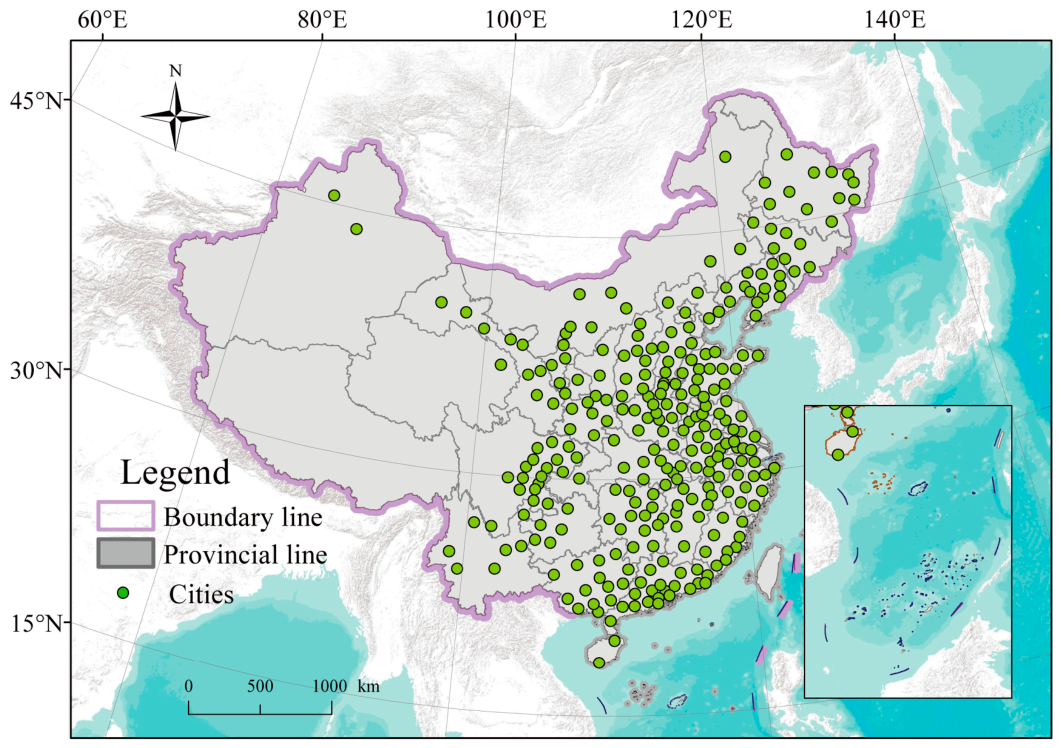
The study area includes 271 prefecture-level cities in China from 2010 to 2021 (Figure 2). GF is growing fast and is supporting energy transition, but clear differences still exist across the eastern, central, and western regions in development, resources, and institutions. These differences may lead to different ways of using renewable energy. Therefore, it is important to study how GF affects renewable energy use in Chinese cities, and this is useful for reducing climate change and supporting sustainable economic development.

3.2. Empirical Method

To evaluate the impact of GF on RE, this study constructs a multidimensional panel fixed effects model as follows:
R E i , t = β 0 + β 1 GF i , t + β X i , t + μ i + η t + ϵ i , t
where R E i , t denotes the level of RE, and G F i , t represents the level of GF. The indices i and t correspond to city and time identifiers, respectively. X i , t is a vector of control variables, μ i and η t capture city-specific and time-specific fixed effects, and ϵ i , t is the error term. If the proposed hypothesis holds, the coefficient β 1 in Equation (1) is expected to be significantly positive.

3.3. Variable Selection

3.3.1. Renewable Energy Utilization (RE)

Existing studies typically measure RE using indicators such as installed capacity or total electricity generation from renewable sources [27]. However, the aforementioned indicators can only estimate renewable energy utilization based on electricity generation or installed capacity within a specific region, and cannot accurately reflect the actual extent of renewable energy utilization. By definition, renewable energy encompasses a broader set of naturally replenishing resources, including solar, hydropower, and wind energy. Accordingly, this study adopts a more comprehensive approach by estimating total renewable energy consumption at the city level, drawing on data from a renewable energy database [28]. Furthermore, given that population factors may attenuate the effectiveness of renewable and clean energy in strengthening environmental regulation [29], this study controls for such effects by employing per capita renewable energy consumption as the primary measure. Specifically, RE is defined as renewable energy consumption per capita (measured in 10,000 tons of standard coal equivalent per person), thereby mitigating potential bias arising from population size differences across cities.

3.3.2. Green Finance (GF)

Green Finance serves as a comprehensive indicator for assessing the extent to which financial systems support environmentally sustainable activities. By measuring how financial institutions and market participants take part in GF, it shows the development level and change in green financial markets. Based on existing studies, this research builds a GF index using the entropy method. Given that the entropy method enables objective weight allocation in constructing comprehensive indicators, the green finance indicator system comprises four components: green credit, green securities, green insurance, and green investment. Unlike traditional financial activity indicators, this study emphasizes the environmental attributes of green finance in its selection process—each indicator directly corresponds to financial activities related to energy conservation, emission reduction, environmental governance, or clean energy [30]. The detailed indicators are shown in Table 1.

3.3.3. Mechanism Variables

To investigate the mechanism by which GF affects RE, this study employs the proposed theoretical framework, identifying R&D investment, technological innovation, environmental regulation, and pollution and carbon reduction as the principal transmission channels. R&D investment intensity (RDI) is measured as the ratio of internal R&D expenditure to regional gross domestic product (GDP) [31]. Technological innovation is proxied by the number of green patent applications (TECA) and granted green patents (TECG). The number of applications reflects innovation investment and R&D activity, while the number of grants demonstrates technological quality and commercialization capabilities. These indicators effectively identify innovation activities in energy conservation, environmental protection, and renewable energy sectors, thereby providing a comprehensive assessment of regional green technology innovation levels. To mitigate the influence of extreme values, both indicators are transformed using the natural logarithm after adding one. Environmental regulation (ENR) is quantified based on the proportion of environment-related keywords in local government work reports. This keyword set encompasses 15 terms related to environmental protection, pollution control, and ecological governance; a higher value for this indicator reflects greater attention from local governments to environmental management [32]. Pollution and carbon reduction are captured using two indicators. The pollution index (PLUI) is constructed via the entropy method, incorporating industrial wastewater discharge, industrial sulfur dioxide emissions, and industrial smoke (dust) emissions [33]. Carbon emissions (CEI) are estimated using a city-level accounting approach based on boundary definition criteria, yielding total carbon dioxide emissions for each city (measured in 100 million tons) [34].

3.3.4. Control Variables

To better identify the effect of GF on RE, this study adds several control variables, including economic development, government capacity, environmental conditions, and resource conditions. Economic development (ED) is measured by the growth rate of regional GDP, which shows overall economic activity. Government intervention (GOV) is measured by total local fiscal expenditure (in 100 million yuan), which reflects government involvement in resource allocation and policy actions. Environmental quality (EQ) is measured by the annual average PM2.5 concentration, which reflects local air pollution levels. Livability (LIV) is measured by the annual average daily temperature, which reflects local climate conditions. Industrial structure (IS) is measured by the share of the tertiary sector in GDP, which shows the level of economic upgrading.

3.4. Data Description and Descriptive Statistics

The green finance data used in this study are primarily obtained from the WIND database and the China Stock Market and Accounting Research (CSMAR) database. Renewable energy data are drawn from an established renewable energy dataset [28] The remaining control and mechanism variables are compiled from multiple authoritative sources, including city statistical yearbooks, official government reports and policy documents, national meteorological data repositories, the patent database of the China National Intellectual Property Administration, and the China Research Data Services Platform (CNRDS). Descriptive statistics for the main variables are presented in Table 2.

4. Results

4.1. Spatio-Temporal Evolution

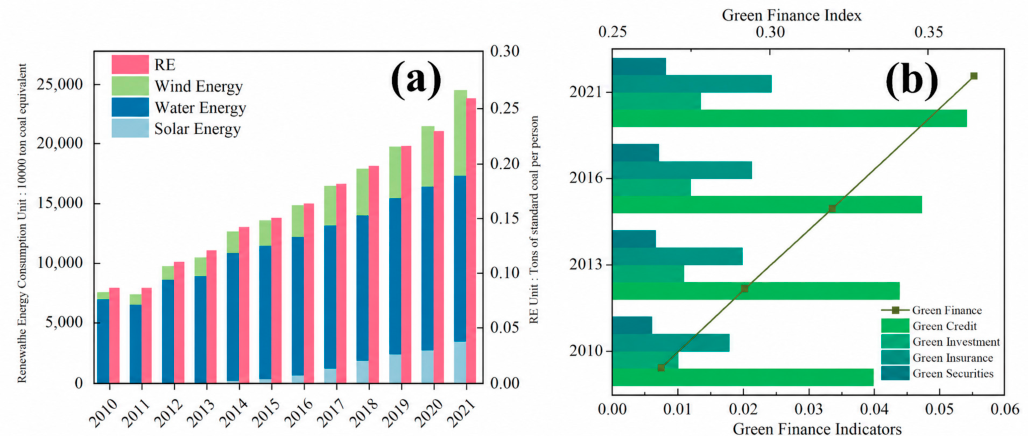
Figure 3 illustrates the evolution of RE and GF in the study area from 2010 to 2021. Specifically, Figure 3a presents the annual consumption of different types of renewable energy in a stacked bar format, along with the trend of per capita renewable energy consumption. Figure 3b depicts the evolution of GF and its constituent components. Overall, both RE and GF exhibit a steady upward trend over time, indicating the synchronized advancement of GF development and energy transition under the “dual carbon” strategy.
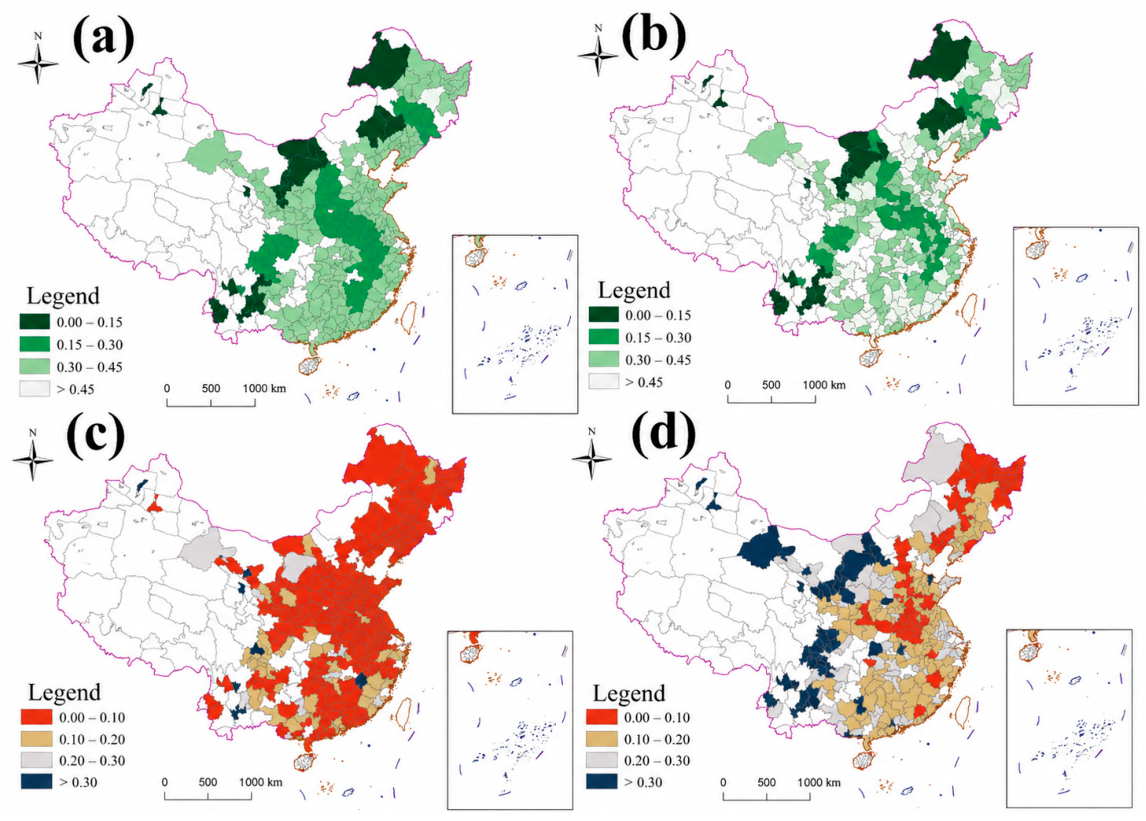
Figure 4 further depicts the spatial distribution patterns of GF and RE across the 271 cities during the same period. Figure 4a,b present the spatial distribution of GF in 2010 and 2021, respectively, while the results reveal a pronounced gradient pattern in GF, with high-value clusters concentrated in coastal regions. In contrast, the spatial variation in GF appears relatively fragmented, with most regions experiencing moderate increases (approximately 26–50%). Figure 4c,d display the spatial distribution of RE in 2010 and 2021, respectively. Similar to GF, RE also exhibits a clear gradient pattern; however, in contrast to GF, higher levels of RE are predominantly observed in inland regions rather than coastal areas. This spatial mismatch between GF and RE can be attributed primarily to differences in resource endowments. RE is highly dependent on natural conditions, and inland regions possess comparative advantages in wind, solar, and hydropower resources. By contrast, coastal regions face constraints related to land availability and resource endowments, limiting their renewable energy consumption capacity. From a financial and institutional perspective, GF is more closely tied to economic development levels, financial market maturity, and policy implementation capacity. Coastal regions typically exhibit higher levels of marketization, more developed financial systems, and a richer array of green financial instruments, thereby forming spatial hubs of GF. In contrast, inland regions generally experience lower levels of financial deepening and limited availability of green financial resources, which constrain their capacity to support RE through financial channels.

4.2. Baseline Regression Results

The baseline regression results are reported in Table 3. Columns (1)–(4) present a stepwise estimation strategy, including: a specification with only the core explanatory variable, the inclusion of control variables, the addition of year and individual fixed effects, and finally the full model incorporating both two-way fixed effects and all controls. Across all specifications, the coefficient on GF remains significantly positive, indicating that the development of GF consistently promotes RE. In particular, the results in column (4) show that, after controlling for a comprehensive set of covariates and both city and time fixed effects, the coefficient on GF is 1.0968 and statistically significant at the 1% level. This implies that a 1% increase in GF is associated with a 1.0968% increase in RE. These results provide strong empirical support for the theoretical framework and confirm that GF has a positive effect on RE.

4.3. Endogeneity Issues

Instrumental variable approach. Specifically, the interaction between the distance from each city to the nearest coastal port (unit: kilometers) and a time trend is used as the instrumental variable. First, from the perspective of correlation, cities near ports are more frequently integrated into international trade networks and cross-regional capital flow systems. This openness facilitates the acceleration of financial institutional innovation and the introduction and dissemination of green financial instruments, thereby providing exogenous drivers for the development of green finance [35]. Existing research also indicates that GF exhibits significant coastal agglomeration characteristics, further corroborating the strong link between port accessibility and green finance. Second, regarding exclusivity, port distance is primarily determined by natural geographical endowments and historical trade routes, exhibiting strong exogeneity [14]. Moreover, this distance remains constant over time, and thus is unlikely to correlate with other variables included in the model.
The two-stage least squares (2SLS) estimation results are reported in Table 4, columns (1) and (2), corresponding to the first and second stages, respectively. The IV diagnostic tests support the validity of the instrument. The LM statistic (p = 0.0002) rejects the null hypothesis of underidentification, while the Wald F-statistic (90.1300) exceeds the critical threshold (16.3800), indicating no weak instrument problem. Furthermore, the Hansen J test (p = 0.2771) fails to reject the null hypothesis of instrument exogeneity, suggesting no overidentification concerns. In the first stage, both instrumental variables exhibit significantly positive coefficients, confirming their relevance. In the second stage, the coefficient on GF remains positive and statistically significant at the 1% level, indicating that the baseline results are robust to potential endogeneity and reaffirming the positive impact of GF on RE.
Exogenous shock. To further address potential endogeneity concerns, this study exploits the GF pilot policy jointly launched by the People’s Bank of China and the National Development and Reform Commission as an exogenous shock. Specifically, pilot zones were established in 2017 in five provinces—Zhejiang, Guangdong, Jiangxi, Guizhou, and Xinjiang—and were subsequently expanded in 2019 to include Gansu Province. This policy experiment provides a quasi-natural setting to identify the causal impact of GF on RE. The baseline DID specification takes the following form:
R E i , t = β 0 + β 1 T r e a t i × P o s t i , t + β n X i , t + μ i + η t + ϵ i , t
where T r e a t i indicates whether city i belongs to the treatment group (1 = treated; 0 = control), and P o s t i , t equals 1 in the first year that a treated city is included in the pilot program and 0 otherwise. All other variables follow the definitions in the baseline model. Column (3) of Table 4 shows that the interaction term Treat × Post is significantly positive, suggesting that green financial reform and innovation pilot policy exerts a meaningful promoting effect on the RE. To examine dynamic policy effects, the analysis further estimates the following model:
R E i , t = β 0 + β m T r e a t i × P o s t ( n ) i , t + β n X i , t + μ i + η t + ϵ i , t
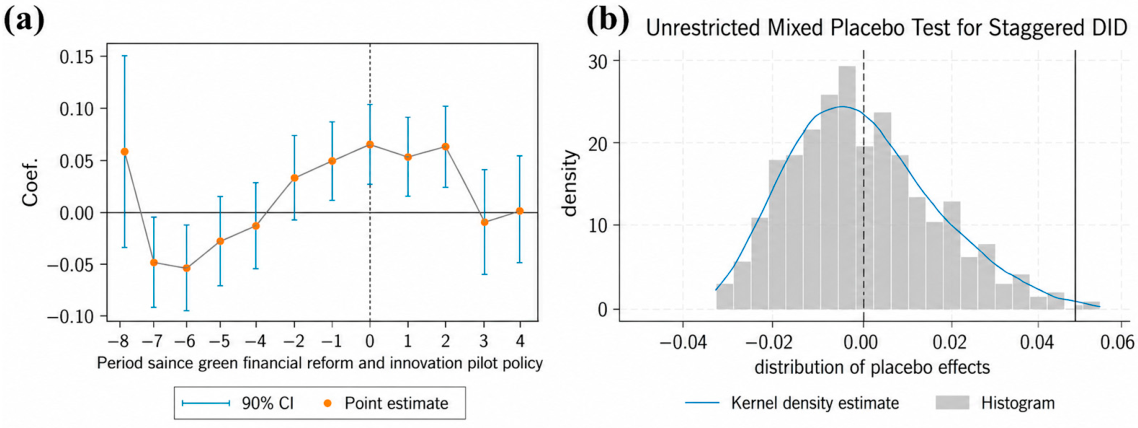
The estimated coefficients capture the dynamic evolution of the relative treatment effect between the treated and control groups over the 13-year window surrounding policy implementation. The results of the parallel trends test are presented in Figure 5a. Prior to the implementation of the green financial reform and innovation pilot policy, no statistically significant effect on RE is observed, thereby supporting the validity of the parallel trends assumption. To further rule out potential biases arising from unobserved factors, this study conducts a spatiotemporal placebo test based on counterfactual random sampling [36]. Specifically, 59 cities are randomly selected from the 2017–2019 sample period for repeated estimations. As shown in Figure 5b, most of the randomly generated coefficients are close to zero, and all p-values are above 0.1. In contrast, the estimated DID coefficient is located in the lower tail of the simulated distribution. This means the result is unlikely to come from random shocks or chance correlations. It also supports the robustness of the main results. Finally, a propensity score matching (PSM) approach is employed to mitigate potential sample selection bias. Using the control variables as matching covariates, treated cities are matched to control cities based on a 1:2 nearest-neighbor algorithm with a caliper of 0.1 and without replacement. The results, reported in Table 4 (column 4), remain robust after accounting for selection bias, further confirming the reliability of the baseline conclusions.

4.4. Robustness Checks

Based on the benchmark regression results, we conducted a series of robustness tests to ensure the validity of our empirical findings. Three strategies were employed: First, the use of high-dimensional clustering standard errors and fixed effects. To address potential omitted variables, we incorporated a “time × province” clustering standard error and fixed effect; the results in column (1) of Table 5 demonstrate that the conclusions remain robust. Second, drawing on the “Guiding Opinions on Building a Green Financial System” issued by the People’s Bank of China in 2016 jointly with seven ministries, we extended the sample analysis period to 2016–2021; column (2) of Table 5 shows that the conclusions remain robust even after accounting for this exogenous shock. Furthermore, considering the lagged effects of GF on RE, we analyzed GF at one and two lags, with the results confirming the robustness of the conclusions. This lag effect also mitigates, to some extent, the estimation bias arising from the reverse causality between GF and RE that was overlooked in endogeneity discussions.

4.5. Spatial Spillover Effects

The preceding theoretical analysis suggests that GF may generate spatial spillover effects on RE. In other words, the development of GF in a given region may exert measurable influences on RE in neighboring regions. To empirically test for such spatial interactions, this study extends the baseline model in Equation (1) and specifies the following spatial econometric model:
R E i , t = ρ W R E i , t + β 1 GF i , t + β 2 WGF i , t + β X i , t + μ i + η t + ϵ i , t
where W denotes the spatial weight matrix. In this study, we employ both the inverse-distance matrix (W1) and the contiguity matrix (W2) to capture spatial interactions. The terms WGF and WRE represent the spatial lag of the explanatory and dependent variables, respectively, while ρ denotes the spatial autoregressive coefficient. All other variables are defined consistently with the baseline regression model. To verify the existence of spatial dependence, we compute the global Moran’s I statistic. In addition, to identify the most appropriate spatial econometric specification, we conduct a series of diagnostic tests, including the Lagrange Multiplier (LM) test, likelihood ratio (LR) test, and Wald test. Detailed results of these diagnostics are reported in Supplementary Materials.
Table 6 reports the estimation results of the spatio-temporal fixed effects Spatial Durbin Model (SDM). The findings indicate that GF significantly promotes RE. Meanwhile, the spatial autoregressive coefficient of GF is significantly positive, providing strong evidence of positive spatial spillover effects. In particular, improvements in GF within a given city not only enhance its own RE but also stimulate significant increases in RE in geographically proximate cities.
The point estimates for GF and its spatial interaction term are 16.6600 and 0.7720, respectively, both of which are statistically significant. However, these coefficients do not allow for a clear distinction between direct and indirect effects. To address this limitation, the partial derivative approach is employed to decompose the spatial effects of GF on RE. The decomposition results show that the direct effects of GF on RE are 1.4370 and 0.6662, both statistically significant, while the indirect (spillover) effects are 180.1002 and 2.5110, indicating that GF substantially enhances RE in neighboring cities. Furthermore, the total effects of GF on RE are estimated at 181.5372 and 3.1772, suggesting that GF not only promotes local RE but also generates substantial spillover effects through spatial interaction mechanisms.
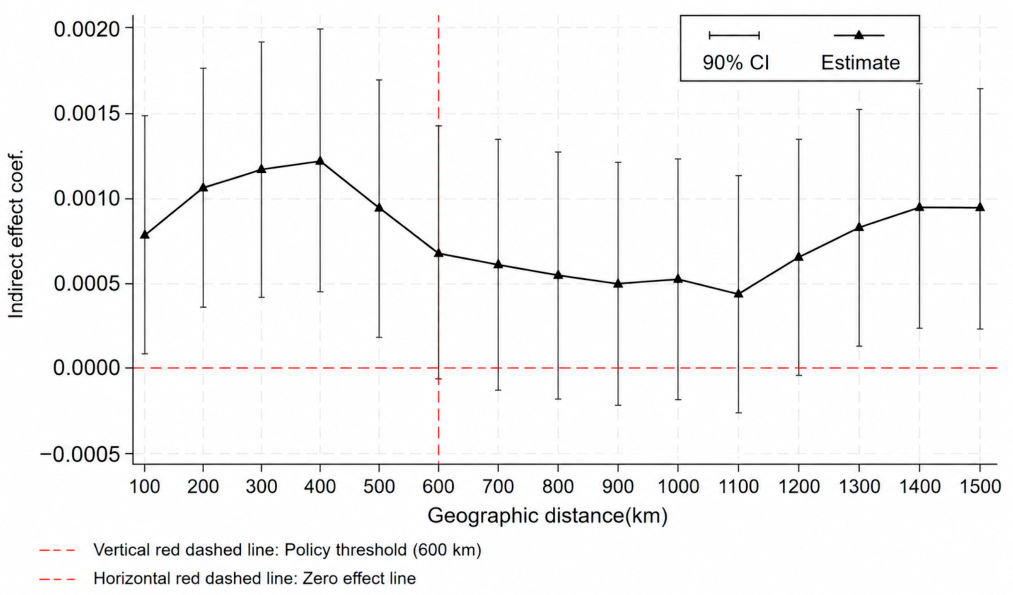
To further investigate the geographic threshold of spatial spillovers, this study follows the geographical threshold model and constructs Equation (5) [37], in which an inverse-distance spatial weight matrix w i , j d is defined with 100 km intervals. Specifically, d i , j captures the geographic distance between city i and city j, and is incorporated into Equation (4) for estimation. The results are presented in Figure 6.
w i , j d = 1 / d i , j , d i , j d , d = 100 , 200 , 1500 0
Overall, GF exhibits a spatial boundary effect characterized by a pattern of fluctuation that first increases and then decreases. When the spatial distance is less than 600 km, GF produces a significant positive spillover effect on RE in adjacent regions; however, this effect diminishes progressively with increasing distance. Beyond 600 km, the spillover effect becomes statistically insignificant. This pattern can be attributed to three main factors. First, regions separated by greater distances tend to exhibit substantial differences in resource endowments and industrial structures, limiting the transferability and effectiveness of GF, as well as the diffusion of information and technology. Second, the spatial structure of urban clusters, transportation network density, and the degree of regional economic integration collectively define this geographical threshold. A tightly integrated urban cluster with a high-density transportation network significantly reduces spatial friction costs in factor mobility and information dissemination, while enhancing cross-regional allocation efficiency of GF resources through industrial linkages and financial connectivity. When spatial distance exceeds the radiation range of core urban clusters, institutional coordination and market integration between regions decline, hindering factor flow and weakening information transmission, thereby undermining the sustainability of GF’s spillover effects. Third, from the perspectives of economic agglomeration and industrial similarity, GF spillovers depend on spatial proximity and industrial relevance. Regions with high agglomeration levels possess more extensive networks for factor mobility and information sharing, expanding diffusion ranges; meanwhile, similar industrial structures facilitate the replication and promotion of green technologies and project models. As spatial distance increases, agglomeration effects weaken and industrial disparities widen, leading to heightened information friction and matching costs, thus establishing a clear geographical threshold.

4.6. Impact Mechanism Identification

The preceding theoretical framework suggests that GF promotes RE primarily through enhancing R&D investment and strengthening environmental regulation. The empirical results reported in Table 7 provide strong support for these mechanisms.
Panel A columns (1) and (2) shows that GF significantly increases R&D investment intensity (RDI), which in turn promotes RE. However, increased R&D investment does not necessarily translate immediately into renewable energy. To address this issue, this study further examines whether GF stimulates technological innovation after increasing R&D investment, thereby ultimately promoting RE. The results in Panel A columns (3) and (4) indicate that GF significantly enhances both green patent applications and grants. In particular, as R&D intensity rises, the level of green technological innovation correspondingly improves. These findings suggest that GF not only stimulates R&D investment but also facilitates its transformation into technological innovation, thereby promoting RE. Similarly, Panel B columns (1) and (2) shows that GF significantly strengthens environmental regulation, which in turn promotes RE. The results in Panel B columns (3) and (4) further demonstrate that GF effectively reduces pollutant emissions and carbon emissions. Taken together, these findings indicate that GF promotes RE through a “pollution reduction and carbon mitigation” pathway induced by strengthened environmental regulation.

4.7. Heterogeneity Analysis

4.7.1. Grouped Regression

To further explore heterogeneity arising from regional characteristics, the full sample is divided into four major economic regions—eastern, central, western, and northeastern—based on the spatial classification framework outlined in China’s 14th Five-Year Plan. Furthermore, although the aforementioned theoretical analysis suggests that R&D investment and environmental regulation can boost renewable energy consumption, how effectively do these factors manifest across different regions? To address this, we categorized cities based on the medians (50th percentile) of RDI and ENR to examine the impact of governance factors (GF) on renewable energy adoption in various areas. The results in Table 8 columns (1)–(4) reveal significant heterogeneity in the impact of GF on RE, exhibiting a clear geographic gradient. Specifically, the coefficients for the eastern and central regions are positive and significant, which shows that GF helps increase RE in these areas. In the western and northeastern regions, the coefficients are not significant. This pattern can be explained as follows. The eastern region has better infrastructure, stronger policy support, and more developed financial systems, so GF can more easily support renewable energy investment. The central region, supported by the “Rise of Central China” strategy and continued national investment, has also built a system where GF supports renewable energy transition. By contrast, the western and northeastern regions remain constrained by relatively lower levels of economic development, limiting systemic coordination and preventing the full realization of GF’s allocation efficiency.
Columns (5)–(8) of Table 8 further indicate that GF significantly promotes renewable energy consumption in cities with higher levels of RDI and ENR. From the perspective of technological supply capacity, cities with higher RDI scores demonstrate stronger capabilities in green technology innovation and more efficient commercialization of research outcomes. The long-term capital and risk-sharing mechanisms provided by green finance can create synergies with local R&D systems, accelerating the adoption of key renewable energy technologies. Regarding institutional constraints and incentive mechanisms, cities with higher ENR scores face stricter emission standards and higher compliance costs, which objectively limit the use of high-pollution energy sources. Through mechanisms such as “differentiated financing constraints” and “green premiums,” green finance directs more funds toward low-carbon sectors, facilitating a shift from passive emission reduction to proactive transformation.

4.7.2. Heterogeneity Analysis of Spillover Effect

Given the systemic differences among regions in terms of economic foundations, factor structures, and energy development stages, the spatial interdependence mechanisms between regional units are inherently heterogeneous rather than homogeneous. In this context, although subgroup regression analysis can preliminarily reveal spatial distribution patterns, for spatial data with pronounced multi-level structures, the horizontal geographic connections between cities are often closely intertwined with each region’s institutional environment, resource endowments, and policy contexts. This indicates significant variations in spatial spillover effects across different geographical units [38]. To capture this heterogeneity in spillover effects, we employ a Heterogeneous Spatial Autoregressive (HSAR) model, specified as follows:
R E i , t = ρ + β 1 , i W R E i , t + β 2 G F i , t + β X i , t + ϵ i , t
where W denotes the spatial weight matrix specific to region i, β 1 , i represents the region-specific spatial autoregressive coefficient, and all other variables are defined consistently with the baseline model.
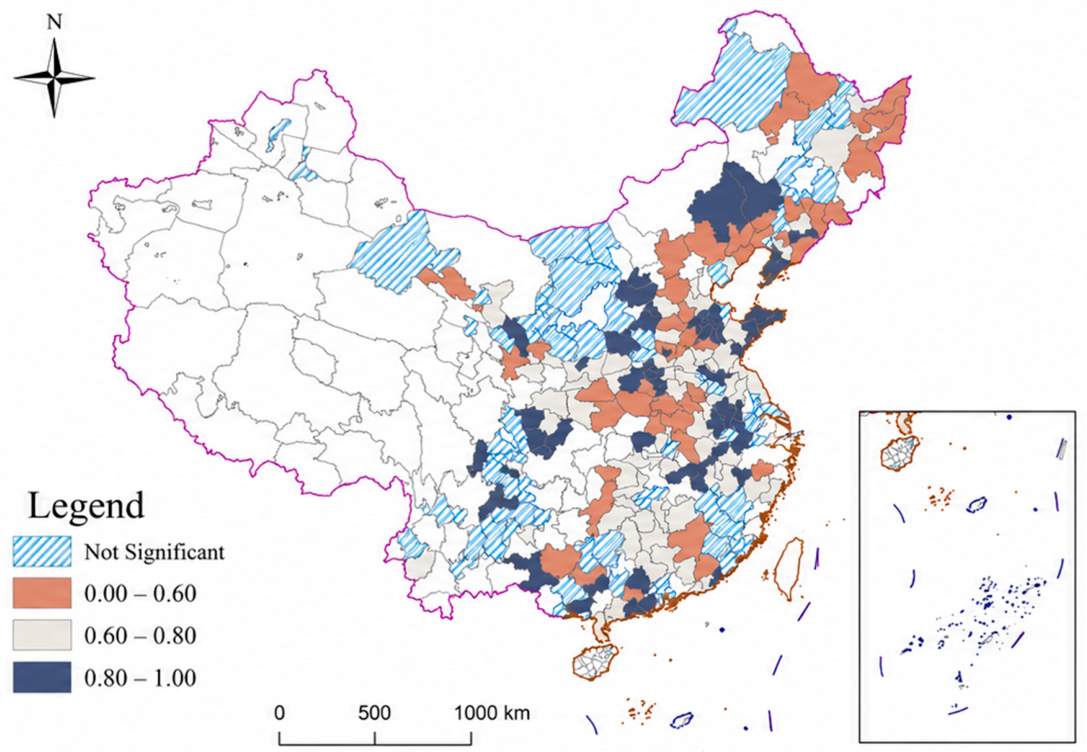
Figure 7 illustrates the estimated spatial spillover coefficients between cities within the study area, calculated using the inverse distance matrix. Full HSAR regression results and estimates derived from the adjacency matrix are provided in the Supplementary Materials. A clear pattern appears: coastal regions have much higher spillover effects, while most inland regions show weak or not significant effects. This means coastal areas have stronger links between cities, so RE in one city can spread more easily to nearby cities and then to inland areas. This difference can be explained in several ways. Coastal regions have higher economic development, better industrial structures, and stronger green technology and renewable energy bases. This helps them spread technology and experience more easily to other places. They are also more open to international trade and investment, so they can access advanced green technologies and policy ideas earlier, and these can then spread to nearby regions through regional connections. In contrast, inland regions have weaker infrastructure, weaker institutions, and lower market development. Because of this, they have more difficulty absorbing and using these spillover effects.

4.8. Consequence Analysis

Renewable energy is widely recognized as a critical pathway for enhancing urban sustainability and accelerating energy structure transformation [39]. However, whether RE can be effectively translated into tangible economic benefits and sustained competitive advantages in the energy sector remains an open question. Existing studies suggest that renewable energy contributes to improved energy efficiency and sustainability through technological progress and factor reallocation [40]. Furthermore, GF can provide financial support through green technological innovations in industrial production, thereby promoting the adoption of renewable energy in the industrial sector and ultimately reducing energy intensity and carbon emissions in high-energy-consuming industries [41]. Furthermore, the carbon mitigation effect of renewable energy can reduce the frequency and intensity of extreme climate events, generating synergistic benefits across environmental and economic dimensions. To empirically assess these consequences, this study employs green total factor productivity (GTFP) to capture urban energy efficiency and sustainability [42], the total primary energy consumption (TPEC) of various cities in China was used to reflect their impact on the intensity of traditional energy utilization, and the Climate Physical Risk Index (CPRI) to measure climate risk [43]. The results are reported in Table 9. Column (1) shows that GF significantly enhances urban green total factor productivity, indicating improved energy efficiency and sustainable development capacity. Columns (2) and (3) further demonstrate that GF exerts a constraining effect on traditional energy use while simultaneously mitigating climate risk. These findings suggest that GF not only promotes RE but also generates broader economic and environmental benefits, reinforcing its strategic role in advancing energy transition.

5. Discussion

5.1. Interpretation of Findings

GF is changing how resources are allocated, speeding up energy structure change, and reshaping factor endowments and development paths. Researching how GF affects RE fits the global Sustainable Development Goals and also gives evidence for China’s “dual carbon” strategy and climate action. Using a balanced panel dataset of Chinese cities from 2010 to 2021, this study measures the mechanisms, spatial differences, and effects of GF on RE.
First, GF has a stable and significant positive effect on RE. It also shows clear spatial spillovers, which means GF in one city can increase RE in nearby cities. This suggests that GF tools, such as credit support, green bonds, and green investment funds, reduce financing limits and lower capital costs for renewable energy projects. As a result, they directly increase clean energy investment and consumption. More importantly, the effect of GF is not limited to local areas. It spreads across regions through capital movement, industrial linkages, and policy imitation, which leads to similar changes in energy structures across nearby cities.
Second, the mechanism analysis confirms that GF promotes RE through increased R&D investment and subsequent green innovation. This indicates that GF alleviates firms’ financing constraints and optimizes capital allocation structures, thereby strengthening financial support for high-risk and long-horizon green technological research. As firms increase R&D investment, green technological innovation is stimulated and diffused, leading to continuous reductions in the marginal cost of renewable energy consummation and utilization. Consequently, the economic viability of renewable energy improves, driving sustained expansion in its deployment. In addition, GF enhances environmental regulation, thereby facilitating pollution reduction and carbon mitigation, which ultimately promotes RE. This effect operates through strengthened environmental risk assessment and disclosure requirements imposed on financial institutions, which increase financing constraints and compliance costs for high-pollution and high-energy-consuming firms. Such pressures incentivize firms to reduce emissions and accelerate energy substitution. Under the dual constraints of pollution reduction and carbon mitigation, demand for clean energy is further released, resulting in a significant increase in renewable energy consumption.
Third, heterogeneity analysis reveals that GF has a significantly stronger promoting effect on RE in eastern and central China, as well as in regions with higher levels of marketization. Moreover, coastal regions exhibit stronger spatial spillover effects than inland regions. Specifically, the eastern and central regions benefit from stronger economic foundations and more developed financial systems, enabling more efficient conversion of GF resources into renewable energy consumption and utilization. Cities with higher levels of R&D investment and stricter environmental regulation typically have more efficient technology supply mechanisms and incentive frameworks, which facilitate the effective transmission of green finance signals to urban investment and energy decisions, thereby further enhancing their impact on the renewable energy sector. Meanwhile, coastal regions demonstrate more pronounced spillover effects due to their higher degree of openness and greater mobility of capital and technological factors, which facilitate cross-regional diffusion of GF-induced investment and innovation. In contrast, inland regions are constrained by weaker factor mobility and lower market integration, limiting the strength of spatial transmission effects.
Finally, GF generates multiple consequential effects on RE. First, as GF continuously channels capital into the renewable energy sector, the expansion of clean energy supply induces a substitution effect on fossil fuels, thereby reducing their demand and exerting downward pressure on traditional energy consumption. Second, by promoting green technological applications and optimizing energy structures, GF improves energy efficiency and reduces energy input per unit of output, leading to higher total factor productivity. Third, by strengthening environmental governance and directing financial resources toward environmental protection activities, GF contributes to the mitigation of extreme climate risks.

5.2. Spatial Sustainability Optimization Strategies

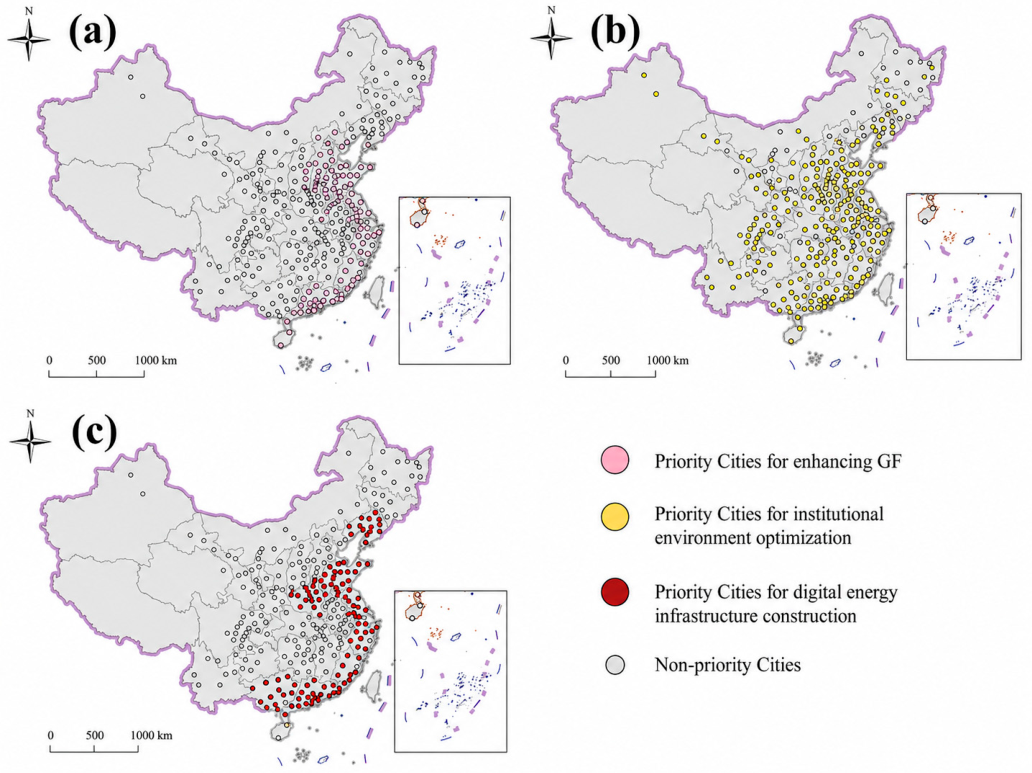
Based on the empirical findings, this study proposes a set of policy recommendations aimed at leveraging GF to facilitate regional energy transition, in alignment with the United Nations Sustainable Development Goals (SDGs) and China’s “dual carbon” strategy. Accordingly, we develop spatially differentiated sustainability optimization strategies, as illustrated in Figure 8.
First, a cross-regional GF transmission system should be established with eastern China as the core hub. In regions with higher financial deepening and stronger factor mobility, the capital aggregation and cross-regional allocation functions of GF should be further strengthened (Figure 8a). This can be achieved by promoting the circulation of green credit assets, expanding cross-regional investment by green funds, and developing risk-sharing mechanisms, thereby facilitating the orderly diffusion of capital, technology, and information toward central, western, and inland regions and amplifying spatial spillover effects. The central region should focus on enhancing its capacity to absorb and transform external GF resources by improving intermediary services in GF markets, thereby accelerating the transition from exogenous support to endogenous accumulation. For western and northeastern regions, policy-oriented financial instruments and fiscal coordination mechanisms are required to alleviate market constraints and strengthen the foundational support for renewable energy.
Second, a differentiated GF support framework should be designed in accordance with regional resource endowments and industrial structures. Coastal regions, characterized by strong energy demand and advanced technological foundations, should prioritize improvements in green innovation capacity and renewable energy consumption efficiency (Figure 8b). In particular, GF should support the development of distributed energy systems and energy digitalization infrastructure to alleviate renewable energy absorption constraints. Inland regions should use their advantages in industrial transfer and factor clustering to promote closer integration between renewable energy systems and manufacturing sectors. This can help improve linkages along industrial chains. Western regions should expand renewable energy by using their rich wind and solar resources. At the same time, they should use green financial tools to reduce investment costs and operating risks. The northeastern region should rely on its traditional heavy industry base and use green credit and transition finance to support technological upgrading and energy substitution in high-emission industries. This can help existing industries move toward low-carbon development.
Finally, it is essential to enhance R&D investment levels and optimize environmental regulation frameworks through coordinated efforts to improve the efficiency of green finance allocation and strengthen its long-term support for renewable energy utilization (Figure 8c). In regions with high R&D investment levels, priority should be given to leveraging technological innovation advantages by improving integration mechanisms between green finance and technological innovation—such as facilitating the alignment of green technologies with financial instruments, enhancing intellectual property-backed financing, and strengthening green credit support—to accelerate the commercialization and widespread adoption of renewable energy technologies. In regions with lower R&D investment levels, increased fiscal spending on science and technology and directed allocation of financial resources toward basic research and green technology development are crucial to address technological gaps and establish a solid technical foundation for green finance. Meanwhile, in areas with stringent environmental regulations, differentiated regulatory frameworks should be enhanced alongside green finance policies, with strengthened environmental disclosure requirements and carbon constraint mechanisms to leverage regulatory pressure for improved returns on green projects and accelerate capital flow toward renewable energy. In regions with weaker environmental oversight, gradual regulatory frameworks and incentive-compatible mechanisms should be implemented to avoid transition costs associated with one-size-fits-all approaches, while employing green subsidies, risk compensation, and credit enhancement measures to guide enterprises in progressively increasing their renewable energy adoption rates.


5.3. Limitations

Based on a balanced panel dataset of 271 Chinese cities from 2010 to 2021, this study examines how GF affects renewable energy use, including its mechanisms, spatial spillovers, and outcomes. The results provide useful evidence for energy transition, climate change mitigation, and sustainable development. However, several limits should be noted. First, the measurement of RE in this study does not encompass all types of renewable energy consumption—including various clean energy sources such as biomass utilization and fuel cell applications—due to data limitations [44]. Future research should include more types of renewable energy to get a more complete picture of renewable energy use. Second, although the HSAR model is used to capture spatial differences, it may still not fully describe the spatial spillover effects of GF. It may not fully capture complex spatial links across different regions. Future studies could use a heterogeneous Spatial Durbin Model (SDM) or other more flexible spatial models to better capture spatial differences and interactions. Third, the analysis of outcomes in this study still needs further work. The effects of GF on renewable energy are not limited to energy use, climate change, and energy use. Furthermore, the consequence analysis section may not mitigate endogeneity issues due to the substitution of the dependent variable. Future research should further examine its broader economic impacts from an energy economics perspective while ensuring endogeneity considerations are maintained. Fourth, this study primarily examines the comprehensive impact of GF as a whole, potentially overlooking the distinct effects generated by different green financial instruments. Future research should conduct comparative analyses focusing on the specific functions of each type of green financial instrument.

6. Conclusions

This study constructs a dataset covering 271 Chinese cities from 2010 to 2021 to measure GF and RE, and systematically examines their spatiotemporal patterns, impact mechanisms, heterogeneous effects, and broader consequences. First, both GF and RE exhibit a pronounced coastal–inland gradient. GF is significantly higher in coastal regions, whereas RE is relatively higher in inland regions. Over time, both indicators show an overall upward trend, although regional dynamics are characterized by fluctuations, with a general pattern of modest growth accompanied by localized declines in certain periods. Second, GF exerts a persistent and statistically significant positive effect on RE, accompanied by strong spatial spillover effects. This indicates that the development of GF in one city not only promotes local RE but also enhances RE in neighboring regions. Third, the mechanism analysis confirms that GF promotes RE primarily through increasing R&D investment, which in turn stimulates green technological innovation. In addition, GF strengthens environmental regulation, thereby facilitating pollution reduction and carbon mitigation, which ultimately contributes to higher levels of RE. Fourth, heterogeneity analysis reveals that the promoting effect of GF on RE is more pronounced in eastern and central China and in regions with higher levels of marketization. Moreover, coastal regions exhibit stronger spatial spillover effects than inland regions. Fifth, GF generates multiple consequential effects on RE. Specifically, it contributes to reductions in traditional energy use, improvements in total factor productivity, and mitigation of extreme weather risks. Finally, based on regional heterogeneity, this study proposes differentiated spatial sustainability strategies to promote RE. These strategies provide policy guidance for advancing energy transition and addressing climate change under diverse regional conditions.

Supplementary Materials

The following supporting information can be downloaded at: https://www.mdpi.com/article/10.3390/su18136474/s1, Table S1. Spatial autocorrelation test; Table S2. Model selection statistical test; Table S3. HSAR regression; Figure S1. Robust test of geographical threshold of spatial spillover effects; Figure S2. Robust test of HSAR.

Author Contributions

Conceptualization X.H. and H.X., methodology F.C., X.H. and H.X., writing F.C.—original draft preparation software, formal analysis, resources F.C., X.H. and H.X., Validation, investigation, writing—review, editing, supervision F.C., X.H. and H.X. All authors have read and agreed to the published version of the manuscript.

Funding

This research was funded by National Office for Philosophy and Social Sciences (Grant No. 24FGLB094).

Institutional Review Board Statement

Not applicable.

Informed Consent Statement

Not applicable.

Data Availability Statement

The original contributions presented in this study are included in the article/Supplementary Material. Further inquiries can be directed to the corresponding author.

Conflicts of Interest

The authors declare that they have no conflicts of interest.

Abbreviations

The following abbreviations are used in this manuscript:
GFGreen finance
RERenewable energy utilization

References

  1. De Abreu, M.C.S.; Webb, K.; Araújo, F.S.M.; Cavalcante, J.P.L. From “Business as Usual” to Tackling Climate Change: Exploring Factors Affecting Low-Carbon Decision-Making in the Canadian Oil and Gas Sector. Energy Policy 2021, 148, 111932. [Google Scholar] [CrossRef]
  2. Luo, S.; Zhang, S. How R&D Expenditure Intermediate as a New Determinants for Low Carbon Energy Transition in Belt and Road Initiative Economies. Renew. Energy 2022, 197, 101–109. [Google Scholar] [CrossRef]
  3. Sheraz, M.; Qin, Q.; Mumtaz, M.Z.; Khan, M.H. Moving toward Sustainable Goals 7 and 13: An Inclusive Mechanism to Achieve Environmental Sustainability through Digitalization and Energy Transition in OECD Countries. J. Environ. Manag. 2024, 369, 122288. [Google Scholar] [CrossRef] [PubMed]
  4. Zhu, Y.; Lin, B.; Zhu, R. Impact Assessment of Green Finance Reforms on Renewable Energy Development. Environ. Impact Assess. Rev. 2025, 114, 107913. [Google Scholar] [CrossRef]
  5. Appiah, M.; Ashraf, S.; Tiwari, A.K.; Gyamfi, B.A.; Onifade, S.T. Does Financialization Enhance Renewable Energy Development in Sub-Saharan African Countries? Energy Econ. 2023, 125, 106898. [Google Scholar] [CrossRef]
  6. Bhattacharyya, R. Green Finance for Energy Transition, Climate Action and Sustainable Development: Overview of Concepts, Applications, Implementation and Challenges. Green Financ. 2022, 4, 1–35. [Google Scholar] [CrossRef]
  7. Shah, S.Q.A.; Lai, F.-W.; Shad, M.K.; Hamad, S.; Ellili, N.O.D. Exploring the Effect of Enterprise Risk Management for ESG Risks towards Green Growth. Int. J. Product. Perform. Manag. 2025, 74, 224–249. [Google Scholar] [CrossRef]
  8. Huisingh, D.; Zhang, Z.; Moore, J.C.; Qiao, Q.; Li, Q. Recent Advances in Carbon Emissions Reduction: Policies, Technologies, Monitoring, Assessment and Modeling. J. Clean. Prod. 2015, 103, 1–12. [Google Scholar] [CrossRef]
  9. Chu, H.; Niu, X.; Li, M.; Wei, L. Research on the Impact of New Quality Productivity on Enterprise ESG Performance. Int. Rev. Econ. Financ. 2025, 99, 104009. [Google Scholar] [CrossRef]
  10. Ma, Z.; Fei, Z. Research on the Mechanism of the Carbon Emission Reduction Effect of Green Finance. Sustainability 2024, 16, 3087. [Google Scholar] [CrossRef]
  11. Al Mamun, M.; Boubaker, S.; Nguyen, D.K. Green Finance and Decarbonization: Evidence from around the World. Financ. Res. Lett. 2022, 46, 102807. [Google Scholar] [CrossRef]
  12. Feng, Z.; Jiang, G.; Xu, Y.; Song, J.; Zhao, F. Spatio-Temporal Evolution Characteristics and Influencing Factors of Coupling and Coordination between Green Finance and New Energy Development in China. Geogr. Sci. 2025, 45, 1536–1548. [Google Scholar] [CrossRef]
  13. Alharbi, S.S.; Al Mamun, M.; Boubaker, S.; Rizvi, S.K.A. Green Finance and Renewable Energy: A Worldwide Evidence. Energy Econ. 2023, 118, 106499. [Google Scholar] [CrossRef]
  14. Du, J.; Shen, Z.; Song, M.; Vardanyan, M. The Role of Green Financing in Facilitating Renewable Energy Transition in China: Perspectives from Energy Governance, Environmental Regulation, and Market Reforms. Energy Econ. 2023, 120, 106595. [Google Scholar] [CrossRef]
  15. Shahiduzzaman, M.; Layton, A.; Alam, K. Decomposition of Energy-Related CO2 Emissions in Australia: Challenges and Policy Implications. Econ. Anal. Policy 2015, 45, 100–111. [Google Scholar] [CrossRef]
  16. Dai, L.; Xiong, Y. Does the Green Finance Development and Renewable Energy Affect the Economic Recovery in Asian Economies. Renew. Energy 2023, 216, 118922. [Google Scholar] [CrossRef]
  17. Li, B.; Liu, Z.; Jia, X.; Ma, F. Digital Finance, Financing Constraints, and Green Technological Innovation: A Spatial Analysis. Glob. Financ. J. 2024, 61, 100988. [Google Scholar] [CrossRef]
  18. Zhang, T. Can Green Finance Policies Affect Corporate Financing? Evidence from China’s Green Finance Innovation and Reform Pilot Zones. J. Clean. Prod. 2023, 419, 138289. [Google Scholar] [CrossRef]
  19. Feng, C.; Zhong, S.; Wang, M. How Can Green Finance Promote the Transformation of China’s Economic Growth Momentum? A Perspective from Internal Structures of Green Total-Factor Productivity. Res. Int. Bus. Financ. 2024, 70, 102356. [Google Scholar] [CrossRef]
  20. Wang, M.L. Effects of the Green Finance Policy on the Green Innovation Efficiency of the Manufacturing Industry: A Difference-in-Difference Model. Technol. Forecast. Soc. Change 2023, 189, 122333. [Google Scholar] [CrossRef]
  21. Shen, T.; Cao, M.Z. Does the Green Finance Pilot Reduce the Energy Intensity. J. Financ. Dev. Res. 2020, 39, 3–10. [Google Scholar] [CrossRef]
  22. Wei, J.; Wen, J.; Wang, X.-Y.; Ma, J.; Chang, C.-P. Green Innovation, Natural Extreme Events, and Energy Transition: Evidence from Asia-Pacific Economies. Energy Econ. 2023, 121, 106638. [Google Scholar] [CrossRef]
  23. Li, Y.; Qu, K.; Jiang, R.; Wang, H.; Zhao, X.; Yang, Z.; Tian, B.; Tao, J.; Chu, J.; Duan, C. Atomic-Scale Defect Reconfiguration via Thermally Induced Structural Ordering for High-Efficiency Sb2Se3 Solar Cells. ACS Nano 2025, 19, 33460–33472. [Google Scholar] [CrossRef] [PubMed]
  24. Gray, R. Of Messiness, Systems and Sustainability: Towards a More Social and Environmental Finance and Accounting. Br. Account. Rev. 2002, 34, 357–386. [Google Scholar] [CrossRef]
  25. Yang, K.; Sun, G.; Hu, X.; Wang, Y. Environmental Courts and Supply Chain Financing in China. Sustainability 2025, 17, 10723. [Google Scholar] [CrossRef]
  26. Paramati, S.R.; Shahzad, U.; Doan, B. The Role of Environmental Technology for Energy Demand and Energy Efficiency: Evidence from OECD Countries. Renew. Sustain. Energy Rev. 2022, 153, 111735. [Google Scholar] [CrossRef]
  27. Yang, J.; Zhang, W.; Zhang, Z. Impacts of Urbanization on Renewable Energy Consumption in China. J. Clean. Prod. 2016, 114, 443–451. [Google Scholar] [CrossRef]
  28. Yang, G.; Zhang, G.; Cao, D.; Gao, X.; Wang, X.; Yang, S.; Jiang, P.; Zha, D.; Shan, Y. A Comprehensive City-Level Final Energy Consumption Dataset Including Renewable Energy for China, 2005–2021. Sci. Data 2024, 11, 738. [Google Scholar] [CrossRef] [PubMed]
  29. Rahman, M.M.; Alam, K. Clean Energy, Population Density, Urbanization and Environmental Pollution Nexus: Evidence from Bangladesh. Renew. Energy 2021, 172, 1063–1072. [Google Scholar] [CrossRef]
  30. Mao, X.; Wang, R. Green Finance and New Quality Productive Forces: Promotion or Inhibition? From the Perspectives of Technological Innovation and Environmental Concern. J. Shanghai Univ. Financ. Econ. 2024, 26, 30–45. [Google Scholar] [CrossRef]
  31. Xing, Z.; Yalçin, H.; Daim, T. Digital Economy’s Influence on R&D Network Configurations: Integrating Resource Dependence Theory and Institutional Theory. Technovation 2024, 137, 103098. [Google Scholar] [CrossRef]
  32. Chang, K.; Liu, L.; Luo, D.; Xing, K. The Impact of Green Technology Innovation on Carbon Dioxide Emissions: The Role of Local Environmental Regulations. J. Environ. Manag. 2023, 340, 117990. [Google Scholar] [CrossRef] [PubMed]
  33. Wang, Y.; Sun, X. The Mechanism of Industrial Transformation and Upgrading Driven by Government Subsidies. China Ind. Econ. 2017, 10, 99–117. [Google Scholar] [CrossRef]
  34. Cong, J.H.; Liu, X.M.; Zhao, X.R. Demarcation Problems and the Corresponding Measurement Methods of the Urban Carbon Accounting. China Popul. Resour. Env. 2014, 24, 19–26. [Google Scholar] [CrossRef]
  35. Xu, T.; Xuan, S.; Xuan, X. Green Finance as a Catalyst for Energy Transition: Green Total Factor Productivity and Digital Economy. Int. Rev. Financ. Anal. 2025, 107, 104647. [Google Scholar] [CrossRef]
  36. Chen, Q.; Qi, J.; Yan, G. Placebo Tests for Difference-in-Differences: A Practical Guide. J. Manag. World 2025, 41, 181–220. [Google Scholar] [CrossRef]
  37. Liu, J.; Yu, Q.; Chen, Y.; Liu, J. The Impact of Digital Technology Development on Carbon Emissions: A Spatial Effect Analysis for China. Resour. Conserv. Recycl. 2022, 185, 106445. [Google Scholar] [CrossRef]
  38. Aquaro, M.; Bailey, N.; Pesaran, M.H. Estimation and Inference for Spatial Models with Heterogeneous Coefficients: An Application to US House Prices. J. Appl. Econom. 2021, 36, 18–44. [Google Scholar] [CrossRef]
  39. Wang, H.; Di Pietro, G.; Wu, X.; Lahdelma, R.; Verda, V.; Haavisto, I. Renewable and Sustainable Energy Transitions for Countries with Different Climates and Renewable Energy Sources Potentials. Energies 2018, 11, 3523. [Google Scholar] [CrossRef]
  40. Pata, U.K.; Erdogan, S.; Pata, S.K. Response of Renewable Energy Minerals to Energy Policy and Technological Advancement: An Assessment of the Russian Energy Crisis. J. Environ. Manag. 2024, 370, 122608. [Google Scholar] [CrossRef] [PubMed]
  41. Huang, S.-H.; Wu, T.-E.; Huang, S.-H.; Lai, C.-H.; Yang, Q.-L. Toward Greener Welding Manufacturing: Real-Time CO2 Estimation and Weld Quality Optimization. Int. J. Adv. Manuf. Technol. 2026, 143, 6745–6756. [Google Scholar] [CrossRef]
  42. Chen, L.; Liu, Y.; Gao, Y.; Wang, J. Carbon Emission Trading Policy and Carbon Emission Efficiency: An Empirical Analysis of China’s Prefecture-Level Cities. Front. Energy Res. 2021, 9, 793601. [Google Scholar] [CrossRef]
  43. Guo, K.; Ji, Q.; Zhang, D. A Dataset to Measure Global Climate Physical Risk. Data Brief 2024, 54, 110502. [Google Scholar] [CrossRef] [PubMed]
  44. Wei, J.; Chen, Z.; Zhang, Y.; Zhang, W.; Li, J.; Lora, E.E.S.; Venturini, O.J.; Kozlov, A.N.; Isa, Y.M. An Adjustable Heat-to-Power Ratio Combined Heat and Power System Integrating Biomass Gasification, Solid Oxide Fuel Cell, and Gas Turbine: Energy, Exergy, Economic, and Exergoeconomic (4E) Analyses. Int. J. Hydrogen Energy 2026, 244, 155706. [Google Scholar] [CrossRef]
Figure 1. The theoretical framework.
Sustainability 18 06474 g001
Figure 2. Study area.
Sustainability 18 06474 g002
Figure 3. Temporal distribution and changes. (a) RE levels and total consumption of wind, water, and solar energy in cities within the study area from 2010 to 2021; (b) GF levels and various GF indicators in cities within the study area from 2010 to 2021.
Sustainability 18 06474 g003
Figure 4. Spatial distribution and changes. (a) Spatial distribution of GF in 2010; (b) Spatial distribution of GF in 2021; (c) Spatial distribution of RE in 2010; (d) Spatial distribution of RE in 2021.
Sustainability 18 06474 g004
Figure 5. Parallel trend test (a) and Placebo test (b). Note: The dashed line in (a) represents the period when the policy was implemented; the solid line in (b) represents the DID estimation coefficient and the dashed line for the distribution of coefficients equal to zero.
Sustainability 18 06474 g005
Figure 6. Geographical threshold of spatial spillover effects. Note: Since the adjacency matrix is not suitable for this method, we employed the inverse distance-square matrix for robustness test presented in the Supplementary Materials.
Sustainability 18 06474 g006
Figure 7. Spatial heterogeneity of the spillover effect.
Sustainability 18 06474 g007
Figure 8. Spatial sustainability optimization strategies. (a) Priority cities requiring improvement in GF; (b) Priority cities requiring enhancement of the institutional environment; (c) Priority cities requiring development of digital energy infrastructure.
Sustainability 18 06474 g008
Table 1. Green finance indicator system.
Primary IndicatorSecondary IndicatorMeasurementAttribute
Green CreditLoan scale of environmentally listed firmsLoans to A-share environmentally listed firms/Total loans to A-share firmsPositive
Share of profits in high-energy-consuming industriesProfits of six high-energy-consuming industries/Total industrial profitsNegative
Green SecuritiesMarket value share of environmentally friendly firmsTotal output value of environmentally friendly firms/Total A-share market valuePositive
Market value share of high-energy-consuming industriesMarket value of six high-energy-consuming industries/Total A-share market valueNegative
Green InsuranceShare of agricultural insurance scaleAgricultural insurance income/Property insurance incomePositive
Agricultural insurance loss ratioAgricultural insurance expenditure/Agricultural insurance incomePositive
Green InvestmentShare of environmental pollution control investmentInvestment in environmental pollution control/GDPPositive
Table 2. Descriptive statistics of main variables.
VariableObs.MeanStd. Dev.MinMax
RE32520.14760.19770.00332.6222
GF32520.33630.05160.17530.4702
IS32520.58510.09920.19500.9017
GOV32523.31071.58831.41695.9701
ED32528.59744.6208−20.6300108.9998
EQ325246.727222.844911.0002213.0000
LIV325214.98805.3500−2.532025.9120
RDI32522.44600.19730.09382.8181
TECG32524.36541.63890.00009.6673
TECA32524.75071.68290.00009.9150
ENR325243.711118.99221.0000140.0000
PLUI32520.75910.03030.73661.4002
CEI32520.32770.10420.06530.6511
Table 3. Baseline regression results.
Variables(1)(2)(4)(5)
R E R E R E R E
GF0.5722 ***0.7924 ***1.0489 ***1.0968 ***
(0.0663)(0.0684)(0.3790)(0.3620)
IS −0.0129 0.3260 ***
(0.0380) (0.1090)
GOV −0.0076 *** 0.0273 ***
(0.0023) (0.0090)
ED −0.0038 *** 0.0004
(0.0008) (0.0008)
EQ −0.0021 *** 0.0002
(0.0002) (0.0002)
LIV 0.0007 0.0016
(0.0006) (0.0011)
Constant−0.0444 **0.0345−0.2050−0.5400 ***
(0.0226)(0.0302)(0.1270)(0.1880)
Year FENoNoYesYes
City FENoNoYesYes
Obs3252325232523252
R-Squared0.02220.10770.85870.8663
Note: Standard errors in parentheses. *** and ** refer to statistical significance at the 1% and 5%, levels, respectively.
Table 4. Endogeneity issues.
Variables(1)(2)(3)(4)
Instrumental VariableInstrumental Variable D I D P S M D I D
IV10.0128 ***
(0.0025)
GF 17.0792 ***
(6.1883)
Treat × Post 0.0477 **0.0520 ***
(0.0198)(0.0201)
Control variablesYesYesYesYes
City FEYesYesYesYes
Time FEYesYesYesYes
Obs3252325232521352
R-Squared \0.18920.86400.8707
LM statistic13.8900 [0.0002]
Wald F statistic90.1300 {16.3800}
Hansen J statistic0.4432 [0.2771]
Note: The value within [] is the p-value, and the value within {} is the critical threshold for the Stock-Yogo weak identification test at the 10% level. Standard errors in parentheses. *** and ** refer to statistical significance at the 1% and 5%, levels, respectively.
Table 5. Robustness checks.
Variables(1)(2)(3)(4)
R E R E R E R E
GF1.0970 ***0.4502 **
(0.3849)(0.1802)
L.GF 0.896 ***
(0.308)
L2.GF 0.7030 **
(0.3077)
Constant−0.5403 ***−0.2104 *−0.4506 ***−0.3669 **
(0.2034)(0.1177)(0.1728)(0.1588)
Control variablesYesYesYesYes
City FEYesYesYesYes
Time FEYesYesYesYes
Time × Province FEYesNoNoNo
Obs3252162629812710
R-Squared 0.86680.95400.87290.8801
Note: Standard errors in parentheses. ***, **, and * refer to statistical significance at the 1%, 5%, and 10% levels, respectively.
Table 6. SDM estimation results.
VariablesW1W2
(1)(2)
G F 0.7541 ***0.5009 ***
(0.1030)(0.0959)
W × GF 16.6600 ***0.7720 ***
(1.2897)(0.1903)
D i r e c t   e f f e c t 1.4370 ***0.6662 ***
(0.2086)(0.0960)
I n d i r e c t   e f f e c t 180.1002 ***2.5110 ***
(50.6001)(0.4210)
T o t a l   e f f e c t 181.5372 ***3.1772 ***
(50.8100)(0.4450)
ρ 0.9004 ***0.5997 ***
(0.0282)(0.0189)
S i g m a 2 0.0041 ***0.0034 ***
(0.0001)(0.0001)
Control variablesYesYes
City FEYesYes
Time FEYesYes
Obs32523252
R-Squared 0.31190.2328
Note: Standard errors in parentheses. *** refers to statistical significance at the 1% levels.
Table 7. Regression estimates of moderating effects.
Variables(1)(2)(3)(4)
R D I R E T E C G T E C A
Panel A
G F 0.3591 *0.04693 *2.5879 ***2.907 ***
(0.2033)(0.02480)(0.8642)(0.8184)
Constant2.4470 ***−0.2772 **3.3388 ***3.6290 ***
(0.0908)(0.1149)(0.4303)(0.4090)
Obs3252325232523252
R-Squared0.71400.86410.95030.9480
Panel B
Variables E N R R E P U L I C E I
G F 0.0002 *0.7060 **−0.0946 **−0.3882 ***
(0.0001)0.2790)(0.0401)(0.0428)
Constant−0.1470 *0.3232 ***0.7842 ***0.4380 ***
(0.0792)(0.119)(0.0110)(0.0203)
Obs3252325232523252
R-Squared0.91190.44370.75140.9526
Control variablesYesYesYesYes
City FEYesYesYesYes
Time FEYesYesYesYes
Note: Standard errors in parentheses. ***, **, and * refer to statistical significance at the 1%, 5%, and 10% levels, respectively.
Table 8. Heterogeneity analysis of economic-geographical regions.
VariablesEastern ChinaCentral ChinaWestern ChinaNortheastern ChinaHigh RDILow RDIHigh ENRLow ENR
(1)(2)(3)(4)(5)(6)(7)(8)
G F 1.9010 ***0.1020 **−0.0390−0.14021.0532 ***0.9941 *1.6283 *0.8403
(0.7166)(0.0489)(0.1171)(0.1133)(0.3158)(0.6019)(0.9751)(1.0922)
Constant−1.0788 ***−0.1032 **0.05680.050641.2243−0.7552−1.5503 ***0.8410
(0.4042)(0.0491)(0.0551)(0.0573)(1.7231)(1.1103)(0.1376)(1.9093)
Control variablesYesYesYesYesYesYesYesYes
City FEYesYesYesYesYesYesYesYes
Time FEYesYesYesYesYesYesYesYes
Obs9609249604081615161616111614
R-Squared 0.86550.84100.86500.65490.67280.78120.80300.7608
Note: Standard errors in parentheses. ***, **, and * refer to statistical significance at the 1%, 5%, and 10% levels, respectively.
Table 9. Consequence analysis.
VariablesGTFPTPECCPRI
(1)(2)(3)
G F 0.0019 *−0.4922 *−0.0010 ***
(0.0012)(0.2980)(0.0038)
Constant0.0124 ***−0.2100.0569
(0.0030)(0.1360)(0.0551)
Control variablesYesYesYes
City FEYesYesYes
Time FEYesYesYes
Obs325232522484
R-Squared 0.71700.77330.6650
Note: Standard errors in parentheses. *** and * refer to statistical significance at the 1% and 10% levels, respectively.
Disclaimer/Publisher’s Note: The statements, opinions and data contained in all publications are solely those of the individual author(s) and contributor(s) and not of MDPI and/or the editor(s). MDPI and/or the editor(s) disclaim responsibility for any injury to people or property resulting from any ideas, methods, instructions or products referred to in the content.