Article

Empowering Students Through Climate Action and Gender Equality: Design, Development, and Implementation of a Teaching–Learning Sequence for Lower Secondary School Science Education


by
Elisabetta Pavanello
,
Alessandro Salmoiraghi
* and
Pasquale Onorato
Department of Physics, University of Trento, Via Sommarive 14, 38123 Trento, Italy
*
Author to whom correspondence should be addressed.
Sustainability 2026, 18(13), 6472; https://doi.org/10.3390/su18136472 (registering DOI)
Submission received: 16 April 2026 / Revised: 17 June 2026 / Accepted: 22 June 2026 / Published: 25 June 2026

Abstract

We present a transdisciplinary Teaching–Learning Sequence (TLS) for lower secondary school students that integrates climate change education with the promotion of gender equality in science. The TLS connects theoretical understanding with practical engagement through laboratory demonstrations, simulations, and accessible experiments. The sequence addresses key topics in sustainability education, including incoming and outgoing radiation, the greenhouse effect, energy transformations, and energy sources, through activities involving the electromagnetic spectrum, infrared imaging, selective transparency, absorption, and albedo. It also includes inquiry-based explorations of electromagnetic induction, miniature hydroelectric and wind power systems, Stirling engines, photovoltaic and concentrated solar technologies, and combustion-related CO2 acidification. A distinctive feature of the TLS is the explicit integration of the social dimension of sustainability through discussion of the Matilda Effect and the historical case of Eunice Newton Foote, with the aim of challenging persistent gender stereotypes in STEM. The intervention was implemented with 12–13-year-old students and evaluated through pre- and post-tests, written explanations, closed-ended questions, drawings, and the Draw-A-Scientist Test. The results indicate a significant improvement in students’ understanding of climate-related scientific concepts and in their critical awareness of misinformation and climate denial strategies. While the sequence did not significantly increase students’ engagement in climate action, the gender-focused activities promoted strong critical reflection on stereotypes and on the role of women in science.

1. Introduction

The current global socio-ecological crisis constitutes one of the most complex challenges of the twenty-first century. Climate change, biodiversity loss, social inequalities, and the spread of scientific misinformation are deeply interconnected phenomena that require systemic and long-term responses [1,2,3]. Among these, the climate emergency stands out as a paradigmatic socio-scientific issue (SSI) [4], characterized by uncertainty, multidimensional impacts, and ethical implications that transcend disciplinary and national boundaries [5,6]. Addressing such complexity cannot rely solely on technological or policy solutions; rather, it requires a profound transformation of educational systems, which play a crucial role in shaping citizens’ capacity to understand, navigate, and act within sustainability challenges [7]. Indeed, addressing socio-scientific issues (SSIs) [4,8,9] in schools is essential to fostering an informed citizenship capable of navigating scientific information and misinformation [10]. Closely linked to this form of citizenship is the concept of scientific literacy, which is no longer defined as the mere possession of information, but rather as the ability to apply scientific reasoning to solve everyday problems and participate in democratic debates [11,12,13,14]. The most urgent of these challenges is clearly related to sustainability, understood as the intersection of environmental protection, social equity, and economic viability.
At the global level, the United Nations’ 2030 Agenda for Sustainable Development provides the primary political framework for responding to these challenges [15]. Adopted in 2015, the Agenda articulates 17 Sustainable Development Goals (SDGs) that emphasize the interdependence of social, economic, and environmental dimensions of development [15,16,17,18,19]. Education occupies a central and transversal position within this framework. Sustainable Development Goal 4 (Quality Education) explicitly recognizes education as a key enabler for achieving all other SDGs, while Target 4.7 calls for ensuring that all learners acquire the knowledge, skills, values, and attitudes needed to promote sustainable development [20,21,22,23,24,25]. In this sense, education is not merely one goal among others, but a foundational lever for fostering climate action (SDG 13), responsible consumption (SDG 12), gender equality (SDG 5), and broader societal transformation [7,26,27].
In response to this mandate, Education for Sustainable Development (ESD) has emerged as UNESCO’s strategic approach to integrating sustainability principles into education systems worldwide [22]. Over the past decades, ESD has evolved from a focus on environmental awareness toward a holistic and transformative educational paradigm [28,29]. According to UNESCO’s ESD for 2030 Roadmap, ESD aims to empower learners with the competencies and agency required to contribute actively to sustainable futures [30]. Thus, sustainability education, beyond knowledge, has to support sustainable lifestyles [31] and to promote inter- and transdisciplinary research around the SDGs, mobilizing students for action, including SDGs in institutional practices and the development of advocacy policies towards SDGs [26].
In this context, competence-based education has gained prominence to operationalize ESD goals. However, the lack of a shared sustainability competence framework has led to fragmented implementation and limited coherence between policy objectives and educational practice. To address this challenge, the European Commission developed the European Sustainability Competence Framework (GreenComp), conceived as a common reference for the sustainability competences needed by all citizens throughout their lives and across educational levels [32]. GreenComp conceptualizes sustainability competence as a dynamic and integrated construct structured into four interrelated areas: embodying sustainability values, embracing complexity, envisioning sustainable futures, and acting for sustainability [32]. By explicitly incorporating values such as equity, solidarity, and intergenerational responsibility, GreenComp aligns closely with the principles of ESD and the broader objectives of the 2030 Agenda [15]. Moreover, it provides educators with an operational framework for translating abstract sustainability goals into concrete learning outcomes and pedagogical strategies.
Although sustainability is formally included in most national curricula, its implementation is often limited to isolated subjects or short-term initiatives [33]. Transdisciplinary approaches, whole-school strategies, and systematic teacher training in ESD remain underdeveloped in many contexts [34]. As a result, sustainability education is frequently confined to extracurricular or short-duration interventions, raising questions about their long-term impact on students’ knowledge, attitudes, and practices.
This discrepancy between strategic ambitions and practical implementation highlights a critical gap in both research and practice. There is a growing need for empirical studies that investigate how competence-based and transformative ESD approaches can be effectively enacted and evaluated in real educational settings [35]. In particular, understanding whether and how short-term educational interventions can influence the knowledge–attitude–practice triad over time remains an open research question [36]. Furthermore, while the literature extensively addresses climate change education and gender disparities in STEM as independent domains, there is a profound lack of empirical research investigating their intersection within a unified pedagogical framework. Current ESD interventions often treat environmental sustainability (SDG 13) and social equity (SDG 5) as parallel and disconnected pathways, overlooking how critical thinking can also be leveraged to challenge systemic socio-scientific biases, such as gender stereotypes.
Moreover, existing empirical studies on sustainability competencies predominantly focus on higher education or upper secondary education, leaving lower secondary education largely underexplored. This gap is particularly problematic, as the age range of 12–13 years represents a critical developmental stage during which both citizenship competencies and gender stereotypes related to STEM careers become consolidated, while girls’ scientific self-efficacy begins to decline significantly. Consequently, there is a clear lack of classroom-tested transdisciplinary TLSs that operationalize comprehensive frameworks for this specific target group while simultaneously assessing how such interventions influence the knowledge–attitude–practice triad over time through conceptual, representational, and attitudinal measures.
Ultimately, despite the growing body of work on sustainability education, there is still a lack of empirical research on how competence-based and transformative approaches can be operationalized through concrete, classroom-tested teaching–learning sequences that integrate climate science, the fight against misinformation, and gender equality in STEM at the lower secondary level.
This study responds to this gap by proposing and testing a TLS that integrates these dimensions in an elementarized, research-based intervention for 12–13-year-old students, contributing to the field of sustainability education with the aim of providing empirical insights into its potential for fostering meaningful and lasting learning outcomes.
In this work within the broad field of sustainability, in line with SDG 4, we present a transdisciplinary Teaching–Learning Sequence (TLS) designed for lower secondary school students that integrates climate change education (SDG 13) with the promotion of gender equality in science (SDG 5)—two themes that are fundamental priorities on the global agenda leading up to 2030.
The first theme falls within the scope of Climate Education (CE), a multidisciplinary approach to environmental issues which integrates scientific knowledge, civic responsibility, and awareness of environmental issues. As outlined by researchers [37], CE aims to provide individuals with the instruments to understand the science behind climate change while fostering a sense of agency and responsibility. In particular, CE’s goals are to empower learners to act in the climate crisis: through knowledge, skills, values, and attitudes; individually and collectively, locally, and globally; with regard to mitigation and adaptation [8]. Moreover, it aims to foster critical thinking skills that enable a reflective and informed approach to information (including misinformation) [20], as well as to develop the capacity to form conscious, critically grounded, and argumentatively sound opinions and judgments [10,38]. The close relationship between scientific knowledge and civic awareness is highlighted by the results of tests conducted with students of various educational levels [39,40]. This should also motivate teachers to deal with SSIs. In addition, “as children, adolescents, and young adults are those who are the most affected by climate change, they must be encouraged at an early stage to recognize climate-related risks and possible actions” [41].
As regards the second theme, the TLS explicitly incorporates the social dimension of sustainability by addressing gender discrimination in STEM through the Matilda Effect [42] and the historical case of Eunice Newton Foote [43]. The persistent gender gap in STEM disciplines represents a significant barrier to global progress, manifesting through both vertical segregation—namely the underrepresentation of women in leadership and senior positions—and horizontal segregation, reflected in the concentration of women in fields traditionally perceived as “feminine.” The underlying causes of this disparity were examined through the lens of Social Cognitive Theory [44], which identifies three interrelated domains: environmental, personal, and behavioral. Among these, the environmental domain emerges as the primary determinant, shaped by enduring gender stereotypes and the limited visibility of female role models in scientific fields. At the personal level, female students frequently report lower perceived self-efficacy in physics-related subjects, a perception that is often misaligned with their actual academic performance. In this work, particular attention is devoted to the Matilda Effect, defined as the systemic bias leading to the undervaluation or omission of women’s scientific contributions. A paradigmatic example is provided by the case of Eunice Newton Foote, whose pioneering 1856 experiments on the warming properties of atmospheric gases remained largely unrecognized for over a century, illustrating the structural barriers historically faced by women in science. To address these dynamics, we propose targeted pedagogical strategies, including the implementation of gender-responsive curricula and active learning methodologies designed to rebalance classroom interactions. The importance of overcoming implicit teacher bias is emphasized, and the Draw-A-Scientist Test (DAST) [45,46,47,48,49] is presented as a diagnostic tool to elicit and deconstruct stereotypical representations of scientists.
The intervention was implemented with students aged 12–13 and evaluated using pre- and post-tests combining conceptual, representational, and attitudinal measures. By jointly targeting scientific understanding and social awareness, this study contributes to the growing body of research on transdisciplinary, competence-oriented approaches to Education for Sustainable Development, highlighting both their potential and their limitations in fostering scientifically informed, inclusive, and socially sustainable education.
Thus, our work mainly concerns climate change education with some elements founded on SSI literature.
The main objective of this study is to assess how effectively scientific literacy and civic engagement can be promoted among lower secondary school students in relation to key 2030 Agenda themes, such as climate change and gender equality. The specific research questions are as follows:
  • RQ1 (Curriculum Objectives and Misconceptions): To what extent is TLS effective in replacing naive mental models and widespread misconceptions with a scientifically adequate model of the greenhouse effect and climate change?
  • RQ2 (The Psychosocial Dimension and Misinformation): What is the impact of incorporating reflective activities based on inoculation theory and the analysis of real-world data on students’ ability to identify disinformation techniques and on strengthening their trust in the scientific consensus?
  • RQ3 (Social Sustainability and Gender Equality): How does teaching the history of science through a gender perspective influence students’ perception, raising their awareness of the figure of the scientist and the role of women in STEM fields, and challenge gender stereotypes?
  • RQ4 (Attitudes and Agency): To what extent can a lesson plan influence not only students’ scientific knowledge (KNOW) but also their emotional responses and willingness to take climate action (DO)?

2. Methods

2.1. Engaging Students: The CARE–KNOW–DO Framework

One framework that can be followed to foster students’ engagement is the so-called CARE–KNOW–DO framework. “The CARE–KNOW–DO framework aims at integrating real-life problems into learning, encouraging students to engage (CARE) with significant issues, understand (KNOW) them through curriculum-based knowledge, and take action (DO), using their insights, for sustainable solutions” [50]. This model underscores the importance of integrating academic knowledge with emotional intelligence and practical skills, thereby preparing students to face the multifaceted challenges of the 21st century. The interplay among CARE, KNOW, and DO is inherently synergistic: CARE establishes the emotional and ethical foundation that drives student motivation, KNOW provides the intellectual rigor necessary to comprehend complex issues, and DO enables the meaningful application of acquired knowledge and skills.

2.2. The Simplified Design and Redesign to Enhance Understanding and Learning Model (S-DREM)

The design of the TLS is aimed at contributing to the achievement of selected objectives of the United Nations 2030 Agenda, in alignment with the principles of ESD and the GreenComp sustainability competence framework. From a methodological perspective, the TLS is grounded in a specific instructional design framework inspired by the Model of Educational Reconstruction (MER) [51], the three-dimensional approach (3D approach) [52,53] and Design-Based Research (DBR) [54,55]. This combined approach supports the iterative development, implementation, and refinement of educational interventions, ensuring coherence between theoretical assumptions and classroom practice.
The Simplified Design and Redesign to Enhance Understanding and Learning Model (S-DREM) is a comprehensive and iterative framework to guide the creation, implementation, and refinement of TLSs. It represents an evolution of the previous DREM model [56], specifically redesigned to eliminate redundancies and streamline operational guidance.
The S-DREM methodology is characterized by a cyclical structure consisting of seven distinct but interconnected phases. These phases are not intended to be followed linearly; rather, they form a redesign cycle where feedback from classroom evaluation informs subsequent revisions, ensuring that the TLS remains scientifically rigorous and pedagogically effective.
Phase 1: Focus
The initial phase defines the boundaries of the instructional intervention. It requires the precise identification of the target audience (e.g., lower secondary school students in grades 7–8) and a clear topic definition. Furthermore, designers must establish the curricular placement by referencing national standards and determine the expected duration of the sequence.
Phase 2: Content Analysis
This phase provides the scientific and pedagogical foundation for the TLS by examining the topic through multiple lenses. It involves:
  • Literature Review: Analyzing existing literature on learning difficulties and effective instructional approaches.
  • Multi-Perspective Analysis: Gathering insights from experts, educational institutions, and teachers to ensure accuracy and relevance.
  • Critical Textbook Analysis: Identifying strengths, omissions, and potential sources of misconceptions in current teaching materials.
  • Historical Development: Tracing the evolution of scientific understanding to help students view concepts as part of a dynamic human process.
Phase 3: Students’ Perspectives
Understanding the learner’s starting point is fundamental to S-DREM. This phase combines a literature review of known preconceptions with the design of pre-tests to elicit students’ spontaneous ideas. These findings allow designers to anticipate cognitive obstacles and tailor interventions to build upon prior knowledge.
Phase 4: Elementarization
Elementarization is the process of transforming complex scientific knowledge into teachable content for a specific audience without losing scientific integrity. This phase bridges the gap between expert research and classroom practice by:
  • Clarifying scientific content and its epistemological structure.
  • Defining conceptual areas and organizing macro-content into manageable units.
  • Identifying cognitive steps and logical sequencing necessary for meaningful learning.
Phase 5: Design and Redesign
The conceptual structure is translated into a pedagogical plan. Designers articulate design principles and methodological choices, favoring active learning strategies such as Inquiry-Based Learning (IBL), Cooperative Learning and employing the Predict–Observe–Explain (POE) strategy. The POE strategy [57], which stems from the conceptual change paradigm [58,59,60], serves as a powerful pedagogical catalyst; it deliberately generates the cognitive conflict necessary to challenge and restructure students’ alternative conceptions [61].
A critical component of this phase is the definition of learning goals, which S-DREM classifies into three categories:
  • Disciplinary goals: Content-specific knowledge.
  • Transversal goals: Laboratory skills, reasoning, and collaboration.
  • Citizenship goals: Critical awareness, agency, and social responsibility.
The phase culminates in an integrated design synthesis, which maps these goals and conceptual areas onto specific activities and experiments.
Phase 6: Implementation
During implementation, the TLS is deployed in the classroom. This phase details the specific experiments, materials, and activities used.
Phase 7: Testing and Evaluation
The final phase validates the effectiveness of the TLS. It focuses on three assessment levels:
  • Activity evaluation: Assessing the feasibility, clarity, and engagement level of the tasks.
  • Learning outcomes: Analyzing pre- and post-test data to measure improvements in students’ conceptual understanding and scientific reasoning.
  • Instructional difficulties: Documenting challenges encountered during implementation to serve as a guide for future teachers.
Ultimately, the results from Phase 7 feed back into Phase 5, initiating a new redesign cycle. This iterative nature allows the S-DREM framework to continuously evolve, bridging the gap between educational theory and real-world school practice to foster scientific literacy and informed trust in science.

3. Educational Reconstruction

The process of educational reconstruction for lower secondary school aimed to transform complex scientific knowledge into accessible and engaging content through a progressive conceptual construction developed in several stages, with experimental activity playing a crucial role at each step.
The TLS was redesigned according to the S-DREM model to balance scientific rigor with the need for emotional engagement and active citizenship, that is, the development of agency.
During the content analysis phase, numerous previous studies on the design of educational activities on climate change and sustainable development were considered. However, with rare exceptions [62], these activities are generally addressed to university or upper secondary school students. The literature suggests that effective instruction should cover several areas, including the atmosphere, weather, climate as a system, the greenhouse effect, the carbon cycle, and energy, since energy supply has the greatest impact on greenhouse gas emissions.
The sequence presented in this paper was designed and redesigned on the basis of an analysis of a pre-existing sequence that had been proposed and tested in upper secondary schools and universities by several research groups over the last decade [63,64].
We refer to the pathway presented in ref. [65], in which a pure physical treatment of the greenhouse effect (GHE) is combined with a multidisciplinary perspective on sustainability. Among the key contents, particular importance is therefore given to the psychosocial dimension, which examines the impact of misinformation and denialism, highlighting how young people are particularly exposed to misleading content disseminated through social media. The shift from “old denialism” to more subtle forms of “new denialism” aims to delay climate action by exploiting fatalism, economic concerns, and social uncertainty [66]. To counter these dynamics, education must address individual psychological barriers by acting on risk perception and emotional response. It is therefore essential to strengthen both individual and collective self-efficacy, providing students with critical tools to expose denial techniques and to foster informed participation capable of overcoming feelings of powerlessness in the face of the climate crisis.
The experts’ perspective was considered through a Delphi study developed in two distinct phases, involving 40 experts from a range of disciplinary backgrounds. The experts identified the key conceptual areas for sustainability education, while also highlighting common misconceptions [67].
The comparative analysis of textbooks, online sources, and common teaching practices represents a fundamental step in the content analysis phase. This process aims to systematically identify the strengths, omissions, and potential sources of misconceptions in the textual and visual representations of sustainability and, in our specific case, the GHE. An in-depth investigation conducted on twenty-six Italian physics, science, geography, and technology textbooks for secondary schools highlighted critical structural issues in how these complex topics are conveyed to students [68]. Among the most pervasive misconceptions identified in science textbooks, the analogy between the Earth–atmosphere system and an agricultural greenhouse stands out. This analogy is present in 67% of upper secondary and 44% of lower secondary science textbooks, as well as in the national guidelines for upper secondary schools. Such an analogy is scientifically inaccurate: although greenhouse walls re-emit infrared radiation, internal warming is primarily due to the suppression of convection, a mechanism distinct from atmospheric processes. Nevertheless, some textbooks use this analogy to propose experiments that risk reinforcing the misconception that heat is “trapped” due to a lack of ventilation rather than radiative processes [68].
Another significant issue concerns the visual representation of greenhouse gases as a distinct “physical layer,” an approximation found in 56% of lower secondary and 33% of upper secondary science textbooks. These gases are distributed throughout the atmosphere according to their concentration and do not form an isolated band. Furthermore, inappropriate terminology, such as using the term “heat” instead of “radiation,” hinders the understanding of selective transparency, which—alongside the energy balance and the distinction between incoming and outgoing radiation—is one of the three fundamental pillars for a correct explanation of the GHE. Many textbooks, particularly those in technology and geography, completely omit the active role of the atmosphere, leading students to confuse the greenhouse effect with the ozone hole or general pollution. The analysis of online sources reveals a concerning alignment with the shortcomings of the textbooks, suggesting that traditional educational resources and the web contribute equally to the entrenchment of naive mental models [68].
The historical development of the physical knowledge of the greenhouse effect also plays a significant role in the design of the instructional sequence. While as early as the mid-19th century Joseph Fourier [69] correctly hypothesized the atmosphere’s fundamental role in the Earth’s energy balance, Eunice Newton Foote conducted the first pioneering experiments on the absorption properties of CO2 in 1856 [43,70,71]. Although it was Tyndall [72] who provided the definitive physical basis by demonstrating how certain gases absorb and emit long-wave infrared radiation, acknowledging Foote’s contribution to scientific development allows for reflection on the impact of gender inequalities, such as the Matilda effect, in the recognition of scientific discoveries [42,73]. Even though women represent less than 30% of researchers globally, their contribution to science has been historically fundamental, albeit often obscured by structural barriers and inequitable gender norms. The Matilda Effect describes precisely this systematic bias whereby female discoveries are ignored, undervalued, or attributed to male colleagues, as demonstrated by the case of Eunice Newton Foote, whose pioneering studies on the greenhouse effect remained in oblivion for over a century. Deconstructing these stereotypes, which remain evident in students’ perception tests today, is essential for promoting gender equality and ensuring comprehensive social sustainability [42,73].
Understanding students’ perspectives is a fundamental step in the S-DREM model for anticipating cognitive obstacles and designing targeted educational interventions. A review of the scientific literature highlights how knowledge of the greenhouse effect and global warming is often limited and characterized by inadequate explanations across all educational levels.
Regarding the greenhouse effect and electromagnetic radiation, students struggle to evaluate infrared (IR) emission as an energy emission mechanism and tend to assign absolute values to optical properties, neglecting their wavelength dependence (as in the case of selective transparency) [65]. Mental models describing radiation as permanently “trapped,” reflected, or blocked by gases and pollution are extremely widespread. Furthermore, there is persistent confusion among the greenhouse effect, global warming, and the ozone hole, accompanied by the misconception that the Earth primarily emits energy during the night [65].
On the topic of energy, research indicates that misconceptions are prevalent at every educational stage and that students struggle to apply general principles to specific cases. The main obstacle concerns the principle of conservation: many students mistakenly believe that energy is consumed or lost. Other misconceptions include interpreting energy degradation as a decrease in its total amount or confusing the physical concept of conservation with the everyday concept of “saving.” Also, misconceptions regarding renewable energy were studied, and they include: renewable energy is free, is insufficient to meet energy needs, does not reduce fossil fuel use, and is entirely environmentally friendly and free from pollution [74].
Finally, within the context of climate, the most significant issue is the confusion between the concepts of “weather” (short-term atmospheric changes) and “climate” (long-term average trends, typically over 30 years). This misunderstanding, often fueled by personal experiences or sensationalist media, leads to logical fallacies, such as believing that a single extreme cold event disproves global warming. Such alternative conceptions are considered dangerous because they can undermine trust in science, fuel misinformation, and weaken the societal will to act against the climate crisis.
The process of elementarization led to the identification of the conceptual structure by organizing the macro-content into three main areas that reflect the logic of the CARE–KNOW–DO framework: I) Consequences of climate change and misinformation (CARE); II) climate and the Earth’s temperature (KNOW); and III) energy (DO). Within the section dedicated to climate, an activity was included to introduce the issues of gender discrimination and the underrepresentation of women in STEM fields, through the presentation of Eunice Newton Foote, the first scientist to experimentally demonstrate the warming effect of carbon dioxide. Following this, the cognitive steps, the concepts themselves, and the specific sequence in which they should be introduced to support progressive learning were identified.
The design of the sequence for lower secondary school students represents a significant simplification compared to the sequences proposed in refs. [65,75,76] regarding the physical foundations of the greenhouse effect. Mathematical formalisms, complex calculations regarding the solar constant, and advanced climate models were removed, favoring a qualitative and phenomenological approach based on observation and experiments closely related to everyday life.
Regarding disciplinary competencies, the design principles and methodological choices of the TLS are rooted in constructivist theory and an active learning approach, which places the student at the center of the educational process. The TLS avoids traditional confirmatory laboratory activities in favor of structured investigations (Inquiry-Based Learning). In this approach, results are not predetermined, granting students autonomy in exploring phenomena and ensuring strong engagement through the analysis of real data and hands-on laboratory activities. Key strategies include the Predict–Observe–Explain methodology, which triggers cognitive conflict by asking students to compare their predictions with experimental observations, and cooperative learning, which fosters positive interdependence and the development of social skills.
Regarding the psychosocial dimension, we relied primarily on inoculation theory, an educational strategy designed to protect students from scientific misinformation by acting as a “cognitive vaccine.” This technique involves preemptively exposing students to weakened versions of denialist arguments to stimulate the development of mental defenses and critical thinking. In educational practice, this approach enables the identification of logical fallacies, fake experts, and cherry-picking. The goal is to enhance scientific literacy, empowering future citizens to critically navigate scientific information.
Also, within the psychosocial dimension, we opted to employ the Draw-A-Scientist Test (DAST), a research tool used to assess students’ perceptions of scientists through drawing. This activity typically reveals deep-rooted stereotypes, with students often depicting a scientist as a solitary, middle-aged man wearing a white lab coat. In our intervention, this activity serves as a catalyst to discuss gender equality (SDG 5) and the Matilda Effect, deconstructing stereotyped images by integrating the history of science to rediscover historically marginalized female figures, such as Eunice Newton Foote.

4. Design and Development of the Teaching–Learning Sequence

4.1. Consequences of Climate Change and Misinformation (CARE)

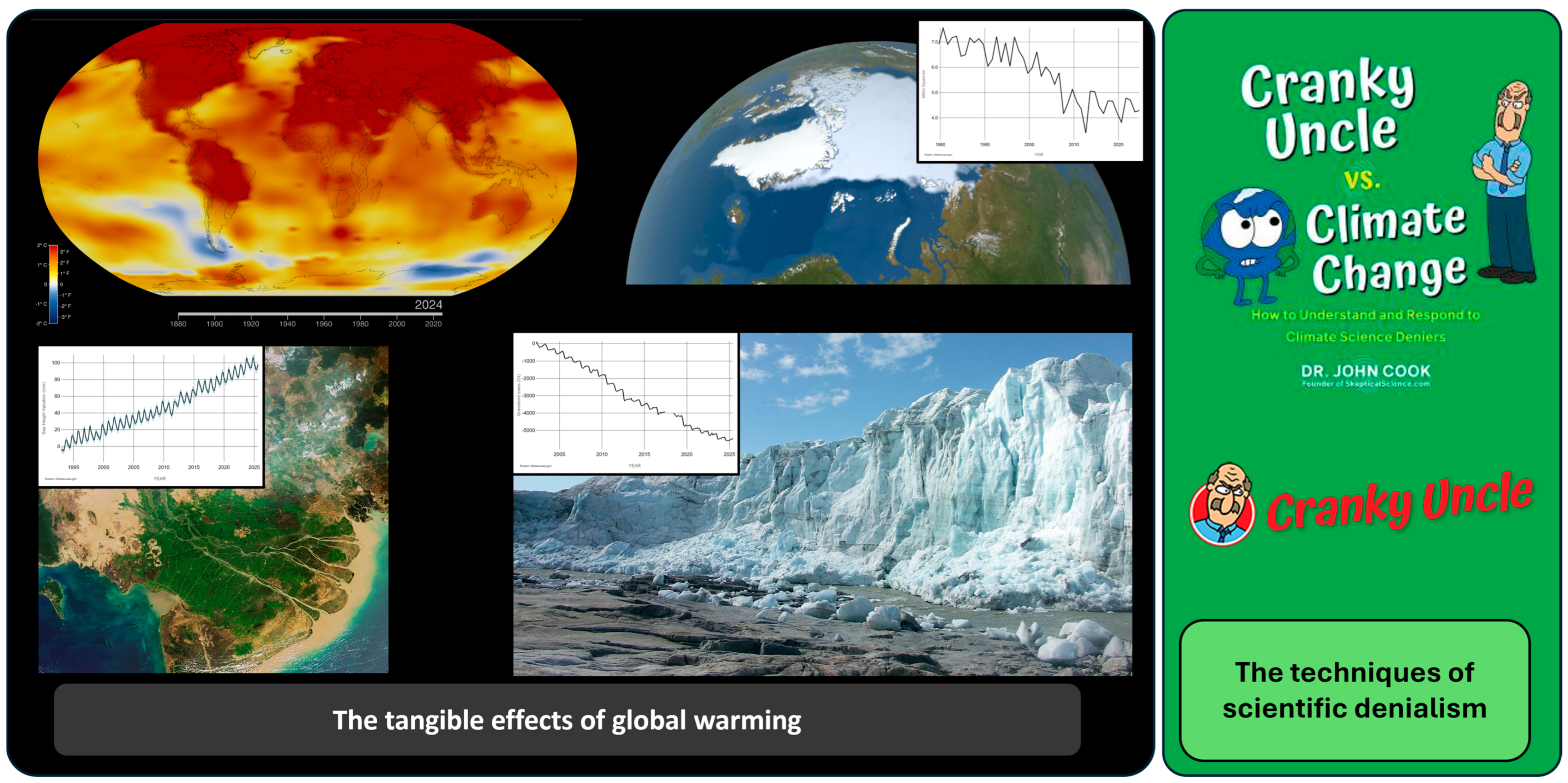
The initial phase of the sequence aims to emotionally engage students through the analysis of real data and impactful visualizations, such as NASA videos and graphs illustrating global temperature anomalies from 1880 to the present [77], as well as ice melting and sea-level rise [78,79]. Building on this visual foundation, the study explores ice melting in greater depth by distinguishing between Arctic sea ice and terrestrial ice masses, such as those in Greenland and Antarctica (see Figure 1, left). Furthermore, local examples, like a time-lapse of the Fellaria glacier [80], are utilized to make the tangible effects of global warming more relatable and concrete for the students.
Transitioning from the physical consequences to the psychosocial dimension, the sequence addresses the issue of misinformation by introducing inoculation theory. This is achieved through the online game Cranky Uncle [81] (see Figure 1, right), which teaches students to identify the five main techniques of scientific denialism: fake experts, logical fallacies, impossible expectations, cherry-picking, and conspiracy theories. To put these concepts into practice, students critically analyze real examples of fake news drawn from social media, such as the use of a single summer snowfall to deny global warming. Consequently, this activity trains them to recognize and deconstruct attempts at manipulating scientific information.
At this stage, a fundamental cognitive step involves clarifying the distinction between “weather” and “climate.” This is illustrated through the well-known analogy of the dog (representing the weather) and its owner (representing the climate), which effectively explains how daily fluctuations do not contradict long-term climate trends measured over 30-year periods. Finally, the section concludes with a discussion on scientific consensus. This closing activity serves to correct students’ widespread underestimation of the issue by demonstrating that over 95% of the global scientific community agrees on the anthropogenic origin of the current climate crisis [82].

4.2. Climate and Earth’s Temperature (KNOW)

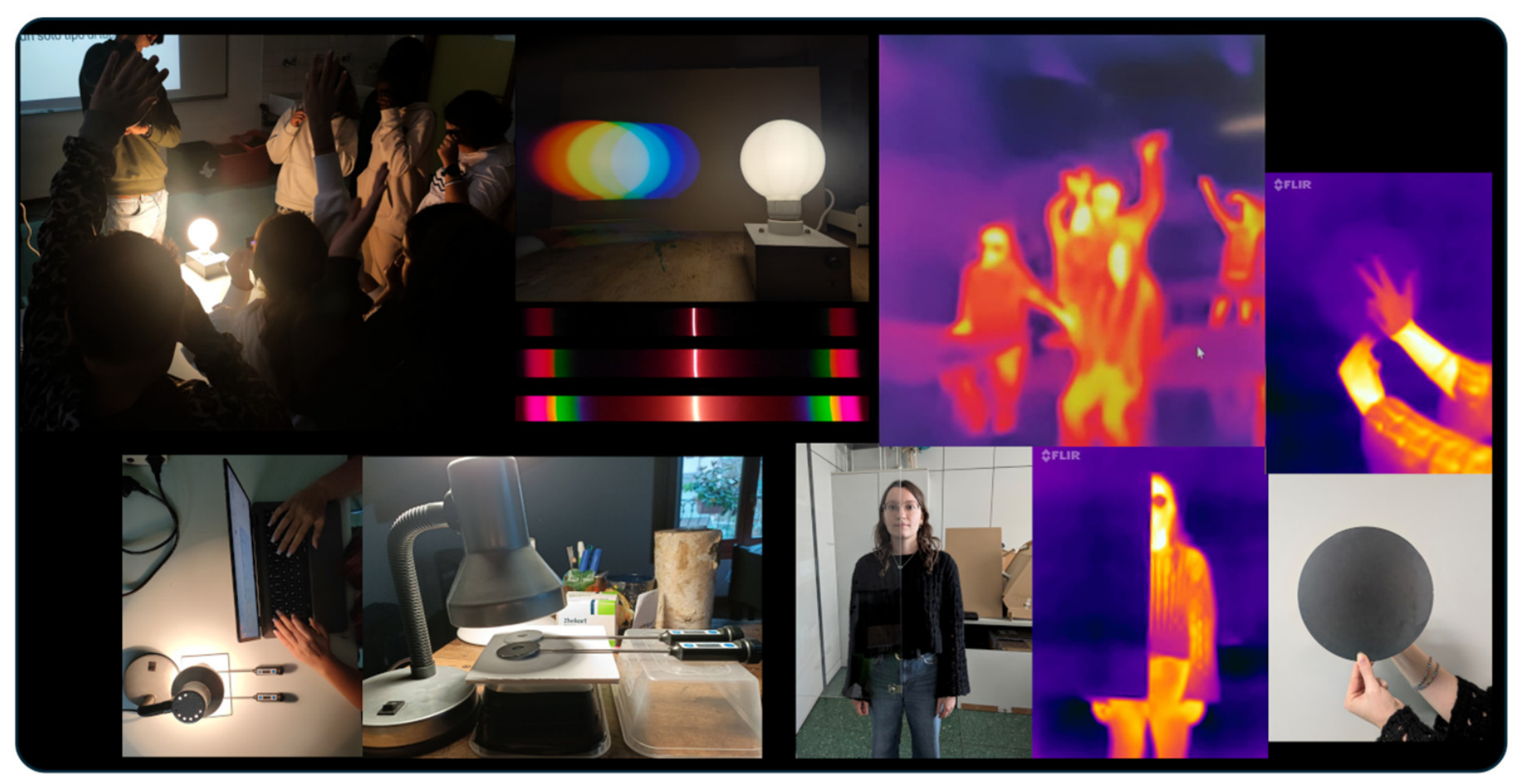
The sequence continues by defining electromagnetic radiation as an entity distinct from matter: massless, intangible, and capable of propagating at the speed of light. Building on this definition, an initial experiment on white light sources is conducted using the Predict–Observe–Explain (POE) strategy. Using a diffraction grating, students compare an incandescent lamp (which produces a continuous spectrum) with a fluorescent one (which yields a line spectrum). This comparison allows them to understand both the decomposition of light and the functioning of human ocular receptors. Following this, the concept of wavelength is introduced to classify radiation into short, medium, and long categories. Invisible radiation is made perceptible to students by employing a thermal imaging camera for infrared (IR) detection and utilizing the fluorescence of tonic water for ultraviolet (UV) observation. To demonstrate thermal radiation, an experiment is conducted in which a conductor is heated to high temperatures due to the Joule effect. As the voltage increases, the wire emits first IR and then visible light (red, green, and blue). This observation enables students to clearly distinguish between solar emission, which is predominantly visible, and terrestrial emission, which is primarily infrared.
Moving from the properties of radiation to its interaction with matter, students engage in a structured inquiry activity using metal plates. By measuring the temperature over time of a white plate and a black plate exposed to the light of a lamp, they discover the phenomena of absorption and reflection, as well as the concept of steady state. These findings are then applied to a planetary scale through the analysis of Earth’s albedo. By examining global maps, students investigate how various surfaces—such as ice, oceans, and clouds—reflect sunlight in different percentages depending on the season [83]. Synthesizing these earlier discoveries, a preliminary climate model (Sun-Earth) is constructed. This model predicts a global average temperature of −18 °C, thereby highlighting the inadequacy of a model that lacks an atmosphere. To address this gap, an experiment on selective transparency is conducted. Students investigate how different materials (such as glass, silicon, and Plexiglas) interact differently with IR, visible light, and UV radiation, thus dismantling the misconception of transparency as an absolute property and linking it instead to wavelength. At a microscopic level, a PhET simulation titled ‘Molecules and Light’ allows students to observe how greenhouse gases (CO2, methane, water vapor) absorb and re-emit terrestrial infrared radiation, unlike the primary gases in the atmosphere. This comprehensive understanding leads to the development of a second model (Sun–Earth–Atmosphere), which introduces the greenhouse effect, raising the estimated average temperature to approximately 15 °C and clarifying the critical distinction between the natural and anthropogenic greenhouse effects.
The activities conducted with the students are illustrated in Figure 2, while further details on the sequence are discussed in the references [65,75,76].
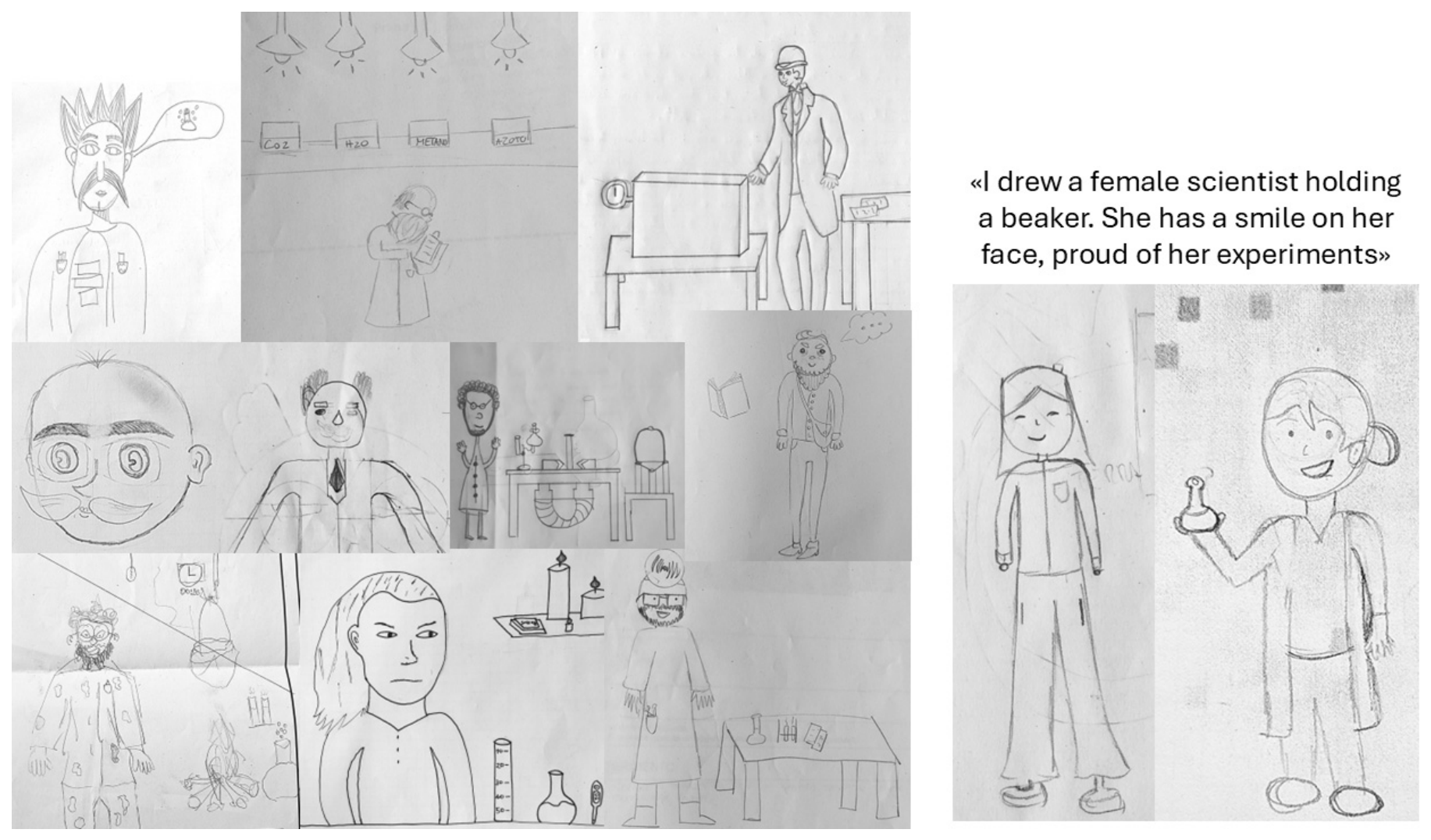
Before concluding the section of the sequence on climate, a psychosocial dimension is introduced via the Draw-A-Scientist Test (DAST). Students are asked to draw and describe the person they imagine was the first scientist to conduct experiments on the heating of atmospheric gases. The students’ drawings are shown in Figure 3. This activity is specifically designed to bring out and analyze deeply rooted gender stereotypes regarding the representation of scientists. Directly addressing these stereotypes, the sequence concludes with the story of Eunice Newton Foote and an accompanying social reflection. Foote is presented as the pioneering scientist who, in 1856, first experimentally demonstrated the warming effect of CO2. The ensuing discussion covers the historical context of inequality, the Matilda Effect (the systematic under-recognition of women’s scientific discoveries), and Foote’s active role as a suffragette. Ultimately, this narrative serves to stimulate critical reflection on the complex relationship between science, gender, and society.

4.3. Energy (DO)

The sequence introduces the critical link between energy and sustainability by demonstrating that the energy supply sector is the primary contributor to greenhouse gas emissions in the European Union [84]. To make this concept accessible to lower secondary school students, an operational definition of energy is provided: “We need energy when we want to heat, illuminate, or move something”.
This approach deliberately avoids the more complex physical concept of work. Building upon this intuitive foundation, the first and second laws of thermodynamics are introduced as fundamental characteristics of energy: conservation (energy transforms) and degradation (a portion is always transformed into non-recoverable thermal energy).
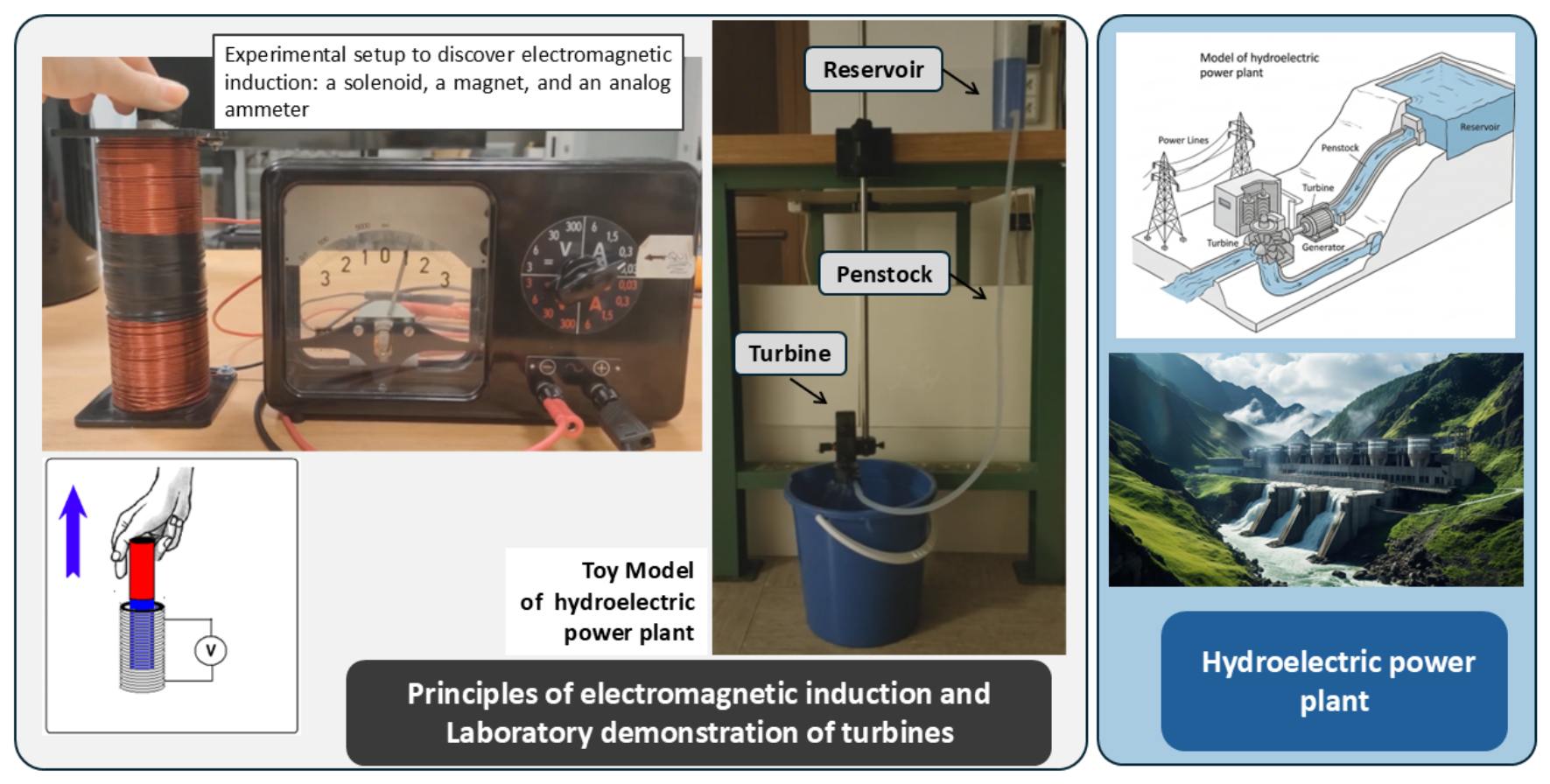
Moving from theoretical definitions to practical exploration, students engage in an open inquiry activity focused on electromagnetic induction (Figure 4). In this exercise, they must autonomously discover that generating an electric current requires relative motion between a magnet and a solenoid connected to an ammeter.
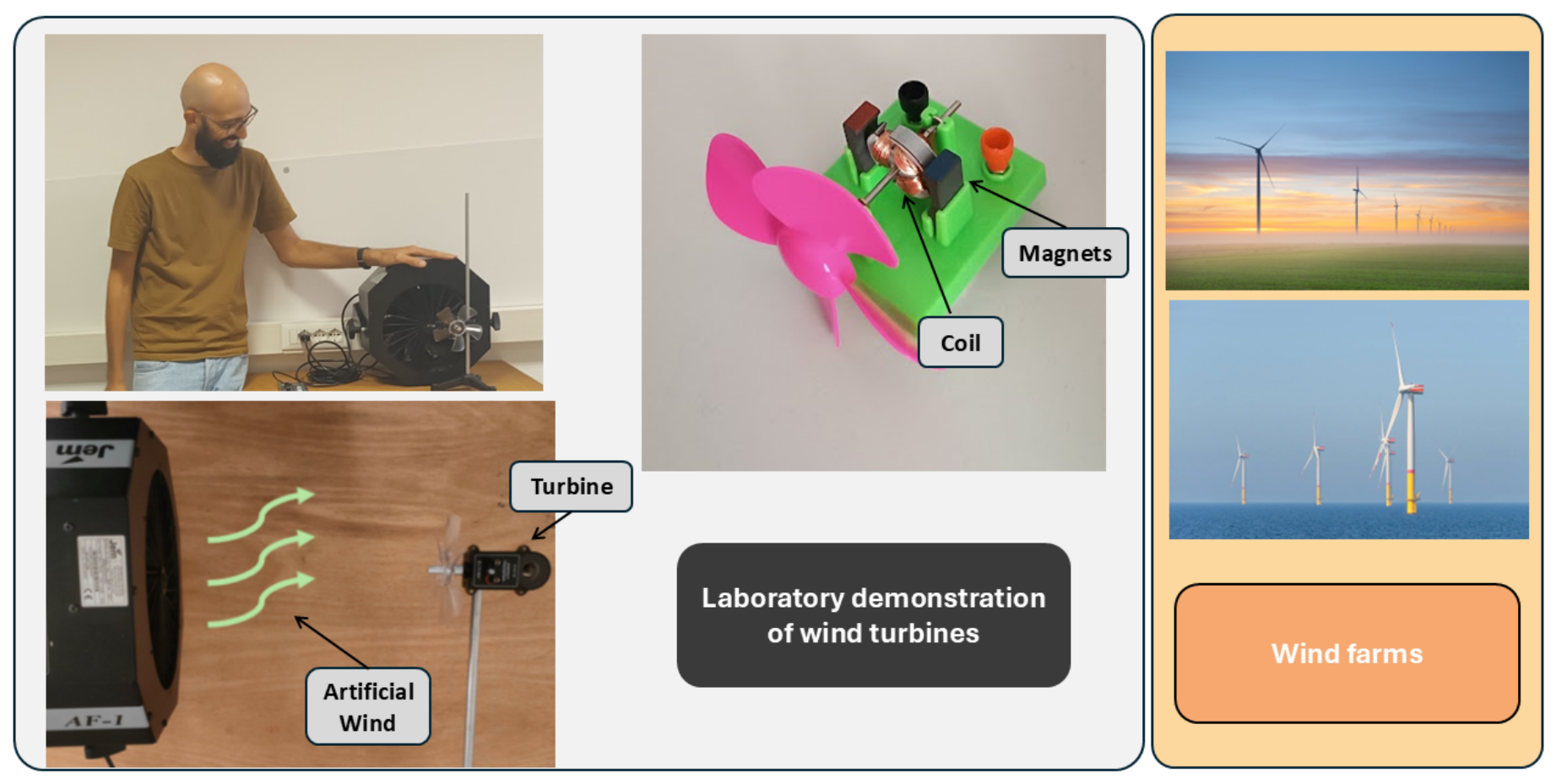
This hands-on understanding is then applied to the exploration of various energy transformations using miniature power plant models. For instance, hydroelectric and wind power models demonstrate the conversion of mechanical energy into electrical energy via rotation, utilizing a hydraulic turbine or a fan to drive a magnet within a solenoid (Figure 4 and Figure 5).
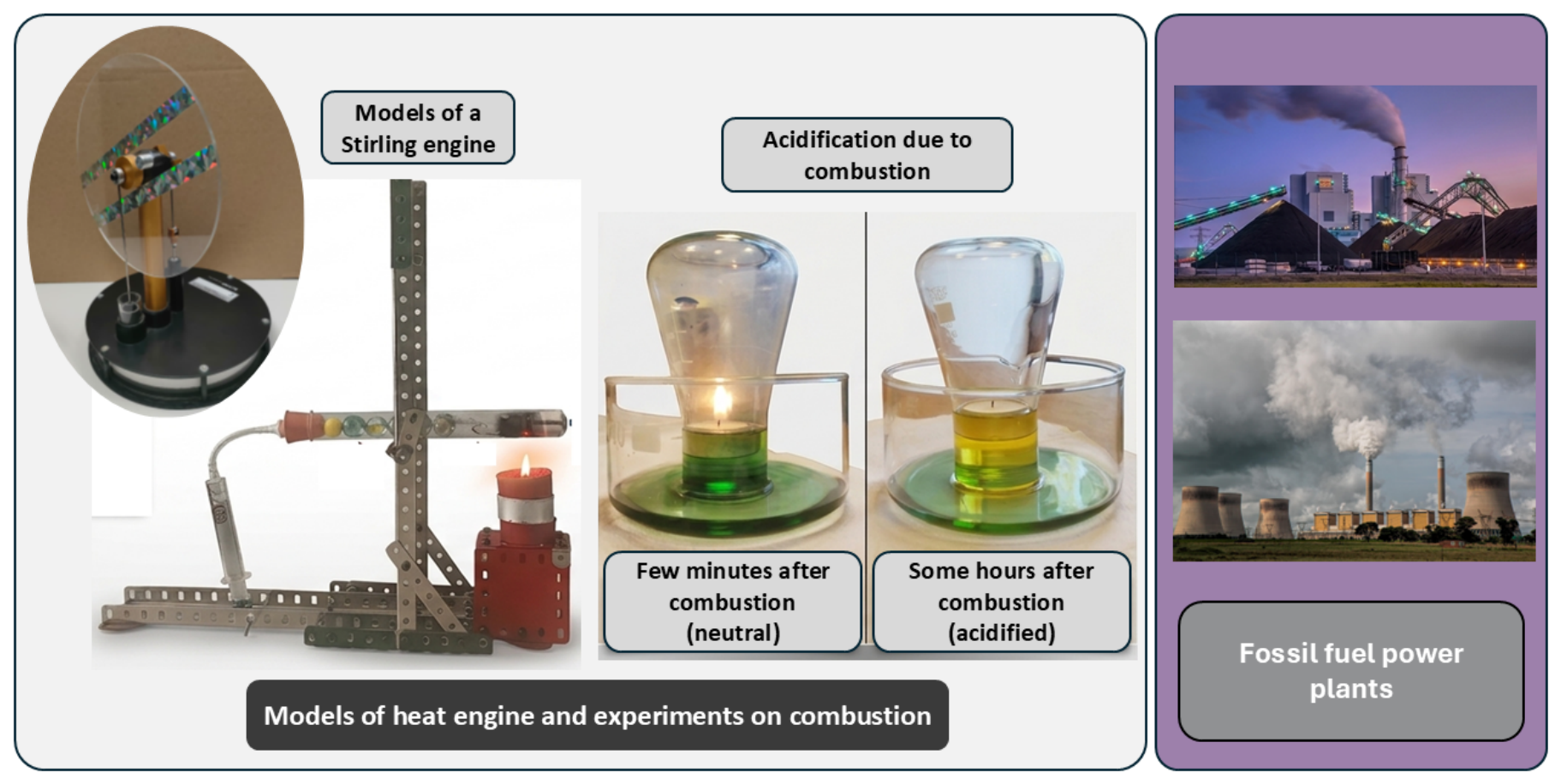
Similarly, thermoelectric power plants and Stirling engines illustrate the transformation of thermal energy into mechanical energy. This is achieved using different Stirling engine models—one driven by the temperature difference between a student’s hands and the ambient air, and another powered by the combustion of a candle (Figure 6).
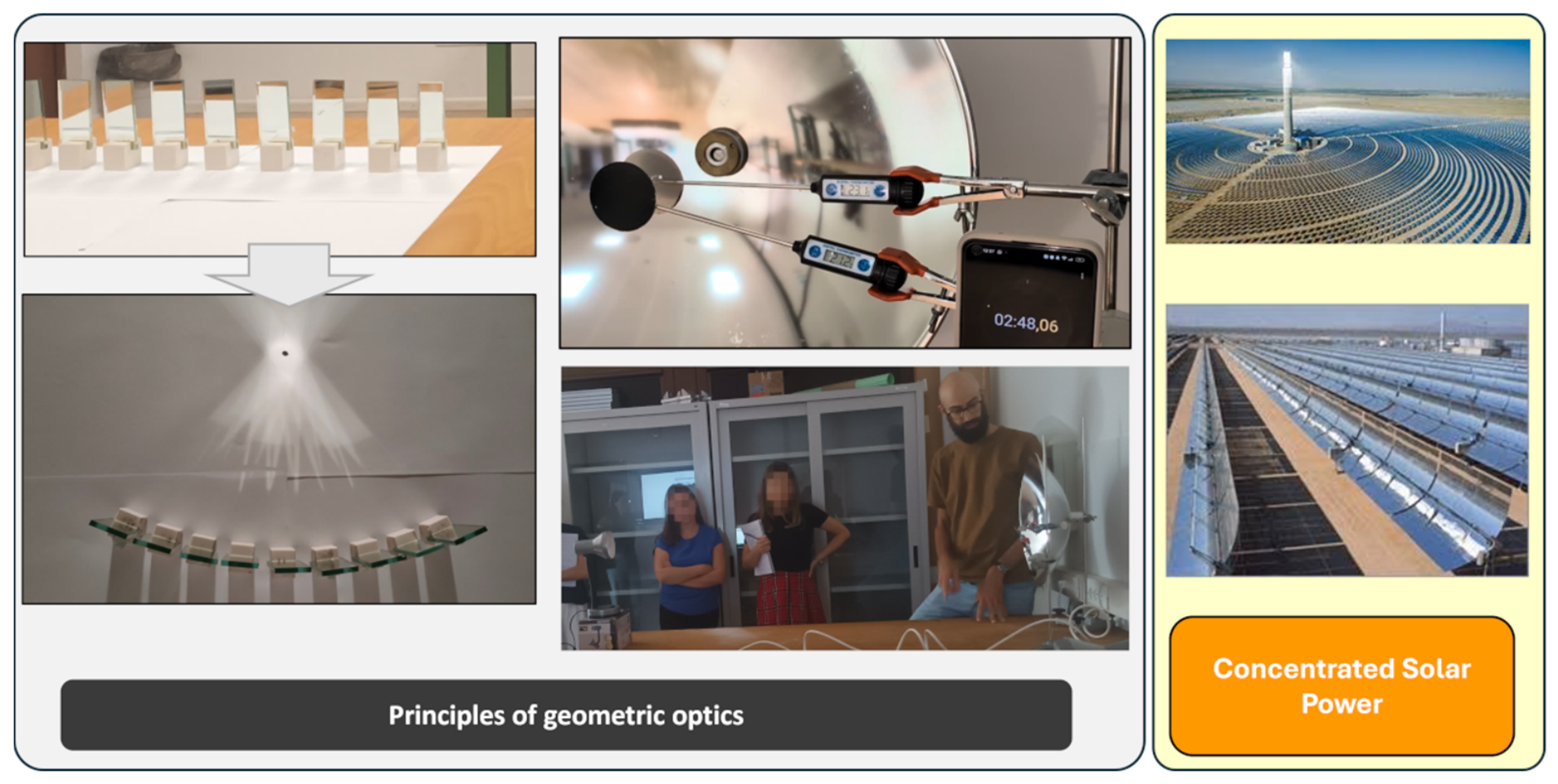
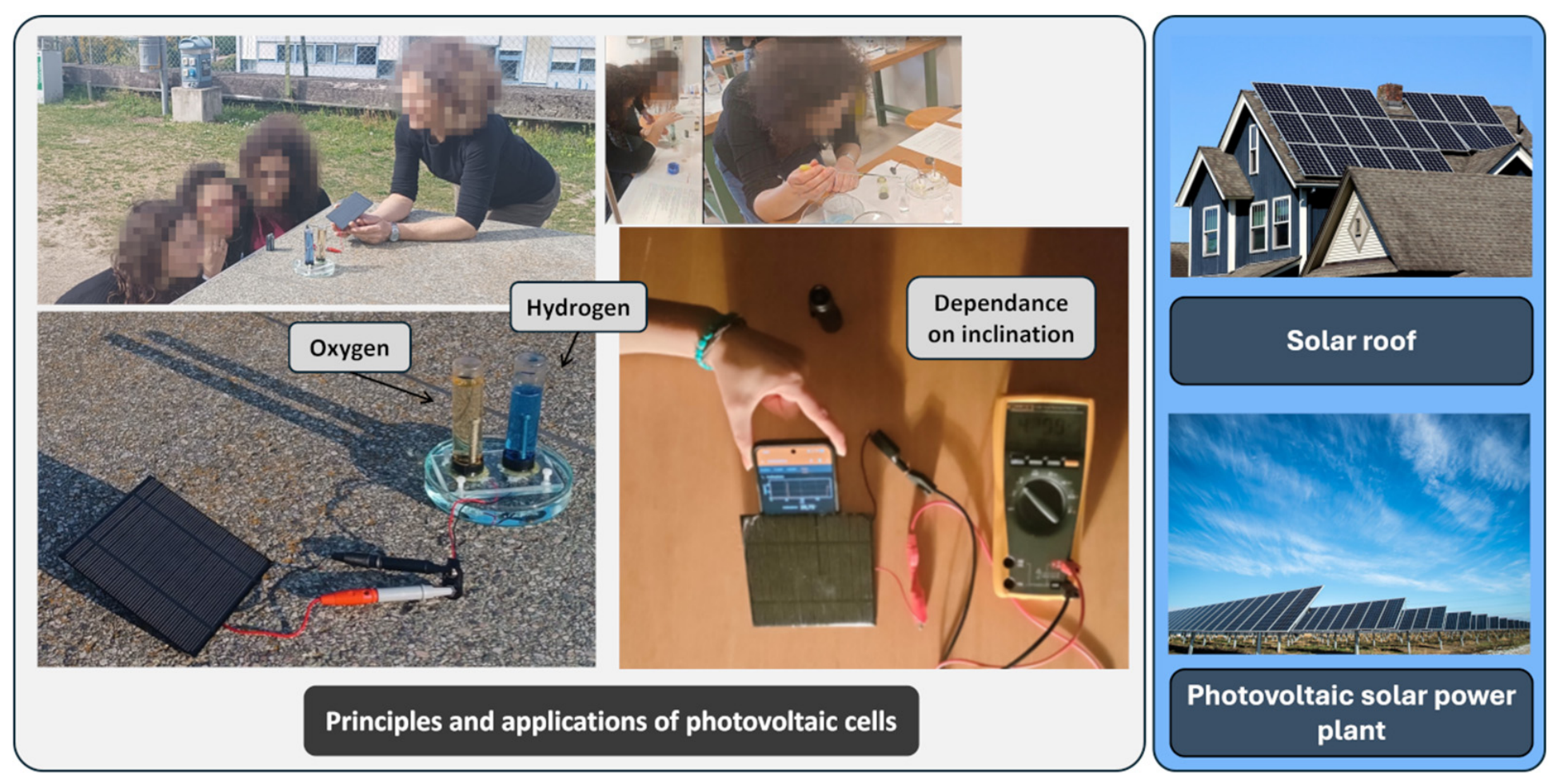
Furthermore, solar energy is explored by demonstrating the operation of photovoltaic cells (Figure 7). This includes producing hydrogen gas through electrolysis (Figure 7) and using parabolic mirrors to concentrate solar radiation at a focal point (Figure 8).
To bridge the concepts of energy production and environmental impact, a candle combustion experiment is conducted (Figure 6). Students observe a reaction that consumes oxygen and produces carbon dioxide. By using bromothymol blue as an indicator, they witness firsthand how CO2 dissolved in water causes ocean acidification. Following this demonstration, energy sources are classified into renewable and non-renewable categories, accompanied by an analysis of global primary energy consumption data, which highlights the persistent dominance of fossil fuels. To deepen their critical analysis, students use data from Our World in Data to compare different energy sources [85]. Through this exercise, they discover that the safest sources are generally also the cleanest in terms of emissions.
Finally, the sequence shifts its focus to the students’ immediate environment by analyzing domestic energy consumption in Italy. Students learn to classify household energy use, discovering that climate control (heating and cooling) is the most energy-intensive category [86]. To synthesize all the knowledge acquired, the sequence concludes with the digital role-playing game ClimarisQ [87]. In this simulation, students must make political and economic decisions to manage extreme weather events, challenging them to carefully balance popularity, ecology, and financial constraints.

5. Results

5.1. Sample and Methodology

The implementation and evaluation of the TLS primarily involved a sample of 58 Italian lower secondary school students (grades 7–8) from 3 different classes in 2 different schools (see Table 1). In addition to the student sample, the TLS was piloted with 16 lower secondary school teachers (Mathematics and Science) during a 12 h training course designed to assess the feasibility and educational value of the sequence. Participants were in-service teachers, whose academic background is predominantly in the natural sciences. Some teachers had previously implemented basic sustainability-related activities following textbook guidelines, but none had received specific or structured training in this area prior to the study. Finally, for comparative analysis, a modified version of the sequence was implemented with 6 university students enrolled in a master’s level physics education laboratory course. The results will refer primarily to the sample of lower secondary school students.
The evaluation system for the TLS on sustainability and climate change for lower secondary school is designed as an integrated framework that monitors both conceptual understanding and student engagement. Data collection relies on a combination of pre-tests, post-tests, and worksheets distributed across the three macro-areas of the sequence: Consequences of Climate Change and Misinformation, The Earth’s Temperature, and Energy.
To effectively capture students’ internal representations and track their evolution, the sequence employs multiple types of assessment. We collected our data through 3 draw-and-explain tasks, with the following prompts:
  • DGHE: “Considering the radiation coming from the Sun, make a diagram or drawing that explains the greenhouse effect. Then write three or four lines of explanation (What is it? What factors regulate it?).”
  • DSW: “Draw or describe in words the sustainable world of the future that you would build. If you choose a drawing, also write 3–4 lines of explanation.”
  • DAST: “Draw a picture of who carried out the first experiments on the heating of atmospheric gases. Describe your drawing. In your opinion, when were these experiments carried out?”
The reason for asking to use both visual and verbal information was to facilitate the interpretation of the drawings and gain a more complete and detailed view of the mental models about topics.
In addition to this specific task, pre-tests were used to diagnose initial misconceptions, while post-test worksheets, referred to as “Summary Time,” served both as evaluation tools for teachers and as synthetic materials for students to keep in their notebooks. All the items are reported in the Appendix A.
The primary aim of the study was exploratory and qualitative in nature, focusing on very young students and on the evolution of their conceptual understanding of the greenhouse effect after the educational intervention. Because of the students’ age, it was not always feasible to investigate their detailed prior knowledge through fully matched pre-test/post-test items. In several cases, the post-test questions were designed to assess the comprehension of concepts introduced during the activities rather than to reproduce equivalent pre-test questions.
Whenever comparable pre- and post-test items were available, we complemented the descriptive analysis with effect-size indicators (e.g., Cohen’s d) to provide a quantitative estimate of learning gains.
In addition, a broader picture of students’ preconceptions was obtained through the analysis of their drawings and written explanations of the greenhouse effect. These representations revealed several pre-instructional conceptions commonly reported in the literature, such as the idea of heat “trapped” by the atmosphere, multiple reflections of solar rays, or the analogy with an agricultural greenhouse. For this reason, the qualitative analysis of drawings constitutes a particularly valuable tool for investigating students’ mental models, complementing the quantitative results, and allowing us to capture aspects of understanding that are difficult to assess through standard statistical comparisons alone.

5.2. Disciplinary Learning Goals

5.2.1. DGHE: Earth’s Temperature and the Greenhouse Effect

Students’ drawings and texts were analyzed based on the categories identified in previous research on the topic [88].
The analysis of students’ drawings and open-ended responses was grounded both in the literature on mental models of the greenhouse effect [88] and in our previous experience with similar studies, including the work of Salmoiraghi et al. [65], in which the responses of 85 undergraduate mathematics and physics students were analyzed.
In the present study, the evaluators examined the occurrence of conceptual elements frequently reported in the literature on students’ reasoning about the greenhouse effect [65,88,89]. These included: the trapping or reflection of solar radiation within the Earth–atmosphere system; the identification of greenhouse gases as responsible for the phenomenon; the analogy with an agricultural greenhouse; the representation of a well-defined layer of greenhouse gases acting as a physical barrier; the interpretation of the greenhouse effect as an entirely artificial phenomenon, often reflecting confusion between the greenhouse effect and global warming; the improper use of the term heat; and confusion between the greenhouse effect and ozone-layer depletion.
To improve consistency and reliability, the three independent raters were provided with a shared rubric including these conceptual elements and their typical manifestations in both verbal descriptions and drawings. Each rater initially coded the material independently. The independent analyses showed substantial agreement, while cases of disagreement were subsequently discussed collectively until consensus was reached.
In the pre-test, approximately half of the students described rays as being trapped or reflected within the Earth–atmosphere system. Meanwhile, less than 25% of the students were able to provide at least a partially adequate explanation, identifying greenhouse gases and avoiding descriptions of a “greenhouse system that prevents rays from escaping” (e.g., “solar rays enter the atmosphere and heat the Earth because they cannot get out”) or of an unnatural phenomenon (e.g., “there are gases accumulating in the atmosphere that let the sun’s rays in but do not let them out, thus heating the Earth”). However, even among the most adequate responses, the improper use of the term heat was frequent. Furthermore, a fraction of the students (approximately 20%) mistakenly referred to the ozone layer.
In the post-test, about 80% (Cohen’s d = 1.32) of the students were able to provide at least a partially adequate model, correctly identifying the greenhouse effect as a natural phenomenon and overcoming the misconception that all incoming radiation is retained within the Earth–atmosphere system. Nevertheless, the improper use of the term heat and the overuse of the concept of trapping often persisted (e.g., “a natural phenomenon where gases in the atmosphere trap a portion of the solar heat” or “the atmosphere retains part of the solar heat”). Ultimately, even in the post-test, only 20% of the students correctly explained the processes of emission, absorption, and reflection within their overall model using appropriate scientific vocabulary. This finding could point to the development of partial or hybrid mental models, rather than to a genuine restructuring of students’ underlying conceptions, a pattern that has been widely reported in the conceptual change literature [90]. Nonetheless, this result can be considered overall satisfactory, given the students’ young age.
Regarding specific aspects, the results were even better. In the context of atmospheric physics, 88% of the students were now able to correctly identify the four fundamental radiation–matter interaction phenomena: absorption, emission, transmission, and reflection. Despite the complexity of the topic, over 50% of the pupils correctly identified the main greenhouse gases (GHGs) and recognized that transparency is not an absolute property but rather depends on the wavelength of the radiation. Finally, approximately 60% of the students correctly associated different bands of the electromagnetic spectrum with their relative wavelengths, effectively overcoming naive conceptions that limit radiation exclusively to visible light. Although a similar previous study by Toffaletti reported a correct response rate of 80% among university students [75], our finding remains particularly noteworthy given that our sample consisted of lower secondary school students.

5.2.2. Consequences of Climate Change

The instructional intervention enabled students to link the physical principles studied to real-world macroscopic effects. The following table compares the correct responses provided before and after the TLS.
Data analysis reveals a substantial improvement across all categories (Table 2). Notably, sea level rise, which was initially not identified by any student, was understood by more than half of the sample as a direct consequence of thermal increase.

5.2.3. Energy Systems and Sustainability

The final part of the sequence explored the link between energy supply and emissions. The following table illustrates the students’ ability to evaluate various sources in the post-test.
These data highlight that nearly all students understood the high-emission and low-safety profile of fossil fuels (Table 3). Comprehension of nuclear energy (characterized by low emissions and high statistical safety) proved more complex, with 32% of students still maintaining views influenced by pre-instructional biases. Nevertheless, pre- and post-instruction comparisons demonstrated notable improvements, yielding a moderate effect size for safety perceptions (Cohen’s d = 0.65, p = 0.005) and a large effect size for understanding emissions (Cohen’s d = 1.20, p < 0.001).
Finally, excellent results were achieved regarding thermodynamic principles applied to sustainability: 81% (Cohen’s d = 0.97) of students assimilated the principle of energy conservation, and 84% (Cohen’s d = 1.44) understood the concept of energy degradation (loss in the form of non-usable thermal energy).

5.3. Citizenship Learning Goals

5.3.1. DSW: Sustainable Future World

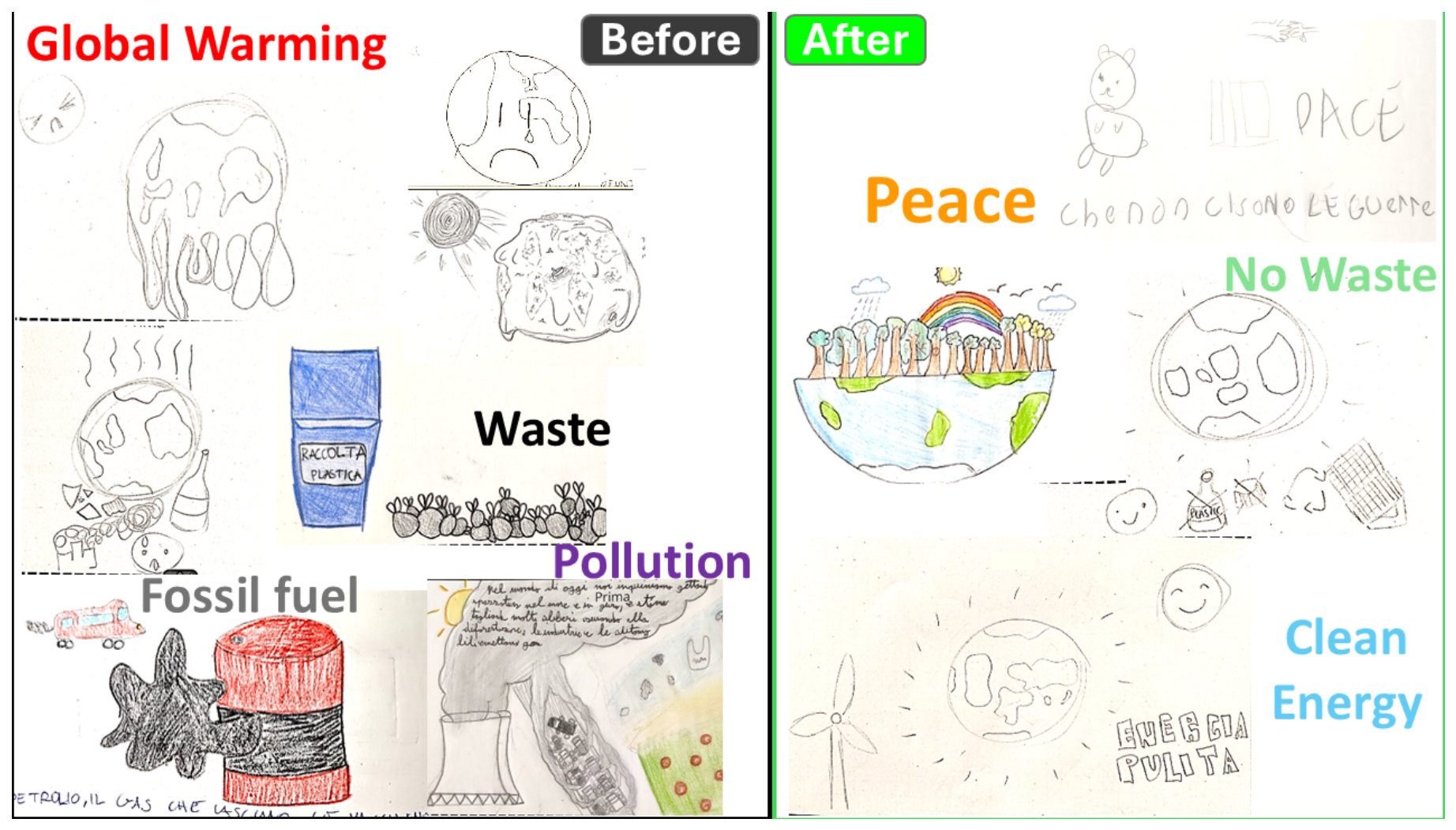
The analysis of students’ drawings and written narratives reveals a multifaceted and nuanced vision of a sustainable future world (see some examples in Figure 9). Across responses, environmental responsibility emerged as a central theme, often grounded in explicit references to scientific knowledge. One participant (KEB), for example, highlighted the relevance of climate science, stating that “the percentages of scientists who believe that climate change exists give us hope that this future is not too far away,” while emphasizing the urgency of reducing greenhouse gas emissions. Pre-intervention reflections (45Y) expressed concern that “many animal species are endangered and often people do not care about the future”, framing the current environmental crisis as both ecological and moral.
Energy transition represented one of the most prominent dimensions in students’ imaginaries. Many envisioned cities powered by renewable sources, characterized by technological innovation, and reduced waste. As 98T described, “a sustainable world would have natural energy, solar panels, less waste, greener cities and ecological transport”. Similarly, 46Y imagined a combination of “nuclear and wind energy”, accompanied by eco-friendly transport and more conscious decision-making to limit pollution. Nuclear energy was mentioned repeatedly in post-intervention responses (e.g., ZZD; EET), suggesting an increased openness toward diversified low-carbon energy portfolios. Technological optimism also surfaced in proposals such as “machines that minimize anthropogenic greenhouse gas emissions” (QFV) and even the naïve idea of “creating an infinite source of energy” (J25).
Urban transformation and circular economy principles were also salient. Students frequently described futuristic cities with integrated renewable systems and abundant green areas. KHQ (pre) envisioned “modern and futuristic cities, with skyscrapers equipped with solar panels and walls covered with climbing plants,” as well as numerous and well-distributed parks. In parallel, V2C (pre) imagined a world in which “objects are designed to last and nothing becomes waste, everything is reused”, reflecting a clear understanding of circularity and waste reduction. Everyday practices were consistently emphasized, including “not wasting food,” “using electric cars or bikes,” and “throwing litter in the bin.”
Beyond technological solutions, many students stressed behavioral change, regulation, and collective responsibility. IOB advocated “setting limits on consumption, stopping the purchase of unnecessary objects, and closing fast fashion factories,” linking sustainability to reduced consumerism and habitat protection. 78V (post) proposed the establishment of laws, sanctions for non-compliance, and state incentives for virtuous behavior. Education was perceived as a key lever for transformation: according to 45Y (post), “schools would teach respect for the planet from an early age”. Civic engagement was repeatedly foregrounded, with KHQ (pre) affirming that change would be possible if “everyone does their part.”
Importantly, several responses extended sustainability beyond environmental protection. F3L succinctly invoked “peace, no wars”, suggesting a connection between ecological futures and global harmony. V2C (post) introduced gender equality as a necessary dimension of a sustainable world, arguing that “not only male scientists but also female scientists should be recognized”. Finally, strong concern emerged regarding plastic pollution, deforestation, marine litter, and industrial emissions. One student vividly described “a trash can without trash because it is all on the ground due to rude passersby,” while others imagined a future “without plastic, microplastics, factories and cars.”
Overall, the findings indicate that lower secondary school students articulate a holistic and integrative understanding of sustainability. Their visions combine renewable and nuclear energy, circular economy principles, biodiversity conservation, social justice, education, regulatory frameworks, and everyday behavioral change. These narratives suggest that young people conceptualize sustainability not merely as environmental protection, but as a comprehensive socio-technical transformation grounded in collective responsibility and intergenerational ethics.

5.3.2. Scientific Consensus

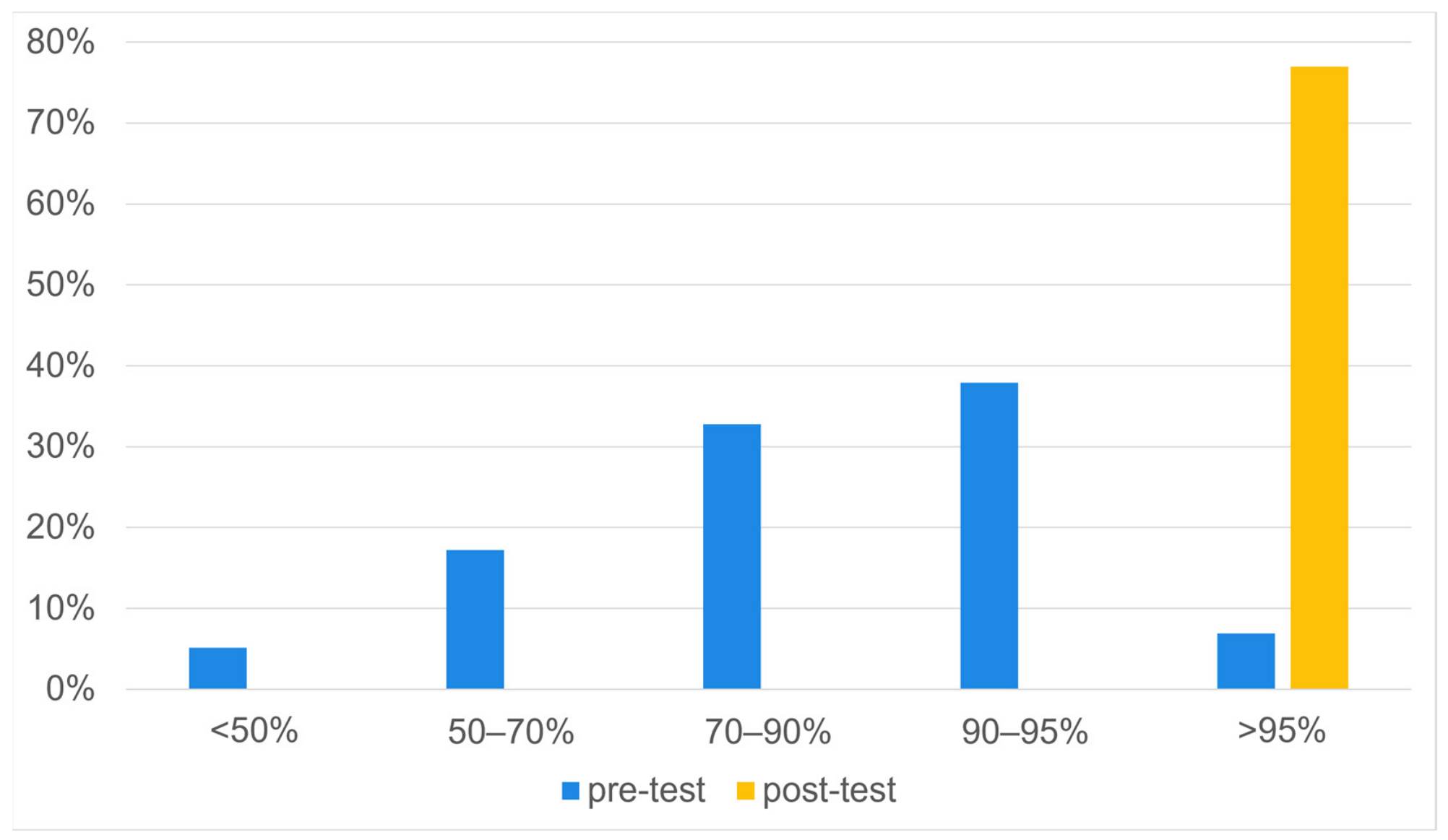
The findings indicate that students underestimate the level of scientific consensus on the existence and anthropogenic causes of climate change (Figure 3). While empirical research consistently demonstrates that more than 95% of climate scientists agree that climate change is occurring and is primarily driven by human activities, this high level of agreement is not accurately perceived by the surveyed sample.
Specifically, only 6.9% of students correctly located scientific agreement in the “>95%” category. The majority distributed their responses across lower ranges: 5.2% estimated consensus below 50%, 17.2% between 50 and 70%, 32.8% between 70 and 90%, and 37.9% between 90 and 95% (Figure 10).
This pattern reflects a well-documented “consensus gap,” whereby public perceptions lag behind the actual degree of expert agreement. The underestimation observed in this student population is particularly significant, as perceived scientific consensus is known to function as a cognitive heuristic that shapes beliefs about climate change and support for mitigation policies. When consensus is perceived as lower than it is, uncertainty may be amplified, and the urgency of collective action diminished. The responses collected at the end of the lesson indicate that 77.1% of students (Cramer’s V = 0.722) acknowledge that more than 95% of scientists agree on the existence and causes of climate change. This finding suggests that the lesson is effective in conveying an understanding of the scientific community’s position on CC.
These results underscore the importance of explicitly communicating the robustness of scientific agreement within educational contexts. Improving students’ understanding of the magnitude of expert consensus may not only correct factual misperceptions but also strengthen trust in climate science and foster more informed engagement with sustainability challenges.

5.3.3. Feelings Associated with CC

A comparison between pre- and post-test responses reveals both stability and subtle shifts in students’ emotional reactions to climate change. Since participants were allowed to select multiple options, results reflect the co-existence of complex emotional profiles rather than mutually exclusive categories. In both phases, anxiety and guilt emerged among the most frequently reported emotions, confirming that climate change is perceived as a personal and morally salient issue. Notably, guilt increased slightly in the post-test, becoming the most selected emotion overall. Feelings of helplessness and fear showed a modest decrease after the intervention, suggesting a potential reduction in paralyzing emotional responses. Indifference remained stable but low compared to other categories, indicating sustained engagement with the topic. Motivation and trust in institutions displayed a slight increase in the post-test, pointing toward a possible strengthening of agency-oriented attitudes. Anger and sadness remained present but did not intensify. Empathy showed minimal variation across the two measurements. Overall, the post-test profile suggests a small shift from distress-oriented emotions (e.g., fear, helplessness) toward more responsibility- and action-oriented feelings (e.g., guilt, motivation), while maintaining high overall emotional involvement.

5.3.4. Attitudes and Engagement

The comparison between pre- and post-test Likert-scale means (1–5) reveals a differentiated pattern of attitudinal change. Trust in science remained stable at a high level (M = 3.8 in both measurements), suggesting that the intervention did not alter students’ overall confidence in scientific knowledge. Concern about climate change showed a marginal decrease (from M = 3.6 to M = 3.5), although it remained above the midpoint, indicating sustained awareness of the issue.
More pronounced changes emerged in perceived responsibility and behavioral intentions. Personal responsibility decreased from M = 3.5 to M = 2.7, representing the most substantial shift in the dataset. Similarly, personal willingness to reduce consumption declined from M = 3.0 to M = 2.8. Perceptions of others’ willingness to reduce consumption were consistently the lowest-rated dimension and decreased slightly from M = 2.4 to M = 2.3.
Overall, while cognitive trust in science and concern about climate change remained stable, the post-test results indicate a reduction in self-attributed responsibility and reported willingness to adopt consumption-reducing behaviors. This pattern may reflect a shift in how students interpret responsibility—potentially redistributing it from the individual to systemic or institutional levels—rather than a simple decline in environmental commitment. Further qualitative analysis would help clarify the underlying mechanisms driving these attitudinal changes.

5.3.5. DAST

The analysis of students’ drawings of a scientist reveals the persistence of a strong gender stereotype. Most participants initially depicted a male figure, typically characterized by a lab coat and conventional scientific elements. As TXB explicitly noted, “a stereotype for scientists is being male,” highlighting students’ awareness of this implicit bias. Similarly, HR1 reflected that “we imagine scientists are always men, and that is not true; it is a stereotype”, demonstrating emerging critical consciousness.
Several students directly acknowledged the gender imbalance in their representations. 6PA observed that “many people drew a male scientist instead of a female scientist, and it makes me think that many people believe women cannot do that job”. V2C further admitted, “we are convinced that scientists are male and we are sexist”, while KEB attributed this perception to living “in a patriarchal and sexist world”. These reflections indicate an explicit recognition of the socio-cultural roots of the stereotype.
The discussion of historical context, particularly in relation to the figure of Eunice Newton Foote, prompted deeper analysis of structural inequality. 3ZB commented that “in that period women were undervalued and therefore Eunice Newton Foote’s experiments were forgotten”. Likewise, 7G1 suggested that “women at that time did not have the same rights and recognition, probably for this reason her work was forgotten and rediscovered only recently”. 98T reinforced this perspective, stating that “women were not treated equally even if equally competent”. These responses reveal students’ ability to connect individual invisibility to broader systems of discrimination.
At the same time, many reflections emphasized women’s competence and resilience. NCO asserted that “a woman can also conduct experiments and discover something new, not only a man,” while KG2 succinctly affirmed that “women can also be scientists”. WWO stressed that “despite sexism, women can prove themselves as much as men,” and KHQ added that “it does not have to be a man to carry out these experiments; women are capable too.” Such statements reflect a reframing of scientific identity as inclusive and gender neutral.
Some responses conveyed pride and emotional engagement. R07 wrote, “the fact that a woman in that difficult period managed to understand something important makes me happy and proud”, underscoring the empowering effect of counter-stereotypical examples. Similarly, WXH concluded that “even if you are a woman, you should never give up.” J25 broadened the reflection beyond gender, suggesting that “everyone has genius potential; they just have to find it within themselves”.
Many students also relied on a highly stereotypical visual and personality profile of the scientist as a “mad” or obsessive male experimenter, particularly associated with gases and atmospheric studies. Descriptions frequently portrayed an eccentric, isolated figure: “a crazy scientist obsessed with gases,” “bald with dark eyes, moustache and unibrow,” “tall, thin, and milk-white,” often imagined as “grumpy and strict, but with a heart of gold.” Age was sometimes emphasized, with several students referring to “an old man in his fifties who discovered gases and stayed up many nights to understand them.” Social status and dramatic narratives also emerged, for instance imagining “a wealthy scientist who died during one of his experiments.” Visual markers of scientific identity were remarkably consistent: “a white lab tunic, very messy hair, a protective mask,” or “a curious scientist with disheveled hair heating air in test tubes, surrounded by candles and strange instruments, smiling whenever he discovers something new.” These characterizations suggest that, beyond gender, students’ representations draw heavily on cultural archetypes of the eccentric, male, nineteenth-century experimenter, socially isolated, visually distinctive, and intensely devoted to laboratory work, revealing the persistence of deeply embedded iconographic models of scientific identity.
Overall, the findings indicate that while the male scientist stereotype remains dominant in students’ spontaneous representations, guided reflection can foster critical awareness of gender bias and historical injustice. Exposure to overlooked female figures in science appears to promote more inclusive conceptions of scientific identity, grounded in equality, recognition, and shared intellectual potential.

5.3.6. Results with Lower Secondary School Teachers

The study involved 16 pre-service lower secondary school teachers enrolled in training courses organized by the University. Their perspectives were collected through semi-structured interviews and short evaluation reports on the activities carried out after the course.
The results highlight a general appreciation for the proposed activities and a strong interest in active methodologies and an experimental approach, as one teacher noted: “The proposed experiments are highly consistent with the current objectives of lower secondary education. They emphasize direct observation of phenomena, the use of analogies and simple models, and connections with everyday life.” The interdisciplinary nature of the activities, aligned with the goals of the 2030 Agenda, was also highly valued. As another teacher stated: “The sustainability laboratory was particularly interesting because it connects physical concepts with highly relevant topics such as civic education, climate change, and the impact of individual and collective choices on the health of the planet. The focus on fake news and misconceptions is also highly effective, as it helps students develop critical thinking and the ability to distinguish between scientific data and distorted information”.
However, the findings also confirm the persistence of certain misconceptions and stereotypes like those observed among younger students. For instance, as lower secondary students, pre-service teachers tend to underestimate the level of scientific consensus on climate change and often provide inadequate explanations of the physicochemical basis of the greenhouse effect. Moreover, they report difficulties in providing an intuitive definition of energy beyond the standard textbook formulation and highlight a lack of appropriate teaching strategies.
Regarding gender stereotypes, the results of the DAST reveal the persistence of deeply rooted representations, comparable to those found among younger students. As one teacher remarked: “We were quite surprised to discover that the first scientist to study climate was a woman”, adding: “This led us to realize how important it is to help students understand that both men and women can engage in science; moreover, it is essential to convey the idea that scientific work is always carried out collaboratively, within a context of strong cooperation”.
Another teacher observed: “I also found it enlightening to reflect on our role as ‘teachers’ regarding the stereotype of the male scientist. I had never considered that presenting examples such as Eunice Newton Foote, a pioneering figure in science, is also an act of civic education that can enhance female students’ self-efficacy, preventing the idea that a scientist is ‘male, European, and elderly’ from taking root, and thereby avoiding limiting their perception of what they can become”.
In summary, teachers’ responses indicate that the TLS is an effective tool for bridging the gap between educational research and classroom practice, as well as for integrating socio-scientific issues into teaching. Pre-service teachers evaluated the sequence very positively and expressed a strong willingness to implement sections on the greenhouse effect, energy-related experiments, and activities addressing misinformation. Many also appreciated the transdisciplinary approach and the use of laboratory work and simulations, emphasizing how the course helped strengthen their understanding of topics that are not always fully mastered.

6. Discussion

This study demonstrates that by integrating climate physics, gender equality, and the fight against disinformation, it is possible to reconceptualize sustainability education as a holistic and transformative learning experience. A first key outcome concerns the effectiveness of the S-DREM framework, which enabled the progressive refinement of the teaching–learning sequence (TLS), moving from versions tested with university and upper secondary students to an “elementarized” version accessible to lower secondary school students. The adoption of the CARE–KNOW–DO framework ensured a coherent pedagogical structure in which an initial emotional engagement with the consequences of climate change provided the motivation needed to confront the rigor of the underlying physical concepts, ultimately orienting learning towards the analysis of solutions and collective action (DO). The data indicate that an intervention of 10–12 h is sufficient to initiate a substantial conceptual progression, although the intrinsic complexity of the topic requires careful management of time and scientific terminology, which remains one of the main obstacles at this educational level.
With regard to disciplinary objectives, the TLS showed a remarkable capacity to shift students’ mental models towards scientifically more robust interpretations. In relation to the Greenhouse Effect, approximately half of the students in the pre-test described it as a permanent “trapping” or mechanical reflection of solar radiation, often conflating it with the ozone hole, whereas in the post-test 80% of participants provided at least a partially adequate model, recognizing the GHE as a natural phenomenon and correctly identifying greenhouse gases. Conceptual understanding of the four fundamental radiation–matter interactions (absorption, reflection, emission, transmission) reached 88% correct responses, with the introduction of selective transparency (the dependence of transparency on wavelength) proving particularly effective: understanding of this concept increased from 13% to 85% thanks to the activities on selective transparency. The intervention was also effective in linking physics to macroscopic effects, as evidenced by the shift from 0% to 57% in correct explanations of sea-level rise as a consequence of global warming. Furthermore, students successfully assimilated thermodynamic principles applied to sustainability, with 81% able to identify energy conservation and 84% able to recognize its degradation into thermal energy, although persistent difficulties emerged in the objective evaluation of nuclear energy, suggesting the resilience of cultural biases in the face of formal instruction.
One of the most original strengths of the study lies in the integration of inoculation theory to counter the “new denialism” and support scientific citizenship within the CARE dimension. The results show a dramatic reduction in the so-called “consensus gap”: whereas only 10% of students initially estimated the scientific consensus on anthropogenic climate change to exceed 95%, this proportion rose to 77% in the post-test. Moreover, 83% of students internalized the distinction between short-term weather fluctuations and long-term climate trends, a key competence for resisting fake news that exploits isolated extreme events (such as summer snowfalls). The use of the Cranky Uncle game enabled students to identify manipulation techniques such as cherry picking and appeals to false experts, thereby strengthening their trust in the scientific method as a self-correcting rather than dogmatic process.
The social dimension of sustainability, particularly in relation to gender, was significantly enhanced through the figure of Eunice Newton Foote. The DAST confirmed the persistence of strong gender stereotypes, with most students initially depicting the scientist as a solitary and “mad” male figure. The comparison between these drawings and Foote’s story fostered critical reflection on historical injustice and the structural barriers that have obscured women’s contributions in STEM fields; 20% of students explicitly discussed the lack of women’s rights in the nineteenth century, thus expanding the debate on sustainability beyond environmental boundaries towards social equity and Sustainable Development Goal 5.
Despite the conceptual and critical gains, the TLS revealed a major limitation in the translation of knowledge into personal engagement (agency) within the DO phase. Post-test data did not show a significant increase in students’ willingness to reduce personal consumption or in their perceived individual responsibility; on the contrary, a decrease in self-attributed responsibility was observed (from M = 3.5 to M = 2.7), suggesting that deeper understanding of the complexity of the problem may have led students to redistribute responsibility towards systemic or institutional levels. Future implementations could adopt longer-term interventions, in which activities are revisited over several weeks or months and embedded within the regular mathematics and science curriculum, in order to consolidate learning and support more stable changes in students’ everyday practices. Embedding the activities within whole-school initiatives and outdoor or place-based experiences could also contribute to a stronger sense of ownership and shared responsibility, thus supporting both environmental learning and students’ agentic participation.
Anxiety and guilt remained the dominant emotional responses, although the final phase of the TLS explicitly sought to foster motivation through the analysis of energy solutions and urban sustainability.

7. Limitations

This study has several limitations that should be acknowledged. First, the small sample size limits the generalizability of the findings. Second, the absence of a control group makes it difficult to attribute the observed changes exclusively to the intervention, although maturation effects are unlikely given the short duration of the educational activity, which was conducted over a period of ten days. Nevertheless, other external factors cannot be excluded, such as students independently seeking additional information stimulated by the intervention itself.
Furthermore, comparison with traditional teaching contexts is challenging because many of the topics addressed in the intervention are rarely included in standard curricula. For this reason, it is difficult to envisage a meaningful control group following conventional instruction, as such students would likely not encounter these topics at all. Finally, a broader understanding of students’ initial conceptions would have allowed for a more precise pre–post comparison. However, due to the students’ young age, many of the concepts explored in the study had not yet been previously encountered, limiting the extent of their pre-existing ideas.
An additional limitation concerns the observed changes in participants’ self-reported attitudes and intentions between pre-test and post-test assessments. While such shifts may reflect a reorientation of perceived responsibility from individual to broader systemic or institutional levels rather than a genuine decline in commitment to the issue under study, the absence of qualitative data constrains our ability to disentangle the underlying processes, which should be examined in future research.
Finally, some assessment items, particularly negatively phrased statements designed to probe common misconceptions, may have introduced ambiguity or increased cognitive complexity for younger learners. Future studies should further refine and pilot-test the wording of the instruments to improve clarity and reliability.

8. Conclusions

The lower secondary school TLS proved to be a powerful tool for promoting multidimensional scientific literacy, enabling students to perceive the climate crisis not only as a physical problem but also as a human and social challenge. Its strengths lie in the effective overcoming of misconceptions related to radiation, the increased confidence in scientific consensus, and the pioneering reflection on gender equality as a pillar of sustainability. At the same time, the limitations encountered in fostering climate agency suggest that science education alone is insufficient to trigger behavioral change; longer interventions, more deeply embedded in everyday school life and supported by targeted psychological strategies, appear necessary to transform climate-related anxiety into collective action. Future developments of this work include expanding teacher training to bridge the gap between educational research and classroom practice by providing ready-to-use instructional kits, improving the design of assessment instruments and pre/post-test formats to avoid negative or ambiguous items that may confuse students, and strengthening the DO phase through citizen science projects and collaborations with extra-school stakeholders (NGOs, local authorities), so as to render students’ engagement tangible and community-oriented. Overall, this research lays the groundwork for an educational model that goes beyond teaching climate science to cultivate citizens capable of inhabiting the complexity of the future in a critical and responsible manner.

Author Contributions

Conceptualization, E.P., A.S. and P.O.; methodology, E.P., A.S. and P.O.; validation, E.P., A.S. and P.O.; formal analysis, E.P., A.S. and P.O.; investigation, E.P., A.S. and P.O.; resources, E.P., A.S. and P.O.; data curation, E.P., A.S. and P.O.; writing—original draft preparation, A.S. and P.O.; writing—review and editing, E.P., A.S. and P.O.; visualization, E.P., A.S. and P.O.; supervision, P.O.; project administration, P.O. All authors have read and agreed to the published version of the manuscript.

Funding

This research received no external funding.

Institutional Review Board Statement

According to the guidelines of the University of Trento Research Ethics Committee (Comitato Etico per la Ricerca, CER https://www.unitn.it/en/research/responsible-research/ethics-and-integrity/research-ethics-committee, accessed on 21 April 2026), ethical review is required for research protocols involving human participants which imply risks for the psycho-physical well-being of the subjects involved, particularly in contexts involving patients or activities with direct diagnostic, therapeutic, or healthcare relevance. As the present study does not fall within these categories, formal ethical approval was not required, provided that participants’ privacy and confidentiality were fully protected. This condition was satisfied, as the researchers did not have direct access to the original student documentation, which remained under the exclusive control of the educational institution that authorised the teaching initiative and coordinated the involvement of both researchers and school teachers. Data collection was conducted in a fully anonymous manner, with no possibility of tracing responses back to individual participants. The data were supplied by teachers from the participating school, and results are reported only in aggregated or statistical form.

Informed Consent Statement

Written informed consent was obtained from all adult participants prior to the commencement of the study, in compliance with Italian legal requirements. The study adheres to the provisions of the EU General Data Protection Regulation (Regulation (EU) 2016/679, Article 89; accessed on 21 April 2026).

Data Availability Statement

Dataset available on request from the authors.

Acknowledgments

The authors acknowledge the invaluable contribution of professors Natalia Cristinelli and Roberta Guardini, who shared their teaching expertise and allowed us to test the TLS with their students. The authors gratefully acknowledge the Strategic Plan of the University of Trento 2022–2027, which, through the SALPA project (L’Università salva il pianeta: promuovere la partecipazione attiva della società civile alla transizione verso un pianeta più sostenibile), provided financial support for this work.

Conflicts of Interest

The authors declare no conflicts of interest.

Appendix A

This appendix lists the comprehensive set of items administered during the TLS, organized by their respective phases.
1. 
General Pre/Post-Test Prompts
  • Sustainable Future World (DSW)
  • “Draw or describe in words the sustainable world of the future that you would build. If you choose a drawing, also write 3–4 lines of explanation”.
  • The Greenhouse Effect (DGHE)
  • “Considering the radiation coming from the Sun, make a diagram or drawing that explains the greenhouse effect. Then write three or four lines of explanation (What is it? What factors regulate it?).”
2. 
Pre-tests (Initial Diagnosis)
  • Pre-test 1: Causes, Consequences, and Psychosocial Dimension
    • Item 1A (T/F): “A heavy summer snowfall is proof that climate change does not exist.”
    • Item 1B (T/F): “The percentage of CO2 in the air is so small that it cannot contribute to global warming.”
    • Item 2 (Open): “What are the consequences of climate change?”
    • Item 3 (Open): “What are the causes of climate change?”
    • Item 4 (MC): “How many scientists agree that ‘climate change exists and is caused by human activity’?” (Options from <50% to >95%).
    • Item 5 (MC): “How do you feel when you think about climate change?” (Anxiety, Indifference, Fear, Helplessness, Guilt, etc.).
    • Item 6–10 (Likert 1–5):
      • How much do you trust science?
      • How concerned are you about climate change?
      • I feel that helping to combat climate change is not my responsibility.
      • I am prepared to drastically reduce my energy consumption to help combat climate change.
      • In your opinion, how many Italians are in favor of reducing consumption and limiting travel?
  • Draw-A-Scientist Test (DAST)
  • “Draw a picture of who carried out the first experiments on the heating of atmospheric gases. Describe your drawing. In your opinion, when were these experiments carried out?”
  • Pre-test 2: Energy
    • Item 1 (MC): “A gas-fired power station uses 100 units of energy from gas. How much electric energy can it obtain?” (5, 30, 95, 100, 110).
    • Item 2 (Open): “List the forms of energy you know.”
    • Item 3 (Likert 1–5): “Rate the CO2 emissions (1 low to 5 high) of: Coal, Oil, Natural gas, Photovoltaic, Hydroelectric, Wind, Nuclear.”
    • Item 4 (Likert 1–5): “Rate the safety of each source (1 unsafe to 5 very safe) based on deaths per unit of energy.”
    • Item 5 (Ranking): “Rank these from least (1) to most (4) energy-consuming: Lighting/Appliances, Hot water, Air conditioning (heating/cooling), Kitchen use.”
    • Item 6 (MC): “Which activity requires the most energy?” (Charging smartphone, Boiling 1L water, Drying hair, Cooking pizza).
3. 
Post-tests (Summary Worksheets)
  • Consequences of CC and Misinformation
    • List some consequences of climate change.
    • Match Weather and Climate to their definitions (Daily conditions vs. 30-year average).
    • Explain why Cranky Uncle is wrong when he says summer snowfall disproves CC.
    • How is global warming today different from global warming in the past?
    • Do scientists agree on CC and its causes?
  • Earth’s Temperature (Summary 1 and 2)
    • Identify the three key elements in climate and describe their interactions.
    • Order UV, IR, and VI radiation by wavelength and match them to the class instruments (Thermal camera, Tonic water, Diffraction grating).
    • Match the terms Absorption, Reflection, and Emission to the correct diagrams.
    • What does it mean for an object to be transparent? Give an example.
    • Identify greenhouse gases from a list (N2, O2, CO2, H2O, Ar, CH4).
    • Distinguish between the Natural and Anthropogenic Greenhouse Effect.
    • Reflection: “Compare Eunice Newton Foote’s story with your initial scientist drawing. What does it make you think about gender equality?”
  • Energy
    • Explain why energy and sustainability are linked.
    • True/False:
      • Energy can be created and destroyed.
      • In every transformation, part of energy is lost as heat.
      • Water cannot absorb CO2.
      • Air conditioning is the highest household energy consumer.
    • Table Completion: For Oil, Coal, Photovoltaic, and Nuclear, answer: “Is it safe? (Yes/No)” and “Does it emit a lot of CO2 ? (Yes/No).”

References

  1. Pörtner, H.-O.; Scholes, R.J.; Arneth, A.; Barnes, D.K.A.; Burrows, M.T.; Diamond, S.E.; Duarte, C.M.; Kiessling, W.; Leadley, P.; Managi, S.; et al. Overcoming the coupled climate and biodiversity crises and their societal impacts. Science 2023, 380, eabl4881. [Google Scholar] [CrossRef]
  2. Dasari, S.; Garnett, M.H.; Hilton, R.G. Leakage of old carbon dioxide from a major river system in the Canadian Arctic. PNAS Nexus 2024, 3, pgae134. [Google Scholar] [CrossRef] [PubMed]
  3. Ganatsas, P.; Tsakaldimi, M.; Damianidis, C.; Stefanaki, A.; Kalapothareas, T.; Karydopoulos, T.; Papapavlou, K. Regeneration Ecology of the Rare Plant Species Verbascum dingleri: Implications for Species Conservation. Sustainability 2019, 11, 3305. [Google Scholar] [CrossRef]
  4. Ke, L.; Sadler, T.D.; Zangori, L.; Friedrichsen, P.J. Developing and using multiple models to promote scientific literacy in the context of socio-scientific issues. Sci. Educ. 2021, 30, 589–607. [Google Scholar] [CrossRef]
  5. Bamberg, S.; Rees, J.; Seebauer, S. Collective climate action: Determinants of participation intention in community-based pro-environmental initiatives. J. Environ. Psychol. 2015, 43, 155–165. [Google Scholar] [CrossRef]
  6. Azevedo, J.; Marques, M. Climate literacy: A systematic review and model integration. Int. J. Glob. Warm. 2017, 12, 414. [Google Scholar] [CrossRef]
  7. Kioupi, V.; Voulvoulis, N. Education for Sustainable Development: A Systemic Framework for Connecting the SDGs to Educational Outcomes. Sustainability 2019, 11, 6104. [Google Scholar] [CrossRef]
  8. Hung, C.C. Climate Change Education: Knowing, Doing and Being; Routledge: New York, NY, USA, 2022. [Google Scholar]
  9. Zeidler, D.L.; Herman, B.C.; Sadler, T.D. New directions in socioscientific issues research. Discip. Interdiscip. Sci. Educ. Res. 2019, 1, 11. [Google Scholar] [CrossRef]
  10. Schubatzky, T.; Haagen-Schützenhöfer, C. Inoculating Adolescents Against Climate Change Misinformation. In Fostering Scientific Citizenship in an Uncertain World; Springer International Publishing: Berlin/Heidelberg, Germany, 2023; pp. 275–292. [Google Scholar]
  11. Roberts, D.A.; Bybee, R.W. Scientific Literacy/Science Literacy. In Handbook of Research on Science Education; Abell, I.S., Lederman, N.G., Eds.; Lawrence Erlbaum: Mahwah, NJ, USA, 2007; pp. 729–780. [Google Scholar]
  12. Shen, B.S.P. Views: Science Literacy: Public understanding of science is becoming vitally needed in developing and industrialized countries alike. Am. Sci. 1975, 63, 265–268. [Google Scholar]
  13. Broderick, N. Exploring different visions of scientific literacy in Irish primary science education: Core issues and future directions. Ir. Educ. Stud. 2025, 44, 73–93. [Google Scholar]
  14. Hurd, P.D. Science literacy: Its meaning for American schools. Educ. Leadersh. 1958, 16, 13–16. [Google Scholar]
  15. United Nations. Transforming our world: The 2030 Agenda for Sustainable Development. 2015. Available online: https://documents.un.org/doc/undoc/gen/n15/291/89/pdf/n1529189.pdf (accessed on 21 May 2026).
  16. Stafford-Smith, M.; Griggs, D.; Gaffney, O.; Ullah, F.; Reyers, B.; Kanie, N.; Stigson, B.; Shrivastava, P.; Leach, M. Integration: The key to implementing the SDGs. Sustain. Sci. 2017, 12, 911–919. [Google Scholar] [PubMed]
  17. Morton, S.; Pencheon, D.; Squires, N. The sustainable development goals (SDGs), and their implementation. Br. Med. Bull. 2017, 124, 81–90. [Google Scholar] [CrossRef] [PubMed]
  18. Leal Filho, W.; Tripathi, S.K.; Andrade Guerra, J.B.S.O.D.; Giné-Garriga, R.; Orlovic Lovren, V.; Willats, J. Using the SDGs towards understanding sustainability challenges. Int. J. Sustain. Dev. World Ecol. 2018, 25, 795–808. [Google Scholar] [CrossRef]
  19. Spijkers, O. Intergenerational equity and the sustainable development goals. Sustainability 2018, 10, 3836. [Google Scholar] [CrossRef]
  20. Prieto-Jiménez, E.; López-Catalán, L.; López-Catalán, B.; Domínguez-Fernández, G. Sustainable Development Goals and Education: A Bibliometric Mapping Analysis. Sustainability 2021, 13, 2126. [Google Scholar] [CrossRef]
  21. Holst, J.; Singer-Brodowski, M.; Brock, A.; de Haan, G. Monitoring SDG 4.7: Assessing Education for Sustainable Development. Sustain. Dev. 2024, 32, 3908–3923. [Google Scholar] [CrossRef]
  22. UNESCO. Issues and Trends in Education for Sustainable Development; UNESCO Publishing: Paris, France, 2018. [Google Scholar]
  23. Edwards, D.B.; Sustarsic, M.; Chiba, M.; McCormick, M.; Goo, M. Achieving and Monitoring Education for Sustainable Development and Global Citizenship. Sustainability 2020, 12, 1383. [Google Scholar] [CrossRef]
  24. Estévez, M.F.; Chalmeta, R. Integrating Sustainable Development Goals in educational institutions. Int. J. Manag. Educ. 2021, 19, 100554. [Google Scholar] [CrossRef]
  25. Shulla, K.; Filho, W.L.; Lardjane, S.; Sommer, J.H.; Borgemeister, C. Sustainable development education in the context of the 2030 Agenda for sustainable development. Int. J. Sustain. Dev. World Ecol. 2020, 27, 713–721. [Google Scholar] [CrossRef]
  26. Žalėnienė, I.; Pereira, P. Higher Education for Sustainability: A Global Perspective. Geogr. Sustain. 2021, 2, 99–106. [Google Scholar] [CrossRef]
  27. Velempini, K. Assessing the Role of Environmental Education Practices Towards the Attainment of the 2030 Sustainable Development Goals. Sustainability 2025, 17, 2043. [Google Scholar] [CrossRef]
  28. Glavič, P. Identifying key issues of Education for Sustainable Development. Sustainability 2020, 12, 6500. [Google Scholar] [CrossRef]
  29. Giangrande, N.; White, R.M.; East, M.; Jackson, R.; Clarke, T.; Coste, M.S.; Penha-Lopes, G. A competency framework to assess and activate Education for Sustainable Development. Sustainability 2019, 11, 2832. [Google Scholar] [CrossRef]
  30. UNESCO. Education for Sustainable Development: A Roadmap; UNESCO Publishing: Paris, France, 2020. [Google Scholar]
  31. Wals, A.E.J.; Benavot, A. Can we meet the sustainability challenges? The role of education and lifelong learning. Eur. J. Educ. 2017, 52, 404–413. [Google Scholar] [CrossRef]
  32. European Commissio. GreenComp: The European Sustainability Competence Framework; Publications Office of the European Union: Luxembourg, 2022.
  33. European Commission: European Education and Culture Executive Agency. Learning for Sustainability in Europe—Building Competences and Supporting Teachers and Schools—Eurydice Report; Publications Office of the European Union: Luxembourg, 2024.
  34. Mathie, R.G. A whole school approach: A synthesis of interconnected policy, practice, and research conceptualisations. In Whole School Approaches to Sustainability; Springer: Berlin/Heidelberg, Germany, 2024; pp. 9–33. [Google Scholar]
  35. Xiao, L.; Gill-Simmen, L.; Mehta, A. The quantum shift: Achieving education for sustainability through transformative teaching. World Dev. Sustain. 2025, 7, 100236. [Google Scholar] [CrossRef]
  36. Pacini, A.; Brüggemann, M.; Flottmann, M.; Großschedl, J.; Schlüter, K. Sustainability education through green facades. Sustainability 2025, 17, 2609. [Google Scholar] [CrossRef]
  37. Kagawa, F.; Selby, D. Education and Climate Change: Living and Learning in Interesting Times; Routledge: New York, NY, USA, 2010; Volume 30. [Google Scholar]
  38. Diethelm, P.; McKee, M. Denialism: What is it and how should scientists respond? Eur. J. Public Health 2009, 19, 2–4. [Google Scholar] [PubMed]
  39. Alam, I.; Ramirez, K.; Semsar, K.; Corwin, L.A. Predictors of scientific civic engagement (PSCE) survey: A multidimensional instrument to measure undergraduates’ attitudes, knowledge, and intention to engage with the community using their science skills. CBE—Life Sci. Educ. 2023, 22, ar3. [Google Scholar] [CrossRef] [PubMed]
  40. McNew-Birren, J.; Gaul-Stout, J. Understanding scientific literacy through personal and civic engagement: A citizen science case study. Int. J. Sci. Educ. Part B 2022, 12, 126–142. [Google Scholar] [CrossRef]
  41. Kranz, J.; Schwichow, M.; Breitenmoser, P.; Niebert, K. The (Un)political Perspective on Climate Change in Education—A Systematic Review. Sustainability 2022, 14, 4194. [Google Scholar] [CrossRef]
  42. Rossiter, M.W. The Matthew Matilda effect in science. Soc. Stud. Sci. 1993, 23, 325–341. [Google Scholar] [CrossRef]
  43. Ortiz, J.D.; Foote’s, R. Understanding Eunice Foote’s 1856 experiments: Heat absorption by atmospheric gases. Notes Rec. R. Soc. J. Hist. Sci. 2020, 76, 67–84. [Google Scholar] [CrossRef]
  44. Msambwa, M.M.; Daniel, K.; Lianyu, C.; Fute, A. A systematic review of the factors affecting girls’ participation in science, technology, engineering, and mathematics subjects. Comput. Appl. Eng. Educ. 2023, 32, e22707. [Google Scholar] [CrossRef]
  45. Chambers, D.W. Stereotypic images of the scientist: The draw-a-scientist test. Sci. Educ. 1983, 67, 255–265. [Google Scholar] [CrossRef]
  46. Goodenough, F.L. Measurement of Intelligence by Drawings; World Book Company: Chicago, IL, USA, 1926. [Google Scholar]
  47. Finson, K.D. Drawing a Scientist: What We Do and Do Not Know After Fifty Years of Drawings. Sch. Sci. Math. 2002, 102, 335–345. [Google Scholar] [CrossRef]
  48. Mead, M.; Métraux, R. Image of the Scientist among High-School Students: A Pilot Study. Science 1957, 126, 384–390. [Google Scholar] [CrossRef] [PubMed]
  49. Zeldin, A.L.; Pajares, F. Against the Odds: Self-Efficacy Beliefs of Women in Mathematical, Scientific, and Technological Careers. Am. Educ. Res. J. 2000, 37, 215–246. [Google Scholar] [CrossRef]
  50. Okada, A.; Panselinas, G.; Bizoi, M.; Malagrida, R.; Torres, P.L. Fostering Transversal Skills through Open Schooling with the CARE-KNOW-DO Framework for Sustainable Education. Sustainability 2024, 16, 2794. [Google Scholar] [CrossRef]
  51. Duit, R.; Gropengießer, H.; Kattmann, U.; Komorek, M.; Parchmann, I. The Model of Educational Reconstruction–a Framework for Improving Teaching and Learning Science1. In Science Education Research and Practice in Europe: Retrospective and Prospective; Springer: Berlin/Heidelberg, Germany, 2012; pp. 13–37. [Google Scholar]
  52. Besson, U.; Borghi, L.; De Ambrosis, A.; Mascheretti, P. A Three-Dimensional Approach and Open Source Structure for the Design and Experimentation of Teaching-Learning Sequences: The case of friction. Int. J. Sci. Educ. 2009, 32, 1289–1313. [Google Scholar] [CrossRef][Green Version]
  53. Besson, U.; De Ambrosis, A.; Mascheretti, P. Studying the physical basis of global warming: Thermal effects of the interaction between radiation and matter and greenhouse effect. Eur. J. Phys. 2010, 31, 375–388. [Google Scholar] [CrossRef]
  54. Easterday, M.W.; Lewis, D.R.; Gerber, E.M. Design-Based Research Process: Problems, Phases, and Applications; International Society of the Learning Sciences: Boulder, CO, USA, 2014. [Google Scholar]
  55. Guisasola, J.; Zuza, K.; Ametller, J.; Gutierrez-Berraondo, J. Evaluating and redesigning teaching learning sequences at the introductory physics level. Phys. Rev. Phys. Educ. Res. 2017, 13, 020139. [Google Scholar] [CrossRef]
  56. Salmoiraghi, A.; Toffaletti, S.; Di Mauro, M.; Fiorello, C.; Rosi, T.; Tufino, E.; Onorato, P.; Oss, S. Effectively Teaching the Physical Foundations of the Greenhouse Effect: Evolution of a TLS. Chall. Phys. Educ. 2025, 83–97. [Google Scholar] [CrossRef]
  57. White, R.; Gunstone, R. Probing Understanding; Routledge: London, UK, 1992. [Google Scholar]
  58. Vosniadou, S. Capturing and modeling the process of conceptual change. Learn. Instr. 1994, 4, 45–69. [Google Scholar] [CrossRef]
  59. Vosniadou, S. Exploring the Relationships Between Conceptual Change and Intentional Learning. In Intentional Conceptual Change; Routledge: New York, NY, USA, 2003; p. 30. [Google Scholar]
  60. Chi, M.T.H.; Slotta, J.D.; De Leeuw, N. From things to processes: A theory of conceptual change for learning science concepts. Learn. Instr. 1994, 4, 27–43. [Google Scholar] [CrossRef]
  61. Posner, G.J.; Strike, K.A.; Hewson, P.W.; Gertzog, W.A. Accommodation of a scientific conception: Toward a theory of conceptual change. Sci. Educ. 1982, 66, 211–227. [Google Scholar] [CrossRef]
  62. Zloklikovits, S.; Hopf, M. Designing a teaching-learning sequence about electromagnetic radiation for grade eight. Sci. Teach. Process. 2019, 381. [Google Scholar]
  63. Blanchard, M.R.; Southerland, S.A.; Osborne, J.W.; Sampson, V.D.; Annetta, L.A.; Granger, E.M. Is inquiry possible in light of accountability? A quantitative comparison of the relative effectiveness of guided inquiry and verification laboratory instruction. Sci. Educ. 2010, 94, 577–616. [Google Scholar] [CrossRef]
  64. Bonwell, C.C.; Eison, J.A. Active Learning: Creating Excitement in the Classroom. 1991 ASHE-ERIC Higher Education Reports; ERIC: New York, NY, USA, 1991.
  65. Salmoiraghi, A.; Zamboni, A.; Toffaletti, S.; Di Mauro, M.; Malgieri, M.; Fiorello, C.; Onorato, P.; Oss, S. Core of Sustainability Education: Bridging Theory and Practice in Teaching Climate Science. Sustainability 2025, 17, 5120. [Google Scholar] [CrossRef]
  66. Center for Countering Digital Hate. The New Climate Denial 2024. 16 January 2024. Available online: https://counterhate.com/wp-content/uploads/2024/01/CCDH-The-New-Climate-Denial_FINAL.pdf (accessed on 21 May 2026).
  67. Salmoiraghi, A.M.; Mauro, D.; Fiorello, C.; Toffaletti, S.; Onorato, P.; Oss, S. Climate education: From the study of experts’ opinions to the design and experimentation of a teaching-learning sequence. Il Nuovo C. 2025, 48, 1–8. [Google Scholar]
  68. Salmoiraghi, A.; Onorato, P. Evaluating Misconceptions About the Greenhouse Effect in Textbooks. J. Phys. Conf. Ser. 2025. Accepted, in print. [Google Scholar] [CrossRef]
  69. Fourier, J. Remarques générales sur les températures du globe terrestre et des espaces planétaires. Ann. De Chem. Et De Phys. 1824, 27, 136–167. [Google Scholar]
  70. Foote, E. ART. XXXI.–Circumstances affecting the heat of the sun’s rays. Am. J. Sci. Arts (1820–1879) 1856, 22, 382. [Google Scholar]
  71. Foote, E.N. Heat of the Sun’s Rays. In The Annual of Scientific Discovery, or Year Book of Facts in Science and Art for 1857; Wells, D.A., Ed.; Gould and Lincoln: Boston, MA, USA, 1875; p. 159. [Google Scholar]
  72. Tyndall, J. The bakerian lecture—On the absorption and radiation of heat by gases and vapours, and on the physical connexion of radiation, absorption, and conduction. Lond. Edinb. Dublin Philos. Mag. J. Sci. 1861, 22, 169–194. [Google Scholar] [CrossRef]
  73. Sorenson, R.P. Eunice Foote’s Pioneering Research on CO2 and Climate Warming. Search Discov. 2011, 70092, 5–7. [Google Scholar]
  74. Cheong, I.P.-A.; Johari, M.; Said, H.; Treagust, D.F. What Do You Know about Alternative Energy? Development and Use of a Diagnostic Instrument for Upper Secondary School Science. Int. J. Sci. Educ. 2014, 37, 210–236. [Google Scholar] [CrossRef]
  75. Toffaletti, S.; Di Mauro, M.; Rosi, T.; Malgieri, M.; Onorato, P. Guiding Students towards an Understanding of Climate Change through a Teaching–Learning Sequence. Educ. Sci. 2022, 12, 759. [Google Scholar] [CrossRef]
  76. Toffaletti, S.; Di Mauro, M.; Malgieri, M.; Rosi, T.; Tufino, E.; Onorato, P.; Oss, S. A teaching-learning sequence about climate change: From theory to practice. Am. J. Phys. 2023, 91, 676–684. [Google Scholar] [CrossRef]
  77. NASA’s Scientific Visualization Studio. Global Temperature Anomalies from 1880 to 2025. 2026. Available online: https://svs.gsfc.nasa.gov/5603/ (accessed on 21 May 2026).
  78. NASA; JPL/Caltech. Greenland Ice Mass Loss 2002–2025. 2025. Available online: https://svs.gsfc.nasa.gov/31156/ (accessed on 21 May 2026).
  79. NASA’s Scientific Visualization Studio. Global Mean Sea Level 1993–2025. 2026. Available online: https://svs.gsfc.nasa.gov/5611/ (accessed on 21 May 2026).
  80. Lombardo, S.G. Fellarìa glacier-Time-Lapse 2022/2023: Melting (ENG). 2024. Available online: https://www.youtube.com/watch?v=oCijWFSJyqo (accessed on 21 May 2026).
  81. Cook, J. Cranky Uncle. 2025. Available online: https://crankyuncle.com/ (accessed on 21 May 2026).
  82. Cook, J.; Oreskes, N.; Doran, P.T.; Anderegg, W.R.L.; Verheggen, B.; Mailbach, E.W.; Carlton, S. Consensus on consensus: A synthesis of consensus estimates on human-caused global warming. Environ. Res. Lett. 2016, 11, 048002. [Google Scholar] [CrossRef]
  83. NOAA. The High Variability of Global Albedo. 2014. Available online: https://www.youtube.com/watch?v=O0B8Yi7AZvQ (accessed on 21 May 2026).
  84. European Parliament. Greenhouse Gas Emissions by Country and Sector. 2024. Available online: https://www.europarl.europa.eu/topics/en/article/20180301STO98928/greenhouse-gas-emissions-by-country-and-sector-infographic (accessed on 21 May 2026).
  85. Our World in Data. What Are the Safest and Cleanest Sources of Energy? 2020. Available online: https://ourworldindata.org/safest-sources-of-energy (accessed on 21 May 2026).
  86. Agenzia Nazionale Efficienza Energetica. Rapporto Annuale sull’Efficienza Energetica 2025. 2025. Available online: https://www.efficienzaenergetica.enea.it/component/jdownloads/?task=download.send&id=769&Itemid=101 (accessed on 21 May 2026).
  87. Nada, C.; Anne, T.; François, R.; Renaud, C.; Philippe, C.; Davide, F.; Lucas, T. ClimarisQ CNRS. Available online: https://climarisq.ipsl.fr/en/ (accessed on 23 May 2026).
  88. Fiorello, C.; Onorato, P.; Testa, I. Exploring students’ mental models of the greenhouse effect through factor and cluster analysis of drawings. Environ. Educ. Res. 2026, 1–27. [Google Scholar] [CrossRef]
  89. Shepardson, D.P.; Niyogi, D.; Choi, S.; Charusombat, U. Seventh grade students’ conceptions of global warming and climate change. Environ. Educ. Res. 2009, 15, 549–570. [Google Scholar] [CrossRef]
  90. Vosniadou, S. International Handbook of Research on Conceptual Change; Routledge: New York, NY, USA; London, UK, 2013. [Google Scholar]
Figure 1. From emotional engagement to scientific literacy. On the left: Images of Arctic sea ice and terrestrial ice masses, such as those in Greenland and Antarctica and photos showing the effect of Global Warming. On the right: The serious game Cranky Uncle [81].
Sustainability 18 06472 g001
Figure 2. Overview of student activities: exploring radiation properties through diffraction and thermal imaging, followed by structured inquiry into matter-radiation interaction (absorption/reflection) and the use of PhET simulations to model the natural and anthropogenic greenhouse effects.
Sustainability 18 06472 g002
Figure 3. In the “Draw-A-Scientist” pre-test, students’ perspectives on the image of a scientist are investigated to unveil common stereotypes on gender, nationality, age, and other characteristics. Notably, most respondents have drawn a man, who is often depicted with a long beard, crazy, grumpy, or serious, committed to science. Only three students, particularly three girls, imagined a woman. Only two students expressed the scientist’s nationality, both European. Several respondents also included some instrumentation, like vessels, ampules, candles, thermometers, and light bulbs. Half of the students guessed the correct century (19th), one student opted for the 18th century, and the remaining ones for the 20th.
Sustainability 18 06472 g003
Figure 4. On the left: The inquiry activity focused on electromagnetic induction. On the right: The application to a hydroelectric power plant.
Sustainability 18 06472 g004
Figure 5. On the left: Demonstrations of how a wind turbine works. On the right: The application to wind farms.
Sustainability 18 06472 g005
Figure 6. On the left: The demonstrations of how a Stirling heat engine works and how CO2 dissolved in water causes acidification. On the right: The application to fossil fuel power plants.
Sustainability 18 06472 g006
Figure 7. On the left: Demonstrations of how a photovoltaic cell works and how hydrogen can be produced by electrolysis. On the right: The application in domestic and industrial contexts.
Sustainability 18 06472 g007
Figure 8. On the left: Demonstrations of how parabolic mirrors can concentrate solar radiation at a focal point. On the right: The application to concentrated power plants.
Sustainability 18 06472 g008
Figure 9. Drawings produced by students when they were asked to draw or describe the world as it is (before) and the sustainable world of the future that they would build (after).
Sustainability 18 06472 g009
Figure 10. Results of tests conducted with lower secondary school students on scientific consensus; the question is: “How many scientists agree that ‘climate change exists and is caused by human activity’?”.
Sustainability 18 06472 g010
Table 1. Sample description. The students attend two different Italian lower secondary schools (W and B) in the same city.
ClassNumber of StudentsGradeSchool
A157W
B248W
C198B
Table 2. Results of tests conducted with lower secondary school students on the consequences of climate change. The p values have been calculated with a McNemar’s test.
Climate Change ConsequenceCorrect Pre-TestCorrect Post-TestCramer’s Vp Value
Global warming46%89%0.4350.007
Glacier melting36%71%0.331<0.001
Sea level rise0%57%0.652<0.001
Table 3. Results of tests conducted with lower secondary school students on Energy Systems and Sustainability. The p values have been calculated with a single-tailed paired t-test.
Energy SourceCorrect Emissions (Pre-Test)Correct Emissions (Post-Test)Cohen dp ValueCorrect Safety (Pre-Test)Correct Safety (Post-Test)Cohen dp Value
Coal66%86%0.480.00347%95%1.25<0.001
Oil76%89%0.350.0250%97%1.26<0.001
Solar81%89%0.230.00947%95%1.25<0.001
Nuclear17%68%1.20<0.00137%68%0.650.005
Disclaimer/Publisher’s Note: The statements, opinions and data contained in all publications are solely those of the individual author(s) and contributor(s) and not of MDPI and/or the editor(s). MDPI and/or the editor(s) disclaim responsibility for any injury to people or property resulting from any ideas, methods, instructions or products referred to in the content.