Leveraging Deep Learning and Spatial Modeling for Preventive Protection and Sustainable Management of Cultural Heritage: A Case Study of the Liuwan Tombs, Qinghai, China


Abstract
1. Introduction
2. Materials and Methods
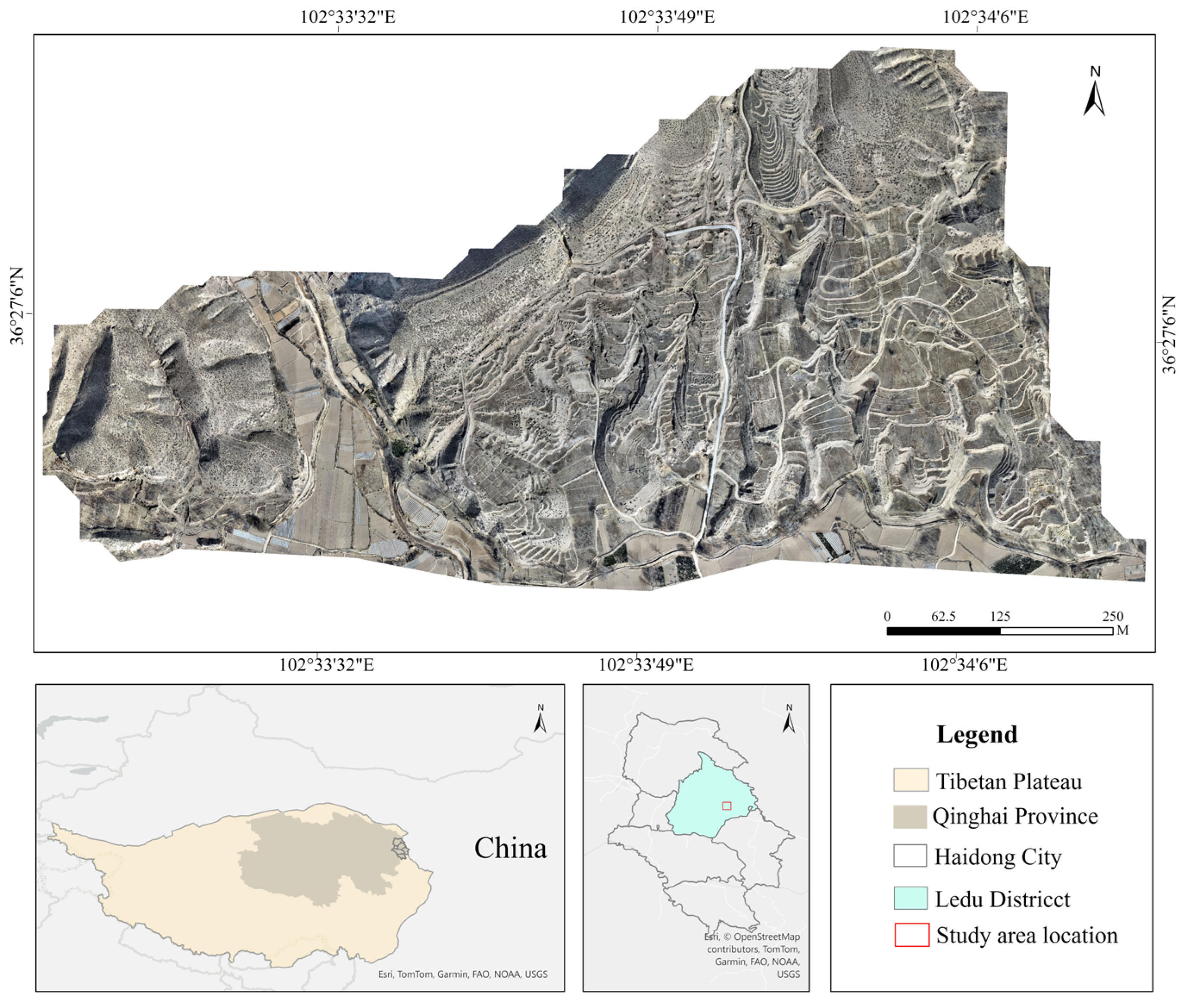
2.1. Study Area
2.2. Data Sources and Preprocessing
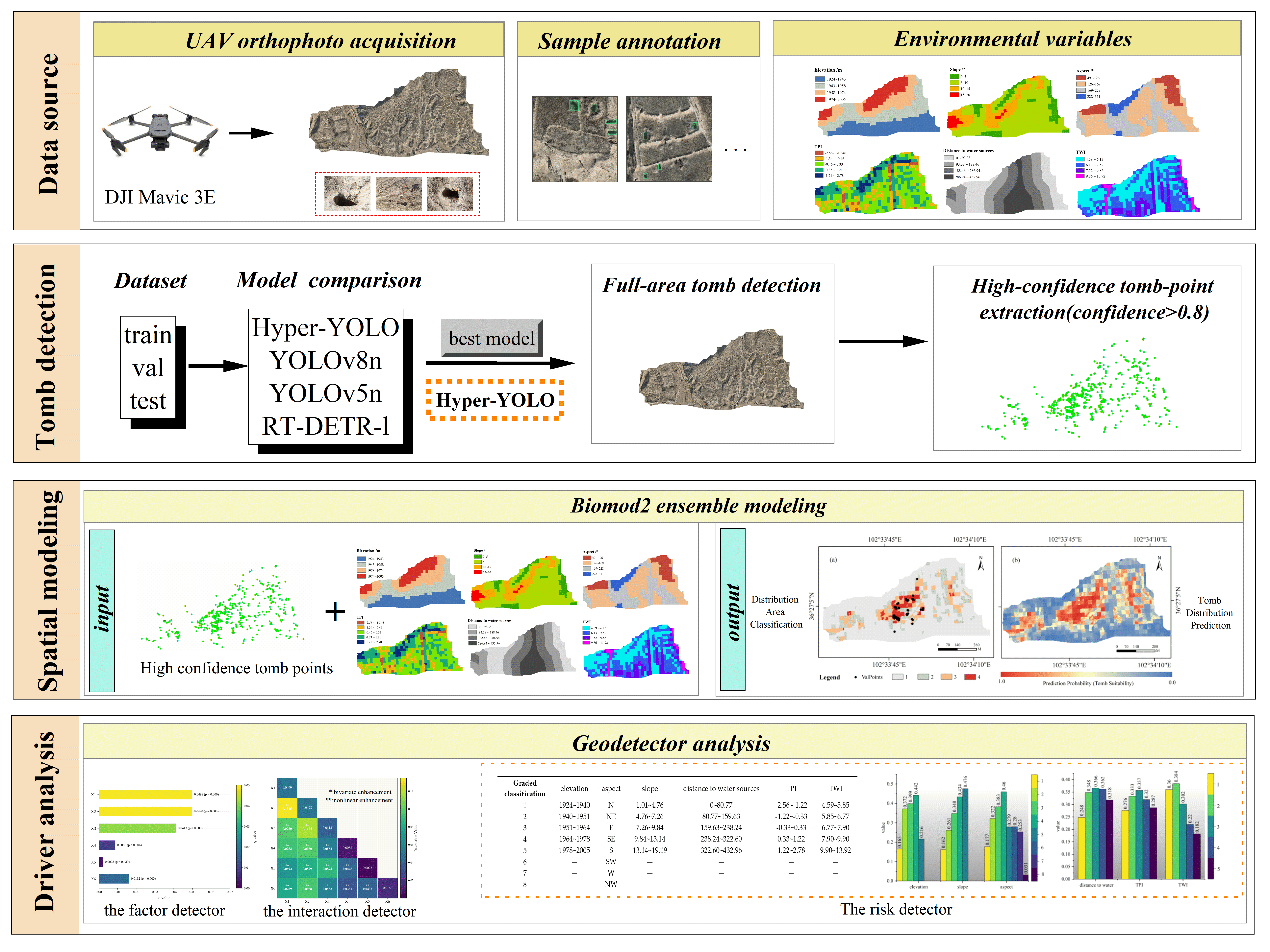
2.3. Methodology
2.3.1. Deep Learning Object Detection
2.3.2. Potential Spatial Distribution Modeling
2.3.3. Geodetector
3. Results
3.1. Application of Hyper-YOLO for Tomb Detection
3.1.1. Comparative Experiments
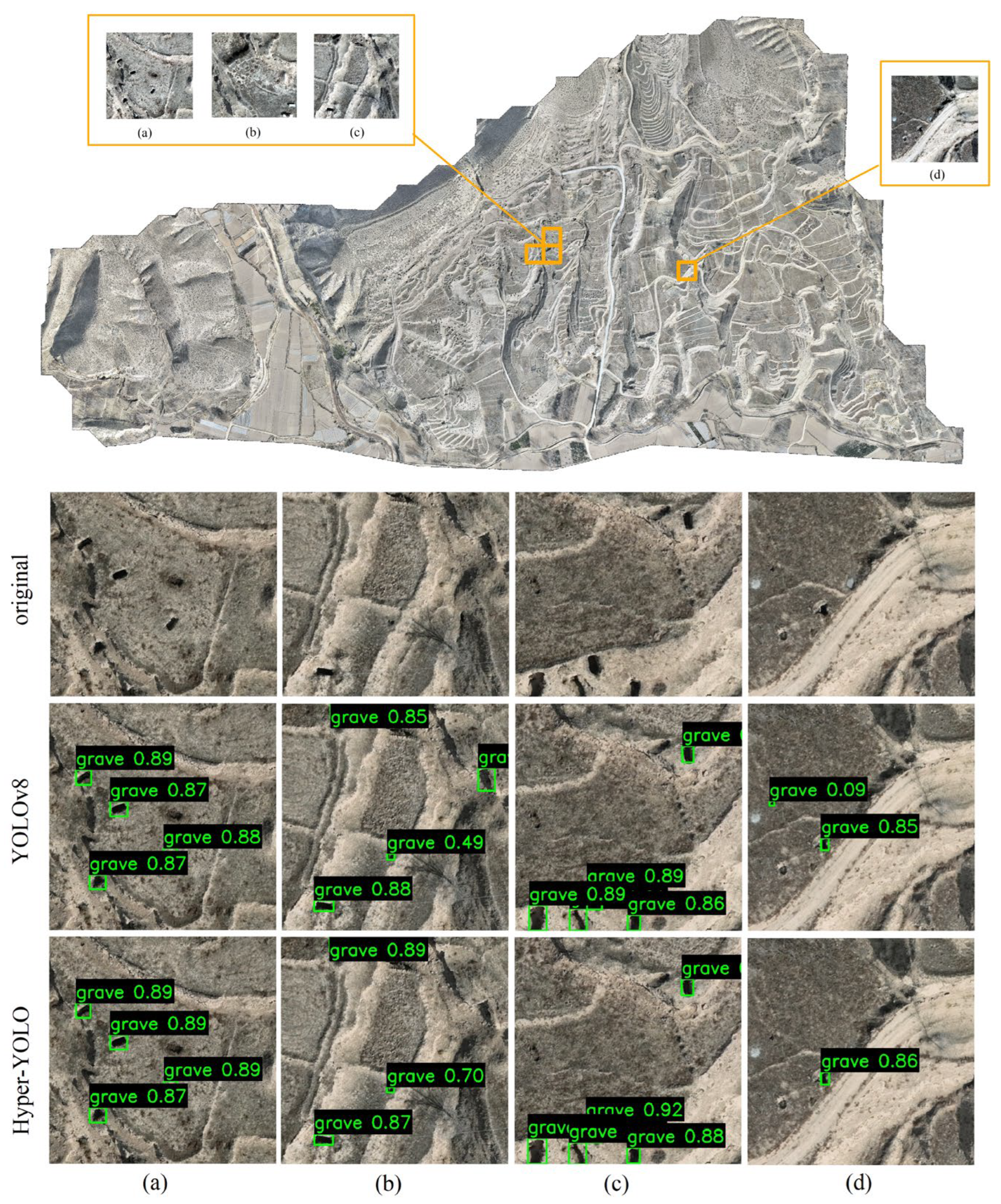
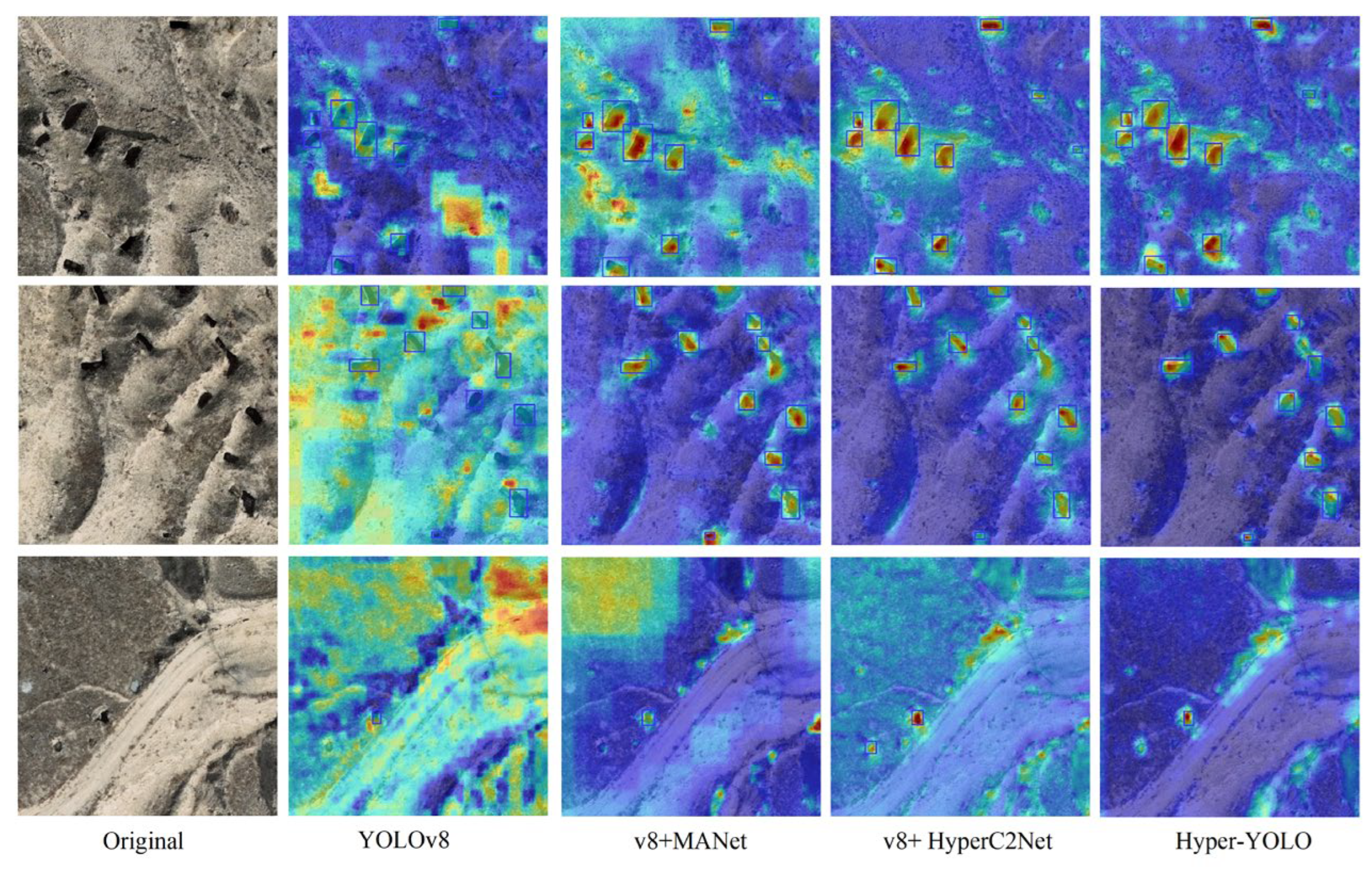
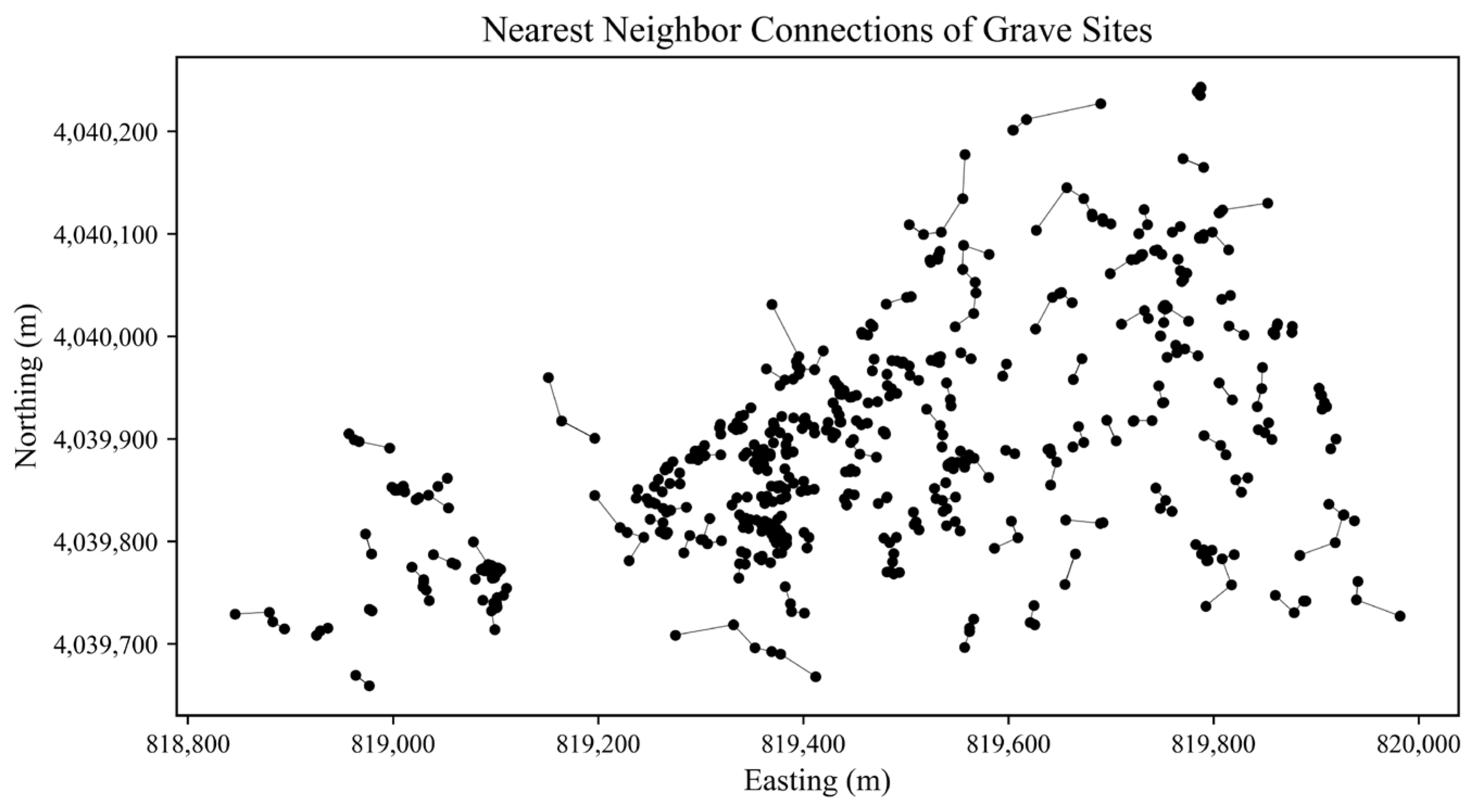
3.1.2. Detection Results and Feature Analysis
3.2. Potential Spatial Distribution of Tombs
3.2.1. Model Performance Evaluation
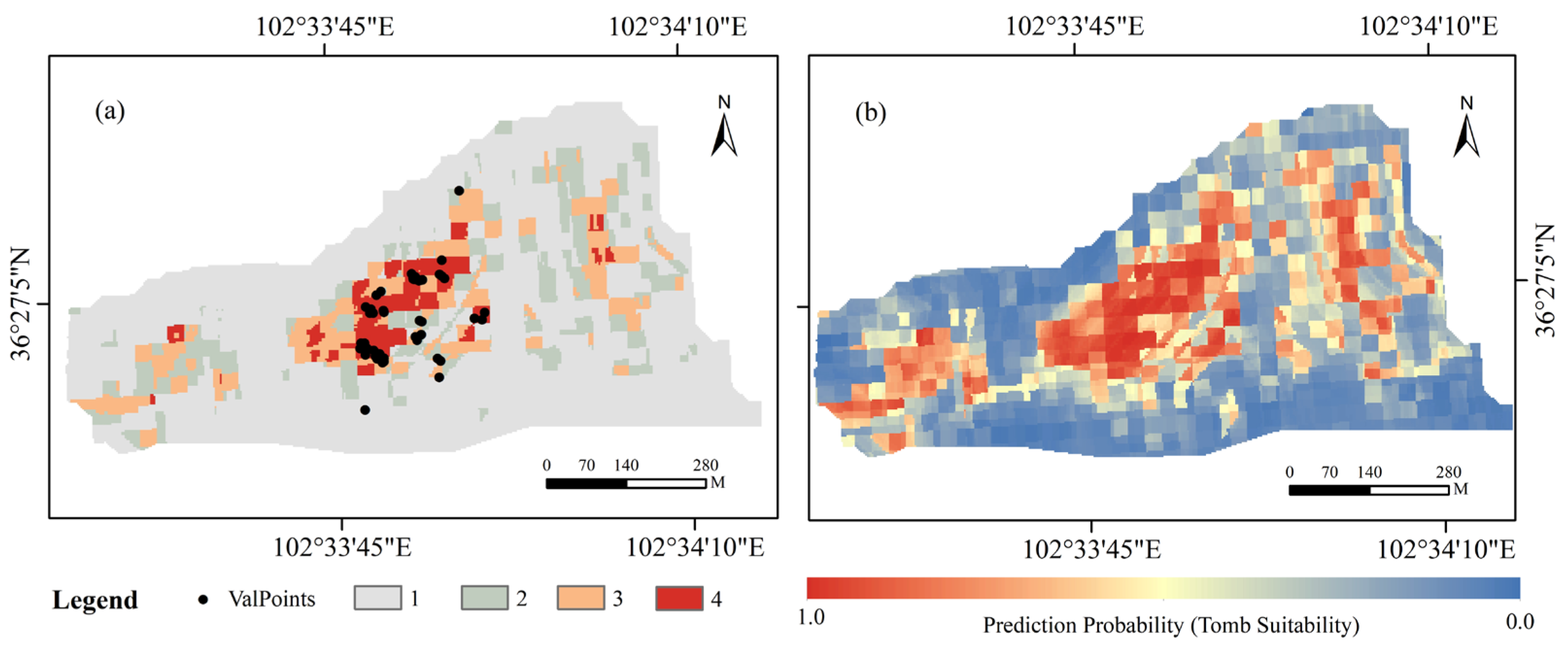
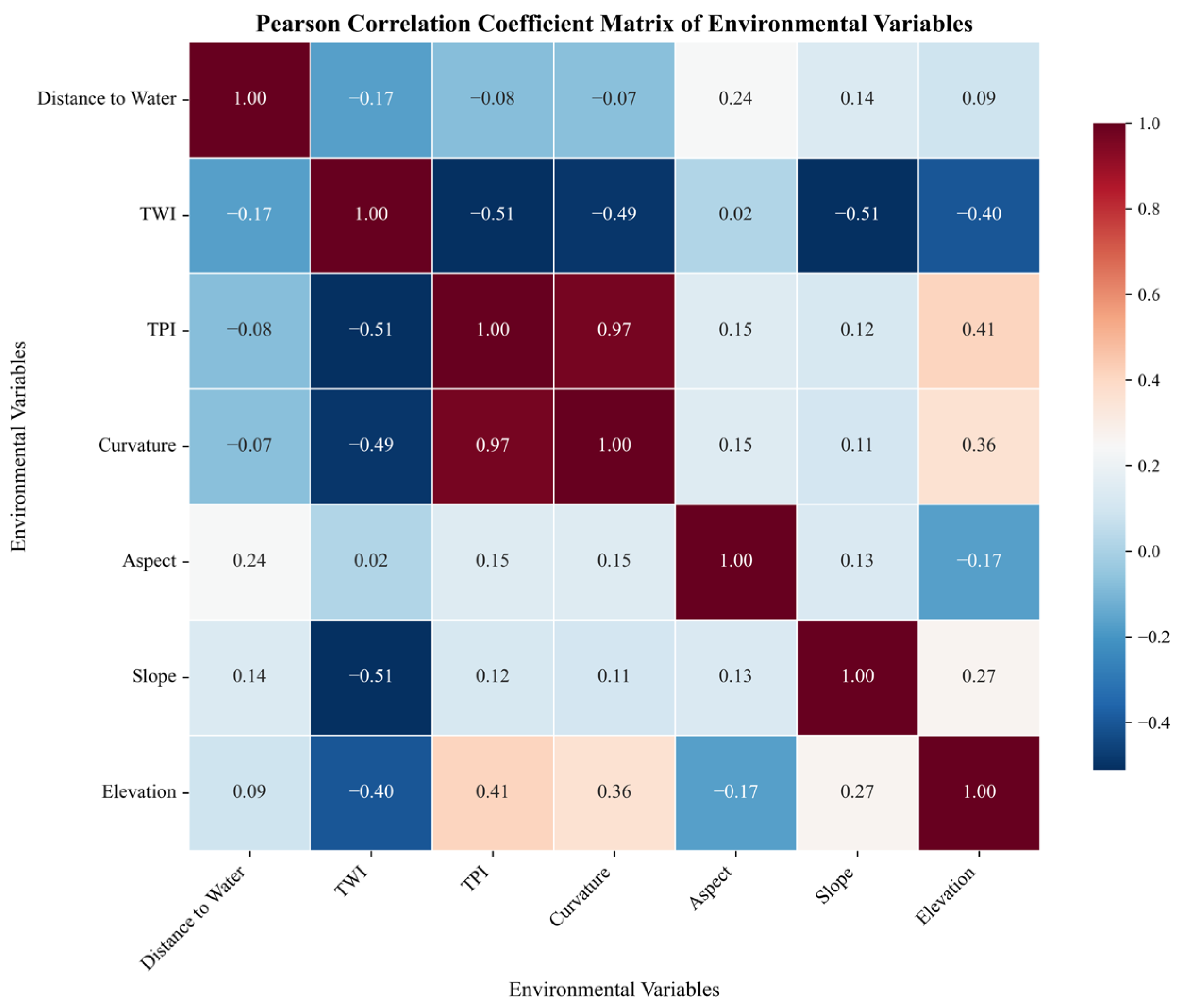
3.2.2. Potential Tomb Distribution Areas
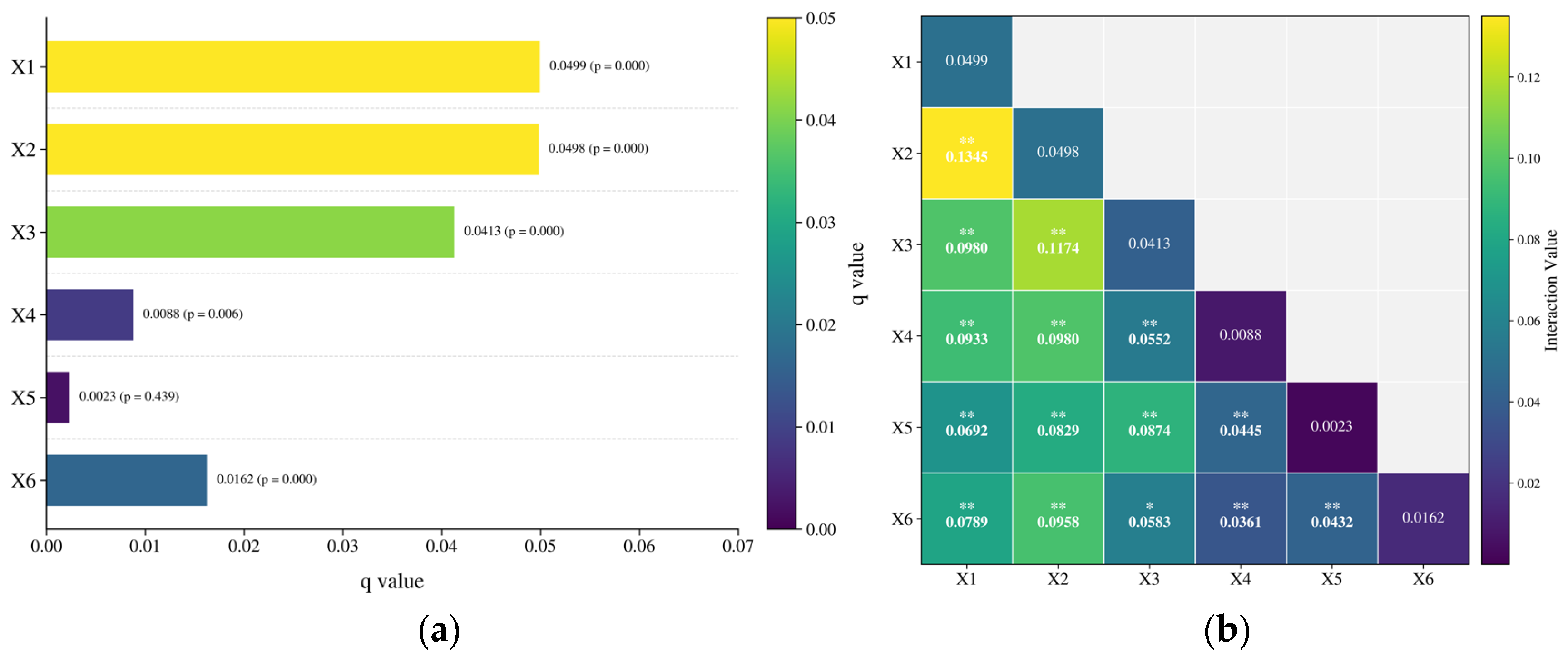
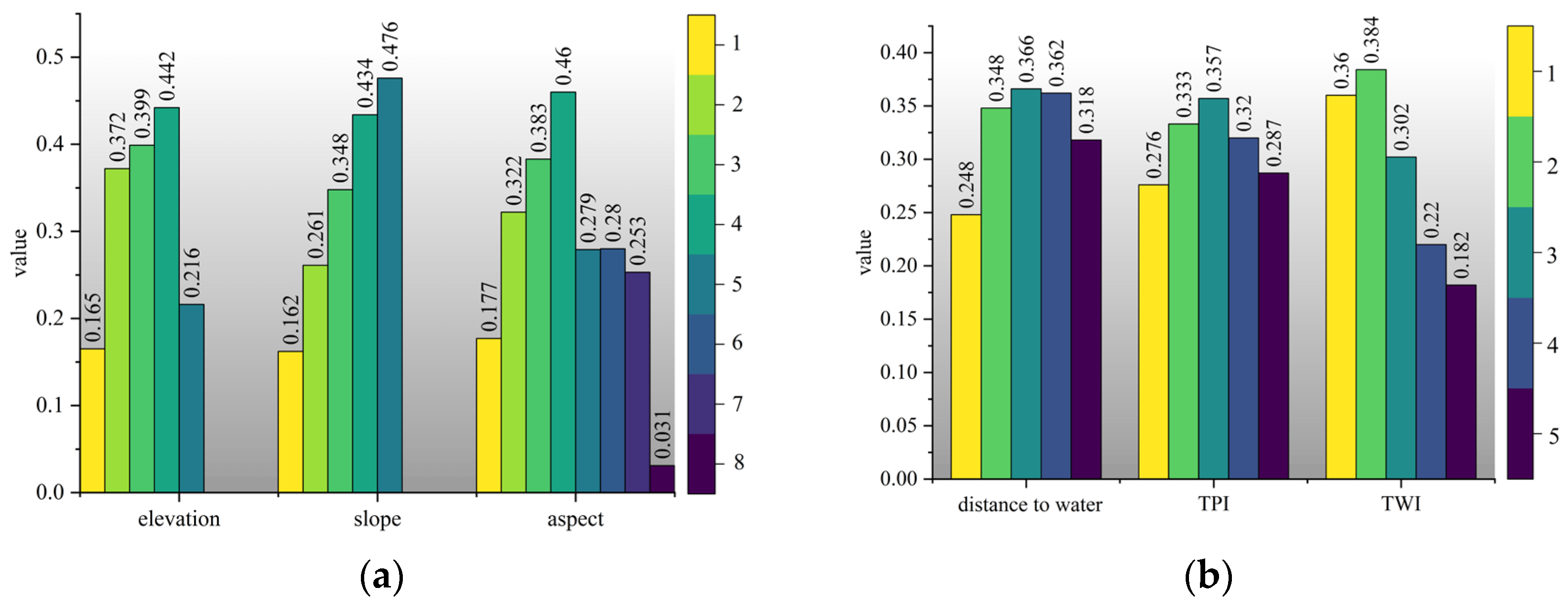
3.3. Analysis of Environmental Driving Mechanisms
4. Discussion
4.1. Tomb Detection
4.2. Distribution Prediction
4.3. Driving Factors Analysis
4.4. Limitations and Future Work
5. Conclusions
Author Contributions
Funding
Institutional Review Board Statement
Informed Consent Statement
Data Availability Statement
Conflicts of Interest
Abbreviations
| CNN | Convolutional Neural Network |
| APM | Archaeological Predictive Modeling |
| SDMs | Species Distribution Models |
| ECNM | Eco-Cultural Niche Modeling |
| TSS | True Skill Statistic |
| AUC | Area Under ROC Curve |
| TWI | Topographic Wetness Index |
| TPI | Topographic Position Index |
References
- Gao, M.; Bai, Q.; Lyu, H.; Zhang, L. Spatiotemporal Evolution and Human-Environment Relationships of Early Cultural Sites from the Longshan to Xia-Shang Periods in Henan Province, China. npj Herit. Sci. 2025, 13, 74. [Google Scholar] [CrossRef]
- Li, X. Determination of the Temporal–Spatial Distribution Patterns of Ancient Heritage Sites in China and Their Influencing Factors via GIS. Herit. Sci. 2024, 12, 143. [Google Scholar] [CrossRef]
- Ding, B.F. Exploration of the Liuwan Site and Ancient Civilization in Qinghai. Qingzang Gaoyuan Luntan 2014, 2, 21–25. (In Chinese) [Google Scholar]
- Yu, C.H. Reflections on the Protection and Utilization of Liuwan Site. Shiqian Yanjiu 2009, 45–49. Available online: https://xueshu.baidu.com/ndscholar/browse/detail?paperid=46e296b674559c54945e60e6b3523803&site=xueshu_se (accessed on 10 June 2026). (In Chinese)
- Campana, S. Drones in Archaeology. State-of-the-art and future perspectives. Archaeol. Prospect. 2017, 24, 275–296. [Google Scholar] [CrossRef]
- Xu, J.; Guo, J.; Zimmer-Dauphinee, J.; Liu, Q.; Shi, Y.; Asad, Z.; Wilkes, D.M.; VanValkenburgh, P.; Wernke, S.A.; Huo, Y. Semi-Supervised Contrastive Learning for Remote Sensing: Identifying Ancient Urbanization in the South-Central Andes. Int. J. Remote Sens. 2023, 44, 1922–1938. [Google Scholar] [CrossRef]
- Batayneh, A.T. Archaeogeophysics–Archaeological Prospection—A Mini Review. J. King Saud Univ. Sci. 2011, 23, 83–89. [Google Scholar] [CrossRef]
- Pal, S.K.; Maity, S.; Bera, A.; Ghosh, D.; Kumar, A. Machine Learning-Driven Archaeological Site Prediction in the Central Part of Jharkhand, India Using Multi-Parametric Geospatial Data. J. Indian Soc. Remote Sens. 2025, 53, 259–276. [Google Scholar] [CrossRef]
- Sandak, J.; Sandak, A.; Legan, L.; Retko, K.; Kavčič, M.; Kosel, J.; Poohphajai, F.; Diaz, R.H.; Ponnuchamy, V.; Sajinčič, N.; et al. Nondestructive Evaluation of Heritage Object Coatings with Four Hyperspectral Imaging Systems. Coatings 2021, 11, 244. [Google Scholar] [CrossRef]
- Zhu, W.P.; Fang, Q.D. Remote Sensing Archaeological Study of Earthen Mound Tombs in Northern Zhejiang. Renwen Dili 1999, 14, 49–53. (In Chinese) [Google Scholar] [CrossRef]
- Ke, T.Z. New Discoveries in Remote Sensing Archaeology. Kexue Xinwen 2000, 27, 5. (In Chinese) [Google Scholar]
- Tan, K.L.; Wan, Y.Q. Hyperspectral Remote Sensing Archaeological Exploration. J. Infrared Millim. Waves 2005, 24, 437–440. (In Chinese) [Google Scholar]
- Wang, F.; Zhu, J.W. AI + Remote Sensing Archaeology: Paradigm Transformation in Archaeological Research Driven by Spatiotemporal Intelligence. Kexue 2025, 77, 18–21. (In Chinese) [Google Scholar]
- Caspari, G.; Crespo, P. Convolutional Neural Networks for Archaeological Site Detection—Finding “Princely” Tombs. J. Archaeol. Sci. 2019, 110, 104998. [Google Scholar] [CrossRef]
- Berganzo-Besga, I.; Orengo, H.A.; Lumbreras, F.; Carrero-Pazos, M.; Fonte, J.; Vilas-Estévez, B. Hybrid MSRM-Based Deep Learning and Multitemporal Sentinel 2-Based Machine Learning Algorithm Detects Near 10k Archaeological Tumuli in North-Western Iberia. Remote Sens. 2021, 13, 4181. [Google Scholar] [CrossRef]
- Kohler, T.A.; Parker, S.C. Predictive Models for Archaeological Resource Location. In Advances in Archaeological Method and Theory; Schiffer, M.B., Ed.; Academic Press: Orlando, FL, USA, 1986; pp. 397–452. [Google Scholar]
- Banks, W.E.; D’Errico, F.; Dibble, H.L.; Krishtalka, L.; West, D. Eco-Cultural Niche Modeling: New Tools for Reconstructing the Geography and Ecology of Past Human Populations. Paleoanthropology 2006, 2006, 68–83. [Google Scholar]
- Brandt, R.; Groenewoudt, B.J.; Kvamme, K.L. An Experiment in Archaeological Site Location: Modeling in the Netherlands Using GIS Techniques. World Archaeol. 1992, 24, 268–282. [Google Scholar] [CrossRef]
- Banks, W.E.; d’Errico, F.; Peterson, A.T.; Vanhaeren, M.; Kageyama, M.; Sepulchre, P.; Ramstein, G.; Jost, A.; Lunt, D. Human Ecological Niches and Ranges during the LGM in Europe Derived from an Application of Eco-Cultural Niche Modeling. J. Archaeol. Sci. 2008, 35, 481–491. [Google Scholar] [CrossRef]
- Imen, G.; Halima, G.; Ayoub, K.; Djamel, A. Utilizing the MaxEnt Machine Learning Model to Forecast Urban Heritage Sites in the Desert Regions of Southwestern Algeria: A Case Study in the Saoura Region. Archaeol. Prospect. 2023, 31, 23–35. [Google Scholar] [CrossRef]
- Liang, Y. The Qinghai Liuwan Site. Kaogu 1986, 6, 575–576. (In Chinese) [Google Scholar]
- Jocher, G.; Chaurasia, A.; Qiu, J. Ultralytics YOLOv8, v8.0.0; Ultralytics: Los Angeles, CA, USA, 2023; Available online: https://github.com/ultralytics/ultralytics (accessed on 17 April 2026).
- Jocher, G. Ultralytics YOLOv5, v5.0.0; Ultralytics: Los Angeles, CA, USA, 2020; Available online: https://github.com/ultralytics/yolov5 (accessed on 17 April 2026).
- Zhao, Y.; Lv, W.; Xu, S.; Wei, J.; Wang, G.; Dang, Q.; Liu, Y.; Chen, J. DETRs Beat YOLOs on Real-Time Object Detection. In Proceedings of the IEEE/CVF Conference on Computer Vision and Pattern Recognition (CVPR), Seattle, WA, USA, 17–21 June 2024; pp. 16965–16974. [Google Scholar]
- Feng, Y.; Huang, J.; Du, S.; Ying, S.; Yong, J.-H.; Li, Y.; Ding, G.; Ji, R.; Gao, Y. Hyper-YOLO: When Visual Object Detection Meets Hypergraph Computation. IEEE Trans. Pattern Anal. Mach. Intell. 2025, 47, 2388–2401. [Google Scholar] [CrossRef]
- Hussain, M. YOLOv1 to v8: Unveiling Each Variant–A Comprehensive Review of YOLO. IEEE Access 2024, 12, 42816–42833. [Google Scholar] [CrossRef]
- Hossin, M.; Sulaiman, M.N. A Review on Evaluation Metrics for Data Classification Evaluations. Int. J. Data Min. Knowl. Manag. Process 2015, 5, 1. [Google Scholar] [CrossRef]
- Thuiller, W.; Lafourcade, B.; Engler, R.; Araújo, M.B. BIOMOD—A Platform for Ensemble Forecasting of Species Distributions. Ecography 2009, 32, 369–373. [Google Scholar] [CrossRef]
- Allouche, O.; Tsoar, A.; Kadmon, R. Assessing the Accuracy of Species Distribution Models: Prevalence, Kappa and the True Skill Statistic (TSS). J. Appl. Ecol. 2006, 43, 1223–1232. [Google Scholar] [CrossRef]
- Barbet-Massin, M.; Jiguet, F.; Albert, C.H.; Thuiller, W. Selecting Pseudo-Absences for Species Distribution Models: How, Where and How Many? Methods Ecol. Evol. 2012, 3, 327–338. [Google Scholar] [CrossRef]
- Wang, J.F.; Xu, C.D. Geodetector: Principle and Prospective. Acta Geogr. Sin. 2017, 72, 116–134. (In Chinese) [Google Scholar] [CrossRef]
- Hao, T.; Elith, J.; Guillera-Arroita, G.; Lahoz-Monfort, J.J. A Review of Evidence about Use and Performance of Species Distribution Modelling Ensembles like BIOMOD. Divers. Distrib. 2019, 25, 839–852. [Google Scholar] [CrossRef]
- Zhu, G.; Fan, J.; Peterson, A.T. Cautions in Weighting Individual Ecological Niche Models in Ensemble Forecasting. Ecol. Model. 2021, 448, 109502. [Google Scholar] [CrossRef]
- De Reu, J.; Bourgeois, J.; De Smedt, P.; Zwertvaegher, A.; Antrop, M.; Bats, M.; De Maeyer, P.; Finke, P.; Van Meirvenne, M.; Verniers, J.; et al. Measuring the Relative Topographic Position of Archaeological Sites in the Landscape, a Case Study on the Bronze Age Barrows in Northwest Belgium. J. Archaeol. Sci. 2011, 38, 3435–3446. [Google Scholar] [CrossRef]
- Tian, J.; Zhu, Y.C.; Li, L.Z.; Zhu, X.; Li, W.R.; An, X.L. Research on Prediction Model of Neolithic Archaeological Sites in Shandong Province Based on GIS and XGBoost Algorithm. J. Beijing Norm. Univ. (Nat. Sci.) 2025, 61, 394–404. [Google Scholar] [CrossRef]
- Wang, J.; Soroush, M.; Maziar, S.; Khazraee, E. Predictive Modeling for Targeted Archaeological Survey of Arsacid Period Sites in the Iranian Borderland Region of the Araxes River Valley. J. Archaeol. Method Theory 2026, 33, 2. [Google Scholar] [CrossRef]
- Doering, B.N. Considering the Whole Environment in the Arctic Past. Curr. Anthropol. 2025, 66, 232–256. [Google Scholar] [CrossRef]





| Model | Precision (%) | Recall (%) | mAP@0.5 (%) | mAP@0.5:0.95 (%) |
|---|---|---|---|---|
| RT-DETR-l | 78.0 | 82.7 | 70.8 | 33.6 |
| YOLOv5n | 81.2 | 82.7 | 79.2 | 37.4 |
| YOLOv8n | 88.6 | 83.7 | 86.0 | 55.5 |
| Hyper-YOLO | 94.4 | 85.5 | 88.1 | 56.2 |
| Metric | Observed Mean Distance (m) | Expected Mean Distance (m) | Nearest Neighbor Ratio (ANN) | Z-Score | p-Value |
|---|---|---|---|---|---|
| Value | 8.54 | 16.39 | 0.52 | −21.68 | <0.01 |
| Models | RF | CTA | GBM | GAM | MaxEnt | EMca | EMwmean |
|---|---|---|---|---|---|---|---|
| TSS | 0.429 | 0.411 | 0.426 | 0.353 | 0.352 | 0.453 | 0.492 |
| AUC | 0.792 | 0.734 | 0.784 | 0.735 | 0.746 | 0.768 | 0.798 |
| Graded Classification | Elevation | Aspect | Slope | Distance to Water Sources | TPI | TWI |
|---|---|---|---|---|---|---|
| 1 | 1924~1940 | N | 1.01~4.76 | 0~80.77 | −2.56~−1.22 | 4.59~5.85 |
| 2 | 1940~1951 | NE | 4.76~7.26 | 80.77~159.63 | −1.22~−0.33 | 5.85~6.77 |
| 3 | 1951~1964 | E | 7.26~9.84 | 159.63~238.24 | −0.33~0.33 | 6.77~7.90 |
| 4 | 1964~1978 | SE | 9.84~13.14 | 238.24~322.60 | 0.33~1.22 | 7.90~9.90 |
| 5 | 1978~2005 | S | 13.14~19.19 | 322.60~432.96 | 1.22~2.78 | 9.90~13.92 |
| 6 | — | SW | — | — | — | — |
| 7 | — | W | — | — | — | — |
| 8 | — | NW | — | — | — | — |
Disclaimer/Publisher’s Note: The statements, opinions and data contained in all publications are solely those of the individual author(s) and contributor(s) and not of MDPI and/or the editor(s). MDPI and/or the editor(s) disclaim responsibility for any injury to people or property resulting from any ideas, methods, instructions or products referred to in the content. |
© 2026 by the authors. Licensee MDPI, Basel, Switzerland. This article is an open access article distributed under the terms and conditions of the Creative Commons Attribution (CC BY) license.
Share and Cite
Sun, Y.; Zhao, J.; Guo, X.; Hou, G.; Zhuoma, L. Leveraging Deep Learning and Spatial Modeling for Preventive Protection and Sustainable Management of Cultural Heritage: A Case Study of the Liuwan Tombs, Qinghai, China. Sustainability 2026, 18, 6087. https://doi.org/10.3390/su18126087
Sun Y, Zhao J, Guo X, Hou G, Zhuoma L. Leveraging Deep Learning and Spatial Modeling for Preventive Protection and Sustainable Management of Cultural Heritage: A Case Study of the Liuwan Tombs, Qinghai, China. Sustainability. 2026; 18(12):6087. https://doi.org/10.3390/su18126087
Chicago/Turabian StyleSun, Yaxin, Jianyun Zhao, Xiaoli Guo, Guangliang Hou, and Lancuo Zhuoma. 2026. "Leveraging Deep Learning and Spatial Modeling for Preventive Protection and Sustainable Management of Cultural Heritage: A Case Study of the Liuwan Tombs, Qinghai, China" Sustainability 18, no. 12: 6087. https://doi.org/10.3390/su18126087
APA StyleSun, Y., Zhao, J., Guo, X., Hou, G., & Zhuoma, L. (2026). Leveraging Deep Learning and Spatial Modeling for Preventive Protection and Sustainable Management of Cultural Heritage: A Case Study of the Liuwan Tombs, Qinghai, China. Sustainability, 18(12), 6087. https://doi.org/10.3390/su18126087