1. Introduction
With the rapid development of information technology, especially breakthroughs in artificial intelligence (AI), big data, and the Internet of Things (IoT), the global retail industry is undergoing an unprecedented transformation. The retail business model is shifting from traditional store retail to e-commerce platforms, and more recently to the emerging model of unmanned retail. Consumer shopping habits, business operating models, and supply chain management are all undergoing profound changes driven by these new technologies. AI plays a crucial role in this transformation as it not only changes the consumer shopping experience but also deeply impacts the efficiency, flexibility, and resilience of retail operations. Unmanned retail, as an important part of technological innovation, represents significant progress in automation and intelligence in the retail industry. Unmanned retail is not only about reducing labor costs but also offering an efficient, intelligent, and personalized consumer experience based on technology. By integrating AI and automation technologies, unmanned retail ensures operational efficiency while precisely capturing consumer demand, intelligently allocating products, optimizing inventory management, and providing faster and more accurate delivery services. These changes not only improve the convenience of consumer purchases but also give retailers a competitive edge in the market.
In this context, FUN&EAT, an unmanned retail brand incubated by SF Express Group, quickly established a large offline terminal network in China after its launch in 2017 by combining AI technology with unmanned vending machines. It has covered 72 first- and second-tier cities and successfully served more than 95 million consumers. Through big data analysis, AI algorithms, and IoT technologies, FUN&EAT provides instant retail services to consumers. Relying on unmanned devices and contactless payment technology, it greatly enhances retail efficiency and consumer experience. However, as the market environment becomes more complex and consumer demands diversify, FUN&EAT faces unprecedented challenges. Issues such as improving “last-mile” delivery efficiency in densely populated urban environments, achieving more efficient inventory replenishment and resource allocation through technology, and maintaining supply chain stability while responding to emergencies have all placed higher demands on FUN&EAT’s operations. Therefore, while continuing to expand its market, FUN&EAT has begun exploring systematic upgrades through technology integration, especially by promoting unmanned delivery and smart replenishment applications with the support of AI and autonomous driving technologies to address logistics bottlenecks and enhance the resilience of its operational system.
The “AI+Unmanned” strategy, announced by FUN&EAT, is a specific practice to address these challenges. This strategy aims to deeply integrate autonomous driving technology with unmanned retail scenarios, attempting to build a new intelligent replenishment system and transform the backend operational model with unmanned delivery vehicles. Through this strategy, FUN&EAT aims to improve the efficiency of the “last-mile” delivery from front-end warehouses to terminal points, solving the problems of low efficiency and high costs associated with traditional delivery modes, and thus driving the transformation of the backend warehouse and distribution model. Unlike traditional delivery models that rely heavily on human labor, unmanned delivery vehicles can not only improve delivery efficiency but also maintain flexibility and stability in the face of unpredictable factors such as sudden changes in demand, bad weather, or traffic congestion. The advantage of this system lies in its ability to significantly reduce labor costs while improving delivery timeliness and accuracy. In this context, FUN&EAT’s unmanned delivery strategy not only optimizes delivery efficiency and operational costs but, more importantly, enhances the overall system’s adaptability and resilience in complex and dynamic environments.
Another highlight of FUN&EAT’s “AI+Unmanned” strategy is its full-link digital management. From consumer demand insights, product displays, product replenishment, precise product selection, to logistics allocation, inventory turnover, real-time monitoring, and targeted marketing, FUN&EAT efficiently responds to the immediate consumption needs of urban white-collar workers through digital technology. By deeply integrating AI algorithms with automated delivery systems, FUN&EAT not only improves operational efficiency but also strengthens its ability to cope with market fluctuations, technical failures, or supply chain disruptions.
This study aims to explore how FUN&EAT improves supply chain management efficiency and enhances system resilience when faced with emergencies through autonomous driving technology and unmanned delivery systems during the implementation of its “AI+Unmanned” strategy. By conducting a comprehensive analysis of the technological applications in logistics delivery, replenishment systems, and supply chain management, this study will reveal how FUN&EAT’s strategy solves the “last-mile” delivery challenges faced by the unmanned retail industry and promotes the industry’s digital and intelligent upgrades. This study seeks to provide a new perspective on technology integration in the unmanned retail field and offer valuable insights for other retailers in their digital transformation and supply chain resilience efforts. Through an in-depth analysis of FUN&EAT’s “AI+Unmanned” strategy, this paper will provide new insights into the resilience of intelligent retail systems, the application of automation technologies, and innovations in backend operational models for both academia and the industry.
2. Literature Review
2.1. Theoretical Foundation
In the context of this study, artificial intelligence (AI) refers to the application of intelligent data analysis, automated decision support, and algorithm-based operational management technologies embedded within FUN&EAT’s unmanned retail system. These technologies support demand forecasting, inventory management, resource scheduling, operational coordination, and real-time decision-making. Therefore, the term AI in this study does not refer to a specific machine learning model or algorithm. Instead, it represents a set of intelligent technologies that enable data-driven operations and automated management within the AI plus Unmanned strategy.
In the study of unmanned retail and AI-driven operational management systems, Organizational Information Processing Theory (OIPT) and Dynamic Capabilities Theory (DCT) provide the theoretical foundation for analyzing how FUN&EAT enhances the resilience and adaptability of its system through its AI+Unmanned strategy. OIPT, initially proposed by Galbraith [
1], emphasizes that an organization’s ability to process, collect, and respond to information determines its adaptability in uncertain and complex environments. In the unmanned retail model, AI technology, as the core of information processing, improves the organization’s speed and accuracy in responding to changes in the external environment. In the case of FUN&EAT, the AI system collects and analyzes real-time data to help the organization forecast market demand, optimize inventory allocation, and improve supply chain response efficiency. For example, through big data and AI algorithms, FUN&EAT can precisely assess consumer demand and adjust its supply and replenishment plans in real time. This information collection and processing capability not only makes operations more efficient but also strengthens the system’s ability to respond to sudden market fluctuations and supply chain disruptions, thereby enhancing its resilience. This theoretical framework helps reveal how FUN&EAT enhances operational flexibility and responsiveness through technological innovation, maintaining its competitiveness in a dynamic environment.
However, OIPT alone cannot fully explain how organizations transform information into effective adaptive actions. While OIPT emphasizes an organization’s ability to acquire, process, and interpret information under uncertainty, it provides limited insight into how organizations subsequently reconfigure resources and implement strategic adjustments based on that information. This limitation becomes particularly evident in AI-driven unmanned retail systems, where the value of information depends not only on the ability to sense environmental changes but also on the ability to translate those insights into operational responses. Therefore, Dynamic Capabilities Theory complements OIPT by explaining how organizations utilize processed information to reconfigure resources, redesign processes, and continuously adapt to environmental changes. In this study, OIPT explains how AI enables environmental sensing and information processing, whereas DCT explains how the organization leverages these information advantages to achieve rapid resource reallocation, operational adjustment, and resilience enhancement. Together, the two theories form a sequential mechanism in which information processing capabilities provide the foundation for dynamic capabilities, ultimately contributing to operational resilience.
Dynamic Capabilities Theory (DCT) further enriches this research framework. DCT, proposed by Teece [
2], emphasizes that companies enhance their adaptability and competitiveness by continuously learning, innovating, and reallocating resources in a changing market environment. This theory suggests that long-term success depends not only on the accumulation of existing resources but also on the company’s ability to innovate and adjust quickly to internal structure and resource allocation during environmental changes. In the operational model of FUN&EAT, the integration of AI and autonomous delivery vehicles makes the backend warehousing and distribution system more flexible and enables it to adapt quickly to changes in market demand. Through the combination of unmanned delivery vehicles and smart replenishment systems, FUN&EAT achieves efficient delivery from front-end warehouses to terminal points, effectively improving the system’s emergency response and recovery capabilities. Specifically, when faced with sudden events, such as a surge in demand or supply chain interruptions, FUN&EAT can rely on its dynamic adjustment capabilities to quickly reorganize resources and optimize delivery paths, ensuring efficient logistics operations. This flexible resource allocation and adjustment capability enables FUN&EAT to recover quickly in an uncertain market environment, maintaining business continuity and efficiency.
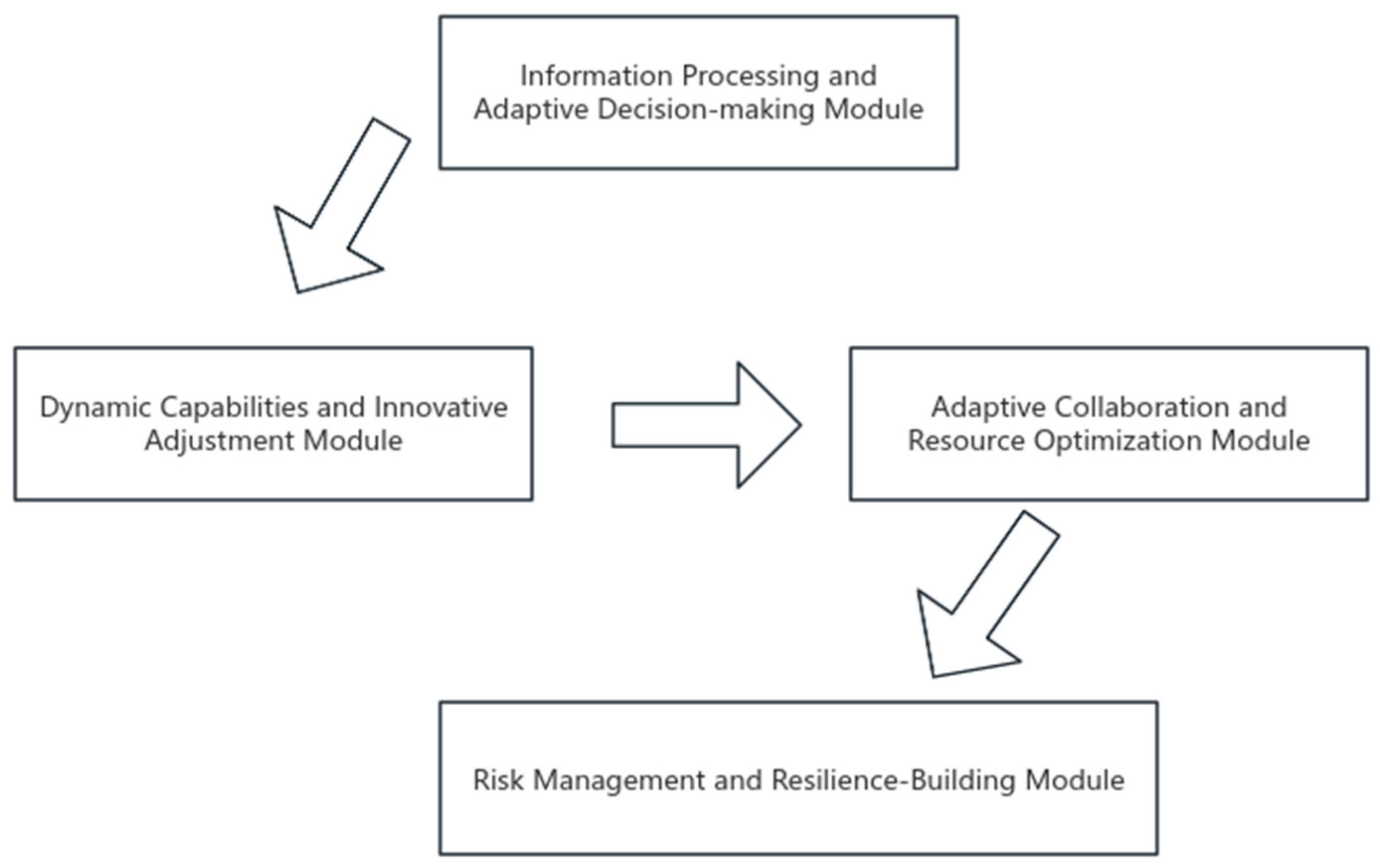
The theoretical contribution of this study lies in integrating OIPT and DCT into a unified framework for explaining AI-enabled operational resilience. Existing studies have typically applied OIPT to examine information processing efficiency or used DCT to explain organizational adaptation and resource reconfiguration. However, limited research has explored how AI-driven information processing capabilities serve as the foundation for the development and deployment of dynamic capabilities in unmanned retail environments. By linking these two theoretical perspectives, this study proposes that operational resilience is not generated solely through superior information processing or dynamic adjustment capabilities, but through interaction between the two. This integrated perspective extends current resilience research by explaining the underlying mechanism through which AI technologies enhance organizational adaptability and recovery capabilities. The framework consists of four core modules: information processing and adaptive decision-making, dynamic capabilities and innovative adjustment, adaptive collaboration and resource optimization, and risk management and resilience building.
First, the information processing and adaptive decision-making module, based on OIPT, emphasizes the efficient collection, processing, and analysis of real-time information from the market, consumers, and supply chain through AI technology. The AI system can quickly make precise decisions, helping the system respond rapidly and adjust its operational strategies when facing market fluctuations or supply chain disruptions. The key to this module is intelligent information processing, which enhances the system’s perception and response capabilities, improving its adaptability and resilience by enabling timely adjustments to operational models in the event of emergencies. Second, the dynamic capabilities and innovative adjustment module, based on DCT, focuses on how companies enhance their ability to adapt to changes through innovation and resource integration. In FUN&EAT’s AI+Unmanned strategy, through technological innovations such as unmanned delivery vehicles, smart replenishment systems, and backend warehousing and distribution systems, the company can quickly adjust resource allocation and optimize its operational model in response to demand fluctuations or supply chain interruptions. This module demonstrates how continuous innovation and dynamic adjustments enhance the company’s resilience and adaptability, thus improving the overall operational system’s resilience.
The adaptive collaboration and resource optimization module highlights the collaborative role of AI with unmanned delivery vehicles and smart replenishment systems. The core role of the AI system in this module is to achieve flexible resource allocation through the integration of automated delivery and smart replenishment systems. When faced with emergencies, the system can quickly respond and optimize resource distribution to ensure operational efficiency. This module shows how AI technology achieves high levels of collaboration, enhancing the overall resilience and recovery capabilities of the system in complex environments. Lastly, the risk management and resilience-building module emphasizes the role of the AI system in real-time monitoring of potential risks in the supply chain and dynamic resource allocation. By using historical data and real-time analysis, AI can help companies develop effective response strategies and identify and address risk factors in the supply chain. This module illustrates how AI enhances the system’s ability to cope with risks, ensuring that businesses maintain operational stability and sustainable development despite external challenges.
The specific theoretical framework is shown in
Figure 1.
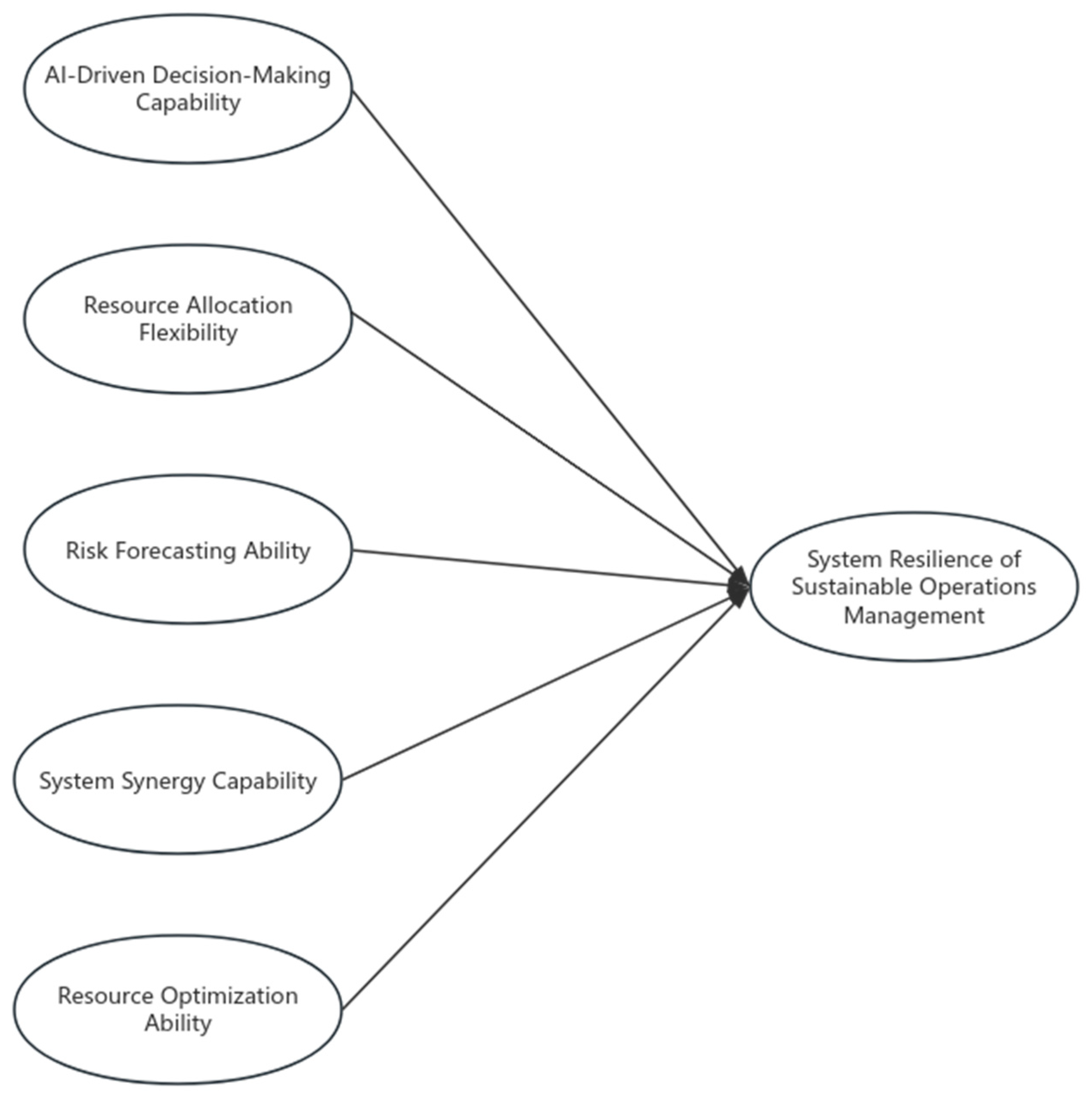
Based on the operational practices of FUN&EAT’s AI+Unmanned strategy and the theoretical perspectives of Organizational Information Processing Theory (OIPT) and Dynamic Capabilities Theory (DCT), this study identifies five key variables that capture the core capabilities contributing to system resilience, namely AI-driven decision-making capability, risk forecasting ability, resource allocation flexibility, system synergy capability, and resource optimization ability. These variables are not selected arbitrarily. Instead, they are derived from the critical functions performed by AI technologies and unmanned operational systems within the FUN&EAT ecosystem.
AI-driven decision-making capability and risk forecasting ability originate from the information-processing logic emphasized by OIPT. OIPT argues that organizations improve their adaptability by acquiring, processing, and utilizing information under conditions of uncertainty. In the FUN&EAT operating model, the AI system continuously collects and analyzes data related to consumer demand, inventory status, and supply chain operations, thereby providing timely decision support and risk assessments. AI-driven decision-making capability reflects the organization’s ability to transform environmental information into operational decisions and managerial actions. Risk forecasting ability reflects the organization’s ability to identify potential disruptions, anticipate demand fluctuations, and recognize operational risks before they occur. Together, these two variables represent the information sensing, information analysis, and decision-support functions that are central to OIPT in an AI-enabled retail environment.
Resource allocation flexibility, system synergy capability, and resource optimization ability originate from the dynamic adaptation logic emphasized by DCT. DCT suggests that organizations maintain competitiveness by continuously reconfiguring resources, integrating capabilities, and adapting operational processes in response to environmental changes. In the FUN&EAT model, once AI systems generate operational insights and risk warnings, the organization must rapidly adjust inventory, logistics resources, and delivery capacity to respond effectively to changing conditions. Resource allocation flexibility reflects the organization’s ability to dynamically redistribute operational resources according to market demand and environmental changes. System synergy capability reflects the degree of coordination and integration among AI systems, autonomous delivery vehicles, intelligent replenishment systems, and warehouse management systems. Resource optimization ability reflects the organization’s capacity to improve operational efficiency and resource utilization through continuous adjustment and integration of resources. These three variables collectively capture the practical manifestation of dynamic capabilities within the AI+Unmanned operational context.
Taken together, these five variables are derived from both the operational characteristics of the FUN&EAT system and the theoretical foundations provided by OIPT and DCT. AI-driven decision-making capability and risk forecasting ability represent the organization’s information processing capabilities, while resource allocation flexibility, system synergy capability, and resource optimization ability represent the organization’s capability to reconfigure and optimize resources based on information-driven insights. These five variables collectively reflect the complete process through which the AI+Unmanned strategy transforms environmental information into adaptive actions and operational improvements, thereby enhancing overall system resilience.
2.2. Literature Review of System Resilience
In sustainable operations management research, system resilience has gradually become a core concept to understand how organizations maintain operational continuity and long-term sustainability in complex and uncertain environments. System resilience originated from engineering and ecology fields, later being introduced into organizational and supply chain management to describe a system’s ability to quickly recover or reorganize itself after external disturbances. Modern operations management literature no longer views resilience as a mere recovery ability but as a multidimensional set of capabilities, including robustness, adaptability, and recovery capacity. Recent reviews have pointed out the different dimensions of system resilience and their connection with sustainability goals [
3].
Recent studies emphasize that resilience is closely linked to sustainability goals, whether in supply chain systems or broader operational systems. Traditional efficient operating models focus on lean operations and cost minimization, but these models often show vulnerabilities when facing major disturbances such as global pandemics or geopolitical conflicts. Studies have found that when operations systems pursue both resilience and sustainability, they complement each other through mechanisms such as resource reserves, flexible production arrangements, and collaborative networks. In this context, system resilience is seen as a foundational capability for achieving long-term sustainability, as it not only enhances an organization’s ability to cope with short-term shocks but also strengthens the likelihood of maintaining stable development under long-term environmental and social pressures [
3].
In the fields of supply chain and operations management, the relationship between digital technology and system resilience has become an important trend in academic research. Several studies have shown that digital technologies, such as big data analysis, IoT, blockchain, and AI, significantly improve the operational system’s response speed and adaptability by enhancing information transparency, real-time perception, and decision support. For example, in research on sustainable supply chain innovation paths, operational research methods combined with digital technology are used to simulate resilience strategies, demonstrating how these technologies support the dual goals of resilience and sustainability in green and low-carbon supply chains [
4]. Furthermore, empirical studies indicate that in the fast-moving consumer goods industry, digitalization and operational resilience jointly promote the improvement of sustainable performance, showing that modern companies can enhance resilience while strengthening environmental and social performance indicators through digital technologies [
5].
Another important trend is the integration model of resilience and sustainability strategies. Many studies argue that resilience is not just having the ability to respond to short-term disturbances, but it also plays a key role in the long-term health of a system. For example, one study proposed a comprehensive framework of resilience-enabling factors, combining proactive resilience capabilities (such as forecasting and planning), immediate response mechanisms, and recovery mechanisms, forming a capability structure that can respond efficiently to disturbances and recover quickly to maintain sustainable operations. Additionally, by integrating dynamic capabilities theory and systems thinking frameworks, scholars have proposed dynamic adaptation mechanisms, emphasizing that organizations must continuously learn, adjust resource allocation, and innovate practices to enhance overall system adaptability and capacity for cross-environment evolution [
6].
It is important to note that the sustainability dimension itself is considered a key factor in promoting resilience development. Unlike traditional resilience research, which mainly focuses on recovery speed, the latest studies have gradually focused on the bidirectional relationship between sustainability and resilience. On one hand, sustainability practices, such as environmental management and resource conservation, strengthen the system’s internal resource base when facing external pressures, thus enhancing resilience. On the other hand, highly resilient systems can maintain robust operations in the face of long-term environmental challenges, thereby promoting the achievement of sustainability performance. This perspective emphasizes that resilience is not only a crisis management capability but also an essential part of a long-term sustainable operation strategy, highlighting the intrinsic integration of both in theory and practice.
Overall, recent literature reviews show that system resilience research is expanding from a simple supply chain disturbance perspective to a broader sustainable operations perspective, emphasizing the synergistic effects of technology, organizational learning, resource integration, and dynamic adjustment mechanisms. The resilience of sustainable operations systems is a multi-level, multi-element comprehensive ability that requires embedding adaptability, flexibility, and innovation capabilities at both the strategic and operational levels. For example, digital platforms can support real-time monitoring and rapid response mechanisms, integrate environmental and social performance indicators in supply chain risk identification and mitigation strategies, and build cross-departmental collaboration mechanisms within organizations to support continuous innovation and resilience enhancement.
2.3. AI-Driven Decision-Making Capability
AI-driven decision-making capability is widely recognized as a crucial determinant of organizational system resilience. The literature identifies several mechanisms through which this capability influences resilience, which can be summarized in a hierarchical and logically structured manner. First, AI-driven decision-making enhances the efficiency and accuracy of information processing. As Alsakhen et al. [
7] note, AI systems improve risk identification, optimize operational processes, and provide high-quality decision-making information. By enabling organizations to process large volumes of data in real time, AI allows managers to quickly detect potential problems and make informed operational adjustments, thereby strengthening the organization’s ability to withstand external disturbances. Second, AI-driven decision-making supports predictive and anticipatory capabilities. Empirical evidence from Wang et al. [
8] shows that AI improves knowledge sharing and organizational information flow, which allows firms to anticipate market fluctuations and operational challenges. Similarly, Guo et al. [
9] demonstrate that deep AI applications improve supply chain resilience by optimizing organizational structures and internal controls. Through predictive analytics, AI enables proactive planning and strategic adjustment, which directly contributes to system resilience by reducing the likelihood and impact of operational disruptions. Third, AI-driven decision-making facilitates rapid and adaptive operational responses. Patale and Zohair [
10] highlight that AI-enhanced decision support systems accelerate problem detection, resource allocation, and inventory management, allowing organizations to respond to risks and disturbances in a timely manner. The combination of quick decision-making and adaptive execution ensures that operations remain continuous and stable, even under uncertain or dynamic market conditions. In conclusion, AI-driven decision-making capability affects system resilience through three interconnected mechanisms: improving information processing efficiency, enhancing predictive and anticipatory abilities, and enabling rapid operational responses. Based on this theoretical and empirical support, the following hypothesis is proposed in this paper:
H1. AI-driven decision-making ability positively affects the system resilience of sustainable operations management.
2.4. Resource Allocation Flexibility
Resource allocation flexibility is a critical capability for enhancing organizational system resilience, particularly in the context of AI-enabled operations. The literature identifies several mechanisms through which this capability influences resilience, which can be structured as follows. First, resource allocation flexibility improves operational efficiency through better forecasting and inventory management. AI enhances demand prediction and optimizes inventory levels, reducing misallocation and minimizing the need for excessive safety stock. This allows organizations to schedule and utilize resources more efficiently, which strengthens their capacity to respond rapidly to external disturbances and maintain continuous operations [
9]. Second, resource allocation flexibility increases adaptability to changing environmental conditions. Organizations that can dynamically adjust their resource allocation are better able to respond to market fluctuations, supply chain disruptions, and unexpected operational challenges. AI facilitates this adaptability by providing real-time data analysis and optimization recommendations, enabling timely adjustments in resource deployment [
11]. Third, resource allocation flexibility promotes cross-functional and cross-organizational coordination. By integrating multi-source data and predictive models, AI reduces information silos and improves collaboration between departments and partners. Enhanced coordination ensures that resources are allocated in a coherent and synchronized manner, which supports system-wide resilience and operational continuity [
12]. Fourth, resource allocation flexibility contributes to risk mitigation and recovery capacity. Efficient and adaptive resource deployment enables organizations to anticipate potential risks and respond quickly to operational disruptions. Empirical evidence suggests that AI-driven resource allocation enhances the organization’s absorptive capacity and recovery ability, thus directly strengthening system resilience [
13]. Based on these findings, this study proposes the following hypothesis:
H2. Resource allocation flexibility positively affects the system resilience of sustainable operations management.
2.5. Risk Forecasting Ability
In the field of supply chain and operations management, risk forecasting ability is widely regarded as an important technical pathway for improving system resilience and reducing the impact of uncertainty. With the development of artificial intelligence (AI), especially the maturation of machine learning and predictive analytics, organizations can analyze historical and real-time data to identify potential risks earlier, providing proactive support for subsequent responses and adjustments. This trend is emphasized not only in theoretical research but also confirmed by numerous empirical and review studies.
Firstly, AI-driven predictive analytics have shown positive effects in supply chain risk identification and resilience improvement. Systematic literature reviews indicate that AI and machine learning models (such as random forests, XGBoost, etc.) significantly improve the accuracy and efficiency of risk detection in supply chain risk assessment and forecasting. This enables organizations to take proactive measures based on data, thus reducing the impact of disruptions on operations [
14]. Such studies highlight the contribution of AI predictive technology to managing supply chain uncertainty, particularly in complex and dynamic supply chain environments. Secondly, empirical research further supports the positive impact of risk forecasting ability on system resilience. A recent empirical study using large-scale logistics data aimed at supply chain management employed an AI-driven predictive analytics model to forecast delivery disruption events. The results showed that this technology not only identified potential disruption risks in advance but also improved delivery performance and overall supply chain stability [
15]. These studies provide evidence based on real business data, confirming how predictive analytics help companies adjust before risks occur, thereby improving the continuity and recovery capability of supply chain operations. Risk forecasting ability extends beyond just risk identification to broader risk management practices. Research suggests that AI-driven predictive models, combined with real-time data monitoring and intelligent decision support, can help businesses optimize inventory levels, identify supplier risks, and plan logistics routes. This reduces the volatility and losses caused by uncertainty [
16]. The synergy between prediction and optimization further enhances the flexibility and adaptability of businesses when faced with unexpected events.
Although AI shows significant advantages in risk forecasting, some studies also point out challenges, such as data quality, model interpretability, and the organization’s ability to integrate predictive outputs. These factors can affect the practical effectiveness of risk forecasting. Therefore, when applying AI risk forecasting models, organizations need technical support as well as to build sound data governance and cross-departmental collaboration mechanisms. In conclusion, existing research generally agrees that AI-driven risk forecasting ability can enhance the resilience of supply chains and operations systems in uncertain environments by identifying potential risks in advance, improving forecasting accuracy, and supporting intelligent decision-making. Based on this, the following hypothesis is proposed in this paper:
H3. Risk forecasting ability positively affects the system resilience of sustainable operations management.
2.6. System Synergy Capability
System synergy capability refers to the ability of an organization to achieve efficient collaboration and information sharing between different technological systems, business units, and external partners. In complex and highly interconnected supply chains and operations systems, this synergy not only improves daily operational efficiency but also enhances the overall system’s resilience when responding to external shocks, risk events, and complex environments. The core of system synergy capability lies in breaking down information silos and promoting seamless interaction between technology and processes, which, in turn, improves the organization’s foresight, responsiveness, and adjustment speed. Existing research shows that the collaborative application of AI and related digital technologies significantly enhances overall system performance in supply chain and intelligent operations management. For example, AI technology can integrate and deeply analyze data from different departments or systems. Through intelligent reasoning and predictive support, AI enables cross-system collaborative decision-making, thus improving supply chain responsiveness and resource allocation efficiency [
17]. This technology-driven synergy not only optimizes the internal data and information flow within the organization but also promotes collaboration efficiency between upstream and downstream partners in the supply chain, enhancing the overall flexibility and stability of the supply chain.
System synergy capability in supply chains is also reflected in the transparency of information and the establishment of cooperation mechanisms across organizations. In the context of rapid globalization and digitalization, collaboration between supply chain participants increasingly relies on digital technologies to build shared platforms. These platforms improve visibility, traceability, and real-time responsiveness between nodes in the supply chain. Digital integrated platforms facilitate the sharing of resources, synchronization of real-time information, and optimization of transportation scheduling. These capabilities reduce delays and friction during demand fluctuations or external shocks, thereby enhancing the system’s recovery speed and continuous operational capacity [
17]. Moreover, conceptual studies on the relationship between system synergy capability and supply chain resilience suggest that improving collaboration efficiency not only strengthens the supply chain’s risk response mechanisms but also enhances the organization’s cross-departmental resource integration and joint decision-making effectiveness. For example, collaborative capabilities, similar to supply chain visibility, are considered dynamic capabilities for supply chain resilience. Their role lies in providing transparent data support and coordination mechanisms, allowing all supply chain nodes to maintain consistent strategies and quickly adjust in turbulent situations [
18]. These collaborative mechanisms include both internal system process coordination and cross-organizational collaboration with supply chain partners.
It is important to note that improving system synergy capability is not just a technical issue; it also involves organizational culture, information governance, and cross-departmental communication mechanisms. Existing studies point out that when building system synergy capabilities, if there are no effective information-sharing agreements, unified data standards, and cross-system integration capabilities, the collaborative effect may still be limited, even with high technological investment. Therefore, organizations must establish sound governance mechanisms and cross-departmental collaboration frameworks to ensure that technological synergy can truly translate into system-level resilience improvement. Based on existing literature, it can be concluded that system synergy capability, through the integration of AI, digital technologies, organizational resources, and the information and workflows between supply chain partners, helps improve the adaptability and response speed of the entire operations system when facing market fluctuations and sudden disruptions. This ultimately enhances system resilience. Therefore, the following hypothesis is proposed in this paper:
H4. System synergy capability positively affects the system resilience of sustainable operations management.
2.7. Resource Optimization Ability
Resource optimization ability refers to an organization’s capability to use intelligent technologies, data analysis, and decision models to achieve optimal allocation in areas such as resource distribution, production planning, inventory scheduling, and logistics planning. This ability aims to improve operational efficiency, reduce costs, and enhance the system’s ability to respond to uncertainty. With the rapid development of artificial intelligence (AI) and machine learning technologies, resource optimization has become one of the key capabilities for improving system resilience and operational sustainability in supply chain and operations management practices. Existing research generally agrees that the application of AI in resource optimization significantly enhances the efficiency of resource utilization and operational performance in supply chains. By analyzing large-scale data, AI can identify the optimal resource allocation schemes in real time, allowing for dynamic adjustments in inventory management, transportation scheduling, and production planning. For example, some studies have concluded that AI in supply chain optimization can improve demand forecasting, inventory management, and logistics planning, thereby reducing resource waste and improving operational efficiency. This is crucial for maintaining system stability and resilience in uncertain environments [
19].
Moreover, systematic literature reviews show that the introduction of AI technology not only improves resource allocation in individual segments but also enables overall resource optimization by enhancing the coordination and interaction of supply chain processes. Some studies emphasize that AI can improve resource distribution and scheduling, allowing the supply chain to achieve higher overall efficiency and flexibility. This helps companies quickly adjust resource allocation strategies to maintain continuous operations when faced with external disruptions or demand fluctuations [
11]. These studies highlight various ways that AI enhances resource optimization, such as strengthening real-time monitoring, automatically calculating the best paths and scheduling plans, and enabling intelligent coordination of production and logistics. Empirical and case studies show that AI-driven resource optimization can significantly improve supply chain performance metrics. For example, the application of AI algorithms in inventory control and transportation network optimization has been proven to reduce inventory buildup, shorten logistics times, and lower operational costs. These improvements not only reflect efficiency gains but also strengthen the robustness and responsiveness of the entire operational system [
20]. These empirical findings indicate that resource optimization is one of the key ways AI enhances supply chain resilience.
The core of resource optimization ability lies in improving the quality of data-driven decision-making. For example, enhancing forecasting accuracy can improve the ability to predict future resource needs and reduce production and logistics discrepancies. These improvements help minimize operational disruption risks caused by resource misallocation, ensuring operational continuity and flexibility in complex and dynamic environments [
21]. Therefore, resource optimization ability is not only a means to improve operational efficiency but also a strategic capability to strengthen the system’s response to changes and uncertainty. In conclusion, AI technology has a significant effect on improving resource optimization ability. It not only increases resource utilization efficiency but also strengthens the overall system’s resilience through dynamic adjustments, real-time monitoring, and intelligent decision support. Based on this, the following hypothesis is proposed in this paper:
H5. Resource optimization ability positively affects the system resilience of sustainable operations management.
The research model is shown in
Figure 2.
3. Methods
3.1. Questionnaire Development and Measurement Sources
The questionnaire was developed through a multi-stage process that combined theoretical analysis, case study findings, and established measurement scales from prior research. First, the research team conducted a comprehensive review of the literature on Organizational Information Processing Theory, Dynamic Capabilities Theory, artificial intelligence applications, and operational resilience. Second, the operational characteristics of FUN&EAT’s AI and Unmanned strategy were analyzed to identify the key capabilities that support system resilience. Based on this process, five constructs were identified, namely AI-driven decision-making capability, risk forecasting ability, resource allocation flexibility, system synergy capability, and resource optimization ability.
Since these constructs have rarely been examined together in the context of AI-enabled unmanned retail systems, no single established scale was available. Therefore, the measurement items were adapted and developed from several mature scales that capture related dimensions.
Specifically, the measurement of AI-driven decision-making capability was developed based on the information processing perspective of Organizational Information Processing Theory and research on data-driven decision-making. This construct measures the extent to which AI systems support real-time information analysis, decision quality improvement, and rapid operational responses. The measurement items were adapted and developed with reference to Galbraith [
1], who emphasized the role of information processing in organizational decision-making, and Pavlou and El Sawy [
22], who highlighted the importance of information utilization and decision responsiveness in dynamic environments. The items were further refined according to the operational characteristics of FUN&EAT’s AI-enabled retail system. The measurement of AI-driven decision-making capability includes five items, each assessing a distinct aspect of the AI system’s support for managerial decision-making. The items are as follows: “The AI system can quickly process large amounts of operational information to support managerial decision making,” “The AI system provides accurate information that improves the quality of operational decisions,” “The AI system helps managers make timely decisions when operational conditions change,” “The AI system supports decision-making by transforming complex data into useful operational insights,” and “The AI system enhances the effectiveness of decision making in daily operational management.” These five items are semantically distinct and cover key dimensions such as information processing, decision quality, decision timeliness, data interpretation and transformation, and overall decision effectiveness, providing a comprehensive assessment of the organization’s ability to leverage AI technology for decision-making.
Risk forecasting ability was developed to assess the organization’s capability to identify, evaluate, and anticipate potential operational risks through AI technologies. This construct reflects the sensing and predictive functions emphasized in both Organizational Information Processing Theory and Dynamic Capabilities Theory. The measurement items were adapted and developed based on Teece [
2], who identified sensing environmental changes as a core dynamic capability, and Pan et al. [
12], who examined predictive analytics and organizational resilience in digitally enabled supply chains. The final items were adjusted to reflect risk identification and forecasting activities within the FUN&EAT operational context. The measurement of risk forecasting ability includes five items, each capturing a distinct aspect of the organization’s risk sensing and predictive functions. The items are as follows: “The organization can detect potential operational risks in advance using AI technologies,” “The organization can assess the likelihood and impact of potential disruptions before they occur,” “The organization can anticipate supply chain or operational disturbances using predictive analysis,” “The organization can translate data insights into proactive risk mitigation strategies,” and “The organization can adjust operational plans in response to identified risks promptly.” These items cover key dimensions such as risk detection, risk assessment, predictive anticipation, proactive mitigation, and adaptive response, providing a comprehensive evaluation of the organization’s ability to forecast and manage operational risks through AI.
Resource allocation flexibility was developed to evaluate the organization’s ability to rapidly adjust and redistribute resources in response to changing market conditions. This construct captures the resource reconfiguration dimension of Dynamic Capabilities Theory. The measurement items were adapted and developed from Sanchez [
23], who conceptualized strategic flexibility as the ability to redeploy resources, and Zhou and Wu [
24], who examined resource reconfiguration and firm adaptation. The wording of the items was modified to fit the inventory management, logistics coordination, and operational adjustment practices observed in FUN&EAT. The measurement of resource allocation flexibility includes five items, each capturing a distinct aspect of the organization’s ability to reallocate resources. The items are as follows: “The organization can quickly adjust the allocation of inventory and materials in response to demand changes,” “The organization can redeploy human and technical resources to meet emerging operational needs,” “The organization can reorganize supply chain and logistics activities to address unexpected disruptions,” “The organization can prioritize and reassign resources effectively to maintain operational efficiency,” and “The organization can adapt resource distribution across different operational units in a timely manner.” These items cover key dimensions such as speed of adjustment, resource redeployment, logistics coordination, prioritization, and cross-unit adaptation, providing a comprehensive assessment of the organization’s capacity for flexible resource allocation.
System synergy capability was developed to measure the degree of coordination and integration among AI systems, autonomous delivery technologies, intelligent replenishment systems, and warehouse management systems. This construct reflects the collaborative and integrative capabilities required for effective digital operations. The measurement items were adapted and developed from Rai et al. [
25], who examined supply chain process integration, and Flynn et al. [
26], who investigated the relationship between integration and operational performance. The items were revised to capture the cross-system collaboration characteristics of the AI and Unmanned retail environment. The measurement of system synergy capability includes five items, each assessing a distinct aspect of system collaboration and integration. The items are as follows: “The organization’s AI and autonomous systems coordinate effectively to support operational processes,” “The intelligent replenishment system integrates seamlessly with inventory and warehouse management systems,” “Data and information are shared across systems to improve operational decision making,” “The organization can synchronize activities between AI systems and autonomous delivery technologies efficiently,” and “Cross-system collaboration enhances overall operational performance and responsiveness.” These items cover key dimensions such as system coordination, data integration, information sharing, operational synchronization, and performance enhancement, providing a comprehensive assessment of the organization’s capability to achieve system-wide synergy in AI-enabled unmanned retail operations.
Resource optimization ability was developed to assess the organization’s capability to continuously improve resource utilization and operational efficiency through AI-supported adjustments and process improvements. This construct represents the outcome of effective resource integration and capability deployment. The measurement items were adapted and developed from Kristal et al. [
27], who examined operational capabilities and performance improvement, and Wu et al. [
28], who explored data-driven process optimization and operational effectiveness. The final items were contextualized to reflect the resource optimization practices implemented within the FUN&EAT system. The measurement of resource optimization ability includes five items, each capturing a distinct aspect of the organization’s ability to optimize resources. The items are as follows: “The organization continuously improves the utilization of inventory and materials through AI supported adjustments,” “Operational processes are regularly refined to enhance efficiency and reduce waste,” “The organization leverages AI insights to optimize workforce and equipment allocation,” “Resource allocation decisions are adjusted to maximize overall operational performance,” and “Process improvements are systematically implemented to maintain high efficiency across operations.” These items cover key dimensions such as resource utilization, process refinement, workforce and equipment optimization, performance maximization, and continuous improvement, providing a comprehensive assessment of the organization’s capability to optimize resources in AI-enabled unmanned retail operations.
Moreover, the dependent variable, system resilience of sustainable operations management, was developed to assess the organization’s ability to maintain operational continuity, recover from disruptions, and sustain performance under uncertain conditions. This construct reflects the overall resilience outcome generated by AI-enabled operational capabilities. The measurement items were adapted and developed based on Sutcliffe and Vogus [
29], who conceptualized organizational resilience as the capacity to maintain functioning under adversity, and Wieland and Wallenburg [
30], who examined resilience in supply chain and operational contexts. The final items were modified to reflect the operational characteristics of the FUN&EAT system. The measurement of system resilience of sustainable operations management includes five items, each capturing a distinct aspect of organizational resilience. The items are as follows: “The organization can maintain stable operations when unexpected disruptions occur,” “The organization can recover normal operational performance within a short period after disruptions,” “The organization can continue providing services despite environmental uncertainties,” “The organization can maintain operational effectiveness during periods of significant change,” and “The organization can sustain long-term operational stability in a dynamic environment.” These items cover key dimensions such as operational continuity, recovery capability, service continuity, adaptive stability, and long-term sustainability, providing a comprehensive assessment of system resilience in AI-enabled unmanned retail operations.
After the initial items were generated, three scholars specializing in operations management and digital transformation and two senior managers from the unmanned retail industry reviewed the questionnaire to assess content validity and contextual relevance. Based on their feedback, several items were revised to better reflect the characteristics of AI-enabled retail operations. A pilot test was subsequently conducted before the formal survey. All items were measured using a five-point Likert scale ranging from 1 representing strongly disagree to 5 representing strongly agree.
3.2. Data Source
This study adopted a mixed research design that combines a case study approach with a survey-based empirical analysis. The case study provides the contextual foundation for understanding the implementation of the AI and Unmanned strategy and the operational mechanisms through which it influences system resilience. Based on the insights obtained from the case context, a structured questionnaire was developed and distributed to employees and managers to empirically examine the key constructs proposed in the theoretical framework. Therefore, the FUN&EAT case serves as both the practical context for theory development and the organizational setting for data collection and empirical validation.
FUN&EAT has been deeply involved in the unmanned retail market since 2017, using a brand-direct business model. Over time, it has developed into an intelligent retail terminal service provider, covering multiple areas such as AI smart cabinets and vending machines. The company relies on technological innovation to build a full-process digital management system. This system has successfully integrated more than 100 vertical consumer scenarios and can quickly adapt to diverse needs, ranging from large consumption venues to small-scale settings. The AI smart cabinet from FUN&EAT improves the consumer shopping experience through seamless payment methods, offering products like breakfast items, drinks, and snacks. This further enhances convenience and efficiency in consumer scenarios.
In terms of industry applications, FUN&EAT uses big data, artificial intelligence, and Internet of Things (IoT) technologies to precisely understand consumer needs, product display, restocking, and accurate product selection. This greatly improves operational efficiency. Especially in small-scale unmanned retail, FUN&EAT leverages technology to drive refined management operations. It has broken through the traditional retail model’s reliance on human traffic, ensuring a stable supply chain and fast product turnover. By 2025, FUN&EAT’s unmanned retail devices had covered 72 cities in first- and second-tier locations, serving more than 95 million consumers, becoming the largest operator of unmanned retail smart cabinets in China.
FUN&EAT’s success is not just due to its large investment in technology but also its deep application of artificial intelligence and algorithm optimization to solve common operational challenges in the industry. In particular, when facing high-demand fluctuations in small scenarios, FUN&EAT achieves refined operations in product selection, restocking timing, inventory management, and transportation scheduling through a decision-making system that combines algorithm-driven processes and human assistance. With technologies like smart inventory warnings and precise restocking predictions, FUN&EAT effectively improves operational efficiency. This helps shift the retail model from “people finding products” to “products finding people.”
In terms of technology development, FUN&EAT promotes the deep integration of AI technology in the retail industry through interdisciplinary teamwork. The team members come from leading internet companies like Alibaba, Meituan, and Didi, with strong expertise in algorithms and software development. They have driven the collaborative application of smart hardware and IoT technologies. The company has not only led the formulation of smart cabinet technology standards but has also improved product recognition accuracy, providing technical reference for the industry and optimizing operational efficiency.
On 26 December 2025, FUN&EAT reached a strategic cooperation with Jiushi Intelligent, marking the deep integration of unmanned retail and unmanned logistics. This collaboration aims to improve delivery efficiency in the “last five kilometers,” especially in first-tier cities, by using Jiushi Intelligent’s unmanned delivery vehicles to solve the high cost and low efficiency issues in traditional delivery models. This partnership not only promotes the digital transformation of the unmanned retail industry but also offers a new example for the application of AI and unmanned delivery technologies in real-world business scenarios. FUN&EAT’s backend operation reform introduced unmanned delivery vehicles and implemented a two-stage delivery system combining “unmanned vehicles and restocking personnel.” This has significantly improved delivery efficiency and reduced reliance on human labor. By using AI algorithms for real-time decision-making, the collaboration between restocking personnel and unmanned delivery vehicles ensures timely and efficient delivery. This solves several pain points in traditional delivery models, especially by shortening delivery times from warehouses to points of sale and improving delivery reliability. Jiushi Intelligent’s unmanned delivery vehicles, equipped with advanced lidar, millimeter-wave radar, and multiple sensors, can accurately navigate in complex environments, ensuring the precision and timeliness of product delivery.
Through this strategic partnership, FUN&EAT and Jiushi Intelligent not only address the delivery bottleneck in the unmanned retail industry but also promote a new operating model that combines AI with unmanned delivery. FUN&EAT plans to deploy thousands of unmanned delivery vehicles within the next three years, gradually achieving full automation in unmanned retail and upgrading the industry from isolated intelligence to system-wide integration. With the implementation of unmanned delivery technology, the unmanned retail industry is expected to achieve lower operating costs and higher service efficiency, ultimately realizing the new operating model of “products finding people” and injecting fresh momentum into the digital transformation of the industry.
The data in this article come from a survey conducted among employees and senior management at FUN&EAT. To ensure the comprehensiveness and representativeness of the data, the survey included employees from different functional departments, as well as management personnel. The questionnaire was designed to cover multiple aspects such as unmanned retail, smart logistics, technology application, and company operations. Its purpose was to gain a deeper understanding of the company’s operations in these areas, employee feedback on current technology applications, and senior management’s plans for future development.
A total of 550 questionnaires were distributed, with 499 valid responses collected, resulting in a response rate of 91%. The questionnaire was designed based on scientific principles, combining both quantitative and qualitative questions to ensure that the data reflected the real opinions and experiences of employees at different levels within the company. The data collected covered various departments, including technology research and development, operations management, marketing, and supply chain, with a ratio of approximately 3:1 between employees and senior management. To ensure the scientific accuracy and validity of the data, the survey process was conducted anonymously with random sampling to avoid any potential bias. Data analysis was mainly carried out using statistical methods, including descriptive statistics, frequency analysis, and correlation analysis. Additionally, cross-analysis was conducted using variables such as employees’ years of service, department, and job level, further enhancing the scientific rigor and depth of the survey results.
The specific questionnaire content can be found in
Appendix A.
3.3. Sample Information
Detailed information can be found in
Table 1.
3.4. Reliability and Validity Testing
Table 2 presents the reliability test results for all variables. Cronbach’s alpha coefficients of SRSOM, AIDDM, RAF, RFAA, SSC, and ROA were 0.679, 0.639, 0.666, 0.795, 0.719, and 0.624, respectively. All coefficients exceeded the basic threshold of 0.600. The results indicate that the measurement scales had acceptable internal consistency and reliability. The CITC values of most items were higher than 0.300. The results show that most items had good correlations with their corresponding variables. The CITC value of TE2 was slightly lower than 0.300, but the Cronbach’s alpha coefficient did not increase significantly after the deletion of TE2. Therefore, the study retained TE2 in the scale. In addition, the values of “Alpha if Item Deleted” showed that the deletion of any single item could not greatly improve the overall reliability of each variable. The result suggests that the scale structure was reasonable.
In summary, all variables passed the reliability test. The measurement scales showed acceptable stability and internal consistency. Combined with the validity test results, the scales used in this study passed both reliability and validity tests. Therefore, the data provided a reliable basis for the following empirical analysis.
Exploratory factor analysis (
Table 3) was conducted to evaluate the construct validity of the measurement instrument. The Kaiser–Meyer–Olkin measure of sampling adequacy was 0.915, indicating that the dataset was highly suitable for factor extraction. Bartlett’s test of sphericity was significant (
χ2 = 2773.937,
df = 190,
p < 0.001), which confirms that correlations among the variables were sufficient to justify factor analysis. Six factors were extracted, and the cumulative variance explained after rotation reached 59.268 percent, exceeding the conventional threshold of 50 percent. This result demonstrates that the extracted factors account for a substantial portion of the variance in the observed items.
Examination of the communalities indicated that all items had values greater than 0.4, with the lowest value of 0.431 observed for SSC5 and the highest value of 0.832 observed for RAF3. This finding suggests that each item was adequately represented by the extracted factors. Factor loadings further showed that the majority of items loaded strongly on their intended constructs. Specifically, SRSOM2 and SRSOM5 loaded on Factor 3 with coefficients of 0.761 and 0.796, respectively; AIDDM1 and AIDDM4 loaded on Factor 4 with coefficients of 0.841 and 0.737; ROA1 and ROA4 loaded primarily on Factor 2, whereas ROA2 and ROA5 loaded on Factor 5. These results indicate that most items exhibit clear correspondence to their theoretical constructs, which supports the convergent validity of the instrument. Nevertheless, the factor analysis confirms that the measurement instrument possesses acceptable construct validity, and it is suitable for subsequent empirical analysis in this study.
3.5. Common Method Bias Test
To assess the potential influence of common method bias,
Table 3, this study conducted Harman’s single factor test. The results showed that six factors with eigenvalues greater than one were extracted from the unrotated factor solution. The first factor accounted for 31.448 percent of the total variance, which was below the commonly accepted threshold of 40 percent and well below the more conservative threshold of 50 percent. Since no single factor explained the majority of the variance, the results suggest that common method bias is unlikely to be a serious concern in this study. Therefore, the data are considered suitable for subsequent empirical analysis.
4. Results
Table 4 presents the Pearson correlation results. AI-driven decision-making capability (AIDDM), resource allocation flexibility (RAF), risk forecasting ability (RFAA), system synergy capability (SSC), and resource optimization ability (ROA) all showed significant positive correlations with system resilience of sustainable operations management (SRSOM) at the 0.01 level. Among the independent variables, system synergy capability (SSC) had the strongest correlation with system resilience of sustainable operations management (SRSOM), with a coefficient of 0.582. Risk forecasting ability (RFAA), resource allocation flexibility (RAF), resource optimization ability (ROA), and AI-driven decision-making capability (AIDDM) also showed positive correlations with system resilience of sustainable operations management (SRSOM), with coefficients of 0.554, 0.528, 0.472, and 0.456, respectively. The correlation coefficients among the independent variables ranged from 0.437 to 0.751, and no coefficient exceeded 0.800. Therefore, the results indicate no serious multicollinearity problem. Overall, the Pearson correlation results provide preliminary support for the relationships among the variables.
This study examined multicollinearity (
Table 5) by using the Variance Inflation Factor (VIF) and tolerance values. The results indicate that the VIF values for all independent variables ranged from 1.505 to 3.193, while the tolerance values ranged from 0.313 to 0.665. In addition, the VIF values for the control variables were all close to 1, and their tolerance values were above 0.9. According to the commonly accepted criteria, a VIF value below 10 and a tolerance value above 0.1 indicate that multicollinearity is not a serious concern. The highest VIF value in this study was 3.193 for SSC, which remained well below the recommended threshold. Similarly, the lowest tolerance value was 0.313, which was substantially higher than the minimum acceptable level. These findings suggest that the correlations among the independent variables are within an acceptable range and do not threaten the stability of the regression estimates. Therefore, multicollinearity does not appear to be a significant issue in this study, and the regression results can be considered reliable and appropriate for subsequent interpretation.
To further examine the robustness of the empirical results, this study employed robust regression analysis in addition to ordinary least squares regression. Robust regression was conducted using the Huber M estimation method implemented in SPSSAU, with a tuning constant of 1.345. This method reduces the influence of outliers by assigning lower weights to observations with large residuals, thereby improving the stability and reliability of parameter estimates. Unlike heteroskedasticity-corrected standard errors or other post-estimation correction techniques, the robustness of this approach is achieved through the estimation procedure itself. The results of robust regression were largely consistent with those obtained from ordinary least squares regression, indicating that the findings of this study are robust and reliable (
Table 6).
Table 6 presents the robust regression results. The model reached a significant level,
F(8, 490) = 40.361,
p < 0.001. The
R2 value was 0.397, and the adjusted
R2 value was 0.387. The model explained 38.7% of the variance in system resilience of sustainable operations management (SRSOM).
The results show that resource optimization ability (ROA) had a significant positive effect on system resilience of sustainable operations management (SRSOM), β = 0.197, p < 0.01. AI-driven decision-making capability (AIDDM) also had a significant positive effect on system resilience of sustainable operations management (SRSOM), β = 0.180, p < 0.01. System synergy capability (SSC) and resource allocation flexibility (RAF) also positively influenced system resilience of sustainable operations management (SRSOM), with coefficients of 0.120 and 0.119, respectively. Risk forecasting ability (RFAA) had a positive effect on system resilience of sustainable operations management (SRSOM), β = 0.061, p < 0.05. Among the main variables, resource optimization ability (ROA) showed the strongest effect, followed by AI-driven decision-making capability (AIDDM). The control variables, including gender, age, and income, did not significantly affect the system resilience of sustainable operations management (SRSOM).
Overall, the robust regression results indicate that resource optimization ability (ROA), AI-driven decision-making capability (AIDDM), system synergy capability (SSC), resource allocation flexibility (RAF), and risk forecasting ability (RFAA) all improved the system resilience of sustainable operations management (SRSOM).
Table 7 presents the mediation effect test results. The analysis identified two significant mediation paths.
First, system synergy capability (SSC) significantly influenced system resilience of sustainable operations management (SRSOM) through risk forecasting ability (RFAA). The indirect effect was 0.071, and the 95% confidence interval was [0.024, 0.147]. The confidence interval did not include zero, and the p-value was 0.022. Therefore, risk forecasting ability played a partial mediating role in the relationship between system synergy capability and system resilience of sustainable operations management.
This mediating mechanism can be explained from the perspectives of Organizational Information Processing Theory and Dynamic Capabilities Theory. Organizational Information Processing Theory suggests that an organization’s ability to acquire, integrate, and process information determines its capacity to respond effectively to environmental uncertainty. System synergy capability improves information sharing, communication efficiency, and coordination among different operational units, thereby enhancing the organization’s ability to identify potential risks and anticipate future disruptions. Dynamic Capabilities Theory further argues that organizations strengthen resilience by sensing environmental changes and reallocating resources in a timely manner. Risk forecasting ability reflects an organization’s capability to anticipate operational risks before they occur and prepare appropriate response strategies. Therefore, stronger system synergy capability enhances information integration and coordination efficiency, which improves risk forecasting ability. Enhanced risk forecasting ability subsequently enables organizations to detect threats earlier, allocate resources more effectively, and respond more rapidly to unexpected disruptions. As a result, risk forecasting ability serves as an important mechanism through which system synergy capability contributes to system resilience of sustainable operations management.
Second, resource allocation flexibility (RAF) significantly influenced system resilience of sustainable operations management (SRSOM) through risk forecasting ability (RFAA). The indirect effect was 0.043, and the 95% confidence interval was [0.012, 0.094]. The confidence interval did not include zero, and the p-value was 0.038. Therefore, risk forecasting ability played a partial mediating role in the relationship between resource allocation flexibility and system resilience of sustainable operations management. This mediation effect can be theoretically explained using Organizational Information Processing Theory and Dynamic Capabilities Theory. According to Organizational Information Processing Theory, the capacity of an organization to collect, interpret, and act on information determines its ability to respond effectively to environmental uncertainties. Resource allocation flexibility enhances an organization’s ability to adjust and reallocate resources in response to dynamic operational needs. By facilitating the timely redistribution of resources, organizations are better positioned to gather and process relevant operational information, thereby improving their risk forecasting ability. Dynamic Capabilities Theory further suggests that organizations improve resilience by sensing environmental changes, reconfiguring resources, and adapting operational processes to emerging challenges. In this context, risk forecasting ability enables the organization to anticipate potential operational risks and proactively plan resource adjustments. As a result, resource allocation flexibility strengthens risk forecasting ability, which, in turn, enhances the organization’s capacity to maintain stability and continuity, thereby partially mediating the effect of resource allocation flexibility on system resilience of sustainable operations management.
However, risk forecasting ability (RFAA) did not significantly mediate the relationship between resource optimization ability (ROA) and system resilience of sustainable operations management (SRSOM). The indirect effect was 0.008, and the 95% confidence interval was [−0.004, 0.024]. The confidence interval included zero, and the p-value was 0.238.
Risk forecasting ability (RFAA) also did not significantly mediate the relationship between AI-driven decision-making capability (AIDDM) and system resilience of sustainable operations management (SRSOM). The indirect effect was 0.015, and the 95% confidence interval was [−0.003, 0.044]. The confidence interval included zero, and the p-value was 0.220. As a result, risk forecasting ability does not significantly mediate the relationship between AI-driven decision-making capability and system resilience in sustainable operations management.
Overall, risk forecasting ability (RFAA) served as a significant mediator in the effects of system synergy capability (SSC) and resource allocation flexibility (RAF) on system resilience of sustainable operations management (SRSOM). However, risk forecasting ability (RFAA) did not mediate the effects of resource optimization ability (ROA) and AI-driven decision-making capability (AIDDM) on system resilience of sustainable operations management (SRSOM).
The non-significant mediation results also provide important theoretical insights. Resource optimization ability and AI-driven decision-making capability appear to influence system resilience of sustainable operations management through more direct mechanisms rather than through risk forecasting ability. Resource optimization ability primarily improves the efficiency of resource utilization, reduces operational waste, and enhances the effectiveness of operational processes. These improvements directly strengthen the stability and recovery capacity of the operational system, thereby enhancing system resilience without necessarily relying on the intermediate process of risk forecasting. Similarly, AI-driven decision-making capability enables organizations to process large amounts of information in real time, as well as generate timely decisions and rapidly adjust operational strategies. As a result, this capability can directly improve organizational responsiveness and adaptability in uncertain environments.
From the perspective of Organizational Information Processing Theory, risk forecasting ability mainly reflects an organization’s capacity to identify, interpret, and anticipate potential risks before they occur. This capability becomes particularly important when organizations need to coordinate information across multiple units and respond to complex environmental uncertainties. However, resource optimization ability and AI-driven decision-making capability focus more on improving internal operational efficiency and decision execution. Their contributions to system resilience are, therefore, more immediate and less dependent on the risk forecasting process. Dynamic Capabilities Theory further suggests that organizations enhance resilience through sensing environmental changes, reconfiguring resources, and adapting operational processes. Resource optimization ability and AI-driven decision-making capability can directly support resource reconfiguration and strategic adaptation, which may explain why risk forecasting ability does not significantly mediate these relationships.
These findings suggest that different organizational capabilities contribute to system resilience through different pathways. While system synergy capability and resource allocation flexibility enhance resilience by strengthening risk forecasting and environmental sensing, resource optimization ability and AI-driven decision-making capability improve resilience through direct effects on operational efficiency, decision quality, and adaptive response capacity. This result provides a more comprehensive understanding of how different AI-related capabilities contribute to resilience in unmanned retail systems and extends the application of Organizational Information Processing Theory and Dynamic Capabilities Theory in the context of AI-driven operations management.
5. Discussion
5.1. Theoretical Implications
The present study provides five theoretical implications for research on artificial intelligence strategy, unmanned retail, and sustainable operations management.
First, the present study extends system resilience theory by shifting the focus from resilience outcomes to resilience formation mechanisms. Existing studies generally view resilience as an organization’s ability to recover from disruptions and maintain operational continuity. However, limited attention has been given to the specific organizational capabilities that generate resilience. Drawing on Organizational Information Processing Theory and Dynamic Capabilities Theory, the present study identifies AI-driven decision-making capability, resource allocation flexibility, system synergy capability, risk forecasting ability, and resource optimization ability as key capability foundations of system resilience. The findings suggest that resilience is not merely an outcome that emerges after a crisis but a capability-based process that develops through continuous information processing, resource reconfiguration, operational coordination, and risk anticipation. By opening the “black box” of resilience formation, this study provides a more comprehensive explanation of how resilience is created and sustained in AI-enabled operational environments.
Second, the present study deepens the theoretical understanding of unmanned retail operations. Existing research primarily considers unmanned retail as a model for reducing labor costs and improving service efficiency. However, this study advances the literature by linking unmanned retail to sustainable operations management and system resilience. An unmanned retail system is not merely a replacement for human labor with machines; it integrates data, algorithms, devices, logistics, and resources into a cohesive operational ecosystem. This study demonstrates that the competitive advantage of unmanned retail arises not only from automation technologies but also from the synergistic interactions among AI-driven decision-making capability, resource optimization ability, resource allocation flexibility, system synergy capability, and risk forecasting ability. By framing unmanned retail as an intelligent operational system rather than a single technological application, this research extends the conceptual boundary of unmanned retail studies and provides a novel theoretical framework for understanding how AI-enabled capabilities collectively enhance operational resilience.
Third, the present study elucidates the mechanism through which artificial intelligence enables the coordination of multiple operational capabilities to enhance system resilience. While the first two insights emphasize resource optimization and the integration of unmanned retail systems, this study highlights that AI functions as an enabler of capability interactions rather than merely a technical or operational tool. AI facilitates the alignment and dynamic interaction among decision-making, resource allocation, system synergy, and risk forecasting capabilities, creating a cohesive network of interdependent processes. By supporting real-time information sharing, predictive analysis, and adaptive adjustments across these capabilities, AI allows the organization to anticipate disruptions, coordinate responses, and maintain operational continuity. In this sense, AI does not directly optimize a single outcome but strengthens the system-level formation of resilience through its role in enhancing capability synergy. Therefore, this study contributes theoretically by explaining how AI acts as a strategic enabler of interdependent capabilities, providing a mechanism-level understanding of resilience creation in AI-enabled unmanned retail operations.
Fourth, the present study clarifies the mediating role of risk forecasting ability in the formation of system resilience. Existing resilience research has primarily focused on the direct effects of organizational resources, technological capabilities, or operational practices on resilience outcomes, while paying limited attention to the mechanisms through which these factors are transformed into resilience. The findings of this study demonstrate that risk forecasting ability serves as a critical bridge linking operational capabilities to system resilience. Specifically, system synergy capability and resource allocation flexibility enhance system resilience through their positive effects on risk forecasting ability. These findings suggest that organizational coordination and flexible resource deployment do not automatically generate resilience. Instead, their value lies in strengthening the organization’s capacity to identify potential risks, anticipate disruptions, and prepare timely responses before operational failures occur. By uncovering the mediating mechanism of risk forecasting ability, the present study advances the understanding of how resilience is developed in AI-enabled operational systems and provides a process-oriented explanation of resilience formation.
5.2. Practical Insights
First, FUN&EAT should regard resource optimization as a strategic capability for enhancing system resilience rather than merely as a tool for cost reduction. The empirical results indicate that resource optimization ability exerts the strongest influence on the system resilience of sustainable operations management. Therefore, managers should focus on building an AI-enabled resource optimization mechanism that continuously improves the utilization efficiency of inventory, logistics, equipment, and operational resources. By integrating real-time sales data, inventory information, delivery capacity, and consumer demand forecasts, the AI system can dynamically adjust resource deployment and reduce inefficiencies across the entire operational process. More importantly, effective resource optimization enables the organization to maintain operational stability and service continuity under uncertain conditions by reducing resource waste, alleviating operational bottlenecks, and strengthening adaptive capacity. As a result, resource optimization should be treated as a core resilience-building mechanism that supports long-term sustainable operations rather than a short-term efficiency improvement initiative.
Second, FUN&EAT should elevate artificial intelligence from an auxiliary tool to a core decision-making system that drives resilient operations. The empirical results show that AI-driven decision-making capability significantly improves system resilience, enabling faster, more accurate responses to market fluctuations and operational disruptions. Managers should leverage AI to support integrated decision processes, including product assortment, demand forecasting, replenishment scheduling, autonomous vehicle routing, and emergency response. By continuously analyzing real-time sales, inventory, and logistics data, AI can dynamically prioritize and adjust operational decisions, reducing delays and errors caused by outdated information. Moreover, a strong AI decision system enhances the organization’s adaptive capacity by enabling predictive and proactive interventions, ensuring operational continuity and stability under uncertain or rapidly changing conditions. Therefore, AI should be positioned as a central component of the operational strategy, not only to improve efficiency but also to reinforce the system’s overall resilience and ability to recover from disruptions.
Third, FUN&EAT should establish a dynamic resource allocation mechanism to strengthen its adaptive capacity under uncertainty. The empirical results indicate that resource allocation flexibility significantly enhances the system resilience of sustainable operations management. Therefore, managers should move beyond traditional fixed replenishment and scheduling models and develop an AI-enabled resource orchestration system that dynamically reallocates inventory, delivery capacity, equipment, and operational resources across different regions and service points. In the unmanned retail environment, demand fluctuations, traffic congestion, adverse weather conditions, and temporary supply disruptions can rapidly alter operational requirements. A dynamic allocation mechanism allows the organization to identify resource shortages in real time and redistribute resources according to changing conditions. More importantly, flexible resource allocation improves the organization’s ability to absorb disruptions, maintain service continuity, and recover quickly from operational disturbances. Therefore, resource allocation flexibility should be viewed not merely as an operational adjustment tool but as a core capability for enhancing resilience and sustaining stable operations in complex environments.
Fourth, FUN&EAT should establish a proactive risk forecasting and early warning system to strengthen operational resilience. The empirical results indicate that risk forecasting ability not only directly enhances system resilience but also serves as an important mechanism through which system synergy capability and resource allocation flexibility improve resilience. Therefore, managers should shift from reactive problem solving to predictive risk management. By integrating real-time data from vending machines, warehouses, autonomous delivery vehicles, payment platforms, and customer feedback systems, AI can continuously monitor operational conditions and identify potential disruptions before they escalate into major problems. More importantly, risk forecasting enables the organization to prepare response plans, adjust resource deployment, and coordinate operational activities in advance, thereby reducing the impact of unexpected events on business continuity. In the AI-enabled unmanned retail environment, resilience depends not only on the ability to recover from disruptions but also on the ability to anticipate and prevent them. Therefore, risk forecasting should be regarded as a strategic capability that supports proactive resilience building rather than merely a technical monitoring function.
Fifth, FUN&EAT should strengthen system-wide integration and coordination to build a resilient operational ecosystem. The empirical results indicate that system synergy capability significantly enhances system resilience and further improves resilience through the mediating role of risk forecasting ability. Therefore, managers should move beyond isolated optimization of individual technologies or departments and focus on establishing an integrated operational architecture. In the AI-enabled unmanned retail environment, sales systems, inventory management systems, intelligent replenishment systems, autonomous delivery technologies, and customer service platforms should operate as a coordinated network rather than as independent functional units. By building a unified digital platform and enabling real-time information sharing across operational processes, FUN&EAT can improve visibility, coordination, and decision consistency throughout the system. More importantly, stronger system integration allows operational signals and risk information to flow rapidly across different functions, enhancing the organization’s ability to identify emerging risks and respond proactively. As a result, system synergy should be viewed as a strategic capability for building ecosystem-level resilience, ensuring that the entire operational system can maintain stability, adaptability, and continuity under uncertain conditions.
6. Conclusions
The present study examined how FUN&EAT’s “AI+Unmanned” strategy affects system resilience in sustainable operations management. The empirical results show that artificial intelligence-driven decision-making capability, resource allocation flexibility, risk forecasting ability, system synergy capability, and resource optimization ability all have significant positive effects on system resilience. Among all factors, resource optimization ability shows the strongest effect, followed by artificial intelligence-driven decision-making capability. This result indicates that FUN&EAT can improve operational stability mainly through accurate resource matching, intelligent decision support, flexible allocation, risk prediction, and system coordination.
The mediation analysis further shows that risk forecasting ability plays a partial mediating role in two paths. System synergy capability can strengthen system resilience through risk forecasting ability. Resource allocation flexibility can also strengthen system resilience through risk forecasting ability. This result suggests that coordinated operations and flexible resource adjustment can help enterprises identify operational risks earlier and improve response capacity. However, risk forecasting ability does not significantly mediate the effects of resource optimization ability and artificial intelligence-driven decision-making capability on system resilience. Resource optimization ability and artificial intelligence-driven decision-making capability may improve system resilience more directly through efficiency improvement and decision quality.
Overall, FUN&EAT’s “AI+Unmanned” strategy provides a useful case for understanding intelligent retail operations. The strategy not only improves unmanned delivery and replenishment efficiency, but it also helps the enterprise to build a more stable, adaptive, and sustainable operational system. Future unmanned retail enterprises should combine artificial intelligence decision systems, flexible resource allocation, risk forecasting, and system coordination to improve resilience under uncertain market conditions.
The present study also has several limitations.
First, this study focused on FUN&EAT as the research context. Although FUN&EAT provides a useful case for examining the “AI+Unmanned” strategy, a single enterprise context may limit the generalizability of the findings. Future studies can include more unmanned retail enterprises or intelligent retail platforms to test the applicability of the findings in different business models and market settings.
Second, this study used cross-sectional survey data. The data can explain the relationships among variables, but the data cannot fully show the long-term influence of the “AI+Unmanned” strategy on system resilience. Future studies can use longitudinal data to examine how intelligent technologies shape system resilience at different stages of enterprise development.
Third, this study mainly relied on questionnaire data. Respondents’ answers may be influenced by personal experience, cognition, and response tendencies. Future studies can combine survey data with objective operational data, such as order records, inventory data, delivery data, and equipment operation data, to improve the accuracy and practical value of the findings.
Moreover, this study employed robust regression to examine the relationships among the proposed variables. This analytical approach was selected because it provides reliable parameter estimates in the presence of potential outliers and heteroscedasticity. However, robust regression primarily focuses on estimating relationships among variables rather than evaluating latent measurement models. Future research could adopt structural equation modeling approaches to further assess measurement properties and simultaneously examine the relationships among constructs within a comprehensive structural framework. Such an approach may provide additional insights into the underlying mechanisms linking AI-enabled capabilities and system resilience.
Moreover, the primary focus of this research was to examine how AI-related organizational capabilities influence the system resilience of sustainable operations management. Therefore, the research framework, measurement design, and empirical analysis concentrated on capability-based factors and their effects on system resilience. This study did not specifically investigate implementation challenges, operational risks, technology dependence, governance issues, or long-term sustainability concerns associated with AI and unmanned systems. As a result, these topics were not discussed in depth in the theoretical or practical implications sections. Future research could extend the current framework by examining the potential risks and challenges associated with the implementation of AI and unmanned systems, including technology dependence, governance mechanisms, operational vulnerabilities, and sustainability issues. Such investigations would provide a more comprehensive understanding of both the benefits and potential limitations of AI-driven operational systems.
Finally, this study relies entirely on perceptual survey data collected from employees and managers and does not incorporate objective operational indicators, such as on-time delivery rates, delivery delays, inventory stock-out rates, or system recovery time following disruptions. Therefore, the evaluation of the actual operational effects of AI and unmanned systems is subject to certain limitations. Although such indicators are important, access to internal operational data was restricted, and therefore, these measures could not be included in the present study. Furthermore, the primary objective of this research was to examine how AI-related organizational capabilities, including AI-driven decision-making capability, resource allocation flexibility, risk forecasting ability, system synergy capability, and resource optimization ability, influence system resilience of sustainable operations management rather than evaluate specific operational performance outcomes. Consequently, these findings primarily reflect the relationships between organizational capabilities and system resilience and cannot be directly generalized to objective operational performance indicators.