1. Introduction
Rising global healthcare costs, an aging population, rapid advancements in healthcare technologies, and a significant increase in international patient mobility are making medical tourism an increasingly strategic field. Medical tourism is defined as individuals traveling outside their local environment to improve their well-being, and it is considered to be a rapidly growing industry globally [
1,
2]. The high cost of accessing healthcare and long waiting times in developed countries are leading patients to seek more affordable yet high-quality healthcare services, creating an economic opportunity for developing countries. In this context, medical tourism is considered to be a multidimensional area of study, not only regarding economic returns but also its social, cultural, and environmental impacts [
3].
Health tourism is a multidimensional umbrella concept that encompasses medical tourism, wellness tourism, and recovery-oriented tourism activities. Although these concepts are frequently used interchangeably in the literature, they represent different forms of mobility and service provision. Medical tourism generally refers to travel for clinical interventions such as surgery, reproductive medicine, dentistry, and specialized medical treatments, whereas wellness tourism focuses on preventive, restorative, and lifestyle-oriented experiences including spa services, thermal therapies, mindfulness, and holistic well-being practices. Between these two domains, hybrid forms such as medical wellness and rehabilitation tourism have also emerged, combining medically supervised recovery processes with wellness-oriented services. The lack of conceptual clarity between these categories has increasingly been identified as a limitation in sustainable health tourism research.
Recent studies on sustainability reveal that an integrated strategic framework is still lacking in the field of health tourism, and that planned models need to be developed in this area [
3,
4]. This is particularly important for small island states or regions with limited international recognition, as health tourism serves as a strategic tool for economic diversification, development, diplomatic visibility, and the creation of sustainable income sources in such regions [
5,
6]. Furthermore, the development of health tourism is shaped by the interaction of numerous factors, including legal regulations, quality standards, international marketing strategies, and competitiveness [
7].
Beyond environmental issues, the sustainability component of health tourism encompasses data transparency, local economic participation, social equity, long-term destination resilience, quality of governance, ethical control, patient safety, accreditation systems, and data transparency. In particular, sustainability in medical tourism destinations is linked to clinical management, informed consent, post-treatment continuity, ethical incentives, and accountability systems. In contrast, the sustainability of wellness tourism depends more on environmental capacity, landscape conservation, cultural authenticity, and community well-being. Therefore, sustainable health tourism requires a comprehensive management strategy that simultaneously addresses economic development, quality of healthcare, environmental care, and social responsibility.
Long waiting times in advanced healthcare systems, an aging population, rising global healthcare costs, and increasing international patient mobility have made medical tourism a significant strategic sector in all aspects. In this context, small island regions are increasingly viewing health tourism as a means of achieving greater global visibility and economic diversification. Northern Cyprus serves as an example due to its political restrictions, low global recognition, limited transit access, and ongoing development of its health tourism infrastructure. Indeed, this destination has established a significant area of expertise in medical tourism, particularly regarding in vitro fertilization (IVF), cosmetic surgery, dentistry, and bariatric surgery. Despite the island’s mild climate, natural environment, and potential for wellness-focused travel, health and rehabilitation tourism has remained relatively underdeveloped.
Research on sustainable health tourism often focuses either on environmental sustainability or economic competitiveness. In island regions with political constraints, research on the interactions between stakeholder governance, medical specialization, ethical regulations, and sustainability issues is limited. Furthermore, there appears to be a lack of comprehensive systems aimed at differentiating between medical and wellness travel while simultaneously addressing governance fragmentation, accreditation limitations, and local sustainability challenges. This disparity is particularly evident in small island regions where political constraints, tourism planning, and healthcare growth clash. Therefore, this research primarily aims to examine the current state of health tourism in Northern Cyprus from the perspectives of stakeholders, and to create a sustainable, stakeholder-oriented strategic framework suitable for the specific socio-economic environment of Northern Cyprus. This study aims to investigate stakeholder views on governance, sustainability, infrastructure, regulations, ethical issues, and future strategic opportunities in the health tourism sector, as well as to reveal structural barriers hindering sustainable development, and to evaluate how stakeholder interaction can help create a well-managed health tourism system.
This study contributes to the literature in three important ways: First, it provides a conceptual contribution by distinguishing health tourism, medical tourism, wellness tourism, and recovery-focused tourism within a unified sustainability framework. Second, it presents an empirically based stakeholder analysis of Northern Cyprus—a small, politically restricted island destination with a predominantly medical-tourism-focused structure. Third, this study proposes an integrated sustainable health tourism framework that includes governance, ethical regulation, stakeholder coordination, infrastructure development, environmental sustainability, and local economic value creation as interconnected dimensions of long-term destination resilience.
4. Results
The analytical workflow involved initially coding individual interview responses at the case level, before aggregating these initial codes into broader, higher-order categories. This two-tiered abstraction allowed the NVivo architecture to map both reference frequencies for specific inquiry lines and the structural clustering of data into ten overarching thematic domains. According to the question-level matrix, the densest nodes of participant commentary centered heavily on stakeholder synergy, long-term sustainability frameworks, environmental footprints, and prospective strategic recommendations. The concentration of data within these specific vectors demonstrates that the respondents consistently steered the dialogue toward governance mechanisms, destination resilience, and the systemic socio-ecological implications of expanding health tourism within Northern Cyprus.
Table 2 shows an overview of question/node frequencies. In
Table 2, the “Coding References” column presented in the NVivo 15 output. Instead, it represents the number of coded text segments associated with each node, indicating how frequently participants’ statements were linked to a particular theme or interview question.
Based on the matrix coding configurations, sustainability, multi-stakeholder coordination, and localized economic contributions emerge as the most densely populated and deeply interconnected thematic hubs, transcending virtually all respondent demographics and institutional backgrounds. The significant co-occurrence among governance/regulation, ecological vulnerabilities, and quality–ethics nodes underscores a collective consensus between participants: robust state facilitation and autonomous oversight are not merely regulatory burdens but absolute prerequisites for simultaneous environmental conservation and the delivery of secure, competitive health tourism services. Parallel to this, relational cross-tabulations linking stakeholder dynamics with socio-economic vectors indicate that health tourism is framed as a viable development vehicle only when predicated upon localized wealth retention, equitable income distribution, domestic employment generation, and the active protection of community agency and cultural heritage. Synthesizing these cross-cutting linkages, the matrix analysis provides empirical justification for a localized four-pillar framework designed for Northern Cyprus: integrated and coordinated stakeholder governance, stringent clinical quality and ethical architectures, locally embedded economic value chains, and proactive, defensive environmental–social stewardship.
The theme frequency is presented in
Table 3. When these coded answers are rolled up into themes, “Dominant medical fields” dominates the coding with 231 references, followed by “Stakeholders and coordination” (135) and “structural barriers” (93), reflecting a strong emphasis on dominant medical service lines (IVF, aesthetic surgery, dentistry), stakeholder relationships, and regulatory or infrastructural barriers in the qualitative dataset. In contrast, themes such as “Sustainability” and “Quality, ethics, and international comparisons” have lower but still substantial frequencies (54 each), showing that the participants see sustainability, quality, and ethical benchmarking as important but somewhat less frequently elaborated dimensions compared with clinical focus and coordination issues.
The thematic analysis produced ten interlinked themes reflecting the respondents’ view of sustainable health tourism in Northern Cyprus. First, destination potential—which captures perceptions of Northern Cyprus as a health tourism destination, emphasizing its climate and geographic attractiveness—perceived clinical strength in IVF, aesthetic surgery, dentistry, and bariatric procedures, along with a still-developing but promising brand and destination image. Second, there are dominant medical fields that lump together detailed accounts of IVF and reproductive medicine, plastic and aesthetic surgery, dentistry, bariatric and obesity surgery, and other emerging treatments that are part of the core service portfolio of the island’s health tourism offer. Third, structural barriers include constraints associated with the travel and access to airports, the political recognition and legal status of the island, and the gap in hotel and accommodation or municipal infrastructures limiting the actualization of this potential. Fourth, regulation and governance include questions on outdated laws and advertising prohibitions; lack of specific health tourism legislation; poor accreditation, standards, and inspection systems; and a lack of inter-ministerial coordination. Fifth, stakeholders and coordination map the wider actor network, which includes healthcare professionals, tourism industry actors, relevant ministries and local governments, universities, and NGOs, as well as intermediaries such as agencies and facilitators, the local community and businesses, and their mixed experiences of cooperation and fragmentation. Sixth, economic contributions reinforce opinions on direct money made from all of the contributory stakeholders— health services, tourism and hospitality, job creation and skill development, and local buying—and how much of the money stays in the local economy compared to how much leaves the island. Seventh, social impacts and equity deal with locals participating in decision-making, employment opportunities for locals, sharing the benefits and emerging inequalities, impacts on everyday life and social relations, and changing cultural identity and community perceptions. Eighth, the environment and sustainability theme includes pressures on water and other natural resources, as well as waste and pollution. Thus, the scope is broadened to include medical waste, ecosystem and landscape impacts, existing environmental management practices, and some respondents’ perceptions whose effects are limited or not yet visible. Ninth, quality, ethics, and comparisons bring together assessments of patient safety and clinical quality, ethical issues such as advertising and patient rights, the adequacy of monitoring, and data and transparency mechanisms. This theme also includes frequent comparisons with more established destinations such as Germany and Thailand. Finally, future vision and strategy combine the suggestions of respondents on changes required in policies and laws, improvements in infrastructure and investment, marketing and online promotion, training and development of staff, and ideas focusing on sustainability. This theme results in comprehensive model concepts that are mostly in line with the suggested health tourism plan for Northern Cyprus.
4.1. Northern Cyprus as a Medical-Tourism-Oriented Health Tourism Destination
Our findings indicate that the current health tourism structure of Northern Cyprus is predominantly shaped by medical tourism rather than wellness-oriented tourism activities. Stakeholders consistently emphasized the growing international visibility of the destination in highly specialized medical services, particularly in vitro fertilization (IVF), aesthetic surgery, dentistry, and bariatric procedures. Participants frequently associated these medical fields with competitive pricing, relatively short waiting times, specialized clinical expertise, and personalized service delivery.
Among all medical services, IVF tourism emerged as the most dominant and internationally recognized niche within the stakeholder narratives. Participants repeatedly identified IVF services as one of the primary drivers of international patient mobility to Northern Cyprus. Stakeholders emphasized that the destination has developed an important reputation in reproductive medicine due to experienced physicians, flexible treatment processes, and comparatively accessible costs. In addition to IVF, participants also highlighted dentistry, obesity surgery, and aesthetic procedures as increasingly important components of the destination’s medical tourism portfolio.
The findings further demonstrate that stakeholders perceive Northern Cyprus as an emerging medical-tourism-oriented destination with significant growth potential despite structural and political limitations. Participants frequently referred to the island’s geographic location, climate, hospitality infrastructure, and treatment-oriented tourism opportunities as strategic advantages capable of supporting future sectoral expansion. Several stakeholders emphasized that the combination of tourism services and healthcare delivery creates an important opportunity for international positioning within selected medical niches.
However, the interviews also revealed concerns regarding excessive dependence on a limited number of specialized medical services, particularly IVF tourism. While stakeholders viewed medical specialization as an economic opportunity, some participants simultaneously acknowledged the structural vulnerability associated with narrow sectoral concentration. Participants noted that changes in international regulations, increasing regional competition, ethical controversies, or fluctuations in patient demand may negatively affect the long-term sustainability of the sector.
In contrast to the strong emphasis on clinical treatment services, wellness tourism and rehabilitation-oriented tourism appeared comparatively underdeveloped within the stakeholder narratives. Although participants acknowledged the island’s favorable climate, natural environment, and tourism infrastructure, wellness-oriented services were generally discussed as future opportunities rather than well-established sectors. This imbalance suggests that the current health tourism model in Northern Cyprus remains primarily treatment-centered and has not yet evolved into a fully diversified health and well-being tourism ecosystem.
Overall, the findings indicate that Northern Cyprus currently demonstrates a predominantly medical-tourism-oriented structure characterized by niche specialization in IVF and elective medical procedures. While stakeholders perceive substantial growth potential, the sector simultaneously faces important sustainability and diversification challenges associated with long-term destination resilience.
Theme 1. Destination Potential
P2—“Cyprus is a country with 10 months of sunshine and no air pollution. In this context, I think it is a good country for some diseases.”
P24—“Competitive prices, easier accessibility, short waiting times make it the most preferred country, especially for IVF.”
P14—“Cyprus is a destination with development potential in terms of health tourism due to its geopolitical location, suitable climate and health infrastructure.”
P28—“In Northern Cyprus, health tourism is mostly concentrated in the fields of IVF, dental treatments and cosmetic surgery. This area defines the health tourism identity of the region in terms of both international demand and local service quality.”
P33—“However, this potential cannot be fully realized due to the lack of international promotion, insufficient infrastructure investments, the failure to strengthen the legal framework and the inability of service providers to manage the process effectively.”
Theme 2. Dominant Medical Fields
P9—“Aesthetic obesity surgery IVF.” (Short but encompasses three areas together.)
P30—“Especially in vitro fertilization (IVF), Center Dental treatments and aesthetic surgery are other prominent branches.”
P34—“Bariatric plastic surgery.”
P19—“Turkish Cypriot patients residing in European countries such as the UK, where access to all medical services except IVF is limited… prefer the TRNC health institutions.”
P24—“The most preferred country, especially in terms of IVF.”
P39—“IVF, plastic surgery… the main area of health tourism. There is also growth potential in areas such as hair transplantation.”
P2—“It is concentrated in the areas of physical therapy, dental diseases, surgical interventions and thermal health tourism.”
4.2. Governance Fragmentation and Structural Constraints
Stakeholders repeatedly emphasized that governance fragmentation constitutes one of the most significant barriers to the development of sustainable health tourism in Northern Cyprus. Participants described limited coordination among healthcare institutions, tourism authorities, governmental bodies, universities, and regulatory agencies, resulting in fragmented strategic planning and inconsistent policy implementation. Several interviewees noted that the absence of integrated governance mechanisms weakens long-term planning capacity and limits the sector’s international competitiveness.
Our findings further indicate that political non-recognition and restricted international integration create additional structural challenges for the development of health tourism. Participants frequently referred to limitations associated with international accreditation systems, transportation accessibility, direct flight restrictions, diplomatic isolation, and limited institutional cooperation with international healthcare organizations. Stakeholders emphasized that these conditions negatively affect destination visibility, patient accessibility, and international trust.
Regulatory limitations also emerged as a major concern within the stakeholder narratives. Although participants acknowledged the existence of legal frameworks governing healthcare services, several stakeholders argued that implementation, monitoring, and enforcement mechanisms remain insufficient. Interviewees particularly highlighted weaknesses related to inspection systems, patient rights protection, ethical oversight, data transparency, and institutional accountability. Some participants further emphasized that inconsistent regulatory practices may create reputational risks for the long-term sustainability of the destination.
Infrastructure-related challenges were also repeatedly emphasized throughout the interviews. Participants referred to transportation limitations, insufficient institutional coordination, infrastructural capacity constraints, and uneven sectoral planning as factors affecting service quality and international patients’ experiences. Several stakeholders stressed that sustainable sectoral growth requires stronger infrastructure investments, integrated transportation systems, and more coordinated institutional planning.
The findings additionally reveal important tensions between rapid sectoral expansion and governance capacity. While stakeholders strongly supported the growth of international patient mobility as an economic development strategy, they simultaneously acknowledged concerns regarding regulatory preparedness, institutional coordination, and sustainability management. This contradiction demonstrates that long-term competitiveness depends not only on medical specialization and market growth but also on governance maturity, policy integration, and institutional resilience.
Overall, the findings suggest that the development of sustainable health tourism in Northern Cyprus is shaped not only by market dynamics but also by broader structural and governance-related constraints associated with political isolation, fragmented regulation, limited international integration, and institutional coordination challenges.
Theme 3. Structural Barriers
P36—“Due to the lack of recognition under current conditions… This situation negatively affects patient flow… There are significant obstacles even to advertising… The Ministry of Health and the Ministry of Tourism have no tangible initiatives. Problems stemming from a lack of recognition are paramount.”
P26—“Northern Cyprus, being a very good tourism destination, can achieve great success in this area by developing its healthcare facilities… Northern Cyprus will become a very important country in terms of health tourism… I know that the Ministry of Health is working intensively on this issue.”
P22—“Coordination between the Ministry of Health and the Ministry of Tourism is sufficient from an institutional and administrative perspective; it is insufficient from a societal and economic perspective… A patient rights institutional oversight system can be established, and sustainability reports should be created.”
P34—“A model can be developed that benefits the local population by regulating activities aimed at preventing monopolization in accommodation and other areas.”
P32—“Insufficient infrastructure, lack of legislation, tourism integration, and digitalization proposals.”
Theme 4. Regulation and Governance
P33—“There is no legal regulation on this matter… International Accreditation and Certification, Social Responsibility and Ethics Audits, Performance Indicators and Quality Improvement Programs, Environmental Sustainability and Energy Management, Patient Safety and Ethical Practices [are required].”
P39—“I don’t believe there is specific existing legislation… It can be taken to a higher level with formally established boards and organizations.”
P19—“Restrictions on advertising permits under current Medical Association laws are slowing down this flow… Freeing up health advertising, as in South Korea, could open up health tourism across our island.”
P9—“Insufficient, lacking control mechanisms should be addressed. Health institutions that meet the quality standards set by foreign institutions through accreditation should be selected, and the Ministry of Health should monitor the implementation of these standards at regular intervals.”
4.3. Stakeholder Tensions and Future Strategic Priorities
Our findings indicate that stakeholders perceive coordination and governance integration as critical prerequisites for the long-term sustainability of health tourism in Northern Cyprus. Participants frequently emphasized that fragmented institutional structures, insufficient intersectoral collaboration, and limited strategic coordination continue to weaken the sector’s development capacity. Stakeholders particularly highlighted the need for stronger cooperation among healthcare institutions, tourism authorities, universities, regulatory bodies, and local stakeholders.
Several participants argued that the absence of centralized strategic planning mechanisms limits the effectiveness of policy implementation and reduces international competitiveness. One participant stated that “there is no concrete initiative between the Ministry of Health and the Ministry of Tourism” (P36), while another emphasized the need for “strategic planning managed under a single coordinated structure” (P10). These findings demonstrate that stakeholders perceive governance fragmentation as one of the major structural barriers affecting long-term sectoral resilience.
The interviews further revealed differing institutional priorities between stakeholder groups. Private-sector actors generally emphasized international competitiveness, digital marketing, service expansion, and revenue generation, whereas public-sector participants more frequently focused on regulatory limitations, policy deficiencies, sustainability concerns, and institutional capacity challenges. This finding suggests that stakeholder relationships within health tourism systems are shaped not only by cooperation but also by competing institutional interests and uneven distributions of influence.
Participants also highlighted the importance of local economic integration and value retention within the destination. Stakeholders repeatedly emphasized that sustainable economic benefits depend on the extent to which health tourism revenues remain within local supply chains and contribute to community-based development. Several participants stressed the importance of integrating local products, accommodation services, transportation providers, and support sectors into the broader health tourism ecosystem.
In addition, participants frequently referred to the importance of human-resource development, professional education, digitalization, international accreditation, and policy reform as strategic priorities for the future of the sector. Stakeholders emphasized that long-term competitiveness requires improvements in institutional capacity, workforce quality, international visibility, and governance coordination.
The findings further demonstrate that stakeholders increasingly recognize the importance of diversification beyond narrowly specialized medical tourism services. Although IVF and elective medical procedures currently dominate the sector, participants identified wellness tourism, rehabilitation services, healthy aging, and recovery-oriented tourism pathways as important future opportunities capable of strengthening destination resilience and reducing structural dependency on limited medical niches.
Overall, our findings suggest that the future sustainability of health tourism in Northern Cyprus depends not only on continued sectoral growth but also on the development of integrated governance structures, stronger stakeholder coordination, ethical oversight mechanisms, diversified tourism pathways, and more inclusive approaches to local value creation.
Theme 5. Stakeholders and Coordination
P14—“Hospitals, insurance companies, travel agencies, hotels, and public authorities are key stakeholders. Cooperation should be strengthened within a strategic and sustainable framework.”
P30—“Private clinics and hospitals, coordinators, suppliers, and organizational stakeholders work together harmoniously.”
P19—“The Ministry of Health, the Ministry of Tourism, the Ministry of Transport, and all public and private organizations under their supervision play a key role in health tourism.”
P21—“It is sufficient in terms of institutional and administrative aspects; there is sufficient coordination between the Ministry of Health and the Ministry of Tourism…”
P39—“It exists. However, cooperation between stakeholders progresses in an amateurish way through personal effort and communication, far from institutional infrastructure.”
Theme 6. Economic Contributions and Local Value Capture
P13—“Health tourism makes significant direct and indirect contributions to the island’s economy. However, for this contribution to be long-term and sustainable, holistic measures such as local participation, environmental precautions, quality and ethical standards, education, and planning must be taken.”
P26—“[Private hospitals] are working to increase their direct income from health tourism by improving service quality, creating digital platforms, and engaging in international marketing.”
P28—“With the active participation of local businesses in the process, health tourism can offer a lasting and multifaceted contribution to the local economy.”
P3—“I believe that the impact of health tourism on the local population is positive, for example, because the supply and demand for employment will increase.”
Theme 10. Future Vision and Strategy
P8—“While Northern Cyprus has some strengths as a developing destination in the field of health tourism… it has further development potential. Increasing international accreditations, adopting sustainability policies, training and capacity building, and implementing digital marketing strategies… will increase its competitiveness.”
P36—“There is no tangible initiative from the Ministry of Health and the Ministry of Tourism… Urgent updates and improvements are needed in all areas.”
P24—“The gaps in the legislation need to be addressed… Ministries need to be more effective and establish units.”
P39—“It can be taken to a higher level with the official establishment of committees and organizations.”
4.4. Sustainability, Ethics, and Regulatory Challenges
Our findings demonstrate that stakeholders conceptualize sustainability as a multidimensional issue extending beyond environmental protection alone. Participants emphasized that the development of sustainable health tourism requires not only economic growth but also ethical governance, social equity, environmental responsibility, patient safety, and long-term institutional accountability. In this respect, stakeholders frequently associated sustainability with governance quality, community participation, transparency, and effective regulatory oversight.
Participants highlighted that health tourism may generate important socio-economic opportunities for local communities through employment creation, local procurement, tourism-related income, and increased service-sector activity. Several stakeholders emphasized the potential contribution of health tourism to accommodation services, transportation providers, restaurants, and local commerce. As one participant noted, “Health tourism revenues affect not only hospitals but also accommodation, transportation, food, trade, and employment chains” (P19). Similarly, another stakeholder emphasized that local economic benefits could be strengthened through greater integration of local businesses and support sectors into the health tourism ecosystem (P28).
However, participants simultaneously acknowledged that economic growth alone does not guarantee socially equitable or sustainable outcomes. Stakeholders expressed concerns regarding unequal benefit distribution, insufficient local participation, rising living costs, labor displacement, and socio-cultural pressures associated with uncontrolled sectoral growth. One participant stated that health tourism may create “economic opportunities and employment, but also price increases, labor shifts, and cultural transformation” (P21). These findings indicate that stakeholders perceive sustainability as being closely linked to social inclusion, equitable value distribution, and community well-being, rather than purely economic expansion.
The interviews further revealed concerns regarding limited local participation in governance and decision-making processes. Several participants emphasized the absence of shared monitoring systems, data transparency, and participatory governance mechanisms involving local communities and civil society actors. Stakeholders repeatedly stressed the importance of building more inclusive governance models capable of protecting local cultural values, improving community participation, and strengthening local capacity development.
Environmental sustainability also emerged as a major concern within the stakeholder narratives. Participants noted that the rapid expansion of health tourism may increase pressure on natural resources, particularly within geographically sensitive island environments. Concerns regarding water consumption, energy use, medical waste, chemical waste, habitat destruction, and environmental carrying capacity were frequently emphasized. One participant highlighted that uncontrolled growth could lead to “medical and chemical waste, excessive water use, and increased energy consumption” (P21), while another noted that environmental pressures may become particularly severe in “small and sensitive island ecosystems” (P10).
Despite these risks, stakeholders also identified several strategies capable of mitigating environmental pressures, including green certification systems, sustainable infrastructure investments, environmental planning, closed-loop water systems, waste management practices, and environmental education initiatives. These findings suggest that the participants perceive environmental sustainability not as an obstacle to sectoral growth but rather as an essential condition for long-term destination resilience.
In addition to environmental concerns, participants strongly emphasized the importance of ethical governance, accreditation systems, patient safety, and healthcare quality assurance. Stakeholders frequently referred to the need for independent inspections, international accreditation mechanisms, ethical committees, sustainability reporting systems, and transparent monitoring procedures. Several participants also highlighted concerns regarding unethical advertising practices, insufficient supervision of private healthcare institutions, data protection limitations, and inconsistencies in patient rights enforcement.
Particularly in relation to reproductive and highly specialized medical services, stakeholders emphasized that ethical governance mechanisms should be strengthened to improve international credibility and long-term sustainability. Participants noted that sustainable health tourism depends not only on medical specialization and international competitiveness but also on accountability, transparency, and institutional trust.
Overall, the findings reveal a significant contradiction within stakeholder perceptions. While participants strongly supported health tourism growth as an economic development strategy, they simultaneously acknowledged governance deficiencies, ethical vulnerabilities, environmental pressures, and social inequalities associated with rapid commercialization. This tension demonstrates that sustainable health tourism development in Northern Cyprus requires integrated governance approaches capable of balancing economic expansion with environmental stewardship, ethical regulation, social responsibility, and long-term institutional resilience.
Theme 7. Social Impacts and Equity
P10—“When well managed it creates economic opportunities for the local population; educating and involving the public in the process increases this benefit.”
P14—“It can have positive effects, but socio-cultural sensitivity must be ensured. Local participation, capacity building, and revenue sharing can increase the benefit. A model built on the principles of cultural sensitivity, community participation, and sustainable planning should be developed.”
P39—“Every health tourist who comes to the island spends time on the island, contributing to the promotion of local culture.”
P13—“It should have a structure that protects and promotes cultural heritage….”
Theme 8. Environment and Sustainability
P13—“Health tourism creates both negative impacts on the island environment and natural resources through consumption, waste, and habitat destruction, as well as positive impacts through investment, awareness, and conservation. Minimizing these impacts is possible through sustainability policies, green standards, and environmental education.”
P10—“If health tourism activities are not managed properly, problems such as increased water consumption, increased waste production, construction on natural areas, and exceeding environmental carrying capacity can occur.”
P21—“Waste management can be implemented; environmental management can be done with economic resources; a closed-loop water system can be built for water resources…”
Theme 9. Quality, Ethics and Comparisons
P3—“Sufficient facilities are available. But they need to be well-monitored… I believe unethical practices are taking place. I don’t think the current legislation is sufficient within the scope of private hospitals. When considering the infrastructure of private hospitals providing services, operating room conditions are inadequate… the inadequacy of preoperative preparation should be taken into account.”
P26—“Doctors and nurses are trained and experienced…”
P35—“Currently, no clinic, doctor, or hospital can advertise; it is prohibited; the Cyprus Turkish Medical Association needs to change the advertising law…”
P40—“Data sharing… can be monitored through ethics committees, sustainability reporting…”
4.5. Emerging Opportunities for Wellness and Rehabilitation Tourism
Although the current health tourism structure of Northern Cyprus is predominantly centered on treatment-oriented medical tourism, stakeholders also identified several emerging opportunities related to wellness, rehabilitation, and recovery-oriented tourism pathways. Participants frequently emphasized that the island’s climatic conditions, coastal geography, hospitality infrastructure, and relatively calm environment may support the future development of more diversified health and well-being tourism models.
Several stakeholders noted that Northern Cyprus possesses important environmental and cultural assets that could contribute to wellness-oriented tourism experiences, including long-stay recovery services, healthy aging programs, rehabilitation support, stress reduction, and holistic well-being activities. One participant stated that “the climate, sea, and peaceful environment create an important opportunity for recovery-oriented tourism” (P14). Similarly, another stakeholder emphasized that “patients may prefer destinations where they can combine treatment with relaxation and recovery experiences” (P22). These statements demonstrate that the participants increasingly perceive health tourism not solely as a clinical treatment process but also as a broader well-being experience.
The findings further demonstrate that stakeholders increasingly recognize the strategic importance of diversification beyond narrowly specialized medical procedures. While IVF and elective clinical interventions currently dominate the sector, participants argued that expanding toward wellness and rehabilitation tourism may improve long-term destination resilience and reduce structural dependency on a limited number of medical niches. One stakeholder explained that “depending only on IVF may create risks in the future; diversification is necessary for sustainability” (P31). Another participant emphasized that “wellness and healthy aging tourism may become important alternatives for the island in the coming years” (P27).
Some participants additionally emphasized the importance of combining healthcare services with recovery-oriented tourism experiences. In this respect, stakeholders referred to the possibility of integrating post-treatment recovery programs, accommodation services, healthy nutrition, environmental quality, and restorative tourism activities into more holistic destination models. As one interviewee noted, “patients increasingly expect not only treatment but also comfort, recovery, healthy food, and psychological well-being” (P18). Another stakeholder highlighted that “rehabilitation and recovery services could extend tourist stays and create broader local economic benefits” (P35). Such approaches were perceived as important opportunities to increase patient satisfaction, extend visitor stays, and strengthen local economic participation.
The interviews also revealed that wellness tourism in Northern Cyprus remains comparatively underdeveloped in terms of strategic planning, infrastructure integration, international branding, and institutional coordination. Participants emphasized that future progress in this area would require stronger policy support, targeted investment, professional training, environmental planning, and integrated governance approaches capable of linking tourism, healthcare, sustainability, and community participation. One participant stated that “there is potential, but there is still no clear strategic planning for wellness tourism development” (P12). Similarly, another stakeholder argued that “wellness tourism requires coordinated infrastructure and long-term investment rather than isolated initiatives” (P29).
Overall, the findings suggest that wellness and rehabilitation tourism represent important future diversification opportunities for Northern Cyprus. Stakeholders increasingly perceive recovery-oriented tourism pathways as potential contributors to long-term sustainability, destination resilience, local value creation, and more balanced health tourism development beyond purely treatment-centered medical tourism activities.
6. Conclusions
This study examined the current structure, governance dynamics, and sustainability challenges of health tourism development in Northern Cyprus through a stakeholder-based qualitative approach. The findings indicate that the destination currently demonstrates a predominantly medical-tourism-oriented structure centered largely on IVF, aesthetic surgery, dentistry, and bariatric procedures. Although stakeholders identified substantial growth potential, the findings simultaneously revealed significant governance fragmentation, ethical vulnerabilities, accreditation limitations, and sustainability-related challenges affecting long-term sectoral resilience.
This study highlights Northern Cyprus as a developing but highly promising health tourism destination, while also demonstrating that its current performance is significantly below its potential. Expert respondents, mostly from the medical and allied sectors, repeatedly described a system based on a narrow but powerful clinical core of IVF, supplemented by aesthetic surgery, dentistry, and bariatric surgery, along with a set of underdeveloped services such as physiotherapy, rehabilitation, wellness, and thermal therapies, and not a holistic continuum of care. Favorable climates, coastal landscape conditions, and generally calm island conditions are seen as strategic factors that tend to make Northern Cyprus a desirable destination for recovery, rehabilitation, and wellness-oriented tourism. At the same time, the medical advantages of the destination are undermined by the restricted access via air, the lack of recognition by other states, outdated or incomplete regulations, strict advertising rules, fragmented governance, and the accommodation stock that is still geared more toward casinos and leisure than convalescence. Respondents characterized health tourism as a “tourism dimension” that is not yet systematically incorporated into national development strategies and, as such, cannot be fully transformed into a strong and reputation-focused brand by harnessing the clinical excellence and environmental benefits.
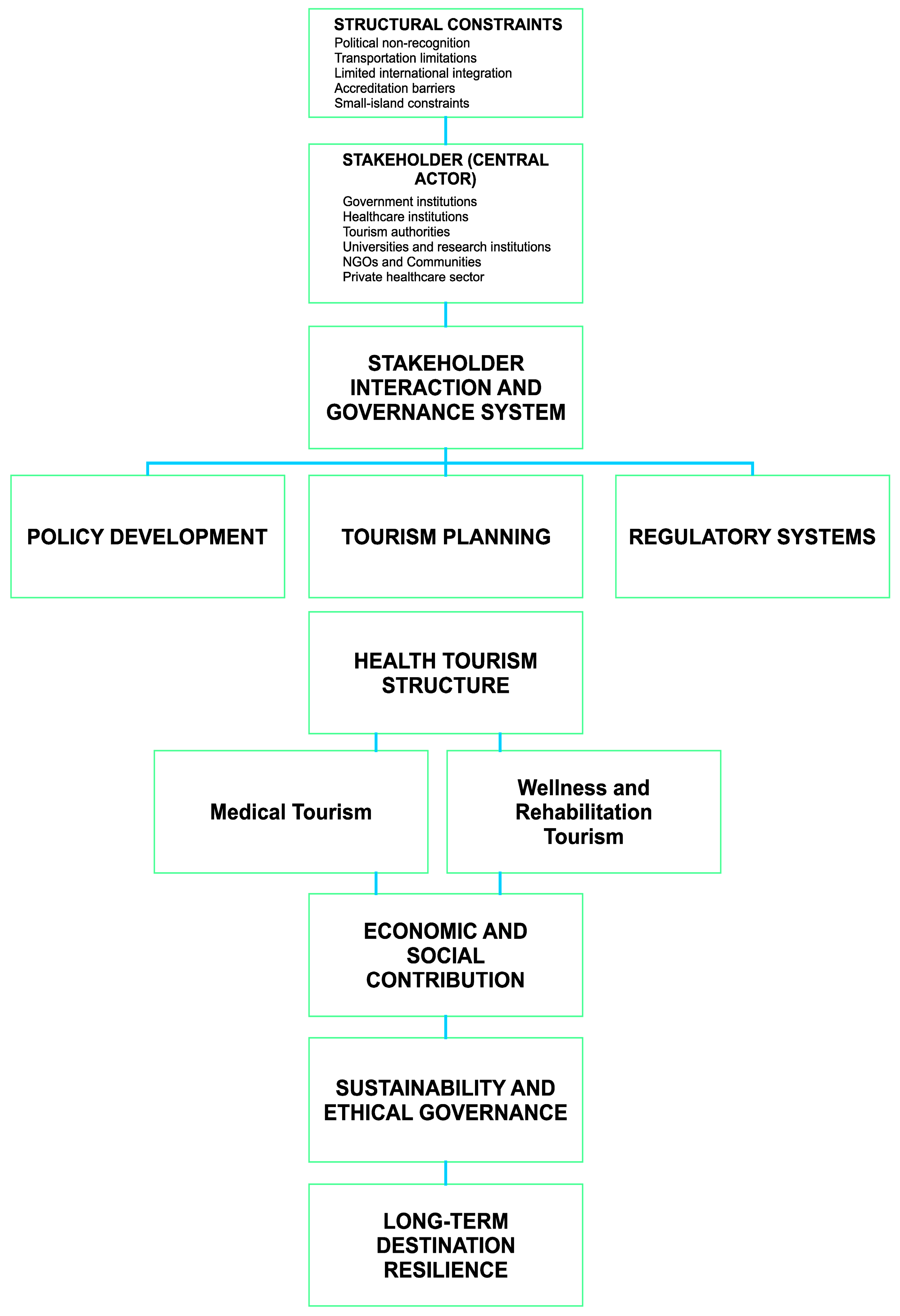
The sustainable health tourism model developed in this research presents a response to the problems and contradictions revealed by the respondents and assessed in the light of the existing literature. The model presented in this study articulates the inclusion of governance reform, coordination between the sectors, infrastructure investment, economic design, and environmental protection into a single integrated framework. At its core, the model is the set of central stakeholders—healthcare providers, tourism operators, government ministries, universities, NGOs, local communities, and regulatory bodies—representing an interaction and management system that is supported by dual strategic pathways of policy development and tourism planning. These pathways steer decisions into operational pillars for the health tourism sector on islands such as Cyprus. The management framework consists of three blocks: The first is health tourism infrastructure, including hospitals, clinics, technology, transportation, accommodation, and revenue flows. The second is economic contributions, such as employment, local businesses, and investments. The third is an integrated strategic framework that reinforces stakeholder management, policy planning, strong infrastructure, economic benefits, and environmental management as a sustainable health tourism model. The interview narratives show an explicit awareness that without checks and balances, growth could increase the level of inequality, the cost of living, and environmental stress. However, the statements of the participants reveal a common normative vision of a model that is “participatory, equitable income distribution, environmentally and resource-friendly”, which can lead to the protection of cultural and natural heritage. It is envisioned that by implementing a sustainable health tourism model, Northern Cyprus can transform from a niche area focused on IVF treatments into a significant health tourism hub in the Eastern Mediterranean region, through a combination of clinical quality, digital visibility, economic viability, social inclusion, and long-term environmental management.
This study further demonstrates that sustainable health tourism should not be understood solely in environmental terms; rather, sustainability within health tourism also depends on ethical governance, patient safety, transparent regulation, stakeholder coordination, healthcare quality assurance, local economic participation, and institutional accountability. In emerging medical tourism destinations, long-term competitiveness is closely linked to the ability to balance economic expansion with regulatory effectiveness and social responsibility. The case of Northern Cyprus also illustrates how politically constrained island destinations may simultaneously experience strategic opportunities and structural limitations within international health tourism markets. Issues such as political non-recognition, transportation accessibility, fragmented governance, and limited international accreditation continue to influence the sustainable development capacity of the sector.
6.1. Implications
The findings of this study have important implications for the governance, regulation, and strategic planning of health tourism in Northern Cyprus. First, thematic findings from the participants underpin the need to transition from fragmented, reactive initiatives toward a formalized, inter-ministerial governance structure. It should be emphasized that there is a need for systematic coordination across the health and tourism portfolios, supported by dedicated units and permanent multi-stakeholder councils. Such bodies should involve ministries, professional associations, universities, non-governmental organizations, local communities, and private providers to ensure that policy development, implementation, and monitoring are commensurate with the sustainable health tourism model’s emphasis on integration and stakeholder participation. Second, ongoing deficiencies in legislation, accreditation, and ethics suggest that a comprehensive legal framework for health tourism is needed, bringing together provisions concerning international accreditation, the rights of the patient, data transparency, environmental standards, and marketing rules into one coherent, enforceable regime. This framework would have to recalibrate restrictive advertising bans to provide a code of ethical and transparent promotion, which would then allow providers to develop digital visibility and trust in very sensitive areas such as IVF, bariatric surgery, and cosmetic procedures without encouraging overpromising and clinical risk-taking. Third, the proposed model implies a monitoring and evaluation system; it provides registries of procedures and outcomes, regular surveys of patient satisfaction, public reporting of sustainability, and environmental indicators that should be institutionalized as fundamental instruments of evidence-based regulation, as opposed to ad hoc initiatives.
At the level of industry practice, destination management, and local development, this study proposes that Northern Cyprus needs to strategically exploit the existing niches regarding clinical services and natural resources, while tackling the issues of economic leakage and socio-environmental externalities. Healthcare providers, tourism enterprises, and intermediaries are encouraged to co-produce integrated portfolios of services. The focus of these healthcare services should be to integrate IVF, aesthetic surgery, dentistry, and emerging wellness offers with appropriate accommodation, transport, and rehabilitation services. These services must be in line with the model’s pathways for tourism planning and brand strategy. This co-production needs to be integrated into a branding architecture that prioritizes a focus on measured success rates and accreditation credentials, the quality of patient experiences, and environmental performance through the use of digital platforms and international benchmarks to overcome political non-recognition and weak PR capacity. From a development perspective, the model suggests that state and municipal authorities must implement policies that will maximize local value creation. State actors and power holders need to promote local ownership, boost local supply chains, incentivize “local products” and SMEs, and dedicate a share of health tourism revenues to public infrastructure, environmental management, and community programs. At the same time, the findings and the perspectives of the participants, in conjunction with the existing literature on islands, urge explicit social and environmental safeguards, which would provide support for community participation mechanisms, cultural heritage protections, green building and waste management standards, and water- and energy-efficiency requirements so that the expansion of health tourism does not add to inequalities, cost-of-living pressures, or ecological degradation but helps to build a more inclusive and sustainable island economy.
6.2. Limitations and Future Research
This study has a number of methodological and contextual limitations that should be taken into account when considering its results. First, the research design is a qualitative one, based mainly on semi-structured interviews with experts and practitioners from a sample of the medical, managerial, and policy communities—largely from the medical community directly involved in IVF and elective surgeries. While this approach provides a rich, context-sensitive understanding of perceptions of health tourism, governance, and sustainability, it does not allow for statistical generalization across all stakeholders, nor does it encompass the rich diversity of views that may be present amongst the residents, non-professional workers, or patients. Second, the sample is mainly made up of members of the supply side, and it is focused on domestic views. Important missing perspectives include those of international health tourists, as well as diaspora patients, lower-income residents, and marginalized groups, limiting our ability to examine the dimensions of social equity and justice in any depth. Third, the data only show a specific point in time in the changing policies and market situation of Northern Cyprus; therefore, they cannot fully demonstrate how future changes in rules, investments, political situations, or environmental issues will affect the health tourism system. Finally, while the sustainable health tourism model has multiple dimensions—such as stakeholders, governance, infrastructure, economy, and environment—its empirical validation is limited to a single small-island context; thus, the scope of this study allows for questions with regard to the transferability of the proposed model to different political and institutional contexts without any further adaptation.
The participant profile was predominantly composed of supply-side stakeholders such as healthcare professionals, managers, and institutional actors. Consequently, patient-centered perspectives, local resident experiences, and grassroots community viewpoints remain comparatively underrepresented within the dataset.
These limitations open up a number of promising avenues for future research that could refine, extend, and test the sustainable health tourism model in an empirical way. Future studies should incorporate extensive investigations from the patient’s viewpoint using interviews and surveys to ascertain the reasons for their choice of destination, their perception of risks, their experience with respect to informed consent, their level of satisfaction, and the results after treatments in some key areas such as IVF, weight loss surgery, dental care, and cosmetic procedures. Mixed-methods and longitudinal research would be especially useful in investigating the relationships between changes in governance, accreditation, infrastructure, and branding and economic performance, social inclusion, environmental pressures, and community well-being over time. Moreover, comparing case studies from other small islands or other places with political limitations would allow us to understand how well our model works, find different management arrangements, and identify the specific challenges and opportunities in those contexts. In addition, future work should develop and use clear methods to measure each part of the model (e.g., stakeholder participation, policy coherence, infrastructure, economic impact, environmental sustainability, and quality assurance). We further suggest that the extended scope of the proposed framework could be combined with important local measures for things such as waste management, community benefits, cultural integrity, and ecological resilience. Such operationalization would not only strengthen the academic understanding of sustainable tourism but also provide knowledge for the stakeholders in the decision-making mechanisms in Northern Cyprus, guiding them to monitor the progress made in health tourism, to conduct comparisons with similar international health tourism destinations, and to develop a more resilient and socially embedded health tourism strategy.
Future studies may benefit from incorporating patient-centered perspectives, local residents’ experiences, and comparative analyses involving other island-based medical tourism destinations. Longitudinal research examining governance transformation, ethical regulation, accreditation systems, and sustainability indicators may further contribute to the development of more resilient and accountable health tourism models. In addition, future research should explore the emerging role of wellness tourism, rehabilitation tourism, and medical wellness services within diversified health tourism strategies.