Article

Operationalizing Mass Customization Through Product Architecture and Configuration in a Regulated Manufacturing SME: An Action Research Approach Validated Through a Case Study

by
Stéphanie Bouchard
*,
Sébastien Gamache
* and
Georges Abdul-Nour
*
Department of Industrial Engineering, University of Quebec in Trois-Rivières, Trois-Rivières, QC G8Z 4M3, Canada
*
Authors to whom correspondence should be addressed.
Sustainability 2026, 18(12), 5940; https://doi.org/10.3390/su18125940
Submission received: 8 May 2026 / Revised: 1 June 2026 / Accepted: 5 June 2026 / Published: 10 June 2026
(This article belongs to the Section Sustainable Engineering and Science)

Abstract

The advent of digital technologies, increasing competition, market globalization, and the fourth industrial revolution compel organizations to rethink their operating models to sustain competitive advantage. At the same time, increasingly informed consumers expect higher levels of personalization, responsiveness, and cost efficiency. In this context, mass customization has emerged as a strategic response enabling firms to deliver tailored products while maintaining acceptable levels of cost, lead time, and operational efficiency. However, operationalizing mass customization remains particularly challenging for small- and medium-sized enterprises (SMEs), especially within normative environments characterized by regulatory and compliance requirements affecting product architectures and manufacturing processes. Although the literature highlights modular product design and product configuration as key enablers, it lacks a structured strategy for their implementation in such contexts. This article aims to develop and validate an operational strategy for mass customization based on these two levers. The methodology adopts an action research approach structured through a hybrid Agile–Stage-Gate framework and validated through its application to a representative portion of the product architecture within a case study. The results highlight the structured integration of variability analysis, modular product design, and configuration logic into an operational process, supporting the management of complexity and the implementation of mass customization in manufacturing SMEs.

1. Introduction

Industry 4.0, combined with increased accessibility to digital technologies and the proliferation of technological solutions, has profoundly transformed manufacturing environments and intensified competition among firms [1,2,3,4]. At the same time, market globalization and evolving customer expectations, particularly with regard to customization, responsiveness, and cost, are challenging traditional mass production models [5,6]. In this context, mass customization has emerged as a strategic approach capable of reconciling product variety with operational performance [7].
These transformations exert growing pressure on small- and medium-sized enterprises (SME) in the manufacturing sector, which are required to rethink their processes in order to enhance competitiveness and agility [8]. However, this transition remains complex, especially for resource-constrained SMEs operating in regulated environments, where regulatory requirements directly affect product design, variant management, and digital transformation processes [1,9]. From this perspective, modular design defines the product architecture and its associated solution space, while product configuration enables these possibilities to be leveraged to generate specific product instances.
Modular design and product configuration therefore constitute two complementary levers for supporting mass customization [7]. However, a review of the literature reveals that these approaches are predominantly developed outside regulated environments and rarely propose strategies for their operationalization within manufacturing SMEs, notably due to the specific constraints associated with such contexts [7]. Existing studies offer limited insights into the concrete implementation of these approaches, particularly regarding structured procedures for product decomposition, the formalization of configuration rules integrating both technical and regulatory constraints, and the governance mechanisms required to ensure the coherence and evolution of modular product architectures in real industrial contexts. In particular, the literature provides limited guidance on how to translate modular design principles into actionable steps, how to operationalize configuration constraints within complex and regulated environments, and how to ensure the long-term consistency and maintainability of the resulting product architectures. These approaches are also seldom validated in environments subject to stringent regulatory requirements.
To address these gaps, this paper aims to develop and adapt a strategy for the operationalization of mass customization through an action research methodology conducted within a manufacturing SME operating in a regulated context. The scope of this study is intentionally limited to modular product design and product configuration, as they constitute the foundational elements upon which process modularization and collaboration networks can subsequently be developed. More specifically, it proposes a structured and sequential approach combining variability analysis, modular product design, interface definition, and configuration constraint formalization. The study also provides insights into the integration of technical and regulatory constraints within product architectures and highlights the role of governance mechanisms in ensuring their long-term coherence and evolution. Rather than focusing on these concepts individually, the contribution of this study lies in their structured integration into a coherent and operational process adapted to manufacturing SMEs operating in regulated environments.
The study follows an iterative approach combining a literature review, field experimentation, and validation through a case study, with the objective of structuring, deploying, and refining the proposed strategy under real operational conditions. The validation was carried out on a representative portion of the product architecture, enabling an in-depth assessment while maintaining a manageable scope. A hybrid Agile–Stage-Gate approach is employed to support iterative validation and ensure consistency between theoretical foundations and field-based insights.
This paper is organized into five sections. The next section presents the literature review, followed by a description of the research methodology. The results of the action research are then presented. Finally, the paper concludes with a discussion and a conclusion highlighting the main contributions, limitations, and avenues for future research.

2. Literature Review

A literature review was conducted to identify existing theoretical foundations, highlight the approaches proposed in the literature, and delineate the limitations of current research when regulatory requirements are considered.
The literature search was carried out using the Scopus database, which provides access to relevant scientific journal articles, research reports, and conference proceedings addressing mass customization and related themes. The search covered the period from 1990 to 2025 to include both foundational works on mass customization and product architecture, as well as more recent developments related to Industry 4.0 and product configuration. The analysis of these works made it possible to structure the literature review around four main thematic categories: manufacturing SMEs operating in a regulated context, Industry 4.0, manufacturing agility, and mass customization. These categories served as the basis for the conceptual framing of the research and for structuring the transformation axes examined in the remainder of the paper.

2.1. Manufacturing SMEs Operating in a Regulated Context

Manufacturing SMEs are characterized by the adoption of strategies focused on flexibility, responsiveness, and product variety [1,10]. Indeed, by emphasizing flexibility and responsiveness, SMEs create an environment conducive to agility, thereby increasing their ability to compete in a volatile, uncertain, complex, and ambiguous (VUCA) market context [11].
Also, given their typically low production volumes, high product variety, and limited internal resources, manufacturing SMEs must demonstrate agility to effectively respond to continuously evolving demand [12]. This need for agility drives SMEs to implement adaptable and reconfigurable systems, as well as to establish collaborative networks [6,13,14].
In addition, due to the contexts in which they operate, some firms are subject to regulatory constraints [9]. These constraints may arise from local, international, environmental, or safety regulations. Moreover, regulatory constraints may interact in complex ways with existing technical requirements [15]. In certain cases, regulatory constraints can restrict customization by conflicting with specific product combinations [15]. Modular product design enables better integration of compliance considerations, thereby facilitating design flexibility and innovation [16]. Indeed, Hvam, Mortensen and Riis [17] emphasize that product configuration and modularity are essential to managing the integration of technical and regulatory rules while ensuring compliance across product variants.

2.2. Industry 4.0

The fourth industrial revolution, which primarily aims at the interconnectivity of technologies, has emerged as a new paradigm seeking to enhance productivity, agility, and sustainability in manufacturing enterprises [1]. It is generally defined as the transformation of traditional manufacturing into digitalized environments through the integration of advanced technologies [18].
Industry 4.0 significantly modifies both business models and operational processes within firms by promoting the interconnection of technologies and enabling greater flexibility in production systems [19,20,21]. This transformation supports increased customization by allowing more adaptable processes, improved data acquisition, and enhanced coordination across the value chain [22]. In this context, key principles such as interoperability, decentralization, and modularity contribute to the development of intelligent and adaptive manufacturing environments capable of handling high levels of product variability [20,23].
More specifically, Industry 4.0 enables greater flexibility and agility by seeking to reduce lead times between product order and delivery, while supporting batch customization and aiming to lower production costs [20,21,24]. Overall, the fourth industrial revolution acts both as a lever and as a response to the requirements of mass customization. The growing demand for customization drives the deployment of more adaptive and integrated production systems, thereby strengthening the close relationship between these two concepts [20].
In the context of mass customization, these capabilities are particularly relevant for supporting product configuration processes. The integration of digital technologies enables the formalization and management of configuration rules, the automation of constraint validation, and the deployment of configuration tools capable of handling complex interactions between product components [17,25]. More specifically, Industry 4.0 provides the digital environment that supports the implementation of systems capable of generating valid product configurations, while ensuring the integration of requirements. As such, it provides the digital foundation required to operationalize modular product architectures and to manage configuration complexity in manufacturing environments [16,20].

2.3. Manufacturing Agility

In response to the need to redesign processes to transition toward mass customization, the literature highlights the importance of enhancing a firm’s agility [26,27]. Agility is generally composed of two fundamental dimensions: flexibility and responsiveness [28,29]. To achieve manufacturing agility, a manufacturing firm must be capable of responding rapidly and flexibly to customer demand [28,30]. However, agility is not limited to speed of response alone. Organizational agility must also be considered, as it enables firms to respond swiftly to changes not only in volume but also in the level of variability offered to customers [31,32].
Manufacturing agility encompasses the product, manufacturing processes, workforce, production capabilities, and the overall environment, both physical and digital, of an agile enterprise [28]. As such, it contributes directly to the creation or maintenance of competitive advantage [1].
However, in the face of dynamic customer demand, a key challenge lies in the ability to deliver customized products with seemingly high complexity, while simultaneously relying on modular product design, flexible manufacturing systems, and connected and agile organizational processes [31,33]. Consequently, reducing complexity at its source, at the product design and engineering stages, is critical [31,33]. To implement agile methods in product design that are consistent with mass customization, Varl, Duhovnik and Tavčar [34] emphasize the need to introduce modularity within product components. Standardized design of parts and assemblies, along with the standardization of processes and supply networks, enables reductions in both costs and lead times associated with the production of complex products [31,34].
Manufacturing agility therefore lies at the core of the transition toward mass customization, primarily through the reduction in upstream complexity [31,33]. Specifically, agility emphasizes the importance of reducing the number of configurations, product complexity, and response times, while increasing productivity [31,33,34,35]. These objectives directly align with the performance measures targeted within the scope of this article.

2.4. Mass Customization

Initially defined by Cohen and Pine II [36], mass customization refers to an efficient, low-cost production approach capable of delivering highly customized products at high volumes. Its objective is to provide personalized products that meet customer expectations while maintaining execution speed and production efficiency comparable to those of mass production [35]. Foundational work further identifies several approaches, including collaborative, adaptive cosmetic, and transparent strategies. While these concepts provide valuable insights into personalization and value creation, they offer limited guidance on how to implement mass customization in complex and regulated manufacturing environments [37].
In this context, the structuring of product architectures becomes a critical element in enabling mass customization. Product platforms are widely recognized as a structuring mechanism for supporting mass customization. A product platform can be defined as a set of common components, design units, and interfaces from which a family of related products can be derived [38,39]. By distinguishing between shared and variable elements, product platforms support the organization of product architectures and enable the efficient management of variety and complexity [38,40,41]. This approach is particularly relevant in contexts characterized by high levels of product variability and strong interdependencies between components.
However, it represents a significant challenge for companies [42]. Indeed, in order to offer customized products at a competitive cost, manufacturers must develop production systems that ensure a high degree of flexibility, reconfigurability, and an emphasis on product modularity, as modularity facilitates the creation of product variants while minimizing costs [42]. When properly implemented, mass customization can improve not only pricing and product customization, but also quality and delivery lead times [43].
Mass customization is therefore a production strategy that enables firms to address challenges arising from volatile customer demand [44,45]. It provides the capability to deliver products tailored to customer needs through flexible processes and the integration of multiple operations [46], particularly in a context where there is growing customer interest in personalized products and services [47].
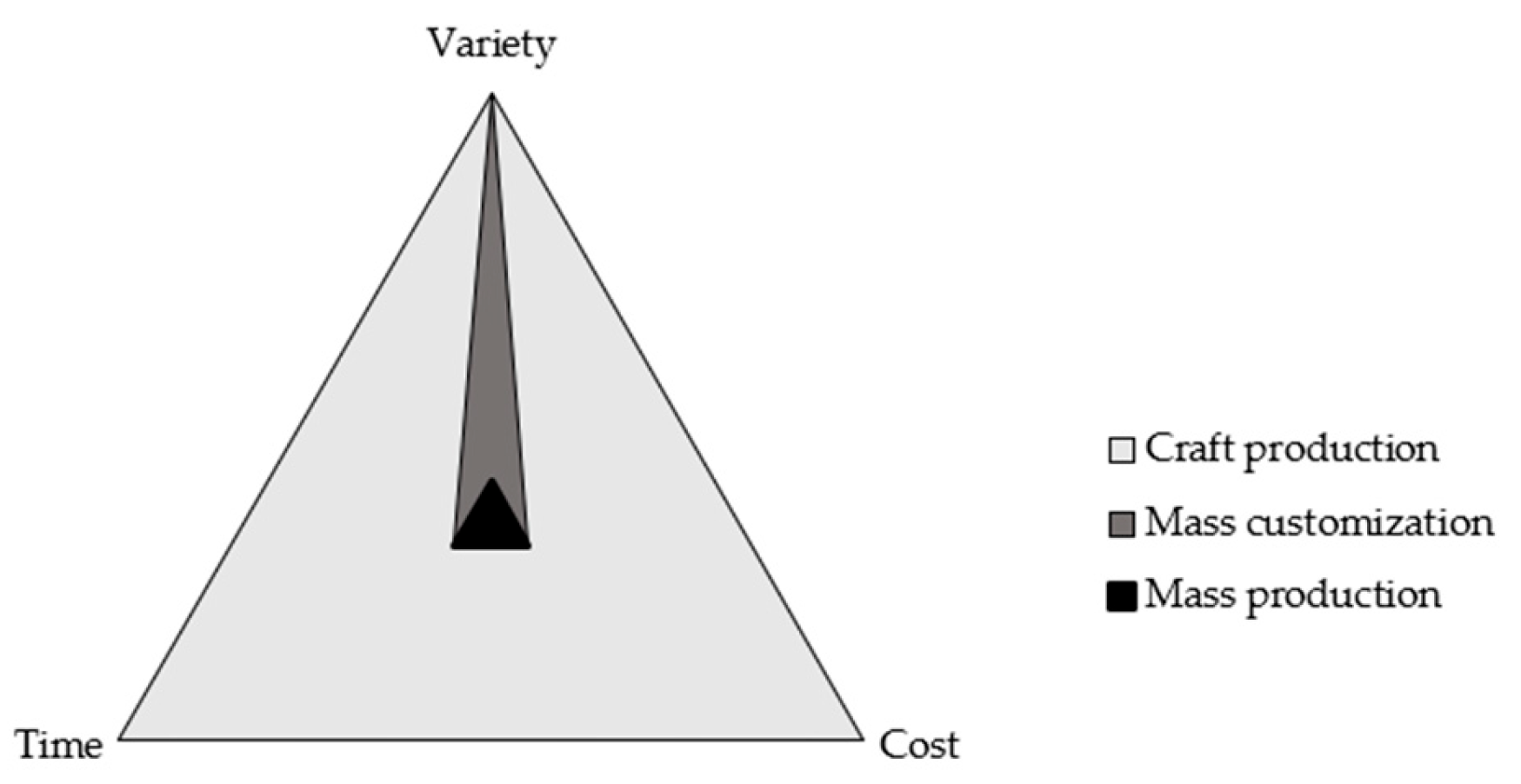
This strategy aims to achieve the cost and lead times associated with mass production while offering a level of variety comparable to that of craft production, as illustrated in Figure 1 [48,49].
In many industrial contexts, mass customization relies on the use of predefined modules developed by manufacturers and offered to customers as selectable options [50]. However, this logic is not universal and depends on the product type and the chosen customization approach. In complex manufacturing environments, modularity acts as a lever to operationalize product variability while controlling complexity and improving production flexibility [43,51,52,53,54,55]. Accordingly, this production strategy seeks to deliver customized products and services through the implementation of modular product design, flexible manufacturing processes, and an integrated supply chain [56]. However, transitioning toward mass customization often requires a profound organizational change, as well as the development and deployment of a clearly defined strategy [45].
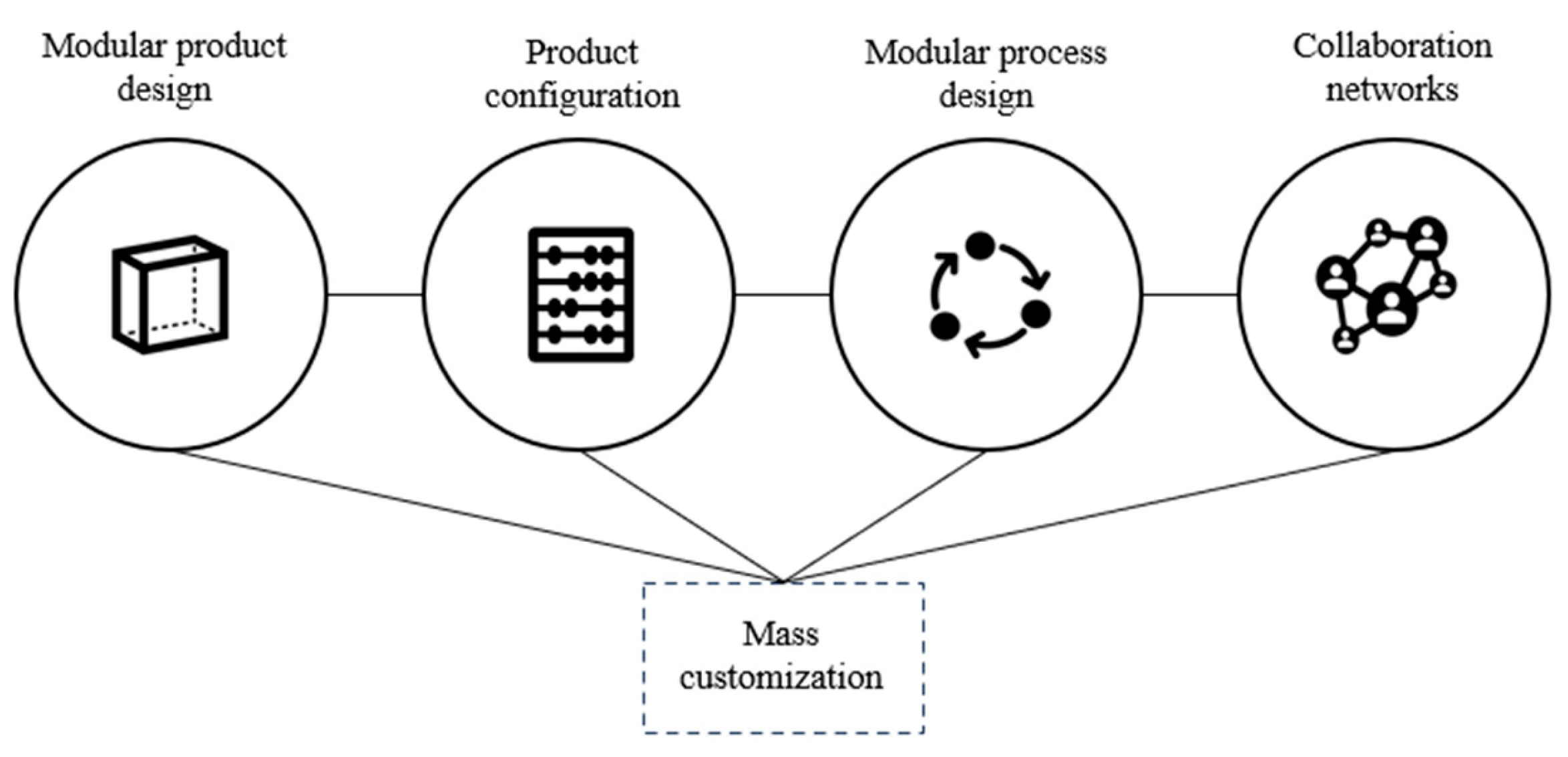
In their research, Bouchard, Gamache and Abdulnour [57] build upon the guidelines proposed by Suzic and Forza [58] for implementing mass customization in organizations and identify four transformation axes toward this approach. Figure 2 illustrates these four transformation axes.
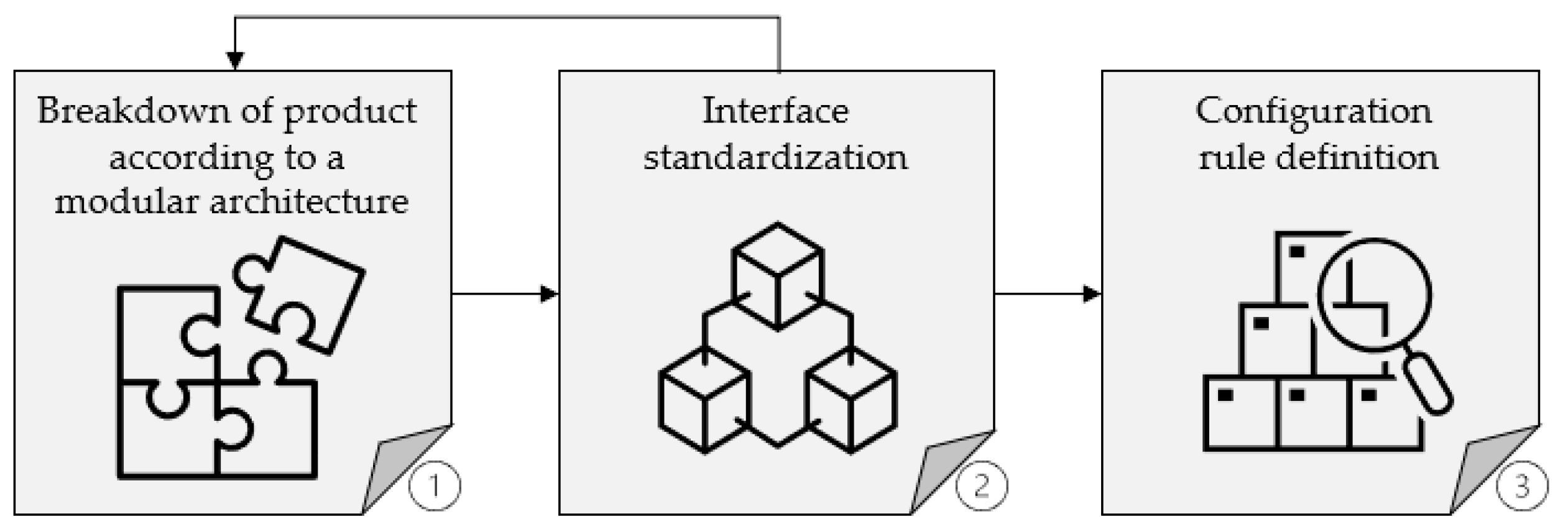
Product configuration is a key component in the transition toward mass customization [25,59]. Indeed, the degree of product modularity facilitates product reorganization and configuration [43,51,60]. Also, Bouchard, Gamache and Abdulnour [57] propose a sequence of steps for implementing modular product design. These three steps include decomposing the product based on a modular architecture, standardizing interfaces, and defining configuration constraints, as shown in Figure 3. Although this strategy is implemented sequentially, adjustments to the product decomposition may be made following interface standardization through a feedback loop between these two steps [57].
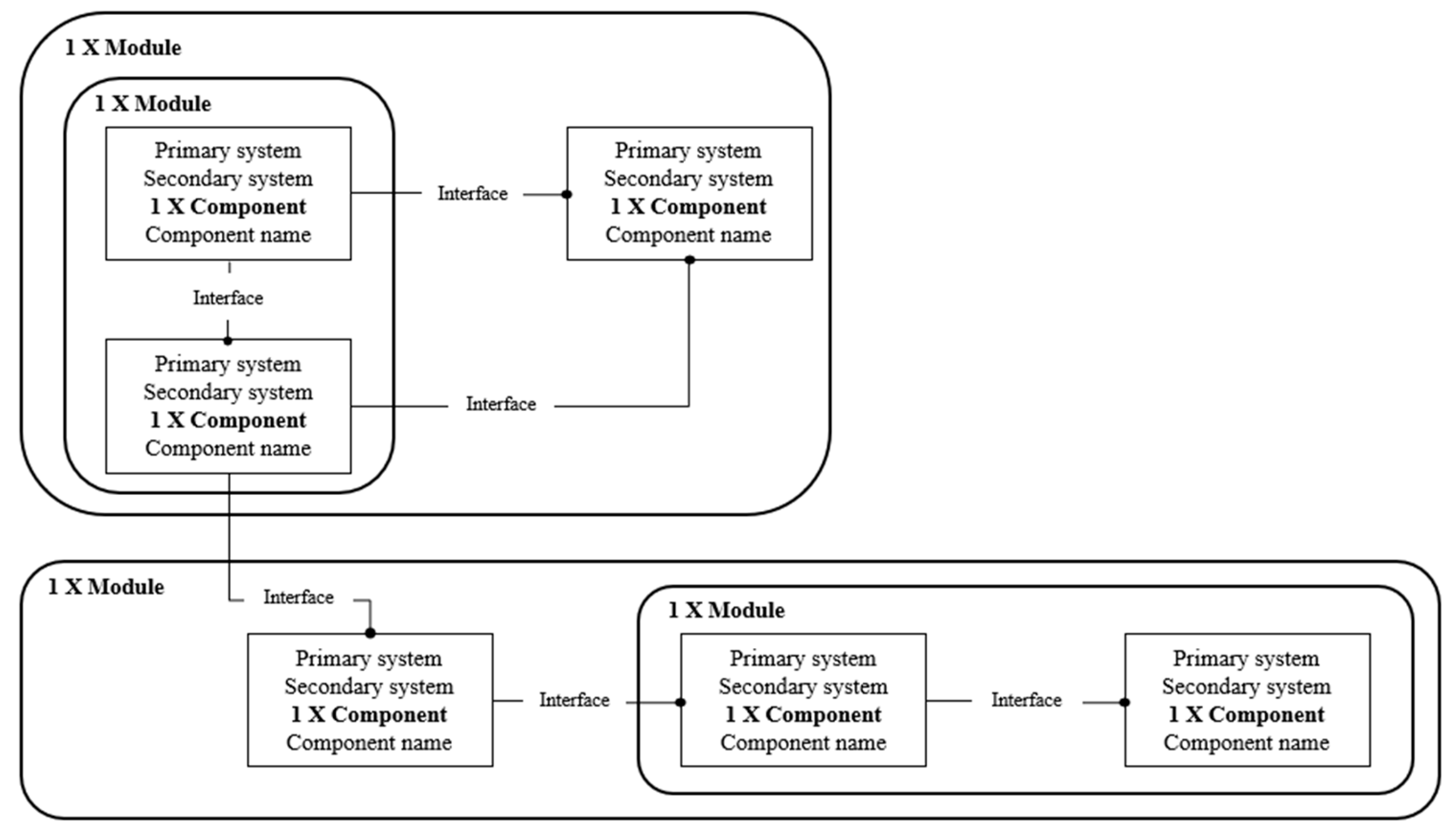
Modular product decomposition is enabled through standardization analyses [7]. These analyses make it possible to characterize and understand product variability by identifying common, optional, and configuration-specific elements. As for interface standardization, this is achieved through the development of an interface diagram [61]. This diagram illustrates product decomposition by identifying components and modules. Each component is specified by its name, its association with a primary and secondary system, and the quantity present in the product. The nature of the interface between each component is also defined [61]. As a transformation axis toward mass customization, the implementation of modular product design enables a more effective response to specific customer requirements [57].
Finally, existing implementation frameworks for mass customization tend to focus on high-level concepts such as modularity, configurability, and product platforms, but provide limited guidance on how to structure and operationalize these elements into a coherent and implementable process, particularly in regulated manufacturing SME contexts.

2.5. Framing and Delimitation of the Transformation Axes

Although Bouchard, Gamache and Abdulnour [57] identify four transformation axes enabling organizations to move toward mass customization, modular product design and product configuration emerge as essential foundations that must be deployed upstream of the transformation process [62,63]. These two axes condition the ability of organizations to manage variety, control complexity, and structure customization choices in a coherent manner.
The priority given to modular product design is notably explained by the logical dependency that exists between product architecture and modular process design. The product constitutes a structural prerequisite that directly influences the design of manufacturing processes, production flows, and the way activities must be coordinated [38,39]. In the absence of a well-defined and controlled modular product architecture, subsequent levers such as process modularization and the structuring of collaboration networks become difficult to deploy efficiently.
Also, product configuration plays a complementary and inseparable role in the implementation of mass customization. By formalizing combination rules, managing option variability, and integrating technical and regulatory constraints, product configuration contributes to reducing decision-making complexity while ensuring the coherence of the proposed solutions [40,63,64]. Together, modular product design and product configuration act as framing mechanisms that condition and facilitate the subsequent implementation of modular process design and collaboration networks.
In line with these observations, the present research deliberately focuses on these two transformation axes, which are considered initial pillars in the transition toward mass customization.

2.6. Conclusion of the Literature Review

The literature review highlights the strategic role of mass customization as a response to growing customer expectations for products tailored to specific needs. In this context, existing studies emphasize the importance of modular product design and product configuration as key levers for structuring variety, reducing complexity, and ensuring the coherence of customized offerings. More specifically, product configuration emerges as a central mechanism for integrating and managing technical and regulatory constraints, in line with Industry 4.0 principles.
This fourth industrial revolution indeed constitutes a determining lever for the transition toward integrated, adaptive, and service-oriented production systems supported by digital technologies. By facilitating system interconnection, data circulation, and the automation of decision rules, Industry 4.0 creates a favorable environment for the emergence of production models capable of efficiently supporting mass customization. Within this framework, manufacturing agility represents a key success factor, as it enables companies to simultaneously meet the requirements of flexibility, responsiveness, and complexity management. It thereby contributes to reducing response times, structuring products and configurations, and improving operational performance.
Despite these theoretical advances, the literature does not, to the best of our knowledge, provide a formal strategy, defined as a structured, sequenced, and reproducible approach, aimed at operationalizing mass customization within small- and medium-sized manufacturing enterprises operating in a normative context [8]. These observations open avenues for research seeking to better characterize the prerequisites, application conditions, and success factors associated with the implementation of mass customization [44].
While these thematic areas have been extensively studied individually, their intersection remains insufficiently explored. Limited attention has been given to the combined challenges faced by manufacturing SMEs operating in regulated environments, where high product variability, regulatory constraints, and limited resources must be simultaneously managed. Existing research rarely addresses how mass customization can be operationalized under such conditions, especially in terms of translating theoretical concepts such as modularity, variability management, and configuration into structured and implementable processes. This gap highlights the need for an integrative approach that connects these different dimensions within a coherent operational framework. The present research is positioned within this perspective.

3. Methodology

This article aims to develop and adapt a strategy based on the existing literature and to evaluate it through its deployment within an actual manufacturing environment.
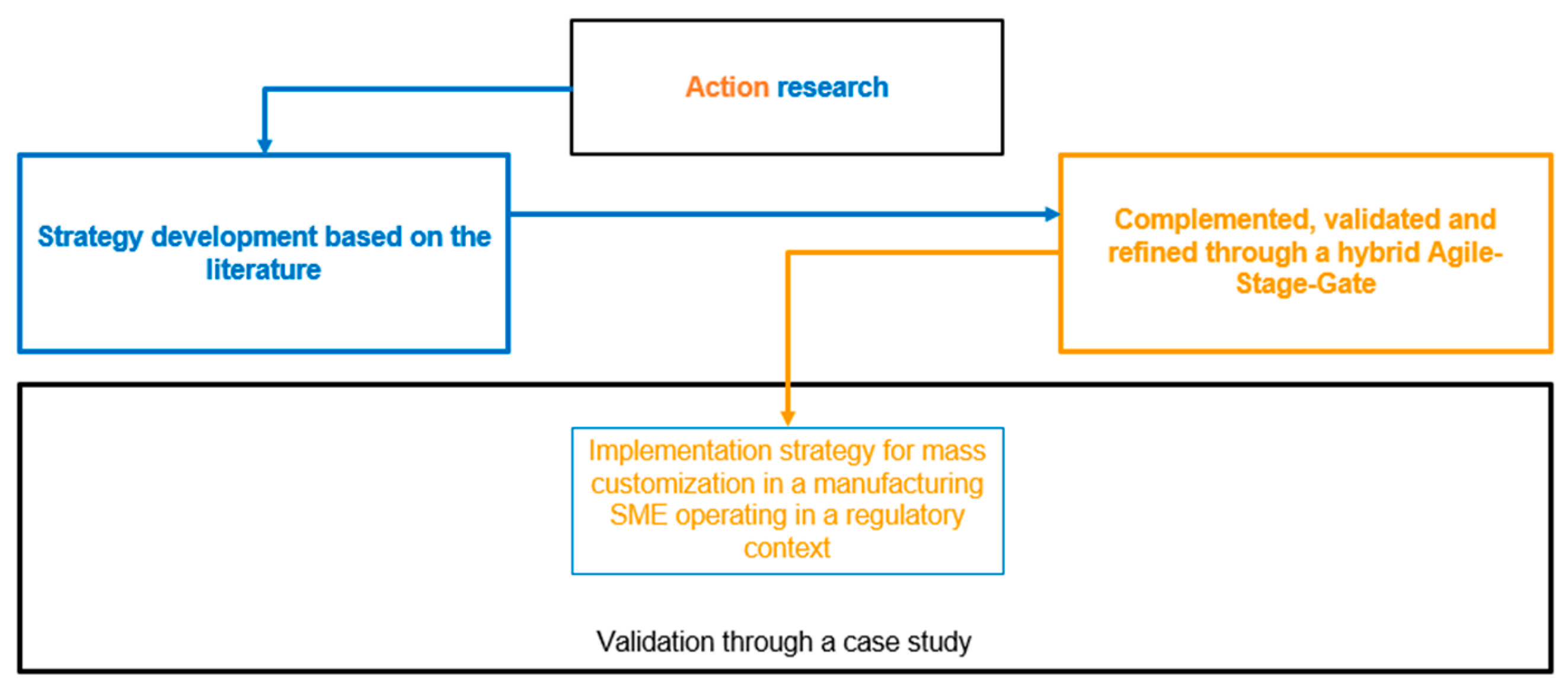
To this end, an action research approach, combined with a case study validation, was employed within a small- and medium-sized manufacturing enterprise operating in a normative context. A hybrid Agile–Stage–Gate approach was used to structure the development and validation iterations of the strategy, while balancing methodological rigor with the flexibility required in a manufacturing context. This approach seeks to document the concrete steps involved in deploying the strategy as well as the adjustments required under real-world conditions. Figure 4 illustrates the research methodology applied in this study.
The different components of this methodological approach are detailed in the following subsections.

3.1. Action Research

Action research is a research methodology aimed at simultaneously integrating the production of scientific knowledge and its practical application within a real-world context [65]. It requires close collaboration between researchers and practitioners, regardless of the field of application. Its primary objective is the generation of knowledge with a strong practical orientation [65]. Action plays a central role in this approach, as it enables theoretical propositions to be confronted with operational reality and their relevance to be validated.
In the context of this study, action research fully aligns with the recognized criteria and methodological orientations associated with this type of approach. It is based on a partnership with a manufacturing company, enabling continuous interaction between the research team and the relevant industrial stakeholders [65,66,67]. This collaboration fosters both the empirical grounding of the research and the progressive adaptation of theoretical propositions to the constraints of the industrial environment.
The objective of this action research is to develop a strategy aimed at operationalizing mass customization through modular tools, drawing on insights from the literature while integrating learning derived from field experimentation. The approach follows an iterative process combining experimentation, critical reflection, and observation of outcomes. The operationalization of the strategy thus seeks to generate tangible change within the manufacturing environment, while simultaneously contributing to the development of new theoretical knowledge supported by real-world implementation [65,66,67]. Finally, the validation of results makes it possible to assess the relevance and reliability of the knowledge produced, while respecting the organizational and contextual constraints inherent to the studied environment [65,66,67].
In this context, iterative adjustments and continuous collaboration with domain experts constitute fundamental components of the research process. These elements enable the progressive refinement of the proposed strategy and ensure its alignment with practical constraints, thereby strengthening both the relevance and the robustness of the results.
The action research process was conducted over a period of 36 months and involved close collaboration between researchers and company personnel. Data collection relied on multiple sources, including technical documentation, configuration data, workshop sessions, and iterative validation meetings.
The analysis was structured through the iterative cycles of the Agile–Stage-Gate framework. Each stage (Stage 0 to Stage 5) constituted a distinct analysis phase, during which specific types of data, including product documentation, configuration data, interface definitions, and configuration constraints, were progressively formalized into intermediate representations such as variability models, modular architectures, and configuration logic. Within each stage, the analysis focused on identifying dependencies, inconsistencies, and structuring opportunities related to product elements and their interactions. These activities were refined through short iterative loops following Agile principles, enabling continuous adjustments based on feedback from domain experts and ensuring the progressive consolidation of results across stages.
Regular meetings were held on a weekly basis, enabling continuous feedback, joint decision-making, and iterative refinement of the proposed approach. Decisions regarding product structuring, interface definition, and configuration constraints were made collaboratively based on both theoretical insights and practical constraints observed in the field. In total, approximately 18 to 22 participants were actively involved throughout the action research process. This included around 1 to 3 researchers, 8 to 10 product and design engineers, 2 to 3 configuration specialists, 2 product specialists, 2 regulatory experts, 3 to 4 external experts, and 3 managers participating in validation activities. The number of participants involved varied slightly across stages depending on the specific activities and expertise required. Each participant contributed according to their domain of expertise, particularly in the definition, validation, and refinement of the proposed modular architecture and configuration logic.
Given the embedded nature of the research team within the organization, attention was paid to managing potential biases through reflexive practices and structured validation. The involvement of external experts provided an independent perspective that helped challenge assumptions and validate results. In addition, the validation gates of the Agile–Stage-Gate framework ensured collective decision-making and contributed to limiting individual bias.

3.2. Hybrid Agile-Stage-Gate Approach

The hybrid Agile–Stage-Gate approach combines the principles of Agile methodology with the structured framework of the Stage-Gate model to reconcile flexibility and rigor within development processes [68,69,70]. This approach seeks to integrate Agile’s adaptability and rapid responsiveness with the governance and decision-making mechanisms inherent to the Stage-Gate model.
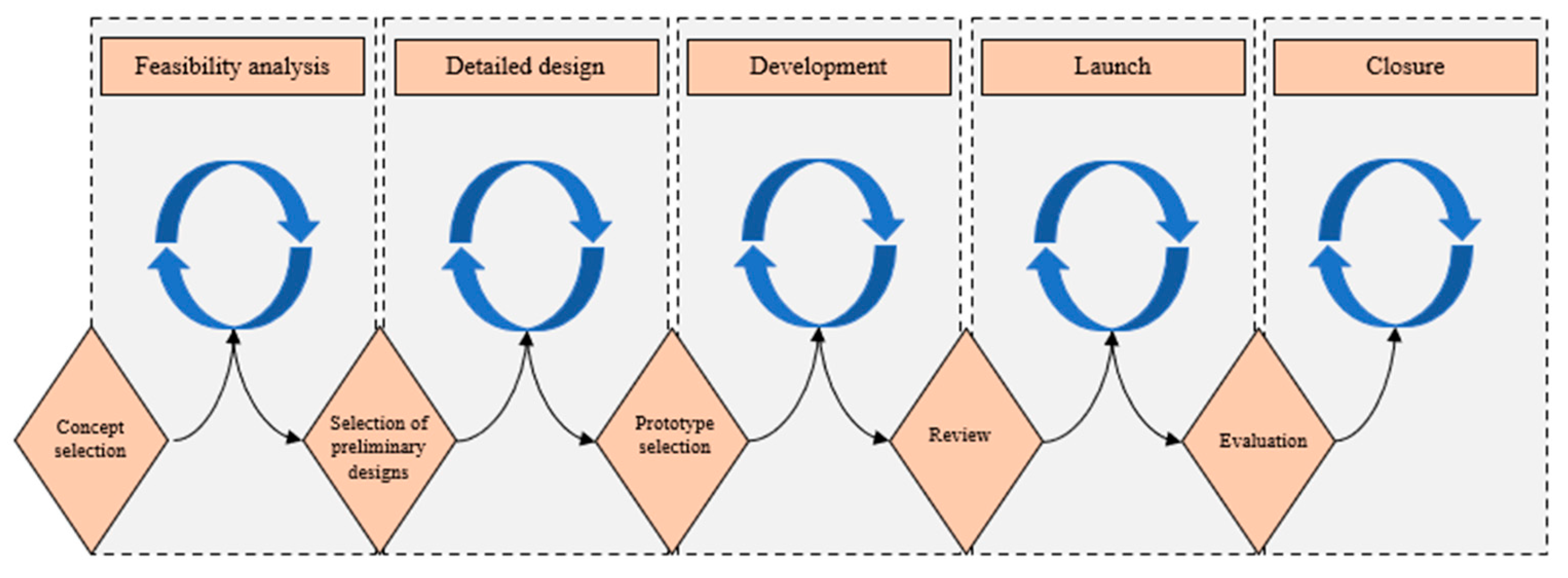
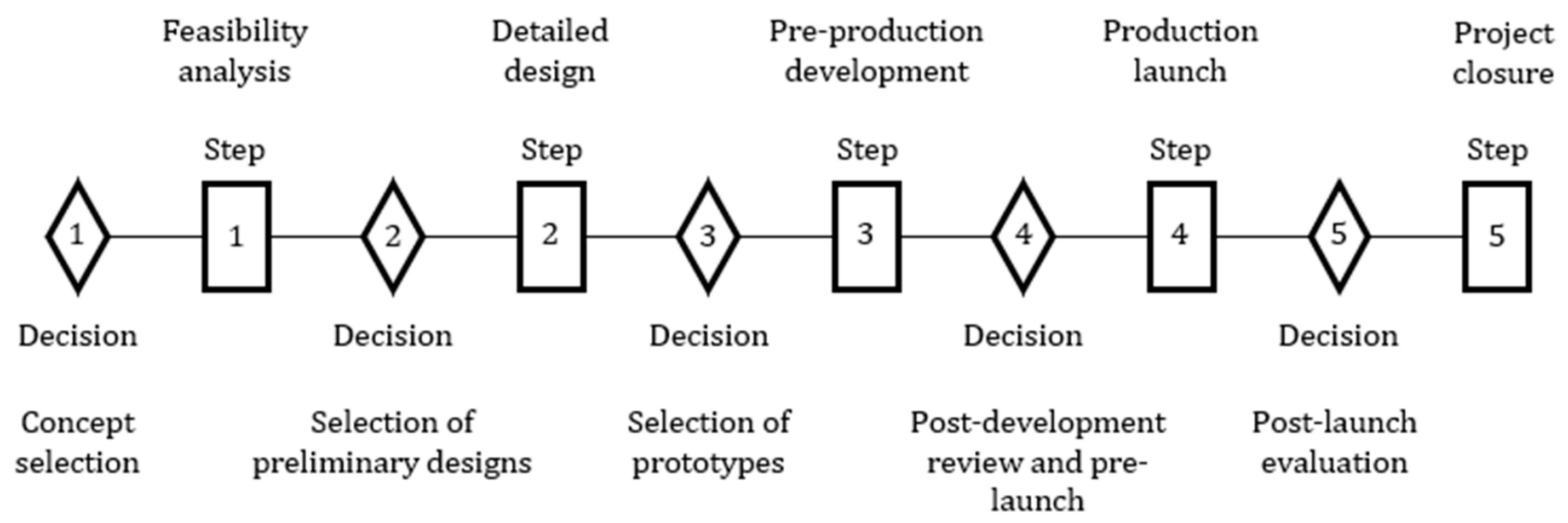
The Stage-Gate model, developed by Cooper [71], is a reference framework for new product development. It is designed to reduce risks associated with the development process while maximizing opportunities through a sequence of structured stages separated by formal decision points. These control points enable the assessment of project progress and guide strategic decision-making at each phase of the process. The Stage-Gate model is illustrated in Figure 5.
The Agile approach, for its part, is a management and development methodology that emphasizes collaboration among stakeholders, adaptability, and the ability to respond rapidly to change [72,73]. It promotes continuous communication among involved actors, offers increased design flexibility, and enables faster delivery of results, while relying on iterative processes better suited to uncertain and evolving environments [74].
The Agile–Stage-Gate approach thus integrates Agile-derived iterative cycles within the stages of the Stage-Gate model, while retaining formal decision control points [68,69,70]. This hybridization makes it possible to leverage the respective strengths of both approaches by combining adaptability, structured governance, and risk management. The Agile–Stage-Gate model adopted in this study is presented in Figure 6.

3.3. Company Context, Engineering Department Description and Scope of the Action Research

The action research was conducted within a small- and medium-sized manufacturing enterprise operating in a normative context and subject to regulatory requirements affecting the design, configuration, and commercialization of its products. The company designs and manufactures highly customized buses, characterized by a wide variety of configurations and technical variants to address diverse customer needs. This level of variety significantly increases the complexity of engineering and production processes. Manufacturing activities are distributed across two production facilities located in North America. The normative environment in which the company operates imposes specific constraints related to compliance, traceability, and configuration validation, which directly influence product engineering practices and digital transformation processes.
The company’s product engineering department comprises approximately 40 employees distributed across several teams. It includes project managers and project leaders, designers, engineers, assembly technicians, as well as product and regulatory specialists. One product engineering team is dedicated to sustainment activities, production support, and localized developments. A development engineering team, in turn, is responsible for major product evolutions. Another team is specifically dedicated to implementing the modular transition toward mass customization. Finally, a separate team is responsible for legal and regulatory aspects as well as technical support to engineering.
The scope of the research was limited to the product design phases, including the definition of modular architectures, the formalization of interfaces and configuration rules, and the integration of technical and normative constraints within these processes.

3.4. Structure and Complexity of the Studied Product

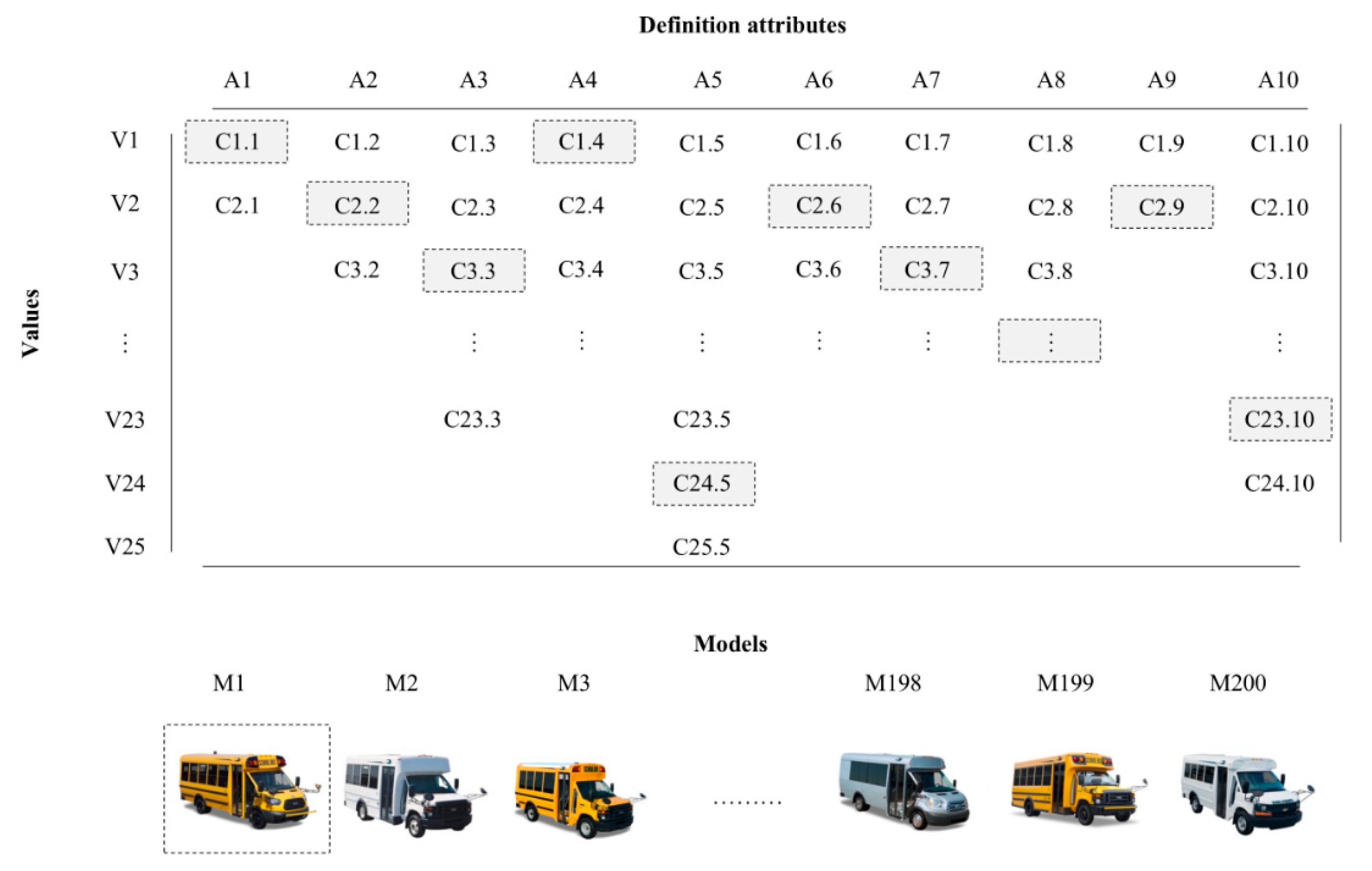
To contextualize the studied product, it is necessary to present its structure and level of complexity. The vehicle developed by the company is characterized by a highly configurable architecture based on multiple levels of variability. The product is offered in approximately 200 distinct models, resulting from the combination of 10 defining attributes, each of which can take between 2 and 25 unique values. This combinatorial structure illustrates the high level of product variability and contributes significantly to the complexity of its configuration. Figure 7 illustrates the different models as well as the associated defining attributes. As an example, Figure 7 shows that the combination of the circled constants allows the creation of model M1.
At this configuration level, an additional structure comprising approximately 300 option classes is subsequently integrated to define the detailed characteristics of the vehicle and to frame the configuration possibilities during the sales process. An option class corresponds to a grouping of options used to define a specific portion of the vehicle. Each class may therefore contain several options, representing different alternatives applicable to each of the 200 product models. Together, these elements generate a high level of complexity in product configuration management, highlighting the need to formally structure the product architecture as well as the configuration rules that govern it.
Although the study focuses on a specific portion of the product, the selected section was deliberately chosen due to its high level of variability, its integration of both technical and regulatory constraints, and its representativeness of the overall product architecture. This choice enables the identification of structuring mechanisms that are relevant to other parts of the product, while ensuring the feasibility of the action research process within operational constraints.

3.5. Overview of the Action Research Process

To improve the transparency and traceability of the action research methodology, this section provides a structured overview of the action research process. The study was conducted in close collaboration with company stakeholders, including engineers, product and configuration specialists, regulatory experts, and external experts through iterative workshops and validation meetings. Data collection relied on multiple sources, such as technical documentation, configuration data, and regulatory requirements. Each stage involved specific outputs, and validation criteria. Decisions were made jointly by researchers and practitioners to ensure alignment with both theoretical and industrial constraints. Table 1 provides an overview of the different stages of the process, along with the associated participants, data sources, outputs, and validation criteria.

4. Results

This section presents the results of the action research. It outlines the main observations made during the implementation of the proposed strategy, as well as the adjustments carried out throughout the deployment process. However, due to their confidential nature, certain data cannot be disclosed or detailed in the results presented in this article. Consequently, the corresponding figures are provided as general illustrative examples and do not grant access to detailed information.

4.1. Deployment of the Agile-Stage-Gate

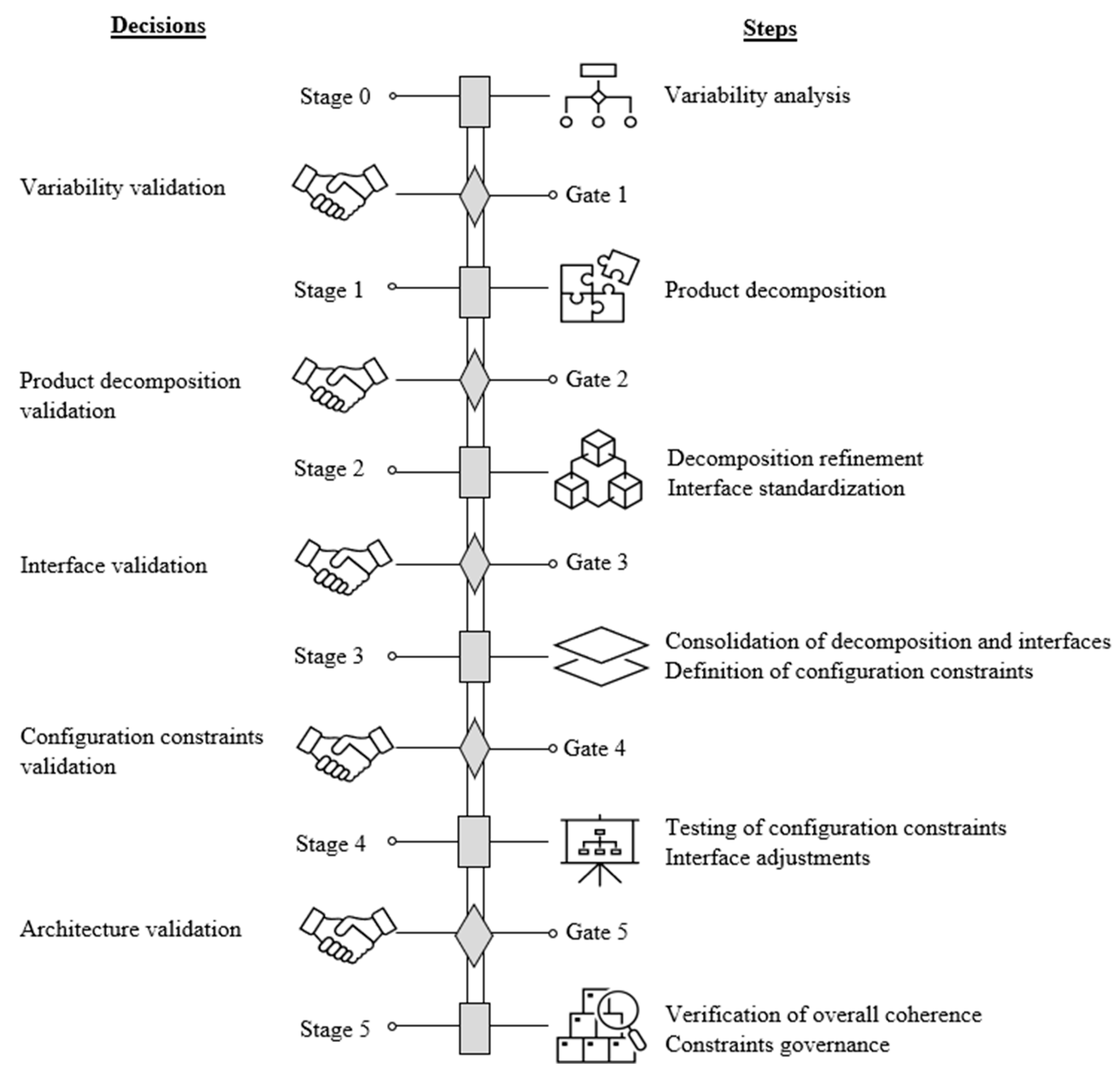
The deployed methodological strategy is based on a combination of the Agile–Stage-Gate approach and is structured into six successive stages (Stage 0 to Stage 5). Each stage is followed by a validation gate, enabling the assessment of objective achievement and ensuring the validity of the information before progressing to the next stage. The activities conducted at each stage were carried out in accordance with Agile principles, promoting iterative progress and frequent feedback loops. Each iteration was documented and validated through structured review sessions involving both researchers and domain experts, ensuring the consistency and applicability of the results across the different stages.
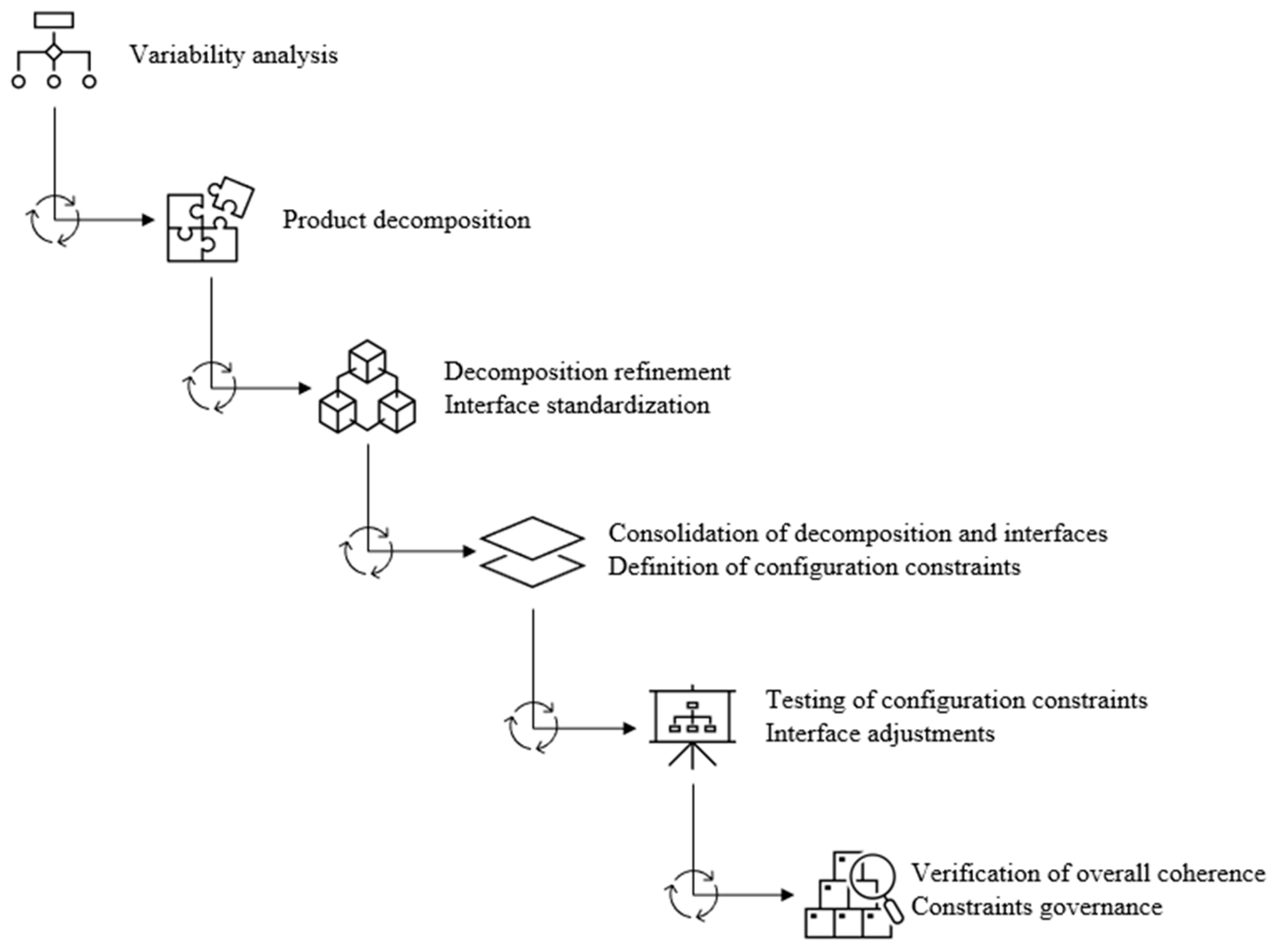
The application of this strategy was conducted over two exploratory cycles. Initially, the approach was applied by directly relying on the existing product structure based on option classes. However, the results obtained revealed certain limitations related to the use of models and classes as design units of the product architecture. These observations led to a revision of the initial strategy and the introduction of the concept of a product platform, along with a preliminary variability analysis stage aimed at identifying product design units and interfaces prior to pursuing modular structuring. Figure 8 illustrates the Agile–Stage-Gate approach adapted to modular product design and product configuration, developed through an action research process and validated by a case study.

4.2. Exploratory Cycle Based on Option Classes

This cycle aimed to leverage mechanisms already in place within existing engineering and configuration practices to ensure continuity with current tools and processes. The initial hypothesis was that option classes, which group together different options and variants used to define product characteristics, could serve as design units for structuring the product architecture.

4.2.1. Application of the Approach

Stage 1—Product decomposition
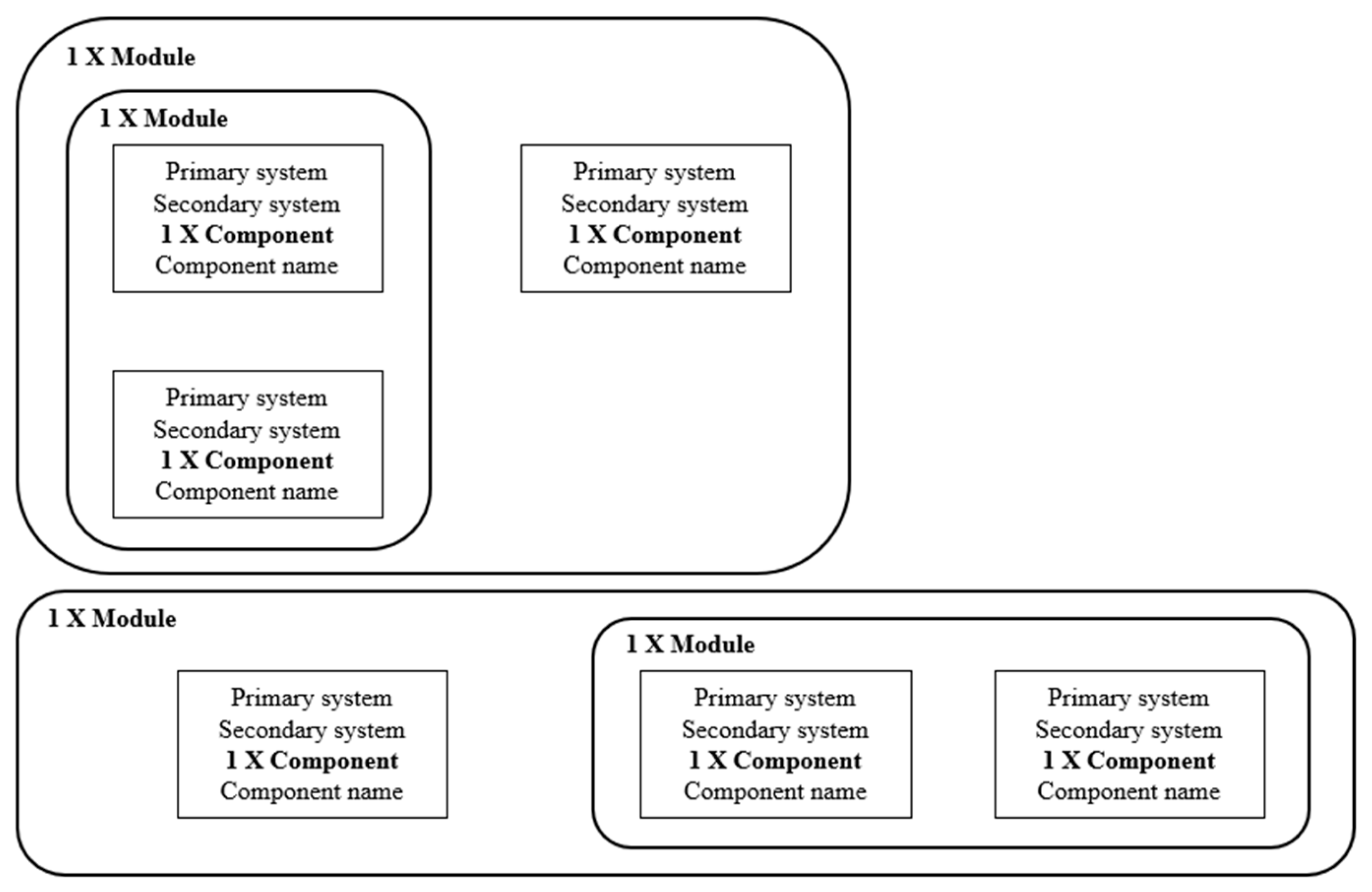
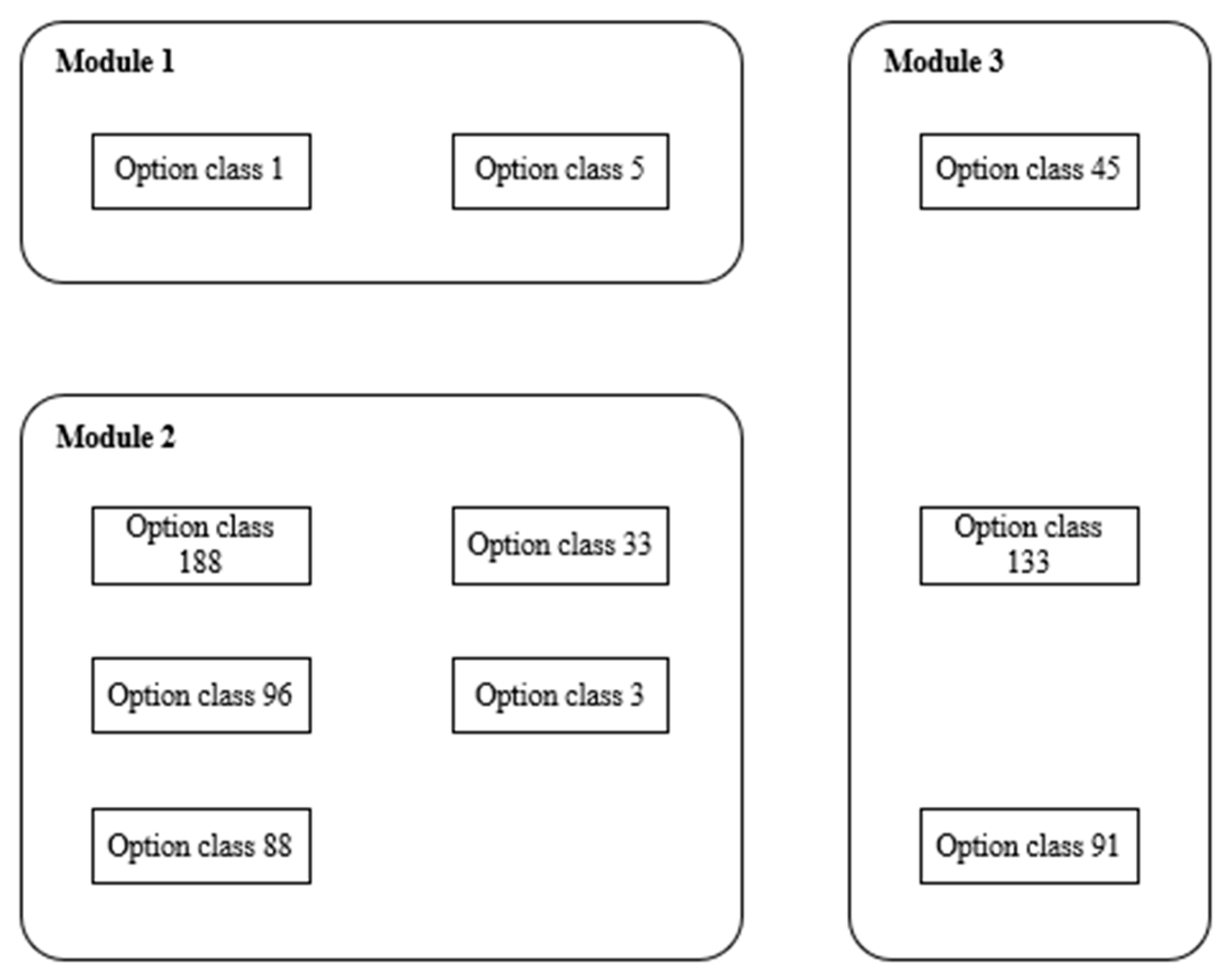
This stage aimed to carry out an initial decomposition of the product to identify the different sections of the vehicle and their interrelationships. Each option class was represented as a design unit and then associated with modules to define the first foundations of the product architecture. To provide a clearer understanding of how product decomposition is structured based on option classes, Figure 9 presents a simplified and generic example of a module. In this illustration, each block represents an option class grouping several configuration options related to a specific product feature. This simplified representation highlights the structure used during the first cycle, where option classes were treated as design units and grouped into modules based on configuration logic rather than on functional or technical coherence.
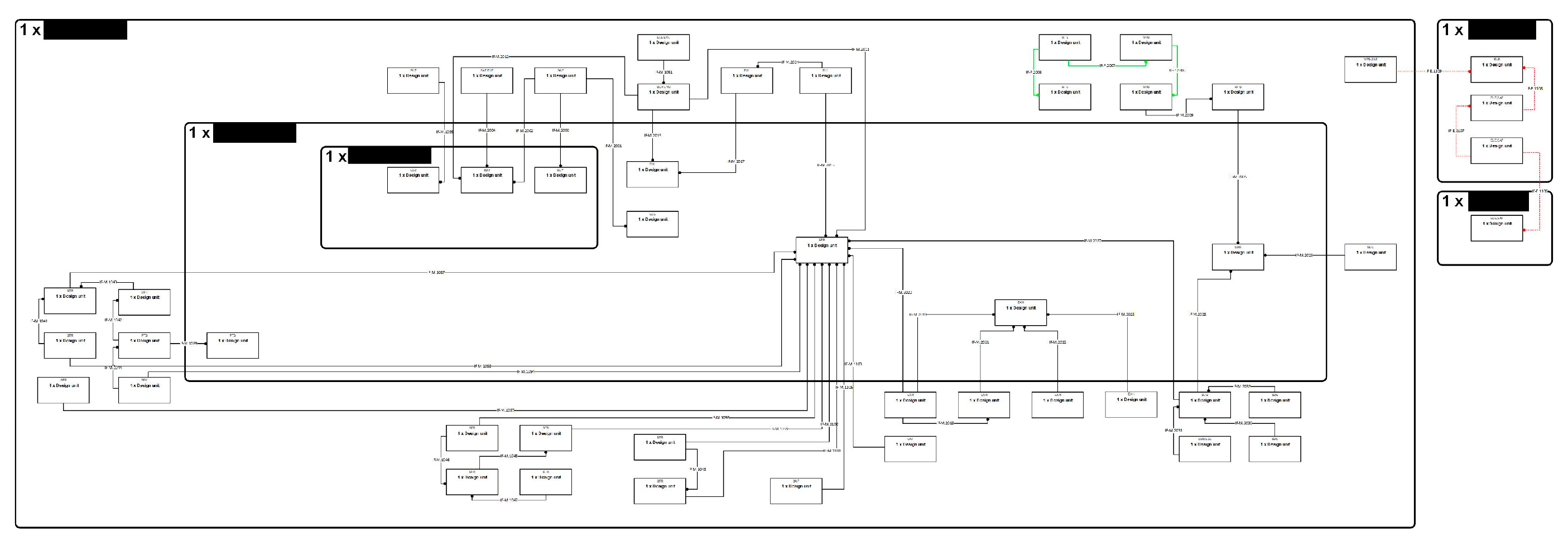
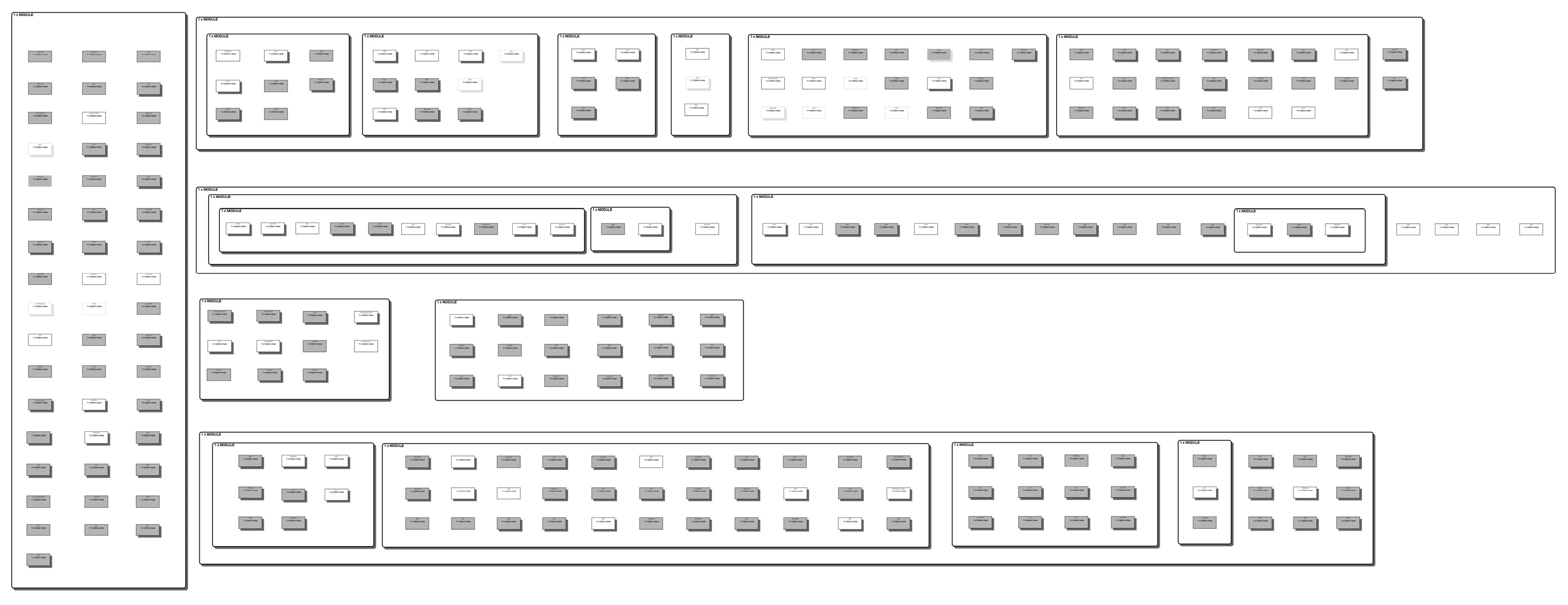
Figure 10 illustrates the product decomposition, where each rectangle represents an option class. Due to confidentiality constraints, the detailed content of Figure 10 is not disclosed.
Figure 11 presents the detailed view of a module comprising design units based on eight option classes.
Stage 2—Decomposition refinement and interface standardization
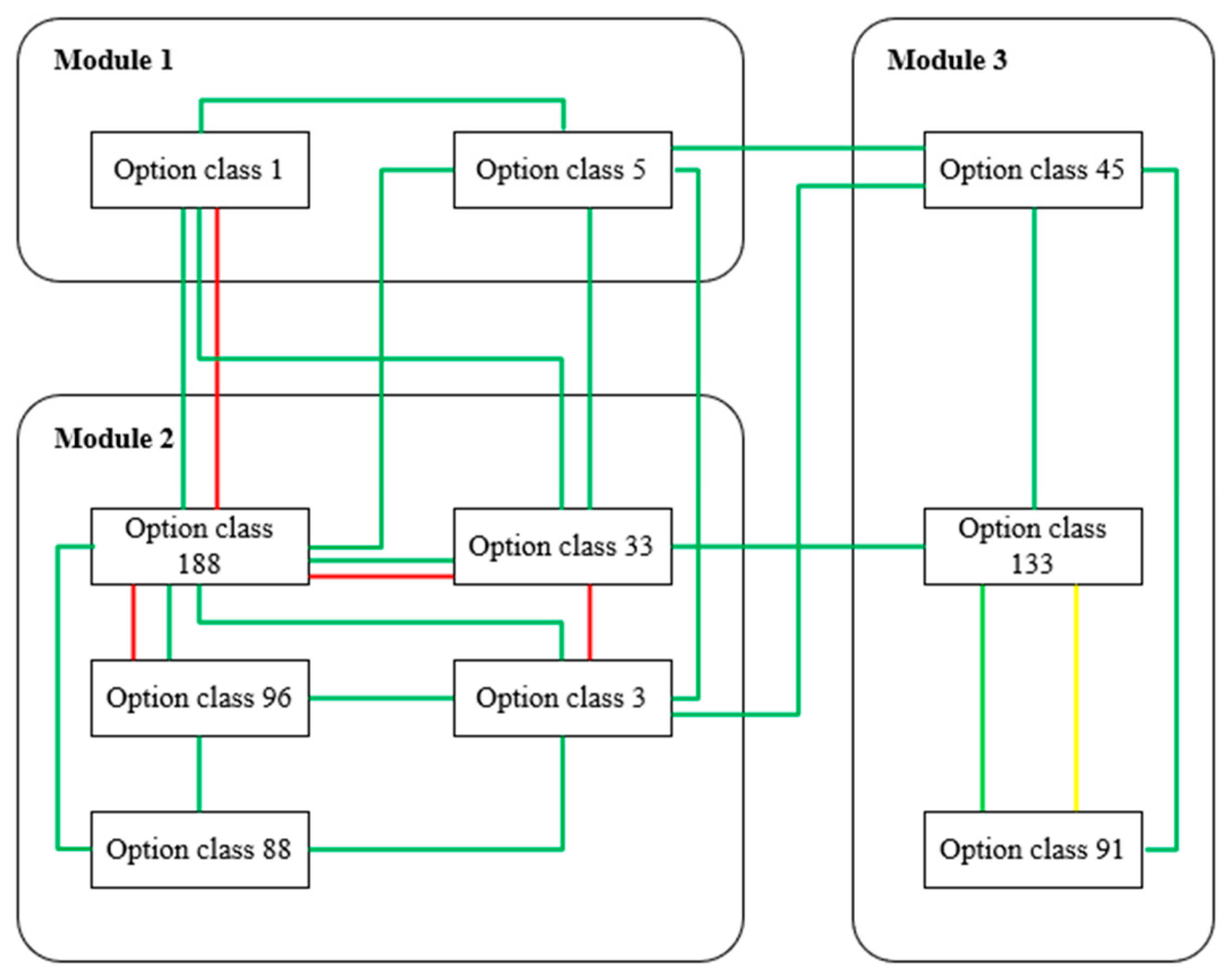
Following the initial product decomposition, a structural refinement phase was conducted to improve the coherence of the identified units and to better represent the interactions between the different sections of the product. As part of this phase, an interface standardization effort was carried out to define the interactions among the identified design units. Interfaces were defined based on the relationships observed between option classes and the dependencies present within product configurations. The objective of this stage was to structure the interactions between the various sections of the vehicle to facilitate the understanding of the product architecture and to prepare for the definition of configuration constraints in subsequent stages. To provide a clearer illustration of this stage, Figure 12 presents a simplified and generic example of interface definition between design units. The different colors represent the nature of the interactions, whether electrical, mechanical, pneumatic, or otherwise.
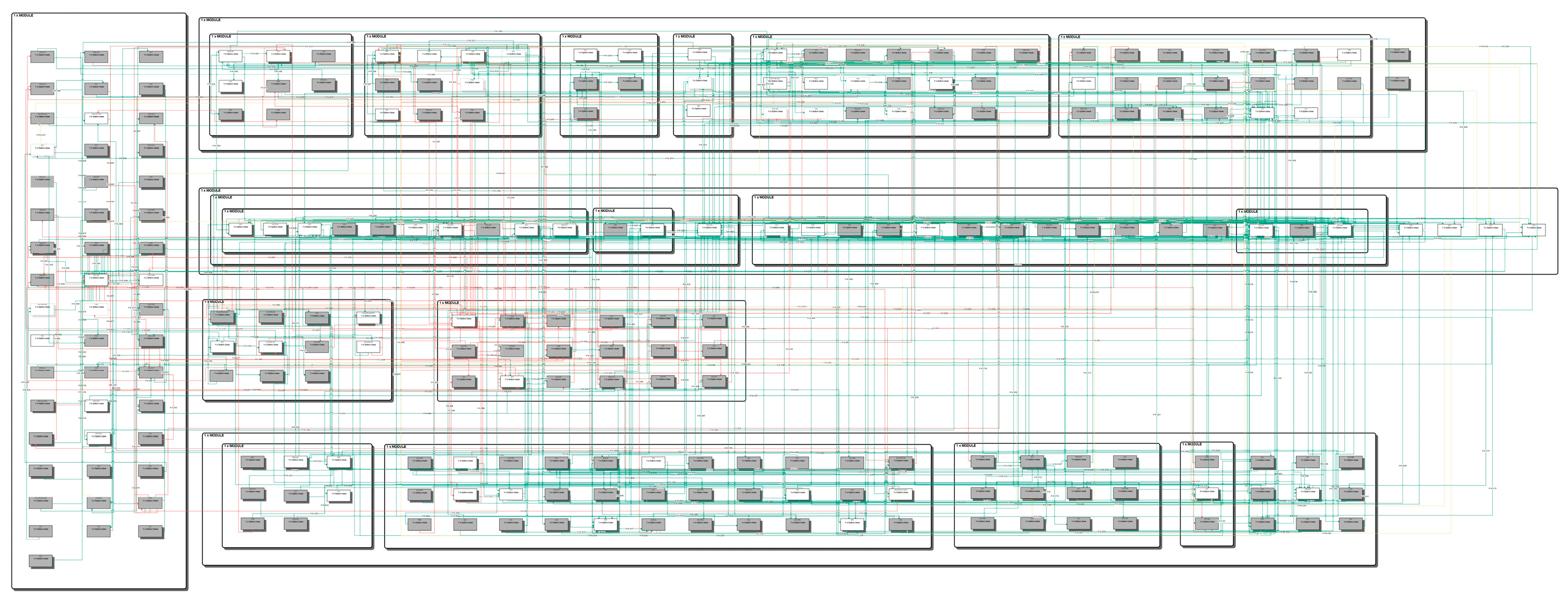
Figure 13 presents the outcome of this stage. Due to confidentiality constraints, the detailed content of Figure 13 is not disclosed. Although the specific elements are anonymized, the figure illustrates the organization of option classes and their interdependencies. It highlights how multiple elements are grouped within the same class, resulting in numerous dependencies between components and increasing the overall complexity of the configuration process.
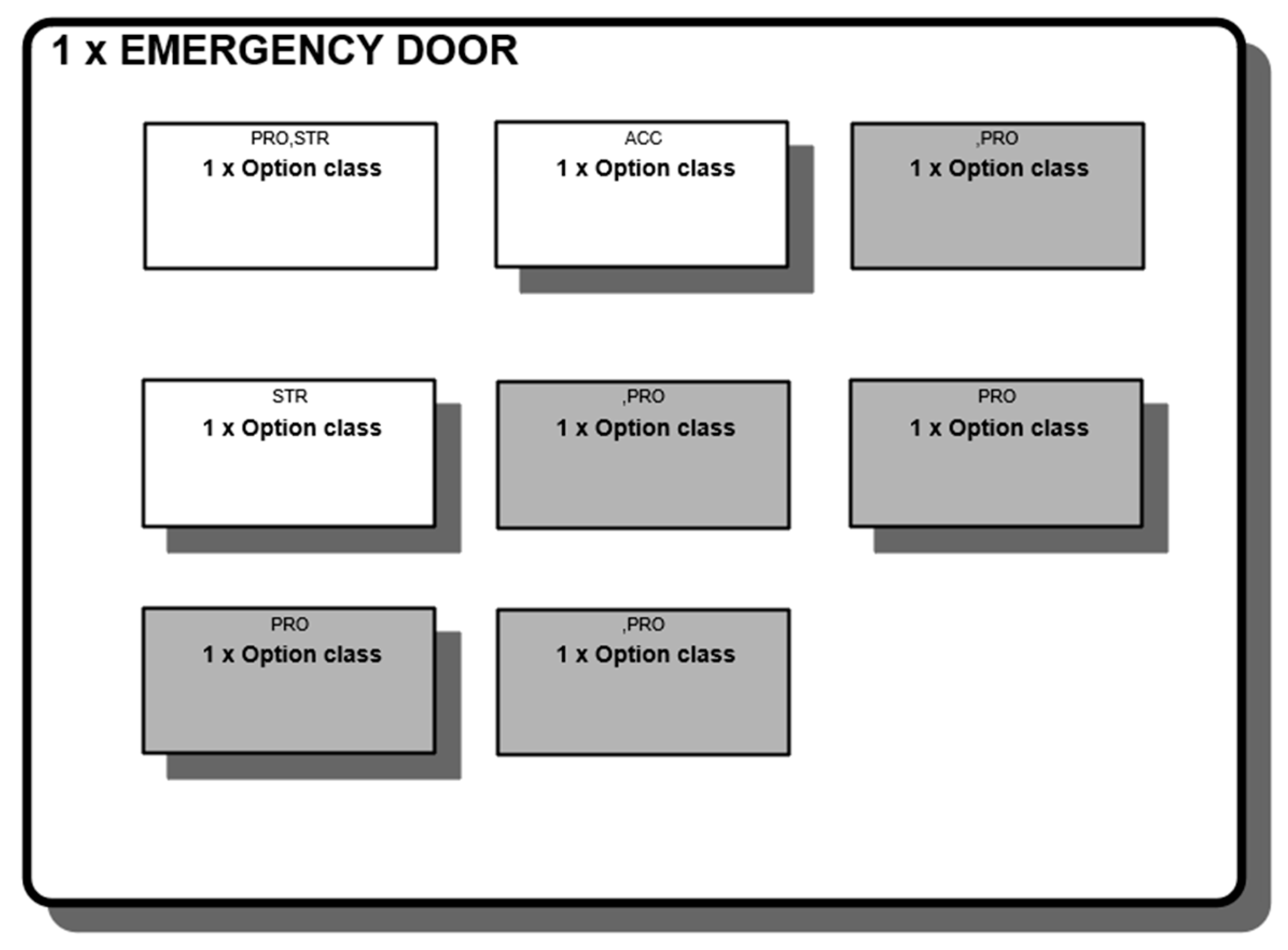
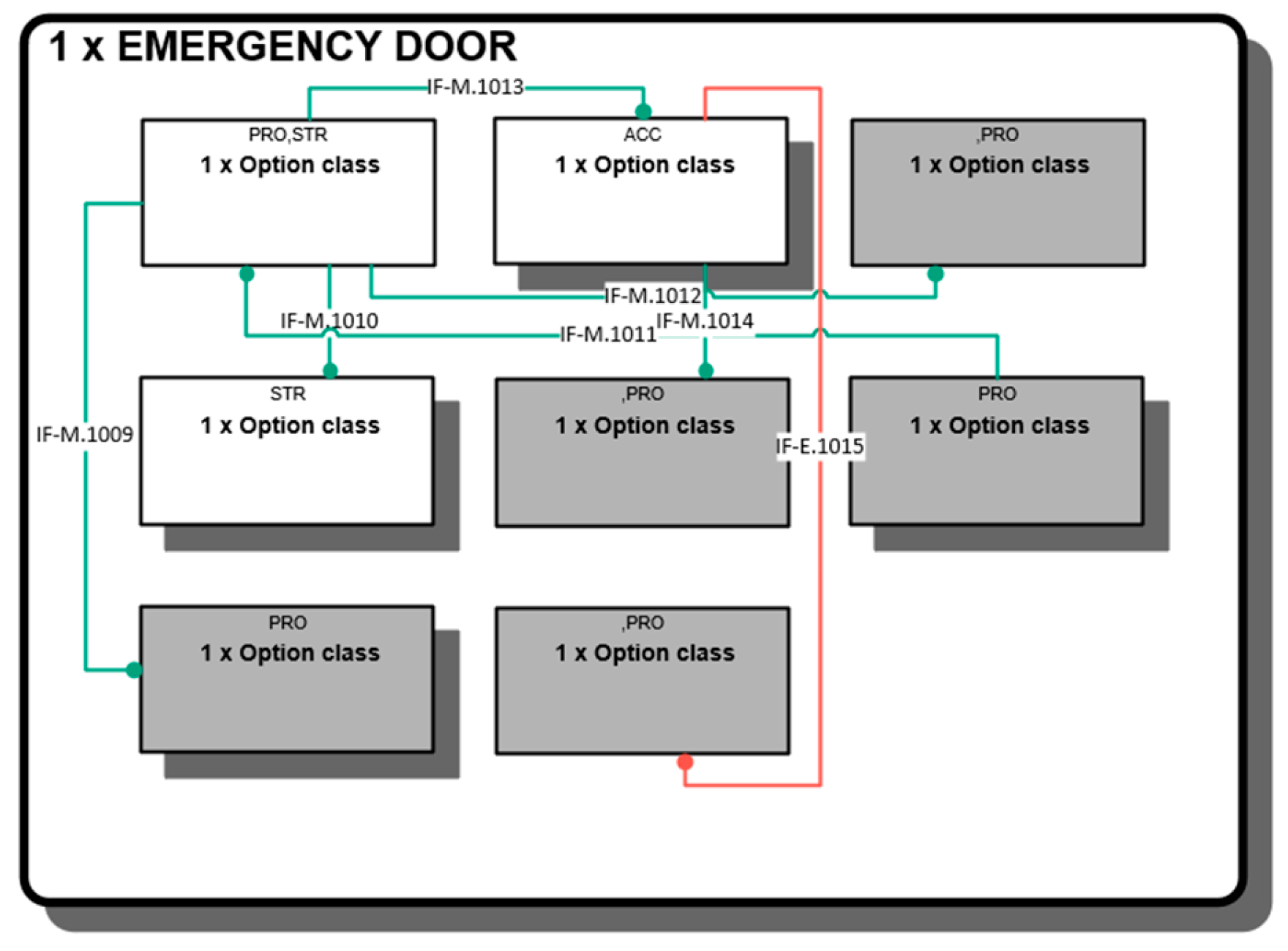
Figure 14 presents the interfaces within the emergency door module.
However, this stage also highlighted certain limitations related to the use of option classes as design units of the product architecture.

4.2.2. Observed Limitations

These observations progressively highlighted that option classes could not be used as design units of the product, insofar as they did not reflect the actual technical or functional structure of the vehicle, but rather constituted groupings of options defined for configuration purposes. Indeed, option classes, which are primarily defined to structure the offering and support sales activities, may group together elements belonging to different product functions, while a given function may be distributed across several distinct classes. For example, a class dedicated to powertrain conversion could group design units associated with different conversion options and related to various functions, without any physical interfaces existing between them, thus making it impossible to use option classes to represent the product architecture.
Also, the identified interfaces mainly reflected configuration relationships between options rather than actual technical interfaces between product components. This mismatch between the structure of option classes and the functional architecture resulted in a proliferation of cross-dependencies, complicating both the delineation of clear boundaries, the definition of interfaces, and the establishment of coherent and stable configuration constraints.
In addition, the use of the 200 product models has further complicated interface definition by making it difficult to distinguish between structural interactions among design units and relationships arising from defining attributes. This led to unstable interface boundaries and an increased level of structural ambiguity, thereby limiting the establishment of a coherent architecture. Although defining attributes made it possible to incorporate a normative dimension into the architecture, their use introduced additional complexity by intertwining normative constraints with the product’s structural relationships.
These observations led to the identification of the limitations of an approach based on option classes and models for structuring the product architecture and defining configuration constraints. Given the difficulties encountered, particularly those related to the multiplication of cross-dependencies and the lack of correspondence between option classes and product design units, it was not possible to pursue the approach within this framework.
These limitations were supported by observable structural patterns, including the density of interdependencies, the lack of alignment between functional groupings and design units, and the difficulty in stabilizing interfaces across configurations. These elements reflect a significant increase in structural complexity that hindered the development of a coherent modular architecture.
In line with an action research logic, the first cycle prioritized existing methods and processes to limit implementation risks and promote continuity, while ensuring greater adoption of the approach by the stakeholders involved. However, following the first two stages, the findings clearly highlighted the limitations of the option-class-based approach, leading to the interruption of the first exploratory cycle and to a revision of the overall methodology.

4.3. Revision of the Strategy

Following the limitations observed during the first experimental cycle, the modular structuring strategy was revised to better represent the actual product architecture. Building on the work of Harlou [41], related to the development of product families based on architectures, product platforms were defined to move away from a combinatorial logic relying on more than 200 distinct models. Indeed, the use of product platforms represents a key structuring lever for managing variability and complexity. By grouping common elements within a shared architecture, platforms made it possible to separate stable components from variable elements, thereby facilitating the definition of design units and the structuring of interfaces. They also contributed to reducing the combinatorial space by organizing variants around a common base, which simplified configuration management and improved overall product coherence.
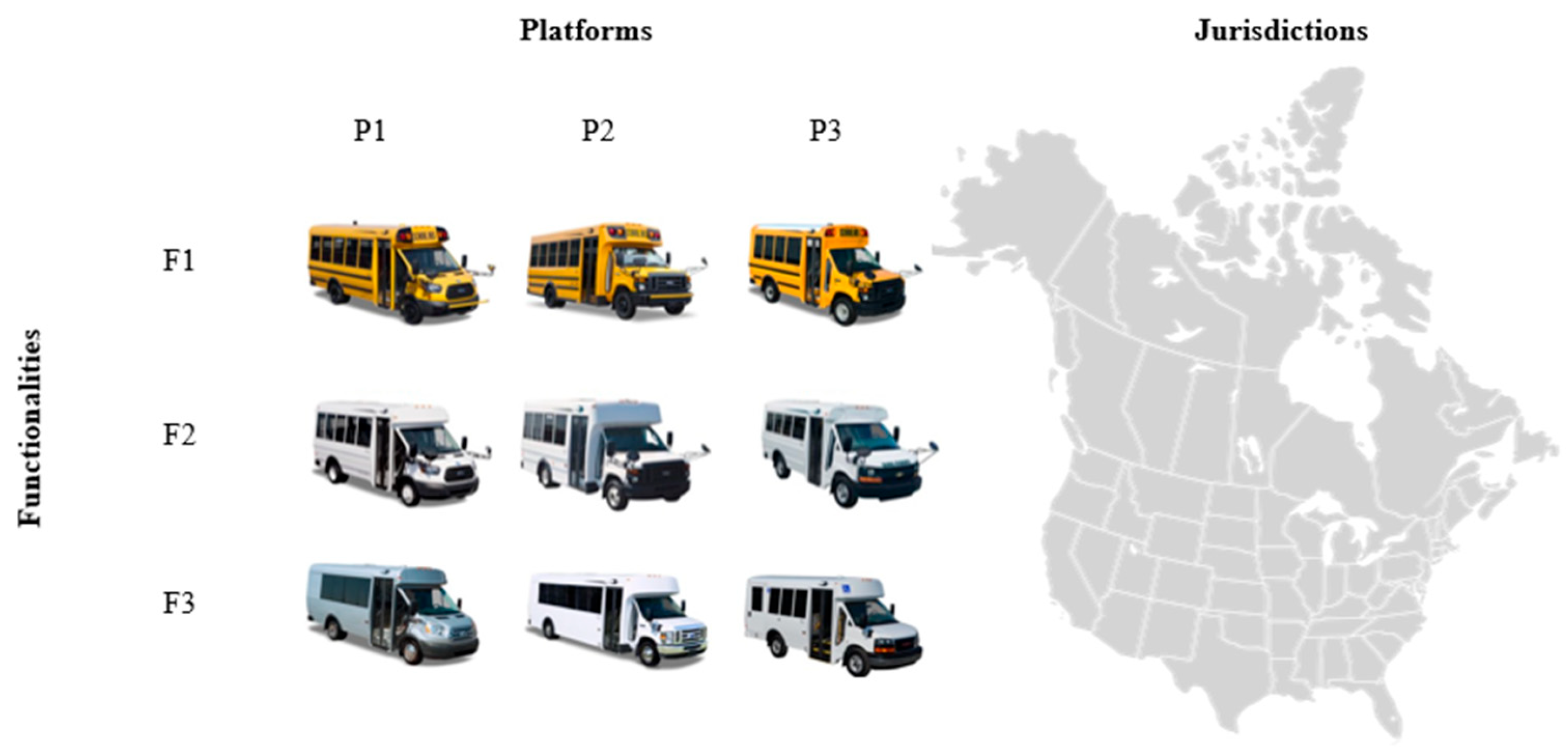
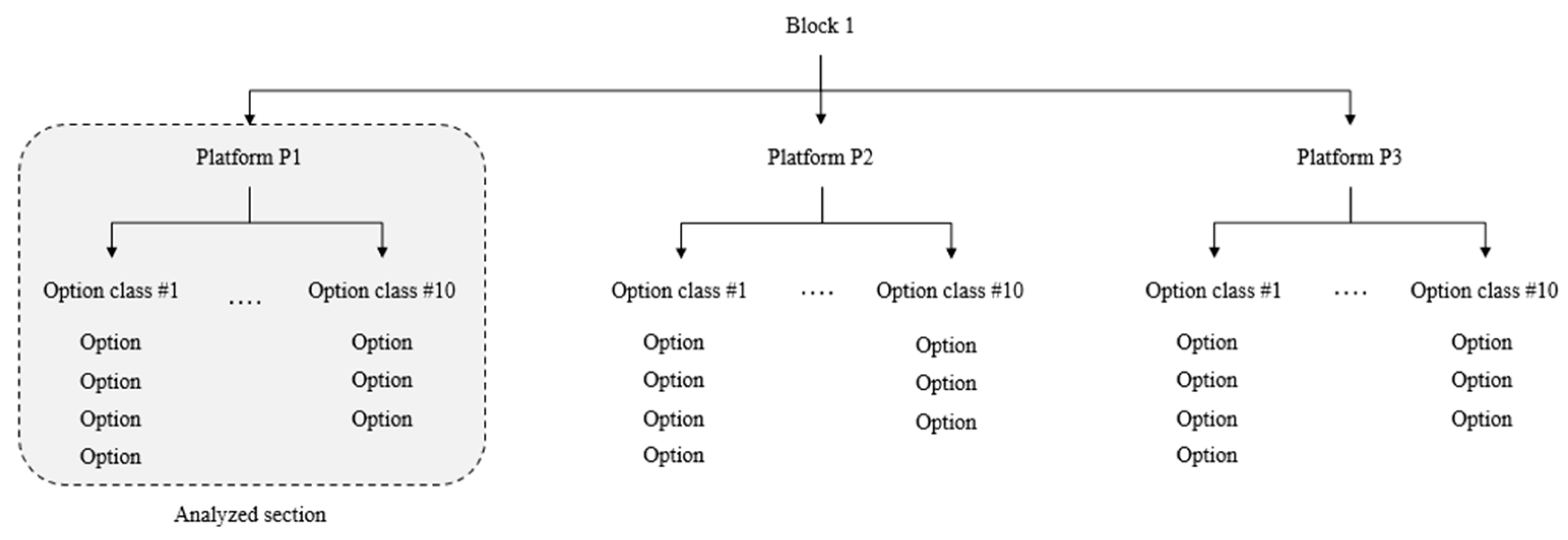
This transition enabled a clearer structuring of variability and better support for product configuration. The product was redefined around three main platforms, which constituted the foundational architectures of the vehicle. These platforms were configured to support three distinct functionalities. Each of these functionalities is governed by specific regulatory frameworks, which define, among other aspects, requirements related to safety, equipment, and vehicle characteristics. In addition, regulatory requirements vary across jurisdictions, as each state or province may impose specific standards depending on the vehicle’s intended functionality. This regulatory variability directly influenced the admissible vehicle configurations as well as the equipment that needed to be integrated to ensure compliance with applicable requirements. Figure 15 illustrates the different platforms, functionalities, and jurisdictions that were targeted.
Additionally, given the complexity revealed during the first exploratory cycle and the very high number of possible configurations, the strategy was revised to focus on a specific portion of the product rather than the entire vehicle. This decision emerged from the need to ensure feasibility and analytical depth within the iterative action research process, while still capturing significant levels of variability and interdependencies representative of the overall product architecture. The initial product includes 300 option classes. To structure the analysis, the product was decomposed into 30 blocks, each grouping on average ten option classes representing coherent sections of the product. Within the analyzed scope, corresponding to a single block comprising approximately ten option classes, the initial product structure included 160 independent assemblies to be managed.
This structuring made it possible to delimit the analysis while preserving a faithful representation of the variability and interdependencies present within the vehicle architecture. The blocks exhibit similar characteristics in terms of configuration structure as well as technical and regulatory constraints. Consequently, the results obtained at the block level can provide insights applicable to the overall product structure, thus enabling the identification of structuring mechanisms that provide preliminary insights applicable to other parts of the product architecture. Figure 16 illustrates the product structure analyzed in the context of this study.
Also, following the limitations identified during the first experimental cycle associated with option classes, the approach was reoriented toward a systematic analysis of product variability, rather than relying directly on these classes. Based on the work of Ulrich, Eppinger and Yang [75], it was observed that the definition of a product architecture relies on a prior understanding of product functions, interactions among its components, and the variants likely to influence the product. Variability analysis therefore constitutes an essential step for identifying elements subject to variation and for structuring the interfaces required for the development of a modular architecture.
In this second cycle, the implementation of product platforms, combined with a systematic variability analysis, made it possible to define the product’s design units to better represent interactions among the different sections of the vehicle and to clarify the definition of interfaces and configuration constraints specific to each platform. This approach enabled a progressive structuring of the product architecture and the formalization of configuration rules in a manner more consistent with the vehicle’s technical organization.
Additionally, prior to initiating the second cycle, the approach was validated in collaboration with Ulf Harlou and his colleagues from the Center for Product Customization, who are recognized for their work in modularization and product architecture development. In parallel, ongoing collaboration was maintained with several manufacturing companies operating in similar contexts. These exchanges enriched the exploratory cycles through industry feedback, thereby contributing to the relevance and robustness of the proposed approach.

4.4. Cycled Based on Variability Analysis and Design Units

The following sections present the different stages of this second cycle, beginning with Stage 0—Variability Analysis.

Application of the Approach

Stage 0—Variability analysis
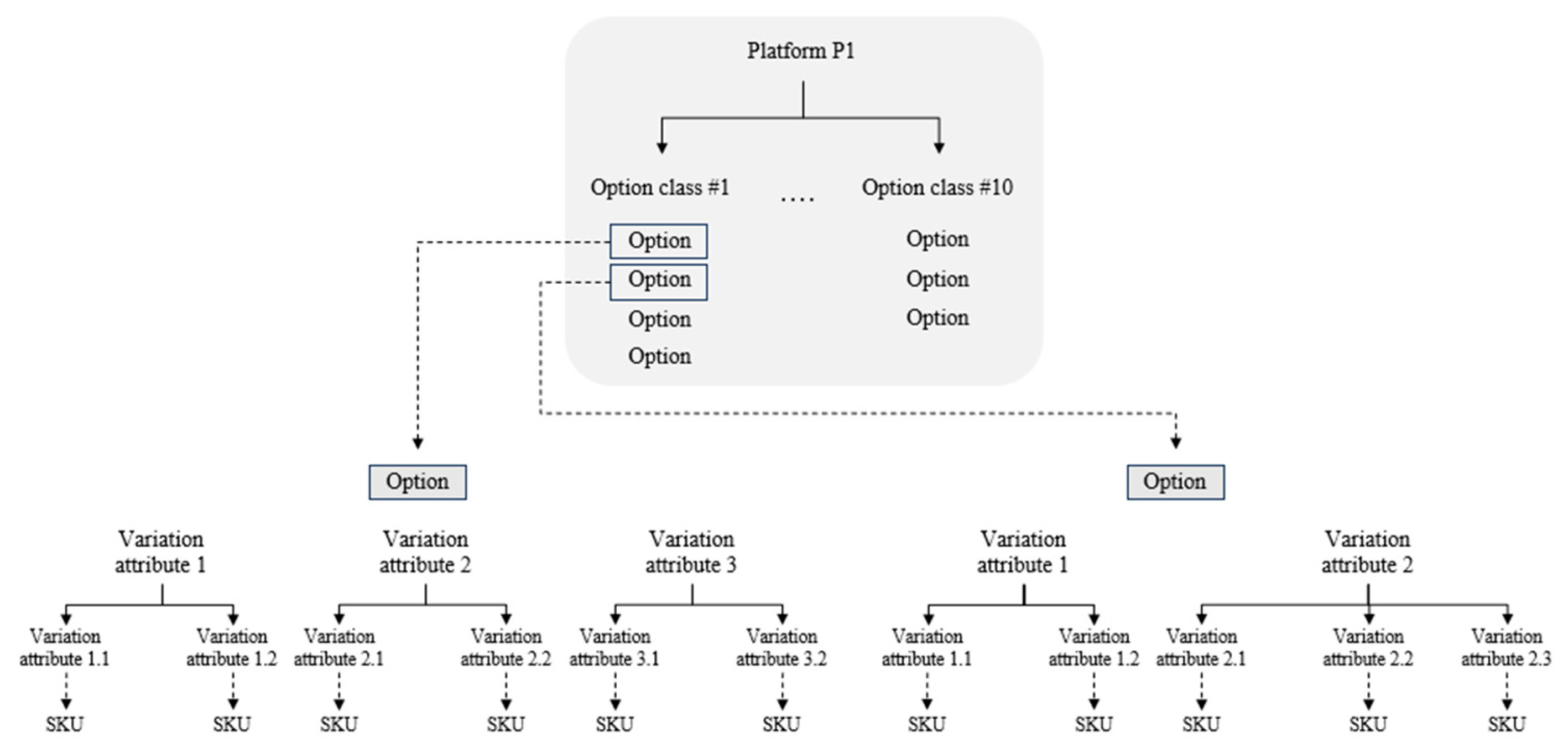
The activities carried out included the analysis of existing variability, the identification of product interfaces, and the highlighting of the main sources of complexity. The results obtained made it possible to map variability in detail, thereby defining the foundation for the subsequent stages of modular structuring. Figure 17 illustrates an example of variability analysis applied to a section of the product.
For each analyzed product section, a hierarchical decomposition of variation attributes was performed to identify variation points and the associated variants down to the smallest reference unit (SKU).
Introducing a variability analysis step upstream of product decomposition made it possible to explicitly identify variation points and their associated variants, thereby providing a detailed understanding of the sources of product diversity. Variability analysis also contributed to preparing the definition of technical and regulatory configuration constraints by highlighting dependency and compatibility relationships between variants from the earliest phases of the methodology. In a regulatory context, the integration of a preliminary variability analysis step proved to be an essential prerequisite for structuring a modular architecture in an environment characterized by high complexity and stringent regulatory constraints.
This step was defined as Stage 0 of the methodology and corresponded to a feasibility analysis phase for structuring the product toward modular product design. Its objective was to determine whether the level and nature of the identified variability were viable for modularization aimed at mass customization.
Stage 1—Product decomposition
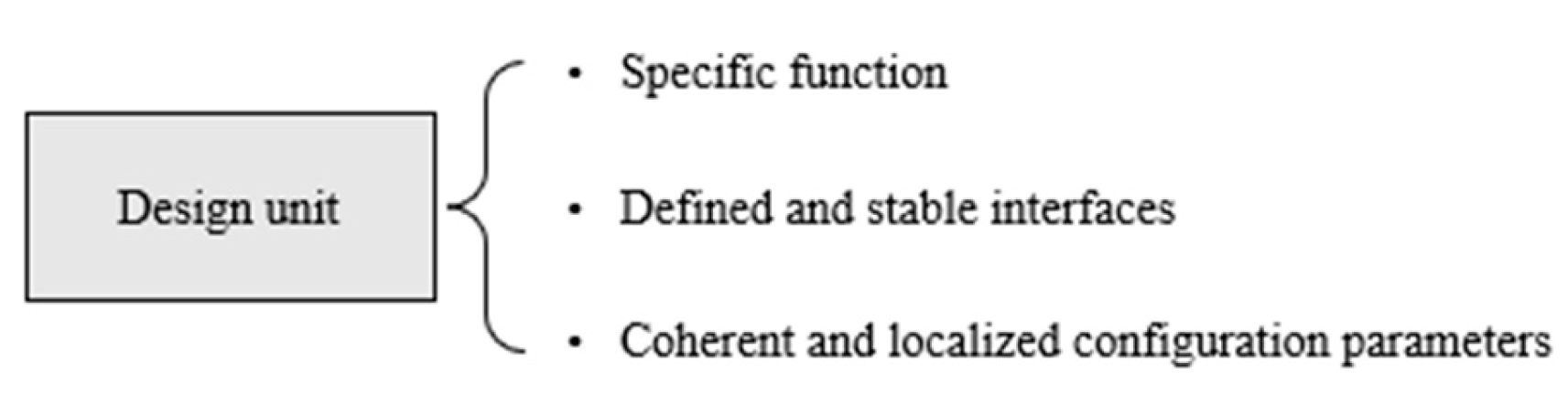
The objective of this stage was to structure the product into distinct modules based on the variability previously identified. The activities carried out included decomposing the product according to design units, defining the initial modules and sub-modules, and identifying the major interactions among them. In order to target the design units, a structured identification framework was established, drawing on the work of Bruun, Mortensen and Harlou [61]. According to this framework, design units were required to meet three criteria: a specific function, defined and stable interfaces, and coherent and localized configuration parameters. During the first exploration cycle, these criteria had not been applied, as option classes were used as the product’s design units. This initial approach resulted in an architectural representation that was not based on clearly defined configuration parameters nor aligned with product functions, which contributed to the observed limitations. Figure 18 presents the criteria for the designation of a design unit.
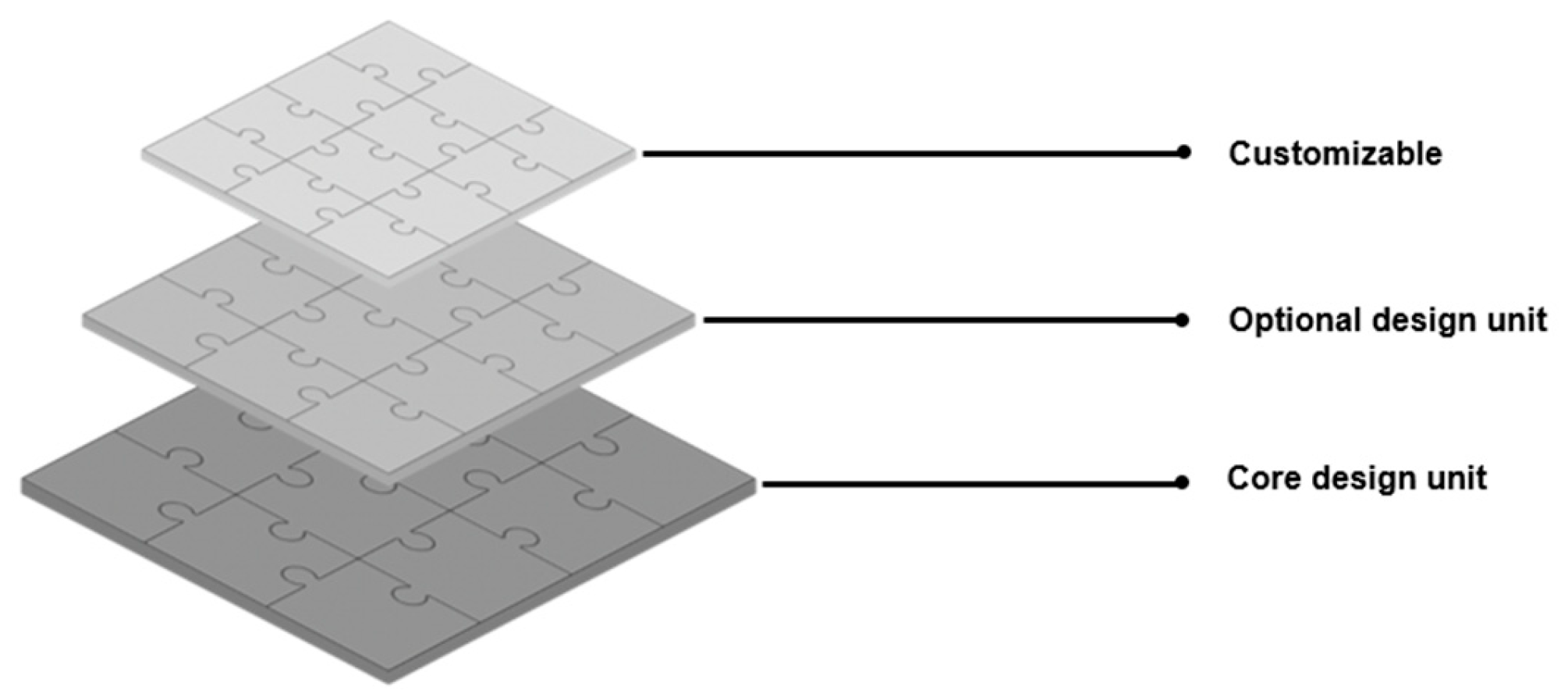
Also, during product decomposition, a three-layer modularity structure was defined to reflect the different levels of vehicle variability. Figure 19 presents the three layers of modularity.
The first layer corresponds to the core design units, which are systematically present in the product composition and ensure its essential operation. The second layer groups optional design units, which are not required but can be added or removed according to specific customer needs. Finally, the third layer, referred to as the customizable layer, contains units that are not present in the initial configuration or newly introduced variants, thereby enabling the extension of the product beyond standard configurations. Design units were categorized according to their assignment to one of the three identified layers of modularity.
The activities conducted during Stage 1 enabled the integration of the three layers of modularity into the design units to define a preliminary modular architecture, including a structured description of modules, associated systems, and their functional roles. Figure 20 presents the tools developed by Bruun, Mortensen and Harlou [61], which form the basis of the methodology used for this decomposition.
The product decomposition thus highlighted the structuring role of the three layers of modularity in organizing product variability across distinct levels.
This step corresponded to a detailed design phase of product decomposition aimed at progressing toward a modular design. Its purpose was to assess the viability of the proposed structure for modularization oriented toward mass customization by verifying its functional coherence and its ability to accommodate the identified variability.
Stage 2—Decomposition refinement and interface standardization
The objective of this stage was to strengthen the robustness of the modular architecture by refining module boundaries and formalizing their interfaces. The activities conducted focused on refining module granularity, as well as defining and standardizing interfaces. The work carried out led to the definition of a refined modular architecture, accompanied by formalized interfaces, thereby constituting a solid foundation for the configuration stages. Figure 21 presents an example of modules and the interfaces between them.
Also, the definition and standardization of interfaces proved to be critical for stabilizing the product architecture across the different levels of modularity. Several adjustments to product decomposition and to interface definitions were required to stabilize certain interactions between modules. This observation confirmed the central role of interfaces as a key lever for managing complexity.
While the refinement and standardization of interfaces contributed to stabilizing the product architecture, this step also highlighted potential risks associated with interface definition, including misalignment between design units, incomplete identification of dependencies, or inconsistencies in interface mapping. These risks are inherent to complex product systems and require iterative validation and expert involvement to be mitigated.
This step was defined as Stage 2 of the methodology and corresponded to a phase dedicated to developing and formalizing interfaces between modules in support of a modular product design. Its objective was to assess the viability of the interfaces associated with the proposed structure for modularization aimed at mass customization by verifying their functional coherence.
Stage 3—Consolidation of the decomposition and interfaces and definition of configuration constraints
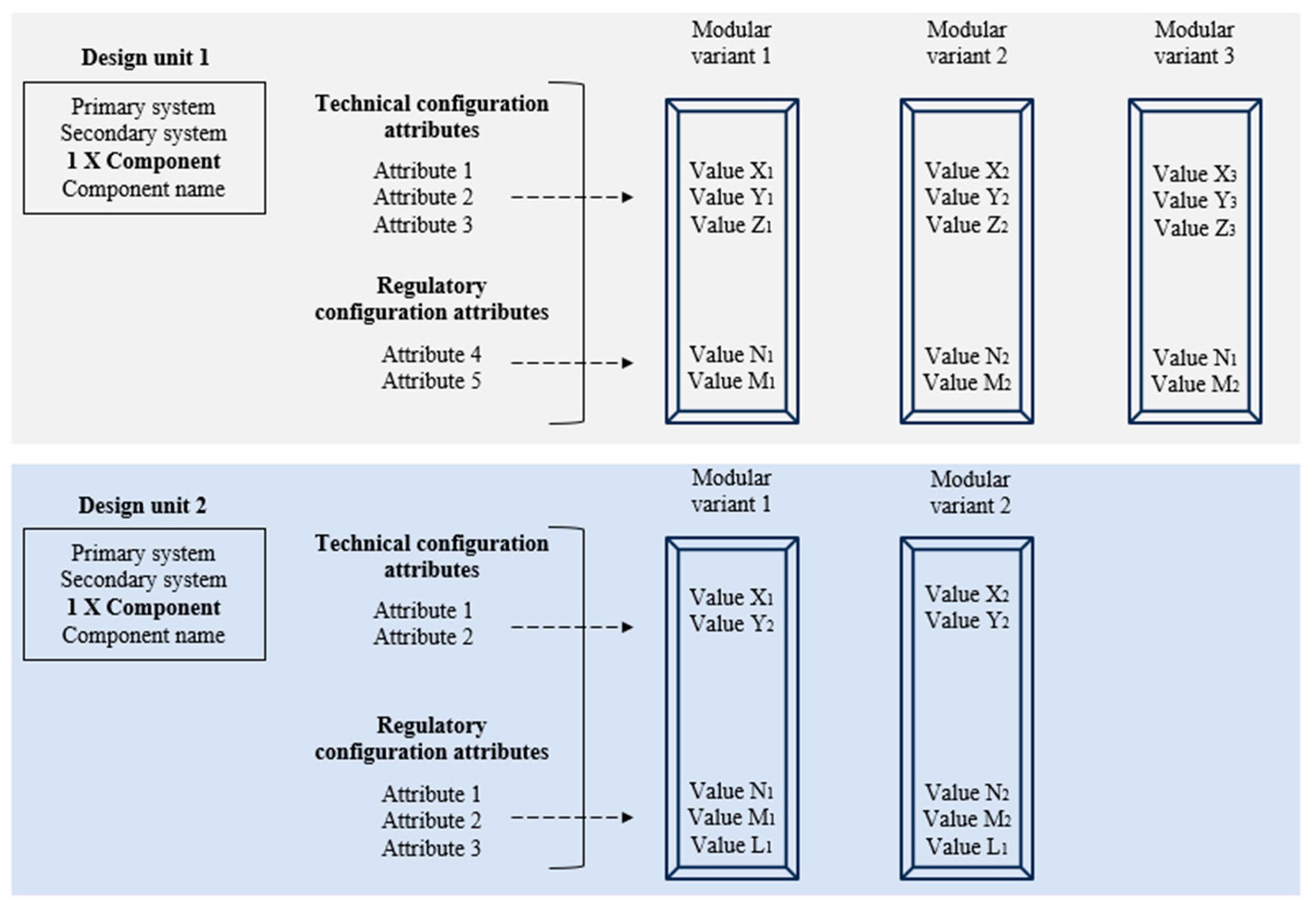
The objective of this stage was to transform the modular architecture into a fully operable and configurable system. The activities conducted included the final consolidation of modules and their interfaces, the definition of configuration constraints integrating compatibility, exclusion, and dependency relationships, as well as the joint integration of technical and regulatory constraints. The work carried out prepared the implementation of a constraint-based configuration logic aimed at facilitating the integration of a highly configurable product. This stage resulted in the formalization of configuration constraints and the development of a structured logic enabling the coherent generation of variants. Figure 22 illustrates the information structuring approach used to identify and formalize the technical and regulatory constraints of the product.
Such a structuring would not have been possible during the first cycle due to the strong dependency of elements on option classes. This dependency did not allow for the definition of stable configuration relationships aligned with the product architecture. Consequently, in the second cycle, the associated technical and regulatory configuration attributes were defined for each design unit. Each of these configuration attributes was then linked to the values corresponding to the existing modular variants.
Each design unit could thus be characterized by a variable number of attributes and modular variants. The exhaustive definition of technical and regulatory attributes for all previously identified design units made it possible to construct the product configuration matrix. This matrix constitutes a central element for the operationalization of the configuration logic.
For example, for a given design unit related to a vehicle entrance door, multiple variants were initially defined based on different functional and regulatory requirements, such as door width, door position, door mechanism, and vehicle functionality. During the analysis, it was identified that entrance doors with specific widths and positions could only be integrated with certain variants of the subfloor structure. This dependency arises from structural constraints that limit how the door system can be positioned and supported within the vehicle architecture. This observation led to the introduction of explicit configuration constraints linking the entrance door variants to compatible subfloor structure variants, ensuring that only feasible and compliant combinations could be generated. In parallel, interface definitions between the entrance door system and the corresponding structural modules were refined to better represent mechanical interactions, thereby preventing ambiguous or invalid configurations.
This step made it possible to observe that, in a regulatory context, a clear structuring of the product architecture is an essential prerequisite for integrating technical and regulatory constraints. When these constraints are not explicitly separated and formalized, they tend to become intertwined, increasing the complexity of the configuration logic and raising the risk of generating non-compliant configurations. Conversely, a structured architecture makes it possible to distinguish, organize, and control these constraints, thereby facilitating the generation of valid and exploitable configurations.
Also, the configuration constraint definition step highlighted a gap between the theoretical product variety and the configurations that are exploitable due to regulatory and compliance requirements. This observation confirmed the importance of establishing close coordination between technical and regulatory expertise to generate a compliant product.
This step was defined as Stage 3 of the methodology and corresponded to a phase focused on the development and formalization of configuration attributes and constraints. Its objective was to assess the viability of the configurations associated with the proposed mass-customization-oriented structure by verifying their technical compatibility and regulatory compliance. While regulatory constraints were systematically integrated at this stage, the present study focuses on their structuring role within the configuration logic rather than on quantifying their specific impact across jurisdictions or rules.
Stage 4—Testing of configuration constraints and interface adjustments
This stage aimed to evaluate the performance of the modular design and product configuration under representative usage conditions. The activities conducted included performing tests based on real configuration scenarios, identifying inconsistencies, and implementing targeted adjustments to interfaces and associated constraints. Attention was also paid to validating technical and regulatory impacts to ensure system compliance and validity.
A set of representative configuration scenarios was defined to evaluate the proposed architecture and configuration logic. These scenarios were selected to cover a range of typical and critical use cases, including standard configurations, high-variability combinations, and configurations subject to significant technical and regulatory constraints.
The scenarios were selected using a structured approach combining engineering expertise, configuration data analysis, and regulatory expertise. Common configurations were first identified to ensure representativeness of frequently encountered cases. Additional scenarios were then selected to capture high-variability and constrained situations, including cases involving multiple interacting design units. Finally, configurations with known dependencies between design units and interfaces were included to assess the robustness of constraint management.
Attention was given to configurations involving multiple interacting design units, as these represent higher-risk situations in terms of incompatibility and compliance. In total, ten configuration scenarios were analyzed, enabling the assessment of the robustness of the configuration logic across different contexts. These scenarios were selected to represent the most critical and representative configurations rather than an exhaustive coverage of the configuration space.
The validation of configurations was conducted in collaboration with external experts. These experts reviewed the generated configurations to ensure technical compatibility, compliance with applicable regulatory requirements, and alignment with actual engineering practices. The testing process revealed several types of inconsistencies, including conflicts between design unit variants, incomplete or misaligned interface definitions, and incompatibilities related to technical and regulatory constraints, particularly in configurations involving multiple interdependencies.
Based on these observations, iterative refinements were carried out on both the modular architecture and the configuration logic. These adjustments included refining interface definitions to better represent actual interactions, clarifying design unit boundaries, and updating configuration constraints to eliminate invalid or ambiguous combinations. The modified configurations were subsequently re-evaluated through additional test cases and validation sessions, enabling the progressive stabilization of the architecture and associated rules.
The tests notably revealed that certain inconsistencies could only be detected under representative operating conditions, highlighting the decisive role of this stage. They also confirmed the importance of interfaces in ensuring configuration stability, as well as the role of constraints in filtering out invalid combinations. Furthermore, the integration of regulatory constraints helped limit configurations to compliant and exploitable solutions only.
This step was defined as Stage 4 of the methodology and corresponded to a phase dedicated to implementing and validating of configurations. Its purpose was to assess the viability of the configurations associated with the proposed structure by verifying their technical compatibility and regulatory compliance.
Stage 5—Verification of overall coherence and constraints governance
The objective of this stage was to ensure the evolution of the product modularization and configuration strategy. The activities carried out included verifying overall coherence between the product and the configuration logic, as well as establishing a governance framework structuring modules, interfaces, and associated constraints.
Throughout the action research, a challenge related to maintaining the implemented processes and structure was identified. The sustainability of the architecture relies on the ability to ensure coherent updates of rules, interfaces, and design units, highlighting the need for appropriate governance mechanisms. To address this, formal processes were defined to manage changes, including the assignment of responsibilities for updating design units, interfaces, and configuration constraints, as well as structured validation procedures to assess the impact of modifications.
In practice, updates are performed through controlled change processes involving impact analysis across related product elements, followed by validation through dedicated review meetings. Supporting documentation, including interface definitions, configuration rules, and design decisions, is maintained and periodically reviewed to ensure consistency. In addition, validation scenarios and test configurations are used to verify system coherence when introducing new variants or modifications.
These observations confirmed that the relevance of the strategy does not rely solely on the definition of a modular architecture and a configuration logic, but also on the organizational processes that enable their maintenance.
This step corresponded to Stage 5 of the methodology and formed part of a closing and consolidation phase. Its purpose was to validate the overall coherence of configurations and the robustness of governance, update, and evolution processes to ensure the viability of the strategy in a mass customization context.

4.5. Structuring the Architecture of a Configurable Product

The strategy developed through the action research made it possible to achieve a structured architecture for a configurable product. Figure 23 presents the strategy based on the Agile-Stage-Gate approach.
The strategy begins with variability analysis, product decomposition, and modular refinement, followed by interface standardization and the definition of configuration constraints. Iterative testing enables adjustments to the architecture and interfaces, culminating in a final phase dedicated to verifying overall coherence and establishing constraints governance to ensure product robustness and evolution.
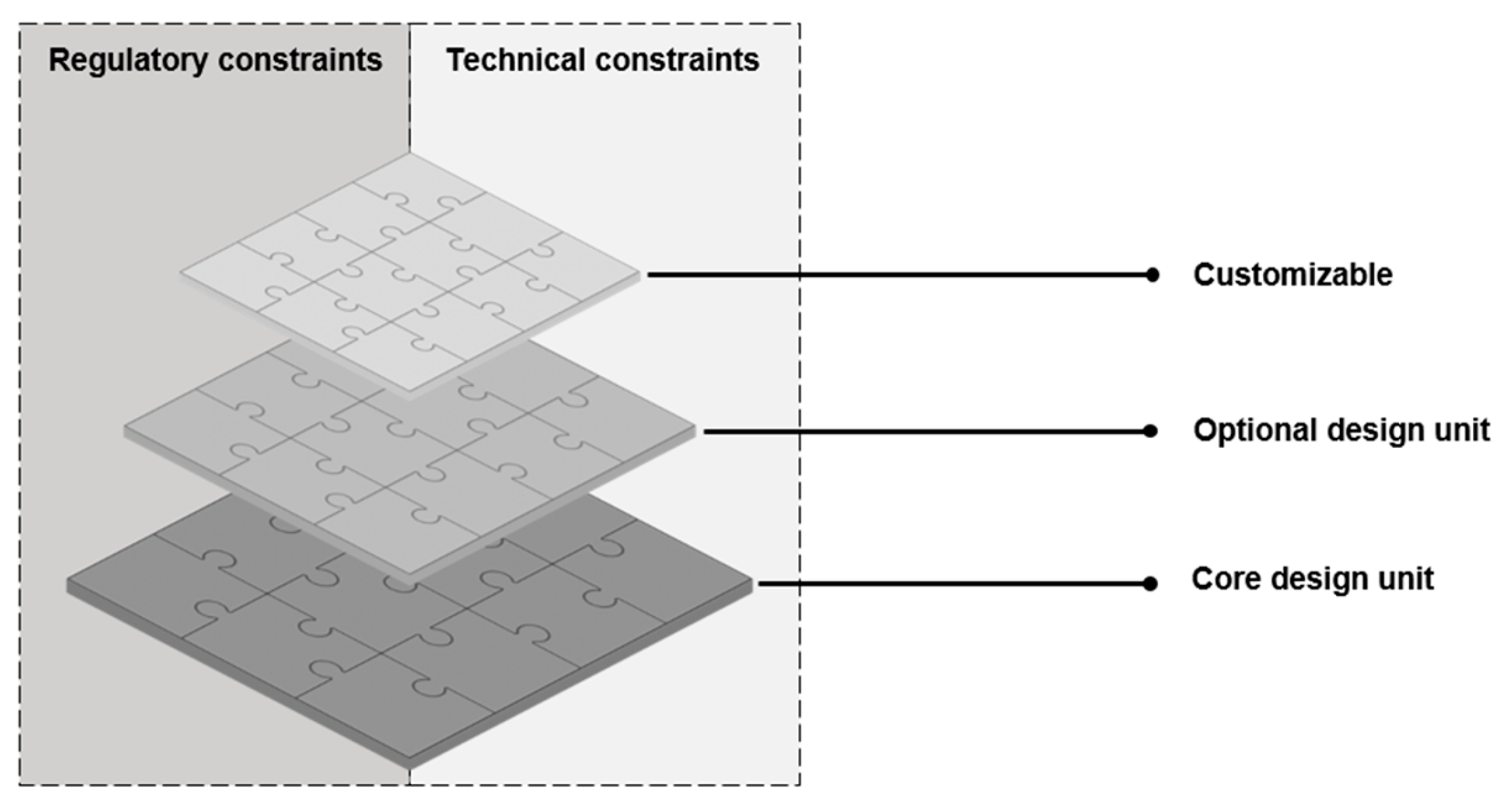
Considering the deployment of this strategy aimed at defining a modular product design and a product configuration logic, a structuring theoretical framework emerged. This framework is based on organizing the product architecture according to a layered logic, combining three levels of modularity and two types of configuration constraints. Figure 24 illustrates the structuring of the product architecture.
The lower layer corresponds to the core design units, which constitute the essential elements of the product and are systematically present. The intermediate layer groups the optional design units, enabling the adaptation of the product to specific needs through the addition or removal of functionalities. Finally, the upper layer represents the customizable level, thereby offering increased flexibility.
These three layers are framed by two transversal dimensions of constraints, namely technical constraints, which ensure product compatibility, and regulatory constraints, which guarantee compliance with regulatory requirements. Together, they define a modular architecture in which variability is hierarchically structured and controlled through explicit and coherent configuration constraints.
This theoretical framework presents potential applicability to products evolving in highly regulated environments, although further validation across different contexts is required. Layered structuring enables the articulation of different levels of modularity while integrating the technical and regulatory constraints specific to such contexts.
Also, this work is part of a broader research program aimed at studying the structuring of product architectures across different manufacturing contexts. Complementary studies are currently being conducted in less constrained environments, such as the recreational sector, to analyze the adaptability of the proposed framework. This approach seeks to identify specificities related to the level of regulatory constraints, thereby contributing to strengthening the robustness and scope of the developed model.

4.6. Synthesis of the Action Research Results

The action research conducted as part of this study made it possible to concretely assess the effects of deploying the Agile-Stage-Gate strategy adapted to modular product design and product configuration.
The results show that variability analysis and modular decomposition contributed to a measurable reduction in product complexity. Within the scope studied, the analyzed section initially comprised 160 independent assemblies that could be used to compose this portion of the product. Each of these assemblies was associated with its own technical and regulatory configuration constraints, specific interfaces, and variability-generating elements, which contributed to a significant dispersion of complexity. Figure 25 illustrates the initial structure of the analyzed product section prior to the implementation of the second cycle of the strategy.
Following the application of the proposed strategy, the 160 independent assembles were reorganized into 49 design units distributed across the three levels of modularity, grouping variants that share common functions, interfaces, and constraints, reflecting a more structured and modular architecture. Figure 26 presents the resulting modular architecture, the details of which remain confidential.
In comparison with Figure 13, Figure 26 illustrates the first part of the new product architecture after the deployment of the strategy. Each design unit is associated with a variable number of variants and is identified according to the modular level to which it belongs. As a result, the number of elements to be managed was reduced from 160 to 49, corresponding to a reduction of 69%. This decrease reflects a substantial simplification of the product structure and a significant improvement in complexity management through modular product design and interface definition. However, this result reflects a structural improvement in product architecture rather than a direct measurement of operational performance.
Within the studied scope, this transformation clarified the architecture, stabilized module interactions, and enabled the explicit identification of optional and customizable elements, thereby strengthening configuration capability and improving the control of product variability, and complexity.
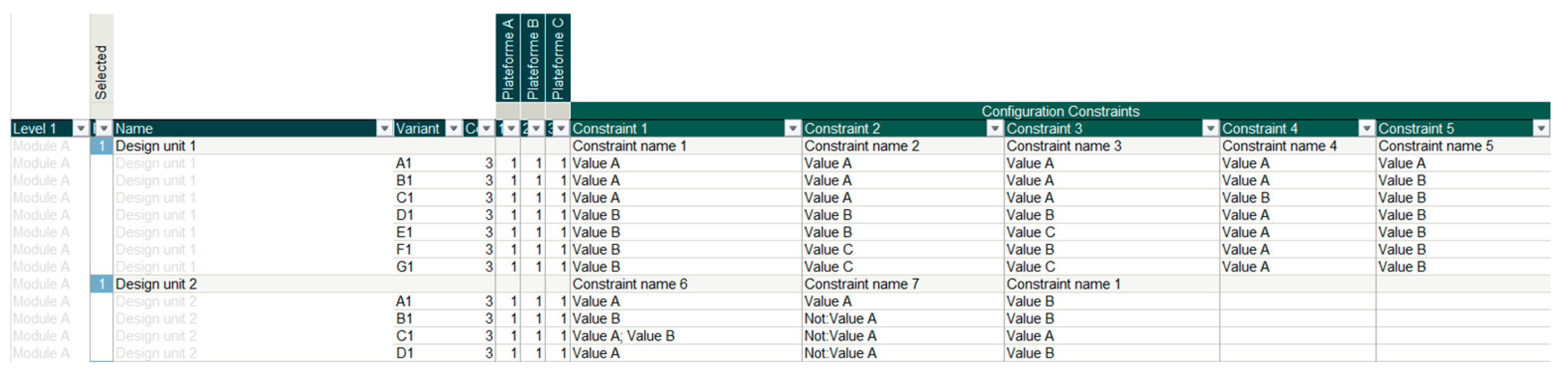
The simultaneous definition of technical and regulatory constraints also made it possible to restrict the configuration space to combinations that are exploitable. The integration of these constraints ensures that no inconsistent or non-compliant configuration can emerge within the modular architecture, which is a critical requirement in a regulatory context. Figure 27 presents, based on an anonymized example, the application of constraints to combinations of two design units. By way of example, for design unit 1, variant A1 is available across the three product platforms and is subject to five distinct constraints. Each variant thus corresponds to a specific combination of constraints, defined by the values accessible within its configuration space.
The transformation carried out therefore does not aim to reduce product diversity, but rather to structure it. Reorganizing design units by modular level and into modules makes it possible to group variability within coherent blocks sharing common interfaces and constraints.
Overall, the case study results confirm that combining modular product design with a product configuration logic makes it possible to simultaneously improve complexity management and configuration management. These results highlight the potential of the proposed approach to support the progressive operationalization of mass customization within a manufacturing environment subject to regulatory requirements.

5. Discussion

This section places the findings of the action research into perspective by discussing the contributions, limitations, and implications of the proposed strategy for manufacturing SMEs operating in a normative context.

5.1. Review of the Objectives, Discussion and Contributions

The objective of this research was to develop and validate a strategy for operationalizing mass customization tailored to manufacturing SMEs operating in a normative context, based on two main levers: modular product design and product configuration.
The action research approach, which included validation through a case study, made it possible to structure a coherent modular architecture based on three levels of modularity, to formalize interfaces, and to integrate technical and normative constraints. The results suggest that the operationalization of mass customization relies first and foremost on the explicit structuring of product variability. More specifically, the ability to generate viable configurations depends on how design units, interfaces, and constraints are defined and articulated. The reduction in the number of elements to be managed also shows the impact of the proposed approach on complexity structuring.
These findings are consistent with prior research emphasizing the importance of modularity in managing product complexity, notably the work of Ulrich [38], as well as studies highlighting the role of product architectures in the development of product families by Bruun, Mortensen and Harlou [76]. However, they provide additional nuance by showing that modular product design alone is insufficient to support mass customization if it is not preceded by a structured analysis of variability and accompanied by an explicit definition of configuration constraints in a normative context.
The concepts mobilized in this study, including product platforms, variability analysis, modular architectures, and configuration constraints, are well established in the literature. The contribution of this research does not lie in the introduction of new theoretical constructs, but rather in their structured integration into a coherent and operational framework.
More specifically, this study contributes by illustrating how these elements can be systematically combined within a regulated manufacturing SME context. Given that the implementation was limited to a representative portion of the product architecture, the findings should be interpreted as providing structured insights into a sequenced and implementable approach connecting variability analysis, modular decomposition, interface definition, and configuration logic, while integrating technical and regulatory constraints.
Compared to Suzic and Forza [58], who propose implementation guidelines for mass customization, the present study provides a more detailed and operational approach, with explicit structuring steps and iterative validation mechanisms. In comparison with Bouchard, Gamache and Abdulnour [57], which focuses on modular strategies in SMEs, this study extends this contribution by integrating product architecture structuring, configuration logic, and dependency management within a coherent and applicable framework. Furthermore, the proposed approach is specifically validated in a regulated manufacturing SME context, highlighting its applicability in environments characterized by strong technical and regulatory constraints.
The results also highlight that the definition and standardization of interfaces constitute a central lever for controlling complexity by ensuring the coherence of interactions between modules, particularly in normative environments. They also emphasize the importance of continuous validation mechanisms to mitigate potential risks related to interface definition and dependency management in complex product architectures. These results should therefore be interpreted as evidence of structural and methodological improvements, highlighting the potential of the approach, rather than as a direct evaluation of operational performance outcomes. In this regard, the proposed framework should be considered as a proposition-level contribution, providing a structured basis for further empirical validation.
The normative context significantly alters the dynamics of design and configuration. Unlike less constrained environments often examined in the literature, regulatory requirements impose a rigorous selection of configuration parameters, thereby reducing the theoretical solution space to a set of configurations that are practically viable. In this setting, technical and normative constraints are not merely limitations but become structuring elements of the product architecture, directly influencing the definition of interfaces and design units. Based on these findings, such constraints must be integrated from the earliest stages of product structuring and formalized through interfaces and configuration constraints.
The results further demonstrate that product variability cannot be fully leveraged without integrating constraints into the product structuring process. They also show that the absence of clearly defined product platform and design units leads to unstable architectures, as observed during the first experimentation cycle. This observation constitutes a key contribution by demonstrating that the transition toward mass customization requires not only modular product design and product configuration, but also a definition of configuration constraints aligned with normative requirements.
Also, implementing a strategy to transition toward mass customization affects the entire set of organizational activities. This type of transformation involves organizational and operational risks and requires strong top management support to ensure resource mobilization, decision alignment, and effective change management. Within the action research process, management involvement proved to be a determining factor in the success of the initiative. Given the structuring nature of the transformations involved, particularly the redefinition of product architecture and configuration logic, management support enabled decision coherence, resource mobilization, and stakeholder alignment.
This research contributes to the literature by proposing a theoretical framework that integrates variability analysis, product decomposition, interface definition, and configuration constraints within a layered modular architecture. It extends existing work by introducing an operational dimension in normative environments, where the simultaneous management of complexity and compliance becomes central. It also highlights the role of governance and maintenance mechanisms as necessary conditions for ensuring the long-term sustainability of the architecture, an aspect that remains underexplored in the literature.
Finally, this study offers an empirical contribution by demonstrating, through an action research approach, how these principles can be applied and adjusted in real-world contexts. It thus goes beyond purely conceptual approaches by proposing a structured and iterative process that bridges theoretical foundations and the operational realities of manufacturing SMEs. However, while the results highlight the potential of the proposed approach, their applicability remains dependent on the specific context studied and requires further validation across different industrial environments and product architectures.

5.2. Limitations

This study is based on a single case in a bus manufacturing SME and focuses on a specific product section due to operational constraints. While this limits direct generalizability, the selected section is representative of the overall product architecture, encompassing high variability, interdependencies, and both technical and regulatory constraints. The study aims to develop and validate a structuring logic that can be extended to similar contexts. The identified principles may be applicable to other regulated manufacturing environments, although further validation through additional case studies and full-scale implementations are required. In this regard, a second case study currently underway in a recreational manufacturing context will help strengthen the robustness and scope of the findings.
In addition, the study focuses on product structuring and configuration logic without integration into a configuration tool. As a result, the performance of solving engines in complex environments has not been evaluated. While this work establishes the necessary foundations for such implementation, further research is required to validate the computational performance, scalability, and practical deployment of the proposed approach.
Finally, the scope of the study remains partial, as the strategy was applied to a specific section of the product due to time constraints. Although this section presents characteristics that are generalizable to the overall product, particularly in terms of modular layers and technical and normative constraints, extending the approach to the entire architecture remains necessary to validate its overall robustness and large-scale coherence. More broadly, the reliance on a single case study and the partial scope of application underline the need for further validation to assess the transferability and robustness of the proposed approach across diverse industrial and regulatory contexts.

6. Conclusions

Drawing on an action research approach, this study suggests that the transition toward mass customization primarily relies on a transformation of product architecture and on the structuring of a coherent configuration logic, which must precede any technological integration.
The results highlight the decisive role of variability analysis as a prerequisite for modularization, as well as the importance of interface definition in managing product complexity. They also show that the explicit integration of technical and normative constraints is an essential condition for ensuring the coherence and validity of the generated configurations. Furthermore, the findings indicate that the performance of a configuration system depends not only on product structuring, but also on the establishment of governance and maintenance mechanisms necessary to ensure the long-term coherence and evolvability of the architecture.
Rather than introducing new concepts, this study contributes by organizing established principles into a coherent and empirically grounded framework, offering context-dependent insights within a regulated manufacturing SME setting. By clarifying the stages structuring the transition toward mass customization, this study offers both conceptual and operational contributions. It proposes a framework articulated around variability, modular decomposition, interfaces, and constraints, emphasizing their integration within a coherent product architecture. It also highlights the structuring role of the normative context, in which constraints do not merely limit possibilities, but actively contribute to the organization of the product architecture.
This study lays the foundations for future integration into configuration tools, thereby opening avenues for further research. While the results highlight the potential of the proposed approach, their applicability remains dependent on the specific context studied and requires further validation across diverse industrial environments and product architectures. The proposed framework should therefore be interpreted as a structured and empirically grounded proposition, whose transferability remains to be further assessed across different industrial contexts.
Future studies could focus on implementing the proposed strategy within configuration systems and evaluating the performance and limitations of solving engines, whether rule-based or constraint-based, when applied to complex products in normative environments. Future research should also extend this work by quantifying efficiency gains associated with the proposed approach, including impacts on lead times, configuration performance, and overall system efficiency in industrial environments. In addition, the development of further case studies would help strengthen the external validity of the results and ensure their robustness across a variety of manufacturing contexts. Also, future research could focus on quantitatively assessing the impact of regulatory constraints across jurisdictions on configuration spaces and modular design choices, to better evaluate their influence on product variability and system performance. Finally, the use of the Delphi method could be considered to structure an iterative expert validation process, contributing to the refinement of the strategy and to the reinforcement of its coherence and reliability.

Author Contributions

S.B.: Conceptualization, methodology, software, validation, formal analysis, investigation, data curation, original draft preparation, visualization; S.G.: Conceptualization, methodology, methodology, validation, review and editing, supervision, project administration; G.A.-N.: Conceptualization, methodology, validation, review and editing, supervision. All authors have read and agreed to the published version of the manuscript.

Funding

This research received no external funding.

Institutional Review Board Statement

Not applicable.

Informed Consent Statement

Not applicable.

Data Availability Statement

The original contributions presented in this study are included in the article. Further inquiries can be directed to the corresponding authors.

Conflicts of Interest

The authors declare no conflicts of interest.

Abbreviation

SMESmall- and medium-sized enterprise

References

  1. Abdulnour, S.; Baril, C.; Abdulnour, G.; Gamache, S. Implementation of Industry 4.0 Principles and Tools: Simulation and Case Study in a Manufacturing SME. Sustainability 2022, 14, 6336. [Google Scholar] [CrossRef]
  2. Cotrino, A.; Sebastián, M.A.; González-Gaya, C. Industry 4.0 roadmap: Implementation for small and medium-sized enterprises. Appl. Sci. 2020, 10, 8566. [Google Scholar] [CrossRef]
  3. Bal, H.Ç.; Erkan, Ç. Industry 4.0 and Competitiveness. Procedia Comput. Sci. 2019, 158, 625–631. [Google Scholar] [CrossRef]
  4. Adamik, A. Creating a competitive advantage in the age of industry 4.0. Probl. Zarządzania 2019, 17, 13–31. [Google Scholar] [CrossRef]
  5. Vinardi, C. Les Défis du Lean à l’ère de la Mondialisation et de l’Industrie 4.0. Ph.D. Thesis, Université de Technologie de Compiègne, Compiègne, France, 2019. [Google Scholar]
  6. Cohen, Y.; Faccio, M.; Galizia, F.G.; Mora, C.; Pilati, F. Assembly system configuration through Industry 4.0 principles: The expected change in the actual paradigms. IFAC-PapersOnLine 2017, 50, 14958–14963. [Google Scholar] [CrossRef]
  7. Bouchard, S.; Gamache, S.; Abdulnour, G. Operationalizing Mass Customization in Manufacturing SMEs—A Systematic Literature Review. Sustainability 2023, 15, 3028. [Google Scholar] [CrossRef]
  8. Ibarra, D.; Ganzarain, J.; Igartua, J.I. Business model innovation through Industry 4.0: A review. Procedia Manuf. 2018, 22, 4–10. [Google Scholar] [CrossRef]
  9. Ambec, S.; Cohen, M.A.; Elgie, S.; Lanoie, P. The Porter hypothesis at 20: Can environmental regulation enhance innovation and competitiveness? Rev. Environ. Econ. Policy 2013, 7, 2–22. [Google Scholar] [CrossRef]
  10. Suh, C.J.; Lee, I.T. An empirical study on the manufacturing firm’s strategic choice for sustainability in SMEs. Sustainability 2018, 10, 572. [Google Scholar] [CrossRef]
  11. Troise, C.; Corvello, V.; Ghobadian, A.; O’Regan, N. How can SMEs successfully navigate VUCA environment: The role of agility in the digital transformation era. Technol. Forecast. Soc. Change 2022, 174, 121227. [Google Scholar] [CrossRef]
  12. Harris, G.; Yarbrough, A.; Abernathy, D.; Peters, C. Manufacturing Readiness for Digital Manufacturing. Manuf. Lett. 2019, 22, 16–18. [Google Scholar] [CrossRef]
  13. Gilchrist, A. Industry 4.0: The Industrial Internet of Things; Springer: Berlin/Heidelberg, Germany, 2016. [Google Scholar]
  14. Qin, Z.; Lu, Y. Self-organizing manufacturing network: A paradigm towards smart manufacturing in mass personalization. J. Manuf. Syst. 2021, 60, 35–47. [Google Scholar] [CrossRef]
  15. Lin, B.; Brown, A.B.; Hellerstein, J.L. Towards an understanding of decision complexity in it configuration. In Proceedings of the 2007 Symposium on Computer Human Interaction for the Management of Information Technology, New York, NY, USA, 30–31 March 2007; p. 3-es. [Google Scholar]
  16. Fixson, S.K. Product architecture assessment: A tool to link product, process, and supply chain design decisions. J. Oper. Manag. 2005, 23, 345–369. [Google Scholar] [CrossRef]
  17. Hvam, L.; Mortensen, N.H.; Riis, J. Product Customization; Springer Science & Business Media: Berlin/Heidelberg, Germany, 2008. [Google Scholar]
  18. Oztemel, E.; Gursev, S. Literature review of Industry 4.0 and related technologies. J. Intell. Manuf. 2020, 31, 127–182. [Google Scholar] [CrossRef]
  19. Schmidt, R.; Möhring, M.; Härting, R.-C.; Reichstein, C.; Neumaier, P.; Jozinović, P. Industry 4.0-potentials for creating smart products: Empirical research results. In Proceedings of the Business Information Systems: 18th International Conference, BIS 2015, Poznań, Poland, 24–26 June 2015; Proceedings 18. pp. 16–27. [Google Scholar]
  20. Lu, Y. Industry 4.0: A survey on technologies, applications and open research issues. J. Ind. Inf. Integr. 2017, 6, 1–10. [Google Scholar] [CrossRef]
  21. Shafiq, S.I.; Sanin, C.; Toro, C.; Szczerbicki, E. Virtual Engineering Object (VEO): Toward Experience-Based Design and Manufacturing for Industry 4.0. Cybern. Syst. 2015, 46, 35–50. [Google Scholar] [CrossRef]
  22. Huang, K.; Wang, K.; Lee, P.K.; Yeung, A.C. The impact of industry 4.0 on supply chain capability and supply chain resilience: A dynamic resource-based view. Int. J. Prod. Econ. 2023, 262, 108913. [Google Scholar] [CrossRef]
  23. Yang, F.; Gu, S. Industry 4.0, a revolution that requires technology and national strategies. Complex Intell. Syst. 2021, 7, 1311–1325. [Google Scholar] [CrossRef]
  24. Schuster, K.; Plumanns, L.; Groß, K.; Vossen, R.; Richert, A.; Jeschke, S. Preparing for Industry 4.0—Testing Collaborative Virtual Learning Environments with Students and Professional Trainers. Int. J. Adv. Corp. Learn. 2015, 8, 14–20. [Google Scholar] [CrossRef]
  25. Binder, A.; Iwer, E.-M.; Quint, W. Big Data Management Using Ontologies for CPQ Solutions. Procedia Manuf. 2020, 52, 307–312. [Google Scholar] [CrossRef]
  26. Rassmann, P.; Grafmüller, L.K. Exploring Drivers and Barriers for Sustainable Use of Resources: The Case of High-Tech Mass Customizers in the German Textile Industry. In Proceedings of the Springer Proceedings in Business and Economics; Springer: Berlin/Heidelberg, Germany, 2018; pp. 301–313. [Google Scholar]
  27. Rassameethes, B.; Phusavat, K.; Pastuszak, Z.; Hidayanto, A.N.; Majava, J. From training to learning: Transition of a workplace for industry 4.0. Hum. Syst. Manag. 2021, 40, 777–787. [Google Scholar] [CrossRef]
  28. Conboy, K. Agility from first principles: Reconstructing the concept of agility in information systems development. Inf. Syst. Res. 2009, 20, 329–354. [Google Scholar] [CrossRef]
  29. Lindberg, P. Strategic manufacturing management: A proactive approach. Int. J. Oper. Prod. Manag. 1990, 10, 94–106. [Google Scholar] [CrossRef]
  30. Breu, K.; Hemingway, C.J.; Strathern, M.; Bridger, D. Workforce agility: The new employee strategy for the knowledge economy. J. Inf. Technol. 2002, 17, 21–31. [Google Scholar] [CrossRef]
  31. Magalhães, L.; Sousa Guedes, J.; Freire de Sousa, J. A Holistic Framework for Increasing Agility in a Production Process. In Proceedings of the Congress of APDIO, the Portuguese Operational Research Society; Springer: Berlin/Heidelberg, Germany, 2021; pp. 103–116. [Google Scholar]
  32. Christopher, M. The Agile Supply Chain: Competing in Volatile Markets. Ind. Mark. Manag. 2000, 29, 37–44. [Google Scholar] [CrossRef]
  33. ElMaraghy, W.; ElMaraghy, H.; Tomiyama, T.; Monostori, L. Complexity in engineering design and manufacturing. CIRP Ann. 2012, 61, 793–814. [Google Scholar] [CrossRef]
  34. Varl, M.; Duhovnik, J.; Tavčar, J. Agile product development process transformation to support advanced one-of-a-kind manufacturing. Int. J. Comput. Integr. Manuf. 2020, 33, 590–608. [Google Scholar] [CrossRef]
  35. Wang, Y.; Mo, D. Perception of time in the product configuration process: An empirical study. In Proceedings of the IEEE International Conference on Systems, Man, and Cybernetics, Toronto, IN, Canada, 11–14 October 2020; pp. 4340–4345. [Google Scholar]
  36. Cohen, S.L.; Pine, B.J., II. Mass customizing: The training industry. T+D 2007, 61, 50–54+55. [Google Scholar]
  37. Gilmore, J.H.; Pine, B.J., 2nd. The four faces of mass customization. Harv. Bus. Rev. 1997, 75, 91–101. [Google Scholar]
  38. Ulrich, K. The role of product architecture in the manufacturing firm. Res. Policy 1995, 24, 419–440. [Google Scholar] [CrossRef]
  39. Muffatto, M.; Roveda, M. Developing product platforms:: Analysis of the development process. Technovation 2000, 20, 617–630. [Google Scholar] [CrossRef]
  40. Salvador, F.; Forza, C.; Rungtusanatham, M. Modularity, product variety, production volume, and component sourcing: Theorizing beyond generic prescriptions. J. Oper. Manag. 2002, 20, 549–575. [Google Scholar] [CrossRef]
  41. Harlou, U. Developing Product Families Based on Architectures: Contribution to a Theory of Product Families. Ph.D. Thesis, Technical University of Denmark, Lundtofte, Denmark, 2006. [Google Scholar]
  42. Modrak, V.; Soltysova, Z.; Nazarejova, J. Process Modularity Impact on Manufacturing Lead Time and Throughput Rate in Terms of Mass Customization. Appl. Sci. 2023, 13, 12487. [Google Scholar] [CrossRef]
  43. Kumar, A. Mass customization: Metrics and modularity. Int. J. Flex. Manuf. Syst. 2004, 16, 287–311. [Google Scholar] [CrossRef]
  44. Pirola, F.; Cimini, C.; Pinto, R. Digital readiness assessment of Italian SMEs: A case-study research. J. Manuf. Technol. Manag. 2020, 31, 1045–1083. [Google Scholar] [CrossRef]
  45. Jain, P.; Garg, S.; Kansal, G. Issues and challenges of mass customization. Mater. Today Proc. 2023, in press. [Google Scholar] [CrossRef]
  46. Da Silveira, G.; Borenstein, D.; Fogliatto, F.S. Mass customization: Literature review and research directions. Int. J. Prod. Econ. 2001, 72, 1–13. [Google Scholar] [CrossRef]
  47. Pech, M.; Vrchota, J. The Product Customization Process in Relation to Industry 4.0 and Digitalization. Processes 2022, 10, 539. [Google Scholar] [CrossRef]
  48. Saniuk, S.; Grabowska, S.; Gajdzik, B.Z. Personalization of products in the industry 4.0 concept and its impact on achieving a higher level of sustainable consumption. Energies 2020, 13, 5895. [Google Scholar] [CrossRef]
  49. Forza, C.; Salvador, F. Product Information Management for Mass Customization: Connecting Customer, Front-Office and Back-Office for Fast and Efficient Customization; Springer: Berlin/Heidelberg, Germany, 2006. [Google Scholar]
  50. Martínez-Olvera, C. The role of manufacturing efficiency in the achievement of sustainable mass customization 4.0. Prod. Manuf. Res. 2022, 10, 132–159. [Google Scholar] [CrossRef]
  51. Yang, H.; Jiang, L. Modular design of new products and remanufacturing of used products under mass customization. RAIRO-Oper. Res. 2024, 58, 103–128. [Google Scholar] [CrossRef]
  52. Guo, S.; Liu, N. Influences of supply chain finance on the mass customization program: Risk attitudes and cash flow shortage. Int. Trans. Oper. Res. 2020, 27, 2396–2421. [Google Scholar] [CrossRef]
  53. Kim, K.; Chhajed, D. Commonality in product design: Cost saving, valuation change and cannibalization. Eur. J. Oper. Res. 2000, 125, 602–621. [Google Scholar] [CrossRef]
  54. Asadi, N.; Jackson, M.; Fundin, A. Implications of realizing mix flexibility in assembly systems for product modularity—A case study. J. Manuf. Syst. 2019, 52, 13–22. [Google Scholar] [CrossRef]
  55. Zhang, M.; Zhao, X.; Qi, Y. The effects of organizational flatness, coordination, and product modularity on mass customization capability. Int. J. Prod. Econ. 2014, 158, 145–155. [Google Scholar] [CrossRef]
  56. Fogliatto, F.S.; Da Silveira, G.J.; Borenstein, D. The mass customization decade: An updated review of the literature. Int. J. Prod. Econ. 2012, 138, 14–25. [Google Scholar] [CrossRef]
  57. Bouchard, S.; Gamache, S.; Abdulnour, G. Strategy using modularity tools to operationalize mass customization in manufacturing small and medium-sized enterprises. Clean. Logist. Supply Chain 2023, 9, 100123. [Google Scholar] [CrossRef]
  58. Suzic, N.; Forza, C. Development of mass customization implementation guidelines for small and medium enterprises (SMEs). Prod. Plan. Control 2021, 34, 543–571. [Google Scholar] [CrossRef]
  59. Desaulty, M.; Fasth, E. Recommendation Models in Product Configuration. Bachelor’s Thesis, KTH Royal Institute of Technology, Stockholm, Sweden, 2024. [Google Scholar]
  60. Mukhopadhyay, S.K.; Setoputro, R. Optimal return policy and modular design for build-to-order products. J. Oper. Manag. 2005, 23, 496–506. [Google Scholar] [CrossRef]
  61. Bruun, H.P.L.; Mortensen, N.H.; Harlou, U. Interface diagram: Design tool for supporting the development of modularity in complex product systems. Concurr. Eng. Res. Appl. 2014, 22, 62–76. [Google Scholar] [CrossRef]
  62. Pine, B.J.; Victor, B.; Boynton, A.C. Making mass customization work. Harv. Bus. Rev. 1993, 71, 108–111. [Google Scholar]
  63. Salvador, F.; De Holan, P.M.; Piller, F. Cracking the code of mass customization. MIT Sloan Manag. Rev. 2009, 50, 71–78. [Google Scholar]
  64. Duray, R.; Ward, P.T.; Milligan, G.W.; Berry, W.L. Approaches to mass customization: Configurations and empirical validation. J. Oper. Manag. 2000, 18, 605–625. [Google Scholar] [CrossRef]
  65. Huang, H.B. What is good action research. Action Res. 2010, 8, 93–109. [Google Scholar] [CrossRef]
  66. Morales, M.P.E. Participatory action research (PAR) cum action research (AR) in teacher professional development: A literature review. Int. J. Res. Educ. Sci. 2016, 2, 156–165. [Google Scholar] [CrossRef]
  67. Kemmis, S.; McTaggart, R. The Action Research Planner Victoria; Springer: Berlin/Heidelberg, Germany, 1988. [Google Scholar]
  68. Cooper, R.G.; Sommer, A.F. The agile–stage-gate hybrid model: A promising new approach and a new research opportunity. J. Prod. Innov. Manag. 2016, 33, 513–526. [Google Scholar] [CrossRef]
  69. Cooper, R.G.; Sommer, A.F. Agile–Stage-Gate for Manufacturers: Changing the Way New Products Are Developed Integrating Agile project management methods into a Stage-Gate system offers both opportunities and challenges. Res.-Technol. Manag. 2018, 61, 17–26. [Google Scholar] [CrossRef]
  70. Edwards, K.; Cooper, R.G.; Vedsmand, T.; Nardelli, G. Evaluating the agile-stage-gate hybrid model: Experiences from three SME manufacturing firms. Int. J. Innov. Technol. Manag. 2019, 16, 1950048. [Google Scholar] [CrossRef]
  71. Cooper, R.G. Stage-gate systems: A new tool for managing new products. Bus. Horiz. 1990, 33, 44–54. [Google Scholar] [CrossRef]
  72. Beck, K.; Beedle, M.; Van Bennekum, A.; Cockburn, A.; Cunningham, W.; Fowler, M.; Grenning, J.; Highsmith, J.; Hunt, A.; Jeffries, R.; et al. Manifesto for Agile Software Development. 2001. Available online: https://www.researchgate.net/profile/Godfried-Adaba/post/Looking-for-papers-on-the-software-development-process-Any-recommendations-will-be-appreciated/attachment/59d639e579197b8077997172/AS%3A403742915612673%401473271220194/download/Manifesto+of+Agile+Software+Development.pdf (accessed on 12 February 2026).
  73. Cohen, D.; Lindvall, M.; Costa, P. An introduction to agile methods. Adv. Comput. 2004, 62, 1–66. [Google Scholar]
  74. Al-Saqqa, S.; Sawalha, S.; AbdelNabi, H. Agile software development: Methodologies and trends. Int. J. Interact. Mob. Technol. 2020, 14, 246–270. [Google Scholar] [CrossRef]
  75. Ulrich, K.T.; Eppinger, S.D.; Yang, M.C. Product Design and Development; McGraw-Hill Higher Education: Boston, UK, 2008; Volume 4. [Google Scholar]
  76. Bruun, H.P.L.; Mortensen, N.H.; Harlou, U. PLM support for development of modular product families. In Proceedings of the International Conference on Engineering Design, ICED, Seoul, Republic of Korea, 19–22 August 2013; 4 DS75-04. pp. 379–388. [Google Scholar]
Figure 1. Relationship between production types, adapted from Saniuk, Grabowska and Gajdzik [48] and Forza and Salvador [49].
Sustainability 18 05940 g001
Figure 2. Transformation axes toward mass customization, adapted from Bouchard, Gamache and Abdulnour [57].
Sustainability 18 05940 g002
Figure 3. Steps for implementing modular product design, adapted from Bouchard, Gamache and Abdulnour [57].
Sustainability 18 05940 g003
Figure 4. Research methodology.
Sustainability 18 05940 g004
Figure 5. Stage-Gate model adapted from Cooper [71].
Sustainability 18 05940 g005
Figure 6. Agile-Stage-Gate approach adapted from Cooper and Sommer [69].
Sustainability 18 05940 g006
Figure 7. Models and associated defining attributes.
Sustainability 18 05940 g007
Figure 8. Agile-Stage-Gate approach adapted to modular product design and product configuration.
Sustainability 18 05940 g008
Figure 9. Simplified example of a module based on option classes.
Sustainability 18 05940 g009
Figure 10. Product decomposition based on option classes.
Sustainability 18 05940 g010
Figure 11. Emergency door module decomposition.
Sustainability 18 05940 g011
Figure 12. Simplified example of interface definition between design units based on option classes.
Sustainability 18 05940 g012
Figure 13. Refinement of the product structure and identification of interfaces.
Sustainability 18 05940 g013
Figure 14. Internal interfaces within the emergency door module.
Sustainability 18 05940 g014
Figure 15. Platforms, functionalities and jurisdictions associated with the studied product.
Sustainability 18 05940 g015
Figure 16. Structure of the studied product and decomposition into analysis blocks.
Sustainability 18 05940 g016
Figure 17. Variability analysis of a product section.
Sustainability 18 05940 g017
Figure 18. Criteria for a design unit.
Sustainability 18 05940 g018
Figure 19. Three-layer modularity structure.
Sustainability 18 05940 g019
Figure 20. Product decomposition using the interface diagram adapted from Bruun, Mortensen and Harlou [61].
Sustainability 18 05940 g020
Figure 21. Interface diagram adapted from Bruun, Mortensen and Harlou [61].
Sustainability 18 05940 g021
Figure 22. Structuring technical and regulatory attributes for the construction of the product configuration matrix.
Sustainability 18 05940 g022
Figure 23. Strategy for achieving a modular design and a product configuration supporting the operationalization of mass customization in a regulatory context.
Sustainability 18 05940 g023
Figure 24. Structuring of the product architecture.
Sustainability 18 05940 g024
Figure 25. Initial structure of the product section consisting of 160 independent assemblies.
Sustainability 18 05940 g025
Figure 26. Modular architecture of the product section after deployment of the strategy.
Sustainability 18 05940 g026
Figure 27. Application of technical and regulatory constraints to combinations of two design units.
Sustainability 18 05940 g027
Table 1. Action research process.
StageParticipantsData SourcesOutputsValidation Criteria
Stage 0
Variability analysis
1 to 3 researchers,
8 to 10 product and design engineers,
2 product specialists
Product documentation, configuration data, CADVariability modelsCompleteness and consistency of variability
Stage 1
Product decomposition
1 to 3 researchers,
8 to 10 product and design engineers,
2 product specialists,
2 external experts
Product and technical documentation, CAD dataInitial modular architecture, initial interface diagramFunctional coherence and clear module boundaries
Stage 2
Decomposition refinement
Interface standardization
1 to 3 researchers,
5 to 8 product and design engineers,
2 product specialists,
2 external experts
Product and technical documentation, CAD dataRefined architecture, standardized interfaces, refined interface diagramInterface stability and consistency
Stage 3
Consolidation of decomposition and interfaces Definition of configuration constraints
1 to 3 researchers,
5 to 8 product and design engineers,
2 product specialists,
2 configuration specialists,
2 regulatory experts,
3 external experts
Configuration data, regulatory requirementsConstraint matrix, configuration logicTechnical compatibility and regulatory compliance
Stage 4
Testing of configuration constraints
Interface adjustments
1 to 3 researchers,
3 product engineers,
2 product specialists,
4 external experts
Test scenarios, configuration cases, configuration dataValidated configurationsAbsence of inconsistencies, feasibility
Stage 5
Verification of overall coherence
Constraints governance
1 to 3 researchers,
3 managers
Process reviews, documentationGovernance frameworkMaintainability and long-term coherence
Disclaimer/Publisher’s Note: The statements, opinions and data contained in all publications are solely those of the individual author(s) and contributor(s) and not of MDPI and/or the editor(s). MDPI and/or the editor(s) disclaim responsibility for any injury to people or property resulting from any ideas, methods, instructions or products referred to in the content.