


Article

Hybrid Organizationality: Dual Institutional Logics in a Large-Scale Agrifood Communal Trade Network

1
School of Behavioral Sciences, The College of Management Academic Studies, 2 Elie Wiesel St., Rishon LeZion 7565821, Israel
2
Department of Sociology and Anthropology, Ben-Gurion University of the Negev, David Ben-Gurion Blvd. 1, Beer-Sheva 8410501, Israel
3
Department of Sociology and Anthropology, The Hebrew University of Jerusalem, Mount Scopus, Jerusalem 9190501, Israel
*
Author to whom correspondence should be addressed.
Sustainability 2026, 18(12), 5889; https://doi.org/10.3390/su18125889
Submission received: 31 March 2026 / Revised: 23 May 2026 / Accepted: 27 May 2026 / Published: 9 June 2026
(This article belongs to the Special Issue Corporate Social Performance: Pathways to Sustainable Growth)

Abstract

While hybridity has been extensively studied within bounded organizations, hybrid forms of organizing beyond formal organizational structures remain undertheorized. Hybrid organizationality, the concept introduced in this article, refers to a mode of organizing in which multiple institutional logics are sustained through coordinated action without crystallizing into a formal organization. The concept is developed through a qualitative case study of the Large-scale Agrifood Communal Trade Network (LACTN), a large-scale direct-to-consumer agricultural network linking farmers, volunteer-run distribution hubs, and consumers in Israel during successive periods of crisis. We show how LACTN loosely couples commercial and communal logics while preserving the autonomy of its constituent actors. Hybrid organizationality, we argue, becomes possible through the convergence of three conditions: the coexistence of autonomous commercial and communal actors, shared moral commitments that bridge these domains, and digitally mediated infrastructures that enable decentralized coordination at scale. The analysis further demonstrates how socio-economic sustainability may emerge in practice through large-scale, socially embedded market coordination, even in the absence of an explicit ideological sustainability agenda. By examining a network built largely upon conventional agricultural production and market logics, yet organized through volunteer mediation, communal coordination, and morally inflected exchange, the article complicates the conventional distinction between “alternative” and “conventional” food systems that has long structured scholarship on alternative agri-food networks. More broadly, the case illustrates how sustainability-oriented organizing can emerge through loosely coupled alignments among markets, communities, and digital infrastructures beyond the boundaries of formal organizations.

1. Introduction

Thank you so much for your support and help.
It truly empowers us in these difficult days.
This mutual solidarity is a testament to the goodness within us.
Wishing for better days and good news.
Omer is coming home!!!
The following WhatsApp message circulated within a group chat titled “Blue and White—Directly to the Village” (The phrase “blue and white” references the national colors of the Israeli flag). A second message explained that the sender was Shay Vankert, a small-scale wine producer whose son, Omer, had been held hostage by Hamas in Gaza following the 7 October 2023, attack. The “Blue and White” group chat is a community-based digital forum used for collective consumption of agricultural produce through direct-to-consumer arrangements among residents of a village in central Israel. This chat group, one of many operating across Israel, is part of a mediated yet tightly knit communication network that links farmers and food producers (in this case, a winemaker) with consumers who belong to the same locally bounded community, and often reside within the same village, town, or neighboring localities, through volunteer-operated distribution points.
The social sentiment reflected in the two messages above, tied to shared national experiences and ethos, is likewise a recurrent feature of these direct agricultural distribution arrangements. In examining these recently developed arrangements, which we conceptualize as a Large-scale Agrifood Communal Trade Network (LACTN), we trace the emergence of a novel form of hybrid organizationality and delineate its defining features. Hybrid organizationality, the key concept introduced in this article, is a mode of collective coordination in which multiple institutional logics are sustained through distributed, digitally mediated, and volunteer-based infrastructures, without the stabilizing presence of formal organizational hierarchy, bounded membership, or centralized authority. This organizational formation expanded rapidly in Israel during the COVID-19 crisis (March 2020 to May 2022) and has continued to grow since. During this period and in its aftermath, digitally mediated consumer collectives proliferated, particularly among middle- and upper-middle-class segments of the Jewish Israeli population, as households sought alternative channels for food provisioning amid repeated lockdowns, supply disruptions, and subsequent periods of uncertainty. The salience of such groups intensified further during the multi-front war that followed 7 October 2023, as existing infrastructures for direct exchange were reactivated and repurposed amid acute uncertainty. The pandemic and the subsequent war constituted overlapping and destabilizing conjunctures that placed severe strains on Israel’s agricultural and food production sectors, disrupting labor regimes, supply chains, and the material conditions of food provisioning [1,2]. The subsequent development of direct distribution networks illustrates how collective sentiment, agricultural trade, and community coordination become entangled within digital platforms, laying the groundwork for the emergence of a post-organizational model of agrarian direct marketing.
The LACTN model describes a hybrid supply chain that connects farmers with consumers through hundreds of volunteer-run distribution points. This model promotes an assemblage of ideas and values oriented towards communal solidarity, as well as the moral and material support of farmers whose livelihoods have been disrupted by macro-level crises (pandemics, prolonged wars, or political–economic recessions). Like other alternative food networks and direct-marketing models [3,4], the LACTN model is based on ethical and social values. However, while other models are typically founded on values such as environmentalism, equity, or racial justice [5,6,7], the organizational model studied here is based on macro-values such as patriotism and national solidarity, interwoven with commercial principles. Despite the absence of an explicit sustainability agenda, the model’s success and its extensive deployment have transformed it into a large-scale direct marketing model, a mechanism that manifests social sustainability in practice.
Literature on hybrid organizations typically conceptualizes hybridity as the coexistence of multiple institutional logics within formally constituted organizations, which is generally assumed to be managed through leadership, hierarchy, and relatively stable structural arrangements [8,9,10]. This line of thought assumes the presence of an organizational entity capable of containing, mediating, and governing tensions among competing value systems/organizational logics. By contrast, research on organizing processes has increasingly challenged entity-based views of organization, shifting analytical attention toward organizing as a dynamic, relational, and often loosely coupled process [11,12]. Building on this perspective, scholars have introduced the concept of “organizationality” to capture varying degrees of coordination, stability, and collective action that emerge beyond the boundaries of formal organizations [13].
Yet, these two strands of scholarship remain largely disconnected: research on hybrid organizations centers on formally constituted entities, while process-oriented accounts of organizing without organizations rarely engage with issues of hybridity in values and goals. The current article addresses this analytical gap by examining LACTN, an empirical case in which pronounced hybridity in values and goals is enacted through a mode of organizing that lacks formal leadership, bounded membership, and a stable organizational structure. This case, we argue, represents hybrid organizationality: a mode of organizing in which hybridity is not contained within an organization but rather emerges through distributed, loosely coupled coordination among multiple actors embedded in everyday social and digital infrastructures.
Three interrelated research questions guide this article: First, how do processes of organizing characterized by internal value plurality and contradictions unfold in a non-organizational entity? Second, how is a high degree of organizationality achieved and sustained over time within a hybrid system that lacks formal leadership, bounded membership, and hierarchical coordination? Third, how do effective and moral registers—such as solidarity, loss, and national sentiment—become operational resources within these organizing processes, shaping the durability and scalability of direct-to-consumer agrifood exchange?
The LACTN model links farmers with local communities, enabling direct marketing to scale and effectively produce a form of mass direct marketing. Within this model, farmers are relieved of the need to engage in individualized transactions with end consumers. Instead, they supply large volumes, at times entire pallets, to designated community distribution points, where volunteer coordinators assume responsibility for local marketing, coordination, and distribution on the farmers’ behalf. This large-scale coordination is further enabled by a set of digital actants [14,15], most notably WhatsApp groups, Google Forms, and digital payment platforms. These technologies absorb much of the transactional and logistical labor of ordering, including aggregating quantities and coordinating delivery schedules. By redistributing coordination to volunteers and digital infrastructures, the network assembles a comprehensive supply chain that links farmers directly to end consumers, bypassing retailers and, in many cases, wholesalers.
Although no authoritative source documents the precise number of consumers or communities participating in these privately initiated, local distribution arrangements, our estimates suggest that by 2025 approximately 550 “official” community distribution points were operating across Israel. Most were organized through WhatsApp groups, alongside several dozen additional points that functioned independently and without formal affiliation. This configuration produces a hybrid form of mass marketing that nonetheless sustains a symbolic sense of direct connection between producers and consumers, akin to what is described as “food with a face” [16]. In this respect, food remains traceable to identifiable farmers, families, or farms, at times even to personal narratives such as that of the winemaker referenced in the epigraph. LACTN thus stands in marked contrast to the anonymity characteristic of industrial, mass-produced “conventional” food provisioning systems [17,18]. Drawing on qualitative research of the LACTN case, this article examines how hybrid organizationality is created, institutionalized, and sustained at scale, and how it continues to operate across large, distributed networks. The article first outlines a theoretical framework that brings together contemporary organizational theories of hybrid organizations, organizing processes, and the concept of organizationality, alongside scholarship on direct, alternative, and sustainable agrifood systems. We then present the methodology, followed by a historical and sociological account of the research field and the case study. The findings section identifies four core components that are shared across agrarian direct-distribution arrangements associated with the LACTN model: the centrality of volunteer-run distribution points; the massification and standardization of agricultural produce delivered to consumers; the economic valorization of social sentiments; and a structural reliance on digital communication and social media platforms.
By demonstrating the case of LACTN, this article contributes to literature about sustainable alternative food networks and introduces the concept of hybrid organizationality. The article concludes by illustrating how LACTN constitutes an alternative organizational model—a mode of organizing in which multiple institutional logics are sustained through coordinated action without crystallizing into a formal organization—thereby providing a theoretical contribution to the discourse about hybrid organizations and sustainability.

2. Literature Review

To make sense of the phenomenon embodied by the LACTN model, we draw on two distinct bodies of scholarship. The first emerges from contemporary organizational theory and centers on hybrid organizations, organizing processes, and the concept of organizationality. The second derives from literature on direct, alternative, and sustainable agrifood systems. Together, they provide the conceptual groundwork for analyzing LACTN as a form of hybrid organizationality.

2.1. Hybrid Organizations, Organizing, and Organizationality

Classical organizational theory, grounded in a Weberian perspective, has traditionally portrayed organizations as coherent entities oriented toward a single rational goal [19,20,21]. Contemporary organizational literature, however, is characterized by significantly less coherence and reflects fragmentation [22]. This shift marks not merely empirical diversification but also a broader theoretical reorientation—from bounded entities to distributed processes of coordination and meaning-making. Generally, contemporary scholarship can be divided into two main strands. The first continues to focus on organizations as such, with all their components, while assuming that these entities have undergone transformations and adaptations in the 21st century. This line of thought includes literature on hybrid organizations, which suggests the existence of a coherent organization but posits that it harbors internal structural and value-based contradictions.
The second strand is “post-organizational”, which assumes that organizing and collective action can occur beyond the framework of formal organizations. This fraction encompasses approaches such as partial organizations [11], organizationality [13], loose coupling [23], and organizing [15].
Contemporary literature on hybrid organizations challenges the assumption that organizations strive toward a single rational goal. Hybrid organizations are understood as entities that incorporate multiple institutional logics (for example, combining financial and commercial imperatives with social or environmental objectives) [9,10,24]. As a result, hybrid organizations are required to accommodate and operate across coexisting logics within their structures and practices [25].
This hybridity enables innovation, resource mobilization, and expanded public legitimacy, while also generating internal tensions regarding organizational identity and practice, particularly when financial and bottom-line considerations clash with social or ideological ones [8,9]. Furthermore, hybrid organizations may struggle to establish internal and external organizational legitimacy amidst these tensions [26,27,28]; to design structural configurations that facilitate hybridity [8]; and to find specific types of leadership suitable for hybridity [23].
While literature on hybrid organizations has largely centered on formally constituted organizations and their dilemmas [10,24], a parallel and influential stream in contemporary organizational theory describes “organizing without organization” [15]. Weick’s [11] introduction of the concept of “organizing” further developed this concept, expanding our perspective for understanding organizations. Using the concept of “loosely coupled” [29], Weick argued that different parts of the organization are loosely connected, and the connection between them is not necessarily a tight structural link—an organizational structure—but rather an emergent process of organizing [30]. Furthermore, the concept of organizing expanded the scope of organizational theory beyond the organization itself, redirecting scholarly focus from static structural components to emergent social processes [12]. The conceptualization of organizing allowed scholars to address not only organizations per se, but also the processes of organizing and collective action beyond formal organizations [31,32].
Following this path, Putnam [33] conceptualized the Communicative Constitution of Organizations (CCO), which highlights communication as a primary tool for organizing [8,23]. Thus, the concept of organizing beyond organization effectively breaks the traditional dichotomy separating organization from society, viewing “organizing” as a continuous spectrum of phenomena existing both within and outside formal organizations [34,35]. This conceptualization called for a new analytical tool, leading to the introduction of “organizationality” as a measure for evaluating the extent of organizing [13,34,35].
Literature on partial organization [31] and subsequent work on organizationality similarly suggests that organizing extends beyond formally bounded entities. Rather than treating formal organizations as the exclusive site of coordinated social action, this perspective emphasizes ordered practices, distributed coordination, and varying degrees of actorhood outside conventional organizational forms [13,34,35]. Studies of partial organizations, including research on international governmental organizations such as the UN, NATO, and the European Union [36], demonstrate how collective coordination may persist despite limited hierarchy, fragmented authority, and internal contradictions among member actors. The LACTN case extends this line of inquiry in two respects. First, the level of organizationality is substantially weaker than in most accounts of partial organization, since the participating communities are not formal organizational actors. Second, whereas contradictions in partial organizations are often theorized as sources of instability, hybrid organizationality suggests that institutional heterogeneity may also generate complementarity and synergy. The coexistence of commercial and communal logics does not undermine coordination; rather, it enables distributed forms of cooperation and scalability. In this sense, hybrid organizationality extends existing literature on organizationality and partial organization by theorizing how divergent institutional logics can stabilize collective action outside formal organizational structures. Pascucci and colleagues [37] also studied partial organizations, focusing on alternative food networks and presenting conflicts as mechanisms that drive a need for the institutionalization and bureaucratization of authority within the network. In contrast, our study portrays the tensions between different institutional perceptions not as a mechanism forcing a bureaucracy of authority, but rather as one that generates hybridity.
Exploring these new forms of organizing, the role of social media is found to be particularly significant. Clay Shirky [15], for instance, pointed out individuals’ capacity to act collectively and to facilitate organizing processes through social networks without the need for organizations. Various researchers have shown how social networks are used to organize collective identity and define social boundaries among groups in rural spaces [38,39] and among religious groups [40], and how social media discourse enables the coordination of messages among unorganized protestors [41]. These platforms operate as infrastructural conditions for distributed organizing. While hybrid organization literature foregrounds internal contradiction, and post-organizational approaches foreground distributed coordination, both converge on a shared analytic problem: How collective action is stabilized in the absence of full structural coherence. Bringing these traditions into dialogue suggests a threefold analytical problem space: (1) hybridity as coexistence of multiple institutional logics, (2) organizing without organization as distributed coordination beyond formal boundaries, and (3) organizationality as emergent actor-like coherence without formal unity. Rather than treating these as separate fractions, we conceptualize them as interdependent dimensions of contemporary collective action.
The LACTN case is analytically situated at the intersection of these three dimensions, where contradiction and partial coherence are not anomalies but constitutive features of the same organizational field. The analysis of LACTN aligns these strands. The arrangement is neither a bounded organization nor fully coherent in its actions. Farmers, volunteers, and participants operate under divergent logics. As such, the case suggests a distinct configuration: hybrid organizationality. Hybrid organizationality differs from partial organization in that it foregrounds institutional hybridity rather than incomplete formalization; from loosely coupled systems in that coordination is actively produced rather than merely weakly integrated; and from fluid organizationality in that it achieves durable, actor-like coherence despite structural openness. Its distinctive contribution lies in theorizing how heterogeneous value logic can be coordinated and stabilized outside the boundaries of formal organization.

2.2. Direct Farming, Organization, and Consumption

Models of direct-to-consumer agrarian marketing are commonly discussed under labels such as short food supply chains, values-based supply chains, and alternative food networks [3,42,43]. Despite their varied terminology, these initiatives generally rest on two principles: promoting forms of agriculture that counter the ecological simplification of industrial large-scale production and establishing purchasing channels that reduce the distance between farmers and consumers by reducing intermediaries and fostering transparency, recognition, and community-oriented exchange [44,45].
Historically, such models draw on early twentieth-century critiques of large-scale industrial agriculture, emphasizing soil degradation, chemical dependence, and the erosion of agrarian social worlds [46]. Contemporary research frames these initiatives as responses to corporate consolidation, efforts to enhance farmer autonomy, and as offering consumers a “promise of difference” from mainstream food systems [47,48,49]. This framing is often captured through a dichotomy between “alternative” systems—linked to embeddedness, locality, and traditionality—and “conventional” systems associated with disembeddedness, mass production, and globalized supply chains [50].
Within this broader category, social scientists analyze farmers’ markets, food cooperatives, solidarity purchasing groups, community gardens, on-farm stores, and subscription-based “box schemes.” Yet a critical body of work highlights the growing “conventionalization” of many alternative food networks [43,51,52,53]. While direct-marketing channels are often presented as cultivating trust, knowledge exchange, and environmentally attuned ethics [17,18], empirical studies show that these ideals are unevenly realized. Recent scholarship further demonstrates that AFNs are increasingly shaped by processes of digitalization, platformization, and market scaling, particularly following the COVID-19 pandemic, raising new tensions concerning competition, embeddedness, and the boundaries between alternative and conventional food systems [7,54,55].
A central and influential model within this field is community-supported agriculture (CSA), which emerged in mid-twentieth-century Switzerland, Germany, and Japan as a response to the precarity of small farms and the ecological costs of agrochemical intensification [56,57,58,59]. CSA restructures market relations by transforming consumers into “members” who commit in advance to purchasing a share of a farm’s seasonal output, thereby stabilizing income and sharing production risks [59,60]. Agroecological diversification and stewardship are integral to this model, as is its orientation toward socially embedded exchange.
Scholars have conceptualized CSA as a form of moral economy [61] that redistributes risk and strengthens ties between growers and members through participation in farm work, decision-making, and communication. These arrangements are often interpreted as attempts to re-embed economic life amid the disembodied conditions of late modernity [61]. At the same time, critics point to CSA’s limits: barriers to participation rooted in classed expectations of commitment, uneven risk distribution, and tendencies toward professionalization that drift the model toward conventional subscription systems [60]. These tensions highlight the gap between CSA’s communitarian ideals and its practical implementation. Pesci and Galt [7] suggest that digital infrastructures do not simply replace embedded social relations within alternative food networks (AFNs) but frequently reconfigure them through new forms of mediated coordination, visibility, and consumer engagement [7]. This insight is particularly relevant for understanding large-scale digitally coordinated arrangements such as LACTN.
Thus, AFNs are linked to sustainability in both their ecological and social dimensions. Trading in alternative produce reflects a commitment to ecological sustainability, while bypassing intermediaries and establishing fair, post-corporate trade is associated with social sustainability. The LACTN model also intersects with debates surrounding AFNs, particularly concerning scale, digital mediation, and the shifting boundaries of ‘alternativeness’ under contemporary conditions. The overwhelming majority of products circulated through this model are firmly rooted in conventional production. While the conventionalization of ostensibly alternative food categories has been well documented, most notably in debates over the conventionalization of organic agriculture [43,62], here we encounter a model that complicates the very meaning of alternativeness. Recent scholarship has argued that alterity within AFNs cannot be understood solely through production practices or product characteristics; it must also be examined through the economic and organizational practices structuring exchange [18]. The LACTN model aspires to an alternative ethos while simultaneously circulating conventionally produced agro-industrial goods, many of which consist of surplus agrarian products. Its distinctiveness, therefore, lies less in ecological production or localist ideology than in the organizational architecture through which exchange is coordinated: volunteer mediation, digitally enabled direct distribution, and morally embedded forms of market coordination. In the context of social and economic sustainability, the LACTN model presents an interesting variance. Unlike other models of alternative marketing networks, this model was not established with the intent of combating corporate trade and does not hold such an explicit agenda. However, as LACTN has evolved into a macro-scale model with significant volume, it effectively manifests social sustainability and serves as a genuine alternative to commercial corporations. In other words, the model embodies socio-economic sustainability in practice, even if not by declaration.
While Hybrid organization theory explains how multiple logics coexist within or beyond organizational boundaries, post-organizational theory explains how coordination persists without formal structure. Furthermore, agrifood systems scholarship specifies how value, sustainability, and market relations are reconfigured in practice. Thus, the contribution of this study lies in treating these not as separate empirical domains but as analytically co-constitutive dimensions of a single phenomenon: large-scale, digitally mediated, morally inflected food distribution that operates through hybrid organizationality. In this sense, sustainability is not an exogenous value added to the system, but a contingent outcome of its organizing architecture.
By combining literature on organizationality with various models of agricultural marketing, we aim to lay the foundation for the LACTN model and outline how it challenges and contributes to research on hybrid organizations by demonstrating that values-based hybridity can also exist within organizing processes outside formal organizations.

2.3. The Case Study of LACTN Model in Israel: A Historical Background

The LACTN model in Israel was developed against the background of historical transformations in the Israeli rural and agrarian sector, as well as long-term political–economic reorganization of land, labor, and agricultural coordination. Since its early days, rural production in the pre-Israeli agrarian settlements had been characterized by a high degree of institutionalization, collective coordination, and centralized marketing [63,64,65,66]. These arrangements were embedded in a broader land regime in which most agricultural land was owned by the state or national entities and leased for long-term periods rather than privately owned [67]. Individual farms in rural areas rarely market their produce directly. Until the 1990s, most of Israel’s agriculture was organized in a cooperative framework: kibbutzim and moshavim. While in kibbutzim, the entire production and marketing process was conducted collectively, in the moshav, production took place on private farms, while the moshav’s cooperative was in charge of the marketing process. Furthermore, at the national level, the largest and most significant organization for domestic agricultural marketing in Israel, Tnuva, was a cooperative owned by the moshavim and kibbutzim, and while the agricultural export monopoly, Agrexco, was formally governmental, it was effectively controlled by the agricultural lobby [63,68]. This institutional structure operated as a buffer, partially insulating agricultural producers from direct exposure to market competition, in line with Polanyi’s [69] description of social protections embedded within non-market forms of coordination.
These cooperative structures collapsed in the 1980s due to political and economic transformations, leading to extensive privatization and fundamentally reshaping agrarian marketing arrangements [63,70]. As part of a larger liberalization trend, agricultural production and exchange were increasingly reorganized according to competitive, profit-oriented logics, effectively disembedding farmers from earlier collective structures. By the 1990s, neoliberal corporate actors had become dominant intermediaries, and agricultural discourse increasingly portrayed them as extracting excessive margins at the expense of both farmers and consumers. Small and mid-scale farms, once embedded in institutions that balanced representation and efficiency, were thus left to compete individually within a market governed primarily by profit-maximizing logics [66], a transformation that intensified economic vulnerability and set the conditions for later counter-movements seeking alternative forms of coordination and protection.
These transformations, alongside digital transformations since the 2010s, created institutional conditions for the later emergence of the LACTN model. The earlier cooperative system enabled relatively small and mid-scale farms to remain economically viable by embedding production within centralized, collectively organized marketing infrastructures. Following privatization and the dismantling of cooperative coordination mechanisms, many farms remained structurally dependent on external marketing arrangements yet were increasingly exposed to competitive market pressures without comparable institutional protections. In this sense, LACTN can be understood as a partial reconstitution of agrarian coordination after the collapse of cooperative infrastructures, albeit through decentralized volunteer networks and digital mediation rather than formal cooperative organization. The model thus emerged not as an alternative to earlier systems of collective coordination, but rather as an improvised response to the institutional void created by neoliberal restructuring.
Against this historical backdrop, we examine how hybrid organizationality in LACTN rearticulates the pro-agricultural marketing system through distributed coordination among volunteers, farmers, and digital infrastructures, while embedding national-solidarity values within market practices. The following methodological approach is designed to trace how these socio-organizational arrangements are enacted across actors, sites, and digital platforms.

3. Materials and Methods

This study analyzes the phenomenon of dual institutional logics in non-organizational agricultural product marketing networks using the LACTN model. The study was approved by the Ethics Committee of the College of Management Academic Studies (COMAS) and was conducted in accordance with institutional ethical protocols. In this paper, we follow a strategy of methodological pluralism [71], combining multiple ethnographic methods, including in-depth interviews, multi-sited ethnography, and various textual and digital materials, while recognizing the distinctive strengths and limitations of each.
Twenty-one (21) semi-structured interviews with farmers (10), volunteers (7), and consumers (4) were conducted between 2021 and 2025. The sample of farmers and volunteers was constructed using a snowball sampling technique. Initially, we contacted key informants within the network, who then referred us to additional participants. This referral method was particularly effective at reaching individuals deeply involved in the alternative food network and helped us broaden the sample.
The sampling strategy aimed to capture variation across the principal positions constituting the network, including producers, volunteer coordinators, and consumers. Among farmers, the sample included small- and medium-scale producers operating across different agricultural sectors, including vegetables, fruit, dairy, and mixed farming. Volunteer participants varied in the duration and intensity of their involvement, ranging from ad hoc assistance at distribution points to long-term coordination roles involving logistical management and communication with farms and consumers. Consumer participants similarly varied in frequency and duration of participation within the network. Sampling proceeded iteratively through snowball recruitment and ongoing theoretical comparison. Interviews continued until thematic saturation was reached, namely, when additional interviews no longer generated substantively new analytical categories but primarily reinforced existing conceptual patterns.
Anonymized background data for the interview sample are presented in Table 1.
All participants were informed about the study and its objectives, and all provided informed consent. As this article focuses on organizational processes rather than on consumer experience, most interviews were conducted with farmers and distribution-point managers. All farms and distribution centers included in this study operate within the sovereign borders of the State of Israel: none are located in the occupied territories. Consequently, the cases examined here do not involve direct interaction or any friction with Palestinian populations.
The interviews were conducted using a narrative approach [72], in which interviewees were invited to detail the development of their interests, activities, and opinions about LACTN. The interviews lasted between 40 min and two hours and were recorded and fully transcribed. Findings were thematically analyzed using grounded theory methodology. In addition, we conducted 5 observations at farms and distribution centers. Fieldnotes were recorded and transcribed after each observation, following a structured protocol that focused on coordination practices, labor division, and volunteer–farmer interactional sequences. The longest observation, conducted at a farm, lasted approximately half a day and involved observing all processes related to order processing, packaging, and shipping. The shortest observation lasted about an hour and took place at a relatively small distribution center. Whereas interviews provided insight into participants’ interpretations and accounts, observations enabled us to examine how these insights were enacted in practice. Given the well-documented gap between discourse and action [73], observational data were essential for capturing situated organizational processes. A key part of our data collection was textual and digital analysis. The corpus included dozens of texts published and circulated during and before the research period, primarily through social media. With participants’ consent, we archived and analyzed the correspondence of two WhatsApp groups over two years, from October 2023 to December 2025. The first group consisted of 497 members from a rural community in central Israel. The second comprised approximately 550 volunteer distribution-point coordinators operating nationwide. Estimates of the number of distribution points were derived through triangulation across WhatsApp group membership lists, repeated field mapping across regions, and cross-validation with key informants serving as volunteer coordinators.
We informed members of both WhatsApp groups about the study and requested permission to use group content for research purposes. We clarified that all quotations would be anonymized. Participants who preferred not to have their contributions included were invited to contact us, and their materials were excluded from the dataset. Additional materials included social media threads and discussions in Facebook group chats, public posts, and other WhatsApp groups. This digital ethnography enabled us to capture the dynamic, at times contentious, discussions surrounding the network. The corpus included both textual and visual materials, including photographs, videos, and graphics. Data were collected both in real time and retrospectively through keyword-based retrieval.
Data analysis proceeded through an iterative grounded theory approach involving open, axial, and selective coding [74]. In the first stage, each author independently coded interview transcripts, observational fieldnotes, and digital materials to identify recurring practices, meanings, and organizational dynamics. Initial open coding generated a broad set of provisional categories, including forms of volunteer coordination, crisis-driven mobilization, moral framings of agricultural support, and digitally mediated trust formation. Through iterative comparison across data sources, these categories were subsequently refined through axial coding into broader analytical dimensions concerning hybrid organizationality, distributed coordination, and morally embedded exchange. Selective coding then focused on identifying the core relational mechanisms linking commercial and communal logics across the network. Throughout the analytical process, discrepancies in interpretation between the authors were discussed collectively and resolved through repeated comparison with the empirical materials, thereby strengthening analytical consistency and interpretive rigor.
The research team included scholars from organizational sociology, environmental and rural anthropology, and cultural sociology, whose differing disciplinary orientations were complemented by varying forms of social and biographical proximity to the field, including differing degrees of familiarity with agricultural production, food consumption networks, and community-based organizing. This positional and disciplinary diversity shaped both field access and interpretation. Access to participants and digital groups was facilitated through preexisting professional and social networks. Throughout the research process, the authors engaged in ongoing reflexive discussion concerning potential interpretive biases, normative assumptions regarding alternative food systems, and differential proximity to various participant groups. Collaborative coding and repeated cross-comparison across data sources served as strategies to mitigate individual interpretive blind spots and strengthen analytical reflexivity.
The findings chapter explores the unique features of the LACTN model: volunteer-based distribution points, standardized quantities, the mobilization of national sentiment, personalized branding, and the use of digital platforms. Together, these features make this model an innovative form of hybrid organizationality.

4. Findings

In the LACTN model, the commercial logic is organized around efficiency, scalability, standardized distribution, and producer income maximization. Its legitimacy derives from operational viability and the capacity to sustain agricultural production under conditions of economic uncertainty. The social–communal logic, by contrast, is organized around volunteerism, reciprocity, civic solidarity, and support for local agriculture. Its legitimacy derives from moral commitment, communal belonging, and public narratives of care and national responsibility.

4.1. Volunteer-Based Distribution Points

This section demonstrates how LACTN achieves large-scale coordination through locally embedded volunteer intermediaries, thereby combining distributed governance with community-based social infrastructure.
The dates from Weiss Farm have arrived. You are welcome to collect them from us at 5 Palm Street, on the bench outside the apartment. Please note that we labeled each box with the name of the person who ordered it, as per what you wrote in the Google Form in the group description, and the amount you transferred via PayBox (a digital payment application). Please make sure to collect only the box bearing your name.
This message, sent in December 2025 within a dedicated WhatsApp group, captures the distinctive structure of what we define in this paper as a Large-scale Agrifood Communal Trade Network (LACTN). As noted, the LACTN rests on three fundamental components: spatially situated consumer communities, farmers oriented toward maximizing returns on their produce, and community volunteers who mediate between them. Community distribution points, operated by volunteers and embedded in distinct local settings, display significant variation in scale, organizational form, and modes of operation. Some are small points, such as that of Weiss Farm, which grows dates in the Arava region of southern Israel and distributes only a single agricultural product during the season. These points display a relatively low level of organizationality [13], often lacking regularized distribution schedules, with activities unfolding episodically and largely confined to specific harvest periods.
At the other end of the spectrum, some distribution points operate at a much larger scale, aggregating produce from as many as twenty farms and coordinating distribution through a regular weekly cycle. In these cases, a volunteer coordinator circulates a weekly message to community members, specifying the range of products available for purchase in the coming cycle, as demonstrated by the following message:
Good morning, orders are now open. This week we have deliveries from the following farms: Hot Raz with figs and dates; Malka Farm with cherry tomatoes, small cucumbers, small peppers, and flowers, and ‘Fruits from the land’ with apples, pears, and peaches. All orders close tomorrow morning via the form in the link below.
Produce from multiple farmers is gathered at a specific time and place each week and distributed by volunteers according to pre-orders made online. Payments are transferred directly to farmers via digital payment applications. Across this range of distribution points, a common organizing principle prevails as each is rooted in a defined community and coordinates the marketing and distribution of goods in line with the LACTN model. The basic principles of this model are clearly described on the website of an agricultural farm in northern Israel:
Our deliveries are made to community pickup points run by volunteers who support local agriculture. By opening their private courtyards, these volunteers enable us to deliver the produce ordered by their community directly to their homes. Those who place orders come independently to collect them from the same location.
The distribution point coordinators are not professional intermediaries; they are community members whose social and everyday lives are deeply embedded in the communities they serve, regardless of their “day job.” This form of embeddedness is evident in the way farmers themselves describe the role of volunteer coordinators. As Moshe—a farmer in southern Israel who markets his produce through community-run distribution points—explains, the effectiveness of a local coordinator hinges on communicative capacity and social positioning:
The most important thing is the coordinator’s ability to communicate through WhatsApp. But it’s not just about using a platform. It’s about being networked in a real social sense, not only online. The coordinator must function as a connector within a particular social network. In every community, there are influential connectors, the strong ones who move things forward in the groups and in the community more broadly. Those people are the most important.
Beyond individual embeddedness, the successful operation of a distribution point also depends on the community’s social cohesiveness and geographic concentration. As Shlomit, a farmer, explains, clear community boundaries substantially enhance both visibility and reach:
Community cohesion is crucial. It is far easier for us to market our produce in Tzuba, a kibbutz of about one hundred families, than in Jerusalem, a city of more than a million residents. When I send produce to a small settlement, I know that nearly the entire community sees the message on WhatsApp. In Jerusalem, I have no effective way to reach people. The marketing platform depends heavily on the strength of the community, on its capacity to communicate internally. That communicative capacity is what allows me to reach them at all.
Not only does the LACTN model rely on existing communal ties, but it also actively reinforces community cohesion and intensifies local social interactions. During an observation at a distribution point in a rural locality in central Israel, it was evident that people were not merely arriving to collect the agricultural produce they had ordered. For them, the place had become a social meeting point. As Sivan, the local station coordinator, told us: “This distribution point (Tahanat haluka) has become the best place to be, a nice social gathering.” That is, the LACTN direct distribution model draws value from the existence of communities, while simultaneously generating value for them. The accounts presented in this section already reveal the three infrastructural conditions that sustain the LACTN model: preexisting communities and agricultural producers operating outside formal organizational structures; widely accessible digital platforms, particularly WhatsApp, which enable distributed coordination; and a shared moral commitment articulated through the idiom of supporting local agriculture. These elements enable scalable coordination without centralized managerial authority. This duality is characteristic of hybrid organizations that combine social and community-oriented goals with commercial or livelihood-oriented objectives [10,24]. Yet unlike hybrid organizations, in which formal organizational mechanisms and balanced leadership enable dual orientations to coexist within a single institutional framework, the model described here, grounded in volunteer labor and community-based distribution stations, lacks a centralized managerial structure that formally coordinates its commercial and social dimensions. Instead, the model is organized through hybrid relational arrangements that are not premised on tension or contradiction but on conditional alignment. Community cohesion is central to the success of both the social and economic dimensions of the model. In Weick’s [29] terms, these elements are loosely coupled, meaning that distinct organizational components are not rigidly integrated yet remain mutually enabling. Volunteer-based distribution points thus constitute the foundational organizational infrastructure through which LACTN scales while remaining socially embedded. These arrangements illustrate how hybrid organizationality emerges through the convergence of autonomous actors, digitally mediated coordination, and shared moral commitments that enable cooperation without formal organizational integration.

4.2. Standardization and Conventionalization

In the LACTN model, the commercial logic is organized around efficiency, scalability, standardized packaging, and the maximization of agricultural revenue. By contrast, communal logic is organized around volunteerism, social embeddedness, mutual aid, and civic responsibility toward local agricultural communities. The coexistence of these partially competing orientations generates ongoing tensions regarding labor, packaging, pricing, and consumer expectations. Standardization also constitutes a central organizational mechanism through which LACTN reconciles large-scale distribution with decentralized coordination, as shown in the following section.
In the early morning hours of May 2025, during participant observation at a mango packing house located in the courtyard of an agricultural farm in northern Israel, thirteen pallets loaded with mango crates stood side by side. While the pallets varied in height, each was composed of stacks of identical crates. Upon closer inspection, each crate was labeled with the purchaser’s name, an order number, and the address of the designated distribution point.
In a subsequent participant observation, conducted several weeks later at a distribution point in central Israel, we encountered a similar yet analytically distinct arrangement. Multiple stacks of produce stood side by side, each corresponding to a single farmer. Notably, every supplier distributed their produce in a standardized format; whether it was mango crates, boxes of figs, boxes of tomatoes, or a fixed crate containing a predetermined assortment of products, each farmer offered only one pre-defined packaging unit per product. Rather, uniformity is achieved through supplier-determined packaging units. Each farm determines its own packaging unit: it could be a full carton, a standardized box, or any other size. Consumers, however, are not offered multiple quantity options; they may purchase only the unit specified by the farmer, for example, an entire crate of mangoes, a single bundle of asparagus, or a standardized mixed-produce box (see Figure 1).
While direct marketing in agriculture is commonly situated within alternative food networks that seek to resist standardization [3,7], the LACTN model depends on product standardization. As classical organizational theory has long recognized, standardization is a foundational condition of scalable distribution [75]. Unlike conventional retail arrangements, in which consumers determine quantity, or many community-supported agriculture schemes, in which box contents are calibrated to household consumption, LACTN standardizes exchange around the farmer’s logistical requirements. The packaging unit is designed not to optimize consumer convenience, but to align with the packaging formats farmers already employ in wholesale distribution. In this sense, a mechanistic, uniform organizational logic emerges within a mode of organizationality that lacks formal organization.
Roy, one of the farmers we spoke to, explained: “I can only market my produce in standardized crates. (…) I don’t have the labor capacity to pack it into smaller units.” From the farmer’s perspective, marketing through the LACTN model therefore entails a packing process identical to wholesale distribution: produce is packed in uniform cartons and loaded onto pallets by forklifts, yet instead of supermarkets or wholesale markets, it is routed to community-based distribution points.
In the Israeli context, most CSA arrangements are designed to meet a household’s weekly consumption needs, calibrating both the variety and volume of produce accordingly [42]. LACTN, by contrast, prioritizes the producer’s operational constraints rather than the household’s consumption needs. Its reliance on standardized, supplier-defined units distinguishes it organizationally from other alternative agrarian distribution models, eliciting distinct responses from consumers. For example, following a social media post offering produce crates for purchase, one consumer responded: “What is a family supposed to do with a crate of mangoes? How much can one possibly eat?” This remark foregrounds the tension embedded in the LACTN model between consumers’ expressed commitment to supporting farmers and their practical concerns regarding consumption practices structured by standardized, non-flexible packaging formats. This tension illustrates the multiplicity of values and the contradictions among them that characterize hybrid organizational and cultural institutions. In this case, hybridity intertwines the logics of consumerism and citizenship [76,77], with farmers’ rational and economic needs dictating the packaging’s design.
While operating the distribution points, volunteer coordinators are often required to mediate between these competing logics, balancing farmers’ interest in marketing standardized products in a quasi-wholesale format against community members’ desire to purchase produce in retail-sized quantities. In several points, this tension was addressed through a simple yet effective matchmaking mechanism that paired households seeking to divide oversized units. As one message circulated by a volunteer coordinator illustrates: “Anyone who would like to split a crate of garlic or cucumbers with someone else because the quantity is too large, please message me privately and I’ll try to help.”
Thus, the standardization required by the LACTN model creates ongoing friction between the logistical imperatives of large-scale direct marketing and consumers’ expectations of flexibility in alternative food provisioning [78,79].
The issue of packaging size clearly demonstrates the competing institutional logics within the LACTN model. Farmers largely approach the network through a commercial logic oriented toward efficiency, labor minimization, and volume-based distribution. Accordingly, they preserve the standardized packaging formats used in wholesale marketing and often condition deliveries on minimum aggregate community orders. Distribution points, from this perspective, function primarily as decentralized logistical clients.
Volunteer coordinators, by contrast, operate according to a social–communal logic grounded in reciprocity, accessibility, and civic contribution. Unlike farmers, coordinators are often willing to invest unpaid labor in subdividing large packaging units, matching households interested in splitting orders, and adapting distribution practices to community needs. Their labor is not evaluated in terms of profitability but through moral commitments to community support and local agriculture.
Importantly, these differences also clarify the analytical status of patriotic sentiment within the LACTN model. Although nationalist and solidaristic discourses circulate widely across the network, they do not operate as a fully coherent institutional logic shared equally by all actors. Rather, patriotic narratives function primarily as a legitimating and mobilizing repertoire that partially mediates tensions between commercial and communal orientations without eliminating them altogether.
Yet these tensions are not resolved solely through technical adjustments but are refracted through a broader cultural environment in which agricultural produce acquires layered symbolic meanings beyond its material utility. Within this context, engagement with the LACTN model itself is shaped not only by considerations of convenience or price, but also by circulating public sentiments tied to unfolding events in Israel-Palestine. These affective and symbolic valuations, which coexist with and at times offset the constraints of standardized exchange, underscore the growing centrality of social meaning in structuring participation in this organizational form. Standardization, therefore, is not incidental to LACTN but a precondition for combining decentralized participation with large-scale logistical coordination.
At the same time, the tensions surrounding packaging and distribution reveal how coordination between autonomous commercial producers and community-based actors is stabilized through shared moral commitments and digitally facilitated mediation rather than centralized organizational authority.

4.3. Affective Economies

Beyond economic coordination alone, participation in the LACTN model is mediated through affective and moral repertoires centered on support for local agriculture, solidarity, and civic responsibility. This section examines how such affective and moral repertoire stabilizes participation in the network and helps mediating tensions between commercial exchange and community-oriented commitments.
In the summer of 2025, the Israeli mango industry experienced a severe financial crisis. The war in Gaza significantly impacted exports, while the European market was simultaneously saturated with Brazilian mangoes due to shifts in American taxation policies. Together, these factors created a market crisis in which the price paid for the farmer per kilogram of mango plummeted. An article published in the online magazine Zman Israel [80], which addressed the crisis in the Israeli mango sector, featured an interview with Erez, a farmer who stated:
For the past two years, I’ve stopped working with conventional traders and have relied exclusively on direct marketing. It’s extremely difficult. People are not willing to pay for agricultural produce. Everyone wants cheap mangoes. Last year, I sold mangoes across the country at very low prices, about 10 ILS per kilo. This year, even at 5 or 6 ILS, people aren’t willing to buy. The only ones who do are those purchasing through direct marketing, consumers who care and who want to support, even save, local agriculture.
Erez is aware that neither the taste, quality, nor price of the produce he seeks to market is sufficient, on its own, to secure livelihoods through direct marketing. Rather, the marketing model in which he participates is sustained by a broader moral economy that frames participation in direct agricultural purchasing as an act of solidarity and civic support.
While many models of alternative agriculture rest on hybrid organizational and ideological arrangements that combine neoliberal consumer practices with declarative civic or moral commitments [3,81], the LACTN model is anchored more explicitly in a collective value-laden and emotional sentiments.
These moral repertoires draw on longer-standing public discourses surrounding support for domestic agriculture and locally produced food in Israel [82]. While such sentiments predated both COVID-19 and the 7 October attacks, recent crises intensified their public visibility and organizational significance. Within the LACTN model, agricultural purchasing increasingly came to be framed not merely as consumption but also as an act of solidarity with vulnerable farming communities.
The COVID-19 pandemic, followed by the events of 7 October, intensified public calls to support local farmers and agricultural communities. Volunteer initiatives, media discourse, and digital campaigns increasingly framed direct purchasing as a form of civic solidarity. Within this context, everyday market transactions acquired heightened moral significance, helping stabilize participation in the LACTN.
Importantly, these affective repertoires also function as market resources that farmers can strategically mobilize. Uri, a farmer who sells dates and date syrup, branding himself as a “patriotic farm,” explained:
Let’s not be naïve. This kind of branding, patriotic agriculture in the desert, with a picture of a tractor, works. Every now and then, I upload a post like that, maybe a sunrise, or something about our work on the land… It does something for some people; they really feel like they’re helping a farmer. …, I’m not deceiving anyone; they really are helping a farmer. So, there’s… they get a good feeling, and I get an extra two or three ILS per kilo.
Alongside volunteer labor in the fields, a vast array of social initiatives emerged to support and alleviate the suffering of those affected by the violence in general and of farmers in particular [1]. These initiatives ranged from ad hoc grassroots efforts to more institutionalized forms of assistance, collectively producing an infrastructure of solidarity that linked moral concern, civic engagement, and everyday economic practices. For example, the following post was published on 27 October 2023, in the “Blue and White Straight to the Village” group chat, which later evolved into an LACTN group:
Welcome to our WhatsApp group, which was born while the winds are raging, at the very heart of a war over our home. To save and protect our home, each of us is doing whatever we can, and we have chosen to uplift farmers and local producers, to choose them again and again every day over other alternatives, and to make local produce accessible to you—to ensure that it reaches you directly. Simply put: on the one hand, you can support, and on the other, be supported…
Similar ideas rapidly diffused across a wide range of communities throughout Israel. These communicative practices were primarily oriented toward sustaining attention to farmers directly affected by the war, while simultaneously standardizing modes of outreach, persuasion, and moral appeal. Such communicative practices helped stabilize participation in the LACTN by embedding economic exchange within moral narratives of solidarity and mutual support. In this sense, affect functioned less as an independent institutional logic than as a cultural mechanism that mediated cooperation between commercial agriculture and community-based volunteer coordination.
The affective repertoires activated by the events of 7 October 2023, were not confined to consumer expressions of solidarity with farmers. They also circulated within agricultural communities, as farmers identified distress among peers and mobilized the organizational mechanisms of the LACTN model as a form of mutual aid. An example is a post shared within the WhatsApp group of distribution point coordinators, authored by four farmers from community in the Gaza border region. Announcing the opening of a new distribution point in the central town of Yavne, the post framed the initiative as a collective response to the death of their colleague, Oren Cohen, a farmer and owner of a family agricultural enterprise who was killed on 7 October 2023, while defending his community and his greenhouses.
We are four farms in the Gaza envelope, collaborating in memory of our dear friend, the late Oren Cohen. Oren was killed on 7 October 2023, while serving in the Mivtahim emergency response team, defending the Moshav, its residents, and its greenhouses. We are now opening a new distribution point in Yavne, which will market Oren’s farm produce, as well as that of others. The produce will arrive this coming Thursday, and orders close on Tuesday.
The message served as both an operational announcement and a moral appeal, inviting consumers and volunteers to participate so that Oren’s farm could continue to operate after his death.
The initiative soon evolved into a recognizable distribution network within the broader LACTN system. Over time, however, the original partnership dissolved, and the brand associated with Oren’s memory was transferred to another farm elsewhere in Israel. This trajectory illustrates how commemorative narratives operated as mobilizing resources within the LACTN model, sustaining coordination, participation, and market engagement across dispersed communities. Here, affective attachment did not replace commercial exchange but helped stabilize it within a decentralized organizational framework.
The events of 7 October 2023, together with the ensuing public narratives of sorrow, grief, and collective helplessness, and the widely perceived absence of governmental support, continued to function as a powerful mobilizing frame for public engagement with the LACTN model. The personal, economic, social, and organizational damages inflicted on the agricultural sector were repeatedly invoked in public discourse. Within this context, appeals to purchase directly from farmers were not merely market choices but morally charged acts of solidarity and care, sustained by the ongoing circulation of affect, memory, and crisis.
A particularly vivid illustration of the role of affect in sustaining the LACTN model can be found in campaigns surrounding the Siton-Silverman farm near the Gaza border. The farm is owned by Dana Siton, whose sister-in-law, Shiri Bibas, and her two young children became widely recognized victims of the 7 October attacks, while Siton herself also lost close family members during the same events. These biographical ties positioned the farm within broader public narratives of loss, vulnerability, and national crisis. In September 2025, nearly two years after the attack, a volunteer affiliated with the LACTN circulated a social media appeal calling for assistance in organizing the direct sale of produce from Siton’s farm ahead of the Jewish New Year. The message explicitly referenced these familial connections and framed participation as an act of support and care. Within 24 h, it generated an unusually large response, leading to the recruitment of additional volunteers and the establishment of multiple temporary distribution points across the country. This episode illustrates how affective repertoires linked to national crises operate as organizational resources within the LACTN model. Rather than functioning as an autonomous logic of action, such repertoire facilitates recruitment, coordination, and expansion by embedding market participation within publicly recognizable narratives of loss and solidarity.
These emotional narratives resonate with broader trends in contemporary food marketing that emphasize perceived direct connections with producers and the creation of a “face to food” connection [76]. In the LACTN model, however, this connection is established not only with farmers themselves but also with volunteers who operate the distribution points. Moreover, locality, often a defined principle of alternative agricultural marketing schemes, is not a necessary condition in this system. Produce is routinely transported over long distances, with mangoes from northern Israel sold in Eilat (approximately 420 km) and cucumbers from the south distributed in central Israel (approximately 200 km). The organizational structure of LACTN thus disrupts several foundational assumptions of alternative food networks: the distribution point mediates between consumers and farmers; standardized products and uniform packaging undermine notions of uniqueness; and mass distribution is decoupled from shared values such as locality, organic production, or lifestyle commitments. Nevertheless, affective ties generated through descriptions of tragedies, agricultural hardships, and national sentiments of support and help foster a sense of “face,” belonging, and commitment to agricultural produce even in the absence of direct producer-consumer contact. These affective attachments do not constitute an autonomous institutional logic. Rather, they operate as moral and symbolic repertoires that help mediate tensions between divergent logics within the LACTN model. By embedding commercial exchange within narratives of solidarity, care, and civic responsibility, they stabilize participation in a decentralized organizational form that might otherwise remain fragile. These affective repertoires thus provide the moral infrastructure through which autonomous actors remain loosely coordinated across dispersed digital networks without consolidating into a unified organizational actor.
A key part of the connection that enables “face” without direct interaction with the farmer is the technological infrastructure, as we will see in the next section. The LACTN model relies primarily on popular technologies such as WhatsApp, Google Forms, and digital payment platforms—technologies that are perceived as mundane, accessible, and community-oriented rather than formal or corporate.

4.4. Technology-Based Agricultural Distribution

The technological developments of recent years play a key part in the formation of new types of organizing. This section analyzes how mundane digital technologies enable high organizationality without requiring formal organizational infrastructure.
Some farms operating within the LACTN framework maintain formal online sales platforms, allowing customers to select a nearby distribution point, complete purchases through standardized digital interfaces, and rely on established payment security protocols. In these cases, the transaction closely resembles that of a conventional e-commerce operation, and some distribution group chats explicitly redirect participants to these websites, instructing them to place orders through the farm’s formal retail infrastructure.
Recent scholarship on alternative food networks points to the growing centrality of digital infrastructures in direct marketing arrangements, even among producers seeking to sustain socially embedded, value-driven exchange systems. As Pesci and Galt [7] demonstrate in their study of California’s direct market farmers, online communication and sales tools have increasingly become a prerequisite for participation in contemporary agri-food markets, a trend that accelerated sharply during the COVID-19 pandemic. Yet digitalization does not unfold uniformly. While some farmers perceive online tools as extending relationships with consumers and reinforcing community-oriented exchange, others view them as eroding the interpersonal ties and moral commitments that distinguish alternative food systems from conventional market logics [7,83]. Rather than simply replacing face-to-face interaction, digital infrastructures often operate within alternative food networks as ambivalent mediators: they simultaneously enable scaling and accessibility while introducing new tensions regarding social embeddedness, technological inequality, and the creeping standardization associated with capitalist market pressures [54,84]. The LACTN model emerges within this broader conjuncture, which might be termed the digitalization of moral economies in direct agricultural exchange.
Yet such arrangements remain an exception rather than the rule. In the vast majority of cases, distribution stations rely on markedly informalized transactional digital practices. Community members are typically instructed to transfer payments through peer-to-peer digital payment applications and to document their orders in shared Google Docs spreadsheets. The technological infrastructure underpinning the LACTN model is composed largely of ubiquitous, low-cost, and widely accessible digital tools. Coordination, recruitment, and communication are primarily conducted through WhatsApp groups and Facebook posts, while financial transactions are handled via widely used peer-to-peer payment applications. The model leverages these everyday digital media, already deeply embedded in participants’ daily lives, rather than relying on designated platforms. This reliance on mundane technologies was repeatedly emphasized in our fieldwork, including during visits to farms that, on paper, operated far more formalized sales infrastructures. As one farmer managing a large and well-organized online storefront explained:
It’s very, very simple now that there’s WhatsApp and Facebook and payment apps. Before that, when we drove around the country with a pickup truck, people paid in cash. But once these platforms became widespread and everything could be tracked in Google Docs, everything changed. We do have a website and all that, but in the end, it’s these technologies that make it possible to run things more organized.
This example highlights how organizing coordination within the LACTN model is driven by the proliferation of accessible digital tools that lower barriers to participation, facilitate rapid scaling, and translate informal social ties into workable market arrangements.
Studies highlight the power of social media platforms such as Facebook in enabling collective action without formal organization [15], and the role of rapid group-messaging applications as key mechanisms for decision-making and coordination among loosely organized groups operating outside formal organizational frameworks [38,39,41]. In this sense, social networks in general—and group-messaging platforms such as WhatsApp in particular—facilitate high degrees of organizationality in the absence of organization, while simultaneously being perceived and experienced as “social” technologies rather than commercial infrastructures.
Moreover, in most cases, the connection between end consumers and the marketing model described here is mediated through community-based group chats, typically via a person known to the consumer within their local community, namely, the volunteer managing the distribution point. Thus, despite operating at a mass scale (with approximately 550 active distribution points), trading in conventional food products, and relying on standardized goods, consumers encounter the LACTN model through a medium perceived as social and communal. As prior research suggests, such community-based digital environments foster a sense of belonging and shared identity among participants [85].
This framing helps construct the exchange as a social process rather than merely a commercial transaction. The embedding of market activity within a community-oriented communication medium, therefore, constitutes an additional mechanism for mitigating tensions between commercial and community values within the LACTN model. Whereas much of the literature on alternative food networks documents farmers’ ambivalence toward digital tools, including resistance rooted in commitments to face-to-face exchange and moral economy principles [7,86], the LACTN model demonstrates a distinctive pathway. Here, digitalization does not primarily operate through purpose-built commercial platforms, venture-backed infrastructures, or subscription-based logistics systems that mimic alternative practices. Instead, it proceeds through the appropriation of mundane, socially embedded technologies that participants already use in everyday life. In this case, digital tools enable large-scale coordination while remaining experientially coded as communal rather than market infrastructures. In doing so, they help sustain hybrid organizational forms that combine mass distribution, standardized goods, and informal social mediation without fully collapsing into either conventional e-commerce or small-scale alternative and relational exchange. At the same time, reliance on mundane digital infrastructures also introduces important limitations. Participation in the LACTN model presupposes access to smartphones, digital payment systems, stable internet connectivity, and forms of linguistic and technological literacy that are unevenly distributed across social groups. As a result, the very technologies that enable decentralized coordination and rapid scaling may simultaneously reproduce forms of exclusion and inequality already embedded within broader social and digital infrastructures [55]. Digital infrastructures, in turn, provide the technical substrate that stabilizes this hybrid organizational form across dispersed communities, even as they reproduce some of the inequalities characteristic of digitally mediated forms of participation.
In this sense, everyday digital platforms do not merely facilitate communication but enable hybrid organizationality itself by coordinating autonomous actors through socially embedded and morally mediated infrastructures of exchange.

5. Discussion and Conclusions: Loosely Coupling of Commerciality and Sociality

This article examines a commercial–social direct marketing arrangement that emerged in Israel during successive periods of macro-level crisis. At first glance, the LACTN model appears to resemble a hybrid organization combining social and commercial elements [8,23]. Yet, unlike most cases discussed in literature on hybrid organizations (ibid.), the arrangement analyzed here does not constitute a formal organization, despite operating at a macro scale and coordinating dozens of farms, hundreds of volunteer-run distribution points, and thousands of consumers.
As a single-case study, this analysis necessarily imposes limits on empirical generalization [87]. We therefore do not suggest that direct-marketing networks elsewhere necessarily operate in ways analogous to LACTN. At the same time, case studies are uniquely well-suited to analytical generalization, that is, to the refinement and extension of theory. In this regard, the study proposes two theoretical extensions based on the presented data.
At the same time, the Israeli case points to important boundary conditions for the concept of hybrid organizationality. LACTN did not emerge in an institutional vacuum. Its rapid consolidation during the COVID-19 pandemic and the post-7 October 2023 war drew upon historically sedimented meanings attached to agriculture, land, and rural production within Israeli society. As studies of Israeli agriculture have shown, agricultural production in Israel has long carried symbolic associations with nationalism, territoriality, and collective belonging, extending far beyond its economic function [36,88]. Even under conditions of neoliberalization, privatization, and the growing corporatization of food production and distribution, these affective attachments have not disappeared; rather, they coexist with increasingly market-oriented agricultural structures. The moral and affective aspects sustaining LACTN cannot be understood independently of the specific historical trajectory through which Israeli agriculture has been nationalized, neoliberalized, and partially reconfigured through alternative food initiatives [21,63,66].
The social sustainability generated by the LACTN model, however, remains unevenly distributed. Participation depended heavily on access to digitally connected communal networks, volunteer capacities, flexible time, and culturally resonant repertoires of solidarity surrounding local agriculture. Consequently, the network primarily circulated within relatively affluent Jewish middle-class communities already embedded in strong associational infrastructures. In contrast, many lower-income populations, Palestinians, migrant groups, and socially marginalized communities remain largely excluded. This uneven accessibility complicates any broad claim to inclusive socio-economic sustainability, insofar as the solidaristic benefits generated by the network were themselves conditioned by preexisting social inequalities. We found that some coordinators and volunteers attempted to partially mitigate these limitations through ad hoc practices such as redistributing surplus produce, opening temporary distribution points in peripheral areas, and organizing donation-based deliveries during periods of crisis. Yet these initiatives remained localized and episodic rather than constituting a systematic mechanism of redistribution.
The LACTN case suggests that crises themselves should not be understood as a sufficient explanatory condition. Crises may activate and intensify latent solidarities, but the organizational form analyzed here depended equally on preexisting social infrastructures: digitally connected middle-class communities, decentralized volunteer capacities, and a population already embedded in cultural repertoires valorizing support for local agriculture. The broader implication, therefore, is that hybrid organizationality becomes possible when market coordination can be morally anchored in culturally legitimate narratives of collective obligation. In other national, regional, or collective settings, these legitimating frames may emerge through very different moral vocabularies.
The case also reveals important tensions and limitations that complicate any celebratory account of hybrid organizationality. As we described, participation in LACTN depended heavily on digital literacy, flexible time, volunteer capacities, and access to relatively affluent communal networks. In this regard, LACTN reproduces a broader pattern identified in scholarship on alternative food movements, whereby initiatives framed as ethical or communal frequently rely upon forms of cultural and economic capital unevenly distributed across social groups [5].
Moreover, despite partially circumventing corporate intermediaries, the model does not fundamentally transform the structural organization of the Israeli food system. Like many alternative food initiatives operating under neoliberal conditions, LACTN compensates for market failures through voluntary communal action rather than through institutional redistribution or structural reform. Thus, its proliferation may therefore contribute to the displacement of demands for broader structural transformation. Hybrid organizationality, in this sense, can simultaneously generate meaningful forms of socio-economic solidarity while also stabilizing the very political–economic conditions that necessitate such solidarities in the first place.
These contextual and structural limitations do not diminish the case’s analytical value. Rather, they clarify the conditions under which hybrid organizationality becomes possible and illuminate the broader theoretical contribution of the study. In this regard, the LACTN case extends contemporary organizational scholarship in two interconnected ways. Most centrally, it brings together two bodies of literature that have largely developed in parallel: research on hybrid organizations, which has focused primarily on formal organizations that combine multiple institutional logics, and scholarship on organizing and “organizationality,” which has demonstrated that durable coordination may emerge beyond bounded organizational actors. The present case shows that institutional hybridity may also operate through distributed, loosely coordinated forms of organizing that never consolidate into a formal organization. In this regard, the case also resonates with emerging scholarship on “partial organizations” within AFNs, which examines how coordination, authority, and legitimacy may emerge through incomplete and distributed organizational forms rather than unified organizational actors [37].
At the same time, the findings complicate existing assumptions within scholarship on alternative food networks (AFNs), particularly recent debates concerning digital mediation, platformization, scaling, and the growing instability of the boundary between ‘alternative’ and ‘conventional’ food systems [7]. Much of this literature has focused on relatively localized and small-scale arrangements rooted in stable communities of consumption and production. LACTN, by contrast, demonstrates how digitally mediated and affectively mobilized forms of direct agricultural exchange can scale far beyond the micro-local forms typically emphasized in literature. In this respect, the case extends recent scholarship showing that digital infrastructures increasingly reshape AFNs not by eliminating embeddedness, but by reorganizing how social coordination, trust, and market participation are enacted across dispersed actors [7,54].
It should be mentioned that this article does not claim that all alternative macro-level agricultural marketing networks will operate like LACTN, nor does it argue that they will all necessarily manifest organizational hybridity. However, drawing on the LACTN case, we argue that hybridity can manifest not only within formal organizations but also in processes of organizing beyond formal organizational boundaries. Accordingly, hybrid organizationality can emerge through the convergence of three conditions. First, the commercial and communal actors involved—market-oriented farms and preexisting local communities—operate independently of the arrangement and long predate its emergence. This allows organizing to unfold without creating a new formal organization. Second, these domains become loosely coupled [29] through shared organizing frames activated during crises, including moral commitments to sustaining agriculture, civic solidarity, and crisis-induced public sentiment. Third, everyday digital technologies—most notably WhatsApp groups and digital payment platforms—enable levels of coordination, durability, and functional stability typically associated with organizations, while remaining embedded in familiar social infrastructures. Together, these conditions explain how hybridity is maintained not within an organization but through a distributed, socially embedded process of organizing.
Based on this analysis, we propose the concept of hybrid organizationality: an arrangement that sustains multiple—and potentially contradictory—logics without constituting a unified organizational actor. Extending literature on organizationality [13], this case challenges the assumption that such arrangements require unified “actorhood” [13,34,35]. Instead, the LACTN model operates through the loose coupling of two distinct modules—commercial farms and social communities—each governed by its own internal logic, yet temporarily aligned through public sentiment and digital coordination. Hybrid organizationality thus captures a form of organizing that achieves scale and stability while preserving modularity and autonomy.
The empirical contribution of the article lies in demonstrating how loose coupling operates not only at the intra-organizational level but also across social domains. Farmers continue their routine economic activities—production, standardization, branding, and distribution—while communities mobilize around social and moral commitments, mediated by volunteer distribution point managers. Public sentiment, shaped by crises such as the COVID-19 pandemic and the war following 7 October 2023, serves as a symbolic bridge between these domains, enabling coordination without durable obligations or formal governance structures. Digital platforms amplify this process by simultaneously supporting identity work and practical coordination, further blurring the boundary between sociality and commercial exchange.
Furthermore, the LACTN case demonstrates that markets can be scaled not only through price mechanisms or formal governance, but also through collectively shared moral sentiments. Patriotism, solidarity, and crisis-induced obligations do not merely accompany exchange; they actively organize it. Hybrid organizationality thus reveals how affective publics can become economic infrastructures, converting shared sentiment into coordinated market action. In this regard, the case also illustrates how crisis-driven digital coordination can temporarily generate forms of socio-economic embeddedness typically associated with smaller-scale AFNs, but at substantially greater scale and speed.
The LACTN case also offers a secondary empirical contribution to contemporary scholarship on alternative and direct-to-consumer food systems. Unlike many alternative food networks, it is not anchored in explicit commitments to localism, environmentalism, or ethical consumption. Support for agriculture is episodic, non-exclusive, and weakly binding, sustained through scale rather than enduring mutual dependency. Yet precisely because of its scale, the model has evolved into a highly effective mechanism of socio-economic sustainability. It enables direct, transparent, and economically viable exchange between farmers and consumers at substantial volume. LACTN thus realizes socio-economic sustainability in practice rather than through explicit ideological commitment.
More broadly, the LACTN case complicates the conventional binary between “alternative” and “conventional” agriculture that has long structured AFN scholarship [89]. Rather than locating alternativeness primarily in ecological production methods, localism, or anti-market ideology, the present case suggests that alternativeness may also emerge through the organizational, affective, socio-cultural, and socio-political infrastructures that structure exchange.
Whereas some literature has examined the conventionalization of initially alternative networks, tracing how market expansion dilutes their founding values (see, for example, [90,91,92]), LACTN reverses this trajectory. It is built largely upon conventional agricultural production and commercial logics, yet it generates alternative social relations through volunteer mediation, communal coordination, and morally inflected exchange. Hybrid organizationality thus helps explain how “alternativeness” may emerge not from production practices alone, but from the organizational architecture that coordinates exchange. Taken together, the findings demonstrate that sustainability-oriented economic arrangements need not emerge from formal institutions, explicit normative agendas, or unified organizational actors. They may instead arise through pragmatic, crisis-driven alignments among markets, communities, and digital infrastructures. Future research should examine whether similar forms of hybrid organizationality emerge in other sectors. Comparative work across national settings would further illuminate the conditions under which organizing beyond organizations becomes durable, scalable, and sustainable.

Author Contributions

Conceptualization, A.S., R.G., L.S. and N.Z.; methodology, A.S., R.G., L.S. and N.Z.; software, A.S., R.G., L.S. and N.Z.; validation, A.S., R.G., L.S. and N.Z.; formal analysis, A.S., R.G., L.S. and N.Z.; investigation, A.S., R.G., L.S. and N.Z.; resources, A.S., R.G., L.S. and N.Z.; data curation, A.S., R.G., L.S. and N.Z.; writing—original draft preparation, A.S., R.G., L.S. and N.Z.; writing—review and editing, A.S., R.G., L.S. and N.Z.; visualization, A.S., R.G., L.S. and N.Z.; supervision, A.S., R.G., L.S. and N.Z.; project administration, A.S., R.G., L.S. and N.Z. All authors have read and agreed to the published version of the manuscript.

Funding

This research received no external funding.

Institutional Review Board Statement

The study was conducted in accordance with the Declaration of Helsinki and approved by the Ethics Committee of the College of Management (protocol code 0177-2025, date of approval: 15 March 2025) for studies involving humans.

Informed Consent Statement

Informed consent was obtained from all subjects involved in the study.

Data Availability Statement

The data sets generated and analyzed during the current study are not publicly available to ensure the anonymity and privacy of the research participants. However, data are available from the corresponding author on reasonable request.

Conflicts of Interest

The authors declare no conflicts of interest. Note: The authors have sought to describe all events, actors, and processes discussed in this article using analytically grounded and neutral language, avoiding inappropriate, biased, or non-neutral expressions.

Abbreviations

The following abbreviations are used in this manuscript:
LACTNLarge-scale Agrifood Communal Trade Network
CSACommunity Supported Agriculture
CCOCommunicative Constitution of Organizations

References

  1. Gidron, B.; Katz, H. Israel’s civil society 2023 from protest to aid provision: A serving elite perspective. Front. Sociol. 2024, 9, 1417687. [Google Scholar] [CrossRef]
  2. Shnider, A. Ground sanctified by blood: Exploring the land’s role in the identity narrative of Hityashvut Ha’ovedet preceding and following the October Massacre. Kriot Isr. 2023, 4, 84–100. Available online: https://www.kriot.co.il (accessed on 16 May 2026).
  3. Goodman, D.; DuPuis, E.M.; Goodman, M.K. Alternative Food Networks: Knowledge, Practice, and Politics; Routledge: New York, NY, USA, 2012. [Google Scholar] [CrossRef]
  4. Savarese, M.; Chamberlain, K.; Graffigna, G. Co-creating value in sustainable and alternative food networks: The case of community supported agriculture in New Zealand. Sustainability 2020, 12, 1252. [Google Scholar] [CrossRef]
  5. Alkon, A.; Guthman, J. (Eds.) The New Food Activism: Opposition, Cooperation, and Collective Action; University of California Press: Berkeley, CA, USA, 2017. [Google Scholar]
  6. Alkon, A.H.; Agyeman, J. (Eds.) Cultivating Food Justice: Race, Class, and Sustainability; MIT Press: Cambridge, MA, USA, 2011. [Google Scholar] [CrossRef]
  7. Pesci, S.; Galt, R.E. Toward digital community economies: California’s alternative food networks navigating market digitalization. Agric. Hum. Values 2026, 43, 39–55. [Google Scholar] [CrossRef]
  8. Pache, A.C.; Santos, F. Inside the hybrid organization: Selective coupling as a response to competing institutional logics. Acad. Manag. J. 2013, 56, 972–1001. [Google Scholar] [CrossRef]
  9. Battilana, J.; Lee, M. Advancing research on hybrid organizing: Insights from the study of social enterprises. Acad. Manag. Ann. 2014, 8, 397–441. [Google Scholar] [CrossRef]
  10. Skelcher, C.; Smith, S.R. Theorizing hybridity: Institutional logics, complex organizations, and actor identities: The case of nonprofits. Public Adm. 2015, 93, 433–448. [Google Scholar] [CrossRef]
  11. Weick, K.E. The Social Psychology of Organizing, 3rd ed.; Addison-Wesley: Reading, MA, USA, 1979. [Google Scholar]
  12. Tsoukas, H.; Chia, R. On organizational becoming: Rethinking organizational change. Organ. Sci. 2002, 13, 567–582. [Google Scholar] [CrossRef]
  13. Dobusch, L.; Schoeneborn, D. Fluidity, identity, and organizationality: The communicative constitution of Anonymous. J. Manag. Stud. 2015, 52, 1005–1035. [Google Scholar] [CrossRef]
  14. Latour, B. On technical mediation: Philosophy, sociology, genealogy. Common Knowl. 1994, 3, 29–64. [Google Scholar]
  15. Shirky, C. Here Comes Everybody: How Change Happens When People Come Together; Penguin: London, UK, 2009. [Google Scholar]
  16. Johnston, J.; Baumann, S. Democracy versus distinction: A study of omnivorousness in gourmet food writing. Am. J. Sociol. 2007, 113, 165–204. [Google Scholar] [CrossRef] [PubMed]
  17. Matacena, R.; Corvo, P. Practices of food sovereignty in Italy and England: Short food supply chains and the promise of de-commodification. Sociol. Rural. 2020, 60, 414–437. [Google Scholar] [CrossRef]
  18. Rosol, M. On the significance of alternative economic practices: Reconceptualizing alterity in alternative food networks. Econ. Geogr. 2020, 96, 52–76. [Google Scholar] [CrossRef]
  19. Weber, M. Economy and Society: An Outline of Interpretive Sociology; Roth, G., Wittich, C., Eds.; University of California Press: Berkeley, CA, USA, 1978. [Google Scholar]
  20. Heydebrand, W.V. New organizational forms. Work. Occup. 1989, 16, 323–357. [Google Scholar] [CrossRef]
  21. Shnider, A. Sense of Place: Solidarity in the Renewed Moshav Ovdim; Yad Tabenkin: Ramat Efal, Israel, 2023. (In Hebrew) [Google Scholar]
  22. Alvesson, M.; Blom, M. The hegemonic ambiguity of big concepts in organization studies. Hum. Relat. 2022, 75, 58–86. [Google Scholar] [CrossRef]
  23. Moskovich, Y.; Binhas, A. Are hybrid organizations always beneficial? SAGE Open 2025, 15, 21582440251376116. [Google Scholar] [CrossRef]
  24. Moskovich, Y. Hybridization in a kibbutz industry structure: An Israeli case study. Int. J. Sociol. Soc. Policy 2022, 42, 777–794. [Google Scholar] [CrossRef]
  25. Besharov, M.L.; Smith, W.K. Multiple institutional logics in organizations: Explaining their varied nature and implications. Acad. Manag. Rev. 2014, 39, 364–381. [Google Scholar] [CrossRef]
  26. Bertels, S.; Lawrence, T.B. Organizational responses to institutional complexity stemming from emerging logics: The role of individuals. Strateg. Organ. 2016, 14, 336–372. [Google Scholar] [CrossRef]
  27. Currie, G.; Spyridonidis, D. Interpretation of multiple institutional logics on the ground: Actors’ position, their agency and situational constraints in professionalized contexts. Organ. Stud. 2016, 37, 77–97. [Google Scholar] [CrossRef]
  28. McMullen, J.S.; Bergman, B.J., Jr. Social entrepreneurship and the development paradox of prosocial motivation: A cautionary tale. Strateg. Entrep. J. 2017, 11, 243–270. [Google Scholar] [CrossRef]
  29. Weick, K.E. Administering education in loosely coupled schools. Phi Delta Kappan 1982, 63, 673–676. [Google Scholar]
  30. Weick, K.E. Sensemaking, organizing, and surpassing: A handoff. J. Manag. Stud. 2020, 57, 1420–1431. [Google Scholar] [CrossRef]
  31. Ahrne, G.; Brunsson, N. Organization outside organizations: The significance of partial organization. Organization 2011, 18, 83–104. [Google Scholar] [CrossRef]
  32. Glynn, M.A.; Watkiss, L. Of organizing and sensemaking: From action to meaning and back again in a half-century of Weick’s theorizing. J. Manag. Stud. 2020, 57, 1331–1354. [Google Scholar] [CrossRef]
  33. Putnam, L.L.; Nicotera, A.M. (Eds.) Building Theories of Organization: The Constitutive Role of Communication; Routledge: New York, NY, USA, 2009. [Google Scholar]
  34. Leybold, M.; Radegger, M. Overcoming communicative separation for stigma reconstruction: How pole dancers fight content moderation on Instagram. Organization 2023, 30, 1152–1174. [Google Scholar] [CrossRef]
  35. Smith, W.R. On relationality and organizationality: Degrees of durability, materiality, and communicatively constituting a fluid social collective. Organ. Stud. 2022, 43, 1815–1837. [Google Scholar] [CrossRef]
  36. Ahrne, G.; Brunsson, N.; Kerwer, D. The paradox of organizing states: A meta-organization perspective on international organizations. J. Inter. Organ. Stud. 2016, 7, 5–24. [Google Scholar]
  37. Pascucci, S.; Dentoni, D.; Clements, J.; Poldner, K.; Gartner, W.B. Forging forms of authority through the sociomateriality of food in partial organizations. Organ. Stud. 2021, 42, 301–326. [Google Scholar] [CrossRef]
  38. Zohar, A.; Shnider, A.; Shani, L. The ground beneath our feet is still holding strong: Physical and symbolic capital in the rural youth movements crisis in Israel. J. Rural Stud. 2025, 117, 103652. [Google Scholar] [CrossRef]
  39. Abutbul-Selinger, G.; Shnider, A.; Taran, Y. The construction of a rural collective identity through an international virtual community in Israel. In Virtual Teams Across National Borders; Marinov, M.A., Ed.; Routledge: New York, NY, USA, 2023; pp. 130–147. [Google Scholar] [CrossRef]
  40. Mishol-Shauli, N.; Golan, O. Smartphone religious networking: Negotiating contested identities within a pious community over WhatsApp. Religions 2022, 13, 1034. [Google Scholar] [CrossRef]
  41. Poon, M. Achieving organizationality through authorship affordances—A communicative episode of telegram polling from 2019 Hong Kong. In Contentious Data in Movement; Routledge: London, UK; New York, NY, USA, 2024; pp. 132–153. [Google Scholar]
  42. Azima, S.; Mundler, P. Does direct farm marketing fulfill its promises? Analyzing job satisfaction among direct-market farmers in Canada. Agric. Hum. Values 2022, 39, 791–807. [Google Scholar] [CrossRef] [PubMed]
  43. Grosglik, R. Globalizing Organic: Nationalism, Neoliberalism, and Alternative Food in Israel; State University of New York Press: Albany, NY, USA, 2021. [Google Scholar]
  44. Hendrickson, M.K.; Heffernan, W.D. Opening spaces through relocalization: Locating potential resistance in the weaknesses of the global food system. Sociol. Rural. 2002, 42, 347–369. [Google Scholar] [CrossRef]
  45. Constance, D.H.; Friedland, W.H.; Renard, M.C.; Rivera-Ferre, M.G. The discourse on alternative agrifood movements. In Alternative Agrifood Movements: Patterns of Convergence and Divergence; Constance, D.H., Renard, M., Rivera-Ferre, M.G., Eds.; Emerald Group Publishing Limited: Bingley, UK, 2014; pp. 3–46. [Google Scholar] [CrossRef]
  46. McMichael, P. A food regime genealogy. J. Peasant Stud. 2009, 36, 139–169. [Google Scholar] [CrossRef]
  47. Howard, P.H. Visualizing consolidation in the global seed industry: 1996–2008. Sustainability 2009, 1, 1266–1287. [Google Scholar] [CrossRef]
  48. Campbell, H. Breaking new ground in food regime theory: Corporate environmentalism, ecological feedbacks and the ‘food from somewhere’ regime? Agric. Hum. Values 2009, 26, 309–319. [Google Scholar] [CrossRef]
  49. Le Velly, R. Allowing for the projective dimension of agency in analysing alternative food networks. Sociol. Rural. 2019, 59, 2–22. [Google Scholar] [CrossRef]
  50. Ilbery, B.; Maye, D. Alternative (shorter) food supply chains and specialist livestock products in the Scottish-English borders. Environ. Plan. A 2005, 37, 823–844. [Google Scholar] [CrossRef]
  51. DuPuis, E.M.; Goodman, D. Should we go “home” to eat?: Toward a reflexive politics of localism. J. Rural. Stud. 2005, 21, 359–371. [Google Scholar] [CrossRef]
  52. Sonnino, R.; Marsden, T. Beyond the divide: Rethinking relationships between alternative and conventional food networks in Europe. J. Econ. Geogr. 2006, 6, 181–199. [Google Scholar] [CrossRef]
  53. Zwart, T.A.; Mathijs, E. Exploring emergent practices in Alternative Food Networks: Voedselteams in Belgium. J. Rural Stud. 2020, 80, 586–594. [Google Scholar] [CrossRef]
  54. Allaby, M.; MacDonald, G.K.; Turner, S. Growing pains: Small-scale farmer responses to an urban rooftop farming and online marketplace enterprise in Montréal, Canada. Agric. Hum. Values 2021, 38, 677–692. [Google Scholar] [CrossRef]
  55. Brabazon, T. The University of Google: Education in the (Post) Information Age; Routledge: London, UK; New York, NY, USA, 2016. [Google Scholar]
  56. Degens, P.; Lapschieß, L. Community-supported agriculture as food democratic experimentalism: Insights from Germany. Front. Sustain. Food Syst. 2023, 7, 1081125. [Google Scholar] [CrossRef]
  57. Lagane, J. Introduction to the symposium: Towards cross-cultural views on Community Supported Agriculture. Agric. Hum. Values 2015, 32, 119–120. [Google Scholar] [CrossRef]
  58. Tang, H.; Liu, Y.; Huang, G. Current status and development strategy for community-supported agriculture (CSA) in China. Sustainability 2019, 11, 3008. [Google Scholar] [CrossRef]
  59. Galt, R.E. The moral economy is a double-edged sword: Explaining farmers’ earnings and self-exploitation in Community-Supported Agriculture. Econ. Geogr. 2013, 89, 341–365. [Google Scholar] [CrossRef]
  60. Cone, C.A.; Myhre, A. Community-supported agriculture: A sustainable alternative to industrial agriculture? Hum. Organ. 2000, 59, 187–197. [Google Scholar] [CrossRef]
  61. Kloppenburg, J.; Hendrickson, J.; Stevenson, G.W. Coming in to the foodshed. Agric. Hum. Values 1996, 13, 33–42. [Google Scholar] [CrossRef]
  62. Guthman, J. Agrarian Dreams: The Paradox of Organic Farming in California, 2nd ed.; University of California Press: Berkeley, CA, USA, 2014. [Google Scholar]
  63. Schwartz, M. Be’aravot Bilti Mugbelet: History and Political Economy in Israeli Cooperative Agriculture; Ben-Gurion University Press: Beer Sheva, Israel, 1995. (In Hebrew) [Google Scholar]
  64. Chyutin, M. Architecture and Utopia: The Israeli Experiment; Routledge: New York, NY, USA, 2016. [Google Scholar]
  65. Shnider, A. Back to the old village? In Dynamics of Gender Borders: Women in Israel’s Cooperative Settlements; Fogiel-Bijaoui, S., Sharabi, R., Eds.; Walter de Gruyter: Berlin, Germany, 2017; pp. 245–268. [Google Scholar]
  66. Shnider, A.; Rubin, A. Tridimensional contemporary trends in kibbutzim & moshavim: Towards a new research agenda. Isr. Stud. Rev. 2026, 41, 1–24. [Google Scholar] [CrossRef]
  67. Shafir, G. Land, Labor and the Origins of the Israeli-Palestinian Conflict, 1882–1914; University of California Press: Berkeley, CA, USA, 1996. [Google Scholar]
  68. Shnider, A. Gendered division of labor in a post-privatization moshav. J. Rural Coop. 2014, 42, 180–196. [Google Scholar]
  69. Polanyi, K. The Great Transformation: The Political and Economic Origins of Our Time; Beacon Press: Boston, MA, USA, 1944. [Google Scholar]
  70. Shnider, A. Work ground: A new analysis unit for the understanding of production and value creation through digital platforms in the age of the fourth industrial revolution. Eur. J. Int. Manag. 2023, 20, 109–123. [Google Scholar] [CrossRef]
  71. Lamont, M.; Swidler, A. Methodological pluralism and the possibilities and limits of interviewing. Qual. Sociol. 2014, 37, 153–171. [Google Scholar] [CrossRef]
  72. Mishler, E.G. Representing discourse: The rhetoric of transcription. J. Narrat. Life Hist. 1991, 1, 255–280. [Google Scholar] [CrossRef]
  73. Jerolmack, C.; Khan, S. Talk is cheap: Ethnography and the attitudinal fallacy. Sociol. Methods Res. 2014, 43, 178–209. [Google Scholar] [CrossRef]
  74. Charmaz, K. Constructing Grounded Theory, 3rd ed.; Sage Publications Ltd.: London, UK, 2024. [Google Scholar]
  75. Shenhav, Y.A. Manufacturing Rationality: The Engineering Foundations of the Managerial Revolution; OUP Oxford: Oxford, UK, 2000. [Google Scholar]
  76. Johnston, J. The citizen-consumer hybrid: Ideological tensions and the case of Whole Foods Market. Theor. Soc. 2008, 37, 229–270. [Google Scholar] [CrossRef]
  77. Grosglik, R. Citizen-consumer revisited: The cultural meanings of organic food consumption in Israel. J. Consum. Cult. 2017, 17, 732–751. [Google Scholar] [CrossRef]
  78. Guthman, J. Agrarian Dreams: The Paradox of Organic Farming in California; University of California Press: Berkeley, CA, USA, 2004. [Google Scholar]
  79. Bowen, S. Divided Spirits: Tequila, Mezcal, and the Politics of Production; University of California Press: Oakland, CA, USA, 2015. [Google Scholar]
  80. Lavi, A. The sweet fruit turned into a bitter nightmare: Mango growers on the verge of collapse. Zman Yisrael, 1 September 2025. Available online: https://www.zman.co.il/620883/ (accessed on 16 May 2026). (In Hebrew)
  81. Alkon, A.H.; Norgaard, K.M. Breaking the food chains: An investigation of food justice activism. Sociol. Inq. 2009, 79, 289–305. [Google Scholar] [CrossRef]
  82. Raviv, Y. The Hebrew banana: Local food and the performance of Israeli national identity. Food Cult. Soc. 2001, 5, 30–35. [Google Scholar] [CrossRef]
  83. Bos, E.; Owen, L. Virtual reconnection: The online spaces of alternative food networks in England. J. Rural Stud. 2016, 45, 1–14. [Google Scholar] [CrossRef]
  84. Guthman, J. Neoliberalism and the making of food politics in California. Geoforum 2008, 39, 1171–1183. [Google Scholar] [CrossRef]
  85. Cronje, J.; Van Zyl, I. WhatsApp as a tool for building a learning community. Electron. J. e-Learn. 2022, 20, 296–312. [Google Scholar] [CrossRef]
  86. Oncini, F.; Bozzini, E.; Forno, F.; Magnani, N. Towards food platforms? An analysis of online food provisioning services in Italy. Geoforum 2020, 114, 172–180. [Google Scholar] [CrossRef]
  87. Yin, R. Discovering the future of the case study. Method in evaluation research. Eval. Prac. 1994, 15, 283–290. [Google Scholar] [CrossRef]
  88. Shani, L. Make the desert bloom—Imaginaries, infrastructure, and water-land entanglement in desert agriculture in Israel. Agric. Hum. Values 2025, 42, 303–317. [Google Scholar] [CrossRef]
  89. Beus, C.E.; Dunlap, R.E. Conventional versus alternative agriculture: The paradigmatic roots of the debate. Rural Sociol. 1990, 55, 590–616. [Google Scholar] [CrossRef]
  90. Forssell, S.; Lankoski, L. The sustainability promise of alternative food networks: An examination through “alternative” characteristics. Agric. Hum. Values 2015, 32, 63–75. [Google Scholar] [CrossRef]
  91. Guthman, J. The trouble with “organic lite” in California: A rejoinder to the conventionalization debate. Sociol. Rural. 2004, 44, 301–316. [Google Scholar] [CrossRef]
  92. Stehrenberger, A.; Schneider, T. “At first, I was only a subscriber”: Re-mediating food citizens’ solidarity practices through digital technologies. Front. Sustain. Food Syst. 2023, 7, 1214354. [Google Scholar] [CrossRef]
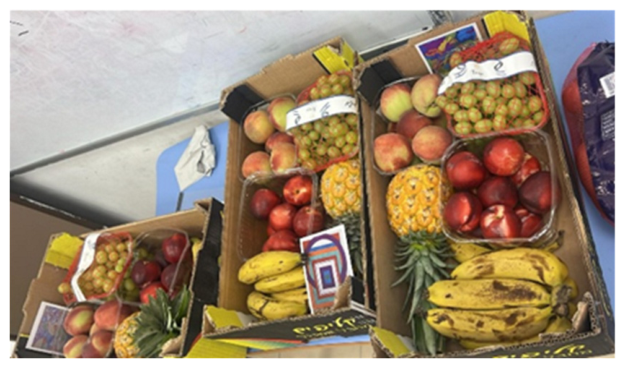
Figure 1. Standardized portions for sale under the LACTN model.
Sustainability 18 05889 g001
Table 1. Anonymized background data for the interview sample.
NameGenderAgeRole
NoaF45Farmer
LiorM45Farmer
YochimM56Farmer
OmerM47Farmer
TalM40Farmer
NadavM43Farmer
GilM52Farmer
AmirM43Farmer
OrenM51Farmer
NirM63Farmer
NofarF50Distribution center volunteer Event Producer
GalF49Distribution center volunteerTecher
YonitF46Distribution center volunteer Office Manager
LivnatF50Distribution center volunteerAttorney
ShlomitF51Distribution center volunteerArchitect
YifatF39Distribution center volunteerDance Instructor
YealF51Distribution center volunteerGraphic Designer
DanaF56CostumerTrevel agent
GilM60CostumerCFO
ShiraF38CostumerEconomist
RonM77CostumerSenior Citizen
Disclaimer/Publisher’s Note: The statements, opinions and data contained in all publications are solely those of the individual author(s) and contributor(s) and not of MDPI and/or the editor(s). MDPI and/or the editor(s) disclaim responsibility for any injury to people or property resulting from any ideas, methods, instructions or products referred to in the content.


