Adaptive Dynamic Evolution of Social-Ecological Systems in the Huaihe River Ecological and Economic Belt (HREEB) Based on Complex Adaptive System Theory

Abstract
1. Introduction
2. Materials and Methods
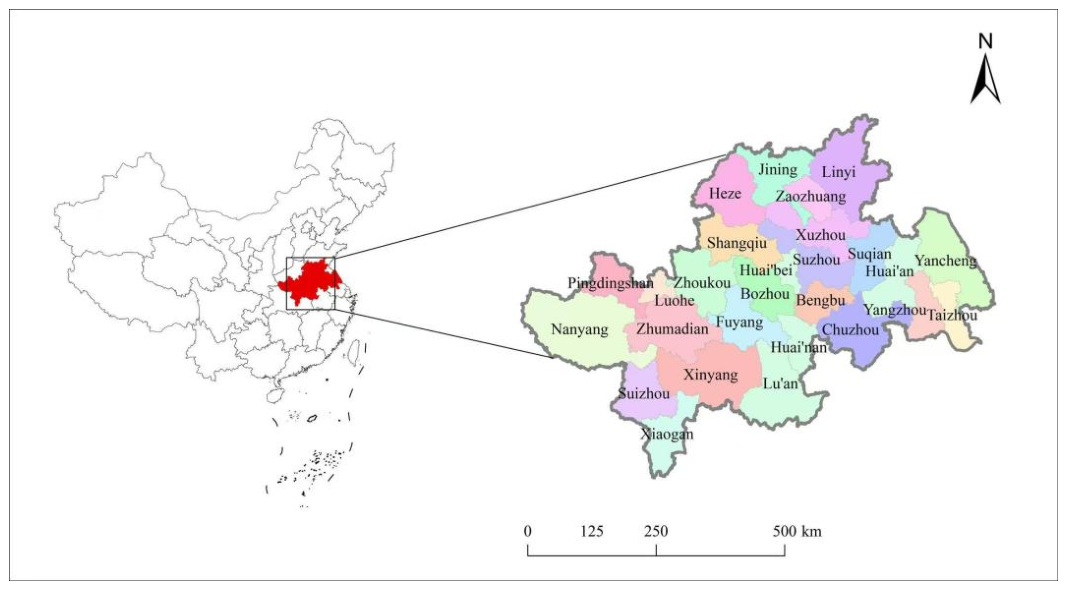
2.1. Study Area
2.2. Data Sources
2.3. Construction of the Adaptive Assessment Index System for Social-Ecological Systems Based on PSR Theory

| Level 1 Indicators | Secondary Indicators | Tertiary Indicators | Characteristic | Interpretation of Indicators |
|---|---|---|---|---|
| Social Subsystem | Social Pressure (P) | The energy consumption per unit GDP (P1) | − | Energy consumption intensity |
| Apparent carbon dioxide emissions per unit of GDP (P2) | − | Intensity of carbon emissions per unit | ||
| Unemployment rate (P3) | − | Degree of stability of the system’s employment | ||
| Social Status (S) | GDP per capita (S1) | + | Economic level per capita | |
| Per-capita grain production (S2) | + | Stability of agricultural development | ||
| The rate of urbanization (S3) | + | Systematic urbanization process | ||
| Industrial structure diversification index (S4) | + | Degree of balance in industrial structure | ||
| Social Response (R) | Science and education investment ratio (R1) | + | Public service level | |
| Number of health establishment beds per capita (R2). | + | Level of medical and health care | ||
| Urban disposable income (R3) | + | Economic conditions of the population | ||
| Ecological Subsystem | Ecological Pressure (P) | Fertilizer use per unit sown area (P4) | − | Degree of environmental pollution |
| Environmental pollution index (P5) | − | Degree of stress on the environment | ||
| Population density (P6) | − | State of system pressure | ||
| Ecological Status (S) | Normalized difference vegetation index (NDVI) (S5) | + | System natural conditions | |
| Climate suitability (S6) | + | System livability level | ||
| Proportion of good air quality (S7) | + | System atmospheric level | ||
| Ecological Response (R) | Afforestation area per capita (R4) | + | Environmental support efforts | |
| Harmless treatment rate of domestic garbage (R5) | + | Strength of regional ecological management | ||
| Centralized treatment rate of sewage treatment plants (R6) | + | Strength of industrial governance |
2.4. Determining the Weight of the Huaihe River Ecosystem Adaptation Based on the Entropy Weight Method
2.4.1. Entropy Weight Method
2.4.2. Determining the Adaptive Weights of the Huai River Ecosystem
2.5. Obstacle Degree Model
2.6. Identification of the Evolutionary Stages of the Adaptive Cycle
2.7. Correlation Analysis
3. Results
3.1. Dynamic Evolutionary Analysis of Adaptations in Social and Ecological Systems Within the HREEB at a Regional Scale
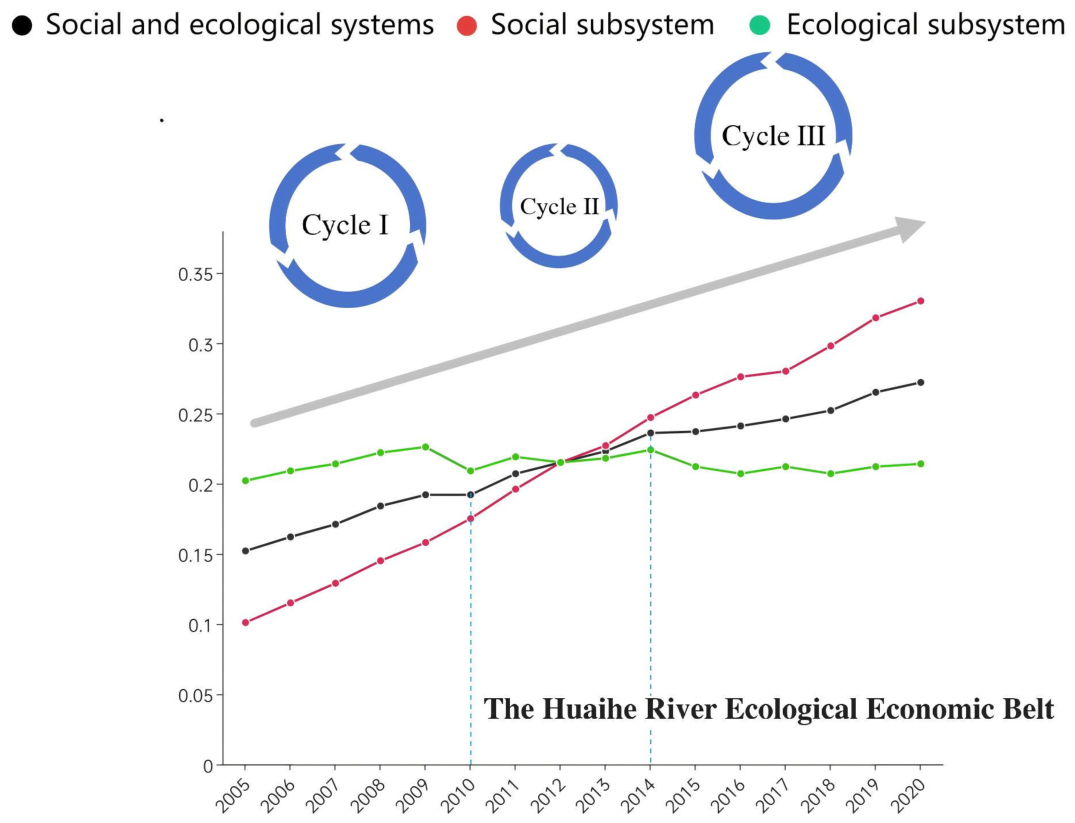
Process Analysis of Adaptive Cyclic Evolution in Social and Ecological Systems Within the HREEB
3.2. Adaptive Dynamic Evolution Analysis of Social and Ecological Systems in the HREEB at the Urban Scale
3.2.1. Evolutionary Characterization of Subsystems of Social and Ecological Systems at the Urban Scale
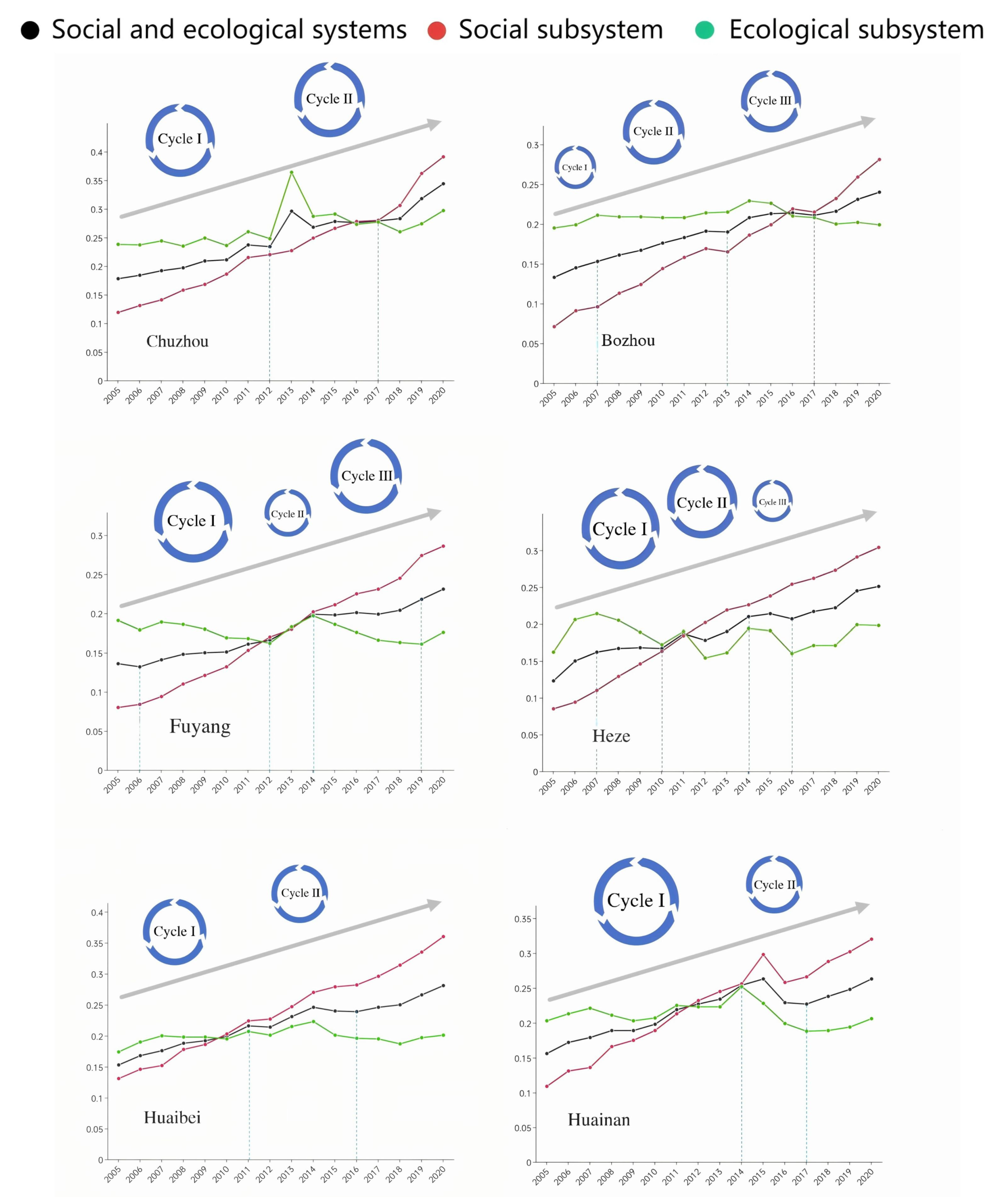
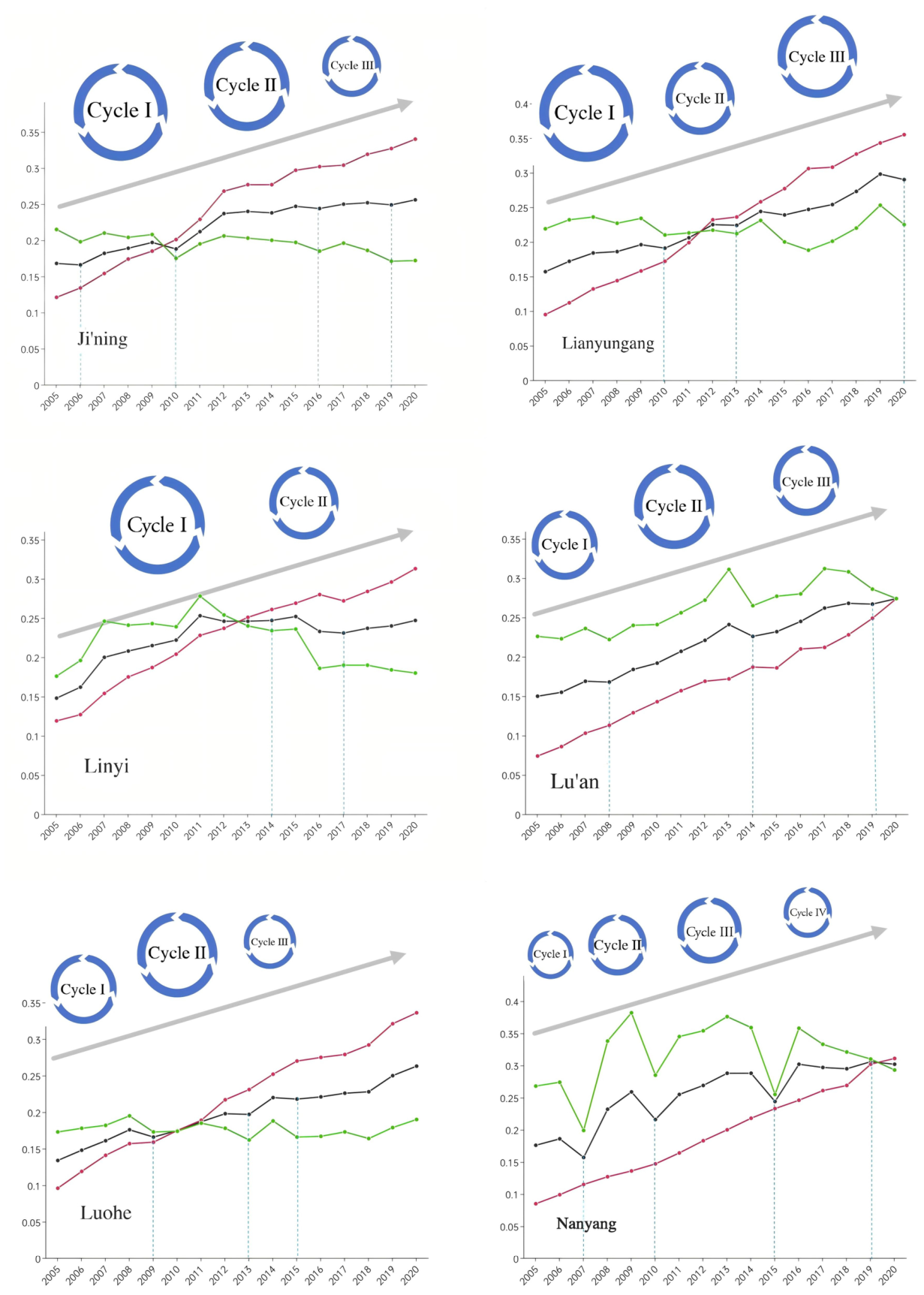
3.2.2. Evolutionary Stages and Identification of Social and Ecological Systems at the Urban Scale
- (1)
- Xinyang City
- (2)
- Bengbu City
- (3)
- Huai’an City
- (4)
- Xuzhou City
3.2.3. Spatial Differentiation of Correlation Results
4. Discussion and Recommendations
4.1. Discussion
4.2. Recommendations
- (1)
- Strengthen regional coordinated development and optimize spatial layout. Given the spatial pattern characterized by a “low center, high edge”, it is essential to reinforce the radiation-driven role of core cities such as Xinyang City, Bengbu City, Huai’an City, and Xuzhou City. By enhancing both the radiation effect and comprehensive carrying capacity of these central hub cities, optimizing industrial transfer functions in less adaptable cities, and fostering synergistic development among urban areas, we can promote sustainable urban growth within the HREEB.
- (2)
- Focus on key issues. Greater emphasis should be placed on developing primary factors that are associated with adaptability within the HREEB. It is crucial to identify and prioritize specific areas for improvement while paying close attention to indicators that impede adaptability enhancement. Targeted efforts must be made to address challenges affecting both social and ecological systems in this region while increasing support for critical elements that correlate with overall adaptability.
- (3)
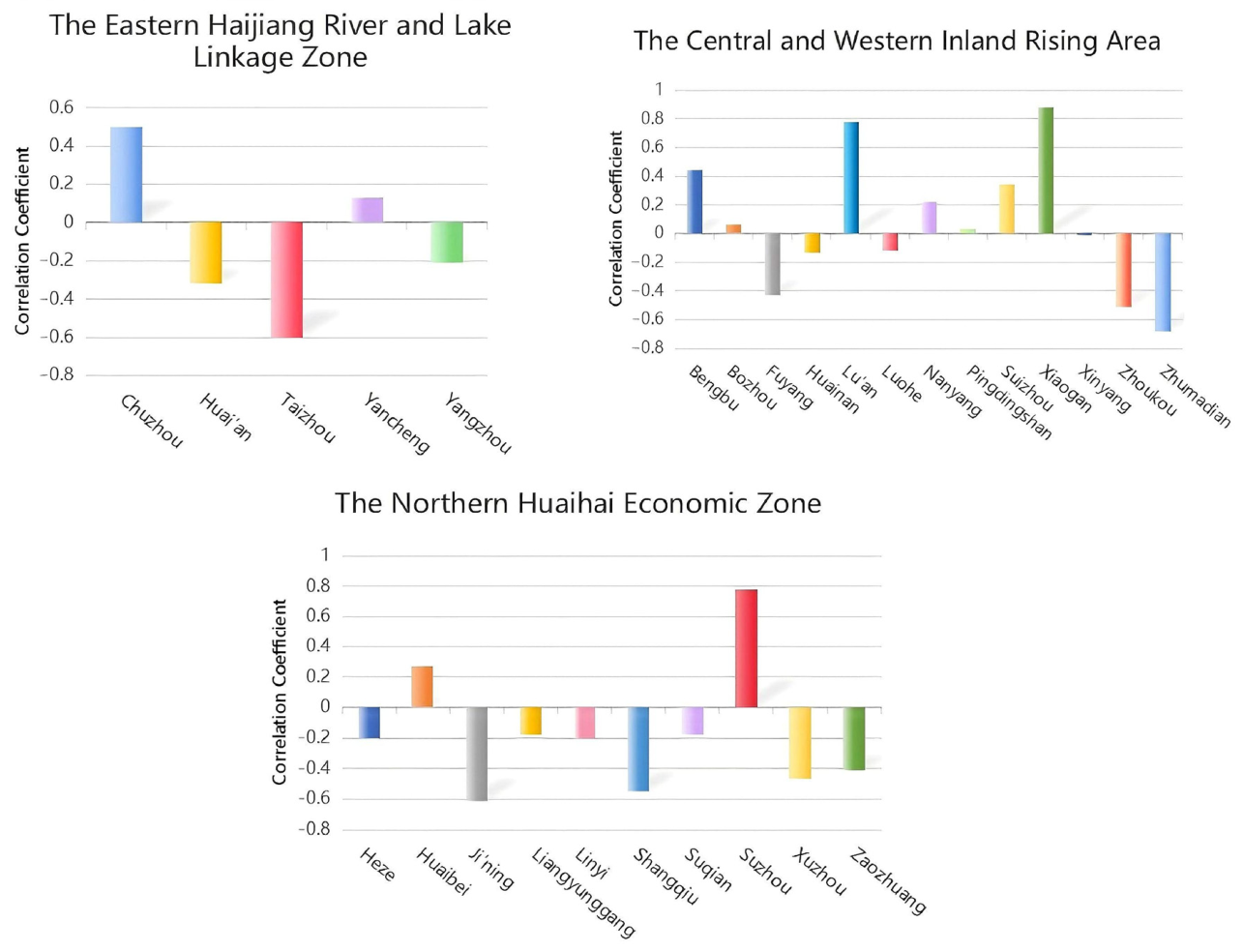
- Promote coordinated development between socioeconomic growth and ecological sustainability. The observed negative association between social-subsystem and ecological-subsystem scores in much of the Northern Huaihai Economic Zone suggests that economic expansion in this sub-region coincided with lower ecological-subsystem outcomes during the study period; while this association cannot on its own demonstrate causation, it is consistent with the historical reliance on extensive developmental practices documented in regional plans. It is therefore advisable to strengthen ecological protection measures alongside comprehensive remediation efforts against environmental pollution. This approach aims not only to improve environmental quality but also to support a more balanced trajectory between socioeconomic advancement and ecological preservation [67].
- (4)
- Explore the urban development pattern based on the city’s policy. To achieve regional optimization, it is essential not only to balance the relationship between social and ecological subsystems—avoiding a development model that pits one against the other—but also to leverage each city’s advantageous industries to realize a synergistic effect in which inter-city cooperation generates a combined regional outcome greater than the sum of individual city contributions within the HREEB. For cities experiencing stable growth, maintaining consistent developmental stability is crucial; this involves identifying developmental shortcomings and implementing further improvements. In contrast, for cities with fluctuating growth rates, attention must be directed to optimizing development speed by identifying key indicators associated with adaptive rapid-growth stages and continuously enhancing these indicators to facilitate steady, accelerated urban expansion. For cities with uneven development patterns, there is a pressing need to prioritize ecological environmental development. Furthermore, for cities facing ecological crises, it is imperative to bolster ecological protection efforts while transforming the existing social-ecological development framework so that both subsystems can progress in a healthy and sustainable manner [49].
5. Conclusions
- (1)
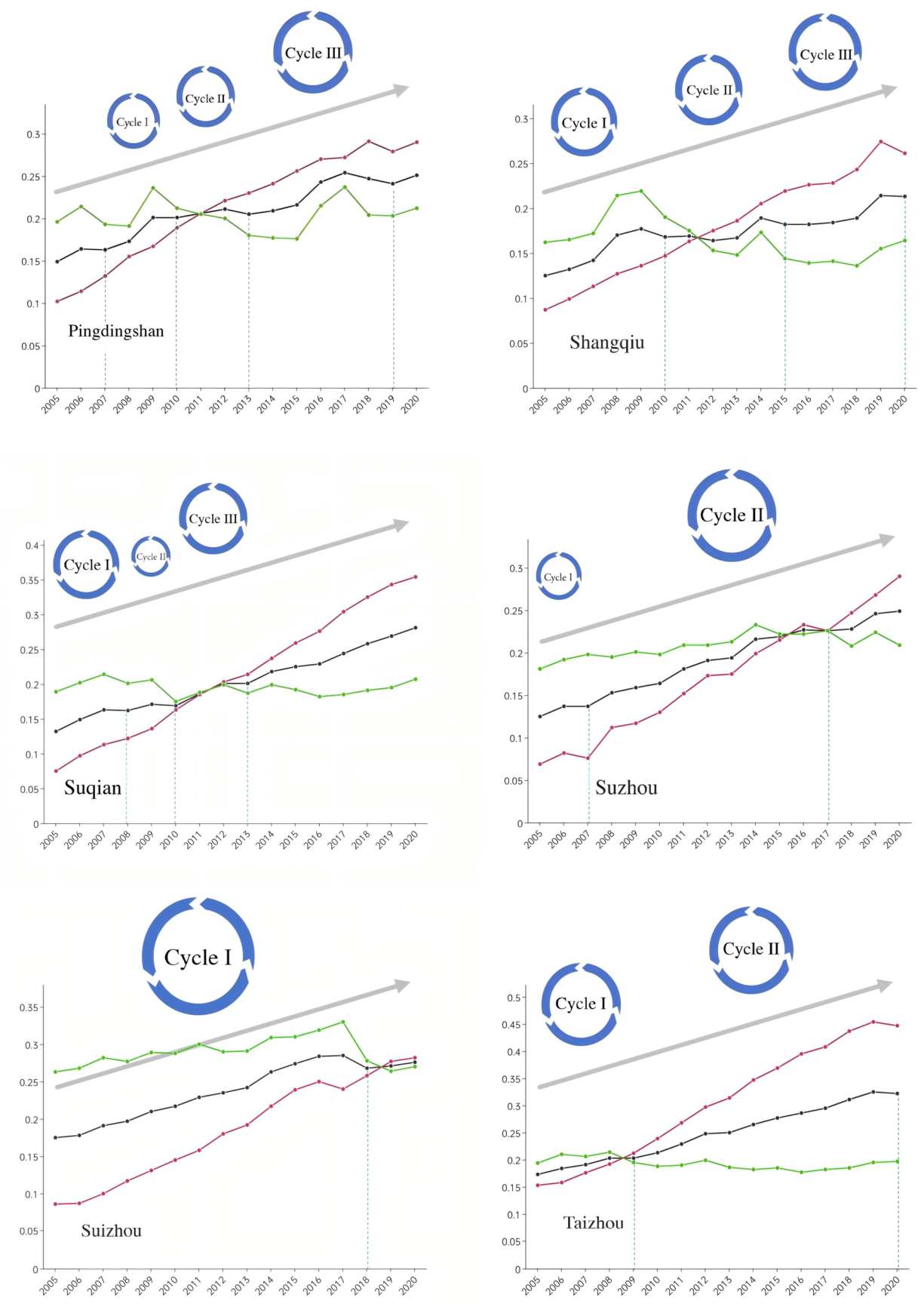
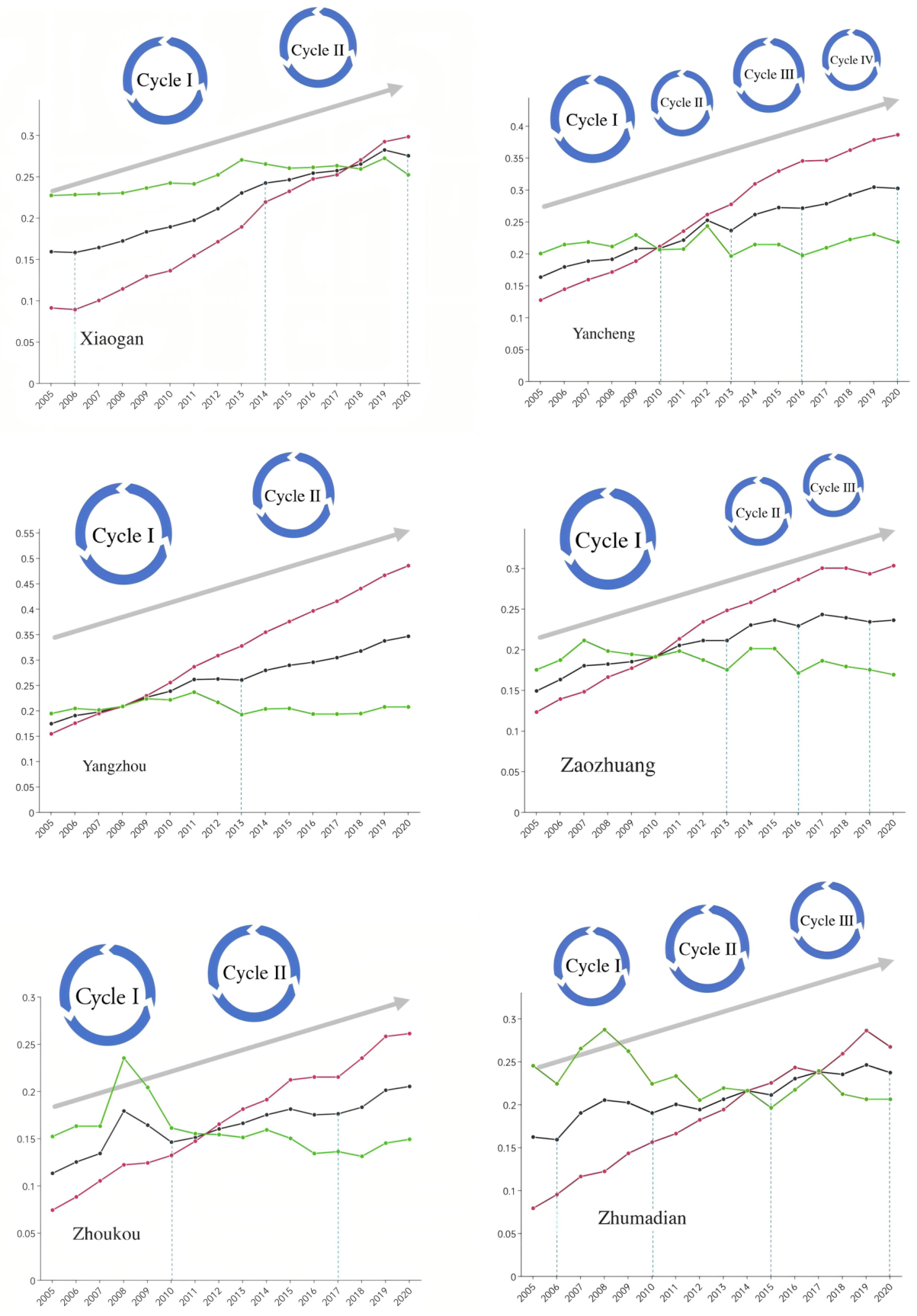
- The adaptability of social-ecological systems within the HREEB exhibits an overall upward trend characterized by relative stability. While the social subsystem’s performance has increased linearly, its rate of increase has shown signs of decline. Conversely, adaptability within ecological subsystems demonstrated a fluctuating yet gradually stabilizing upward trajectory. Additionally, spatial analysis revealed that the adaptability index for social and ecological systems across HREEB followed a distinct pattern: “low in the center and high at the edges”, with areas of high values predominantly concentrated in the Eastern Sea–River–Lake Linkage Zone, followed by the Midwest Inland Rising Region, while the Northern Huaihai Economic Zone was in the relatively low value area.
- (2)
- The afforestation area, GDP per capita, disposable income of urban residents, the number of beds in health institutions per capita, and population density were consistently identified as the top-ranked obstacle factors in the HREEB by the obstacle degree model from 2005 to 2020. The leading obstacle factors within the indicator layer were predominantly distributed across three dimensions: pressure, state, and response. Furthermore, the spatial differentiation in adaptability tended to covary with the indicators represented in the state layer, although this descriptive co-movement cannot, on its own, establish a causal role for the state dimension.
- (3)
- The adaptability of social subsystems in the HREEB showed a continuous growth trend from 2005 to 2020, with over one-third of phases experiencing a growth rate exceeding 10%. Periods of rapid social-subsystem improvement coincided with sustained urban construction and economic expansion across the region. In contrast, the adaptive dynamic evolution of ecological subsystems in the HREEB displayed fluctuating characteristics; an upward phase accounted for 67%, while only 13.3% of phases showed a slow growth rate of merely 3%. The system is currently in its third cycle and is best interpreted as a late conservation (Κ) phase with accumulating pressure indicators; whether it will transition into a release (Ω) phase depends on subsequent pressure–response dynamics and cannot be inferred from the present analysis alone.
- (4)
- Throughout each prefecture-level city during the period from 2005 to 2020, there was generally an upward trend in social subsystem adaptability; however, some cities (Bozhou, Suzhou, Zaozhuang, Zhumadian, and Huai’an) exhibited a slight decline in this regard. Additionally, indices reflecting ecological subsystem adaptability demonstrated considerable fluctuations across various prefecture-level cities during 2005–2020.
Supplementary Materials
Author Contributions
Funding
Institutional Review Board Statement
Informed Consent Statement
Data Availability Statement
Conflicts of Interest
References
- Cao, Y.; Xia, Y.; Mao, G. Regional Development Differences and Synergistic Development Strategies in the Huaihe River Ecological and Economic Belt. Econ. Geogr. 2019, 39, 213–221. [Google Scholar] [CrossRef]
- Heng, J.; Wang, P.; Chen, H. Geographic Detection of Spatial and Temporal Evolution of Ecological Risks and Their Influencing Factors in Semiarid Areas—The Case of Yanchi County in Ningxia. Arid Land Geogr. 2022, 45, 1425–1439. [Google Scholar] [CrossRef]
- Holling, C.S. Resilience and Stability of Ecological Systems. Annu. Rev. Ecol. Evol. Syst. 1973, 4, 460–482. [Google Scholar] [CrossRef]
- Holling, C.S. Understanding the Complexity of Economic, Ecological, and Social Systems. Ecosystems 2001, 4, 390–405. [Google Scholar] [CrossRef]
- Cumming, G.; Cumming, D.; Redman, C. Scale Mismatches in Social-Ecological Systems: Causes, Consequences, and Solutions. Ecol. Soc. 2006, 11, 14. [Google Scholar] [CrossRef]
- Ostrom, E. A General Framework for Analyzing Sustainability of Social-Ecological Systems. Science 2009, 325, 419–422. [Google Scholar] [CrossRef]
- Hatt, K. Social Attractors: A Proposal to Enhance Resilience Thinking about the Social. Soc. Nat. Resour. 2013, 26, 30–43. [Google Scholar] [CrossRef]
- Liu, Y.; Wang, Y.; Peng, J.; Zhang, T.; Wei, H. Urban Landscape Ecological Risk Assessment Based on the 3D Framework of the Ecological Adaptive Cycle. Acta Geogr. Sin. 2015, 70, 1052–1067. [Google Scholar] [CrossRef]
- Kaplan-Hallam, M.; Bennett, N.J.; Satterfield, T. Catching Sea Cucumber Fever in Coastal Communities: Conceptualizing the Impacts of Shocks versus Trends on Social-Ecological Systems. Glob. Environ. Change 2017, 45, 89–98. [Google Scholar] [CrossRef]
- Yuan, Q.; Wu, S.; Dai, E. Vulnerability Evaluation of NPP of Potential Vegetation in China under Climate Change in the Past 50 Years. Acta Geogr. Sin. 2016, 71, 797–806. [Google Scholar] [CrossRef]
- Zhang, Q.; Zhao, X.; Luo, L. Vulnerability Impact Assessment of Climate Change on Farmers’ Livelihoods in Alpine Ecologically Vulnerable Areas—An Example from the Gannan Plateau. Chin. J. Ecol. 2016, 35, 781–790. [Google Scholar] [CrossRef]
- Huang, X.; Wang, B.; Liu, M. Evaluation of High Temperature Characteristics and Social Vulnerability in Chinese Cities. Geogr. Res. 2020, 39, 1534–1547. [Google Scholar] [CrossRef]
- Huang, J.; Su, F. Commentary and Outlook on Hot Issues in Urban Disaster Social Vulnerability Research. Sci. Geogr. Sin. 2017, 37, 1211–1217. [Google Scholar] [CrossRef]
- Guo, L.; Li, B.; Yang, Z. Evaluation of the Ecological Vulnerability of the Qinling “Life Community” Based on the SRP Model from the Perspective of Mineral Resource Development. Saf. Environ. Eng. 2023, 30, 273–280. [Google Scholar] [CrossRef]
- Xiang, A.; Yue, Q.; Zhao, X. Identification and Restoration Zoning of key Areas for Land and Space Ecological Restoration in the karst Mountains of Southwest China—Taking kaiyuan City as an Example. China Environ. Sci. 2023, 43, 6571–6582. [Google Scholar] [CrossRef]
- Yao, X.; Yu, K.; Liu, J. Spatial and Temporal Evolution of Ecological Vulnerability in Areas of Severe Soil Erosion in the South of the Country. Chin. J. Appl. Ecol. 2016, 27, 735–745. [Google Scholar] [CrossRef]
- Wang, Z.; Su, Y. Evaluation and Characteristic Analysis of Ecological Vulnerability of Water Sources in Hanzhong City on the Middle Line of the South-to-North Water Diversion. Acta Ecol. Sin. 2018, 38, 432–442. [Google Scholar] [CrossRef]
- Maldonado, D.A.; Morales, M.; Aguilera, A.P.; Salmerón, A. Analyzing Uncertainty in Complex Socio-Ecological Networks. Entropy 2020, 22, 123. [Google Scholar] [CrossRef]
- Porter, S. Evolution: Symbiont Switching and Environmental Adaptation. Curr. Biol. 2021, 31, R1049–R1050. [Google Scholar] [CrossRef] [PubMed]
- Wang, L.; Chen, C.; Xie, F.; Hu, Z.; Zhang, Z.; Chen, H.; He, X.; Chu, Y. Estimation of the Value of Regional Ecosystem Services of an Archipelago Using Satellite Remote Sensing Technology: A Case Study of Zhoushan Archipelago, China. Int. J. Appl. Earth Obs. Geoinf. 2021, 105, 102616. [Google Scholar] [CrossRef]
- Das, A. A Data-Driven Approach Utilizing Machine Learning (ML) and Geographical Information System (GIS)-Based Time Series Analysis with Data Augmentation for Water Quality Assessment in the Mahanadi River Basin, Odisha, India. Discov. Sustain. 2025, 6, 555. [Google Scholar] [CrossRef]
- Wu, D.; Liu, M. Assessing Adaptability of the Water Resource System to Social-Ecological Systems in the Beijing-Tianjin-Hebei Region: Based on the DPSIR-TOPSIS Framework. Chin. J. Popul. Resour. Environ. 2022, 20, 261–269. [Google Scholar] [CrossRef]
- Zhao, Y.; He, G.; Bao, K.; Zhu, Y.; Yang, J.; Ruan, J.; Wang, Y. Assessment of Spatial–Temporal Differences of Industrial Eco-Efficiency in the Huaihe River Economic Belt. Geogr. J. 2022, 88, 1703–1720. [Google Scholar] [CrossRef]
- Xue, H.; Liu, P. Spatiotemporal Evolution Characteristics and Driving Factors of Ecological Environment Quality in the Middle Reaches of the Yellow River Based on RSEI: A Case Study of Yan’an City. Res. Soil Water Conserv. 2024, 31, 373–384. [Google Scholar] [CrossRef]
- Tang, F.; Fu, M.; Li, W.; Song, W.; Yu, J.; Wu, Y. Dynamic Evolution and Scenario Simulation of Habitat Quality under the Impact of Land-Use Change in the Huaihe River Economic Belt, China. PLoS ONE 2021, 16, e0249566. [Google Scholar] [CrossRef]
- Anand, V.; Kaur, S.; Rajput, V.D.; Minkina, T.; Mandzhieva, S.; Kumar, S.; Sharma, A.; Kumar, S. Analyzing the Spatial Relationship between Land Surface Temperature and Normalized Difference Vegetation Index Using Remote Sensing and GIS. Discov. Geosci. 2025, 3, 65. [Google Scholar] [CrossRef]
- Chamani, R. Flood-Oriented Watershed Health and Ecological Security Conceptual Modeling Using Pressure, State, and Response (PSR) Approach for the Sharghonj Watershed, South khorasan Province, Iran. Nat. Resour. Model. 2023, 37, e12385. [Google Scholar] [CrossRef]
- Zhao, Z.; Liu, C.; Chang, W.Y.; Ren, Y. Comprehensive Resilience Assessment and Obstacle Analysis of Cities Based on the PSR-TOPSIS Model: A Case Study of Jiangsu Cities. Land 2025, 14, 1437. [Google Scholar] [CrossRef]
- Jatav, S.S.; Naik, K. Measuring the Agricultural Sustainability of India: An Application of the Pressure-State-Response (PSR) Model. Reg. Sustain. 2023, 4, 218–234. [Google Scholar] [CrossRef]
- Das, S.; Pradhan, B.; Shit, P.k.; Alamri, A.M. Assessment of Wetland Ecosystem Health Using the Pressure–State–Response (PSR) Model: A Case Study of Murshidabad District of West Bengal (India). Sustainability 2020, 12, 5932. [Google Scholar] [CrossRef]
- Stroink, M.L. The Dynamics of Psycho-Social-Ecological Resilience in the Urban Environment: A Complex Adaptive Systems Theory Perspective. Front. Sustain. Cities 2020, 2, 31. [Google Scholar] [CrossRef]
- Wan, Z.; Zhao, C.; Zhu, J.; Ma, X.; Chen, J.; Wang, J. Assessment and Prediction of Coastal Ecological Resilience Based on the Pressure–State–Response (PSR) Model. Land 2024, 13, 2130. [Google Scholar] [CrossRef]
- Tavosi, M.; Vafakhah, M.; Sadeghi, H.S.; Shekohideh, H.; Moosavi, V. Comparative Assessment of Watershed Hydrological Health (WHH) Using a Multi-Criteria Decision-Making Approach Based on the PSR Framework. J. Environ. Manag. 2025, 373, 123833. [Google Scholar] [CrossRef] [PubMed]
- Kaige, W.; Cai, Z.; Xu, Y.; Zhang, F. Hexagonal Cyclical Network Structure and Operating Mechanism of the Social-Ecological System. Ecol. Indic. 2022, 141, 109099. [Google Scholar] [CrossRef]
- Zhao, J.; Sa, N.; Kou, X.; Fu, X.; Zheng, S.; Lu, Z.; Wu, G.; Sang, W. Coupling Coordination Analysis and Prediction of Multi-Social-Ecological Subsystem in the Xiaoxing’an Mountains-Sanjiang Plain, Northeast China. Glob. Ecol. Conserv. 2024, 51, e02892. [Google Scholar] [CrossRef]
- Ren, K.; Luo, M.; Zhao, Y.; Han, L.; Zhang, L.; Yang, S. Evaluation of Ecological Environment and Urban Development Quality in Xi’an City, China. Yingyong Shengtai Xuebao 2022, 33, 2485–2492. [Google Scholar] [CrossRef]
- Wang, Y.; Sun, X. The Mechanism of Government Subsidies Driving Industrial Transformation and Upgrading. China Ind. Econ. 2017, 99–117. [Google Scholar] [CrossRef]
- Zheng, J.; Yu, H.; Huang, S. Evaluation of the Carrying Capacity of the Ecological Environment in Fujian Province and Research on Obstacle Factors Based on the DPSIR-TOPSIS Model. Acta Sci. Circumst. 2017, 37, 4391–4398. [Google Scholar] [CrossRef]
- Wang, H. Socio-Ecological System Vulnerability Assessment and Spatiotemporal Evolution of Coastal Tourism Destinations. Master’s Thesis, Dalian University of Technology, Dalian, China, 2022. [Google Scholar] [CrossRef]
- Li, K.; Hu, H.; Zhao, H. Study on the Evolution of Regional Social-Ecological Systems Based on Adaptive Cycle Theory and Pressure-State-Response Framework. Acta Ecol. Sin. 2022, 42, 10164–10179. [Google Scholar] [CrossRef]
- Han, Z.; Pan, J.; Guo, J.; Yin, S. Adaptive Analysis of the Coastal City Tourism System Based on Geographical Nature. Resour. Sci. 2022, 44, 634–645. [Google Scholar] [CrossRef]
- Wang, C.; Ye, Y.; Tian, L.; Chen, H. Research on the Logic and Implementation Deviation of the Vertical Allocation of Urban and Rural Construction Land Indicators. China Land Sci. 2023, 37, 34–44. [Google Scholar] [CrossRef]
- Hong, Z.; Zheng, W.; Hu, L. Value Evaluation of Traditional Villages in the Lijiang River Basin Based on Ontology-Regional Scale. Guangxi Sci. 2024, 31, 1220–1232. [Google Scholar] [CrossRef]
- Meshkinkiya, M.; Galimshina, A.; Hischier, I.; Schlueter, A. Assessing Biogenic Carbon Storage at the Urban Scale through Urban Building Energy Modeling. Sustain. Cities Soc. 2025, 125, 106355. [Google Scholar] [CrossRef]
- Sun, S.; Lin, J.; Zhuang, Y.; Li, C.; Huang, C.; Chen, Y.; Chen, W.; Chen, G.; Gan, M.; Liao, Q.; et al. Bio-Molecular Structural k-Means Clustering Method Decodes the Binding Pattern between Microtubules and Intrinsically Disordered CkAP4. Cell Rep. Phys. Sci. 2025, 6, 102626. [Google Scholar] [CrossRef]
- Li, S.; Pu, J.; Deng, X.; Dong, B.; Su, Y. Improving Ecological Barrier Area Sustainability Integrating Ecosystem Service Interaction and Social–Ecological System Coupling. Land Degrad. Dev. 2025, 36, 2420–2437. [Google Scholar] [CrossRef]
- Munir, S.; Chen, H.; Crowther, R. Modelling of Nanoparticle Number Emissions from Road Transport—An Urban Scale Emission Inventory. Atmosphere 2025, 16, 417. [Google Scholar] [CrossRef]
- Sa, N.; Zhao, J.; Kou, X.; Zheng, S.; Lu, Z.; Axmacher, C.J.; Sang, W. Transformation of Social-Ecological Systems in the Songhua River Basin, Northeast China: Lessons for a More Sustainable Development. People Nat. 2025, 7, 1749–1768. [Google Scholar] [CrossRef]
- Sarker, H.M.M.; Gain, K.A.; Giupponi, C. Modeling Mangrove Social-Ecological Systems: A Review. Environ. Res. Commun. 2025, 7, 062001. [Google Scholar] [CrossRef]
- Hong, W.; Zhao, Y.; Yang, S.; Yang, X.; Li, Y.; Wang, C. An Analytical Framework Based on Social-Ecological Systems for Identifying Priority Areas for Ecological Restoration in Coastal Regions. J. Environ. Manag. 2024, 370, 122958. [Google Scholar] [CrossRef]
- Chen, J.; Xiong, K.; Luo, L.; Zhang, W.; Chen, Y. Social-Ecological System Vulnerability in the Core Area of Desertification Control in South China karst: Spatial–Temporal Feature, Driver Factors, and Scenario Simulation. Environ. Dev. Sustain. 2025, 15, 10216. [Google Scholar] [CrossRef]
- Zhang, Y.; Liu, B.; Shi, B.; Bi, X.; Mao, Y.; Sui, R. Exploring the Driving Mechanism Path of Ecosystem Service Relationships Based on the Social-Ecological System Framework. Sci. Rep. 2025, 15, 10216. [Google Scholar] [CrossRef]
- Galeazzi, M.A.; Foucat, A.S.V.; Perevochtchikova, M. Analysis of the Watershed Social-Ecological System Trajectory in Copalita-Huatulco, Mexico: The Impact of Drivers on Hydrological Ecosystem Services. Ambio 2024, 53, 1797–1812. [Google Scholar] [CrossRef]
- Zhao, Y.; Han, Z.; Zhang, C.; Wang, Y.; Zhong, J.; Gao, M. Coastal Cultural Ecosystem Services: A Bridge between the Natural Ecosystem and Social Ecosystem for Sustainable Development. Land 2024, 13, 1352. [Google Scholar] [CrossRef]
- Sundstrom, S.M.; Allen, C.R. The Adaptive Cycle: More Than a Metaphor. Ecol. Complex. 2019, 39, 100767. [Google Scholar] [CrossRef]
- Angeler, D.G.; Allen, C.R.; Garmestani, A.S.; Gunderson, L.H.; Hjerne, O.; Winder, M. Quantifying the Adaptive Cycle. PLoS ONE 2015, 10, e0146053. [Google Scholar] [CrossRef] [PubMed]
- Jin, X.; Li, B. Adaptive Cycle Process and Driving Mechanism of the Marine Fishery Industrial Ecosystem in Coastal Areas of China. Acta Ecol. Sin. 2021, 41, 5857–5867. [Google Scholar] [CrossRef]
- Zhang, L.; Huang, Q.; He, C.; Yue, H.; Zhao, Q. Assessing the Dynamics of Sustainability for Social-Ecological Systems Based on the Adaptive Cycle Framework: A Case Study in the Beijing-Tianjin-Hebei Urban Agglomeration. Sustain. Cities Soc. 2021, 70, 102899. [Google Scholar] [CrossRef]
- Oliveira, M.B.; Boumans, R.; Fath, D.B.; Othoniel, B.; Liu, W.; Harari, J. Prototype of Social-Ecological System’s Resilience Analysis Using a Dynamic Index. Ecol. Indic. 2022, 141, 109113. [Google Scholar] [CrossRef]
- Rosario, M.G.A.V.; Néstor, R.N.; Mar, D.M.M.S.; Mar, L.A.S. Ecosystem services provided by dry river socio-ecological systems and their drivers of change. Hydrobiologia 2023, 850, 2585–2607. [Google Scholar] [CrossRef]
- Bolaños-Valencia, I.; Villegas-Palacio, C.; López-Gómez, P.C.; Berrouet, L.; Ruiz, A. Social Perception of Risk in Socio-Ecological Systems. A Qualitative and Quantitative Analysis. Ecosyst. Serv. 2019, 38, 100942. [Google Scholar] [CrossRef]
- Antonov, G.; Ivanova, O.; Antonova, I. Assessment of Economic Diversification Projects in a Single-Industry City. Probl. Econ. Transit. 2012, 55, 3–13. [Google Scholar] [CrossRef]
- Daniel, J.L.; Margarietha, J.S.V.; Miles, P.M.; Klerk, S. Understanding Entrepreneurial Ecosystems Using Complex Adaptive Systems Theory: Getting the Big Picture for Economic Development, Practice, and Policy. Entrep. Reg. Dev. 2022, 34, 911–934. [Google Scholar] [CrossRef]
- Li, B.; Qu, Y.; Wang, Z.; Wu, F.; Wu, J. The Impact of Industrial Evolution Path Dependence on Economic Resilience in the Yangtze River Delta Cities. Geogr. Res. 2023, 42, 2036–2052. [Google Scholar] [CrossRef]
- Andrijevic, M.; Cuaresma, C.J.; Muttarak, R.; Schleussner, F.C. Governance in Socioeconomic Pathways and Its Role for Future Adaptive Capacity. Nat. Sustain. 2020, 3, 35–41. [Google Scholar] [CrossRef]
- Ma, L.; Zhang, H.; Meng, X.; Lu, Q. Spatiotemporal Heterogeneity of the Ecological Civilization in the Yangtze River Economic Belt. Ecol. Indic. 2025, 177, 113808. [Google Scholar] [CrossRef]
- Gu, X.; Jin, H.; Luo, J. The Associated Ecological Risks Identification and Optimal Management of Basin “Water-Energy-Food-Ecology” Nexus: A Case Study of the Yellow River Basin. J. Clean. Prod. 2025, 520, 146129. [Google Scholar] [CrossRef]


| Regions | Include Prefecture-Level Cities |
|---|---|
| Eastern Sea–River–Lake Linkage Zone | Huaian, Yancheng, Yangzhou, Taizhou, Chuzhou |
| Northern Huaihai Economic Zone (NHEZ) | Xuzhou, Lianyungang, Suqian, Suzhou, Huaibei, Shangqiu, Zaozhuang, Jining, Linyi, Heze |
| Midwest Inland Rising Region | Bengbu, Xinyang, Huainan, Fuyang, Lu’an, Bozhou, Zhumadian, Zhoukou, Luohe, Nanyang, Pingdingshan, Suizhou, Xiaogan |
| Weighting Scheme | (P, S, R) | Spearman ρ with Baseline | Top-3 Obstacle Factors Preserved? | “East/West High, Center Low” Preserved? |
|---|---|---|---|---|
| Baseline (equal) | (0.333, 0.333, 0.333) | 1.000 (ref.) | Reference | Yes |
| AHP (social subs.) | (0.28, 0.41, 0.31) | 0.962 | Yes (same 3) | Yes |
| AHP (ecol. subs.) | (0.32, 0.38, 0.30) | 0.971 | Yes (same 3) | Yes |
| State-emphasized | (0.25, 0.50, 0.25) | 0.972 | Yes (same 3) | Yes |
| Response-emphasized | (0.25, 0.25, 0.50) | 0.972 | Yes (same 3) | Yes |
| Level 1 Indicators | Secondary Indicators | Tertiary Indicators | Characteristic | Weight () | Interpretation of Indicators |
|---|---|---|---|---|---|
| Social Subsystem | Social Pressure (P) | The energy consumption per unit GDP (P1) | − | 0.0073 | Energy consumption intensity |
| Apparent carbon dioxide emissions per unit of GDP (P2) | − | 0.0091 | Intensity of carbon emissions per unit | ||
| Unemployment rate (P3) | − | 0.0276 | Degree of stability of system employment | ||
| Social Status (S) | GDP per capita (S1) | + | 0.1510 | Economic level per capita | |
| Per-capita grain production (S2) | + | 0.0633 | Stability of agricultural development | ||
| The rate of urbanization (S3) | + | 0.0343 | Systematic urbanization process | ||
| Industrial structure diversification index (S4) | + | 0.0490 | Degree of balance in industrial structure | ||
| Social Response (R) | Science and education investment ratio (R1) | + | 0.0092 | Public service level | |
| Number of health establishment beds per capita (R2) | + | 0.0769 | Level of medical and health care | ||
| Urban disposable income (R3) | + | 0.1063 | Economic conditions of the population | ||
| Ecological Subsystem | Ecological Pressure (P) | Fertilizer use (P4) | − | 0.0469 | Degree of environmental pollution |
| Environmental pollution index (P5) | − | 0.0234 | Degree of stress on the environment | ||
| Population density (P6) | − | 0.0678 | State of system pressure | ||
| Ecological Status (S) | Normalized difference vegetation index (NDVI) (S5) | + | 0.0157 | System natural conditions | |
| Climate suitability (S6) | + | 0.0392 | System livability level | ||
| Proportion of good air quality (S7) | + | 0.0315 | System atmospheric level | ||
| Ecological Response (R) | Afforestation area (R4) | + | 0.2010 | Environmental support efforts | |
| Harmless treatment rate of domestic garbage (R5) | + | 0.0179 | Strength of regional ecological management | ||
| Centralized treatment rate of sewage treatment plants (R6) | + | 0.0228 | Strength of industrial governance |
| Stages of the Adaptive Cycle | Social Subsystem Adaptation Score | Ecological Subsystems Adaptation Score | Social and Ecological Systems Adaptation Score |
|---|---|---|---|
| Rapid growth | Rapidly rising | Slowly rising | Rapidly rising |
| Stabilization and conservation | Rising | Slowly rising or falling | Rising |
| Release | Slowly rising or falling | Rapidly falling | Falling |
| Reorganization | Slowly rising | Slowly rising or falling | Slowly rising |
| City | Category | Development Characteristics |
|---|---|---|
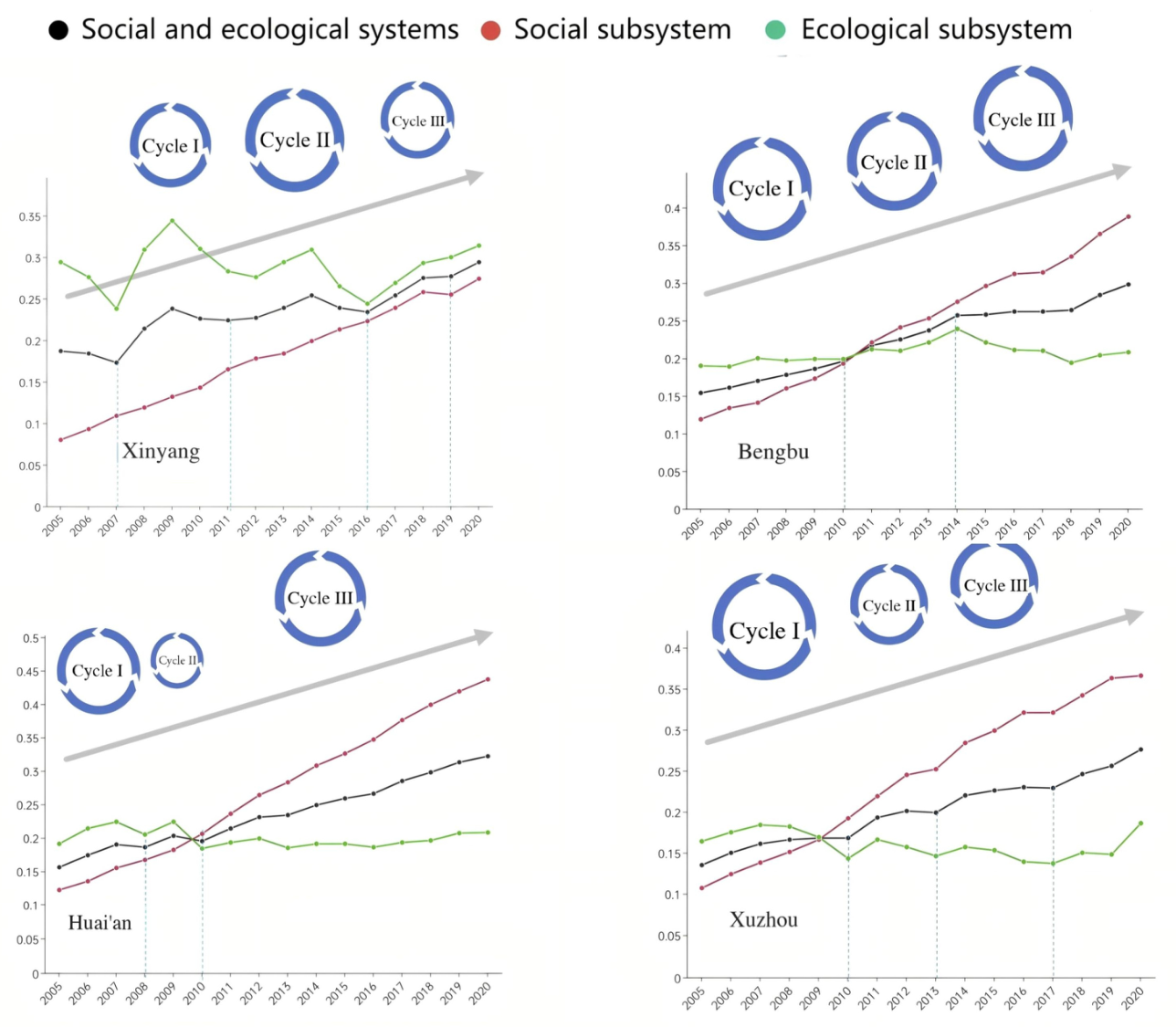
| Xinyang City | Stable Growth | Social and ecological systems, including their subsystems, are in an upward phase with a sustainable, healthy momentum. |
| Bengbu City | Uneven Growth | Social and ecological systems are slowly rising; social and ecological subsystems are in a slow-rising or slow-falling phase. |
| Huaian City | Fluctuating Growth | Social and ecological systems, social subsystems, and ecological subsystems are generally positive, with rapid growth and fluctuations in system adaptation. |
| Xuzhou City | Ecological Crisis | The social and ecological subsystems are moderately negatively correlated, resulting in negative impacts on the ecosystem during socioeconomic development. |
Disclaimer/Publisher’s Note: The statements, opinions and data contained in all publications are solely those of the individual author(s) and contributor(s) and not of MDPI and/or the editor(s). MDPI and/or the editor(s) disclaim responsibility for any injury to people or property resulting from any ideas, methods, instructions or products referred to in the content. |
© 2026 by the authors. Licensee MDPI, Basel, Switzerland. This article is an open access article distributed under the terms and conditions of the Creative Commons Attribution (CC BY) license.
Share and Cite
Fu, G.; Cong, J.; Liu, J.; Lu, S.; Chen, H.; Chen, L. Adaptive Dynamic Evolution of Social-Ecological Systems in the Huaihe River Ecological and Economic Belt (HREEB) Based on Complex Adaptive System Theory. Sustainability 2026, 18, 5823. https://doi.org/10.3390/su18125823
Fu G, Cong J, Liu J, Lu S, Chen H, Chen L. Adaptive Dynamic Evolution of Social-Ecological Systems in the Huaihe River Ecological and Economic Belt (HREEB) Based on Complex Adaptive System Theory. Sustainability. 2026; 18(12):5823. https://doi.org/10.3390/su18125823
Chicago/Turabian StyleFu, Guanghui, Jiaqi Cong, Jiaxin Liu, Shiyu Lu, Hui Chen, and Lijia Chen. 2026. "Adaptive Dynamic Evolution of Social-Ecological Systems in the Huaihe River Ecological and Economic Belt (HREEB) Based on Complex Adaptive System Theory" Sustainability 18, no. 12: 5823. https://doi.org/10.3390/su18125823
APA StyleFu, G., Cong, J., Liu, J., Lu, S., Chen, H., & Chen, L. (2026). Adaptive Dynamic Evolution of Social-Ecological Systems in the Huaihe River Ecological and Economic Belt (HREEB) Based on Complex Adaptive System Theory. Sustainability, 18(12), 5823. https://doi.org/10.3390/su18125823