Article

Moving in the Same Direction: A Shared Path for Sustainable Tourism and Nature-Based Solutions

1
Department of Sociology and Social Research, Università degli Studi di Milano-Bicocca, Piazza dell’Ateneo Nuovo 1, 20126 Milano, Italy
2
National Biodiversity Future Center, Piazza Marina 61, 90133 Palermo, Italy
3
National Research Council, Research Institute on Terrestrial Ecosystems, Via G. Marconi 2, 05010 Porano, Italy
*
Author to whom correspondence should be addressed.
Sustainability 2026, 18(12), 5822; https://doi.org/10.3390/su18125822
Submission received: 7 May 2026 / Revised: 26 May 2026 / Accepted: 1 June 2026 / Published: 8 June 2026
(This article belongs to the Section Social Ecology and Sustainability)

Abstract

The contemporary debate on the climate crisis increasingly emphasizes the need to protect and enhance nature and biodiversity through the active involvement of local communities, including in tourism initiatives. In this context, there is growing demand for models and methodologies able to systematically support more sustainable approaches to territorial governance. This study explores how reflections developed in tourism studies, ecosystem restoration, and museology reveal converging interests and could benefit from a more explicit alignment of efforts. More specifically, we examine whether nature-based solutions (NbS) can support a local turn in tourism and whether ecomuseums can be considered NbS. The analysis combines a review of theoretical contributions with their application to ecomuseum experiences. Comparing the founding principles and criteria of each field, we identified four shared dimensions: place-based governance, community engagement, environmental sustainability, and education and awareness. Analysis of 94 questionnaires collected from Mediterranean ecomuseums showed how these dimensions are reflected in institutional practices. Results revealed a strong correlation between place-based governance and community engagement, and between environmental sustainability and education and awareness. Finally, an Integrated Ecomuseum Performance (IEP) Index was developed to assess the capacity of ecomuseums to act as community-based NbS and sustainable tourism actors. Ecomuseums, NbS, and the local turn in tourism are therefore presented as interconnected approaches promoting holistic, inclusive, and environmentally responsible development. The proposed criteria and index could be used as a tool to diagnose and strengthen ecomuseums’ role in sustainable tourism governance and NbS implementation at the local level.

1. Introduction

The current debate on the climate crisis increasingly highlights the importance of coordinated action and collaboration: among countries or social actors, but also across different fields of knowledge, as clearly illustrated by the 17 SDGs. If the polycrisis was “the word of 2023”, after its use in the Davos World Economic Forum [1], different areas of research have been exploring the potential of new forms of governance, cooperation and community participation to respond to contemporary challenges [2,3].
When looking at the specifics of the tourism sector, the last decade has been characterized by steady growth in both volume and impacts at the economic, social, and environmental levels [4]. Increasingly, the negative impacts of traditional forms of tourism have been highlighted, and there is an ongoing search for new models and methodologies that can preserve territories and their local population, both human and non-human. Sustainable tourism has become a topic of interest, and many of the proposals developed within this framework are based on the activation of mechanisms of empowerment of local communities and bottom-up models of governance that may simultaneously address economic, social, and environmental issues.
A similar consideration applies to nature-based solutions (NbS), a concept that is being promoted at a global level to guide the planning and implementation of actions for the preservation of ecosystems.
Adopting ecosystem-based approaches such as NbS could guide territories in developing projects that support locally based tourism (i.e., the local turn in tourism), especially in the context of the ongoing climate and environmental crisis. By locally based tourism, we mean a form of tourism that is attentive to local resources (whether tangible—natural and built—or intangible) and that places local communities at the center of its focus. The local population becomes the steward and promoter of actions and projects in the area.
Ecomuseums are community-based heritage projects oriented towards implementing the principles of sustainability, also in tourism. Although ecomuseums do not always explicitly align with NbS, many of the founding principles of ecomuseums overlap with those of NbS [5,6], such as attention to the involvement of different stakeholders, the representation of the territory, the focus on traditional knowledge and practices, the promotion of transparent and inclusive participatory practices aimed at local communities, the promotion of interdisciplinary approaches and cross-fertilization of ideas and planning activities that adequately consider sustainable development and future benefits. As such, ecomuseums become a lens through which to observe the “functioning” of NbS in processes of territorial resource enhancement and promotion.
With this article, we address the following questions:
(1)
Can we find shared principles and criteria guiding the actions developed adopting a local turn in tourism approach and the NbS framework and the principles of ecomuseums practices?
(2)
Can ecomuseums be considered a form of NbS?
(3)
And, in that case, can they become tools for the realization of a local turn in tourism?
To discuss these questions, the article is structured as follows. First, we present the theoretical framework, outlining the current discourse around the local turn in tourism, NbS, and ecomuseums. Then, we propose a set of criteria that allow us to observe and analyze ecomuseums practices and assess whether they align with the principles of NbS and the local turn in tourism. The conclusions offer reflections on the potential of an integrative framework that helps re-conceptualize sustainable tourism governance, by framing ecomuseums as Type-1 NbS that can mediate between community-based governance and nature-based tourism.

2. Theoretical Framework

2.1. Sustainable Tourism and Local Turn in Tourism

In recent decades, academic and policy debates on tourism development have increasingly emphasized the concept of sustainable tourism, understood as the effort to reconcile economic growth with environmental protection and community well-being. For example, the debate around nature-based tourism started in the 1980s [7], and has revolved around topics such as environmental impacts and conservation challenges associated with tourism in natural areas [8], the economic and social effects on local communities, including debates on whether nature-based tourism actually supports local development [9] or questions related to visitor behavior, environmental awareness, and pro-environmental attitudes generated through nature-based experiences [10].
More recently, however, a theoretical and practical evolution has emerged through what is called the local turn in tourism, which highlights the need to recenter attention on local territories and actors.
The local turn, while maintaining the main aims of sustainable tourism, shifts the focus from a systemic equilibrium among economic, social, and environmental dimensions to a redefinition of tourism from the local outward.
As Postma, Cavagnaro, and Spruyt [11] argue, the call for sustainable tourism stems from the awareness that the current model of global development is environmentally and socially unbalanced. Sustainable tourism, according to the United Nations Environment Programme and the World Tourism Organization, is a form of tourism “that takes full account of its current and future economic, social and environmental impacts, addressing the needs of visitors, the industry, the environment and host communities” (as cited in [11], p. 14). This approach therefore aims for a systemic balance involving all tourism stakeholders—businesses, institutions, and citizens.
In practice, sustainable tourism has been operationalized through tools such as environmental certification systems (e.g., Green Key [12], EU Ecolabel [13], ISO 14001 [14]) and sustainability indicators, used to assess destinations’ performance in areas like emissions, resource use, social impact, and participatory governance. Although initially oriented toward corporate accountability, these mechanisms have gradually extended to communities, shaping integrated destination management models. Companies are called to integrate the “triple bottom line”—profit, people, and planet—into their operations, while communities must assume a proactive role as custodians of local resources. As Postma et al. [11] note, sustainability becomes a guiding principle that combines economic competitiveness with ethical and environmental values, projecting the tourism system toward long-term resilience and social cohesion.
The local turn in tourism, as theorized by Freya Higgins-Desbiolles and Bobbie Chew Bigby [15,16], emerges within this broader sustainability discourse but places stronger emphasis on the local dimensions. The authors define the local turn as an agenda that “re-centres tourism on local communities, their ecologies, and all generations pertaining to that place” ([15] p. 2). In other words, it is not only about mitigating tourism’s negative impacts, but about redefining tourism itself as a process driven by communities. Residents should not be passive “hosts” but rather rights-holding custodians of place.
At the heart of this approach lies the principle of subsidiarity, according to which decision-making should occur at the lowest possible level. Tourism governance should therefore empower communities to determine how, when, and whether tourism takes place in their home environments. In this framework, sustainability ceases to be merely a managerial goal and becomes the natural outcome of local autonomy and stewardship. The local turn also broadens the notion of “community” to include more-than-human entities—ecosystems, landscapes, and non-human beings.
Sustainable tourism originated as a global paradigm, driven by international organizations, universal indicators, and standardized certification systems. The local turn reinterprets these aims within specific contexts, valuing the diversity of local cultures, ecologies, and economies. In this framework, sustainable tourism defines the what: a balanced tourism system that respects environmental and social limits. The local turn specifies the how: through community empowerment, bottom-up governance, and cooperation between neighboring territories [16], representing an ethical and political deepening of sustainability. Sustainable tourism often operates through technocratic tools, while the local turn emphasizes participatory democracy, territorial justice, and the re-appropriation of resources by communities. Both perspectives converge, however, in their aspiration to transform tourism into a regenerative and equitable force that safeguards the future of people and places.
The local turn, from this perspective, represents a development of the sustainability paradigm: a shift from a managerial and technocratic approach to a community-based and place-based governance one. It recognizes tourism not merely as an industry but as a web of relationships among people, places, and ecosystems.
This implies a fundamental shift in how tourism should be governed, managed, and experienced. The local turn in tourism challenges the traditional top-down approach and centers local communities in tourism decision-making, planning, and benefit-sharing. It advocates for commoning and subsidiarity, meaning the collective stewardship of shared resources such as land, culture and ecosystems. It aims to ensure benefits for the local communities rather than for external investors. It shifts the focus from visitor-centric models to those that prioritize the long-term well-being of local communities and their environments, thus creating a pathway to tourism that is more equitable and environmentally responsible. The type of governance implemented is community-based, place-based, participatory, collaborative and decentralized. Decision-making processes happen at the lowest possible level, empower local actors, and ensure that local voices are at the forefront of planning and policy implementation. This approach ultimately promotes sustainable policies that benefit residents and prevent economic leakage so that the profits are reinvested locally.
The local turn strives for social and environmental justice and equity, ensuring tourism benefits local people and their ecosystems, as well as reducing the inequality gap with developed countries. Since it advocates for place-based governance, the focus is on preserving and respecting the local heritage rather than reifying it for touristic overconsumption [17,18]. Therefore, along with sustainable tourism, the local turn strives to balance economic benefits, environmental protection, and social well-being. It opposes the commodification of ecosystems, local traditions and heritage to preserve the benefits of local communities rather than multinational corporations. The introduction of NbS within community-based and participatory approaches can empower local communities with strategies and actions that support biodiversity and ecosystems resilience, thereby enhancing the provision of ecosystem services.

2.2. Nature-Based Solutions as a New Framework for International Actions

The concept of NbS emerged in the early 2000s, initially promoted by the World Bank and later substantially developed by the European Commission within its research and innovation agenda in the last decade [19]. Since then, NbS have evolved into a comprehensive and internationally recognized framework for addressing interconnected environmental, social, and economic challenges. Rather than representing a single technical approach, NbS function as an umbrella concept encompassing a variety of ecosystem-based strategies, including ecological restoration, agroforestry, green and blue infrastructure, ecosystem-based adaptation and mitigation, and integrated landscape management.
According to the resolution adopted by the United Nations Environment Assembly [20], NbS are defined as “actions to protect, conserve, restore, sustainably use and manage natural or modified terrestrial, freshwater, coastal and marine ecosystems, which address social, economic and environmental challenges effectively and adaptively, while simultaneously providing human well-being, ecosystem services, resilience and biodiversity benefits.” This definition highlights several key elements: multifunctionality, the integration of environmental and societal objectives, adaptive management, and the generation of co-benefits for both people and nature. Importantly, the UNEA resolution also emphasizes the necessity of inclusive, participatory, and transparent governance processes in the design, implementation, and monitoring of NbS.
While definitional nuances exist across institutions, a common core can be identified. The European Commission [21] describes NbS as solutions inspired and supported by nature that are cost-effective and capable of delivering environmental, social, and economic benefits simultaneously. The International Union for Conservation of Nature (IUCN) further clarifies that NbS must embrace nature conservation principles, address clearly identified societal challenges, and operate within appropriate governance frameworks. Across these interpretations, NbS are consistently understood as strategies that work with ecosystems rather than against them, strengthening their capacity to provide services such as climate regulation, water purification, soil fertility, biodiversity conservation, and cultural value.
Over the past decade, NbS have become increasingly central to global environmental governance. They are explicitly recognized as key instruments for achieving the Sustainable Development Goals and are featured prominently in major international policy frameworks. The Intergovernmental Science-Policy Platform on Biodiversity and Ecosystem Services (IPBES) identifies NbS as essential for halting biodiversity loss and restoring ecosystem functionality [22]. Similarly, the Intergovernmental Panel on Climate Change (IPCC) acknowledges their crucial role in enabling climate-resilient development [23]. The Kunming-Montreal Global Biodiversity Framework [24] incorporates NbS within its targets aimed at restoring nature’s contributions to people and reducing pressures on biodiversity.
At the European level, NbS are embedded within the broader policy architecture of the European Green Deal [25]. They are referenced in the EU Biodiversity Strategy for 2030 [26], the EU Climate Law [27], the Strategy on Adaptation to Climate Change [28] and the Nature Restoration Regulation [29]. Within this policy landscape, NbS are not presented merely as environmental interventions but as strategic tools capable of reconciling ecological restoration with social inclusion, economic sustainability, and long-term resilience.
For NbS to be effectively implemented and scaled up, however, conceptual clarity and operational standards are essential. In this respect, the IUCN has developed a “Global Standard for Nature-based Solutions” [6], structured around eight criteria and twenty-eight indicators designed to guide project design, verification, and evaluation. Central among these criteria is the identification of the core societal challenge being addressed—such as biodiversity loss, climate resilience, food security, or green space management—alongside requirements for economic viability, adaptive management, and inclusive governance.
Earlier, Eggermont et al. [30] proposed a useful typology distinguishing three categories of NbS according to the level of intervention and engineering effort involved. Type-1 NbS focuses on the protection of existing ecosystems through minimal or no intervention, maintaining their integrity and ensuring their capacity to deliver ecosystem services, as in protected areas. Type-2 NbS involves the sustainable management and restoration of ecosystems to improve their functioning and multifunctionality, such as in agroecological practices or forest diversification. Type-3 NbS entails the creation or substantial modification of ecosystems, often through engineered or hybrid “green-gray” solutions such as green roofs and constructed wetlands, to address environmental risks and support urban sustainability. These typologies underscore the flexibility of the NbS framework, which can operate across rural, urban, terrestrial, and marine contexts. Despite the growing consolidation of standards and typologies, the NbS field remains dynamic. Multiple classification systems exist, often tailored to specific domains such as urban planning, water-related hazards, or disaster risk reduction. This diversity reflects both the interdisciplinary nature of NbS and their application across varied socio-ecological systems. At the same time, digital tools, repositories, and decision-support systems developed through European research projects increasingly facilitate knowledge exchange, monitoring, and replication.
Beyond their technical dimension, NbS are increasingly interpreted as levers for transformative change. The notion of transformative change, articulated in recent IPBES assessments, refers to fundamental shifts in values, governance structures, production systems, and patterns of human–nature interaction. Within this framework, NbS are not limited to mitigating environmental degradation; they aim to redefine the relationship between society and ecosystems, nature and culture. By integrating ecological integrity with social participation and economic viability, NbS contribute to advancing a “nature-positive” development trajectory, in which human activities result in net gains for biodiversity over time.
This transformative perspective is particularly relevant when considering the intersections between NbS, sustainable tourism, and the local turn in tourism. NbS promote place-based, participatory governance, long-term ecological stewardship, and the enhancement of local ecosystem services—all principles that resonate with community-based and place-sensitive tourism models. Their emphasis on multifunctionality and local knowledge aligns with approaches that prioritize territorial identity, biodiversity conservation, and community empowerment over extractive growth-oriented practices.
In sum, NbS provide a conceptual and operational framework capable of linking environmental conservation with social justice and economic sustainability. They offer not only practical interventions for addressing climate and biodiversity crises but also a normative orientation grounded in stewardship, participation, and ecological resilience. Within this broader perspective, NbS can be understood as strategic instruments supporting the re-localization of development processes, thereby offering fertile ground for dialog with ecomuseums and the local turn in tourism explored in this article.

2.3. Ecomuseums: A Tool for Place-Based Actions for Local Development

In the context of the civil movements that characterized the 1970s, the world of museums was also undergoing a wave of change. Many museum professionals were expressing discontent with traditional institutions, criticizing their limitations in addressing contemporary social, cultural, environmental, and political challenges. Ecomuseums were conceived as a response to these concerns, a museological approach that focuses on community engagement, emphasizing the relationship between people, heritage, and the environment.
The central concept and objective underpinning the ecomuseums is encapsulated in the notion of a pact through which a community commits to taking care of a place, that is, a shared commitment involving a diverse range of stakeholders—institutions, civic associations, and individual citizens—who collectively engage in the stewardship of their environment. The “place” in question is understood as a complex, interrelated system comprising both natural and human-made elements, encompassing material and immaterial dimensions.
The concept has evolved and is now understood as a means of achieving community-based heritage projects within a defined geographical territory to benefit local communities and conserve heritage assets [31]. Ecomuseums are crucial for preserving natural and cultural heritage as well as local identity, all the characteristics that define a community, including traditions, customs, and agricultural practices, while also fostering economic development [32].
Closely related to the phenomenon of environmentalism, ecomuseums have the capacity to significantly support community sustainability by going beyond the traditional functions and limits of conventional museums. By highlighting and honoring the uniqueness of each community, ecomuseums can enhance a shared sense of identity, which in turn foster community resilience, generate tourism-related economic gains, and promote long-term sustainability. Their effectiveness relies on the active involvement and participation of the local community, ensuring that heritage conservation aligns with contemporary needs. This approach allows heritage to be appreciated, protected, and enhanced in its original setting, emphasizing the intrinsic value of the broader context and the system as a whole, rather than isolating exceptional elements. Ecomuseums seek to move beyond disciplinary boundaries to understand the nature–culture relationship and to improve local resources by encouraging local actors to take responsibility for their natural and cultural environment. Ecomuseums can play a decisive role in mobilizing the inhabitants of a place around its development, becoming a sort of permanent and participatory process that presupposes everyone’s involvement. This process is inherently collective and participatory, engendering involvement and translating into a creative endeavor that is essential for the success of its primary aim, which is to ensure that the diversities of a place continue to exist, strengthening and rebuilding the bonds between people and places: in this sense they aim to reinforce the sense of place [31]. In the context of ecomuseums, territorial governance is a vital mechanism for fostering sustainable development and the conservation of heritage. When ecomuseums are involved in governance processes, they can help to implement a culture of territorial governance. Governance in this broader sense suggests that authority is not simply a tool or resource of the central government but an opportunity for self-governance.
Although the concept of ecomuseums originated in France in the 1970s [33], examples of such initiatives can be found worldwide. Especially in the last two decades numerous initiatives have surged [34], such as the “Ecomuséu Ca l’Asturcón” established in Spain, the ecomuseum “Serra de Ouro Preto” in Brazil, the “Staffin (Skye) Ecomuseum” in Scotland, the “Boğatepe Ecomuseum” in Turkey, and “Achi village” ecomuseum in Japan. All of them are grounded in a strong community-based history of integration among cultural heritage preservation, education and sustainable local development.
Italy has proved to be a fertile context for the development of ecomuseums and is one of the few countries to have developed specific legislation to regulate their activities. In 2025, a national census identified 266 active ecomuseums in Italy [35]. In 2024, a study identified 69 ecomuseums in France, 41 in Spain and 27 in Portugal [36].
The relation between ecomuseums and tourism sector is not straightforward, and while some institutions are more open to an involvement in that sector, others prefer to maintain their focus strictly on local population [37]. However, through the years, researchers have explored the potential that these institutions have in the promotion of more sustainable forms of tourism [38,39,40].
In the following paragraph, we compare principles and criteria underlying the local turn in tourism, NbS and ecomuseums to highlight shared aspects and the potential for reciprocal influence.

3. Materials and Methods

3.1. Shared Principles Between Local Turn in Tourism, NbS, and Ecomuseums

In this section we aim to deepen the understanding of ecomuseums, NbS, and local turn in tourism as three interrelated approaches that emphasize holistic, inclusive, and environmentally respectful models of development and community engagement. Though originating from different disciplinary and practical frameworks (heritage management, ecological restoration, and tourism planning), they share several core principles. As a first step of the analysis, we identified reliable sources for the definition of our core concepts:
  • The key terminologies for localizing tourism [16].
  • The 8 IUCN principles [41] and 8 IUCN criteria [6,42].
  • The 21 principles of ecomuseums [5] and the MACDAB criteria [43].
Clearly, there are broad similarities among all the approaches that focus on the promotion of more sustainable practices but, for this work, we aimed to identify more specific criteria that could be translated into indicators and become a tool to analyze concrete experiences (see Table 1).

3.1.1. Place-Based Governance

The three approaches converge around the importance of adaptive, place-specific governance. Ecomuseums operate through decentralized, flexible networks that adapt to local conditions and change over time. They rely on partnerships among municipalities, civil society, cultural institutions, and residents. Similarly, NbS emphasize context-sensitive design, recognizing that no single solution fits all ecological or social landscapes. Projects must be co-designed with stakeholders and remain adaptable to climate variability and socio-political dynamics. Sustainable tourism also necessitates integrated planning that considers the unique attributes of each destination. This includes zoning regulations, visitor management systems, and long-term monitoring to ensure that tourism does not exceed environmental or social thresholds. All three models require collaboration across sectors and scales, fostering new institutional arrangements that are inclusive, transparent, and iterative.

3.1.2. Community Participation and Empowerment

At the heart of all three approaches lies the principle of community engagement. Ecomuseums are, by definition, community-led museums, where local people participate actively in identifying, conserving, and interpreting their own heritage. Rather than being passive consumers of cultural content, they are empowered as co-creators and stewards. Similarly, NbS require the participation of local stakeholders to ensure that ecological interventions—such as afforestation, wetland and coastal dune restoration, or urban greening—align with the needs and values of local populations. Sustainable tourism also emphasizes the involvement of host communities in decision-making processes. It promotes inclusive economic development where tourism revenues are equitably shared, local businesses are supported, and cultural autonomy is preserved.
This participatory ethos helps build social cohesion and democratic accountability. By involving communities, these models foster a sense of ownership, which is critical for long-term viability and social legitimacy. When people feel their voices matter, they are more likely to support and maintain the initiatives over time.

3.1.3. Environmental Sustainability

A shared priority for ecomuseums, NbS, and sustainable tourism is ecological responsibility. NbS explicitly seek to address societal challenges—such as climate change, water management (both quality and quantity), and biodiversity loss—through interventions that support biodiversity (i.e., protection, conservation, restoration, sustainable use and management of natural and modified ecosystems). These solutions not only improve ecosystems resilience but also enhance human health and well-being. Ecomuseums, while focused on heritage, often include natural heritage and traditional ecological knowledge in their interpretive frameworks. They valorize landscapes not merely as scenery, but as living environments to be understood and protected. Sustainable tourism practices similarly seek to reduce environmental impacts by promoting energy efficiency, waste reduction, carbon-neutral transport, and respect for carrying capacities of ecosystems. Ecotourism, a subset of sustainable tourism, often overlaps with NbS in terms of conserving biodiversity while educating visitors about natural systems. All three models strive to balance human activities with environmental preservation, integrating sustainability into the core of their operations rather than treating it as an external objective.

3.1.4. Education, Learning, and Awareness

Educational objectives are deeply embedded in the missions of ecomuseums, NbS, and sustainable tourism. Ecomuseums serve as open-air learning centers where locals and visitors engage with stories about history, ecology, and community values. Their educational strategies often include workshops, guided tours, and intergenerational knowledge exchange. NbS also relies heavily on public education, particularly when it comes to understanding the function of ecosystems and the rationale behind restorative interventions, for example, by involving schools, civic groups, and volunteers in participatory monitoring and citizen science activities.
Sustainable tourism integrates education as a core principle by fostering awareness among tourists about the socio-ecological context of their destinations. Interpretation centers, eco-guides, and thematic trails help sensitize visitors to both the fragility and richness of local environments and cultures. In all three paradigms, education is not merely informative but transformative, aimed at shifting behaviors and values toward greater sustainability, empathy, and stewardship.

3.2. An Application of the Shared Principles to the Analysis of Mediterranean Ecomuseums

These four principles (place-based governance, community participation, environmental sustainability and education, learning and awareness) have been applied to analyze the results of a questionnaire that was developed to investigate the work developed by ecomuseums and other participative institutions in the Mediterranean area and has been described in a previously published article [36].
The data collection was promoted by the National Biodiversity Future Centre, an Italian multi-disciplinary initiative dedicated to the study and promotion of biodiversity.
In a prior step of the research, a database of the ecomuseums, community museums, and participatory heritage management institutions active in the Mediterranean area was created. The census of Italian ecomuseums realized by the Italian Ecomuseums network, (EMI) provided the original list of institutions. The result of the census is visible at the following link: https://sites.google.com/view/ecomuseiitaliani/home (accessed on 25 of May 2026). This list was integrated searching on Google Maps (web interface, 2023) the terms “ecomuseums” and “community museums” in all the countries that are touched by the Mediterranean Sea, plus Portugal. After the complete set of institutions that could be found online was mapped, we contacted them by email to collect suggestions about other similar institutions they would be aware of, to enrich our sample. Some smaller organizations do not have a strong online presence, and it is hard to find them by Google Maps or other web surveys.
The final set consisted of 495 institutions, mostly located in Italy, but covering a total of 21 countries.
An invitation to compile an online questionnaire was sent via the official account of the University of Milano-Bicocca, using the Qualtrics software (Provo, UT), with a recall email sent after two weeks to the institutions that did not respond to the first invitation.
In the analysis of the results, we consider the presence of selection bias arising from the media used, as only institutions with an active online presence could be reached, as well as voluntary response bias, since only institutions with a sufficient level of motivation would respond.
The online questionnaire was adapted from two tools: the online survey used by the EcoHeritage project [46] and the online questionnaire adopted by Castiglioni and Cisani in their research on landscapes [47].
The final version of the questionnaire was submitted to experts from Ecomuseo di Parabiago and Ecomuseo La Ponte for validation.
While the questionnaire had a wider range of questions, a selection of items has been used for the aims of this paper, focusing on:
  • The relationship of these institutions with tourism,
  • How they manage the different aspects of place-based governance, community participation and empowerment, environmental sustainability and education, learning and awareness.
The compilation of the questionnaire was autonomously realized by representatives of the institutions contacted. A total of 96 responses were collected, but two were eliminated because duplicated an institution.
All analyses were conducted with SPSS 29.0.2.0, and for the Categorical Principal Component Analysis missing data were considered as an extra category.
For each one of the four shared criterion that emerged as a result of the theoretical analysis, a set of items from the questionnaire was selected as indicators. The intent of this step was to verify their relevance in the actual practices of these institutions (see Appendix A).

4. Results

The institutions that responded to the questionnaire were mostly Italian (60%), but a total of 11 countries are represented in the sample, including France, Spain, Portugal, Greece, Malta, Cyprus, Croatia, Slovenia, Tunisia and Turkey. Mostly, they were Ecomuseums (74%), but the sample included other institutions that, although not using that etiquette, shared comparable aims and strategies of action (traditional museums or local foundations adopting participatory practices and with an interest in cultural and environmental heritage).
To understand the involvement of ecomuseums with tourism, we selected five items from the questionnaire: (1) promotion of tourism as main activity, (2) national and (3) international tourists as main public, (4) collaboration with tour operators working on sustainability, (5) implement strategies to promote sustainable forms of tourism among their visitors). Most of the responding institutions (72%) include the promotion of tourism among their main activities, and tourists, both national (78%) and international (41%) among their main public. Only 36% collaborate with tour operators who work on sustainability, and 23% implement strategies to promote sustainable forms of tourism among their visitors.
By summing up all the positive answers to the five items, we created a variable that we named “Tourism vocation” (Figure 1). This variable measures the different levels of involvement with tourism of the institutions. For ease of interpretation, the variable has been normalized, and its values go from 0 (no positive answer) to 10 (all positive answers).
Only four institutions scored 1, meaning that they responded positively to all of the five items of the Tourism vocation scale. Two of them are Italian, one in Portugal and one in Cyprus, while 18 scored 0.80, reporting positive answers to four out of the five items.
The next step of the analysis consisted of selecting, from the general questionnaire, a subset of items related to each one of the shared criteria identified. This selection was based on the theoretical aspects discussed in the previous sections and led to the identification of 11 items related to the concept of place-based governance, 9 items related to community participation and empowerment, 18 items related to environmental sustainability and 10 items related to education and awareness. For each construct we then extracted one indicator, using a Categorical Principal Component Analysis (CATPCA, see Appendix A for details). This method allows to work with a mix of categorical, dichotomous and ordinal variables, without assuming linearity of relationships [48] to produce synthetic dimensions that respect the non-parametric nature of the data but still respecting the ordinal character of Likert scales [49].
The analysis led to the definition of four variables (see Table 2), describing the performance of each respondent on the different criteria. All variables were normalized.
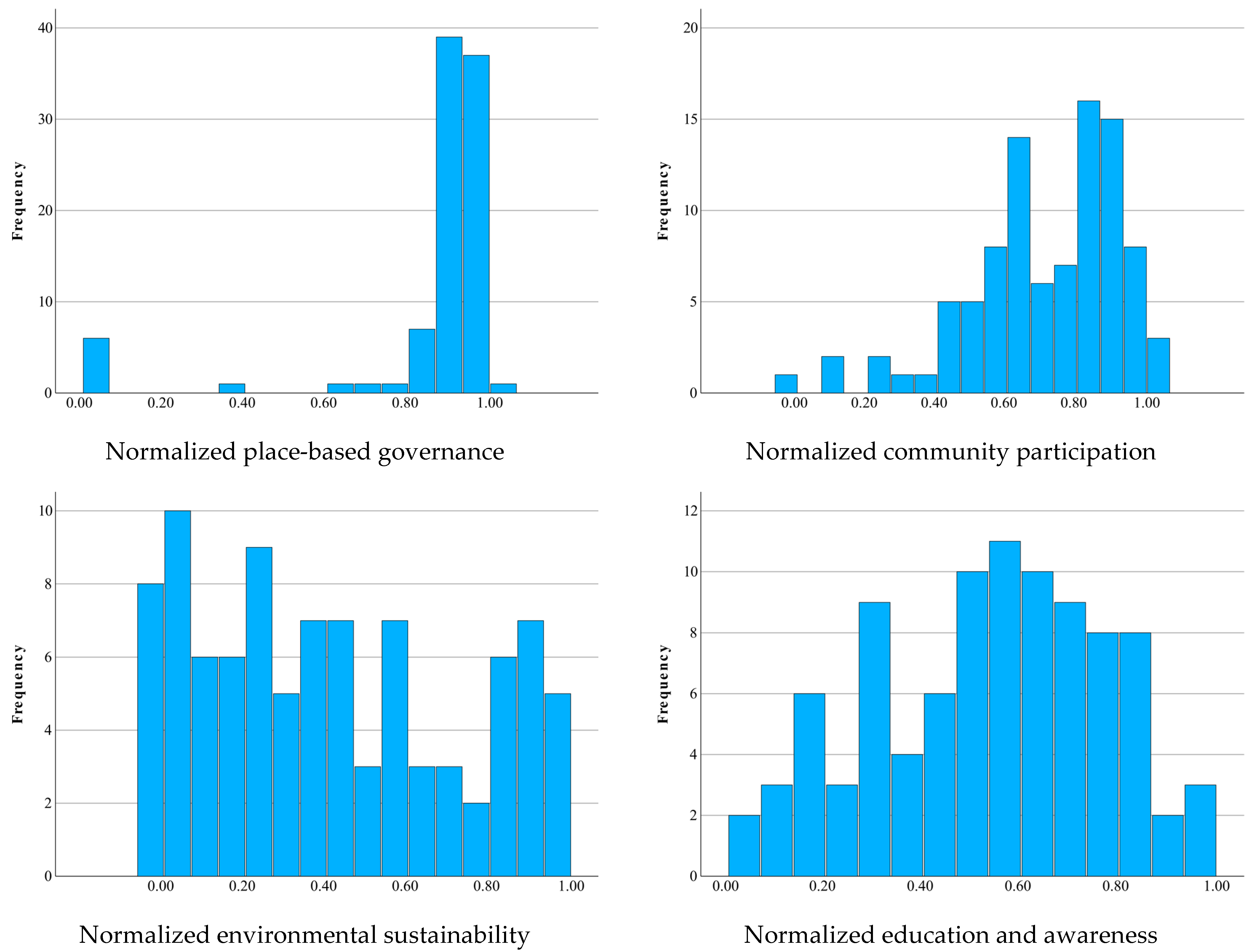
Looking at the distribution of these variables among the sample (see Figure 2), it can be observed that while the first two variables (place-based governance and community participation) mostly register high values, for the other two (environmental sustainability and education and awareness) the distribution is more varied.
Overall, all responding institutions seem to have a high focus on the aspects of governance (mean = 0.85; SD = 0.238) and community engagement (mean = 0.71; SD = 0.217): this could be the consequence of a selection bias, as participation to the survey was voluntary, and probably responses come from institutions with higher internal motivational and/or organizational level.
The effort on education and awareness sees the widest distribution (mean = 0.54; SD = 0.237), with most of the institutions scoring average values, and fewer having either very high or very low scores.
Environmental sustainability, instead, is a priority for a minority of institutions (mean = 0.41; SD = 0.315). This finding is consistent with the focus that many ecomuseums have on cultural and historical heritage.
When checking for the relation between these variables, we can highlight two main points (see Table 3). Firstly, all these aspects show at least moderate positive correlations (Pearson’s values are all higher than 0.400). This confirms the original assumption that, for ecomuseums and other participative institutions, all these criteria are relevant in the development of their work. Secondly, the higher associations are those between environmental sustainability and education and awareness (Pearson’s = 0.725; sig. < 0.001) and place-based governance and community participation (Pearson’s = 0.659; sig. < 0.001). So, even if all the criteria we selected move together, there seems to be a pairing between those more related to governance aspects, and another between those related to contents.
This pairing of the four variables may suggest the existence of two different drives among ecomuseums, that can move quite independently. On one hand, the attention toward the empowerment of the local community and the development of participatory practices. On the other, the protection of the natural biodiversity and environment, that, for cultural institutions such as the ecomuseums, goes along a strong educational vocation.
The involvement with tourism is, once again, positively correlated with all the selected criteria, although less strongly. The aspects that show higher levels of correlation are the attention to place-based governance and education. It seems interesting to note that, while place-based governance and community participation tend to be tightly related, when we adopt look at them through the mediation of tourism vocation, there is a clear misalignment. Tourism vocation shows a strong correlation with place-based governance, but its correlation with community participation is the lowest, close to the one with environmental sustainability. We can say, therefore, that the focus on tourism and on environmental issues are not, at the moment, as strongly connected as other aspects (governance), leaving space for improvement.
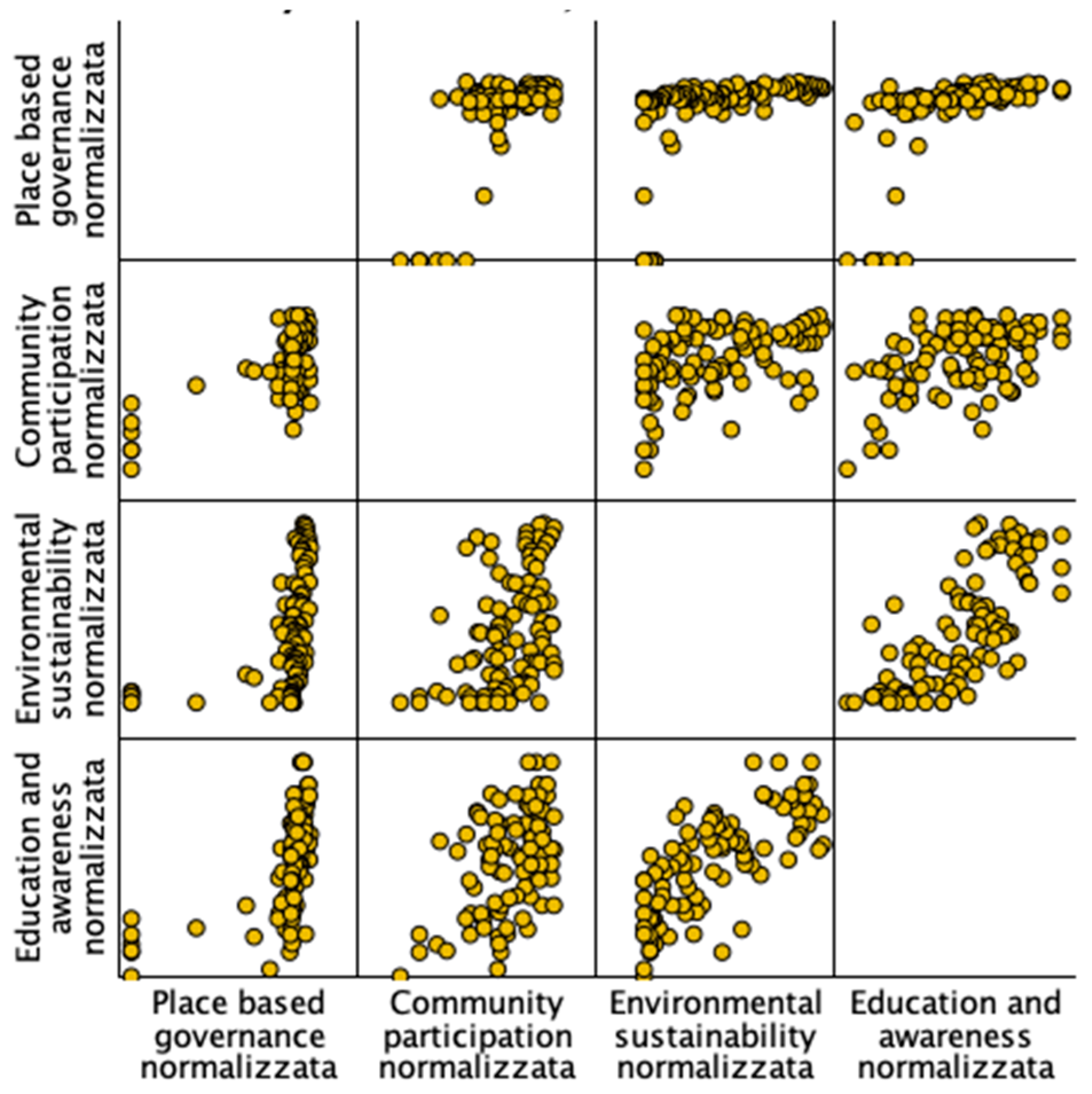
The distribution of the cases was checked with exploratory analysis (scatterplot matrix, see Appendix B), and results suggest the existence of a continuum between high performers and low performers, in line with the observed positive correlations between the four variables.
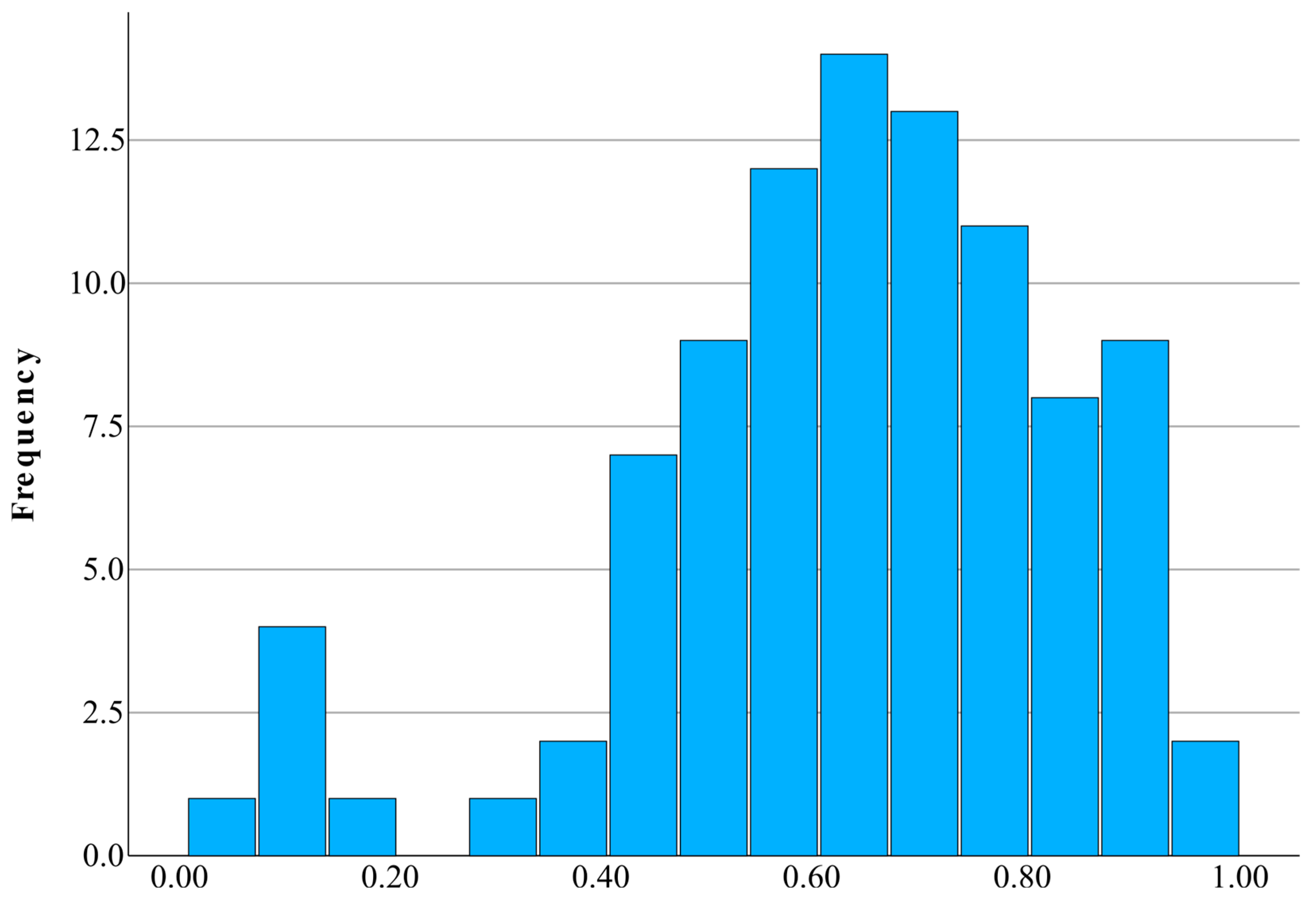
Therefore, we combined the values to obtain an overall performance index, that we call the Integrated Ecomuseum Performance Index (IEP Index) (Figure 3). Considering that each of the four variables represent an equally fundamental aspect of local turn, NbS and ecomuseums, the four dimensions were simply averaged with equal weights.
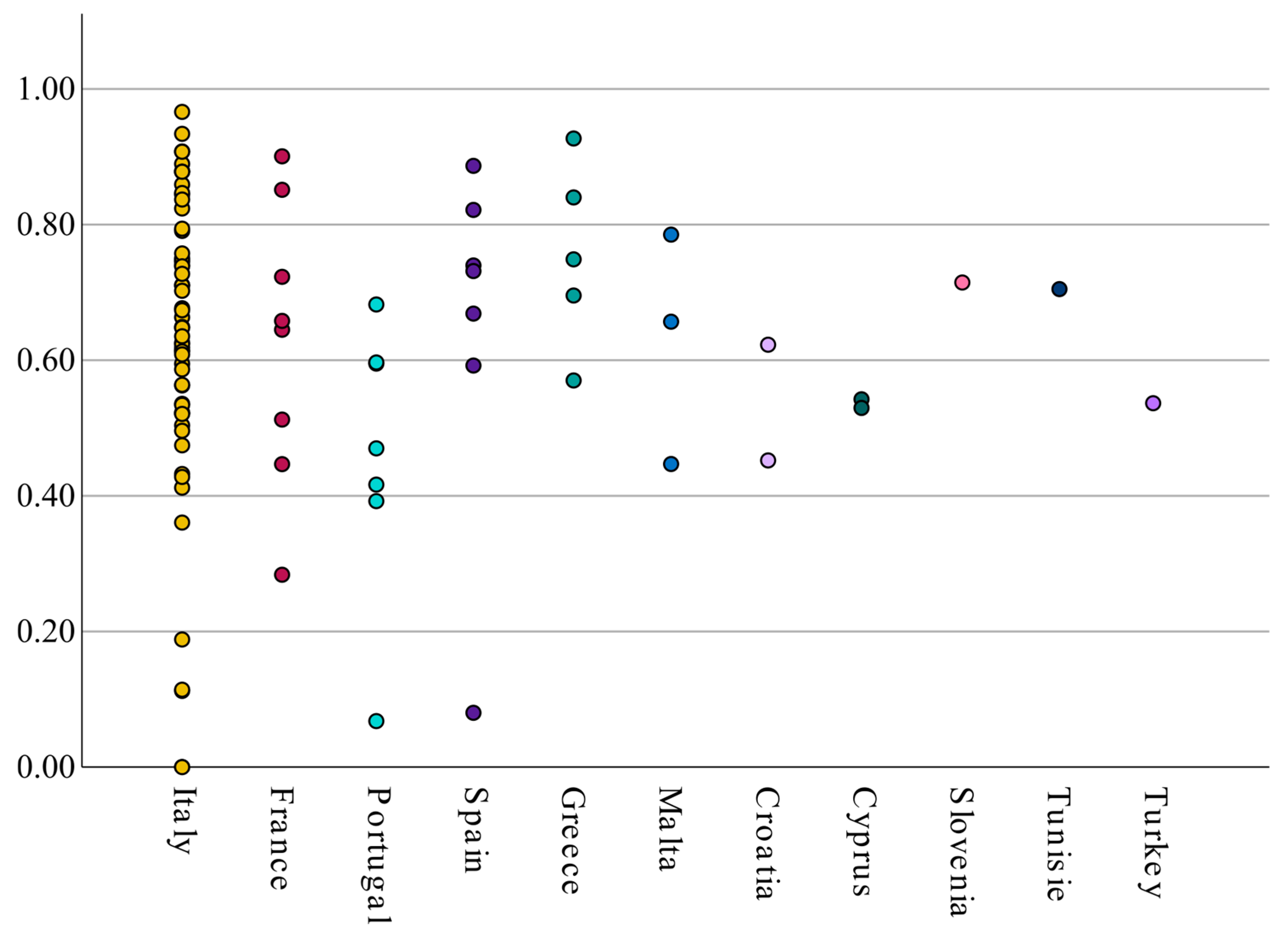
What we observe is that a good proportion of cases score high to very high values, while a relatively small group of outliers obtain very low scores. The distribution of the score between the countries that participated is consistent with results from previous analysis [36] in that countries with higher numbers of respondents report more cases of low score. The institutions responding from countries where these initiatives are less widespread are most the probably best cases, with high levels of involvement and motivation (Figure 4).

5. Discussion and Conclusions

This article has explored the potential convergence between the local turn in tourism, NbS, and ecomuseums, arguing that these three approaches share a common normative and operational foundation. While previous research has addressed NbS, community-based heritage, and sustainable tourism as distinct fields of inquiry, their interconnections have rarely been examined in a systematic way. This study therefore seeks to bridge this gap by investigating both theoretical alignment and practical interplay among these approaches.
The literature suggests that, even when not explicitly acknowledged, the guiding principles of NbS, ecomuseums, and the local turn in tourism are strongly aligned and approaching sustainability not as a technical add-on or a corrective measure, but as an intrinsic outcome of place-based governance and community involvement.
From a theoretical standpoint, this convergence contributes to ongoing debates in sustainable tourism studies by reinforcing the idea that sustainability cannot be achieved solely through efficiency-driven management tools, certification schemes, or impact mitigation strategies. Rather, it requires a fundamental reorientation of tourism practices around ecological limits, social equity, and democratic participation. The local turn in tourism provides a useful interpretative lens to understand this shift, as it reframes tourism not as an external economic driver imposed on destinations, but as a socially embedded process shaped by communities, ecosystems, and their interdependencies. Within this framework, NbS and ecomuseums emerge as complementary mechanisms through which sustainable tourism can be grounded in everyday territorial practices rather than abstract policy goals.
Moreover, the results suggest that ecomuseums can be considered Type-1 NbS per se when they contribute to ensuring a better use of natural or protected ecosystems, allowing for the delivery of a wide range of ecosystem services of interest to multiple stakeholders. Type-1 category includes, for example, both protected marine and terrestrial areas (including fresh water and riverine ecosystems): NbS requiring minimal physical intervention and ecosystem modification, involving participatory, generally bottom-up, strategies, and contributing to strengthening landscape stewardship. For example, among the respondents to the questionnaire, “Ecomuseo della valle delle orchidee e delle antiche coltivazioni” in Italy and “Ecomuseum Zagori” in Greece are both located in protected areas, and as such, their first priority is to preserve local biodiversity while promoting historical heritage, community-based activities, and local economy. In fact, both ecomuseums promoted projects on biodiversity and ecosystems conservation, contributing to the knowledge dissemination and community engagement, through guided excursions, educational and aware-rising activities for both residents and visitors, as well as supporting and conducting scientific research. In this sense, similarly to governance mechanisms beyond protected natural areas, these ecomuseums enable landscape stewardship and ecosystem protection, thereby indirectly supporting the delivery of the ecosystem services while providing benefits for both people and nature.
The empirical data analyzed offer further insights into how the shared principles of place-based governance, community participation, environmental sustainability and education and awareness are translated into practice by ecomuseums and similar institutions. The results highlight a heterogeneous landscape, where levels of attention to the four aspects vary across experiences. In most cases, the ecomuseums and participatory cultural institutions represented in the sample demonstrate also a high degree of alignment with Type-2 NbS when actively engaging in biodiversity conservation and habitat restoration through citizen science initiatives, collaborative and adaptive landscape management of natural areas. However, these dimensions are not equally developed across ecomuseums, possibly reflecting structural constraints, limited financial resources, institutional fragmentation, or a historical focus on cultural heritage that has not yet fully integrated ecological concerns.
A particularly relevant contribution of this study is the introduction of the “Tourism vocation” index used to quantify the role of tourism within ecomuseums and NbS-related practices. Tourism does not generally appear to be a primary objective of either ecomuseums or NbS initiatives, nor is it framed as an end in itself. The correlation between tourism vocation and environmental sustainability is lower than the one shown between other aspects, suggesting the existence of separated tendencies, between the practices of respondents. Some institutions seem to be more focused on tourism and place-based practices, while others, more concerned with environmental sustainability, are less focused on tourism.
Nevertheless, the findings suggest that sustainable tourism is, at least in some cases, considered by ecomuseums as a legitimate and potentially valuable tool for territorial valorization. This aligns with critical approaches to sustainable tourism that advocate for tourism as a catalyst for care, learning, and empowerment, rather than as a driver of growth-oriented exploitation, as expressed by the works analyzing the evolution of nature-based tourism.
Overall, this research suggests that ecomuseums can be interpreted on the one hand as potential allies of different NbS types, on the other their territorial rootedness, relational governance structures, and capacity to integrate cultural and natural dimensions position them as promising actors within the broader sustainable tourism ecosystem. However, the study also highlights the need for ecomuseums to strengthen and make more explicit their engagement with ecological conservation and ecosystem-based approaches. Doing so would not only enhance their coherence with NbS frameworks but also reinforce their contribution to sustainable tourism as understood within the local turn paradigm. In this sense, ecomuseums could become tools for the governance of nature-based tourism and all forms of tourism, especially connected with the natural environment.
Beyond their theoretical contribution, the shared criteria and the IEP Index proposed in this article can be adopted as a set of tools by local administrations, NbS planners, ecomuseums practitioners and tourism destination managers. Their use may include the assessment of the capacity of ecomuseums to act as community-based NbS and sustainable tourism actors but also identify institutions that could serve as hubs for NbS-related tourism initiatives, or to design capacity-building programs where environmental sustainability is comparatively weaker.
The findings suggest that ecomuseums work not only as cultural institutions, but as territorial infrastructures capable of supporting the practical implementation of NbS and the local turn in tourism. Through participatory governance, local knowledge, environmental stewardship, and educational activities, they create spaces where ecological conservation and community empowerment can converge. In this sense, ecomuseums can function as real laboratories of socio-ecological transition, where innovative practices of biodiversity protection, sustainable tourism, and collective care are continuously tested and adapted to local contexts. Their rootedness within territories allows them to mediate between environmental objectives and social needs, fostering long-term resilience and place-based development. Recognizing this role could strengthen both tourism and environmental policies, opening new pathways for integrated and community-driven sustainability strategies.
This article opens several avenues for future research. Further comparative studies could explore how different governance models, policy frameworks, and funding mechanisms influence the capacity of ecomuseums to operate as NbS and sustainable tourism actors. Longitudinal research could also investigate whether and how increased engagement with tourism affects community resilience, biodiversity outcomes, and local economies over time. By bringing together insights from tourism studies, heritage studies, and environmental governance, this research contributes to a more integrated understanding of sustainability—one that recognizes tourism not merely as an industry, but as a socially and ecologically embedded practice with the potential to support more just, resilient, and place-sensitive futures.

Author Contributions

Conceptualization, N.B., C.C. and G.M.; methodology, N.B., C.C. and G.M.; validation, G.M.; formal analysis, G.M.; investigation, N.B., C.C. and G.M.; resources, N.B.; data curation, G.M.; writing—original draft preparation, N.B., C.C. and G.M.; writing—review and editing, N.B., C.C. and G.M.; visualization, G.M.; supervision, N.B.; project administration, N.B.; funding acquisition, N.B. All authors have read and agreed to the published version of the manuscript.

Funding

This research was funded under the National Recovery and Resilience Plan (NRRP), Mission 4 Component 2 Investment 1.4—Call for tender No. 3138 of 16 December 2021, rectified by Decree n.3175 of 18 December 2021 of Italian Ministry of University and Research funded by the European Union—NextGenerationEU; Award Number: Project code CN_00000033, Concession Decree No. 1034 of 17 June 2022 adopted by the Italian Ministry of University and Research, CUP H43C22000530, Project title “National Biodiversity Future Center—NBFC.

Institutional Review Board Statement

Ethical review and approval were waived for this study by the RDP (Referent for Protection of Personal Data) Office as per Recital 26 of the GDPR (General Data Protection Regulation, EU 2016/679), which stipulates that anonymous data processing falls outside the scope of data protection regulations.

Informed Consent Statement

Informed consent for participation was obtained from all subjects involved in the study.

Data Availability Statement

The theoretical data supporting the findings of this study were compiled from published literature and government reports. The questionnaire datasets are not publicly available but can be obtained from the corresponding author upon reasonable request.

Conflicts of Interest

The authors declare no conflicts of interest.

Appendix A

The tables of this appendix provide the descriptions of the items used to conduct the CATPCA.
Place-Based Governance
ItemMeasure
1Participatory decision-making process of the institutionLikert
2Operation autonomy of the institutionLikert
3N° of stakeholder developing activities withScale
4Activities with local and regional authoritiesDico
5Frequency of meeting with StakeholdersLikert
6Participatory governance practicesLikert
7Involvement with local communityScale
8Shared management of a common goodDico
9Collaborative management of specific natural areasDico
10Permanent observatory on biodiversityDico
11Definition of agreements with other local actorsDico
Place-Based Governance—Component Loading
Dimension 1
N° of stakeholder developing activities with0.956
Frequency of meeting with Stakeholders0.947
Participatory governance practices0.939
Operation autonomy of the institution0.938
Involvement with local community0.931
Participatory decision-making process of the institution0.918
Activities with local and regional authorities0.661
Definition of agreements with other local actors0.286
Shared management of a common good0.276
Collaborative management of specific natural areas0.211
Permanent observatory on biodiversity0.180
Community Participation and Empowerment
ItemMeasure
1Purpose: Promote community-based activitiesDico
2Purpose: support and enhance local economyDico
3Number of volunteersOrdinal
4Dependence on volunteer workLikert
5Volunteers as a tool to involve the local communityLikert
6Activities with local action groups and cultural associations, citizen committeeDico
7N° of projects promoting active community collab.Scale
8Specially constituted working tables on biodiversityDico
9Public: Local communityDico
Community Participation and Empowerment—Component Loading
Dimension 1
N° of projects promoting active community collab.0.770
Activities with local action groups and cultural associations, citizen committee0.646
Purpose: Promote community-based activities0.641
Public: Local community0.523
Volunteers as a tool to involve the local community0.508
Purpose: support and enhance local economy0.490
Dependence on volunteer work0.468
Number of volunteers0.464
Specially constituted working tables on biodiversity0.110
Environmental Sustainability
ItemMeasure
1Purpose: Preserve the local biodiversityDico
2Online section on biodiversityDico
3Located in natural park/protected areaDico
4Organizing staff training on biodiversityDico
5Activities with Protected areasDico
6Activities with Environmental protection associationsDico
7Project: Citizen science: submission of data on animal or plantsDico
8Project: Collaborative cleaning of natural areasDico
9Project: Collaborative cleaning of urban areasDico
10Topic: The conservation of biodiversityDico
11Topic: The vegetation, gardens and green areasDico
12Topic: The views of the environment of visitors/tourists/migrants, etc.Dico
13Topic: Exceptional environments (of great value and/or in particular situation of degradation)Dico
14Topic: The value of ecosystems and biodiversityDico
15Topic: The different types of terrestrial environmentsDico
16Topic: The natural characteristics of the local contextDico
17N° of activities on biodiversityScale
18Promotion of sustainable tourism practicesDico
Environmental Sustainability—Component Loading
Dimension 1
N° of activities on biodiversity0.855
Topic: The conservation of biodiversity0.780
Topic: The value of ecosystems and biodiversity0.741
Organizing staff training on biodiversity0.723
Project: Citizen science: submission of data on animal or plants0.707
Activities with Environmental protection associations0.696
Online section on biodiversity0.685
Activities with Protected areas0.650
Purpose: Preserve the local biodiversity0.622
Topic: The vegetation, gardens and green areas0.559
Topic: Exceptional environments (of great value and/or in particular situation of degradation)0.543
Topic: The natural characteristics of the local context0.515
Project: Collaborative cleaning of natural areas0.453
Topic: The different types of terrestrial environments0.446
Topic: The views of the environment of visitors/tourists/migrants, etc.0.373
Located in natural park/protected area0.331
Project: Collaborative cleaning of urban areas0.273
Promotion of sustainable tourism practices 0.257
Education
ItemMeasure
1Purpose: Offer training/education activitiesDico
2Purpose: Organize exhibitionsDico
3Training for staff/volunteersDico
4Activities with: Museums, archives, libraries, galleriesDico
5Collaborative construction of collectionsDico
6Topics: Specific places important to the local communityDico
7Topics: The different perceptions of the landscape by inhabitantsDico
8Permanent/temporary exhibition on biodiversityDico
9Specific educational activities on biodiversityDico
10Public: School-age populationDico
Education—Component Loading
Dimension 1
Specific educational activities on biodiversity0.708
Purpose: Offer training/education activities0.638
Training for staff/volunteers0.623
Public: School-age population0.568
Permanent/temporary exhibition on biodiversity0.554
Collaborative construction of collections0.550
Topics: Specific places important to the local community0.449
Topics: The different perceptions of the landscape by inhabitants0.432
Activities with: Museums, archives, libraries, galleries0.429
Purpose: Organize exhibitions0.199

Appendix B

Figure A1. Scatterplot matrix of the four variables: place-based governance, community participation, environmental sustainability and education and awareness.
Sustainability 18 05822 g0a1

References

  1. Welcome to the Age of the Polycrisis: The Global Risks Report 2023. Podcast Transcript. Available online: https://www.weforum.org/podcasts/radio-davos/episodes/global-risks-report-davos2023/ (accessed on 10 April 2026).
  2. Mzembe, A.N.; Melissen, F.; Pinteva, S. Is Governance a Driver of Sustainability Transitions? Evidence From Tourism and Urban Socio-Technical Systems. Sustain. Dev. 2026, 34, 2022–2039. [Google Scholar] [CrossRef]
  3. Battisti, L.; Cuomo, F.; Manganelli, A. Collaborative Governance Arrangements: What Makes Nature-Based Solutions Endure? Territ. Politics Gov. 2025, 13, 1421–1441. [Google Scholar] [CrossRef]
  4. World Tourism Organization. Fifty Years of Tourism; World Tourism Organization: Madrid, Spain, 2025. [Google Scholar] [CrossRef]
  5. Davis, P. Ecomuseum Indicators and the ‘21 Principles’. In On Community and Sustainable Museums; Brown, K., Davis, P., Raposo, L., Eds.; EULAC: Hamburg, Germany, 2018; pp. 96–101. [Google Scholar]
  6. IUCN. Global Standard for Nature-Based Solutions, 1st ed.; IUCN: Gland, Switzerland, 2020. [Google Scholar]
  7. Laarman, J.G.; Durst, P.B. Nature Travel in the Tropics. J. For. 1987, 85, 43–46. [Google Scholar] [CrossRef]
  8. Wolf, I.D.; Croft, D.B.; Green, R.J. Nature Conservation and Nature-Based Tourism: A Paradox? Environments 2019, 6, 104. [Google Scholar] [CrossRef]
  9. Thapa, K.; King, D.; Banhalmi-Zakar, Z.; Diedrich, A. Nature-Based Tourism in Protected Areas: A Systematic Review of Socio-Economic Benefits and Costs to Local People. Int. J. Sustain. Dev. World Ecol. 2022, 29, 625–640. [Google Scholar] [CrossRef]
  10. Ardoin, N.M.; Wheaton, M.; Bowers, A.W.; Hunt, C.A.; Durham, W.H. Nature-Based Tourism’s Impact on Environmental Knowledge, Attitudes, and Behavior: A Review and Analysis of the Literature and Potential Future Research. J. Sustain. Tour. 2015, 23, 838–858. [Google Scholar] [CrossRef]
  11. Postma, A.; Cavagnaro, E.; Spruyt, E. Sustainable Tourism 2040. J. Tour. Futures 2017, 3, 13–22. [Google Scholar] [CrossRef]
  12. Foundation for Environmental Education (FEE). Green Key 2026. Available online: https://www.greenkey.global/ (accessed on 25 May 2026).
  13. Regulation (EC) No 66/2010 of the European Parliament and of the Council of 25 November 2009 on the EU Ecolabel (Text with EEA Relevance); European Union: Brussels, Belgium, 2009; Volume 27, pp. 1–19.
  14. International Organization for Standardization (ISO). ISO 14001:2026: Environmental Management Systems—Requirements with Guidance for Use, 3rd ed.; ISO: Geneva, Switzerland, 2026. [Google Scholar]
  15. Higgins-Desbiolles, F.; Bigby, B.C. A Local Turn in Tourism Studies. Ann. Tour. Res. 2022, 92, 103291. [Google Scholar] [CrossRef]
  16. Higgins-Desbiolles, F.; Bigby, B.C. Embracing the Local Turn in Tourism to Empower Communities; Channel View Publications: Bristol, UK, 2022. [Google Scholar]
  17. MacCannell, D. The Tourist: A New Theory of the Leisure Class; University of California Press: Oakland, CA, USA, 1976. [Google Scholar]
  18. Salazar, N.B. Tourism Imaginaries: A Conceptual Approach. Ann. Tour. Res. 2012, 39, 863–882. [Google Scholar] [CrossRef]
  19. European Commission Nature-Based Solutions: EU-Funded NbS Research Projects Tackle the Climate and Biodiversity Crises; Publications Office of the European Union: Luxembourg, 2025; ISBN 978-92-95234-73-4.
  20. UNEA. Nature-Based Solutions for Supporting Sustainable Development (English Version)—Resolution Adopted by the United Nations Environment Assembly on 2 March 2022 [UNEP/EA.5/Res.5]; United Nations Environment Assembly: Nairobi, Kenya, 2022. [Google Scholar]
  21. European Commission. Towards an EU Research and Innovation Policy Agenda for Nature-Based Solutions & Re-Naturing Cities; Directorate-General for Research and Innovation Climate Action, Environment, Resource Efficiency and Raw Materials: Luxembourg, 2015. [Google Scholar]
  22. Brondízio, E.S.; Settele, J.; Díaz, S.; Ngo, H.T. (Eds.) IPBES Global Assessment Report on Biodiversity and Ecosystem Services of the Intergovernmental Science-Policy Platform on Biodiversity and Ecosystem Services; IPBES Secretariat: Bonn, Germany, 2019; ISBN 978-3-947851-20-1. Available online: https://files.ipbes.net/ipbes-web-prod-public-files/inline/files/ipbes_global_assessment_report_summary_for_policymakers.pdf (accessed on 20 May 2026).
  23. Pörtner, H.-O.; Roberts, D.C.; Tignor, M.; Poloczanska, E.S.; Mintenbeck, K.; Alegría, A.; Craig, M.; Langsdorf, S.; Löschke, S.; Möller, V.; et al. (Eds.) IPCC Climate Change 2022: Impacts, Adaptation and Vulnerability. In Contribution of Working Group II to the Sixth Assessment Report of the Intergovernmental Panel on Climate Change; WMO: Geneva, Switzerland, 2022; Available online: https://www.ipcc.ch/report/ar6/wg2/downloads/report/IPCC_AR6_WGII_SummaryVolume.pdf (accessed on 20 May 2026).
  24. Secretariat of the Convention on Biological Diversity. Kunming-Montreal Global Biodiversity Framework: Decision Adopted by the Conference of the Parties to the Convention on Biological Diversity (Document CBD/COP/DEC/15/4); Secretariat of the Convention on Biological Diversity: Montreal, QC, Canada, 2022; Available online: https://www.cbd.int/doc/decisions/cop-15/cop-15-dec-04-en.pdf (accessed on 25 May 2026).
  25. European Commission. The European Green Deal; Communication from the Commission to the European Parliament, the European Council, the Council, the European Economic and Social Committee and the Committee of the Regions; COM(2019) 640 Final; European Commission: Brussels, Belgium, 2019; Available online: https://eur-lex.europa.eu/legal-content/EN/TXT/?uri=CELEX:52019DC0640 (accessed on 20 May 2026).
  26. European Commission. EU Biodiversity Strategy for 2030: Bringing Nature Back into Our Lives. In COM(2020) 380 Final; European Commission: Brussels, Belgium, 2020; Available online: https://www.arc2020.eu/wp-content/uploads/2020/05/Biodiversity-Strategy_draft_200423_ARC2020.pdf (accessed on 20 May 2026).
  27. European Union. Regulation (EU) 2021/1119 of the European Parliament and of the Council of 30 June 2021 Establishing the Framework for Achieving Climate Neutrality and Amending Regulations (EC) No 401/2009 and (EU) 2018/1999 (‘European Climate Law’); European Union: Brussels, Belgium, 2021; Volume 243, Available online: https://eur-lex.europa.eu/eli/reg/2021/1119/oj/eng (accessed on 20 May 2026).
  28. European Commission. Forging a Climate-Resilient Europe—The New EU Strategy on Adaptation to Climate Change (COM(2021) 82 Final); European Commission: Brussels, Belgium, 2021; Available online: https://eur-lex.europa.eu/legal-content/EN/TXT/?uri=celex:52021DC0082 (accessed on 20 May 2026).
  29. European Parliament; Council of the European Union. Regulation (EU) 2024/1991 of the European Parliament and of the Council of 24 June 2024 on Nature Restoration and Amending Regulation (EU) 2022/869; European Union: Brussels, Belgium, 2024; pp. 1–73. Available online: https://eur-lex.europa.eu/eli/reg/2024/1991/oj/eng (accessed on 20 May 2026).
  30. Eggermont, H.; Balian, E.; Azevedo, J.M.N.; Beumer, V.; Brodin, T.; Claudet, J.; Fady, B.; Grube, M.; Keune, H.; Lamarque, P.; et al. Nature-Based Solutions: New Influence for Environmental Management and Research in Europe. GAIA—Ecol. Perspect. Sci. Soc. 2015, 24, 243–248. [Google Scholar] [CrossRef]
  31. Davis, P. Ecomuseums: A Sense of Place; Bloomsbury Publishing: London, UK, 2011. [Google Scholar]
  32. Borrelli, N.; Davis, P. How Culture Shapes Nature: Reflections on Ecomuseum Practices. Nat. Cult. 2012, 7, 31–47. [Google Scholar] [CrossRef]
  33. de Varine, H. The Origins of the New Museology Concept and of the Ecomuseum Word and Concept in the 1960s and the 1970s. In Communication and Exploration; Davis, P., de Varine, H., Donghai, S., Jinping, Z., Maggi, M., Eds.; Trentino Cultura: Trento, Italy, 2005; pp. 51–55. Available online: https://www.cultura.trentino.it/content/download/490109/18647143/file/10_Atti_Convegno_eng%20Cina%202005.pdf#page=71 (accessed on 20 May 2026).
  34. de Varine, H.; Garlandini, A.; Mussinelli, E. Ecomuseums and Cultural Landscapes. State of the Art and Future Prospects; Studi e Progetti; Riva, R., Ed.; Maggioli Editore: Santarcangelo di Romagna, Italy, 2017. [Google Scholar]
  35. De Lorenzo Smit, F. Il Censimento Degli Ecomusei Italiani. In Collana Atlante Natura, Cultura e Territorio. Beni Culturali, Ecomusei e Sviluppo Territoriale; Angelo Pontecorboli Editore: Florence, Italy, 2025; pp. 155–165. [Google Scholar]
  36. Borrelli, N.; Pigozzi, L.N.; Mura, G. Ecomuseums in the Mediterranean Area and the Promotion of Sustainable Food Systems. Sustainability 2024, 16, 7891. [Google Scholar] [CrossRef]
  37. Pigozzi, L. Ecomuseum Model for a Bottom-up Heritage Management. The Ecomuseo Casilino Ad Duas Lauros. Cad. Sociomuseol. 2022, 64, 75–84. [Google Scholar] [CrossRef]
  38. Davis, P. Ecomuseums and the Democratization of Cultural Tourism. Tour. Cult. Commun. 2004, 5, 45–58. [Google Scholar] [CrossRef]
  39. Belliggiano, A.; Bindi, L.; Ievoli, C. Walking along the Sheeptrack…Rural Tourism, Ecomuseums, and Bio-Cultural Heritage. Sustainability 2021, 13, 8870. [Google Scholar] [CrossRef]
  40. Borrelli, N.; Mela, A.; Mura, G. Turismo Sostenibilità e Comunità; Ledizioni: Milano, Italy, 2023. [Google Scholar]
  41. Cohen-Shacham, E.; Walters, G.; Janzen, C.; Maginnis, S. Nature-Based Solutions to Address Global Societal Challenges; IUCN: Gland, Switzerland, 2016; p. 97. [Google Scholar]
  42. IUCN. Guidance for Using the IUCN Global Standard for Nature-Based Solutions, 1st ed.; IUCN: Gland, Switzerland, 2020. [Google Scholar]
  43. Borrelli, N.; Corsane, G.; Davis, P.; Maggi, M. Valutare Un Ecomuseo: Come e Perché: Il Metodo MACDAB; Ires: Torino, Italy, 2008. [Google Scholar]
  44. Freire, P. Pedagogy of the Oppressed; Continuum: New York, NY, USA, 1970; Available online: https://fsi-ebcao.princeton.edu/document/349 (accessed on 20 May 2026).
  45. Hickel, J. What Does Degrowth Mean? A Few Points of Clarification. Globalizations 2021, 18, 1105–1111. [Google Scholar] [CrossRef]
  46. Pigozzi, L.; Borrelli, N.; Dal Santo, R. Ecomuseums, the SDGs and Climate Action: The Ecoheritage Project. In Ecomuseums and Climate Change; Borrelli, N., Davis, P., Dal Santo, R., Eds.; Ledizioni: Milano, Italy, 2022. [Google Scholar]
  47. Castiglioni, B.; Cisani, M. The Complexity of Landscape Ideas and the Issue of Landscape Democracy in School and Non-Formal Education: Exploring Pedagogical Practices in Italy. Landsc. Res. 2022, 47, 142–154. [Google Scholar] [CrossRef]
  48. Linting, M.; Van Der Kooij, A. Nonlinear Principal Components Analysis With CATPCA: A Tutorial. J. Personal. Assess. 2012, 94, 12–25. [Google Scholar] [CrossRef] [PubMed]
  49. Linting, M.; Meulman, J.J.; Groenen, P.J.F.; van der Koojj, A.J. Nonlinear Principal Components Analysis: Introduction and Application. Psychol. Methods 2007, 12, 336–358. [Google Scholar] [CrossRef] [PubMed]
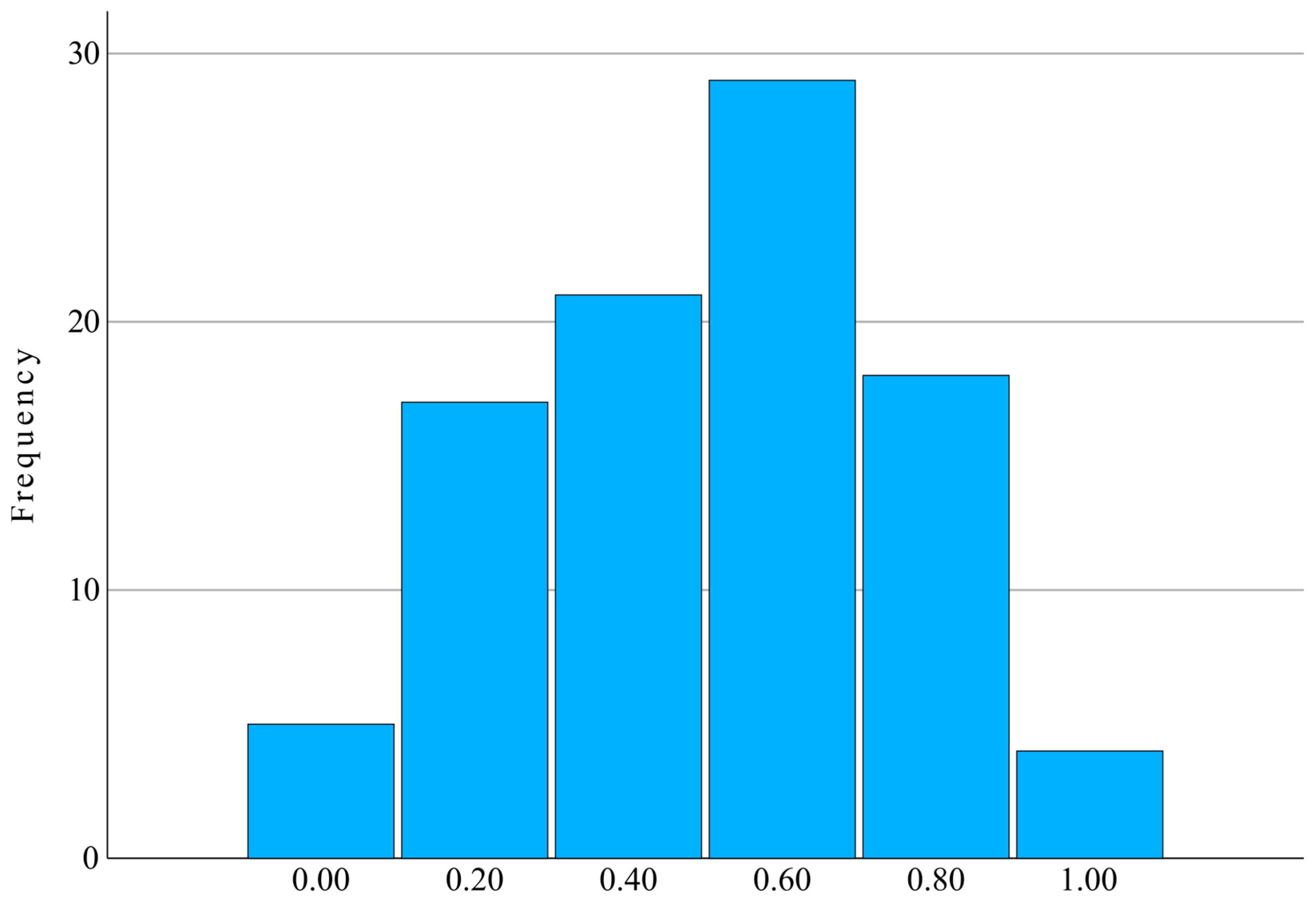
Figure 1. Frequency distribution of the variable Tourism vocation.
Sustainability 18 05822 g001
Figure 2. The distribution of the four variables resuming the shared principles.
Sustainability 18 05822 g002
Figure 3. The distribution of frequencies for the IEP Index.
Sustainability 18 05822 g003
Figure 4. Scatterplot of the distribution of the IEP Index by country.
Sustainability 18 05822 g004
Table 1. Shared principles/criteria among ecomuseums, NbS and the local turn in tourism.
Key Terminologies
for Localizing Tourism
NbS Principles (P)
and Criteria (C)
Ecomuseums Principles (P)
and MACDAB Criteria (C)
Place-based governancePrinciple of subsidiarity in policy and practice
The state is an instrument to promote human dignity, protect human rights, and develop the common good. Subsidiarity holds that such functions of government should be performed at the lowest level possible, as long as they can be performed adequately.
(P3) NbS are determined by site-specific natural and cultural contexts that include traditional, local and scientific knowledge.
(P8) NbS are an integral part of the overall design of policies, and measures or actions, to address a specific challenge.
(C8) NbS are sustainable and mainstreamed within an appropriate jurisdictional context.
(C2) Design of NbS is informed by scale
(C4) NbS are economically viable.
(C7) NbS are managed adaptively, based on evidence.
(P1) Originated and steered by local communities.
(P3) Joint ownership and management—double input system.
(C1.9) When adopted, strategies, policies and activities involve the local population. The information gathered from the local population has influenced the ecomuseum’s policy.
(C2.1) There is a strategic document that has been approved by the local population and encourages the involvement of the main stakeholders in the area (associations, organizations, companies, private individuals).
(C2.5) The ecomuseum strategy suggests methodologies to encourage people to take action and build a self-organized network.
Community participation and empowermentLocal communities: as the linchpin of the local turn, local communities are more than just a certain group of people associated with a place. Instead, they include the local community, the local ecology (living air, land and waterscapes and more-than-human beings) and all generations pertaining to that place (including future ones).
Participatory Action Research (PAR)
Recalling Freire’s teaching [44], research in both its formal and informal senses is needed for communities to be guided and informed in their decisions.
Appreciative enquiry (AI)
Citizen assemblies and participatory budgeting for participatory democracy.
Inclusive tourism development approaches
All these are tools that the communities can harness to shape their engagement with tourism.
(P4) NbS produces societal benefits in a fair and equitable way in a manner that promotes transparency and broad participation.
(C5) NbS are based on inclusive, transparent and empowering governance processes.
(P2) Allow for public participation in a democratic manner.
(C1.2) The leaders of the ecomuseum have built social relationships and a wide network of stakeholders in the area, including the local population, researchers, local entrepreneurs and local authorities.
(C1.7) The ecomuseum’s leadership has been able to break down the perceived barriers between the local population and the public administration by organizing focus groups or using participatory tools. The local population has been involved in specific projects and activities of the ecomuseum that aim to raise awareness of the need to work with other intermediaries.
Environmental sustainabilityHickel’s three Ds [45]
These ‘three Ds’—decommodification, de-enclosure and deaccumulation—are the pillars of degrowth and a transition away from a system geared to the accumulation of capital without end. In terms of tourism, such an approach would lead to a focus on supporting tourism for the public good, protecting the commons from privatization and reducing the contribution of tourism to greenhouse gas emissions and other forms of waste, pollution and unsustainability.
(P1) NbS embrace nature conservation norms (and principles).
(C3) Biodiversity net-gain.
(P11) Stimulates sustainable development and responsible use of resources.
(C 3.8) Good contacts have been established with local and regional voluntary associations that have an explicit interest in issues relating to natural heritage. Their way of acting and interacting is fully understood.
Education, learning, and awarenessCritical consciousness for change.
In line with what is expressed by Freire [44] it is possible to say that critical consciousness prepares people to change their world and challenge oppressions. Quoting Jackson [13] “We should remain critical of what universities have relegated to the category of “low-status knowledge”, knowledge that can contribute to the vitality of communities. The building of awareness and conscience around such issues is part of the project of critiquing globalization”.
(C5) NbS are based on inclusive, transparent and empowering governance processes.(C1.4) Volunteers are welcomed and trained in order to make a meaningful contribution to the activities of the ecomuseum.
(C1.6) The ecomuseum leadership is working to encourage the local population to visit ecomuseum sites, developing ad hoc programs for specific groups, such as associations or societies, schools, educational institutions and groups of disabled people. Outreach activities have been encouraged, especially with minorities.
(C1.10) The local population has learned that the activities of the ecomuseum can be an opportunity to develop new skills. The demand for new skills has been met through the organization of training activities.
Table 2. The four variables obtained from the CATPCA.
VariableCronbach’s Alpha% of Variance Accounted for
Place-based governance0.91554%
Community participation0.69929%
Environmental sustainability0.89235%
Education and awareness0.72028%
Table 3. Correlation between the four variables resuming the shared principles and the tourism vocation of the responding institutions.
Correlations Place-Based GovernanceCommunity ParticipationEnvironmental SustainabilityEducation and Awareness
Community participationPearson Correlation0.659 **
Sig. (2-tailed)<0.001
N94
Environmental sustainabilityPearson Correlation0.447 **0.434 **
Sig. (2-tailed)<0.001<0.001
N9494
Education and awarenessPearson Correlation0.567 **0.474 **0.725 **
Sig. (2-tailed)<0.001<0.001<0.001
N949494
Tourism vocationPearson Correlation0.403 **0.244 *0.267 **0.327 **
Sig. (2-tailed)<0.0010.0180.0090.001
N94949494
* Correlation is significant at the 0.05 level (2-tailed). ** Correlation is significant at the 0.01 level (2-tailed).
Disclaimer/Publisher’s Note: The statements, opinions and data contained in all publications are solely those of the individual author(s) and contributor(s) and not of MDPI and/or the editor(s). MDPI and/or the editor(s) disclaim responsibility for any injury to people or property resulting from any ideas, methods, instructions or products referred to in the content.