Article

Determinants of Agrarian Technology Adoption for Climate Change Adaptation in Semi-Arid Region of Chicualacuala, Mozambique
1
Department of Forest Engineering, Eduardo Mondlane University, Maputo 257, Mozambique
2
Department of Economics and Agrarian Development, Eduardo Mondlane University, Maputo 257, Mozambique
*
Author to whom correspondence should be addressed.
Sustainability 2026, 18(11), 5690; https://doi.org/10.3390/su18115690
Submission received: 22 October 2025 / Revised: 23 November 2025 / Accepted: 27 November 2025 / Published: 4 June 2026

Abstract

Adaptation to climate change is crucial for the resilience of rural communities, especially in semi-arid regions like Chicualacuala district, Mozambique. This study assesses the factors influencing the adoption of climate change adaptation technologies in the semi-arid region of Chicualacuala, Mozambique. Data collection involved direct observation, semi-structured interviews with key informants, and questionnaires administered to 191 households selected by simple random sampling. Descriptive statistics and a logistic regression model were used for analysis. The findings indicate that the agriculture sector is the primary beneficiary of the implemented adaptation technologies, with impacts perceived as predominantly positive. Logistic regression analysis revealed that factors such as cultivated land size, full-time engagement in farming, household income, and membership in producer groups significantly influence the adoption of agricultural technologies. Two key factors driving this uptake are the performance of extension services and whether the household head is employed. This suggests that technology adoption could be further strengthened if government policies expand and diversify the educational content of extension services, with a stronger focus on climate change adaptation practices. Such improvements are particularly important in sectors where perceived climate impacts remain limited, as better information may increase awareness and adoption.

1. Introduction

Arid and semiarid areas cover approximately 45% of the Earth’s surface and are home to nearly one billion people, many of whom live in poverty and face challenges related to food scarcity [1,2]. It is estimated that, due to climate change, around half of the global land surface is expected to consist of semi-arid areas by 2100 [3]. Semi-arid areas possess unique characteristics that make the challenges faced by local communities complex and multifaceted. These challenges include economic crises, environmental degradation, forced migrations, and increased vulnerability, all of which exacerbate the limited livelihood options of already marginalized communities [4,5].
Mozambique is one of the regions where semi-arid areas are expanding. According to projections drawn up by the National Institute of Meteorology [6], nearly half of Mozambique’s territory is at risk of desertification, with the highest incidence in the southern and central regions.
The southern region of Mozambique, including the Limpopo River Basin where the Chicualacuala district (the study area) is located, is one of the regions most severely impacted by recurrent droughts [7]. Climate projections indicate that this region could experience a temperature increase exceeding 4 °C by the end of the century. While annual average precipitation is projected to rise by up to 40%, drought conditions are expected to intensify significantly. The dry season is expected to worsen, with a projected decrease in precipitation of over 60%, suggesting scenarios of extreme drought even more severe than the current situation [8].
Chicualacuala district could face severe desertification in the future. Between 2021 and 2023, the district suffered significant drought effects [9,10], which, according to Ref. [10], accounted for over 60% of the region’s economic losses. These droughts resulted in a reduction of more than 50% in corn and bean production, and a loss of up to 30% of livestock. In addition to economic losses, the shortage of drinking water has also worsened significantly, expanding human–wildlife conflict and forcing many households to migrate, seasonally, to other geographical areas [9]. This information suggests challenges in the dissemination and uptake of knowledge and necessary practices to promote local sustainability and resilience. This raises a critical question: What factors influence the adoption of climate adaptation technologies at the local level?
Local initiatives already play an essential role in adapting to climate change in semi-arid regions, and communities in Chicualacuala District implement their own strategies to cope with extreme weather events. Recognizing local adaptive strategies is crucial, as they reflect accumulated knowledge, context-specific innovation, and community resilience.
Demands for adoption of adaptation innovations to foster resilience are widely discussed in the literature [11,12]. Global studies report significant progress in the adoption of climate change adaptation technologies in semi-arid regions such as Latin America and Asia but less in Africa [1,13,14]. Africa faces significant vulnerability to climate change, yet its adoption of technologies is generally less prevalent than in other regions. This gap is influenced by a range of interconnected challenges related to finance, infrastructure, technology, policy, and socio-economic factors. Key obstacles include limited access to funding and the high costs associated with such technologies. For example, securing local investment can be difficult, and international funding often tends to support technologies from wealthier nations [15]. It is estimated that Africa needs approximately USD 280 billion per year from 2020 to 2030 to achieve its climate objectives; however, current financial inflows fall significantly short of this requirement [16].
Among African countries, Mozambique is one of those where adaptation lags behind [17], highlighting the importance of studies that address key knowledge gaps. Despite increasing international evidence, empirical research in Mozambique evaluating the determinants of technology adoption in semi-arid contexts remains limited. Although climate change is not a completely new issue in the country, most existing studies have focused primarily on livelihood diversification strategies [18,19] aimed at transforming productive systems and strengthening resilience [20,21]. Even studies such as [22], which document the growing adoption of climate-smart practices, including drought-tolerant crops and water-efficient techniques in arid and semi-arid regions of Mozambique, do not examine the determinants of such adoption. Consequently, little is known about the factors that influence household decisions to adopt adaptation technologies across multiple productive sectors in semi-arid districts such as Chicualacuala.
Against this backdrop, this study aims to evaluate the factors influencing the adoption of climate change adaptation technologies in semiarid regions with examples from the Chicualacuala district in southern Mozambique. More specifically, the study aims to (i) identify the climate change adaptation technologies adopted by households between 2017 and 2022, (ii) describe the impacts of these technologies during the same period, and (iii) assess the factors influencing the adoption of these climate change adaptation technologies by the households.
Although the issue of climate change is not entirely new, the debate on the factors influencing the adoption of climate adaptation technologies has not yet received much attention in national research. Previous studies have reviewed different perspectives, ranging from livelihood diversification strategies [18,19] to transforming productive systems to enhance resilience [20,21].
Given the relevance of technology adoption for climate change adaptation, this research provides valuable input for the formulation of public policies for semiarid areas and ways to expand local adaptation strategies. It also enriches the scientific literature on the topic and serves as a reference for similar regions in other drought-vulnerable contexts.
The paper is structured into 4 major sections. Section 2 provides an overview of the methodology used. Section 3, the length one, presents key findings and Section 4 provides key conclusions and recommendations.

2. Materials and Methods

2.1. Characterization of the Study Area

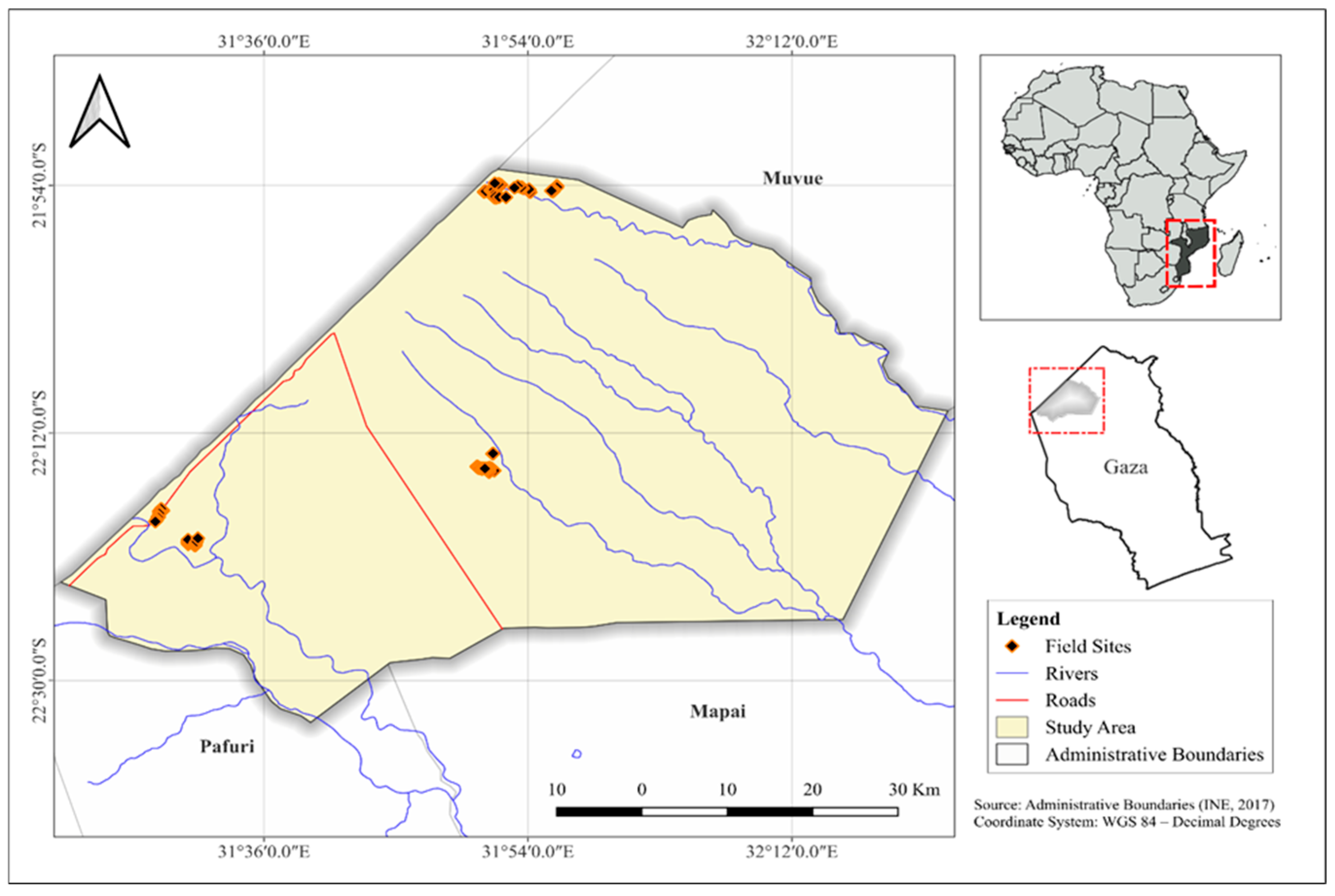
The study took place in the district of Chicualacuala, situated in the northwest of Gaza Province, Mozambique. It is located between latitudes 21°40′ and 23°30′ S and longitudes 31°15′ and 32°45′ E, covering an area of 11,466 km2, which represents 24% of the province’s territory. Its administrative headquarters is the village of Chicualacuala, officially known as Vila Eduardo Mondlane [22]. Figure 1 illustrates the location of the study area.
With a population of 28,641 inhabitants and a population density of 2.5 inhabitants per km2 [22], the district’s climate is predominantly dry tropical to dry semi-arid climate, characterized by an average annual rainfall of less than 500 mm [23]. Relative humidity fluctuates between 60% and 65%, while potential evapotranspiration frequently exceeds 1500 mm. Rainfall, aside from being irregular, is concentrated over a short period, and high rates of evapotranspiration coupled with elevated temperatures exacerbate the occurrence of droughts during the agricultural cycle [23].
Economically, Chicualacuala is one of the least developed districts in Mozambique. Chicualacuala ranks as the second poorest district in the Gaza province, with a poverty incidence rate of 0.91 (0.94 in the Chicualacuala district), according to the data from a 2002 survey by the Ministry of Plan and Finance. The district is surpassed only by Massangena, while Chigubo follows in third place. In terms of poverty depth, Chicualacuala reports a rate of 0.51, placing it firmly among the province’s most socioeconomically vulnerable districts.
Despite its strong tradition in livestock farming, the population relies primarily on rainfed agriculture, both of which are significantly affected by droughts and irregular rainfall. This places the district in a critical position regarding food security, with an estimated food insecurity rate classified as acute or in crisis [24,25,26]. On the other hand, Chicualacuala is part of the charcoal production corridor that supplies the cities of Maputo and Matola. Pressure from charcoal production, low-input agriculture, and poverty, combined with climatic and other non-climatic challenges, make Chicualacuala a relevant location for the present study.

2.2. Data Collection

Data collection took place in August 2022 in three villages (Table 1), using three main instruments: direct observation of the reported technologies, semi-structured interviews with key informants, and surveys administered to 191 households. The households were selected through simple random sampling, ensuring that all individuals in the target population had an equal probability of being included in the sample, as outlined by Jayaraman [27]. The sample of 191 households was determined using a standard formula for finite populations, considering a confidence level of 95% and a 7% margin of error (Equation (1)).
n = N × p ^ × q ^ × ( Z α / 2 ) 2 N 1 × E 2 + p ^ × q ^ × ( Z α / 2 ) 2
where:
  • n—Sample size
  • Zα—Critical value corresponding to the desired confidence level (1.96 for 95%)
  • p—Estimated proportion of the population belonging to the category of interest (0.50)
  • N—Total number of households in Chicualacuala district (5099)
  • E—Allowed estimation error (7%)
Table 1. Distribution of producers surveyed depending on their location.
VillagesTotal RespondentsPercent (%)
Chicualacuala River10555
Chitanga5227
Chicualacuala Sede3418
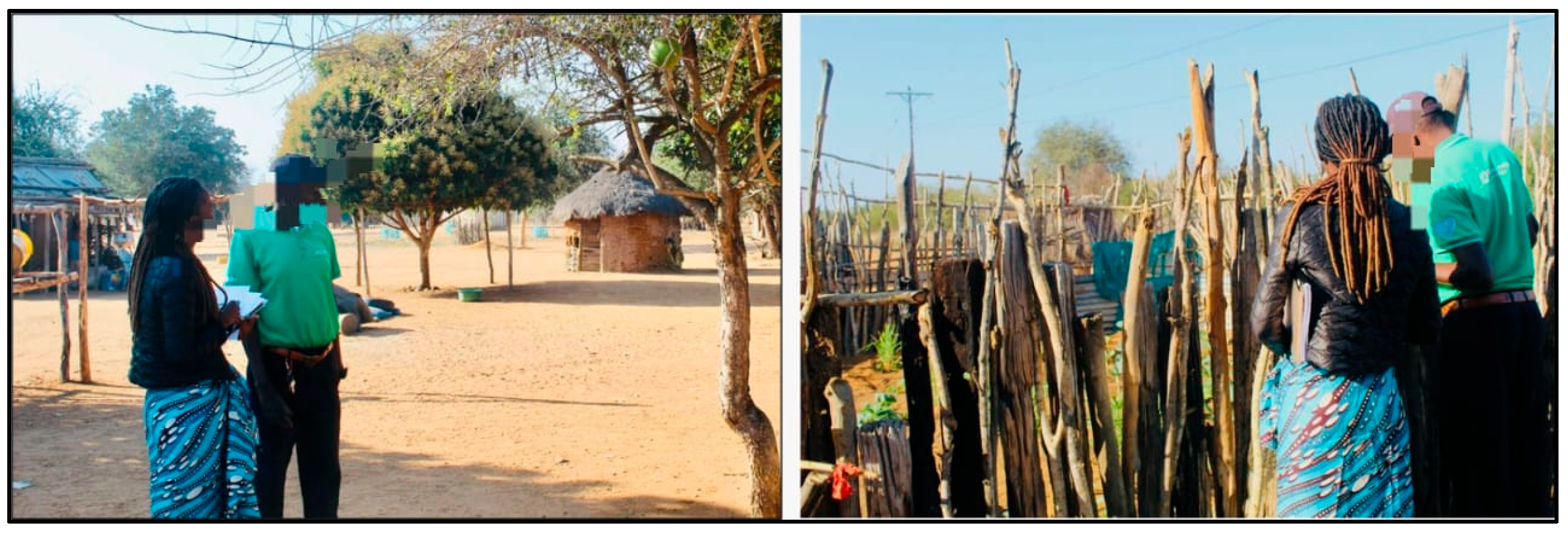
The total number of households in the Chicualacuala administrative post is 5099. Following the recommendations of Refs. [28,29], we included four additional households to ensure robustness and capture the complexity of the phenomenon studied. Therefore, the sample of 191 households is statistically representative and feasible given the logistical constraints of the study. The following inclusion criteria were established for participants: (i) availability and willingness to participate in the study; (ii) agreement with the Consent Form; and (iii) engagement in activities within the Chicualacuala administrative post (Figure 2).
The percentages of households adopting at least one technology in each sector were calculated based on the total of 191 households surveyed. Specifically, 180 households adopted at least one technology in agriculture, 37 in forestry, and 47 in livestock. These counts were then converted into percentages, which are presented in the results section.

2.3. Data Analysis

For the data about objectives (i) and (ii), which focus on identifying adaptation technologies and analyzing their impacts, descriptive statistics were generated, and graphs were created using Microsoft Office Excel. The percentages of households adopting at least one technology in each sector were calculated based on the total of 191 households surveyed. Specifically, 180 households adopted at least one technology in agriculture, 37 in forestry, and 47 in livestock. These counts were then converted into percentages presented in Section 3. To examine the factors influencing the adoption of these technologies, the Logit regression model was applied using STATA 16.0 software. While many similar studies utilize multivariate models, such as Logit and Probit, the results obtained from these methods are usually quite similar.
Cabral [30] argues that the results of Logit and Probit model estimations are equivalent in terms of statistical significance and adjustment precision. However, the coefficients estimated by the two models are not directly comparable. The primary difference lies in their distributions: the Logit model features denser heavier tails compared to the normal distribution used in the Probit model. This means that the conditional probability Pi in the Logit model approaches 0 or 1 more gradually than in the Probit model. There are no compelling reasons to prefer one model over the other [31]. Conversely, Ref. [32] contend that the Logit model is more suitable for explaining and testing hypotheses involving the relationship between a categorical dependent variable and one or more independent variables, whether categorical or continuous.
In this study, three logistic regression models were estimated, one for each of the following sectors: agriculture, forestry and livestock. This approach is consistent with methodologies used by other researchers; for example, estimated Logit regressions across four sectors in Botswana [4]. Given the nature of the variables and the benefits of a simpler mathematical specification [31], the Logit model was chosen for this analysis. Moreover, the Logit model provides a robust and widely accepted interpretation of the magnitude of associations between variables, which reinforces its applicability in this study. Considering the binary nature of our dependent variable and the common usage of the Logit model in related studies, we adopt the Logit model as the most suitable framework for our analysis. The equation for the model is defined as:
E ( Y | x ) = π ( x ) = e α + β 1 x 1 + β 2 x 2 + β 3 x 3 + β 4 x 4 + . β 5 x 5 + . . . + β p x p 1 + e α + β 1 x 1 + β 2 x 2 + β 3 x 3 + β 4 x 4 + β 5 x 5 + . . . + β p x p
where: π is the probability of occurrence of the event of interest, in the case of this study it is the probability of adopting climate change adaptation technologies; α is the intercept; βp, are the regression coefficients associated with the independent variables x1, x2, x3... xp and α is the base of the natural logarithms.
From Equation (1), the transformation to the logistic regression presented in Equation (2) is carried out. This transformation occurs in two phases, the first consists of converting the dependent variable into an odds ratio and the second, transforming it into a logarithmic base variable [32]. After the transformation, the model is now written as follows:
Logit   π ( x ) = log π ( x ) 1 π ( x ) = α + β 1 x 1 + β 2 x 2 + β 3 x 3 + β 4 x 4 + β 5 x 5 + . . . β p x p + e
where 1−π: e the probability of the event not occurring and e- is the error term.
Below, the variables included in the Logit model and the selection procedures used are described. The theoretical framework guided the selection of variables for inclusion in the logistic regression model. Initially, exploratory and descriptive analyses of the pre-selected variables were conducted to examine their relationships. This step facilitated the description of the central tendency measures of the variables. For categorical variables, the Pearson chi-square test was applied, while for quantitative variables, the Wilcoxon rank-sum test was used. Additional techniques were employed to refine the selection of variables for the model. First, multicollinearity was assessed for each variable. As none of the variables had a Variance Inflation Factor (VIF) greater than 5, multicollinearity was not considered a criterion for exclusion. Subsequently, the Stepwise method was applied, which calculates the Akaike Information Criterion index (AIC) to determine the best-fit model [33]. A lower AIC value indicates a better-adjusted model.

2.3.1. Dependent and Independent Variables

To assess the level of adoption of technologies by households, binary variables were defined to indicate whether these technologies were implemented in different productive sectors, namely agriculture, forestry, and livestock. Each variable represents the presence or absence of at least one adaptation technology in each sector. Adoption is classified as 1 if the head of the household (HHH) implemented at least one adaptation practice and 0 if none were adopted. The specific variables are described as follows:
  • Adoption of adaptation technologies in agriculture: Takes value 1 if the head of the households adopted at least one adaptation technology in agriculture, and 0 otherwise.
  • Adoption of adaptation technologies in forestry: Takes the value 1 if the head of the households adopted at least one adaptation technology in forestry, and 0 otherwise.
  • Adoption of adaptation technologies in livestock farming: Takes the value 1 if the head of the households adopted at least one adaptation technology in livestock farming, and 0 otherwise.

2.3.2. Explanatory Variables

Gender of the household head: Male-headed households are expected to have higher adoption rates of climate change adaptation technologies due to greater access to investment and external information.
  • Hypothesis 1: Male-headed households are more likely to adopt adaptation technologies [9].
Age of the household head: Younger household heads are generally more open to risk and innovation, increasing adoption likelihood.
  • Hypothesis 2: Younger household heads are more likely to adopt adaptation technologies [10].
Education level of the household head: Higher education enhances the ability to acquire and apply knowledge about adaptation technologies.
  • Hypothesis 3: Household heads with higher education are more likely to adopt adaptation technologies [12].
Occupation of the household head: Full-time agricultural, livestock, or charcoal-producing households are expected to have higher adoption rates in agriculture, livestock, and forestry.
  • Hypotheses 4 to 8: Adoption likelihood is higher for households engaged in full-time agriculture, livestock farming, or charcoal production [4].
Access to credit: Households with access to financial resources can invest in adaptation technologies.
  • Hypotheses 9 and 10: Credit access and membership in savings associations increase adoption [10].
Total household income: Higher-income households can more easily invest in new technologies.
  • Hypothesis 11: Higher-income households are more likely to adopt adaptation technologies [8].
Field size and land ownership: Larger plots and secure land tenure provide more opportunities and incentives to adopt improved technologies.
  • Hypotheses 12 and 13: Households with larger farms and secure land ownership are more likely to adopt adaptation technologies [8,10].
Access to information: Access to climate services, extension services, social media, radio, and community meetings improves awareness and adoption.
  • Hypotheses 14 to 18: Access to information increases the likelihood of adopting adaptation technologies [4].
Association membership: Membership in farmers, charcoal producers, livestock, or savings associations provides learning opportunities, credit access, and exposure to new technologies.
  • Hypotheses 19 to 22: Association membership positively influences adoption of adaptation technologies [8,9].
  • The explanatory variables included in the study, along with their types, expected signs, and associated hypotheses, are summarized in Table 2.

3. Results

This section may be divided by subheadings. It should provide a concise and precise description of the experimental results, their interpretation, as well as the experimental conclusions that can be drawn.

3.1. Characterization of the Socioeconomic Profile of Household

The findings show that, among the 191 questionnaires administered, 42.93% of household heads were men and 57.07% were women, indicating a predominance of female-headed households. Many of these women are either single or living with their husbands under informal arrangements. The overall level of formal education is very low: about 50% have never attended school, 41.4% completed only primary education, 8.9% attained secondary education, and none have a college degree. These characteristics may influence adoption rates, as the literature highlights that gender and education levels significantly impact adoption, with single parents being less likely to attend training due to prevailing social norms and values.
However, 54.45% of the households surveyed do not participate in any associative groups. Among those who do, 29% are affiliated with savings associations, 7.85% with farmers’ associations, 5.24% with charcoal producers’ associations, and only 3.67% with livestock farming associations The primary livelihood activities among the surveyed population are predominantly agricultural, practiced by 141 (73.82%) households, followed by charcoal production and sales, practiced by 103 (53.92%) individuals. Other activities include livestock farming (47 or 24.61%), the sale of tree seedlings (20 or 10.47%), and, to a lesser extent, commerce, beverage production, and construction, carried out by 6 (3.14%), 7 (3.67%), and 1 (0.52%) participant, respectively. The socio-demographic and livelihood characteristics of the surveyed households are summarized in Table 3.
Community meetings are the primary source of information for 86.39% of the households surveyed, followed by social networks (14.14%) and community radio stations (7.33%). However, over half of the households (50.69%) lack access to such information, which can significantly limit their capacity to prepare for and respond to climate change. The average age of respondents is 42 years (Table 4), indicating an aging trend within this population, considering the national age structure with a predominantly young population (46% of the population is under 15) [23].
The average monthly income of the surveyed households is 2780 MZN (approximately 42 USD). The average area cultivated per household is 2.05 hectares, further highlighting the dependency of these households on agriculture as their primary economic activity. Table 4 provides a statistical summary of these variables.

3.2. Main Climate Change Adaptation Technologies Adopted by Local Communities

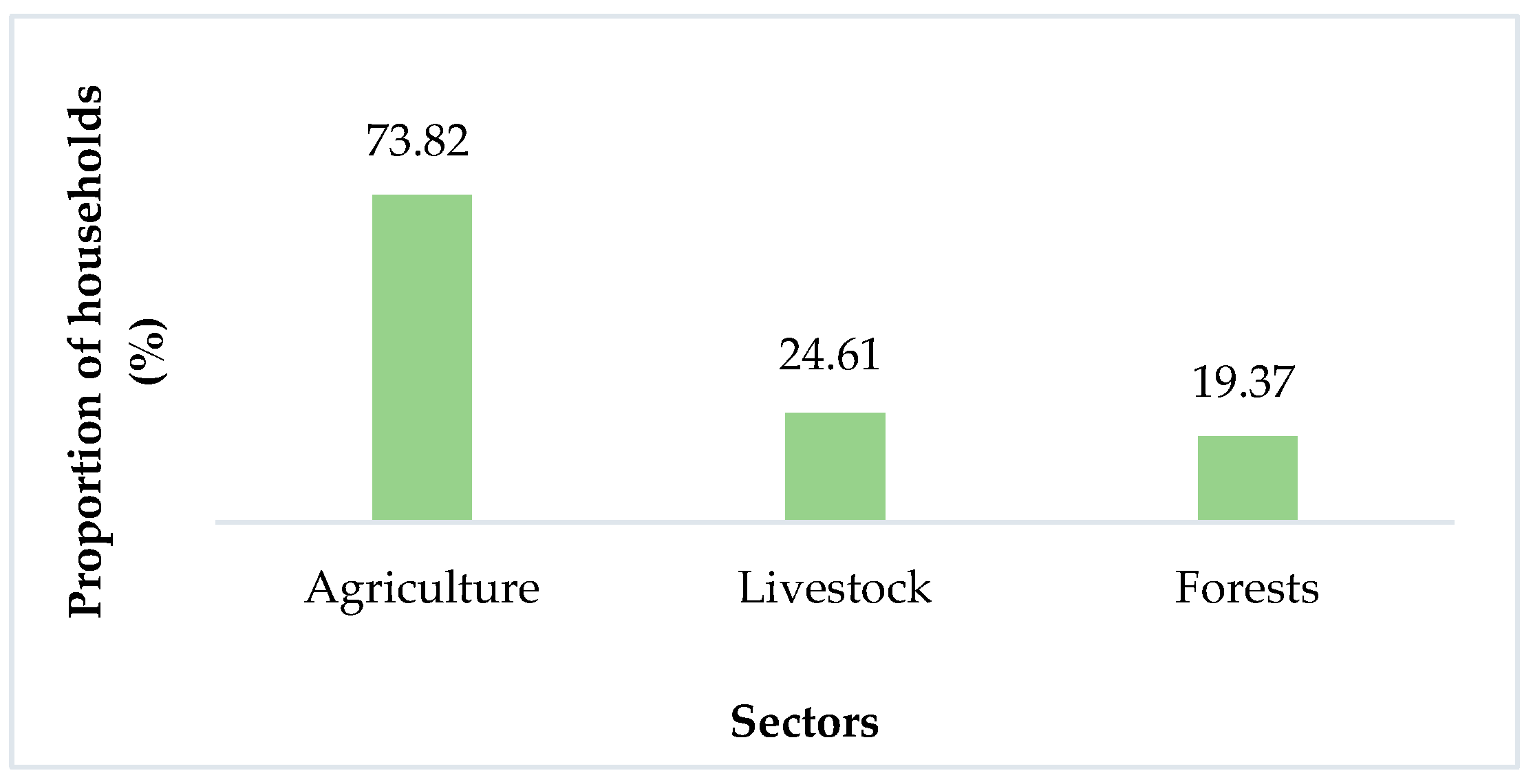
The previous section has shown that agriculture, livestock and charcoal production and selling are key livelihood activities in the study area. This section looks at the adaptation measures introduced in these sectors to deal with expanding drought risks. Overall, the agricultural sector emerged as the one with more adaptation measures highlighting the relevance of the sector for local communities. 74% of the households interviewed said they have adopted some innovation to deal with changing climate in agriculture, nearly 2 times more than the number of households that mentioned adopting new practices for livestock and 3 times for forests (Figure 3).
(a)
Agriculture
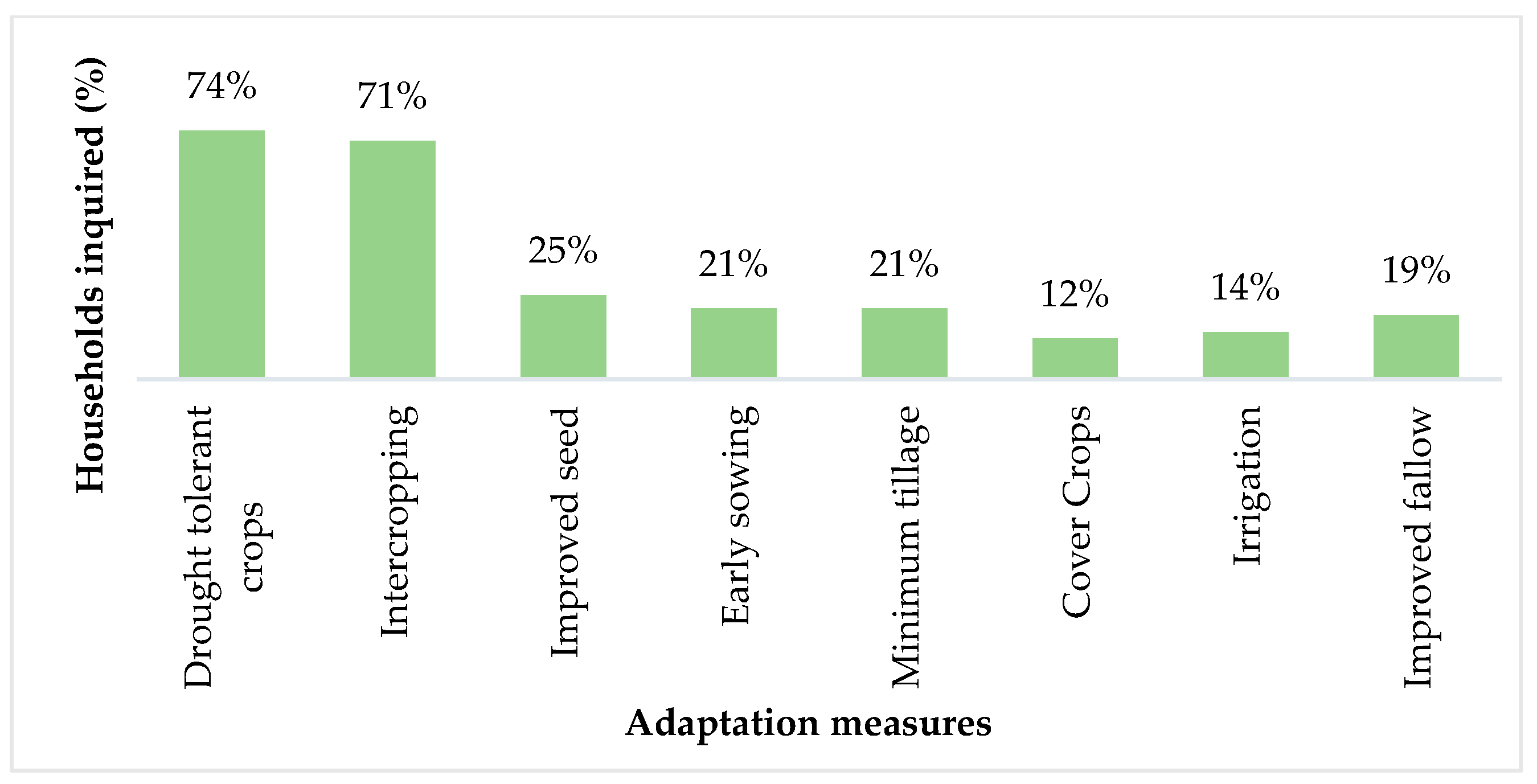
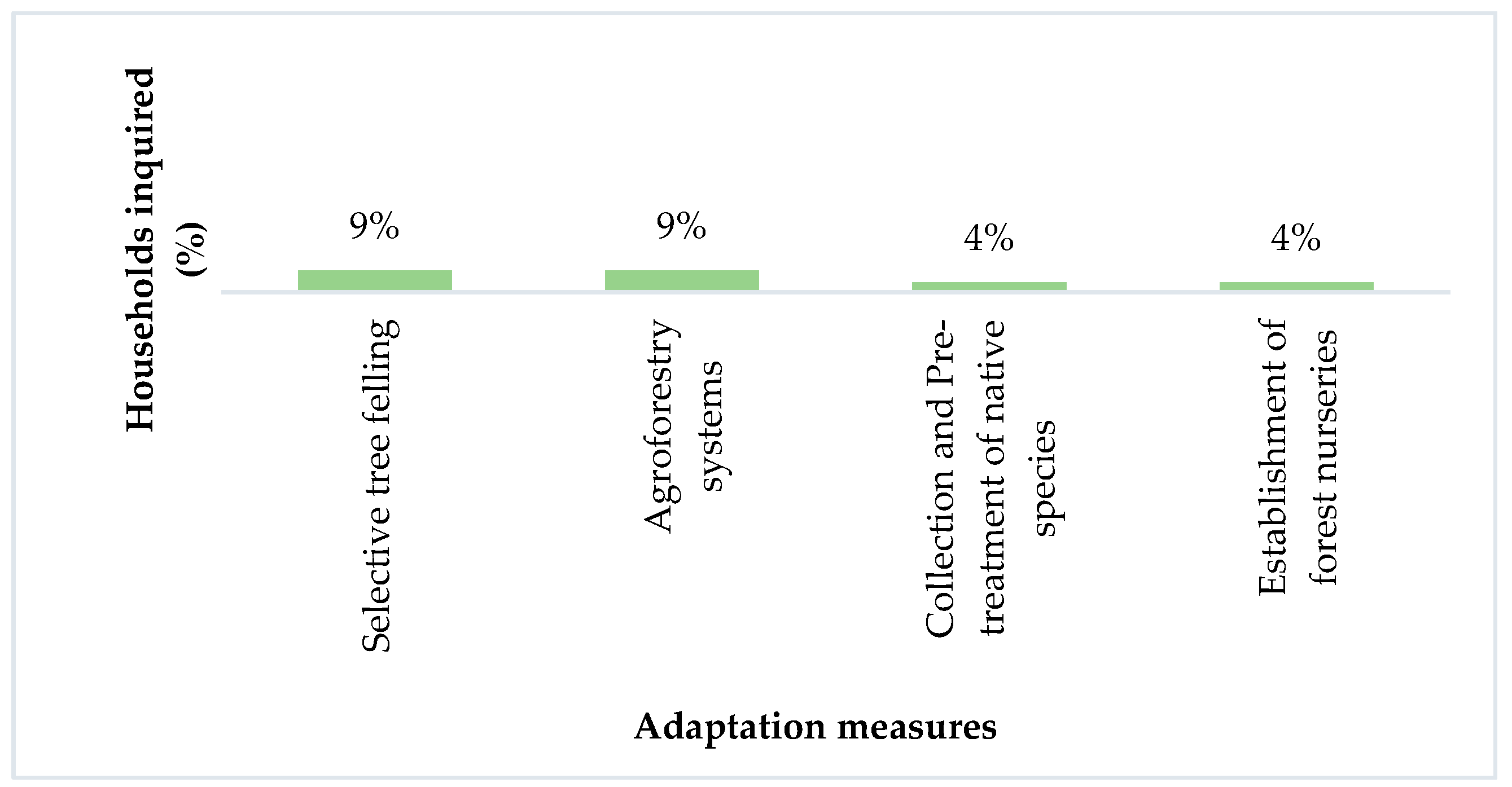
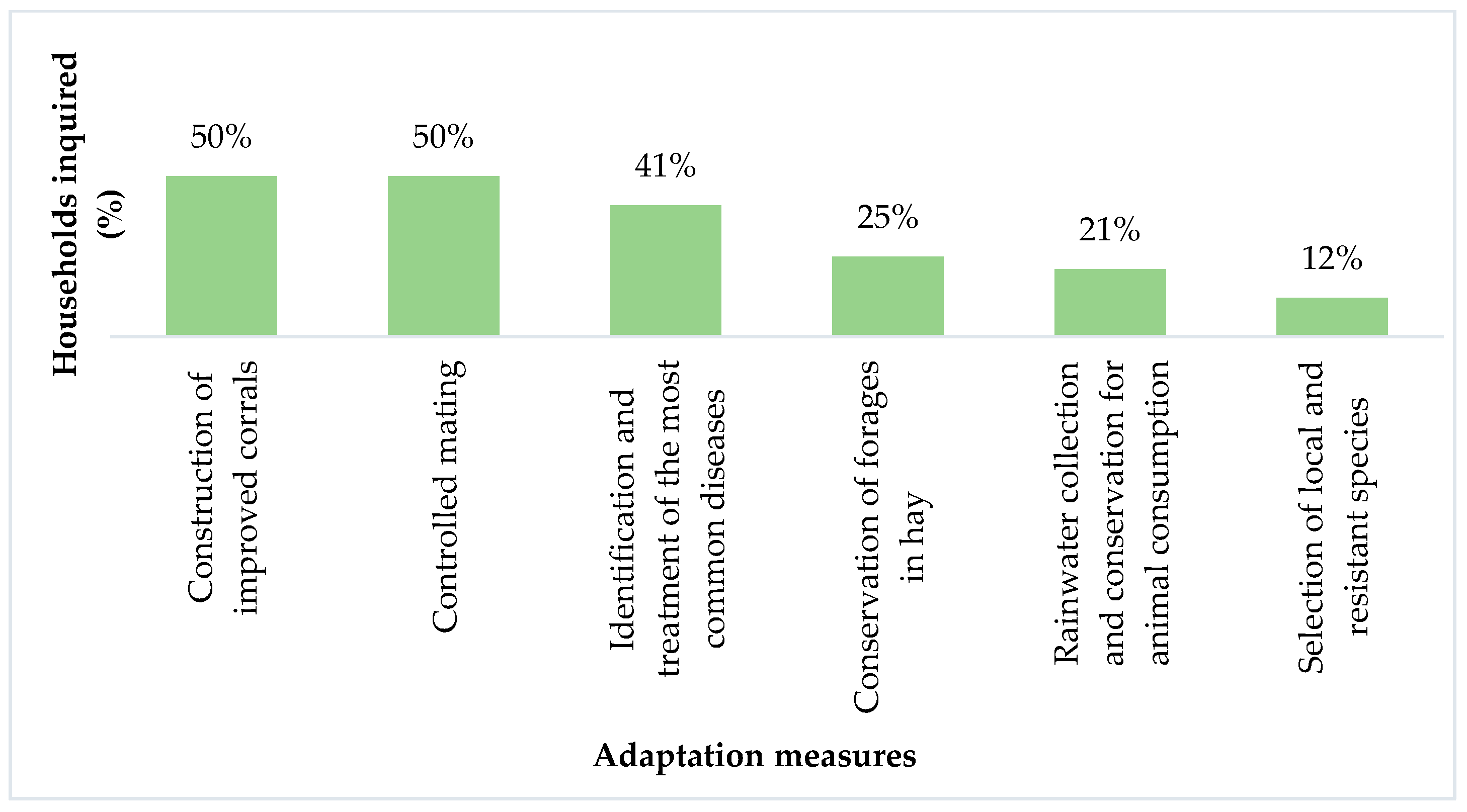
Figure 4 illustrates the climate change adaptation technologies adopted by respondents in Chicualacuala between 2017 and 2022 across the agriculture, livestock and forestry sectors. Regarding individual practices, the research disclosed a total of 20 practices (8 for agriculture, 6 for livestock, and 4 for forests) that people have adopted, albeit with significant differences in adoption.
In agriculture, the adoption of drought-tolerant crops and intercropping emerged as the most widespread strategies among households. Conversely, practices such as minimum tillage, mulching, and irrigation showed relatively low levels of adoption, indicating limited uptake of certain conservation agriculture and water management techniques. Moderate adoption was observed for fertilizers, cover crops, and improved fallow, reflecting partial integration of soil fertility and restoration practices (Figure 4).
(b)
Forest
In general, respondents paid less attention to forest adaptation practices. The adoption of selective logging and agroforestry systems was low, and the uptake of nursery establishment and pre-treatment of native species was minimal. These trends point to limited engagement with forest-based adaptation strategies despite their known benefits (Figure 5).
(c)
livestock
In the livestock sector, most households reported adopting improved poultry houses and corrals as well as selective breeding (controlled mating). Technologies such as local breed selection and forage conservation in hay were adopted to a lesser extent, while rainwater collection and conservation for livestock production were among the least adopted, suggesting that water-focused practices for livestock remain underutilized (Figure 6).

3.3. Perceived Effects of the Adopted Technologies

To identify the adaptation strategies applied in the Administrative Post of Chicualacuala, respondents were asked which technologies they had adopted between 2017 and 2022 in response to climate variability. A total of 20 different practices were reported, distributed across three sectors: agriculture (8 practices), livestock (6 practices), and forestry (4 practices). The following subsections present the adoption trends for each sector individually.
(a)
Agriculture
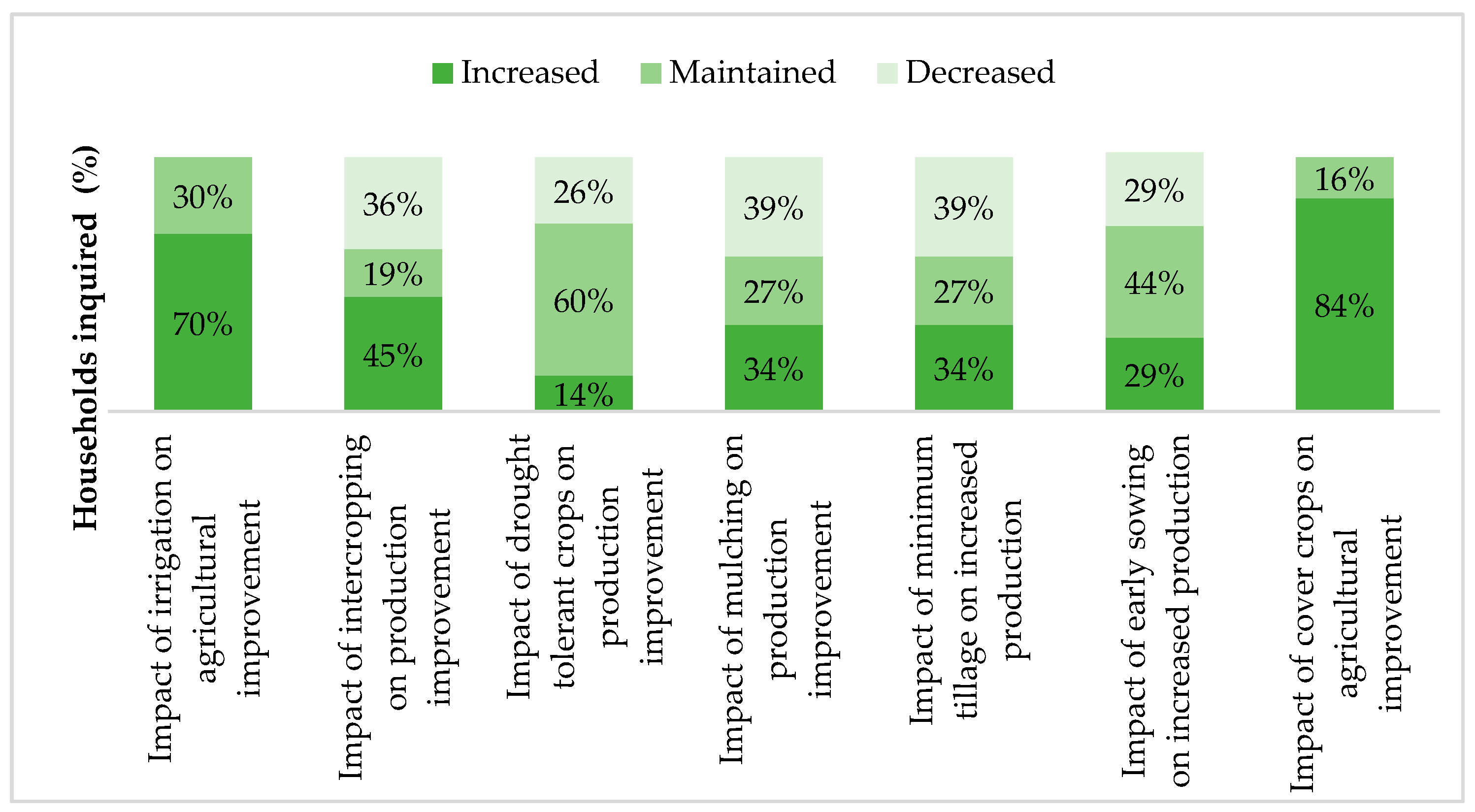
In the agricultural sector, respondents perceived drought-tolerant crops and intercropping as the most effective strategies. These practices were considered particularly useful in addressing water scarcity and ensuring food security. In contrast, minimum tillage, mulching, and irrigation were perceived as less effective, indicating that their benefits for soil protection and water conservation were not widely recognized. Fertilizers, cover crops, and improved fallow were viewed as moderately effective, reflecting a partial acknowledgment of their contribution to soil fertility and land restoration (Figure 7).
(b)
Forestry
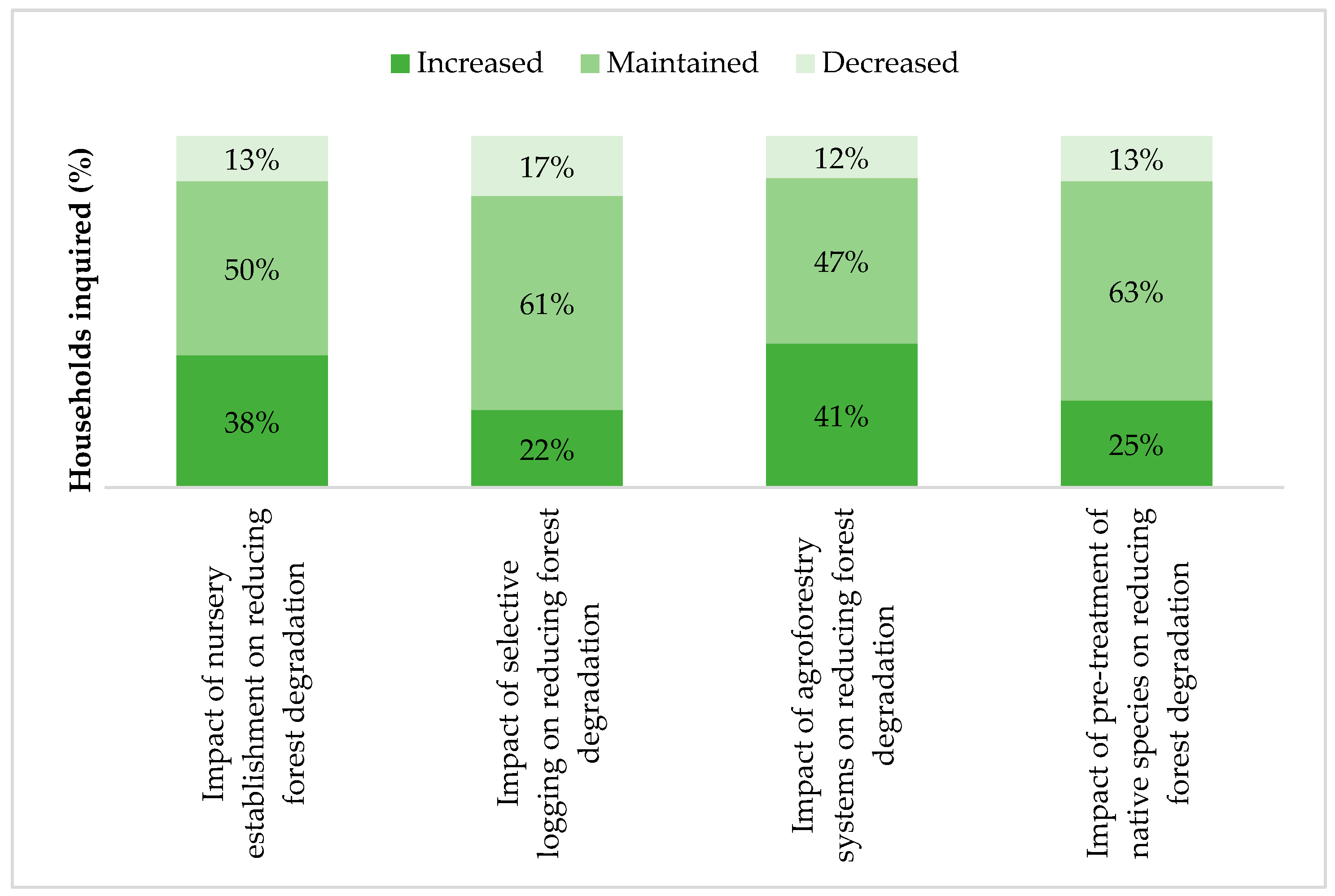
In the forestry sector, respondents generally perceived the effects of adaptation practices as limited. Selective logging and agroforestry systems were regarded as somewhat beneficial, though mentioned by relatively few households. In contrast, nursery establishment and pre-treatment of native species were perceived as having little impact, suggesting minimal recognition of their potential to support reforestation and natural regeneration (Figure 8).
(c)
Livestock
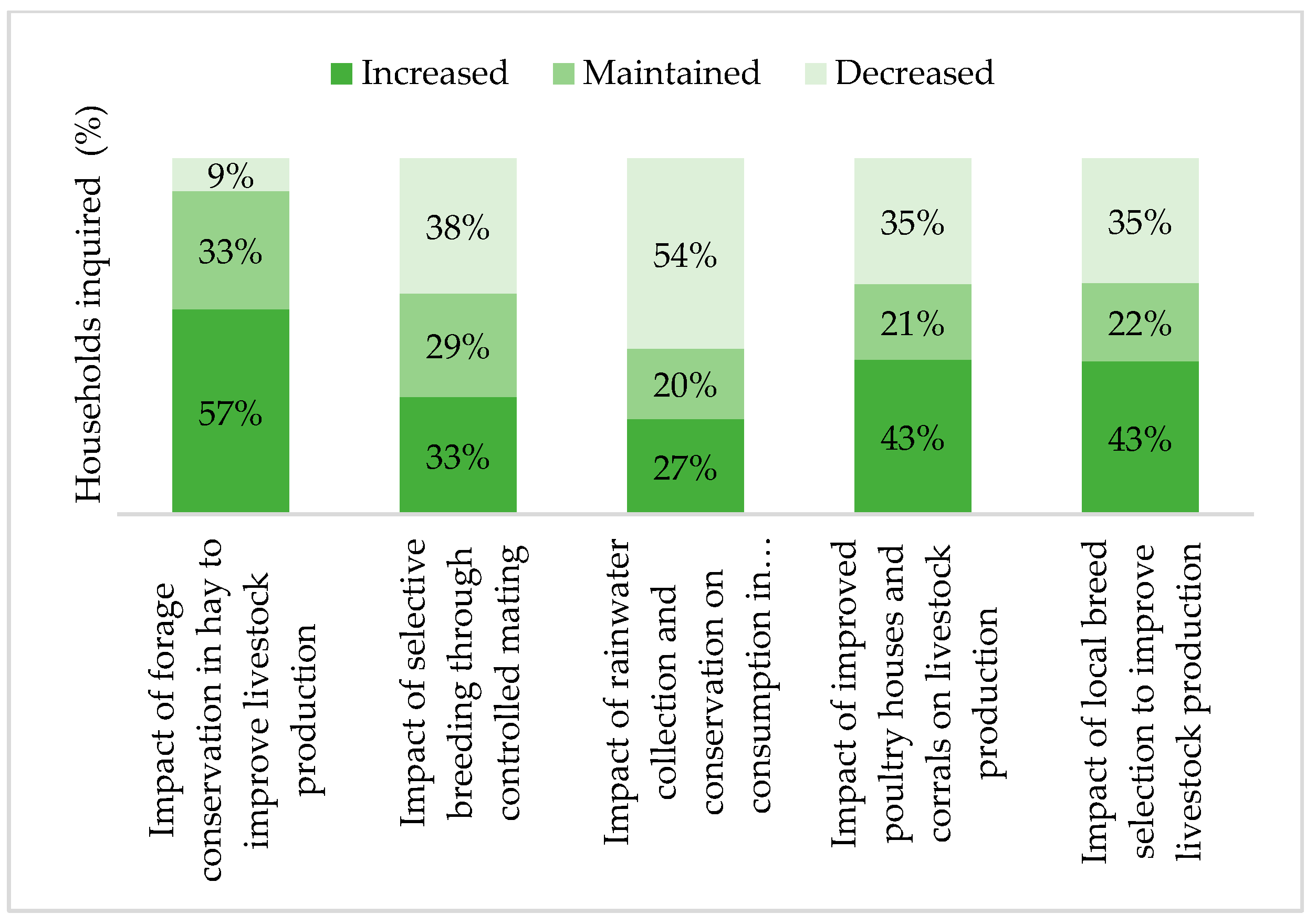
In the livestock sector, respondents perceived improved poultry houses, corrals, and selective breeding (controlled mating) as the most effective practices. These measures were valued for improving animal health and productivity, which in turn increases the availability of meat for household consumption. Local breed selection and forage conservation in hay were perceived as moderately beneficial, as they contribute to sustaining herds and ensuring a more reliable supply of animal products. By contrast, rainwater collection and conservation for livestock production were considered least effective, since their benefits for maintaining animal hydration and indirectly safeguarding meat availability were not widely recognized (Figure 9).

3.4. Estimation Results of the Binary Logistic Regression Model (Logit)

The estimation results of the binary logistic regression model for the agriculture, forestry, and livestock sectors are presented in Table 5.

3.4.1. Agriculture Sector

(a)
Field size
The coefficient for field size is negative (−3.5487) and statistically significant at the 5% level (p = 0.0508). This indicates that households with larger agricultural fields are less likely to adopt climate change adaptation measures in agriculture (Exp(β) = 0.0288).
(b)
Household head practicing agriculture full-time
This variable has a positive and statistically significant effect at the 5% level (coef. = 4.8376, p = 0.015), with a high odds ratio (*Exp(β) = 126.17). This suggests that households whose heads are fully engaged in agriculture are much more likely to implement adaptation strategies in this sector.
(c)
Total household income
The coefficient is positive (0.0003) and significant at the 5% level (p = 0.020), indicating that even a slight increase in household income is associated with a greater probability of adopting agricultural adaptation measures.
(d)
Access to information through community meetings
The effect is marginally significant at the 10% level (coef. = 1.6749, p = 0.0636), suggesting that participation in community meetings may enhance households’ likelihood of adapting to climate change in agriculture.
(e)
Membership in an agricultural farmers’ association
This variable is positively associated with adaptation and significant at the 5% level (coef. = 3.2418, p = 0.037), with a high odds ratio (*Exp(β) = 25.579). This indicates that households belonging to such associations are significantly more likely to adopt adaptation practices in agriculture.

3.4.2. Forestry Sector

(a)
Access to credit
This variable is positively associated with adaptation and significant at the 1% level (coef. = 1.5532, p = 0.0079), indicating that access to financial resources plays a key role in enabling adaptation practices in the forestry sector.
(b)
Access to agricultural extension services
The coefficient is negative (−0.8738) and statistically significant at the 5% level (p = 0.0481), suggesting that access to extension services may not necessarily support forestry-related adaptation, or that such services are not tailored to forestry needs.
(c)
Access to information via radio
This variable shows a positive and statistically significant effect at the 5% level (coef. = 1.231, p = 0.038), with an odds ratio of 4.892. This result indicates that radio programs are effective in disseminating information that leads to climate adaptation actions in forestry.
(d)
Access to information through community meetings
Also significant at the 5% level (coef. = 1.588, p = 0.028), this suggests that community-based information-sharing mechanisms enhance the adoption of forestry-related adaptation measures.
(e)
Membership in the charcoal producers’ association
The effect is marginally significant at the 10% level (coef. = 1.741, p = 0.051), indicating a potentially positive influence of producer associations on adaptation decisions in forestry.

3.4.3. Livestock Sector

(a)
Household head formally employed
This variable is negatively associated with adaptation and statistically significant at the 1% level (coef. = −2.106, p = 0.007), with an odds ratio of 0.122. This result implies that households with formally employed heads are less likely to adopt adaptation measures in livestock farming, possibly due to reduced dependence on livestock as a primary livelihood.
(b)
Access to credit
The coefficient is positive (1.256) and statistically significant at the 1% level (p = 0.0087), indicating that financial access is an important enabler of climate adaptation in livestock production.
(c)
Membership in the charcoal producers’ association
This variable is positively associated with adaptation and significant at the 5% level (coef. = 1.9954, p = 0.0183), suggesting that households involved in charcoal production are also more likely to implement adaptation practices in livestock, possibly due to diversified livelihoods or shared information networks.

4. Discussion

4.1. Main Climate Change Adaptation Measures Adopted by Local Communities

  • Agriculture
The adoption of drought-tolerant varieties is a crucial adaptation strategy for smallholder farmers in regions increasingly affected by drought, contributing to improved food security and the resilience of local livelihoods [34]. Intercropping promotes ecological interactions that can enhance soil health, making it a valuable technique in the context of climate change adaptation for smallholder farming [29]. This trend reflects the prioritization of adaptation strategies that increase resilience to water stress in semi-arid environments, as highlighted by [8], who documented the growing adoption of climate-smart practices by farmers in arid and semi-arid regions of Mozambique, including drought-tolerant crops and water-efficient techniques, in response to the increasing challenges posed by climate variability [8].
The widespread adoption of intercropping observed in this study further demonstrates a growing awareness among local farmers of the role that diversified cropping systems play in stabilizing yields, improving household food security, and mitigating climate-related risks. These findings are consistent with the analyses presented by [28], who emphasized that in Chicualacuala District, diversification through intercropping and mixed crop-livestock systems has emerged as a key strategy to strengthen household resilience and adaptive capacity in the face of increasing climate impacts [28]. Additionally, Ref. [34] reinforces the importance of adapting agricultural systems for smallholdings, as in the case of Mozambique’s semi-arid region, where the combination of agricultural and livestock techniques has been an essential pillar for managing climate risks [1].
The low adoption of fertilizers, cover crops, improved fallow, and irrigation can be mainly attributed to limited financial resources and technical knowledge. Similar patterns have been observed in other semi-arid regions. For example, Ref. [34] found that in India, the adoption of water and soil management practices depends on strong local institutions, financial support, and access to climate information [35].
At a global level, Ref. [36] notes that, despite progress in developing adaptation technologies, adoption in developing countries is hindered by institutional and financial barriers [37]. Similarly, Ref. [38] highlights how factors such as wealth, education, labor, and extension services affect uptake, while El-Sayed stresses the crucial role of training and capacity building, as exemplified in Jordan [39,40]. Together, these examples show that the barriers faced in Mozambique reflect broader structural challenges common across semi-arid regions.
  • Forestry
The findings suggest limited efforts in the sustainable use of forest resources, despite respondents acknowledging the potential benefits of forestry-based adaptation strategies. This is consistent with studies by [41], who found that adoption rates of conservation agriculture technologies were relatively low due to barriers such as financial constraints and lack of awareness in various semi-arid regions, similar to the challenges observed in the Chicualacuala district [19]. However, these findings contrast with [14] who reported a high adoption rate (81.3%) of forestry technologies in Hunan, China, underlining the importance of these technologies for mitigating climate change impacts in that region [14].
The low uptake of forest nursery establishment and seed pre-treatment indicates that while these technologies are recognized as essential for sustainable forestry, there is a substantial need for more effective dissemination and greater acceptance. This situation mirrors the findings of [41], who highlighted that even in regions where the benefits of sustainable forest management are clear, adoption rates often remain low due to insufficient support, education, and the high initial costs involved [18]. Similarly Ref. [42] found that in Ethiopia, the adoption of climate-smart forestry technologies was strongly influenced by access to extension services, financial resources, and the educational level of farmers [16].
Moreover, Ref. [43] argues that institutional support, such as access to climate information and financial services, plays a crucial role in enhancing the adoption of adaptation technologies in resource-dependent livelihoods, a factor that seems to be lacking in the forestry sector in Chicualacuala [16]. This reinforces the argument that limited adoption of forestry-based adaptation technologies in this district is not only due to a lack of awareness but also due to the weak support systems that hinder their effective implementation.
  • Livestock
The adoption of improved corals and selective breeding technologies in the study reflects efforts to enhance herd adaptation to climate variability and disease control, as indicated by the data collected. Ref. [16] emphasizes the importance of such practices in providing better shelter conditions and reducing thermal stress on animals, which is consistent with the responses from the household heads in this study, where the benefits of improved animal housing were frequently acknowledged.
Based on the findings, there is evidence that households often adopt multiple adaptation technologies simultaneously. This corroborates studies like those conducted by [2] in India, which highlighted the tendency for households to implement a combination of adaptation strategies to cope with climate variability. In this study, respondents also reported the use of diversified approaches, such as intercropping alongside livestock management practices, to ensure food security and reduce vulnerability to climate impacts. However, the interconnection between these technologies remains unclear, which emphasizes the need for further investigation into how these technologies complement each other and contribute to overall resilience.
While households are adopting multiple technologies, the uptake of more specialized technologies, such as forest nursery establishment and seed pre-treatment, remains low. This suggests that, although these technologies are recognized as essential for long-term sustainability, there is a significant gap in their implementation. Ref. [44] similarly found that, in the case of climate-smart technologies in Ethiopia, financial constraints, lack of technical knowledge, and limited access to extension services were key barriers to adoption. These findings align with the challenges observed in Chicualacuala, where limited resources and insufficient technical support hinder the broader adoption of such practices.
Furthermore, the low uptake of certain technologies highlights the importance of improving access to information and support services. Ref. [36] notes that the effectiveness of adaptation strategies is often linked to institutional support, education, and financial resources, all of which are critical for overcoming the barriers to technology adoption. Therefore, strengthening these areas could facilitate greater uptake of sustainable practices, thereby enhancing the resilience of local households to climate change.
The practical impacts of the technologies implemented by household heads will be analyzed in the following sections, providing a deeper understanding of how these practices contribute to the long-term resilience of households in the region. This analysis will also explore the combined effects of multiple technologies and identify key areas where further support is required to optimize adaptation efforts.

4.2. Perceived Effects of the Adopted Technologies

4.2.1. Agriculture

Based on the perceptions of the interviewed households, the research revealed that technologies such as cover crops (84%), irrigation (70%), and intercropping (45%) are widely recognized as essential for increasing agricultural resilience and promoting sustainability. Irrigation was particularly emphasized as crucial, as respondents noted that farmers with access to water are less vulnerable to drought. Ref. [45] corroborates these findings, reporting that 62.3% of farmers in Wuzhen Banner (China) experienced increased agricultural income after adopting irrigation technologies and advanced planting practices. Similarly, Ref. [46] found that 57.5% of farmers in Sri Lanka reported gains in agricultural productivity due to the use of efficient irrigation technologies.
Interestingly, only 14% of respondents reported benefits from using drought-tolerant crops, an unexpected finding for regions with arid characteristics. This contrasts with previous studies, such as those by [14] who emphasized the significant role of drought-resistant crops in such areas. The low perception of drought-tolerant crops as a primary climate change adaptation measure among rural Mozambican farmers is likely a result of a combination of their immediate needs and priorities, various constraints and barriers to adoption, their understanding of climate change, existing coping mechanisms, and the influence of external factors. Effectively promoting the adoption of these crops requires a holistic approach that addresses these challenges, involves farmers in the process, and provides adequate support and incentives.

4.2.2. Forestry

Conversely, among the four technologies recommended for the forestry sector, only the perception of the role of agroforestry systems was deemed significant by 41% of those surveyed. This finding is consistent with [45] who underscore the socioeconomic and environmental benefits of agroforestry systems, reinforcing local perceptions. The low perceived relevance of other forestry technologies suggests they are not yet widely recognized as effective adaptation practices. This may be associated with limitations in the technological diffusion process, a lack of awareness about their benefits, or insufficient integration of these practices with local needs. Furthermore, this practice not only contributes to the preservation of forest resources, but also socially eases the pressure on families, especially women and girls, who traditionally dedicate a lot of time to searching for firewood, thus promoting mutual social and environmental gains.

4.2.3. Livestock

In the livestock sector, 57% of respondents identified forage conservation, and 43% highlighted genetic selection as practices that generated significant impacts. These results align with those of [46], who emphasized the importance of adapted breeds and food management practices to promote the resilience and productivity of livestock under variable climatic conditions.
The results presented in this section suggest that the interviewees’ perception of the impacts of technologies reinforces the need for in-depth analyses to identify mediating factors and guide future strategies. The next section details this approach. However, the results presented here suggest that interviewees’ perceptions of these technologies’ impacts emphasize the need for in-depth analyses to identify mediating factors and guide future strategies.

4.3. Estimation Results of the Binary Logistic Regression Model (Logit)

(a)
For the agriculture sector
Size of cultivated area
The field size coefficient revealed a negative and statistically significant relationship with the adoption of adaptive agricultural technologies. This indicates that, for each additional hectare, the likelihood of adopting adaptation technologies decreases by 0.0288. This result contrasts with previous studies suggesting that farmers with larger properties are more likely to adopt adaptation technologies [43,47]. However, it aligns with research by [4] in Botswana, who identified the cost of expanding cultivated areas as a significant barrier to the adoption of climate adaptation technologies. While larger farm sizes generally correlate with higher adoption rates of new climate change adaptation technologies in semiarid regions, it is crucial to recognize and address the specific constraints faced by smallholder farmers to ensure that they can also benefit from these innovations and build resilience to climate change. A possible explanation for the negative correlation is that larger areas demand substantial investments in financial, human, and material resources to implement improved cultivation practices that are resilient to climate change. In addition, for smallholder farmers operating close to subsistence levels, the risk associated with trying new and potentially unproven technologies can be very high, as failure could lead to food insecurity. The largest farm in the study area is only three hectares, suggesting that the threshold at which a positive impact of farm size is observed is above the observed farm size. Reports indicate that many producers in the Chicualacuala region face financial constraints, which hinder these investments. According to local government data [22], Chicualacuala is one of the poorest districts in Gaza Province, with a poverty index of 0.91, compared to 0.17 at the provincial level and 0.33 at the national level [48].
Practicing full-time agriculture
The coefficient for the variable “practicing agriculture full-time” was statistically significant at the 5% level and positive. This result indicates that households where the head works exclusively in agriculture are 126.167 times more likely to adopt adaptation technologies compared to those where the head does not practice agriculture full-time. The possible explanation is that, in these communities, agriculture is a fundamental source of livelihood, driving investments in adaptive practices. This finding supports the hypothesis that complete dedication to the agricultural sector increases the likelihood of adopting agricultural technologies. However, it contrasts with results such as those of [49] in Pakistan, which suggest that full-time agricultural practice does not always lead to higher adoption of technologies. For individuals deeply involved in agriculture, embracing new technologies is viewed as a crucial investment in their primary business. They are more inclined to dedicate time, labor, and financial resources to exploring, testing, and implementing adaptive strategies that can safeguard their future. Farmers who rely entirely on agriculture are particularly aware of how climate change directly affects their crops, livestock, and overall productivity. They witness the impacts of shifting rainfall patterns, rising temperatures, and extreme weather events, making them more sensitive to the necessity for adaptation. Although their commitment to agriculture offers a strong intrinsic drive and increases the likelihood of adopting climate change adaptation technologies—by boosting awareness, motivation, willingness to invest, knowledge-seeking, and innovation potential, this commitment must be complemented by supportive conditions that address resource limitations, manage risks, and ensure access to necessary information and assistance.
Income
Not surprisingly, income was identified as an essential factor in agricultural adaptation, with a positive and statistically significant coefficient at the 5% level. This finding suggests that with each additional local currency unit of income, the likelihood of adopting adaptive technologies increases by 1.003 times. This positive relationship reflects the importance of a household’s economic status in choosing technologies to address climate change, particularly considering the financial resources required to implement resilient farming practices. These results support the hypothesis that higher income facilitates the adoption of adaptation technologies. Similar findings were reported by [50], who identified that farmers with higher incomes are more likely to adopt such technologies. Some adaptation strategies require ongoing financial outlays for inputs such as fertilizers, pesticides (even those that are climate-smart), and water for irrigation. Wealthier households are better positioned to handle these recurring costs. Ref. [51] found that in Zambia, wealthier households were significantly more likely to adopt practices such as crop rotation, minimum tillage, fertilizer trees, and changing crop varieties in response to climate change, as these often require some level of financial investment. In Kenya, [52] have shown that farmers with higher education levels and higher farm incomes are more likely to employ a greater number of climate change adaptation strategies. In addition, Ref. [52] stresses that higher income generally enhances a household’s capacity to invest in, access information about, and benefit from various adaptation measures. Addressing income disparities and providing targeted support to lower-income households are essential for promoting widespread and equitable climate change adaptation across the continent.
Membership of associations
Although participation rates were low, producers who belong to associations are 25.579 times more likely to adopt adaptation technologies compared to non-members, with this difference being statistically significant at the 5% level. The likely explanation is that participation in groups facilitates access to and sharing of knowledge, mobilizes support networks, and strengthens social capital, all of which are essential for learning and adaptation. This finding is not only logical but also consistent with the results of other studies. For instance, [46] in Sri Lanka highlighted the critical role of associations in disseminating climate information and promoting adaptive strategies. Ref. [53] in their study in East African highlands, concluded that farmers’ associations play a crucial role in facilitating the adoption of climate change adaptation technologies and practices among their members. They serve as intermediaries, knowledge brokers, and collective bargaining groups, empowering farmers to effectively respond to the impacts of climate change. This conclusion is also supported by [54], in Sierra Leone, who add that these associations may encounter weaknesses and challenges that undermine their effectiveness. These weaknesses can include poor organizational structures, limited technical expertise, inadequate access to accurate and timely climate information, and ineffective coordination with government officials. Addressing these challenges is essential to enhancing their role in building climate resilience among farming communities in Africa.
(b)
Forestry Sector
Access to extension services
Access to extension services was significant for the forestry sector but negatively associated with the adoption of adaptive technologies. Households with access to these services were 3.4250 times less likely to adopt these technologies compared to those without access. This result contradicts both the initial hypothesis and the existing literature. It is likely related to the limited quality and scope of extension services, which reportedly suffer from deficiencies in coverage and fail to address the specific needs of the forestry sector. This finding diverges from other research that has shown a positive correlation between access to extension services and the adoption of climate change adaptation technologies [55,56]. The current results imply that in this district, extension services may not be effectively supporting community-driven adaptation, i.e., it suggests that current extension practices may be too restrictive or insufficiently aligned with local realities.
(c)
Livestock Sector
Formal employment
Surprisingly, the coefficient for formal employment was negative, indicating that being formally employed, compared to not being formally employed, reduces the likelihood of adopting adaptation technologies in livestock farming by 0.1218 times. This difference was statistically significant at the 5% level. This finding can be attributed to the labor market profile in Chicualacuala, where formal employment is rare, and many individuals are engaged in informal activities. The opportunity to explore alternative income sources outside the primary sector may reduce interest in adopting livestock farming technologies. Ref. [56] observed a similar negative relationship between formal employment and adaptation in their analysis of Sub-Saharan Africa. They suggested that formally employed individuals often do not bring adaptation innovations to their communities, which may further explain this trend.
Contrary to our expectations, other variables related to socioeconomic household profiles did not significantly explain the probability of adopting adaptive technologies in the three sectors analyzed. These variables include: “land ownership”, “gender of the household head”, “education level”, “access to credit”, “access to climate information”, “access to information via social networks, radio, and community meetings,” “membership in savings associations”, “household size”, and “livestock farming activity by the household head”. These variables may not exhibit sufficient variability among the interviewed households, suggesting that these factors have a minimal impact on technology adoption, with small variations.
On the other hand, the explanatory power of the model was considered relatively high for the agriculture sector and low for the forestry and livestock sectors, indicating that approximately 80% of the total variation is explained by the relationship between the independent variables and the dependent variable. Despite this, the Chi-square test confirmed that the model is statistically significant at the 5% level, suggesting that although some variables did not have a direct effect on technology adoption, the overall model remains statistically relevant for the proposed analysis.

5. Conclusions

This study examined the factors influencing the adoption of climate change adaptation technologies in the semi-arid Chicualacuala district. The study comprised large households mostly headed by female members. Most of the households have no formal education, have lower incomes, no links to associations or access to climate information, and have their livelihoods based on climate-dependent sectors of agriculture, livestock and environment.
It was found that households often adopt multiple adaptation technologies simultaneously. Regarding the impact of adopting these technologies, the results vary depending on the sector analyzed; however, significant progress was identified in several areas. Respondents’ perceptions of the changes indicate that the adoption of these technologies had positive and meaningful impacts, suggesting that households are increasingly aware of implementing resilient socio-productive practices. Nevertheless, critical challenges remain, particularly concerning the pressure on natural resources and certain unsustainable practices, which continue to limit the effectiveness of adaptation technologies in forest resource management. Therefore, it is crucial to invest in strategies that improve knowledge and promote accessible technologies for the community.
The effective adoption of technologies was found to depend on multiple factors. The logistic regression analysis revealed that farm size, full-time engagement in agriculture, household income, and membership in farmers’ associations are key determinants of technology adoption in the agricultural sector. Interestingly, access to extension services, often considered a critical factor, was not statistically significant in this sector. In contrast, in the forestry and livestock sectors, technology adoption was negatively associated with access to extension services and formal employment, suggesting that these factors may limit the adoption of certain technologies. These findings highlight the need for policies that address these constraints and promote inclusive technological adaptation. Otherwise, there is a risk of deepening inequalities, particularly among socially vulnerable groups.
Finally, we recommended that strategies be developed to promote the participation of households with a limited likelihood of adopting technologies, especially women-headed and low-income households, as well as non-traditional households, and to ensure equal access to technology. This inclusive approach is crucial in guiding future strategies and achieving sustainable outcomes. We also recommend that research institutions conduct studies that include variables found not to be significant in this study but with a wider range of variability, considering their potential relevance. Special emphasis should be placed on agricultural extension services, which are essential for expanding knowledge about adaptive measures to address climate change.

Author Contributions

Conceptualization, C.C.; methodology, C.C., G.M. and A.A.S.; software, C.C., A.A.S. and G.M.; validation, G.M. and A.A.S.; formal analysis, C.C., D.M. and G.M.; investigation, C.C.; resources, A.A.S.; data curation, C.C.; writing—original draft preparation, C.C., A.J., L.A., D.M. and J.M., A.A.S., G.M.; writing—review and editing, C.C., J.M. and A.J.; visualization, C.C.; supervision, A.A.S.; project administration, A.A.S.; funding acquisition, A.A.S. All authors have read and agreed to the published version of the manuscript.

Funding

This research was funded by the Oliver Tambo Africa Research Chair Initiative supported by the South African National Research Foundation (NRF), the South African Department of Science and Innovation (DSI), the International Development Research Centre of Canada (IDRC), the Oliver & Adelaide Tambo Foundation (OATF), and the National Research Fund of Mozambique (FNI). The views expressed in this article do not necessarily represent those of the Oliver Tambo Africa Research Chairs Initiative, its partners, and their Directorates. The APC was funded by the African Oliver Tambo Research Chair.

Institutional Review Board Statement

This study is waived for ethical review as the study involves the collection of non-sensitive information related to farming practice technologies and adoption challenges, without engaging in biomedical experimentation, the collection of personal health data, or procedures that pose risks to human subject by the Institution Research Ethics Committee of Eduardo Mondlane University.

Informed Consent Statement

Informed consent for participation was obtained from all subjects involved in the study.

Data Availability Statement

The data supporting the results of this study are available in the following publicly accessible datasets: Dataset 1: Measures of Adaptation in Chicualacuala and Dataset 2: Logit Model Data-Chicualacuala. These datasets can be accessed publicly through the links provided. If further information is required, data can also be made available upon request from the corresponding author.

Conflicts of Interest

The authors declare no conflict of interest.

References

  1. Wiederkehr, C.; Beckmann, M.; Hermans, K. Environmental change, adaptation strategies and the relevance of migration in Sub-Saharan drylands. Environ. Res. Lett. 2018, 13, 113003. [Google Scholar] [CrossRef]
  2. Gannon, K.; Crick, F.; Atela, J.; Babagaliyeva, Z.; Batool, S.; Bedelian, C.; Wade, C. Private adaptation in semi-arid lands: A tailored approach to ‘leave no one behind’. Glob. Sustain. 2020, 3, e6. [Google Scholar] [CrossRef]
  3. Huang, J.; Yu, H.; Guan, X.; Wang, G.; Guo, R. Accelerated dryland expansion under climate change. Nat. Clim. Change 2016, 6, 166–171. [Google Scholar] [CrossRef]
  4. Mugari, E.; Masundiri, H.; Bolaane, M. Adapting to Climate Change in Semi-Arid Rural Areas: A Case of the Limpopo Basin Part of Botswana. Sustainability 2020, 12, 8292. [Google Scholar] [CrossRef]
  5. Wiegel, H. Complicating the tale of ‘first climate migrants’: Resource-dependent livelihoods, drought and labour mobilities in semi-arid Chile. Geoforum 2023, 138, 103663. [Google Scholar] [CrossRef]
  6. Instituto Nacional de Meteorologia (INAM). Relatório Anual do Estado do Clima em Moçambique 2023; INAM: Maputo, Mozambique, 2024. Available online: https://www.inam.gov.mz/images/RAECM2023/RAECM_2023_Versao_Final_19-03-2024-compactado.pdf (accessed on 10 November 2024).
  7. Instituto Nacional de Gestão de Calamidades (INGC). Guião Para o Desenvolvimento Das Zonas Áridas e Semiáridas de Moçambique; Ministério da Administração Estatal: Maputo, Mozambique, 2010. [Google Scholar]
  8. Mavume, A.; Banze, B.; Macie, O.; Queface, A. Analysis of Climate Change Projections for Mozambique under the Representative Concentration Pathways. Atmosphere 2021, 12, 588. [Google Scholar] [CrossRef]
  9. Pereira, I.; do Nascimento, F. Panorama da desertificação em Chicualacuala, Moçambique (África Austral). Mercator 2013, 12, 171–189. [Google Scholar]
  10. Abbas, M. Efeitos das mudanças climáticas nos sistemas de produção em Moçambique: Implicações para a segurança alimentar. Obs. Rural. 2022, 33. [Google Scholar]
  11. IPCC. Mudanças climáticas–A base da ciência. In Sexto Relatório do Painel Intergovernamental de Mudanças Climáticas; WMO: Geneva, Switzerland; UNEP: Nairobi, Kenya, 2021. [Google Scholar]
  12. Grigorieva, E.; Livenets, A.; Stelmakh, E. Adaptation of agriculture to climate change: A scoping review. Climate 2023, 11, 202. [Google Scholar] [CrossRef]
  13. Dias, E.; Pessoa, Z. Mudanças climáticas e tecnologias sociais: Adaptação ao contexto do semi-árido. In Proceedings of the Anais XVIII ENANPUR, Natal, Brazil, 27–31 May 2019. [Google Scholar]
  14. Gao, J.; Shahid, R.; Ji, X.; Li, S. Climate change resilience and sustainable tropical agriculture: Farmers’ perceptions, reactive adaptations and determinants of reactive adaptations in Hainan, China. Atmosphere 2022, 13, 955. [Google Scholar] [CrossRef]
  15. United Nations Development Program (UNDP); Global Environmental Facility (GEF). Climate Change Adaptation in Africa: UNDP Synthesis of Experiences and Recommendations. Bangkok Regional Hub. 2018. Available online: https://www.thegef.org/sites/default/files/publications/CCA-Africa-Final.pdf (accessed on 9 July 2025).
  16. Guzmán, S.; Balm, A.; Meattle, C. The State of Climate Finance in Africa: Climate Finance Needs of African Countries. Climate Policy Initiative. 2022. Available online: https://climatepolicyinitiative.org (accessed on 9 July 2025).
  17. African Climate Foundation (ACF); International Food Policy Research Institute (IFPRI). From Climate Risk to Resilience: Unpacking the Economic Impacts of Climate Change in Mozambique. 2023. Available online: https://reliefweb.int/attachments/3ed1f2c7-7d31-4990-a899-51abc803ec05/800834-AFC-Mozambique-country-note-05A.pdf (accessed on 9 July 2025).
  18. Sacramento, A.; Matavel, A.; Basílio, M.; Bila, S. Climate change impacts and coping strategies in Chicualacuala district, Gaza province, Mozambique. In Joint Programme on Environmental Mainstreaming and Adaptation to Climate Change in Mozambique; United Nations Environment Programme (UNEP): Maputo, Mozambique, 2012. [Google Scholar]
  19. Vilanculos, M.; Mafalacusser, J.; Jalane, O. Caracterização Biofísica do Distrito de Chicualacuala, Província de Gaza; CGIAR: Gaza, Moçambique, 2014. [Google Scholar]
  20. FAO. Adaptation to Climate Change in Semi-Arid Environments: Experience and Lessons from Mozambique; FAO: Rome, Italy, 2012. [Google Scholar]
  21. Saíde, M. “Nossa Agricultura não Pode Parar!”: Percepções, Processos Transformativos e Estratégias Diante da seca Entre Agricultores no Distrito de Magude. Master’s Thesis, Universidade Federal do Rio Grande do Sul, Porto Alegre, Brazil, 2020. [Google Scholar]
  22. Government of the District of Chicualacuala. Plano Local de Adaptação às Mudanças Climáticas do Distrito de Chicualacuala; Government of the District of Chicualacuala: Gaza, Moçambique, 2016. [Google Scholar]
  23. Instituto Nacional de Estatística (INE). Estatísticas do Distrito de Chicualacuala 2017–2021; Instituto Nacional de Estatística: Gaza, Moçambique, 2023. [Google Scholar]
  24. Humulane, A.; Filimone, C.; Fabião, A.; Dimande, B. Necessidades de Informação e Transferência de Tecnologias dos Produtores Agrários para Adaptação às Mudanças Climáticas no Distrito de Chicualacuala, Província de Gaza. Programa de Pesquisa do CGIAR. 2014. Available online: https://cgspace.cgiar.org/items/f5247dc7-857b-44c0-8ed1-045d8a88266b (accessed on 15 August 2025).
  25. Martinho, M. Resultados do teste da metodologia cristal em Mapai: Um contributo ao PEDD de Chicualacuala. Programa Conjunto das Nações Unidas (UNJP). 2009. Available online: https://www.fao.org/climatechange/36184-0ef1a2be62ea1147211248ce615f3dd8e.pdf (accessed on 15 August 2025).
  26. Government of the District of Chicualacuala. Plano Estratégico de Desenvolvimento (PEDD) do Distrito de Chicualacuala; Government of the District of Chicualacuala: Gaza, Moçambique, 2010. [Google Scholar]
  27. USAID; FEWS NET. Atualização da perspectiva de segurança alimentar em Moçambique. 2012. Available online: https://fews.net/sites/default/files/documents/reports/Mozambique_FSOU_2012_08_Port.pdf (accessed on 9 July 2025).
  28. Yin, R.K. Case Study Research: Design and Methods, 5th ed.; Sage Publications: Thousand Oaks, CA, USA, 2014. [Google Scholar]
  29. Weber, A.; Persigo, P. Pesquisa de Opinião Pública: Princípios e Exercícios; Facos/UFSM: Santa Maria, Brazil, 2017. [Google Scholar]
  30. Cabral, C. Aplicação do Modelo de Regressão Logística num Estudo de Mercado. Master’s Thesis, Universidade de Lisboa, Lisboa, Portugal, 2013. [Google Scholar]
  31. Jayaraman, K. A Statistical Manual for Forest; FAO: Bangkok, Thailand, 2000. [Google Scholar]
  32. João, W. Determinantes da Adopção da Energia Solar em Funhalouro: Uma Estratégia de Desenvolvimento Local. Master’s Thesis, Universidade Eduardo Mondlane, Maputo, Moçambique, 2015. [Google Scholar]
  33. Peng, C.; Lee, K.; Ingressol, G. An Introduction to Logistic Regression Analysis and Reporting. J. Educ. Res. 2002, 96, 2–14. [Google Scholar] [CrossRef]
  34. Raghuvanshi, R.; Singh, R.; Chand, K. Farmers’ adoption of climate-smart agricultural practices: Evidence from India. Environ. Sci. Policy 2019, 96, 54–66. [Google Scholar]
  35. Corrar, L.; Paulo, E.; Dias, F. Análise Multivariada Para Cursos De administração, Ciências Contábeis e Economia; Atlas: São Paulo, Brazil, 2009. [Google Scholar]
  36. FAO. Building a Climate-Resilient Future: Adaptation Strategies for Semi-Arid Regions ; FAO: Rome, Italy, 2024; Available online: https://openknowledge.fao.org/server/api/core/bitstreams/c59fd320-0c16-4411-9840-b076fdd67c64/content (accessed on 21 November 2025).
  37. Reddy, V.R.; Syme, G.; Narsimlu, B. Adoption of climate-resilient technologies in agriculture: The role of information and farmer perceptions. Clim. Dev. 2019, 11, 488–499. [Google Scholar]
  38. El Sayed, M.A. Determinants of farmers’ adoption of climate adaptation practices in arid regions. Agric. Syst. 2019, 176, 102–115. [Google Scholar]
  39. Singh, C.; Dorward, P.; Osborn, J. Climate change adaptation technology adoption among smallholder farmers: Drivers and barriers. Technol. Forecast. Soc. Change 2019, 146, 290–297. [Google Scholar]
  40. El Sayed, M.A. Adoption of drought-resilient farming technologies under increasing climate variability. Clim. Risk Manag. 2021, 31, 100259. [Google Scholar]
  41. Knowler, D.; Bradshaw, B. Farmers’ adoption of conservation agriculture: A review and synthesis of recent research. Food Policy 2007, 32, 25–48. [Google Scholar] [CrossRef]
  42. Aboye, C.; Tadesse, T. Smallholder farmers’ adoption of climate-smart agriculture practices: Evidence from Ethiopia. J. Environ. Manag. 2019, 234, 162–170. [Google Scholar]
  43. FAO. Cropping Systems Diversification to Enhance Productivity and Adaptation to Climate Change in Mozambique (Fact-sheet/Folheto); Food and Agriculture Organization of the United Nations: Rome, Italy, 2019; Available online: https://openknowledge.fao.org/handle/20.500.14283/ca2651en (accessed on 9 July 2025).
  44. Aboye, A.B.; Kinsella, J.; Mega, T.L. Farm households’ adaptive strategies in response to climate change in lowlands of southern Ethiopia. Int. J. Clim. Change Strat. Manag. 2023, 15, 579–598. [Google Scholar] [CrossRef]
  45. Zhang, C.; Jin, J.; Kuang, F.; Ning, J.; Wan, X.; Guan, T. Farmers’ perceptions of climate change and adaptation behavior in Wushen Banner, China. Environ. Sci. Pollut. Res. 2020, 27, 26484–26494. [Google Scholar] [CrossRef]
  46. Suresh, K.; Khanal, U.; Managi, S.; Quayle, A.; Santhirakumar, S. Uma análise econômica da adaptação agrícola aos impactos das mudanças climáticas no Sri Lanka: Uma análise de regressão de comutação endógena. Land Use Policy 2021, 109, 105601. [Google Scholar] [CrossRef]
  47. Altieri, M.A.; Funes-Monzote, F.R.; Petersen, P. Agroecologically efficient agricultural systems for smallholder farmers: Contributions to food sovereignty. Agron. Sustain. Dev. 2015, 32, 1–13. [Google Scholar] [CrossRef]
  48. Recha, J.; Chiulele, R. Mozambique Climate Smart Agriculture Guideline; Vuna: Pretoria, South Africa, 2017. [Google Scholar]
  49. Singh, P.K.; Chudasama, H. Pathways for climate change adaptations in arid and semi-arid regions. J. Clean. Prod. 2021, 284, 124744. [Google Scholar] [CrossRef]
  50. Adenle, A.A.; Ford, J.D.; Morton, J.; Twomlow, S.; Alverson, K.; Cattaneo, A.; Cervigni, R.; Kurukulasuriya, P.; Huq, S.; Helfgott, A.; et al. Managing Climate Change Risks in Africa–A Global Perspective. Ecol. Econ. 2017, 141, 190–201. [Google Scholar] [CrossRef]
  51. Mbow, C.; Smith, P.; Skole, D.; Duguma, L.; Bustamante, M. Achieving mitigation and adaptation to climate change through sustainable agroforestry practices in Africa. Curr. Opin. Environ. Sustain. 2014, 6, 8–14. [Google Scholar] [CrossRef]
  52. Funk, C.; Sathyan, A.; Winker, P.; Breuer, L. Changing climate–Changing livelihood: Smallholder’s perceptions and adaption strategies. J. Environ. Manag. 2020, 259, 109702. [Google Scholar] [CrossRef]
  53. Ombogoh, D.B.; Tanui, J.; McMullin, S.; Muriuki, J.; Mowo, J. Enhancing adaptation to climate variability in the East African highlands: A case for fostering collective action among smallholder farmers in Kenya and Uganda. Clim. Dev. 2016, 10, 61–72. [Google Scholar] [CrossRef]
  54. Amara, A.; Oladele, I. Commodity association’s roles and determinants of farmers’ participation in their climate change adaptation activities in Sierra Leone. Local Environ. 2024, 30, 642–652. [Google Scholar] [CrossRef]
  55. Deressa, T.T.; Hassan, R.M.; Ringler, C.; Alemu, T.; Yesuf, M. Determinants of farmers’ choice of adaptation methods to climate change in the Nile Basin of Ethiopia. Global Environ. Change 2009, 19, 248–255. [Google Scholar] [CrossRef]
  56. Serdeczny, O.; Adams, S.; Baarsch, F.; Coumou, D.; Robinson, A.; Hare, W.; Schaeffer, M.; Perrette, M.; Reinhardt, J. Climate change impacts in Sub-Saharan Africa: From physical changes to their social repercussions. Reg. Environ. Change 2017, 17, 1585–1600. [Google Scholar] [CrossRef]
Figure 1. Location map of the Chicualacuala Administrative Post.
Sustainability 18 05690 g001
Figure 2. Data collection, Gaza Province, Chicualacuala Administrative Post.
Sustainability 18 05690 g002
Figure 3. Proportion of surveyed households adopting adaptation measures.
Sustainability 18 05690 g003
Figure 4. Proportion of households surveyed adopting adaptation measures in the agriculture sector.
Sustainability 18 05690 g004
Figure 5. Proportion of households surveyed adopting adaptation measures in the forestry sector.
Sustainability 18 05690 g005
Figure 6. Proportion of households surveyed adopting adaptation measures in Livestock sector.
Sustainability 18 05690 g006
Figure 7. Households’ perception of the impact of adaptation measures in the agricultural sector.
Sustainability 18 05690 g007
Figure 8. Households’ perception of the impact of adaptation measures in the forestry sector.
Sustainability 18 05690 g008
Figure 9. Households’ perception of the impact of adaptation measures in the livestock sector.
Sustainability 18 05690 g009
Table 2. The independent variables incorporated in the regression model.
LabelVariable TypeExpected Signal
Gender of the household headDichotomous (Male = 1; Female = 0)
Age of the household head in yearsContinuous
High School of the household headDichotomous (=1 if yes; 0 otherwise)+
Elementary School of the household headDichotomous
(=1 if yes; 0 otherwise)
Formal employment of the household headDichotomous
(=1 if yes; 0 otherwise)
+
Household head had land ownershipDichotomous
(=1 if yes; 0 otherwise)
+
Household head practices agriculture full-timeDichotomous
(=1 if yes; 0 otherwise)
+
Household head practices charcoal productionDichotomous
(=1 if yes; 0 otherwise)
+
Household head had access to creditDichotomous
(=1 if yes; 0 otherwise)
+
Total monthly income of the Household (local currency)Continuous+
Farm size (hectares)Continuous+
Household head had access to climate informationDichotomous
(=1 if yes; 0 otherwise)
+
Household heads have participated in community meetingsDichotomous
(=1 if yes; 0 otherwise)
+
Household used social networksDichotomous
(=1 if yes; 0 otherwise)
+
Household heads used radioDichotomous
(=1 if yes; 0 otherwise)
Household head belonged to an agricultural associationDichotomous
(=1 if yes; 0 otherwise)
+
Household head belonged to a livestock associationDichotomous
(=1 if yes; 0 otherwise)
+
Household head belonged to a charcoal producer’s associationDichotomous
(=1 if yes; 0 otherwise)
+
Household head belonged to a savings associationDichotomous
(=1 if yes; 0 otherwise)
+
Household head had contact with extension serviceDichotomous
(=1 if yes; 0 otherwise)
+
Household sizeDiscrete
(Number of members in the household)
+
Notes: Positive signs (+) indicate an increase in the odds ratio of the event; negative signs (−) indicate a decrease in the odds ratio.
Table 3. Socioeconomic characterization of households in the district of Chicualacuala.
VariableFrequencyPercent (%)
GenderMale 8242.90
Female10957.10
Education levelNone9549.70
Elementary School 7941.40
Higher School178.90
College level00.00
Marital statusSingle7740.31
Married00.00
Common-law marriage10253.40
Divorced10.52
Widowed115.76
ActivitiesAgriculture14173.82
Livestock 4724.61
Sale of tree seedlings2010.47
Traditional medicine21.05
Charcoal producer10353.93
Merchant63.14
Craftsman and State Employee00
Beverage producer73.67
Construction10.52
Association MembershipNone10454.45
Household head belonged to an agricultural association157.85
Household head belonged to a livestock association73.67
Household head belonged to a charcoal producer’s association105.24
Household head belonged to a savings association5528.80
Main source of informationSocial networks2714.14
Community meetings16586.39
Community radio147.33
Access to Climate information Yes7740.31
No11450.69
Land ownershipYes14196.34
No73.66
Table 4. Statistical summary of quantitative variables.
VariableNMeanStandard DeviationMinimumMaximum
Age (average) of the household head19141.1014.5014.0076.00
Monthly income (USD)19142.0037.000.76461.5
Household size1919.532.695.0016.00
Farm size (hectares)1912.050.701.003.00
Source: Authors, 2024.
Table 5. Results of the binary logistic model in the Agriculture, Forestry and Livestock sector.
Independent VariablesCoefficientSignificanceOdds Ratio (Exp (β))
AgricultureForestryLivestockAgricultureForestryLivestockAgricultureForestryLivestock
Land ownership0.546- 0.629 ---
Field size−3.549- 0.051 * 0.029--
Gender of the household head0.9480.1984−0.0440.1930.6770.906---
Age of the household head−0.024−0.0147 0.00170.4300.3360.886---
Basic education level of the household head2.6760.906 0.3340.11400.1070.406--0.122
Intermediate level of education of the household head1.1471.042−0.5460.2570.26010.4371- -
The household head is formally employed−0.8017−0.4853−2.10550.61660.5490.007 **--0.122
The household head is practicing agriculture full-time4.83760.6325 0.015 **0.322 126.170 **--
The household head is a charcoal producer 0.20200.5991 0.7260.141 4.7273.510
The household head is a livestock farmer 0.4018 - 0.418 - --
The household head has access to credit−1.1251.5531.2560.1680.090 **0.090 **---
Total household income0.0003−0.001−0.00010.020 **0.4550.8921.0030.415-
The household head has access to climate information services0.60080.3716−0.17010.59060.3730.6500.369--
The household head has access to agricultural extension services−0.766−0.8740 0.0950.3700.0481 **0.796-3.425-
The household head has access to information services via social media−1.9896−0.5174−0.08090.2070.4860.871-4.892-
The household head has access to information services via radio0.3361.231 0.8540.79890.038 **0.153---
The household head has access to information services through community meetings1.6751.588−0.47350.0636 *0.0278 **0.3590.061-7.355
The household head belongs to the agriculture farmers association3.242−1.150 -0.037 **0.147 -25.579--
The household head belongs to the charcoal producer’s association 1.7411.995 0.051 *0.018 ** --
The household head belongs to the livestock farmers association 1.241 - 0.082 * - --
The household head belongs to the savings association−0.2070.362−0.8280.8000.4800.069 *---
Household size−0.3241−0.074 0.0050.1170.4010.935--0.029
Cons7.47960.198−0.0440.1650.6770.906---
Number of obs =
191191191
Wald Chi2 =
68.3033.75022.190
Prob > Chi2 =
0.0000.0280.0023
Log likelihood =
−21.460−5.346−33.450
Pseudo R2 = 0.80450.1960.125
Sources: Authors, 2024. Note: Statistical significance is indicated using asterisks: variables marked with “*” are significant at the 10% level (p < 0.10), those with “**” are significant at the 5% level (p < 0.05).
Disclaimer/Publisher’s Note: The statements, opinions and data contained in all publications are solely those of the individual author(s) and contributor(s) and not of MDPI and/or the editor(s). MDPI and/or the editor(s) disclaim responsibility for any injury to people or property resulting from any ideas, methods, instructions or products referred to in the content.