1. Introduction
Inclusive education is among the main factors involved in ensuring the harmonious and sustainable development of modern society. In the present stage, inclusive education is rapidly developing and is becoming an integral component of the education system. Its goal is to become a continuous development process aimed at recognizing and preserving identity and diversity in society and removing barriers to learning. Students with special needs fully participate in the basic educational principles of inclusive education [
1]. Inclusive education is an environment that evaluates the characteristics of each student and encourages the active participation of students with special educational needs in the educational process [
2]. However, despite the rapid development of inclusive education, there are various challenges in the process of effective and fair implementation of inclusive education in educational environments, such as a lack of resources, insufficient professional training for teachers, and some attitude barriers [
3]. Thus, taking into account the gap between the theoretical principles of inclusive education and the realities of practical implementation is important.
To overcome these shortcomings, the use of artificial intelligence (AI) technologies is being intensively introduced. For example, ref. [
4] reported that the effective use of AI tools can significantly contribute to increasing the active participation of students and ensuring equality in the learning process. In addition, ref. [
5] and other scientists note that artificial intelligence can ease the administrative burden of teachers and allow them to devote more time to pedagogical activities and experimental work.
Additionally, a study by [
6] revealed that AI-based learning materials contribute to adaptation and accessibility for learners with special needs. In his study, he concluded that materials such as image characteristics for students with visual impairments or automatic speech transcription for students with hearing impairments contribute to the inclusion of students with special needs in a general class. According to research in Kazakhstan, innovative technologies are among the main tools for the development of inclusive education in Kazakhstan. They improve the accessibility and convenience of the educational process for students with special needs.
For example, ref. [
7] support assistive technologies, programs that convert sound into text, and subtitles to facilitate the adaptation of educational materials for students with special needs. In addition, AI-based tools are particularly important for students with visual, auditory, or speech disabilities. For example, apps such as Seeing AI help visually impaired learners recognize objects in their environment and describe them. Additionally, programs such as Voiceitt allow students with speech disabilities to clearly convey their speech. These tools expand the educational opportunities of students and ensure their full participation in the educational process [
8]. Such types of AI technologies provide students with full participation in the educational process and significantly expand their educational opportunities. It is also necessary to provide psychological and pedagogical support to students with special needs in research and higher education institutions. Substantiates the importance of improving the quality of inclusive education through the development of adapted educational materials and the effective use of university resources [
9].
On the basis of these studies, in modern pedagogical science, the study of the role of an adaptive learning environment based on artificial intelligence in the training of students with special needs is relevant. The use of such technologies makes it possible to create personalized educational trajectories that take into account the individual characteristics of each student, the level of training, and the pace of knowledge acquisition. This, in turn, provides equal opportunities for students with special educational needs to reduce educational barriers and their full participation in the educational process. However, in modern studies, including in Kazakhstan, the criteria for assessing exactly what pedagogical impact an adaptive learning environment based on artificial intelligence will have in the background of inclusive education, its impact on educational success and effectiveness has not been systematically determined. Moreover, the long-term effectiveness of such technologies for students with special educational needs is not justified by sufficient empirical evidence.
The scientific significance of the study is determined by filling the gaps in the empirical study of the impact of an adapted learning environment based on artificial intelligence on the academic performance and motivation of students with special needs. Despite the existing research, the number of works on this issue that combine quantitative and qualitative analysis methods is still limited. In this background, this study aimed to assess the effectiveness of an adapted AI-based learning environment for students with special educational needs through educational achievements and motivational indicators. In this regard, within the framework of the research work, the following issues were considered:
RQ1. How does an adapted learning environment created using AI technologies affect the academic success of students with special needs?
RQ2. What criteria are important in assessing the effectiveness of an adaptive learning environment based on artificial intelligence from the point of view of inclusive education?
To empirically verify the research questions, the following hypotheses were proposed:
H1. The use of an adapted AI-based learning environment leads to a statistically significant increase in students’ academic performance.
H2. The use of an adapted learning environment based on AI contributed to an increase in students’ motivation.
The hypotheses were tested using quantitative (variance analysis (ANOVA) and Pearson correlation analysis, and Cronbach’s alpha was calculated to assess the internal reliability of the measuring instruments) and qualitative (collected through semi-structured interviews and thematic analysis) analyses.
In this article, the answers to the research questions are considered comprehensively through several sections.
In the introductory section, the impact of an adapted learning environment developed by AI on students with special needs is considered from the point of view of the current international background, and its relevance is substantiated. In addition, the research issues were identified, and the main scientific contributions of the article were briefly described.
In the literature review section, the scientific literature related to the development of an adaptive learning environment based on artificial intelligence for students with special needs is systematically analyzed, and existing models and methodological approaches are described. In addition, the limitations and insufficiently studied aspects of previous research in this area are identified.
In the methodology section, the study used a mixed-method approach, which combines quantitative and qualitative methods. The combined approach allows for a comprehensive analysis of the research problem. The indicators of the experimental and control groups were compared using the variance analysis (ANOVA) method. In addition, the analysis made it possible to determine the effectiveness of an adapted learning environment based on AI. To identify changes over time (pre-test and post-test) and the impact of the training method, Repeated Measures ANOVA was used. This method made it possible to assess the differences between groups, changes over time, and the mutual influence of teaching method and time. In addition, Pearson’s correlation coefficient was calculated to determine the relationship between academic achievement and motivation, and Cronbach’s alpha was calculated to assess the internal reliability of the measurement instruments. Qualitative data were analyzed on the basis of semi-structured interviews, and the thematic analysis method proposed by Braun and Clarke, consisting of six stages, was used.
In the results section, the impact of an adapted learning environment developed on the basis of artificial intelligence on the academic success and motivation of students with special educational needs was analyzed on the basis of quantitative and qualitative data. The results of the ANOVA and Repeated Measures ANOVA showed that the learning success and motivation indicators of the experimental group increased significantly over time. In addition, the results of Pearson’s correlation analysis indicated that there is a statistically significant relationship between students’ academic achievements and their level of learning motivation. As a result of the qualitative analysis, the main topics were identified as an increase in students’ learning motivation, the formation of an individual educational trajectory, and the availability of educational materials.
In the discussion section, the results of the study were compared with the results of previous scientific studies, and their similarities and differences were analyzed.
In the final section, on the basis of the results collected, the importance of an adapted AI-based learning environment for students with special needs is emphasized, and directions for future research are proposed.
2. Literature Review
This section provides a systematic review of the literature in the Scopus, Google Scholar and IEEE Xplore databases for the period 2020–2025 according to the research topic. A systematic review of the literature made it possible to summarize current scientific research, identify gaps in knowledge and identify future research directions [
10]. The literature was searched and reviewed using the keywords indicated in
Table 1.
From these databases, in accordance with the criteria in
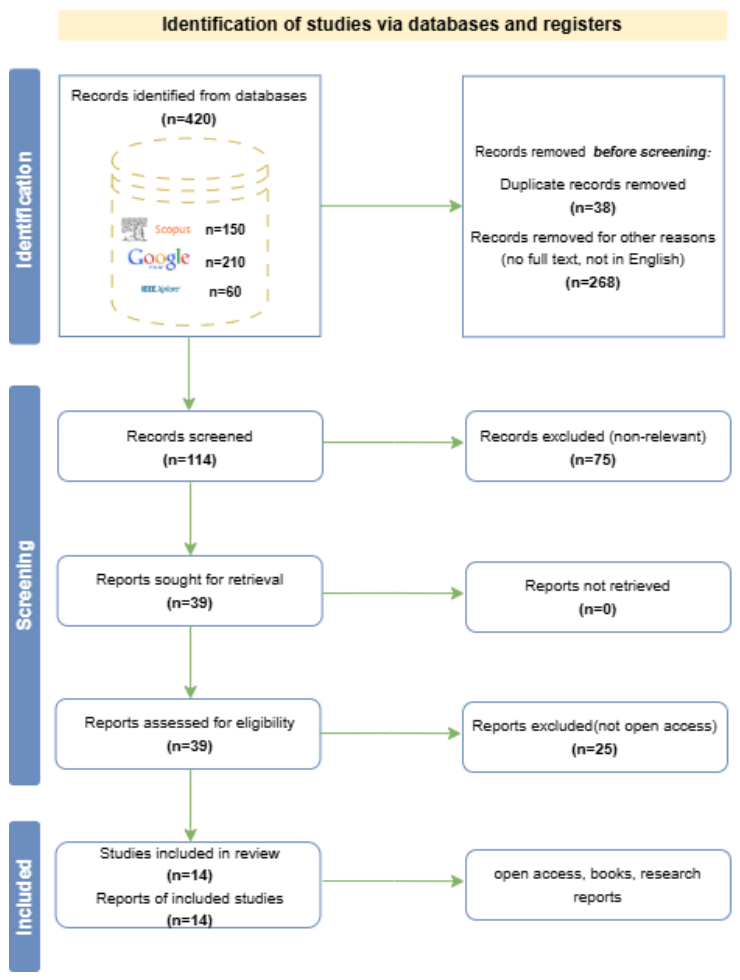
Table 1, 420 articles related to the creation of an adaptive learning environment using inclusive education and artificial intelligence technologies were selected. A total of 268 and 38 repeated articles without full text and not written in English, respectively, were excluded from the selection criteria. A total of 114 articles remained for the next screening period. Abandoned articles were checked, 75 articles that did not correspond to the topic were excluded from the selection, and 39 works were selected for further research. In the final stage, 25 articles that were not in open access were excluded. As a result, 14 articles were selected for analysis that corresponded to research issues and met the selection criteria (open access, books, and research reports). The full process of reviewing research-related articles is shown in
Figure 1.
The articles considered in the study are shown in
Table 2. In the “Authors” column of the table, the references for the authors are provided. In the column “AI technologies, models, or methods”, the algorithms and methods of artificial intelligence for students with special educational needs are demonstrated. In addition, the “Application or notes” data were recorded to explain the use and describe the features of the algorithms and methods.
The analysis revealed that artificial intelligence technologies can be used to create an adaptive learning environment for students with special educational needs. In particular, AI methods such as large language models (LLMs), natural language processing (NLP), computer vision (CV), machine learning (ML), and deep neural networks (CNNs, LSTMs, and ResNet) have been proposed. In addition, assistive solutions such as speech-to-text, text-to-speech, screen tutorials, braille displays, and tactile feedback are designed for use, taking into account the different sensory needs of learners.
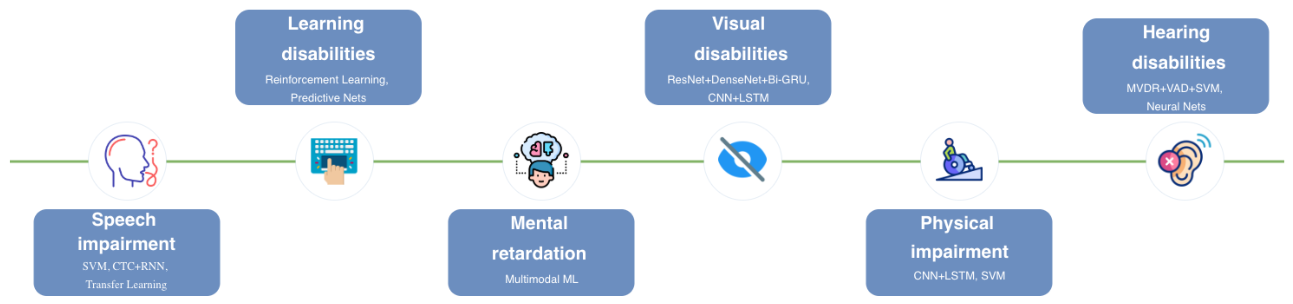
An analysis of the above studies, revealed that various AI technologies are used to adapt the educational process because of the diversity of developmental features and functional disorders of students with special needs, as shown in
Figure 2.
The result of the study was that CNN+LSTM [
13] algorithms were effective for students with visual impairments, MVDR+VAD+SVM [
23] algorithms were effective for students with hearing impairments, and neural networks were effective for students with learning difficulties.
This scheme aligns with the technological trends outlined in the literature. The effectiveness of these methods depends on data quality, educational method, accessibility requirements, and students’ individual characteristics. However, the use of these algorithms will enable the effective implementation of adaptive learning systems in an inclusive education environment. It is effective to utilize AI to create a learning model tailored to the needs of students with special needs, enhance their educational outcomes, and ensure equitable access to knowledge.
3. Research Methodology
The research methods used in this section were selected in accordance with the purpose of the research work. Research was carried out to assess the impact of an adapted learning environment based on artificial intelligence on the academic success and motivation of students with special educational needs. As part of the study, the structure, and content of the adapted educational environment and educational and methodological materials and electronic educational resources for its implementation were used. The study used a combined method that combines quantitative and qualitative methods. This method made it possible to comprehensively and deeply understand the course of research [
25].
3.1. Participants
The study participants were assigned to the experimental and control groups using a purposive sampling method [
26] while maintaining comparable baseline academic performance levels. Baseline equivalence between the groups was confirmed using an independent samples
t-test. The participants were recruited from two educational institutions in Kazakhstan: the College of “L.N. Gumilyov Eurasian National University” and the “Astana IT University” College LLP, based on the criteria presented in
Table 3. Only students with special needs took part in the selection process.
The number of respondents selected according to the criteria is shown in
Table 4. In total, 135 respondents were selected for the study.
3.2. Quantitative Data or Survey Instrument
Testing was conducted to assess the impact of an adapted learning environment developed using artificial intelligence on the academic performance of students with special educational needs. To determine the initial level of knowledge, the pre-test was administered before the start of the experiment, and the post-test was administered after the end of the study to assess changes in academic achievement. Test tasks were developed on the basis of the discipline “Fundamentals of programming” and included tasks of various types. In particular, it consisted of several selection questions, tasks to understand algorithms, and practice-oriented tasks to test basic programming skills. The test covered the main topics of the subject and was the same for both the preliminary and final tests, allowing comparison of the results. The test was developed by two to four teachers from each educational institution. They included an expert assessment of the compliance of the test tasks with the learning objectives, their correctness, and their difficulty level. To assess the test’s reliability, Cronbach’s alpha was calculated. The reliability of the content was ensured through compliance with the curriculum and expert verification.
In addition, a survey was conducted on a 5-point Likert scale (1—absolutely disagree, 5—fully agree) [
27] to determine the impact of an AI-based learning environment on learning motivation on the academic success of students with special needs. The questionnaire was administered at the beginning and end of the experiment. The results of the study were compared between groups to determine the effectiveness of the training method used, and the results were summed.
3.3. Qualitative Data or Interviews
Semi-structured interviews were conducted with students in the experimental group to better understand the impact of AI-developed adaptive learning technologies on the academic success and motivation of students with special needs. The interviews were attended by students from an experimental group who used an adaptive learning environment powered by artificial intelligence.
An interview guide was developed to clarify the main topics identified from a quantitative survey and to identify additional factors that contribute to the impact of learning on academic success and motivation among students with special educational needs. Interviews were analyzed using the thematic analysis method [
28] and translated literally.
3.4. Data Analysis
3.4.1. Quantitative Analysis or Descriptive Statistics
Quantitative data were analyzed to identify changes in the motivation and educational achievement of the study participants. Descriptive statistical analysis was performed by comparing the experimental and control groups. By comparing the initial and final results between the groups, the average values and standard deviations of academic performance and motivation were calculated.
To compare the indicators of educational success and motivation between the experimental and control groups, variance analysis (ANOVA) and Pearson correlation analysis were performed, and Cronbach’s alpha was calculated to assess the internal reliability of the data [
29].
In addition, Repeated Measures ANOVA was used to determine changes over time (pre-test and post-test) and the impact of the training method. This method made it possible to evaluate the following indicators:
differences between groups (experimental and control groups);
changes over time (pre-test and post-test results);
mutual influence of the teaching method and the time factor.
To determine the relationship between academic achievement and motivation in the study, Pearson’s correlation coefficients were calculated [
30]. Correlation analysis enables the determination of the direction and strength of the relationship between variables.
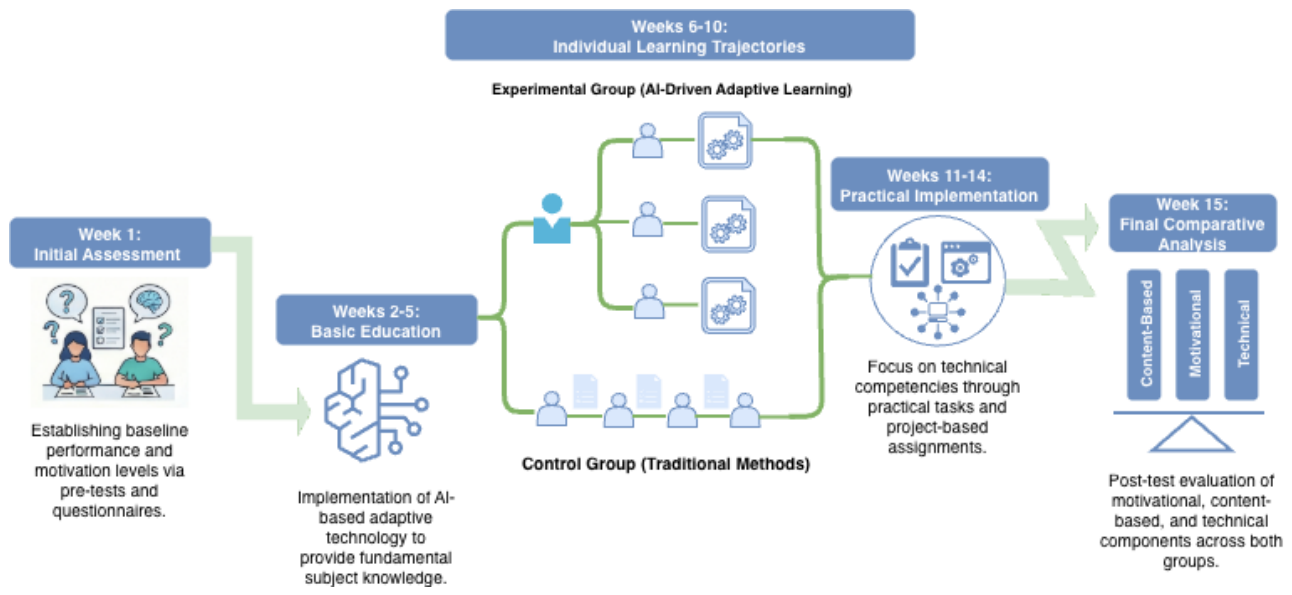
The study was carried out for 15 weeks, and the full process is shown in
Figure 3. Students were assessed through testing and practical tasks to determine indicators of educational achievement, and the motivational component was studied through a questionnaire. The results of the pre-test in the first week of the study and the post-test obtained during the previous week were used to assess changes in the academic performance of the students. Additionally, the impact of students on learning motivation was assessed using survey questions conducted during the first and last weeks.
The study participants were given basic knowledge in the discipline “Fundamentals of programming” from the second week to the fifth week. Students in the experimental group were trained with an adapted learning environment based on AI, and students in the control group were trained using the traditional learning method. From the sixth week to the tenth week, the experimental group carried out the formation of individual educational trajectories of students, the deepening of subject knowledge through the adaptation of the educational content and the personalization of the level of complexity of tasks. Additionally, in the control group, training was continued on the basis of traditional teaching methods. From the eleventh week to the fourteenth week, practical and project tasks aimed at consolidating the acquired knowledge and skills were carried out, and priority was given to the development of technical skills. At the fifteenth week, a formative test and a final questionnaire were taken from the experimental and control groups, and the impact of students’ academic performance and motivation was relatively analyzed.
3.4.2. Qualitative Analysis or Thematic Analysis
Qualitative data analysis using the six-stage thematic analysis proposed by Braun and Clarke [
28] was carried out from translations of semi-structured interviews. This method made it possible to analyze the experience of students using an adapted learning environment based on AI and identify semantic patterns and repetitive topics in qualitative data. The analysis was carried out in the following stages:
- 1.
At the initial stage of familiarization with the data, all interviews were read several times and translated word for word. At this stage, recurring ideas related to motivation to learn, academic success, and adaptive learning were identified, and the first remarks were made.
- 2.
The main semantic parts of the interview texts were systematically encoded. During coding, attention was paid to basic concepts such as changes in learning motivation, the level of understanding of educational material, adaptation to tasks, and learning difficulties at the stage of identifying source Codes.
- 3.
Similar codes were combined, and the main themes were formed at the search for Themes stage. The main topics included increased learning motivation, improved understanding of educational material, the effectiveness of individual learning trajectories, and difficulties in the learning process.
- 4.
The identified topics were compared with all data sets, and their consistency was checked. Topics that are repeated and similar in meaning were combined in the review Themes phase.
- 5.
Each topic was clearly defined and given names in accordance with the purpose of the study. These topics focused on describing students’ experience with adapted learning technologies at the Defining and Naming Themes stage.
- 6.
The final stage of the presentation of the results (Producing the Report), topics were related to the research questions and described. Examples from students’ answers were used to describe each topic.
A thematic analysis made it possible to determine the impact of an adapted learning environment based on AI on the motivation and academic performance of students. Several methods have been used to ensure the reliability and accuracy of the results. In particular, through triangulation, the results obtained from quantitative data (pre-test, post-test and survey) and qualitative data (interviews) were cross-validated, thus increasing the reliability of the study. The transcripts of the interview were manually encoded using well-defined coding procedures, and similar codes were grouped into topics by revision and comparison. Participants were also given the opportunity to clarify their answers, which helped to ensure the accuracy of the data. Transcripts of interviews and coding results have been revised several times to improve consistency.
3.5. Ethical Considerations
Permission to conduct the study was obtained from the relevant institutional ethics committee. During the study, the participants’ personal data were not collected, and all data obtained were processed anonymously and used solely for scientific purposes. In addition, the participants had the right to refuse to participate in the study at any time. The study was conducted in accordance with the ethical guidelines of the British Psychological Society [
31] and the Protocols of informed consent of the respondents. Permission to participate in the study “L.N. Gumilyov Eurasian National University” College Obtained on the basis of Protocol No. 2454-n and Protocol No. 122534 of “Astana IT University” College LLP.
3.6. Learning Materials
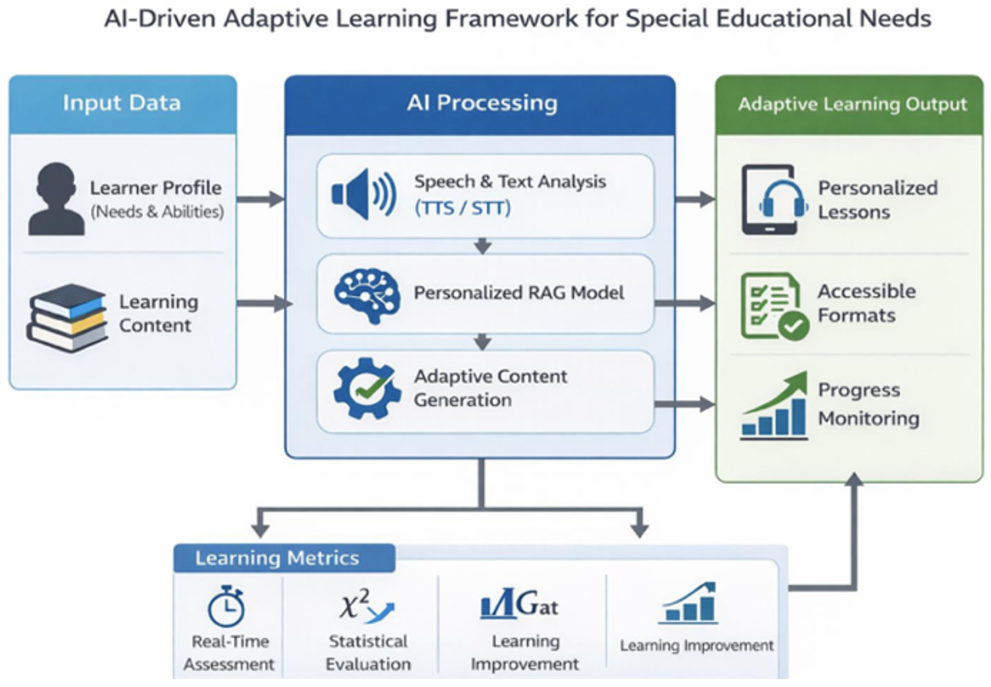
This section describes the materials used in the study. As research materials, an adapted AI-based learning environment was used for the experimental group. The adapted learning environment consisted of three blocks, as shown in
Figure 4. The first block reflects the student’s profile, needs, and capabilities, and contains information about the educational content. The second block provided for processing by artificial intelligence, text and speech analysis, the placement of a separate RAG model, and the generation of adapted content. The third block shows personalized lessons tailored to students with special needs, materials in an accessible format, and monitoring of Educational Progress.
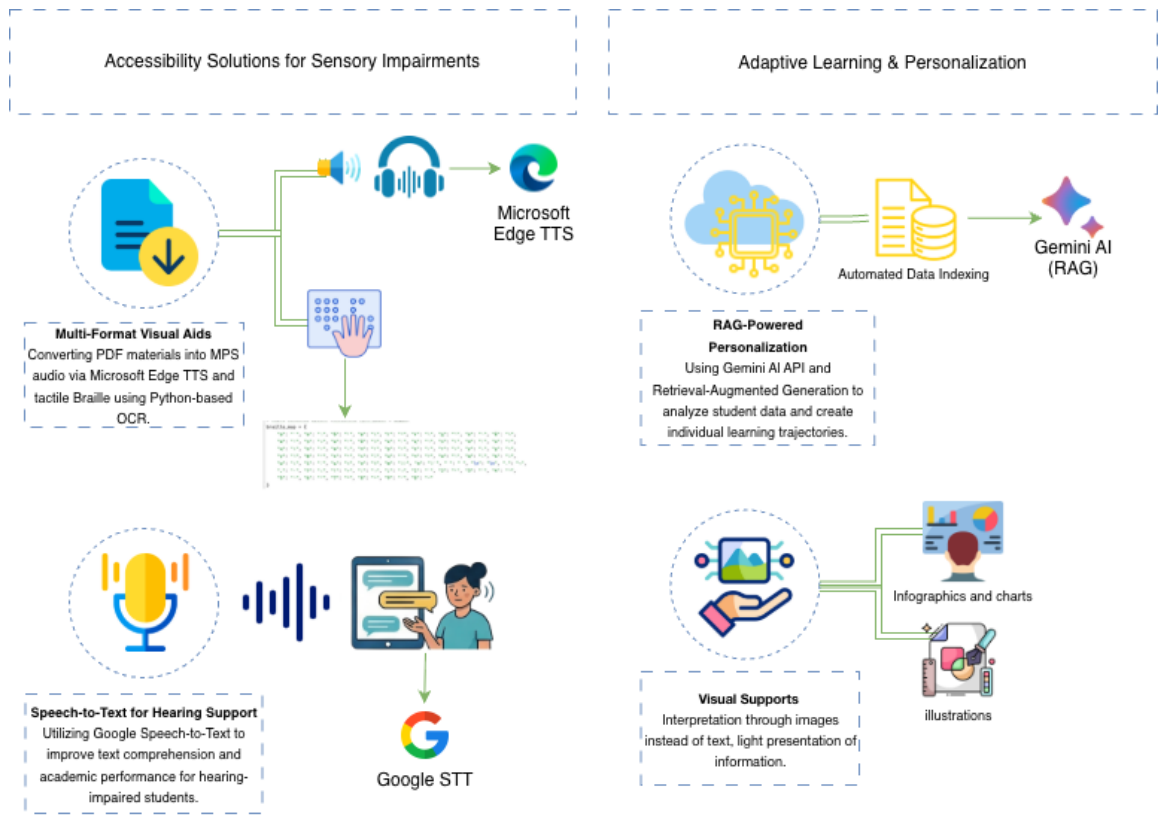
TTS and STT technologies have been used as important tools to create an adaptive learning environment that supports students with hearing or visual impairments. The Retrieval-Augmented Generation (RAG) method also enables the processing and analysis of large amounts of data collected from learners, transforming the learning process into an adaptive, efficient format [
32].
The research team was trained using the AI-based E-Inclusion platform, an adaptive learning environment. The platform has integrated several AI-based tools, namely, Gemini AI API with advanced generation (RAG), text-to-speech (TTS), text-to-text (STT), adaptive content personalization tools, and visual support materials.
The adapted training materials developed using AI in the experimental group are shown in
Figure 5.
For students with visual impairments, as shown in
Figure 5, the materials were presented in two formats: audio versions [
33] and Braille [
34]. During development, Microsoft Edge TTS (Text-to-Speech) technology based on artificial intelligence was used. This technology was implemented in the LuvVoice software environment and used neural network voice models in the Kazakh language [
35]. As a result, the lectures were saved in MP3 format and entered on the portal. To convert lecture materials into a braille reading and writing system, a special Python script (
https://www.python.org/) was written. At first, using the pdf2image and pytesseract libraries, the educational material in PDF format was converted to images, and the texts in Kazakh and Russian were recognized by OCR. The recognized texts were then converted into Braille letters using a specially created Braille symbol-matching table. Braille symbols according to each Kazakh letter and punctuation mark are defined in the
braille_map dictionary.
Materials for students with hearing impairments were prepared using the Google Speech-to-Text program, a speech-to-text (STT) technology. Given the usefulness of this tool, studies by [
36] emphasize that TTS systems can increase text comprehension and improve academic performance among students with hearing impairments.
The RAG (Retrieval-Augmented Generation) model is an artificial intelligence architecture that combines two features: searching for relevant information from external sources and generating responses using LLM. It not only relies on encoded knowledge during model learning but also begins to look for similar learning sources to enter current actual data in each query. This results in a combined query with the original query. This allows the model to generate more accurate, relevant, and up-to-date responses [
37].
In the educational field, the application of the RAG model opens great opportunities. For example, the creation of a personalized learning trajectory that considers each student’s characteristics can be used for recommendations, automated systems for answering questions, the development of educational materials, and adaptive assessments. This contributes to improving pedagogical outcomes [
38].
The Retrieval-Augmented Generation (RAG) method was introduced using the Gemini AI API to personalize classes by analyzing students’ learning activities and performance, providing prompt feedback, and providing individual learning trajectories [
39]. The Gemini AI API also loads editable documents as files (PDF, TXT, MD, JSON, code) and automatically analyzes sections such as headers, tables, and images. Then, the data, ≈300–800 tokens with 10–15% overlap, are divided into semantic parts. The embeddable data is converted into parts using the Gemini model and stored in a vector database controlled by Vertex AI Vector Search metadata for quick similarity searches. The user’s question is added to the request, and the most relevant fragments are extracted and added to the invitation. The system contributes to the model’s well-founded response with reference to sources. This allows the user to efficiently build an advanced search for tasks such as comments, tests, and personal feedback [
40].
Also known as the built-in File Search tool of the Gemini AI API, simplifies processing by automatically indexing and sorting data, enabling quick, accurate execution of the steps for obtaining and generating information using the RAG method. As a result, the proposed solution allows you to clearly adapt the content of training and tasks to students’ individual characteristics. This approach was particularly important for developing an adaptive learning platform and integrating inclusive education functions.
For students with autism spectrum disorders, speech or language development difficulties, and learning difficulties, information was presented in a visual format, including infographics and diagrams. Scientific research shows that infographics significantly improve the understanding and memory of educational material [
41]. In addition, visual support tools help you structure information and reduce students’ cognitive load. In this regard, during the study’s visual materials development, Canva AI tools were used to simplify the preparation of infographics. These tools allowed teachers to quickly and efficiently develop visual educational materials.
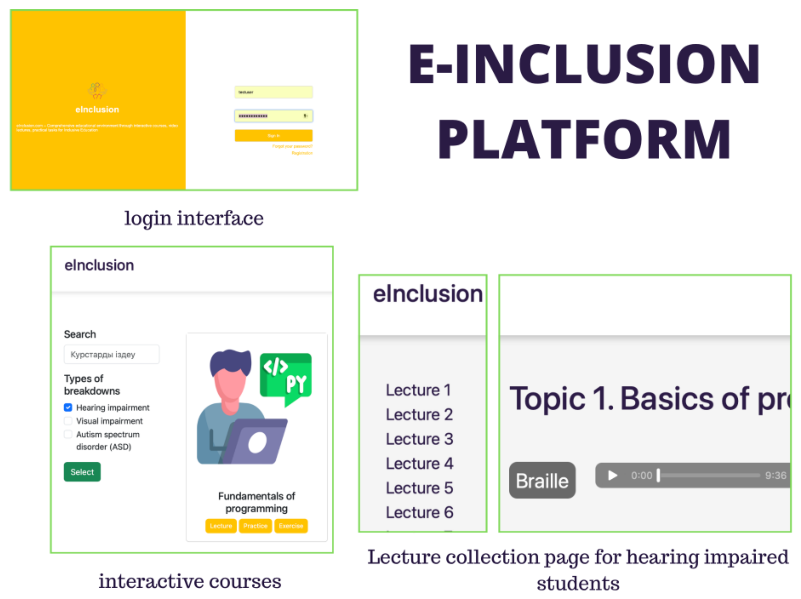
These AI technologies were integrated into the E-Inclusion platform (
Figure 6). The E-Inclusion platform is an integration system that personalizes educational content in an inclusive learning environment, builds a learning trajectory tailored to students’ needs, and ensures equal access to digital learning resources. The platform is designed with a modular structure and includes functionality that adapts to each student’s individual abilities.
The platform is described as a comprehensive digital educational environment that includes interactive courses, video lectures, and practical tasks for Inclusive Education. A simple and understandable interface will facilitate independent access for students and reduce technical barriers to the organization of the educational process.
The retrieval augmented generation (RAG) method was introduced to the platform via the Gemini AI API [
42]. During the development of the e-Inclusion platform, the research team combined the RAG method with Python and server-side web application logic. On this basis, educational materials adapted to the characteristics of students with special educational needs were used. Its built-in File Search tool simplifies processing by automatically indexing and sorting data, enabling quick, accurate execution of the steps for obtaining and generating information using the RAG method.
The experiments were conducted simultaneously at the two institutions under the same training conditions. The study’s protocol was standardized for the teachers and educational institutions involved in the experiment. In the experimental groups, training was conducted on a single digital platform, E-Inclusion, whereas in the control groups, traditional teaching methods were used; in particular, educational material was presented as text lectures, and practical tasks were conducted in a traditional format. The educational process was conducted in an offline format, with a single training program and the same class duration. Teachers were given specially developed methodological recommendations explaining the use of the platform and the procedure for organizing the educational process. This enabled a reduction in the influence of external factors and a comparison of the results between the experimental and control groups.
4. Results
This study used comprehensive statistical methods to assess changes in the academic performance and learning motivation of students with special educational needs. In particular, a one-way analysis of variance (ANOVA) was used to assess differences between groups. In addition, covariance analysis (ANCOVA) was used to control for the impact of the preliminary test results. A Repeated Measures ANOVA was used to determine changes over time (pre-test and post-test) and the mutual influence of the group and time factors. To determine the relationships between the variables, the Pearson correlation coefficient was calculated, and to assess the internal reliability of the questionnaires, Cronbach’s alpha was computed. Using statistical methods, the main changes in students’ academic performance and motivation, and their interrelationships, were systematically identified.
4.1. Descriptive Statistics
The study was conducted by the college “Astana IT University” LLP and the “L.N. Gumilyov Eurasian National University” college. A total of 135 respondents took part. The data were divided into an experimental (70 students) and a control (65 students) group. Students were divided by age and course as follows:
year I of study: 10 girls, 20 boys (15–16 years);
year II of study: 15 girls, 45 boys (17–18 years);
year III of study: 15 girls, 30 boys (19–20 years).
To assess the completeness and correctness of the dataset,
Table 5 presents the data processing step (data screening). In particular, the table lists the number of allowed (valid) and missing (missing) values for each variable. In addition, for categorical variables (e.g., age, gender, and school year), a numerical value was assigned for encoding. This was necessary to ensure that there were no critical flaws or inaccuracies in the coding of variables that would affect their reliability for use after statistical analysis, such as the
t-test, ANOVA, and RM-ANOVA.
A general understanding of the categorical variables used in the study was shown in
Table 6, depending on age, gender, group division and characteristics of students.
In addition, in order to take into account the characteristics of students with special educational needs between groups, their share was shown in
Table 7. The codes and detailed descriptions of the variables are given in
Appendix A Table A1.
4.2. Learning Achievement ANOVA
Based on the pre-test and post-test results for the experimental and control groups, descriptive statistics were calculated (
Table 8). To study the initial equivalence of groups, a
t-test for independent samples was performed. The results of the analysis showed that there was no statistically significant difference in the pre-test period (t = 0.32,
p = 0.748,
p > 0.05). This demonstrates that the levels of knowledge of the experimental and control groups prior to the study’s commencement were mutually comparable and equivalent from an initial perspective. The average score in the experimental group (6.8) was significantly higher than in the control group (0.8), which indicates an improvement in academic performance.
A covariance analysis (ANCOVA) was carried out to assess the impact of interventions, controlling for students’ disability type and pre-test results. The results showed that the impact of the group factor remained statistically significant even after controlling for students’ disability type (F = 309.74, p < 0.001). The impact of disability type was not statistically significant (p = 0.497), indicating that no significant differences in learning outcomes across disability categories were identified in the study. Thus, the results show that the effectiveness of an adapted learning environment is independent of students’ needs.
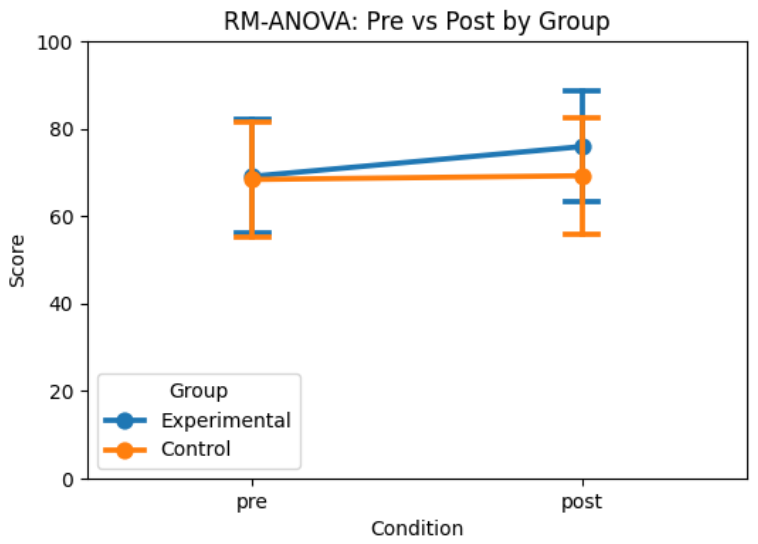
Variance analysis for repeated measures ANOVA (RM-ANOVA) was performed to assess changes in educational achievement between the experimental and control groups. RM-ANOVA considers time-dependent, repeated measurements from a single subject and allows for the identification of interactions between effects across subjects and within subjects via contrast tests [
43]. The analysis was carried out using the pre-test and Post-test (RM-ANOVA) and the group (Experimental vs. Control) as repeated factors (
Table 9).
The results showed in
Table 9 that the change in Condition was statistically significant (F = 537.29,
p < 0.001), which means that student performance varied significantly between Pre-test and Post-test. At the same time, the key effect with respect to the change between groups the Group effect was not very noticeable (F = 2.71,
p = 0.102). However, the interaction between Condition and Group was significant (F = 304.61,
p < 0.001), and this suggests that changes differ significantly between groups over time (
Figure 7).
The results of the study showed that Interaction is statistically important in the educational process [
44]. However, since the effect according to the Group is not very noticeable, it is proposed to consider approaches such as increasing the sample size and introducing several intermediate measurements instead of Pre-test and one Post-test to enhance the effect in future studies.
4.3. Motivation
Pearson’s correlation analysis of student motivation and Cronbach’s alpha coefficient were carried out. Depending on the training (
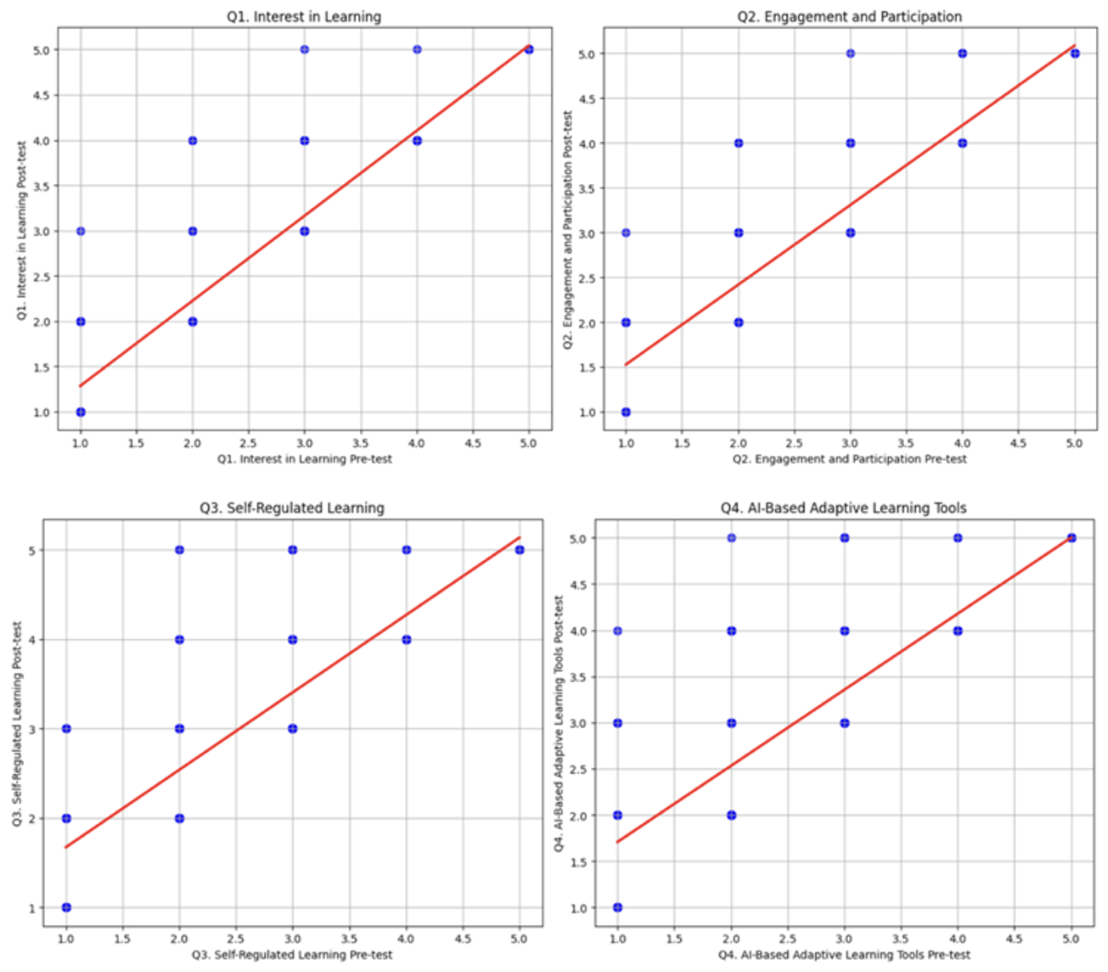
Table 10), Pearson correlation analysis was performed to study the relationship between pre-test and post-test scores for each factor listed in the table.
The results demonstrated statistically significant positive correlations across all factors. Interest in Learning (Q1) showed a very strong positive correlation between pre-test and post-test scores (r = 0.934,
p < 0.001), while Engagement and Participation (Q2) also demonstrated a strong positive correlation (r = 0.882,
p < 0.001). Similarly, Use of Self-Regulated Learning Skills (Q3) and Use of AI-Based Adaptive Learning Tools (Q4) showed significant positive correlations (r = 0.811 and r = 0.776, respectively,
p < 0.001). These findings indicate consistency and positive associations in students’ responses across the measured learning-related factors (
Figure 8). In general, a strong positive relationship among all variables indicates that the various factors in the learning process complement each other and contribute to improving student performance.
In addition, Cronbach’s alpha coefficient indicated high internal reliability for the research instruments. In the Experimental group, the value of was 0.922 in the Pre-test period and 0.903 in the Post-test period, whereas in the Control group these values were 0.948 and 0.931, respectively. Since all values are higher than 0.9, the questionnaire used was rated as having a high level of reliability. The values of the Cronbach’s alpha coefficient confirmed the high internal consistency and reliability of the motivation scale. The results of the correlation analysis showed that statistically significant positive correlations between pre-test and post-test scores across all measured learning-related factors. In addition, the internal reliability of the research tools is very high ( = 0.903–0.948), indicating that the data are reliable and stable, allowing us to draw conclusions from the study.
4.4. Results from the Interviews
The qualitative data collected through the semi-structured interview were consistent with the results of the quantitative analysis and provided meaningful information that complemented the results. The study participants shared their views on the application experiences of an adapted learning environment based on artificial intelligence, as well as their impact on learning success and motivation. Qualitative data were analyzed based on the Six-stage thematic analysis method proposed by [
28]. This approach made it possible to identify the main semantic patterns from the data. As a result of the analysis, the main topics were identified, such as an increase in learning motivation, an improvement in understanding of educational material, the effectiveness of the individual educational trajectory, and difficulties in the learning process (
Table 11). The identified topics supplemented the results of the quantitative study, allowing a deeper explanation of the impact of an adaptive learning environment based on artificial intelligence on the learning success and motivation of students with special educational needs.
The quantitative results of the study were consistent with the qualitative findings. The mean motivation Fin the experimental group (M = 6.80) was significantly higher compared to the control group (M = 0.86). In addition, interview data confirmed an increase in students’ learning motivation. An example of this is given in
Table 11. The participants noted that the phased transfer of materials and adaptation to individual characteristics helped them master complex topics. In addition, students said that the ability to read at their own pace increased the efficiency of the educational process. However, it was also noted that some participants experienced technical difficulties and struggled to adapt to the new format. This, in turn, indicates that technical support and user-oriented instructions are important to make the experimental method fully effective. In addition, since the thematic analysis was carried out by one researcher, this introduced a limitation in the study, namely the subjectivity of data interpretation. Clearly defined coding procedures and data rechecking were used to improve the reliability of the results. In future studies, it is recommended to involve multiple coders to assess expert agreement.
Thus, when the results of quantitative analysis and qualitative interview data are considered together, it turns out that adaptive learning tools based on artificial intelligence play an important role in improving the educational success of students with special needs.
5. Discussion
The study revealed that an adaptive learning environment powered by artificial intelligence positively affects the academic success and motivation of students with special educational needs. Empirical research over the past few years has also demonstrated the effectiveness of adaptive learning technologies. The results of the research by [
45] and colleagues indicate that the use of adaptive platforms significantly increases the effectiveness of Education. In particular, compared with traditional teaching methods, the introduction of such technologies can improve exam results and increase students’ sustained participation in the educational process. In addition, as part of the meta-analysis conducted by [
46], 25 studies were analyzed, and it was concluded that adaptive learning technologies systematically improve students’ learning activity and academic performance across different educational levels. The results of our study also support these conclusions, indicating that an adapted learning environment based on artificial intelligence has a positive effect on the academic success and motivation of students with special needs.
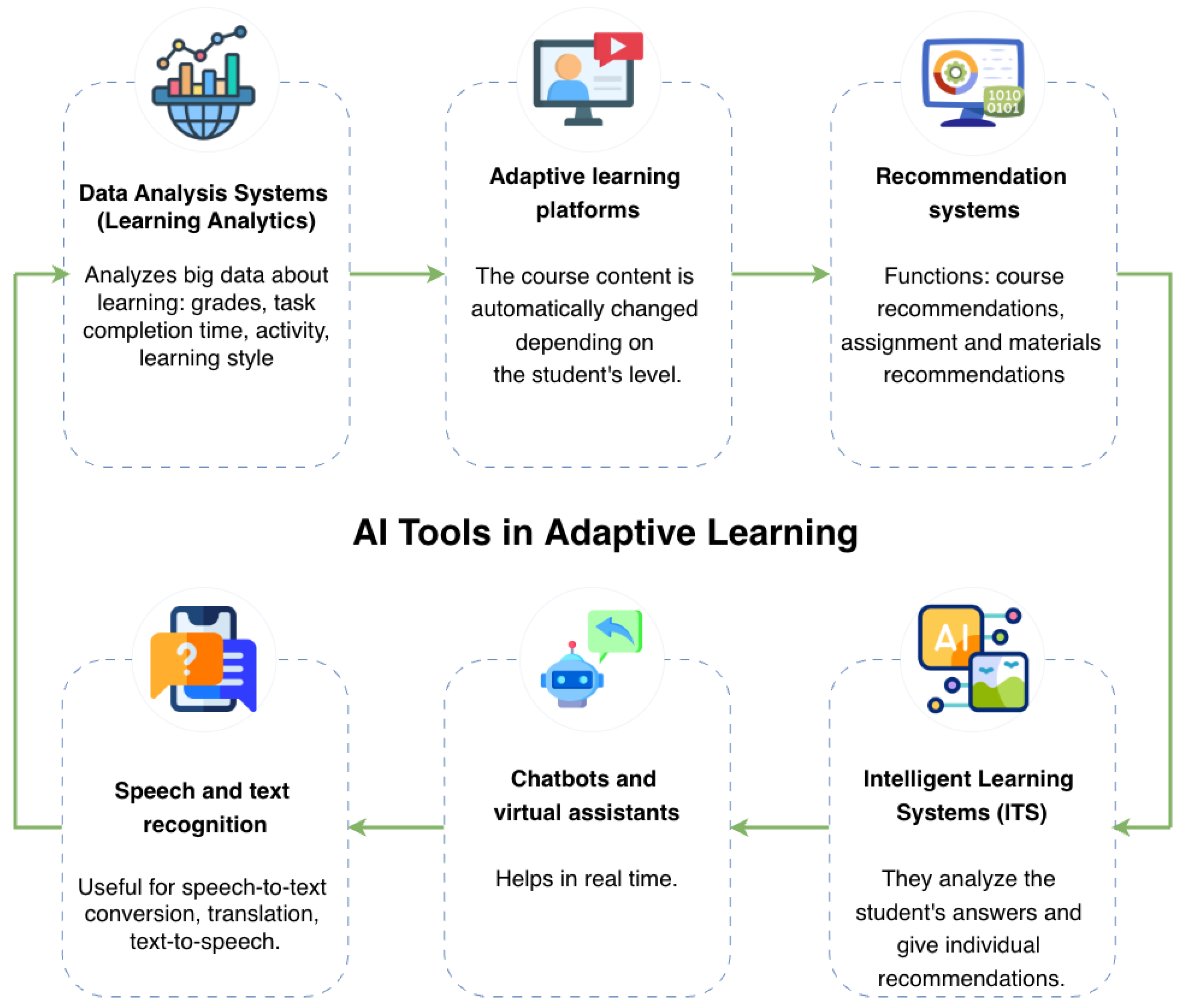
At the heart of such results is the fact that artificial intelligence technologies enable the consideration of students’ individual learning characteristics. In particular, by analysing large-scale data, such as students’ progress and learning preferences, AI algorithms can construct a personalized learning trajectory for each student. In addition, adaptive learning platforms, intelligent learning systems, speech recognition technologies, and virtual assistants provide students with instant support during their studies [
47], allowing them to adapt the training materials to their individual needs. This process is shown in
Figure 9.
Research by [
48] shows that artificial intelligence technologies enable teachers to develop adaptive learning systems that provide educational materials tailored to students’ individual characteristics and learning needs. Such systems allow training content to adapt to individual needs of students, thus increasing access to education and improving inclusive education.
In addition, Ref. [
49] indicated that the introduction of artificial intelligence technologies into adaptive learning systems enables teachers to create learning environments that meet students’ specific learning needs. Such systems not only create conditions for personalizing the educational process but also make a significant contribution to ensuring justice and equal opportunities in the educational environment. Artificial intelligence tools can improve students’ acquisition of basic academic skills. The results of our study also support these conclusions, indicating that an adapted learning environment based on artificial intelligence has a positive effect on the academic success and motivation of students with special needs.
However, although a study conducted by [
50] found that the use of the proket Technology Program significantly improved the development of students with specific learning disorders, especially their attention and memory, its impact on students’ learning success and motivation was not specifically considered. Our study found that the use of additional auxiliary technologies increases students’ motivation to learn and strengthens their participation in the educational process. This shows that the combined use of artificial intelligence and assistive technologies plays an important role in improving the effectiveness of the inclusive educational environment.
Also, the work of [
51] notes the importance of inclusive education in Kazakhstan, but the issue of creating an effective educational environment for students with special educational needs is not fully addressed. In this background, our study developed an adapted learning environment based on artificial intelligence in the Kazakh language. The study’s results show that an adaptive learning environment powered by artificial intelligence can improve the learning experience of students with special educational needs. Such systems enable the creation of an individual educational trajectory, the adaptation of task complexity, and the personalization of the educational process. This, in turn, contributes to the effective assimilation of educational material and increases learning motivation.
In addition, during the study, participants noted several technical difficulties. In particular, some students reported that access to the platform was problematic because of unstable internet connections and that adaptation to the new system was initially inconvenient. In addition, there were difficulties associated with the use of the system’s adapted functions. For example, there were obstacles to using text-to-speech tools, such as incorrect pronunciation of some words in the Kazakh language. Despite the listed difficulties, all the participants completed the study, however, in some cases, the students needed additional help from a teacher to overcome technical barriers. This suggests that technical issues did not significantly affect the completion of the experiment but did influence the comfort and pace of learning. The results obtained indicate the need for comprehensive technical support students with special educational needs. In particular, it is important to ensure the use of tools such as adapted workplaces (ergonomic chairs), screen magnifiers, sound amplification programs, text-to-speech and speech-to-text conversion technologies, Braille output devices, and special keyboards.
It is also important that the teacher chooses the appropriate tool, taking into account the student’s individual characteristics. For example, for a student who needs help with spelling, it makes sense to activate the spell-check function, and for a student who needs to read the text aloud, the speech-activation function [
52]. The automation of adaptive activities and the provision of methodological support to users when introducing technologies into the educational process require long-term study.
In general, the results of a qualitative analysis show that the successful implementation of adaptive technologies based on AI requires not only technical infrastructure, but also System methodological support for users and additional time for it. In future studies, these aspects warrant in-depth investigation.
6. Conclusions
The results of this study suggest that an adapted AI-based learning environment may positively influence the academic performance and learning motivation of students with special educational needs. The changes observed in the experimental group revealed that adapting educational materials to students’ characteristics, taking into account their learning pace, may have contributed to improvements in educational outcomes. The results will eliminate a small number of studies on adapted learning environments based on AI in the Kazakh language and contribute to in-depth research. The study also suggests that AI-based adaptive learning environments can create flexible and accessible learning environments for students with special needs.
The research work can be summarized in several sections. For example, from a practical point of view, it highlights the importance of teachers incorporating digital platforms into the learning process that support personalized learning trajectories and meet students’ needs. For directive bodies, the results indicate the need to support the integration of artificial intelligence technologies into inclusive education through infrastructure development, teacher training, and equal access to digital resources. For technology developers, the study highlights the importance of developing affordable artificial intelligence systems that accommodate diverse disabilities and support multimodal interaction (e.g., text-to-text, text-to-speech, and personalized feedback).
The results of the quantitative analysis revealed that a more pronounced increase in the number of indicators in the experimental group may be associated with the use of an adapted educational environment based on AI, which provides individualization of training. The adaptive system enabled consideration of students’ individual characteristics, including the pace of material assimilation, training level, and specific educational needs, thereby distinguishing it from the traditional approach. This, in turn, can contribute to more effective assimilation of educational material and increase learning motivation. The results align with the constructivist approach and the principles of universal learning design, which emphasize that the individualization and flexibility of the educational process, especially in inclusive education, may play an important role in increasing students’ academic success. The study demonstrates that AI-driven adaptive learning environments can contribute to sustainable and inclusive education by improving accessibility, academic engagement, and equal learning opportunities for students with special educational needs.
In conclusion, an adapted AI-based learning environment may positively influence academic performance and motivation of students with special needs. However, the qualitative data revealed technical and adaptive difficulties among some students, indicating the need to improve the system in the future. In future studies, the reliability and accuracy of the results should be improved by increasing the sample size, conducting long-term observations, and introducing intermediate measurements.