1. Introduction
Artificial Intelligence (AI) has radically changed the way and methodology of managing enterprises, becoming a determinant of their sustainable functioning in the era of digital transformation and market dynamics [
1,
2,
3]. Its continuous development, driven by the COVID-19 pandemic and the growing demands of stakeholders for economic efficiency, combined with the pressure to maintain social and environmental responsibility, makes analysing the benefits and barriers to AI implementation a fundamental topic for the practice of management sciences [
4,
5,
6]. AI technologies enable process optimization, which ultimately affects an enterprise’s competitiveness and long-term stability. In addition, they enable cost reduction and innovation [
7,
8,
9]. However, the adoption of AI-based solutions faces numerous obstacles, including a lack of trust, digital competence, and regulatory constraints [
10,
11,
12].
Despite the ongoing research on the implementation of AI in enterprises, the existing literature has focused mainly on the technological dimension of AI, the analysis of individual application areas, or general reviews of the benefits and threats associated with the digital transformation of organizations. Relatively rarely, however, do studies address AI implementation in the context of sustainable enterprise functioning while simultaneously considering the operational, organizational, and cognitive dimensions of its use. Moreover, the number of empirical studies analyzing the perception of the benefits and barriers of AI implementation through methods that enable the assessment of the degree of diversity in interpreting the studied phenomena appears insufficient.
In the present study, the research gap concerns the lack of in-depth empirical analyses that combine the issues of AI implementation, the sustainable functioning of enterprises, and the diversity of organizational perceptions of the effects of implementing this technology. To address this gap, survey research among enterprises implementing AI was combined with Shannon’s information entropy analysis. This enabled the identification of the dominant implementation benefits and barriers, as well as the assessment of their cognitive diversity. Consequently, the study goes beyond classical theoretical reviews and standard frequency analyses by presenting a multidimensional approach to the perception of AI implementation in organizations.
The study aims to empirically assess perceptions of benefits and barriers to the implementation of AI in enterprises and their role in the sustainable functioning of the organization, understood as the ability to achieve a level of sustainable efficiency that takes into account economic, social, and environmental aspects. Research hypotheses were formulated assuming that perceptions of AI’s benefits are highly diverse. At the same time, the barriers show greater cognitive homogeneity, and this technology functions mainly at the operational level, with insufficient use of strategic potential.
The paper adds value to the analysis of the results of a 2025 survey of 311 enterprises implementing AI, combined with the use of Shannon’s information entropy to assess the structure of perceptions (high diversification of benefits, greater consistency of barriers). In contrast to theoretical literature reviews, the paper provides practical implications, highlighting time savings and automation as the dominant advantages and the lack of trust as the main obstacle to implementing the principles of sustainable business operations. The paper formulates implementation recommendations that enrich knowledge of sustainable management in a turbulent environment.
The study adopted a broad definition of the enterprise’s sustainable functioning. It referred to its ability to achieve long-term economic stability while rationally using resources and minimizing the negative side effects of its operations. In this aspect, AI is treated as an intermediate determinant. It acts through mechanisms that increase process efficiency, reduce activity redundancy, reduce transaction costs, and improve decision quality. These results are conducive to a more responsible management of financial, human, and information capital. In the long term, the enterprise’s organisational resilience and adaptability are strengthened. Thus, the operational efficiency of AI implementations is an important component supporting the implementation of sustainability principles, even if environmental or social indicators do not directly measure it.
To clarify the conceptual layer of the study, it was assumed that the concepts of “sustainable functioning” and “sustainable operation” of an enterprise are not treated as synonyms. Instead, they were adopted as interrelated categories referring to different levels of organizational analysis. Sustainable enterprise operation is the execution of current organizational processes that ensure a balance among economic efficiency, social responsibility, and the rational use of resources. It mainly includes the way operational activities are carried out, process management, the use of technology, and a reduction in the negative effects of business activities. In contrast, sustainable enterprise functioning refers to an organization’s ability to maintain long-term stability and developmental resilience amid turbulent environmental changes. This category has a more strategic character. It includes the enterprise’s ability to adapt, maintain competitiveness, effectively utilize resources, and build lasting economic and organizational value.
The study assumes that the implementation of solutions based on AI indirectly influences the sustainable functioning of an organization by affecting the enterprise’s sustainable operations. This means that AI was not treated solely as a technological tool, but rather as a mechanism supporting long-term organizational efficiency. This is achieved through process automation, a reduction in redundant activities, improvements in decision quality, and a more rational use of information, human, and financial resources. Consequently, it was assumed that the sustainable functioning of an enterprise is reflected in the organization’s ability to achieve long-term economic efficiency while simultaneously maintaining adaptive capabilities, organizational resilience, and stakeholder responsibility.
The operationalization of both concepts was based on respondents’ perceptions regarding the results of AI implementation in organizations. Sustainable operations were reflected in variables such as time savings, automation of routine activities, improvements in customer service quality, cost reductions, and enhanced decision-making processes. Sustainable enterprise functioning, however, was interpreted more broadly. It was understood as the organization’s ability to maintain operational efficiency, develop digital competencies, reduce organizational risk, and build lasting adaptive capacity during digital transformation. Therefore, the adopted research model assumes that the operational effects of AI implementation constitute one of the mechanisms supporting the long-term durability and stability of organizations.
In the present study, it was assumed that the implementation of AI-based solutions may influence the sustainable functioning of an enterprise through the economic, social, and organizational–environmental dimensions of organizational activity. The economic dimension primarily focuses on improving the efficiency of organizational processes, reducing operational costs, saving time, and enhancing decision-making. The social dimension, in turn, refers to the development of employees’ digital competencies, the level of technology acceptance, building trust in AI-based systems, and the impact of technology implementation on organizational readiness for change. Meanwhile, the environmental and organizational dimension is indirectly reflected through the rationalization of resource utilization, a reduction in activity redundancy, increased efficiency in the use of data and processes, and support for more responsible resource management within the enterprise.
The operationalization of the indicated dimensions was based on respondents’ perceptions regarding the effects of AI implementation in organizational practice. The individual research categories included, among others, the assessment of AI’s impact on process automation, time savings, customer service quality, organizational risk, digital competencies, and the organization’s readiness for further technological transformation. This enabled capturing the multidimensional nature of AI implementation in the context of sustainable enterprise functioning.
The contemporary approach to implementing AI in enterprises has evolved significantly. Increasingly, AI is no longer perceived solely as a tool for automating operational processes. Greater importance is now placed on AI’s ability to support analytical processes, assist decision-making, and build organizational adaptive capacity. These capabilities are of key importance under conditions of dynamic environmental change. In this perspective, technologies based on data analytics, machine learning, and Natural Language Processing (NLP) may support the identification of hidden informational patterns and enhance organizations’ ability to use informational resources more effectively.
The scientific literature also emphasizes the growing role of AI and data analytics in the processes of organizational value creation and the diffusion of data value within enterprise cooperation networks. Zhenghui Li et al. [
13] point out that data value may diffuse among supply chain participants, thereby influencing organizational efficiency, coordination processes, and enterprises’ adaptive capabilities. The authors emphasize the importance of organizational learning mechanisms and information flows in building a data-driven competitive advantage. In turn, Kurylek Wojciech [
14], while analyzing the possibilities of applying NLP (Natural Language Processing) methods in EPS forecasting (Earnings Per Share), highlighted both the analytical potential of AI-based tools and the limitations related to their practical effectiveness, the risk of model overfitting, and the necessity for a critical evaluation of advanced analytical solutions under different market conditions. Such approaches extend the interpretation of AI from the operational level to the analytical and strategic levels, emphasizing the importance of technology in organizational adaptation processes and the long-term functioning of enterprises.
Despite the growing number of publications concerning the use of AI in enterprises, previous studies have focused mainly on the technological dimension of AI implementation, the analysis of selected application areas, or the assessment of the operational efficiency of particular solutions. Much less frequently, attempts have been made to simultaneously present perceptions of implementation benefits and barriers in relation to the organizational readiness of enterprises to operate under conditions of digital transformation and the increasing complexity of the environment.
Therefore, it is worth emphasizing the added value of the present study. It results primarily from the combination of survey research with Shannon’s information entropy analysis. This made it possible not only to identify the dominant benefits and barriers of AI implementation, but also to assess the degree of diversity in the perception of the studied phenomena. Consequently, it became possible to identify which areas of AI implementation are interpreted more uniformly by enterprises and which are characterized by greater cognitive diversity. This allowed the study to go beyond the classical frequency analyses that dominate many previous studies.
An important contribution of the present research is also the development of a conceptual research model integrating the technological, organizational, and cognitive determinants of AI implementation in enterprises. The proposed model organizes the relationships among organizational readiness, risk perception, digital competencies, and the scope of AI utilization in enterprises’ operational and strategic activities, while also serving as a starting point for further empirical analyses.
The remainder of the paper is organized as follows.
Section 2 presents the literature review concerning the determinants of sustainable enterprise functioning and the benefits and barriers of AI implementation.
Section 3 describes the research methodology, including the research questions, sample characteristics, survey procedure, and the analytical methods applied.
Section 4 presents the empirical results, while
Section 5 and
Section 6 contain the discussion, conclusions, limitations, and directions for future research.
2. Literature Reviews
2.1. Determinants of Sustainable Operation of Enterprises
Sustainable enterprise operation can be understood as an organization’s ability to maintain long-term economic efficiency while accounting for social and environmental issues in its management processes [
15,
16,
17]. The literature on the subject indicates that it is based on organizational and entrepreneurial factors [
5,
18]. They determine the ability to adapt to a turbulent business environment and shape sustainable value for stakeholders [
19,
20,
21]. Organizational and managerial competencies play an important role [
22]. They allow for the holistic integration of economic goals with the principles of social and environmental responsibility [
23,
24,
25]. It is also possible to highlight the key importance of managerial maturity and emphasize the role of operational activities’ compliance with the enterprise’s strategy [
26,
27,
28]. This promotes the stability of the functioning and implementation of the Sustainable Development Goals [
29,
30,
31]. Consequently, it should be assumed that the enterprise’s sustainable development is a holistic outcome of a coherent management system encompassing strategy, organizational culture, and decision-making [
32,
33].
Technological and innovative factors are also important determinants [
34,
35]. The digitization and digital transformation of an organization play an important role [
36,
37,
38]. Certainly, the ability to implement new technologies and the development of digital competences affect the efficiency of processes and, at the same time, enable a more rational use of enterprise resources [
39,
40,
41]. Digital management systems and data analytics increase the transparency of an organization’s operations. They also support knowledge-based decision-making, guaranteeing long-term stability [
42,
43,
44]. At the same time, innovation, including eco-innovation, should be considered as a key factor in improving energy efficiency and reducing environmental pressures [
45]. The literature emphasizes that technological transformation remains a derivative of enterprise competitiveness and leads to sustainable development amid dynamic market changes [
46].
Another group of determinants includes social and institutional factors [
47,
48]. They are related to employee competencies, organizational culture, and the regulatory environment [
49,
50]. An organization’s learning capacity, employees’ knowledge level, and acceptance of technological change affect the sustainability of implemented management solutions [
24,
51,
52,
53,
54]. Legal conditions, the enterprise’s orientation towards implementing sustainable development goals, and relations with the social environment should also not be overlooked [
55,
56]. These factors strengthen the organization’s stability and long-term effectiveness [
19,
57,
58]. It is also indicated that enterprises that conduct their business in a socially responsible manner and take into account the needs of stakeholders achieve a strong market position, more sustainable economic results, and greater resilience to environmental changes [
59,
60,
61]. As a result, the sustainable functioning of an enterprise can be considered the outcome of the interaction among organizational, technological, and social factors. Therefore, its role goes far beyond the effect of a single management tool.
2.2. Benefits and Barriers to Implementing Artificial Intelligence-Based Solutions
Implementing AI-based solutions brings numerous benefits to organizations [
62]. Such benefits include increased operational efficiency, process optimization, and new opportunities to scale a business. For example, in the supply chain, AI-based solutions enable faster decision-making and cost reduction through predictive analytics [
63]. In cloud services, the process of implementing innovation and automation is supported [
64], while AI chatbots improve customer service, reducing response times and increasing user satisfaction [
65,
66]. In the public sector, on the other hand, they accelerate the process of implementation and adaptation of modern administrative tools [
67].
Despite these advantages, implementing AI faces significant barriers. Technical limitations, lack of competence, and cultural resistance are very important. In small and medium-sized enterprises (SMEs), a problem manifested as insufficient financial resources and knowledge should be identified [
68]. In contrast, in the manufacturing industry, deficiencies in data and system integration should be identified [
69]. In the medical sector, barriers are problems with building trust in decision-making systems, as well as ethical and regulatory issues [
70,
71].
It is therefore necessary to formulate a strategy to overcome these barriers, which requires a holistic approach that combines investment in training and infrastructure with social factors. These obstacles can be overcome through conceptual frameworks in production [
69] and implementation strategies in product development [
72]. These activities increase the organization’s agility [
73]. In clinical practice and healthcare devices, the emphasis should be on patient acceptance and organizational readiness [
74]. At the same time, general barriers to implementation in enterprises include scaling challenges [
75] and adoption factors in Supply Chain Management (SCM) [
63]. In SMEs, financial transformation is largely driven by Enterprise Resource Planning (ERP) and AI automation systems, which in turn further illustrate the benefits and barriers to adoption [
76].
The results obtained confirm the multidimensional nature of AI implementation. It remains consistent with the assumptions of the Technology–Organization–Environment model (TOE). This concept was proposed by Tornatzky and Fleischer [
77]. The TOE is among the most commonly used approaches in research on the adoption of technological innovations. According to its assumptions, the decision to implement and the effectiveness of the implementation of new technologies remains the result of the impact of three complementary areas: (1) the technological context, including the features of the technology itself, its usability and its compatibility with existing solutions; (2) the organisational context, relating to resources, competences, structure and organisational culture; and (3) the environmental context, including market, regulatory and institutional conditions. The identified operational benefits align with the technological dimension. They indicate the perceived usefulness and effectiveness of AI solutions. Barriers related to the lack of trust and digital competence reflect the organisational dimension. Legal and ethical restrictions, on the other hand, relate to the environmental component. As a consequence, the perception of AI implementations is systemic in nature and cannot be reduced to an evaluation of the technology itself.
It should be emphasized that the primary aim of the literature review was to capture the multidimensional nature of AI implementation in enterprises. It encompassed technological, organizational, and social aspects. For this reason, interdisciplinary literature was included, comprising both academic publications and industry reports on current directions in AI technology development. At the same time, future research may be extended through a more in-depth critical analysis of publications from leading journals in management and information systems. This would further strengthen the theoretical foundation of the study.
3. Materials and Methods
The research aimed to determine the perceived benefits and barriers to enterprises in implementing solutions based on AI, as well as to assess how these technologies operate in organizational practice. An effort was made to identify both the operational effects of AI implementation and the factors limiting its use, as well as the level of organizational maturity in the use of machine learning tools. A research hypothesis was adopted, which assumed that the implementation of AI in enterprises is perceived both as a source of measurable operational improvements and as an area burdened with significant organizational and cognitive barriers. At the same time, the structure of perceived benefits is more diverse than the structure of perceived barriers.
The research sought answers to the following questions:
- (1)
What benefits do enterprises identify after implementing AI solutions?
- (2)
What barriers hinder the implementation of these technologies?
- (3)
How is their quality and usefulness evaluated in everyday work?
- (4)
To what extent do they affect management efficiency and strategic decisions?
- (5)
How is the level of risk and readiness of the organization perceived for further automation?
To maintain consistency between the adopted research questions and the analysis of the results, it should be emphasized that the individual research questions were treated as interrelated elements in an exploratory analysis of the organizational determinants of AI implementation in enterprises. Consequently, the analysis of the perceived benefits and barriers of AI implementation constituted the main interpretative axis of the study. Around this axis, further considerations focused on organizational readiness, trust in technology, digital competencies, and the potential for AI utilization at the strategic level.
The individual research questions are reflected in the results section, the discussion section, and the developed conceptual-research model. This makes it possible to provide a more synthetic presentation of the interrelationships among perceptions of implementation benefits, organizational barriers, and the level of adaptation of AI technologies in enterprises.
The empirical study was conducted in 2025 among enterprises declaring the use or implementation of solutions based on AI. The study covered enterprises operating in Poland, representing various sectors of the economy and different organizational sizes. The survey was conducted using a standardized, electronically distributed questionnaire. The selection of respondents was purposive and included entities that had experience with the implementation or practical use of AI-based tools in organizational activities.
The final research sample comprised 311 completed questionnaires. During the data verification process, incomplete responses, questionnaires containing significant inconsistencies, and duplicated records were excluded from the analysis. To reduce the risk of multiple participation by respondents representing the same enterprise, additional verification of response consistency and the organizational characteristics of the surveyed entities was conducted. The study involved respondents occupying managerial, specialist, and operational positions related to the use of digital technologies and the implementation of organizational processes.
The research questionnaire included closed-ended questions, multiple-choice questions, and selected open-ended questions. These allowed respondents to indicate additional areas of AI utilization within enterprises. In the case of multiple-choice questions, respondents could select more than one answer, particularly in the section concerning the perceived benefits and barriers of AI implementation. The research instrument was developed based on an analysis of the literature concerning AI implementation, digital transformation, organizational readiness, and technology acceptance. Prior to the main study, the questionnaire underwent a pilot test to assess the clarity and comprehensibility of the questions.
The research procedure also included an assessment of AI maturity within enterprises, taking into account the scope of technology utilization, areas of implementation, and organizational readiness for further process automation. Missing data were analyzed during the data verification stage. Questionnaires with substantial missing responses were excluded from further analysis. In contrast, minor data gaps did not significantly affect the interpretation of the results, given the study’s exploratory nature.
The research method was a 2025 survey of 311 enterprises. They represented enterprises that used or implemented AI-based solutions. The results obtained were subjected to statistical analysis. Next, Shannon’s information entropy was calculated to assess the degree of variation in perceptions of the studied phenomena. The use of this measure enabled us to assess whether enterprises perceive the effects of AI implementations similarly or whether their interpretations are multifaceted and cognitively dispersed. The use of this methodology allowed for a deeper interpretation of the results, going beyond the classical analysis of response frequency.
The study accounted for the structural diversity of enterprises in terms of industry, enterprise size, and the level of advancement of AI implementations. The sample included entities representing the manufacturing, service, and trade sectors. It also included enterprises with diverse scales of activity, ranging from small and medium-sized to large entities. The degree of AI use in the organization is also taken into account. It included both the stage of initial implementation of selected tools and more advanced system applications. The selection of enterprises was purposive, focusing on entities that declared the use or implementation of AI-based solutions. This allowed for a cross-sectional view of perceptions of the analyzed phenomena. Due to the exploratory nature of the study, it was not sought to achieve statistical representativeness in a structural sense for the entire population of enterprises. On the other hand, the internal heterogeneity of the sample was ensured, allowing for the identification of general interpretative tendencies.
The selection of Shannon’s information entropy as an analytical tool was intended to capture the degree of diversity in enterprises’ perceptions of the benefits and barriers of AI implementation. This method allows assessing the degree of dispersion in responses across individual interpretative categories. As a result, it becomes possible to determine whether the perceptions of the studied phenomena are more homogeneous or rather multidimensional and cognitively diversified. In contrast to classical frequency analyses, information entropy enables a synthetic assessment of the structure of the perception distribution and the identification of the level of cognitive concentration or dispersion.
In the present study, Shannon’s entropy proved particularly appropriate given the exploratory nature of the analyzed problem and the multidimensional nature of AI implementation in enterprises. This method enabled comparison of the degree of interpretative consistency between perceptions of benefits and implementation barriers. Consequently, it became possible to determine whether enterprises identify problems related to AI implementation in a similar manner or perceive more diverse areas of value resulting from its use.
4. Results
The interpretation of the obtained results was conducted in three stages. First, the frequency structure of responses was analyzed based on the number of indications provided by participating enterprises. Next, the dominant categories of perceived benefits and barriers related to AI implementation were identified. Finally, an interpretation of the organizational significance of the results was conducted, along with an assessment of how enterprises perceive the role of AI in their operational and strategic activities. Such an approach enabled not only the presentation of the distribution of responses but also the identification of broader tendencies in the organizational perception of AI implementation.
It should be emphasized that the presented percentage values refer to the share of individual indications among the total number of responses provided by respondents, rather than to the percentage of enterprises participating in the study. This means that a single enterprise could indicate more than one category of benefits or barriers related to AI implementation. Therefore, the obtained percentage values should be interpreted as the frequency structure of indications concerning the perceived effects of AI implementation, rather than as the share of enterprises identifying only a single factor.
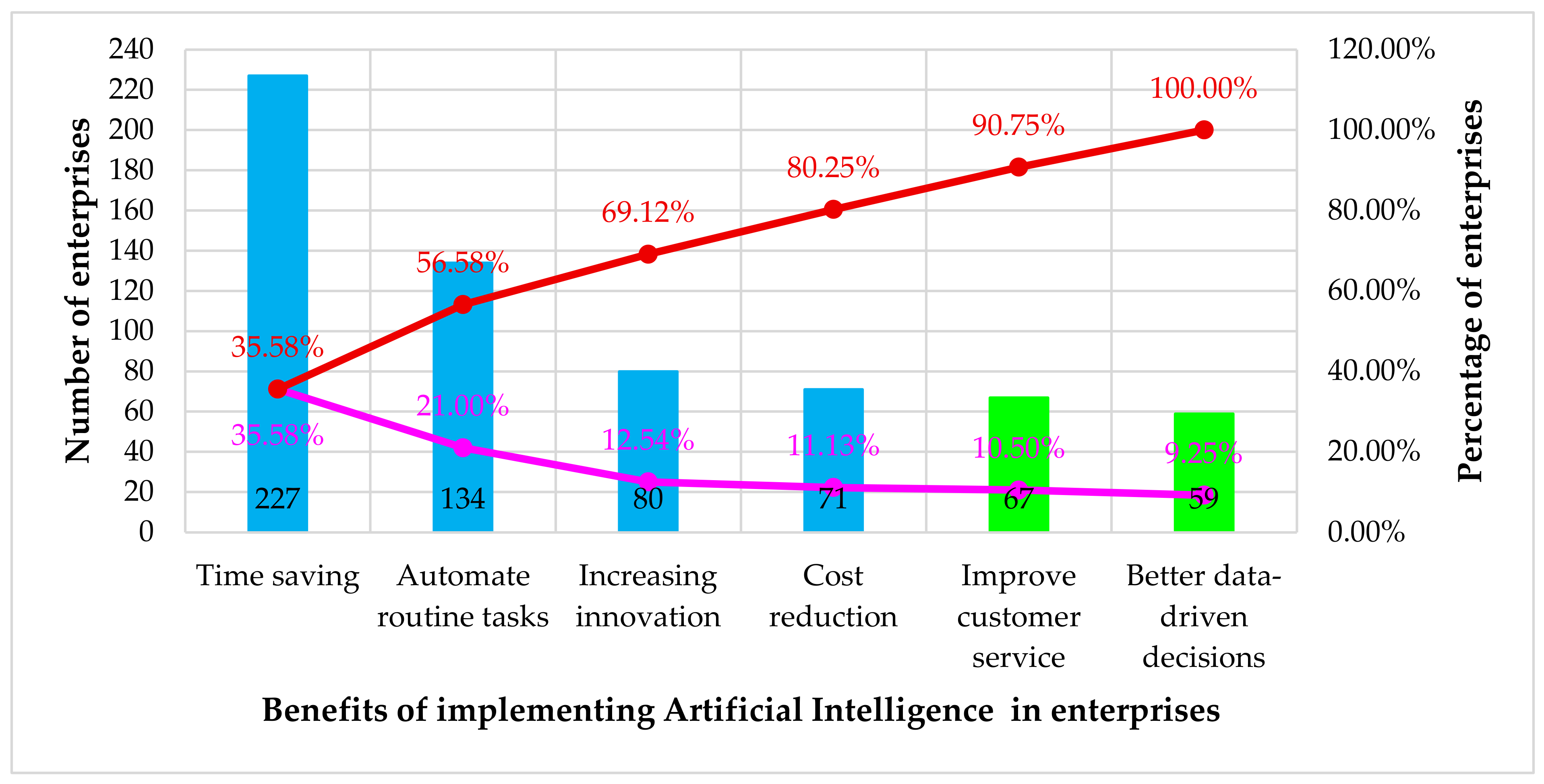
The research sought to determine the benefits enterprises see after implementing AI-based solutions and the barriers that accompany their implementation (
Figure 1). The enterprise’s answers indicating up to three of the most important benefits were analysed. In total, this gave 638 indications. The most frequently identified benefit was time savings—this answer was given 227 times, corresponding to 35.6% of all answers. This was followed by the automation of routine tasks—with 134 indications, constituting 21.0% of the total. The increase in innovation was recorded 80 times, reaching 12.5%. Cost reductions were mentioned 71 times, accounting for 11.1% of responses. Slightly fewer, i.e., 67 indications, were received due to improvements in customer service quality, reaching 10.5%. The least reported benefit was better data-driven decisions, which came up 59 times and accounted for 9.2% of all responses.
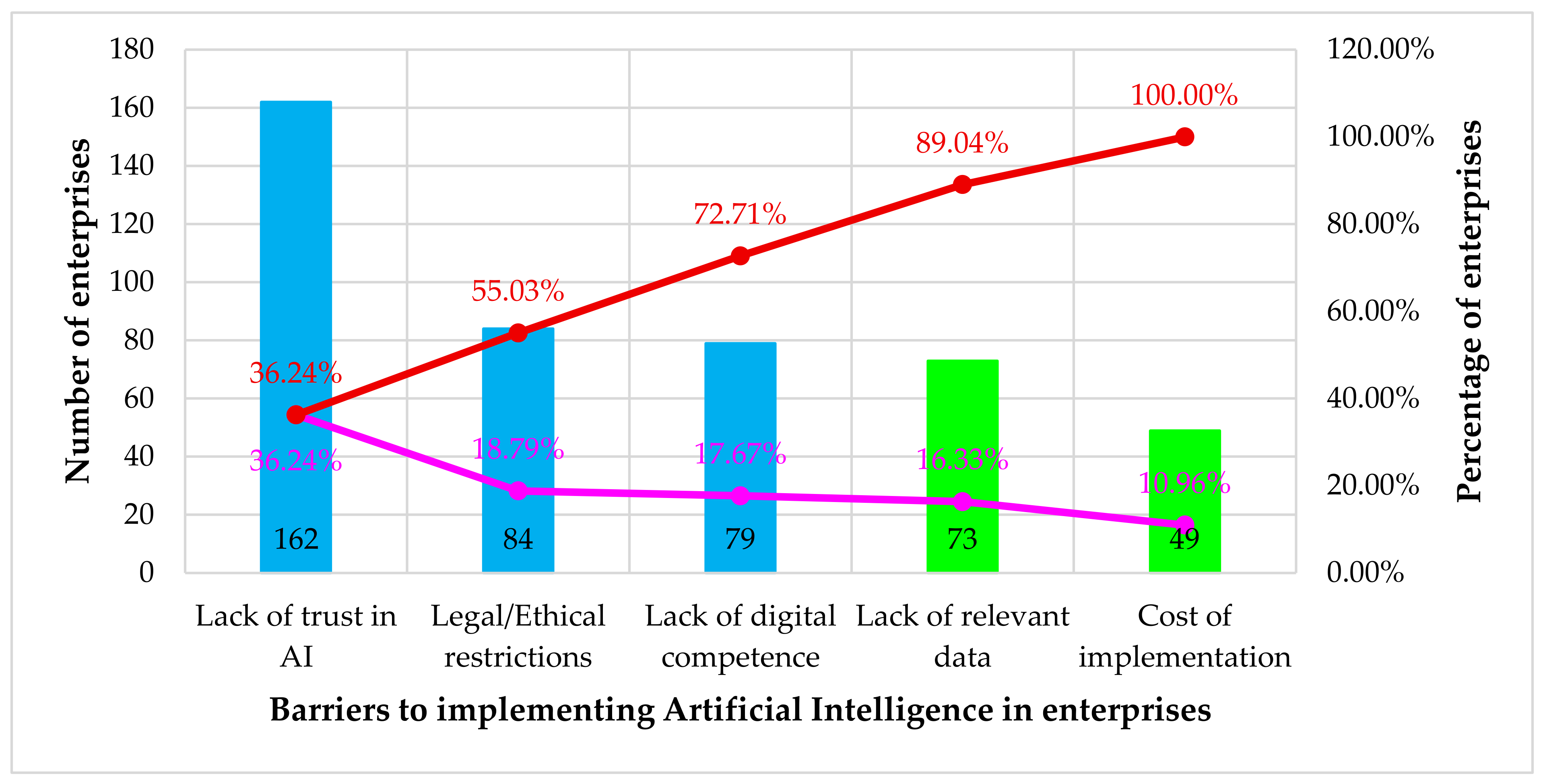
In parallel, the analysis covered the barriers to the implementation of AI in enterprises. A total of 447 indications were obtained here (
Figure 2). The most frequently cited barrier was a lack of trust in AI. It was recorded 162 times, which corresponds to 36.2% of all responses. Legal and ethical restrictions were noted 84 times, accounting for 18.8%. Lack of digital competence occurred 79 times, which accounted for 17.7%. Lack of adequate data resulted in 73 indications, i.e., 16.3%. The least indicated barrier was the cost of implementation, recorded 49 times (11.0% of total responses).
To deepen the interpretation of the results, the percentages were treated as a probability distribution. Shannon’s information entropy was then calculated. It enabled the determination of the degree of diversity in enterprise’s perceptions. A high entropy value means a multidimensional perception of the phenomenon. A lower one, on the other hand, indicates a concentration of opinions around a limited number of categories. The calculations were carried out by converting percentages into fractional shares (pi). Entropy is determined according to the formula:
where pi is the share of a given response category in the total number of indications, and the maximum value of entropy is defined as Hmax = ln(k), where k is the number of response categories, while normalized entropy is calculated as Hnorm = H/Hmax. The calculations were performed in Microsoft Excel (Microsoft Corporation, Redmond, WA, USA; Microsoft 365 version, accessed on 1 May 2026) using the LN() function and summing the product of pi·LN(pi).
To ensure full transparency and reproducibility of the entropy analysis presented in
Figure 1, the detailed calculation procedure based on the data from
Figure 1 and
Figure 2 is provided below.
In the first step, percentage values were transformed into fractional shares (pi), representing the probability distribution of responses. Then, the natural logarithm of each share (ln(pi)) was calculated, followed by the product pi·ln(pi). The Shannon entropy value was obtained as the negative sum of these products (
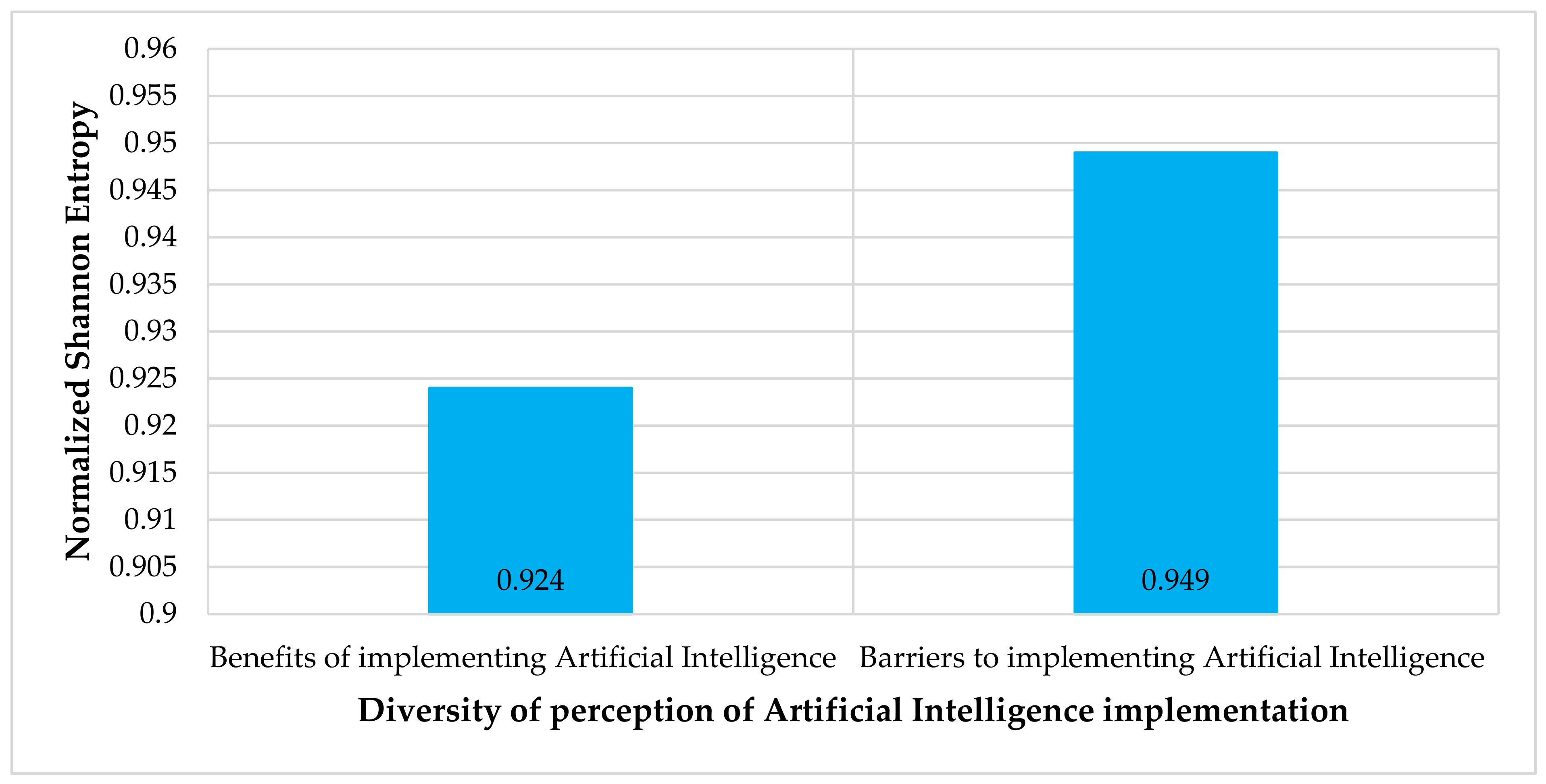
Table 1). Based on the above calculations, the entropy value equals: H = 1.656. The diversity of perceptions regarding AI implementation was additionally illustrated using Shannon’s entropy analysis (
Figure 3).
For the benefits of implementing AI, an entropy value of H = 1.656 (Hmax = 1.792; Hnorm = 0.924). This indicates a high level of diversification of the perceived effects of AI implementation. This means that enterprises identify multiple parallel areas of technology value, and the structure of responses is cognitively dispersed. For barriers to AI deployment, H = 1.528 (Hmax = 1.609; Hnorm = 0.949). This result indicates greater uniformity of interpretation. Enterprises define implementation barriers similarly, and the distribution of indications is more orderly. The obtained values indicate that perceptions of benefits are multifaceted, whereas perceptions of barriers are more common and cognitively unified.
The obtained entropy values, normalized for benefits (Hnorm = 0.924) and barriers (Hnorm = 0.949), indicate that, in both cases, enterprises’ perceptions are characterized by a high degree of differentiation. This means that the distribution of indications is not concentrated in one dominant category, but rather is relatively even. A small difference in entropy values does not provide a basis for an unambiguous decision on which of the analyzed categories is perceived as more diverse. As a consequence, it can be concluded that both the benefits and barriers to AI implementation are interpreted in multifaceted ways. This reflects the complexity of implementation processes in enterprises.
It is worth noting that Shannon’s entropy was used in this study for exploratory purposes. It was used to assess the level of diversification of responses in a structural perspective. The analysis did not include tests of significance for differences in entropy values or the estimation of confidence intervals, as the aim of the study was not to draw statistical inferences about the population, but to compare the distribution of responses in the sample studied. Therefore, the differences between the obtained values should be interpreted as descriptive. This approach aligns with the use of informational measures for analyzing concentration and distraction rather than traditional test statistics.
It should be emphasized that Shannon’s information entropy analysis was primarily used as an exploratory tool to identify the structure and diversity of perceptions regarding the studied phenomena. Therefore, the obtained values assumed a descriptive and interpretative character rather than an inferential one. The purpose of the analysis was not to statistically test the significance of differences between entropy values, but rather to identify general perceptual tendencies related to AI implementation in enterprises. For this reason, the discussion section focused mainly on the interpretation of the organizational and cognitive significance of the results.
5. Discussion
Based on the conducted research, several conclusions can be drawn about the functioning of solutions based on AI in enterprises. First of all, the operational perception of AI’s value is evident. It focuses primarily on improving current work processes. The most commonly identified implementation results relate to time savings. In addition, the effects also apply to the automation of routine activities. This indicates that AI is treated primarily as a tool to increase organizational efficiency. At the same time, the impact of AI on strategic and decision-making areas is significantly less emphasized. This is confirmed by a lower assessment of its importance in strategic decision-making. This means that these technologies operate primarily at the operational level in enterprises, and their analytical and forecasting potential is not yet fully exploited.
The obtained results may also be interpreted within a broader theoretical context by referring the analysed issues to the process of technology adoption in organizations. The dominant operational use of AI can be explained not only by enterprises’ pragmatic approach to new technologies, but above all by the staged nature of digital transformation. The literature emphasizes that organizations in the early stages of implementing technological innovation tend to focus primarily on areas where rapid, measurable effects can be achieved. These include process optimization and reduced task completion time. In this sense, the orientation observed in the study toward automating routine activities and achieving time savings can be interpreted as a natural stage of technology adaptation, preceding its broader use in analytical and strategic areas. Such an interpretation is consistent with the assumptions of technology adoption models, particularly the TOE. This approach emphasizes that the way innovations are used depends on the simultaneous influence of technological, organizational, and environmental factors. The limited use of the analytical potential of AI may therefore result from insufficient managerial awareness, as well as from the level of digital maturity of organizations and the degree of integration of their information systems.
When interpreting the research results, attention should also be paid to the ambivalent nature of enterprises’ attitudes toward AI. On the one hand, the high evaluation of the quality of results generated by AI systems may indicate that their usefulness in organizational practice is widely recognized. On the other hand, the persistently high perception of risk and the lack of trust in the technology suggest that the process of its socio-organizational acceptance has not yet been fully established. The literature on technology management indicates that similar phenomena often accompany the implementation of solutions based on decision-making algorithms whose mechanisms of operation are difficult for users to understand fully. This may lead to the emergence of what is referred to as a technological trust gap, limiting the scope for using analytical tools in decision-making processes. At the same time, the results of the informational entropy analysis, indicating a more diversified perception of benefits than barriers, may suggest that enterprises recognize a wide spectrum of potential applications of AI. However, their practical implementation remains constrained by common concerns. These concerns may relate to issues of responsibility, the transparency of algorithmic decision-making, and legal consequences. In this context, the development of digital competences, transparency in algorithmic systems, and the establishment of an organizational culture based on trust in technology may constitute important determinants of the further integration of AI into management processes.
At the same time, it can be noted that there are strong barriers to implementation, with a cognitive and organizational character. The most important of these is the lack of trust in AI, accompanied by legal and ethical concerns and by employees’ insufficient digital competencies. Therefore, it can be said that implementation limitations do not primarily result from the cost of technology, but rather from the level of organizational readiness and user acceptance. At the same time, a relatively high assessment of the quality of the results generated by AI tools is combined with a high risk assessment of their use, indicating an ambivalent attitude towards technology: it is perceived as useful but requires control and supervision.
The use of Shannon’s information entropy showed that enterprises perceive the benefits differently from the barriers associated with the implementation of AI. The benefits are multifaceted and dispersed. Therefore, enterprises see many parallel areas of technology value. Barriers, on the other hand, are interpreted more uniformly. This demonstrates a common pattern of concerns about AI and a similar way of identifying problems related to its implementation.
The first of the identified areas concerns the nature of AI utilization in enterprise activities. The research results indicate that this technology is perceived in organizational practice primarily in operational terms. Enterprises identify its significance primarily in improving day-to-day work processes and increasing the efficiency of enterprise operations. Among the most frequently indicated effects of implementation were time savings and the automation of routine activities. This confirms the dominant perception of AI as a tool that enhances organizations’ operational efficiency. At the same time, relatively limited use of this technology can be observed in strategic and decision-making areas. This means that despite the growing importance of data analytics and decision-support systems, the analytical and predictive potential of AI has not yet been fully utilized in enterprise management. Consequently, in many organizations, AI primarily functions as a tool to streamline operational processes rather than as an instrument to support strategic management and long-term organizational development.
The results indicate that implementing solutions based on AI may influence the economic performance of enterprises. This is primarily achieved through increasing operational efficiency, reducing organizational costs, and improving decision-making processes. In this regard, a key role is played by the perception of AI as a tool that enables time savings and automates routine tasks. This may lead to a more efficient allocation of organizational resources and increased enterprise productivity. At the same time, the high level of perceived barriers, particularly the lack of trust in technology, may limit the pace of AI adaptation and reduce the scale of potential economic benefits resulting from digital transformation. In a broader perspective, the analysis of the obtained results may indicate that the economic effects of AI implementation depend not only on the level of technological advancement of the enterprise, but above all on the organizational readiness to adapt new management models based on data and digital technologies.
Based on examples from organizational practice, it can be indicated that enterprises use AI much more frequently at the operational level than at the strategic level. In many organizations, AI-based solutions are primarily used to automate routine processes, customer service, content generation, and document analysis, and support ongoing administrative activities. For example, enterprises in the e-commerce sector primarily use AI algorithms to offer personalization, automate customer communication, and forecast demand. In turn, in the logistics sector, technologies based on AI algorithms primarily support route optimization, warehouse management, and the analysis of operational flows. These solutions are relatively less frequently integrated into strategic enterprise management processes, such as long-term organizational development planning, strategic risk management, or the design of business models based on predictive analytics.
A similar tendency can also be observed in organizations that use AI in business analytics. Despite the growing availability of machine learning tools, enterprises often use AI primarily to support current operational efficiency rather than as an element of long-term strategic transformation. These results, among other things, stem from limited trust in autonomous decision-making systems, insufficient analytical competencies among managerial staff, and difficulties in integrating AI tools with the existing organizational infrastructure and management processes.
The second component of the model concerns the level of organizational readiness to implement solutions based on AI. The analysis of the research results indicates numerous implementation barriers, mainly cognitive and organizational. The most significant barrier is the lack of trust in AI technology. This is often accompanied by concerns about its reliability, transparency of operations, and potential ethical and legal consequences. An additional factor that may limit implementation is insufficient levels of employees’ digital competencies, which make it more difficult to use tools based on machine learning algorithms effectively. In light of the obtained results, it can therefore be concluded that implementation barriers are not primarily due to the cost of technology, but rather to the level of organizational preparedness of enterprises and the degree of acceptance of new solutions by users. Consequently, effective AI implementation requires not only technological investments but also the development of employees’ competencies, the building of an organizational culture supportive of innovation, and the strengthening of trust in data-driven systems.
The third element of the model concerns the perception of the benefits and risks associated with the use of AI in enterprises. The analysis of the research results indicates an ambivalent evaluation of AI technology. On the one hand, enterprises highly assess the quality of results generated by AI systems, noting their usefulness in improving organizational processes and increasing work efficiency. On the other hand, a high perception of risks associated with the use of these technologies can also be observed, leading enterprises to adopt a cautious approach to their implementation. As a result, AI is perceived as a useful tool that nevertheless requires constant supervision, control, and appropriate management mechanisms. Furthermore, the analysis using Shannon’s entropy indicates that the benefits of AI are perceived in a more diversified and multidimensional way than the implementation barriers. This suggests that enterprises recognize numerous parallel areas of value offered by this technology. At the same time, barriers are interpreted more uniformly and stem from similar patterns of concerns about their implementation. An analysis of the proposed theoretical model shows that the use of AI in enterprises results from the interaction of three key dimensions: the operational character of technology use, the level of organizational readiness for its implementation, and the perception of benefits and risks associated with its application. These factors interact with one another and shape both the scope of AI utilization within organizations and the pace of its further development. Consequently, the effective use of AI in enterprises requires the development of technological infrastructure, the strengthening of digital competencies, the building of trust in algorithm-based systems, and the gradual expansion of AI applications from the operational to the analytical and strategic levels.
The results of this study can be compared with the findings of other researchers. These findings show significant convergence in identifying the key benefits and barriers to AI adoption in enterprises, particularly in the SME segment. It can be noted that time savings and the automation of routine tasks are the main advantages, consistent with the observations of the Adecco Group [
78], where AI reduces employees’ daily workload, allowing them to focus on creative tasks. They also align with the analysis by Bika.AI [
79], which emphasizes process improvements without increasing employment [
78,
79]. The lack of trust in AI as a predominant barrier aligns with the conclusions of the Tony Blair Institute report [
80] on scepticism about the reliability and ethics of algorithms, and with OECD research, which points to skills shortages and the cost of living as common barriers for SMEs. Legal and ethical constraints and data gaps coincide with the TOE of Syahidun et al. [
81] in Asian SMEs, where the need for better infrastructure and regulation is highlighted, while the low rank of implementation costs contrasts with techUK [
82] concerns about high upfront spending, suggesting an evolution of perception in mature economies [
81,
82]. Overall, the results of our own research confirm a global pattern of ambivalent attitudes towards AI. Overall, the results of the present study may reflect tendencies observed in previous international studies concerning ambivalent attitudes toward AI.
6. Conclusions
Based on empirical research, it is reasonable to focus implementation activities on both the technology implementation process and, above all, on building organizational acceptance of AI. In particular, it is advisable to enhance employees’ digital competencies systematically. In addition, it is necessary to ensure that the principles of algorithmic operation and the scope of their decision-making responsibility are transparently communicated. This, in turn, can reduce distrust and perceived risk. At the same time, AI applications should be gradually expanded from the operational to analytical and strategic levels. This can be achieved by integrating tools into management processes and using data to support long-term decisions. An important step is also to sort out legal, ethical, and managerial issues by introducing procedures for supervising AI systems. This will increase the security of technology use and the stability of its implementation within the organization.
Moreover, it should be emphasized that a systemic approach to managing AI implementation within organizations is necessary. The implementation of solutions based on machine learning algorithms should be treated more broadly than as a one-time technological project. Instead, it should be perceived as a long-term process of organizational transformation. This process requires integrating analytical tools with the enterprise’s existing information infrastructure. Equally important is ensuring the appropriate quality of data used in decision-making processes. It is also recommended to develop managerial competencies in interpreting the results generated by AI systems and in using them in strategic planning. The integration of AI into knowledge management and data analytics systems can enhance the organization’s ability to identify new market opportunities and respond more quickly to changes in the economic environment.
At the same time, it is important to build an organizational culture that promotes the responsible use of digital technologies. This involves fostering openness to innovation and encouraging cooperation between technology specialists and information system users within the organization. In practice, this may involve establishing interdisciplinary project teams to develop and monitor AI applications. Such an approach better aligns technology with the organization’s actual needs and reduces the risk of ineffective implementations. In the long term, this contributes to the gradual increase in enterprises’ digital maturity and enables a more conscious use of the potential of AI in management processes and in building competitive advantage.
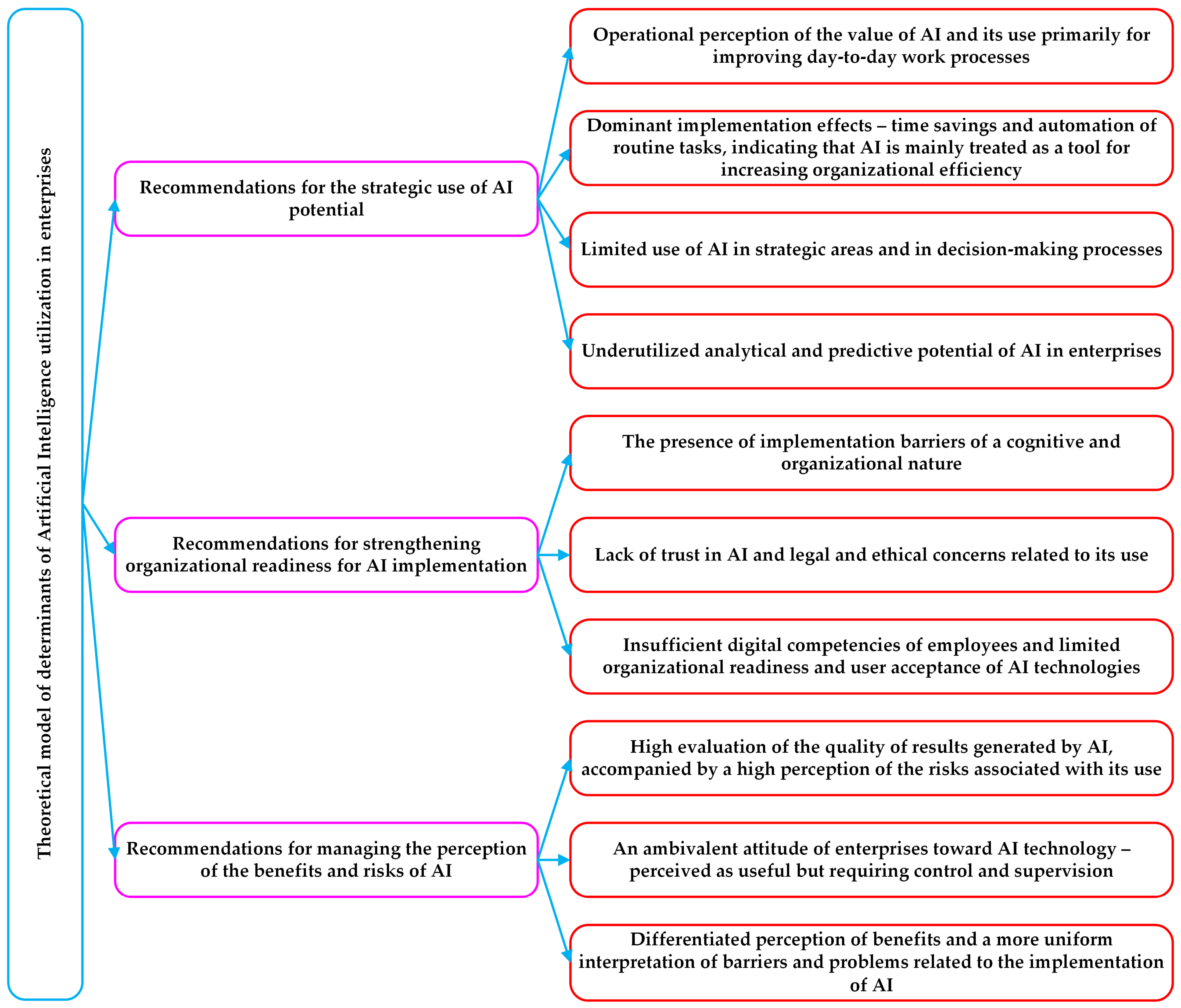
Based on the conducted research, a theoretical model of the determinants of AI utilization in enterprises can be proposed, as presented in
Figure 4. The model constitutes a synthetic representation of empirical research on the perceived benefits and barriers of AI implementation, as well as on how these technologies function in organizational practice. Its structure is based on three complementary interpretative areas. These refer to the character of AI use, the level of organizational readiness for its implementation, and the perception of its benefits and risks. From a model perspective, these factors form an interrelated system of determinants that influence both the scope and the effectiveness of AI use in enterprises.
To increase methodological coherence and clarify the nature of the model, it should be emphasized that the model in
Figure 4 has a conceptual-research character. Its construction was based on both the analysis of the literature and empirical research on the perception of the benefits and barriers of AI implementation in enterprises. The model goes beyond a purely descriptive scheme. Instead, it presents an ordered system of relationships between the main interpretative categories identified in the study. It includes three interrelated areas: the operational character of AI utilization, the level of organizational readiness for technology implementation, and the perception of benefits and risks associated with its use.
At the conceptual level, it was assumed that the indicated components remain in a cause-and-effect relationship with one another. The operational use of AI influences the level of perceived organizational benefits. In turn, organizational readiness determines the scope and effectiveness of technology implementation. At the same time, risk perception, lack of trust, and competency limitations affect the pace of adaptation of AI-based solutions and the possibility of their transition from the operational to the strategic level. Consequently, the model assumes that the effectiveness of AI utilization in an enterprise results from the mutual interaction of technological, organizational, and cognitive factors.
To provide the model with a more formal research character, it was linked to the adopted research questions and the operationalization of the variables used in the survey study. Individual elements of the model correspond to categories analyzed empirically, including time savings, process automation, trust in AI, digital competencies, risk perception, and the assessment of AI’s impact on organizational efficiency. Therefore, the model serves as an integrative link between the theoretical and empirical layers of the study. At the same time, it serves as the basis for interpreting the obtained results.
It should also be added that the presented model has an exploratory character. It constitutes a starting point for further empirical validation. In future studies, the model may be developed by applying more advanced statistical procedures, particularly for modeling relationships between variables, regression analysis, structural equation modeling (SEM), or comparative analyses across sectors of the economy. This would allow for the further formalization of the model and verification of the strength and direction of relationships between the distinguished components.
The conducted research encountered some limitations. They resulted primarily from the survey method used, based on enterprises’ declarations. The responses reflect enterprises’ subjective assessments, which may differ from the actual level of technology use in enterprises. In addition, the interpretation of the concept of AI may have been inconsistent, as enterprises could refer to both advanced analytical systems and simple tools that automate work. The cross-sectional nature of the study has also become a limitation. It did not allow us to observe changes in organizational attitudes over time or to capture the dynamics of technology implementation.
Due to the exploratory nature of the study, the research focused primarily on identifying the main interpretative tendencies regarding the perception of the benefits and barriers of AI implementation in enterprises. Therefore, the sample selection was nonprobabilistic. Moreover, the study’s purpose was not to achieve full statistical representativeness of the entire enterprise population. Consequently, the results obtained reflect specific perceptual tendencies within the examined group of entities.
The applied methodology was primarily based on respondents’ declarative assessments of AI use in organizational practice. This means that the study focused on subjectively perceived implementation effects rather than on the direct measurement of objective indicators of enterprises’ economic or organizational performance. Such an approach enabled identification of how organizations interpret AI. However, it does not allow for determining the actual scale of the technology’s impact on enterprise performance.
An additional limitation is undoubtedly the cross-sectional character of the study, which does not allow for capturing changes in enterprises’ perceptions over time. It also does not enable the observation of the long-term effects of AI implementation. The effects of implementing AI-based solutions may emerge over different time horizons, depending on the level of technological advancement, the scale of implementation, and the enterprise’s organizational maturity. Therefore, the results obtained reflect the state of organizational experience and evaluation at a particular stage of enterprises’ digital transformation.
It should also be added that the purpose of the study was not to test cause-and-effect relationships between variables. Instead, the research aimed to explore and identify the main interpretative categories related to the use of AI. For this reason, the analysis relied primarily on descriptive statistics and Shannon’s information entropy. More advanced statistical procedures, such as regression analysis, hypothesis testing, or Structural Equation Modeling (SEM), may provide directions for future research that enable a more in-depth validation of the relationships among the analyzed factors.
The effects of implementing AI-based solutions may emerge over different time horizons. This depends on the level of technological advancement, the scale of implementation, and the enterprise’s organizational maturity. In the case of simple automation tools, the effects may become visible relatively quickly. In contrast, implementing more complex analytical and decision-support systems often requires a long-term process of organizational adaptation. Therefore, the obtained results should be interpreted as reflecting enterprises’ perceptions at a particular stage of digital transformation rather than as a final assessment of the long-term effects of AI implementation.
In addition, the study did not make a detailed distinction among enterprises based on industry, level of digital maturity, and scale of AI use. Moreover, this may have affected the diversity of responses. The sample size allows for an analysis of general trends. However, it is not possible to fully generalise the results to all enterprises operating in the economy. The use of Shannon’s information entropy was a synthetic interpretive tool, not a substitute for in-depth qualitative analysis. Hence, the results obtained should be treated as an approximation of the structure of perception of the studied phenomena, rather than a full explanation of them.
Moreover, the study’s research method focused primarily on enterprises’ perceptions of the use of AI in enterprises. It did not concentrate on the direct measurement of the actual effects of technological implementations. This means that the empirical results mainly reflect how representatives of organizations perceive the benefits and barriers of AI adoption, rather than necessarily capturing their objective impact on enterprise performance. In practice, the level of use of AI-based systems may vary depending on the specific characteristics of the industry, organizational structure, or the level of advancement of the IT infrastructure. Therefore, the interpretation of the results should take into account that enterprises’ perceptions may be shaped by both their own experiences and broader public discourse on digital technologies.
It should also be emphasized that the study had an exploratory character and constitutes a starting point for further analyses concerning the role of AI in the functioning of enterprises. The results indicate general interpretative tendencies but do not allow a full understanding of the complex organizational mechanisms underlying the implementation of AI technologies. In particular, the study did not examine in detail the relationships between the level of AI utilization and the economic performance of enterprises or their adaptive capacity in a turbulent market environment. Therefore, future research should consider more advanced methodological approaches. These could include comparative analyses across sectors of the economy, longitudinal studies, and in-depth case studies, which would enable a better understanding of the process of developing organizational maturity in the use of AI.
Future research could extend the analyses to a longitudinal approach, allowing observation of changes in organizational attitudes towards AI over time. It would also be possible to capture the process of technological maturation of enterprises. It is also worth deepening the analysis by accounting for industry diversity, the level of implementation, and the role of employee competencies in adapting to AI tools. It would also be interesting to combine quantitative methods with qualitative research to explain the mechanisms of building trust in algorithmic systems and to present how they are actually used in decision-making processes. In addition, it is advisable to examine the relationship between the use of AI and the organization’s economic performance, and to analyze the impact of legal regulations and ethical standards on the pace and scope of technology implementation.





 ,
,