Article

From Internal Branding to Sustainability: The Role of Organizational Communication in Private Healthcare Management

by
Greta Hoxha
,
Georgios Tsekouropoulos
and
Dimitrios Theocharis
*
Department of Organisation Management, Marketing & Tourism, International Hellenic University, 57400 Sindos, Greece
*
Author to whom correspondence should be addressed.
Sustainability 2026, 18(11), 5537; https://doi.org/10.3390/su18115537
Submission received: 24 April 2026 / Revised: 19 May 2026 / Accepted: 27 May 2026 / Published: 1 June 2026
(This article belongs to the Section Sustainable Management)

Abstract

Sustaining high performance in private healthcare requires that internal organizational processes actively reinforce the values employees carry into their daily work. This study examines how organizational communication and internal branding shape employee commitment, positioning commitment as a foundational condition for sustainable organizational performance in health services. Drawing on quantitative data from 247 healthcare professionals, a structured questionnaire validated through reliability analysis and Confirmatory Factor Analysis was used to assess the direct and indirect pathways between these constructs. Multiple regression analysis confirmed that both organizational communication and internal branding are significant positive predictors of employee commitment, with communication carrying a marginally stronger direct effect. Mediation analysis further revealed that internal branding mediates the relationship between organizational communication and employee commitment, accounting for approximately 29 percent of the total effect. These findings suggest that coherent communication structures and well-anchored internal branding practices are associated with the kind of internal alignment that prior research has linked to workforce stability and service continuity, which are themselves proximal conditions for organizational sustainability. The study concludes by proposing an integrated managerial framework that brings these two strategic levers into closer coordination, while acknowledging that distal sustainability outcomes were not directly measured and should be assessed in subsequent longitudinal research.

1. Introduction

The private healthcare sector has undergone considerable transformation over recent decades, shaped by intensifying market competition, rapid technological change, tightening regulatory frameworks, and a patient population that is better informed and more demanding than at any previous point [1]. Private healthcare organizations, unlike their public counterparts, operate within market-oriented structures where service quality, patient satisfaction, institutional reputation, and long-term organizational sustainability are closely bound together [2]. In this kind of environment, managerial effectiveness cannot be reduced to clinical excellence alone and it requires the strategic coordination of people, processes, and organizational identity in ways that extend well beyond the consulting room or operating theater [3]. Communication and branding, long regarded as outward-facing functions concerned primarily with markets and customers, have consequently acquired a new kind of relevance within the internal management of healthcare institutions, particularly as attention has shifted toward the internal conditions that make sustainable performance possible [4].
Clinical environments are, by their nature, organizationally complex [5]. They bring together physicians, nurses, administrative personnel, and management teams who must work in concert under conditions of considerable responsibility, time constraint, and ethical scrutiny [6]. When communication is fragmented, organizational values are poorly articulated, or internal alignment is absent, the consequences can reach beyond operational inefficiency to affect service consistency and, ultimately, patient outcomes [7]. Organizational communication in this context is therefore something more than a logistical requirement; it functions as a foundational managerial mechanism through which coordination is achieved, trust is cultivated, decision-making quality is supported, and professional culture is shaped. Structured communication channels, functioning feedback systems, and genuinely shared understanding all contribute to reducing uncertainty and reinforcing organizational coherence in clinical settings, laying the groundwork for sustained organizational performance rather than episodic effectiveness [8].
Alongside the importance of communication, healthcare branding has historically concentrated on external positioning and specifically on reputation management, marketing activity, and differentiation in competitive markets [4]. However, contemporary management thinking has shifted this framing considerably. A brand, in this view, is not only a promise extended to external audiences but an internal commitment that employees must enact in the course of daily practice [9,10]. Internal branding therefore plays a pivotal role in translating declared brand values into employee behaviors, service standards, and patient interactions. In private healthcare organizations, where service quality is so thoroughly dependent on human conduct, the alignment between stated brand identity and lived organizational culture is particularly consequential for both patient trust and institutional longevity. Sustained organizational performance in private healthcare ultimately depends on this kind of internal coherence, since the consistency and reliability of care delivery cannot be maintained when employees are disconnected from the values the organization claims to represent.
The integration of organizational communication and internal branding as a unified strategic concern has received insufficient attention within the private healthcare management literature. Prior research has tended to examine communication effectiveness and brand management as separate domains, and relatively little work has addressed how they operate in combination as complementary managerial tools in clinical environments [4,11,12]. Equally underexplored is the contribution of this combination to organizational sustainability, understood here as the capacity of healthcare institutions to maintain competitive positioning, workforce cohesion, and service quality over time under conditions of market and operational pressure. This gap is significant given that teamwork, professional trust, and accountability are not peripheral considerations in healthcare but central determinants of performance and care quality.
The aim of this study is to examine how organizational communication and internal branding jointly contribute to effective and sustainable management in private healthcare settings. More specifically, it investigates their role in fostering staff alignment, supporting interdisciplinary collaboration, reinforcing organizational identity, and ensuring coherence between the brand promise communicated to patients and the service experience actually delivered. Drawing on contemporary theories of internal communication, brand identity, and healthcare management, the study approaches these practices not as isolated administrative functions but as strategically interconnected mechanisms that shape organizational performance in meaningful and durable ways. The contribution of this paper lies in its integrative perspective. Rather than treating communication as an informational process and branding as a marketing construct, the study reconceptualizes both as managerial levers that bear on employee engagement, service quality, and patient trust. It proposes a unified analytical framework positioning organizational communication and internal branding as complementary strategic tools within private healthcare administration, and advances a structured managerial model tailored specifically to the distinctive dynamics of clinical environments, where professional autonomy, ethical obligation, and patient-centered care introduce organizational demands that generic management frameworks do not always accommodate. By bringing together communication theory, branding scholarship, and healthcare management research, the study contributes to a richer understanding of how private healthcare organizations can build sustainable competitive advantage through internal alignment and a coherent organizational culture. The study positions employee commitment as the proximal outcome through which these strategic effects are assessed. The theoretical reasoning behind this choice, together with its connection to the broader literature on workforce sustainability and organizational performance, is developed in the following review of the available literature.
Finally, the present study does not measure organizational sustainability directly, nor does it measure distal sustainability indicators such as staff retention, turnover intention, service continuity, patient satisfaction, patient safety, or organizational resilience. Instead, it conceptualizes employee commitment as a proximal sustainability-relevant outcome, that is, an internal organizational condition that prior empirical research has consistently linked to each of the distal indicators noted above. Affective and normative commitment are documented antecedents of reduced turnover intention and actual retention, of more stable interdisciplinary collaboration and service continuity, of higher patient satisfaction through more consistent caregiving behavior, and of safer clinical practice through reduced disengagement and stronger adherence to institutional protocols. Positioning commitment as the proximal outcome therefore allows the study to examine the internal alignment mechanisms through which organizational communication and internal branding can plausibly contribute to organizational sustainability, while leaving the direct measurement of distal sustainability outcomes as a task for subsequent longitudinal and multi-source research designs.

2. Literature Review

2.1. Organizational Communication in Healthcare Settings

Organizational communication has long been recognized as a foundational element of effective management, attracting sustained attention across organizational theory and management scholarship [13]. Earlier conceptual models tended to frame communication as the transmission of information through hierarchical structures, while more recent perspectives have foregrounded its relational, cultural, and strategic dimensions [14]. In complex service organizations, and healthcare institutions in particular, communication is neither simply informational nor incidental to organizational life; it is coordinative and constitutive, actively shaping professional identity, trust, and the conditions under which collective action becomes possible [15]. These properties also make communication a significant factor in organizational sustainability, since institutions whose internal communication structures are coherent and culturally embedded are better positioned to maintain performance continuity, adapt to environmental pressures, and retain the workforce on which service delivery depends. Healthcare organizations present a particularly demanding communicative environment, marked by multidisciplinary collaboration, high task interdependence, and the constant pressure of time-sensitive decision-making [16]. A substantial body of research in healthcare management documents the consequences of communication failure including medical errors, fragmented care pathways, and diminished patient satisfaction recur as predictable outcomes when internal communication is poorly structured or inconsistently practiced [15,17,18]. The obverse is equally well established since where structured internal communication systems are in place, role clarity improves, ambiguity recedes, and collaborative problem-solving becomes more viable [14,15,18]. In clinical practice, formal communication channels such as protocols, reporting systems, and administrative briefings must function alongside informal networks that enable rapid coordination and real-time knowledge exchange, and the management of both is a nontrivial organizational challenge. Organizations that succeed in sustaining both dimensions of communication over time demonstrate a form of institutional capacity that generic management frameworks rarely capture in full.
The strategic dimensions of communication have also attracted growing attention in the literature, particularly regarding its relationship to employee engagement [19]. Participatory, two-way communication processes, functioning feedback mechanisms, and transparent leadership messaging are consistently associated with higher levels of job satisfaction and organizational commitment [20]. In private healthcare organizations, where service quality and operational performance bear directly on competitive positioning, the quality of internal communication emerges as a determinant not only of care delivery but of staff retention and institutional culture [14]. Retention, in particular, represents one of the most practically significant pathways through which communication quality contributes to organizational sustainability; healthcare institutions that invest in structured, participatory communication environments tend to experience lower workforce turnover and greater continuity in the care relationships that underpin patient trust and service reputation. On this reading, organizational communication in healthcare extends well beyond operational coordination to function as a driver of cultural cohesion, strategic alignment, and long-term institutional resilience.
The theoretical evolution of organizational communication has moved considerably from transmission-oriented models toward interpretive and constitutive frameworks [21,22]. The Communication Constitutes Organization perspective, which has gained significant traction in organizational and management theory, holds that organizations do not simply use communication as an instrumental resource but are fundamentally brought into being through communicative acts [23]. In healthcare settings, this perspective carries particular illuminating power. The ways in which clinical teams discuss diagnoses, coordinate patient handovers, and navigate ethically complex situations are not merely information exchanges; they are constitutive of organizational reality itself [24]. Through such exchanges, professional roles are defined, relational authority is negotiated, shared meaning is constructed, and institutional norms are continuously reproduced or contested. The sustainability implications are considerable: organizations whose communicative practices reinforce a coherent institutional identity are more capable of maintaining strategic direction and workforce commitment across periods of change or competitive pressure.
Accepting communication as constitutive rather than purely transmissive has practical implications for healthcare management [25,26]. Specifically, it suggests that the quality of communicative practice within a healthcare organization cannot be separated from the quality and culture of the organization itself, and that managerial investment in communication is simultaneously an investment in organizational identity and institutional capacity [27]. Leadership communication occupies a particularly prominent position in this landscape [28]. Leaders in healthcare organizations function not only as conduits of strategic information but as symbolic figures whose communicative styles signal organizational values, priorities, and relational expectations to frontline staff [29]. Transparent and consistent messaging from senior leaders has been shown to cultivate psychological safety within clinical teams, creating the conditions under which staff feel able to voice concerns, report near-miss events, and engage in reflective practice without fear of punitive consequences [30]. In private healthcare contexts, where formal hierarchical structures frequently coexist with the professional autonomy characteristic of clinical practice, the capacity of leadership to bridge managerial and professional cultures through effective communication represents a critical organizational competency [31]. When organizational goals are communicated in language that resonates with the professional values of healthcare workers, the alignment between institutional priorities and individual professional identity is strengthened, with positive consequences for both commitment and service consistency [31]. Leaders who model communicative openness and participatory dialogue also create conditions under which information flows more freely across interdisciplinary boundaries, reducing the risk of adverse outcomes arising from information asymmetries between professional groups [32]. In this sense, communicative leadership is not merely a style preference but a structural condition for sustainable clinical performance.
Digital communication technologies have substantially reshaped the internal communication landscape of healthcare organizations in recent years [33]. Electronic health records, enterprise messaging platforms, mobile clinical alert systems, and video-conferencing tools have multiplied the channels through which clinical and administrative information is shared, enabling faster and more geographically distributed coordination [34]. In high-stakes clinical scenarios, these technologies hold real potential since they reduce communication latency, improve traceability of decision-making, and facilitate knowledge exchange across organizational units that might otherwise operate in relative isolation [35]. In doing so, they extend the reach and consistency of internal communication in ways that carry direct implications for sustainable operations, enabling institutions to maintain coordination quality as they grow or adapt to shifting service demands. Yet the proliferation of digital communication modalities brings with it a set of distinctive challenges. Information overload, alert fatigue, platform fragmentation, and the erosion of the informal interpersonal exchanges that have historically underpinned trust-building and team cohesion in clinical settings are recurring concerns in the literature [35,36,37]. Managing the relationship between formal digital systems and the relational dimensions of organizational communication is therefore an increasingly pressing priority for healthcare administrators. Organizations that can integrate digital tools with human-centered communication practices are better placed to capture efficiency gains without sacrificing the relational quality on which effective and safe clinical collaboration depends, and without undermining the interpersonal foundations that sustainable workforce commitment requires.
The spread of electronic health records, telehealth platforms, data-driven decision-support tools, and integrated hospital management systems has fundamentally altered how information moves within private healthcare organizations, generating both new coordination opportunities and significant structural challenges [38,39]. Digitalization has sharpened the demand for robust internal communication infrastructures capable of spanning hierarchical and functional boundaries and ensuring that strategic information reaches clinical and administrative teams alike [40]. It has equally required internal branding strategies to evolve beyond conventional face-to-face mechanisms, making use of digital platforms to reinforce organizational values and sustain employee identification with the brand in work contexts that are increasingly dispersed and technologically mediated. Organizations that fail to bring digital communication tools into alignment with coherent internal branding risk widening the gap between managerial intent and frontline clinical behavior, with direct consequences for service quality, patient outcomes, and the longer-term sustainability of the institution [41].
Communication in healthcare is also persistently impeded by structural, cultural, and interpersonal barriers that deserve explicit attention [42]. Hierarchical power differentials among physicians, nurses, and administrative staff can produce asymmetric communication dynamics in which clinically significant information fails to move upward through organizational structures, and in which frontline personnel may be reluctant to challenge decisions made by senior clinicians or managers [42]. Cultural and linguistic diversity within healthcare teams adds further complexity, as differing communicative norms and variable language proficiencies can affect the clarity, reception, and interpretation of messages in ways that are not always immediately visible [43]. The chronic time pressures of clinical work compound these difficulties, frequently leading to abbreviated or incomplete exchanges at precisely the moments when thorough communication matters most, including patient handovers, inter-departmental transfers, and shift changes [44]. Research consistently identifies communication breakdowns at these transitional points as significant contributors to adverse clinical events and preventable errors [44,45]. Addressing these barriers in a sustained way requires deliberate organizational design and specifically the development and implementation of standardized communication protocols, the embedding of structured handover practices, and the cultivation of environments in which open, cross-professional dialogue is genuinely encouraged and protected [46]. Critically, these are not one-time interventions but ongoing organizational commitments; their value lies precisely in the consistency with which they are maintained, and it is this consistency that connects robust internal communication to the broader project of building sustainable healthcare organizations.

2.2. Internal Branding: Conceptual Foundations and Organizational Implications

Branding has traditionally occupied a prominent place in marketing scholarship as an external positioning mechanism, a means by which organizations seek to differentiate themselves in competitive markets [47]. Increasingly, however, scholars have challenged the sufficiency of this outward-facing conception, arguing that a brand’s credibility ultimately depends on its internal enactment [48]. Internal branding, as it has come to be understood, refers to the organizational processes through which brand values, mission, and identity are communicated to employees, with the aim of encouraging them to embody and deliver the brand promise through their professional conduct [49]. The connection between internal branding and organizational sustainability is direct: institutions whose employees genuinely enact brand values in daily practice are better positioned to maintain service consistency, protect institutional reputation, and sustain competitive advantage over time than those that rely on external communication alone to manage their brand identity.
The theoretical grounding of internal branding draws on identity theory, organizational culture theory, and strategic management perspectives [50]. A coherent internal brand brings employees’ values and behaviors into alignment with organizational objectives, reducing the inconsistencies that can otherwise emerge between what an organization communicates externally and what patients actually experience in service interactions [51]. In service-intensive sectors such as healthcare, this alignment carries particular weight: employees function, in effect, as brand ambassadors, since patient perceptions of quality are shaped more by interpersonal encounters and service experiences than by marketing communications. Research bears out the organizational value of this alignment, documenting positive relationships between internal branding and employee motivation, commitment, and behavioral consistency [49]. Training programs, leadership communication, value-based recruitment, and performance management systems have been identified as the primary mechanisms through which internal branding is operationalized in practice [28]. When these mechanisms are coherently integrated, they foster shared understanding, reinforce professional accountability, and contribute to the standardization of service delivery [52]. Within private healthcare, where institutional reputation and patient trust function as strategic assets rather than incidental outcomes, internal branding assumes heightened organizational importance [53]. The literature is consistent in its argument that healthcare organizations must ensure their declared values, whether patient-centeredness, safety, innovation, or compassion, are genuinely embedded in daily practice rather than confined to official communications [54,55,56]. Where internal behaviors and external promises diverge, the consequences extend beyond operational inconsistency to reputational risk and the gradual erosion of stakeholder confidence.
The theoretical architecture of internal branding is further enriched by social identity theory and organizational identity perspectives, which offer explanatory frameworks for understanding why and how employees come to internalize brand values [57]. Social identity theory holds that individuals derive a meaningful portion of their self-concept from membership in groups and organizations, and consequently orient their behavior toward the perceived norms and values of those groups [58]. When an organization’s brand identity is clearly articulated, positively valenced, and consistently communicated, employees are more likely to incorporate brand membership into their sense of self, producing what scholars describe as brand identification [59]. Employees who identify with the brand exhibit a more durable and intrinsically motivated form of brand commitment than those who comply with brand expectations instrumentally: they enact brand values voluntarily, including in professional situations that are not directly monitored or formally evaluated [57]. This distinction between identification-driven and compliance-driven brand enactment is of particular consequence in healthcare, where the discretionary dimensions of professional behavior, including empathy, attentiveness, clinical judgment, and ethical responsiveness, are central to both service quality and patient trust. Cultivating genuine brand identification among healthcare professionals is therefore a more sustainable organizational objective than securing behavioral conformity through performance management alone, and organizations that invest in this deeper form of alignment are better positioned to deliver consistent care across the full range of patient interactions, including those beyond the direct visibility of management [60]. This depth of alignment also contributes to workforce stability, since employees who identify with the organizational brand are more likely to remain committed over the long term, reducing turnover and the continuity costs that high staff attrition imposes on clinical organizations.
While training programs, value-based recruitment, and performance management have been established as core implementation mechanisms, more recent scholarship has expanded this repertoire considerably. Onboarding and socialization processes represent a particularly consequential point of intervention, as the early experiences of new employees significantly shape their perceptions of the organizational brand and their level of identification with institutional values [61]. Structured induction programs that explicitly communicate brand values, service philosophy, and cultural expectations are better placed to foster early identification and reduce the socialization ambiguity that can generate service inconsistency down the line [62,63,64]. Internal storytelling and narrative communication have also gained recognition as mechanisms through which brand values are transmitted and kept alive across organizational life [65]. By circulating stories of brand-aligned behavior, exemplary patient care episodes, effective interdisciplinary collaboration, or demonstrations of ethical judgment under pressure, organizations create shared cultural reference points that render abstract values concrete, emotionally resonant, and professionally meaningful [66]. Visual identity reinforcement through environmental design, uniforms, and digital materials, together with regular value-reaffirmation practices and internal branding campaigns, further contribute to sustaining brand salience over time [67,68]. Taken together, these mechanisms constitute an integrated internal branding ecosystem that extends well beyond formal training interventions, permeating the everyday symbolic and experiential fabric of organizational life and, in doing so, creating the cultural conditions for sustained organizational performance.
Despite this strategic potential, internal branding regularly encounters implementation challenges capable of undermining its intended effects. A primary source of failure is the misalignment between espoused organizational values and enacted managerial behaviors, the well-documented gap between formal brand commitments and the lived realities of organizational practice [11,52,55]. When employees observe that senior leadership’s conduct contradicts the values promoted through formal branding programs, cynicism and disengagement tend to follow, actively eroding brand internalization and weakening motivation to enact brand-consistent behavior [69]. In healthcare organizations, this risk is heightened by the ethical awareness, professional reflexivity, and critical scrutiny that characterize clinically trained workforces [52]. Internal branding programs perceived as top-down, overly corporate, or disconnected from the realities of clinical work may generate active resistance among healthcare professionals whose primary identity is grounded in disciplinary expertise, patient care ethics, and professional accountability rather than in organizational brand membership [52]. The literature therefore underscores authenticity and participatory co-design as essential conditions for effective internal branding. Programs that emerge from genuine organizational values, are developed with meaningful input from clinical staff, and are reinforced through consistent managerial behavior are substantially more likely to achieve durable brand internalization than those imposed through directive communication without corresponding behavioral modeling from leadership. The sustainability of internal branding as an organizational investment is therefore contingent not only on the breadth of implementation but on the degree to which it is experienced as authentic, culturally consistent, and professionally relevant by those it is designed to engage.
Applying internal branding principles in healthcare also requires careful engagement with the distinctive professional dynamics of these environments. Physicians, senior nurses, and allied health practitioners maintain strong occupational identities forged through extensive professional socialization, ethical training, and disciplinary culture [49]. These identities may at times stand in tension with organizationally constructed brand identities, particularly when brand values are perceived as prioritizing commercial or reputational objectives over clinical and ethical imperatives. Effective internal branding in healthcare must therefore engage with existing professional identities rather than seek to displace them. Organizations that frame internal branding as an amplification of professional values rather than a substitute for them, positioning the organizational brand as the institutional expression of a shared clinical commitment to patient-centered care, compassion, and safety, are more likely to achieve genuine and lasting alignment between professional and organizational identity. This kind of alignment, when successfully achieved, represents one of the more reliable pathways to organizational sustainability in private healthcare, as it anchors competitive positioning not in marketing expenditure but in the depth and consistency of employee commitment to the institutional mission. The inherently multi-stakeholder character of healthcare organizations, which must simultaneously serve patients, clinical professionals, regulatory bodies, insurers, and investors, further necessitates an internal branding approach sufficiently nuanced to address differentiated value systems while sustaining a coherent and credible organizational identity. Achieving this balance between unified brand identity and responsiveness to the professional complexity of clinical work represents one of the defining managerial challenges of internal branding in the private healthcare sector, and one whose resolution is inseparable from the broader goal of building organizations that perform sustainably over time.

2.3. The Interrelationship Between Communication and Internal Branding

Although organizational communication and internal branding are frequently treated as distinct constructs in the literature, emerging scholarship has drawn increasing attention to their interdependence [70]. Internal branding relies fundamentally on effective communication processes to disseminate values, articulate organizational mission, and cultivate the shared meaning without which brand identity remains abstract and operationally inert [71]. Where structured and consistent communication is absent, brand values tend to remain disconnected from the everyday realities of professional practice [48]. Communication functions, in this sense, as the primary vehicle through which brand identity is interpreted and internalized by employees [72]. Leadership messaging, storytelling, internal campaigns, and participatory dialogue all contribute to translating strategic brand concepts into behaviors that are actionable and contextually grounded [29]. Feedback mechanisms further enable management to assess whether brand values are being understood and enacted across different professional groups, closing the loop between strategic intent and organizational practice [55]. This iterative quality is significant from a sustainability perspective: organizations whose communication systems include genuine feedback loops are better placed to detect and correct misalignment before it accumulates into service inconsistency or reputational damage.
The broader literature is consistent in its argument that alignment between communication strategy and branding strategy enhances organizational coherence [70,71,72]. Fragmented or inconsistent internal communication generates ambiguity regarding organizational priorities, which in turn produces variability in service delivery [73]. Organizations that deliberately integrate communication planning with branding initiatives, by contrast, tend to report higher levels of employee engagement, clearer sense of purpose, and stronger behavioral alignment. These outcomes collectively constitute the internal conditions most reliably associated with sustainable organizational performance, as they reduce the dependence on external monitoring and formal control mechanisms that becomes necessary when internal alignment is weak.
From a theoretical standpoint, the relationship between organizational communication and internal branding is better understood as a mutually constitutive dynamic than as a simple directional influence [74]. Communication serves as both an antecedent and an ongoing mechanism of internal branding since it enables the initial dissemination of brand values while simultaneously sustaining their relevance through repeated, contextually grounded interactions over time [48,72]. A well-defined internal brand, in turn, provides communication with substantive content and normative direction, ensuring that organizational messages are coherent, value-laden, and purposeful rather than merely informational [75]. This reciprocal relationship resonates with contemporary strategic communication theory, which conceptualizes communication not as a neutral conduit but as an active organizational force that shapes meaning, identity, and collective orientation [76]. In healthcare settings, where the coexistence of multiple professional subcultures and communication registers introduces inherent complexity, this mutually reinforcing dynamic carries particular strategic weight. The capacity to sustain this dynamic over time, rather than achieving alignment episodically through discrete initiatives, is what distinguishes organizationally resilient healthcare institutions from those whose internal coherence depends on the attention and energy of particular leaders or programs. Organizations that fail to recognize the interdependence of communication and branding risk producing internally inconsistent strategies, in which communication systems transmit messages that do not reflect brand values, or in which brand initiatives are launched without the communicative infrastructure needed to support their diffusion and internalization across the organization [56,77].
Middle management occupies a pivotal position in the operationalization of this communication-branding relationship [78]. While senior leadership articulates brand values and communication strategies at the organizational level, it is middle managers who translate, interpret, and enact these messages within the daily realities of clinical and administrative work [78]. In this respect, middle managers function as critical intermediaries whose communicative behaviors either reinforce or undermine the coherence of internal branding initiatives [48]. When middle managers consistently model brand-aligned behaviors, communicate organizational values through everyday interactions with staff, and cultivate local team cultures that reflect broader institutional priorities, they amplify the effectiveness of both top-down communication strategies and internal branding programs. When they communicate inconsistently, selectively, or in ways that contradict organizational brand values, the resulting misalignment generates confusion, reduces employee trust, and erodes commitment [79]. In private healthcare organizations, where the structural distance between senior management and frontline clinical staff can be considerable, the communicative role of middle managers assumes heightened strategic significance as a mechanism for sustaining alignment across organizational layers [48]. Their capacity to maintain this bridging function consistently, and not only during periods of formal organizational change or heightened managerial attention, is a key determinant of whether communication-branding integration produces durable outcomes or remains confined to periods of institutional momentum.
The relationship between communication and internal branding is further complicated by the active role that employees play in the co-construction of brand meaning [54]. Rather than passively receiving and absorbing brand values through top-down communication, employees interpret, negotiate, and at times contest organizational messages in light of their own professional identities, prior experiences, and peer relationships [53]. This participatory dimension of brand meaning-making implies that effective internal branding cannot be achieved through unidirectional communication alone [71]. Organizations must create genuine dialogue channels through which employees can offer feedback on brand values, raise concerns about gaps between declared commitments and observed practices, and contribute to the ongoing refinement of organizational identity. In healthcare settings, where professional staff typically possess deep subject-matter expertise and strong normative commitments to patient care, participatory approaches to brand communication are not merely preferable but strategically necessary [50]. When employees experience themselves as active contributors to the organizational brand rather than passive recipients of it, identification deepens, resistance diminishes, and the brand is more likely to be experienced as an authentic expression of collective professional purpose rather than an externally imposed corporate construct [71]. Participatory co-construction also carries sustainability implications that extend beyond individual engagement: organizations in which employees actively shape brand meaning develop a form of distributed ownership over institutional identity that is more resilient to leadership transitions, structural reorganizations, and the gradual turnover of the workforce than identity frameworks that are authored and maintained exclusively from the top.

2.4. Internal Alignment, Sustainable Management, and Workforce Sustainability in Healthcare

The conceptual anchoring of this study within the literature on organizational sustainability and sustainable management warrants explicit development. Sustainability in management research has moved beyond its initial focus on environmental performance to encompass the social and organizational dimensions of long-term institutional viability. Within this broader framing, the literature on sustainable human resource management has argued that workforce-related practices, including those that shape employee commitment, retention, and well-being, are central to the social pillar of sustainability and to the long-term performance of service-intensive organizations [80,81]. In healthcare specifically, workforce sustainability has been identified as a strategic priority in its own right, given the dependence of care delivery on stable, committed, and professionally engaged staff [80]. Organizational sustainability in private healthcare cannot therefore be reduced to financial viability; it includes the cultivation of the internal conditions, including coherent communication and authentic internal branding, that allow institutions to retain their workforce, sustain consistent service quality, and maintain their identity through periods of strategic and competitive pressure. This study positions itself explicitly within this body of work. Organizational communication and internal branding are conceptualised as social-sustainability levers that operate through the workforce, and employee commitment is treated as the proximal indicator through which their contribution to sustainable institutional performance can be assessed. By making these connections explicit, the study contributes both to the healthcare management literature and to the wider conversation on sustainable management practices in service-intensive sectors.

2.5. Strategic Management in Private Healthcare Contexts

Strategic management in private healthcare involves navigating a set of tensions that have no straightforward resolution; between clinical excellence and operational efficiency, between financial sustainability and patient-centered care, between professional autonomy and institutional coordination, and between the pressures of short-term performance and the organizational investments required for long-term institutional resilience [82]. Unlike organizations operating in purely commercial environments, healthcare institutions function within ethical frameworks and regulatory constraints that fundamentally shape how managerial decisions are made and justified [83]. Strategic tools in this context must therefore address not only competitive positioning but also professional norms, interdisciplinary dynamics, and patient safety standards, demands that considerably complicate the application of generic management frameworks and that require approaches oriented as much toward organizational sustainability as toward market performance.
Recent healthcare management research has placed growing emphasis on intangible assets as the primary source of sustainable competitive advantage in this sector [82,84,85]. Communication systems and internal branding practices are among the most consequential of these intangible resources: they strengthen internal integration, facilitate the implementation of strategic priorities, and support organizational adaptation in environments marked by rapid change [51]. Their contribution to sustainability is both direct and cumulative. Organizations that invest in coherent communication infrastructures and well-internalized brand cultures develop forms of internal alignment that compound over time, generating workforce stability, service consistency, and institutional identity that become progressively harder for competitors to replicate. The broader shift toward patient-centered care has further reinforced the strategic importance of internal alignment [85]. Delivering consistent patient experiences presupposes shared understanding among clinical and administrative staff regarding service standards, ethical principles, and organizational values, a form of alignment that cannot be mandated through policy alone but must be cultivated through coherent communication and a lived organizational culture [86]. This cultivated alignment is, in effect, a form of organizational capital whose accumulation is integral to sustainable performance in private healthcare.
Despite the considerable body of research on communication in healthcare and the growing literature on internal branding in service industries, studies that explicitly examine how these two constructs function together as strategic management tools within private healthcare remain limited. Existing studies tend to focus on patient communication, external marketing strategies, or isolated employee engagement initiatives, without situating these elements within a unified managerial framework [87,88]. Much of the internal branding literature, moreover, has been developed in corporate or hospitality contexts and does not fully account for the distinctive dynamics of clinical environments, where professional autonomy, hierarchical medical structures, and ethical accountability introduce organizational complexities that existing models struggle to accommodate. Equally absent from this body of work is sustained attention to the sustainability implications of communication-branding integration: while individual studies address aspects of employee commitment or service consistency, the question of how internal alignment mechanisms contribute to the long-term organizational sustainability of private healthcare institutions remains undertheorized. There is therefore a genuine need for integrative frameworks capable of addressing how communication systems and internal branding practices can be strategically aligned to enhance cohesion, performance, patient trust, and sustainable institutional capacity in private healthcare settings.
The present study responds to this need by positioning organizational communication and internal branding not as parallel functions but as interdependent strategic tools whose combined deployment constitutes a meaningful source of institutional competitive advantage and a pathway toward organizational sustainability. A more granular theoretical account of why these constructs qualify as strategic assets can be developed through the resource-based view of the firm and its extensions into dynamic capabilities theory [82]. The resource-based view holds that sustained competitive advantage derives from organizational resources that are valuable, rare, imperfectly imitable, and non-substitutable [82,89]. Communication systems and internal branding practices satisfy these criteria precisely because they are embedded in organizational culture, accumulated through prolonged institutional learning, and inseparable from the relational and human dynamics of specific organizational histories. Unlike physical assets or technologies, a coherent internal communication infrastructure and a strongly internalized brand culture cannot be readily replicated by competitors, as they emerge from the unique leadership behaviors, professional relationships, and institutional trajectories that define each organization [90]. It is this embedded, historically accumulated quality that makes communication and branding not merely operational tools but genuine sources of sustainable organizational advantage. Dynamic capabilities theory enriches this perspective further by emphasizing the organizational capacity to reconfigure internal resources in response to changing environmental conditions [90,91]. In private healthcare, where regulatory requirements, patient expectations, and competitive pressures shift continuously, the ability to adapt communication strategies and realign brand values with evolving organizational priorities constitutes a critical dynamic capability, one that distinguishes resilient and adaptive institutions from those that struggle to maintain coherence under pressure [92]. The sustainability of competitive positioning in this sector therefore depends not only on the quality of communication and branding practices at any given point in time but on the organizational capacity to sustain, renew, and adapt these practices as institutional demands evolve.
Strategic leadership plays a central and frequently underappreciated role in determining how effectively communication and internal branding are integrated within private healthcare organizations [93]. Senior leaders in healthcare must simultaneously manage financial performance, clinical governance, regulatory compliance, and institutional legitimacy, while sustaining the organizational coherence necessary for consistent service delivery [84]. Meeting these demands requires a leadership orientation that extends beyond operational management to encompass the deliberate cultivation of organizational identity, values alignment, and cultural cohesion. Research on strategic leadership consistently demonstrates that the credibility and communicative behavior of senior figures have a disproportionate influence on how organizational values are perceived and enacted throughout an institution [94]. Leaders who embed brand values authentically into their strategic communications, articulate a clear and compelling organizational vision, and demonstrate consistency between espoused values and observable conduct create the conditions under which internal branding can genuinely take hold [95]. In private healthcare contexts, where clinical professionals routinely evaluate management’s legitimacy through the lens of professional ethics and patient welfare, the alignment between leadership communication and organizational brand identity is not a management preference but a foundational condition for institutional trust, employee commitment, and the kind of leadership credibility on which sustainable organizational culture depends [96].
The capacity to sustain strategic alignment is further tested by the continuous environmental pressures that necessitate organizational change and adaptation [97,98]. Demographic shifts, technological innovation, evolving regulatory frameworks, changing patient expectations, and intensifying competitive dynamics collectively mean that strategic management in private healthcare cannot be conceived as a stable or finite enterprise but must be understood as an ongoing process of realignment [85]. In this context, communication systems and internal branding practices function not only as instruments of stability but as critical enablers of organizational change and long-term sustainability. Effective internal communication supports change management by reducing uncertainty, building shared understanding of strategic rationale, and maintaining morale during periods of institutional transition [99,100,101]. Internal branding, meanwhile, provides the normative continuity that allows organizations to navigate change without losing the shared sense of identity and purpose that underpins collective commitment [47,48,54]. Organizations with robust communication and branding infrastructures are consequently more resilient in the face of disruption, possessing the internal alignment mechanisms necessary to recalibrate behaviors and organizational culture in response to evolving strategic demands without the destabilizing effects of fragmented messaging or identity ambiguity.
The scholarly gap motivating this study is therefore both theoretical and empirical. Communication research in healthcare has concentrated on patient communication, inter-professional information exchange, and the prevention of clinical errors, while the internal branding literature has developed predominantly in consumer goods, hospitality, and financial services. No prior study has modeled organizational communication and internal branding as a strategically integrated system within private healthcare and tested their combined and indirect effects on a sustainability-relevant outcome. The present study addresses this gap directly.

2.6. Employee Commitment in Healthcare

The choice of employee commitment as the outcome variable in this study calls for some explanation, since several other workforce-level constructs could equally have been considered. Organizational culture is a broad domain, and many of its components, including values, norms, leadership style, and reward systems, could form the object of a separate study. The reason we concentrate on communication and internal branding is that these two sit at the operational edge of culture. They are the mechanisms through which abstract cultural content actually reaches the frontline, the ones managers can most directly shape through investment and design, and the ones whose effects on employee behavior are most visible in everyday clinical work. Treating them as a paired object of analysis offers a tractable empirical entry point into a question that would otherwise be difficult to bound.
Employee commitment is selected as the outcome for parallel reasons. Commitment is generally defined as the psychological attachment that individuals develop toward the organization they work for, with affective, normative, and continuance components that together shape retention, motivation, and alignment with organizational goals [102]. In private healthcare, this matters in a particularly direct way. Clinical work depends on discretionary effort, professional judgment, and the continuity of relationships between staff, patients, and teams, and these are qualities that strongly committed employees supply more reliably than less attached ones do. Healthcare professionals with high commitment tend to provide more consistent care, collaborate more effectively across disciplines, and behave in ways that reflect the values their organization claims to embody. They are also more receptive to internal communication and more likely to enact brand values naturally in their everyday interactions with patients and colleagues [103,104]. A further consideration motivates this choice. Of the workforce-level constructs available in the literature, commitment is the one most consistently linked to the outcomes that ultimately bear on the sustainability of a healthcare organization, including retention, service continuity, collaborative behavior, and the consistency of patient interactions. Treating it as the proximal outcome therefore allows the study to examine the conditions under which the strategic effects of communication and internal branding are most likely to materialize for the workforce, while leaving the measurement of more distal outcomes to subsequent research that can mobilize the longitudinal and multi-source designs such work requires.

2.7. Hypotheses Development

Building on the theoretical arguments developed, the present study advances four research hypotheses capturing the relationships among organizational communication, internal branding, and employee commitment in private healthcare organizations. Each hypothesis is grounded in the empirical and theoretical literature reviewed and together they constitute the analytical framework guiding the quantitative investigation that follows. Collectively, the hypothesized relationships speak to a broader question of organizational sustainability: if internal communication and brand alignment are the mechanisms through which employee commitment is cultivated, then understanding how these mechanisms operate in combination offers evidence-based guidance for healthcare managers seeking to build the workforce cohesion and institutional resilience that sustained organizational performance requires. The first hypothesis addresses the relationship between organizational communication and employee commitment. The literature reviewed documents a robust and consistent association between structured internal communication and organizational commitment [13,14,15,16,17,18,19,20,21,22,23,24,25,26,27,28,29,30,31,32,33,34,35,36,37,38,39,40,41,42]. Participatory, bidirectional communication practices, transparent leadership messaging, and functioning feedback mechanisms all enhance organizational identification and reduce role ambiguity, thereby strengthening commitment. In private healthcare specifically, where professional collaboration and shared understanding are central to safe and effective care delivery, the quality of communication constitutes a foundational condition for organizational alignment. Employee commitment sustained through effective communication also carries direct implications for workforce stability and service continuity, two outcomes that are themselves central to any account of organizational sustainability in healthcare.
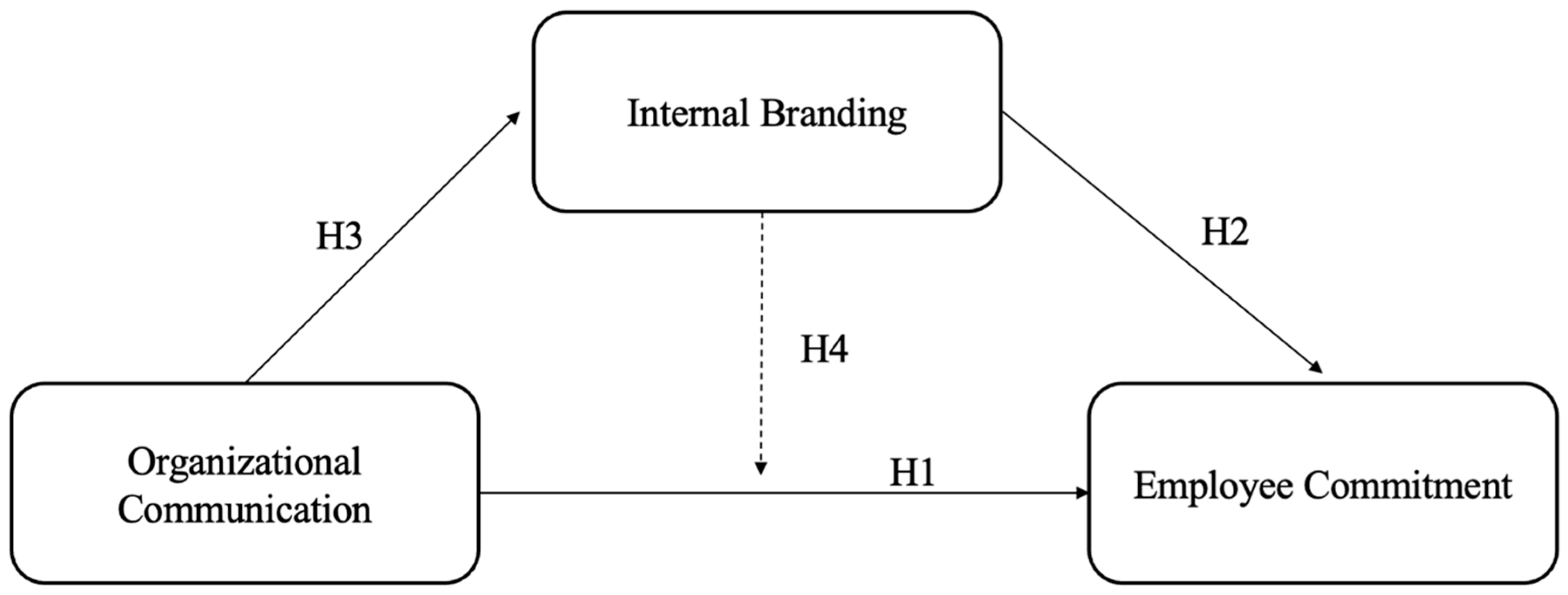
H1: 
Organizational communication has a significant positive effect on employee commitment in private healthcare organizations.
The second hypothesis concerns the relationship between internal branding and employee commitment. Drawing on the identity-based theoretical frameworks reviewed, internal branding is understood as a process through which employees internalize organizational values and come to identify with the brand, producing a durable and intrinsically motivated form of organizational commitment [47,48,49,50,51,52,53,54,55,56,57,58,59,60,61,62,63,64,65,66,67,68,69]. Research consistently demonstrates that employees who identify with the organizational brand exhibit stronger alignment with institutional goals and greater service consistency. This identification-driven form of commitment is particularly relevant to sustainability, as it is more stable across time and less contingent on external incentives or direct managerial oversight than compliance-based forms of behavioral alignment.
H2: 
Internal branding has a significant positive effect on employee commitment in private healthcare organizations.
The third hypothesis addresses the relationship between organizational communication and internal branding, which Section 2.3 theorizes as mutually constitutive. Communication serves as the primary vehicle through which brand values are disseminated, interpreted, and internalized, and its quality directly conditions the extent to which internal branding initiatives succeed in shaping employee identities [70,71,72,73,74,75,76,77,78,79]. Without structured and consistent communication, brand values risk remaining abstract organizational declarations without behavioral purchase. The strength of this relationship also has sustainability implications: organizations whose communication systems actively sustain brand salience over time are better positioned to maintain the internal alignment necessary for consistent service delivery as personnel, structures, and competitive conditions evolve.
H3: 
Organizational communication is positively associated with internal branding in private healthcare organizations.
The fourth hypothesis introduces a mediating mechanism, reflecting that part of the effect of organizational communication on employee commitment is transmitted indirectly through the internalization of brand values [70,71,72,73,74,75,76,77,78,79]. When communication systems are effective, they enhance the clarity and salience of internal branding initiatives, which in turn strengthens employee commitment. The direct effect of organizational communication on employee commitment, net of this indirect path, is expected to remain significant, suggesting partial rather than full mediation. This partial mediation structure is theoretically meaningful in a sustainability context, as it implies that the pathway from communication to commitment operates through multiple channels simultaneously, making the overall relationship more robust and less vulnerable to disruption through any single mechanism.
H4: 
Internal branding partially mediates the positive relationship between organizational communication and employee commitment.
Together, these four hypotheses constitute the core empirical propositions of the study. H1 through H3 address the direct structural relationships among the constructs, while H4 specifies the indirect mechanism through which organizational communication exerts part of its influence on employee commitment. Taken as a whole, the hypothetical framework positions organizational communication and internal branding as complementary pathways to employee commitment and, through it, to the broader organizational sustainability that private healthcare institutions require to maintain competitive positioning, service quality, and workforce cohesion over time. The conceptual model in Figure 1 illustrates all proposed relationships and provides a schematic reference for the analytical framework.
Synthesizing the theoretical arguments developed across this review, the proposed model rests on three interlocking mechanisms. First, organizational communication operates on employee commitment through a relational-coordinative mechanism grounded in the Communication Constitutes Organization perspective and in research on participatory and leadership communication, whereby structured, bidirectional communication reduces uncertainty, builds psychological safety, and anchors professional identity to the institution. Second, internal branding operates on commitment through an identity-based mechanism grounded in social identity theory and organizational identity perspectives, whereby internalized brand values shift commitment from compliance-driven to identification-driven, producing a more durable and self-reinforcing form of alignment. Third, the two mechanisms are theoretically interdependent: communication is the primary medium through which brand values become intelligible, credible, and behaviorally consequential, while a well-articulated internal brand provides communication with normative direction and substantive content. This interdependence yields a sequential pathway in which part of communication’s effect on commitment is expected to operate indirectly, through enhanced brand internalization, while a direct relational effect is retained. The four hypotheses below correspond directly to these three mechanisms and to the sequential pathway they jointly imply, and together they constitute the focused theoretical proposition that the empirical analysis is designed to test.

3. Materials and Methods

3.1. Research Design and Philosophical Orientation

The present study adopts a quantitative research design to investigate the role of organizational communication and internal branding as strategic management tools in private healthcare organizations. Epistemologically, it is grounded in a post-positivist orientation, which holds that social phenomena can be examined through the systematic measurement of observable variables and the statistical analysis of relationships among constructs. This philosophical stance is well-suited to the objectives of the research, which seeks to identify and quantify associations between organizational communication, internal branding, and employee commitment rather than to explore the subjective meanings that individuals attach to these phenomena. A cross-sectional survey methodology was selected as the most appropriate approach for capturing the perceptions of healthcare professionals working in clinical environments at a single point in time. Cross-sectional designs are widely employed in management and organizational research when the aim is to examine co-variation among constructs across a sample drawn from a defined population, and they are particularly suited to studies concerned with establishing the prevalence and directionality of relationships rather than tracing their development over time. The quantitative orientation of the study enables empirical examination of inter-construct relationships, supports hypothesis testing through established statistical procedures, and facilitates generalization within the boundaries of the examined sample. The limitations inherent in cross-sectional survey research are acknowledged, though this design remains the most methodologically defensible approach given the accessibility of the target population and the inferential objectives of the study. A brief note on terminology is useful before turning to the interpretation of the findings. The directional vocabulary used throughout the analysis (terms such as “effect,” “influence,” and “pathway”) follows the conventions of regression and mediation modeling and refers to the associations specified by the hypothesized framework. Given that the data are cross-sectional and drawn from a single source, these associations are best read as patterns consistent with the proposed model rather than as evidence of established causal relations. The discussion that follows is framed in these terms.

3.2. Population, Sampling, and Data Collection

The target population comprises healthcare professionals employed in private healthcare institutions, a choice grounded in the study’s theoretical focus on private healthcare as the primary context within which the strategic roles of organizational communication and internal branding are examined. Private healthcare institutions constitute a particularly relevant research setting given their market-oriented operational frameworks, the heightened salience of service quality and reputation as competitive differentiators, and the complex interplay between clinical professionalism and organizational management that characterizes their internal environments. Data collection took place between January and February 2026 across private healthcare institutions located in Greece. We approached the human resources departments of each institution and, once permission was granted, asked them to distribute the survey link to their employees along with a short cover note explaining the purpose of the study. Both online and paper-based versions of the questionnaire were used, since clinical staff often have limited access to a workstation during shifts and a paper option was needed to reach them. To take part, respondents had to be currently employed by a private healthcare institution, working in a clinical, paramedical, or administrative role, and to have been with the institution for at least six months, so that they had enough exposure to its day-to-day communication and branding practices to answer the items meaningfully. The intended sample size was set on the basis of a priori power considerations for multiple regression and mediation analysis with two predictors. Following standard guidance, a minimum of 200 respondents was targeted, which corresponds to a power of at least 0.80 for detecting medium-sized standardised effects at α = 0.05. The realised sample of 247 fully completed questionnaires exceeds this threshold and supports the inferential tests reported below. Of the 323 questionnaires distributed, 252 were returned and 247 were complete enough to be retained for analysis, giving an effective response rate of about 77%. Participation was voluntary and unincentivized, and respondents were free to withdraw at any stage. A short consent statement appeared at the start of the questionnaire and had to be acknowledged before any items were displayed. The study received ethical approval and was conducted in line with the Declaration of Helsinki.
The demographic profile of the sample shows a relatively balanced gender distribution, with 54.3% male and 45.7% female participants, broadly reflective of the mixed-gender composition of the healthcare workforce. The mean age of respondents was 43.9 years, pointing to a mature professional group with considerable accumulated experience in healthcare environments, a characteristic that lends credibility and contextual grounding to the perceptions reported. In terms of educational attainment, 32.3% of respondents held a Master’s degree, 18.7% held a doctoral degree, and the remainder held a Bachelor’s degree as their highest qualification. The high level of academic achievement within the sample reflects the specialized and knowledge-intensive nature of private healthcare services and further supports the validity of responses pertaining to complex organizational constructs such as internal branding and strategic communication. Prior to the main data collection phase, a pilot study was conducted with a small subset of healthcare professionals to assess the clarity, comprehensibility, and face validity of the questionnaire items. Feedback from this process informed the refinement of selected items and confirmed the instrument’s suitability for the target population. Respondents were assured of the confidentiality and anonymity of their responses in order to minimize social desirability bias and encourage candid self-reporting.
Several procedural remedies for common method bias were incorporated into the design of the data collection process, following established recommendations in the methodological literature [105]. Respondent anonymity and confidentiality were explicitly guaranteed in the survey introduction to reduce evaluation apprehension and social desirability bias. The questionnaire items measuring the predictor, mediator, and outcome constructs were separated and presented in different thematic sections to create psychological separation between the measurements. Item wording was reviewed during piloting to minimize ambiguity, double-barreled phrasing, and overlapping content across constructs. No incentives were offered for participation, and respondents were informed that there were no right or wrong answers, further reducing the likelihood of consistency-motivated response patterns.

3.3. Research Instrument and Measurement

The primary data collection instrument was a structured questionnaire developed on the basis of established theoretical frameworks and validated measurement scales drawn from the existing literature (Table 1). Items for the organizational communication construct were adapted from the Communication Satisfaction Questionnaire as employed by several authors [13,18,106] in the healthcare context, capturing perceptions of communication clarity, transparency, frequency, bidirectionality, and leadership messaging. Items for the internal branding construct were adapted from the scales developed by Punjaisri and Wilson [54], Sharma and Kamalanabhan [48], and Liu, Ko, and Chapleo [51], capturing the extent to which respondents perceived organizational brand values to be clearly communicated, consistently reinforced, and meaningfully embedded in daily professional practice. Items for the employee commitment construct were adapted from the affective and normative commitment scales developed by Allen and Meyer [107], capturing affective identification with the organization, sense of belonging, motivation to contribute to organizational goals, and intention to remain within the institution. All items were adapted as necessary to reflect the specific institutional context of private healthcare and reviewed during the pilot study for clarity, comprehensibility, and content validity. Grounding the instrument in prior validated scales ensures construct comparability with existing research and strengthens the theoretical coherence of the measurement approach.
The questionnaire consisted exclusively of closed-ended items measured on a five-point Likert-type scale ranging from 1 (strongly disagree) to 5 (strongly agree), allowing respondents to express their degree of agreement with statements pertaining to each key construct. Likert-type scales are widely employed in organizational and management research for their capacity to capture attitudinal and perceptual data with sufficient granularity while remaining accessible to respondents [108]. The decision to use a five-point rather than a seven-point scale was informed by considerations of respondent clarity and ease of completion in a professional healthcare context where survey fatigue may otherwise reduce response quality. The questionnaire was organized into four thematic sections corresponding to the study’s key constructs: organizational communication, internal branding, employee commitment, and respondent demographics. The organizational communication scale captured perceptions of communication clarity, transparency, frequency, bidirectionality, and leadership messaging effectiveness. The internal branding scale assessed the extent to which respondents perceived organizational brand values to be clearly communicated, consistently reinforced, and meaningfully embedded in daily professional practice. The employee commitment scale measured affective identification with the organization, sense of belonging, motivation to contribute to organizational goals, and intention to remain within the institution. Demographic items collected information on gender, age, educational level, and professional role category.

3.4. Reliability and Validity Assessment

The reliability and validity of the measurement instrument were rigorously evaluated prior to hypothesis testing in order to establish the psychometric integrity of the constructs and the credibility of the inferences drawn from the data. Internal consistency reliability was assessed using Cronbach’s alpha coefficients for each of the three substantive constructs. Cronbach’s alpha is the most widely employed index of scale reliability in survey-based research, reflecting the degree to which items within a scale consistently measure the same underlying construct. Results indicated satisfactory reliability across all constructs, with coefficients exceeding the widely accepted threshold of 0.70, confirming strong internal consistency among the measurement items and supporting the reliability of the scales as instruments for capturing the intended constructs (Table 2).
Construct validity was examined through Confirmatory Factor Analysis, conducted using structural equation modeling procedures. CFA is the appropriate technique for verifying theoretically hypothesized factor structures by assessing the extent to which observed indicator variables load onto their designated latent constructs. The analysis confirmed that observed variables loaded appropriately and significantly onto their respective constructs, with standardized factor loadings meeting recommended thresholds. Model fit was evaluated using a combination of absolute and incremental indices, including the Comparative Fit Index, the Tucker–Lewis Index, the Root Mean Square Error of Approximation, and the Standardized Root Mean Square Residual. Fit indices met acceptable criteria as established in the structural equation modeling literature, confirming that the hypothesized measurement model provided an adequate representation of the observed data. Convergent validity was supported by average variance extracted values exceeding the recommended threshold of 0.50 for each construct, indicating that the majority of variance in the indicator variables was attributable to the latent construct rather than to measurement error (Table 3). Discriminant validity was established by demonstrating that the average variance extracted for each construct exceeded the squared inter-construct correlations, confirming that the three constructs, while positively related, represent empirically distinct organizational dimensions.
A post hoc statistical diagnostic of common method bias was also performed. Harman’s single-factor test was conducted by entering all items measuring the three constructs into an unrotated exploratory factor analysis. The first factor accounted for 34.6% of the total variance, well below the 50% threshold above which common method variance is typically considered a substantive concern. In addition, an unmeasured-latent-method-construct approach was applied within the CFA framework, in which a common method factor was added to the measurement model with all observed items loading on both their theoretical construct and the method factor. The inclusion of this factor did not materially alter the pattern, significance, or magnitude of the standardized loadings on the substantive constructs, and the model fit improvement was modest. Taken together, the procedural remedies and these statistical diagnostics suggest that common method bias is unlikely to account for the relationships reported below, although as with any single-source cross-sectional design the possibility cannot be eliminated entirely.

3.5. Data Analysis

The collected data were analyzed using a sequential strategy combining descriptive and inferential statistical techniques, consistent with the quantitative and relational objectives of the study. Descriptive statistics were computed in the first stage to characterize the demographic composition of the sample and to summarize respondents’ mean perceptions of organizational communication, internal branding, and employee commitment. Pearson correlation analysis was conducted in the second stage to examine bivariate relationships among the three primary constructs. Correlation analysis offers an initial assessment of the direction and magnitude of inter-variable associations prior to more complex multivariate modeling, and provides empirical grounding for the theoretical propositions regarding the interdependence of communication, branding, and commitment advanced in the literature review. Multiple linear regression analysis was performed in the third stage to examine the combined and independent predictive effects of organizational communication and internal branding on employee commitment. Multiple regression is well-suited to determining the relative contribution of each predictor to the explained variance in the outcome variable while controlling for the effects of the other predictor. Employee commitment was specified as the dependent variable, with organizational communication and internal branding as the independent predictors. Regression coefficients, standard errors, significance levels, and the overall model fit statistic were reported to characterize the nature and strength of the predictive relationships. Descriptive statistics, reliability analyses, Pearson correlations, and multiple regression analyses were conducted using IBM SPSS Statistics version 27. Confirmatory Factor Analysis and the assessment of model fit were performed using IBM SPSS AMOS version 27. The mediation analysis, including the bootstrapped indirect-effect estimation with 5000 bootstrap samples and bias-corrected 95% confidence intervals, was conducted using the PROCESS macro (version 4.2) for SPSS. Significance was evaluated at the conventional threshold of p < 0.05. In a fourth analytical stage, mediation analysis was conducted to test H4, examining the indirect effect of Organizational Communication on Employee Commitment through Internal Branding as a mediator. The analysis followed the causal steps approach of Baron and Kenny [109] and was supplemented by bootstrapped indirect effect estimation using 5000 bootstrap samples to construct bias-corrected 95% confidence intervals for the indirect effect (a × b path). Bootstrapping is preferred in the mediation literature because it does not assume a normal sampling distribution for the product of regression coefficients [108]. A significant indirect effect whose confidence interval excludes zero constitutes evidence of mediation; persistence of a significant direct effect indicates partial rather than full mediation.

4. Results

4.1. Correlational Analysis

All three constructs display strong positive intercorrelations, offering initial empirical grounding for the integrated framework proposed in the study (Table 4). The pattern of associations is consistent across all pairs and coherent with the theoretical expectations set out in the literature review. Taken together, these correlations also provide early evidence that the internal organizational conditions examined here, namely communication quality, brand internalization, and employee commitment, operate as a coherent system rather than as independent variables, a pattern consistent with the study’s broader argument that their combined cultivation constitutes a pathway to organizational sustainability in private healthcare. The correlation between Organizational Communication and Employee Commitment stands at r = 0.582. What this figure conveys is not merely statistical association but a substantively meaningful organizational dynamic: healthcare professionals who experience their internal communication environment as structured, transparent, and responsive tend to feel considerably more attached to their institution. Communication quality, in this light, is not an organizational amenity but a mechanism through which trust is built, uncertainty is managed, and professional identity becomes anchored to the institution. The strength of this relationship reflects the particular weight that communication carries in clinical settings, where role clarity and interdisciplinary coordination are preconditions for both effective care and sustained staff engagement. From a sustainability standpoint, this association is consequential: communication environments that generate commitment also tend to generate retention, and it is the cumulative continuity of a committed and stable workforce that underpins the service consistency on which sustainable organizational performance depends.
Internal Branding correlates with Employee Commitment at r = 0.547. The substantive interpretation here is that employees who genuinely absorb and identify with organizational values, rather than simply conforming to them as an external requirement, exhibit higher and more stable levels of commitment. This distinction matters: compliance can be sustained through managerial pressure, but identification is self-reinforcing. The association confirms that internal branding, when effective, produces a shift in how employees relate to the organization that goes well beyond behavioral alignment. The sustainability implications are significant, as identification-driven commitment is more durable across organizational change, less sensitive to fluctuations in managerial attention, and more likely to translate into the consistent, values-aligned professional conduct that private healthcare institutions depend on to maintain both care quality and institutional reputation over time. The correlation between Organizational Communication and Internal Branding is r = 0.524. This association reveals that the two constructs are not functionally independent: effective communication creates the organizational conditions under which brand values can be transmitted, understood, and meaningfully internalized. Without communicative infrastructure, internal branding initiatives remain declarative rather than operational. This interdependence also has implications for organizational sustainability: when communication and branding reinforce one another as a functioning system, the resulting internal alignment is more resilient and self-sustaining than either mechanism could produce independently, making the organization less dependent on periodic top-down interventions to maintain workforce coherence and institutional identity.

4.2. Multiple Regression Analysis

Prior to interpreting the regression results, model assumptions were examined. The variance inflation factors for the two predictors were well below the conservative cut-off of 5, indicating no concerning multicollinearity. The Durbin–Watson statistic was close to 2, consistent with the absence of serial autocorrelation in the residuals, and inspection of the standardized residuals confirmed approximate normality and homoscedasticity. The overall regression model was statistically significant and explained a substantial proportion of variance in employee commitment. The multiple regression analysis moves beyond bivariate associations to assess the independent predictive contribution of each construct when the other is statistically controlled. Both Organizational Communication and Internal Branding emerge as significant positive predictors of Employee Commitment, confirming H1 and H2 (Table 5). The coexistence of two distinct and significant predictive pathways is itself noteworthy from a sustainability perspective: organizations that invest in both communication quality and brand internalization are not simply doubling down on a single mechanism but activating two separable routes to commitment whose combined effect is more robust and less vulnerable to disruption than reliance on either alone. Organizational Communication yields a standardized coefficient of β = 0.413. This effect is substantial: for every one-unit increase in perceived communication effectiveness, employee commitment rises by 0.413 units net of internal branding. What makes this finding analytically important is not the coefficient in isolation but what it implies about mechanism. Communication contributes to commitment through pathways that operate independently of brand internalization: the relational trust that flows from transparent leadership messaging, the reduced ambiguity produced by functioning feedback systems, and the sense of institutional inclusion that participatory communication structures afford. These are direct effects, not mediated ones, and they account for a considerable share of variation in commitment. Their sustainability relevance lies in their structural quality: trust, role clarity, and inclusion are not episodic organizational outcomes but cumulative ones, built through the consistent operation of communication systems over time and progressively more difficult for competitors to replicate as they become embedded in organizational culture. Internal Branding returns β = 0.324. This coefficient represents the portion of commitment variance attributable to brand internalization that cannot be explained by communication quality alone. The implication is that employees who identify with their organization’s values are more committed not simply because they work in well-communicating institutions, but because the identity-based effects of internal branding constitute a distinct motivational pathway. This pathway is particularly consequential for organizational sustainability: identity-based commitment is self-reinforcing in ways that externally incentivized or compliance-driven engagement is not, making it a more durable foundation for the workforce stability, service consistency, and cultural coherence that private healthcare organizations require to perform reliably over time. The two predictors are complementary rather than redundant: each captures a separable dimension of how private healthcare organizations secure the engagement and alignment of their staff, and their joint presence in the regression model suggests that sustainable workforce commitment in this sector is most effectively cultivated through the simultaneous development of both strategic levers.

4.3. Mediation Analysis

The mediation analysis tests H4 by examining whether Internal Branding transmits part of the effect that Organizational Communication exerts on Employee Commitment (Table 6). The results are consistent with a pattern of partial mediation, recognizing that the cross-sectional design does not establish causal order among the constructs but rather identifies an indirect statistical association that is consistent with the hypothesized sequential pathway. The indirect effect, estimated through bootstrapped bias-corrected confidence intervals, is β = 0.170 (SE = 0.039, 95% BC-CI [0.105, 0.254], p < 0.001). Since the interval excludes zero, mediation is established. This indirect path accounts for 29.2% of the total effect of Organizational Communication on Employee Commitment (total effect β = 0.582), a proportion substantial enough to carry genuine theoretical and practical significance. Specifically, nearly a third of the commitment that effective communication generates among healthcare employees operates not through communication’s direct relational effects but through a sequential process: communication enhances the clarity and salience of brand values, employees absorb those values more readily, and this deeper identification with the organization produces additional commitment beyond what communication quality alone would yield. The sustainability implications of this sequential pathway are worth noting explicitly. Brand internalization, as the mediating mechanism, converts communicative inputs into identity-level outcomes that are more stable and self-sustaining than commitment rooted in relational goodwill or managerial responsiveness alone. Organizations that develop both the communicative infrastructure and the internal branding practices necessary to activate this indirect pathway are therefore cultivating commitment through a mechanism that compounds over time, generating progressively deeper workforce alignment as brand identification consolidates across professional experience and organizational tenure. At the same time, the direct effect of Organizational Communication on Employee Commitment remains strong and statistically significant after Internal Branding enters the model (β = 0.413, p < 0.001). Full mediation is therefore ruled out. Communication retains autonomous influence over commitment through mechanisms that brand internalization does not explain, including the trust and psychological safety associated with open, consistent, two-way internal dialogue. From a sustainability perspective, this retained direct effect is equally important: it means that the organizational value of effective communication does not depend entirely on its capacity to amplify internal branding. Even in contexts where brand internalization is incomplete or uneven across professional groups, as is frequently the case in the multidisciplinary environments of private healthcare, structured and participatory communication systems continue to generate commitment through their own relational and coordinative mechanisms. The picture that emerges is of a construct that operates on commitment along two distinct routes simultaneously: one direct, one sequential through brand identity. Together, these parallel pathways suggest that the most organizationally sustainable configuration is one in which communication and internal branding are developed in concert, each reinforcing the other while independently contributing to the workforce commitment on which durable institutional performance depends.
The findings provide empirical support for the central premise of the study: that organizational communication and internal branding function as genuine strategic management tools in private healthcare settings rather than as peripheral administrative concerns, and that their combined cultivation represents a meaningful pathway to organizational sustainability in this sector. The strong positive correlations establish that improvements in communication structures are associated with stronger brand internalization and higher levels of employee commitment, a pattern that holds across the sample with a consistency that lends confidence to the theoretical propositions advanced in the literature review. The regression analysis extends this picture by demonstrating that both constructs exert independent and substantively meaningful predictive effects on employee commitment, even when the influence of the other predictor is held constant. This confirms that organizational communication and internal branding are not interchangeable proxies for the same underlying phenomenon but constitute distinct, complementary levers through which private healthcare organizations can strengthen internal alignment, cultivate a more committed professional workforce, and build the institutional coherence that sustainable performance over time requires. The mediation findings add a further layer of theoretical precision to this picture. The confirmation that internal branding partially mediates the relationship between organizational communication and employee commitment reveals that the two constructs do not simply operate in parallel but are causally linked in ways that amplify their combined effect. Part of communication’s value as a strategic tool lies precisely in its capacity to enhance the reach and depth of internal branding, which in turn generates a form of identity-based commitment that is more durable, less contingent on managerial intervention, and more directly aligned with organizational sustainability than compliance-driven engagement. This sequential pathway, from communication to brand internalization to commitment, constitutes the study’s most consequential theoretical contribution: it specifies a mechanism through which private healthcare organizations can develop workforce alignment that compounds over time rather than requiring continuous external reinforcement. Taken together, these results sit comfortably within the broader tradition of contemporary organizational theory, which holds that in knowledge-intensive and high-stakes environments, the cultivation of internal alignment is not a secondary management priority but a foundational condition for sustained organizational effectiveness. In private healthcare specifically, where service excellence, professional accountability, and patient trust are simultaneously at stake in every clinical interaction, the practical significance of these internal alignment mechanisms is difficult to overstate. Managerial investment in structured communication systems and coherent internal branding initiatives emerges from this analysis not as an optional enhancement but as a strategically consequential commitment with measurable implications for organizational cohesion, staff orientation, service consistency, and the kind of institutional resilience that defines organizational sustainability in the competitive and ethically demanding environment of private healthcare.

5. Discussion

This study set out to examine whether organizational communication and internal branding function as strategic management tools in private healthcare organizations, and to specify the mechanisms through which they jointly shape employee commitment as a foundational condition for organizational sustainability. The findings address both the study’s stated aim and the gap in the literature identified in the introductory sections: the absence of an integrative empirical framework positioning these two constructs as interdependent strategic levers within the distinctive institutional context of private healthcare, and the insufficient attention given in existing research to how internal alignment mechanisms contribute to the long-term sustainability of healthcare organizations. The confirmation of H1 is consistent with a well-established body of research on the role of internal communication in fostering organizational commitment. Indradevi and Veronica [102] demonstrated that organizations investing in transparent, employee-centered communication cultivate higher levels of engagement and institutional loyalty, and the present findings reinforce this argument in the specific context of private healthcare. Meneses-La-Riva et al. [20] similarly showed that symmetrical, two-way communication processes produce stronger employee–organization relationships, a mechanism that maps directly onto the dynamic observed here. What the present study adds to this line of research is specificity of context: the effect of communication on commitment is particularly consequential in clinical environments because these settings combine high professional autonomy with high task interdependence, creating conditions under which the quality of internal dialogue has an unusually direct bearing on staff orientation and institutional belonging.
The acceptance of H2 aligns with findings reported by several studies [54,71], which documented significant relationships between internal branding processes and employee brand commitment and identification in service organizations, as well as the study of Barros-Arrieta and García-Cali [103], whose review of the internal branding literature consistently positioned brand internalization as a precondition for behavioral alignment and organizational commitment. The present findings extend this work to the private healthcare context, where it has been less systematically examined, and confirm that the identity-based mechanisms through which internal branding operates are not sector-specific to hospitality or financial services but apply with comparable force to clinical professional environments. The coefficient for Internal Branding, while slightly smaller than that for Organizational Communication, is nonetheless substantial, indicating that brand internalization constitutes a meaningful and separable source of employee commitment rather than a secondary byproduct of communication quality.
The confirmation of H3 is consistent with theoretical and empirical accounts of the communication-branding interface provided by Sharma and Kamalanabhan [48] and Saleem and Iglesias [56], both of whom argued that internal communication functions as the primary medium through which brand values are transmitted and made operationally meaningful for employees. Liu, Ko, and Chapleo [51] similarly emphasized that managing employee attention toward brand identity requires deliberate and structured communicative strategies. The correlation observed in the present study reflects this interdependence since organizations with more effective communication infrastructures are also the organizations in which internal branding is more salient, better understood, and more behaviorally consequential. This finding carries a structural implication that goes beyond bivariate association and it suggests that investments in communication quality simultaneously strengthen the platform on which internal branding rests.
The mediation finding, which supports H4 and constitutes the study’s most novel analytical contribution, extends prior research in a direction that the existing literature had not yet pursued empirically within healthcare settings. While the theoretical case for a sequential OC-IB-EC pathway was implicit in several prior accounts, including those of Barros-Arrieta and García-Cali [103] and Saleem and Iglesias [56], no study had modeled this indirect path formally or estimated its magnitude relative to the total effect. The present analysis indicates that approximately 29.2% of the total association between Organizational Communication and Employee Commitment is statistically attributable to an indirect path through Internal Branding. As the data are cross-sectional, this proportion should be interpreted as an indirect association consistent with the hypothesized pathway, rather than as direct evidence of a causal mechanism. This is a substantively meaningful proportion: it means that a significant share of the commitment-building power of effective communication is channelled through its capacity to make brand values more intelligible, more credible, and more professionally resonant for healthcare employees. The sustainability significance of this sequential pathway is considerable: commitment generated through brand internalization, as the mechanism linking communication to its indirect effect on commitment, is identity-based and therefore more self-sustaining, less dependent on managerial attention, and more likely to persist across organizational transitions than commitment produced through relational goodwill or external incentive alone. At the same time, the direct effect remains large and significant, confirming that communication also builds commitment through its own immediate relational and structural effects, independent of brand internalization. Partial mediation, rather than full mediation, is therefore the more accurate and theoretically appropriate description of the relationship, and one that carries practical implications considered below.
Taken together, these findings speak directly to the gap in the literature identified at the outset of the study. Prior research has examined organizational communication and internal branding as functionally separate domains, often in organizational contexts that do not account for the distinctive professional dynamics of healthcare settings, and has given insufficient attention to the contribution of these constructs to organizational sustainability as a strategic outcome in its own right. The present study demonstrates empirically that in private healthcare organizations these two constructs operate as a strategically integrated system rather than as parallel administrative functions, and that their combined deployment explains a meaningful and practically significant share of variance in employee commitment, which the study positions as a proximate condition for sustainable organizational performance. In addressing this gap, the study contributes an integrative analytical framework that situates private healthcare management within a broader tradition of strategic human resource management while attending to the sector-specific features of clinical environments and to the national context within which the present data were collected, both of which place natural limits on the generalisability of the conclusions. It is worth pausing to consider what else could account for the patterns reported here, since the cross-sectional design cannot pin down the direction of any of the relationships. The most obvious alternative is that the influences run the other way, or in both directions at once. Employees who are already strongly committed to their organization are likely to view its communication as clearer and its brand values as more credible, which would feed back into the very ratings we treat as antecedents. A second possibility is that the associations are at least partly spurious. Variables we did not measure, such as dispositional positive affectivity, tenure, professional identification, or the quality of immediate supervision, could plausibly raise scores on all three constructs at once and produce the observed correlations without any direct link between them. A third concern, common rater variance, has been partly addressed through the procedural and statistical steps followed, but cannot be ruled out entirely. None of this calls the underlying framework into question, given how consistently the same relationships appear in prior work, but it does set a limit on how firmly the present findings can be read, and it is part of what makes the longitudinal and multi-source designs flagged in the limitations section worth pursuing.
Finally, it should be noted that the data come from private healthcare institutions in Greece, and that setting has its own regulatory framework, its own labour market, and a managerial culture that does not necessarily resemble those of other countries. The patterns identified from the current study should therefore be read as features of this particular configuration. It is expected that broadly similar dynamics would appear in other private healthcare systems with comparable structural features, since the underlying mechanisms are not country specific, but the size of the associations, and at times their direction, could look different elsewhere. The same caveat applies to comparisons with public healthcare and to institutions that differ substantially in size or specialty. The managerial implications set out in the next section are pitched accordingly, and anyone applying them in a different national or institutional context should treat them as starting hypotheses to be tested locally.

6. Conclusions, Implications and Research Limitations

This study examined organizational communication and internal branding as strategic management tools in private healthcare, assessing their combined and individual contributions to employee commitment and, through it, to the organizational sustainability of private healthcare institutions. A sample of 247 healthcare professionals provided the quantitative data through which four interrelated hypotheses were tested. All four are confirmed: Organizational Communication and Internal Branding each exert significant positive direct effects on Employee Commitment, they are themselves strongly and positively associated with one another, and Internal Branding partially mediates the relationship between Organizational Communication and Employee Commitment, accounting for approximately 29% of the total communicative influence on commitment. These results carry a clear message for the management of private healthcare organizations. Commitment among clinical and administrative staff is not a residual outcome of favorable working conditions. It is actively shaped by the quality of internal communication and by the degree to which employees genuinely identify with their organization’s brand values. Treating these as peripheral or secondary management concerns, or as independent levers to be deployed in sequence, is likely to underperform relative to a coordinated approach in which communication strategy and internal branding are developed and sustained as a unified organizational system. The implications for organizational sustainability, while plausible on the basis of the established commitment-outcome literature, remain indirect within the boundaries of this study. The present analysis identifies the internal alignment conditions that prior research has associated with workforce cohesion, service continuity, and institutional identity, but does not measure these distal outcomes directly. The sustainability argument advanced here is therefore best read as an evidence-based conjecture about the pathway through which communication and internal branding can contribute to sustainable performance, rather than as a direct empirical test of that contribution.

6.1. Managerial Implications

The findings of the current study carry several concrete implications for managers and administrators in private healthcare organizations. Investment in structured internal communication systems that promote transparency, genuine feedback, and interdisciplinary dialogue is a clear priority emerging from the analysis. In practical terms, this encompasses regular team briefings, well-functioning digital communication platforms, participatory decision-making processes, and sustained leadership visibility at the frontline. Strengthening these channels has the potential to reduce organizational silos, foster collaborative cultures, and build the shared understanding that effective clinical work requires. The sustainability value of these investments is cumulative: communication environments that generate trust and role clarity tend to retain staff more effectively, producing continuity of care relationships and institutional knowledge that neither training expenditure nor recruitment activity can easily substitute. Internal branding initiatives should be systematically aligned with communication strategies rather than developed in parallel. Brand values, mission statements, and service standards need to be continuously communicated and reinforced across multiple organizational touchpoints, including training programs, onboarding processes, performance evaluation conversations, and the everyday behavior of organizational leaders. The external brand promise extended to patients carries credibility only insofar as it is consistently reflected in the internal organizational reality that employees inhabit. The mediation finding gives this recommendation additional weight: a substantial share of the commitment generated by effective communication operates precisely through the enhanced brand internalization that structured communication enables, which means that parallel investment in both levers simultaneously yields returns that neither can produce independently.
Leadership emerges from the analysis as particularly consequential within this integrated framework. Leaders serve not only as conduits of strategic information but as the most visible embodiment of organizational values in daily practice. Where there is demonstrable consistency between what leaders say and how they act, credibility is strengthened and employee commitment is reinforced in ways that formal communication programs alone cannot replicate. Senior and middle managers in private healthcare should therefore be supported in developing the communicative competencies and brand-modeling behaviors that this integrative role demands. Over time, leaders who sustain this consistency contribute to a form of organizational culture in which communication and brand values are mutually reinforcing, creating the stable internal identity that sustainable competitive performance in private healthcare requires. More broadly, private healthcare organizations seeking sustainable competitive advantage would do well to treat employee commitment not as a secondary organizational benefit but as a strategic outcome in its own right, and one whose cultivation requires the kind of integrated managerial attention to communication and internal branding that this study documents empirically. Investment in communication quality and internal brand coherence can yield measurable returns in staff retention, service consistency, and the patient trust and institutional reputation on which long-term competitive positioning depends.

6.2. Research Limitations

The study is subject to a number of limitations that should inform the interpretation of its findings and guide the directions of subsequent research. The cross-sectional research design, while appropriate for the relational objectives of the study, precludes causal inference. The strong associations identified are consistent with the theoretical propositions advanced, but longitudinal research would be necessary to confirm the directionality of relationships among communication, internal branding, and employee commitment over time, and to trace the sustainability-relevant outcomes, including workforce stability and long-term service quality, that cross-sectional data cannot capture. The reliance on self-reported questionnaire data introduces the possibility of common method bias, since all variables were measured using a single instrument administered to the same respondents. Future research could strengthen validity by incorporating multi-source data, including managerial assessments, peer evaluations, or objective performance indicators that complement self-report measures. The sample, while adequate for the analyses performed, was drawn from private healthcare institutions in Greece, and the generalisability of the findings to other national contexts, to public healthcare systems, or to different institutional environments remains an open question. The findings should therefore be read as specific to a particular national configuration of private healthcare, characterised by its own regulatory framework, labour market conditions, and managerial traditions, and any extension to other settings requires comparative empirical investigation rather than direct extrapolation. Comparative studies examining private and public healthcare organizations would be a productive avenue for establishing whether the strategic roles of communication and internal branding, and their contribution to organizational sustainability, are consistent across institutional contexts or vary in theoretically significant ways. A further and important limitation concerns the operationalization of organizational sustainability. The present study does not measure sustainability outcomes directly. Instead, it positions employee commitment as a proximal sustainability-relevant outcome, on the basis of an extensive body of research linking organizational commitment to staff retention, reduced turnover intention, service continuity, patient satisfaction, patient safety, and organizational resilience. While this positioning is theoretically defensible and consistent with how internal alignment mechanisms are typically modeled in healthcare management research, it remains a proximal rather than a distal test of the sustainability claims advanced in the manuscript. Future research incorporating objective indicators such as actual turnover rates, longitudinal retention data, patient satisfaction and safety scores, service continuity measures, and validated organizational resilience indices would provide a more direct test of the sustainability implications, and would strengthen the empirical case for treating organizational communication and internal branding as core instruments of sustainable healthcare management rather than as supplementary organizational functions. Accordingly, the relationships reported in this study should be interpreted as indirect associations consistent with the theoretical model, rather than as evidence of causal mechanisms; only longitudinal or experimental designs would allow for stronger causal inference.

Author Contributions

Conceptualization, D.T., G.T. and G.H.; methodology, D.T., G.T. and G.H.; software, D.T. and G.H.; validation, D.T. and G.H.; formal analysis, D.T.; data curation, D.T.; writing—original draft preparation, D.T., G.H. and G.T.; writing—review and editing, D.T., G.T. and G.H.; visualization, D.T. and G.H.; supervision, G.T. All authors have read and agreed to the published version of the manuscript.

Funding

This research was funded by the grant titled “An Exploratory Study of Online Consumer Behavior in Technological Products, Entrepreneurial Innovation, Communication, and Services Management”, awarded by the Special Account for Research Funds of the International Hellenic University. It falls under task 2 of the program “Measures to Promote Research through Financial Support to Laboratories and Institutes of the International Hellenic University” (Code No. 82156).

Institutional Review Board Statement

The whole study was conducted in accordance with the Declaration of Helsinki and approved by the Department of Organizations Marketing and Tourism of International Hellenic University (IHU) (protocol code 1/7-01-21, 24 February 2025).

Informed Consent Statement

Informed consent was obtained from all subjects involved in the study.

Data Availability Statement

The data presented in this study are available on request from the corresponding author.

Conflicts of Interest

The authors declare no conflicts of interest.

References

  1. Yeganeh, H. An analysis of emerging trends and transformations in global healthcare. Int. J. Health Gov. 2019, 24, 169–180. [Google Scholar] [CrossRef]
  2. Shu, Y.; Li, Z.; Xie, R. Policy frameworks for promoting public hospital development in major economies: Implications for China. Front. Public Health 2026, 14, 1774539. [Google Scholar] [CrossRef]
  3. Daqar, M.A.; Constantinovits, M. The role of total quality management in enhancing the quality of private healthcare services. Probl. Perspect. Manag. 2020, 18, 64. [Google Scholar] [CrossRef]
  4. Senyapar, H.N. Healthcare branding and reputation management strategies for organizational success. Tech. Soc. Sci. J. 2024, 55, 26. [Google Scholar] [CrossRef]
  5. Brown, B.; Rutherford, P.; Crawford, P. The role of noise in clinical environments with particular reference to mental health care: A narrative review. Int. J. Nurs. Stud. 2015, 52, 1514–1524. [Google Scholar] [CrossRef] [PubMed]
  6. Kossaify, A.; Hleihel, W.; Lahoud, J.C. Team-based efforts to improve quality of care, the fundamental role of ethics, and the responsibility of health managers: Monitoring and management strategies to enhance teamwork. Public Health 2017, 153, 91–98. [Google Scholar] [CrossRef]
  7. Abdullah Alharbi, A.S.; Mazi Alrehaili, Y.A.; Hamed Alhejaili, T.A.; Hammoud Al-Hujaili, M.M.; Alsaedi, A.B.; Alsaedi, I.S.; Alghurabi, M.M. The Role of Organizational Culture in Shaping Healthcare Service Quality: A Theoretical Perspective. J. Int. Crisis Risk Commun. Res. JICRCR 2024, 7, 321–332. [Google Scholar]
  8. McAlearney, A.S.; Terris, D.; Hardacre, J.; Spurgeon, P.; Brown, C.; Baumgart, A.; Nyström, M.E. Organizational coherence in health care organizations: Conceptual guidance to facilitate quality improvement and organizational change. Qual. Manag. Healthc. 2013, 22, 86–99. [Google Scholar] [CrossRef]
  9. Burmann, C.; Zeplin, S. Building brand commitment: A behavioural approach to internal brand management. J. Brand Manag. 2005, 12, 279–300. [Google Scholar] [CrossRef]
  10. Saini, G.K.; Lievens, F.; Srivastava, M. Employer and internal branding research: A bibliometric analysis of 25 years. J. Prod. Brand Manag. 2022, 31, 1196–1221. [Google Scholar] [CrossRef]
  11. Kerrissey, M.; Satterstrom, P.; Leydon, N.; Schiff, G.; Singer, S. Integrating: A managerial practice that enables implementation in fragmented health care environments. Health Care Manag. Rev. 2017, 42, 213–225. [Google Scholar] [CrossRef]
  12. Izakova, N.; Solosichenco, T.; Vozmilov, I.; Popova, O. The Role of Social Communications in Private Medical Clinic Brand Management During the Covid-19 Pandemic. In International Scientific and Practical Conference “Sustainable development of Environment After Covid-19”; Atlantis Press: Dordrecht, The Netherlands, 2022; pp. 164–168. [Google Scholar]
  13. Dalal, H.J.A.; Ramoo, V.; Chong, M.C.; Danaee, M.; Aljeesh, Y.I.; Rajeswaran, V.U. The mediating role of work satisfaction in the relationship between organizational communication satisfaction and organizational commitment of healthcare professionals: A cross-sectional study. Healthcare 2023, 11, 806. [Google Scholar] [CrossRef]
  14. McPhee, R.D.; Zaug, P. Organizational theory, organizational communication, organizational knowledge, and problematic integration. J. Commun. 2001, 51, 574–591. [Google Scholar] [CrossRef]
  15. Brittain, A.C.; Carrington, J.M. A concept analysis of organizational health and communication. Nurs. Adm. Q. 2019, 43, 68–75. [Google Scholar] [CrossRef] [PubMed]
  16. Van Ruler, B. Communication theory: An underrated pillar on which strategic communication rests. In Future Directions of Strategic Communication; Routledge: Abingdon, UK, 2020; pp. 39–53. [Google Scholar]
  17. Darcho, S.D.; Ayele, B.H.; Demena, M.; Firdisa, D.; Shawel, S.; Berhanu, A. Organizational communication skills and its associated factors among healthcare providers working at Wolaita Sodo health facilities, southern Ethiopia: A cross-sectional study. Risk Manag. Healthc. Policy 2024, 17, 79–88. [Google Scholar] [CrossRef]
  18. Abu Dalal, H.J.; Ramoo, V.; Chong, M.C.; Danaee, M.; Aljeesh, Y.I. The impact of organizational communication satisfaction on health care professionals’ work engagement. J. Nurs. Manag. 2022, 30, 214–225. [Google Scholar] [CrossRef]
  19. Sobo, E.J.; Sadler, B.L. Improving organizational communication and cohesion in a health care setting through employee-leadership exchange. Hum. Organ. 2002, 61, 277–287. [Google Scholar] [CrossRef]
  20. Meneses-La-Riva, M.E.; Fernández-Bedoya, V.H.; Suyo-Vega, J.A.; Ocupa-Cabrera, H.G.; Grijalva-Salazar, R.V.; Ocupa-Meneses, G.D.D. Enhancing healthcare efficiency: The relationship between effective communication and teamwork among nurses in Peru. Nurs. Rep. 2025, 15, 59. [Google Scholar] [CrossRef]
  21. Monge, P.; Poole, M.S. The evolution of organizational communication. J. Commun. 2008, 58, 679–692. [Google Scholar] [CrossRef]
  22. Naji, G.M.A.; Isha, A.S.N.; Alazzani, A.; Brough, P.; Saleem, M.S.; Mohyaldinn, M.E.; Alzoraiki, M. Do leadership, organizational communication, and work environment impact employees’ psychosocial hazards in the oil and gas industry? Int. J. Environ. Res. Public Health 2022, 19, 4432. [Google Scholar] [CrossRef] [PubMed]
  23. Schoeneborn, D. Organization as communication: A Luhmannian perspective. Manag. Commun. Q. 2011, 25, 663–689. [Google Scholar] [CrossRef]
  24. Rafi’i, M.R.; Hanif, S.A.M.; Bin Daud, F. Exploring the link between healthcare organizational culture and provider work satisfaction: A systematic review. BMC Health Serv. Res. 2025, 25, 904. [Google Scholar] [CrossRef]
  25. Zook, E.G. Embodied health and constitutive communication: Toward an authentic conceptualization of health communication. In Communication Yearbook 17; Routledge: London, UK, 2012; Volume 17, pp. 344–377. [Google Scholar]
  26. Ashcraft, K.L. Communication as constitutive transmission? An encounter with affect. Commun. Theory 2021, 31, 571–592. [Google Scholar] [CrossRef]
  27. Huang, Y.H.; Garrett, S.K. Defining characteristics of communication quality in culture-changed long-term healthcare facilities. J. Commun. Healthc. 2012, 5, 227–238. [Google Scholar] [CrossRef]
  28. Tsekouropoulos, G.; Vasileiou, A.; Hoxha, G.; Theocharis, D.; Theodoridou, E.; Grigoriadis, T. Leadership 4.0: Navigating the challenges of the digital transformation in healthcare and beyond. Adm. Sci. 2025, 15, 194. [Google Scholar] [CrossRef]
  29. Kumar, R.D.; Khiljee, N. Leadership in healthcare. Anaesth. Intensive Care Med. 2016, 17, 63–65. [Google Scholar] [CrossRef]
  30. O’donovan, R.; Mcauliffe, E. A systematic review of factors that enable psychological safety in healthcare teams. Int. J. Qual. Health Care 2020, 32, 240–250. [Google Scholar] [CrossRef]
  31. Al Sawafi, A.; Al Yahyaei, A.; Al Azri, N.H.; Al Sabei, S.D.; Al Maamari, A.M.; Al Battashi, H.; Al Maskari, J.K. Bridging the leadership gap: Developing a culturally adapted leadership program for healthcare professionals in Oman. J. Healthc. Leadersh. 2025, 17, 365–381. [Google Scholar] [CrossRef]
  32. Hartviksen, T.A.; Sjolie, B.M.; Aspfors, J.; Uhrenfeldt, L. Healthcare middle managers experiences developing leadership capacity and capability in a public funded learning network. BMC Health Serv. Res. 2018, 18, 433. [Google Scholar] [CrossRef] [PubMed]
  33. Hajduk, L.; Bencic, S. Digital Communication Technologies as Means of Effective Communication in Organisations. In Proceedings of the 12th International Scientific Conference «Theoretical Hypotheses and Empirical Results» (December 18–19, 2025), Oslo, Norway; Publisher Agency: Oslo, Norway, 2025; p. 338. [Google Scholar]
  34. Naik, N.; Hameed, B.Z.; Sooriyaperakasam, N.; Vinayahalingam, S.; Patil, V.; Smriti, K.; Somani, B.K. Transforming healthcare through a digital revolution: A review of digital healthcare technologies and solutions. Front. Digit. Health 2022, 4, 919985. [Google Scholar] [CrossRef] [PubMed]
  35. Kashlot, S.M.; Ruthven, I.; Moshfeghi, Y. Strategies for managing information overload: A systematic review. J. Doc. 2026, 82, 249–265. [Google Scholar] [CrossRef]
  36. Otte-Trojel, T.; de Bont, A.; Aspria, M.; Adams, S.; Rundall, T.G.; van de Klundert, J.; de Mul, M. Developing patient portals in a fragmented healthcare system. Int. J. Med. Inform. 2015, 84, 835–846. [Google Scholar] [CrossRef]
  37. Ziebland, S.; Hyde, E.; Powell, J. Power, paradox and pessimism: On the unintended consequences of digital health technologies in primary care. Soc. Sci. Med. 2021, 289, 114419. [Google Scholar] [CrossRef] [PubMed]
  38. Rolla, K.J. Trends and Futuristic Applications of Big Data and Electronic Health Record Data in Empowering Constructive Clinical Decision Support Systems. Bio-Sci. Res. Bull. Biol. Sci. 2023, 39, 78–91. [Google Scholar] [CrossRef]
  39. Bevere, D.; Faccilongo, N. Shaping the future of healthcare: Integrating ecology and digital innovation. Sustainability 2024, 16, 3835. [Google Scholar] [CrossRef]
  40. Gjellebæk, C.; Svensson, A.; Bjørkquist, C.; Fladeby, N.; Grundén, K. Management challenges for future digitalization of healthcare services. Futures 2020, 124, 102636. [Google Scholar] [CrossRef]
  41. Restivo, V.; Minutolo, G.; Battaglini, A.; Carli, A.; Capraro, M.; Gaeta, M.; Casuccio, A. Leadership effectiveness in healthcare settings: A systematic review and meta-analysis of cross-sectional and before-after studies. Int. J. Environ. Res. Public Health 2022, 19, 10995. [Google Scholar] [CrossRef]
  42. Guttman, O.T.; Lazzara, E.H.; Keebler, J.R.; Webster, K.L.; Gisick, L.M.; Baker, A.L. Dissecting communication barriers in healthcare: A path to enhancing communication resiliency, reliability, and patient safety. J. Patient Saf. 2021, 17, e1465–e1471. [Google Scholar] [CrossRef]
  43. Fiscella, K.; McDaniel, S.H. The complexity, diversity, and science of primary care teams. Am. Psychol. 2018, 73, 451. [Google Scholar] [CrossRef]
  44. Vinckx, M.A.; Bossuyt, I.; de Casterlé, B.D. Understanding the complexity of working under time pressure in oncology nursing: A grounded theory study. Int. J. Nurs. Stud. 2018, 87, 60–68. [Google Scholar] [CrossRef]
  45. Soukup, T.; Lamb, B.W.; Shah, N.J.; Morbi, A.; Bali, A.; Asher, V.; Sevdalis, N. Relationships between communication, time pressure, workload, task complexity, logistical issues and group composition in transdisciplinary teams: A prospective observational study across 822 cancer cases. Front. Commun. 2020, 5, 583294. [Google Scholar] [CrossRef]
  46. de Guerre, D.W.; Seguin, D.; Pace, A.; Burke, N. IDEA: A collaborative organizational design process integrating innovation, design, engagement, and action. Syst. Pract. Action Res. 2013, 26, 257–279. [Google Scholar] [CrossRef]
  47. Hur, W.M.; Kim, H.; Woo, J. How CSR leads to corporate brand equity: Mediating mechanisms of corporate brand credibility and reputation. J. Bus. Ethics 2014, 125, 75–86. [Google Scholar] [CrossRef]
  48. Sharma, N.; Kamalanabhan, T.J. Internal corporate communication and its impact on internal branding: Perception of Indian public sector employees. Corp. Commun. Int. J. 2012, 17, 300–322. [Google Scholar] [CrossRef]
  49. Gapp, R.; Merrilees, B. Important factors to consider when using internal branding as a management strategy: A healthcare case study. J. Brand Manag. 2006, 14, 162–176. [Google Scholar] [CrossRef]
  50. Hoxha, G.; Simeli, I.; Theocharis, D.; Vasileiou, A.; Tsekouropoulos, G. Sustainable healthcare quality and job satisfaction through organizational culture: Approaches and outcomes. Sustainability 2024, 16, 3603. [Google Scholar] [CrossRef]
  51. Liu, G.; Ko, W.W.; Chapleo, C. Managing employee attention and internal branding. J. Bus. Res. 2017, 79, 1–11. [Google Scholar] [CrossRef]
  52. Terglav, K.; Ruzzier, M.K.; Kase, R. Internal branding process: Exploring the role of mediators in top management’s leadership–commitment relationship. Int. J. Hosp. Manag. 2016, 54, 1–11. [Google Scholar] [CrossRef]
  53. Piehler, R.; Roessler, A.; Burmann, C. The role of leadership and communication in internal city branding. J. Prod. Brand Manag. 2021, 30, 854–865. [Google Scholar] [CrossRef]
  54. Punjaisri, K.; Wilson, A. Internal branding process: Key mechanisms, outcomes and moderating factors. Eur. J. Mark. 2011, 45, 1521–1537. [Google Scholar] [CrossRef]
  55. Kemp, E.; Jillapalli, R.; Becerra, E. Healthcare branding: Developing emotionally based consumer brand relationships. J. Serv. Mark. 2014, 28, 126–137. [Google Scholar] [CrossRef]
  56. Saleem, F.Z.; Iglesias, O. Mapping the domain of the fragmented field of internal branding. J. Prod. Brand Manag. 2016, 25, 43–57. [Google Scholar] [CrossRef]
  57. Zhang, J.; Chomvilailuk, R. Impacts of Internal Branding on Employee Brand Identification: A Perspective of Social Identity Theory. Univ. Thai Chamb. Commer. J. Humanit. Soc. Sci. 2025, 45, 1–25. [Google Scholar]
  58. Raskovic, M.; Takacs-Haynes, K. (Re) discovering social identity theory: An agenda for multinational enterprise internalization theory. Multinatl. Bus. Rev. 2021, 29, 145–165. [Google Scholar] [CrossRef]
  59. Biedenbach, G.; Manzhynski, S. Internal branding and sustainability: Investigating perceptions of employees. J. Prod. Brand Manag. 2016, 25, 296–306. [Google Scholar] [CrossRef]
  60. Schätzle, J.; Lindenmeier, J.; Saliterer, I.; Liberatore, F. Development and validation of a brand personality scale for employers of healthcare staff. J. Nonprofit Public Sect. Mark. 2024, 36, 299–321. [Google Scholar] [CrossRef]
  61. Junça Silva, A.; Faria, C.; Lopes, R.R. Onboarding for success: Exploring the effects of socialization tactics on newcomer well-being. Int. J. Organ. Anal. 2026, 34, 657–680. [Google Scholar] [CrossRef]
  62. Feldman, D.C.; O’Neill, O.A. The role of socialization, orientation, and training programs in transmitting culture and climate and enhancing performance. In The Oxford Handbook of Organizational Climate and Culture; Oxford University Press: Oxford, UK, 2014; pp. 44–64. [Google Scholar]
  63. Graber, K.C.; Killian, C.M.; Woods, A.M. Professional socialization, teacher education programs, and dialectics. In Teacher Socialization in Physical Education; Routledge: Abingdon, UK, 2016; pp. 79–94. [Google Scholar]
  64. Anderson, N.R.; Cunningham-Snell, N.A.; Haigh, J. Induction training as socialization: Current practice and attitudes to evaluation in British organizations. Int. J. Sel. Assess. 1996, 4, 169–183. [Google Scholar] [CrossRef]
  65. Barker, R.T.; Gower, K. Strategic application of storytelling in organizations: Toward effective communication in a diverse world. J. Bus. Commun. 2010, 47, 295–312. [Google Scholar] [CrossRef]
  66. Spear, S.; Roper, S. Storytelling in organisations: Supporting or subverting corporate strategy? Corp. Commun. Int. J. 2016, 21, 516–532. [Google Scholar] [CrossRef]
  67. McIvor, P. Creating and implementing a new visual identity: The Halton Healthcare experience. J. Prof. Commun. 2018, 5, 99–106. [Google Scholar] [CrossRef]
  68. Melewar, T.C.; Bassett, K.; Simoes, C. The role of communication and visual identity in modern organisations. Corp. Commun. Int. J. 2006, 11, 138–147. [Google Scholar] [CrossRef]
  69. Vallaster, C.; De Chernatony, L. Internal brand building and structuration: The role of leadership. Eur. J. Mark. 2006, 40, 761–784. [Google Scholar] [CrossRef]
  70. Poloski Vokic, N.; Tkalac Vercic, A.; Sincic Coric, D. Strategic internal communication for effective internal employer branding. Balt. J. Manag. 2023, 18, 19–33. [Google Scholar] [CrossRef]
  71. Punjaisri, K.; Evanschitzky, H.; Wilson, A. Internal branding: An enabler of employees’ brand-supporting behaviours. J. Serv. Manag. 2009, 20, 209–226. [Google Scholar] [CrossRef]
  72. Martínez-García, M.; Hernández-Lemus, E. Health systems as complex systems. Am. J. Oper. Res. 2013, 3, 113–126. [Google Scholar] [CrossRef]
  73. Cham, T.H.; Lim, Y.M.; Sigala, M. Marketing and social influences, hospital branding, and medical tourists’ behavioural intention: Before-and after-service consumption perspective. Int. J. Tour. Res. 2022, 24, 140–157. [Google Scholar] [CrossRef]
  74. Coric, D.S.; Spoljaric, A. The origins of internal communication and employer branding in marketing theories. Commun. Manag. Rev. 2021, 6, 30–45. [Google Scholar] [CrossRef]
  75. Vercic, A.T. The impact of employee engagement, organizational support and employer branding on internal communication satisfaction. Public Relat. Rev. 2021, 47, 102009. [Google Scholar] [CrossRef]
  76. Matanda, M.J.; Ndubisi, N.O. Internal marketing, internal branding, and organizational outcomes: The moderating role of perceived goal congruence. J. Mark. Manag. 2013, 29, 1030–1055. [Google Scholar]
  77. King, C.; Grace, D. Internal branding: Exploring the employee’s perspective. J. Brand Manag. 2008, 15, 358–372. [Google Scholar] [CrossRef]
  78. Clark, P.; Chapleo, C.; Suomi, K. Branding higher education: An exploration of the role of internal branding on middle management in a university rebrand. Tert. Educ. Manag. 2020, 26, 131–149. [Google Scholar] [CrossRef]
  79. Meyer, I.; De Wet, G. A CEO’s internal communication programme for middle management and its influence on their perception of the corporate reputation: A quantitative and qualitative analysis. Commun. J. Commun. Sci. South. Afr. 2007, 26, 18–35. [Google Scholar] [CrossRef]
  80. Ehnert, I.; Harry, W.; Zink, K.J. Sustainability and HRM: An introduction to the field. In Sustainability and Human Resource Management: Developing Sustainable Business Organizations; Springer: Berlin/Heidelberg, Germany, 2013; pp. 3–32. [Google Scholar]
  81. Kramar, R. Beyond strategic human resource management: Is sustainable human resource management the next approach? Int. J. Hum. Resour. Manag. 2014, 25, 1069–1089. [Google Scholar] [CrossRef]
  82. Arbab Kash, B.; Spaulding, A.D.; Gamm, L.; Johnson, C. Healthcare strategic management and the resource based view. J. Strategy Manag. 2014, 7, 251–264. [Google Scholar] [CrossRef]
  83. Mikhno, I.; Koval, V.; Ternavskyi, A. Strategic management of healthcare institution development of the national medical services market. Access Access Sci. Bus. Innov. Digit. Econ. 2020, 1, 157–170. [Google Scholar] [CrossRef]
  84. Speziale, G. Strategic management of a healthcare organization: Engagement, behavioural indicators, and clinical performance. Eur. Heart J. Suppl. 2015, 17, A3–A7. [Google Scholar] [CrossRef]
  85. Taleb, J.A. Strategic Management in Healthcare Private Sector in Yemen. J. Soc. Stud. 2025, 31, 167–186. [Google Scholar] [CrossRef]
  86. Dube, O.; Simuka, J.; Chitumba, C. Exploring strategic innovation in the success of private health care business: A conceptual model. J. Res. Innov. Sustain. Soc. 2022, 4, 190–199. [Google Scholar] [CrossRef]
  87. Urrutia, I.; Eriksen, S.D. Application of the balanced scorecard in Spanish private health-care management. Meas. Bus. Excell. 2005, 9, 16–26. [Google Scholar] [CrossRef]
  88. Adzhienko, V.L.; Kosinova, N.N. Strategic Analysis of the state-private partnership Institute in the Healthcare. Pharm. Pharmacol. 2017, 5, 380–400. [Google Scholar] [CrossRef]
  89. Hoxha, G.; Theocharis, D.; Tsekouropoulos, G.; Simeli, I. Communication and Internal Branding as Strategic Management Tools in Private Healthcare. In Proceedings of IAC 2026 in Budapest; Czech Institute of Academic Education z.s.: Prague, Czech Republic, 2026; Volume 63. [Google Scholar]
  90. Sermontyte-Baniule, R.; Pundziene, A.; Gimenez, V.; Narbón-Perpina, I. Role of cultural dimensions and dynamic capabilities in the value-based performance of digital healthcare services. Technol. Forecast. Soc. Change 2022, 176, 121490. [Google Scholar] [CrossRef]
  91. Agwunobi, A.; Osborne, P. Dynamic capabilities and healthcare: A framework for enhancing the competitive advantage of hospitals. Calif. Manag. Rev. 2016, 58, 141–161. [Google Scholar] [CrossRef]
  92. Mohammed, B.A.H.; Maelah, R.; Amir, A.M. Strategic management accounting information and performance of private hospitals in Malaysia. Int. J. Econ. Manag. Account. 2019, 27, 473–502. [Google Scholar]
  93. Vasileiou, A.; Tsekouropoulos, G.; Hoxha, G.; Theocharis, D.; Grigoriadis, E. Quiet Quitting in Healthcare: The Synergistic Impact of Organizational Culture and Green Lean Six Sigma Practices on Employee Commitment and Satisfaction. Businesses 2025, 5, 57. [Google Scholar] [CrossRef]
  94. Suriyankietkaew, S.; Kungwanpongpun, P. Strategic leadership and management factors driving sustainability in health-care organizations in Thailand. J. Health Organ. Manag. 2022, 36, 448–468. [Google Scholar] [CrossRef]
  95. Yardan, E.D.; Aydin, G.Z. Strategic leadership in healthcare. Health Sci. Res. Glob. World 2018, 90, 874–884. [Google Scholar]
  96. O’Shannassy, T. The challenges of strategic leadership in organizations. J. Manag. Organ. 2021, 27, 235–238. [Google Scholar] [CrossRef]
  97. Uplekar, M. Involving private health care providers in delivery of TB care: Global strategy. Tuberculosis 2003, 83, 156–164. [Google Scholar] [CrossRef]
  98. Vendruscolo, B.; Hoffmann, V.E.; Freitas, C.A. Strategic Management Tools, Stakeholders and Performance Organizations, Private Health Branch of the Federal District. Rev. Ibero-Am. Estratégia 2012, 11, 30–61. [Google Scholar] [CrossRef]
  99. Abuya, T.; Amin, A.; Molyneux, S.; Akhwale, W.; Marsh, V.; Gilson, L. Importance of strategic management in the implementation of private medicine retailer programmes: Case studies from three districts in Kenya. BMC Health Serv. Res. 2010, 10, S7. [Google Scholar] [CrossRef] [PubMed]
  100. Gana, B.S.; Andemariam, K. Strategic Management Practices As Competitive Advantage Tools in Private Hospitals’ Performance in Khwisero Sub-County: The Case of Mwihila Mission Hospital, Kakamega County. Int. J. Res. Eng. IT Soc. Sci. 2020, 10, 1–11. [Google Scholar]
  101. Karamat, J.; Shurong, T.; Ahmad, N.; Afridi, S.; Khan, S.; Mahmood, K. Promoting healthcare sustainability in developing countries: Analysis of knowledge management drivers in public and private hospitals of Pakistan. Int. J. Environ. Res. Public Health 2019, 16, 508. [Google Scholar] [CrossRef]
  102. Indradevi, R.; Veronica, E. The outcome of employee commitment in healthcare industry. Indian J. Public Health Res. Dev. 2019, 10, 1040–1047. [Google Scholar] [CrossRef]
  103. Barros-Arrieta, D.; García-Cali, E. Internal branding: Conceptualization from a literature review and opportunities for future research: D. Barros-Arrieta, E. García-Cali. J. Brand Manag. 2021, 28, 133–151. [Google Scholar] [CrossRef]
  104. Machokoto, W. Employee commitment could be enhanced in the healthcare sector in the UK. Int. J. Psychol. Cogn. Sci. 2019, 5, 24–29. [Google Scholar]
  105. Podsakoff, P.M.; MacKenzie, S.B.; Lee, J.Y.; Podsakoff, N.P. Common method biases in behavioral research: A critical review of the literature and recommended remedies. J. Appl. Psychol. 2003, 88, 879. [Google Scholar] [CrossRef]
  106. Men, L.R. Why leadership matters to internal communication: Linking transformational leadership, symmetrical communication, and employee outcomes. J. Public Relat. Res. 2014, 26, 256–279. [Google Scholar] [CrossRef]
  107. Allen, N.J.; Meyer, J.P. The measurement and antecedents of affective, continuance and normative commitment to the organization. J. Occup. Psychol. 1990, 63, 1–18. [Google Scholar] [CrossRef]
  108. Hayes, A.F. Introduction to Mediation, Moderation, and Conditional Process Analysis: A Regression-Based Approach, 2nd ed.; Guilford Press: New York, NY, USA, 2018. [Google Scholar]
  109. Baron, R.M.; Kenny, D.A. The moderator-mediator variable distinction in social psychological research: Conceptual, strategic, and statistical considerations. J. Personal. Soc. Psychol. 1986, 51, 1173–1182. [Google Scholar] [CrossRef]
Figure 1. Conceptual Model.
Sustainability 18 05537 g001
Table 1. Sample questionnaire items for each construct.
ConstructSample ItemSource
Organizational CommunicationInformation about important changes in this organization reaches me in a timely manner.Adapted from [13]
Organizational CommunicationMy supervisor encourages open, two-way communication with members of our team.Adapted from [18]
Organizational CommunicationThe communication I receive from senior leadership is clear and consistent.Adapted from [106]
Internal BrandingI clearly understand what the values of this organization stand for.Adapted from [54]
Internal BrandingMy day-to-day work behavior reflects the values that this organization promotes to patients.Adapted from [51]
Internal BrandingThe brand values of this organization are reinforced regularly through training and internal communication.Adapted from [48]
Employee CommitmentI feel emotionally attached to this organization.Adapted from [107]
Employee CommitmentThis organization has a great deal of personal meaning to me.Adapted from [107]
Employee CommitmentI would be happy to spend the rest of my career working at this organization.Adapted from [107]
Note: All items were measured on a five-point Likert-type scale (1 = strongly disagree to 5 = strongly agree).
Table 2. Reliability Analysis.
ConstructItemsCronbach’s αMean (SD)
Organizational Communication80.8793.72 (0.61)
Internal Branding70.8633.58 (0.65)
Employee Commitment70.8513.61 (0.63)
Table 3. Confirmatory Factor Analysis.
Construct/IndicatorλAVECRMSVR2
Organizational Communication 0.5730.9040.274
 OC10.748 0.560
 OC20.772 0.596
 OC30.761 0.579
 OC40.753 0.567
 OC50.765 0.585
 OC60.757 0.573
 OC70.744 0.554
 OC80.751 0.564
Internal Branding 0.5510.8890.274
 IB10.735 0.540
 IB20.752 0.565
 IB30.741 0.549
 IB40.739 0.546
 IB50.744 0.554
 IB60.737 0.543
 IB70.746 0.556
Employee Commitment 0.5420.8760.339
 EC10.724 0.524
 EC20.741 0.549
 EC30.735 0.540
 EC40.729 0.531
 EC50.737 0.543
 EC60.730 0.533
 EC70.733 0.537
λ = standardised factor loading; AVE = Average Variance Extracted; CR = Composite Reliability; MSV = Maximum Shared Variance; R2 = squared multiple correlation. All loadings significant at p < 0.001. Model fit: χ2/df = 2.14; CFI = 0.953; TLI = 0.946; RMSEA = 0.068 [0.052–0.083]; SRMR = 0.057.
Table 4. Relationships between the constructs.
VariablesOrganizational CommunicationInternal BrandingEmployee Commitment
Organizational Communication1.0000.5240.582
Internal Branding 1.0000.547
Employee Commitment 1.000
Table 5. Multiple Regression Analysis predicting Employee Commitment.
PredictorBSE Bβtp95% CI for BVIF
(Constant)1.300.20-6.50<0.001[0.91, 1.69]-
Organizational Communication0.390.050.4137.25<0.001[0.28, 0.49]1.38
Internal Branding0.310.050.3245.68<0.001[0.20, 0.42]1.38
Note: N = 247. Dependent variable: Employee Commitment. R2 = 0.418; Adjusted R2 = 0.413; F(2, 244) = 87.62, p < 0.001. Durbin–Watson = 1.95. All VIF values are well below the conservative threshold of 5, indicating no concerning multicollinearity.
Table 6. Mediation Analysis. Indirect Effect of Organizational Communication on Employee Commitment via Internal Branding.
PathBSE Bβtp95% BC-CI (β)
OC → IB (a)0.510.050.5249.63<0.001[0.42, 0.63]
IB → EC (b)0.310.050.3245.68<0.001[0.21, 0.44]
Direct: OC → EC (c′)0.390.050.4137.25<0.001[0.30, 0.53]
Total: OC → EC (c)0.550.050.58211.19<0.001[0.48, 0.68]
Indirect: OC → IB → EC (a × b)0.160.040.170-<0.001[0.105, 0.254]
Note. OC = Organizational Communication; IB = Internal Branding; EC = Employee Commitment. Standardised β coefficients reported. Indirect effect estimated via bootstrapping (5000 samples), bias-corrected 95% CI. Percentage of total effect mediated = 29.2%.
Disclaimer/Publisher’s Note: The statements, opinions and data contained in all publications are solely those of the individual author(s) and contributor(s) and not of MDPI and/or the editor(s). MDPI and/or the editor(s) disclaim responsibility for any injury to people or property resulting from any ideas, methods, instructions or products referred to in the content.