Evaluation of Sesuvium portulacastrum (L.) L. as a Halophytic Candidate for the Phytoremediation of Industrial Wastewater

 and
and 
Abstract
1. Introduction
2. Materials and Methods
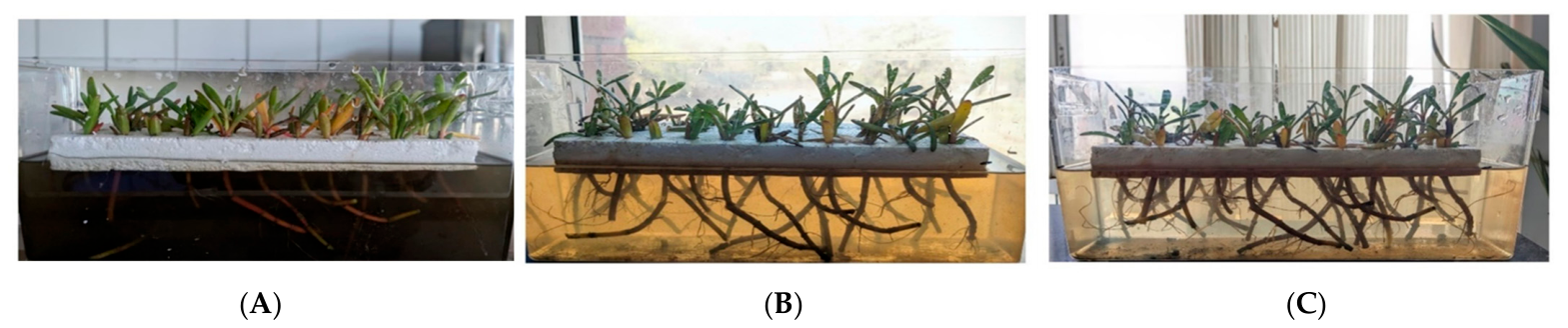
2.1. Phytodegradation of Industrial Wastewater (IWW)
2.2. Characterization of IWW
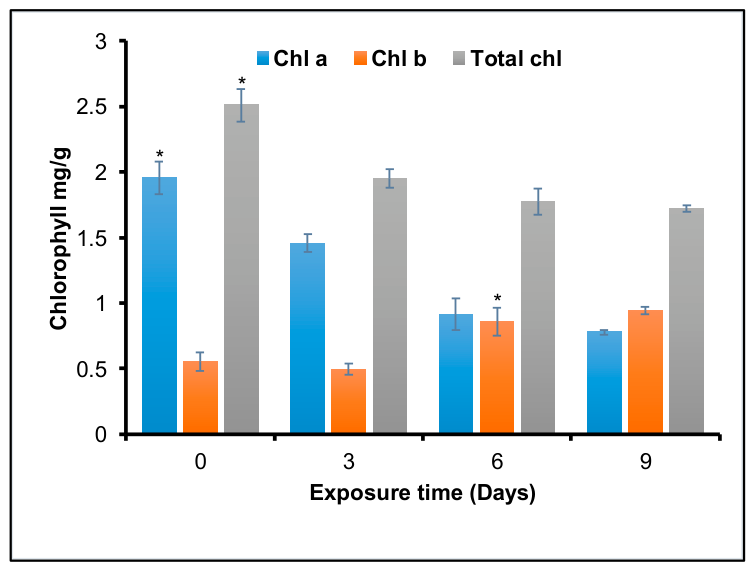
2.3. Pigment Analysis
2.4. Phytochemical Analysis
2.4.1. Determination of Total Phenolic Content (TPC)
2.4.2. Determination of Total Flavonoid Content (TFC)
2.4.3. Antioxidant DPPH Activity
2.4.4. Reducing Sugar Content
2.4.5. Sampling and Extraction for Metabolite Profiling by GC-MS/MS
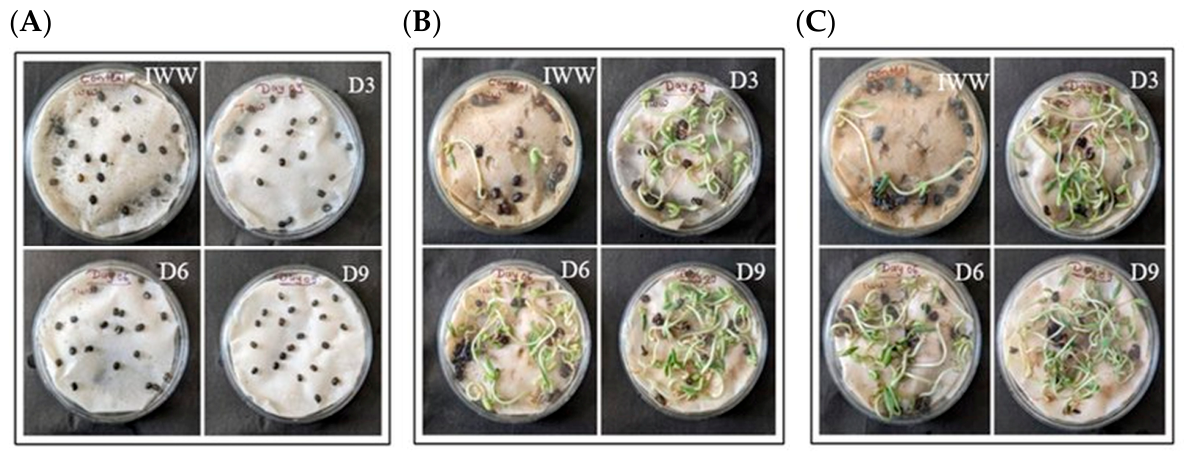
2.4.6. Phytotoxicity Assay
2.4.7. Statistical Analyses
3. Results
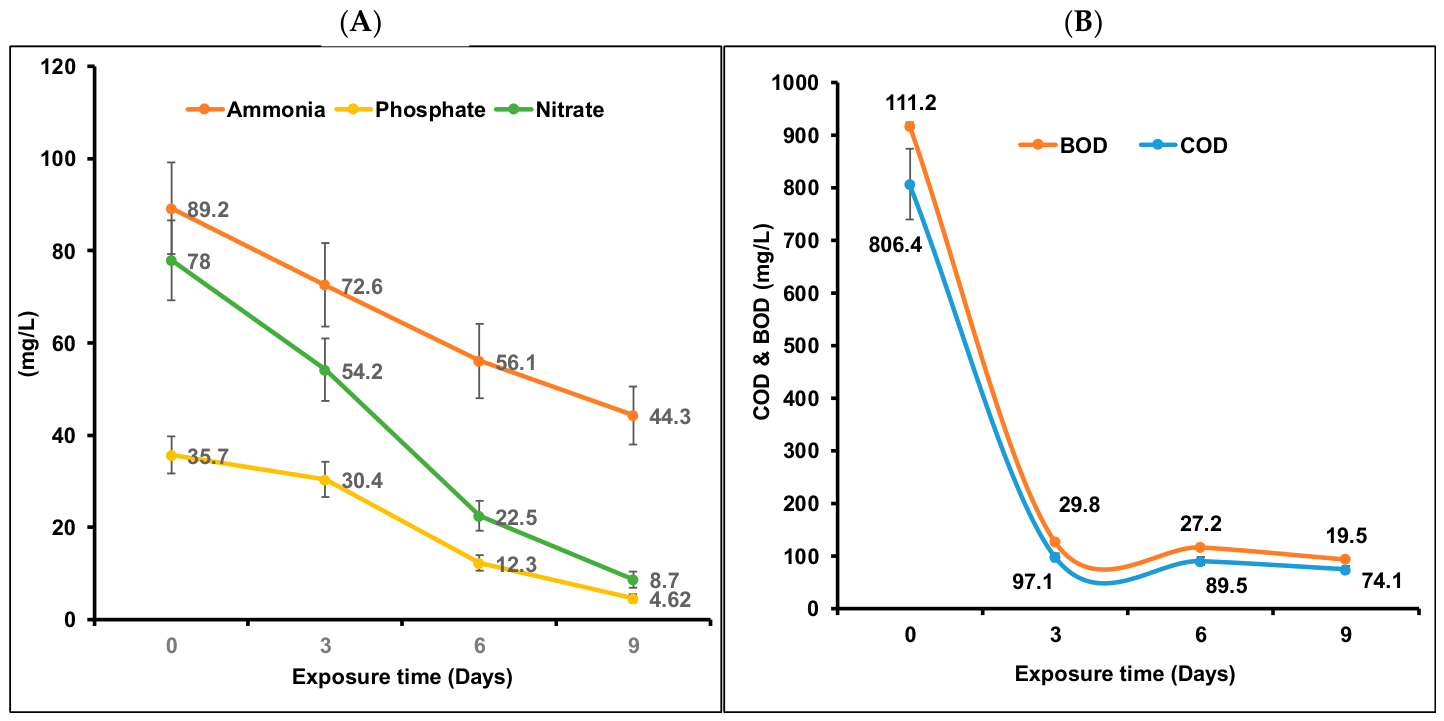
3.1. Impact of S. portulacastrum on the Physicochemical Profile of IWW
3.2. Biochemical and Metabolic Responses of S. portulacastrum
3.2.1. Photosynthetic Pigments
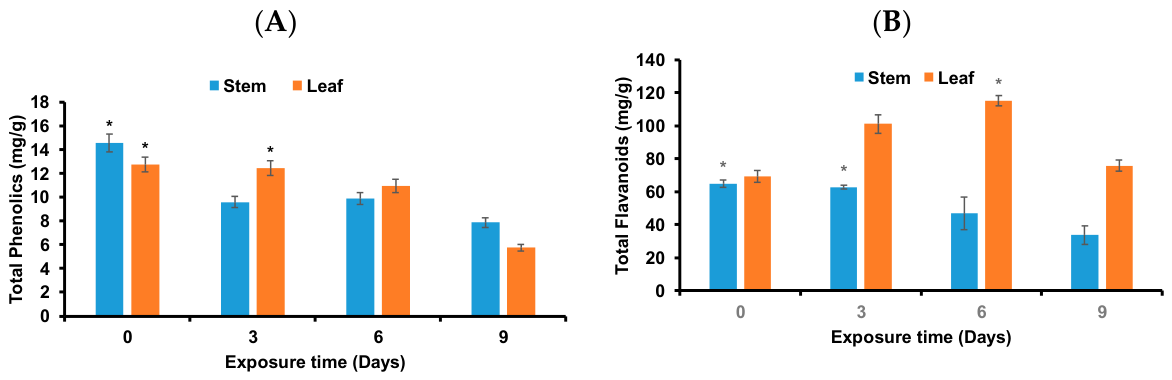
3.2.2. Total Phenolic Content and Flavonoid Content
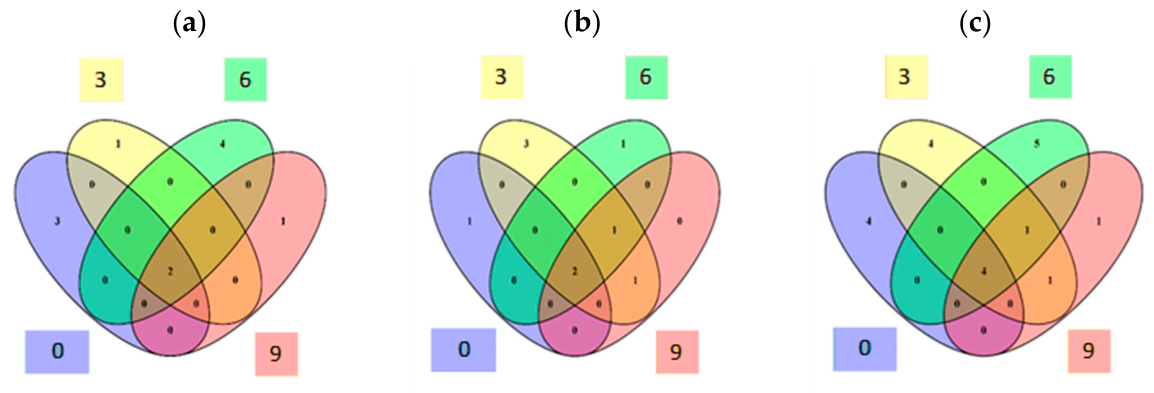
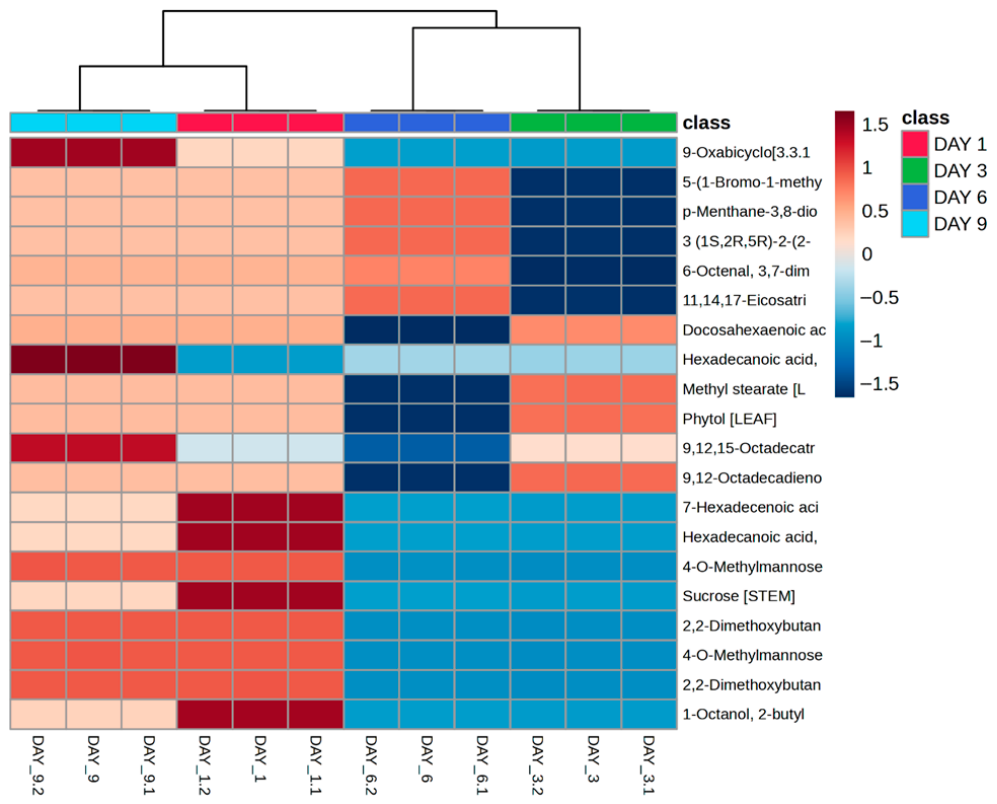
3.2.3. IWW-Induced Specific Metabolites in the Stem and Leaf Samples of S. portulacastrum
3.2.4. S. portulacastrum Leaves Reveal IWW-Induced Metabolomic Changes
3.2.5. Phytotoxicity of Phytoremediated IWW
4. Conclusions
Author Contributions
Funding
Institutional Review Board Statement
Informed Consent Statement
Data Availability Statement
Acknowledgments
Conflicts of Interest
Abbreviations
| IWW | Industrial Wastewater |
| COD | Chemical Oxygen Demand |
| BOD | Biological Oxygen Demand |
| TS | Total Solids |
| TSS | Total Suspended Solids |
| TDS | Total Dissolved Solids |
| ICP-OES | Inductively Coupled Plasma–Optical Emission Spectrometry |
| DMSO | Dimethyl Sulfoxide |
| TPC | Total Phenolic Content |
| TFC | Total Flavonoid Content |
| DNSA | Dinitro Salicylic Acid |
References
- du Plessis, A. Persistent degradation: Global water quality challenges and required actions. One Earth 2022, 5, 129–131. [Google Scholar] [CrossRef]
- Shelke, D.B.; Chambhare, M.R.; Sonawane, H.B.; Islam, N.F.; Patowary, R.; Das, M.R.; Mohanta, Y.K.; Patowary, K.; Joshi, S.J.; Narayan, M.; et al. Synergistic approaches in halophyte-microbe interactions: Mitigating soil salinity and industrial contaminants for sustainable agriculture. Discov. Life 2025, 55, 11. [Google Scholar] [CrossRef]
- Feng, L.; Shang, S.; Feng, X.; Kong, Y.; Bai, J. Evolution and Trend Analysis of Research Hotspots in the Field of Pollution-Intensive Industry Transfer—Based on Literature Quantitative Empirical Study of China as World Factory. Front. Environ. Sci. 2022, 10, 732734. [Google Scholar] [CrossRef]
- Gaur, V.K.; Sharma, P.; Sirohi, R.; Awasthi, M.K.; Dussap, C.G.; Pandey, A. Assessing the impact of industrial waste on environment and mitigation strategies: A comprehensive review. J. Hazard. Mater. 2020, 398, 123019. [Google Scholar] [CrossRef]
- Dutta, D.; Arya, S.; Kumar, S. Industrial wastewater exposure: Current trends, bottlenecks, and best practices. Chemosphere 2021, 285, 131245. [Google Scholar] [CrossRef] [PubMed]
- Fu, F.; Wang, Q. Removal of heavy metal ions from wastewaters: A review. J. Environ. Manag. 2011, 92, 407–418. [Google Scholar] [CrossRef] [PubMed]
- Singh, B.J.; Chakraborty, A.; Sehgal, R. A systematic review of industrial wastewater management: Evaluating challenges and enablers. J. Environ. Manag. 2023, 348, 119230. [Google Scholar] [CrossRef]
- Mishra, T.; Tiwari, P.B.; Kanchan, S.; Kesheri, M. Advances in Microbial Bioremediation for Effective Wastewater Treatment. Water 2025, 17, 3196. [Google Scholar] [CrossRef]
- Bala, S.; Garg, D.; Thirumalesh, B.V.; Sharma, M.; Sridhar, K.; Inbaraj, B.S.; Tripathi, M. Recent Strategies for Bioremediation of Emerging Pollutants: A Review for a Green and Sustainable Environment. Toxics 2022, 10, 484. [Google Scholar] [CrossRef]
- Ayilara, M.S.; Babalola, O.O. Bioremediation of environmental wastes: The role of microorganisms. Front. Agron. 2023, 5, 1183691. [Google Scholar] [CrossRef]
- Nadi, A.R.; Mohamed, E.; Kasem, A.M.M.A.; Ghanem, A.E.M.F.; Badry, M.O. Green Solutions for Heavy Metal Pollution in the Aquatic Environment of the Nile Islands: Cues from some Submerged and Emergent Macrophytes. Water Air Soil Pollut. 2025, 236, 410. [Google Scholar] [CrossRef]
- Lokhande, V.; Gor, B.; Desai, N.S.; Nikam, T.D.; Suprasanna, P. Sesuvium portulacastrum, a plant for drought, salt stress, sand fixation, food and phytoremediation: A review. Agron. Sustain. Dev. 2013, 33, 329–348. [Google Scholar] [CrossRef]
- Nikalje, G.C.; Penna, S. Potentials of Sesuvium portulacastrum (L.) L. in Biosaline Agriculture. In Harnessing Sesuvium portulacastrum for Biosaline Agriculture; Penna, S., Nikalje, G.C., Eds.; Springer: Singapore, 2025; pp. 1–7. [Google Scholar]
- Nikalje, G.C.; Srivastava, A.K.; Pandey, G.K.; Suprasanna, P. Halophytes in biosaline agriculture: Mechanism, utilization, and value addition. Land Degrad. Dev. 2018, 29, 1081–1095. [Google Scholar] [CrossRef]
- Nikalje, G.C.; Shrivastava, M.; Nikam, T.D.; Suprasanna, P. Physiological Responses and Tolerance of Halophyte Sesuvium portulacastrum L. to Cesium. Adv. Agric. 2022, 2022, 9863002. [Google Scholar] [CrossRef]
- Watharkar, A.D.; Khandare, R.V.; Waghmare, P.R.; Jagadale, A.D.; Govindwar, S.P.; Jadhav, J.P. Treatment of textile effluent in a developed phytoreactor with immobilized bacterial augmentation and subsequent toxicity studies on Etheostoma olmstedi fish. J. Hazard. Mater. 2015, 283, 698–704. [Google Scholar] [CrossRef]
- Ritchie, R.J.; Sma-Air, S.; Phongphattarawat, S. Using DMSO for chlorophyll spectroscopy. J. Appl. Phycol. 2021, 33, 2047–2055. [Google Scholar] [CrossRef]
- Molole, G.J.; Gure, A.; Abdissa, N. Determination of total phenolic content and antioxidant activity of Commiphora mollis (Oliv.) Engl. resin. BMC Chem. 2022, 16, 48. [Google Scholar] [CrossRef]
- Brand-Williams, W.; Cuvelier, M.E.; Berset, C. Use of a free radical method to evaluate antioxidant activity. LWT—Food Sci. Technol. 1995, 28, 25–30. [Google Scholar] [CrossRef]
- Patil, R.; Aware, C.; Shinde, K.; Ghanekar, R.K.; Vyavahare, G.; Bapat, V.; Jadhav, J. Anti-Inflammatory and Antioxidant Properties of the Mucuna sanjappae Seeds in the Rat Model and In Vitro Assays. Biomed. Pharmacol. J. 2024, 17, 713–724. [Google Scholar] [CrossRef]
- McCleary, B.V.; McGeough, P. A Comparison of Polysaccharide Substrates and Reducing Sugar Methods for the Measurement of endo-1,4-β-Xylanase. Appl. Biochem. Biotechnol. 2015, 177, 1152–1163. [Google Scholar] [CrossRef]
- Roessner, U.; Wagner, C.; Kopka, J.; Trethewey, R.N.; Willmitzer, L. Technical advance: Simultaneous analysis of metabolites in potato tuber by gas chromatography–mass spectrometry. Plant J. 2001, 23, 131–142. [Google Scholar] [CrossRef] [PubMed]
- Kulkarni, J.; Sharma, S.; Sahoo, S.A.; Mishra, S.; Nikam, T.D.; Borde, M.; Suprasanna, P.; Srivastava, A.K. Resilience in primary metabolism contributes to salt stress adaptation in Sesuvium portulacastrum (L.). Plant Growth Regul. 2022, 98, 385–398. [Google Scholar] [CrossRef]
- Lokhande, V.H.; Kudale, S.; Nikalje, G.; Desai, N.; Suprasanna, P. Hairy root induction and phytoremediation of textile dye, Reactive green 19A-HE4BD, in a halophyte, Sesuvium portulacastrum (L.) L. Biotechnol. Rep. 2015, 8, 56–63. [Google Scholar] [CrossRef]
- Manousaki, E.; Kalogerakis, N. Halophytes—An emerging trend in phytoremediation. Environ. Sci. Pollut. Res. 2011, 18, 1473–1484. [Google Scholar] [CrossRef]
- Li, H.; Zhou, Q.; Yu, Y.; Lin, C. Removal of organic matter and dissolved carbon using Sesuvium portulacastrum floating beds. Water Res. 2013, 47, 703–712. [Google Scholar]
- Calheiros, C.S.C.; Rangel, A.O.S.S.; Castro, P.M.L. Exposure of industrial wastewater with two-stage constructed wetlands planted with Typha latifolia and Phragmites australis. Bioresour. Technol. 2019, 100, 3205–3213. [Google Scholar] [CrossRef]
- Liu, Y.; Chen, Z.; Wang, X.; Zhao, L. Halophyte-assisted phytoremediation of industrial wastewater: Performance, mechanisms, and sustainability. Sci. Total Environ. 2024, 907, 167876. [Google Scholar]
- Vymazal, J. Constructed wetlands for exposure of industrial wastewater: A review. Ecol. Eng. 2014, 73, 724–751. [Google Scholar] [CrossRef]
- Ayyappan, S.; Ravindran, K.C.; Lokhande, V.H.; Venkatesan, S. Phytoremediation potential of the halophyte Sesuvium portulacastrum for removal of heavy metals from contaminated environments. Environ. Sci. Pollut. Res. 2016, 23, 18115–18127. [Google Scholar]
- Kumawat, A.K.; Vaish, S.; Pathak, B. Phytoremediation efficacy of Sesuvium portulacastrum L. in mitigating industrial effluents and heavy metal contamination. Environ. Sci. Pollut. Res. 2025, 32, 8340–8357. [Google Scholar] [CrossRef] [PubMed]
- Wang, L.; Zhang, J.G.; Sha, H.Y.; Wang, Y.R.; Wang, H.Y.; Zhu, G.C.; Lu, Y.Z. Lanthanum-quaternized chitosan-modified zeolite for long-lasting operation of constructed wetland: A bifunctional strategy for simultaneous phosphorus removal and microbial clogging mitigation. Water Res. 2026, 288, 124688. [Google Scholar] [CrossRef]
- Yu, N.; Chen, B.; Wang, Y.; Sun, Y.; Wu, J.; Shen, K.; Dong, C.; Ma, X.; Zeng, X. Preparation of Ce-Fe2O3/Al2O3 catalyst for simultaneous degradation of benzodiacetone and reduction of Cr(VI) by electro-Fenton process: Performance, mechanism, degradation pathways. J. Alloys Compd. 2025, 1045, 184745. [Google Scholar] [CrossRef]
- Wen, X.J.; Zhan, Q.; Ye, H.; Xu, J.; Qian, B.; Luo, R.; Wu, X.; Liu, Z.; Fei, Z.; Guo, H. Synergistic surface plasmon resonance effect of Ag and S-scheme heterojunction in Ag/AgBr/Bi24O31Cl10 towards enhanced enrofloxacin removal: Performance, degradation pathways and synergistic mechanism. Environ. Res. 2025, 288, 123249. [Google Scholar] [CrossRef]
- Slama, I.; Abdelly, C.; Bouchereau, A.; Flowers, T.; Savouré, A. Diversity, distribution and roles of osmoprotective compounds accumulated in halophytes under abiotic stress. Ann. Bot. 2015, 115, 433–447. [Google Scholar] [CrossRef]
- Ravindran, K.C.; Venkatesan, S.; Balakrishnan, V.; Chellappan, K.P.; Balasubramanian, T. Restoration of metal-contaminated soils using halophytes. Environ. Monit. Assess. 2016, 188, 171. [Google Scholar]
- Diogo, J.C.; Mendes da Silva, C.; Andrade-Vieira, L.F. Plant bioassays as tools for evaluating wastewater toxicity and reuse potential. Ecotoxicol. Environ. Saf. 2025, 259, 115002. [Google Scholar]
- Aarti, P.D.; Tanaka, R.; Tanaka, A. Effects of oxidative stress on chlorophyll biosynthesis in cucumber (Cucumis sativus) cotyledons. Physiol. Plant. 2006, 128, 186–197. [Google Scholar] [CrossRef]
- Nisbett, K.J.; Alokozai, A.; Ko, S.H.E.; Mott, G.A.; Brown, J.C. Degradation and resynthesis of chlorophyll during increased oxidative stress and prolonged darkness differ between annual and perennial flax (Linum L.). Oil Crop Sci. 2024, 9, 121–130. [Google Scholar] [CrossRef]
- Wang, Y.; Ma, W.; Fu, H.; Li, L.; Ruan, X.; Zhang, X. Effects of Salinity Stress on Growth and Physiological Parameters and Related Gene Expression in Different Ecotypes of Sesuvium portulacastrum on Hainan Island. Genes 2023, 14, 1336. [Google Scholar] [CrossRef]
- Goncharuk, E.A.; Zagoskina, N.V. Heavy Metals, Their Phytotoxicity, and the Role of Phenolic Antioxidants in Plant Stress Responses with Focus on Cadmium: Review. Molecules 2023, 28, 3921. [Google Scholar] [CrossRef]
- Li, X.; Zhang, Y.; Sun, Y.; Wang, J. Metabolic adjustment and osmolyte accumulation in halophytes under salinity stress. Plant Physiol. Biochem. 2023, 197, 107648. [Google Scholar]
- Gul, B.; Khan, M.A.; Weber, D.J. Adaptive strategies of halophytes to salinity and environmental stress. Plant Soil 2022, 473, 1–17. [Google Scholar]
- Mendes da Silva, C.; Andrade-Vieira, L.F. Advances in phytotoxicity bioassays for environmental monitoring. Environ. Toxicol. Chem. 2025, 44, 321–334. [Google Scholar]
- Saddhe, A.A.; Manuka, R.; Penna, S. Plant sugars: Homeostasis and transport under abiotic stress in plants. Physiol. Plant. 2021, 171, 739–755. [Google Scholar] [CrossRef]
- Kulkarni, J.; Borde, M.; Srivastava, A.K.; Penna, S. Metabolomic Insights into Salt Adaptation in Halophytes. In Sustainable Utilisation and Bioengineering of Halophytes; Springer: Singapore, 2025. [Google Scholar]
- Sun, W.Q.; Li, X.P.; Ong, B.L. Preferential accumulation of d-pinitol in Acrostichum aureum gametophytes in response to salt stress. Physiol. Plant. 1999, 105, 51–57. [Google Scholar] [CrossRef]
- Vera-Estrella, R.; Barkla, B.J.; Bohnert, H.J.; Pantoja, O. Salt stress in Mesembryanthemum crystallinum L. cell suspensions activates adaptive mechanisms similar to those observed in the whole plant. Planta 1999, 207, 426–435. [Google Scholar] [CrossRef]
- Lüttge, U.; Popp, M.; Medina, E.; Cram, W.J.; Diaz, M.; Griffiths, H.; Lee, H.S.J.; Schäfer, C.; Smith, J.A.C.; Stimmel, K.H. Ecophysiology of xerophytic and halophytic vegetation of a coastal alluvial plain in northern Venezuela: V. The Batis maritime–Sesuvium portulacastrum vegetation unit. New Phytol. 1989, 111, 283–291. [Google Scholar] [CrossRef]
- Zheng, S.; Wu, M.; Zhan, L.; Lin, Y.; Yang, M.; Zheng, H.; Yang, F.; Luo, D.; Wang, X. Effects of Sesuvium portulacastrum Floating Treatment Wetlands on Nitrogen Removal and Carbon Sequestration in Aquaculture Water. Water 2024, 16, 3472. [Google Scholar] [CrossRef]
- Shelke, D.B.; Chambhare, M.R.; Nikam, T.D.; Penna, S. Biological Activities and Phytochemistry of Sesuvium portulacastrum (L.) L. In Bioactive Compounds in Mangroves and Their Associates; Springer Nature: Cham, Switzerland, 2025; pp. 345–369. [Google Scholar]
- Schaller, F. Enzymes of the biosynthesis of octadecanoid-derived signalling molecules. J. Exp. Bot. 2001, 52, 11–23. [Google Scholar] [CrossRef] [PubMed]
- Nikalje, G.C.; Variyar, P.S.; Joshi, M.V.; Nikam, T.D.; Suprasanna, P. Temporal and spatial changes in ion homeostasis, antioxidant defense and accumulation of flavonoids and glycolipid in a halophyte Sesuvium portulacastrum (L.) L. PLoS ONE 2018, 13, e0193394. [Google Scholar] [CrossRef]
- Novak, J.M. Environmental risks associated with untreated industrial effluent discharge. J. Environ. Sci. 2023, 125, 35–46. [Google Scholar]
- Bozym, M. Ecotoxicological assessment of industrial wastewater using plant-based bioassays. Environ. Monit. Assess. 2022, 194, 345. [Google Scholar]
- Ravindran, B.; Kumari, S.K.; Stenstrom, T.A.; Bux, F. Evaluation of phytotoxicity effect on selected crops using treated and untreated wastewater from different configurative domestic wastewater plants. Environ. Technol. 2016, 37, 1782–1789. [Google Scholar] [CrossRef]
- Priac, A.; Morin-Crini, N.; Druart, C.; Crini, G. Treated wastewater phytotoxicity assessment using seed germination assays. Environ. Monit. Assess. 2017, 189, 267. [Google Scholar]
- Patil, A.V.; Lokhande, V.H.; Suprasanna, P.; Bapat, V.A.; Jadhav, J.P. Sesuvium portulacastrum (L.) L.: A potential halophyte for the degradation of toxic textile dye, Green HE4B. Planta 2012, 235, 1051–1063. [Google Scholar] [CrossRef] [PubMed]
- Lokhande, V.H.; Patil, R.H.; Govindwar, S.P. Phytoremediation potential of Sesuvium portulacastrum for textile dye-contaminated wastewater. Ecol. Eng. 2015, 84, 228–234. [Google Scholar]
- Pino, M.R.; Muñiz, S.; Val, J.; Navarro, E. Phytotoxicity of 15 common pharmaceuticals on the germination of Lactuca sativa and photosynthesis of Chlamydomonas reinhardtii. Environ. Sci. Pollut. Res. 2016, 23, 22530–22541. [Google Scholar] [CrossRef]
- Yasseen, B.T.; Al-Thani, R.F. Endophytes and Halophytes to Remediate Industrial Wastewater and Saline Soils: Perspectives from Qatar. Plants 2022, 11, 1497. [Google Scholar] [CrossRef]






| Heavy Metals | Al | Cr | Cu | Fe | K | Mg | Mn | Ni | Pd | Zn | Na |
|---|---|---|---|---|---|---|---|---|---|---|---|
| (mg/L) | |||||||||||
| Untreated IWW | 0.33 | 0.11 | 0.01 | 9.67 | 86.06 | 40.24 | 1.9 | 0.05 | 0.04 | 0.28 | 725.28 |
| IWW Treated for 09 days | 0.02 | 0.03 | 0.01 | 0.4 | 37.8 | 18.68 | 0.24 | 0 | 0 | 0 | 336.6 |
| F-value | 679.2 | 72 | NA | 2221.44 | 73,716.7 | 55,876.9 | 76.45 | 13.47 | 8.9 | 137.22 | 2,583,442 |
| p-value | 1.29 × 10⁻⁵ | 1.06 × 10⁻³ | NA | 1.21 × 10⁻⁶ | 1.10 × 10⁻⁹ | 1.92 × 10⁻⁹ | 9.43 × 10⁻⁴ | 2.14 × 10⁻² | 4.06 × 10⁻² | 3.04 × 10⁻⁴ | 8.99 × 10⁻¹³ |
| Significance | *** (p < 0.001) | ** (p < 0.01) | NS | *** (p < 0.001) | *** (p < 0.001) | *** (p < 0.001) | *** (p < 0.001) | * (p < 0.05) | * (p < 0.05) | *** (p < 0.001) | *** (p < 0.001) |
| IWW Exposure (Days) | ||||
|---|---|---|---|---|
| Seed germination parameters | 0 | 3 | 6 | 9 |
| Root length (cm) | 0.53 ± 0.05 | 1.87 ± 0.12 | 2.96 ± 0.15 | 4.93 ± 0.20 |
| Shoot length (cm) | 3.10 ± 0.10 | 3.8 ± 0.15 | 5.10 ± 0.20 | 3.9 ± 0.18 |
| Survival% | 0 ± 0 | 45 ± 3 | 70 ± 4 | 85 ± 3 |
| Germination % | 15 ± 2 | 65 ± 4 | 80 ± 3 | 95 ± 2 |
Disclaimer/Publisher’s Note: The statements, opinions and data contained in all publications are solely those of the individual author(s) and contributor(s) and not of MDPI and/or the editor(s). MDPI and/or the editor(s) disclaim responsibility for any injury to people or property resulting from any ideas, methods, instructions or products referred to in the content. |
© 2026 by the authors. Licensee MDPI, Basel, Switzerland. This article is an open access article distributed under the terms and conditions of the Creative Commons Attribution (CC BY) license.
Share and Cite
Taskeen, T.; Patil, S.C.; Patil, R.; Nikalje, G.C.; Penna, S. Evaluation of Sesuvium portulacastrum (L.) L. as a Halophytic Candidate for the Phytoremediation of Industrial Wastewater. Sustainability 2026, 18, 5439. https://doi.org/10.3390/su18115439
Taskeen T, Patil SC, Patil R, Nikalje GC, Penna S. Evaluation of Sesuvium portulacastrum (L.) L. as a Halophytic Candidate for the Phytoremediation of Industrial Wastewater. Sustainability. 2026; 18(11):5439. https://doi.org/10.3390/su18115439
Chicago/Turabian StyleTaskeen, Tamanna, Sanket Chandrakant Patil, Ravishanker Patil, Ganesh Chandrakant Nikalje, and Suprasanna Penna. 2026. "Evaluation of Sesuvium portulacastrum (L.) L. as a Halophytic Candidate for the Phytoremediation of Industrial Wastewater" Sustainability 18, no. 11: 5439. https://doi.org/10.3390/su18115439
APA StyleTaskeen, T., Patil, S. C., Patil, R., Nikalje, G. C., & Penna, S. (2026). Evaluation of Sesuvium portulacastrum (L.) L. as a Halophytic Candidate for the Phytoremediation of Industrial Wastewater. Sustainability, 18(11), 5439. https://doi.org/10.3390/su18115439