Review

Research Trends and Thematic Evolution of Circular Economy and Industrial Symbiosis in Construction and Demolition Waste


1
Green Tech Institute, College of Physical Sciences and Engineering, University Mohammed VI Polytechnic, Benguerir 43150, Morocco
2
Center of Excellence on Green Tech in Architecture, Faculty of Science, Chulalongkorn University, Bangkok 10330, Thailand
Sustainability 2026, 18(11), 5440; https://doi.org/10.3390/su18115440 (registering DOI)
Submission received: 11 February 2026 / Revised: 21 May 2026 / Accepted: 25 May 2026 / Published: 28 May 2026
(This article belongs to the Section Green Building)

Abstract

A circular economy (CE) and industrial symbiosis (IS) are increasingly recognized as key strategies for transforming construction and demolition waste (CDW) into valuable secondary resources. However, existing research remains fragmented, with limited integration across these interconnected domains. This study provides a comprehensive bibliometric review of 966 articles included in the Scopus database from 2000 to 2026 to explore the transformation, intellectual frames, and new trends within the CE–IS–CDW nexus. The results show that the field has transitioned from an early exploratory phase to rapid expansion, with research output accelerating significantly after 2018 and peaking at over 220 publications annually in recent years. The study identifies four significant thematic clusters: CE and sustainability transitions; CDW and recycling practices; life cycle and environmental assessment; and emerging IS and industrial ecology frameworks. Although this has increased, the discipline is still conceptually fragmented and has not integrated CE and IS throughout the entire building life cycle; furthermore, it still has regional differences, especially in the Global South. This is the first systematic bibliometric analysis of the CE–IS–CDW nexus that provides an overview of its conceptual evolution, thematic structure, and fragmentation. This study, in contrast to previous reviews of individual research areas, maps the linkages and gaps between CE and IS in CDW management, offering novel insights for cross-disciplinary research and policy making. Its findings can also offer useful information to policymakers and stakeholders in the industry to recover more resources, enhance industrial symbiosis, and facilitate the shift toward more circular and sustainable construction systems.

1. Introduction

Technologically, construction and demolition waste (CDW) is one of the most significant and fastest-increasing waste streams across the globe, owing to increased urbanization rates, the development of building infrastructure, and the renewal of buildings [1,2,3]. The amount of CDW worldwide is estimated to be 30–40% of the total solid waste production, which places a burden on land, natural resources, and waste management systems [4]. Although it has a significant environmental impact, CDW also offers significant possibilities for material recovery and recycling, as well as for reintegrating these materials into industrial value chains [5,6]. The shift to the principles of a circular economy (CE) has revitalized interest in changing CDW from a disposal problem into a secondary resource in recent years [7].
The circular economy focuses on reducing the number of resources extracted, increasing the life cycle of materials, and eliminating waste by reusing, recycling, and recovering materials [8,9,10,11]. In this paradigm, the concept of industrial symbiosis (IS), which is a central concept of industrial ecology, has turned out to be a potential solution to increase the efficiency of resources in the building sector [12]. Industrial symbiosis encourages industries to work together by sharing materials, energy, water, and by-products, providing environmental and economic benefits. When applied to CDW, symbiotic networks have the potential to recover aggregates, metals, concrete, and other construction materials, minimizing the use of virgin extraction and landfill disposal [3,4,6,9,13]. Due to the unprecedented urbanization of the globe, the growth in the development of the infrastructure, and the low lifespan of most of the buildings, construction and demolition waste (CDW) has been of primary concern to the global community as an environmental issue [3,6,14]. Despite the fact that concrete, metals, aggregates, and ceramics are high-value materials in CDW, a majority remain in landfills or constitute orchestrated dumping, particularly in areas with poor waste management systems [2,15]. Such a linear form of extraction–consumption–disposal leads to resource scarcity, greenhouse gas emissions, and ecosystem degradation.
Circular economy (CE) policies have become disruptive models to overcome these issues by facilitating resource efficiency, recycling, and material recovery. In this context, industrial symbiosis (IS) can provide a novel direction to increase the valorization of CDW by conducting cooperative interactions in terms of the exchange of materials and resources between industries [16,17]. Despite its increased topicality, studies on CE and IS practices implemented for CDW are conceptually incomplete and geographically uneven. The discipline has grown at a rapid pace; however, there is no unified scientific mapping that determines several major themes, intellectual frameworks, research gaps, and trends. There is increasing evidence that the use of IS approaches can enhance CE strategies throughout the construction value chain [15,18]. These may be in the form of exchanging CDW as inputs between construction firms, recycling facilities, and manufacturing industries, incorporating CDW valorization into eco-industrial parks, and developing closed-loop systems that recycle reclaimed materials back into new construction works [19].
Considering the growing need to decarbonize the built environment and decrease reliance on resources, a thorough explanation of the contributions of industrial symbiosis to the management of circular CDW is necessary [18,19]. Existing bibliometric studies have primarily focused on individual domains, such as the circular economy or CDW management, often identifying thematic clusters and research trends but lacking integrated analysis across interconnected systems [1,20]. Although some studies have considered the separate elements of CDW recycling or circular buildings, there are no combined studies that directly compare industrial symbiosis as a system strategy in the context of the circular economy. This review fills this gap by summarizing available studies on strategies of industrial symbiosis regarding the valorization of CDW. It focuses on symbiotic interactions, state system governing processes, technological trajectories, and regional processes that influence and modify CDW recovery in different settings. The review can offer an overview of how IS can improve circular economy strategies in the construction industry by identifying the factors that drive, impede, and promote their achievement. Finally, the paper contributes to current attempts to build more sustainable, resilient, and resource-efficient built environments. A bibliometric analysis is required to identify the systematic quantification and visualization of the knowledge development of circular economy strategies, industrial symbiosis, and CDW management. This can be used to gain a multifaceted conception of the influential authors, journals, countries, collaboration networks, thematic clusters, and methodological trajectories that form the field. Although the literature on the circular economy and construction waste management is increasing, the majority of existing reviews concentrate on separate issues, including CDW recycling methods, life cycle assessment, and circular construction. Little consideration has been paid to the inclusion of industrial symbiosis as a system-level measure into circular economy paradigms to manage CDW, and no bibliometric synthesis has so far overviewed the integrated CE–IS–CDW research space. This restriction limits the interpretation of the interaction between these domains, their development, and the provision of sustainable construction. Moreover, there is a growing body of literature on the circular economy, industrial symbiosis, and construction and demolition waste, and the studies to date tend to focus on these fields separately or with limited conceptual intersections. To date, no other bibliometric study has brought together these three areas of research. This paper bridges this gap by presenting the first bibliometric mapping of CE, IS, and CDW, revealing their intellectual structure, evolution, and interactions. In doing so, it goes beyond narrative reviews and provides an empirically informed synthesis that identifies fragmentation, integration opportunities, and research gaps across the construction value chain. The research questions that guide this bibliometric review are as follows:
RQ1: How has scientific research on circular economy strategies and industrial symbiosis in construction and demolition waste management evolved?
RQ2: Which countries, institutions, writers, and journals have been most influential in the development of this field of research?
RQ3: What are the prevailing thematic clusters, conceptual frameworks, and research fronts related to CE, IS, and CDW?
RQ4: What can we learn about collaboration networks and citation patterns from the intellectual structure and dynamics of knowledge production in the field?
RQ5: What are the current research gaps and future research opportunities for developing circular economy and industrial symbiosis practices in CDW management?

2. Conceptual Framework for Study

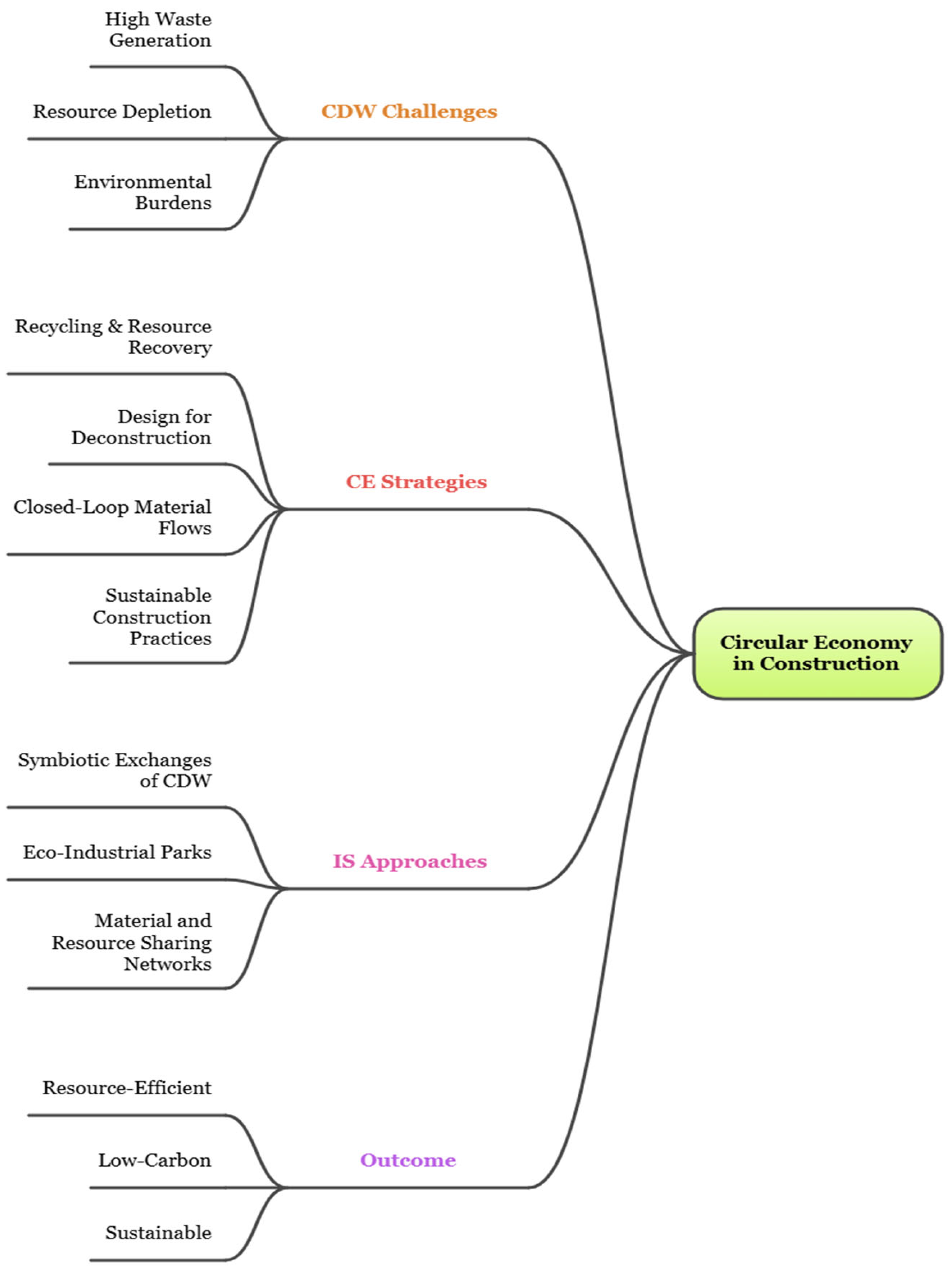
The construction industry is a major source of waste that is disposed of in landfills or carelessly dumped [3,4,21,22]. Another effect of CDW on depleting resources is through the process of construction, as construction is largely based on virgin materials, such as sand, gravel, and metals [1,8,14]. In addition, poor CDW management creates environmental pressures, such as greenhouse gas emissions, land degradation, and pollution. These issues prove that the existing linear take–make–dispose model is not sustainable and must be changed. CE strategies provide comprehensive solutions to the problems of CDW [23]. Such strategies will ensure that materials maximize their life cycle through recycling and resource recovery, designing structures in such a manner that they can be disassembled, and designing closed-loop material flows in which waste is used to generate a resource [10,24]. Circularity is also supported by sustainable construction approaches, including using recycled aggregates instead or incorporating modular building methods [25]. CE strategies offer guidance and instruments to minimize waste production and extract the value of materials throughout the construction life cycle. The operational mechanism behind the functioning of the circular economy strategies is industrial symbiosis. Industries use IS to cooperate with each other in the exchange of materials, energy, water, or by-products in a manner that benefits all parties. IS may have a different meaning in the context of CDW, such as utilizing construction waste as a raw material in other industries, embedding recycling within eco-industrial parks, or creating networks between resources in the construction supply chain. IS adds circular ideas to actual exchanges in the real world which can be used to close material loops and mitigate the use of virgin resources [26]. The issues of CDW present the necessity of more sustainable approaches. CE strategies furnish conceptual and technical avenues for decreasing waste and augmenting material recovery. IS methods render these routes functional through the facilitation of real interactions and partnerships among industries [25]. Therefore, the framework (Figure 1) displays the direction of problem-to-solution pathways toward implementation mechanisms. Combined with the other two domains, they will facilitate the creation of a more resource-efficient, low-carbon, and sustainable construction ecosystem. The amount of waste generated reduces, recycling becomes more active, material cycles are eliminated, and the construction industry becomes more resilient and environmentally responsible.

3. Methodology

3.1. Research Design

The given study takes the form of a bibliometric analysis enhanced by a systematic literature mapping to investigate trends in global research on the topics of circular economy (CE) strategies and industrial symbiosis (IS) in the context of the management of construction and demolition waste (CDW). Bibliometric analysis is a high-quality quantitative tool that helps researchers assess the dynamics of scientific knowledge by analyzing publication, citation, and collaboration patterns [5,20,27]. This method offers in-depth analyses of the intellectual organization of a discipline, revealing influential authors, earlier research, and new thematic groups. The bibliometric approach is particularly suitable for this research as studies on CE, IS, and CDW have grown exponentially in the last 20 years, producing a disjointed literature that needs to be systematically assembled and quantitatively synthesized [19,21,28]. This study uses performance indicators with science mapping techniques to define how the field has evolved, identify research gaps, and illustrate the relationships between various concepts and actors.

3.2. Data Source and Search Strategy

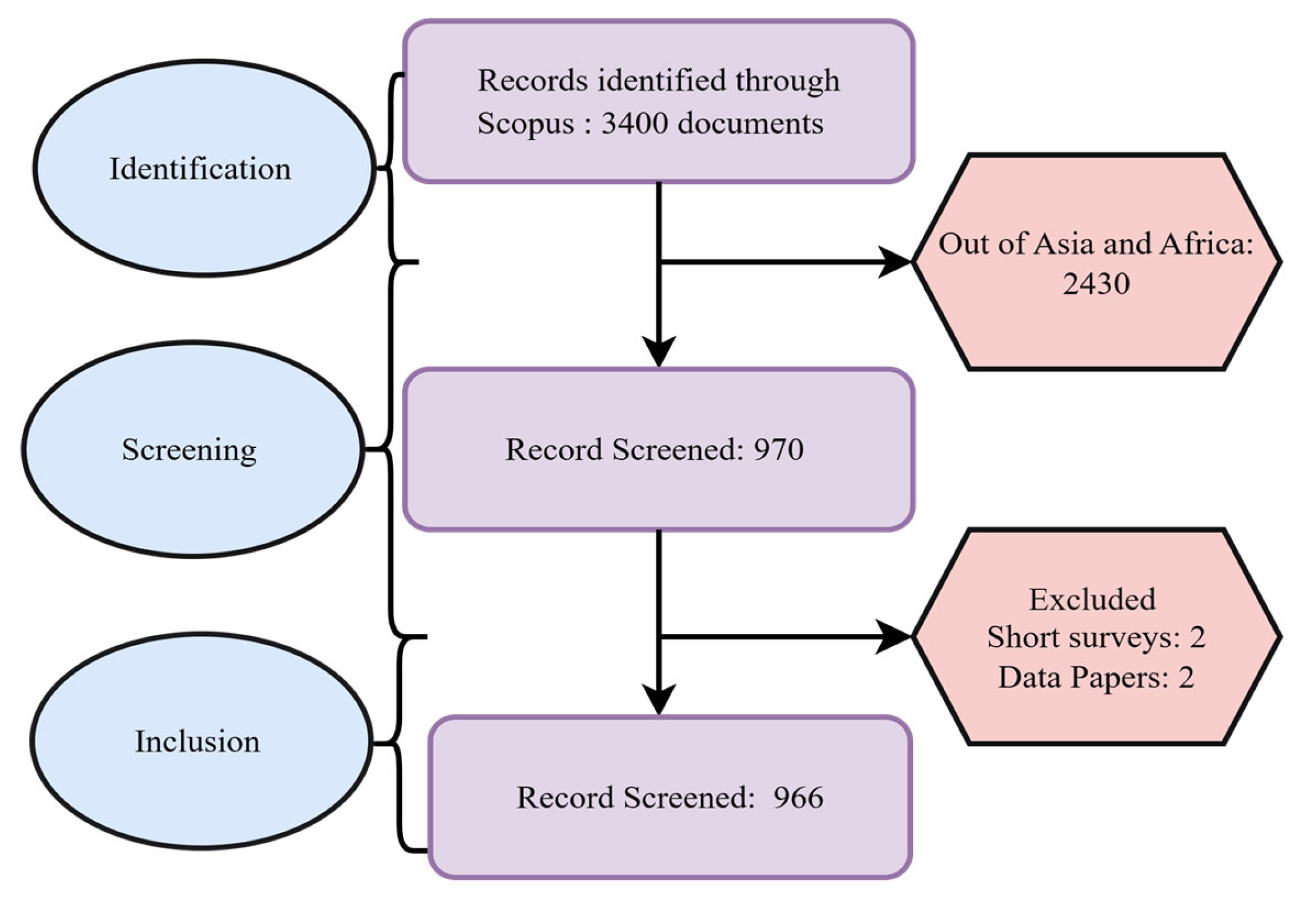
This study follows a systematic and transparent study selection process inspired by the Preferred Reporting Items for Systematic Reviews and Meta-Analyses (PRISMA) guidelines (Figure 2). Although the study adopts a bibliometric approach, PRISMA principles were adapted to ensure the rigorous identification, screening, and inclusion of relevant publications. The data were obtained from the Scopus database and analyzed using bibliometric techniques. Scopus was chosen because of its strict indexing criteria, detailed citation information, and ease of use with major bibliometric software systems [3,29]. An iterative method of developing the search strategy was used to ensure that scientific production on the topics of CE, IS, and CDW was as extensive as possible. The keywords were chosen to reflect four of the main pillars of the themes: construction and demolition waste, circular economy, industrial symbiosis/industrial ecology, and resource recovery or recycling. The search queries were (“industrial symbiosis” OR “urban symbiosis” OR “eco-industrial park” OR “industrial ecology” OR “circular economy”) AND (“construction and demolition waste” OR “construction waste” OR “CDW” OR “C&D waste”) AND (“valorization” OR “valorisation” OR “resource recovery” OR “material recovery” OR recycling).

3.3. Inclusion and Exclusion of Document

To ensure the study’s relevance and quality, clear inclusion and exclusion criteria were established. Peer-reviewed journal articles, books, book chapters, and conference papers published between 2000 and 2026 and written in English were included and had to be directly related to CE, IS, or CDW. Only English language publications were included in the analysis to ensure consistent and comparable bibliometric data. Nevertheless, the criterion can create a language bias, which could result in the neglect of research publications in those areas where scientific publications are commonly written in local languages. Consequently, the geographical distribution of publications should be interpreted cautiously, particularly for regions such as Latin America, Africa, and parts of the Middle East. Publishing outside of academic sources, such as editorials, conference abstracts, surveys, data papers, and commentaries, were not included, neither were studies unrelated to CDW or circularity. These criteria guaranteed narrow and representative data that met the objective of the review.

3.4. Data Mining and Processing

The final dataset was exported as a CSV file with full bibliographic records and cited references after the search and filtering phases, using R to import the data and perform bibliometric quantitative analysis and data cleaning with the bibliometrix package and its graphical interface, Biblioshiny. The name disambiguation of authors was performed through the combination of variations in the authors’ names (e.g., initials, differences in spelling, and inconsistencies in order) to prevent duplication. Second, the standardization of keywords was conducted through the grouping of similar words and the harmonization of variations, such as singular/plural words (e.g., the circular economy vs. circular economies), spelling variations (e.g., the term valorization vs. valorisation), and abbreviations (e.g., the term CDW vs. construction and demolition waste). Third, institutional names were standardized through the amalgamation of various forms of the same entity (e.g., abbreviations, full names, and alternative spellings). This was done with the help of automated services within bibliometrix and then manually checked and validated to ensure accuracy. Cleaning was performed in a series of iterative steps, with initial automated corrections revised manually. Approximately 10% of the records had to be adjusted manually, especially in cases of unclear author names and synonyms of keywords. These procedures guarantee the soundness and reproducibility of the bibliometric analysis.

3.5. Analytical Techniques

3.5.1. Performance Analysis

To analyze performance, the outputs and contributions in the field of research were studied. Such indicators included annual scientific output, most-referenced articles, top authors, influential institutions and journals, and country-level output. These indicators provide a numerical description of the development of the field and its leading contributors.

3.5.2. Science Mapping

Structural and relational patterns in the literature were analyzed using science mapping methods. Co-authorship networks provided insights into collaboration patterns between researchers and research institutions, and co-citation revealed the categories and intellectual building blocks of the discipline. Themes and methodological similarities between recent publications were pointed out by bibliographic coupling. The search for co-occurring keywords represented the most prevalent themes of research and terms employed by the researchers.

3.5.3. Thematic Evolution and Structure

Thematic clustering and evolution maps were produced to understand how the research topics have changed over time using Biblioshiny. These analyses identified key clusters, including the circular economy, industrial symbiosis, recycling, life cycle assessment (LCA), and sustainable construction, and followed the rise and fall in their popularity and interrelations. The relationships between key concepts were additionally explained with the help of conceptual structure mapping, which was created with the assistance of factor analysis and clustering.

3.5.4. Visualization Tools

Biblioshiny was used for visualizations to create thematic maps and other trend graphs in R and Microsoft Excel. These visual tools are intended to explain complex relationships in bibliometrics in an easy-to-understand manner.

3.5.5. Reliability and Validity

Several steps were taken to guarantee the reliability and validity of the bibliometric analysis. The Scopus database was the main source of data because it was important to ensure that only high-quality and peer-reviewed publications were used. The use of common bibliometric indicators, including but not limited to, total citations, h-index, and g-index, were used to assess scholarly impact across the board. Data cleaning (combining synonyms, standardizing variations in a keyword, and fixing inconsistencies between authors or institutions) increased the accuracy of the dataset. Finally, methodological soundness and reproducibility were strengthened by the fact that the software (bibliometrix and Biblioshiny) had been widely tested and validated.

4. Results

4.1. Main Information Documents

4.1.1. Descriptive Statistics of Documents

The search strategy from 2000 to 2026 included the emergence and consequential growth of research around the concept of a circular economy (CE), industrial symbiosis (IS), and construction and demolition waste (CDW). However, upon applying the inclusion and exclusion criteria, no pertinent publications that satisfied the scope of the study were found before 2003. As a result, the bibliometric dataset includes the years 2003–2026 and has 966 documents included in 297 sources, which proves the scope and multidisciplinary aspect of the studies on the circular economy, industrial symbiosis, and waste in construction and demolition (Table 1). The field displays an annual growth rate of 6.21%, which indicates that academic interest and growth have been experienced over the past 20 years. The average age of the documents is 2.9 years; thus, the literature is comparatively new because sustainability transitions, CE policies, and waste valorization technologies are changing rapidly. The average number of citations per document (38.51 citations per document) is also quite large, which indicates that the dataset may contain foundational studies on the impact and that scholarly interest is strong. The thematic variety of the area can be seen through the number of keywords plus (4710) and author keywords (2553) that represent the interdisciplinary nature of the area, including engineering, environmental science, policy, and resource management. The number of authors who contributed to this body of work is 3083, but there are only 66 single-authored papers, which means that the culture of collaboration is high, which is also supported by the average of 3.92 co-authors per paper and 38.92% international co-authorship. This aggregate measure does not capture temporal variations. Given the rapid growth and increasing complexity of the field, particularly after 2018, it is likely that collaboration intensity has increased over time. The dominance of research articles (549) and review papers (227) over the rest of the corpus indicates a high level of empirical production as well as an increasing interest in collecting fragmented knowledge together. Given that the dataset consists of 227 review papers, the large number of reviews does not imply that the field is overly researched and does not need another review. Rather, it emphasizes disintegration, a lack of thematic consistency, and the lack of an integrated CE–IS–CDW scientific map. The current reviews are domain-specific, narrow, and disconnected, and dwell upon individual areas of recycled aggregates, CDW recycling technologies, LCA, circular building design, digital tools (e.g., BIM), or policy frameworks in particular areas. None of these reviews offer any real-world bibliometric synthesis that would combine circular economy (CE), industrial symbiosis (IS), and construction and demolition waste (CDW) management into a single analytical model. The availability of books, book chapters, and conference papers also highlights the maturity and change in the field. Together, all these measurements suggest that the research environment is dynamic, global, and highly interconnected, which makes a thorough bibliometric review crucial.

4.1.2. Annual Scientific Production

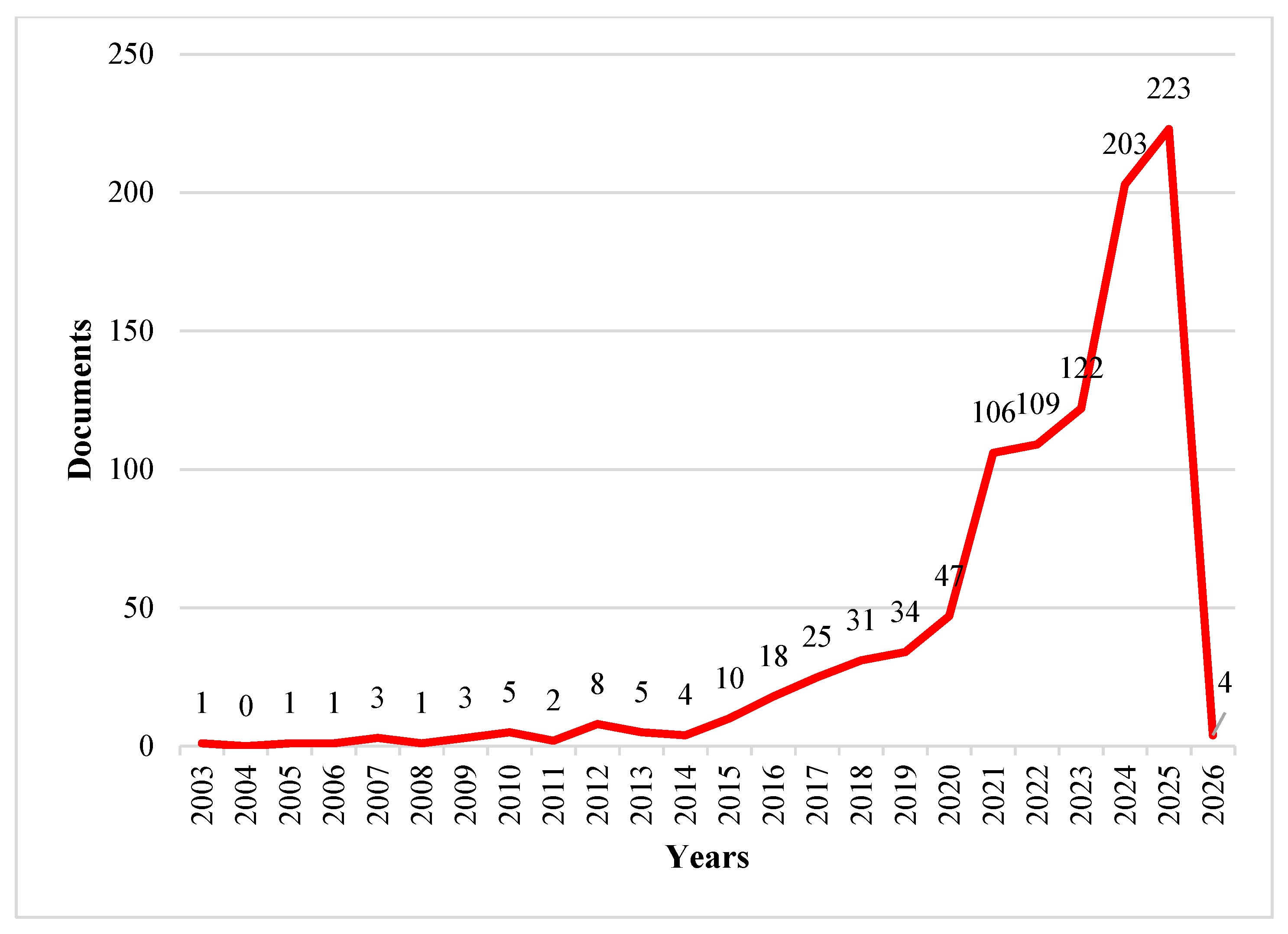
The findings indicate the development of this research field. The production of publications was low in 2003–2012, which suggests early exploration. This was succeeded by slow expansion in 2013–2017 (Figure 3). There has been a sharp increase in pace since 2018, and in the past few years, the number of annual publications has exceeded 220. This tendency can be explained by the growing global interest in sustainability, climate policy, and resource efficiency. The low number of publications observed for 2026 does not indicate a decline in research activity but is primarily due to incomplete indexing in the Scopus database.

4.1.3. Life Cycle of Annual Publications and Cumulative Growth Curve

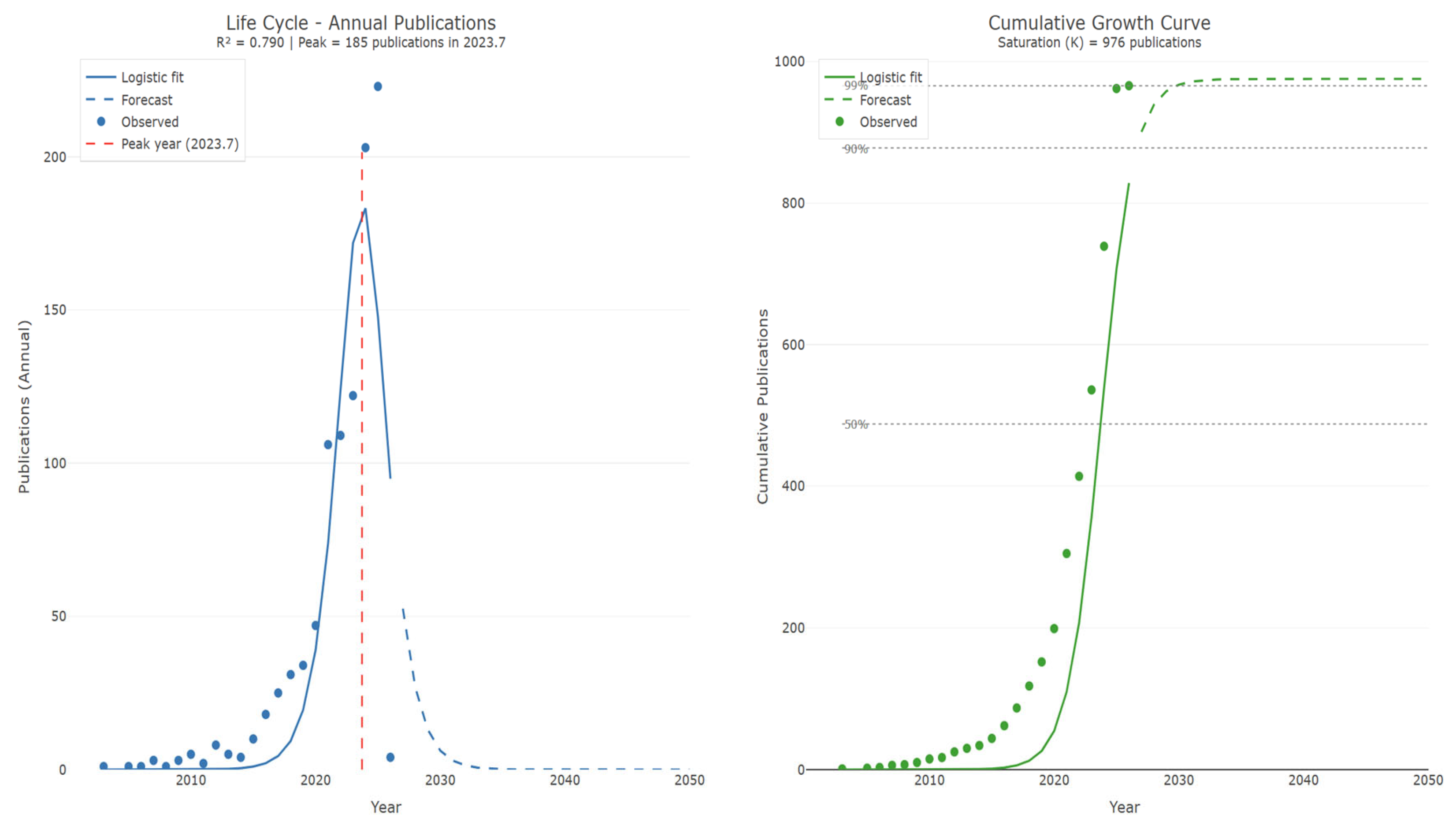
The left panel in Figure 4 shows the annual publication trend fitted with a logistic growth model, highlighting the transition from early-stage development to rapid expansion and eventual stabilization. The right panel presents the cumulative growth curve, indicating the increasing volume of publications over time and the projected maturation of the research field. According to the curve, research activity in this field had a slow emergence period between 2003 and approximately 2010, after which it accelerated at a high rate over a decade. This growth is associated with growing interest in circular economy schemes, the use of industrial symbiosis, and sustainable building methods globally. According to the model, the highest year will be 2023–2024, with approximately 202 publications, the year in which the highest number of publications is documented in the data. This peak indicates that it was the most active period in the field when knowledge production was the most intensive. Once this peak is achieved, the projected decrease does not indicate a decrease in relevance but instead reflects a change in phase to a mature research phase, where growth inherently slows as underlying concepts become firmly established. The cumulative growth model of publications on a logistic saturation curve is shown in the right panel. The curve form supports the assumption of an emerging field of research. The period between 2003 and 2010, the early years of exploration in the field, shows only a slight growth in cumulative publications. There was an acute increase in the period 2010–22, which suggests a time of exponential growth due to increased academic, industrial, and policy attention to circularity and resource efficiency. It is noteworthy that the logistic growth model is a simplified model of publication trends. Although the model is used to demonstrate the overall direction of field development, it does not consider external disturbances, including policy changes, technological advances, or new research priorities. Thus, it must be taken that the projection is an indicative trend, but not a long-term forecast.

4.1.4. Citation Analysis

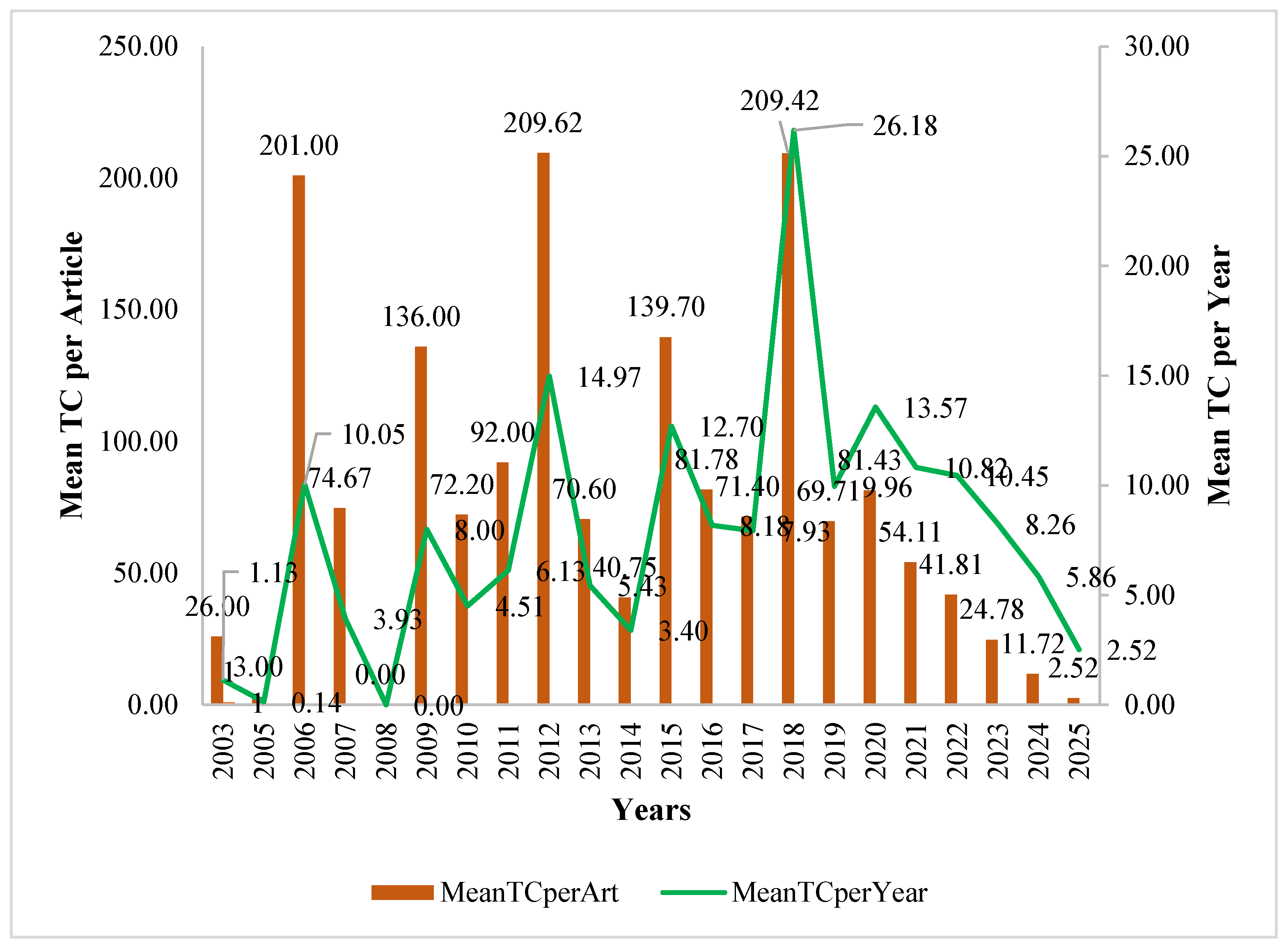
Figure 5 shows the citation analysis and reveals that citations had a disproportionately high impact, as the values of mean citations per article in 2006 (201 citations/article), 2012 (209.62), 2018 (209.42), and 2009 (136) are very large. The fact that only a few initial foundational articles became so influential and helped shape the conceptual and methodological trajectory of subsequent studies points to these peaks. The citation averages are also at a high level in the 2015–2020 period, indicating that the papers published in the period in question are still visible and relevant. However, since approximately 2021, the two-citation metrics have begun to fall, not necessarily because of lower quality, but simply because the newer papers have not yet been cited enough to rise to the top of the metrics, which is a typical feature of bibliometric research. This is reflected in the decline to 11.72 citations/articles in 2024 and 2.52 in 2025, which is due to recency and not a decline in influence. Generally, it can be seen that the most influential, highly cited papers in the field were published in the previous years when the number of publications was low, and the recent increase in publications is correspondingly high.

4.2. Most Influential Journals, Authors, Countries, and Institutions

4.2.1. Most Influential Journals

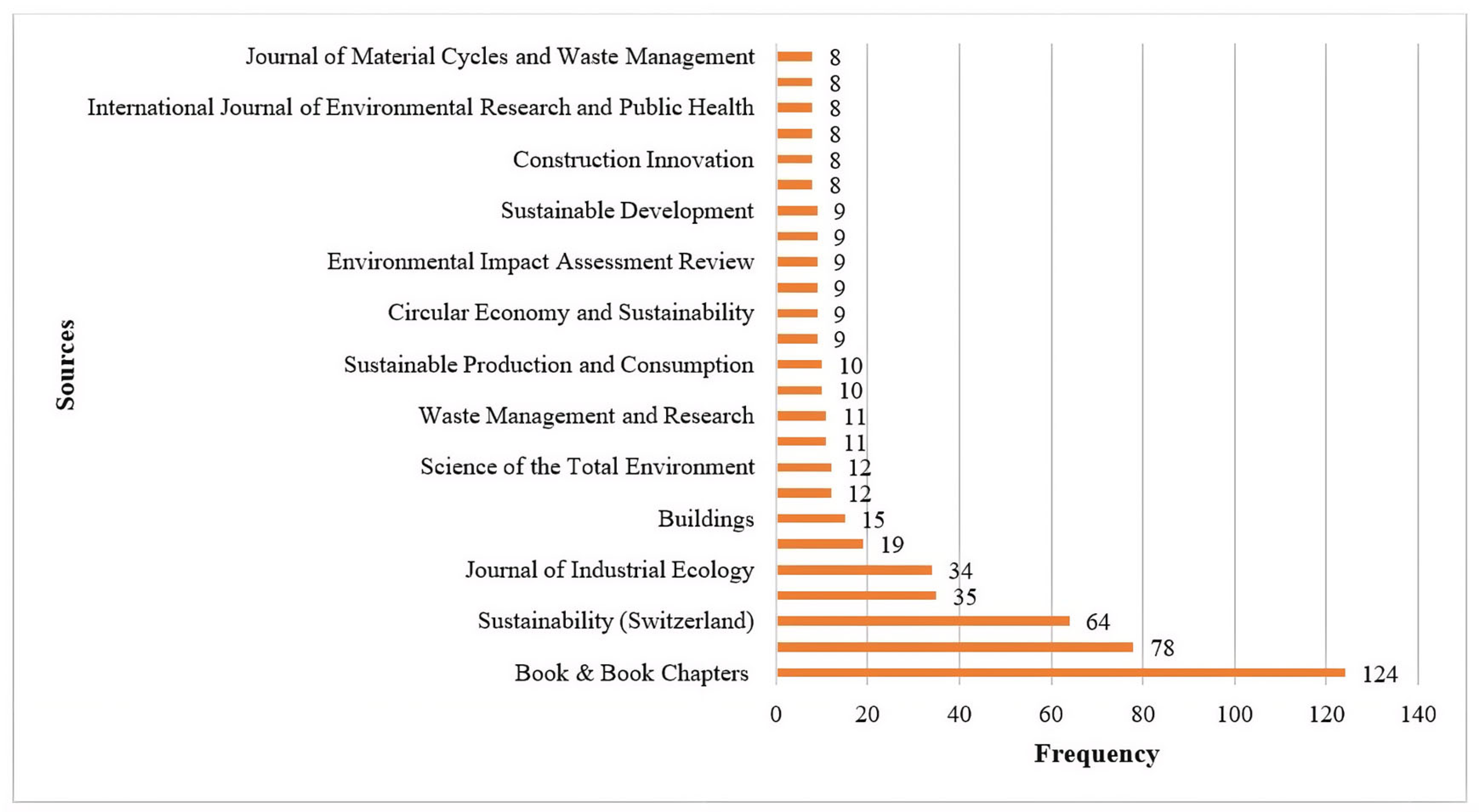
The publication distribution of the sources indicates that the studies on the topics of the circular economy, industrial symbiosis, and construction and demolition waste are highly concentrated in a set of influential periodicals but have a very wide multidisciplinary scope (Figure 6). The Journal of Cleaner Production (78 articles) and Sustainability (Switzerland) (64 articles) have become the two leading sources, as they seem to be the centers of publications on sustainability transitions, resource efficiency, and circular construction practices. A number of highly focused and high-impact journals, such as Resources, Conservation, and Recycling (35 articles) and the Journal of Industrial Ecology (34 articles), have their place in the limelight, which means that there is a substantial scientific foundation for material circularity and industrial symbiosis studies. The fact that the field of domain-specific construction journals has witnessed the emergence of journal titles like Buildings (15), Building and Environment (9), Construction and Building Materials (8), and Engineering, Construction, and Architectural Management (8) indicates an increasingly strong role of circularity concepts in the built environment and engineering societies. Meanwhile, interdisciplinary environmental journals, such as Environmental Science and Pollution Research, Science of the Total Environment, and Environment, Development, and Sustainability, give prominence to the environmental science aspects of the subject. Lastly, the significant role of books and book chapters (124) highlights the level of conceptuality and the growing theoretical bases of circular economy and waste valorization studies. Comprehensively, this analysis suggests that the field is highly interdisciplinary and grounded in a group of core sustainability journals, which validates its maturity and recentness in the environmental science, engineering, construction, and policy fields.

4.2.2. Influential Authors

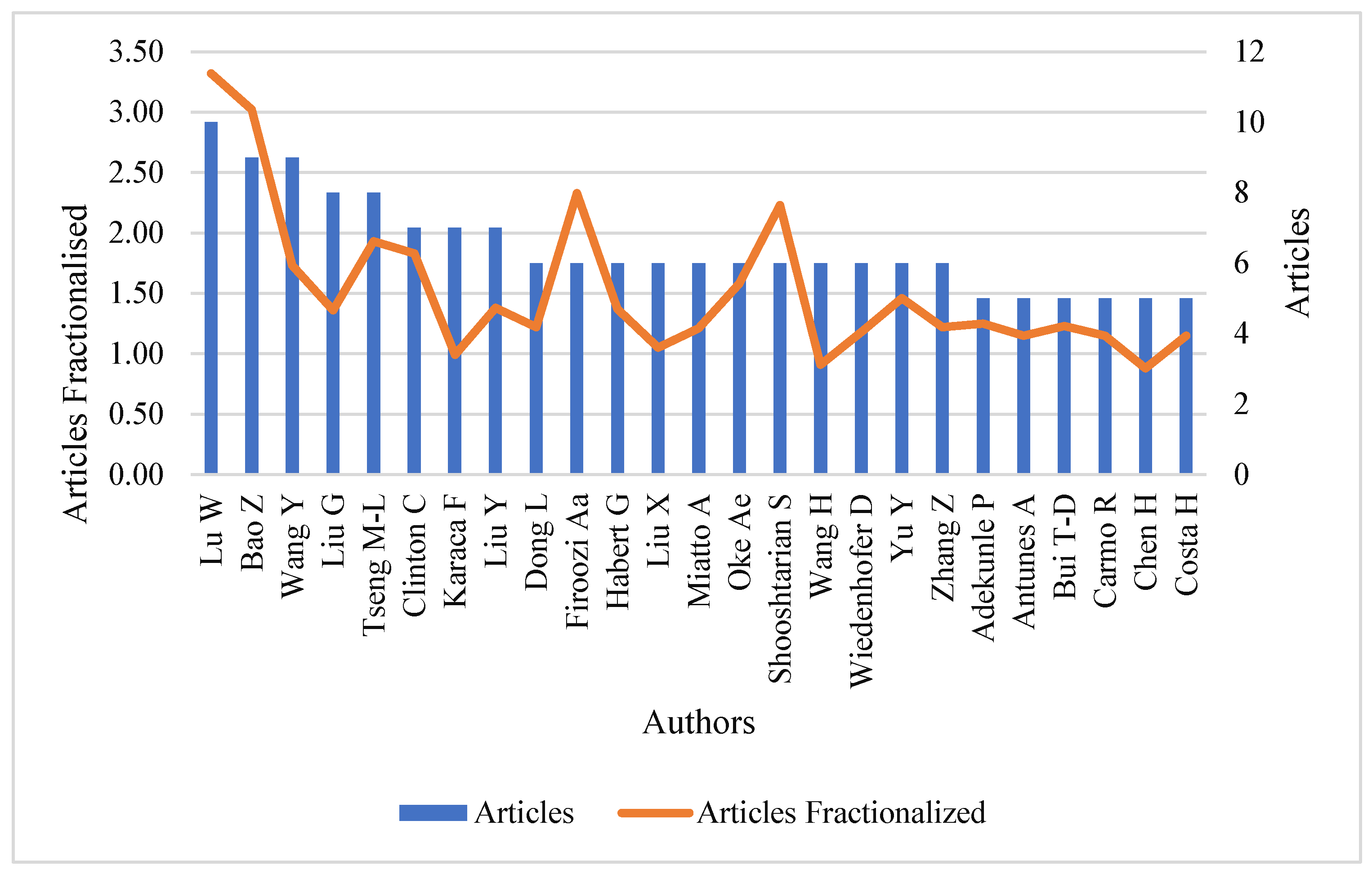
Article vs. Article Fractionalized can indicate not only the most productive authors but also those that are most productive to intellectual production in the field (Figure 7). The authors with the highest total publications are Lu W and Bao Z, with 10 and 9 articles, respectively; however, their fractionalized figures are 3.32, 3.02, and 1.73, respectively, indicating that a large number of publications by them are co-authored. Fractionalized scores are therefore a more reliable measure of each author’s individual contribution than multi-authorship, which may be overstated. As an example, Tseng M-L and Clinton C each having 7–8 publications demonstrates that they contribute moderately to the study (1.83–1.93). The analysis indicates that the presence of any influence can not be defined by productivity alone; however, the counts, when divided into fractions, would provide a clearer view of the actual input of authors in terms of intellectual contribution, with high-collaboration authors being distinguished by a more substantial individual contribution.

4.2.3. Influential Countries

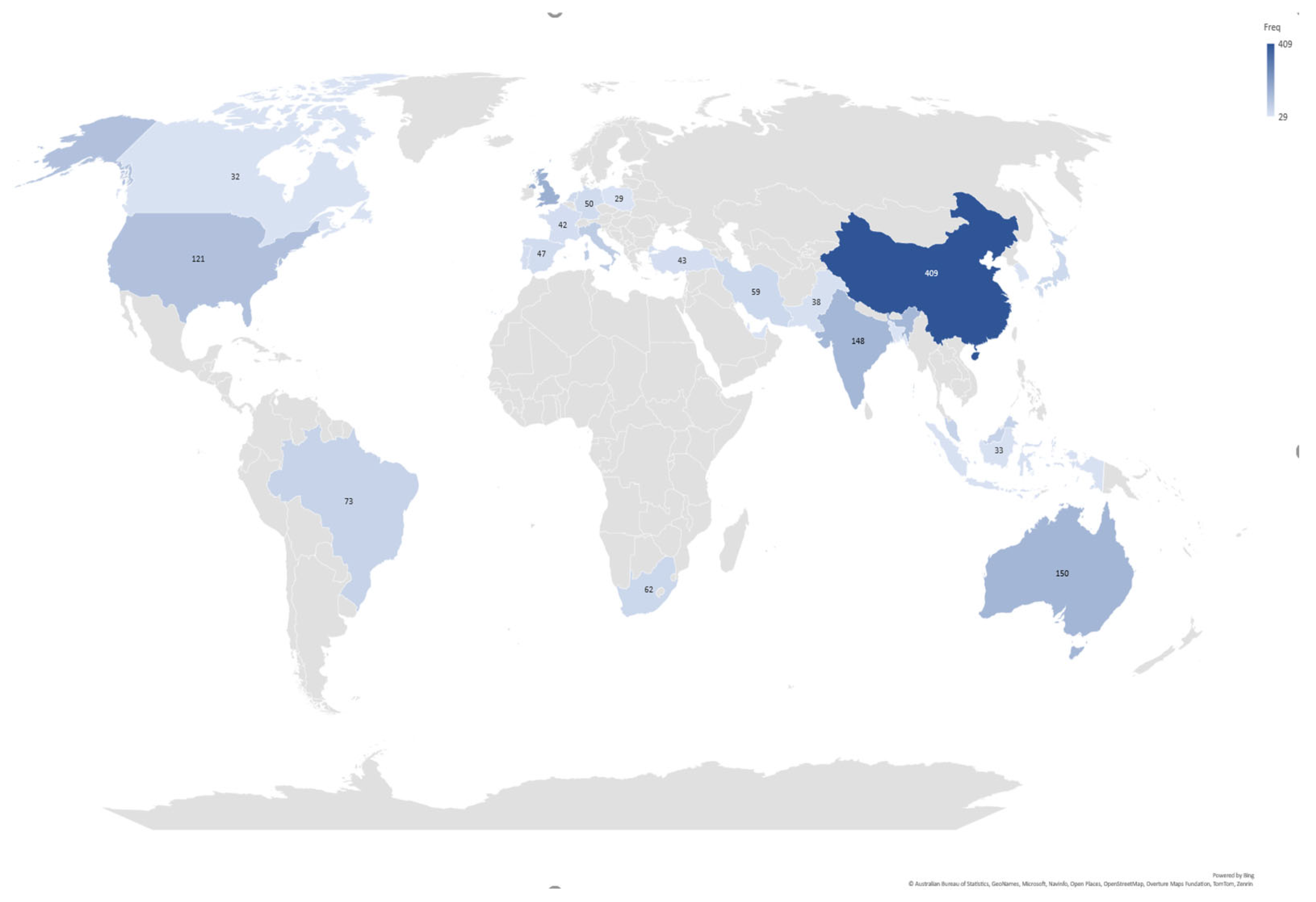
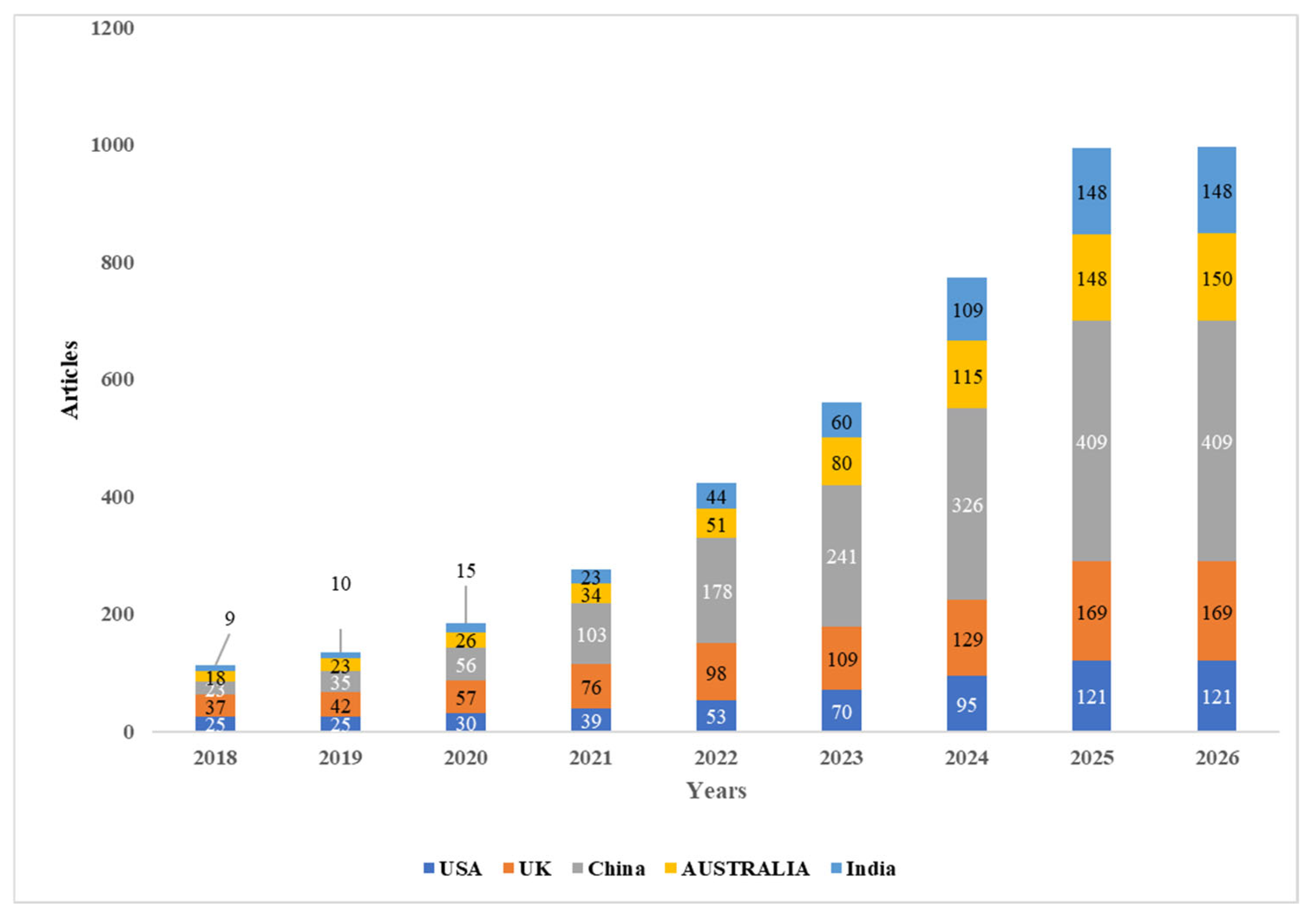
The country-level analysis reveals that studies on the circular economy, industrial symbiosis, and construction and demolition waste are geographically clustered. China leads with 409 publications, reflecting strong policy support and the rapid expansion of circular economy research initiatives (Figure 8). The dominance of China is based on the fact that the country has a large construction industry, fast urbanization, high CDW production, and powerful national policies that facilitate recycling, CE, and resource efficiency. The second level of prolific nations comprises the United Kingdom (169), Australia (150), India (148), and the United States (121), indicating that developed and large emerging economies are contributing to intensive research in this area. Their presence in Europe, Italy (89), The Netherlands (54), Germany (50), Spain (47), Portugal (43), France (42), and Poland (29) demonstrates a strong regional presence, which is in line with the EU leadership in the bill of CE policy and law. Developing countries, such as Brazil (73), Malaysia (71), South Africa (62), Iran (59), Pakistan (38), Indonesia (33), Bangladesh (29), Turkey (43), and the United Arab Emirates (31), are increasingly engaged in it, with growing research funding and environmental pressures related to the growth of construction. The involvement of both high-income and middle-income states shows that circularity in the built environment is a research focus worldwide; however, there are geographic imbalances, with Africa and parts of the Middle East being underrepresented in comparison with the world requirements. In general, the dispersion indicates that although China and Western countries have the most research leadership, emerging economies are making inroads in knowledge production as they face sustainability issues and policy changes.

4.2.4. Countries Production Overtime

The trends in annual publications reveal that the research output of the leading countries was at a minimum and relatively unstable until approximately 2018. Hence, data from 2015 onwards are displayed in Figure 9. China presents a radically different picture, experiencing a sharp and increasing trend starting in 2018, accelerating in 2020, and exceeding 400 publications in 2025, which is much higher than that of any other country. This boom reflects China’s growing investment in its policies towards a circular economy, construction waste management, environmental innovation, and mass research (Figure 9). The United Kingdom, India, the USA, and Australia also demonstrate definite positive tendencies, especially in 2020–2024, which are associated with global policy initiatives, including the EU Circular Economy Action Plan, national decarbonization goals, and the development of interest in sustainable construction. The United Kingdom and the USA are among them, with strong, steady growth observed, whereas India and Australia have faster growth starting from 2021 to 2023. These countries will publish between 120 and 180 articles by 2025, which is evidence of them becoming powerful contributors, although they are miles behind the unprecedented magnitude of China. In general, the illustration demonstrates a trend of scientific interest globally, which increased after 2020 due to changes in sustainability, policy changes, and an increase in environmental pressure. The break in the slopes also shows China’s leadership supremacy, as the other leading countries are playing a slower but steady upward trend, which indicates a rising and growing research environment that is becoming increasingly globalized.

4.2.5. Total Citation Report of Countries

The citation analysis shows that China is the most productive country with respect to publication volume; however, the number of average citations per article (37.10) is moderate in comparison with some smaller yet very powerful research systems (Table 2). The high citation averages of countries such as Brazil (116.40 citations/article), The Netherlands (164.60), Austria (136.90), and Switzerland (169.40) are of high value because these countries publish fewer papers but their contributions are powerful and usually pioneering in the field. Likewise, the Spain (70.80), United Kingdom (60.90), USA (62.70), and Thailand (56.80) averages are high, which implies that the quality of research is high and that high-visibility studies that are highly cited are being published. By contrast, new economies such as India (40.10), Malaysia (42.40), Singapore (44.20), and Colombia (44.30) have strong citation scores, which indicate their increased inclusion in the global sustainability and circular economy research communities. Averages in other countries, such as Iran (23.50), Turkey (24.30), Canada (24.00), and New Zealand (24.70), could be lower because either there is more recent activity in the field, or higher collaboration intensity in which citations are shared among larger groups. In general, the mix of high- and low-citation environments indicates that research influence is not necessarily correlated with the volume of publications; therefore, smaller and more specialized research communities (primarily in Europe and South America) generate some of the most influential and frequently cited documents on the circular economy, industrial symbiosis, and construction waste management.

4.2.6. Influential Institutions

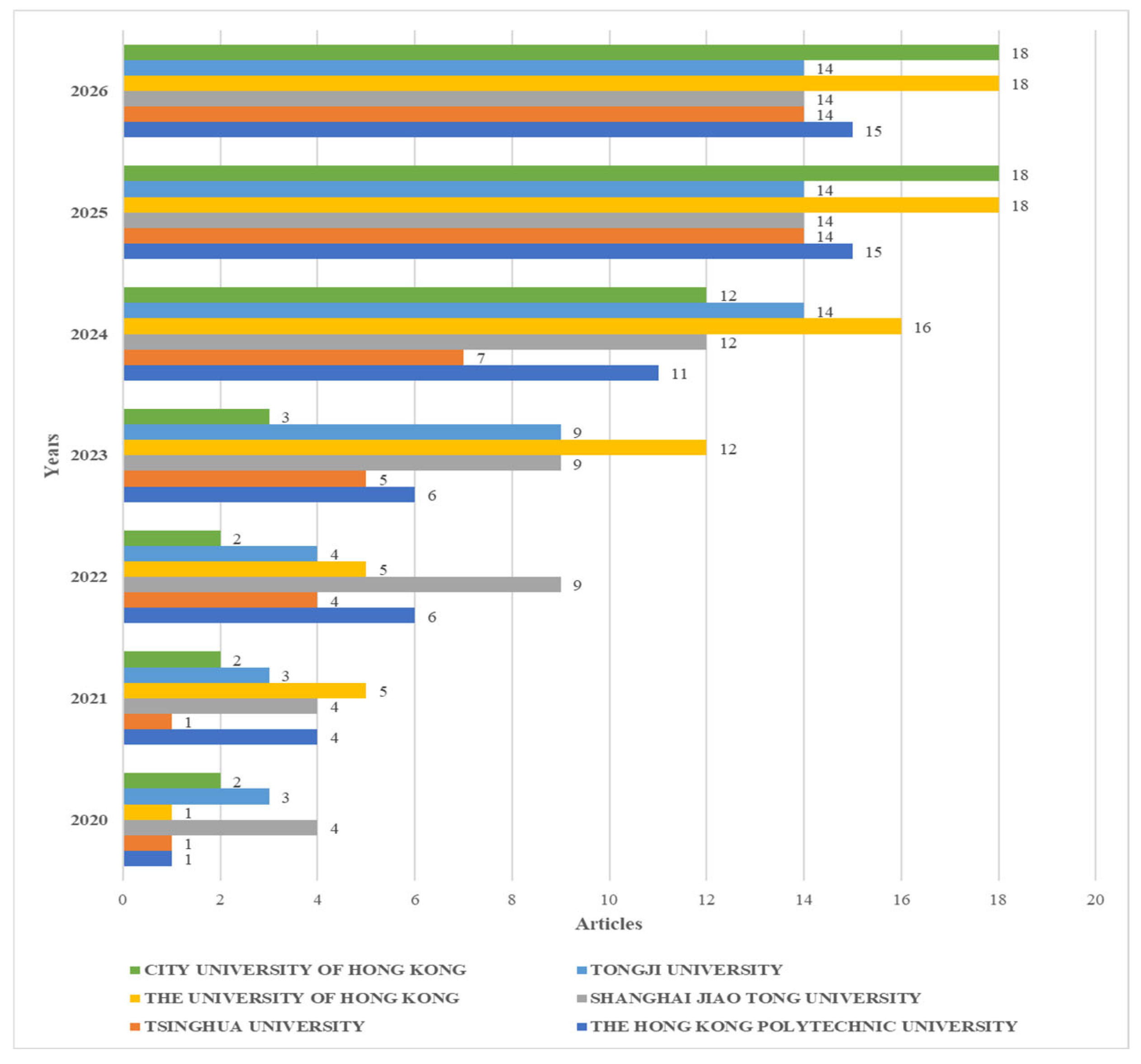
The publication trends in the period of affiliation indicate that most leading Asian universities, in particular, the University of Hong Kong, Shanghai Jiao Tong University, Tsinghua University, Tongji University, and the Hong Kong Polytechnic University, have significantly increased their research publications on the circular economy, waste management, and sustainable construction since 2020. The level of publication activity prior to this time was almost nil, indicating that institutional involvement in these sustainability issues is of relatively recent occurrence. This increasing trend became apparent after 2020, when a majority of the institutions began to deliver 1–3 articles per year, which indicates the initial application of the principles of the circular economy and an increased focus of scholarly interest on construction waste (Figure 10). Following 2020, the acceleration of output in all institutions became steep, and it coincided with global sustainability policy changes, the growth of funding for environmental innovation in China, and the world’s interest in construction circularity. The University of Hong Kong and Tsinghua University became the leading contributors to institutional output, with 1518 publications per year each, followed by Shanghai Jiao Tong University and Tongji University, with sharp positive trends. The steep inclination of all institutions reflects a regional trend of sustainability research, which places the universities of Hong Kong and Mainland China at the center of scientific activities in the global circular economy research arena.

4.3. Thematic Analysis

4.3.1. Keyword Co-Occurrence Clusters

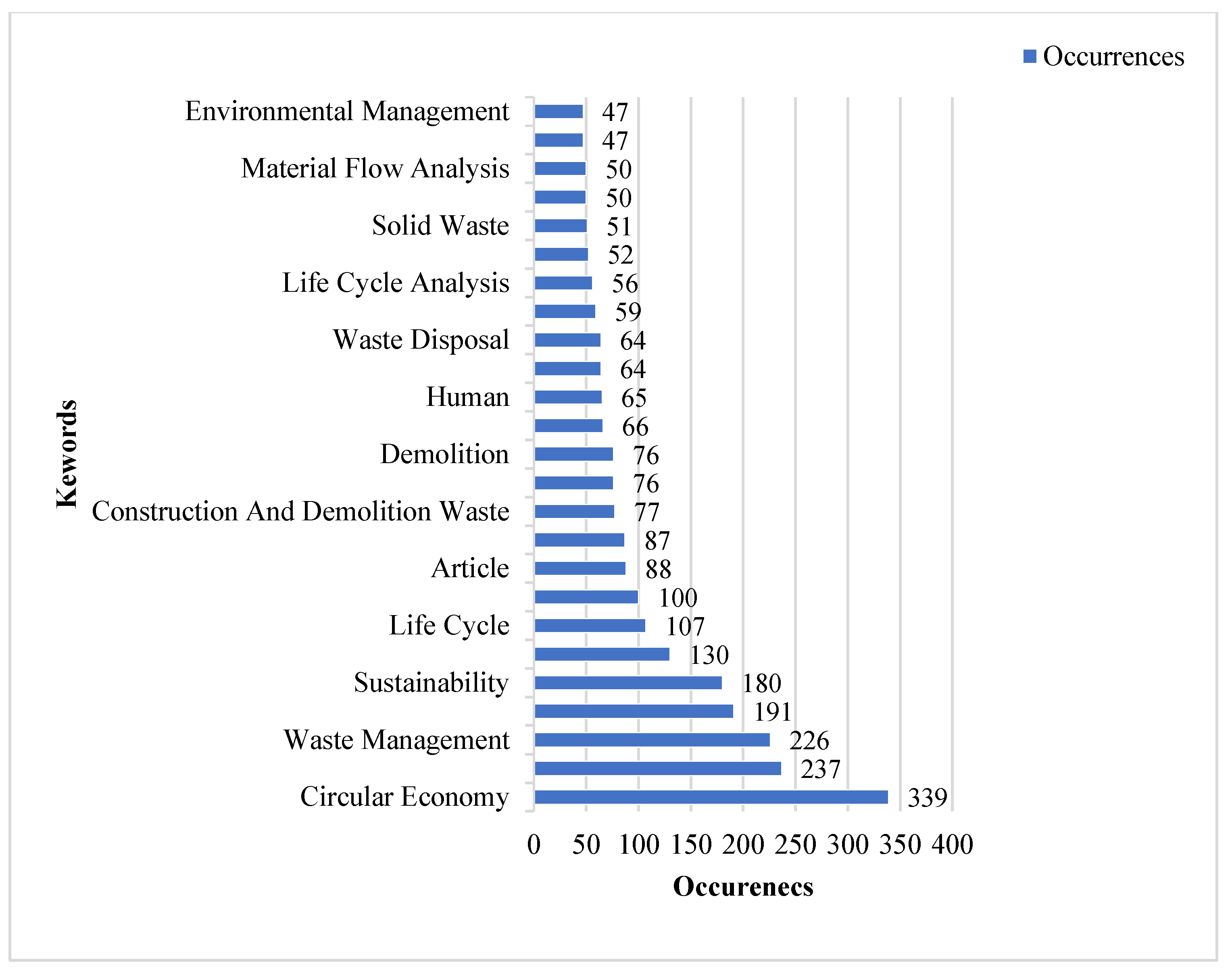
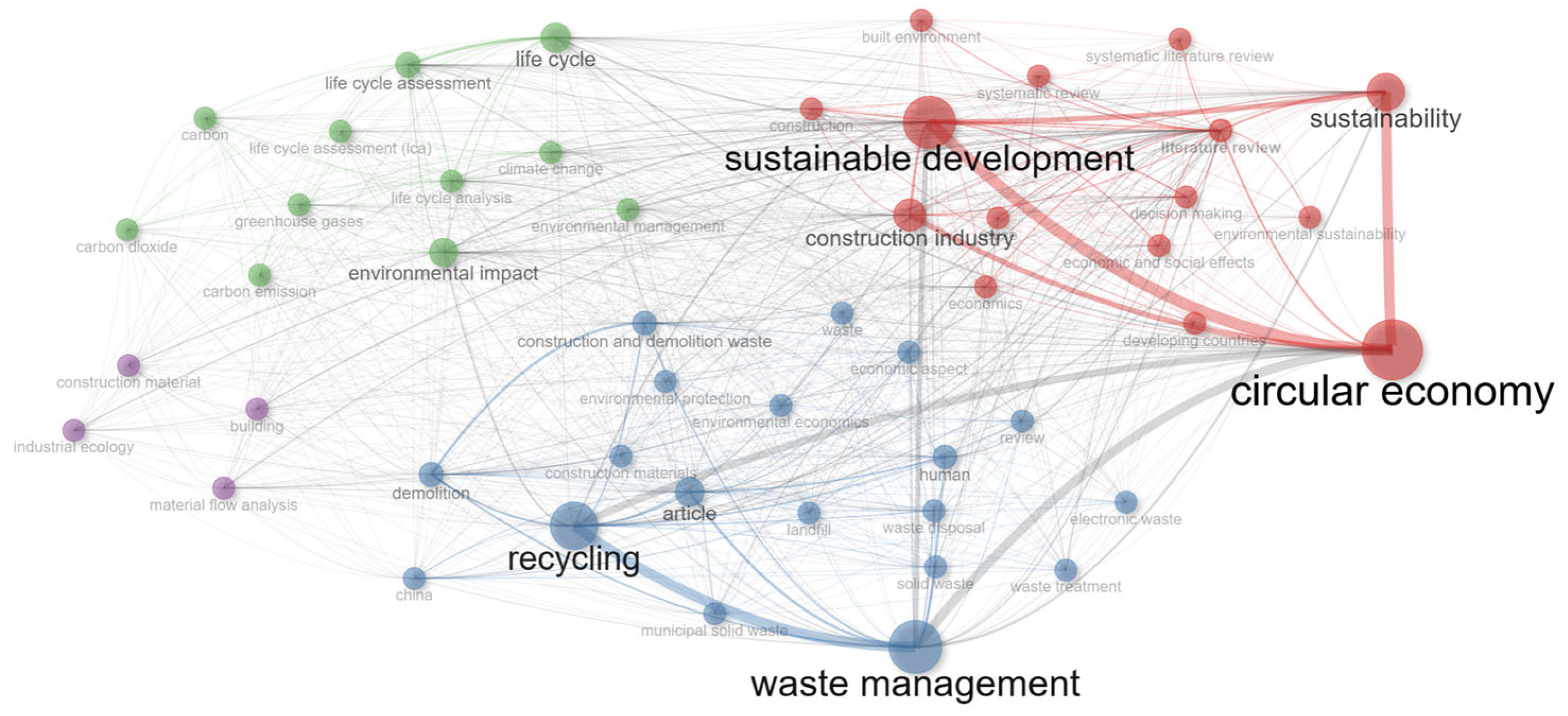
Figure 11 shows that Circular Economy has 339 occurrences, which in turn proves that circularity is the most important conceptual landmark of the domain. In close proximity to the keywords, there are such terms as Sustainable Development (237), Waste Management (226), Recycling (191), and Sustainability (180), which show a high level of environmental and policy-focused orientation, showing the world is moving towards more resource-efficient and low-waste modes. The domination of construction industry (130), construction and demolition waste (77), demolition (76), and solid waste (51) proves that the concept of circularity is highly relevant to the sphere of the built environment and construction in particular, and therefore the research on the topic of the built environment significantly contributes to the field of knowledge. The use of methodological terms like life cycle (107), life cycle assessment (87), life cycle analysis (56), material flow analysis (50), and decision making (76) demonstrates how the field depends on quantitative assessment tools and decision-supporting approaches to evaluate environmental impacts as well as circular performance. Moreover, the frequency of the occurrence of the following terms, allows us to note that there are strong links between CE practices and sustainability on a larger scale: environmental impact (100), environmental management (47), waste disposal (64), and climate change (52). The keywords economics (50) and economic and social effects (47) indicate an increase in interest in socioeconomic implications and transition governance. The inclusion of China (66) is one of the most accurate indications of the enormous amount of research that has gone through the country, as well as its international presence in CE, CDW, and recycling research. In general, the keyword framework indicates a multidisciplinary, methodologically diverse, and sector-specific area of research in which the principles of the circular economy are closely linked with sustainability evaluations, construction waste disposal, and environmental policy frameworks.

4.3.2. Three Field Plots

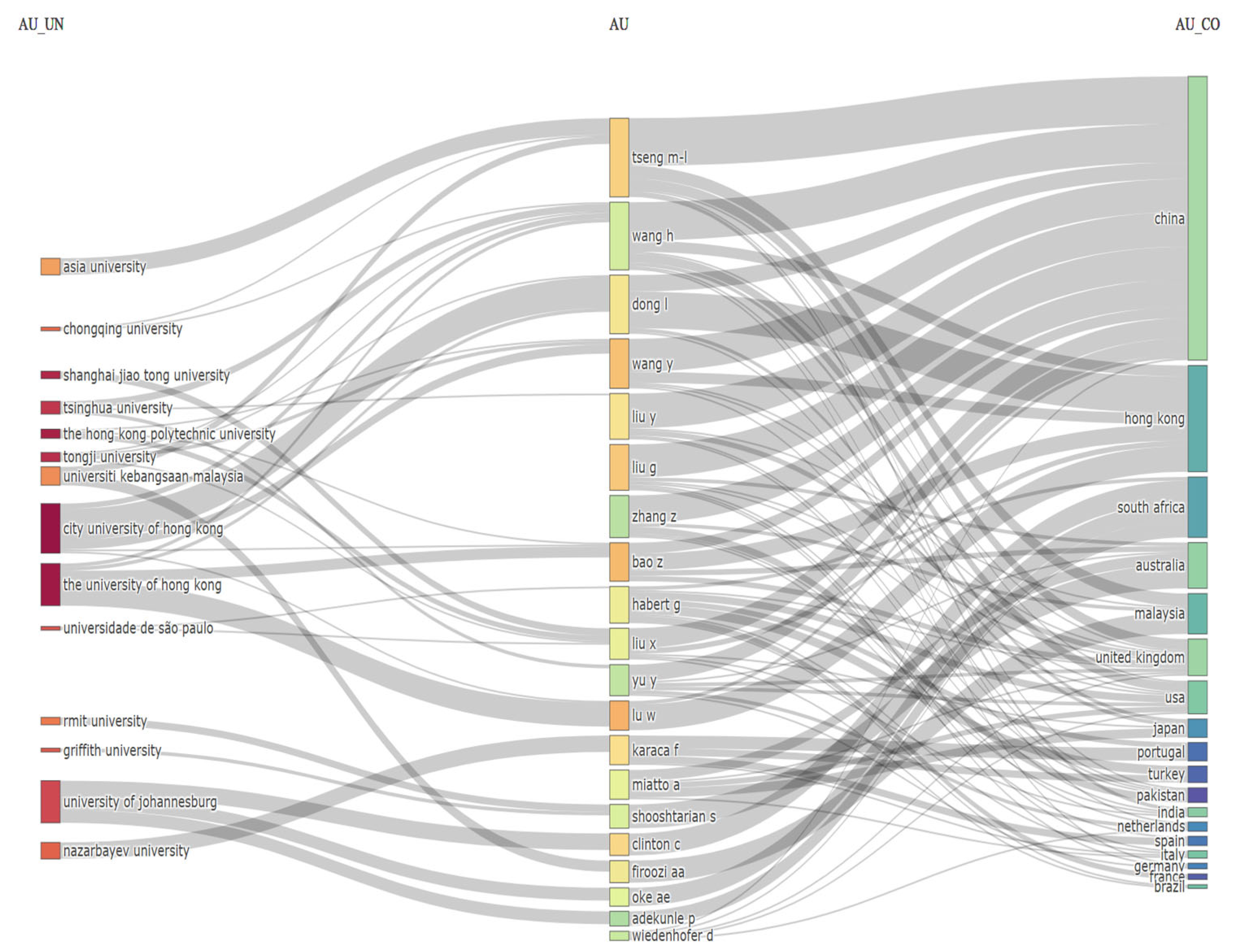
The three-field plot demonstrates the interconnection between universities, authors, and countries in the circles of the circular economy and construction waste research. On the left, most of the leading institutions, especially Asia University, Chongqing University, Shanghai Jiao Tong University, Tsinghua University, Hong Kong Polytechnic University, and Tongji University, are directly connected to the central node of prolific authors (Figure 12). This establishes the fact that Chinese universities lead institutional contributions that give rise to a great number of highest-output scholars including; Tseng M-L, Wang H, Dong L, Wang Y, Liu Y, Bao Z, and Zhang Z. Their excellent relations with the right side of the diagram indicate that these authors work in China, yet also have significant relations with Hong Kong, Australia, Malaysia, the United Kingdom, and South Africa, which reflects the growing network of academic institutions in China and further afield. Other institutions, such as the City University of Hong Kong, University of Hong Kong, Universidade de São Paulo, RMIT University, Griffith University, and University of Johannesburg, are linked to separate clusters of authors, such as Antunes A, Carmo R, Costa H, Shooshtarian S, and Oke A.E. Such authors are related to wider international networks in the form of Portugal, Brazil, The Netherlands, Germany, Turkey, and India, which underlines the existence of powerful European, African, and South American research partnerships. In general, the three-field plot demonstrates a highly interconnected organization focused on Chinese institutions and authors, with the help of several satellite clusters in Hong Kong, Australia, Europe, and South Africa. This tendency indicates that the world study of the circular economy and construction waste is encouraged by a combination of large national research systems (primarily China) and smaller, more internationally cooperative scholarly networks.

4.3.3. Keywords, Authors and Keywords Plus

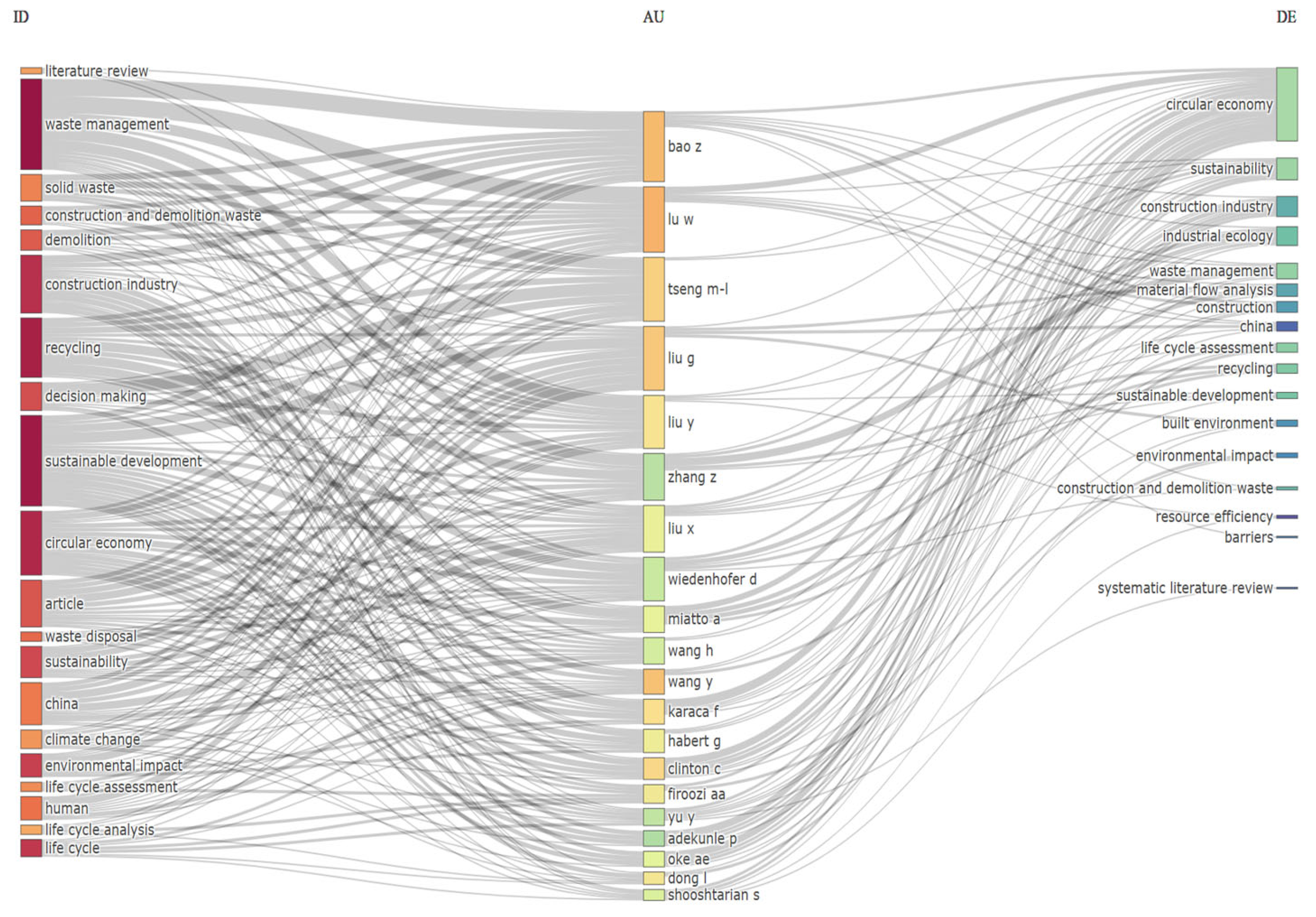
The three-field plot joins the keywords (ID), authors (AU), research topics or destinations (DE), and the contribution of individual researchers on the key thematic areas of the field. The keywords with high frequencies on the left side are waste management, solid waste, construction and demolition waste, recycling, circular economy, sustainable development, and life cycle, showing that they are the research themes (Figure 13). The keywords direct toward the central space with authors, where it is possible to see which scholars are most dedicated to each theme. The main part provides the list of such prolific authors as Bao Z, Lu W, Tseng M-L, Liu G, Liu Y, Zhang Z, Wiedenhofer D, Oke A.E., Clinton C., Firoozi A.A. and Shooshtarian S. Their connections reveal their thematic specializations: we can find that Bao Z and Lu W are closely associated with waste management, construction and demolition waste, and recycling; Tseng M-L with decision making, the circular economy, and sustainability; and other authors, including Liu G and Zhang Z, with environmental impact and life cycle assessment. This distinction demonstrates how the discipline is organized around a number of professional communities, each of which is propelling a particular subdiscipline. The final panel on the right illustrates the outcome topics, such as the circular economy, sustainability, construction industry, industrial ecology, waste management, and material flow analysis, which seem to be the key research outcomes. The interconnection between the authors shows that the majority of them work on several intersecting themes, which also presupposes the multidisciplinary character of the research on the circular economy and construction waste. Overall, the plot reveals how key authors are used as transitional areas between the common keywords and the thematic areas at high levels, showing a research field with significant thematic agreement, methodological diversity, and cross-linking specializations.

4.3.4. Corresponding Authors Countries

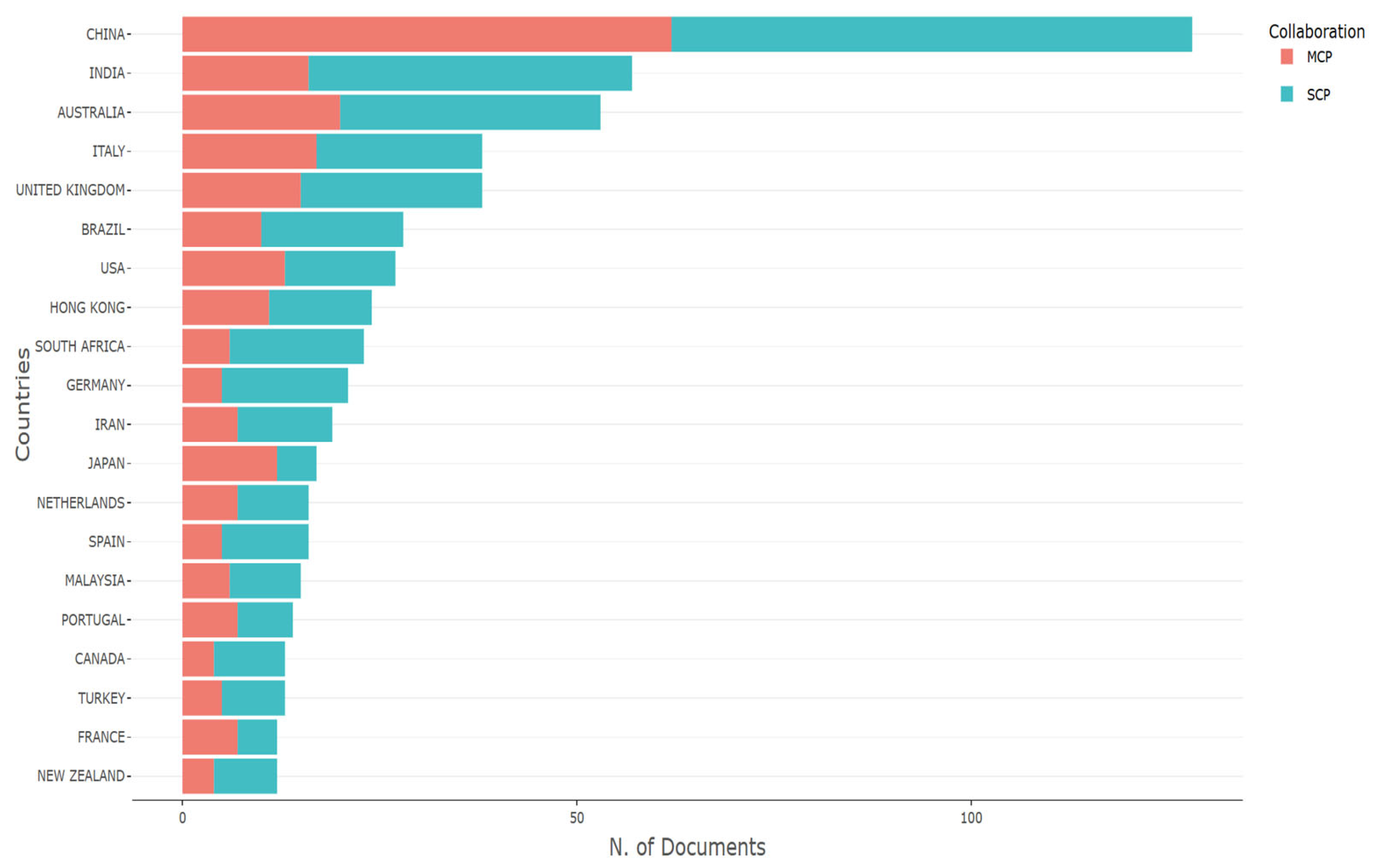
The analysis of the collaboration shows that there are strong correlations in the contribution of countries towards the circular economy and construction-related research in terms of both international (MCP) and domestic (SCP) publications (Figure 14). China is the leader with the largest number of documents, and the bar indicates that most of the Chinese production is of single-country publications (SCP), indicating a large research community in the country with a high national capacity. Conversely, there are more equal combinations of SCP and multi-country publications (MCP) in such countries as India or Australia, which means that the level of domestic research activity is high as well as the level of involvement in international partnerships. European nations with a high percentage of MCPs include Italy, the United Kingdom, Germany, The Netherlands, Spain, Portugal, and France, which can be attributed to the teamwork culture and research funding mechanisms that dominate in the European Union and promote cross-border cooperation. MCP is also active in Brazil, the United States, Hong Kong, and South Africa, with significant levels of activity; thus, they can be regarded as active contributors to global research networks, even though they are not part of the European region. Meanwhile, developing economies, such as Iran, Malaysia, and Turkey, base their operations on SCPs, which is a symptom of the developing but yet-to-be-consolidated domestic research ecosystem. In general, the figure indicates both a globally attached and regionally diverse research landscape. Nations with good research infrastructure generate large amounts of independent work, whereas other nations take advantage of international relations to increase their scientific output. The trend highlights the significance of national capability and international cooperation in the development of knowledge on the circular economy and construction waste management.

4.4. Thematic Mapping

4.4.1. Authors Keywords Analysis

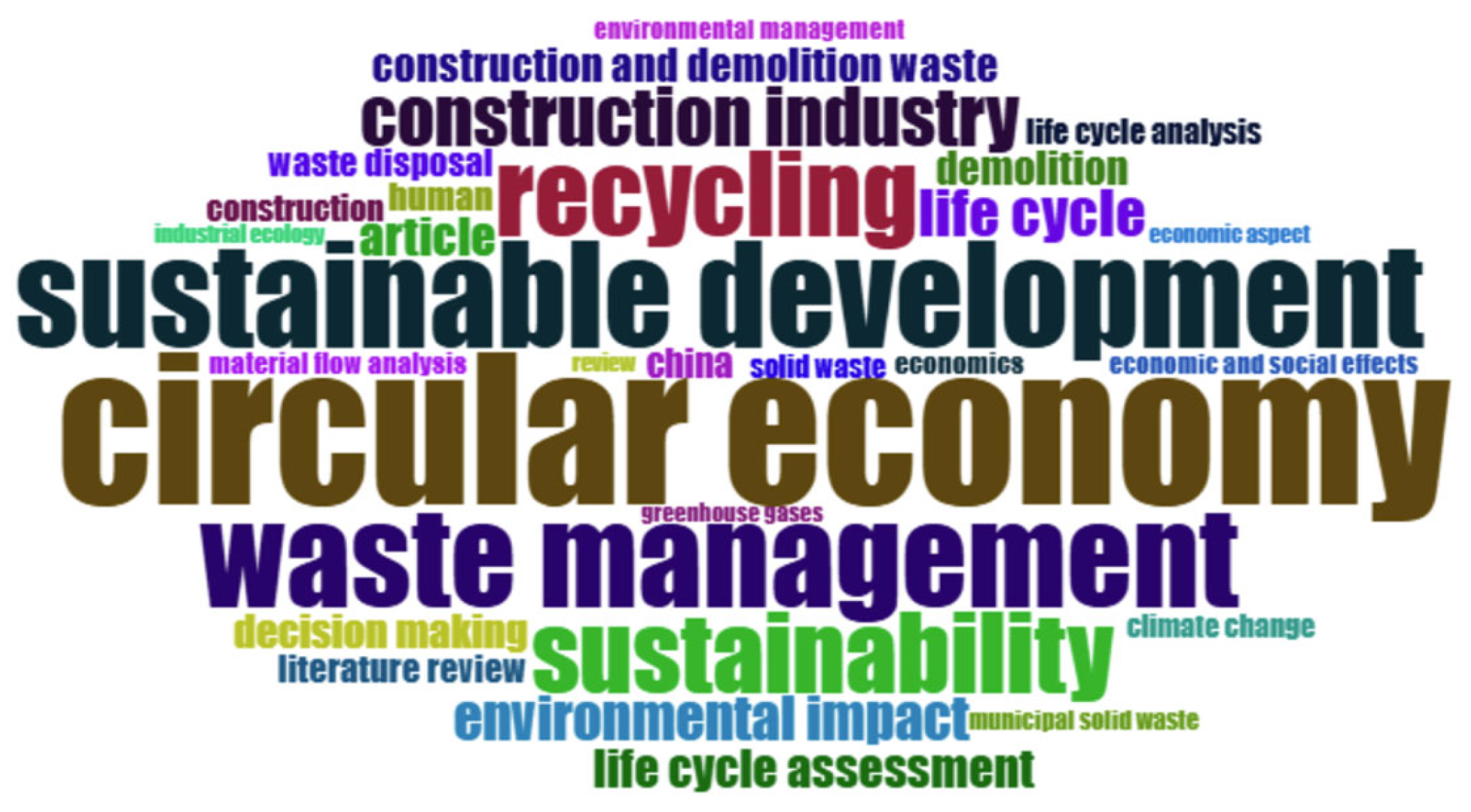
The words closely related to the concept, including sustainable development, waste management, recycling, and sustainability, demonstrate that circle strategies, environmental goals, and policy-oriented goals are closely tied throughout the literature (Figure 15). The existence of sector-specific words, such as construction industry, construction and demolition waste, and demolition, evidences the specific applicability of circularity to the built environment, where the production of waste and the movement of materials are central concerns. The presence of methodological keywords, such as life cycle, life cycle assessment, life cycle analysis, and material flow analysis, proves that the field depends on the tools of quantitative assessment to evaluate the environmental impacts, circular performance, and decision-making processes. Keywords such as China represent the global leadership and importance of the research, whereas keywords such as environmental impact, climate change, and waste disposal represent some of the more general issues of sustainability. In general, the term cloud illustrates a research environment that is multidisciplinary, methodologically dense, based on the ideas of the circular economy, and inextricably linked to the paradigms of sustainability assessment, construction waste management, and environmental policies.
Even though the identified thematic clusters are analytically separate, the interconnections between them are significant. More specifically, research related to life cycle assessment (LCA) and environmental impact analysis is directly connected with the practice of CDW recycling, as it offers a methodological framework for assessing the environmental performance and sustainability of recycling policies. This indicates that although LCA is commonly used to evaluate recycling and waste management activities, there is still a nascent movement in the application of the tool in industrial symbiosis networks. In general, the clusters comprise a partially connected knowledge structure with strong ties, but weak ties between environmental assessment and recycling practices and between system-level and network-based practices. Despite the search strategy comprising industrial symbiosis and urban symbiosis, the results suggest that the research stream of industrial symbiosis is the most prevalent and well-established. The concept of urban symbiosis is present in the dataset but does not constitute a distinct cluster within the bibliometric network. Rather, it is integrated into more encompassing themes concerning urban sustainability, the circular economy, and resource management. This indicates that the concept of urban symbiosis remains a new phenomenon, and there is less conceptual convergence and fewer focused investigations than in the case of industrial symbiosis.

4.4.2. Thematic Map of Research Structure

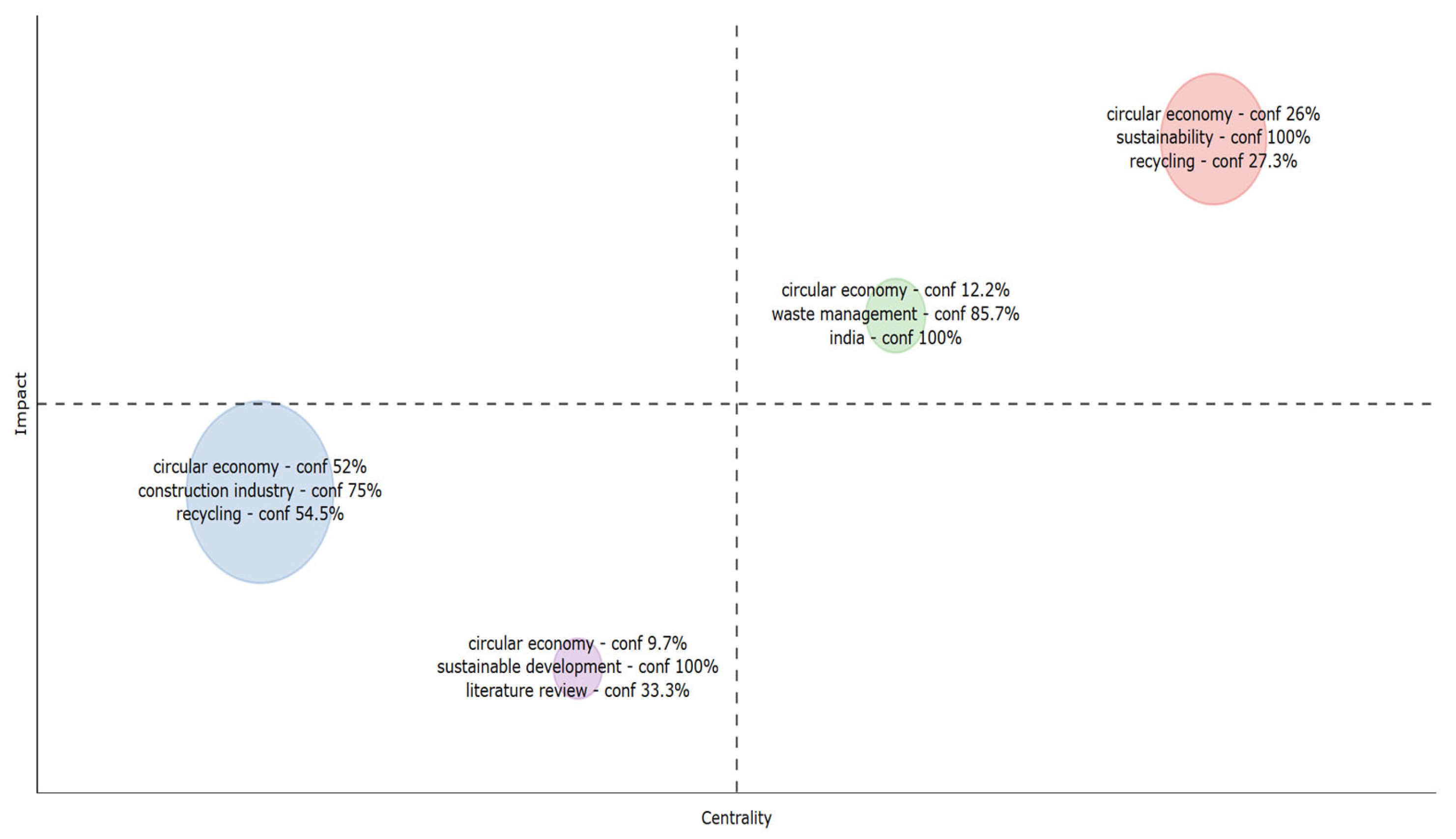
The thematic map divides research themes into four quadrants in terms of their centrality (value to the field) and impact (development or maturity). Motor themes are central and highly developed and are represented in the upper-right quadrant. Among them, one can distinguish such themes as the circular economy, sustainability, and recycling, which are the central conceptual and methodological foundations of the discipline. They have significant centrality; that is, they are closely related to other research issues, and their high impact indicates that they are well-developed and extensively used as frameworks for empirical and theoretical progress. In the lower-right quadrant, we have simple and transversal themes, including sustainable development and literature reviews, which have high centrality and low impact (Figure 16). These are themes needed for the constitution of the field but are less specialized or less developed methodologically. They have a good presence, which is an indicator of underlying relevance, but they are growing in depth and sophistication. The upper-left quadrant comprises niche or highly developed but isolated themes such as the construction industry, recycling, and some subclusters concerning the circular economy. These are developed and impactful topics that are less central and therefore relevant to certain research niches, for example, construction waste or sector-specific circularity, but are not generally linked in the entire field. Lastly, the less central and less influential themes are captured in the lower-left quadrant as emerging or declining themes. Themes in this case can be new areas of development that are gaining momentum or old ones that have lost their relevance. These can be context-specific subthemes, such as India, or narrow subtopics of the circular economy that are still being explored and are not tied to the main framework of the field. Overall, the thematic map indicates that the area of research lies in the principles of strong motor themes, such as the circular economy, sustainability, and recycling, whereas niche domains like the construction industry are becoming more specialized. Simultaneously, cornerstone topics such as sustainable development remain influential in the field, and new clusters imply further diversification and the expansion of research in the future.

4.4.3. Network Visualization of Core Research Themes

The keyword co-occurrence network reveals four major thematic clusters that structure the research landscape around the circular economy and construction waste. The red cluster, led by terms such as circular economy, sustainability, and sustainable development, forms the intellectual core of the field (Figure 17). These keywords are highly interconnected, indicating that most studies position circularity within broader sustainability transitions and policy frameworks. The blue cluster focuses on waste management, recycling, construction and demolition waste, and landfills, representing the applied and operational dimensions of circular economy strategies. This cluster highlights where circular principles are implemented concretely, especially within the construction industry and material recovery processes. The green cluster centers on life cycle, life cycle assessment, environmental impact, carbon, and greenhouse gases, demonstrating the methodological strength of the field and the prominence of life cycle assessment-based tools for evaluating circularity and environmental performance. A smaller purple cluster linking terms such as industrial ecology, construction material, and material flow analysis represents emerging analytical approaches that complement life cycle and waste management studies. Overall, the dense interconnections across clusters show a highly integrated research ecosystem in which the circular economy serves as the conceptual anchor, sustainability provides the policy framing, and waste management and life cycle methodologies operationalize circular practices in the built environment.

4.4.4. Evolutionary Pathways of Core Research Theme

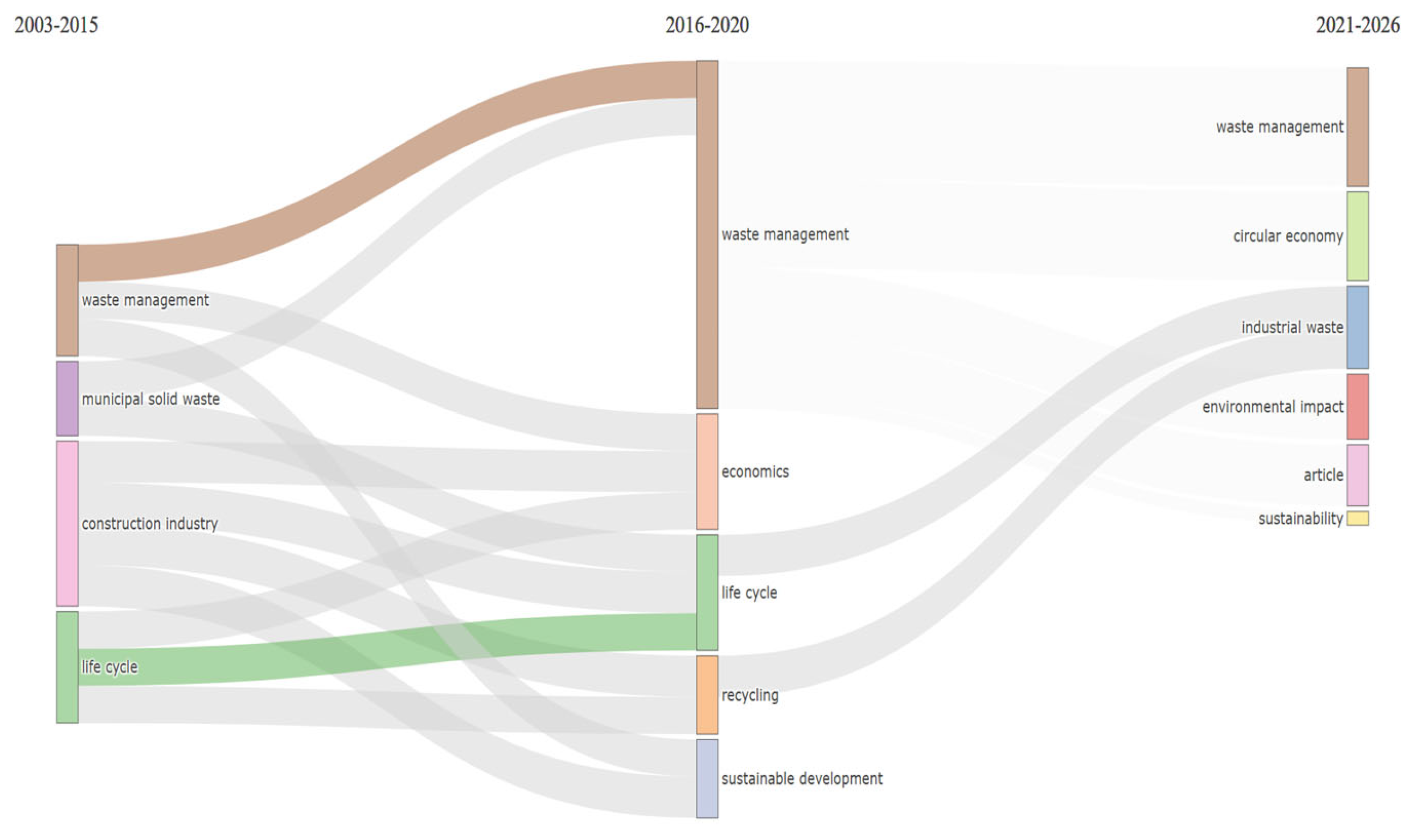
The thematic development scheme is a diagram of the intellectual framework of the discipline through three periods that have changed. Throughout 2003–2015, the study was largely ruled by applied waste-related topics, including waste management, municipal solid waste, construction industry, and life cycle, which was an attempt to determine the environmental impacts and control waste streams using a traditional linear system (Figure 18). These themes came together in 2016–2020 in more analytical and evaluation clusters, with a particular focus on life cycle, recycling, economics, and further stress on waste management. Co-citation analysis also provides an idea about what the field is based on intellectually and how it has changed over the years. In the early years (2003–2015), highly cited articles were mainly related to the initial concepts on industrial ecology and circular economy, which set the theoretical framework on resource efficiency and waste reduction. Such a change suggests a period of methodological convergence, as researchers began to rely more on life cycle instruments, economic calculations, and recycling-oriented studies in their efforts to solve sustainability problems. In the latest period, 2021–2026, the discipline has experienced a significant thematic expansion, with the idea of the circular economy being a fundamental one, and other related ideas, such as industrial waste, environmental impact, and sustainability, appearing.

4.5. Social Network

4.5.1. Countries Collaborations

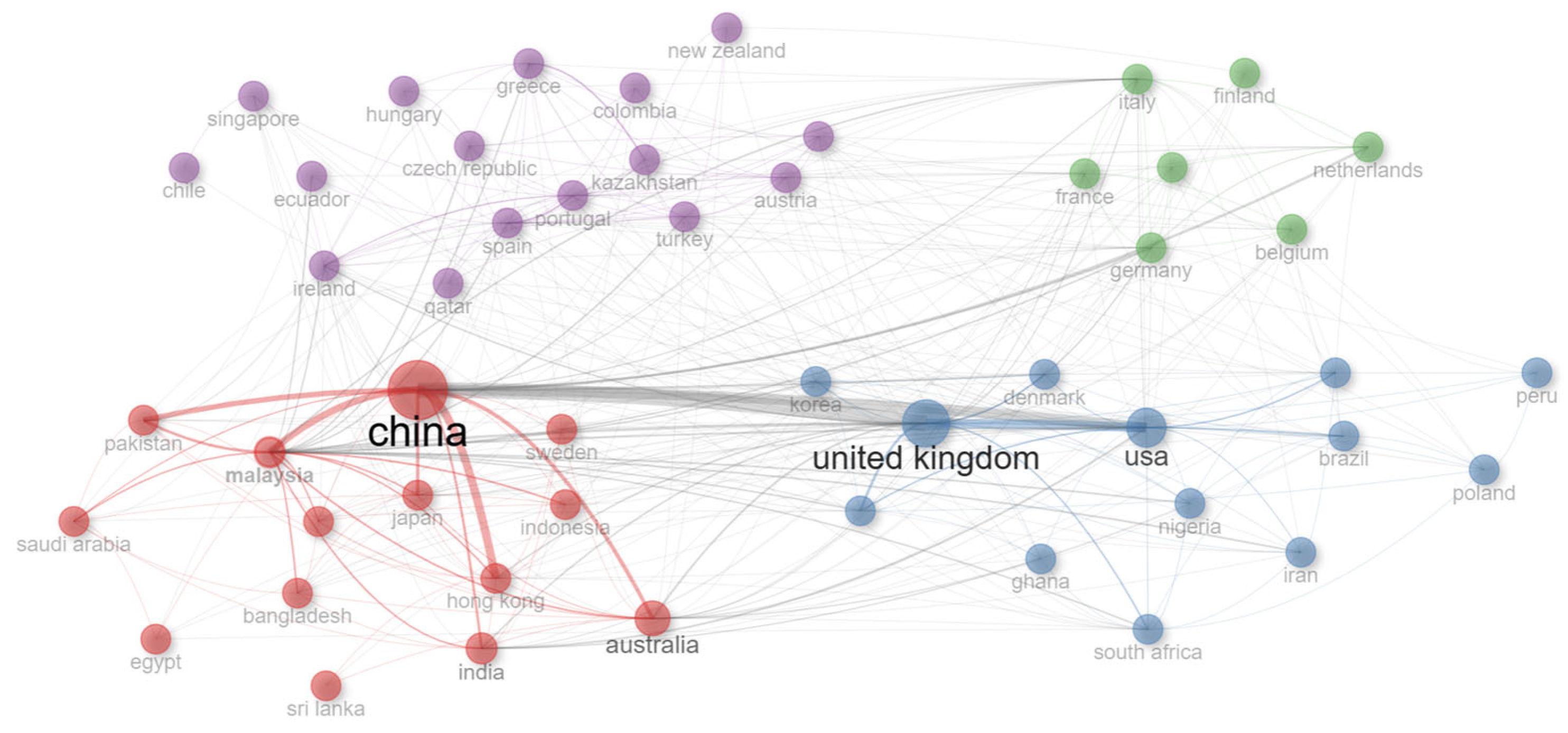
The country collaboration network indicates a remarkably connected world research system driven by three large hubs: China, the United Kingdom, and the United States (Figure 19). China is placed at the center and is the most notable, as it lies in the middle of the pivotal collaboration with mostly emerging markets, such as Malaysia, Pakistan, India, Bangladesh, Indonesia, Saudi Arabia, and Egypt. This means that China is the main force behind South–South and Asia-based research networks, which can be explained by common environmental issues and the desire to focus on the region with an orientation on the circular economy and waste management. The UK is at the center of the second major cluster of collaborations, where it has extensive connections with European nations such as Germany, The Netherlands, Belgium, France, Italy, Finland, and Sweden. This mirrors the long history of the EU and the UK leading in the policy of the circular economy, funding research and joint science models. Another powerful node is the United States, which connects to Brazil, South Africa, Nigeria, Iran, and Peru as a transcontinental research network. Smaller, yet closely knit units, such as Austria, Portugal, Spain, Hungary, Greece, the Czech Republic, Singapore, Chile, and Ecuador, represent regional academic ecosystems with certain thematic collaborations. Altogether, the network reveals that the combination of intensive North–North relationships in Europe and North America, on the one hand, with the quickly increasing South–South and Asia-oriented relationships on the basis of China, on the other hand, pushes global research on the topics of the circular economy, industrial symbiosis, and waste management. This structure is an indication of the topicality of the subject matter on the global level, as well as the formation of new collaboration channels between developed and developing nations.

4.5.2. Collaboration by Authors

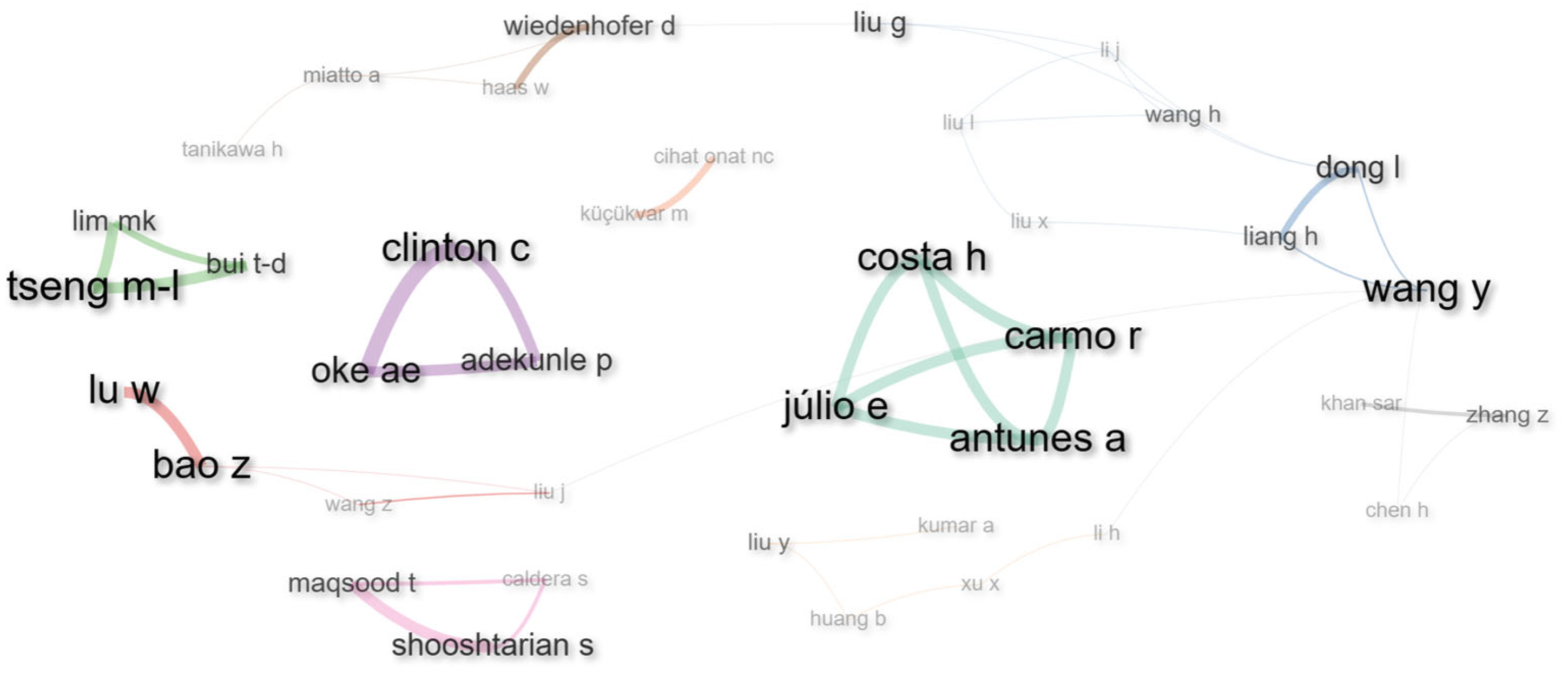
The network of author collaboration implies a set of specific groups of highly interconnected researchers, which demonstrates the creation of specialized research units in the field of the circular economy, waste management, and construction sustainability. One of the most powerful nodes is centered around Tseng M-L, Bui T-D, and Lim M-K, which are closely related as a team which are likely to work together in circular supply chain and sustainable production systems (Figure 20). Another group of prominent authors comprises Clinton C, Oke A.E., and Adekunkle P., who are active research members who conduct their work on circular building practices and decision-making models. Wang Y, Dong L, Liang H, and similar co-authors create a large and strong collaboration group and demonstrate widespread teamwork, especially in industrial symbiosis, urban sustainability, and life cycle-based assessments. Costa H, Carmo R, Júlio E, and Antunes A also seem to have a robust collaboration framework, which produces regular publications on recycled materials, construction waste valorization, and circular engineering solutions. However, such authors as Lu W, Bao Z, and Shooshtarian S have much weaker or even isolated patterns of collaboration, which means that they develop independent but prolific research trajectories that do not depend as much on large research groups. Generally, it is possible to see that the network demonstrates that the field is typified by a number of central collaborative centers, each of which focuses on various thematic backgrounds, as well as a number of individual researchers who are doing a significant amount of work but are not necessarily connected by strong co-author relationships. This combination of thick clusters and free agents is an indication of a well-developed and diversifying research environment.

5. Discussion

5.1. Evolution of the Field

The bibliometric analysis explains how studies on CE, IS, and CDW have evolved in the early 2000s and have become a dynamic and growing multidisciplinary research area. The sharp rise that started in 2018 reflects global sustainability issues, stricter climate policies, and the need to decarbonize material-intensive industries. This systemic shift is proven by recent empirical studies. Çimen [10] represents a larger trend of technologically sophisticated circular solutions, which is consistent with the accelerated growth phase and the methodological complexity observed in the bibliometric outcomes. The fact that many review articles were detected in the dataset indicates a dual development in the field. On the one hand, it represents fragmentation, as various studies attempt to centralize and harmonize different and separate streams of research. Conversely, it also represents a maturation process in which the compilation of knowledge demands systematic reviews to generalize findings and inform future studies. This dual viewpoint indicates that the field is not only expanding but is also slowly organizing itself and is not merely disjointed. The citation patterns also show the most significant contributions made by the contributors that form the basis of developing the CE–IS–CDW research field. Some of the pioneering research has been interested in applying the principles of the circular economy to the construction field, specifically, life cycle, resource efficiency, and sustainable material flows. Thomson and Newman [30] shed some light on urban metabolism and the circular design, whereas van Stijn and Gruis [31] add to the evolution of the building structure and life cycle-oriented design strategies. Likewise, Ding et al. [11] and Bao et al. [32] have been instrumental in the association of the concepts of the circular economy to construction waste management and environmental performance measurement. These foundational contributions also explain the co-citation patterns observed in the analysis, where the circular economy, industrial symbiosis, and life cycle assessment remain the dominant intellectual pillars of the field. This trend is consistent with recent studies highlighting the increasing importance of prospective and scenario-based life cycle assessment methods, which address challenges related to data uncertainty, scaling, and future system dynamics in sustainability research [33].

5.2. Fragmentation and Integration Gap

Despite this accelerated growth, the sector is highly fragmented. The thematic maps and bibliometric co-occurrence clusters demonstrated fragmented literature: LCA-related environmental analyses, building-level CE, digitalization and AI, city-scale waste management, supply chain circularity, and behavioral recycling literature. Similar discontinuities are reflected in numerous recent studies. Ding et al. [11] discovered that CE applications throughout the building life cycle are fragmented; the vast majority of studies involve design, construction, and operation phases, but not much inception, handover, or end-of-life phases. Likewise, van Stijn and Gruis [31] emphasized the lack of combined structures to close the forward and reverse logistics in construction projects. These gaps support one of the key findings of this bibliometric review: despite all the available reviews, the area does not have a unified scientific map of CE–IS–CDW; therefore, the synthesis provided in this paper is necessary. Recent research also shows that material valorization is not inherent to aggregates of construction but is applied to other streams of resources. Kumar et al. [34] demonstrated that it is possible to generate high-quality agglomerates using lean iron ores, which demonstrates the promise of sophisticated processing technologies to refine low-grade or waste materials. In addition to the conceptual fragmentation, recent empirical studies also show that the adoption of CE in CDW management is hampered by structural and institutional challenges. Ajisomo et al. [35] examined that developing nations highlighted the importance of short-term economic goals, the absence of reliable waste data, financial constraints, and the low awareness levels of stakeholders, which all contribute to the failure to implement circular practices. These also underpin the fragmented and contextualized implementation of CE in the construction industry. These insights confirm one of the main findings of this bibliometric review: despite the growing body of research, a coherent scientific and operational framework is absent in the CE–IS–CDW domain. Thus, the integrated synthesis presented in this research is crucial to connect the dots between conceptual and operational aspects.
Moreover, the social network analysis also showed that there were robust North–North and South–South relationships with China, the UK, and the US being the global centers. This pattern is supported by the literature: Liu et al. [36] obtained similar results because of the predominance of global research in the field of CE–SDG and Liu, et al. [36] found profound collaborative relationships between Chinese and European and Australasian researchers. Such partnerships are defining the shape of CE research worldwide, confirming the bibliometric result that CE knowledge production that occurs through IS and CDW is both interconnected internationally and regionally unequal. The lack of integration between CE and IS, as observed, can be explained by a number of interconnected factors. First, the two fields usually work on different scales: CE research in the construction industry is usually aimed at building-level design, material efficiency, and life cycle assessments, whereas IS research leans more towards industrial-scale, eco-industrial parks, and inter-firm resource exchange. Such a disparity in magnitude can inhibit both conceptual and practical integration. Second, the bibliometric findings indicate that these research streams are often published in unique journals and disciplinary areas, which could diminish cross-citation and the sharing of knowledge between communities. Third, the lack of coherent theoretical constructs that specifically connect the principles of CE to the implementation of IS makes the situation even more fragmented. These results suggest that the distance is not caused by a single variable but that there is a combination of differences in scale, disciplinary distance, and conceptual difference.

5.3. Thematic Relationships and Methods

The thematic development that has been explored to date, that is, waste management and environmental assessments (2003–2015), followed by analytic life cycle tools (2016–2020) and CE frameworks (2021–2026), is highly justified by the latest contributions. For example, Thomson and Newman [30] created multi-cycle material behaviors, CE–LCA models, and tools of circular design, which justify the growing methodological complexity observed in the identified bibliometric groups. Similarly, Bang-Ning et al. [37] employed large-scale urban metabolism and scenario modeling to evaluate decarbonization routes in Chinese megacities, which represents the transition to macro-level and macrosystemic methods that became dominant in the later stages of the thematic development. Digitalization increasingly takes a central role in this shift and is also in line with the emergence of such methodological keywords such as life cycle assessment, material flow analysis, and decision-making. A number of studies are examples of this. In the article by Soto-Paz et al. [19], deep learning models were used to categorize and anticipate plastic waste flows in China with a high degree of accuracy and to prove the possibility of AI in terms of the use of non-circularity. They suggested relational data models of the CE-informed waste system as a bridge between industrial symbiosis and Industry 4.0. The thematic cluster analysis also shows that there is a difference in the level of integration among research streams. The bibliometric key clusters have also focused on persistent CDW challenges, such as waste management, recycling, demolition, and material recovery, as they are still the predominant themes. These barriers are confirmed in the literature. Uvarajan et al. [38] have determined the legal, technical, and financial barriers to CE in the CDW industries; Yu et al. [39] have demonstrated that reuse of plastic wastes in constructions is under-researched; Oreto et al. [13] have revealed the operational limitations of refurbishment waste auditing; and Monfared et al. [40] have established environmental trade-offs in recycled asphalt solutions. These results support the bibliometric trend in the sense that although the research on the topic of CE is increasing, the facts of CDW management are intimidating and have to be better integrated regarding the design, policy, supply chains, and technology. Moreover, the management of CDW does not depend only on material recovery and recycling processes, but also on safe and efficient logistic systems to transport waste and recycled materials. For example, Subbiah et al. [41] introduced a holistic journey risk management strategy that helps to reduce transportation and road risks in industrial logistics. The implementation of these risk management models in the supply chains of CDW can lead to increased safety in operations, the minimization of disruptions, and the overall effectiveness and performance of reverse logistics systems. This trend is consistent with recent bibliometric studies in related sustainability domains, which also show a clear transition from early application-focused research toward more advanced themes such as carbon footprint assessment, climate change mitigation, and the integration of life cycle assessment with techno-economic analysis, reflecting the increasing methodological complexity of circular economy research [42].
The idea of environmental and life cycle assessment studies is well compatible with the process of recycling CDW, as they are often utilized to assess the sustainability and efficiency of material recovery operations [32]. However, these solutions are less commonly related to the frameworks of industrial symbiosis, which are based on inter-industry resource exchange and optimization at the system level. This implies that there is a disconnect between micro-level assessment tools and macro-level system design methodologies. Closing this gap is a significant direction for future research, especially through the creation of complex frameworks that would incorporate approaches to environmental assessment with industrial symbiosis and circular economy approaches.

5.4. Geographical Patterns and Global Gaps

The findings at the country level, especially the domination of China, are largely confirmed by the literature. The leadership position of China in the sphere of CE is directly connected with large-scale urbanization, huge construction work, and the strong influence of the state on the efficiency of resources. Marinova et al. [43] revealed how China has been keen on using smart technologies and phased interventions to create the material of construction waste circularity, whereas Shanta et al. [44], report that most of the material stock-building materials in the world are being reported in China, with the country still rapidly increasing the extent of material stocks. These results support the idea that China should be considered the largest producer not only of research but also of methodological innovation in the areas of CE, CDW, LCA, and digital tools, which is why it takes a central position in the bibliometric networks of collaboration. Although China has the largest number of published works, the average citation per article is rather moderate compared to other countries. This trend cannot be viewed only as compensation for quantity against the quality of research. Rather, there are multiple factors that can explain this discrepancy. First, much of the Chinese publications have been produced in recent years and hence may not be cited as a result of time-lag effects. Second, because of the increasing rates of publication production, average citation values may decrease despite the strong contribution of individual efforts. Third, variances in international collaboration networks and citation practices could affect the international visibility and promotion of research. These results imply that the effects of publication volume and citation need to be considered collectively and in the larger context of dynamic and collaborative frames over time. The analysis of the network of collaboration also implies variations in the thematic orientation in the regions. In spite of the fact that, as far as bibliometric methods do not directly determine the correlation of research themes with a particular pattern of collaboration, the indirect evidence of keyword clustering shows that collaborations between China and South Asian countries are more often projected on the area of applied and technological research, including CDW recycling, waste management, and material recovery. Europe–North America collaborations, conversely, are more likely to be associated with policy-oriented and methodological studies, such as life cycle assessment, sustainability frameworks, and governance-related studies. The interpretation of these patterns should however be exercised with caution because thematic overlaps found across regions and networks of collaboration are all inter-related.
Geographic imbalances were also observed in the bibliometric results, where Africa, South America, and some parts of Southeast Asia were underrepresented. This uneven topography is reflected in recent empirical research. As an example, Mashi et al. [15] demonstrate that the barriers to CE transition in Bangladesh include infrastructural, financial, and behavioral factors; Ferronato et al. [45] discuss waste valorization issues among smallholder farmers in Nigeria; Rweyendela and Kombe [46] demonstrate that policies and limited data availability are some of the structural obstacles to the implementation of eco-industrial parks in Bolivia; and Kręt-Grześkowiak and Baborska-Narożny [12] describe the existing structural challenges of implementing eco-industrial development in Africa. These examples substantiate the bibliometric finding as emerging economies are gaining more but experience structural deficits that require context-specific CE solutions. In addition, it is significant how social, behavioral, and governance dimensions have emerged, which seem to be simple but underdeveloped topics in the thematic map. Their significance has been highlighted in recent literature. Melles [47] discovered that the implementation of CE in Poland was hindered by stakeholder misperception and supply-chain fragmentation, while Osei-Tutu et al. [22] revealed that there are two dominant visions of CE, namely, tech-driven and socially transformative. Together, these articles reinforce the bibliometric intuition that social and institutional factors are important but not well incorporated in CECDW studies and are among the key domains to focus on in the future.
The findings of the study show the possible gap between scientific research and its application in the construction industry. Although the bibliometric analysis shows an increasing number of studies on CE, IS, and CDW, much of the available research is focused on technological solutions and approaches to environmental assessment; however, there is relatively little research on implementation mechanisms, policy frameworks, and stakeholder adoption. This imbalance implies that research cannot be easily translated to practice. Although bibliometric analysis is unable to quantify real-world applications, the scarcity of governance, behavioral, and decision-support studies provide indirect evidence of an existing research–practice gap. Addressing this gap would involve more implementation-focused research, such as the creation of tools and policy integration and involvement in the industry.

5.5. Limitations of the Study

Geographical imbalance may be influenced by language restrictions applied in this study. The exclusion of non-English publications may limit the visibility of research conducted in regions where local languages dominate scientific communication, potentially contributing to the observed underrepresentation of Latin America, Africa, and the Middle East. The latest years covered in the dataset (2025–2026) may not be entirely indexed in the Scopus database. This means that the number of publications and citation rates for these years may be artificially reduced because of the time-lag effect.

6. Conclusions

This study conducts a bibliometric review of research on the circular economy (CE), industrial symbiosis (IS), and construction and demolition waste (CDW), based on 966 publications indexed in Scopus from 2003 to 2026. The findings reveal a clear transition from an early exploratory phase (2003–2012) to rapid growth after 2018, reflecting increasing global interest in sustainability transitions and resource efficiency. The findings indicate a distinct shift in the field between an early exploratory stage (2003–2012) and a period of fast growth after 2018, with over 220 publications per year in the last few years. This expansion is indicative of the growing interest in sustainability transitions, resource performance, and circular building practices worldwide. The analysis reveals four key thematic clusters: (i) CE and sustainability transitions, (ii) CDW recycling and waste management, (iii) life cycle and environmental assessment, and (iv) emerging IS frameworks. The findings indicate that the field is structurally divided, and there is little integration between CE and IS throughout the construction life cycle. Moreover, there are still massive geographical imbalances, with most research activity centered on a selected number of countries and regions whereas regions such as Africa and some parts of the Global South are underrepresented. The important scientific contribution of this study is that it offers the first integrated bibliometric mapping of the CE–IS–CDW nexus, providing a systematic view of the intellectual development, thematic evolution, and research gaps. The results emphasize that little focus has been given to the dimensions of governance, behavioral, and socio-institutional approaches in contrast to technological and environmental approaches.
Future studies may create more comprehensive and practical frameworks that bridge the gap between the concepts of the circular economy and its actual implementation in construction and demolition waste management. Specifically, studies that integrate technological innovations with governance, behavioral, and socioeconomic aspects need to be conducted to enable the adoption of industrial symbiosis practices more efficiently. The creation of digital decision-support tools, such as AI-based and data-driven models, to aid circularity throughout the construction life cycle should also be investigated. Moreover, more focus should be on underrepresented areas, particularly in the Global South, where rapid urbanization and insufficient infrastructure pose both special challenges and opportunities. Finally, cross-sectoral and multi-scale designs are recommended to be included in future research to connect material flows, policy contexts, and stakeholder dynamics, and allow more comprehensive and scalable solutions to the circular economy.

Funding

This study received no external funding.

Institutional Review Board Statement

Not applicable.

Informed Consent Statement

Not applicable.

Data Availability Statement

The data will be made available on reasonable grounds.

Conflicts of Interest

The authors declare no conflict of interest.

References

  1. Nauyryzbay, A.; Kumisbek, A.; Amangeldiyeva, A.; Kim, J.R.; Guney, M. Estimating Demolition Waste Recoverable Fractions in Rapidly Transforming Urban Zones. Sustainability 2025, 17, 9686. [Google Scholar] [CrossRef]
  2. HaitherAli, H.; G, A. Sustainable urban development: Evaluating the potential of mineral-based construction and demolition waste recycling in emerging economies. Sustain. Futures 2024, 7, 100179. [Google Scholar] [CrossRef]
  3. Zhu, S.; Feng, H. Construction and demolition waste circulation and its sustainability performance in the building sector: Current trend and future directions. Eng. Constr. Archit. Manag. 2025, 33, 4119–4148. [Google Scholar] [CrossRef]
  4. Santos, R.P.; Tubino, R. Potential evaluation of the use of construction and demolition waste (CDW) in the recovery of degraded soils by mining in Brazil. Resour. Conserv. Recycl. Adv. 2021, 12, 200060. [Google Scholar] [CrossRef]
  5. Khan, S.; Li, H.; Ncube, M.H.; Butt, A.A.; Han, Y.; Harvey, J. Environmental implications of recycled materials in pavement construction: A comprehensive review and future research directions. Transp. Res. Part D Transp. Environ. 2025, 140, 104642. [Google Scholar] [CrossRef]
  6. Zhao, Y.; Goulias, D.; Tefa, L.; Bassani, M. Life Cycle Economic and Environmental Impacts of CDW Recycled Aggregates in Roadway Construction and Rehabilitation. Sustainability 2021, 13, 8611. [Google Scholar] [CrossRef]
  7. Antunes, D.; Martins, R.; Carmo, R.; Costa, H.; Júlio, E. A solution with low-cement-lightweight concrete and high durability for applications in prefabrication. Constr. Build. Mater. 2021, 275, 122153. [Google Scholar] [CrossRef]
  8. Toboso-Chavero, S.; de Jong, M.; Schraven, D.; Zisopoulos, F.K. Urban circular economy initiatives: Development and application of a unified theoretical framework. Cities 2025, 167, 106371. [Google Scholar] [CrossRef]
  9. Chammout, B.; El-Adaway, I.H. Circular Economy in Construction: Decision-Making Factors and Future Research Avenues. J. Constr. Eng. Manag. 2025, 151, 04025059. [Google Scholar] [CrossRef]
  10. Çimen, Ö. Development of a Circular Building Lifecycle Framework: Inception to Circulation. Results Eng. 2023, 17, 100861. [Google Scholar] [CrossRef]
  11. Ding, L.; Wang, T.; Chan, P.W. Forward and reverse logistics for circular economy in construction: A systematic literature review. J. Clean. Prod. 2023, 388, 135981. [Google Scholar] [CrossRef]
  12. Kręt-Grześkowiak, A.; Baborska-Narożny, M. Investigation of stakeholder perspectives and mobile app potential to mainstream CE strategies in single family housing sector. Environ. Impact Assess. Rev. 2026, 117, 108229. [Google Scholar] [CrossRef]
  13. Oreto, C.; Russo, F.; Veropalumbo, R.; Viscione, N.; Biancardo, S.A.; Dell’Acqua, G. Life Cycle Assessment of Sustainable Asphalt Pavement Solutions Involving Recycled Aggregates and Polymers. Materials 2021, 14, 3867. [Google Scholar] [CrossRef]
  14. Mattra, M.M.; Sujauddin, M.; Hossain, M.M.; Yu, J.; Liu, X.; Manago, G. Navigating the Sustainability Conundrum of Construction Sand. Sustainability 2025, 17, 8255. [Google Scholar] [CrossRef]
  15. Mashi, S.A.; Inkani, A.I.; Jenkwe, E.D.; Idris, K. Determinants of urban waste recycling among smallholder farmers in Katsina, Nigeria: Awareness, adoption, and valorization. Clean. Waste Syst. 2025, 12, 100354. [Google Scholar] [CrossRef]
  16. Ettl, L.A.; Ehlers, N.; Lang, W. Method Development for the Quantification of Urban Mining Potentials at District Level. In Proceedings of the Asia Conference on Environment and Sustainable Development; Springer: Singapore, 2024; pp. 83–96. [Google Scholar]
  17. Cudecka-Purina, N.; Kuzmina, J.; Butkevics, J.; Olena, A.; Ivanov, O.; Atstaja, D. A Comprehensive Review on Construction and Demolition Waste Management Practices and Assessment of This Waste Flow for Future Valorization via Energy Recovery and Industrial Symbiosis. Energies 2024, 17, 5506. [Google Scholar] [CrossRef]
  18. Eissa, R.; El-adaway Islam, H. Accelerating the Circular Economy Transition: A Construction Value Chain-Structured Portfolio of Strategies and Implementation Insights. J. Constr. Eng. Manag. 2024, 150, 04024077. [Google Scholar] [CrossRef]
  19. Soto-Paz, J.; Arroyo, O.; Torres-Guevara, L.E.; Parra-Orobio, B.A.; Casallas-Ojeda, M. The circular economy in the construction and demolition waste management: A comparative analysis in emerging and developed countries. J. Build. Eng. 2023, 78, 107724. [Google Scholar] [CrossRef]
  20. Sánchez Roldán, Z.; Zamorano Toro, M.; Martín Morales, M. The use of recycled aggregates in the construction sector: A scientific bibliometric analysis. Mater. Constr. 2022, 72, e277. [Google Scholar] [CrossRef]
  21. Tighnavard Balasbaneh, A.; Sher, W.; Madun, A.; Ashour, A. Life cycle sustainability assessment of alternative green roofs—A systematic literature review. Build. Environ. 2024, 248, 111064. [Google Scholar] [CrossRef]
  22. Osei-Tutu, S.; Ayarkwa, J.; Osei-Asibey, D.; Nani, G.; Afful, A.E. Barriers impeding circular economy (CE) uptake in the construction industry. Smart Sustain. Built Environ. 2023, 12, 892–918. [Google Scholar] [CrossRef]
  23. Zhang, J.; Bhuiyan, M.A.; Zhang, G. Life cycle sustainability assessment of kerbside glass recycling: Separate vs. mixed bin collection and its reuse in asphalt and glass container production. J. Clean. Prod. 2024, 476, 143784. [Google Scholar] [CrossRef]
  24. Velenturf, A.P.; Archer, S.A.; Gomes, H.I.; Christgen, B.; Lag-Brotons, A.J.; Purnell, P. Circular economy and the matter of integrated resources. Sci. Total Environ. 2019, 689, 963–969. [Google Scholar] [CrossRef] [PubMed]
  25. Maqsoom, A.; Saqib, S.E.; Basharat, M.u.; Prasittisopin, L. Integrating circular economy into sustainable construction: Research trends and gaps identified. Archit. Eng. Des. Manag. 2025, 21, 1349–1372. [Google Scholar] [CrossRef]
  26. Franco, L.A. Facilitating collaboration with problem structuring methods: A case study of an inter-organisational construction partnership. Group Decis. Negot. 2008, 17, 267–286. [Google Scholar] [CrossRef]
  27. Todeschini, R.; Baccini, A. Handbook of Bibliometric Indicators: Quantitative Tools for Studying and Evaluating Research; John Wiley & Sons: Weinheim, Germany, 2016. [Google Scholar]
  28. Domenteanu, A.; Cibu, B.; Delcea, C.; Cotfas, L.-A. The World of Agent-Based Modeling: A Bibliometric and Analytical Exploration. Complexity 2025, 2025, 2636704. [Google Scholar] [CrossRef]
  29. Abawalo, M.; Pikoń, K.; Landrat, M.; Ścierski, W. Hydrogen Production from Biowaste: A Systematic Review of Conversion Technologies, Environmental Impacts, and Future Perspectives. Energies 2025, 18, 4520. [Google Scholar] [CrossRef]
  30. Thomson, G.; Newman, P. Urban fabrics and urban metabolism—From sustainable to regenerative cities. Resour. Conserv. Recycl. 2018, 132, 218–229. [Google Scholar] [CrossRef]
  31. van Stijn, A.; Gruis, V. Towards a circular built environment: An integral design tool for circular building components. Smart Sustain. Built Environ. 2019, 9, 635–653. [Google Scholar] [CrossRef]
  32. Bao, Z.; Lu, W.; Peng, Z.; Ng, S.T. Balancing economic development and construction waste management in emerging economies: A longitudinal case study of Shenzhen, China guided by the environmental Kuznets curve. J. Clean. Prod. 2023, 396, 136547. [Google Scholar] [CrossRef]
  33. Nurdiawati, A.; Mir, B.A.; Al-Ghamdi, S.G. Recent advancements in prospective life cycle assessment: Current practices, trends, and implications for future research. Resour. Environ. Sustain. 2025, 20, 100203. [Google Scholar] [CrossRef]
  34. Kumar, P.S.; Kumara Swamy, A.; Reddy, U.M. Making quality agglomerates using lean iron ores for sustainable iron-making. J. Saf. Sustain. 2024, 1, 257–263. [Google Scholar] [CrossRef]
  35. Ajisomo, T.O.; Saka, A.; Dauda, J.; Osuolale, M. Investigating circular economy barriers for construction and demolition waste in the construction industry: A Delphi and interpretive structural modelling approach. Constr. Innov. 2025, 26, 1278–1308. [Google Scholar] [CrossRef]
  36. Liu, L.; Liu, Z.; Yang, Y.; Shi, B.; Liu, X. Evolutionary Game Analysis of Abandoned-Bike-Sharing Recycling: Impact of Recycling Subsidy Policy. Sustainability 2023, 15, 8834. [Google Scholar] [CrossRef]
  37. Bang-Ning, H.; Jitanugoon, S.; Puntha, P. AI-Powered Sustainable Tourism: Unlocking Circular Economies and Overcoming Resistance to Change. Bus. Strategy Environ. 2025, 2025, 5781–5802. [Google Scholar] [CrossRef]
  38. Uvarajan, T.; Gani, P.; Chuan, N.C.; Zulkernain, N.H. Reusing plastic waste in the production of bricks and paving blocks: A review. Eur. J. Environ. Civ. Eng. 2022, 26, 6941–6974. [Google Scholar] [CrossRef]
  39. Yu, A.T.; Mok, K.S.; Wong, I. Minimisation and management strategies for refurbishment and renovation waste in Hong Kong. Eng. Constr. Archit. Manag. 2023, 30, 869–888. [Google Scholar] [CrossRef]
  40. Monfared, M.; Marandi, F.; Sauer, P.C. Achieving sustainable development by integrating circular economy principles into solid waste management: A systematic literature review and research agenda. Int. J. Prod. Econ. 2025, 290, 109787. [Google Scholar] [CrossRef]
  41. Subbiah, A.; Subburaj, S.; Muthukrishnan, S.; Pandey, S.; Anand, P. Mitigating road risks in the oil & gas industry: A comprehensive approach through journey risk management plans. J. Saf. Sustain. 2025, 2, 127–133. [Google Scholar] [CrossRef]
  42. Admas, B.F.; de Araújo Silva Moura, L.C.; Tarkegn, T.G.; Silva, D.V.; Melo, R.L.F.; do Carmo, F.R. Life Cycle Assessment of Biochar: A Bibliometric Analysis of Trends and Future Perspectives. BioEnergy Res. 2026, 19, 39. [Google Scholar] [CrossRef]
  43. Marinova, S.; Deetman, S.; van der Voet, E.; Daioglou, V. Global construction materials database and stock analysis of residential buildings between 1970–2050. J. Clean. Prod. 2020, 247, 119146. [Google Scholar] [CrossRef]
  44. Shanta, M.H.; Patwary, P.M.; Salman, S.; Hanifa, S.A.; Shil, S.; Hasanat, S.; Roshid, M.M.; Dhar, B.K. Strategic barriers to circular waste transitions in emerging economies: A fuzzy DEMATEL approach for sustainable industrial development. Sustain. Futures 2025, 10, 101374. [Google Scholar] [CrossRef]
  45. Ferronato, N.; Fuentes Sirpa, R.C.; Guisbert Lizarazu, E.G.; Conti, F.; Torretta, V. Construction and demolition waste recycling in developing cities: Management and cost analysis. Environ. Sci. Pollut. Res. 2023, 30, 24377–24397. [Google Scholar] [CrossRef]
  46. Rweyendela, A.G.; Kombe, G.G. Factors influencing eco-industrial development in Africa: A SWOT analysis of a Tanzanian industrial park. Afr. J. Sci. Technol. Innov. Dev. 2022, 14, 1560–1574. [Google Scholar] [CrossRef]
  47. Melles, G. Figuring the Transition from Circular Economy to Circular Society in Australia. Sustainability 2021, 13, 10601. [Google Scholar] [CrossRef]
Figure 1. Conceptual Framework.
Sustainability 18 05440 g001
Figure 2. PRISMA (2020) flow diagram and screening of documents.
Sustainability 18 05440 g002
Figure 3. Scientific production over time.
Sustainability 18 05440 g003
Figure 4. Life cycle and cumulative growth analysis of publications on CE–IS–CDW research (2003–2026).
Sustainability 18 05440 g004
Figure 5. Annual Citations.
Sustainability 18 05440 g005
Figure 6. Sources of Documents.
Sustainability 18 05440 g006
Figure 7. Influential Authors.
Sustainability 18 05440 g007
Figure 8. Influential countries by number of documents.
Sustainability 18 05440 g008
Figure 9. Annual publication trends by country.
Sustainability 18 05440 g009
Figure 10. Publication trends of leading institutions in CE–IS–CDW research.
Sustainability 18 05440 g010
Figure 11. Keyword occurrences.
Sustainability 18 05440 g011
Figure 12. Universities, authors, and countries plot.
Sustainability 18 05440 g012
Figure 13. Keywords, authors, keywords plus.
Sustainability 18 05440 g013
Figure 14. Countries’ collaborations in publications.
Sustainability 18 05440 g014
Figure 15. Keywords cloud.
Sustainability 18 05440 g015
Figure 16. Research Structure.
Sustainability 18 05440 g016
Figure 17. Network of core research themes.
Sustainability 18 05440 g017
Figure 18. Pathways of the core research theme.
Sustainability 18 05440 g018
Figure 19. Country collaboration network.
Sustainability 18 05440 g019
Figure 20. Collaboration network of authors.
Sustainability 18 05440 g020
Table 1. Descriptive information.
DescriptionResults
Timespan2003:2026
Documents966
Sources (journals, books, etc.)297
Annual growth rate %6.21
Document average age2.9
Average citations per doc38.51
Document contents
Keywords plus (id)4710
Author’s keywords (de)2553
Authors and their collaboration3083
Authors of single-authored docs66
Single-authored docs69
Co-authors per doc3.92
International co-authorships %38.92
Document types
Article549
Book55
Book chapter85
Conference paper50
Review227
Table 2. Influential countries by citations.
CountryTCAverage Article Citations
China474937.10
Brazil3260116.40
Netherlands2634164.60
Australia246146.40
United Kingdom231460.90
India228440.10
Italy186949.20
USA169462.70
Austria1232136.90
Switzerland1186169.40
Spain113370.80
Hong Kong75131.30
Malaysia63642.40
Germany63430.20
Japan62236.60
Iran44623.50
United Arab Emirates36752.40
Singapore35444.20
Thailand34156.80
Turkey31624.30
Canada31224.00
Korea29742.40
New Zealand29624.70
Qatar27534.40
Colombia26644.30
Disclaimer/Publisher’s Note: The statements, opinions and data contained in all publications are solely those of the individual author(s) and contributor(s) and not of MDPI and/or the editor(s). MDPI and/or the editor(s) disclaim responsibility for any injury to people or property resulting from any ideas, methods, instructions or products referred to in the content.