1. Introduction
The shrinkage of cities and municipalities is one of the most significant challenges for spatial planning and public administration in the 21st century. Population decline, which has been documented across Europe, East Asia, and North America, affects a significant portion of territories globally [
1]. In Poland, this phenomenon has accelerated considerably; between 2009 and 2024, population decline was recorded in approximately 72% of municipalities, making it a systemic rather than a marginal challenge [
2]. Depopulation is not merely a demographic problem; it triggers cascading economic, social, and institutional consequences [
3] and requires a fundamental shift in the planning paradigm, from growth-oriented thinking to adaptive strategies [
4].
Recent European scholarship reinforces this perspective. Studies from Nordic countries demonstrate that ‘smart adaptation’—defined as the deliberate reallocation of resources and restructuring of service delivery in response to demographic decline—is increasingly adopted as a governance alternative to growth-oriented planning [
5]. Research on shrinking cities in the Netherlands and Finland highlights that the discursive acceptance of urban shrinkage is a necessary precondition for translating adaptive governance frameworks into concrete policy actions [
6]. In Germany, persistent legacy effects and limited policy impact have been documented in eastern shrinking regions, underscoring the structural embeddedness of pro-growth paradigms, even in the face of long-term demographic decline [
7]. At the European level, analyses of territorial cohesion policy point to a growing mismatch between standardized cohesion instruments and the place-specific needs of depopulated areas [
8,
9]. These findings from diverse European contexts provide important comparative anchors for the Polish case in this study.
This challenge is increasingly situated within the broader context of sustainable development [
10], where population decline need not be interpreted solely as a negative phenomenon but as a process requiring a redefinition of development goals, including infrastructure rescaling, resource efficiency, and social cohesion [
11,
12]. Crucially, it connects to the implementation of SDG 11 (sustainable cities and communities), which emphasizes the inclusivity, resilience, and efficiency of urban and local systems [
13]. In this study, we treat alignment with SDG 11 as a normative reference point for evaluating the strategic responses of local government units: strategies that incorporate adaptive, resource-efficient, and socially inclusive solutions are considered more consistent with the SDG framework than those that merely reproduce growth-oriented assumptions.
Despite the growing body of research on depopulation, relatively little attention has been paid to how this issue is conceptualized and operationalized in the strategic documents of local government units, particularly in the context of sustainable development. The literature is dominated by an approach focused on the analysis of demographic trends and their economic consequences, while less attention is devoted to the analysis of strategic discourse and its implications for territorial management practices [
13]. Meanwhile, development strategies are not only a planning tool but also a medium through which dominant interpretive paradigms and preferred models of institutional response are revealed, having a direct impact on the trajectories of a territory’s sustainable development [
14,
15].
Of particular significance in this context is the tension between the pro-growth approach and the concept of managed shrinkage. The former assumes that depopulation trends can be reversed through measures that strengthen development potential, while the latter posits the need to adapt to a sustained population decline by adjusting the scale of infrastructure, services, and institutional structures. From the perspective of sustainable development, the adaptive approach can be interpreted as being more consistent with the principle of resource efficiency and the long-term balance of socio-spatial systems, whereas the pro-growth approach may lead to the perpetuation of inefficient spatial and institutional structures [
16,
17]. However, as international research indicates, the transition from a growth-oriented logic to an adaptation-oriented logic is a difficult process and often encounters institutional and political barriers [
18,
19].
Against this backdrop, the question of whether and to what extent the development strategies of local government units in Poland consider the principles of sustainable development in the context of depopulation becomes particularly important. We decided to comparatively analyze this problem using the example of two voivodeships (Polish administrative regions, equivalent to provinces) with different structural conditions: Dolny Śląsk [Lower Silesia] and Podlasie. The former is characterized by a relatively high level of development and significant internal diversity, while the latter is characterized by a distinctly peripheral location and a lower level of development. In our opinion, comparing these two cases allows us to determine whether structural differences translate into different trajectories for implementing sustainable development principles in the context of shrinking territories.
This study aims to identify and compare the dominant patterns of strategic responses to depopulation in the territorial development strategies of local government units (i.e., medium- and long-term strategic plans adopted by regional, county, and municipal governments, constituting the primary framework for territorial policy) at three levels of administration: voivodeships, counties, and municipalities. The analysis focuses on determining whether strategies adopt a pro-growth logic or exhibit elements of an adaptive approach, as well as identifying the dominant instruments of territorial policy, particularly regarding consolidation, functional, and competence-based solutions. An additional objective is to assess the extent to which regional differences translate into varied strategic responses and whether significant differences exist between levels of governance. More broadly, the study aims to assess whether these strategies support the implementation of sustainable development principles or whether they reproduce the growth paradigm regardless of changing demographic conditions.
In this study, functional framing refers to conceptualizing depopulation not primarily as demographic decline but as a process affecting the functioning of territorial systems, including service accessibility, spatial connectivity, and institutional capacity. Structural instruments are understood as territorially oriented measures aimed at reorganizing the spatial or administrative structure of governance, such as inter-municipal consolidation, institutional integration, or the strengthening of central settlements. In contrast, competency-based measures refer to strategies focused on redefining the distribution of functions, responsibilities, and governance capacities between administrative levels or public institutions rather than altering territorial boundaries. These distinctions provide an analytical framework for differentiating between alternative strategic responses to shrinking territories.
The objectives formulated in this way contribute to the debate on the capacity of territorial management systems to implement the principles of sustainable development in the context of depopulation in rural areas. This article attempts to answer the question of whether development strategies in Poland constitute a tool for transformation toward more sustainable development models or a mechanism for reproducing existing, growth-oriented patterns of thinking about space and its functioning.
The remainder of the article is structured as follows.
Section 2 presents the theoretical background of the study, focusing on the literature on shrinking territories, managed shrinkage, sustainable territorial governance, and institutional constraints affecting strategic responses to depopulation.
Section 3 describes the materials and methods, including the selection of the two voivodeships, the construction of the corpus of strategic documents, and the mixed-methods procedure combining discourse analysis, LDA topic modeling, and PCA.
Section 4 presents the empirical results, comparing strategic response patterns across regions and governance levels.
Section 5 discusses the findings in relation to the broader debate on sustainable development, institutional resilience, democratic legitimacy, and the political feasibility of adaptation-oriented policies.
Section 6 summarizes the main conclusions and outlines implications for territorial policy in depopulating regions.
2. Theoretical Background and Research Hypotheses
2.1. Literature Review: From Population Decline to Shrinking Territories
Research on depopulation has evolved from a narrow demographic approach to a broader interest in managing shrinking cities and regions. Early studies treated population decline as a byproduct of uneven regional development, grounded in theories of polarization–diffusion and cumulative causation, where it was expected that decline in the peripheries would be corrected by market forces or public intervention, rather than treated as an autonomous political problem [
20,
21]. Subsequent studies have shown that the shrinkage of cities and regions is a widespread, long-term phenomenon in both developed and emerging economies, affecting small and medium-sized cities in particular and requiring specific planning and management measures [
1,
22,
23,
24,
25].
Since the beginning of the 21st century, “urban shrinkage” has been recognized as a global problem, and studies have documented its emergence in the United States, Germany, Japan, China, and Central and Eastern Europe [
22,
26,
27,
28]. Systematic reviews indicate a shift from ignoring or downplaying the phenomenon of urban shrinkage toward its gradual acceptance and problematization, as well as an expansion of research topics from causes to effects and policy responses [
29,
30]. Urban shrinkage is viewed as multidimensional, encompassing population decline, economic restructuring, vacancy rates, infrastructure burdens, social changes, and institutional transformation [
24,
26,
31]. Empirical studies highlight the structural nature of population decline in aging societies with low fertility rates and the inevitability of deepening divides between growing metropolitan areas and shrinking smaller cities within national urban systems [
25,
32,
33].
In the debate on sustainable development, population aging and decline are increasingly analyzed in the context of the Sustainable Development Goals (SDGs), as they pose both threats (e.g., underutilized infrastructure, fiscal pressure, threats to social cohesion) and opportunities (e.g., land reallocation, experimentation with new forms of governance) for the long-term sustainable development of cities and regions [
26,
28,
31]. This has led to calls for context-specific technological, socioeconomic, and institutional innovations to manage population decline in a manner consistent with sustainable development [
34].
In policy and planning, two main response paradigms are typically distinguished: a growth-oriented approach and a decline-adaptive approach [
17,
20,
22,
23,
35].
The pro-growth paradigm is rooted in mainstream regional development and competitiveness programs, as well as endogenous development theories emphasizing local assets, human capital, and the capacity for innovation [
20,
36,
37]. It treats depopulation as a deviation from the “normal” growth trajectory: a problem to be reversed by attracting investment, residents, and jobs, often through large-scale development projects or the expansion of housing and infrastructure. Empirical research shows that in many shrinking cities, planning remains trapped in this logic, leading to the emergence of “growing shrinking cities,” where spatial and infrastructural expansion continues despite a progressive decline in population [
4,
24,
38,
39]. In the context of Central and Eastern Europe, long-term spatial plans often ignore or downplay the phenomenon of urban shrinkage, forecasting future growth and promoting uncontrolled expansion and urban fragmentation rather than flexible, adaptive solutions [
28,
40,
41,
42].
In contrast, the paradigm of adaptation or controlled decline challenges both the feasibility and desirability of returning to previous growth trajectories in regions affected by structural decline [
17,
21,
35]. This paradigm advocates reframing decline as a planning condition that requires:
adjusting the scale and spatial layout of infrastructure and public services;
the reuse or demolition of vacant and abandoned buildings;
redefining urban and regional functions;
prioritizing the quality of life of remaining residents overpopulation growth.
The literature distinguishes between strategies of downplaying, counteracting, accepting, and leveraging decline, arguing that accepting and leveraging decline to improve the quality of life and environmental outcomes represents the most sustainable path [
17]. Comparative studies in Germany and the United States also show that maintaining a growth orientation often exacerbates the negative effects of decline, reinforcing the need for a paradigm shift [
1,
21,
23].
Despite growing academic support for adaptation, empirical research highlights the persistent dominance of growth-oriented thinking in planning practice and a significant gap between theoretical concepts of “smart shrinking” and their implementation, particularly in Asia and Eastern Europe [
24,
33,
43,
44,
45].
In addition to these broad paradigms, a series of detailed concepts have emerged. Smart downsizing and resizing propose treating depopulation as an opportunity for a more intelligent and sustainable reconfiguration of urban space and infrastructure [
16,
22,
30,
46,
47,
48,
49].
The concept of “right-sizing,” developed primarily within the context of urban planning debates in the United States, promotes the deliberate reduction of overbuilt infrastructure and the concentration of functions in areas with steady demand, often combining green infrastructure, temporary land use, and the selective withdrawal of investments in neighborhoods affected by significant population decline [
30,
47,
50]. Smart downsizing extends this logic by emphasizing planning “for fewer people and less development” through data-driven land-use models, targeted redevelopment nodes, and the conversion of low-demand areas to non-residential, often green, functions [
31,
35,
47].
Comparative reviews show that research on smart shrinkage has surged since 2010, but remains less developed theoretically and empirically than the broader literature on smart growth [
35,
47,
51]. Although both smart growth and smart shrinkage share common environmental foundations, smart growth focuses more on curbing uncontrolled urban sprawl and improving urban form in the context of growth, while smart shrinkage addresses socio-economic and governance issues in the context of decline [
28,
35,
51,
52,
53].
A related line of research discusses “smart decline” as a normative planning framework grounded in ethics, equality, and social justice, emphasizing that the management of shrinking areas should avoid further marginalizing vulnerable social groups and should be embedded in participatory processes [
16,
39,
54]. This is directly related to broader debates on territorial governance, civic engagement, and community initiatives as prerequisites for sustainable adaptation in shrinking communities [
35,
55,
56,
57,
58].
Depopulation also intersects with broader issues of territorial governance and disparities between rural and urban areas. In shrinking rural regions, depopulation erodes social capital, local institutions, and endogenous development potential, raising concerns about food security, the loss of cultural landscapes, and ecosystem management [
45,
55,
56,
57]. Place-based, participatory, and networked management approaches are therefore proposed as ways to mobilize remaining stakeholders and develop realistic policy options that leverage local assets in the face of demographic pressures [
36,
45,
55,
56,
58]. However, empirical research on shrinking territories in Russia, Poland, and other countries indicates that governance systems often struggle to move beyond formal growth-oriented planning and implement adaptive, sustainable strategies [
18,
43,
52,
59,
60,
61,
62].
The literature on sustainable development in journals such as “Sustainability” and other related publications has highlighted the economic and fiscal aspects of urban shrinkage, such as changes in income structure, public spending patterns, and infrastructure burdens, as well as their implications for regional sustainable development [
24,
27,
63,
64,
65,
66,
67]. Others emphasize that achieving the Sustainable Development Goals (SDGs) in shrinking and aging cities requires multi-level, cross-sectoral innovations in governance and a careful balancing of social, economic, and environmental goals in the face of population decline [
34,
48,
57,
68,
69].
Generally, the international literature agrees on three key observations. First, the decline of cities and regions is a structurally rooted phenomenon, widespread across the globe, and linked to long-term demographic and economic shifts, rather than a temporary deviation [
1,
22,
23,
25,
26,
32,
33]. Second, policy and planning responses remain largely dominated by pro-growth logic, even when empirical trajectories make a return to growth unlikely, leading to inefficiencies and missed opportunities for sustainable, adaptive strategies [
17,
24,
28,
30,
39,
54]. Third, while conceptual frameworks regarding managed, smart, or simply shrinking are becoming increasingly sophisticated, there is a noticeable lack of systematic, multi-level empirical analyses of how these ideas are reflected in strategic documents, management practices, and on-the-ground activities, particularly in Central and Eastern Europe [
20,
24,
43,
63,
70,
71,
72].
Filling this gap requires integrating insights from research on shrinking cities, studies on sustainable development, and territorial governance to understand how depopulation is diagnosed and portrayed in political discourse and how institutional capacities, path dependencies, and policy incentives shape the (non)adoption of adaptive, sustainability-oriented strategies in shrinking territories. The international literature on adaptive governance of shrinking territories has grown substantially in recent years. Recent studies have proposed an updated research agenda linking urban shrinkage, degrowth, and sustainability, arguing that degrowth frameworks offer promising but underutilized tools for sustainable planning in shrinking cities [
73]. Other contributions have developed replicable methodologies for sustainable strategic spatial planning in declining inner areas, combining composite decline indicators with multicriteria analysis, an approach that corresponds to the mixed-methods logic adopted in the present study [
74]. A further strand of research advances the concept of territorial meta-governance, reconceptualizing the interaction between hierarchical, collaborative, and informal governance modes in multi-level territorial settings [
75]. Taken together, these studies show that the governance of depopulation should not be treated as a peripheral issue but as a central challenge for sustainable territorial development in contemporary Europe.
2.2. Research Hypotheses
Based on the theoretical frameworks reviewed above, four research hypotheses were proposed. The first hypothesis (H1) assumes that the pro-growth approach dominates the strategies of local government units, whereas managed shrinkage remains marginal and non-systemic. This expectation is grounded in empirical evidence indicating the persistent dominance of growth-oriented thinking in planning practice, even in the context of long-term demographic decline [
17,
33,
40].
The second hypothesis (H2) concerns the territorial differentiation of the problem framing. It posits that regional differences in the definition of depopulation are pronounced at the provincial level but diminish at lower levels of governance. This follows from the place-based policy theory, which links problem framing to territorial specificity [
56,
61], while also acknowledging institutional isomorphism at lower governance levels [
76].
The third hypothesis (H3) refers to the instruments of territorial responses. This suggests that consolidation measures dominate as the primary instrument of territorial response, while functional and competency-based solutions play a limited role. This is consistent with path dependency theory, which predicts the reproduction of existing administrative logic [
59,
77].
The fourth hypothesis (H4) addresses vertical differentiation in strategic narratives. It proposes that as one moves down to lower levels of governance, there is a shift from abstract to operational narratives, though without a fundamental change in the paradigm of strategic response. This reflects the expectation of functional differentiation across governance tiers in the multi-level governance literature [
78,
79].
3. Materials and Methods
In this study, we assumed that the research procedure would be comparative, multilevel, and methodologically integrated in nature. Its design stems from the premise that depopulation as a public policy issue is not merely a demographic phenomenon but also a discursive construct whose meaning and implications are shaped by how it is interpreted in territorial development strategies [
14,
79]. Consequently, the analysis encompasses both the semantic level, relating to language and narrative, and the operational level, which covers public policy instruments.
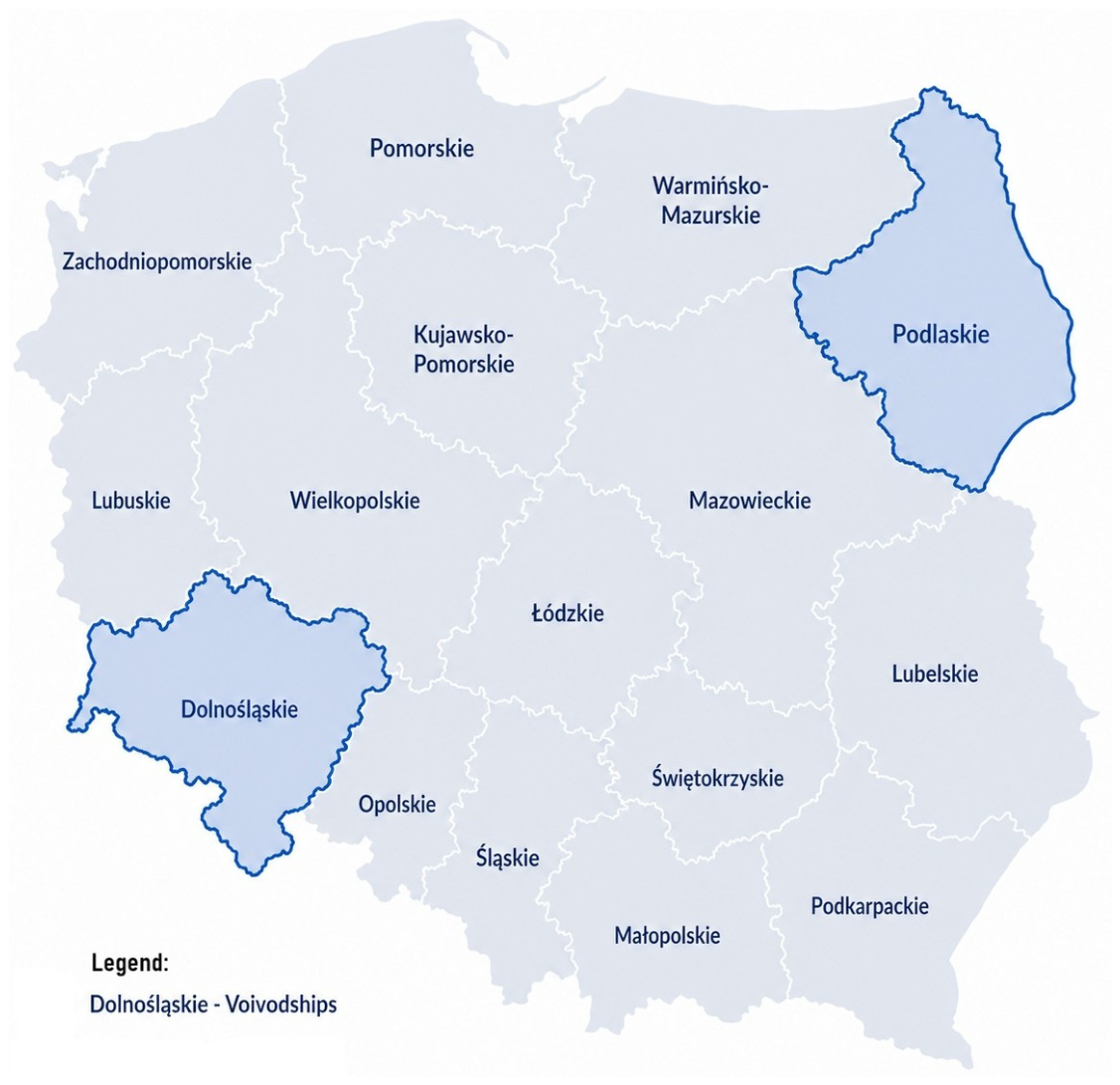
The study was designed around two analytical axes: The main axis involves an interregional comparison of two voivodeships: Dolnośląskie and Podlaskie (
Figure 1). The secondary axis is vertical in nature and concerns the differentiation between levels of governance: provincial, county, and municipal levels. This approach aligns with the logic of multilevel research in public policy analysis [
78,
80], and allows for the simultaneous capture of differences arising from the territorial context and the transformation of how the problem is defined as the institutional level changes.
The selection of cases was based on an analytical contrast strategy [
78,
81]. The Dolnośląskie Voivodship represents a region with a relatively high level of industrialization and urbanization and significant internal diversity. The rapidly developing provincial capital (Wrocław) and the thriving copper basin (Legnica-Głogów Copper District) are situated here alongside the Sudeten District, which is undergoing systemic transformation (declining heavy and textile industries). In contrast, the Podlaskie Vojvodship is an example of a peripheral region that is poorly industrialized, has a low population density, and is dominated by agricultural and forestry functions (
Table 1). The region’s capital (Białystok) has poorly developed metropolitan functions [
82,
83]. Thus, we have a contrast in the degree of industrialization, urbanization, population density, and metropolitan strength of the central hub. Both voivodeships are experiencing depopulation, although this stems from different systemic causes [
84,
85]. Adopting this selection logic allows for the identification of potential differences in how the problem is conceptualized and an assessment of whether these differences translate into different strategic responses.
These structural differences provide the analytical contrast necessary to assess whether the regional context translates into divergent strategic responses to depopulation or whether a standardized institutional model prevails.
The research corpus comprises territorial development strategies obtained from official public sources, particularly from the websites of local government units and Public Information Bulletins (BIP). The analysis included development strategies for both voivodeships, selected counties, and rural and urban-rural municipalities. The number of documents examined, categorized by region and local government level, is presented in
Table 2.
The selection criteria included the formal adoption of the document, availability of the full text, and currency. The documents underwent preliminary processing, including conversion to a uniform text format (.docx, .txt) and the removal of non-narrative elements such as tables, diagrams, or repetitive formal elements. The unit of analysis was a text segment consisting of 1–3 sentences, corresponding to a coherent semantic utterance (a “meaning unit”).
Methodologically, this study is based on a mixed-methods approach that combines qualitative analysis with quantitative methods [
87]. The analysis was abductive, combining inductive data coding procedures with existing theoretical frameworks regarding responses to depopulation. This means that the analytical categories were partly derived from the empirical data and partly grounded in the literature, allowing for their mutual verification and refinement.
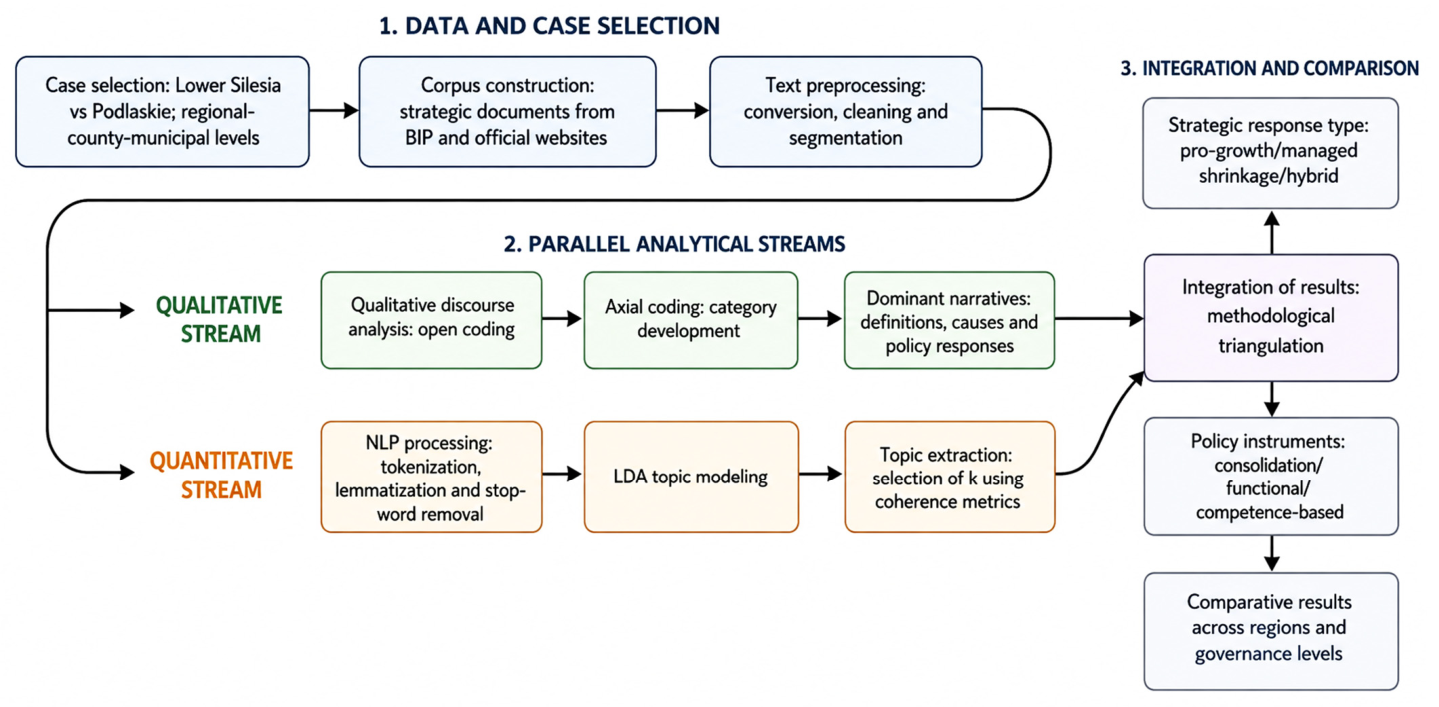
In the first stage, an in-depth discourse analysis was conducted using open and axial coding procedures inspired by the grounded theory methodology [
88,
89]. Open coding involved identifying units of meaning in the text, understood as short, coherent segments of speech (usually comprising one or several sentences), and assigning preliminary descriptive labels. The coding process was iterative and abductive; the preliminary categories extracted from the data were then confronted with theoretical frameworks, which led to their refinement and consolidation (
Figure 2).
In the next step, axial coding was applied, involving the organization and grouping of previously identified codes into more general analytical categories and the identification of relationships between them. In particular, the connections between the diagnosis of the problem, identified causal mechanisms, and proposed solutions were analyzed. This approach enabled the reconstruction of coherent narrative structures, in which a specific understanding of depopulation led to a specific type of intervention. The identification of text fragments subject to coding was based on the presence of direct references to demographic processes and contextual indications implying the effects of depopulation, for example, in the area of public services or infrastructure.
Discourse analysis was conducted using specialized software for qualitative data analysis (MAXQDA 2022), which enables systematic coding, organization, and aggregation of textual data. Spreadsheet tools (Excel) for code aggregation and programming environments (Python 3.11—pandas libraries) used for further data processing and integration also supported analytical procedures. Owing to the exploratory nature of the study, the coding process was expert-driven. To limit interpretive subjectivity, an iterative comparison of the coding results with the thematic modeling results was employed, allowing for the verification of the consistency of the identified categories.
In the second stage, thematic modeling based on the LDA (Latent Dirichlet Allocation) algorithm [
90] was applied. The analysis was conducted on a processed text corpus, involving tokenization, removal of function words, and lemmatization, using natural language processing tools (spaCy 3.4). Next, a document–term matrix was constructed which served as the basis for modeling. The number of topics was selected iteratively within a range of several to a dozen or so, and the final selection was based on maximizing semantic coherence measures (C_v), in accordance with the recommendations in the literature [
91,
92]. The extracted themes were interpreted as sets of co-occurring words with high probabilities, which were then assigned to broader narrative categories, such as demographic decline, the labor market, quality of life, and accessibility of services. The results of thematic modelling were used as a tool to validate and generalize the results of the qualitative analysis, enabling the identification of recurring lexical patterns corresponding to previously identified discursive categories.
An iterative validation procedure for topic extraction was applied to ensure the stability and interpretability of the topic model. Models containing between 3 and 12 topics were tested and compared in terms of semantic coherence and qualitative interpretability. The final model was selected as a compromise between semantic consistency and the ability to identify distinct, strategic narratives.
Validation included the analysis of dominant keywords, documents with the highest topic probability, and the assessment of result stability under different models and preprocessing parameters. The identified narratives, particularly the dominance of the pro-growth paradigm and the marginal presence of managed shrinkage, remained stable across iterations.
The use of thematic modeling allowed for the identification of hidden patterns across the entire text corpus and for a quantitative assessment of the intensity of individual narratives in documents and at various levels of governance. Thus, it complemented the qualitative analysis, reducing the risk of interpretive subjectivity and increasing the comparability of the results.
In the third stage, the results of both approaches were integrated through the operationalization of the key research category, that is, the type of strategic response to depopulation (
Table 3). This variable was conceptualized as a continuum comprising three types: pro-growth approach, managed shrinkage, and hybrid solutions. The classification was based on a content analysis of text excerpts that contained policy recommendations. Actions aimed at reversing demographic trends, such as attracting new residents or developing infrastructure, are considered manifestations of the pro-growth approach. The adaptive approach was identified in cases of references to adjusting the scale of services and infrastructure to the declining population, while hybrid solutions involved combining both approaches.
The assignment of numerical values to specific reaction types was based on an analysis of the content of text segments that contained strategic recommendations. Each segment was assigned a single dominant reaction type, ensuring unambiguity in the classification and enabling further data aggregation. This approach allowed for a transition from the micro-analytical level (meaning units) to the comparative level between the territorial units.
To synthetically capture the interdependencies between strategic responses, territorial instruments, and the way the depopulation problem is defined, Principal Component Analysis (PCA) was applied [
93]. This procedure allows for the reduction in a multidimensional space of variables to several orthogonal components that retain the maximum possible portion of the data variance. Prior to the analysis, the variables were standardized (z-scores) to ensure comparability. The interpretation of the components was based on factor loadings, which indicated the contribution of individual variables to the structure of the identified dimensions.
To assess the quality of the dimensionality reduction, the proportion of variance explained by successive principal components was examined. In both governance levels, the first three components explained more than 80% of the total variance, indicating the model’s high capacity to synthetically represent the data structure.
The component interpretation was based on the analysis of the factor loadings. The first component represents the dominance of the pro-growth paradigm, the second reflects differences in the definition of depopulation problems, and the third captures variation in territorial policy instruments.
An additional validation procedure involved testing the stability of the results after reducing the number of variables and conducting separate analyses for different administrative levels. The resulting spatial structures remained relatively stable, thereby increasing the robustness of the solution.
The adopted methodology is characterized by a high degree of transparency and reproducibility, resulting from the clearly defined procedures for data selection, coding, and modeling. At the same time, the integration of qualitative and quantitative methods allows for a more comprehensive understanding of the phenomenon under study and a shift from “what the strategies say” to “what solutions they propose.”
A limitation is the lack of a direct analysis of strategy implementation, which points to the need for further research in this area.
4. Results
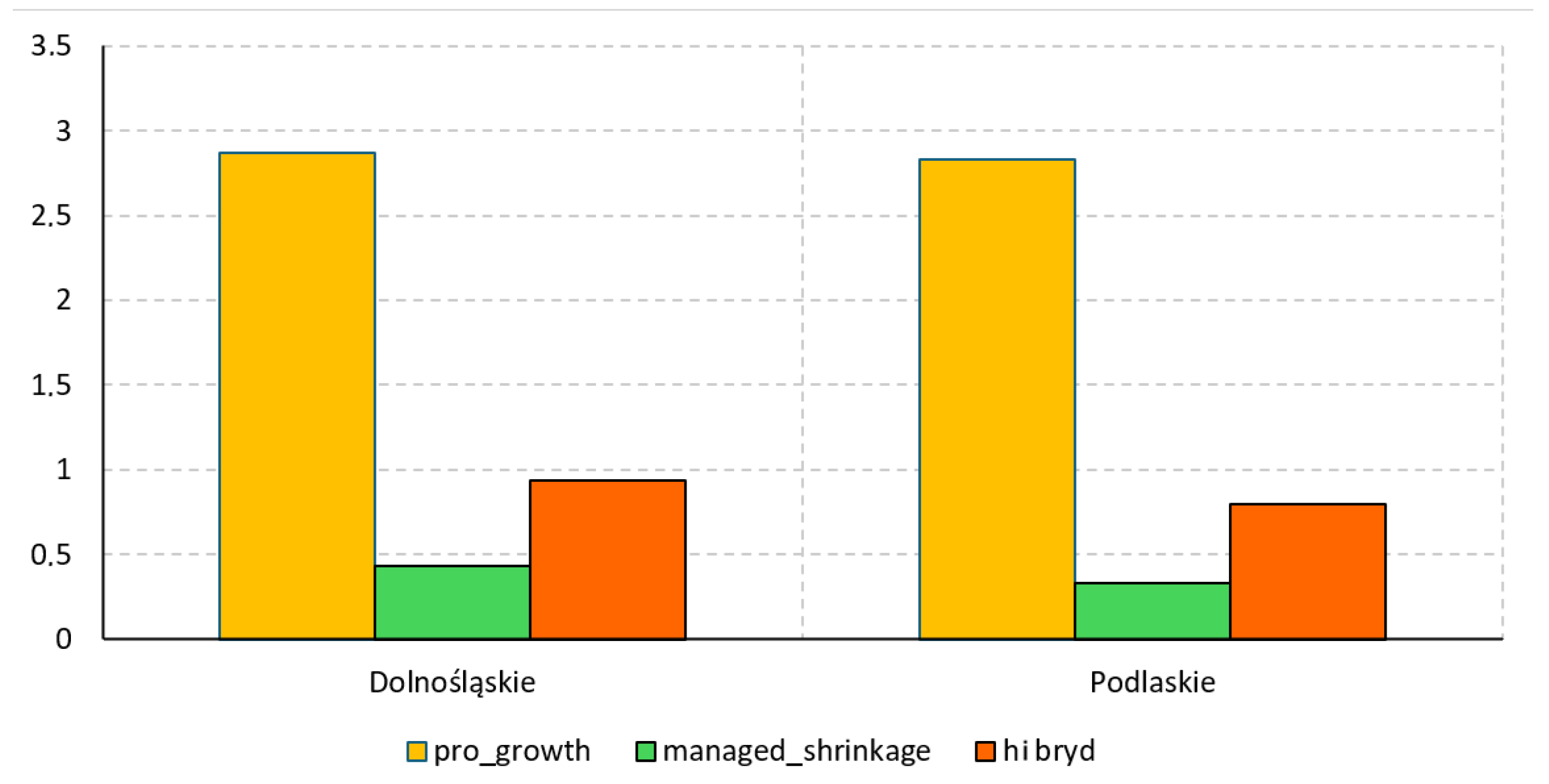
Our study’s results reveal a clear dominance of one type of strategic response to depopulation, alongside variations in how it is spatially conceptualized. Regardless of the level of governance and regional specifics, the fundamental interpretive framework remains the pro-growth approach, which is understood as an attempt to reverse negative demographic trends by strengthening development potential, improving quality of life, and increasing settlement attractiveness. In aggregate terms, the average intensity of this narrative reached a value of 2.87 for Dolnośląskie and 2.83 for Podlaskie (on a scale of 0–3), which confirms its virtually hegemonic position in the analyzed documents. Simultaneously, the managed shrinkage component remained marginal, reaching values of 0.43 and 0.33, respectively, indicating its incidental rather than systemic nature. The hybrid approach, which combines these two narratives, shows slightly higher values:—0.93 in Dolnośląskie and 0.8 in Podlaskie (
Figure 3). This signifies a separation between the level of problem interpretation and the level of strategic response. While regional narratives differ in how they describe depopulation, the proposed actions remain largely uniform.
At the provincial level, differences between regions are primarily evident in how problems are defined. In the case of Dolnośląskie, depopulation rarely appears as an autonomous analytical category and is more often incorporated into the broader context of territorial imbalance, the loss of urban center functions, and development polarization. The functional component scores 2.8, exceeding the demographic component (1.7), indicating the dominance of a narrative based on the loss of functions and territorial imbalance (
Table 4). The regional strategy employs the language of functions, connections, and cohesion, while the problem of population decline is, in a sense, “dissolved” within the spatial structure of the settlement system.
In contrast, in the Podlaskie Vojvodship, depopulation is explicitly identified as one of the main development challenges, characterized by a decline in population, a negative net migration balance, and advanced population aging processes. The demographic component reaches a level of 2.8, with a lower intensity of the functional component (1.8), which confirms a more direct framing of depopulation as a population issue. Thus, at the provincial level, a narrative dualism emerges: functional in Dolnośląskie and demographic in Podlaskie.
At the county level, regional differences are partially blurred, and the dominant pattern becomes a diagnostic narrative, focusing on identifying the causal mechanisms of depopulation. In both voivodeships, counties point to similar factors: out-migration, an aging population, limited job availability, and the weakness of local labor markets. The demographic component achieves high values (2.2 in Dolnośląskie and 3.0 in Podlaskie), while the labor market category also holds significant importance (2.5 and 2.2). This means that at this level, depopulation is interpreted primarily as the result of migration processes and structural economic constraints.
Regional differences persist, however, concerning marginalization—its intensity in Podlaskie (2.6) remains higher than in Dolnośląskie (1.6), indicating a stronger link between depopulation and spatial peripherality. In the case of Dolnośląskie counties, references to restructuring processes and the loss of economic functions appear more frequently, whereas in Podlaskie counties, spatial peripherality and marginalization are emphasized more strongly. Despite these interpretive differences, the repertoire of responses remains similar and continues to be dominated by pro-development measures.
A more detailed examination of county-level strategies reveals that the divergence between Dolnośląskie and Podlaskie counties is most pronounced in the framing of depopulation causes, but convergent in the proposed remedies. In Dolnośląskie counties, depopulation is predominantly linked to post-industrial restructuring and the outmigration of working-age populations toward metropolitan centers. In Podlaskie counties, the dominant narrative connects depopulation to structural peripherality, limited accessibility, and the absence of diversified economic functions. Despite these interpretive differences, both sets of counties propose similar pro-growth responses: investment in infrastructure, labor market activation, and residential attractiveness measures. This convergence suggests that county-level governments are constrained by a limited repertoire of policy instruments, regardless of the structural specificity of their demographic challenges.
The most concrete and operational strategies are those at the municipal level, where depopulation is explained through the lens of the daily functioning of local communities. In both regions, references to quality of life, access to public services, social and technical infrastructure, and living conditions dominate. In both voivodeships, this component achieves high values (2.8 in Dolnośląskie and 2.7 in Podlaskie), confirming that depopulation is interpreted here through the lens of the daily functioning of local communities. At the same time, the demographic component remains high (2.4 and 2.8), indicating its enduring presence, though it no longer has a dominant interpretive role. At this level, the differences between Dolnośląskie and Podlaskie are least pronounced, suggesting a convergence of local experience regardless of the macroregional context. Depopulation ceases to be an abstract category and becomes a phenomenon directly felt in the functioning of schools, care systems, transportation, and the labor market.
At the municipal level, the analysis reveals a particularly strong emphasis on the quality of public services as both a diagnostic frame and a policy response. Municipalities in both voivodeships frequently reference the deterioration of school networks, healthcare accessibility, and local transport as direct consequences of depopulation. However, the proposed solutions remain predominantly reactive and growth-oriented—focusing on maintaining or expanding service infrastructure rather than adapting it to a smaller population base. This finding is consistent with the institutional isomorphism thesis [
89]: municipalities reproduce strategic templates that prioritize service provision expansion, even when demographic trajectories make such expansion fiscally unsustainable in the medium term.
An analysis of the repertoire of proposed solutions confirms the dominance of the pro-growth approach at all levels of governance. At the same time, the managed shrinkage approach remains marginal, indicating a lack of systemic adaptation of strategies to a sustained population decline.
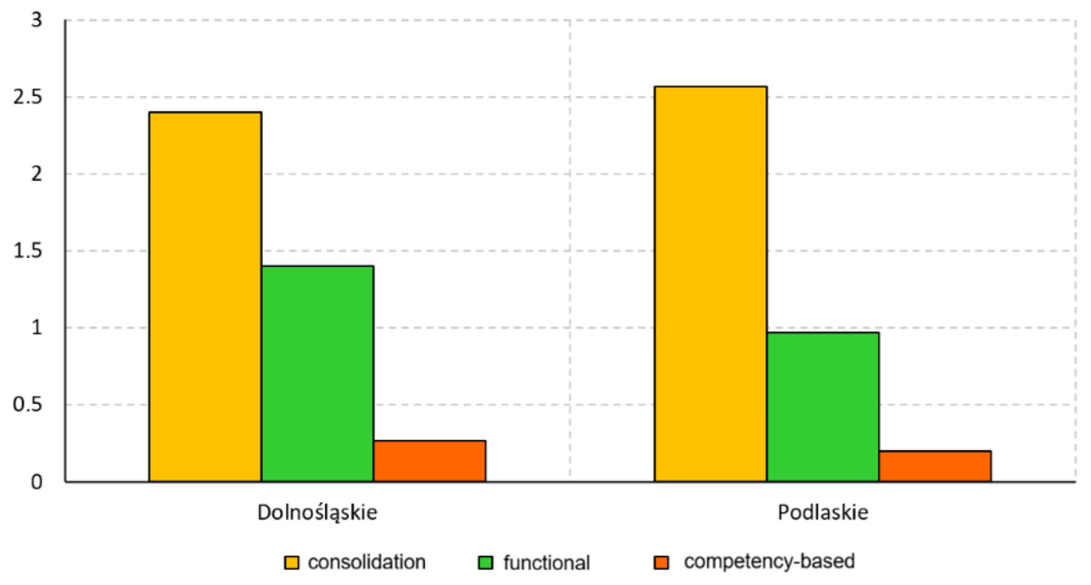
In terms of territorial instruments, the dominance of consolidation measures is particularly evident (
Figure 4). Values for this category range from 2.4 to 2.6 in Dolnośląskie and from 2.6 to 2.8 in Podlaskie, significantly exceeding functional instruments (0.8–1.7) and competency-based instruments (0.1–0.4). This means that the system’s response to depopulation primarily takes the form of structural changes, such as the integration of territorial units, while solutions based on the reorganization of functions or changes in competencies see limited development. However, it is not clear whether the dominance of consolidation instruments is due to their perceived effectiveness or rather to their alignment with the existing administrative logic of the territorial management system.
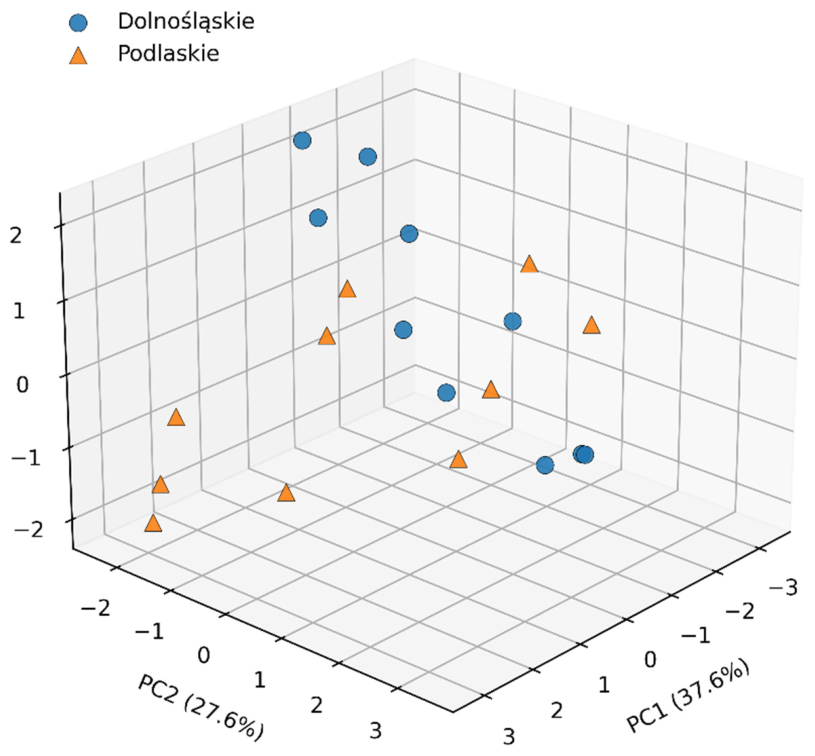
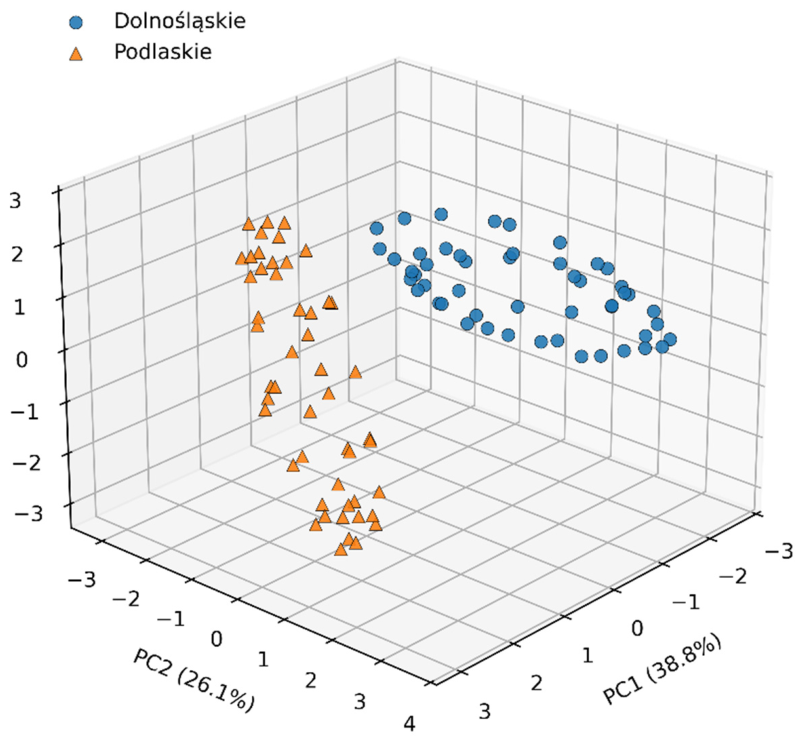
To provide a synthetic overview of the interrelationships between strategic responses, territorial instruments, and the way the depopulation problem is defined, we additionally conducted a Principal Component Analysis (PCA). The first component (PC1) can be interpreted as a measure of the overall intensity of pro-growth orientation, while the second component (PC2) reflects the differences between the functional and demographic approaches to the depopulation problem.
For counties, the first three components together explain approximately 81% of the variance, while for municipalities, this proportion exceeds 86%. This means that the complex structure of the analyzed strategies can be largely reduced to a three-dimensional interpretive space.
The visualization of PCA results in three-dimensional space reveals several significant patterns. First, there is a clear clustering of points along the first component, indicating the dominance of a common systemic component. In other words, regardless of the region and level of government, the strategies of local government units are strongly orientated around a similar set of priorities.
Second, differences between voivodeships are primarily evident along the second component. Units from the Dolnośląskie Voivodship tend to have higher PC2 values, which can be interpreted as a greater emphasis on the functional approach. In contrast, units from the Podlaskie Voivodship are more frequently located in the area of lower values on this axis, which corresponds to a more direct demographic approach to the problem of depopulation.
Third, the differences between government levels are noticeable. Points corresponding to counties form relatively compact clusters, suggesting greater homogeneity in strategic approaches (
Figure 5). In the case of municipalities, however, greater dispersion is observed, indicating a higher level of operational diversity (
Figure 6). This difference may stem from the greater autonomy of municipalities in adapting strategies to local conditions.
Overall, the results indicate a high degree of consistency in the strategic response model across both analyzed regions. Despite differences in how the problem is defined—particularly evident at the provincial level—the structure of the proposed actions remains similar. Depopulation is consistently treated as a reversible phenomenon that requires action to strengthen development potential, rather than as a permanent condition that requires systemic adaptation.
In both voivodeships, strategies relatively often refer to the need to integrate local government units, including merging municipalities or strengthening institutional cooperation. At the same time, reflection on functional solutions—such as the reorganization of service networks or the development of supra-local public service delivery systems—and on changes in competences that could lead to a redefinition of the roles of individual levels of local government is significantly less developed. As a result, the system’s response to depopulation takes primarily the form of structural changes rather than functional ones.
5. Discussion
The results obtained allow for the verification of the previously formulated hypotheses and their placement within the broader theoretical context of research on depopulation and territorial governance. Above all, the hypothesis regarding the dominance of the pro-growth approach as the main paradigm of the strategic response to depopulation has been confirmed. In both analyzed voivodeships, the values of this orientation’s index remain at a level close to the maximum of the scale, indicating its systemic rather than contextual nature. Regardless of the diverse conditions, therefore, the perception of the problem in both voivodeships is limited to attempts to reverse adverse trends. This result is consistent with observations in the international literature, which indicate that public policies in shrinking regions remain strongly rooted in the logic of growth, even in the face of long-term population decline [
17,
36,
54,
77,
94,
95,
96]. It is also pointed out that the dominance of this paradigm may limit the effectiveness of policies addressing long-term territorial shrinkage, as development strategies are rarely adapted to demographic realities and often rely on attempts to restore growth rather than adapt to new conditions [
17,
77,
96]. At the same time, the findings partially challenge the tenets of the “managed shrinkage” approach, which assumes increasing adaptation of local systems to shrinkage [
17,
53,
65], indicating that in the Polish context, this approach remains marginal and is not becoming institutionalized [
59,
60,
61,
70].
These findings should also be interpreted in the broader institutional and political context of the European Union. The limited adoption of adaptation-oriented strategies does not merely reflect local administrative inertia. Rather, it can be understood as a manifestation of a deeper institutional trap in which local governments are expected to respond rationally to long-term demographic decline, while at the same time remaining politically accountable to electorates that often associate development with growth, expansion, and investment visibility. In this sense, managed shrinkage is not only a technical planning problem but also a problem of democratic legitimacy.
Recent research on sustainable development and democratic resilience in the European Union emphasizes that the success of long-term transformation depends not only on policy design but also on institutional stability, political feasibility, and public trust [
97]. From this perspective, the reluctance of local authorities to explicitly recognize depopulation as a durable condition may be interpreted as a rational political response to the risk of being perceived as accepting decline. Similar conclusions can be drawn from studies on effective public administration and digital connectivity in the development of smart cities, which stress that sustainable transformation requires capable public institutions, legal coherence, and socially legitimate governance frameworks [
98].
The Polish case therefore illustrates a tension between demographic evidence and political communicability. Although adaptive strategies may be more consistent with resource efficiency, service rescaling, and long-term sustainability, they are difficult to translate into electorally acceptable narratives. Local elites may prefer pro-growth scenarios not because they are empirically more plausible, but because they are institutionally safer and symbolically more compatible with conventional expectations of development. The dominance of growth-oriented strategies identified in this study can thus be read as a local expression of a broader European governance dilemma: sustainable adaptation requires not only analytical accuracy, but also democratic resilience, administrative capacity, and the ability to legitimize politically uncomfortable policy choices.
The second hypothesis, positing regional differences in how the problem of depopulation is defined, was confirmed only partially. Indeed, at the provincial level, we observe a clear dualism: Dolnośląskie employs a functional–structural narrative, while Podlaskie utilizes a demographic and marginalization narrative. This finding aligns with the theory of “place-based policy,” according to which the way development problems are defined depends on territorial specificity [
56,
77,
94]. However, at the county and municipality levels, these differences are significantly diminished, leading to narrative convergence. This means that despite differing structural conditions, lower-level units formulate very similar strategic responses [
60,
70]. Thus, the results partially challenge the assumption of a strong relationship between the regional context and the choice of policy instruments, suggesting the existence of a supra-regional institutional pattern instead [
61,
72].
The third hypothesis, concerning the dominance of consolidation-based solutions over functional- and competency-based ones, was fully confirmed. The high scores assigned to consolidation instruments in both regions indicate that they are perceived as the primary tool to respond to depopulation. This result can be interpreted in light of the theory of historical institutionalism (path dependency), which emphasizes the importance of entrenched political and administrative paths [
59,
77]. Consolidation represents a solution consistent with the state’s existing administrative logic—as observed, for example, in the Netherlands and Germany—while functional and competency-based solutions would require deeper institutional transformation and greater openness to social innovation and local participation [
36,
77,
99]. At the same time, this result points to an insufficient utilization of the potential of network governance and co-governance, which the literature considers key to managing complex territorial problems [
77,
99].
The study’s findings also confirm the thesis of institutional isomorphism [
76], indicating that local government units reproduce similar patterns of strategic response regardless of the regional context [
59]. At the same time, they partially refute the assumptions of the “shrinking regions” theory, which suggests a growing adaptation of public policies to shrinking conditions—this adaptation is marginal even outside Poland (e.g., Germany or the Czech Republic, Sweden, Finland, or Spain) [
6,
65,
68,
95,
100]. The limited uptake of adaptive approaches stems from mutually reinforcing institutional and political constraints: Polish local governments operate in a legal-financial framework that rewards growth-oriented planning, while elected officials face reputational risks if they openly endorse strategies associated with “managed decline.” In the absence of dedicated national policy frameworks and financial instruments for depopulating areas, this institutional lock-in leads even territories experiencing long-term demographic decline to reproduce standardized, growth-oriented strategic responses.
The fourth hypothesis, concerning differences between levels of governance, was also confirmed. The analysis revealed a clear narrative gradient: from abstract systemic approaches at the provincial level, through the diagnostic approach of counties, to the operational strategies of municipalities focused on residents’ quality of life. This result is consistent with the concept of multi-level governance, which assumes a differentiation of functions and ways of interpreting problems depending on the institutional level [
70,
77]. However—as demonstrated, for example, in the Dutch and Spanish regions—this differentiation does not lead to significant variation in policy instruments; pro-growth logic remains dominant at all levels of governance [
17,
78].
In the context of the research gap, this study makes a significant contribution to the literature by integrating a qualitative approach (discourse analysis) with elements of quantitative analysis (narrative intensity index) and by comparing strategies across regions with different structural conditions—which has been rare to date in both Poland and Central [
60,
70]. Previous analyses of depopulation have focused mainly on the demographic or economic dimension or have been descriptive in nature without a systematic comparison across levels of governance [
42,
101,
102].
The results obtained also open up several important avenues for further research. First, it is reasonable to extend the study to other voivodeships, which would allow verification of whether the identified response model is nationwide in nature. Second, an important avenue is implementation analysis—that is, examining to what extent declared strategies translate into actual policy actions. Finally, an interesting area for further research is the relationship between strategic discourse and public perception of depopulation, which would allow us to assess whether strategies respond to the actual needs of residents or rather reproduce an administrative way of thinking about space.
In summary, the study’s findings indicate a high degree of coherence in the strategic response to depopulation in Poland, while simultaneously highlighting limitations in its adaptive capacity. Although the diagnosis of the problem is accurate in many cases, the proposed solutions remain largely rooted in the growth paradigm, which may limit their effectiveness in the context of long-term territorial contraction.
The results suggest that depopulation is not an overlooked issue in strategic documents but rather a problem systematically interpreted within a paradigm that limits the scope of possible institutional responses.
6. Conclusions, Limitations, and Policy Implications
The study aimed to identify the patterns of strategic responses to depopulation in the documents of local government units in two diverse regions of Poland. The results indicate a high level of consistency in these responses, regardless of the regional context and level of governance. Differences in how the problem is described do not translate into significant variation in the proposed actions, suggesting the existence of a standardized model for responding to depopulation.
The study’s findings showed that development strategies focus primarily on measures aimed at strengthening development potential and improving settlement attractiveness. An approach based on adapting local systems to a sustained population decline is rare and does not take the form of coherent strategic solutions. Consequently, the range of tools used remains limited and the responses are relatively uniform in nature.
Furthermore, the study shows that at the operational level, structural measures dominate, while instruments related to the organization of public services and the division of responsibilities are less developed. This means that institutional responses focus on formal changes, less often involving modifications to how local systems function.
From the perspective of territorial development management, the results obtained seem to indicate a need to broaden the range of approaches used in development strategies. In particular, it seems important to consider solutions that aim to adapt the scale and organization of services to changing demographic conditions. Such an approach may promote more efficient use of resources and better alignment of public policies with actual socio-economic processes.
This study contributes to filling a knowledge gap in both empirical and methodological terms. First, it provides one of the few multi-level comparisons of development strategies in the context of depopulation in Central and Eastern Europe. Second, it integrates discourse analysis with quantitative methods (LDA, PCA), which allows one to capture both the semantic and structural logic of strategic documents. As a result, it was possible to move from describing narratives to identifying systemic patterns of response.
However, the study has significant limitations. First and foremost, it focuses on the declarative layer of the strategies without analyzing their implementation or effectiveness. Furthermore, the spatial scope, limited to two voivodeships, does not allow for full generalization of the results at the national level. These limitations point to directions for further research, which should include: (1) extending the analysis to other regions, (2) deepening implementation studies, (3) analyzing the relationship between strategic discourse and public perception of depopulation, and (4) quantitatively assessing the effects of the policy instruments employed.
In practical terms, the findings suggest the need to revise the dominant planning paradigm at multiple levels of territorial governance. At the regional level, voivodeship strategies should explicitly acknowledge depopulation as a long-term structural condition and incorporate managed shrinkage scenarios alongside growth-oriented projections. At the county level, policymakers are encouraged to develop cross-municipal cooperation frameworks for the joint delivery of public services—particularly in education, healthcare, and transportation—as a cost-effective response to declining demand. At the municipal level, strategies should shift from infrastructure expansion toward infrastructure optimization: identifying priority service nodes, rationalizing underutilized assets, and piloting temporary or flexible land-use solutions in areas of significant population loss. More broadly, the systemic integration of an adaptive approach into mainstream territorial policy requires institutional support at the national level—including revised planning legislation, dedicated funding instruments for shrinking territories, and capacity-building programs for local government officials. Development strategies should reflect actual demographic trajectories rather than normative assumptions about their reversibility.