1. Introduction
Growth in tourism’s share of national and regional budget revenues increases the sector’s investment attractiveness. It stimulates economic activity in tourist destinations and supports steady growth in tourist arrivals. However, expanding tourist flows produces ambiguous environmental and social consequences. Additional tourism revenues help regions pursue strategic development objectives, but excessive tourist-flow growth can reduce residents’ quality of life.
Researchers disagree about both the strength and the direction of tourism’s impact on sustainable development at the national and regional levels. They also note the difficulty of developing a concept that captures all aspects of sustainable tourism development. As a result, most studies focus on selected sustainability factors in tourism.
Singh and Sekaran [
1] emphasize tourism’s positive impact on the social and economic components of sustainable development and its negative impact on the environmental component. Their findings support the need to assess the environmental consequences of tourism development.
Elgin and Elveren [
2] show that tourism affects sustainable development differently in developed and developing economies. This finding highlights the need for tourism policies that reflect the socio-economic context of each territory. Such differentiation matters especially in countries with substantial regional socio-economic disparities, including Russia.
Talukder [
3] examines the relationship between tourism and urban and regional planning. The author highlights tourism’s contribution to community integration and sustainable territorial development. A high population concentration within limited urban areas makes sustainable urban tourism particularly important.
This study follows Panasiuk’s view of sustainable tourism as a condition in which tourism does not create irreversible environmental damage and simultaneously generates positive effects for tourists, host communities, and tourism-service providers [
4].
Destek and Aydin [
5] show that urbanization supports economic growth but harms sustainable development. Therefore, tourism in highly urbanized territories must comply with sustainable development requirements.
Grah et al. [
6] propose a conceptual model of sustainable urban tourism development that includes stakeholders, ESG indicators, types of tourism, and management interventions. However, this model does not include tourism infrastructure facilities that influence the attractiveness of a destination.
Public authorities and other stakeholders in urban tourism must assess how growing tourist flows affect urban areas to prevent negative impacts on sustainable development.
Territorial planners and public authorities must account for the uneven distribution of tourism resources. Territories with different levels of tourism and recreational potential require infrastructure provision that matches the scale of tourist flows [
7].
Uncontrolled tourist-flow growth can create overtourism, understood as excessive anthropogenic pressure on a territory. Overtourism can worsen environmental conditions, raise real estate and consumer goods prices, reduce transport accessibility, overload infrastructure facilities, and create other negative effects [
8,
9,
10,
11].
Overtourism especially affects destinations dominated by ecotourism and other forms of nature-based tourism. Iceland has faced similar problems, with annual tourist numbers several times higher than the country’s total population [
12].
Cities and regions use several measures to prevent overtourism:
- -
regulating tourist-flow volume [
13];
- -
modernizing existing tourism infrastructure and creating new facilities [
14];
- -
strengthening environmental protection and supporting low-carbon tourism [
13,
14,
15];
- -
using smart technologies to monitor and plan tourist flows and the location of tourism infrastructure facilities [
16].
Some destinations limit tourist flows by introducing a special tourism tax or fee. Venice, Barcelona, Paris, Amsterdam, and other cities and resort areas provide examples. Authorities usually allocate these revenues to infrastructure creation or maintenance. Since 2025, Russian municipalities have been able to introduce a tourist tax as a local tax. Local public authorities decide whether to levy it in each municipality.
However, taxes and fees alone cannot solve overtourism. Destinations need a systemic approach that reduces tourist concentration over time, by distributing visits more evenly throughout the year, and across space, by easing pressure on historic city centers. Saint Petersburg illustrates this approach. It has repeatedly received the World Travel Awards (WTA) title of “World’s Leading Cultural City Destination”. The city’s high season coincides with the White Nights period (June 11 to July 2), while the low season lasts from November to March, excluding the New Year holidays. To attract tourists in the low season, the city organizes numerous event-based activities. To redistribute tourist flows within the historic center, Saint Petersburg implements the “New Tourist Geography” project through specialized tourist districts. This approach, however, requires active tourism infrastructure development.
The basic elements of tourism infrastructure include accommodation, transport, food services, and leisure facilities. Information, financial and insurance, personnel training, medical and wellness, and other infrastructure types are also developing actively and increasingly shape destination competitiveness.
Researchers classify tourism infrastructure in different ways. For example, Wang et al. identify six categories: transport infrastructure, environmental infrastructure, information service infrastructure, cultural and leisure infrastructure, commercial service infrastructure, and public safety infrastructure [
17].
Munir et al. [
18] discuss infrastructure as a factor in sustainable tourism development and tourist satisfaction. Their findings demonstrate the need for green tourism infrastructure projects that meet sustainable development requirements.
Transport infrastructure plays a special role in tourism and includes:
- -
transport routes: motor roads with different surface types, water routes (river and maritime), and air corridors;
- -
transport terminals (ports, airports, etc.) and stopping points;
- -
vehicles that move organized and independent tourists from their permanent place of residence to a tourist destination in international and domestic tourism;
- -
vehicles that transfer tourists from their arrival point in the destination (port or pier, airport, railway station, etc.) to an accommodation facility and back;
- -
vehicles that provide excursion trips as part of an organized tour and/or as a separate tourism product;
- -
public and private transport that independent tourists use to reach and move within the destination;
- -
roadside-service facilities that support comfortable travel within tourist areas, including filling stations, temporary parking areas, motels and campsites, public catering facilities, and toilets;
- -
information systems that manage traffic and support transport-flow safety;
- -
organizations that service and repair vehicles and road facilities.
Safaeva et al. [
19] stress the need to apply sustainable development requirements when developing tourism transport infrastructure. They developed an infrastructure model of sustainable tourism in Uzbekistan based on the influence of transport and logistics infrastructure on the tourism economy. Their recommendations on digital and green innovations are relevant to this study [
20].
Gutman and Malashenko [
21] demonstrate a strong positive spatial effect of transport infrastructure on regional economic growth. However, they do not examine the environmental and social factors of sustainable transport infrastructure development.
A regional transport system, as an infrastructural element of tourism, has a dual impact on territorial sustainable development. Improved access to tourist attractions and stronger connectivity between destinations increase socio-economic development indicators. At the same time, land acquisition for road construction, higher CO
2 emissions, and additional pressure on transport systems intensify environmental problems [
22,
23,
24,
25,
26,
27].
Large urban agglomerations require intensive transport system development because they generate substantial freight and passenger flows. Regions with significant tourist flows face additional transport-infrastructure pressure, especially when tourist flows exceed the regional population.
Agglomeration transport problems mainly stem from the large territorial extent and substantial passenger flows generated by residents’ mobility needs. These conditions require regulation of sustainable agglomeration transport system development.
Researchers examine several ways to improve the sustainability of transport systems in urban agglomerations:
- -
creating multimodal passenger transport hubs to increase passenger transport efficiency [
28];
- -
increased use of environmentally friendly modes of private and public transport [
24,
25,
29];
- -
use of smart transport solutions in urban transport systems [
30].
China’s large number of agglomerations has generated transport problems in agglomeration areas and has, therefore, stimulated substantial research on this topic [
31].
At the time of writing, the Russian Federation has no dedicated high-speed railway lines on separate routes. Sapsan trains (up to 250 km/h) and Nevsky Express trains (up to 200 km/h) provide high-speed services on conventional modernized tracks. Russia plans to implement the first dedicated high-speed railway line (HSR-1) between Moscow and Saint Petersburg in 2028. High-speed rail between the two largest Russian urban agglomerations may increase inbound and domestic tourist flows. Therefore, international experience with high-speed rail in tourism should be examined from a sustainable development perspective. Relevant examples include Japan, South Korea, China, France, Italy, Germany, Norway, and Indonesia.
The literature review shows that researchers still pay insufficient attention to transport problems in regions with large agglomerations under growing tourist flows. Existing studies examine separate aspects of the issue: agglomeration transport problems, the transport system as a component of regional infrastructure, the role of transport in territorial tourism development, and tourist-attraction accessibility. Tanina and Tanin [
32] examined selected indicators of tourism transport infrastructure development in the Saint Petersburg agglomeration. However, research still needs a comparative analysis of sustainable transport system development in regions with other large Russian urban agglomerations.
Accordingly, this study examines the sustainable development of the transport system as an element of tourism infrastructure in regions with large agglomerations. Moscow and Saint Petersburg form Russia’s largest agglomerations. The federal status of Russia’s “two capitals” gives these agglomerations a distinctive feature: each core city forms a separate constituent entity of the Russian Federation. The agglomerations also include the Moscow Region and the Leningrad Region, respectively. Each of the four regions has its own public authorities and regulatory framework, which complicates transport system development in agglomeration areas. Makhrova et al., Kiselev, and Zhogova et al. [
33,
34,
35] examine selected aspects of transport provision as a territorial development problem. However, they do not provide a comprehensive study of sustainable transport system development in Russian regions with large agglomerations.
This study addresses the following theoretical gaps:
- -
links tourist-flow pressure to transport infrastructure development in large Russian urban agglomerations, where administrative fragmentation and high commuting intensity complicate infrastructure planning;
- -
proposes a comparative integral index that combines tourist load, transport supply, and qualitative sustainability indicators and therefore assesses the resilience of tourism transport infrastructure under growing demand and limited official statistics.
Researchers widely use index methods to compare sustainable-development performance across different objects. Relevant sustainable-development indices include:
- -
an integral index of regional sustainable development for regions with special economic zones. The index includes five key factors that reflect the investment, social, environmental, and economic components of sustainable development [
36];
- -
a model for assessing sustainable urban infrastructure development that covers five subsystems: transport, water supply and wastewater disposal, energy, environment, and communication [
37];
- -
an integral index of the impact of small- and medium-sized organizations on municipal sustainable development [
38].
However, existing indices do not account for tourism’s impact on regional transport infrastructure. Therefore, this study proposes conceptual principles for calculating an integral index of sustainable development of tourism transport infrastructure.
2. Materials and Methods
This study aims to assess the development features of transport infrastructure in Russian regions that contain the largest agglomerations under growing tourist flows. Russia has no legally established indicators for assessing tourism development sustainability. Therefore, the study uses selected indicators from the Russian “List of National SDG Indicators” [
39].
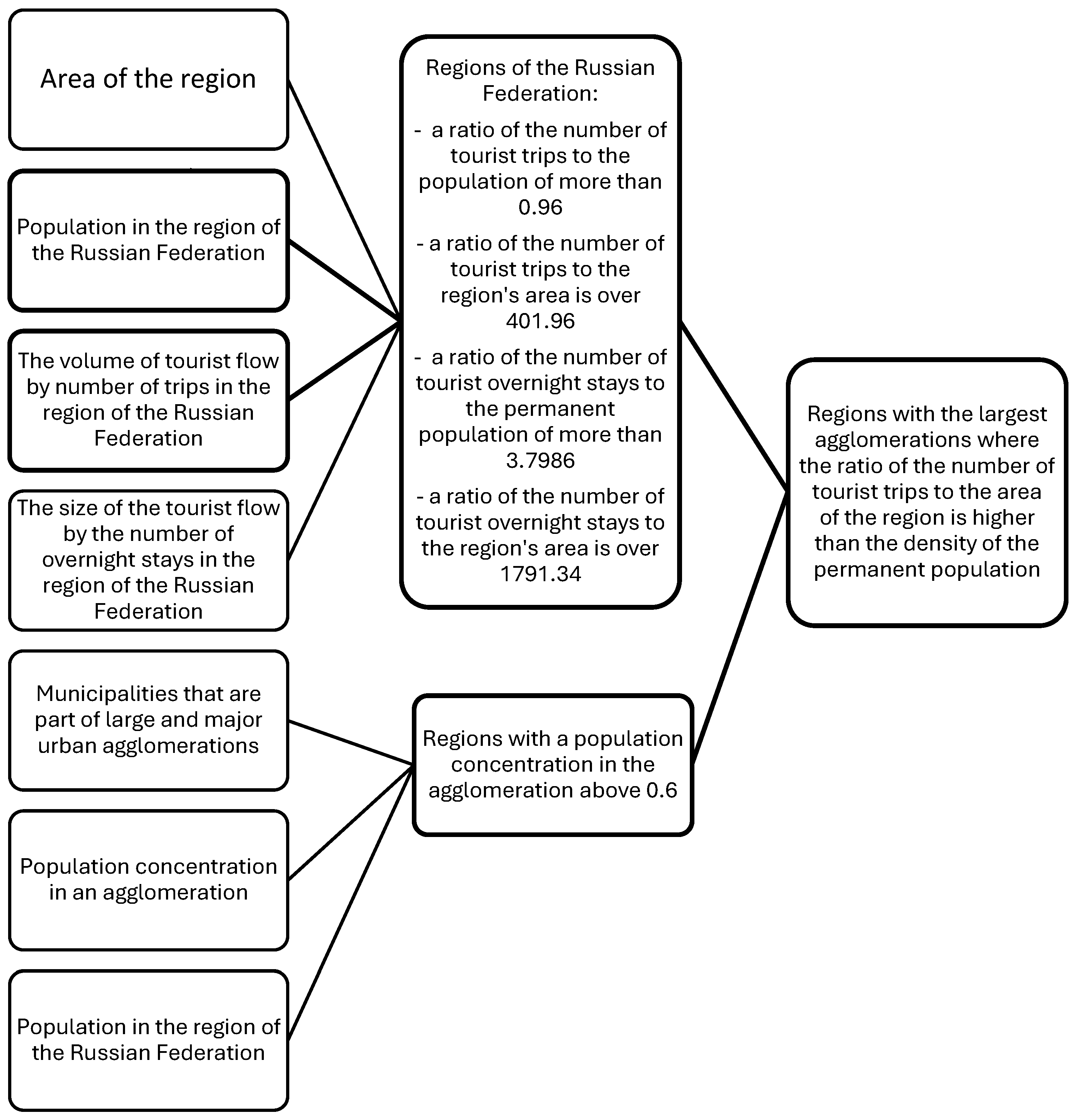
Figure 1 presents the rationale for selecting the regions with agglomerations included in the calculations.
First, the study defines the criteria for classifying a territory as an agglomeration. In Russia, an order of the Ministry of Economic Development establishes these criteria and lists the municipalities included in large urban agglomerations (with a total population of 500,000–1,000,000 people) and major urban agglomerations (with a total population exceeding 1,000,000 people). This list includes 42 agglomerations. Thus, nearly half of Russia’s constituent entities contain agglomeration areas. The absence of agglomeration-level tourist-flow data remains one of the study’s limitations.
The study assesses changes in tourist flows for Russian regions that contain agglomerations. Russian tourist-flow data are available only from 2022 onward and use two parameters: the number of tourist trips and the number of overnight stays [
40].
When assessing tourist flow, the study considers both magnitude and dynamics, as well as the ratio of tourist flow to regional population. This ratio indicates anthropogenic pressure on a constituent entity of the Russian Federation, including pressure on its transport network. Therefore, the study calculates the ratio of tourist-flow volume to population size for regions with agglomerations in 2022–2024.
After calculating the ratio of tourist trips to population, the study determined the arithmetic mean and standard deviation of this indicator. The arithmetic mean was 0.956001901, and the standard deviation was 0.876416376.
Table 1 presents the regions where the calculated value exceeded the arithmetic mean of 0.96 in all three periods or in two periods with positive dynamics: the city of Moscow together with Moscow Region, the city of Saint Petersburg together with Leningrad Region, Kaliningrad Region, Krasnodar Territory, Novosibirsk Region, Primorye Territory, the Republic of Adygea, the Republic of Buryatia, the Republic of Tatarstan, and Yaroslavl Region.
Leningrad Region recorded the highest values of this ratio (from 4.34 to 6.11), followed by Krasnodar Territory (from 3.11 to 4.03), Moscow Region (from 1.94 to 2.64), and Saint Petersburg (from 1.82 to 2.13).
The study then calculated the ratio of tourist overnight stays to the population of each Russian region. With a mean value of 3.7986146 and a standard deviation of 4.20560211, the study selected regions where the calculated value exceeded 3.7986 in all three periods or in two periods with positive dynamics (
Table 2).
The following constituent entities met this criterion: Moscow and Saint Petersburg together with Moscow Region and Leningrad Region, Kaliningrad Region, Krasnodar Territory, Stavropol Territory, Primorye Territory, and Yaroslavl Region. Krasnodar Territory had the highest values of this ratio (from 17.20 to 25.23), followed by Leningrad Region (from 17.87 to 22.69), Moscow Region (from 8.88 to 13.65), Moscow (from 6.63 to 8.46), Saint Petersburg (from 6.19 to 8.55), Stavropol Territory (from 5.83 to 6.43), and Kaliningrad Region (from 5.64 to 6.18).
The tourist-flow dynamics identify regions with high numbers of both trips and overnight stays, which reflect the duration of tourist stays. Such regions may face overtourism if further tourist-flow growth makes the negative consequences of tourism development outweigh the positive effects. Among the analyzed regions with agglomerations, this group includes the federal city of Moscow together with Moscow Region, the federal city of Saint Petersburg together with Leningrad Region, Krasnodar Territory, Kaliningrad Region, Primorye Territory, the Republic of Tatarstan, and Yaroslavl Region. These constituent entities are popular tourist destinations, and the identified agglomerations contain the highest concentration of tourism-related attractions.
The next step assesses agglomeration population size to evaluate how strongly the regional population concentrates within the agglomeration. This parameter helps assess the evenness of population distribution across the region. For this purpose, the study calculates the ratio of agglomeration population to regional population or to the population of two regions when an agglomeration spans two constituent entities of the Russian Federation for 2022–2024. A higher population concentration increases the potential negative impact of tourist growth within the agglomeration area.
The Saint Petersburg (0.88–0.89), Moscow (0.86–0.87), Novosibirsk (0.76), Samara (0.67), Omsk (0.65), Tomsk (0.63), Yaroslavl (0.62–0.63), Astrakhan (0.61–0.63), Ulyanovsk (0.61–0.62), Volgograd (0.60–0.61), Kaliningrad (0.59–0.61), and Ulan-Ude (0.59–0.60) agglomerations showed the maximum values (
Table 3). Regions containing two large agglomerations deserve separate attention: the Republic of Tatarstan, Krasnodar Territory, Stavropol Territory, and Kemerovo Region. However, only in the Republic of Tatarstan does the sum of the calculated ratios approach 0.6. In the other regions, the population concentration within the agglomerations is substantially lower.
Historical settlement patterns explain the population concentrations in regions with unfavorable climatic conditions and a high share of industrial production, such as the Novosibirsk and Omsk agglomerations. The high proportion of students in Tomsk explains the population concentration in Tomsk agglomeration.
The analysis must also consider the spatial distribution of tourism-related attractions across each region. In most of the agglomerations under consideration, historical and cultural attractions concentrate in the agglomeration core city (Astrakhan, Volgograd, Kaliningrad, Samara, Ulyanovsk, and Yaroslavl) and/or the immediately adjacent suburban zone; the Moscow and Saint Petersburg agglomerations show this pattern most clearly. Where natural attractions or resources are numerous (seacoasts, major rivers and lakes, mineral water deposits, mountainous areas, etc.), tourist flows distribute more evenly. This pattern characterizes Krasnodar Territory, Stavropol Territory, and the Ulan-Ude agglomeration.
To assess the spatial concentration of residents and tourists in regions with the largest urban agglomerations, the study calculates the ratio of tourist flow to regional area separately for tourist trips and overnight stays, as well as regional population density. The average annual ratio of tourist trips to the regional area was 401.9631589 trips per square kilometer, with a standard deviation of 1634.692413. These values indicate substantial regional variation.
Table 4 presents the regions where this indicator exceeded 401.96.
Moscow and Saint Petersburg are both independent constituent entities of the Russian Federation and cores of the largest agglomerations; their territorial areas are small relative to their tourist flows. Therefore, their values differ substantially from those of other regions.
The study performed similar calculations for the ratio of tourist overnight stays to the regional area. The average annual value of this indicator was 1791.339288 overnight stays per square kilometer, while the standard deviation was 7396.501879. These values reflect the substantial difference between the two capitals and other Russian regions in tourist flow and territorial area (
Table 5).
Apart from Moscow and Saint Petersburg, only the Krasnodar Territory in 2022 (1900.79) and the Moscow Region in 2024 (2666.21) exceeded the average value.
The study assesses anthropogenic pressure on a region more accurately by comparing the ratio of tourist trips to regional area, used as a proxy for tourist density, with average permanent population density.
Table 6 presents the regions where the annual average number of tourist trips per square kilometer exceeded population density in all three periods.
Table 6 shows that the Leningrad Region experienced the greatest tourist pressure (4.34–6.12 times higher than population density), followed by Krasnodar Territory (3.11–4.03 times), Moscow Region (1.94–2.64 times), and Saint Petersburg (1.82–2.13 times).
A comparison of
Table 1,
Table 2,
Table 3,
Table 4,
Table 5 and
Table 6 identifies the regions where tourism development may become problematic unless public authorities address infrastructure issues. These regions include Moscow and Moscow Region, Saint Petersburg and Leningrad Region, Kaliningrad Region, and Yaroslavl Region. They contain agglomerations with a high population concentration and substantial tourist flows. Several other regions currently face less acute pressure from tourist-flow growth but may experience such problems in the future: Krasnodar Territory, Primorye Territory, and the Republic of Tatarstan.
The Russian national SDG indicator list provides only limited transport-related indicators relevant to this study:
Share of the public transport fleet in agglomerations and cities whose service life does not exceed the regulatory standard, %—an indicator of the national project “Infrastructure for Life”. This indicator describes the share of vehicles (buses, trolleybuses, trams, and electric buses) whose service life does not exceed the regulatory standard (10 years for buses, 15 years for trolleybuses, and 25 years for trams) in the total number of vehicles operating on regular passenger routes within agglomerations and cities with a population of at least 50,000. The Ministry of Transport of the Russian Federation has provided the data since 2024, and the data are available only at the federal level. At the time of writing, data are available for 2024 (59.6%) and 2025 (76.8%). In its current form, the indicator has limited analytical value because it does not provide data for individual agglomerations;
Share of the road network of the largest urban agglomerations that meet regulatory standards, %—an indicator of the national project “Infrastructure for Life”. Rosavtodor has provided data since 2025 at the federal and regional levels. Because the data are available only for 2025, this study cannot use the indicator in calculations. Moreover, the data are available only for constituent entities of the Russian Federation (regions), rather than for individual major agglomerations.
Large populations intensify the use of regional transport infrastructure. Active growth in tourist arrivals may therefore dissatisfy tourists, who spend more time in congestion and face poor access to tourist sites, and local residents, who face congested roads and transport facilities during the peak tourism season. The study, therefore, assesses the relationship between transport infrastructure indicators in agglomeration regions and tourist-flow magnitude to evaluate the potential for redistributing tourist arrivals over time and space.
The following national SDG indicators capture transport infrastructure for tourism in agglomerations:
- -
the share of gross value added by the tourism industry in the gross regional product of a constituent entity of the Russian Federation, from SDG 8;
- -
passenger turnover of public buses, density of public railway tracks per 10,000 square kilometers of territory, density of paved public roads per 1000 square kilometers of territory, and the share of regional and intermunicipal roads meeting regulatory standards, from SDG 9;
- -
the share of operational buses equipped for transporting persons with reduced mobility in the total number of operational buses, from SDG 11.
This study cannot use several national SDG indicators for the following reasons: the indicator “share of the road network of urban agglomerations in standard condition” has been available only since 2025; the national statistical system calculates the indicators “share of public transport fleets in agglomerations and cities with an operational life not exceeding the standard period” and “passenger turnover by type of public transport” only at the national level; and Moscow and Saint Petersburg lack the indicator “total length of local roads” because both are federal cities.
To improve the study’s objectivity, the analysis, therefore, includes additional transport system development indicators from official statistics.
This study deliberately operationalizes tourism transport infrastructure sustainability in a narrow sense: relative adequacy, quality, accessibility, and safety of transport infrastructure under tourist-flow pressure. The proposed indicators do not capture the full environmental and socio-economic meaning of sustainability. The index excludes emissions, congestion intensity, seasonal peaks, private/public modal split, energy use, transport affordability, land take, and resident attitudes because comparable official regional statistics for 2022–2024 are unavailable. Accordingly, readers should interpret the proposed index as a comparative infrastructure capacity and quality index, not as a comprehensive sustainability index.
The study selects SDG-related indicators according to the logic of applied SDG-oriented tourism assessment, which evaluates tourism through specific measurable sustainability dimensions [
41]. The analysis retained indicators that met four criteria: direct relevance to tourist pressure, transport supply, accessibility, or safety; comparability across the selected regions; availability for 2022–2024 or the latest comparable year; and reproducibility from official statistics. The study discusses the indicators available only at the federal level or only from 2025 onward conceptually but excludes them from retrospective calculations.
The empirical analysis, therefore, uses the region, or an aggregated pair of regions, containing the selected agglomeration as the territorial unit rather than the agglomeration in a strict administrative-statistical sense. For Moscow and Saint Petersburg, the study aggregates city-level and surrounding-region data because the functional agglomerations cross administrative borders and both the core city and the surrounding commuting zone generate transport demand. This aggregation is an approximation and creates a risk of ecological inference: tourist trips recorded for a region may occur partly outside the agglomeration, and regional transport indicators may include mobility unrelated to tourism. For this reason, all results represent regional proxy evidence for agglomeration-related transport pressure.
The study selected the final empirical sample in two stages. First, it screened all regions containing officially identified agglomerations by tourist trips per resident, overnight stays per resident, and agglomeration population concentration. The tourist trip and overnight stay thresholds rely on the sample means calculated for regions with agglomerations, while the population concentration threshold of approximately 0.6 serves as a diagnostic indicator of strong agglomeration dominance within the region. Second, the regression and index stages focus on Moscow, Moscow Region, Saint Petersburg, Leningrad Region, and Kaliningrad Region because these cases combine high tourist pressure, high agglomeration concentration, and comparable transport statistics. The study retains Yaroslavl Region and other candidates identified during screening as context cases but excludes them from the final regression and index calculations because the final stage compares the two largest cross-regional agglomerations with a compact single-region agglomeration case. Coastal, resort, and multi-agglomeration regions, such as Krasnodar Territory and the Republic of Tatarstan, require separate spatial attribution procedures.
To identify exploratory associations between the regional tourist-flow scale and transport infrastructure indicators, the authors formulated the following hypotheses.
Hypothesis 1. Regions containing large agglomerations and high tourist-flow intensity show elevated proxy pressure on transport infrastructure.
Commuting by permanent residents strongly shapes transport flows in agglomeration areas. On weekdays, many work- and study-related trips occur during the morning and evening peak hours. In the morning, flows mainly move from the near-peripheral zone toward the agglomeration core. In the evening, they move from the core back to the residential districts. On weekends, congestion often appears in the opposite direction: residents of the agglomeration core city travel for recreation on Friday evening and Saturday and return on Sunday. Thus, transport routes in agglomeration areas face constant multidirectional pressure.
Three groups of indicators characterize agglomeration transport infrastructure: passenger-flow magnitude and dynamics, including organized and independent tourism; road-network density and extent, which affect the accessibility of tourism-related attractions; and the number and types of vehicles, which determine the availability of different transport modes. Accordingly, the study formulates three additional hypotheses.
Hypothesis 2. Higher tourist-flow volumes are statistically associated with higher passenger-flow indicators in regions containing large agglomerations.
Hypothesis 3. Regions with higher tourist-flow volumes have larger public transport vehicle fleets, especially in absolute bus-fleet indicators.
Hypothesis 4. Selected road network indicators co-vary with tourist-flow volumes, but this relationship should be weaker and less stable than the relationships with bus and rail indicators.
Tourists and excursionists need a developed network of transport routes, including roads, railways, waterways, and, in some cases, air corridors for helicopter or small-aircraft transfers, as well as vehicles and roadside infrastructure such as fuel stations and parking areas. Independent tourists who use public transport need convenient routes, stops located near tourism-related sites, suitable timetables, and comfortable vehicles. Independent tourists who use private or rented vehicles need available parking near tourism-related attractions, high-quality road surfaces, roadside infrastructure such as fuel stations, repair workshops, motels, and campsites, stable mobile communication and internet access for navigation, and clear information signage.
3. Results
To test the study hypotheses, the study conducts an exploratory correlation and regression analysis of the relationship between tourist trips and transport infrastructure indicators across five regions: Moscow, Moscow Region, Saint Petersburg, Leningrad Region, and Kaliningrad Region, as well as three aggregated agglomeration cases: Moscow, Saint Petersburg, and Kaliningrad. The calculations use official Russian statistical data.
Supplementary Materials presents the data and calculation results. The analysis includes indicators from the “Passengers”, “Roads”, and “Transport” sections of the original dataset. The observation period spans 2022–2024 and produces a small panel of 15 region–year observations (5 regions × 3 years). The study tested 59 indicators from the “Passengers”, “Roads”, “Transport”, and “Sustainable Development” sections. Forty-three indicators have a complete sample; for the remaining indicators, missing values in the source data reduce the number of observations. The analysis treats blank cells, hyphens, and ellipses as missing values and retains zeros only where the statistical source indicates a true zero or where the absence of a category has substantive meaning. Because observations from the same regions recur across years and the analysis tests many indicators, reported
p-values have a descriptive function and are complemented by sensitivity checks rather than treated as stand-alone proof of robustness.
Table 7 shows the strongest positive relationships with the number of tourist trips in the full sample (
n = 15), while
Table 8 shows inverse and non-confirmatory relationships.
The results show that the number of tourist trips has the closest association with indicators from the “Transport” section, especially the absolute number of buses operating on regular routes. The indicator “number of in-service buses on regular passenger-transport routes” produced the highest correlation coefficient: r = 0.905, R
2 = 0.819,
p < 0.001. The corresponding regression Equation (1) is:
An increase of 1 million tourist trips is statistically associated with approximately 496 more in-service buses. This coefficient does not indicate a dynamic response of the bus fleet to tourism growth; most variation is cross-regional and reflects the scale of regional transport systems. In other words, the bus component of the transport system co-varies most strongly with differences in tourist flows across regions and years. The indicator “passenger buses on regular routes, total” produced a virtually identical result, which indicates strong internal consistency within the transport data block.
The total number of registered buses also shows a strong relationship with tourist trips: r = 0.893, R
2 = 0.797,
p < 0.001. In this case, the regression Equation (2) is:
Accordingly, regions with 1 million more tourist trips have, on average, approximately 2287 more registered buses. This result indicates that regions with larger tourism markets also have larger bus fleets. That is, tourist-flow differences co-vary with the scale of the operating transport system.
In the “Passengers” section, rail and bus transport indicators show the strongest positive associations with tourist trips. For suburban rail passenger departures, the analysis gives r = 0.839, R
2 = 0.704,
p < 0.001, with the following regression Equation (3):
This result implies that regions with 1 million more tourist trips have approximately 22.9 thousand more suburban rail passenger departures. Passenger departures by public railway transport have coefficients of similar magnitude: r = 0.833, R2 = 0.694, p < 0.001. These results indicate a close statistical link between rail mobility, especially in the suburban segment, and tourism activity.
Bus passenger transportation produces a relationship of comparable strength. For “passenger transportation by buses”, the correlation coefficient equals r = 0.833, the coefficient of determination equals R
2 = 0.694, and
p < 0.001. The regression Equation (4) is:
Thus, an increase in tourist flow of 1 million trips is statistically associated with approximately 49.1 thousand more bus passenger trips. The relationship also remains strong for “passenger turnover of public buses”: r = 0.804, R2 = 0.646, p < 0.001. This suggests that tourist-flow scale co-varies not only with the number of available transport units but also with the intensity of overall passenger transport network use. However, the available statistics do not separate tourists from resident passengers.
The “Roads” block yields more moderate and less robust relationships. The strongest statistically significant full-sample road indicator is “regional and intermunicipal roads with hard surface”: r = 0.565, R
2 = 0.319,
p = 0.028. For “roads with improved coating”, the recalculated association is weaker and not significant at the 5% level: r = 0.495, R
2 = 0.245,
p = 0.0605. Therefore, road indicators should be interpreted as contextual characteristics of intermunicipal accessibility rather than robust predictors of tourist-flow dynamics (Equation (5)).
Accordingly, in the pooled sample, regions with 1 million more tourist trips have approximately 363 km more regional and intermunicipal roads with hard surfaces. The total length of roads at this level shows a similar result: r = 0.557, R2 = 0.310, p = 0.031. Substantively, the relationship between tourist flow and road indicators is weaker than the relationships with bus and rail indicators and depends strongly on the specific road variable and sample composition.
Local road indicators produce even stronger coefficients in the additional analysis: r = 0.958 for total length, r = 0.945 for hard-surfaced roads, and r = 0.902 for roads with improved surfaces. However, these results rely on a reduced sample (n = 9) because the original table lacks some local road indicators for Moscow and Saint Petersburg. Therefore, these relationships provide additional evidence but cannot support the main conclusion of the study.
The analysis also identifies negative correlations in the “Passengers” block. The indicator “number of persons injured in road traffic accidents per 100,000 population” shows the strongest inverse relationship: r = −0.860, R
2 = 0.739,
p < 0.001. In this case, the regression Equation (6) is:
This means that an increase in tourist flow of 1 million trips is statistically associated with approximately 4.1 fewer people injured in road traffic accidents per 100,000 population. The indicator “number of road traffic accidents with casualties per 100,000 population” shows a similar pattern (r = −0.817, R2 = 0.667, p < 0.001). However, these indicators should not be interpreted as a direct effect of tourism development. They are more likely to reflect differences in the overall level of transport organization, road safety, and institutional quality across regions. Therefore, the study treats them as accompanying contextual characteristics rather than tourism infrastructure indicators properly.
To compare transport-infrastructure sustainability under increasing tourist flows, the study calculates four composite indices for the Moscow, Saint Petersburg, and Kaliningrad agglomerations. The calculations use the indicators already applied in the article: the number of tourist trips, the number of overnight stays, population size, the number of buses in operation, suburban railway passenger departures, the length of paved roads, the operational length of railway lines, the share of paved roads, the share of buses equipped to transport persons with reduced mobility, and the number of persons injured in road traffic accidents per 100,000 population. The study normalizes all indices using the min–max method within the set of the three agglomerations. Therefore, their values are comparative rather than normative.
The study normalizes the indicators according to the following Formula (7):
The tourist load index equals the meaning of the normalized indicators of tourist trips and overnight stays per resident of the territory (Formula (8)):
The transport supply index equals the meaning of the normalized indicators of bus availability, suburban rail services, paved roads, and railway lines per unit of tourist flow (Formula (9)):
The sustainability quality index equals the mean of the normalized indicators of road network quality, transport accessibility for persons with reduced mobility, and the inverse accident rate indicator (Formula (10)):
The final sustainability index averages the transport supply index, the sustainability quality index, and the inverse value of the tourist load index (Formula (11)):
The integral index formulas use the transformation 1 − x for indicators whose increase reflects lower resilience. This transformation gives all components a common interpretation: higher values indicate a more favorable state of the transport system.
Table 9 presents the integral-index calculation results.
Table 9 shows that, in 2024, the Saint Petersburg agglomeration had the highest tourist load index (Iload = 1.000), reflecting the highest relative values of tourist trips and overnight stays per resident among the three territories under consideration. The Moscow agglomeration occupied an intermediate position (Iload = 0.674), whereas the Kaliningrad agglomeration had the minimum value (Iload = 0.000). This value does not mean that tourist pressure is absent; it only marks the lowest relative pressure level within the comparison group.
The Kaliningrad agglomeration recorded the highest transport supply index (Isupply = 0.769), followed by the Moscow agglomeration (Isupply = 0.303), while the Saint Petersburg agglomeration had the minimum value (Isupply = 0.051). This suggests that, in 2024, Kaliningrad had the highest provision of buses, suburban rail services, and transport infrastructure per unit of tourist flow, whereas Saint Petersburg faced the most pronounced deficit of infrastructural provision relative to tourist trip volume.
The Moscow agglomeration had the highest sustainability quality index (Iquality = 0.876), reflecting a more favorable combination of road network quality, transport accessibility for persons with reduced mobility, and transport safety. The Saint Petersburg agglomeration ranked second (Iquality = 0.622), while the Kaliningrad agglomeration had the minimum value (Iquality = 0.333). Consequently, Moscow’s transport environment more closely meets the criteria of qualitative resilience, whereas Kaliningrad retains weaker positions in accessibility and safety.
The final sustainability index confirms the identified differentiation. Kaliningrad has the highest value (Isust = 0.701), Moscow has an intermediate value (Isust = 0.502), and Saint Petersburg has the minimum value (Isust = 0.225). This result indicates a relative balance between tourism pressure and infrastructure supply within the selected comparison group, not that Kaliningrad has the most sustainable transport system in absolute terms. Lower relative tourist load and higher infrastructure supply per unit of tourist flow mainly drive Kaliningrad’s final score, while its quality sub-index remains the lowest among the three cases. The Moscow agglomeration demonstrates a mixed model in which better qualitative characteristics of the transport environment partly offset the high tourist load. The Saint Petersburg agglomeration is the most vulnerable in the static 2024 comparison.
To assess whether transport infrastructure development keeps pace with tourism growth, the study calculates the tourism infrastructure sustainability coefficient (TIS) for 2022–2024 (Formula (12)):
If TIS > 1, transport infrastructure development outpaces the growth in tourist trips. If TIS = 1, the dynamics are proportional. If TIS < 1, tourist-flow growth outpaces the selected transport infrastructure base.
The corrected calculations show differentiated dynamics across the three agglomerations. In the Moscow agglomeration, TIS equals 0.816, which indicates that tourist trip growth outpaced the selected infrastructure indicators. In the Saint Petersburg agglomeration, TIS equals 1.109; this value requires cautious interpretation because the number of tourist trips slightly declined over 2022–2024. In the Kaliningrad agglomeration, TIS equals 0.978, which indicates near-proportional dynamics rather than clear infrastructural lag.
The source tourist-flow values show that tourist trips increased by 27.4% in the Moscow agglomeration case, decreased by 2.1% in the Saint Petersburg agglomeration case, and increased by 8.0% in the Kaliningrad case. The revision removes the earlier growth coefficients reported for these agglomerations because the 2022 and 2024 source data did not reproduce them. Consequently, the TIS results indicate lagging infrastructure dynamics in Moscow, a formally favorable but partly denominator-driven result in Saint Petersburg, and a borderline near-proportional result in Kaliningrad.
Because the empirical panel contains only 15 observations, conventional statistical significance does not provide sufficient evidence of robustness. The study, therefore, applies three sensitivity procedures (
Table 10). First, it compares Pearson correlations with Spearman rank correlations to reduce dependence on linear scale effects. Second, it excludes each of the five regional units in turn and recalculates the Pearson correlation on the remaining 12 observations. Third, it recalculates the composite sustainability index and the TIS coefficient under alternative weighting and component exclusion assumptions. These checks validate the direction and relative stability of the findings but cannot replace a longer panel or a causal identification strategy.
The sensitivity results show that no single regional unit drives the main transport-scale relationships. The bus and rail indicators remain strongly positive under both rank transformation and leave-one-region-out recalculation. In contrast, road length and road surface indicators are less stable, which supports the cautious interpretation above: road-infrastructure variables function as contextual characteristics rather than robust predictors of tourist-flow dynamics. The inverse correlation with accident injuries also keeps the same sign, but it likely reflects differences in regional transport organization and institutional quality rather than a direct tourism effect.
For the composite index, the study compares the equal-weight specification with three alternative schemes: a supply-focused scheme (0.50 for transport supply, 0.25 for quality, and 0.25 for inverse tourist load), a quality-focused scheme (0.25, 0.50, and 0.25), and a load-focused scheme (0.25, 0.25, and 0.50).
Table 11 reports the resulting range of values. The ranking of the three agglomerations remains unchanged in all scenarios: Kaliningrad retains the highest comparative score, Moscow remains in the intermediate position, and Saint Petersburg remains the most vulnerable in the static 2024 comparison. This indicates that the static index result is not an artifact of equal weighting, although the absolute values remain relative to the selected comparison group.
For the dynamic TIS coefficient, the analysis excludes each infrastructure component in turn. The Moscow coefficient remains below one under all leave-one-component variants, which supports the conclusion that selected infrastructure growth lagged behind tourist trip growth. The Saint Petersburg coefficient remains above one in all variants, confirming a more favorable dynamic ratio during 2022–2024. Kaliningrad is the only borderline case: depending on the excluded component, TIS ranges from 0.911 to 1.007. Therefore, Kaliningrad should be interpreted as close to proportional rather than clearly lagging or clearly outpacing tourism growth.
Overall, the sensitivity analysis validates the central exploratory conclusions while clarifying their limits. The most stable findings concern the association between the tourist-flow scale and the bus/rail transport system scale. The less stable findings concern road indicators and the dynamic status of Kaliningrad, which should be treated as a near-threshold case. The results remain useful for diagnostic comparison, but readers should not interpret them as causal estimates.
To further validate the limited panel and distinguish the studied regional units by the relative pressure of tourism on passenger mobility, the study performs an additional proxy grouping. The available statistics do not distinguish tourists from resident passengers and, therefore, cannot measure the actual tourist modal split. Instead, the calculation compares the 2022–2024 average number of tourist trips with the average bus passenger transport, public rail departures, suburban rail departures, and the combined bus–public rail passenger flow.
For each regional unit, the analysis calculates four pressure ratios and then normalizes them using the min–max method. It uses the arithmetic mean of the four normalized ratios as the average normalized influence index. The weight coefficient equals each region’s share in the total sum of average normalized influence indices across the five regional units. Because the sample is small, the three groups follow a rank-based rule: the highest value indicates strong influence, ranks 2–3 indicate medium influence, and ranks 4–5 indicate low influence (
Table 12).
The grouping shows that the Leningrad Region forms a separate high-influence case. Its tourist flow is not the largest in absolute terms, but it is high relative to regional bus and rail passenger flows. Kaliningrad Region and Saint Petersburg form the medium group, where tourist trips create visible pressure on rail-related passenger flows but do not dominate total passenger mobility. Moscow and the Moscow Region fall into the low group because their regular passenger transport systems are very large compared with tourist trips. This does not mean that tourism pressure is absent; it means that tourism pressure is relatively lower when measured against aggregate passenger-flow indicators.
4. Discussion
These findings move the paper beyond a simple list of correlations and support several substantive contributions to the theory and practice of sustainable tourism development in urban agglomerations.
First, the study provides exploratory evidence of infrastructural asymmetry in the indicators associated with the tourist-flow scale. Operational buses show the strongest positive correlation (r = 0.905), but this result does not prove that buses absorb most tourist mobility. The data show that regions with larger tourist flows also have larger bus systems. Tourist-specific modal-split data would be required to determine the actual role of buses in visitor mobility.
Second, the study reveals the differentiated role of rail transport. The high correlation with suburban rail passenger departures (r = 0.839) suggests that commuter rail matters for intra-agglomeration and intermunicipal mobility, especially where tourism attractions lie outside the core city. This finding is consistent with research on rail accessibility and tourism demand, but it remains an indirect inference because the dataset does not separate residents from tourists.
Third, within the selected Russian regions and the available indicators, the results suggest that qualitative road characteristics matter more than total road length. This does not mean that road expansion is irrelevant in all contexts. Rather, in agglomerations where the basic road framework already exists, connectivity to tourist attractions, surface quality, service infrastructure, parking, and navigation may matter more than additional kilometers of roads.
Fourth, the paper contributes to the methodology for assessing tourism-related transport infrastructure under data scarcity. Its pragmatic use of national SDG-related indicators and open official statistics makes the approach replicable for other Russian regions and post-Soviet countries, provided that researchers state the unit-of-analysis limitations explicitly.
Fifth, the inverse correlations, especially the decline in accident–injury rates alongside larger tourist flows, illustrate why causal interpretation is risky. These relationships likely reflect unobserved regional characteristics such as institutional quality, road-safety culture, and the overall level of transport organization. The sensitivity analysis partly reduces this concern by showing that the main bus and rail associations remain stable under rank transformation and leave-one-region-out recalculation. However, the same checks also show that road indicators are more sample-sensitive. Future research should therefore use longer panels, fixed effects, partial correlations, or survey and mobility data. The same caution also applies to the positive correlations: regional scale, population, institutional quality, and economic development may jointly influence tourist attractiveness and transport-system capacity. Therefore, the reported correlations should be interpreted as diagnostic associations rather than evidence of direct causal mechanisms.
Hypothesis 1 receives indirect support rather than full confirmation: the available statistics do not measure actual congestion, route capacity, vehicle occupancy, or tourist modal split, but the proxy indicators point to elevated tourism-related pressure in several regions.
Hypothesis 2 receives associative support only: tourist trips correlate with bus passenger transport and suburban rail departures, but passenger-flow statistics do not distinguish tourists from residents.
Hypothesis 3 receives partial support for absolute fleet-size indicators: strong correlations with operational and registered buses reflect transport-system scale, while relative bus availability per 100,000 population is not statistically significant.
Hypothesis 4 receives limited support: road-network indicators are weaker and less robust than bus and rail indicators, and they should be treated mainly as contextual infrastructure characteristics.
Thus, the principal applied conclusion is that public authorities and transport planners should manage transport infrastructure under growing tourist flows not only by expanding networks but also by improving the adaptability of existing systems—above all, bus transport and suburban rail services—to seasonal and spatial variation in tourist demand. The association and index results support this recommendation, but it remains a policy inference rather than a directly estimated causal effect. Planners should, therefore, treat multimodal transfers and smart traffic management systems in agglomerations [
9,
30] as priority areas for further empirical testing and planning.
The interpretation of the results is also bounded by the short observation period of 2022–2024, which coincided with substantial geopolitical and transport market disruptions affecting Russian tourism flows. Compared with studies of Chinese and European agglomerations, where high-speed rail, mature multimodal systems, and tourist modal-split data are more often available, the Russian case demonstrates a data-scarce planning context in which regional proxy indicators must be used cautiously. Future research should, therefore, incorporate longer panels, tourist-specific mobility surveys, spatially disaggregated destination data, and models with regional controls or fixed effects.
5. Conclusions
Tourist-flow growth in regions has an ambivalent influence on transport infrastructure. It may increase traffic volumes, intensify peak-season congestion, reduce accessibility, and create pressure on residents. At the same time, tourism demand can justify investment in transport routes, public transport services, transfer facilities, and supporting infrastructure.
Readers should interpret the empirical results as exploratory evidence rather than causal proof. Absolute indicators of bus system scale, registered buses, suburban rail departures, bus passenger transport, and public bus turnover show the strongest associations. Sensitivity checks confirm that these bus and rail associations remain stable under Spearman rank transformation and leave-one-region-out recalculation, whereas road indicators are more sensitive to sample composition. The corrected TIS calculation changes the dynamic interpretation: transport infrastructure lagged behind tourist trip growth in Moscow (TIS = 0.816), was close to proportional in Kaliningrad (TIS = 0.978), and outpaced tourist trip dynamics in Saint Petersburg (TIS = 1.109). Leave-one-component recalculation confirms Moscow and Saint Petersburg as stable cases and Kaliningrad as a near-threshold case.
The SDG-related indicators characterize tourism sustainability only partially. Researchers and policymakers should, therefore, use the proposed index as a diagnostic tool for infrastructure adequacy and quality, not as a comprehensive sustainability ranking. Future research should add tourist-specific modal-split data, congestion indicators, emissions, seasonal peaks, affordability, land-use effects, and local community impacts. The findings are most transferable to regions where official statistics publish tourist-flow data at the regional level and where agglomeration mobility crosses administrative boundaries.