Review

Spontaneous Fruit Species—Ecological Functions, Biodiversity Conservation, and Ecosystem Services


by
Sina Cosmulescu
1,
Florin Daniel Stamin
2,* and
Andreea Melinescu
1
1
Department of Horticulture and Food Science, Faculty of Horticulture, University of Craiova, A.I. Cuza Street, No. 13, 200585 Craiova, Romania
2
Doctoral School of Plant and Animal Resources Engineering, Faculty of Horticulture, University of Craiova, A.I. Cuza Street, No. 13, 200585 Craiova, Romania
*
Author to whom correspondence should be addressed.
Sustainability 2026, 18(10), 5140; https://doi.org/10.3390/su18105140
Submission received: 9 April 2026 / Revised: 16 May 2026 / Accepted: 17 May 2026 / Published: 20 May 2026
(This article belongs to the Section Sustainable Forestry)

Abstract

Wild fruit species are key components of natural and semi-natural ecosystems, playing an important role in maintaining ecological balance and supporting biodiversity. This review aims to analyze these species from the perspective of their ecological functions, contribution to biodiversity conservation, and the ecosystem services they provide. Ecologically, wild fruit species contribute to soil stabilization, nutrient cycling, and carbon sequestration, while also serving as essential food sources and habitats for a wide range of organisms, including mammals, birds, insects, and microorganisms. Through these interactions, they support ecosystem functioning and resilience. Beyond their ecological role, these species provide significant socio-economic benefits, particularly in rural areas. They contribute to cultural ecosystem services and represent valuable resources for traditional medicine, while also offering opportunities for income generation through harvesting, processing, commercialization, and rural tourism. In the context of climate change, biodiversity loss, and increasing ecosystem degradation, wild fruit species represent multifunctional natural resources. Their conservation and sustainable use are essential for maintaining ecosystem functionality and promoting sustainable rural development.

1. Introduction

Humanity is currently facing a complex set of interdependent challenges, including food security, climate change, and biodiversity loss. These global crises are driven, in part, by major changes in land use resulting from deforestation and the intensification of agricultural practices [1], and are amplified by the increased demand for food that consumes resources, with populations increasingly concentrated in urban environments [2]. In addition, the simplification of agricultural ecosystems and the reduction in biological diversity have led to decreased resilience and the degradation of essential ecosystem functions, such as soil fertility and nutrient cycling. In this context, the valorization and reintroduction of wild fruits in the diet represents a possible solution for diversifying food resources and reducing pressure on conventional agricultural systems [3,4], although their availability is influenced by climatic factors, as phenology reflects ecosystem responses to environmental changes [5]. These natural resources offer not only valuable nutritional alternatives [6,7] but also opportunities to develop more sustainable and locally adapted food systems. However, information on these edible products remains limited and fragmented in the specialized literature, making it difficult to integrate them into modern agricultural policies and practices [8]. According to Oncini et al. [2], fruit trees and shrubs play a key role in regulating ecosystems through their complex interactions with other plants and soil biodiversity, contributing to the provision of important ecological services. They can also provide spaces of conviviality, offering habitat and cultural value for both humans and animals. Compared with conventional agricultural systems that lack trees, food from forest ecosystems offers significant ecological, cultural, and religious advantages [9]. From an ecological perspective, wild fruit-producing tree and shrub species contribute to the restoration of degraded lands and the maintenance of biodiversity, thereby boosting ecosystem productivity. At the same time, the increased abundance of these species provides food sources for wildlife, such as birds and some mammals, which act as seed dispersers and contribute to the regeneration of indigenous species [10]. In addition, wild fruits are frequently used in traditional medicine to treat various conditions, with some species of the spontaneous flora producing edible fruits that have demonstrated medicinal properties. The conservation of these plants can contribute to diversifying the human diet and ensuring access to natural resources that are beneficial to health [11], in the context of a global demand for natural medicines that is continuously increasing [12]. Thus, wild fruits are of particular interest as food products with important therapeutic values [13].
In this context, the present review defines “spontaneous fruit species” as naturally occurring wild or naturalized plant species that produce edible or otherwise traditionally utilized fruits and that establish, regenerate, and persist in natural or semi-natural ecosystems without deliberate cultivation or direct human management. The term includes woody species (trees and shrubs) as well as perennial non-woody climbing or herbaceous species. Consequently, the paper aims to synthesize the existing information from the specialized literature on the importance of these species for the functioning of ecosystems, the conservation of biodiversity and the provision of ecosystem services, while highlighting their role in scientific research and in the development of local communities.

2. Materials and Methods

This review was conducted using a structured, integrative approach to synthesize current knowledge on the ecological functions, biodiversity conservation roles, and ecosystem services provided by wild fruit species. The analysis primarily focuses on species occurring in temperate regions, particularly in Europe, which represents the main biogeographical scope of the study. Tropical and subtropical species were not systematically included; however, they are occasionally referenced for comparative purposes where relevant to the discussion. Scientific literature was collected from major databases, including Web of Science, Scopus, and Google Scholar, using relevant keyword combinations such as wild fruit species, ecosystem services, biodiversity conservation, and rural development. Only peer-reviewed articles published in English were considered. Additional sources were identified through cross-referencing to ensure comprehensive coverage of the topic. The selected studies were screened and analyzed thematically, focusing on key aspects such as ecological functions (soil conservation, nutrient cycling, carbon sequestration), contributions to biodiversity (interactions with mammals, birds, insects, and microorganisms), and socio-economic values (traditional uses, rural development, and ecosystem services). The synthesized information was organized into tables and conceptual figures to facilitate comparison and highlight major patterns identified in the literature.

3. Results and Discussion

3.1. Ecological Functions of Spontaneous Fruit Species

Given the broad diversity of fruit-bearing species occurring in spontaneous flora, a selection of representative species included in this review is presented in Table 1. The table summarizes their geographic distribution, principal traditional uses, ecological functions, and the existence of cultivated forms, providing a clearer conceptual and operational delimitation of the spontaneous fruit species analyzed in the present study [14].

3.1.1. The Role of Fruit Species from Spontaneous Flora in Soil Conservation

Fruit species from the spontaneous flora play a key role in soil stabilization and in preventing erosion processes through their well-developed root systems. Roots of trees and shrubs help maintain soil structure, preserve fertility, and reduce the risk of landslides or degradation of affected surfaces [15]. Other important roles of fruit species and their associated vegetation in soil conservation include improving soil structure and increasing soil organic carbon stocks, thereby enhancing soil stability while simultaneously reducing runoff and sediment losses. These species also contribute to intercepting rainfall impact and decreasing surface runoff by up to 70% [16]. In this context, approximately one-fifth of the world’s land surface is at risk of shallow landslides [17], and intensive agricultural practices are identified as major factors in soil degradation [18]. Recent studies highlight that vegetation contributes significantly to soil stabilization on slopes through complementary mechanisms, such as intercepting precipitation, increasing soil cohesion through root systems, and reducing erosion; the role of these processes depends on vegetation type and root morphological characteristics [19]. The integration of horti-silvicultural systems, combining tree species with fruit crops, together with in situ moisture conservation practices, can lead to significant increases in productivity, soil fertility, and carbon sequestration capacity, thereby contributing to the restoration of degraded lands and improving ecosystem sustainability [20]. The mechanisms by which fruit species contribute to soil conservation, as well as the main results reported in the specialized literature, are summarized in Table 2. The root systems of trees and shrubs form a complex network that extends both horizontally and vertically in the soil, anchoring soil particles and increasing land stability, especially on slopes. Studies carried out on the Loess Plateau in China highlight that shrub species, such as Hippophae rhamnoides, have a superior soil stabilization capacity due to their complex and extensive root systems, which increase soil cohesion and reduce erosion, making these species highly suitable for soil and water conservation practices [21]. Similarly, studies conducted on forest road slopes demonstrated that woody species with dense and deep root systems, particularly Crataegus monogyna, significantly reduce surface runoff and soil erosion, confirming the important role of root abundance and root density in slope stabilization and sustainable land management. Species with more developed root systems showed lower soil loss and improved erosion control efficiency, highlighting their value as nature-based solutions for degraded or erosion-prone areas [22].
In addition, direct exposure of the soil to intense rainfall can cause erosion processes through the impact of raindrops, formation of surface runoff, and increased water pressure in the soil, favoring land instability, while vegetation, by intercepting precipitation at the canopy level, reduces the kinetic energy of the raindrops and diminishes the effects of erosion [23,24,25]. Regarding soil fertility, fruit species can play a significant role in improving its chemical and biological properties. For example, a study carried out in a horticultural system with Bletilla striata highlighted that the presence of fruit species such as peach (Prunus persica), pear (Pyrus sorotina), and apple (Malus pumila) determines the increase in the diversity of beneficial microorganisms (bacteria and fungi), as well as the content of essential nutrients, such as phosphorus and potassium, while reducing the concentration of ammonium and soil pH [26].

3.1.2. The Role of Fruit Species from Spontaneous Flora in the Nutrient Cycle

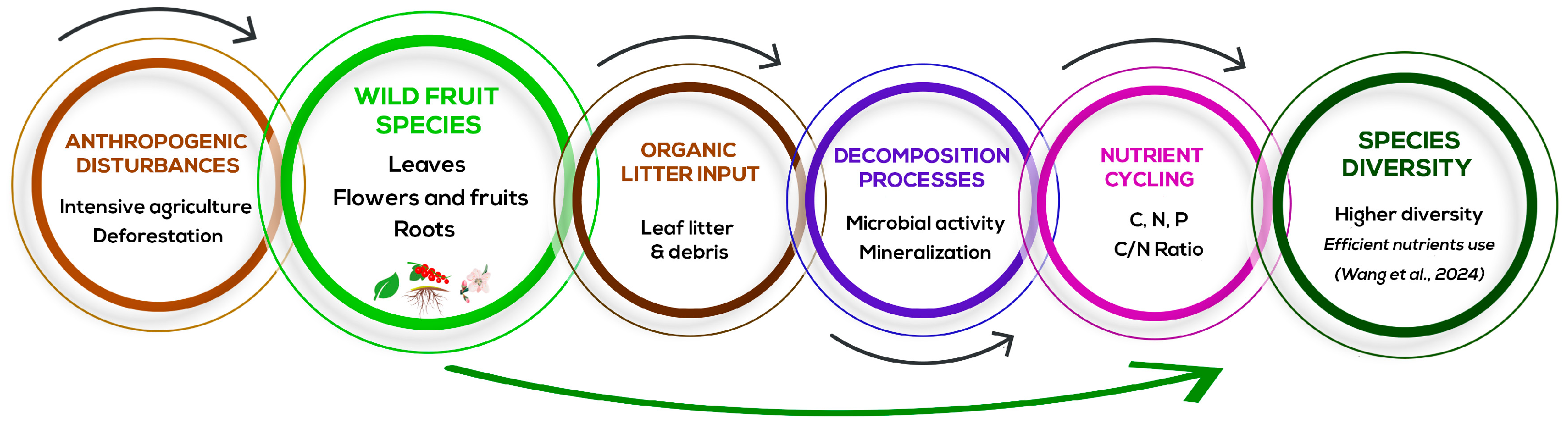
Fruit species from the spontaneous flora play an important role in the nutrient cycle by continually supplying organic matter to the ecosystem. Leaves, flowers, and fruits from these species serve as nutritional resources for various organisms and, through decomposition, reintroduce nutrients into the soil, maintaining its fertility [27]. The main processes and their effects on nutrient cycling (Table 3), together with their functional relationships (Figure 1), illustrate these interactions.
Also, the diversity of tree species directly influences ecosystem functioning, and its reduction is frequently associated with reduced nutrient cycling rates and productivity. Through its effects on soil decomposition processes and microbial communities, plant diversity helps optimize resource use and increase nutrient absorption efficiency [1]. Leaf decomposition is a fundamental process in the circulation of carbon and nutrients in the biosphere [28,29,30]. In this regard, assessing soil organic matter distribution, microbial activity, and biodegradation capacity is necessary to understand how fruit species influence these processes [31]. The experimental results highlight functional differences between fruit and herbaceous species. In a study conducted in China, it was observed that the leaves of fruit trees have a higher carbon-to-nitrogen ratio than those of herbaceous species. This characteristic is correlated with a lower growth rate but also with better adaptation to stressful conditions, as evidenced by increased leaf carbon content [32]. Within agroforestry systems, the presence of fruit species is associated with improved soil properties. For example, in areas where Malus domestica is present, an increase in organic matter content and in carbon and nitrogen concentrations has been observed. At the same time, higher values of soil basal respiration indicate an intensified microbial activity and a greater potential for mineralization of organic matter [31]. Carranca et al. [33] emphasized that ecosystems containing fruit trees contribute substantially to nutrient cycling, as the perennial woody structure of fruit species, together with their root distribution patterns, enhances nutrient recycling efficiency. In addition, plant residues represent important nutrient reservoirs that gradually release mineral elements back into the soil through decomposition processes. Consequently, fruit species from the spontaneous flora play an important role in maintaining and regulating nutrient cycles by supplying organic matter, influencing decomposition dynamics, and stimulating microbial activity, thereby supporting soil fertility and overall ecosystem functioning.

3.1.3. The Role of Fruit Species from Spontaneous Flora in Ecosystem Stability and Carbon Sequestration

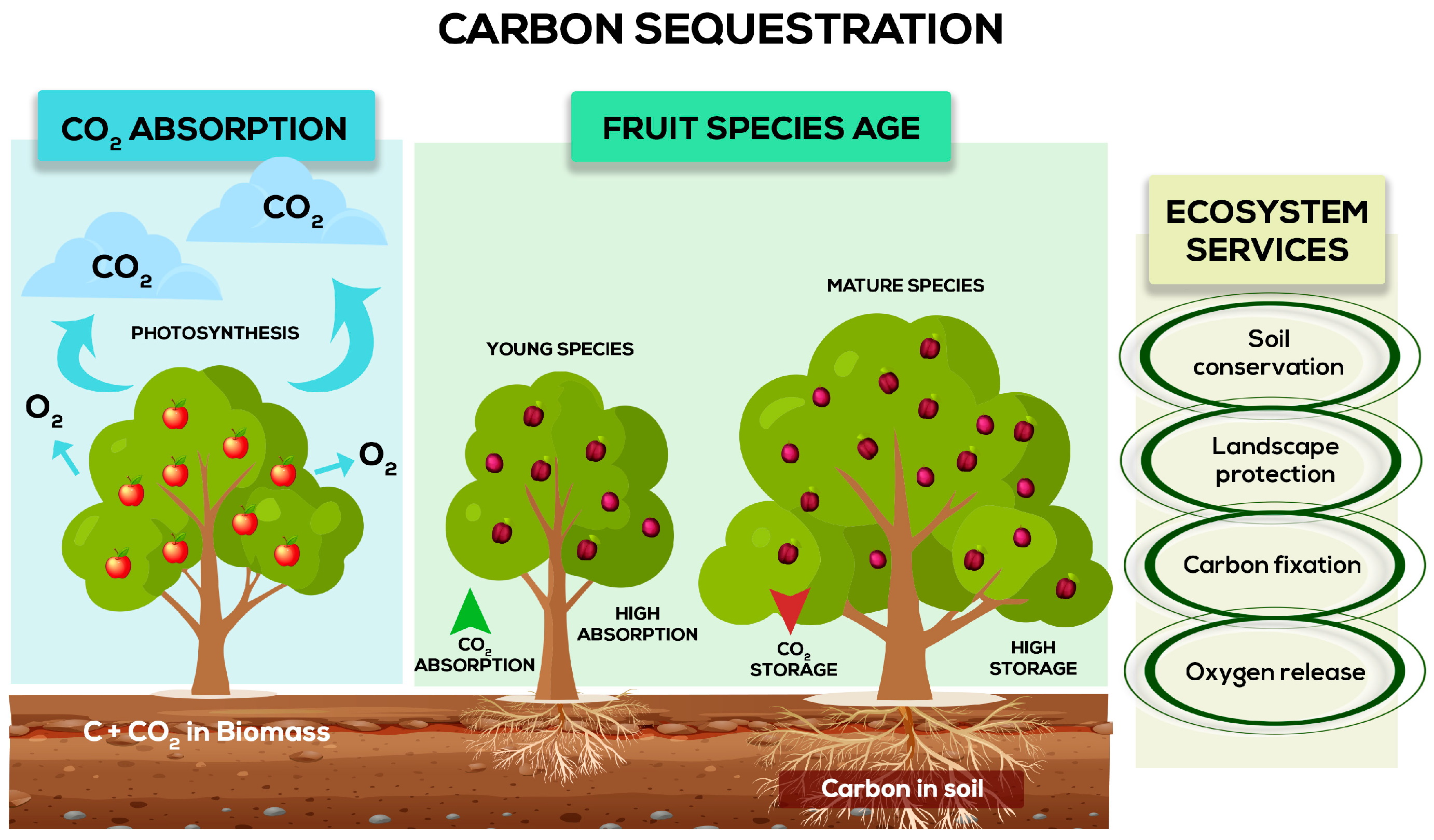
Fruit species from spontaneous flora play an important role in carbon sequestration and maintaining ecosystem stability, while also being a valuable resource for sustainable environmental management. In this framework, the modification of most ecosystems to meet human needs for food, fiber, or other resources has led to functional imbalances and biodiversity loss. However, wild plants and animals remain an essential component of the global diet, widely used by many communities, although their availability is declining due to pressures on natural habitats [34]. In this context, the promotion and domestication of wild fruit species contribute to in situ conservation and maintenance of ecosystem functionality [8]. Species considered “wild” are those that spontaneously grow in self-sustaining populations, outside of cultivated systems, occupying habitats such as field edges, forests, grasslands, or wetlands, independent of direct human intervention [35]. The main mechanisms by which spontaneous fruit species contribute to ecosystem stability and carbon sequestration are summarized in Table 4 and Figure 2.
These often-underutilized plant resources have considerable potential for integration into afforestation and reforestation programs, which have traditionally mainly targeted forest species with timber value. Wild food plants are an essential resource for food security and community resilience, but their availability is declining due to land-use changes, anthropogenic pressures, and inadequate conservation and sustainable harvesting policies [35]. The integration of spontaneous fruit species into ecosystems helps sustain biodiversity by providing trophic resources for a wide range of organisms, thereby maintaining trophic relationships and ecological stability [8].
In parallel, the role of these species in the context of climate change is particularly important. Increasing carbon dioxide (CO2) emissions and intensifying global warming, driven by anthropogenic activities, highlight the need for nature-based solutions. Carbon sequestration, defined as the process of capturing and storing CO2 from the atmosphere, is an essential mechanism for climate change mitigation, and fruit species contribute significantly to this process, while supporting food security, especially within agroforestry systems [36]. For example, studies show that fruit species have significant potential for carbon sequestration. Mango trees have much higher carbon stocks (≈74.6 t C/ha) than citrus fruits (≈13.5 t C/ha), and management practices such as organic fertilization and intercropping systems significantly influence carbon accumulation in biomass [37].
In addition, recent research shows that certain fruit species can achieve very high values of carbon stocks (up to about 189.9 Mg C ha−1 in agroforestry systems) [40], and temperate agroforestry systems have a variable but significant potential for carbon sequestration (0.4–2.5 t CO2 equivalent ha−1 year−1), being influenced by species, local conditions and management practices, and their effective integration depends on both environmental performance and farmer acceptance [38].
Increasing tree cover in agricultural systems has significant potential for carbon sequestration, with estimates indicating that a 10% increase could capture more than 18 PgC globally, highlighting the role of agroforestry systems in mitigating climate change [39]. The integration of fruit species into agroforestry systems is an effective multifunctional strategy for climate change mitigation and improved ecosystem sustainability, contributing to increased carbon sequestration, improved soil fertility (including nitrogen increases of 15–20%), and biodiversity conservation, while diversifying incomes in rural areas [41]. In a study conducted by Ferreiro-Domínguez et al. [42] on a silvopastoral system with wild cherry (Prunus avium L.), such orchard-based ecosystems were shown to contribute significantly to carbon sequestration through the accumulation of soil organic carbon both in biomass and in soil fractions. Within this system, carbon sequestration was strongly associated with root biomass, litter inputs, soil aggregation, and the physicochemical characteristics of the soil. The highest carbon storage values were recorded in the upper soil layers, where greater inputs of root biomass and organic matter promoted carbon accumulation, particularly within soil macroaggregates. Furthermore, root systems play an essential role in enhancing soil carbon stabilization by increasing soil porosity, promoting biopore formation, and facilitating the incorporation of organic matter into deeper soil layers. Therefore, the valorization of spontaneous fruit species in agroecological and agroforestry systems is an effective strategy for increasing carbon sequestration capacity, with simultaneous benefits on soil fertility, biodiversity, and sustainability of agricultural systems [43]. Overall, fruit species in spontaneous flora simultaneously contribute to regulating the carbon cycle and increasing ecosystem stability through complex interactions among biogeochemical processes, vegetation structure, and biodiversity support. Integrating them into green management strategies can be an effective way to mitigate climate change and strengthen the resilience of natural ecosystems.

3.2. The Contribution of Spontaneous Fruit Species to Biodiversity Conservation

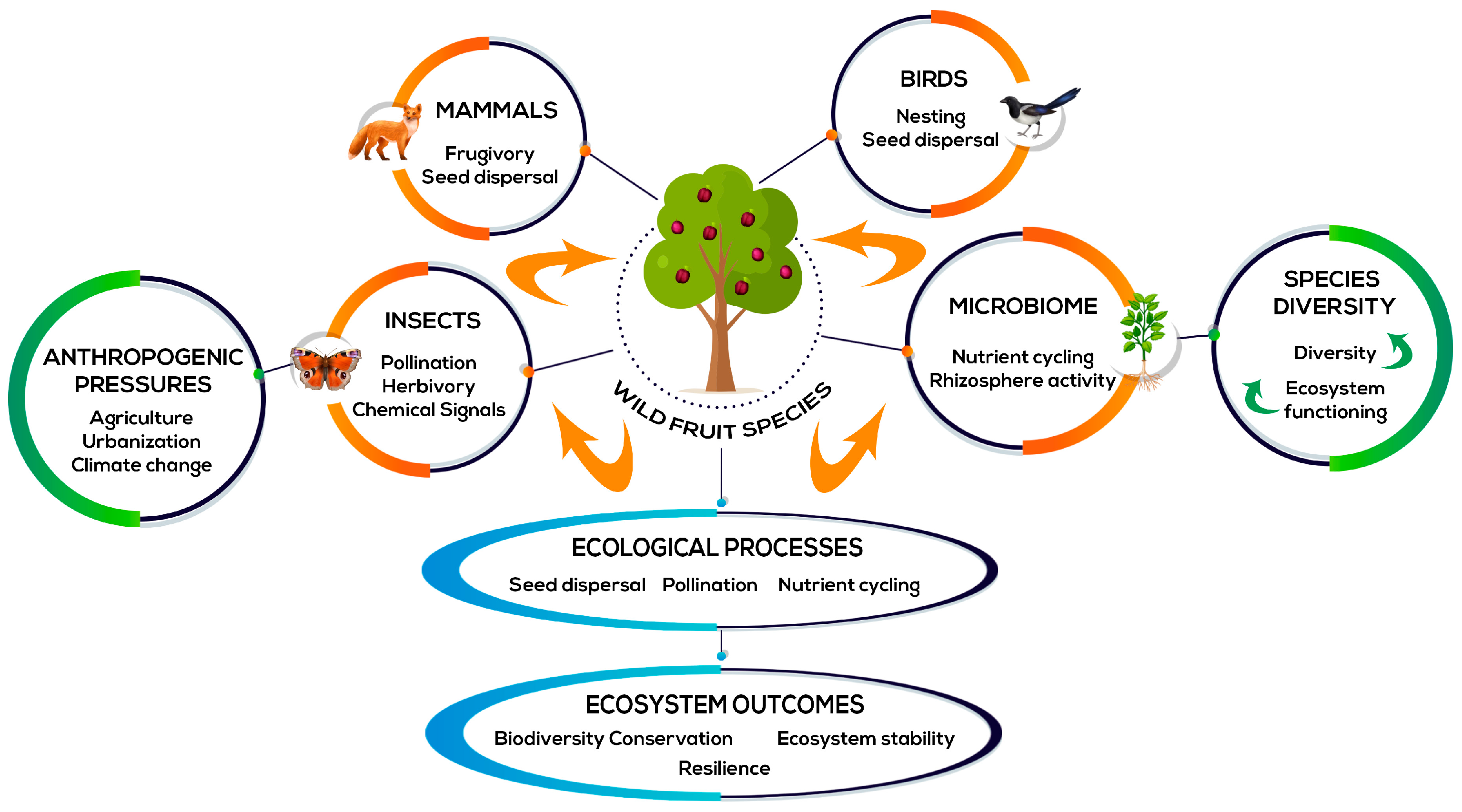
Fruit species from the spontaneous flora contribute significantly to biodiversity conservation, providing habitat and trophic resources for a wide range of organisms, including pollinators, birds, small mammals, and microorganisms, thereby supporting the functioning and resilience of ecosystems [44]. A synthesis of the main interactions between wild fruit species and different biological groups is presented in Table 5. Figure 3 illustrates the conceptual framework of interactions among fruit species in the spontaneous flora and the main biological groups, highlighting their roles in supporting ecosystem processes and biodiversity conservation.

3.2.1. The Role of Fruit Species in Maintaining the Diversity of Mammals

The diversity of mammals is closely related to the structural complexity of habitats, according to the habitat heterogeneity hypothesis, which suggests that more complex ecosystems provide a greater variety of microhabitats and microclimates, favoring the coexistence of species [62]. In this sense, habitat heterogeneity supports taxonomic, functional, and phylogenetic diversity by creating varied ecological niches and favorable conditions for different groups of organisms [63]. In this context, fruit species in the spontaneous flora contribute significantly to increased faunal diversity by providing varied trophic resources and refuge spaces, and fruit species support complex trophic interactions, providing direct and indirect resources that influence the diets of mammals and seed-dispersal processes [45]. By eating fruits and seeds, mammals actively participate in plant dispersal, influencing plant regeneration, genetic structure, and spatial distribution, facilitating long-distance transport and maintaining gene flow in fragmented landscapes [46]. Thus, the relationship between mammals and fruit species is mutually beneficial, contributing to both plant biodiversity and ecosystem stability. Recent studies highlight the diversity of trophic interactions associated with these species. For example, in the forests of Nepal, some species of the Cervidae family (Axis axis, Muntiacus vaginalis, Rusa unicolor, Axis porcinus) consume not only fruits and seeds, but also insects associated with them, demonstrating trophic flexibility [45]. Similarly, Moore et al. [64] reported that, within agroforestry systems, fruit gardens containing a higher density of fruit trees supported significantly greater mammal diversity and biomass. The increased availability of fruit resources promoted the diversity of frugivorous and medium-sized mammals, including species of conservation interest. In addition, fruit species play an important role in rodent ecology, providing both food and shelter; for example, Eliomys melanurus uses fig tree (Ficus carica) as a source of food and refuge, as rodents are closely dependent on habitat diversity and resource availability [47]. In European ecosystems, many mammals contribute to the dispersal of wild fruits, among the most common being the fox (Vulpes vulpes), the roe deer (Capreolus capreolus), the badger (Meles meles), and species from the genus Martes, having an important role in seed dispersal over long distances and in maintaining gene flow in fragmented landscapes [46]. The efficiency of this process is influenced by landscape structure, being higher in areas with semi-natural habitats and extensive land use. In this context, fruit species from the spontaneous flora directly benefit from these dispersal mechanisms, which contribute to natural regeneration, area expansion, and the maintenance of genetic diversity within populations [48]. Overall, fruit species from the spontaneous flora support mammalian diversity by providing essential resources and facilitating ecological interactions, thereby contributing to the functioning and resilience of ecosystems.

3.2.2. The Role of Fruit Species in Maintaining Bird Diversity

Interactions between bird species and indigenous fruit species are essential to ecosystem dynamics and biodiversity conservation. Native trees, especially fruit species, support high bird diversity and are associated with increased abundance and diversity of the avifauna by providing varied trophic resources (fruits, insects) and favorable habitats, which help maintain the structure and functioning of ecosystems [49]. Birds interact with these species through fundamental ecological processes, such as seed dispersal and, in some cases, pollination, playing an active role in regenerating vegetation and maintaining nutrient cycles. Interactions between birds and trees contribute significantly to the provision of ecosystem services, and their diversity and frequency are influenced by habitat characteristics, especially canopy structure, with some tree species supporting more interactions and, consequently, higher avifaunal diversity [50]. Fruit trees species support trophic diversity by producing fruit and hosting a variety of insects, thus constituting an important food base for different groups of birds [49]. The selection of food resources by birds is influenced by morphological characteristics, with species preferring fruits that fit their beak size, thereby optimizing foraging efficiency and nutritional intake; this selection is more pronounced under ecological stress [51]. At the same time, the structural features of trees, such as crown size and branch density, determine their attractiveness as feeding, resting, and breeding sites, influencing the distribution and abundance of avifaunal communities [50]. Fruit species also provide favorable conditions for nesting and shelter, providing protection from predators and climatic factors. Trees with dense canopies and proper branching architecture support a high diversity of nesting species. However, the relationship between birds and these habitats is dynamic, varying according to seasonality, resource availability, and migration patterns [49]. In this regard, a study conducted by Quitián et al. [65] in tropical forests demonstrated that fruit abundance directly influenced the abundance of frugivorous birds and increased fruit harvesting rates through resource-tracking behavior. Furthermore, the functional trait matching between fruits and birds contributed significantly to shaping plant–frugivore interactions and enhancing seed dispersal efficiency. These findings highlight the ecological importance of fruit-bearing species in sustaining avian diversity and facilitating key ecosystem processes such as seed dispersal and vegetation regeneration. Overall, fruit species in the spontaneous flora help maintain bird diversity through complex trophic and structural interactions, thereby supporting both ecosystem functioning and natural regeneration processes.

3.2.3. The Role of Fruit Species in Maintaining Insect Diversity

Fruit species from spontaneous flora play an essential role in supporting insect diversity through the complex chemical and trophic interactions they establish in ecosystems. Plants emit a wide range of volatile organic compounds, belonging to different chemical classes, that mediate essential ecological interactions, including plant–plant communication, defense against herbivores and pathogens, and the attraction of pollinators [52,53]. These chemical signals are fundamental to insect ecology, which depends on plants both directly, as food sources (phytophagous and pollinating species), and indirectly, for predatory or parasitic species [66]. In practice, all types of plant tissues, including leaves, flowers, fruits, and roots, emit volatile compounds, with differences in composition and intensity influencing the structure of associated insect communities. Volatile compounds emitted by plants define the olfactory landscape of insects, influencing their behavior and ecological interactions, with important applications in sustainable pest control [52]. Although most studies on entomophilic pollination have focused on bees, other insect groups, such as wasps, Lepidoptera, Coleoptera, and Diptera, also play important roles in pollinating many plant species. The behavior of insects in interactions with plants is influenced by learning processes that shape feeding and oviposition decisions, thereby affecting plant–insect coevolution [54]. At the same time, herbivorous insects have close relationships with spontaneous fruit species and are influenced by the availability and quality of plant resources. Plant features, such as leaf characteristics, abundance, and vigor, influence the diversity, structure, and abundance of herbivorous and other arthropod insect communities, acting as ecological filters and highlighting the complex role of plant characteristics in the organization of trophic interactions [55,56]. Moreover, the floral diversity provided by fruit species represents a key factor in maintaining insect diversity. In a study conducted in an apple orchard in Australia, Saunders and Luck [67] demonstrated that increased floral diversity supported greater abundance and richness of pollinators while also contributing to the biological control of pests. In addition, flowering plants provide nectar, shelter, and alternative trophic resources for insects, thereby supporting diverse and stable insect communities. In general, herbivorous insects prefer young, tender, and nutrient-rich tissues, but these resources are temporally and spatially limited, which contributes to the dynamics and diversity of insect communities [55]. Overall, fruit species in spontaneous flora support insect diversity by providing food resources, chemical signals, and varied habitats, thereby helping maintain ecosystem functioning and associated ecosystem services.

3.2.4. The Role of Fruit Species in Maintaining Microbiome Diversity

Fruit species play a key role in maintaining microbiome diversity, influencing microbial communities in soil and the airborne environment through contributions of organic matter and bioactive compounds. Soil microorganisms are an essential component of ecosystem functioning, and their composition and diversity are directly influenced by the functional characteristics of dominant plant species [68]. Plant communities significantly influence soil microbiome structure and diversity, mediating the effects of global change factors on bacteria and fungi and, by extension, on ecosystem functioning [57]. In this context, the composition of arboreal species determines the complexity of microbial communities, with mixed forests supporting more diverse and stable networks, which are closely correlated with carbon and nitrogen dynamics [58]. Analyzing the relationship between tree species diversity and soil microbiota is essential for understanding the mechanisms underlying ecosystem functioning and for assessing the impact of climate change on these systems [59]. In this context, fruit species shape microbial habitats through organic matter, root exudates, and specific rhizospheric interactions. The health of trees also influences the structure and dynamics of the microbiome. Tree decline significantly alters the soil microbiome, affecting microbial diversity and structure, and has implications for the functioning of forest ecosystems [60]. For example, a study conducted in China on forests dominated by Malus sieversii highlighted significant differences between areas with healthy trees and those with degraded trees, the latter characterized by reduced bacterial and fungal abundance and decreased interactions among microorganisms. Thus, the degradation of wild fruit species reduces the diversity and stability of the soil microbiome, favoring the proliferation of pathogens and diminishing beneficial microbial communities [61]. A study conducted in South Africa on the rhizospheres of fruit trees [69] demonstrated that both wild and cultivated fruit species support complex bacterial and fungal communities, whose structure is strongly influenced by soil properties, organic matter content, and environmental conditions. Increased availability of carbon and organic matter was associated with greater microbial diversity, while specific microbial communities contributed to biological control and ecosystem resilience through the reduction of nematode populations. These findings highlight not only the important role of fruit species in maintaining microbiome diversity, but also the contribution of microorganisms to tree health and protection against pests. Therefore, enhancing the abundance and diversity of beneficial microorganisms may represent an effective strategy for limiting severe damage caused by pests, particularly nematodes. Overall, fruit species in the spontaneous flora help maintain the diversity of the soil microbiome by influencing microbial community structure and biogeochemical processes, thereby supporting the stability and resilience of ecosystems.

3.3. Ecosystem Services Provided by Spontaneous Fruit Species

3.3.1. Valorization of Fruit Species from Spontaneous Flora in Traditional Medicine and Scientific Research

Fruit species from spontaneous flora are valuable sources of bioactive compounds and minerals, with a high potential for use in food and functional products [70]. In many regions of the world, wild edible fruits have traditionally been essential sources for nutrition and empirical treatments. Currently, however, the use of these resources is declining due to transformations in rural ecosystems and a decrease in interest among younger generations in native species. Thus, edible fruits from spontaneous flora remain valuable resources for food, medicine, and cultural identity, but their diversity and use are increasingly threatened by anthropogenic pressures and habitat loss [71]. Local ecological knowledge regarding the use of wild plants is dynamic, influenced by socio-economic, cultural, and environmental factors, reflecting the continuous adaptation of human–nature relationships [72]. Characterized by adaptability and intergenerational transmission, it evolves according to social and environmental changes. In this context, contemporary ethnobotanical studies increasingly focus on the relationships among human populations, plants with food and medicinal uses, and their roles in maintaining health. The growing interest in integrating traditional knowledge into the sustainable use of plant resources reflects the global importance of these resources.
According to the World Health Organization, traditional medicine encompasses the totality of indigenous knowledge, practices, and experiences used to maintain health and treat diseases, and, in many regions, is the main form of primary health care [73]. Established systems, such as traditional Chinese or Iranian medicine, illustrate both the therapeutic value of these resources and their potential for innovation and the development of new medicines [74]. In this context, the synthesis of existing information on fruit species in temperate climates, including the parts used, preparation methods, and the geographical distribution of medicinal uses, is presented in Table 6.
The study of fruit species in spontaneous flora provides valuable insights into ecological mechanisms, adaptation strategies to varying environmental conditions, and complex interactions with other organisms, while highlighting their economic and functional potential within ecosystems. In the context of global biodiversity decline, plant resources are becoming increasingly relevant for sustaining agricultural and horticultural systems, and it is necessary to preserve and capitalize on germplasm, especially wild relatives of cultivated species [137]. Breeding processes and introgressive research play a key role in integrating these resources into agriculture, contributing to the development of more resilient crops. Although the domestication of fruit species is a complex and time-consuming process, the number of species successfully integrated into the crop remains limited. Notable examples include the relatively recent domestication of species such as Vaccinium, Actinidia, Persea, and Macadamia, as well as more recent domestication initiatives of taxa such as Akebia trifoliata, Lonicera caerulea, or Asimina triloba [138].
Although there are about 30,000 species of edible plants, only a small fraction is widely used in agricultural systems. In this context, edible wild species have significant potential for dietary diversification and increased sustainability of food systems due to their high tolerance to abiotic and biotic stresses and their superior nutritional and nutraceutical value [139]. In addition, wild fruit species are an essential genetic resource for improving modern crops. Gene transfer through introgression processes contributes to increasing genetic variability and improving agronomic traits, such as stress resistance and productivity. Thus, these species represent promising candidates both for the development of new horticultural crops and for adapting existing ones to the conditions imposed by climate change [140].

3.3.2. Valorization of Fruit Species from Spontaneous Flora in Rural Tourism and Development of Rural Communities

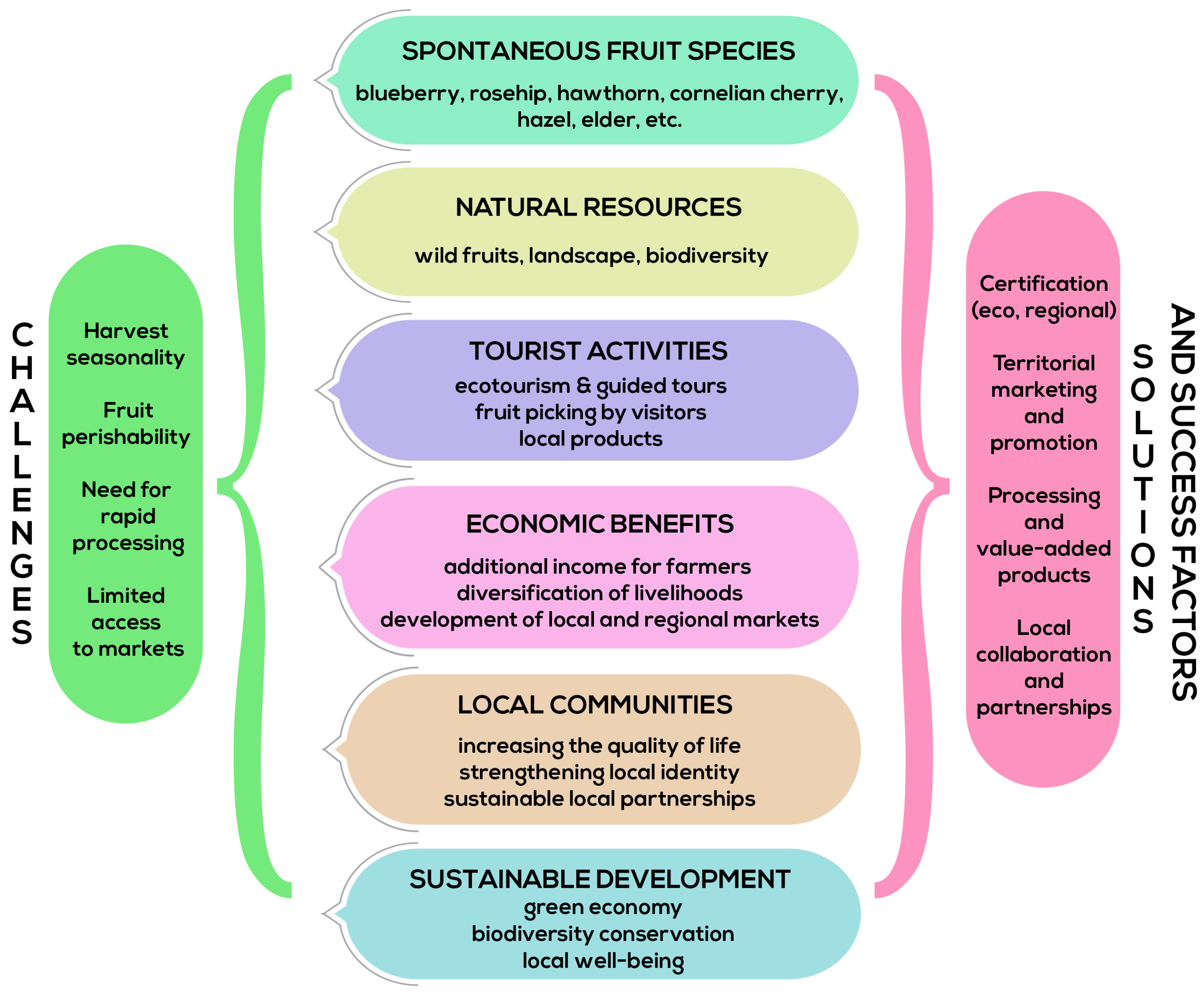
Fruit species from spontaneous flora are an important resource for the development of rural tourism, especially in ecotourism activities based on the picking of wild fruits. The areas where these species are present can become tourist attractions by organizing thematic itineraries and guided tours focused on authentic nature experiences. Ecotourism, defined as responsible travel in natural areas that contributes to environmental conservation and the well-being of local communities, is recognized as an essential tool for sustainable development [141]. To highlight the relationships between the valorization of fruit species from spontaneous flora and the socio-economic development of rural areas, Figure 4 presents an integrative conceptual framework of the main processes involved. It illustrates how the natural resources generated by these species are harnessed through tourism activities and local economic chains, thereby contributing to income generation, strengthening communities, and promoting sustainable development, within specific constraints and adaptation strategies. Although the concept is consolidated in recent literature, the associated practices have been known in Europe since the 70s [142]. In this context, biodiversity-based ecotourism, including the valorization of wild fruits, integrates the natural, economic, and cultural dimensions of the rural landscape and is considered a driver of the green economy [143,144]. Wild fruits, classified as non-timber forest products, generate significant economic benefits, with estimates of around €23.3 billion annually at the European level [145].
In addition to the tourist dimension, capitalizing on these resources directly impacts the development of local communities. Wild fruits have, over time, played an essential role in sustaining livelihoods, contributing to both food security and the cultural identity of rural populations [146]. Currently, in many regions, the harvesting and marketing of these products remain important sources of income, with active markets for species of high socio-economic value [147]. Globally, about one billion people use forest resources for food, and about 300 million depend significantly on wild fruits. In some developing countries, they can contribute up to 25% of rural households’ income, and in some cases even up to 90%. Market access and efficient economic exploitation are influenced by factors such as seasonal production, annual variability, and the high perishability of fruits, necessitating effective processing and marketing strategies, including the use of eco-labels or regional labels [148].
Relevant examples include organized harvesting systems in Sweden, where the annual production of wild fruits, such as Vaccinium myrtillus and Vaccinium vitis-idaea, is estimated at around 25,000 tonnes and is integrated into both the food industry and the international bio-extractive sector [149]. Also, in some regions of Iran and Indonesia, the income generated by wild fruits can account for 25–34% of rural households’ annual income [148,150]. The main components and their roles in the valorization of wild fruit species for rural tourism and local development are summarized in Table 7.
Overall, integrating fruit species from the spontaneous flora into tourism and economic activities helps diversify income sources, strengthen local economies, and promote the sustainable use of natural resources.

3.3.3. Synergies and Trade-Offs Between Ecosystem Services

Although this analysis approaches ecosystem services mainly from a socio-economic and cultural perspective, it is important to note that spontaneous fruit species can simultaneously support multiple ecosystem functions [151], generating both synergies and potential trade-offs. For example, the use of these species in food, traditional medicine or rural development is often positively correlated with biodiversity conservation, as they constitute important trophic resources for many wildlife species and contribute to maintaining habitat heterogeneity [34,152]. And at the same time, human health, well-being and development are intrinsically linked to the conservation of this biodiversity [153]. On the other hand, under certain conditions, increased use or interventions aimed at increasing economic value may lead to local pressures on natural populations or changes in ecosystem dynamics [152], and trade-offs and synergies involve aspects of both supply and demand and use [154]. Also, the contributions of these species to the stability and resilience of ecosystems may vary depending on the ecological context and the intensity of the management applied [152]. The application of appropriate management can result in a beneficial effect that is greater than the sum of the individual effects, thus achieving a package of ecosystem services that can be provided jointly and enjoyed by several beneficiary parties [155]. Given the complexity of the recovery of socio-ecological systems and the growing demand for evidence-based policies to support drastic actions to recover natural capital, researchers converge on the need for further research on the interpretation and integration of these concepts in terms of scale, spatial model and dynamics of the systems analysed, which has substantial implications for management and policy [156]. In this sense, the detailed assessment of synergies and trade-offs between the different ecosystem services associated with spontaneous fruit species is a relevant direction for future research, in particular in the context of integrated approaches on ecosystem multifunctionality.
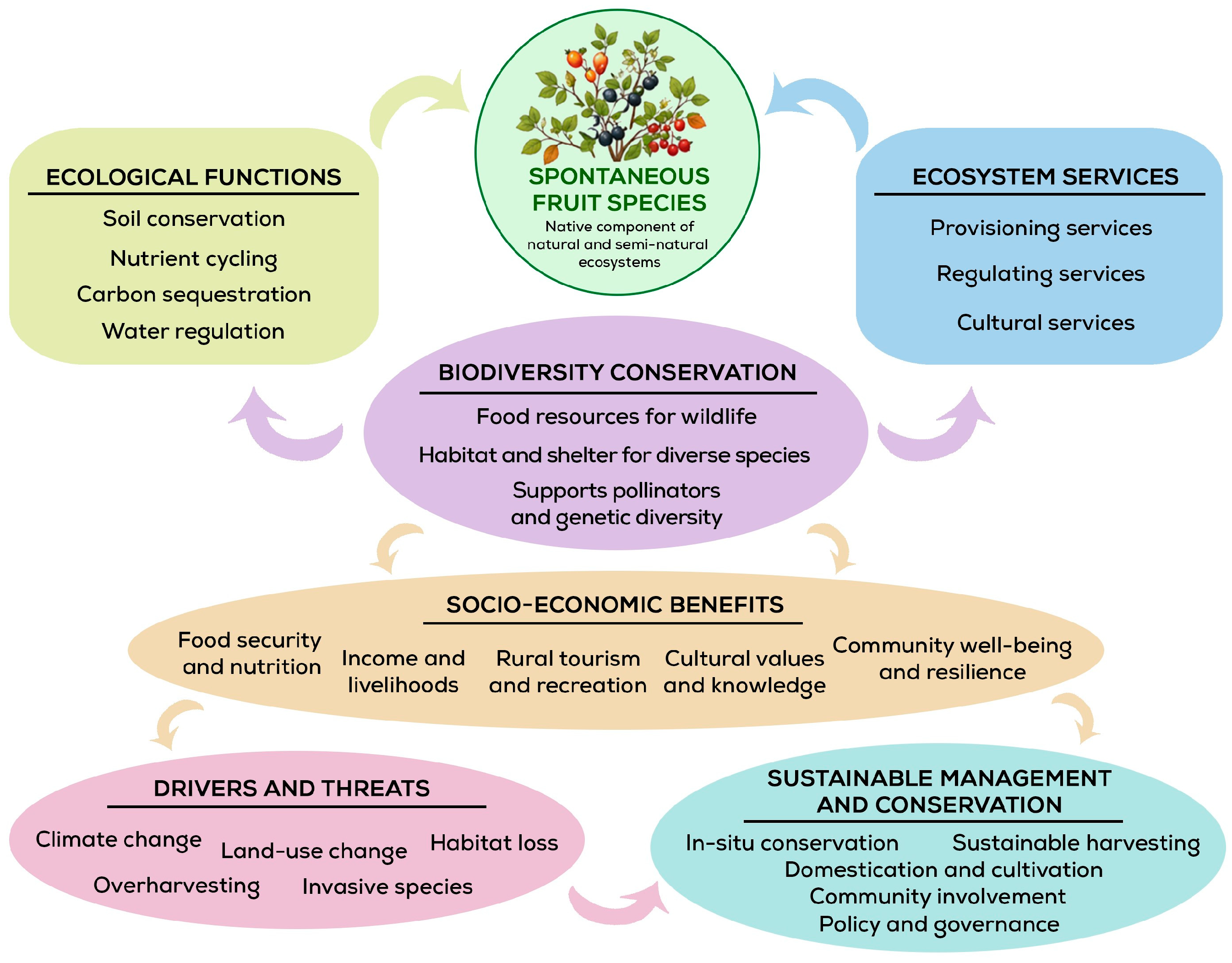
An integrative conceptual framework summarizing the ecological, environmental, and socio-economic roles of spontaneous fruit species is presented in Figure 5, highlighting the interconnections among ecological functions, ecosystem services, biodiversity conservation, socio-economic benefits, major threats, and sustainable management strategies associated with these species.
Despite the growing recognition of the ecological and socio-economic importance of spontaneous fruit species, quantitative monetary assessments of the ecosystem services associated with these species remain limited. Existing studies on wild fruit species and non-timber forest products demonstrated that these resources provide significant economic and non-economic benefits through food provision, traditional medicine, biodiversity support, climate regulation, and livelihood improvement, particularly in rural communities [157,158]. In addition, studies conducted in tropical and forest ecosystems highlighted the important market value of wild fruit species and their contribution to local economies and food security. However, the economic contribution of spontaneous fruit species and their associated ecosystem services remains insufficiently quantified, representing an important knowledge gap and a priority for future policy-oriented research and ecosystem accounting approaches [159].

4. Conclusions

Wild fruit species play a crucial role in maintaining the functionality of natural and semi-natural ecosystems, contributing to soil conservation, nutrient cycling, and carbon sequestration, while supporting biodiversity by providing food and habitat for a wide range of organisms. Beyond their ecological importance, these species represent valuable socio-economic resources, particularly in rural areas, where they support traditional practices, local food systems, and income diversification through activities such as rural tourism and small-scale value chains. In the context of current global challenges, including climate change, biodiversity loss, and land degradation, the conservation and sustainable use of wild fruit species should be further promoted, including their integration into agroecological and rural development strategies. However, several knowledge gaps remain. Future research should focus on (i) assessing the impacts of climate change on phenology, distribution, and productivity, (ii) conserving and utilizing genetic diversity, (iii) understanding species-specific ecological functions in different environmental contexts, and (iv) identifying sustainable harvesting thresholds and management practices. Addressing these research priorities will support the effective integration of wild fruit species into sustainable land-use systems and enhance their contribution to ecosystem resilience and human well-being.

Author Contributions

Conceptualization, S.C. and F.D.S.; methodology, S.C., F.D.S. and A.M.; software, S.C. and F.D.S.; validation, S.C., F.D.S. and A.M.; formal analysis, S.C.; investigation, F.D.S.; resources, S.C. and F.D.S.; data curation, S.C.; writing—original draft preparation, S.C., F.D.S. and A.M.; writing—review and editing, S.C. and F.D.S.; supervision, S.C. All authors have read and agreed to the published version of the manuscript.

Funding

This research received no external funding.

Institutional Review Board Statement

Not applicable.

Informed Consent Statement

Not applicable.

Data Availability Statement

The original contributions presented in this study are included in the article. Further inquiries can be directed to the corresponding author.

Conflicts of Interest

The authors declare no conflicts of interest.

References

  1. Wang, J.; Peñuelas, J.; Shi, X.; Brearley, F.Q.; Lucas-Borja, M.E.; Leng, P.; Huang, Z. Tree species richness improves soil net nitrogen mineralization rates in a young biodiversity-ecosystem function experiment. Catena 2024, 243, 108178. [Google Scholar] [CrossRef]
  2. Oncini, F.; Hirth, S.; Mylan, J.; Robinson, C.H.; Johnson, D. Where the wild things are: How urban foraging and food forests can contribute to sustainable cities in the Global North. Urban For. Urban Green. 2024, 93, 128216. [Google Scholar] [CrossRef]
  3. Cemansky, R. Africa’s Indigenous Fruit Trees: A Blessing in Decline. Environ. Health Perspect. 2015, 123, A291–A296. [Google Scholar] [CrossRef] [PubMed]
  4. Agbahoungba, S.; Assogbadjo, A.E.; Agoyi, E.E.; Sinsin, B. Diversity and current spatial distribution of wild-edible fruit trees species in the Lama Forest Reserve in Benin. Int. J. Fruit Sci. 2019, 19, 13–28. [Google Scholar] [CrossRef]
  5. Cosmulescu, S.; Ștefănescu, D.; Stoenescu, A.M. Variability of phenological behaviours of wild fruit tree species based on discriminant analysis. Plants 2021, 11, 45. [Google Scholar] [CrossRef]
  6. Stamin, F.D.; Vijan, L.E.; Topală, C.M.; Cosmulescu, S.N. The influence of genotype, environmental factors, and location on the nutraceutical profile of Rosa canina L. fruits. Agronomy 2024, 14, 2847. [Google Scholar] [CrossRef]
  7. Cornescu, F.C.; Cosmulescu, S.N. Morphological and biochemical characteristics of fruits of different cornelian cherry (Cornus mas L.) genotypes from spontaneous flora. Not. Sci. Biol. 2017, 9, 577–581. [Google Scholar] [CrossRef]
  8. Sarkar, D.; Jha, P.K.; Balasani, R.; Kar, S.K.; Seth, V.; Rakshit, A.; Datta, R.; Ercişli, S. Underutilized edible fruit species of the Indo-Gangetic Plains: A systematic review for food security and land degradation neutrality. Turk. J. Agric. For. 2024, 48, 443–469. [Google Scholar] [CrossRef]
  9. Sardeshpande, M.; Shackleton, C. Wild edible fruits: A systematic review of an under-researched multifunctional NTFP (non-timber forest product). Forests 2019, 10, 467. [Google Scholar] [CrossRef]
  10. Seyoum, Y.; Teketay, D.; Shumi, G.; Wodafirash, M. Edible wild fruit trees and shrubs and their socioeconomic significance in central Ethiopia. Ethnobot. Res. Appl. 2015, 14, 183–197. [Google Scholar] [CrossRef]
  11. Stamin, F.D.; Cosmulescu, S.N. Wild fruits–a review of food and medical importance. Ann. Univ. Craiova Biol. Hortic. Food Prod. Process. Technol. Environ. Eng. 2024, 29, 480–489. [Google Scholar] [CrossRef]
  12. Ngurthankhumi, R.; Hazarika, T.K.; Lalruatsangi, E.; Lalnunsangi, T.; Lalhmangaihzuali, H.P. Bioactive constituents and health promoting compounds of few wild edible fruits of North-East India. Int. J. Food Prop. 2024, 27, 927–950. [Google Scholar] [CrossRef]
  13. Stabnikova, O.; Stabnikov, V.; Paredes-López, O. Fruits of wild-grown shrubs for health nutrition. Plant Foods Hum. Nutr. 2024, 79, 20–37. [Google Scholar] [CrossRef]
  14. Stamin, F.D.; Cosmulescu, S.N. Population estimates for some spontaneous fruit species in forest ecosystems located in Southern Romania. Ann. Univ. Craiova Biol. Hortic. Food Prod. Process. Technol. Environ. Eng. 2025, 30, 605–612. [Google Scholar] [CrossRef]
  15. Leakey, R.R. The role of trees in agroecology and sustainable agriculture in the tropics. Annu. Rev. Phytopathol. 2014, 52, 113–133. [Google Scholar] [CrossRef]
  16. Montanaro, G.; Xiloyannis, C.; Nuzzo, V.; Dichio, B. Orchard management, soil organic carbon and ecosystem services in Mediterranean fruit tree crops. Sci. Hortic. 2017, 217, 92–101. [Google Scholar] [CrossRef]
  17. Yazdani, F.; AliPanahi, P.; Sadeghi, H. A comparative study of environmental and economic assessment of vegetation-based slope stabilization with conventional methods. J. Environ. Manag. 2024, 359, 121002. [Google Scholar] [CrossRef]
  18. Dugan, I.; Pereira, P.; Barcelo, D.; Bogunovic, I. Conservation practices reverse soil degradation in Mediterranean fig orchards. Geoderma Reg. 2024, 36, e00750. [Google Scholar] [CrossRef]
  19. Lann, T.; Bao, H.; Lan, H.; Zheng, H.; Yan, C. Hydro-mechanical effects of vegetation on slope stability: A review. Sci. Total Environ. 2024, 926, 171691. [Google Scholar] [CrossRef]
  20. Jinger, D.; Kakade, V.; Bhatnagar, P.R.; Paramesh, V.; Dinesh, D.; Singh, G.; Kumar, N.; Kaushal, R.; Singhal, V.; Rathore, A.C.; et al. Enhancing productivity and sustainability of ravine lands through horti-silviculture and soil moisture conservation: A pathway to land degradation neutrality. J. Environ. Manag. 2024, 364, 121425. [Google Scholar] [CrossRef]
  21. Zhang, X.; Fu, Y.; Pei, Q.; Guo, J.; Jian, S. Study on the root characteristics and effects on soil reinforcement of slope-protection vegetation in the chinese loess plateau. Forests 2024, 15, 464. [Google Scholar] [CrossRef]
  22. Dalir, P.; Naghdi, R.; Jafari, S.; Tsioras, P.A. Comparative assessment of woody species for runoff and soil erosion control on forest road slopes in harvested sites of the Hyrcanian forests, northern Iran. Forests 2025, 16, 1013. [Google Scholar] [CrossRef]
  23. Lu, J.; Zheng, F.; Li, G.; Bian, F.; An, J. The effects of raindrop impact and runoff detachment on hillslope soil erosion and soil aggregate loss in the Mollisol region of Northeast China. Soil Tillage Res. 2016, 161, 79–85. [Google Scholar] [CrossRef]
  24. Cai, J.S.; Yeh, T.C.J.; Yan, E.C.; Tang, R.X.; Hao, Y.H.; Huang, S.Y.; Wen, J.C. Importance of variability in initial soil moisture and rainfalls on slope stability. J. Hydrol. 2019, 571, 265–278. [Google Scholar] [CrossRef]
  25. Li, S.; Wang, Z.; Stutz, H.H. State-of-the-art review on plant-based solutions for soil improvement. Biogeotechnics 2023, 1, 100035. [Google Scholar] [CrossRef]
  26. Xie, Q.; Xu, H.; Wen, R.; Wang, L.; Yang, Y.; Zhang, H.; Su, B. Integrated management of fruit trees and Bletilla striata: Implications for soil nutrient profiles and microbial community structures. Front. Microbiol. 2024, 15, 1307677. [Google Scholar] [CrossRef]
  27. Liu, S.; Yang, R.; Peng, X.; Hou, C.; Ma, J.; Guo, J. Contributions of plant litter decomposition to soil nutrients in ecological tea gardens. Agriculture 2022, 12, 957. [Google Scholar] [CrossRef]
  28. Naik, S.K.; Maurya, S.; Mukherjee, D.; Singh, A.K.; Bhatt, B.P. Rates of decomposition and nutrient mineralization of leaf litter from different orchards under hot and dry sub-humid climate. Arch. Agron. Soil Sci. 2018, 64, 560–573. [Google Scholar] [CrossRef]
  29. Froufe, L.C.M.; Schwiderke, D.K.; Castilhano, A.C.; Cezar, R.M.; Steenbock, W.; Seoane, C.E.S.; Bognola, I.A.; Vezzani, F.M. Nutrient cycling from leaf litter in multistrata successional agroforestry systems and natural regeneration at Brazilian Atlantic Rainforest Biome. Agrofor. Syst. 2020, 94, 159–171. [Google Scholar] [CrossRef]
  30. Isidorov, V.; Maslowiecka, J.; Sarapultseva, P. Bidirectional emission of organic compounds by decaying leaf litter of a number of forest-forming tree species in the northern hemisphere. Geoderma 2024, 443, 116812. [Google Scholar] [CrossRef]
  31. Ramananjatovo, T.; Guénon, R.; Peugeot, J.; Chantoiseau, E.; Delaire, M.; Buck-Sorlin, G.; Guillermin, P.; Cannavo, P. Positive influence of apple trees on soil chemical and biological activities in agroecological garden orchard system. Agrofor. Syst. 2024, 98, 3233–3246. [Google Scholar] [CrossRef]
  32. Jia, X.; Wu, L.; Ren, J.; Peng, X.; Lv, H. Response of carbon, nitrogen, and phosphorus in leaves of different life forms to altitude and soil factors in Tianshan wild fruit forest. Front. Ecol. Evol. 2024, 12, 1368185. [Google Scholar] [CrossRef]
  33. Carranca, C.; Brunetto, G.; Tagliavini, M. Nitrogen nutrition of fruit trees to reconcile productivity and environmental concerns. Plants 2018, 7, 4. [Google Scholar] [CrossRef]
  34. Bharucha, Z.; Pretty, J. The roles and values of wild foods in agricultural systems. Philos. Trans. R. Soc. B Biol. Sci. 2010, 365, 2913–2926. [Google Scholar] [CrossRef]
  35. Borelli, T.; Hunter, D.; Powell, B.; Ulian, T.; Mattana, E.; Termote, C.; Pawera, L.; Beltrame, D.; Penafiel, D.; Tan, A.; et al. Born to eat wild: An integrated conservation approach to secure wild food plants for food security and nutrition. Plants 2020, 9, 1299. [Google Scholar] [CrossRef]
  36. Gelaye, Y.; Getahun, S. A review of the carbon sequestration potential of fruit trees and their implications for climate change mitigation: The case of Ethiopia. Cogent Food Agric. 2024, 10, 2294544. [Google Scholar] [CrossRef]
  37. Wambede, M.N.; Akello, G.; Mulabbi, A.; Barasa, B.; Lugumira, J.S.; Amonya, D. Carbon Sequestration of Fruit Trees under Contrasting Management Regimes. Indones. J. Geogr. 2022, 54, 420–427. [Google Scholar] [CrossRef]
  38. Roberti, G.; Herzog, F.; Jäger, M.; Kay, S. Temperate agroforestry for tree carbon storage in Switzerland: 10 years of biophysical and social monitoring. Clim. Smart Agric. 2025, 2, 100055. [Google Scholar] [CrossRef]
  39. Zomer, R.J.; Bossio, D.A.; Trabucco, A.; van Noordwijk, M.; Xu, J. Global carbon sequestration potential of agroforestry and increased tree cover on agricultural land. Circ. Agric. Syst. 2022, 2, 3. [Google Scholar] [CrossRef]
  40. Nnko, L.E. Carbon sequestration in agroforestry technologies as a strategy for climate change mitigation. In The Nature, Causes, Effects and Mitigation of Climate Change on the Environment; IntechOpen: London, UK, 2022; p. 133. [Google Scholar] [CrossRef]
  41. Shiwangee, S.; Negi, S.; Hussnain, M.; Mehta, M. Fruit tree based agroforestry: A scalable solution for climate change and food security. IOSR J. Agric. Vet. Sci. 2025, 18, 46–54. [Google Scholar]
  42. Ferreiro-Domínguez, N.; Rigueiro-Rodríguez, A.; Rial-Lovera, K.E.; Romero-Franco, R.; Mosquera-Losada, M.R. Effect of grazing on carbon sequestration and tree growth that is developed in a silvopastoral system under wild cherry (Prunus avium L.). Catena 2016, 142, 11–20. [Google Scholar] [CrossRef]
  43. Chavula, P.; Abdi, E.; Ntezimana, M.G.; Jimaima, M.; Umer, Y. Hidden Harvests: The Role of Forest, Wild, and Exotic Fruits in Agricultural Landscapes of East and Southern Africa. Preprints 2026. [Google Scholar] [CrossRef]
  44. Ilie, D.; Cosmulescu, S. Spontaneous plant diversity in urban contexts: A review of its impact and importance. Diversity 2023, 15, 277. [Google Scholar] [CrossRef]
  45. Awasthi, B.; Chen, J.; McConkey, K.R. Fruiting trees provide fruit and insect resources for four tropical deer species. Ecosphere 2024, 15, e4889. [Google Scholar] [CrossRef]
  46. Grünewald, C.; Breitbach, N.; Böhning-Gaese, K. Tree visitation and seed dispersal of wild cherries by terrestrial mammals along a human land-use gradient. Basic Appl. Ecol. 2010, 11, 532–541. [Google Scholar] [CrossRef]
  47. Al Malki, K.A.; Al Ghamdi, A.R.; Shuraim, F.; Neyaz, F.; Al Boug, A.; Al Jbour, S.; Angelici, F.M.; Amr, Z.S. Diversity and Conservation of Rodents in Saudi Arabia. Diversity 2024, 16, 398. [Google Scholar] [CrossRef]
  48. Fedriani, J.M.; Garrote, P.J.; Burgos, T.; Escribano-Ávila, G.; Morera, B.; Virgós, E. The seed dispersal syndrome hypothesis in ungulate-dominated landscapes. Sci. Rep. 2024, 14, 5436. [Google Scholar] [CrossRef]
  49. Francis, O.E.; Mohapatra, S.P. Bird species diversity in relation with indigenous tree species for sustainable tourism development Urhonigbe Forest Reserve Edo state Nigeria. Sci. Rep. Life Sci. 2024, 5, 38–52. [Google Scholar] [CrossRef]
  50. Iwajomo, S.B.; Olayemi, O.E. Avian Encounter Rates and Interaction Network with Trees in an Urban Setting. Sahel J. Life Sci. FUDMA 2024, 2, 171–178. [Google Scholar] [CrossRef]
  51. Martins, L.P.; Stouffer, D.B.; Blendinger, P.G.; Böhning-Gaese, K.; Costa, J.M.; Dehling, D.M.; Donatti, C.I.; Emer, C.; Galetti, M.; Heleno, R.; et al. Birds optimize fruit size consumed near their geographic range limits. Science 2024, 385, 331–336. [Google Scholar] [CrossRef]
  52. Conchou, L.; Lucas, P.; Meslin, C.; Proffit, M.; Staudt, M.; Renou, M. Insect odorscapes: From plant volatiles to natural olfactory scenes. Front. Physiol. 2019, 10, 972. [Google Scholar] [CrossRef]
  53. Dubuisson, C.; Wortham, H.; Garinie, T.; Hossaert-McKey, M.; Lapeyre, B.; Buatois, B.; Temime-Roussel, B.; Ormeno, E.; Staudt, M.; Proffit, M. Ozone alters the chemical signal required for plant–insect pollination: The case of the Mediterranean fig tree and its specific pollinator. Sci. Total Environ. 2024, 919, 170861. [Google Scholar] [CrossRef]
  54. Jones, P.L.; Agrawal, A.A. Learning in insect pollinators and herbivores. Annu. Rev. Entomol. 2017, 62, 53–71. [Google Scholar] [CrossRef]
  55. Bastida, J.M.; Garrido, J.L.; Cano-Sáez, D.; Perea, A.J.; Pomarede, L.C.; Alcántara, J.M. Effects of plant leaf traits, abundance and phylogeny on differentiation of herbivorous insect assemblages in Mediterranean mixed forest. Eur. J. For. Res. 2024, 143, 1149–1164. [Google Scholar] [CrossRef]
  56. Harrison, J.G.; Philbin, C.S.; Gompert, Z.; Forister, G.W.; Hernandez-Espinoza, L.; Sullivan, B.W.; Wallace, I.S.; Beltran, L.; Dodson, C.D.; Francis, J.S.; et al. Deconstruction of a plant-arthropod community reveals influential plant traits with nonlinear effects on arthropod assemblages. Funct. Ecol. 2018, 32, 1317–1328. [Google Scholar] [CrossRef]
  57. Fahey, C.; Koyama, A.; Antunes, P.M.; Dunfield, K.; Flory, S.L. Plant communities mediate the interactive effects of invasion and drought on soil microbial communities. ISME J. 2020, 14, 1396–1409. [Google Scholar] [CrossRef] [PubMed]
  58. Guo, Q.; Gong, L. Compared with pure forest, mixed forest alters microbial diversity and increases the complexity of interdomain networks in arid areas. Microbiol. Spectr. 2024, 12, e02642-23. [Google Scholar] [CrossRef]
  59. Dawud, S.M.; Raulund-Rasmussen, K.; Ratcliffe, S.; Domisch, T.; Finér, L.; Joly, F.X.; Hättenschwiler, S.; Vesterdal, L. Tree species functional group is a more important driver of soil properties than tree species diversity across major European forest types. Funct. Ecol. 2017, 31, 1153–1162. [Google Scholar] [CrossRef]
  60. Gómez-Aparicio, L.; Domínguez-Begines, J.; Villa-Sanabria, E.; García, L.V.; Muñoz-Pajares, A.J. Tree decline and mortality following pathogen invasion alters the diversity, composition and network structure of the soil microbiome. Soil Biol. Biochem. 2022, 166, 108560. [Google Scholar] [CrossRef]
  61. Rong, X.; Wu, N.; Yin, B.; Zhou, X.; Zhu, B.; Li, Y.; Aanderud, Z.T.; Zhang, Y. Degradation of wild fruit forests created less diverse and diffuse bacterial communities decreased bacterial diversity, enhanced fungal pathogens and altered microbial assembly in the Tianshan Mountain, China. Plant Soil 2024, 501, 23–38. [Google Scholar] [CrossRef]
  62. Ehlers Smith, Y.C.; Ehlers Smith, D.A.; Ramesh, T.; Downs, C.T. The importance of microhabitat structure in maintaining forest mammal diversity in a mixed land-use mosaic. Biodivers. Conserv. 2017, 26, 2361–2382. [Google Scholar] [CrossRef]
  63. de Brito Freire, G., Jr.; Diniz, I.R.; Salcido, D.M.; Oliveira, H.F.M.; Sudta, C.; Silva, T.; Rodrigues, H.; Dias, J.P.; Dyer, L.A.; Domingos, F.M.C.B. Habitat heterogeneity shapes multiple diversity dimensions of fruit-feeding butterflies in an environmental gradient in the Brazilian Cerrado. For. Ecol. Manag. 2024, 558, 121747. [Google Scholar] [CrossRef]
  64. Moore, J.H.; Sittimongkol, S.; Campos-Arceiz, A.; Sumpah, T.; Eichhorn, M.P. Fruit gardens enhance mammal diversity and biomass in a Southeast Asian rainforest. Biol. Conserv. 2016, 194, 132–138. [Google Scholar] [CrossRef]
  65. Quitián, M.; Santillán, V.; Espinosa, C.I.; Homeier, J.; Böhning-Gaese, K.; Schleuning, M.; Neuschulz, E.L. Direct and indirect effects of plant and frugivore diversity on structural and functional components of fruit removal by birds. Oecologia 2019, 189, 435–445. [Google Scholar] [CrossRef]
  66. Medina-Serrano, N.; Hossaert-McKey, M.; Diallo, A.; McKey, D. Insect–flower interactions, ecosystem functions, and restoration ecology in the northern Sahel: Current knowledge and perspectives. Biol. Rev. 2025, 100, 969–995. [Google Scholar] [CrossRef]
  67. Saunders, M.E.; Luck, G.W. Interaction effects between local flower richness and distance to natural woodland on pest and beneficial insects in apple orchards. Agric. For. Entomol. 2018, 20, 279–287. [Google Scholar] [CrossRef]
  68. Compant, S.; Cambon, M.C.; Vacher, C.; Mitter, B.; Samad, A.; Sessitsch, A. The plant endosphere world–bacterial life within plants. Environ. Microbiol. 2021, 23, 1812–1829. [Google Scholar] [CrossRef]
  69. Rashidifard, M.; Fourie, H.; Ashrafi, S.; Engelbrecht, G.; Elhady, A.; Daneel, M.; Claassens, S. Suppressive effect of soil microbiomes associated with tropical fruit trees on Meloidogyne enterolobii. Microorganisms 2022, 10, 894. [Google Scholar] [CrossRef] [PubMed]
  70. Cosmulescu, S.; Trandafir, I.; Nour, V. Phenolic acids and flavonoids profiles of extracts from edible wild fruits and their antioxidant properties. Int. J. Food Prop. 2017, 20, 3124–3134. [Google Scholar] [CrossRef]
  71. Mgalula, M.E. An ethnobotanical study of wild edible fruits in miombo woodlands of Tabora region in Western Tanzania. J. Ethnobiol. Ethnomed. 2024, 20, 23. [Google Scholar] [CrossRef] [PubMed]
  72. Prakofjewa, J.; Sartori, M.; Šarka, P.; Kalle, R.; Pieroni, A.; Sõukand, R. Knowledge in motion: Temporal dynamics of wild food plant use in the Polish-Lithuanian-Belarusian border region. J. Ethnobiol. Ethnomed. 2024, 20, 65. [Google Scholar] [CrossRef]
  73. Che, C.T.; George, V.; Ijinu, T.P.; Pushpangadan, P.; Andrae-Marobela, K. Traditional Medicine. In Pharmacognosy; Academic Press: London, UK, 2024; pp. 11–28. [Google Scholar] [CrossRef]
  74. Xu, H.Y.; Zhang, Y.Q.; Liu, Z.M.; Chen, T.; Lv, C.Y.; Tang, S.H.; Zhang, X.B.; Zhang, W.; Li, Z.Y.; Zhou, R.R.; et al. ETCM: An encyclopaedia of traditional Chinese medicine. Nucleic Acids Res. 2019, 47, D976–D982. [Google Scholar] [CrossRef]
  75. Lee, K.I.; Jo, Y.; Yuk, H.J.; Kim, S.Y.; Kim, H.; Kim, H.J.; Hwang, S.K.; Park, K.S. Potential Phytotherapy of DSS-Induced Colitis: Ameliorating Reactive Oxygen Species-Mediated Necroptosis and Gut Dysbiosis with a New Crataegus pinnatifida Bunge Variety—Daehong. Antioxidants 2024, 13, 340. [Google Scholar] [CrossRef]
  76. Păun, G.; Neagu, E.; Albu, C.; Alecu, A.; Seciu-Grama, A.M.; Radu, G.L. Antioxidant and Antidiabetic Activity of Cornus mas L. and Crataegus monogyna Fruit Extracts. Molecules 2024, 29, 3595. [Google Scholar] [CrossRef]
  77. Cui, M.; Cheng, L.; Zhou, Z.; Zhu, Z.; Liu, Y.; Li, C.; Liao, B.; Fan, M.; Duan, B. Traditional uses, phytochemistry, pharmacology, and safety concerns of hawthorn (Crataegus genus): A comprehensive review. J. Ethnopharmacol. 2023, 319, 117229. [Google Scholar] [CrossRef]
  78. Li, R.; Luan, F.; Zhao, Y.; Wu, M.; Lu, Y.; Tao, C.; Zhu, L.; Zhang, C.; Wan, L. Crataegus pinnatifida: A botanical, ethnopharmacological, phytochemical, and pharmacological overview. J. Ethnopharmacol. 2023, 301, 115819. [Google Scholar] [CrossRef]
  79. Sagaradze, V.A.; Babaeva, E.Y. Resources and Use of Crataegus Species (Rosaceae) of the Asian Part of Russia. Rastit. Resur. 2022, 58, 5–19. [Google Scholar]
  80. Jarić, S.; Kostić, O.; Mataruga, Z.; Pavlović, D.; Pavlović, M.; Mitrović, M.; Pavlović, P. Traditional wound-healing plants used in the Balkan region (Southeast Europe). J. Ethnopharmacol. 2018, 211, 311–328. [Google Scholar] [CrossRef] [PubMed]
  81. Hong, S.Y.; Lansky, E.; Kang, S.S.; Yang, M. A review of pears (Pyrus spp.), ancient functional food for modern times. BMC Complement. Med. Ther. 2021, 21, 219. [Google Scholar] [CrossRef] [PubMed]
  82. Prakash, O.M.; Chauhan, A.S.; Kudachikar, V.B. Traditional uses, nutrition, phytochemistry and various pharmacological properties of Indian wild pear. Int. J. Func. Nutr. 2021, 2, 9. [Google Scholar] [CrossRef]
  83. Cosmulescu, S.; Stoenescu, A.M.; Trandafir, I.; Tuțulescu, F. Comparison of chemical properties between traditional and commercial vinegar. Horticulturae 2022, 8, 225. [Google Scholar] [CrossRef]
  84. Petran, M.; Dragos, D.; Gilca, M. Historical ethnobotanical review of medicinal plants used to treat children diseases in Romania (1860s–1970s). J. Ethnobiol. Ethnomed. 2020, 16, 15. [Google Scholar] [CrossRef]
  85. Kitic, D.; Miladinovic, B.; Randjelovic, M.; Szopa, A.; Sharifi-Rad, J.; Calina, D.; Seidel, V. Anticancer potential and other pharmacological properties of Prunus armeniaca L.: An updated overview. Plants 2022, 11, 1885. [Google Scholar] [CrossRef]
  86. Koriem, K.M.M. Phytochemical screening, chemical constituents, traditional medicine usage, pharmacological effect, metabolism and pharmacokinetics of Semen armeniacae. Biointerface Res. Appl. Chem. 2022, 12, 3186–3197. [Google Scholar] [CrossRef]
  87. Tang, S.; Wang, M.; Peng, Y.; Liang, Y.; Lei, J.; Tao, Q.; Ming, T.; Shen, Y.; Zhang, C.; Guo, J.; et al. Armeniacae semen amarum: A review on its botany, phytochemistry, pharmacology, clinical application, toxicology and pharmacokinetics. Front. Pharmacol. 2024, 15, 1290888. [Google Scholar] [CrossRef] [PubMed]
  88. Wei, Y.; Li, Y.; Wang, S.; Xiang, Z.; Li, X.; Wang, Q.; Dong, W.; Gao, P.; Dai, L. Phytochemistry and pharmacology of Armeniacae semen Amarum: A review. J. Ethnopharmacol. 2023, 308, 116265. [Google Scholar] [CrossRef] [PubMed]
  89. Khadka, D.; Kunwar, R.M.; Baral, B.; Bhatta, S.; Cui, D.; Shi, S. Prunus mira Koehne and Prunus armeniaca L. in Nepal Himalaya: Distribution, use, and conservation. Genet. Resour. Crop Evol. 2024, 71, 4583–4602. [Google Scholar] [CrossRef]
  90. Babotă, M.; Voştinaru, O.; Păltinean, R.; Mihali, C.; Dias, M.I.; Barros, L.; Ferreira, I.; Mocan, A.; Crișan, O.; Nicula, C.; et al. Chemical composition, diuretic, and antityrosinase activity of traditionally used Romanian Cerasorum stipites. Front. Pharmacol. 2021, 12, 647947. [Google Scholar] [CrossRef]
  91. Özen, M.; Özdemir, N.; Filiz, B.E.; Budak, N.H.; Kök-Taş, T. Sour cherry (Prunus cerasus L.) vinegars produced from fresh fruit or juice concentrate: Bioactive compounds, volatile aroma compounds and antioxidant capacities. Food Chem. 2020, 309, 125664. [Google Scholar] [CrossRef]
  92. Nunes, A.R.; Gonçalves, A.C.; Falcão, A.; Alves, G.; Silva, L.R. Prunus avium L. (sweet cherry) by-products: A source of phenolic compounds with antioxidant and anti-hyperglycemic properties—A review. Appl. Sci. 2021, 11, 8516. [Google Scholar] [CrossRef]
  93. Blando, F.; Oomah, B.D. Sweet and sour cherries: Origin, distribution, nutritional composition and health benefits. Trends Food Sci. Technol. 2019, 86, 517–529. [Google Scholar] [CrossRef]
  94. Damar, I.; Yilmaz, E. Ultrasound-assisted extraction of phenolic compounds in blackthorn (Prunus spinosa L.): Characterization, antioxidant activity and optimization by response surface methodology. J. Food Meas. Charact. 2023, 17, 1467–1479. [Google Scholar] [CrossRef]
  95. Putkaradze, J.; Diasamidze, M.; Vanidze, M.; Kalandia, A. Antioxidant Activity of Prunus cerasifera products. Int. J. Life Sci. 2021, 10, 52–54. [Google Scholar]
  96. Faruk, A.; Nersesyan, A.; Papikyan, A.; Galstyan, S.; Hakobyan, E.; Barblishvili, T.; Mikatadze-Pantsulaia, T.; Darchidze, T.; Kuchukhidze, M.; Kereselidze, N.; et al. Multigenerational differences in harvesting and use of wild edible fruits and nuts in the South Caucasus. Plants People Planet 2024, 6, 238–248. [Google Scholar] [CrossRef]
  97. Hancer, C.K.; Sevgi, E.; Altinbasak, B.B.; Cakir, E.A.; Akkaya, M. Traditional Knowledge of Wild Edible Plants of Biga (Canakkale), Turkey. Acta Soc. Bot. Pol. 2020, 89, 1–19. [Google Scholar] [CrossRef]
  98. Sile, I.; Romane, E.; Reinsone, S.; Maurina, B.; Tirzite, D.; Dambrova, M. Medicinal plants and their uses recorded in the Archives of Latvian Folklore from the 19th century. J. Ethnopharmacol. 2020, 249, 112378. [Google Scholar] [CrossRef]
  99. Fierascu, R.C.; Temocico, G.; Fierascu, I.; Ortan, A.; Babeanu, N.E. Fragaria genus: Chemical composition and biological activities. Molecules 2020, 25, 498. [Google Scholar] [CrossRef]
  100. Weber, J.T. Traditional uses and beneficial effects of various species of berry-producing plants in eastern Canada. Botany 2022, 100, 175–182. [Google Scholar] [CrossRef]
  101. Shikov, A.N.; Narkevich, I.A.; Akamova, A.V.; Nemyatykh, O.D.; Flisyuk, E.V.; Luzhanin, V.G.; Povydysh, M.N.; Mikhailova, I.V.; Pozharitskaya, O.N. Medical species used in Russia for the management of diabetes and related disorders. Front. Pharmacol. 2021, 12, 697411. [Google Scholar] [CrossRef]
  102. Sargin, S.A. Plants used against obesity in Turkish folk medicine: A review. J. Ethnopharmacol. 2021, 270, 113841. [Google Scholar] [CrossRef]
  103. Kalle, R.; Sõukand, R.; Pieroni, A. Devil is in the details: Use of wild food plants in historical Võromaa and Setomaa, present-day Estonia. Foods 2020, 9, 570. [Google Scholar] [CrossRef]
  104. Khazaei, M.K.M.R.; Khazaei, M.R.; Pazhouhi, M. An overview of therapeutic potentials of Rosa canina: A traditionally valuable herb. WCRJ 2020, 7, e1580. [Google Scholar] [CrossRef]
  105. Manzione, M.G.; Kumar, R.; Harilal, S.; Mishra, P.; Youb, K.A.; Fokou, P.V.T.; Pezzani, R. Rosa canina and Cancer: Which Evidence? J. Herb. Med. 2024, 45, 100875. [Google Scholar] [CrossRef]
  106. Negrean, O.R.; Farcas, A.C.; Nemes, S.A.; Cic, D.E.; Socaci, S.A. Recent advances and insights into the bioactive properties and applications of Rosa canina L. and its by-products. Heliyon 2024, 10, e30816. [Google Scholar] [CrossRef]
  107. Živković, J.; Ilić, M.; Zdunić, G.; Jovanović-Lješković, N.; Menković, N.; Šavikin, K. Traditional use of medicinal plants in Jablanica district (South-Eastern Serbia): Ethnobotanical survey and comparison with scientific data. Genet. Resour. Crop Evol. 2021, 68, 1655–1674. [Google Scholar] [CrossRef]
  108. Leahu, A.; Hretcanu, C.E.; Roșu, A.I.; Ghinea, C. Traditional uses of wild berries in the Bukovina region (Romania). Food Environ. Saf. J. 2020, 18, 279–286. [Google Scholar]
  109. Tundis, R.; Tenuta, M.C.; Loizzo, M.R.; Bonesi, M.; Finetti, F.; Trabalzini, L.; Deguin, B. Vaccinium species (Ericaceae): From chemical composition to bio-functional activities. Appl. Sci. 2021, 11, 5655. [Google Scholar] [CrossRef]
  110. Ștefănescu, R.; Laczkó-Zöld, E.; Ősz, B.E.; Vari, C.E. An updated systematic review of Vaccinium myrtillus leaves: Phytochemistry and pharmacology. Pharmaceutics 2022, 15, 16. [Google Scholar] [CrossRef]
  111. Vaneková, Z.; Rollinger, J.M. Bilberries: Curative and miraculous—A review on bioactive constituents and clinical research. Front. Pharmacol. 2022, 13, 909914. [Google Scholar] [CrossRef]
  112. Pundir, S.; Garg, P.; Dviwedi, A.; Ali, A.; Kapoor, V.K.; Kapoor, D.; Kulshrestha, S.; Lal, U.R.; Negi, P. Ethnomedicinal uses, phytochemistry and dermatological effects of Hippophae rhamnoides L.: A review. J. Ethnopharmacol. 2021, 266, 113434. [Google Scholar] [CrossRef]
  113. Chen, A.; Feng, X.; Dorjsuren, B.; Chimedtseren, C.; Damda, T.A.; Zhang, C. Traditional food, modern food and nutritional value of Sea buckthorn (Hippophae rhamnoides L.): A review. J. Future Foods 2023, 3, 191–205. [Google Scholar] [CrossRef]
  114. Ilhan, G.; Gundogdu, M.; Karlović, K.; Židovec, V.; Vokurka, A.; Ercişli, S. Main agro-morphological and biochemical berry characteristics of wild-grown sea buckthorn (Hippophae rhamnoides L. ssp. caucasica Rousi) genotypes in Turkey. Sustainability 2021, 13, 1198. [Google Scholar] [CrossRef]
  115. Jaśniewska, A.; Diowksz, A. Wide spectrum of active compounds in sea buckthorn (Hippophae rhamnoides) for disease prevention and food production. Antioxidants 2021, 10, 1279. [Google Scholar] [CrossRef] [PubMed]
  116. El Maaiden, E.; El Kharrassi, Y.; Qarah, N.A.; Essamadi, A.K.; Moustaid, K.; Nasser, B. Genus Ziziphus: A comprehensive review on ethnopharmacological, phytochemical and pharmacological properties. J. Ethnopharmacol. 2020, 259, 112950. [Google Scholar] [CrossRef]
  117. Liu, S.J.; Lv, Y.P.; Tang, Z.S.; Zhang, Y.; Xu, H.B.; Zhang, D.B.; Cui, C.L.; Liu, H.B.; Sun, H.H.; Song, Z.X.; et al. Ziziphus jujuba Mill., a plant used as medicinal food: A review of its phytochemistry, pharmacology, quality control and future research. Phytochem. Rev. 2021, 20, 507–541. [Google Scholar] [CrossRef]
  118. Mongalo, N.I.; Mashele, S.S.; Makhafola, T.J. Ziziphus mucronata Willd. (Rhamnaceae): It’s botany, toxicity, phytochemistry and pharmacological activities. Heliyon 2020, 6, e03708. [Google Scholar] [CrossRef]
  119. Alsayari, A.; Wahab, S. Genus Ziziphus for the treat ment of chronic inflammatory diseases. Saudi J. Biol. Sci. 2021, 28, 6897–6914. [Google Scholar] [CrossRef]
  120. Soni, H.; Malik, J.K. Phyto-Pharmacological Potential of Zizyphus jujube: A Review. Sch. Int. J. Biochem. 2021, 4, 1–5. [Google Scholar] [CrossRef]
  121. Hajam, T.A.; Saleem, H. Phytochemistry, biological activities, industrial and traditional uses of fig (Ficus carica): A review. Chem.-Biol. Interact. 2022, 368, 110237. [Google Scholar] [CrossRef] [PubMed]
  122. Nuri, Z.N.; Uddin, M.S. A review on nutritional values and pharmacological importance of Ficus carica. J. Curr. Res. Food Sci. 2021, 2, 55–59. [Google Scholar] [CrossRef]
  123. Li, Z.; Yang, Y.; Liu, M.; Zhang, C.; Shao, J.; Hou, X.; Tian, J.; Cui, Q. A comprehensive review on phytochemistry, bioactivities, toxicity studies, and clinical studies on Ficus carica Linn. leaves. Biomed. Pharmacother. 2021, 137, 111393. [Google Scholar] [CrossRef]
  124. Teruel-Andreu, C.; Andreu-Coll, L.; López-Lluch, D.; Sendra, E.; Hernández, F.; Cano-Lamadrid, M. Ficus carica fruits, by-products and based products as potential sources of bioactive compounds: A review. Agronomy 2021, 11, 1834. [Google Scholar] [CrossRef]
  125. Morovati, M.R.; Ghanbari-Movahed, M.; Barton, E.M.; Farzaei, M.H.; Bishayee, A. A systematic review on potential anticancer activities of Ficus carica L. with focus on cellular and molecular mechanisms. Phytomedicine 2022, 105, 154333. [Google Scholar] [CrossRef]
  126. Dadhwal, R.; Banerjee, R. Ethnopharmacology, pharmacotherapeutics, biomedicinal and toxicological profile of Morus alba L.: A comprehensive review. S. Afr. J. Bot. 2023, 158, 98–117. [Google Scholar] [CrossRef]
  127. Batiha, G.E.S.; Al-Snafi, A.E.; Thuwaini, M.M.; Teibo, J.O.; Shaheen, H.M.; Akomolafe, A.P.; Ayandeyi Teibo, T.A.; Al-kuraishy, H.M.; Al-Garbeeb, A.I.; Alexiou, A.; et al. Morus alba: A comprehensive phytochemical and pharmacological review. Naunyn-Schmiedebergs Arch. Pharmacol. 2023, 396, 1399–1413. [Google Scholar] [CrossRef] [PubMed]
  128. Yadav, S.; Nair, N.; Biharee, A.; Prathap, V.M.; Majeed, J. Updated ethnobotanical notes, phytochemistry and phytopharmacology of plants belonging to the genus Morus (Family: Moraceae). Phytomed. Plus 2022, 2, 100120. [Google Scholar] [CrossRef]
  129. Rehman, S.; Iqbal, Z.; Qureshi, R.; Shah, G.M.; Irfan, M. Ethnomedicinal plants uses for the treatment of respiratory disorders in tribal District North Waziristan, Khyber Pakhtunkhawa, Pakistan. Ethnob. Res. Appl. 2023, 25, 1–16. [Google Scholar] [CrossRef]
  130. Tenuta, M.C.; Deguin, B.; Loizzo, M.R.; Cuyamendous, C.; Bonesi, M.; Sicari, V.; Trabalzini, L.; Mitaine-Offer, A.C.; Xiao, J.; Tundis, R. An overview of traditional uses, phytochemical compositions and biological activities of edible fruits of European and Asian Cornus species. Foods 2022, 11, 1240. [Google Scholar] [CrossRef]
  131. Süntar, I.; Cevik, C.K.; Çeribaşı, A.O.; Gökbulut, A. Healing effects of Cornus mas L. in experimentally induced ulcerative colitis in rats: From ethnobotany to pharmacology. J. Ethnopharmacol. 2020, 248, 112322. [Google Scholar] [CrossRef]
  132. Bayram, H.M.; Ozturkcan, S.A. Bioactive components and biological properties of cornelian cherry (Cornus mas L.): A comprehensive review. J. Funct. Foods 2020, 75, 104252. [Google Scholar] [CrossRef]
  133. Sala, G.; Pasta, S.; Maggio, A.; La Mantia, T. Sambucus nigra L. (fam. Viburnaceae) in Sicily: Distribution, Ecology, Traditional Use and Therapeutic Properties. Plants 2023, 12, 3457. [Google Scholar] [CrossRef]
  134. Waswa, E.N.; Li, J.; Mkala, E.M.; Wanga, V.O.; Mutinda, E.S.; Nanjala, C.; Odago, W.O.; Katumo, D.M.; Gichua, M.K.; Gituru, R.W.; et al. Ethnobotany, phytochemistry, pharmacology, and toxicology of the genus Sambucus L. (Viburnaceae). J. Ethnopharmacol. 2022, 292, 115102. [Google Scholar] [CrossRef] [PubMed]
  135. Młynarczyk, K.; Walkowiak-Tomczak, D.; Łysiak, G.P. Bioactive properties of Sambucus nigra L. as a functional ingredient for food and pharmaceutical industry. J. Funct. Foods 2018, 40, 377–390. [Google Scholar] [CrossRef] [PubMed]
  136. Radojković, M.; Vujanović, M.; Majkić, T.; Zengin, G.; Beara, I.; Catauro, M.; Montesano, D. Evaluation of Sambucus nigra L. biopotential as an unused natural resource. Appl. Sci. 2021, 11, 11207. [Google Scholar] [CrossRef]
  137. Ryndin, A.; Kulyan, R.; Slepchenko, N. The Preservation and Study of the Biodiversity of Subtropical Crops Are Carried Out in the Genetic Collection of the FRC SSC of RAS. In BIO Web of Conferences; EDP Sciences: Les Ulis, France, 2024; Volume 95, pp. 1–6. [Google Scholar] [CrossRef]
  138. Huang, H. Discovery and domestication of new fruit trees in the 21st century. Plants 2022, 11, 2107. [Google Scholar] [CrossRef]
  139. Chrysargyris, A.; Baldi, A.; Lenzi, A.; Bulgari, R. Wild Plant Species as Potential Horticultural Crops: An Opportunity for Farmers and Consumers. Horticulturae 2023, 9, 1193. [Google Scholar] [CrossRef]
  140. Rana, J.C.; Pradheep, K.; Verma, V.D. Naturally occurring wild relatives of temperate fruits in Western Himalayan region of India: An analysis. Biodivers. Conserv. 2007, 16, 3963–3991. [Google Scholar] [CrossRef]
  141. Patil, S.; Pattanshetti, M.; Patil, P.; Bilagi, A.; Edramimath, P. Evaluating the impact of ecotourism on sustainable development: A meta-analysis of economic, environmental, and socio-cultural benefits. J. Res. Adm. 2024, 6, 7266–7283. [Google Scholar]
  142. Sattarova, Z.I.; Mirzaeva, S.N.; Xikmatullaeva, S. Agro and Ecotourism in Uzbekistan. Gospod. Innow. 2024, 45, 169–177. [Google Scholar]
  143. Nigatu, T.F.; Tegegne, A. A potential resources, local communities’attitudes and perceptions for outdoor recreation and ecotourism development in urban fringe Harego and Bededo conserved forest, South Wollo zone, Ethiopia. Geo J. Tour. Geosites 2021, 39, 1421–1429. [Google Scholar] [CrossRef]
  144. Zainal, S.; Nirzalin; Fakhrurrazi; Yunanda, R.; Ilham, I.; Badaruddin. Actualizing local knowledge for sustainable ecotourism development in a protected forest area: Insights from the Gayonese in Aceh Tengah, Indonesia. Cogent Soc. Sci. 2024, 10, 2302212. [Google Scholar] [CrossRef]
  145. Lovrić, M.; Da Re, R.; Vidale, E.; Prokofieva, I.; Wong, J.; Pettenella, D.; Verkerk, P.J.; Mavsar, R. Non-wood forest products in Europe—A quantitative overview. For. Policy Econ. 2020, 116, 102175. [Google Scholar] [CrossRef]
  146. Jabeen, S.; Arshad, F.; Harun, N.; Waheed, M.; Alamri, S.; Haq, S.M.; Vitasović-Kosić, I.; Fatima, K.; Chaudhry, A.S.; Bussmann, R.W. Folk Knowledge and Perceptions about the Use of Wild Fruits and Vegetables–Cross-Cultural Knowledge in the Pipli Pahar Reserved Forest of Okara, Pakistan. Plants 2024, 13, 832. [Google Scholar] [CrossRef] [PubMed]
  147. Catarino, L.; Romeiras, M.M.; Fernandes, Â. Food from the Wild—Roles and Values of Wild Edible Plants and Fungi. Foods 2024, 13, 818. [Google Scholar] [CrossRef]
  148. Ghanbari, S.; Weiss, G.; Liu, J.; Eastin, I.; Fathizadeh, O.; Moradi, G. Potentials and opportunities of wild edible forest fruits for rural household’s economy in Arasbaran, Iran. Forests 2022, 13, 453. [Google Scholar] [CrossRef]
  149. Plummer, P.; Andersson, J.; Lennerfors, T.T. Foraging for development: An analysis of the Swedish wild berry innovation system. Agric. Syst. 2024, 216, 103901. [Google Scholar] [CrossRef]
  150. Suwardi, A.B.; Navia, Z.I.; Harmawan, T.; Syamsuardi, S.; Mukhtar, E. Wild edible fruits generate substantial income for local people of the Gunung Leuser National Park, Aceh Tamiang Region. Ethnobot. Res. Appl. 2020, 20, 1–13. [Google Scholar] [CrossRef]
  151. Stamin, F.D.; Cosmulescu, S. Comparative assessment of biodiversity and ecological indicators in three forest ecosystems of southern Romania. Diversity 2025, 17, 277. [Google Scholar] [CrossRef]
  152. Stamin, F.D.; Cosmulescu, S. Assessing the Vegetation Diversity of Different Forest Ecosystems in Southern Romania Using Biodiversity Indices and Similarity Coefficients. Biology 2025, 14, 869. [Google Scholar] [CrossRef]
  153. González-Zamorano, L.; Cámara, R.M.; Morales, P.; Cámara, M. Harnessing edible wild fruits: Sustainability and health aspects. Nutrients 2025, 17, 412. [Google Scholar] [CrossRef] [PubMed]
  154. Jafarzadeh, A.A.; Mahdavi, A.; Shamsi, S.R.F.; Yousefpour, R. Assessing synergies and trade-offs between ecosystem services in forest landscape management. Land Use Policy 2021, 111, 105741. [Google Scholar] [CrossRef]
  155. Schaafsma, M.; Bartkowski, B. Synergies and trade-offs between ecosystem services. In Life on Land; Springer International Publishing: Cham, Switzerland, 2020; pp. 1022–1032. [Google Scholar] [CrossRef]
  156. Bartolini, F.; Vergamini, D. Trade-offs and synergies between ecosystem services provided by different rural landscape. Agronomy 2023, 13, 977. [Google Scholar] [CrossRef]
  157. Shackleton, C.M.; Cocks, M.L.; Maroyi, A.; Ntshanga, N.; Twine, W.C. The roles, significance and sustainability of wild plant and fungal non-timber forest product use in southern Africa: A systematic review. S. Afr. J. Bot. 2025, 184, 1386–1401. [Google Scholar] [CrossRef]
  158. Chakravarty, S.; Bhutia, K.D.; Suresh, C.P.; Shukla, G.; Pala, N.A. A review on diversity, conservation and nutrition of wild edible fruits. J. Appl. Nat. Sci. 2016, 8, 2346. [Google Scholar] [CrossRef]
  159. Negi, G.C.S. Trees, forests and people: The Central Himalayan case of forest ecosystem services. Trees For. People 2022, 8, 100222. [Google Scholar] [CrossRef]
Figure 1. Nutrient cycling framework through wild fruit species [1].
Sustainability 18 05140 g001
Figure 2. Role of fruit species in carbon sequestration and ecosystem services.
Sustainability 18 05140 g002
Figure 3. Interactions between fruit species in the spontaneous flora and the main biological groups.
Sustainability 18 05140 g003
Figure 4. The role of spontaneous fruit species in rural tourism and the development of rural communities.
Sustainability 18 05140 g004
Figure 5. Conceptual framework illustrating the ecological and socio-economic roles of spontaneous fruit species.
Sustainability 18 05140 g005
Table 1. Representative spontaneous fruit species included in the review, their geographic distribution, traditional uses, ecological importance, and occurrence in cultivated forms.
SpeciesGeographic DistributionMain UsesCultivated Forms
Vaccinium myrtillusEurope, temperate AsiaFood, medicinal usesLimited cultivation
Rubus idaeusEurope, Asia, North AmericaFood, medicinal usesYes
Crataegus monogynaEurope, Western Asia, North AfricaMedicinal uses, foodLimited cultivation
Rosa caninaEurope, Western and Central AsiaMedicinal usesLimited cultivation
Sambucus nigraEurope, Western Asia, North AfricaFood, medicinal productsYes
Cornus masCentral and Southern Europe, Western AsiaFood products, medicinal usesYes
Prunus spinosaEurope, Western AsiaFood products, beveragesMostly wild
Hippophae rhamnoidesEurope, Central and East AsiaNutraceuticals, oils, medicinal usesYes
Table 2. The role of fruit species from spontaneous flora in soil conservation.
Vegetation Type/SpeciesMechanism and Associated ProcessesMain ResultsRef.
Horti-silvicultural systemsComplementary interactions, soil water conservation, improvement of nutrient cycling, and carbon accumulationSignificant increases in biomass, carbon sequestration, soil fertility, and fruit production[20]
Hippophae rhamnoide, Crataegus monogynaComplex and extensive root systems, increased soil cohesionErosion reduction and superior soil stabilization[21,22]
Vegetation (general)Interception of precipitation, reduction in the kinetic energy of raindropsReducing erosion and soil instability[23,24,25]
Prunus persica, Pyrus sorotina, Malus pumilaRhizospheric interactions, stimulation of microorganisms, and nutrient cyclingIncreasing soil fertility (P, K, microbiome), reduction of NH4+ and pH[26]
Table 3. The contribution of fruit species to the nutrient cycle.
SystemIntegrated Processes, Indicators, and ResultsRef.
Forestry ecosystemSpecies diversity supports nutrient cycling and ecosystem productivity.[26]
GlobalLeaf litter is a key factor in the biogeochemical cycles of carbon and nutrients.[28,29,30]
Agroforestry system
(Malus domestica)
Fruit species improve soil fertility and microbial activity.[31]
Forests/Fruit plantationsLeaf traits influence stress adaptation and nutrient dynamics.[32]
Table 4. The role of spontaneous fruit species in ecosystem stability and carbon sequestration.
ComponentMain MechanismEffects on the EcosystemRef.
Spontaneous fruit speciesTrophic interactions and natural regenerationSupport biodiversity and ecosystem stability[8,35]
Orchard/agroforestry systemsCO2 fixation and accumulation in biomass and soilIncreasing carbon stocks and soil fertility[36]
Fruit species (e.g., mango)High biomass and perennial growthHigh carbon stocks (≈74.6 t C/ha)[37]
Agroforestry systemPlant–soil interactions and managementVariable sequestration (0.4–2.5 t CO2 eq. ha−1 year−1)[38]
Increasing tree coverExpansion of perennial biomassHigh global potential (>18 Pg C)[39]
Table 5. Ecological roles of wild fruit species in supporting biodiversity across biological groups.
Biological GroupType of InteractionResources Provided by Fruit SpeciesEcological RoleRef.
MammalsFrugivory, seed dispersalFruits, seeds, shelterPlant regeneration, spatial distribution[45,46,47]
BirdsSeed dispersal, nestingFruits, insects, canopy structureEcosystem dynamics, regeneration[48,49,50]
InsectsPollination, herbivoryNectar, plant tissues, volatile compoundsPollination services, trophic interactions[51,52,53,54,55,56]
MicroorganismsRhizosphere interactionsRoot exudates, organic matterNutrient cycling, soil health[57,58,59,60,61]
Table 6. Representative medicinal uses of wild fruit species.
FamilyRepresentative GeneraPlant Parts UsedPreparationMain Biological ActivitiesRef.
RosaceaeCrataegus, Pyrus, MalusFruits, leaves, flowersFresh, infusions, extractsCardioprotective, anti-inflammatory, hypoglycemic[75,76,77,78,79,80,81,82,83,84]
Prunus, Cerasus, ArmeniacaFruits, seeds, barkFresh, decoctions, oilsAntioxidant, antitumor, neuroprotective[85,86,87,88,89,90,91,92,93,94,95,96,97]
Rubus, Fragaria, RosaFruits, leavesFresh, infusionsAntioxidant, antimicrobial, anti-inflammatory[98,99,100,101,102,103,104,105,106,107,108]
EricaceaeVacciniumFruits, leavesFresh, juices, infusionsAntidiabetic, antimicrobial, anti-inflammatory[109,110,111]
ElaeagnaceaeHippophaeFruits, seedsOils, extractsAntioxidant, wound healing, anti-inflammatory[112,113,114,115]
RhamnaceaeZiziphusFruits, leavesDecoctions, powdersAntidiabetic, hepatoprotective, tonic[116,117,118,119,120]
MoraceaeMorus, FicusFruits, leavesFresh, extractsAntioxidant, antimicrobial, antidiabetic[121,122,123,124,125,126,127,128,129]
CornaceaeCornusFruitsFresh, extractsAntioxidant, cardioprotective[130,131,132]
CaprifoliaceaeSambucusWhole plantInfusions, extractsAnti-inflammatory, antiviral, immunostimulant[133,134,135,136]
Table 7. Contribution of wild fruit species to rural tourism and local community development.
ComponentRole in Rural Tourism and Local DevelopmentRef.
Ecotourism and wild fruit harvestingAttracts visitors, creates authentic nature-based experiences (guided tours, harvesting activities), and generates direct income.[143,144]
Non-timber forest productsProvides fresh and processed products for local, regional, and international markets; adds value to natural resources.[145]
Local communitiesEnsures additional income, diversifies livelihoods, and strengthens cultural identity.[146,147]
Socio-economic developmentImproves quality of life, supports local partnerships, and enhances rural resilience.[142]
Markets and territorial marketingFacilitates product commercialization through certification (eco/regional labels), local processing, and destination branding.[148,149,150]
Disclaimer/Publisher’s Note: The statements, opinions and data contained in all publications are solely those of the individual author(s) and contributor(s) and not of MDPI and/or the editor(s). MDPI and/or the editor(s) disclaim responsibility for any injury to people or property resulting from any ideas, methods, instructions or products referred to in the content.