Review

Categorization of Sustainable Leadership in Sustainable Manufacturing to Promote Industry 5.0

by
Anna M. Nowak-Meitinger
1,2,*,
Alexander Lübbe
1 and
Sabine Ammon
2
1
Faculty of Business, Computing, Law, Technical University of Applied Sciences Wildau, 15745 Wildau, Germany
2
Chair of Knowledge Dynamics and Sustainable Technology, Faculty V Mechanical Engineering and Transport Systems, Institute of Machine Tools and Factory Management, Technische Universität Berlin, Straße des 17. Juni 135, 10623 Berlin, Germany
*
Author to whom correspondence should be addressed.
Sustainability 2026, 18(10), 5031; https://doi.org/10.3390/su18105031
Submission received: 20 March 2026 / Revised: 23 April 2026 / Accepted: 9 May 2026 / Published: 16 May 2026

Abstract

A shift towards Industry 5.0 with a focus on sustainability, human centricity, and resilience requires the implementation of sustainable manufacturing (SM). Implementing SM is challenging as it requires commitment to sustainable practices at all organizational levels. Leadership is a crucial success factor but is largely neglected in the literature on SM. To address this gap, we introduce a novel approach focusing on multiple leadership dimensions. The aim is to develop effective leadership perspectives by integrating sustainable leadership (SL) theory into SM. A systematic literature review and qualitative content analysis are used to identify and analyze 79 peer-reviewed articles from the Scopus and Web of Science databases. SL serves as a frame of reference to identify relevant aspects for sustainable leaders in the scientific discourse on SM. The findings are summarized in 24 categories for integrated SM. They form a conceptual framework comprising three levels: context; systems and processes; and leadership and social aspects. Examining these aspects with interrelationships enriches the SM discourse and sheds a new, human-centered light on it. The findings can support training and knowledge transfer, thereby enabling leaders to navigate operational complexity. Furthermore, the categorization provides a foundation for developing socio-technical models and assessments for Industry 5.0 from a systemic perspective.

1. Introduction

The manufacturing industry, as the engine of wealth creation in modern economies, can be a driver for creating a sustainable society by designing and implementing integrated sustainable practices and developing products and services that enhance sustainability [1]. The quality-oriented manufacturing industry, based on economic criteria and customer satisfaction, had a significant impact on the environment and society, making it necessary to expand the requirements to ecological and social criteria [2,3]. Sustainable manufacturing (SM) extends business processes and decisions to the social and natural environment in which the company operates and which is affected by its actions, with the aim of protecting planetary boundaries and human health [1,4,5]. SM supports the Industry 5.0 concept defined and promoted by the European Commission, which is based on human centricity, sustainability, and resilience [6,7,8,9].
The scientific discourse on SM focuses primarily on environmental and economic aspects, while the social dimension tends to be neglected [2,10,11,12,13,14,15,16]. However, the human dimension and its associated values are crucial to SM processes and a company’s success [13,17,18]. In particular, leadership plays a crucial role in SM but is often neglected in the literature on SM and socio-technical transitions [3,19,20,21,22]. This is counterproductive, as leadership complements management aspects, such as strategies, processes and tools, with important human-centered aspects, i.e., the people involved and their motivation, culture and needs [17]. Other aspects of leadership, such as vision, critical thinking, employee behavior, and effectiveness, tend to be overlooked as well. As employees form the backbone of the manufacturing industry [23], leaders should consider that engagement and performance of employees depends on their level of motivation [24]. Furthermore, SM is a complex system with many interdependent components and dynamic behavior, requiring systems thinking and complexity theory to understand and design SM systems [1,10,25]. Since leaders act as change agents, they need a holistic approach and systems thinking to promote sustainable development [26,27,28].
Leadership occurs in groups, with leaders having influence on their environment, i.e., other group members (followers), and motivating them to strive for a common goal and to transform towards sustainable practices [19]. The motivation for leadership, i.e., pursuing ethical and selfless goals or self-interested goals, is decisive for the leadership style and the results of leadership activities [19]. Formal and hierarchical leadership styles, e.g., authoritarian, paternalistic, know-it-all, or manipulative leadership, are not ethical-based and do not support the independent action of individuals, which is necessary for sustainable change [19]. Thus, a moral- and ethical-based leadership is needed for SM [19,26]. The concept of sustainable leadership (SL) promotes sustainable development by focusing on ethics, values, and social aspects. SL needs to be integrated into SM to expand and improve the field and achieve sustainability [29].
To address this gap in the scientific discourse, we examine SM from a leadership perspective. This is a novel approach, as leadership theory—and in particular the theory of SL—has not yet been fully integrated into the theory of SM. We identify leadership aspects within SM and explain their various dimensions in detail. Finally, we integrate them into a new conceptual framework with a multi-perspective categorization for integrated SM. The resulting overview provides leaders in the field of SM with a well-founded and novel perspective and can help them to better understand the complexity of SL practices in the context of SM, thereby enabling them to shape the transition to Industry 5.0. The following research questions (RQs) are addressed:
RQ1. 
What aspects need to be integrated into sustainable manufacturing in order to achieve holistic sustainability from a sustainable leadership perspective?
RQ2. 
How can these aspects be categorized into a framework to support leaders in the field of sustainable manufacturing?
Following the introduction, in Section 2 we present the terminology used in the analysis. Section 3 presents the materials and methods used, including a systematic literature review according to the PRISMA 2020 guidelines and a qualitative content analysis. In Section 4 the results of the systematic literature review and analysis are presented, and this includes identified leadership aspects in SM and their categorization. Section 5 discusses the results, including limitations and future research directions. Section 6 presents the conclusions.

2. Terminology

This section presents the terminology used in the analysis, including sustainability and sustainable development, sustainable manufacturing, and sustainable leadership.

2.1. Sustainability and Sustainable Development

Sustainable development meets present needs without compromising the ability of future generations to meet their own needs [30]. Sustainability means reorganizing the technological, scientific, ecological, economic and social resources to ensure a balance in time and space for the resulting heterogeneous system [31]. Williams et al. emphasize that sustainability is a normative concept that refers to an ideal state and is therefore not an achievable end state but a moving target that is constantly changing and improving [26]. Thus, from a systems perspective, sustainability is described as the ability of a system to persist, adapt, transform or transition within constantly changing conditions [26].
The triple bottom line (TBL) concept defines sustainable business performance not only by economic results but also by its social and environmental impact, i.e., the equal consideration of social (People), environmental (Planet), and economic (Profit) factors [32]. The United Nations’ Sustainable Development Goals (17 SDGs) address these three sustainability dimensions [33]. In this paper, we focus primarily on the social dimension. Since we are taking a systemic perspective, the other dimensions are not neglected but less examined.

2.2. Sustainable Manufacturing

Sustainable manufacturing (SM) first appeared as a research term in 1992 [34,35], describing a concept for aspects of production that encompasses the entire product life cycle at all levels. Related concepts such as sustainable production, clean production, clean manufacturing, or environmentally conscious and responsible production were repeatedly revised until the holistic concept of SM emerged [36]. Early definitions of SM focus on environmental objectives, such as waste elimination, resource efficiency, and new technologies, to reduce environmental pollution, and natural resource and energy consumption [15,37]. Further expectations of SM include product durability and quality improvements, developing renewable energy sources, as well as reducing negative environmental impacts and avoiding any social impact by ensuring operational safety and improving personal health [37,38]. Since 2012, SM is aligned with all three dimensions of sustainability [10,39,40], leading to higher complexity [2]. SM includes the objective of clean business growth within the planetary boundaries [4,5] and is seen as a socio-technical system that needs management support for sustainable practices [18]. In comparison to the concepts of zero waste, and lean and green manufacturing, SM requires a holistic, multi-dimensional view of the product life cycle and its stakeholders [1,4,14,34]. Reasons for companies to implement sustainability include an increased competitiveness through higher efficiency due to reduced costs and waste, increased productivity due to workforce motivation, as well as acquiring new customers and building a strong brand and reputation to reach public trust [11,12,41]. SM can be described and measured using indicators [42,43]. The methodology of life cycle assessment (LCA) is commonly used for the quantitative evaluation of SM practices [5,11,44]. However, more than 90 methods for assessing and reporting on sustainability in organizations exist [45].
Both manufacturing for sustainability and the sustainability of manufacturing are necessary, i.e., sustainable products need to be manufactured, and products need to be manufactured sustainably [5,46]. To pursue sustainable development and to form a sustainable, closed-loop product life cycle system, SM analyzes and designs the manufacturing system and supply chain at all life cycle stages, i.e., in pre-manufacturing, manufacturing, use and post-use, by implementing the 6R value recovery strategies: reduce, reuse, recycle, recover, redesign, and remanufacture [11,38,39,47,48,49,50]. SM is realized through value creation factors (VCFs), i.e., product, process, equipment, organization and human [51]. A consideration of the social perspective and its factors is crucial for SM [15] and includes human factors and ergonomics [23]. However, implementing SM often fails due to a lack of knowledge or insufficient consideration of social factors [15]. This is also due to the difficulty of internalizing and operationalizing social sustainability [13].
To realize the full potential of SM, it is necessary to move beyond different theoretical interpretations and establish a standardized, holistic framework that effectively integrates the social dimension alongside environmental and economic indicators to ensure genuine, sustainable value creation.

2.3. Sustainable Leadership

Sustainable leadership (SL) is a concept of human-centered and sustainability-oriented leadership practices that relates to theories such as ethical, moral, responsible, transformational, servant, and change leadership. As there is no common definition for SL, the term sustainability leadership is occasionally used synonymously. SL is based on values, such as prudence, mutual respect, value of individuals, innovation, and quality with the aim achieve all three dimensions of the TBL [52]. Sustainable leaders have a long-term vision, pursue far-reaching goals that connect organizations with society, assume social responsibility, are innovative, support systemic change, and engage stakeholders [52]. Thus, participation, sufficiency, target agreement, delegation, feedback and coaching, as well as communication and employee motivation are needed for implementing SL [53]. Practicing SL also requires a sustainability-oriented mindset and knowledge of sustainable practices as well as the consideration of the cultural, institutional, and political context [52]. SL embraces complexity and considers interdependencies of and interconnectedness in organizations [54]. Competencies for SL include strategic and systems thinking, cognitive diversity, learning agility, mindfulness, reflexivity, resilience, self-management, and community engagement [28,54,55,56]. SL needs sustainable human resource (HR) practices to develop skilled, loyal, and highly committed employees who create high-quality products, services, and solutions [53,54,56]. SL positively impacts the environmental and economic performance [55,56].
Avery and Bergsteiner described distinguishing criteria for SL and shareholder-first perspectives, showing differences in the mindsets of how to treat employees and develop an organization [56]. In SL, employees are continuously developed, and amicable working relations prevail with a focus on teamwork, a strong shared vision, and long-term employee retention [56]. SL is usually defined by three levels: the individual level (micro), focusing on the dyadic relationships between leaders and employees; the organizational level (macro), with strategic orientation and organizational culture; and the cross level, (meso), with HR development and the interaction between the individual and the organization [53,57]. SL definitions and frameworks aim to capture the complexity of interrelationships and factors that influence leadership in sustainable organizational transformation. They address different levels and aspects that are important in the product life cycle stages.

3. Materials and Methods

Our study is based on a systematic literature review and a qualitative content analysis to identify arguments for and insights into leadership in SM. Generative artificial intelligence (GenAI) has not been used in this paper.

3.1. Systematic Literature Review

We conducted a systematic literature review according to [58] and the PRISMA 2020 statement [59] to identify relevant sources for the analysis. The corresponding PRISMA checklist is available in the supplementary material.
We used the Scopus and Web of Science databases to conduct a comprehensive search for relevant and scientifically recognized literature. The aim of the search was to collect data of the broad and diverse scientific discourse on SM in relation to (sustainable) leadership.
We searched for review articles on SM (Title = “sustainable manufacturing”) and for articles describing holistic frameworks and models to summarize SM knowledge (Title = “sustainable manufacturing” AND (model* OR framework* OR concept*)). The concept of SL was captured on the basis of review articles (Title = sustainable leadership OR sustainability leadership OR regenerative leadership) and articles on SL frameworks and models (Title = (“sustainable leadership” OR “sustainability leadership” OR “regenerative leadership”) AND Abstract = (model* OR framework OR concept*)). We complemented our search with a combination of SM and SL to find interconnections of both concepts and their synonyms (Title = Sustainab* AND (manufactur* OR enterprise* OR factory OR factories) AND (leader* OR human* OR people OR social* OR ethic* OR responsib* OR diversity OR DEI OR SDG*) NOT “social media”).
We focused on article titles to guarantee SM and SL concepts being the main topic. Since SM and SL are not linked in the academic field, both concepts need to be researched separately. Furthermore, we mainly focused on review articles as they provide a large overview of different aspects contributing to SM. They summarize a large number of studies on social issues, as well as barriers, enablers, factors, indicators and relationships, e.g., in the fields of corporate social sustainability (CSR), human-centered product development and sustainability management. We selected articles that define or generally describe SM and summarize its influencing factors, criteria and indicators for decision-making. Bux et al. [60] and other authors provide overviews of research studies to answer the question of how sustainable practices can be implemented in organizations and what barriers exist. In our work, we explore key aspects that sustainable leaders in the field of SM need to know, learn, practice and embody in their behavior. We identify gaps in terms of leadership, and human and organizational factors in SM and extract needs from a systemic perspective.
Table 1 shows the criteria for the article selection. In addition, the articles were evaluated for their methodological quality to ensure scientific rigor. We used evaluation criteria that are based on the JBI Critical Appraisal Tools [61] and were finally adapted from [62]. These criteria include the definition of a clear research objective and context, use of appropriate methods, rigorous data collection, coherent analysis, relevant results, and discussion of limitations. If a criterion is met, it counts as yes (1 point); if it is not fully met, it counts as partial (0.5 points); and if it is not met, it counts as no (0 points). The sum of the scores assigned results in an overall score, which is ranked as high, moderate, or low.

3.2. Qualitative Content Analysis

We used a qualitative content analysis [63] to systematically identify and classify themes and patterns of leadership aspects for SM from the scientific discourse. The goal is to define the research gap and introduce a new categorization including needs and factors. To identify knowledge elements and their relationships, a heuristic sensitization and observation grid is needed [64]. We therefore initially based our analysis on the VCF by Seliger [51], focusing on the factors of human and organization. Furthermore, we used SL levels according to Hollmann [53] to sort the analysis results and knowledge elements into micro (dyadic leadership), meso (HR management), macro (strategic management), normative (mission, vision, and politics), and organizational culture (values) levels. This heuristic sensitization and observation grid enables a deductive category formation and structuring of the material [63]. It led us to adopt a human-centered, leadership-oriented perspective when analyzing the predominantly technology- and management-oriented SM literature.
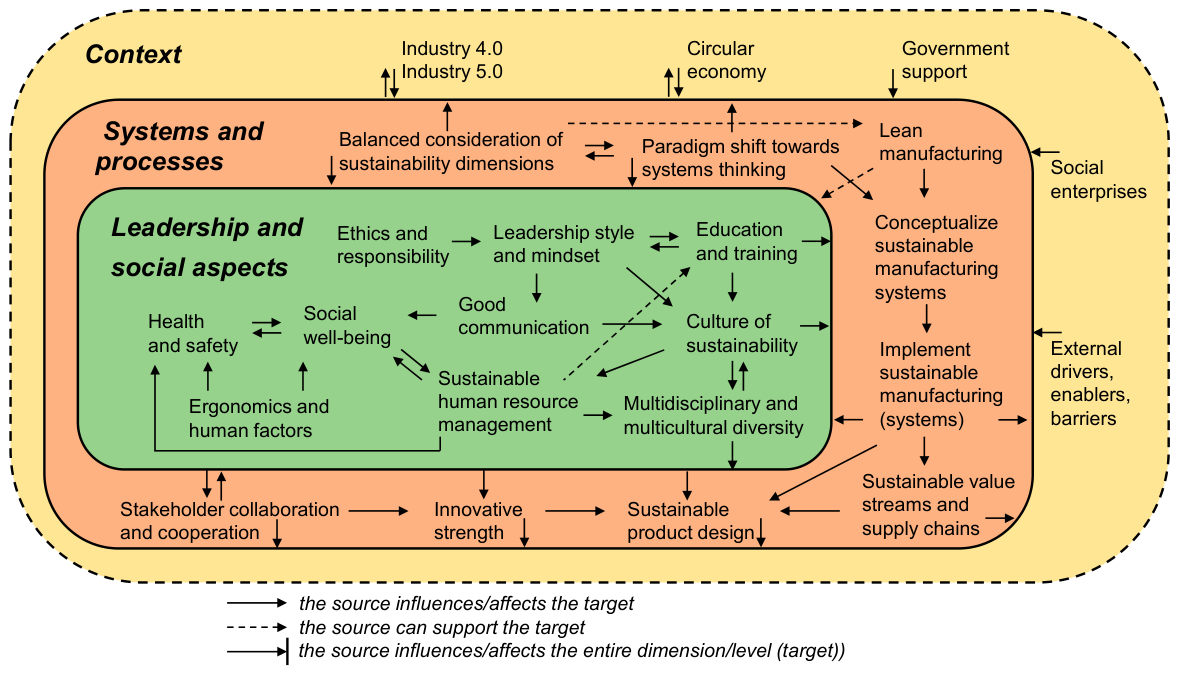
The central practice of inductive category formation [63] was carried out in an iterative process. Relevant text passages were identified and compiled into a table, and duplicates were merged. This led to a wide range of aspects, which were grouped into categories according to their meaning. To make the aspects manageable, we distinguished between the levels within and outside the organization. Within the organization, we then distinguished between the macro level and the micro/meso level. This resulted in three main levels: context; system and processes; and leadership and social aspects. Although each aspect can be considered separately, they are all interlinked and sometimes partly overlap. To avoid inconsistencies and ambiguities, the findings were discussed and reviewed by all the authors. The material is saturated, as findings increasingly overlap and no new aspects emerge. Expanding the terminology or scope of the literature can reveal further aspects that should remain the subject of future research.

4. Results

This section presents the findings of the systematic literature review and qualitative content analysis. Section 4.1 presents the selection process and its results. Section 4.2, Section 4.3 and Section 4.4 present the analysis results at three levels. Aspects that need to be integrated into SM from an SL perspective are identified, and their relevance is discussed. Section 4.5 presents the resulting conceptual framework with the categorization of integrated SM.

4.1. Results of the Systematic Literature Review

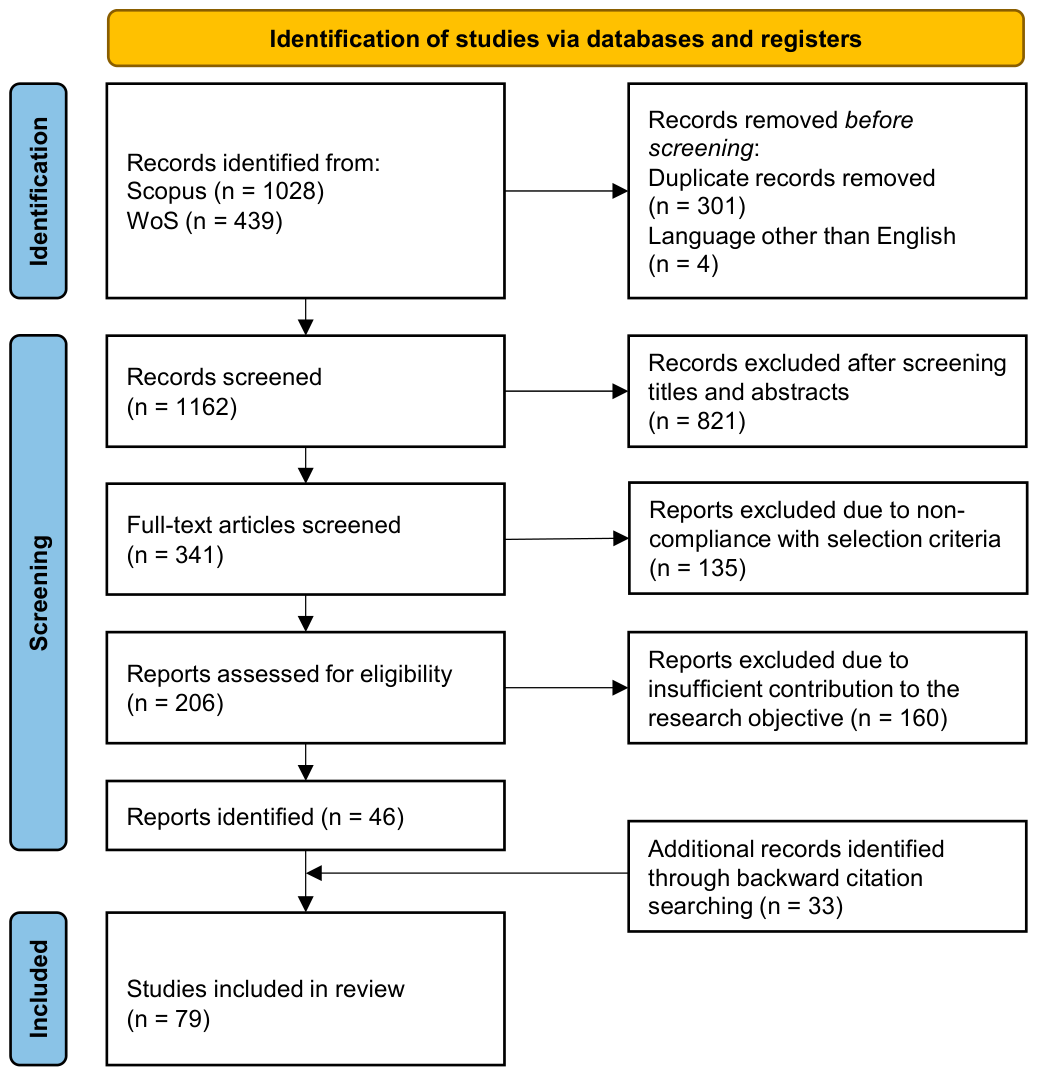
Figure 1 summarizes the selection process according to the PRISMA 2020 guidelines. The systematic search process resulted in 46 selected articles. Through a backward search, 33 additional articles were included.
The systematic literature review resulted in a comprehensive corpus of academic literature on the SM discourse and specific aspects of leadership and social sustainability in manufacturing. The results of the quality assessment of the included studies are presented in the Appendix A (Table A1). The assessment based on the seven quality criteria revealed that 44 studies (56%) were classified as high quality, 26 studies (33%) as moderate quality, and 9 studies (11%) as low quality. These variations are a result of the diversity of study types and confirm the high level of evidence provided by the research findings.
The characteristics of the selected studies are presented in Table 2. These include publication type, type of study and main perspective for the objective of categorization, namely the three levels: context; systems and processes; and leadership and social aspects.

4.2. Contextual Elements for Integrated Sustainable Manufacturing

The contextual dimension of integrated SM describes concepts and elements that influence or interact with SM systems from various perspectives. Sustainable leaders in the field of SM need to understand these theories and influencing factors in order to interact effectively with internal and external stakeholders, and to reflect on their own decisions.

4.2.1. Industry 5.0 as a Paradigm to Fulfill All Sustainability Dimensions in Sustainable Manufacturing

The concept of SM is in line with industrial development such as Industry 4.0 and Industry 5.0. Leadership is not explicitly mentioned as an important aspect of these transformations, with only one review [96] addressing leadership in relation to Industry 4.0 and SM. The focus of Industry 4.0 is on sensor-supported digitalized production with virtual processes and software-embedded systems that do not primarily pursue environmental or social goals [40]. However, the term “social” appears in all reviews on SM in Industry 4.0, mostly in connection with the generic definition of TBL and without further details. Sharma et al. [91], Ng et al. [49] and Fuertes et al. [73] mention social aspects as an important focus for future research, as there is little knowledge about the social sustainability of digital technologies in Industry 4.0.
There is no consensus on the social impact of Industry 4.0, as, for example, jobs with simpler tasks will be reduced, while other activities, such as analysis, collaboration and creativity, remain performed by human workers [40]. Overall, social aspects play a minor role in Industry 4.0, with the focus exclusively on human–machine interaction, physical ergonomics, and a reduction in monotonous, repetitive tasks [23,40,73,92]. Due to increasing complexity, decentralized decision-making processes will be implemented, resulting in short-term and less predictable tasks [92]. This can cause anxiety for employees [49]. At the same time, it is advantageous to eliminate work that is difficult or dangerous for employees [8]. Socio-cultural factors, HR management and organizational learning are important to maintain a skilled and flexible workforce that can respond agilely in a rapidly changing and disruptive work environment [1,96]. Thus, a social infrastructure must be created for employees and the development of their skills in a supportive learning environment [49]. As a techno-economic approach, Industry 4.0 has accelerated economic growth, productivity and flexibility in production but has also brought deficits, including insufficient sustainability, ecological imbalance, unemployment and psychological effects [8]. This leads to the call for Industry 5.0 as a value-oriented approach that focuses on human-centered technologies as well as ecological and social sustainability [8].
Industry 5.0 describes a paradigm that aims to harness unique abilities of humans, such as creativity, critical thinking and adaptability, with advanced technologies to support the sustainable transformation in industry [6,8]. With its three main pillars of human centricity, sustainability and resilience, Industry 5.0 goes beyond Industry 4.0 [6,7,8,9]. It promotes talent, diversity and empowerment, while respecting planetary boundaries and adapting flexible technologies with a learning mindset [8]. In the focus of Industry 5.0 are collaborative human–robot cooperation (cobots), bioeconomy, as well as mass customization and personalization through the use of human creativity and smart, powerful systems and machines [8]. The aim is to balance economic and social dimensions without compromising profitability. In contrast to Industry 4.0, this is achieved by empowering workers rather than replacing them and harnessing human innovation [8]. Human centricity, as a core value of Industry 5.0, focuses on the needs of people in all production processes, including a safe, secure and inclusive work environment to promote physical and mental health and protect employee rights [6,7,8,9]. In addition, workers need to constantly improve their skills to keep pace with technological change, while manufacturers need to rethink how to adapt new technologies to the basic needs of workers and how to address concerns about autonomy and privacy [6,8]. The evolution from the technology-centric Industry 4.0 to the value-oriented, socio-technical Industry 5.0 [7] is crucial for sustainable leaders in SM, as it shifts the focus from process optimization to workforce empowerment, thereby closing the gap between technological efficiency and genuine social and environmental sustainability. Industry 5.0 sets the framework and goal for our approach to defining leadership in SM.

4.2.2. Circular Economy as a Driver for Widespread Sustainable Manufacturing

Circular economy (CE) is one of the most important approaches to promote SM [36]. The four fundamental goals of CE are a regenerative and restorative economy; the decoupling of economic growth and environmental degradation; the preservation of economic, social and ecological values; and a contribution to the resilience of the system [16,83]. Sustainable leaders in SM should align their decisions with CE and promote external partnerships for this purpose.

4.2.3. Government Support for Promoting Sustainable Manufacturing

Legislation and policy can support sustainable practices in manufacturing through regulations, guidelines, and regulatory requirements. Simple, effective, and industry-specific laws and policies, as well as regular audits and certification of organizations promote sustainability in product design, manufacturing, supply chain management, purchasing, natural resource conservation, planetary protection, environmental management, CE, waste treatment and disposal, CSR, operational and labor practices, human rights, consumer rights, corporate governance, and community involvement and development [2,4,12,21,24,34,36,43,60,80,89]. In many countries, product policies are in place for each step of the life cycle, i.e., design, procurement, manufacturing, assessment, labeling and taxation [98]. The overarching framework is provided by the UN’s 17 SDGs, which are implemented in national legislation in the UN member states. Examples in the European Union include the European Green Deal, the European Climate Law, the EU Taxonomy, the Corporate Sustainability Reporting Directive (CSRD), the European Sustainability Reporting Standards (ESRS), and the Corporate Sustainability Due Diligence Directive (CSDDD). The new international standard ISO/UNDP FDIS 53001 Management systems for United Nations Sustainable Development Goals (SDGs)—Requirements is due to be published and can support implementation.
SM is practiced on a larger scale in countries where suitable subsidies are available and a supportive legal framework exists [2,24,36]. Sustainable leaders in SM should be aware of existing regulations and go beyond them when necessary to achieve comprehensive sustainability. Grants and subsidies can support leaders to implement SM practices.

4.2.4. Social Enterprises as Role Models for Community Support and Leadership in Sustainable Manufacturing

Social enterprises focus on sustainable development through social business, social innovation, (corporate) social responsibility, social impact, and gender equality [74]. There is hardly any reference to social enterprises in the SM literature. However, Gbededo and Liyanage [24] suggest that social enterprises can provide valuable insights into the implementation of SM. In this context, social sustainability encompasses not only internal corporate initiatives for the company’s own employees but also initiatives to support the local community and society [24]. Theories on social enterprises and their practical implementation with CSR and social entrepreneurship provide sustainable leaders in SM with useful insights. They can learn from the specific values and mindsets to strengthen social sustainability in their organizations.

4.2.5. External Factors That Motivate, Promote, Enable, and Hinder Sustainable Manufacturing

Since companies are part of an industrial ecosystem and business environment, there are various motives, drivers, enablers, and barriers for SM that originate not only from within the company but arise in the context of the manufacturing industry. The related literature lacks specific leadership aspects. A systematic review shows that drivers for implementing SM include legislation, public and peer pressure, cost benefits, technological advancement, competition, customer demand, supply chain pressure, and organizational image [36]. In addition to these drivers, further motives for implementing SM exist to ensure long-term economic success and market and business environment. These motives include, among others, reducing costs, lead times, rework, waste, defects, scrap, stock, equipment downtime, dependence on suppliers, supply chain times, and practices that are harmful and detrimental to biodiversity [36]. Additional motivation stems from improving product and environmental stewardship, product life extension, end-of-life options, risk management, delivery reliability, quality, flexibility, services to the society, government subsidies, tax benefits, investment support, and new market and business opportunities [36].
Although there are many motivating factors, there are also barriers that hinder organizations from successfully implementing SM. These barriers include, e.g., management complexity; low top management commitment, and lack of leadership and technical expertise; resistance to change; lack of cooperation and mutual trust; low employee commitment, involvement, and empowerment; undeveloped organizational culture and structure; lack of teamwork; cross-functional and inter-departmental conflicts; complexity in the design of sustainable products, processes, and systems; and lack of supplier integration [21]. In particular SMEs lack resources and incentives to engage in sustainable actions. There is organizational resistance to change, a lack of interest in investing in voluntary programs and poor management understanding of sustainability issues [11]. Bux et al. identified similar barriers to CSR implementation, with the addition of a lack of knowledge and strategies, as well as insufficient training and HR management [60].
Knowing barriers and their associated root causes helps managers, leaders, external stakeholders and policy makers to define strategies to counteract these barriers and support the realization of SM [21]. Sustainable leaders in SM should consider motives, drivers, and barriers to SM in order to improve their decision-making, understand interrelationships and dependencies, and guide action at the strategic level.

4.3. System Elements and Processes of Integrated Sustainable Manufacturing

This dimension takes a comprehensive SL perspective considering the organization, processes, and products, thus the SM system as a whole. We describe aspects of SM systems and processes that leaders need to consider in order to establish integrated SM.

4.3.1. Ensuring a Balanced Consideration of Sustainability Dimensions and Their Interdependencies

For decades, SM approaches addressed only the environmental dimension [40]. In general, the focus in the SM literature is on environmental and economic aspects, while the social dimension is almost neglected [2,10,11,12,13,14,15,16]. Hasanain [23] emphasizes that conventional manufacturing focuses on economic sustainability, while today’s manufacturing focuses environmental sustainability, and the manufacturing of the future should focus on social sustainability, including the key factors of work ethics, work environment, health and safety, community relations, and human rights. The ranking of relevant topics in SM research includes only one social topic, i.e., change management, which is listed in last place [2]. Leadership does not occur as a core topic in current reviews on SM [10,14,34,80,97].
Furthermore, reports do not sufficiently address the various aspects of sustainability. There is a call for studies and decision support systems for SM that integrate all sustainability dimensions [2,11]. Companies report in detail on economic indicators but often limit environmental and social reporting to the legal minimum [40]. Compared to environmental indicators, social indicators are difficult to measure and evaluate; however, they are equally important [10]. Policy makers and practitioners should consider them to a greater extent [15].
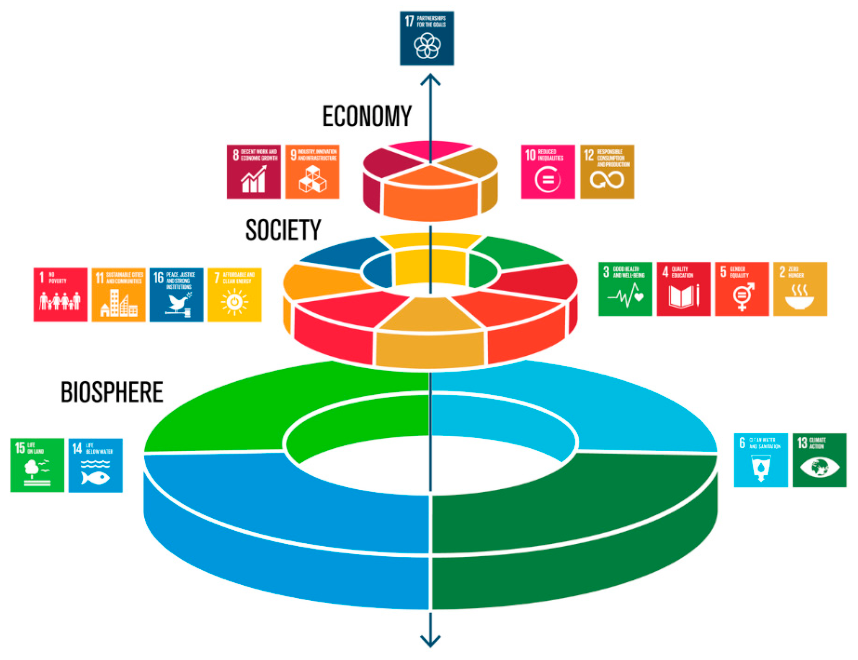
From a systemic perspective, the three sustainability dimensions are interdependent and differ in their flexibility. While planetary boundaries are fixed, economic systems and social structures are changeable. The Stockholm Resilience Centre ranked the three dimensions and 17 SDGs in The SDGs wedding cake (Figure 2). The biosphere forms the foundation of all life and serves as the basis for people living in societies where economic prosperity is created. Recognizing these dependencies is important for SM researchers and practitioners to understand that social systems are embedded in natural systems and that companies are dependent on both social and natural systems [26]. Research should focus on the interconnection between economic, environmental and social aspects in SM practices [34]. This is also relevant for the SM objective of clean business growth within planetary boundaries. Sustainable leaders in SM should balance the three dimensions of sustainability and be aware of the varying degrees of flexibility and interdependencies. Only if they take this into account when making decisions and setting priorities can they ensure truly sustainable practices.

4.3.2. Lean Manufacturing as a Supportive Approach for Social Sustainability in Sustainable Manufacturing

Lean manufacturing supports SM in the social dimension by engaging employees and utilizing their skills to ensure continuous problem-solving and a positive organizational culture. Lean manufacturing also supports the environmental and economic dimensions as it strives for eliminating waste, streamlining processes, and improving value addition, efficiency, productivity, and flexibility [14,35]. Lean manufacturing was first introduced by the Toyota Production System (TPS), aiming to reduce negative environmental impacts and to ensure employee safety [34]. Liker [82] (p. 375) described TPS as a “technical and social system” that “leads to more dependence on people, not less”. The workforce, which consists of engineers, skilled workers, quality specialists, suppliers, managers, team leaders, and team members, should be empowered and motivated to think scientifically and to continuously solve problems [82]. The principles of TPS include long-term systems thinking; the development of leaders, employees, and teams; and the development of a learning organization, specified in Principle 9 as follows:
“Grow leaders from within when possible, rather than buying them from outside the organization, to build and sustain the culture. Do not view the leader’s job as simply accomplishing tasks and having good people skills. Leaders must be role models of the company’s philosophy and way of doing business. A good leader must understand the daily work in sufficient detail so he or she can be the best teacher of your company’s philosophy. One of the most important jobs of a leader is to develop other leaders through coaching.”
[82] (p. 380)
Although the original idea was different, the implementation of lean manufacturing is often limited to economic and ecological considerations, while social aspects are neglected [34]. Lean principles such as reduced resources, the absence of buffers and a continuous flow can even lead to stress for employees and must therefore be examined closely from various perspectives [23]. Some definitions cite quality and cost as the main motivations for lean manufacturing, which is then expanded to lean green manufacturing focusing on environmental aspects, and to SM with an additional social focus [20]. The current discourse also includes the 8th waste in lean manufacturing as non-utilized talents and skills of the workforce [69]. Sustainable leaders in SM should explore the original concept of lean manufacturing to strengthen the organization’s sustainability. This allows them to fully harness the potential of this established approach from a new perspective.

4.3.3. Paradigm Shift from a Linear, Resource-Based View Towards Complexity and Systems Thinking

Socio-technical systems thinking with a strong human-centered perspective should be applied in manufacturing [25] in order to allow for a successful transition to SM. In addition, several paradigm shifts are required: from a linear to a life cycle perspective [10,16,23,48,70,73,83], from a reductionist to an integrative perspective, from a neoclassical mechanistic/technocentric to a systemic perspective [26], and from an economic to a human-centered and ecological perspective [8,23]. The systemic perspective is crucial for recognizing a company as a complex system within a larger system. This perspective is lacking in definitions of SM [5], as research on sustainability often focus on a resource-based view, competitive strategies, or institutional theory, rather than the context in which organizations are embedded [26]. Systemic or systems thinking allow one to overcome silo thinking and promote a holistic view that fosters the understanding of complex systems [26]. Systemic problems should be solved systemically and with a long-term perspective. When leaders face complex challenges of sustainability, they need to understand the interconnectedness and dynamics of the system [26]. An organization is an agent in interconnected social, economic and ecological systems and therefore requires effective partnerships [5,26]. Thus, understanding complexity and (inter)relationships is fundamental for engineers in SM [1]. This is a challenge because complex problems in science, engineering, technology, or management are characterized by various criteria that are often conflicting, interdependent or difficult to measure [100]. Especially in SM, objectives are often conflicting and incommensurable [15]. In addition, human beings tend to reduce information when confronted with complexity; however, this leads to disastrous consequences when relevant information, context and relationships are ignored [27]. It is important that leaders understand and tolerate complexity in SM rather than eliminating it.
In addition, paradigm shifts are accompanied by major societal shifts, new values and mindsets as well as a change of individual behavior [26]. With this, SM also requires a paradigm shift in education to achieve greater sustainability [10,26,38]. To understand sustainability from a systemic perspective, five core concepts must be learned: interconnectedness, feedback loops, adaptive capacity/resilience, self-organization, and emergence [26]. Sustainable leaders in SM should be trained in systems thinking and guide and encourage their employees to do the same. The approach developed in this paper is fundamentally based on the concept of systems thinking.

4.3.4. Conceptualization of Levels and Structures in Sustainable Manufacturing Systems

In order to adopt a systemic perspective, organizations and their processes must be analyzed at multiple levels and placed in context to examine internal and external interactions and connections with the social, economic, and ecological environment. SM systems can be defined by three levels: micro (individual company and manufacturing plant), meso (eco-industrial park and network of companies), and macro (nation and region) [16,26,34]. Leadership and management aspects occur at all levels. At the micro level, the organization is analyzed as a system with operations, employees, product life cycle processes, resource consumption, waste generation, and sustainability performance. At the meso level, collaboration and cooperation between organizations are focused to protect the natural environment, and supply chain networks, logistics and customers are analyzed to achieve resilience [16]. At the macro level, the community and society are considered, including regulations and CE [16]. Analogies of natural systems and nature-inspired strategies can support industrial systems in becoming sustainable as well as efficient, flexible, and resilient, i.e., being able to withstand, adapt to, and recover from disruptions and changes in the environment [16].
Value creation factors (VCFs) can support to systematize and describe elements and criteria of SM. VCFs consist of humans, organizations, products, processes, and equipment [51]. They provide a holistic view of value creation in SM and appear throughout the entire product life cycle. Leadership and employee involvement are examples of human and organizational factors that influence SM [3]. Another classification distinguishes between three levels of manufacturing: product (design), process (technological processes) and system (enterprise and supply chain integration) [38]. There are other approaches to systematize SM factors, for example in [4,20,89], while leadership is largely neglected. Sustainable leaders in SM should be aware that SM systems are socio-technical systems that integrate ergonomic and human factors to optimize organizational structures and ensure employee performance and well-being [7,23]. In doing so, the multi-level structure of SM systems should be specified for the respective organization.

4.3.5. Measures for Implementing Sustainable Manufacturing Systems

The implementation of SM requires various measures. Besides process optimization, raw material substitution, new technologies, and product design, the development of working practices is also required [37]. Often, a first step towards SM is the implementation of environmental regulations, e.g., by reducing waste, recycling unavoidable waste, and converting remaining waste into energy [10,15,37]. Energy consumption can be improved, e.g., by utilizing the heating and cooling capacity of processes and by optimizing production scheduling and process planning [10]. To ensure the effective, efficient and consistent implementation of an organization’s sustainability goals and strategies, management support for methods, procedures and tools as well as company policies and governance structures are required [18,37,70,89]. This can be supported by modeling and simulation to verify and validate progress [23]. Another measure for successfully implementing SM is the establishment of an appropriate work culture [37,89]. To align sustainability activities across the entire life cycle and contribute to the achievement of the 17 SDGs, interconnections and synergies between SM criteria and SDGs should be identified and their achievement assessed [14]. Sustainable leaders in SM should identify and implement all feasible measures, while considering both sustainability of manufacturing and manufacturing for sustainability [5]. This is an active contribution to achieving sustainable results that are visible and measurable.

4.3.6. Sustainable Value Streams and Supply Chain Management in Sustainable Manufacturing

Value stream mapping is used to formalize SM processes by measuring and visualizing impact structures and value streams. The mapping aims to closely and proactively monitor processes, products, systems, and supply chains from a social, economic, and environmental perspective [21]. While numerous environmental parameters are considered, only a few social aspects related to health and safety are included [72].
Suppliers, being part of a sustainable value stream, can be seen as an important element of the organization, as they can create a competitive advantage through green innovations and environmental performance [21]. Green supply chain management and green purchasing ensure environmental sustainability in the life cycle process and broaden the view from the internal company to the entire value chain [5,14,20,21,34,35,49,91]. Hence, the supply chain should be optimized in terms of energy and material flows [16,92], as well as sustainable distribution and transportation practices [91]. Collaborating and cooperation with suppliers are necessary for reverse supply chains that support 6R strategies, zero waste manufacturing and CE [4,5,10,20,21,34,49]. Such collaboration and cooperation must be built on trust and take a customer-focused approach [4,20,21,26,65]. Although social aspects are neglected in green supply chain management [14], they are considered in social LCA (S-LCA), focusing on fair competition, social responsibility, supplier relationships, and respect for intellectual property rights [24]. Social aspects, such as child labor, forced work, hazardous work, and fair salaries, have to be considered in the supply chain management [24]. Raising suppliers’ sustainability awareness, understanding, knowledge, training and education enhances the implementation of SM [21]. Therefore, suppliers should be rewarded and incentivized for implementing and promoting sustainability [21]. Sustainable leaders in SM are required to incorporate sustainable practices into all processes and value streams, including the supply chain. This ensures internal sustainability practices and the sustainability of products and impacts the corporate environment.

4.3.7. Sustainable Product Design as a Key Factor for Sustainable Manufacturing

The early integration of sustainability into the product life cycle ensures the development, i.e., the design and realization, of sustainable products with sustainable production processes [11,35,44]. Product-specific environmental impacts are mainly determined in the design phase [10]. Thus, sustainable product design and redesign is an integral and inseparable part of SM [11,35,37,38,39,44,47,48,89]. Customer requirements and legislation also affect sustainable product design [11,36,43,49,89]. Most sustainable practices and design approaches are related to environmental sustainability, and only a few are related to social or socio-economic aspects [20,21,37,44,89,92,95]. Most of the practices are related to sustainability evaluation and address early stages of the product development process, such as planning and conceptual design [95]. However, a comprehensive perspective on all product life cycle stages is required, including manufacturing, use, end-of-life strategies, and the supply chain [10,11,37,44,89]. A product can be labeled to indicate its sustainable design, manufacturing, and impact [67].
Since there are conflicts between the dimensions of sustainability, it is important to reflect on the priorities set in the product design process [44]. Decision-makers must be supported by methods and tools, such as multi-criteria models that promote an understanding of the complexity of SM and support the development of an optimal sustainable product [11,35,44]. Rosen and Kishawy argue to use LCA for assessing design alternatives [89], while Gbededo et al. argue that LCA is insufficient for decision-making during product development, as it does not address the three sustainability dimensions and their interrelationships [44]. According to Gbededo et al. products and processes are always partially sustainable, as ecological, economic and social criteria are balanced [44]. When determining an acceptable level of sustainability, the designer’s experience and judgment are crucial [37]. Thus, designers should be educated and trained in sustainable product design. According to [20,21,37], this includes:
  • Design for functionality: modularity, ease of use, maintainability/serviceability/diagnoseability, upgradability, ergonomics, reliability, and functional effectiveness.
  • Design for environment: eco-innovation, eco-design, environmental effect, life cycle factor, ecological balance and efficiency, and regional and global impact.
  • Design for society: design for operational safety, design for health and well-being, ethical responsibility, and design for social impact.
  • Design for recycling: ability to disassemble, recycle, dispose, remanufacture and reuse.
  • Design for resource use and economy: energy efficiency/consumption, use of material and renewable energy, market value, installation and training cost, and operational cost.
  • Design for six sigma: robust design, failure mode and effect analysis (FMEA).
  • Design for manufacturing: manufacturing methods, packaging, assembly, storage, and transportation.
The concept of cradle to cradle (C2C) is also applied to SM [16,50,92]. With its positive vision towards climate- and nature-positive products and companies, C2C is a far-reaching, ecologically sustainable paradigm with long-term positive effects on society [68,101]. C2C is based on systems thinking and the report ‘Limits to Growth’ [102], emphasizing that no action is neutral to the environment, as there is always an effect of action. Therefore, C2C calls for design and behavior inspired by nature in order to avoid negative effects on the climate, resource consumption, biodiversity or society with the aim to pursue social fairness and achieve positive effects in interaction with nature [67,84,101]. C2C is a design paradigm and addresses the entire life cycle and value stream with external stakeholders, such as suppliers and customers [68].
Sustainable leaders in SM should promote sustainable product design and empower their employees to implement it comprehensively. This is of crucial importance, as products are the very purpose of manufacturing. For ethical reasons, manufacturing orders for products whose sustainability is unclear should not be accepted.

4.3.8. Innovative Strength as a Driver for Competitiveness and Sustainable Manufacturing

Radical innovations for sustainability are required in various areas, such as education, business models, products, services, production and logistics systems [26]. SM increases the organization’s innovative strength through social aspects, such as teamwork and work culture, as well as through a focus on research and development [5,21,96]. A culture with a diverse workforce and openness to new ideas from different perspectives, as well as a willingness to experiment, are essential for learning processes and promote innovative solutions [23,26,65,96]. Innovative, sustainable business models are circular and can focus on selling the functionality and accessibility of products rather than physical products [26,34,92]. Cooperation and collaboration within the supply chain or with customers can also promote innovation [5,21]. Employees can be encouraged to be innovative by recognizing and rewarding innovative ideas [3]. Government’s financial support and the demand for sustainable products also promote innovative sustainability initiatives [21]. Sustainable leaders in SM should ensure an open and learning-oriented work culture among a diverse team in order to motivate and enable sustainable innovation.

4.3.9. Collaboration and Cooperation with Stakeholders to Ensure Sustainable Practices in Sustainable Manufacturing

Partnership processes, i.e., collaboration and cooperation, between stakeholders and shareholders, as well as stakeholder involvement are essential for a company’s competitiveness and economic sustainability [4,20,21,26,49]. Institutional and legal constraints influence decisions made by stakeholders regarding adjustments to the manufacturing process [4]. A secure and beneficial cooperation platform can support communication and exchange of information [4]. Further aspects of partnership include increased cooperation between design and production, and between suppliers and customers [5,89]. To develop a sustainability strategy and related processes, employees have to collaborate and cooperate with each other and various stakeholders [1,70]. Teamwork and work culture influence the effectiveness of collaboration and cooperation [96].
Sustainable leaders in SM need to enable and promote collaboration and cooperation at all levels and involve all stakeholders. This ensures sustainable strategies and processes.

4.4. Leadership and Social Aspects in Integrated Sustainable Manufacturing

The third dimension presents specific leadership and social aspects for integrated SM. Sustainable leaders in SM need to recognize and implement these aspects in order to improve the social well-being and skills of their employees, thereby promoting productivity and sustainable development of processes, systems, and the entire organization.

4.4.1. Ethics and Responsibility as a Basis for Sustainable Manufacturing

Ethical and moral responsibility are important motivations for SM [36]. Since ethics is one of the central aspects of social sustainability, it is crucial for sustainable leaders in SM [19,23,24,26,36,37,88]. In the industrial context, ethics can either be seen as a non-negotiable static set of conditions and rules that must be met in the life cycle of a system, or it can be seen as a key performance indicator (KPI) to be measured and improved over time [103]. Social benefits related to ethics are provided in ISO 26000 [20,36,104]. If an organization wants its employees to act ethically and morally, it is important that ethical behavior is practiced by leaders and the social impact of the entire organization is aligned [26,36]. CSR is a concept from the social economy that promotes ethical and moral responsibility of organizations towards their employees, local communities, the environment and global society while maintaining the competitiveness, productivity and profitability of the company [13,24,96]. CSR is regarded as a sustainable business model that goes beyond legal obligations and includes the voluntary integration of social and environmental concerns by the company to remain competitive in the long term [13,96]. It should be integrated into SM. In an increasingly digitized work environment, ethics are also important when handling personal and sensitive data of employees, customers and suppliers, as well as when using new technologies, such as cobots [8]. SM engineers are required to demonstrate personal responsibility and autonomy when conducting complex technical processes and to take full responsibility for personal and group outcomes [1]. Sustainable leaders in SM should be trained in ethical decision-making and reflect this in their actions in order to serve as role models and multipliers within the organization. CSR and moral, ethical, and responsible leadership approaches strengthen the foundation for SL in SM.

4.4.2. Leadership Styles and Mindsets That Enable Sustainable Manufacturing

Leadership influences operations, strategies and communication and with this, the sustainability of organizations [26,70]. Leadership plays a central role in SM and influences ecological, economic, and social sustainability, but not every leadership style and mindset is suitable for implementing genuine sustainability in SM.
Due to the paradigm shift towards sustainable development, sustainability leadership requires skills such as resilience to dynamic changes and systems thinking to get a holistic perspective of the complexity of embedded organizations [1,26,70]. Leaders have to deal with unpredictability, uncertainty, interdependencies, conflicting goals and a large amount of complex information without immediately reducing and narrowing down the data to achieve rapid decision-making [1,19,26,27]. Leaders need to understand interdependencies and dynamics of complex systems to manage and foster sustainability [26]. Complexity leadership includes adaptive leadership to enable emergent processes and interactive dynamics in interdependent systems, administrative leadership to plan and organize activities, and enabling leadership to facilitate these two functions [93]. These functions are in line with SL theory and confirm that leadership is too complex to solely be described as the action of one or more individuals. It is rather a multi-faceted interplay of interacting forces [93]. In complex systems, leaders should enable emergence not only in a non-directive but a value-oriented and sense-making way by allowing new perspectives and embracing uncertainties when employees realize new ideas [88]. Also, self-organization and nonlinear dynamics caused by feedback loops lead to emergence and innovative potentials [26]. Decentralized decision-making with shared responsibility and the inclusion of different perspectives through an interdisciplinary and transdisciplinary approach, as well as an orientation toward long-term goals needs to be promoted in SM [1,5,26].
Ethical leadership is a key to sustainable development as it enables people to take responsibility and find innovative and sustainable solutions for complex, i.e., interdependent and dynamic, problems [19]. However, ethical leadership is widely neglected in the SM discourse. Ethical leadership is built on justice, unity and love and can be distributed to more than one leader in a group and serve the common good, and its style should be selfless, humble, listening, reflective, and persevering, i.e., service-oriented instead of power-oriented [19]. Normative, i.e., ethical or moral, dimensions should be integrated into leadership models and be linked to the goals, style, and motivational factors of leadership to promote SM [19]. SM can also be supported by intellectual leadership for sustainability as part of transformational leadership [71] and green leadership to enhance environmental knowledge sharing [94].
With values and beliefs that are shared by leaders and employees, a culture can be established to achieve organizational goals [17,96]. A systems approach aims to share responsibility, and systemic leadership can be utilized to support purposeful value-driven organizational practices to enable sustainable organizational development [26,88]. Sustainable leaders are change-oriented, adaptable, systems thinkers and are aware of social and environmental sustainability [22]. Furthermore, they have patience (long-term commitment), energy and passion by communicating a vision and encouraging innovation, business savvy and credibility by linking sustainability and stakeholder value, and they have implementation skills and persuasiveness by communicating and building relationships [22]. Since SL uses the principles of servant leadership, sustainable leaders develop and empower people by listening and being empathetic, confident, persuasive, forward-thinking, and focused on the community and employees [22]. Leaders should promote the ability of adaption and flexibility; depersonalize conflicts and enhance communication, including opposing perspectives; share responsibility among all participants; have a clear vision of a better society; and strengthen diversity in terms of skills, cultures, interests, and passions [19]. Transcendence is an important leadership skill to distinguish the essential from the expandable and stay focused on values and principles leading to courageous conversations with a certain distance to operational problems [19].
From a behavioral science perspective, leadership and employee participation are necessary to implement regulatory requirements and SM practices [3,65]. The personal motivation of leaders and their leadership style are important factors for implementing and pursuing sustainability strategies and strengthen value creation, financial performance and problem-solving initiatives [71]. A sustainability mindset and sustainable values determine individual behavior [26]. Leadership models should consider the motivation for taking leadership, which lies in personal values and can be driven by self-interest and/or selfless, ethical considerations [19]. Since sustainable development in the short term takes investments that will be rewarded only in the long term, competitiveness and personal profit are not enough motivation to become a sustainable leader; instead, group orientation with a culture of cooperation and altruistic motives are needed [19].
Top management commitment and involvement is an important factor for SM, as it influences the mindset with a clear vision and strategy for sustainability, investments and resource allocation, the empowerment of employees, and the promotion of a sustainability-oriented work culture [18,20,60]. A sustainability awareness and training program should be provided for the top management in order to increase their skill sets to implement sustainability-related projects [21]. Educating leaders in sustainability is challenging as it prepares them to understand the complexity of social–ecological systems and their personal impact and recognizes their role as change agents [1,26]. Developing ethical leadership qualities requires more than just cognitive training. Respect and communication are especially important [21,23,26,65]. Since the variety and dynamic operations that take place in complex systems cannot be controlled by one person, trust as well as loyalty, openness, and integrity are important for leaders and all team members [77,88]. Sustainable leaders in SM need to develop, communicate, implement and monitor a sustainability strategy for the workplace [1]. They should act as role models to encourage organizational learning [96], motivate employees in change processes [21], and show a positive attitude towards green practices [3]. Furthermore, they should increase awareness of environmental policies, motivate and support new ideas, and recognize and award innovative ideas [3]. Sustainable leaders in the role of supervisors should assist and support employees [23] and educate them in sustainable development [105].

4.4.3. Culture of Sustainability to Encourage and Engage People in Sustainable Manufacturing

Organizational culture is an essential and fundamental component of organizations [96]. It is part of change processes and a basic key to successfully implement SM [8,37,89]. Thus, to promote sustainable development in a company, a culture of sustainability with appropriate procedures and conditions must be established [20,21,37,65,85,89]. Since community engagement and the attitude of customers and suppliers towards sustainability are important elements of SM [89], an improved relationship between suppliers and buyers can increase cultural intelligence, which supports a globalized and diverse work environment and strengthens the commitment to sustainability [91]. Awareness of cultures can lead to a better understanding and protection of cultures, e.g., cultural heritage in local communities should be recognized and protected when making business decisions [24].
Organizational learning and participation of employees and stakeholders create a culture that promotes innovation and continuous improvement of products, processes, systems, and the supply chain [20,21,96]. The organizational culture can support resilience and successful change management in the transition to SM and should be characterized by respect, non-discrimination, diversity, and ethical behavior [20,21,26,96]. Leaders must be committed to the organizational culture in order to promote it [3,20]. Employees are often proud to work for companies that make positive contributions to society and the environment, leading to higher job satisfaction, higher productivity and lower turnover [96]. Employee cooperation, team spirit and sustainable values are important for the work culture, in order to increase employees’ involvement, engagement and autonomy in problem-solving, knowledge sharing and creative organizational improvements [20,21,65]. This is positively influenced by matrix flatter organization structures [20,21]. Sustainable leaders in SM should create and promote a work culture that embraces sustainability to ensure the implementation of SM systems.

4.4.4. Social Well-Being as a Key Factor for Sustainable Manufacturing

The fundamental concept that people are social beings is important to the scope of social sustainability as it emphasizes people’s ability to cooperate and proactively engage and develop when circumstances allow for this [24]. However, social needs are often neglected in the public and private economy [24]. Knowledge about human behavior, abilities and limitations is necessary in order to design products, processes, and organizational structures that are social and human-centered [23]. Studies on employee behavior show that negative social impact can lead to high turnover rates, social instability and productivity losses, in contrast to motivated employees who are highly engaged and whose behavior leads to higher quality, efficiency, and productivity [24,81]. Social well-being in organizations creates a sense of belonging and inclusion and makes employees healthier, more focused and more effective, while employees who do not feel included tend to waste time or even actively undermine their company [24]. To gain well-being, several factors, such as income, physical health, and housing, are necessary but not sufficient, as psychosocial aspects are crucial as well [85]. For some people, the value of their work can increase their intrinsic motivation [24]. The physical and psychosocial conditions in the workplace have a direct impact on the mental and physical health of employees [23,81]. Commitment and motivation are the driving forces that keep people focused and determined to achieve their goals, regardless of any challenges [24,65]. Thus, a large number of employees for a task does not automatically mean higher productivity, because human employees are cognitive and social beings who are sensitive, react to their environmental stimuli, experience stress and depression and have expectations and responsibilities [24]. If employees fear change, this affects their behavior, which can be overcome by developing a social infrastructure [49]. Neglecting to invest in the social well-being of employees not only affects productivity but also the goals of SM and sustainable development [24,65].
Humans are by nature trustworthy, self-protective, and self-governing; capable of growth and love; and possess a set of needs that, if not met, create tension and negative behaviors [24]. Herzberg’s two-factor motivation theory states that satisfaction and dissatisfaction depend on different factors, and the absence of factors for dissatisfaction does not automatically lead to satisfaction but to “no dissatisfaction” [24]. It is essential to understand the factors that lead to job satisfaction in order to increase the company’s productivity and competitiveness [24,81]. Since it is rare for a job or employer to offer tasks for different traits at the same time, some people work in several jobs in order to find a balance between different interests and traits to achieve well-being [23].
Leadership plays a crucial role in employee behavior and the sustainable transformation of organizations [3,26]. Employee morale and engagement often increase when the company has a clear positive impact on society and the environment [96]. Individual behavioral change is about decision-making, social norms and values and may lead to a paradigm shift, which is important for a system change towards sustainability [26]. Sustainable leaders in SM need to recognize and promote factors that contribute to the social well-being of their employee in order to enhance sustainable practices. Social well-being is a key objective of Industry 5.0.

4.4.5. Sustainable Human Resource Management for Sustainable Manufacturing

Research in SM should focus on the integration of social dimensions, including HR, managerial and leadership behaviors, and attitudes to influence sustainable performance [14]. Insufficient measures to increase HR can pose a threat to sustainable value creation [4]. HR capabilities are necessary in order to find and develop adequate staff that implements sustainability [4,60,73]. Human capabilities, e.g., creativity, critical thinking, and adaptability, as well as knowledge of advanced technologies are required in SM and Industry 5.0 and should therefore be developed and ensured [8]. Recruiting engineers who are able to work in complex environments and provide knowledge and expertise in SM are necessary to remain competitive [1]. Investments in HR with a positive social impact include social security and benefits, e.g., insurances, healthcare, parental leave, and stock ownership, as well as equal opportunities and non-discrimination, like fair salary and diversity of governance bodies and employees [24]. HR management should ensure freedom of association and collective bargaining, adequate working hours, training, and occupational health and safety management and forbid child, forced and compulsory labor [12,24].
In order to achieve job satisfaction various organizational factors should be analyzed and managed by HR management, e.g., organizational structure, pleasant working conditions, reward systems, promotions, wages, job content as well as cooperation and relations with colleagues, superiors and partners [81]. Personal factors that affect job satisfaction may include gender, age, level of education, balance between personal interests and work, work experience, expectations, status, health and overall life satisfaction [81]. Enhancing social sustainability through HR management can be supported by ISO 26000, which includes social responsibility, ethical aspects, stakeholder engagement, organizational governance, human rights, labor practices, fair operating practices, consumer issues, environmental aspects, as well as community involvement and development [104]. This norm can be interpreted individually and is not certifiable [12,13].
Job profiles for factories of the future require skills such as leadership, problem-solving, decision-making, cooperation, communication, empathy, interdisciplinarity, proactivitity, creativity, curiosity, continuous learning, innovation, teamwork, integrity/ethics, risk management, judgment, storytelling, out-of-the-box thinking, data intuition, conscious listening, critical/analytical thinking, and adaptability to new situations [1,90]. Further competencies include life cycle thinking; CSR awareness; ability to understand interrelationships, cause–effect chains and trade-offs between different parts of a system; ability to differentiate between short- and long-term options and strategies and their consequences; ability to critically value situations from a sustainability perspective; ability to identify and consider smaller parts of the system; as well as perceiving a system as a whole [1]. Sustainable leaders in SM should consider these requirements in HR processes, e.g., recruitment and training.

4.4.6. Ergonomics and Human Factors as Relevant Social Aspects of Sustainable Manufacturing

Ergonomics and human factors are part of sustainable development and manufacturing as they contribute to social sustainability and respective growth [23,49]. Ergonomics and human factors promote productivity, efficiency, and effectiveness by supporting the health, safety and well-being of employees [23]. Employee performance depends on their physical, mental, and social conditions and requires ethics, understanding the work environment and awareness of change processes [23,25]. To achieve ergonomics, the design phase is crucial when machines, tools, and tasks are developed. To ensure workplaces are used efficiently, safely, and effectively, they must be designed to suit human needs and behaviors, which are determined by individual abilities and limitations [23]. There are three types of ergonomics: physical, organizational, and cognitive ergonomics [23].
Physical and psychological aspects are interrelated and both impact human health and thus the performance, behavior and absenteeism of employees [23]. The goal of physical ergonomics is to prevent health problems among workers by reducing repetitive tasks, noise, vibrations and prolonged sitting, standing, or lifting of heavy loads [23,87]. Since factors such as stress, job insecurity, time constraints, or mental strain can cause depression, cardiovascular disease, and sleep issues, they should be avoided [23,78].
Organizational ergonomics are characterized by management and work design elements, such as communication systems, assistance from coworkers and supervisors, clear objectives and roles, resource reduction, and time pressure, as well as job rotation, diversity, and job autonomy [23]. Job rotation has positive physical and psychosocial effects but requires professional knowledge, experience, and social support [23]. Job autonomy lets employees decide how to schedule and complete their tasks, leading to better performance and decision-making abilities [23,86]. Role clarity is important to understand responsibilities, goals, and working methods within a team [23,75]. Since lean approaches are often interpreted as focusing solely on eliminating buffers and striving for a continuous flow, they offer little flexibility in the workplace and can cause stress, which may lead to physical and mental health problems [23,78]. From an ergonomic perspective, it is therefore important to understand lean approaches in their original form, which includes the human factor (see Section 4.3.2).
Finally, cognitive ergonomics depend on individual capacities and expectations and include variables such as complexity, situation awareness, human reliability, and decision-making abilities to avoid human error and ensure performance [23].
Sustainable leaders in SM should understand human factors and ergonomics as well as individual needs and abilities of their employees. This enables them to design sustainable and efficient work environments.

4.4.7. Health and Safety as Indicators for Sustainable Manufacturing

Health and safety aspects are part of SM systems and have an impact on social sustainability [4,11,12,20,23,37,43,89]. Employees’ health and safety influence their well-being [43,85]. Examples for physical health issues due to manufacturing include, airborne emissions that can cause asthma, emphysema, silicosis, and cancer in the lungs, larynx, and urinary tract [10] or poor water quality, and hazardous and toxic materials that can cause a loss in biodiversity and health issues, leading to losses in productivity and increased insurance costs [89]. Work environments should be analyzed in relation to health and safety indicators, e.g., toxic chemicals, mist/dust level, noise exposure, temperature, physical load, high-voltage electricity, and high-speed components [37]. Measures to improve working conditions should be implemented, e.g., by optimizing machine dynamics with regard to noise and thermal conditions, providing protective equipment for workers or replacing toxic materials. To identify the best possible solutions, the current state of the art should be identified or in-house research conducted. Besides physical factors, mental health factors should also be considered [8,23]. Personal health and safety are not easy to quantify [10], but indicators such as health-related absenteeism and injury rates can be measured [12,37]. Related standards, legislation and regulations are provided to ensure the health and safety of employees and external stakeholders, such as local communities [12,24]. Product design should consider the health and safety of consumers or even support healthcare to make a social impact [5,11,24,37,85,89]. Sustainable leaders in SM must be aware of health and safety regulations, comply with them, and actively promote them.

4.4.8. Multidisciplinary and Multicultural Diversity as Key Factors for Sustainable Manufacturing

In organizations that pursue a holistic systems perspective, sustainability management requires an interdisciplinary, transdisciplinary, and multicultural approach and thus a diverse workforce [1,23,26,70]. Professional education should impart interdisciplinary and transdisciplinary skills in order to prepare people for a complex work environment in which collaboration and cooperation with multidisciplinary stakeholders is required [1,49,70]. Sustainable leaders in SM should promote multidisciplinary and multicultural perspectives within their workforce, thereby achieving holistic sustainable solutions through effective collaboration and cooperation within and outside the organization.

4.4.9. Good Communication as a Key Factor for Sustainable Manufacturing

The global orientation of organizations requires employees with highly developed social and intercultural skills to ensure communication [105]. Communication is important for the exchange of information and knowledge, skill building, as well as the mental health and well-being of employees [21,23,65]. When communication is good, social interaction is strong, leading to job satisfaction and supporting operational performance [23]. Feedback loops and clear communication of tasks and goals from leaders to their employees increase performance, productivity, and well-being [23,26]. However, when communication is poor, it can lead to confusion and psychological stress, with consequences of job burnout, job dissatisfaction, job fatigue, and interpersonal problems among employees [23]. Teamwork and cooperation between employees influence communication and vice versa [21,23]. Communication systems supported by information and communication technology should be established to ensure rapid communication and problem-solving, e.g., through the Internet of People [21,23,73]. Sustainable leaders in SM must train good communication and be able to recognize it. They should also practice good communication with their employees and ensure it within their teams and with other stakeholders.

4.4.10. Education and Training to Enable and Ensure Sustainable Manufacturing

Training and education is part of social sustainability in an organization, as it promotes human development [15,24,40,85]. Employees and leaders need to be educated and trained in sustainable practices, which is challenging, because this involves teaching complexity and emphasizing the impact of each individual change agent [1,20,21,26,49,65,94]. Employee training can enhance environmental consciousness and boost motivation and innovation [65]. Since employees have a high potential to improve the sustainable design and operation of systems, they should be involved in the planning and implementation of SM and receive appropriate training and education programs [20,21]. Educational approaches can be practiced internally, e.g., through hands-on education or on-the-job training [26] or through sustainable policy education initiatives supported by the government or universities and carried out with customers, suppliers or the local community [1,21,49]. A paradigm shift towards an extensive integration of sustainability aspects into the education and academic curricula of mechanical engineering and manufacturing sciences is needed in order to educate engineers to develop SM solutions [1,10,26,38,49,66,76,79]. Continuous, lifelong learning is important to ensure sustainable practices in engineering [69,79,81]. However, education and training should not only include technical engineering skills but also interdisciplinary and transdisciplinary problem-solving skills, decision-making skills, cooperation, systems thinking, and personal commitment to sustainability [1,70]. Sustainable leaders in SM need to be aware of both their own skills and those of their employees and improve them where necessary through continuous training and further education to ensure sustainable practices. It is also important to educate and promote new leaders from within the organization.

4.5. Categorization of Integrated Sustainable Manufacturing

The literature review and qualitative content analysis yielded hundreds of leadership and social elements that together form an SL perspective on SM. As listed in the previous subsections, we inductively formed 24 categories. This categorization of integrated SM is presented in Figure 3, including a representation of the relationships between the individual aspects. According to systems thinking, we cluster the aspects into three levels: micro (leadership and social aspects), meso (systems and processes), and macro (context). The aspects belonging to a level are placed within the corresponding frame. The arrows symbolize relationships and the ways in which aspects influence, affect, or support each other.
The macro perspective shows the context of integrated SM with driving forces in economic and industrial development. In this perspective, integrated SM is a black box, embedded in its contextual elements. The meso perspective encompasses systems and processes from a high-level perspective, i.e., aspects and perspectives that arise when viewing integrated SM as a system (white box). Finally, the micro perspective highlights concrete leadership and social aspects in integrated SM. The overview presents the diverse knowledge and required perspectives to present and implement integrated SM. Leadership is a multifaceted task that should be approached holistically. Leaders need knowledge to make informed decisions about vision, strategy, and teamwork and to become role models. Leadership perspectives differ from traditional management focused on KPIs and instead consider relationships within a broader context to reflect personal attitudes and behavior.
The categorization systematizes the previously neglected perspective of leadership in SM. This perspective is necessary to promote Industry 5.0, with its pillars of human centricity, sustainability and resilience. This new framework highlights the diversity of leadership aspects and their significance and impact on organizations. The representation supports a systemic perspective and the understanding of complexity.

5. Discussion

In this section, the results are discussed in terms of their relevance and structure. In addition, the limitations of the study and future research directions are discussed.

5.1. The Relevance of a Sustainable Leadership Perspective for Establishing Integrated Sustainable Manufacturing

A large amount of scientific literature on SM exists, which is either technology-centered or focused on environmental and economic KPIs from a general TBL perspective. Although SM is a socio-technical system, an operational and strategic, human-centered perspective is hardly integrated in the discourse. The lack of a social dimension is repeatedly criticized in reviews as a shortcoming of SM, e.g., in [11]. In their description of necessary aspects for implementing SM in companies, Kishawy et al. do not explain how to achieve this from an organizational or human perspective [37]. Required change or transformation management techniques or leadership styles remain open. Their technical view of process development and technological improvements lacks a human perspective. This is not an exceptional case; much research on SM provides insights into technical processes, while neglecting the people who carry out the change. Even in the literature on Industry 5.0 [7,8,9], leadership is not addressed as a major topic. The same applies to SM reviews where no specific leadership perspective could be identified. However, we found reliable evidence that a leadership perspective, as a human-centered and social perspective, must be incorporated into SM. Since most SM studies lack any consideration of this perspective, we aimed to combine, deepen, structure, and provide relevant knowledge to close the gap. Implementing SM requires leadership skills and a targeted level of social sustainability.
In our work we address human factors and ergonomics [23] when describing human and organizational aspects for safe and enjoyable work environments. Similar to the concept of Total Quality Management (TQM), in which not only individual quality officers but all employees are responsible for the quality of products, processes, and the organization, SM also requires that every employee develops a sustainability mindset and takes responsibility for the sustainability of strategies and operations. This enables a sustainable transformation in manufacturing. To achieve this, a social perspective and suitable leadership concept including the exchange of knowledge and experience are necessary.
Although leadership is a topic relevant to all types of organizations, the fields of SM and Industry 5.0 pose specific challenges and requirements. First, manufacturing systems and the manufacture of products require resources and energy and have a direct impact on the environment. This calls for a sustainability-oriented mindset to implement sustainable practices and the adaptability of machines to different manufacturing processes. Second, historically, the manufacturing industry has always been a sector dominated by economic and capitalist principles. Consequently, it is difficult to transition to a balanced consideration of all three sustainability dimensions. Third, there is a constant need for innovation and the ability to adapt to technological progress, which requires an intellectually flexible and well-educated workforce. In addition, a wide range of tasks and skills is required across employees and managers, resulting in a multidisciplinary work environment that demands effective communication as well as close collaboration and coordination. Since manufacturing environments are often hazardous, health and safety aspects must be considered, e.g., by incorporating ergonomics and the human factor. Finally, the manufacture of technical products often involves numerous individual components and thus an extensive supply chain with many partner organizations. This results in far-reaching impacts of the manufacturing sector, both regionally and globally. These impacts extend to many areas of human life. All of this requires a focused perspective from sustainable leaders in the manufacturing sector, as they have to be aware of their responsibilities, even if the effects of their actions are often only indirectly visible.

5.2. Key Aspects for the Implementation of Integrated Sustainable Manufacturing

We argue that, in accordance with systems thinking, SM should cover all VCFs [51], including product-related processes such as supply-chain or end-of-life-strategies, as well as human and organizational factors. SM research should not only focus on environmental aspects in manufacturing and design as described in [37]. A comprehensive understanding of sustainability according to TBL is needed, including a focus on social aspects. In our analysis we examined human and organizational factors according to [51] from an SL perspective, as defined in [52,53,55,56]. Hundreds of factors and criteria with interrelationships and correlations were found for SM related to multiple organizational levels. The aspects were clustered and categorized for integrated SM (Figure 3). This category system includes three levels: context elements, high-level system elements, and specific leadership and social aspects. This distinction is important from a systemic perspective. The current SM literature offers knowledge and decision support systems that are fragmented and simplified to make them manageable. However, neglecting context, interdependencies, complexity, and systems thinking weakens sustainable development. The categorization takes a systemic perspective and aims to represent the diversity and complexity of SM. Various concepts and definitions as well as connections between aspects and theories were elaborated. The identified aspects require a multifaceted implementation.
The clustered results reveal different perspectives that sustainable leaders can adopt in SM. In their strategic and operational work, leaders should consider contextual concepts such as Industry 4.0 and Industry 5.0, CE, government support, social enterprises, and further external drivers, enablers, and barriers to SM. These elements form a holistic picture and broader perspective that enables an understanding of industrial, political, economic, and cultural contexts of SM-oriented organizations and their leaders.
In the second dimension, SM is viewed as a system which requires a balanced consideration of all sustainability dimensions, lean manufacturing, a paradigm shift toward systems thinking, conceptualizing and implementing SM, sustainable value stream analysis with supply chain management, sustainable product design, innovative strength, and collaboration and cooperation with stakeholders. These elements ensure the holistic sustainability of SM systems, processes and products and allow leaders to reflect and identify crucial aspects of implementation.
Finally, a closer look at the SM system reveals specific leadership and social aspects and their elements. These aspects are interwoven and depend on each other. In this dimension, ethics and responsibility form the basis for SL in SM. Leadership concepts need to be understood, particularly the required leadership style and the corresponding mindset. Further aspects that leaders need to know and integrate include a culture of sustainability, social well-being, HR management, ergonomics, human factors, health and safety, multidisciplinary diversity, communication, and education. These aspects promote employee motivation and sustained performance and support sustainable development.
The identified aspects are largely consistent with those of SL theory, as defined in [52,53,55,56]. This confirms our findings and demonstrates that there were indirect connections between the SL and SM literature. However, some aspects of SL theory have not yet been explicitly addressed in the analyzed literature and could be further investigated and integrated. These include details on the cultural, institutional and political contexts. Also, values can be added, including gender and social equality, compassion, moderation, prudence, inclusion, gratitude, humility, and courage [52,54]. Furthermore, factors such as a strong shared vision, consensual decision-making, self-management, and CEOs working as top team members or speakers [56] should be included. Finally, the following principles should be included: sufficiency, coaching, transactional and transformational leadership, self-efficacy, a focus on the leadership dyad, and training of employees in methodological, social, and personal skills [53].
Overall, the range of leadership aspects identified for SM is extensive and multifaceted. These aspects place high demands on individual leaders, while at the same time providing support to develop and justify personal decisions. Some aspects, such as education and training or HR management, can be distributed across organizational levels. The decentralized approach leads to shared responsibility among several leaders, which can be beneficial not only for the teams and their outcomes but also for the leaders themselves. To successfully implement the framework, a thorough understanding of the various aspects is crucial, as is their effective communication and consistent application. This leads to the development of a more innovative, healthy and motivated workforce, and a positive social outcome. Leaders need knowledge of these aspects and be trained accordingly. This enables them to understand interrelationships and to assess the implications of their actions in line with systemic thinking. In this context, collaboration among individual leaders is also important, as the successful implementation of social sustainability depends on cooperation within and outside the organization.

5.3. Limitations

The systematic literature review was limited to Scopus and Web of Science, as they are important and large scientific databases in the field. The search method and search terms were carefully selected through an iterative process. However, the authors are aware that certain relevant keywords may have been unintentionally excluded. The search terms “sustainability” and “sustainable” (or “sustainab*”) resulted in an overwhelming amount of data; thus, the search was refined and limited to the combined terms “sustainable manufacturing” and “sustainable leadership”. We opted for the term SM as it is the most comprehensive term in the field [36]. In addition, the term “manufacturing” is used in the intended technological context, whereas the term “production” refers, in most articles, to agricultural or chemical products. Due to the low yield in a large number of search results, “production” was not included in the search terms. However, this concept is found in primary sources and was incorporated in this work. SL is considered to be a progressive theory in the field of sustainability and leadership and was therefore selected. Numerous empirical studies and case studies have been conducted in SM and SL. This has resulted in broad and diverse fields of theoretical and practical research that are difficult to fully capture. In our analysis, we focused on evaluating review articles and analyzed numerous primary sources of up to three levels of depth. As described in Section 3.1, we also added papers with definitions, frameworks or models, and connections of both fields and their synonyms. We created a literature corpus that broadly covers both discourses. Our research revealed that no studies have yet been published on the specific link between the theories of SM and SL. However, this is a matter of definition, as SL has been associated with manufacturing companies, as shown in some of the references. We searched the keywords SM and SL in the article titles to ensure these concepts are addressed in their entirety.
Due to the nature of this method, the results are limited to these search terms and search strategies and databases. To validate our approach, we conducted a non-systematic search to ensure that no important articles or discussions were overlooked. To the best of our knowledge, we identified the core themes and aspects in our analysis using the specified search terms. This study was not intended to cover every concept developed to date. For example, we did not address in detail green HR management, regenerative leadership, CSR, or the Inner Development Goals (IDGs). Systematically evaluating and integrating other concepts could lead to new insights that can be incorporated into our framework in future work. Our categorization and framework can also be adapted to specific use cases as they are flexible in terms of detail.
The focus of our research was on human and organizational aspects. However, product-, process- and equipment-related aspects were considered to a limited extent. Since social aspects are intertwined with environmental and economic aspects, a systemic perspective was adopted that considers all three dimensions. While economic sustainability is essential to maintain operations and avoid insolvency, environmental sustainability is necessary to comply with legal regulations and CE requirements. Since leadership is primarily a social issue, this paper is limited to various aspects from social, socio-economic and socio-ecological viewpoints in the context of SM. An exclusively economic or ecological view of SM as well as the technological details of products and manufacturing are neglected in order to keep the focus on leadership aspects. Lastly, in our definition, we see ethics as a non-negotiable static constraint that is linked to the values of sustainability and must be considered in every decision made to practice sustainability.

5.4. Future Research Directions for Integrated Sustainable Manufacturing

Our analysis and categorization provide structured knowledge to support decision-making in SM. We aim to address human intelligence for qualitative assessments, i.e., the ability to contextualize, evaluate, act morally, and develop ideas for problem-solving. The categorization identifies and clarifies aspects and influencing factors for leadership in SM. In future work, this may also lead to an expansion of indicators for SM, which currently lack aspects of leadership. Indicators are important for measuring and evaluating performance. However, for a measurement to be meaningful, it requires a logical structure as well as contextual knowledge of what is being measured and how. With their categories, subcategories and sub-subcategories, SM indicator frameworks are often complicated and fragmented, e.g., in [43], the same applies to S-LCA. Considering the aspects individually leaves gaps; however, when viewed as an interconnected system, they largely complement one another. Future research should focus on the interrelationships and impacts of indicators and place them in context, as this is lacking in the current SM literature.
The conceptual framework can also be tested in use cases or extended with other theories. To ensure clarity, a modular model that is flexible and can incorporate additional elements should be developed.
Written descriptions and diagrams can represent the relationships between the various aspects only to a limited extent. Detailed and structured modeling should be the subject of future work. Design approaches are needed to fully represent and capture complexity. A suitable modeling language that enables the visualization of details with interrelationships and dependencies is needed to create a model-based integrated SM. It should provide leaders with an actionable model that offers a comprehensive overview, easily accessible knowledge, and criteria that can be used to support operational and strategic decisions.

6. Conclusions

This study examines a categorization of sustainable leadership (SL) in sustainable manufacturing (SM) to promote Industry 5.0. A systematic literature review and qualitative content analysis were conducted to identify key aspects for sustainable leaders in SM. Within the analysis, SL was used as a perspective and frame of reference to examine the SM literature and identify, analyze, and discuss social and leadership aspects that are necessary for genuinely sustainable practices in manufacturing. This is necessary, as the SM discourse lacks a holistic perspective on leadership and social aspects. Our aim was to find social and effective strategies to create a safe and pleasant work environment that enables high performance. We identified and compiled relevant aspects in order to provide a comprehensive overview of leadership in SM. Although the search terms and the selection of articles were limited, key themes and aspects could be comprehensively identified. We structured the collected knowledge into a multi-perspective categorization for integrated SM. This conceptual category system highlights different levels and viewpoints to provide comprehensive understanding. The results include SM as part of a larger context, SM systems and processes, as well as leadership and social aspects. While generalizability is limited to the concepts of SM and SL, both form overarching concepts and play a crucial role in describing sustainable practices. Thus, the resulting framework is useful for other approaches and theories.
The framework extends SM theory and helps leaders to understand and navigate the complexity of SM, as well as to critically reflect on their own practices and behavior. Leaders that implement these aspects can improve employee engagement and social impact, resulting in organizational productivity and quality as well as enhanced human centricity, sustainability, and resilience—as required by Industry 5.0. Furthermore, the framework can be used by organizations, managers or policy makers as a guide to design training programs for employees and managers. It can also support guideline definitions and the development of sustainability assessment tools that include social indicators.
In future work, our results can be embedded in design processes for holistic socio-technical modeling in Industry 5.0, e.g., to develop a model-based integrated SM.

Supplementary Materials

The following supporting information can be downloaded at: https://www.mdpi.com/article/10.3390/su18105031/s1, PRISMA Checklist.

Author Contributions

Conceptualization, A.M.N.-M., A.L. and S.A.; methodology, A.M.N.-M.; validation, A.M.N.-M., A.L. and S.A.; formal analysis, A.M.N.-M.; investigation, A.M.N.-M.; resources, A.M.N.-M.; data curation, A.M.N.-M.; writing—original draft preparation, A.M.N.-M.; writing—review and editing, A.M.N.-M., A.L. and S.A.; visualization, A.M.N.-M.; supervision, A.L. and S.A.; project administration, A.M.N.-M. All authors have read and agreed to the published version of the manuscript.

Funding

This research was funded by the German Federal Ministry of Research, Technology and Space, with the grant number 03FHP204.

Institutional Review Board Statement

Not applicable.

Informed Consent Statement

Not applicable.

Data Availability Statement

No new data were created or analyzed in this study. Data sharing is not applicable to this article.

Conflicts of Interest

The authors declare no conflicts of interest.

Abbreviations

The following abbreviations are used in this manuscript:
C2CCradle to Cradle
CECircular Economy
CSRCorporate Social Responsibility
HRHuman Resources
KPIKey Performance Indicator
(S-)LCA(Social) Life Cycle Assessment
SDGsSustainable Development Goals
SLSustainable Leadership
SMSustainable Manufacturing
TBLTriple Bottom Line
TPSToyota Production System
VCFsValue Creation Factors

Appendix A

Table A1. Quality assessment of the included studies.
ItemRef.Type of StudyClear ObjectiveDefined
Context
Appropriate
Method
Rigorous Data
Collection
Coherent AnalysisRelevant
Results
Limitations
Discussed
Overall
Score
Ranking
1[7] Literature review and conceptual modelyesyespartialpartialyesyespartial5.5Moderate
2[65]Literature review, and empirical study and model yesyesyespartialyesyespartial6.0High
3[56]Theoretical study and conceptual model yesyespartialnoyesyesno4.5Moderate
4[47]Conceptual studyyesyesnonopartialpartialno3.0Low
5[35]Systematic literature reviewyesyesyesyesyesyesyes7.0High
6[14]Literature review, bibliometric analysis and conceptual modelyesyesyesyesyesyesyes7.0High
7[66]Conceptual studyyesyesnonopartialpartialno3.0Low
8[67] Overview and conceptual studyyesyespartialpartialyesyesno5.0Moderate
9[68]Conceptual studyyesyesnopartialyesyesno4.5Moderate
10[69]Empirical studyyesyespartialnopartialyesyes5.0Moderate
11[60]Literature review and empirical studyyesyesyespartialyesyespartial6.0High
12[1]Literature review and conceptual frameworkyesyespartialpartialyesyesno5.0Moderate
13[70]Literature review and conceptual modelyesyespartialpartialyesyesno5.0Moderate
14[25]Conceptual framework and case studiesyesyespartialpartialyesyespartial5.5High
15[3]Literature review, theoretical framework and surveyyesyesyesyesyesyesyes7.0High
16[71]Structural equation model, and analytical and empirical studyyesyesyesyesyesyesyes7.0High
17[72]Conceptual model and case studyyesyespartialpartialyesyesno5.0Moderate
18[54] Literature review and empirical studyyespartialyespartialpartialyesno4.5Moderate
19[73] Systematic literature review and conceptual frameworkyesyesyesyesyesyespartial6.5High
20[24]Literature review and theoretical/analytical modelyesyesyesnoyesyespartial5.5High
21[44]Systematic literature review and theoretical frameworkyesyesyesyesyesyespartial6.5High
22[6] Systematic literature review and conceptual modelyesyesyesyesyesyesyes7.0High
23[74]Systematic literature reviewyesyesyesyesyesyespartial6.5High
24[10]Literature reviewyespartialpartialpartialpartialyesno4.0Low
25[52]Systematic literature review and conceptual modelyesyesyesyesyesyesyes7.0High
26[55]Conceptual study and model yespartialpartialpartialyesyesno4.5Moderate
27[4] Literature reviewyesyesyespartialyesyesno5.5High
28[36]Systematic literature reviewyesyesyesyesyesyespartial6.5High
29[21]Systematic literature reviewyesyesyesyesyesyespartial6.5High
30[20]Systematic literature reviewyesyesyesyesyesyesno6.0High
31[23]Systematic literature reviewyesyesyesyesyesyesno6.0High
32[12] Systematic literature review and conceptual frameworkyesyesyesyesyesyesyes7.0High
33[75] Empirical studyyesyesyesyesyesyesyes7.0High
34[15] Systematic literature review and conceptual frameworkyesyesyesyesyesyespartial6.5High
35[38] Conceptual studyyesyespartialnoyesyesno4.5Moderate
36[48]Overview and case studyyesyespartialnopartialyesno4.0Low
37[50]Conceptual studyyesyespartialnopartialpartialno3.5Low
38[39] Conceptual studyyesyesnopartialpartialyesno4.0Low
39[43] Literature review and conceptual frameworkyesyesyesyesyesyespartial6.5High
40[76]Overview and conceptual studyyesyespartialpartialyesyesno5.0Moderate
41[34]Systematic literature reviewyesyesyesyesyesyesyes7.0High
42[37] Literature reviewyesyespartialpartialyesyesno5.0Moderate
43[77] Conceptual modelyesyespartialpartialyesyesno5.0Moderate
44[78]Systematic literature review and conceptual frameworkyesyesyesyesyesyesno6.0High
45[79] Overview and surveyyesyespartialpartialyesyesno5.0Moderate
46[80]Literature reviewyespartialpartialpartialpartialpartialno3.5Low
47[81]Literature review and empirical studyyespartialpartialnoyesyesno4.0Low
48[57]Literature review and conceptual frameworkyesyesyespartialpartialyesno5.0Moderate
49[82]Overview and conceptual studyyesyespartialpartialyesyesno5.0Moderate
50[2] Systematic literature reviewyesyesyesyesyespartialpartial6.5High
51[16] Systematic literature review and conceptual frameworkyesyesyesyesyesyesyes7.0High
52[83]Systematic literature reviewyesyesyesyesyesyesyes7.0High
53[22]Literature review and empirical studyyesyespartialpartialpartialpartialno4.0Low
54[84]Overview and conceptual studyyesyespartialpartialyesyesno5.0Moderate
55[27]Literature review and conceptual studyyesyespartialpartialyesyesno5.0Moderate
56[5]Systematic literature review and content analysisyesyesyesyesyesyesno6.0High
57[85]Overview and conceptual studyyesyespartialpartialyesyesno5.0Moderate
58[86]Empirical studyyesyesyesyesyesyesyes7.0High
59[8] Systematic literature review and content analysisyesyesyesyesyesyespartial6.5High
60[49]Systematic literature review and content analysisyesyesyesyesyesyespartial6.5High
61[87]Systematic literature reviewyesyesyesyesyesyesno6.0High
62[88]Conceptual studyyesyespartialpartialyesyesno5.0Moderate
63[18] Literature review, structural equation modeling and empirical studyyesyesyespartialyesyesno5.5High
64[89]Literature review and case studyyesyespartialpartialyesyesno5.0Moderate
65[28]Systematic literature review and conceptual frameworkyesyesyesyesyesyesno6.0High
66[90] Literature reviewyesyespartialyesyesyesno5.5High
67[40]Literature reviewyesyespartialyesyesyesno5.5High
68[91]Systematic literature reviewyesyesyesyesyesyesno6.0High
69[17]Qualitative meta-analysisyesyesyespartialyesyespartial6.0High
70[92]Literature reviewyesyespartialpartialyesyesno5.0Moderate
71[13] Literature review and conceptual studyyesyesnoyesyesyesno5.0Moderate
72[93] Literature review and conceptual frameworkyesyespartialyesyesyesno5.5High
73[94] Structural equation model and empirical studyyespartialyesyespartialpartialpartial5.0Moderate
74[95] Systematic literature reviewyesyesyesyesyesyesno6.0High
75[19] Conceptual studyyesyesyespartialyesyesno5.5High
76[26]Systematic literature review and conceptual frameworkyesyesyesyesyesyesyes7.0High
77[96] Systematic literature reviewyesyesyesyespartialyesyes6.5High
78[97]Literature review and bibliometric analysisyesyespartialpartialyesyesno5.0Moderate
79[11]Systematic literature reviewyesyesyesyesyesyesyes7.0High

References

  1. Cerinšek, G.; Dolinsek, S. In a search for competent engineers… Competence framework in the field of sustainable manufacturing. In Proceedings of the 2011 IEEE Global Engineering Education Conference (EDUCON), Amman, Jordan, 4–6 April 2011; pp. 865–870. [Google Scholar]
  2. Malek, J.; Desai, T.N. A systematic literature review to map literature focus of sustainable manufacturing. J. Clean. Prod. 2020, 256, 120345. [Google Scholar] [CrossRef]
  3. Dubey, R.; Gunasekaran, A.; Chakrabarty, A. World-class sustainable manufacturing: Framework and a performance measurement system. Int. J. Prod. Res. 2015, 53, 5207–5223. [Google Scholar] [CrossRef]
  4. Hariastuti, N.L.P.; Lukmandono. A Review on Sustainable Value Creation Factors in Sustainable Manufacturing Systems. Prod. Eng. Arch. 2022, 28, 336–345. [Google Scholar] [CrossRef]
  5. Moldavska, A.; Welo, T. The concept of sustainable manufacturing and its definitions: A content-analysis based literature review. J. Clean. Prod. 2017, 166, 744–755. [Google Scholar] [CrossRef]
  6. Ghobakhloo, M.; Iranmanesh, M.; Foroughi, B.; Babaee Tirkolaee, E.; Asadi, S.; Amran, A. Industry 5.0 implications for inclusive sustainable manufacturing: An evidence-knowledge-based strategic roadmap. J. Clean. Prod. 2023, 417, 138023. [Google Scholar] [CrossRef]
  7. Agote-Garrido, A.; Martín-Gómez, A.M.; Lama-Ruiz, J.R. Manufacturing System Design in Industry 5.0: Incorporating Sociotechnical Systems and Social Metabolism for Human-Centered, Sustainable, and Resilient Production. Systems 2023, 11, 537. [Google Scholar] [CrossRef]
  8. Narkhede, G.; Pasi, B.; Rajhans, N.; Kulkarni, A. Industry 5.0 and the future of sustainable manufacturing: A systematic literature review. Bus. Strat. Dev. 2023, 6, 704–723. [Google Scholar] [CrossRef]
  9. European Commission: Directorate-General for Research and Innovation. Industry 5.0: What This Approach Is Focused on, How It Will Be Achieved and How It Is Already Being Implemented. Available online: https://research-and-innovation.ec.europa.eu/research-area/industrial-research-and-innovation/industry-50_en#what-is-industry-50 (accessed on 15 April 2026).
  10. Haapala, K.R.; Zhao, F.; Camelio, J.; Sutherland, J.W.; Skerlos, S.J.; Dornfeld, D.A.; Jawahir, I.S.; Clarens, A.F.; Rickli, J.L. A Review of Engineering Research in Sustainable Manufacturing. J. Manuf. Sci. Eng. 2013, 135, 041013. [Google Scholar] [CrossRef]
  11. Zarte, M.; Pechmann, A.; Nunes, I.L. Decision support systems for sustainable manufacturing surrounding the product and production life cycle—A literature review. J. Clean. Prod. 2019, 219, 336–349. [Google Scholar] [CrossRef]
  12. Henao, R.; Sarache, W.; Gomez, I. A social performance metrics framework for sustainable manufacturing. IJISE 2021, 38, 167. [Google Scholar] [CrossRef]
  13. Sutherland, J.W.; Richter, J.S.; Hutchins, M.J.; Dornfeld, D.; Dzombak, R.; Mangold, J.; Robinson, S.; Hauschild, M.Z.; Bonou, A.; Schönsleben, P.; et al. The role of manufacturing in affecting the social dimension of sustainability. CIRP Ann. 2016, 65, 689–712. [Google Scholar] [CrossRef]
  14. Bhatt, Y.; Ghuman, K.; Dhir, A. Sustainable manufacturing. Bibliometrics and content analysis. J. Clean. Prod. 2020, 260, 120988. [Google Scholar] [CrossRef]
  15. Jamwal, A.; Agrawal, R.; Sharma, M.; Kumar, V. Review on multi-criteria decision analysis in sustainable manufacturing decision making. Int. J. Sustain. Eng. 2021, 14, 202–225. [Google Scholar] [CrossRef]
  16. Martín-Gómez, A.M.; Ávila-Gutiérrez, M.J.; Lama-Ruiz, J.R.; Aguayo-González, F. Industrial Metabolism: A Multilevel Characterization for Designing Sustainable Manufacturing Systems. Machines 2024, 12, 16. [Google Scholar] [CrossRef]
  17. Snyder, K.; Ingelsson, P.; Bäckström, I. Developing value-based leadership for sustainable quality development: A meta-analysis from a study of Lean manufacturing. IJLSS 2024, 15, 1245–1264. [Google Scholar] [CrossRef]
  18. Qureshi, M.I.; Rasiah, R.A.; Al-Ghazali, B.M.; Haider, M.; Jambari, H.; Iswan; Sasmoko. Modeling Work Practices under Socio-Technical Systems for Sustainable Manufacturing Performance. Sustainability 2019, 11, 4294. [Google Scholar] [CrossRef]
  19. Vinkhuyzen, O.M.; Karlsson-Vinkhuyzen, S.I. The role of moral leadership for sustainable production and consumption. J. Clean. Prod. 2014, 63, 102–113. [Google Scholar] [CrossRef]
  20. Hariyani, D.; Mishra, S. Organizational enablers for sustainable manufacturing and industrial ecology. Clean. Eng. Technol. 2022, 6, 100375. [Google Scholar] [CrossRef]
  21. Hariyani, D.; Mishra, S.; Sharma, M.K.; Hariyani, P. Organizational barriers to the sustainable manufacturing system: A literature review. Environ. Chall. 2022, 9, 100606. [Google Scholar] [CrossRef]
  22. McCann, J.T.; Holt, R.A. Servant and sustainable leadership: An analysis in the manufacturing environment. IJMP 2010, 4, 134. [Google Scholar] [CrossRef]
  23. Hasanain, B. The Role of Ergonomic and Human Factors in Sustainable Manufacturing: A Review. Machines 2024, 12, 159. [Google Scholar] [CrossRef]
  24. Gbededo, M.A.; Liyanage, K. Identification and Alignment of the Social Aspects of Sustainable Manufacturing with the Theory of Motivation. Sustainability 2018, 10, 852. [Google Scholar] [CrossRef]
  25. Davis, M.C.; Challenger, R.; Jayewardene, D.N.W.; Clegg, C.W. Advancing socio-technical systems thinking: A call for bravery. Appl. Ergon. 2014, 45, 171–180. [Google Scholar] [CrossRef]
  26. Williams, A.; Kennedy, S.; Philipp, F.; Whiteman, G. Systems thinking: A review of sustainability management research. J. Clean. Prod. 2017, 148, 866–881. [Google Scholar] [CrossRef]
  27. Metcalf, L.; Benn, S. The Corporation is Ailing Social Technology: Creating a ‘Fit for Purpose’ Design for Sustainability. J. Bus. Ethics 2012, 111, 195–210. [Google Scholar] [CrossRef]
  28. Sajjad, A.; Eweje, G.; Raziq, M.M. Sustainability leadership: An integrative review and conceptual synthesis. Bus. Strat. Environ. 2024, 33, 2849–2867. [Google Scholar] [CrossRef]
  29. Nowak-Meitinger, A.M.; Lübbe, A.; Ammon, S. The Need to Integrate Sustainable Leadership into Sustainable Manufacturing. In Lecture Notes in Mechanical Engineering: Safe and Sustainable Value Creation by Design; Kohl, H., Seliger, G., Dietrich, F., Campana, G., Eds.; Springer Nature: Cham, Switzerland, in press.
  30. Brundtland, G.H. Report of the World Commission on Environment and Development: Our Common Future, 1987. Available online: https://digitallibrary.un.org/record/139811?v=pdf (accessed on 16 January 2025).
  31. de Ron, A.J. Sustainable production: The ultimate result of a continuous improvement. Int. J. Prod. Econ. 1998, 56–57, 99–110. [Google Scholar] [CrossRef]
  32. Elkington, J. Cannibals with Forks: The Triple Bottom Line of 21st Century Business; Capstone: Oxford, UK, 1997. [Google Scholar]
  33. United Nations; Department of Economic and Social Affairs; Sustainable Development. THE 17 GOALS: Sustainable Development Goals. Available online: https://sdgs.un.org/goals (accessed on 5 May 2025).
  34. Karuppiah, K.; Sankaranarayanan, B.; Lo, H.-W. A systematic literature review on the evolution of sustainable manufacturing practices: Key findings and implications. Clean. Eng. Technol. 2024, 22, 100798. [Google Scholar] [CrossRef]
  35. Ben Ruben, R.; Vinodh, S.; Asokan, P. State of art perspectives of lean and sustainable manufacturing. IJLSS 2019, 10, 234–256. [Google Scholar] [CrossRef]
  36. Hariyani, D.; Mishra, S.; Hariyani, P.; Sharma, M.K. Drivers and motives for sustainable manufacturing system. Innov. Green Dev. 2023, 2, 100031. [Google Scholar] [CrossRef]
  37. Kishawy, H.A.; Hegab, H.; Saad, E. Design for Sustainable Manufacturing: Approach, Implementation, and Assessment. Sustainability 2018, 10, 3604. [Google Scholar] [CrossRef]
  38. Jawahir, I.S.; Badurdeen, F.; Rouch, K.E. Innovation in sustainable manufacturing education. In Proceedings of the 11th Global Conference on Sustainable Manufacturing: Innovative Solutions, Berlin, Germany, 23–25 September 2013; Seliger, G., Ed.; University Press of the Technical University of Berlin: Berlin, Germany, 2013; pp. 9–16. [Google Scholar]
  39. Jayal, A.D.; Badurdeen, F.; Dillon, O.W.; Jawahir, I.S. Sustainable manufacturing: Modeling and optimization challenges at the product, process and system levels. CIRP J. Manuf. Sci. Technol. 2010, 2, 144–152. [Google Scholar] [CrossRef]
  40. Sartal, A.; Bellas, R.; Mejías, A.M.; García-Collado, A. The sustainable manufacturing concept, evolution and opportunities within Industry 4.0: A literature review. Adv. Mech. Eng. 2020, 12, 1687814020925232. [Google Scholar] [CrossRef]
  41. United States Environmental Protection Agency. Sustainable Manufacturing. Available online: https://www.epa.gov/sustainability/sustainable-manufacturing (accessed on 15 May 2025).
  42. Feng, S.; Joung, C. An Overview of a Proposed Measurement Infrastructure for Sustainable Manufacturing. In Proceedings of the 7th Global Conference on Sustainable Manufacturing, Chennai, India, 2–4 December 2009. [Google Scholar]
  43. Joung, C.B.; Carrell, J.; Sarkar, P.; Feng, S.C. Categorization of indicators for sustainable manufacturing. Ecol. Indic. 2013, 24, 148–157. [Google Scholar] [CrossRef]
  44. Gbededo, M.A.; Liyanage, K.; Garza-Reyes, J.A. Towards a Life Cycle Sustainability Analysis: A systematic review of approaches to sustainable manufacturing. J. Clean. Prod. 2018, 184, 1002–1015. [Google Scholar] [CrossRef]
  45. España, S.; Ramautar, V.; Martín, S.; Thorsteinsdottir, G.; Sinaga, Y.A.; Pastor, Ó. Why and How Responsible Organisations Are Assessing Their Performance: State of the Practice in Environmental, Social and Governance Accounting. In Advances in Performance Management and Measurement for Industrial Applications and Emerging Domains: Proceedings of the Second Conference on Performance Management (COPERMAN), 1st ed.; Schiraldi, M.M., de Carlo, F., Fera, M., Eds.; Springer Nature: Cham, Switzerland, 2024; pp. 13–56. [Google Scholar]
  46. Ghadimi, P.; Azadnia, A.H.; Mohd Yusof, N.; Mat Saman, M.Z. A weighted fuzzy approach for product sustainability assessment: A case study in automotive industry. J. Clean. Prod. 2012, 33, 10–21. [Google Scholar] [CrossRef]
  47. Badurdeen, F.; Jawahir, I.S. Strategies for Value Creation Through Sustainable Manufacturing. Procedia Manuf. 2017, 8, 20–27. [Google Scholar] [CrossRef]
  48. Jawahir, I.S.; Dillon, O.W. Sustainable Manufacturing Processes: New Challenges for Developing Predictive Models and Optimization Techniques. In Proceedings of the First International Conference on Sustainable Manufacturing, Montreal, QC, Canada, 17–18 October 2007. [Google Scholar]
  49. Ng, T.C.; Lau, S.Y.; Ghobakhloo, M.; Fathi, M.; Liang, M.S. The Application of Industry 4.0 Technological Constituents for Sustainable Manufacturing: A Content-Centric Review. Sustainability 2022, 14, 4327. [Google Scholar] [CrossRef]
  50. Jawahir, I.S.; Dillon, O.W.; Rouch, K.E.; Joshi, K.J.; Venkatachalam, A.; Jaafar, I.H. Total life-cycle considerations in product design for sustainability: A framework for comprehensive evaluation. In Proceedings of the 10th International Research/Expert Conference TMT 2006, Lloret de Mar, Spain, 11–15 September 2006. [Google Scholar]
  51. Seliger, G. Sustainability Engineering by Product-Service Systems. In Glocalized Solutions for Sustainability in Manufacturing; Hesselbach, J., Herrmann, C., Eds.; Springer: Berlin/Heidelberg, Germany, 2011; pp. 22–28. [Google Scholar] [CrossRef]
  52. Hallinger, P.; Suriyankietkaew, S. Science Mapping of the Knowledge Base on Sustainable Leadership, 1990–2018. Sustainability 2018, 10, 4846. [Google Scholar] [CrossRef]
  53. Hollmann, S. Sustainable Leadership: Modellentwicklung, Empirische Überprüfung und Gestaltungshinweise; Springer Gabler: Wiesbaden, Germany, 2013. [Google Scholar]
  54. Fernandez, A.; Kullu, F.D.; Shankar, R. A Grounded Research Approach to Sustainable Leadership Practices and Competencies. In Sustainable Human Resource Management; Vanka, S., Rao, M.B., Singh, S., Pulaparthi, M.R., Eds.; Springer Singapore: Singapore, 2020; pp. 71–86. [Google Scholar]
  55. Hargreaves, A.; Fink, D. The seven principles of sustainable leadership. Educ. Leadersh. 2004, 61, 8–13. [Google Scholar]
  56. Avery, G.C.; Bergsteiner, H. Sustainable leadership practices for enhancing business resilience and performance. Strategy Leadersh. 2011, 39, 5–15. [Google Scholar] [CrossRef]
  57. Liao, Y. Sustainable leadership: A literature review and prospects for future research. Front. Psychol. 2022, 13, 1045570. [Google Scholar] [CrossRef]
  58. Kitchenham, B.; Charters, S. Guidelines for Performing Systematic Literature Reviews in Software Engineering: Version 2.3; EBSE Technical Report EBSE-2007-01; University of Durham: Durham, UK, 2007. [Google Scholar]
  59. Page, M.J.; McKenzie, J.E.; Bossuyt, P.M.; Boutron, I.; Hoffmann, T.C.; Mulrow, C.D.; Shamseer, L.; Tetzlaff, J.M.; Akl, E.A.; Brennan, S.E.; et al. The PRISMA 2020 statement: An updated guideline for reporting systematic reviews. BMJ 2021, 372, n71. [Google Scholar] [CrossRef]
  60. Bux, H.; Zhang, Z.; Ahmad, N. Promoting sustainability through corporate social responsibility implementation in the manufacturing industry: An empirical analysis of barriers using the ISM-MICMAC approach. Corp. Soc. Responsib. Environ. Manag. 2020, 27, 1729–1748. [Google Scholar] [CrossRef]
  61. JBI. Critical Appraisal Tools. Available online: https://jbi.global/critical-appraisal-tools (accessed on 4 May 2026).
  62. Terradillos, E.; Matias, J.; Navas, H.V.G.; Costa, O. Integrating Lean Philosophy and Sustainability: A Systematic Literature Review with a Focus on the Social Dimension. Sustainability 2026, 18, 1666. [Google Scholar] [CrossRef]
  63. Mayring, P. Qualitative Content Analysis: Theoretical Foundation, Basic Procedures and Software Solution; GESIS Leibniz-Institut für Sozialwissenschaften: Mannheim, Germany, 2014; Available online: https://nbn-resolving.org/urn:nbn:de:0168-ssoar-395173 (accessed on 5 May 2025).
  64. Epp, A. Analyseheuristik(en) für die Qualitative Inhaltsanalyse?—Zwischen Forschungspraktischen Modifikationen und Innovationspotenzialen. Forum Qual. Sozialforschung/Forum Qual. Soc. Res. 2020, 21, 1. [Google Scholar] [CrossRef]
  65. Ahuja, J.; Panda, T.K.; Luthra, S.; Kumar, A.; Choudhary, S.; Garza-Reyes, J.A. Do human critical success factors matter in adoption of sustainable manufacturing practices? An influential mapping analysis of multi-company perspective. J. Clean. Prod. 2019, 239, 117981. [Google Scholar] [CrossRef]
  66. Bilge, P.; Badurdeen, F.; Seliger, G.; Jawahir, I.S. A novel manufacturing architecture for sustainable value creation. CIRP Ann. 2016, 65, 455–458. [Google Scholar] [CrossRef]
  67. Bjørn, A.; Hauschild, M. Cradle to Cradle and LCA. In Life Cycle Assessment: Theory and Practice; Hauschild, M.Z., Rosenbaum, R.K., Olsen, S.I., Eds.; Springer: Berlin/Heidelberg, Germany, 2018; pp. 605–631. [Google Scholar]
  68. Braungart, M.; McDonough, W.; Bollinger, A. Cradle-to-cradle design: Creating healthy emissions—A strategy for eco-effective product and system design. J. Clean. Prod. 2007, 15, 1337–1348. [Google Scholar] [CrossRef]
  69. Brito, M.; Ramos, A.L.; Carneiro, P.; Gonçalves, M. The eighth waste: Non-utilized talent. In Lean Manufacturing: Implementation, Opportunities and Challenges: Implementation, Opportunities and Challenges; Silva, F.J.G., Pinto Ferreira, L.C., Eds.; Nova Science Publishers, Inc.: Hauppauge, NY, USA, 2019. [Google Scholar]
  70. Cerinšek, G.; Petersen, S.A.; Heikura, T. Contextually enriched competence model in the field of sustainable manufacturing for simulation style technology enhanced learning environments. J. Intell. Manuf. 2013, 24, 441–455. [Google Scholar] [CrossRef]
  71. Eide, A.E.; Saether, E.A.; Aspelund, A. An investigation of leaders’ motivation, intellectual leadership, and sustainability strategy in relation to Norwegian manufacturers’ performance. J. Clean. Prod. 2020, 254, 120053. [Google Scholar] [CrossRef]
  72. Faulkner, W.; Badurdeen, F. Sustainable Value Stream Mapping (Sus-VSM): Methodology to visualize and assess manufacturing sustainability performance. J. Clean. Prod. 2014, 85, 8–18. [Google Scholar] [CrossRef]
  73. Fuertes, G.; Zamorano, J.; Alfaro, M.; Vargas, M.; Sabattin, J.; Duran, C.; Ternero, R.; Rivera, R. Opportunities of the Technological Trends Linked to Industry 4.0 for Achieve Sustainable Manufacturing Objectives. Sustainability 2022, 14, 11118. [Google Scholar] [CrossRef]
  74. Ghosh, S.; Ray, S.; Nair, R.; Bishu, R. Exploring the Sustainability of Social Enterprises: A Scoping Review. J. Sustain. Res. 2024, 6, e240044. [Google Scholar] [CrossRef]
  75. Henderson, L.S.; Stackman, R.W.; Lindekilde, R. The centrality of communication norm alignment, role clarity, and trust in global project teams. Int. J. Proj. Manag. 2016, 34, 1717–1730. [Google Scholar] [CrossRef]
  76. Jovane, F.; Yoshikawa, H.; Alting, L.; Boër, C.R.; Westkamper, E.; Williams, D.; Tseng, M.; Seliger, G.; Paci, A.M. The incoming global technological and industrial revolution towards competitive sustainable manufacturing. CIRP Ann. 2008, 57, 641–659. [Google Scholar] [CrossRef]
  77. Klenke, K. Corporate values as multi-level, multi-domain antecedents of leader behaviors. Int. J. Manpow. 2005, 26, 50–66. [Google Scholar] [CrossRef]
  78. Koukoulaki, T. The impact of lean production on musculoskeletal and psychosocial risks: An examination of sociotechnical trends over 20 years. Appl. Ergon. 2014, 45, 198–212. [Google Scholar] [CrossRef]
  79. Kumar, V.; Haapala, K.R.; Rivera, J.L.; Hutchins, M.J.; Endres, W.J.; Gershenson, J.K.; Michalek, D.J.; Sutherland, J.W. Infusing sustainability principles into manufacturing/mechanical engineering curricula. J. Manuf. Syst. 2005, 24, 215–225. [Google Scholar] [CrossRef]
  80. Lee, H.-T.; Song, J.-H.; Min, S.-H.; Lee, H.-S.; Song, K.Y.; Chu, C.N.; Ahn, S.-H. Research Trends in Sustainable Manufacturing: A Review and Future Perspective based on Research Databases. Int. J. Precis. Eng. Manuf.-Green Tech. 2019, 6, 809–819. [Google Scholar] [CrossRef]
  81. Lekic, S.; Bogetic, S.; Vidas-Bubanja, M. Educated and satisfied worker: Foundation of modern and successful company. JEMC 2014, 4, 27–33. [Google Scholar] [CrossRef]
  82. Liker, J. The 14 principles of the Toyota way: An executive summary of the culture behind TPS. In The Toyota Way: 14 Management Principles from the World’s Greatest Manufacture; McGraw-Hill: New York, NY, USA, 2004; pp. 35–41. [Google Scholar]
  83. Masi, D.; Day, S.; Godsell, J. Supply Chain Configurations in the Circular Economy: A Systematic Literature Review. Sustainability 2017, 9, 1602. [Google Scholar] [CrossRef]
  84. McDonough, W.; Braungart, M.; Anastas, P.T.; Zimmerman, J.B. Applying the Principles of Green Engineering to Cradle-to-Cradle Design. Environ. Sci. Technol. 2003, 37, 434A–441A. [Google Scholar] [CrossRef]
  85. Moltesen, A.; Bonou, A.; Wangel, A.; Bozhilova-Kisheva, K.P. Social Life Cycle Assessment: An Introduction. In Life Cycle Assessment: Theory and Practice; Hauschild, M.Z., Rosenbaum, R.K., Olsen, S.I., Eds.; Springer: Berlin/Heidelberg, Germany, 2018; pp. 401–422. [Google Scholar]
  86. Morgeson, F.P.; Delaney-Klinger, K.; Hemingway, M.A. The importance of job autonomy, cognitive ability, and job-related skill for predicting role breadth and job performance. J. Appl. Psychol. 2005, 90, 399–406. [Google Scholar] [CrossRef]
  87. Otto, A.; Battaïa, O. Reducing physical ergonomic risks at assembly lines by line balancing and job rotation: A survey. Comput. Ind. Eng. 2017, 111, 467–480. [Google Scholar] [CrossRef]
  88. Painter-Morland, M. Systemic Leadership and the Emergence of Ethical Responsiveness. J. Bus. Ethics 2008, 82, 509–524. [Google Scholar] [CrossRef]
  89. Rosen, M.A.; Kishawy, H.A. Sustainable Manufacturing and Design: Concepts, Practices and Needs. Sustainability 2012, 4, 154–174. [Google Scholar] [CrossRef]
  90. Sakurada, L.; Geraldes, C.A.S.; Fernandes, F.P.; Pontes, J.; Leitao, P. Analysis of New Job Profiles for the Factory of the Future. In Service Oriented, Holonic and Multi-Agent Manufacturing Systems for Industry of the Future: Proceedings of SOHOMA 2020, 1st ed.; Borangiu, T., Trentesaux, D., Leitão, P., Cardin, O., Lamouri, S., Eds.; Springer International Publishing: Cham, Switzerland, 2021. [Google Scholar]
  91. Sharma, R.; Jabbour, C.J.C.; Lopes de Sousa Jabbour, A.B. Sustainable manufacturing and industry 4.0: What we know and what we don’t. JEIM 2021, 34, 230–266. [Google Scholar] [CrossRef]
  92. Stock, T.; Seliger, G. Opportunities of Sustainable Manufacturing in Industry 4.0. Procedia CIRP 2016, 40, 536–541. [Google Scholar] [CrossRef]
  93. Uhl-Bien, M.; Marion, R.; McKelvey, B. Complexity Leadership Theory: Shifting leadership from the industrial age to the knowledge era. Leadersh. Q. 2007, 18, 298–318. [Google Scholar] [CrossRef]
  94. Ullah Khan, R.; Saqib, A.; Abbasi, M.A.; Mikhaylov, A.; Pinter, G. Green Leadership, environmental knowledge Sharing, and sustainable performance in manufacturing Industry: Application from upper echelon theory. Sustain. Energy Technol. Assess. 2023, 60, 103540. [Google Scholar] [CrossRef]
  95. Vilochani, S.; McAloone, T.C.; Pigosso, D.C.A. Management practices for sustainable product development: Insights from a systematic literature review. Proc. Des. Soc. 2023, 3, 2505–2514. [Google Scholar] [CrossRef]
  96. Yeo, H.Y.; Ong, C.H. Industry 4.0 Competencies and Sustainable Manufacturing Performance in the Context of Manufacturing SMEs: A Systematic Literature Review. SAGE Open 2024, 14, 21582440241271263. [Google Scholar] [CrossRef]
  97. Yip, W.S.; Zhou, H.; To, S. Discover the trend and evolution of sustainable manufacturing: A thematic and bibliometric analysis. Environ. Sci. Pollut. Res. Int. 2022, 29, 38899–38911. [Google Scholar] [CrossRef] [PubMed]
  98. Hauschild, M.Z.; Jeswiet, J.; Alting, L. From Life Cycle Assessment to Sustainable Production: Status and Perspectives. CIRP Ann. 2005, 54, 1–21. [Google Scholar] [CrossRef]
  99. Azote for Stockholm Resilience Centre. The SDGs Wedding Cake. Available online: https://www.stockholmresilience.org/research/research-news/2016-06-14-the-sdgs-wedding-cake.html (accessed on 13 May 2025).
  100. Antucheviciene, J.; Kala, Z.; Marzouk, M.; Vaidogas, E.R. Solving Civil Engineering Problems by Means of Fuzzy and Stochastic MCDM Methods: Current State and Future Research. Math. Probl. Eng. 2015, 2015, 1–16. [Google Scholar] [CrossRef]
  101. McDonough, W.; Braungart, M. Cradle to Cradle: Remaking the Way We Make Things, 1st ed.; North Point Press: New York, NY, 2002. [Google Scholar]
  102. Meadows, D.H.; Meadows, D.L.; Randers, J.; Behrens, W.W. The Limits to Growth: A Report for the Club of Rome's Project on the Predicament of Mankind, 2nd ed.; Universe Books: New York, NY, USA, 1974. [Google Scholar]
  103. Berrah, L.; Trentesaux, D. Decision-Making in Future Industrial Systems: Is Ethics a New Performance Indicator? In Service Oriented, Holonic and Multi-Agent Manufacturing Systems for Industry of the Future: Proceedings of SOHOMA 2020, 1st ed.; Borangiu, T., Trentesaux, D., Leitão, P., Cardin, O., Lamouri, S., Eds.; Springer International Publishing: Cham, Switzerland, 2021. [Google Scholar]
  104. ISO 26000:2010; Guidance on Social Responsibility. International Organization for Standardization: Geneva, Switzerland, 2010.
  105. Seliger, G. Sustainability in Manufacturing: Recovery of Resources in Product and Material Cycles; Springer-Verlag: Berlin/Heidelberg, Germany, 2007. [Google Scholar]
Figure 1. PRISMA flowchart for paper search and selection process.
Sustainability 18 05031 g001
Figure 2. The SDGs wedding cake [99].
Sustainability 18 05031 g002
Figure 3. Framework for the categorization of integrated sustainable manufacturing.
Sustainability 18 05031 g003
Table 1. Criteria for article selection.
CriteriaDetails for Article Inclusion
Year2007 to 2025
Subject areasEngineering; Development Studies; Science Technology; Environmental Sciences Ecology; Earth and Planetary Sciences; Operations Research Management Science; Business Economics; Business, Management and Accounting; Economics, Econometrics and Finance; Social Sciences; Sociology; Communication; Psychology; Arts and Humanities; Multidisciplinary; Decision Sciences
Peer reviewPeer-reviewed journal articles, conference papers, and book chapters
LanguageEnglish
Inclusion
criteria
General reviews or theoretical contribution to the field of SM and SL, including definitions, models, concepts, frameworks, criteria, and interrelationships; related to social, leadership, management or decision-making; generic engineering use case with manufacturing/factory context; topicality; no exclusive regional context
Table 2. Main characteristics of the studies included in the systematic review.
ItemRef.AuthorsYearPublication TypeType of StudyMain Perspective for Categorization
1[7] Agote-Garrido et al.2023Journal articleLiterature review and conceptual modelContext; systems and processes
2[65]Ahuja et al.2019Journal articleLiterature review, and empirical study and model Leadership and social aspects
3[56]Avery and Bergsteiner2011Journal articleTheoretical study and conceptual model SL perspective
4[47]Badurdeen and Jawahir2017Conference paperConceptual studySystems and processes
5[35]Ben Ruben et al.2019Journal articleSystematic literature reviewSystems and processes
6[14]Bhatt et al.2020Journal articleLiterature review, bibliometric analysis and conceptual modelSystems and processes
7[66]Bilge et al.2016Conference paperConceptual studyLeadership and social aspects
8[67] Bjørn and Hauschild2018Book chapterOverview and conceptual studySystems and processes
9[68]Braungart et al.2007Journal articleConceptual studySystems and processes
10[69]Brito et al.2019Book chapterEmpirical studySystems and processes; leadership and social aspects
11[60]Bux et al.2020Journal articleLiterature review and empirical studyContext; leadership and social aspects
12[1]Cerinšek and Dolinsek2011Conference paperLiterature review and conceptual frameworkLeadership and social aspects
13[70]Cerinšek et al.2013Journal articleLiterature review and conceptual modelSystems and processes; leadership and social aspects
14[25]Davis et al.2014Journal articleConceptual framework and case studiesSystems and processes; leadership and social aspects
15[3]Dubey et al.2015Journal articleLiterature review, theoretical framework and surveyLeadership and social aspects
16[71]Eide et al.2020Journal articleStructural equation model, and analytical and empirical studyLeadership and social aspects
17[72]Faulkner and Badurdeen2014Journal articleConceptual model and case studySystems and processes
18[54] Fernandez et al.2020Book chapterLiterature review and empirical studySL perspective
19[73] Fuertes et al.2022Journal articleSystematic literature review and conceptual frameworkContext
20[24]Gbededo and Liyanage2018Journal articleLiterature review and theoretical/analytical modelLeadership and social aspects
21[44]Gbededo et al.2018Journal articleSystematic literature review and theoretical frameworkSystems and processes
22[6] Ghobakhloo et al.2023Journal articleSystematic literature review and conceptual modelContext
23[74]Ghosh et al.2024Journal articleSystematic literature reviewContext
24[10]Haapala et al.2013Journal articleLiterature reviewSystems and processes
25[52]Hallinger and Suriyankietkaew2018Journal articleSystematic literature review and conceptual modelSL perspective
26[55]Hargreaves and Fink2004Journal articleConceptual study and model SL perspective
27[4] Hariastuti and Lukmandono2022Journal articleLiterature reviewSystems and processes; leadership and social aspects
28[36]Hariyani et al.2023Journal articleSystematic literature reviewContext; leadership and social aspects
29[21]Hariyani et al.2022Journal articleSystematic literature reviewContext; systems and processes; leadership and social aspects
30[20]Hariyani and Mishra2022Journal articleSystematic literature reviewSystems and processes; leadership and social aspects
31[23]Hasanain2024Journal articleSystematic literature reviewSystems and processes; leadership and social aspects
32[12] Henao et al.2021Journal articleSystematic literature review and conceptual frameworkContext; leadership and social aspects
33[75] Henderson et al.2016Journal articleEmpirical studyLeadership and social aspects
34[15] Jamwal et al.2021Journal articleSystematic literature review and conceptual frameworkSystems and processes
35[38] Jawahir et al.2013Conference paperConceptual studySystems and processes; leadership and social aspects
36[48]Jawahir and Dillon2007Conference paperOverview and case studySystems and processes
37[50]Jawahir et al.2006Conference paperConceptual studySystems and processes
38[39] Jayal et al.2010Journal articleConceptual studySystems and processes
39[43] Joung et al.2013Journal articleLiterature review and conceptual frameworkContext; systems and processes; leadership and social aspects
40[76]Jovane et al.2008Journal articleOverview and conceptual studyContext; systems and processes; leadership and social aspects
41[34]Karuppiah et al.2024Journal articleSystematic literature reviewSystems and processes
42[37] Kishawy et al.2018Journal articleLiterature reviewSystems and processes; leadership and social aspects
43[77] Klenke2005Journal articleConceptual modelLeadership and social aspects
44[78]Koukoulaki2014Journal articleSystematic literature review and conceptual frameworkLeadership and social aspects
45[79] Kumar et al.2005Journal articleOverview and surveyLeadership and social aspects
46[80]Lee et al.2019Journal articleLiterature reviewSystems and processes
47[81]Lekic et al.2014Journal articleLiterature review and empirical studyLeadership and social aspects
48[57]Liao2022Journal articleLiterature review and conceptual frameworkSL perspective
49[82]Liker2004Journal articleOverview and conceptual studySystems and processes
50[2] Malek and Desai2020Journal articleSystematic literature reviewSystems and processes
51[16] Martín-Gómez et al.2024Journal articleSystematic literature review and conceptual frameworkSystems and processes
52[83]Masi et al.2017Journal articleSystematic literature reviewContext; systems and processes
53[22]McCann and Holt2010Journal articleLiterature review and empirical studyLeadership and social aspects
54[84]McDonough et al.2003Journal articleOverview and conceptual studySystems and processes
55[27]Metcalf and Benn2012Journal articleLiterature review and conceptual studySystems and processes; leadership and social aspects
56[5]Moldavska and Welo2017Journal articleSystematic literature review and content analysisSystems and processes
57[85]Moltesen et al.2018Book chapterOverview and conceptual studyLeadership and social aspects
58[86]Morgeson et al.2005Journal articleEmpirical studyLeadership and social aspects
59[8] Narkhede et al.2023Journal articleSystematic literature review and content analysisContext; leadership and social aspects
60[49]Ng et al.2022Journal articleSystematic literature review and content analysisContext; systems and processes; leadership and social aspects
61[87]Otto and Battaïa2017Journal articleSystematic literature reviewLeadership and social aspects
62[88]Painter-Morland2008Journal articleConceptual studyLeadership and social aspects
63[18] Qureshi et al.2019Journal articleLiterature review, structural equation modeling and empirical studySystems and processes; leadership and social aspects
64[89]Rosen and Kishawy2012Journal articleLiterature review and case studySystems and processes; leadership and social aspects
65[28]Sajjad et al.2024Journal articleSystematic literature review and conceptual frameworkSL perspective
66[90] Sakurada et al.2021Book chapterLiterature reviewLeadership and social aspects
67[40]Sartal et al.2020Journal articleLiterature reviewContext; systems and processes
68[91]Sharma et al.2021Journal articleSystematic literature reviewContext; systems and processes
69[17]Snyder et al.2024Journal articleQualitative meta-analysisLeadership and social aspects
70[92]Stock and Seliger2016Conference paperLiterature reviewContext; systems and processes
71[13] Sutherland et al.2016Journal articleLiterature review and conceptual studyLeadership and social aspects
72[93] Uhl-Bien et al.2007Journal articleLiterature review and conceptual frameworkLeadership and social aspects
73[94] Ullah Khan et al.2023Journal articleStructural equation model and empirical studyLeadership and social aspects
74[95] Vilochani et al.2023Conference paperSystematic literature reviewSystems and processes
75[19] Vinkhuyzen and Karlsson-Vinkhuyzen2014Journal articleConceptual studyLeadership and social aspects
76[26]Williams et al.2017Journal articleSystematic literature review and conceptual frameworkSystems and processes; leadership and social aspects
77[96] Yeo and Ong2024Journal articleSystematic literature reviewContext; systems and processes; leadership and social aspects
78[97]Yip et al.2022Journal articleLiterature review and bibliometric analysisSystems and processes
79[11]Zarte et al.2019Journal articleSystematic literature reviewSystems and processes
Disclaimer/Publisher’s Note: The statements, opinions and data contained in all publications are solely those of the individual author(s) and contributor(s) and not of MDPI and/or the editor(s). MDPI and/or the editor(s) disclaim responsibility for any injury to people or property resulting from any ideas, methods, instructions or products referred to in the content.