1. Introduction
The rapid expansion of the global population in the 21st century, along with industrial progress and swift urbanization, is contributing to a substantial rise in the worldwide need for energy. As per the World Energy Outlook 2018 by the International Energy Agency, there will be a rise of more than 25% in global energy demand between now and 2040 [
1]. One of the suggested alternative approaches by researchers in recent decades to address the need for clean, sustainable energy and decrease carbon emissions through government policies and determinations is the adoption of renewable energy sources. The key sources of renewable energy comprise solar, wind, biomass, and geothermal power. At present, solar power stands out as a predominant and widely utilized form of renewable energy due to its global accessibility and considerable advancements over the years [
2].
The intermittency of renewable energy resources constitutes a major barrier to ensuring a stable and reliable energy supply, particularly during periods of peak demand. Energy storage technologies provide essential solutions to this challenge by enabling the capture and utilization of surplus energy produced during off-peak hours, facilitating effective load management through peak shaving, and improving the overall reliability and resilience of energy systems [
3]. Energy storage systems are generally classified according to the form in which energy is stored. The four principal categories include mechanical, electrical, chemical, and thermal storage technologies. Mechanical storage encompasses pumped hydro (PH), compressed air energy storage (CAES), and flywheel systems; electrical storage relies on super-capacitors and superconductive magnetic coils; chemical storage involves batteries and hydrogen systems; and thermal energy storage (TES) uses heat or phase-change materials. The technical characteristics of various energy storage technologies are outlined in
Table 1.
Among these, mechanical energy storage systems are distinguished by their long operational lifetimes, low capital costs, and comparatively high power-to-energy ratios. In particular, pumped hydro energy storage remains the most widely deployed and accounts for the largest share of global large-scale energy storage capacity [
1]. Along with PH storage, CAES has emerged as one of the most appropriate technologies for large-scale energy storage. It is based on the principles of gas turbine technology, and the idea of utilizing compressed air for storing electrical energy can be traced back to the 1940s [
12]. It offers numerous advantages in terms of cleanliness, reliability, and economic feasibility. CAES technology has low investment costs per power and energy unit compared to Li-ion batteries and PH energy storage, along with a long lifespan and minimal environmental impact [
1]. The integration of CAES with renewable energy is widely seen as a highly promising approach for addressing challenges related to renewable power. Currently, there exists a diverse range of CAES concepts at varying stages of development, designed for different purposes and with unique advantages and drawbacks, and there are just two commercial CAES facilities functioning globally: the Huntorf plant and the McIntosh plant [
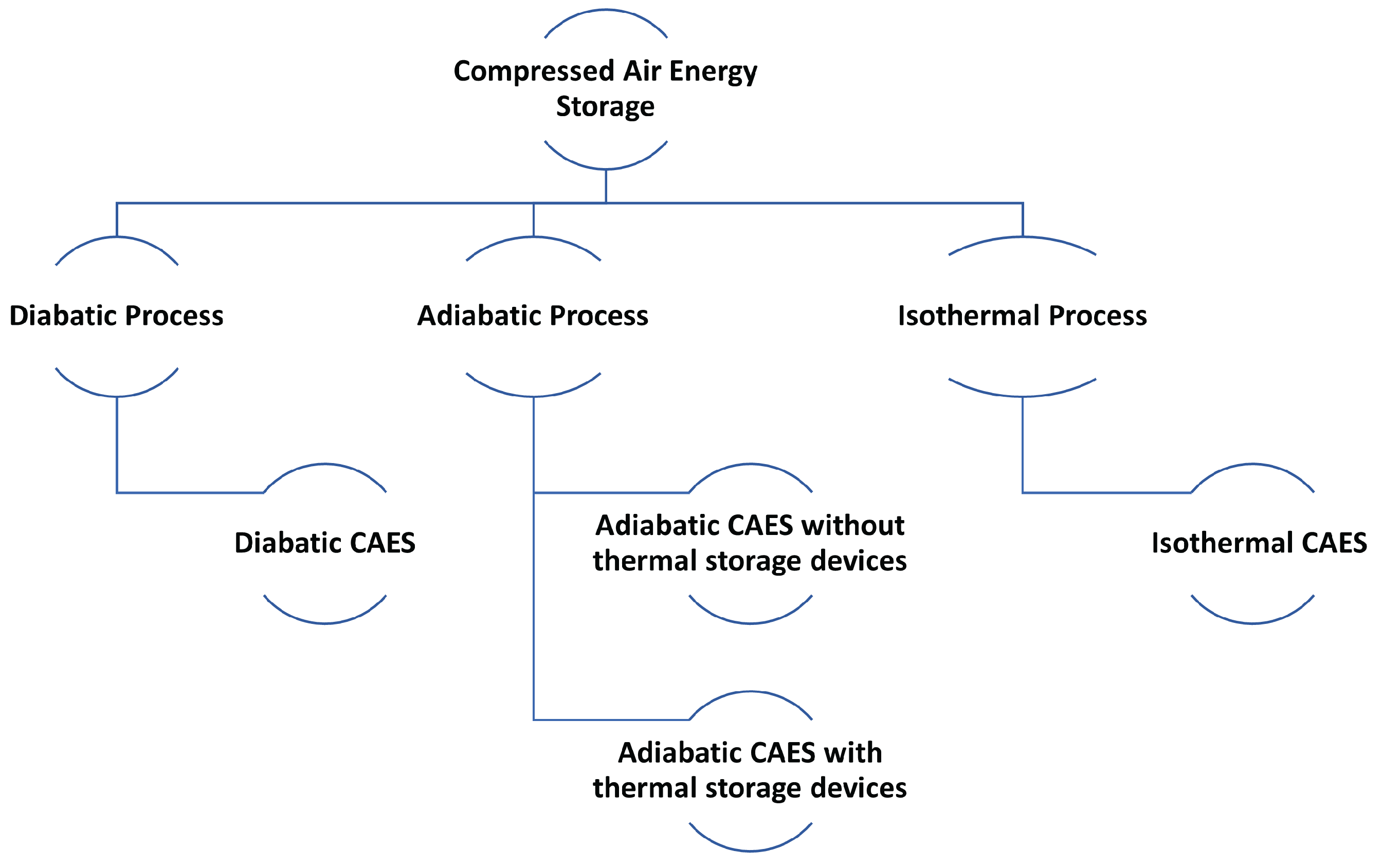
12]. A general classification of all CAES concepts is shown in
Figure 1.
The various CAES concepts differ significantly in both qualitative and quantitative aspects, including complexity and development status, as well as cycle efficiency, energy density, cost, and start-up time. An overview of these parameters for three CAES classes is provided in
Table 2.
Based on the idealized process targeted, CAES technologies are differentiated into diabatic or traditional CAES (D-CAES), adiabatic (A-CAES), and isothermal (I-CAES) concepts [
13]. The main classification criteria revolve around heat treatment during compression and before air expansion. In D-CAES systems, the heat generated during compression is removed through a cooler and largely dissipated, unless utilized for combined heat and power concepts. A supplementary heat source is necessary during the discharge phase to avoid condensation and icing of the expansion machine by preheating the compressed air before expansion [
4,
13]. In comparison, A-CAES systems retain the heat created during compression in extra TES units, which are deployed during the expansion phase, thus eliminating the requirement for external heat sources during discharge [
4,
13]. Unlike D-CAES and A-CAES systems, I-CAES concepts aim to minimize or even eliminate the generation of heat during compression altogether [
4,
13].
D-CAES has a low efficiency, and the theoretical efficiency can only reach around 54% (McIntosh plant) [
14]. Cooling the air during expansion presents a challenge since turbine efficiency is influenced by both air temperature and pressure [
15]. During the energy release phase, combustion of fuel is required to raise the temperature of the high-pressure gas, transforming it into a high-temperature and high-pressure state before entering the expansion machine for operation. This process ensures that the system meets its power output needs. However, the combustion of fuel and emission of exhaust gases contradict the environmental and sustainable principles of CAES technology [
14]. Many researchers and organizations have extensively studied these shortcomings in D-CAES systems and have continually investigated enhanced solutions, such as the introduction of A-CAES and I-CAES. The integration of TES in the conventional system, known as A-CAES, has garnered significant interest and is a pivotal avenue for the advancement of CAES technology in the future [
14], allowing an electrical efficiency that varies between 40% and 70%, based on the management of heat and cold resulting from air compression/expansion, but this increases the cost of the system and the complexity of the cycle significantly [
1].
I-CAES proposes to enhance the round-trip efficiencies of compressed air energy storage systems and to reduce potential system costs through the avoidance of fuel use and thermal storage equipment by achieving a quasi-isothermal process during the compression and expansion phases. Under ideal assumptions, the cycle efficiency of I-CAES approaches 100%; practical systems typically target over 80% [
16]. However, maintaining a consistent temperature throughout the process poses a challenge, and extensive research is focused on addressing this concern [
17]. The key difference between I-CAES and A-CAES is that in the I-CAES process, heat is consistently extracted during compression and added during expansion to keep the temperature constant. In contrast, A-CAES removes or adds heat energy after each compression or expansion stage and stores it in the system [
17]. In I-CAES, the energy needed for air compression is less than in A-CAES at the same pressure ratio, and all electrical energy used during charging can be fully recovered during discharging [
16].
I-CAES configurations utilize piston technology, since these machines can execute a relatively slow compression or expansion procedure, or other high-surface-area compression/expansion machines [
17], along with additional heat transfer surfaces, liquid pistons, spray liquids, pre-mixed foam, and other techniques to enhance the efficiency of heat transfer [
12]. Other important innovative technologies are currently being developed: for example, LightSail Energy has developed an innovative mechanical piston compressor/expander featuring water injection to capture the heat generated during compression [
4]. However, the company ceased operations and officially shut down in March 2018. Meanwhile, Sustian X, an initiative by Thermax, is working on an advanced method for capturing heat in the mechanical piston compressor/expander through the use of a foaming material, while Enairys is working on a liquid piston with an integrated heat exchanger [
1,
4,
18].
The concept of I-CAES was implemented in the so-called hydro-pneumatic energy storage or pumped-hydro-compressed air (PHCA) energy storage system proposed by [
18,
19]. These devices use a liquid to pressurize the gas, by pumping the liquid (hydraulic oil or water) into the storage tank, which reduces the volume of gas and increases its pressure. This type of system is called closed-cycle PHCA. Ref. [
20] proposed a mathematical model of another type of system known as open-cycle PHCA,. The difference between this system and the one mentioned above is in the use of two working cylinders for pumping the liquid in and out and a high-pressure tank for storing air after it gets compressed by a liquid piston. The liquid allows heat exchange with the air, maintaining a quasi-isothermal compression/expansion. When electricity is required, the stored gas pressure is released as the liquid flows in reverse through a hydraulic turbine to reproduce electricity.
To improve heat transfer at high ratios and speeds during charge and discharge processes, several approaches have been incorporated into the liquid piston. The work by [
21] examines these methods, which include spray injection, chamber fillers, operational and structural optimizations, as well as two-phase cooling, all aimed at achieving isothermal compression and expansion. Implementing these technical strategies can enhance heat transfer efficiency by as much as 15% [
21]. The author in [
22] introduced a dimensionless evaluation model for a closed PHCA that takes into account tank size, the quantity of spray water, the timing of spray initiation or cessation, and the ratio of liquid level to droplet velocity. The model includes expressions for evaluation metrics such as round-trip efficiency and indicated efficiency, highlighting how dimensionless numbers influence the thermodynamic performance of closed PHCA. The indicated efficiency and round-trip efficiency of the closed PHCA as simulated by the real gas model were determined to be 88.18% and 60.51%, respectively.
The author in [
23] introduced a comprehensive model to evaluate the performance of an innovative open-cycle PHCA that utilizes carbon dioxide as the working medium, taking advantage on its exceptional thermal conductivity. To handle the issue of dissolution between carbon dioxide and water, an oil layer is employed to separate the two substances. The primary evaluation metrics include energy storage density and round-trip efficiency. A systematic analysis is conducted on the effects of ambient temperature, pressure parameters, and flow rate. The results indicate that the system achieves an energy storage density of 0.404 kWh/m
3, a round-trip efficiency of 58.24%, and an indicated efficiency of 74.48% under the specified design parameters. Ref. [
24] proposed a configuration of A-CAES with a liquid piston to minimize throttling losses and ensure stable operation of the expander, improving the performance of A-CAES systems. The compressed air enters the liquid piston to performs near-isothermal re-pressurization and increases the expansion ratio of each expander stage, facilitating the efficient use of compressed heat.
In summary, the goal of achieving an isothermal or near-isothermal process during the compression and expansion phases is to enhance the round-trip efficiencies of compressed air energy storage (CAES) and reduce potential costs associated with compressed heat utilization equipment. In the conventional I-CAES system described earlier, air serves as the energy storage medium while water acts as the power generation medium, with both working in the same cylinder. To address the aforementioned challenges, this paper introduces an innovative CAES system that diverges from conventional designs. It draws inspiration from reciprocating compressors and is engineered to operate as an isothermal CAES. The proposed system integrates the processes of compression, energy storage, and expansion within a single unit, enhancing overall efficiency and performance. The organization of this work is as follows:
Section 2.1 outlines the physical model and its working principles.
Section 2.2 details the modeling of the proposed system for each component to achieve optimal design. The results from the simulations conducted are discussed in
Section 3. Finally,
Section 4 concludes the paper.
2. Materials and Methods
2.1. System Description and Working Principles
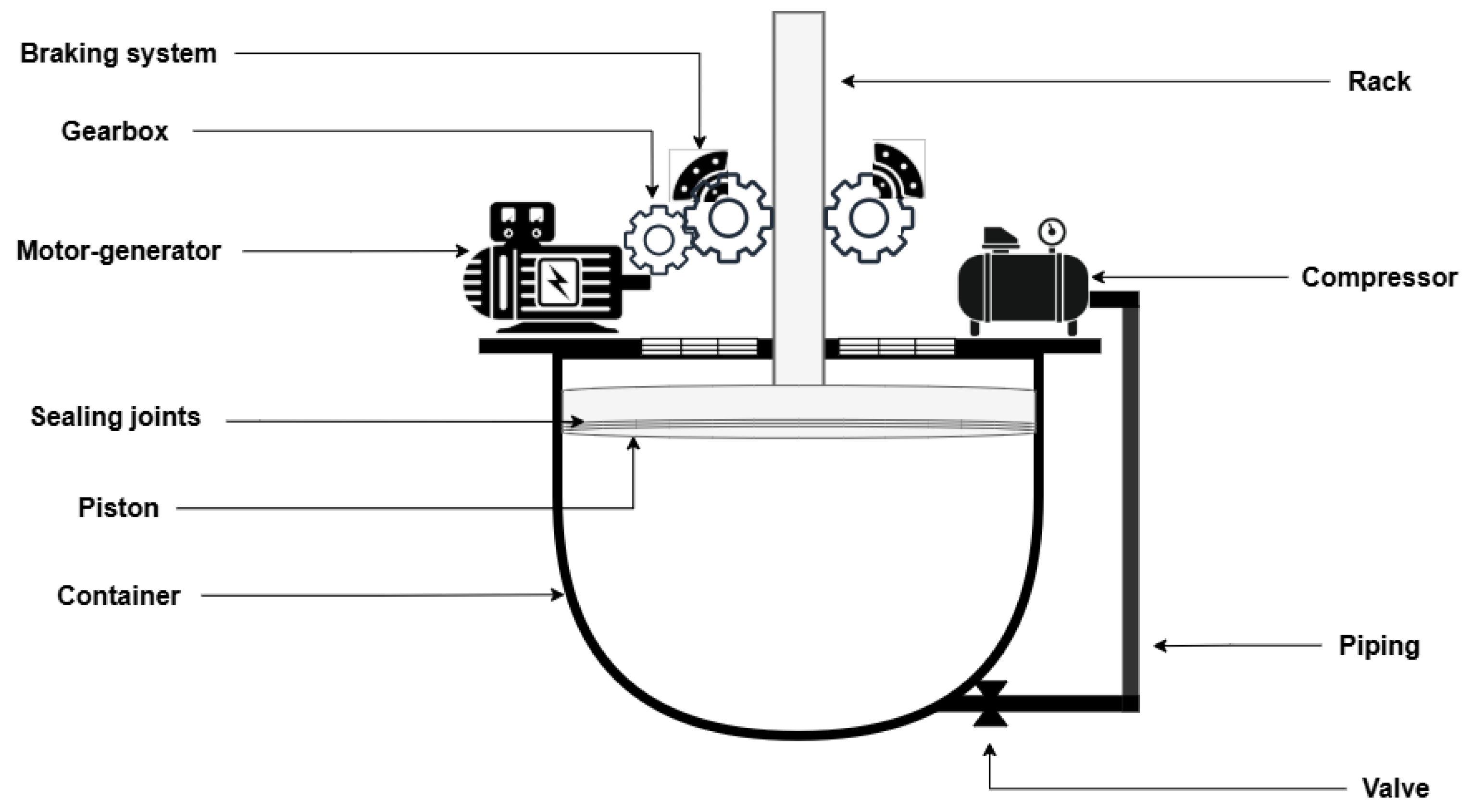
The basic concept of a conventional CAES facility can be explained as follows. When charging, the compressor converts excess electrical energy into thermodynamic exergy of the air by increasing its pressure relative to ambient conditions. This compressed air is then stored in a storage vessel. During discharging, the high-pressure air is released and heated (except in I-CAES, where no additonal heat is needed) to drive the turbine generator to produce electricity, thus enabling the conversion of the compressed air’s exergy back into electrical power. To overcome the issue faced by traditional CAES, a new system called pneumatic energy storage (PES) is proposed to function as I-CAES but with a different mechanism and concept. A schematic of the system is shown in
Figure 2.
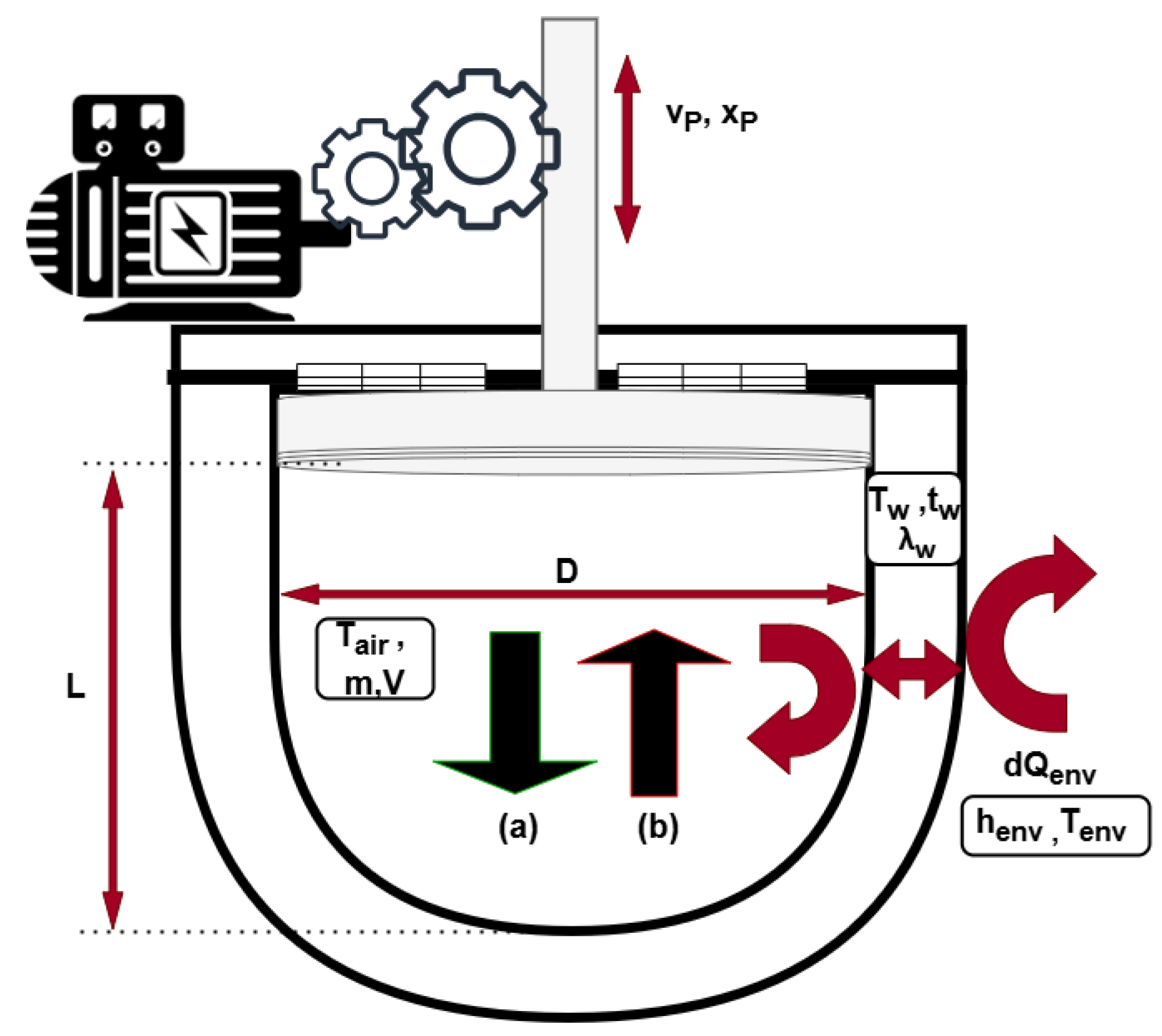
This system aims to avoid temperature rises and decreases in the charging and discharging stages, by compressing/expanding a mass of gas at the ambient conditions very slowly relative to the heat exchange rate between the gas and its environment and within the equipment itself and by maintaining a large heat exchange surface formed by the container and piston. In this case, the gas will remain at a nearly constant temperature at the same time as it expands/compresses.
This system consists of a cylindrical container with an open upper part in which a piston of a diameter almost equal to the diameter of the surrounding container is placed, fitted with sealing rings. An anti-friction treatment is applied to the container walls to ensure easy sliding of the piston inside. The piston is linked by a rack-and-pinion mechanism, or another movement transmission mechanism, from the open part of the cylinder to a gear train system connected to a motor/generator. In addition to these components, a small compressor is added and connected below the cylinder with a pipe and a regulating valve.
Before the start of the storage cycle, the valve opens to pre-pressurize the container using a low-capacity compressor, given that atmospheric pressure is very low. In storage mode (
Figure 3a), the control valve is closed and the surplus electrical energy, generated by renewable resources, is converted into mechanical rotational energy by the gear system’s motor. In contrast, the rack-and-pinion system converts the rotational movement into piston translation movement. The air in the container becomes increasingly compressed as the piston moves vertically downwards, and the energy is stored pneumatically in the compressed air. A piston-rack braking system maintains storage, i.e., it keeps the compressed air inside the container until the need for electricity is declared. In generation mode (
Figure 3b), the brake is released, and the upward displacement of the piston reproduces the energy as the compressed air expands under pressure, driving the gear system, which in turn drives the generator to produce electricity.
The operational principle and thermodynamic behavior of the suggested storage idea are different from those of conventional systems, such as spray and foam injection technologies used only as compression/expansion machines, and PHCA, in which an incompressible liquid that serves as a transmission medium between the energy source and the storage chamber often separates the compressible gas from the mechanical actuator in hydro-pneumatic systems. This configuration can reduce direct gas leakage through moving surfaces, regulate pressure development, and enhance force transmission.
Nevertheless, issues with system complexity, heat control, liquid handling, component pricing, additional losses due to fluid friction, valve throttling, and scalability are common in current PHCA technology. At the same time, spray and foam systems require extra injection and separation subsystems. The current system aims to address some of these issues by eliminating the requirement for an intermediary hydraulic circuit by performing compression, storage, and expansion all in a piston-driven chamber. This minimizes additional components and the overall system size, while also streamlining the design and improving compactness, making it suitable for localized renewable energy storage. However, the system is more susceptible to thermodynamic irreversibilities due to the direct contact between the piston and the compressed air, including heat transfer restrictions, leakage through the piston–cylinder clearance, and frictional dissipation. Therefore, the efficiency of the proposed approach depends on maintaining near-isothermal compression and expansion conditions.
The suggested storage system’s operation and thermodynamic properties are different from those of the aforementioned systems, such as PHCA, where an incompressible liquid that acts as a transmission medium between the energy source and the storage chamber frequently separates the compressible gas from the mechanical actuator in hydro-pneumatic systems, and spray and foam injection technologies are only used as compression/expansion machines. This configuration can reduce direct gas leakage through moving surfaces, regulate pressure development, and enhance force transmission.
Table 3 summarizes a qualitative comparison of the reciprocating compressor, PHCA system, and PES system.
2.2. Thermodynamic Model
Thermodynamic analysis and modeling of compressed air energy storage systems typically rely on a general framework for the compression and expansion processes, along with the ideal gas equations of state for each system component. Within the container, two extreme processes of air compression and expansion can be considered: adiabatic and isothermal. Adiabatic compression or expansion is considered to occur when the piston’s input or output speed is high, resulting in a short charging or discharging period during which the heat generated by the compressed air is not efficiently dissipated into the environment. In contrast, isothermal compression or expansion can be approximated when there is substantial heat transfer between the air and the environment, typically occurring during slow piston movement and extended charging or discharging periods. For numerical modeling, MATLAB R2023a software was employed. The assumptions taken into consideration in this work are:
Air is treated as an ideal gas;
Changes in kinetic and potential energy are ignored;
The initial temperature of the air is assumed to be equivalent to the ambient temperature;
Frictio n between the piston and the container walls is deemed negligible;
Leakage between the piston and container walls is also considered negligible.
The piston’s work (
) converts into the air’s internal energy (
) and heat transferred to the surroundings (
). By taking the mechanical friction work (
) between the piston and container wall into account, the conservation of energy provides a balance equation linking these quantities:
Based on the definition of specific heat and Newton’s law of cooling, along with the impact of air mass leakage, the internal energy and heat transfer between the air inside the container and its surroundings can be represented as follows:
where
and
are the air mass, environment temperature, air temperature, specific heat capacity at constant volume, and the overall heat transfer coefficient between the air and the environment, respectively, and
can be expressed as follows:
where
k is the air leakage percentage factor. The overall heat transfer coefficient is calculated as follows:
where
and
are the heat transfer coefficient between the air and the container wall, the heat transfer coefficient between the container wall and the environment, the thermal conductivity of the container wall material, the contact area between the air and the system wall (container wall and piston surface), and the thickness of the container wall, respectively.
The heat transfer coefficients are calculated according to natural convection heat transfer correlations [
20], and the thickness of the walls of a container can be determined based on the resultant force from the circumferential stress of the chosen material (stainless steel) [
25].
The mechanical work in the functioning of the storage pressure and piston speed is calculated as follows:
where
is piston surface, and
is piston displacement. The air temperature change in the container can be expressed as:
The temperature derivative of the thermal mass through the container walls and piston
is determined by the energy balance:
where the term
is the wall heat capacity.
2.2.1. Initial Pressure Process
The small compressor pre-presses the air container during the preliminary phase. This function becomes unnecessary once the system has reached its real operating conditions. Given that this procedure occurs singularly within the entire system and has been classified as preparatory, a compressor characterized by a low flow rate can be selected for economic efficiency. Furthermore, because of the large volume of the storage container, the air injection process was slow and assumed that the storage tank had sufficient heat exchange capacity to the outside to ensure a constant air temperature in the storage container. Consequently, the initial compression phase was approximated as an isothermal process. The total work consumption of the injection process is:
where
w is the work consumption per unit mass,
is the preset pressure, and
is the atmospheric pressure. The first assumption is that the air acts as an ideal gas, such that the following equation holds true:
where
is the container volume,
is the specific gas constant of air, and
is the initial temperature, according to the state equation:
The mass of the injected air is:
2.2.2. Motor Work (Charging Process)
In this process, the motor converts electrical energy into mechanical rotational energy (exergy) by the gear system. In contrast, the rack-and-pinion system converts the mechanical rotational energy into mechanical piston translation energy. As the piston moves, the air in the container is compressed, and its temperature increases. When the charging process occurs slowly, allowing sufficient heat transfer, a significant amount of heat exchanges between the compressed air and the surrounding environment through the walls, as previously discussed. Consequently, this process can be considered as a quasi-isothermal compression, which minimizes the motor work required during charging. In contrast, when the energy charging process happens rapidly and the heat generated by the compressed air cannot be effectively dissipated into the environment, the process resembles an adiabatic process. Since the volume inside the storage container varies from the initial volume to the storage volume, the motor work varies according to the air volume variation in the container. The motor work per unit mass by compression of the air from
to
can be calculated using the energy and mass balance, and it is expressed for the isothermal process
and adiabatic process
by:
The volume ratio of piston to air is given by:
where
is the final volume,
is the motor efficiency, and
is the specific heat ratio.
For the total mass injected in the container (Equation (11)), the total work required for the motor, in both isothermal and adiabatic processes, to move the piston to compress the mass of air from
to
is calculated using the following equations:
2.2.3. Storage Container (Storage Process)
In the charging phase, the piston travels inside the storage container. The air pressure rises as its volume decreases. Consequently, energy is stored. This stocked energy can be utilized during the expansion phase to produce electricity. The overall energy stored is determined by the variation in the thermodynamic exergy of the air and is represented for isothermal and adiabatic processes by:
The volumetric energy density is defined as follows for isothermal
and adiabatic
:
2.2.4. Generator Work (Discharging Process)
During the energy discharge process, the piston retracts, leading to the expansion of air within the container and a decrease in its temperature. As this energy discharge occurs slowly, heat is able to transfer back from the environment to the air, allowing the process to be treated as a quasi-isothermal expansion. Conversely, when the energy discharge happens rapidly, the heat from the environment is unable to effectively transfer to the compressed air, causing the process to approximate an adiabatic process. The energy generated by the generator per unit mass by expansion of the air from
to
is obtained for isothermal process
and adiabatic process
using the relations below:
where
is the generator efficiency. The volume ratio for discharging is given by
For the total mass injected in the container, the total work output generated by the generator by the expansion of the mass of air from
to
is calculated using the following equation:
2.2.5. Cycle Efficiency
The total efficiency of the PES system is characterized as the ratio of the total energy produced by the generator to the total energy supplied to the motor and compressor, as expressed below:
3. Results and Discussion
The energy performance of the PES system was evaluated using a thermodynamic model under a range of operational conditions. A numerical model was developed and implemented in MATLAB, using the ode45 solver, to simulate system behavior and assess overall performance. Each component of the proposed near-isothermal system was individually modeled to analyze its contribution to the global efficiency and storage capability of the system. The influence of critical parameters, including the initial pressure and storage volume ratio, on the motor power consumption, on the energy storage level in the container and its volume, and on the work output from the generator, as well as the the efficiencies of the motor and generator effects, are also presented. The energy analyses of both isothermal and adiabatic processes were conducted using the developed thermodynamic model.
Table 4 and
Table 5 present the parameters utilized for energy analysis of the PES system.
3.1. System Characteristics Under Idealized Conditions
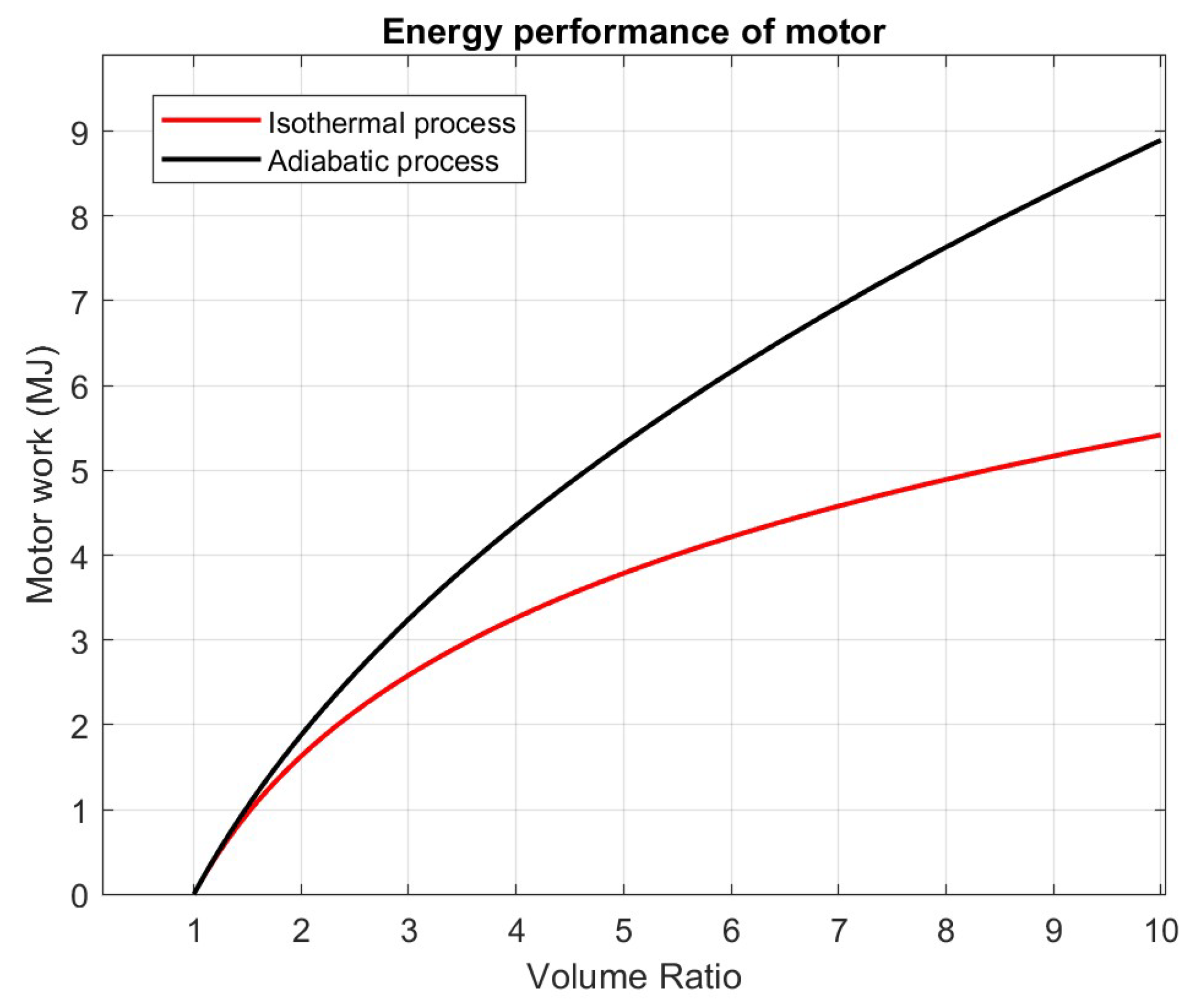
Figure 4 illustrates the influence of the storage volume ratio on the motor’s energy consumption during adiabatic and isothermal air-compression processes within the container, at an initial pressure of 2 MPa. With an increase in the storage volume ratio from 1 to 10, there is a corresponding rise in the motor work input for both adiabatic and isothermal processes, and the amount of work necessary for the isothermal air compression rises from 0 MJ to 5.41 MJ, whereas for the adiabatic process, it increases from 0 MJ to 8.89 MJ. A notable observation in this figure is that the work input during the adiabatic process exceeds that of the isothermal process at an identical storage–volume ratio. This occurs because, in an adiabatic process, the compression takes place rapidly, with no heat exchange between the gas and its surroundings. Consequently, the mechanical work performed by the piston increases both the internal energy and the thermodynamic exergy of the air, driving it further from ambient equilibrium and resulting in a rise in temperature and pressure.
As the temperature rises, the pressure within the system increases more rapidly for any given reduction in volume, making the compression process increasingly difficult and requiring progressively more work to compress the air. In contrast, during the isothermal process, the compression occurs slowly while the gas temperature remains constant, and the heat generated is continuously removed and released to the surroundings. As a result, the internal energy of the air remains unchanged, and its thermodynamic exergy increases due to the rise in pressure relative to ambient conditions, enabling subsequent recovery of useful work during expansion, compared with adiabatic compression. For the same volume ratio, the higher pressure generated during adiabatic compression requires a greater amount of work input compared with isothermal compression, where the pressure rise is moderated by constant temperature.
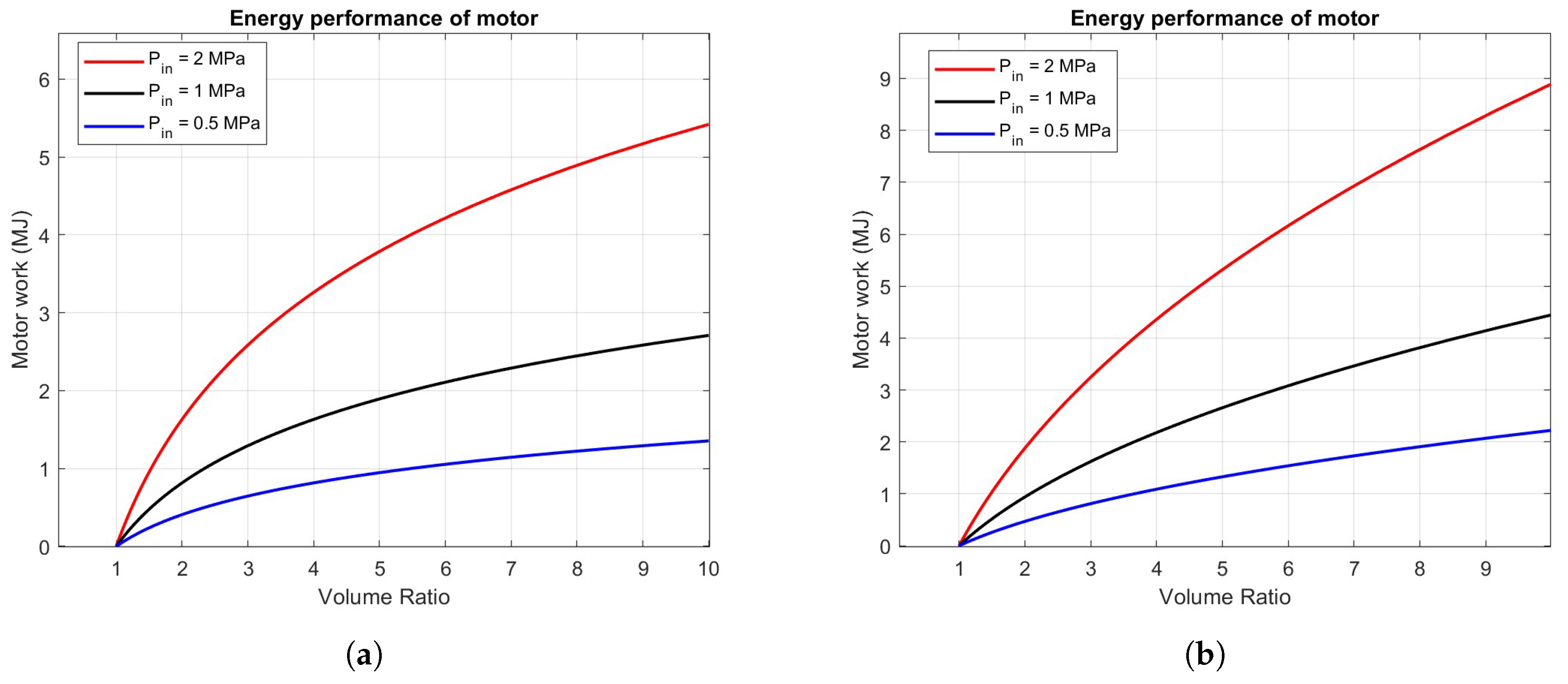
Figure 5 illustrates the influence of the pre-set pressure on the motor work input rate. For both isothermal (
Figure 5a) and adiabatic (
Figure 5b) processes, motor work increases with rising pre-set pressure. This trend occurs because increasing initial pressure introduces more air mass, thereby raising the average counter-pressure inside the container. Consequently, additional motor work is required to increase the container pressure from one level to another.
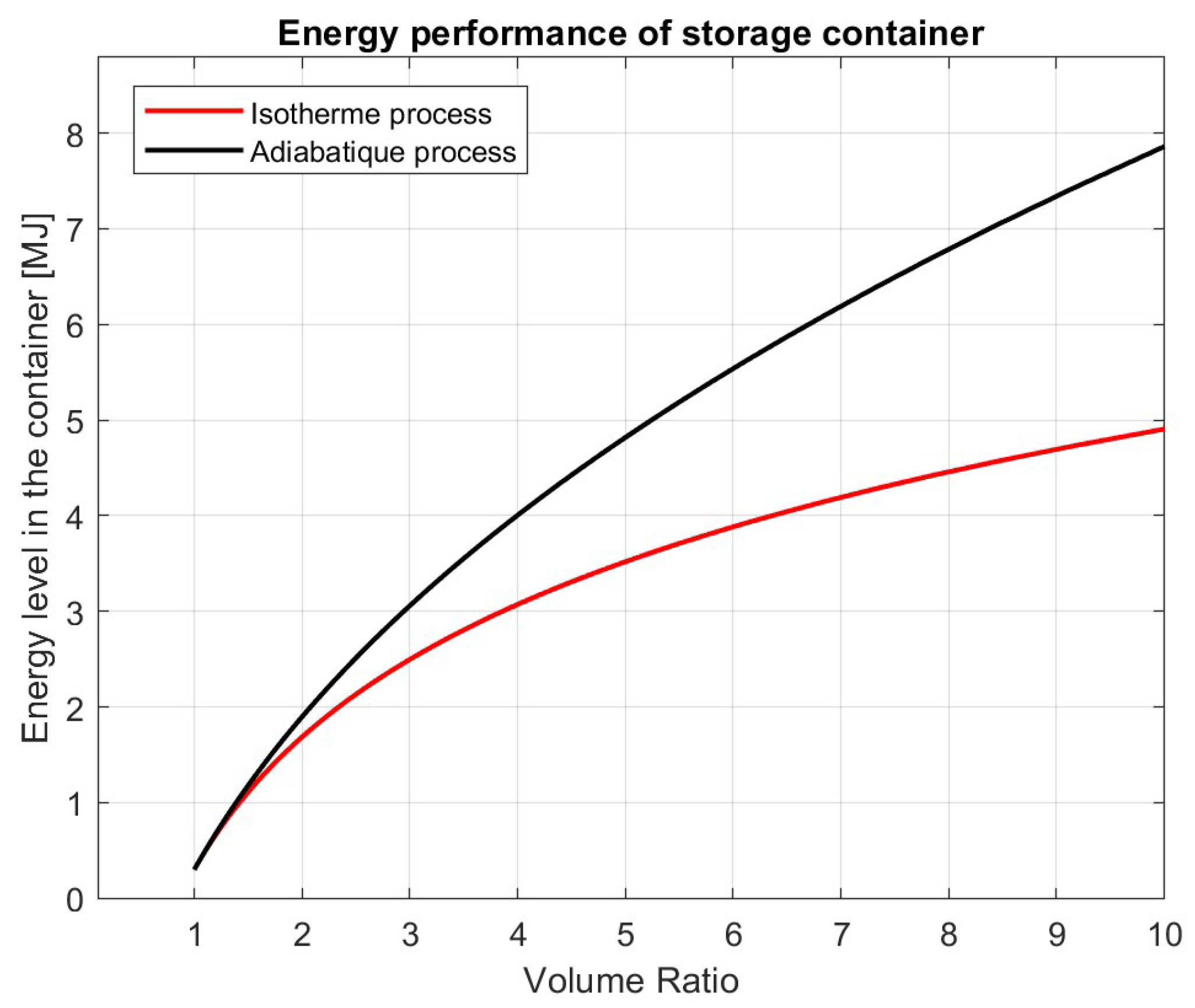
Figure 6 illustrates the energy storage levels inside the container throughout both isothermal and adiabatic air compression processes. In general, as the volume ratio between the piston and the air within the container rises, the energy storage density in the system also improves. At a volume ratio of 10, the energy storage density for isothermal compression attains 4.9 MJ, while for adiabatic compression, it reaches 7.85 MJ. Additionally,
Figure 6 demonstrates that the PES system retains more energy during the adiabatic compression process compared to the isothermal process. This is because, in the adiabatic process, there is no heat exchange with the surroundings; therefore, all the work input contributes to increasing both the internal energy (due to the higher temperature) and the potential energy of the air, resulting in greater overall energy storage. In contrast, during isothermal compression, the temperature remains constant as the heat generated is continuously dissipated, thereby limiting the stored energy to potential energy only, since the internal energy does not change.
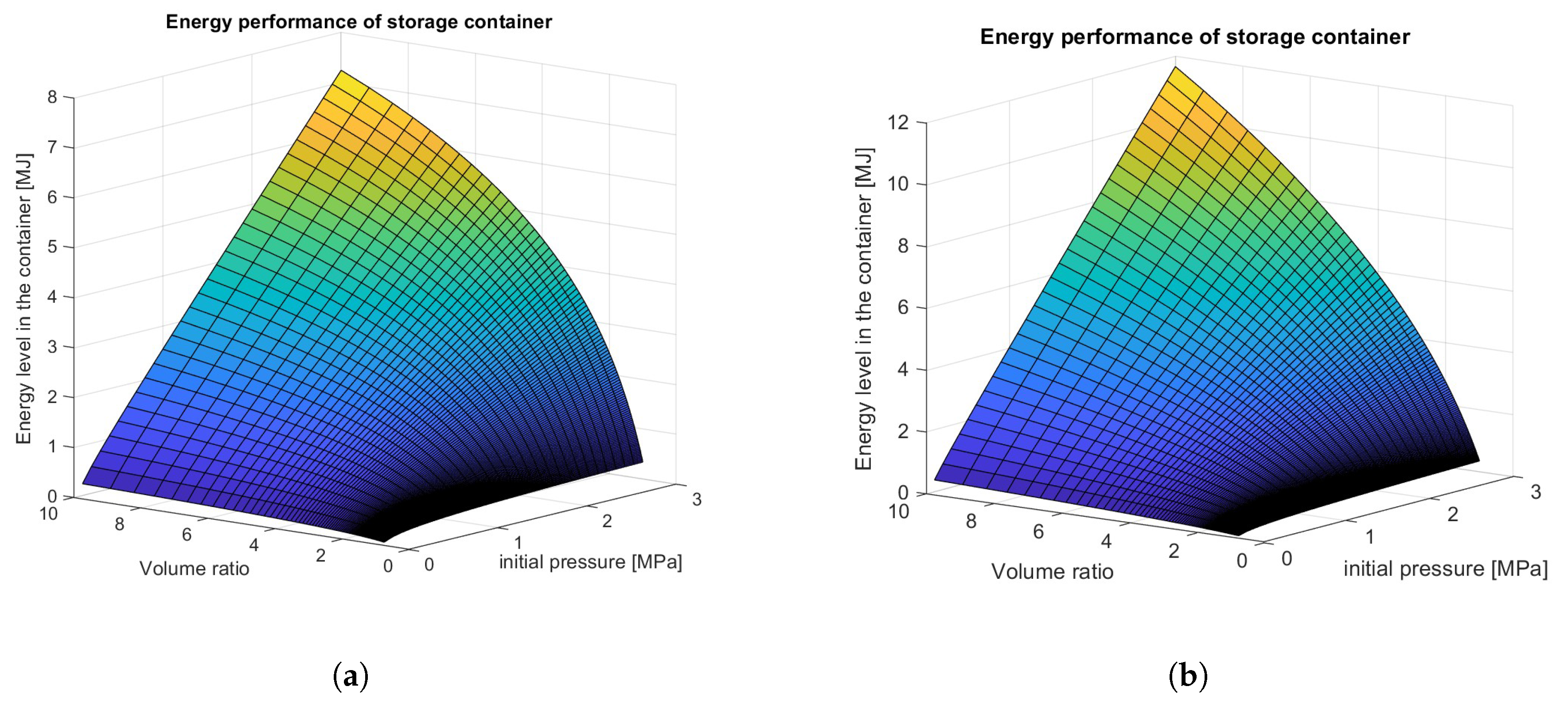
Figure 7 illustrates the impact of the initial pressure on the energy storage levels within the proposed PES system for both adiabatic and isothermal processes, considering storage volume ratios ranging from 1 to 10. Notably, the rate of increase in energy storage density with respect to the volume ratio varies under different initial pressures. Specifically, lower initial pressures correspond to a slower rate of increase in energy storage density as the volume ratio rises, whereas higher pre-set pressures result in a greater rate of increase due to the larger mass of compressed air and the consequent rise in stored energy.
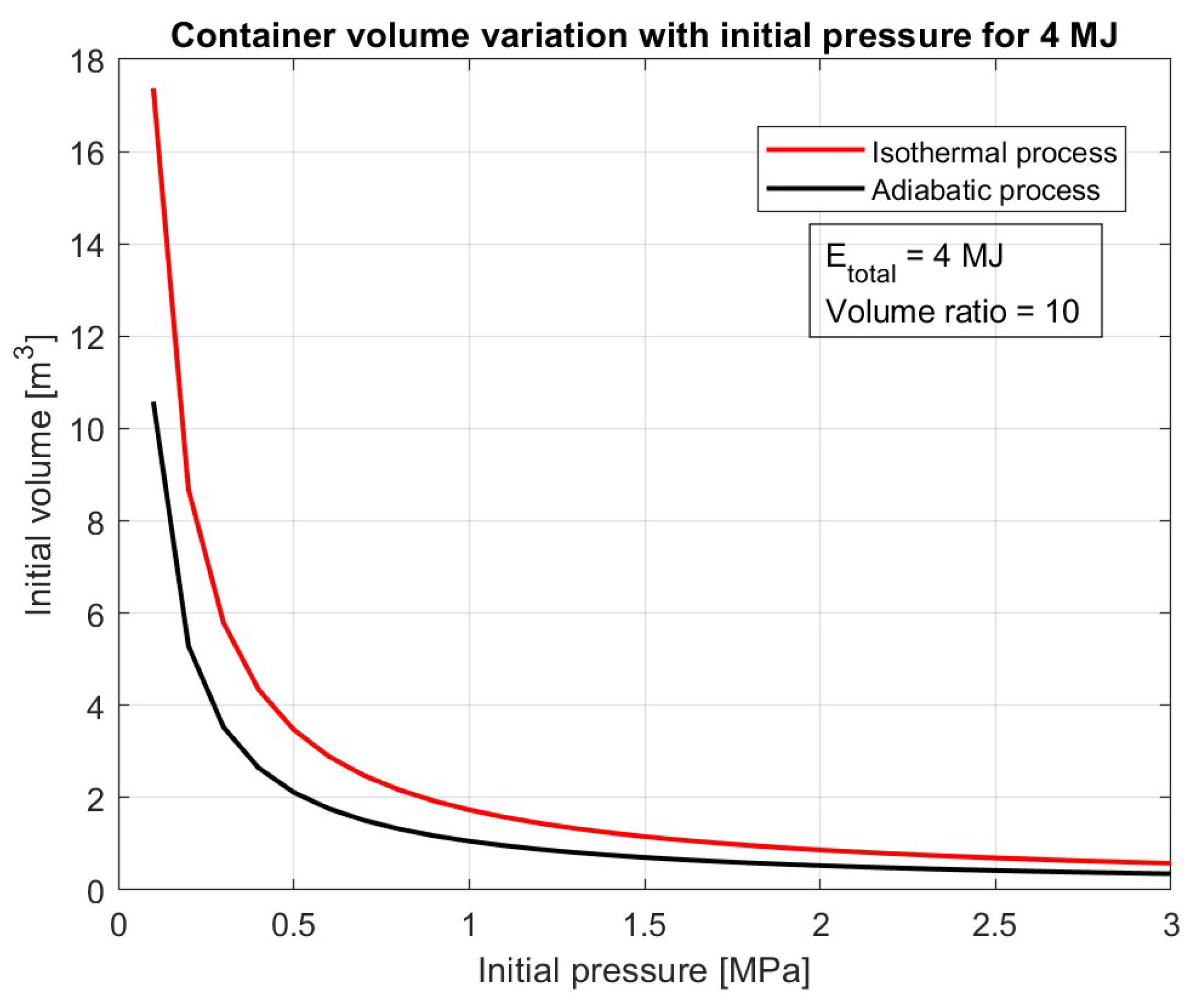
When comparing the same amount of stored energy, an adiabatic process requires a smaller initial volume than an isothermal process. This difference arises because, during adiabatic compression, energy is stored not only as potential work but also as an increase in internal energy due to the temperature rise. In contrast, isothermal compression contributes to energy storage only through potential work, without any change in temperature. Consequently, the air can be compressed further, leading to a smaller final air volume. Therefore, the piston displacement through the container is greater, requiring a larger initial volume to achieve the same level of energy storage as in the adiabatic process. The relationship between the initial volume of the storage container and initial pressure for both processes is illustrated in
Figure 8 for a 4 MJ scenario, with a fixed storage volume ratio of 10. The results indicate an inverse relationship between initial pressure and container volume. Furthermore, when one parameter reaches its upper limit, the other decreases more gradually. Specifically, the container volume decreases from 8.6 m
3 to 0.86 m
3 for the isothermal process and from 5.3 m
3 to 0.52 m
3 for the adiabatic process as the initial pressure increases from 0.2 MPa to 2 MPa.
The storage volume ratio between the piston and the air is another significant factor influencing the initial container volume required to store a specific amount of energy.
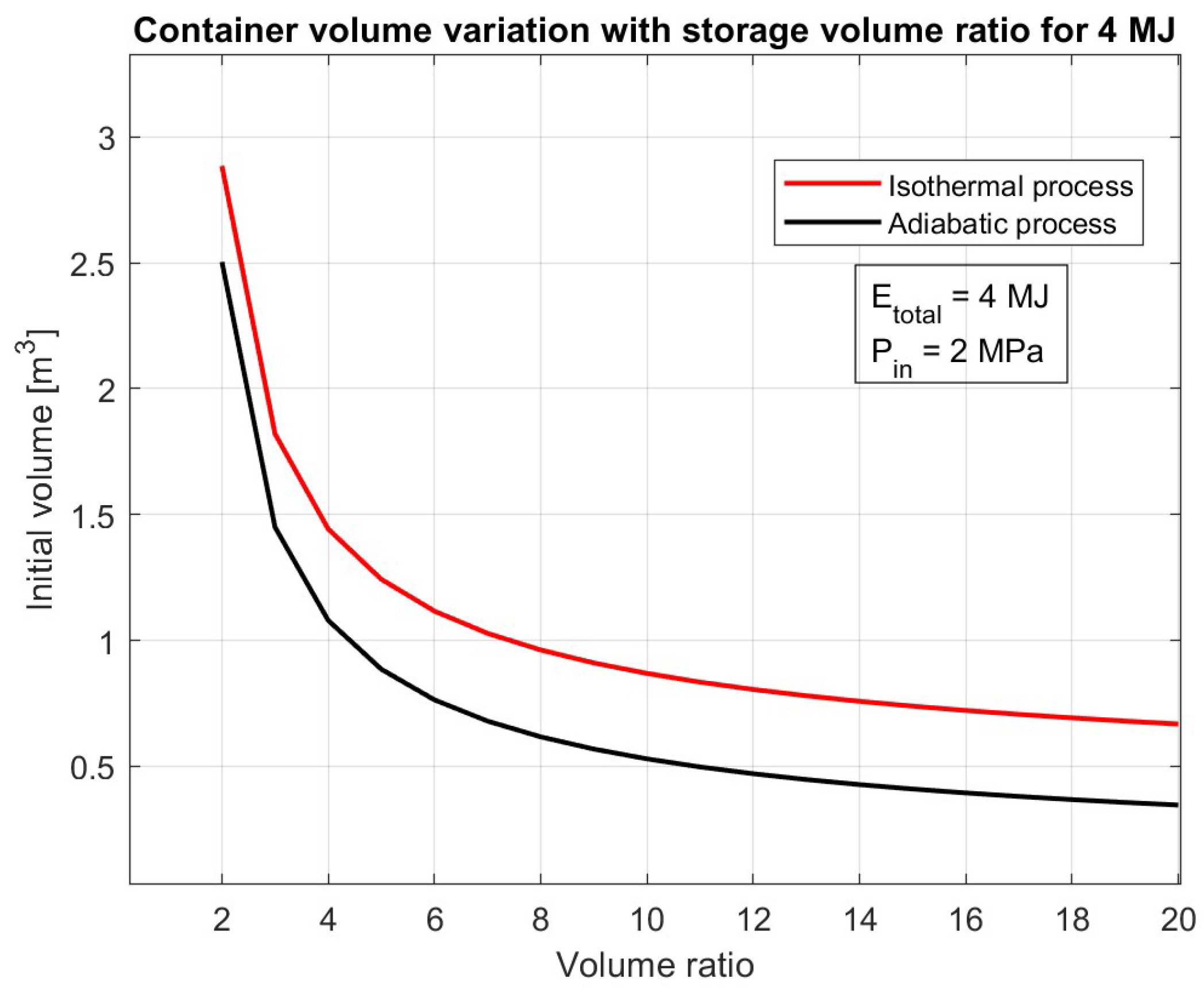
Figure 9 describes the relationship between initial volume and volume ratio for both processes in a 4 MJ scenario, assuming a fixed initial pressure of 2 MPa. The findings indicate an inverse proportion between the storage ratio and the container volume: as the ratio increases, container volume decreases. Specifically, the volume drops from 2.88 m
3 and 2.5 m
3 at a volume ratio of 2 to 0.86 m
3 and 0.52 m
3 at a volume ratio of 10, for the isothermal and adiabatic processes, respectively.
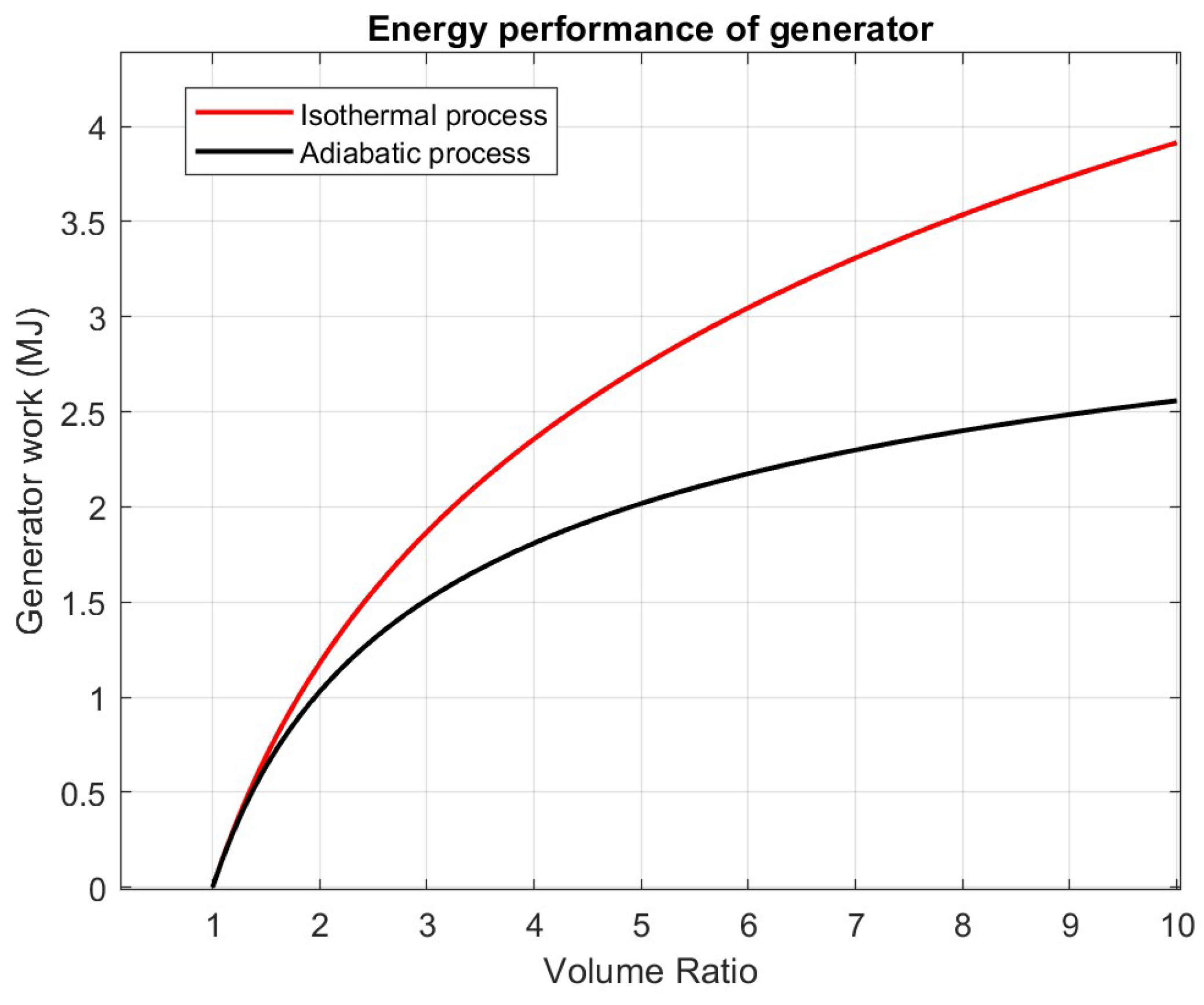
Figure 10 demonstrates the variation in work output per unit volume as a function of the storage volume ratio during the full expansion process, considering isothermal and adiabatic air expansion. As the storage volume ratio decreases from 10 to 1, work produced per unit volume drops significantly from 3.9 MJ and 2.5 MJ to 0 MJ for the isothermal and adiabatic processes, respectively. Moreover, the results indicate that isothermal expansion yields more recoverable work than adiabatic expansion. This occurs because, during isothermal expansion, heat is absorbed from the surroundings, which maintains the air temperature constant and moderates the pressure drop. In contrast, in adiabatic expansion, the absence of heat transfer leads to rapid cooling and a faster decrease in pressure, thereby limiting the amount of useful work extracted. Consequently, isothermal expansion is inherently more effective than adiabatic expansion in converting stored pneumatic energy into useful mechanical work.
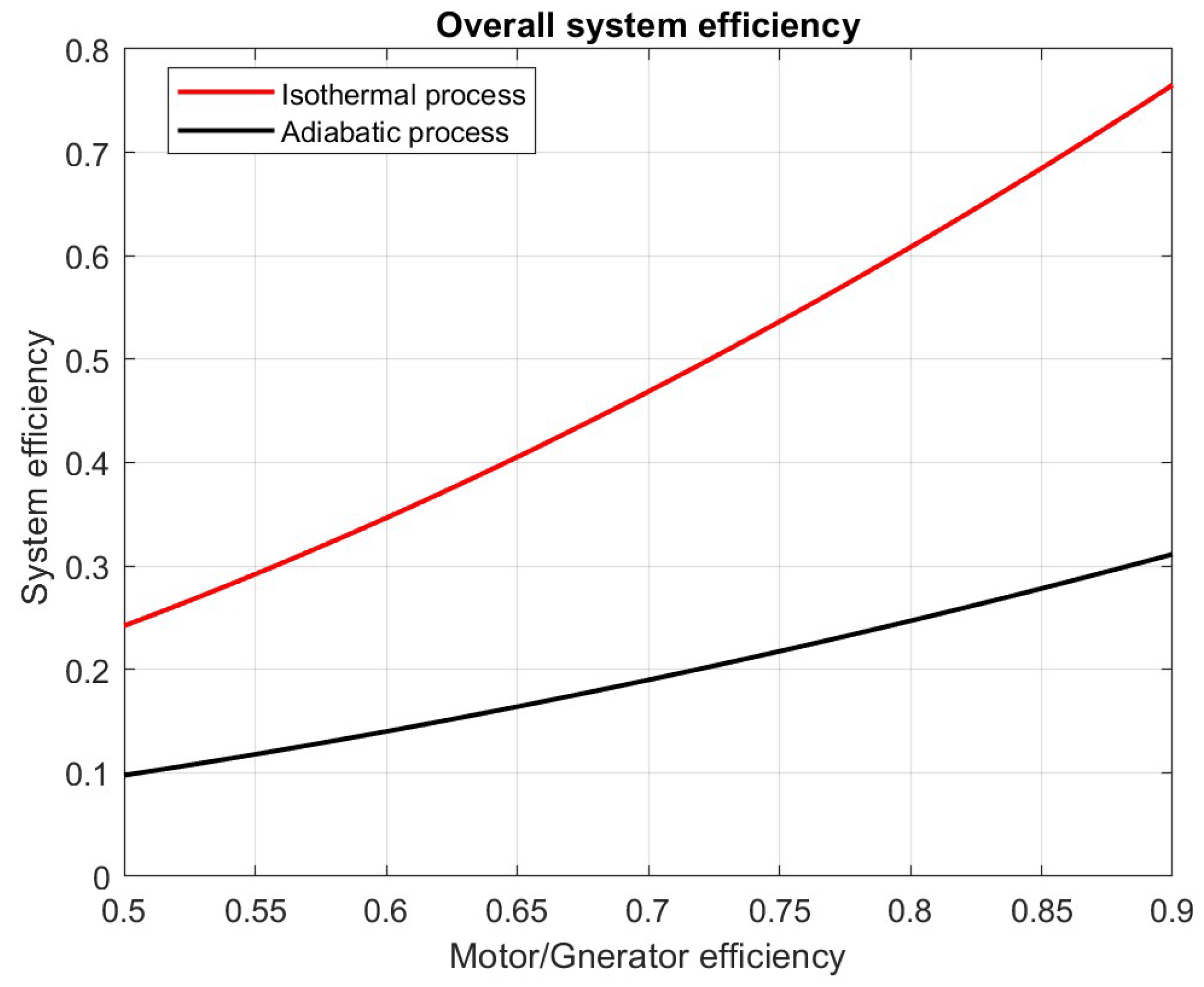
Another key parameter influencing the overall performance of the proposed energy storage system is the efficiency of the motor and generator. As noted earlier, heat transfer between the air and its surroundings plays a crucial role in determining the thermodynamic behavior of both compression and expansion. The two extreme modes, isothermal (maximum heat exchange) and adiabatic (no heat exchange), represent the limits of system performance. For the purpose of evaluating the system’s round-trip efficiency, it is assumed that the expansion process mirrors the compression process. These results clearly demonstrate that achieving (or approximating) isothermal operation significantly enhances the round-trip efficiency of the storage system. The total efficiency for the isothermal and adiabatic processes is shown in
Figure 11. It is clear that by increasing the motor and generator efficiency from 50% to 90%, the total efficiency of the energy storage system increases from 24% and 10% to 76% and 32% for isothermal and adiabatic processes, respectively. It was found that, under isothermal compression and expansion, the overall system efficiency depends primarily on the motor and generator efficiencies, since the air temperature remains constant and no heat is lost during the process. In contrast, for the adiabatic process, the efficiency is influenced not only by the motor/generator efficiencies but also by thermal losses inherent to adiabatic behavior. Specifically, the temperature rises during compression and drops sharply during expansion, which reduces the pressure during discharge and limits the extractable work. These thermodynamic losses substantially lower the overall system efficiency.
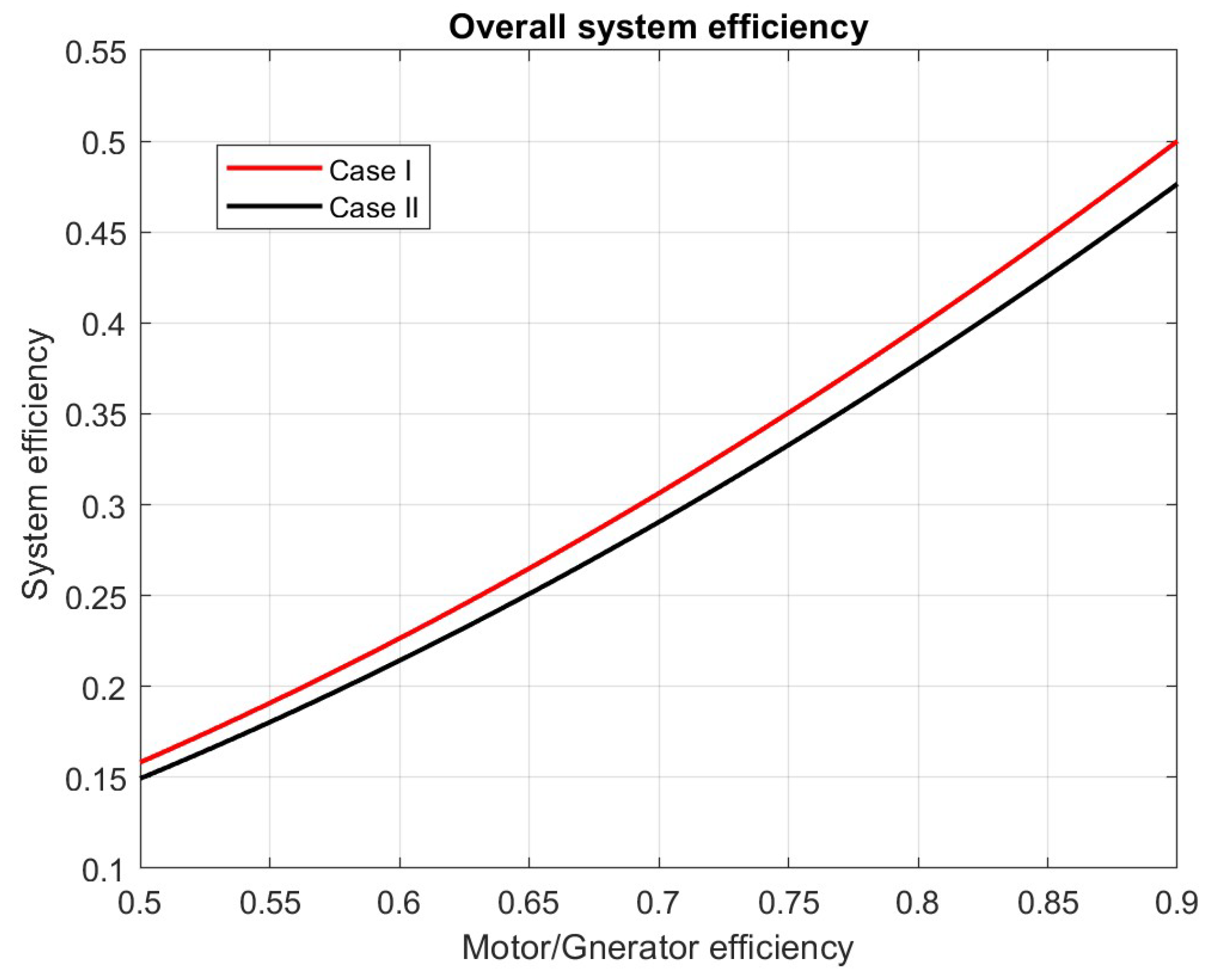
Figure 12 illustrates the efficiency of the PES system under two other distinct scenarios involving sealed air in the storage container. In Case I, the total efficiency of the energy system is assessed assuming an isothermal compression followed by an adiabatic expansion. Case II considers adiabatic compression followed by isothermal expansion. The findings indicate that improving the heat transfer in the storage container (so that either the compression or the expansion phase occurs isothermally) significantly enhances the overall system efficiency compared to the adiabatic process in both compression and expansion modes. This confirms that achieving near-isothermal behavior in at least one stage of the cycle provides meaningful performance gains.
3.2. Sensitivity Analysis to Non-Ideal Conditions
To evaluate the effect of the idealized assumptions on the system’s predicted performance, a sensitivity analysis was performed by modifying the heat transfer coefficient, piston speed, and mechanical efficiency. These factors were selected because they directly affect the thermal behavior and the practical recoverability of the energy stored.
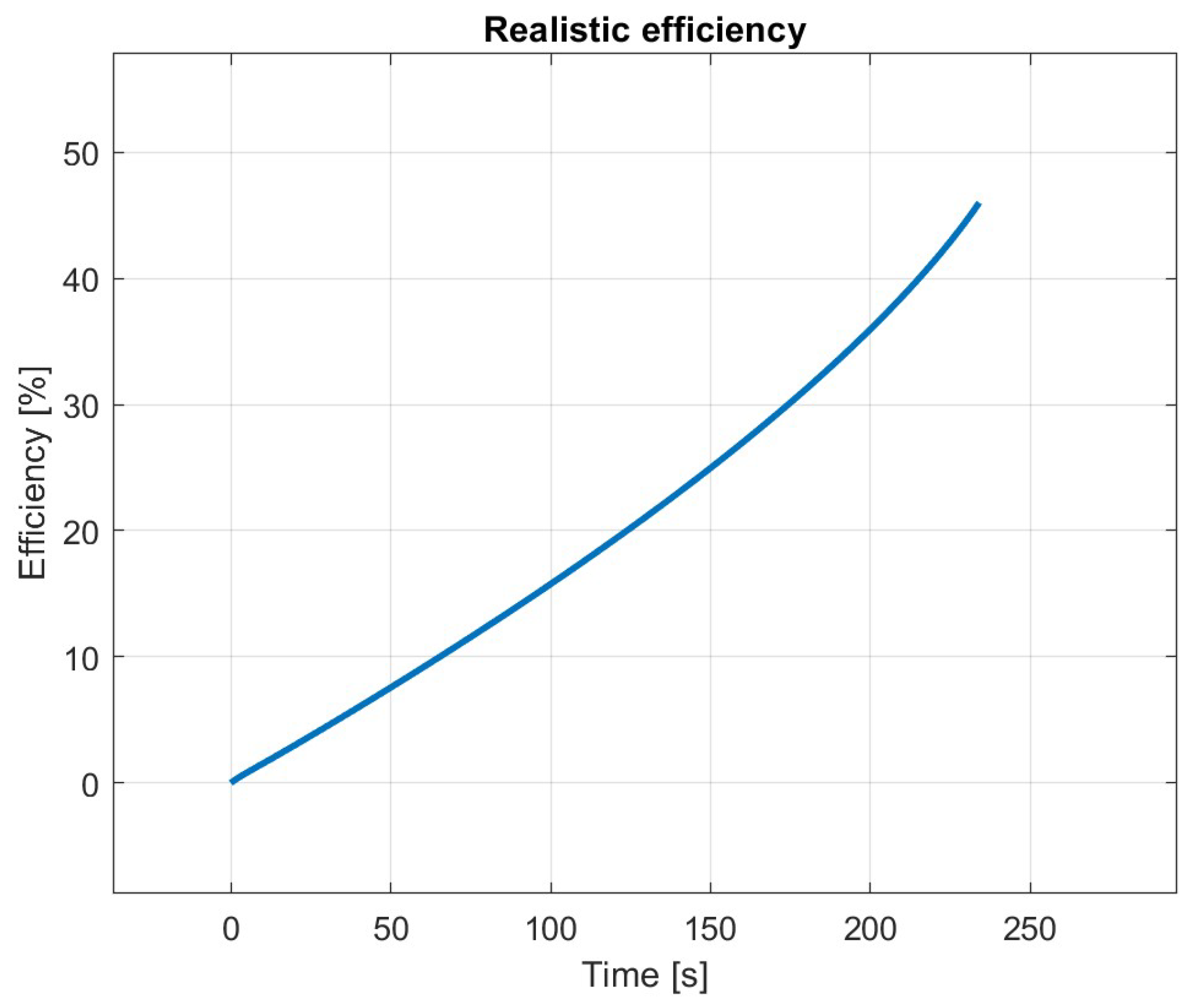
The efficiency discussed in the earlier section reflects the thermodynamic performance of the suggested system based on idealized conditions. For real-world scenarios, when accounting for these additional losses, the variation in overall system efficiency is illustrated in
Figure 13; the anticipated practical efficiency is expected to range around 46%.
3.2.1. Effect of Piston Speed
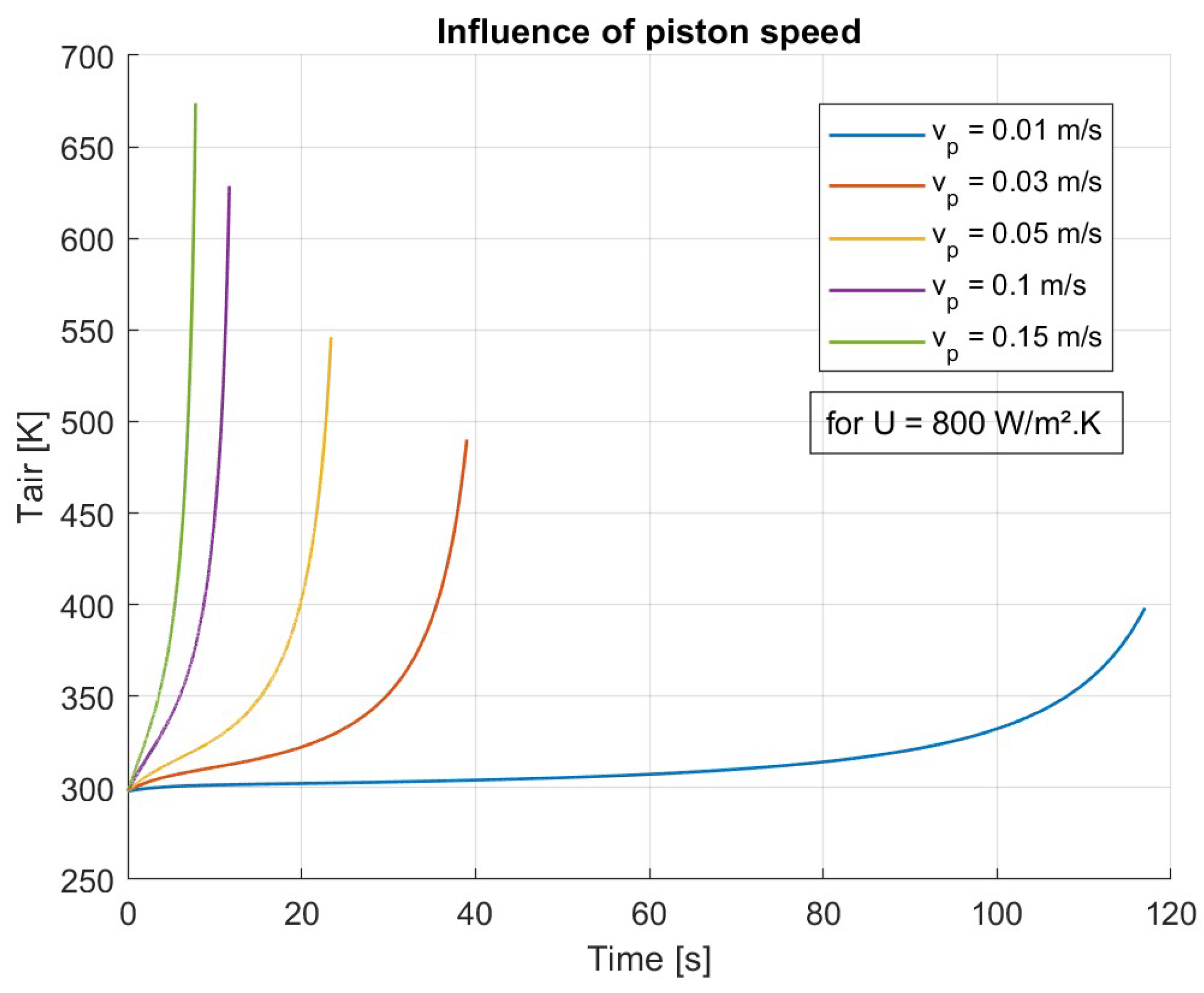
For a heat transfer coefficient of 800 W/m
2K,
Figure 14 illustrates the relationship between piston velocity and air temperature. Piston speed is a critical yet nuanced factor in heat transfer. While increased speed reduces overall cycle time, it also significantly limits the duration available for heat exchange with the walls. Despite the high U value, the process becomes almost adiabatic at a piston speed of 0.15 m/s, resulting in a dramatic rise in air temperature that exceeds 650 K in under 10 s. Conversely, a lower speed of 0.01 m/s enhances thermal stability, keeping the maximum temperature below 400 K.
The results highlight that the speed of the piston is crucial in influencing the thermal characteristics of the suggested pneumatic energy storage system. A reduced piston velocity lengthens the time for compression and expansion, allowing for enhanced heat exchange between the compressed air, the walls of the chamber, and the heat transfer augmentation structure. In this scenario, the temperature of the air tends to stay closer to the ambient temperature, which means the process approaches a nearly isothermal process. These results demonstrate the importance of maintaining a sufficiently low piston speed to preserve the quasi-isothermal characteristics of the process and enhance the system’s energy efficiency. However, this approach presents practical challenges, as excessively low piston speeds may result in reduced power density and extend the charging and discharging times of the storage system.
3.2.2. Effect of Heat Transfer Coefficient
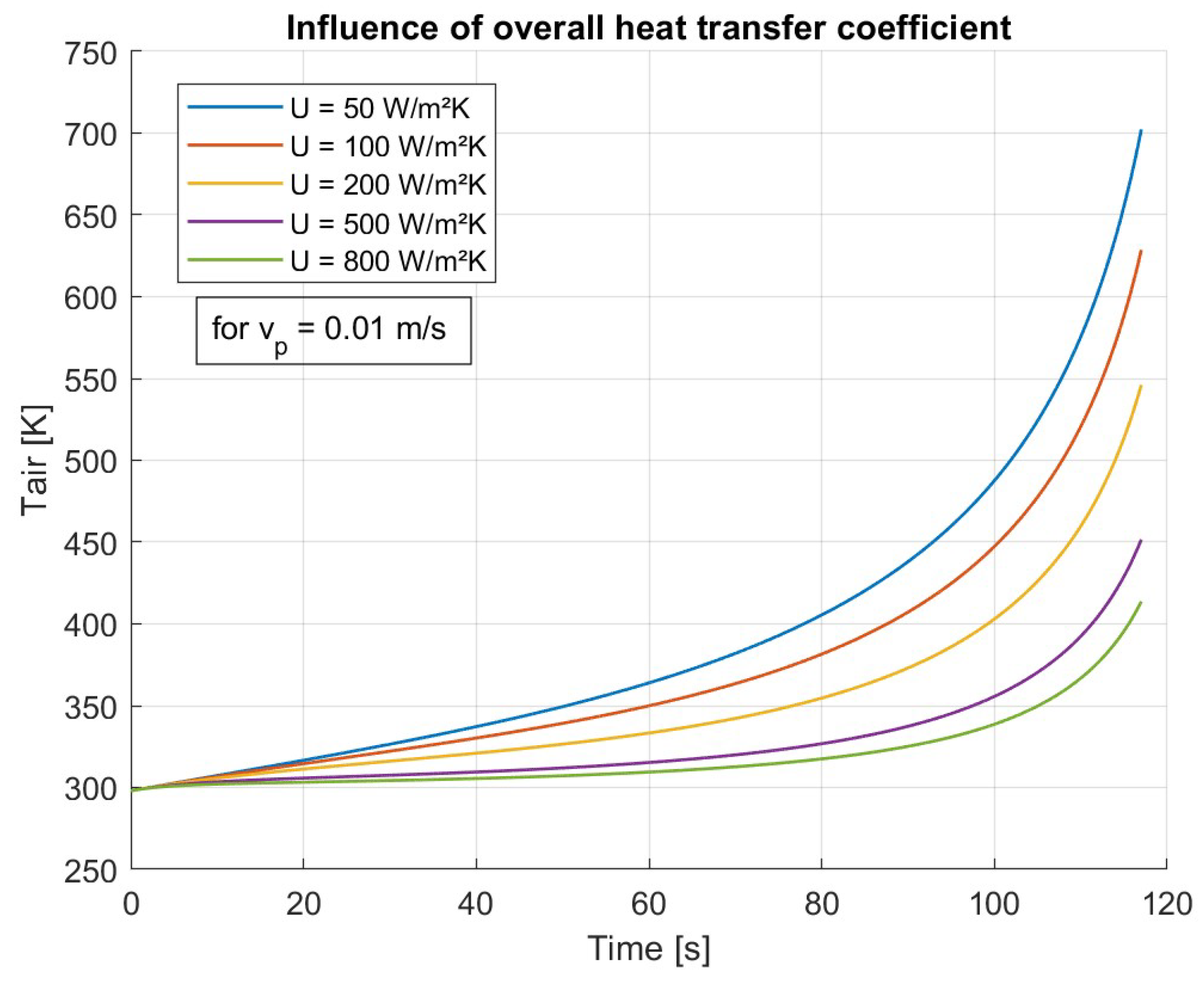
Figure 15 illustrates the variation of air temperature over time for different values of the overall heat transfer coefficient (U), while maintaining a constant piston velocity of 0.01 m/s. An analysis of the system’s sensitivity to the heat transfer coefficient reveals a significant impact on the thermal regulation of the compressed air. With a constant piston speed of 0.01 m/s, increasing U from 50 to 800 W/m
2K results in a reduction of the final air temperature by nearly 300 K. A higher U value enhances the efficient dissipation of heat to the external environment, thereby aligning the system’s behavior more closely with that of ideal isothermal compression.
3.2.3. Effect of Leakage Losses
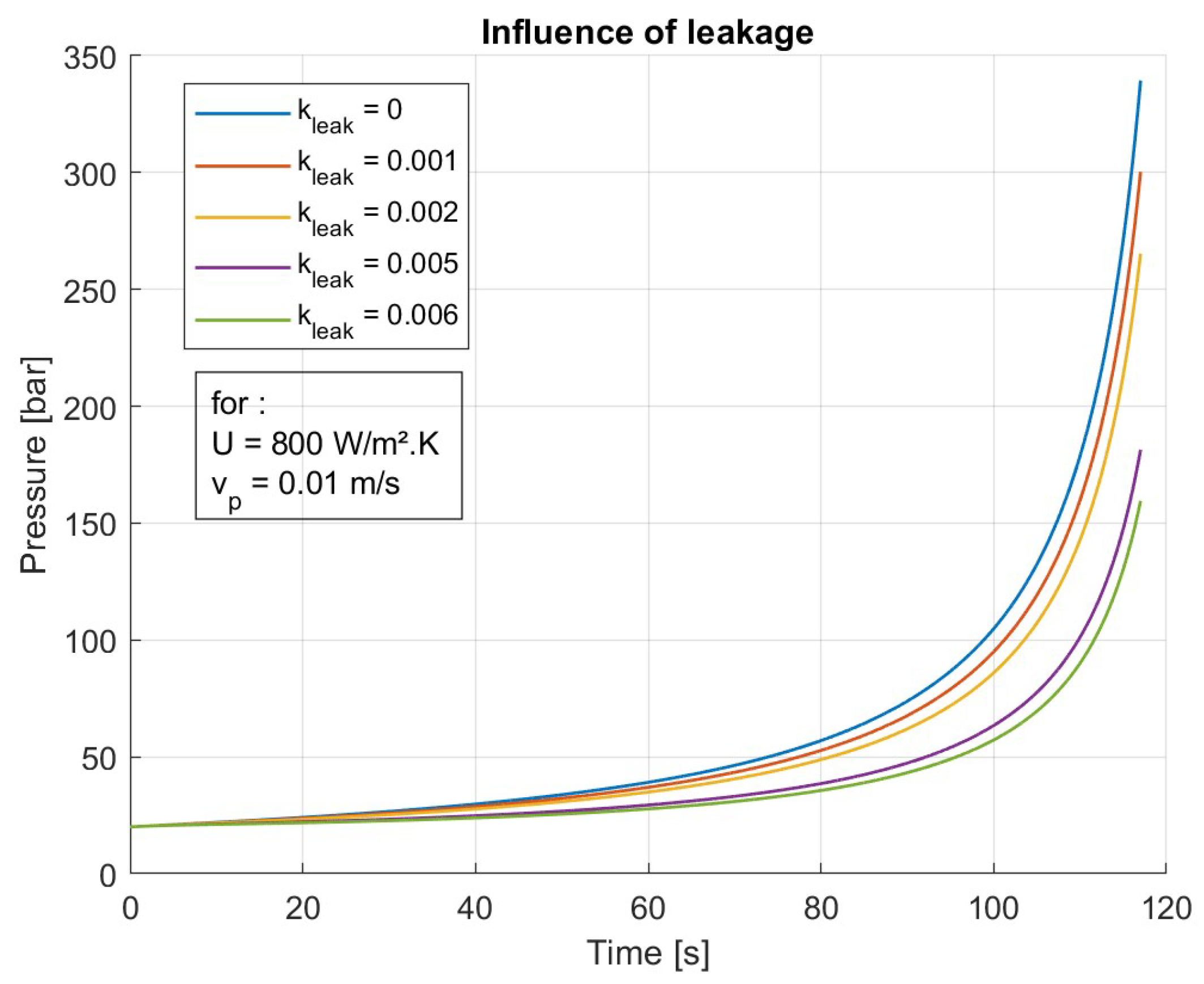
To evaluate the impact of sealing imperfections on system performance, a basic leakage model was developed that considers the mass loss rate to be proportional to the air mass present within the chamber. The sensitivity analysis indicates that leakage diminishes the ultimate compressed air mass, reduces the final storage pressure, and lessens the recoverable energy of the system. These findings emphasize the critical role of sealing quality in the practical application of the proposed PES concept, particularly under conditions of high pressure.
The seals in the system are essential to reaching the desired pressure performance. The maximum pressure at the end of the cycle is significantly reduced when a leakage coefficient (k leak) is introduced.
Figure 16 shows the change in pressure over time for different leakage coefficients. A leakage coefficient of 0.006 causes the pressure to drop to around 160 bar, whereas an ideal, leak-free system achieves about 340 bar. These findings highlight the importance of controlling mass loss because even a little leak significantly lowers the stored energy density.
3.2.4. Effect of Mechanical Losses
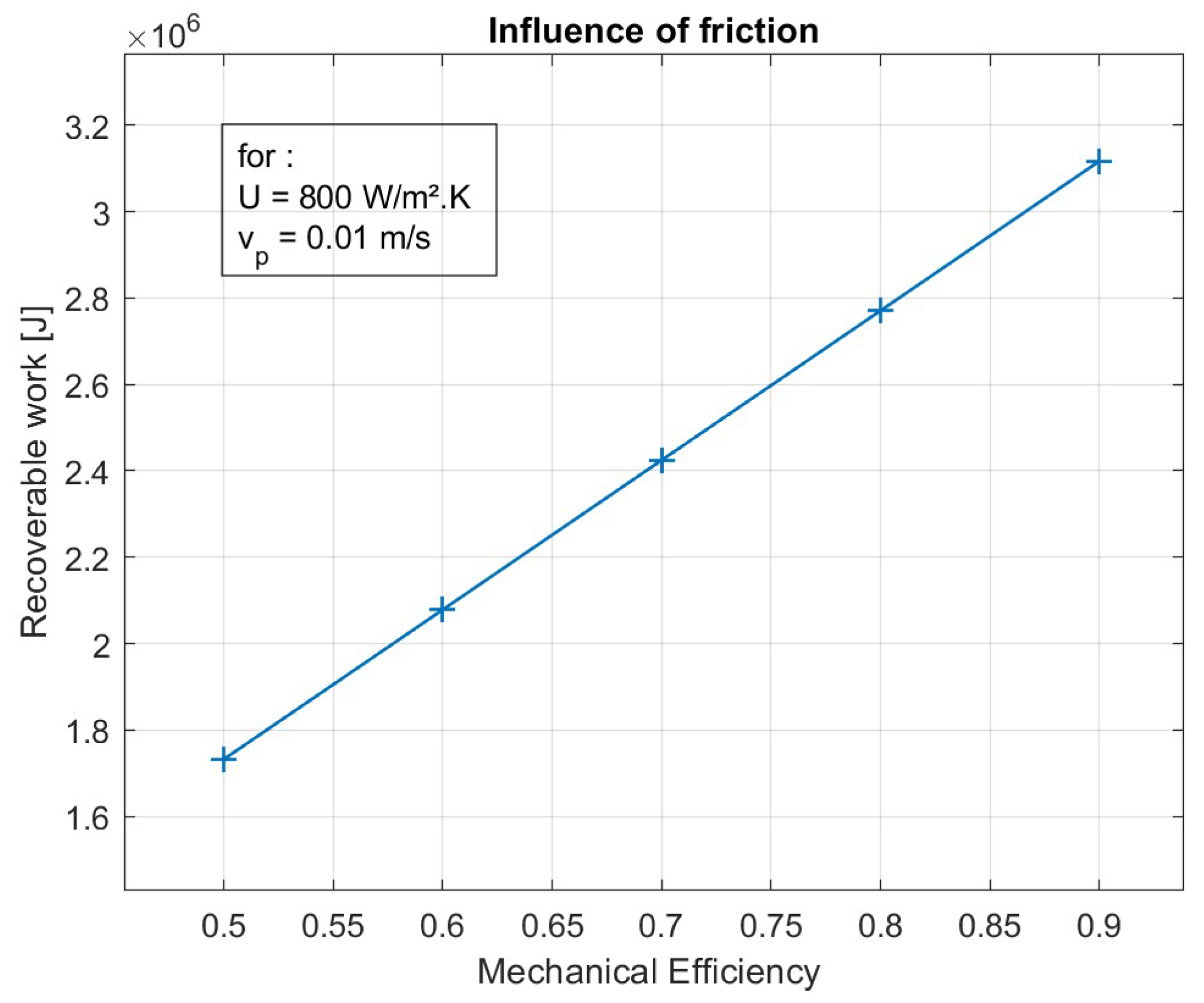
Figure 17 illustrates the relationship between mechanical efficiency and recoverable work, indicating a direct linear correlation between the two. As mechanical efficiency ranges from 0.5 to 0.9, the amount of recoverable work increases accordingly, rising from approximately 1.7 MJ to over 3.1 MJ. This finding underscores the importance of minimizing friction losses as a crucial performance factor, alongside improving heat exchange, in order to maximize the overall efficiency of the PES system.
3.3. Model Verification
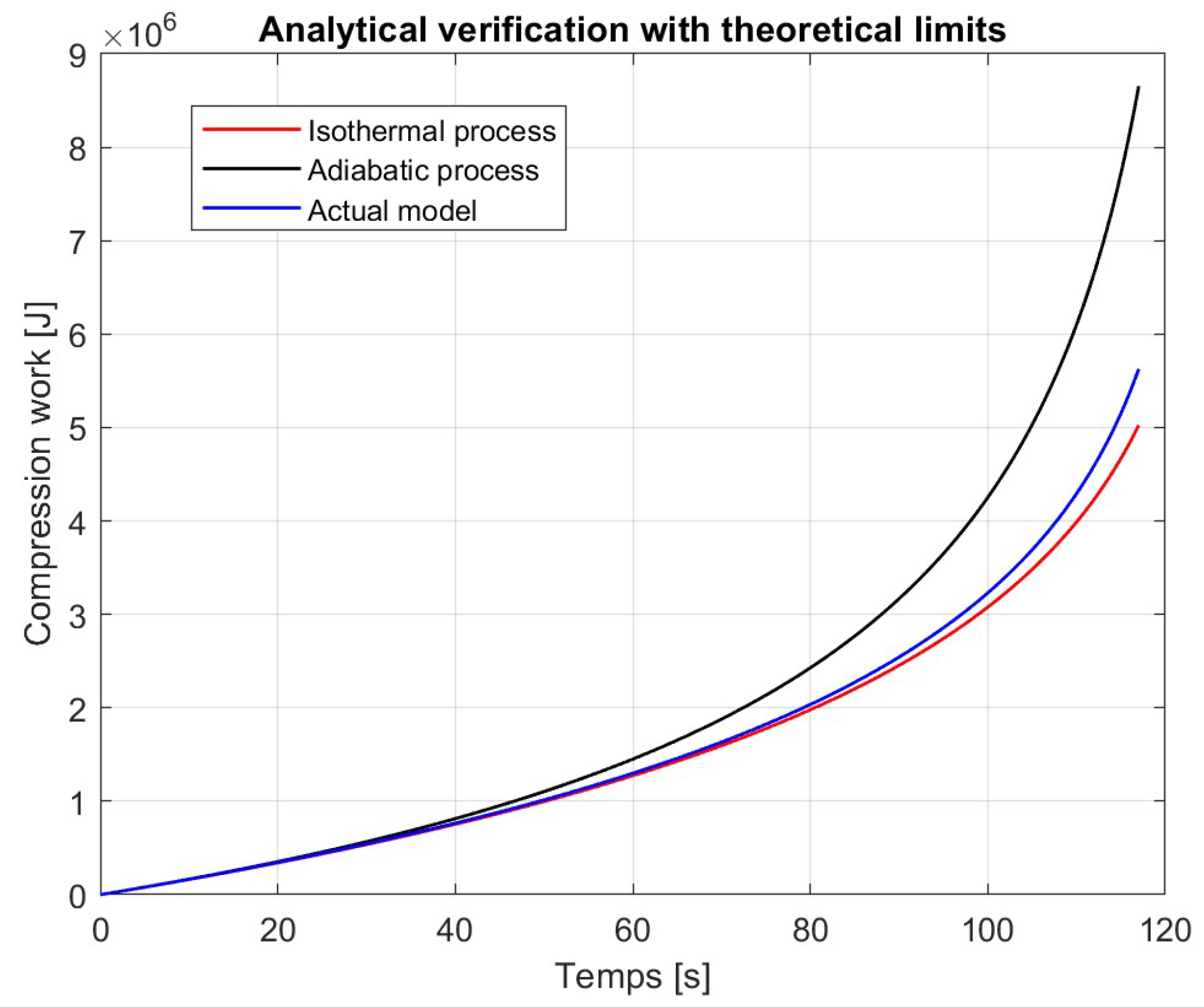
The present thermodynamic model is intended as a first-order feasibility tool rather than a fully predictive engineering model. The developed model was evaluated by comparing the actual compression work to the theoretical isothermal and adiabatic limits. The results, in
Figure 18, indicate that the compression work of the actual model, for a piston speed of 0.01 m/s and a heat transfer coefficient of 800 W/m
2K, follows an intermediate trajectory, predominantly aligning closer to the isothermal process throughout most of the compression phase. At the end of the cycle, the work reaches approximately 5.6 MJ, thereby validating the model’s capacity to realistically account for heat transfer, in contrast to a purely adiabatic compression, which would necessitate a significantly higher energy input, nearing 8.6 MJ.
In addition, the qualitative trends obtained in this study, particularly the influence of piston speed and heat transfer on thermal behavior, are consistent with previously reported results in the literature on near-isothermal liquid piston air compressor [
26]. Nevertheless, deviations from real system behavior are expected due to non-ideal gas effects, friction, leakage, finite heat transfer, and structural constraints. Therefore, the present results should be interpreted as a feasibility-oriented and upper-bound performance assessment.
3.4. Engineering Feasibility and Design Constraints
The design and execution of the proposed PES system faces substantial technological obstacles since it operates at high pressures (up to 20 MPa). The storage tank’s structural integrity is one of the main issues noted. To guarantee both mechanical strength and safety in such situations, careful material selection is essential. The use of high-strength steels or composite pressure vessels is commonly recognized in the field of materials and structural analysis as a crucial element for guaranteeing the ability to endure mechanical stresses and the pressures applied. Given that the container must be engineered to withstand frequent pressure cycles, fatigue resistance and long-term durability are essential criteria. It is important to note that heat effects resulting from expansion and compression may lead to additional stresses, which must be considered during the structural design process.
The piston and the mechanical transmission system provide another important limitation. Large-diameter pistons may experience extremely high mechanical stresses since compression force is directly related to pressure and piston area. Strong mechanical parts, including strengthened pistons, high-capacity bearings, and dependable transmission systems, are needed to withstand these stresses. In addition to lowering overall efficiency, friction in these parts increases wear and maintenance needs. Therefore, careful design is required to ensure the system’s endurance while minimizing mechanical losses.
Sealing issues and leaks are critical challenges when it comes to maintaining a system’s efficiency. Under high pressure, even minor leaks can significantly reduce stored energy and overall efficiency. Ensuring effective sealing in a reciprocating piston system is particularly challenging, given the constant movement and pressure fluctuations. To ensure satisfactory performance, it may be necessary to employ sophisticated sealing solutions, such as multi-layer sealing systems or fluid-assisted sealing methods. Furthermore, it is essential to incorporate the effects of leaks into system modeling to obtain accurate performance evaluations.
Safety is also a critical consideration in the design of high-pressure energy storage systems. The system must comply with current standards for pressure vessels and incorporate safety mechanisms such as relief valves, monitoring systems, and appropriate safety factors. It is essential to minimize the hazards associated with rapid depressurization or mechanical failure through careful design and appropriate material selection. Furthermore, it is imperative to ensure operational safety under both normal conditions and during transient conditions.
Finally, scalability imposes additional design constraints. Although increasing the system volume or operating pressure could optimize energy storage capacity, it would also lead to increased mechanical stresses, sealing challenges, and safety risks. It is therefore essential to find an optimal balance between pressure, storage volume, and mechanical complexity. This design compromise underscores the importance of an integrated, systems-based approach, in which thermodynamic performance, mechanical reliability, and economic considerations are collectively optimized.