Article

Optimizing Carbon Partitioning in Sweet Sorghum: A GGE Biplot and Multivariate Assessment of Biomass–Sugar Trade-Offs and Bioethanol Stability Across Water Regimes


Department of Field Crops, College of Agriculture and Natural Sciences, Seyh Edebali University, Bilecik 11230, Türkiye
Sustainability 2026, 18(10), 5029; https://doi.org/10.3390/su18105029 (registering DOI)
Submission received: 25 March 2026 / Revised: 24 April 2026 / Accepted: 26 April 2026 / Published: 16 May 2026
(This article belongs to the Special Issue Sustainable Agricultural Practices and Cropping Systems)

Abstract

This study investigates the physiological trade-off between biomass yield and sugar concentration in five sweet sorghum genotypes to evaluate how carbon partitioning influences bioethanol potential. Field experiments were conducted over the 2019–2020 seasons in the East Marmara transitional zone of Türkiye, under irrigated and rain-fed regimes. Results revealed a highly significant genotype × water regime interaction (p < 0.001). A distinct trade-off was identified: while the hybrid ‘Teide’ maximized juice volume under irrigation (2427.67 L ha−1), ‘Leoti’ maintained superior sugar stability (18.38 °Brix) under moisture deficit. Genotype plus Genotype × Environment Interaction (GGE) biplot analysis indicated that ‘Early Sumac’ provided the highest environmental buffering, balancing productivity and sugar density across water regimes. Principal Component Analysis (PCA) demonstrated that plant height (averaging 214.2 cm) was positively associated with juice yield and concentration. Under irrigation, ‘Teide’ produced the highest bioethanol yield (1690.7 L ha−1), whereas ‘Nutrihang’ led output under rain-fed conditions. While these site-specific trends offer valuable insights into local bioenergy stability, further multi-location trials are necessary to confirm these patterns on a broader scale. The findings conclude that feedstock selection must be categorized by water availability to optimize sweet sorghum-based bioenergy systems in water-limited environments.

1. Introduction

Türkiye’s agriculture is increasingly affected by arid and semi-arid conditions, especially in transitional regions, highlighting the need for resilient crops like sweet sorghum that can grow in saline and marginal soils [1,2,3]. By localizing bioethanol production, Türkiye can utilize its marginal lands to enhance energy security while reducing the carbon footprint of its industrial sectors [4,5]. Sweet sorghum (Sorghum bicolor (L.) Moench var. saccharatum) has attracted growing interest because it can simultaneously produce large amounts of biomass, fermentable stem juice, and grain across various agro-ecological settings [6,7,8]. Unlike sugarcane, which typically requires a full year for a single harvest, sweet sorghum is characterized by a shorter growth cycle and robust resilience, enabling up to two harvests per year. Owing to its strong drought resistance and physiological adaptability, it is particularly well-suited for marginal lands characterized by drought, semi-arid climates, or cold stress [9,10,11,12]. This resilience is vital for addressing Türkiye’s dependence on imported animal feed and the national pressure for an energy transition. In this context, sweet sorghum serves as a promising alternative for sustainable production systems to reduce vulnerability to climate change and land degradation [13,14,15]. Hybrid varieties typically outperform inbred lines in biomass, juice yield (JUY), and ethanol yield (EY), requiring fewer inputs while exhibiting greater resilience to environmental fluctuations [16,17]. Significant genetic variations in traits such as fresh stem yield (FSY), sugar content, and theoretical ethanol yield (ETY) indicate strong potential for targeted genotype selection [18,19]. However, breeding progress for traits like sugar accumulation and fermentation efficiency remains lower than expected [20]. This gap is critical for Türkiye, where enhancing productivity is essential to mitigate climate-related risks [21,22]. The C4 photosynthetic pathway further emphasizes the crop’s potential to maintain high rates under water scarcity and elevated temperatures [16,23]. Finally, at the industrial scale, ETY is influenced by both genetic potential and fermentation efficiency, including factors like temperature and nutrient management [24,25]. This physiological advantage is crucial for regions such as Türkiye, where water scarcity and high evaporation demand are increasingly limiting the production of traditional crops [26,27,28,29]. In addition, Türkiye is facing increasing pressure to reduce its dependence on imported feed resources and fossil fuels, highlighting the need for multi-purpose crops that can simultaneously support bioenergy production and livestock feeding systems [30,31]. Despite progress in marker-assisted and genomic selection [32,33], comprehensive field trials capturing genotype–environment (G × E) interactions remain limited in Türkiye’s transitional zones. There is a significant knowledge gap regarding the integration of agronomic performance with juice quality and bioethanol potential in these specific regions. To address this, the present study aims to evaluate the bioenergy potential of five sweet sorghum genotypes under irrigated and rain-fed conditions in the Marmara region using AMMI and GGE biplot models. We hypothesized that hybrid cultivars would exhibit superior environmental buffering compared to inbred lines, maintaining a more stable balance between juice yield and fermentable sugar concentration under moisture deficit.

2. Materials and Methods

2.1. Study Sites

Field experiments were conducted during the 2019 and 2020 growing seasons at the Agricultural Research and Application Station of Bilecik Şeyh Edebali University, located in the transitional zone of Türkiye’s East Marmara region (40°08′ N, 30°02′ E; altitude 215 m). The region is characterized by a semi-arid continental climate, with a 30-year average annual temperature of 11.5 °C and 554.2 mm of precipitation. Meteorological data from the Turkish State Meteorological Service (MGM) indicated that annual precipitation during the experimental years was significantly lower than the long-term average, with only 182.4 mm in 2019 and 229.0 mm in 2020. The experimental soil is classified as sandy loam and is moderately alkaline (pH 8.11), with an electrical conductivity (EC) of 0.26 dS m−1, 7.3% calcium carbonate (CaCO3), and 1.5% organic matter. The available phosphorus (P2O5) and exchangeable potassium (K2O) contents were recorded as low, at 35.2 kg ha−1 and 110.5 kg ha−1, respectively.

2.2. Sampling and Biomass Determination

Five distinct sweet sorghum genotypes (Teide, Nutrihang, Nes, Early Sumac, and Leoti) were evaluated in this study. The morpho-physiological characteristics of these genotypes were categorized based on breeder technical specifications and international germplasm databases to represent a diverse spectrum, ranging from high-yielding commercial hybrids to climate-resilient inbred lines (Table 1). This selection facilitated a comprehensive assessment of the trade-offs between biomass productivity and fermentable sugar accumulation under varying water regimes. At physiological maturity, plants from the central rows were harvested to quantify fresh and dry biomass yields while minimizing edge effects. Representative subsamples were systematically collected for downstream juice extraction and sugar quantification. Furthermore, the aerial biomass was partitioned into liquid (juice) and solid (lignocellulosic) components to ensure a holistic evaluation of the total bioenergy potential.

2.3. Laboratory Analysis and Ethanol Quantification

Stem juice was extracted using a mechanical press, and the total soluble solids (°Brix) were determined using a digital refractometer. The remaining biomass was analyzed for crude protein, acid detergent fiber (ADF), and neutral detergent fiber (NDF). The bioethanol production process involved sequential enzymatic hydrolysis using α-amylase and glucoamylase to convert complex carbohydrates into fermentable sugars, followed by fermentation with Saccharomyces cerevisiae (brewing yeast). After fermentation, the samples underwent distillation and molecular sieve purification. The ethanol concentration was precisely quantified using Gas Chromatography–Flame Ionization Detection (GC-FID). To calculate the total Ethanol Yield (EY, L ha−1), the measured ethanol concentration from the distilled juice was integrated with the total juice volume and biomass yield per unit area using the following formula:
EY = JUY × Cet × 0.01 × µ
where JUY is the juice yield (L ha−1), Cet is the ethanol concentration measured via GC, and µ is the fermentation efficiency coefficient. This approach ensures that the bioethanol potential is directly linked to the agronomic performance recorded in the field trials.

2.4. Experimental Design and Crop Cultivation

The field trials were established using a split-plot design within a randomized complete block (RCBD) with three replicates. The sowing density was set at 175,000 plants ha−1 (with 0.70 m row spacing and 0.20 m intra-row spacing) to optimize light interception and prevent lodging, following standardized protocols for sweet sorghum production in transitional Mediterranean climates. The irrigation protocol was designed to meet the crop’s peak water demand during critical growth stages (stem elongation to flowering). While rainfed plots relied on seasonal precipitation, the irrigated treatment received 338.1 mm of supplemental water to maintain soil moisture at approximately 70% of field capacity, ensuring a clear contrast for evaluating drought resilience. The fertilization regime was established based on the initial soil analysis results, which indicated low phosphorus and potassium levels. A basal application of 48 kg ha−1 nitrogen (DAP), 90 kg ha−1 P2O5, and 50 kg ha−1 K2O was applied to rectify these soil deficiencies. To support high biomass accumulation and prevent nutrient leaching, supplemental nitrogen (48 kg ha−1 at stem elongation and 24 kg ha−1 at flowering) and potassium (50 kg ha−1 at stem elongation) were top-dressed to match the crop’s nutrient uptake curves.

2.5. Measurement and Laboratory Analysis

At physiological maturity, the middle two rows of each test plot were harvested to measure biomass yield. Fresh biomass yield (t ha−1) was calculated from the total fresh weight of the harvested area. To account for measurement fluctuations and ensure high precision, dry biomass yield was determined by oven-drying subsamples in triplicate at 105 °C until a constant weight was reached, following the AOAC (2005) gravimetric method [34].
Stem juice was extracted using a three-roll hydraulic press and filtered through coarse cotton cloth. The total soluble solids content (°Brix) was measured in three technical replicates at 20 °C using a temperature-compensated digital refractometer, according to AOAC (2005) standards [34], to minimize thermal variance. The leftover sweet sorghum bagasse was analyzed for crude protein, acid detergent fiber (ADF), and neutral detergent fiber (NDF) content following AOAC (2005) procedures [34].
Bioethanol production was performed in duplicate for each field replicate to evaluate bioconversion stability. For hydrolysis, the juice was initially treated with α-amylase (1% w/w) at 65 °C and pH 5.5 for 24 h, then with glucoamylase (0.5% w/w) at 55 °C and pH 4.5 for 12 h. The resulting hydrolysate was filtered through a 0.45 µm membrane before fermentation. Anaerobic fermentation was carried out using Saccharomyces cerevisiae (ATCC 36858) at a concentration of 108 cells mL−1 in a 5 L bioreactor at 150 rpm and 30 °C for 48 h. Ethanol concentration was quantified by GC-FID using an external calibration curve (R2 > 0.999) to ensure analytical accuracy. Ethanol yield was expressed both per unit of dry biomass (L kg−1) and per unit area (L ha−1), providing a robust assessment of sweet sorghum’s potential for bioethanol and feed production.

2.6. Statistical Analysis

Statistical analyses were carried out using R version 4.3.2 [35]. The data analysis followed a structured hierarchical order designed to provide a multi-dimensional interpretation of the results: (i) diagnostic testing of assumptions, (ii) variance assessment via ANOVA, and (iii) stability and adaptation modeling. Initially, the assumptions of normality and homogeneity of variance were verified using the performance package to ensure compliance with parametric testing requirements. Subsequently, a combined ANOVA was performed across the two growing seasons (2019–2020) and two irrigation regimes (irrigated and rainfed). In this model, genotype, water regime, year, and their respective interactions were treated as fixed effects, while replicates nested within years were considered random effects. The year factor was specifically treated as a fixed effect because the study focused on comparing two distinct growing seasons with contrasting meteorological patterns, and the number of levels was insufficient (n < 5) to reliably estimate variance components as a random factor.
When the ANOVA indicated significant differences (p ≤ 0.05), mean comparisons were conducted using Tukey’s Honestly Significant Difference (HSD) test via the agricolae and emmeans packages. To further investigate the Genotype × Environment (G × E) interaction beyond the scope of ANOVA, two complementary stability models were employed to provide distinct analytical insights. The AMMI (Additive Main Effects and Multiplicative Interaction) model was applied specifically to partition the interaction variance into principal components, offering a granular diagnostic of environmental influence. Simultaneously, GGE (Genotype plus Genotype × Environment) biplot analysis was utilized for its superior ability to integrate genotypic main effects with the interaction, facilitating “who-wins-where” visualizations and identifying ideal genotypes within specific water regimes. While recognizing the inherent limitation of a relatively small number of environments (2 years × 2 water regimes = 4), these integrated models were employed as robust tools for a preliminary evaluation of yield stability and adaptability patterns. Visual outputs, including biplots and “who-wins-where” diagrams, were generated within the RStudio version 2023.12.1 environment. Furthermore, Figure 1, Figure 2, Figure 3, Figure 4, Figure 5, Figure 6, Figure 7, Figure 8 and Figure 9 utilize error bars and advanced visualizations to evaluate genotypic variability under contrasting water regimes. While Figure 1, Figure 2, Figure 3, Figure 4 and Figure 5 highlight seasonal fluctuations and distribution patterns, Figure 6, Figure 7, Figure 8 and Figure 9 employ Estimated Marginal Means and GGE Biplots to integrate stability modeling with G × E interactions. This structured approach ensures that genotype selection is validated by both statistical significance and robust visual evidence.

3. Results

3.1. Genotypic Performance and Biomass Yield Dynamics

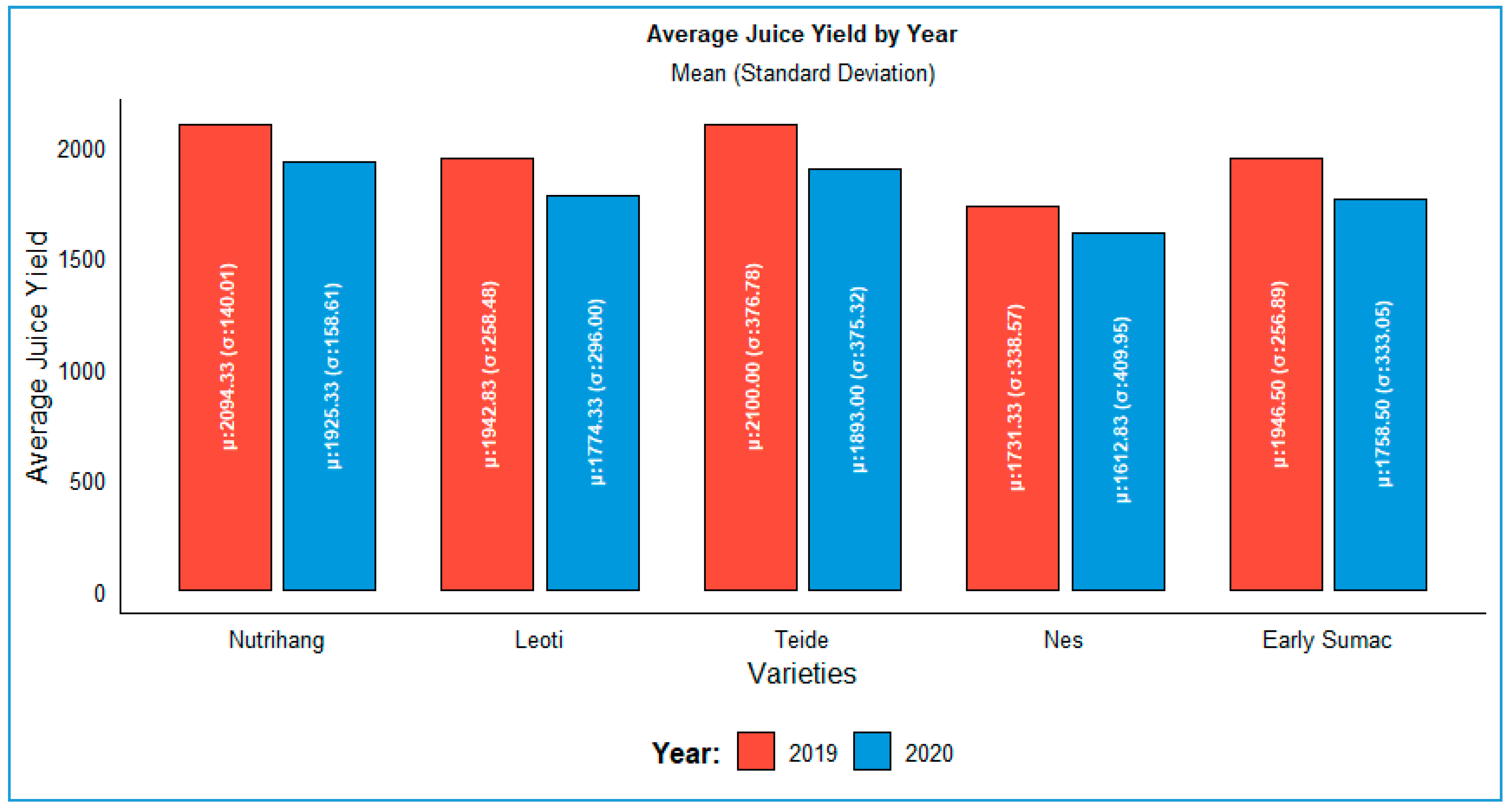
The interaction between year, irrigation, and genotype significantly influenced juice yield (JY) and biomass production. As illustrated in Figure 1, the hybrid cultivar ‘Teide’ achieved the highest numerical juice yield (2100.0 L ha−1), while ‘Early Sumac’ exhibited superior phenotypic stability across all environments. Across all genotypes, supplemental irrigation resulted in a linear increase in stalk development and sap accumulation.
The mean values and 95% confidence intervals presented in Table 2 confirm highly significant genotypic differences, identifying water availability as the dominant environmental driver of productivity, where rain-fed conditions consistently suppressed yield potential across all evaluated genotypes, irrespective of their genetic background, within the transitional zone of Türkiye.
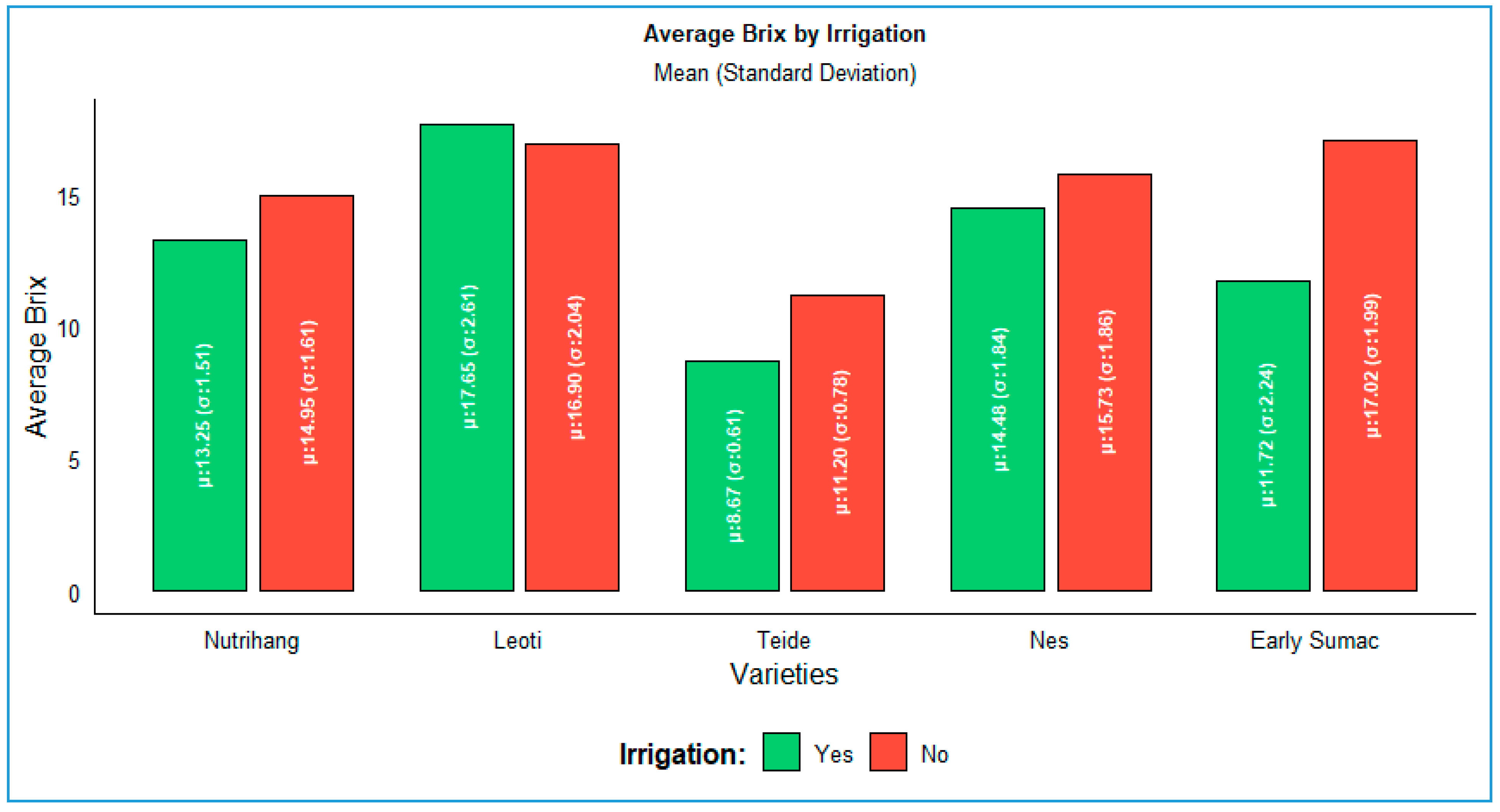
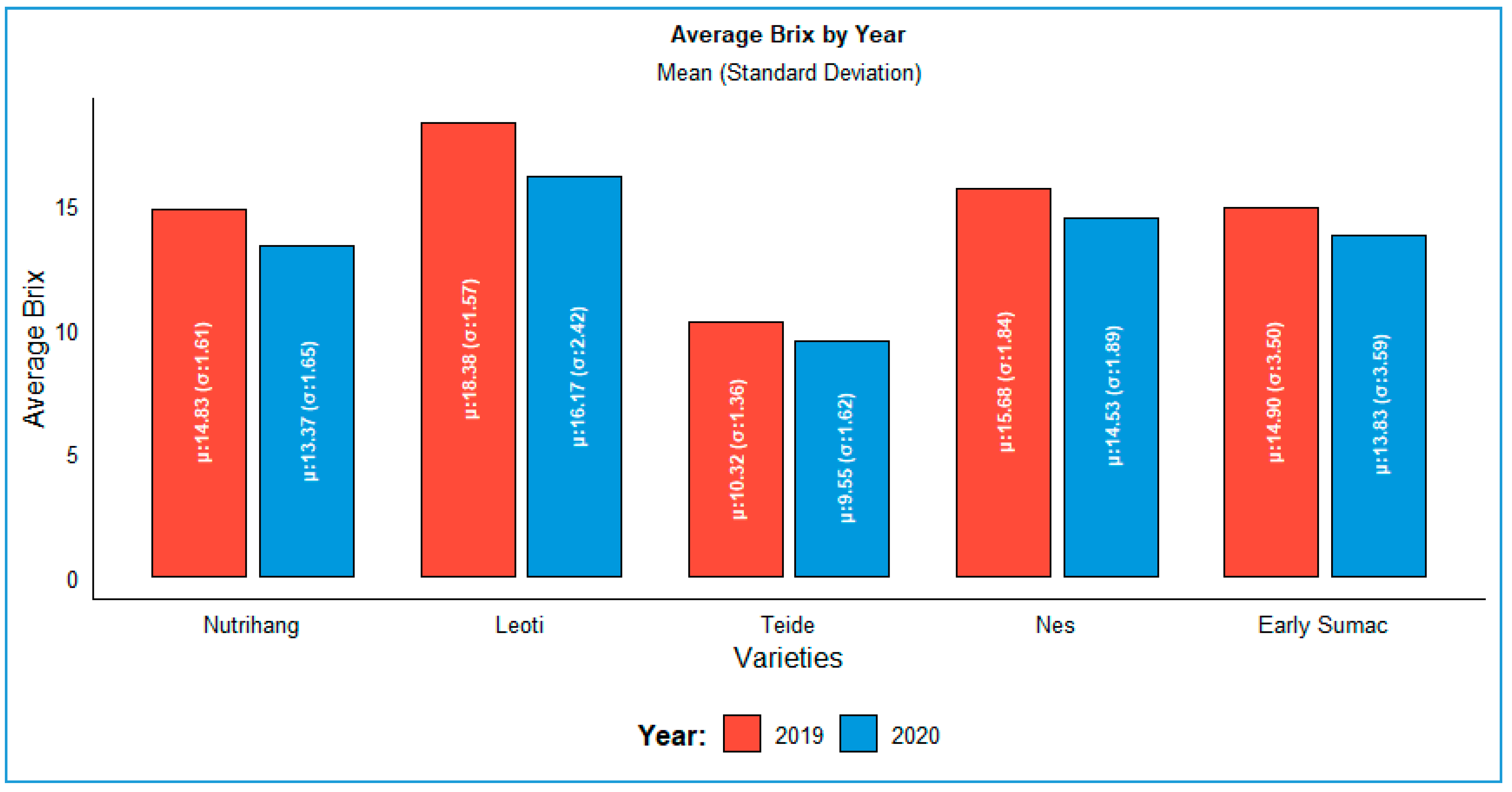
Soluble sugar concentration (°Brix) displayed a contrasting response to water regimes compared to biomass. As presented in Figure 2, irrigation consistently reduced °Brix values, with documented decreases of 0.77° in ‘Teide’ and 1.07° in ‘Early Sumac’. Notably, ‘Leoti’ maintained high sugar levels (16.17–18.38 °Brix) across both irrigation regimes, indicating a genetically conserved sugar accumulation pattern that is less sensitive to environmental moisture fluctuations (Figure 2).

3.2. Physiological Responses to Irrigation and Trade-Offs

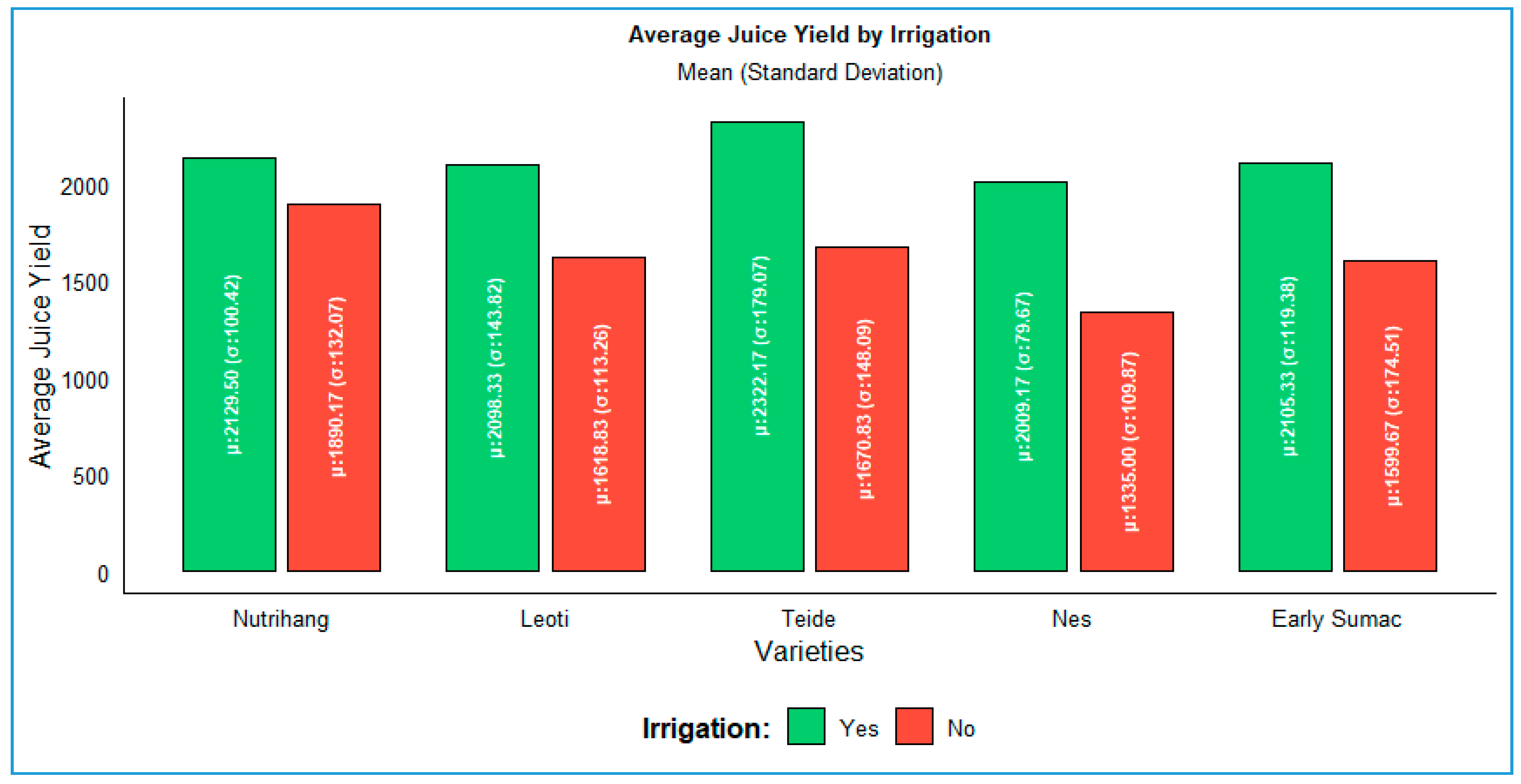
Irrigation significantly increased extractable sap volume, though the magnitude of this response was genotype-specific (Figure 3). ‘Teide’ showed the most pronounced response, with a 39% increase in juice yield under irrigation, identifying it as a ‘responsiveness-type’ genotype adapted for high-input systems. In contrast, ‘Nutrihang’ maintained a robust baseline, with rain-fed yields (1890.17 L ha−1) exceeding the irrigated performance of several other genotypes, indicating superior drought avoidance mechanisms. (Figure 3).
Genotypic differences in carbohydrate partitioning were further clarified in Figure 4, revealing a critical physiological trade-off. While most genotypes underwent sugar dilution under irrigation, ‘Leoti’ exhibited a divergent physiological trajectory with a slight increase in °Brix (from 16.90° to 17.65°), suggesting superior sink strength. Conversely, ‘Early Sumac’ displayed the largest decline (from 17.02° to 11.72 °Brix), highlighting a significant trade-off between vegetative growth and solute concentration.
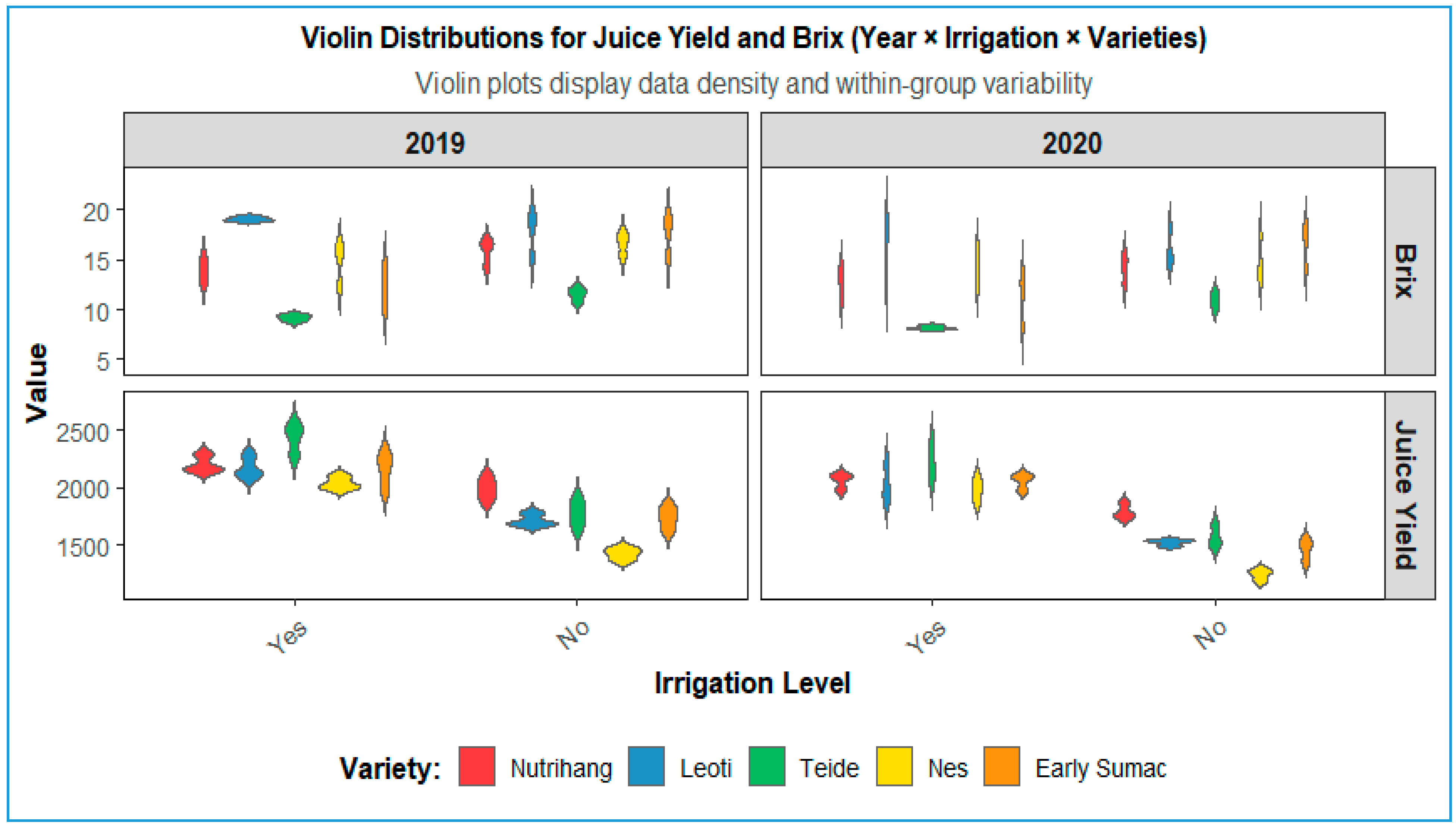
The violin distributions in Figure 5 further quantify this variability; irrigation shifted yield medians higher but increased data dispersion, whereas rain-fed conditions resulted in narrower, more predictable distributions, particularly for ‘Nutrihang’ and ‘Early Sumac’ (Figure 5).

3.3. Statistical Stability and Interaction Analysis (ANOVA, GGE, and AMMI)

ANOVA results revealed a highly significant genotype × water regime interaction (G × W, p < 0.001) for biomass-related traits (Table 3). Early Sumac recorded the highest mean fresh biomass yield (83.1 t ha−1), and the non-significant year effect (p = 0.412) suggests that genotypic variance was the primary driver of productivity (Table 3).
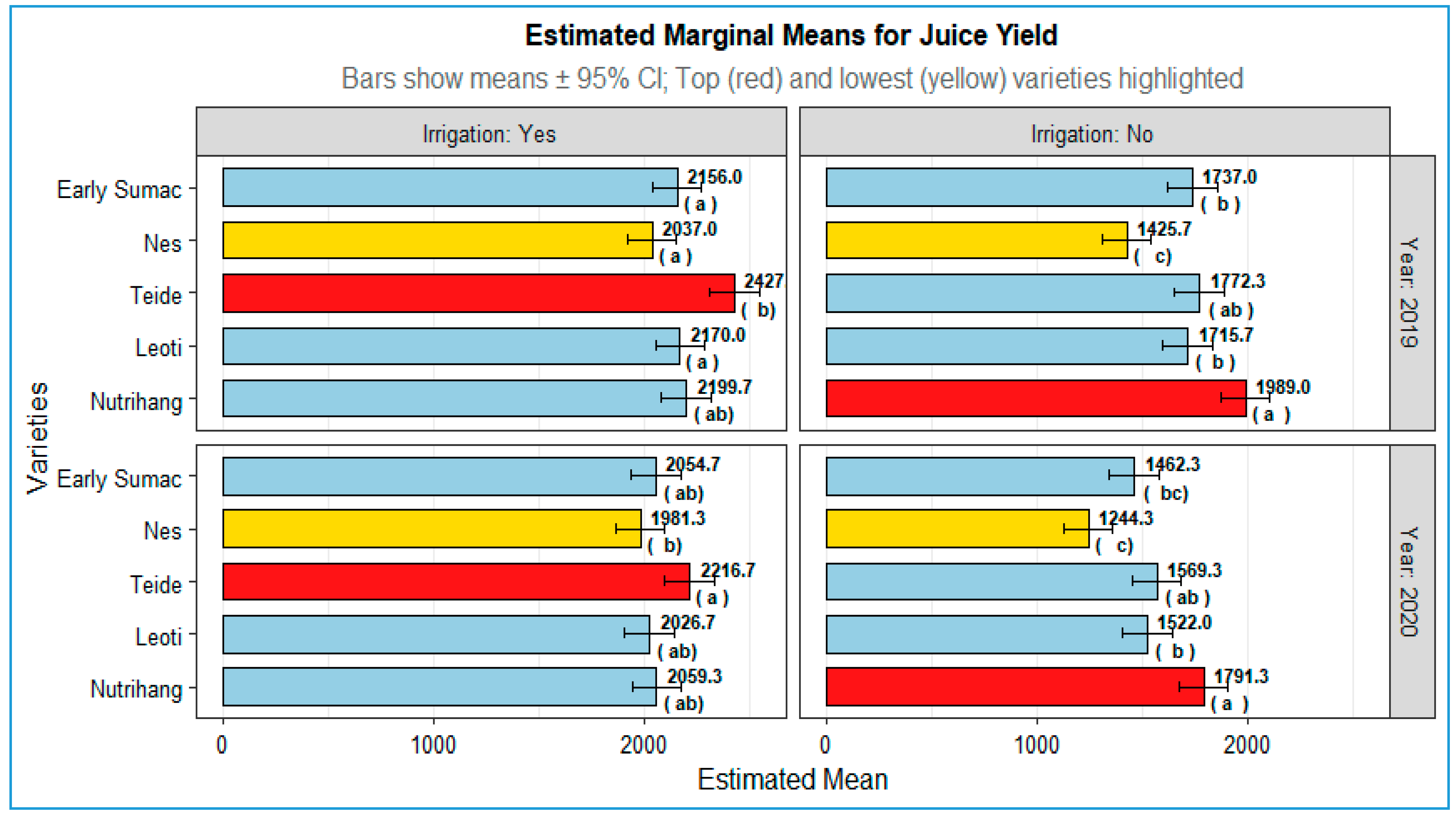
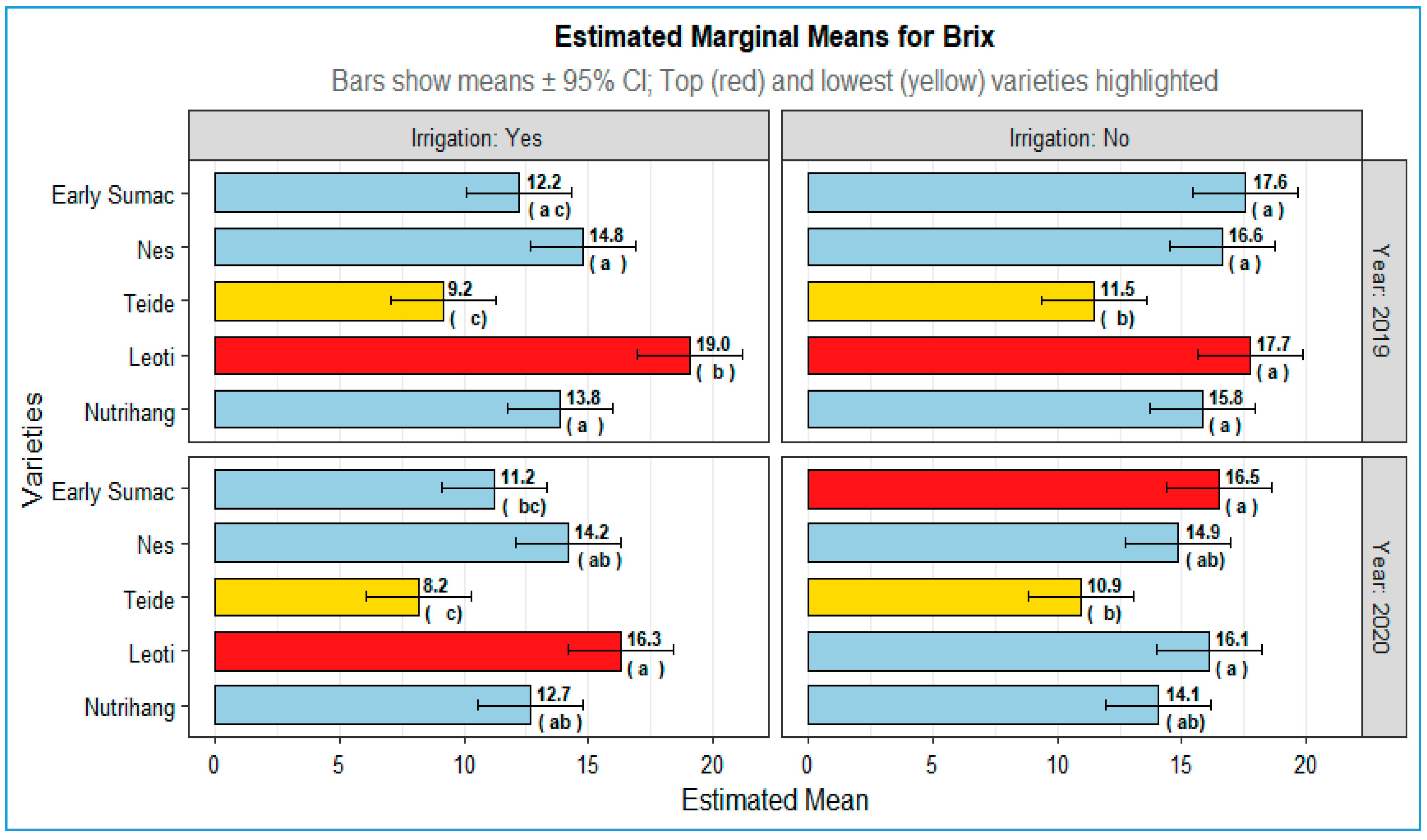
Estimated Marginal Means (EMMs) shown in (Figure 6) confirm that ‘Early Sumac’ maintained the highest juice yields under irrigated conditions across both years. Sugar accumulation patterns are presented in (Figure 7), where ‘Leoti’ consistently ranked highest, reaching values up to 19.0 °Brix. A general decline in °Brix from 2019 to 2020 was observed.
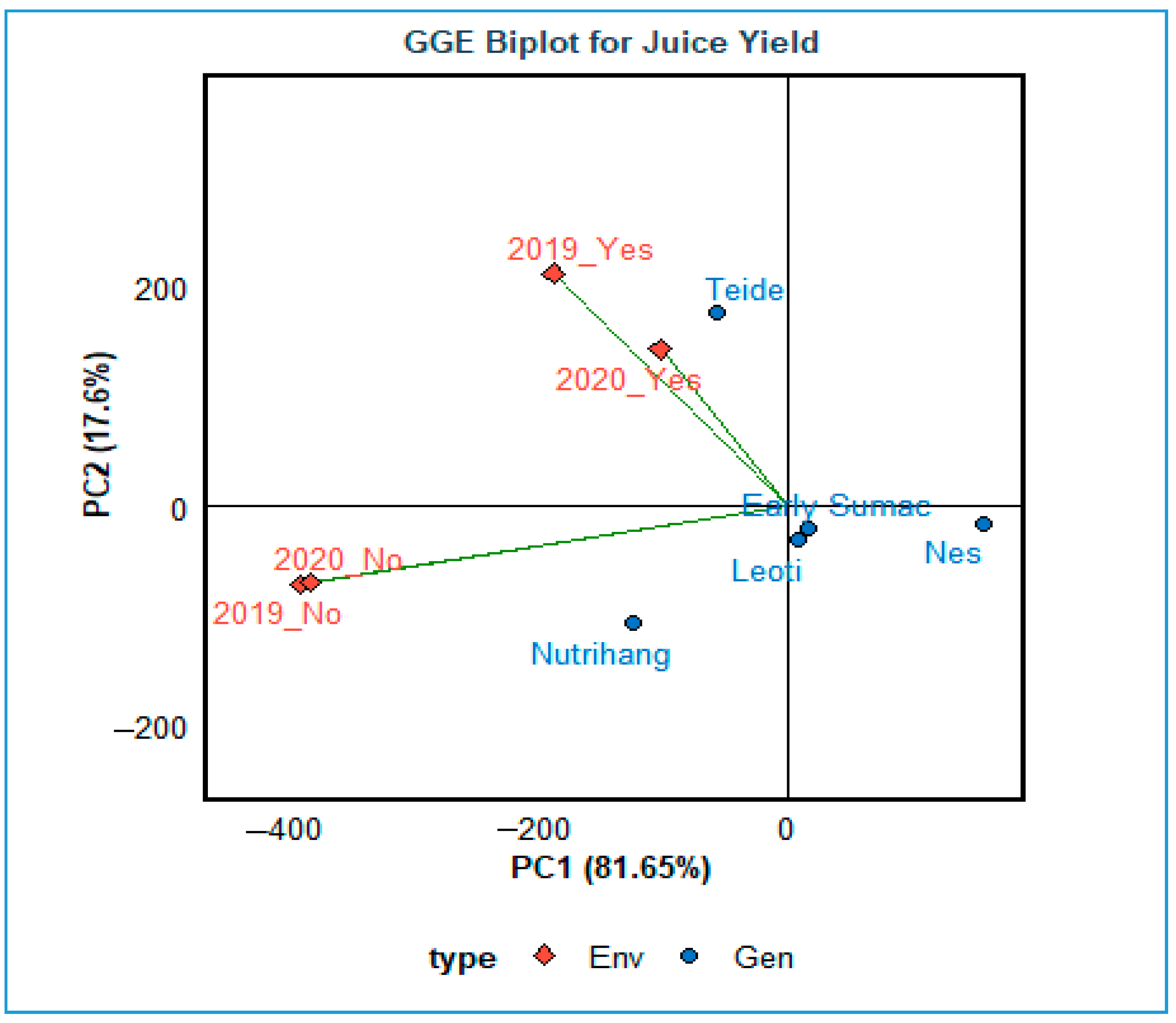
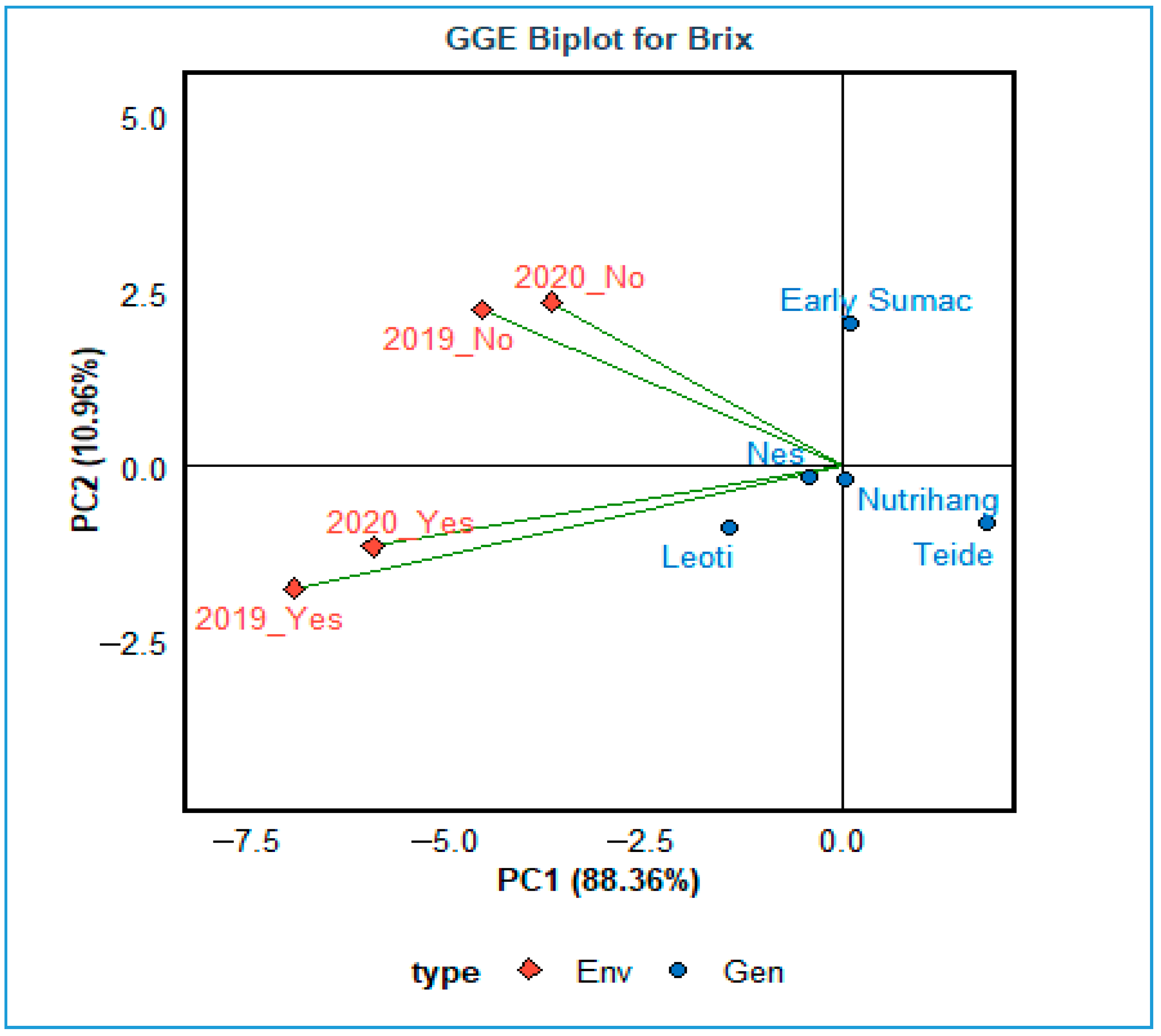
The GGE biplot for juice yield (Figure 8) explained 99.25% of total variation, positioning ‘Early Sumac’ near the origin, which underscores its superior environmental buffering and stability. The °Brix biplot (Figure 9) showed tight clustering of rain-fed environments, indicating a consistent osmotic response to moisture limitation.
AMMI analysis (Table 4 and Table 5) further confirmed that while juice yield is environment-dependent (p < 0.001), °Brix remains a more stable genotypic trait (p = 0.072), with ‘Leoti’ identified as the premier candidate for consistent for reliable, high-quality bioenergy feedstock (Table 5).

4. Discussion

The results of this biennial study substantiate that water availability is the primary limiting factor governing sweet sorghum productivity in the East Marmara transitional zone. The significant reduction in juice yield under rain-fed conditions reflects the high sensitivity of stem elongation and parenchyma cell expansion to moisture deficits [36,37,38,39,40,41,42,43,44]. This productivity decline, particularly evident in genotypes like ‘Nes’ and ‘Early Sumac’ during the drier 2020 season, suggests that when soil moisture drops below a critical threshold, the plant’s ability to maintain turgor and facilitate phloem-mediated sugar transport is severely compromised [39].
A central contribution of this research is the empirical validation of the physiological trade-off between biomass volume and sugar concentration. The observed reduction in °Brix under irrigation, especially in ‘Early Sumac’, confirms the widely documented “dilution effect” typical of Mediterranean-type and semi-arid environments [45,46,47,48,49,50,51]. From a mechanistic standpoint, this trend is attributed to rapid vegetative expansion and water uptake outpacing the rate of solute synthesis [49]. Conversely, the atypical response of ‘Leoti’—maintaining or even increasing °Brix under irrigated conditions—suggests that its sugar sequestration is governed by high intrinsic sink strength and phloem loading efficiency [52,53,54,55]. This indicates that specific germplasm can decouple the conventional inverse relationship between yield and quality, potentially through superior homeostatic regulation of sucrose phosphate synthase (SPS) and sucrose synthase (SuSy) activity [56,57].
The divergent adaptation strategies of the evaluated genotypes further highlight the complexity of the G × W × Y interaction [56,58]. The high-input responsiveness of ‘Teide’—which showed a 39% yield increase under irrigation—contrasts with the robust drought resilience of ‘Nutrihang’, whose rain-fed performance surpassed the irrigated yields of several other lines [59,60]. The superior performance of hybrids like ‘Early Sumac’ and ‘Teide’ aligns with recent multi-location trials where hybrid vigor was linked to improved osmotic regulation and a 20–40% increase in juice production compared to inbred lines [61,62,63]. Furthermore, the stability of genotype rankings across years, despite absolute yield fluctuations, provides a reliable basis for long-term selection based on consistent resource-use efficiency [64,65,66].
The GGE and AMMI models provide a statistically rigorous framework for these observations, confirming that while biomass yield is highly environment-dependent, sugar quality remains a more stable genetic trait [67,68,69,70,71,72,73]. The spatial clustering of rain-fed environments in the °Brix biplot suggests that moderate water stress can paradoxically enhance bioethanol feedstock quality by concentrating soluble solids through reduced stem water content [69,74]. While the high explained variance validates the GGE approach for these conditions, the significant interannual variability emphasizes that multi-year evaluations are essential to filter seasonal noise from true genetic potential [65,67].
Ultimately, two distinct agronomic strategies emerge for optimizing bioenergy production in the region: (i) a volume-oriented approach utilizing high-biomass hybrids like ‘Early Sumac’ under optimized irrigation to maximize juice volume, and (ii) a quality-oriented approach using stable genotypes like ‘Leoti’ to minimize processing energy through elevated sugar titers. Integrating these complementary strategies, supported by genomic insights into stable juice yield QTLs [75], offers a robust pathway for enhancing bioenergy security under the increasing climatic variability of the transitional zone [51,62,76].

5. Conclusions

This study evaluated the bioenergy potential and drought responsiveness of five sweet sorghum genotypes (Early Sumac, Nes, Teide, Leoti, and Nutrihang) within a specific transitional environment over two growing seasons. The results demonstrate that a significant genotype × water regime interaction (p < 0.001) dictates divergent agronomic pathways for bioethanol feedstock production. Under the conditions tested, the hybrid ‘Early Sumac’ emerged as a robust performer, maintaining a favorable balance between biomass-derived juice volumes and °Brix levels across both irrigated and rain-fed regimes, suggesting a degree of environmental buffering against precipitation variability.
Genotype-specific analyses identified ‘Teide’ as a high-yielding candidate specifically for high-input irrigated systems, whereas ‘Leoti’ and ‘Nutrihang’ exhibited superior stability in sugar accumulation under moisture deficit, indicating physiological resilience suitable for rain-fed cultivation. Multivariate integration via AMMI and GGE biplot models confirmed a distinct trade-off between juice yield and soluble sugar concentration, where supplemental irrigation significantly enhanced volume but induced a physiological dilution effect on °Brix.
While these findings provide a foundational baseline for cultivar selection in the East Marmara region, the scope of this study—limited to two years and a single location—necessitates further multi-location trials to confirm these patterns on a broader scale. Future research should focus on quantifying specific physiological mechanisms, such as carbon partitioning and water-use efficiency, to refine targeted irrigation regimes. Ultimately, aligning genotype selection with specific environmental constraints and industrial priorities (volume vs. concentration) is essential for enhancing the stability of sweet sorghum-based bioethanol supply chains under climatic uncertainty.

Funding

This research received no external funding.

Institutional Review Board Statement

Not applicable.

Informed Consent Statement

Not applicable.

Data Availability Statement

The dataset generated and analyzed during this study is available in the Bona Res Data Centre repository or upon reasonable request from the corresponding author.

Conflicts of Interest

The author declares no conflicts of interest.

References

  1. Turgut, I.; Bilgili, U.; Duman, A.; Acikgoz, E. Production of sweet sorghum (Sorghum bicolor L. Moench) increases with increased plant densities and nitrogen fertilizer levels. Acta Agric. Scand. Sect. B-Soil Plant Sci. 2005, 55, 236–240. [Google Scholar]
  2. Chen, X.; Önal, H. An economic analysis of the future US biofuel industry, facility location, and supply chain network. Transp. Sci. 2014, 48, 575–591. [Google Scholar] [CrossRef]
  3. Zheng, M.; Tutar, H.; Shaghaleh, H.; Alhaj Hamoud, Y.; Er, H.; Omac, B.; Yildirim, G.; Eren, Ö.; Khalifa, M.; Mwamahonje, A. Assessing the Impact of Climate Change on the Sustainability of Sorghum Production: A Bibliometric Analysis. Sustain. Dev. 2026, 34, 1374–1391. [Google Scholar] [CrossRef]
  4. Acaroğlu, M.; Aydoğan, H. Biofuels energy sources and future of biofuels energy in Turkey. Biomass Bioenerg. 2012, 36, 69–76. [Google Scholar] [CrossRef]
  5. Ozdings, A.G.B.; Kocar, G. Current and future aspects of bioethanol production and utilization in Turkey. Renew. Sustain. Energy Rev. 2018, 81, 2196–2203. [Google Scholar] [CrossRef]
  6. Reddy, Y.V.K.; Lavanya, G.R.; Gorthy, S.; Bruno, A.; Krishna, K.; Chavan, S.; Habyarimana, E. Production of sweet and high biomass sorghum lines with optimized cell wall components for increased biofuel bioconversion yield. Int. J. Environ. Clim. Change 2024, 14, 110–118. [Google Scholar] [CrossRef]
  7. Disasa, T.; Feyissa, T.; Admassu, B. Characterization of Ethiopian sweet sorghum accessions for °Brix, morphological and grain yield traits. Sugar Tech. 2017, 19, 72–82. [Google Scholar] [CrossRef]
  8. Umakanth, A.V.; Paroha, S.; Kumar, A.; Ranganathan, A.; Swain, D. Sweet sorghum for biofuel production in sub-tropical India. J. Sci. Res. Rep. 2024, 30, 1–9. [Google Scholar] [CrossRef]
  9. Almodares, A.; Hadi, M.R. Production of bioethanol from sweet sorghum: A review. Afr. J. Agric. Res. 2009, 4, 772–780. [Google Scholar]
  10. Ashok Kumar, A.; Ravinder Reddy, C.; Patil, J.V.; Reddy, B.V. Sweet Sorghum for Ethanol: A New Beginning; ICRISAT: Patancheru, India, 2013; Available online: https://oar.icrisat.org/id/eprint/7368 (accessed on 12 April 2026).
  11. Prasad, S.; Sheetal, K.R.; Renjith, P.S.; Kumar, A.; Kumar, S. Sweet sorghum: An excellent crop for renewable fuels production. In Prospects of Renewable Bioprocessing in Future Energy Systems; Rastegari, A.A., Yadav, A.N., Gupta, A., Eds.; Springer: Cham, Switzerland, 2019; pp. 291–314. [Google Scholar] [CrossRef]
  12. Kumar, K.M.; Kumari, S. Sweet sorghum supply chain for bio-ethanol production. In Sustaining the Global Agriculture Supply Chain; IGI Global: Hershey, PA, USA, 2025; pp. 261–274. [Google Scholar]
  13. Almodares, A.; Hadi, M.R.; Ahmadpour, H. Sorghum stem yield and soluble carbohydrates under different salinity levels. Afr. J. Biotechnol. 2008, 7, 4051–4055. [Google Scholar]
  14. Yucel, C.; Erkan, M.E. Evaluation of forage yield and silage quality of sweet sorghum in the eastern Mediterranean region. J. Anim. Plant Sci. 2020, 30, 843–851. [Google Scholar] [CrossRef]
  15. Devlet, A.; Arvas, Y.E. Future Strategies for Sorghum Improvement Under Climate Change Scenario. In Omics and Biotechnological Approaches for Product Profile-Driven Sorghum Improvement; Springer Nature: Singapore, 2024; pp. 395–403. [Google Scholar]
  16. Zhao, Y.; Dolat, A.; Steinberger, Y.; Wang, X.; Osman, A.; Xie, G.H. Biomass yield and changes in chemical composition of sweet sorghum cultivars grown for biofuel. Field Crops Res. 2009, 111, 55–64. [Google Scholar] [CrossRef]
  17. Knoll, J.E.; Anderson, W.F. Yield components in hybrid versus inbred sweet sorghum. Crop Sci. 2016, 56, 2638–2646. [Google Scholar] [CrossRef]
  18. Ratnavathi, C.V.; Suresh, K.; Kumar, B.V.; Pallavi, M.; Komala, V.V.; Seetharama, N. Study on genotypic variation for ethanol production from sweet sorghum juice. Biomass Bioenerg. 2010, 34, 947–952. [Google Scholar] [CrossRef]
  19. Regassa, T.H.; Wortmann, C.S. Sweet sorghum as a bioenergy crop: Literature review. Biomass Bioenerg. 2014, 64, 348–355. [Google Scholar] [CrossRef]
  20. Rooney, W.L.; Blumenthal, J.; Bean, B.; Mullet, J.E. Designing sorghum as a dedicated bioenergy feedstock. Biofuels Bioprod. Biorefin. 2007, 1, 147–157. [Google Scholar] [CrossRef]
  21. Khalifa, M.; Eltahir, E.A. Assessment of global sorghum production, tolerance, and climate risk. Front. Sustain. Food Syst. 2023, 7, 1184373. [Google Scholar] [CrossRef]
  22. Bas, S.; Killi, D. Effects of heat and drought stress on sustainable agriculture and future food security in Türkiye. Turk. J. Agric. Food Sci. Technol. 2024, 12, 1093–1103. [Google Scholar] [CrossRef]
  23. Xue, X.; Beuchat, G.; Wang, J.; Yu, Y.C.; Moose, S.; Chen, J.; Chen, L.Q. Sugar accumulation enhancement in sorghum stem is associated with reduced reproductive sink strength and increased phloem unloading activity. Front. Plant Sci. 2023, 14, 1233813. [Google Scholar] [CrossRef]
  24. Gnansounou, E.; Dauriat, A.; Wyman, C.E. Refining sweet sorghum to ethanol and sugar: Economic trade-offs in the context of North China. Bioresour. Technol. 2005, 96, 985–1002. [Google Scholar] [CrossRef]
  25. Kasegn, M.M.; Simachew, A.; Redda, Y.T.; Gebremedhn, H.M. Production of bioethanol from sweet sorghum (Sorghum bicolor L.) juice using yeast isolated from fermented sweet sorghum juice. Int. Microbiol. 2024, 27, 491–504. [Google Scholar] [CrossRef] [PubMed]
  26. Mancosu, N.; Snyder, R.L.; Kyriakakis, G.; Spano, D. Water Scarcity and Future Challenges for Food Production. Water 2015, 7, 975–992. [Google Scholar] [CrossRef]
  27. Benli, H. Potential Application of Solar Water Heaters for Hot Water Production in Turkey. Renew. Sustain. Energy Rev. 2016, 54, 99–109. [Google Scholar] [CrossRef]
  28. Devlet, A. Crop Production and Influencing Factors; Institution of Economic Development and Social Researches Publications (IKSAD): Ankara, Turkey, 2021; pp. 183–250. [Google Scholar]
  29. Ozturk, M.; Altay, V.; Gönenç, T.M.; Unal, B.T.; Efe, R.; Akçiçek, E.; Bukhari, A. An Overview of Olive Cultivation in Turkey: Botanical Features, Eco-Physiology and Phytochemical Aspects. Agronomy 2021, 11, 295. [Google Scholar] [CrossRef]
  30. Ersoy, A.; Uğurlu, A. Bioenergy’s Role in Achieving a Low-Carbon Electricity Future: A Case of Türkiye. Appl. Energy 2024, 372, 123799. [Google Scholar] [CrossRef]
  31. Ünlükal, C.; Yücel, M. The Importance of Strategic Agricultural Products on Sustainable Agriculture in Türkiye. Eurasian J. Agric. Res. 2025, 9, 211–223. [Google Scholar]
  32. Wang, Y.H.; Upadhyaya, H.D.; Burrell, A.M.; Klein, R.R.; Klein, P.E. Genetic Structure and Linkage Disequilibrium in a Diverse, Representative Collection of the C4 Grass Sorghum Bicolor. PLoS ONE 2013, 8, e79949. [Google Scholar]
  33. Wang, M.; Ahmad, I.; Qin, B.; Chen, L.; Bu, W.; Zhu, G.; Zhou, G. Identification and Comprehensive Evaluation of Drought Tolerance in Sorghum During Germination and Seedling Stages. Plants 2025, 14, 1793. [Google Scholar] [CrossRef]
  34. AOAC. Official Methods of Analysis, 18th ed.; Methods 935.14 and 992.24; Association of Official Analytical Chemists: Washington, DC, USA, 2005. [Google Scholar]
  35. R Core Team. R: A Language and Environment for Statistical Computing; R Foundation for Statistical Computing: Vienna, Austria, 2023. [Google Scholar]
  36. de Queiroz, G.C.M.; de Medeiros, J.F.; da Silva, R.R.; da Silva Morais, F.M.; de Sousa, L.V.; de Souza, M.V.P.; Mesquita, H.C.; da Silva Sá, F.V. Growth, Solute Accumulation, and Ion Distribution in Sweet Sorghum under Salt and Drought Stresses in a Brazilian Potiguar Semiarid Area. Agriculture 2023, 13, 803. [Google Scholar] [CrossRef]
  37. Yücel, C.; Yücel, D.; Hatipoğlu, R.; Dweikat, I. Research on the Potential of Some Sweet Sorghum Genotypes as Bioethanol Source under Mediterranean Conditions. Turk. J. Agric. For. 2022, 46, 148–158. [Google Scholar] [CrossRef]
  38. Tutar, H.; Er, H.; Gönülal, E.; Farooq, M.; Çelik, Ş. Optimizing Irrigation Strategies for Sorghum × Sudangrass Hybrid on Ethanol Yield, Water Use Efficiency, and Drought Adaptation in Semi-Arid Regions. J. Soil Sci. Plant Nutr. 2025. [Google Scholar] [CrossRef]
  39. Bunphan, D.; Wanna, R.; Pholnuan, A.; Malambane, G. Potential of Sweet Sorghum (Sorghum bicolor L.) Cultivars under Different Water Regimes for Some Agronomic Performances, Juice Yield and Related Traits. Aust. J. Crop Sci. 2022, 16, 3643. [Google Scholar] [CrossRef]
  40. Ferreira, F.M.; da Silva Marcelino, R.M.O.; Ferreira, F.N.; da Silva, A.A.; Clemente, M.I.B.; Cirino Junior, B.; da Silva, W.A.O.; Almeida dos Santos, M.F. Tolerance of Sweet Sorghum (Sorghum bicolor) to Water Deficit and Irrigation Water Salinity: Water Relations and Production. Phyton-Int. J. Exp. Bot. 2025, 94, 2797–2814. [Google Scholar]
  41. Kawahigashi, H.; Kasuga, S.; Okuizumi, H.; Yonemaru, J.-I.; Fukuoka, H. Evaluation of Brix and Sugar Content in Stem Juice from Sorghum Varieties. Grassl. Sci. 2013, 59, 11–19. [Google Scholar] [CrossRef]
  42. Borrell, A.; Jordan, D.; Mullet, J.; Henzell, B.; Hammer, G. Drought Adaptation in Sorghum. In Drought Adaptation in Cereals; CRC Press: Boca Raton, FL, USA, 2024; pp. 335–399. [Google Scholar]
  43. Dolapčev Rakić, A.; Prodanović, S.; Sikora, V.; Vasiljević, S.; Župunski, V.; Jevtić, R.; Uhlarik, A. Potential for Enhancing Forage Sorghum Yield and Yield Components in a Changing Pannonian Climate. Agriculture 2025, 15, 1439. [Google Scholar] [CrossRef]
  44. Cabrera-Ariza, A.M.; Aguilera-Peralta, M.; Santelices-Moya, R. Comparative Efficiency of Nitrogen Fertilization Levels in Two Sorghum Hybrids for Bioenergy Production. Agronomy 2024, 14, 2026. [Google Scholar] [CrossRef]
  45. Garofalo, S.P.; Modugno, A.F.; de Carolis, G.; Campi, P. Energy of Sorghum Biomass under Deficit Irrigation Strategies in the Mediterranean Area. Water 2025, 17, 578. [Google Scholar] [CrossRef]
  46. Lima, B.L.d.C.; Araújo, J.S.; Souza, J.T.A.; Lira, E.C.d.; Tabosa, J.N.; Alencar, E.L.d.N.; Moraes, J.E.F.d.; Almeida, C.D.G.C.d.; Silva, A.O.d.; Rolim, M.M.; et al. Domestic Reclaimed Water for Circular Agriculture: Improving Agronomic Performance of Sweet Sorghum in a Semiarid Tropical Climate. Sustainability 2025, 17, 5765. [Google Scholar] [CrossRef]
  47. Tekin, S.; Yazar, A.; Çolak, Y.B. Adaptation to Climate Change: Irrigation Management Under Water Scarcity and Introduction of Drought-Resistant Crops (Quinoa) in Semi-Arid Regions. In Agricultural Water Management; Springer Nature: Cham, Switzerland, 2025; pp. 35–45. [Google Scholar]
  48. Mubarik, M.K.; Hussain, K.; Abbas, G.; Altaf, M.T.; Baloch, F.S.; Ahmad, S. Productivity of Sorghum (Sorghum bicolor L.) at Diverse Irrigation Regimes and Sowing Dates in Semi-Arid and Arid Environments. Turk. J. Agric. For. 2022, 46, 1–18. [Google Scholar]
  49. Abreha, K.B.; Enyew, M.; Carlsson, A.S.; Chawade, A.; Feyissa, T. Sorghum in Dryland: Morphological, Physiological, and Molecular Responses of Sorghum Under Drought Stress. Planta 2022, 255, 20. [Google Scholar] [CrossRef] [PubMed]
  50. Kondombo, C.P.; Kaboré, P.; Kambou, D.; Ouédraogo, I. Assessing Yield Performance and Stability of Local Sorghum Genotypes: A Methodological Framework Combining Multi-Environment Trials and Participatory Multi-Trait Evaluation. Heliyon 2024, 10, e26027. [Google Scholar] [CrossRef]
  51. Nazli, R.I.; Aslankaciran, C.; Yang, D.; Liaqat, W.; Polat, M.; Cavdar, A.S.; Tansi, V.; Baloch, F.S. Assessment of Sweet Sorghum Genotypes for Bioethanol Production Potential and Bagasse Combustion Characteristics in a Semi-Arid Mediterranean Climate. Agronomy 2024, 14, 2626. [Google Scholar] [CrossRef]
  52. Nedumaran, S.; Bantilan, M.C.S.; Abinaya, P.; Mason-D’Croz, D.; Ashok Kumar, A. Ex-ante Impact Assessment of Drought Tolerant Sorghum Cultivars under Future Climates: Integrated Modeling Approach. In Vulnerability of Agriculture, Water and Fisheries to Climate Change: Toward Sustainable Adaptation Strategies; Springer: Berlin/Heidelberg, Germany, 2013; pp. 1–22. [Google Scholar]
  53. Sun, W.; He, Z.; Liu, B.; Ma, D.; Si, R.; Li, R.; Wang, S.; Malekian, A. Changes in Photosynthetic Efficiency, Biomass, and Sugar Content of Sweet Sorghum Under Different Water and Salt Conditions in Arid Region of Northwest China. Agriculture 2024, 14, 2321. [Google Scholar] [CrossRef]
  54. Rao, S.S.; Patil, J.V.; Prasad, P.V.V.; Reddy, D.C.S.; Mishra, J.S.; Umakanth, A.V.; Reddy, B.V.S.; Kumar, A.A. Sweet Sorghum Planting Effects on Stalk Yield and Sugar Quality in Semi-Arid Tropical Environment. Agron. J. 2013, 105, 1458–1465. [Google Scholar] [CrossRef]
  55. Sawadogo, N.; Tiendrebéogo, J.; Naoura, G.; Béré, T.L.K.; Tondé, W.H.; Sawadogo, B.; Bationo-Kando, P. Photoperiod Sensitivity and Variability of Agromorphological Traits and Brix Content of Sweet Sorghum Cultivated in Burkina Faso Under Two Sowing Dates. Adv. Agric. 2022, 2022, 9504150. [Google Scholar] [CrossRef]
  56. Qazi, H.; Paranjpe, S.; Bhargava, S. Stem Sugar Accumulation in Sweet Sorghum: Activity and Expression of Sucrose Metabolizing Enzymes and Sucrose Transporters. J. Plant Physiol. 2012, 169, 605–613. [Google Scholar] [CrossRef]
  57. Njokweni, A.; Ibraheem, O.; Ndimba, B.K. The Role of Sucrose Metabolizing Proteins in Hyperosmotic Stress Tolerance in Sweet Sorghum (Sorghum bicolor L. Moench). Plant Omics 2016, 9, 183–190. [Google Scholar] [CrossRef]
  58. Habtegiorgis, T.; Getahun, T.; Guadie, D.; Enyew, M.; Feyissa, T. Biochemical Evaluations of Ethiopian Sweet Sorghum [Sorghum bicolor (L.) Moench] Accessions for Sugar Production. Sci. Rep. 2025, 15, 37514. [Google Scholar] [CrossRef]
  59. Tu, M.; Du, C.; Yu, B.; Wang, G.; Deng, Y.; Wang, Y.; Chen, M.; Chang, J.; Yang, G.; He, G.; et al. Current Advances in the Molecular Regulation of Abiotic Stress Tolerance in Sorghum via Transcriptomic, Proteomic, and Metabolomic Approaches. Front. Plant Sci. 2023, 14, 1147328. [Google Scholar] [CrossRef] [PubMed]
  60. Güden, B.; Erdurmuş, C.; Erdal, S.; Uzun, B. Evaluation of Sweet Sorghum Genotypes for Bioethanol Yield and Related Traits. Biofuels Bioprod. Biorefin. 2021, 15, 419–428. [Google Scholar] [CrossRef]
  61. Sharma, R.; Sharma, S.; Bhandari, M.; Singh, B.; Kumar, A.; Kumar, R. Characterization of Bioprocessed White and Red Sorghum Flours: Anti-Nutritional and Bioactive Compounds, Functional Properties, Molecular, and Morphological Features. J. Food Sci. 2023, 88, 3335–3349. [Google Scholar] [CrossRef]
  62. Endalamaw, C.; Adugna, A. Analysis of Sweet Sorghum Genotypes for Biofuel and Grain Yield Potential in the Lowland Region of Ethiopia: Genetic Variation, Heritability, and Ethanol Production. Agrosyst. Geosci. Environ. 2025, 8, e70118. [Google Scholar] [CrossRef]
  63. Mwamahonje, A.; Mdindikasi, Z.; Mchau, D.; Mwenda, E.; Sanga, D.; Garcia-Oliveira, A.L.; Ojiewo, C.O. Advances in Sorghum Improvement for Climate Resilience in the Global Arid and Semi-Arid Tropics: A Review. Agronomy 2024, 14, 3025. [Google Scholar] [CrossRef]
  64. Mutava, R.; Prasad, P.V.V.; Tuinstra, M.R.; Yu, J. Characterization of Sorghum Genotypes for Traits Related to Drought Tolerance. Field Crops Res. 2011, 123, 10–18. [Google Scholar] [CrossRef]
  65. Mathur, S. Sweet Sorghum as Biofuel Feedstock: Recent Advances and Available Resources. Biotechnol. Biofuels 2017, 10, 146. [Google Scholar] [CrossRef]
  66. Li, F.; Yan, H.; Wang, Z.; Liu, T.; Fan, G.; Ren, Y.; Zhang, Y.; Ren, G.; Zhu, W.; Jiang, Y.; et al. Interpretation of Genotype–Environment–Nitrogen Management Interactions in the Early Maturing Sorghum (Sorghum bicolor (L.) Moench) Region of China. J. Agric. Food Res. 2025, 19, 101600. [Google Scholar] [CrossRef]
  67. Mare, M.; Manjeru, P.; Ncube, B.; Sisito, G. GGE Biplot Analysis of Genotypes by Environment Interaction on Sorghum bicolor L. (Moench) in Zimbabwe. Afr. J. Plant Sci. 2017, 11, 308–319. [Google Scholar] [CrossRef]
  68. Oliveira, I.C.M.; Guilhen, J.H.S.; Ribeiro, P.C.O.; Gezan, S.A.; Schaffert, R.E.; Simeone, M.L.F.; Damasceno, C.M.B.; Carneiro, J.E.S.; Carneiro, P.C.S.; Parrella, R.A.d.C.; et al. Genotype-by-Environment Interaction and Yield Stability Analysis of Biomass Sorghum Hybrids Using Factor Analytic Models and Environmental Covariates. Field Crops Res. 2020, 257, 107929. [Google Scholar] [CrossRef]
  69. Zegada-Lizarazu, W.; Carvalho, J.L.N.; Parenti, A.; Tenelli, S.; Martín Sastre, C.; Ciria, P.; Christou, M.; Efthymia, A.; Bonomi, A.; Monti, A. The Effects of Integrated Food and Bioenergy Cropping Systems on Crop Yields, Soil Health, and Biomass Quality: The EU and Brazilian Experience. GCB Bioenergy 2022, 14, 532–548. [Google Scholar] [CrossRef]
  70. FAO; IFAD; UNICEF; WFP; WHO. The State of Food Security and Nutrition in the World 2023: Urbanization, Agrifood Systems Transformation and Healthy Diets Across the Rural–Urban Continuum; FAO: Rome, Italy, 2023. [Google Scholar]
  71. IPCC. Climate Change 2022: Impacts, Adaptation and Vulnerability. Contribution of Working Group II to the Sixth Assessment Report of the Intergovernmental Panel on Climate Change; Pörtner, H.-O., Roberts, D.C., Tignor, M., Poloczanska, E.S., Mintenbeck, K., Alegría, A., Craig, M., Langsdorf, S., Löschke, S., Möller, V., et al., Eds.; Cambridge University Press: Cambridge, UK; New York, NY, USA, 2022. [Google Scholar]
  72. Anami, S.E.; Zhang, L.-M.; Xia, Y.; Zhang, Y.-M.; Liu, Z.-Q.; Jing, H.-C. Sweet Sorghum Ideotypes: Genetic Improvement of Stress Tolerance. Food Energy Secur. 2015, 4, 3–24. [Google Scholar] [CrossRef]
  73. Rooney, W. (Ed.) Achieving Sustainable Cultivation of Sorghum Volume 1: Genetics, Breeding and Production Techniques, 1st ed.; Burleigh Dodds Science Publishing: Cambridge, UK, 2018. [Google Scholar]
  74. Alsanad, M.A.; Emara, E.I.R. Optimizing Bioethanol (C2H5OH) Yield of Sweet Sorghum Varieties in a Semi-Arid Environment: The Impact of Deheading and Deficit Irrigation. Water 2024, 16, 1456. [Google Scholar] [CrossRef]
  75. Aina, O.; Donaldson, L. Harnessing the Sorghum Microbiome for Enhancing Crop Productivity and Food Security Towards Sustainable Agriculture in Smallholder Farming. Plants 2025, 14, 3242. [Google Scholar] [CrossRef] [PubMed]
  76. Ghalkhani, A.; Golzardi, F.; Khazaei, A.; Mahrokh, A.; Illés, Á.; Bojtor, C.; Mousavi, S.M.; Széles, A. Irrigation Management Strategies to Enhance Forage Yield, Feed Value, and Water-Use Efficiency of Sorghum Cultivars. Plants 2023, 12, 2154. [Google Scholar] [CrossRef] [PubMed]
Figure 1. Average juice yield (L ha−1) of five sweet sorghum genotypes tested in Bilecik in 2019 and 2020, showing mean values with standard deviation bars (2019: red; 2020: blue).
Sustainability 18 05029 g001
Figure 2. Effect of irrigation regime on juice sugar concentration (°Brix) of sweet sorghum genotypes in 2019 (no irrigation, red) and 2020 (full irrigation, blue).
Sustainability 18 05029 g002
Figure 3. Effect of irrigation regime on juice yield (L ha−1) of five sweet sorghum genotypes, averaged across 2019 and 2020 growing seasons in Bilecik (mean ± standard deviation).
Sustainability 18 05029 g003
Figure 4. Effect of irrigation regime on juice Brix (°Brix) of five sweet sorghum genotypes, with Mean ± Standard Deviation averaged.
Sustainability 18 05029 g004
Figure 5. Violin plots of juice yield (L ha−1) and °Brix distributions for five sweet sorghum genotypes by year and irrigation regime in Bilecik (individual plot values overlaid).
Sustainability 18 05029 g005
Figure 6. The estimated marginal mean for juice yield across different varieties, irrigation treatments, and years. Bars represent the means ±95% confidence intervals (CI). Red and yellow bars highlight the varieties with the highest and lowest juice yields, respectively, within each group. Different lowercase letters in parentheses indicate statistically significant differences (p < 0.05) between varieties based on post-hoc comparison tests.
Sustainability 18 05029 g006
Figure 7. The estimated marginal mean for Brix across different varieties, irrigation treatments, and years. Bars represent the means ± 95% confidence intervals (CI). Red and yellow bars highlight the varieties with the highest and lowest Brix values, respectively, within each group. Different lowercase letters in parentheses indicate statistically significant differences (p < 0.05) between varieties based on post-hoc comparison tests.
Sustainability 18 05029 g007
Figure 8. GGE biplot for juice yield of five sweet sorghum genotypes across four environments. The green lines (vectors) originating from the biplot origin represent the environmental vectors. The length of these vectors indicates the discriminating power of the environments, and the angles between them represent the correlation between the test environments. Red diamonds and blue dots represent environments (Env) and genotypes (Gen), respectively.
Sustainability 18 05029 g008
Figure 9. GGE biplot for juice °Brix across different environments. The green lines (vectors) originating from the biplot origin represent the environmental vectors. The length of these vectors reflects the discriminating power of the environments, while the angles between them indicate the correlation between the test environments. Red diamonds and blue dots correspond to environments (Env) and genotypes (Gen), respectively.
Sustainability 18 05029 g009
Table 1. Technical Characteristics and Selection Justification of the Evaluated Sweet Sorghum Genotypes.
GenotypeTypeAgronomic MeritsPotential ConstraintsSelection Rationale & Strategic Role in Study
TeideHybridRapid initial phenological development; superior succulent biomass and extractable juice volume.High sensitivity to hydric deficit; performance peaks under non-limiting conditions.Selected as the high-input benchmark to evaluate maximum potential yield under optimized irrigation.
NutrihangHybridHigh fermentable sugar stability; optimized source-to-sink mobilization for bioethanol efficiency.Restricted vegetative plasticity compared to larger forage-type hybrids.Representing modern commercial ideotypes with high-efficiency metabolic profiles for industrial ethanol.
NesHybridExceptional agro-ecological plasticity; consistent technological quality across varied environments.Non-linear juice yield reduction under severe drought-induced osmotic stress.Selected to assess the performance of regionally adapted germplasm under fluctuating water regimes.
Early SumacInbred (Landrace-derived)Broad environmental buffering; consistent yield stability (Homeostasis) across heterogeneous conditions.Sub-optimal saccharine accumulation compared to modern heterotic hybrids.Representing climate-resilient benchmark lines to evaluate stability and drought-tolerance mechanisms.
LeotiInbredSuperior non-structural carbohydrate concentration (°Brix); excellent juice purity and quality.Morphological susceptibility to lodging under high-wind or high-moisture conditions.Selected to evaluate quality-oriented traits and the trade-off between sugar concentration and overall biomass.
Note: Agronomic traits for hybrids (Teide, Nutrihang, Nes) were synthesized from commercial seed technical specifications, while inbred line descriptions (Early Sumac, Leoti) were retrieved from established germplasm databases (e.g., USDA-GRIN).
Table 2. Mean juice yield (kg ha−1) of five sweet sorghum genotypes under irrigated and rainfed conditions in 2019 and 2020, with 95% confidence intervals.
YearIrrigationVarietyJuice Yield°Brix
Mean95% CIMean95% CI
2019YesNutrihang2199.72011.8–2387.613.810.6–17.1
2019YesLeoti2170.01933.4–2406.619.018.4–19.7
2019YesTeide2427.72090.8–2764.69.28.3–10.0
2019YesNes2037.01896.1–2177.914.89.5–20.1
2019YesEarly Sumac2156.01777.1–2534.912.26.7–17.7
2019NoNutrihang1989.01740.6–2237.515.812.5–19.1
2019NoLeoti1715.71576.3–1855.017.712.3–23.2
2019NoTeide1772.31474.1–2070.611.59.7–13.2
2019NoNes1425.71288.1–1563.216.613.7–19.5
2019NoEarly Sumac1737.01488.0–1986.017.612.4–22.7
2020YesNutrihang2059.31888.6–2230.012.78.4–17.0
2020YesLeoti2026.71616.7–2436.616.37.9–24.6
2020YesTeide2216.71798.2–2635.28.27.7–8.7
2020YesNes1981.31728.9–2233.814.29.5–18.9
2020YesEarly Sumac2054.71885.1–2224.211.24.7–17.7
2020NoNutrihang1791.31628.4–1954.314.110.3–17.9
2020NoLeoti1522.01452.1–1592.016.111.5–20.7
2020NoTeide1569.31327.1–1811.510.98.7–13.2
2020NoNes1244.31121.3–1367.414.99.3–20.4
2020NoEarly Sumac1462.31220.2–1704.516.511.1–21.8
CI: Confidence Interval; °Brix: Degree Brix (unit of soluble sugar content). Values represent the mean performance of three replications. The 95% CI indicates the range within which the true population mean is expected to lie with 95% certainty.
Table 3. Fresh above-ground biomass yield (t ha−1) of five sweet sorghum genotypes.
GenotypeIrrigated (2019)Irrigated (2020)Rainfed (2019)Rainfed (2020)2019 Mean2020 MeanOverall Mean
Early Sumac92.4 ± 1.889.7 ± 2.173.8 ± 1.571.2 ± 1.983.1 ± 1.280.5 ± 1.483.1 a
Nutrihang68.3 ± 1.466.9 ± 1.652.7 ± 1.154.1 ± 1.360.5 ± 1.060.5 ± 1.160.5 c
Leoti70.1 ± 1.569.4 ± 1.755.9 ± 1.256.8 ± 1.463.0 ± 1.163.1 ± 1.263.0 bc
Teide65.7 ± 1.364.8 ± 1.550.3 ± 1.051.9 ± 1.258.0 ± 0.958.4 ± 1.058.0 cd
Nes62.4 ± 1.261.7 ± 1.448.1 ± 0.949.6 ± 1.155.3 ± 0.855.7 ± 0.955.3 d
Treatment Mean71.870.556.256.764.063.663.8
Note: Data presented as Mean ± SE. Different lowercase letters within a column denote significant differences between genotypes, while uppercase letters indicate differences between water regimes (Tukey HSD, p ≤ 0.05). (ns): non-significant.
Table 4. AMMI analysis of variance for juice yield (L ha−1) and sugar concentration (°Brix).
SourcesJuice YieldBrix
DFSSMSFPDFSSMSFP
Environment34,359,860.871,453,286.96124.96<0.001387.0829.035.730.022
Replication (Environment)893,038.9311,629.871.200.333840.545.071.810.112
Genotype4898,213.90224,553.4823.07<0.0014342.1685.5430.51<0.001
Genotype: Environment12391,401.3032,616.783.350.0031264.195.351.910.072
PC16363,655.6060,609.276.23<0.001660.3010.053.580.008
PC2419,693.204923.300.510.72942.720.680.240.914
PC328052.504026.250.410.66721.180.590.210.812
Residuals32311,424.409732.013289.732.80
Total716,445,340.7071687.90
Note: DF: Degrees of freedom; SS: Sum of squares; MS: Mean squares; F: F-value; P: p-value. PC1-3 represent interaction principal component axes. Significant at p < 0.05, p < 0.01, and p < 0.001. PC1 accounted for 92.9% (Juice Yield) and 93.9% (Brix) of the G × E interaction variance.
Table 5. AMMI stability scores for genotypes and environments for juice yield (L ha−1) and sugar concentration (°Brix).
VariablesSub-GroupJuice YieldBrix
YPC1PC2PC3YPC1PC2PC3
GenotypeEarly Sumac1852−0.237 2.743 6.051 14.37 −1.550 0.347 0.228
GenotypeLeoti1859−1.638 −1.059 −1.551 17.27 1.369 0.568 0.057
GenotypeNes16728.876 5.226 −3.141 15.11 0.321 −0.685 0.112
GenotypeNutrihang2010−14.50 −0.199 −1.680 14.10 0.147 −0.197 0.291
GenotypeTeide19967.503 −6.711 0.321 9.93 −0.287 −0.033 −0.688
Environment2019-No1728−9.494 0.683 5.015 15.84 −0.901 −0.045 0.596
Environment2019-Yes21989.015 −6.437 0.517 13.81 1.290 0.598 0.039
Environment2020-No1518−9.159 −0.481 −5.121 14.48 −1.177 0.192 −0.502
Environment2020-Yes20689.638 6.236 −0.410 12.50 0.788 −0.745 −0.133
Note: Y: Mean value; PC1–3: First, second, and third interaction principal component axes. Genotype/Environment scores closer to zero represent greater stability across the study environments.
Disclaimer/Publisher’s Note: The statements, opinions and data contained in all publications are solely those of the individual author(s) and contributor(s) and not of MDPI and/or the editor(s). MDPI and/or the editor(s) disclaim responsibility for any injury to people or property resulting from any ideas, methods, instructions or products referred to in the content.