1. Introduction
Soils play a central role in the biospheric cycling of carbon dioxide and other greenhouse gases. They represent the primary reservoir of organic carbon and a key component of its sequestration from the atmosphere. Within the global carbon cycle, carbon is continuously exchanged between soils and the atmosphere. Soil CO
2 emissions arise from root respiration, soil microbial and faunal activity as well as the decomposition of organic matter [
1]. According to previous estimates, the total flux of carbon dioxide from soils to the atmosphere is approximately 110 Pg C yr
−1 [
2]. The intensity of soil respiration is controlled by a combination of abiotic and biotic factors, among which soil temperature, soil moisture, and the structure and activity of the soil microbial community are of primary importance [
3]. Soil temperature is a primary control of soil CO
2 emissions, as it governs enzymatic activity and microbial metabolism involved in organic matter decomposition. However, the effect of temperature is not uniform throughout the soil profile. Surface layers (0–10 cm) are characterized by rapid temperature fluctuations and high microbial activity, which result in short-term variability in CO
2 fluxes. In contrast, deeper soil layers exhibit more stable thermal conditions and contribute to sustained CO
2 production through slower decomposition processes.
Moreover, CO
2 produced in subsurface layers can diffuse to the soil surface, meaning that emissions measured at the surface integrate processes occurring across the entire soil profile [
4,
5,
6,
7,
8].
Soil CO
2 emission is an integrative indicator of biological activity and the intensity of organic matter transformation. Soil respiration comprises two main components: autotrophic respiration of plant roots and heterotrophic respiration of microorganisms decomposing organic residues [
9].
The effects of soil temperature and moisture on CO
2 emissions are often nonlinear, reflecting threshold and asymptotic responses of biological processes. Dacal et al. [
10] showed that linear models typically explain only 10–30% of the variability in soil respiration, as decomposition processes exhibit threshold and asymptotic responses to environmental conditions. Likewise, Lloyd and Taylor [
11] demonstrated that the temperature sensitivity coefficient (Q
10) varies substantially across soil types and management systems.
Agricultural land use substantially alters the natural carbon balance of soils. Tillage and intensive mechanical disturbance disrupt soil structure, accelerate humus mineralization, and increase CO
2 emissions to the atmosphere [
12]. It has been reported that 30–75% of global soil organic matter has been lost since the onset of intensive cultivation [
13].
Tillage systems represent one of the most important manageable factors affecting the carbon balance of agroecosystems. Conventional intensive tillage promotes the breakdown of soil aggregates, enhances aeration, and accelerates organic matter mineralization, often resulting in increased CO
2 emissions and depletion of soil organic carbon stocks [
14]. In contrast, reduced and no-tillage systems aim to minimize soil disturbance, retain crop residues on the soil surface, and improve soil physical properties, thereby potentially enhancing carbon sequestration and reducing greenhouse gas emissions. However, the effectiveness of these practices varies considerably depending on soil and climatic conditions and therefore requires region-specific evaluation [
15].
A global meta-analysis by Abdalla et al. [
16] demonstrated that no-tillage systems generally reduce cumulative CO
2 fluxes compared to intensive tillage, particularly in arid regions. Similar findings were reported by Singh et al. [
17], who showed that reduced tillage contributes to a more stable soil microclimate and lower temperature sensitivity of soil respiration.
Mineral fertilization also significantly affects soil respiration by influencing both plant growth and microbial activity. Fertilizer application may be associated with increased microbial activity and changes in soil organic matter turnover, potentially contributing to higher CO
2 emissions. The interaction between tillage systems and fertilization is complex and highly dependent on environmental conditions, particularly in semi-arid regions where soil moisture often acts as the primary limiting factor [
18,
19].
These interactions are closely linked to the effects of soil temperature and moisture, which are widely recognized as key drivers of CO
2 emissions. However, their influence is often nonlinear and depends on threshold responses of biological processes. Previous studies have shown that linear models explain only a limited proportion of variability in soil respiration, highlighting the complexity of these relationships [
20]. In addition, the temperature sensitivity of soil respiration (Q
10) may vary substantially depending on soil type and management practices.
In semi-arid steppe ecosystems, water availability plays a particularly critical role in regulating soil respiration. Under conditions of limited precipitation, soil moisture becomes a dominant factor controlling microbial activity and CO
2 fluxes, often overriding temperature effects [
21]. Therefore, the combined influence of hydrothermal conditions must be considered when interpreting soil CO
2 emission dynamics.
In addition to abiotic factors, the structure and activity of soil microbial communities represent a key component of CO
2 emission regulation. Changes in agronomic practices, including tillage intensity and fertilization, lead to shifts in microbial community composition, which directly affect the rate of organic matter decomposition. No-tillage systems are often associated with fungal-dominated communities and enhanced carbon stabilization, whereas conventional tillage promotes bacterial activity and increases CO
2 emissions [
22,
23].
Taken together, these findings highlight that soil CO2 emissions are controlled by the integrated effects of fertilization, hydrothermal conditions, and microbial community dynamics rather than by individual factors acting independently.
Northern Kazakhstan is part of the steppe agricultural zone and is characterized by the dominance of chernozem soils with a high potential for carbon sequestration. However, long-term intensive land use, recurrent droughts, and widespread conventional tillage have contributed to soil degradation and losses of organic matter. In recent years, resource-efficient practices, including no-tillage, have been increasingly adopted in the region; however, quantitative assessments of their effects on CO2 emissions and microbial processes remain limited.
Most previous studies in Kazakhstan have focused primarily on crop yield and agrochemical soil properties, while comprehensive field-based investigations of CO2 fluxes in relation to tillage systems and fertilization remain scarce. In addition, interannual variability of soil respiration and its relationships with soil temperature, moisture regimes, and microbial communities under strongly continental climatic conditions remain insufficiently explored.
This study was based on the following working hypotheses:
Conventional tillage results in higher and more variable CO2 emissions compared to no-tillage due to enhanced mineralization of organic matter.
Mineral fertilization increases CO2 emissions by stimulating plant growth and microbial activity.
Soil temperature and moisture are key but nonlinear regulators of soil respiration, and linear models explain only a limited proportion of CO2 emission variability.
Different tillage systems induce significant shifts in soil microbial community structure, which mediate differences in the intensity and seasonal dynamics of CO2 fluxes.
The objective of this study was to quantify the seasonal and interannual dynamics of CO2 emissions in ordinary chernozem under spring wheat cultivation across different tillage systems and levels of mineral fertilization and to identify the key environmental and biological drivers controlling carbon flux variability under the strongly continental climate of Northern Kazakhstan.
To achieve this objective, this study addressed the following research objectives:
To assess the seasonal and interannual dynamics of soil CO2 emissions in ordinary chernozem under conventional and no-tillage systems with mineral fertilization in spring wheat.
To identify the key drivers of CO2 flux variability, including soil temperature, soil moisture, and the structure and activity of soil microbial communities.
To determine the effects of tillage systems and mineral fertilization on soil respiration intensity, taking into account hydrothermal conditions and microbial functioning of the soil.
The results of this study are intended to support the development of scientifically grounded strategies for carbon management and the improvement of environmental sustainability in steppe agroecosystems of Kazakhstan.
2. Materials and Methods
2.1. Study Area and Soil
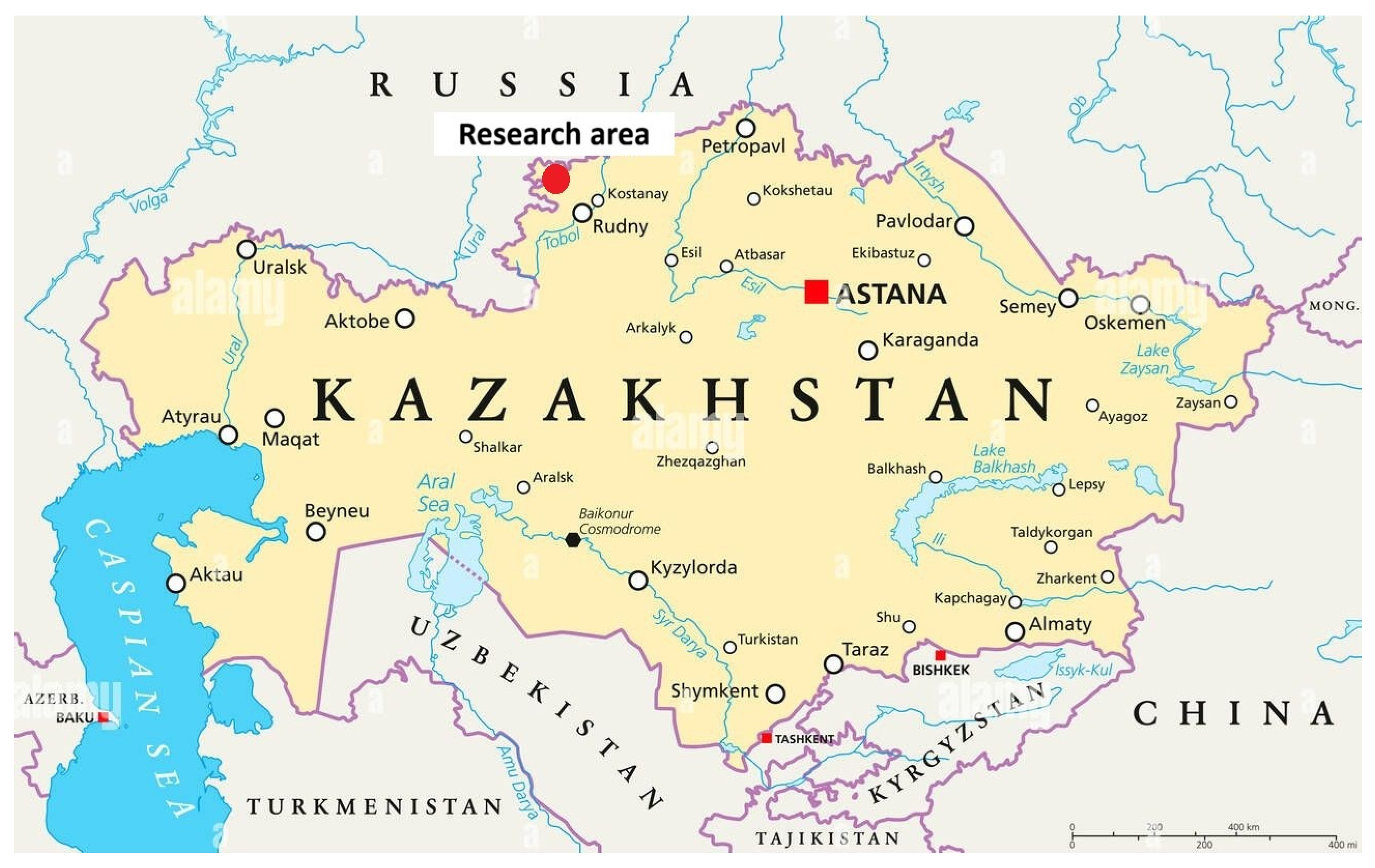
This study was conducted in the steppe zone of Northern Kazakhstan (Kostanay Region), characterized by a strongly continental climate. The experimental site was located on ordinary chernozem soils. Field experiments were established at the Karabalyk Agricultural Experimental Station (Karabalyk AES LLP, Nauchnoe, Kazakhstan) (
Figure 1).
The geographic coordinates of the study area were as follows:
Northwestern corner—53°50′31.47″ N, 62°05′20.62″ E;
Northeastern corner—53°50′31.18″ N, 62°05′23.78″ E;
Southwestern corner—53°50′24.96″ N, 62°05′20.29″ E;
Southeastern corner—53°50′24.80″ N, 62°05′23.40″ E.
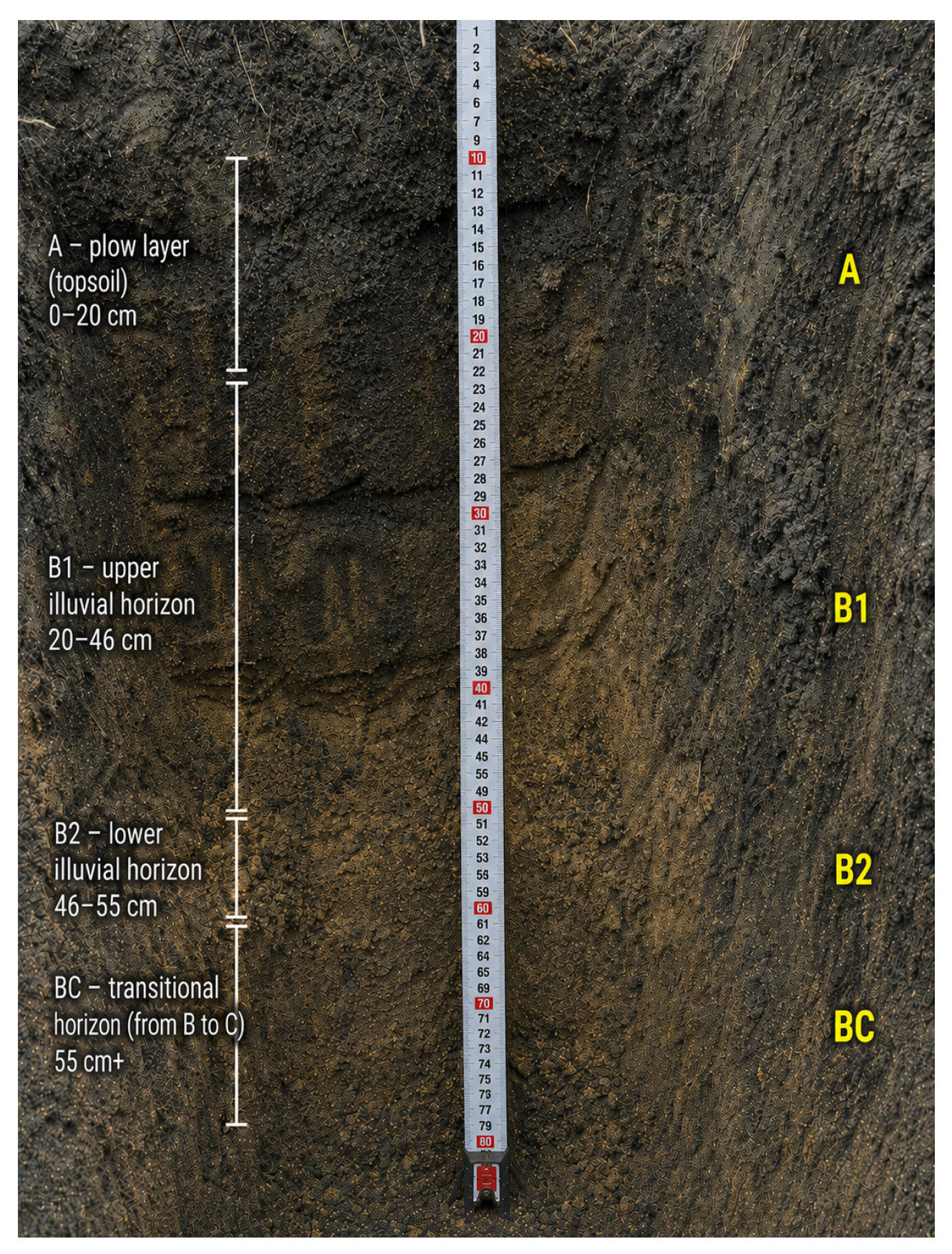
In the spring period (May), prior to sowing spring wheat, a geomorphological assessment of soil properties was conducted. A soil profile pit (reference pedon) was established within the experimental site on a watershed of a gently undulating plain, located in the bare fallow treatment plot (
Figure 2).
The soil is classified as an ordinary chernozem, medium-deep, truncated, low-humus, heavy loam, developed on loess-like parent material.
Morphologically, the humus horizon (A + B1) extends to a depth of 0–46 cm. The upper horizons are characterized by a well-developed granular soil structure. The total thickness of the humus horizon is 46 cm. The soil exhibits strong effervescence with 10% HCl beginning at a depth of 45 cm, while carbonate accumulations in the form of coatings are observed in the BC horizon. The color transition along the soil profile is weakly differentiated with depth. The abundance of plant root residues decreases progressively down the profile.
The soil texture is classified as heavy loam, transitioning to medium loam in the BC horizon.
A three-year analysis of soil agrochemical data was conducted to assess the influence of different tillage systems on nutrient dynamics and their potential role in regulating soil CO
2 emissions under varying hydrothermal conditions (
Table S1, Supplementary Materials).
Meteorological data on temperature and precipitation were obtained from the Karabalyk weather station. The study area is characterized by a continental climate, with an average annual temperature of 2.5–3.5 °C and annual precipitation of 300–350 mm. During the period 2023–2025, climatic conditions at the Karabalyk Agricultural Experimental Station were characterized by moderate interannual variability in both precipitation and temperature. Annual precipitation totals were 397 mm in 2023, 404 mm in 2024, and 379 mm in 2025 (
Figure S1, Supplementary Materials).
The mean annual air temperature ranged from 3.8 °C in 2024 to 5.8 °C in 2025 and 4.7 °C in 2023. July was the warmest month in all years (up to 23.0 °C in 2023), whereas January and February were the coldest (−8.7 to −15.6 °C). The higher mean annual temperature in 2025, combined with lower precipitation, resulted in increased evapotranspiration and a more pronounced soil moisture deficit during the middle to late growing season. In contrast, in 2024, more evenly distributed precipitation and moderate temperatures contributed to a more stable hydrothermal regime and reduced climatic constraints on soil biological activity. During the period from 2023 to 2025, fluctuations in soil temperature were observed in the upper 0–20 cm layer (
Table S3, Supplementary Materials).
In all years, initial soil moisture levels prior to sowing of spring wheat were within a range favorable for seed germination and early crop development. By the tillering stage, a moderate decline in soil moisture was observed, while the heading stage was characterized by a seasonal minimum, particularly pronounced in 2023 and 2025, indicating that transpiration losses exceeded precipitation inputs. In the relatively wetter year of 2024, intra-seasonal fluctuations were less pronounced, and soil moisture did not reach limiting levels (
Figure S2, Supplementary Materials).
Soil temperature was measured at a depth of 5 cm using a soil thermometer in accordance with GOST 17.4.4.02–84 (Nature Protection. Soils. Methods for temperature determination) [
24].
Soil moisture content was determined gravimetrically at depths of 0–10, 10–20, 20–30, and 30–40 cm following standard procedures for moisture determination [
25].
On the experimental plots, nitrate nitrogen (N–NO
3) [
26] and available phosphorus (P
2O
5) [
27] were determined. All analyses were performed in an accredited laboratory, and the results were verified according to internal quality control standards.
2.2. Experimental Design and Sample Collection
The dynamics of soil CO2 emissions were investigated under spring wheat (Triticum aestivum L.) cultivation using conventional tillage, no-tillage, and bare fallow (black fallow) systems. The experimental plots under conventional and no-tillage systems were managed under continuous wheat (monoculture) throughout the three-year study period.
The experiment was established with three replicates (
Figure S3, Supplementary Materials). Each plot measured 6 m × 54 m, with a total area of 324 m
2. The following treatments were included:
- -
Conventional tillage without fertilization;
- -
Conventional tillage with mineral fertilization (N30P20; ammonium nitrate + ammophos);
- -
No-tillage without fertilization;
- -
No-tillage with mineral fertilization (N30P20; ammonium nitrate + ammophos);
- -
Bare fallow (without fertilization).
Under conventional tillage, prior to sowing spring wheat, vegetation cover on the soil surface was less than 30%. Under no-tillage, vegetation cover exceeded 70% before sowing.
Soil samples were collected from the 0–20 cm layer at the following stages: prior to sowing, during the tillering stage, at the heading stage, and after harvest. A total of 21 samples were collected from all plots during each sampling campaign.
2.3. Measurement and Analysis of Soil CO2 Emission Dynamics
Carbon dioxide emissions from the soil surface were measured using a chamber method. Carbon dioxide fluxes from the soil were determined by the closed in situ chamber method using a BIOBASE Portable Gas Analyzer SRM-3051T (BIOBASE Group, Jinan, China) equipped with an infrared non-dispersing sensor (NDIR) and sealed in situ soil chambers. The soil chamber volume was 1.0 L, and measurements were recorded in ppm [
28].
To minimize the effect of plant respiration, measurements were carried out on row spacing from May to September (the beginning of each month) for 3 years (2023, 2024, 2025), without disturbing the crop canopy, and with preliminary removal of above-ground wheat biomass in the chamber installation area immediately before measurements to minimize the contribution of plant respiration. At the same time, soil temperature (at a depth of 10 cm) and soil moisture (at a depth of 0–10 cm, 10–20 cm) were recorded and used to interpret the variability of CO2 fluxes. Prior to each measurement cycle, the instrument was calibrated and the chamber was checked for airtightness. Measurements were conducted under stable weather conditions at fixed time intervals every 3 h (06:00, 09:00, 12:00, 15:00, and 18:00), resulting in five measurements per day, with three replicates for each treatment (n = 3). CO2 fluxes were recorded over a fixed exposure period of 2 min. Measurements were performed at the same time of day over three consecutive days to ensure data comparability and minimize the influence of diurnal variability in temperature and soil moisture. Soil samples were collected from all treatments for subsequent laboratory analysis.
For each variant, the instantaneous CO2 flux was calculated, which was then converted into daily emissions (g CO2·m−2·day−1). The error bars presented in the figures represent the standard deviation (SD) of replicate measurements (n = 3). The above-mentioned CO2 emission measurement intervals were chosen to cover short-term variability and take into account the short-term dynamics of indicators while maintaining the methodological reproducibility of field measurements.
In parallel, the soil temperature was recorded, which made it possible to control the thermal variability of measurement conditions and interpret the dynamics of CO2 fluxes.
The rate of change in CO2 emission (dC/dt, ppm·s−1) was determined by linear approximation.
The instantaneous surface flow of CO
2 was calculated using the equation of state of an ideal gas:
where F is the flow of CO
2 (g·m
−2·s
−1), V is the volume of the chamber (m
3), A is the area of the chamber base (m
2), M is the molar mass of CO
2 (44 g·mol
−1), P is atmospheric pressure (Pa), R is the universal gas constant (8.314 J·mol
−1·K
−1), and T is the absolute temperature of the air in the chamber (K).
For data comparability, instantaneous CO2 fluxes were converted into daily values. It should be noted that the obtained CO2 emission values represent estimates of daily emissions and are primarily used to analyze differences in CO2 flux dynamics among agronomic practices, fertilization treatments, and interannual and seasonal variability.
2.4. Soil Microbiological Analysis
The abundance of functional groups of microorganisms was determined using the serial dilution plating method on selective culture media, followed by colony-forming unit (CFU) counts:
Bacteria utilizing organic nitrogen forms were determined on meat–peptone agar (MPA) [
29].
Microscopic fungi were quantified on Czapek–Dox medium, which supports fungal growth through available carbon sources [
30].
Bacteria utilizing mineral nitrogen forms and actinomycetes were determined on starch–ammonia agar (SAA) [
29].
Actinomycetes were additionally quantified on Gause medium, which selectively promotes their growth [
29].
Aerobic nitrogen-fixing bacteria were determined on Ashby medium, designed for isolating diazotrophic microorganisms capable of fixing atmospheric nitrogen [
29].
Colony counts were performed at dilution levels yielding 30–300 colonies per Petri dish. Cell abundance (CFU mL−1) was calculated based on the average number of colonies, inoculation volume (0.1 mL), dilution factor, and dilution level.
2.5. Data Processing and Statistical Analysis
2.5.1. Preliminary Data Analysis
Statistical analyses were performed using Python 3.10 (pandas, scikit-learn, SciPy, statsmodels) and R 4.2.1 (ggplot2, agricolae). Data visualization was conducted using matplotlib (3.7) and seaborn (0.12).
Normality of data distribution was assessed using the Shapiro–Wilk test. For variables that did not meet normality assumptions, Spearman’s rank correlation coefficients (ρ) were additionally calculated.
The analysis was based on the full dataset collected during the 2023–2025 growing seasons (n = 3150).
2.5.2. Analysis of Differences Between Treatments
Differences among tillage systems and fertilization treatments were assessed using one-way analysis of variance (ANOVA) with a significance level of p < 0.05.
Homogeneity of variances was evaluated based on the consistency of variance across treatments and experimental replicates. Since the primary objective was to assess overall differences among technologies, no multiple comparison (post hoc) tests were applied.
2.5.3. Correlation Analysis
Linear relationships between CO2 emissions, soil temperature, soil moisture, microbial biomass, and the abundance of functional microbial groups were evaluated using Pearson’s correlation coefficient (r), depending on data distribution.
2.5.4. Regression and Machine Learning Modeling
Statistical analysis was performed using standard methods of ecological statistics [
31]. To evaluate the temperature dependence of soil CO
2 emissions, an exponential model based on the Q
10 temperature coefficient was applied. This approach quantifies the change in CO
2 emission intensity associated with a 10 °C increase in temperature and is expressed by the following equation:
where
R is the CO
2 flux (g m
−2 h
−1),
T is soil temperature (°C),
R0 is the baseline emission at
T0 = 10 °C, and
Q10 is the temperature sensitivity coefficient.
In multiple regression modeling, multicollinearity among independent variables was evaluated using the variance inflation factor (VIF), and variables with VIF > 5 were excluded from the models.
A Random Forest regression approach was applied to develop predictive models of CO
2 fluxes [
29]. The model was used to evaluate the relationship between CO
2 emissions and soil temperature, soil moisture, microbial biomass carbon (Cmic), nitrogen-fixing bacteria, cellulose-decomposing microorganisms, and actinomycetes. Separate models were developed for each tillage system (conventional tillage, no-till, and fallow). Model validation was performed using 10-fold cross-validation. The model was trained on the full dataset comprising all field observations collected during the 2023–2025 growing seasons (
n = 3150). Model performance was evaluated based on the coefficient of determination (R
2) and root mean square error (RMSE).
To assess the quality of predictive models, the Nash–Sutcliffe efficiency coefficient (EF) was additionally calculated:
where Oi are the observed values, Pi are the predicted values, and O
− is the average observed value.
A single-sample t-test was used to verify the presence of a systematic bias in forecasts, and the differences were considered significant at p < 0.05.
The modeling approach was used to identify key drivers of CO2 emission variability.
All statistical tests were considered significant at p < 0.05.
3. Results
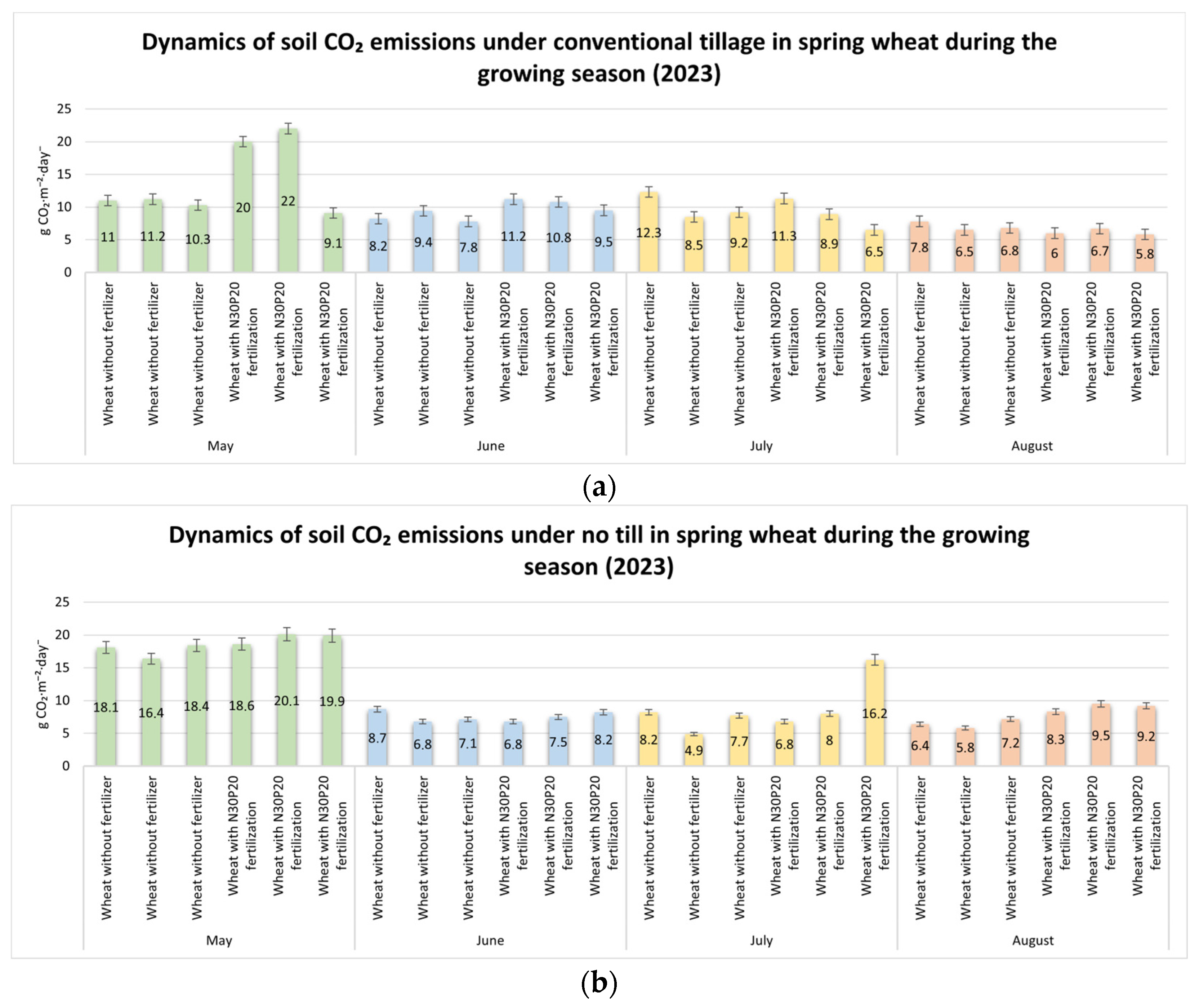
3.1. Dynamics of Soil CO2 Emissions Under Different Tillage Systems
The results demonstrate pronounced seasonal variability in soil CO
2 fluxes during the growing season, driven by the combined effects of temperature, soil moisture availability, and biological activity of the agroecosystem (
Figure 3).
Across all years, mineral fertilization consistently increased CO2 emissions under both tillage systems, whereas conventional tillage produced higher seasonal emission peaks than no-till. In contrast, no-till was characterized by more stable seasonal dynamics and lower variability of CO2 fluxes.
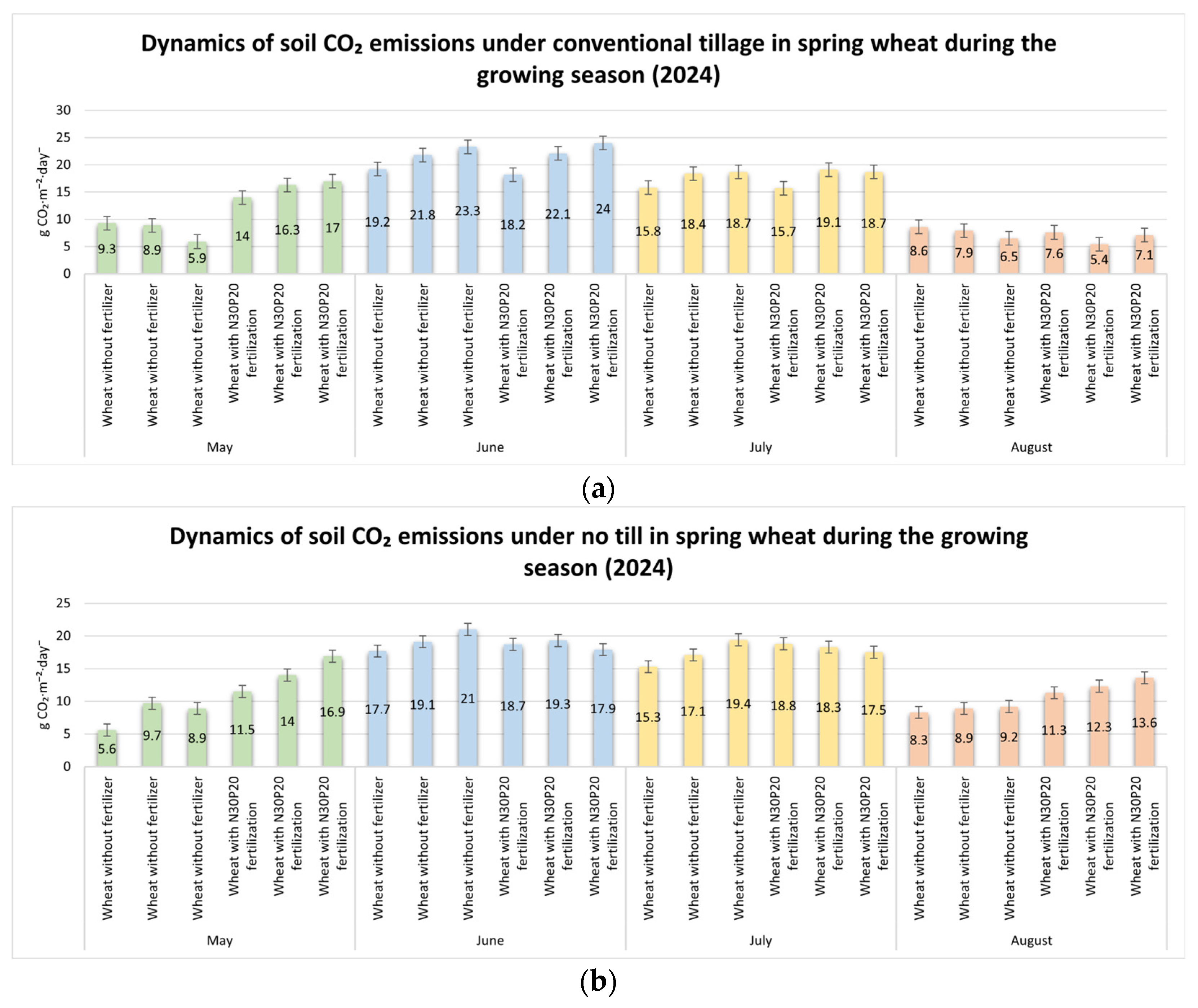
In 2024, soil CO
2 fluxes were characterized by higher overall intensity compared to the previous year, along with pronounced seasonal dynamics. Soil CO
2 emissions showed pronounced seasonal variability throughout the growing season (
Figure 4).
In general, differences between tillage systems were less pronounced in 2024 than in 2023. However, conventional tillage exhibited higher emission peaks during the mid-growing season, whereas no-tillage showed a more uniform distribution of CO2 fluxes and relatively higher emissions toward the end of the season.
Conventional tillage exhibited higher peak emissions during the mid-growing season (tillering and heading stages), whereas no-tillage showed a more uniform distribution of CO2 fluxes and slightly elevated emissions toward the end of the season.
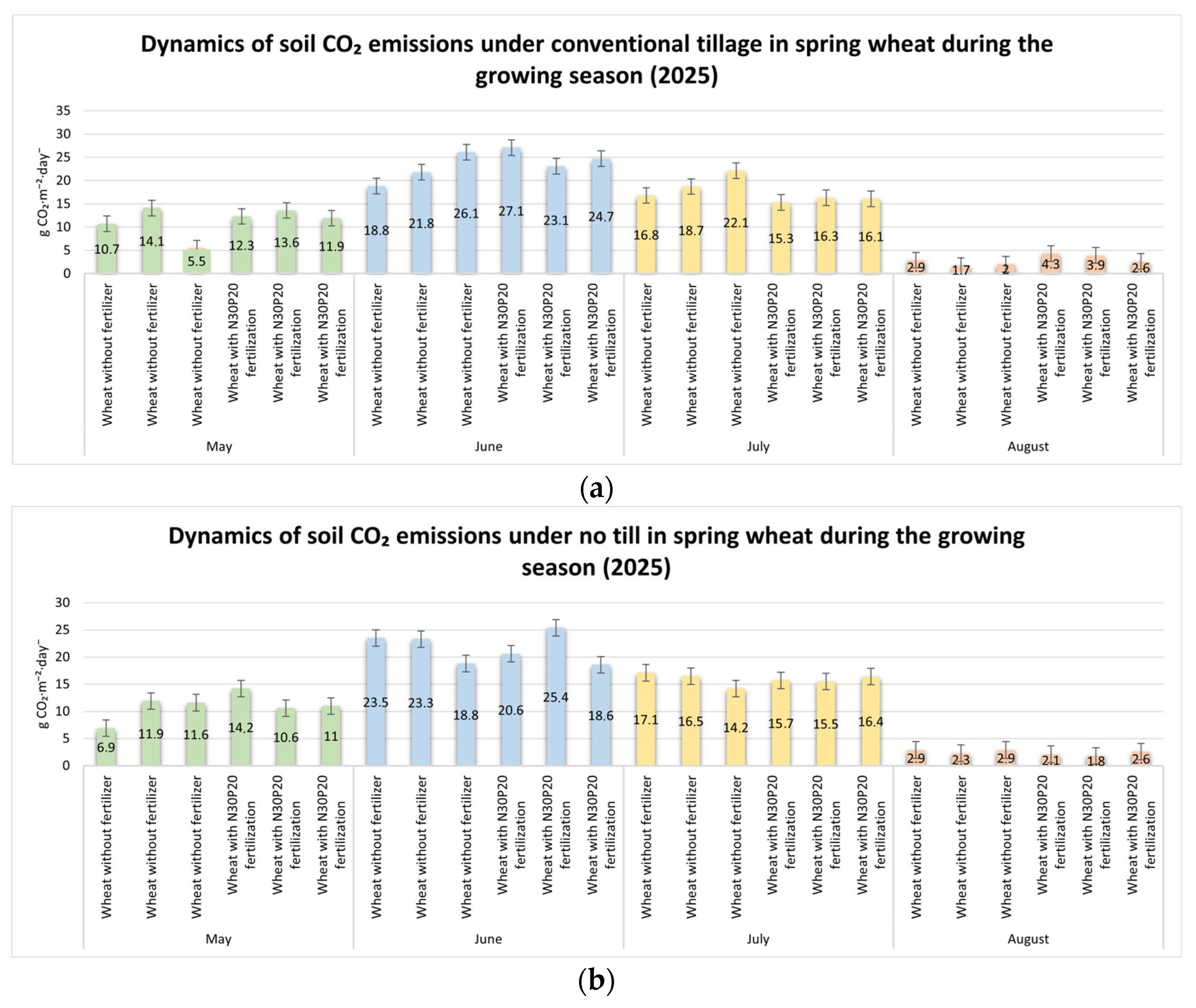
In 2025, the dynamics of soil CO
2 emissions were characterized by strong seasonal contrasts and more pronounced emission peaks during the mid-growing season compared to 2023 and 2024 (
Figure 5).
A comparison of the three years of observations reveals consistent patterns in the effects of tillage systems and fertilization on the carbon cycle of the ordinary chernozem agroecosystem under spring wheat cultivation as well as interannual variability driven by hydrothermal conditions.
Across all years, conventional tillage consistently resulted in higher peak CO2 emissions, whereas no-tillage showed lower and more stable fluxes. In contrast, the no-tillage system was characterized by a more balanced seasonal pattern and lower intensity of heterotrophic respiration during the mid-growing season.
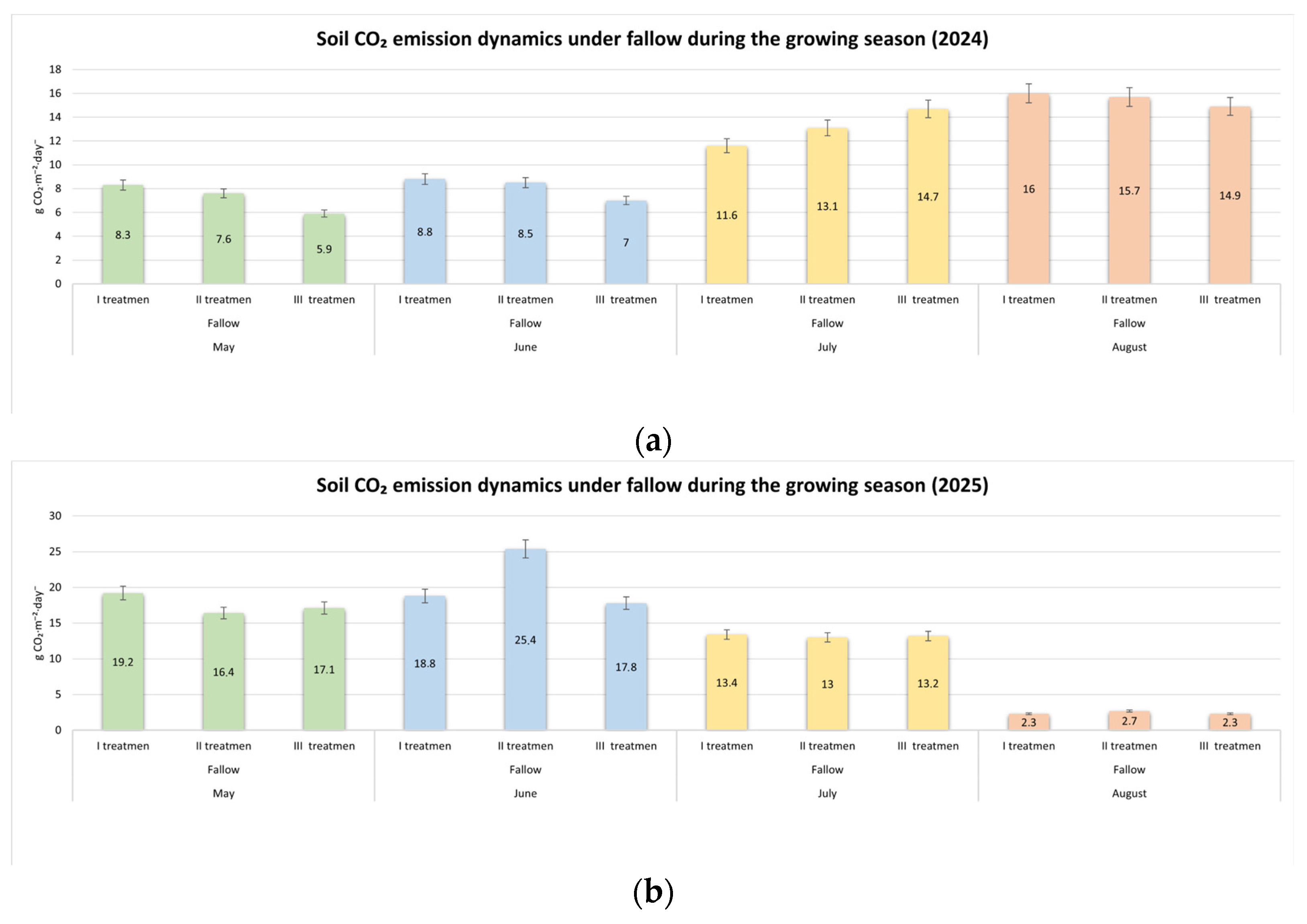
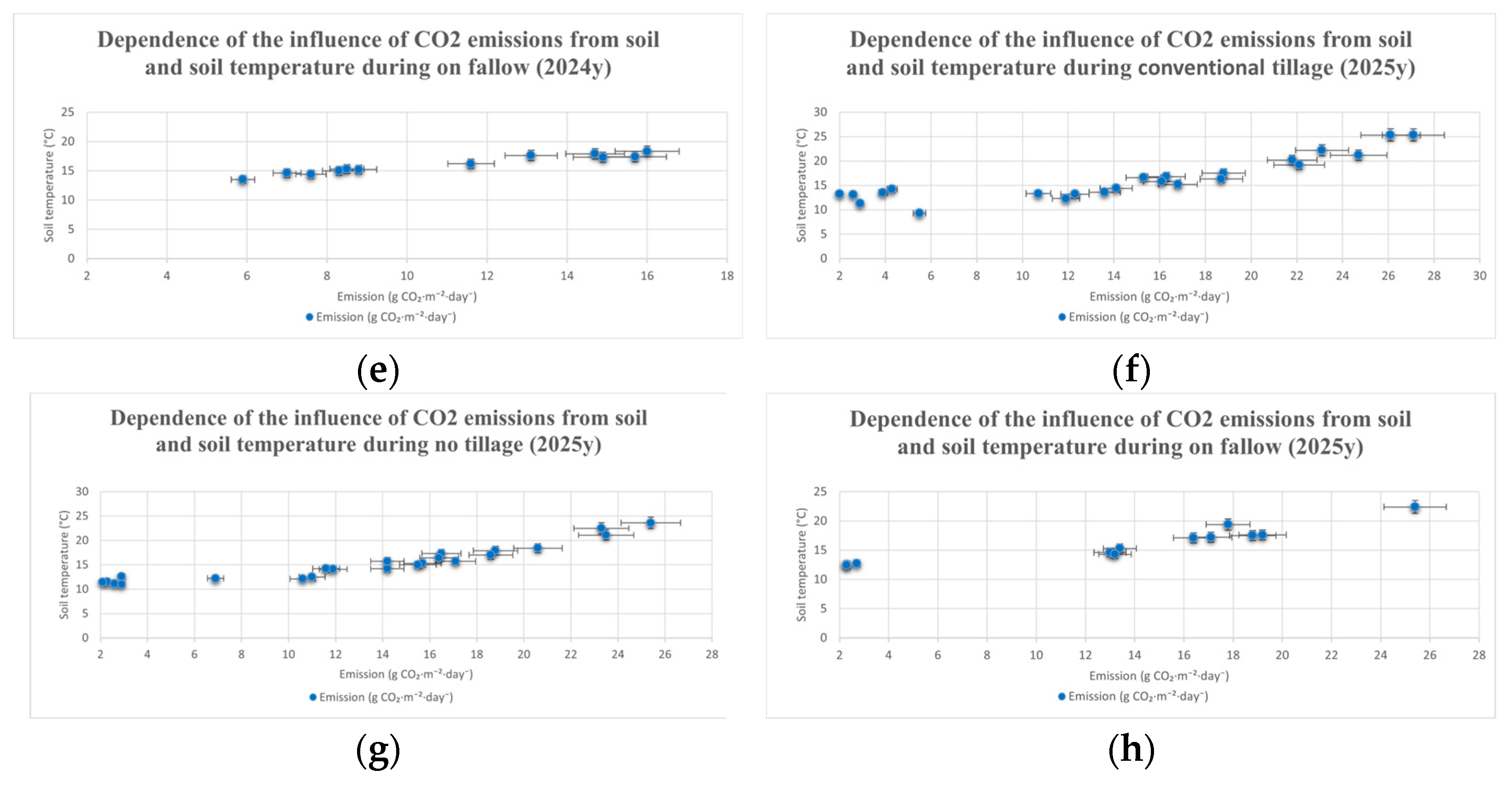
CO
2 emissions were also assessed in the bare fallow treatment for 2024–2025, and the results are presented in
Figure 6 (no fallow treatment was included in the crop rotation in 2023).
In 2024, CO2 emissions under bare fallow conditions exhibited a gradual increase from May to August, reaching a maximum of up to 16 g CO2 m−2 day−1 at the end of the season. This pattern reflects the influence of moderate temperatures and evenly distributed precipitation, which supported sustained microbial activity. In contrast, in 2025, peak CO2 emissions were observed in June (up to 25.4 g CO2 m−2 day−1), followed by a sharp decline to minimum values in August, associated with elevated temperatures and soil moisture deficit during the second half of the season. These differences highlight the dominant role of climatic conditions in regulating soil respiration under bare fallow.
3.2. Correlation Analysis of CO2 Emissions with Soil Moisture and Temperature and Their Interannual Variability
The relationship between CO2 emissions and soil moisture indicates high variability. This relationship exhibited pronounced interannual variability over the three-year period.
To ensure a consistent statistical interpretation, relationships between CO2 emissions and environmental variables were evaluated at two distinct analytical levels:
- (i)
The overall dataset level, integrating all observations across years and treatments;
- (ii)
The condition-specific level, considering individual years and tillage systems separately.
At the overall level, relationships between CO2 emissions and individual factors (e.g., soil moisture) were generally weak, reflecting the combined influence of multiple interacting variables and high temporal variability.
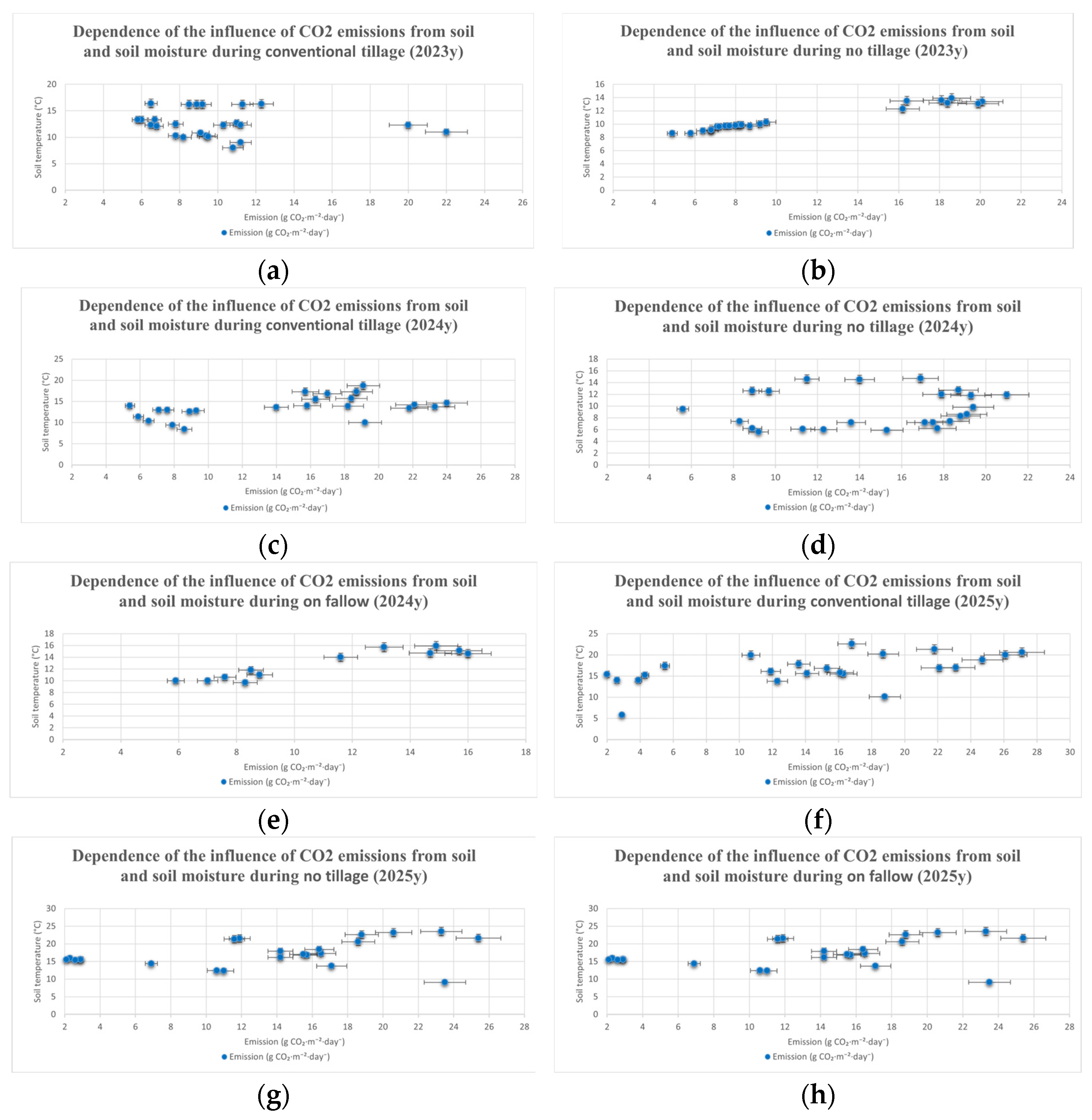
In contrast, condition-specific analysis revealed that under particular hydrothermal and management conditions, strong relationships may emerge, indicating that the explanatory power of individual factors is not constant but context-dependent (
Figure 7).
Relationships between soil moisture and CO2 emissions varied substantially among years and tillage systems, indicating that the effect of moisture was strongly dependent on specific hydrothermal conditions rather than representing a stable overall trend.
In the bare fallow treatment, soil moisture exerted a stronger influence on CO2 emissions compared to both no-tillage and conventional tillage systems.
At the overall dataset level, the relationship between soil moisture and CO2 emissions was weak, indicating that soil moisture alone does not consistently explain variability in CO2 fluxes.
However, at the condition-specific level, the strength of this relationship varied substantially. For example, in 2023 under conventional tillage, soil moisture accounted for up to 97% of the variability in CO2 emissions (R2 = 0.97), whereas under no-tillage in the same year, the relationship was negligible (R2 = 0.02). These exceptionally high coefficients of determination likely reflect specific subsets of observations under particular hydrothermal conditions and are not universally robust relationships across all years and tillage systems. Therefore, such relationships should be interpreted as context-dependent responses rather than generalizable patterns across the full dataset.
This contrast demonstrates that high coefficients of determination observed in specific cases should not be interpreted as general trends but rather as context-dependent responses under particular environmental conditions.
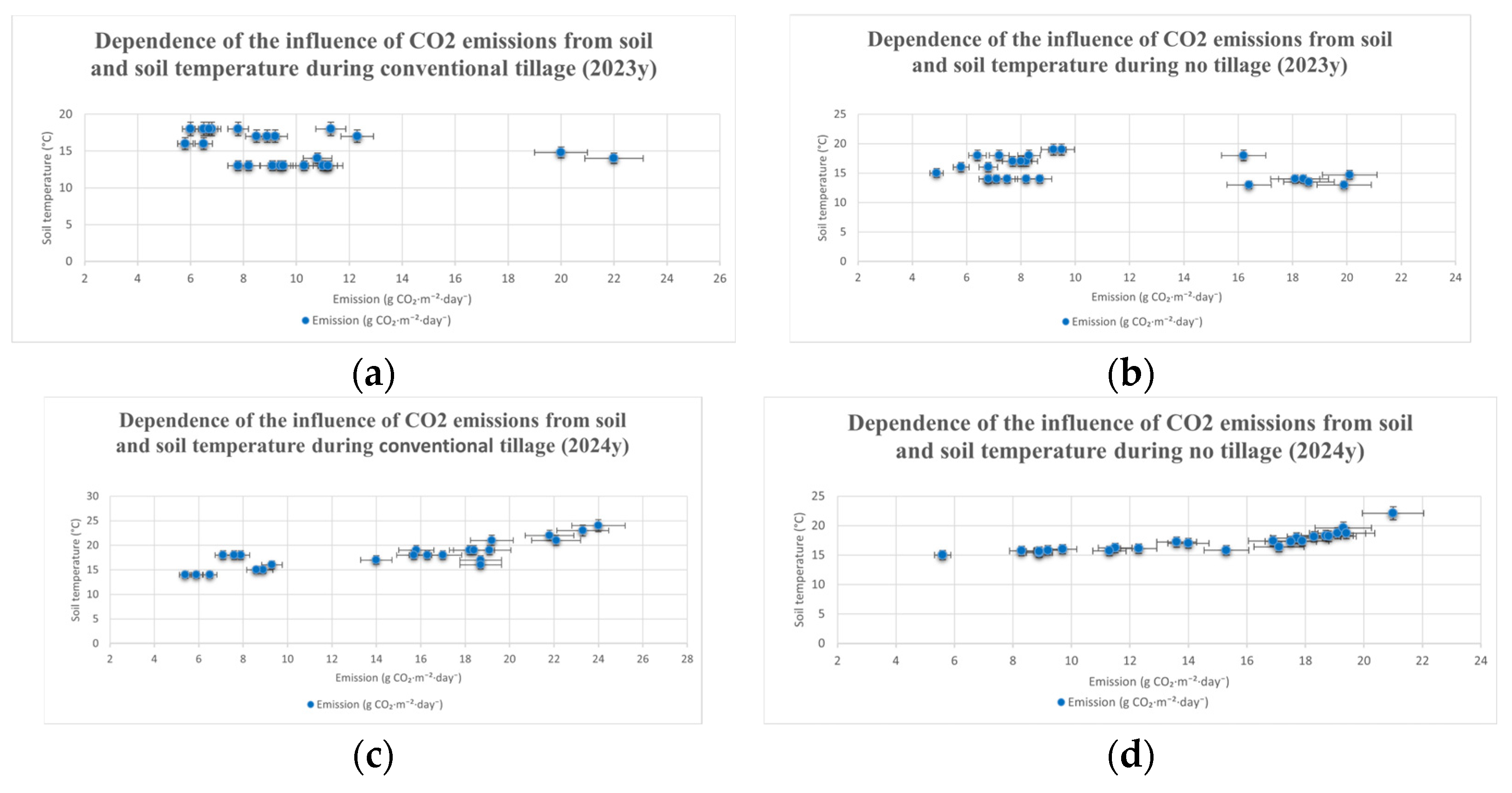
In contrast to soil moisture, soil temperature showed more consistent relationships with CO
2 emissions, particularly at the condition-specific level. Across individual years (2024–2025) and treatments, temperature explained 60–90% of the variance (R
2 = 0.6–0.9), indicating a strong but context-dependent relationship (
Figure 8).
Therefore, the interpretation of statistical relationships in this study is based on distinguishing between overall trends and condition-specific responses, which allows for a more consistent and robust explanation of the observed variability in CO2 emissions.
3.3. Temperature Dependence and the Influence of Precipitation on Soil CO2 Emissions and Their Modeling
To assess the temperature dependence of CO2 emissions, Q10 values were calculated for the years 2023–2025.
The highest temperature sensitivity was observed under conventional tillage, likely due to enhanced organic matter mineralization and increased soil aeration. In the no-till system, temperature sensitivity was lower, likely reflecting the stabilizing effect of plant residues. The lowest Q10 values were recorded under fallow, which can be explained by the absence of root respiration and the dominance of microbial activity.
Regression analysis data were obtained to predict CO
2 emissions based on temperature and type of treatment (
Table 1).
Multiple linear regression (MLR) showed a low proportion of variability in CO2 emissions.
CO
2 emissions showed moderate variability across years and tillage systems, with the highest variability observed under no-till in 2024 and conventional tillage in 2025 (
Table 2).
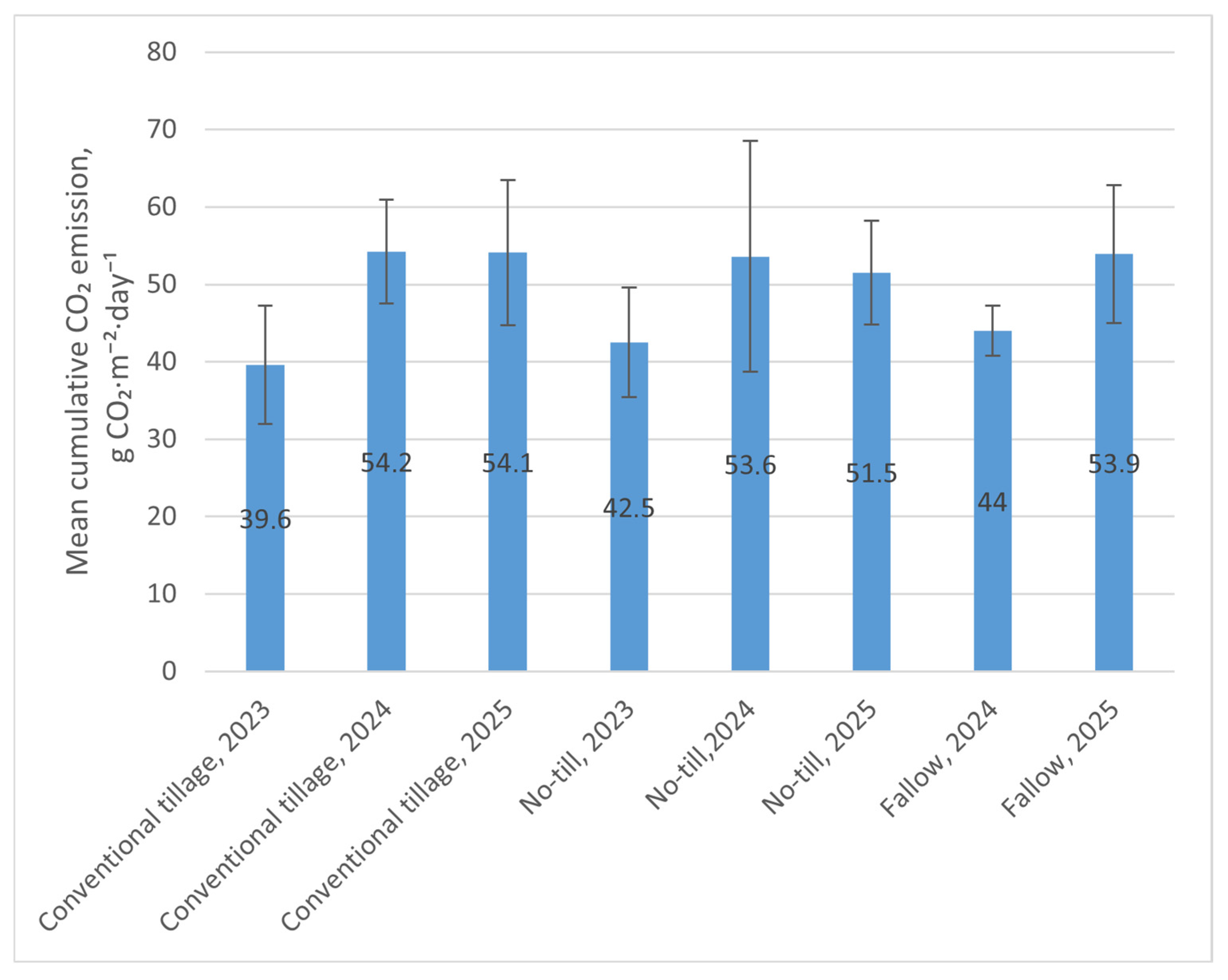
An analysis of the average cumulative CO
2 emissions for 2023–2025 showed (
Figure 9) that integral carbon fluxes from the soil are determined by a combination of hydrothermal conditions during the year and land-use technology. Conventional tillage was characterized by higher cumulative emission values compared to no-till in 2025, whereas in the drier 2024, differences in carbon dioxide emissions between the technologies were not particularly observed. The lowest cumulative emission values for all technologies are observed in 2023. The fallow had minimal total CO
2 emissions in 2024 due to the absence of root respiration and the rapid onset of limiting moisture conditions.
3.4. Soil Microbial Activity Under Different Tillage Systems
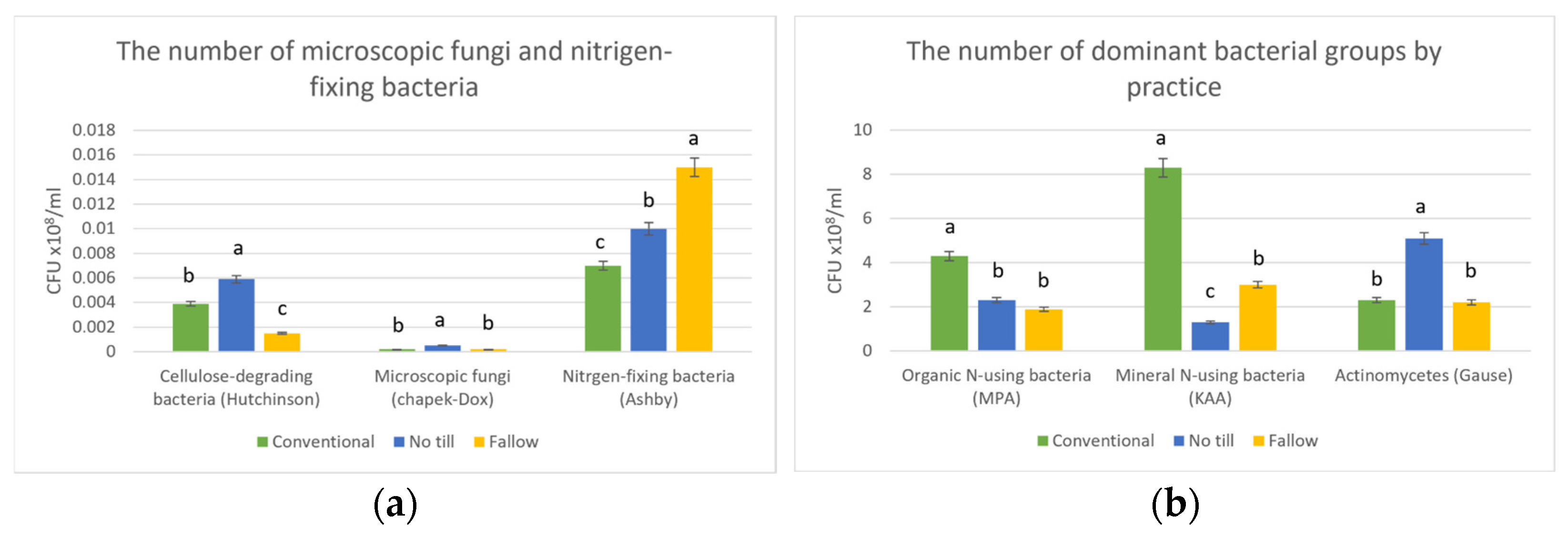
Soil microbial activity was assessed based on the abundance of colony-forming units on selective culture media. The following microbial groups were quantified: nitrogen-fixing bacteria, cellulose-degrading bacteria, microscopic fungi, actinomycetes, and bacteria that utilize mineral and organic nitrogen forms.
This study revealed a pronounced dependence of the abundance of individual microbial groups on the applied tillage system (
Figure 10). Under conventional tillage, the highest abundance of bacteria utilizing both organic and mineral forms of nitrogen was observed, indicating enhanced mineralization of organic matter. In contrast, the no-tillage system promoted the development of actinomycetes as well as cellulose-degrading bacteria and microscopic fungi, the accumulation of plant residues and reduced mechanical disturbance of the soil environment.
The bare fallow treatment exhibited the highest abundance of nitrogen-fixing bacteria, suggesting enhanced biological nitrogen fixation under vegetation-free conditions. These findings highlight the significant influence of agronomic practices on the composition and activity of soil microbial communities.
Statistical data corresponding to cumulative CO
2 emissions are presented in
Table 3.
Conventional tillage enhances the mineralization of organic matter, leading to the release of available nitrogen, which stimulates the growth of bacteria utilizing both mineral and organic nitrogen forms. In contrast, no-tillage promotes the conservation of organic matter, creating favorable conditions for the development of actinomycetes.
Microbiological analyses indicated that the no-tillage system supports a microbial community characterized by a higher abundance of bacteria utilizing organic nitrogen (MPA), cellulose-degrading bacteria, and actinomycetes, suggesting a greater potential for microbial processing of organic matter without necessarily increasing CO
2 emissions. (
Table 4). This is consistent with the observed increase in CO
2 emissions under improved nitrogen supply (N30P20) in 2023–2024. However, interannual differences in CO
2 fluxes are governed not only by microbial abundance but also by microbial efficiency and environmental constraints.
Overall, no-tillage was associated with higher microbial biomass without a corresponding increase in CO2 emissions.
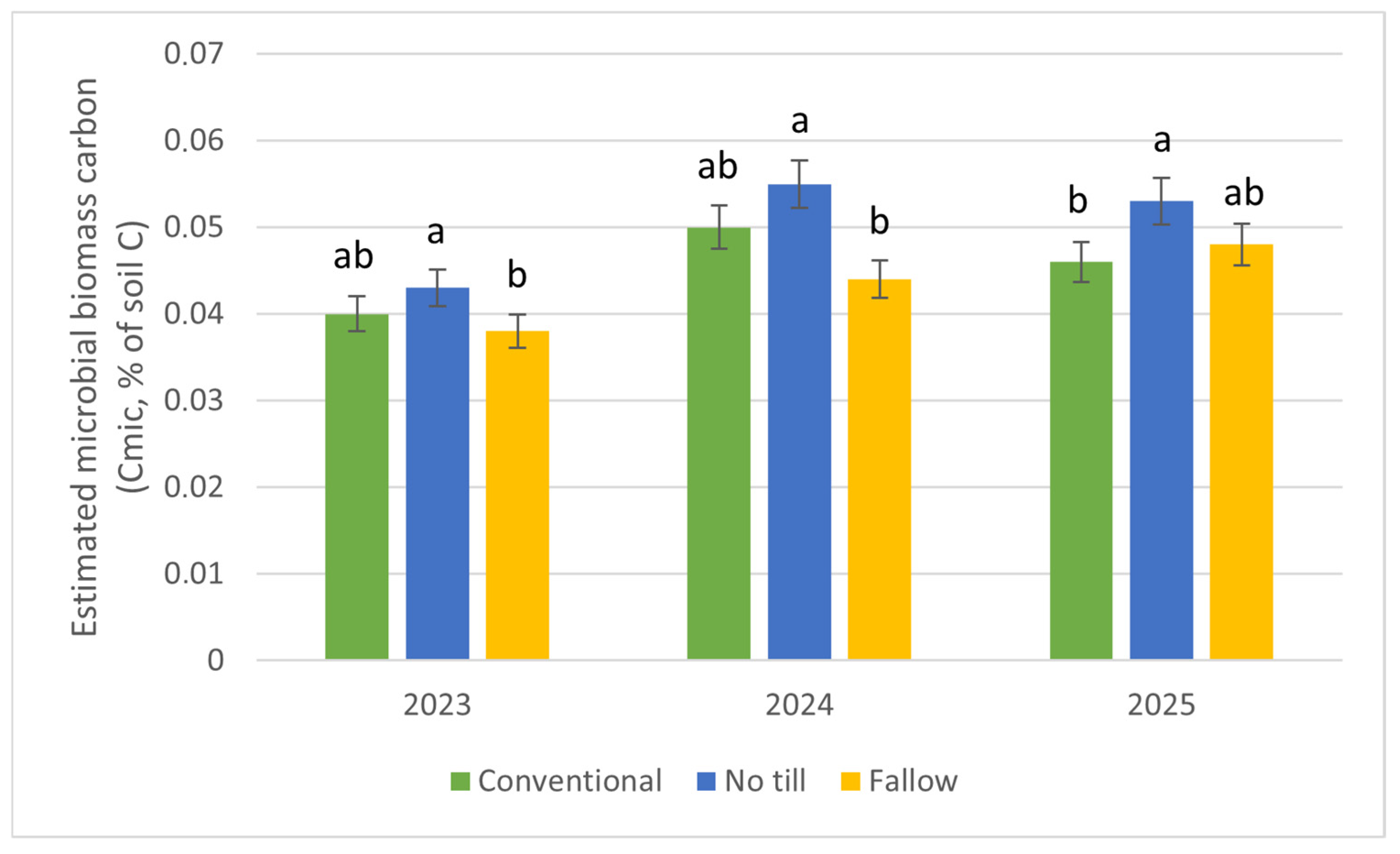
The obtained estimates of microbial biomass carbon (Cmic) revealed consistent differences among tillage systems across all years of observation (
Figure 11). In all field seasons, the highest Cmic values were observed under the no-tillage system, indicating more efficient retention of carbon in microbial biomass under conditions of minimal soil disturbance and the preservation of crop residues on the soil surface.
No statistically significant differences in microbial biomass carbon (Cmic) were observed across tillage systems (
p > 0.05), despite a tendency toward higher values under no-till (
Table 5).
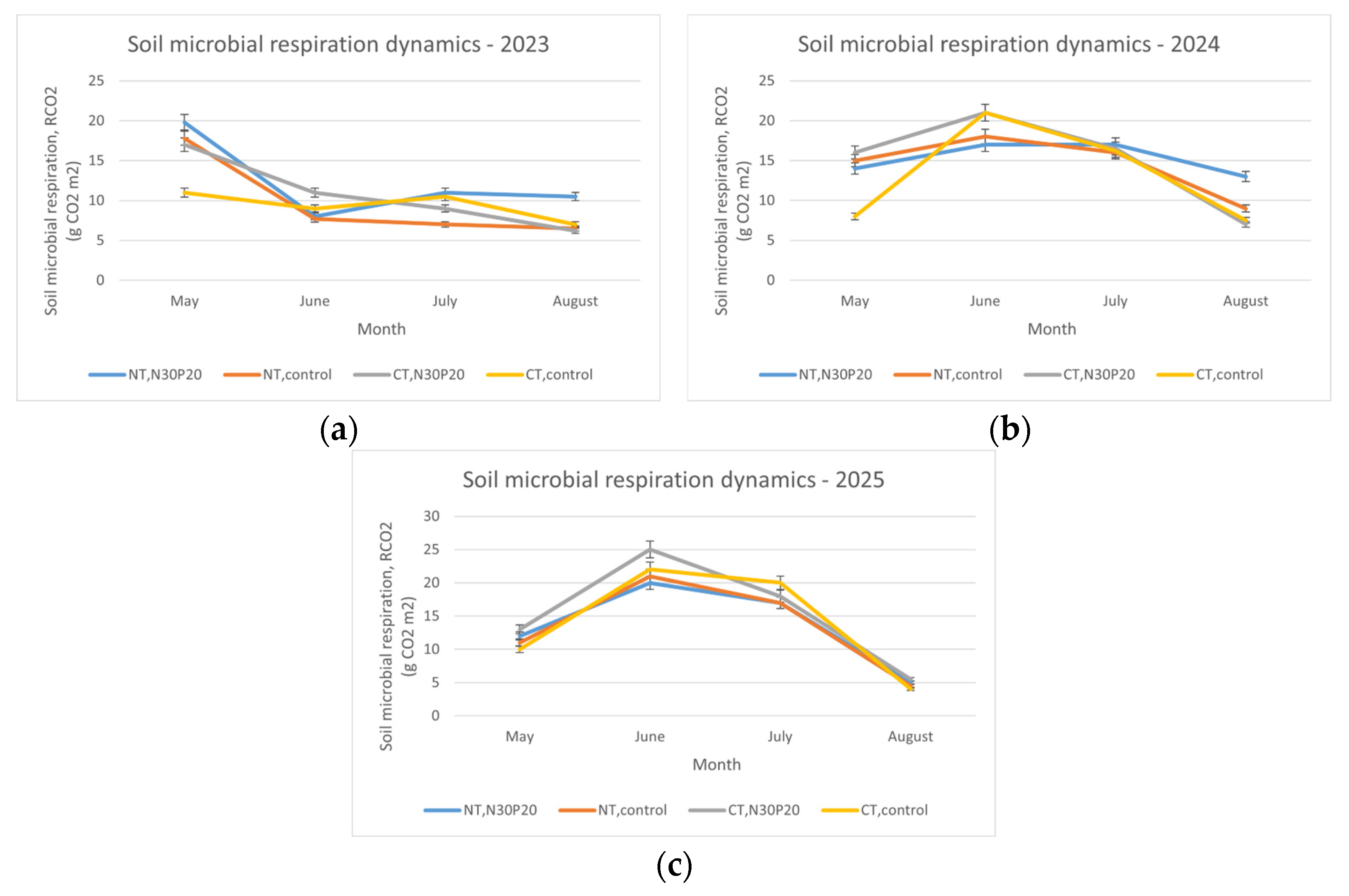
The three-year dataset demonstrates a consistent increase in the intensity of microbial respiration under fertilized treatments compared to the unfertilized controls in both conventional and no-tillage systems (
Figure 12).
Overall, the results show that no-tillage was associated with higher microbial biomass and greater abundance of specific functional groups, including cellulose-degrading microorganisms and fungi. However, these increases were not accompanied by higher CO2 emissions, indicating a decoupling between microbial abundance and carbon flux intensity.
Across all treatments, differences in total cultivable microbial abundance were not statistically significant (p > 0.05), suggesting that total microbial counts alone do not explain variations in CO2 emissions. Instead, the results highlight the importance of environmental conditions and substrate availability in regulating soil respiration.
3.5. Relationship Between Microbial Activity, Abiotic Factors, and CO2 Emissions: Correlation and Integrative Analysis
One-way ANOVA did not reveal statistically significant differences in microbial abundance among tillage systems (p > 0.05), indicating that observed variations were not statistically significant.
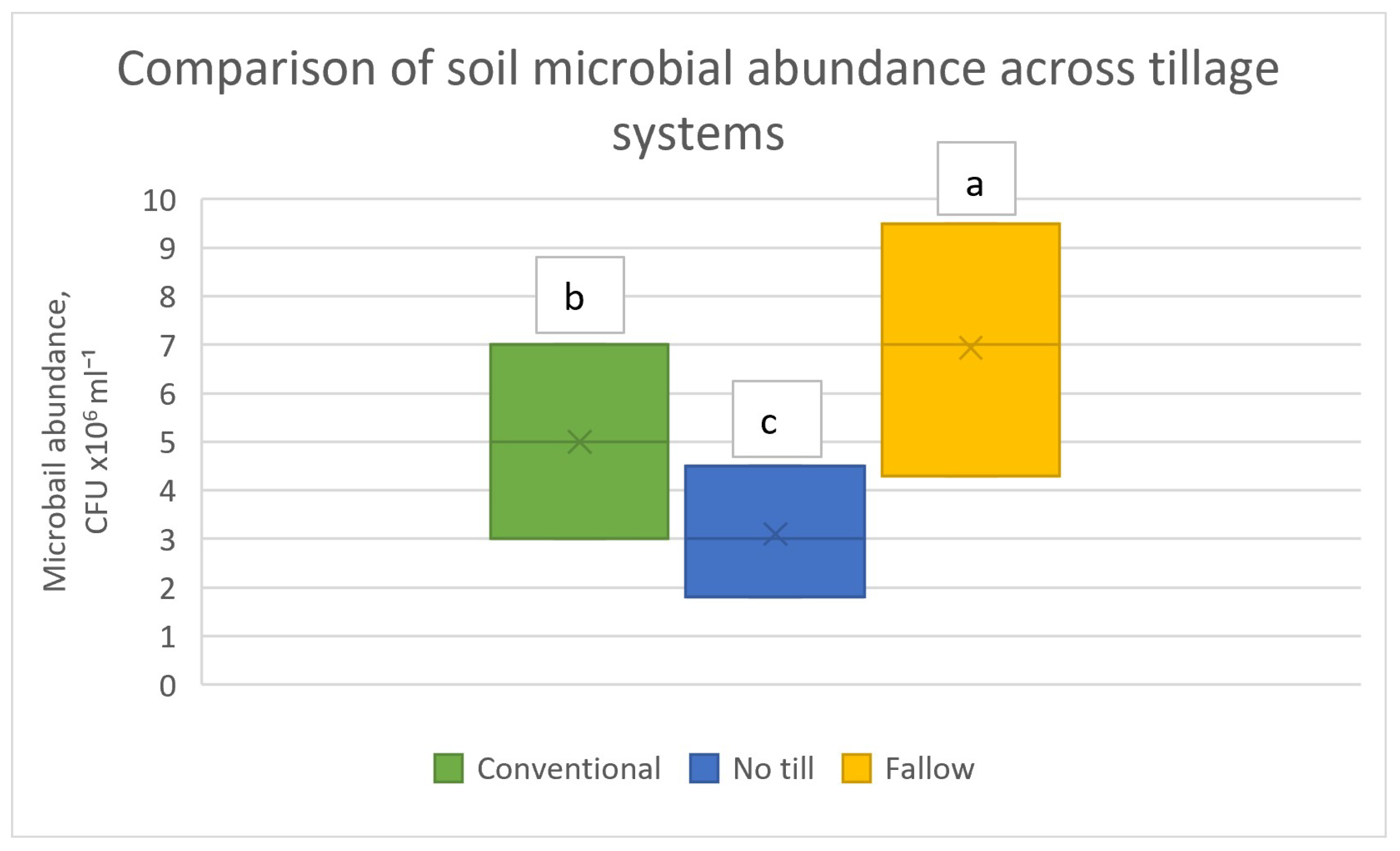
Analysis of CFU data indicated that the highest microbial abundance was observed in the bare fallow treatment (
Figure 13). Conventional tillage showed a moderate level of microbial abundance with wide variability, whereas the lowest values were recorded under no-tillage, where both the median and variability were minimal. In 2023, microbial activity was lower and declined more sharply over the season. Treatments with mineral fertilization (N30P20) consistently exhibited higher CO
2 emissions compared to the control. Overall, over the three-year period, the no-tillage system combined with fertilization showed a tendency toward higher microbial abundance, although these differences were not statistically significant. The accumulation of plant residues under no-tillage may create conditions associated with greater microbial abundance and slower carbon turnover.
No statistically significant differences in microbial abundance were observed between tillage systems (
p > 0.05) despite higher median values under fallow and lower variability under no-till (
Table 6).
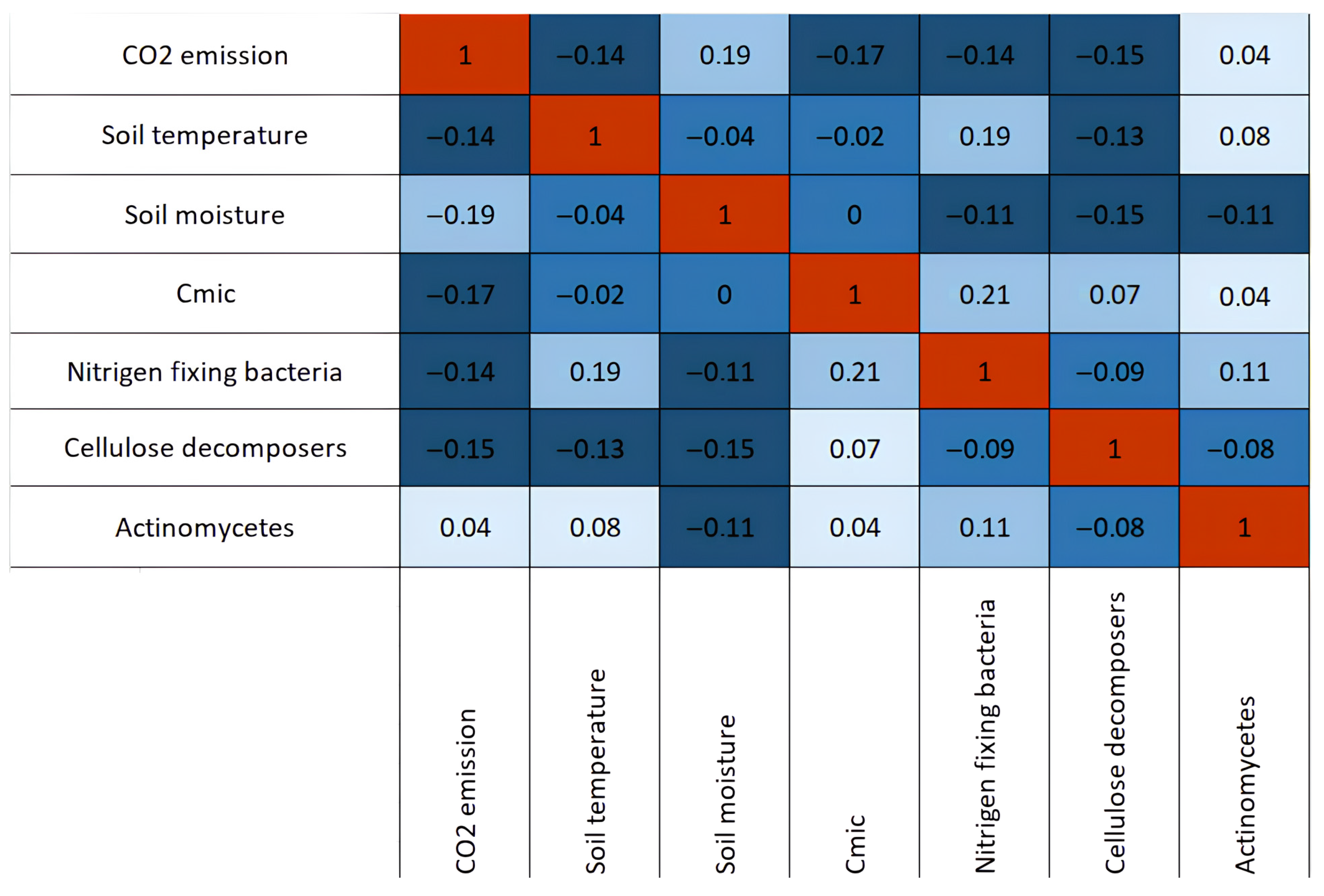
Correlation analysis (
Figure 14) showed weak linear relationships between CO
2 emissions and individual environmental variables. Correlation analysis showed generally weak linear relationships between CO
2 emissions and individual environmental variables, indicating that soil respiration was controlled by multiple interacting factors.
The Random Forest model showed the highest predictive performance (R2 = 0.67), indicating its ability to capture nonlinear relationships between CO2 emissions and environmental variables. Among the analyzed predictors, soil temperature and soil moisture showed the strongest contribution to model performance, while tillage system and fertilization treatment also influenced the variability of CO2 emissions across environmental conditions.
Overall, the results demonstrate that tillage system and hydrothermal conditions were the primary factors regulating CO2 emissions.
4. Discussion
4.1. Integrated Effects of Tillage Systems, Mineral Fertilization, and Environmental Factors on CO2 Emissions
The results of the three-year field experiment on ordinary chernozem provide a comprehensive assessment of the combined effects of tillage systems, mineral fertilization, and climatic variability on soil CO
2 emission dynamics under the strongly continental conditions of Northern Kazakhstan. The observed CO
2 fluxes exhibited pronounced seasonal and interannual variability, reflecting the high sensitivity of soil respiration to both environmental and management factors [
32,
33].
Overall, conventional tillage was associated with higher CO
2 emissions compared to no-tillage throughout most of the growing season. This can be attributed to mechanical soil disturbance, which disrupts soil aggregates, enhances aeration, and increases substrate availability for microorganisms, thereby accelerating the mineralization of labile organic carbon fractions. Under no-tillage conditions, the preservation of soil structure and retention of crop residues on the surface contribute to reduced decomposition rates and limit heterotrophic respiration. These findings support the concept that reduced soil disturbance promotes a more stable carbon cycle and mitigates abrupt emission peaks [
34].
This finding is consistent with previous global studies demonstrating that reduced soil disturbance improves soil structure and stabilizes microclimatic conditions, thereby reducing the variability of soil CO
2 emissions. Similar patterns have been reported in studies conducted in semi-arid and temperate agroecosystems, where no-tillage systems contribute to more stable carbon dynamics and lower emission peaks [
8,
34,
35,
36].
The increase in CO
2 emissions under fertilized treatments may be associated with enhanced root respiration, increased microbial activity, and changes in organic matter turnover under improved nitrogen availability [
37,
38].
These results are in agreement with global observations reported in the literature, confirming that fertilization enhances biological activity and accelerates carbon turnover in agroecosystems. Comparable results have been reported in previous studies showing that mineral fertilization enhances microbial activity and accelerates soil organic matter decomposition, leading to increased CO
2 emissions, particularly under conditions of sufficient moisture and temperature [
8,
34,
35,
39].
Interannual variability in CO
2 fluxes clearly demonstrates that the effects of agronomic practices are not static but are strongly modulated by seasonal climatic conditions [
40]. The lowest CO
2 emissions observed under bare fallow are associated with the absence of vegetation and reduced biological activity [
41]. In these conditions, the carbon cycle is driven primarily by the decomposition of previously accumulated stable organic matter pools, while reduced soil disturbance limits aeration and mineralization rates.
Comparison of the three study years indicates that the relationships between CO2 emissions and environmental variables should be interpreted at two analytical levels: overall trends across the full dataset and condition-specific responses within individual years and tillage systems. This distinction is important because the explanatory power of individual factors varied substantially depending on hydrothermal conditions and soil management.
At the overall level, soil moisture showed a limited and inconsistent relationship with CO2 emissions. This indicates that soil moisture alone did not consistently explain the variability in CO2 fluxes across all years and treatments, because soil respiration was simultaneously influenced by temperature, tillage system, fertilization, crop development, and microbial activity.
However, condition-specific analysis showed that soil moisture could become a dominant factor under particular environmental and management conditions.
Comparison of the three study years also shows that both the magnitude and seasonal dynamics of CO2 emissions varied substantially under different hydrothermal conditions and tillage systems. In 2023, CO2 fluxes ranged from approximately 5 to 22 g CO2 m−2 day−1 and were generally lower compared to the other years. Under these conditions, soil moisture played a dominant role, particularly in conventional tillage, where it explained up to 97% of the variability in CO2 emissions. In contrast, under no-tillage, the relationship between CO2 emissions and soil moisture was weak (about 2%), indicating a reduced sensitivity of soil respiration to short-term moisture fluctuations. Conventional tillage consistently showed higher emission peaks during the early and middle stages of the growing season, whereas no-tillage exhibited a more stable and less variable emission pattern. These results indicate that, under relatively drier conditions, soil moisture is the main limiting factor, while tillage intensity controls the amplitude of CO2 fluxes.
In 2024, CO2 emissions increased and ranged from approximately 5 to 24 g CO2 m−2 day−1, with a more uniform seasonal distribution. The differences between tillage systems were less pronounced in terms of peak intensity, although conventional tillage still produced higher emissions during the middle of the growing season. In 2025, CO2 fluxes showed the widest variability, ranging from about 2 to 27 g CO2 m−2 day−1. Conventional tillage exhibited the highest cumulative emissions, while no-tillage maintained lower and more stable fluxes.
The fallow treatment also differed between years, with emissions reaching up to 25.4 g CO2 m−2 day−1 and showing earlier peak formation, followed by a decline.
Thus, overall relationships reflect the combined influence of multiple interacting factors, whereas condition-specific relationships capture situations in which one factor, such as soil moisture or temperature, becomes temporarily dominant. Therefore, the interpretation of CO2 emission drivers in this study is based on distinguishing between general trends and context-dependent responses.
Our results extend previous findings by providing new field-based evidence from semi-arid steppe conditions, where the interaction between tillage practices and climatic variability plays a critical role in regulating soil carbon fluxes. These findings are consistent with global patterns observed in long-term field experiments, confirming that the interaction between tillage practices and climatic variability is a key determinant of soil carbon fluxes across different agroecosystems [
8,
34,
35,
39].
In semi-arid environments, even small variations in precipitation and temperature regimes can significantly alter soil moisture availability and microbial activity, leading to pronounced fluctuations in soil respiration. This highlights the sensitivity of CO2 emissions to climatic variability under the conditions of Northern Kazakhstan.
4.2. Microbial Community and Its Role in CO2 Emission Dynamics
The findings suggest that tillage systems are associated with differences in cultivable microbial groups, which may be related to variations in CO2 emissions.
Under conventional tillage, despite lower microbial abundance compared to no-tillage, higher CO2 emissions were consistently observed across all years. Soil CO2 fluxes ranged from 5 to 22 g CO2 m−2 day−1, with peak values reaching approximately 24 g CO2 m−2 day−1 in 2025. This suggests that CO2 emissions may be more closely associated with microbial activity indicators and substrate accessibility than with total cultivable microbial abundance alone.
The absence of statistically significant differences in microbial abundance between treatments (p > 0.05), despite differences in CO2 emissions, suggests that soil respiration cannot be explained by total cultivable microbial abundance alone. Under conventional tillage, soil disturbance may increase aeration and substrate accessibility, which can contribute to higher CO2 release.
In contrast, under no-tillage, higher abundances of cellulose-degrading microorganisms and fungi did not result in increased CO
2 emissions. This may indicate that microbial communities in these systems are associated with slower organic matter transformation under conditions of plant residue accumulation and partial carbon stabilization. Similar relationships between microbial community structure and CO
2 emissions have been reported in previous studies, indicating that shifts from bacterial- to fungal-dominated systems under reduced tillage are associated with slower carbon turnover and enhanced carbon stabilization [
42].
Mineral fertilization (N30P20) was associated with higher CO2 emissions across all treatments, increasing fluxes by 15–40% compared to the control. This effect may be associated with increased nitrogen availability, which can stimulate microbial activity and organic substrate transformation.
Interannual variability also influenced microbial-driven CO2 emissions. In 2023, lower microbial activity corresponded to reduced CO2 fluxes and a more rapid seasonal decline. In contrast, in 2025, higher microbial activity coincided with peak CO2 emissions, particularly in June. These results indicate that the association between microbial indicators and CO2 emissions is strongly influenced by environmental conditions, especially temperature and moisture.
Overall, the findings suggest that no-tillage may support a more stable microbial environment associated with greater carbon retention. This may indicate reduced carbon losses and greater carbon retention in soil. This is particularly important for the long-term sustainability of chernozem soils under increasing climatic aridity.
Analysis of microbial biomass carbon (Cmic) consistently showed higher values under no-tillage across all years, suggesting greater carbon retention within the microbial pool and the possible formation of a biologically active and more stable agroecosystem.
It should be noted that the microbiological results are based on culture-dependent CFU methods, which reflect only the cultivable fraction of the microbial community. Therefore, the observed relationships between microbial indicators and CO2 emissions should be interpreted as indicative rather than mechanistic. These data do not allow direct conclusions about specific biochemical pathways or process-level controls of carbon turnover.
4.3. Drivers of Soil CO2 Emissions
Correlation and regression analyses showed that the explanatory power of individual environmental variables depended strongly on the scale of analysis. When considered across the full dataset, simple linear relationships between CO
2 emissions and individual factors were generally weak. However, when analyzed separately by year and tillage system, stronger relationships were observed under specific hydrothermal conditions [
43].
These results indicate that instantaneous measurements of temperature and moisture alone are insufficient predictors of CO2 emissions, as soil respiration is governed by multiple interacting factors.
The Random Forest model identified temperature and moisture as key drivers of CO2 emissions, indicating that environmental conditions play a dominant role in regulating microbial activity and soil respiration dynamics. The Random Forest model incorporated soil temperature, soil moisture, and microbial activity indicators as input variables, allowing for the assessment of their combined and nonlinear effects on CO2 emissions. Compared to linear regression approaches, the Random Forest model demonstrated higher predictive performance due to its ability to account for complex interactions and threshold responses typical of soil respiration processes.
The model results indicate that soil temperature and soil moisture were the most consistent predictors of CO2 emissions across years and treatments, confirming their key role identified in the correlation and regression analyses. At the same time, microbial indicators and fertilization contributed to model performance, suggesting their complementary role in shaping CO2 flux dynamics.
In general, linear relationships between soil respiration and individual abiotic factors explain no more than 10–30% of variability under field conditions, as also shown in global syntheses, including FLUXNET analyses (Reichstein et al. [
44,
45,
46]). This limitation reflects the influence of nonlinear responses, memory effects, and hysteresis in ecosystem respiration.
In addition to conventional statistical analyses, the application of the Random Forest model provided additional insights into the relative importance of environmental and biological variables in explaining CO2 emission variability. Unlike linear models, which showed limited explanatory power at the overall dataset level, the machine learning approach allowed for the identification of dominant predictors under complex and nonlinear conditions.
The model results indicate that soil temperature and soil moisture consistently ranked among the most important predictors of CO2 emissions, confirming their key role identified in the correlation and regression analyses. At the same time, microbial indicators and fertilization contributed to the model performance, suggesting their complementary role in shaping CO2 flux dynamics.
Importantly, the machine learning approach supports the conclusion that no single factor can fully explain CO2 emissions. Instead, emissions are driven by the combined and context-dependent influence of multiple interacting variables. Thus, the Random Forest model enhances the interpretation of CO2 emission drivers by revealing the relative importance of factors under varying environmental and management conditions.
5. Conclusions
The results obtained for 2023–2025 demonstrate that CO2 emissions from ordinary chernozem are governed by a combination of factors, including seasonal dynamics, tillage system, crop presence, and fertilization. In all treatments, higher emission rates were observed in spring compared to autumn, reflecting enhanced biological activity under favorable hydrothermal conditions. In contrast, conventional tillage showed higher sensitivity of CO2 emissions to temperature fluctuations due to enhanced mineralization of organic matter caused by mechanical soil disturbance.
The influence of precipitation on CO2 emissions was weak and inconsistent, whereas temperature remained the dominant driver of CO2 flux dynamics. Modeling results demonstrate that the Random Forest algorithm provided significantly higher predictive accuracy compared to linear regression approaches.
Microbiological analyses indicated higher values of some cultivable microbial groups under no-tillage, suggesting its potential role in supporting microbial conditions associated with improved soil carbon management under semi-arid agroecosystem conditions. Overall, the findings emphasize the importance of conservation tillage practices under semi-arid conditions.
Among the evaluated systems, no-tillage combined with mineral fertilization appears to be the most sustainable approach for regulating CO2 emissions and maintaining soil carbon balance.
These findings are particularly relevant in the context of global climate change mitigation and the transition toward carbon-neutral agricultural systems. Sustainable management of soil carbon in semi-arid regions represents a key challenge for maintaining ecosystem stability and ensuring long-term agricultural productivity.
In this regard, the results of this study contribute to the growing body of evidence supporting conservation tillage practices as a promising approach for mitigating CO2 emissions under the studied conditions and enhancing soil carbon sequestration under conditions of increasing climatic variability.
The present study identified key patterns governing CO2 emissions under different agronomic practices; however, several aspects require further investigation. A major challenge in assessing and predicting CO2 emissions in agroecosystems is the high spatial and temporal heterogeneity of management practices. Soil respiration is influenced by a complex combination of factors, including crop rotation, tillage depth and frequency, fertilizer type and rate, plant protection practices, machinery use, and its impact on soil structure.
Additional uncertainty arises from the irregular application of agronomic practices and the limited availability of detailed historical management data at the field scale. Consequently, observed variability in CO2 fluxes cannot be attributed to a single factor, such as tillage or fertilization alone, highlighting the need for integrated monitoring systems.
In this context, the results of the present study can serve as a methodological and empirical basis for developing a regional long-term soil respiration monitoring system. Future advancements, including the implementation of automated measurement systems, continuous tracking of agronomic operations, and the application of machine learning models, will support the development of scientifically grounded strategies for carbon management and the reduction of the climatic footprint of agricultural production.
It is also important to acknowledge the limitations of this study, including the inability to partition autotrophic and heterotrophic respiration components and the substantial interannual climatic variability.
Further research will be directed toward improving the understanding of soil CO2 emission mechanisms under different tillage systems, particularly through the separation of autotrophic and heterotrophic respiration components. Future studies will also be aimed at long-term monitoring of carbon fluxes under varying climatic conditions. In addition, research efforts will focus on the integration of high-resolution measurements and machine learning approaches to enhance the accuracy of CO2 emission predictions. This research direction is particularly relevant for Kazakhstan, where semi-arid conditions, climate variability, and intensive agricultural use require the development of region-specific strategies for sustainable soil carbon management.
It should be noted that the present study focuses on soil CO2 emissions and does not include a full assessment of the net carbon balance or greenhouse gas budget.




 ,
,