

Performance Evaluation of Lhasa Winter Tourism Policy Based on Institutional Change Theory
Abstract
1. Introduction
2. Theoretical Framework: Building a Framework for Winter Policy Performance Assessment from the Perspective of Institutional Change
2.1. Definition of the Concept of System and Policy
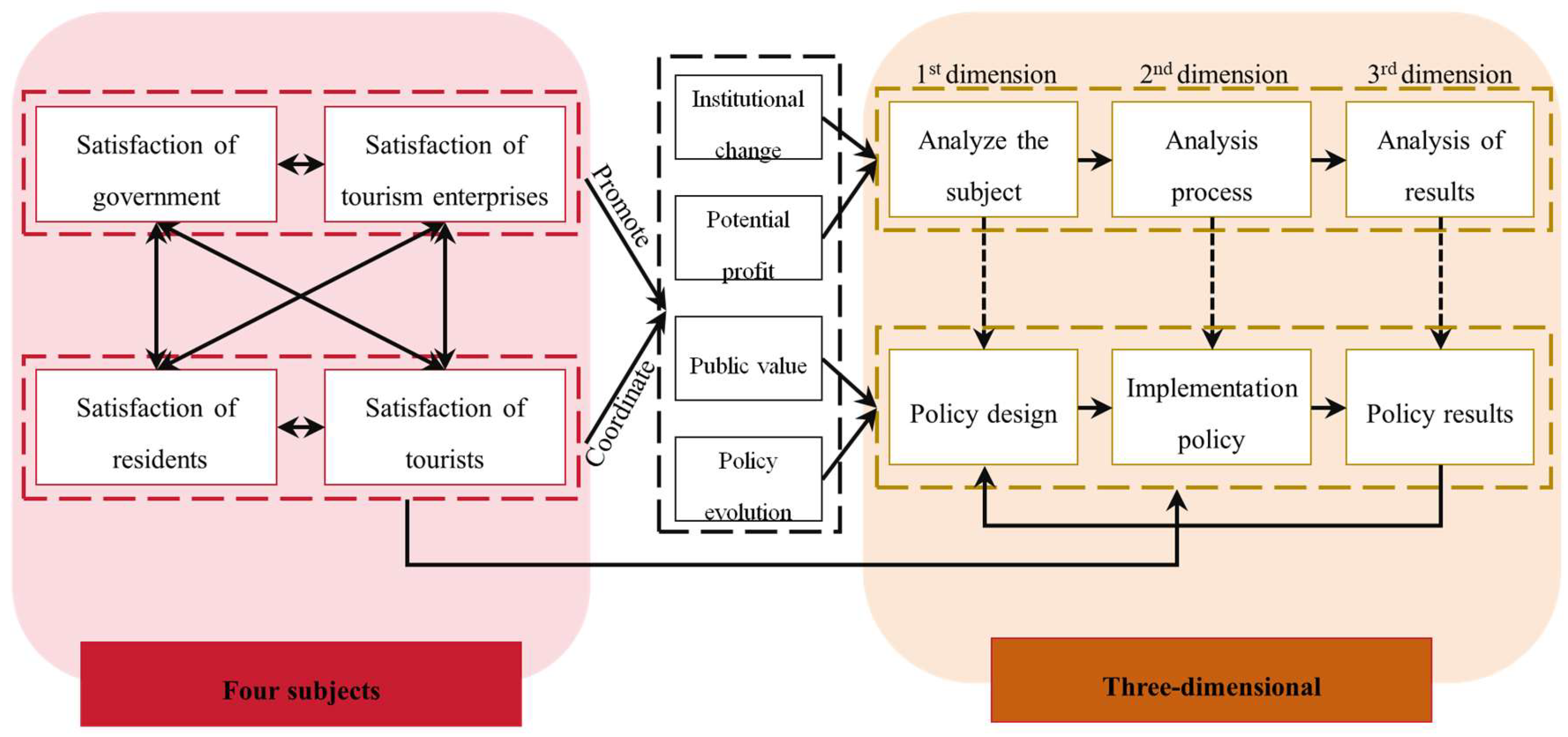
2.2. A “Three-Dimensional, Four-Subjects” Winter Tourism Policy Performance Assessment Framework
2.2.1. Process Deconstruction of “Three-Dimensional” Policy Evolution
2.2.2. Evaluation and Analysis of the Satisfaction of the “Four Subjects”
2.2.3. Constructing the Indicator System
3. Empirical Test: Performance Evaluation of Winter Tourism Policies in Lhasa
3.1. Assessment Methods and Data Sources
3.1.1. Assessment Methods
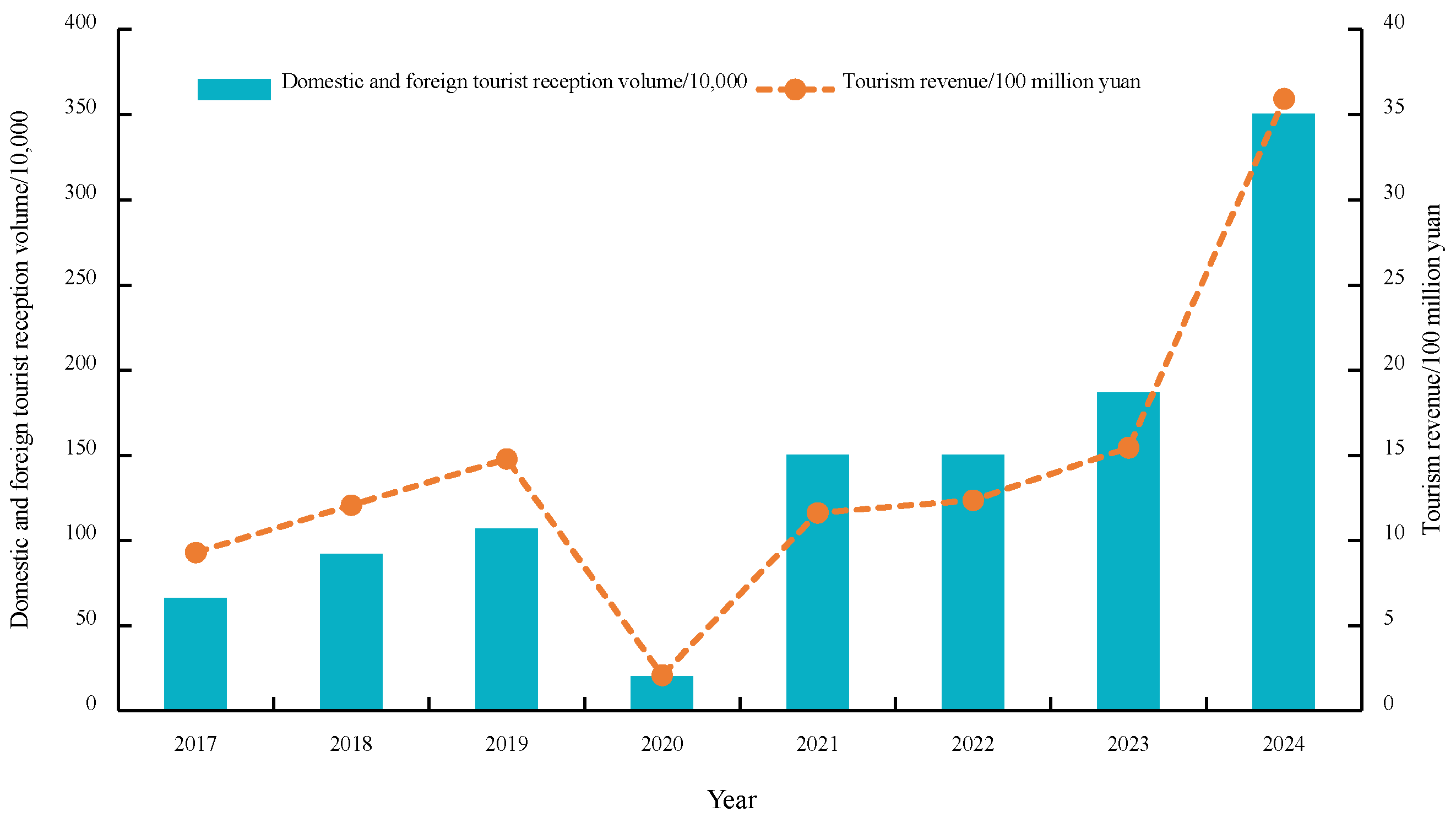
3.1.2. Data Sources
3.2. Analysis of Results
3.2.1. Sample Characterization and Questionnaire Validity Testing
3.2.2. Analysis of the Results of the Evaluation Level Measurement of Lhasa’s Winter Tourism Policy Performance
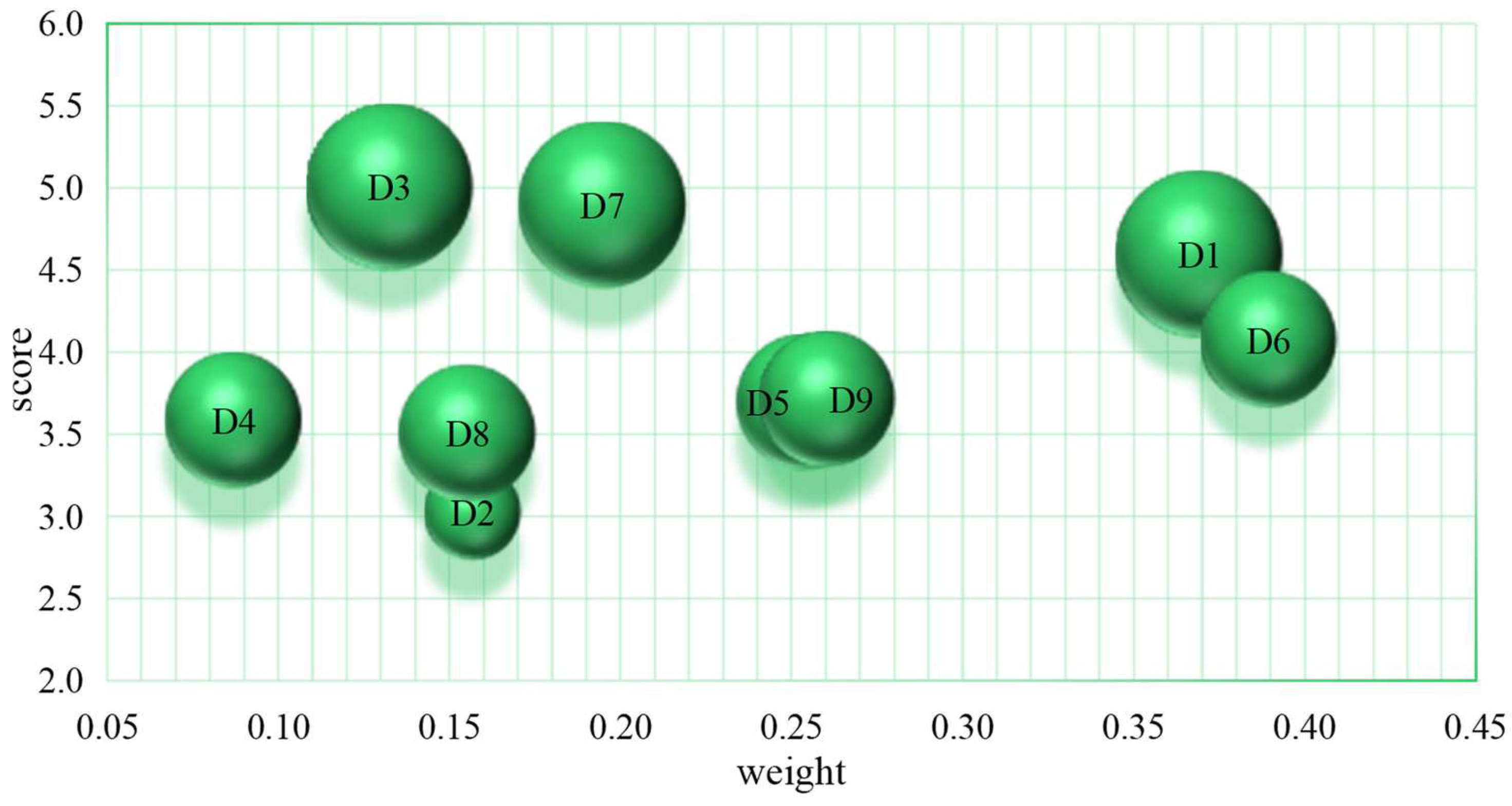
- (1)
- Dimensions of policy constructs
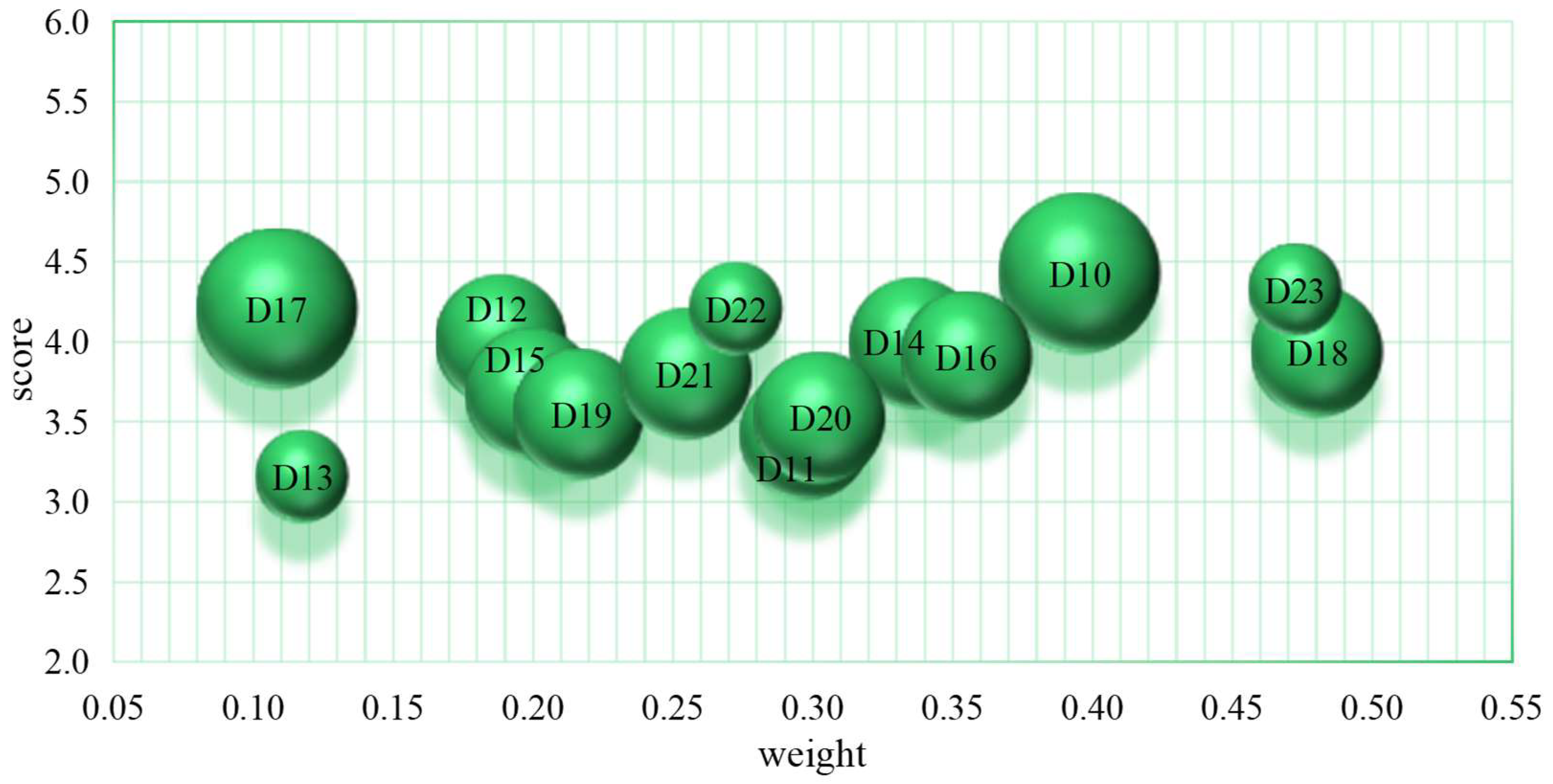
- (2)
- Dimensions of policy outcomes
- (3)
- Results of the performance evaluation
4. Countermeasures for the Development of Winter Tourism
4.1. Cluster Stakeholder Needs and Optimize Policy Design Based on Empirical Findings
4.2. Strengthen Data-Driven Publicity and Targeted Communication to Correct Cognitive Biases
4.3. Highlight Ecological Vulnerability and Build Plateau-Specific Ecological Winter Tourism
5. Conclusions
6. Limitations and Future Research Directions
6.1. Limitations
6.2. Future Research Directions
Author Contributions
Funding
Institutional Review Board Statement
Informed Consent Statement
Data Availability Statement
Conflicts of Interest
References
- Yang, Z.Z. On the essence of tourism. Tour. Trib. 2014, 29, 13–21. [Google Scholar]
- Yu, Z.J.; Chen, Y.L.; Wang, J.F. Winter Tourism in Tibet: Problem and Solution. J. Tibet Minzu Univ. (Philos. Soc. Sci. Ed.) 2021, 42, 116–121. [Google Scholar]
- Cai, W.Y.; Di, H.; Liu, X.P. Estimation of the Spatial Suitability of Winter Tourism Destinations Based on Copula Functions. Int. J. Environ. Res. Public Health 2019, 16, 186. [Google Scholar] [CrossRef] [PubMed]
- Liu, J.; Chen, J.Q.; Law, R.; Wang, S.; Yang, L. Travel Patterns and Spatial Structure: Understanding Winter Tourism by Trajectory Data Mining. Asia Pac. J. Tour. Res. 2024, 29, 1351–1368. [Google Scholar] [CrossRef]
- Yangutova, A.; Dong, S.C.; Cheng, H.; Xu, S.; Li, F.; Li, Z.; Zhang, M.; Li, J.; Bazarzhapov, T.; Boldanov, T. Assessing the Competitiveness of the Ski Resources around Lake Baikal (Russia) and Measures for Their Further Development. Sustainability 2023, 15, 151410752. [Google Scholar] [CrossRef]
- Uyan, M.; Sert, E.; Osmanli, N.; Gulmez, K. Determination of Winter Tourism Potential Areas in Türkiye Using A GIS-BASED Multi-Criteria Analysis. J. Geogr. Inst. Jovan Cvijic SASA 2023, 73, 79–92. [Google Scholar] [CrossRef]
- Schrot, O.G.; Christensen, J.H.; Formayer, H. Greenland Winter Tourism in a Changing Climate. J. Outdoor Recreat. Tour.-Res. Plan. Manag. 2019, 27, 100224. [Google Scholar] [CrossRef]
- Schut, P.O. How the Touring Club de France Influenced the Development of Winter Tourism. Int. J. Hist. Sport 2016, 33, 1133–1151. [Google Scholar] [CrossRef]
- Liu, F.J.; Gong, R.J. Quantitative Evaluation of Tourism Crisis Response Policies: Overview and Lessons from China’s Tourism Epidemic Response Policies. J. Policy Res. Tour. Leis. Events 2026, 18, 72–102. [Google Scholar] [CrossRef]
- Rech, Y.; Paget, E.; Dimanche, F. Uncertain Tourism: Evolution of a French Winter Sports Resort and Network Dynamics. J. Destin. Mark. Manag. 2019, 12, 95–104. [Google Scholar] [CrossRef]
- Bichler, B.F.; Pikkemaat, B. Winter Sports Tourism to Urban Destinations: Identifying Potential and Comparing Motivational Differences Across Skier Groups. J. Outdoor Recreat. Tour. Res. Plan. Manag. 2021, 36, 100420. [Google Scholar] [CrossRef]
- Berard-Chenu, L.; Francois, H.; George, E.; Morin, S. Snowmaking Development Trajectories in French Alpine Ski Resorts: The Influence of Local Specificities and Regional Support Policies. Rev. De Geogr. Alp. J. Alp. Res. 2022, 110. [Google Scholar] [CrossRef]
- Nizic, M.K.; Grdic, Z.S. Winter Tourism in Croatia: Is It Possible? Sustainability 2018, 10, 10103563. [Google Scholar] [CrossRef]
- Wang, M.N.; Sun, Y.K. Fuzzy Comprehensive Evaluation for Climate Comfortable Degree of Winter Tourism in the Area of Harbin City. J. Northeast Agric. Univ. 2008, 39, 200–203. [Google Scholar] [CrossRef]
- Tang, C.C.; Xiao, X.Y.; Han, Y.; Zeng, R.; Xu, S.-Y.; Liu, Y.-R.; Wan, Z.-W. Development Mode and Optimization Path of Typical Ice and Snow Tourism Destinations in China. J. Nat. Resour. 2022, 37, 2348–2366. [Google Scholar] [CrossRef]
- Cheng, Z.H.; Liu, K.; Sun, J.; Jianchao, X.; Jun, Y. The Comprehensive Evaluation of Suitability of Ice-snow Tourism Base in China. Resour. Sci. 2016, 38, 2233–2243. [Google Scholar]
- Yang, C.M.; Zhao, B.F. An Efficiency Evaluation on Chinese Ice-snow Tourism Industry Based on Data Envelopment Analysis. J. Arid Land Resour. Environ. 2014, 28, 169–174. [Google Scholar]
- Da, W.C.R. Reflection on Tibet’s Winter Tourism Development: Development of Bird-watching Tour Routes. Tibet. Stud. 2015, 5, 87–94. [Google Scholar]
- Veblen, T. The Theory of the Leisure Class; Modern Library: New York, NY USA, 1964. [Google Scholar]
- Yang, Y.; Chen, L.J.; Zhou, J.Q. The formation mechanism of “Deviations” in grassroots policy implementation from the perspective of institutional logic—An analysis based on the suspension of industrial poverty alleviation policy implementation. J. Public Manag. 2023, 20, 39–52. [Google Scholar] [CrossRef]
- North, D.C. Institutions, Institutional Change and Economic Performance; Cambridge University Press: Cambridge, UK, 2014. [Google Scholar]
- Jaakson, R. Tourism in Transition in Post-soviet Estonia. Ann. Tour. Res. 1996, 23, 617–634. [Google Scholar] [CrossRef]
- Xiong, Y.b.; Jiang, X. Path Dependence and Innovation of Sustainable Tourism Development. J. Bus. Econ. 2011, 92–96. Available online: https://kns.cnki.net/kcms2/article/abstract?v=VrduTR4bJX6fuMF6m_naVvkXkAkcZGbruzknI4pKKiTJGfWAE78y6ZZMMCdw5CSOlx_uqImAVF3qxmIISepW16fp_NkB9Z5rg62gwJnTtAmnW0g0l4Nc8DD8s0ZvJB3l1LJCPmTbusfKKRvqVmo6r4jTijCceD45dqrM9dzTF5HoIou65vorRQ==&uniplatform=NZKPT&language=CHS (accessed on 2 May 2026).
- Yu, F.L. Effects of Institutional Change on Tourism Development and Research Framework—A Perspective of New Institutional Economics. Resour. Dev. Mark. 2011, 27, 544–546. [Google Scholar]
- North, D.C. Understanding the Process of Economic Change; Princeton University Press: Princeton, NJ, USA, 2013. [Google Scholar]
- North, D.C. Property Rights and Institutional Change; Cambridge University Press: Cambridge, UK, 1994. [Google Scholar]
- Chen, X.; You, J.X. Study on Service Management of Urban Government. Shanghai Manag. Sci. 2007, 6, 53–55. [Google Scholar]
- Mo, Y.B. On “government economic man” and its restriction on government execution. Soc. Sci. 2008, 5, 118–121. [Google Scholar]
- Wang, J.W.; Sun, J.; Lei, T.; Zhang, H.; Yuan, J. Structural system and effectiveness evaluation of red tourism policy in China. Tour. Trib. 2025, 40, 125–144. [Google Scholar] [CrossRef]
- Chen, Y. Quantitative Evaluation and Configuration Effects of Tourism Consumption Policies in China: Based on Text Analysis of Consumption Policies. Master’s Thesis, Yangzhou University, Yangzhou, China, 2025. [Google Scholar]
- Wang, S.H.; Xu, D.W.; Song, S.; Yan, Y.M.; Hu, X.D.; Li, Y.; Wu, S. Landscape quality evaluation of national wetland parks based on ecosystem service function: A case study of Daxing’anling area in Heilongjiang province. J. Cent. South Univ. For. Technol. 2022, 42, 181–190. [Google Scholar]




| Objective Level | Project Level | Sub-Project Level | Indicator Element Level | Weight |
|---|---|---|---|---|
| Performance evaluation of Lhasa winter tourism policy based on institutional change theory A | Dimensions of policy constructs B1 | Policy design C1 | Rationality of policy content D1 | 0.3694 |
| Participation in policy-designing D2 | 0.1569 | |||
| Intensity of policy-designing D3 | 0.1325 | |||
| Breadth of policy-designing D4 | 0.0870 | |||
| Satisfaction with product design D5 | 0.2542 | |||
| Policy implementation C2 | Degree of implementation of policies D6 | 0.3894 | ||
| Enthusiasm for policy participation D7 | 0.1948 | |||
| Level of understanding of policy D8 | 0.1553 | |||
| Satisfaction with policy services D9 | 0.2605 | |||
| Dimensions of policy outcomes B2 | Social benefits C3 | Enhance regional visibility D10 | 0.3957 | |
| Improving basic service infrastructure D11 | 0.2977 | |||
| Degree of driving tourism employment D12 | 0.1887 | |||
| Fairness of policy income distribution D13 | 0.1179 | |||
| Economic benefits C4 | Tourist Income D14 | 0.3368 | ||
| Number of tourists D15 | 0.1997 | |||
| Satisfaction with revenue growth D16 | 0.355 | |||
| Construction of key winter tourist attractions D17 | 0.1085 | |||
| Ecological benefits C5 | Satisfaction with the ecological environment D18 | 0.4804 | ||
| Enhancing awareness of ecological protection D19 | 0.2166 | |||
| Impact on environmental improvement D20 | 0.3030 | |||
| Cultural benefits C6 | Enriching cultural activities D21 | 0.2548 | ||
| Attitude towards foreign cultures D22 | 0.2727 | |||
| impact on cultural dissemination power D23 | 0.4725 |
| Level | Level Standard | Implication |
|---|---|---|
| A | 4.2 ≤ score | The policy results exceeded expectations; the policy formulation was scientific and reasonable; the policy implementation was efficient; the policy results did not have negative impacts; and all stakeholders were very satisfied. Policies have high sustainability. |
| B | 3.4 ≤ score < 4.2 | The policy has achieved good results, with no major flaws in its formulation and implementation. The policy’s benefits have not been fully highlighted, and the negative impact is relatively small. The policy benefits align with the overall interests of all stakeholders, and they are satisfied with its implementation and tend to maintain the status quo. |
| C | 2.6 ≤ score < 3.4 | The policy results are average, meeting the target requirements only in a basic sense. There are some shortcomings in the policy’s implementation, such as low efficiency, but they do not affect its implementation. The policy results have had some negative impacts, and various policy stakeholders are not very satisfied, leading to the idea of changing policies. |
| D | 1.8 ≤ score < 2.6 | Poor policy outcomes, unreasonable policy formulation, and low policy implementation efficiency. There are still some policies with high benefits, but their actual negative impact is relatively serious. Policy stakeholders are dissatisfied and seek potential opportunities to change the policies. |
| E | score < 1.8 | The policy results are poor, and the formulation and implementation of policies are not supported, making it difficult to carry out. The policy’s negative impact is very serious, and all parties involved are very dissatisfied. The policy is almost unsustainable, and there is a strong demand for policy changes. |
| Government Staff | Tourism Enterprises | ||||||
|---|---|---|---|---|---|---|---|
| Frequency | Percentage/% | Frequency | Percentage/% | ||||
| Gender | Male | 5 | 71.4 | Nature of enterprise | Private | 13 | 86.7 |
| Female | 2 | 28.6 | Government-owned | 2 | 13.3 | ||
| Age | [20, 30] | 2 | 28.5 | Size of the enterprise | ≤100 | 9 | 60.0 |
| (30, 40] | 3 | 42.9 | (100, 199] | 6 | 40.0 | ||
| (40, 50] | 1 | 14.3 | Positions | Staff | 12 | 80.0 | |
| >50 | 1 | 14.3 | Manager | 3 | 20.0 | ||
| Degree of education | Undergraduate/Vocational education | 5 | 71.4 | Education level | Junior high school | 8 | 53.3 |
| Postgraduate or above | 2 | 28.6 | High school | 3 | 20.0 | ||
| Income | [2000, 4000] | 5 | 71.4 | Undergraduate/Vocational education | 4 | 26.7 | |
| (4000, 6000] | 2 | 28.6 | Income | [2000, 4000] | 3 | 20.0 | |
| Rank | Section member | 5 | 71.4 | (4000, 6000] | 9 | 60.0 | |
| Deputy sector chief | 1 | 14.3 | (6000, 8000] | 3 | 20.0 | ||
| Sector chief | 1 | 14.3 | |||||
| Residents | Tourists | ||||||
| Frequency | Percentage/% | Frequency | Percentage/% | ||||
| Gender | Male | 42 | 46.67 | Gender | Male | 46 | 51.11 |
| Female | 48 | 53.33 | Female | 44 | 48.89 | ||
| Age | (19, 30] | 19 | 21.11 | Age | (19, 30] | 25 | 27.78 |
| (30, 45] | 40 | 44.44 | (30, 45] | 40 | 44.44 | ||
| (45, 55] | 28 | 31.11 | (45, 55] | 16 | 17.78 | ||
| >55 | 3 | 3.33 | >55 | 9 | 10.00 | ||
| Education level | Primary and below | 24 | 26.67 | Education level | Primary and below | 1 | 3.33 |
| Junior high school | 44 | 49.89 | Junior high school | 19 | 21.11 | ||
| High school | 13 | 14.44 | High school | 27 | 30.00 | ||
| Undergraduate/Vocational education | 7 | 7.78 | Undergraduate/Vocational education | 34 | 30.78 | ||
| Postgraduate or above | 2 | 2.22 | Postgraduate or above | 7 | 7.78 | ||
| Monthly income | ≤2000 | 2 | 2.22 | Monthly income | ≤2000 | 6 | 6.67 |
| (2000, 4000] | 34 | 37.78 | (2000, 4000] | 14 | 15.56 | ||
| (4000, 6000] | 39 | 43.33 | (4000, 6000] | 35 | 38.89 | ||
| (6000, 8000] | 15 | 16.67 | (6000, 8000] | 31 | 34.44 | ||
| >8000 | 0 | 0 | >8000 | 4 | 4.44 | ||
| Careers | Commercial | 37 | 41.11 | Careers | Staff | 51 | 56.67 |
| Farm | 24 | 26.67 | Freelance | 17 | 18.89 | ||
| Staff | 15 | 16.67 | Other | 11 | 12.22 | ||
| Officer | 5 | 5.56 | |||||
| Other | 9 | 10.00 | |||||
Disclaimer/Publisher’s Note: The statements, opinions and data contained in all publications are solely those of the individual author(s) and contributor(s) and not of MDPI and/or the editor(s). MDPI and/or the editor(s) disclaim responsibility for any injury to people or property resulting from any ideas, methods, instructions or products referred to in the content. |
© 2026 by the authors. Licensee MDPI, Basel, Switzerland. This article is an open access article distributed under the terms and conditions of the Creative Commons Attribution (CC BY) license.
Share and Cite
Zhou, X.; Tang, W.; Zhang, H. Performance Evaluation of Lhasa Winter Tourism Policy Based on Institutional Change Theory. Sustainability 2026, 18, 4979. https://doi.org/10.3390/su18104979
Zhou X, Tang W, Zhang H. Performance Evaluation of Lhasa Winter Tourism Policy Based on Institutional Change Theory. Sustainability. 2026; 18(10):4979. https://doi.org/10.3390/su18104979
Chicago/Turabian StyleZhou, Xuan, Weican Tang, and Haitao Zhang. 2026. "Performance Evaluation of Lhasa Winter Tourism Policy Based on Institutional Change Theory" Sustainability 18, no. 10: 4979. https://doi.org/10.3390/su18104979
APA StyleZhou, X., Tang, W., & Zhang, H. (2026). Performance Evaluation of Lhasa Winter Tourism Policy Based on Institutional Change Theory. Sustainability, 18(10), 4979. https://doi.org/10.3390/su18104979