Operational Decarbonization Strategies for Maritime Vessels: Power Limitation Technologies and Alternative Fuels

 , ,
, ,  , , ,
, , , 
Abstract
1. Introduction
1.1. Energy Consumption Challenges
1.2. Environmental Challenges
1.3. Technical Challenges
1.4. Economic Challenges
- A detailed analysis of the energy, environmental, technical, and economic challenges associated with the operation of the contemporary maritime fleet, along with the identification of the most promising pathways for their resolution.
- A comparative assessment of the principal alternative fuels—LNG, biofuels, methanol, ammonia, and hydrogen—with respect to their characteristics, advantages, and challenges in the context of shipping decarbonization.
- An analysis and description of energy consumption regulation technologies (EPL and SHaPoLi systems) within the framework of global environmental requirements, including their impact on operational efficiency and compliance with IMO regulations.
2. Analysis of Alternative Fuels in the Context of Shipping Decarbonization
2.1. Liquefied Natural Gas
2.2. Biofuels
2.3. Methanol
2.4. Ammonia (NH3)
2.5. Hydrogen (H2)
2.6. Liquefied Petroleum Gas (LPG)
3. Analysis of Energy Consumption Regulation Technologies in Maritime Vessels: EPL and SHaPoLi Systems in the Context of Global Environmental Requirements
3.1. Energy Efficiency Indicators of Maritime Vessels
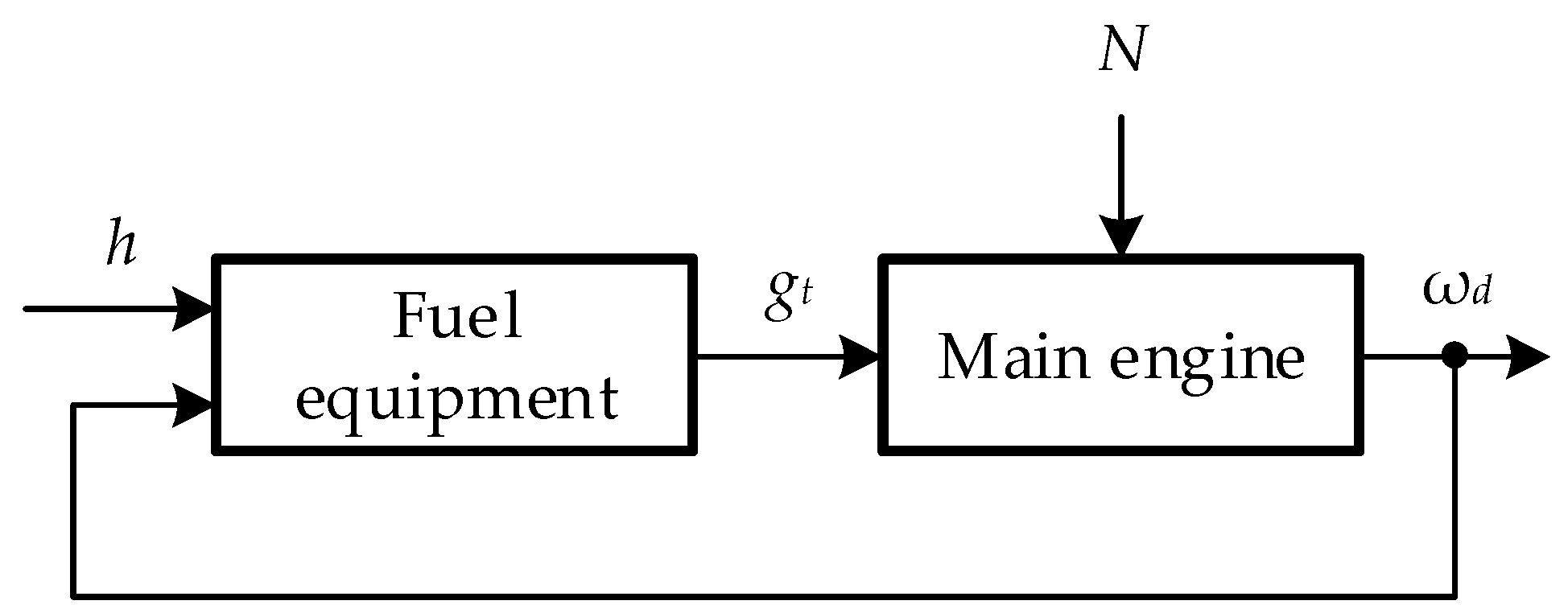
3.2. Analysis of the Vessel Propulsion System Configuration and Justification for the Application of Power Limiters
3.3. Main EPL
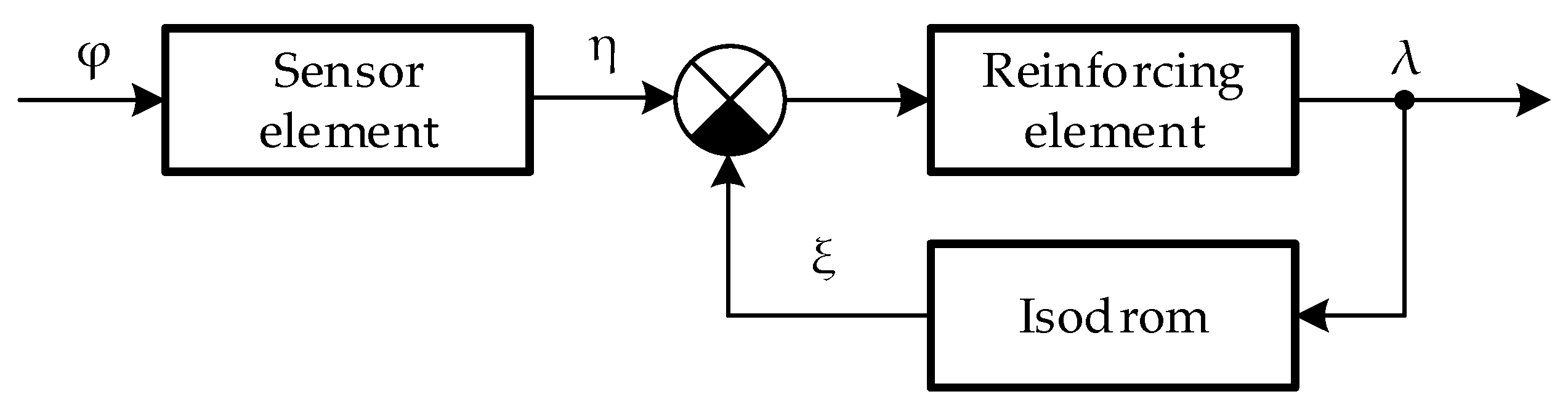
3.3.1. Mechanical Limiters
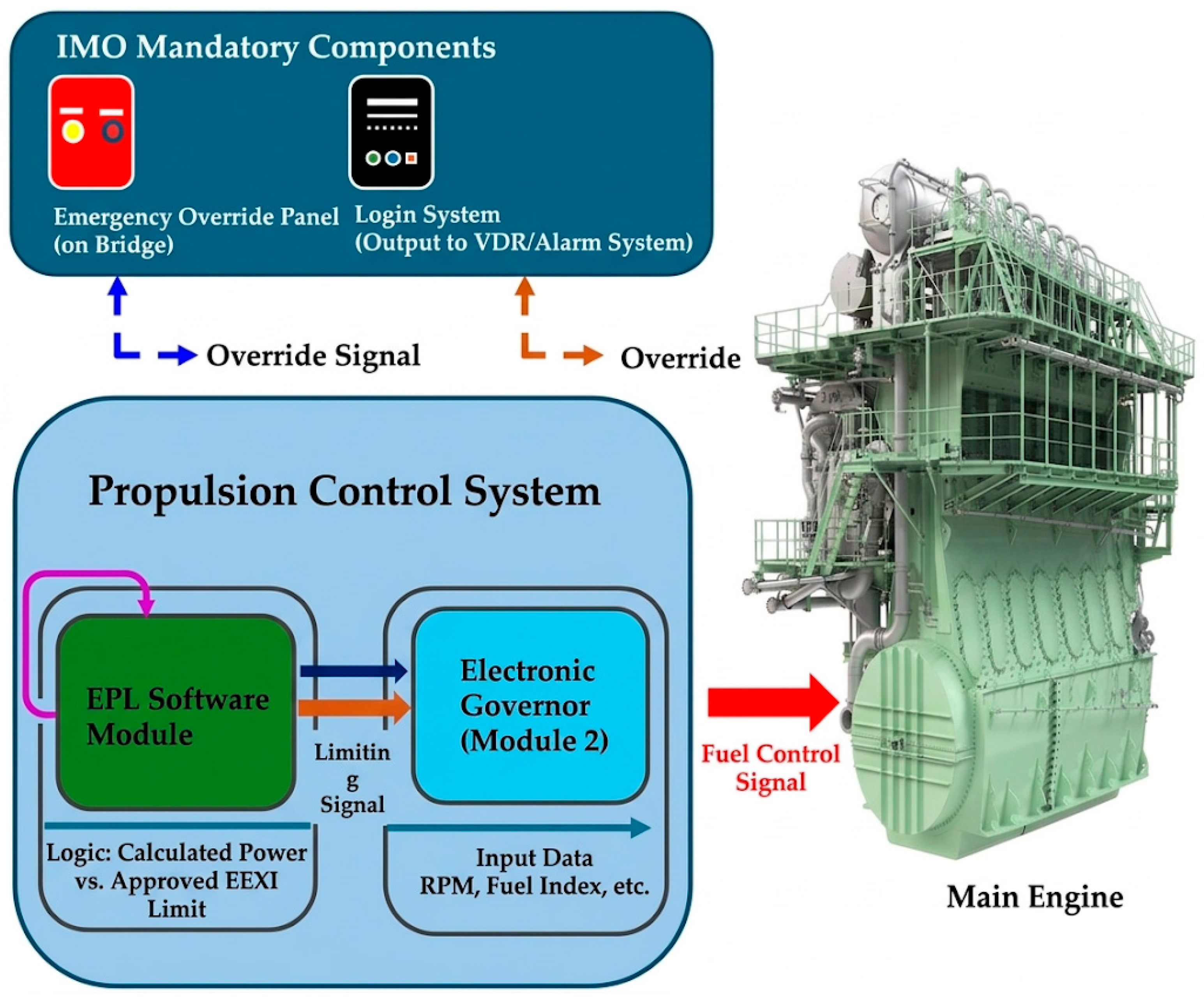
3.3.2. Electronic Limitation Systems
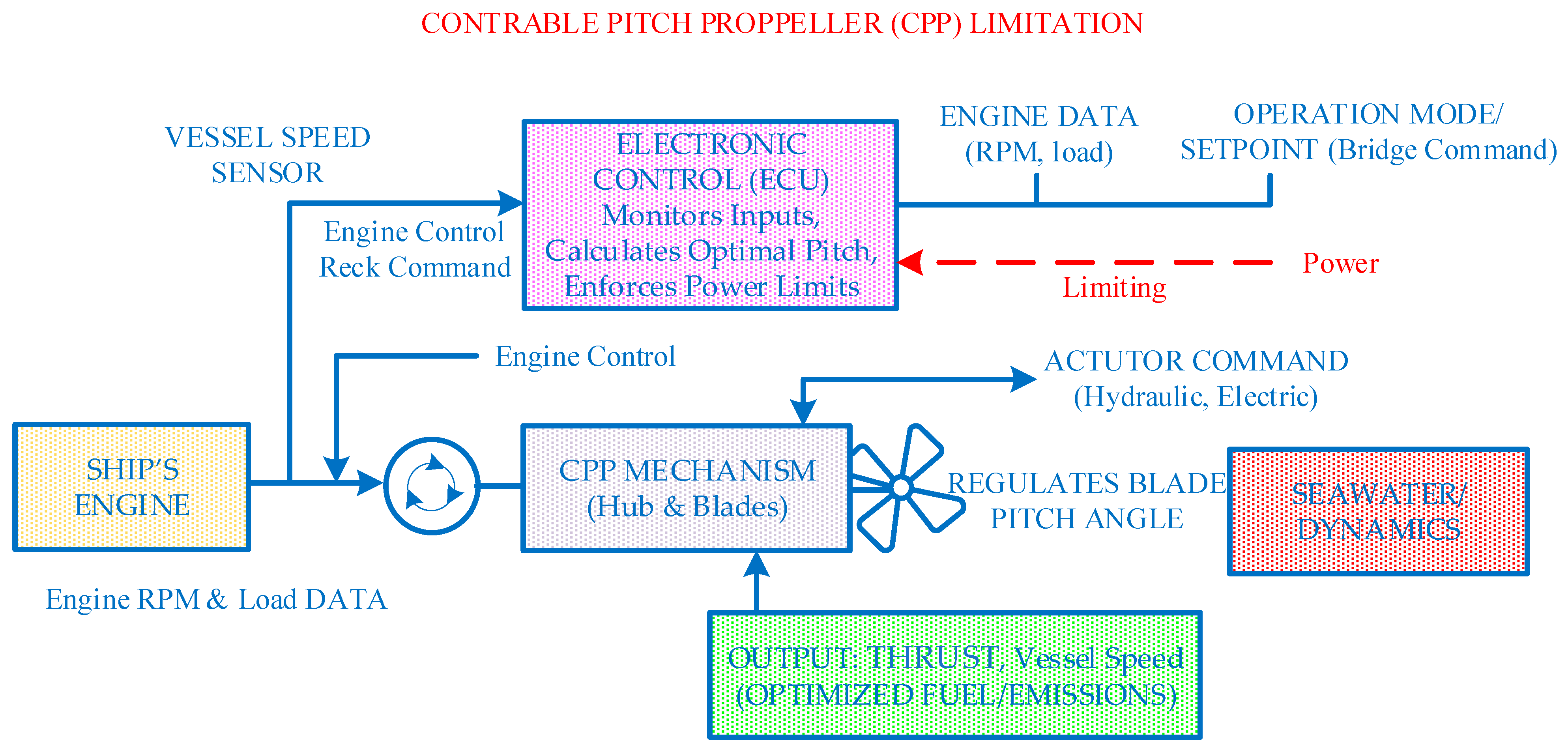
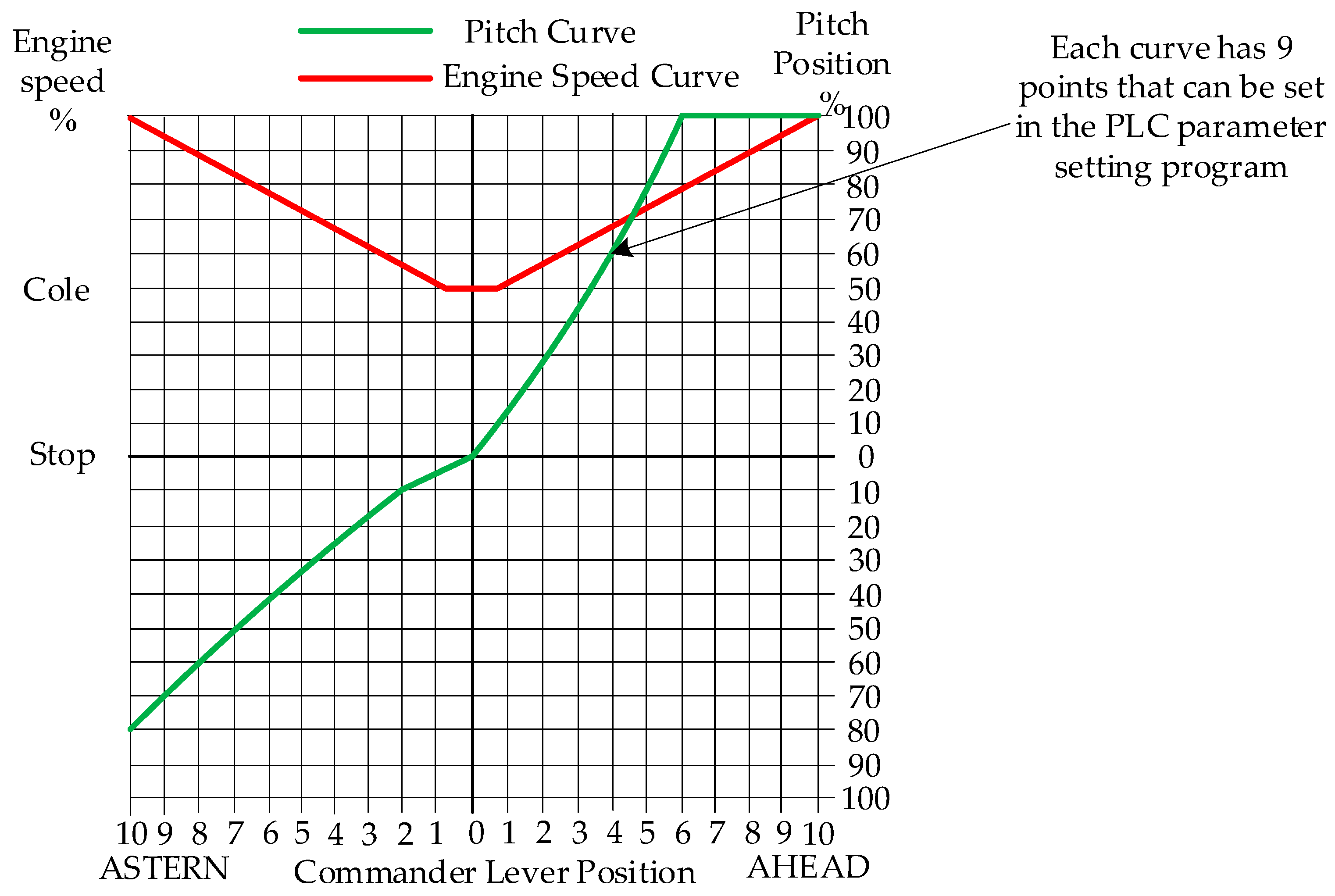
3.3.3. Power Limitation via Controllable Pitch Propellers (CPP)
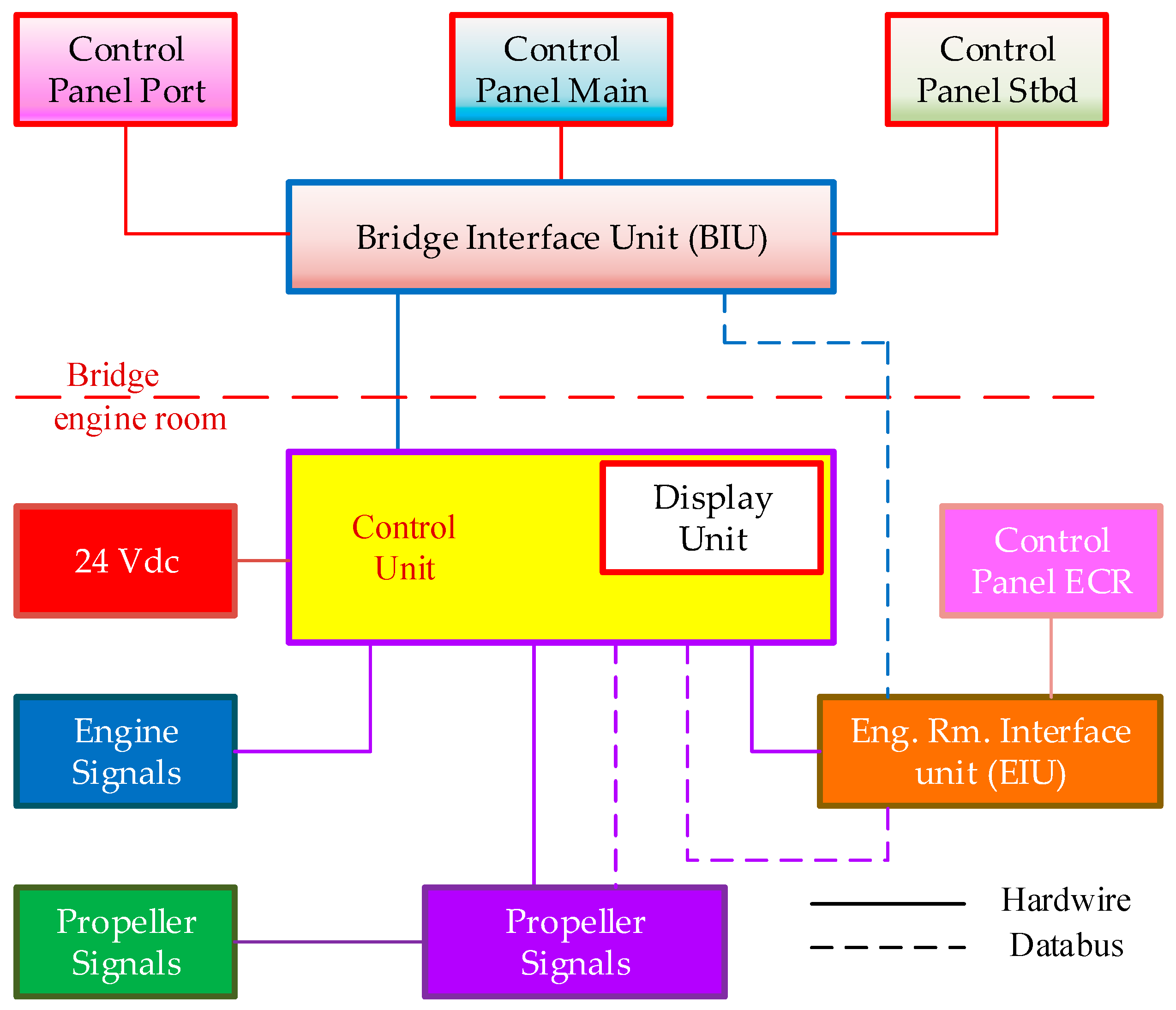
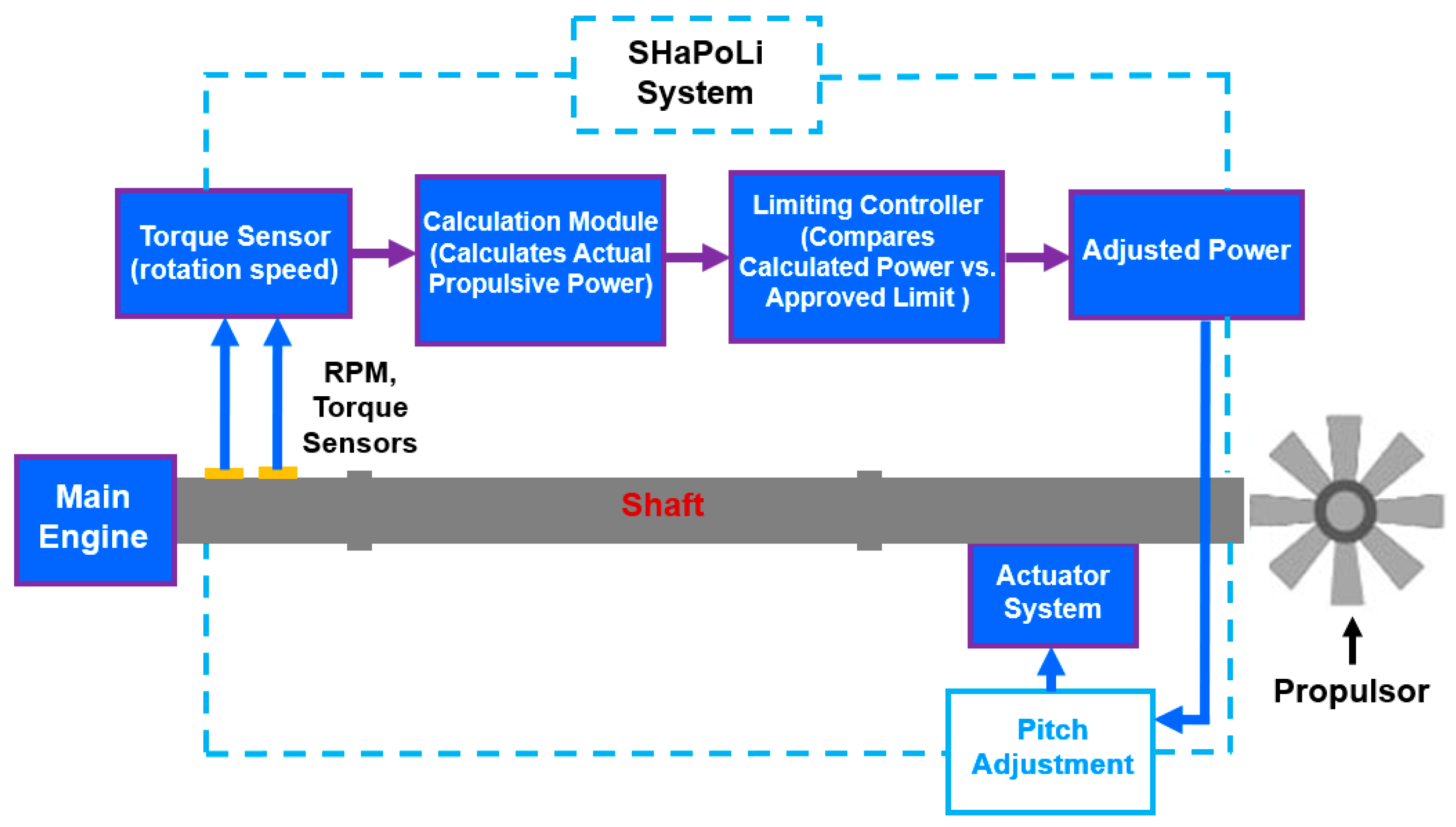
3.4. SHaPoLi Systems (Shaft Power Limitation)
4. Discussion
- Real-time monitoring of fuel consumption and GHG emissions via integrated data systems, with outputs used directly to calibrate CII performance and flag deviations early.
- Development of a flexible fuel procurement policy that accounts for the price volatility of conventional and alternative energy carriers, the availability of bunkering capacity in various ports, and the possibility of diversifying the fuel portfolio to minimize economic risks and ensure continuity of operational activity.
- Establishment of long-term partnerships with ports for the joint development of alternative fuel bunkering infrastructure, including the construction of specialized terminals for LNG, methanol, ammonia, and hydrogen, which is critically important for scaling the transition to clean energy carriers.
- Comprehensive crew training and support for the safe and effective operation of new power limitation technologies, CPP management systems, alternative fuel bunkering procedures, and upgraded propulsion plants, without which none of the new technologies can be safely or effectively deployed.
5. Conclusions
Author Contributions
Funding
Institutional Review Board Statement
Informed Consent Statement
Data Availability Statement
Conflicts of Interest
References
- UNCTAD. Review of Maritime Transport 2023: Towards a Green and Just Transition; United Nations Conference on Trade and Development: Geneva, Switzerland, 2023. [Google Scholar]
- IMO. Initial IMO Strategy on Reduction of GHG Emissions from Ships; International Maritime Organization: London, UK, 2018. [Google Scholar]
- Bouman, E.A.; Lindstad, E.; Rialland, A.I.; Strømman, A.H. State-of-the-art technologies, measures, and potential for reducing GHG emissions from shipping—A review. Transp. Res. Part D Transp. Environ. 2017, 52, 408–421. [Google Scholar] [CrossRef] [Scilit]
- Tzu, F.-M.; Su, D.-T. Evaluation of carbon dioxide emission based on energy efficiency existing ship index during oceanographic navigation. J. Oper. Oceanogr. 2024, 17, 151–164. [Google Scholar] [CrossRef] [Scilit]
- Hasan, S.M.R.; Karim, M. Energy efficiency design index baselines for ships of Bangladesh based on verified ship data. Heliyon 2022, 8, e10996. [Google Scholar] [CrossRef] [Scilit]
- Kalajdžić, M.; Vasilev, M.; Momčilović, N. Assessment of energy efficiency for the existing cargo ships. J. Marit. Sci. 2022, 23, 33–46. [Google Scholar] [CrossRef] [Scilit]
- Du, Z.; Chen, Q.; Guan, C.; Chen, H. Improvement and optimization configuration of inland ship power and propulsion system. J. Mar. Sci. Eng. 2023, 11, 135. [Google Scholar] [CrossRef] [Scilit]
- Goolak, S.; Petrychenko, O.; Burmaka, I.; Vynohradova, A. The use of LNG as an alternative marine fuel: Conceptual requirements and safety measures. In Proceedings of the 28th International Scientific Conference Transport Means 2024, Kaunas, Lithuania, 2–4 October 2024; pp. 965–970. [Google Scholar] [CrossRef] [Scilit]
- Petrychenko, O.; Levinskyi, M.; Goolak, S.; Lukoševičius, V. Prospects of Solar Energy in the Context of Greening Maritime Transport. Sustainability 2025, 17, 2141. [Google Scholar] [CrossRef] [Scilit]
- Park, M.-H.; Yeo, S.; Kim, J.-H.; Choi, J.-H.; Lee, W.-J. Comprehensive review on recent progress in renewable and sustainable energy applications in shipping industry, and suggestions for future developments. Renew. Sustain. Energy Rev. 2026, 225, 116152. [Google Scholar] [CrossRef] [Scilit]
- Traut, M.; Larkin, A.; Anderson, K.; McGlade, C.; Sharmina, M.; Smith, T. CO2 abatement goals for international shipping. Clim. Policy 2018, 18, 1066–1075. [Google Scholar] [CrossRef] [Scilit]
- Olmer, N.; Comer, B.; Roy, B.; Mao, X.; Rutherford, D. Greenhouse Gas Emissions from Global Shipping, 2013–2015 Detailed Methodology; International Council on Clean Transportation: Washington, DC, USA, 2017; pp. 1–38. [Google Scholar]
- Awwalin, R.; Saktiono, M.A.; Marsudi, S.; Tambun, R.; Suwasono, B.; Sutiyo. Trim Optimization for Ship Resistance Reduction and Energy Efficiency Existing Ship Index (EEXI) Regulation Assessment. In IOP Conference Series: Earth and Environmental Science; IOP Publishing: Bristol, UK, 2025; Volume 1473, p. 012029. [Google Scholar] [CrossRef] [Scilit]
- Yang, B.; Liu, B.; Zhou, H.; Wang, J.; Yao, W.; Wu, S.; Shu, H.; Ren, Y. A critical survey of technologies of large offshore wind farm integration: Summary, advances, and perspectives. Prot. Control Mod. Power Syst. 2022, 7, 17. [Google Scholar] [CrossRef] [Scilit]
- Balcombe, P.; Brierley, J.; Lewis, C.; Skatvedt, L.; Speirs, J.; Hawkes, A.; Staffell, I. How to decarbonise international shipping: Options for fuels, technologies and policies. Energy Convers. Manag. 2019, 182, 72–88. [Google Scholar] [CrossRef] [Scilit]
- Sardar, A.; Anantharaman, M.; Islam, T.M.R.; Garaniya, V. Data collection framework for enhanced carbon intensity indicator (CII) in the oil tankers. Can. J. Chem. Eng. 2025, 103, 170–187. [Google Scholar] [CrossRef] [Scilit]
- Gianni, M.; Pietra, A.; Coraddu, A.; Taccani, R. Impact of SOFC power generation plant on carbon intensity index (CII) calculation for cruise ships. J. Mar. Sci. Eng. 2022, 10, 1478. [Google Scholar] [CrossRef] [Scilit]
- A.P. Møller-Mærsk A/S. 2018 Sustainability Report; A.P. Møller-Mærsk A/S: Copenhagen, Denmark, 2018; Available online: https://www.maersk.com/~/media_sc9/maersk/corporate/sustainability/files/resources/2018/apmm-sustainability-report-2018-a3_190228.pdf (accessed on 7 March 2026).
- Adamowicz, M. Decarbonisation of maritime transport—European Union measures as an inspiration for global solutions? Mar. Policy 2022, 145, 105085. [Google Scholar] [CrossRef] [Scilit]
- Skjong, S.; Pedersen, E. A distributed object-oriented simulator framework for marine power plants with weak power grids. J. Mar. Eng. Technol. 2023, 22, 176–188. [Google Scholar] [CrossRef] [Scilit]
- Khare, V.; Bhuiyan, M.A. Tidal energy-path towards sustainable energy: A technical review. Clean. Energy Syst. 2022, 3, 100041. [Google Scholar] [CrossRef] [Scilit]
- Zis, T.P. Prospects of cold ironing as an emissions reduction option. Transp. Res. Part A Policy Pract. 2019, 119, 82–95. [Google Scholar] [CrossRef] [Scilit]
- Wu, P.C.; Lin, C.Y. Feasibility and cost-benefit analysis of methanol as a sustainable alternative fuel for ships. J. Mar. Sci. Eng. 2025, 13, 973. [Google Scholar] [CrossRef] [Scilit]
- Sagin, S.V.; Sagin, S.S.; Fomin, O.; Gaichenia, O.; Zablotskyi, Y.; Píštěk, V.; Kučera, P. Use of biofuels in marine diesel engines for sustainable and safe maritime transport. Renew. Energy 2024, 224, 120221. [Google Scholar] [CrossRef] [Scilit]
- Lee, H.; Lee, J.; Roh, G.; Lee, S.; Choung, C.; Kang, H. Comparative life cycle assessments and economic analyses of alternative marine fuels: Insights for practical strategies. Sustainability 2024, 16, 2114. [Google Scholar] [CrossRef] [Scilit]
- Ha, S.; Jeong, B.; Jang, H.; Park, C.; Ku, B. A framework for determining the life cycle GHG emissions of fossil marine fuels in countries reliant on imported energy through maritime transportation: A case study of South Korea. Sci. Total Environ. 2023, 897, 165366. [Google Scholar] [CrossRef] [Scilit]
- Machaj, K.; Kupecki, J.; Malecha, Z.; Morawski, A.W.; Skrzypkiewicz, M.; Stanclik, M.; Chorowsk, M. Ammonia as a potential marine fuel: A review. Energy Strategy Rev. 2022, 44, 100926. [Google Scholar] [CrossRef] [Scilit]
- Huang, J.; Fan, H.; Xu, X.; Liu, Z. Life cycle greenhouse gas emission assessment for using alternative marine fuels: A very large crude carrier (VLCC) case study. J. Mar. Sci. Eng. 2022, 10, 1969. [Google Scholar] [CrossRef] [Scilit]
- Zhou, Z.; Tao, J. Hydrogen-powered vessels in green maritime decarbonization: policy drivers, technological frontiers and challenges. Front. Mar. Sci. 2025, 12, 1601617. [Google Scholar] [CrossRef] [Scilit]
- Teoh, Y.H.; How, H.G.; Le, T.D.; Nguyen, H.T.; Loo, D.L.; Rashid, T.; Sher, F. A review on production and implementation of hydrogen as a green fuel in internal combustion engines. Fuel 2023, 333, 126525. [Google Scholar] [CrossRef] [Scilit]
- Mouchane, B.; Baştürk, S. Optimum design of liquefied petroleum gas (LPG) composite hybrid and non-hybrid cylinders by genetic algorithm for maximum failure pressure. Int. J. Mech. Mater. Des. 2025, 21, 1643–1667. [Google Scholar] [CrossRef] [Scilit]
- EL Fakkoussi, S.; Gouzi, M.B.; Elkhalfi, A.; Vlase, S.; Scutaru, M.L. Integrate the Isogeometric Analysis Approach Based on the T-Splines Function for the Numerical Study of a Liquefied Petroleum Gas (LPG) Cylinder Subjected to a Static Load. Appl. Sci. 2025, 15, 3102. [Google Scholar] [CrossRef] [Scilit]
- Psaraftis, H.N.; Kontovas, C.A. Decarbonization of maritime transport: Is there light at the end of the tunnel? Sustainability 2020, 13, 237. [Google Scholar] [CrossRef] [Scilit]
- Nanda, M.I.; Gurning, R.O.S. Development of Web Programming for Calculation of Energy Efficiency Design Index (EEDI). Revolution 2022, 4, 160–168. [Google Scholar] [CrossRef] [Scilit]
- Braidotti, L.; Bertagna, S.; Rappoccio, R.; Utzeri, S.; Bucci, V.; Marinò, A. On the inconsistency and revision of Carbon Intensity Indicator for cruise ships. Transp. Res. Part D Transp. Environ. 2023, 118, 103662. [Google Scholar] [CrossRef] [Scilit]
- Caciagli, V. Emission trading schemes and carbon markets in the NDCs: their contribution to the Paris agreement. In Theory and Practice of Climate Adaptation; Springer International Publishing: Cham, Switzerland, 2018; pp. 539–571. [Google Scholar] [CrossRef] [Scilit]
- Kolodziejski, M.; Michalska-Pozoga, I. Battery energy storage systems in ships’ hybrid/electric propulsion systems. Energies 2023, 16, 1122. [Google Scholar] [CrossRef] [Scilit]
- Tsvetanov, D. Supraharmonics in shipboard power systems: research gaps, challenges, and future directions. J. Mar. Eng. Technol. 2026, 2026, 261890. [Google Scholar] [CrossRef] [Scilit]
- Ishaq, M.; Ullah, K.; Abbass, M.J.; Awais, M. Reactive power compensation applications of matrix converter: a systemic review. Eng. Res. Express 2024, 6, 042301. [Google Scholar] [CrossRef] [Scilit]
- Fikir, E.; Nuran, M. Enhancement of Reactive Power and Efficiency Using Hybrid Compensation Approach for Supply Vessels. J. Mar. Sci. Eng. 2026, 14, 463. [Google Scholar] [CrossRef] [Scilit]
- Alkhafaji, M.H. Optimal and Stable Framework for Robust Field-Oriented Control of PMSM using Hybrid ALO-MRSO. Eur. J. Electr. Eng. Comput. Sci. 2025, 9, 50–58. [Google Scholar] [CrossRef] [Scilit]
- Karakatsanis, T.S. Optimization and Performance Evaluation of PM Motor and Induction Motor for Marine Propulsion Systems. Appl. Syst. Innov. 2025, 8, 58. [Google Scholar] [CrossRef] [Scilit]
- Pribadi, W.; Wicaksono, R.Y.; Putra, R.G.; Wicaksono, D.A.; Yazid, M.L. Artificial intelligence for field-oriented control on light rail transit Jabodebek. J. Mechatron. Electr. Power Veh. Technol. 2025, 16, 106–118. [Google Scholar] [CrossRef] [Scilit]
- Demirel, H.; Karadağ, M.; Başhan, V.; Mutlu, Y.T.; Kaya, C.; Gul, M.; Akyuz, E. Hybrid Neutrosophic Fuzzy Multi-Criteria Assessment of Energy Efficiency Enhancement Systems: Sustainable Ship Energy Management and Environmental Aspect. Sustainability 2025, 18, 166. [Google Scholar] [CrossRef] [Scilit]
- Hadi, I.; Yola, L.; Hanifa, A.S.; Muzhaffar, M.H. Decarbonization Strategy towards Net Zero Emission for International Shipping on International Shipping Routes in Indonesian Archipelago Sea Lanes. Int. J. Technol. 2025, 16, 8–26. [Google Scholar] [CrossRef] [Scilit]
- Tsimplis, M. Emission Reduction from Shipping and Net-Zero Shipping: Institutional Deficiencies and the Way Forward. In The South China Sea: The Geo-Political Epicenter of the Indo-Pacific; Springer Nature: Singapore, 2025; pp. 131–146. [Google Scholar] [CrossRef] [Scilit]
- Bayraktar, M.; Mollaoglu, M.; Yuksel, O. Scientometric Analysis of Energy Efficiency Indicators in Maritime Transportation: A Systematic State-of-the-Art Review and Implications. Sustainability 2025, 17, 3612. [Google Scholar] [CrossRef] [Scilit]
- Zhao, Y.; Wen, S.; Zhao, Q.; Zhang, B.; Huang, Y. Deep reinforcement learning-based energy management strategy for green ships considering photovoltaic uncertainty. J. Mar. Sci. Eng. 2025, 13, 565. [Google Scholar] [CrossRef] [Scilit]
- Yuksel, O.; Blanco-Davis, E.; Spiteri, A.; Hitchmough, D.; Shagar, V.; Di Piazza, M.C.; Pucci, M.; Tsoulakos, N.; Armin, M.; Wang, J. Optimising the design of a hybrid fuel cell/battery and waste heat recovery system for retrofitting ship power generation. Energies 2025, 18, 288. [Google Scholar] [CrossRef] [Scilit]
- Campion, M.; Dalla Preda, M.; Giacobazzi, R.; Urban, C. A logic for the imprecision of abstract interpretations. Proc. ACM Program. Lang. 2026, 10, 1876–1904. [Google Scholar] [CrossRef] [Scilit]
- Xu, Y.; Chai, Z.; Meng, X.; Xu, Y.; Sun, J.; Zhou, P. Silicon Nitride-Photonics-Enabled Optical Pumping for Optically Pumped Magnetometer. Laser Photonics Rev. 2025, 19, 2402292. [Google Scholar] [CrossRef] [Scilit]
- Wang, Y.; Li, J. Multi-criteria decision-making for green maritime transportation: A hybrid Fuzzy AHP-MOORA approach to reduce marine pollution. Mar. Pollut. Bull. 2025, 216, 118023. [Google Scholar] [CrossRef] [Scilit]
- Sontakke, I.; Bergström, M.; Gosala, V.; Baldauf, M.; Ehlers, S. Techno-economic analysis of decarbonization pathways for a deep-sea container vessel. Ship Technol. Res. 2025, 2025, 2585247. [Google Scholar] [CrossRef] [Scilit]
- Fu, W.; Lu, W.; Liu, H.; Yuan, X.; Zeng, D. Smooth braking control of excavator hydraulic load based on command reshaping. ISA Trans. 2025, 158, 674–685. [Google Scholar] [CrossRef] [Scilit]
- Zachepa, I.; Chenchevoi, V.; Zachepa, N.; Chencheva, O.; Serhiienko, S. Study of a local source of autonomous power supply on the basis of a diesel generator. EUREKA Phys. Eng. 2022, 6, 56–73. [Google Scholar] [CrossRef] [Scilit]
- Nash, J.; Sauvé, K.; van Riet, C.M.; van Oosterhout, A.; Sharma, A.; Clarke, C.; Alexander, J. HydroHaptics: High-Fidelity Force-Feedback on Soft Deformable Interfaces using Hydrostatic Transmission. In Proceedings of the 38th Annual ACM Symposium on User Interface Software and Technology, Busan, Republic of Korea, 28 September 2025–1 October 2025; pp. 1–20. [Google Scholar] [CrossRef] [Scilit]
- Gorb, S.; Popovskii, A.; Budurov, M. Adjustment of speed governor for marine diesel generator engine. Int. J. GEOMATE 2023, 25, 125–132. [Google Scholar] [CrossRef] [Scilit]
- Liu, S.; Liu, Z.; Li, Y.; Wu, D.; Zhao, H. Research on Position-Feedback Control Strategy of Engineered Drilling Rig Hydro-Mechanical Composite Propulsion System. Processes 2025, 13, 2470. [Google Scholar] [CrossRef] [Scilit]
- Kitagawa, Y.; Bondarenko, O.; Tsukada, Y.; Fukuda, T.; Tanizawa, K. An application of the tank test with a model ship for design of ship propulsion plant system. Mar. Eng. 2018, 53, 355–361. [Google Scholar] [CrossRef] [Scilit]
- Yuan, H.; Lam, H.S.; Liang, G.; Tan, S.C.; Pou, J.; Hui, S.Y.R. Fault-tolerant control of electric-spring enabled solid-state transformer under dual active bridge failure. IEEE J. Emerg. Sel. Top. Power Electron. 2023, 12, 118–128. [Google Scholar] [CrossRef] [Scilit]
- Silvestro, F.; D’Agostino, F.; Schiapparelli, G.P.; Boveri, A.; Patuelli, D.; Ragaini, E. A collaborative laboratory for shipboard microgrid: Research and training. In 2018 AEIT International Annual Conference; IEEE: New York, NY, USA, 2018; pp. 1–6. [Google Scholar] [CrossRef] [Scilit]
- Oluwalana, O.J.; Grzesik, K. Solar-powered electric vehicles: comprehensive review of technology advancements, challenges, and future prospects. Energies 2025, 18, 3650. [Google Scholar] [CrossRef] [Scilit]
- Barnes, S.; Georgadze, A.; Giammanco, A.; Kiisk, M.; Kudryavtsev, V.A.; Lagrange, M.; Pinto, O.L. Cosmic-ray tomography for border security. Instruments 2023, 7, 13. [Google Scholar] [CrossRef] [Scilit]
- Al-Hraishawi, H.; Chougrani, H.; Kisseleff, S.; Lagunas, E.; Chatzinotas, S. A survey on nongeostationary satellite systems: The communication perspective. IEEE Commun. Surv. Tutor. 2022, 25, 101–132. [Google Scholar] [CrossRef] [Scilit]
- Asral, A.; Nurhidayat, M.; Herisiswanto, H.; Afrizal, E.; Hafis, M.H.; Samad, R.; Muhammadu, M.M. Performance Evaluation of Fixed Pitch Propellers: Flow Visualization of Cavitation in Unmanned Surface Vehicles. J. Ocean Mech. Aerosp.-Sci. Eng. 2025, 69, 91–98. [Google Scholar] [CrossRef] [Scilit]
- Yurtseven, A.; Aktay, K. The numerical investigation of spindle torque for a controllable pitch propeller in feathering maneuver. Brodogr. Int. J. Nav. Archit. Ocean Eng. Res. Dev. 2023, 74, 95–108. [Google Scholar] [CrossRef] [Scilit]
- Gypa, I.; Jansson, M.; Gustafsson, R.; Werner, S.; Bensow, R. Controllable-pitch propeller design process for a wind-powered car-carrier optimising for total energy consumption. Ocean Eng. 2023, 269, 113426. [Google Scholar] [CrossRef] [Scilit]
- Tian, W.; Lang, X.; Zhang, C.; Yan, S.; Li, B.; Zang, S. Optimization of controllable-pitch propeller operations for yangtze river sailing ships. J. Mar. Sci. Eng. 2024, 12, 1579. [Google Scholar] [CrossRef] [Scilit]
- Zhao, W.; Guan, H.; Shu, S. Research on wireless dynamic variable pitch propeller control system. In 2025 International Conference on Aerospace Information Perception and Intelligent Processing (AIPIP); IEEE: New York, NY, USA, 2025; pp. 354–360. [Google Scholar] [CrossRef] [Scilit]
- Zhang, Z.; Zhang, Y.; Yu, J.; Du, P.; Zhao, J. Variable Pitch Propeller: Multi-Objective Optimization Design and Performance Analysis. Eng. Proc. 2025, 80, 36. [Google Scholar] [CrossRef] [Scilit]
- Naoki, Y.; Nagai, S.; Fujimoto, H. Mode-switching algorithm to improve variable-pitch-propeller thrust generation for drones under motor current limitation. IEEE/ASME Trans. Mechatron. 2023, 28, 2003–2011. [Google Scholar] [CrossRef] [Scilit]
- Candelo-Beccera, J.E.; Maldonado, L.B.; Sanabria, E.P.; Pestana, H.V.; García, J.J. Technological alternatives for electric propulsion systems in the waterway sector. Energies 2023, 16, 7700. [Google Scholar] [CrossRef] [Scilit]
- Erc3000-Propulsion Control System. Available online: https://www.scribd.com/document/712759116/ERC3000-PROPULSION-CONTROL-SYSTEM (accessed on 10 November 2025).
- Maalawi, K.Y.; Nasr, M.F.; EL-Bayoumi, M.A. A novel concept for multi-objective optimization of composite power transmission shafts. J. Braz. Soc. Mech. Sci. Eng. 2024, 46, 449. [Google Scholar] [CrossRef] [Scilit]
- Garbatov, Y.; Georgiev, P. Advances in the prevention of shipping-related air pollution. Energies 2024, 17, 5991. [Google Scholar] [CrossRef] [Scilit]
- Polemis, D.; Boviatsis, M.; Chatzinikolaou, S. Assessing the sustainability of the Most prominent type of marine diesel engines under the implementation of the EEXI and CII regulations. Clean Technol. 2023, 5, 1044–1066. [Google Scholar] [CrossRef] [Scilit]
- Costache, A.; Bosoancă, R. Engine power limitation (EPL) to comply with EEXI requirements. Study on an LPG tanker. Ann. "Dunarea De Jos" Univ. Galati Fascicle XI—Shipbuild. 2024, 47, 65–74. [Google Scholar] [CrossRef] [Scilit]
- Kocak, G.; Durmusoglu, Y. Exergy efficiency and EEXI analysis of a marine power plant at partial load conditions. Proc. Inst. Mech. Eng. Part M J. Eng. Marit. Environ. 2024, 238, 543–552. [Google Scholar] [CrossRef] [Scilit]
- Paun, I.A.; Bosoancă, R. The reduction of the main engine’s power for a 15000 tdw chemical tanker regarding the achievement of EEXI and its influence on manoeuverability. Ann. “Dunarea De Jos” Univ. Galati Fascicle XI—Shipbuild. 2024, 47, 75–82. [Google Scholar] [CrossRef] [Scilit]
- Ammar, N.R.; Almas, M.; Nahas, Q. Economic analysis and the EEXI reduction potential of parallel hybrid dual-fuel engine‒fuel cell propulsion systems for LNG carriers. Pol. Marit. Res. 2023, 30, 59–70. [Google Scholar] [CrossRef] [Scilit]
- Schroer, M.; Panagakos, G.; Barfod, M.B. An evidence-based assessment of IMO’s short-term measures for decarbonizing container shipping. J. Clean. Prod. 2022, 363, 132441. [Google Scholar] [CrossRef] [Scilit]
- Czermański, E.; Oniszczuk-Jastrząbek, A.; Spangenberg, E.F.; Kozłowski, Ł.; Adamowicz, M.; Jankiewicz, J.; Cirella, G.T. Implementation of the Energy Efficiency Existing Ship Index: An important but costly step towards ocean protection. Mar. Policy 2022, 141, 105259. [Google Scholar] [CrossRef] [Scilit]
- Lee, S.-S. Analysis of the effects of EEDI and EEXI implementation on CO2 emissions reduction in ships. Ocean Eng. 2024, 297, 116877. [Google Scholar] [CrossRef] [Scilit]
- Rutherford, D.; Mao, X.; Osipova, L.; Comer, B. Limiting Engine Power to Reduce CO2 Emissions from Existing Ships; International Council on Clean Transportation: Washington, DC, USA, 2020; Available online: https://theicct.org/sites/default/files/publications/Limiting_engine_power_02112020_0.pdf (accessed on 15 December 2025).





| Fuel Type | Energy Density (MJ/kg) | CO2 Reduction (%) | NOx Reduction (%) | Storage Type | Capital Expenditure | Infrastructure Availability | Impact on Payload | Vessel Adaptation Complexity | Key Advantages | Challenges |
|---|---|---|---|---|---|---|---|---|---|---|
| Liquefied Natural Gas (LNG) | ~55 | 0–20% (subject to methane slip) | Up 85% | Cryogenic | High | Well-developed | Moderate | High | Reduced sulphur and particulate emissions; established infrastructure | Methane slip; high capital costs |
| Biofuels (HVO, FAME) | 35–40 | Carbon-neutral (theoretical) | Composition-dependent | Liquid | Low | Limited | Low | Low | Compatibility with existing engines; renewable feedstocks | Limited feedstock; competition with food supply |
| Methanol (CH3OH) | ~20 | 0–90% (source-dependent) | Significant reduction | Liquid at ambient temperature | Moderate | Limited | High | Moderate | Cryogen-free storage; minimal sulphur emissions | Low energy density; toxicity |
| Ammonia (NH3) | ~18.6 | 0–100% (source-dependent) | NOx and N2O formation | Liquid/ compressed | High | Limited | High | High | Carbon-free fuel; existing industrial infrastructure | Highly toxic; corrosive |
| Hydrogen (H2) | ~120 | 100% (zero emissions) | Zero | Gaseous/ cryogenic | Very high | Very limited | Very high | Very high | Absolute cleanliness; highest energy density | Low volumetric density; complex storage |
| Liquefied Petroleum Gas (LPG) | 46–50 (composition-dependent) | 10–20% (vs. conventional HFO) | Approx. 50–70% | Pressurised/low-temperature liquid | Moderate | Good (growing) | Low | Moderate | Relative accessibility; higher energy density than LNG | Specialised storage required; CO and NOx emissions |
| Ship Type | Size (DWT and GT for Cruise Passenger Ship) † | Reduction Factor (Y) |
|---|---|---|
| Bulk carrier | 10,000–19,999 | 0–20% * |
| 20,000+ | 20% | |
| Gas carrier | 2000–9999 | 0–20% * |
| 10,000–14,999 | 20% | |
| 15,000+ | 30% | |
| Tanker | 4000–19,999 | 0–20% * |
| 20,000+ | 20% | |
| Container ship | 10,000–14,999 | 15–30% * |
| 15,000–39,999 | 30% | |
| 40,000–79,999 | 35% | |
| 80,000–119,999 | 40% | |
| 120,000–199,999 | 45% | |
| 200,000+ | 50% | |
| General cargo ship | 3000–14,999 | 0–30% * |
| 15,000+ | 15% | |
| Refrigerated cargo carrier | 3000–4999 | 0–15% * |
| 5000+ | 15% | |
| Combination carrier | 4000–19,999 | 0–20% * |
| 20,000+ | 20% | |
| LNG carrier | 10,000+ | 30% |
| Ro-ro vehicle cargo ship | 10,000+ | 15% |
| Ro-ro pure cargo ship | 1000–1999 | 0–20% * |
| 2000+ | 20% | |
| Ro-ro passenger ship | 400–999 | 0–20% * |
| 1000+ | 20% | |
| Cruise passenger ship | 25,000–74,999 GT | 0–30% * |
| 75,000+ GT | 30% |
| Vessel Type and Capacity | EEXI Reduction Factor (%) | CII Operational Carbon Intensity Reduction (%) |
|---|---|---|
| Bulk carriers > 25,000 DWT | 15–20 | 2–5 (annually) |
| Tankers > 50,000 DWT | 18–22 | 2–5 (annually) |
| Container ships > 8000 TEU | 20–25 | 2–5 (annually) |
| Cruise vessels | 10–15 | 2–5 (annually) |
| Ro-ro vessels | 12–18 | 2–5 (annually) |
| No. | Criterion | EPL (Engine Power Limitation) | SHaPoLi (Shaft Power Limitation) |
|---|---|---|---|
| 1 | Operating principle | Limitation of maximum engine power [6,77,78] | Limitation of maximum power at the propeller shaft [6,79] |
| 2 | Impact on vessel speed | May reduce speed; limits peak power [6,77,78,80] | Minimal impact on speed; dynamic power regulation [6,79] |
| 4 | EEXI compliance (IMO 2023) | Direct engine power limitation ensures compliance [6,77,78,79,80,81,82] | Propeller shaft limitation to achieve the same objectives [6,79,81] |
| 5 | Operational flexibility | Lower flexibility; may require contract renegotiation [77,79,82] | Higher flexibility; temporary override capability [6,79,82] |
| 6 | Implementation costs | May be a lower-cost mechanical or electronic solution [6,77,78,80,82] | Often requires propulsion management system upgrade; higher cost [6,79,82] |
| 7 | Fuel consumption reduction | Up to 10–15% with power limitation applied [6,77,78,80,82,83,84] | Up to 12–18% through propeller shaft load optimisation [6,79,80,83,84] |
| 8 | CO2 emissions reduction | Approximately 10–15% reduction depending on operating mode [6,77,78,80,82,83,84] | 12–20% reduction through improved propulsion energy efficiency [6,78,79,82,83] |
| 9 | NOx and SOx emissions reduction | Up to 10–12% [77,78,80] | Up to 15–18% [6,79,80] |
| 10 | Impact on engine technical condition | Reduced engine wear through power limitation [6,77,78,80] | Shaft and propeller load optimisation; potential service life extension [6,79,80] |
| 11 | Logging and reporting requirements | Mandatory recording of power reserve utilisation [6,77,81,82] | Mandatory recording of power reserve utilisation including override events [6,79,81,82] |
| 12 | Management and safety | Simple control system; mechanical or electronic EPL [77,78,79] | More complex management with integration into propeller shaft control system [6,79] |
| 13 | Commercial limitations | May result in speed reduction and charter contract renegotiation [6,77,82] | Fewer commercial limitations owing to operational flexibility [6,77,82] |
| 14 | Potential cost savings | Up to 20% annual fuel savings compared to unrestricted operation [6,77,78,80,82,83,84] | Up to 25% savings possible through enhanced engine optimisation [6,79,80,83,84] |
Disclaimer/Publisher’s Note: The statements, opinions and data contained in all publications are solely those of the individual author(s) and contributor(s) and not of MDPI and/or the editor(s). MDPI and/or the editor(s) disclaim responsibility for any injury to people or property resulting from any ideas, methods, instructions or products referred to in the content. |
© 2026 by the authors. Licensee MDPI, Basel, Switzerland. This article is an open access article distributed under the terms and conditions of the Creative Commons Attribution (CC BY) license.
Share and Cite
Petrychenko, O.; Stoliaryk, T.; Goolak, S.; Levinskyi, M.; Lukoševičius, V.; Keršys, R.; Keršys, A. Operational Decarbonization Strategies for Maritime Vessels: Power Limitation Technologies and Alternative Fuels. Sustainability 2026, 18, 4928. https://doi.org/10.3390/su18104928
Petrychenko O, Stoliaryk T, Goolak S, Levinskyi M, Lukoševičius V, Keršys R, Keršys A. Operational Decarbonization Strategies for Maritime Vessels: Power Limitation Technologies and Alternative Fuels. Sustainability. 2026; 18(10):4928. https://doi.org/10.3390/su18104928
Chicago/Turabian StylePetrychenko, Olga, Tymur Stoliaryk, Sergey Goolak, Maksym Levinskyi, Vaidas Lukoševičius, Robertas Keršys, and Artūras Keršys. 2026. "Operational Decarbonization Strategies for Maritime Vessels: Power Limitation Technologies and Alternative Fuels" Sustainability 18, no. 10: 4928. https://doi.org/10.3390/su18104928
APA StylePetrychenko, O., Stoliaryk, T., Goolak, S., Levinskyi, M., Lukoševičius, V., Keršys, R., & Keršys, A. (2026). Operational Decarbonization Strategies for Maritime Vessels: Power Limitation Technologies and Alternative Fuels. Sustainability, 18(10), 4928. https://doi.org/10.3390/su18104928