Comparison of Denitrification Performance and Regulation Strategies of Corncob/PHBV and Sulfur in Circulation Packed-Bed Reactor

Abstract
1. Introduction
2. Materials and Methods
2.1. Materials
2.2. Reactors Construction and Startup
2.3. Reacters Operation
2.4. Kinetic Experiments
2.5. Analysis of Functional Genes and Microbial Communities
2.6. Analytical Testing Methods
2.7. Methods of Statistical Analysis of Data
3. Results and Discussion
3.1. Nitrogen Removal Performance of CS-CPBR and PS-CPBR
3.1.1. Effects of HRT
3.1.2. Effects of NaHCO3 Dosage
3.1.3. Effects of Influent NO3−-N Concentration
3.1.4. Kinetic Analysis of Nitrogen Removal
3.2. Nitrogen Removal Mechanism of CS-CPBR and PS-CPBR
3.2.1. Nitrogen Balance and Alkalinity Balance
3.2.2. Microbial Community Composition
3.2.3. Denitrification Functional Genes
3.2.4. Nitrogen Removal Mechanisms of the CS-CPBR and PS-CPBR
4. Conclusions
- (1)
- Under optimal conditions (HRT = 2 h, NaHCO3 = 0.4 g/L, influent NO3−-N = 30 mg/L), the total nitrogen removal efficiencies of the CS-CPBR and the PS-CPBR reached 87.9% and 94.0%, respectively. To sustain efficient nitrogen removal, the following control strategies are recommended: For the CS-CPBR, the NaHCO3 dosage should be maintained within 0.05–0.2 g/L to maintain alkalinity balance, while a prolonged HRT is advisable under high nitrate loading to preserve TN removal performance. For PS-CPBR, the NaHCO3 dosage should be kept at 0.2–0.4 g/L to balance alkalinity. Maintaining the HRT between 2 h and 4 h under high nitrate nitrogen loading can effectively suppress nitrite accumulation and secure stable system operation.
- (2)
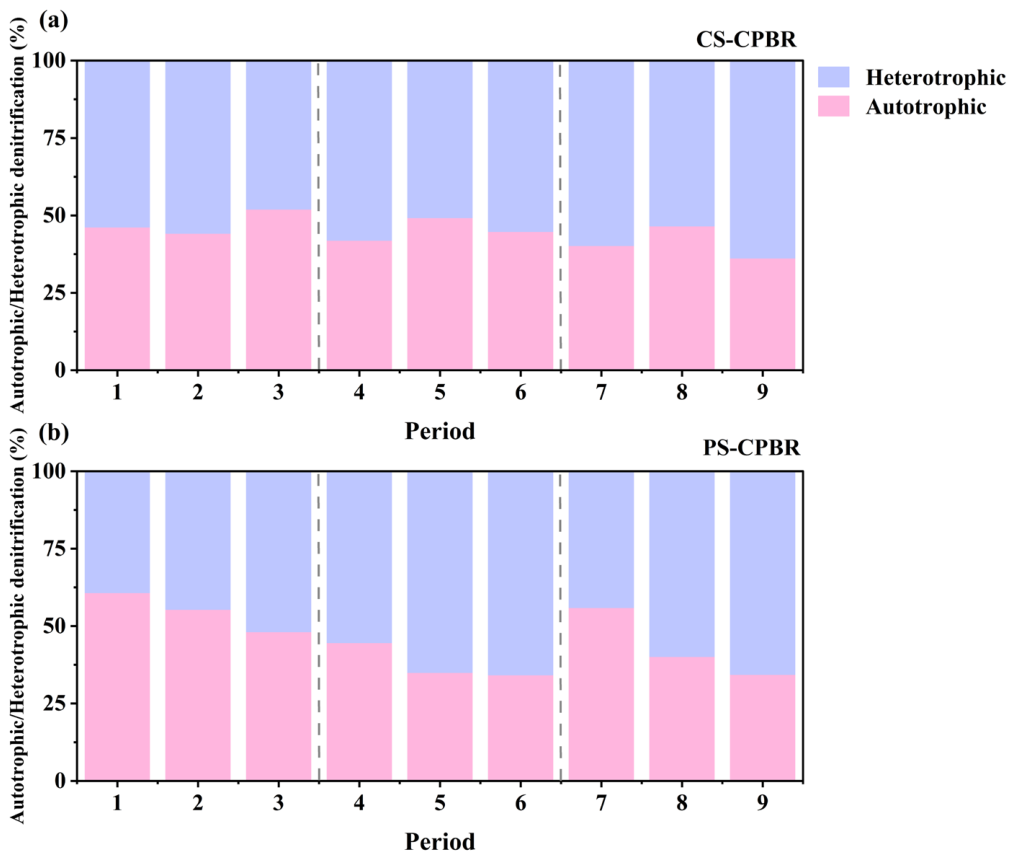
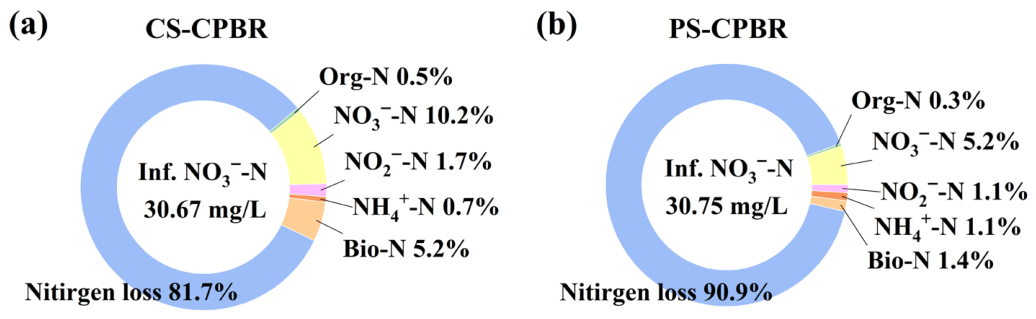
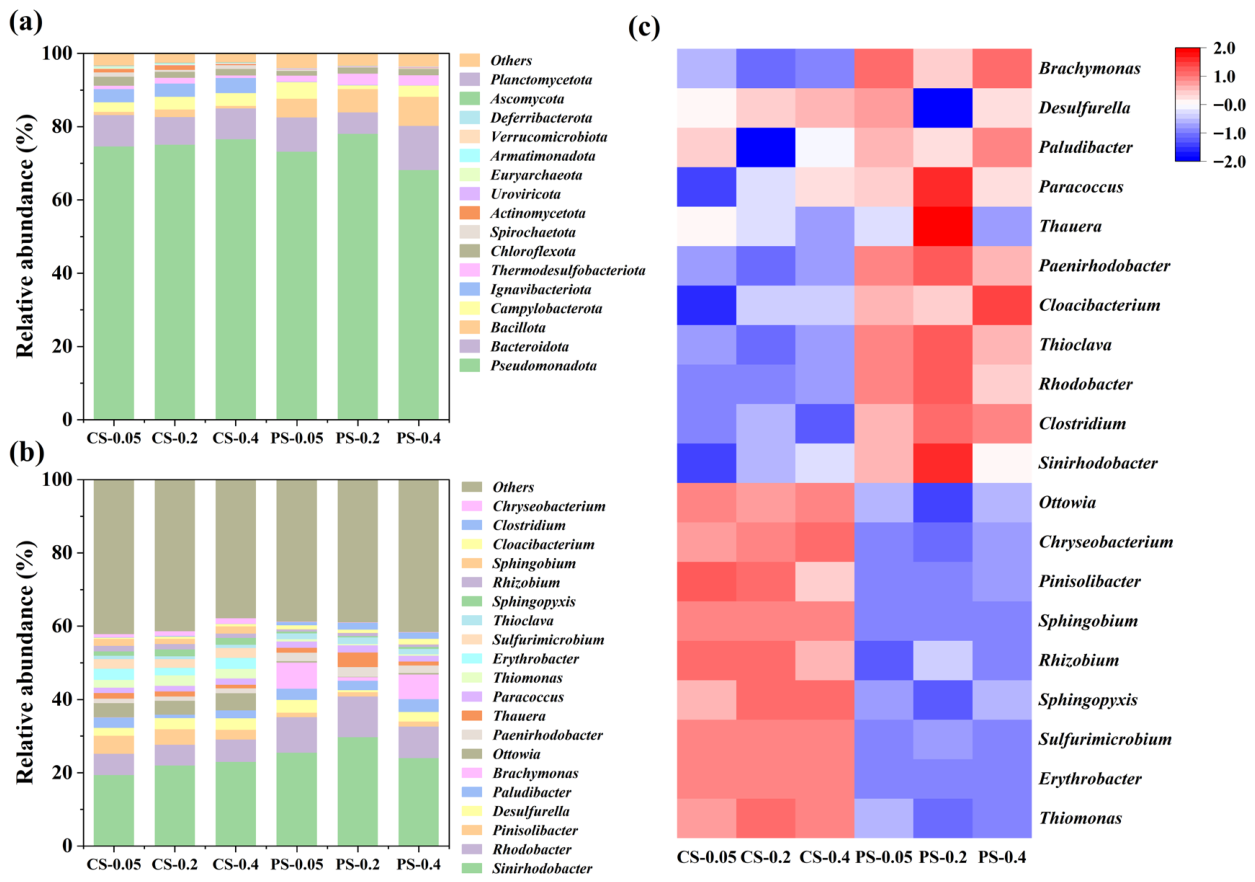
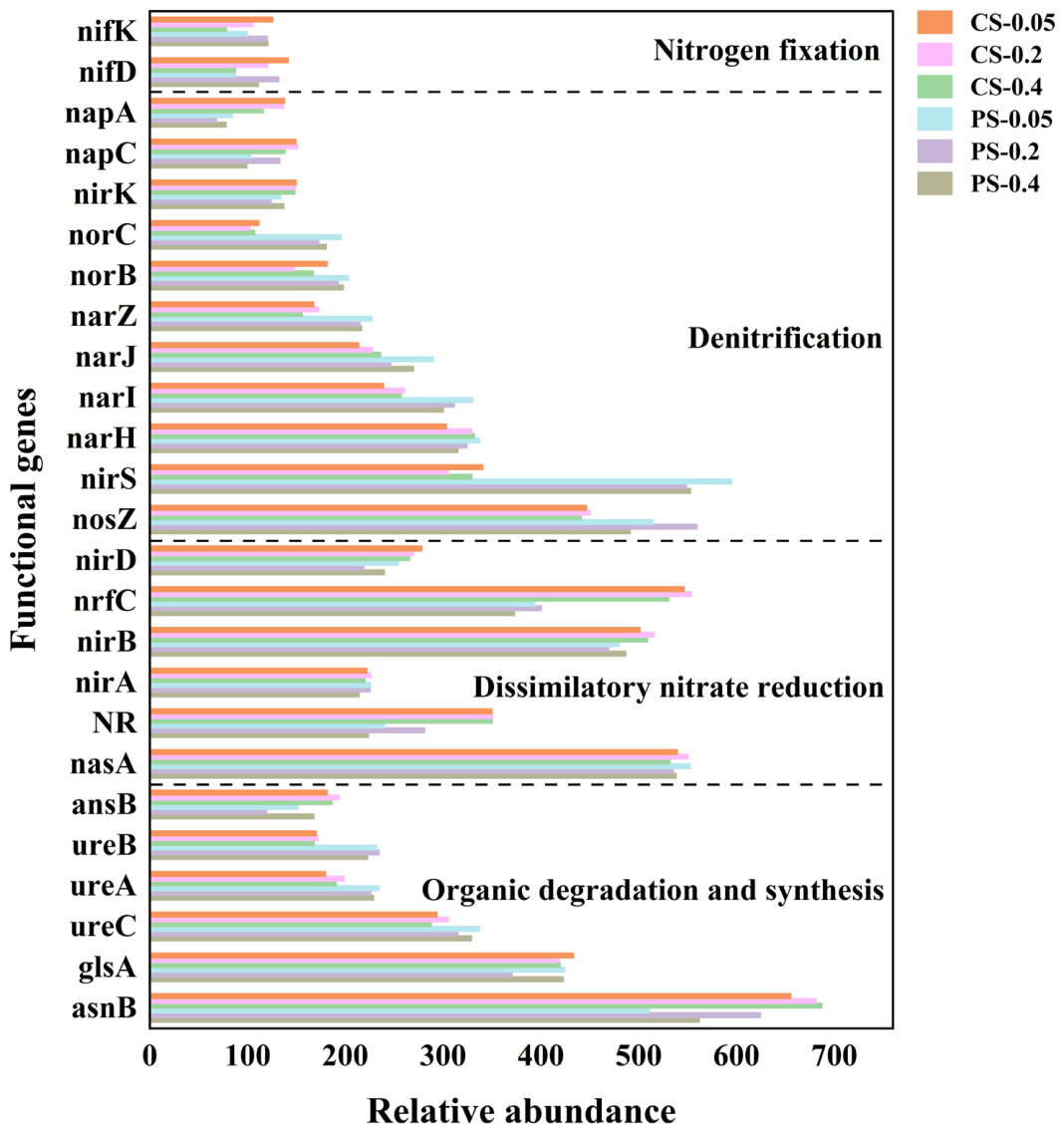
- The carbon source type governs its bioavailability, which in turn dictates the denitrification performance of the solid carbon source-sulfur system. Due to the higher bioavailability of PHBV, HD functioned as the dominant nitrogen removal pathway in the PS-CPBR. The PS-CPBR exhibited an enrichment of denitrifying genera (e.g., Sinirhodobacter, Rhodobacter, Brachymonas, etc.) and an upregulation of denitrification functional genes (nirS, norC, nosZ), resulting in better nitrogen removal capacity than the CS-CPBR.
- (3)
- NaHCO3 increased the relative abundance of carbon-hydrolyzing and sulfur-oxidizing bacteria to supply more electron donors for denitrification. NaHCO3 also promoted the secretion of EPS and enhanced microbial activity, which strengthened system stability and nitrogen removal efficiency.
- (4)
- Further studies using actual municipal secondary effluent and extended operational periods are warranted to validate the long-term performance of the CS-CPBR and the PS-CPBR and to assess their engineering feasibility in practical applications.
Supplementary Materials
Author Contributions
Funding
Institutional Review Board Statement
Informed Consent Statement
Data Availability Statement
Conflicts of Interest
Abbreviations
| CS-CPBR | Corncob-sulfur circulation packed-bed reactor |
| PS-CPBR | PHBV-sulfur circulation packed-bed reactor |
| TN | Total nitrogen |
| HRT | Hydraulic retention time |
| COD | Chemical oxygen demand |
| HD | Heterotrophic denitrification |
| SAD | Sulfur-based autotrophic denitrification |
| PLA | Polylactic acid |
| PCL | Polycaprolactone |
| PHBV | Polyhydroxybutyrate-co-valerate |
| PBS | Polybutylene succinate |
| MLSS | Mixed liquor suspended solids |
| MLVSS | Mixed liquor volatile suspended solids |
| SEM | Scanning electron microscopy |
| 3D-EEM | Three-dimensional excitation-emission matrix |
| DOM | Dissolved organic matter |
| EPS | Extracellular polymeric substances |
| PN | Protein |
| PS | Polysaccharide |
| EET | Extracellular electron transfer |
| DNRA | Dissimilatory nitrate reduction to ammonium |
References
- Xin, Z.; Yan, Z.; Peng, S.; Zhilei, B.; Zexuan, S.; Lijiang, R. The deep challenge of nitrate pollution in river water of China. Sci. Total Environ. 2021, 770, 144674. [Google Scholar] [CrossRef]
- Yang, X.-L.; Jiang, Q.; Song, H.-L.; Gu, T.-T.; Xia, M.-Q. Selection and application of agricultural wastes as solid carbon sources and biofilm carriers in MBR. J. Hazard. Mater. 2015, 283, 186–192. [Google Scholar] [CrossRef]
- Chen, J.; Zhang, W.; Li, J.; Zhang, Y.; Jin, W.; Zhan, X.; Yu, X.; Zeng, H. Sulfur-based electron donor driven autotrophic denitrification for nitrate removal: Mechanisms, performance, and nitrous oxide emission. Environ. Res. 2026, 299, 124329. [Google Scholar] [CrossRef]
- Wang, N.; Bai, S.; Zhang, Y.N.; Xu, D.; Zhang, Q.; Wang, M.; Zhong, Y. Sulfur autotrophic denitrification as a sustainable nitrogen removal technology to achieve carbon neutrality: Recent advances and optimization strategies. J. Water Process Eng. 2025, 70, 107154. [Google Scholar] [CrossRef]
- Li, R.; Wei, D.; Wang, W.; Zhang, Y. Pyrrhotite-sulfur autotrophic denitrification for deep and efficient nitrate and phosphate removal: Synergistic effects, secondary minerals and microbial community shifts. Bioresour. Technol. 2020, 308, 123302. [Google Scholar] [CrossRef]
- Lee, D.-U.; Lee, I.-S.; Choi, Y.-D.; Bae, J.-H. Effects of external carbon source and empty bed contact time on simultaneous heterotrophic and sulfur-utilizing autotrophic denitrification. Process Biochem. 2001, 36, 1215–1224. [Google Scholar] [CrossRef]
- Zhang, Y.; Wang, X.C.; Cheng, Z.; Li, Y.; Tang, J. Effect of fermentation liquid from food waste as a carbon source for enhancing denitrification in wastewater treatment. Chemosphere 2016, 144, 689–696. [Google Scholar] [CrossRef]
- Shuohui, S.; Xuejie, H.; Lei, H.; Xing, F.; Bin, S.; Jian, Z.; Qiang, H. Overlooked pathways of endogenous simultaneous nitrification and denitrification in anaerobic/aerobic/anoxic sequencing batch reactors with organic supplementation. Water Res. 2023, 230, 119493. [Google Scholar] [CrossRef]
- Yao, W.; Baorui, L.; Fei, K.; Youzhao, W.; Zhihong, Y.; Zhenning, L.; Tong, Z.; Zhijun, Z. Denitrification performance in packed-bed reactors using novel carbon-sulfur-based composite filters for treatment of synthetic wastewater and anaerobic ammonia oxidation effluent. Front. Microbiol. 2022, 13, 934441. [Google Scholar] [CrossRef]
- Hu, R.; Zheng, X.; Xin, J.; Sun, Z.; Zheng, T. Selective enhancement and verification of woody biomass digestibility as a denitrification carbon source. Bioresour. Technol. 2017, 244, 313–319. [Google Scholar] [CrossRef]
- Luji, Y.; Lulu, C.; Zhaoxu, P.; Tingmei, L.; Lu, L.; Xiaofang, L.; Pengyu, F. Carbon release mechanism of synthetic and agricultural solid carbon sources. Water Environ. J. 2019, 34, 121–130. [Google Scholar] [CrossRef]
- Yingjian, Z.; Haotian, L.; Pengyu, F.; Wangcheng, Z.; Tingmei, L.; Lulu, C.; Zhaoxu, P. Unlocking carbon potential in corncobs: Evaluating acidic, alkaline, and ultrasonic pretreatments. J. Environ. Eng. 2025, 151, 04025022. [Google Scholar] [CrossRef]
- Haishuang, W.; Nan, C.; Chuanping, F.; Yang, D. Insights into heterotrophic denitrification diversity in wastewater treatment systems: Progress and future prospects based on different carbon sources. Sci. Total Environ. 2021, 780, 146521. [Google Scholar] [CrossRef]
- Xu, Z.; Dai, X.; Chai, X. Biological denitrification using PHBV polymer as solid carbon source and biofilm carrier. Biochem. Eng. J. 2019, 146, 186–193. [Google Scholar] [CrossRef]
- Wencheng, M.; Dapeng, Z.; Dan, Z.; Jinxin, L.; Jingna, Z.; Peng, S.; Xiaotong, L.; Jiaju, D.; Shaobo, Z.; Xuan, D. Study of nitrogen removal efficiency of the filled bed reactors using alkali-treated corncobs-sulfur (mixotrophic) for treating the effluent from simulated urban wastewater plants. Bioresour. Technol. 2021, 349, 126630. [Google Scholar] [CrossRef]
- Pan, B.; Xu, L. Enhancement of sulfur autotrophic denitrification by solid-state carbon source PHBV for nitrate removal of aquaculture wastewater. Processes 2025, 13, 265. [Google Scholar] [CrossRef]
- Li, R.; Morrison, L.; Collins, G.; Li, A.; Zhan, X. Simultaneous nitrate and phosphate removal from wastewater lacking organic matter through microbial oxidation of pyrrhotite coupled to nitrate reduction. Water Res. 2016, 96, 32–41. [Google Scholar] [CrossRef]
- Federation, W.E.; Association, A. Standard Methods for the Examination of Water and Wastewater; American Public Health Association (APHA): Washington, DC, USA, 2005; p. 21. [Google Scholar]
- Liqing, K.; Tinglin, H.; Haihan, Z.; Gang, W.; Nan, L.; Chenxu, W.; Linchao, L. Mix-cultured aerobic denitrifying bacterial communities reduce nitrate: Novel insights in micro-polluted water treatment at lower temperature. Sci. Total Environ. 2021, 796, 148910. [Google Scholar] [CrossRef]
- Zhang, Q.; Ji, F.; Xu, X. Effects of physicochemical properties of poly- ε -caprolactone on nitrate removal efficiency during solid-phase denitrification. Chem. Eng. J. 2016, 283, 604–613. [Google Scholar] [CrossRef]
- Vidal, S.; Rocha, C.; Galvão, H. A comparison of organic and inorganic carbon controls over biological denitrification in aquaria. Chemosphere 2002, 48, 445–451. [Google Scholar] [CrossRef]
- Chen, W.; Westerhoff, P.; Leenheer, J.A.; Booksh, K. Fluorescence excitation-emission matrix regional integration to quantify spectra for dissolved organic matter. Environ. Sci. Technol. 2003, 37, 5701–5710. [Google Scholar] [CrossRef]
- Lu, J.Y.; Bu, Z.Q.; Lei, Y.Q.; Wang, D.; He, B.; Wang, J.; Huang, W.T. Facile microwave-assisted synthesis of Sb2O3-CuO nanocomposites for catalytic degradation of p-nitrophenol. J. Mol. Liq. 2024, 409, 125503. [Google Scholar] [CrossRef]
- Ge, S.; Peng, Y.; Wang, S.; Lu, C.; Cao, X.; Zhu, Y. Nitrite accumulation under constant temperature in anoxic denitrification process: The effects of carbon sources and COD/NO3N. Bioresour. Technol. 2012, 114, 137–143. [Google Scholar] [CrossRef]
- Poole, R. Nitric oxide and nitrosative stress tolerance in bacteria. Biochem. Soc. Trans. 2005, 33, 176–180. [Google Scholar] [CrossRef]
- Vo, T.K.Q.; Pham, N.H.; Nguyen, T.H.; Tran, D.T.; Nguyen, T.P. Nitrogen removal by sulfur-based carriers: Effect of physical properties of carriers on autotrophic denitrification. Eng. Technol. Sustain. Dev. 2023, 33, 17–23. [Google Scholar] [CrossRef]
- Mengyao, G.; Qian, C.; Jinren, N. Effect of NaCl on aerobic denitrification by strain Achromobacter sp. GAD-3. Appl. Microbiol. Biotechnol. 2017, 101, 5139–5147. [Google Scholar] [CrossRef]
- Zhou, J.; Lv, P.; He, B.; Wu, J.; Wang, G.; Ma, H.; Wang, Y.; Chen, G. Optimisation of the ethanol fermentation process using hydrothermal pretreatment of cellulose waste—Effect of fermentation pattern and strain. Molecules 2024, 29, 5266. [Google Scholar] [CrossRef]
- Algar, C.K.; Vallino, J.J. Predicting microbial nitrate reduction pathways in coastal sediments. Aquat. Microb. Ecol. 2014, 71, 223–238. [Google Scholar] [CrossRef]
- Sengupta, S.; Ergas, S.J.; Lopez-Luna, E. Investigation of solid-phase buffers for sulfur-oxidizing autotrophic denitrification. Water Environ. Res. 2007, 79, 2519–2526. [Google Scholar] [CrossRef]
- Yu, Z.; Jun, F.; Zhi, C.; Luquan, R. The effect of microstructure on mechanical properties of corn cob. Micron 2021, 146, 103070. [Google Scholar] [CrossRef]
- Zhang, G.; Wang, G.; Zhou, Y.; Zhu, D.Z.; Zhang, Y.; Zhang, T. Simultaneous use of nitrate and calcium peroxide to control sulfide and greenhouse gas emission in sewers. Sci. Total Environ. 2023, 855, 158913. [Google Scholar] [CrossRef]
- Silao, F.G.S.; Valeriano, V.D.; Uddström, E.; Falconer, E.; Ljungdahl, P.O. Diverse mechanisms control amino acid-dependent environmental alkalization by Candida albicans. Mol. Microbiol. 2024, 121, 696–716. [Google Scholar] [CrossRef]
- Chen, Z.; Jiang, Y.; Chang, Z.; Wang, J.; Song, X.; Huang, Z.; Chen, S.; Li, J. Denitrification characteristics and pathways of a facultative anaerobic denitrifying strain, Pseudomonas denitrificans G1. J. Biosci. Bioeng. 2020, 129, 715–722. [Google Scholar] [CrossRef]
- Lijie, Z.; Yongzhou, L.; Zhiyuan, S.; Yixin, J.; Wei-Qin, Z. Keystone bacteria in a thiosulfate-driven autotrophic denitrification microbial community. Chem. Eng. J. 2023, 470, 144321. [Google Scholar] [CrossRef]
- Cong, H.; Qian, L.; Zhi-Ling, L.; Xiao-dan, M.; Ya-Nan, H.; Nan-Qi, R.; Ai-Jie, W. Relationship between functional bacteria in a denitrification desulfurization system under autotrophic, heterotrophic, and mixotrophic conditions. Water Res. 2021, 188, 116526. [Google Scholar] [CrossRef]
- Bell, E.; Chen, J.; Richardson, W.D.L.; Fustic, M.; Hubert, C.R.J. Denitrification genotypes of endospore-forming Bacillota. ISME Commun. 2024, 4, ycae107. [Google Scholar] [CrossRef]
- Li, L.; Dong, Y.; Qian, G.; Hu, X.; Ye, L. Performance and microbial community analysis of bio-electrocoagulation on simultaneous nitrification and denitrification in submerged membrane bioreactor at limited dissolved oxygen. Bioresour. Technol. 2018, 258, 168–176. [Google Scholar] [CrossRef]
- Shao, B.; Xie, Y.-G.; Zhang, L.; Ruan, Y.; Liang, B.; Zhang, R.; Xu, X.; Wang, W.; Lin, Z.; Pei, X. Versatile nitrate-respiring heterotrophs are previously concealed contributors to sulfur cycle. Nat. Commun. 2025, 16, 1202. [Google Scholar] [CrossRef]
- Leta, S.; Assefa, F.; Dalhammar, G. Enhancing biological nitrogen removal from tannery effluent by using the efficient Brachymonas denitrificans in pilot plant operations. World J. Microbiol. Biotechnol. 2005, 21, 545–552. [Google Scholar] [CrossRef]
- Liu, Q.M.; Kim, S.B.; Yoon, J.-H.; Joh, K.; Seong, C.-N.; Jeon, C.O.; Kim, M.K.; Im, W.-T. Description of 42 unrecorded bacterial species in Korea, belonging to the class Alphaproteobacteria. J. Species Res. 2019, 8, 351–364. [Google Scholar]
- Nam, J.-H.; Kang, S.-H.; Unno, T.; Lee, D.-H. Complete genome sequence of Ottowia sp. SB7-C50, a heterotrophic sulfur-oxidizing bacterium isolated from a wastewater treatment system. Microbiol. Soc. Korea 2023, 59, 350–352. [Google Scholar]
- Hisaya, K.; Mamoru, K.; Kazuhiro, U.; Manabu, F. Sulfurimicrobium lacus gen. nov., sp. nov., a sulfur oxidizer isolated from lake water, and review of the family Sulfuricellaceae to show that it is not a later synonym of Gallionellaceae. Arch. Microbiol. 2020, 203, 317–323. [Google Scholar] [CrossRef] [PubMed]
- Vésteinsdóttir, H.; Reynisdóttir, D.B.; Örlygsson, J. Thiomonas islandica sp. nov., a moderately thermophilic, hydrogen- and sulfur-oxidizing betaproteobacterium isolated from a hot spring. Int. J. Syst. Evol. Microbiol. 2011, 61, 132–137. [Google Scholar] [CrossRef] [PubMed][Green Version]
- Sorokin, D.Y.; Tourova, T.P.; Spiridonova, E.M.; Rainey, F.A.; Muyzer, G. Thioclava pacifica gen. nov., sp. nov., a novel facultatively autotrophic, marine, sulfur-oxidizing bacterium from a near-shore sulfidic hydrothermal area. Int. J. Syst. Evol. Microbiol. 2005, 55, 1069–1075. [Google Scholar] [CrossRef]
- Qiao, Z.; Sun, R.; Wu, Y.; Hu, S.; Liu, X.; Chan, J.; Mi, X. Characteristics and metabolic pathway of the bacteria for heterotrophic nitrification and aerobic denitrification in aquatic ecosystems. Environ. Res. 2020, 191, 110069. [Google Scholar] [CrossRef] [PubMed]
- Monika, S.; Himani, K.; Narain, S.D.; Krishan, N.R. The genus Sphingopyxis: Systematics, ecology, and bioremediation potential—A review. J. Environ. Manag. 2020, 280, 111744. [Google Scholar] [CrossRef]
- Hiis, E.G.; Vick, S.H.W.; Molstad, L.; Røsdal, K.; Jonassen, K.R.; Winiwarter, W.; Bakken, L.R. Unlocking bacterial potential to reduce farmland N2O emissions. Nature 2024, 630, 421–428. [Google Scholar] [CrossRef]
- Yan-Ling, Q.; Xiao-Zhu, K.; Xiao-Shuang, S.; Xian-Zheng, Y.; Rong-Bo, G. Paludibacter jiangxiensis sp. nov., a strictly anaerobic, propionate-producing bacterium isolated from rice paddy field. Arch. Microbiol. 2014, 196, 149–155. [Google Scholar] [CrossRef]
- Zhang, M.; Zhang, Y.; Yao, Q.; Hu, Y.; Zhu, H. Dual-functionality of Thauera sp. JM12B12: Aerobic denitrification and bioflocculation for nitrogen and suspended particles removal at low carbon-to-nitrogen ratios. Front. Microbiol. 2025, 16, 1730924. [Google Scholar] [CrossRef]
- Li, D.; Liu, C.-M.; Luo, R.; Sadakane, K.; Lam, T.-W. MEGAHIT: An ultra-fast single-node solution for large and complex metagenomics assembly via succinct de Bruijn graph. Bioinformatics 2015, 31, 1674–1676. [Google Scholar] [CrossRef]
- Xu, W.; Chen, Z.; Ba, Y.; Zhang, J.; Wang, W.; Li, Y.; Zhang, Q.; Song, J.; Liu, Y. Space heterogeneity of nitrogen removal functional genes, nitrogen transformation pathways and mechanisms in MEBR treating mariculture wastewater. Bioresour. Technol. 2025, 415, 131727. [Google Scholar] [CrossRef]
- Liu, H.; Chen, L.; Huang, F.; Wei, M.; Wang, J.; Liu, F. Differential effects of molecular charge changes in norfloxacin on groundwater denitrification. Expo. Health 2025, 17, 739–750. [Google Scholar] [CrossRef]
- Zhou, X.; Manna, B.; Lyu, B.; Singhal, N. Enhancing nosZ activity to reduce N2O emissions from biological wastewater treatment systems. bioRxiv 2024. [Google Scholar] [CrossRef]
- Raushel, F.M.; Thoden, J.B.; Holden, H.M. Enzymes with molecular tunnels. Acc. Chem. Res. 2003, 36, 539–548. [Google Scholar] [CrossRef]
- Wang, Z.; Wang, R.; Yuan, H.; Zhu, N. A novel strategy for high efficiency of anaerobic digestion of waste activated sludge by using a Fe-Cu microelectrolysis method: Performance, electron transfer, key enzymes and microbial community. Water Res. 2025, 287, 124322. [Google Scholar] [CrossRef] [PubMed]
- Rodionov, D.A.; Dubchak, I.L.; Arkin, A.P.; Alm, E.J.; Gelfand, M.S. Dissimilatory metabolism of nitrogen oxides in bacteria: Comparative reconstruction of transcriptional networks. PLoS Comput. Biol. 2005, 1, e55. [Google Scholar] [CrossRef] [PubMed]
- Roberts, K.L.; Kessler, A.J.; Grace, M.R.; Cook, P.L.M. Increased rates of dissimilatory nitrate reduction to ammonium (DNRA) under oxic conditions in a periodically hypoxic estuary. Geochim. Cosmochim. Acta 2014, 133, 313–324. [Google Scholar] [CrossRef]
- Wang, F.; Zhang, J.; Hu, J.; Wang, H.; Zeng, Y.; Wang, Y.; Huang, P.; Deng, H.; Dahlgren, R.A.; Gao, H. Simultaneous suppression of As mobilization and N2O emission from NH4+/As-rich paddy soils by combined nitrate and birnessite amendment. J. Hazard. Mater. 2024, 465, 133451. [Google Scholar] [CrossRef]
- Li, L.; Liu, Y.; Gui, X.; Zhou, B.; Xing, Z.; Ke, X.; Yuan, J.; Zhao, T. Size-dependent regulation of iron transport and nitrogen metabolism by nanoscale zero-valent iron in heterotrophic nitrifying–aerobic denitrifying bacteria. Bioresour. Technol. 2026, 449, 134383. [Google Scholar] [CrossRef]
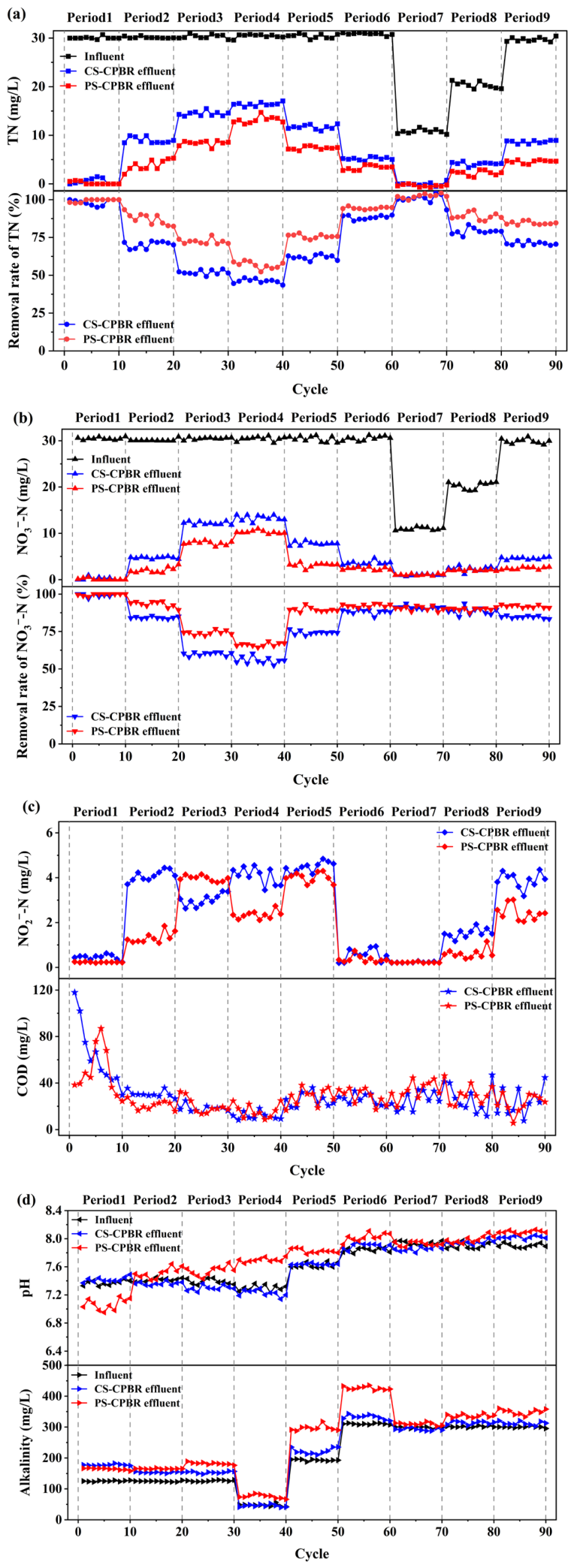

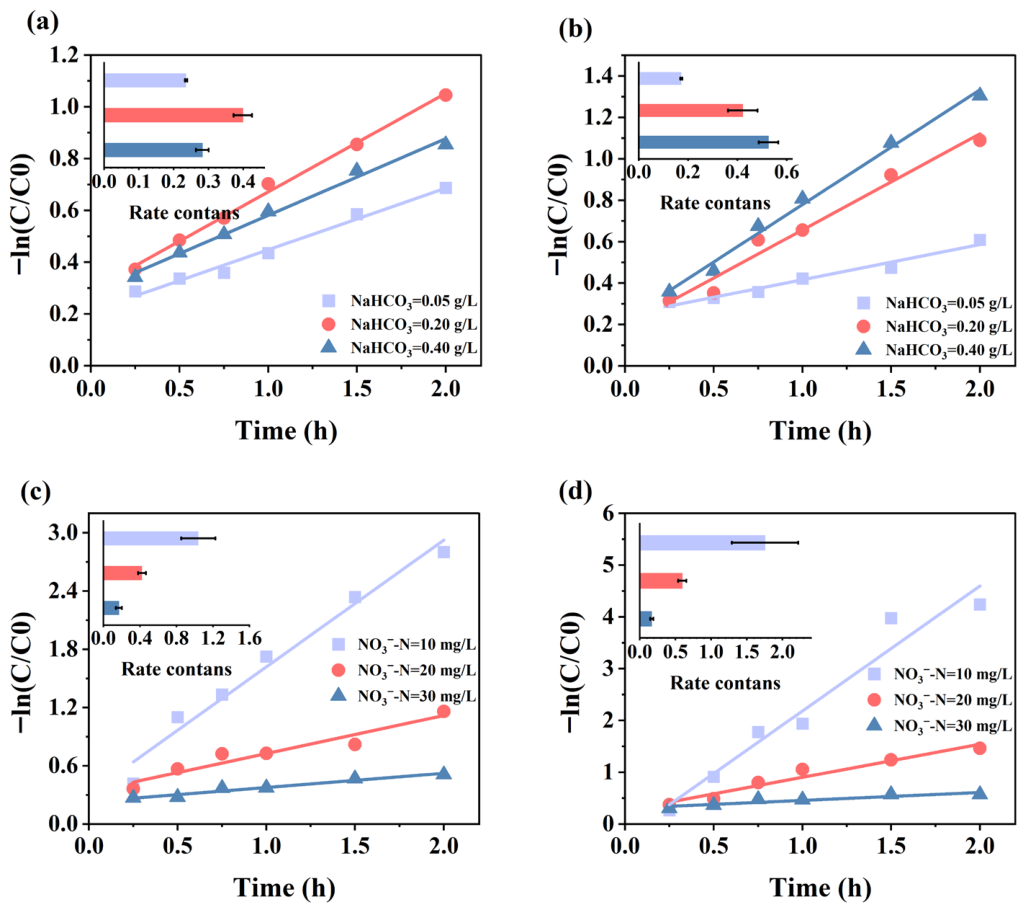



| Period | 1 | 2 | 3 | 4 | 5 | 6 | 7 | 8 | 9 |
|---|---|---|---|---|---|---|---|---|---|
| Cycle | 1–10 | 11–20 | 21–30 | 31–40 | 41–50 | 51–60 | 61–70 | 71–80 | 81–90 |
| HRT (h) | 4 | 2 | 1 | 2 | 2 | 2 | 2 | 2 | 2 |
| NaHCO3 (g/L) | 0.1 | 0.1 | 0.1 | 0.05 | 0.2 | 0.4 | 0.4 | 0.4 | 0.4 |
| NO3−-N (mg/L) | 30 | 30 | 30 | 30 | 30 | 30 | 10 | 20 | 30 |
| Period | 1 | 2 | 3 | 4 | 5 | 6 | 7 | 8 | 9 |
|---|---|---|---|---|---|---|---|---|---|
| CS-CPBR | 1.72 | 1.14 | 1.50 | −0.11 | 1.30 | 0.78 | −0.58 | 0.70 | 0.48 |
| PS-CPBR | 1.28 | 1.44 | 2.48 | 1.41 | 3.80 | 4.10 | 1.16 | 1.90 | 1.78 |
Disclaimer/Publisher’s Note: The statements, opinions and data contained in all publications are solely those of the individual author(s) and contributor(s) and not of MDPI and/or the editor(s). MDPI and/or the editor(s) disclaim responsibility for any injury to people or property resulting from any ideas, methods, instructions or products referred to in the content. |
© 2026 by the authors. Licensee MDPI, Basel, Switzerland. This article is an open access article distributed under the terms and conditions of the Creative Commons Attribution (CC BY) license.
Share and Cite
Gao, Y.; Hu, Y.; Liang, D.; Cheng, J.; Zhu, X.; Wang, G.; Xie, J. Comparison of Denitrification Performance and Regulation Strategies of Corncob/PHBV and Sulfur in Circulation Packed-Bed Reactor. Sustainability 2026, 18, 4836. https://doi.org/10.3390/su18104836
Gao Y, Hu Y, Liang D, Cheng J, Zhu X, Wang G, Xie J. Comparison of Denitrification Performance and Regulation Strategies of Corncob/PHBV and Sulfur in Circulation Packed-Bed Reactor. Sustainability. 2026; 18(10):4836. https://doi.org/10.3390/su18104836
Chicago/Turabian StyleGao, Yumeng, Yongyou Hu, Donghui Liang, Jianhua Cheng, Xiaoqiang Zhu, Guobin Wang, and Jieyun Xie. 2026. "Comparison of Denitrification Performance and Regulation Strategies of Corncob/PHBV and Sulfur in Circulation Packed-Bed Reactor" Sustainability 18, no. 10: 4836. https://doi.org/10.3390/su18104836
APA StyleGao, Y., Hu, Y., Liang, D., Cheng, J., Zhu, X., Wang, G., & Xie, J. (2026). Comparison of Denitrification Performance and Regulation Strategies of Corncob/PHBV and Sulfur in Circulation Packed-Bed Reactor. Sustainability, 18(10), 4836. https://doi.org/10.3390/su18104836