Article

Real-Time Dynamic Control of Nitrification and Denitrification in an Intermittently Aerated Activated Sludge System for Enhanced Nitrogen Removal and Energy Efficiency: Toward Sustainable Operation


by
Konstantinos Azis
*,
Spyridon Ntougias
and
Paraschos Melidis
*
Laboratory of Wastewater Management and Treatment Technologies, Department of Environmental Engineering, Democritus University of Thrace, Vas. Sofias 12, 67132 Xanthi, Greece
*
Authors to whom correspondence should be addressed.
Sustainability 2025, 17(22), 10417; https://doi.org/10.3390/su172210417
Submission received: 12 September 2025 / Revised: 15 October 2025 / Accepted: 17 November 2025 / Published: 20 November 2025

Abstract

Advanced control systems have been recently implemented in wastewater treatment plants (WWTPs) to optimize activated sludge processes, reduce operational costs, and decrease energy consumption, with the aim of moving toward sustainable operation. Real-time dynamic control of NH4+-N and NO3-N concentrations is important for the optimization of biological nitrogen removal (BNR) processes. This study presents an advanced control strategy based on continuous monitoring of NH4+-N and NO3-N concentrations at 22.8–25.1 °C to enhance nitrogen removal performance. Specifically, the control performance of an intermittently aerated and fed activated sludge (IAF-AS) system treated with domestic wastewater was evaluated using a controller under two different scenarios: (i) normal conditions at constant ammonium nitrogen loading rate (ALR) and (ii) varied conditions with a sudden increase in ALR. The effect of temperature changes on BNR efficiency was not analyzed. In both scenarios, the optimal duration ratio of the nitrification and denitrification phases was determined, which depended on the ALR. In the first scenario, at a constant ALR of 0.2 g L−1 d−1, the controller kept the duration of nitrification and denitrification at a low level, succeeding in complete nitrogen removal in less than 60 min. In the second scenario, when the ALR exceeded 0.3 g L−1 d−1, the controller dynamically extended these phases to achieve the effluent endpoints of 2 mg L−1 NH4+-N and 1 mg L−1 NO3-N. The results show that the use of real-time dynamic control is of great importance, as the nitrogen removal efficiency is maximized by minimizing the anoxic/aerobic duration ratio, thus significantly reducing the aeration energy requirement and operating cost.

1. Introduction

Advanced process control is needed for the optimization of activated sludge processes to save energy and maximize the carbon and nitrogen removal efficiency while meeting environmental discharge limits [1,2]. However, the implementation of advanced control methods is still constrained worldwide by the complexity of real-time data measurement, sensor maintenance requirements, and control strategy selection [3]. A well-designed control strategy should emphasize the technical equipment. Adequate algorithms, suitable software and hardware for computational simulations, automatic control systems, actuators, and online sensors are required [4].
Biological nitrogen removal (BNR) in activated sludge systems is governed by complex biochemical processes that require real-time monitoring and control [5,6,7]. Numerous techniques have been proposed for the online control of BNR processes, which remains a significant challenge in wastewater treatment [6,8,9]. Various control strategies have been applied for spatial monitoring of ammonium and nitrate concentrations in the aerobic and anoxic zones of conventional BNR systems [10,11,12]. Additionally, BNR processes can be achieved under intermittently aerated conditions within a single bioreactor [13,14,15,16]. Other studies have demonstrated that intermittent aeration can significantly reduce energy costs [17,18,19]. In many such cases, fixed ratios of anoxic to aerobic phase durations are usually applied. For instance, Song et al. [20] reported 25% energy saving in a sequencing batch reactor operating under intermittent aeration (consisting of 40/60 min non-aeration/aeration phases) with an NH4+-N removal efficiency of 96.4%. More recently, strategies have been developed to dynamically adjust the duration of aerobic and anoxic phases in real time [6]. Azis et al. [21] assessed the performance of a membrane bioreactor implementing intermittent aeration through the support of either pH and ORP sensors or NH4+-N and NO3-N sensors and demonstrated superior performance in real-time monitoring and control of nitrification and denitrification by applying a dynamic control strategy.
One of the most important challenges in wastewater treatment and a major motivation for process control is the occurrence of disturbances in WWTPs [22,23]. The operation and performance of the plant may be compromised due to external and/or internal disturbances. The most severe external disturbances are influent hydraulic load, organic matter, nutrient content, and other compositional parameters, which may vary daily or seasonally. In activated sludge systems, the duration of nitrification and denitrification phases can be regulated by dynamic process control on the basis of influent load [8]. The purpose of dynamic process control is to maintain the activated sludge systems in steady-state conditions by keeping control parameters at a constant level. To achieve this, advanced control strategies have been developed to support operators and engineers with practical control solutions in order to implement them at WWTPs [23,24]. Recent studies have demonstrated significant benefits of the implementation of advanced control strategies. A reduction of 15% in energy consumption and 12% in excess sludge production was reported by Ferrentino et al. [25] when applying dissolved oxygen (DO) and ammonium nitrogen control to the effluent of an activated sludge system.
Rule-based feedback controllers have proved effective in advanced process control applications since they accurately stabilize process variability. Online control systems using such approaches can successfully respond to load fluctuations by incorporating robust controllers with built-in appropriate control strategies and advanced ion-selective electrode (ISE) sensors [25,26,27,28,29]. Online ISE sensors provide critical information about the operational state of the plant and are among the most suitable tools for process control available to plant operators [30]. Indeed, in situ online sensors are generally more efficient and reliable for the real-time control of biological processes than traditional analyzers located at secondary settling tanks [30,31].
The objective of this study was to optimize nitrification and denitrification in an intermittently aerated and fed activated sludge (IAF-AS) system using a rule-based dynamic feedback control strategy integrated into a programmable logic controller (PLC). Nitrification and denitrification were controlled in real-time using ISE NH4+-N and NO3-N sensors, taking into account variations in influent nitrogen loads. The study was specifically aimed at the following: (1) to dynamically regulate the durations of aerobic and anoxic phases through a feedback control strategy in terms of NH4+-N loading rates, (2) to evaluate the dynamic control performance under constant and variable loading, and (3) to quantify energy consumption related to aeration through real-time dynamic control. In this study, advanced real-time dynamic control of aerobic and anoxic phases based on NH4+-N and NO3-N sensors was applied to optimize nitrification–denitrification processes. Dynamic adjustment of aerobic–anoxic phases through intermittent aeration led to improved ammonia oxidation and nitrate reduction within the shortest duration.

2. Materials and Methods

2.1. Experimental Apparatus

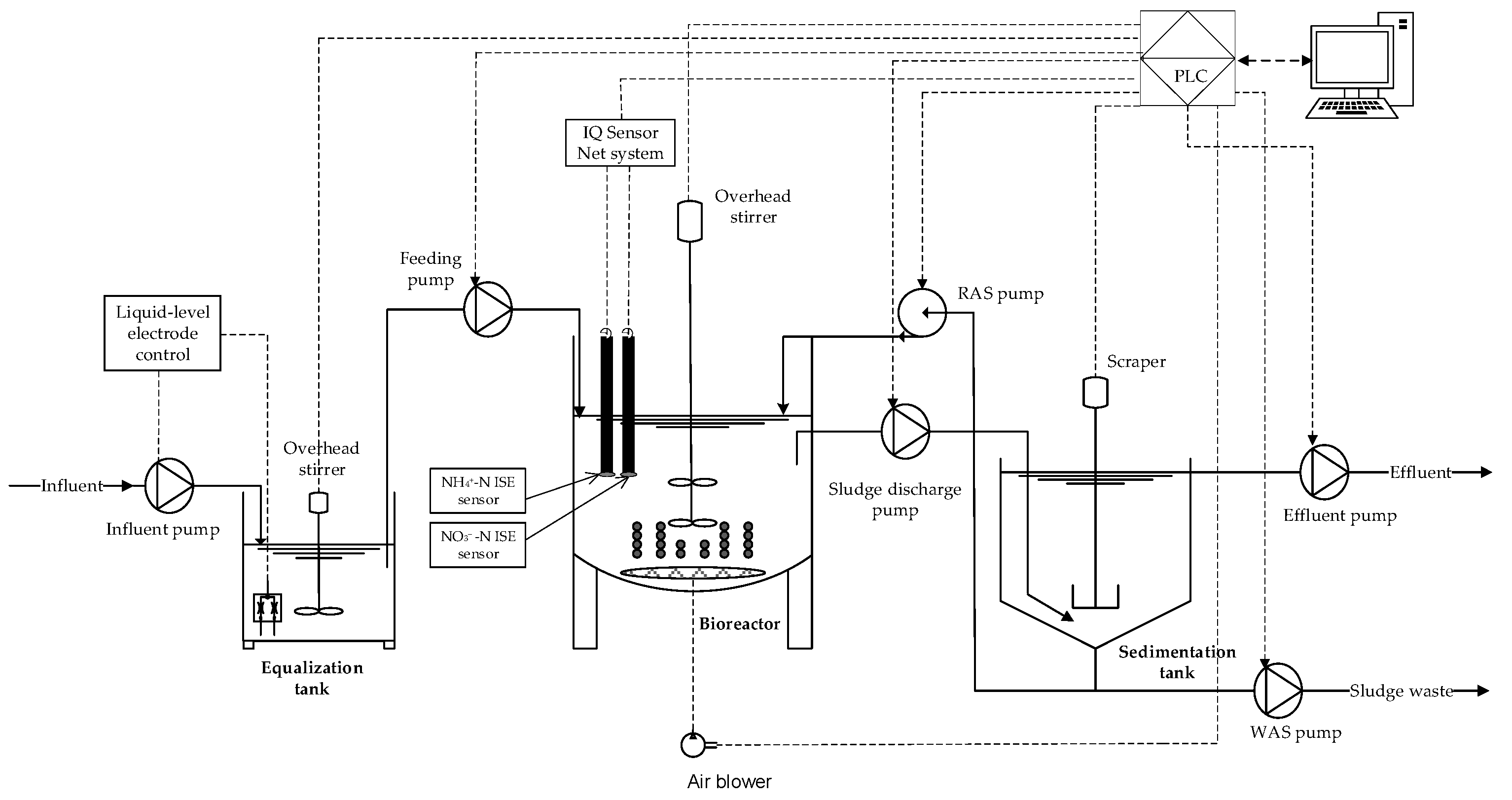
The present study was conducted in a pilot-scale intermittently aerated and fed activated sludge (IAF-AS) system receiving municipal wastewater from the University Campus in Xanthi, Greece, and operated for a period of 15 months. The biochemical processes were carried out in a single bioreactor, achieving complete biological nitrogen removal. The IAF-AS system (Figure 1) consisted of a stirred equalization tank (total volume, 5 L; working volume, 3 L), a 50 L bioreactor (working volume, 45 L), and a sedimentation tank (total volume, 10 L; working volume, 8 L). The bioreactor was equipped with an air blower of Q = 270 L h−1 and p = 0.12 kW. DO concentration was maintained at 3 mg L−1, unless specified otherwise. An overhead stirrer embedded with a rotation inverter was placed into the bioreactor to mix the incoming raw wastewater with the activated sludge. The sedimentation tank was a glass cylindrical tank with a downstream truncated cone design. The supernatant was discarded from the sedimentation tank at the end of each aerobic period. Sludge retention time was maintained at 10 ± 1 days through daily sludge wasting.
Wastewater (2–4 L) was fed at once into the bioreactor at the beginning of each anoxic phase within a short period of time (5 min) in order to promote higher heterotrophic denitrification rates by providing readily biodegradable COD. Daily load was determined by the frequency of wastewater feedings during a 24 h period. Under steady-state conditions, the number of feed events and daily loading rate depend on the activity of nitrifiers and heterotrophic denitrifying bacteria (HDB) because they affect the phase length of nitrification and denitrification. The ammonium nitrogen loading rate (ALR) was calculated as the incoming NH4+-N load (in g NH4+-N) per volume (in liters) and day, whereas the nitrate nitrogen loading rate (NLR) was determined as the NO3-N quantity formed (in g NO3-N) per volume (in liters) and day as the result of ammonia oxidation in the aerobic phase. Hydraulic retention time (HRT) was 32 ± 11 h, corresponding to an inflow rate of 36.9 ± 11.4 L d−1, while HRT decreased to 17 ± 5 h for double influent feed volume per cycle. Sewage characteristics are presented in Table 1. Physicochemical analysis of all parameters was conducted according to standard methods for the examination of water and wastewater [32].
Specific nitrification and denitrification rates were estimated in order to assess the dynamic behavior of biomass kinetics. Specific nitrification rates (SNRs) were calculated as g NH4+-N oxidized per gram of volatile suspended solids (VSS) per day, whereas specific denitrification rates (SDRs) were calculated as g NO3-N removed per gram of VSS per day. Mixed liquor suspended solids (MLSS) and mixed liquor volatile suspended solids (MLVSS) were determined according to the standard methods for the examination of water and wastewater [32].

2.2. Real-Time Control Strategy

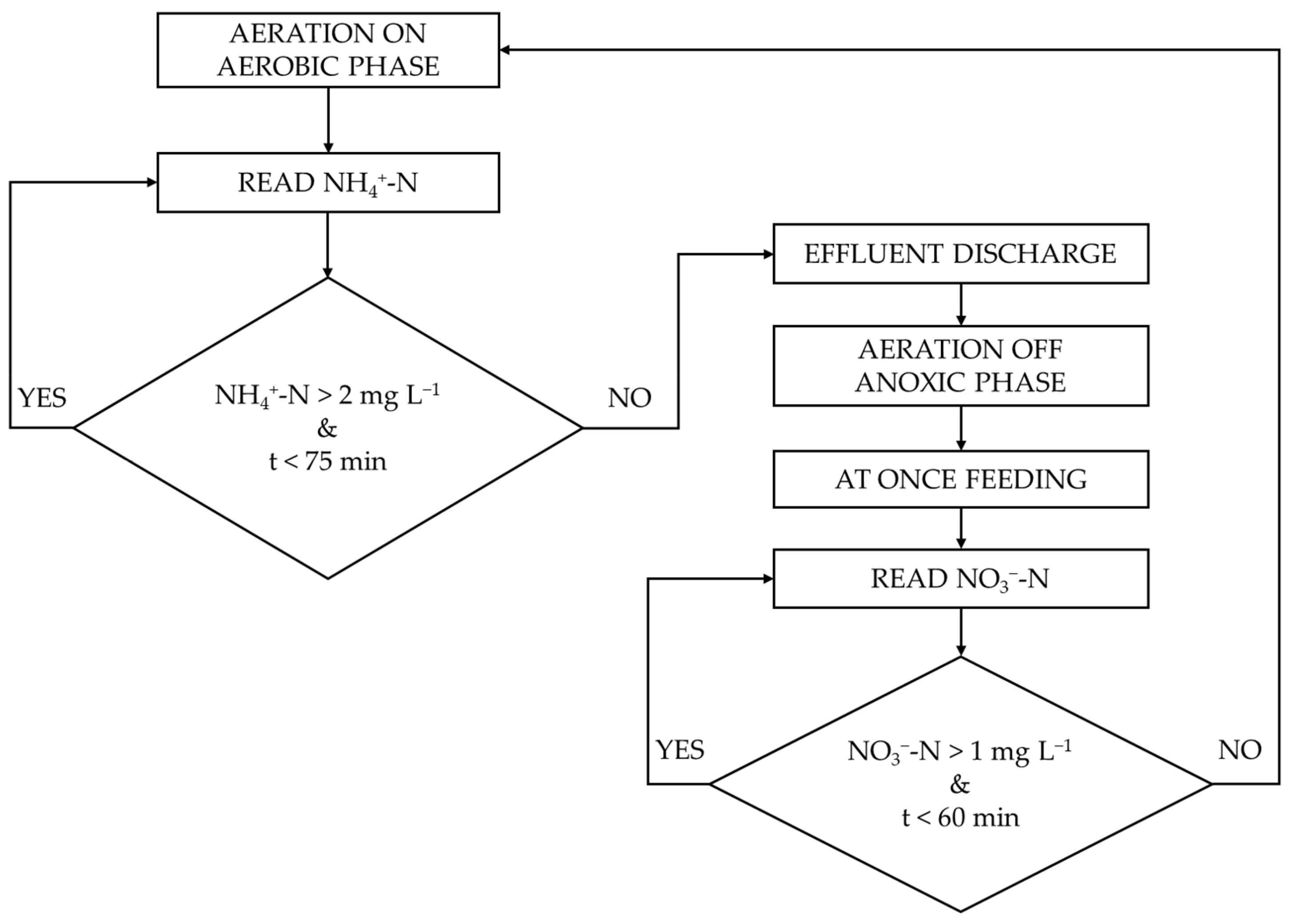
Real-time control of nitrification and denitrification processes was performed by obtaining online measurements of NH4+-N and NO3-N concentrations through the use of online in situ ion-selective electrode (ISE) sensors. The feedback controller compared the actual value of the IAF-AS system output with the reference input (desired value), determined the deviation, and produced a control signal resulting from this deviation. Rule-based feedback control strategies regarding the NH4+-N and NO3-N parameters were applied in order to test the real-time control of the intermittently aerated and fed process, and they were integrated into the PLC. Specifically, NH4+-N and NO3-N threshold limit values (endpoints) were set to regulate the alternating nitrification (aeration on) and denitrification (aeration off) processes, respectively. Further, upper time limits of 75 and 60 min were set in the controller as maximum durations for aerobic and anoxic phases, respectively. These practices are considered the basic rules in order to prevent excessive energy use in the case of high disturbances. After these time limits were reached, a new cyclic bioprocess was started, followed by wastewater addition. Another control practice adopted to reduce energy consumption was the overhead stirrer operation at fast and slow rpm during the nitrification and denitrification periods, respectively.
The anoxic phase was stopped when the NO3-N value reached the endpoint of 1 mg L−1, indicating denitrification completion. Afterwards, the air blower was switched on, and the aerobic phase was initiated. The aerobic phase duration was regulated by setting an endpoint of 2 mg NH4+-N L−1, which is the EU legislation limit for the discharged effluent of WWTPs (Directive (EU) 2024/3019). When the NH4+-N concentration reached the endpoint, a pump discharged the treated effluent. A high ammonium nitrogen loading rate increase would lead to a time-based extension of the air supply. After NH4+-N depletion, the air supply was switched off, and a new cyclic bioprocess began. Regarding organic carbon availability, an external carbon source, i.e., glycerol, was added at a COD/NO3-N ratio below 7. A flowchart of the control strategy is depicted in Figure 2.
This optimal control strategy offers the advantage of dynamic real-time control of the BNR process under variable state conditions by adjusting the nitrification and denitrification phase lengths.

2.3. Instrumentation and Software

The instrumentation comprised ion-selective electrode (ISE) sensors (AmmoLyt® Plus and NitraLyt® Plus 700 IQ sensors, WTW, Weilheim in Oberbayern, Bavaria, Germany), which were used for online measurement of NH4+-N and NO3-N concentrations and were connected to an IQ Sensor Net system (IQ2020XT). Both ISE sensors incorporated electrodes for online monitoring of the temperature. The ISE sensors’ cleaning frequency was once per month, whereas sensors were calibrated once at the beginning of the experimental period and at the beginning of each disturbance period when high ammonium nitrogen loading rate variations occurred. The DO concentration was measured online by an optical dissolved oxygen sensor (FDO® 700 IQ sensor, WTW, Weilheim in Oberbayern, Bavaria, Germany) using the luminescence technique. The output data from the sensors were recorded online once every minute in a database (.xls file). A programmable logic controller (PLC, FBs-20MC, FATEK Automation Corporation, Tamsui, New Taipei City, Taiwan) was used to control system machinery, including an overhead radial piston stirrer, an air blower, a scraper, and multistage peristaltic pumps. The PLC was programmed through the implementation of the WinProladder V3.21 software (FATEK Automation Corporation, Tamsui, New Taipei City, Taiwan) using ladder logic, while control strategies were developed using Indusoft Web Studio (IWS) V8.0 software (AVEVA Edge, Austin, TX, USA).

3. Results and Discussion

3.1. Performance of the IAF-AS System and Operating Conditions

The IAF-AS system performed efficiently throughout the experimental period. BOD5, COD, NH4+-N, and total Kjeldahl nitrogen (TKN) in the effluent were equal to 12.7 ± 4.6 mg L−1, 49.2 ± 14.6 mg L−1, 2.0 ± 1.0 mg L−1, and 8.3 ± 2.2 mg L−1, respectively, whereas the PO43−-P concentration was 0.72 ± 0.25 mg L−1. The implementation of the advanced process control resulted in removal efficiencies of 97, 100, and 91% for NH4+-N, NO3-N, and TKN, respectively. High nitrogen removal efficiencies were also reported in cases of WWTPs applying intermittent aeration through rule-based control strategies [33]. The COD/NO3-N ratio varied from 4 to 15, with an average of 7, implying that there was always enough biodegradable COD to achieve complete denitrification [20]. The MLSS and MLVSS in the bioreactor were retained at 3.1 ± 0.64 g L−1 and 2.64 ± 0.57 g L−1, respectively, and the temperature varied from 22.8 to 25.1 °C.

3.2. Dynamic Control of Nitrification and Denitrification Process by NH4+-N and NO3-N Sensors

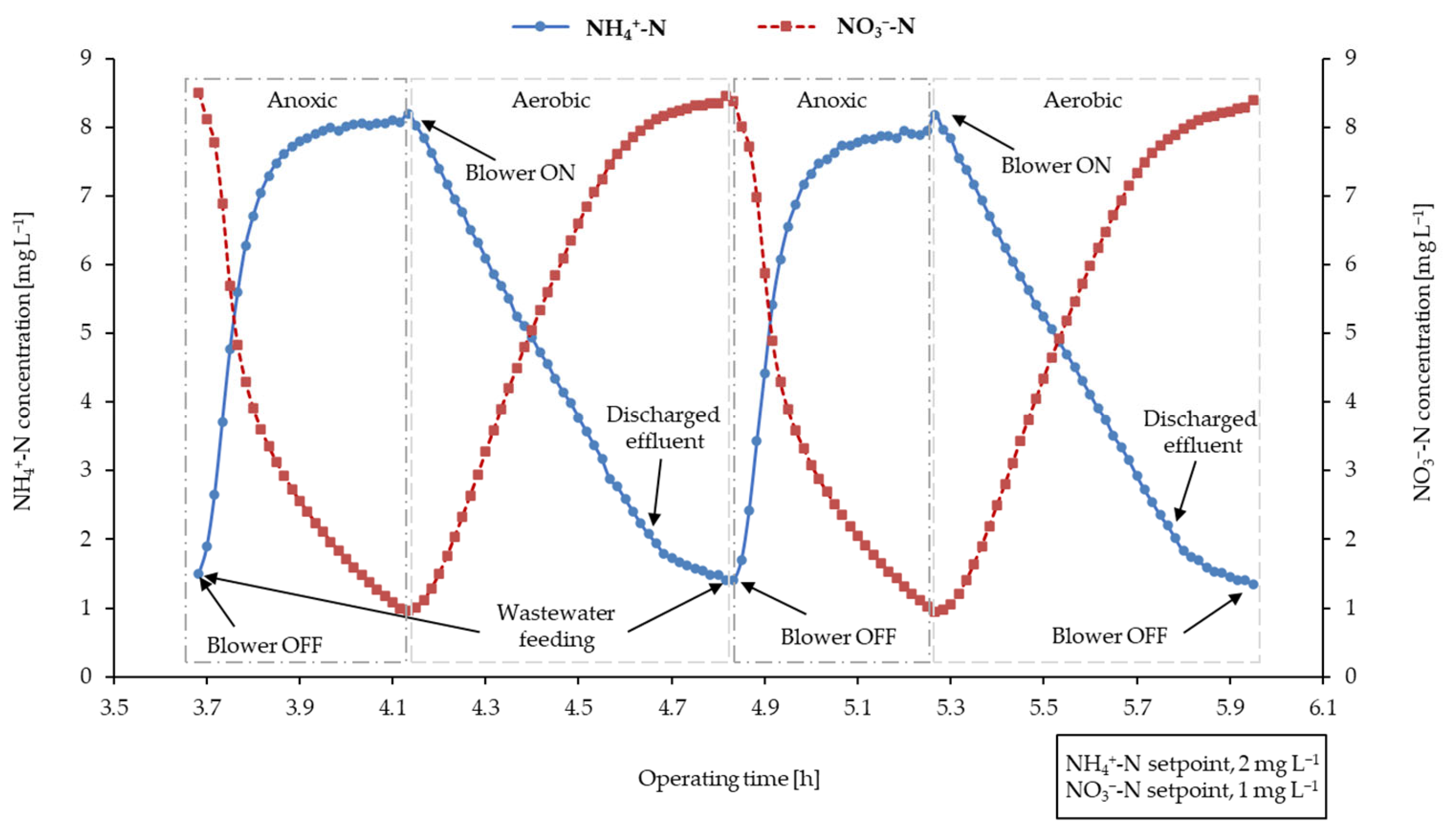
An example of dynamic process control through continuous NH4+-N and NO3-N monitoring during typical operating cycles is presented in Figure 3. Both aeration and non-aeration periods correspond to an operating cycle. The measurement accuracy and rapid response of the in situ ion-selective sensors reinforced the ability of the dynamic control strategy to achieve the best nitrogen removal efficiency. The excellent accuracy of ISE sensors for precise control strategy implementation is confirmed by Huang et al. [29].
Based on the nitrogen species profiles depicted in Figure 3, under steady-state conditions and for an influent NH4+-N concentration of 8.2 ± 0.3 mg L−1, 6.2 mg L−1 of NH4+-N was oxidized during the aerobic phase within 32 ± 2 min, reaching the setpoint (endpoint) of 2 mg L−1. A residual NH4+-N content (8%) of 0.6 mg L−1 was oxidized within 10 min until the end of the discharged effluent timeframe. Thereafter, at the start of the anoxic phase when the DO concentration was below 0.5 mg L−1, nitrate was used as the electron acceptor by heterotrophic denitrifying bacteria (HDB). The intermittently fed method resulted in a NO3-N removal of 7.5 ± 0.3 mg L−1 till a nether value of 1 mg L−1 within 27 ± 1 min, since the carbon source (COD/NO3-N rate, 6) was available to complete denitrification.
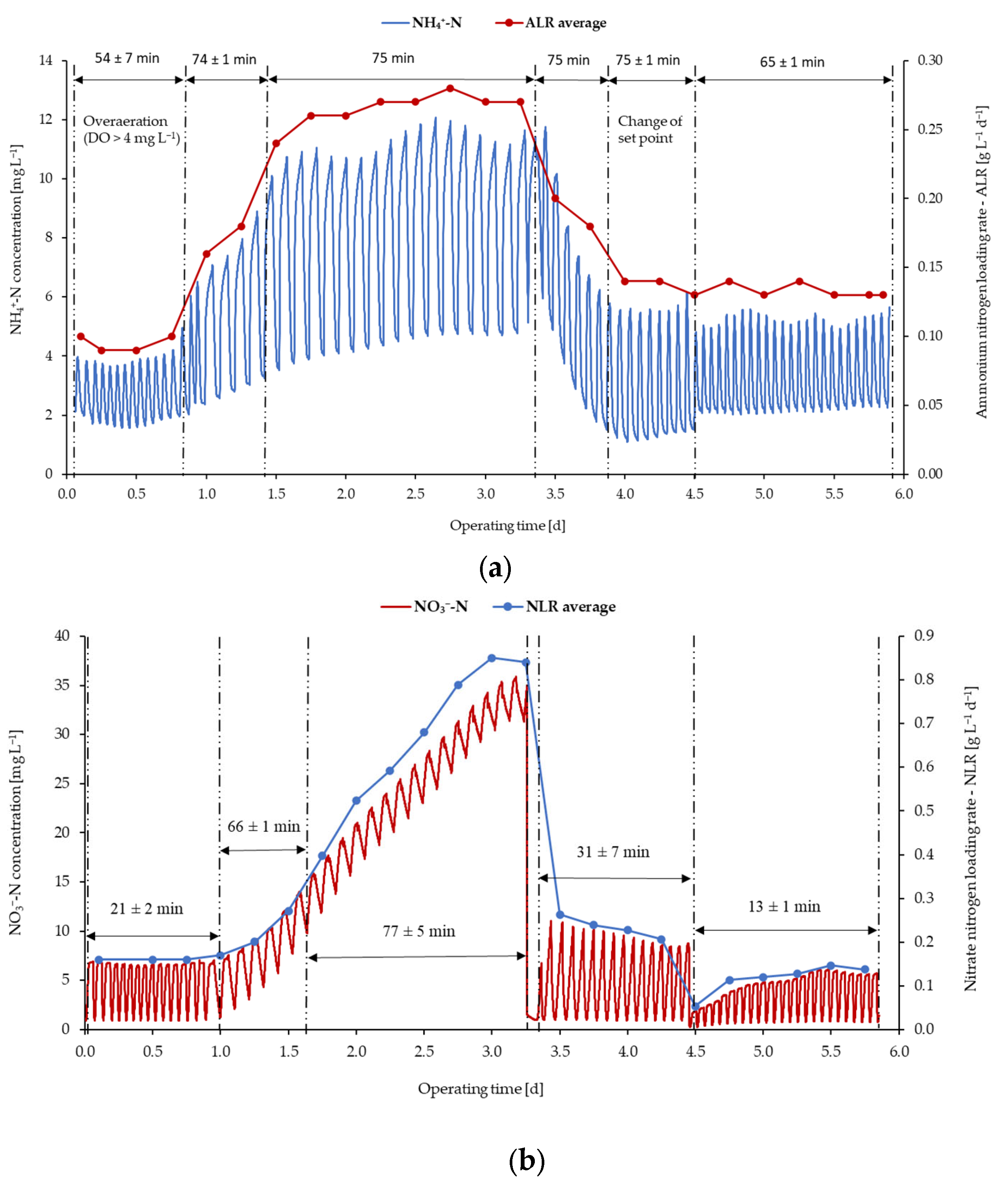
Dynamic control of the nitrification process through NH4+-N concentration profile under varying ammonium nitrogen loading rates is illustrated in Figure 4a for an extended period of 6 days. At the beginning of this period, the ammonium nitrogen loading rate (ALR) was 0.1 g L−1 d−1, corresponding to an initial NH4+-N concentration of 3.9 ± 0.14 mg L−1 measured within the mixed liquor. The NH4+-N concentration reached the 2 mg L−1 endpoint within 54 ± 7 min. An external disturbance (day 1) due to changes in wastewater characteristics was observed by online monitoring, increasing the ammonia value to 12.1 (11.3 ± 0.51) mg L−1. The dynamic control system aided in returning the activated sludge system to steady-state conditions by extending the aerobic (nitrification) phase duration up to the maximum time limit (75 min). However, the NH4+-N concentration remained elevated in the bioreactor due to the stress of ammonia-oxidizing bacteria (AOB) from the sudden NH4+-N loading increase. After adjustment of the nitrification phase length by the controller, AOB activity returned to high removal efficiencies after only 2 days, reaching the endpoint (setpoint) of 2 mg L−1. Between days 4.0 and 4.5, the controller setpoint was temporarily reduced from 2 to 1 mg L−1 to observe AOB behavior at lower NH4+-N concentrations. Results showed an extended nitrification phase duration to a maximum of 75 min due to ammonia depletion. Specifically, online data showed that nitrification lasted 26 ± 2 min with an endpoint of 2 mg L−1 set in the controller, while with a slight decrease to 1.0 mg L−1, the aerobic phase was extended by 50 min until the maximum duration limit for initial NH4+-N concentration of 5.6 ± 0.1 mg L−1 (ALR, 0.14 g L−1 d−1). In the following days, when the ALR value was 0.13–0.14 g L−1 d−1, the AOB oxidized the NH4+-N concentration of 5.3 ± 0.22 mg L−1 within 65 min.
Similar dynamic control effectiveness was observed for denitrification processes during the same experimental period by obtaining online measurements through the NO3-N sensor (Figure 4b). The NO3-N removal efficiency depends on the available COD during the anoxic phase [19]. The optimal ratio to achieve complete denitrification in conventional systems was reported to be 6.0–8.0 mg COD mg −1 NO3-N [20]. In our case, the beneficial ratio for successful denitrification was 7 mg COD mg−1 NO3-N. Under normal conditions, initial NO3-N concentrations were 6.68 ± 0.1, 9.36 ± 0.68 and 5.19 ± 0.72 mg L−1 for days 0–1, 3.5–4.5, and 4.5–6, reaching the endpoint of 1 mg NO3-N L−1 within 21 ± 2, 31 ± 7, and 13 ± 1 min, respectively, at the end of the anoxic phase, achieving complete denitrification.
During the disturbance period (days 1–3), denitrification performance decreased, with nitrate accumulation reaching 35.9 mg L−1, restricting the nitrogen removal rate due to insufficient organic carbon in the wastewater (COD/NO3-N < 4). From days 1 to 1.6, the controller automatically extended the anoxic phase length to 66 ± 1 min to aid the denitrification process and HDB activity. However, despite the maximum anoxic duration length (upper time limit in the controller) being increased by the controller to 77 ± 5 min, the HDB activity was at too low a level to eliminate nitrates. In this case, an external carbon source (glycerol, equivalent to 222 mg L−1 soluble COD) was added to normalize the disturbance and achieve complete denitrification. Following carbon addition (day 3), NO3-N removal improved significantly, achieving the 1 mg L−1 endpoint within 44 min. Subsequently, from day 3.5 to 4.5, NO3-N removal of 8.4 ± 0.69 mg L−1 within 31 ± 7 min was achieved, and between days 4.5 and 6, dynamic control led to complete denitrification within only 13 ± 1 min, demonstrating both the successful performance of the control strategy and normalization with reference to the initial system performance.
In comparison to intermittent aeration systems that implement time-based control, the real-time control strategy applied in this study showed the effective adaptability of the IAF-AS system to variations in nitrogen load. Wu et al. [34] stated that advanced monitoring and control technologies can reduce energy consumption and improve nitrogen removal efficiency. Moreover, Miao et al. [35] recorded effluent TN concentration below 2 mg/L during the implementation of an intermittent aeration strategy, whereas TN was above 5 mg/L during application of continuous aeration.

3.3. Nitrification and Denitrification Process Control Outcomes After Interventions

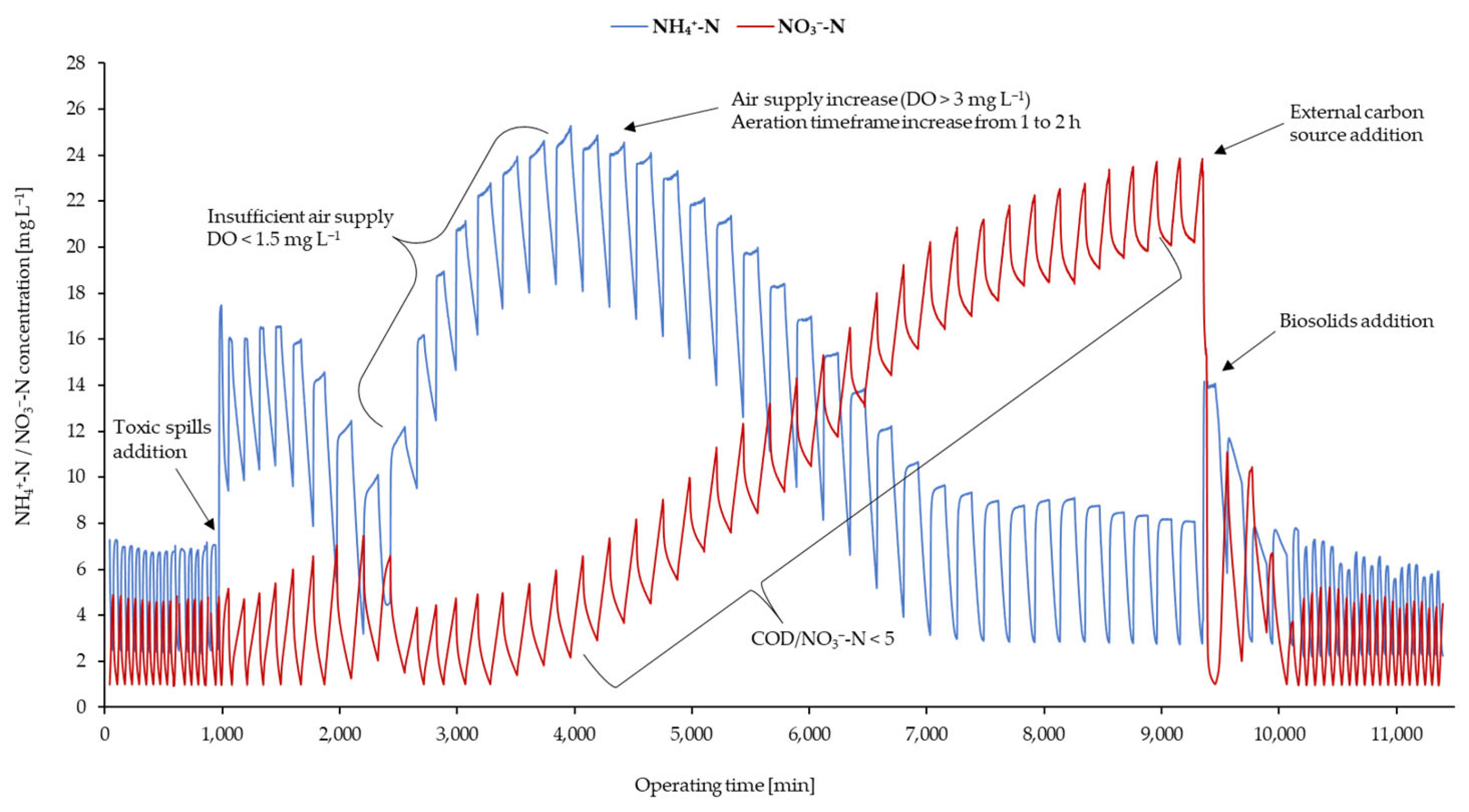
The potential of dynamic process control for the optimization of nitrogen removal is depicted in Figure 5. An external disturbance (toxic spill addition) had a significant effect on control performance, extending the process length due to NH4+-N concentration increase from 7.1 to 17.5 mg L−1. After the disturbance, the dynamic supervision control extended the nitrification phase length up to 92 ± 15 min to achieve the endpoint of 2 mg L−1.
Due to excess NH4+-N concentration and constant air-flow rate, the DO level was reduced below 1.5 mg L−1, a low value for AOB to oxidize NH4+-N over 18 mg L−1, resulting in NH4+-N accumulation. Two practices were employed (~day 3, equivalent to the 4320th minute) to solve this problem, as shown in Figure 5. The air supply was initially increased to obtain a DO concentration over 3 mg L−1 using a second blower. The second practice was to extend the duration of the aerobic phase from 1 to 2 h. After two days (corresponding to the 7200th minute), the AOB oxidized the excess ammonia, and the NH4+-N concentration reached the endpoint of 2 mg L−1.
Regarding denitrification, on ~day 2 (corresponding to the 2880th minute), a NO3-N upward trend was noted due to nitrate accumulation caused by unavailable carbon content (COD/NO3-N < 5). The maximum anoxic duration length was increased from 60 to 120 min; however, HDB could not consume the formed nitrates within the new permitted timeframe. Afterwards, biodegradable organic carbon (20 mL dense glycerol, equivalent to 222 mg L−1 soluble COD) was instantly added to reduce nitrates. Therefore, nitrates decreased from 23.9 mg L−1 to the endpoint of 1 mg L−1 in a short time of 108 min. On day 7, HDB returned to steady-state conditions with initial reaction times. At the same time, biosolids addition led to an NH4+-N concentration increase until 14 mg L−1, extending the reaction time of nitrification and denitrification. However, AOB and HDB removed the excess ammonia and nitrates within a few hours, reaching the endpoints of 2 and 1 mg L−1 for the NH4+-N and NO3-N concentrations, respectively.

3.4. Dynamic Nitrification and Denitrification Process Control After Sudden and Deliberate External Disturbance

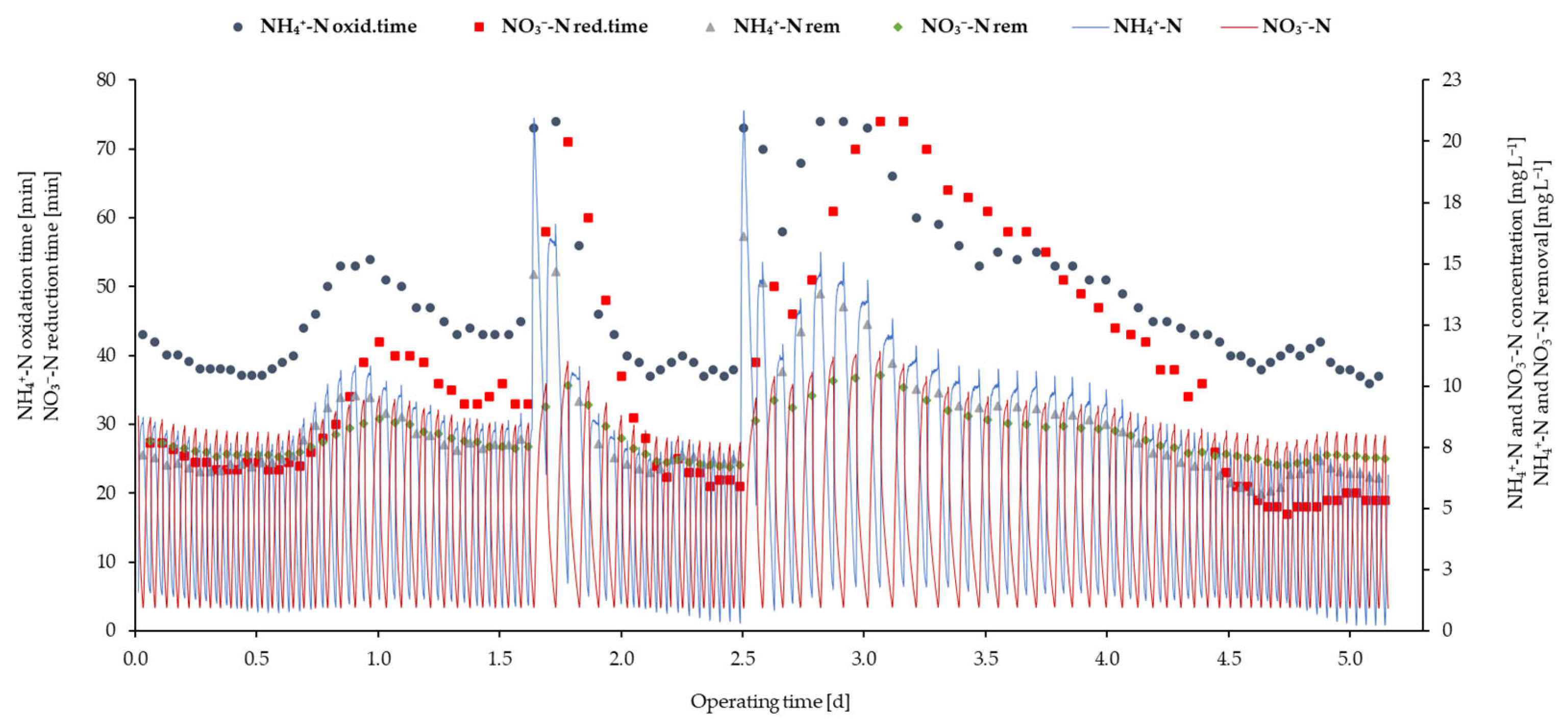
Most studies using real-time control strategies rely on indirect parameters such as ORP, OUR, DO, and pH, which become ineffective when influent loads fluctuate significantly. According to Kwon et al. [36], the direct monitoring of ammonia and nitrates in the bioreactor provides more effective control without requiring changes to automatic control strategies, even during substantial load variations, as confirmed in our results. As depicted in Figure 6, two experiments were conducted with external disturbances that suddenly increased the ALR to assess the effectiveness of real-time dynamic control of nitrification and denitrification. Specifically, the dynamic reaction and adaptation of nitrifying and denitrifying bacteria were estimated to increase NH4+-N concentration by 12.1 mg L−1 and 13.9 mg L−1.
Ammonium nitrogen loading rates vary from 0.03 to 0.1 g L−1 d−1 for municipal wastewater, according to Battistoni et al. [37]. In another study, a low ALR ranged from 0.01 to 0.08 g L−1 d−1, while a high ALR varied from 0.13 to 0.24 g L−1 d−1 when applying an alternating aerobic/anoxic process in three full-scale applications [38]. In this study, the ALR ranged from 0.18 to 0.26 g L−1 d−1 for a working volume of bioreactor equal to 45 L. The initial NH4+-N concentration in the mixed liquor varied from 7.5 to 10.9 mg L−1 (average, 8.8 ± 1.1 mg L−1) in the bioreactor, achieving complete NH4+-N removal below the desired endpoint of 2 mg L−1 (average, 1.15 ± 0.39 mg L−1). The respective nitrification time lasted from 38 to 48 min (average, 42 ± 3 min) for this NH4+-N concentration range. A subsequent ALR increase of 0.5 g L−1 d−1 (day 1.6) caused an NH4+-N concentration increase from 8.9 to 21 mg L−1. Ammonia-oxidizing bacteria (AOB) were unable to oxidize all the NH4+-N content during the first ΝH4+-Ν concentration increase (21 mg L−1). This occurred because the current population of AOB was not sufficient to oxidize the instantaneous high NH4+-N concentration. For this reason, a temporary increase in the NH4+-N output was observed. AOB were able to oxidize 14.6 mg L−1 NH4+-N within 73 min. Free ammonia concentration was less than 0.2 mg L−1, which did not affect the nitrite-oxidizing bacteria population (NOB), and the overall specific nitrification rate remained constant at 0.1 g NH4+-N g−1 VSS d−1 [39]. However, nitrifiers (AOB and NOB) adapted within a short time of three hours, returning to the initial steady-state conditions. Specifically, after only two operating cycles (day 2), 10.8 mg L−1 ΝH4+-Ν was oxidized to the endpoint within 53 min. In the following 10 h (between days 2 and 2.5), complete nitrification was achieved in 38 ± 1 min for 6.9 ± 0.22 mg L-1 NH4+-N oxidation, reaching an effluent value of 0.62 ± 0.22 mg L−1 at the end of aeration. This potential to achieve high NH4+-N removal in the shortest time, combined with quick biomass adaptation that lasted 20 h, led us to proceed with a further ALR increase of 0.51 g L−1 d−1 in order to investigate the biomass behavior. The instantaneous NH4+-N value increased from 7.4 to 21.3 mg L−1 during the feeding time in the anoxic phase. Thus, AOB oxidized 16.1 mg L−1 NH4+-N in the aerobic phase (day 2.5) at a nitrification phase length of 74 min. In the following cycle, 15.1 mg NH4+-N L−1 was fully oxidized, reaching the endpoint. During the reference period, the AOΒ adapted (within 13 h) to the second NH4+-N increase, achieving NH4+-N removal of 12.5 ± 1.38 mg L−1 (initial NH4+-N concentration, 14 ± 1.4 mg L−1). The NH4+-N oxidation time was 69 ± 6 min, and the biomass returned completely to initial conditions after two days (day 4). Figure 6 confirms biomass adaptation and nitrogen removal progress after NH4+-N increase. Between the third and fourth days, the NH4+-N removal was 9 ± 0.49 mg L−1 for an initial NH4+-N concentration range from 9.5 to 11.7 mg L−1 and an oxidation phase length of 54 ± 3 min. From days 4 to 5, the biomass returned to the initial steady-state conditions with NH4+-N removal of 6.5 ± 0.52 mg L−1. A very short oxidation time of 41 ± 3 min was achieved for an initial NH4+-N concentration of 7.4 ± 0.68 mg L−1, always reaching the endpoint of 2 mg L−1.
HDB, in the absence of dissolved oxygen, consumed the formed nitrates during the entire experimental period, reaching the endpoint of 1 mg L−1. As shown in Figure 6, the IAF-AS process and the excess carbon content (COD/NO3-N ratio, 13.7) led to complete denitrification, reaching the endpoint. Before the first experiment, NO3-N concentration varied from 8.06 to 8.84 mg L−1 (8.39 ± 0.23 mg L−1), and the denitrifying bacteria reduced the nitrates to nitrogen gas (Ν2) within only 25 ± 2 min. During midday hours, the NO3-N concentration increased to 9.29 ± 0.23 mg L−1, and the denitrification time was extended to 38 ± 4 min. Afterward, the first ALR increase of 0.5 g L−1 d−1 did not appear to affect the denitrifying bacteria, which converted all the nitrates (10.4 ± 0.5 mg L−1 NO3-N) to N2 within a reduction timeframe of 63 ± 7 min, with available biodegradable COD. Song et al. [20] proved that the ammonia oxidation rate decreased when the duration of the anoxic phase increased from 80 to 160 min, whereas the duration of the aerobic phase was stable at 60 min in an intermittently aerated sequencing batch reactor. This long anoxic stress duration affected the nitrification activity and led to a lower nitrification rate.
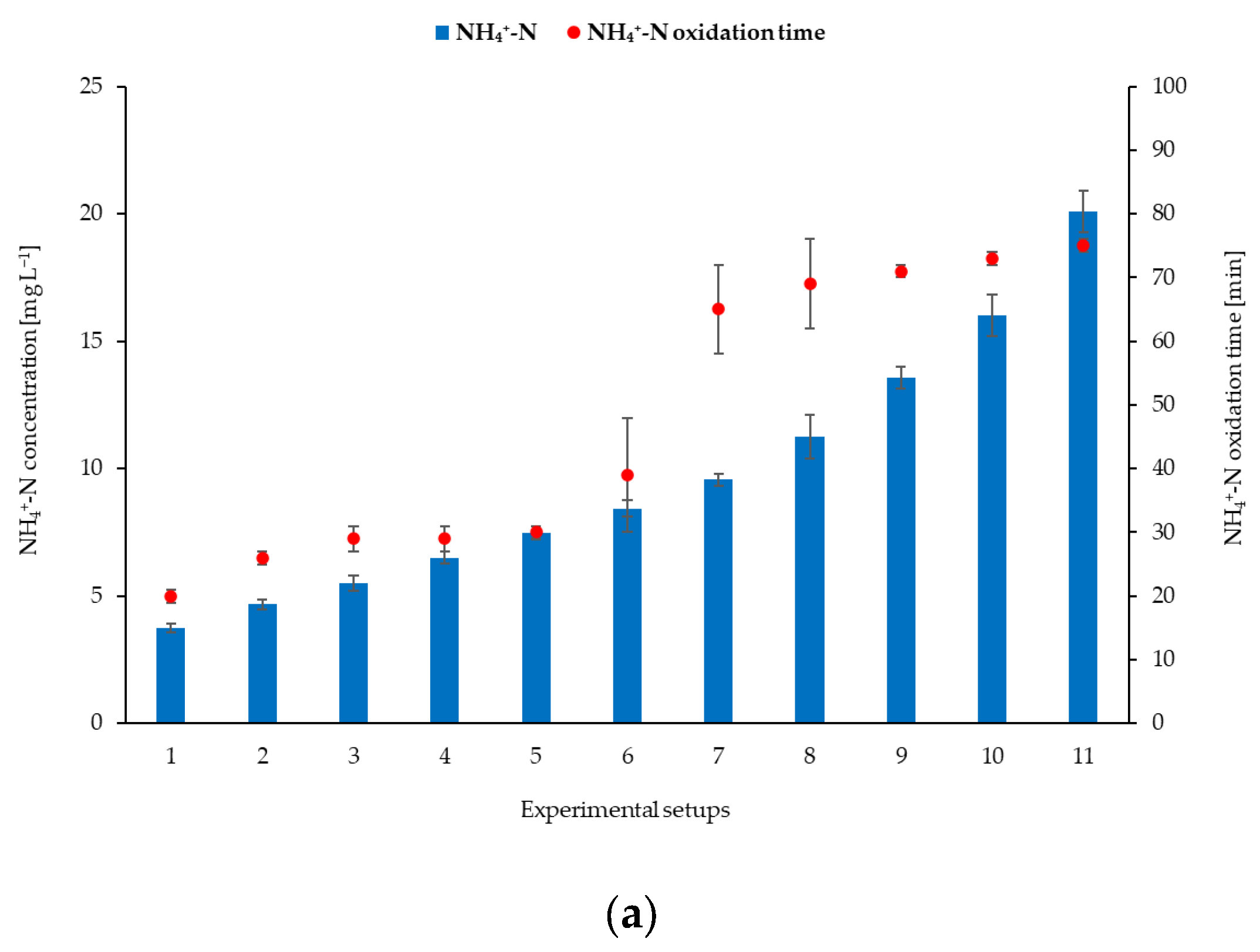
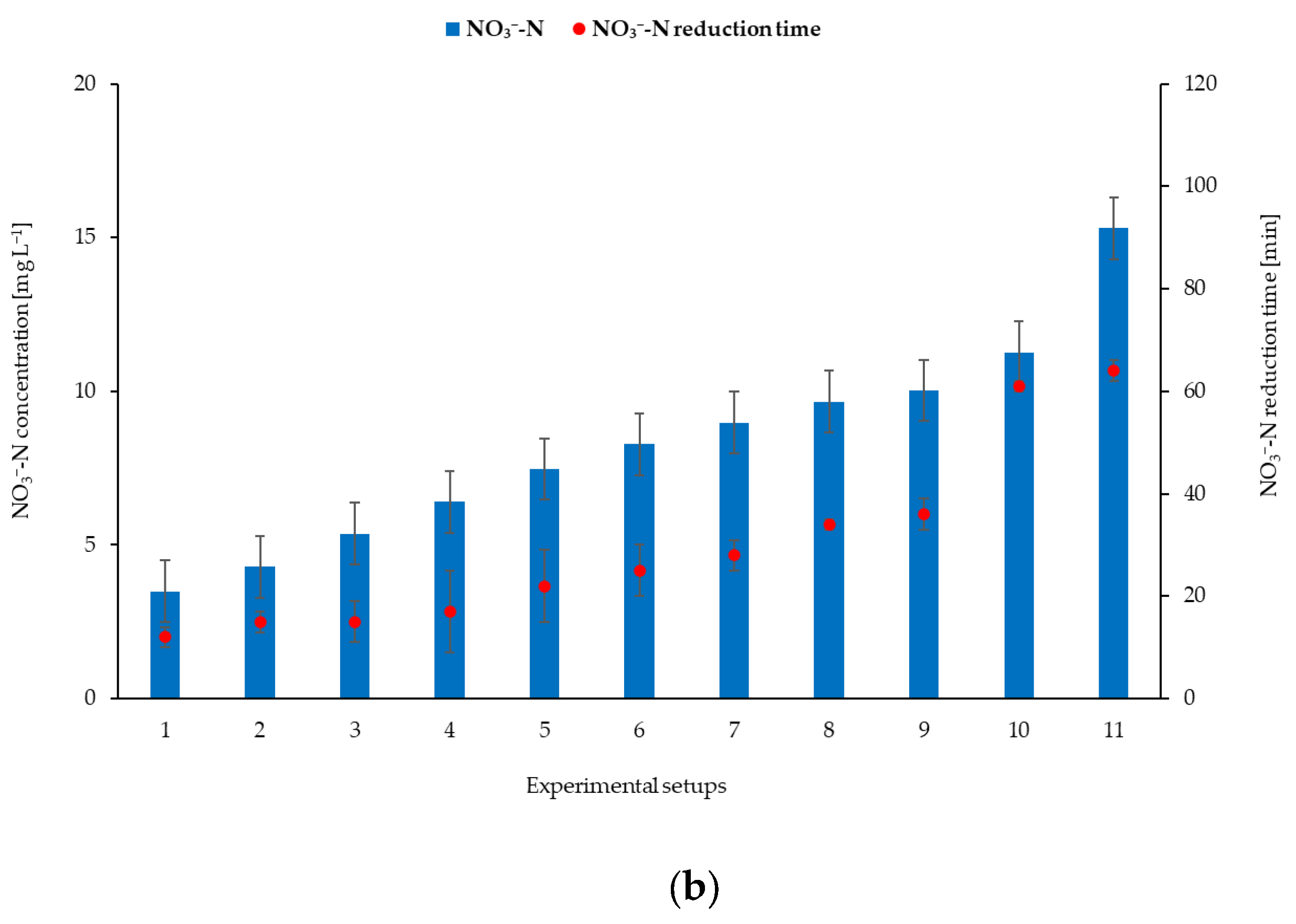
During the second experiment, the NO3-N concentration increased from 7.89 ± 0.24 mg L−1 to 11.1 ± 0.41 mg L−1, and the denitrification time was longer (70 ± 5 min) than in the previous experiment. However, from days 3 to 4, the biomass adapted, and the NO3-N concentration of 9.4 ± 0.29 mg L−1 was completely removed within a reduction time of 54 ± 8 min. Between days 4 and 5, the NO3-N reduction time was minimized, reaching the endpoint in a short time of 23 ± 8 min for NO3-N consumption of 7.14 ± 0.25 mg L−1 (initial NO3-N concentration, 8.1 ± 0.25 mg L−1). As depicted in Figure 7a, NH4+-N concentration up to 7.5 mg L−1 was oxidized within 27 ± 4 min for a C/N ratio of 7.3 until NH4+-N depletion. The NH4+-N oxidation time increased to 39 ± 9 min for an initial influent NH4+-N concentration of 8.4 ± 0.32 mg L−1. For NH4+-N concentrations from 10 to 20 mg L−1 NH4+-N, the nitrification time increased from 65 to 75 min, reaching the maximum timeframe of the aerobic period. This period lasted twice as long at an NH4+-N concentration equal to 11 mg L−1 in a respective IAF-AS system [40]. The formed nitrates from 3.5 to 6.4 mg L−1 were consumed within 15 ± 2 min by HDB, while nitrates from 7.5 to 10 mg L−1 were reduced within 29 ± 6 min (Figure 7b). When the NO3-N concentration increased from 11 up to 15 mg L−1, HDB consumed 14 mg L−1 NO3-N within a NO3-N reduction time of 63 ± 2 min with the available organic substrate.

3.5. Specific Nitrification Rate (SNR) and Specific Denitrification Rate (SDR)

According to the Michaelis–Menten equation, the kinetics of ammonia oxidation are affected by the concentration of ammonium nitrogen, dissolved oxygen, and carbon dioxide concentration. When the concentration of dissolved oxygen and carbon dioxide is maintained at constant levels, the effect of NH4+-N concentration on nitrification rates and NH4+-N removal becomes apparent. During the aerobic phase, SNR ranged from 0.09 to 0.11 g NH4+-N oxidized per g VSS per day, with an average of 0.1 g g−1 VSS d−1. These rates are comparable to or higher than literature values for similar systems [14,37]. The SDR was observed in the anoxic phase combined with the electron donor, since heterotrophic denitrifying bacteria used the readily biodegradable COD corresponding to the fastest rate. Under normal conditions, SDR ranged from 0.45 to 0.51 g NO3-N removed per g VSS per day (average 0.47 ± 0.02 g g−1 VSS d−1). These rates were higher than in other studies [14,37,41] due to the optimum carbon availability and the intermittently fed strategy. Furthermore, the SNR and SDR of this study were superior to those of an intermittently aerated MBR system treating textile wastewater, which had a maximum specific nitrification and denitrification rate of 0.13 g N g−1 VSS d−1 [42].
The control strategy used optimizes the process and maximizes denitrification efficiency with over 99% nitrate removal. Table 2 provides an overview of the range of variation in SNR and SDR, as well as the corresponding reaction times, based on the initial NH4+-N and NO3-N concentrations in the mixed liquor. When the initial nitrogen concentration increased gradually, denitrification rates mainly increased, indicating higher HDB activity and their numerical dominance over AOB activity in the total biomass.

3.6. Energy Consumption

Aeration accounts for between 50% and 90% of the total electricity consumption in WWTPs, mainly due to the oxygen demand for the oxidation of organic carbon and ammonia during the aerobic phase [4]. Accordingly, the efficiency of nitrogen removal must be balanced against energy consumption when choosing the appropriate duration for the aerobic phase. Intermittently aerated activated sludge systems have achieved significant energy savings of up to 45% compared with conventional systems [43], whereas Song et al. [20] noted that energy consumption for aeration was reduced by 25%. In the present study, an energy saving of 33% in aeration was achieved compared to a continuously aerated conventional activated sludge (AS) system. This represents a reduction in daily aeration energy consumption of 1.92 kWh under an optimized alternating anoxic/aerobic cycle of 20 min anoxic and 40 min aerobic, equivalent to 16 h of aeration per day. Under such operating conditions, 24 daily wastewater feedings were made at the beginning of every anoxic phase, resulting in an applied ALR of 0.2 g L−1 d−1.
The energy consumption for aeration was calculated based on the operating duration of the air blower and considering a nominal power of 0.12 kW. This resulted in energy consumption from 52 to 30 kWh/m3 of treated wastewater for average wastewater loads of 0.037 to 0.063 m3 per day. Based on the presumption of an average electricity price of EUR 0.14 kWh−1 in Greece, the respective cost of aeration per day ranged between EUR 0.019 and 0.033 per m3, depending on the flow rate.
Recent studies have shown that intermittently aerated control systems result in energy savings by minimizing aeration phase duration and higher nitrogen removal efficiency compared to fixed-phase intermittent aeration systems [35,44]. For instance, an SBR operating under the intermittent aeration mode was controlled using pH and BOD, leading to the reduction in aeration energy consumption by 15–36% and enhanced TN removal efficiency by 53% compared to the fixed-phase intermittent aeration mode [45].

4. Conclusions

The performance of an IAF-AS system utilizing an advanced process control able to adjust the duration of both the aerobic phase and the anoxic phase, based on online NH4+-N and NO3-N measurements, was monitored. Dynamic control of the nitrification and denitrification phase duration was implemented, depending on the variation in influent NH4+-N and NO3-N concentrations, respectively, while keeping all other operating parameters at constant levels. The aerobic phase duration was dynamically controlled by an in situ online NH4+-N ion-selective electrode (ISE) sensor, while the anoxic phase was dynamically controlled by an in situ online NO3-N ISE sensor. By setting the endpoints of NH4+-N (2 mg L−1) and NO3-N (1 mg L−1) concentrations as control rules in the PLC, optimization of the nitrification and denitrification processes was attained according to the incoming ALR. For initial NH4+-N concentrations of 3.5–7.5 mg L−1, which corresponded to ALR between 0.08 and 0.18 g L−1 d−1, complete nitrification was achieved in an average phase length of 25–30 min. Complete denitrification was achieved in an average duration of 16 min. For initial NH4+-N concentrations of 7.5–11 mg L−1, which correspond to ALR between 0.18 and 0.26 g L−1 d−1, the average phase length was 43 min, and 90% of the load was nitrified within 30 min, whereas 13 min was required for nitrification of the residual load. In this case, the average denitrification time was 26 min. The implementation of the process control was assessed as successful, as the high NH4+-N, NO3-N, and TKN removal efficiencies were found to be 97%, 100%, and 91%, respectively. Ultimately, the current work demonstrates, for the first time, that dynamic nitrification and denitrification process control is the most suitable and optimal approach to improve NH4+-N and NO3-N removal for both various ammonium nitrogen loading rates and sudden nitrogen increases. Thus, dynamic control improves the reliability and robustness of biological nitrogen removal processes applied in the WWTPs while offering maximum energy savings. Indeed, the implementation of this feedback control strategy by employing in situ NH4+-N and NO3-N online sensors resulted in nitrogen removal efficiency above 90% and energy consumption reduction of 33%.

Author Contributions

Conceptualization, P.M. and K.A.; methodology, P.M. and K.A.; software, K.A.; formal analysis, K.A.; investigation, K.A.; resources, P.M.; data curation, P.M., S.N. and K.A.; writing—original draft preparation, K.A.; writing—review, editing, P.M., S.N. and K.A.; supervision, P.M. and S.N.; project administration, P.M. All authors have read and agreed to the published version of the manuscript.

Funding

This research received no external funding.

Institutional Review Board Statement

Not applicable.

Informed Consent Statement

Not applicable.

Data Availability Statement

The original contributions presented in this study are included in the article. Further inquiries can be directed to the corresponding authors.

Acknowledgments

The authors would like to thank Alexandros Alexandridis for his valuable contribution in designing the automated control system.

Conflicts of Interest

The authors declare no conflicts of interest.

References

  1. Marsili-Libelli, S.; Spagni, A.; Susini, R. Intelligent monitoring system for long-term control of sequencing batch reactors. Water Sci. Technol. 2008, 57, 431–438. [Google Scholar] [CrossRef] [PubMed][Green Version]
  2. Avilés, A.B.L.; Velázquez, F.D.C.; Del Riquelme, M.L.P. Methodology for energy optimization in wastewater treatment plants. Phase iii: Implementation of an integral control system for the aeration stage in the biological process of activated sludge and the membrane biological reactor. Sensors 2020, 20, 4342. [Google Scholar] [CrossRef] [PubMed]
  3. Iratni, A.; Chang, N.B. Advances in control technologies for wastewater treatment processes: Status, challenges, and perspectives. IEEE CAA J. Autom. Sin. 2019, 6, 337–363. [Google Scholar] [CrossRef]
  4. Drewnowski, J.; Remiszewska-Skwarek, A.; Duda, S.; Łagód, G. Aeration process in bioreactors as the main energy consumer in a wastewater treatment plant. Review of solutions and methods of process optimization. Processes 2019, 7, 311. [Google Scholar] [CrossRef]
  5. Alattabi, A.W.; Harris, C.; Alkhaddar, R.; Alzeyadi, A.; Abdulredha, M. Online Monitoring of a Sequencing Batch Reactor Treating Domestic Wastewater. Procedia Eng. 2017, 196, 800–807. [Google Scholar] [CrossRef]
  6. Wu, Z.; Mu, J.; Li, X.; Shan, R.; Li, K.; Liu, M.; Yu, M. A strategy for starting and controlling nitritation-denitrification in an SBR with DO and ORP online monitoring signals. Desalination Water Treat. 2019, 151, 365–371. [Google Scholar] [CrossRef]
  7. Li, S.; Mu, J.; Du, Y.; Wu, Z. Study and application of real-time control strategy based on DO and ORP in nitritation–denitrification SBR start-up. Environ. Technol. 2021, 42, 114–125. [Google Scholar] [CrossRef] [PubMed]
  8. Jaramillo, F.; Orchard, M.; Muñoz, C.; Zamorano, M.; Antileo, C. Advanced strategies to improve nitrification process in sequencing batch reactors—A review. J. Environ. Manag. 2018, 218, 154–164. [Google Scholar] [CrossRef] [PubMed]
  9. Miyake, M.; Hasebe, Y.; Furusawa, K.; Shiomi, H.; Inoue, D.; Ike, M. Enhancement of nutrient removal in an activated sludge process using aerobic granular sludge augmentation strategy with ammonium-based aeration control. Chemosphere 2023, 340, 139826. [Google Scholar] [CrossRef]
  10. Rieger, L.; Jones, R.M.; Dold, P.L.; Bott, C.B. Ammonia-based feedforward and feedback aeration control in activated sludge processes. Water Environ. Res. 2014, 86, 63–73. [Google Scholar] [CrossRef]
  11. Várhelyi, M.; Cristea, V.M.; Brehar, M. Improving Waste Water Treatment Plant Operation by Ammonia Based Aeration and Return Activated Sludge Control. Comput. Aided Chem. Eng. 2019, 46, 1165–1170. [Google Scholar]
  12. Stewart, R.D.; Bashar, R.; Amstadt, C.; Uribe-Santos, G.A.; McMahon, K.D.; Seib, M.; Noguera, D.R. Pilot-scale comparison of biological nutrient removal (BNR) using intermittent and continuous ammonia-based low dissolved oxygen aeration control systems. Water Sci. Technol. 2022, 85, 579–590. [Google Scholar] [CrossRef]
  13. Mansouri, A.M.; Zinatizadeh, A.A.; Irandoust, M.; Akhbari, A. Statistical analysis and optimization of simultaneous biological nutrients removal process in an intermittently aerated SBR. Korean J. Chem. Eng. 2014, 31, 88–97. [Google Scholar] [CrossRef]
  14. Melidis, P.; Ntougias, S.; Sertis, C. On-line monitoring of a BNR process using in situ ammonium and nitrate probes and biomass nitrification-denitrification rates in an intermittently aerated and pulse fed bioreactor. J. Chem. Technol. Biotechnol. 2014, 89, 1516–1522. [Google Scholar] [CrossRef]
  15. Regmi, P.; Bunce, R.; Miller, M.W.; Park, H.; Chandran, K.; Wett, B.; Murthy, S.; Bott, C.B. Ammonia-based intermittent aeration control optimized for efficient nitrogen removal. Biotechnol. Bioeng. 2015, 112, 2060–2067. [Google Scholar] [CrossRef] [PubMed]
  16. Singh, N.K.; Bhatia, A.; Kazmi, A.A. Effect of intermittent aeration strategies on treatment performance and microbial community of an IFAS reactor treating municipal wastewater. Environ. Technol. 2017, 38, 2866–2876. [Google Scholar] [CrossRef]
  17. Barana, A.C.; Lopes, D.D.; Martins, T.H.; Pozzi, E.; Damianovic, M.H.R.Z.; Del Nery, V.; Foresti, E. Nitrogen and organic matter removal in an intermittently aerated fixed-bed reactor for post-treatment of anaerobic effluent from a slaughterhouse wastewater treatment plant. J. Environ. Chem. Eng. 2013, 1, 453–459. [Google Scholar] [CrossRef]
  18. Wosiack, P.A.; Lopes, D.D.; Rissato Zamariolli Damianovic, M.H.; Foresti, E.; Granato, D.; Barana, A.C. Removal of COD and nitrogen from animal food plant wastewater in an intermittently-aerated structured-bed reactor. J. Environ. Manag. 2015, 154, 145–150. [Google Scholar] [CrossRef]
  19. Santos, C.E.D.; Moura, R.B.; Damianovic, M.H.R.Z.; Foresti, E. Influence of COD/N ratio and carbon source on nitrogen removal in a structured-bed reactor subjected to recirculation and intermittent aeration (SBRRIA). J. Environ. Manag. 2016, 166, 519–524. [Google Scholar] [CrossRef]
  20. Song, X.; Liu, R.; Chen, L.; Dong, B.; Kawagishi, T. Advantages of intermittently aerated SBR over conventional SBR on nitrogen removal for the treatment of digested piggery wastewater. Front. Environ. Sci. Eng. 2017, 11, 13. [Google Scholar] [CrossRef]
  21. Azis, K.; Ntougias, S.; Melidis, P. NH4+-N versus pH and ORP versus NO3-N sensors during on-line monitoring of an intermittently aerated and fed membrane bioreactor. Environ. Sci. Pollut. Res. 2021, 28, 33837–33843. [Google Scholar] [CrossRef]
  22. Tchobanoglous, G.; Abu-Orf, M.; Burton, F.L.; Bowden, G.; Stensel, H.D.; Tsuchihashi, R.; Pfrang, W. Wastewater Engineering: Treatment and Resource Recovery, 5th ed.; McGraw-Hill: New York, NY, USA, 2014; p. 2048. [Google Scholar]
  23. Parsa, Z.; Dhib, R.; Mehrvar, M. Dynamic Modelling, Process Control, and Monitoring of Selected Biological and Advanced Oxidation Processes for Wastewater Treatment: A Review of Recent Developments. Bioengineering 2024, 11, 189. [Google Scholar] [CrossRef]
  24. Tejaswini, E.S.S.; Uday Bhaskar Babu, G.; Seshagiri Rao, A. Design and evaluation of advanced automatic control strategies in a total nitrogen removal activated sludge plant. Water Environ. J. 2021, 35, 791–806. [Google Scholar] [CrossRef]
  25. Ferrentino, R.; Langone, M.; Vian, M.; Andreottola, G. Application of real-time nitrogen measurement for intermittent aeration implementation in a biological nitrogen removal system: Performances and efficiencies. Environ. Technol. 2019, 40, 2513–2526. [Google Scholar] [CrossRef]
  26. Åmand, L.; Olsson, G.; Carlsson, B. Aeration control—A review. Water Sci. Technol. 2013, 67, 2374–2398. [Google Scholar] [CrossRef] [PubMed]
  27. Olsson, G.; Carlsson, B.; Comas, J.; Copp, J.; Gernaey, K.V.; Ingildsen, P.; Jeppsson, U.; Kim, C.; Rieger, L.; Rodríguez-Roda, I.; et al. Instrumentation, control and automation in wastewater—From London 1973 to Narbonne 2013. Water Sci. Technol. 2014, 69, 1373–1385. [Google Scholar] [CrossRef] [PubMed]
  28. Chen, Q.; Wang, Q.; Yan, H.; Chen, C.; Ma, J.; Xu, Q. Improve the performance of full-scale continuous treatment of municipal wastewater by combining a numerical model and online sensors. Water Sci. Technol. 2018, 78, 1658–1667. [Google Scholar] [CrossRef]
  29. Huang, Y.; Wang, T.; Xu, Z.; Hughes, E.; Qian, F.; Lee, M.; Fan, Y.; Lei, Y.; Brückner, C.; Li, B. Real-Time in Situ Monitoring of Nitrogen Dynamics in Wastewater Treatment Processes using Wireless, Solid-State, and Ion-Selective Membrane Sensors. Environ. Sci. Technol. 2019, 53, 3140–3148. [Google Scholar] [CrossRef]
  30. Cornelissen, R.; Van Dyck, T.; Dries, J.; Ockier, P.; Smets, I.; Van Den Broeck, R.; Van Hulle, S.; Feyaerts, M. Application of online instrumentation in industrial wastewater treatment plants—A survey in Flanders, Belgium. Water Sci. Technol. 2018, 78, 957–967. [Google Scholar] [CrossRef]
  31. Dries, J. Dynamic control of nutrient-removal from industrial wastewater in a sequencing batch reactor, using common and low-cost online sensors. Water Sci. Technol. 2016, 73, 740–745. [Google Scholar] [CrossRef]
  32. Lipps, W.C.; Braun-Howland, E.B.; Baxter, T.E. Standard Methods for the Examination of Water and Wastewater, 24th ed.; American Public Health Association (APHA): Washington, DC, USA; American Water Works Association (AWWA): Washington, DC, USA; Water Environment Federation (WEF): Washington, DC, USA, 2023; p. 1536. [Google Scholar]
  33. Srb, M.; Lánský, M.; Charvátová, L.; Koubová, J.; Pecl, R.; Sýkora, P.; Rosický, J. Improved nitrogen removal efficiency by implementation of intermittent aeration. Water Sci. Technol. 2022, 86, 2248–2259. [Google Scholar] [CrossRef] [PubMed]
  34. Wu, S.; Gao, F.; Lin, C.; Quan, Y.; Wei, Y.; Liu, Z.; Yu, H.; Sanjaya, E.H.; Din, M.F.M.; Chen, H. A critical review of oxygen supply and control strategies in single-stage partial nitritation-anammox system for autotrophic nitrogen removal from wastewater. J. Environ. Chem. Eng. 2025, 13, 117613. [Google Scholar] [CrossRef]
  35. Miao, Y.; Zhang, L.; Yu, D.; Zhang, J.; Zhang, W.; Ma, G.; Zhao, X.; Peng, Y. Application of intermittent aeration in nitrogen removal process: Development, advantages and mechanisms. Chem. Eng. J. 2022, 430, 133184. [Google Scholar] [CrossRef]
  36. Kwon, H.; Kang, H.J.; Park, Y.; Bae, J. Optimization of a sequencing batch reactor with the application of the Internet of Things. Water Res. 2023, 229, 119511. [Google Scholar] [CrossRef]
  37. Battistoni, P.; Fatone, F.; Cola, E.; Pavan, P. Alternate cycles process for municipal WWTPs upgrading: Ready for widespread application? Ind. Eng. Chem. Res. 2008, 47, 4387–4393. [Google Scholar] [CrossRef]
  38. Nardelli, P.; Gatti, G.; Eusebi, A.L.; Battistoni, P.; Cecchi, F. Full-scale application of the alternating oxic/anoxic process: An overview. Ind. Eng. Chem. Res. 2009, 48, 3526–3532. [Google Scholar] [CrossRef]
  39. Liu, Y.; Ngo, H.H.; Guo, W.; Peng, L.; Wang, D.; Ni, B. The roles of free ammonia (FA) in biological wastewater treatment processes: A review. Environ. Int. 2019, 123, 10–19. [Google Scholar] [CrossRef]
  40. Pan, M.; Chen, T.; Hu, Z.; Zhan, X. Assessment of nitrogen and phosphorus removal in an intermittently aerated sequencing batch reactor (IASBR) and a sequencing batch reactor (SBR). Water Sci. Technol. 2013, 68, 400–405. [Google Scholar] [CrossRef]
  41. Xu, Z.; Zhang, L.; Gao, X.; Peng, Y. Optimization of the intermittent aeration to improve the stability and flexibility of a mainstream hybrid partial nitrification-anammox system. Chemosphere 2020, 261, 127670. [Google Scholar] [CrossRef]
  42. Yilmaz, T.; Demir, E.K.; Başaran, S.T.; Çokgör, E.U.; Sahinkaya, E. Specific ammonium oxidation and denitrification rates in an MBR treating real textile wastewater for simultaneous carbon and nitrogen removal. J. Chem. Technol. Biotechnol. 2023, 98, 2859–2867. [Google Scholar] [CrossRef]
  43. Dotro, G.; Jefferson, B.; Jones, M.; Vale, P.; Cartmell, E.; Stephenson, T. A review of the impact and potential of intermittent aeration on continuous flow nitrifying activated sludge. Environ. Technol. 2011, 32, 1685–1697. [Google Scholar] [CrossRef] [PubMed]
  44. Nașcu, I.; Nașcu, I. Predictive Control of Intermittent Aeration in Activated Sludge Processes. WSEAS Trans. Syst. Control 2024, 19, 494–502. [Google Scholar] [CrossRef]
  45. Yamashita, T.; Hasegawa, T.; Hayashida, Y.; Ninomiya, K.; Shibata, S.; Ito, K.; Mizuguchi, H.; Yokoyama, H. Energy savings with a biochemical oxygen demand (BOD)- and pH-based intermittent aeration control system using a BOD biosensor for swine wastewater treatment. Biochem. Eng. J. 2022, 177, 108266. [Google Scholar] [CrossRef]
Figure 1. A schematic layout of the IAF-AS system, including the mechanical parts.
Sustainability 17 10417 g001
Figure 2. Real-time control strategy of the aerobic and anoxic phases using online NH4+-N and NO3-N measurements.
Sustainability 17 10417 g002
Figure 3. Dynamic profile of NH4+-N and NO3-N concentrations during the intermittently aerated and fed strategy at two sequence operating cycles.
Sustainability 17 10417 g003
Figure 4. (a) NH4+-Ν profile for several ammonium nitrogen loading rates (ALRs). (b) NO3-N profile for several nitrate nitrogen loading rates (NLRs).
Sustainability 17 10417 g004
Figure 5. NH4+-N and NO3-N profiles in different events.
Sustainability 17 10417 g005
Figure 6. NH4+-N and NO3-N profiles with respective N-removal and N-reaction times.
Sustainability 17 10417 g006
Figure 7. Variation in (a) NH4+-N oxidation; (b) NO3-N reduction time depended on the influent NH4+-N and the formed NO3-N concentration during the whole experimental period.
Sustainability 17 10417 g007aSustainability 17 10417 g007b
Table 1. Sewage characteristics.
ParametersAverage (± St. Deviation)
Total COD (mg L−1)375 ± 72.7
Soluble COD (mg L−1)185 ± 68.9
BOD5 (mg L−1)230 ± 33.2
NH4+-N (mg L−1)57.3 ± 15.8
TKN (mg L−1)73.8 ± 12.9
Suspended solids (mg L−1)132 ± 39.1
PO43−-P (mg L−1)5.87 ± 1.4
pH7.67 ± 0.19
Electrical conductivity (μS cm−1)1318 ± 98.9
Table 2. SNR, SDR, and reaction times depending on initial nitrogen concentration.
NH4+-Nin Range
(mg L−1)
NH4+-N Oxidation Time (min)SNR (g g −1 VSS d−1)NO3-Nform Range
(mg L−1)
NO3-N Reduction Time (min)SDR
(g g −1 VSS d−1)
3.5–5.017–29 (25 ± 3)0.103–0.1193.0–5.06–24 (16 ± 5)0.372–0.468
5.1–7.524–35 (29 ± 2)0.092–0.1435.1–7.59–31 (16 ± 7)0.378–0.576
7.6–9.531–62 (43 ± 11)0.089–0.0997.6–9.015–33 (26 ± 4)0.389–0.677
9.6–1450–75 * (69 ± 7)0.09–0.0999.1–10.531–40 (34 ± 2)0.385–0.517
14.1–2170–75 * (73 ± 1)0.097–0.1410.6–1537–64 (56 ± 8)0.448–0.525
* Maximum time limit reached.
Disclaimer/Publisher’s Note: The statements, opinions and data contained in all publications are solely those of the individual author(s) and contributor(s) and not of MDPI and/or the editor(s). MDPI and/or the editor(s) disclaim responsibility for any injury to people or property resulting from any ideas, methods, instructions or products referred to in the content.