1. Introduction
Driven by carbon mitigation and circular economy objectives, many countries have tightened requirements for the reduction, resource recovery, and safe disposal of bulk industrial solid waste. Coal-based solid waste (CSW), including fly ash, bottom ash, coal gangue, and related by-products, is generated in large volumes and occupies substantial land when stockpiled [
1,
2,
3]. Consequently, long-term storage or improper disposal can lead to dust emissions, leachate release, and broader ecological risks, while also increasing environmental management costs [
4,
5,
6]. Against this backdrop, China, the European Union, the United States, India and South Korea have strengthened waste governance in recent years by tightening industrial emission control and solid waste disposal regulation, and by promoting resource circulation policies (
Table 1). Overall, the policy trend is shifting from disposal-centered approaches to utilization-centered approaches, with safety as the baseline; accordingly, the importance of large-scale utilization has become increasingly salient.
In this sense, CSW utilization in road engineering is not only a waste-management issue but also a practical pathway for implementing the United Nations Sustainable Development Goals (SDGs). Substituting qualified CSW materials for virgin aggregates and conventional binders can reduce land occupation and pollution risks from stockpiles, conserve natural resources, lower embodied carbon when cementitious materials are partially replaced, and support resilient infrastructure through standardized quality governance. These links correspond directly to the practical agenda of responsible consumption and production, sustainable infrastructure, climate mitigation, and ecosystem protection.
The main producers of CSW include coal-fired power plants, coal chemical and coal gasification enterprises, coking and coal washing operations, and coal mining and extraction firms [
7]. These enterprises generate solid waste continuously, at large volumes, and with notable compositional variability. Accordingly, waste treatment and compliance management are closely tied to production costs, land-use pressure, and environmental risks [
8]. In practice, waste producers often favor lower-cost and operationally simpler options, prioritizing on-site stockpiling or placement in ash ponds and ash yards, or selling the material downstream at relatively low prices [
9]. However, when downstream demand is insufficient or quality fluctuations are pronounced, producers are more likely to revert to a conservative strategy dominated by stockpiling, with off-site transport as a secondary option. To improve downstream usability and accelerate waste uptake, some waste producers undertake pretreatment measures such as separation, homogenization, fining, and, where necessary, stabilization or modification to enhance quality consistency and engineering applicability. For instance, the Yongan Power Plant in Fujian, China adopted a single-stage flotation process to recover unburned carbon, thereby reducing the carbon content of the tailing ash to a level that meets requirements for construction-grade fly ash. In the United States, the SEFA Group’s STAR process upgrades fly ash through on-site thermal beneficiation at power plants. However, such pretreatment typically entails additional investment and operating expenditures, thereby increasing producers’ costs.
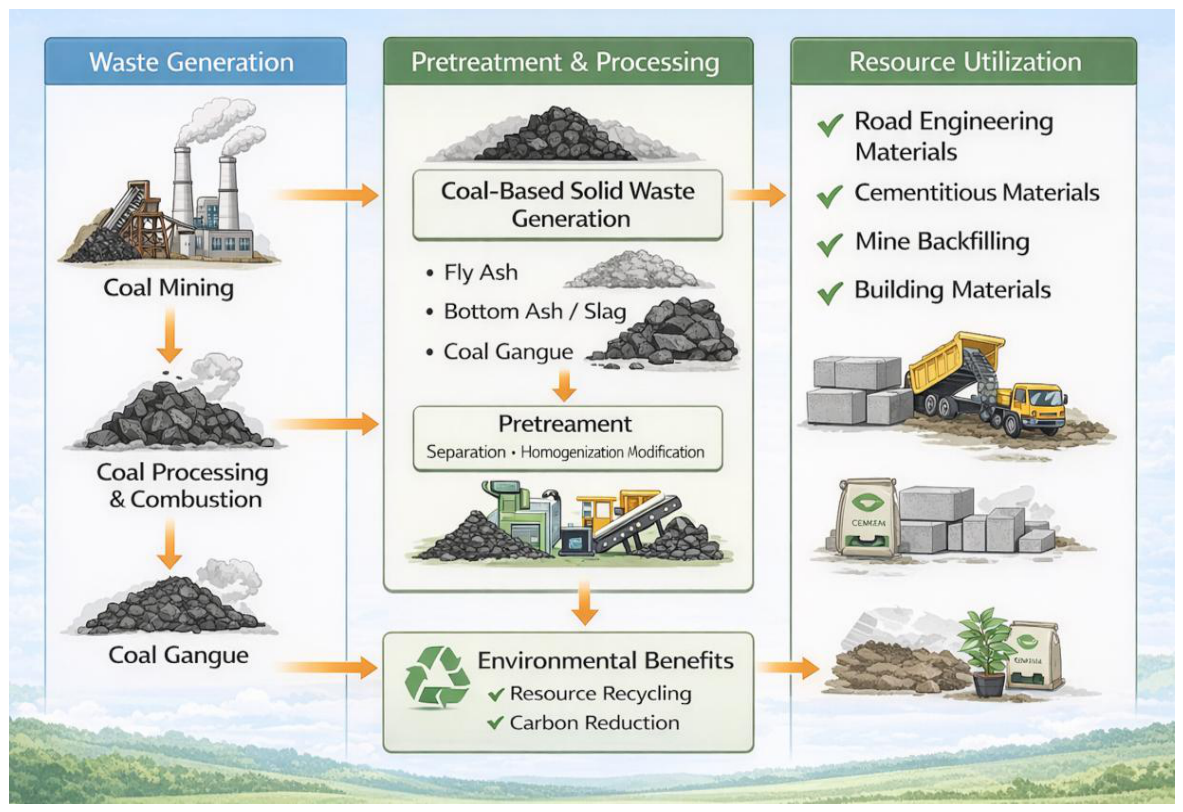
Among the various utilization pathways for CSW (
Figure 1), road engineering offers clear advantages, including large project scale, strong capacity for bulk consumption, and the potential to substitute part of natural aggregates and cementitious materials. It has therefore become one of the most important pathways for achieving large-scale utilization of CSW [
10]. For example, the Huinong-Shizuishan section of the Wuma Expressway in Ningxia, China has implemented large-scale utilization of industrial solid wastes such as fly ash and coal gangue across roadbed and pavement works; according to publicly reported information, the project achieved a cumulative utilization of approximately 3.8 million tons, illustrating the role of road engineering enterprises as downstream utilizers capable of absorbing CSW at scale.
From an environmental governance perspective, insufficient oversight of CSW can encourage low-cost externalization across generation, transport, stockpiling, and utilization [
11]. First, noncompliant storage and dumping, together with inadequate covering and liner systems, can intensify dust emissions and trigger leachate discharge during rainy periods, leading to soil and water contamination and higher remediation costs. Second, weak supervision in engineering applications may result in substandard materials, perfunctory testing, or failure to meet key quality indicators; if such materials enter public projects, they can increase the risk of pavement cracking, settlement, and other defects, thereby raising lifecycle costs through rework and traffic disruption. Third, when accountability is unclear, environmental and quality problems are often addressed ex post by the government, creating fiscal pressure and eroding public trust.
By contrast, effective regulation can strengthen source responsibility for waste producers, reduce the quality and environmental risks borne by waste utilizers, and improve market confidence in waste-derived products. Nevertheless, penalties alone are often insufficient to generate stable positive incentives [
12]. Given pretreatment and testing expenditures and volatility in the prices of substitute materials, both producers and users may adopt conservative strategies to reduce short-term costs. Accordingly, subsidies and rewards are frequently necessary to offset incremental compliance and pretreatment costs and, through public procurement leverage, to prioritize qualified waste-based materials in public works [
13]. In this way, regulatory constraints and economic incentives can work jointly to move utilization from pilot projects toward stable, large-scale deployment.
Despite the increasing policy emphasis and expanding technical feasibility, several prominent barriers still constrain the large-scale diffusion of CSW in road engineering. First, performance instability raises substantial concerns on the engineering side. Taking circulating fluidized bed (CFB) fly ash as an example, indicators such as free CaO and SO
3 are often elevated and highly variable, which can undermine volumetric stability and durability and increase the risk of expansion and cracking [
14,
15]. Consequently, utilizers typically need to invest more in testing, mix design optimization, and full process quality control; once quality problems occur, they also bear the associated rework costs and schedule delays. Second, cost and risk allocation along the supply chain is often misaligned. Waste producers tend to prioritize the containment of disposal and pretreatment expenditures, whereas utilizers assume quality liability and application risks, resulting in inconsistent incentives. Third, regulatory and incentive mechanisms remain imperfect. Regulators must simultaneously prevent environmental and engineering risks while considering regulatory costs and fiscal constraints; overly weak regulation may lead to environmental and safety incidents, whereas overly stringent regulation may increase administrative burdens and dampen market activity.
Existing studies have generated important insights into CSW generation, material processing, and engineering utilization, but they still leave an important gap. Most research focuses on material properties, process optimization, and technical applicability, whereas relatively limited attention has been paid to the dynamic coordination mechanism among regulators, waste producers, and downstream utilizers under conditions of performance uncertainty, asymmetric cost–risk allocation, and policy intervention. In other words, existing studies explain whether CSW can be used, but provide less explanation of how stable large-scale utilization can be achieved and sustained in practice. This gap is especially important in road engineering, where large-volume absorption potential coexists with strict requirements for engineering safety, quality stability, and accountability allocation.
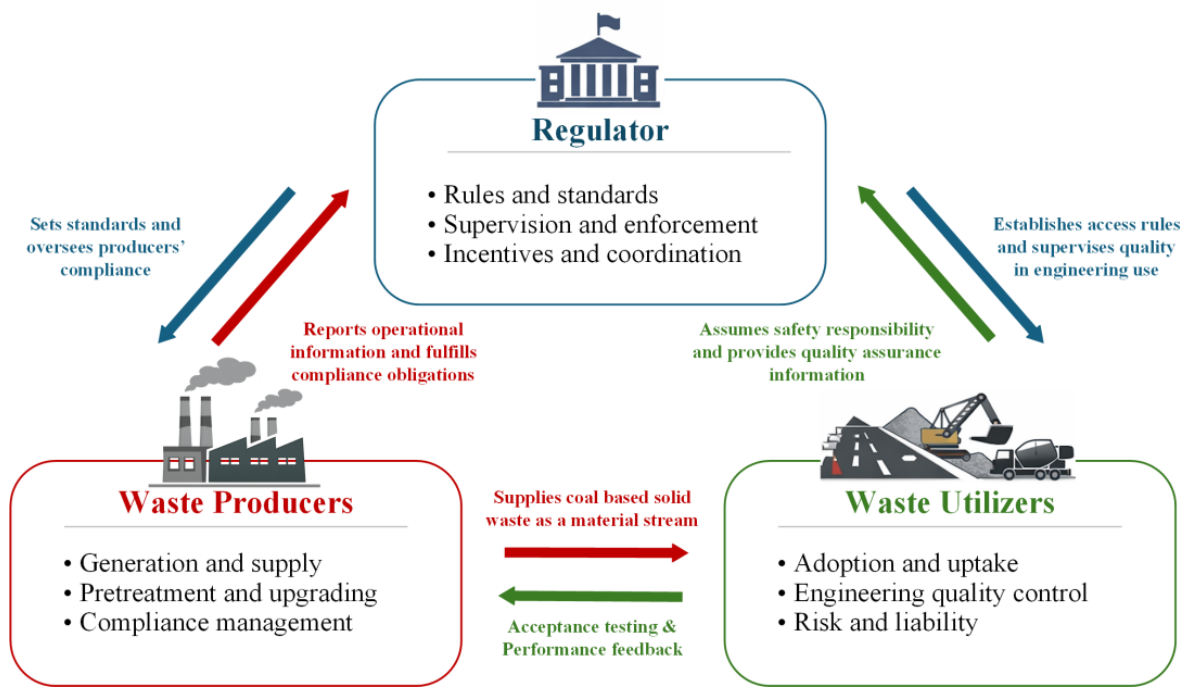
Against this background, this study focuses on the regulator, the CSW producer, and the downstream utilizer (
Figure 2), and develops a tripartite evolutionary game model that integrates performance uncertainty, pretreatment investment, government rewards and penalties, and regulatory intensity within a unified analytical framework. The study addresses three questions. First, can pretreatment by the waste producer reduce performance risk, increase the utilizer’s adoption willingness, and accelerate waste uptake? Second, under what conditions can rewards and penalties effectively induce proactive strategies, complement regulatory intensity, and reduce long-run governance costs? Third, when joint green actions generate additional green collaborative benefit, how do such gains reshape the evolutionary trajectory and promote convergence to a stable, high-utilization state?
Compared with existing evolutionary game studies on environmental regulation or general waste governance, this study contributes in three more specific ways. First, it situates the analysis in the road-engineering utilization of coal-based solid waste, a context characterized by large-volume absorption potential but also strict requirements for engineering safety, quality stability, and accountability allocation. Second, it incorporates pretreatment, residual engineering risk, and government rewards and penalties into one unified analytical framework, thereby linking upstream quality upgrading with downstream adoption decisions. Third, instead of treating green collaborative benefits as a simple exogenous gain, it further considers their release and distribution structure, which helps explain not only whether positive strategies emerge, but also under what conditions stable and large-scale utilization can be sustained in practice.
To make these contributions operational, the model results are interpreted as a stepwise implementation mechanism: identify the actor whose marginal cost or risk blocks adoption, match that actor with targeted rewards, penalties, standards, traceability, or procurement support, and then adjust policy intensity as material quality and market demand stabilize. This interpretation helps translate the equilibrium analysis into an actionable governance pathway from pilot use to scalable road-engineering application.
2. Literature Review
2.1. Integrated Utilization of CSW
Coal-based solid waste (CSW) refers to solid wastes generated during coal mining, coal washing, and coal combustion or conversion processes, and it represents an important category of bulk industrial solid waste. Its comprehensive utilization is an essential component of clean and efficient coal use, as well as an important pathway for promoting the reduction, resource recovery, and safe management of bulk solid waste. It has clear practical significance in relieving stockpiling pressure, reducing environmental risks, and advancing resource recycling. Existing research on CSW utilization mainly focuses on three stages.
First, studies on waste generation examine source types, generation scale, regional distribution, and treatment pathways [
16,
17,
18]. These studies provide the basic factual basis for understanding the scale and spatial characteristics of CSW. Second, studies on material processing investigate how processes such as separation, homogenization, fining, and modification, and mix proportion design affect quality stability, engineering suitability, and environmental safety [
19,
20,
21]. This stream of research mainly addresses the technical feasibility of transforming waste into engineering materials. Third, studies on resource utilization focus on specific application scenarios, including subgrade and pavement materials [
22,
23], cementitious materials [
24,
25], building material products [
26], and mine backfilling [
27,
28,
29,
30], and evaluate construction feasibility and long-term performance.
Overall, existing studies have generated important knowledge on the material properties, processing technologies, and engineering applicability of CSW. However, they still place greater emphasis on technical and process-related aspects than on the governance conditions required for large-scale diffusion. In particular, limited attention has been paid to the coordinated interactions among regulators, waste producers, and waste utilizers during the application stage, especially under conditions of performance uncertainty, benefit asymmetry, and regulatory intervention. As a result, although the technical feasibility of CSW utilization has been widely discussed, the dynamic mechanism through which CSW materials can move from pilot application to large-scale diffusion remains insufficiently explained.
2.2. Evolutionary Game Theory
Evolutionary game theory (EGT) provides an effective analytical framework for capturing decision-making processes involving multiple stakeholders and adaptive strategy adjustments. In contrast to conventional game theory, which focuses mainly on static equilibrium under full rationality, EGT emphasizes bounded rationality, learning, and dynamic adjustment, and uses mathematical models to describe how behavioral strategies evolve over time [
31,
32]. Originating from biology, EGT treats participants as populations of agents who cannot accurately evaluate all costs and benefits or make optimal decisions in a single round. Instead, stable outcomes are reached through repeated trial and error, imitation, and selection of strategies with relatively higher payoffs [
33]. Its core concepts include replicator dynamics and the evolutionary stable strategy (ESS): under common assumptions such as l repeated interaction and bounded rationality, the proportion of each strategy changes over time according to the replicator equation, and the system eventually converges to a stable state when no alternative strategy can successfully invade [
34,
35,
36,
37].
In the CSW material utilization system, the stages of waste generation, pre-treatment, transport and storage, and engineering application are interrelated. Decisions at one stage affect costs, risks, and outcomes at other stages, and the environmental externalities and performance uncertainty often lead to conflicts of interest among regulators, firms, and end users. Therefore, evolutionary game theory has been widely used in environmental research to model multi-stakeholder interactions and strategy adjustment. Recent studies combine EGT with innovation ecosystem theory to analyze the coevolution of stakeholders in the green building technologies (GBTs) ecosystem and to explain how interaction structures and incentive arrangements shape innovation capability [
38,
39]. In resource and pollution management, EGT has been used to analyze the dynamic game between firms and regulators in contexts such as green mining, showing how strategy replication under changing costs and payoffs can lead to stable behavioral outcomes [
40]. In household waste sorting, EGT reveals the importance of controlling coordination costs and ensuring cooperative returns in overcoming free-riding and promoting stable cooperation [
41]. Studies on green building incentives also adopt EGT to clarify how factors such as price premium, incentive intensity, and affordability influence long-run strategy evolution and policy effectiveness [
42].
However, existing EGT-based studies still leave room for further development in the context of CSW utilization. On the one hand, most studies focus on general environmental governance or technology adoption settings, rather than the specific application scenario of road engineering. On the other hand, the joint roles of pretreatment, residual engineering risk, and collaborative benefit sharing have not been sufficiently incorporated into a unified analytical framework. Therefore, applying EGT to the CSW road-engineering utilization system can help explain not only whether stakeholders choose positive strategies, but also under what incentive and risk conditions stable cooperation can emerge.
2.3. The Regulator’s Regulatory Measures
In the implementation of environmental policies, regulators are often influenced by the interest-driven behavior of different actors and therefore need to employ appropriate policy instruments to achieve expected policy goals, improve governance outcomes, and safeguard social welfare. Common instruments include rewards and penalties [
43,
44,
45,
46], as well as the introduction of public participation and co-governance mechanisms [
47,
48]. For example, stronger environmental governance and higher innovation subsidies can effectively promote green innovation among both environmental protection firms and polluting firms [
49]. However, the effect of rewards and penalties is not always stable or uniformly positive across different governance contexts. Research based on a stochastic evolutionary game model of environmental information disclosure by listed companies in China finds that penalty mechanisms are more effective than subsidy mechanisms in promoting high-quality disclosure [
50]. Related studies on green technology innovation also show that penalties tend to exert stronger behavior effects in the initial stage, whereas the continued adoption of innovation strategies depends more on sustained subsidy support [
51]. These findings suggest that different policy instruments may play differentiated roles depending on actor characteristics, cost structures, and stages of system evolution.
In the CSW utilization system, this issue is particularly salient because waste producers, waste utilizers, and regulators face different constraints and incentives. For waste producers, the key challenge is whether the additional cost of pretreatment can be compensated. For waste utilizers, the central concern is whether the expected returns from adoption are sufficient to offset residual engineering risk and application uncertainty. Meanwhile, the regulator must balance governance effectiveness, fiscal burden, and long-term regulatory cost. Therefore, it is necessary to examine not only whether rewards and penalties matter, but also how different policy instruments affect different actors and how these effects change when combined with engineering risk and green collaborative benefit.
Overall, previous studies have generated important insights into the utilization of CSW, environmental regulation, and multi-stakeholder strategic interaction. However, they are still insufficient for explaining the stable and large-scale utilization of CSW in road engineering. Specifically, most existing studies either focus on material properties and process feasibility, or examine evolutionary games in general governance settings rather than in engineering application scenarios characterized by strict quality accountability and downstream risk exposure. In addition, pretreatment investment, material-performance fluctuation, and residual engineering risk are seldom integrated into one analytical chain. Moreover, the role of green collaborative benefits is often simplified, while the efficiency of benefit release and the internal sharing structure among stakeholders remain underexplored. These limitations jointly motivate the present study and justify the need for a tripartite evolutionary game framework tailored to the road-engineering utilization of CSW materials.
3. Research Method
3.1. Assumptions and Variables
This study does not attempt to model every type of coal-based solid waste separately at the material-property level. Instead, it treats CSW materials as a class of waste-derived engineering materials that share three governance-relevant features: the possible need for pretreatment before application, performance uncertainty during engineering use, and asymmetric allocation of cost and quality liability between upstream and downstream actors. Therefore, the model is primarily applicable to road-engineering utilization scenarios in which pretreatment, testing, quality control, and responsibility sharing are all substantively relevant. The purpose of this abstraction is not to ignore material heterogeneity, but to identify the common governance logic underlying the stable diffusion of CSW materials in engineering practice.
Hypothesis 1.
Three players. In the CSW utilization system, three groups of boundedly rational players are involved. The regulator is concerned with environmental performance, public safety, and fiscal balance. The waste producer, as the generator of CSW materials, aims to minimize disposal costs and obtain additional revenue from supplying pretreated waste-derived materials of higher quality and more stable performance. The waste utilizer focuses on material procurement costs, construction convenience, and potential rework risks arising from performance uncertainty. Under incomplete information, all three parties continuously adjust their strategies through learning and imitation in order to maximize their own interests.
Hypothesis 2.
Strategy sets and probabilities. The strategy set of the waste producer is {Deep Pretreatment, Low-cost Disposal}. The probability of choosing deep pretreatment is , indicating that the waste producer invests in equipment and process such as separation, homogenization, or modification of CFB ash in order to reduce stability risks and improve material applicability; correspondingly, the probability of choosing low-cost disposal, such as simple stockpiling or landfilling, is. The strategy set of the waste utilizer is {Adoption of waste-based materials, Adoption of conventional materials}. The probability of choosing waste-based materials, such as all-solid-waste cementitious materials, is, while the probability of choosing conventional materials, such as cement or lime, is . The strategy set of the regulator is {Strong Regulation, Weak Regulation}. The probability of choosing strong regulation is , which indicates that the government strictly enforces environmental taxes and fees, establishes resource-utilization quotas, and conducts rigorous inspection of engineering quality; correspondingly, the probability of choosing weak regulation is . The variables, and are functions of time.
Hypothesis 3.
Cost and income of the regulator. When the regulator adopts Strong Regulation, it incurs a regulatory cost , such as establishing monitoring stations, organizing inspections, and maintaining supervision over engineering quality and environmental compliance. If the waste producer disposes of solid waste in violation of regulations or the road enterprise uses substandard materials that lead to engineering accidents, the regulator imposes penalties and , respectively. and denote the effective penalty intensity imposed by the regulator on the waste producer and the waste utilizer, respectively. Under the strong-regulation strategy, in order to promote industrialization and application, the regulator also provides technical subsidies to waste producer that adopt deep pretreatment and application subsidies to waste utilizers that adopt waste-based materials.
When the regulator adopts Weak Regulation, the regulatory cost decreases to . Due to limited supervision, the regulator cannot fully observe the dynamic information of waste producers and road engineering enterprises; therefore, no subsidy or penalty measures are implemented. At the same time, insufficient supervision may lead to solid waste pollution and governance failure, causing the regulator to bear a negative social impact cost .
Hypothesis 4.
Cost and income of the waste producer. Under the deep pretreatment strategy, the waste producer incurs a pretreatment cost, which includes expenditures on separation, homogenization, modification, and other upgrading processes. In addition, the producer may also bear supporting costs related to improving material quality stability and promoting the downstream application of waste-based materials in road engineering. Under the low-cost disposal strategy, the waste producer incurs only a lower disposal cost , thereby avoiding the additional expenditures associated with deep pretreatment, for example through simple stockpiling, internal consumption, or basic disposal methods. Regardless of the strategy adopted, the producer can obtain revenue through the transfer or sale of treated solid waste materials.
In practical terms, this incremental cost mainly reflects expenditures on sorting, homogenization, modification, additional testing, and process control required to make CSW suitable for road-engineering use.
Hypothesis 5.
Cost and income of the waste utilizer. When adopting waste-based materials, the utilizer incurs a cost and obtains an engineering return . When adopting conventional materials, the cost is , the engineering risk is close to zero, and the utilizer receives a normal engineering return . When waste-based materials produced through low-cost disposal are used, there exists a probability of engineering failure or secondary environmental pollution. denotes the residual engineering risk coefficient, reflecting the remaining uncertainty in material stability, engineering adaptability, quality acceptance, and liability during the application of CSW materials in road engineering. If engineering failure occurs, the road enterprise must bear the rework and repair costs as well as reputation losses, denoted by , where denotes the fixed collaborative support effect associated with pretreatment, coordinated supply, and quality assurance, and represents the risk-adjusted consequence borne by the utilizer when such support is insufficiently effective.
Here, residual engineering risk refers to the remaining uncertainty in engineering performance even after basic treatment, including risks related to volumetric stability, durability, acceptance failure, rework, liability disputes, and schedule delay during road application.
Hypothesis 6.
Synergy benefits. When the waste producer and the utilizer simultaneously adopt green strategies, they jointly improve product greenness, environmental performance, and public welfare. In this case, a total green collaborative benefit is generated. Here, denotes the benefit release ratio, and denotes the distribution coefficient allocated to the waste producer, while denotes the share allocated to the waste utilizer. Accordingly, the distribution of the green collaborative benefit is defined as follows [39]: the regulator obtains, the waste producer obtains, and the waste utilizer obtains.
The green collaborative benefit considered in this study is not limited to direct economic return. It may also include reduced disposal pressure, improved environmental performance, policy support, reputational gains, and other joint benefits generated when the producer and the utilizer simultaneously adopt green strategies. The definitions and units of all key notations used in this study are summarized in
Table 2.
3.2. Tripartite Evolutionary Game Model
Based on the above hypotheses, the mixed-strategy payoff matrix for the waste producer, the waste utilizer, and the regulator is presented in
Table 3.
Table 3 summarizes the strategic payoffs of the three players under different strategy combinations. For the waste producer, the key trade-off is between the higher cost of deep pretreatment and the possibility of obtaining regulatory support, downstream adoption, and green collaborative benefit. For the waste utilizer, the core issue is whether the return from adopting waste-based materials can compensate for adoption cost and residual engineering risk. For the regulator, the comparison is between the higher governance cost of strong regulation and the larger negative social impact that may arise under weak regulation. Therefore, the payoff matrix reflects the fundamental cost–risk–benefit structure underlying strategy evolution in the CSW utilization system.
- (1)
Stability analysis of the waste producer’s strategy
The expected payoff of the waste producer under deep pretreatment and low-cost disposal, and the average expected payoff
, are respectively given by:
The replicator dynamic equation for the waste producer’s strategy selection is:
The first derivative of
with respect to
, and the function
, are defined as:
According to the stability theorem of differential equations, for the waste producer to be in a stable state, it must satisfy and . Since , is decreasing in . Therefore, when , we have and . At this point, the waste producer cannot determine an evolutionarily stable strategy. When and , hence is the waste producer’s evolutionary stable strategy.
- (2)
Stability analysis of the waste utilizer’s strategy
In the case of low-cost disposal on the producer side, the utilizer additionally bears the residual engineering risk-adjusted consequence
.The expected payoffs of the waste utilizer when adopting waste-based materials and conventional materials, and the average expected payoff (
, are respectively given by:
From system (5), the replicator dynamic equation of the waste utilizer and its first derivative are obtained as follows:
According to the stability theorem of differential equations, for the probability of adopting waste-based materials to be in a stable state, the waste utilizer must satisfy and . Since , is decreasing in . Therefore, when , we have and , and the waste utilizer cannot determine an evolutionarily stable strategy. When and , hence is an ESS; otherwise, is an ESS.
- (3)
Stability analysis of the regulator’s strategy
The expected payoffs of the regulator under strong regulation and weak regulation, and the average expected payoff (
, are respectively given by:
The replicator dynamic equation for the regulator’s strategy selection, its first derivative with respect to
, and the function
are given by:
According to the stability theorem of differential equations, for strong regulation to be a stable state, the regulator must satisfy and . Since , is increasing in . Therefore, when , we have and , and the regulator cannot determine an evolutionarily stable strategy. When and , hence is an ESS; otherwise, is an ESS.
3.3. Stability Analysis of Equilibria in a Tripartite Evolutionary Game System
The ESS of the replicator dynamic system can be examined via the Jacobian matrix. Based on Friedman [
38], an equilibrium is locally asymptotically stable if all eigenvalues of the Jacobian evaluated at that equilibrium have negative real parts. Accordingly, the Jacobian matrix of the tripartite evolutionary game system is derived as follows:
By setting
, the equilibrium points of the system are obtained as
. Calculate the eigenvalues of local equilibrium points according to the Jacobian matrix, as shown in
Table 4.
When Conditions
and
hold, the tripartite evolutionary game system admits a unique ESS,
. As shown in
Table 4,
and
satisfy Condition, while
always holds under the parameter constraints. This means that, although multiple equilibrium points exist mathematically, most of them are saddle points and therefore cannot represent stable long-run outcomes in the CSW utilization system. Under the baseline parameter setting, only
satisfies the local asymptotic stability conditions and can serve as the stable evolutionary outcome of the system.
In substantive terms, corresponds to a governance pattern characterized by deep pretreatment by the waste producer, adoption of CSW materials by the waste utilizer, and weak regulation by the government. This result indicates that stable large-scale utilization of CSW materials can emerge only when pretreatment incentives, downstream returns, engineering risk control, and green collaborative benefits are jointly aligned. Higher subsidies and positive green returns can offset the additional costs of technical upgrading, pretreatment, testing, quality control, and application, thereby shifting both producers and utilizers from passive compliance to active participation. At the same time, deep pretreatment helps reduce fluctuations in composition, fineness, and stability, improves material consistency and engineering suitability, and lowers utilizers’ concerns about engineering failure and rework, thereby increasing their willingness to adopt such materials. Once both green returns and market returns become sufficiently stable, the regulator no longer needs to maintain long-term high-intensity supervision, and the regulatory focus can gradually shift toward routine inspection, process auditing, and supervision of key links so as to reduce governance costs and improve regulatory efficiency.
4. Results
To verify the validity of the evolutionary stability analysis, the model is parameterized under scenario-based conditions and numerically simulated in Matlab2023b. Because reliable project-level microdata on regulatory cost, pretreatment expenditure, residual engineering risk, and collaborative benefit allocation is not uniformly available across regions and projects, this study adopts a scenario-based parameterization strategy rather than claiming exact empirical calibration. Specifically, the baseline values are selected according to three principles: consistency with the relative cost–benefit relationships described in the literature and engineering practice, conformity with the stability conditions required by the model, and suitability for comparative simulation of key mechanisms. Therefore, the parameter values should be understood as illustrative scenario settings rather than exact empirical estimates. More specifically, the baseline values are chosen to preserve the relative relationships among costs, risks, returns, rewards, and penalties required by the analytical setting, so that the simulation focuses on directional mechanism comparison rather than point estimation of a single engineering case.
In this sense, the objective of the simulation is not to reproduce a single real-world project numerically, but to identify how changes in relative costs, risks, incentives, and benefit-sharing arrangements affect the evolutionary direction of the system. Such a scenario-based design is appropriate for mechanism-oriented analysis when exact parameter calibration is difficult but the structural relationships among stakeholders are sufficiently clear.
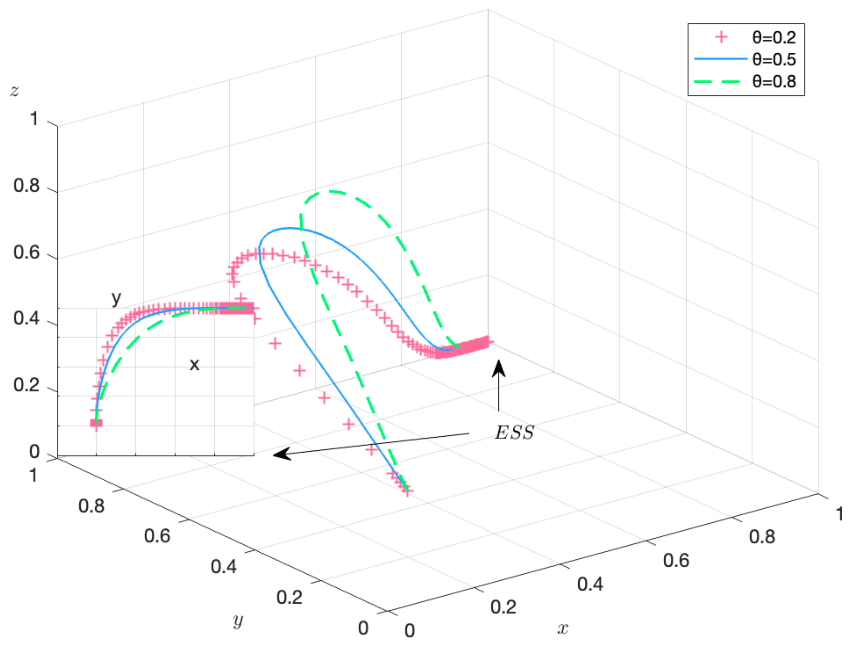
Under the baseline parameter setting of ,, , , , , , , , , , , , , , , , the system satisfies the conditions for the equilibrium point . On this basis, the effects of producer-side rewards and penalties , utilizer-side rewards and penalties , negative social impact (), utilizer payoff parameters (), residual engineering risk (), green collaborative benefit (), and benefit release and distribution coefficients () on the evolutionary process and outcomes are further examined.
4.1. Effects of the Regulator’s Rewards and Penalties
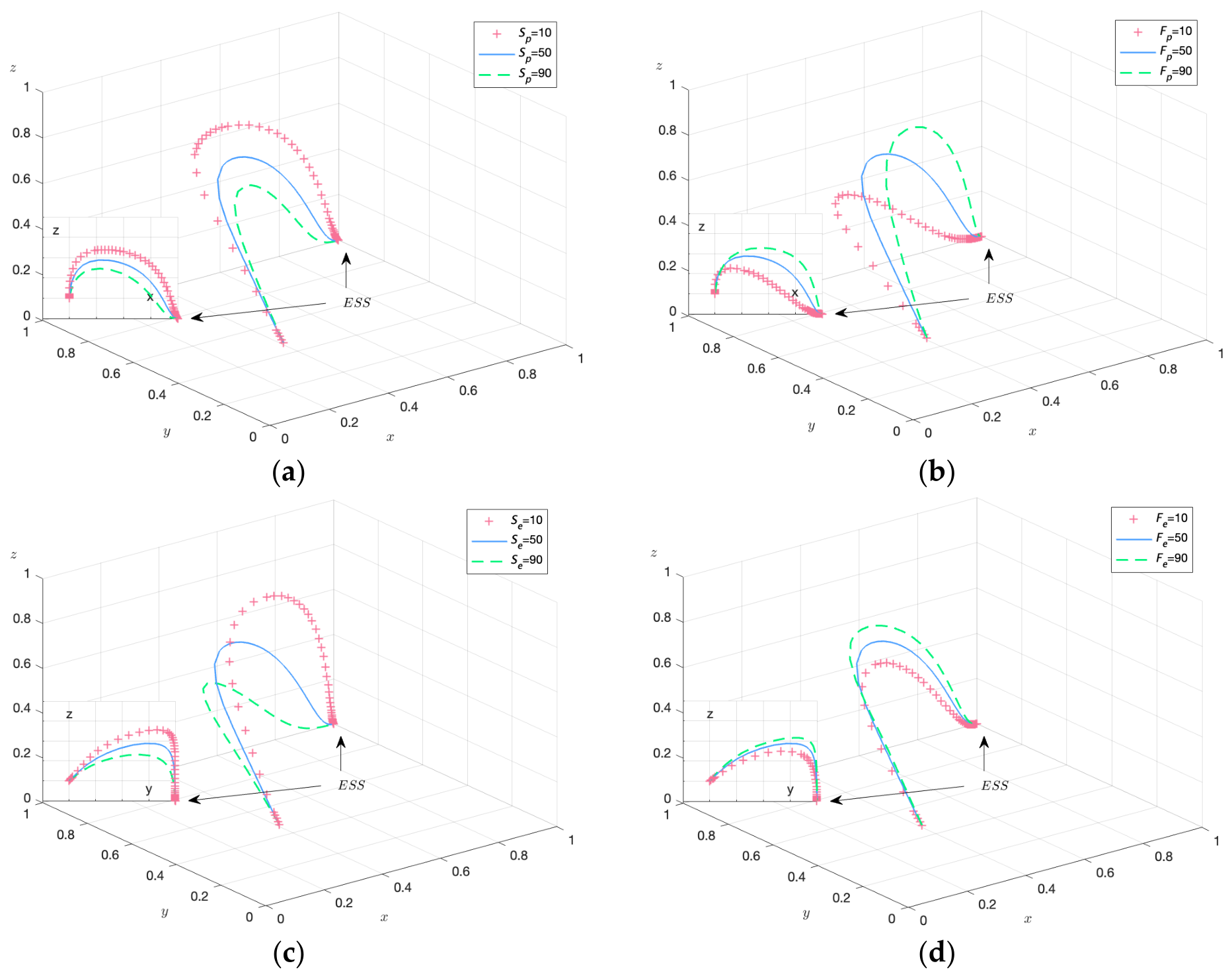
To examine the effects of the regulatory rewards and penalties on the evolutionary process and outcomes of the waste producer and the waste utilizer, the parameters are respectively set as
,
,
,
. The simulation results of the replicator dynamic system over 50 iterations are shown in
Figure 3.
The results show that increasing the regulator’s reward intensity toward waste producers and utilizers, and , raises the probability that both parties choose positive strategies and lowers the regulator’s probability of adopting strict regulation. By contrast, increasing the effective penalty intensity, and , increases the probability that waste producers choose deep pretreatment and that utilizers adopt CSW materials, while also increasing the regulator’s strict regulation rate. Further comparison shows that, under the current parameter setting, the producer side is more sensitive to changes in penalty intensity than to changes in reward intensity. For the utilizer side, however, the effect of rewards is more pronounced than that of penalties, and higher rewards are more effective in increasing the probability of adopting CSW materials.
In promoting the utilization of CSW materials, the regulator should adopt differentiated measures for different actors. For waste producers, policy should focus on using effective penalties to constrain low-cost disposal and low-standard treatment, while providing appropriate rewards to support pretreatment capacity and stable supply. For waste utilizers, policy should focus more on rewards, demonstration support, and green procurement to reduce adoption costs and strengthen their willingness and capacity to use CSW materials, with acceptance requirements and liability mechanisms serving as supplementary constraints. Overall, the policy mix should place stronger constraints on waste producers and stronger incentives on waste utilizers, while being coordinated with quality standards, inspection and acceptance, full-process traceability, and liability identification.
4.2. Effects of the Negative Social Impact
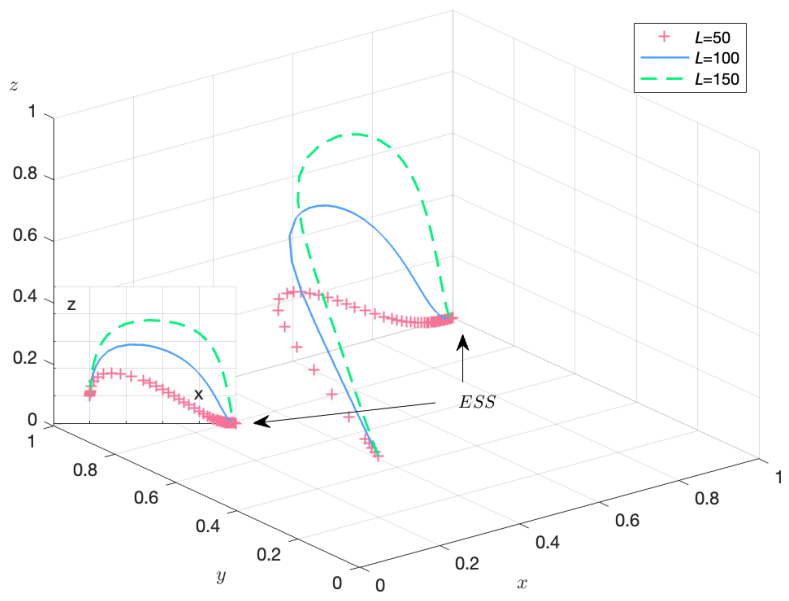
The parameter
is assigned different values of 50, 100, and 150, and the simulation results are shown in
Figure 4.
The probability that the regulator chooses strict regulation increases with . This indicates that the greater the social disutility and reputational loss caused by weak regulation, the higher the expected governance cost borne by the regulator, and therefore the more likely the regulator is to adopt a strong regulation strategy. In other words, negative social impact is an important driver of regulatory intervention. When weak regulation may lead to environmental damage, public dissatisfaction, and governance pressure, the regulator has a stronger incentive to maintain strict supervision in order to avoid larger social losses.
4.3. Effects of the Utilizer’s Payoff
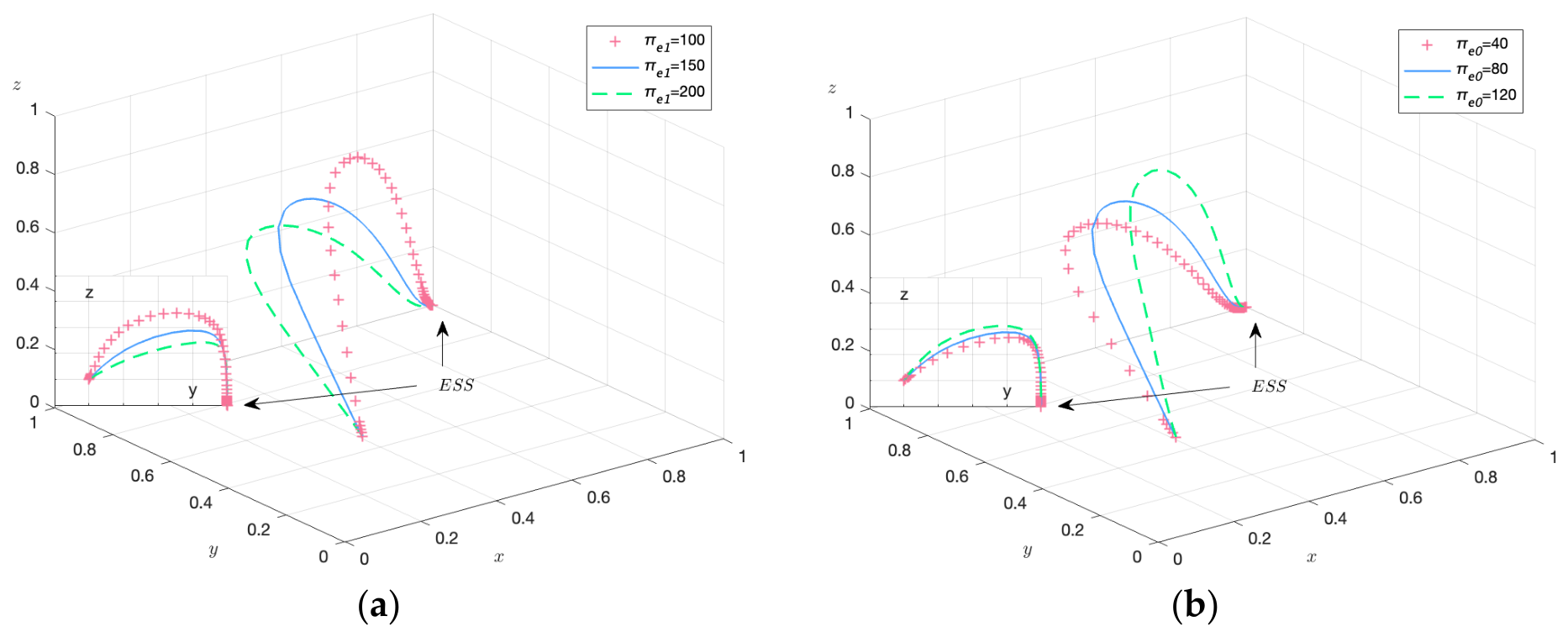
Furthermore,
is assigned the values of
, respectively, and the corresponding simulation results are shown in
Figure 5a. The parameter
is assigned the values of
, respectively, and the corresponding results are shown in
Figure 5b.
The results show that an increase in raises the probability that the utilizer adopts CSW materials, while also decreasing the probability that the regulator chooses strict regulation. By contrast, an increase in reduces the probability that the road engineering enterprise adopts CSW materials, and the probability that the regulator adopts strict regulation corresponding increases.
In promoting CSW materials, regulators should ensure reasonable downstream returns after adoption. Since utilizers already bear additional uncertainty related to material performance, engineering failure, and rework, their willingness to adopt will be significantly constrained if CSW materials do not maintain a sufficient return advantage over conventional materials. Therefore, the regulator should use rewards and related policy tools to ensure that CSW materials retain a comparative advantage in overall economic return. At the same time, waste producers should be encouraged to improve material quality stability through pretreatment, thereby reducing the residual engineering risk borne by utilizers. Otherwise, if the return from CSW materials remains low while quality risks are insufficiently controlled, utilizers will tend to shift back toward conventional materials, which is unfavorable for large-scale material diffusion and for the realization of pollution reduction, carbon reduction, and resource recycling goals.
4.4. Effects of Benefit Distribution Structure
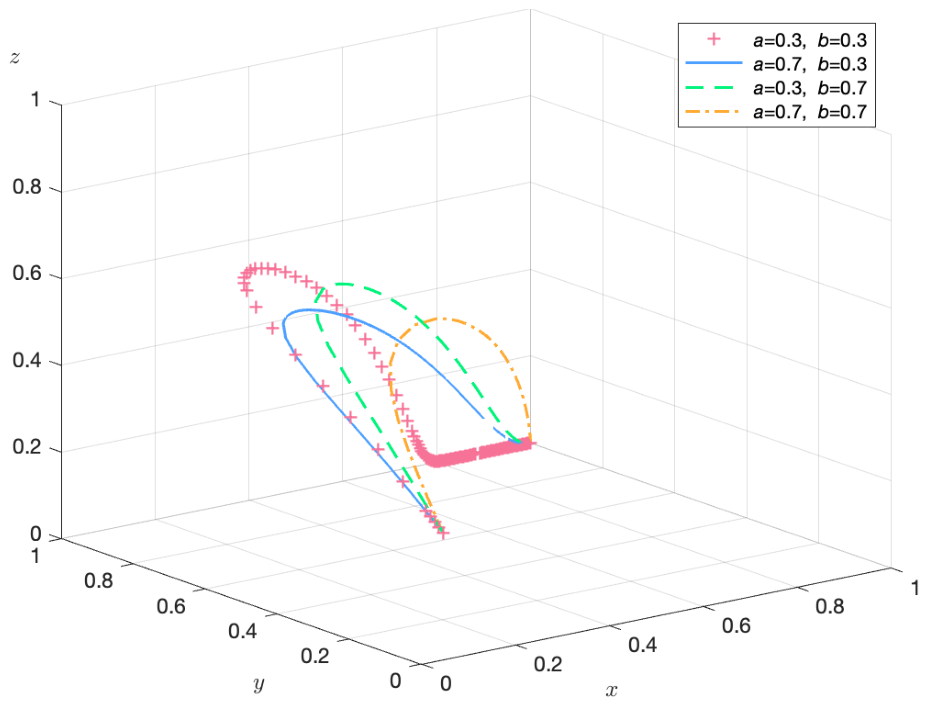
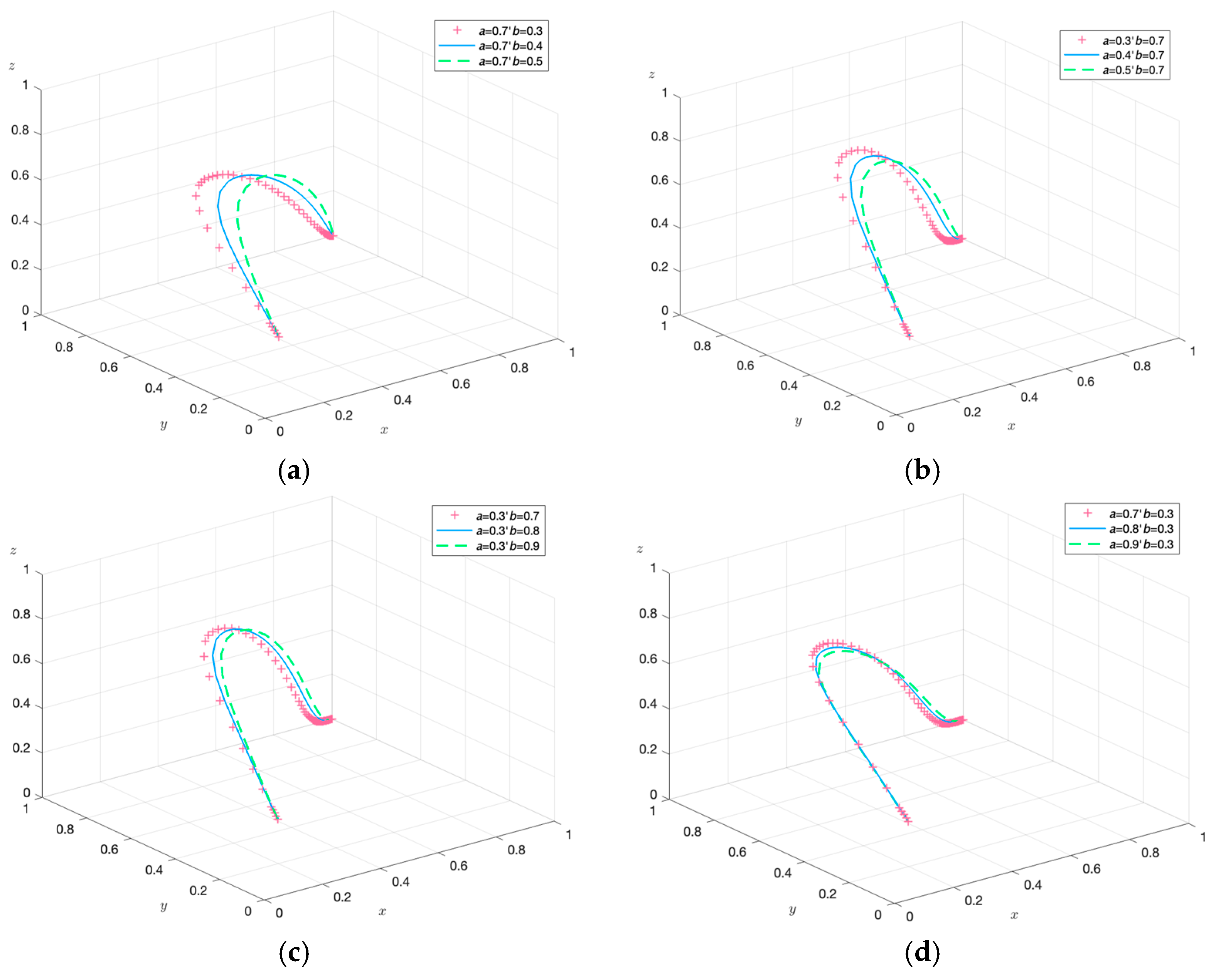
To further examine how the release and internal distribution structure of green collaborative benefit affects the evolutionary process and outcomes, different combinations of the benefit release ratio (
) and the distribution coefficient (
) are considered, as shown in
Figure 6.
From
Figure 6a,c, when
is fixed at 0.4 and 0.3, respectively, the system trajectories both change as
increases. However, the trajectory separation is more pronounced when
, whereas it becomes much weaker when
. This indicates that the effect of
depends on the level of
. When
is relatively high, a larger share of green collaborative benefit is released to the enterprise side. Under this condition, increasing
channels more benefits to the waste producer, which more effectively strengthens its willingness to adopt deep pretreatment and, through improved material quality, further promotes adoption by the waste utilizer. At the same time, as positive behavior on the enterprise side becomes stronger, the need for the regulator to maintain strict regulation declines. By contrast, when
is relatively low, the total benefits released to enterprises are limited. Even if
continues to increase, its incentive effect on both the waste producer and the utilizer remains relatively weak, and the decline in the regulator’s strict regulation rate is also less obvious.
From
Figure 6b,d, when
is fixed at 0.7 and 0.3, respectively, the system trajectories also change as
increases. However, when
, the trajectory separation is relatively clear, whereas when
, the trajectories are much closer to each other. This suggests that the effect of
is also constrained by
. Only when the internal distribution of enterprise benefits ensures that the waste producer receives a reasonable share can an increase in the released green collaborative benefit more clearly strengthen the positive behavior of both the waste producer and the utilizer, while also lowering the regulator’s probability of choosing strict regulation. If
is too low, the waste producer receives insufficient benefits, and even an increase in
produce only a weak system response. In that case, the regulator still needs to maintain a relatively high level of strict regulation.
These results indicate that the distribution of green collaborative benefits should balance the interests of the regulator, the waste producer, and the waste utilizer, while also maintaining coordination between the benefits released to enterprises and the internal distribution of those benefits. From a management perspective, the enterprise side must receive sufficient returns to cover pretreatment, testing and quality control, and application risks, while a reasonable balance should also be maintained between the share of the waste producer and the utilizer. Only in this way can positive behavior on the enterprise side become stable and create the conditions for the regulator to gradually shift from strict regulation in the early stage to routine regulation in the later stage.
4.5. Effects of Green Collaborative Benefit and Engineering Risk
This section separately examines the effect of the total green collaborative benefit and the effect of residual engineering risk on system evolution.
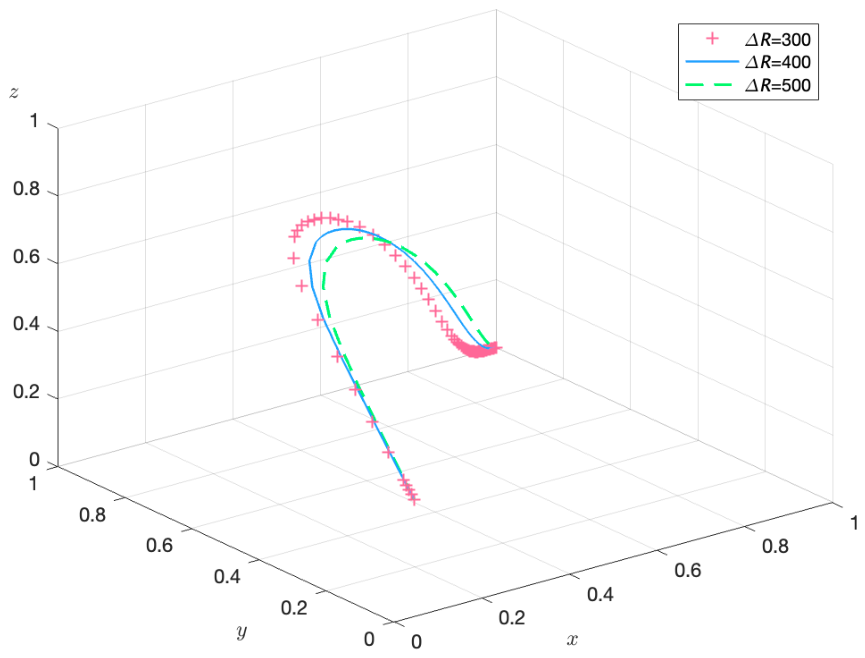
Figure 7 reports the effect of changes in the total green collaborative benefit
, while
Figure 8 shows the effect of changes in residual engineering risk
.
As shown in
Figure 7, increasing
leads to a more favorable evolutionary path of the system. Higher green collaborative benefit strengthens the incentives for the waste producer to adopt deep pretreatment and for the waste utilizer to adopt CSW materials, thereby promoting convergence toward a stable cooperative state. This suggests that an adequate level of collaborative benefit is an important condition for encouraging positive participation by both upstream and downstream actors.
Figure 8 shows that as residual engineering risk
increases, the probability that the waste utilizer adopts CSW materials gradually declines, with a stronger tendency to choose conventional materials instead. This indicates that engineering uncertainty, including material-performance fluctuation, application failure, and rework risk, can significantly weaken downstream adoption willingness and further reduce the waste producer’s pretreatment incentive.
Taken together, these results suggest that the stable diffusion of CSW materials in road engineering depends on both sufficient collaborative returns and effective risk control. Increasing green collaborative benefit helps strengthen participation incentives, whereas rising engineering risk weakens the stability of cooperation. Therefore, the promotion of collaborative returns and the control of engineering risk need to proceed simultaneously.
4.6. Interaction Analysis of Key Parameters
In practical governance, the diffusion of CSW materials is rarely driven by a single factor in isolation. Instead, regulatory intensity, engineering risk, collaborative returns, and internal benefit allocation often interact with each other. Therefore, supplementing the single-factor analysis with interaction scenarios helps reveal whether the effect of one parameter depends on the level of another, and thus provides a more realistic basis for policy interpretation. The following interaction scenarios are selected to further examine the combined effects of the most important policy, benefit, and risk parameters identified in the preceding analysis.
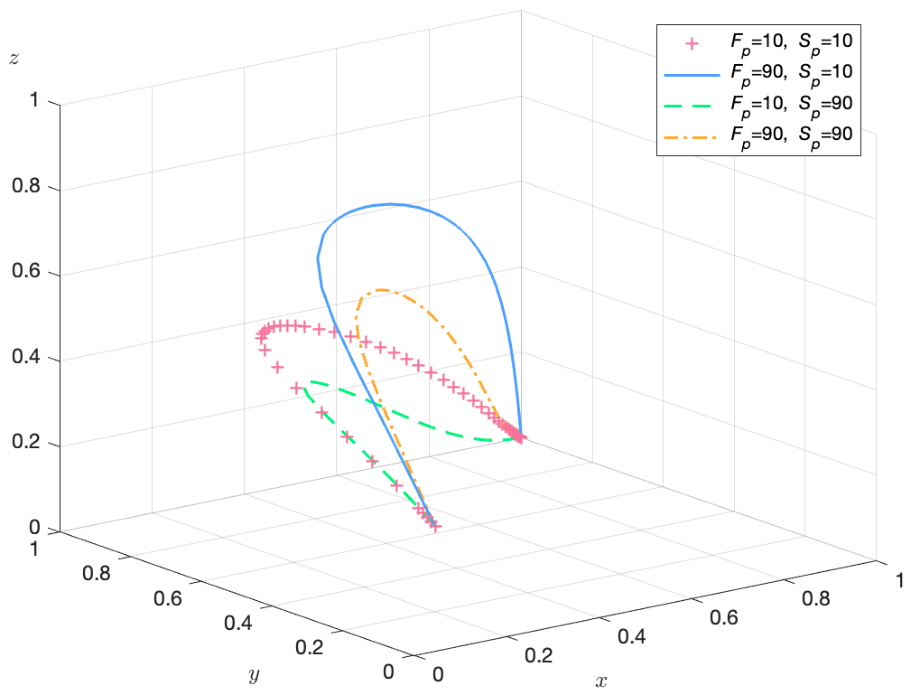
(1) Joint effect of reward and penalty on the producer side
Figure 9 illustrates the combined effect of the effective penalty intensity imposed on the producer side (
) and the reward intensity (
). The simulation results indicate that the strategic evolution of the producer side is shaped by the policy portfolio rather than by a single instrument alone. Compared with low-penalty scenarios, high-penalty scenarios generate more substantial trajectory adjustments, suggesting that effective penalties play an important role in constraining opportunistic behavior and low-standard treatment. Rewards also affect the evolutionary path, but their influence is more meaningful when embedded in a coordinated reward–penalty mechanism.
For the producer side, relying solely on subsidies or solely on punishment is insufficient. A more effective policy design should combine constraint-oriented instruments that suppress low-cost non-compliant behavior with incentive-oriented instruments that support pretreatment and stable supply. In this way, the producer can be guided to shift from passive disposal logic to active participation in resource-oriented utilization.
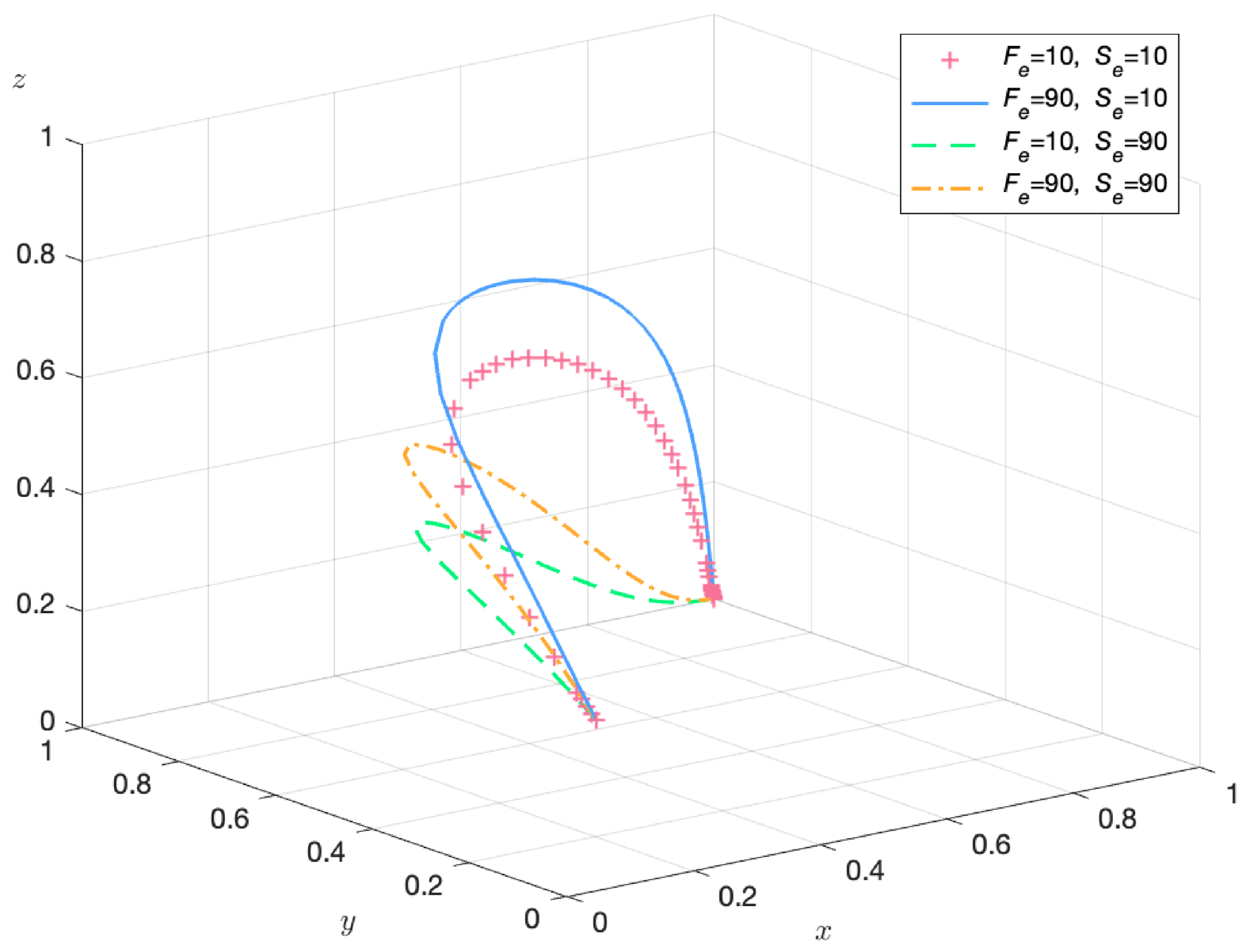
(2) Joint effect of reward and penalty on the waste utilizer side
Figure 10 shows the joint effect of the effective penalty intensity imposed on the waste utilizer side (
) and the reward intensity (
). The results suggest that the adoption strategy of waste utilizers is also jointly influenced by incentives and constraints. A higher level of rewards alone does not necessarily guarantee a substantially improved adoption path when institutional constraints remain weak. Likewise, stronger penalties without adequate positive incentives may also limit the willingness of waste utilizers to actively adopt CSW materials.
The diffusion of solid-waste-based materials in road engineering depends on a coordinated policy mix. For waste utilizers, the key issue is not only whether constraints exist, but also whether the expected returns from adoption can reasonably compensate for additional application costs and risk exposure. Therefore, reducing adoption uncertainty and strengthening institutional discipline should proceed simultaneously. In practice, this means combining subsidies, demonstration support, and green procurement with quality acceptance requirements, liability mechanisms, and standardized supervision.
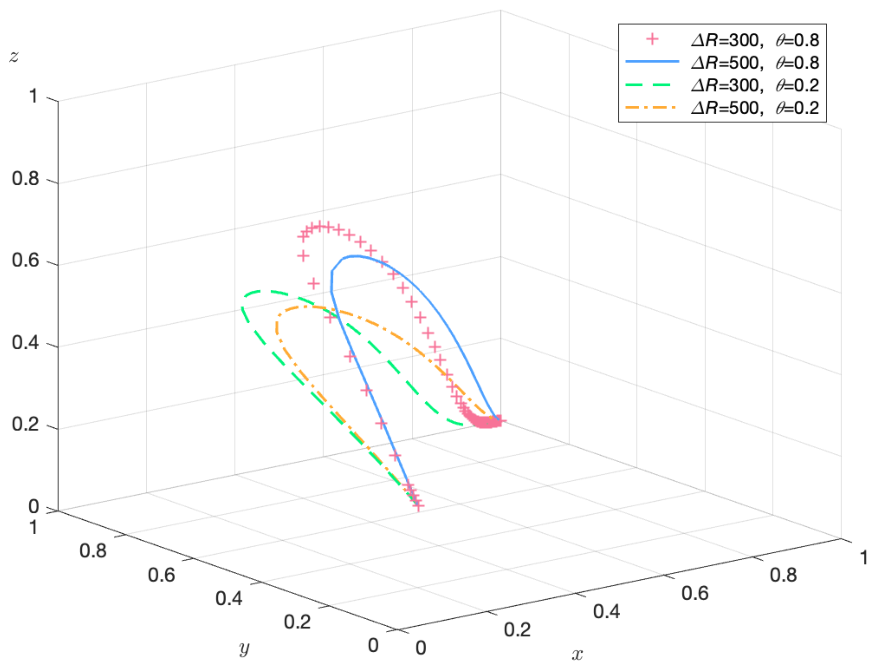
(3) Interaction between benefit release ratio and distribution coefficient
Figure 11 further examines the interaction between the benefit release ratio (
) and the distribution coefficient (
). The simulation results show that the total amount of collaborative benefit is not the only factor affecting system evolution. Instead, both the proportion of potential benefits that can actually be released and the way in which the realized benefits are distributed between the waste producer and the waste utilizer significantly influence the evolutionary path. Different (
) combinations lead to visibly different trajectories, indicating that an unreasonable distribution structure may weaken the governance effect of green collaborative benefit even when the total benefit level is relatively high.
Collaborative governance should pay attention not only to expanding total benefits, but also to improving the efficiency of benefit realization and optimizing the internal sharing structure. If the released benefits are insufficient, or if the distribution is seriously imbalanced, the incentive effects on one or both enterprise actors will be weakened, and the regulator will still need to maintain a relatively high level of intervention. Therefore, improving benefit release efficiency and establishing a more balanced sharing mechanism are both crucial for promoting stable cooperation among stakeholders.
(4) Interaction between collaborative benefit and engineering risk
Figure 12 presents the interaction between the total green collaborative benefit (
) and engineering risk (
). The results further confirm that the governance effect of collaborative benefit is conditional on the level of risk exposure. When engineering risk remains high, a larger collaborative benefit still cannot fully induce stable positive behavior. By contrast, when engineering risk is effectively controlled, the same increase in collaborative benefit generates a more substantial improvement in the strategic evolution of the system.
This finding further indicates that benefit enhancement cannot substitute for risk governance. For the large-scale diffusion of CSW materials in road engineering, the governance focus should not be limited to benefit expansion alone, but should simultaneously include risk control through pretreatment, testing, quality assurance, and application standards.
4.7. Integrated Simulation Under the Baseline Scenario
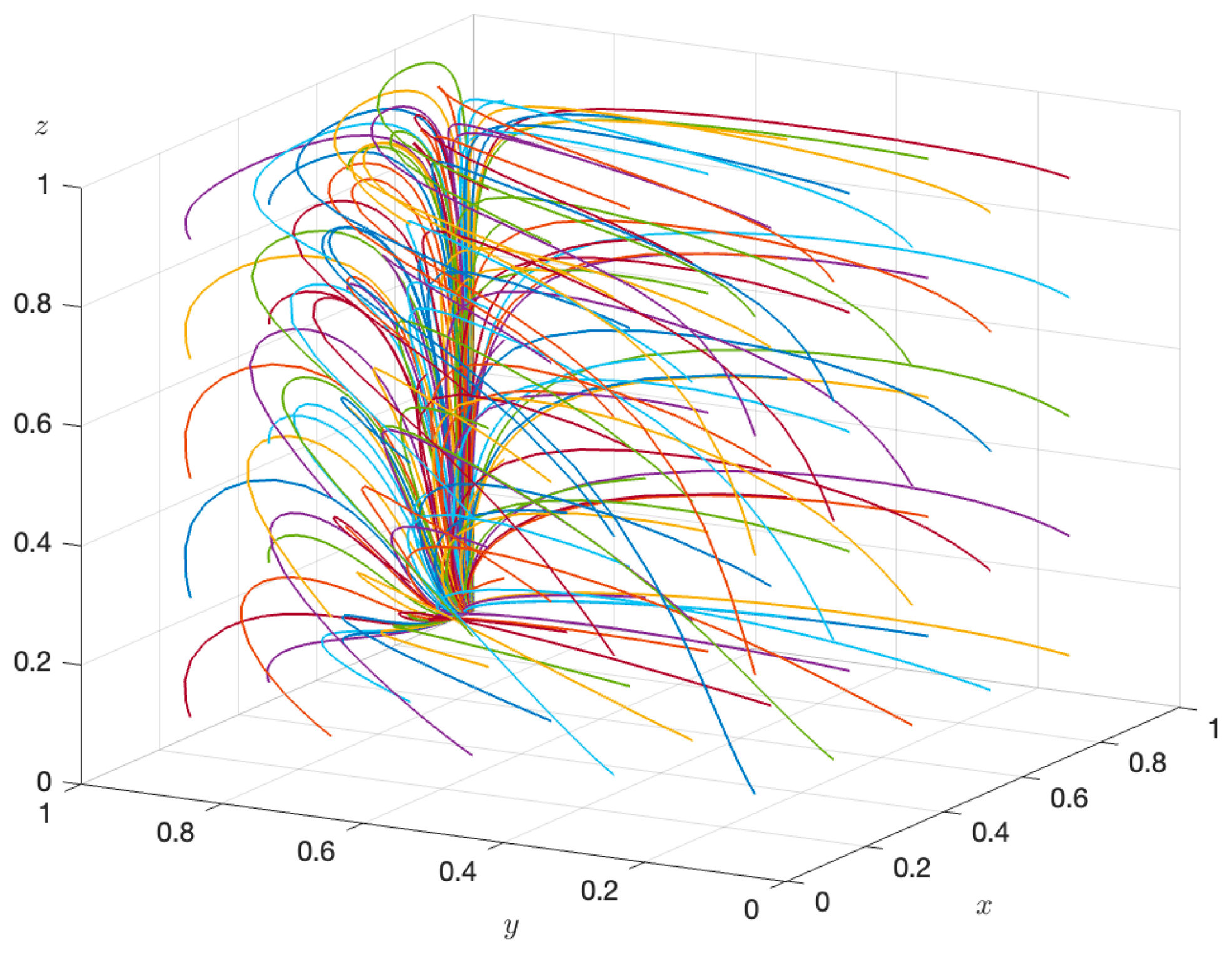
To provide an overall view of system evolution under the baseline parameter setting,
Figure 13 reports the integrated simulation results over 50 iterations. Under this parameter setting, the system has only one stable equilibrium point
, whereas the other equilibrium points are saddle points and therefore do not represent stable long-run outcomes.
In
Figure 13, the
x-,
y-, and
z-axes respectively denote the probability that the waste producer chooses deep pretreatment, the waste utilizer adopts CSW materials, and the regulator chooses strong regulation. Each colored curve represents an evolutionary trajectory generated from a different initial strategy combination; the colors are used only to distinguish trajectories, not to identify different policy scenarios. The movement of the curves over 50 iterations shows that
x and
y increase toward 1 while
z decreases toward 0, so the terminal bundle near
indicates convergence to deep pretreatment, active adoption, and weak or routine regulation. The crossings among curves reflect the three-dimensional projection of multiple initial states rather than additional stable equilibria.
As shown in
Figure 13, the system gradually converges to a stable strategy combination characterized by deep pretreatment by the waste producer, adoption of CSW materials by the waste utilizer, and weak regulation by the government. This result indicates that when pretreatment incentives, downstream adoption returns, engineering risk control, and collaborative benefit allocation are appropriately matched, the utilization system can evolve from unstable adjustment to relatively stable cooperation. In this case, the role of the regulator shifts from long-term high-intensity intervention to a more routine and efficiency-oriented governance pattern.