Systematic Review

Strategies for Advancing Climate-Resilient Infrastructure in Informal Settlements: A Systematic Review of Global Evidence

by
Juliet Akola
* and
Mvuyana Bongekile Yvonne Charlotte
Public Administration and Economics Department, Faculty of Management Sciences, Mangosuthu University of Technology, 4026 511 Griffiths Mxenge Highway, Umlazi, Durban 4031, KwaZu-lu-Natal, South Africa
*
Author to whom correspondence should be addressed.
Sustainability 2026, 18(10), 4768; https://doi.org/10.3390/su18104768 (registering DOI)
Submission received: 28 January 2026 / Revised: 23 March 2026 / Accepted: 6 May 2026 / Published: 11 May 2026

Abstract

Informal settlements are disproportionately exposed to climate risks due to inadequate infrastructure, insecure tenure, environmental exposure, and exclusion from formal planning. Climate-resilient infrastructure (CRI) is essential for urban adaptation, but evidence about its enablement, implementation, and sustainability in informal settlements remains fragmented. This study conducts a PRISMA-guided systematic integrative review of English-language, peer-reviewed literature published between 2010 and 19 March 2026. Database searches in Scopus and Web of Science identified 1962 records. Of these, 40 studies met the final inclusion criteria. These studies were synthesised across five strategic domains: governance and institutional; community and social; financial and economic; technical and design; and knowledge, data, and digital. A rapid MMAT-based appraisal found the evidence base to be moderate to strong, though the included study designs were diverse. Technical and design responses predominate; however, their long-term effectiveness depends on governance coordination and community participation. In contrast, financial and economic strategies, as well as knowledge, data, and digital strategies, remain underdeveloped, revealing weaknesses in the enabling systems required for long-term sustainability. The evidence base is geographically uneven, with strong concentration in Sub-Saharan Africa. Overall, the review shows that CRI in informal settlements is best understood as a comprehensive process shaped by institutions, participation, and local conditions rather than as a purely technical intervention. The findings are limited by the focus on English-language, peer-reviewed studies and uneven regional coverage. However, they indicate that advancing CRI requires integrated strategies combining infrastructure design, institutional capacity, community agency, and long-term enabling systems.

1. Introduction

Climate change has become one of the most pressing global challenges, with its impacts falling disproportionately on already marginalised and under-resourced communities [1,2]. Among the most vulnerable are residents of informal settlements, where social, economic, and environmental inequalities intensify exposure to climate-related hazards such as flooding, drought, extreme heat, and sea-level rise [1,3,4]. These overlapping pressures reinforce poverty, deepen marginalisation, and weaken ecological resilience over time [5,6]. Across the Global South, the expansion and persistence of informal settlements remain closely tied to rapid urbanisation, uneven development, and exclusion from formal planning systems. Cities such as Johannesburg, Lagos, Nairobi, Mumbai, Manila, and Cape Town continue to experience the growth of unplanned and underserviced urban communities [1,2,7]. Although informal settlements are home to a substantial and growing share of the urban population, they are often weakly integrated into formal planning, governance, and service-delivery frameworks [8,9,10]. As a result, residents frequently face inadequate infrastructure, insecure tenure, and limited access to basic services [11,12,13].
The high climate risk associated with informal settlements stems from insecure land tenure, overcrowding, poor drainage, weak service provision, and limited livelihood opportunities [11,12,13]. Case-based evidence from Nairobi, Dhaka, and other rapidly urbanising settings shows that settlement morphology, governance failures, and inadequate drainage systems intensify flood exposure, undermine livelihoods, and increase health risks [4,14,15]. Cross-regional work further shows that socio-structural marginalisation, including weak participation in planning processes and exclusion from formal governance, constrains adaptive capacity and limits access to emergency and support services [1,16]. These conditions are often compounded by unreliable energy access, unsafe sanitation, and weak environmental management, producing some of the highest levels of urban climate vulnerability [3,17,18].
In response, global and urban policy agendas increasingly call for more inclusive and climate-resilient urban development. Yet substantial gaps remain in translating these commitments into practice, particularly in informal settlements [1,2]. Recent studies describe a continuing disjuncture between policy intent, planning systems, and the lived realities of residents in informal urban areas [7,19,20]. Even innovative and community-led climate-resilient infrastructure (CRI) interventions often remain context-specific and difficult to replicate or scale [21,22,23]. Similarly, studies of urban climate governance show that where adaptation frameworks do exist, they are often constrained by fragmented mandates, weak financing arrangements, and limited institutional capacity for sustained implementation [7,13,24].
Within this context, climate-resilient infrastructure has emerged as a critical means of reducing climate-related risks in informal settlements. Evidence from the literature points to a wide range of interventions, including drainage and flood management, green and nature-based solutions, decentralised water and sanitation systems, renewable energy systems, and risk-monitoring or early warning approaches [3,5,15,17,25,26]. Unlike conventional large-scale infrastructure, however, CRI in informal settlements must respond to place-specific socio-spatial conditions such as high density, insecure tenure, weak municipal capacity, and hybrid forms of formal and informal governance [11,12,27].
Empirical evidence further suggests that climate-resilient strategies are most effective when they are context-sensitive, participatory, and grounded in local knowledge rather than imposed through purely technocratic models of infrastructure delivery [23,28,29]. Community-driven approaches to flood management, decentralised service provision, and thermally adaptive housing can reduce climate risk while generating wider social benefits [21,22,30]. Nature-based interventions likewise show strong potential, particularly for flood mitigation, urban greening, and heat reduction, although their uptake is often constrained by land-use pressures, regulatory fragmentation, and weak governance support [4,13,31,32]. Taken together, these studies suggest that climate resilience in informal settlements depends not only on infrastructure provision, but also on the integration of physical systems with social organisation, institutional capacity, and everyday practices [23,27].
Yet, despite the growth of scholarship on climate adaptation in informal settlements, evidence on the strategies through which climate-resilient infrastructure is enabled, implemented, scaled, and sustained remains fragmented [1,2,23,33]. Existing research has largely focused on interventions, sectors, or case-specific responses, with limited synthesis of the broader strategic architecture that makes CRI possible in contexts of urban informality [2,34]. In particular, the literature remains under-synthesised across the interacting domains of governance and institutional arrangements, community and social processes, financial and economic systems, technical and design responses, and knowledge, data, and digital infrastructures. As a result, it remains unclear which combinations of strategies are most effective, which enabling conditions are most consistently required, and where the principal blind spots in the evidence base lie.
This review addresses that gap by arguing that CRI in informal settlements should not be understood primarily as a set of technical interventions, but as a socio-technical and governance-linked process shaped by the interaction of design, institutions, and community agency. By systematically synthesising global evidence on strategies for advancing CRI, the review moves beyond intervention-specific accounts to identify the strategic conditions under which infrastructure becomes implementable, legitimate, scalable, and durable. In doing so, it also exposes a persistent weakness in the literature: while technical responses are relatively well represented, far less attention has been given to financing, digital systems, and other enabling mechanisms required for long-term sustainability. Accordingly, this study aims to systematically synthesise global evidence on strategic approaches for advancing climate-resilient infrastructure in informal settlements.

2. Materials and Methods

This study adopts a PRISMA-guided systematic integrative review approach to synthesise heterogeneous qualitative, quantitative, and mixed-methods evidence on strategies to advance climate-resilient infrastructure in informal settlements. The review was conducted and reported in accordance with the PRISMA 2020 guidelines. The PRISMA checklist is provided in the Supplementary Materials. The review covered studies published between 2010 and 19 March 2026. This timeframe was selected to capture contemporary scholarship on urban climate adaptation and infrastructure in the period shaped by major global policy frameworks, including the Sendai Framework for Disaster Risk Reduction, the Sustainable Development Goals, the Paris Agreement, and the New Urban Agenda. An integrative review was appropriate because the evidence base includes diverse study designs and analytical approaches. This method enables the synthesis of empirical, policy-oriented, and socio-technical research on CRI in informal settlements.

2.1. Review Protocol

This study followed a structured review protocol designed to support methodological transparency and reproducibility. The protocol defined the review objective, information sources, search strategy, eligibility criteria, study selection procedures, data extraction categories, and thematic synthesis approach in advance. The review process was guided by the PRISMA 2020 framework. During revision, the search was updated and expanded in response to reviewer comments in order to strengthen database coverage and reproducibility. The final review process comprised literature identification, deduplication, title and abstract screening, full-text eligibility assessment, data extraction, and thematic synthesis. Although the protocol was not registered in an external registry, the procedures were documented and applied consistently throughout the review.

2.2. Search Strategy

The literature search was updated and expanded on 19 March 2026 across Scopus and Web of Science. These databases were selected because they provide broad multidisciplinary coverage of peer-reviewed scholarship relevant to climate adaptation, urban infrastructure, planning, and informal settlements. The search sought to identify studies addressing strategies for enabling, implementing, scaling, and sustaining climate-resilient infrastructure (CRI) in informal settlements. The search strategy was structured around three concept groups: climate-resilient infrastructure, strategy and implementation mechanisms, and informal settlements. Terms within each group were combined using OR, and the three groups were linked using AND. In Scopus, the search was run in the TITLE-ABS-KEY field, while in Web of Science the equivalent Topic (TS) field was used. The search strings were adapted to database-specific syntax but retained the same conceptual logic across both platforms.
The Scopus query was:
TITLE-ABS-KEY ((“climate resilient infrastructure” OR “climate-resilient infrastructure” OR “climate adaptation infrastructure” OR “adaptation infrastructure” OR “nature-based solutions” OR “green infrastructure” OR “blue-green infrastructure”) AND (strateg* OR governance OR institution* OR policy OR financ* OR “participatory planning” OR “community-led” OR co-design OR implement* OR scaling OR enabling) AND (“informal settlement*” OR slum* OR “shack settlement*” OR “squatter settlement*” OR “unplanned settlement*”)).
The Web of Science query was:
TS = ((“climate resilient infrastructure” OR “climate-resilient infrastructure” OR “climate adaptation infrastructure” OR “adaptation infrastructure” OR “nature-based solutions” OR “green infrastructure” OR “blue-green infrastructure”) AND (strateg* OR governance OR institution* OR policy OR financ* OR “participatory planning” OR “community-led” OR co-design OR implement* OR scaling OR enabling) AND (“informal settlement*” OR slum* OR “shack settlement*” OR “squatter settlement*” OR “unplanned settlement*”)).
The search was restricted to English-language journal articles published between 2010 and 19 March 2026. After applying these limits, the search returned 1962 records in total (1905 from Scopus and 57 from Web of Science) prior to deduplication.

2.3. Eligibility Criteria

To ensure methodological transparency, consistency, and reproducibility in study selection, explicit inclusion and exclusion criteria were established before screening commenced. These criteria were applied systematically during both the title and abstract screening stage and the full-text eligibility assessment stage. They guided decisions on the relevance of each record to the review question and helped ensure that only studies directly addressing climate-resilient infrastructure strategies in informal settlements were retained for synthesis. The inclusion and exclusion criteria used in the review are summarised in Table 1.
Studies were included if they examined climate-resilient infrastructure in informal settlements and specifically addressed strategies for enabling, implementing, governing, financing, scaling, or sustaining such interventions. Only English-language, peer-reviewed journal articles published between 2010 and 19 March 2026 and with full text available were retained. Studies were excluded if they addressed climate adaptation, infrastructure, or urban resilience without a clear focus on informal settlements or without explicit attention to infrastructure-related strategy. Studies centred on formal urban environments, formal low-income housing, or peri-urban contexts without evident informality were also excluded. In addition, editorials, policy notes, reports, conference abstracts, conference proceedings, incomplete manuscripts, and non-English publications were excluded, as were studies published before 2010 and records for which the full text could not be retrieved.

2.4. Selection Process

The study selection process followed the PRISMA 2020 guidelines and comprised four main stages: identification, deduplication, screening, and eligibility assessment. During the identification stage, relevant peer-reviewed records were retrieved from Scopus and Web of Science using the search strategy described in Section 2.2. Because records were drawn from more than one database, duplicates were identified and removed before screening.
In the screening stage, the titles and abstracts of all retrieved records were assessed against the predefined inclusion and exclusion criteria in order to remove studies that were not relevant to the review objectives. Studies that did not explicitly address climate-resilient infrastructure in informal settlements, or that fell outside the conceptual and contextual scope of the review, were excluded at this stage. Potentially relevant articles were then subjected to full-text retrieval and eligibility assessment. At the eligibility stage, articles were excluded if they lacked an explicit focus on climate-resilient infrastructure, addressed climate adaptation in formal urban contexts, or discussed infrastructure challenges without analysing strategies for enabling, implementing, governing, financing, scaling, or sustaining interventions in informal settlements.
The title–abstract screening and full-text eligibility assessment were conducted independently by two reviewers (J.A. and B.Y.C.M.). Any discrepancies between the reviewers were resolved through discussion until consensus was reached. Studies that satisfied all eligibility criteria and provided evidence on climate-resilient infrastructure strategies, implementation mechanisms, governance arrangements, financing mechanisms, or outcomes in informal settlements were included in the final synthesis.
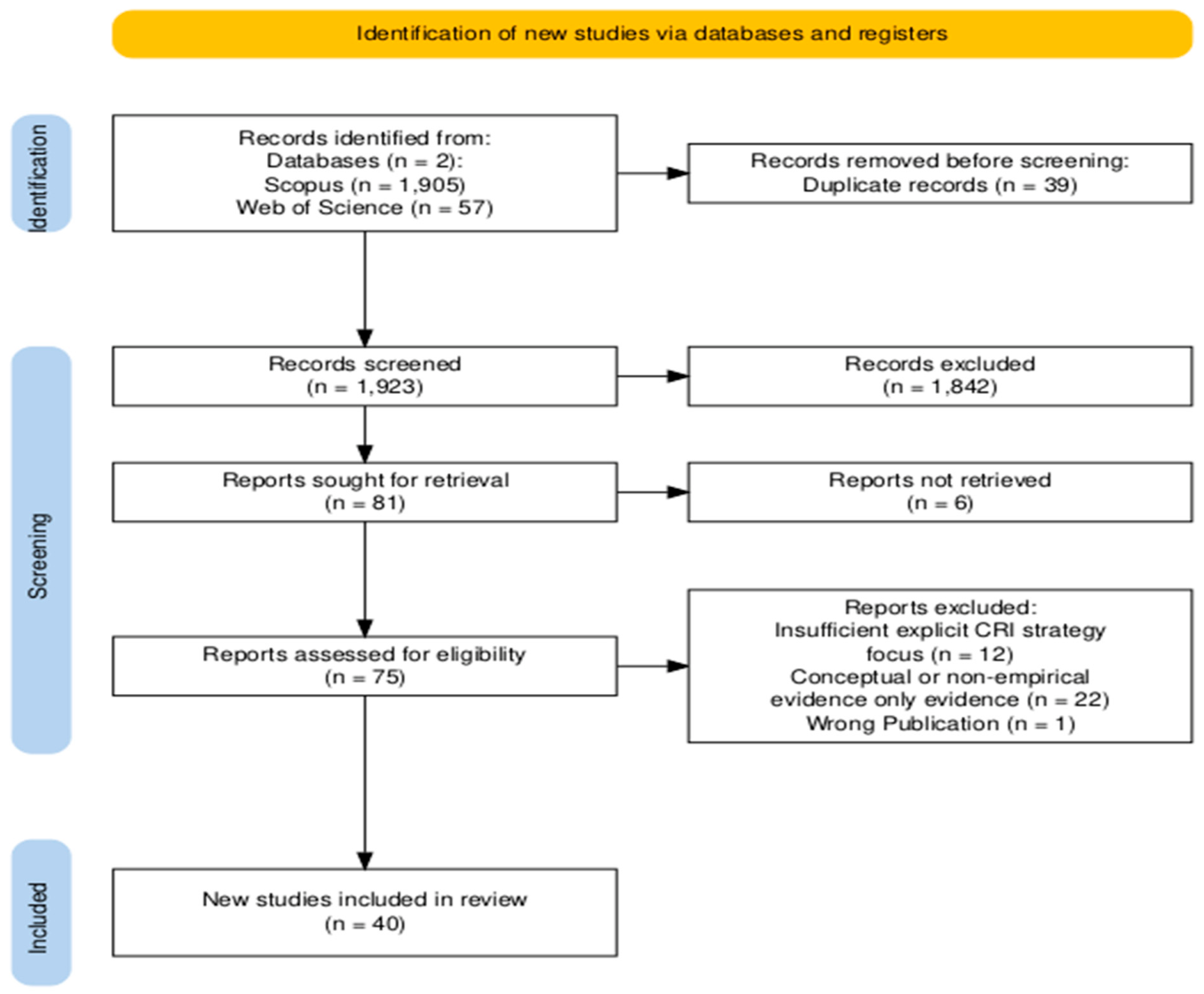
In total, 1962 records were identified through database searching, including 1905 from Scopus and 57 from Web of Science. After removal of 39 duplicate records, 1923 records remained for title and abstract screening. Of these, 1842 were excluded as not relevant to the review question. Eighty-one reports were sought for retrieval, of which six could not be accessed. The remaining 75 full-text articles were assessed for eligibility, and 35 were excluded at this stage. As a result, 40 studies (see Figure 1) were included in the final systematic review and thematic synthesis.

2.5. Quality Appraisal

The methodological quality of the included studies was appraised using a rapid Mixed Methods Appraisal Tool (MMAT)-based approach. This approach was selected because the review included heterogeneous evidence, comprising qualitative, quantitative, mixed-methods, modelling, and conceptual studies. Five appraisal criteria were applied across the empirical studies: clarity of the research objective, appropriateness of the research design, adequacy of data sources or measurements, transparency and coherence of analysis, and the extent to which conclusions were grounded in the reported findings. Studies that were clearly conceptual or review-based were retained where relevant to the review question, but were treated as not fully MMAT-applicable rather than being assigned a misleading empirical quality score. The appraisal was used to support cautious interpretation of the evidence base rather than to exclude studies solely on methodological grounds.

2.6. Data Extraction

A structured Excel-based extraction template (Microsoft Corp., Redmond, WA, USA) was developed to ensure consistency in capturing information from the included studies. Extracted fields included author(s), year of publication, title, research design, geographic focus, publication outlet, type of climate-resilient infrastructure addressed, and the strategies used to enable, implement, govern, finance, scale, or sustain such interventions in informal settlements. These strategies were coded into five domains: governance and institutional, community and social, financial and economic, technical and design, and knowledge, data, and digital. Data extraction was conducted independently by J.A. and B.Y.C.M., and the extracted data were subsequently cross-checked for consistency by J.K. before synthesis.

2.7. Data Synthesis

The extracted data were analysed using a narrative thematic synthesis. Data organisation and coding were supported using Microsoft Excel 2010 version 14.0 (Microsoft Corp., Redmond, WA, USA). Studies were compared iteratively to identify recurring strategy patterns, cross-cutting themes, and differences across contexts. The findings were coded and organised into five strategy domains: governance and institutional, community and social, financial and economic, technical and design, and knowledge, data, and digital. These domains provided the analytical framework for the results and the cross-cutting synthesis. Data visualisation was undertaken to support the interpretation of the synthesised evidence. Graphical outputs, including geographic distribution maps and thematic relationship diagrams, were generated using R software 4.5.2 (RStudio environment; R Project for Statistical Computing, Vienna, Austria). Relevant packages such as sf, rnaturalearth, ggalluvial, and networkD3 were used to produce spatial and relational visualisations that illustrate patterns in the distribution, thematic focus, and interconnections among climate-resilient infrastructure strategies across the included studies.

2.8. Limitations to the Study

This review has several limitations. It includes only English-language, peer-reviewed journal articles and therefore excludes grey literature, policy documents, practitioner reports, and non-English publications. Although the search was expanded to include Scopus and Web of Science, relevant studies in regional or less widely indexed outlets may still have been missed. Publication bias is also possible, since successful or visible CRI interventions are more likely to be published than failed or stalled cases. In addition, informal settlements vary substantially in their social, institutional, political, and environmental conditions, limiting the transferability of findings across contexts. While a rapid MMAT-based quality appraisal was conducted, the evidence base remains methodologically heterogeneous and geographically uneven, with particularly weak coverage of financial and economic and knowledge, data, and digital strategies. The findings should therefore be interpreted as analytically robust but context-specific rather than universally generalisable.

2.9. Conceptual Framework

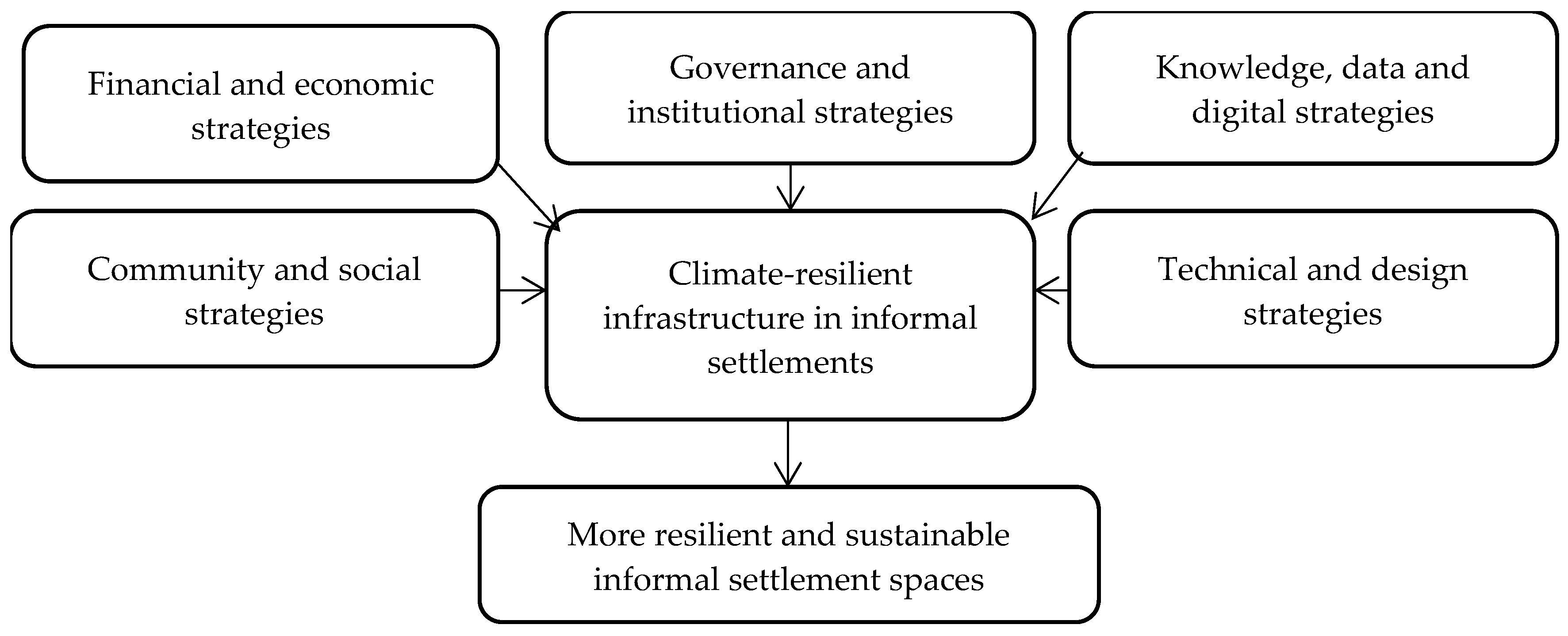
The conceptual framework (see Figure 2) illustrates how climate-resilient infrastructure (CRI) in informal settlements emerges from the interaction of five key strategic domains: financial and economic strategies, governance and institutional strategies, knowledge, data and digital strategies, community and social strategies, and technical and design strategies. Each domain represents a critical enabling system that supports the planning, implementation, and sustainability of infrastructure interventions in vulnerable urban environments. Governance structures provide regulatory coordination, financial mechanisms enable investment and scaling, community participation enhances local ownership and legitimacy, technical and design strategies deliver physical climate adaptation solutions, while knowledge, data, and digital tools support decision-making and risk management. These interacting domains contribute to more sustainable and resilient spaces by addressing climate risks such as flooding, heat stress, and infrastructure deficits. By integrating institutional capacity, social inclusion, technological innovation, financial sustainability, and knowledge systems, the framework aligns with the broader goals of sustainable urban development and climate adaptation, particularly those reflected in Sustainable Development Goals (SDGs) 6, 11, and 13, which emphasize resilient infrastructure, inclusive cities, and climate action.

3. Results

3.1. Study Characteristics

A total of 40 studies (S1–S40) were included in this review (see Table 2), representing a diverse body of evidence on climate-resilient infrastructure (CRI) in informal settlements. The studies are geographically concentrated in the Global South, with the majority conducted in Africa (n = 18; 45.0%), followed by Asia (n = 9; 22.5%) and Latin America (n = 8; 20.0%). In addition, 2 studies (5.0%) were conducted in the Pacific region, while 3 studies (7.5%) adopted multi-country or conceptual approaches. This distribution reflects a geographically uneven evidence base, concentrated in a limited number of highly represented national contexts.
Methodologically, the studies comprise qualitative, quantitative, and mixed-methods designs, with a strong emphasis on case studies and participatory approaches, reflecting the applied and context-specific nature of CRI interventions.
Across the sample, all studies (S1–S40; 100%) addressed technical and design strategies, highlighting the centrality of infrastructure interventions such as drainage, housing upgrading, and nature-based solutions. In addition, 28 studies (S1–S7, S9, S11–S14, S17, S18, S20, S24–S27, S30–S35, S37–S39; 70.0%) incorporated governance and institutional dimensions, while 26 studies (S3–S5, S7, S8, S11, S13–S17, S19, S20, S25–S29, S31–S33, S35, S36, S38–S40; 65.0%) emphasized community and social strategies.
By contrast, only 6 studies (S5, S22–S24, S29, S34; 15.0%) addressed knowledge, data, and digital approaches, and just 1 study (S20; 2.5%) explicitly considered financial and economic mechanisms, indicating a limited focus on these enabling domains.
Overall, the evidence shows that CRI interventions are predominantly technically driven, but increasingly supported by governance and community-based approaches, with relatively limited integration of digital and financial strategies.

3.2. Summary of the Main Results

Table 3 summarises the main results of the review, highlighting the structure of the evidence base, the dominant strategy domains, and the principal analytical patterns emerging from the synthesis.

3.3. Appraisal of Included Studies

The rapid MMAT-based appraisal indicates that the evidence base is generally moderate to strong, although methodological robustness varies across study designs. Of the 40 included studies, 37 were appraised as empirical studies and 3 were classified as conceptual or review-based and therefore not fully MMAT-applicable. Among the empirical studies, 26 were assessed as high quality, 9 as moderate quality, and 2 as low quality. High-quality studies typically showed clear research objectives, appropriate designs, adequate data or measurement procedures, and conclusions well-grounded in the reported findings. Moderate-quality studies were analytically useful but provided less detail on data adequacy, integration, or analytical transparency. The two low-rated studies were retained because of their relevance to the review question, but their findings were interpreted more cautiously.

3.4. Temporal Distribution of the CRI Studies

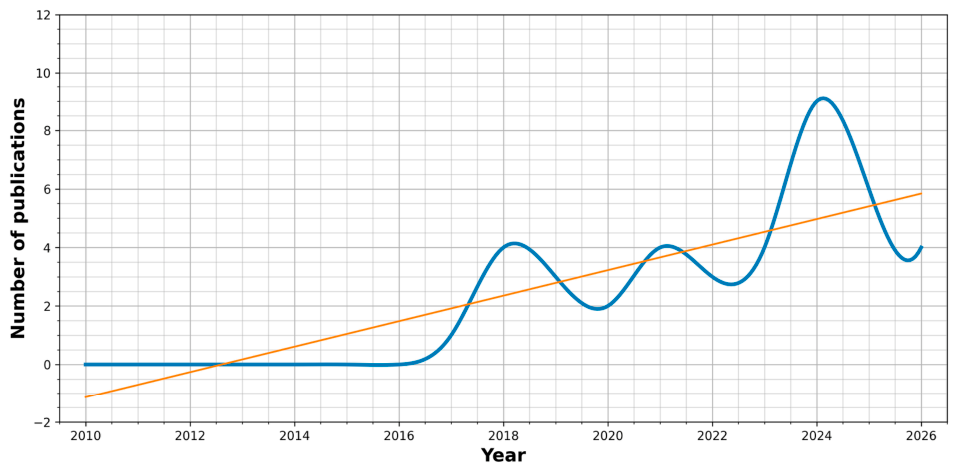
Research on methods for promoting climate-resilient infrastructure (CRI) in informal settlements increased over the review period, although growth was uneven. As shown in Figure 3, the literature developed through four broad phases, reflecting shifts in policy attention, methodological approaches, and growing interest in governance, co-production, and implementation.

3.4.1. Pre-2015: Fragmented and Sector-Specific Interventions

Before 2015, research on CRI in informal settlements was limited and fragmented. Most studies examined sector-specific issues such as flooding, drainage, water provision, sanitation, and environmental services, with little integration into broader climate adaptation or governance frameworks. The focus was largely on hazard exposure and infrastructure deficits in settlements located in floodplains, wetlands, and other poorly serviced urban areas. Institutional coordination, financing, and long-term sustainability were rarely addressed. This phase was therefore characterised by isolated technical responses rather than integrated resilience strategies.

3.4.2. 2015–2016: Policy Catalysts and a Shift Toward Strategic Framing

The period 2015–2016 marked a conceptual turning point, although publication output remained low. This phase coincided with major global policy agendas that elevated climate adaptation, disaster risk reduction, and inclusive urban development. Informal settlements began to be framed more explicitly as priority sites for resilience-building. Studies increasingly linked infrastructure provision to governance reform, institutional coordination, and community participation. While empirical evidence remained limited, this period established the policy and conceptual basis for more strategic approaches to CRI.

3.4.3. 2017–2020: Institutionalisation and Methodological Diversification

From 2017, the literature expanded more visibly, with an initial rise around 2018 and moderate fluctuation through 2020. This phase reflected the growing institutionalisation of resilience agendas and a diversification of methods. Studies increasingly used hydrological modelling, sanitation analysis, flood-risk mapping, governance assessment, participatory planning, and infrastructure retrofit analysis (S2, S3, S16, S18, S22, S23, S27, S31, S35, S40). Infrastructure was more often understood as part of hybrid socio-technical systems shaped by land tenure, governance, and community practice (S2, S3, S13, S18, S31, S34, S35, S40). This marked a shift away from technocratic delivery models toward institutional coordination, community co-production, and incremental upgrading (S13, S18, S31, S34, S35, S40).

3.4.4. 2021–2026: Acceleration, Co-Production, and Strategy-Focused Research

From 2021 onwards, CRI research in informal settlements expanded rapidly and became more strategy-oriented. Publication output increased sharply, peaking around 2024 and remaining comparatively high thereafter. Studies in this phase emphasised co-production, participatory governance, nature-based solutions, and the conditions required to enable, implement, scale, and sustain infrastructure interventions (S1, S4, S5, S9, S24, S26, S27, S28, S30, S32, S33). Greater attention was also given to financing, institutional support, and comparative learning across contexts, although these themes remained unevenly developed (S1, S20, S24, S25, S26, S30, S32, S33). Overall, this phase reflects a more mature literature concerned not only with infrastructure provision, but also with implementation, inclusion, and long-term functionality (S1, S4, S5, S24, S26, S28, S30, S32, S33).

3.5. Geographical Analysis of Publications

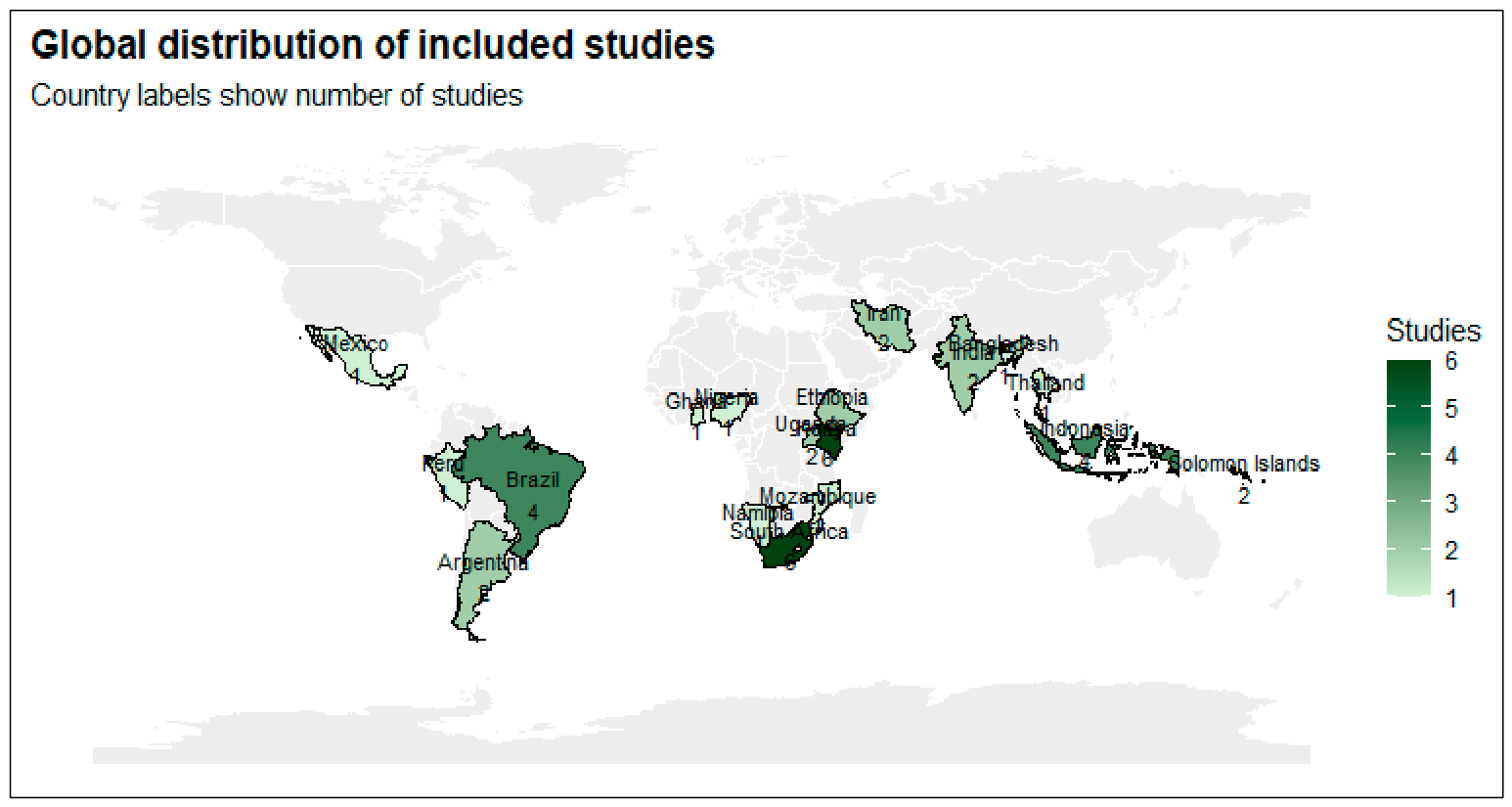
To complement the tabulated distribution presented in Table A1, Figure 4 provides a spatial visualisation of the global distribution of included studies. The map reveals a pronounced geographical clustering of evidence, with a strong concentration in Sub-Saharan Africa, particularly South Africa and Kenya. By contrast, Asia and Latin America show more dispersed and country-specific contributions, while the Pacific region remains minimally represented.
This visual pattern reinforces the uneven structure of the evidence base, indicating that current knowledge on climate-resilient infrastructure (CRI) in informal settlements is shaped by a relatively small number of highly researched national contexts. The clustering observed in Africa suggests both heightened research attention and the prominence of informal settlements as sites of climate adaptation intervention, while the sparse distribution in other regions highlights gaps in comparative and globally representative evidence.
As presented in Table A1 (see Appendix A) and visualised spatially in Figure 4, the evidence base on strategies for advancing climate-resilient infrastructure (CRI) in informal settlements is unevenly distributed across regions. Africa accounts for the largest share of studies (18 studies; 45.0%), reflecting both the continent’s high exposure to climate-related risks and the strong research attention given to informal settlements as sites of adaptation and infrastructure intervention (S1, S6, S7, S9, S10, S11, S15, S21, S22, S27, S31, S32, S35, S36, S37, S38, S39, S40). At the same time, Figure 4 shows that this dominance is not evenly spread across the continent, but concentrated in a relatively small number of countries, especially Kenya and South Africa. This suggests that the literature is shaped by a limited set of case-study locations and national research contexts rather than by broad continental coverage (S10, S21, S35, S36, S39, S40; S27, S31, S32, S38).
Asia contributes 9 studies (22.5%), led by Indonesia and followed by Iran, Bangladesh, India, and Thailand (S2, S3, S5, S8, S12, S13, S19, S26, S29). As shown in Table A1, these studies tend to focus on land and governance conditions for infrastructure retrofit, heat mitigation, and urban greening in dense informal environments (S2, S3, S8, S12, S19, S26, S29). Latin America contributes 8 studies (20.0%), with Brazil most strongly represented, alongside Argentina, Mexico, Peru, and one broader Latin American comparative study (S14, S16, S17, S18, S24, S25, S28, S30). Both Table A1 and Figure 4 indicate that this regional contribution is again shaped by concentration in a small number of national contexts rather than even regional spread. These studies more frequently emphasise ecosystem-based adaptation, drainage, urban regeneration, and governance-linked nature-based strategies (S14, S16, S17, S18, S24, S28, S30).
The Pacific contributes 2 studies (5.0%), both from the Solomon Islands (S4, S23), while 3 studies (7.5%) are multi-regional or conceptual in scope (S20, S33, S34). Taken together, Table A1 provides the numerical distribution of the evidence base, while Figure 4 makes visible its geographical clustering and uneven concentration (S20, S25, S33, S34). This combined reading suggests that the geography of CRI knowledge is shaped not simply by where climate risks are most acute, but also by where research is most visible, concentrated, and repeatedly produced.

3.6. Strategies for Advancing Climate-Resilient Infrastructure in Informal Settlements

In order to organise the diversity of evidence on strategies for improving climate-resilient infrastructure in informal settlements, the 40 included studies were thematically analysed to identify recurring implementation strategies. The coding process categorised related interventions into five overarching themes, ranging from community-based adaptation and participatory approaches to governance reforms, technological tools, and nature-based solutions. This thematic organisation gives a structured overview of how the literature conceptualises and applies strategies to advance CRI in informal settlements across different contexts. These themes, frequency of occurrence, and key study codes associated with each are summarised in Table A2 (see Appendix A).
These domains represent overlapping strategic pathways through which climate-resilient infrastructure in informal settlements is enabled, implemented, scaled, and sustained. Most studies adopt multi-strategy approaches, combining technical interventions with governance reform and community engagement, rather than treating CRI as a purely engineering challenge (S3, S4, S5, S7, S14, S17, S20, S25, S26, S27, S31, S32, S33, S35, S38, S39). The following subsections discuss each strategy domain, drawing only on studies included in this review, before synthesising crosscutting implications.

3.6.1. Technical and Design Strategies

Technical and design strategies are the most prominent domain in the evidence base, appearing in all 40 included studies (100.0%). This confirms the strong orientation of the literature toward physical and infrastructural responses to climate-related risks in informal settlements. Across the reviewed studies, these strategies include drainage and flood management, sanitation systems, wastewater treatment, green and blue infrastructure, nature-based solutions, heat mitigation, and other locally adapted design responses (S4, S5, S7, S8, S10, S13, S14, S16, S18, S19, S20, S21, S22, S23, S26, S27, S28, S30, S31, S33, S35, S36, S37, S38, S39, S40). At the same time, several studies caution that technical interventions alone are insufficient and are more effective when supported by enabling governance arrangements, community participation, and longer-term maintenance structures (S4, S5, S7, S14, S17, S20, S25, S26, S31, S33, S35, S38, S39).

3.6.2. Governance and Institutional Strategies

Governance and institutional strategies appear in 28 of the 40 included studies (70.0%), making them the second most prominent domain. These studies emphasise policy reform, institutional coordination, integration of climate resilience into urban planning, and the inclusion of informal settlements within formal infrastructure and upgrading frameworks (S1, S6, S9, S12, S14, S18, S24, S25, S26, S31, S33). Evidence across regions highlights regulatory exclusion, fragmented institutional responsibilities, insecure tenure, and weak inter-agency coordination as major barriers to advancing climate-resilient infrastructure (S2, S3, S6, S9, S12, S17, S18, S26, S31, S35, S37). The literature therefore suggests that governance reform is central to embedding CRI within longer-term urban development and adaptation agendas (S1, S6, S9, S18, S24, S25, S31, S33).

3.6.3. Community and Social Strategies

Community and social strategies are reported in 26 studies (65.0%), showing that participation, co-production, and community stewardship are major components of CRI advancement in informal settlements. These studies emphasise the role of residents in planning, implementation, and maintenance, and show that community engagement can improve the legitimacy, uptake, and contextual fit of infrastructure interventions (S4, S5, S7, S8, S13, S14, S15, S26, S28, S29, S32, S33, S35, S38). Evidence from cases in Africa and Asia particularly highlights the importance of trust-building, local knowledge, and collective action in sustaining green, blue, and hybrid infrastructure in dense informal environments (S8, S13, S29, S32, S33, S38).

3.6.4. Financial and Economic Strategies

Financial and economic strategies are the least represented domain in the evidence base, appearing in only 1 study (2.5%). This indicates that the literature gives very limited explicit attention to financing mechanisms, cost recovery, investment models, or the long-term economic sustainability of climate-resilient infrastructure in informal settlements (S20). Although financial considerations are sometimes mentioned indirectly within broader discussions of governance, sanitation, or implementation constraints, they are rarely analysed as a core strategic domain in their own right (S1, S17, S20, S24, S31). This gap points to an important weakness in the current literature, especially given that funding constraints are repeatedly identified as a major barrier to scaling and sustaining climate-resilient infrastructure in low-income urban settings (S17, S20, S24, S31).

3.6.5. Knowledge, Data, and Digital Strategies

Knowledge, data, and digital strategies appear in 6 studies (15.0%), making them more visible than financial strategies but still underrepresented in the overall evidence base. These studies highlight the value of spatial mapping, flood-risk modelling, digital tools, and data-driven planning frameworks for improving hazard identification, targeting interventions, and supporting evidence-based decision-making in informal settlements (S5, S22, S23, S24, S29, S34). However, their relatively limited number also suggests ongoing constraints related to technical capacity, data governance, reproducibility, and the integration of digital systems into local planning and implementation processes (S5, S22, S23, S24, S29, S34).

3.7. Cross-Cutting Synthesis of Strategies for Advancing Climate-Resilient Infrastructure in Informal Settlements

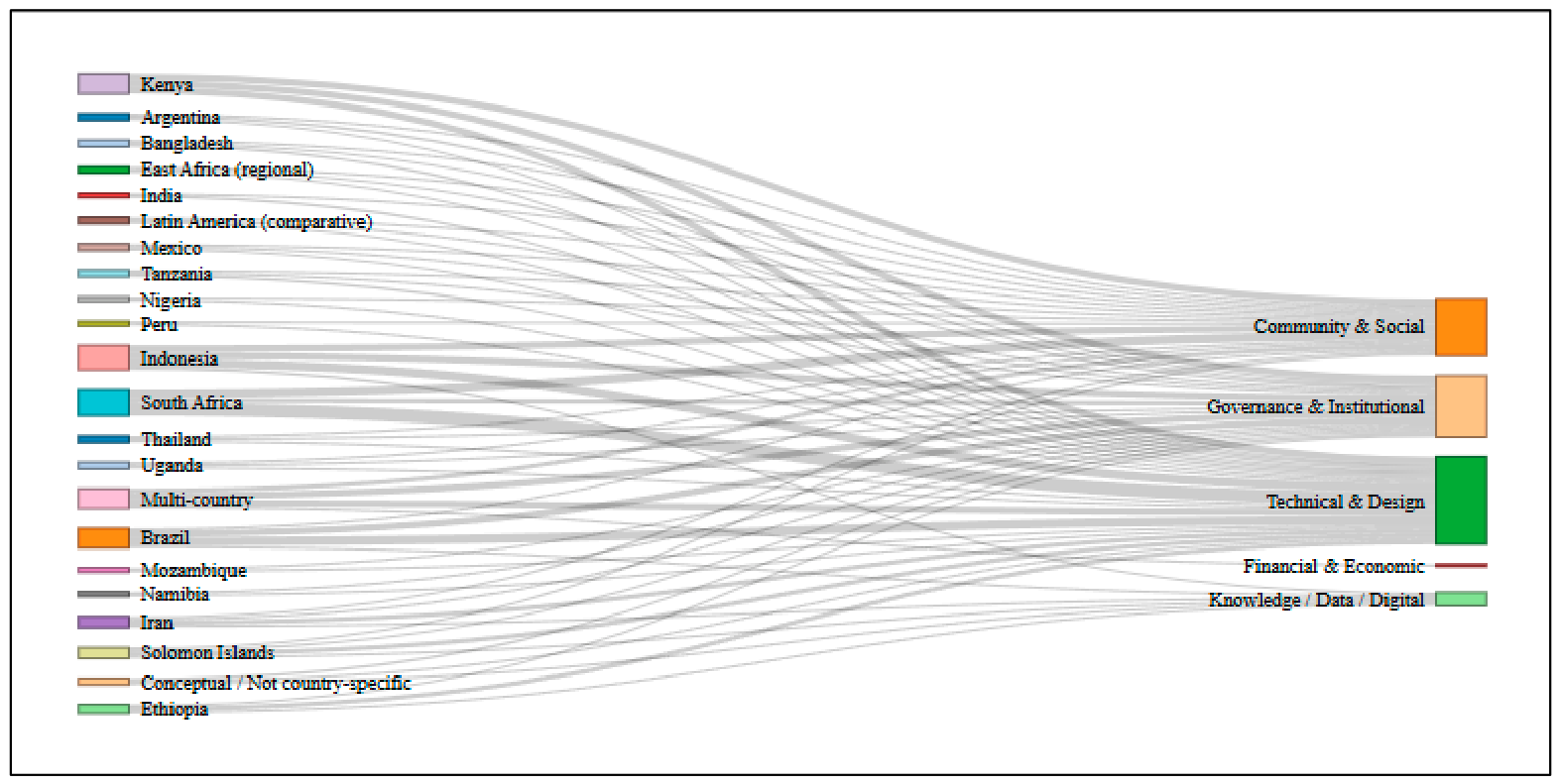
To further examine how strategic domains interact across study contexts, Figure 5 visualises the relationships between geographical locations and the main strategy domains identified in the review.
The 40 reviewed studies show that climate-resilient infrastructure (CRI) in informal settlements is rarely advanced through stand-alone interventions. As shown in Table A2 (see Appendix A) technical and design strategies dominate the evidence base, but governance and institutional (70.0%) and community and social (65.0%) strategies also appear prominently. This pattern suggests that CRI is better understood as a socio-technical process than as a purely physical intervention (S3, S4, S5, S7, S14, S17, S20, S25, S26, S27, S31, S32, S33, S35, S38, S39).
This relationship is reinforced by Figure 5, where the Sankey diagram shows that most studies connect multiple strategy domains rather than a single isolated approach. Strong flows toward technical strategies are accompanied by substantial linkages to governance and community domains, indicating that infrastructure measures are most effective when supported by enabling institutions, participation, and local stewardship (S1, S2, S3, S6, S9, S12, S17, S18, S24, S26, S31, S33, S37; S4, S5, S8, S13, S26, S28, S29, S32, S35, S38). At the same time, Table A2 shows a marked imbalance across domains: financial and economic strategies remain extremely limited (2.5%), while knowledge, data, and digital strategies are still secondary (15.0%). This is also visible in Figure 5, where flows toward these domains are comparatively thin. Together, these patterns suggest that the literature is more developed in showing how CRI can be designed and socially embedded than in explaining how it can be financed, coordinated, and sustained at scale (S20; S5, S22, S23, S24, S29, S34).
Overall, the combined reading of Table A2 (see Appendix A) and Figure 5 strengthens the conclusion that advancing CRI in informal settlements requires integrated strategies rather than isolated sectoral responses. This indicates that the effectiveness of CRI depends less on the presence of individual interventions than on the alignment of technical, institutional, and community-based enabling conditions.

4. Discussion

4.1. Reframing CRI in Informal Settlements

A central insight of this review is that climate-resilient infrastructure (CRI) in informal settlements is too narrowly understood when treated mainly as a technical response to climate risk. Across the reviewed studies, infrastructure outcomes depend not only on material design, but also on the institutional, social, and political conditions through which interventions are authorised, implemented, maintained, and adapted over time [11,12,21,27,29,33]. The evidence therefore points to CRI as a socio-technical assemblage in which resilience emerges through the interaction of adaptive design, governance coordination, and community agency, rather than through infrastructure alone [22,32,34,55].
This reframing has two theoretical implications. First, it shifts CRI from an object-based view of resilience to a process-based one. The central question is not only what infrastructure is delivered, but under what political, institutional, and social conditions it becomes durable, legitimate, and scalable [7,13,47]. Second, it suggests that informality is not simply the setting in which CRI is deployed, but a constitutive condition shaping how resilience is produced. In the reviewed studies, infrastructure is repeatedly mediated by insecure tenure, fragmented authority, regulatory exclusion, uneven state presence, and community-led adaptation, particularly in relation to land, services, and environmental management [11,12,27,32,38,53]. CRI therefore cannot be explained through engineering logic alone; it needs to be understood through the co-production of technical systems and institutional–social relations [29,34,55].
The review also shows that the literature’s strong technical orientation captures only part of the resilience process. Technical interventions matter, but they do not by themselves explain why some projects stabilise while others remain experimental, fragmented, or short-lived [22,29,36,41,50]. What distinguishes more durable outcomes across the reviewed studies is not the presence of infrastructure alone, but the alignment of adaptive design with governance capacity and local participation [21,27,31,33,42,55].
CRI in informal settlements should therefore be theorised less as a bounded intervention category and more as a relational process through which infrastructure, institutions, and everyday practices are assembled under conditions of urban inequality and climate risk.

4.2. What Is Revealed and Concealed by the Evidence Base

The review reveals not only what is known about CRI in informal settlements, but also how the field itself is structured by geographic, thematic, and methodological biases. Table A1 shows the numerical unevenness of the evidence base, while Figure 4 makes its spatial concentration immediately visible. Together, they show a marked concentration of studies in Africa, particularly Kenya and South Africa, and more limited representation from Asia, Latin America, and the Pacific [7,15,21,27,48,51,52]. This pattern likely reflects not only differences in vulnerability and policy attention, but also disparities in research capacity, funding flows, and publication visibility. The field is therefore shaped not simply by where climate risk is most acute, but also by where research is most consistently produced, funded, and circulated.
The literature is also thematically uneven. Technical and design strategies dominate the evidence base, while governance and community-based strategies receive substantial, though secondary, attention [13,22,29,32,33,36]. By contrast, financial and economic, and knowledge, data, and digital strategies remain comparatively weak [24,26,28,34,45,46]. This imbalance is analytically significant. It suggests that the field is more advanced in identifying promising interventions than in explaining the enabling systems required to fund, coordinate, monitor, and sustain them. Put differently, CRI scholarship has been stronger on infrastructural form than on infrastructural durability. This helps explain why the literature often recognises the importance of scaling and maintenance, yet provides relatively limited evidence on the mechanisms through which these are achieved [24,26,27,42].
Methodological patterns reinforce these limitations. Much of the evidence is based on single-case qualitative studies, project-based participatory research, or context-specific modelling exercises [4,11,12,21,31,41,45,55,56]. These approaches provide valuable insight into local dynamics and implementation realities, but they also constrain broad comparison across cities and regions. Comparative, longitudinal, and impact-oriented studies remain limited, making it difficult to determine which combinations of strategies are most effective, under what conditions, and over what time horizons [33,47,49,50]. The field is therefore stronger at identifying recurrent strategic themes than at establishing comparative causal claims about resilience outcomes.
Taken together, these biases suggest that the current literature is not simply incomplete; it is systematically skewed toward visible interventions, high-profile cases, and short- to medium-term project logics. This has important implications for interpretation. The apparent dominance of technical strategies may reflect not only their practical importance, but also their greater measurability and visibility in the published record. Likewise, the relative absence of finance and digital systems may indicate not only substantive gaps in practice, but also a narrower research gaze that has yet to fully engage with the less visible infrastructures of coordination, maintenance, and scaling.

4.3. Implications for Theory, Policy, and Practice

The review has important implications for theory, policy, and practice. At a theoretical level, the findings reinforce a relational understanding of CRI in which infrastructure is embedded within wider systems of governance, participation, and service delivery. Across the reviewed studies, infrastructure outcomes depended not only on design quality, but also on the institutional arrangements, community engagement, and enabling conditions through which interventions were authorised, implemented, maintained, and sustained [21,27,29,32,33].
For policy and practice, the findings indicate that advancing CRI requires more than the delivery of technically sound projects. Effective interventions are more likely where resilience is embedded within broader informal-settlement upgrading frameworks, where coordination across planning, infrastructure, housing, and climate governance institutions is strengthened, and where community participation is treated as a core component of implementation rather than an add-on [7,13,19,32,51]. The evidence also suggests that community engagement improves the local legitimacy, contextual fit, and long-term uptake of interventions, particularly in relation to drainage, sanitation, green infrastructure, and nature-based solutions [21,22,32,36,48,55,57].
At the same time, the review highlights two important policy gaps. Financial and economic strategies remain weakly represented, despite their central importance for implementation, maintenance, and scaling [26]. Knowledge, data, and digital strategies are also underdeveloped, even though they are increasingly important for hazard identification, planning coordination, monitoring, and adaptive management [24,28,34,45,46]. Overall, the findings suggest that effective CRI policy in informal settlements requires integrated, institutionally supported, and community-embedded strategies rather than isolated technical projects.

4.4. Directions for Future Research

Future research should respond directly to the structural limitations identified in the current evidence base. First, there is a need for more comparative and longitudinal research capable of tracing how CRI strategies perform across different cities, governance regimes, and climate-risk settings. Such work would allow the field to move beyond pattern recognition toward stronger explanation of which strategy combinations are most durable and why [33,47,49,50].
Second, the weak representation of financial and economic strategies points to a major gap in the literature. More research is needed on investment models, maintenance finance, affordability, subsidy structures, and the political economy of scaling CRI in low-income urban contexts. Without stronger attention to financing, the field risks continuing to propose interventions without adequately addressing how they can persist beyond pilot or donor-supported stages [24,26,42].
Third, greater analytical attention should be given to knowledge, data, and digital systems, particularly their role in hazard identification, planning coordination, monitoring, and adaptive management. As informal settlements increasingly become sites of data-driven urban governance, understanding how digital tools interact with local knowledge, institutional capacity, and questions of access and exclusion will become increasingly important [24,28,34,45,46].
More broadly, future work would benefit from treating CRI not simply as an applied infrastructure agenda, but as a site through which larger questions of urban inequality, governance capacity, and adaptation politics can be examined. Such a shift would help move the field from documenting interventions toward explaining the deeper institutional and socio-political conditions under which climate resilience can be produced and sustained in informal settlements.

4.5. Contribution of the Review

This review contributes to the literature by demonstrating that climate-resilient infrastructure (CRI) in informal settlements is better understood not as a stand-alone technical response, but as a process shaped by infrastructure design, institutional arrangements, and community agency [14,29,33,34,47]. By synthesising evidence across five strategy domains, it provides a structured account of how CRI is enabled, implemented, scaled, and sustained under conditions of urban informality [7,21,22,23,32]. The review also identifies major blind spots in the field, particularly the limited attention given to financing, digital systems, and other enabling conditions required for long-term durability [24,26,28,45,46]. Its main contribution, therefore, is both empirical and conceptual: it consolidates a fragmented evidence base while reframing CRI as an integrated strategic process shaped by design, institutions, and community agency [27,29,33,34,47].

5. Conclusions

This review synthesised evidence from 40 peer-reviewed studies published between 2010 and 19 March 2026 on strategies for advancing climate-resilient infrastructure (CRI) in informal settlements. The literature has expanded noticeably since 2015 and is increasingly oriented toward integrated, implementation-focused approaches. At the same time, the evidence base remains geographically uneven, with a strong concentration in Africa, particularly Kenya and South Africa, and more limited representation from Asia, Latin America, and the Pacific. This pattern suggests that current knowledge is shaped by a relatively narrow set of national and urban case-study contexts, which constrains broader generalisation.
The review shows a clear dominance of technical and design strategies, alongside substantial attention to governance and institutional, and community and social approaches. By contrast, financial and economic, and knowledge, data, and digital strategies remain comparatively underdeveloped. This imbalance suggests that the literature is stronger in explaining how CRI can be designed and socially embedded than in showing how it can be financed, coordinated, and sustained at scale.
Across the reviewed studies, more durable CRI outcomes are rarely linked to technical interventions alone. Instead, they depend on the interaction of adaptive design, institutional coordination, and community engagement. In this sense, what matters is not only what infrastructure is delivered, but whether it can be implemented, maintained, and sustained under conditions of informality, inequality, and fragmented urban governance. CRI in informal settlements is therefore better understood as a broader process shaped by context-specific enabling conditions than as a purely technical response to climate risk.
The central contribution of this review is to show that the key challenge in CRI is not only identifying appropriate interventions, but also understanding the enabling systems through which they become implementable, legitimate, and durable in contexts of informality.

Supplementary Materials

The following supporting information can be downloaded at: https://www.mdpi.com/article/10.3390/su18104768/s1, PRISMA 2020 Checklist.

Author Contributions

Conceptualization, J.A. and M.B.Y.C.; methodology, J.A.; software, J.A.; validation, M.B.Y.C.; formal analysis, J.A.; investigation, J.A.; resources, M.B.Y.C.; data curation, J.A.; writing—original draft preparation, J.A.; writing—review and editing, M.B.Y.C.; visualization, J.A.; supervision, M.B.Y.C.; project administration, J.A.; funding acquisition, M.B.Y.C. All authors have read and agreed to the published version of the manuscript.

Funding

Mangosuthu University of Technology funded the article processing charge (APC) for this manuscript. The funder had no role in the study design; data collection, analysis, or interpretation; or writing of the manuscript.

Institutional Review Board Statement

Not applicable.

Informed Consent Statement

Not applicable.

Data Availability Statement

This study is based exclusively on data from previously published studies. No primary data were generated, but review extraction sheets, coded data, and supporting materials are available in the Supplementary Materials.

Acknowledgments

The authors gratefully acknowledge J.K. for assisting with cross-checking the extracted data for consistency. During the preparation of this manuscript, the authors used ChatGPT-5.3 (OpenAI, San Francisco, CA, USA) to support language refinement and restructuring of selected sections. The authors critically reviewed and edited all outputs and take full responsibility for the content of this publication.

Conflicts of Interest

The authors declare no conflicts of interest.

Abbreviations

The following abbreviations are used in this manuscript:
CRIClimate-resilient infrastructure
PRISMAPreferred reporting items for systematic reviews and meta-analyses
SDGSustainable development goal
DRRDisaster risk reduction
DFMDrainage flood management

Appendix A

Appendix A.1

Table A1. Continental and Country-Level Distribution of Included Studies.
RegionNumber of StudiesPercentage (%)Study CodesCountries Represented
Africa1845.00%S1, S6, S7, S9, S10, S11, S15, S21, S22, S27, S31, S32, S35, S36, S37, S38, S39, S40South Africa (6), Kenya (4), Uganda (2), Tanzania (2), Ethiopia (2), Namibia (1), Nigeria (1), Mozambique (1), East Africa (1)
Asia922.50%S2, S3, S5, S8, S12, S13, S19, S26, S29Indonesia (4), Iran (2), Bangladesh (1), India (1), Thailand (1)
Latin America820.00%S14, S16, S17, S18, S24, S25, S28, S30Brazil (4), Argentina (1), Mexico (1), Peru (1), Latin America comparative (1)
Pacific25.00%S4, S23Solomon Islands (2)
Multi-regional/Global37.50%S20, S33, S34Kenya–India–Ghana (1), Kenya–Argentina (1), conceptual/not country-specific (1)

Appendix A.2

Table A2. Strategies to advance CRI in informal settlements.
Strategy DomainNo. of StudiesShare (%)Study Codes
Technical & Design40100.00%S1, S2, S3, S4, S5, S6, S7, S8, S9, S10, S11, S12, S13, S14, S15, S16, S17, S18, S19, S20, S21, S22, S23, S24, S25, S26, S27, S28, S29, S30, S31, S32, S33, S34, S35, S36, S37, S38, S39, S40
Governance & Institutional2870.00%S1, S2, S3, S4, S5, S6, S7, S9, S11, S12, S13, S14, S17, S18, S20, S24, S25, S26, S27, S30, S31, S32, S33, S34, S35, S37, S38, S39
Community & Social2665.00%S3, S4, S5, S7, S8, S11, S13, S14, S15, S16, S17, S19, S20, S25, S26, S27, S28, S29, S31, S32, S33, S35, S36, S38, S39, S40
Knowledge/Data/Digital615.00%S5, S22, S23, S24, S29, S34
Financial & Economic12.50%S20

References

  1. Howard, B.C.; Moulds, S.; Agyei-Mensah, S.; Nahin, K.T.K.; Quayyum, Z.; Robinson, B.E.; Buytaert, W. Four Principles of Transformative Adaptation to Climate Change-Exacerbated Hazards in Informal Settlements. Wiley Interdiscip. Rev. Clim. Change 2025, 16, e70008. [Google Scholar] [CrossRef]
  2. Tillermuir, H.; Carboni, L.; Hotchin, C.; Lal, H.; Morrison, R. A holistic framework to improve urban flood management in cities with informal settlements. Environ. Res. Infrastruct. Sustain. 2025, 5, 015026. [Google Scholar] [CrossRef]
  3. Sharma, S.; Das, A.; Bhattacharya, S.P. Strengthening WASH resilience in flood-affected urban poor communities: Insights from Patna. Cities 2025, 159, 105758. [Google Scholar] [CrossRef]
  4. Salsabila, S.; Amir, S.; Nastiti, A. Cooling as social practice: Heat mitigation and the making of communal space in Jakarta’s informal settlements. Habitat Int. 2023, 140, 102924. [Google Scholar] [CrossRef]
  5. Roy, M.; Shemdoe, R.; Hulme, D.; Mwageni, N.; Gough, A. Climate change and declining levels of green structures: Life in informal settlements of Dar es Salaam, Tanzania. Landsc. Urban Plan. 2018, 180, 282–293. [Google Scholar] [CrossRef]
  6. Huq, E. Green Informalities as Socially just Ecological Infrastructure: Enduring with Dignity at the Edges of Resilient Development in Dhaka. Int. J. Urban Reg. Res. 2024, 48, 560–583. [Google Scholar] [CrossRef]
  7. Mugeni, M.M.; Djenontin, I.N.S. Integrating climate and urban development goals? An examination of policies with a focus on informal settlements in East Africa. Clim. Dev. 2025, 5529, 1–17. [Google Scholar] [CrossRef]
  8. Ragheb, R.A.; Barakat, P.N. New Sustainable Agenda for Slums Future Expansion, Case-Study: Ezbiit El-Matabea, Alexandria, Egypt. Int. J. Sustain. Dev. Plan. 2022, 17, 385–397. [Google Scholar] [CrossRef]
  9. Zubaidah, S.; Rusli, B.; Djaja Saefullah, A.; Widianingsih, I. An overview of slum upgrading programs in developing countries: Case study in Indonesia. Cogent Arts Humanit. 2023, 10, 2264021. [Google Scholar] [CrossRef]
  10. Wang, H.C. Consolidating Informal Settlements Through Upgrading? The Temporary Implications of In-Situ Electrification from Thembelihle in Johannesburg, South Africa. J. Asian Afr. Stud. 2024, 59, 425–442. [Google Scholar] [CrossRef]
  11. Mesgar, M.; Ramirez-Lovering, D. Informal land rights and infrastructure retrofit: A typology of land rights in informal settlements. Land 2021, 10, 273. [Google Scholar] [CrossRef]
  12. Mesgar, M.; Ramirez-Lovering, D.; El-Sioufi, M. Tension, conflict, and negotiability of land for infrastructure retrofit practices in informal settlements. Land 2021, 10, 1311. [Google Scholar] [CrossRef]
  13. Wijesinghe, A.; Thorn, J.P.R. Governance of urban green infrastructure in informal settlements of windhoek, Namibia. Sustainability 2021, 13, 8937. [Google Scholar] [CrossRef]
  14. Juma, B.; Olang, L.O.; Hassan, M.A.; Mulligan, J.; Shiundu, P.M. Simulation of flood peak discharges and volumes for flood risk management in the ungauged urban informal settlement of Kibera, Kenya. Phys. Chem. Earth 2022, 128, 103236. [Google Scholar] [CrossRef]
  15. Fitchett, A. Suds for managing surface water in Diepsloot informal settlement, Johannesburg, South Africa. Water SA 2017, 43, 310–322. [Google Scholar] [CrossRef]
  16. Wolff, E.; Rauf, H.A.; Diep, L.; Natakun, B.; Kelly, K.; Hamel, P. Implementing participatory nature-based solutions in the Global South. Front. Sustain. Cities 2022, 4, 956534. [Google Scholar] [CrossRef]
  17. D’Aquino, C.A.; Pereira, B.A.; Sawatani, T.F.; de Moura, S.C.; Tagima, A.; Ferrarese, J.C.B.B.; Santos, S.C.; Sauer, I.L. Biogas Potential from Slums as a Sustainable and Resilient Route for Renewable Energy Diffusion in Urban Areas and Organic Waste Management in Vulnerable Communities in São Paulo. Sustainability 2022, 14, 7016. [Google Scholar] [CrossRef]
  18. Yap, C.; Mcfarlane, C.; Ndezi, T.; Makoba, F.D. Sanitation challenges in Dar es Salaam: The potential of Simplified Sewerage Systems. Environ. Urban. 2023, 35, 12–29. [Google Scholar] [CrossRef]
  19. Jacobsen, K.; Hollander, J.B.; Sternlieb, S.R.; Yimere, A.; Naegele, A.C.; Schwalm, C. Urban policy responses to climate hazards in Addis Ababa, Ethiopia. City Environ. Interact. 2024, 24, 100162. [Google Scholar] [CrossRef]
  20. Syal, S. Overregulated and Underserved: Regulatory overlap in infrastructure/service provision in Delhi’s ‘informal’ settlements. Habitat Int. 2025, 157, 103287. [Google Scholar] [CrossRef]
  21. Hermanus, L.; Andrew, S. Community-centred infrastructure design process for resilience building in South African informal settlements: The “genius of space” solid waste and greywater infrastructure project. Case Stud. Environ. 2018, 2, 1–10. [Google Scholar] [CrossRef]
  22. McEvoy, D.; Tara, A.; Vahanvati, M.; Ho, S.; Gordon, K.; Trundle, A.; Rachman, C.; Qomariyah, Y. Localized nature-based solutions for enhanced climate resilience and community wellbeing in urban informal settlements. Clim. Dev. 2024, 16, 600–612. [Google Scholar] [CrossRef]
  23. Diep, L.; Mulligan, J.; Oloo, M.A.; Guthmann, L.; Raido, M.; Ndezi, T. Co-building trust in urban nature: Learning from participatory design and construction of Nature-Based Solutions in informal settlements in East Africa. Front. Sustain. Cities 2022, 4, 927723. [Google Scholar] [CrossRef]
  24. Dong, T.; Tadi, M. Digital Twin-Assisted Urban Resilience: A Data-Driven Framework for Sustainable Regeneration in Paranoá, Brasilia. Urban Sci. 2025, 9, 333. [Google Scholar] [CrossRef]
  25. Vollmer, D.; Grêt-Regamey, A. Rivers as municipal infrastructure: Demand for environmental services in informal settlements along an Indonesian river. Glob. Environ. Change 2013, 23, 1542–1555. [Google Scholar] [CrossRef]
  26. Tauhid, F.A.; Zawani, H. Mitigating climate change related floods in urban poor areas: Green infrastructure approach. J. Reg. City Plan. 2018, 29, 98–112. [Google Scholar] [CrossRef]
  27. Mulligan, J.; Bukachi, V.; Clause, J.C.; Jewell, R.; Kirimi, F.; Odbert, C. Hybrid infrastructures, hybrid governance: New evidence from Nairobi (Kenya) on green-blue-grey infrastructure in informal settlements: “Urban hydroclimatic risks in the 21st century: Integrating engineering, natural, physical and social sciences to build. Anthropocene 2020, 29, 100227. [Google Scholar] [CrossRef]
  28. Kamjou, E.; Scott, M.; Lennon, M. A bottom-up perspective on green infrastructure in informal settlements: Understanding nature’s benefits through lived experiences. Urban For. Urban Green. 2024, 94, 128231. [Google Scholar] [CrossRef]
  29. Moschonas, D.; French, M.; Ramirez-Lovering, D.; Marzaman, L.; Latief, I.; Parikh, P. Co-producing nature-based solutions: Integrating knowledge interfaces in informal settlements in Indonesia. Environ. Urban. 2025, 37, 465–486. [Google Scholar] [CrossRef]
  30. Mahadevia, D. Heat adaptation and health in the informal housing—An exploratory research in Ahmedabad, India. Sustain. Soc. Dev. 2024, 2, 2461. [Google Scholar] [CrossRef]
  31. Hardoy, J.; Motta, J.M.; Kozak, D.; Almansi, F.; Reverter, T.; Costello, M. Exploring the links between the use of NbS, mindshifts and transformative urban coalitions to promote climate resilience within an ongoing reurbanization process. The case of Villa 20, Buenos Aires. Front. Sustain. Cities 2022, 4, 962168. [Google Scholar] [CrossRef]
  32. Rauf, H.A.; Wolff, E.; Natakun, B.; Marome, W.; Hamel, P. Aligning nature-based solutions and housing policy: A study on stakeholders’ perceptions of nature within informal settlement upgrading projects. Cities 2024, 153, 105264. [Google Scholar] [CrossRef]
  33. Kibii, C.; Guerra, F.; Bananayo, P.B.; Sandholz, S. Nature-based solutions for climate change adaptation and resilience in urban informal settlements: Insights from kibera, kenya and Villa 20, Argentina. Nat.-Based Solut. 2025, 7, 100216. [Google Scholar] [CrossRef]
  34. Diep, L.; Dodman, D.; Parikh, P. Green Infrastructure in informal settlements through a multiple-level perspective. Water Altern. 2019, 12, 554–570. [Google Scholar]
  35. Page, M.J.; McKenzie, J.E.; Bossuyt, P.M.; Boutron, I.; Hoffmann, T.C.; Mulrow, C.D.; Shamseer, L.; Tetzlaff, J.M.; Akl, E.A.; Brennan, S.E.; et al. The PRISMA 2020 statement: An updated guideline for reporting systematic reviews. BMJ 2021, 372, 71. [Google Scholar] [CrossRef] [PubMed]
  36. Muwafu, S.P.; Celliers, L.; Scheffran, J.; Máñez Costa, M. Community Governance Performance of Nature-Based Solutions for Sustainable Urban Stormwater Management in Sub-Saharan Africa. Sustainability 2024, 16, 8328. [Google Scholar] [CrossRef]
  37. Nicklin, E.; Maraj, K.; Winter, K. Field-scale application of constructed wetlands for treating surface water contaminated by an informal settlement. Water SA 2025, 51, 205–214. [Google Scholar] [CrossRef]
  38. Kamjou, E.; Scott, M.; Lennon, M. Green spaces in informal settlements: Planning failures and green infrastructure loss in Amirieh, Iran. Cities 2026, 173, 107007. [Google Scholar] [CrossRef]
  39. Birtchnell, T.; Gill, N.; Sultana, R. Sleeper cells for urban green infrastructure: Harnessing latent competence in greening Dhaka’s slums. Urban For. Urban Green. 2019, 40, 93–104. [Google Scholar] [CrossRef]
  40. Adegun, O.B. Climatic disasters within a flood-prone coastal slum in Lagos: Coping capacities and adaptation prospects. Int. J. Disaster Resil. Built Environ. 2023, 14, 212–228. [Google Scholar] [CrossRef]
  41. Fonseca Alves, L.G.; de Oliveira Galvão, C.; de Farias Santos, B.L.; Fernandes de Oliveira, E.; Andrade de Moraes, D. Modelling and assessment of sustainable urban drainage systems in dense precarious settlements subject to flash floods. LHB Hydrosci. J. 2022, 108, 2016024. [Google Scholar] [CrossRef]
  42. Hernández Aguilar, B.; Lerner, A.M.; Manuel-Navarrete, D.; Siqueiros-García, J.M. Persisting narratives undermine potential water scarcity solutions for informal areas of Mexico City: The case of two settlements in Xochimilco. Water Int. 2021, 46, 919–937. [Google Scholar] [CrossRef]
  43. Sandholz, S.; Lange, W.; Nehren, U. Governing green change: Ecosystem-based measures for reducing landslide risk in Rio de Janeiro. Int. J. Disaster Risk Reduct. 2018, 32, 75–86. [Google Scholar] [CrossRef]
  44. Maraj, K.; Winter, K.; Harrison, S.T.L. Removal of Dissolved Nitrogen Species from Runoff Polluted by an Informal Settlement Using a Subsurface Flow Stone Biofilter with Treated Water Targeted for Reuse. ACS ES T Water 2024, 4, 5621–5632. [Google Scholar] [CrossRef]
  45. De Risi, R.; Jalayer, F.; De Paola, F.; Carozza, S.; Yonas, N.; Giugni, M.; Gasparini, P. From flood risk mapping toward reducing vulnerability: The case of Addis Ababa. Nat. Hazards 2020, 100, 387–415. [Google Scholar] [CrossRef]
  46. Liu, J.; Tan, J.; Zhang, S.; Zhong, C.; Lv, L.; Tara, A. Suitability Assessment of Small Dams’ Location as Nature-Based Solutions to Reduce Flood Risk in Mataniko Catchment, Honiara, Solomon Islands. Sustainability 2023, 15, 3313. [Google Scholar] [CrossRef]
  47. Núñez Collado, J.R.; Wang, H.H. Slum upgrading and climate change adaptation and mitigation: Lessons from Latin America. Cities 2020, 104, 102791. [Google Scholar] [CrossRef]
  48. Lebu, S.; Gyimah, R.; Nandoya, E.; Brown, J.; Salzberg, A.; Manga, M. Assessment of sanitation infrastructure resilience to extreme rainfall and flooding: Evidence from an informal settlement in Kenya. J. Environ. Manag. 2024, 354, 120264. [Google Scholar] [CrossRef]
  49. Oraiopoulos, A.; Wieser, M.; Verdiere, M.; Lambert, R.; Fennell, P.; Ruyssevelt, P. Improving habitability in informal settlements in the Global South: Exploring the impact of community urban green infrastructure on outdoor heat stress. Build. Environ. 2026, 287, 113787. [Google Scholar] [CrossRef]
  50. Fonseca, M.T.; Pereira dos Santos, G.; Cordeiro, J.; Migliorini Mendes, R.S.; Gimmler Netto, M.M.; Moura, P.M.; Vieira, E.M.; Scotti, M.R. Impact assessment and rehabilitation of an informal settlement using sustainable urban drainage systems as a nature-based solution in Brazil. Environ. Dev. 2026, 57, 101383. [Google Scholar] [CrossRef]
  51. Tuhkanen, H.; Pateman, R.; Opiyo, R.; Muhoza, C.; Cambridge, H.; Archer, D.; Cinderby, S. Engagement around risk, informality and Nature-based solutions in Nakuru, Kenya. City Environ. Interact. 2025, 26, 100195. [Google Scholar] [CrossRef]
  52. Davy, J.; Todd, A.; Metson, G.S.; Thatcher, A. Designing a greywater treatment system in a highly adaptive urban environment: An ergonomics and human factors observational analysis. Urban Water J. 2023, 20, 624–637. [Google Scholar] [CrossRef]
  53. Santos, M.M.; Vaz Ferreira, A.T.; Lanzinha, J.C.G. Evaluating household sanitation in flood-prone informal settlements: A case study from Chipangara, Beira (Mozambique). Dev. South. Afr. 2026, 43, 91–109. [Google Scholar] [CrossRef]
  54. Thatcher, A.; Metson, G.S.; Sepeng, M. Applying the sustainable system-of-systems framework: Wastewater(s) in a rapidly urbanising South African settlement. Ergonomics 2024, 67, 450–466. [Google Scholar] [CrossRef]
  55. Diep, L.; Parikh, P.; Duarte, B.P.d.S.; Bourget, A.F.; Dodman, D.; Martins, J.R.S. “It won’t work here”: Lessons for just nature-based stream restoration in the context of urban informality. Environ. Sci. Policy 2022, 136, 542–554. [Google Scholar] [CrossRef]
  56. Liu, W.; Shan, M.; Zhang, S.; Zhao, X.; Zhai, Z. Resilience in Infrastructure Systems: A Comprehensive Review. Buildings 2022, 12, 759. [Google Scholar] [CrossRef]
  57. Adegun, O.B. Flood-related challenges and impacts within coastal informal settlements: A case from LAGOS, NIGERIA. Int. J. Urban Sustain. Dev. 2023, 15, 1–13. [Google Scholar] [CrossRef]
Figure 1. The PRISMA flow diagram summarising the study selection process (adapted from [35]).
Sustainability 18 04768 g001
Figure 2. Conceptual Framework for Analysing Climate-Resilient Infrastructure Strategies.
Sustainability 18 04768 g002
Figure 3. Temporal distribution of CRI studies in informal settlements (2010–19 March 2026). The blue curve illustrates the smoothed annual publication counts, capturing short-term fluctuations and phase-specific dynamics, while the orange linear trend line represents the overall upward trajectory in scholarly output over time.
Sustainability 18 04768 g003
Figure 4. Global distribution and geographical concentration of studies on climate-resilient infrastructure (CRI) in informal settlements.
Sustainability 18 04768 g004
Figure 5. Relationships between geographical contexts and strategic domains for advancing climate-resilient infrastructure (CRI) in informal settlements.
Sustainability 18 04768 g005
Table 1. Inclusion and Exclusion Criteria.
CriterionInclusionExclusion
TopicStudies addressing climate-resilient infrastructure (CRI), adaptation infrastructure, nature-based solutions, green infrastructure, or related resilience interventions in informal settlementsClimate, infrastructure, or urban studies without a clear focus on informal settlements
Study focusStudies examining strategies for enabling, implementing, governing, financing, scaling, or sustaining CRI in informal settlementsGeneral climate adaptation studies without a clear infrastructure or strategy focus
Publication period2010 to 19 March 2026Published before 2010
Publication typePeer-reviewed journal articlesEditorials, policy notes, reports, book chapters, conference abstracts, conference proceedings, and other non-peer-reviewed publications
LanguageEnglishNon-English
ContextInformal settlements, slums, shack settlements, squatter settlements, unplanned settlements, or comparable low-income urban informal contextsFormal urban housing, planned residential areas, or non-informal settlement contexts
AccessFull-text availableFull text not retrievable
Table 2. Characteristics of included studies.
StudyCountry/Case LocationMethodology UsedCRI/Adaptation Strategy FocusStrategic Domains Addressed
Governance & InstitutionalCommunity & SocialFinancial & EconomicTechnical & DesignKnowledge/Data/Digital
S1: Mugeni et al., 2025 [7]Kenya; Uganda; TanzaniaQualitative policy integration analysisGovernance integration for climate-resilient infrastructure
S2: Mesgar et al., 2021 [11]Indonesia (Makassar)Exploratory typological case study/spatial analysisGreen/WASH infrastructure and land tenure conditions
S3: Mesgar et al., 2021 [12]Indonesia (Makassar)Qualitative case study/land negotiation analysisLand negotiation and infrastructure retrofit strategies
S4: McEvoy et al., 2024 [22]Solomon Islands (Honiara)Co-production case study/pilot evaluationNature-based solutions and community resilience implementation
S5: Moschonas et al., 2025 [29]IndonesiaMixed-methods case study (design-plan analysis, field notes, interviews)Participatory decentralized water and NbS implementation
S6: Wijesinghe et al., 2021 [13]Namibia (Windhoek)Qualitative governance case studyGovernance strategies for green infrastructure implementation
S7: Muwafu et al., 2024 [36]Uganda (Kampala)Governance assessment framework/case studyNbS governance for stormwater and flood resilience
S8: Salsabila et al., 2023 [4]Indonesia (Jakarta)Ethnographic fieldwork/social-practice analysisHeat adaptation and vernacular cooling infrastructure
S9: Jacobsen et al., 2024 [19]Ethiopia (Addis Ababa)Qualitative policy analysisPolicy frameworks for climate-resilient infrastructure responses
S10: Maraj et al., 2024 [37]South AfricaPilot field experiment/performance evaluationNature-based infrastructure intervention in informal settlements
S11: Roy et al., 2018 [5]Tanzania (Dar es Salaam)Mixed-methods case study/ecological-infrastructure analysisUrban green infrastructure and climate adaptation dynamics
S12: Kamjou et al., 2026 [38]Iran (Amirieh, Tehran region)Qualitative case studyGovernance drivers of green infrastructure degradation
S13: Birtchnell et al., 2018 [39]Bangladesh (Dhaka)Semi-structured interviews + ethnographic observationCommunity-based green infrastructure and resilience scaling
S14: Hardoy et al., 2022 [31]Argentina (Buenos Aires)Qualitative case study/coalition analysisNature-based solutions and governance for settlement upgrading
S15: Adegun et al., 2023 [40]Nigeria (Lagos)Mixed methods (interviews, survey, GIS/sea-level-rise scenarios)Flood adaptation and green infrastructure interventions
S16: Alves et al., 2022 [41]BrazilHydrological modelling/SWMM scenario analysisSUDS for flood mitigation and participatory planning
S17: Aguilar et al., 2021 [42]Mexico (Mexico City, Xochimilco)Comparative case study/narrative analysisWater scarcity adaptation and rainwater harvesting solutions
S18: Sandholz et al., 2018 [43]Brazil (Rio de Janeiro)Multi-level governance case studyEcosystem-based risk reduction and governance arrangements
S19: Mahadevia et al., 2024 [30]India (Ahmedabad)Exploratory field study/thermal comfort and health assessmentCool roofs and built-environment heat adaptation
S20: Tauhid et al., 2018 [26]Kenya; India; GhanaComparative multi-case study of GI practicesGreen infrastructure with governance, finance, and awareness
S21: Maraj et al., 2024 [44]South AfricaPilot field experiment/biofilter performance evaluationBiofilter infrastructure for runoff pollution management
S22: Risi et al., 2020 [45]Ethiopia (Addis Ababa)Probabilistic flood-risk mapping/geospatial modellingFlood-risk mapping for adaptation decision-making
S23: Liu et al., 2023 [46]Solomon Islands (Honiara)GIS/remote sensing/multi-criteria evaluationGIS-based NbS for flood risk reduction
S24: Dong et al., 2025 [24]Brazil (Paranoá, Brasília)Digital twin/GIS-KPI frameworkDigital twin systems for infrastructure resilience planning
S25: Collado et al., 2020 [47]Latin America (comparative)Comparative case-study analysis/lessons reviewSlum upgrading through policy and infrastructure strategies
S26: Rauf et al., 2024 [32]Thailand (Baan Mankong programme)Stakeholder-perception study/qualitative policy analysisNbS implementation in informal housing upgrading
S27: Lebu et al., 2024 [48]Kenya (Kibera)Infrastructure resilience assessment/case studySanitation infrastructure resilience in informal settlements
S28: Oraiopoulos et al., 2026 [49]Peru (Lima)Mixed methods (field microclimate measurements + satellite LST)Community green infrastructure for heat risk mitigation
S29: Kamjou et al., 2024 [28]Iran (Tehran metropolitan area)Qualitative lived-experience studyCommunity knowledge and green infrastructure adaptation
S30: Fonseca et al., 2026 [50]BrazilImpact assessment and rehabilitation case studySuDS-based rehabilitation for flood and erosion control
S31: Mulligan et al., 2019 [27]Kenya (Nairobi)Qualitative case study/governance analysisUrban drainage governance and participatory infrastructure
S32: Tuhkanen et al., 2025 [51]Kenya (Nakuru)Participatory engagement case studyParticipatory NbS planning for informal settlement resilience
S33: Kibii et al., 2025 [33]Kenya; ArgentinaComparative case study/barrier-enabler analysisNbS barriers, enablers, and participatory planning
S34: Diep et al., 2019 [34]Conceptual/not country-specificConceptual/theoretical multi-level perspective analysisSocio-political conditions shaping green infrastructure adoption
S35: Hermanus et al., 2018 [21]South AfricaCommunity-centred participatory design case studyCommunity-centred infrastructure design and implementation
S36: Davy et al., 2023 [52]South AfricaObservational ergonomics/human-factors analysisWastewater NbS design and usability improvements
S37: Santos et al., 2026 [53] Mozambique (Beira)Household sanitation case study/evaluationFlood-resilient sanitation infrastructure and governance barriers
S38: Diep et al., 2022 [23]East Africa (Kenya; Tanzania)Participatory design and construction case studyCo-design and scaling of NbS interventions
S39: Thatcher et al., 2024 [54]South AfricaSystems framework application/case studyWastewater wetlands and climate adaptation design
S40: Fitchett 2017 [15]South Africa (Johannesburg)SuDS design case studyLow-cost SuDS for stormwater management
Notes: CRI = climate-resilient infrastructure. ✓ indicates that the study addressed the corresponding strategic domain; – indicates that the domain was not explicitly identified.
Table 3. Overview of the main results of the review.
Result DimensionMain FindingAnalytical Significance
Evidence baseThe final synthesis included 40 studies.The literature remains relatively limited, but is now sufficiently developed to support thematic and comparative analysis.
Temporal trendPublication output was low before 2015, increased after 2017, and accelerated markedly from 2021 onwards.The field has gained momentum only recently, indicating growing scholarly attention to implementation, co-production, and strategy.
Regional distributionAfrica contributed the largest share of studies, followed by Asia and Latin America.The evidence base is geographically uneven and shaped by a small number of highly represented national contexts.
Dominant strategy domainTechnical and design strategies appeared in the largest number of studies.CRI research remains strongly oriented toward physical and infrastructural interventions.
Secondary strategy domainsGovernance and institutional, and community and social strategies were also widely represented.Effective CRI delivery is commonly linked to enabling institutions, participation, and community engagement.
Underrepresented domainsFinancial and economic, and knowledge, data, and digital strategies appeared least frequently.Key enabling conditions for scaling, coordination, and long-term sustainability remain weakly developed in the literature.
Cross-cutting patternMost studies combined multiple strategy domains rather than relying on a single intervention type.CRI in informal settlements is better understood as a socio-technical and governance-linked process than as a stand-alone technical response.
Overall synthesisRecent studies increasingly emphasise co-production, nature-based solutions, and implementation-oriented approaches.The literature is shifting from isolated sectoral interventions toward more integrated and strategy-focused models of resilience building.
Disclaimer/Publisher’s Note: The statements, opinions and data contained in all publications are solely those of the individual author(s) and contributor(s) and not of MDPI and/or the editor(s). MDPI and/or the editor(s) disclaim responsibility for any injury to people or property resulting from any ideas, methods, instructions or products referred to in the content.