


Article

FinTech and Corporate Innovation Sustainability: Evidence from China
Institute of Chinese Financial Studies of SWUFE, Southwestern University of Finance and Economics, Chengdu 611130, China
*
Author to whom correspondence should be addressed.
Sustainability 2026, 18(10), 4788; https://doi.org/10.3390/su18104788 (registering DOI)
Submission received: 27 March 2026 / Revised: 18 April 2026 / Accepted: 28 April 2026 / Published: 11 May 2026

Abstract

Innovation drives long-term firm development, but not all innovations create lasting technological impact. This study investigates how financial technology (FinTech) fosters innovation sustainability by employing a fixed-effects Poisson regression framework and using data from non-financial A-share listed companies in China from 2012 to 2020. Innovation sustainability is measured by forward patent citations within a three-year window, capturing the persistence and external impact of innovations. Our results show that regional FinTech development significantly enhances both the quantity and sustainability of firm innovation. Mechanism analysis reveals that FinTech promotes innovation sustainability by alleviating financing constraints, facilitating digital transformation, and optimizing human capital allocation. These findings provide empirical evidence on the role of FinTech in sustaining firms’ technological contributions and offer actionable insights for policymakers and managers aiming to support high-quality, long-term innovation.

1. Introduction

Innovation is a fundamental driver of firms’ long-term development and economic transformation [1,2]. However, innovation outcomes differ in the timing of their impact, as some innovations generate early and concentrated influence while others exhibit more delayed effects [3].
In this study, we use the term “innovation sustainability” as a descriptive label to emphasize the relative persistence of innovation impact compared with contemporaneous (year-of) citation-based measures. Building on this idea, we construct a measure based on patent forward citations within a three-year post-grant window to capture early-stage citation dynamics during the diffusion process. This measure follows the standard forward citation approach widely used in the literature to proxy innovation quality and technological value [4,5]. Prior evidence suggests that patent citations are highly concentrated in the early years after publication [6], indicating that early citation patterns contain important information about innovation impact.
In China, enterprise innovation often faces financing constraints, largely due to reliance on indirect financing channels [7]. Banks frequently hesitate to fund ventures lacking tangible assets or collateral, limiting firms’ ability to pursue high-impact and enduring innovations. These constraints not only restrict innovation quantity but also hinder firms from achieving sustained technological impact, highlighting the importance of mechanisms that can enhance innovation sustainability.
From a resource-based perspective, firms are conceptualized as bundles of heterogeneous and immobile resources, where the availability and quality of internal resources shape innovation outcomes [8]. Human, financial, and physical capital are key determinants that influence the translation of ideas into enduring value [9,10]. Consequently, high-quality, innovation with long-term impact requires both the generation of novel ideas and the effective utilization of internal resources to produce outcomes that can be continuously leveraged to support enterprise growth.
The rapid development of financial technology (FinTech) offers new opportunities to alleviate financing constraints and optimize internal resource allocation, both of which are critical for enhancing innovation sustainability. By integrating technologies such as big data, artificial intelligence, and blockchain, FinTech facilitates digital transformation, improves operational efficiency, and strengthens the allocation of financial and human capital. These capabilities enable firms to better utilize internal resources, streamline management processes, and attract innovative talent [11,12]. At the same time, FinTech expands access to external financing by reducing costs and enhancing credit assessment, particularly for firms with limited collateral or traditional credit histories [11,12,13]. Collectively, these mechanisms bolster firms’ ability to pursue innovations with persistent technological impact, thereby promoting long-term enterprise growth and sustainability.
We systematically examine how FinTech enhances innovation sustainability. Innovation sustainability is primarily measured using forward patent citations within a three-year window (excluding self-citations), which capture the persistence and external technological impact of innovations, while patent applications are included as a complementary indicator of innovation scale. To provide a clear analytical framework, we focus on two primary channels through which FinTech may influence innovation sustainability: easing firms’ financing constraints and improving the allocation of internal resources. In addition, we investigate industry- and region-level heterogeneity in FinTech’s effects on innovation sustainability, providing comprehensive empirical evidence that informs both policy formulation and theoretical development. Collectively, these analyses clarify the mechanisms through which FinTech supports firms’ sustained technological contributions and long-term growth.

2. Hypothesis Development

Innovation is influenced by a variety of factors at both the micro and macro levels. In this study, we focus on innovation sustainability, defined as the extent to which innovation outcomes generate persistent technological impact and create enduring value over time. Studies on patent forward citations as measures of innovation quality, and studies on sustainable innovation focusing on environmentally oriented technological development. Patent forward citations are widely used in the literature as a standard proxy for innovation quality and technological significance, as they reflect the extent to which an invention influences subsequent technological development [14,15,16]. However, forward citations primarily capture the cumulative magnitude of innovation impact over time and do not distinguish whether such impact is short-lived or persists across periods. Innovation sustainability focuses on the temporal persistence of innovation outcomes, capturing the extent to which innovative outputs maintain their influence over time, regardless of their environmental orientation.
Financial development has long been recognized as a key driver of firm innovation, improving the allocation of financial resources and supporting technological progress [17,18]. However, traditional financial systems are often constrained by information asymmetries and reliance on collateral, limiting their ability to sustain long-term innovation outcomes. Recent advances in financial technology (FinTech) have introduced new mechanisms that enhance financial efficiency, reduce frictions, and expand access to funding [19,20,21].
By providing a more stable financial environment, FinTech not only supports firms in generating innovations but also creates conditions for these innovations to persist and generate long-term technological impact. This perspective extends existing research by focusing on the durability of innovation outcomes, rather than just the quantity of innovations produced.
H1. 
FinTech development significantly promotes innovation sustainability.
The development of FinTech can substantially alleviate corporate financing constraints through two main channels. First, FinTech improves the efficiency of financial intermediation and enhances the accuracy of risk assessment, thereby reducing financial mismatches. This allows financial institutions to more accurately identify and support innovation-efficient firms, effectively lowering the cost of innovation financing [22]. Second, by leveraging advanced technologies such as big data analytics and artificial intelligence, FinTech reduces information asymmetries between firms and financial institutions, speeding up loan approvals and better aligning firms’ actual financing needs with available credit supply, particularly for innovation-driven enterprises [23]. By mitigating financing frictions, FinTech provides a more stable financial environment that supports sustained, high-quality innovation and enhances the long-term technological impact of firms’ R&D efforts.
Based on the above analysis, we propose the following hypothesis:
H2. 
FinTech enhances innovation sustainability by alleviating firms’ financing constraints.
FinTech also promotes innovation by optimizing internal resource allocation. On the one hand, as a technology-driven financial innovation, FinTech facilitates digital transformation, supporting the adoption of emerging technologies such as big data and artificial intelligence, accelerating firms’ digital upgrading and strengthening innovation capacity [24,25]. Digital transformation improves operational efficiency, reduces production costs, and reallocates resources toward innovation activities. On the other hand, FinTech supports the optimization of human capital allocation by enabling firms to better assess talent needs and attract highly skilled professionals, especially in R&D positions [26,27]. The enhancement of both knowledge and skills within firms reshapes the internal innovation environment, increases employees’ innovative engagement, and improves firms’ capacity to implement high-quality innovation projects. Through these channels, FinTech contributes not only to innovation output but also to innovation sustainability.
Based on the above analysis, we propose the following hypothesis:
H3. 
FinTech enhances innovation sustainability by facilitating digital transformation and optimizing internal human capital allocation.
Based on the above hypotheses, the overall research framework of this study is presented in Figure 1.

3. Materials and Methods

To empirically examine the impact of financial technology (FinTech) on firm-level innovation sustainability, this study constructs a panel data framework and estimates a series of econometric models using Stata 17. Unlike conventional approaches that focus on the quantity of innovation outputs, our analysis emphasizes the persistence and long-term technological impact of innovation outcomes.
Specifically, we model innovation sustainability as a function of FinTech development while controlling for firm characteristics and macroeconomic conditions. This framework allows us to identify the overall effect of FinTech and to further explore the mechanisms through which FinTech shapes firms’ innovation activities.
To uncover the underlying channels, we conduct mechanism analyses related to financing conditions, digital transformation, and human capital allocation. In addition, we perform heterogeneity analyses across industries and regions to examine whether the effects of FinTech vary across different economic environments.
Furthermore, to capture different dimensions of innovation sustainability, we conduct a set of extended analyses by focusing on innovations with stronger technological influence and transformative potential, including highly cited innovations, breakthrough innovations, and disruptive innovations.

3.1. Data Sources

This study uses a panel dataset of A-share non-financial listed firms in China over the period 2012–2020. Financial and firm-level data are obtained from the China Stock Market and Accounting Research (CSMAR) database, while patent application and citation data, as well as FinTech-related variables, are collected from the China National Research Data Service Platform (CNRDS).
To ensure data quality, firms in the financial industry are excluded, and observations with missing key variables are removed. Continuous variables are winsorized at the 1st and 99th percentiles to mitigate the influence of extreme values.
The sample period ends in 2020 to allow for a complete observation window of patent citations within three years after application. This ensures that the constructed measures can adequately capture the persistence and follow-on influence of innovation outcomes, which is central to our analysis of innovation sustainability.

3.2. Variables and Econometric Model Specification

  • Dependent Variables
This study focuses on innovation sustainability, defined as the persistence and long-term technological impact of firms’ innovation outcomes. To capture this concept, we primarily employ patent citation-based measures.
Specifically, the main dependent variable is constructed using the number of forward citations received by a firm’s patents within a three-year window after application, excluding self-citations. Patent citations are widely used to reflect the technological influence of innovations, as they indicate the extent to which a given invention is subsequently utilized and built upon by other inventors [28,29,30]. Compared with patent counts, citation-based measures better capture the persistence and continued relevance of innovation outcomes rather than short-term outputs.
The use of a three-year citation window helps ensure comparability across cohorts of patents and mitigates truncation bias while also capturing the early diffusion and recognition of innovations. Consistent with prior evidence showing that patent citations are heavily concentrated in the early years after publication [6], the three-year window places greater emphasis on the timely and economically relevant diffusion of technological knowledge, which is more closely aligned with firms’ ongoing innovation activities and strategic decisions. In addition, focusing on a shorter window allows us to better capture the near-term technological impact of innovations, rather than long-delayed effects that may be influenced by external factors.
Excluding self-citations further reduces potential bias arising from strategic citation behavior and provides a cleaner measure of external technological impact. Therefore, this measure effectively reflects the extent to which firms generate innovations with sustained technological influence, consistent with the concept of innovation sustainability.
For completeness, we also include patent application counts as an auxiliary measure of innovation output. Patent applications reflect firms’ R&D efforts and technological accumulation, particularly in the case of invention patents, which require higher levels of novelty and practical applicability. This complementary measure allows us to distinguish between the scale of innovation and its sustainability.
2.
Explanatory Variables
The primary explanatory variable is regional FinTech development, measured as the number of FinTech companies in the region where the enterprise is located [31,32]. We take the natural logarithm of this count to capture variations in regional FinTech intensity.
This indicator reflects the overall development of the regional FinTech ecosystem, capturing the scale of FinTech-related industrial activity and the degree of FinTech agglomeration. It provides a comprehensive measure of the breadth and density of FinTech market participation within a region.
3.
Control Variables
Control variables include firm-level characteristics such as the natural logarithm of total assets, firm age, return on net assets, board size, leverage, and whether the chairman and CEO positions are combined [33,34]. Regional-level controls include GDP per capita, urbanization rate, and foreign investment levels. Firm, region, and year fixed effects are included to mitigate potential omitted variable bias.
4.
Mechanism Variables
Digital Transformation: Using the approach of Mobina Zareie et al. [35], we construct a firm-level digital transformation index based on textual analysis of firms’ annual report disclosures. Specifically, we measure the frequency of digital-related keywords (e.g., artificial intelligence, big data, and cloud computing) relative to the total word count, capturing the extent of firms’ digitalization. The final set of keywords is reported in Appendix B.
Financial Mismatch: Following Shao [36], the cost of capital—calculated as interest expenses divided by total liabilities, minus accounts payable and adjusted by industry average capital costs—is used as a proxy for financial mismatch.
Credit Availability: Measured as the ratio of bank loans (short-term and long-term) to total assets, reflecting firms’ access to external financing.
Human Capital Optimization: Assessed from two perspectives: knowledge (ratio of graduate employees to total employees) and skills (ratio of R&D personnel to total employees), capturing both the educational composition and technical capability of the workforce.
5.
Econometric Model
Given that innovation sustainability are non-negative discrete counts, traditional linear models may produce biased estimates [37]. Therefore, we employ a Poisson Pseudo-Maximum Likelihood (PPML) estimator with high-dimensional fixed effects as the baseline specification. The PPML estimator is particularly suitable for count data with a large number of zeros and potential overdispersion. Importantly, it does not rely on the equidispersion assumption and remains consistent under general forms of heteroskedasticity. This makes it widely applicable in the analysis of innovation outcomes, which are typically skewed and overdispersed.
The conditional mean of innovation outcomes is specified as:
μ = E inno i j t X i j t = e x p α 1 + β 1 fintech j t + γ 1 X i j t + year + firm + city + ε 1
where inno i j t denotes patent counts or citation counts for firm i in industry j at year t , fintech j t represents regional FinTech development, and X i j t includes control variables. The Poisson specification accommodates the discrete, skewed nature of patent data and provides consistent estimates for count-dependent variables.
Table 1 presents the descriptive statistics of the main variables used in this study. The sample consists of 16,029 firm-year observations. On average, firms apply for about 16 patents per year, while the number of patent citations varies considerably, with a mean of 46.96 and a maximum value of 14,716, indicating large differences in innovation quality across firms. The level of economic development (measured by the logarithm of regional GDP per capita) averages 11.44, and the urbanization level is 0.74, reflecting a relatively high degree of urban concentration. The average foreign investment level is 0.026, suggesting that foreign capital accounts for a small proportion of total investment.

4. Results

4.1. Benchmark Regression

Table 2 presents the baseline regression results examining the impact of regional financial technology (FinTech) development on firm-level innovation outcomes. The sample consists of non-financial A-share listed companies in China from 2012 to 2020. Across all specifications, we progressively introduce firm- and region-level control variables and further incorporate year, firm, and city fixed effects to ensure robustness.
Columns (1)–(3) report the results for invention patent applications, while Columns (4)–(6) report the results for patent citations, which capture the persistence and long-term technological impact of innovation outcomes.
The results consistently show that the coefficient of the FinTech variable is positive and statistically significant across all model specifications. This indicates that regional FinTech development promotes both the quantity and the sustainability of corporate innovation. In the fully specified model with comprehensive controls and fixed effects (Columns (3) and (6)), a one-unit increase in the FinTech index is associated with a 16.15% increase in patent applications and a 15.14% increase in patent citations.
By focusing on forward citations within a three-year window and excluding self-citations, we capture the sustained influence of innovations and their contribution to firms’ long-term technological value.
Overall, these benchmark results provide robust evidence that regional FinTech development enhances both the scale and persistence of firm-level innovation. These results provide support for Hypothesis 1, which states that regional FinTech development enhances firm-level innovation outcomes, including both innovation output and its sustainability. Subsequent analyses further examine heterogeneity across industries and regions, as well as the role of high-impact, breakthrough, and disruptive innovations in shaping innovation sustainability.

4.2. Robustness Tests

We construct an alternative measure of regional FinTech development using the volume of Baidu news searches. In addition, we employ a comprehensive Digital Economy Development Index, combining Internet development and the Baidu Digital Financial Inclusion Index, as a proxy for FinTech development.
As shown in Table 3, the results provide consistent evidence that FinTech development substantially promotes corporate innovation sustainability. Patent citations, as a key indicator of innovation sustainability, reflect the sustained utilization of firms’ intellectual outputs in academia and industry, directly supporting long-term corporate sustainability. Overall, the results provide consistent evidence that the positive impact of FinTech on both innovation scale and sustainability is robust across alternative measurement approaches.

4.3. Endogeneity

To mitigate potential endogeneity concerns, all explanatory and control variables are lagged by one period. Although the region-to-firm-level panel design already alleviates some endogeneity, we further implement a control function approach for nonlinear models. Following the procedure of Lin and Wooldridge [38], the first stage employs a fixed-effects regression to address endogeneity in the FinTech variable, using the manually aggregated average FinTech penetration in neighboring cities as an instrumental variable—a method widely adopted in FinTech research [39]. In the second stage, a fixed-effects Poisson model is estimated, with standard errors computed via the Bootstrap method to ensure robustness. This strategy effectively isolates unobserved factors affecting regional FinTech development, allowing for a cleaner identification of the causal effect of FinTech on innovation sustainability. While this instrument may not fully eliminate all concerns regarding exclusion restrictions, it has been widely adopted in the FinTech literature and provides a reasonable source of exogenous variation [32,40].
Table 4 reports the regression results after addressing endogeneity. Columns (1) and (2) present the impact of FinTech development on invention patent applications and patent citations, respectively. After applying the two-stage control function method combined with fixed effects Poisson regression, the coefficients of the core explanatory variable remain significantly positive, 0.2533 and 0.2160, significant at the 5% and 10% levels.
These findings indicate that even after correcting for endogeneity, FinTech development continues to exert a statistically and economically meaningful positive effect on both the sustainability and quality of firm-level innovation. Notably, the increase in patent citations reflects the sustained utilization of firms’ intellectual outputs, supporting long-term corporate sustainability. Overall, the results strengthen the causal interpretation that FinTech effectively fosters substantive innovation activity, providing robust support for high-quality, sustainable enterprise development.
While the use of neighboring cities’ FinTech development as an instrument is motivated by spatial spillovers, concerns may arise regarding the exclusion restriction, as regional FinTech may be correlated with broader economic conditions.
However, such spillovers are expected to affect firms primarily through financial intermediation channels, such as easing financing constraints, rather than directly influencing firm-level innovation [41,42,43].
To address this concern, we include comprehensive fixed effects and conduct a supplementary test, showing that the instrument has no significant direct effect on innovation outcomes after controlling for local FinTech development (see Appendix A).
A potential concern is reverse causality, whereby regions with stronger innovation capacity may attract FinTech agglomeration, leading to a spurious correlation between FinTech development and firm innovation. To address this issue, we explicitly examine the dynamic relationship between FinTech development and innovation outcomes by incorporating both lagged and lead values of FinTech in the baseline specification. This lead–lag specification allows us to test whether future FinTech development predicts current firm innovation, which would indicate potential reverse causality or simultaneity bias.
Table 5 reports lead–lag regression results examining potential reverse causality between FinTech development and firm innovation. The results show that while lagged FinTech is positively associated with firm innovation, the coefficients on the lead terms are statistically insignificant. This suggests that future FinTech development does not predict current innovation outcomes, alleviating concerns that reverse causality drives our baseline results.
Overall, these findings support the temporal ordering assumption underlying our identification strategy.

4.4. Mechanism of FinTech Impact on Innovation Sustainability

To further explore the potential channels through which FinTech development is associated with corporate innovation sustainability, we examine several mechanisms along two dimensions: the alleviation of financing constraints and the optimization of internal resource allocation. Existing studies suggest that FinTech development can reduce information asymmetries [44] in financial markets, improve the efficiency of credit allocation [45,46], and facilitate firms’ adoption of digital technologies [47,48], and reshaping firms’ internal resource structure [49,50]. Accordingly, we examine digital transformation, financial mismatch, credit availability, and human capital optimization as key mechanisms through which FinTech may influence corporate innovation outcomes.
Building on the theoretical framework, we conduct a set of mechanism analyses to assess whether the empirical patterns are consistent with these proposed channels. Specifically, digital transformation and human capital optimization are used to capture internal resource allocation, while financial mismatch and credit availability proxy for financing constraints. These analyses allow us to provide suggestive evidence on the channels through which FinTech may influence firm innovation outcomes.
According to Column (1) of Table 6, regional FinTech development is positively associated with firm-level digital transformation, suggesting that FinTech facilitates firms’ adoption of digital technologies. This finding is consistent with the view that digital transformation enhances production efficiency and data utilization, thereby improving firms’ capacity for sustained innovation. Existing studies further show that digital transformation is closely linked to improved innovation performance by reducing information frictions and enabling more efficient resource allocation [51,52].
Columns (2) and (3) indicate that FinTech development is positively associated with firms’ credit availability, suggesting that FinTech helps alleviate financing constraints, particularly for innovation-intensive firms that require substantial external funding. Prior literature documents that improved access to external finance significantly enhances firms’ innovation investment and long-term technological development, as it reduces funding uncertainty and supports continuous R&D activities [53,54,55].
Finally, Column (4) shows that FinTech development is positively associated with improvements in human capital within firms. This finding suggests that FinTech may facilitate more efficient allocation and upgrading of human resources. Existing studies indicate that higher-quality human capital significantly enhances firms’ innovation capability by improving knowledge accumulation, absorptive capacity, and the efficiency of innovation processes [56,57].
Overall, these results provide empirical evidence for the proposed mechanisms through which FinTech affects innovation sustainability, namely digital transformation, financing constraints alleviation, and human capital optimization.

4.5. Heterogeneity Analysis

Innovation activities vary substantially across industries, reflecting differences in technological challenges and dependence on continuous innovation. Strategic emerging industries, characterized by high technology intensity and rapid product evolution, require firms to engage in independent innovation to survive in competitive markets. In contrast, non-strategic emerging industries are less reliant on technological innovation for firm survival [58]. To examine how the impact of FinTech on innovation differs by industry, we categorize firms into strategic and non-strategic emerging industries. Given their higher innovation intensity and greater dependence on external financing, firms in strategic emerging industries are expected to benefit more from FinTech development [59,60], as FinTech can alleviate financing constraints and improve the efficiency of resource allocation in innovation activities.
Geographical disparities are another salient feature of China’s economy. Regional differences in economic structure, industrial composition, and technological infrastructure may lead to heterogeneity in the effect of FinTech. Accordingly, we divide regions into eastern and non-eastern areas to explore geographical heterogeneity [60,61]. Due to more developed financial markets, stronger digital infrastructure, and higher adoption of financial technologies, firms in eastern regions are expected to experience a stronger positive impact of FinTech on innovation sustainability.
As shown in Table 7, FinTech significantly increases both patent applications and citations for firms in strategic emerging industries, with coefficients of 0.2248 and 0.2143, respectively, both significant at the 1% level. This indicates that in technology-intensive sectors where continuous innovation is critical for maintaining a competitive advantage, FinTech effectively promotes not only the generation of innovation outputs but also the long-term technological impact, enhancing innovation sustainability. In contrast, for firms in non-strategic emerging industries, the coefficients are statistically insignificant, suggesting that the effect of FinTech on innovation sustainability is relatively limited in industries less dependent on continuous technological advancement, highlighting the heightened sensitivity and reliance of high-tech sectors on FinTech-enabled innovation support.
Table 8 shows that in the eastern region, FinTech significantly enhances both patent applications and citations, with coefficients of 0.3077 and 0.2802, respectively, both significant at the 1% level. Conversely, in non-eastern regions, the effects are statistically insignificant, suggesting that the innovation-enhancing effect of FinTech is more pronounced in regions with more advanced financial infrastructure, higher adoption of digital technologies, and a business environment conducive to innovation.
Overall, firms are the primary drivers of technological progress and play a central role in industrial upgrading and long-term economic growth. Our empirical findings indicate that FinTech not only increases the quantity of invention patents but also strengthens their long-term impact, thereby enhancing innovation sustainability. Mechanism analyses show that FinTech promotes sustainable, high-quality innovation by facilitating digital transformation, alleviating financial mismatches, improving credit access, and optimizing human capital allocation. Heterogeneity analyses further reveal that these effects are strongest in strategic emerging industries and in the eastern region, emphasizing the critical role of both industry characteristics and regional contexts in shaping the innovation-promoting effects of FinTech.

5. Conclusions and Discussion

This study, using data from A-share non-financial listed companies from 2012 to 2020, examines the impact of FinTech on innovation sustainability at the firm level. The results show that regional FinTech development significantly increases both patent applications and forward citations, indicating that FinTech not only expands innovation output but also enhances the persistence and technological influence of innovations.
Mechanism analysis suggests that FinTech promotes innovation sustainability through two main channels: alleviating financing constraints and improving internal resource allocation. By enhancing financial intermediation efficiency and risk assessment, FinTech reduces financial mismatches and expands access to credit. At the same time, it facilitates digital transformation and optimizes human capital deployment, supporting firms in undertaking long-term and high-value innovation activities.
Further analysis shows that FinTech has a stronger effect on exploratory and breakthrough innovations, and its impact is more pronounced in strategic emerging industries and eastern regions. These findings suggest that FinTech plays a key role not only in increasing innovation quantity but also in shaping the direction and persistence of technological progress.
This study also contributes to the literature on citation-based measures of innovation quality by introducing a temporal dimension that captures the persistence of innovation outcomes. While existing studies widely use forward patent citations as a proxy for innovation quality and technological impact, they typically emphasize the cumulative magnitude of citations without explicitly distinguishing the timing and persistence of such impacts [14,15,16]. By focusing on citation outcomes within a fixed post-application window, this paper provides a complementary perspective that highlights the durability of innovation effects over time. This temporal perspective enriches the understanding of innovation quality by shifting attention from purely aggregate impact to the persistence structure of technological influence.
These findings provide mechanism-based policy implications. The results suggest that FinTech may enhance firms’ innovation outcomes through alleviating financing constraints, facilitating digital transformation, and improving human capital allocation. Accordingly, supporting the development of digital financial infrastructure and FinTech ecosystems may help strengthen firms’ innovation capacity. The evidence of regional heterogeneity further indicates that the effectiveness of FinTech depends on underlying financial and digital infrastructure, implying that complementary improvements in financial and digital environments are important for fully realizing its innovation-enhancing effects. Importantly, these implications should be interpreted as contingent on similar structural and institutional conditions rather than as universal policy prescriptions.
While this study provides robust evidence, several limitations remain. Patent data are limited through 2020, and measures of innovation sustainability rely on publicly available information, potentially overlooking certain innovative activities. In addition, although patent citations are widely used to proxy the persistence and technological influence of innovation, they may not fully capture other important dimensions of innovation sustainability, such as economic value, commercialization outcomes, and broader social impact. Future research could therefore develop more comprehensive measures by integrating multiple data sources and alternative indicators. Although robustness checks, instrumental variable approaches, and control function methods were employed, unobserved factors may still influence the results. Future research could extend the sample period, examine emerging FinTech tools such as blockchain and AI-driven financial services, explore the heterogeneous effects of different types of FinTech on innovation, and conduct cross-country comparisons to better understand how institutional and industrial contexts shape FinTech’s impact on corporate innovation sustainability.

Author Contributions

Conceptualization, J.T., L.D., J.P. and H.Z.; methodology, J.P. and L.D.; software, J.P. and L.D.; validation, J.T., L.D., J.P. and H.Z.; formal analysis, J.P. and L.D.; data curation, J.P. and L.D.; writing—original draft preparation, J.P. and L.D.; writing—review and editing, J.T., L.D., J.P. and H.Z.; visualization, J.T., L.D., J.P. and H.Z.; supervision, J.T.; project administration, J.T.; funding acquisition, J.T. All authors have read and agreed to the published version of the manuscript.

Funding

This research received no external funding.

Institutional Review Board Statement

Not applicable.

Informed Consent Statement

Not applicable.

Data Availability Statement

The data used in this study are available from public sources, including the China Stock Market and Accounting Research (CSMAR) database and the China National Research Data Service Platform (CNRDS). Restrictions apply to the availability of these data, which were used under license for this study.

Conflicts of Interest

The authors declare no conflicts of interest.

Appendix A

Table A1. Placebo Test of Instrumental Variable.
Patent Applications for InventionsInnovation Sustainability
Fintech0.1675 **0.1535 **
(0.0661)(0.0736)
Instrument−0.0099−0.0819
(0.0892)(0.0972)
Enterprise-level control variablesYESYES
Regional-level control variablesYESYES
Year-to-year fixed effectYESYES
Corporate fixationYESYES
Regional fixed effectsYESYES
Pseudo R20.89340.9140
Observations12,93012,930
The numbers in parentheses are robust standard errors; ** represents significance levels of 5%, respectively.

Appendix B

We analyze firms’ annual report disclosures and identify digital transformation–related keywords using a comprehensive dictionary constructed by integrating keyword lists from prior studies [62,63,64,65,66], following the approach of Zareie et al. [35].
Table A2. Digital Transformation Keyword Dictionary.
CategoryKeywords
Artificial Intelligence & Data Scienceartificial intelligence; machine learning; deep learning; neural network; natural language processing; NLP; sentiment analysis; speech recognition; voice recognition; image recognition; image understanding; semantic search; text mining
Big Data & Data Technologiesbig data; data analytics; data mining; data integration; data visualization; data science; data processing system; data architecture; data capturing; data lake; data monetization; in-memory computing
Cloud Computing & Infrastructurecloud computing; cloud collaboration; cloud; edge computing; distributed computing; converged infrastructure; serverless computing; human cloud
Financial Technology (FinTech)fintech; blockchain; cryptocurrency; bitcoin; decentralized finance; digital currency; mobile payment; NFC payment; open banking
Internet & Digital Platformsinternet; internet of things; IoT; mobile internet; platform; social media; web based; web 3.0; online; smartphone; newsfeed; click-through rate
Industry 4.0 & Smart TechnologiesIndustry 4.0; smart factory; smart devices; smart home; smart healthcare; smart transportation; smart agriculture; smart investment; smart content; robotics; robot; automation; office automation; autonomous driving; self-driving car; autonomous technology; unmanned
Emerging Technologiesvirtual reality; augmented reality; artificial reality; metaverse; 3D printing; quantum computing; 5G; biometric; biometrics; face recognition
Digitalization & E-Businessdigitalization; digitization; digital marketing; digital twin; ebusiness; e-business; ecommerce; e-commerce; eservice; e-service; e-learning; elearning; e-procurement; e-publishing; ecatalog; e-catalog; sharing economy; influencer; new economy

References

  1. Ye, F.; Paulson, N.; Khanna, M. Strategic Innovation and Technology Adoption under Technological Uncertainty. J. Econ. Dyn. Control 2024, 165, 104879. [Google Scholar] [CrossRef]
  2. Bettarelli, L.; Furceri, D.; Pizzuto, P.; Shakoor, N. Uncertainty and Innovation in Renewable Energy. J. Int. Money Financ. 2024, 149, 103202. [Google Scholar] [CrossRef]
  3. Corsino, M.; Mariani, M.; Torrisi, S. Firm Strategic Behavior and the Measurement of Knowledge Flows with Patent Citations. Strateg. Manag. J. 2019, 40, 1040–1069. [Google Scholar] [CrossRef]
  4. Patel, D.; Ward, M.R. Using Patent Citation Patterns to Infer Innovation Market Competition. Res. Policy 2011, 40, 886–894. [Google Scholar] [CrossRef]
  5. Shen, C.H.; Zhang, H. Tournament Incentives and Firm Innovation. Rev. Financ. 2018, 22, 1515–1548. [Google Scholar] [CrossRef]
  6. Higham, K.W.; Governale, M.; Jaffe, A.B.; Zülicke, U. Fame and Obsolescence: Disentangling Growth and Aging Dynamics of Patent Citations. Phys. Rev. E 2017, 95, 042309. [Google Scholar] [CrossRef]
  7. Xin, F.; Zhang, J.; Zheng, W. Does Credit Market Impede Innovation? Based on the Banking Structure Analysis. Int. Rev. Econ. Financ. 2017, 52, 268–288. [Google Scholar] [CrossRef]
  8. Wernerfelt, B. A Resource-Based View of the Firm. Strateg. Manag. J. 1984, 5, 171–180. [Google Scholar] [CrossRef]
  9. Chircop, J.; Collins, D.W.; Hass, L.H.; Nguyen, N.N.Q. Accounting Comparability and Corporate Innovative Efficiency. Account. Rev. 2020, 95, 127–151. [Google Scholar] [CrossRef]
  10. Brav, A.; Jiang, W.; Ma, S.; Tian, X. How Does Hedge Fund Activism Reshape Corporate Innovation? J. Financ. Econ. 2018, 130, 237–264. [Google Scholar] [CrossRef]
  11. Acemoglu, D.; Restrepo, P. The Race between Man and Machine: Implications of Technology for Growth, Factor Shares, and Employment. Am. Econ. Rev. 2018, 108, 1488–1542. [Google Scholar] [CrossRef]
  12. Tian, S.; Wu, Y.; Zhou, W. Digitalization and Income Inequality: Evidence from Households; Asian Development Bank: Metro Manila, Philippines, 2025. [Google Scholar]
  13. He, C.; Geng, X.; Tan, C.; Guo, R. Fintech and Corporate Debt Default Risk: Influencing Mechanisms and Heterogeneity. J. Bus. Res. 2023, 164, 113923. [Google Scholar] [CrossRef]
  14. Aristodemou, L.; Tietze, F. Citations as a Measure of Technological Impact: A Review of Forward Citation-Based Measures. World Pat. Inf. 2018, 53, 39–44. [Google Scholar] [CrossRef]
  15. Acosta, M.; Coronado, D.; Ferrándiz, E.; Jiménez, M. Effects of Knowledge Spillovers between Competitors on Patent Quality: What Patent Citations Reveal about a Global Duopoly. J. Technol. Transf. 2022, 47, 1451–1487. [Google Scholar] [CrossRef]
  16. Harrigan, K.R.; Fang, Y. The Financial Benefits of Persistently High Forward Citations. J. Technol. Transf. 2020, 45, 619–647. [Google Scholar] [CrossRef]
  17. Law, S.H.; Lee, W.C.; Singh, N. Revisiting the Finance-Innovation Nexus: Evidence from a Non-Linear Approach. J. Innov. Knowl. 2018, 3, 143–153. [Google Scholar] [CrossRef]
  18. Gao, Y.; Wang, Y.; Chu, C.-C.; Tsai, S.-B.; Du, X.; Chen, Q. Nonlinear Effect of Financial Efficiency and Financial Competition on Heterogeneous Firm R&D: A Study on the Combined Perspective of Financial Quantity Expansion and Quality Development. Sustainability 2018, 10, 1383. [Google Scholar] [CrossRef]
  19. Ding, N.; Gu, L.; Peng, Y. Fintech, Financial Constraints and Innovation: Evidence from China. J. Corp. Financ. 2022, 73, 102194. [Google Scholar] [CrossRef]
  20. Lyu, Y.; Ji, Z.; Zhang, X.; Zhan, Z. Can Fintech Alleviate the Financing Constraints of Enterprises?—Evidence from the Chinese Securities Market. Sustainability 2023, 15, 3876. [Google Scholar] [CrossRef]
  21. Guo, J.; Fang, H.; Liu, X.; Wang, C.; Wang, Y. FinTech and Financing Constraints of Enterprises: Evidence from China. J. Int. Financ. Mark. Inst. Money 2023, 82, 101713. [Google Scholar] [CrossRef]
  22. Cai, J.; Dong, Y. Banking Competition and Firms’ Innovation: Empirical Evidence from Chinese Industrial Enterprises Database. J. Financ. Res. 2016, 437, 96. [Google Scholar]
  23. Manso, G. Motivating Innovation. J. Financ. 2011, 66, 1823–1860. [Google Scholar] [CrossRef]
  24. Hsu, P.-H.; Tian, X.; Xu, Y. Financial Development and Innovation: Cross-Country Evidence. J. Financ. Econ. 2014, 112, 116–135. [Google Scholar] [CrossRef]
  25. Peng, Y.; Ma, S. Non-bank FinTech and the Cost of Debt for Listed Companies: Competitive Pressure or Information Spillover? J. Financ. Res. 2022, 510, 93–110. [Google Scholar]
  26. Ni, H.; Liu, W.; Yang, Z. Training Investment, Human Capital Upgrading and Firm Innovation: The Role of Government Training Subsidies. Kybernetes 2024, 53, 2934–2966. [Google Scholar] [CrossRef]
  27. Sheehan, M.; Garavan, T.; Morley, M. Training Investments and Innovation Gains in Knowledge Intensive Businesses: The Role of Firm Level Human Capital and Knowledge Sharing Climate. Hum. Resour. Manag. J. 2025, 35, 667–686. [Google Scholar] [CrossRef]
  28. Xu, S.; Mariani, M.S.; Lü, L.; Napolitano, L.; Pugliese, E.; Zaccaria, A. Citations or Dollars? Early Signals of a Firm’s Research Success. Technol. Forecast. Soc. Change 2024, 201, 123208. [Google Scholar] [CrossRef]
  29. Mann, W. Creditor Rights and Innovation: Evidence from Patent Collateral. J. Financ. Econ. 2018, 130, 25–47. [Google Scholar] [CrossRef]
  30. Aghion, P.; Van Reenen, J.; Zingales, L. Innovation and Institutional Ownership. Am. Econ. Rev. 2013, 103, 277–304. [Google Scholar] [CrossRef]
  31. Song, M.; Zhou, P.; Si, H. FinTech and Total Factor Productivity of Firms: From the Perspective of Empowerment and Credit Allocation. China Ind. Econ. 2021, 4, 138–155. [Google Scholar] [CrossRef]
  32. Li, Y.; Ye, C.; Li, M.; Shum, W.Y.; Lai, F. Regional FinTech Development and Total Factor Productivity among Firms: Evidence from China. North Am. J. Econ. Financ. 2025, 75, 102304. [Google Scholar] [CrossRef]
  33. Liu, Y.; Tian, X.; Long, Y. Can Fintech Enhance Firms’ Ambidextrous Innovation Capabilities? Perspective of Organizational Resilience. Financ. Res. Lett. 2025, 79, 107170. [Google Scholar] [CrossRef]
  34. Zhang, X.; Huang, Z.; Liu, X.; Rong, Y. The Impact of Fintech on Innovation Quality: Evidence from Chinese Enterprises. J. Innov. Knowl. 2026, 12, 100895. [Google Scholar] [CrossRef]
  35. Zareie, M.; Attig, N.; El Ghoul, S.; Fooladi, I. Firm Digital Transformation and Corporate Performance: The Moderating Effect of Organizational Capital. Financ. Res. Lett. 2024, 61, 105032. [Google Scholar] [CrossRef]
  36. Shao, T. Financial Misallocation, Ownership Structure, and Return on Capital: Evidence from Chinese Industrial Enterprises (1999–2007). J. Financ. Res. 2010, 9, 51–68. [Google Scholar]
  37. Campbell, D.L.; Mau, K. On “Trade Induced Technical Change: The Impact of Chinese Imports on Innovation, IT, and Productivity”. Rev. Econ. Stud. 2021, 88, 2555–2559. [Google Scholar] [CrossRef]
  38. Lin, W.; Wooldridge, J.M. Testing and Correcting for Endogeneity in Nonlinear Unobserved Effects Models. In Panel Data Econometrics; Elsevier: Amsterdam, The Netherlands, 2019; pp. 21–43. [Google Scholar]
  39. Xu, Z.; Gong, B.; Chen, Y.; Cheng, C.F. Digital Transformation, and Corporate Radical Innovation—Based on an Analysis of the Complex Network of Global Patent Citations. J. Financ. Res. 2023, 520, 47. [Google Scholar]
  40. Sun, Y.; Wang, H.; Zhu, C.; Wang, D. Fintech Empowerment and the New-Quality Productivity of Enterprises: Empirical Evidence from Chinese Listed Companies. Humanit. Soc. Sci. Commun. 2025, 12, 1808. [Google Scholar] [CrossRef]
  41. Li, B.; Liu, Z.; Jia, X.; Ma, F. Digital Finance, Financing Constraints, and Green Technological Innovation: A Spatial Analysis. Glob. Financ. J. 2024, 61, 100988. [Google Scholar] [CrossRef]
  42. Lan, Y. Does Fintech Development Affect Capital Misallocation: A Non-Linear and Spatial Spillover Perspective. Financ. Res. Lett. 2024, 60, 104847. [Google Scholar] [CrossRef]
  43. Lian, H. FinTech as a Catalyst for Affiliate Innovation: Insights from Cross-Regional Innovation in China. Financ. Res. Lett. 2026, 87, 108896. [Google Scholar] [CrossRef]
  44. Chan, K.C.; Chen, L.; Huang, J.; Li, Y. Does FinTech Coverage Improve the Pricing Efficiency of Capital Market? Evidence from China. J. Bank. Financ. 2025, 172, 107396. [Google Scholar] [CrossRef]
  45. Hughes, J.; Jagtiani, J.; Moon, C.-G. Consumer Lending Efficiency: Commercial Banks Versus A Fintech Lender. Dep. Work. Pap. 2018, 8, 38. [Google Scholar]
  46. Fuster, A.; Goldsmith-Pinkham, P.; Ramadorai, T.; Walther, A. Predictably Unequal? The Effects of Machine Learning on Credit Markets. J. Financ. 2022, 77, 5–47. [Google Scholar] [CrossRef]
  47. Chen, S.; Li, S.; Liu, Q.; Wang, C. Fertilizing the Soil: FinTech Development and Corporate Digital Transformation. Digit. Econ. Sustain. Dev. 2023, 1, 1. [Google Scholar] [CrossRef]
  48. Rong, Y.; Hu, J. How Does FinTech Influence Enterprises’ Digital Transformation?—A Perspective Based on Executive Backgrounds. Appl. Econ. 2025, 57, 10850–10863. [Google Scholar] [CrossRef]
  49. Cao, Y.; Lu, M.; Shan, Y.; Zhang, Z.; Zu, Y. Digital Gains: FinTech Development and Labour Share. Account. Financ. 2025, 65, 3270–3290. [Google Scholar] [CrossRef]
  50. Ang, J.; Yan, Z.; Xiao, T.; Yuan, C.; Wang, J. Impact of Fintech on Labor Allocation Efficiency in Firms: Empirical Evidence from China. Glob. Financ. J. 2024, 62, 101011. [Google Scholar] [CrossRef]
  51. Nambisan, S.; Lyytinen, K.; Majchrzak, A.; Song, M. Digital Innovation Management: Reinventing Innovation Management Research in a Digital World. MIS Q. 2017, 41, 223–238. [Google Scholar] [CrossRef]
  52. Usai, A.; Fiano, F.; Messeni Petruzzelli, A.; Paoloni, P.; Farina Briamonte, M.; Orlando, B. Unveiling the Impact of the Adoption of Digital Technologies on Firms’ Innovation Performance. J. Bus. Res. 2021, 133, 327–336. [Google Scholar] [CrossRef]
  53. Giebel, M.; Kraft, K. Bank Credit Supply and Firm Innovation Behavior in the Financial Crisis. J. Bank. Financ. 2020, 121, 105961. [Google Scholar] [CrossRef]
  54. Cornaggia, J.; Mao, Y.; Tian, X.; Wolfe, B. Does Banking Competition Affect Innovation? J. Financ. Econ. 2015, 115, 189–209. [Google Scholar] [CrossRef]
  55. Hou, F.; Ng, J.; Xu, X.; Zhang, J.J. Credit Information Sharing and Firm Innovation: Evidence from the Establishment of Public Credit Registries. Contemp. Account. Res. 2025, 42, 774–806. [Google Scholar] [CrossRef]
  56. Chemmanur, T.J.; Kong, L.; Krishnan, K.; Yu, Q. Top Management Human Capital, Inventor Mobility, and Corporate Innovation. J. Financ. Quant. Anal. 2019, 54, 2383–2422. [Google Scholar] [CrossRef]
  57. Liu, T.; Mao, Y.; Tian, X. The Role of Human Capital: Evidence from Corporate Innovation. J. Empir. Financ. 2023, 74, 101435. [Google Scholar] [CrossRef]
  58. Hua, X.; Wang, Y.; Xia, J.; Zhang, H. Industrial Policy, Congruence, and Innovation: Evidence from “Chinese NASDAQ”. Res. Policy 2025, 54, 105298. [Google Scholar] [CrossRef]
  59. Li, J.; Zhang, M. A Study on the Promoting Role of Fintech in the Total Factor Productivity of Enterprises in Strategic Emerging Industries. J. Risk Anal. Crisis Response 2025, 15, 18. [Google Scholar] [CrossRef]
  60. Chen, H.; Hu, S.; Cai, Y. Driving Effect of Fintech on Firm Green Innovation in China’s Strategic Emerging Industries: The Mediating Role of Digital Transformation. Int. Rev. Econ. Financ. 2024, 96, 103613. [Google Scholar] [CrossRef]
  61. Li, G.; Niu, W. How Does Fintech Promote Urban Innovation? Empirical Evidence from China. Econ. Change Restruct. 2025, 58, 2. [Google Scholar] [CrossRef]
  62. Huang, H.; Wang, C.; Wang, L.; Yarovaya, L. Corporate Digital Transformation and Idiosyncratic Risk: Based on Corporate Governance Perspective. Emerg. Mark. Rev. 2023, 56, 101045. [Google Scholar] [CrossRef]
  63. Li, C.; Huo, P.; Wang, Z.; Zhang, W.; Liang, F.; Mardani, A. Digitalization Generates Equality? Enterprises’ Digital Transformation, Financing Constraints, and Labor Share in China. J. Bus. Res. 2023, 163, 113924. [Google Scholar] [CrossRef]
  64. Chen, W.; Srinivasan, S. Going Digital: Implications for Firm Value and Performance. Rev. Account. Stud. 2024, 29, 1619–1665. [Google Scholar] [CrossRef]
  65. Teng, X.; Wu, Z.; Yang, F. Impact of the Digital Transformation of Small- and Medium-Sized Listed Companies on Performance: Based on a Cost-Benefit Analysis Framework. J. Math. 2022, 2022, 1504499. [Google Scholar] [CrossRef]
  66. Zhong, X.; Ren, G. Independent and Joint Effects of CSR and CSI on the Effectiveness of Digital Transformation for Transition Economy Firms. J. Bus. Res. 2023, 156, 113478. [Google Scholar] [CrossRef]
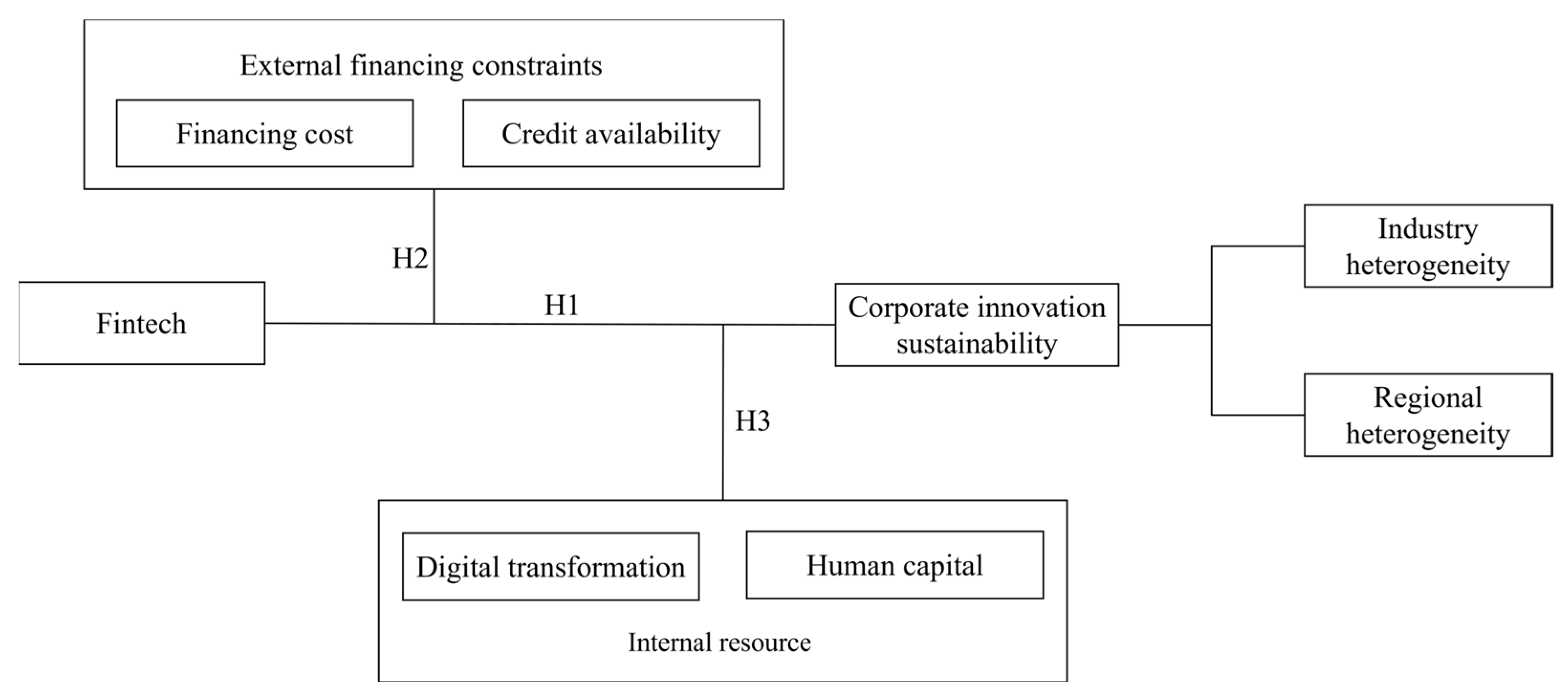
Figure 1. Conceptual framework of FinTech and innovation sustainability.
Sustainability 18 04788 g001
Table 1. Descriptive Statistics.
VariableMeanSDMinMaxN
Number of patent applications15.985118.8720376516,029
Innovation sustainability46.957388.167014,71616,029
Level of economic development11.4420.5139.08413.05616,029
Urbanization level0.7420.1500.1821.00016,029
Level of foreign investment0.0260.01700.19816,029
Firm size22.2681.26519.88626.16416,029
Asset–liability ratio3.4202.8501.12219.79216,029
Return on total assets (ROA)0.0400.0630.0310.21416,029
Firm age (log)2.8760.3110376516,029
Board size (log)2.1260.195014,71616,029
CEO duality0.2790.4499.08413.05616,029
Table 2. Benchmark Regression Results.
(1)(2)(3)(4)(5)(6)
Patent Applications for InventionsPatent Applications
for Inventions
Patent Applications
for Inventions
Innovation SustainabilityInnovation SustainabilityInnovation
Sustainability
fintech0.181 ***−0.0754 *0.162 ***0.181 ***−0.0927 **0.151 ***
(0.0247)(0.0391)(0.0518)(0.0279)(0.0434)(0.0567)
GDP per capita 0.1880.237 *** 0.09800.260 ***
(0.170)(0.0859) (0.221)(0.0869)
Urbanization 2.680 ***1.626 *** 3.512 ***1.970 ***
(0.533)(0.528) (0.596)(0.618)
Foreign investment 3.553−3.025 ** 4.147−1.237
(2.599)(1.460) (2.741)(1.940)
Total assets 0.932 ***0.330 *** 0.911 ***0.251 ***
(0.0371)(0.0637) (0.0359)(0.0768)
Leverage 0.0354 ***−0.00824 0.0364 ***−0.0168
(0.0113)(0.00855) (0.0128)(0.0109)
Return on net assets 6.507 ***2.884 *** 6.236 ***2.671 ***
(0.811)(0.488) (0.917)(0.535)
Firm age 0.100−1.332 *** 0.0847−0.856
(0.131)(0.455) (0.142)(0.551)
Board size 1.031 ***0.225 1.249 ***0.250
(0.280)(0.193) (0.296)(0.205)
Dual 0.667 ***−0.0331 0.644 ***0.00318
(0.103)(0.0674) (0.113)(0.0867)
Constant1.713 ***−26.29 ***−4.290 *2.787 ***−24.71 ***−3.111
(0.103)(2.180)(2.253)(0.113)(2.594)(2.492)
Fixed EffectsNoNoYesNoNoYes
Observations23,21021,57416,02923,21021,57416,029
The numbers in parentheses are robust standard errors; *, **, and *** represent significance levels of 10%, 5%, and 1%, respectively.
Table 3. Substituting Explanatory Variables.
(1)(2)(3)(4)
Fintech Search IndexFintech Comprehensive Development Index
Patent Applications for InventionsInnovation SustainabilityPatent Applications for InventionsInnovation Sustainability
f i n t e c h 0.1116 *
(0.0601)
0.1606 ***
(0.0605)
2.7575 ***
(0.3838)
3.0748 ***
(0.4354)
Enterprise-level control variablesYESYESYESYES
Regional-level control variablesYESYESYESYES
Year-to-year fixed effectYESYESYESYES
Corporate fixationYESYESYESYES
Regional fixed effectsYESYESYESYES
Pseudo R20.91480.92900.91670.9311
Observations15,96015,96016,02916,029
The numbers in parentheses are robust standard errors; * and *** represent significance levels of 10% and 1%, respectively.
Table 4. Control Function Approach.
(1)
Patent Applications for Inventions
(2)
Innovation Sustainability
f i n t e c h 0.2533 **
(0.1034)
0.2160 *
(0.1133)
Enterprise-level control variablesYESYES
Regional-level control variablesYESYES
Year-to-year fixed effectYESYES
Corporate fixationYESYES
Regional fixed effectsYESYES
Pseudo R20.88960.9109
Observations13,93113,792
The numbers in parentheses are robust standard errors; *, and ** represent significance levels of 10% and 5%, respectively.
Table 5. Lead–lag Analysis and Reverse Causality Test.
(1)
Patent Applications for Inventions
(2)
Innovation Sustainability
Lagged fintech0.174 ***
(0.0522)
0.153 ***
(0.0590)
Future fintech0.0803
(0.0517)
0.0920
(0.0567)
Enterprise-level control variablesYESYES
Regional-level control variablesYESYES
Year-to-year fixed effectYESYES
Corporate fixationYESYES
Regional fixed effectsYESYES
Observations13,030YES
The numbers in parentheses are robust standard errors; *** represents significance levels of 1%, respectively.
Table 6. Mechanism Analysis.
(1)(2)(3)(4)
Digital
Transformation
Financial
Mismatches
Financing
Optimization
Human Capital Optimization
f i n t e c h 0.0278 *
(0.0145)
−0.0447 ***
(0.0107)
0.0038 **
(0.0019)
0.0129 ***
(0.0013)
Enterprise-level control variablesYESYESYESYES
Regional-level control variablesYESYESYESYES
Year-to-year fixed effectYESYESYESYES
Corporate fixationYESYESYESYES
Regional fixed effectsYESYESYESYES
Adj R20.78980.30690.72540.7525
Observations21,47521,46415,34221,462
The numbers in parentheses are robust standard errors; *, **, and *** represent significance levels of 10%, 5%, and 1%, respectively.
Table 7. Industry Heterogeneity.
(1)(2)(3)(4)
Strategic Emerging IndustriesNon-Strategic Emerging Industries
f i t e c h 0.2248 ***
(0.0597)
0.2143 ***
(0.0605)
−0.0010
(0.0672)
0.0013
(0.0778)
Enterprise-level control variablesYESYESYESYES
Regional-level control variablesYESYESYESYES
Year-to-year fixed effectYESYESYESYES
Corporate fixationYESYESYESYES
Regional fixed effectsYESYESYESYES
Pseudo R20.93190.94120.82870.8555
Observations9156915668726872
The numbers in parentheses are robust standard errors; *** represents significance levels of 1%, respectively.
Table 8. Regional Heterogeneity.
(1)(2)(3)(4)
Eastern RegionNon-Eastern Regions
f i t e c h 0.3077 ***
(0.0677)
0.2802 ***
(0.0729)
−0.0855
(0.0700)
−0.0495
(0.0687)
Enterprise-level control variablesYESYESYESYES
Regional-level control variablesYESYESYESYES
Year-to-year fixed effectYESYESYESYES
Corporate fixationYESYESYESYES
Regional fixed effectsYESYESYESYES
Pseudo R20.92730.93740.83100.8692
Observations11,27011,27047434743
The numbers in parentheses are robust standard errors; *** represents significance levels of 1%, respectively.
Disclaimer/Publisher’s Note: The statements, opinions and data contained in all publications are solely those of the individual author(s) and contributor(s) and not of MDPI and/or the editor(s). MDPI and/or the editor(s) disclaim responsibility for any injury to people or property resulting from any ideas, methods, instructions or products referred to in the content.


