Article

Foliar Application of Biochar-Based Suspensions: Effects on Composition and Sensory Properties of Malvazija istarska (Vitis vinifera L.) Must and Wine


1
Institute of Agriculture and Tourism, Karla Huguesa 8, 52440 Poreč, Croatia
2
Agricultural Department, University of Applied Sciences of Rijeka, Karla Huguesa 8, 52440 Poreč, Croatia
*
Author to whom correspondence should be addressed.
Sustainability 2026, 18(1), 364; https://doi.org/10.3390/su18010364
Submission received: 21 November 2025 / Revised: 21 December 2025 / Accepted: 26 December 2025 / Published: 30 December 2025
(This article belongs to the Section Sustainable Agriculture)

Abstract

Foliar application of fertilizers and bioactive compounds helps viticulture adapt to climate change, while biochar (BC) derived from grapevine pruning residues (GPRs) represents a versatile material that further contributes to climate change mitigation. In this study, the foliar application impact of seven different formulations on the chemical composition and quality of must and wine of Malvazija istarska (Vitis vinifera L.) was investigated. The suspensions contained various combinations of BC, urea, and amino acids. BC increased the pH of the solutions in which it was present due to its alkaline nature, thereby influencing the uptake of nutrients and other compounds. Treatments C (control) and A (amino acids) led to the highest amount of yeast-assimilable nitrogen (YAN) (170 and 172 mg N/L). The amino acid profile of the must differed from the typical composition, with glutamine identified as the predominant compound. The combination of BC with urea and amino acids was associated with a higher sugar concentration in the must compared to the application of BC alone, ranging from 208 to 223 g/L. Combining BC with other components led to wines that received superior sensory evaluation scores compared to both C and B. BC alone did not influence must or wine quality. However, its application in combination with other components makes it a suitable carrier for such compounds. Due to its benefits, easy and cheap production, foliar application of BC suspensions with fertilizers can become a standard operation in viticulture and contribute to sustainable fertilization.

1. Introduction

Wine is a highly important economic and cultural product, both for the European Union and worldwide [1]. Fertilization practices strongly influence grape yield and quality by affecting parameters such as berry size, sugar content, acidity, and phenolic composition. Among essential nutrients, nitrogen is an important constituent of chlorophyll, amino acids, nucleic acids, and hormones, all of which are vital for vine growth and metabolism [2]. In this context, urea is the most widely used nitrogen fertilizer globally due to its high nitrogen content and solubility. However, it is prone to considerable nitrogen losses through ammonia volatilization, leaching, and denitrification [3].
In the era of increasingly evident climate change and its clear impact on viticulture, and consequently on the grape and must parameters, there is a growing need to identify alternative and sustainable vineyard management practices. Foliar nitrogen application is considered a more sustainable alternative to soil fertilization since it enables direct nutrient uptake by the plant while reducing potential nitrate leaching [4,5]. Furthermore, new commercial nitrogen fertilizers containing amino acids for nutritional purposes have recently emerged on the market. These products are considered environmentally safe, as amino acids are natural biodegradable compounds that can be rapidly assimilated by plants or microorganisms without accumulating in the environment [6]. Their foliar application not only enhances nutrient uptake and stress tolerance but also contributes to more sustainable vineyard management by reducing the need for excessive mineral fertilizer use.
Recently, circular and environmentally friendly agricultural production has attracted growing scientific attention [7]. Within viticulture, and particularly regarding its byproducts, GPRs offer an effective approach for biomass valorization, contributing to the principles of the circular economy. BC, derived from GPRs and obtained through the process of pyrolysis, is a non-polar, carbon-rich material with abundant functional groups and a porous structure [8]. It acts as a soil amendment that contributes to the reduction of soil gas emissions and plays a role in carbon sequestration, among other environmental benefits [9]. Estimates suggest that large-scale implementation of BC applications could lead to the sequestration of approximately 9.50 billion tons of CO2 in soils by 2100 [10]. Also, due to its large surface area and other favorable properties, it has been used as an adsorbent material [11]. According to Lippi et al. [1], over the past decade, the number of studies related to BC has been steadily increasing, making it an emerging tool in climate change mitigation. However, the same authors emphasize the lack of research focused on its application in vineyards, particularly studies investigating its effects on soil quality, grapevine physiology, and, ultimately, wine quality. The use of BC as a foliar carrier differs from a soil-based application primarily in its target and timescale of action. Soil-applied BC targets the root zone, with benefits such as improved soil structure, water-holding capacity, nutrient retention, and microbial activity developing over months to years. In contrast, foliar application targets leaves and berries, and the effects are expected within days to weeks after spraying. In foliar use, BC functions mainly as a carrier for nutrients, helping to enhance their retention on leaf surfaces and reduce nutrient leaching or loss.
Several studies [12,13,14] have reported positive effects of foliar application of BC or nano-carbon on plant growth and yield parameters, consistent with our previous findings [15]. Briefly, the influence of foliar application of BC-based suspensions on grapevine physiology was investigated. As reported, BC concentrations of 600 mg/L and 1200 mg/L led to increased leaf concentrations of several nutrients, such as nitrogen, potassium, sulfur, boron, and manganese. Furthermore, the treatment with 600 mg BC/L resulted in the highest grape yield (2.67 kg per vine), representing an increase of up to 37% compared with the other treatments.
The main objective of this study was to investigate the potential of BC-based foliar suspensions, used alone or in combination with nitrogen sources such as urea and amino acids, to influence the chemical composition and sensory properties of Malvazija istarska must and wine. Considering the crucial role of nitrogen in fermentation processes and the capacity of BC to act as a carrier and modulator of nutrient availability, this study aimed to explore whether such treatments could affect grape composition and, consequently, wine quality.

2. Materials and Methods

2.1. Biochar Production from Grapevine Pruning Residues

The BC utilized for the preparation of foliar suspensions was produced from GPRs of the Malvazija istarska (Vitis vinifera L.) cultivar collected from an experimental vineyard at the Institute of Agriculture and Tourism, Poreč, Croatia. The GPRs were collected during pruning season. The material was exposed to pyrolysis at 400 °C using a muffle furnace (Nabertherm Muffle Furnace L9/11/B410, Nabertherm GmbH, Lilienthal, Germany) according to the procedure described by Anđelini et al. [16]. Briefly, GPRs were placed in ceramic crucibles fitted with ceramic lids. The heating protocol consisted of a temperature increase of 10 °C/min up to the target temperature of 400 °C, which was maintained for 1 h. Upon completion of pyrolysis, the samples were allowed to cool to ambient temperature under static air conditions. BC was produced in 10 replicates and homogenized, and three average samples were subsequently analyzed as an independent sample.
Prior to the preparation of foliar suspensions, the obtained BC was pulverized to a fine powder using a ceramic mortar to ensure homogeneity and sieved using a <74 µm sieve. The powdered and sieved BC was characterized in triplicate. The physicochemical parameters of the obtained BC were previously reported by Palčić et al. [15] and are summarized in Table 1.

2.2. Foliar Suspensions

In this study, suspensions with various combinations of BC, amino acids, and urea were prepared using ultrapure water as the primary solvent. Seven aqueous suspensions were investigated in the following formulations (Table 2):
The concentrations of added compounds were determined based on preliminary laboratory testing. The concentration of 300 mg/L BC is chosen according to Wang et al. [18] after preliminary laboratory testing (unpublished). The amounts of urea (Urea 46% N, Petrokemija d.d., Kutina, Croatia) are adjusted by nitrogen to match the maximum recommended dosage of the amino acid preparation (Drin, Green Haas Italia S.P.A., Canale, Italy) for vineyard application. The amino acid formulation contained 7.56% w/v nitrogen, of which 39.07% was present in the form of amino acids, as follows: glycine (8.64%), proline (4.61%), alanine (4.49%), histidine (4.46%), glutamic acid (4.16%), hydroxyproline (3.13%), aspartic acid (1.96%), leucine (1.42%), lysine (1.23%), phenylalanine (0.91%), arginine (0.83%), isoleucine (0.73%), methionine (0.43%), serine (0.24%), cysteine (0.16%), threonine (0.11%), tryptophan (0.10%), tyrosine (0.31%), and valine (1.15%).
Foliar solutions (Scheme 1) were prepared 24 h prior to application, in order to allow maximum solubilization of all constituents, ensuring homogeneity and consistent dosage during treatment. Before foliar treatment, the pH and electrical conductivity (EC) of each prepared suspension were assessed in triplicate. Measurements were performed using a pH meter (inoLab Multi 9310 IDS, Xylem Inc., Washington, WA, USA) and an EC meter (FiveGo F3, Mettler Toledo AG, Columbus, OH, USA).

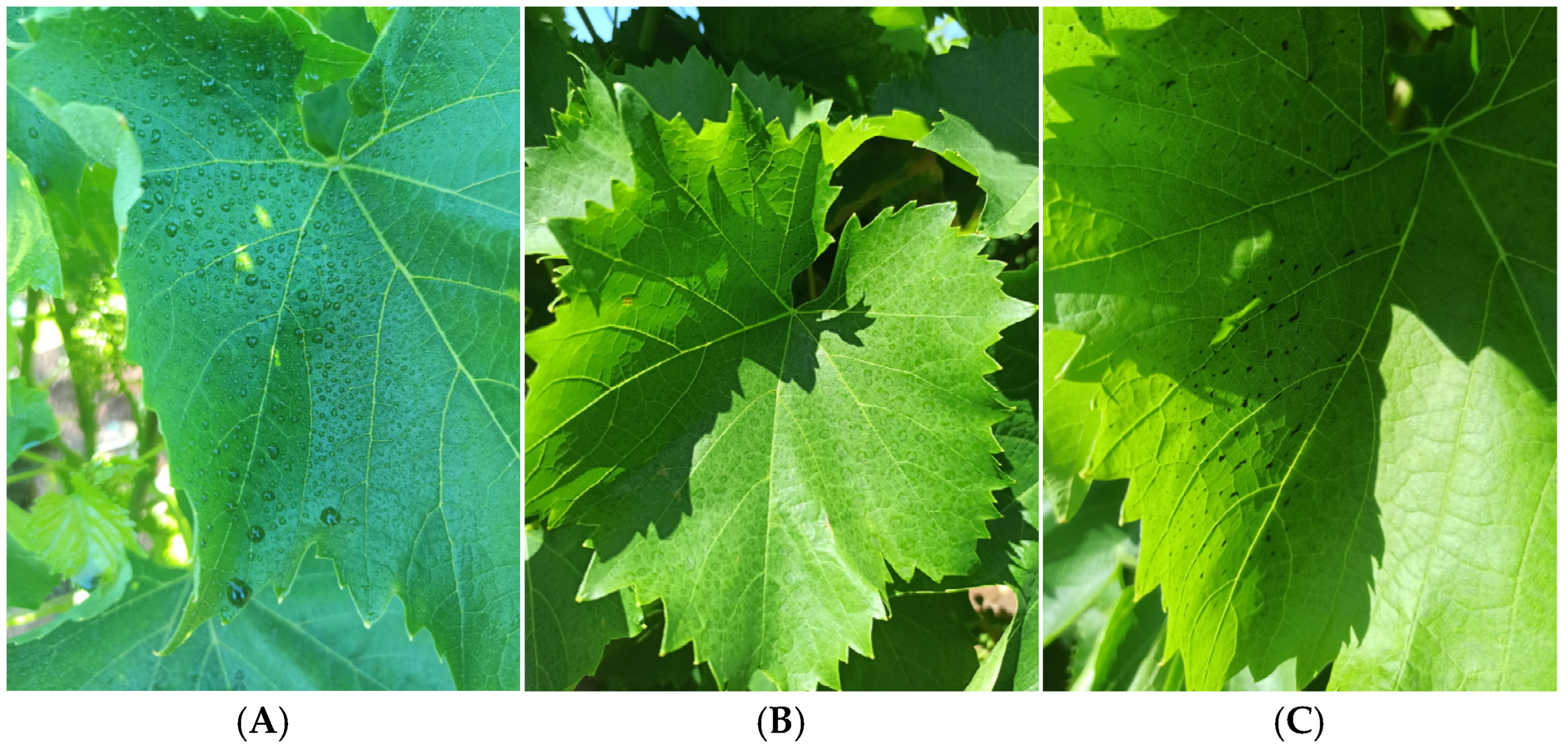
2.3. Foliar Application of Aqueous Suspensions in Vineyard

Foliar treatments (Scheme 2) were carried out during the 2023 growing season in the experimental vineyard of the Institute of Agriculture and Tourism, Poreč, Croatia (45°13′22″ N, 13°36′02″ E; 15 m a.s.l.). The experiments were performed on 12-year-old vines of Malvazija istarska grapevine, clone VCR4, grafted onto SO4 rootstock (Selection Oppenheim; Vitis berlandieri × Vitis riparia) and trained according to the single Guyot system. Further vineyard-specific information and meteorological data for the vegetative season are detailed in Palčić et al. [15].
Foliar suspensions were applied at three key phenological stages during the growing season: flowering (S19 [19], 2 June 2023), fruit set (S27, 21 June 2023), and veraison (S35, 3 August 2023). Foliar treatments were applied in the early morning using an electric battery-powered backpack sprayer (V.black Electron, Davide e Luigi Volpi S.p.A., Casalromano, Italy) to ensure even coverage. Each vine received approximately 140 mL of suspension, corresponding to 700 L/ha. Environmental conditions were monitored after application, with no rainfall or high temperatures observed that could cause wash-off or phytotoxic effects.

2.4. Harvest and Vinification Process

Grapes were hand-harvested at full maturity (S38, according to Coombe [19]), separately by treatment and replicate. Harvested grapes were collected in plastic crates and processed immediately to prevent undesirable biochemical changes. Winemaking was conducted under controlled conditions at the Mini-Vinification facilities of the Institute of Agriculture and Tourism in Poreč, Croatia.
Grapes from all replicates of each treatment were crushed, destemmed, and pressed, and the resulting must was transferred into 80 L stainless steel containers. The must was treated with 8 g of potassium metabisulfite/hL and 1 g of pectolytic enzyme/hL (Lallzyme C-max, Lallemand, Montreal, QC, Canada), followed by sedimentation at 12 °C for 24 h. After racking the clear fraction, the must was subdivided into 5 L containers in five replicates per treatment. Fermentation was carried out at 16 °C following inoculation with 30 g/hL of yeast strain Saccharomyces cerevisiae var. cerevisiae Lalvin QA23 (Lallemand, Montreal, QC, Canada), without additional nutrients, to allow for a clear assessment of the treatment effects [20].

2.5. Analysis of Key Compositional Parameters in Must and Wine

Yeast-assimilable nitrogen (YAN) in the must was quantified using Fourier-transform infrared (FTIR) spectroscopy with the Lyza 5000 Wine system (Anton Paar GmbH, Graz, Austria), following the procedure described by Ding et al. [21].
Amino acids and organic acids in the must were analyzed using liquid chromatography coupled with tandem mass spectrometry (LC-MS/MS). The system comprised an autosampler (Shimadzu Nexera SIL-40CX3, Kyoto, Japan), two pumps (Shimadzu Nexera LC-40DX3, Kyoto, Japan), a column oven (Shimadzu Nexera CTO-40C, Kyoto, Japan), and a triple-quadrupole mass spectrometer (Shimadzu LCMS8045, Kyoto, Japan). Separation was performed on a Discovery HS F5-3 column (2.1 × 150 mm, 3 μm particle size; Sigma-Aldrich, St. Louis, MO, USA) maintained at 37 °C, with 1 μL sample injections. A linear gradient elution was applied using mobile phase A (water/0.1% formic acid) and mobile phase B (acetonitrile/0.1% formic acid) at a flow rate of 0.25 mL/min as follows: 0–2 min: 100% A; 2–5 min: 100% A to 75% A; 5–11 min: 75% A to 65% A; 11–15 min: 65% A to 5% A; 15–20 min: 5% A; 20–20.1 min: 5% A to 100% A; and 20.1–25 min: 100% A. Identification and quantification of amino acids and organic acids were performed by comparison with reference standards.
The concentrations of glucose and fructose in the must were determined by high-performance liquid chromatography (HPLC) using an integrated system comprising an autosampler (Shimadzu Nexera SIL-40CX3, Kyoto, Japan), a pump (Shimadzu Nexera LC-40DX3, Kyoto, Japan), a column oven (Shimadzu Nexera CTO-40C, Kyoto, Japan), and a refractive index detector (Shimadzu RID-20A, Kyoto, Japan). Separation of sugars was achieved by injecting 10 μL of the sample onto a 300 × 8 mm chromatographic column (particle size 9 μm, ReproGel Ca, Dr. Maisch, Ammerbuch, Germany) maintained at 80 °C, with deionized water as the mobile phase (0.6 mL/min, isocratic elution). Sugar identification and quantification were performed by comparing retention times and peak areas with analytical standards.
Following the completion of alcoholic fermentation and immediately after the first racking, wine samples were analyzed for total alcohol, total acidity, volatile acidity, pH, and reducing sugars. Measurements were carried out using FTIR (Lyza 5000 Wine, Anton Paar GmbH, Graz, Austria). Prior to analysis, samples were filtered to remove dissolved gases and any residual particulate matter.

2.6. Determination of Wine Sensory Properties

The sensory evaluation of wines was conducted four months after the completion of alcoholic fermentation. The sensory panel consisted of five experienced wine assessors, consisting of 3 males and 2 females. Prior to evaluation, the wines were cooled to 12 °C and served to the panelists in a randomized order, in three replicates, under coded labels to ensure unbiased assessment.
The panel evaluated the wines using three methods: the OIV (Organisation Internationale de la Vigne et du Vin) 100-point method [22], quantitative descriptive analysis (QDA), and the ranking method. Using the OIV 100-point method, the assessors rated the visual, olfactory, and gustatory attributes of the wines, assigning scores based on both intensity and quality within each category.
For the QDA, the intensity of individual sensory attributes was assessed using a structured scale ranging from 0 (attribute not perceived) to 10 (attribute perceived with maximum intensity). The evaluation form included both the OIV categorical scoring system and the QDA intensity ratings for specific descriptors. In the ranking method, the seven wine samples were ranked from best to least preferred. Panelists assigned ranks from 1 (most preferred) to 7 (least preferred), providing an overall comparative assessment of the samples.

2.7. Statistical Analysis

Data were analyzed using Statistica software 13.4 (TIBCO Inc., Palo Alto, CA, USA). Prior to analysis, the data were tested for normality. A one-way analysis of variance (ANOVA) was performed to evaluate the effects of treatments, and mean comparisons were carried out using Tukey’s Honestly Significant Difference (HSD) post hoc test at a 95% confidence level (p < 0.05).

3. Results

3.1. Foliar Suspensions pH and Electrical Conductivity Values

The pH and EC values of the prepared suspensions were measured prior to vineyard application to verify their stability and suitability for foliar treatment. The pH values of the suspensions were not adjusted after blending in order to evaluate the intrinsic effects of BC and its combinations with urea or amino acids on the chemical properties of the medium. Treatments B and U exhibited higher pH values compared to all other treatments, whereas suspensions of treatments A and BA showed higher EC values compared to all other treatments (Table 3).

3.2. Chemical Composition of Must

3.2.1. Nitrogen-Related Compounds in Must: Yeast Assimilable Nitrogen and Amino Acids

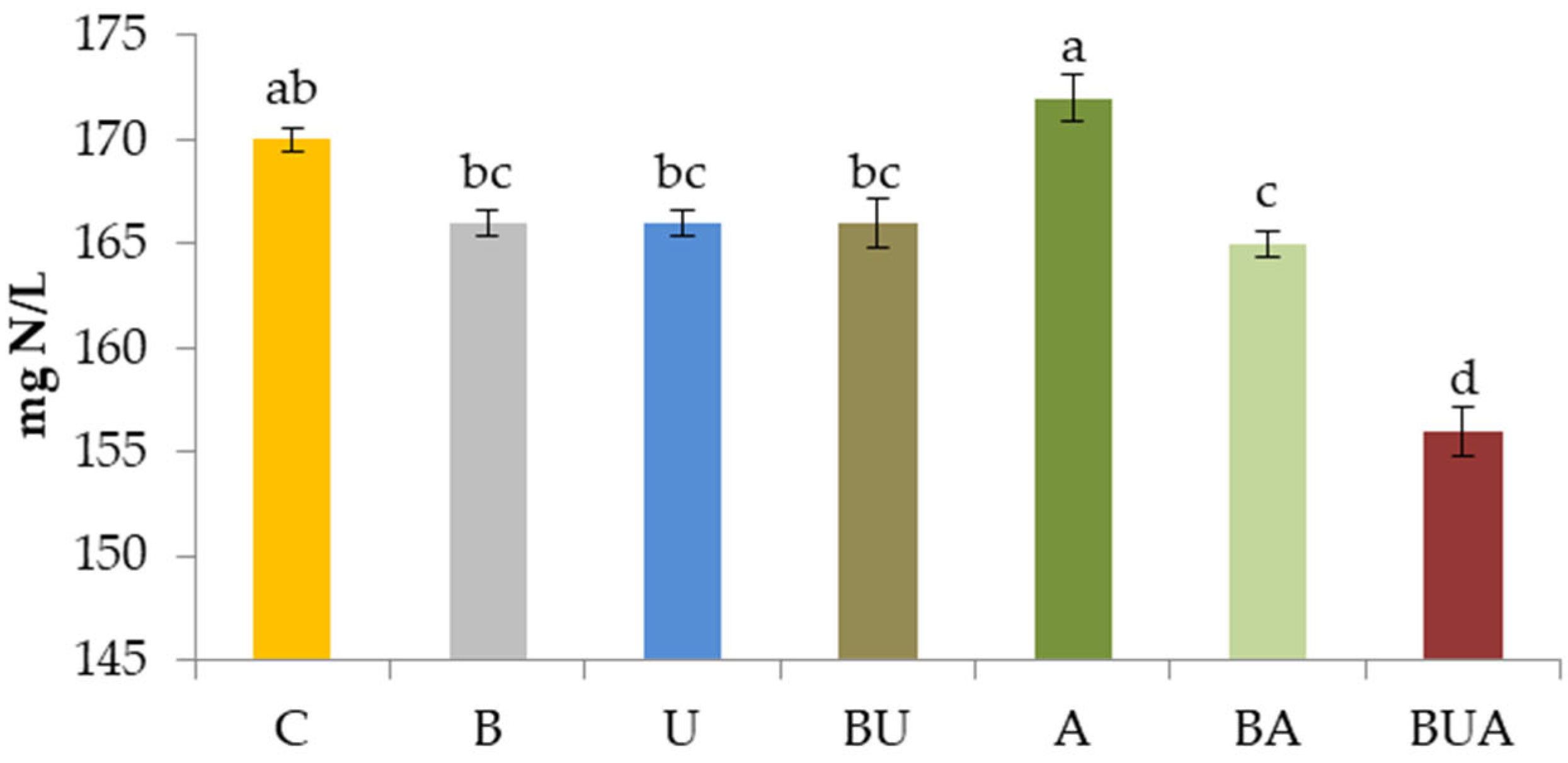
The values of YAN in the must ranged from 156 to 172 mg N/L. The lowest value (156 mg N/L) was measured in treatment BUA containing BC, urea, and amino acids, while treatment A showed the highest amount of YAN (172 mg N/L) compared to all other treatments, except treatment C (Figure 1).
As shown in Table 4, ten amino acids were detected in Malvazija istarska must. Glutamine concentration was the highest among all amino acids, ranging between 1601 and 2083 mg/L, while asparagine concentration was the lowest (0.46–0.75 mg/L). Significant effects of the treatments were observed in the concentration of serine, aspartic acid, glycine, alanine, glutamic acid, and proline. The highest concentration of serine was observed in treatment U compared to all other treatments. The highest concentration of aspartic acid was noted in treatment U compared to all treatments, except the C, B, and A treatments. The glycine concentration was higher in treatment U compared to treatment BA, but comparable to all other treatments. The alanine concentration was higher in treatment U compared to treatments B, BU, and BA, but comparable to other treatments. The glutamic acid concentration was higher in treatment U compared to treatment B, but comparable with all other treatments. The proline concentration was higher in treatment BU compared to treatment A, but comparable with all other treatments.

3.2.2. Carbon-Related Compounds in Must: Sugars and Organic Acids

Regarding the sugar profile of must, two predominant compounds were identified, namely glucose and fructose, and accordingly, the total sugars concentration was calculated as a sum of them (Table 5). Treatments combining BC with additional components, BU, BA, and BUA, exhibited the highest glucose and fructose concentrations compared to treatments B and U and were comparable with treatment A. The glucose concentration in the highest treatments ranged from 90.5 to 97.5 g/L, while the fructose concentration ranged from 95.6 to 103 g/L.
Tartaric, malic, lactic, and citric acids were determined in the must as key indicators of its acidity profile and overall ripeness (Table 6). Statistically significant differences among treatments were observed for malic, lactic, and citric acids, whereas tartaric acid showed no statistically significant differences. As for malic acid, the mean values for treatments C, B, U, BU, BA, and BUA were comparable, while treatment U exhibited a significantly higher mean value than treatment A. The treatments showed a similar trend in citric acid concentration, where treatments C, B, U, BU, A, and BUA were comparable, while treatment U showed a significantly higher value compared to treatment BA. The lactic acid concentrations in treatments C, B, U, and A were significantly higher than in BA and BUA. Treatments C, B, U, and A exhibited comparable lactic acid levels, ranging from 28.9 to 30 mg/L, whereas the lowest concentrations were observed in BA and BUA (17.9 and 17.3 mg/L, respectively).

3.3. Wine Characterization and Sensory Properties

3.3.1. Chemical Analysis of Wine

In Table 7, the chemical properties of the produced white wines are listed. Significant differences between treatments were observed in alcohol concentration, titratable acidity, pH, and reducing sugar concentration. Regarding alcohol concentration, the highest value was observed in treatment BA (10.4% v/v), while treatments C and A produced wines with the lowest alcohol concentrations (9.52% v/v). The highest titratable acidity (8.21 g/L) and reducing sugar concentration (2.87 g/L) were observed in treatment B when compared with treatments U and BA for titratable acidity and compared with BU, BA, and BUA for reducing sugar concentration. In treatment U, the highest pH value (3.01) compared to all other treatments was measured. As for volatile acidity, with no significant differences among treatments, concentrations were generally very low, and in treatments B, A, and BUA, the compounds were below the detection limit.

3.3.2. Sensory Evaluation

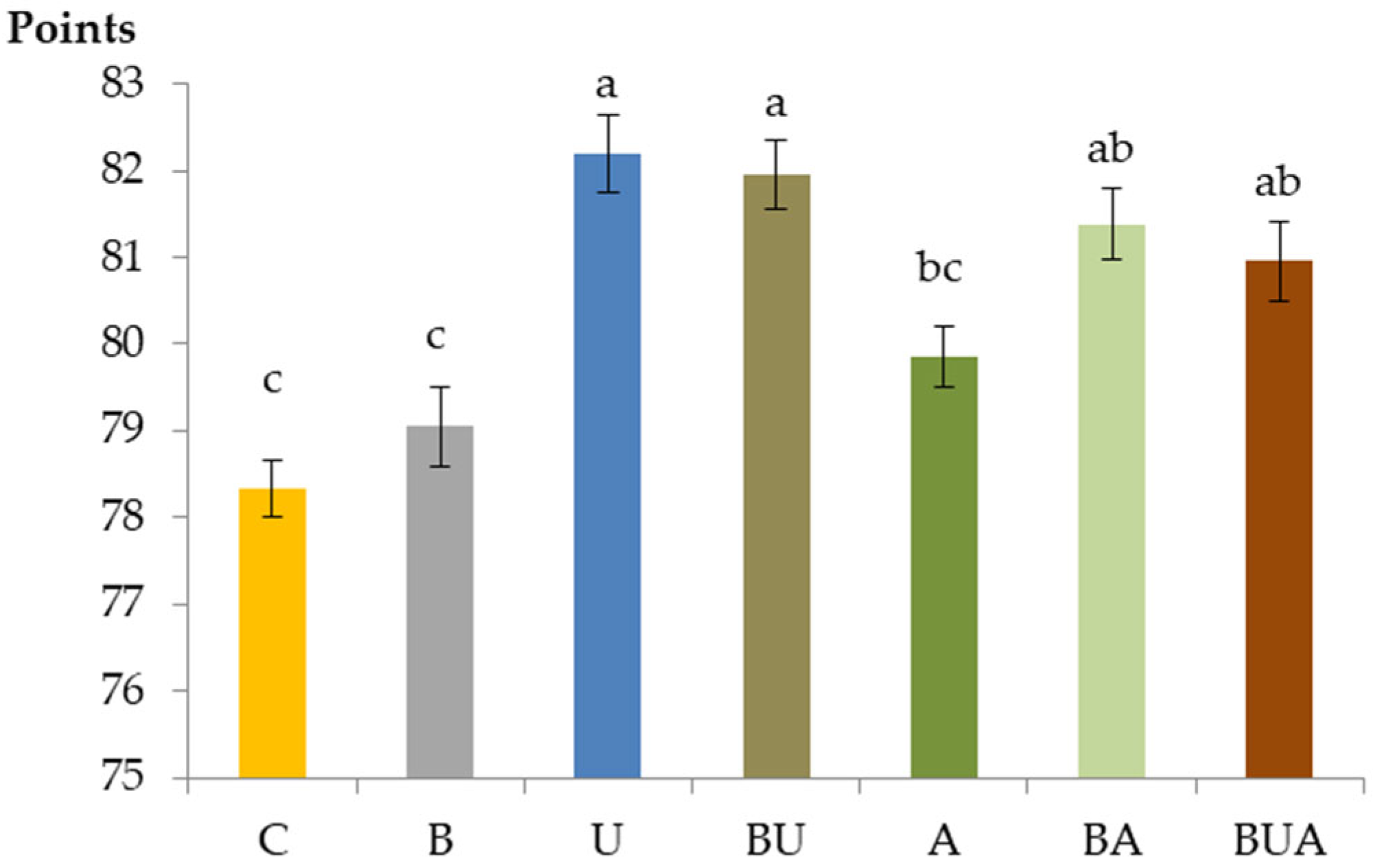
Based on the OIV 100-point scoring method, the wines evaluated by the panelists obtained scores from 78.3 to 82.2 (Figure 2). The mean sensory scores for treatments U, BU, BA, and BUA were significantly higher than those for treatments C and B. Wines from treatments containing urea (U and BU) achieved 82.2 and 82.0 points, respectively. Treatments C and B received the lowest scores, 78.3 and 79.0 points, respectively, and were comparable with treatment A.
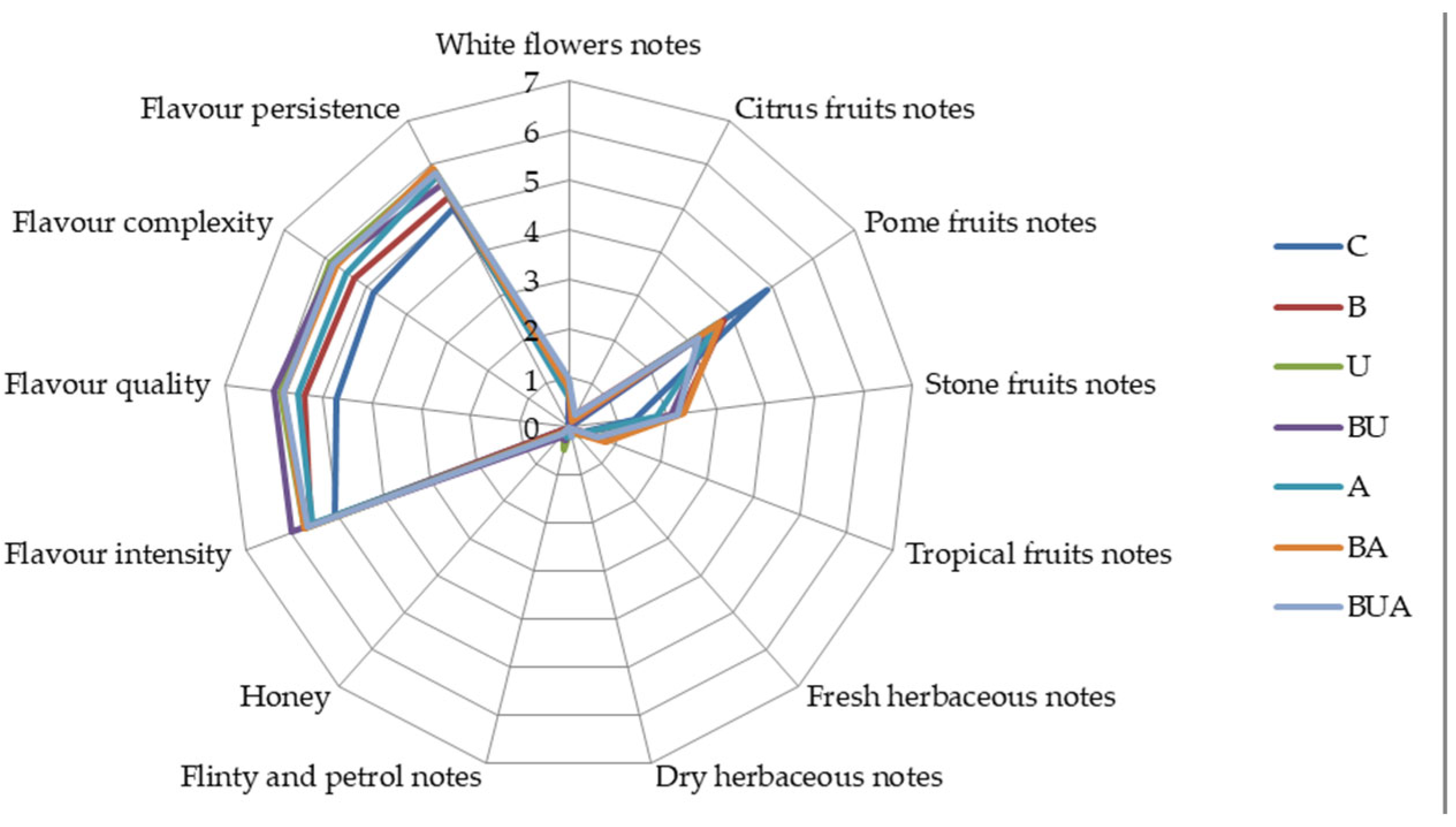
The QDA results are presented in Figure 3, where wine aroma and flavor were evaluated. Regarding the aroma profile, nine different groups of white wine aromas were listed. The evaluated wines exhibited aromas of white flowers, stone and pome fruits, with minor notes of citrus and tropical fruits. The most predominant groups include pome fruit and stone fruit aroma, respectively. The only statistically significant differences among the aromas was observed in the pome fruit group (p < 0.01), with treatment C showing a more pronounced aroma of this fruit category according to the panelists’ evaluation, and the flinty, petrol group of aromas (p < 0.05) observed in treatments U, BU, and A. Intensity, quality, complexity, and persistence of the flavor were evaluated. Significant differences among flavor groups were observed. Treatment BU had the most intensive flavor, while treatments U, BU, BA, and BUA were evaluated as wines with higher flavor quality and complexity. The U and BA treatments’ flavors were the most persistent. In this part of the evaluation, treatment C was the worst evaluated. Accordingly, in the ranking method, the panelists ranked treatment U as the most likable wine, followed by treatments BU, BA, BUA, A, B, and C, respectively.

4. Discussion

Foliar applications of bioactive formulations have recently been recognized as an effective strategy to enhance grapevine tolerance to abiotic stress conditions, including drought, salinity, and high temperatures. Beyond their role in stress mitigation, such treatments can modulate the biochemical composition of grapes and wines by affecting the overall quality [23].
Parameters such as pH and EC are fundamental in foliar nutrient management, as they influence nutrient solubility, uptake efficiency, and overall effectiveness of foliar-applied treatments [24]. The investigated foliar suspensions obtained a pH range from mildly acidic to alkaline, reflecting their diverse chemical characteristics. As expected, suspensions containing BC exhibited alkaline pH values compared to the individual components alone, due to the inherently alkaline nature of BC. For instance, suspension B, containing only BC, obtained a pH value of 9.21. The alkaline influence of BC was also evident in suspensions containing BC and urea. In contrast, a decreasing trend in pH value was observed in suspensions containing amino acids when compared to treatments containing BC.
As for EC, suspensions containing amino acids showed a 10-fold higher increase than suspensions B and BU, likely due to the presence of ionizable groups in the amino acids that enhance the solution’s EC. Tsouvaltzis et al. [25] noticed similar behavior in floating systems where the addition of amino acids to nutrient solutions led to an increase in EC, accompanied by a decrease in pH. Although maintaining optimal pH and EC is important for efficient nutrient uptake and plant growth, in this study, the values of these parameters covered a relatively wide range. However, no visible symptoms of phytotoxicity were observed on grapevine leaves, suggesting that the tested formulations were well-tolerated by the plants, despite the variation in pH and EC.
The nitrogen fraction is highly complex and variable in musts and wines. Therefore, amino acids and ammonium ions constitute the most significant components [26]. YAN represents the primary nitrogen source available to Saccharomyces cerevisiae yeast during alcoholic fermentation. It consists of nitrogen in NH3 and NH4+ forms and α-amino acids, which support yeast growth, metabolism, and proper fermentation kinetics [27]. Low nitrogen can slow fermentation and increase undesirable byproducts, while sufficient nitrogen promotes complete fermentation and the synthesis of desirable esters and higher alcohols [28,29]. In this study, the influence of treatments on YAN in the must was evident. The highest nitrogen concentration was recorded in treatment A, followed by C, which was comparable. Similar findings were provided by Mataffo et al. [30], who indicated that foliar application of amino acid-enriched urea fertilizer increases the YAN value in grapes at harvest. Unexpectedly, the lowest YAN value compared to all other treatments was observed for the BUA treatment. This could be related to potential interactions between BC and nitrogen compounds, where BC may adsorb or temporarily immobilize nitrogen forms, thus reducing their availability [31]. BC’s porous structure and large surface area can adsorb ammonium and other nitrogen forms, temporarily reducing their availability for yeast [32]. In the BUA treatment, the combined presence of urea, amino acids, and BC may have enhanced these adsorption processes, limiting readily available nitrogen [33]. While BC acts as a carrier for nutrients, its strong binding with nitrogen in this combination likely explains the lower YAN compared to other treatments. These effects highlight that the balance of BC with nitrogen sources can strongly influence YAN levels, ultimately impacting fermentation performance and wine composition. Furthermore, there was no significant difference among treatments B, U, and BU. Overall, YAN levels across treatments ranged from 156 to 172 mg N/L, exceeding the minimal concentration of approximately 140 mg N/L reported in previous studies as necessary for high-quality alcoholic fermentation [29,34]. However, as noted by Nisbet et al. [35], YAN is strongly influenced by grape variety. Their data showed that YAN concentrations in Cabernet Franc, Riesling, and Traminette averaged below 100 mg N/L, whereas Chardonnay and Pinot noir typically exceeded 200 mg N/L. Taken together, these observations highlight the importance of understanding both the grape juice nitrogen concentration and the specific requirements of the yeast strain in order to ensure optimal fermentation and produce wines that meet regulatory standards and consumer expectations [36].
Consequently, during alcoholic fermentation, yeasts assimilate amino acids and other nitrogenous substrates to sustain cellular metabolism, thereby driving the biosynthesis of volatile compounds such as esters, higher alcohols, and sulfur metabolites [37]. In that sense, amino acids serve as key precursors for aroma-active compounds and play a direct role in shaping the aroma, flavor, and visual characteristics of wine [38]. However, the amino acid composition of grapes is influenced by several factors, including climatic conditions, cultivar, ripening stage, vineyard location, and applied agronomic practices [39]. Palčić et al. [40] demonstrated that soil type and terroir significantly influenced the berry free amino acid profile of Malvazija istarska. Authors suggested a variety-specific “fingerprint” with arginine as the predominant amino acid, followed by alanine, threonine, tyrosine, aspartic acid, serine, histidine, and glutamic acid, regardless of the soil type. In contrast, the must analyzed in this study exhibited a completely different amino acid composition, which could be influenced by vineyard treatments [41]. The predominant compound was glutamine, followed by glutamic acid, aspartic acid, serine, threonine, alanine, proline, 4-hydroxyproline, glycine, and asparagine, while arginine was not detected. This phenomenon may be attributed to the inhibitory effect of the other compounds present in the must on the enzyme arginine deiminase [42,43], or the fact that it was actively consumed during alcoholic fermentation [44].
Glutamine plays a main role in grapevine nitrogen metabolism, serving as the main transportable nitrogen form to the berries and as a precursor for other amino acids. Consequently, it is typically the most abundant amino acid in early berry development, with its concentration declining later as it is converted into other amino acids, such as proline and arginine [45]. However, the predominance of glutamine in the must across all investigated treatments, coupled with low proline and undetectable arginine levels, suggests a shift in nitrogen metabolism and allocation within the grapevine, as well as the absence of abiotic stress conditions [46]. Finally, the U treatment exhibited the highest individual amino acid concentration in must if compared to treatment B, due to higher nitrogen availability. Similar findings were reported by Gutiérrez-Gamboa et al. [47], who observed improvement of amino acid concentrations in must when applying urea treatments to Merlot and Pinot gris grapevines.
As is well known, during primary fermentation, the sugars present in grape must are converted into ethanol and carbon dioxide as major products. A wide range of secondary metabolites, such as glycerol, acetaldehyde, acetic acid, and other compounds, are formed, contributing to the complexity of the resulting wine [26]. Typically, the concentrations of sugars present in musts are well above those required to sustain yeast growth and fermentation [45,46]. The sugar concentration in must in this study is consistent with previously reported values for Malvazija istarska [48,49]. However, certain treatment-related differences were observed. An interesting comparison emerges between treatments where BC was applied alone and those where it was combined with additional components, such as BU, BA, and BUA. While the combined BC treatments resulted in higher must sugar concentrations (208–223 g/L), the application of BC alone produced the lowest sugar levels (145 g/L), even lower than the control treatment (197 g/L). This suggests that the synergistic interaction between BC and the supplementary components may have enhanced sugar accumulation, whereas BC by itself did not exert the same effect.
Furthermore, organic acids influence the composition, physicochemical stability, and sensory profile of white wines. In grape berries, tartaric, malic, and citric acids constitute the principal acid fraction, whereas malolactic fermentation leads to the conversion of malic acid into lactic acid via malolactic bacteria [50]. In this study, the organic acid profile of the Malvazija istarska grape must was evaluated. Tartaric acid represented the predominant fraction, followed by malic and citric acids. Notably, lactic acid was also detected at measurable levels, which is uncommon in grape must, prior to fermentation. When compared with the results reported by Bubola et al. [50], the musts analyzed in this study exhibited more than 4-fold-higher tartaric acid concentrations, while citric acid was in accordance with those reported. Malic acid levels were somewhat lower, and in contrast to our findings, the authors did not detect lactic acid in their samples. The reduced malic acid levels likely led to the early presence of lactic acid, due to the microbial conversion of L-malic acid into L-lactic acid and CO2 [51].
In terms of treatment effects, no statistically significant differences were observed in tartaric acid concentrations among treatments. Malic and citric acids were most abundant in the U treatment when compared to the A and BA treatments, respectively, indicating enhanced primary acid retention under this condition. In contrast, lactic acid was accumulated to comparatively higher levels in the C, B, U, and A treatments, while the BA and BUA treatments showed the lowest lactic acid concentrations, suggesting reduced lactic acid turnover or microbial activity in these variants [51].
Ultimately, Malvazija istarska wines are generally vinified in a dry style, full-bodied, slightly bitter, reaching higher alcohol concentrations [49], and characterized by a fruity-floral aromatic profile [52]. The wines in this study were characterized by moderate alcohol concentration (9.52–10.4% vol.), elevated titratable acidity (7.61–8.21 g/L), very low volatile acidity (≤0.02 g/L), low pH (2.90–3.10), and minimal reducing sugars (2.00–2.87 g/L). These parameters reflect a dry, fresh wine with pronounced acidity, which partially deviates from the typical optimal ranges reported for Malvazija istarska [53], likely due to the minimal impact on fermentation and vinification processes.
The aromatic profile of wine is influenced by multiple factors [54], including grape variety, terroir, grape ripeness at harvest, and winemaking practices such as fermentation temperature, yeast strain, and maceration techniques [40,52]. Additionally, the presence of precursors, such as amino acids, sugars, and phenolic compounds, in the must plays a key role in determining the formation of volatile aroma compounds during fermentation. In addition to the dominant fruity–floral profile found in all samples, which is associated with monoterpenoid-derived volatiles, the panelists noted flint, petroleum, grassy, and honey-like nuances.
Sensory evaluation of flavor was conducted across the attributes of intensity, quality, and complexity. Statistically relevant differences were observed among treatments. Wines produced under BU treatment exhibited enhanced flavor intensity, along with a well-defined sensory complexity and elevated perceived quality. Similarly, wines from the U treatment showed a positive sensory profile, notably with respect to flavor persistence, overall quality, and complexity. According to both the ranking test and the OIV scoring system, U and BU wines were evaluated as the most preferred when compared with C and B.
Finally, when considering all analyzed parameters, it is evident that the two highest-rated wines, U and BU, represent the most balanced profiles overall. These wines exhibited higher alcohol concentrations and lower titratable acidity compared with the other treatments, contributing to improved mouthfeel and sensory harmony. Furthermore, when must composition is taken into account, the superior performance of these wines can be associated with higher amino acid concentrations, as well as an elevated sugar concentration in the BU treatment and higher organic acid levels in the U treatment, which likely supported a more favorable fermentation dynamics and aromatic development. Although the treatment with BC alone did not exert a significant impact on must and wine composition or sensory quality, the results suggest that BC can function as an effective carrier for active components, thereby enhancing wine properties.
Production of the BC from the grapevine-pruning residues can be performed directly in the vineyard by performing an easy and cheap pyrolysis process. Therefore, most of the producers could produce it for their own needs. Crushing of the biochar can be conducted using a hammer mill, and after sieving, it can be used for the preparation of a foliar suspension. The whole process can also be more sophisticated using large-scale facilities. Due to all the obtained results, easy and cheap production, foliar application of BC in suspensions with fertilizers can become a standard operation in viticulture and contribute to sustainable fertilization.

5. Conclusions

This study evaluated the effects of foliar applications of biochar (BC)-based suspensions, alone or combined with urea and amino acids, on the chemical composition and sensory characteristics of Malvazija istarska wine under field conditions. Treatments were applied to assess their impact on grape metabolism, fermentation performance, and wine quality. Foliar application of BC-based suspensions, particularly when combined with urea and amino acids, positively influenced wine composition. Sensory evaluation revealed that wines produced under control-based conditions showed the weakest sensory expression, with lower intensity, quality, and complexity. In contrast, the use of BC combined with other compounds resulted in wines with more pronounced sensory intensity, higher perceived quality, and greater overall complexity. BC alone had limited direct effects but effectively acted as a carrier for active components, enhancing their impact when combined with other treatments. The application represents a promising and sustainable strategy to improve grape metabolism, fermentation performance, and overall wine quality. Future studies should focus on optimizing application rates and timing, testing combinations with other biostimulants, and assessing long-term effects on vine physiology and wine terroir expression.

Author Contributions

Conceptualization, D.A., I.P., and M.P.; methodology, I.P., N.M., Z.U., and T.P.; validation, I.P., K.D., and N.M.; formal analysis, D.A., D.C., M.P., T.K.K., T.P., K.D., and Z.U.; investigation, M.P., D.A., I.P., and D.C.; resources, I.P., D.B., and S.G.B.; data curation, D.A. and M.P.; writing—original draft preparation, M.P. and D.A.; writing—review and editing, I.P., M.P., D.A., and N.M.; visualization, M.P.; supervision, I.P. and N.M.; project administration, I.P.; funding acquisition, I.P., D.B., and S.G.B. All authors have read and agreed to the published version of the manuscript.

Funding

This research was supported in part by the Croatian Science Foundation (CSF (HRZZ)) under the project no. HRZZ-UIP-2019-04-7370 (BIONUTRIVINE). In addition, the work of doctoral students Dominik Anđelini and Melissa Prelac was supported in part by the “Young researchers’ career development project–training of doctoral students” program under the Croatian Science Foundation project, DOK-2020-01-3145 (D.A.) and DOK-2021-02-9291 (M.P.).

Institutional Review Board Statement

Not applicable.

Informed Consent Statement

Not applicable.

Data Availability Statement

The original contributions presented in the study are included in the article; further inquiries can be directed to the corresponding author.

Acknowledgments

We would like to especially thank Petar Šegon for his assistance with the sensory analysis of the wine.

Conflicts of Interest

The authors declare no conflicts of interest.

Abbreviations

The following abbreviations are used in this manuscript:
BCBiochar
GPRsGrapevine Pruning Residues
YANYeast Assimilable Nitrogen
ECElectrical Conductivity
FTIRFourier-Transform Infrared Spectroscopy
LC-MS/MSLiquid Chromatography Coupled with Tandem Mass Spectrometry
HPLCHigh-Performance Liquid Chromatography
OIVOrganisation Internationale de la Vigne et du Vin
QDAQuantitative Descriptive Analysis
ANOVAAnalysis of Variance
HSDHonestly Significant Difference

References

  1. Lippi, P.; Mattii, G.B.; Cataldo, E. Biochar, Properties and Skills with a Focus on Implications for Vineyard Land and Grapevine Performance. Phyton-Int. J. Exp. Bot. 2025, 94, 33–64. [Google Scholar] [CrossRef]
  2. Fu, X.; Chen, X.; Chen, Y.; Hui, Y.; Wang, R.; Wang, Y. Foliar Co-Applications of Nitrogen and Iron on Vines at Different Developmental Stages Impacts Wine Grape (Vitis vinifera L.) Composition. Plants 2024, 13, 2203. [Google Scholar] [CrossRef]
  3. Prasad, R. Fertilizer Urea, Food Security, Health and the Environment. Curr. Sci. 1998, 75, 677–683. [Google Scholar]
  4. Haytova, D. A Review of Foliar Fertilization of Some Vegetables Crops. Annu. Rev. Res. Biol. 2013, 3, 455–465. [Google Scholar]
  5. Dong, S.; Neilsen, D.; Neilsen, G.H.; Fuchigami, L.H. Foliar N Application Reduces Soil NO3-N Leaching Loss in Apple Orchards. Plant Soil 2005, 268, 357–366. [Google Scholar] [CrossRef]
  6. Teixeira, W.F.; Fagan, E.B.; Soares, L.H.; Soares, J.N.; Reichardt, K.; Neto, D.D. Seed and Foliar Application of Amino Acids Improve Variables of Nitrogen Metabolism and Productivity in Soybean Crop. Front. Plant Sci. 2018, 9, 396. [Google Scholar] [CrossRef]
  7. Kumari, A.; Lakshmi, G.A.; Krishna, G.K.; Patni, B.; Prakash, S.; Bhattacharyya, M.; Singh, S.K.; Verma, K.K. Climate Change and Its Impact on Crops: A Comprehensive Investigation for Sustainable Agriculture. Agronomy 2022, 12, 3008. [Google Scholar] [CrossRef]
  8. Weber, K.; Quicker, P. Properties of Biochar. Fuel 2018, 217, 240–261. [Google Scholar] [CrossRef]
  9. Wang, J.; Wang, S. Preparation, Modification and Environmental Application of Biochar: A Review. J. Clean. Prod. 2019, 227, 1002–1022. [Google Scholar] [CrossRef]
  10. Kuppusamy, S.; Thavamani, P.; Megharaj, M.; Venkateswarlu, K.; Naidu, R. Agronomic and Remedial Benefits and Risks of Applying Biochar to Soil: Current Knowledge and Future Research Directions. Environ. Int. 2016, 87, 1–12. [Google Scholar] [CrossRef]
  11. Prelac, M.; Palcic, I.; Cvitan, D.; Andelini, D.; Repaji’c, M.; Curko, J.; Kovaˇcevi’c, T.K.; Goreta Ban, S.; Užila, Z.; Ban, D.; et al. Biochar from Grapevine Pruning Residues as an Efficient Adsorbent of Polyphenolic Compounds. Materials 2023, 16, 4716. [Google Scholar] [CrossRef] [PubMed]
  12. Shao, S.; Ma, B.; Ai, L.; Tian, X.; Zhang, L. Foliar Spraying of Selenium Combined with Biochar Alleviates Cadmium Toxicity in Peanuts and Enriches Selenium in Peanut Grains. Int. J. Environ. Res. Public Health 2022, 19, 3542. [Google Scholar] [CrossRef]
  13. Kumar, A.; Joseph, S.; Graber, E.R.; Taherymoosavi, S.; Mitchell, D.R.G.; Munroe, P.; Tsechansky, L.; Lerdahl, O.; Aker, W.; Sæbø, M. Fertilizing Behavior of Extract of Organomineral-Activated Biochar: Low-Dose Foliar Application for Promoting Lettuce Growth. Chem. Biol. Technol. Agric. 2021, 8, 21. [Google Scholar] [CrossRef]
  14. Dayoub, E.B.; Tóth, Z.; Soós, G.; Anda, A. Chemical and Physical Properties of Selected Biochar Types and a Few Application Methods in Agriculture. Agronomy 2024, 14, 2540. [Google Scholar] [CrossRef]
  15. Palčić, I.; Anđelini, D.; Prelac, M.; Pasković, I.; Černe, M.; Major, N.; Goreta Ban, S.; Užila, Z.; Bubola, M.; Ban, D.; et al. Influence of Biochar Foliar Application on Malvazija Istarska Grapevine Physiology. Sustainability 2025, 17, 5947. [Google Scholar] [CrossRef]
  16. Anđelini, D.; Cvitan, D.; Prelac, M.; Pasković, I.; Černe, M.; Nemet, I.; Major, N.; Ban, S.G.; Užila, Z.; Zubin Ferri, T.; et al. Biochar from Grapevine-Pruning Residues Is Affected by Grapevine Rootstock and Pyrolysis Temperature. Sustainability 2023, 15, 4851. [Google Scholar] [CrossRef]
  17. DIN ISO 10390; 2021 Soil Quality—Determination of PH. Beuth Verlag: Berlin, Germany, 2021.
  18. Wang, M.; Sun, X.; Zhong, N.; Cai, D.; Wu, Z. Promising Approach for Improving Adhesion Capacity of Foliar Nitrogen Fertilizer. ACS Sustain. Chem. Eng. 2015, 3, 499–506. [Google Scholar] [CrossRef]
  19. COOMBE, B.G. Growth Stages of the Grapevine: Adoption of a System for Identifying Grapevine Growth Stages. Aust. J. Grape Wine Res. 1995, 1, 104–110. [Google Scholar] [CrossRef]
  20. Plavša, T.; Bubola, M.; Jeromel, A.; Tomaz, I.; Krapac, M. Exploring the Potential of Indigenous Grape Varieties for Sparkling Wine Production in the Hrvatska Istra Subregion (Croatia). Beverages 2025, 11, 78. [Google Scholar] [CrossRef]
  21. Ding, Y.; Wei, R.; Wang, L.; Wang, W.; Wang, H.; Li, H. Exploring the Ecological Characteristics of Natural Microbial Communities along the Continuum from Grape Berries to Winemaking. Food Res. Int. 2023, 167, 112718. [Google Scholar] [CrossRef]
  22. International Organization of Vine and Wine. OIV Standard for International Wine and Spirituous Beverages of Vitivinicultural Origin Competitions; OIV: Dijon, France, 2021. [Google Scholar]
  23. Petoumenou, D.G.; Liava, V. Sustainable Foliar Applications to Improve Grapevine Responses to Drought, High Temperatures, and Salinity: Impacts on Physiology, Yields, and Berry Quality. Plants 2025, 14, 2157. [Google Scholar] [CrossRef] [PubMed]
  24. Samarakoon, U.; Palmer, J.; Ling, P.; Altland, J. Effects of Electrical Conductivity, PH, and Foliar Application of Calcium Chloride on Yield and Tipburn of Lactuca Sativa Grown Using the Nutrient-Film Technique. HortScience 2020, 55, 1265–1271. [Google Scholar] [CrossRef]
  25. Tsouvaltzis, P.; Kasampali, D.S.; Aktsoglou, D.C.; Barbayiannis, N.; Siomos, A.S. Effect of Reduced Nitrogen and Supplemented Amino Acids Nutrient Solution on the Nutritional Quality of Baby Green and Red Lettuce Grown in a Floating System. Agronomy 2020, 10, 922. [Google Scholar] [CrossRef]
  26. Valero, E.; Millan, C.; Orteg, J.M.; Mauricio, J.C. Concentration of Amino Acids in Wine after the End of Fermentation by Saccharomyces Cerevisiae Strains. J. Sci. Food Agric. 2003, 83, 830–835. [Google Scholar] [CrossRef]
  27. Bouloumpasi, E.; Skendi, A.; Soufleros, E.H. Survey on Yeast Assimilable Nitrogen Status of Musts from Native and International Grape Varieties: Effect of Variety and Climate. Fermentation 2023, 9, 830–835. [Google Scholar] [CrossRef]
  28. Christofi, S.; Papanikolaou, S.; Dimopoulou, M.; Terpou, A.; Cioroiu, I.B.; Cotea, V.; Kallithraka, S. Effect of Yeast Assimilable Nitrogen Content on Fermentation Kinetics, Wine Chemical Composition and Sensory Character in the Production of Assyrtiko Wines. Appl. Sci. 2022, 12, 1405. [Google Scholar] [CrossRef]
  29. Su, Y.; Heras, J.M.; Gamero, A.; Querol, A.; Guillamón, J.M. Impact of Nitrogen Addition on Wine Fermentation by S. Cerevisiae Strains with Different Nitrogen Requirements. J. Agric. Food Chem. 2021, 69, 6022–6031. [Google Scholar] [CrossRef]
  30. Mataffo, A.; Scognamiglio, P.; Dente, A.; Strollo, D.; Colla, G.; Rouphael, Y.; Basile, B. Foliar Application of an Amino Acid-Enriched Urea Fertilizer on ‘Greco’ Grapevines at Full Veraison Increases Berry Yeast-Assimilable Nitrogen Content. Plants 2020, 9, 619. [Google Scholar] [CrossRef]
  31. Yao, J.; Wang, Z.; Liu, M.; Bai, B.; Zhang, C. Nitrate-Nitrogen Adsorption Characteristics and Mechanisms of Various Garden Waste Biochars. Materials 2023, 16, 5726. [Google Scholar] [CrossRef]
  32. Wang, S.; Zhao, H.; Liu, J.; Wang, X.; Li, J.; Shi, E.; Wang, C.; Yang, J.; Zhang, Z. A Study on and Adsorption Mechanism of Ammonium Nitrogen by Modified Corn Straw Biochar. R. Soc. Open Sci. 2023, 10, 221535. [Google Scholar] [CrossRef]
  33. Dey, D.; Mavi, M.S. Biochar and Urea Co-Application Regulates Nitrogen Availability in Soil. Environ. Monit. Assess. 2021, 193, 326. [Google Scholar] [CrossRef]
  34. Tahim, C.M.; Mansfield, A.K. Yeast Assimilable Nitrogen Optimization for Cool-Climate Riesling. Am. J. Enol. Vitic. 2019, 70, 127–138. [Google Scholar] [CrossRef]
  35. Nisbet, M.A.; Martinson, T.E.; Mansfield, A.K. Accumulation and Prediction of Yeast Assimilable Nitrogen in New York Winegrape Cultivars. Am. J. Enol. Vitic. 2014, 65, 325–332. [Google Scholar] [CrossRef]
  36. Gutiérrez, A.; Chiva, R.; Sancho, M.; Beltran, G.; Arroyo-López, F.N.; Guillamon, J.M. Nitrogen Requirements of Commercial Wine Yeast Strains during Fermentation of a Synthetic Grape Must. Food Microbiol. 2012, 31, 25–32. [Google Scholar] [CrossRef]
  37. Fairbairn, S.; McKinnon, A.; Musarurwa, H.T.; Ferreira, A.C.; Bauer, F.F. The Impact of Single Amino Acids on Growth and Volatile Aroma Production by Saccharomyces Cerevisiae Strains. Front. Microbiol. 2017, 8, 2554. [Google Scholar] [CrossRef]
  38. Núñez, L.; Serratosa, M.P.; Godoy, A.; Fariña, L.; Dellacassa, E.; Moyano, L. Comparison of Physicochemical Properties, Amino Acids, Mineral Elements, Total Phenolic Compounds, and Antioxidant Capacity of Cuban Fruit and Rice Wines. Food Sci. Nutr. 2021, 9, 3673–3682. [Google Scholar] [CrossRef] [PubMed]
  39. Kovačević Ganić, K.; Peršurić, Đ.; Gluhić, D.; Banović, M.; Komes, D.; Gracin, L.; Lovrić, T. Aroma Precursors of Malvasia Istriana Wine. Riv. Vitic. Enol. 2005, 2–4, 99–108. [Google Scholar]
  40. Palčić, I.; Korenika, A.J.; Jakobović, S.; Pasković, I.; Major, N.; Ban, D.; Ban, S.G.; Karoglan, M.; Ćustić, M.H.; Jeromel, A.; et al. Soil Type Affects Grape Juice Free Amino Acids Profile during Ripening of Cv. Malvasia Istriana (Vitis vinifera L.). N. Zealand J. Crop Hortic. Sci. 2020, 48, 22–33. [Google Scholar] [CrossRef]
  41. Figué, A.; Violleau, F.; Gosset, M.; Durner, D. Wine Amino Acids of Four Autochthonous Grape Varieties from Southwest France: Influencing Factors and Role in Taste Perception. OENO One 2025, 59. [Google Scholar] [CrossRef]
  42. Zhou, W.; Fang, R.; Chen, Q. Effect of Gallic and Protocatechuic Acids on the Metabolism of Ethyl Carbamate in Chinese Yellow Rice Wine Brewing. Food Chem. 2017, 233, 174–181. [Google Scholar] [CrossRef]
  43. Alberto, M.R.; de Nadra, M.C.M.; Arena, M.E. Influence of Phenolic Compounds on the Growth and Arginine Deiminase System in a Wine Lactic Acid Bacterium. Braz. J. Microbiol. 2012, 43, 167–176. [Google Scholar] [CrossRef] [PubMed][Green Version]
  44. Khalafyan, A.; Temerdashev, Z.; Abakumov, A.; Yakuba, Y.; Sheludko, O.; Kaunova, A. Multidimensional Analysis of the Interaction of Volatile Compounds and Amino Acids in the Formation of Sensory Properties of Natural Wine. Heliyon 2023, 9, e12814. [Google Scholar] [CrossRef]
  45. Stines, A.P.; Grubb, J.; Gockowiak, H.; Henschke, P.A.; Høj, P.B.; Van Heeswijck, R. Proline and Arginine Accumulation in Developing Berries of Vitis vinifera L. in Australian Vineyards: Influence of Vine Cultivar, Berry Maturity and Tissue Type. Aust. J. Grape Wine Res. 2000, 6, 150–158. [Google Scholar] [CrossRef]
  46. Petrovic, G.; Buica, A. Grape Must Profiling And Cultivar Discrimination Based On Amino Acid Composition And General Discriminant Analysis With Best Subset. S. Afr. J. Enol. Vitic. 2019, 40. [Google Scholar] [CrossRef]
  47. Gutiérrez-Gamboa, G.; Romanazzi, G.; Garde-Cerdán, T.; Pérez-Álvarez, E.P. A Review of the Use of Biostimulants in the Vineyard for Improved Grape and Wine Quality: Effects on Prevention of Grapevine Diseases. J. Sci. Food Agric. 2019, 99, 1001–1009. [Google Scholar] [CrossRef]
  48. Raspor, P.I.; Zagorc, T.I.; Povhe Jemec, K.R.; Čadež, N.J. Yeast Biodiversity in Slovenian Wine Regions: Case Amino Acids in Spontaneous and Induced Fermentations of Malvasia. Proc. Nat. Sci. Matica Srp. Novi Sad 2009, 117, 97–110. [Google Scholar] [CrossRef]
  49. Rescic, J.; Mikulic-Petkovsek, M.; Rusjan, D. The Impact of Canopy Managements on Grape and Wine Composition of Cv. ‘Istrian Malvasia’ (Vitis vinifera L.). J. Sci. Food Agric. 2016, 96, 4724–4735. [Google Scholar] [CrossRef]
  50. Bubola, M.; Peršurić, Đ.; Kovačević Ganić, K.; Karoglan, M.; Kozina, B. Effects of Fruit Zone Leaf Removal on the Concentrations of Phenolic and Organic Acids in Istrian Malvasia Grape Juice and Wine. Food Technol. Biotechnol. 2012, 50, 159–166. [Google Scholar]
  51. Paramithiotis, S.; Stasinou, V.; Tzamourani, A.; Kotseridis, Y.; Dimopoulou, M. Malolactic Fermentation—Theoretical Advances and Practical Considerations. Fermentation 2022, 8, 521. [Google Scholar] [CrossRef]
  52. Radeka, S.; Bestulić, E.; Rossi, S.; Orbanić, F.; Bubola, M.; Plavša, T.; Lukić, I.; Jeromel, A. Effect of Different Vinification Techniques on the Concentration of Volatile Aroma Compounds and Sensory Profile of Malvazija Istarska Wines. Fermentation 2023, 9, 676. [Google Scholar] [CrossRef]
  53. Marinov, L.; Jeromel, A.; Tomaz, I.; Preiner, D.; Korenika, A.J. Učinak Sekvencijalne Fermentacije s Kvascima Lachancea Thermotelerans i Torulaspora Delbrueckii Na Kemijski Sastav Vina ’Malvazija Istarska’. Glas. Zaštite Bilja 2021, 4, 56–66. [Google Scholar] [CrossRef]
  54. Crespo, J.; Romero, V.; García, M.; Arroyo, T.; Cabellos, J.M. Influence of Skin-Contact Treatment on Aroma Profile of Malvasia Aromatica Wines in D.O. “Vinos de Madrid”. In Grapes and Wine; Morata, A., Loira, I., González, C., Eds.; IntechOpen: London, UK, 2021. [Google Scholar]
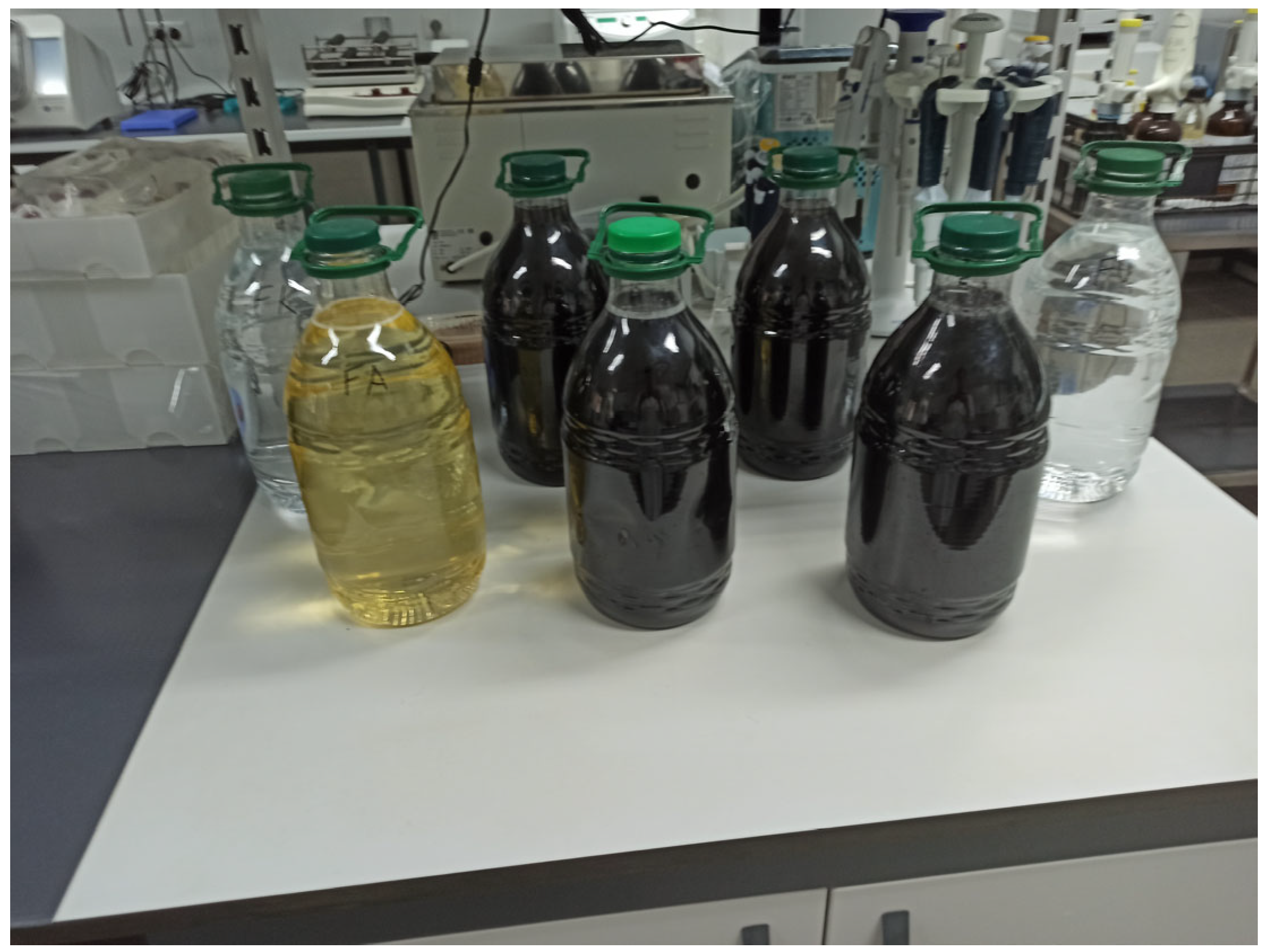
Scheme 1. Foliar suspensions prior to application in vineyard.
Sustainability 18 00364 sch001
Scheme 2. Grapevine leaves after the application (A) and drying (B,C) of the foliar suspensions containing biochar.
Sustainability 18 00364 sch002
Figure 1. Amount of YAN in mg N/L in must affected by treatments, where C is Control (ultrapure water), B (ultrapure water + 300 mg BC/L), U (ultrapure water + 400 mg urea/L), BU (ultrapure water + 300 mg BC/L + 400 mg urea/L), A (ultrapure water + 2 mL amino acids/L), BA (ultrapure water + 300 mg BC/L + 2 mL amino acids/L), and BUA (ultrapure water + 300 mg BC/L + 200 mg urea/L + 1 mL amino acids/L). The results are expressed as mean values ± standard error. For statistically significant results, Tukey’s post hoc test was performed, and different letters above columns indicate significant differences between treatments.
Sustainability 18 00364 g001
Figure 2. Organoleptic evaluation of Malvazija istarska wine based on OIV 100-point method where C is Control (ultrapure water), B (ultrapure water + 300 mg BC/L), U (ultrapure water + 400 mg urea/L), BU (ultrapure water + 300 mg BC/L + 400 mg urea/L), A (ultrapure water + 2 mL amino acids/L), BA (ultrapure water + 300 mg BC/L + 2 mL amino acids/L), and BUA (ultrapure water + 300 mg BC/L + 200 mg urea/L + 1 mL amino acids/L). The results are expressed as mean values ± standard error. For statistically significant results, Tukey’s post hoc test was performed, and different letters above columns indicate significant differences between treatments.
Sustainability 18 00364 g002
Figure 3. Spider plot of QDA results of Malvazija istarska white wine where C is Control (ultrapure water), B (ultrapure water + 300 mg BC/L), U (ultrapure water + 400 mg urea/L), BU (ultrapure water + 300 mg BC/L + 400 mg urea/L), A (ultrapure water + 2 mL amino acids/L), BA (ultrapure water + 300 mg BC/L + 2 mL amino acids/L), and BUA (ultrapure water + 300 mg BC/L + 200 mg urea/L + 1 mL amino acids/L).
Sustainability 18 00364 g003
Table 1. Physicochemical parameters of BC used in foliar suspensions.
ParameterUnitValue
pH9.79 ± 0.05
ECμS/cm792 ± 65.9
Ash%8.36 ± 0.01
Total carbon %73.1 ± 0.43
Specific surface aream2/g2.07 ± 0.14
N%1.06 ± 0.01
Pg/kg27.2 ± 0.21
Kg/kg22.8 ± 0.78
Mgg/kg27.5 ± 1.67
Sg/kg12.4 ± 0.30
Cag/kg187 ± 9.61
Cumg/kg4.65 ± 0.25
Mnmg/kg6.56 ± 1.22
Momg/kg0.11 ± 0.00
Znmg/kg2.69 ± 0.01
Table adapted from Palčić et al. [15]. Methods used: pH and EC were measured according to DIN ISO 10390 [17]; ash content by muffle furnace; total carbon by combustion in SSM-5000A (TOC-L analyzer, Shimadzu); specific surface area by BET method; nitrogen by Kjeldahl method; and macro- and microelements by ICP-OES after microwave digestion (Ethos UP, Milestone Srl, Milan, Italy).
Table 2. Formulations of studied foliar suspensions.
Foliar SuspensionFormulation
Cultrapure water
Bultrapure water + 300 mg biochar/L
Uultrapure water + 400 mg urea/L
BUultrapure water + 300 mg biochar/L+ 400 mg urea/L
Aultrapure water + 2 mL amino acid mixture
BAultrapure water + 300 mg biochar/L + 2 mL amino acid mixture
BUAultrapure water + 300 mg biochar/L + 400 mg urea/L 2 mL + amino acid mixture
Table 3. Values of pH and EC measured in foliar suspensions prior to vineyard application.
Foliar SuspensionpHEC (µS/cm)
C6.15 ± 0.45 c1.80 ± 0.30 c
B9.21 ± 0.26 a36.0 ± 1.04 c
U7.16 ± 0.33 a4.83 ± 0.66 c
BU9.10 ± 0.24 bc36.6 ± 1.32 c
A6.77 ± 0.03 bc460 ± 15.2 a
BA7.18 ± 0.03 bc493 ± 26.7 a
BUA7.40 ± 0.06 b287 ± 10.3 b
p value******
C—Control (ultrapure water), B (ultrapure water + 300 mg BC/L), U (ultrapure water + 400 mg urea/L), BU (ultrapure water + 300 mg BC/L + 400 mg urea/L), A (ultrapure water + 2 mL amino acids/L), BA (ultrapure water + 300 mg BC/L + 2 mL amino acids/L), and BUA (ultrapure water + 300 mg BC/L + 200 mg urea/L + 1 mL amino acids/L). The results are expressed as mean values ± standard error. *** indicates statistically significant differences at p < 0.001, and different letters within a row, next to mean values, indicate significant differences between treatments.
Table 4. Influence of foliar suspension treatments on amino acid concentration in grapevine must.
Compound (mg/L)Treatmentp
CBUBUABABUA
Serine15.8 ± 1.72 b15.0 ± 0.86 b32.7 ± 1.21 a15.5 ± 1.82 b13.9 ± 0.69 b13.4 ± 4.90 b15.3 ± 5.56 b**
Aspartic acid18.7 ± 0.65 ab20.0 ± 0.61 ab24.5 ± 0.69 a15.0 ± 0.35 b19.4 ± 0.03 ab18.1 ± 2.30 b17.0 ± 2.21 b**
Glycine1.43 ± 0.13 ab1.15 ± 0.04 ab1.46 ± 0.07 a1.19 ± 0.04 ab1.15 ± 0.03 ab1.04 ± 0.05 b1.14 ± 0.16 ab*
Threonine15.7 ± 0.4615.9 ± 0.2918.9 ± 0.5816.9 ± 0.4815.8 ± 0.4916.8 ± 0.3516.7 ± 1.56n.s.
4-hydroxyproline1.56 ± 0.051.81 ± 0.041.68 ± 0.051.69 ± 0.061.74 ± 0.051.74 ± 0.071.65 ± 0.10n.s.
Glutamine1794 ± 1151748 ± 85.71827 ± 71.11967 ± 1371601 ± 21.81961 ± 2852083 ± 216n.s.
Alanine15.4 ± 2.42 a–c8.68 ± 1.64 cd21.2 ± 0.86 a10.7 ± 3.67 b-d19.3 ± 1.62 ab5.49 ± 0.65 d12.2 ± 1.98 a-d***
Glutamic acid36.0 ± 1.35 ab27.1 ± 0.79 b40.6 ± 2.84 a34.8 ± 1.47 ab36.6 ± 1.91 ab31.5 ± 2.34 ab32.3 ± 2.95 ab**
Proline7.23 ± 0.36 b9.38 ± 0.35 ab7.76 ± 1.13 ab11.4 ± 0.57 a7.04 ± 0.36 b10.7 ± 1.13 ab9.68 ± 1.45 ab**
Asparagine0.58 ± 0.040.54 ± 0.050.75 ± 0.080.49 ± 0.080.46 ± 0.010.50 ± 0.080.48 ± 0.07n.s.
C—Control (ultrapure water), B (ultrapure water + 300 mg BC/L), U (ultrapure water + 400 mg urea/L), BU (ultrapure water + 300 mg BC/L + 400 mg urea/L), A (ultrapure water + 2 mL amino acids/L), BA (ultrapure water + 300 mg BC/L + 2 mL amino acids/L), and BUA (ultrapure water + 300 mg BC/L + 200 mg urea/L + 1 mL amino acids/L). The results are expressed as mean values ± standard error. *, **, and *** indicate statistically significant differences at p < 0.05, 0.01, and 0.001, respectively, while n.s. denotes a non-significant difference. For statistically significant results, Tukey’s post hoc test was performed, and different letters within a row, next to mean values, indicate significant differences between treatments.
Table 5. Must glucose, fructose, and total sugar concentration.
TreatmentGlucose (g/L)Fructose (g/L)Total Sugars (g/L)
C85.1 ± 2.49 ab89.7 ± 2.67 ab197 ± 5.86 ab
B61.9 ± 0.71 c65.8 ± 0.75 c145 ± 1.61 c
U76.1 ± 7.04 bc79.9 ± 7.48 bc175 ± 15.90 bc
BU90.5 ± 1.50 a95.6 ± 1.57 a208 ± 3.34 a
A89.4 ± 3.62 ab94.9 ± 3.82 ab207 ± 8.19 ab
BA97.5 ± 2.42 a103 ± 2.53 a223 ± 5.22 a
BUA90.5 ± 1.56 a95.8 ± 1.75 a209 ± 3.70 a
p-value*********
C—Control (ultrapure water), B (ultrapure water + 300 mg BC/L), U (ultrapure water + 400 mg urea/L), BU (ultrapure water + 300 mg BC/L + 400 mg urea/L), A (ultrapure water + 2 mL amino acids/L), BA (ultrapure water + 300 mg BC/L + 2 mL amino acids preparation/L), and BUA (ultrapure water + 300 mg BC/L + 200 mg urea/L + 1 mL amino acids/L). The results are expressed as mean values ± standard error. *** indicates statistically significant differences at p < 0.001, while n.s. denotes a non-significant difference. For statistically significant results, Tukey’s post hoc test was performed, and different letters within a column, next to mean values, indicate significant differences between treatments.
Table 6. Concentration of organic acids in grapevine must, as affected by the applied treatments.
TreatmentTartaric Acid (mg/L)Malic Acid (mg/L)Lactic Acid (mg/L)Citric Acid (mg/L)
C7561 ± 33.71624 ± 89.5 ab30.0 ± 1.75 a292 ± 9.92 ab
B8902 ± 3081626 ± 27.6 ab27.3 ± 1.61 a326 ± 8.14 ab
U7372 ± 2131786 ± 101 a29.7 ± 3.45 a336 ± 4.75 a
BU8270 ± 2881516 ± 61.2 ab24.2 ± 1.76 ab300 ± 5.03 ab
A8864 ± 4771263 ± 66.4 b28.9 ± 5.48 a313 ± 21.4 ab
BA9043 ± 4671461 ± 112 ab17.9 ± 1.66 b276 ± 5.18 b
BUA9099 ± 8741532 ± 108 ab17.3 ± 1.75 b311 ± 16.6 ab
p-valuen.s.***
C—Control (ultrapure water), B (ultrapure water + 300 mg BC/L), U (ultrapure water + 400 mg urea/L), BU (ultrapure water + 300 mg BC/L + 400 mg urea/L), A (ultrapure water + 2 mL amino acids/L), BA (ultrapure water + 300 mg BC/L + 2 mL amino acids/L), and BUA (ultrapure water + 300 mg BC/L + 200 mg urea/L + 1 mL amino acids/L). The results are expressed as mean values ± standard error. * indicates statistically significant differences at p < 0.05, while n.s. denotes a non-significant difference. For statistically significant results, Tukey’s post hoc test was performed, and different letters within a column, next to mean values, indicate significant differences between treatments.
Table 7. Effect of different treatments on the chemical properties of Malvazija istarska white wine.
TreatmentAlcohol
Concentration (% v/v)
Titratable
Acidity (g/L)
Volatile
Acidity (g/L)
pHReducing Sugars (g/L)
C9.52 ± 0.01 d8.08 ± 0.01 ab0.02 ± 0.012.96 ± 0.00 b2.57 ± 0.07 ab
B9.58 ± 0.01 c8.21 ± 0.22 an.d.2.93 ± 0.01 c2.87 ± 0.09 a
U10.1 ± 0.00 b7.61 ± 0.00 c0.01 ± 0.013.01 ± 0.00 a2.57 ± 0.19 ab
BU10.2 ± 0.01 b8.00 ± 0.01 a-c0.02 ± 0.022.92 ± 0.00 c2.30 ± 0.10 bc
A9.52 ± 0.01 d8.15 ± 0.00 abn.d.2.90 ± 0.00 d2.53 ± 0.07 ab
BA10.4 ± 0.01 a7.78 ± 0.00 bc0.03 ± 0.012.97 ± 0.00 b2.00 ± 0.12 c
BUA10.1 ± 0.01 b8.05 ± 0.01 abn.d.2.89 ± 0.00 d2.23 ± 0.09 bc
p-value*****n.s.*****
C—Control (ultrapure water), B (ultrapure water + 300 mg BC/L), U (ultrapure water + 400 mg urea/L), BU (ultrapure water + 300 mg BC/L + 400 mg urea/L), A (ultrapure water + 2 mL amino acids/L), BA (ultrapure water + 300 mg BC/L + 2 mL amino acids/L), and BUA (ultrapure water + 300 mg BC/L + 200 mg urea/L + 1 mL amino acids/L). The results are expressed as mean values ± standard error. **, and *** indicate statistically significant differences at p < 0.01, and 0.001, respectively, while n.s. denotes a non-significant difference. Where some parameters are not detected, it is noted as n.d. For statistically significant results, Tukey’s post hoc test was performed, and different letters within a column next to mean values indicate significant differences between treatments.
Disclaimer/Publisher’s Note: The statements, opinions and data contained in all publications are solely those of the individual author(s) and contributor(s) and not of MDPI and/or the editor(s). MDPI and/or the editor(s) disclaim responsibility for any injury to people or property resulting from any ideas, methods, instructions or products referred to in the content.