Article

Advancing Climate Resilience Through Nature-Based Solutions in Southern Part of the Pannonian Plain


1
Department of Water Management, Faculty of Agriculture, University of Novi Sad, 21000 Novi Sad, Serbia
2
Department of Field and Vegetable Crops, Faculty of Agriculture, University of Novi Sad, 21000 Novi Sad, Serbia
3
Department of Plant and Environmental Protection, Faculty of Agriculture, University of Novi Sad, 21000 Novi Sad, Serbia
*
Author to whom correspondence should be addressed.
Sustainability 2026, 18(1), 362; https://doi.org/10.3390/su18010362 (registering DOI)
Submission received: 3 December 2025 / Revised: 21 December 2025 / Accepted: 23 December 2025 / Published: 30 December 2025
(This article belongs to the Section Sustainable Agriculture)

Abstract

In agriculture, climate change is the most critical global issue. It is widely acknowledged that addressing this issue poses a considerable challenge, primarily due to its multifaceted impact on regional economies and land management practices. The concept of Nature-based Solutions (NbS) provides a prosperous approach offering both adaptation and mitigation models. However, NbS implementation is often compromised by various natural and societal challenges. Vojvodina Province, the northern province of the Republic of Serbia, features a typical rural landscape where centuries of agricultural practice have led to significant environmental changes, with 70% of the territory converted to arable land. However, climate change has been demonstrated to induce increasingly extreme weather conditions, which in turn exacerbate the situation with regard to food production. This paper aims to examine the most prosperous ways for NbS implementation in Vojvodina Province. The preset study mapped areas suitable for the implementation of selected NbS on the territory of Vojvodina Province. Maps were created in QGIS, while data were extracted from various sources (CORINE Land Cover, OpenStreetMap, the Institute for Nature Conservation of Vojvodina Province, and EUNIS platform). The area suitable for NbS in Vojvodina amounts to 1,183,228 ha or 55.74%. An increase in the area dedicated to organic and regenerative agriculture is projected, with a predicted range of up to 5%. Finally, we have identified grazing as a desirable management option for grassland management, which we have mapped, and it could potentially be practiced on almost 10% of the territory. Moreover, the engagement of various stakeholders is crucial in the implementation of NbS over the territory of the rural landscape. Considering that neighboring countries are facing the same climate circumstances and a similar social context, the findings we have presented in the paper may be applied to the region of the southern part of the Pannonian Plain.

1. Introduction

In order to address the challenges posed by climate change, a range of adaptation and mitigation strategies have been developed globally [1,2,3]. However, deeply incorporated habits based upon established economic pathways and a lack of flexibility and social resilience seem to be the major obstacles for the implementation of a framework that could reverse these global trends. In the search for low-cost and resilient solutions during the past decade, the concept of Nature-based Solutions (NbS) emerged [4,5]. Although people have mimicked patterns and solutions from nature to cope with some environmental issues for centuries and millennia [6], only recently it has been recognized and named as NbS by the scientific community and economists [7]. The essence of this concept encompasses a variety of practices aiming to use natural solutions and processes to reach sustainability, mainly by exploiting soil and water resources. There are a few definitions on NbS [7,8], but in general, NbS could simultaneously address the following challenges: water security, food security, human health, disaster risk reduction, and climate change mitigation. These approaches seek to enhance both vegetation and water quality and availability, while also boosting agricultural productivity [9]. The application of NbS in agricultural landscapes can contribute to reducing negative trade-offs between sustainable production and conservation objectives [10].
Often, challenges are closely related and changes in one domain often make an impact on other ones [7]. Maes and Jacobs [11] emphasize economic aspects of NbS as a way to invest in natural capital and opportunities for creating new jobs and business development based on the green economy. Nevertheless, it seems that implementations are not easily achievable. Similarly, as climate change evolves into a communication problem [12], it seems that NbS implementation could bridge this gap [13,14,15].
During the past three centuries, anthropogenic influence on changes in the agricultural landscape across the Pannonian Plain has been tremendous. Especially significant changes occurred in Vojvodina’s Province, north of Serbia, by converting wide natural wetland areas into productive land [16]. For this reason, this area has been chosen as a representative part of the southern border of the Pannonian Plain. It is generally accepted that intensive agriculture contributes to significant changes not only in land use patterns but also leads to degradation of soil and water resources within the rural landscape [17,18]. Nowadays, predominant intensive agricultural practice in Vojvodina Province has resulted in the formation of a picturesque mosaic of arable fields, which occupies most of the territory (70%) [19], and is intersected by a dense canal network draining 1,060,000 ha of land [20], while dikes built along rivers protect against flooding 1,735,000 ha [21,22]. Conversely, the area is poorly interspersed with non-forest greenery, while protected areas occupy only about 7% [23]. In such circumstances, the majority of the rural landscape is degraded, and there is an urgent need for implementation practices that could lead to its improvement and restoration [24]. The application of NbS is still in its infancy in Vojvodina Province, Serbia.
Therefore, this paper addresses challenges and possible solutions related to their implementation, which could contribute to resilience in the face of a changing climate within the Pannonian Plain. The aims of the paper are: (1) to examine climate change in the region through its rainfall analysis; (2) to map areas under forests and non-forest greenery; (3) to explore possibilities and map areas suitable for NbS implementation in sustainable agriculture; (4) to map present ecological network; (5) to map areas suitable for grazing, and (6) to provide a roadmap for the implementation of NbS in Vojvodina Province.

2. Material and Methods

2.1. Natural Features of Vojvodina Province, Serbia

Vojvodina Province is the northern part of Serbia and stretches over 2,161,423 ha [25], between 44°39′–46°11′ N and 19°00′–21°31′ E. Since the most remote points of longitude and latitude are about 220 km West to East and 180 km North to South, and orographic structures of the terrain are mostly uniform, there are no pronounced differences in temperature within the region [26]. It is located in the southern part of the Pannonian Plane, which is surrounded by mountains affecting the climate of the Vojvodina Province. According to the Köppen–Geiger climate classification, the climate of Vojvodina Province is predominantly classified as Cfb (temperate climate with warm summers and no dry season), with local transitions toward Cfa (temperate climate with hot summers) in lowland areas. In descriptive terms, this corresponds to a temperate continental climate characterized by hot summers, cold winters, and pronounced seasonal variability in precipitation. In addition, the openness of this area to the north and west allows stronger air currents from these directions. These characteristics are consistent with the transitional nature of the Cfb climate zone toward Cfa conditions, which have become increasingly pronounced in recent decades due to rising temperatures and more frequent heat extremes. The distribution of precipitation in Vojvodina follows the Danubian pattern, with significant irregularities throughout the year. The highest precipitation levels occur in early summer, i.e., June, while the lowest values are recorded in mid-autumn—October, or early spring—March [27].
The climate of Vojvodina is strongly influenced by the movement of air masses and the geographical position of the region, which results in a high variability of weather conditions, including marked differences in annual precipitation levels. The average annual precipitation in Vojvodina varies from 600 to 800 mm, but this amount is not evenly distributed throughout the year. Late spring and early summer months, particularly May and June, typically receive higher amounts of rainfall, while the winter months, especially January, experience lower precipitation levels, often in the form of snow. However, conducted analyses have shown increasing irregularity in these patterns, with more frequent and intense rainfall events during certain periods, particularly in late winter and spring. In general, the sum precipitation, in addition, has been observed to have a more frequent occurrence of heat waves in Vojvodina Province [28].
In this study we used meteorological data on average monthly temperatures and precipitation from four key stations: Sombor (45°46′24″ N, 19°06′55″ E), Novi Sad (45°14′12″ N, 19°49′26″ E), Kikinda (45°49′52″ N, 20°28′26″ E) and Zrenjanin (45°23′34″ N, 20°23′26″ E). The data were obtained from the official source, i.e., the Republic Hydrometeorological Service of Serbia, covering a period from 1971 to 2020 [29]. Further analyses were focused on calculating the Standardized Precipitation Index (SPI). The SPI represents drought index [30], which uses precipitation data to estimate wet or dry conditions. Ranges of SPI values are presented in Table 1.

2.2. Data Sets for Other Spatial Analyses

Features related to the distribution of certain objects across the territory of Vojvodina Province, important for the assessment of prospects for introducing NbS, are shown on maps created in QGIS 3.40 (https://changelog.qgis.org/, accessed on 15 May 2025). Data and bases for producing maps were obtained from various sources and were dependent upon the theme of the maps. The most common base for extracting layers was a set of spatial data called CORINE Land Cover (CLC) [31]. Spatial data are available in the form of polygons, where different land cover classes are defined. Such features are derived based on satellite image processing. Polygons are classified into 47 different categories of land cover types, 25 of which are represented on the territory of the Vojvodina. For analysis of forests and non-forest greenery on the territory of Vojvodina, these 25 categories were summarized into the following groups: 1st—high greenery (various types of forest), 2nd—low greenery (other forms of non-forest greenery and 3rd—other areas that are classified neither as forest nor non-forest greenery. The map of suitability for application of NbS on arable land across the territory of Vojvodina was produced by overlapping data on arable areas from CLC, while settlements, industry, and landfills were derived from OpenStreetMap [32]. Furthermore, a map concerning the ecological network is composed by extracting and presenting watercourses from CLC, as well as habitats and protected natural assets from data obtained from the Institute for Nature Conservation of Vojvodina Province—INCVP and EUNIS platform [33]. Finally, the map of potential pastures is obtained from CLC by extracting only areas under grass.
During the selection of data sources, important criteria included the availability and reliability of the data. Therefore, we have chosen reliable and publicly accessible open-source platforms (CLC, OpenStreetMap, and EUNIS), while certain data on protected areas were obtained on demand from INCVP.

3. Results and Discussion

3.1. Climate Changes in Vojvodina

Rainfall Analysis: Extremes and Trends

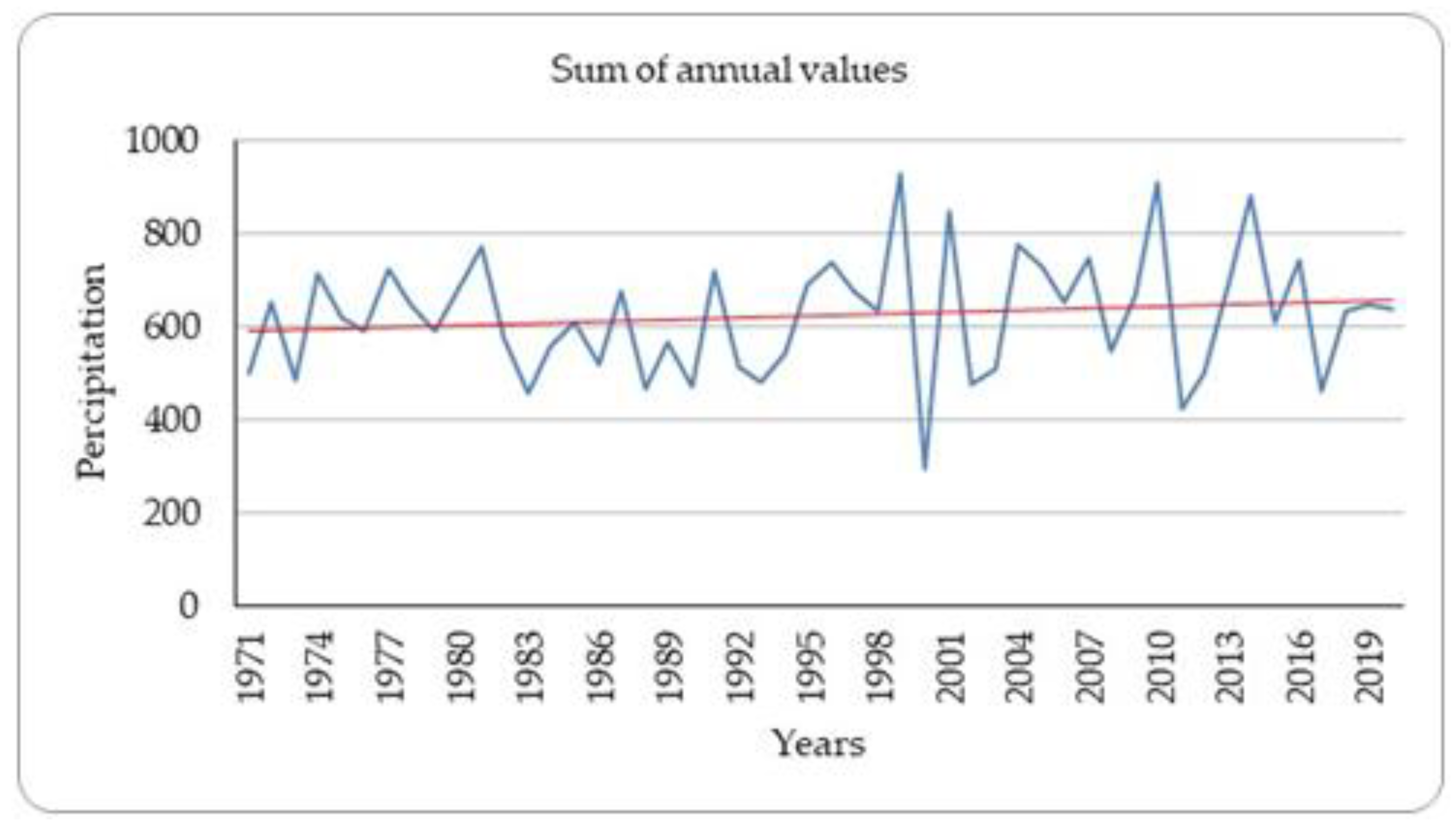
The observed changes in precipitation variability and temperature extremes are particularly relevant for regions classified as Cfb/Cfa under the Köppen–Geiger system, where climate change is expected to intensify hydroclimatic extremes. Annual precipitation data show significant variability in precipitation amounts over the period from 1971 to 2020. The highest precipitation amounts on all four stations were recorded in 1999 with 927.0 mm, while 2000 was an exceptionally dry year with only 295.3 mm of precipitation (Figure 1). Years with higher precipitation amounts, such as 2010 (911.6 mm) and 2014 (879.6 mm), indicate the periodic occurrence of years with above-average precipitation, while years such as 1983 (455.6 mm) and 2011 (422.9 mm) had lower precipitation amounts, which may indicate drier periods. Linear trend analysis indicates no statistically significant long-term trend in annual precipitation totals over the period 1971–2020. However, pronounced interannual variability is evident, with an increased occurrence of extremely wet and dry years, while years with near-normal precipitation (e.g., 1976) have become relatively rare in the last two decades.
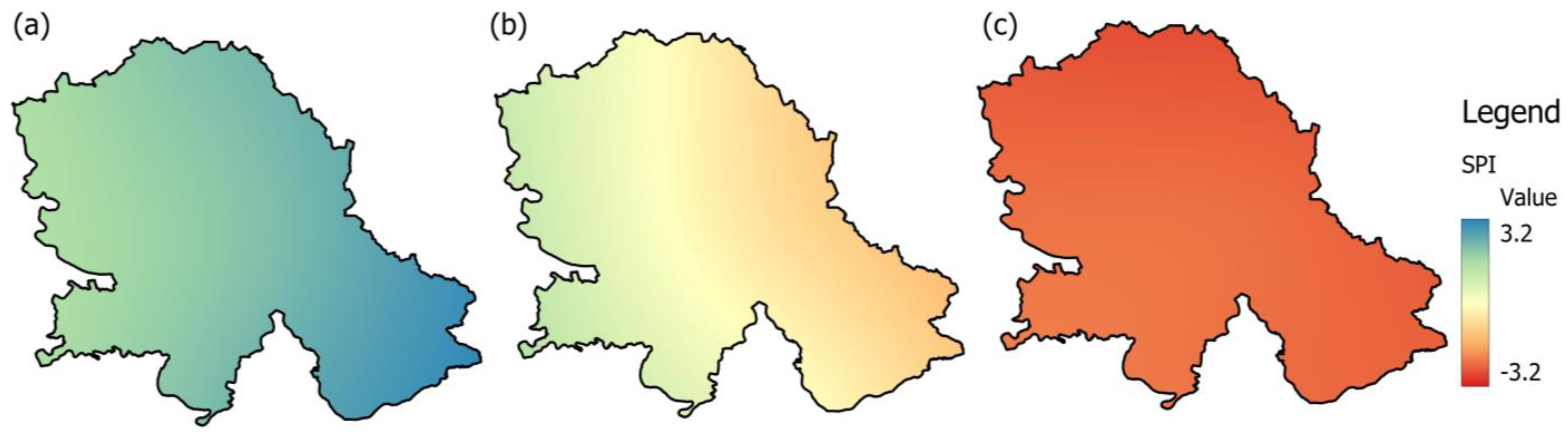
Analysis of precipitation data using the Standardized Precipitation Index (SPI) enabled the identification of extreme drought and wet periods (Figure 2). By correlating annual precipitation totals with SPI values, several noteworthy relationships emerge between precipitation amounts and corresponding SPI-based drought or wetness classifications. In general, years with higher annual precipitation tend to be associated with SPI values in the “Wet” and “Extremely Wet” categories (SPI ≥ 1), whereas years with lower precipitation are characterized by a greater number of months classified as “Dry” or “Extremely Dry”. These findings demonstrate that precipitation is a reliable indicator for distinguishing dry and wet years, which is essential for climate analysis and resource management.
  • Wet years: Specifically, 1999 (927.0 mm), 2010 (911.6 mm), and 2014 (879.6 mm) exhibited high annual precipitation, with corresponding SPI values reflecting “Wet” and “Extremely Wet” conditions. In 2010, extreme precipitation was recorded, with SPI indicating three months in the “Wet” category and two months as “Extremely Wet”, aligning with the high rainfall total of 911.6 mm (Figure 2a).
  • Normal years: Years with near-average precipitation, such as 1981 (771.6 mm), 1991 (717.3 mm), and 1976 (a little above 600 mm), predominantly showed SPI values within the “Normal” range (−1 < SPI < 1), indicating relatively stable hydrometeorological conditions. In 1991, for example, most months were classified as “Normal”, with only occasional deviations toward wetter or drier categories (Figure 2b).
  • Dry years: Conversely, drier years such as 2000, which recorded only 295.3 mm of annual precipitation, showed a significant number of months in the “Drought” category (−2 < SPI ≤ −1). Specifically, in 2000, five months were classified as “Drought”, which is consistent with the extremely low precipitation recorded that year, and can be interpreted as a period of extreme dryness (Figure 2c).
Analysis of the meteorological data shows an increasing frequency of extreme rainfall events, particularly since the late 1990s. These extremes, especially occurring in January and May, contribute to both flooding and erosion, which, above all, adversely affect the region’s agriculture. Furthermore, the frequency of extreme rainfall events has been accompanied by longer dry periods, which often lead to droughts during the summer months. Considering the available data and their analysis, the data indicate an uneven distribution of precipitation throughout the year, with sudden increases in some months and prolonged dry periods. This variability poses challenges for effective water resources management, as well as agricultural and forestry planning.

3.2. Natural Potentials Within the Vojvodina’s Landscape

Forests and Non-Forest Greenery

The territory of Vojvodina represents a region where arable land dominates, whereas the share of areas under forests is only 6.41% [25]. Nevertheless, forested areas, as well as various forms of non-forest greenery, play an important role in preserving the environment. The presence of forests and non-forest greenery reduces wind power, simultaneously protecting soil from erosion and drying, and buffering water events—droughts or sufficient water [34,35]. Another beneficial effect is retaining excess nutrients and various agrochemicals, thus purifying the environment. Areas under forests and non-forest greenery have a favorable effect on biodiversity, representing refuges for native species, and by connecting within the landscape, unique eco-corridors are formed. Consequently, greenery can contribute to the improved landscape appearance by breaking down the monotonous outlook of the cultural steppe.
The forestry sector in Vojvodina is also vulnerable to the changing climatic conditions. Forested area in Vojvodina occupies nearly 7%, making this part of Serbia the least forested region in Europe [36]. In addition to the areas under the forests, areas that can be assumed as non-forest greenery include tree lines, agroforestry belts, meadows, pastures and other grassy areas, areas under bushy vegetation, wetland areas, and protective greenery surrounding infrastructure (along canals, roads). Tree lines and agroforestry belts represent linear arrangements of trees and shrubs planted alongside agricultural fields, roads, or canals to serve as windbreaks, reduce soil erosion, and enhance landscape aesthetics.
These species are native to the region and are well-suited for creating protective belts that support local biodiversity. Meadows and pastures, in general, and open grasslands are vital for livestock grazing and support a diverse range of flora. The presence of Pulsatilla grandis Wender 1830 (greater pasque flower), a species of conservation concern, highlights the ecological value of these habitats. In Serbia, it is represented in Vojvodina on the slopes of Montain Fruška Gora and on the Srem Loess Plateau. There are many records for several localities throughout Serbia, including the flora of Deliblato Sands and Mt. Vršačke Planine in Banat [37]. Areas under bushy vegetation (shrublands) in Vojvodina provide essential habitats for various fauna and act as transitional zones between different ecosystems. Prunus tenella Batsch is notable for its conservation importance in the region [38]. Wetland areas (wetlands) are crucial for water filtration, flood control, and as habitats for specialized plant and animal species. Wetland plant species are typically found in protected areas such as the Special Nature Reserves of Zasavica, Obedska Bara, and Koviljsko-Petrovaradinski Rit [16,39]. Protective greenery or surrounding infrastructure represents vegetation planted along infrastructure corridors that serve to reduce pollution, noise, stabilize soil, and enhance the visual landscape; however, some of these species, such as Ailanthus altissima (Mill.) Swingle, are non-native and can be invasive. They are often utilized for their rapid growth and resilience in urban environments [40]. A similar situation occurs with Amorpha fruticosa L. (false indigo bush), which has been planted in the past to stabilize embankments of artificial canals and currently represents a nuisance plant with invasive characteristics in wetland areas, including flooded areas and banks of canals and rivers [41,42]. The selection of species for afforestation is based on their adaptability to local conditions and their roles in supporting ecological balance and biodiversity in Vojvodina’s landscapes. Table 2 summarizes characteristic species that dominate certain types of greenery.
In addition, various agricultural areas that are not cultivated intensively, such as orchards, vineyards, and gardens with a large share of trees, can be classified as non-forest greenery. Finally, the same category also includes wetlands and other water bodies in cases where the water is not polluted. According to the height of the greenery, we distinguished two groups: (1) high greenery, comprising forests, and (2) low greenery, including scrubs and grasslands, etc. Surface area for each of the categories is presented in Table 3.
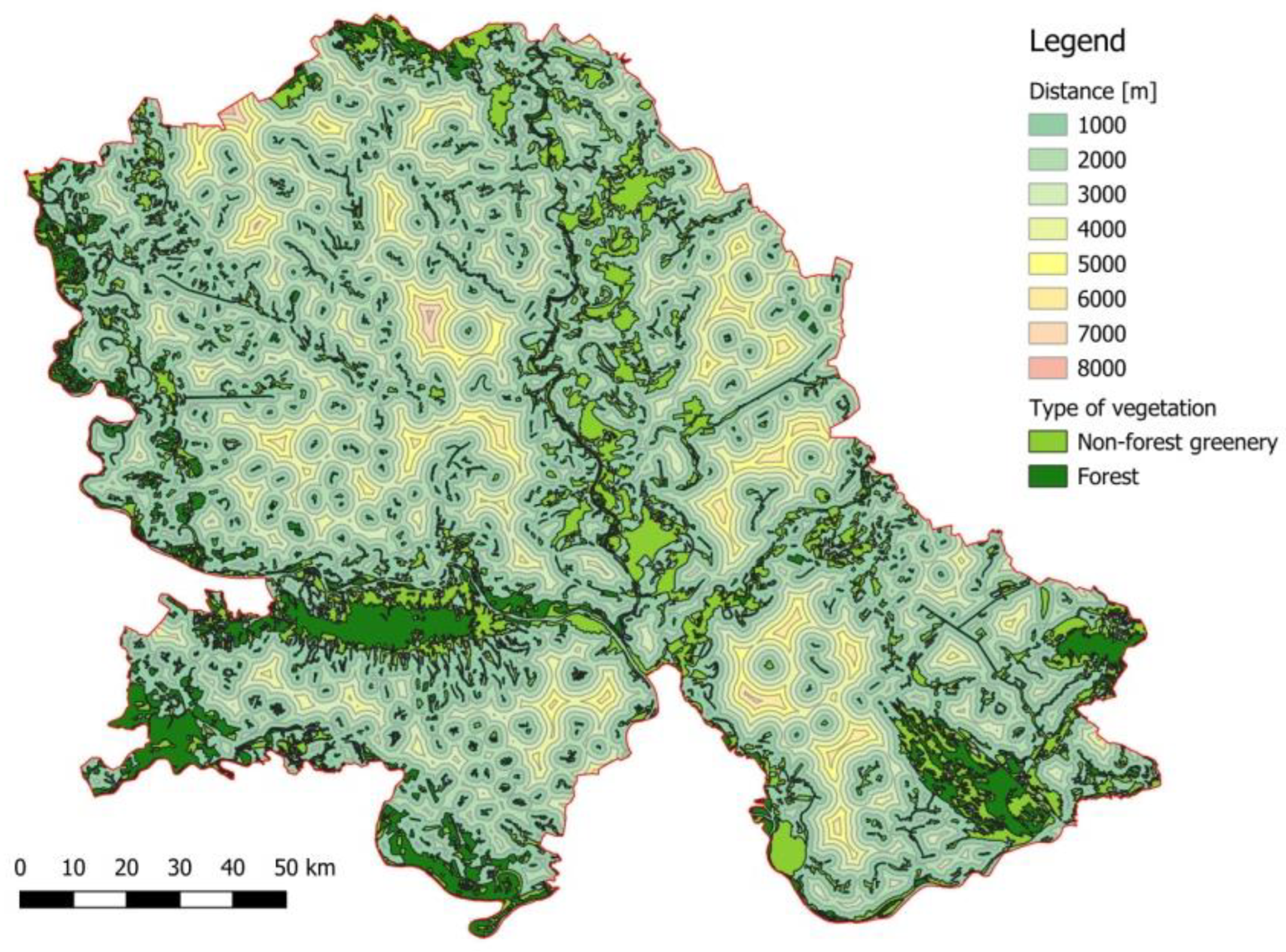
Patches under forest and non-forest greenery are not evenly distributed across the territory of Vojvodina (Figure 3). Most of these patches are located on Fruška Gora Mountain, Deliblaska Peščara (Delibralto Sands), and along larger rivers, e.g., the Danube, Sava, and Tisa. For the efficient performance of numerous functions of non-forest greenery, it would be desirable for them to be evenly distributed and interconnected. Upon the spatial analyses of the Vojvodina’s territory, not only was an uneven distribution confirmed, but also a few isolated patches, which were 5–7 km away from the nearest non-forest greenery, were identified.
Nevertheless, almost 98% of the patches under non-forest greenery are at a distance of less than 1 km from the next patch, which is favorable (Table 4). It can be concluded that patches under non-forest greenery are mainly interconnected, while there is a small number of isolated areas.
The second analysis was based on the distribution uniformity of the non-forest greenery by determining the longest distance between patches of non-forest greenery. This analysis revealed that 50.06% of the patches without non-forest greenery are at a distance of up to 1 km, while 25.03% and 13.91% are at a distance of two and 3 km, respectively. In contrast, there are patches up to 8 km distant from the nearest arena under non-forest greenery, accounting for 0.02% (Table 5).
Contemporary rising temperatures and reduced precipitation are stressing forest ecosystems. Prolonged drought periods have made trees more susceptible to pests and diseases, while the altered precipitation patterns disrupt forest regeneration processes. The environmental consequences of changing climatic conditions in Vojvodina extend beyond agriculture, water management, and forestry.

4. The Connection of NbS and Best Practice Implementation

Introducing NbS above all requires social consciousness and readiness for its application [50]. Globally, the efficiency of most NbS is well documented, and this efficiency is measured in terms of the environmental benefits that result from the implementation of NbS. However, its implementation in most cases is considered a drawback to progress, since some measures do not include implementing high-tech methods, but are contrary based upon the application of some practices which are considered as outdated and labor demanding or require more complexity for their implementation. Therefore, the most important task is establishing interconnectedness between society, economy, and nature conservation, for the benefit of each of the three aspects. In addition, it is not possible to distinguish clear boundaries among them. Thus, for the successful implementation of NbS, it is necessary to comprehend all aspects of the subject. It seems that the easiest way to implement NbS is selecting, strengthening, and scaling out some NbS practices that are already in use (or are traditionally applied) and are proven to yield positive outcomes for a certain region, concerning climate conditions and socio-economic circumstances. In the context of the Vojvodina region, NbS that are the most likely to be implemented are: practicing sustainable agriculture, strengthening the importance and continuity of the ecological network; controlling invasive vegetation through extensive farming–grazing; wastewater purification of small settlements through installation of constructed wetlands, and devoting whole communities to sustainable development within biosphere reserves. Each of the mentioned segments will be thoroughly elaborated on by presenting examples in the following subchapters.

4.1. A Nature-Based Solution That Incorporates Sustainable Agriculture

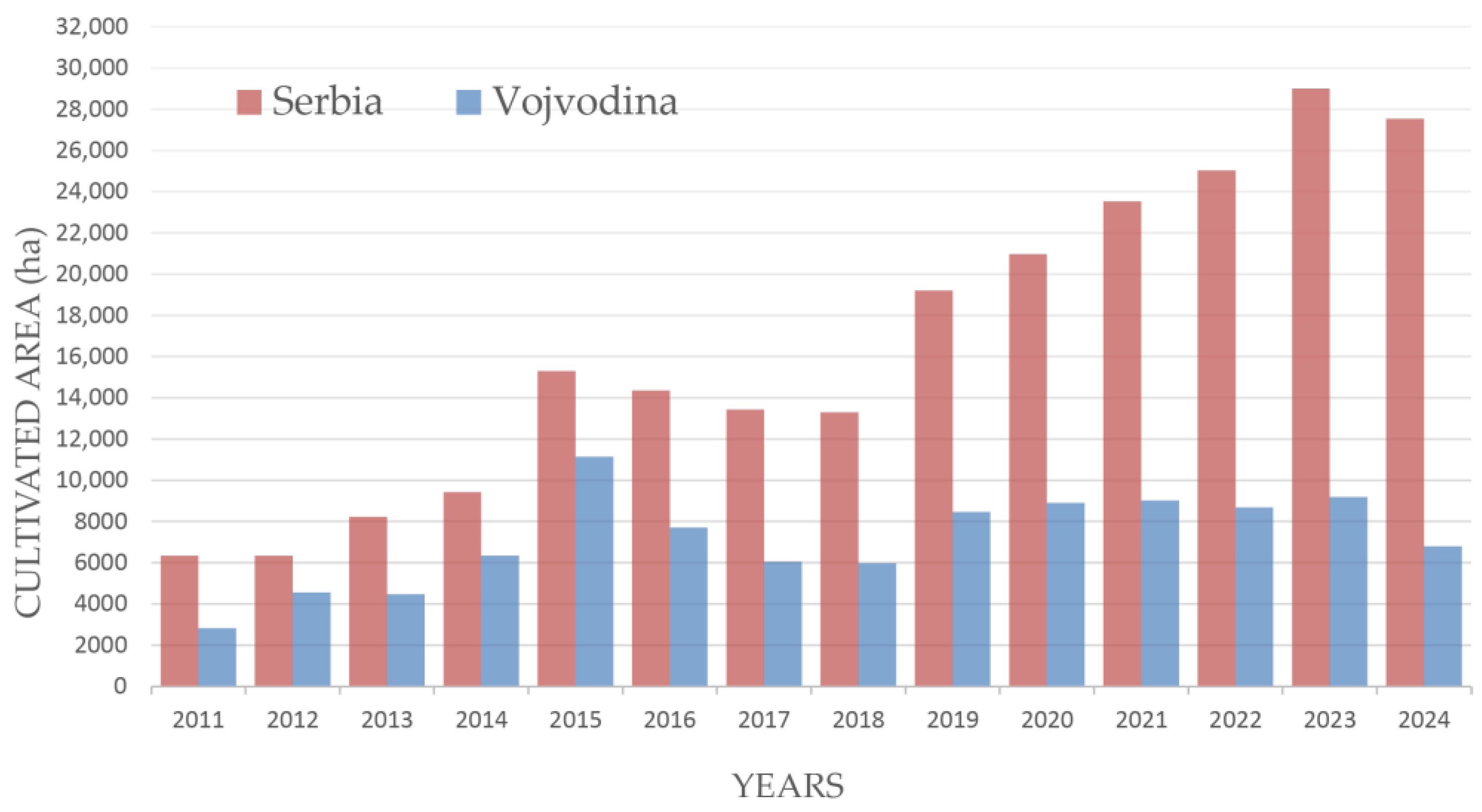
In the region where intensive land use has been practiced for the past few centuries, soil and water resources are under constant pressure, leading to the degradation of both [51]. Although contemporary trends in increasing food production do not provide space for converting arable land into inarable, i.e., native habitats, an opportunity lies in the application of different methods of sustainable agriculture such as organic agriculture, regenerative agriculture, agroecology, permaculture, biodynamic farming, agro-forestry, etc. Given the current perception and socio-economic context, organic farming has been the main pillar of sustainable development because it is the most widely accepted and considered to be best-suited to the people’s understanding of a food production system that is environmentally conscious. It can be posited that the nascent adoption of NbS in agriculture and the evolution of practices in Vojvodina commenced in the 1990s, a period during which the transition from conventional agricultural practices to ecological methods was documented [52]. At that time, the concept of NbS was not yet established. However, the methods employed and the approach adopted can be regarded as a solution based on nature. There is a continual growth of area where organic agriculture is practiced (Figure 4), but it still does not exceed 1% of the total arable land in Serbia [53,54]. In the Vojvodina province certified organic areas varied over the years (Figure 4) and even showing a declining trend. Currently, organic production make less than 30% of the total areas in Serbia, which is a decrease compared to the previous period when their share was up to 70%. This indicates significant limitations that exist in the territory of Vojvodina, mostly resulting from worsening climatic conditions [54]. It should be noted that official data exist for plant production for the territory of Vojvodina and can be retrieved from the Ministry of Agriculture, Forestry and Water Management [55].

4.2. NbS in Sustainable Agriculture of Vojvodina

The application of the NbS approach in agriculture aims at establishing some new agri-food systems relationships to achieve global food security and bring health co-benefits in agriculture similar to other sustainable agriculture practices [56]. These similarities are pronounced in methods (conservation agriculture, agroforestry, nutrient management, C-farming, reforestation, etc.) that can be used to reach the goals of sustainability in food production and in addressing societal challenges. In Serbia, the concept of NbS belongs to a generic framework that encompasses the different concepts of the green economy from the conceptual perspective [57], while from the practical side, it fully fits into the approach that promotes sustainable agriculture and green technologies. According to Popovicki [58], NbS in Serbia are most often seen as a powerful climate change mitigation mechanism because of their ability to prevent degradation and loss of natural ecosystems through sustainable forest management or improved conservation and land management practices. However, the conception itself is largely conceived at a global level, and there are difficulties in downscaling to the level of a farm as well as making it operational and functional in terms of production.
On a local level, NbS solutions represent a novel approach to agriculture that can be suitable for medium or large-sized farms that are oriented toward sustainable agriculture. However, experience indicates that NbS have not been sufficiently mainstreamed in agriculture, which has led to a slow uptake of the concept, even though the practices it promotes are widely used in agriculture. It can also be said that in Vojvodina, the approach offered by NbS is not sufficiently recognized, with individual measures being considered rather than a systemic approach. Considering that the NbS concept can be understood as one of the approaches within the framework of sustainable agriculture, they are competing for their place and recognition with other systems of sustainable agriculture. Accordingly, it would be important to underline the differences with general sustainable agriculture systems and stress similarities:
  • The differences between sustainable agriculture and NbS concepts are how they address the problem. While NbS has a top-down approach, sustainable agriculture mostly uses a bottom-up approach.
  • NbS relies on and develops carbon farming and carbon offsetting schemes in partnership with major conservation groups, while sustainable agriculture aims at building soil carbon in the long term.
  • Sustainable agriculture systems use a food system approach (from field to fork) while NbS addresses sustainable land and water resources management, which support food systems development.
  • NbS is more focused on global benefits, while sustainable agriculture emphasizes improvements on the local level.
Some similarities are also apparent:
  • NbS and sustainable agriculture share similar principles and have the same human well-being outcomes.
  • NbS is adherent to the territorial level—integrated into the specific area, which is why the joint action and synergism of NbS and sustainable agriculture can lead to multiple benefits in agriculture.
  • With both concepts, farmers and other food producers are positioned to be some of the most important stewards of the world’s lands and water resources.
  • Both are inclusive, addressing societal challenges, and convenient for scaling up.
  • Together (NbS and sustainable agriculture) they can improve agricultural production by resolving difficulties in encompassing the farm vs. food systems scale.
Areas of High Nature Value (HNV) approach to agricultural land in Serbia can also be considered as a means of NbS application. However, HNV areas for special conservation interest are currently not specifically defined, and they overlap with other means of ecological protection. In 2010, a pilot project and activities for the implementation of the National Agroecological Plan in Serbia were launched [59] to introduce agroecological payment schemes in Serbia. At the moment, preparation and identification of HNV farmlands in Serbia are without targeted national support and public recognition, and most importantly, active farmers’ involvement [60]. One of the possible options for the expansion of HNV could be coupling with NbS and targeting areas of ecological conservation concern.
Recently, there has been a great interest in regenerative agriculture in Vojvodina, especially among larger producers and the processing industry. This led to the expansion of regenerative agriculture areas and raised the interest of a significant number of smaller producers already applying conservation agriculture methods. Connecting academia with NGOs resulted in the creation of a collaboration that promotes this type of production and the significant potential it has. There are great advantages of this method of production [61], which is gradually taking a significant role in the area of sustainable agriculture; the current structure and method of field crops production in Vojvodina fully corresponds to this approach.
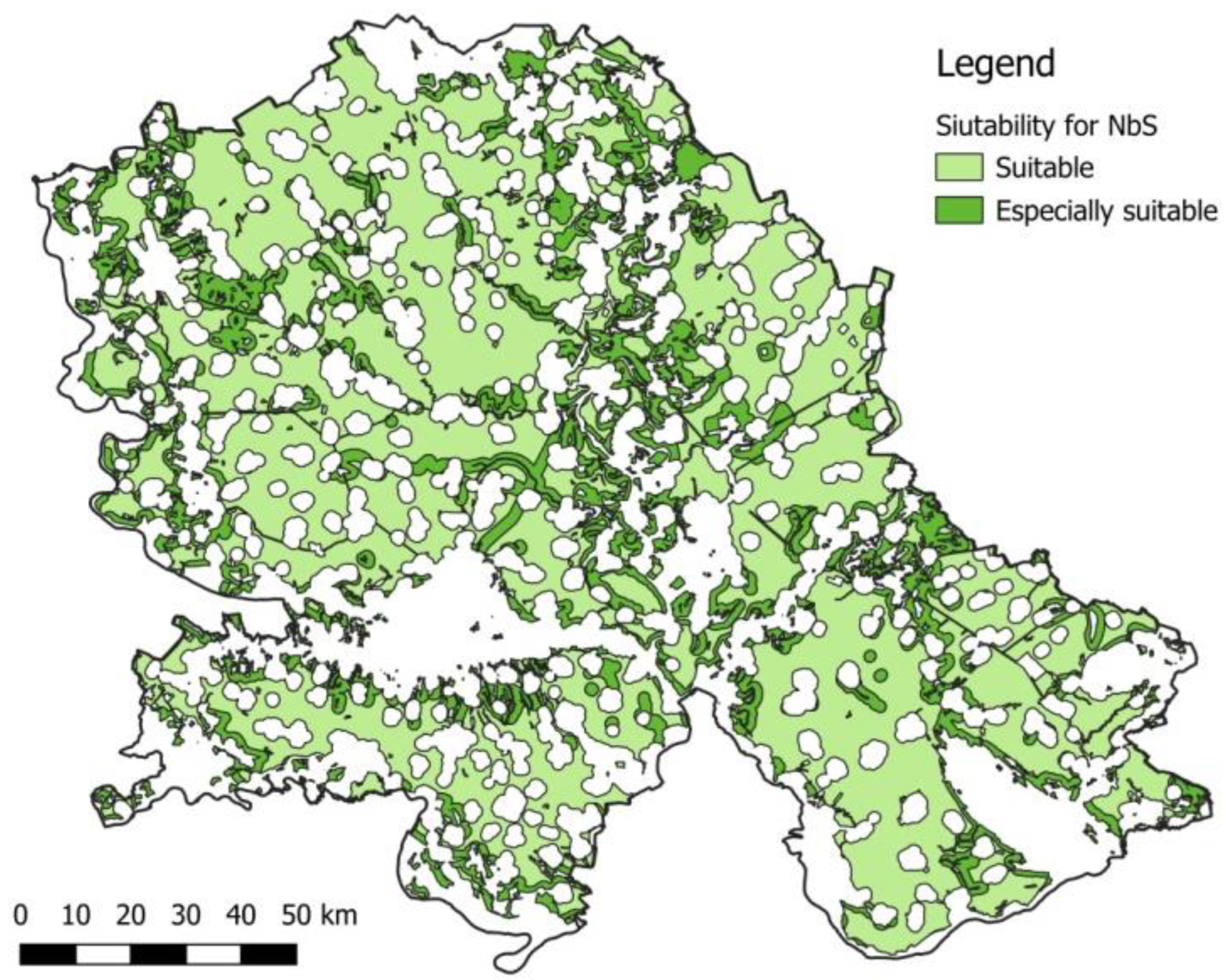
The review [62] confirmed that limited evidence of NbS in agricultural systems, particularly of developing countries can be found under other frameworks. Figure 5 shows suitability for application of NbS on arable land across the territory of Vojvodina. White spots uniformly distributed on the map indicate areas which are omitted from the analyses, since they represents settlements, industrial complexes, or smaller protected areas, while bigger spaces represent large, protected areas, e.g., National Park Fruška Gora, or Special Nature Reserve Deliblato Sands—both located at the bottom of the map. In the process of presenting areas suitable for application of NbS and organic agriculture, buffers of 1 km are formed away from the features that might have a negative influence on organic production (i.e., settlements, industrial complexes, landfills).
Light green color on the map (Figure 5) indicates areas under arable land where NbS implementation is possible of 877,907 ha or 40.62%. Dark green indicates areas that surround protected areas, where application of NbS is even recommendable, and that could potentially occupy 305,321 ha or 14.13%. All together the area suitable for implementation of some sort of NbS on the territory of Vojvodina Province amounts to 1,183,228 ha or 55.74%.

4.3. Ecological Network

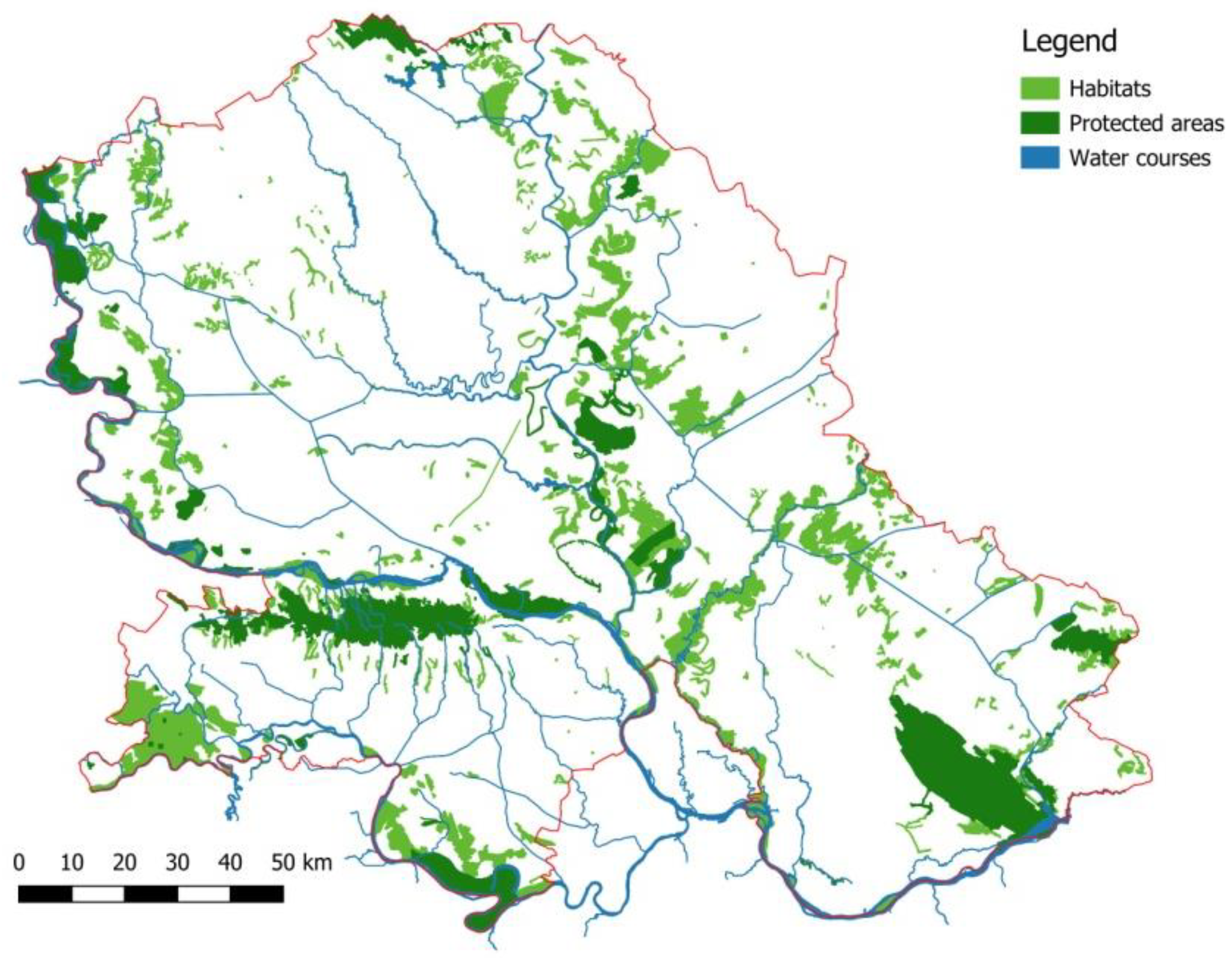
Due to the construction of the dense canal network in the Province of Vojvodina, large areas have been converted to arable land, while wildlife and especially wetland areas have been devastated. However, along the artificial canal network and natural watercourses, narrow corridors of wildlife are preserved, thus sustaining it. In addition, a similar function is also provided by green infrastructures—non-forest greenery described in Section 3.2. Ecological corridors are important since they enable the movement of population units, the flow of genes, and connect the largest areas of preserved autochthonous biodiversity, i.e., protected areas. Altogether, all these features—adjacent areas to the hydrological network, non-forest greenery, and protected areas—compose an ecological network in Vojvodina, i.e., important ecological areas of national and international importance (Figure 6). Areas under habitats occupy 163,000 ha or 7.54%, while protected areas stretch over 137,187 ha or 6.35%.
The establishment of the ecological network in Vojvodina, Serbia, was in accordance with the regulatory framework of the Republic of Serbia (RS). The definition of and implementation of the National ecological network was determined by the Law on Nature Protection [63]. In addition, some parts of the national ecological network are areas recognized as Natura 2000 sites. Natura 2000 sites represent a backbone for the overall Green infrastructure of the EU. In line with this, Serbian Natura 2000 sites are contributing to the European Union’s Natura 2000 network of protected areas, and are accompanied by central zones, corridors, and tampon zones, making them overall green infrastructures [63,64,65]. In conclusion, by the Serbian regulatory framework, it has been foreseen that the ecological network established on its territory will become part of the European Ecological Network Natura 2000, upon Serbian accession to the European Union.
Since eco-corridors intersect arable land, the majority of problems for their sustainability arise from the conflicting situation between agriculture and environmental protection. In practice, within Vojvodina’s socio-economic environment, maintaining the ecological network is a challenging task, especially concerning the canal network. However, due to neglect or lack of finances, some canals are overgrown by aquatic macrophytes. The recent attitude is that such canals are nowadays named as bioretention drainage canals [66], categorized also as low-impact development (LID) solutions. Fortunately, such conditions are favorable for biodiversity conservation, simultaneously providing water purification from surplus nutrients released by leaching from arable land. From the point of view of water management operations, macrophytic vegetation increases roughness and impedes water flow in canals, thus aggravating its primary function, while deposited material of decayed plants on the bottom and slopes changes the preferred trapezoidal shape of a canal. This situation requires periodical canal dredging, which is a costly measure.
Nevertheless, it is worth mentioning that on Vojvodina’s territory, there are different types of habitats, and each has its own specificities, thus leading to different requirements, i.e., some are more susceptible to certain pressures. For example, deposited nitrogen on saline habitats may represent a threat within the national ecological network [67]. Therefore, this conflicting situation has to be solved in a compromising manner, and here the application of NbS is recommended. From the wider perspective, planning, managing, and regulating ecological corridors within agricultural areas must be performed in line with the Law of Nature Protection [63] and implemented on the basis of spatial and urban development plans.

4.4. Grazing Within Protected Areas

In Vojvodina Province, controlled grazing within protected areas has demonstrated positive ecological impacts, particularly in maintaining plant biodiversity and habitat health. One notable example is the Selevenj Heath Special Nature Reserve, located in the municipalities of Kanjiža and Subotica. This reserve encompasses approximately 6.77 km2 and has remained free from urban development, primarily serving for botanical and conservation purposes [68].
Within Selevenj Heath, grazing practices have been a key measure in preserving the unique Pannonian heath ecosystem. Grazing activity helps control the proliferation of aggressive plant species, thereby supporting the growth of native flora. Notably, the reserve is the sole habitat in Serbia for the desert soapwort (Saponaria bellidifolia Sm.), a species that thrives under the specific conditions maintained through managed grazing. Additionally, protected species of orchids and irises find refuge in this habitat, benefiting from the open and diverse plant community fostered by grazing.
Another significant area is the Special Nature Reserve Obedska Bara, recognized as an Important Plant Area (IPA) within Vojvodina. This reserve hosts a variety of biocenoses inhabited by endemic plant and animal species, forming a unique and sensitive ecosystem. In SNR Obedska Bara, the management introduced controlled cattle grazing to maintain habitat diversity and ecological balance, and it is shown to be especially effective in controlling the spread of some invasive species such as Amorpha fruticosa L. [39,42].
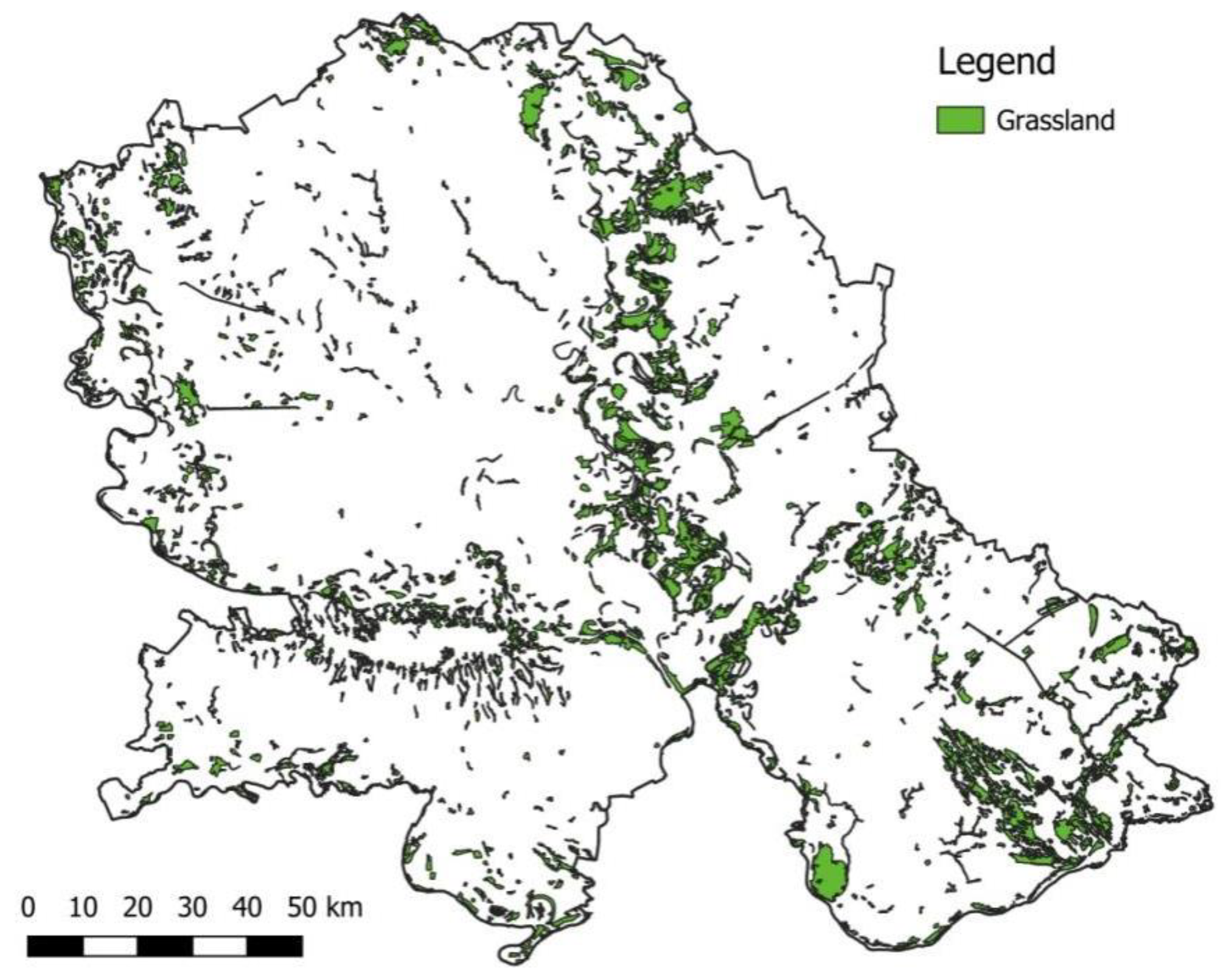
Implementing controlled grazing in these protected areas serves multiple ecological functions: it prevents the overgrowth of dominant vegetation, maintains open habitats necessary for various plant and animal species, and promotes a heterogeneous landscape that enhances biodiversity [69]. These practices underscore the importance of integrating traditional land-use methods, such as grazing, into modern conservation strategies to preserve the unique ecosystems of Vojvodina’s protected areas. Since the majority of land is converted to arable land, or is occupied by settlements, grazing can be practiced only on relatively small areas representing infertile soil—saline soils or alluvial soils along the Tisza River or across Deliblato Sands (Figure 7). Total estimated area suitable for grazing is up to 216,423 ha or 9.96% of Vojvodina’s territory.

5. A Roadmap for the Implementation of NbS in Vojvodina Province

We present a compendium of evidence pertaining to the ramifications of climate change in the Vojvodina region, with a particular emphasis on the escalating frequency and intensity of extreme rainfall events, protracted droughts, and rising temperatures. These changes have direct and far-reaching consequences on a number of sectors that tend to be overlapping and interdependent, e.g., agriculture, water management, forestry, and the environment. The agricultural sector in Vojvodina Province faces significant challenges, and some projections indicate that prolonged droughts and elevated CO2 would significantly affect crop yields [70], and increased temperatures will affect soil characteristics [71]. Concerning water management, extreme rainfall events heighten the risks of flooding and soil erosion, and water shortages during droughts strain infrastructure and resources. Furthermore, the surface water quality at protected areas has been deemed unsatisfactory and requires enhancement [16,72]. NbS, like biodrainage, could improve the drainage system to be more efficient and stabilize the hydrological cycle. Wetland restoration can mitigate the impacts of extreme rainfall, preserve biodiversity, and stabilize water resources, while natural infiltration systems reduce flood risks and help preserve biodiversity [16,73].
Application of NbS, such as agroforestry, can enhance the resilience of agricultural systems to these climatic extremes [74], while cover crops help retain soil moisture and minimize erosion during heavy rainfall events [75]. Forestry is increasingly threatened by higher drought frequencies, which weaken forest ecosystems and exacerbate outbreaks of some pests and the spread of invasive plant species [42,76,77]. Solutions such as afforestation reduce soil erosion and enhance carbon storage, while ecological corridors improve the resilience of agroecosystems and support biodiversity. NbS, such as riparian and buffer strips, offer a few ecosystem services [78]. Protection can reduce flood risks while preserving critical habitats and urban green spaces enhance urban resilience to heat waves and extreme rainfall, contributing to the overall well-being of communities. These approaches emphasize the importance of working with nature to build a sustainable and adaptive future, as well as relying on ecosystem services of natural floodplains [79].
Addressing these challenges requires proactive strategies, including the adoption of NbS that focus on restoring and preserving natural systems, improving water retention, and enhancing resilience to climatic fluctuations [80]. The aim is to ensure the long-term sustainability of natural and economic resources and biodiversity conservation within the Vojvodina region. There is no doubt that the implementation of NbS can represent a backbone for climate-resilient actions, especially in agricultural areas [56]. Therefore, to sustain our economy, that is mainly oriented to agricultural production, we must implement significant changes in current agricultural practice. One way is fostering regenerative and organic agricultural practices. In addition, attention must be paid to nourishing and replenishing non-forest greenery within the rural landscape, as well as in the bordering zones with protected areas.
The co-benefits in agriculture associated with the implementation of NbS are mostly related to multiple ecosystem functions—agroforestry, conservation agriculture, grass strips, and climate-smart agriculture [80,81]. Therefore, identifying the territorial domain of NbS and the sustainable agriculture where they overlap is important and may represent an entry point from which the transition of agriculture can be initiated. Given the agroecological and socio-economic conditions in Serbia, we can propose using such an approach to agri-food transformation in Serbia [54]. However, successful transitions to Agriculture NbS usually require an ecosystem of actors—including NGOs, policymakers, corporations, and others—loosely coordinating their efforts, thoughtful policy, and institutional engagement. Nevertheless, since arable land occupies 70% of the territory [19], there is a wide space for the application of NbS. Taking into account the increase in areas under regenerative agriculture or agroecological production methods, it can be expected that in the coming period, the areas under sustainable production systems will increase to 5%.
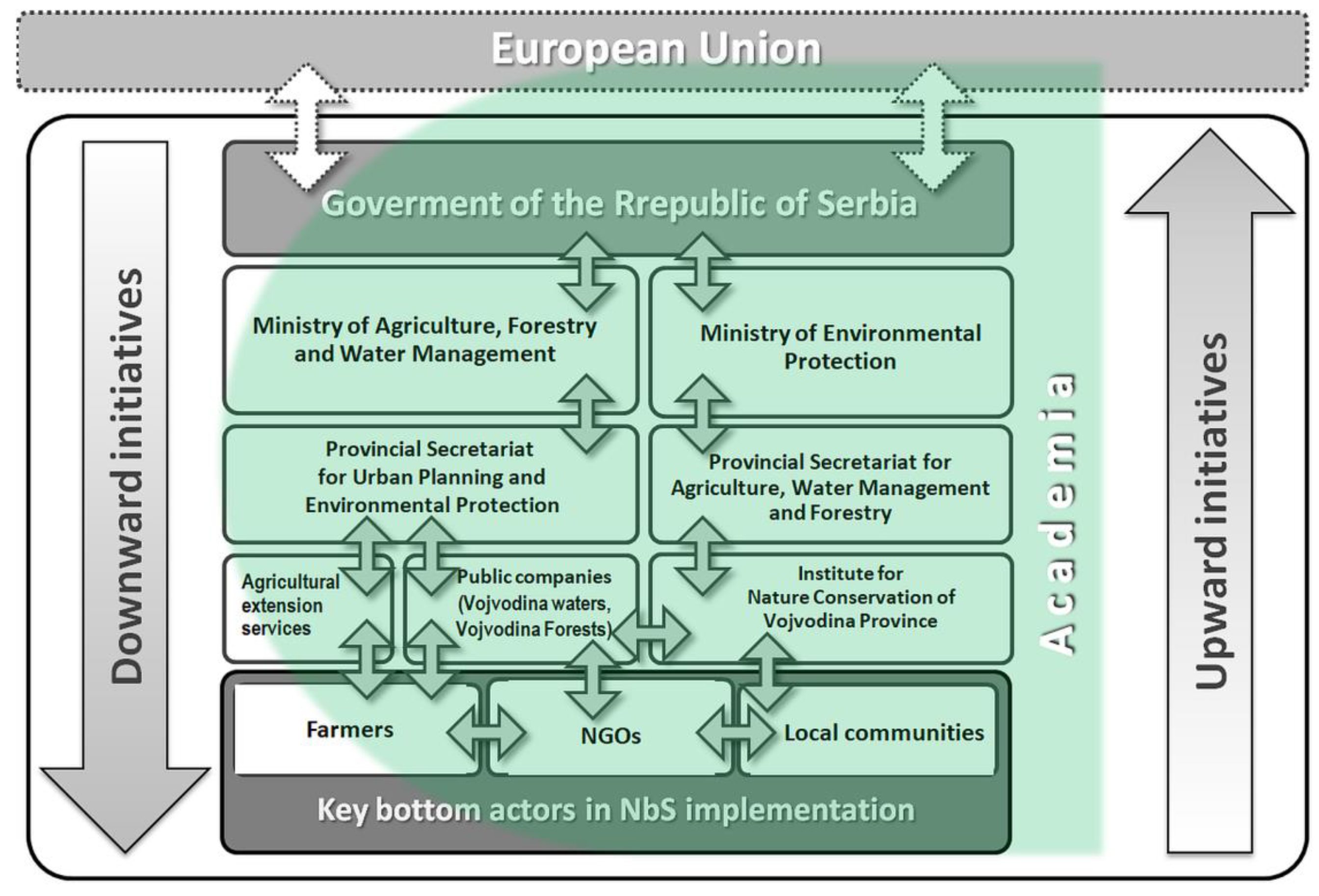
Even though tools and practices promoted by NbS are proven to be effective, both economically and in eco-friendly manner, the lack of flexibility and willingness to implement necessary changes on a wider scale seems to be a major obstacle to the implementation of NbS in the Vojvodina region. Therefore, the question of implementation is tightly related to social awareness and readiness for action. Concerning this issue, a social and political process is needed that impacts “different dimensions of governance, including equity and rights” [81], while consulting different stakeholders in the decision-making process is essential [82]. Implementation of NbS is a complex task where multiple sectors and actors are crossing their influences and responsibilities in Vojvodina (Figure 8).
Currently, in Vojvodina, there are, at disposal, a wide range of measures and scales of actions enabling downward–upward and downscale–upscale initiatives and approaches. Implementation and initiatives may originate from farmers, local communities, NGOs, or official governmental bodies, e.g., provincial secretariats and ministries. In the middle of this hierarchy are public companies engaged in water management (Public Water Management Company Vode Vojvodina), or forestry (PC Vojvodinašume), and the Institute for Nature Conservation of Vojvodina Province, which have an opportunity to implement or supervise the implementation of certain measures. The efforts of members of the scientific community in academia could reach all stakeholders in the country. By participating in international projects and panels, they could also reach beyond the state level, bridging and exchanging up-to-date knowledge with EU actors and people worldwide.
Agriculture and water management have played a crucial role in shaping the landscape of Vojvodina and are major contemporary drivers of its economy. Therefore, in the scenario in which substantial modifications are required, with respect to the implementation of NbS, the initiative must originate from the designated responsible authorities [54,83]. Wider application of NbS within the rural landscape of the Vojvodina region needs to be initiated by official regional decisions, further promoted and supported by agricultural extension services and other actors in charge of certain aspects, e.g., water management, nature conservation, etc. Furthermore, cross-sectoral cooperation might play an important role, e.g., involving the Ministry of Environmental Protection of the RS, down to local managers of protected areas. Such cooperation would lead to erasing the sharp edges of protected areas and enhancing biodiversity, soil conservation, and sustainable water management on wider arable areas. Ongoing EU program Instrument for Pre-accession Assistance in Rural Development -IPARD (https://ipard.co.rs/; accessed on 15 December 2025) for the period 2012–2027, run by the Ministry of Agriculture, Forestry and Water Management of the Republic of Serbia, is providing financial assistance to support rural development and the agri-food sector to adopt EU policies and standards. It is important since it facilitates the implementation of NbS, especially through Measure 4 related to agri-environment-climate and organic farming. The measure includes the following operations: O1—crop rotation on arable plots; O2—establishing grass strips along arable plots in perennial plantings; O3—establishing and maintaining pollinator strips; and O4—sustainable management of meadows and pastures. Specific goals may be summarized as water quality protection, increase in organic matter in the soil, biodiversity preservation, prevention of soil erosion, and reduction in pesticide and fertilizer application.
In addition, there is a niche where the implementation of NbS is possible and reasonable. Although protected areas occupy only a small share of the territory, implementing NbS shows good results. Some successful examples are introducing grazing for managing grass and woody vegetation within protected areas to the suppression of invasive species, simultaneously stimulating the local economy [42,84,85,86]. Another example is establishing constructed wetlands for wastewater purification for nearby villages [87,88], or establishing vegetated filter strips along arable plots and along the canal network, etc. Finally, a holistic approach is offered by the model of a biosphere reserve. Such an example is the Backo Podunavlje Biosphere Reserve [89] located in the western part of the Vojvodina region. Even more complex is a transboundary protected area, e.g., Biosphere Reserve Mura-Drava-Danube, which is established in the territory of five countries, i.e., Austria, Slovenia, Croatia, Hungary, and Serbia [90]. In this case, international borders are erased. Thus, designing cross-border and cross-country networks, as well as establishing green infrastructures, could provide multiple benefits in comparison to single-country-based networks [91].
Based on the analysis and the potential of NbS, several key actions are recommended to address the challenges posed by climate change. First, investing in the restoration of natural systems, such as established biodrainage plantings, wetlands, and floodplains, can mitigate the effects of extreme rainfall and enhance water infiltration. Second, educating and supporting farmers to adopt sustainable practices like agroforestry and diversification strategies in agriculture, complemented with conservation tillage, will improve agricultural resilience. Third, integrating NbS into local policies, including the planning of urban green spaces and infrastructure that align with natural processes, will enhance climate adaptation efforts. Finally, ongoing monitoring and research are essential to track climatic trends and refine adaptation strategies, ensuring that actions remain effective and responsive to future challenges.

6. Conclusions

Climatic conditions and changes in precipitation regimes in Vojvodina significantly affect society and ecosystems. NbS offers a holistic and sustainable approach to reducing risks and enhancing resilience to climate change. Within Vojvodina Province’s landscape, there is a wide array of possibilities where NbS could be successfully applied, starting with making modifications towards more sustainable agriculture systems, improving status, or establishing new green corridors within arable land and enhancing the management of protected natural assets, e.g., by reintroducing grazing, nowadays recognized as an NbS method. The highest level of achievement is expected in areas designated as biosphere reserves, where the imperative is the development of the economy and achieving social goals, while sustainably exploiting natural potentials. Although most of the NbS solutions are proven to be effective in practice, local communities often express resistance to their implementation, and this reluctance to embrace novel solutions or reintroduce traditional practices, driven by the inertia of established applications and customized practices, hinders progress.
To reinforce the implementation process of NbS, joint efforts of decision-makers and end-users, as well as intersectional cooperation, are inevitable in all three aspects: water management, agriculture, and nature conservation. Moreover, improved communication and raising awareness at all levels must be an imperative. Only coherent actions could lead to significant changes within Vojvodina’s landscape and improved climatic resilience, simultaneously ensuring the sustainability of its key sectors and preserving natural resources for future generations. Furthermore, the research findings of this paper could also be applied to countries along the southern border of the Pannonian Plain.

Author Contributions

Conceptualization—J.G.; Data curation—J.G., M.V., P.B., S.Š. and M.M.; Formal analysis—M.V., P.B. and S.Š.; Writing—Original Draft—J.G., M.V., P.B., S.Š. and M.M.; Writing—Review and Editing—J.G., M.V., P.B., S.Š. and M.M. and Funding acquisition—J.G., M.V., P.B., S.Š. and M.M. All authors have read and agreed to the published version of the manuscript.

Funding

The research in this paper is part of a project entitled: Determination of excess water in Vojvodina within the framework of climate change and extreme hydrometeorological phenomena (contract no. 002955429 2024 09418 003 000 000 001) funded by the Provincial Secretariat for Higher Education and Scientific Research activity, and the Ministry of Education, Science and Technological Development of the Republic of Serbia no. 451-03-137/2025-03/200117.

Institutional Review Board Statement

Not applicable.

Informed Consent Statement

Not applicable.

Data Availability Statement

The original contributions presented in this study are included in the article. Further inquiries can be directed to the corresponding author.

Acknowledgments

Authors want to express their gratitude to Institute of Nature Conservation of Vojvodina Province and PC Vojvodinašume for providing access to the data.

Conflicts of Interest

The authors declare no conflicts of interest, neither financial interests nor related to personal relationships that could have appeared to influence the work reported in this paper.

References

  1. Fawzy, S.; Osman, A.I.; Doran, J.; Rooney, D.W. Strategies for mitigation of climate change: A review. Environ. Chem. Lett. 2020, 18, 2069–2094. [Google Scholar] [CrossRef]
  2. Devi, S.H.; Salam, J. Resilience, Mitigation and Adaptation Strategies to Combat Climate Change for a Sustainable Future. Int. J. Environ. Clim. 2025, 15, 423–438. [Google Scholar] [CrossRef]
  3. Morecroft, M.D.; Duffield, S.; Harley, M.; Pearce-Higgins, J.W.; Stevens, N.; Watts, O.; Whitaker, J. Measuring the success of climate change adaptation and mitigation in terrestrial ecosystems. Science 2019, 366, eaaw9256. [Google Scholar] [CrossRef] [PubMed]
  4. Nelson, D.; Bledsoe, B.; Ferreira, S.; Nibbelink, N. Challenges to realizing the potential of nature-based solutions. Curr. Opin. Environ. Sustain. 2020. [Google Scholar] [CrossRef]
  5. Seddon, N.; Chausson, A.; Berry, P.; Girardin, C.; Smith, A.; Turner, B. Understanding the value and limits of nature-based solutions to climate change and other global challenges. Philos. Trans. R. Soc. B 2020, 375, 20190120. [Google Scholar] [CrossRef]
  6. Wolz, K.J.; De Lucia, E.H. Alley cropping: Global patterns of species composition and function. Agric. Ecosyst. Environ. 2018, 252, 61–68. [Google Scholar] [CrossRef]
  7. Cohen-Shacham, E.; Walters, G.; Janzen, C.; Maginnis, S. (Eds.) Nature-Based Solutions to Address Global Societal Challenges; IUCN: Gland, Switzerland, 2016; Volume 97, p. 2036. [Google Scholar]
  8. Bauduceau, N.; Berry, P.; Cecchi, C.; Elmqvist, T.; Fernandez, M.; Hartig, T.; Krull, W.; Mayerhofer, E.N.S.; Noring, L.; Raskin-Delisle, K.; et al. Towards an EU Research and Innovation Policy Agenda for Nature-Based Solutions & Re-Naturing Cities: Final Report of the Horizon 2020 Expert Group on ‘Nature-Based Solutions and Re-Naturing Cities’; Publications Office of the European Union: Bruxelles, Belgium, 2015; 76p. [Google Scholar] [CrossRef]
  9. Sonneveld, B.G.; Merbis, J.S.; Alfarra, M.D.A.; Ünver, O.; Arnal, M.A. Nature-Based Solutions for Agricultural Water Management and Food Security. FAO Land and Water Discussion Paper No. 12; FAO: Rome, Italy, 2018; 66p, Available online: http://www.fao.org/3/CA2525EN/ca2525en.pdf (accessed on 5 December 2023).
  10. Miralles-Wilhelm, F. Nature-Based Solutions in Agriculture—Sustainable Management and Conservation of Land, Water and Biodiversity; FAO and The Nature Conservancy: Arlington, VA, USA, 2021. [Google Scholar] [CrossRef]
  11. Maes, J.; Jacobs, S. Nature-Based Solutions for Europe’s Sustainable Development. Conserv. Lett. 2017, 10, 121–124. [Google Scholar] [CrossRef]
  12. World Health Organization—WHO. Communicating on Climate Change and Health: Toolkit for Health Professionals; WHO: Geneva, Switzerland, 2024; Available online: https://iris.who.int/handle/10665/376283 (accessed on 15 December 2025).
  13. Castellari, S.; Zandersen, M.; Davis, M.; Veerkamp, C.; Förster, J.; Marttunen, M.; Mysiak, J.; Vandewalle, M.; Medri, S.; Picatoste, J.R. Nature-Based Solutions in Europe: Policy, Knowledge and Practice for Climate Change Adaptation; Disaster Risk Reduction. EEA Report No 1/2021, Issue. 2021. Available online: https://op.europa.eu/en/publication-detail/-/publication/da65d478-a24d-11eb-b85c-01aa75ed71a1/language-en (accessed on 30 September 2025).
  14. IPCC. Climate Change 2022: Impacts, Adaptation and Vulnerability; Intergovernmental Panel on Climate Change (IPCC): Geneva, Switzerland, 2022. [Google Scholar] [CrossRef]
  15. Manes, S.; Vale, M.M.; Malecha, A.; Pires, A.P.F. Nature-based solutions promote climate change adaptation safeguarding ecosystem services. Ecosyst. Serv. 2022, 55, 101439. [Google Scholar] [CrossRef]
  16. Grabic, J. Wetlands in Serbia: Past, present and future. Columella 2024, 11, 19–28. [Google Scholar] [CrossRef]
  17. Eurostat. Agri-Environmental Indicator—Soil Erosion. Data Extracted in February 2020. Available online: https://ec.europa.eu/eurostat/statistics-explained/index.php?title=Agri-environmental_indicator_-_soil_erosion (accessed on 15 May 2025).
  18. Srejić, T.; Manojlović, S.; Sibinović, M.; Bajat, B.; Novković, I.; Milošević, M.V.; Carević, I.; Todosijević, M.; Sedlak, M.G. Agricultural Land Use Changes as a Driving Force of Soil Erosion in the Velika Morava River Basin, Serbia. Agriculture 2023, 13, 778. [Google Scholar] [CrossRef]
  19. Statistical Yearbook of the Republic of Serbia—2024. Municipalities and Regions of the Republic of Serbia, Republic Statistical Office of the RS. Belgrade. Posted on 25 December 2024. Available online: https://www.stat.gov.rs/sr-latn/publikacije/publication/?p=17065&tip=13 (accessed on 20 January 2025). (In Serbian)
  20. Public Water Management Company Vojvodina Vode—PWMC VV. Hidrosystem Dunav-Tisa-Dunav—HS DTD. Available online: https://vodevojvodine.com/en/water-resources/dtd-hs/ (accessed on 19 March 2025).
  21. Dragović, S.; Maksimović, L.; Radojević, V.; Cicmil, M.; Pantelić, S. Historical development of soil water regime management using drainage and irrigation in Vojvodina. Vodoprivreda 2005, 37, 216–218+285–296. (In Serbian) [Google Scholar]
  22. Vranešević, M.; Salvai, A.; Bezdan, A.; Zemunac, R. Assessment of Runoff and Drainage Conditions in a North Banat Sub-Catchment, North-Eastern Serbia. J. Environ. Geogr. 2019, 12, 13–19. [Google Scholar] [CrossRef]
  23. Institute for Nature Conservation of Vojvodina Province—INCVP. Register of Protected Areas. Available online: https://pzzp.rs/zastita-prirode/zastita-prirode/registar-zasticenih-podrucja.html (accessed on 15 September 2025).
  24. Belic, S.; Rajkovic, M. Conditions that land reclamation must ensure sustainable agriculture. Stud. Univ. Vasile Goldiş Arad Ser. Vietii 2010, 20, 55–59. [Google Scholar]
  25. Statistical Yearbook of the Republic of Serbia for 2022. Republic Statistical Office of the RS. Belgrade. Posted on 20 October 2022. Available online: https://www.stat.gov.rs/sr-Latn/publikacije/?d=2&r=2 (accessed on 20 June 2025). (In Serbian)
  26. Lalic, B.; Mihailovic, D.; Podraščanin, Z. Future state of climate in Vojvodina and expected effects on crop production. Field Veg. Crop Res. 2011, 48, 403–418. [Google Scholar] [CrossRef]
  27. Tošić, I.; Hrnjak, I.; Gavrilov, M.; Unkašević, M.; Marković, S.; Lukić, T. Annual and seasonal variability of precipitation in Vojvodina, Serbia. Theor. Appl. Climatol. 2014, 117, 331–341. [Google Scholar] [CrossRef]
  28. Basarin, B.; Lukić, T.; Mesaroš, M.; Pavić, D.; Đorđević, J.; Matzarakis, A. Spatial and temporal analysis of extreme bioclimate conditions in Vojvodina, Northern Serbia. Int. J. Climatol. 2018, 38, 142–157. [Google Scholar] [CrossRef]
  29. Republic Hydrometeorological Service of Serbia—RHMSS. Metheorological Yearbooks, Climataological Data; Republic Hydrometeorological Service of Serbia: Belgrade, Serbia, 1971–2019. (In Serbian) [Google Scholar]
  30. McKee, T.B.; Doesken, N.J.; Kleist, J. The relationship of drought frequency and duration of time scales. In Proceedings of the Eighth Conference on Applied Climatology, American Meteorological Society, Anaheim, CA, USA, 17–23 January 1993; pp. 179–186. [Google Scholar]
  31. Corine Land Cover—CLC, Version 20; European Environment Agency: Copenhagen, Denmark, 2018.
  32. OpenStreetMap Contributors. Planet Dump [Data File from $Date of Database Dump$]. Available online: https://planet.openstreetmap.org (accessed on 20 May 2025).
  33. EEA—European Environmental Agency, Datahub. EUNIS Habitat Distribution Plots (Spatial Data). Available online: https://www.eea.europa.eu/en/datahub/datahubitem-view/ce3e4bf4-e929-404a-88c7-37f2c614fd1d (accessed on 15 May 2025).
  34. Chi, W.; Wang, Y.; Lou, Y.; Na, Y.; Luo, Q. Effect of Land Use/Cover Change on Soil Wind Erosion in the Yellow River Basin since the 1990s. Sustainability 2022, 14, 12930. [Google Scholar] [CrossRef]
  35. Cao, X.; Cheng, Y.; Jiao, J.; Jian, J.; Bai, L.; Li, J.; Ma, X. Impact of Land Use/Cover Changes on Soil Erosion by Wind and Water from 2000 to 2018 in the Qaidam Basin. Land 2023, 12, 1866. [Google Scholar] [CrossRef]
  36. Trudić, B.; Orlović, S.; Galović, V.; Pekeč, S.; Stojanović, D.; Stojnić, S. Molecular Technologies in Serbian Lowland Forestry under Climate Changes—Possibilities and Perspectives. South East Eur. For. 2014, 5, 103–115. [Google Scholar] [CrossRef]
  37. Niketić, M.; Tomović, G.; Bokić, B.; Buzurović, U.; Duraki, Š.; Đorđević, V.; Sanjaf, Đ.; Zorang, K.; Predragb, L.; Ranko, P.; et al. Material on the annotated checklist of vascular flora of Serbia: Nomenclatural, taxonomic and floristic notes III. Bull. Nat. Hist. Mus. Belgr. 2021, 14, 77–132. [Google Scholar] [CrossRef]
  38. Šurbanovski, N.; Tobutt, K.; Konstantinović, M.; Maksimović, V.; Sargent, D.; Stevanović, V.; Ortega, E.; Bošković, R. Self-incompatibility of Prunus tenella and evidence that reproductively isolated species of Prunus have different SFB alleles coupled with an identical S-RNase allele. Plant J. 2007, 50, 723–734. [Google Scholar] [CrossRef]
  39. Trišić, I.; Milojković, D.; Ristić, V.; Nechita, F.; Maksin, M.; Štetić, S.; Candrea, A.N. Sustainable Tourism of Important Plant Areas (IPAs)—A Case of Three Protected Areas of Vojvodina Province. Land 2023, 12, 1278. [Google Scholar] [CrossRef]
  40. Meseldžija, M.; Dudić, M.; Stipanović, S. Distribution of the invasive species Ailanthus altissima (P. Mill.) Swingle along the Danube river banks on the territory of Novi Sad. Contemp. Agric. 2019, 68, 7–11. [Google Scholar] [CrossRef]
  41. Grabić, J.; Ljevnaić-Mašić, B.; Zhan, A.; Benka, P.; Heilmeier, H. A review on invasive false indigo bush (Amorpha fruticosa L.): Nuisance plant with multiple benefits. Ecol. Evol. 2022, 12, e9290. [Google Scholar] [CrossRef] [PubMed]
  42. Grabić, J.; Benka, P.; Ljevnaić-Mašić, B.; Vasić, I.; Bezdan, A. Spatial distribution assessment of invasive alien species Amorpha fruticosa L. by UAV-based on remote sensing in the Special Nature Reserve Obedska Bara, Serbia. Environ. Monit. Assess. 2022, 194, 599. [Google Scholar] [CrossRef]
  43. Devetaković, J.; Čortan, D.; Maksimović, Z. Conservation of European White Elm; Black Poplar Forest Genetic Resource: Case Study in Serbia. In Forests of Southeast Europe Under a Changing Climate; Šijačić-Nikolić, M., Milovanović, J., Nonić, M., Eds.; Advances in Global Change Research; Springer: Cham, Switzerland, 2019; Volume 65. [Google Scholar] [CrossRef]
  44. Tomić, P.; Romelić, J.; Kicošev, S.; Lazić, L. Vojvodina, Scientifically Popular Monograph; Geographic Society of Vojvodina: Novi Sad, Serbia, 2004. [Google Scholar]
  45. Štetić, S.; Ristić, V.; Trišić, I.; Tomašević, V.; Skenderović, I.; Kurpejović, J. Nature Conservation and Tourism Sustainability: Tikvara Nature Park, a Part of the Backo Podunavlje Biosphere Reserve Case Study. Forests 2025, 16, 49. [Google Scholar] [CrossRef]
  46. Lazić, L.; Pavić, D.; Stojanović, V.; Tomić, P.; Romelić, J.; Pivac, T.; Košić, K.; Besermenji, S.; Kicošev, S. Protected Natural Resources and Ecotourism in Vojvodina; Departman za Geografiju, Turizam i Hotelijerstvo, Prirodno-Matematički Fakultet, Univerzitet u Novom Sadu: Novi Sad, Serbia, 2008. (In Serbian) [Google Scholar]
  47. Obradov, D.P.; Radak, B.Đ.; Bokić, B.S.; Anačkov, G.T. Floristic diversity of the central part of the South Bačka loess terrace (Vojvodina, Serbia). Biol. Serbica 2021, 42, 5–25. [Google Scholar] [CrossRef]
  48. Tmušić, G.M.; Rat, M.M.; Bokić, B.S.; Radak, B.Đ.; Radanović, M.M.; Anačkov, G.T. Floristic analysis of the Danube’s shoreline from Čerević to Čortanovci. Matica Srp. J. Nat. Sci. 2019, 136, 133–153. [Google Scholar] [CrossRef]
  49. Ćuk, M. Status and Temporal Dynamics of Flora; Vegetation of Deliblatsko Sands. Ph.D. Thesis, Department of Biology, Faulty of Sciences, Ecology, University of Novom Sadu, Novi Sad, Serbia, 2019. (In Serbian). [Google Scholar]
  50. Mahmoud, I.H.; Morello, E.; Vona, C.; Benciolini, M.; Sejdullahu, I.; Trentin, M.; Pascual, K.H. Setting the social monitoring framework for nature-based solutions impact: Methodological approach and pre-greening measurements in the case study from CLEVER cities Milan. Sustainability 2021, 13, 9672. [Google Scholar] [CrossRef]
  51. Karlen, D.; Rice, C. Soil Degradation: Will Humankind Ever Learn? Sustainability 2015, 7, 12490–12501. [Google Scholar] [CrossRef]
  52. Horvat Skenderović, T. Vita Organica; Terras; Printex: Subotica, Serbia, 2023; pp. 1–153. [Google Scholar]
  53. Tomaš Simin, M.; Milić, D.; Novaković, D.; Zekić, V.; Novaković, T. Organic Agriculture in Focus: Exploring Serbian Producers’ Views on the Common Agricultural Policy and the National Agrarian Policy. Sustainability 2024, 16, 4559. [Google Scholar] [CrossRef]
  54. Šeremešić, S.; Dolijanović, Ž.; Tomaš Simin, M.; Milašinović Šeremešić, M.; Vojnov, B.; Brankov, T.; Rajković, M. Articulating Organic Agriculture and Sustainable Development Goals: Serbia Case Study. Sustainability 2024, 16, 1842. [Google Scholar] [CrossRef]
  55. Ministry of Agriculture, Forestry and Water Management—MAFWM (2025 March). Organic Agriculture. Available online: http://www.minpolj.gov.rs/organska/?script=lat (accessed on 15 May 2025).
  56. Budding-Polo Ballinas, M.; Arumugam, P.; Verstand, D.; Siegmund-Schultze, M.G.R.; Keesstra, S.D.; Garcia Chavez, L.Y.; de Boer, R.; van Eldik, Z.C.S.; Voskamp, I.M. Discussion Paper: Nature Based Solutions in Food Systems: Review of Nature-Based Solutions Towards More Sustainable Agriculture and Food Production. Wageningen University & Research, 2022. Available online: https://edepot.wur.nl/578174 (accessed on 25 October 2025).
  57. Đorić, Ž. Zelena Ekonomija I Održivi Razvoj U Zemljama Zapadnog Balkana (Green Economy; Sustainable Development In The Western Balkan Countries). Ekon. Ideje I Praksa 2021, 41, 67–91. [Google Scholar]
  58. Popovicki, T. Study on Nature-Based Climate Solutions in Serbia. United Nations Development Programme. 2019, pp. 1–48. Available online: https://www.undp.org/serbia/publications/study-nature-based-climate-solutions-serbia (accessed on 15 September 2025).
  59. Cooper, T.; Pezold, T.; Keenleyside, C.; Đorđević-Milošević, S.; Hart, K.; Ivanov, S.; Redman, M.; Vidojević, D. Developing a National AgriEnvironment Programme for Serbia; IUCN Programme Office for South-Eastern Europe: Gland, Switzerland; Belgrade, Serbia, 2010; pp. 1–88. [Google Scholar]
  60. Šeremešić, S.; Milošev, D.; Nikolić, L.; Lazić, B.; Jug, D.; Đurđević, B. High nature value farming concept in agriculture and environment. In Proceedings of the 6th International Scientific/Professional Conference, Agriculture in Nature and Environment Protection, Vukovar, Croatia, 27–29 May 2013; pp. 135–140. [Google Scholar]
  61. Khangura, R.; Ferris, D.; Wagg, C.; Bowyer, J. Regenerative Agriculture—A Literature Review on the Practices; Mechanisms Used to Improve Soil Health. Sustainability 2023, 15, 2338. [Google Scholar] [CrossRef]
  62. Simelton, E.; Carew-Reid, J.; Coulier, M.; Damen, B.; Howell, J.; Pottinger-Glass, C.; Tran, H.V.; van Der Meiren, M. NBS framework for agricultural landscapes. Front. Environ. Sci. 2021, 9, 678367. [Google Scholar] [CrossRef]
  63. Law on Nature Protection, Official Gazette of the Republic of Serbia, Nos. 36/09 of 15 May 2009, 88/10 of 23 November 2010, 91/10 of 3 December 2010 (Corrigendum), 14/16 of 22 February 2016 and 95/18 of 8 December 2018 (Other Law). Available online: https://www.paragraf.rs/propisi/zakon_o_zastiti_prirode.html (accessed on 12 October 2025).
  64. Kicošev, V.; Mesaroš, M.; Veselinović, D.; Sabadoš, K. Uspostavljanje zona unutar zaštitnih pojaseva prirodnih dobara u funkciji prilagođavanja na klimatske promene (Establishing a zone within the protection belts of natural assets for the purpose of climate change adaptation). Ecologica 2013, 20, 181–187. (In Serbian) [Google Scholar]
  65. European Commision, Communication from the Commission to the European Parliament, the Council, the European Economic and Social Committee and the Committee of the Regions—Green Infrastructure (GI): Enhancing Europe’s Natural Capital (COM(2013) 249 Final of 6 May 2013). Available online: https://eur-lex.europa.eu/legal-content/EN/TXT/?uri=celex:52013DC0249 (accessed on 23 September 2025).
  66. Stec, A.; Słyś, D. New bioretention drainage channel as one of the low-impact development solutions: A case study from Poland. Resources 2023, 12, 82. [Google Scholar] [CrossRef]
  67. Kicošev, V.; Vasin, J.; Kvaščev, M.; Bibin, M.; Bošnjak, I.; Đukić, D.; Senji, L. The issue of determining the amount of deposited nitrogen compounds in salt-affected habitats within the national ecological network. Ratar. I Povrt./Field Veg. Crops Res. 2014, 51, 46–54. [Google Scholar]
  68. Regulation on the Protection of the Special Nature Reserve Selevenjske Pustare, RS Official Gazette, No.37/97. Available online: http://demo.paragraf.rs/demo/combined/Old/t/t2008_07/t07_0065.htm (accessed on 25 September 2025).
  69. Steklová, J.; Novák, J.; Češká, J. Managed and unmanaged permanent grasslands: Species composition at selected localities of the protected landscape area Šumava (Bohemian forest; The Czech Republic) depending on the soil. Cereal Res. Commun. 2008, 36, 831–834. [Google Scholar]
  70. Rezaei, E.E.; Webber, H.; Asseng, S.; Boote, K.; Durand, J.L.; Ewert, F.; Martre, P.; MacCarthy, D.S. Climate change impacts on crop yields. Nat. Rev. Earth Environ. 2023, 4, 831–846. [Google Scholar] [CrossRef]
  71. Ćirić, V.; Drešković, N.; Mihailovic, D.; Mimić, G.; Arsenic, I.; Đurđević, V. Which is the response of soils in the Vojvodina Region (Serbia) to climate change using regional climate simulations under the SRES-A1B? Catena 2017, 158, 171–183. [Google Scholar] [CrossRef]
  72. Grabić, J.; Đurić, S.; Ćirić, V.; Benka, P. Water quality at special nature reserves in Vojvodina, Serbia. Croat. J. Food Sci. Technol. 2018, 10, 179–184. [Google Scholar] [CrossRef]
  73. Vranešević, M.; Belić, S.; Kolaković, S.; Kadović, R.; Bezdan, A. Estimating suitability of localities for biotechnical measures on drainage system application in Vojvodina. Irrig. Drain. 2017, 66, 129–140. [Google Scholar]
  74. Živanović Miljković, J.; Crnčević, T. Multifunctional Urban Agriculture; Agroforestry for Sustainable Land Use Planning in the Context of Climate Change in Serbia. In Climate Change-Resilient Agriculture; Agroforestry; Castro, P., Azul, A., Leal Filho, W., Azeiteiro, U., Eds.; Climate Change Management; Springer: Cham, Switzerland, 2019. [Google Scholar] [CrossRef]
  75. Vojnov, B.; Jaćimović, G.; Šeremešić, S.; Pezo, L.; Lončar, B.; Krstić, Đ.; Vujić, S.; Ćupina, B. The Effects of Winter Cover Crops on Maize Yield and Crop Performance in Semiarid Conditions—Artificial Neural Network Approach. Agronomy 2022, 12, 2670. [Google Scholar] [CrossRef]
  76. Warlo, H.; Kautz, M. How do global forest pests respond to increasing temperatures?–A meta-analysis. Oikos 2024, 11, e10842. [Google Scholar] [CrossRef]
  77. Cole, L.J.; Stockan, J.; Helliwell, R. Managing riparian buffer strips to optimise ecosystem services: A review. Agric. Ecosyst. Environ. 2020, 296, 106891. [Google Scholar] [CrossRef]
  78. Benka, P.; Grabić, J.; Ilić, M.; Srđević, B.; Srđević, Z. Koviljsko-petrovaradinski rit Special Nature Reserve (KPR), Serbia: [Chapter 3.2.4]. In Ecosystem Services in Floodplains and Their Potential to Improve Water Quality; Julia, S., Andreas, G., Adrian, L., Barbara, S., Eds.; Katholische Universität Eichstätt-Ingolstadt [u.a.]: Eichstadt, Germany, 2022; pp. 124–130. [Google Scholar] [CrossRef]
  79. Aguiar, T.R., Jr.; Rasera, K.; Parron, L.M.; Brito, A.G.; Ferreira, M.T. Nutrient removal effectiveness by riparian buffer zones in rural temperate watersheds: The impact of no-till crops practices. Agric. Water Manag. 2015, 149, 74–80. [Google Scholar] [CrossRef]
  80. Rosenstock, T.S.; Rohrbach, D.; Nowak, A.; Girvetz, E. An Introduction to the Climate-Smart Agriculture Papers. In An Introduction to the Climate-Smart Agriculture Papers: Investigating the Business of a Productive, Resilient and Low Emission Future; Rosenstock, T.S., Nowak, A., Girvetz, E., Eds.; Springer International Publishing: Cham, Switzerland, 2019; pp. 1–12. [Google Scholar] [CrossRef]
  81. Campese, J.; Mansourian, S.; Walters, G.; Nuesiri, E.O.; Hamzah, A.; Brown, B.; Kuzee, M.; Nakangu, B. Enhancing the Integration of Governance in Forest Landscape Restoration Opportunities Assessments; IUCN Commission on Environmental, Economic and Social Policy (CEESP), IUCN, Human Rights in Conservation; IUCN—International Union for Conservation of Nature: Gland, Switzerland, 2022; Available online: https://coilink.org/20.500.12592/x1ghkf (accessed on 16 October 2024). COI: 20.500.12592/x1ghk.
  82. Ilić, M.; Srđević, Z.; Srđević, B.; Stammel, B.; Borgs, T.; Benka, P.; Grabić, J.; Ždero, S. The nexus between pressures and ecosystem services in floodplains: New methods to integrate stakeholders’ knowledge for water quality management in Serbia. Ecosyst. Serv. 2024, 68, 101643. [Google Scholar] [CrossRef]
  83. Seremesic, S.; Grabic, J.; Ninkov, J.; Altobelli, F.; Milasinovic-Seremesic, M.; Vojnov, B. Nature Based Solution framework for Agro-ecological transition in Serbia. In Book of Abstract Centennial Celebration and Congress of the International Union of Soil Sciences Florence—Italy; 19–21 May 2024; ID ABS, WEB 137875; International Union of Soil Sciences: Rome, Italy, 2024; Available online: https://drive.google.com/file/d/1mcbITzR1wfY1b4vLAaceHAyg_y_K3vzq/view (accessed on 25 May 2025).
  84. Biró, M.; Molnár, Z.; Babai, D.; Dénes, A.; Fehér, A.; Barta, S.; Sáfián, L.; Szabados, K.; Kiš, A.; Demeter, L.; et al. Reviewing historical traditional knowledge for innovative conservation management: A re-evaluation of wetland grazing. Sci. Total Environ. 2019, 666, 1114–1125. [Google Scholar] [CrossRef]
  85. Biró, M.; Molnár, Z.; Öllerer, K.; Lengyel, A.; Ulicsni, V.; Szabados, K.; Kiš, A.; Perić, R.; Demeter, L.; Babai, D. Conservation and herding co-benefit from traditional extensive wetland grazing. Agric. Ecosyst. Environ. 2020, 300, 106983. [Google Scholar] [CrossRef]
  86. Demeter, L.; Kiš, A.; Kemenes, A.; Ulicsni, V.; Juhász, E.; Đapić, M.; Bede-Fazekas, Á.; Szabados, K.; Öllerer, K.; Molnár, Z. Uncovering the little known impact of a millennia-old traditional use of temperate oak forests: Free-ranging domestic pigs markedly change the herb layer, but barely affect the shrub layer. For. Ecol. Manag. 2024, 568, 122150. [Google Scholar] [CrossRef]
  87. Josimov-Dunderski, J.; Belic, A.; Salvai, A.; Grabic, J. Age of constructed wetland and effects of wastewater treatment. Bulg. J. Agric. Sci. 2013, 19, 679–684. [Google Scholar]
  88. Josimov-Dundjerski, J.; Savić, R.; Belić, A.; Salvai, A.; Grabić, J. Sustainability of the Constructed Wetland Based on the Characteristics in Effluent. Soil Water Res. 2015, 10, 114–120. [Google Scholar] [CrossRef]
  89. UNESCO. Backo Podunavlje, Serbia. Available online: https://www.unesco.org/en/mab/backo-podunavlje (accessed on 11 November 2024).
  90. UNESCO. Mura-Drava-Danube Biosphere Reserve. Available online: https://www.unesco.org/en/mab/mura-drava-danube-0 (accessed on 9 May 2025).
  91. Hermoso, V.; Morán-Ordóñez, A.; Lanzas, M.; Brotons, L. Designing a network of green infrastructure for the EU. Landsc. Urban Plan. 2020, 196, 103732. [Google Scholar] [CrossRef]
Figure 1. Average annual precipitation for the Vojvodina region for the period 1971–2020 with a trend line.
Sustainability 18 00362 g001
Figure 2. Examples of precipitation distribution over the territory of Vojvodina presented as SPI values: (a) a year characterized by high precipitation in 1999, (b) normal precipitation in 1976 and (c) an extremely dry year in 2000.
Sustainability 18 00362 g002
Figure 3. Distribution of forest and non-forest greenery within the territory of Vojvodina.
Sustainability 18 00362 g003
Figure 4. Area under organic agriculture in Serbia for period of 2011–2024 [55].
Sustainability 18 00362 g004
Figure 5. Suitability of parts of Vojvodina for the introduction of NbS within agricultural systems.
Sustainability 18 00362 g005
Figure 6. Ecological network over the territory of Vojvodina Province [23,33].
Sustainability 18 00362 g006
Figure 7. Grasslands as potential pastures on the territory of Vojvodina.
Sustainability 18 00362 g007
Figure 8. Actors involved in the implementation of NbS in Vojvodina, where academia is tackling all actors (green colored).
Sustainability 18 00362 g008
Table 1. Interpretation of the SPI values for ranges of dry and wet conditions.
SPI ValueDrought ConditionsSPI ValueWet Conditions
−2.0 and belowextreme drought2.0 and aboveextremely wet
−2.0 to −1.5severe drought1.5 to 2.0very wet
−1.5 to −1.0moderate drought1.0 to 1.5moderately wet
−1.0 to 0.0near normal (mild drought)0.0 to 1.0near normal (mild wet)
Table 2. Characteristic species of greenery in Vojvodina Province according to greenery types.
Latin NameEnglish NameReferences
Forests, native species
Populus nigra L. Black poplar[43]
Salix alba L. White willow[44]
Quercus robur L. English oak[45]
Fraxinus excelsior L. European ash[46]
Acer campestre L. Field maple[39]
Meadows and pastures, open grasslands
Festuca pratensis Tourn ex L. Meadow fescue[47]
Lolium perenne L. Perennial ryegrass[48]
Trifolium pratense L. Red clover[48]
Medicago sativa L. Alfalfa[48]
Shrublands
Prunus spinosa L. Blackthorn[49]
Rosa canina L. Dog rose[49]
Crataegus monogyna Jacq.Common hawthorn[46]
Prunus tenella Batsch, 1801 Dwarf Russian almond[49]
Cornus sanguinea L. Common dogwood[49]
Wetlands
Phragmites australis (Cav.) Trin. ex Steud. Common reed[46]
Typha latifolia L. Broadleaf cattail[49]
Alnus glutinosa (L.) Gaertn. Black alder[46]
Carex elata All. Tufted sedge[46]
Nymphaea alba L. White water lily[45]
Protective greenery
Robinia pseudoacacia L. Black locust[39]
Ailanthus altissima (Mill.) SwingleSwingle, Tree of heaven[40]
Platanus × acerifolia (Aiton) Willd. London plane[47]
Tilia cordata Mill. Small-leaved lime[49]
Ulmus minor Mill. Field elm[46]
Table 3. Areas under forests and non-forest greenery in Vojvodina Province [25].
CategoryArea (ha)Area %
High greenery143,0576.61
Low greenery284,41813.15
Without greenery1,735,82080.24
Table 4. Distance of the non-forested area to the nearest non-forest greenery on the Vojvodina’s territory.
Distance-Based Classes to the Nearest Non-Forest Greenery (km)Number of Identified PatchesOverall Size of Patches That Are at the Same Distance from Other Patches (ha)Shares Under Non-Forest Greenery According to the Distance-Based Classes (%)
01894418,031.5897.79
11036723.781.57
2281835.070.43
311431.000.10
44199.850.05
5130.930.01
6166.010.02
71157.360.04
Table 5. Diversification of areas under non-forest greenery according to the distance to the nearest patches on the Vojvodina’s territory.
Distance-Based Classes (km) from the Nearest Non-Forest GreeneryThe Sum of Patch Areas Under the Same Distance Category (ha)The Sum of Patch Areas Under the Same Distance-Based Class %
1868,87950.06
2434,51925.03
3241,48313.91
4121,6017.01
551,5602.97
614,8750.86
724780.14
84230.02
Disclaimer/Publisher’s Note: The statements, opinions and data contained in all publications are solely those of the individual author(s) and contributor(s) and not of MDPI and/or the editor(s). MDPI and/or the editor(s) disclaim responsibility for any injury to people or property resulting from any ideas, methods, instructions or products referred to in the content.