Article

Botanical Evaluation of the Two-Year-Old Flower Strip with Analysis of the Local Carabidae Population: Case Study


by
Jolanta Kowalska
1,*,
Małgorzata Antkowiak
1,*,
Alicja Tymoszuk
2,
Kinga Matysiak
3 and
Paweł Sienkiewicz
4
1
Department of Organic Agriculture and Environmental Protection, Institute of Plant Protection—National Research Institute, Węgorka 20, 60-318 Poznan, Poland
2
Laboratory of Horticulture, Faculty of Agriculture and Biotechnology, Bydgoszcz University of Science and Technology, Bernardynska 6, 85-029 Bydgoszcz, Poland
3
Department of Weed Science and Plant Protection Technique, Institute of Plant Protection—National Research Institute, Węgorka 20, 60-318 Poznan, Poland
4
Department of Entomology and Environmental Protection, Poznan University of Life Sciences, Dabrowskiego 159, 60-594 Poznan, Poland
*
Authors to whom correspondence should be addressed.
Sustainability 2025, 17(7), 3223; https://doi.org/10.3390/su17073223
Submission received: 8 March 2025 / Revised: 29 March 2025 / Accepted: 2 April 2025 / Published: 4 April 2025
(This article belongs to the Special Issue Sustainable Agricultural and Rural Development)

Abstract

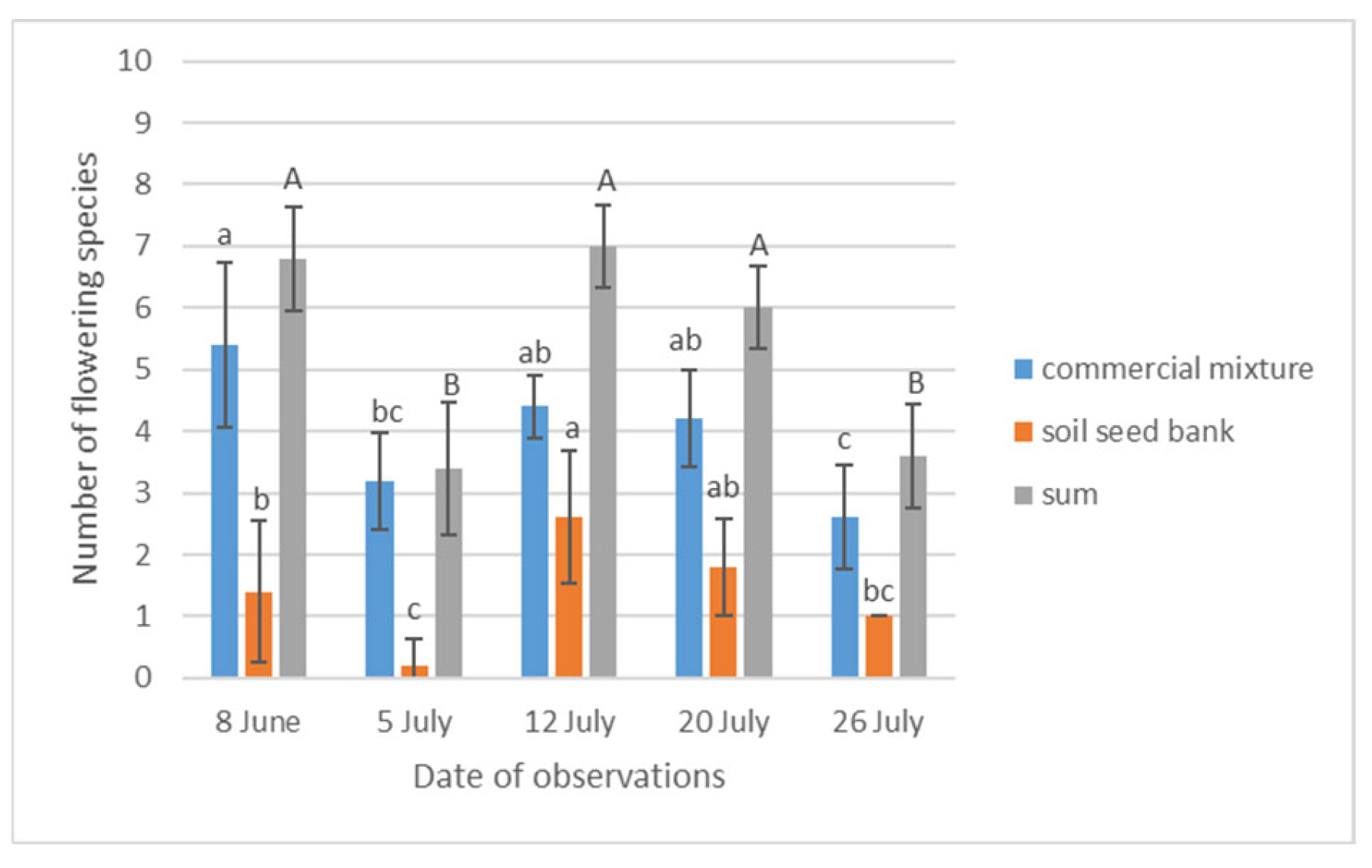
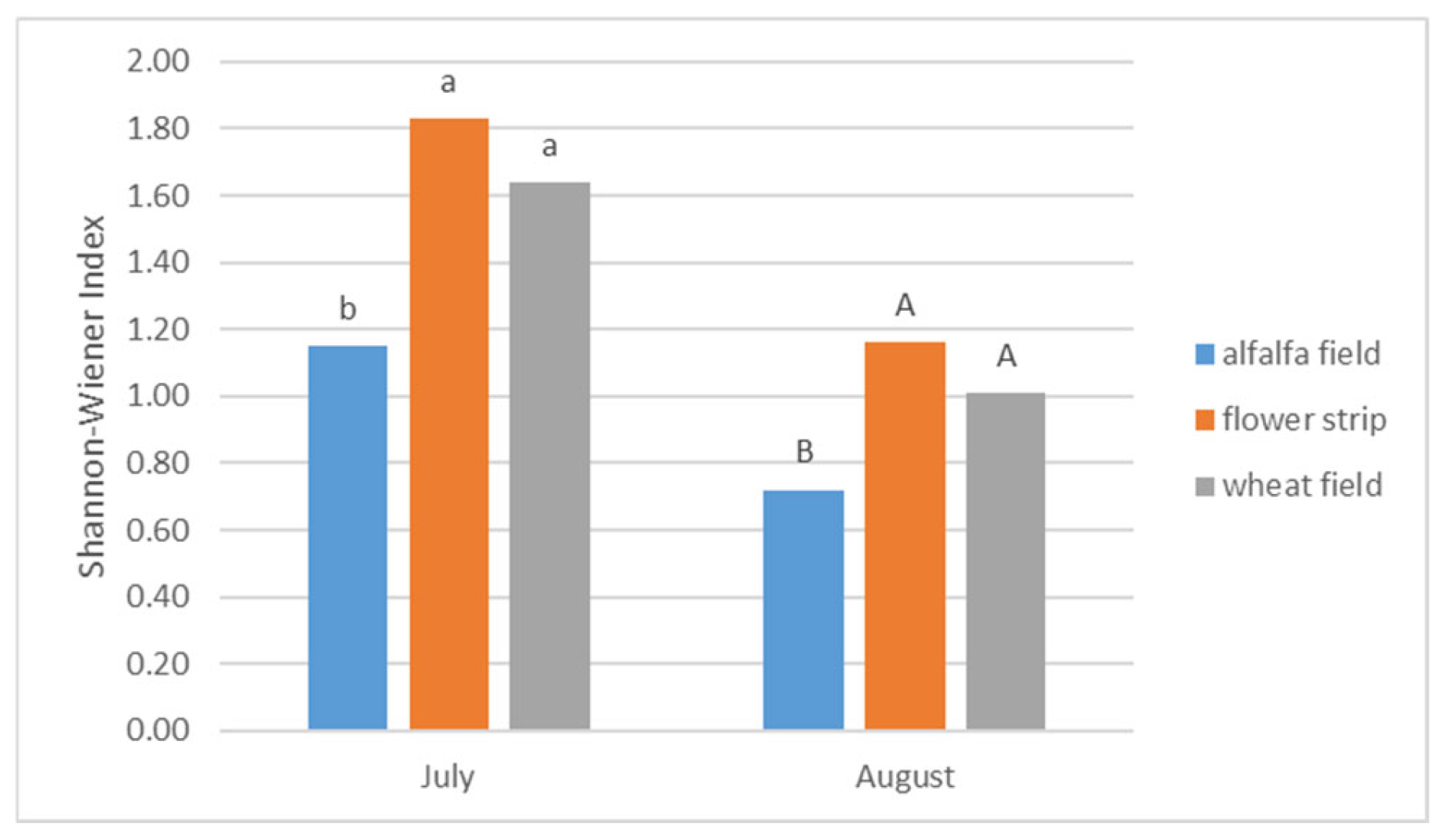
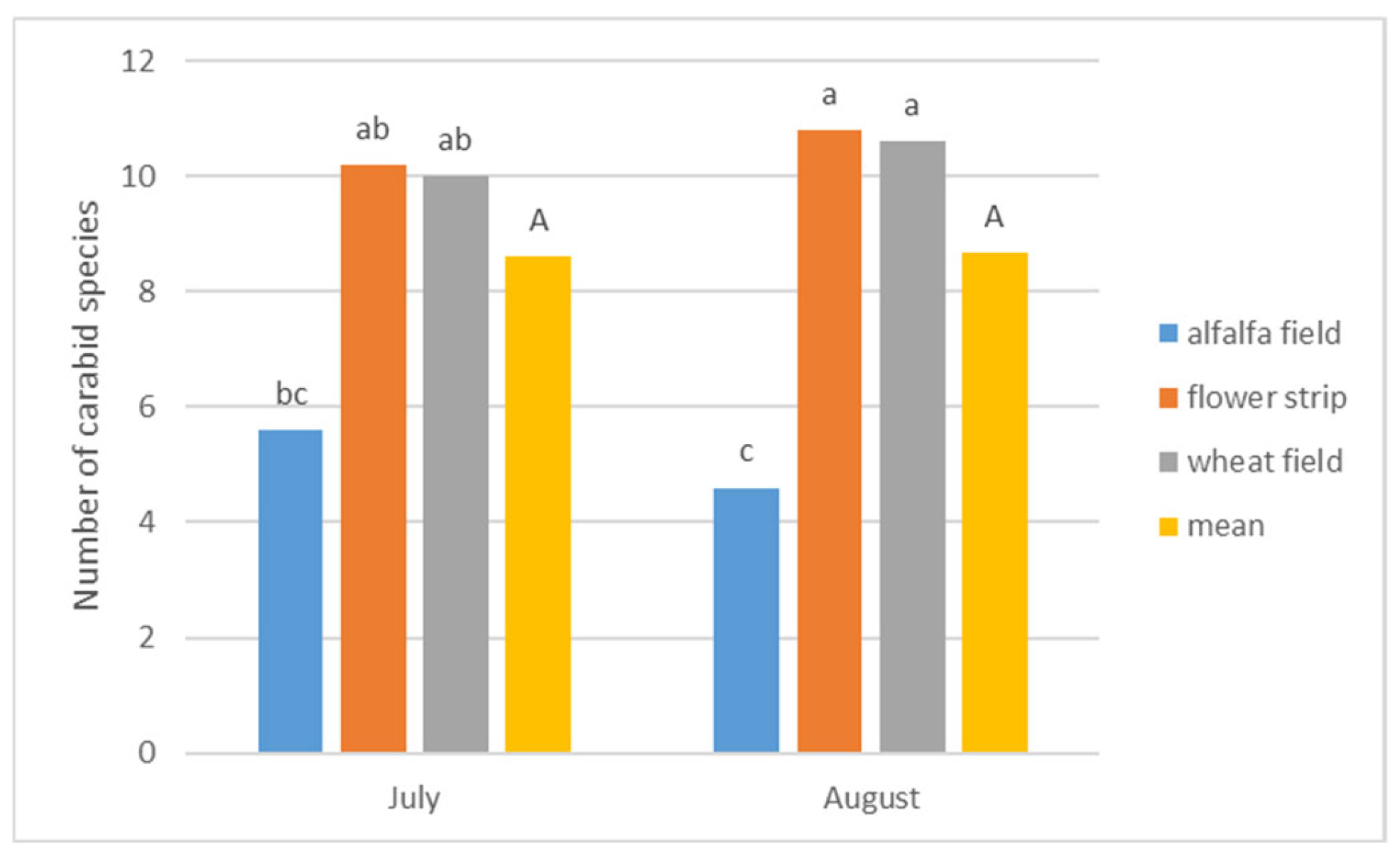
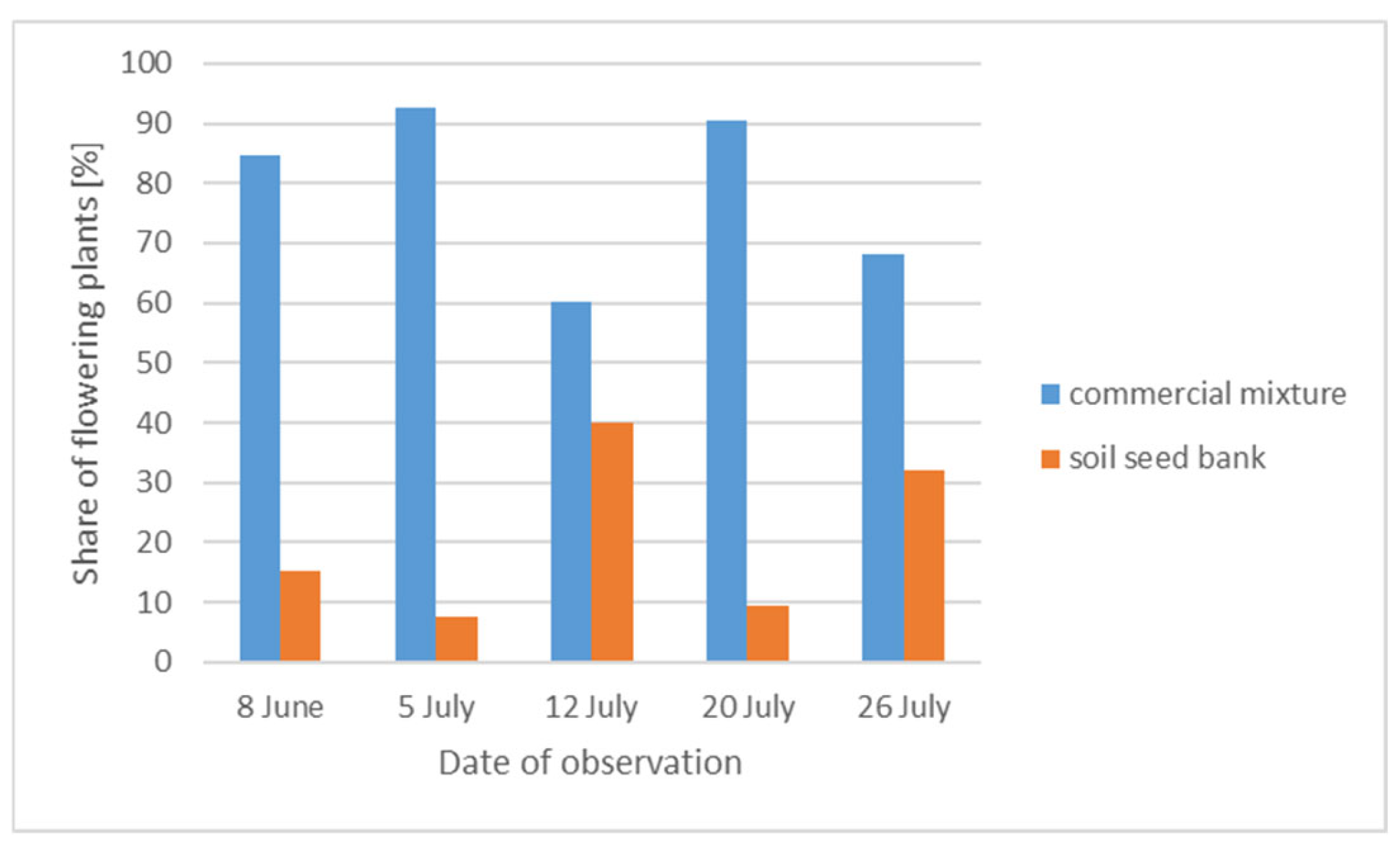
Flower strips (FSs) are an effective way to support the sustainable development of agricultural land. Properly managed FS on agricultural fields provide stable habitats for local arthropod populations, but over the years, it can be colonized by plants from the soil seed bank and then become a nuisance to surrounding crops. The aim of this study was to assess the botanical composition of FS in one year after establishment and to analyze the local population of Carabidae, most of which are predatory. Inventory of flowering plants in situ was made regularly from the beginning of June to the end of July, while beetles were collected in mid-July and August. It was found that plant species from the sown seed commercial mixture continued to dominate in the second year, but the proportion of species from the soil seed bank was also noted, ranging from 7.41% to 39.88%. It was concluded that Trifolium pratense L. and Chrysanthemum leucanthemum L. should be particularly recommended for strip sowing in the observed habitats. The species diversity (H’) of Carabidae was higher in the FS than in the cultivated fields. However, when comparing the Shannon–Wiener index for wheat and FS, regardless of time observation, no significant differences were noted. The most abundant ground beetle in the FS was Harpalus rupees, a universal predator that also feeds on weed seeds. Significantly fewer species and individuals of Carabidae were found in the alfalfa field than in the FS and wheat fields. The number of Carabidae was significantly higher in August than in July.
Keywords: FS durability; biodiversity; Carabidae; preferences to habitats; organic farming; common agricultural policy FS durability; biodiversity; Carabidae; preferences to habitats; organic farming; common agricultural policy