Case Study of Dense Hazardous Gas Dispersion in Large Indoor Spaces: Ventilation Layout Analysis with Modeling


Abstract
1. Introduction
2. Materials and Methods
2.1. Numerical Analysis
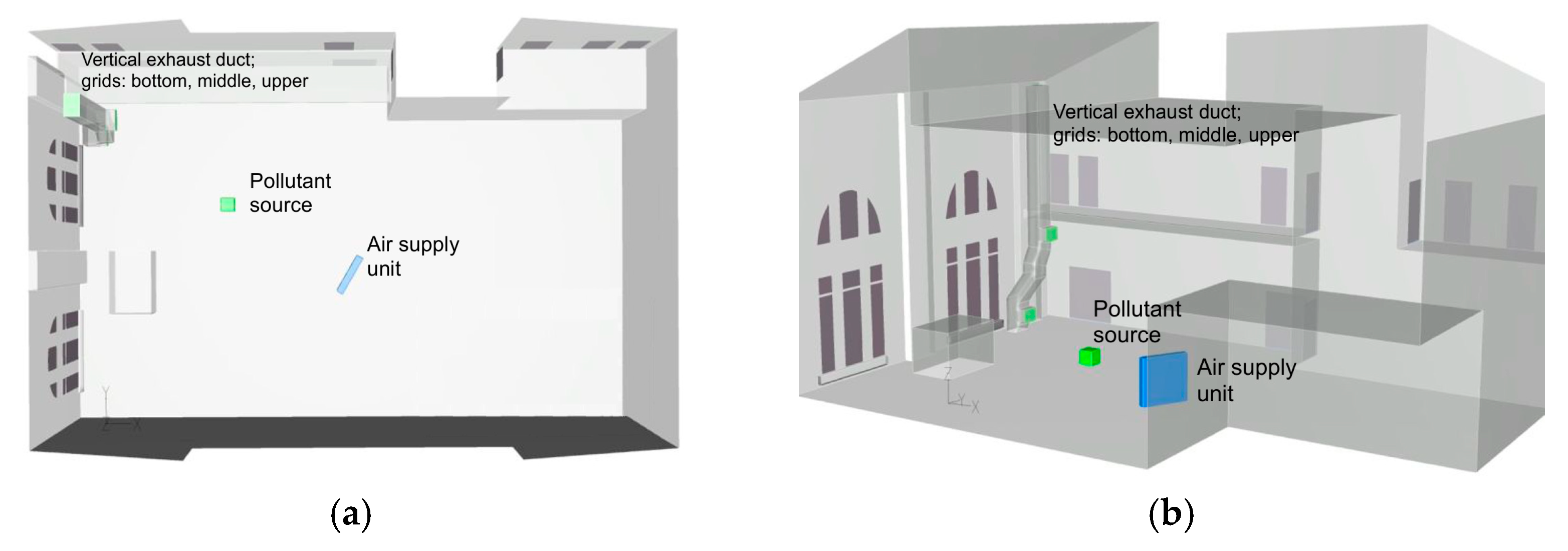
2.2. Numerical Model of the Room
2.3. Boundary and Initial Conditions
- Indoor and outdoor air temperature: 20 °C;
- Temperature of infiltrating and supplied air: 20 °C;
- Envelope temperature: 20 °C;
- Indoor atmospheric pressure: 1013.25 hPa;
- Pressure drop across the door leakage depended on local flow velocity;
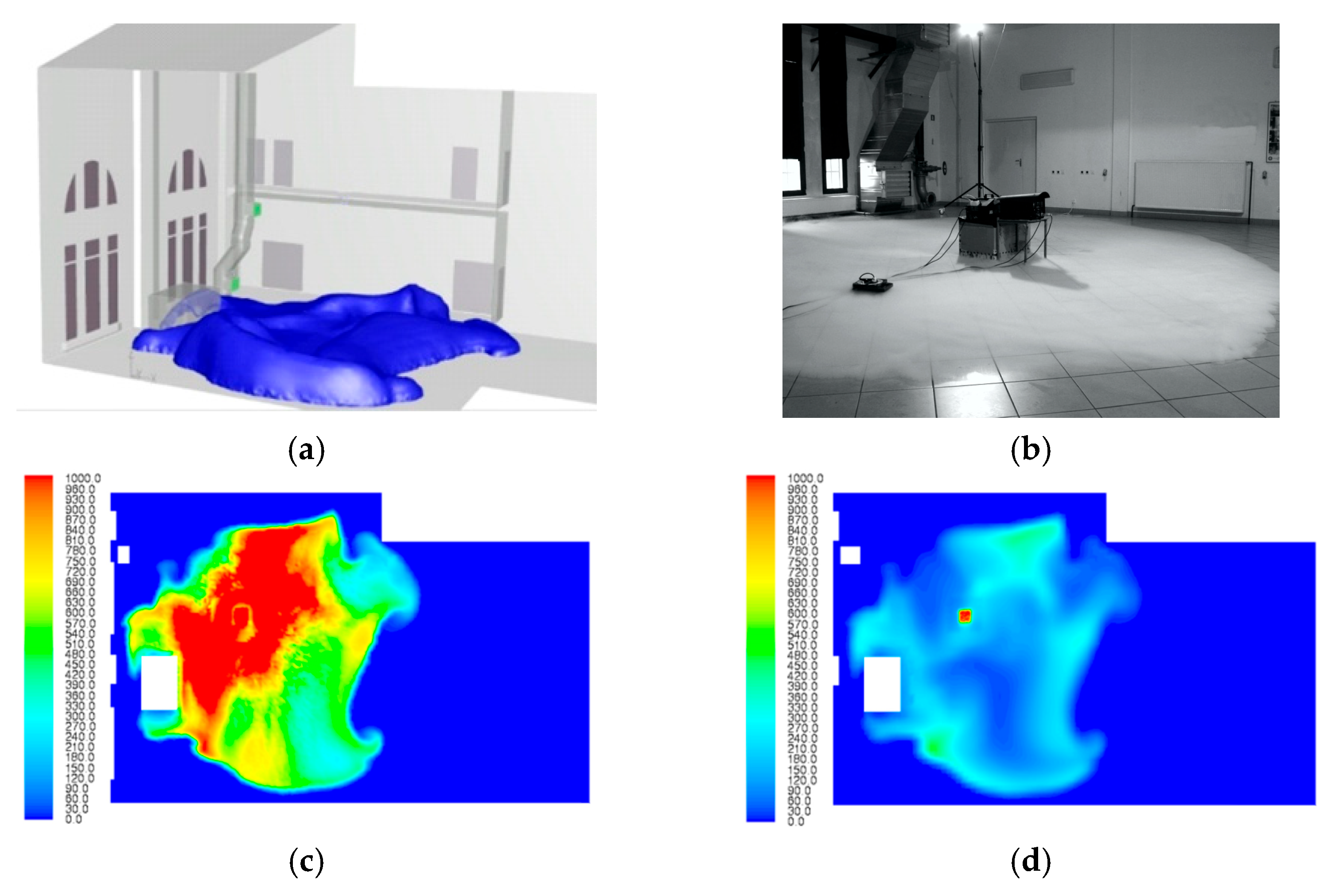
- Chlorine (density 2.95 kg/m3) released at 0.000125 kg/s for 180 s(the release time corresponded to the operating conditions of the smoke generator used in the visualization experiments);
- Ventilation flow rates were constant over time;
- Makeup air entered via leakage paths.
2.4. Full-Scale Physical Experiments
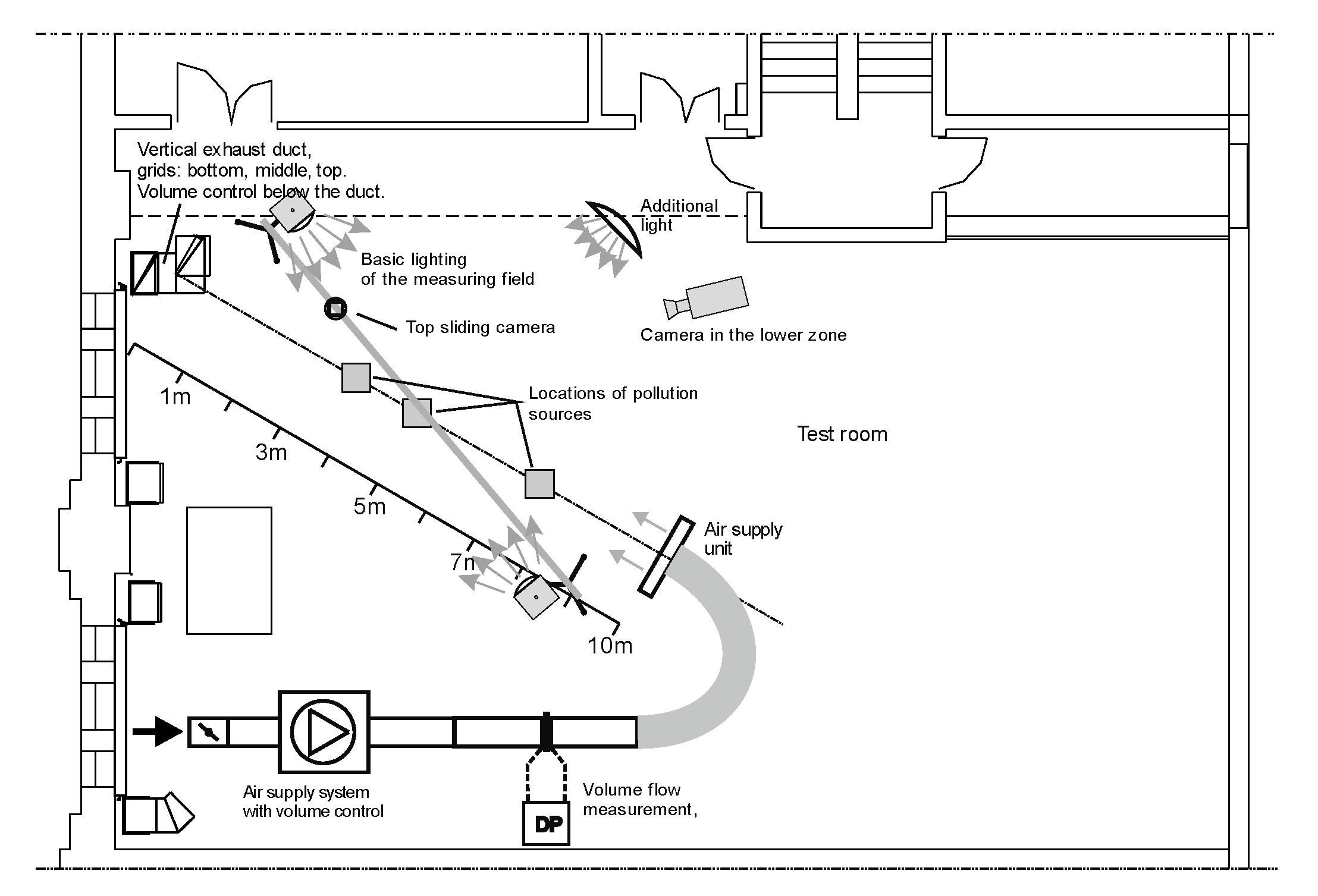
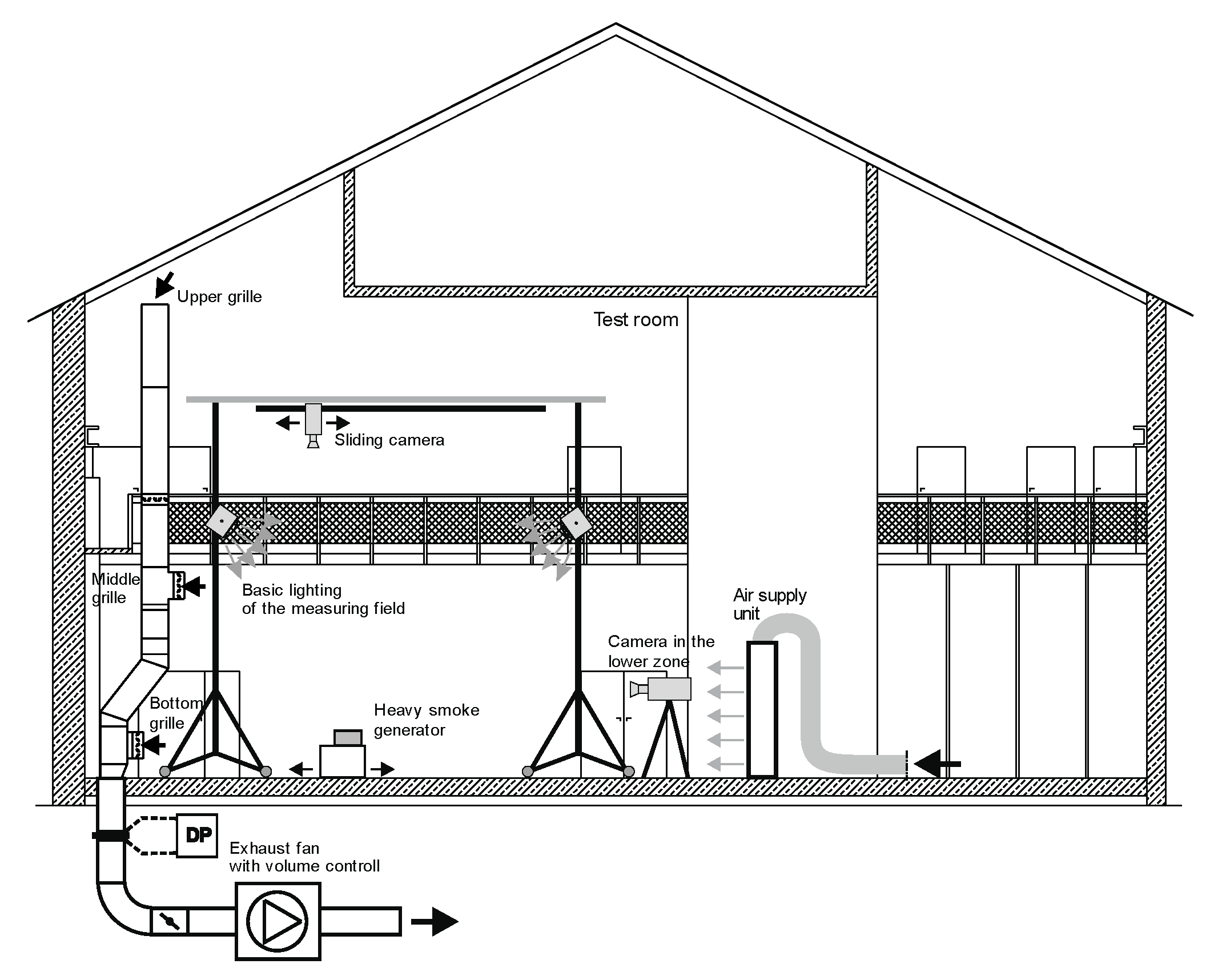
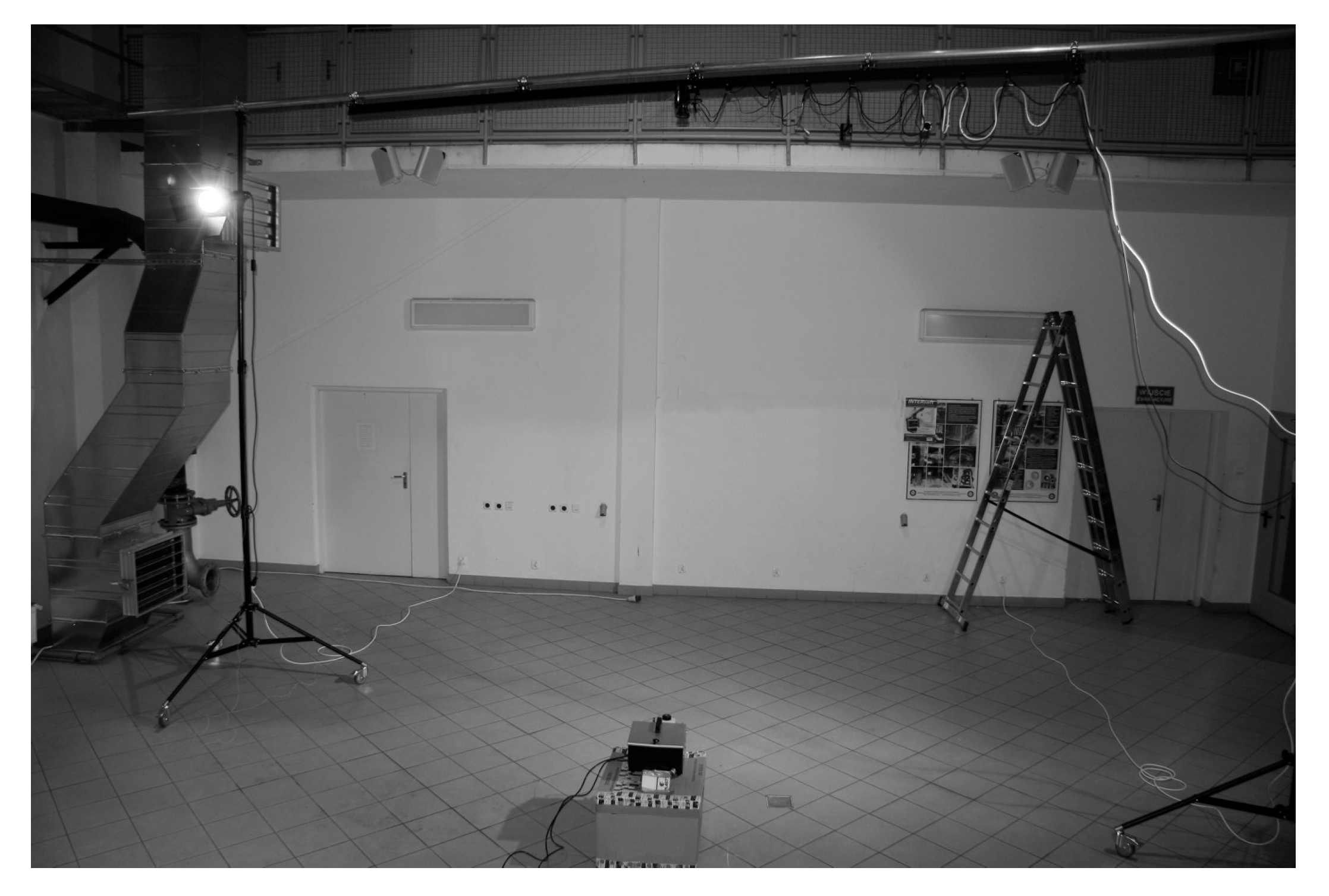
2.5. Components of the Test Facility
- Devices for regulating and measuring the exhaust airflow, control dampers, and differential pressure transducers;
- A simulated emission source and heavy-smoke generator;
- A camera for flow visualization;
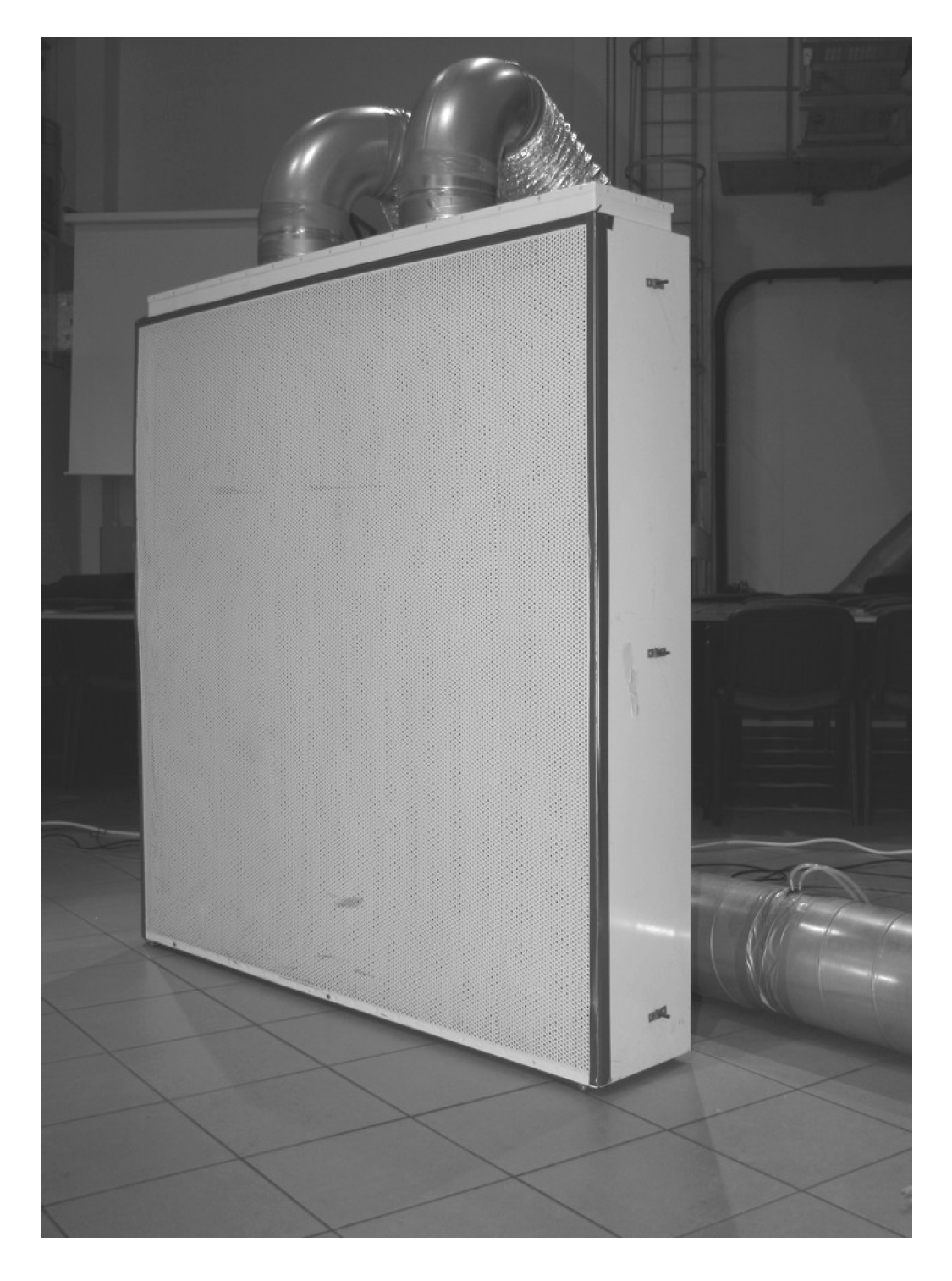
- A movable camera support structure (Figure 4);
- Multipoint lighting of the test area;
- Instruments to measure the auxiliary supply flow rate.
2.6. Physical Testing Methodology
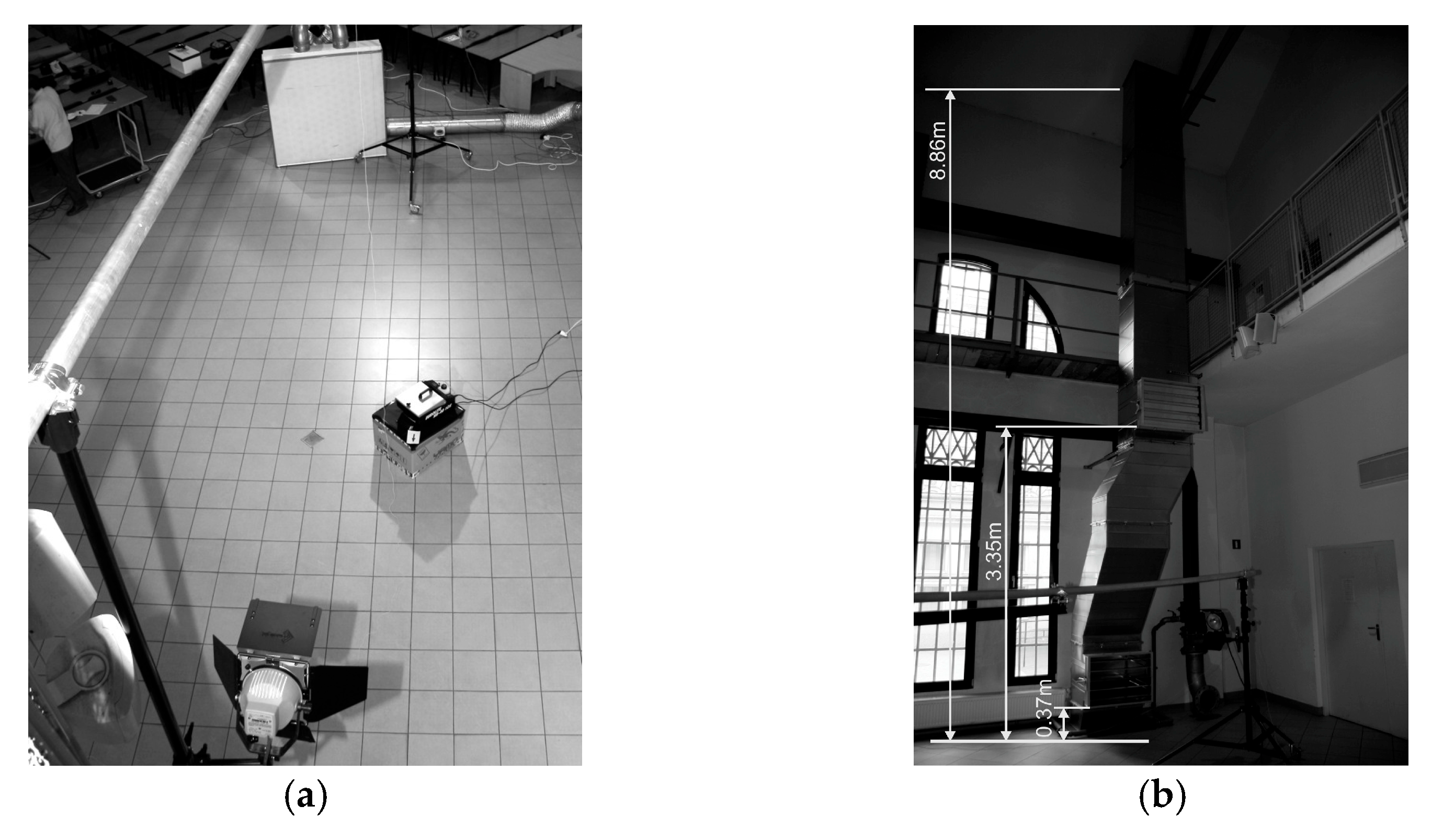
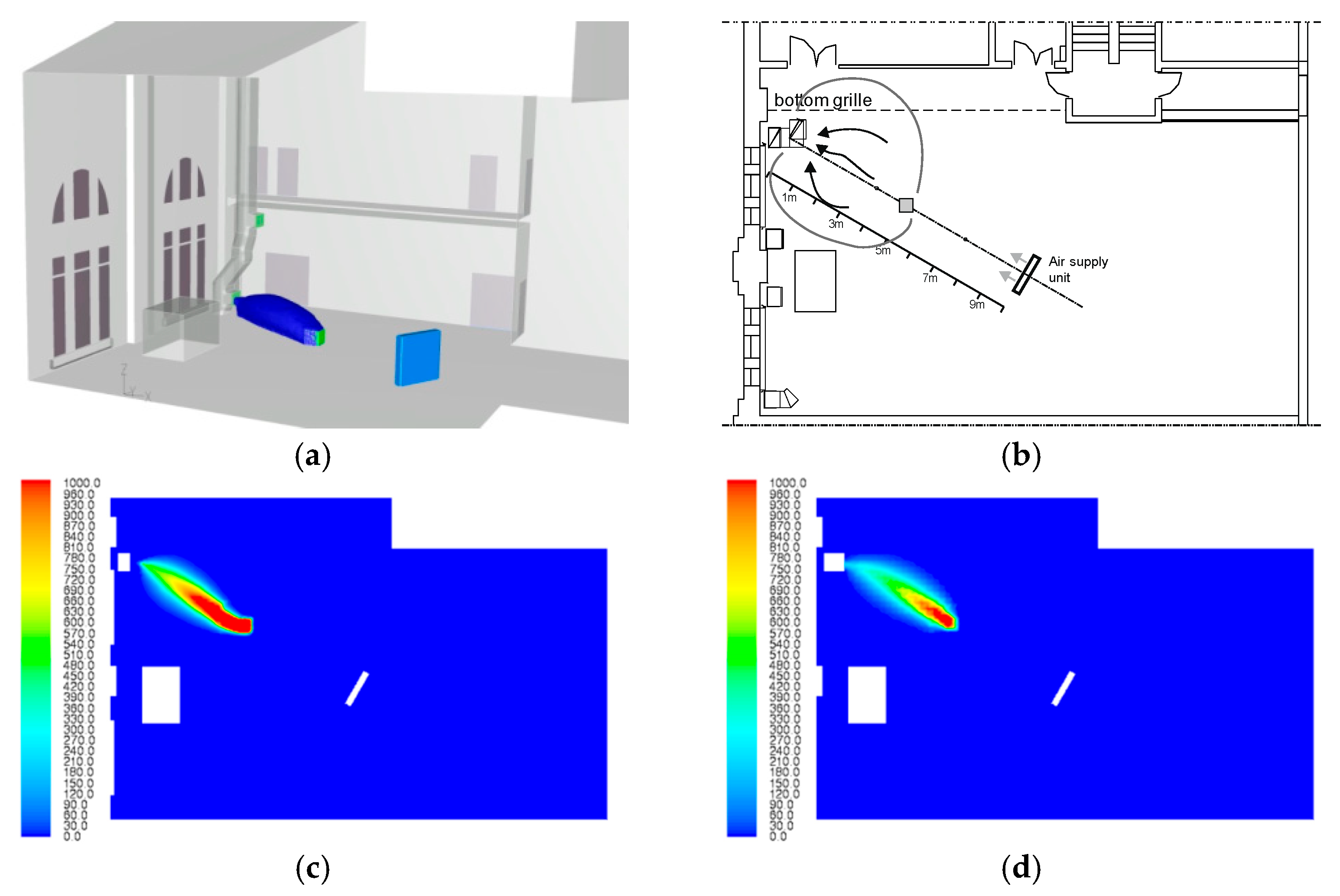
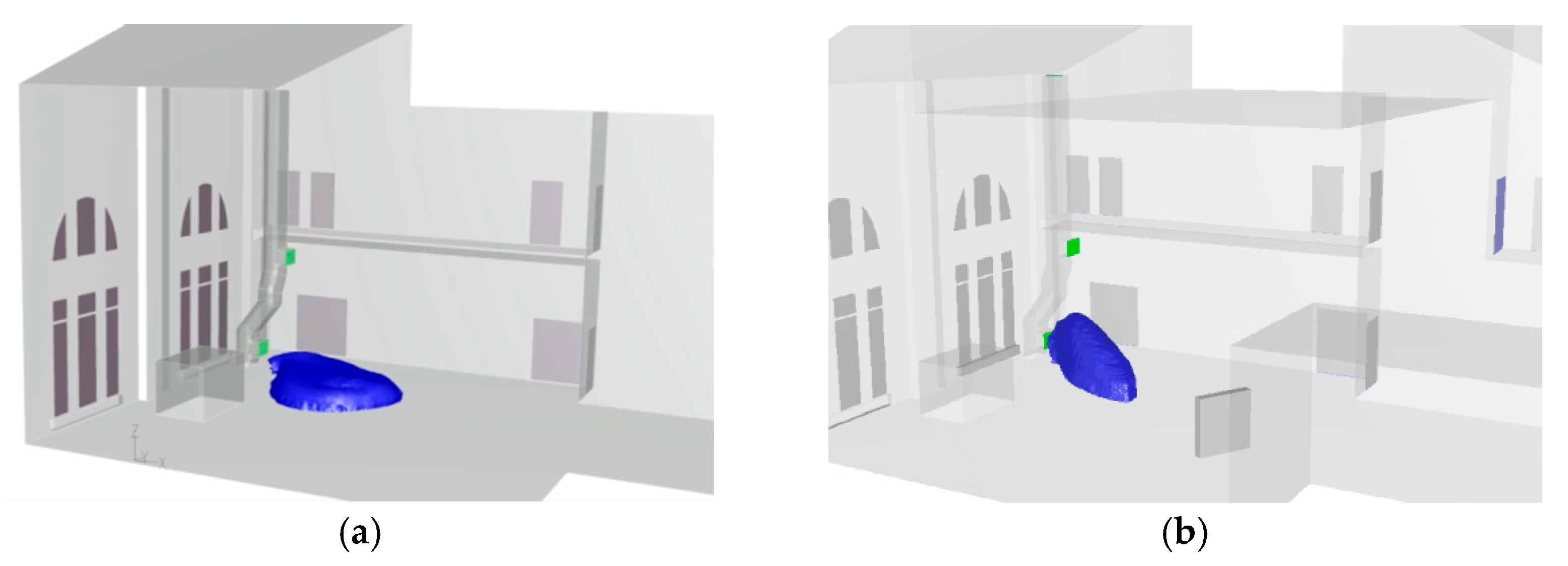
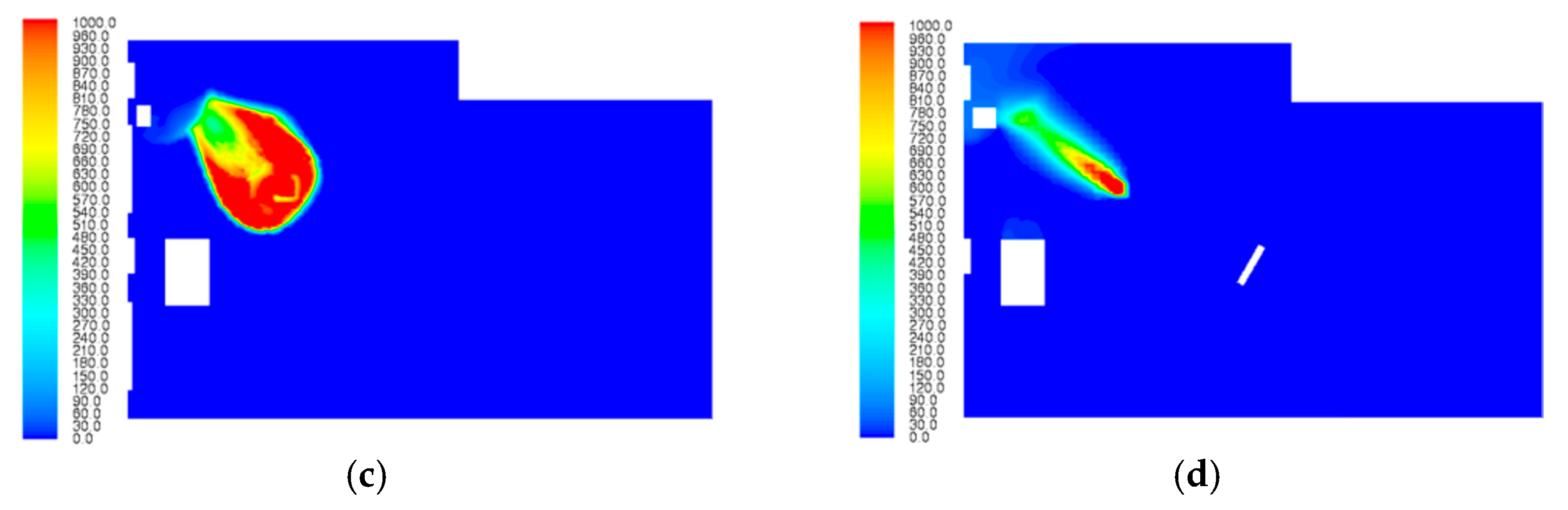
- Bottom: 0.37 m;
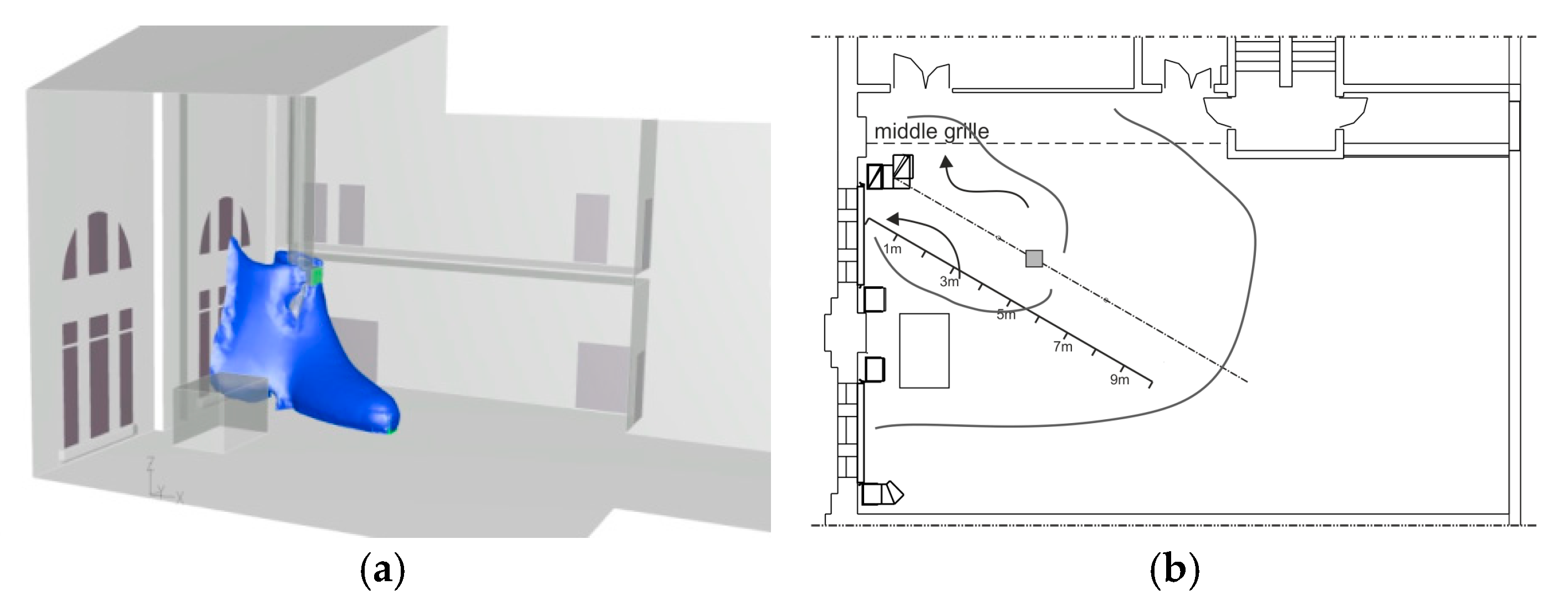
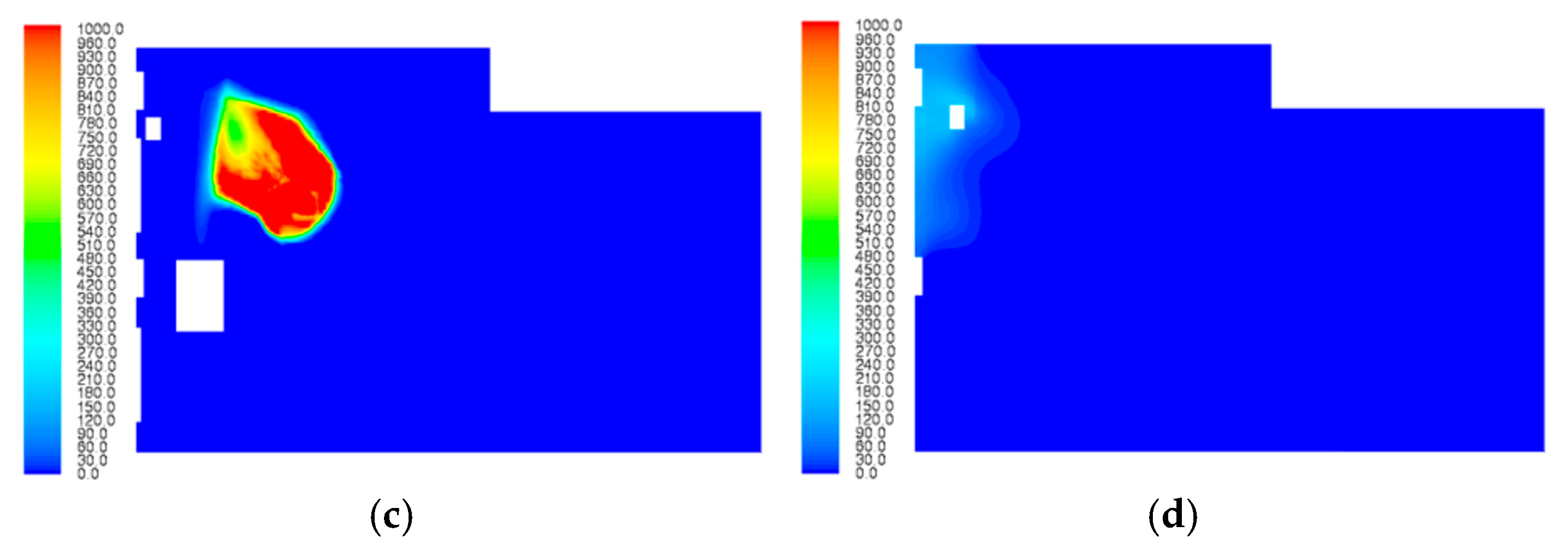
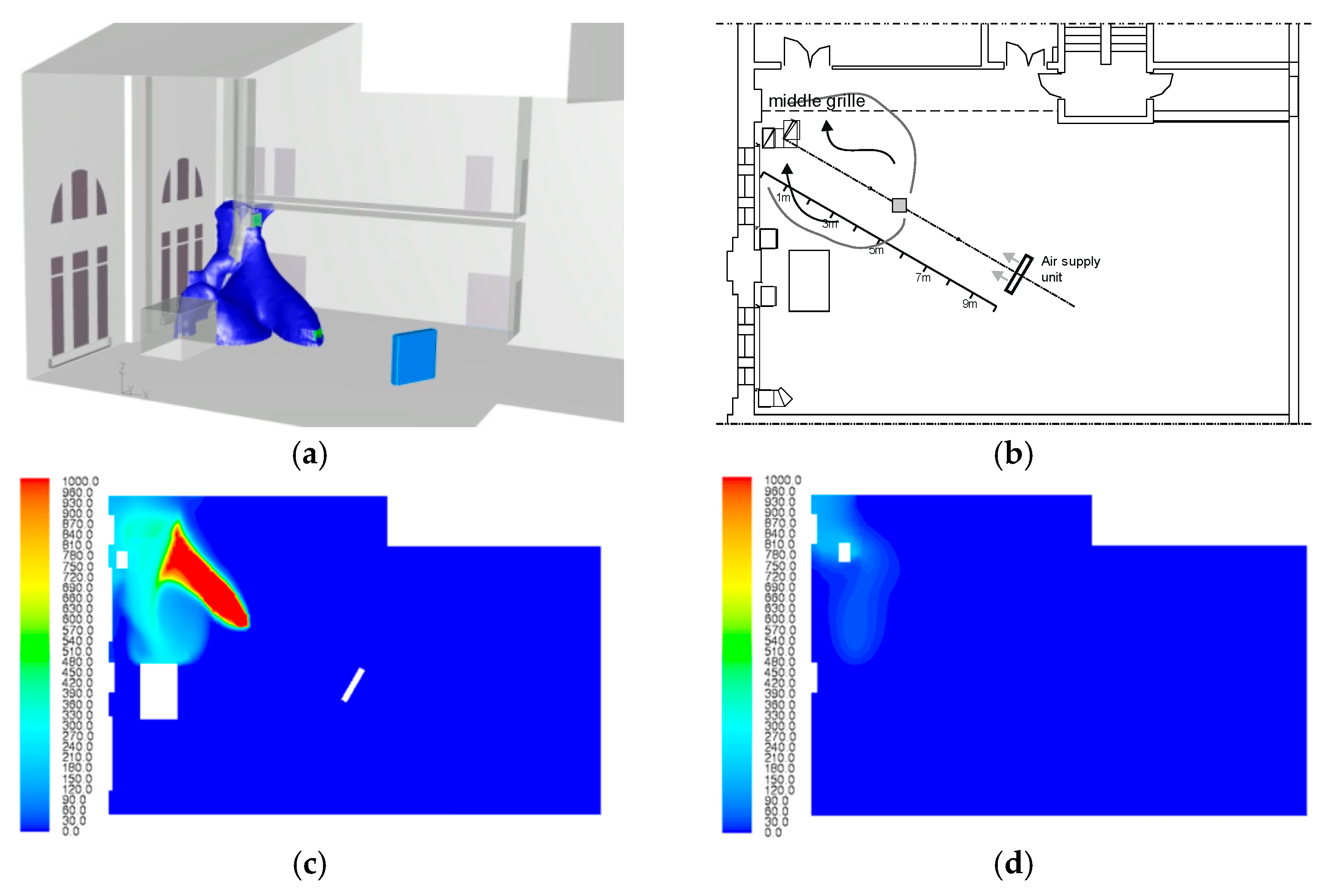
- Middle: 3.35 m;
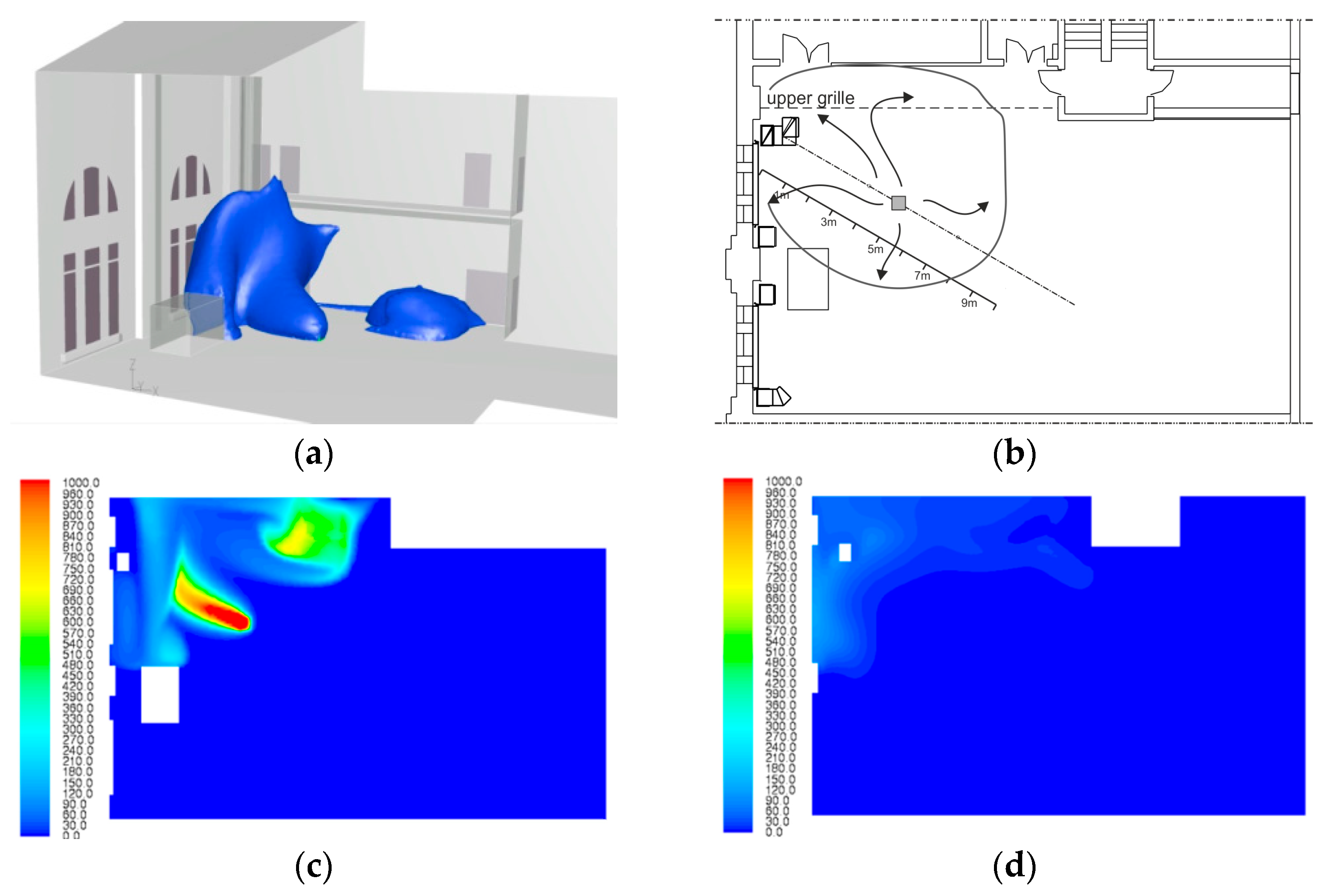
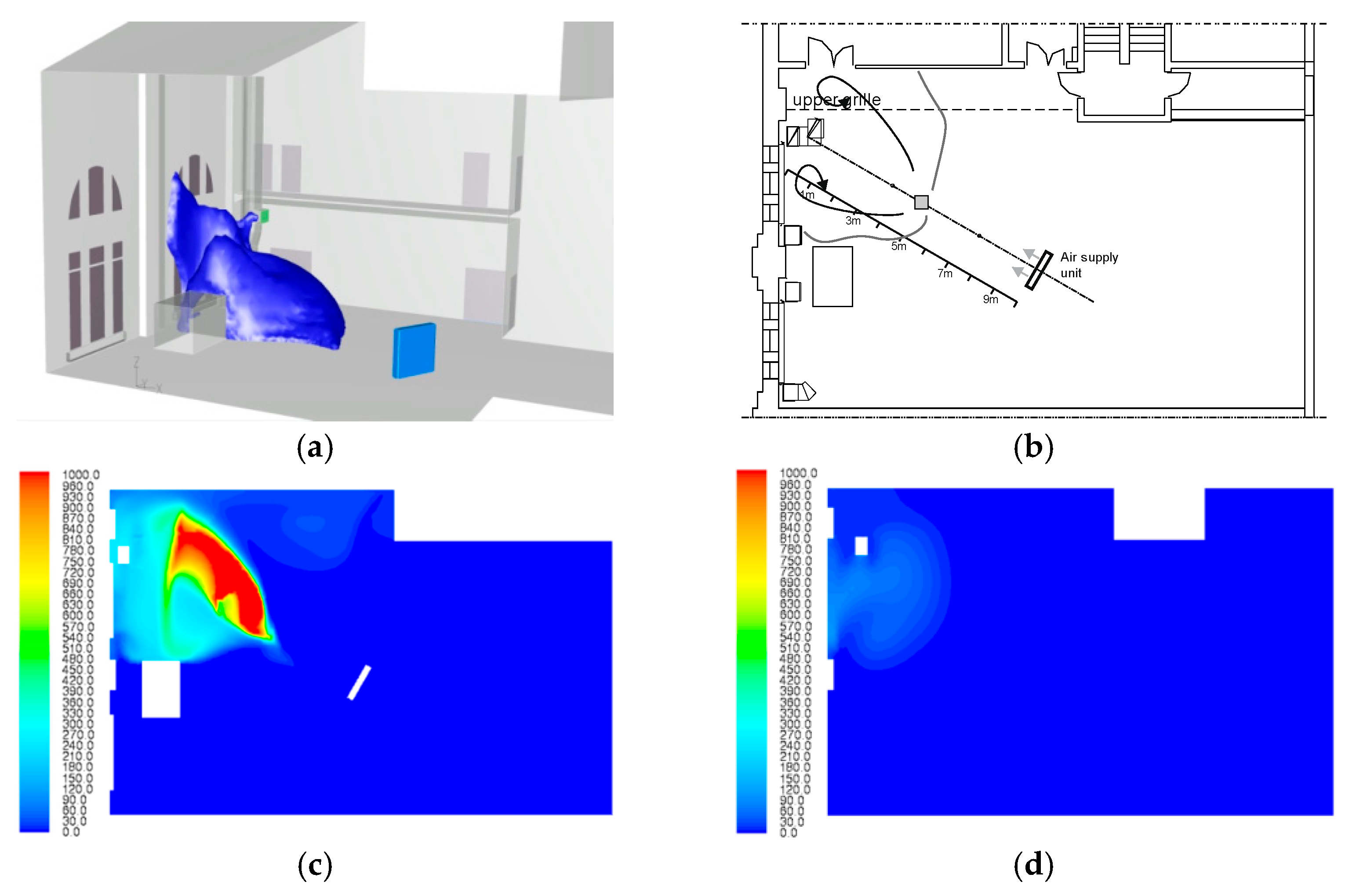
- Upper: 8.86 m.
- Opening the relevant damper on the exhaust shaft;
- Verifying the exhaust airflow rate;
- Positioning the smoke generator at the source point;
- Setting up the camera and lighting;
- Starting video recording devices;
- Starting the heavy-smoke source;
- Recording and observing the flow;
- Noting observations and ending the series.
3. Results
4. Discussion
5. Conclusions
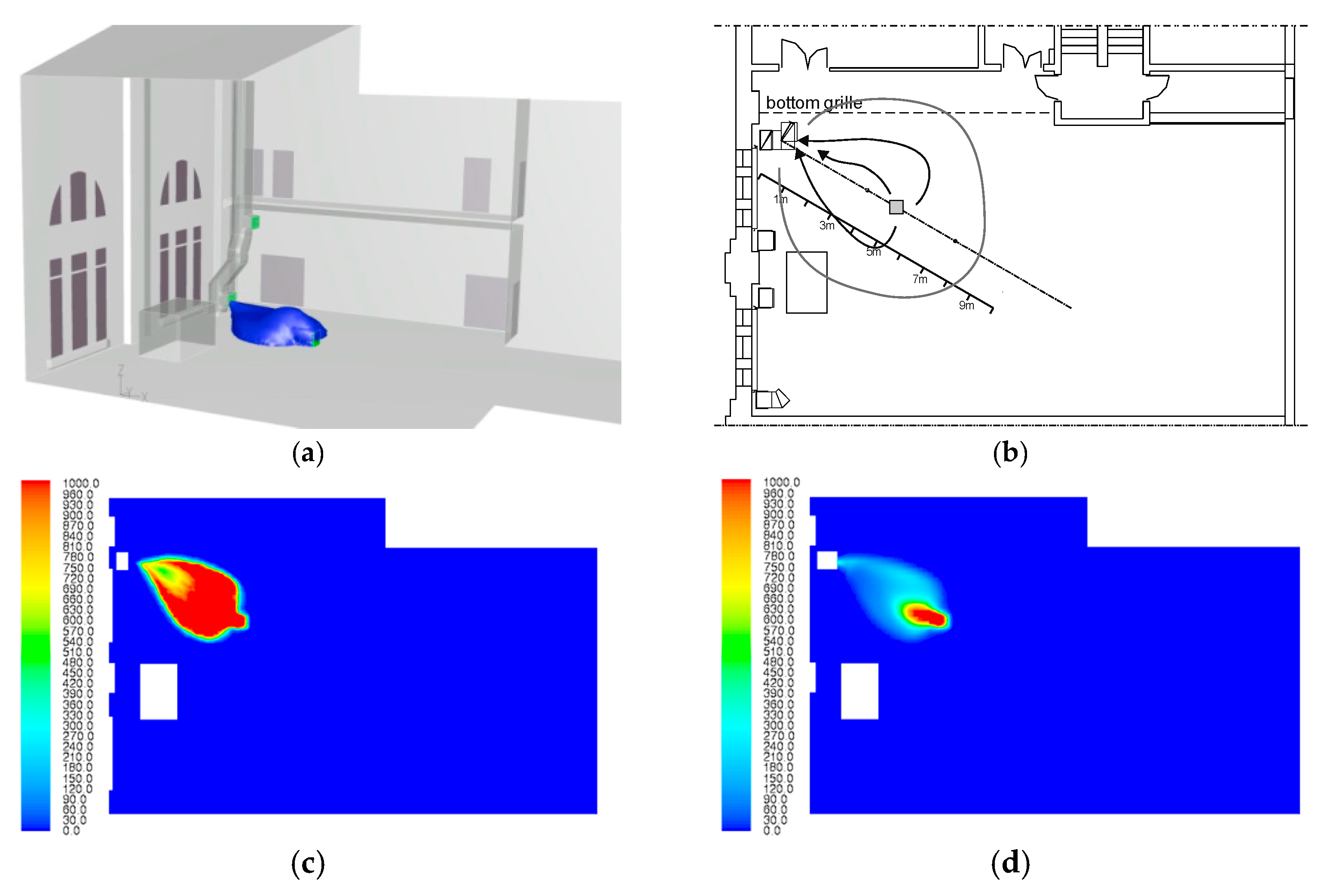
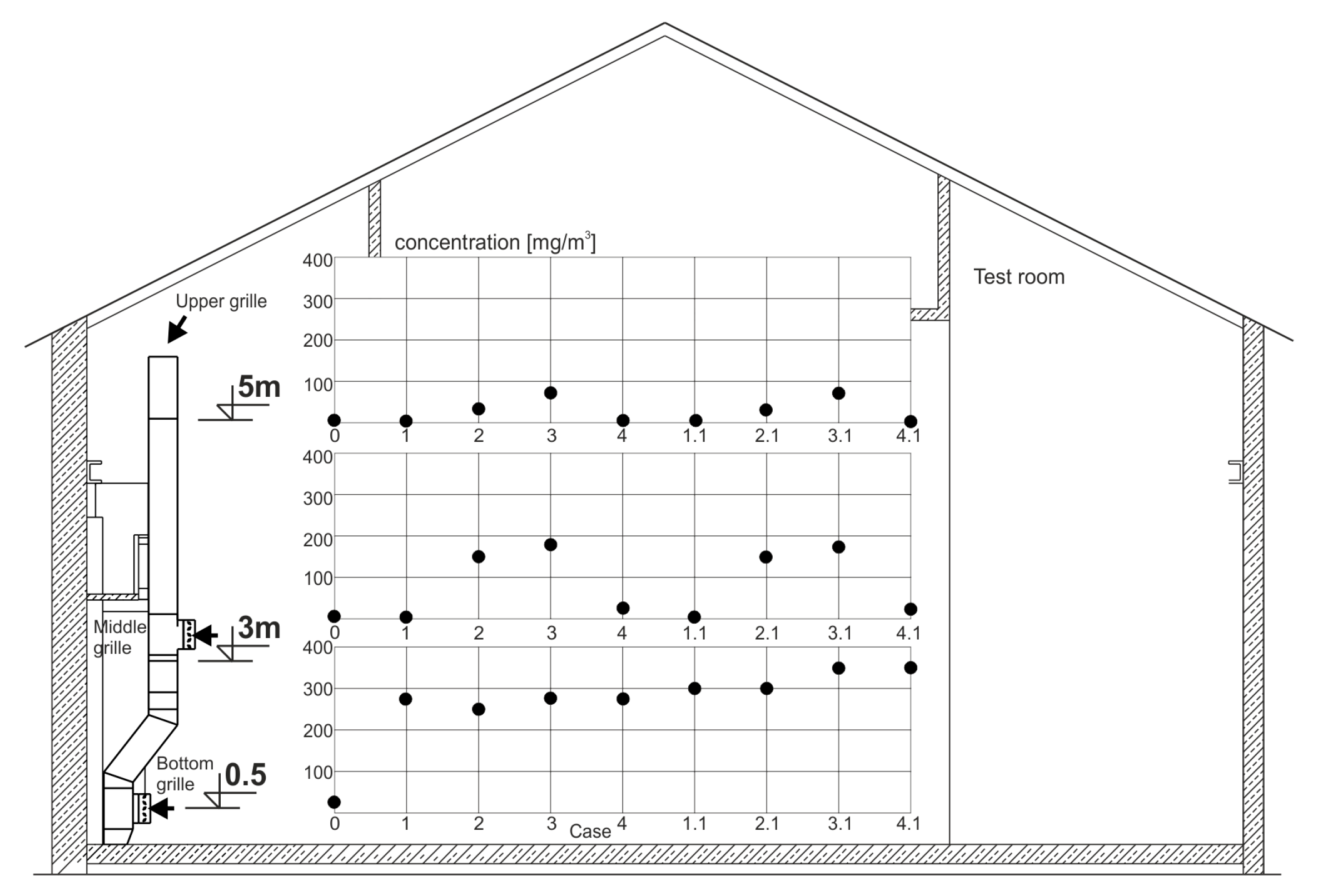
- For dense contaminants, exhaust elevation governs performance; effective removal requires near-floor capture. Mid-/high-only extraction increases the probability of plume spread and mixing in large-volume rooms.
- A directed, floor-level supply jet is beneficial only when paired with low-level exhaust, where it shortens the transport path and stabilizes capture. In combination with mid/high extraction, assisted supply tends to erode the floor layer and should be disabled or carefully limited.
- Co-locating multi-elevation grilles on a common shaft establishes a coherent pathway and limits recirculation, offering better robustness than a single, high-, or mid-level point exhaust.
- The effective capture zone is spatially limited. Design and retrofit should space exhaust pickups so that capture zones overlap near likely sources; a conservative capture-radius assumption can be adopted at the concept stage and verified for each facility.
- Moderate ACH can achieve protective performance when capture geometry is correct; raising ACH without low-level capture yields diminishing or negative returns due to mixing. Prioritize geometry and flow directionality before increasing throughput, aligning safety with energy performance.
Author Contributions
Funding
Institutional Review Board Statement
Informed Consent Statement
Data Availability Statement
Conflicts of Interest
References
- Hou, J.; Gai, W.M.; Cheng, W.Y.; Deng, Y.F. Hazardous Chemical Leakage Accidents and Emergency Evacuation Response from 2009 to 2018 in China: A Review. Saf. Sci. 2021, 135, 105101. [Google Scholar] [CrossRef]
- Si, H.; Ji, H.; Zeng, X. Quantitative Risk Assessment Model of Hazardous Chemicals Leakage and Application. Saf. Sci. 2012, 50, 1452–1461. [Google Scholar] [CrossRef]
- Hanna, S.; Mazzola, T.; Chang, J.; Spicer, T.; Gant, S.; Batt, R. Gaps in Toxic Industrial Chemical Model Systems: Improvements and Changes over Past 10 Years. Process Saf. Prog. 2022, 41, 151–166. [Google Scholar] [CrossRef]
- Dong, L.; Zuo, H.; Hu, L.; Yang, B.; Li, L.; Wu, L. Simulation of Heavy Gas Dispersion in a Large Indoor Space Using CFD Model. J. Loss Prev. Process Ind. 2017, 46, 1–12. [Google Scholar] [CrossRef]
- Zhang, Q.; Zhang, X.; Ye, W.; Liu, L.; Nielsen, P.V. Experimental Study of Dense Gas Contaminant Transport Characteristics in a Large Space Chamber. Build. Environ. 2018, 138, 98–105. [Google Scholar] [CrossRef]
- Safakar, M.; Syafiie, S.; Yunus, R. CFD Analysis Chlorine Gas Dispersion in Indoor Storage: Temperatures with Wind Velocities Effect Studies. IEEE Int. Conf. Ind. Eng. Eng. Manag. 2014, 2015, 1219–1222. [Google Scholar] [CrossRef]
- Li, S. Review of Engineering Controls for Indoor Air Quality: A Systems Design Perspective. Sustainability 2023, 15, 14232. [Google Scholar] [CrossRef]
- Cao, Z.; Zhai, C.; Wang, Y.; Zhao, T.; Wang, H. Flow Characteristics and Pollutant Removal Effectiveness of Multi-Vortex Ventilation in High Pollution Emission Industrial Plant with Large Aspect Ratio. Sustain. Cities Soc. 2020, 54, 101990. [Google Scholar] [CrossRef]
- Mundt, E. Non-Buoyant Pollutant Sources and Particles in Displacement Ventilation. Build. Environ. 2001, 36, 829–836. [Google Scholar] [CrossRef]
- Li, A.; Ren, T.; Yang, C.; Xiong, J.; Tao, P. Numerical Simulation, PIV Measurements and Analysis of Air Movement Influenced by Nozzle Jets and Heat Sources in Underground Generator Hall. Build. Environ. 2018, 131, 16–31. [Google Scholar] [CrossRef]
- Wang, T.; Li, A.; Ma, Y.; Zhang, Y.; Yin, H. Enhancing Heavy Gas Capture in Confined Spaces through Ventilation Control Technology. Build. Simul. 2024, 17, 1161–1182. [Google Scholar] [CrossRef]
- Ricciardi, L.; Prévost, C.; Bouilloux, L.; Sestier-Carlin, R. Experimental and Numerical Study of Heavy Gas Dispersion in a Ventilated Room. J. Hazard. Mater. 2008, 152, 493–505. [Google Scholar] [CrossRef]
- Khan, J.A.; Feigley, C.E.; Lee, E.; Ahmed, M.R.; Tamanna, S. Effects of Inlet and Exhaust Locations and Emitted Gas Density on Indoor Air Contaminant Concentrations. Build. Environ. 2006, 41, 851–863. [Google Scholar] [CrossRef]
- Ejaz, M.F.; Kilpeläinen, S.; Mustakallio, P.; Zhao, W.; Kosonen, R. An Experimental Study on the Efficacy of Local Exhaust Systems for the Mitigation of Exhaled Contaminants in a Meeting Room. Buildings 2024, 14, 1272. [Google Scholar] [CrossRef]
- Madsen, U.; Breum, N.O.; Nielsen, P.V. Local Exhaust Ventilation—A Numerical and Experimental Study of Capture Efficiency. Build. Environ. 1994, 29, 319–323. [Google Scholar] [CrossRef]
- Lee, H.; Awbi, H.B. Effect of Internal Partitioning on Indoor Air Quality of Rooms with Mixing Ventilation—Basic Study. Build. Environ. 2004, 39, 127–141. [Google Scholar] [CrossRef]
- Yan, Y.; Li, X.; Tu, J.; Feng, P.; Zhang, J. Characterisation and Analysis of Indoor Tornado for Contaminant Removal and Emergency Ventilation. Build. Environ. 2019, 164, 106345. [Google Scholar] [CrossRef] [PubMed]
- To, C.W.; Chow, W.K.; Cheng, F.M. Simulation of Possible Fire and Explosion Hazards of Clean Fuel Vehicles in Garages. Sustainability 2021, 13, 2537. [Google Scholar] [CrossRef]
- Wang, R.; Zhang, Z.; Gong, D. Simulation Study on Gas Leakage Law and Early Warning in a Utility Tunnel. Sustainability 2023, 15, 5375. [Google Scholar] [CrossRef]
- Jurelionis, A.; Gagyte, L.; Seduikyte, L.; Prasauskas, T.; Ciuzas, D.; Martuzevicius, D. Combined Air Heating and Ventilation Increases Risk of Personal Exposure to Airborne Pollutants Released at the Floor Level. Energy Build. 2016, 116, 263–273. [Google Scholar] [CrossRef]
- Volkov, R.S.; Kuznetsov, G.V.; Sviridenko, A.S.; Strizhak, P.A. Impact of Supply and Exhaust Ventilation System on Gas Concentrations in a Compartment during Thermal Decomposition and Combustion of Materials. Fire Saf. J. 2024, 147, 104201. [Google Scholar] [CrossRef]
- Ao, Z.; Wang, Z.; Zhou, W.; Qiao, Y.; Wahab, A.; Yang, Z.; Nie, S.; Liu, Z.; Zhu, L. CFD Simulation Based Ventilation and Dust Reduction Strategy for Large Scale Enclosed Spaces in Open Pit Coal Mines—A Case of Coal Shed. Sustainability 2023, 15, 1651. [Google Scholar] [CrossRef]
- Siddiqui, M.; Jayanti, S.; Swaminathan, T. CFD Analysis of Dense Gas Dispersion in Indoor Environment for Risk Assessment and Risk Mitigation. J. Hazard. Mater. 2012, 209–210, 177–185. [Google Scholar] [CrossRef]
- Persily, A.; Chapman, R.E.; Emmerich, S.J.; Dols, W.S.; Rushing, A. Building Retrofits for Increased Protection Against Airborne Chemical and Biological Releases Building Retrofits for Increased Protection Against Airborne Chemical and Biological Releases. Natl. Inst. Stand. Technol. 2007. [Google Scholar]
- Han, O.; Zhang, Y.; Li, A.; Li, J.; Li, Y.; Liu, H. Experimental and Numerical Study on Heavy Gas Contaminant Dispersion and Ventilation Design for Industrial Buildings. Sustain. Cities Soc. 2020, 55, 102016. [Google Scholar] [CrossRef]
- Deng, H.Y.; Feng, Z.; Cao, S.J. Influence of Air Change Rates on Indoor CO2 Stratification in Terms of Richardson Number and Vorticity. Build. Environ. 2018, 129, 74–84. [Google Scholar] [CrossRef]
- Zabihi, M.; Li, R.; Brinkerhoff, J.R. Influence of Indoor Airflow on Airborne Disease Transmission in a Classroom. Build. Simul. 2024, 17, 355–370. [Google Scholar] [CrossRef]
- Wang, J.; Yu, X.; Zong, R. A Dynamic Approach for Evaluating the Consequences of Toxic Gas Dispersion in the Chemical Plants Using CFD and Evacuation Modelling. J. Loss Prev. Process Ind. 2020, 65, 104156. [Google Scholar] [CrossRef]
- Qiu, J.; Mao, H.; Jiang, Y.; Zhang, B.; Cai, H. Enhanced Whale Optimization Algorithms with Source Proximity Indicators: Locating Gaseous Pollutants with Time-Varying Release Rates in Weak Airflow Indoors. Sustain. Cities Soc. 2025, 119, 106112. [Google Scholar] [CrossRef]
- He, G.; Yang, X.; Srebric, J. Removal of Contaminants Released from Room Surfaces by Displacement and Mixing Ventilation: Modeling and Validation. Indoor Air 2005, 15, 367–380. [Google Scholar] [CrossRef]
- EN 12599:2012; Ventilation for Buildings—Test Procedures and Measurement Methods to Hand over Air Conditioning and Ventilation Systems and Air Conditioning Systems for Non-Residential Buildings. European Committee for Standardization: Brussels, Belgium, 2012.
- NFPA NFPA 55; Compressed Gases and Cryogenic Fluids Code (2023). National Fire Protection Association: Quincy, MA, USA, 2023.
- IEC 60079-10-1:2020; Explosive Atmospheres—Part 10-1: Classification of Areas—Explosive Gas Atmospheres. International Electrotechnical Commission: Geneva, Switzerland, 2021; Volume 114.
- Cai, H.; Long, W.; Li, X.; Kong, L.; Xiong, S. Decision Analysis of Emergency Ventilation and Evacuation Strategies against Suddenly Released Contaminant Indoors by Considering the Uncertainty of Source Locations. J. Hazard. Mater. 2010, 178, 101–114. [Google Scholar] [CrossRef] [PubMed]



| Simulation Case | Exhaust Grille Location | Auxiliary Supply |
|---|---|---|
| Case 0 | No ventilation | no |
| Case 1 | bottom grille 12,000 m3/h | no |
| Case 2 | middle grille 12,000 m3/h | no |
| Case 3 | upper grille 12,000 m3/h | no |
| Case 4 | Exhaust—3 grilles, bottom, middle, upper 3 × 4000 m3/h | no |
| Case 1.1 | bottom grille 12,000 m3/h | yes |
| Case 2.1 | middle grille 12,000 m3/h | yes |
| Case 3.1 | upper grille 12,000 m3/h | yes |
| Case 4.1 | Exhaust—3 grilles, bottom, middle, upper 3 × 4000 m3/h | yes |
Disclaimer/Publisher’s Note: The statements, opinions and data contained in all publications are solely those of the individual author(s) and contributor(s) and not of MDPI and/or the editor(s). MDPI and/or the editor(s) disclaim responsibility for any injury to people or property resulting from any ideas, methods, instructions or products referred to in the content. |
© 2025 by the authors. Licensee MDPI, Basel, Switzerland. This article is an open access article distributed under the terms and conditions of the Creative Commons Attribution (CC BY) license (https://creativecommons.org/licenses/by/4.0/).
Share and Cite
Hendiger, J.; Chludzińska, M.; Ziętek, P. Case Study of Dense Hazardous Gas Dispersion in Large Indoor Spaces: Ventilation Layout Analysis with Modeling. Sustainability 2025, 17, 11367. https://doi.org/10.3390/su172411367
Hendiger J, Chludzińska M, Ziętek P. Case Study of Dense Hazardous Gas Dispersion in Large Indoor Spaces: Ventilation Layout Analysis with Modeling. Sustainability. 2025; 17(24):11367. https://doi.org/10.3390/su172411367
Chicago/Turabian StyleHendiger, Jacek, Marta Chludzińska, and Piotr Ziętek. 2025. "Case Study of Dense Hazardous Gas Dispersion in Large Indoor Spaces: Ventilation Layout Analysis with Modeling" Sustainability 17, no. 24: 11367. https://doi.org/10.3390/su172411367
APA StyleHendiger, J., Chludzińska, M., & Ziętek, P. (2025). Case Study of Dense Hazardous Gas Dispersion in Large Indoor Spaces: Ventilation Layout Analysis with Modeling. Sustainability, 17(24), 11367. https://doi.org/10.3390/su172411367