Article

Sustainable Reclamation of Post-Mining Areas in Poland: The Long-Term Effects of Soil Substitute Covers and Phragmites australis Plantations


by
Angelika Więckol-Ryk
1,*,
Łukasz Pierzchała
2 and
Arkadiusz Bauerek
3
1
Rockburst and Risk Assessment, Department of Extraction Technologies, Central Mining Institute-National Research Institute, Plac Gwarków 1, 40-166 Katowice, Poland
2
Department of Water Protection, Central Mining Institute-National Research Institute, Plac Gwarków 1, 40-166 Katowice, Poland
3
Department of Environmental Analysis and Circular Economy Technologies, Central Mining Institute-National Research Institute, Plac Gwarków 1, 40-166 Katowice, Poland
*
Author to whom correspondence should be addressed.
Sustainability 2025, 17(24), 11294; https://doi.org/10.3390/su172411294
Submission received: 12 November 2025 / Revised: 5 December 2025 / Accepted: 12 December 2025 / Published: 17 December 2025
(This article belongs to the Section Sustainable Agriculture)

Abstract

Degraded post-mining landscapes require reclamation strategies that ensure soil stability, environmental safety and successful vegetation establishment. This study evaluated two soil cover systems applied between 2020 and 2025 on a mining spoil heap in Libiąż, Poland: a two-layer (TL) cover with a soil substitute layer and a multilayer (ML) cover incorporating additional insulating materials. Both covers were non-saline and mildly alkaline. The applied methods supported favorable soil conditions after five years, with stable organic matter (24.48–28.26%), nitrogen (4.5–4.9 g/kg) and phosphorus (1.5–1.6 g/kg) contents, while potassium decreased markedly (from 17.1 to 6.44–6.83 g/kg), likely due to plant uptake or leaching. Leachate analyses showed low concentrations of toxic metals and salinity-related ions, confirming the environmental safety and inert properties of the soil substitute. Vegetation assessments revealed differences between reclamation systems, with Phragmites australis exhibiting greater stalk length, plant density and biomass in the TL cover. Establishment costs were also substantially lower for TL (EUR 1.65/m2) than for ML (EUR 6.14/m2). These results indicate that soil substitute covers provide a safe, cost-effective and functionally efficient reclamation option that supports circular economy principles by reusing mining waste and coal combustion by-products, while Phragmites australis enhances vegetation development and overall reclamation success.

1. Introduction

Long-term coal extraction and mining waste storage on spoil heaps lead to extensive landscape damage and environmental pollution. The rehabilitation of post-mining areas is a key process for restoring the ecological balance and utility of landscapes affected by mining activity. As a result of soil cover damage or the lack of conditions conducive to soil formation, post-industrial sites often represent an environment that is too difficult for natural plant succession to restart. Nevertheless, heavily urbanized regions such as the Upper Silesian Coal Basin in southern Poland remain valuable for their economic, urban and social potential [1]. Therefore such regions require new green spaces for services or recreational activity. Considering this fact, the reclamation of areas affected by coal mining reduces the risk of harmful pollutants being released into the environment, especially if the deposited waste contains toxic metals or exhibits high levels of acidity, alkalinity or salinity [2].
In European Union member states, certain legislation of the European Parliament and the Council establishes the legal framework for managing extractive waste and rehabilitating post-mining areas. Directive 2008/98/EC on waste imposes obligations on mining companies to minimize and reuse extractive waste [3]. Another Directive, 2006/21/EC, on waste management includes the prevention of soil and groundwater pollution and an obligation to carry out land rehabilitation [4]. Directive 2004/35/CE, on the other hand, imposes a remediation obligation on entities that have contributed to environmental pollution, including in land that requires remediation [5].
The process of reclaiming contaminated land must be well-planned and factor in budgetary and technological constraints. Furthermore, it must also conform to certain quality standards depending on the future use of the reclaimed area. Intensive remediation must be applied for land designated as highly sensitive (playgrounds, gardens or pastures) or sensitive (sports fields and residential areas). On the other hand, lower requirements are imposed for industrial and commercial sites, parks and forests [6].
The conventional method of mining site reclamation involves spreading humic topsoil at a depth of more than 10 cm and adding organic or mineral fertilizer [7]. However, a 1–2 m thick layer of coarse material such as construction rubble may be deposited above the mining waste as well [6].
In some sites, such as mining spoil heaps, rehabilitation is much more constrained than in areas degraded by other industrial activity. The main reason is the occurrence of acid mine drainage (AMD) [8], which occurs when sulfide minerals, in particular, or pyrite (FeS2), commonly present in mine waste, are exposed to atmospheric conditions, including water and oxygen, and bacteria [9,10]. This process leads to the formation of sulfuric acid and dissolved metals, generating highly acidic leachates that result in a pH decrease to 2–3 [6].
The application of lime compounds in the soil in the form of calcium oxide (CaO), calcium hydroxide (Ca(OH)2) or calcium carbonate (CaCO3), or alkaline materials such as fly ash, sewage sludge or municipal compost reduces the acidity caused by AMD, and thereby promotes further vegetation growth [11,12] However, the occurrence of surface erosion, salinization and heavy metal contamination may also limit the possibilities for applying conventional land reclamation methods. The use of manufactured or artificial soils for land rehabilitation has been practiced and studied by many researchers [13,14,15,16,17,18]. According to published data, the most often employed mineral components in manufactured soils are fly ash, coal mine rock waste, sludge, crushed limestone or phosphogypsum. Sources of organic matter are used as well, such as municipal green waste, sewage sludge, animal manure, spent mushroom compost and other organic additives, including grape marc, rice hull, pine bark and straw hay [19,20,21,22,23]. Our previous study confirmed that using a mixture of mining and organic waste as an artificial soil cover for the rehabilitation of a highly acidic mining waste heap was possible. The primary objective of our research was to assess the impact of soil mixtures composed of mineral products (energy conversion sludge, aggregates and decarbonization lime) with an addition of spent mushroom compost on meadow vegetation growth and development [24]. This paper aims to assess the rehabilitation of a post-mining area using an artificial soil cover to promote the vegetation of the common reed (Phragmites australis) as a species representative of wet and humid habitats. The objective of this study is the long-term observation of common reed growth, which is known as a plant for the phytoremediation of contaminated water, soil and sediments [25,26]. This study aims to (i) compare two different land rehabilitation techniques, (ii) investigate the physicochemical properties of the soil cover and (iii) evaluate the five-year biomass growth of Phragmites australis on a humid and low-fertility substitute soil cover. In this context, the use of Phragmites australis vegetation plays a crucial role in supporting soil development, organic matter inputs and rhizosphere formation and stimulating below-ground biological activity.
The presented research contributes to the implementation of the Sustainable Development Goals [27], in particular SDG 12 (Responsible Consumption and Production), SDG 13 (Climate Action) and SDG 15 (Life on Land), by supporting the development of sustainable methods for the rehabilitation of post-mining areas using coal combustion by-products (CCBs) and mining waste.

2. Materials and Methods

2.1. Study Area

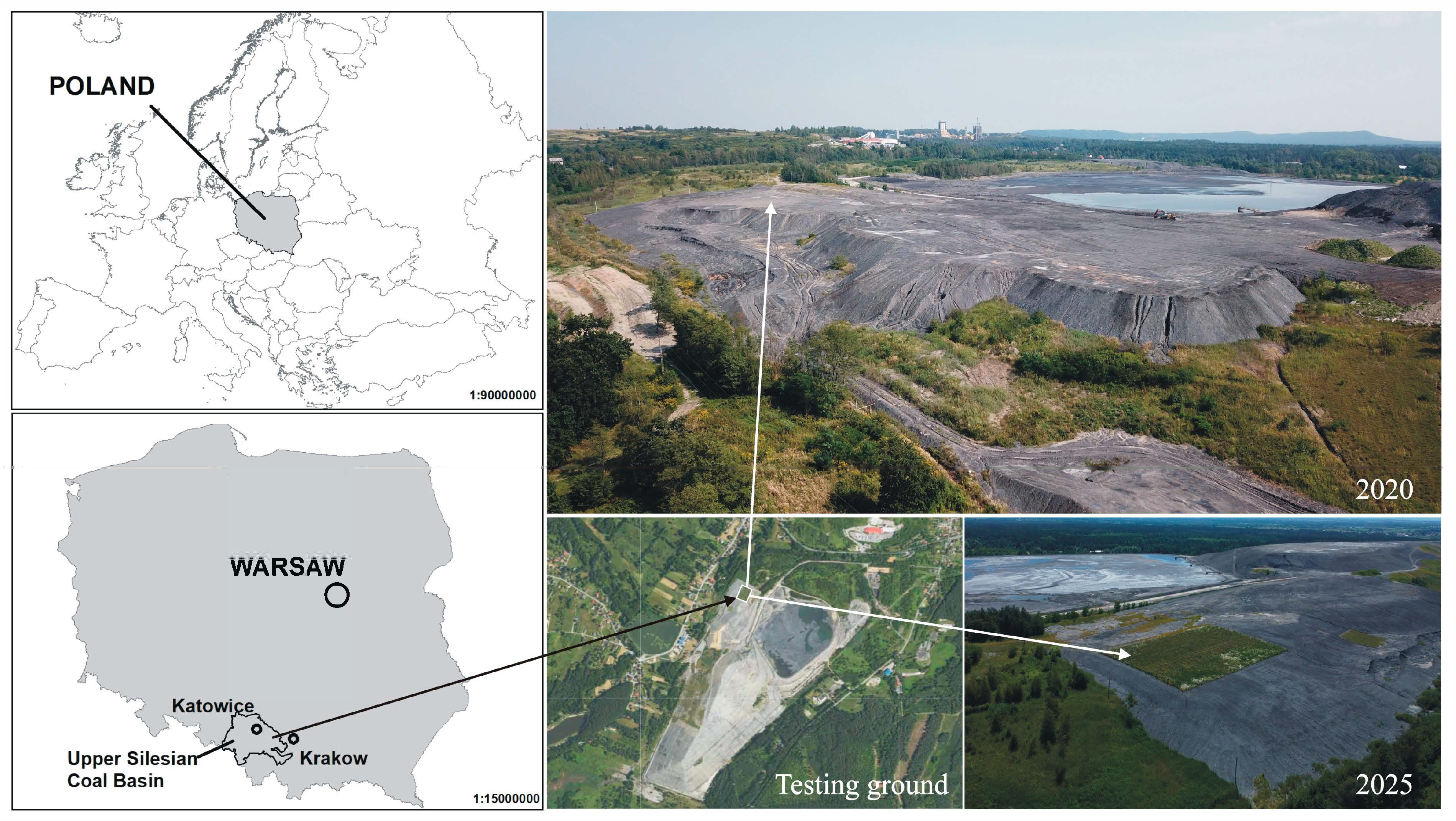
The experiment was conducted on a post-mining area located in the Janina Mine spoil heap in Libiąż, Poland (50°05′03.5″ N, 19°18′18.7″ E), on a part of the reclaimed section of the heap (Figure 1).
The local climate of the study area is classified as temperate, warm and moderately humid. The mean annual climatic parameters in Libiąż are in the range of 7.5–8.0 °C for air temperature and 700–800 mm for precipitation [28]. In 2025, at the last term experiment carried out in the testing ground, the maximum air temperature during the day and the minimum at night were as follows: 23 °C and 12 °C in June, 25 °C and 14 °C in July, 26 °C and 14 °C in August and 20 °C and 9 °C in September, respectively. The highest total precipitation during this period occurred in June (93 mm), while the lowest was recorded in August (72 mm) [29].
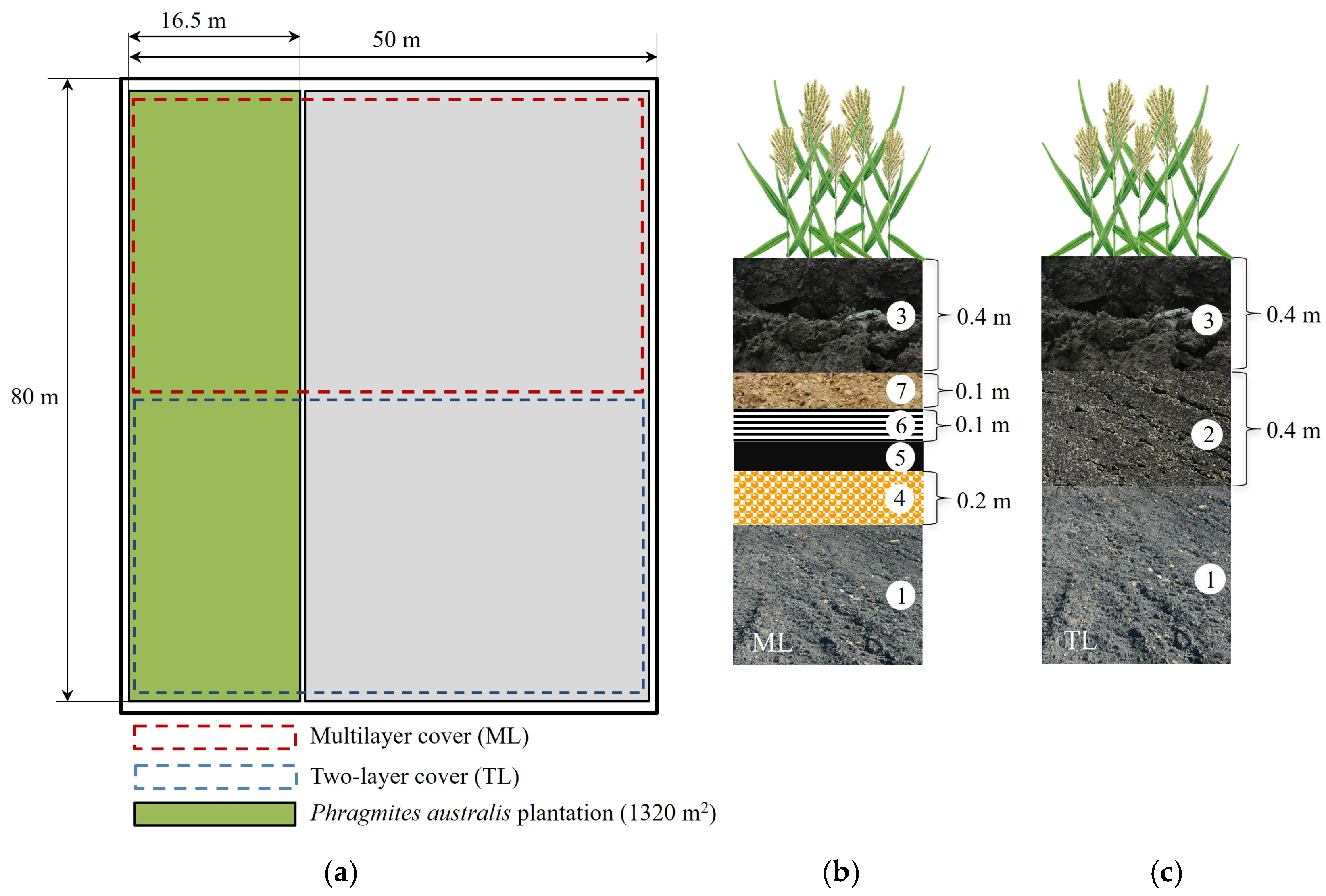
The main problem affecting the land reclamation of the Janina Mine spoil heap is the occurrence of AMD, which causes highly acidic runoff water and a lack of biodiversity. The experimental design compares two variants of reclamation techniques that differ from each other in terms of using technology and structure. The first one, two-layer (TL) cover, represents a technologically simple and cost-effective solution using artificial soil covers. The second utilizes a more complex and expensive multilayer system (ML) design to effectively isolate the strongly acidic surface of rock waste (pH 3–4) from the substitute soil cover and protect vegetation from the harmful effects of acid mine drainage [30]. The concept of the experimental reclamation of the Janina Mine spoil heap using two variants of land reclamation is presented in Figure 2.
The testing ground, spanning a 4000 m2 area, was divided into two sections, each measuring 2000 m2. One section of the testing ground was prepared using TL cover. The lower part, with a thickness of 0.4 ± 0.1 m, was a mixture of soil substitute and rock waste, with a volume ratio of 1:1. The upper part of this section was a 0.4 ± 0.1 m layer of soil substitute.
The second part of the testing ground was designed as an ML cover, including a protective layer of 0.4 ± 0.1 m against the impact of AMD. It consists of dolomite aggregate (31.5–63 mm), geotextile (200 g/m2), sealing material and dolomite aggregate (<31.5 mm). The top of the protective layer was covered with 0.4 ± 0.1 m of soil substitute as a substrate for plant growth and biological reclamation.
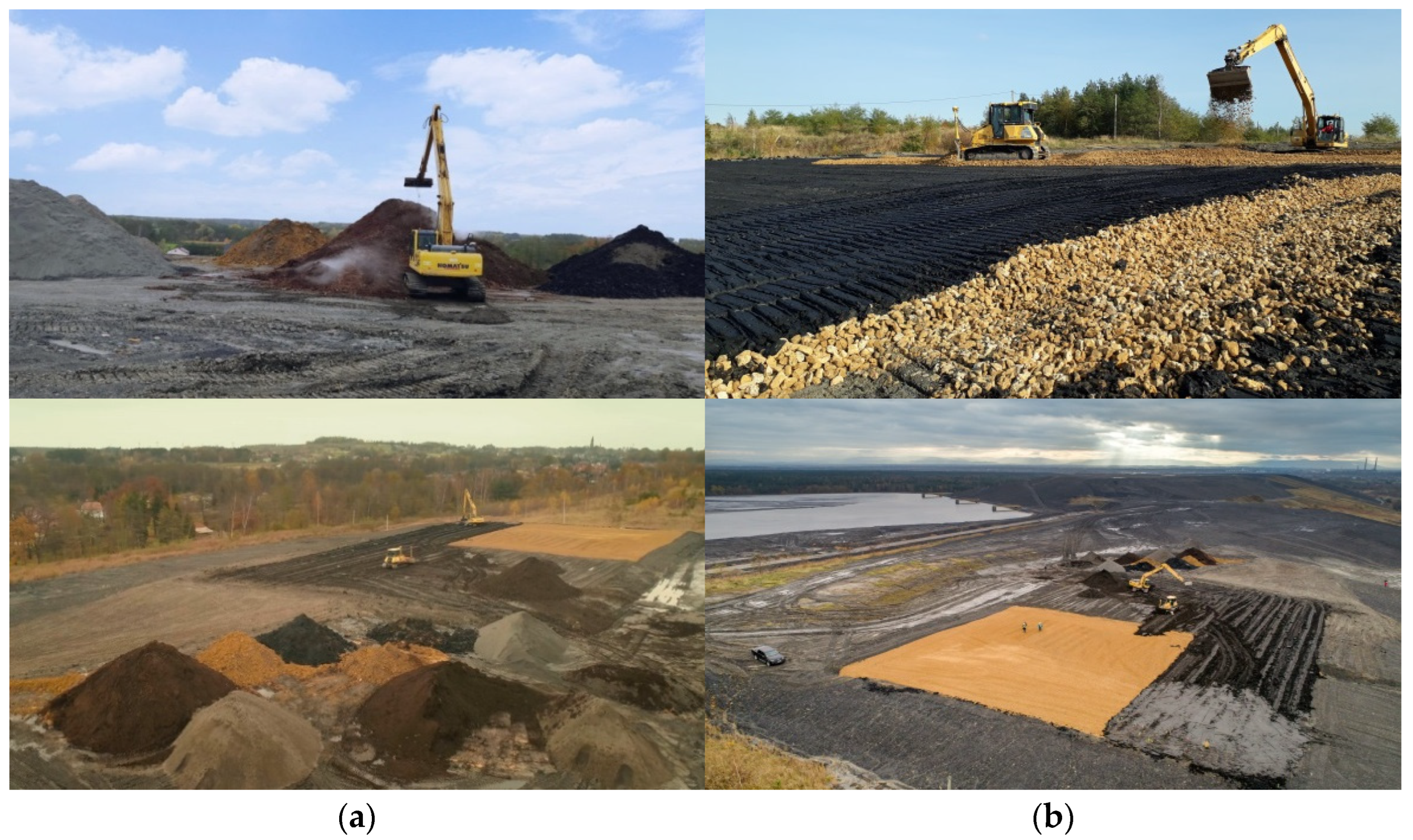
The field work on the construction testing ground at the Janina Mine spoil heap was conducted from October to November 2020. For the construction of the 4000 m2 testing ground, a total of 324 ± 16 tons of energetic sludge (ES), 209 ± 10 tons of decarbonization lime (DL), 309 ± 15 tons of aggregate (AG), 271 ± 13 tons of sealing material (SL) and 580 ± 29 tons of spent mushroom compost (CM) were used. The chemical composition of these components, as well as their proportions in the soil substitute cover, is presented in Section 2.2.
Documentary photographs illustrating the construction of the testing ground, covering an area of 50 m × 80 m, are shown in Figure 3.
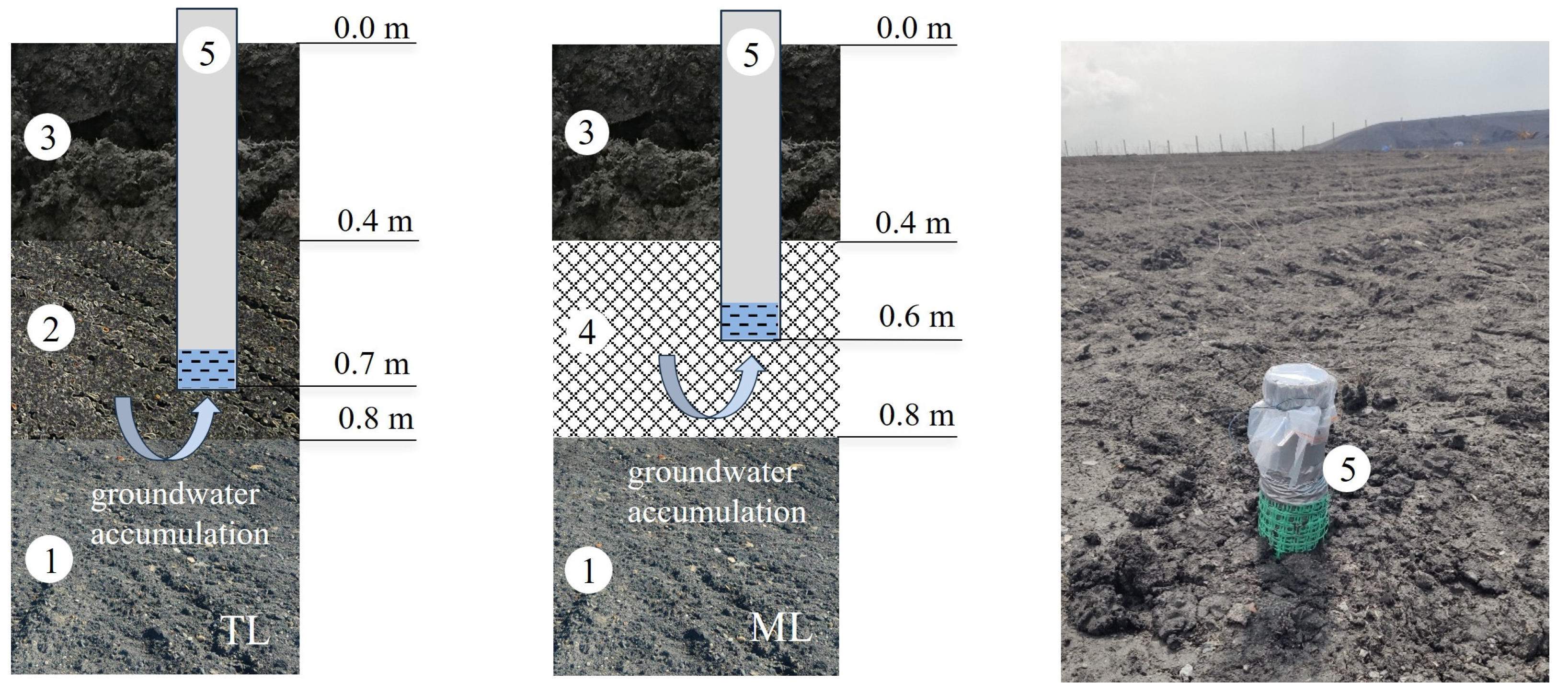
To determine the depth of the groundwater table in the testing ground area, six piezometers were installed, three in each section (TL and ML). The depth of the piezometers located in the experimental plot was 70 cm and 57 cm for the TL and ML sections, respectively. Measurements were carried out from April to September 2025.
The detailed placement of piezometers in two sections of the testing ground is presented in Figure 4.

2.2. Soil Substitute for Land Reclamation

The soil substitute cover was prepared using four mineral products, including 17 wt.% of energetic slag and 15 wt.% of decarbonization lime delivered from the Łaziska Power Plant, 18 wt.% of aggregate from clay shales with a particle size < 2 mm and 20 wt.% of sealing material obtained from the Sobieski Coal Mine. Additionally, 30 wt.% of spent mushroom compost, an organic component from a mushroom farm in Kryry, was applied. The characteristics of the components used to prepare the soil substitute cover were tested in our previous study [24] and are presented in Table 1.
The soil substitute that is the subject of this study was used as a soil cover for the reclamation of one-third of the testing ground (1320 m2), spanning a length and width of 16.5 and 50 m, respectively. Soil samples were collected from a depth of 0–20 cm of the testing ground, from ten locations, five from the two-layer area and five from the multilayer area. The samples were taken three times, after one, three and five years of land reclamation, in 2020, 2022, and 2025. The collected samples were transported to the laboratory in plastic bags and air-dried at room temperature. After removing stones and plant parts, they were crushed and ground to a particle size of less than 2 mm and mixed thoroughly to obtain a laboratory sample.

2.3. Test Plant

As a representative of wet and humid habitat species, Phragmites australis was planted in an area of 1320 m2. A total of 1000 seedlings with an exposed root were used in November 2020 for the planting of the common reed (Figure 4). The common reed seedlings were introduced at uniform 1 m intervals to ensure adequate spacing for optimal growth and subsequent monitoring. The planting density of Phragmites australis in the vegetation test (0.75 seedlings per m2) was selected to ensure experimental uniformity, maintain consistent spacing and facilitate monitoring of plant establishment and growth.
During the five-year vegetative period, from August 2020 to September 2025, the plants were randomly selected for height measurements. The measurements were carried out both in the two-layer and multilayer parts of the testing ground and compared. In the final year of the experiment, the plant samples were harvested in squares with an area of 0.25 m2 and measured for biomass weight (kg per m2), stalk height (cm), stalk diameter (cm), number of leaves and number of plants per m2.

2.4. Analytical Procedures

The soil samples collected from the testing ground were analyzed at the GIG-PIB Laboratory of Environmental Monitoring. Dry mass (DM) was evaluated after drying the soil sample at a temperature of 105 °C. The organic matter content (OM) was determined after combustion in a laboratory oven for 5 h at a temperature of 550 °C. The carbon, hydrogen and total sulfur (St) contents were measured via infrared spectroscopy (ELTRA CHS, Eltra GmbH, Haan, Germany), whereas the total nitrogen was determined by the Kjeldahl method. The electrical conductivity (EC) and pH of the soil samples were analyzed in a 1:5 (w/v) water extract using a pH meter with a combination electrode (CPC-411 and IJ44AT, Elmetron, Zabrze, Poland).
The bulk density was determined as the ratio of the air-dried soil sample weight to its volume and expressed in g/cm3. The water holding capacity (WHC) was measured as the amount of distilled water retained by the soil after saturation and subsequent drainage and expressed as a percentage of the dry soil weight.
The water leachates were prepared by mixing the soil sample with distilled water in a ratio of 1:10 w/v. The total contents of Ca, K, Mg, Na, P and available heavy metals As, Cd, Cr, Cu, Fe, Ni, Mn, Pb and Zn in the water leachates were determined via ICP-OES (Perkin Elmer Optima 5300, Perkin Elmer Inc., Waltham, MA, USA). The pH and electrical conductivity (EC) were measured using a pH meter with a combination electrode (CPC-411 and IJ44AT, Elmetron, Zabrze, Poland).

3. Results and Discussion

3.1. Physicochemical Analysis of Soil Cover

The physicochemical analysis results for the substitute soil cover before its introduction in the testing ground in 2020, and after two and five years of Phragmites australis plantation, are presented in Table 2.
The results demonstrated that the pH range of the soil samples collected from the testing ground was mildly alkaline, ranging between pH 7.4 and 7.65. In comparison, the pH of the soil substitute before the sprouting on the spoil heap began was 8.6 and classified as moderately alkaline [31]. The decrease in pH after its application on the spoil heap surface was most likely caused by the influence of acidic water leachates associated with AMD. Even though the pH value after five years of the experiment was not sufficient to adversely affect plant growth. According to Hazelton and Murphy, the optimal pH for various plants ranges between 5 and 8 [32].
The determined EC values indicate that the soil substitute was moderately saline before application (5.8 mS/cm). However, after two and five years of common reed cultivation, EC decreased below 2 mS/cm, which classifies the soil as non-saline [33]. It was noted that the salinity of the ML sample (1.27 mS/cm) collected from the multilayer cover was twice as high as that of the TL sample (0.63 mS/cm).
The organic matter content in the substitute soil cover before its introduction on the Janina Mine spoil heap was 24.61%, and it remained at a similar level, ranging from 24.48% to 28.26% after a few years of reclamation. This parameter is a key source of energy and carbon for microorganisms and supports microbial succession.
In reclamation soils, a reduction in macronutrients is commonly associated with the cation leaching process occurring in the soil profile, such as Ca2+, Mg2+, K+ and Na+ [34,35], and intensive plant uptake during early vegetation establishment. It was observed that the calcium concentration decreased from 68.8 g/kg in the first year to 27.75 g/kg for TL and 29.33 g/kg for ML in 2025. A decreasing trend in the years 2020–2025 was observed in the concentration of three other nutrients, such as potassium (from 17.1 g/kg to 6.44 and 6.83 g/kg), magnesium (from 12.2 g/kg to 4.6 and 4.9 g/kg) and iron (from 42.1 g/kg to 30.88 and 28.71 g/kg). Moreover, the results demonstrated that the sodium content decreased from 1.7 to 0.85 and 0.99 g/kg. Concurrently, the study revealed that the total concentrations of the two main macronutrients, Nt and Pt, before planting Phragmites australis were 4.9 g/kg and 1.6 g/kg, respectively. The analysis showed that after five years of the experiment, the concentrations of both the elements remained at similar levels, changing from 4.5 to 4.9 g/kg for nitrogen and from 1.6 to 1.5 g/kg for phosphorus.
The carbon-to-nitrogen ratio (C:N ratio) in 2025 was 34:1 for TL and 33:1 for ML. Considering that a C:N ratio below 20 leads to rapid mineralization and release of available nitrogen, whereas a range between 20 and 30 results in an equilibrium state, a ratio higher than 30 indicates a deficiency of mineral nitrogen due to its immobilization [36].
A literature review confirmed that potassium leaching rates from a cultivated soil layer are lower compared to sodium, calcium and magnesium [34]. The observed lack of phosphorus and nitrogen loss from the soil cover after five years of exposure is related to the fact that these elements are characterized by low mobility in the soil, making them less susceptible to leaching.
Phosphorus exhibits low mobility in the soil and readily forms insoluble complex compounds with Fe3+, Al3+ and Ca2+ ions [37]. With increasing soil pH, the solubility of iron and aluminum phosphates generally increases, whereas the solubility of calcium phosphate decreases. However, under highly alkaline conditions (pH above 8), the leaching of calcium phosphate compounds may increase, resulting in greater mobilization of phosphorus in soil [38].
Compared to phosphorus, nitrogen is a more mobile element in the soil. It is the most available to plants in the form of soluble nitrogen (NO3) and ammonium (NH4+) ions. However, most of the nitrogen in the soil is present in an organic form, such as humus or biomass residues, and becomes available only after mineralization by microorganisms [39,40].
The reduction in Ca, Mg, Na and K concentrations in the soil samples where common reed was grown without fertilization can also be explained by the reed’s high nutrient requirements, especially under conditions of intensive growth and extensive underground biomass formation. A literature review reveals that Phragmites australis accumulates almost twice as much phosphorus and potassium both in the underground (root) and epigeal (stems and leaves) plant organs in comparison to other emergent macrophytes [41]. On the other hand, the lack of a significant decrease in nitrogen in the soil samples after five years of common reed cultivation may be related to the plant’s ability to promote nitrification. According to Brix and Arias [42], Phragmites australis ensures a continuous oxygen supply to the rhizosphere, resulting in the oxidation of ammonia (NH3) into nitrate ions (NO3).
The bulk density of the soil covers prepared as artificial soils for the biological reclamation of post-mining areas ranged between 0.81 and 0.82 g/cm3. This is comparable to the values of specific soil types found in the European Union, where the mean bulk densities obtained for woodland soils collected from two depths were 0.73 g/cm3 for the 0–10 cm layer and 0.93 g/cm3 for the 10–20 cm layer [43].
The result of the study indicated that the measured WHC of soils was 90.4% and 83.4% for TL and ML, respectively. The high value of the WHC reflects a high content of organic matter in the soil. This parameter regulates plant water availability, supports nutrient retention and enhances drought resistance [44].

3.2. Analysis of Water Extracts from Soil Samples

The physicochemical parameters for water leachates from the soil substitute in 2020 and the soil covers collected from the testing ground at a depth of 0–0.2 m in 2025 are presented in Table 3. The results were comparable with the permissible values for waste at landfills classified as inert or non-hazardous materials, according to the Council Decision 2003/33/EC [45].
The content of mobile cations (Ca2+, Mg2+, Na+ and K+) in the soil cover water leachates five years after planting Phragmites australis was lower than in the soil substitute sample taken for analysis prior to the soil’s deposition at the testing ground. The biggest difference was observed for sodium and potassium, whose concentrations in the soil cover leachates were 1.13 and 14.1 mg/L for TL and 1.26 and 21.5 mg/L for ML, while in the soil substitute sample, they reached the values of 90.5 and 89.6 mg/L, respectively. The results demonstrated that after five years of plant cultivation, the Ca2+ content in the TL and ML soil samples decreased from 256 mg/L to 63.7 mg/L and 246 mg/L, respectively. Furthermore, it was noted that all the samples collected from the multilayer section exhibited a higher calcium content compared to the samples taken from the two-layer part of the testing ground. The reason for this is the additional leaching of Ca2+ ions from the materials used to establish the multilayer section, including crushed dolomite stone and dolomite aggregate at depths greater than 0.4 and 0.6 m, respectively. These materials consist mainly of carbonate minerals such as dolomite (CaMg(CO3)2), calcite (Ca(CO3)) and ankerite (CaFe(CO3)2) [46].
The measured NO3 ion concentrations in the TL (2.4 mg/L) and ML (2.6 mg/L) samples indicate no risk for groundwater and surface waters. According to the Nitrates Directive 91/676/EEC [47], the NO3 concentrations in groundwater must not exceed 50 mg/L.
The NH4+ ion concentration in the TL (1.0 mg/L) and ML (1.1 and 0.79 mg/L) samples slightly exceeded the drinking water standard (0.5 mg/L); however, in an environmental context, these values remained well within the typical range for agricultural soils and groundwater.
The study revealed that the amount of chloride ions in the soil cover samples ranged from 5 to 8 mg/L, whereas their content in the soil substitute was 82 mg/L. A similar trend was observed for SO42− ions in the water leachates, i.e., 108 mg/L for TL and 586 mg/L for ML, which was significantly lower than in the soil substitute at the beginning of the experiment (894 mg/L). The concentrations of Na+, K+, Cl and SO42− ions had an impact on the electrical conductivity, which was measured at 0.63 and 1.27 mS/cm in the TL and ML soil sample leachates and 1.89 mS/cm for the collected soil substitute sample.
Due to the physicochemical character of the mining spoil heap in Libiąż, the use of a soil substitute with a high SO42− ion content would not result in an increased risk of ground and surface water contamination in the area subjected to biological reclamation. A chemical analysis of the surface runoff waters carried out in recent years on the Janina spoil heap revealed that the average sulfate ion concentrations in stagnant surface runoff waters reached 3400 mg/L [48]. The literature indicates that the chemical analysis revealed that the average concentrations of sulfates and chlorides in the surface runoff waters were 1700 and 206 mg/L, respectively, whereas the content of these ions in stagnant waters was even higher, reaching values of 3400 and 4400 mg/L.
In the water leachate from the TL and ML soil covers, the total nitrogen concentration was 3.4 mg/L, which is a typical value for non-fertilized soils subjected to intensive organic matter mineralization and soluble form migration. Studies conducted in Poland by Pietrzak et al. [49] demonstrated that the highest concentration of nitrate nitrogen (N-NO3) and ammonium nitrogen (N-NH4) in grassland soils was observed in organic soils within the 0–30 cm surface layer. The authors confirmed that groundwater pollution with nitrates may depend on the fertilizer dose, soil type and livestock stocking rates.
The results also showed that the total nitrogen concentration was much lower in the soil cover leachates compared with the amount of this nutrient in the soil substitute (4.9 mg/L). This may indicate the effective retention and/or transformation of nitrogen in the soil profile, including by sorption, biological immobilization and denitrification, which reduce nitrogen losses to groundwater [50]. The analysis indicated that the heavy metal content in both the water leachate and the collected soil substitute sample was within the range of 0.012–0.014 mg/L for Cu, 0.006–0.007 mg/L for Ni and 0.013–0.027 mg/L for Zn. In contrast, the content of As, Cd, Cr and Pb was below detection limits. This means that, according to Council Decision 2003/33/EC [45], which establishes criteria for the acceptance of waste for landfilling, the heavy metal concentrations measured in the soil substitute water leachates (at a ratio of L/S = 10) fulfill the criteria for inert waste, and the substitute can be safely used as a soil cover in a spoil heap. Moreover, it must be noted that low concentrations of heavy metals in soil increase total bioactivity, richness and microbial diversity [51]. The low concentration of heavy metals in water leachates is likely supported by the physicochemical properties of the soil cover, including its pH (7.45–7.65) and organic matter content (26.81–27.11%). According to Ping et al. [52], soil pH, organic matter content and key nutrients, such as nitrogen, potassium and phosphorus, significantly influence the bioavailability of heavy metals, especially Cr, Pb and Zn, which was demonstrated through their soil–plant predictive model. The observed absence or extremely low concentrations of metals in water extracts of soil indicate minimal current risk to surrounding ecosystems or human health.
It must also be noted that the vegetation of Phragmites australis is beneficial for removing toxic elements from contaminated soils. This plant is a great accumulator of heavy metals, preventing their leaching into groundwater or their entry into the food chain [53]. The results indicated that the TOC content in the water leachates was in the range of 19–26 mg/L, and according to the legal framework [45], these types of waste may be landfilled as inert. The amount of total organic carbon in the soil substitute originates from spent mushroom compost (30 wt.%), which is a material widely used as a soil fertilizer and intrinsically safe for the environment.

3.3. Biomass Growth of Phragmites australis

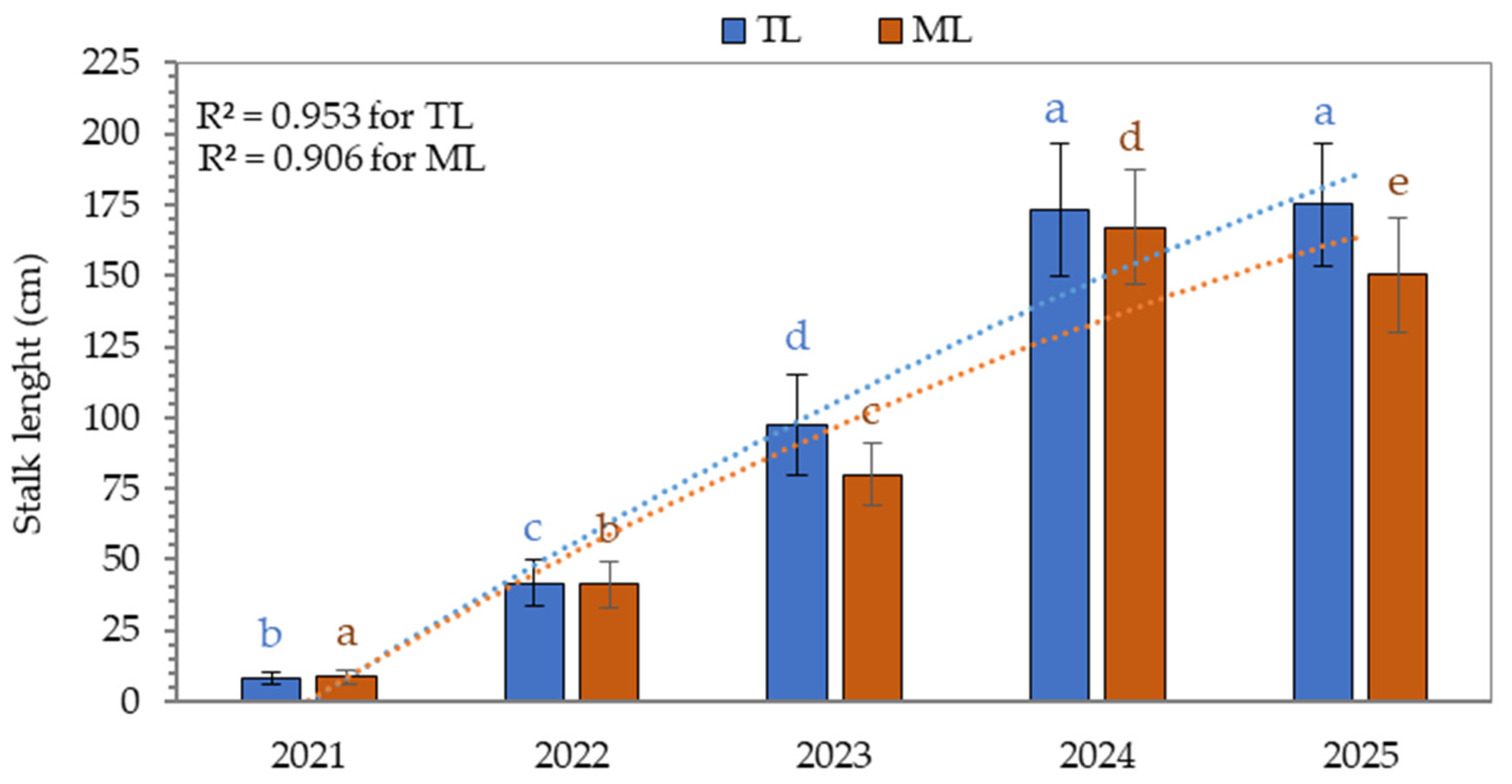
Figure 5 presents the results of the average Phragmites australis growth over five years, observed from June to July.
The average Phragmites australis stalk height measured in 2021 was five times lower compared to 2022. It ranged from 7.8 to 42.1 cm for the TL and from 8.3 to 41.8 cm for the ML soil cover. In the first years of the experiment, there was no difference in the stalk height between the two parts of the testing ground. However, in the subsequent years, the aboveground biomass height for the TL and ML parts increased to 96.8 and 80.7 cm in 2023 and to 176.3 and 170.1 cm in 2024, respectively. The assessed stalk length in the last year of the experiment was comparable to that in 2024. However, it was observed that, in 2025, there was a slight decrease in stalk height (146.3 cm) for plants measured on the ML cover.
A one-way Anova carried out for the Phragmites australis growth from 2021 to 2025 revealed a strong relationship between the measured stalk length and the experiment time. The analysis of variance confirmed that the regression model was highly significant for both the two-layer (p < 0.001, F = 448.9, R2 = 0.94, R2adj. = 0.93) and multilayer covers (p < 0.001, F = 568.1, R2 = 0.95, R2adj. = 0.95). The results of Tukey’s HSD test for TL indicated no significant difference between the years 2024 and 2025 (p = 0.95). In contrast, the results for the ML cover demonstrated significant height differences between all the experiment years (p < 0.001).
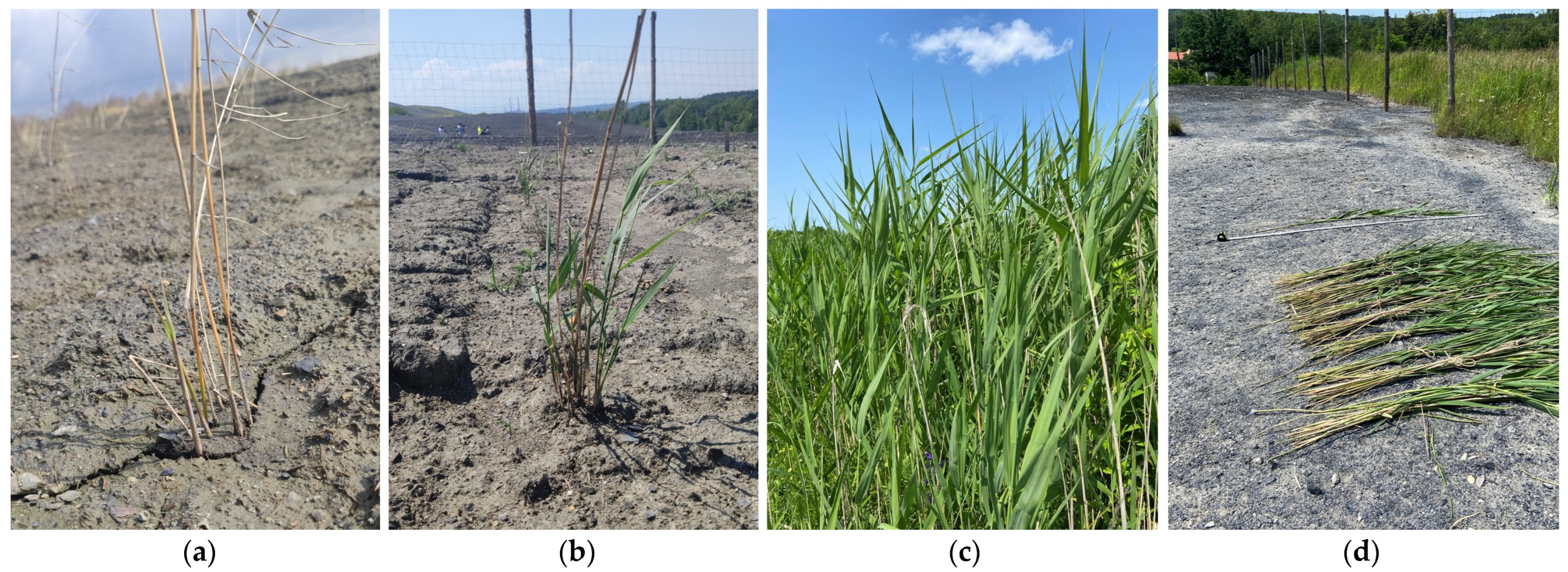
The analysis of plant growth dynamics from 2021 to 2025, using a second-order polynomial regression model, explained R2 = 0.954 and R2 = 0.906 for TL and ML, respectively. It confirmed a very good fit between Phragmites australis height and the growth period. The common reed vegetation, on the testing ground with an artificial soil cover, is presented in Figure 6.
The plant vegetation results for Phragmites australis in August 2025 are presented in Table 4.
The estimated average biomass weight collected from ten subplots TL1-5 and ML1-5 reached the values of 4.83 and 3.87 kg/m2, respectively. The Phragmites australis stalk length measured in the TL subplots (124–195 cm) was higher than in ML (106–182 cm), which corresponded to the higher stalk diameter and the number of leaves. In addition, less surface coverage was observed in the ML part of the testing ground compared to TL. The average plant number calculated per 1 m2 was 342 for TL and 272 for ML. In comparison to the plant density of seedlings in 2020 (0.75 per m2), these values indicate a substantial growth of the rhizome system.
Common reed can survive and reproduce in a wide range of environmental conditions; however, it prefers highly moist habitats [54]. Measurement of the groundwater level using piezometers in two parts of the testing ground revealed a higher groundwater table depth in the ML cover (51–54 cm) compared to the TL (58–61 cm). Taking into account that the piezometers’ depths located in the testing ground (Figure 4) were 70 cm for TL and 57 cm for ML, the average measured layer of groundwater collected in piezometers was comparable (5.3 cm for TL and 4.8 cm for ML). Nevertheless, the presence of the protective layer in the ML section may influence the groundwater flow in the testing ground area. Given the location of the study plot on a slight slope, the protective layer against AMD, consisting of sealing material and dolomite aggregate, may act as a drainage layer. Some of the rainwater that infiltrates through the surface is drained to the lower-lying parts of the study plot and collected in the TL part.
Phragmites australis is a typical species in wetland environments. According to the literature data, the largest rhizome densities occur at a depth of 0.5 m [55]. For that reason, the presence of the AMD layer may reduce the plant density of common reed found on ML cover. Common reed forms dense, monospecific stands that suppress the establishment of other plant species, thereby reducing overall plant biodiversity [56]. However, our observations reveal that the lower groundwater table in the ML also leads to the development of many other species, which prefer habitats with lower water availability, and decreases the common reed plant density.
Phragmites australis tolerates diverse pH, salinity, fertility and texture levels and achieves high yields in different climatic conditions [41]. According to Fofonoff et al. [57], it tolerates soil pH in a wide range between 3.9 and 8.6. For that reason, common reed can adapt even to anthropogenic soils, especially post-mining spoil heaps, where the occurrence of AMD may result in a pH decrease to a very low level [8]. Despite the exposure to changes in these parameters due to the adverse impact of the neighboring waste rock area, our research indicates that after five years of biological reclamation, the soil covers were classified as non-saline (<2 mS/cm), and the measured pH had a neutral value.
The literature review showed that common reed is found globally under different climatic conditions and in numerous locations. Table 5 provides a comparison of the morphological parameters of Phragmites australis, as observed by other authors in various countries and localities.
The results of our research indicate that the common reed density (144–416 plants/m2) obtained on the substrate formed from a mixture of coal combustion by-products and mineral and organic waste was several times higher than the values presented by other researchers in natural conditions. Moreover, the remaining morphological parameters, including the stalk height (106–195 cm), stalk diameter (0.36–0.75 cm) and biomass weight (2.48–6.24 kg/m2), were within the ranges reported in other literature sources.
Studies on the spontaneously developed vegetation in Poland showed that Phragmites australis is one of the dominant species in former coal mine areas in the Upper Silesia region [64]. Common reed vegetation was observed on substrates with the highest fine particle size fraction, which was associated with a slow water flow or temporary water stagnation, where the tiniest particles settled in the hollows.
Previous studies indicate that the morphological parameters of Phragmites australis are strongly dependent on the degree of soil substrate degradation, particularly on nutrient availability. Tao and Hui [58] confirmed that increased nitrogen content in the soil promotes higher biomass production. These findings are consistent with our results, which indicated a decline in stalk length in the fifth year of vegetation (Figure 5). This phenomenon may be attributed to the ageing of the stand, as Phragmites australis generally reaches its highest productivity during the early stage of development, which corresponds to 4.5 years, with a maximum of up to 6 years [54,55]. Alternatively, the observed decline may result from the gradual depletion of essential nutrients, particularly nitrogen, phosphorus and potassium, as demonstrated by our data (Table 2).
An improvement in soil cover through fertilization and management practices, such as mowing, appears appropriate to enhance biomass yield. The effectiveness of such measures was confirmed in studies conducted by Kulik et al. [54].

3.4. Economic Analysis of Soil Substitute Covers and Phragmites australis Plantation

Common reed biomass has acknowledged utility and market value as a raw material for bioenergy (biogas and biofuels), construction materials and paper pulp and as an ecological tool for water purification and wetland conservation. This section compares two variants (TL and ML) for land rehabilitation of mining spoil heaps using artificial soils and evaluates the net present value (NPV) of a Phragmites australis plantation under each method.
Investment and maintenance costs were compiled for the testing ground and rescaled to an area encompassing the testing ground and 1 ha of the mining spoil heap. The annual revenue from the biomass was calculated using the market price of EUR 85 per ton. The NPV was calculated over a 10-year horizon using the standard formulation, as follows:
N P V = t = 1 T C t ( 1 + r ) t C 0
where Ct is the net cash flow in year t, C0 is the initial investment cost and r is a discount rate.
A discount rate of 6% was adopted in our work, consistent with Ericsson et al. [65]. This value enables a balanced economic assessment, reconciling the long-term environmental goals of post-mining reclamation with the financial realities of energy crop production.
The economic analysis results for the Phragmites australis plantation using two types of substitute soil covers are presented in Table 6.
The total costs of investment and maintenance and the market price are summarized in Table 7. It was noted that the financial result is sensitive to biomass yield, unit price and the discount rate.
The analysis demonstrated that the total investment cost for the land reclamation of a spoil heap using a multilayer cover was almost three times higher than for a two-layer cover. The total cost of materials for establishing a 0.8 m soil cover (soil substitute and its mixture with rock waste) according to the TL method (Figure 2b) was EUR 14,180/ha. In contrast, the total price of materials used for establishing a 0.4 m ML soil cover (Figure 2c) was EUR 49,530/ha.
At a biomass price of EUR 85 t−1, the estimated annual revenue from the biomass amounted to EUR 4105.5 per ha/yr for TL (corresponding to 48.3 ton/ha/yr) and EUR 3289.5 per ha/yr for ML (i.e., 38.7 ton/ha/yr). The calculated NPV after 10 years equaled EUR −25,054 for TL and EUR −76,010 for ML, indicating no financial return under the adopted parameters.
Nevertheless, despite the unfavorable NPV, the two-layer method delivered higher biomass at lower capital expenditure, suggesting it can be used to establish wet habitats effectively and at a lower cost. The multilayer method, due to the use of an insulating layer, is recommended for parts of the heap with intensive rainwater infiltration and a high risk of acid drainage (e.g., flat top surfaces), where more stringent control of hydrologic and geochemical conditions is required.

3.5. Ecological Benefits of Using Phragmites australis in Land Reclamation

Establishing soil covers involves high costs, including the cost of components and land reclamation, which is always an expensive process. However, the primary aim of the reclamation process is to limit the negative impact of degraded land on the environment, rather than constitute a typical business venture. The adaptation and growth of Phragmites australis in the investigated environmental conditions are beneficial not only in terms of biomass production. Additionally, they provide regulatory, provisioning and cultural ecosystem services [41,66,67], which improve environmental processes and support human well-being in the following ways: (i) climate regulation and carbon sequestration; (ii) removal of contaminants from groundwater and soil by heavy metal phytoremediation; (iii) accumulation of biogenes (nitrogen, phosphorus) responsible for water body eutrophication; (iv) ground stabilization to prevent soil erosion; (v) provision of food and shelter for the existence of many species of birds, insects and other animals; (vi) supply of goods for the energy sector, including biofuel, pellets and biogas; and (vii) supply of fiber, roof thatch, fencing and other building materials. The ecosystem service valuation should also be a factor influencing decisions on how to reclaim and develop degraded land. Numerous studies confirmed that Phragmites australis grows in soils with different pH, salinity, fertility and texture levels. Therefore, this species can grow in different climatic conditions [61].
Common reed provides shelter, nesting sites, and feeding grounds for numerous species of birds and insects. For this reason, reed beds are valuable natural habitats in Europe [67]. Due to its rapid growth rate and high biomass production, Phragmites australis is recognized as a powerful carbon sink [42]. Moreover, it develops an extensive, dense network of rhizomes that enhances the stability of mineral particles and reduces wind erosion [68]. Vegetation with a well-developed root system is significant in the reclamation of post-mining spoil heaps. Many published papers have confirmed that Phragmites australis has been extensively studied for the mitigation of environmental contamination. It has been widely used for phytoremediation of heavy metals from different soils, wastewaters and sediments [53]. Due to its specialized enzymatic systems, common reed is capable of degrading various xenobiotic organic contaminants, including chlorinated pesticides or polychlorinated biphenyls [41].

4. Conclusions

This study showed that reclamation of a mining spoil heap using soil substitute covers can be carried out effectively with relatively simple, low-cost solutions, compared to the alternative multilayer method with an insulating layer to prevent acid mine drainage. Although analysis of changes in the physicochemical properties of the soil showed a gradual loss of basic nutrients (N, P, K, Ca, Mg) over five years, the applied soil mixtures created favorable conditions for the growth and development of Phragmites australis.
The economic analysis showed a negative NPV over a 10-year period, which is due to factors such as the need to incur the costs of producing artificial soil substitutes necessary for the reclamation of areas degraded by mining activities. Nevertheless, our analysis indicates that the income generated from the sale of plant biomass can reduce the high costs of site reclamation.
The obtained results indicate the validity of expanding further research toward a more comprehensive economic analysis covering not only biomass production, but also the assessment of ecosystem indicators reflecting potential benefits in terms of regulatory, production and cultural functions.
These findings demonstrate that the production of soil cover for the reclamation of post-mining areas using mining waste and coal combustion by-products is in line with the principles of a circular economy, enabling the rational use of materials that would otherwise require storage. This solution not only reduces the costs associated with waste disposal but also strengthens the environmental aspect of the reclamation process.
Despite the very low concentrations of toxic heavy metals in bioavailable forms observed in this study, further research is needed to conduct a more comprehensive analysis of soil cover samples and the elemental composition of Phragmites australis tissues. Such investigations should include an ecological risk assessment and a detailed evaluation of metal accumulation in plant organs to ensure the long-term safety and sustainability of reclamation practices.

Author Contributions

Conceptualization, A.W.-R.; methodology, A.W.-R., Ł.P. and A.B.; validation, Ł.P. and A.B.; formal analysis, A.W.-R. and Ł.P.; investigation, A.W.-R. and Ł.P.; resources, Ł.P. and A.B.; data curation, A.W.-R.; writing—original draft preparation, A.W.-R.; writing—review and editing, Ł.P. and A.B.; visualization, A.W.-R. and A.B.; supervision, A.W.-R.; project administration, A.W.-R.; funding acquisition, A.W.-R. All authors have read and agreed to the published version of the manuscript.

Funding

This research was funded by The Polish Ministry of Science and Higher Education, Statutory Activity of the Central Mining Institute-National Research Institute, Task no. 111340125).

Data Availability Statement

No new data were created or analyzed in this study. Data sharing is not applicable to this article.

Acknowledgments

During the preparation of this manuscript, the authors used AI-assisted tools (DeepL v3.7.2, Grammarly Pro and ChatGPT5) to streamline grammar and language editing. The authors have reviewed and edited the output and take full responsibility for the content of this publication.

Conflicts of Interest

The authors declare no conflicts of interest. The funders had no role in the design of the study; in the collection, analyses, or interpretation of data; in the writing of the manuscript; or in the decision to publish the results.

Abbreviations

The following abbreviations are used in this manuscript:
TLTwo-layer cover
MLMultilayer cover
DMDry mass
ECElectrical conductivity
WHCWater holding capacity
TOCTotal organic carbon
NPVNet present value

References

  1. Cygańczuk, K.; Roguski, J. The Consequences of Mining Damage and Their Impact on the Natural Environment—A Case Study of Trzebinia. Saf. Fire Technol. 2024, 64, 66–82. [Google Scholar] [CrossRef]
  2. Tibbett, M. Post-Mining Ecosystem Reconstruction. Curr. Biol. 2024, 34, 387–393. [Google Scholar] [CrossRef] [PubMed]
  3. Directive 2008/98/EC of the European Parliament and the Council of 19 November 2008 on Waste and Repealing Certain Directives; Official Journal of the European Union L312: Brussels, Belgium, 2008; Available online: https://eur-lex.europa.eu/eli/dir/2008/98/oj/eng (accessed on 20 November 2025).
  4. Directive 2006/21/EC of the European Parliament and of the Council of 15 March 2006 on the Management of Waste from Extractive Industries and Amending Directive 2004/35/EC; Official Journal of the European Union L102: Brussels, Belgium, 2006; Available online: https://eur-lex.europa.eu/eli/dir/2006/21/oj/eng (accessed on 20 November 2025).
  5. Directive 2004/35/CE of the European Parliament and of the Council of 21 April 2004 on Environmental Liability with Regard to the Prevention and Remedying of Environmental Damage; Official Journal of the European Union L143: Brussels, Belgium, 2004; Available online: https://eur-lex.europa.eu/eli/dir/2004/35/oj/eng (accessed on 20 November 2025).
  6. Meuser, H. Soil Remediation and Rehabilitation. Treatment of Contaminated and Disturbed Land; Environmental Pollution, 23; Springer: Dordrecht, The Netherlands, 2016. [Google Scholar] [CrossRef]
  7. Pambudi, P.A.; Utomo, S.W.; Soelarno, S.W.; Takarina, N.D. Coal Mining Reclamation as an Environmental Recovery Effort: A Review. J. Degrad. Min. Lands Manag. 2023, 10, 4811–4821. [Google Scholar] [CrossRef]
  8. Akcil, A.; Koldas, S. Acid Mine Drainage (AMD): Causes, Treatment and Case Studies. J. Clean. Prod. 2006, 14, 1139–1145. [Google Scholar] [CrossRef]
  9. Mbonimpa, M.; Ngabu, É.T.; Belem, T.; Kanteye, O.; Maqsoud, A. Optimization of Soil-Sludge Mixtures by Compaction for Potential Use in Mine Site Reclamation. Minerals 2023, 13, 806. [Google Scholar] [CrossRef]
  10. Roychowdhury, A.; Sarkar, D.; Datta, R. A Combined Chemical and Phytoremediation Method for Reclamation of Acid Mine Drainage–Impacted Soils. Environ. Sci. Pollut. Res. 2019, 26, 14414–14425. [Google Scholar] [CrossRef] [PubMed]
  11. Johnson, D.B.; Hallberg, K.B. Acid Mine Drainage Remediation Options: A Review. Sci. Total Environ. 2005, 338, 3–14. [Google Scholar] [CrossRef]
  12. Abbott, D.E.; Essington, M.E.; Mullen, M.D.; Ammons, J.T. Fly Ash and Lime-Stabilized Biosolid Mixtures in Mine Spoil Reclamation: Simulated Weathering. J. Environ. Qual. 2001, 30, 608–616. [Google Scholar] [CrossRef]
  13. Belyaeva, O.N.; Haynes, R.J. Chemical, Microbial and Physical Properties of Manufactured Soils Produced by Co-Composting Municipal Green Waste with Coal Fly Ash. Bioresour. Technol. 2009, 100, 5203–5209. [Google Scholar] [CrossRef]
  14. Bucka, F.B.; Guigue, J.; Reifschneider, L.; Pihlap, E.; Garcia-Franco, N.; Kühnel, A.; Kögel-Knabner, I.; Vidal, A. From Waste to Soil: Can We Create Functioning Manufactured Soils by Recycling Rock Processing Waste? Soil Use Manag. 2024, 40, e13094. [Google Scholar] [CrossRef]
  15. Grekhova, I.; Gilmanova, M. The Usage of Sludge of Wastewaterin the Composition of the Soil for Land Reclamation. Procedia Eng. 2016, 165, 794–799. [Google Scholar] [CrossRef]
  16. Petrova, T.A.; Rudzisha, E.; Alekseenko, A.V.; Bech, J.; Pashkevich, M.A. Rehabilitation of Disturbed Lands with Industrial Wastewater Sludge. Minerals 2022, 12, 376. [Google Scholar] [CrossRef]
  17. Halecki, W.; Klatka, S.; Ryczek, M.; Kruk, E. Evaluation of a Mixture of Sewage Sludge and Mine Waste in Reclamation of Degraded Areas. Arch. Agron. Soil Sci. 2022, 68, 1459–1472. [Google Scholar] [CrossRef]
  18. Halecki, W.; López-Hernández, N.A.; Koźmińska, A.; Ciarkowska, K.; Klatka, S. A Circular Economy Approach to Restoring Soil Substrate Ameliorated by Sewage Sludge with Amendments. Int. J. Environ. Res. Public Health 2022, 19, 5296. [Google Scholar] [CrossRef]
  19. Pérez-Gimeno, A.; Navarro-Pedreño, J.; Almendro-Candel, M.B.; Gómez, I.; Zorpas, A.A. The Use of Wastes (Organic and Inorganic) in Land Restoration in Relation to Their Characteristics and Cost. Waste Manag. Res. 2019, 37, 502–507. [Google Scholar] [CrossRef] [PubMed]
  20. Larney, F.J.; Angers, D.A. The Role of Organic Amendments in Soil Reclamation: A Review. Can. J. Soil Sci. 2012, 92, 19–38. [Google Scholar] [CrossRef]
  21. Ingelmo, F.; Canet, R.; Ibañez, M.A.; Pomares, F.; García, J. Use of MSW Compost, Dried Sewage Sludge and Other Wastes as Partial Substitutes for Peat and Soil. Bioresour. Technol. 1998, 63, 123–129. [Google Scholar] [CrossRef]
  22. Ukwattage, N.L.; Ranjith, P.G.; Bouazza, M. The Use of Coal Combustion Fly Ash as a Soil Amendment in Agricultural Lands (with Comments on Its Potential to Improve Food Security and Sequester Carbon). Fuel 2013, 109, 400–408. [Google Scholar] [CrossRef]
  23. Berta, K.M.; Kurdi, R.; Lukács, P.; Penk, M.; Somogyi, V. Red Mud with Other Waste Materials as Artificial Soil Substitute and Its Effect on Sinapis alba. J. Environ. Manag. 2021, 287, 112311. [Google Scholar] [CrossRef]
  24. Więckol-Ryk, A.; Pierzchała, Ł.; Bauerek, A.; Krzemień, A. Minimising Coal Mining’s Impact on Biodiversity: Artificial Soils for Post-Mining Land Reclamation. Sustainability 2023, 15, 9707. [Google Scholar] [CrossRef]
  25. Samadi, M.T.; Leili, M.; Asgari, G.; Chavoshi, S. The Potential of Phragmites australis to Bioaccumulation and Translocate Heavy Metals from Landfill Leachate. J. Water Process Eng. 2024, 64, 105657. [Google Scholar] [CrossRef]
  26. Wdowczyk, A.; Szymańska-Pulikowska, A. Effect of Substrates on the Potential of Phragmites australis to Accumulate and Translocate Selected Contaminants from Landfill Leachate. Water Resour. Ind. 2023, 29, 100203. [Google Scholar] [CrossRef]
  27. United Nations Department of Economic and Social Affairs. The Sustainable Development Goals Report; United Nations Department of Economic and Social Affairs: New York, NY, USA, 2025; Available online: https://unstats.un.org/sdgs/report/2025/ (accessed on 28 November 2025). [CrossRef]
  28. County Crisis Management Center in Krakow: Meteorological Information. Available online: http://www.pczk.pl/informacje-meteorologiczne/ (accessed on 5 December 2025).
  29. Meteo Atlas. Libiąż (Poland) Weather and Climate: Annual Average Temperatures and Precipitation. Available online: https://meteoatlas.pl/polska/libiaz-52160 (accessed on 5 December 2025).
  30. Lottermoser, B.G. Mine Waste. Characterization, Treatment and Environmental Impact, 3rd ed.; Springer: Berlin/Heidelberg, Germany, 2010. [Google Scholar] [CrossRef]
  31. Bruce, R.; Rayment, G. Analytical Methods and Interpretations Used by the Agricultural Chemistry Branch for Soil and Land Use Surveys. Bulletin QB82004; Queensland Department of Primary Industries: Brisbane, Australia, 1982.
  32. Hazelton, P.; Murphy, B. Interpreting Soil Test Results. What Do All the Numbers Mean? 3rd ed.; CSIRO Publishing: Clayton, Australia, 2016. [Google Scholar] [CrossRef]
  33. Miller, R.; Donahue, R. Soils in Our Environment: An Introduction to Soils and Plant Growth, 7th ed.; Cambridge University Press: Cambridge, UK; Prentice-Hall: Upper Saddle River, NJ, USA, 1995. [Google Scholar]
  34. Adomaitis, T.; Staugaitis, G.; Mažvila, J.; Vaišvila, Z.; Arbačiauskas, J.; Lubyte, J.; Šumskis, D.; Švegžda, A. Leaching of Base Cations as Affected by a Forty-Year Use of Mineral Fertilisation. Zemdirbyste 2013, 100, 119–126. [Google Scholar] [CrossRef]
  35. Zhang, J.; Qu, X.; Song, X.; Xiao, Y.; Wang, A.; Li, D. Spatial Variation in Soil Base Saturation and Exchangeable Cations in Tropical and Subtropical China. Agronomy 2023, 13, 781. [Google Scholar] [CrossRef]
  36. Brust, G.E. Chapter 9: Management Strategies for Organic Vegetable Fertility. In Safety and Practice for Organic Food; Elsevier Inc.: Amsterdam, The Netherlands, 2019; pp. 194–209. [Google Scholar] [CrossRef]
  37. Johan, P.D.; Ahmed, O.H.; Omar, L.; Hasbullah, N.A. Phosphorus Transformation in Soils Following Co-Application of Charcoal and Wood Ash. Agronomy 2021, 11, 2010. [Google Scholar] [CrossRef]
  38. Shen, J.; Yuan, L.; Zhang, J.; Li, H.; Bai, Z.; Chen, X.; Zhang, W.; Zhang, F. Phosphorus Dynamics: From Soil to Plant. Plant Physiol. 2011, 156, 997–1005. [Google Scholar] [CrossRef]
  39. Cameron, K.C.; Di, H.J.; Moir, J.L. Nitrogen Losses from the Soil/Plant System: A Review. Ann. Appl. Biol. 2013, 162, 145–173. [Google Scholar] [CrossRef]
  40. Reitsma, K.D.; Clay, D.E.; Carlson, C.G. Chapter 2: Soil Fertility. In Alternative Practices for Agronomic Nutrient and Pest Management in South Dakota, 1st ed.; Darrell Denke, South Dakota State University, College of Agriculture and Biological Sciences: Brookings, SD, USA, 2011; pp. 1–57. [Google Scholar]
  41. Srivastava, J.; Kalra, S.J.S.; Naraian, R. Environmental Perspectives of Phragmites australis (Cav.) Trin. Ex. Steudel. Appl. Water Sci. 2014, 4, 193–202. [Google Scholar] [CrossRef]
  42. Brix, H.; Arias, C.A. Wetlands—nutrients, metals and mass cycling. In Experiments in a Two-Stage Constructed Wetland System: Nitrification Capacity and Effects of Recycling on Nitrogen Removal; Vymazal, J., Ed.; Backhuys Publishers: Leiden, The Netherlands, 2003; pp. 237–258. [Google Scholar]
  43. Panagos, P.; De Rosa, D.; Liakos, L.; Labouyrie, M.; Borrelli, P.; Ballabio, C. Soil Bulk Density Assessment in Europe. Agric. Ecosyst. Environ. 2024, 364, 108907. [Google Scholar] [CrossRef]
  44. Ryś, K.; Chmura, D.; Dyczko, A.; Woźniak, G. The Biomass Amount of Spontaneous Vegetation Concerning the Abiotic Habitat Conditions in Coal Mine Heaps as Novel Ecosystems. J. Ecol. Eng. 2024, 25, 79–100. [Google Scholar] [CrossRef] [PubMed]
  45. Council Decision of 19 December 2002 Establishing Criteria and Procedures for the Acceptance of Waste at Landfills Pursuant to Article 16 of and Annex II to Directive 1999/31/EC; Official Journal of the European Communities L182: Brussels, Belgium, 2003; Available online: https://eur-lex.europa.eu/eli/dec/2003/33(1)/oj/eng (accessed on 20 November 2025).
  46. Gruszecka-Kosowska, A.; Wdowin, M.; Kosowski, T.; Klimek, A. An Analysis of the Chemistry, Mineralogy and Texture of Waste Dolomite Powder Used to Identify Its Potential Application in Industry. Geol. Geophys. Environ. 2015, 41, 343. [Google Scholar] [CrossRef]
  47. Council Directive 91/676/EEC of 12 December 1991 Concerning the Protection of Waters Against Pollution Caused by Nitrates from Agricultural Sources; Official Journal of the European Communities L 375: Brussels, Belgium, 2000; Available online: https://eur-lex.europa.eu/eli/dir/1991/676/oj/eng (accessed on 20 November 2025).
  48. Bauerek, A.; Bebek, M.; Frączek, R.; Paw, K.; Kasperkiewicz, W. Variability of Chemical Composition of Acidic Runoff Waters from an Active Spoil Heap of Mining Wastes Representing Sediments of the Cracow Sandstone Series of the Upper Silesian Coal Basin. Prz. Geol. 2017, 65, 450–458. [Google Scholar]
  49. Pietrzak, S. Nitrates in Groundwater in the Areas Occupied by Grassland in Poland. Polish J. Agron. 2012, 11, 34–40. [Google Scholar]
  50. Hu, C.; Wang, X.; Li, J.; Luo, L.; Liu, F.; Wu, W.; Xu, Y.; Li, H.; Tan, B.; Zhang, G. Trends in the Research on Soil Nitrogen Leaching from Farmland: A Bibliometric Analysis (2014–2023). Clim. Smart Agric. 2024, 1, 100026. [Google Scholar] [CrossRef]
  51. Xie, Y.; Fan, J.; Zhu, W.; Amombo, E.; Lou, Y.; Chen, L.; Fu, J.; Huber, S.C. Effect of Heavy Metals Pollution on Soil Microbial Diversity and Bermudagrass Genetic Variation. Front. Plant Sci. 2016, 7, 755. [Google Scholar] [CrossRef] [PubMed]
  52. Ping, Y.; Xi, W.; Cai, H.; Tan, Q. Influence of Soil Characteristics on the Concentrations of Cr, Pb, and Zn in Tobacco Leaves from Longyan, China, and the Associated Predictive Models In Fl Uence of Soil Characteristics on the Concentrations of Cr, Pb, and Zn in Tobacco Leaves From. Environ. Res. Commun. 2024, 6, 035022. [Google Scholar] [CrossRef]
  53. Rezania, S.; Park, J.; Rupani, P.F.; Darajeh, N.; Xu, X.; Shahrokhishahraki, R. Phytoremediation Potential and Control of Phragmites australis as a Green Phytomass: An Overview. Environ. Sci. Pollut. Res. 2019, 26, 7428–7441. [Google Scholar] [CrossRef]
  54. Kulik, M.; Sender, J.; Bochniak, A.; Jaźwa, M.; Ciesielski, D. The Influence of Mowing Frequency on the Growth and Development of Phragmites Australis. J. Nat. Conserv. 2023, 76, 126492. [Google Scholar] [CrossRef]
  55. Milke, J.; Gałczyńska, M.; Wróbel, J. The Importance of Biological and Ecological Properties of Phragmites australis (Cav.) Trin. Ex Steud., in Phytoremendiation of Aquatic Ecosystems—The Review. Water 2020, 12, 1770. [Google Scholar] [CrossRef]
  56. Uddin, N.; Robinson, R.W. Responses of Plant Species Diversity and Soil Physical-Chemical- Microbial Properties to Phragmites australis Invasion along a Density Gradient. Sci. Rep. 2017, 7, 11007. [Google Scholar] [CrossRef]
  57. Fofonoff, P.W.; Ruiz, G.M.; Steves, B.; Simkanin, C.; Carlton, J.T. National Exotic Marine and Estuarine Species Information System. 2018. Available online: http://invasions.si.edu/nemesis/ (accessed on 25 September 2025).
  58. Tao, Z.; Hui, H. Biomass of Phragmites australis and Effect Factors Analyzing in Zha Long Wetland. Adv. Mater. Res. 2012, 393–395, 1119–1123. [Google Scholar] [CrossRef]
  59. Tóth, V.R. Photosynthetic Traits of Phragmites australis along an Ecological Gradient and Developmental Stages. Front. Plant Sci. 2024, 15, 1476142. [Google Scholar] [CrossRef]
  60. Tóth, V.R.; Szabo, K. Morphometric Structural Analysis of Phragmites australis Stands in Lake Balaton. Ann. Limnol. 2012, 48, 241–251. [Google Scholar] [CrossRef]
  61. Karunaratne, S.; Asaeda, T.; Yutani, K. Growth Performance of Phragmites australis in Japan: Influence of Geographic Gradient. Environ. Exp. Bot. 2003, 50, 51–66. [Google Scholar] [CrossRef]
  62. Komínková, D.; Kuehn, K.A.; Büsing, N.; Steiner, D.; Gessner, M.O. Microbial Biomass, Growth, and Respiration Associated with Submerged Litter of Phragmites australis Decomposing in a Littoral Reed Stand of a Large Lake. Aquat. Microb. Ecol. 2000, 22, 271–282. [Google Scholar] [CrossRef]
  63. Demko, J.; Machava, J.; Saniga, M. Energy Production Analysis of Common Reed—Phragmites australis (Cav.) Trin. Folia Oecologica 2017, 44, 107–113. [Google Scholar] [CrossRef]
  64. Kompała-Bąba, A.; Bierza, W.; Błońska, A.; Sierka, E.; Magurno, F.; Chmura, D.; Besenyei, L.; Radosz, Ł.; Woźniak, G. Vegetation Diversity on Coal Mine Spoil Heaps—How Important Is the Texture of the Soil Substrate? Biologia 2019, 74, 419–436. [Google Scholar] [CrossRef]
  65. Ericsson, K.; Rosenqvistn, H.; Ganko, E.; Pisarek, M.; Nilsson, L. An Agro-Economic Analysis of Willow Cultivation in Poland. Biomass Bioenergy 2006, 30, 16–27. [Google Scholar] [CrossRef]
  66. Kiviat, E. Ecosystem Services of Phragmites in North America with Emphasis on Habitat Functions. AoB Plants 2013, 5, plt008. [Google Scholar] [CrossRef]
  67. Cížková, H.; Kučera, T.; Poulin, B.; Květ, J. Ecological Basis of Ecosystem Services and Management of Wetlands Dominated by Common Reed (Phragmites australis): European Perspective. Diversity 2023, 15, 629. [Google Scholar] [CrossRef]
  68. Zhang, E.; Meng, C.; Qu, J.; Zhu, Z.; Niu, J.; Wang, L.; Song, N.; Yin, Z. Dual Effects of Caragana korshinskii Introduction on Herbaceous Vegetation in Chinese Desert Areas: Short-Term Degradation and Long-Term Recovery. Plant Soil 2025. [Google Scholar] [CrossRef]
Figure 1. Study area testing ground in Janina Mine spoil heap in Upper Silesian Coal Basin, Poland.
Sustainability 17 11294 g001
Figure 2. Profiles of the reclamation covers in the testing ground. (a) Testing ground layout, (b) two-layer (TL) cover profile, (c) multilayer (ML) cover profile, 1—rock waste, 2—rock waste mixed with soil substitute at a ratio of 1:1 (w/w), 3—substitute soil cover, 4—dolomite aggregate (31.5–63.0 mm), 5—geotextile, 6—sealing material, 7—dolomite aggregate (<31.5 mm).
Sustainability 17 11294 g002
Figure 3. Field work on the spoil heap. (a) Components for preparing the substitute soil cover, (b) spreading the soil substitute on the testing ground surface.
Sustainability 17 11294 g003
Figure 4. Installed piezometers in the testing ground: TL—two-layer cover profile, ML—multilayer cover profile, 1—rock waste, 2—rock waste mixed with soil substitute at a ratio of 1:1 (w/w), 3—substitute soil cover, 4—protective layer against AMD, 5—piezometer.
Sustainability 17 11294 g004
Figure 5. Phragmites australis stalk height in the testing ground with two-layer (TL) and multilayer (ML) substitute soil covers, measured from 2021 to 2025. Groups that share the same letter are not significantly different from each other (p < 0.05) according to Tukey’s test.
Sustainability 17 11294 g005
Figure 6. Development of Phragmites australis through 5 years of vegetation: (a) after planting in 2020, (b) six months after planting, (c) 5 years after planting, (d) after harvesting in 2025.
Sustainability 17 11294 g006
Table 1. Characteristics of components used for creating soil substitute covers.
ElementUnitESDLAGSLCM
Ca g/kg27.43204.33.482.2
N 1.53.21.84.023.6
K 21.40.423.216.910.3
Mg 16.954.42.45.74.2
P 1.10.10.20.37.8
Na 3.20.10.90.81.3
S 3.22.439.56.319.7
Cdmg/kg1<14<1<1
Cr 53122767
Cu 463853129
Ni 47926337
Pb 34213532
Zn 22361281141183
ES—energetic slag; DL—decarbonization lime; AG—aggregate; SL—sealing material; CM—spent mushroom compost.
Table 2. Soil substitute characteristics before recultivation and during the Phragmites australis vegetation carried out from 2020 to 2025.
ParameterUnitSoil
Substitute
2020
Soil Cover After Planting Phragmites australis
202120222025
TLML
pH 8.67.77.47.657.45
ECmS/cm5.802.010.9830.6331.273
OM%24.6128.2624.4826.8127.11
TOCg/kg142.5163.9141.9149.7156.6
Ca 68.832.634.827.7529.33
Fe 42.135.730.330.8828.71
K 17.116.916.96.446.83
Mg 12.26.05.74.64.9
Na 1.71.10.70.850.99
Nt 4.84.94.04.54.9
Pt 1.61.41.41.501.51
St 36.118.916.616.916.3
WHC%n.d.n.d.n.d.90.483.2
BDg/cm3n.d.n.d.n.d.0.8070.824
n.d.—not determined, EC—electrical conductivity, OM—organic matter, TOC—total organic carbon, WHC—water holding capacity, BD—bulk density.
Table 3. Analysis of the water extract (mg/L) from soil and the threshold values for waste acceptable at landfills.
ParameterSoil
Substitute
Soil Cover
(0–0.2 m)
Council Decision 2003/33/EC
(v/w = 10/1)
TLMLInertNon-Hazardous
Ca2+256 ± 3163.7 ± 6.4246 ± 25n.a.n.a.
Mg2+39.5 ± 4.86.68 ± 0.6711.4 ± 1.1n.a.n.a.
Na+90.5 ± 111.13 ± 0.281.26 ± 0.32n.a.n.a.
K+89.6 ± 1114.1 ± 1.421.5 ± 2.2n.a.n.a.
NH4+0.36 ± 0.041.0 ± 0.11.1 ± 1.1n.a.n.a.
NO37.3 ± 0.92.4 ± 0.22.6 ± 0.3n.a.n.a.
Nt4.9 ± 0.83.4 ± 0.53.4 ± 0.5n.a.n.a.
PO43−0.13 ± 0.021.9 ± 0.30.61 ± 0.06n.a.n.a.
Pt0.11 ± 0.020.64 ± 0.130.20 ± 0.04n.a.n.a.
Fe0.019 ± 0.0050.11 ± 0.020.028 ± 0.007n.a.n.a.
Mn0.36 ± 0.040.012 ± 0.0030.15 ± 0.03n.a.n.a.
SO42−894 ± 110108 ± 11586 ± 591002000
Cl82 ± 105 ± 0.58 ± 0.8801500
As<0005 (±0.0013)<0.005 (±0.0013)<0.005 (±0.0013)0.050.2
Cd<0.0005 (±0.0001)<0.0005 (±0.0001)<0.0005 (±0.0001)0.0040.1
Cr<0.003 (±0.0008)<0.003 (±0.0008)<0.003 (±0.0008)0.051
Cu0.012 ± 0.0030.014 ± 0.0040.012 ± 0.0030.25
Ni0.007 ± 0.00170.006 ± 0.0017<0.005 (±0.0013)0.041
Pb<0.005 ± (0.0013)<0.005 (±0.0013)<0.005 (±0.0013)0.050.3
Zn0.027 ± 0.0070.013 ± 0.0030.027 ± 0.0070.45
TOC26 ± 420 ± 319 ± 35080
n.a.—not applicable, TOC—total organic carbon.
Table 4. Analysis of common reed biomass and groundwater levels on subplots in the testing ground.
Soil CoverMorphological Parameters of Phragmites australis Groundwater Table Depth (cm)
RangeStalk Length
(cm)
Stalk
Diameter (cm)
Number of LeavesNumber of Plants (No./m2)Biomass Weight (kg/m2)
TL1Mean ± SD163.6 ± 22.30.60 ± 0.0712 ± 24166.24
TL2155.8 ± 21.70.62 ± 0.0910 ± 33684.96
TL3149.9 ± 16.40.55 ± 0.0712 ± 23203.84
TL4168.1 ± 12.20.54 ± 0.1212 ± 22723.18
TL5169.3 ± 22.10.61 ± 0.0610 ± 23365.92
TLMin.1240.3962723.1861
Max.1950.74154166.2468
Mean ± SD161.2 ± 20.10.59 ± 0.0811 ± 2342 ± 544.83 ± 1.3165 ± 2
ML1Mean ± SD129.8 ± 7.10.46 ± 0.079 ± 14164.24
ML2168.1 ± 19.20.54 ± 0.0912 ± 33044.96
ML3144.9 ± 26.30.51 ± 0.1010 ± 21442.56
ML4155.5 ± 24.70.57 ± 0.0813 ± 33365.12
ML5133 ± 9.90.49 ± 0.0810 ± 21602.48
MLMin.1060.3671442.4851
Max.1820.75164164.9654
Mean ± SD141.9 ± 20.40.41 ± 0.0511 ± 2272 ± 1173.87 ± 1.2852 ± 1
TL—two-layer cover, ML—multilayer cover, SD—standard deviation.
Table 5. Characteristics of Phragmites australis according to literature data.
LocationMorphological ParametersRemarksRef.
Plant Density
(No./m2)
Stalk Height
(cm)
Stalk
Diameter
(cm)
Biomass Weight
(kg/m2)
Didactic and Research Station in Sosnowica, Poland51–134109–126 n.a.n.a.Frequent mowing (two and three times per season) stimulates the density of common reed, which manifested itself as a greater number of plants per 1 m2. However, mowing common reed does not develop inflorescences in the same growing season (from June to September).[54]
Zha Long region,
China
n.a.206–3050.30–0.692.03–4.07 The higher concentration of nitrogen influences the higher biomass of Phragmites australis. The phosphorus concentration is irrelevant to the test plant growth.[58]
Lake Fertő/Neusiedl on the border of Hungary and Austria7–79163–2700.51–0.770.20–1.90 (d.m.)The morphological parameters of the plants reflected their response to land degradation, especially height, diameter, biomass and leaf biomass.[59]
Northern and southern stands of Lake Balaton, Hungary34–88141–2950.35–0.75n.a.The results suggested that in sites with no nutrient limitations, the water depth limits the distribution of Phragmites australis morphotypes.[60]
Akigase Park in Saitama Prefecture, Japan89–120103–2040.55–0.701.98The photosynthetic efficiency and growth dynamics of Phragmites australis are strongly dependent on latitude and the associated temperature.[61]
Lake Neuchâtel,
Switzerland
423110.992.52In an aquatic environment, fungal microorganisms play a vital role in the decomposition of Phragmites australis.[62]
Liptovská Teplá,
Slovakia
n.a.233n.a.3.26Biomass production reached 12.7 tons of dry matter per hectare with a calculated energy storage of 221.6 GJ/ha. Direct combustion of biomass from common reed is more profitable than the production of biogas and methane.[63]
n.a.—not applicable.
Table 6. Detailed costs for establishing substitute soil covers and Phragmites australis plantations.
ItemCost (EUR)
For a Part of the Testing Ground (660 m2)For 1 ha of the Spoil Heap
Soil substitute layer (0.4 m)6249455
Dolomite aggregate (<31.5 mm)70410,660
Sealing material44665
Geotextile3845820
Dolomite aggregate (31.5–63 mm)151322,930
Preparing the multilayer cover785411,900
Preparing the two-layer cover15182300
Phragmites australis (500 seeds)1722636
Plantation works2183293
Harvesting works2644000
Fixed operating costs31465
Table 7. Summary of substitute soil cover establishment costs, Phragmites australis plantation revenues and NPV values.
ItemSubstitute Soil Cover Establishment Method
TLML
Investment cost (EUR/ha)22,40867,359
Maintenance cost44654465
Biomass revenue at EUR 85 (EUR/ha/yr)4105.53289.5
NPV (EUR) −25,054−76,010
Disclaimer/Publisher’s Note: The statements, opinions and data contained in all publications are solely those of the individual author(s) and contributor(s) and not of MDPI and/or the editor(s). MDPI and/or the editor(s) disclaim responsibility for any injury to people or property resulting from any ideas, methods, instructions or products referred to in the content.