Transitioning to Hydrogen Trucks in Small Economies: Policy, Infrastructure, and Innovation Dynamics

 , , and
Abstract
1. Introduction
2. Literature Review
2.1. Model-Based Adoption of H2 Freight Vehicles
2.2. Review of Modeling Methodologies
- Market adoption and consumer behavior. These studies emphasize behavioral and policy factors influencing H2 adoption, highlighting the importance of subsidies, taxation, and public awareness campaigns.
- Infrastructure planning and optimization. These studies focus on hydrogen refueling station placement models, emphasizing the need for decentralized green hydrogen production but often assuming static demand growth.
- Energy efficiency and environmental impact. These studies compare hydrogen’s lifecycle performance with battery electric vehicles and internal combustion engine vehicles, revealing that hydrogen’s sustainability is highly dependent on its production.
- Technological development. These studies present advanced optimization frameworks for energy consumption and supply chain management but often rely on hypothetical cost projections.
3. Methodology and Research Design
3.1. Expert Interview
3.2. System Dynamics Model and Causal Diagram
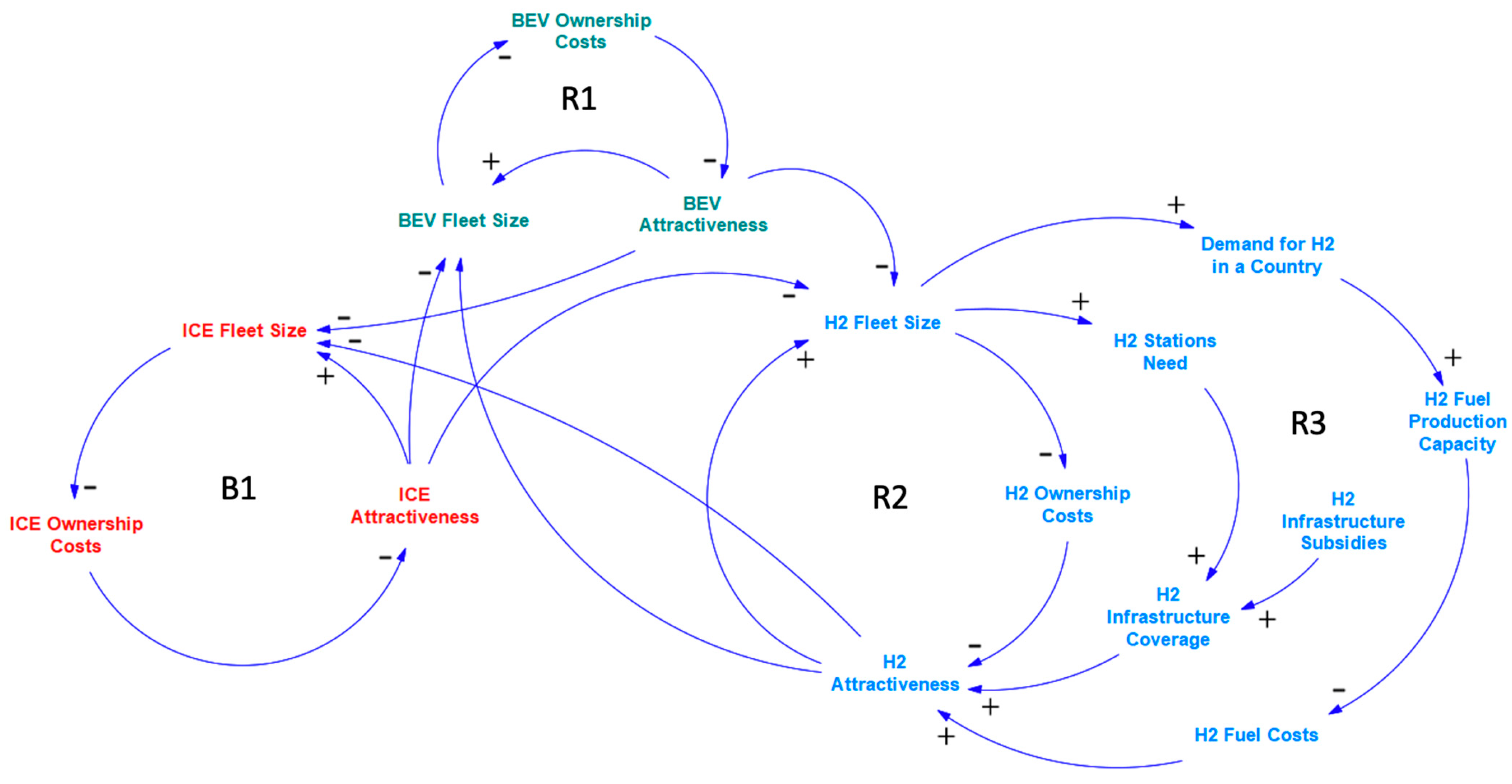
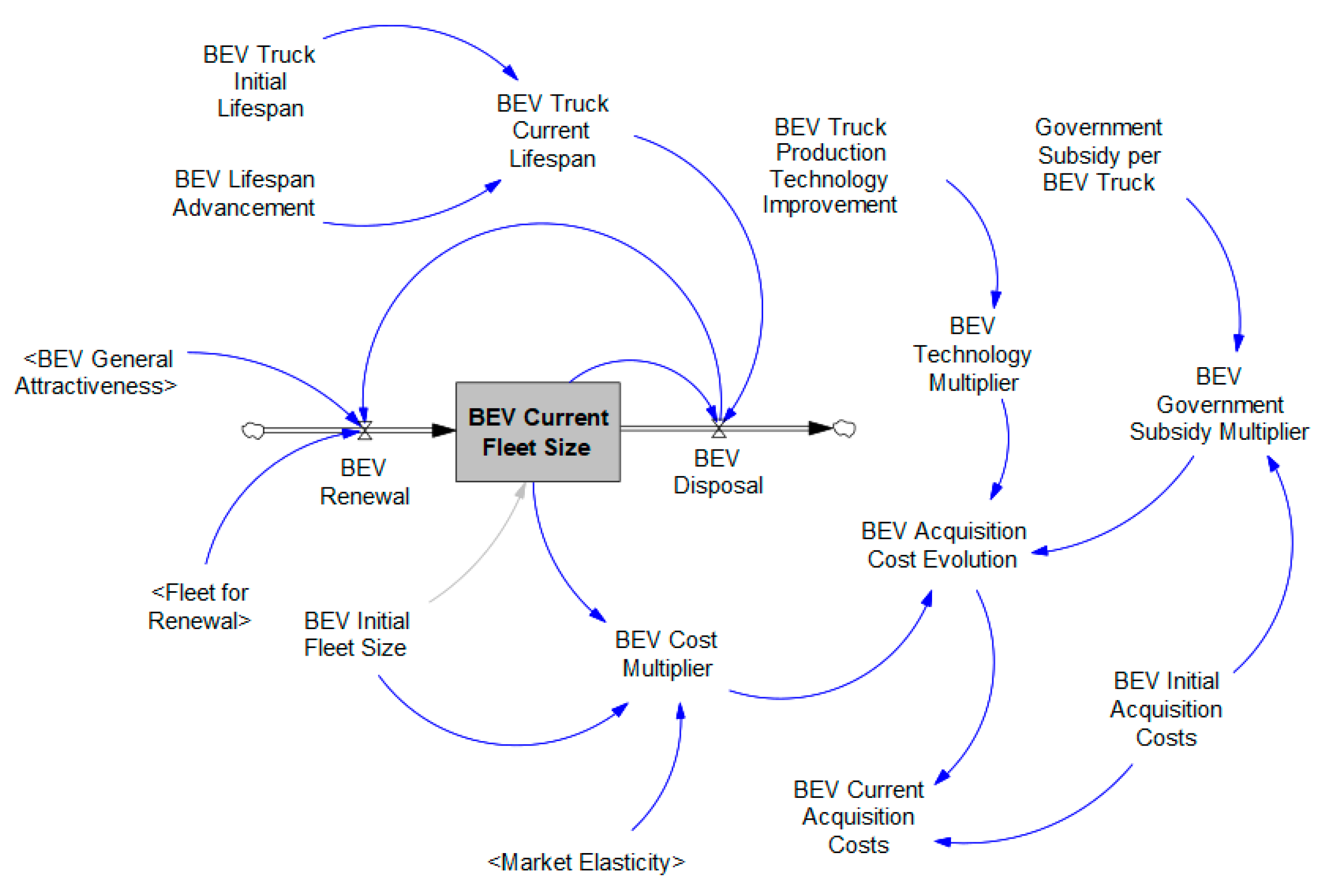
- Reinforcing innovation loops—R1 and R2, as shown in Figure 1 (for BEVs and H2). In small economies, these loops depend heavily on external technological progress and government subsidies, as domestic fleet volumes are insufficient to generate strong cost reductions on their own.
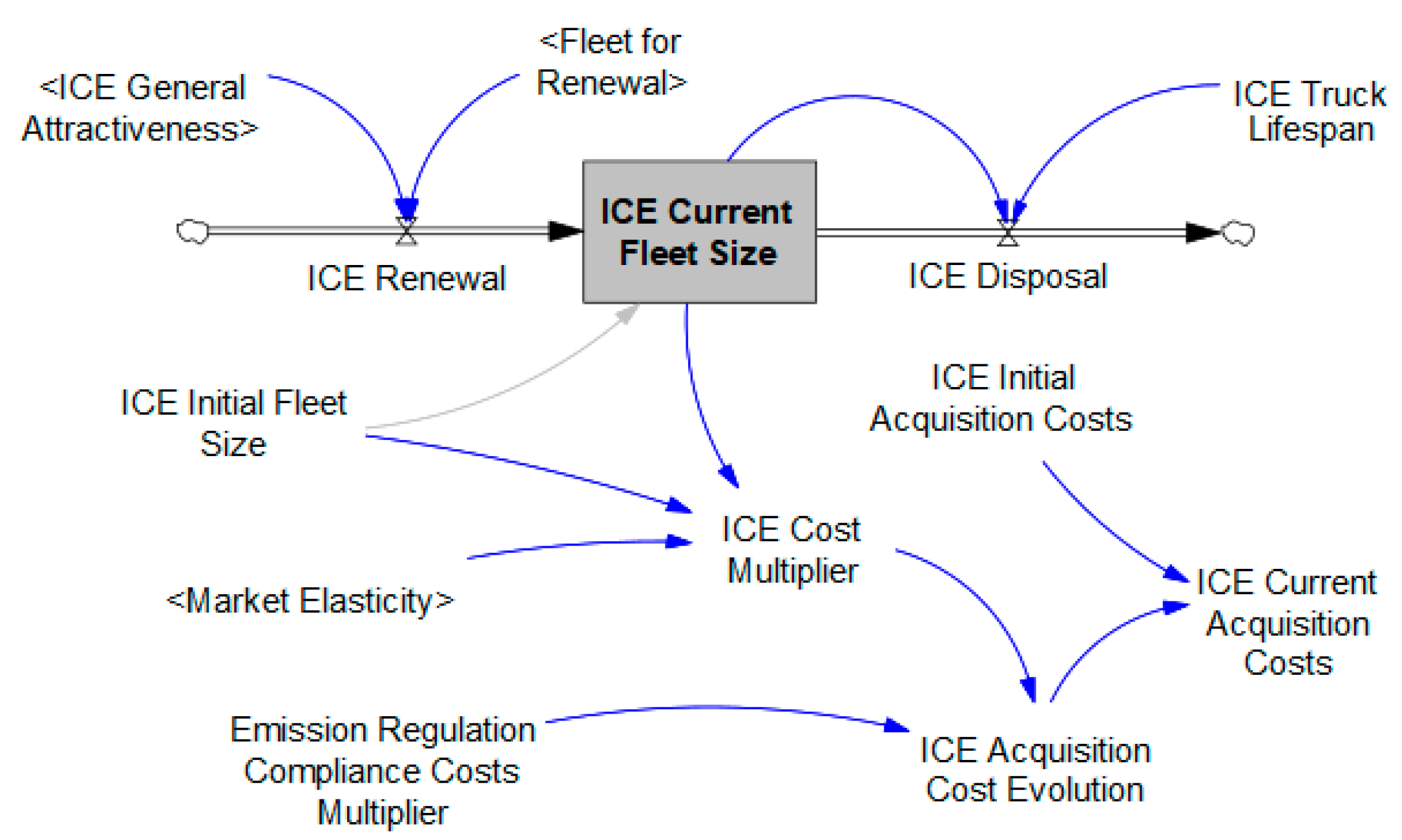
- Balancing legacy loop—B1 (for ICE). Compliance costs and shrinking support infrastructure increase ICE ownership costs more quickly in small markets.
- Infrastructure constraint loop—R3 (for H2). Infrastructure rollout is disproportionately expensive in small economies, and insufficient coverage rapidly undermines hydrogen’s attractiveness.
3.2.1. Sub-Models: Fleet Renewal and Acquisition
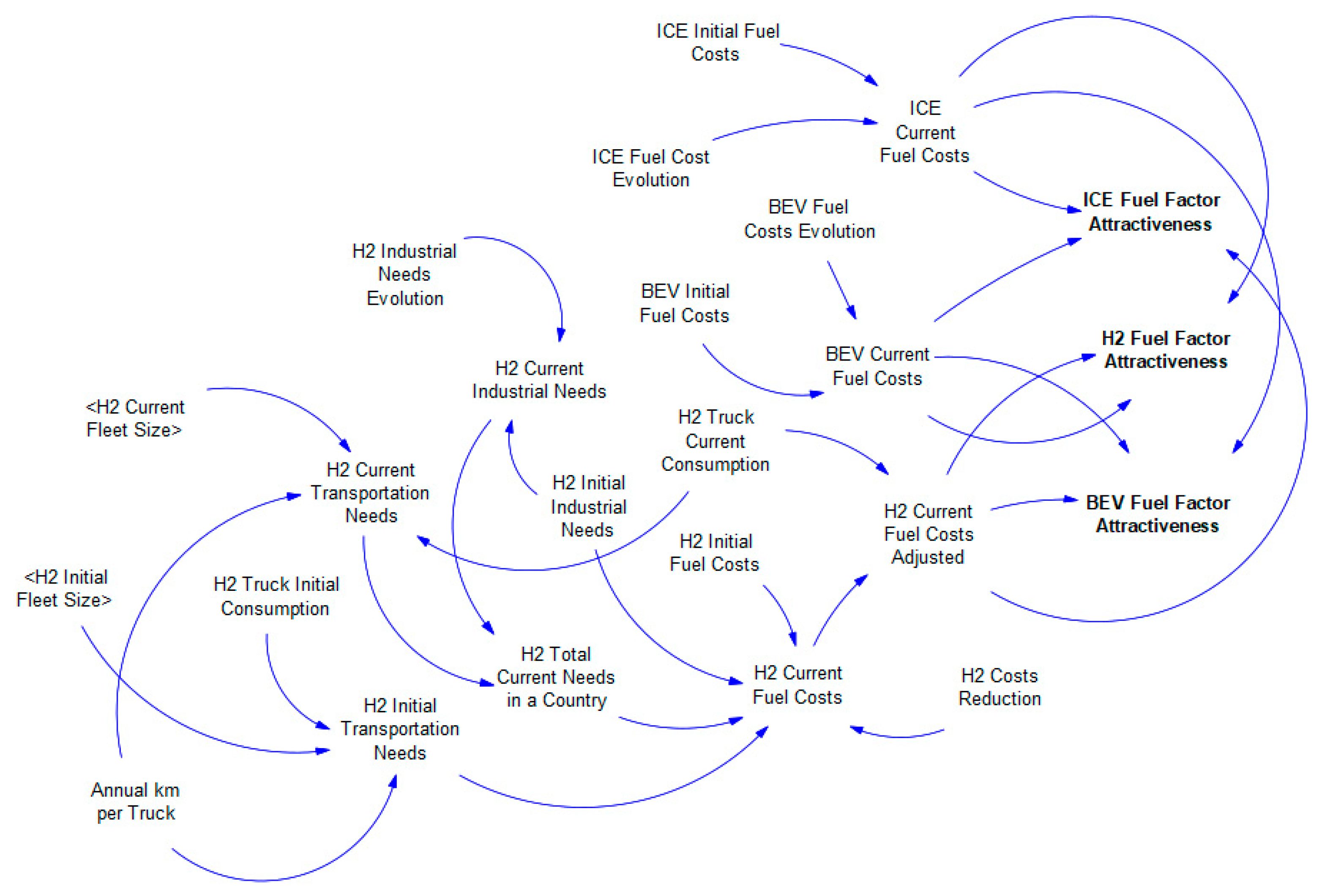
3.2.2. Sub-Model: Fuel-Factor Attractiveness
3.2.3. Sub-Model: Maintenance Factor Attractiveness
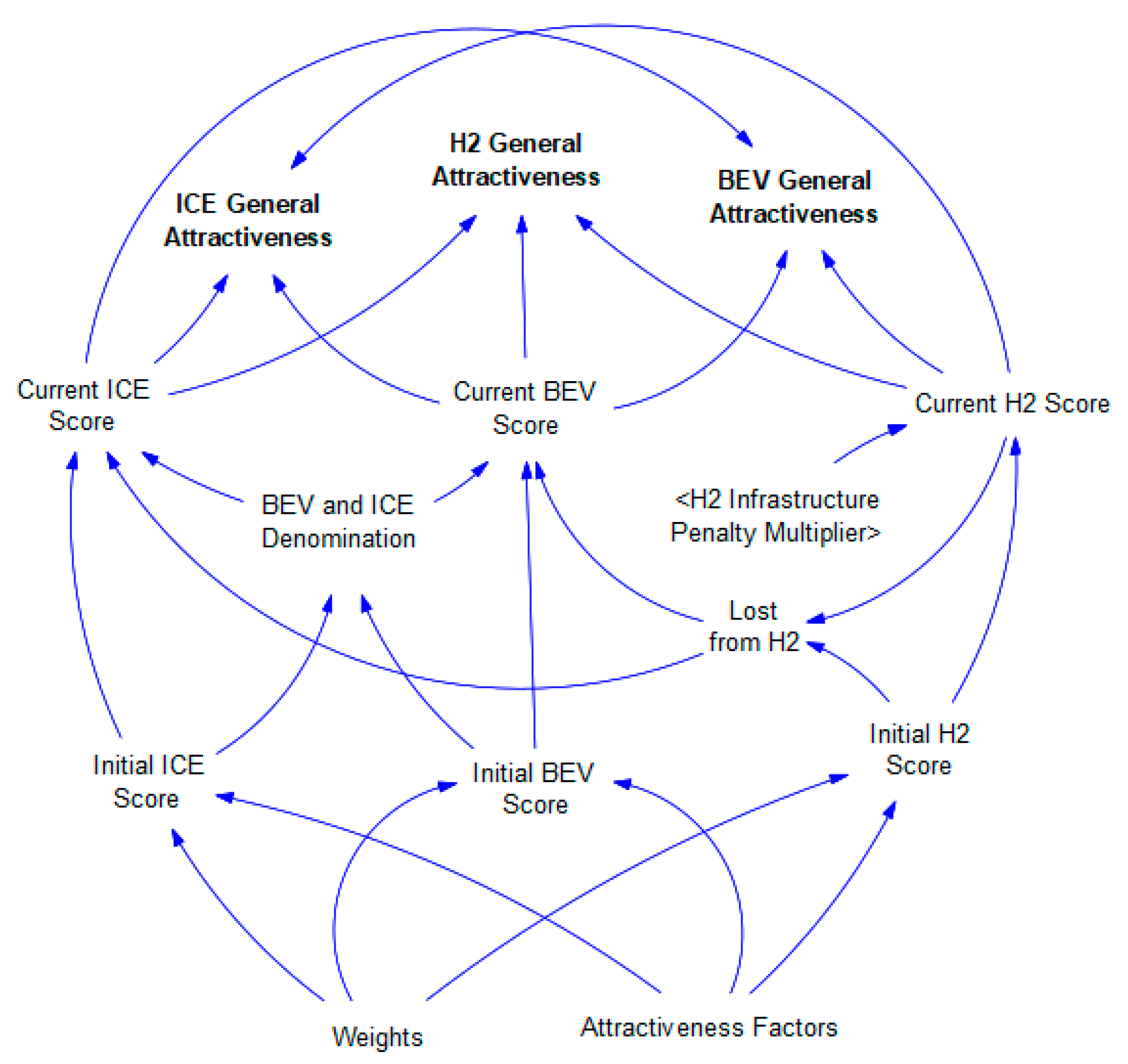
3.2.4. Sub-Model: General Attractiveness
4. Scenario Simulations
4.1. Fixed Variables
4.2. Simulation Variables
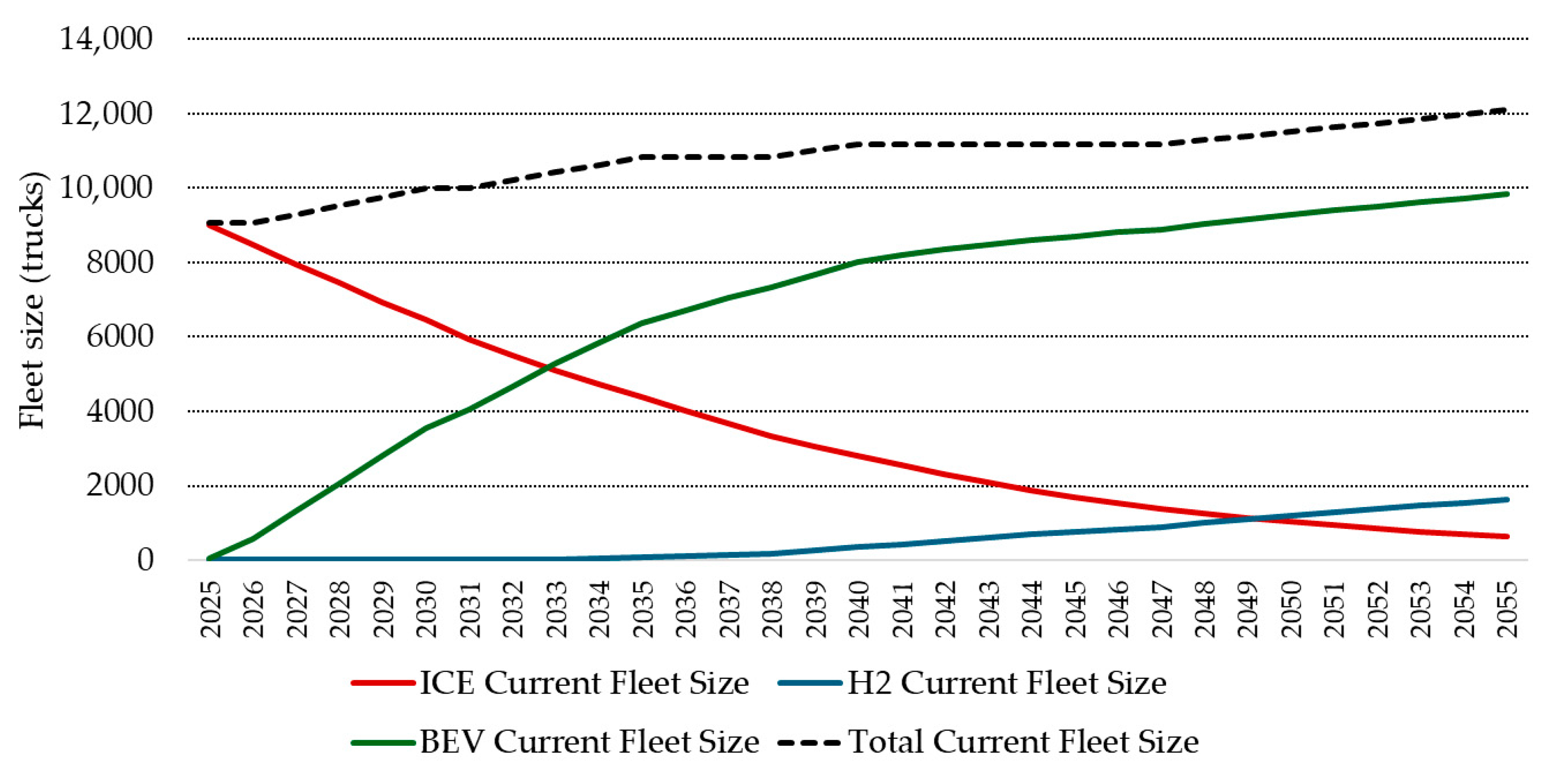
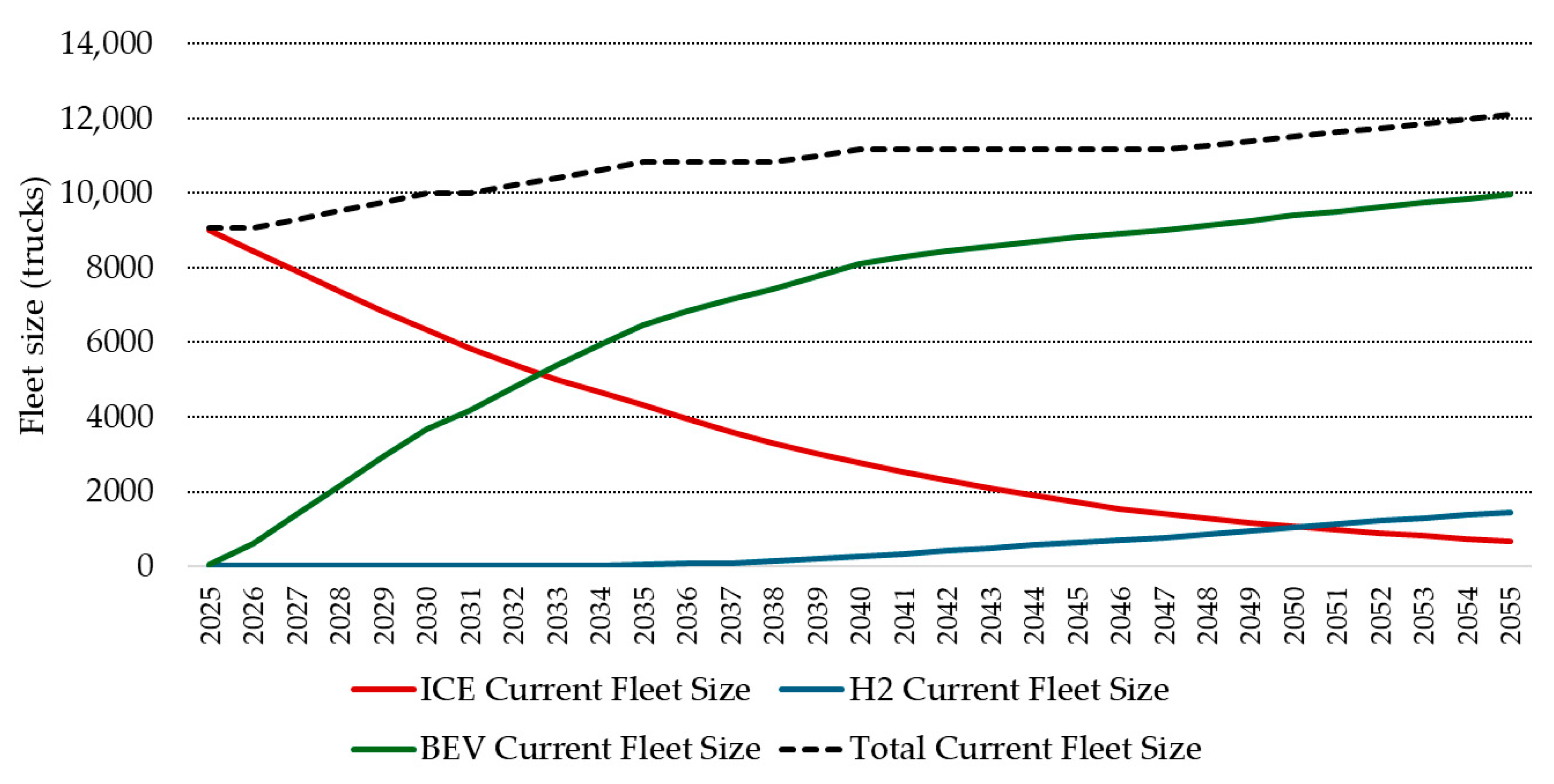
4.3. Simulation Results
4.4. Sensitivity Analysis
5. Conclusions
- Based on the literature review, H2 vehicles offer distinct advantages in range, payload, and rapid refueling, which make them particularly suitable for heavy-duty, long-haul, and energy-intensive operations. However, hydrogen adoption faces persistent barriers, including high acquisition costs, immature refueling infrastructure, and competition with BEVs, which have faster technological maturity and declining costs. Government intervention, research support, and coordinated infrastructure deployment consistently emerge as decisive factors shaping hydrogen’s competitiveness.
- The expert interviews confirmed that in Latvia and the broader Baltic region, hydrogen technology in transport is still in its earliest stages, with production facilities underutilized and outdated equipment in operation. Experts highlighted the lack of clarity on whether to prioritize supply or demand, leading to hesitation in investment. They emphasized the importance of pilot projects, cross-sector cooperation, and clear policy incentives, including tax reductions and stricter CO2 penalties for fossil fuels. Importantly, experts stressed that hydrogen infrastructure must serve multiple sectors to be viable and that efficiency in utilization (minimizing idle capacity) will be essential in small economies.
- The analysis shows that in small economies, hydrogen adoption requires conditions that differ substantially from those of larger markets. Small fleet sizes and limited fiscal capacity make infrastructure disproportionately costly, and subsidies cannot be maintained indefinitely. As a result, hydrogen can only succeed if infrastructure is planned in a coordinated manner, serving both transport and industrial sectors to generate economies of scale. Industrial hydrogen demand thus becomes a critical enabler for lowering costs and justifying infrastructure rollout.
- At present, BEVs remain more favorable in small economies, largely due to their lower entry costs, wider technological maturity, and simpler charging infrastructure. This finding is consistent with the broader literature and simulation results. In markets with limited fleets, BEV adoption benefits from global cost trends and requires fewer dedicated national investments compared to hydrogen. This explains why BEVs are structurally more attractive in smaller markets, where economies of scale for hydrogen are harder to achieve.
- For hydrogen to play a meaningful role, several conditions must change. These include strong, sustained government subsidies in the early phases, accelerated and coordinated deployment of refueling stations, and policies that link transport hydrogen demand with industrial applications. Updating CO2 accounting methods to reflect full “well-to-wheel” impacts and implementing stronger carbon penalties for ICEs are also necessary to shift competitiveness. Without these measures, hydrogen risks remain marginal in small economies.
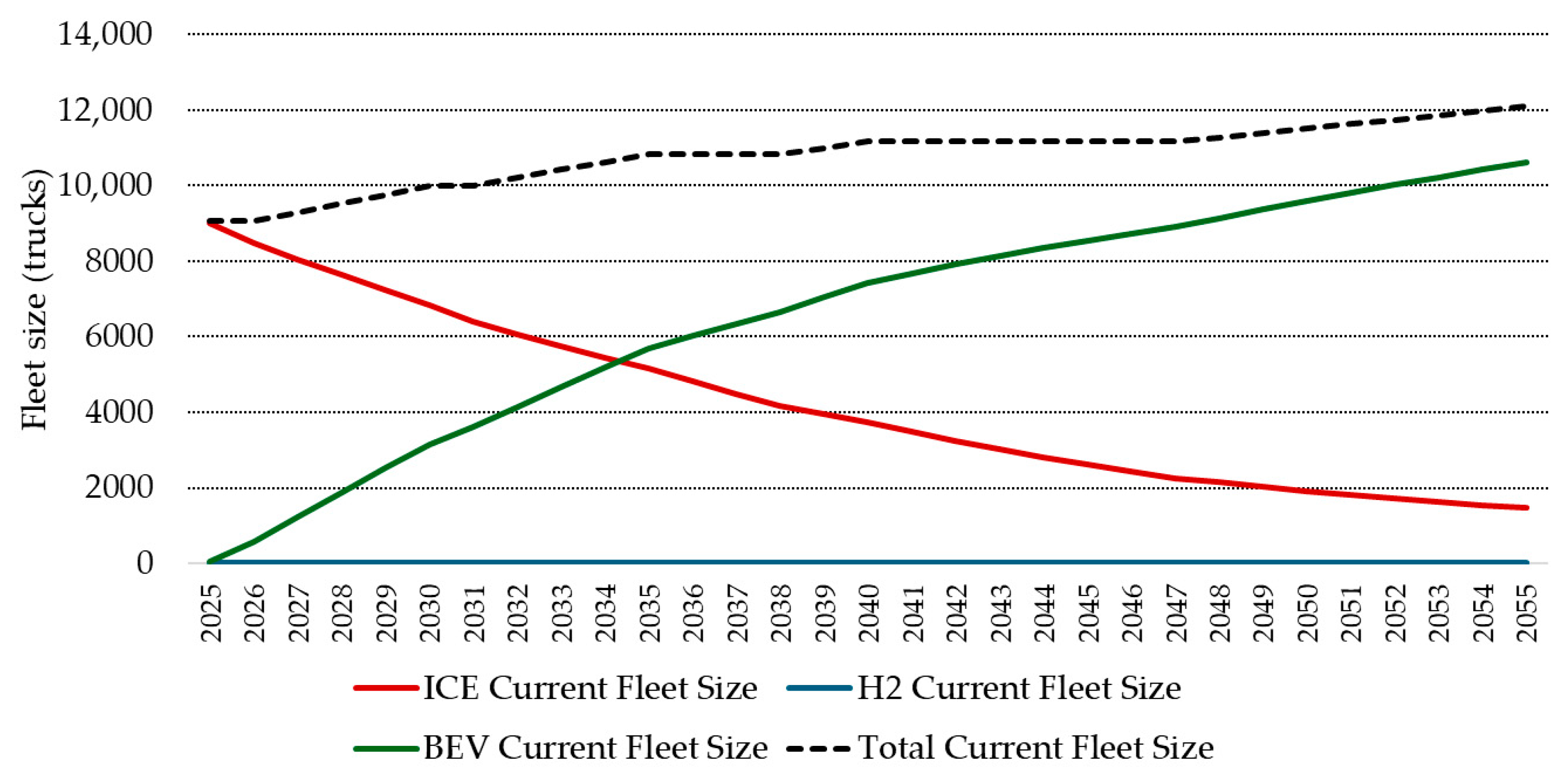
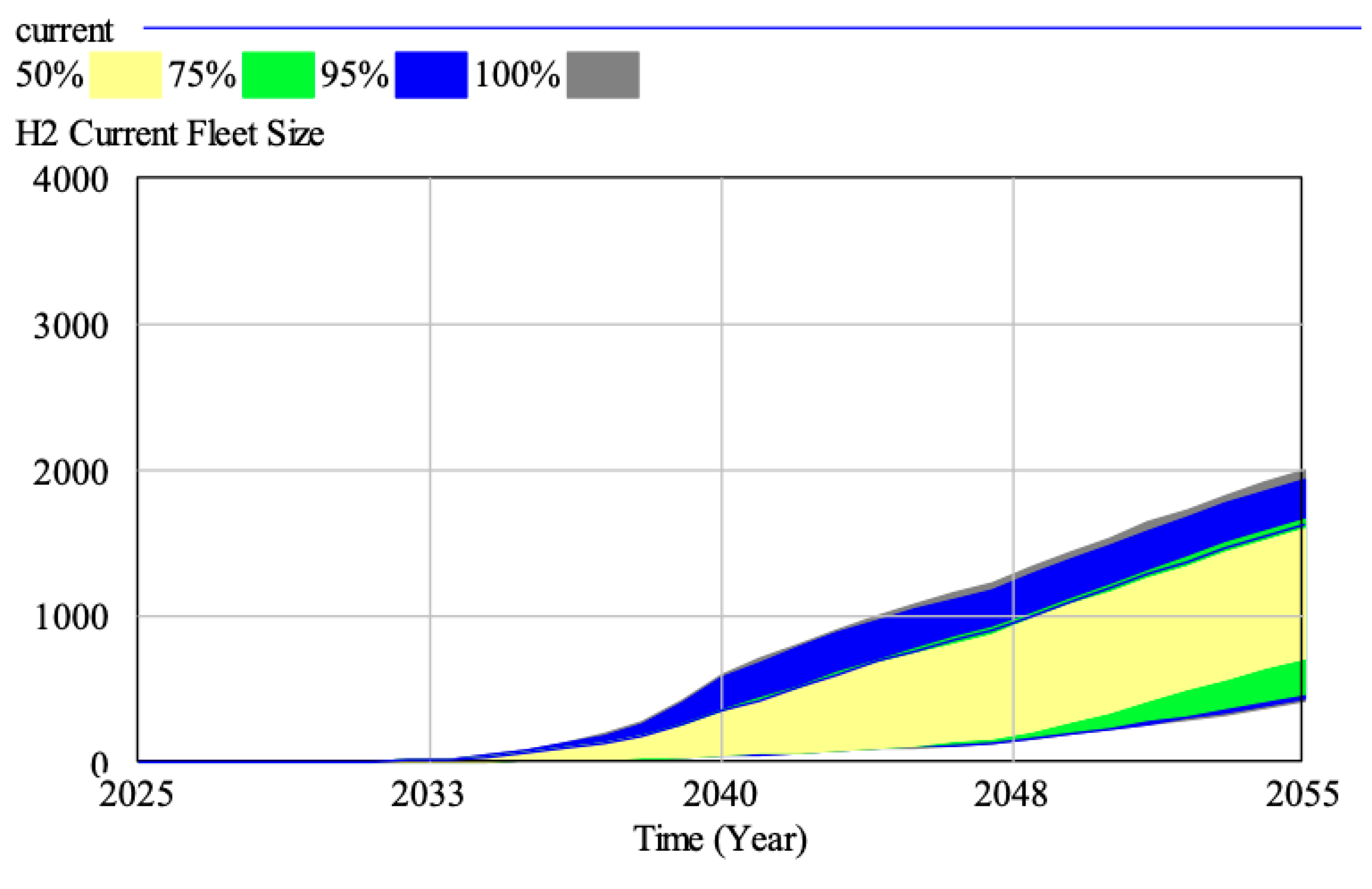
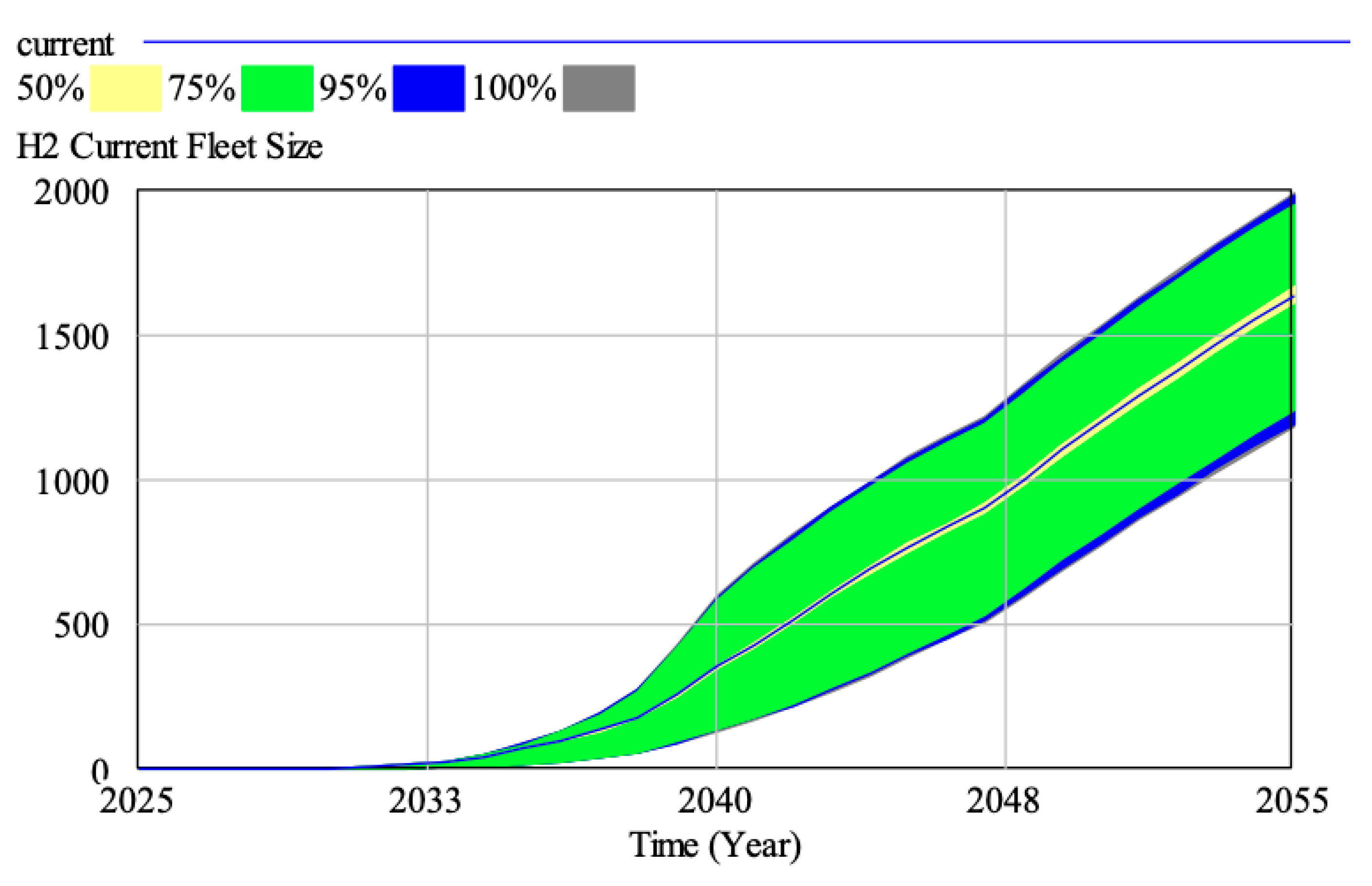
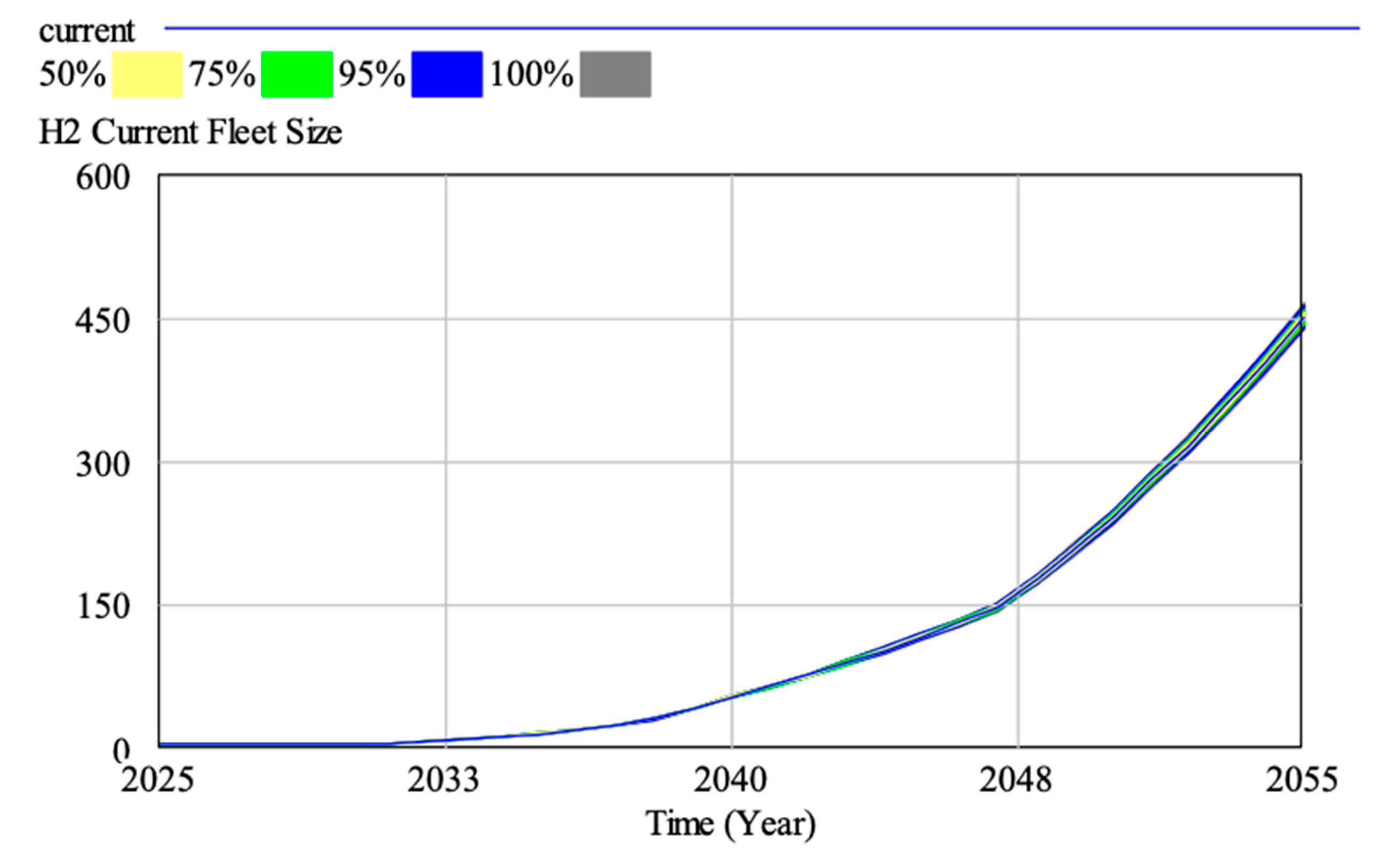
- Simulation results confirm that the intensity and continuity of policy intervention determine transition outcomes. In a market-led scenario with weak support, BEVs dominate, and hydrogen adoption stagnates. A balanced policy mix allows both BEVs and hydrogen to coexist, while an ambitious hydrogen-focused strategy (combining subsidies, infrastructure rollout, and industrial demand growth) can make hydrogen a co-dominant technology.
Author Contributions
Funding
Institutional Review Board Statement
Informed Consent Statement
Data Availability Statement
Conflicts of Interest
Abbreviations
| ABM | Agent-based modeling |
| AHP | Analytic hierarchy process |
| BEV | Battery electric vehicle |
| CCS | Capture and storage |
| EU | European Union |
| GHG | Greenhouse gas |
| H2 | Hydrogen fuel cell vehicles |
| HRS | Hydrogen refueling stations |
| ICE | Internal combustion engine |
| MILP | Mixed-integer linear programming |
| NSGA-III | Nondominated sorting genetic algorithm III |
| NAT | Norm activation theory |
| SMR | Steam methane reforming |
| TOPSIS | Technique for order preference by similarity to ideal solution |
| TPB | Theory of planned behavior |
References
- Bicer, Y.; Dincer, I. Life cycle environmental impact assessments and comparisons of alternative fuels for clean vehicles. Resour. Conserv. Recycl. 2018, 132, 141–157. [Google Scholar] [CrossRef]
- Lee, D.; Elgowainy, A.; Kotz, A.; Vijayagopal, R.; Marcinkoski, J. Life-cycle implications of hydrogen fuel cell electric vehicle technology for medium- and heavy-duty trucks. J. Power Sources 2018, 393, 217–229. [Google Scholar] [CrossRef]
- Li, J. The Analysis of Government Policies for Hydrogen Fuel Cell. Highlights Sci. Eng. Technol. 2023, 73, 165–168. [Google Scholar] [CrossRef]
- Jiang, C.; Wang, Y.; Yang, Z.; Zhao, Y. Do adaptive policy adjustments deliver ecosystem-agriculture-economy co-benefits in land degradation neutrality efforts? Evidence from southeast coast of China. Environ. Monit. Assess. 2023, 195, 1215. [Google Scholar] [CrossRef] [PubMed]
- Meyer, P.; Winebrake, J.J. Modeling technology diffusion of complementary goods: The case of hydrogen vehicles and refueling infrastructure. Technol. Forecast. Soc. Change 2009, 76, 1105–1114. [Google Scholar] [CrossRef]
- Ajanovic, A.; Haas, R. Prospects and impediments for hydrogen and fuel cell vehicles in the transport sector. Int. J. Hydrogen Energy 2021, 46, 10049–10058. [Google Scholar] [CrossRef]
- Albatayneh, A.; Juaidi, A.; Jaradat, M.; Manzano-Agugliaro, F. Future of Electric and Hydrogen Cars and Trucks: An Overview. Energies 2023, 16, 3230. [Google Scholar] [CrossRef]
- Lahnaoui, A.; Wulf, C.; Heinrichs, H.; Dalmazzone, D. Optimizing hydrogen transportation system for mobility via compressed hydrogen trucks. Int. J. Hydrogen Energy 2019, 44, 19302–19312. [Google Scholar] [CrossRef]
- Soleimani, A.; Dolatabadi, S.H.H.; Heidari, M.; Pinnarelli, A.; Khorrami, B.M.; Luo, Y.; Vizza, P.; Brusco, G. Progress in Hydrogen Fuel Cell Vehicles and Up-And-Coming Technologies for Eco-Friendly Transportation: An International Assessment. Multiscale Multidiscip. Model. Exp. Des. 2024, 7, 3153–3172. [Google Scholar] [CrossRef]
- Boretti, A. Hydrogen Internal Combustion Engines to 2030. Int. J. Hydrogen Energy 2020, 45, 23692–23703. [Google Scholar] [CrossRef]
- Cullen, D.A.; Neyerlin, K.C.; Ahluwalia, R.K.; Mukundan, R.; More, K.L.; Borup, R.L.; Weber, A.Z.; Myers, D.J.; Kusoglu, A. New Roads and Challenges for Fuel Cells in Heavy-Duty Transportation. Nat. Energy 2021, 6, 462–474. [Google Scholar] [CrossRef]
- Salek, F.; Abouelkhair, E.; Babaie, M.; Cunliffe, F.; Nock, W. Multi-Objective Optimization of the Fuel Cell Hybrid Electric Powertrain for a Class 8 Heavy-Duty Truck. SAE Tech. Pap. 2023, 2023-01-0473, 1–10. [Google Scholar] [CrossRef]
- Mao, J.; Zhang, G.; Ling, Z.; Yuan, D.; Liu, M.; Xu, J. Potentials of Mixed-Integer Linear Programming (MILP)-Based Optimization for Low-Carbon Hydrogen Production and Development Pathways in China. Energies 2024, 17, 1694. [Google Scholar] [CrossRef]
- Jensen, S.H.; Larsen, P.H.; Mogensen, M. Hydrogen and Synthetic Fuel Production from Renewable Energy Sources. Int. J. Hydrogen Energy 2007, 32, 3253–3257. [Google Scholar] [CrossRef]
- Glenk, G.; Reichelstein, S. Economics of converting renewable power to hydrogen. Nat. Energy 2019, 4, 216–222. [Google Scholar] [CrossRef]
- Hernández, B.; Alkayas, A.; Azar, E.; Mayyas, A.T. Mathematical model for the placement of hydrogen refueling stations to support future fuel cell trucks. IEEE Access 2021, 9, 148118–148134. [Google Scholar] [CrossRef]
- Yaïci, W.; Longo, M. Hydrogen Gas Refueling Infrastructure for Heavy-Duty Trucks: A Feasibility Analysis. J. Energy Resour. Technol. 2022, 144, 070906. [Google Scholar] [CrossRef]
- Yaïci, W.; Longo, M. Feasibility Investigation of Hydrogen Refueling Infrastructure for Heavy-Duty Vehicles in Canada. Energies 2022, 15, 2848. [Google Scholar] [CrossRef]
- Apostolou, D.; Xydis, G. A literature review on hydrogen refueling stations and infrastructure. Current status and future prospects. Renew. Sustain. Energy Rev. 2019, 113, 109292. [Google Scholar] [CrossRef]
- Bai, W.; Zhang, L. How to Finance for Establishing Hydrogen Refueling Stations in China? An Analysis Based on Fuzzy AHP and PROMETHEE. Int. J. Hydrogen Energy 2020, 45, 34354–34370. [Google Scholar] [CrossRef]
- Sacchi, R.; Bauer, C.; Cox, B.L. Does Size Matter? The Influence of Size, Load Factor, Range Autonomy, and Application Type on the Life Cycle Assessment of Current and Future Medium- and Heavy-Duty Vehicles. Environ. Sci. Technol. 2021, 20, 5224–5235. [Google Scholar] [CrossRef] [PubMed]
- Zhou, Y.; Qin, X.; Mei, W.; Yang, W.; Ni, M. Multi-Period Urban Hydrogen Refueling Stations Site Selection and Capacity Planning with Many-Objective Optimization for Hydrogen Supply Chain. Int. J. Hydrogen Energy 2024, 79, 1427–1441. [Google Scholar] [CrossRef]
- Ball, M.; Wietschel, M.; Rentz, O. Integration of a hydrogen economy into the German energy system: An optimizing modelling approach. Int. J. Hydrogen Energy 2007, 32, 1355–1368. [Google Scholar] [CrossRef]
- Stangarone, T. South Korean efforts to transition to a hydrogen economy. Clean Technol. Environ. Policy 2021, 23, 509–516. [Google Scholar] [CrossRef]
- Çabukoglu, E.; Georges, G.; Küng, L.; Pareschi, G.; Boulouchos, K. Fuel cell electric vehicles: An option to decarbonize heavy-duty transport? Results from a Swiss case-study. Transp. Res. Part D Transp. Environ. 2019, 70, 35–48. [Google Scholar] [CrossRef]
- Dou, Z.; Ye, Z.; Zhang, C.; Liu, H. Development and process simulation of a biomass driven SOFC-based electricity and ammonia production plant using green hydrogen; AI-based machine learning-assisted tri-objective optimization. Int. J. Hydrogen Energy 2025, 133, 440–457. [Google Scholar] [CrossRef]
- Meng, Q.; Zu, G.; Ge, L.; Li, S.; Xu, L.; Wang, R.; Jin, S. Dispatching Strategy for Low-Carbon Flexible Operation of Park-Level Integrated Energy System. Appl. Sci. 2022, 12, 12309. [Google Scholar] [CrossRef]
- Song, M.; Zhang, Y.; Li, M.; Zhang, Y. Accessibility of Transit Stops with Multiple Feeder Modes: Walking and Private-Bike Cycling. Sustainability 2021, 13, 3522. [Google Scholar] [CrossRef]
- Ahn, K.; Rakha, H.A. Developing a hydrogen fuel cell vehicle (HFCV) energy consumption model for transportation applications. Energies 2022, 15, 529. [Google Scholar] [CrossRef]
- Erdoğan, B.; Alkayas, A.; Azar, E.; Mayyas, A.T. Design of a future hydrogen supply chain: A multi-objective model for Turkey. Int. J. Hydrogen Energy 2023, 48, 5421–5438. [Google Scholar] [CrossRef]
- Li, L.; Manier, H.; Manier, M.-A. Integrated Optimization Model for Hydrogen Supply Chain Network Design and Hydrogen Fueling Station Planning. Comput. Chem. Eng. 2020, 134, 106683. [Google Scholar] [CrossRef]
- Moreno-Benito, M.; Agnolucci, P.; Papageorgiou, L.G. Towards a sustainable hydrogen economy: Optimization-based framework for hydrogen infrastructure development. Comput. Chem. Eng. 2017, 102, 110–127. [Google Scholar] [CrossRef]
- Noor Imanina, N.H.; Lu, T.K.; Fadhilah, A.R. A proposed model of factors influencing hydrogen fuel cell vehicle acceptance. IOP Conf. Ser. Earth Environ. Sci. 2016, 32, 012052. [Google Scholar] [CrossRef]
- Park, S.Y.; Kim, J.W.; Lee, D.H. Development of a Market Penetration Forecasting Model for Hydrogen Fuel Cell Vehicles Considering Infrastructure and Cost Reduction Effects. Energy Policy 2011, 39, 3307–3315. [Google Scholar] [CrossRef]
- Schwoon, M. Simulating the adoption of fuel cell vehicles. J. Evol. Econ. 2006, 16, 435–472. [Google Scholar] [CrossRef]
- Zhang, W.; Zhanguo, S.; Abdulwahab, A.; Saleem, S.; Yao, Y.; Deifalla, A.; Taghavi, M. Comparison of Gasoline and Hydrogen Pathways in Order to Reduce the Environmental Hazards of a Solar-Hydrogen Refueling Station: Evaluation Based on Life Cycle Cost and Well-To-Wheel Models. Process Saf. Environ. Prot. 2023, 173, 317–331. [Google Scholar] [CrossRef]
- International Council on Clean Transportation (ICCT). Total Cost of Ownership for Tractor-Trailers in Europe: Battery Electric Versus Diesel. 2021. Available online: https://theicct.org/wp-content/uploads/2021/11/tco-bets-europe-1-nov21.pdf (accessed on 12 September 2025).
- International Council on Clean Transportation (ICCT). Fuel-Cell Hydrogen Long-Haul Trucks in Europe: A Total Cost of Ownership Analysis. 2022. Available online: https://theicct.org/wp-content/uploads/2022/09/eu-hvs-fuels-evs-fuel-cell-hdvs-europe-sep22.pdf (accessed on 12 September 2025).
- ECG Business Intelligence. On Costs for Electric Trucks: The Realities of Going Green for Europe’s FVL Trucks; European Association of Automotive Logistics: Brussels, Belgium, 2022; Available online: https://www.ecgassociation.eu/wp-content/uploads/2022/04/ECG-Business-Intelligence-22.04-Cost-of-going-electric.pdf (accessed on 12 September 2025).
- Vidzeme Planning Region. Final Report: Planning and Deployment of Hydrogen Refuelling Stations in Latvia [PDF]. Valmiera: Vidzeme Planning Region. 2024. Available online: https://www.vidzeme.lv/wp-content/uploads/2024/12/20241104-Final-report-ENG.pdf (accessed on 12 September 2025).
- Latvian State Roads. Roads in Latvia [Statistical Overview]. Latvijas Valsts Ceļi. 2023. Available online: https://lad.lv/EN/?i=15 (accessed on 12 September 2025).
- European Commission. Monitoring of CO2 Emissions from Heavy-Duty Vehicles (VECTO Framework); European Commission: Brussels, Belgium, 2020. [Google Scholar]
- International Council on Clean Transportation (ICCT). A Meta-Study of Purchase Costs for Zero-Emission Trucks. 2022. Available online: https://theicct.org/publication/purchase-cost-ze-trucks-feb22/ (accessed on 12 September 2025).
- Central Statistical Bureau of Latvia (CSB). Road Freight Transport Statistics; CSB: Riga, Latvia, 2023. Available online: https://stat.gov.lv (accessed on 12 September 2025).
- Latvian Road Transport Directorate (LRVK). Annual Report 2020. 2020. Available online: https://lrvk.gov.lv/uploads/files/Dokumenti/Par%20mums/Gadap%C4%81rskati/P%C4%81rskati%20ENG/2020.pdf (accessed on 12 September 2025).
- European Alternative Fuels Observatory. Vehicles and Fleet—Latvia. Available online: https://alternative-fuels-observatory.ec.europa.eu/transport-mode/road/latvia/vehicles-and-fleet (accessed on 12 September 2025).
- Clean Hydrogen Observatory. Hydrogen Refuelling Infrastructure and AFIR Requirements. Brussels: European Commission. 2023. Available online: https://www.clean-hydrogen.europa.eu (accessed on 12 September 2025).








| Num. | Variables | Units | Base Value | Explanation and Source |
|---|---|---|---|---|
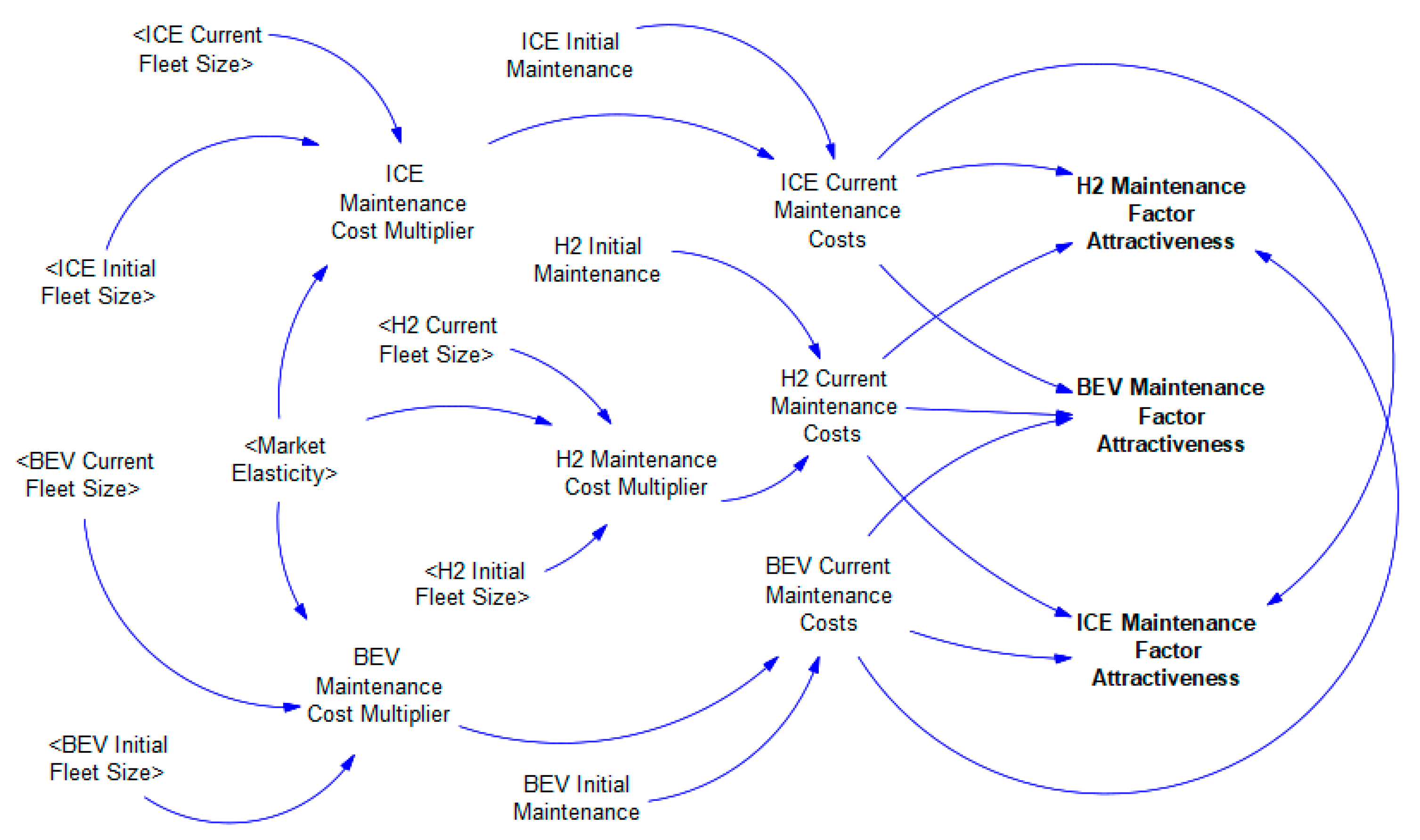
| 1 | ICE Initial Maintenance | EUR/truck per year | 15,000 | Annual maintenance of heavy ICE truck [37]. |
| 2 | H2 Initial Maintenance | EUR/truck per year | 20,000 | Annual maintenance of heavy H2 truck [38]. |
| 3 | BEV Initial Maintenance | EUR/truck per year | 12,000 | Annual maintenance of heavy BEV truck [39]. |
| 4 | BEV Lifespan Advancement | Years | 0.2 | Relative improvement over time of BEV trucks [37]. |
| 5 | BEV Truck Production Technology Improvement | Percent | 3–5% | Reflects gradual manufacturing efficiency gains of BEV trucks [37]. |
| 6 | BEV Initial Acquisition Costs | EUR/truck | 350,000 | Market value of heavy BEV truck [38]. |
| 7 | ICE Initial Acquisition Costs | EUR/truck | 120,000 | Market value of heavy ICE truck [37]. |
| 8 | H2 Initial Acquisition Costs | EUR/truck | 450,000 | Market value of heavy H2 truck [38]. |
| 9 | H2 Station Build Time | Years | 2 | Typical permitting and construction lag of a station [40]. |
| 10 | Road Coverage Advancement | Kilometers | 500 | Estimated as 0.5% of year-over-year increase for modeling purposes based on current road coverage [41]. |
| 11 | Emission Regulation Compliance Costs Multiplier | Percent | 15–40% | Adopted for modeling purposes to demonstrate gradual changes from +15% until 2030 to +40% after 2040 [42]. |
| 12 | H2 Truck Production Technology Improvement | Percent | 3–5% | Adopted for modeling purposes to demonstrate gradual changes from 5% until 2030 to 3% after 2040 [43]. |
| 13 | Fleet Size Growth | Percent | 1–2.5% | Adopted for modeling purposes to demonstrate gradual changes from 2.5% until 2030 to 1% after 2040 [44]. |
| 14 | ICE Initial Fleet Size | Trucks | 9000 | Registered heavy ICE trucks in a country, estimated for domestic usage purposes [45]. |
| 15 | BEV Initial Fleet Size | Trucks | 50 | Registered heavy BEV trucks in a country, estimated for domestic usage purposes [46]. |
| 16 | H2 Initial Fleet Size | Trucks | 5 | Registered heavy H2 trucks in a country, estimated for domestic usage purposes [40]. |
| 17 | H2 Fuel Stations Initial Quantity | Stations | 1 | Initial number of stations in a country [47]. |
| Num. | Variables | Units | Simulation Range | Explanation |
|---|---|---|---|---|
| 1 | Government Subsidy per BEV Truck | EUR/truck | 0–150,000 | One-time purchase subsidy. Gradual changes starting from higher amount until 2030 to no subsidy after 2040. |
| 2 | Government Subsidy per H2 Truck | EUR/truck | 0–150,000 | One-time purchase subsidy. Gradual changes starting from higher amount until 2030 to no subsidy after 2040. |
| 3 | H2 Fueling Station Government Subsidy per Year | Million EUR | 1–6 | Gradual changes starting from higher amount until 2030 to no subsidy after 2040 |
| 4 | H2 Fueling Station Private Co-funding | Million EUR | 1–6 | Annual private investments. |
| 5 | H2 Industrial Needs Evolution | Percent | 2–10% | Gradual changes starting from lower increase until 2030 to higher increase after 2040. |
| 6 | H2 Costs Reduction | Percent | 10–25% | Assumed cost drop per cumulative doubling of demand for H2. |
| 7 | Weight Acquisition | Index | 0–1 | Relative importance in attractiveness. Proportion changes over the years. |
| 8 | Weight Maintenance | Index | 0–1 | Relative importance in attractiveness. Proportion changes over the years. |
| 9 | Weight Fuel | Index | 0–1 | Relative importance in attractiveness. Proportion changes over the years. |
| 10 | Market Elasticity | Index | 0.1–0.5 | Indicates how sensitive costs are to changes in fleet size. |
| Num. | Variables | H2-Favorable Scenario | Balanced Scenario | Market-Led Scenario |
|---|---|---|---|---|
| 1 | Government Subsidy per BEV Truck (EUR/truck) | 40,000/20,000/0/0 | 100,000/80,000/40,000/0 | 30,000/20,000/0/0 |
| 2 | Government Subsidy per H2 Truck (EUR/truck) | 120,000/100,000/80,000/60,000 | 120,000/100,000/60,000/40,000 | 60,000/40,000/20,000/0 |
| 3 | H2 Fueling Station Government Subsidy per Year (Million EUR) | 6/5/4/3 | 6/4/3/1 | 1/1/0.5/0 |
| 4 | H2 Fueling Station Private Co-funding (Million EUR) | 3.5 | 3 | 2 |
| 5 | H2 Industrial Needs Evolution (Index) | 0.04/0.05/0.06/0.08 | 0.02/0.04/0.06/0.08 | 0.02/0.03/0.04/0.06 |
| 6 | H2 Costs Reduction (Percent) | 25% | 20% | 12% |
| 7 | Weight Acquisition (Index) | 0.30/0.40/0.50/0.65 | 0.20/0.35/0.45/0.65 | 0.30/0.40/0.50/0.60 |
| 8 | Weight Maintenance (Index) | 0.40/0.35/0.30/0.20 | 0.50/0.40/0.35/0.20 | 0.40/0.35/0.30/0.25 |
| 9 | Weight Fuel (Index) | 0.30/0.25/0.20/0.15 | 0.30/0.25/0.20/0.15 | 0.30/0.25/0.20/0.15 |
| 10 | Market Elasticity (Index) | 0.40 | 0.35 | 0.15 |
Disclaimer/Publisher’s Note: The statements, opinions and data contained in all publications are solely those of the individual author(s) and contributor(s) and not of MDPI and/or the editor(s). MDPI and/or the editor(s) disclaim responsibility for any injury to people or property resulting from any ideas, methods, instructions or products referred to in the content. |
© 2025 by the authors. Licensee MDPI, Basel, Switzerland. This article is an open access article distributed under the terms and conditions of the Creative Commons Attribution (CC BY) license (https://creativecommons.org/licenses/by/4.0/).
Share and Cite
Kotlars, A.; Hudenko, J.; Jurgelane-Kaldava, I.; Stankevičienė, J.; Gailis, M.; Kukjans, I.; Batenko, A. Transitioning to Hydrogen Trucks in Small Economies: Policy, Infrastructure, and Innovation Dynamics. Sustainability 2025, 17, 11272. https://doi.org/10.3390/su172411272
Kotlars A, Hudenko J, Jurgelane-Kaldava I, Stankevičienė J, Gailis M, Kukjans I, Batenko A. Transitioning to Hydrogen Trucks in Small Economies: Policy, Infrastructure, and Innovation Dynamics. Sustainability. 2025; 17(24):11272. https://doi.org/10.3390/su172411272
Chicago/Turabian StyleKotlars, Aleksandrs, Justina Hudenko, Inguna Jurgelane-Kaldava, Jelena Stankevičienė, Maris Gailis, Igors Kukjans, and Agnese Batenko. 2025. "Transitioning to Hydrogen Trucks in Small Economies: Policy, Infrastructure, and Innovation Dynamics" Sustainability 17, no. 24: 11272. https://doi.org/10.3390/su172411272
APA StyleKotlars, A., Hudenko, J., Jurgelane-Kaldava, I., Stankevičienė, J., Gailis, M., Kukjans, I., & Batenko, A. (2025). Transitioning to Hydrogen Trucks in Small Economies: Policy, Infrastructure, and Innovation Dynamics. Sustainability, 17(24), 11272. https://doi.org/10.3390/su172411272