A Two-Stage Robust Casualty Evacuation Optimization Model for Sustainable Humanitarian Logistics Networks Under Interruption Risks




Abstract
1. Introduction
- How can temporary medical facilities be optimally located when casualty numbers are uncertain, so as to reduce the deprivation experienced by affected populations?
- How can evacuation strategies remain robust and efficient under potential facility interruptions, thereby mitigating deprivation caused by delays or rerouting?
- How does casualty triage—distinguishing between mild and severe injuries—shape evacuation decisions and influence overall rescue outcomes, particularly in terms of deprivation minimization?
- To the best of our knowledge, this is the first work that simultaneously models facility disruption risk and casualty demand uncertainty in a two-stage robust casualty evacuation framework;
- It is the first to explicitly incorporate and minimize deprivation costs that differ by injury severity (mild vs. serious);
- We design an exact column-and-constraint generation algorithm with valid inequalities that significantly outperforms standard methods.
2. Literature Review
2.1. Casualty Evacuation Considering Casualty Classification
2.2. Casualty Evacuation Considering Facility Location
2.3. Casualty Evacuation Considering Uncertainty
3. Model Construction
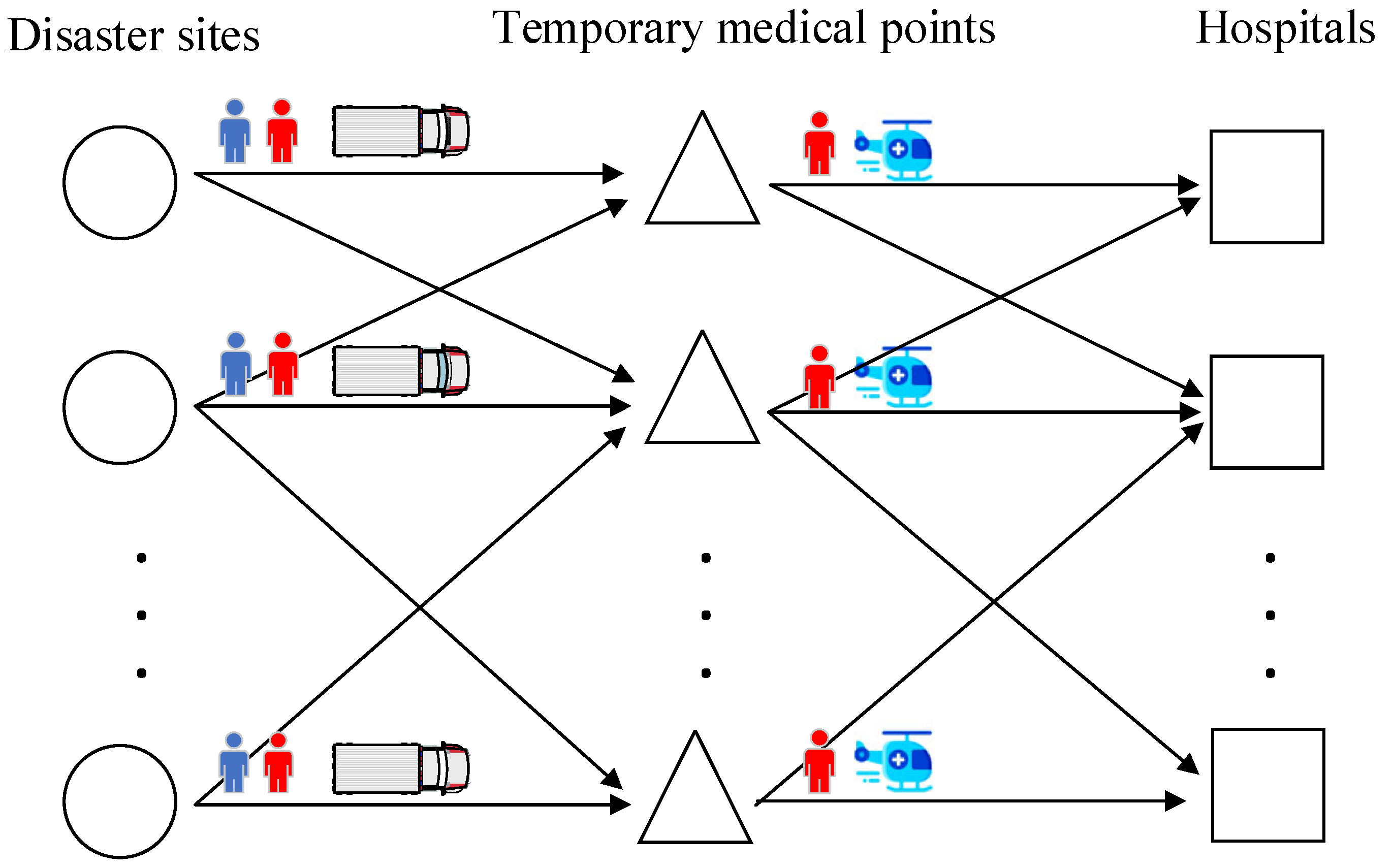
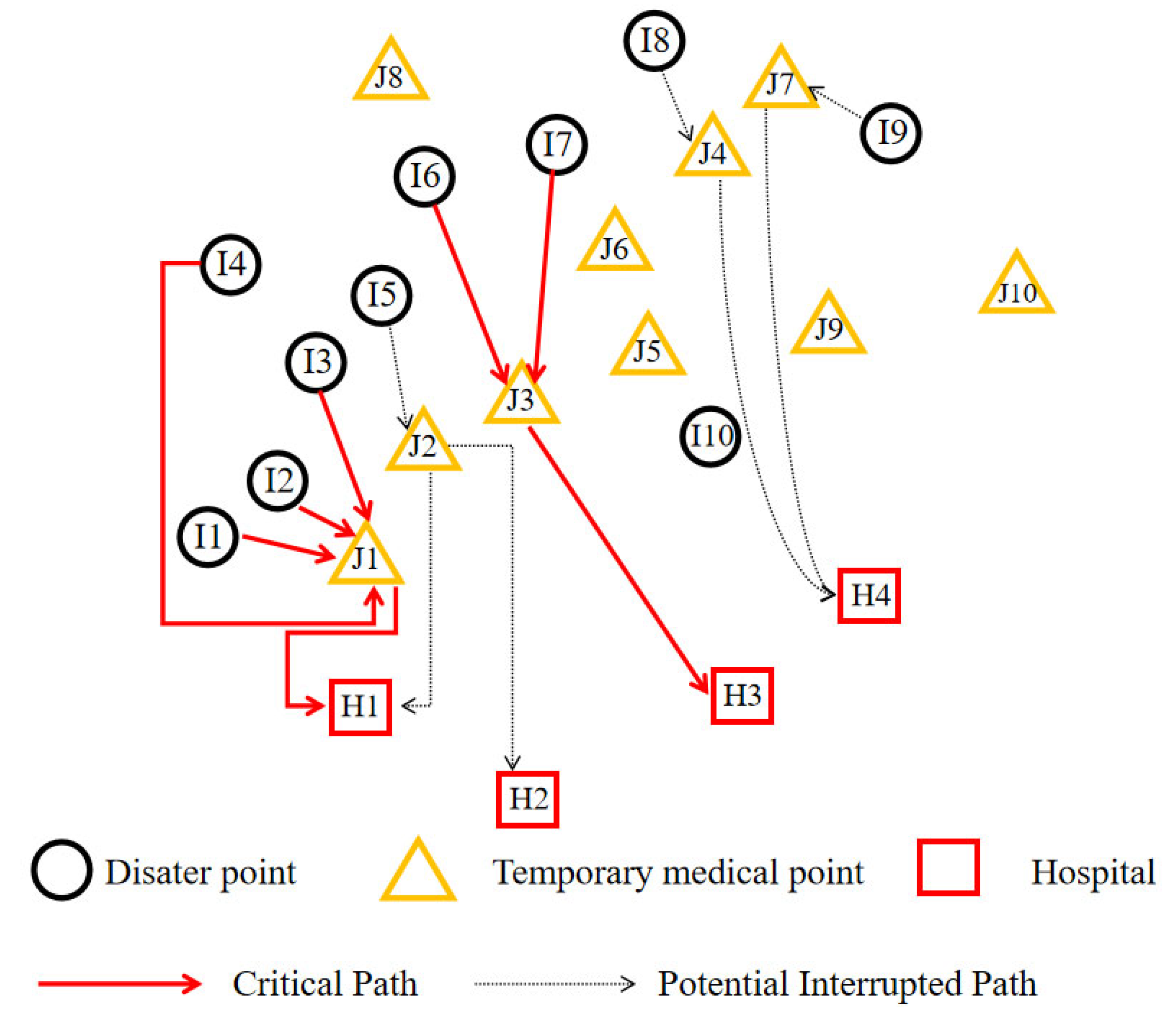
3.1. Problem Description
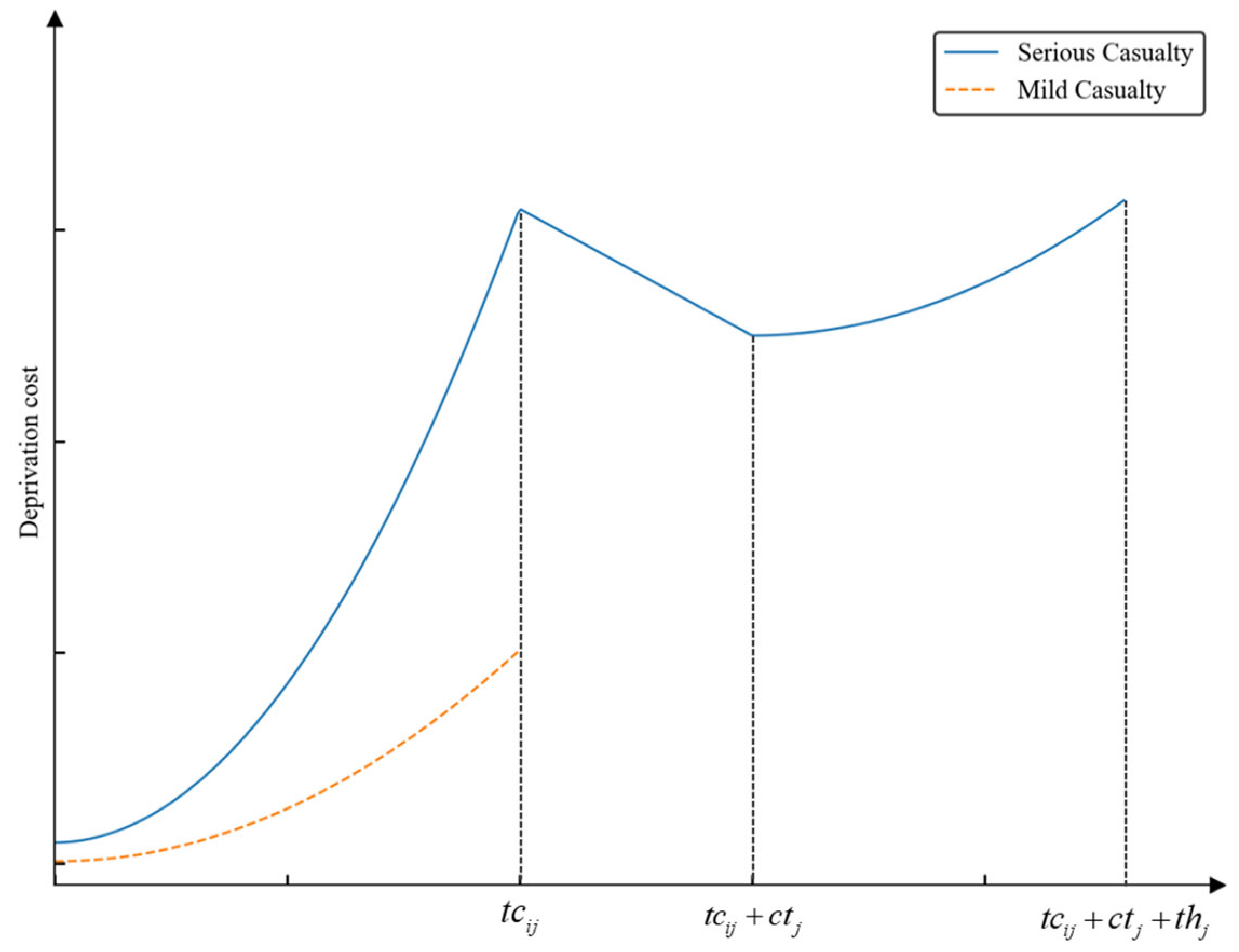
3.2. Deprivation Costs
3.3. Deterministic Model
- Fixed opening cost of temporary medical points and hospitals;
- Transportation cost;
- Deprivation cost of mild and serious casualties;
- Penalty for unevacuated casualties.
3.4. Construction of a Two-Stage Robust Optimization Model
3.4.1. Construction of the Uncertainty Set
- (1)
- Disruption Uncertainty
- (2)
- Casualty Number Uncertainty
3.4.2. Two-Stage Robust Optimization Model
4. C&CG Algorithm for Solving
4.1. Master Problem
4.2. The Dual Problem of the Second Stage
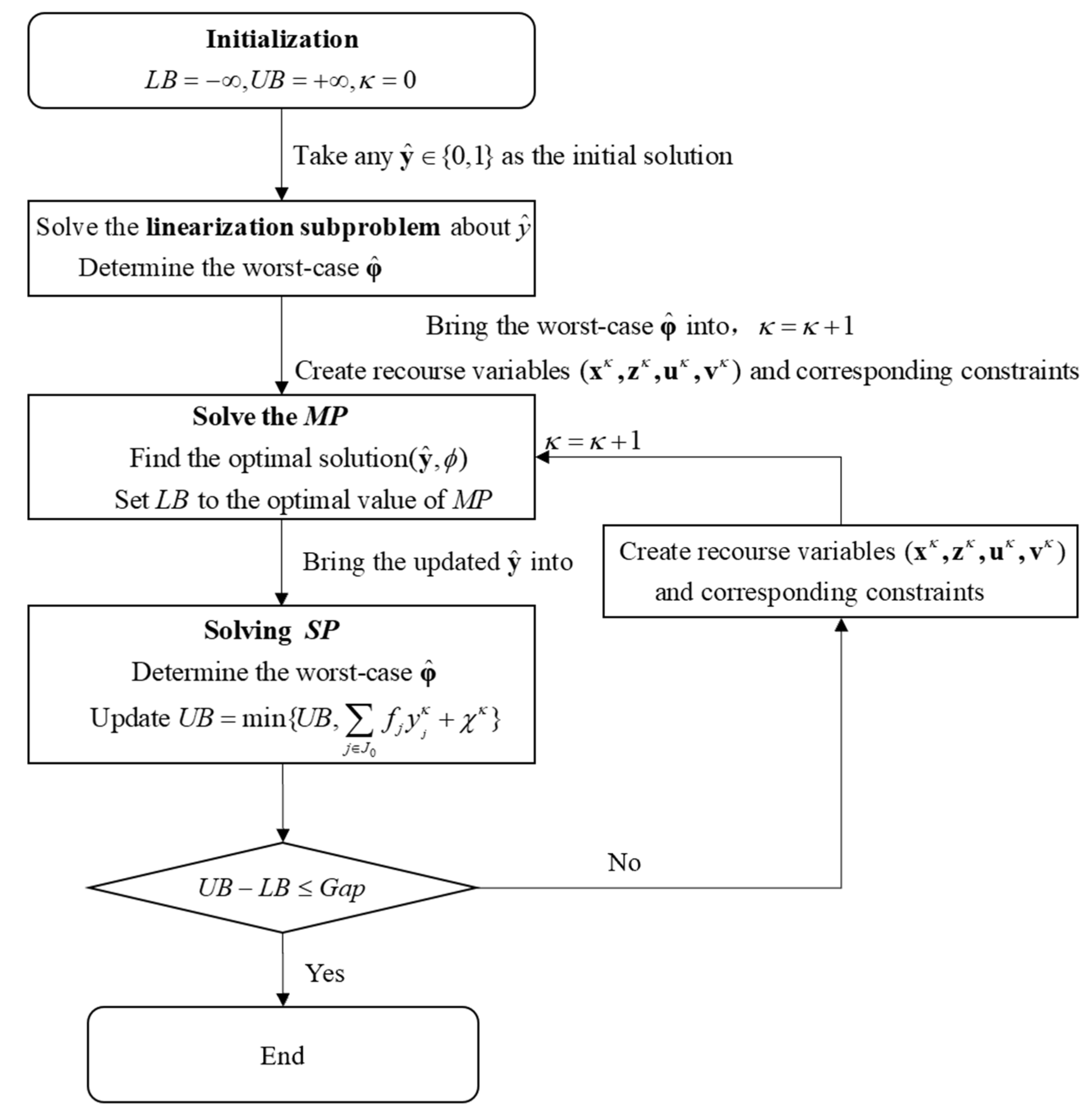
4.3. Framework of C&CG Algorithm
| Algorithm 1: the C&CG algorithm |
| Initialization: Let , Set , . Take any feasible solution as the initial solution. Step 1: Solve the linearized subproblem with respect to to determine the worst-case scenario for . Update . Establish the recourse variables and their respective constraints, and incorporate them into the MP model. Step 2: Solve the MP to find the optimal solution . Assign the optimal value of the MP to the variable LB. Step 3: Solve the SP with respect to to determine the worst-case scenario for . Update: Step 4: If , terminate; otherwise, update and establish recourse variables and their associated constraints. Add them to the MP and then proceed to step 2. |
5. Numerical Experiments
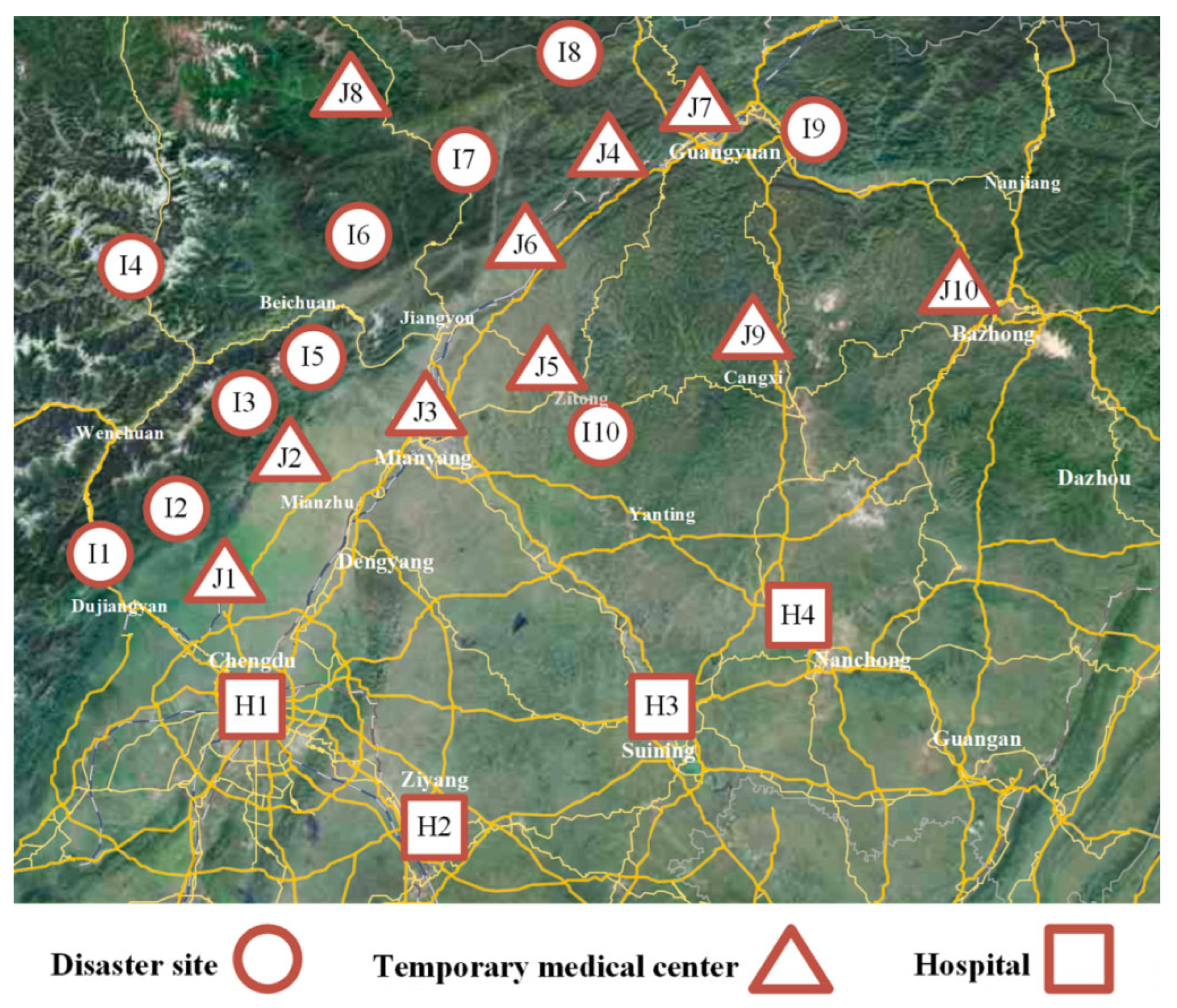
5.1. Case Study Description
5.2. Results and Analysis of the C&CG Algorithm
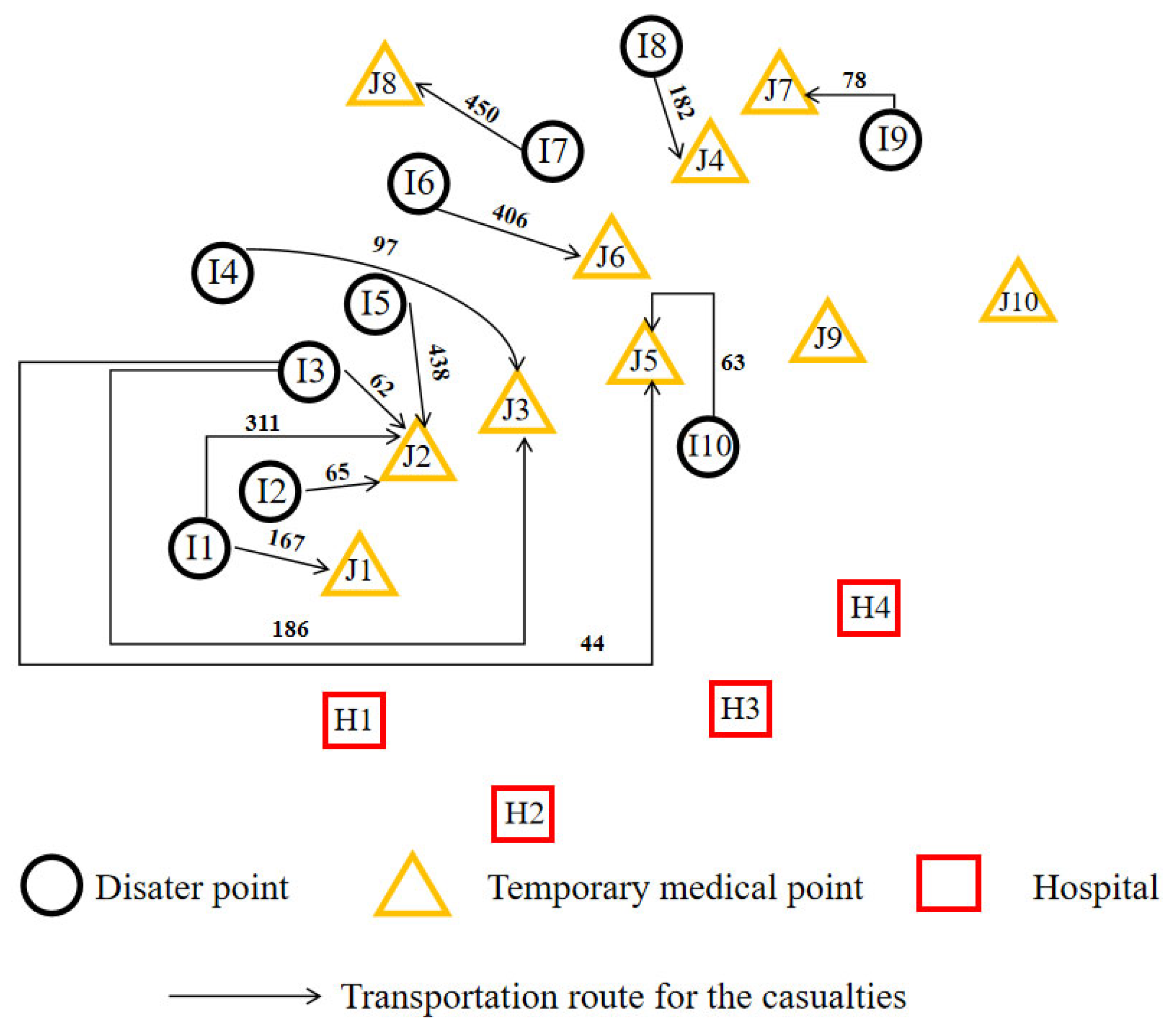
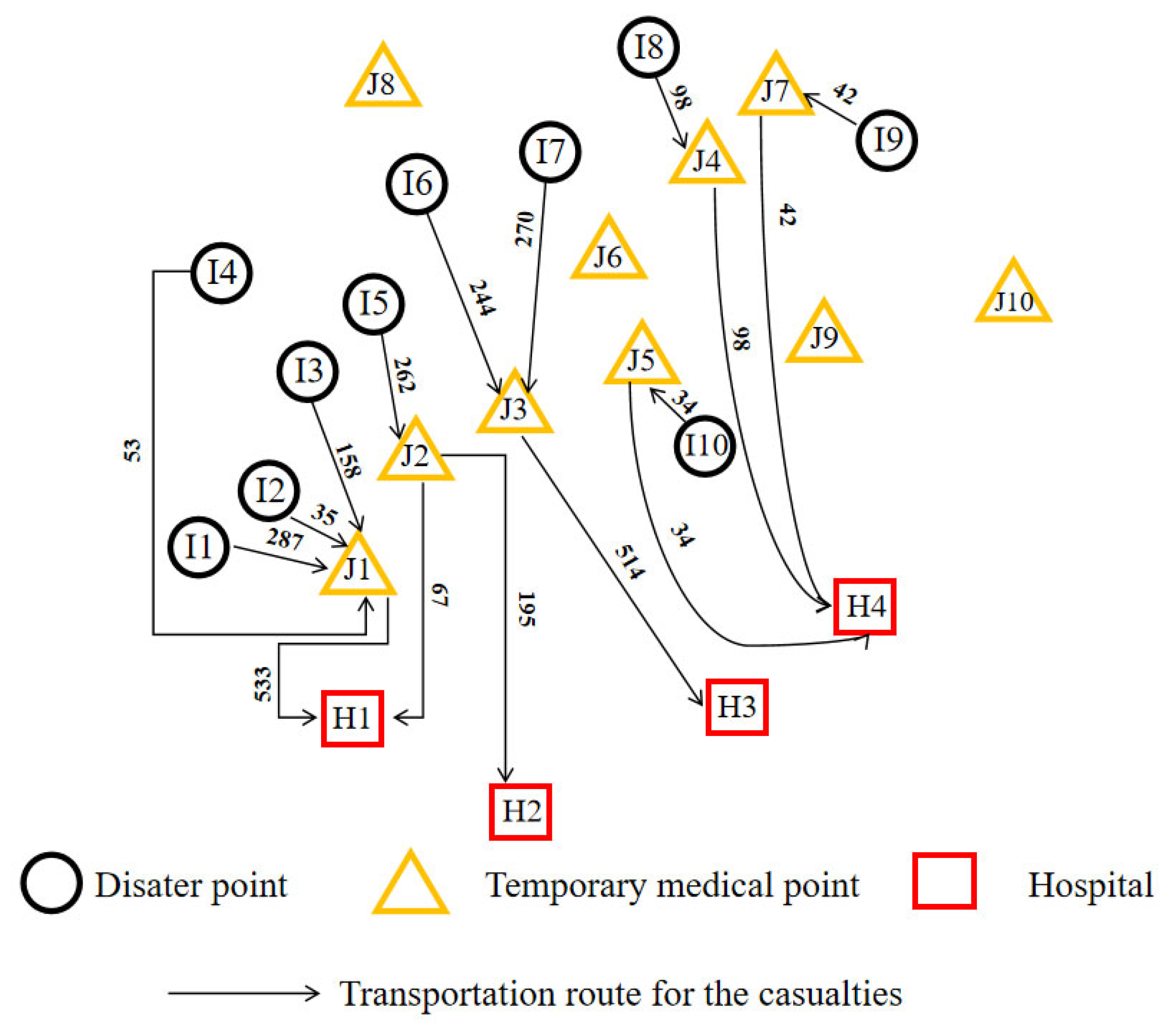
5.3. Comparison Between the CEL-TRO and CEL-DM
5.4. Parameter Sensitivity Analysis
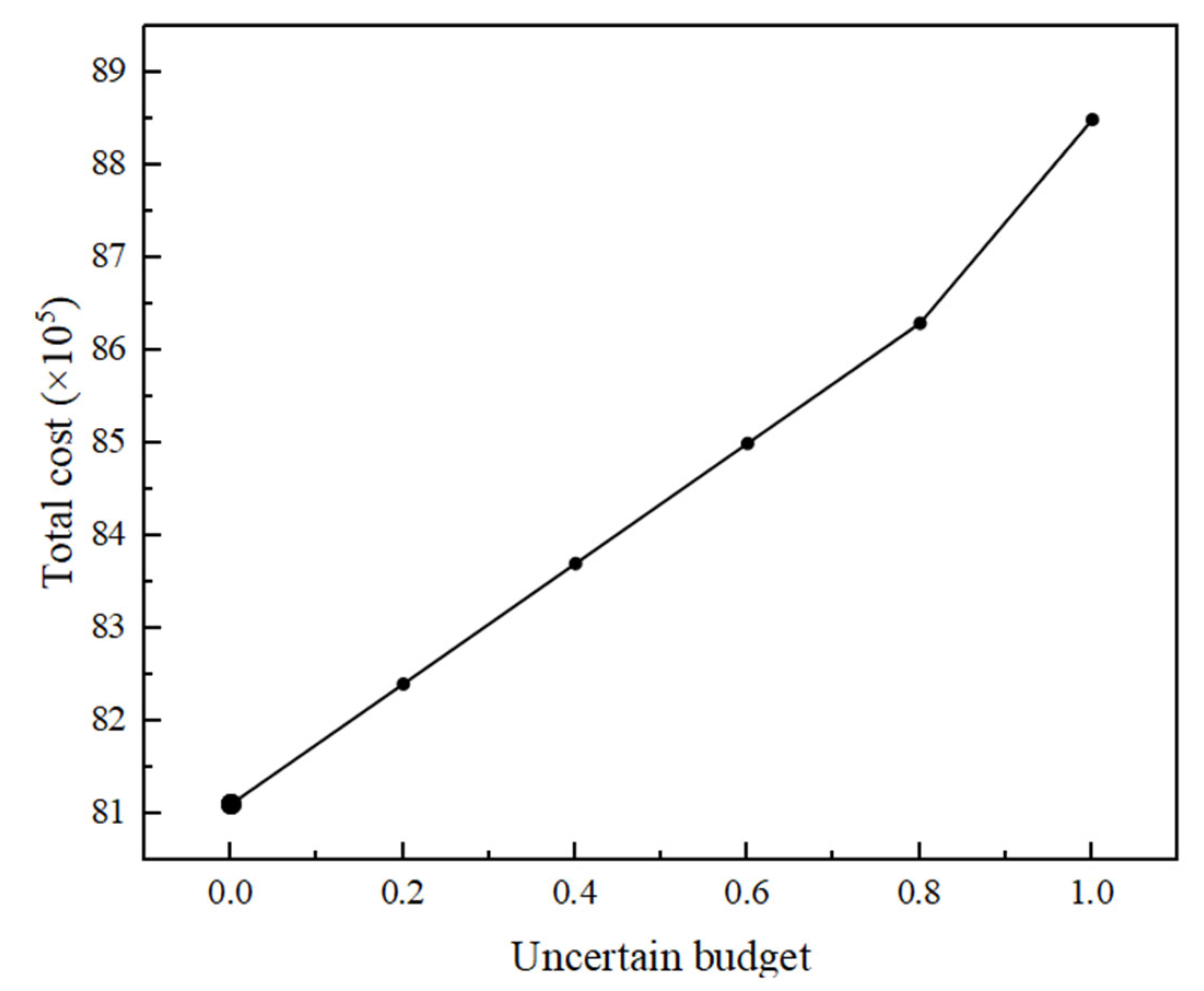
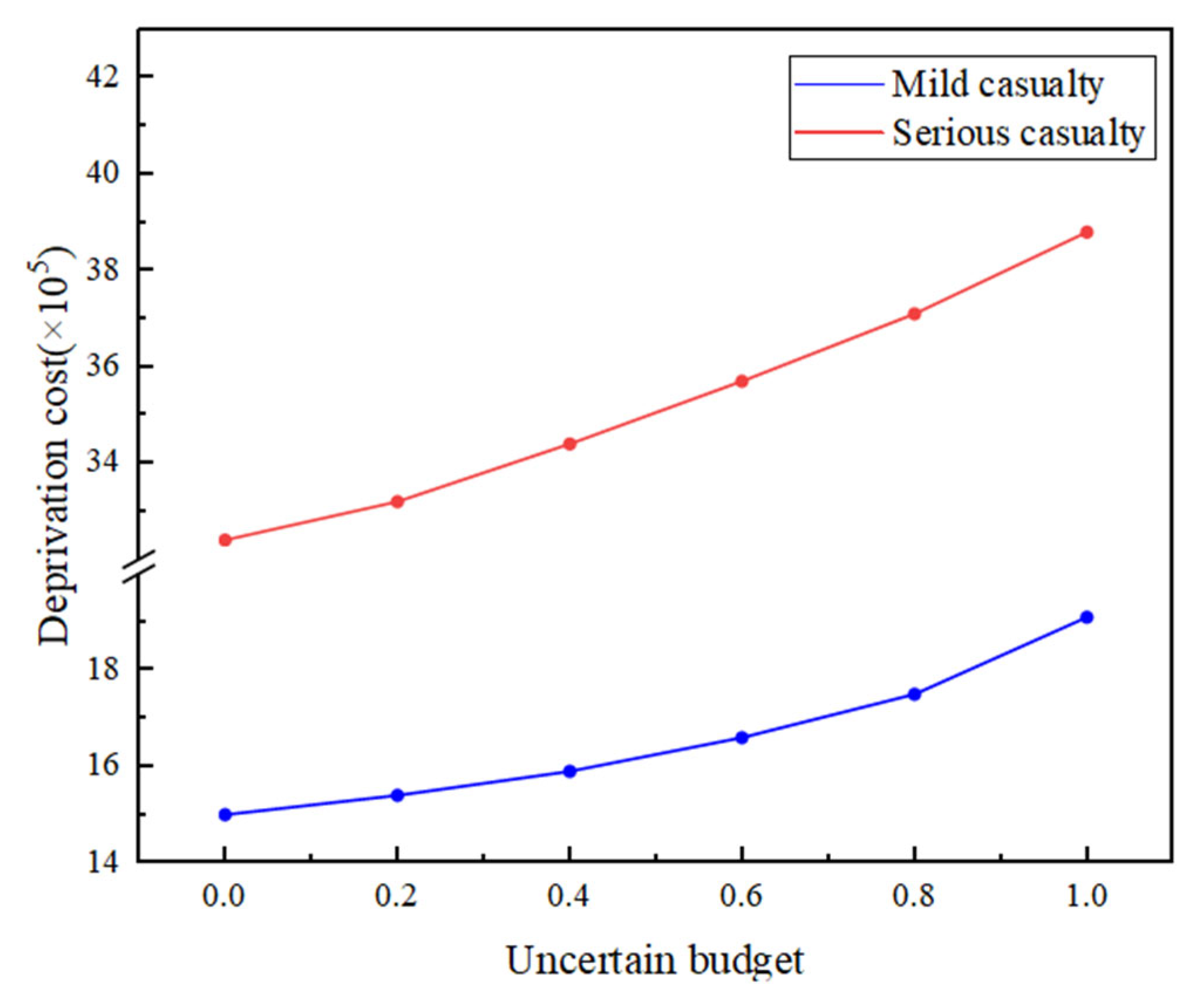
5.4.1. The Impact of Uncertain Budgeting on Deprivation Costs
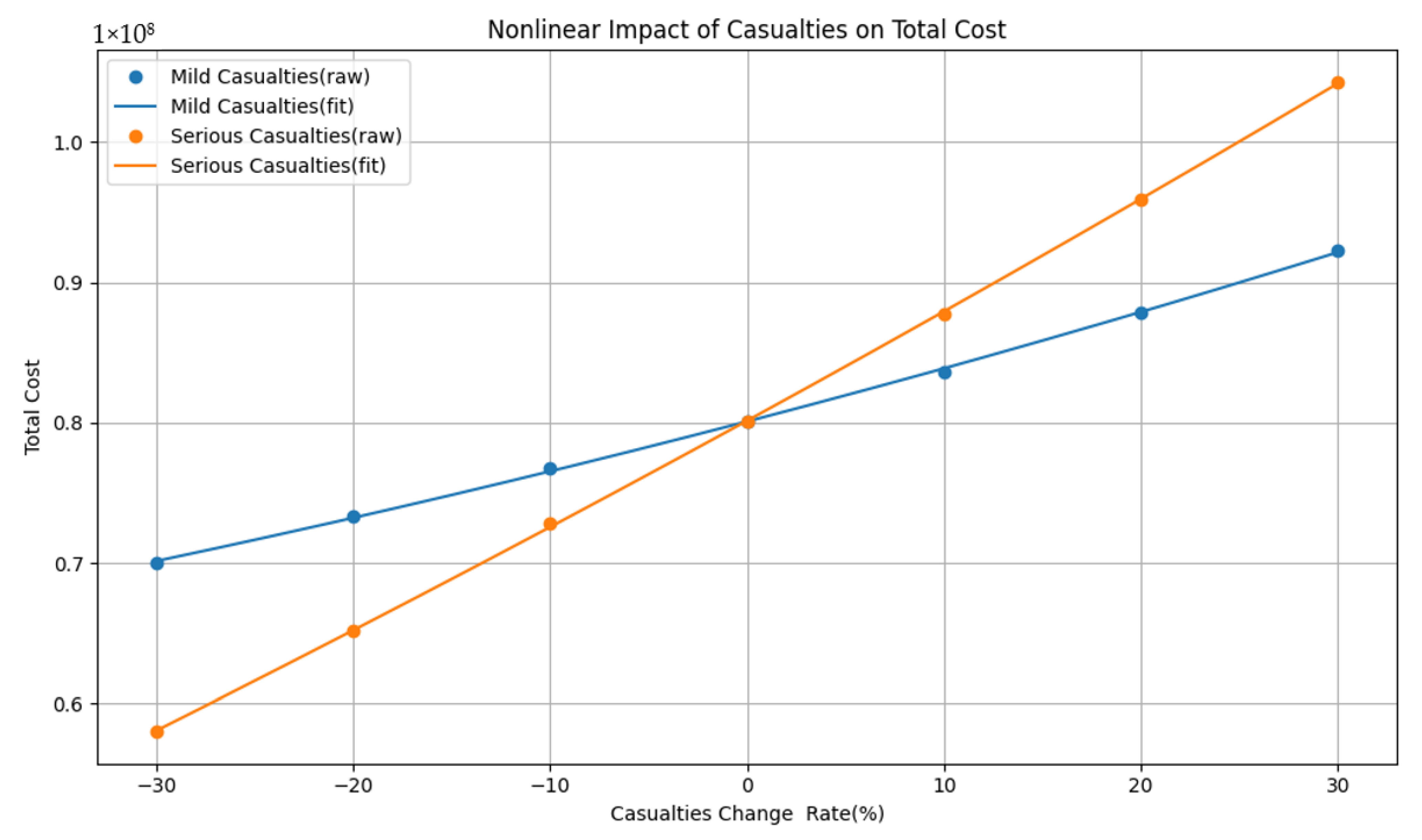
5.4.2. The Influence of Casualty Fluctuations on the Total Cost
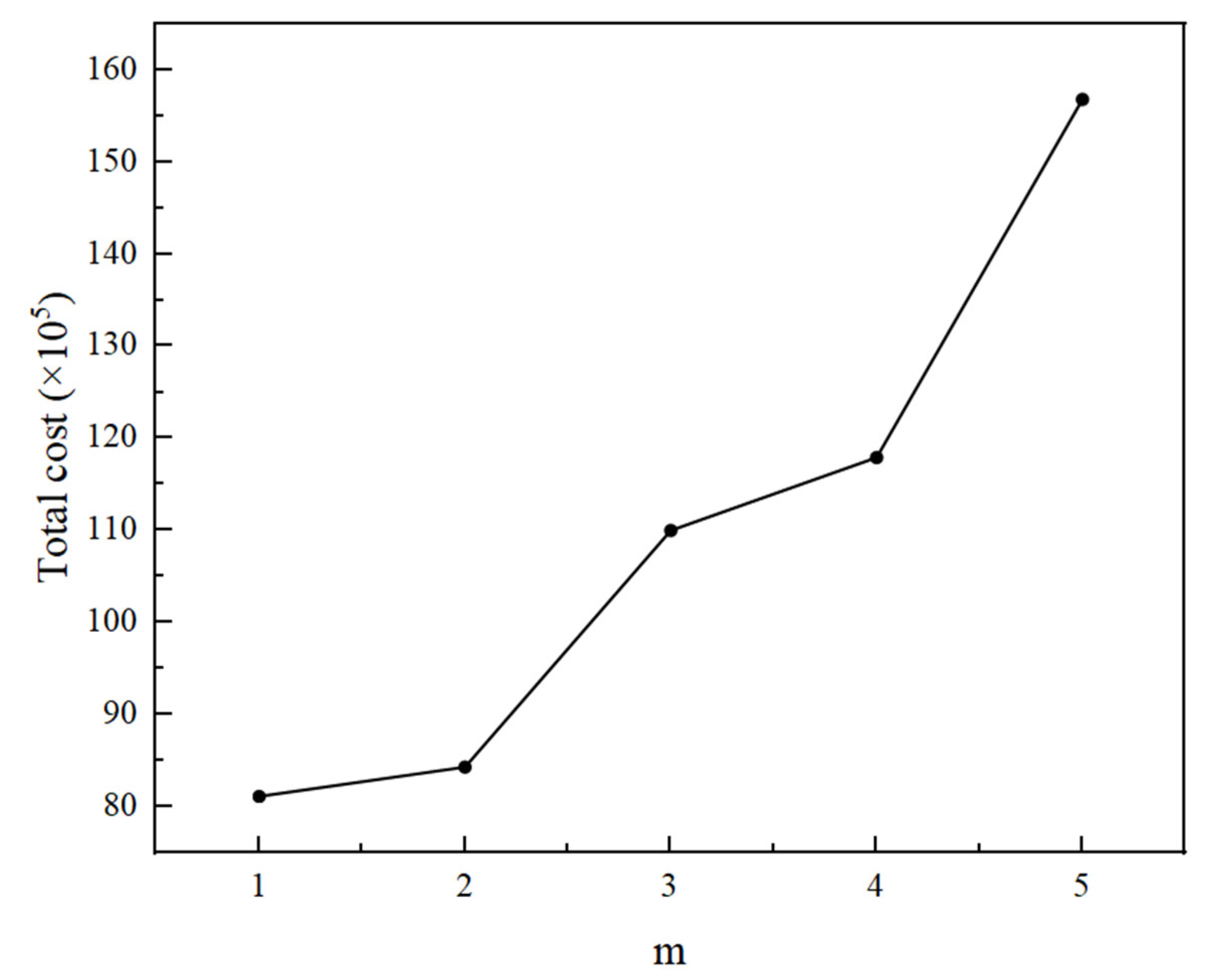
5.4.3. Maximum Quantity of Disrupted Facilities
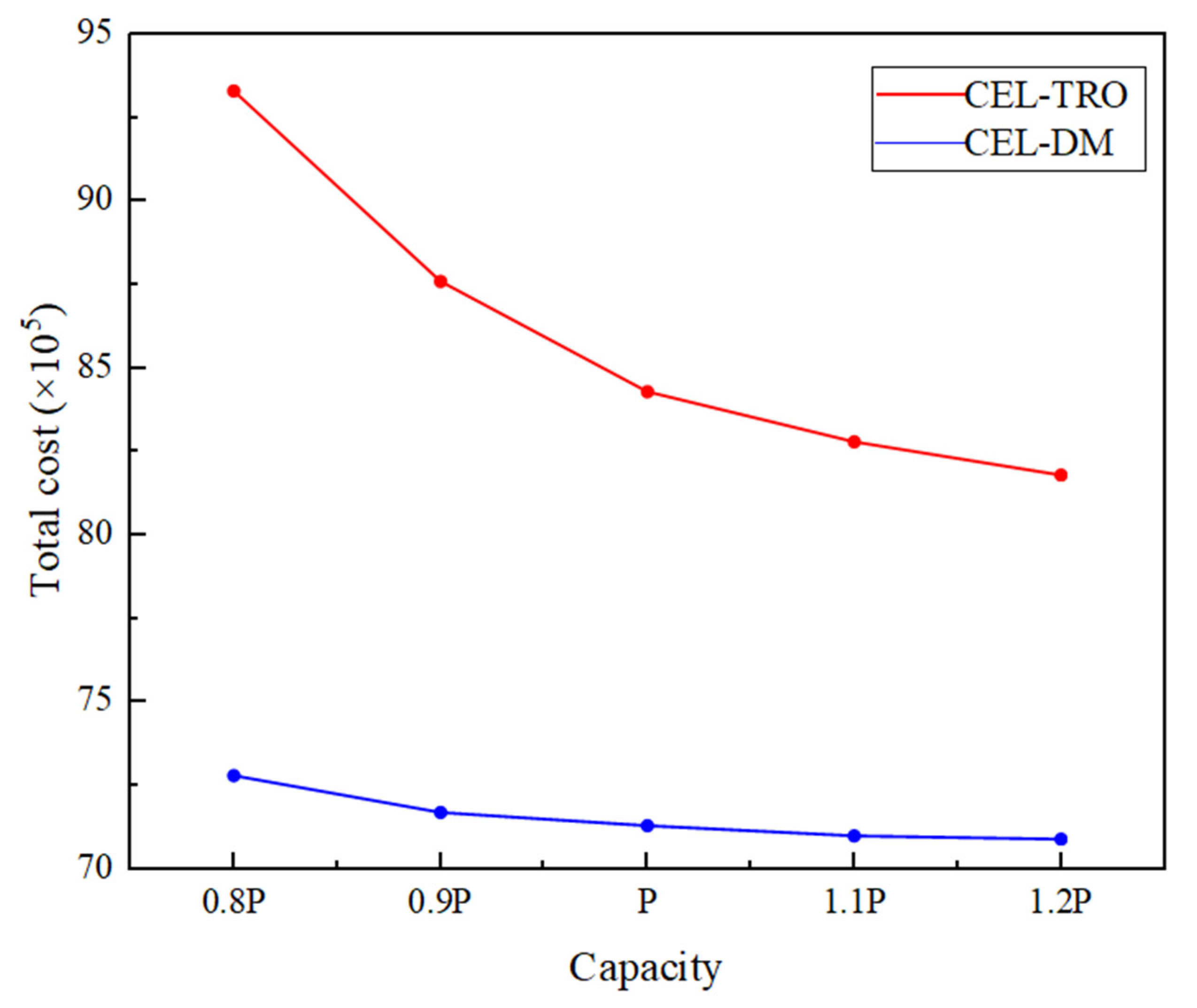
5.4.4. Capacity of Temporary Medical Points
5.4.5. Capacity of Hospitals
5.4.6. Analysis of the Reception of Casualties in Temporary Medical Facilities
5.5. Management Insights
6. Conclusions
- (1)
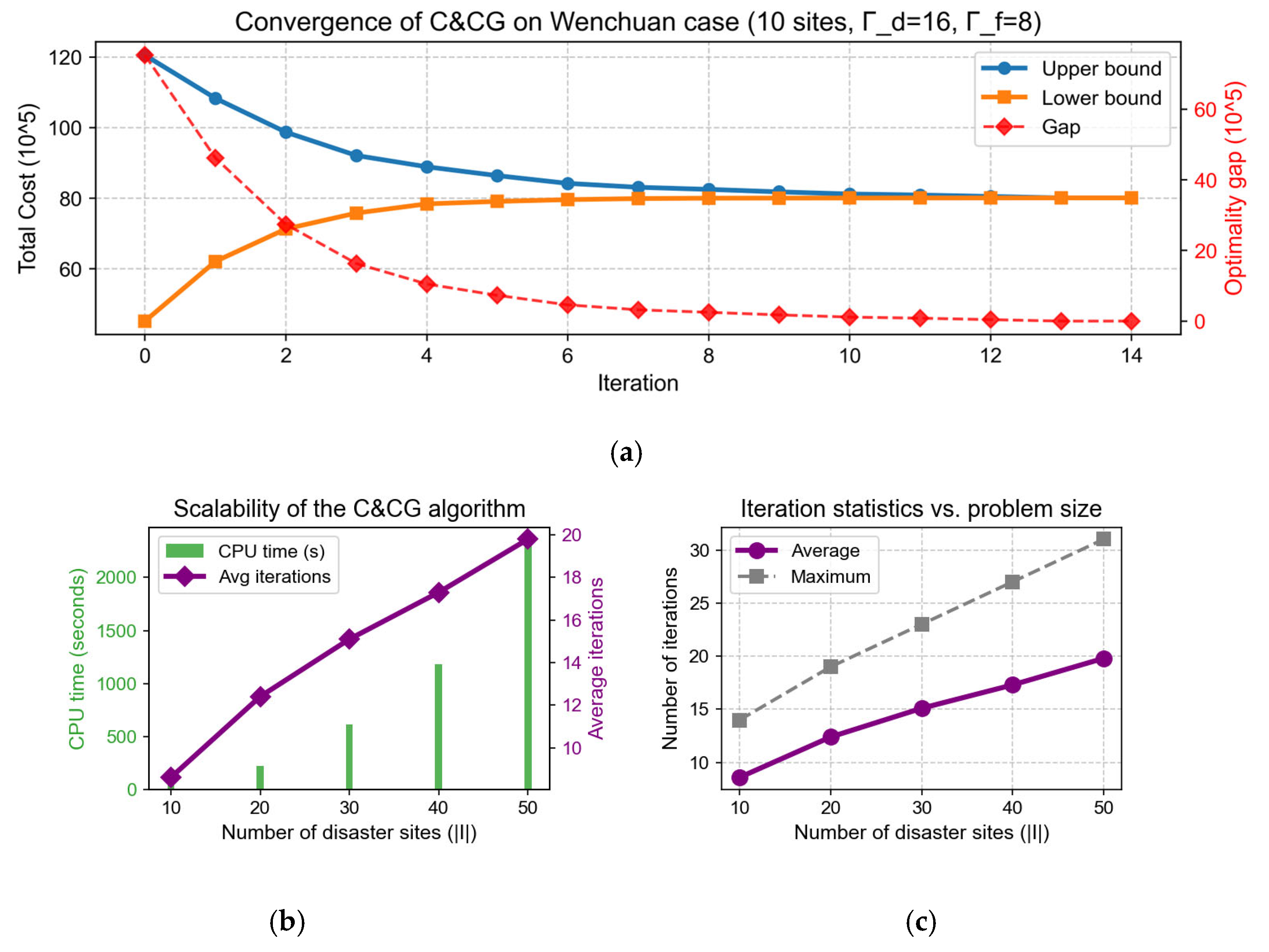
- The C&CG algorithm used in this paper performs well, effectively reducing the deprivation costs of casualties. For the Wenchuan instance, the algorithm required at most 14 iterations (average 8.6) and achieved convergence within 42.7 s, with the optimality gap dropping below 1% within 9 iterations. Even the largest test instance (≈178,000 variables) was solved to optimality in under 40 min, confirming the algorithm’s suitability for large-scale post-disaster decision environments.
- (2)
- The higher the degree of parameter uncertainty, the greater the deprivation costs. Compared to mild casualties, severe casualties have a more significant impact on deprivation costs. Across uncertainty budgets ranging from 0 to 1, total system cost consistently rises. When both mild and serious casualties fluctuate jointly, serious casualties exert a disproportionately large influence on deprivation cost increases. Scenario analysis further shows that when serious casualties vary by ±30%, the total cost ranges from 58.04 million to 95.93 million yuan, compared with the baseline 80.09 million yuan.
- (3)
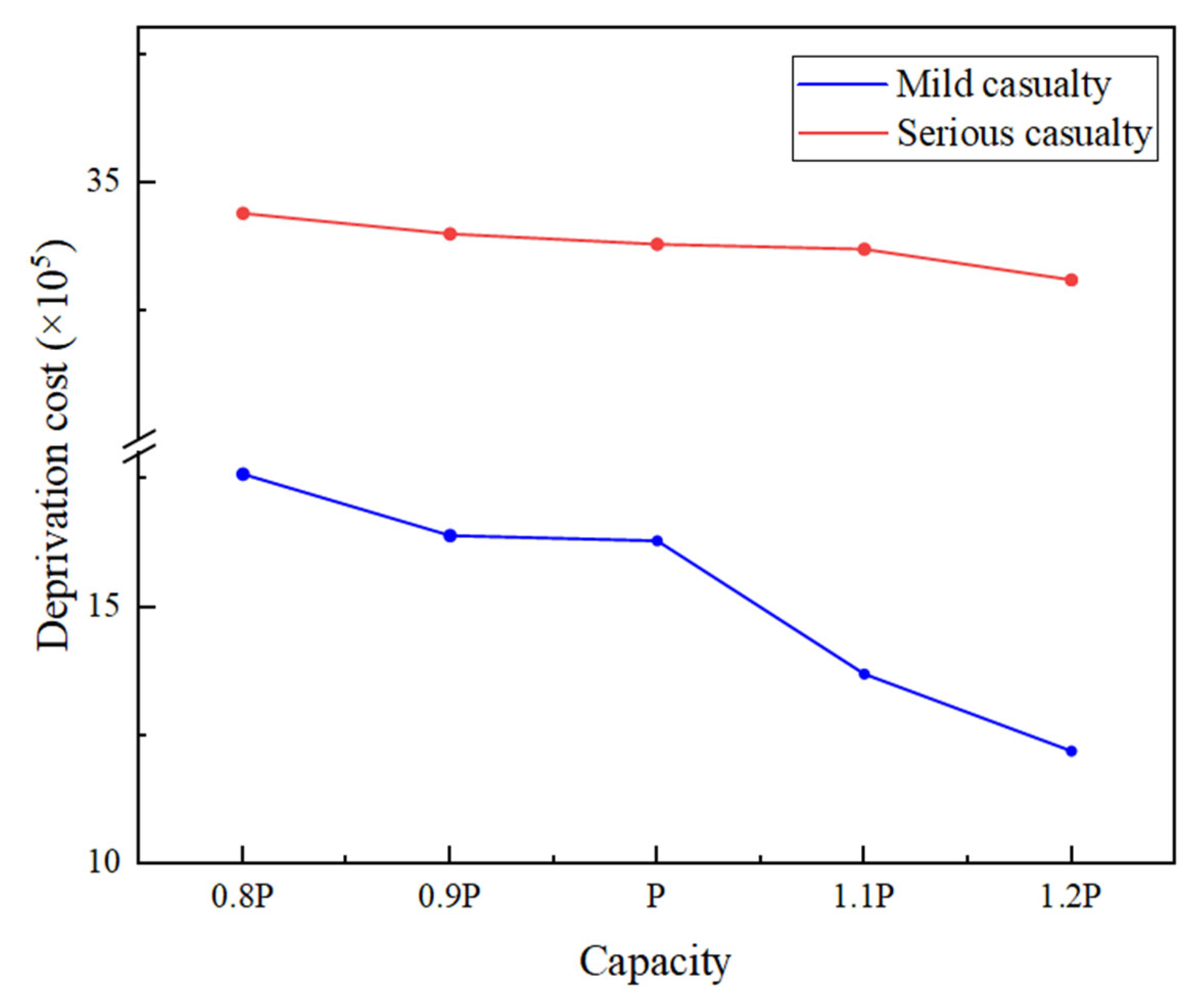
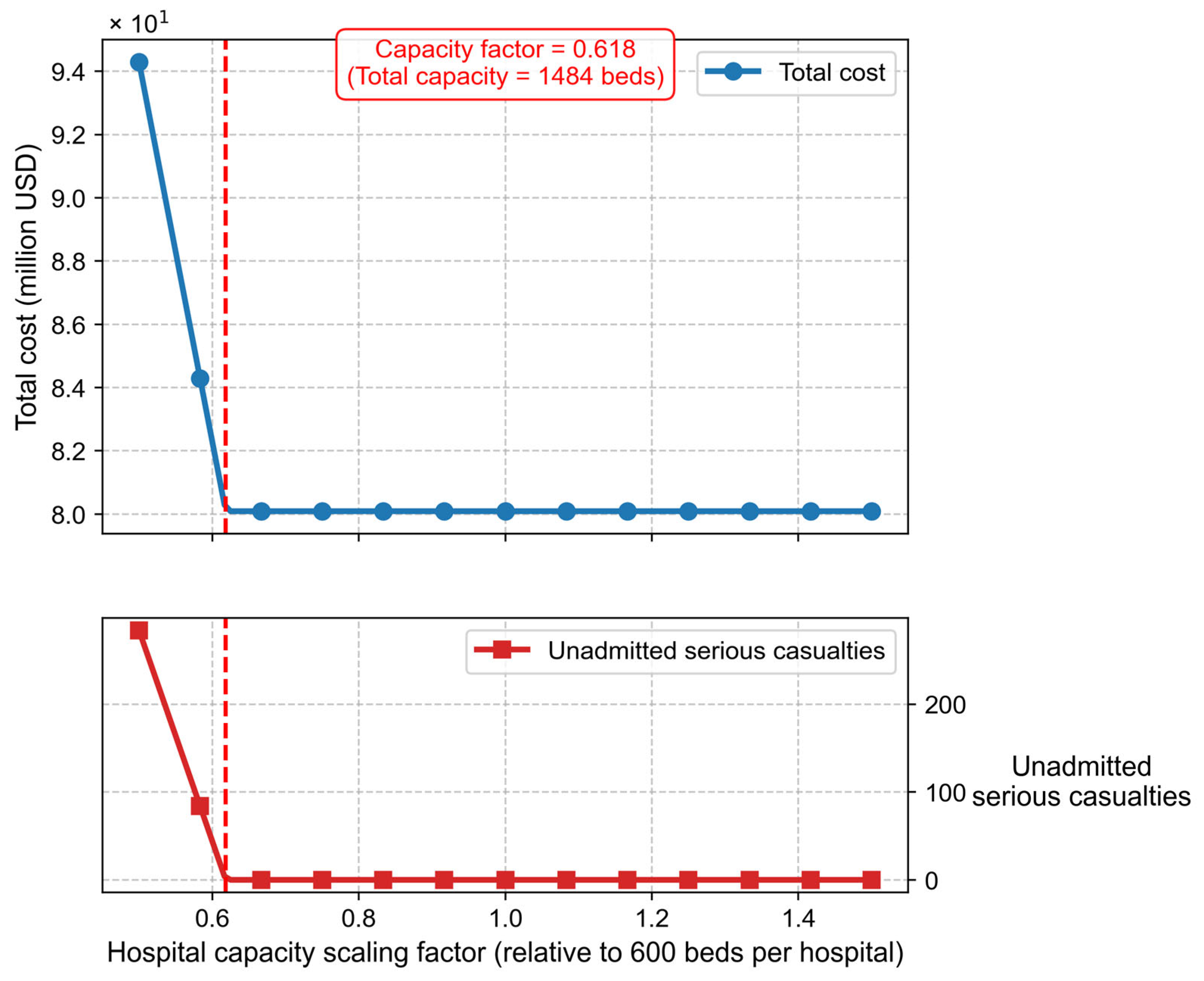
- Enhancing the capabilities of medical institutions can significantly decrease the expenditure involved in caring for a diverse array of patients. Improving the capacity of temporary medical sites to treat casualties is more important in terms of cost deprivation than in hospitals.
- (4)
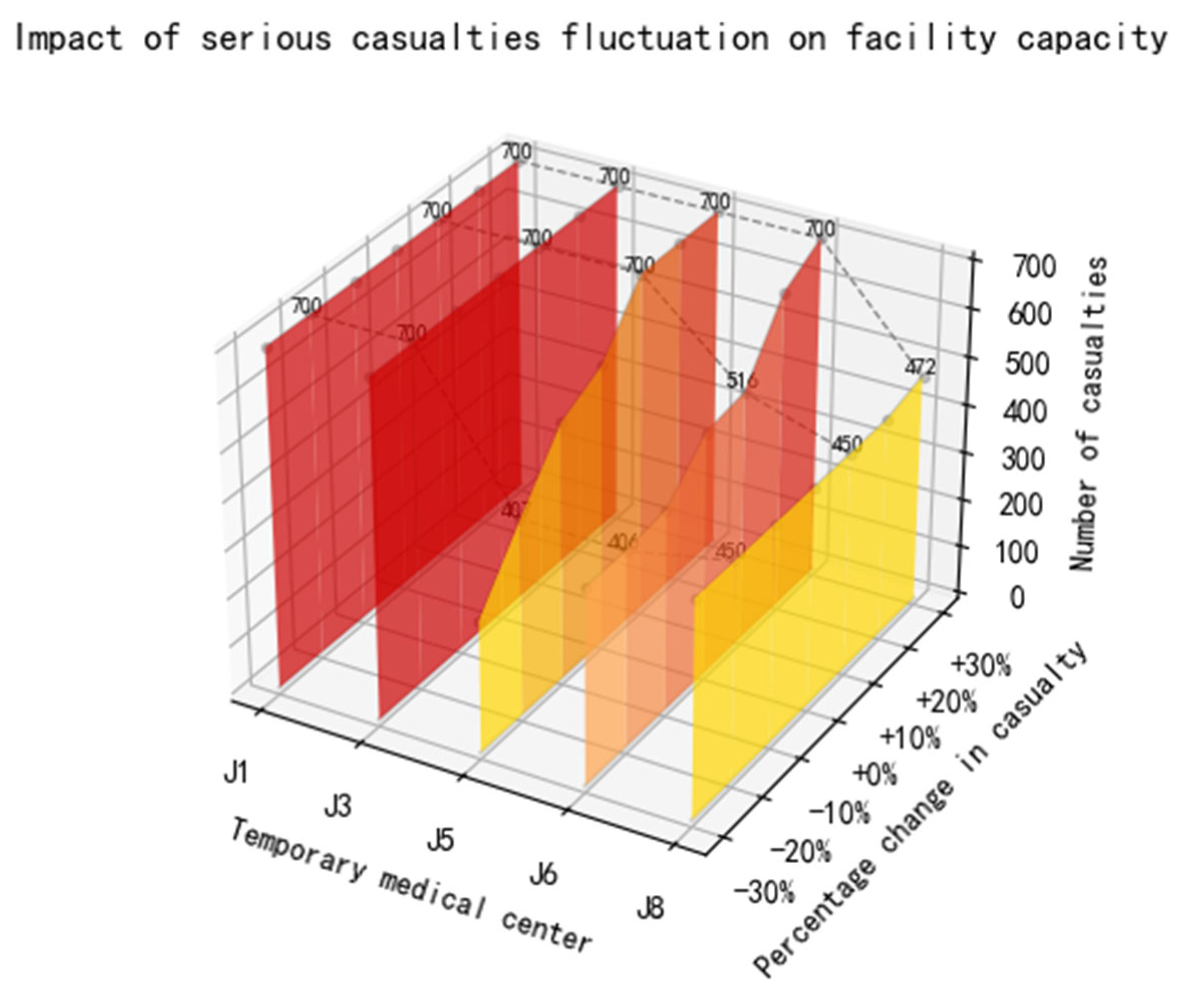
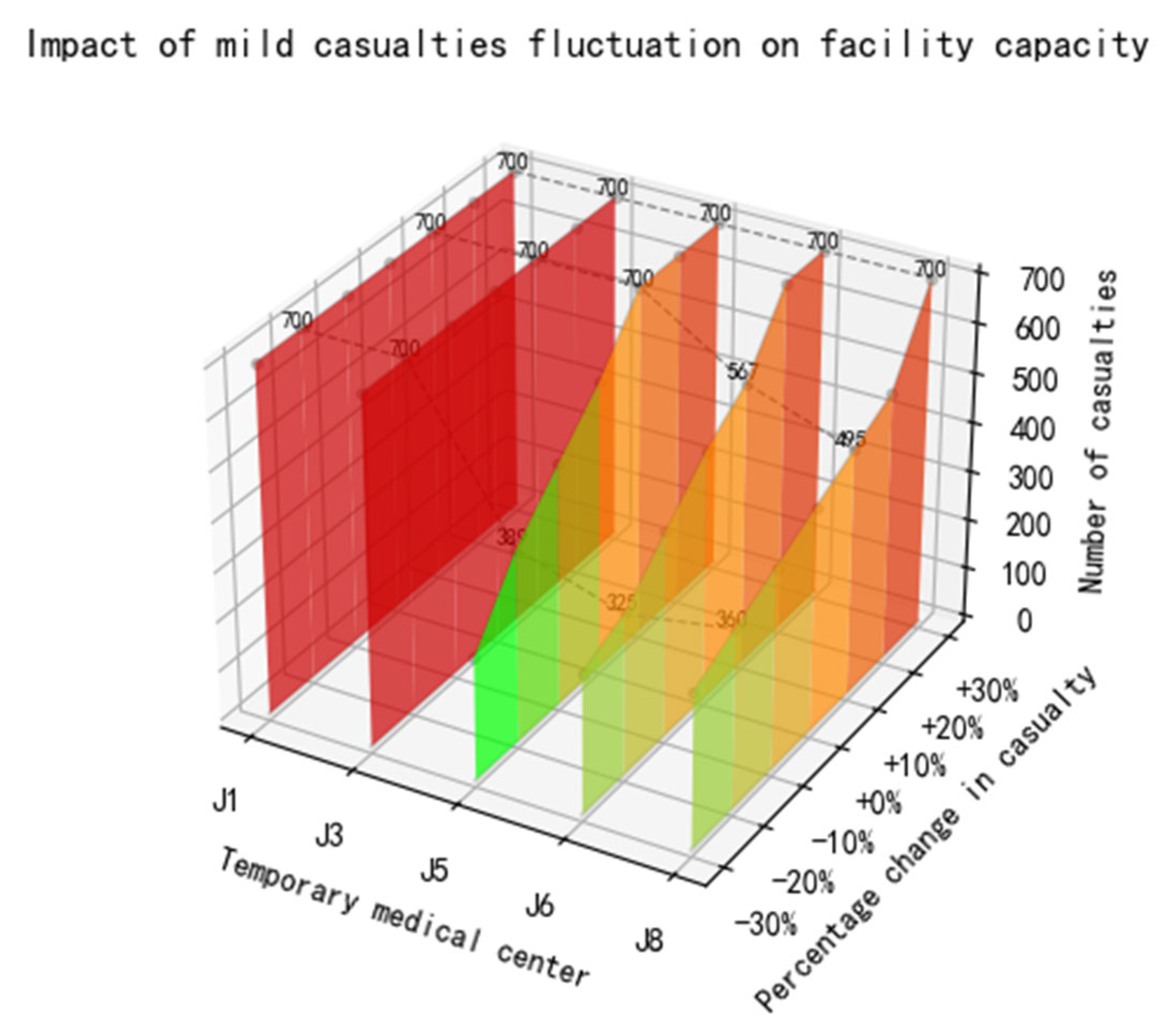
- Pre-disaster planning should identify key transfer nodes between disaster sites and hospitals based on potential transportation routes. These strategically located temporary medical facilities are more likely to become fully loaded during emergencies. Expanding their capacity or setting up backup nodes in advance can significantly enhance the flexibility and resilience of the rescue network.
Author Contributions
Funding
Institutional Review Board Statement
Informed Consent Statement
Data Availability Statement
Conflicts of Interest
References
- Naddaf, M. Turkey-Syria earthquake: What scientists know. Nature 2023, 614, 398–399. [Google Scholar] [CrossRef]
- Oksuz, M.K.; Satoglu, S.I. A two-stage stochastic model for location planning of temporary medical centers for disaster response. Int. J. Disaster Risk Reduct. 2020, 44, 101426. [Google Scholar] [CrossRef]
- Niyomubyeyi, O.; Pilesjo, P.; Mansourian, A. Evacuation Planning Optimization Based on a Multi-Objective Artificial Bee Colony Algorithm. ISPRS Int. J. Geo-Inf. 2019, 8, 110. [Google Scholar] [CrossRef]
- Holguín-Veras, J.; Pérez, N.; Jaller, M.; Van Wassenhove, L.N.; Aros-Vera, F. On the appropriate objective function for post-disaster humanitarian logistics models. J. Oper. Manag. 2013, 31, 262–280. [Google Scholar] [CrossRef]
- Pradhananga, R.; Mutlu, F.; Pokharel, S.; Holguin-Veras, J.; Seth, D. An integrated resource allocation and distribution model for pre-disaster planning. Comput. Ind. Eng. 2016, 91, 229–238. [Google Scholar] [CrossRef]
- Loree, N.; Aros-Vera, F. Points of distribution location and inventory management model for Post-Disaster Humanitarian Logistics. Transp. Res. Part E-Logist. Transp. Rev. 2018, 116, 1–24. [Google Scholar] [CrossRef]
- Perez-Rodriguez, N.; Holguin-Veras, J. Inventory-Allocation Distribution Models for Postdisaster Humanitarian Logistics with Explicit Consideration of Deprivation Costs. Transp. Sci. 2016, 50, 1261–1285. [Google Scholar] [CrossRef]
- Chen, C.H.; Luo, J.; Cao, J.; Liang, J.; Li, X.C.; Cao, T.K.; Xu, Y.-H.; Cai, L.-F.; Yu, P.; Zhu, T.Y. A novel method for calculating the dynamic reserves of tight gas wells considering stress sensitivity. Earth Energy Sci. 2025, 1, 1–8. [Google Scholar] [CrossRef]
- Sun, H.; Wang, Y.; Xue, Y. A bi-objective robust optimization model for disaster response planning under uncertainties. Comput. Ind. Eng. 2021, 155, 107213. [Google Scholar] [CrossRef]
- Sun, H.; Li, J.; Wang, T.; Xue, Y. A novel scenario-based robust bi-objective optimization model for humanitarian logistics network under risk of disruptions. Transp. Res. Part E-Logist. Transp. Rev. 2022, 157, 102578. [Google Scholar] [CrossRef]
- Liu, Y.; Cui, N.; Zhang, J.H. Integrated temporary facility location and casualty allocation planning for post-disaster humanitarian medical service. Transp. Res. Part E-Logist. Transp. Rev. 2019, 128, 1–16. [Google Scholar] [CrossRef]
- Liu, K.N. Post-earthquake medical evacuation system design based on hierarchical multi-objective optimization model: An earthquake case study. Int. J. Disaster Risk Reduct. 2020, 51, 101785. [Google Scholar] [CrossRef]
- Liu, K.N. GIS-based MCDM framework combined with coupled multi-hazard assessment for site selection of post-earthquake emergency medical service facilities in Wenchuan, China. Int. J. Disaster Risk Reduct. 2022, 73, 102873. [Google Scholar] [CrossRef]
- Zhou, Y.F.; Gong, Y.; Hu, X.Q. Robust optimization for casualty scheduling considering injury deterioration and point-edge mixed failures in early stage of post-earthquake relief. Front. Public Health 2023, 11, 995829. [Google Scholar] [CrossRef]
- Du, J.H.; Wu, P.; Wang, Y.Q.; Yang, D. Multi-stage humanitarian emergency logistics: Robust decisions in uncertain environment. Nat. Hazards 2023, 115, 899–922. [Google Scholar] [CrossRef]
- Li, Z.C.; Lam, W.H.K.; Wong, S.C.; Sumalee, A. Environmentally Sustainable Toll Design for Congested Road Networks with Uncertain Demand. Int. J. Sustain. Transp. 2012, 6, 127–155. [Google Scholar] [CrossRef]
- Paul, J.A.; Wang, X.F. Robust location-allocation network design for earthquake preparedness. Transp. Res. Part B-Methodol. 2019, 119, 139–155. [Google Scholar] [CrossRef]
- Sacco, W.J.; Navin, D.M.; Fiedler, K.E.; Waddell, R.K., II; Long, W.B.; Buckman, R.F., Jr. Precise formulation and evidence-based application of resource-constrained triage. Acad. Emerg. Med. 2005, 12, 759–770. [Google Scholar]
- Mills, A.F.; Argon, N.T.; Ziya, S. Resource-based patient prioritization in mass-casualty incidents. Manuf. Serv. Oper. Manag. 2013, 15, 361–377. [Google Scholar] [CrossRef]
- Dean, M.D.; Nair, S.K. Mass-casualty triage: Distribution of victims to multiple hospitals using the SAVE model. Eur. J. Oper. Res. 2014, 238, 363–373. [Google Scholar] [CrossRef]
- Talarico, L.; Meisel, F.; Sorensen, K. Ambulance routing for disaster response with patient groups. Comput. Oper. Res. 2015, 56, 120–133. [Google Scholar] [CrossRef]
- Caunhye, A.M.; Nie, X.; Pokharel, S. Optimization models in emergency logistics: A literature review. Socio-Econ. Plan. Sci. 2012, 46, 4–13. [Google Scholar] [CrossRef]
- Salman, F.S.; Gül, S. Deployment of field hospitals in mass casualty incidents. Comput. Ind. Eng. 2014, 74, 37–51. [Google Scholar] [CrossRef]
- Geng, S.Q.; Hou, H.P.; Zhang, S.G. Multi-Criteria Location Model of Emergency Shelters in Humanitarian Logistics. Sustainability 2020, 12, 1759. [Google Scholar] [CrossRef]
- Caunhye, A.M.; Li, M.; Nie, X. A location-allocation model for casualty response planning during catastrophic radiological incidents. Socio-Econ. Plan. Sci. 2015, 50, 32–44. [Google Scholar] [CrossRef]
- Eriskin, L.; Karatas, M. Applying robust optimization to the shelter location-allocation problem: A case study for Istanbul. Ann. Oper. Res. 2022, 339, 1589–1635. [Google Scholar] [CrossRef]
- Tomasini, R.M.; Van Wassenhove, L.N. From preparedness to partnerships: Case study research on humanitarian logistics. Int. Trans. Oper. Res. 2009, 16, 549–559. [Google Scholar] [CrossRef]
- Zokaee, S.; Bozorgi-Amiri, A.; Sadjadi, S.J. A robust optimization model for humanitarian relief chain design under uncertainty. Appl. Math. Model. 2016, 40, 7996–8016. [Google Scholar] [CrossRef]
- Robbins, M.J.; Jenkins, P.R.; Bastian, N.D.; Lunday, B.J. Approximate dynamic programming for the aeromedical evacuation dispatching problem: Value function approximation utilizing multiple level aggregation. Omega-Int. J. Manag. Sci. 2020, 91, 102020. [Google Scholar] [CrossRef]
- Li, Y.C.; Zhang, J.H.; Yu, G.D. A scenario-based hybrid robust and stochastic approach for joint planning of relief logistics and casualty distribution considering secondary disasters. Transp. Res. Part E-Logist. Transp. Rev. 2020, 141, 102029. [Google Scholar] [CrossRef]
- Sahebi, I.G.; Masoomi, B.; Ghorbani, S. Expert oriented approach for analyzing the blockchain adoption barriers in humanitarian supply chain. Technol. Soc. 2020, 63, 101427. [Google Scholar] [CrossRef]
- Cao, C.J.; Liu, Y.; Tang, O.; Gao, X.H. A fuzzy bi-level optimization model for multi-period post-disaster relief distribution in sustainable humanitarian supply chains. Int. J. Prod. Econ. 2021, 235, 108081. [Google Scholar] [CrossRef]
- Caunhye, A.M.; Nie, X.F. A Stochastic Programming Model for Casualty Response Planning During Catastrophic Health Events. Transp. Sci. 2018, 52, 437–453. [Google Scholar] [CrossRef]
- Elci, O.; Noyan, N. A chance-constrained two-stage stochastic programming model for humanitarian relief network design. Transp. Res. Part B-Methodol. 2018, 108, 55–83. [Google Scholar] [CrossRef]
- Ben-Tal, A.; Do Chung, B.; Mandala, S.R.; Yao, T. Robust optimization for emergency logistics planning: Risk mitigation in humanitarian relief supply chains. Transp. Res. Part B-Methodol 2011, 45, 1177–1189. [Google Scholar] [CrossRef]
- Vahdani, B.; Veysmoradi, D.; Noori, F.; Mansour, F. Two-stage multi-objective location-routing-inventory model for humanitarian logistics network design under uncertainty. Int. J. Disaster Risk Reduct. 2018, 27, 290–306. [Google Scholar] [CrossRef]
- Ben-Tal, A.; Goryashko, A.; Guslitzer, E.; Nemirovski, A. Adjustable robust solutions of uncertain linear programs. Math. Program. 2004, 99, 351–376. [Google Scholar] [CrossRef]
- Atamturk, A.; Zhang, M.H. Two-stage robust network row and design under demand uncertahty. Oper. Res. 2007, 55, 662–673. [Google Scholar] [CrossRef]
- An, Y.; Zeng, B.; Zhang, Y.; Zhao, L. Reliable p-median facility location problem: Two-stage robust models and algorithms. Transp. Res. Part B-Methodol. 2014, 64, 54–72. [Google Scholar] [CrossRef]
- Shi, H.Y.; You, F.Q. A computational framework and solution algorithms for two-stage adaptive robust scheduling of batch manufacturing processes under uncertainty. AIChE J. 2016, 62, 687–703. [Google Scholar] [CrossRef]
- Shang, K.; Chan, F.T.S.; Karungaru, S.; Terada, K.; Feng, Z.R.; Ke, L.J. Two-Stage Robust Optimization for the Orienteering Problem with Stochastic Weights. Complexity 2020, 2020, 5649821. [Google Scholar] [CrossRef]
- Goerigk, M.; Kasperski, A.; Zielinski, P. Robust two-stage combinatorial optimization problems under convex second-stage cost uncertainty. J. Comb. Optim. 2022, 43, 497–527. [Google Scholar] [CrossRef]
- Yan, M.Y.; He, Y.B.; Shahidehpour, M.; Ai, X.M.; Li, Z.Y.; Wen, J.Y. Coordinated Regional-District Operation of Integrated Energy Systems for Resilience Enhancement in Natural Disasters. IEEE Trans. Smart Grid 2019, 10, 4881–4892. [Google Scholar] [CrossRef]
- Zeng, B.; Zhao, L. Solving two-stage robust optimization problems using a column-and-constraint generation method. Oper. Res. Lett. 2013, 41, 457–461. [Google Scholar] [CrossRef]



| Study | Casualty Classification | Deprivation Cost | Facility Disruption | Demand Uncertainty | Two-Stage Robust Optimization |
|---|---|---|---|---|---|
| This study | √ | √ | √ | √ | √ |
| Sun et al. (2021) [9] | √ | × | × | √ | × |
| Sun et al. (2022) [10] | × | × | √ | √ | × |
| Liu et al. (2019) [11] | √ | × | × | √ | × |
| Liu (2020) [12] | √ | × | × | √ | × |
| Liu (2022) [13] | √ | × | × | √ | × |
| Zhou et al. (2023) [14] | √ | × | √ | √ | × |
| Du et al. (2023) [15] | × | × | √ | √ | × |
| Li et al. (2020) [16] | × | × | √ | √ | × |
| Oksuz and Satoglu (2020) [2] | × | × | √ | √ | × |
| Paul and Wang (2019) [17] | × | × | × | √ | × |
| Category | Symbol | Definition |
|---|---|---|
| Sets | The set of disaster sites, indexed by | |
| The set of temporary medical points, indexed by | ||
| Set of hospitals, indexed by | ||
| Parameters | Fixed facility opening costs , where | |
| Cost of unit transfer from disaster site to temporary medical point , where , | ||
| Cost of unit transfer from temporary medical point to hospital , where , | ||
| Capacity of temporary medical point , where | ||
| Capacity of hospital , where | ||
| The quantity of mild casualties at disaster site , where | ||
| The quantity of serious casualties at disaster site , where | ||
| Travel time from disaster site to temporary medical point , where , | ||
| Rescue time for serious casualties at temporary medical point , where | ||
| Travel time from temporary medical point to hospital , where , | ||
| Minimum transportation percentage for mild casualty | ||
| Minimum transportation percentage for serious casualty | ||
| Infeasibility penalty coefficient | ||
| M | A sufficient large number | |
| , , , , , , , | Coefficient of the deprivation cost function | |
| Decision Variables | Binary variable, where indicates that temporary medical point is open, and indicates it is not open, | |
| The quantity of mild casualties transported from disaster site to temporary medical point , where , | ||
| The quantity of serious casualties transported from disaster site through temporary medical point to hospital , where , , | ||
| The quantity of mild casualties not evacuated from disaster site , where | ||
| The quantity of serious casualties not evacuated from disaster site , where |
| J1 | J2 | J3 | J4 | J5 | J6 | J7 | J8 | J9 | J10 | |
|---|---|---|---|---|---|---|---|---|---|---|
| 1 | 1 | 1 | 1 | 1 | 1 | 1 | 1 | 0 | 0 |
| I1 | I2 | I3 | I4 | I5 | I6 | I7 | I8 | I9 | I10 | |
|---|---|---|---|---|---|---|---|---|---|---|
| 0 | 0 | 0 | 0 | 0 | 0 | 0 | 0 | 0 | 0 | |
| 0 | 0 | 0 | 0 | 0 | 0 | 0 | 0 | 0 | 0 |
| Model | Optimal Solution of Objective Function (×106 Yuan) | Number of Temporary Medical Points Opened | CPU Time(s) |
|---|---|---|---|
| CE-TRO | 94.4 | 8 | 2.25 |
| CE-DM | 71.3 | 5 | 0.40 |
| Scenario | (Mild Casualties) | (Serious Casualties) | Total Cost |
|---|---|---|---|
| S1 | +0% | +0% | 80,090,770 |
| S2 | −30% | +0% | 69,984,170 |
| S3 | −20% | +0% | 73,371,960 |
| S4 | −10% | +0% | 76,733,780 |
| S5 | +10% | +0% | 83,618,630 |
| S6 | +20% | +0% | 87,832,840 |
| S7 | +30% | +0% | 92,272,730 |
| S8 | +0% | −30% | 58,042,730 |
| S9 | +0% | −20% | 65,140,065 |
| S10 | +0% | −10% | 72,843,740 |
| S11 | +0% | +10% | 87,773,655 |
| S12 | +0% | +20% | 95,934,430 |
| S13 | +0% | +30% | 104,245,565 |
Disclaimer/Publisher’s Note: The statements, opinions and data contained in all publications are solely those of the individual author(s) and contributor(s) and not of MDPI and/or the editor(s). MDPI and/or the editor(s) disclaim responsibility for any injury to people or property resulting from any ideas, methods, instructions or products referred to in the content. |
© 2025 by the authors. Licensee MDPI, Basel, Switzerland. This article is an open access article distributed under the terms and conditions of the Creative Commons Attribution (CC BY) license (https://creativecommons.org/licenses/by/4.0/).
Share and Cite
Ye, F.; Chen, B.; Ji, Y.; Qu, S. A Two-Stage Robust Casualty Evacuation Optimization Model for Sustainable Humanitarian Logistics Networks Under Interruption Risks. Sustainability 2025, 17, 11262. https://doi.org/10.3390/su172411262
Ye F, Chen B, Ji Y, Qu S. A Two-Stage Robust Casualty Evacuation Optimization Model for Sustainable Humanitarian Logistics Networks Under Interruption Risks. Sustainability. 2025; 17(24):11262. https://doi.org/10.3390/su172411262
Chicago/Turabian StyleYe, Feng, Bin Chen, Ying Ji, and Shaojian Qu. 2025. "A Two-Stage Robust Casualty Evacuation Optimization Model for Sustainable Humanitarian Logistics Networks Under Interruption Risks" Sustainability 17, no. 24: 11262. https://doi.org/10.3390/su172411262
APA StyleYe, F., Chen, B., Ji, Y., & Qu, S. (2025). A Two-Stage Robust Casualty Evacuation Optimization Model for Sustainable Humanitarian Logistics Networks Under Interruption Risks. Sustainability, 17(24), 11262. https://doi.org/10.3390/su172411262