Article

Motivations for Slow Fashion Consumption Among Zennials: An Exploratory Australian Study

School of Fashion and Textiles, RMIT University, Melbourne, VIC 3056, Australia
*
Author to whom correspondence should be addressed.
Sustainability 2025, 17(24), 11253; https://doi.org/10.3390/su172411253
Submission received: 16 October 2025 / Revised: 9 December 2025 / Accepted: 12 December 2025 / Published: 16 December 2025

Abstract

This study investigates how Australian Zennials (born 1993–1999) navigate slow fashion consumption in a market dominated by fast fashion and affordability challenges. Using semi-structured interviews with 20 participants, it explores their motivations, barriers, and adaptive strategies. Findings reveal that Zennials are driven by ethical values, environmental awareness, and a preference for quality design, yet face constraints such as cost, limited access to sustainable brands, and skepticism toward greenwashing. Rather than a simple value–action gap, participants demonstrate creative solutions, most notably, strategic engagement with the second-hand market. This enables them to practice slow fashion ideals of durability, longevity, and mindful consumption in a cost-effective way. The study reframes the attitude–behavior gap by identifying Perceived Behavioral Control (PBC) as a key enabler, supported by knowledge, repair skills, and peer norms. These insights offer practical implications for brands, designers, and policymakers, positioning the second-hand economy as the central mechanism that operationalizes Zennial engagement with sustainable fashion.

1. Introduction

1.1. Background

The global fashion industry has long promoted fast consumption, with clothing often serving as a marker of identity, interests, and values [1]. However, this accelerated cycle has generated severe environmental consequences, including millions of tons of textile waste ending up in landfills and incinerators each year. Globally, only about half of worn clothing is reused or recycled, with the remainder largely exported and discarded. In Australia, the issue is particularly acute: approximately 501 million kilograms of textiles and clothing are discarded annually [2]. According to the Australian Fashion Council [3], more than 1.4 billion new clothing items enter the Australian market each year, yet 200,000 tons ultimately end up in landfill. This escalating waste problem, driven by overconsumption and limited recycling infrastructure, underscores the urgent need for systemic change.
In response, sustainable alternatives such as ethical fashion, circular fashion, and, most notably, slow fashion have emerged [4,5,6]. Slow fashion extends beyond being a mere counterpoint to fast fashion. It represents a holistic model in which designers, retailers, and consumers consider the social and environmental impacts of production and consumption [6,7]. Slow fashion advocates for quality, ethical manufacturing, conscious consumption, and reduced resource use [4,7,8,9]. In the Australian context, the movement is closely linked to growing consumer demand for supply chain transparency, local production, and reduced environmental impact [10]. The core principles of slow fashion, specifically durability and superior material quality, establish a clear consumer ‘pull’ factor toward Cleaner Production goals by demanding products designed to minimize resource consumption and last longer than the fast fashion cycle. Ultimately, slow fashion calls for a fundamental transformation in how garments are designed, purchased, and valued, fostering deeper connections between individuals and their clothing [11].
Given these challenges, understanding how emerging consumer cohorts engage with slow fashion is critical. This study focuses on Australian Zennials, a micro-generation navigating sustainability ideals and financial constraints, to explore the mechanisms that enable slow fashion adoption. Accordingly, the central research question is: How do Australian Zennials, who possess strong ethical values but face significant financial constraints, practically engage in slow fashion consumption?

1.2. Significance of Studying Zennials

Zennials (born 1993–1999) represent a micro-generation uniquely positioned between older Millennials and younger Gen Z [12,13,14]. Unlike Millennials, who had time to build financial stability, or Gen Z, many of whom are still in education, Zennials are in early career stages and face the full force of the cost-of-living crisis [15]. This economic pressure intersects with their identity as digital natives navigating a mature social media landscape, creating a tension between strong ethical awareness and pragmatic purchasing decisions.
While Zennials share traits with Gen Z, such as environmental consciousness and high expectations for corporate ethics and transparency. They also exhibit distinct characteristics shaped by their formative experiences [16,17,18,19,20]. Research shows they value authenticity and are often willing to pay a premium for products that align with these principles. Their influence is significant: Millennials and Gen Z together are projected to account for 48% of Australia’s retail spending by 2030 [17], and 73% of Australians aged 18–29 consider global warming a serious and urgent issue [21]. Yet, despite these values, a persistent attitude–behavior gap remains, driven by financial constraints and the prevalence of fast fashion.
This study addresses that gap by exploring how Australian Zennials reconcile sustainability ideals with everyday purchasing realities. Rather than merely documenting barriers, it investigates the mechanisms, such as adaptive strategies and behavioral controls, that enable slow fashion engagement. While prior research has examined Zennials in markets such as the U.S., UK, and Asia [5,12,14,18,22,23,24], studies focused on Australia remain limited. Understanding this cohort’s motivations and constraints within the local context is critical for informing industry and policy responses. Accordingly, this study applies the Theory of Planned Behavior (TPB) to examine attitudes, social norms, and perceived behavioral control (PBC) in shaping slow fashion consumption [25].

2. Literature Review

2.1. Defining Slow Fashion

To provide a clear theoretical grounding, it is essential to delineate the related concepts of sustainable, circular, and slow fashion, which are often used interchangeably. For the purposes of this study, sustainable fashion is used as a broad umbrella term that encompasses the full lifecycle interventions, covering improvements in social and environmental impacts from material sourcing to disposal [26]. Within this, circular fashion is conceptualized as a specific operational model focused on designing out waste through closed-loop strategies such as reuse, repair, resale, and recycling [27]. Finally, slow fashion is positioned as a consumer-facing philosophy that prioritizes garment quality, longevity, ethical labor practices, and conscious consumption behaviors [4].
Slow fashion principles resonate strongly with Zennials, a cohort marked by heightened climate awareness, a demand for corporate transparency, and a preference for authentic engagement. Research shows Gen Z consumers prioritize ethical production, durability, and mindful purchasing, core values of slow fashion, while also navigating financial constraints by adopting repair and reuse strategies to maximize long-term garment value [4]. Empirical evidence further reveals that this cohort deeply values transparent supply chains and sustainability credentials, even as cost pressures influence their purchase decisions [28,29]. These findings underscore why slow fashion, with its emphasis on quality, ethics, and conscientiously extending garment life, provides a fitting conceptual framework for exploring Zennial consumption behavior.
The contemporary fashion system, largely driven by the relentless velocity and volume of fast fashion, stands as a significant contributor to global environmental degradation and widespread socio-ethical injustices within its sprawling supply chains [30]. For instance, in the U.S. alone, Americans produce an average of 16 million tons of textile and apparel waste annually, of which only 15% is recycled [22]. In response to this crisis, slow fashion has emerged not merely as a counter-narrative but as a transformative practice aimed at systemic change [31,32]. It is considered one of the most effective strategies for reducing resource consumption and waste generation [22].
Slow fashion draws inspiration from the Slow Food movement, embedding values such as material appreciation, longevity, and ethical production [7,33]. Its principles, ethical labor, quality and durability, mindful consumption, and environmental sustainability are summarized in Table 1 and illustrated in Figure 1. Unlike fast fashion, which thrives on rapid turnover and mass production, slow fashion promotes transparency, fair labor, and eco-friendly materials, encouraging a conscious approach to the entire garment lifecycle [7,9]. These principles, particularly ethical production, durability, and mindful consumption, directly align with the Zennial cohort’s documented demand for corporate responsibility, transparency, and environmental action, making slow fashion a key area for examining their consumer behavior [12].

2.2. Slow Fashion vs. Fast Fashion

Slow fashion offers a deliberate alternative to rapid consumerism by promoting sustainability, ethical labor, and long-lasting craftsmanship. Table 2 illustrates these contrasts clearly, comparing the core philosophy, consumer appeal, and practical manifestations of both models.
Importantly, the second-hand market should be understood as a complementary mechanism within the slow fashion ecosystem rather than a competing pathway. While resale platforms provide faster and more affordable access to garments [38,39], they also operationalize slow fashion principles by extending product lifecycles, reducing waste, and enabling consumers to engage with durability and quality without incurring high costs.
The principles of slow fashion remain evident in practical applications such as designing for durability, using sustainable or locally sourced materials, maintaining transparent supply chains, ensuring fair labor practices, limiting production runs, offering repair services, and creating timeless styles [40].

2.3. Zennial Slow Fashion Consumption

The Australian Zennial, a micro-generation typically born between Gen Z and Millennials [20], represents a complex consumer segment whose habits are shaped by distinct demographic, cultural, economic, and technological forces. As “digital natives” [20], their upbringing with omnipresent internet and social media fundamentally influences their worldview, community formation, and purchasing decisions.
This cohort is characterized by a blend of idealism and pragmatism, underpinned by significant global concerns [13,41]. Zennials show high “climate anxiety,” with over 80% of young Australians reporting concern about climate change [42]. This concern translates into a demand for authenticity, transparency, and ethical behavior from corporations, leading to skepticism towards corporate claims and a preference for recommendations from peers and social media influencers over brand advertisements [13,19].
However, Zennials’ idealism is often constrained by their economic reality. Having experienced major financial events and currently navigating a relentless cost-of-living crisis (affecting around 85% of Australians under 35), price remains a primary consideration in their purchasing decisions [13,19,43]. Real disposable income for young people has declined, and their average monthly spend is the lowest among adult generations, directly impacting their capacity to afford higher-priced sustainable goods [44].
Their media consumption is overwhelmingly digital and social. Australian Gen Z spends over 10 h per week on social platforms like Instagram, YouTube, and TikTok, with TikTok showing particularly high engagement [45]. Social media serves as a primary channel for commerce, with over 50% of Zennials beginning their buying journey there [13,19]. They are highly receptive to influencer marketing, with 7 in 10 young Australians making purchases based on recommendations, though they prefer authentic micro-influencers over brand-led activism [46]. This multi-dimensional profile highlights a consumer base whose values align with sustainability, yet whose economic realities and digital environment present complex challenges and influences on their consumption patterns. To understand how these competing forces such as ethical ideals, financial constraints, and social pressures translate into actual purchasing behavior, this study employs the TPB as its analytical lens.
In addition to their engagement with slow fashion, Australian Zennials are increasingly aligning their consumption habits with Circular Economy principles, which emphasize resource efficiency, product longevity, and waste minimization [40]. These practices are not only sustainable but also directly relate to TPB constructs [25]. For example, repair, reuse, and resale strategies enhance PBC by providing affordable and accessible alternatives to new purchases. Similarly, attitudes toward durability and waste reduction reflect positive evaluations of slow fashion behavior, while peer-to-peer exchanges and second-hand platforms reinforce Subjective Norms that favor circularity.
This cohort demonstrates a strong preference for repair, reuse, and resale practices, which reflect circular strategies such as product life extension and closed-loop systems [37,47]. Their reliance on second-hand online platforms not only facilitates access to affordable fashion but also supports circularity by keeping garments in use and out of landfill [38,39]. Moreover, Zennials’ emphasis on garment repair and peer-to-peer exchanges suggests a shift from linear consumption models toward more regenerative practices, reinforcing their role as key agents in the transition to a circular fashion economy [8,31].

2.4. The Theory of Planned Behavior (TPB)

The TPB offers a comprehensive model for predicting behavior in real-world contexts by examining how attitudes, social norms, and perceived control shape intentions and actions [25]. This is particularly relevant for fashion consumption, where external factors such as price, availability, and knowledge often lie beyond an individual’s full control. By applying the TPB, this study moves beyond descriptive accounts of consumer attitudes to explore the mechanisms that enable or constrain slow fashion adoption among Zennials. The qualitative application of TPB here is essential for understanding the specific contextual factors, such as economic pressures and adaptive strategies that influence PBC.
TPB posits that an individual’s intention to perform a behavior is influenced by three core constructs: attitude toward the behavior, subjective norms, and PBC. These constructs are underpinned by corresponding belief systems that guide rational decision-making [25]. In the context of slow fashion, TPB helps explain how Zennials reconcile sustainability values with market realities and why their intentions may or may not translate into actual purchasing behavior.

2.4.1. Attitude Towards the Behavior

Attitude refers to an individual’s overall positive or negative evaluation of performing the behavior. It reflects the degree to which a person holds a favorable appraisal of the action, shaped by behavioral beliefs about its likely consequences [25]. For example, a Zennial might believe that “buying a slow fashion garment will have a positive environmental outcome” and “will make me feel good about my values,” leading to a positive attitude toward the behavior. In slow fashion, attitudes are often informed by ethical considerations, perceived product quality, and alignment with personal values.

2.4.2. Subjective Norms

Subjective norms capture the perceived social pressure to perform or not perform the behavior. They reflect an individual’s perception of whether important others, such as family, peers, or influencers, approve or disapprove of the action [25]. For instance, a Zennial’s subjective norm could be shaped by the belief that “my favorite social media influencers promote fast fashion hauls” or, conversely, “my peer group values second-hand shopping.” Although meta-analyses often find subjective norms to be the weakest predictor within TPB, their role in a highly social and digital context such as fashion remains significant, particularly given Zennials’ reliance on peer validation and influencer recommendations.

2.4.3. Perceived Behavioral Control (PBC)

PBC refers to an individual’s perceived ease or difficulty in performing the behavior. It is informed by control beliefs about factors that may facilitate or impede action, such as financial resources, time, and access to sustainable products [25]. For example, a Zennial’s PBC regarding slow fashion might depend on whether they “have enough disposable income to afford slow fashion” or “know where to find stores that sell genuinely sustainable clothing.” This construct closely aligns with Bandura’s concept of self-efficacy, emphasizing confidence in one’s ability to succeed in a specific situation [22]. In practice, PBC is critical for understanding how Zennials overcome barriers such as high costs through strategies such as second-hand shopping and repair practices. Figure 2 illustrates the belief structures underpinning each component of the TPB, offering a clearer view of how attitudes, norms, and control perceptions are formed.

3. Methodology

This study employed an exploratory qualitative research design using semi-structured interviews. This approach was selected to gain a rich, in-depth understanding of the lived experiences, complex decision-making processes, and unique purchasing strategies of Australian Zennials concerning slow fashion consumption. The qualitative methodology prioritizes depth of insight over statistical breadth, allowing participants to elaborate on their motivations, challenges, and perspectives in their own words. Such depth is critical for theory-building and identifying mechanisms that inform future large-scale studies. This approach aligns with established qualitative standards for early-stage investigations in sustainability research and emphasizes interpretive depth over statistical generalizability.

3.1. Materials and Methods

3.1.1. Participants

A total of 20 Australian Zennials (individuals born between 1993 and 2001, aged 23–31 at the time of the study) participated in the research. Table 3 presents their age group, gender, education, and occupation. Participants were recruited through purposive and convenience sampling via university networks and relevant social media platforms, ensuring they were actively engaged in fashion consumption and fit the target demographic residing in Australia [48]. This method involved self-selection and likely resulted in a highly educated sample with a pre-existing interest in sustainability, a known bias addressed in the limitations section. The sample size was guided by the principle of thematic saturation [49], with researchers observing that after approximately 17 interviews, no new significant themes related to motivations, barriers, or adaptive strategies emerged, indicating that 20 participants were sufficient for the study’s in-depth exploratory goals.

3.1.2. Procedures

Data were collected via one-on-one, semi-structured interviews. The interviews were conducted virtually via secure video conferencing software to accommodate geographical diversity and participant convenience. Each interview lasted between 25 and 45 min. With the permission of the participants, all sessions were audio-recorded and subsequently transcribed verbatim. To ensure ethical compliance and participant privacy, all identifying information was removed during the transcription process, and pseudonyms were assigned for reporting the findings.

3.1.3. Measures

The primary measure used for data collection was the semi-structured interview guide, which consisted of a series of open-ended questions designed to facilitate comprehensive discussion. The questions within this guide were developed directly from a rigorous synthesis of the existing literature on slow fashion consumption [4,47,50], which focus on ethical awareness, brand engagement, and consumption patterns. To ensure theoretical alignment, the interview guide was structured around the TPB constructs. Questions on ethical awareness and definitions explored attitudes toward slow fashion. Questions on peer and social influence captured subjective norms, and questions on purchasing habits and garment lifecycle examined PBC, focusing on affordability, access, and repair practices:
Attitude
  • What is your understanding of slow fashion?
  • What are your key concerns about the fashion or clothing industry?
  • Does certification on the clothing label mean anything to you?
  • Do you trust the company’s ethical claims in production? If not, why?
  • What type of clothing designs do you prefer and why?
Subjective Norms
  • How do your peers or social media influence your clothing choices?
  • Do recommendations from influencers or friends affect your purchasing decisions?
(These were explored during discussions of trust and design preferences).
Perceived Behavioral Control (PBC)
  • What kinds of fashion brands do you buy from?
  • What types of clothing items do you buy from this brand? Why?
  • How often do you buy clothing?
  • How would you describe your wardrobe?
  • How often do you wear the clothes you bought?
  • What do you do with clothing you no longer wear? Can you tell me about your unworn clothing, if you have any, and why?

3.1.4. Data Analysis

Data analysis focused on identifying and classifying themes to gain insights into Australian Zennials’ motivations for engaging with slow fashion. The interviews underwent thematic analysis by systematically reviewing and interpreting the interview transcripts. Data analysis followed the reflexive thematic analysis process outlined by Braun and Clarke [51]. This was not a quantitative content analysis to measure ‘low or high’ understanding, but a qualitative process to interpret meanings. It involved (1) familiarization with the verbatim transcripts, (2) systematic open coding of data segments, (3) collating codes into potential themes (e.g., ‘buying from Depop’ and ‘cost as barrier’ were grouped under ‘PBC: Second-hand Economy’), and (4) review and refinement of themes by all three researchers to ensure they accurately reflected the dataset. These themes were supported by drawing on insights from slow fashion literature. When reporting the findings, the researcher anonymized participant names to protect their privacy. Illustrative quotes were selected to represent the core themes identified through thematic analysis. Selection was guided by their clarity, relevance to the theme, and ability to reflect the range of participant perspectives.

4. Results and Discussion

The thematic analysis of 20 semi-structured interviews demonstrates that Australian Zennials engage with slow fashion in a sophisticated, values-driven manner. Table 4 summarizes the four overarching themes and their sub-themes identified through this analysis, organized according to the TPB framework.
To situate our findings within a global context, we note that similar adaptive strategies have been observed internationally. For example, Chi et al. (U.S.) [22] and Aprianingsih et al. (Indonesia) [24] report second-hand consumption as a key enabler of slow fashion values, while Gomes De Oliveira et al. (Brazil) highlight trust in resale platforms over fast fashion retailers [8]. These parallels reinforce the structural role of second-hand markets globally and validate our interpretation of PBC as a critical determinant.
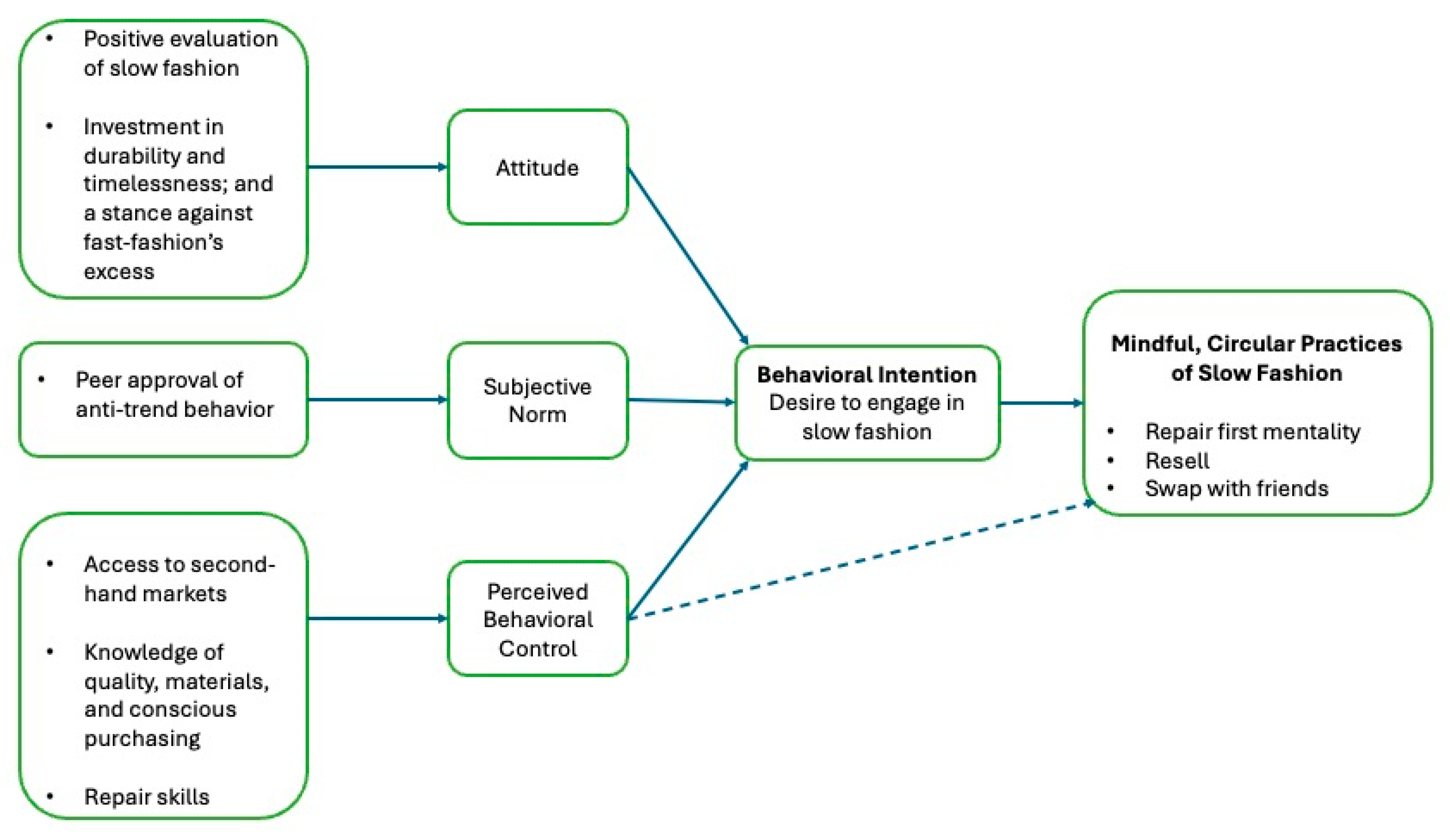
This section interprets these findings using TPB, showing how attitudes, PBC, and subjective norms collectively shape strong intentions to adopt slow fashion, which translate into observable consumption behaviors [25].

4.1. Attitude Towards Slow Fashion

A positive attitude towards a behavior within the TPB framework stems from an individual’s beliefs about its anticipated outcomes [25]. Participants expressed strong positive attitudes toward slow fashion, shaped by two key sub-themes: durability and timelessness and ethical rejection of fast fashion, which are explained below.

4.1.1. Durability and Timelessness

Australian Zennials emphasized the functional value of slow fashion, particularly longevity, quality, and timeless design. Clothing was viewed as a long-term investment rather than a disposable item. The most important feature was longevity, with participants expressing preferences for “long-lasting” and “well-made” garments. P1 shared, “My longest pieces I’m still wearing for almost 6 years.” P3 aimed “to buy it and know you’re going to continue wearing it.” P11 stated, “If I buy something, I want it to last.” P15 considered “longevity” a key factor alongside quality, and P16 actively looked for “durability in design.” Even for basics, participants sought “good quality knit” and “well-made” items that “will last a long time.” P20 summed up this ethos: “Wear my clothes until they fall apart.
Beyond physical durability, participants valued aesthetic permanence. They intentionally avoided short-lived microtrends, favoring versatile, timeless pieces. P11 explained, “I don’t want to buy something very trendy.” P12 aimed for “Timeless pieces that can be mixed and matched with what I’ve already got.” P15 preferred “clean girl style, with everything basic and easy to style with other stuff I have.
These findings align with slow fashion’s core principles of longevity, superior craftsmanship, and mindful consumption [7,32,34]. They challenge fast fashion’s throwaway culture and reflect Fletcher’s advocacy for sustainable practices of use [37]. The emphasis on aesthetic permanence further supports slow fashion ideals, which promote a shift away from trend-driven cycles toward enduring personal style.

4.1.2. Ethical Rejection of Fast Fashion’s Excess

Participants expressed strong ethical opposition to fast fashion, which significantly enhanced their favorable attitudes toward slow fashion. This stance was rooted in skepticism about corporate greenwashing and concerns over labor conditions. P16 noted, “I think that there is so much deception and greenwashing in the fashion industry… pretending that they are fully ethical and sustainable, when their practices are not.” P1 preferred “the opposite of fast fashion; something that has long durability and is ethically made.” P2 actively avoided purchasing from fast fashion giants such as Jay Jay’s, Shein, Kmart, and Temu. Participants also highlighted labor exploitation, with P3 mentioning “the work conditions” and P20 stating, “A $5 t-shirt… makes me sick” due to her awareness of the effort involved.
These findings underscore Zennials’ ethical priorities and align with research showing their high expectations for corporate responsibility and transparency [12,14,18]. Their rejection of fast fashion reflects slow fashion’s moral dimension and its emphasis on fair labor practices, directly linking to the social pillar of sustainable development [7].

4.2. Perceived Behavioral Control: Enabling Strategies

While research highlights high cost as a major barrier to slow fashion [10], participants demonstrated strong PBC by reframing this challenge through adaptive strategies. Two key approaches emerged: leveraging the second-hand market and applying knowledge and skills to make slow fashion attainable.

4.2.1. Leveraging the Second-Hand Economy

Participants strategically engaged with the second-hand market to overcome financial barriers and maintain alignment with slow fashion values. P10 stated, “I honestly get most of my clothes from the op shop,” while P19 shared, “I exclusively buy second-hand.” Others described similar practices: P15 would “usually try to shop at op shops (thrift shops) first,” and P16 noted, “I mainly shop on eBay and Depop.” This approach provided financial flexibility, enabling participants to access high-quality items at lower prices and bridge the “attitude–behavior gap” often attributed to cost constraints. The second-hand market thus became the primary control factor that made slow fashion values actionable.
These findings align with studies showing that Gen Z and Millennials use second-hand shopping to access quality garments affordably [38,39]. They confirm reuse as a successful behavioral control mechanism and suggest this reliance on second-hand markets is a generational trait, consistent with adaptive behaviors observed among Australian Millennials facing financial barriers [52].
Compared to other countries, second-hand consumption similarly enables access to quality garments and supports ethical values among younger consumers. In the United States, Chi et al. [22] found that affordability and ethical concerns were key drivers for Millennials and Gen Z engaging with slow fashion. In Indonesia, Aprianingsih et al. [24] reported that environmental awareness and social influence strongly shaped intentions to purchase slow fashion through resale channels. In Brazil, Gomes De Oliveira et al. [8] found that consumers perceived second-hand stores as more transparent and trustworthy than fast fashion retailers, reinforcing their role in ethical consumption. These findings corroborate the present study’s conclusion that second-hand consumption is not merely a workaround but a structural enabler of slow fashion values.

4.2.2. Knowledge and Repair Skills

Participants also demonstrated control through knowledge of garment quality, materials, and sustainable consumption practices. Many reported a deliberate shift away from impulsive buying toward careful, infrequent purchasing. P12 explained, “I only buy things that I think I don’t already have in my wardrobe,” while P14 described buying “Once a season or when I’m travelling, which is probably every 4–6 months,” and maintaining a wardrobe of just 28 pieces. P16 applied a personal rule: “Will I wear this in three years’ time?
Participants also prioritized repair before disposal, with P11 stating, “Mostly, I repair it by myself until they can’t be fixed anymore.” When repair was no longer possible, garments were recirculated through resale platforms or clothing exchanges with friends. These practices reflect mindful consumption [34] and sustainable strategies for extending product lifecycles [36,37].
Such knowledge and skills enhance self-efficacy, a concept central to PBC [22,25], and demonstrate how informed decision-making enables participants to overcome barriers and maintain slow fashion engagement.

4.3. Subjective Norms: Peer Influence and Anti-Trend Culture

Subjective norms within the TPB refer to perceived social pressure to perform or avoid a behavior [25]. For Australian Zennials, slow fashion engagement was shaped by an ‘anti-trend’ peer culture and a shared commitment to ethical and local practices.

Anti-Trend Peer Culture

Participants described a collective norm that values authenticity and personal style over fast fashion’s trend cycles. P14 observed, “People who are conscious about their style don’t buy that often because they could play around with what they have.” P13 expressed feeling liberated from “social pressure” to consume, signaling a rejection of mainstream norms. P16 criticized “microtrends that are not made to last” and noted how social media drives overspending without a “sense of style.” These comments point to a subtle but influential peer expectation to resist trend-driven consumption.
Participants also emphasized support for local and independent brands, reflecting a social valuing of transparency and fair practices. P3 stated, “Only trust local brands, not big businesses,” while P13 listed brands such as “Karlaid Law, Hara Label, Indigo Luna and Penthouse.” This shared inclination toward ethical and community-oriented consumption reinforces slow fashion behaviors within their social circles.
These findings align with research showing Zennials are skeptical of mainstream advertising and more influenced by peer groups [13,19,46]. The anti-trend stance, amplified by digital peer culture, establishes a collective norm that supports reduced consumption frequency and ethical purchasing, a key driver of responsible fashion choices.
Overall, for Australian Zennials, high PBC provides practical means (affordability and access via second-hand markets), while subjective norms offer social justification (peer approval for anti-trend values), together bridging the intention–action gap.

4.4. Behavioral Practice: Mindful and Circular Consumption

Repair and Recirculation

Participants demonstrated a clear hierarchy of circular practices for garment end-of-life, prioritizing repair and recirculation to minimize waste. The first and most common choice was repair, with P20 stating, “My first step is always to ask Mum or Granny if we can mend or alter it.” Only when repair was no longer possible did participants move to recirculation, selling items on peer-to-peer platforms or engaging in clothing swaps. These strategies keep garments in use at their highest value, directly reducing textile waste and supporting resource efficiency.
This active hierarchy aligns with Circular Economy principles and reflects slow fashion’s emphasis on extending product lifecycles [36,37]. Figure 3 illustrates how attitudes, norms, and control perceptions interact within the TPB framework to inform these mindful behaviors.

5. Implications

5.1. Theoretical Implications

This research makes three primary theoretical contributions. First, it confirms and extends the applicability of the TPB [25] to slow fashion consumption by emphasizing the underestimated role of PBC. While prior research, such as Chi et al. [22], has demonstrated the influence of attitudes on sustainable intentions, our findings show that PBC, through individual strategies such as leveraging second-hand markets and applying knowledge and skills, is the critical factor that converts positive attitudes into actual purchasing behavior. This contribution highlights the need for TPB-based sustainability research to focus more on identifying and evaluating specific control factors that empower or restrict pro-environmental behavior.
Second, this study reframes the conceptual role of the second-hand economy within slow fashion. Rather than treating second-hand consumption as a separate sustainable alternative [38,39], our findings position it as a structural enabler within the slow fashion ecosystem. For Australian Zennials, second-hand platforms serve as gateways that allow value-driven consumption while bypassing cost barriers associated with new ethical goods. This ecosystem perspective argues that academic models of slow fashion should adopt a broader lens, as proposed by Jung and Jin [31], integrating second-hand consumption as a fundamental component of the system rather than a distinct activity.
Third, by linking durability-focused attitudes to reduced consumption behaviors, this study provides empirical evidence that consumer demand can drive industry optimization. This supports Cleaner Production goals by reducing pressure on primary production inputs and reinforcing the role of consumer pull in shaping sustainable supply chains.

5.2. Practical and Policy Implications

The findings provide numerous actionable recommendations for industry stakeholders and policymakers seeking to align Zennial consumption patterns with systemic Circular Economy and Cleaner Production objectives.

5.2.1. Implications for Business Models

Firstly, in marketing and communication, given the widespread skepticism of corporate sustainability promises [14,18], vague marketing messages about being “green” or “eco-friendly” are ineffective. To counter skepticism toward greenwashing, a challenge extensively unraveled in recent systematic reviews [53], brands must adopt a strategy of radical transparency, providing verifiable data on supply chain ethics and material sourcing rather than relying on abstract claims. Communications should emphasize concrete attributes such as superior craftsmanship, material durability, timeless design, and a garment’s long-term investment value, reflecting the core tenets of slow fashion [7,32,34]. Transparency is paramount. Providing detailed information about production processes and labor standards, as demanded by this generation [12,18], is critical to building trust.
Secondly, circularity should be integrated into business models. Because the second-hand market plays such a pivotal role in this cohort’s consumption patterns [38,39], brands should view circularity as a core business strategy rather than an afterthought. This could involve creating in-house resale platforms, offering repair and modification services to extend garment life [37], or collaborating with curated second-hand retailers. By aligning with their target audience’s established habits and values, brands can open new revenue streams while also fostering long-term loyalty. However, brands and policymakers must be aware of a potential ‘rebound effect’. While the second-hand market is a key enabler, if it merely accelerates the volume of consumption (by making items cheaper), it may not lead to a net systemic benefit. Therefore, marketing messages should continue to emphasize the slow fashion ethos of mindfulness and longevity, not just the practice of resale.

5.2.2. Implications for Policy and Regulation

The Zennial demand for longevity and a “repair first” mentality aligns with key Circular Economy textile waste management strategies [54], necessitating targeted policy interventions promoting upstream Cleaner Production.
First, policymakers should mandate Design for Durability by strengthening Extended Producer Responsibility (EPR) schemes for textiles. In Australia, the Seamless Clothing Stewardship Scheme provides a baseline model [55]. Building on this, mandatory EPR mechanisms could impose financial levies on producers of garments deemed nondurable or difficult to repair, directly incentivizing Cleaner Production objectives [36,40,55]. This could build on EU initiatives like the Ecodesign for Sustainable Products Regulation (ESPR), which aims to introduce durability and repairability standards for textiles [56].
Second, to reinforce the PBC mechanism observed in this cohort, governments should actively support repair and reuse. A 2024 survey confirms that Australian consumers already engage in these practices to divert waste from landfill [57]. Policy support, such as tax incentives (e.g., reduced VAT/GST) on second-hand goods and repair services, would bolster consumers’ agency. For example, Sweden reduced VAT on repair services (including clothing) from 25% to 12% in 2017 [58], and France introduced a “repair bonus” in 2023, offering €7 for shoe heels and €10-€25 per garment repair [59]. These measures make sustainable choices more financially attractive than fast fashion.
Finally, to enforce transparency and build consumer trust, regulators must mandate standardized, easily verifiable certification schemes for textile products. Certifications should focus on supply chain ethics, water usage, and material composition, leveraging Zennials’ demand for accountability to drive industrial ethical production standards [6,10,18]. Table 5 synthesizes the proposed policy and business model adjustments that leverage Zennial consumption behavior to drive systemic change.

6. Limitations and Future Research

This study provides a foundational understanding of Australian Zennials’ attitudes and actions in the context of slow fashion, as interpreted through the TPB [25]. However, the exploratory character of this work has some limitations, which offer new opportunities for future research. While the sample size is small, this is consistent with qualitative research aimed at depth rather than breadth. We have now explicitly acknowledged that the findings are exploratory and not statistically generalizable. Future research should employ stratified quantitative surveys to validate prevalence and test causal relationships. Additionally, longitudinal studies are recommended to examine whether these adaptive behaviors persist as economic conditions evolve.
First, this study’s qualitative method used purposive and snowball sampling [48], yielding a small, concentrated sample of Australian Zennials. While this approach was excellent in generating deep, contextual insights, the results are not statistically generalizable to the entire demographic. However, the findings offer strong transferability to similar sub-segments of the population, specifically urban, educated young Australians navigating financial constraints while maintaining high ethical values. The findings are strictly limited to this specific, educated, urban sub-segment and should be interpreted as providing insights rather than statistical prevalence.
The qualitative sample size of n = 20 was deemed sufficient to reach meaningful saturation in the thematic analysis, providing rich insight into adaptive strategies, but it limits claims of population representativeness [51]. The sampling may have attracted individuals already highly engaged with sustainability, and its largely urban concentration may not reflect the realities of those in regional areas with different market access. In addition, the recruitment method (university networks) introduces a significant sampling bias, likely over-representing specific socio-economic and educational groups. This self-selection bias means the adaptive strategies observed may be more advanced than those of the general Zennial population.
Furthermore, the sample’s representativeness is limited. As Table 3 shows, the sample is predominantly female (16F:4M) and, due to recruitment methods, is concentrated in major urban areas. The perspectives of Zennials in regional or rural areas, or from a wider range of gender identities, are not captured here and present a key avenue for future research.
Future studies should employ a large-scale quantitative survey, similar to methodologies used by Chi et al. [22], with a stratified sample to test the prevalence of the identified themes. This is the necessary next step to test the hypotheses generated by this exploratory work. The study’s qualitative nature, while providing deep insight, lacks quantitative validation. Being exploratory and cross-sectional, it cannot establish causal relationships between attitudes, norms, control, and behavior. We recommend future longitudinal research to track how Zennial consumption patterns and their drivers evolve over time as their economic circumstances change.
Second, while the TPB offered a robust framework for analysis, its predefined components may have limited the exploration of other influential factors. The findings hinted at the importance of concepts beyond rational choice, such as habit formation, emotional attachment to clothing, and the role of fashion in identity projects [1], which were not the primary focus. To address this, future qualitative research could use different theoretical lenses to delve deeper into the symbolic and sociocultural aspects of slow fashion consumption, such as its connection to consumer well-being [47].
A third limitation stems from the study’s central finding: the importance of the second-hand market as a driver of slow fashion for this demographic. Although participants reported low purchasing frequency, the rapid growth of the resale market introduces the risk of a rebound effect (where cheaper second-hand items increase overall consumption volume) or moral licensing [60]. A promising path for future research would be a comparative qualitative study that investigates the different motivations and perceived barriers between Zennial consumers who primarily engage with slow fashion through second-hand markets versus those who purchase new, high-end, ethically made garments, as consumer values can differ significantly within a single generation [12,18]. This comparative analysis would clarify whether the PBC mechanism primarily drives frugality or strictly environmental idealism, a necessary step for evaluating the systemic sustainability outcome.
Finally, as with any qualitative research, the possibility of researcher bias in the interpretation of thematic analysis remains, despite the rigorous, reflexive method used [51]. A longitudinal study is recommended to supplement these findings and to investigate the causal links between attitudes, perceived control, norms, and behavior over time. Such research would be valuable in understanding if the conscious consumption patterns described here are sustained as this cohort ages and their economic circumstances evolve.

7. Conclusions

This study examined the slow fashion consumption habits of Australian Zennials, revealing strategies that extend beyond basic purchase decisions. Participants managed the complexities of sustainable consumption by developing shared values and practices. Using the TPB framework, the study found that positive attitudes, shaped by perceived functional, economic, and ethical value, were translated into action through high levels of PBC, primarily enabled by strategic engagement with the second-hand economy. Subjective norms within peer groups reinforced these behaviors by promoting authenticity and rejecting hyper-consumerism.
The key theoretical contribution is the reclassification of the second-hand market as an integral component of the slow fashion system rather than a separate sustainable alternative. This finding demonstrates a consumer-led solution to the persistent value–action gap in sustainable consumption and extends TPB by highlighting the critical role of PBC in bridging attitudes and behaviors. Finally, the collective behavior of this influential generation sends a clear market signal demanding systemic transformation. These insights underscore the need for Cleaner Production practices and robust Circular Economy infrastructure to support durability, repair, and reuse at scale.

Author Contributions

Conceptualization, J.W.K.; methodology, J.W.K., C.S.L.T. and S.I.; software, J.W.K.; validation, J.W.K., C.S.L.T. and S.I.; formal analysis, J.W.K.; investigation, J.W.K.; resources, C.S.L.T. and S.I.; data curation, J.W.K., C.S.L.T. and S.I.; writing, original draft preparation, J.W.K., C.S.L.T. and S.I.; writing, review and editing, J.W.K., C.S.L.T. and S.I.; visualization, J.W.K. and C.S.L.T.; supervision, C.S.L.T. and S.I.; project administration, C.S.L.T. and S.I. All authors have read and agreed to the published version of the manuscript.

Funding

This research received no external funding.

Institutional Review Board Statement

The study was conducted in accordance with the National Statement on Ethical Conduct in Human Research (NHMRC, 2023). Ethics approval (Project ID: 28096, 12 August 2024) was obtained from the Design and Social Context College Human Ethics Advisory Network, a subcommittee of the Royal Melbourne Institute of Technology (RMIT University). Informed consent for participation was obtained from all subjects involved in the study. All data were anonymized in accordance with the approved protocol to ensure participant confidentiality.

Informed Consent Statement

Informed consent was obtained from all subjects involved in the study.

Data Availability Statement

The raw data supporting the conclusions of this article will be made available by the authors on request.

Conflicts of Interest

The authors declare no conflicts of interest.

Abbreviations

The following abbreviations are used in this manuscript:
TPBTheory of Planned Behavior
PBCPerceived Behavioral Control
GenGeneration

References

  1. Tiwari, S.; Shah, P.; Nainani, V. The Interplay of Fashion and Personal Identity: Exploring How Clothing Choices Reflect and Shape Personality. Int. J. Sci. Res. 2024, 13, 69–72. [Google Scholar] [CrossRef]
  2. Khan, M.I.; Wang, L.; Padhye, R. Textile Waste Management in Australia: A Review. Resour. Conserv. Recycl. Adv. 2023, 18, 200154. [Google Scholar] [CrossRef]
  3. Australian Fashion Council and Consortium. Seamless Scheme Design Summary Report. May 2023. Available online: https://ausfashioncouncil.com/wp-content/uploads/2023/06/Seamless-Scheme-Design-Summary-Report.pdf (accessed on 27 May 2025).
  4. Domingos, M.; Vale, V.T.; Faria, S. Slow Fashion Consumer Behavior: A Literature Review. Sustainability 2022, 14, 2860. [Google Scholar] [CrossRef]
  5. Benhissi, M.; Hamouda, M. Investigating Consumers’ Slow Fashion Purchase Decision: Role of Lack of Information and Confusion. Eur. Bus. Rev. 2025, 37, 575–595. [Google Scholar] [CrossRef]
  6. Lee, E.; Weder, F. Framing Sustainable Fashion Concepts on Social Media. An Analysis of #slowfashionaustralia Instagram Posts and Post-COVID Visions of the Future. Sustainability 2021, 13, 9976. [Google Scholar] [CrossRef]
  7. Fletcher, K. Slow Fashion: An Invitation for Systems Change. Fash. Pract. 2010, 2, 259–265. [Google Scholar] [CrossRef]
  8. Gomes De Oliveira, L.; Miranda, F.G.; De Paula Dias, M.A. Sustainable Practices in Slow and Fast Fashion Stores: What Does the Customer Perceive? Clean. Eng. Technol. 2022, 6, 100413. [Google Scholar] [CrossRef]
  9. Solino, L.J.S.; Teixeira, B.M.D.L.; Dantas, Í.J.D.M. Sustainability in Fashion: A Systematic Literature Review on Slow Fashion. Int. J. Innov. Educ. Res. 2020, 8, 164–202. [Google Scholar] [CrossRef]
  10. Skinner, E.A.; Litchfield, C.A.; Le Busque, B. Barriers, Brands and Consumer Knowledge: Slow Fashion in an Australian Context. Cloth. Cult. 2021, 8, 75–99. [Google Scholar] [CrossRef]
  11. Jegethesan, K.; Sneddon, J.N.; Soutar, G.N. Young Australian Consumers’ Preferences for Fashion Apparel Attributes. J. Fash. Mark. Manag. Int. J. 2012, 16, 275–289. [Google Scholar] [CrossRef]
  12. Manley, A.; Seock, Y.; Shin, J. Exploring the Perceptions and Motivations of Gen Z and Millennials toward Sustainable Clothing. Fam. Consum Sci. Res. J. 2023, 51, 313–327. [Google Scholar] [CrossRef]
  13. WGSN. Zennials: The In-Between Generation. WGSN Insight, Article No. 87486. Available online: https://www.wgsn.com/insight/article/87486 (accessed on 5 May 2025).
  14. da Silva, S.; de Sousa Gomes, C. Barriers to Slow Fashion: A Comparison Between the Perceptions of Generation X, Y and Z. Ph.D. Thesis, Universidade Catolica Portuguesa, Lisbon, Portugal, 2023. ProQuest Dissertations & Theses Global; Order No. 31518034. Available online: https://www.proquest.com/dissertations-theses/barriers-slow-fashion-comparison-between/docview/3122647916/se-2 (accessed on 7 July 2025).
  15. Charlton, E. The Cost of Living is a Top Concern for Gen Z and Millennials. World Economic Forum. 19 May 2023. Available online: https://www.weforum.org/stories/2023/05/gen-z-millennials-work-cost-living/ (accessed on 6 November 2025).
  16. Gen Unison. Generation Names and Years. Available online: https://genunison.com/generation-years/generation-names/ (accessed on 8 July 2025).
  17. AlphaBeta Advisors. Afterpay Next Gen Index: Millennials and Gen Z in Australia. Afterpay Australia. 2021. Available online: https://afterpay-newsroom.yourcreative.com.au/wp-content/uploads/2021/08/Afterpay_Web_report_AUS_vF-1-2.pdf (accessed on 23 July 2025).
  18. Brand, B.M.; Rausch, T.M.; Brandel, J. The Importance of Sustainability Aspects When Purchasing Online: Comparing Generation X and Generation Z. Sustainability 2022, 14, 5689. [Google Scholar] [CrossRef]
  19. WGSN. Generational Futures: Fringe Demographics. WGSN Insight. Available online: https://www.wgsn.com/auth/login?lang=en&r=%2Finsight%2Farticle%2F66a7786656656d48f7d32396%3Flang%3Den (accessed on 5 May 2025).
  20. McKinsey. What Is Gen Z? McKinsey Explainers. Available online: https://www.mckinsey.com/featured-insights/mckinsey-explainers/what-is-gen-z (accessed on 8 May 2025).
  21. Climate Council. New Poll Shows Aussies Back Strong Climate Action, as Unnatural Disasters Dent Productivity. Climate Council Media Release. 8 August 2025. Available online: https://www.climatecouncil.org.au/resources/new-poll-shows-aussies-back-strong-climate-action-as-unnatural-disasters-dent-productivity (accessed on 10 October 2025).
  22. Chi, T.; Gerard, J.; Yu, Y.; Wang, Y. A Study of U.S. Consumers’ Intention to Purchase Slow Fashion Apparel: Understanding the Key Determinants. Int. J. Fash. Des. Technol. Educ. 2021, 14, 101–112. [Google Scholar] [CrossRef]
  23. Duh, H.I.; Yu, H.; Venter De Villiers, M.; Steffek, V.; Shao, D. Determinants of Young Adults’ Slow Fashion Attitudes and Idea Adoption Intentions in Canada, China and South Africa. Int. J. Emerg. Mark. 2024, 20, 3252–3279. [Google Scholar] [CrossRef]
  24. Aprianingsih, A.; Fachira, I.; Setiawan, M.; Debby, T.; Desiana, N.; Lathifan, S.A.N. Slow Fashion Purchase Intention Drivers: An Indonesian Study. J. Fash. Mark. Manag. Int. J. 2023, 27, 632–647. [Google Scholar] [CrossRef]
  25. Ajzen, I. The Theory of Planned Behavior. Organ. Behav. Hum. Decis. Process. 1991, 50, 179–211. [Google Scholar] [CrossRef]
  26. Palm, C. Sustainable fashion: To define, or not to define, that is not the question. Sustain. Sci. Pract. Policy 2023, 19, 2261342. [Google Scholar] [CrossRef]
  27. Dissanayake, D.G.K.; Weerasinghe, D. Towards Circular Economy in Fashion: Review of Strategies, Barriers and Enablers. Circ. Econ. Sustain. 2022, 2, 25–45. [Google Scholar] [CrossRef]
  28. ElShihy, D.; Awaad, S. Leveraging social media for sustainable fashion: How brand and user-generated content influence Gen Z’s purchase intentions. Future Bus. J. 2025, 11, 113. [Google Scholar] [CrossRef]
  29. McKinsey & Company. The Price is not Right: Gen Z’s Sustainable-Fashion Conundrum. McKinsey. 2023. Available online: https://www.mckinsey.com/~/media/mckinsey/email/genz/2023/06/2023-06-06b.html (accessed on 7 November 2025).
  30. Bick, R.; Halsey, E.; Ekenga, C.C. The Global Environmental Injustice of Fast Fashion. Environ. Health 2018, 17, 92. [Google Scholar] [CrossRef] [PubMed]
  31. Jung, S.; Jin, B. A Theoretical Investigation of Slow Fashion: Sustainable Future of the Apparel Industry. Int. J. Consum. Stud. 2014, 38, 510–519. [Google Scholar] [CrossRef]
  32. Clark, H. SLOW + FASHION—An Oxymoron—Or a Promise for the Future…? Fash. Theory 2008, 12, 427–446. [Google Scholar] [CrossRef]
  33. Petrini, C. Slow Food: The Case for Taste; McCuaig, W., Translator; Columbia University Press: New York, NY, USA, 2003; Originally published as Slow Food: Le Ragioni del Gusto; Gius. Laterza & Figli: Bari, Italy, 2001. [Google Scholar]
  34. Pookulangara, S.; Shephard, A. Slow Fashion Movement: Understanding Consumer Perceptions—An Exploratory Study. J. Retail. Consum. Serv. 2013, 20, 200–206. [Google Scholar] [CrossRef]
  35. Jung, S.; Jin, B. From Quantity to Quality: Understanding Slow Fashion Consumers for Sustainability and Consumer Education. Int. J. Consum. Stud. 2016, 40, 410–421. [Google Scholar] [CrossRef]
  36. Niinimäki, K.; Hassi, L. Emerging Design Strategies in Sustainable Production and Consumption of Textiles and Clothing. J. Clean. Prod. 2011, 19, 1876–1883. [Google Scholar] [CrossRef]
  37. Fletcher, K. Durability, Fashion, Sustainability: The Processes and Practices of Use. Fash. Pract. 2012, 4, 221–238. [Google Scholar] [CrossRef]
  38. Sorensen, K.; Johnson Jorgensen, J. Millennial Perceptions of Fast Fashion and Second-Hand Clothing: An Exploration of Clothing Preferences Using Q Methodology. Soc. Sci. 2019, 8, 244. [Google Scholar] [CrossRef]
  39. Mazanec, J.; Harantová, V. Gen Z and Their Sustainable Shopping Behavior in the Second-Hand Clothing Segment: Case Study of the Slovak Republic. Sustainability 2024, 16, 3129. [Google Scholar] [CrossRef]
  40. Devetak, T.; Pavko Čuden, A. Sustainable Fashion in Slovenia: Circular Economy Strategies, Design Processes, and Regional Innovation. Sustainability 2025, 17, 8890. [Google Scholar] [CrossRef]
  41. WGSN. Brand Strategy: Marketing to Zennials. Available online: https://www.wgsn.com/auth/login?lang=en&r=%2Finsight%2Farticle%2F87486%3Flang%3Den (accessed on 10 October 2025).
  42. News Medical Life Sciences. Available online: https://www.news-medical.net/news/20240305/Australian-Gen-Z-people-have-major-concerns-about-climate-change-research-shows.aspx (accessed on 15 August 2025).
  43. Welch, K.; Gen, Z. Millennials Lose Sustainability Cred, Turn to Ultra-Fast Fashion Homewares Giants Temu. Mi3. 25 March 2025. Available online: https://www.mi-3.com.au/25-03-2025/gen-z-millennials-lose-sustainability-cred-turn-ultra-fast-fashion-homewares-giants-temu (accessed on 25 May 2025).
  44. Australian Institute of Health and Welfare (AIHW). Income: Household and Individual; AIHW: Canberra, Australia, 2021. Available online: https://www.aihw.gov.au/reports/children-youth/income-household-and-individual (accessed on 6 July 2025).
  45. Statista. Gen Z and Global Users Top Social Media Usage in 2023. Statista. 2024. Available online: https://www.statista.com/statistics/1446950/gen-z-internet-users-social-media-use (accessed on 1 August 2025).
  46. Sprout Social. Aussie Influencer Marketing in 2025. Sprout Blog. 27 March 2025. Available online: https://sproutsocial.com/insights/influencer-marketing-stats-australia (accessed on 3 July 2025).
  47. Liu, A.; Baines, E.; Ku, L. Slow Fashion Is Positively Linked to Consumers’ Well-Being: Evidence from an Online Questionnaire Study in China. Sustainability 2022, 14, 13990. [Google Scholar] [CrossRef]
  48. Etikan, I. Comparison of Convenience Sampling and Purposive Sampling. Am. J. Theor. Appl. Stat. 2016, 5, 1–4. [Google Scholar] [CrossRef]
  49. Saunders, B.; Sim, J.; Kingstone, T.; Baker, S.; Waterfield, J.; Bartlam, B.; Burroughs, H.; Jinks, C. Saturation in qualitative research: Exploring its conceptualization and operationalization. Qual. Quant. 2018, 52, 1893–1907. [Google Scholar] [CrossRef] [PubMed]
  50. Jung, S.; Jin, B. Sustainable Development of Slow Fashion Businesses: Customer Value Approach. Sustainability 2016, 8, 540. [Google Scholar] [CrossRef]
  51. Braun, V.; Clarke, V. Reflecting on Reflexive Thematic Analysis. Qual. Res. Sport Exerc. Health 2019, 11, 589–597. [Google Scholar] [CrossRef]
  52. Ayza Gomez, V.; Islam, S.; Tan, C.S.L. Sustainable Fashion: Insights into Australian Millennials’ Purchasing Decisions. Sustain. Econ. 2025, 3, 1189. [Google Scholar] [CrossRef]
  53. Badhwar, A.; Islam, S.; Tan, C.S.L.; Panwar, T.; Wigley, S.; Nayak, R. Unraveling Green Marketing and Greenwashing: A Systematic Review in the Context of the Fashion and Textiles Industry. Sustainability 2024, 16, 2738. [Google Scholar] [CrossRef]
  54. Shamsuzzaman, M.; Islam, M.; Mamun, M.A.A.; Rayyaan, R.; Sowrov, K.; Islam, S.; Sayem, A.S.M. Fashion and Textile Waste Management in the Circular Economy: A Systematic Review. Clean. Waste Syst. 2025, 11, 100268. [Google Scholar] [CrossRef]
  55. Clothing Stewardship Australia Ltd. Seamless Clothing Stewardship Scheme. Available online: https://www.seamlessaustralia.com (accessed on 14 October 2025).
  56. European Commission. Ecodesign for Sustainable Products Regulation (ESPR): Durability and Repairability Standards for Textiles. European Union. 2024. Available online: https://environment.ec.europa.eu (accessed on 6 November 2025).
  57. Payne, A.; Jiang, X.; Street, P.; Leenders, M.; Nguyen, T.N.; Pervan, S.; Tan, C.S.L. Keeping Clothes Out of Landfill: A Landscape Study of Australian Consumer Practices; RMIT University: Melbourne, Australia, 2024; Available online: https://doi.org/10.25439/rmt.27092239.v1 (accessed on 14 October 2025).
  58. Swedish Government. Tax Reduction on Repair Services. Government of Sweden; 2017. Available online: https://www.government.se (accessed on 6 November 2025).
  59. ADEME. Repair Bonus: Financial Incentives for Textile Repairs. French Agency for Ecological Transition. 2023. Available online: https://www.ademe.fr (accessed on 6 November 2025).
  60. Bauer, A.; Menrad, K. The Nexus between Moral Licensing and Behavioral Consistency: Is Organic Consumption a Door-Opener for Commitment to Climate Protection? Soc. Sci. J. 2023, 60, 665–679. [Google Scholar] [CrossRef]
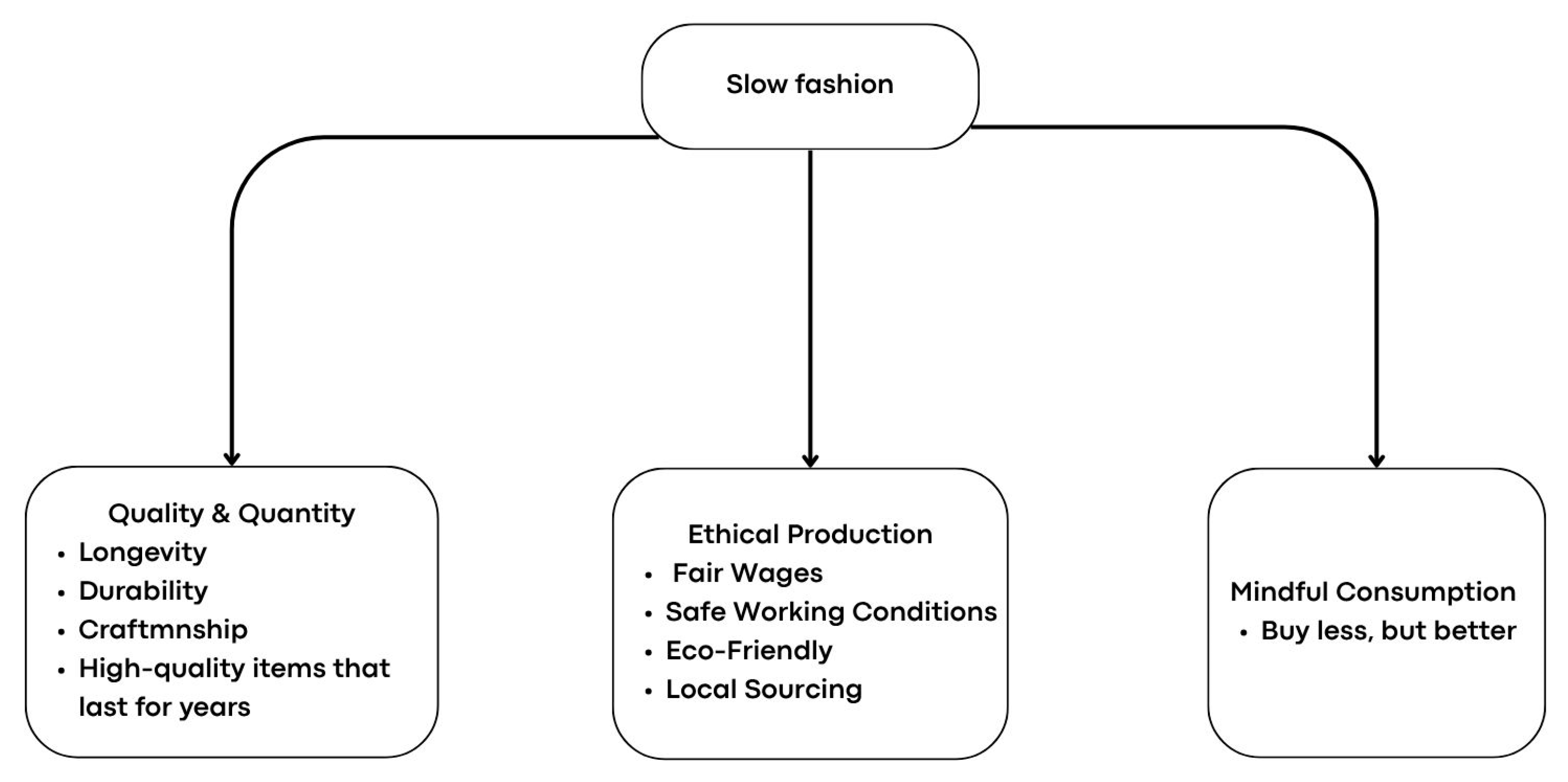
Figure 1. A Conceptual Schematic Diagram of Slow Fashion Principles [7].
Sustainability 17 11253 g001
Figure 2. Core belief structures based on Ajzen’s TPB model [25].
Sustainability 17 11253 g002
Figure 3. A TPB-based framework illustrating the decision-making process of Australian Zennials, where attitudes, subjective norms, and high Perceived Behavioral Control (PBC) lead to mindful and circular slow fashion practices.
Sustainability 17 11253 g003
Table 1. Key Principles of Slow Fashion.
PrincipleDescription
Ethical Production Built upon fair labor practices, safe working conditions, and equitable wages for all individuals involved in the supply chain, from raw material sourcing to final garment construction [7].
Quality & Longevity This principle combines superior craftsmanship, high-quality materials, and attention to detail with the goal of creating garments designed to last. The focus is on physical durability and timeless style, ensuring items remain strong and aesthetically appealing over extended periods, which discourages frequent replacement [7,32,34,35].
Mindful Consumption Involves consumers making more conscious, deliberate purchasing decisions, valuing their clothing, caring for it properly, and considering the full lifecycle of their garments to move away from impulsive buying [34].
Sustainability Relies on minimizing environmental impact by using eco-friendly materials, reducing water and energy consumption, minimizing waste and pollution, and considering biodiversity [36,37].
Table 2. Comparison of Slow Fashion and Fast Fashion Across Key Features.
Feature Slow Fashion Fast Fashion
Core Philosophy Offers an alternative to rapid consumerism, promoting sustainability, ethical labor, and long-lasting craftsmanship. Promotes rapid consumerism and has detrimental environmental and ethical effects.
Key Consumer Appeal Principles of durability, use of sustainable materials, and timeless styles Speed and novelty.
Practical Manifestations Practices include design for durability, use of sustainable or local materials, transparent supply chains, fair labor, small production runs, and repair services. Mass production with a focus on rapid, trend-driven cycles.
Market Implication Its appeal can be limited by the faster and cheaper options available in the resale market. Its negative impacts have spurred the growth of alternatives like slow fashion.
Table 3. Participant demographic profiles.
NAgeGenderEducationOccupation
125MCert IIIGraphic Designer
227FCert IIIEarly Childhood Educator
323FBachelor’s DegreeSocial Work Student
429MBachelor’s DegreeGraphic Designer
528FBachelor’s DegreeDigital Marketing Executive
627FCert IIIInterior Designer
723FCert IIIInterior Designer
827MHigh SchoolGraphic Designer
926FBachelor’s DegreeInterior Designer
1028FBachelor’s DegreeEarly Childhood Educator
1129MBachelor’s DegreeDesigner (Creative/Open Design)
1226FMaster’s DegreeDigital Marketing Executive
1331FBachelor’s DegreeYoga Instructor/Architect
1431FHigh SchoolEntrepreneur
1523FBachelor’s DegreeMedical Student
1627FBachelor’s DegreeTraditional Chinese Medicine Practitioner
1724FBachelor’s DegreeBachelor of Arts (English Language) Student
1826FHigh SchoolRetail Manager
1930FCert IIIEarly Childhood Educator
2024FBachelor’s DegreeMedical Student
Table 4. Summary of Overarching Themes and Sub-Themes Identified in Thematic Analysis (Aligned with TPB Framework).
Overarching ThemeSub-Themes
AttitudeDurability & Timelessness; Ethical Rejection of Fast Fashion’s Excess
Perceived Behavioral ControlSecond-Hand Economy; Knowledge & Repair Skills
Subjective NormsAnti-Trend Peer Culture
Behavioral PracticeMindful and Circular Consumption
Table 5. Policy and Regulatory Interventions to Enhance Circularity in the Australian Fashion Industry.
Target AreaIntervention Type (Policy/Business)Recommendation Derived from Zennial BehaviorCleaner Production/Circular Economy Outcome
Product LongevityPolicy/Regulatory (EPR)Introduce minimum durability standards linked to mandatory repair guarantees (e.g., 5-year wear requirement or product-lifetime repair subsidies).Mandates upstream Cleaner Production design changes; reduces waste volume.
Affordability/AccessBusiness/Policy (Incentives)Subsidize repair/modification services; implement tax relief on second-hand goods.Strengthens PBC for Zennials; accelerates Circular Economy loops and responsible consumption.
Transparency/TrustRegulatory/Industry (Certification)Establish independent, government-backed certification for supply chain ethics and material sourcing, moving beyond vague “green” claims.Addresses greenwashing skepticism; reinforces Zennials’ demand for ethical production and minimizes risk exposure.
Waste ManagementPolicy/Regulatory (Logistics)Investment in standardized, accessible public textile recycling and collection infrastructure separate from general waste streams.Facilitates the final stages of the Zennial ‘mindful practice’ hierarchy (Figure 3), increasing material recovery.
Disclaimer/Publisher’s Note: The statements, opinions and data contained in all publications are solely those of the individual author(s) and contributor(s) and not of MDPI and/or the editor(s). MDPI and/or the editor(s) disclaim responsibility for any injury to people or property resulting from any ideas, methods, instructions or products referred to in the content.