1. Introduction
Since the founding of the People’s Republic of China, grain production has undergone remarkable development, driven by advances in agricultural technology and improvements in overall agricultural productivity over the past 75 years. Compared to 1949, China’s total grain production in 2023 reached 139.08 billion kg, with a crop yield of 5845 kg ha
−1, representing increases of 100 billion kg and 4817 kg ha
−1, respectively [
1]. Per capita grain possession reached 493 kg in 2023, significantly exceeding the internationally recognized food-security threshold of 400 kg [
2]. At present, China produces nearly 25% of the world’s grain, supporting approximately 20% of the global population with only 9% of the world’s arable land and 6% of its freshwater resources [
3]. This substantial increase in agricultural productivity not only ensures national food security but also contributes significantly to global agricultural and economic development.
Despite these achievements, sustainable crop production in China faces significant challenges. Natural resource constraints severely limit productivity, including insufficient arable land, poor soil quality, water scarcity in major grain-producing regions, and a mismatch between agricultural water requirements and water resource distribution [
4,
5,
6,
7]. Socio-economic factors further exacerbate these challenges: Outdated agricultural infrastructure and equipment hinder the adoption of modern farming technologies, while small-scale operations, aging farmers, and limited education reduce productivity and international competitiveness [
8,
9]. Additionally, China’s long-standing reliance on intensive farming practices, i.e., high-yield varieties, monoculture planting, excessive use of agricultural chemicals, and unsustainable irrigation expansion, has led to severe ecological and environmental problems, including soil degradation, groundwater depletion, land and water pollution, and biodiversity loss [
10,
11,
12,
13]. There is an urgent need to transition to sustainable production models that reduce resource dependency while protecting the environment.
At the Central Economic Meeting in December 2023, the CPC Central Committee emphasized that China’s economy in the new era should be driven by new-quality productive forces, such as cutting-edge and emerging technologies, which will foster innovative industries, models, and growth drivers. For grain production, this means shifting toward innovative technologies, devices, materials, and management models that prioritize resource-use efficiency, cost-effectiveness, minimal environmental impact, and ecological sustainability [
14,
15]. These advancements will lay the foundation for a high-quality and sustainable farming system.
Modern crop production is influenced by a complex interplay of factors. Internally, it depends on farmland quality, the organisms within the ecosystem, and the skills and knowledge of producers (e.g., farmers and cooperatives). Externally, it is shaped by material inputs, production scale, management models, agricultural policies, and market dynamics [
16]. Therefore, the productivity of a new-quality farmland system is determined by three key factors: (1) the quantity, quality, and interrelationships of intrinsic elements like land and organisms; (2) the capabilities of producers managing the system; and (3) the quality of external inputs and regulatory measures.
This study aims to (1) elucidate the concepts and characteristics of the new-quality farmland ecosystem, (2) analyze the challenges in developing this system, and (3) propose strategies for improving farmland productivity under this new framework. While the importance of strategies such as high-standard farmland construction, farmer training, agricultural machinery intelligence are well-established, the literature often examines them in isolation. This paper addresses a critical gap by proposing the new-quality farmland system as a novel integrative framework that articulates the essential synergies between these components, arguing that their coordinated implementation is key to unlocking sustainable productivity gains.
3. Connotation and Characteristics of the New-Quality Farmland System
Crop production is the process by which farmers and agricultural cooperatives utilize available technologies, equipment, and supplies to obtain cereals within the farmland ecosystem. This ecosystem encompasses land, water resources, biotic elements, and climatic conditions. In traditional systems, crop production relies heavily on labor-intensive practices, simple tools, and generational experience. However, these systems often exhibit low productivity, inefficiency, weak market competitiveness, and environmental degradation.
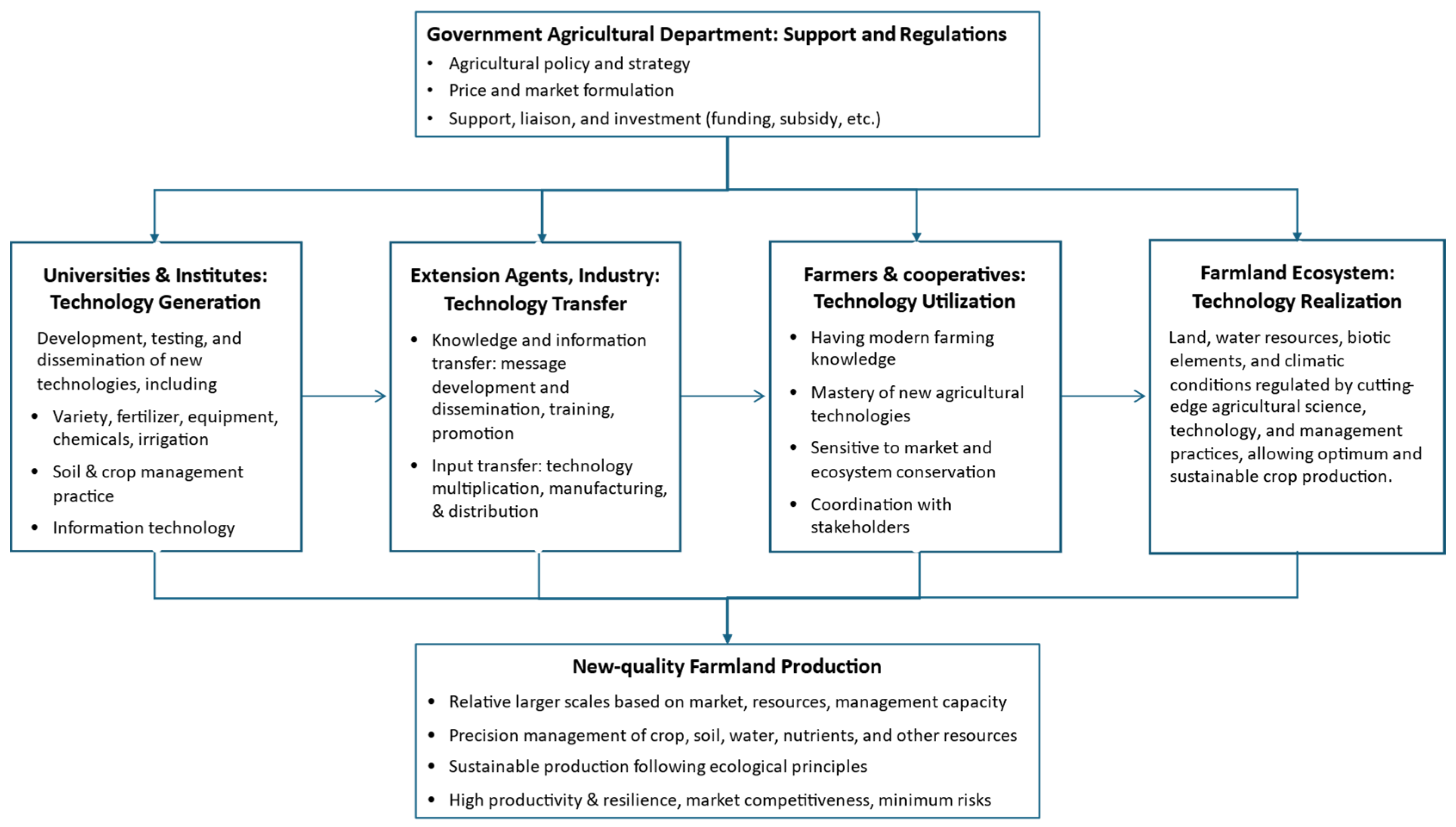
To address these limitations, we propose the new-quality farmland system as an innovative approach that integrates modern agricultural science, technology, and management practices (
Figure 1). This system aims to enhance agricultural productivity, sustainability, and resilience while minimizing environmental impacts. In this section, we explore the connotation and key characteristics of the new-quality farmland system and highlight its transformative potential in agriculture.
3.1. Components of the New-Quality Farmland System
The new-quality farmland ecosystem represents a paradigm shift from traditional, input-intensive agriculture towards a holistic, synergistic model designed for sustainable productivity. Rather than a simple collection of discrete technologies or practices, this system is conceptualized as an integrative framework built upon three interdependent pillars: (1) Smart infrastructure and precision management, (2) Ecological health and sustainable inputs, and (3) Human capital and adaptive governance. The core thesis of this framework is that significant gains in agricultural productivity and sustainability are contingent not merely on the adoption of these individual components, but on their coordinated and synergistic implementation. This section delineates these three pillars, explaining how each acts as a critical element of the system, and culminates by theorizing the essential synergies that arise from their integration, which constitutes the primary novelty of the new-quality farmland concept.
As illustrated in
Figure 1, the new-quality farmland system operates through the synergistic integration of five key players. Government agricultural departments establish the foundational framework through policy, market formulation, and strategic investment. Universities and research institutes generate the core technological innovations, developing and testing new varieties, management practices, and digital tools. Extension agents and industry act as the critical bridge for technology transfer, disseminating knowledge and distributing inputs to end-users. Farmers and cooperatives are the implementers of the system, utilizing these advanced technologies with modern knowledge and a sensitivity to market and ecological balance. Finally, the farmland ecosystem itself is the site of technology realization, where sustainable production is achieved, and its response provides essential feedback to inform and optimize the entire system.
3.2. Key Features of the New-Quality Farmland System
The new-quality farmland system is distinguished by several transformative features in terms of operational scale, precision and efficiency, sustainability, and external supports. First, the new system operates on a larger scale than traditional farming, with all components (e.g., producers, equipment, and ecosystems) optimally integrated. Producers determine planting scales based on market demand, available resources, and their management capacity, ensuring efficient resource allocation.
Second, the new-quality farmland system integrates traditional farming wisdom with cutting-edge technologies to enable precise and sustainable management. This integration is manifested through three key technological pillars: (1) smart machinery, such as drones and automated irrigation systems, (2) efficient inputs, including green fertilizers and high-yield, climate-resilient seed varieties, and (3) digital tools, such as big data, artificial intelligence (AI), and cloud computing. For instance, sensors and AI analyze real-time soil and climatic data to optimize irrigation and fertilization, while crop varieties are specifically selected for local conditions. This synergy of technologies allows for precise management of soil water, nutrients, and pests, which collectively reduces reliance on manual labor, maximizes yield and resource efficiency, and minimizes environmental harm.
Third, agricultural sustainability is a core principle of the new-quality farmland system. This is achieved by practices such as reduced chemical inputs through green fertilizers and biopesticides; conservation of soil and water resources via advanced management strategies; and integration of ecological principles to maintain biodiversity and ecosystem health.
Finally, the new system benefits from robust support mechanisms, including policies promoting land consolidation, high-standard farmland construction, and farmer income security; research and development initiatives by universities and institutes, focusing on technology breakthroughs and talent development, and financial and insurance services provided by enterprises to support large-scale operations and risk management.
As a result, the new-quality farmland system offers significant advantages over traditional systems, as indicated by higher productivity (i.e., greater crop yields), market competitiveness because of large-scale operations and quality products, improved resilience to climate change and natural disasters, and minimum risk of soil and environmental degradation that promotes long-term ecosystem health.
It is important to clarify that the new-quality farmland system represents a distinct socio-technical-ecological framework. Unlike precision agriculture (e.g., variable-rate technology, GPS guidance) and smart agriculture (e.g., IoT sensors, data analytics), which focus primarily on enhancing technological efficiency within the production process, this system is defined by its strategic orchestration of three core, equally weighted pillars to achieve systemic resilience, sustainability, and equitable development: (1) high-caliber human capital, which cultivates professional farm managers capable of strategically leveraging technology within a market economy, moving beyond basic operator skills; (2) advanced, properly scaled equipment, emphasizing not just smart machinery but also the right scale of mechanization for China’s smallholder structure to promote accessible adoption; and (3) a regenerative farmland ecosystem that prioritizes the long-term health of soil, water, and biodiversity as the fundamental asset for sustainable productivity.
4. Challenges in Building the New-Quality Farmland Production System
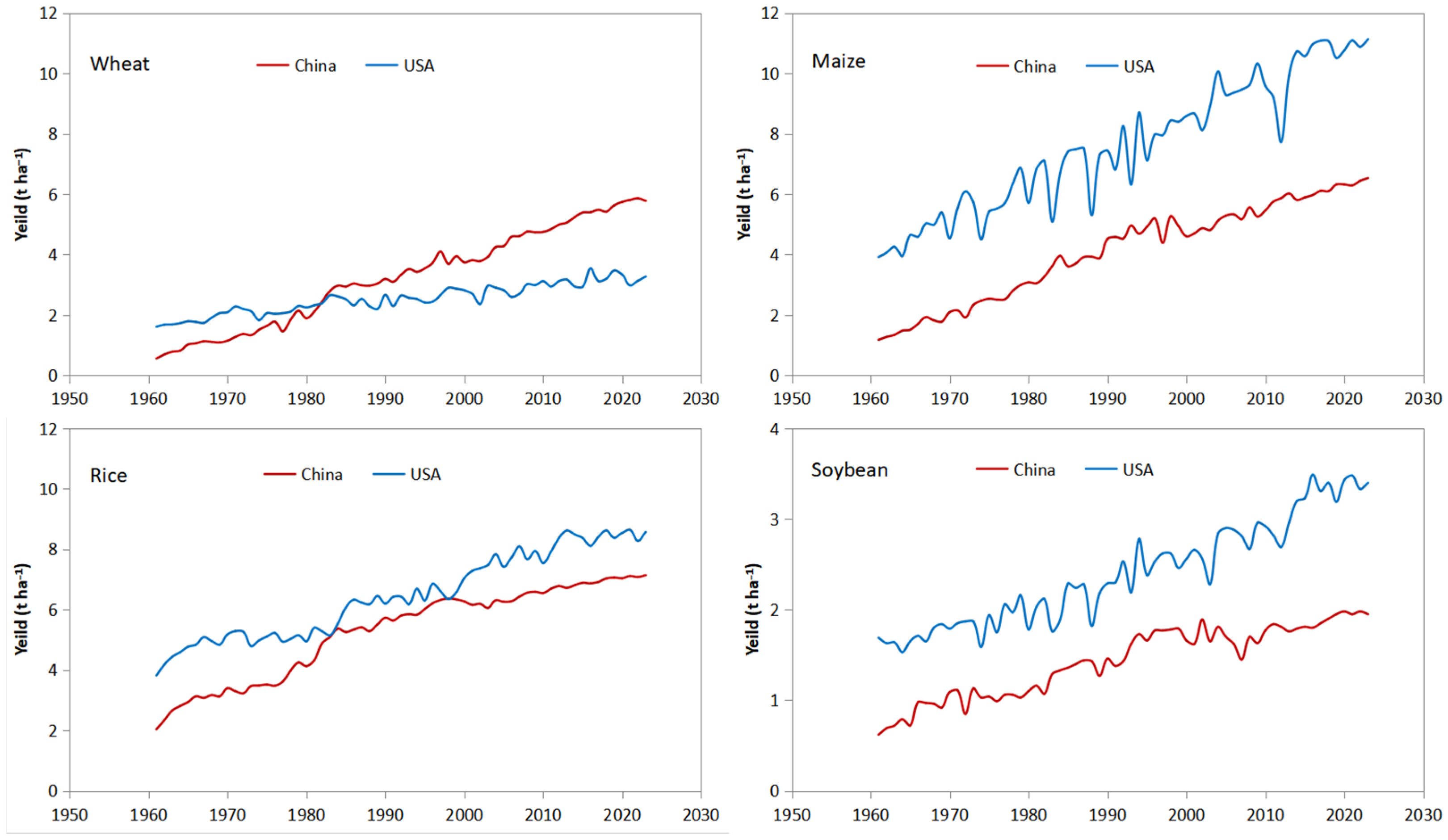
To benchmark China’s progress and contextualize the challenges in building its new-quality farmland system, this analysis employs a comparative study with the United States, a global leader in agricultural productivity and technological adoption. The period from 1961 to 2023 is examined to capture long-term trends and assess the contemporary performance gap. This comparison reveals a significant disparity: despite considerable progress, China’s farmland productivity and efficiency generally remain lower. For in-stance, in 2023, the average grain yield of the USA was 8.33 t ha
−1, 23% higher than that of China (
Table 1,
Figure 2). The USA also outperformed China in the yields of corn and soybeans by 41% and 43%, respectively. A notable exception is wheat, where China’s yield was 77% higher, which arises because U.S. wheat is primarily rainfed, whereas China’s major wheat regions require intensive irrigation. These comparative metrics highlight specific, quantifiable challenges such as input efficiency, technological adoption, and crop-specific resource management, which the new-quality farmland system must address to enhance overall competitiveness.
Overall, when compared to the global leaders, China’s farmland productivity has substantial room for improvement, particularly in the quality of producers, land scale, and cultivation technologies. In this section, we attempt to identify the key weaknesses and vulnerable points in China’s farmland production in terms of the quality of farmland ecosystem components (i.e., farmers, land, crop, and agricultural machinery) and external driving forces (i.e., farming technology and external inputs from the government, enterprises, etc.).
4.1. Land: Limited Quantity, Low Quality, and Serious Degradation in Key Regions
The total arable land area in China shows a declining trend. From 2000 to 2008, China’s arable land area was decreased from 128 million hectares to 122 million hectares, representing a 5.1% reduction [
20]. In the subsequent decade, i.e., from 2009 (the Second National Land Survey) to 2019 (the Third National Land Survey), the total arable land area was decreased by about 7.53 million hectares. More recent data indicates a stabilization and slight recovery of arable land area, reaching 129 million hectares in 2024, representing a 1.1% increase over the 2019 level. Notably, during this period, arable land area expansion appeared only in the three provinces northeast China, Inner Mongolia autonomous region, and Xinjiang Uyghur autonomous region, whereas the remaining 26 provinces, autonomous regions, and municipalities experienced a decrease in arable land. Of the total cultivated area, the first- to third-grade lands comprise only 31%, while the medium- and low-quality lands accounting for more than two-thirds, which significantly impede crop productivity [
26]. At present, the prominent issues are the degradation of black soils in northeast China, soil acidification in the south, and soil erosion and salinization in the north and northwest. National surveys indicate that in northeast China, soil erosion has led to a reduction in the thickness of black soil layer by half or more over the past 60 years, accompanied by a 30% (or even 50% in some regions) decrease in soil organic matter content. Additionally, the area of acidified arable land in the south has been increased by over 70%, while the area of saline-alkali arable land has expanded by 30% [
19,
26].
4.2. Water Resources: Overall Shortage, Uneven Distribution and Utilization
Water resource is a critical component of farmland ecosystem. China’s water resource per capita is about 1986 m
3, which is less than a quarter of the global average. In terms of the volume of water resource per unit of arable land, China’s value is only half of the world average, leading to significant water shortage for crop production [
21]. To make matters worse, crop production and spatial distribution water resources is highly mismatched in China: the northern region, which accounts for 64% of the country’s total land area, 60% of the arable land, 46% of the total population, and 44% of national GDP, possesses only 18% of the country’s water resources, which severely constrains the sustainability and further enhancement of crop production in China [
21].
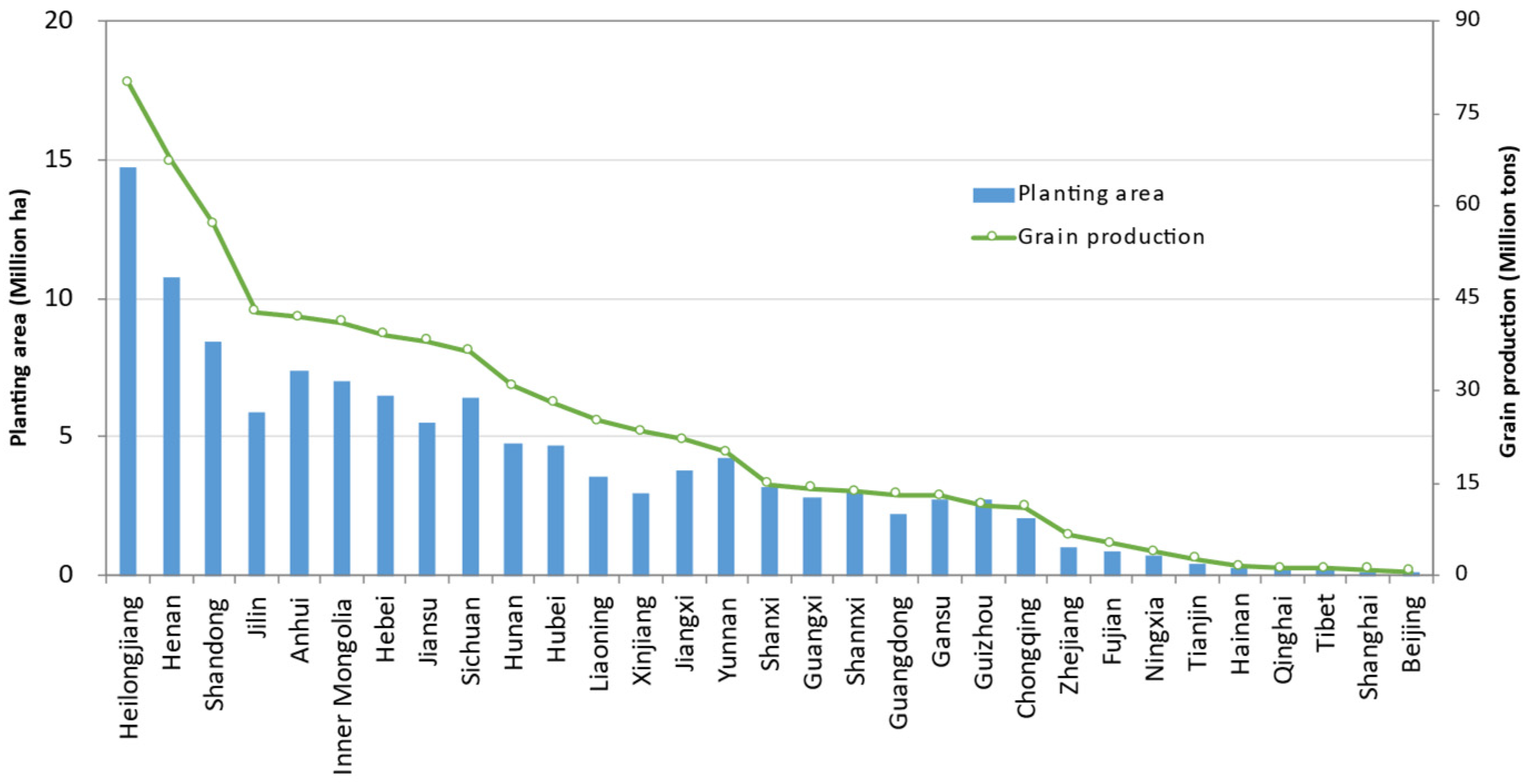
It is noteworthy that China’s grain production map has undergone a complete north–south reversal from the end of the 20th century to the beginning of the 21st century. In 2024, for example, China achieved its 21st consecutive year of bountiful grain production, with the total grain output exceeding 707 million tons (
Figure 3). Among this, the seven northern provinces and regions (i.e., Heilongjiang, Jilin, Liaoning, Henan, Shandong, Hebei, and Inner Mongolia) produced over 346 million tons, accounting for 52% of the national total. Meanwhile, Zhejiang province, a major historical contributor to the “south-to-north grain transfer”, produced only 6.5 million tons of grain [
1], which was approximately 50% of its annual grain consumption. As a result, a paradoxical situation appeared: the water-scarce north has become a crucial grain provider for the water-abundant south. Particularly, the annual grain outflow from northeast China accounts for more than one-third of the national total.
It is generally accepted that it requires approximately 1000 m
3 of water to produce about 1000 kg grain. The north-to-south grain transfer not only transports grain but also the fragile water and soil resources from the northern grain-producing regions. It is estimated that about 50 to 60 billion m
3 virtual water (the water embedded in products and services) are transported annually from the north to the south through grain transfer, while the South-to-North Water Diversion Project only transfers 30 billion m
3 water annually from the south [
22]. Thus, the farmland ecosystems must operate continuously at overcapacity to meet the endless bountiful grain harvests, with the consequences of severe over-exploitation of groundwater, soil salinization, and a series of ecological and environmental issues in the main grain-producing areas of North and Northeast China. In the North China Plain, the level of groundwater is continuously declining, which has produced many “groundwater funnels”. In the Northeast black soil region, intensive corn production over the year has led to increasingly “thinner, poorer, and harder” soils, forcing farmers to apply large amounts of fertilizers to maintain soil nutrient supply. The continuous northward shift of China’s grain production center seriously threatens the sustainability of China’s water and soil resources and the long-term food security.
4.3. Agricultural Machinery: Weak in High-End Intelligence, and Lack of Communications Among Engineers, Agronomists, and Producers
With the progress of agricultural mechanization over the past 30 years, China’s agricultural machinery generally meets the needs of domestic crop production. However, compared to that of developed countries and to the demands of new-quality farmland production, agricultural machinery in China faces substantial challenges. Firstly, the overall mechanization rate of China’s farms is only 71%, while that of the USA and Europe is as high as 95% [
23]. Secondly, China’s farmland machinery and equipment is far behind of international advanced levels in terms of the structure, quality, performance, and reliability. Particularly, the high-end intelligent machinery, equipment, and core components (e.g., sensor systems and life information sensing devices) are heavily dependent on imports from developed countries. For example, more than 90% of the large-scale (250 horsepower) agricultural machinery are imported, with domestic products accounting for less than 10% [
24,
25].
Thirdly, there are poor compatibility and coordination between China’s agricultural machinery section and other players of crop production. Urgent actions are required (1) to develop and promote new farmland machinery that adapt to the complex and variable soil and cultivation practices, (2) to fulfill the benefits of high-end intelligent farmland machinery through construction of high-standard farmland, modification in farming systems, and improvement of management techniques, (3) to train skilled operators to master the advanced machinery and implements (e.g., automatic navigation, driverless technology, intelligent monitoring, and the Internet of Things (IoT)), and to design special farmland machinery that are suitable for the corn/soybean intercropping system, and can be operated in hilly and mountainous areas. Additionally, China needs new breakthroughs in key farming technologies such as water-saving equipment, slow-release fertilizer, precision pesticide application, and technologies for application of organic fertilizers.
4.4. Farmers: Aged, Low Skills, Small Scale, and Weak Competitiveness
The key players in modern farmland production include agricultural entities directly engaged in crop production and related business activities, managers of larges-cale crop production and business operations, and social service personnels providing specialized technical services. The quality of these groups largely determines the productivity of the new-quality farmland production system. Although the number and quality of professional farmers have been improving over the past decade, the overall farmland workforce in China have the problems of low modern agricultural literacy, insufficient innovation capabilities, low skills, and weak market competitiveness because most of the farmers are aged, with inadequate education and poor infrastructure. According to the sampling survey of “Comprehensive Survey of China’s Rural Revitalization (CRRS)” conducted by the Chinese Academy of Social Sciences in 2020, among the 3800 households (in 50 counties across 10 provinces) in eastern, central, and western China, the average age of fulltime farmers was over 50 years, and 44.22% of them had an education of primary school or below. In contrast, the average age of non-agricultural employees was 36 years, and only 14.04% had an education of primary school or below [
18].
Compared to the producers from large farms and/or specialized farmer cooperatives, these low-educated old farmers have inherent disadvantages in modern crop production. First, constrained by traditional ideas and limited agricultural knowledge, they tend to use conventional methods to manage the small-scale land, making it difficult for them to adapt to advanced management technologies (e.g., new varieties, modern planting methods, water and nutrient management, and integrated pest and weed control). They also have a low willingness to purchase insurance. Consequently, the farmland productivity of these farmers is relatively low and unstable. Statistics show that the proportion of the agricultural workforce in China’s total employment was 25.4% in 2019, and agricultural output accounted for 6.89% of the GDP. In contrast, with only 1.36% of its workforce engaged in agriculture, the USA agriculture produced 1.12% of its total GDP [
27].
In terms of the farmland scale, according to the “China Rural Economic Management Statistical Yearbook (2018)”, 85.2% of China’s households have a land area of less than 0.67 ha, and 10.5% have a land size between 0.67 ha and 2.1 ha. According to the definition of small farmer of the World Bank (with land area less than 2 ha), the proportion of small farmers in China is as high as 95.7%. As a result, farmland fragmentation is very common in China: A farmer may have to manage several pieces of land, and it is very often that a piece of farmland is divided into several small strips. Land fragmentation hampers the construction of high-standard farmland and makes it difficult to reduce production costs through large-scale operations such as plowing, planting, fertilizing, irrigation, and harvesting.
Additionally, farmers with small areas tend to make short-term decisions in crop production and business operations, which makes it difficult for them to cope with the rapidly rising costs of labor and field inputs (i.e., pesticides, fertilizers, seeds, and mechanical services). Furthermore, many national subsidy policies are primarily directed to large-scale producers, leading to significantly higher costs and weaker market competitiveness for small-scale farmers as compared to the large-scale farmers and farmer cooperatives.
4.5. Agricultural R&D: Weak in Basic Research and Lack of Independent Innovations in Key Sectors
China faces several challenges in the R&D of crop production, including relatively weak basic research and a strong dependence on foreign technologies in key subjects. There exists a significant gap between China and developed countries in top agricultural technologies: China accounts for only 10% of the leading achievements, with 39% at the same level as the international counterparts, and 51% lagging [
28]. Additionally, China lacks internationally leading achievements in emerging information technologies such as agricultural IoT, big data, and artificial intelligence. It was estimated that in 2023, technological progress contributed to over 90% agricultural growth in developing countries such as the USA, Germany, and the Netherlands, and the corresponding values was 63.2% in China [
29]. The average irrigation water efficiency was 0.56 [
30] and fertilizer use efficiency was less than 0.40 [
31], both were lower than that of developed countries
It is worth mention that China faces significant “bottlenecks” in areas such as core crop germplasm materials and high-precision agricultural machinery. In the case of crop varieties, there is a lack of original and leading achievements in modern biotechnologies such as whole-genome selection and synthetic biology, while many important functional genes have been identified and patented in developed countries; there is a shortage of core gene editing technologies with independent intellectual property rights; and there lacks systematic research on the genetic basis and regulation of important traits in major crops, which leads to insufficient exploration of major genes related to high yield, quality, disease and pest resistance, drought tolerance, and efficient nutrient use. These limitations hinder the development of foundational research in the seed industry and the advancement of seed technology.
4.6. External Inputs: Lacks Effective Insurance and Financial Security
Financial and insurance issues pose significant challenges in China’s farmland production. Farmers often lack access to low-interest loans and financial subsidies for purchasing advanced machinery and equipment, leading to higher production costs. This is caused by several issues: (1) The limited subsidy content and simple allocation method leading to uneven resource distribution and unsustainable subsidy effects, which inhibit technological progress in farmland production; (2) Most small-scale farmers cannot afford high-cost machinery because the scope and intensity of subsidy coverage are limited; and (3) There is a lack of corresponding policies and sufficient support during the subsequent use and maintenance phases, which reduces the efficiency and economic benefits of new machinery [
32].
China has an immature farm credit system (e.g., subsidy and insurance), making crop production more vulnerable to the impacts of natural disasters and unpredictable grain market. From the government side, issues include insufficient fiscal subsidies and delayed fund disbursements that negatively affect the financial chains and business enthusiasm of the insurance companies; a lack of insurance mechanisms on agricultural catastrophe, which increases the financial burden on insurance companies; and incomplete laws and regulations on agricultural insurance that lead to a lack of legal basis for farmland insurance implementation. At the insurance company level, the current system offers a limited range of insurance products that fail to meet the diverse needs of farmers and modern agriculture. Additionally, the high costs and low profits result in operational difficulties for insurance companies that are losing enthusiasm for expanding the scope of farmland insurance businesses [
33].
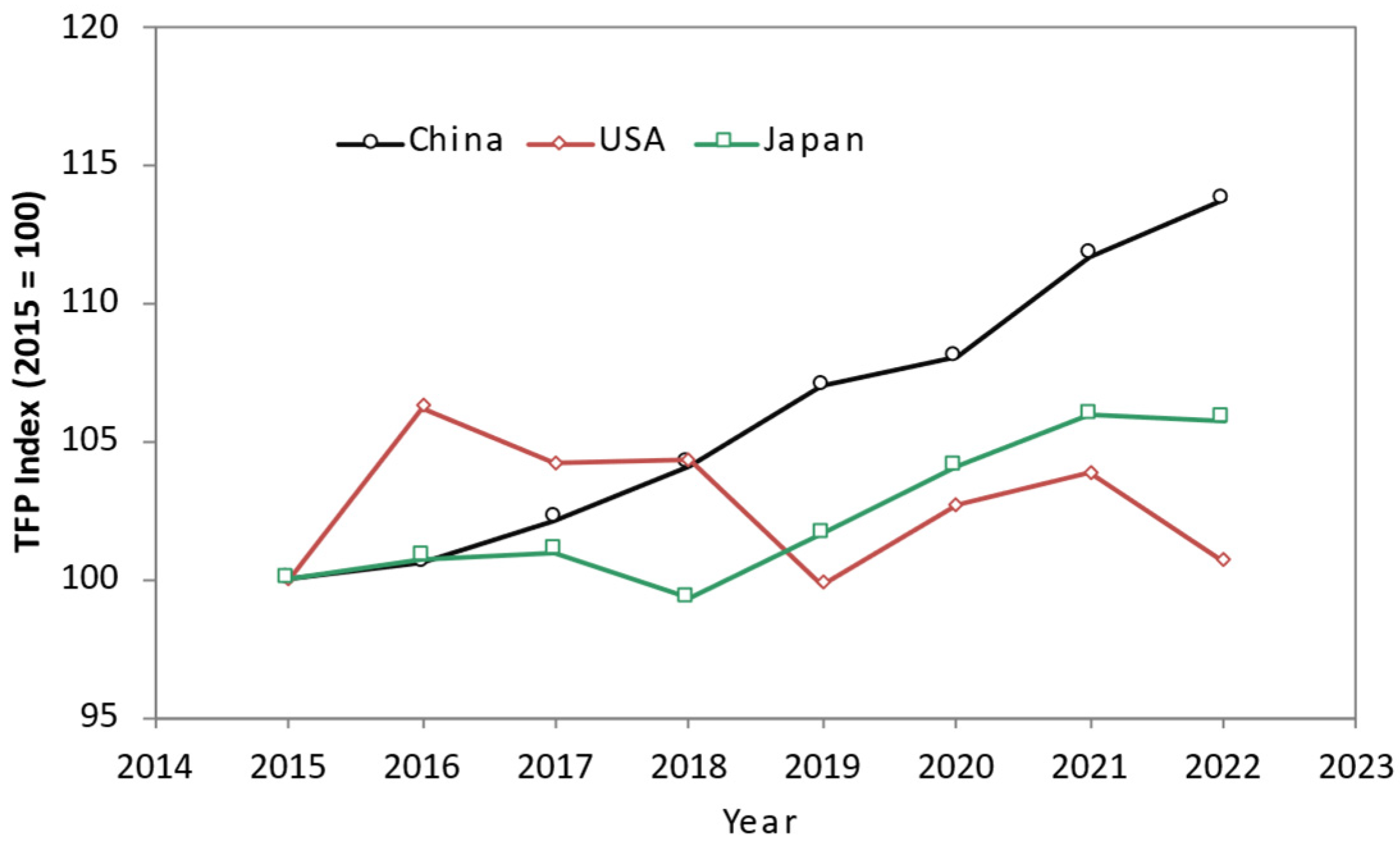
While the transition to a new-quality farmland system in China has faced interconnected barriers, including degraded natural resources and systemic gaps in technology, skills, and finance, recent national strategies emphasizing technological integration and sustainable intensification appear to be effectively overcoming these challenges. This effectiveness is empirically supported by trends in TFP, a robust, multi-dimensional measure of agricultural system efficiency. Our comparative analysis, utilizing data from the USDA Economic Research Service (2023) standardized to a 2015 base index of 100, reveals distinct national trajectories over the seven-year period (
Figure 4). China’s agricultural TFP demonstrated the most pronounced and consistent growth, increasing by 13.8% to reach an index of 113.8 by 2022. In contrast, the United States exhibited significant volatility with minimal net change (100.5), while Japan’s TFP showed moderate but stable growth, increasing by 5.8% to 105.8. The sustained and accelerating growth of China’s TFP, outpacing trends in other major economies, underscores a significant enhancement in systemic efficiency. This empirical evidence suggests that the national strategies are not only driving productivity gains but are also creating a more favorable foundation for overcoming the existing barriers to the new-quality farmland system.
In summary, the transition to a new-quality farmland system in China is impeded by a set of interconnected barriers, ranging from degraded natural resources to systemic gaps in technology, skills, and finance.
5. Strategies to Build New-Quality Farmland Systems in China
The preceding analysis delineates a clear set of obstacles. To catalyze the transition to a new-quality farmland system, the strategies outlined in this section are designed to provide a direct, causal response to the challenges previously identified. The following subsections outline a series of integrated strategies to systematically counter the root causes of low productivity and unsustainability, forging a clear path from problem identification to resolution.
5.1. Quality Farmland: Reinforce Farmland Protection and Improvement
To directly counter the trends of land degradation, quality decline, and quantity reduction, the following measures focus on reinforcing farmland protection and implementing site-specific improvement technologies. Firstly, China needs to implement a series of measures to ensure the overall stability of farmland area. These include optimizing national farmland layout, designation of permanent basic farmland, restoring non-crop land to crop production, strict control of non-agricultural land use, and reinforcing the balance between cultivated land occupation and compensation. Secondly, it is necessary to promote the aggregation of fragmented cropland that enables land management at moderate scales, and to develop modern intensive agriculture by comprehensive land renovation and construction of high-standard farmland. This will improve crop production efficiency and profits, thereby mobilizing farmers’ enthusiasm for farmland protection. Specific measures are required to prevent farmland loss to other sectors and restore ecological systems in the southern provinces with the objective of revitalizing grain production thus effectively reverting the intensifying trend of “north-to-south transfer of grain products”.
Land quality improvement, which requires site specific technologies, provides the basis for new-quality farmland production. In the grain-producing areas of Northeast China, it is essential to increase organic inputs, adjust cropping system, and reform the traditional cultivation practices to achieve a balance between land use and conservation, which eventually resolve the problem of black soil degradation as indicated by the loss of cultivated layer, reduced fertility, and increased hardness. The key technologies include (1) conservation tillage systems (e.g., minimum tillage and/or no-tillage) that prevent soil degradation by controlling soil erosion, improving soil health, and reducing soil disturbance; (2) practical and effective measures for stacking, transportation, and application of organic fertilizers; (3) innovative cropping systems (e.g., maize-soybean rotation) that improve soil fertility and support sustainable agricultural development.
In the grain-producing areas of the North China Plain, the most important issue is the severe mismatch between requirement and supply of water resources. This can be achieved partially by adjusting the crop structure (e.g., reducing the planting area of high water-consumption crop of winter wheat, while increasing the proportion of fallow land). For example, the traditional maize-winter wheat double cropping system can be replaced with the “water-adaptive planting system” of spring corn–winter wheat–summer corn rotation (i.e., 3 crops in 2 years). Additionally, it is essential to promote water-saving irrigation techniques and reduced/no-till planting technologies for winter wheat, which not only reduce evaporative water loss, but also improve soil fertility, therefore increase soil water storage.
In southern China where soil acidic is the key concern, it is necessary to target the problem by identifying the driving factors, grouping the land into different regions, and taking integrative measures to achieve a synergistic improvement in soil pH and fertility, thereby enhancing farmland quality and productivity. The available technologies include (1) selection of acidic-resistant crop varieties and establishment of appropriate cropping systems for soils of different acidities; (2) application of specific amendments such as lime, biochar, and industrial by-products to increase soil pH; (3) reduction of nitrogen fertilizer rate while increase the ratio of organic fertilizer (manure); and (4) incorporation of straw and winter green manure into the soils.
5.2. Quality Crops: Selection and Application of New Varieties
Comparing with developed countries, China is behind in development and application of innovative biotechnologies in crop breeding. A national plant germplasm system is required for efficient crop breeding through collection, systematic protection, and precise identification of domestic germplasm resources, while actively introduce superior global plant genetic resources. Modern crop breeding technologies such as gene editing, molecular design breeding, and artificial intelligent- and big data-driven intelligent design breeding should be prioritized to promote the development and application of new cultivars that are productive, tolerant of biotic and abiotic stresses, climate resilient, and make efficient use of water and nutrient resources.
China should modernize its seed industry by encouraging close partnership among seed companies, research institutions, and universities to leverage collective expertise and resources. National regulatory frameworks and new policies are needed to facilitate the exchange of knowledge and accelerate research and development efforts. This will expand the scale of commercial breeding and significantly enhance the independent innovation capabilities of seed companies, which eventually enhance the overall capacity of seed industry to address complex challenges in crop production. Meanwhile, it is essential to develop innovative technologies for variety rejuvenation and seed production that improve the efficiency of new crop variety selection and promotion.
5.3. Modern Technologies: Developing Cutting-Edge Farming Techniques
For crop management, China should develop state-of-the-art technologies such as digital sensing, intelligent field operation and crop management, and Internet of Things (IoT) for integrated air-space-ground systems, to achieve optimum crop growth and development, comprehensive prevention and control of pests, diseases, and weeds, as well as effectively handling and recycling of agricultural waste. These advancements will significantly reduce labor, material, and energy inputs, thereby improving agricultural production efficiency and economic benefits. At present, China is ready to develop intelligent mini applications by integrating agricultural knowledge and databases, practical experience and crop management achievements. This will enable producers to easily access professional knowledge and real-time information on crop planting, soil health maintenance, and pest and disease control.
Agricultural machinery modernization is the key to improve farming efficiency, reduce labor costs, and enhance farmland productivity. At present, China should accelerate the innovation and application of large-scale high-end intelligent agricultural machinery with high operation quality and efficiency. Meanwhile, it is important to develop internet-connected agricultural-machinery operation systems that integrate farm machinery with intelligent sensing, decision-making, control, big data, cloud platforms, and IoT technologies to achieve intelligent and precise field operations. In the Northeast and North China Plains, for example, automated tractors and harvesters equipped with GPS and other advanced technologies can be applied to navigate fields and perform soil and crop management without human intervention. The IoT, a key component of precision agriculture, uses sensors and other connected devices to collect soil and crop data in real-time, allowing farmers to quickly respond to weeds, pests, and other unfavorable field conditions. Drones equipped with cameras and sensors can be widely deployed for monitoring crop health, detecting weeds, pests and diseases, and spray chemicals (e.g., herbicides and pesticides). Artificial Intelligence (AI) should be advanced to help farmers in processing vast amounts of data quickly and accurately, providing farmers with actionable insights, and predicting weather patterns to optimizing irrigation systems. Finally, supporting measures and policies are required to encourage agricultural machinery service providers to establish effective collaboration with farmers, farmer cooperatives, and agricultural enterprises.
5.4. New Farmers: Train Talent Famers for New-Quality Farmland Production
Present-day farmers (esp. the aged group) face tremendous knowledge, technique, and management barriers in modern farmland production. They often feel overwhelmed by the relentless march of technology. Thus, China should take urgent measures in farmer training and education. It is essential to intensify vocational and technical farmer programs, particularly for the small-scale farmers, to improve their scientific literacy and ability to master new management skills and apply cutting-edge technologies. The training programs could be provided by means of online (e.g., WeChat) and offline classes, field demonstration, and technical service. This will ensure that new varieties, technologies, models, and equipment can be effectively utilized in new-quality farmland production. Meanwhile, national policies are required to encourage the return of young talents to rural areas, which will continuously inject new vitality into modern agriculture.
At present, a social service network is in urgent need to address farmers’ demands for services on technical, procurement, financial, information, and market. For example, farmland productivity and efficiency can be significantly improved by providing professional guidance on soil, water, and crop management or by directly participate in field activities; government agencies may provide designated channels for famers to purchase high-quality and reliable materials (e.g., machinery, seeds, fertilizers, and pesticides); with timely and accurate weather, soil, crop, and market information, farmers can make appropriate decisions and take prompt actions to reduce the risks associated with weather and market uncertainties; and the quality and value of grain products can be ensured if government agents provide support by expanding sales channels and providing storage and processing services.
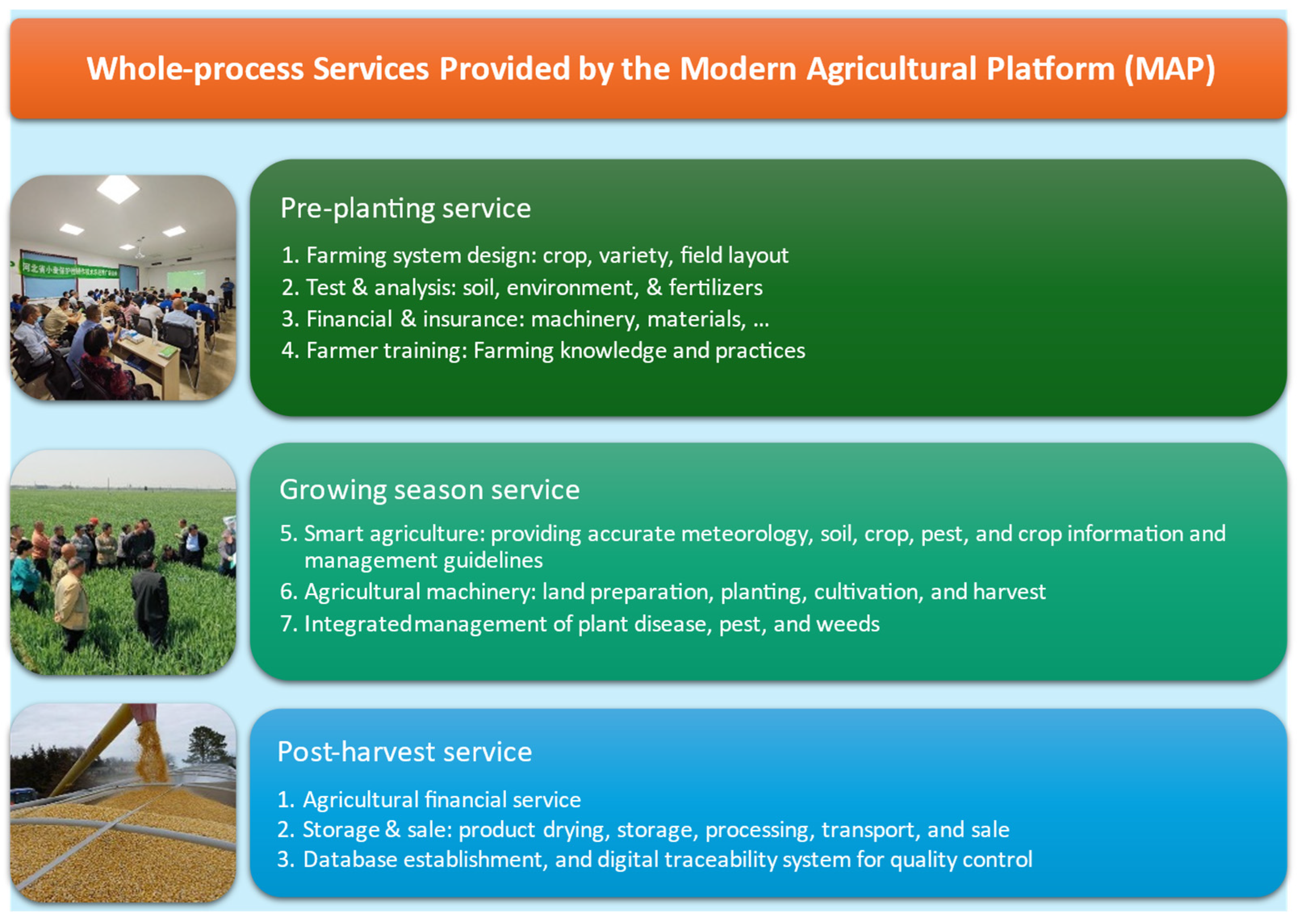
Here we present an example of emerging service systems to new-quality farmland production provided by the Modern Agriculture Platform (MAP) of the Syngenta Group in China. MAP supports farmers and partners of the food value chain by offering comprehensive online and offline services that cover the entire process of crop production and sale. Taking “quality seeds and first-class technologies” as the core of its complete solution, MAP helps farmers in the whole process of crop production while connects the crop production with agricultural and food value chains, which eventually increase the profit and efficiency of crop management and ensures consumers have access to safe and high-quality products.
In terms of offline services, the MAP Technology Service Centers across China provide farmers and professional cooperatives with the “7 + 3” service package, covering cropping system design, soil test and fertilizer recommendation, customized plant protection, testing service, field (machinery) operation, technical training, smart agriculture assistance, grain drying and storage, grain sale, farm finance, and diesel supply (
Figure 5). Additionally, MAP integrates and introduces the cutting-edge practices to producers by setting up field demonstration plots and providing technical services to farmers, which have convinced many small-scale farmers to expand the farmland scale by using the advanced technologies.
For online services, MAP applies the O2O (Online to Offline) business model that integrates the modern farm management system, the technology service center system, and the precision planting decision-making system. The platform leverages the network of offline MAP Technology Service Centers and demonstration plots, along with extensive data on technical services, crop production, and product management. The platform also provides growers with comprehensive tracking and solutions to enhance the efficient operation of the service centers. Additionally, the platform ensures the seamless integration and mutual promotion of offline and online services through continuous data accumulation and the application of artificial intelligence, therefore enables the transition of normal farming model to precision and ultimately to intelligent management.
The MAP serves as a pioneering real-world embodiment of the new-quality farmland system, effectively illustrating its operational differentiation from conventional precision agriculture. As visualized in
Figure 5, MAP’s service model explicitly integrates all three pillars of the proposed framework: (1) Human capital, developed through agronomic training and decision-support services; (2) Advanced, properly scaled technology, delivered via smart machinery and precision tools offered as a service to overcome scale limitations; and (3) Farmland ecosystem health, actively improved through soil testing and customized fertilizer plans. This integrated approach demonstrates the system’s core advantage: achieving synergistic benefits that isolated technological interventions cannot.
Thus, the new-quality farmland system requires not only the top quality of its key components (i.e., farmland, crop variety, producer, cultivation model, policy, and supporting environment), but also the overall functionality of the system, with modern information technology, biotechnology, and smart agriculture technology incorporated into the elements and processes of farmland management. Comparing with the traditional labor- and input-intensive version, the new-quality farmland system is information intensive and strongly depends on modern technology.
5.5. Sound Policies: Reliable Agricultural Policies and Infrastructure
Sound policies, along with incentives and supporting measures, from governments at all levels are critical for technology innovation and successful implementation of the new-quality farmland production system. Supporting policies for farmland transfer, financial credit, and technology innovation should be updated to encourage the expansion of small-scale farmers who can become large-scale growers, or to help those farmers joining agricultural cooperatives or collaborating with agricultural enterprises by contract farming. Appropriate incentives are needed to help farmers in optimizing land resource allocation, scaling and mechanization of soil and crop management, thereby improving farmland production efficiency. To ensure the healthy, orderly, and stable transfer of farmland, it is important to establish transparent polices about land ownership rights, transfer process, and a reasonable compensation pricing mechanism.
Construction of high-standard farmland is essential for large-scale, intensive, intelligent, efficient, and sustainable agricultural production. Local governments are responsible to formulate comprehensive policies, work plan, and technical measures based on the natural resource attributes and land use planning. The key measures include optimizing farmland layout, updating farmland infrastructure (e.g., large-scale water conservation facilities), and improving soil fertility to boost crop yields. Additional measures such as afforestation, soil and water conservation, and reuse of agricultural waste can also improve farmland ecosystems and promote sustainable agricultural development. In many parts of China, water conservation facilities in farmland should be updated to promote soil water retention and drainage, thereby mitigating the impact of natural disasters on crop production.
Supporting policies and incentives are necessary to foster collaborative research and integrated innovation in soil management and crop production. A robust cooperation network among research institutions, universities, extension departments, and enterprises not only reinforces collaborative research and technology integration but also promotes the development of a comprehensive agricultural innovation system to showcase and disseminate technological advancements, ensuring that the new innovations effectively serve the frontlines of crop production at different scales.
Finally, it is important to establish realistic subsidy systems to effectively support the implementation of new-quality farmland production system. Agricultural subsidies should be targeted to protect farmers’ interests, increase their income, and promote green and sustainable farmland production. This can be achieved by establishing appropriate subsidy regulations, refining subsidy approaches, and generating a comprehensive management system for agricultural subsidies that ensures small-scale farmers, agricultural enterprises, and farmer cooperatives, can fully benefit from the national agricultural subsidy programs.
5.6. Farm Credit System: Reduce the Vulnerability of Farmland Production
The farmland ecosystem and production profits may be impaired by various factors such as extreme weather, water and nutrient deficiency, pests and diseases, unstable policies, and unfavorable grain prices. Only through closely collaborating with all the players (i.e., government, service agencies, enterprises), farmers can mitigate the negative impacts of these factors by establishing a robust risk management system for farmland production.
The governments can play an important role in enhancing farmland production resilience by setting up farm credit systems, e.g., policy-based agricultural insurance, full-cost insurance, and crop revenue insurance (especially for major grain crops such as rice, maize, and wheat). For example, the risks due to unpredictable weather and unfavorable price can be effectively distributed by establishing a shared risk mechanism in crop production, where the government, insurance companies, and farmers share the overall costs. The risk of monocropping can be effectively mitigated by advising farmers to diversify their cropping systems. Farmers’ financial stability can be guaranteed by setting up a minimum protection level that ensures farmers receiving basic living support in the event of losses. By formulating emergency response plans in farmland production, including post-disaster recovery measures and financial support schemes, a rapid and effective response can be enabled to minimize losses in the event of a natural disaster.
The insurance companies could develop customized insurance products fitting to various farmland production risks, such as climate insurance, crop insurance, and grain price insurance. These products can provide farmers with financial compensation in the event of crop losses (e.g., due to natural disasters and pest infestations), thereby protecting the interests of the stakeholders. It is necessary to incorporate advanced technologies, such as big data and artificial intelligence, for the assessment of farmland production risks, accurate insurance pricing and efficient claims processing. Additionally, banks may provide low-interest loans to ensure farmers can have timely access to financial resources when risks occur, thus supporting a rapid recovery of production. Finally, training programs on agricultural insurance are essential to improve farmers’ understanding and application of insurance products, thereby enabling them to manage risks more effectively.
6. Conclusions
New-quality farmland production systems characterize the capability of modern producers to continuously harvest crop products from agroecosystems by using state-of-the-art technologies with the assistance of physical and intangible inputs. The producers, including professional farmers, family farmers, farmer cooperatives, and agricultural enterprises, are the active elements in the system. The farmland ecosystem provides the foundation for new-quality crop production with large-scale and high-quality farmlands equipped with new facilities and fertile soils. Field management relies mainly on modern intelligent equipment and supplies and eco-friendly inputs.
To develop new-quality farmland production systems in China, it is essential to improve the overall function of the farmland ecosystems by improving and integrating six key elements, i.e., quality farmland, superior varieties, new farmers, modern farming technologies, sound policies, and farm credit systems. This can be achieved by using the following measures: (1) Improve farmers’ knowledge and management skills by technical training, improving social services, and developing agricultural information technology; (2) Protect arable land quantity, construct high-standard farmland, moderately expand farmland scale, and thereby improve production efficiency; (3) Develop and promote new crop varieties, sustainable cropping systems, and modern management technologies; (4) Improve agricultural services to address farmers requirements on technical, procurement, financial, information, and market service; (5) Implement sound policies, financial, and insurance measures to enhance the resilience of farmland production system.
We acknowledge that the individual strategies discussed (e.g., high-standard farmland construction, farmer training, and machinery intelligence) are indeed prominent in existing policy and research. The novel contribution of this study lies not in proposing these strategies from scratch, but in introducing and advancing the new-quality farmland system as an integrative framework. This framework posits that these elements must be developed simultaneously and synergistically rather than in isolation. The core novelty is the argument that significant, sustainable gains in agricultural productivity are constrained not by a lack of individual solutions, but by the systemic failure to integrate human capital, technological adaptation, and ecological health into a coherent operational model. Our contribution is this prescriptive model for synergistic implementation. This systemic interaction and its benefits are demonstrated through our analysis of the MAP case study, which shows how the integration of these pillars creates value beyond their isolated application.