1. Introduction
The global pandemic caused by the virus known as SARS-CoV-2 has resulted in a reevaluation of the manner in which societies address health, well-being, and collective resilience. There is a renewed emphasis on community-driven innovation, prevention, and collaboration [
1,
2,
3,
4].
In this context, LLs have become well-known as open, participatory ecosystems that can bring together 4-H actors to design and test solutions together in real-life settings [
5]. Digital Social Innovation (DSI) has been demonstrated to further enhance the potential for digital innovation. These methods are designed to encourage collaboration on a large scale, the sharing of intelligence, and user-centered participation. The significance of these entities is attributable to their capacity to facilitate a synergy between technological innovation and social requirements. It has been demonstrated that they are capable of producing forms of public value that are frequently absent in conventional innovation models. Consequently, LLs operating through DSI and 4-H participation have emerged as a new strategic structure for generating public value, strengthening community resilience, and fostering inclusive innovation.
Despite their growing relevance, LLs initiatives frequently encounter persistent limitations, including short project cycles, fragmented participation, challenges in governance, and difficulties in achieving sustained, value-driven transformation [
1,
2,
3,
4,
5,
6,
7,
8,
9]. Recent studies have highlighted that such transformation is contingent not only on technological infrastructures or procedural innovation. In addition, the focus is on relational mechanisms, including trust, reciprocity, mediation, and shared values, as well as emerging values-based or ethical frameworks that guide collaborative innovation [
7,
8,
9,
10,
11,
12,
13,
14]. In light of the mounting interest in LLs, there remains a paucity of empirical research investigating the manner in which relational mechanisms facilitate (or impede) the practical implementation and territorial replication of value-based LLs methodologies [
7,
8,
9,
10,
11,
12,
13,
14,
15,
16].
The purpose of this article is to address this gap by analyzing an ethnographically informed case study situated within the DLLs in Catalonia. The case study forms part of the development of a replicable methodology for the design, governance, and value-based assessment of the value of regional LLs. The methodology under discussion incorporates 4-H participation, ethical and societal value criteria, and modular governance structures. The present study is investigating the transferability of the concept in a number of European and Global South contexts, thus facilitating a more comprehensive analysis.
The investigation focuses on the relational infrastructures and forms of community leadership that support the application of this approach. The article employs an in-depth qualitative approach to examine the manner in which collaborative processes are shaped, and the potential for replication of value-based LLs models that is contributed to by everyday interactions, community leaders, and relational mechanisms.
The article provides empirical and methodological insights by revealing the manner in which relational mechanisms and community leadership shape the design, governance, and value-based assessment of LLs. By taking this action, it validates a multi-dimensional, value-oriented LLs methodology, which has been developed to enhance transferability and potential replication across territorial contexts.
The article addresses the following research question: In what ways do relational mechanisms and community leadership influence the design, governance, and value-based assessment of a replicable DLLs methodology?
The remainder of the article is structured as follows:
Section 2 provides a comprehensive review of the extant literature on LLs, value-based innovation and governance, DSI, and the 4-H framework and identifies the research gap. The third section delineates the methodological approach. The fourth section of this study presents a series of empirical findings, which have been organized in accordance with the following categories: relational mechanisms, community leadership, values, governance, and transferability. In
Section 5, the implications for LLS theory, methodological development, and replicability are discussed. The sixth section of this study concludes with a consideration of the limitations of the present study and an outline of future research directions.
2. Literature Review
2.1. Responsible Innovation (RI) and Value-Based Approaches
RI emphasizes transparency, inclusion, reflexivity, anticipation, and responsiveness as core principles guiding the ethical and socially aligned innovation process [
17]. Rather than focusing solely on technological advancement, RI seeks to address ecological and societal challenges through approaches that integrate diverse perspectives and prioritize collective and long-term well-being [
13,
14,
15,
16,
17,
18].
Within this paradigm, there has been an increase in the significance of value-based approaches to innovation as frameworks for the embedding of societal and ethical values into all stages of innovation. A foundational contribution in this field is Public Value Theory [
19]. This approach conceptualizes public value as the enhancement of collective well-being. The strategy is said to achieve this through increased legitimacy, operational capacity, and meaningful participation. These are of significant importance in addressing public issues. In this field, innovation is positioned as a process that must be assessed not only in terms of efficiency or performance but also in terms of the extent to which social value, equity, agency, and trust are created by [
19].
Recent academic scholarship has expanded the notion of value to encompass emerging digital ecosystems. The societal values that next-generation technological systems such as 6G are expected to address are examined by [
20]. The following principles are identified as foundational: sustainability, resilience, inclusiveness, human-centricity, agency, and trustworthiness. The authors emphasize the growing importance of value-based frameworks in guiding technological development towards socially desirable outcomes, a matter of critical importance in the present day.
In a similar vein, ref. [
21] underscores the potential of open data ecosystems to function as a novel shared infrastructure, thereby empowering citizens to meaningfully engage in the innovation process. The contributions made in this study underscore the significance of values such as openness, accessibility, and co-creation in facilitating participatory governance and amplifying the societal impact of digital innovation.
In this context, value-based assessment models, including Key Value Indicators (KVI) [
20], provide structured mechanisms for implementing values through the innovation process [
11,
13]. These structures facilitate the understanding of how values such as inclusivity, confidence, and ecological responsibility influence design and management outputs, thereby leading to more profound, principle-driven types of social change.
The multidimensional framework analyzed in this article is merely one illustration of value-based LL methodologies and comprehending them necessitates an emphasis on values as a foundation. The utilization of such methodologies, underpinned by ethical, social, and contextual values, serves to guide participatory decision-making processes, stakeholder governance mechanisms, and impact assessment frameworks. Consequently, these methodologies contribute to the enhancement of conditions that facilitate transferability and replication across various territorial contexts.
2.2. Digital Social Innovation (DSI) and Distributed Collaboration
Innovation is generally defined as the implementation of novel concepts with the objective of enhancing or developing products, services, or processes [
22]. In the event of such innovation addressing social challenges in a more effective, sustainable, or equitable manner than existing approaches, it is designated as a Social Innovation (SI), which prioritizes social value over commercial outcomes [
23,
24].
Digital Social Innovation (DSI) is defined as the integration of Information and Communication Technologies (ICTs) into SI processes, with the objective of enhancing collaboration, participation, and problem-solving capacities. DSI employs digital tools and infrastructures in order to address social and environmental challenges by means of networked and participatory methods [
10,
11,
12,
13,
14,
21,
23,
24,
25]. ICTs therefore play a cross-cutting role in enabling knowledge sharing, linking citizens, institutions, and communities, and supporting new forms of collective intelligence and distributed action.
Recent scholarly research has emphasized the potential of digital environments to function as a commons, thereby empowering citizens to engage meaningfully in innovation ecosystems [
21]. It is important to demonstrate how open data ecosystems operate as shared resources. Such a demonstration is crucial in promoting transparency, co-creation, and civic agency. This contributes to the consolidation of the relational foundations that are imperative for the establishment of inclusive governance frameworks.
In this context, the term Responsible Digital Social Innovation (RDSI) denotes a digital innovation process that is characterized by the explicit incorporation of social responsibility. This process entails the alignment of technological development with societal needs, ethical principles, and shared public values. This approach is consistent with value-based and responsible innovation methodologies, which emphasize inclusion, participation, and iterative learning as a fundamental component of socially responsive innovation [
11].
Research into how digital tools support multi-stakeholder collaboration and help structure relationships, governance arrangements, and collective practices that shape innovation ecosystems is reflected in the growing relevance of DSI [
12]. The conceptual and technological underpinnings of DLLs are rooted in the DSI paradigm, facilitating distributed collaboration, co-creation, and value alignment. It is imperative that these are in place for the effective implementation, ongoing sustainability, and prospective replication of DLLs.
2.3. Living Labs: Participation, Governance, and Structural Challenges
LLs are recognized as user-centered, open innovation environments that bring together actors from the 4-H academia, public administration, industry, and civil society to co-create and experiment, test, and evaluate solutions in real-life contexts [
5,
6,
7,
8,
9,
10,
11,
12,
13,
14,
15]. The European Network of Living Labs (ENoLL) defines LLs as ‘open innovation ecosystems in real-life environments based on a systematic user co-creation approach that integrates research and innovation activities in communities and multi-stakeholder settings’ [
26,
27]. LLs thus combine research and innovation processes through iterative cycles of sensing, co-design, prototyping, and validation involving different stakeholders [
16,
17,
18,
26,
27,
28].
Recent scholarship emphasizes that LLs can take many different organizational forms. The range extends from long-term, infrastructure-like constellations to temporary, project-based initiatives. These are embedded within specific programs. This variability carries significant ramifications for participation, coordination, and governance, all of which are areas in need of consideration. As previously mentioned, LLs function within the broader context of regional innovation ecosystems. The requirement for such structures is predicated on the need for clarity. The establishment of clearly delineated roles is also imperative. It is evident that the possession of orchestration capabilities is a prerequisite for the fulfillment of these roles. These are required to ensure the ongoing viability of multi-stakeholder collaboration. It is evident that these distinctions exert a direct influence on governance arrangements. Furthermore, the issue of long-term sustainability has been identified as a key concern [
16].
Despite the considerable potential exhibited by LLs, they continue to encounter significant structural limitations. The level of participation is frequently found to be inconsistent, with civil society actors encountering challenges in maintaining ongoing engagement or exerting significant influence. These issues are associated with power imbalances and the role of institutions in regulating participation [
28,
29]. Empirical research, grounded in real-life examples, has demonstrated that involvement can evolve into a symbol when the roles, responsibilities, and expectations are not clearly delineated, or when the processes that encourage participation compete with the established routines and constraints of institutions [
16,
28,
29].
Challenges in governance are also recurrent. LLs frequently encounter challenges in the management of distributed authority, ambiguous decision-making structures, and coordination issues among diverse stakeholders [
16,
28,
29,
30]. Such governance issues have the capacity to erode trust, diminish collaborative capacity, and impede the development of shared responsibility across sectors.
A substantial corpus of literature also identifies limitations associated with brief project cycles and fractured funding models, which limit continuity, institutional learning, and long-term value creation [
9,
15,
16,
30,
31,
32]. Project-based LLs are particularly vulnerable to issues related to recruitment, user retention, internal disagreements, and the integration of insights into existing systems [
33]. These limitations impede LLs’ capacity to attain sustained transformative outcomes.
Recent research emphasizes the necessity of perceiving LLs not merely as provisional experimental endeavors but as a long-term collaborative infrastructure wherein the endurance of connections, management frameworks, and public participation are of paramount importance [
34]. A review of the extant literature on sustainability and platforms indicates that the extent of the positive impact depends upon the presence of robust relationships, the alignment of shared values, and the attainment of continuous agreement among the relevant stakeholders [
34,
35].
It is evident that further investigation is required into the manner in which relational mechanisms and community leadership influence the design, governance, and value-based assessment of LLs methodologies. It has been demonstrated that the aforementioned factors have a significant impact on the scalability and replicability of the system.
2.4. Quadruple Helix Governance in Living Labs
The governance of LLs is predicated on the 4-H model, which considers innovation to be an evolving process requiring the collaboration of academia, industry, public administration, and society [
5]. From this standpoint, LLs function as multi-stakeholder ecosystems, with governance being established through the iteration of various actors, institutional frameworks, and shared values. The ENoLL asserts that effective LLs governance necessitates the coordination of interactions between sectors, the establishment of clearly defined roles, and the implementation of mechanisms to facilitate long-term collaboration [
26,
27].
Recent academic research posits that LLs function not only as collaborative spaces but also as orchestrating structures embedded within broader regional innovation ecosystems. It has been contended that LLs necessitate established governance procedures, facilitation capabilities, and coordination systems to harmonize stakeholders, oversee expectations, and maintain involvement over the long term [
16]. Orchestration encompasses the mediation of disparate institutional logic, the assurance of transparent communication, and the maintenance of continuity across iterative cycles of co-creation and experimentation.
Nevertheless, the persistent challenge of operationalizing these governance arrangements is pivotal to this ecosystem. Multi-actor initiatives frequently encounter power imbalances, unequal participation, and institutional gatekeeping, which determine which knowledge and interests are prioritized [
28,
29,
30]. The ambiguity surrounding responsibilities and the constraints imposed by project-based funding, which curtails long-term commitments, have also been identified as contributing factors to the fragmentation of governance structures [
16,
28,
29,
30,
31]. These constraints underscore the imperative for governance frameworks that are adaptable, distributed, and capable of incorporating a range of forms of knowledge and approval.
It is important to note that governance in LLs is not solely dependent on formal orchestration roles. In conjunction with facilitators, LLs are also contingent on distributed forms of relational and community-based leadership that shape local mobilization, legitimacy, and sustained engagements. The following section will examine these forms of leadership, which extend beyond formal governance structures.
2.5. Relational Mechanisms in Living Labs and Collaborative Innovation
The functionality of LLs, and the value they generate, is contingent on the maintenance of relationships. LLs are contingent on more than just methodological frameworks and governance structures; they also require high-quality interactions, trust-building processes, and a shared understanding among stakeholders. These mechanisms facilitate collaboration within the 4-H ecosystem. LLs have the capacity to design, govern, and assess innovation in a manner that reflects social values.
A plethora of relational mechanisms that facilitate effective multi-stakeholder engagement have been identified in the extant literature on collaborative and participatory innovation. The concept of trust, the principle of reciprocity, the dynamics of reciprocal recognition, communicational processes, and the establishment of a safe space for dialog and experimentation are all components that are incorporated within the framework [
7,
12,
14,
15,
16,
21,
25]. Trust is of particular importance in this context, since it encourages open communication, mitigates perceived risk, and fosters commitment to co-creation. The concept of commitment is reinforced by the principle of reciprocity. A shared understanding, developed through iterative interaction, collective sense-making, and joint problem framing, helps to align expectations and enables stakeholders to work towards common goals [
15].
It is also evident that relational mechanisms encompass practices designed to facilitate coordination among diverse actors, considering their disparate logics, interests, and temporal scales. Translation, negotiation, and facilitation address tensions from power asymmetries or unequal influence [
28,
29]. These mechanisms facilitate the recognition of each other’s legitimacy by stakeholders and enable constructive navigation of differences. This is a salient consideration in LLs characterized by unequal participation or participation influenced by structural constraints [
28]. The capacity for relational work is pivotal to the optimal functioning of LLs.
In the context of the LLs environment, relational infrastructures have been demonstrated to provide stability and continuity across project cycles. A robust relational infrastructure has been demonstrated to foster commitment, facilitate learning, and promote long-term engagement. Notwithstanding the fluctuations in organizational or funding structures [
35]. The formation of such networks is predicated on consistent collaboration, transparent decision-making processes, and the fostering of shared values, which in turn guide innovation towards the societal outcomes or goals.
These relational mechanisms also influence the design of LLs. Trust, inclusiveness, and the ability to bridge perspectives are pivotal to co-defining challenges and articulating needs collectively. The establishment of strong relationships is imperative for the effective co-creation process, with the objective of preventing such relationships from becoming superficial or being dominated by institutions. The quality of interactions and the presence of intermediary structures have been demonstrated to shape governance, affecting coordination, conflict resolution, and decision-making [
16]. Furthermore, the relationship process is imperative for value-based evolution, since the emergence of shared values, objectives, and requirements enables stakeholders to evaluate not only outcomes but also the ethical, societal, and environmental implications of novel initiatives [
11,
12,
13]. The impact of these relational foundations on LLs functioning, as well as their capacity to adapt and operate in various contexts, is a topic that is further explored in
Section 2.8.
2.6. Community Leadership Roles in Living Labs
Community leadership constitutes a pivotal element within the ecosystem of LLs. While LLs depend on formal coordination and orchestration roles, their effectiveness is also significantly influenced by an informal, community-embedded leadership style. These leaders emerge from local networks and possess relational legitimacy, a comprehensive understanding of the context, and the capacity to engage individuals.
The significance of actors who function as intermediaries between different institutional domains, facilitating communication across perspectives and fostering sustained engagement through trust-based interactions, is emphasized by research findings pertaining to collaborative governance [
36]. The capacity to establish connections between diverse stakeholders, align their objectives, and cultivate commitments across various sectors and temporal domains is a pivotal aspect of integrative community leadership, as evidenced by research [
37]. These insights demonstrate the pivotal role of community referents in LLs, as they facilitate connections between individuals and articulate the needs of the local population, thereby fostering natural recognition and reinforcing social co-creation, cooperation, and informal networks.
The coordinator plays a pivotal role in LLs, yet the functionality of this system is contingent upon the presence of community leaders dispersed throughout the territory and interconnected across it. In circumstances where financial resources are limited and ongoing projects require continued investment; the utilization of bottom-up community power becomes imperative. This is particularly evident during the initial phases of project development, such as the challenge-raising stage, where community involvement is crucial for the success of the initiative. The presence of community leaders is indispensable for the establishment of a local 4-H.
In the LLs paradigm, community leaders play a pivotal role in the co-design phase by contributing to the co-definition of challenges and ensuring the authentic representation of community needs. Power dynamics are also influenced by them, with institutional and community logic being mediated between them and the perceived legitimacy of decisions being improved. Their involvement in value-based design and evaluation is imperative. The identification of shared values, community and contextual expectations, and collective priorities is pivotal in determining impact assessment within the ecosystem.
Consequently, community leaders activate informal networks, build trust, amplify results, and facilitate achieving outcomes. Furthermore, it is essential to ensure that engagement persists beyond the confines of formal project cycles. The capacity to adjust to the specific circumstances of a given context is a prerequisite for the successful replication of methodologies. In this regard, the role of coordinators is to facilitate the transfer of methods, while community leaders are responsible for ensuring that the adaptation of these methodologies is aligned with the unique characteristics of the local environment. This collaborative effort is essential for maintaining the relevance and effectiveness of LL methodologies within the context of local realities.
2.7. Value-Based Innovation and Public Value in Living Labs
It is evident that value-based innovation and research are of paramount importance in comprehending the social relevance of LLs. The focus of this study is not exclusively on technological aspects and outcomes; rather, it incorporates the ethical, social, and public dimensions. This has a significant influence on the realms of social, digital, and collaborative innovation. In the context of LLs, these perspectives guarantee that the co-creation and co-design processes are aligned with the needs of the community. This approach is instrumental in ensuring that the results and outcomes are aligned with social, economic, and sustainability priorities.
The evaluation of public action should be informed by its capacity to engender social value, enhance collective well-being, and fortify legitimacy and democratic engagement [
19]. This perspective is consistent with that of LLs, in which the concepts of co-creation, transparency, and accountability are considered to be of paramount importance for the establishment of trust and the distribution of responsibility. Simultaneously, ref. [
20] underscore the significance of aligning digital infrastructures and emerging technologies with social values such as equity, inclusion, and sustainability. It is proposed that Key Values (KV) and Key Value Indicators (KVI) should be utilized in order to identify and evaluate these values during innovation processes. This framework is of particular significance for LLs, as it facilitates a value-based evaluation that surpasses conventional methods. Consequently, public value can function as both a normative guide and an assessment criterion within LL’s approaches.
In this direction, ref. [
13] underlines the necessity for LLs to adopt a responsibility and sustainability perspective. Consequently, this results in the incorporation of values such as inclusion, reflexivity, and sustainability at all stages of the innovation process. This finding lends further credence to the notion that values constitute an integral component of innovation, rather than being considered a mere supplementary element. It is asserted that these provisions enable the conceptualization and assessment of designs to be oriented towards the generation of public value and social pertinence.
2.8. Replicability and Contextual Adaptation of Living Lab Methodologies
In the field of LLs research, replicability is a challenge that is frequently encountered. LLs are frequently characterized as transferable models. Nevertheless, extant evidence suggests that the efficacy of such methods is contingent less on the replication of predefined structures. It is therefore essential that adaptations be made to the social, cultural, economic, and institutional context in each territory in which LL is replicated. LLs are defined by their situatedness within specific ecologies and their dependence on context. Consequently, they necessitate flexible frameworks, dynamic processes, and the capacity for community replication.
Systematic reviews have demonstrated that LL cannot be reproduced and fixed as templates because they are deeply embedded in the configuration of local actors, power dynamics, and collaboration cultures [
7,
8,
9,
10,
11,
12,
13,
14,
15]. Ref. [
9] emphasizes that measuring LL impact across contexts is difficult precisely because LLs depend on locally grounded practices and values, which limits the ability to generalize and calls for adaptive approaches. The role of LLs as a regional orchestrator necessitates the reconfiguration of its governance mechanisms when transferred to new ecosystems [
16].
The research also distinguishes between three forms of scaling: ‘scaling out’ (expansion to new locations), ‘scaling up’ (institutionalization and policy uptake), and ‘scaling deep’ (strengthening underlying values, relationships, and cultural practices) [
38,
39,
40]. For LLs, the ability to measure depth is of paramount importance. This is due to the fact that significant copying occurs when valuable ideas, relationships, and collaborative efforts are reinforced in diverse contexts. The efficacy with which LL principles can be transferred is contingent upon a number of factors, including the presence of trust, relational legitimacy, and the alignment of shared priorities.
The process of contextual adaptation is contingent upon two fundamental factors. Firstly, the approach is predicated on the utilization of locally embedded actors. Secondly, the leadership structures in place are of pivotal importance. A body of research has been conducted into digital health LLs, with a particular focus on regions characterized by limited resources. The findings of this research indicate that the transferability of such initiatives is contingent upon the presence of local intermediaries. These entities can facilitate the translation of methodologies, mobilize networks, and ensure the alignment between community needs and innovation objectives [
41,
42,
43]. This demonstrates that replicability is contextual translation rather than mechanical reproduction. It is imperative that methodological principles are preserved, while practices are adapted to fit local realities.
The extant literature suggests that replicability in LLs is best understood as an adaptive process. In achieving this objective, it is imperative to integrate transferable methodological elements with situated relational, governance, and value conditions. This strategy forms the foundation for the viewpoint adopted in this investigation, which analyzes how strategies developed in Catalonia can inform, and must likewise adapt to, another territorial context.
2.9. Research Gap and Research Question
In the contemporary era, society is confronted with a proliferation of intricate social and environmental challenges. It is imperative that innovative solutions are found in order to tackle the aforementioned challenges. The objective of such solutions must be to mobilize a variety of stakeholders and address local and social needs. While public administrations and businesses are engaged in the pursuit of solutions, the translation of academic knowledge into practice remains limited. Concurrently, the pervasive utilization of the Internet, which was employed by 5.44 billion individuals in 2024 [
42], has facilitated the emergence of novel digital infrastructures that enable distributed collaboration and cocreation on a large scale. This has contributed to the emergence of regional and thematic DLLs. Examples of such initiatives include Collaboratory Catalunya. The latter expanded through the INTEGER Horizon Project [
41]. The evolution of this paradigm was further influenced by early replication initiatives, such as the Senegal Living Labs, which also contributed to this development.
Notwithstanding the expansion of research in this field, the extant literature has exposed significant limitations. LL research has historically focused on the structural aspects, instruments, and governance models of ecosystems, with relatively limited consideration given to the relational mechanisms that facilitate collaboration within such ecosystems, which often involve multiple stakeholders. These mechanisms include trust-building, reciprocity, mediation, and shared understanding [
7,
8,
9,
10,
11,
12,
13,
14,
15]. Despite the fact that studies on governance have hitherto concentrated on orchestration roles and coordination mechanisms [
16], there is a need for further research in this area. Empirical analysis is lacking in this area, with insufficient research conducted on how such relational dynamics occur in practice. Furthermore, the role of community leaders and other individuals within the community in shaping participation, legitimacy, and continuity across different contexts has not been sufficiently explored [
29,
30,
31,
32,
33,
34,
35].
Furthermore, value-based innovation frameworks such as Public Value [
19] and KV/KVI models [
20] emphasize the importance of aligning innovation with societal and ethical priorities. There is a paucity of research into the manner in which values are enacted, negotiated, or evaluated within the LL ecosystems. This finding suggests a potential gap in the existing body of research, which appears to lack a robust correlation between values and relational dynamics, governance practices, or impact assessment frameworks. This lacuna in existing literature necessitates urgent attention and further research to address this critical gap in knowledge.
The notion of LLs as a transferable model is gaining traction within the academic community; however, research indicates that successful replication is contingent on contextual adaptation, relational infrastructures, and locally grounded leadership, rather than on the mechanical reproduction of predefined structures [
9,
10,
11,
12,
13,
14,
15,
16,
17,
18,
19,
20,
21,
22,
23,
24,
25,
26,
27,
28,
29,
30,
31,
32,
33,
34,
35,
36,
37,
38,
39,
40,
41,
42,
43]. However, there is a paucity of research investigating how these mechanisms enable transferability or contribute to the development of replicable and value-oriented LL methodologies.
In light of these observations, the present paper investigates how relational mechanisms and community leadership influence the design, governance, and value-based assessment of a replicable DLLs methodology.
Research Question: In what ways do relational mechanisms and community leadership influence the design, governance, and value-based assessment of a replicable Digital Living Labs methodology?
In order to address this gap, and building on the theoretical foundations outlined above, this study develops a value-based analytical framework that integrates insights from Responsible Innovation [
11,
12,
13,
14,
17,
18], Public Value [
19], Digital Social Innovation [
23,
24,
25], Quadruple Helix collaboration [
5,
6,
7,
8,
9,
10,
11,
12,
13,
14], and Living Labs methodologies [
6,
7,
8,
9,
15,
16,
26,
27,
28,
29,
30,
31]. The extant literature consistently highlights a set of transversal dimensions, such as foundational values, governance, collaborative processes, transferability, sustainability, and territorial embeddedness, that enable socially responsible and inclusive digital innovation [
7,
8,
9,
10,
11,
12,
13,
14,
15,
16,
17,
18,
19,
20,
21,
22,
23,
24,
25,
26,
27,
28,
29,
30,
31,
32,
33,
34,
35]. It is evident that the contributions made have provided a solid foundation upon which to construct the model. The model is, thus, structured around six interconnected dimensions, namely Fundamentals, Challenges and Objectives, Sustainability, Transfer, Impact-Transformation, and Environment. The dimensions delineated herein facilitate the operationalization of the core mechanisms that have been repeatedly identified in extant research. The present framework fulfills a dual function, serving both as an analytical instrument to facilitate comprehension of the DLL of Catalonia and as a contributory element to ongoing discourses concerning value-driven innovation and multi-actor ecosystems.
3. Methodology
The present study employs a mixed-methods research design [
44] to analyze participants’ experiences and perceptions and to examine the operation of relational mechanisms, community leadership, and value-based dimensions within the DLLs. The present study utilized qualitative data to explore participants lived experiences, with a particular focus on relational dynamics, collaboration practices, and leadership within the DLLs. Quantitative data provided complementary evidence on broader perceptions and patterns across the 4-H ecosystem, including how these fit in with the overarching goals of the organization. The combination of these two approaches enabled an examination of the convergence of relational, leadership, and value-based factors within the DDLs.
3.1. Data Collection
The research design employs a convergent parallel mixed-methods structure [
45], enabling the collection and analysis of qualitative and quantitative data to occur independently and subsequently be integrated. The chosen approach was designed to capture both relational and experiential dimensions (qualitative) and broader patterns across the 4-H ecosystem (quantitative).
Participants were recruited from the 4-H ecosystem, including academia, industry, public administration, and civil society, to ensure a variety of perspectives relevant to the DLLs were represented, as well as people from different parts of Catalonia. This sampling method was effective in ensuring that the group was diverse, with a range of experiences, thereby providing a more comprehensive understanding of the ecosystem.
The study was conducted in accordance with the established ethical guidelines. Informed consent was obtained from all participants, and the use of data was restricted to the objectives of the study, ensuring the confidentiality and privacy of the subjects.
A convenience sampling strategy was used, inviting those who had participated in activities related to DLLs. Efforts were made to ensure variation in geographical origin, age, gender, education level, and helix affiliation. Diversity criteria were applied to reduce selection bias [
46] and ensure representation across demographic groups and helix affiliation.
3.1.1. Semi-Structured Interviews
Of the 15 interview participants, only 10 also completed the online survey. The initial target of approximately 20 interviews was subsequently reduced to 15, owing to the attainment of saturation, a term used in qualitative research to denote when additional interviews are unlikely to yield further pertinent insights. This approach aligns with the standards delineated in [
47], a qualitative methodology text. The online survey received 104 responses in total from ten interview participants.
The interview guide included 35 questions, which were organized into seven thematic blocks. The first block pertained to sociodemographic information. Subsequent sections explored collaborative and relational dynamics, emerging forms of community leadership, value-based considerations, perceived challenges and opportunities, and overall project trajectories. The interviews were conceived with the objective of investigating the processes underlying the participants’ experiences [
48], with particular emphasis on relational and collaborative dynamics, emerging forms of community leadership, and value-based aspects. It was imperative that flexibility be maintained in order to allow both interviewers to follow relevant emerging threads.
The interviews were conducted on the Zoom videoconferencing platform. The interviews were conducted for a duration of between thirty and forty-five minutes and were audio-recorded with the consent of the participants. The transcriptions were generated using the Tactiq software (
https://tactiq.io/). Following this, an exhaustive evaluation of all transcripts was carried out in order to guarantee the highest standards of accuracy.
The interview sample comprised 15 participants of various ages, genders, and affiliations with the 4-H affiliation. A comprehensive presentation of sample characteristics is provided in
Table 1.
3.1.2. Online Surveys
The survey instrument was utilized to capture perceptions, experiences, and value-oriented assessments across a wider set of participants [
49]. The survey comprised a total of twenty-five items, which were distributed across several thematic sections. These sections covered sociodemographic information, perceptions of collaboration and relational dynamics, leadership, considerations based on value, governance aspects, and perceived challenges.
The survey was disseminated electronically via an email invitation that contained a Google Forms questionnaire. A total of 336 individuals involved in the DLLs were sent the survey, and 104 of these responded (31% response rate). A comprehensive presentation of sample characteristics is provided in
Table 1.
3.2. Data Analysis
The qualitative data was subjected to a four-stage analytical process involving transcription, familiarization, coding, and theme development [
50]. The validation of transcriptions generated through Tactiq was conducted manually. The data was analyzed using an inductive approach, as described by [
51], which enabled the emergence of themes directly from the data. The coding was oriented towards the identification of patterns related to relational dynamics, collaboration processes, community leadership roles, and value-based considerations. In order to ensure consistency and analytical rigor, the codes were compared and refined through cross-review among the researchers.
The coding structure was examined and improved by both authors separately to guarantee analytical reliability. Following an iterative cross-checking process to enhance inter-coder reliability, coding discrepancies were resolved through consensus.
3.3. A Value-Based Analytical Framework for the Digital Living Lab
The present analytical framework is explicitly grounded in the literature reviewed in
Section 2. The Fundamentals dimension reflects the value-orientation emphasized in Responsible Innovation and Public Value scholarship [
11,
12,
13,
14,
17,
18,
19], highlighting ethical, inclusive, and socially oriented principles. The challenges and objectives under discussion are informed by research conducted under the umbrella of the DSI, as well as by scaling-deep approaches [
21,
23,
24,
25,
38,
39,
40]. The importance of community-driven problem definition is a key theme that is evident in both strands of research. The notion of sustainability is inherently associated with the examination of long-term socio-technical transitions and the governance of innovation ecosystems [
7,
8,
9,
10,
11,
12,
13,
14,
15,
16,
17,
18,
19,
20,
21,
22,
23,
24,
25,
26,
27,
28,
29,
30,
31,
32,
33,
34,
35]. The transfer process is informed by the extant literature on replication, adaptation, and cross-context learning as theorized within the LL paradigm [
6,
7,
8,
9,
15,
16,
26,
27,
28,
29,
30,
31]. Impact-Transformation has been demonstrated to align with evaluation models such as KV/KVI, and emerging evidence suggests a contribution to public value creation by 4-H collaboration [
5,
11,
12,
13,
14,
16,
19,
20]. In conclusion, the concept of environment is demonstrated to encompass the territorial and relational infrastructures that are delineated within the frameworks of regional innovation [
16,
17,
18,
19,
20,
21,
22,
23,
24,
25,
26,
27,
28,
29,
30,
31,
32,
33,
34,
35,
36,
37,
38,
39,
40,
41]. The synthesis of these dimensions, as operationalized in this study, serves to elucidate and consolidate the theoretical strands identified in the extant literature.
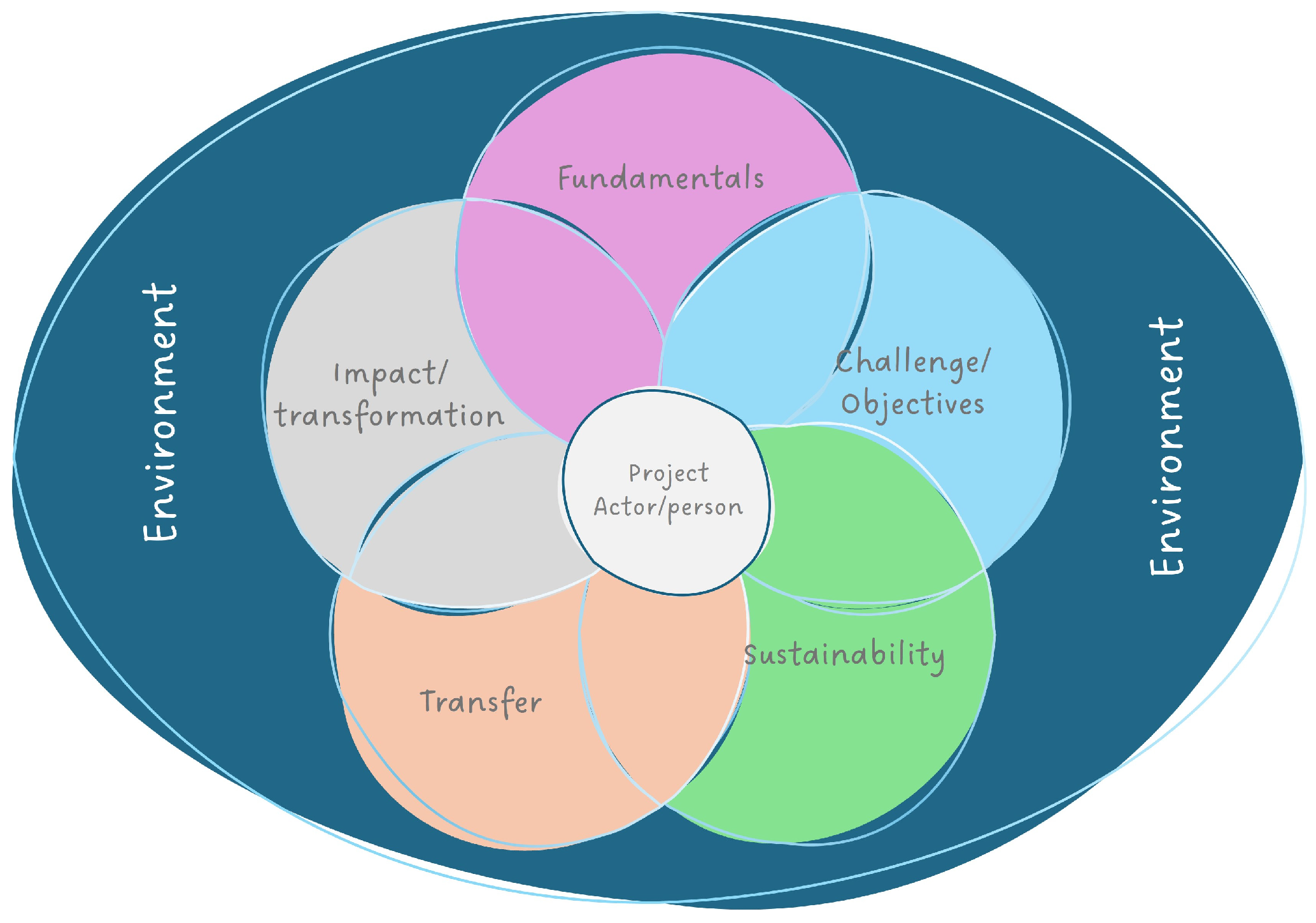
The analysis was guided by a framework for analysis that was developed for this study. The aforementioned theoretical framework was predicated on a series of values and placed considerable emphasis on the individual. The present framework places individuals and actors at the core of the evaluation process, organizing their engagement within systemic environments through six key dimensions: Fundamentals, Challenges/Objectives, Sustainability, Transfer, Impact/Transformation, and Environment (see
Figure 1).
These dimensions were used to code both qualitative and quantitative data. The objective of their creation was threefold: firstly, to capture the relational, organizational, and contextual aspects of the DLL; secondly, to identify the factors that enable progress and the barriers that hinder it; and thirdly, to facilitate a value-oriented, cross-case interpretation of the data.
The integration of this framework into the mixed-methods design resulted in a comprehensive and detailed understanding of how the DLLs functions. This understanding also helped to evaluate its potential for replication in other regional or international contexts.
4. Results
The subsequent subsections will present an integrated analysis of qualitative interviews and survey data. While demographic characteristics (e.g., gender and age) are considered where they offer further insight, the structure of the Results section follows the thematic mechanisms that emerged from the data: relational dynamics, community leadership, value orientations, governance across the 4-H ecosystem, and conditions for transferability. This approach is in alignment with recent methodological recommendations in Living Lab research. These recommendations prioritize functional and relational mechanisms over demographic stratification. This is exemplified in the context of the analysis of collaborative innovation processes [
6,
7,
8,
9,
15,
16].
4.1. Sample Characteristics
4.1.1. Interview Sample
The interview sample (n = 15) comprised participants from diverse age groups, genders, and 4-H affiliations (see
Table 1). The largest group represented was Generation Y (n = 8), followed by Generation X (n = 5) and Baby Boomers (n = 2). It was evident that all participants in the interview had obtained degrees from tertiary educational institutions.
A more equitable gender distribution was observed among the members of Generation Y in comparison with other age demographics, which exhibited diminished evenness of representation.
4.1.2. Survey Sample
The quantitative sample comprised 104 valid responses, thus providing a broad representation of participants across various age groups, genders, and 4-H sectors (see
Table 2). The gender distribution was almost equal, with 51% of the population being male and 49% being female. The participants primarily hailed from the industry sector (33%), with a substantial proportion (24%) representing academia, followed by civil society (23%) and public administration (20%).
In relation to educational attainment, the data indicates that 100% of respondents from the Baby Boomer and Generation Y cohorts reported receiving a tertiary education, as did 88% of Generation X respondents.
4.2. Relational Mechanisms (Qualitative + Quantitative)
Across both qualitative and quantitative data, relational mechanisms emerged as noteworthy and consistent findings. Participants reported that the DLLs constituted an environment conducive to the development of trust, collaboration, and mutual understanding over time. These mechanisms influenced the definition of problems, the making of decisions, and the development of ideas on a collective basis. This result is consistent with the findings of previous research, which has highlighted the pivotal role of interpersonal relationships and trust in the context of collaborative innovation ecosystems and Living Labs [
6,
7,
12,
14,
15,
16,
28].
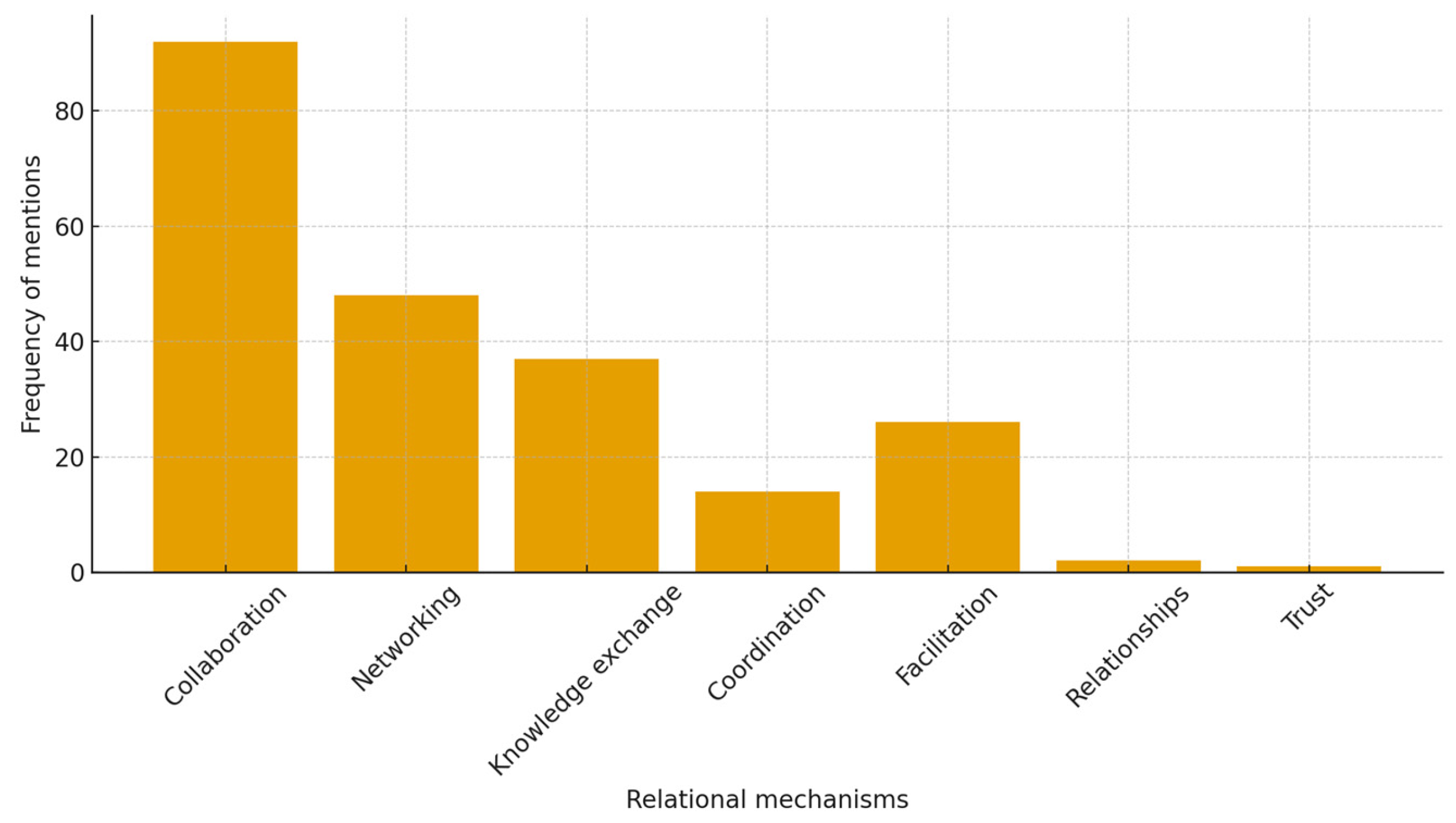
A quantitative analysis of open-ended survey responses confirms the importance of these mechanisms. As demonstrated in
Figure 2, references to collaboration (92 mentions), networking (48), and knowledge exchange (37) were by far the most frequent across the dataset. It is evident that a multitude of mechanisms are in operation within the ecosystem, with facilitation (26 mentions), coordination (14), relationships (2), and trust (1) being a few examples of the diverse relational dynamics that characterize this environment. The findings of this study demonstrate a congruence with those of [
15,
16], which underscore the notion that LL functionality is contingent on dense relational interaction, cross-actor networking, and the sharing of knowledge.
The existence of these quantitative patterns was corroborated by the qualitative interviews. The manner in which trust was cultivated within the group over time was a salient point emphasized by the participants. As time progressed, interactions became increasingly open and reciprocal [
7,
12,
14,
15,
16,
28]. As one interviewee articulated, ‘Trust grew session after session; it changed the way we relate to each other’ (R07).
Another common idea was that DLL was perceived as a fair and open environment that facilitated more open communication: ‘The Living Lab is a safe space where everyone can contribute without fear.’ (R12). This aligns with co-creation research. It is imperative to establish secure and inclusive environments to facilitate active participation and ensure the legitimacy of individuals within collaborative settings [
12,
13,
14,
16,
28,
52].
Finally, several participants emphasized the importance of facilitation as a mechanism that ensures alignment and prevents misunderstandings, ‘The role of facilitation was essential, translating to a local language and avoiding misunderstandings’ (R14). This finding is consistent with the proposition that orchestration and facilitation represent pivotal components of LL governance. They assist in maintaining the compliance of stakeholders, overseeing the expectations of the public, and resolving issues in communication [
6,
7,
15,
16].
It is noteworthy that when participants were asked about the possibilities of the initiative, participants (31) and collaboration (28) were rarely cited as barriers. This finding indicates that the participants predominantly perceived challenges at an organizational level, such as time constraints, resource limitations, and administrative complexity, as opposed to interpersonal challenges. With relational difficulties representing less than 2% of all referenced topics, the data provides robust support for the hypothesis that the relational basis of DLL was solid and highly valued.
The findings indicate that the relational mechanisms of trust-building, collaboration, networking, knowledge exchange, coordination, and facilitation were foundational enablers of the Living Lab’s functioning, rather than secondary effects. This interpretation is reinforced by quantitative analysis, which revealed that 88% of respondents referred to collaboration, 46% to networking, and 35% to knowledge exchange when describing their experience. Conversely, 25% of the respondents cited facilitation, and 13% mentioned coordination. In contrast, relational barriers accounted for less than 2% of all coded references. It is evident that this robust relational foundation exerted a significant influence on the manner in which stakeholders interacted with one another. Furthermore, it fostered the development of community leadership and established favorable conditions for the replication of the DLL approach in diverse territorial and international contexts. This topic will be explored in the subsequent section. The establishment of these strong connections facilitated the emergence of community leaders, who, in turn, initiated collaborative efforts and transformed DLL’s objectives into tangible local initiatives.
4.3. Community Leadership and Local Champions
The development of the DLLs was significantly influenced by the concept of community leadership, thereby underscoring the formal role of the facilitator within the LL. While the facilitators ensured methodological coherence, several interviewees describe how certain local stakeholders become informal connectors, helping others to engage with the process, interpret objectives, and maintain motivation [
6,
7,
15,
16]. As one participant noted, ‘I met people from the territory I had never spoken to before; that generated new initiatives.’ (R03). Another emphasized the persistence of these dynamics beyond the sessions: ‘We created links that continue beyond the sessions.’ (R36). The extant literature suggests that leadership emerges through relationships and natural processes involving connection, support, and mobilization of participants, rather than through formal authority [
7,
12,
14,
15,
16,
28].
Responses relating to the benefits for external project participants served to reinforce this interpretation. It was frequently observed by participants that leaders with a strong local connection functioned as effective multipliers for the project and its underlying values. Consequently, they were able to attract new stakeholders to the ecosystem, identify new opportunities, and translate the objectives of the LL into language to be more familiar to their communities. This finding is consistent with those from research on participatory governance, which underscores the pivotal role of community advocates in forging connections between institutional frameworks, experiential knowledge, and territorial expertise [
14,
53].
In response to the inquiry regarding the core values of Collaboratory Catalunya, the participants’ responses indicated an exemplary leadership quality. It was asserted that the principles that guide interactions within the DLLs are trust, openness, inclusion, solidarity, respect, and commitment. As one interviewee articulated, ‘People felt that it was also their project, something they could shape and bring into their own spaces’(R11). This finding suggests that community leadership in the DLLs was characterized by both relational and value-driven dynamics. The basis for this coordination, collective responsibility, and mutual support was shared norms, as well as local leadership autonomy regarding projects within the LLs and its ecosystem [
12,
14,
15,
16,
28].
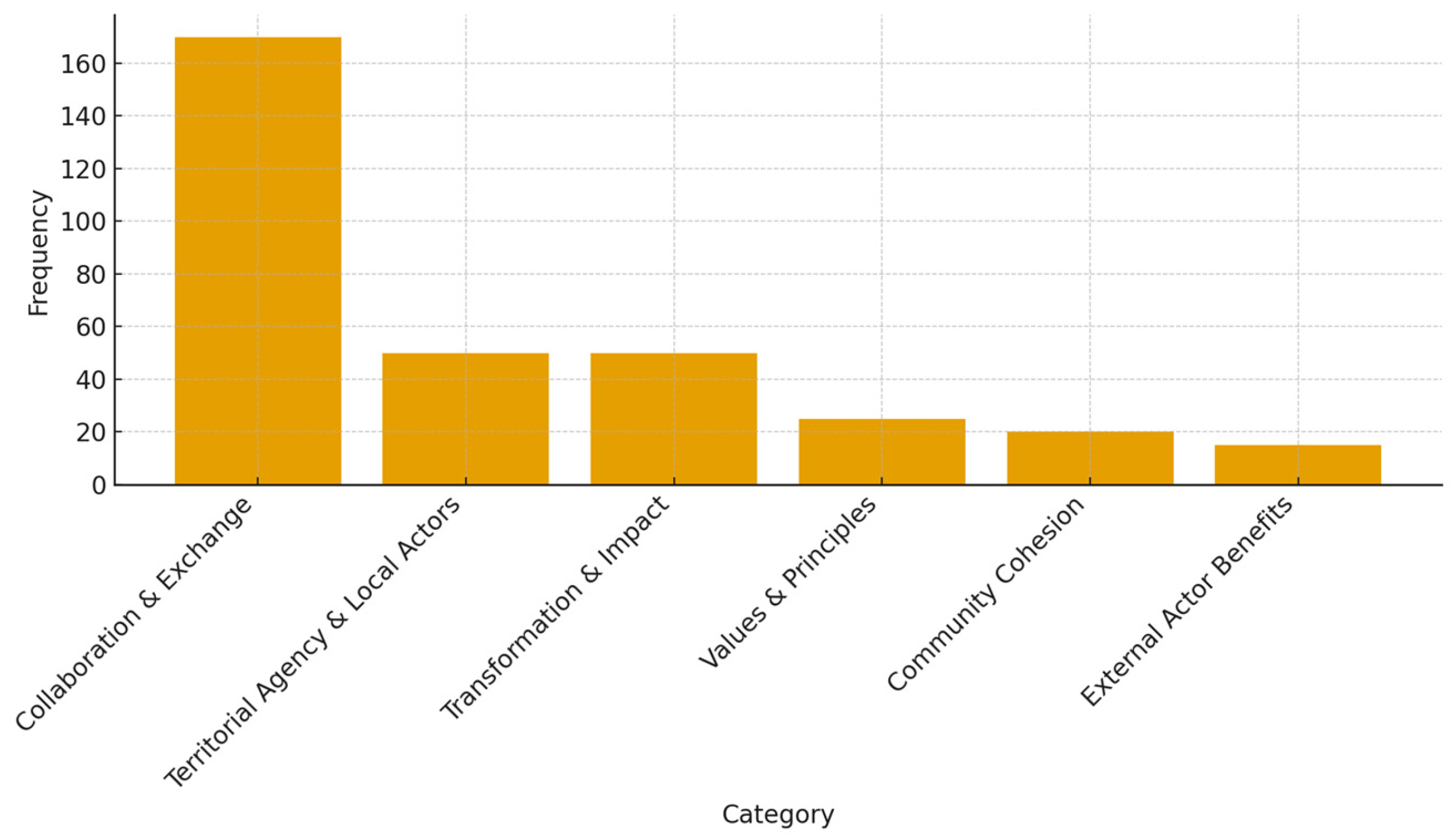
As illustrated in
Figure 3, a significant proportion of the coded references pertained to Collaboration & Exchange (51%), followed by Territorial Agency & Local Actors (15%) and Transformation & Impact (15%). Thematic analysis further revealed frequent mentions of Values & Principles (8%), Community Cohesion (6%), and External Actor Benefits (4%). This pattern, consistent with
Section 4.2, demonstrates that leadership is recognized through collaboration, local anchoring, and value-based action [
15,
16,
28,
31,
52,
54].
A generational breakdown reveals a similar pattern. Collaboration was evident across all age groups, with Generation X and Generation Y citing values, impact, and transformation most frequently. As indicated by the data, reference of leadership and agency manifested predominantly in Generation Z; however, this demographic was relatively limited in size. This finding suggests that while community leadership is a concept that is widely acknowledged, younger and mid-career generations tend to talk about it more explicitly.
These results indicate that the phenomenon of community leadership in the DLLs emerges in circumstances where individuals collaborate, where there is a discernible sense of legitimacy within the community, and where there is an alignment of shared values. The development of leadership is achieved through relational engagement, network mobilization, and the translation of DLLs goals into meaningful local action, rather than being formally designated. These dynamics were vital for maintaining engagement, expanding the reach of the DLLs, and ensuring the methodology’s adaptability and versatility in diverse contexts [
12,
14,
15,
16,
28,
31,
38,
39]. The predominance of community-led mobilization indicated that shared values were the primary catalyst for coordination and engagement within the DLL, rather than formal structures.
4.4. Value-Based Considerations and Public Value
The values of DLL were identified as a fundamental component in the participants’ comprehension of DLL functionality and its symbolic representation. It was frequently posited by participants that principles such as inclusion, equity, openness, solidarity, trust, and commitment were fundamental to their engagement. As one participant noted, ‘People felt it was also their project, something they could shape and bring back to their own spaces.’ (R11). Another participant emphasized the sustained relational impact of these shared values: ‘We created links that continue beyond the sessions.’ (R36). This value orientation is further reflected in the descriptions given by participants of how the manner in which innovation should operate: ‘Innovation must be open, social, inclusive, and decentralized, creating spaces where affected people can meaningfully participate and lead.’ (R37). It was asserted by various parties that there was a necessity for systemic and participatory approaches. This position was supported by the statement, ‘Projects must be collaborative, transparent, and inclusive, with a systemic approach that responds to real community needs.’ (R82).
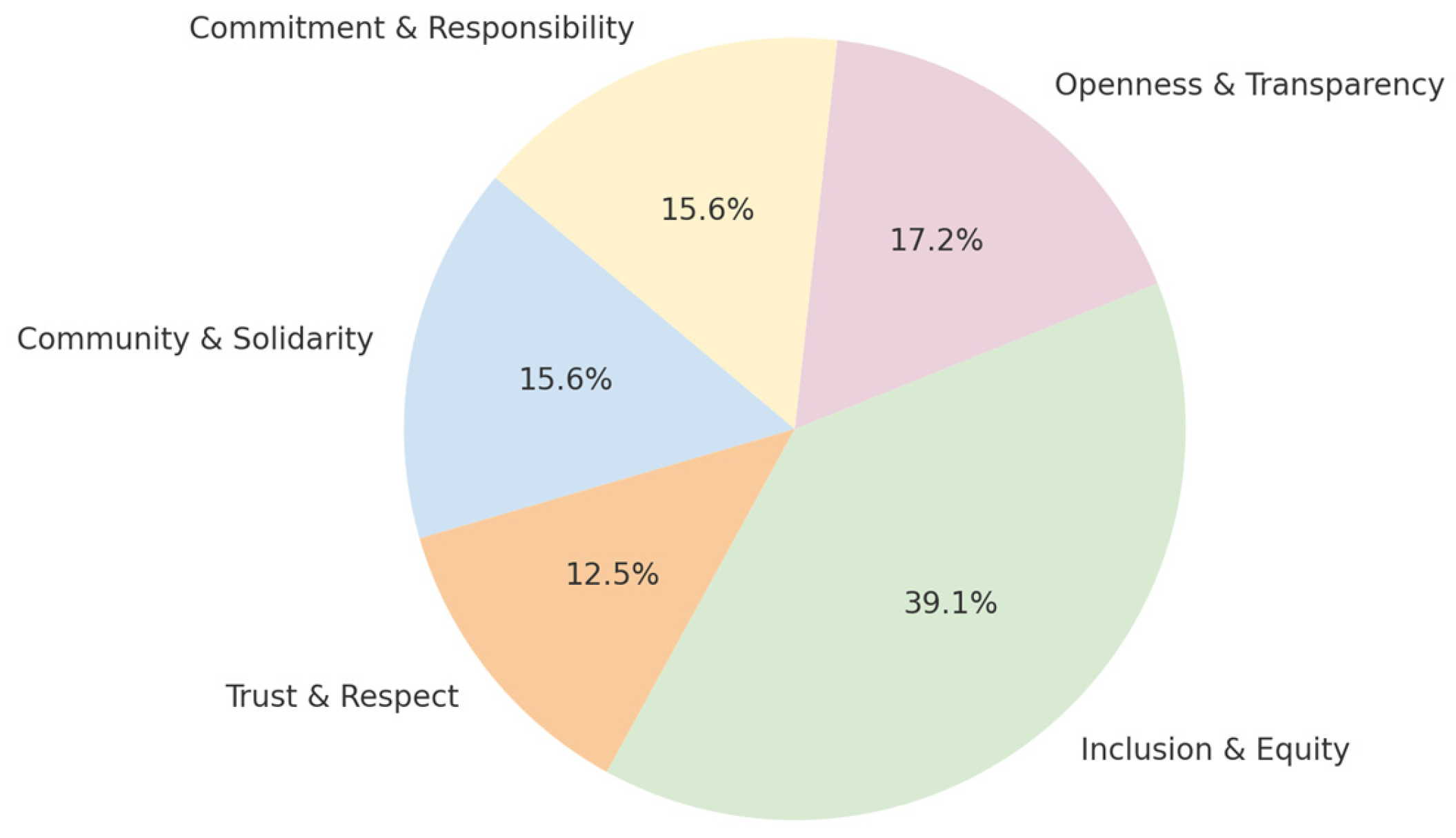
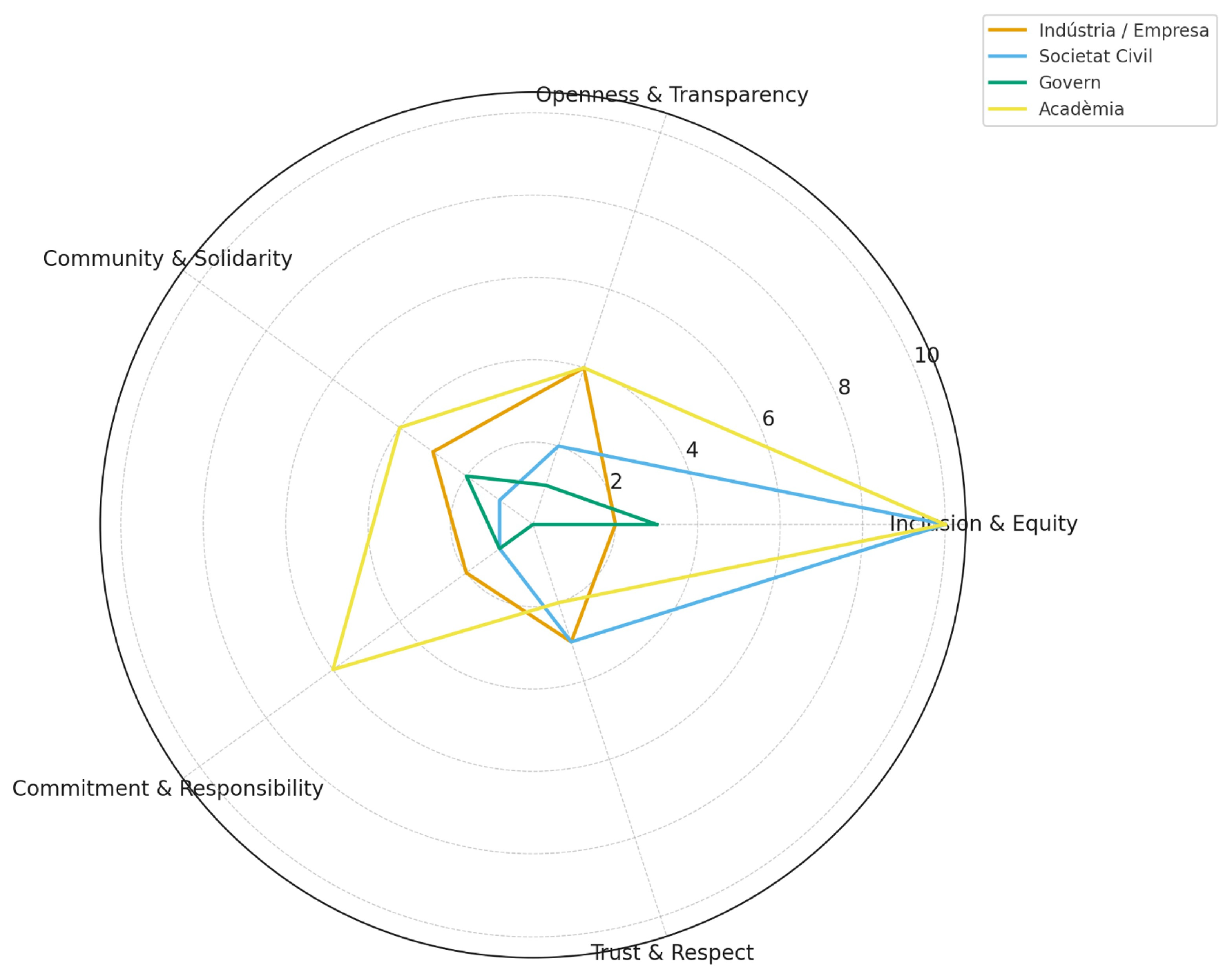
The most frequently mentioned category in the quantitative analysis of value-related responses, in relation to the values mentioned in the qualitative section, was Inclusion & Equity (39%), followed by Openness & Transparency (17%), Community & Solidarity (15.6%), Commitment & Responsibility (15.6%), and Trust & Respect (12.5%). The relative importance of each value category is demonstrated visually in
Figure 4, which summarizes these results.
The findings of this study indicate that the participants did not primarily perceive the DLLs as a technical or managerial structure but rather as an ecosystem oriented towards values such as fairness, transparency, and collective responsibility. This interpretation is congruent with the conception of public value as outlined in [
19]. This is understood as the creation of socially meaningful outcomes. The outcomes of these measures serve to reinforce legitimacy, trust, and collective capacity. The aforementioned elements are facilitated by an authorizing environment that has been suitably enabled. It is evident that this environment fosters collaborative action. The participants’ contributions demonstrate an emphasis on shared values, which aligns with the KV/KVI framework [
20]. This methodological consistency between the DLLs model and the participants’ personal value systems is therefore strengthened.
The extant evidence suggests that value-based considerations are essential to relational mechanisms and community leadership practices identified across the DLL. This value layer has been shown to strengthen the shared norms, expectations, and trust that underpin collaborative innovation. It has been demonstrated that relational mechanisms and community leadership support the design, governance, and value-based assessment of a DLLs model. The governance processes within the 4-H ecosystem were directly influenced by the value-based dynamics that characterized these processes. These dynamics influenced the manner in which various actors collaborated, the alignment of expectations, and the implementation of collective decision-making.
4.5. Governance Processes and Collaboration Across the 4-H Ecosystem
The governance of the DLL has been influenced by ongoing cooperation across the 4-H ecosystem (
Figure 5). This finding lends further support to the notion of the importance of coordinated multi-actor orchestration, as discussed in recent research by LL [
5,
6,
15,
16,
28]. The majority of the participants indicated that the project had undergone a conceptual shift as it had evolved. Participants have indicated a shift in focus from an initial emphasis on technology to a more relational and community-anchored form of governance. As one respondent noted ‘Over time, this perception has evolved, understanding that it is not only about technology but also about involving communities, collaborating with various actors, and creating sustainable, and inclusive solutions’ (R99). This change is consistent with the shifts towards distributed, participatory governance, as articulated in [
5] and the 4-H framework, and by [
16] in their methodology for LLs as orchestrators within regional innovation ecosystems.
‘Cross-sector collaboration, community transformation, awareness raising, and improved quality of life (R95)’ are of paramount importance. It is essential to establish a direct correlation between governance processes at the community level and the outcomes thereof. The survey responses indicate that the majority of respondents perceived collaboration across helices to be effective. Furthermore, it is emphasized that the collaboration was mutually beneficial. This was particularly evident in terms of coordination. This phenomenon was also evident in the context of knowledge exchange. It was observed that there was a congruence in terms of alignment of objectives. The findings of this study corroborate the assertions previously put forth in LL, namely that the presence of trust, mediation, and joint ownership is indispensable for ensuring effective governance, superseding the significance of formal procedures [
6,
16,
28].
The figure illustrates the differentiated yet complementary value orientations that shape governance processes within the DLL. The four helices have been shown to exhibit different yet complementary value profiles. In the context of industry, openness and trust are emphasized, while civil society places a priority on inclusion and equity. Conversely, government places cohesion and equity at the forefront, and academia emphasizes responsibility and methodological transparency. These varied contributions serve to reinforce the relational governance of the DLL, thereby facilitating the replication of its values [
5,
11,
12,
13,
14,
16,
28,
38,
39,
52,
53].
The distinct roles of each 4-H actor were integrated with one another. This enhancement to the LL’s governance processes has been demonstrated to improve its ability to solve problems collaboratively and make shared decisions. Significant changes in strategic planning and team coordination were noted by several women from the baby boom generation because of their involvement. It can be posited that LL facilitated collaboration between organizations, thereby precipitating an evolution in its internal culture.
As the project progressed, an observable shift in the nature of governance processes became evident. These processes evolved to become increasingly relational, distributed and values-based. The mechanisms specified in the research question were directly supported by constant interaction between 4-H stakeholders and the promotion of shared ethics and community-level leadership. The 4-H governance model is predicated on trust, inclusion, transparency, shared responsibility, and community roots. It is a model that enabled the DLLs to generate public value, maintain community involvement, and facilitate the scalability and replicability of a values-based living digital laboratory methodology in different territorial contexts. The DLLs methodology was found to be adaptable and replicable across diverse territorial contexts, a feat attributable to the synergy of relational, value-driven, and governance mechanisms.
4.6. Differences and Similarities Across the Quadruple Helix: Quantitative and Qualitative Evidence
This subsection builds on the analysis of governance processes presented in
Section 4.5, integrating quantitative and qualitative evidence to examine how the 4-H actors perceive and experience the DLL of Catalonia. The findings reveal substantial cross-helix similarities as well as important divergences that illuminate the relational foundations and collaborative dynamics underpinning the DLLs methodology.
4.6.1. Shared Patterns Across Helices
Across all the helices, participants consistently emphasize collaboration, network expansion, and the sharing of learning as central contributions of the DLL. Quantitatively, an improvement in collaboration with external actors is observed among several groups, including 38% of Generation X men and 31% of men’s Baby Boomers. The data show details of the enhancement of communication and networking with institutions and organizations. This phenomenon is further substantiated by qualitative data, wherein project participants articulated new alliances, connections that were previously impossible, and the development of territorial networks as pivotal outcomes of their engagement in the project.
A secondary transversal theme that emerged from the analysis was the identification of insufficient funding as a fundamental barrier. The survey results indicated that 41% of respondents identified insufficient financial resources as the primary impediment to sustaining innovation efforts. This sentiment was reiterated during the interviews. This concern was further articulated by one participant when they stated (R9), ‘Without more resources, many promising ideas cannot move forward’.
It is evident that all helices have reported a marked shift in their understanding of DSI. Quantitative data demonstrate that 66% of respondents altered their perception of DSI during the course of the project, with the highest levels of change observed among female respondents (86%) and members of Generation Y (70%). This deepening conceptualization is further confirmed by qualitative narratives that describe DSI as evolving ‘from a technological tool to a catalyst for social transformation.’ (R29).
4.6.2. Divergences and Helix-Specific Patterns
Academy
It has been reported by academics that challenges have been encountered in relation to the practical application of research and to interacting with other helices, particularly those in industry and government. The quantitative identification of transferability issues is indicative of these trends, while interviewers empathize with the absence of mechanisms for translating research into practice and the necessity for enhanced interdisciplinary collaboration. Despite its value to academia as a vehicle for applied research, the perceived impact of the LL is often conceptual rather than operational.
Industry
It has been identified by industry actors that the key obstacles to progress are financial constraints, resource limitations, and unclear governance structures as the key obstacles to progress. A quantitative analysis of the data reveals recurrent references to challenges pertaining to collaboration, as well as organizational resistance to change. Nevertheless, industry participants also perceive strong benefits in terms of networking and competitiveness, with improvements in contacts reported by up to 46% of Baby Boomer men. The analysis of qualitative insights demonstrates the potential for the generation of novel business ideas, the exploration of digital models, and the capacity for innovation to be scaled (R22): ‘The establishment of connections with organizations and companies has resulted in the formation of relationships that have materialized into projects’.
Public Administration
It is evident that actors within the domain of public administration are distinguished by their ability to identify the limitations associated with bureaucracy, the deficiencies in the skillsets of DSI, and the misalignment between policy priorities and the needs of the territory. As posited by numerous qualitative accounts, institutional rigidities have been demonstrated to have a detrimental effect on innovation processes. Concurrently, a number of groups, most notably women in Generation X and Baby Boomers, have reported enhancements in internal coordination, strategic clarity, and digital transformation. These observations are indicative of the emergence of early cultural change within public bodies. Furthermore, respondents from the Public Administration field have emphasized the prospective value of LL as a potential model for DSI-driven public policy.
Civil Society
As has been documented by civil society organizations, there is an absence of adequate financial resources, a paucity of technological infrastructure, and challenges in the assurance of project continuity. A series of in-depth interviews were conducted, the results of which indicated several concerns regarding institutional support and access to opportunities. Notwithstanding the aforementioned constraints, civil society participants have exhibited significant advancements in the domains of digital inclusion, adoption of digital tools, and community empowerment, particularly among younger generations. R15: ‘We realized that the digital divide was greater than we thought. We are now working on strategies to make digital inclusion more accessible’. In a similar manner, civil society actors regarded LL as a mechanism for the enhancement of community networks and the catalysis of participation. R13 stated that the LL had resulted in a much wider network of contacts: ‘We now have a much wider network of contacts thanks to the Living Lab’.
4.6.3. Integrated Synthesis of Quantitative and Qualitative Findings
The integration of quantitative and qualitative evidence through triangulation has led to the identification of a consistent pattern across the four helices. It is evident that all actors concur on the significance of collaboration, network-building, the adoption of digital tools, and the importance of shared values as foundations for innovation. Quantitative patterns include the widespread increase in cross-sector collaboration and the high percentage of participants reporting a shift in their understanding of DSI. These observations are consistent with qualitative insights that delineate the strengthening of territorial networks, the enhancement of digital inclusion, and the emergence of novel community dynamics.
Concurrently, the findings elucidate discrete challenges that are specific to the helix. The following issues are highlighted by the various actors involved:
- -
It is evident that academia has been unable to adequately address the paucity of mechanisms that facilitate the translation of research findings into practical applications.
- -
The industry in question has been observed to place significant emphasis on two particular issues: firstly, financial constraints and, secondly, unclear governance.
- -
Government actors have indicated that there are limitations and difficulties in terms of bureaucracy, and that there is a mismatch between policies and the needs of the territory.
- -
Civil society organizations have indicated that they are confronted with several challenges, namely the scarcity of financial resources, deficiencies in infrastructural capacity, and apprehensions pertaining to the sustainability of ongoing initiatives. The demonstration of such varied perspectives illuminates the manner in which each helix employs its own distinct institutional logic, organizational constraints, and opportunities in its approach to innovation.
Moreover, cross-helix patterns intersect with gender dynamics. As demonstrated by quantitative data, female subjects, particularly those belonging to Generations X and Y, report higher levels of value alignment, digital inclusion, and perceived transformation. Conversely, men more frequently emphasize network expansion, competitiveness, and project development. The distribution of experiences along gender lines provides further nuances with respect to the adoption and sustained implementation of innovation processes within each respective sector.
Furthermore, the presence of generational differences provides an additional interpretative layer. A study of the attitudes of different generations to innovation capacity, digital empowerment, and community engagement reveals a marked difference between the views of Baby Boomers, especially those in government and industry roles, and those of younger generations (Y and Z). The former group tends to be more skeptical about tangible outcomes, while the latter consistently perceives greater improvements in these areas. These generational patterns imply that the DLL cultivates diverse forms of learning and transformative potential, contingent on the institutional context and the life stage of the participants.
In conclusion, it became apparent that there were multiple discrepancies between quantitative and qualitative responses. These revealed the contextual nuances that existed within each helix. For instance, quantitative data demonstrates that there have been improvements in internal coordination amongst government actors. However, qualitative interviews reveal that the prevalence of bureaucratic barriers remains an ongoing issue. It is the considered opinion of industry respondents that there has been an increase in networking, as evidenced by quantifiable data. However, when considering the qualitative aspect, concerns related to resource scarcity and operational constraints are emphasized. In the survey, civil society stakeholders reported notable advances in digital inclusivity. However, subsequent interviews indicated concerns regarding the sustainability of these endeavors and the provision of long-term support. It is evident that these divergences serve to illustrate that quantitative indicators are capable of capturing broad tendencies, whilst qualitative evidence is able to expose deeper structural conditions that shape the lived experience of innovation.
The integration of quantitative indicators with qualitative narratives demonstrates that DLL provides a shared, value-driven structure for multi-actor innovation. Furthermore, it enables each helix to advance unique trajectories of transformation shaped by gender, generational identity, and institutional context. This cross-helix synthesis underscores the significance of the analytical framework and establishes the foundation for the theoretical implications outlined in the subsequent section.
4.7. Concrete Outcomes of the Digital Living Lab
The findings from an analytical examination of the 2019–2024 period demonstrate that the DLL of Catalonia has engendered outcomes that transcend the scope of isolated project outputs. The objective of this study is to provide a comprehensive reflection on structural, relational, and institutional transformations that have occurred within the regional innovation ecosystem. It is asserted that the results of this study demonstrate the long-term potential of the DLLs methodology.
Firstly, the DLL has been instrumental in the establishment and solidification of an extensive innovation community in Catalonia. This community comprises thousands of actors from the perspective of 4-H. The expansion under discussion has been characterized by the establishment of five territorial and two thematic LLs, as well as the formation of a permanent multi-actor Steering Group. The purpose of this group is to formalize collaborative governance and to support long-term coordination across sectors. The evolution of digital infrastructures, incorporating a collaborative participation platform and an innovation mapping tool, has served to strengthen these structures by facilitating novel forms of visibility, interaction, and shared decision-making.
Secondly, evidence has been demonstrated that the DLL has a favorable influence on organizational and community capacities. The implementation of training programs targeting teachers, young people, and women has led to significant advancements in digital skills, fostering digital inclusion and unveiling new avenues into technology-oriented domains. Participants have reported an increase in confidence, empowerment, and the adoption of digital tools and practices that extend beyond the project’s duration. The outcomes under discussion illustrate the manner in which the DLL contributes to the development of human capital and the fostering of digitally empowered communities.
Thirdly, the DLL has catalyzed changes in organizational practices and innovation culture. A wide range of organizations, including public administrations, educational institutions, clusters, and social organizations, have incorporated co-creation methodologies, mission-oriented approaches, and participatory governance processes into their day-to-day activities. This collective prioritization of social challenges into mission-driven frameworks represents a paradigm shift towards a more strategic and value-driven public innovation agenda. New communities of practice have emerged in a variety of areas, including health innovation, education, and digital culture. The provision of collaborative spaces within these communities facilitates experimentation and knowledge exchange in a relatively stable environment.
Of particular note is the role of the DLL in the development of new public policies. Its methodologies and outputs have contributed to digital transformation strategies, the design of mission-oriented innovation tools, and the institutionalization of multi-actor governance within the public sector. The creation of innovative educational programs and initiatives with a gender focus serves to illustrate its contribution to public policies concerning vocational education, youth empowerment, and digital gender equality. Furthermore, the transfer of the DLLs approach to international contexts, as evidenced by the development of LLs in Senegal, demonstrates its pertinence as a policy instrument for inclusive digital transformation on a broader scale, extending beyond the confines of Catalonia.
To summarize, the DLL has resulted in substantial progress within local ecosystems. Examples of such initiatives include the establishment of new vocational training programs, the initiation of collaborative relationships between companies and social entities, and the emergence of innovation projects that have secured external funding or been replicated in other territories. These outcomes demonstrate the DLL’s capacity to mobilize resources, generate opportunities, and activate social, educational, and economic development in diverse contexts.
The findings of this study demonstrate that the DLL activates collaborative innovation processes and contributes to structural change, enhanced capabilities, and new forms of territorial cohesion and public value creation.
4.8. Conditions Enabling Transferability (Scaling Deep)
The findings suggest that the transferability of the DLLs methodology is closely related to efforts to reinforce value-based, relational, and governance conditions that enable collaborative innovation.
This is less related to the replicability of structural or procedural elements. This interpretation is consistent with extant literature on the subject, which suggests that transformation occurs through the strengthening of the underlying cultural, relational, and normative foundations rather than through simple dissemination or institutional adoption [
38,
39,
40].
It was repeatedly asserted by participants that relational infrastructures are the primary factor enabling transferability, a claim that is supported by both qualitative and survey data. It was asserted that the methodology can be adapted to different territories. The basis of the methodology was repeatedly cited as trust, reciprocity, and community roots: ‘There is a methodological foundation that can be transferred easily, as long as relationships of trust are created.’ (R12). This finding is consistent with the conclusions of previous studies on LL, which have demonstrated that long-term collaboration is essential for sustaining co-creation and facilitating growth across diverse environments [
7,
12,
14,
15,
16,
28].
A secondary enabling condition pertains to value alignment. The replicability of DLLs was a point emphasized by participants, who noted that this is contingent on the preservation of core values (inclusion, equity, transparency, and shared responsibility). As one respondent noted, ‘The model is perfectly replicable in other territories if values and community participation are maintained’ (R07). This finding is highly congruent with the KV/KVI framework developed by [
20], which emphasizes how shared societal values anchor socio-technical innovation systems and facilitate their evolution across diverse contexts. This assertion is further substantiated by the findings of Responsible Innovation studies, which underscore the pivotal role of ethics and reflection in adapting innovation to diverse contexts [
17,
18].
Thirdly, the notion of distributed and adaptive governance was identified as being critical for the scaling process. This was followed by a discussion of the implications of these approaches. The prevailing hypothesis was that the transferability of a given concept would be contingent upon the governance arrangements in place, with these arrangements taking into account local dynamics while maintaining the same methodological elements. One participant articulated this adaptability with remarkable precision, The Collaboratory can adapt to different contexts because it does not depend on a fixed structure, but on open and inclusive processes’ (R21). This viewpoint is in alignment with the 4-H innovation theory [
5,
14,
53] and recent studies of LLs as facilitators within regional ecosystems [
16], where governance is conceptualized as a flexible, collaborative, and context-dependent process.
In addition, participants placed great emphasis on the networked nature of the DLLs, proposing that this characteristic enables scaling through relational, as opposed to mechanical, modes of diffusion. As one respondent articulated ‘The network can grow through capillarity from local actors, making it possible to scale the model without losing its essence.’ (R18). This finding is consistent with the views in [
15] and ref. [
9] posit the hypothesis that the replicability of LLs is contingent on the reinforcement of local capacities, user communities, and shared approaches to meaning-making.
To summarize, the analysis suggests that the DLLs possess significant potential for transferability through deep scaling. The rationale behind this phenomenon pertains to its capacity to fortify relational infrastructures, promote the alignment of values, and facilitate distributed governance. The process is characterized by the avoidance of the replication of structural and process models and templates. The aforementioned concepts provide a response to the research question by demonstrating how community leadership and relationships, founded upon fair value principles, can facilitate the development of a DLLs model that is applicable to diverse environmental contexts.
5. Discussion
This section discusses how two factors influence the design, governance, and value-based assessment of a replicable DLLs methodology. These two aspects are relational mechanisms and community leadership. This section is also concerned with the resolution of the research question.
The findings of the study indicate the efficacy of the DLLs is contingent on a confluence of robust relational infrastructures, community leadership, shared values, and distributed 4-H governance. It is evident that the DLLs have evolved from technology-driven initiatives into value-based, community-anchored, open digital innovation ecosystems.
5.1. Summary and Relationship to Existing Literature
The analysis consistently identified relational mechanisms such as trust-building, collaboration, facilitation, and knowledge exchange as foundational. This finding corroborates the conclusions of previous LLs academic research, which emphasized the significance of user relationships and interaction between different actors in the context of collaborative innovation [
6,
7,
12,
14,
15,
16,
28]. In contradistinction to studies reporting fragmented participation [
7,
8], the DLL presented a robust relational foundation. Nevertheless, relational barriers were extremely rare in the dataset, manifesting only marginally across responses. This finding indicates the presence of a stable innovation environment [
55].
Community leadership was identified as a pivotal factor in this regard. This finding is in accordance with the research on collaborative governance and participatory innovation, which places great emphasis on the role of informal leaders in mobilizing networks, translating goals, and anchoring innovation at a local level [
14,
16,
28,
29,
52,
53]. The DLL builds on this body of work by demonstrating how community leadership and facilitation can coexist in a complementary relationship within a digital and regional LL.
A prevailing cross-cutting theme pertained to the value orientation, particularly in relation to inclusion, equity, transparency, and responsibility. This finding lends support to the adoption of value-based innovation frameworks, including Responsible Innovation [
17,
18] and KV/KVI systems [
20], and it provides empirical insights into the practical application of these values within a multi-actor regional LL.
The findings indicate that transferability is contingent not on structural replication, but rather on scaling deep. This entails the reinforcement of relational conditions, shared values, and adaptive governance, in accordance with the systemic scaling framework outlined in [
38,
39,
40].
5.2. Theoretical Implications
The present paper proposes a theoretical model that synthesizes a range of research strands in a coherent, value-based framework, integrating concepts from responsible innovation [
11,
12,
13,
14,
17,
18], Public Value [
19], DSI [
23,
24,
25], LLs [
6,
7,
8,
9,
15,
16,
26,
27,
28,
29,
30,
31,
52,
53], and the quadruple helix model of collaboration [
5,
14,
53]. Although previous studies have largely examined these components in isolation, there has been a relative paucity of research that has sought to articulate how these elements collectively influence the governance, relational mechanisms, and territorial embeddedness of DLLs. The present framework is structured around six dimensions, which are derived directly from extant literature. The dimensions under consideration provide a conceptual synthesis, explaining how values, collaboration, transferability, and territorial context interact to generate transformative public value within digital social innovation ecosystems.
Furthermore, a mixed-methods analysis reveals that perceptions specific to the helix are also influenced by gender and generational dynamics, thus offering a more nuanced understanding of existing theoretical models of multi-actor innovation ecosystems. While quantitative data highlights significant advancements in domains such as collaboration, learning, and digital inclusion, qualitative evidence reveals underlying structural tensions. This phenomenon is especially pronounced in the context of bureaucratic rigidity, resource constraints, and the unequal distribution of innovation capacities across helices. The findings of this study indicate that value-based governance in LLs must consider not only institutional differences but also socio-demographic patterns that influence the interpretation and implementation of innovation processes.
The present study offers three contributions to ongoing theoretical debates. Firstly, it is evident that relational mechanisms function as structural enablers, exerting a significant influence on the design, governance, and long-term sustainability of LLs.
Secondly, community leadership functions as a form of distributed governance, thereby extending the framework of 4-H innovation through the demonstration of how legitimacy and mobilization can emerge from actors with territorial connections. Thirdly, values function as a methodological framework, thereby establishing a connection between the RI, DSI and LLs models through the application of shared principles and the creation of public values.
5.3. Practical Implications
The findings generate clear practical insights for LL practitioners and policymakers, which will inform future policy and practice in this field. In order to achieve the desired outcomes, continuous facilitation and relational maintenance are required for the LLs, rather than reliance on technical tools alone. It is recommended that local leadership be deliberately fostered and supported. It is evident that these entities serve as the cornerstone of innovation. Furthermore, they have been observed to engender an expansion in the scope of participation. Value-based frameworks (e.g., KV/KVI) have the capacity to provide a framework for evaluation and governance. In addition, regional strategies are enhanced by the implementation of distributed orchestration across 4-H actors.
5.4. Methodological Contribution
The present study proposes a replicable methodology that integrates the following:
- -
The evaluation process incorporated a combination of qualitative and quantitative methodologies.
- -
The analysis is of a relational and values-based nature.
- -
The 4-H ecosystem.
- -
An evaluation of transferability is to be conducted, with the assessment process being based on scaling deep.
This approach was successfully implemented in the INTEGER project in Catalonia, Hamburg, and Krakow prior to its transfer to LLs in Senegal. This demonstrates its capacity for adaptation to diverse territorial and socio-cultural contexts.
5.5. Limitations and Future Research
Two limitations must be considered: firstly, there is an imbalance of responses across helices, and secondly, the focus is on a single regional case. Future research could include a comparison of European and African situations, an assessment of the long-term value of governance, and examination of the implementation of KV/KVIs in public innovation systems.
In conclusion, these results make a significant contribution to the current discourse on the purpose of relational, value-based, and distributed governance systems in enhancing LLs.
6. Conclusions
The present study examined the manner in which relational mechanisms and community leadership influence the design, governance, and value-based assessment of a replicable DLLs methodology. The application of a mixed-methods approach, incorporating both qualitative interviews and quantitative survey data from 4-H, has yielded insights into the fundamental relational infrastructures that underpin the DLL. The analysis revealed that the core relational infrastructures which facilitate the DLL’s sustainability are trust-building, collaboration, facilitation and knowledge exchange. The mechanisms in question have been demonstrated to facilitate shared problem definition, collective decision-making, and meaningful community engagement.
Simultaneously, these findings demonstrate both shared and helix-specific patterns of change, thus illustrating the intersecting influences of institutional roles, gender, and generational identities intersect to influence on divergent innovation trajectories. When considered holistically, these insights underscore the imperative for adaptive, value-driven approaches to multi-actor governance. Evidence is provided to demonstrate that the DLLs methodology is not only transferable but also sensitive to the relational and contextual factors that determine its transformative potential.
The findings also underscore the pivotal role of community leaders. The significance of these institutions lies in their capacity to establish connections between academic institutions and the prevailing circumstances within local communities. Moreover, they possess the capacity to translate the objectives of institutions into the language of local communities. Their contributions have enhanced the formal role of facilitators and elevated the efficacy of the 4-H governance model. The model is predicated on the collaborative efforts of numerous individuals, thereby ensuring that all have the opportunity to participate. Moreover, it is instrumental in ensuring that the general public benefits from these developments. The hypothesis is put forward that a dual structure, comprising formal facilitation and informal community leadership, can engender sustained engagement and coherence in collaborative processes. Furthermore, the predominance of values such as inclusion, equity, transparency, solidarity, and responsibility indicates that the DLL is not merely a technical environment, but rather a value-based ecosystem.
The study also demonstrates that the model’s scalability is contingent on the reinforcing relational conditions, shared values, and adaptive governance, which can be established in diverse contexts, rather than on structural replication. The validity of this assertion is substantiated by empirical evidence derived from the implementation of this methodology in European and Global South Living Labs. The findings demonstrate the methodology’s capacity for adaptation to diverse geographical regions, socio-economic contexts, and cultural environments.
The present study is not without its limitations. These include an uneven distribution of participants across helices. Moreover, emphasis is placed on a specifical regional case study. In future research, a comparison of multiple LLs should be conducted. Furthermore, it is recommended that longitudinal studies be conducted about value-based governance and the operationalization of KVIs in public innovation systems.
In conclusion, the results provide a valuable contribution to the ongoing discourse on the role of relational, value-based, and distributed governance mechanisms in enhancing LLs.