1. Introduction
The complex relationship between geomorphological dynamics and the development of transport infrastructure has been and continues to be a central focus of both theoretical and practical research. Regarding theoretical research, the following can be highlighted: predictive models for slope stability, such as landslide modelling in erosion-affected mountainous areas, applicable in the design of transmountain roads; the impact of geomorphology on road transport, as seen in studies on mountain roads, where a balance between landscape preservation and their functionality is necessary. On the other hand, practical research focuses on: stabilizing land for road infrastructure prone to various geomorphological processes and rehabilitating infrastructure affected by them.
The Rucăr–Bran Corridor has been a central point of geographical research in Romanian literature, attracting the interest of geologists, geographers, historians, and other researchers. Numerous studies have integrated the region into broader socio-economic contexts of national and international importance. In Romanian literature, the most notable contributions come from the fields of physical and social geography, with an emphasis on natural characteristics and the dynamics of rural settlements. Authors such as Pătru [
1], Teodoreanu [
2], and David [
3] have provided a solid foundation for future research. Additionally, their works are complemented by more recent contributions focusing on tourism and climate aspects, reflecting the growing interest in the anthropogenic impact on the environment.
Pătru [
1] addresses the physical characteristics of the corridor, especially the relief and its geomorphotourism potential. The author emphasizes the importance of karst relief and tectonic-erosional depressions in defining the regional landscape.
Teodoreanu [
2] addresses the climate and microclimate of this region. The author provides a detailed analysis of the climatic and topoclimatic features of the Rucăr–Bran Corridor, emphasizing the influence of local thermal inversions, prevailing wind directions, and frequency of fog during the cold season. These factors were considered in defining environmental constraints for the proposed motorway alignment, particularly regarding visibility, slope stability under freeze–thaw cycles, and the exposure of embankment or viaduct sectors to snow accumulation. Consequently, climatic information supported the spatial weighting of risk factors and the justification for preferring tunnel or cutting alternatives in sections with increased microclimatic vulnerability.
Teodoreanu and Havriș [
4] compare the thermal regime of the Rucăr–Bran Corridor with other mountain corridors in Romania, contributing to a more profound understanding of the climatic specificity of the Southern Carpathians.
David [
5], author of several articles on the dynamics of rural settlements and their relationship with the mountain landscape, analyzes the interaction between human settlements and the natural environment, highlighting the functional changes generated by tourism and economic shifts.
Interest in the Rucăr–Bran Corridor is linked to studies on mountain landscapes and its strategic importance in history: the paper Tourist Attraction Assessment of the Bran–Rucăr Corridor (Romanian Carpathians) [
6] presents the area’s tourism potential, highlighting the contrast between the preservation of rural traditions and intensive tourism development. Dumitrescu et al. [
7] bring an interdisciplinary perspective to sustainability issues.
Recent studies in international scientific literature reflect an increasing concern about the relationship between transport infrastructure and geomorphological factors, particularly in mountainous regions. Within the context of the international HiLands project, Teodor and Bolba [
8] investigated the structures of World War I military fortifications in their work Mountain Passes and Battlefields: Rucăr–Bran Corridor, using LiDAR technology.
Peng Jia et al. [
9] present how spatial data can be used to identify areas with potential congestion risk, utilizing GIS techniques (geoprocessing and spatial modelling, interactive GIS visualization, thematic overlay–for combining different types of spatial data, and critical point analysis–for detecting areas with heavy traffic), providing a supporting framework for urban and road planning decisions, optimizing routes, and reducing negative environmental impact.
In a similar methodological framework, Wang and Zhang [
10] synthesize the current state of GIS use in transportation planning and management. GIS was used to evaluate road routes, taking into account terrain characteristics, geographical conditions, and natural hazards. Integrating GIS data with digital terrain models (DTMs) has aided in land stability analysis and infrastructure planning to minimize the impact of geomorphological processes. GIS was used to simulate road development scenarios, leading to the selection of the safest and most sustainable routes in mountainous areas.
Jojo et al. [
11] focused their analysis on the highway network in the Fort Worth, Texas metropolitan area. They used GIS to create interactive thematic maps for simultaneous monitoring of highway network construction activities. For an integrated view of the on-site situation, they overlaid various types of spatial data, such as road conditions, work zones, and affected traffic. They also used GIS to take into account terrain features and prioritize works based on their vulnerability to geographical factors (low-lying areas at risk of flooding).
The main objective of this study is to design a safe, efficient, and sustainable high-speed infrastructure that improves connectivity and accessibility while respecting the natural, social, and economic constraints of the area. Mountain regions, characterized by steep slopes, high altitudes, and active geomorphological processes, present specific challenges. The Rucăr–Bran corridor is a representative example of this, where the topographic surface and human activity interact.
Transportation infrastructure is a key factor in socio-economic development, enhancing connectivity and accessibility. However, the benefits of infrastructure must be balanced against the risks and costs associated with geomorphological instability and environmental impact. This study highlights the importance of assessing the geomorphological impact on the environment by analyzing landform dynamics in order to propose sustainable infrastructure solutions tailored to the specific characteristics of the region.
The Rucăr–Bran corridor functions as an essential regional transport route, serving as a key connection within the Carpathian Arc by increasing traffic volume and expanding socio-economic activities. However, the region’s infrastructure faces significant challenges due to geomorphological, hydrological, and climatic factors. Landslides and soil erosion frequently impact the transportation network. Additionally, the socio-economic activities within the area, including settlements, agriculture, and tourism, add another level of complexity to the analysis.
Applied geomorphology contributes significantly to the design, implementation, and maintenance of transport infrastructure. Focusing on geomorphological impact assessments and GIS-based analyzes using QGIS 3.28.0, ArcGIS 10.6.1, and Global Mapper 15 software, this research provides a solid foundation for achieving important objectives: optimizing the route, ensuring road stability and safety, minimizing environmental impact, and improving regional connectivity. The results aim to identify the strengths and weaknesses in infrastructure development in the Rucăr–Bran Corridor and contribute to well-founded and balanced planning and implementation.
2. Case Study
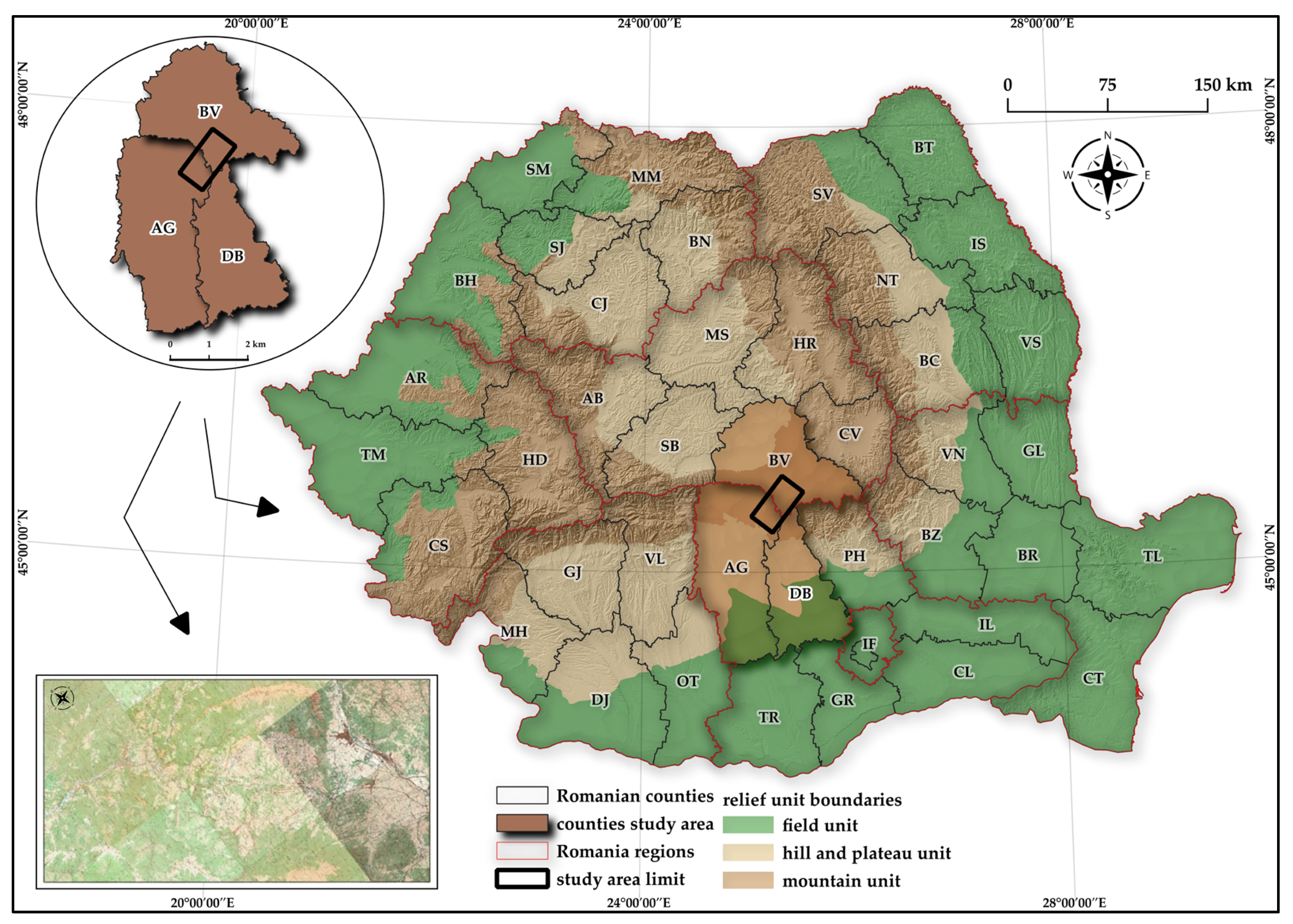
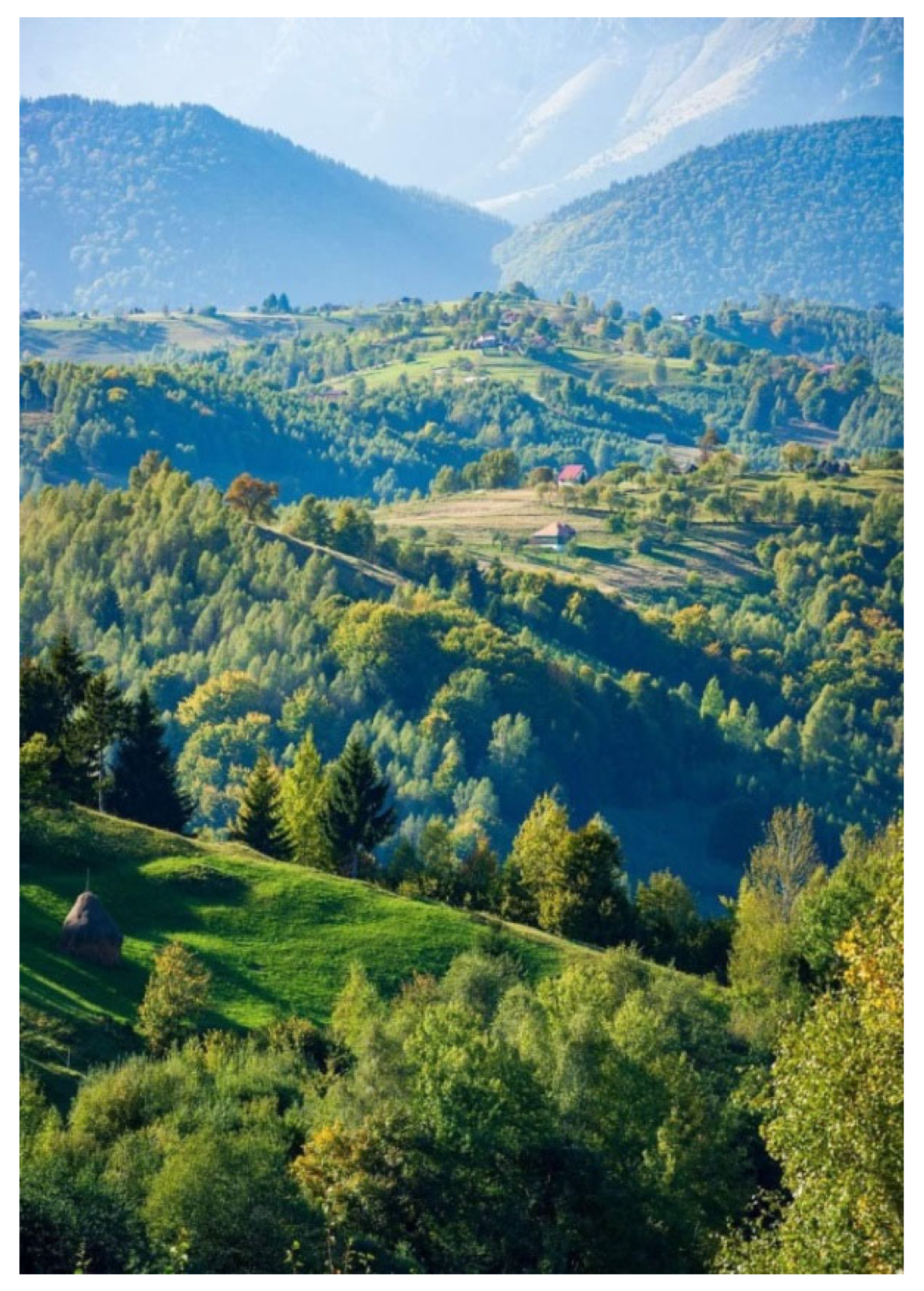
The Rucăr–Bran Corridor (
Figure 1 and
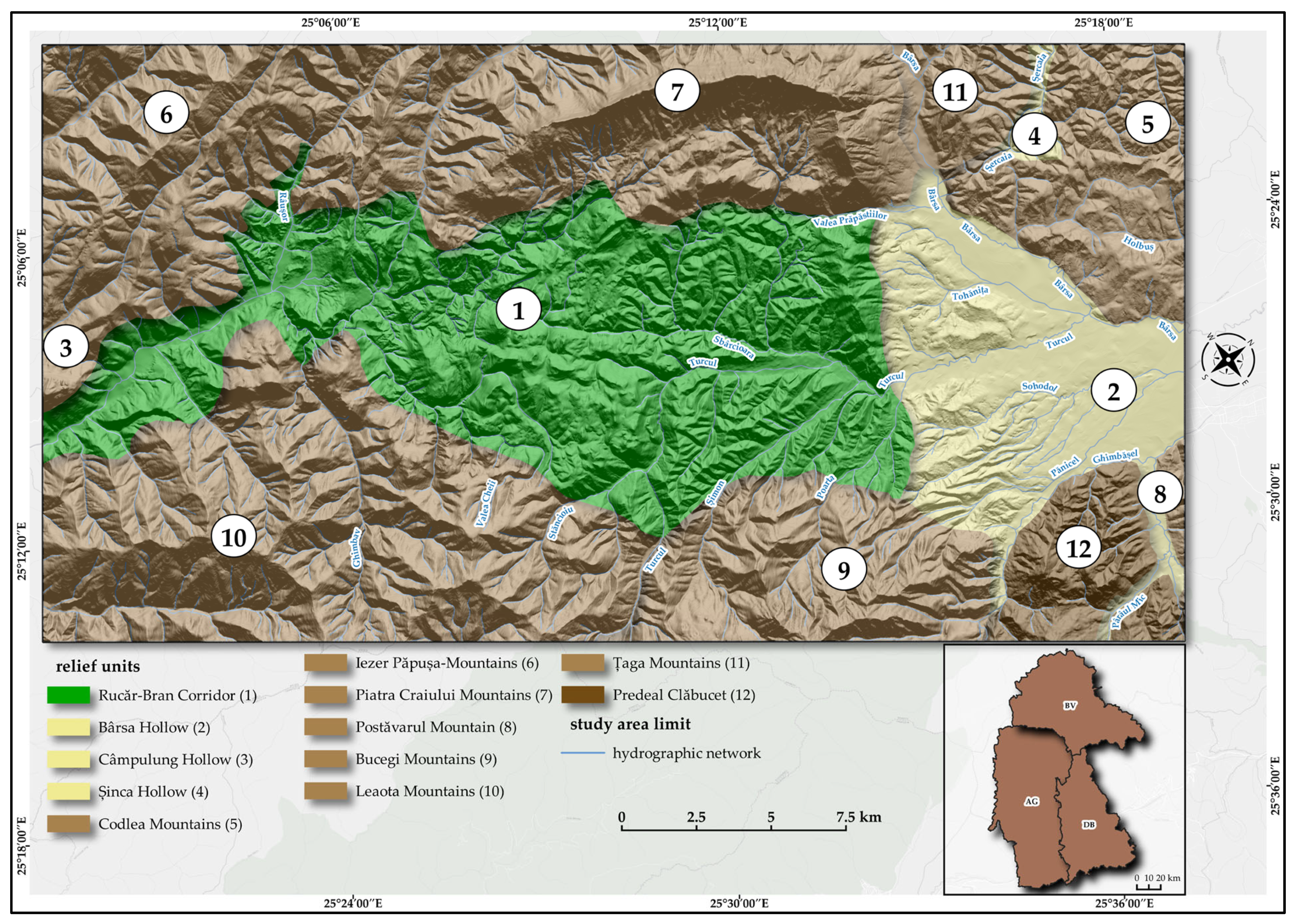
Figure 2), considered a geographical discontinuity area, is part of the Bucegi mountains and is integrated within the Southern Carpathians. It is emerging as an original and well-defined relief unit. Located at altitudes ranging from 500 and 1500 m, the corridor is bordered by the Leaota and Bucegi Mountains to the east and the Iezer-Păpușa and Piatra Craiului Mountains to the west, extending in a northeast-southwest direction. The heterogeneity of the relief is given by the succession of the following relief units: the corridor itself, the Bârsa Depression, the Câmpulung Depression, the Șinca Depression, the Codlea Mountains, the Iezer Massif, the Piatra Craiului Massif, the Postăvarul Massif, the Bucegi Massif, the Leaota Mountains, the Țaga Mountains, and the Predeal Clăbucet (
Figure 3).
The county names referenced in the maps and analyses are abbreviated according to the official ISO 3166-2:RO county codes. For example: BV—Brașov, AG—Argeș, DB—Dâmbovița, PH—Prahova, OT—Olt, CJ—Cluj, HD—Hunedoara. These abbreviations are commonly used in Romanian administrative mapping and are included to ensure concise cartographic representation and facilitate spatial referencing.
This area covers approximately 775 km2 and stretches for 45 km between the localities of Stoenești and Sohodol, with a maximum width of 14 km near the Moeciu. In certain works, the secondary corridors of Tamaş and Oticul, situated in the upper basin of the Dâmbovița River, join the Rucăr–Bran Corridor. The eastern and western limits are clearly defined in the landscape by the steep slopes of the neighbouring massifs, which dominate this intracarpathian corridor by 500–800 m. Instead, the northern and southern extremities remain “suspended” 350–400 m above the Brașov and Stoenești depressions (Subcarpathians). This aspect, along with the other characteristics, provides this Carpathian geographical space with a unique and original personality.
In the north, a clear tectonic step of approximately 400 m towards the localities of Sohodol-Măgura visibly separates the Rucăr–Bran Corridor from the Brașov Depression. However, the southern boundary is a subject of debate: some specialists extend the corridor only as far as Rucăr, while others include the Dâmbovița Corridor up to the Cetățuia gorges, thus also covering the Dragoslavele and Stoenești depression basins.
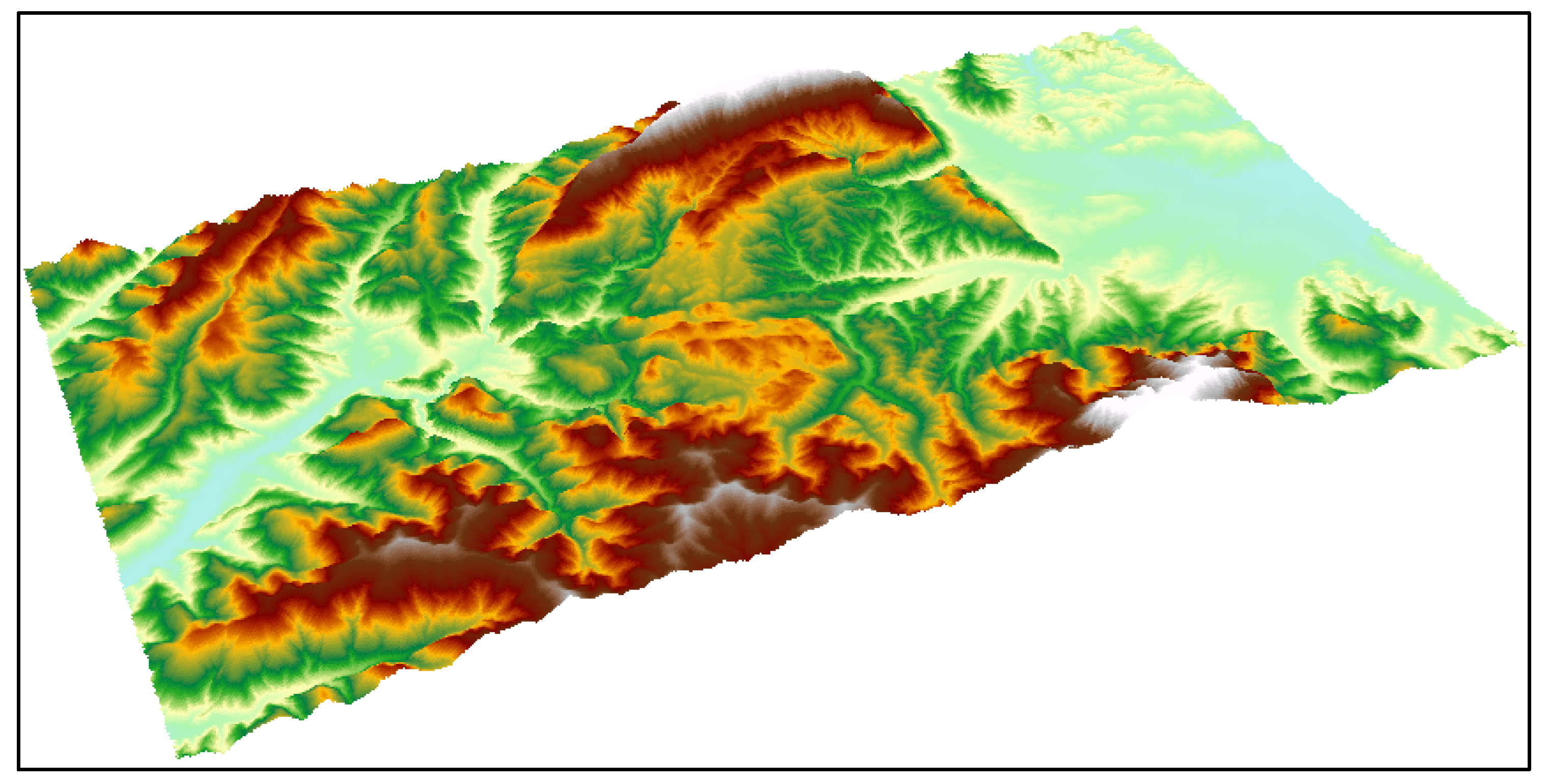
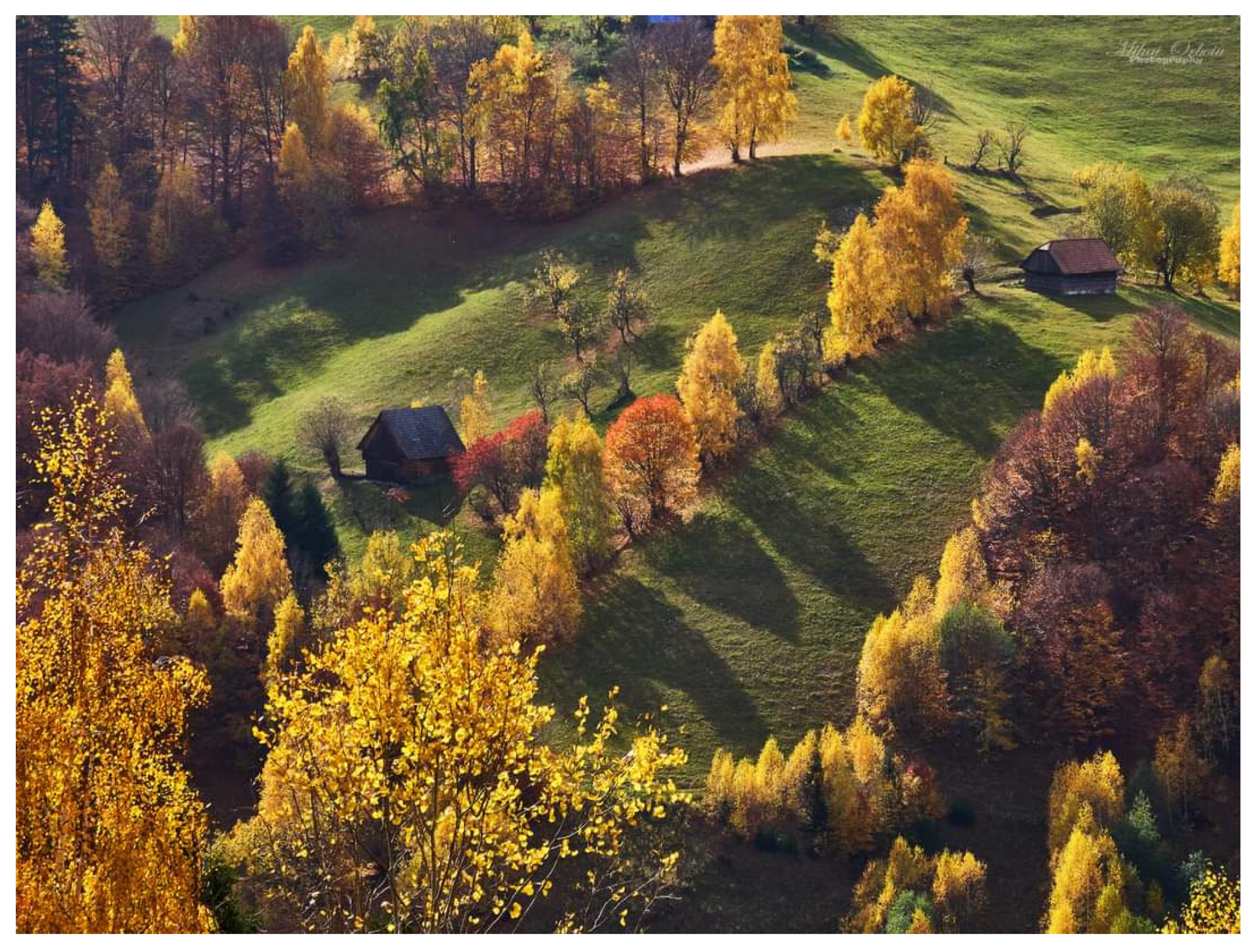
This mountainous area (
Figure 4 and
Figure 5), with its complex and unique characteristics, represents a region of geographical complementarity both in relation to the neighbouring mountainous units and to the subcarpathian region to the south and the Brașov Depression to the north [
3].
The historical, geographical, and economic importance of the Rucăr–Bran Corridor (for tourism activities and increasing traffic volume) necessitates such an intervention. This road aims to improve regional connectivity and stimulate economic activity by diverting traffic away from tourist locations such as Dragoslavele, Rucăr, Dâmbovicioara, Fundata, Moieciu, Bran, Zărnești, and Râșnov.
3. Literature Review
Multicriteria analysis is an interdisciplinary method used for analyzing natural hazards and their impact on human society [
12]. Al-Homoud and Masanat [
13] propose a classification system for assessing slope stability along highway routes, offering a systematic approach to mitigating risks in infrastructure development. Ponomarev et al. [
14] address engineering solutions for mitigating landslides and ensuring infrastructure resilience. In the specialized literature, there are numerous examples of numerical modelling used to establish pressure reduction measures in tunnels [
15,
16]. Regarding the approach to risk and vulnerability in geomorphology, we exemplify quantitative assessment methods that emphasize infrastructure resilience [
17] and the analysis of transportation-related hazards using geomorphological methods and risk assessment tools [
18]. Among the case studies that analyze geomorphological risks in mountainous areas are the works of Urdea [
19].
Barbieri et al. [
20] used GIS techniques (digital elevation model analysis–DEM/DTM, spatial buffer analysis, multi-criteria analysis, terrain shading analysis, raster reclassification, slope analysis) to assess the impact of geomorphological processes along a railroad line in the Modena region, Italy. The methodology integrated field data and detailed geomorphological mapping to identify hazards and assess their quantitative impact.
Dobre et al. [
21] used GIS tools (ArcGIS, vector-raster overlay tools, GIS topology, orthophoto plans, and GPS systems for precise field location) to identify the optimal route for the Posada–Sinaia highway sector, integrating geomorphological criteria with sustainable development objectives. Regarding the environmental impact assessments (including geomorphological) of infrastructure projects, such as the Comarnic-Predeal highway section, field observations and spatial analyzes were used Dobre [
22]. Dobre [
23] applied a geomorphological assessment methodology to analyze the suitability of the terrain for transport networks, using the Prahova Valley as a case study.
Geomorphotechnical mapping integrates geomorphological and technical data to produce detailed maps that guide infrastructure improvement. Brunsden et al. [
24] highlighted the importance of geomorphological mapping techniques for highway design. This approach facilitates the identification of hazards such as landslides, mudslides, and hillside erosion.
The integration of Geographic Information Systems (GIS) and Multi-Criteria Decision Analysis (MCDA) has become a fundamental approach in infrastructure and environmental planning over the past two decades. GIS-based MCDA allows for the spatial evaluation of multiple factors influencing corridor alignment, such as topography, land use, environmental constraints, and construction feasibility [
25,
26]. Recent studies highlight the growing capacity of GIS-MCDA frameworks to support decision-making in transport infrastructure projects, particularly where geomorphological variability plays a key role [
27,
28].
Applications of GIS-MCDA in mountainous and hilly terrains have demonstrated its effectiveness in balancing engineering efficiency with environmental preservation. For instance, Feizizadeh and Blaschke [
29] applied a GIS-based decision model to evaluate landslide susceptibility in the Urmia Lake Basin, while Yalcin [
30] compared analytical hierarchy process (AHP) and bivariate methods for slope stability assessment in northeastern Turkey. Such approaches are valuable in identifying areas of construction constraint and optimizing route selection in complex relief environments.
Moreover, recent developments have expanded the use of spatial multicriteria tools to domains such as flood risk management, ecosystem protection, and sustainable land use planning [
31,
32]. These studies collectively underline the versatility of GIS-MCDA techniques and their capacity to integrate geomorphological, technical, and environmental criteria. The present research builds upon these principles, adapting them to the geomorphological context of the Rucăr–Bran corridor to evaluate how relief dynamics influence infrastructure design and cost variability.
4. Methodology
The methodological approach consisted of several sequential steps, integrating spatial analysis, geomorphological assessment, and economic evaluation. First, a Digital Elevation Model (DEM) with a 10 m spatial resolution was processed in QGIS to extract the longitudinal profiles and slope values along the proposed motorway alignment. Elevation differences (Δh) and horizontal distances (ΔL) were measured to determine gradients using the standard formula (Slope = Δh/ΔL × 100), consistent with current Romanian motorway design standards [
33,
34].
Second, landform units were delineated based on slope, aspect, and elevation thresholds, following geomorphometric classification approaches similar to those described by Evans [
35], and Minár and Evans [
36]. The spatial overlap between the proposed transport corridor and the geomorphological units was analyzed to identify sections with increased construction constraints.
Third, infrastructure typologies (tunnels, cuttings, terraces, embankments and viaducts) were mapped and quantified. The associated construction costs were calculated according to national design norms and reference data [
37], resulting in a total estimated value of 613.1 million EUR. These values were integrated into a comparative assessment to evaluate the influence of relief dynamics on design and cost variability.
Data sources included topographic maps at 1:25,000 scale, digital elevation models (EU-DEM v1.1), and official technical documentation provided by C.N.A.I.R. [
37]. The analysis and mapping were performed using QGIS 3.28 and ArcGIS Pro 3.2 environments.
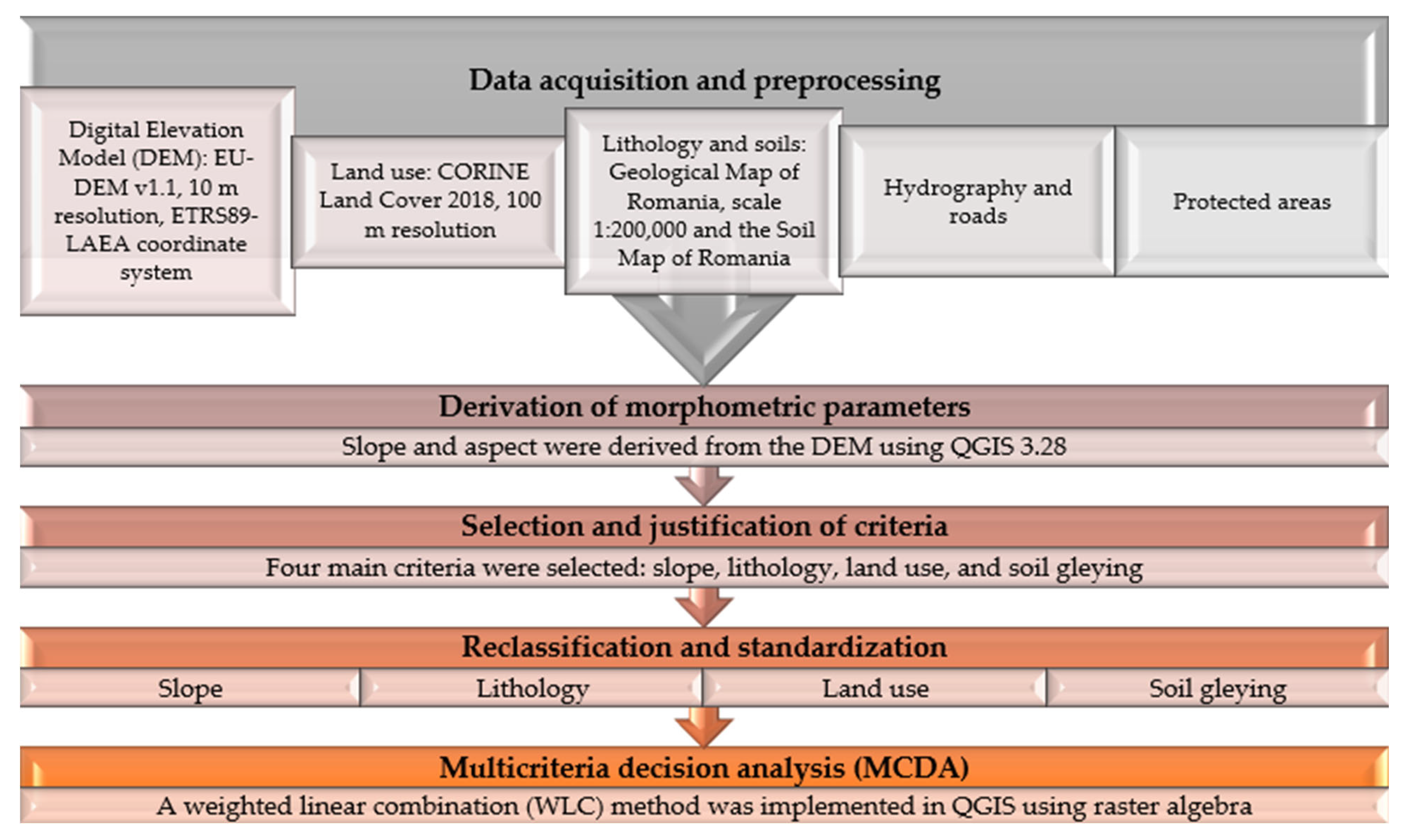
The methodological workflow (
Figure 6) consisted of five main steps, combining spatial analysis, geomorphological evaluation, and multicriteria decision analysis (MCDA) within a GIS environment.
All datasets were resampled to a common spatial resolution of 10 m and clipped to the Rucăr–Bran Corridor study area.
- 2.
We derived the morphometric parameters. Slope and aspect were derived from the DEM using QGIS 3.28. Elevation differences (Δh) and horizontal distances (ΔL) along the projected expressway alignment were measured to compute gradients (slope = Δh/ΔL × 100), which ranged between 1.5% and 4.9%, consistent with expressway design standards [
33,
34].
- 3.
Selection and justification of criteria. Four main criteria were selected: slope, lithology, land use, and soil gleying. These parameters directly affect the construction’s feasibility, stability, and cost. Other variables, such as distance to settlements or rivers, hazard zones, and protected areas, were excluded because the planned alignment avoids built-up and high-hazard zones by design, and environmental restrictions were treated separately in the spatial constraint analysis.
- 4.
Reclassification and standardization. Each raster layer was reclassified on a 1–10 suitability scale (1 = very low, 10 = very high suitability) based on engineering relevance:
- ‒
Slope: <5% (10), 5–10% (7), 10–15% (5), 15–25% (3), >25% (1);
- ‒
Lithology: stable formations (limestone, dolomites) (10); moderately stable (marls, soft schits) (5); unstable (sands, gravels) (1);
- ‒
Land use: arable land (10), forests (5), natural meadows (3), built-up (1);
- ‒
Soil gleying: null (10), very reduced (7), average (5), strong (3), waters (1).
Breakpoints were defined based on engineering literature [
42,
43] and field observations.
- 5.
Multicriteria decision analysis (MCDA). A weighted linear combination (WLC) method was implemented in QGIS using raster algebra. Weights were assigned based on analytical hierarchy process (AHP) consistency: slope (0.4), lithology (0.3), land use (0.2), and soil gleying (0.1). The resulting suitability map indicated optimal segments for the expressway alignment, subsequently validated against existing infrastructure data and field observations.
The workflow diagram (
Figure 6) summarizes data input, processing, and output stages, ensuring methodological transparency and reproducibility.
Figure 6.
The workflow diagram. Input datasets include EU-DEM v1.1 (10 m; Copernicus Land Monitoring Service, 2016 [
38]); CORINE Land Cover 2018 (Copernicus, 2018) [
44]; Geological Map of Romania 1:200,000 and Soil Map of Romania (ICPA, 2003) [
26]; Hydrography and road network from OpenStreetMap (2023) [
40] and C.N.A.I.R. (2020) [
37]; and protected areas from ANPM (2022) [
41].
Figure 6.
The workflow diagram. Input datasets include EU-DEM v1.1 (10 m; Copernicus Land Monitoring Service, 2016 [
38]); CORINE Land Cover 2018 (Copernicus, 2018) [
44]; Geological Map of Romania 1:200,000 and Soil Map of Romania (ICPA, 2003) [
26]; Hydrography and road network from OpenStreetMap (2023) [
40] and C.N.A.I.R. (2020) [
37]; and protected areas from ANPM (2022) [
41].
The choice of the multicriteria evaluation (MCE) approach was motivated by its capacity to integrate geomorphological, lithological, and anthropogenic variables within a coherent spatial analytical framework [
29,
44]. The reclassification of slope values into five favourability classes (0–5°, 5–10°, 10–15°, 15–20°, >25°) followed the logic applied in similar studies assessing road infrastructure suitability in mountainous regions [
28,
45]. The thresholds reflect significant transitions in slope stability and construction feasibility: values below 5° correspond to highly favourable terrain, while slopes exceeding 35° represent major geomorphological constraints. The scoring system (1–5) was calibrated so that intermediate slopes (10–15°) coincide with the typical engineering tolerance range for infrastructure construction [
46].
Regarding lithological categories, rock types were translated into favourability scores based on their dominant geotechnical characteristics. Crystalline and compact limestone formations, characterized by high strength and low weathering susceptibility, were assigned higher weights, while marly, clayey, or structurally disturbed formations received lower scores, following classifications proposed by Dearman [
47], and Hoek and Brown [
48].
Similarly, land use favourability was evaluated according to the degree of anthropogenic transformation and compatibility with road infrastructure development. Areas already modified by human activity (existing roads, built-up areas and consolidated agricultural land) received higher favourability scores, whereas dense forests and wetlands were treated as restrictive [
49]. This translation of physical and land use properties into numerical weights ensures consistency between geomorphological parameters and engineering considerations, thus enhancing the robustness of the integrated suitability model.
A global multicriteria evaluation (MCE) was performed by combining raster layers corresponding to the main geomorphological and environmental factors: slope, lithology, land use, and soil gleying, to produce the final suitability map. The integration was carried out in QGIS using map algebra operations (Raster Calculator).
Since the purpose of this analysis was to assess the cumulative influence of key physical-geographical parameters on terrain suitability, all criteria were assigned equal importance. This unweighted MCE approach ensures an objective representation of geomorphological constraints without introducing subjectivity through expert-based weighting.
The estimated construction cost of the proposed route (EUR 613.1 million) was derived by integrating the total length of each structural segment (tunnel, cut, terrace, embankment and viaduct) with standardized unit costs established at the European Union level for high-speed road infrastructure. The unit cost values (expressed in EUR million/km) were obtained from the European Commission’s “Guide to Cost–Benefit Analysis of Investment Projects” [
50,
51,
52] and corroborated the European Court of Auditors [
53] reports on comparative motorway construction costs across EU member states. Accordingly, the following average values were applied: tunnel—2.4 M EUR/km; cut—1.4 M EUR/km; terrace—1.0 M EUR/km; embankment—1.3 M EUR/km; viaduct—2.0 M EUR/km.
These values fall within the average range reported for mountainous or high-relief areas in Central and Eastern Europe and thus provide a consistent basis for cost estimation. The total cost was computed by multiplying the unit value by the length of each segment, with rounding to two decimals. This approach ensures a transparent linkage between geomorphological suitability and economic feasibility, strengthening the sustainability assessment of the proposed transport corridor.
While the estimation remains indicative, it serves to contextualize the geomorphological constraints within a realistic range of economic feasibility, rather than to provide a detailed engineering cost model.
From an ecological sustainability perspective, the proposed route partially intersects the Natura 2000 protected site “Piatra Craiului” (ROSCI0122 and ROSPA0082). Therefore, a brief environmental impact assessment was conducted to identify potential risks. The main environmental concerns include forest habitat fragmentation, wildlife disturbance (particularly for large mammals), and localized microclimatic changes associated with infrastructure works.
To mitigate these effects, the study recommends minimizing direct interventions within the protected area, partially rerouting the corridor along the eastern buffer zone, and implementing ecological compensation measures such as wildlife crossings, controlled reforestation on affected slopes, and sound-absorbing barriers near sensitive habitats.
In areas characterized by steep slopes and friable lithology, bioengineering stabilization techniques (vegetated gabions, drainage-based slope protection) are suggested to reduce erosion and sediment transport. These measures, derived from the European Environment Agency [
54] guidelines on green infrastructure, ensure compatibility between transport development and nature conservation within the Rucăr–Bran corridor, thus transforming geomorphological analysis into an active tool for sustainable spatial planning.
Although this assessment remains preliminary, it provides an evidence-based link between geomorphological constraints and the environmental dimension of sustainability.
In addition to national and regional studies, several international contributions were also considered to provide a broader comparative framework. Studies conducted in alpine and mountainous contexts [
43,
55,
56,
57] emphasize the integration of geomorphological constraints in transportation planning and the importance of terrain suitability models in assessing sustainable infrastructure development.
These works support the methodological approach applied in this research, confirming its alignment with global practices in terrain-based infrastructure evaluation.
Mihai et al. [
58] and Dobre [
59] offer methodologies for evaluating the stability of various railroad and road alignments in Romania. Pokharel et al. [
60] studied the relationship between transportation and regional development to highlight the economic impact of transportation infrastructure.
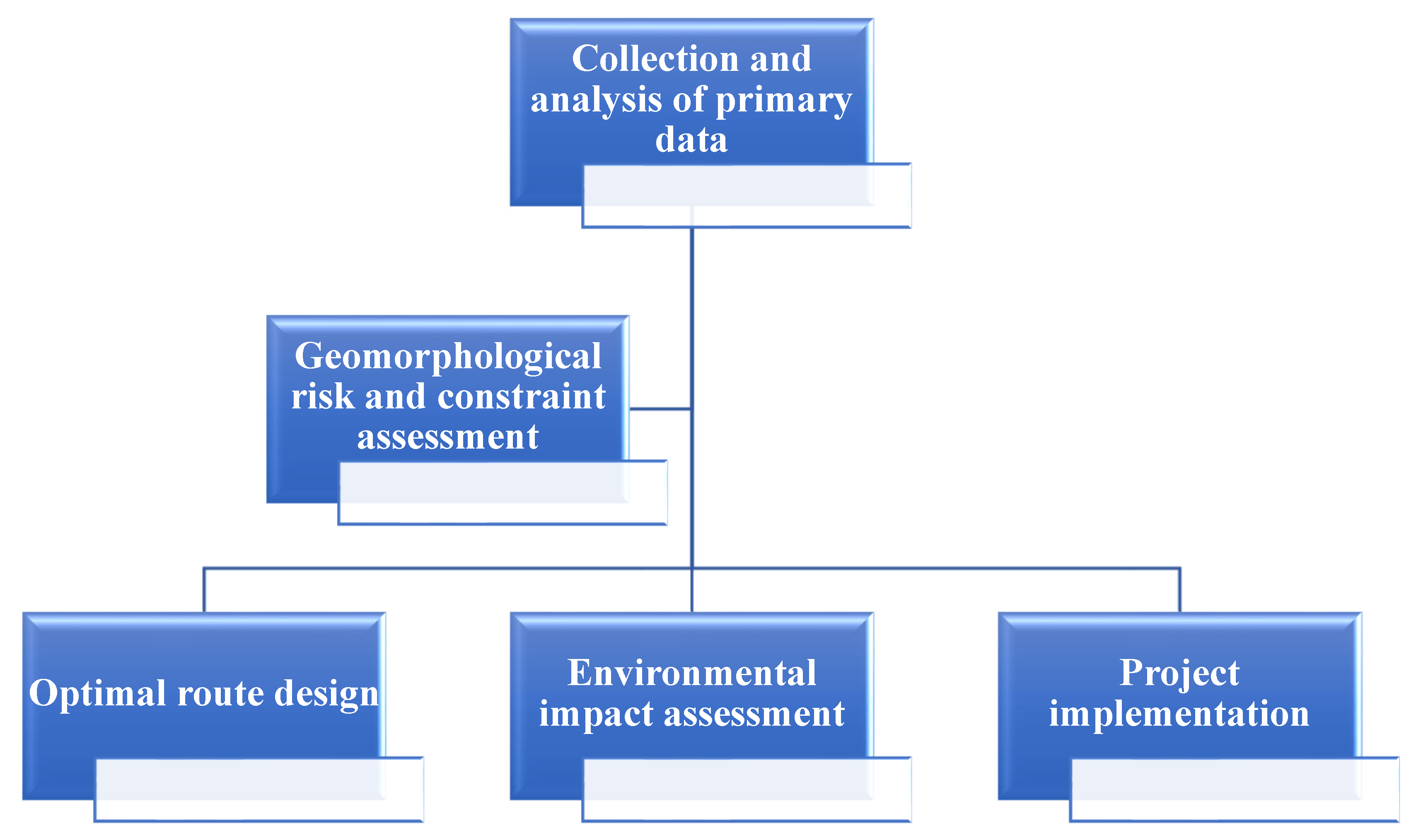
The present research involved the application of several methods to analyze the interaction between transport infrastructure and geomorphological dynamics. These stages are preliminary data collection and analysis, assessment of geomorphological risks and constraints, optimal route design, environmental impact assessment, and project implementation (
Figure 7).
Integrating bibliographic research with cartographic materials and geographical information systems through specialized software like QGIS and ArcGIS provided a comprehensive approach and analysis of a large volume of data.
Regarding the methodological stages, the collection and analysis of preliminary data were carried out by mapping the region and documenting information from various geomorphological studies to identify areas with potential risk. We identified these areas and analyzed slope stability to assess geomorphological risks and restrictions.
A multi-criteria evaluation was conducted to design the optimal route. For the environmental impact assessment, the focus was on identifying the ecological impact. Finally, the implementation of the project involved a cost–benefit analysis for the proposed route.
5. Results
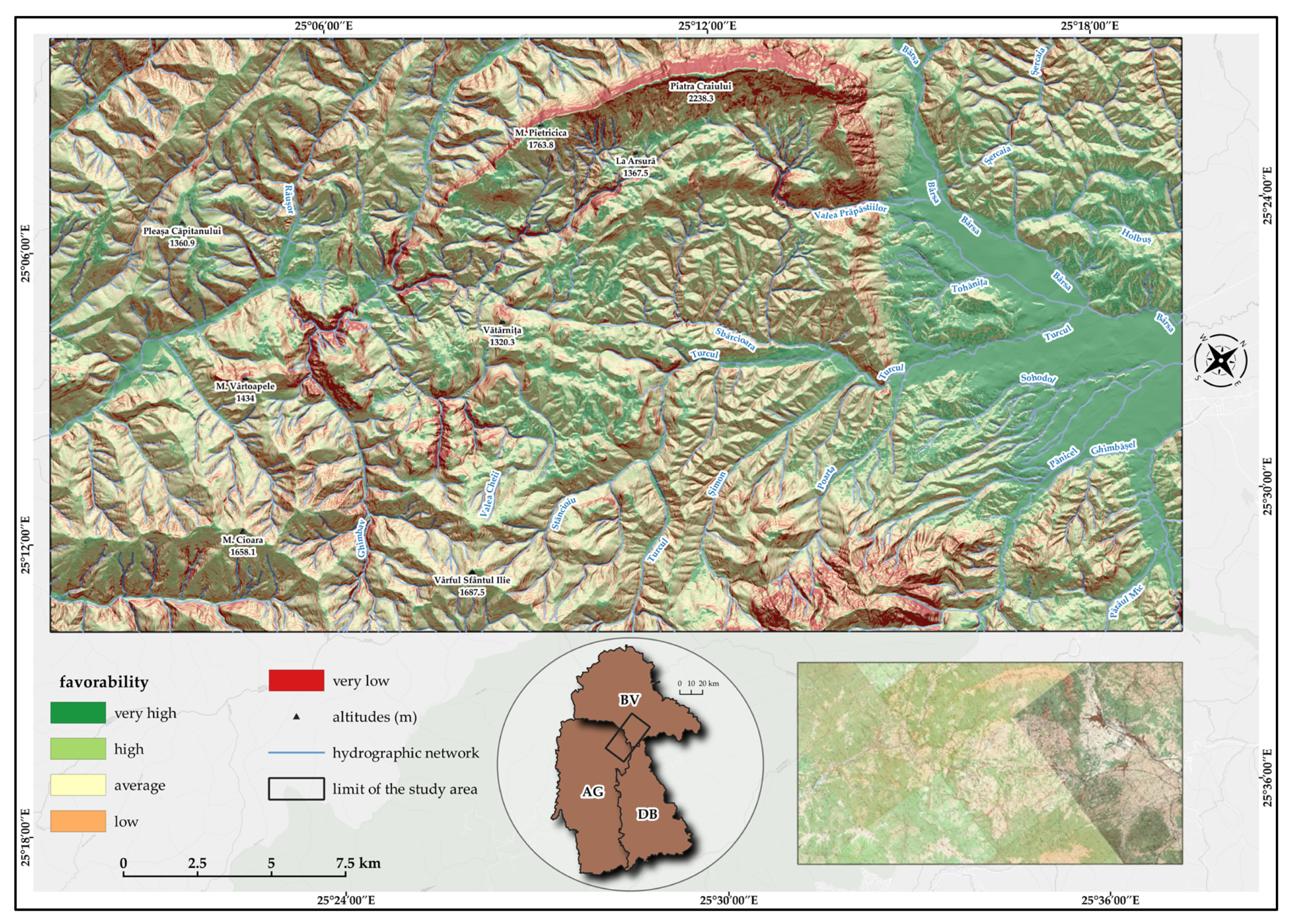
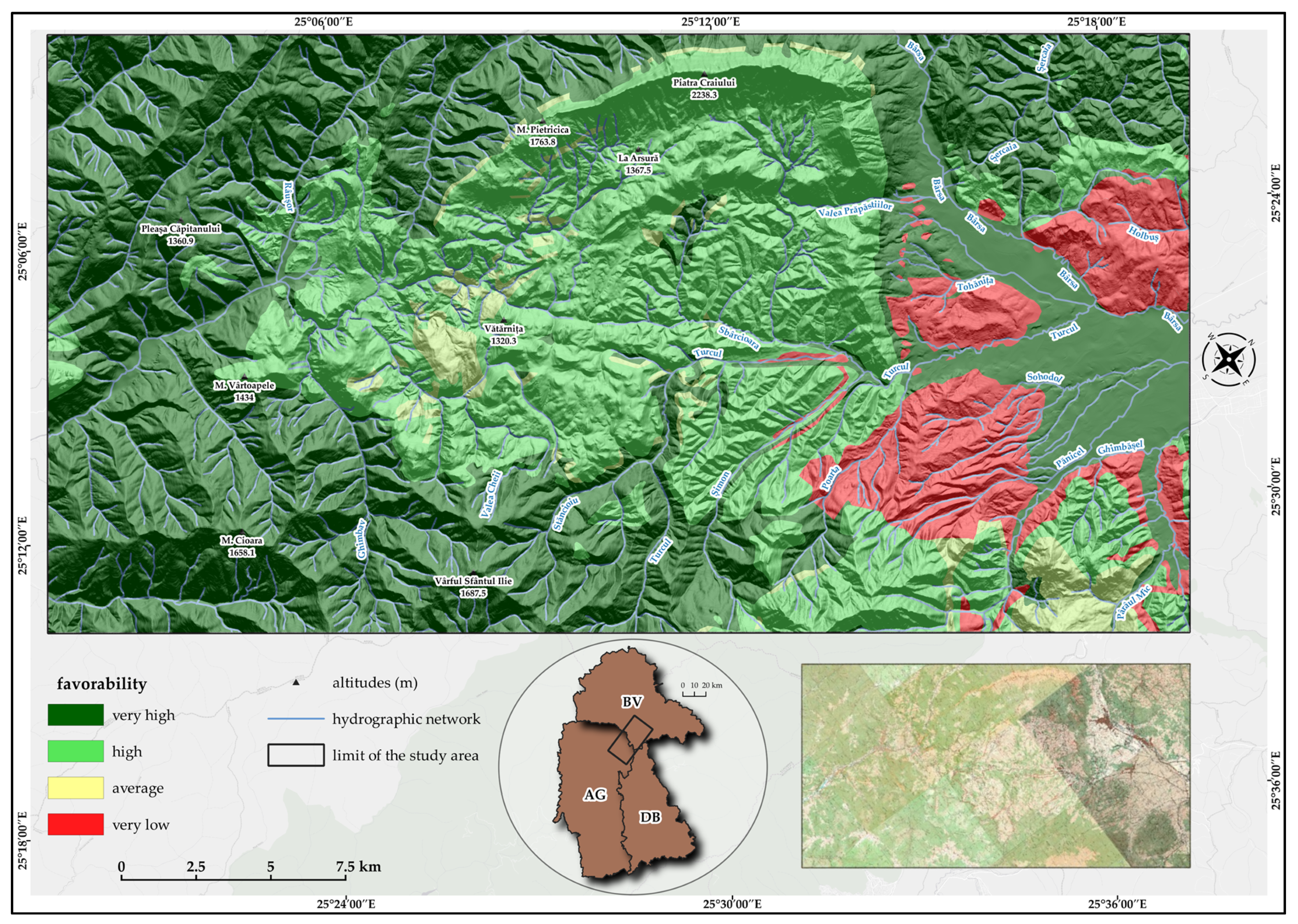
In the first stage of the analysis, the geodeclivity is evaluated, an important morphometric parameter for adapting transport infrastructure to field conditions. Raster data was reclassified to reflect slope suitability for high-speed road development. Five favourability classes were established: very high, high, average, low, and very low (
Table 1). The colors selected for the reclassification values are consistent with the map associated with the table, as the table functions as an annex to the map and maintains a clear visual correspondence between the numerical values and their spatial representation.
The resulting favourability map for slopes highlights the suitability of the terrain based on the slope inclination. Thus, based on the reclassified values, a varied distribution of relief favourability can be observed for the analyzed territory.
Areas with very low slopes, under 5°, represent 19% of the surface and are considered the most favourable for infrastructure development due to their high stability and low development costs. They correspond to meadow spaces or quasi-horizontal areas (levelling surfaces), where the dynamics of the relief are minimal. For the 5.1 and 10° range, the favourability is also high, with these areas covering 26% of the territory. These slopes allow for relatively easy infrastructure development, requiring only minor adjustments for construction. They are located in the transition areas between the floodplains and the steeper slopes of the hills. The largest percentage, 33%, is associated with moderate slopes, between 10.1 and 15°. These offer average conditions for infrastructure development, imposing technical constraints. Areas with such slopes are frequently located on hillsides, where infrastructure works require terracing, consolidation, or other land adaptation measures. However, steep slopes, between 15.1 and 25°, which cover 18% of the territory, significantly reduce favourability. In these regions, the terrain presents several constraints, such as instability due to erosion processes, which leads to high costs for implementing infrastructure projects. These areas are located on steep slopes. The least favourable areas are those with slopes over 25.1°, which account for 4% of the surface area and are characterized by very low favourability. They are suitable for mountainous areas, where extreme slopes limit infrastructure development.
While the mountainous area has steep slopes (4%—very low suitability; 18%—low suitability), reducing its favourability, the floodplain areas have smaller slopes (below 5°, representing 19% of the area’s surface), offering greater suitability for the development of road infrastructure (
Figure 8).
According to national and European road design standards, the maximum allowable longitudinal gradient for motorways ranges between 4% and 5%, depending on the road category and topographic constraints [
33,
34]. In mountainous terrain, exceptional gradients up to 6% may be tolerated over short sections, as stated by the European Directive 2008/96/EC on road safety and the European Road Design Manual [
61].
In the present analysis, the proposed alignment complies with these limits, with modelled longitudinal slopes (derived from the DEM) varying between 0.5% and 5.3%, reaching the upper threshold only in short transition zones between terrace and hillside segments.
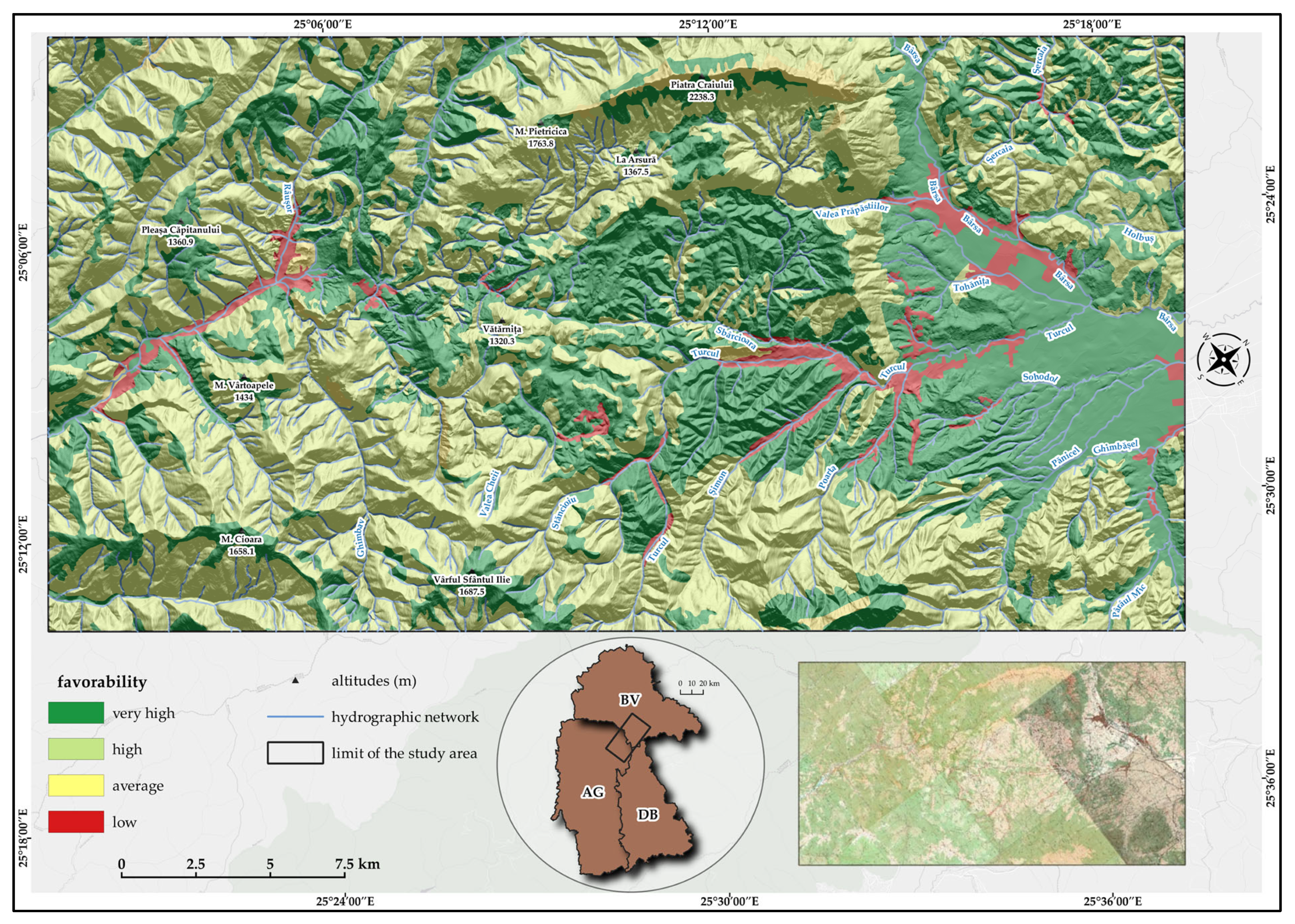
The second parameter analyzed was the lithological substrate, which evaluates the types of rocks in terms of their ability to support the construction of expressways. The rocks were classified into five classes based on their hardness: very high, high, average, low, and very low (
Table 2).
The petrographic map reveals a diverse lithological composition, with the predominant rocks being limestones (most widespread in the northern and central parts of the corridor, especially on the slopes of the Piatra Craiului Mountains, between Rucăr and Zărnești), conglomerates (in the southern part of the corridor, at the contact with the Leaota Mountains and the Bucegi Mountains, in the Fundata-Moieciu area), and crystalline schists (between Rucăr and the southeastern part of the corridor, in the vicinity of the Leaota Mountains ridges) (
Figure 9).
While some types of rock provide substantial support for construction, others, especially unconsolidated ones, are restrictive and require consolidation work.
Land use analysis highlighted the transition from natural to human-modified landscapes. Agricultural land, pastures, and unused land are the most suitable for high-speed road networks due to minimal preparatory requirements (
Table 3). Over 50% of the studied area falls into the high and very high suitability categories, as shown in the land use map (
Figure 10).
At the same time, the first land use category (
Table 3) is located in the southeastern part of the corridor, near the town of Rucăr, on the wide floodplains and terraces of the Dâmbovița River and its tributaries (e.g., Zănoaga Valley, Râului Valley). The second category (
Table 3) is located on the northern and northwestern slopes of the mountains in the corridor (e.g., the northern slope of the Piatra Craiului and Făgăraș Mountains), where coniferous and beech forests are dominant at high altitudes, and subalpine vegetation occupies the central and northern part of the corridor, especially around the mountain ridges, at altitudes between 1400 and 1800 m, in the vicinity of the peaks in the Piatra Craiului Mountains (La Om, Baciului). Within the third category (
Table 3), natural meadows and orchards appear on less inclined slopes in the western and southwestern parts of the corridor, near villages and forest edges. The fourth class (
Table 3) is concentrated in the rural areas of the localities of Rucăr (southeast), Bran (south), and Moieciu de Jos (west).
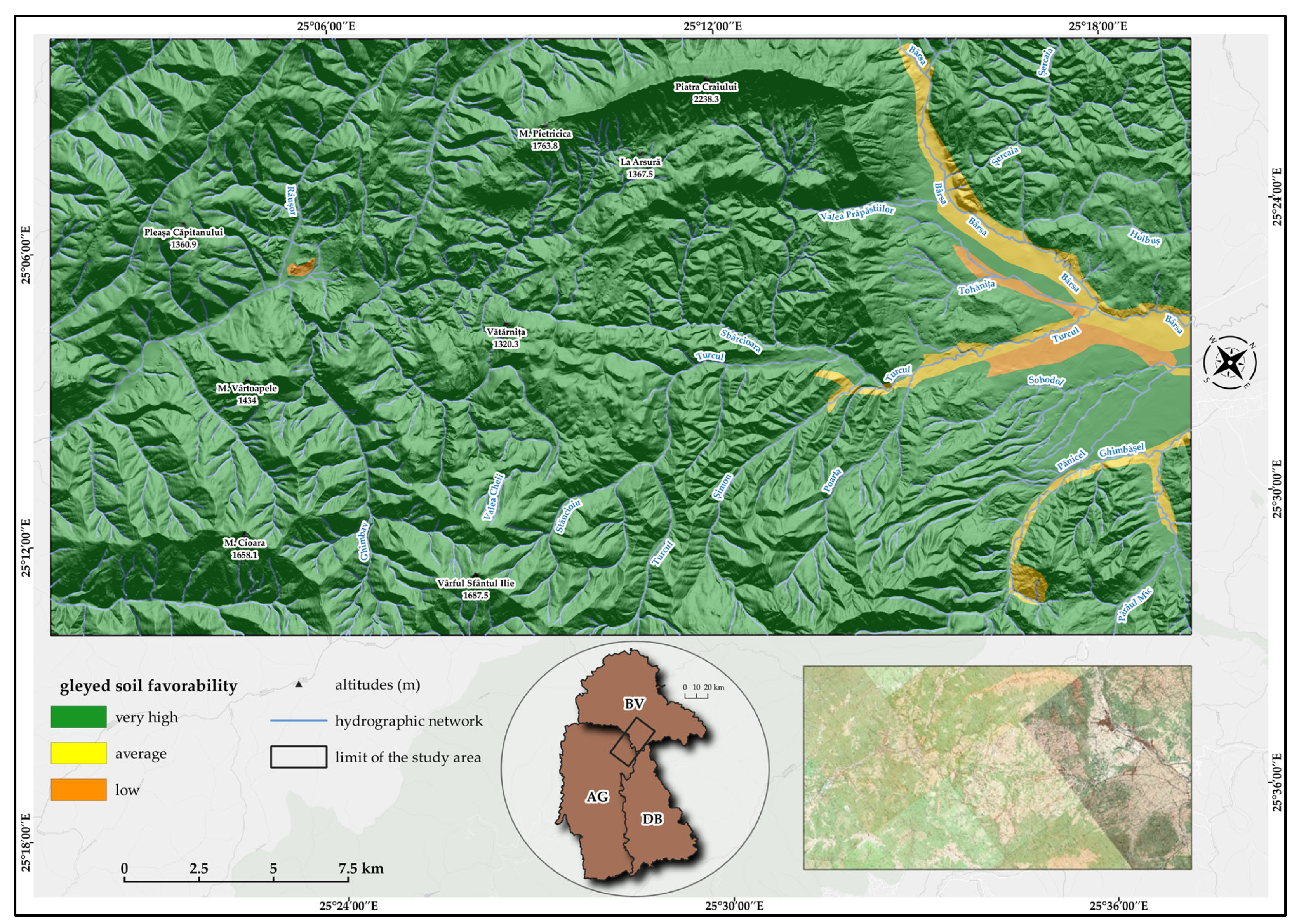
The intensity of gleying was assessed to identify the impact of high soil moisture on infrastructure construction. This process results in the production of Gley horizons in places with persistent wetness and was analyzed to put the land into three favourability classes: extremely high, average, and low (
Table 4). Although gleying processes were not detected in the research area, moisture control is still required (
Figure 11).
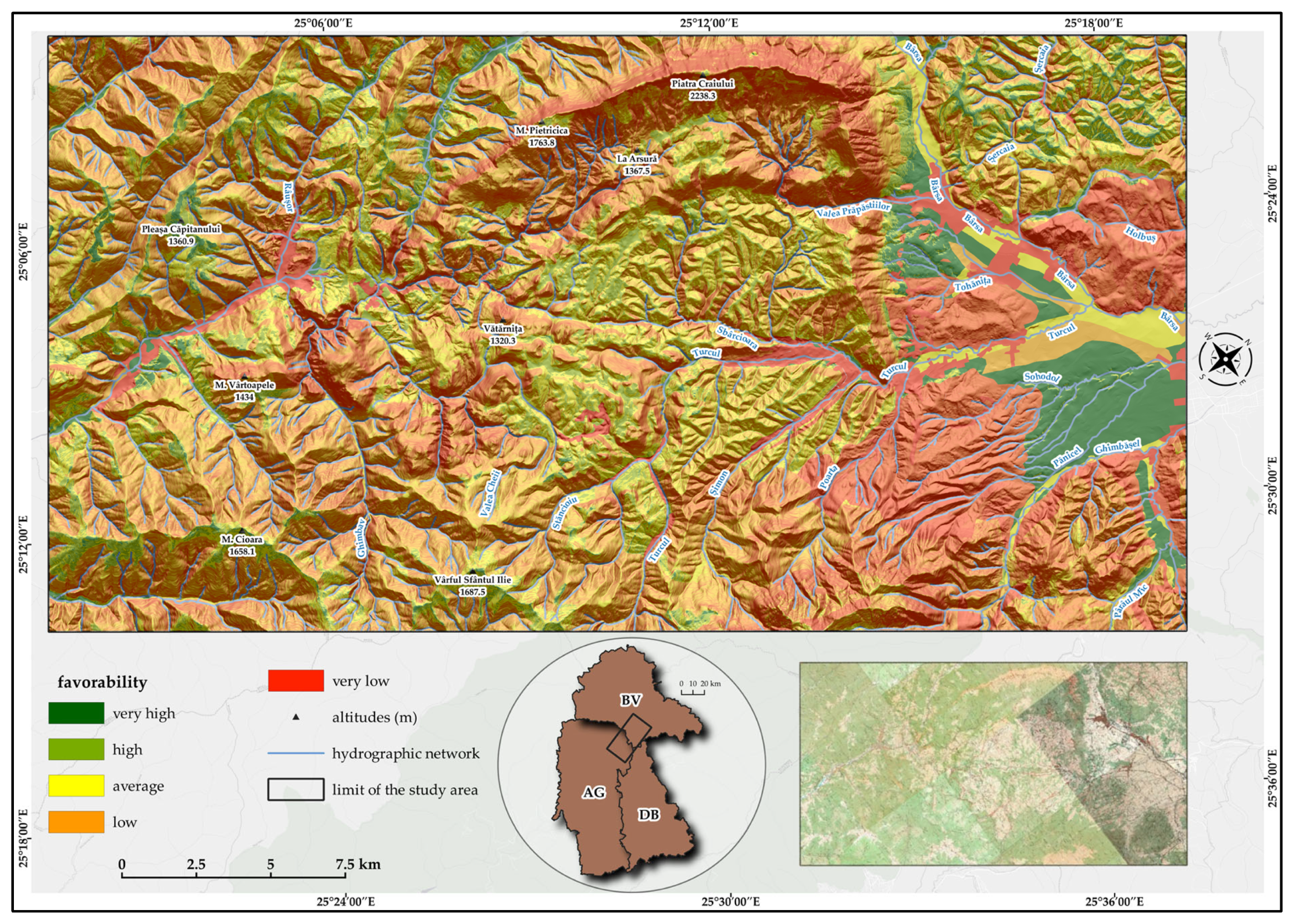
The cartographic product of the analysis is the land suitability map, derived from multi-criteria analysis using GIS. This integrates the following elements: slope, rock, land use, and gleying, to identify the most favourable routes for the proposed expressway (
Figure 12). The resulting product delineates the areas with the highest suitability.
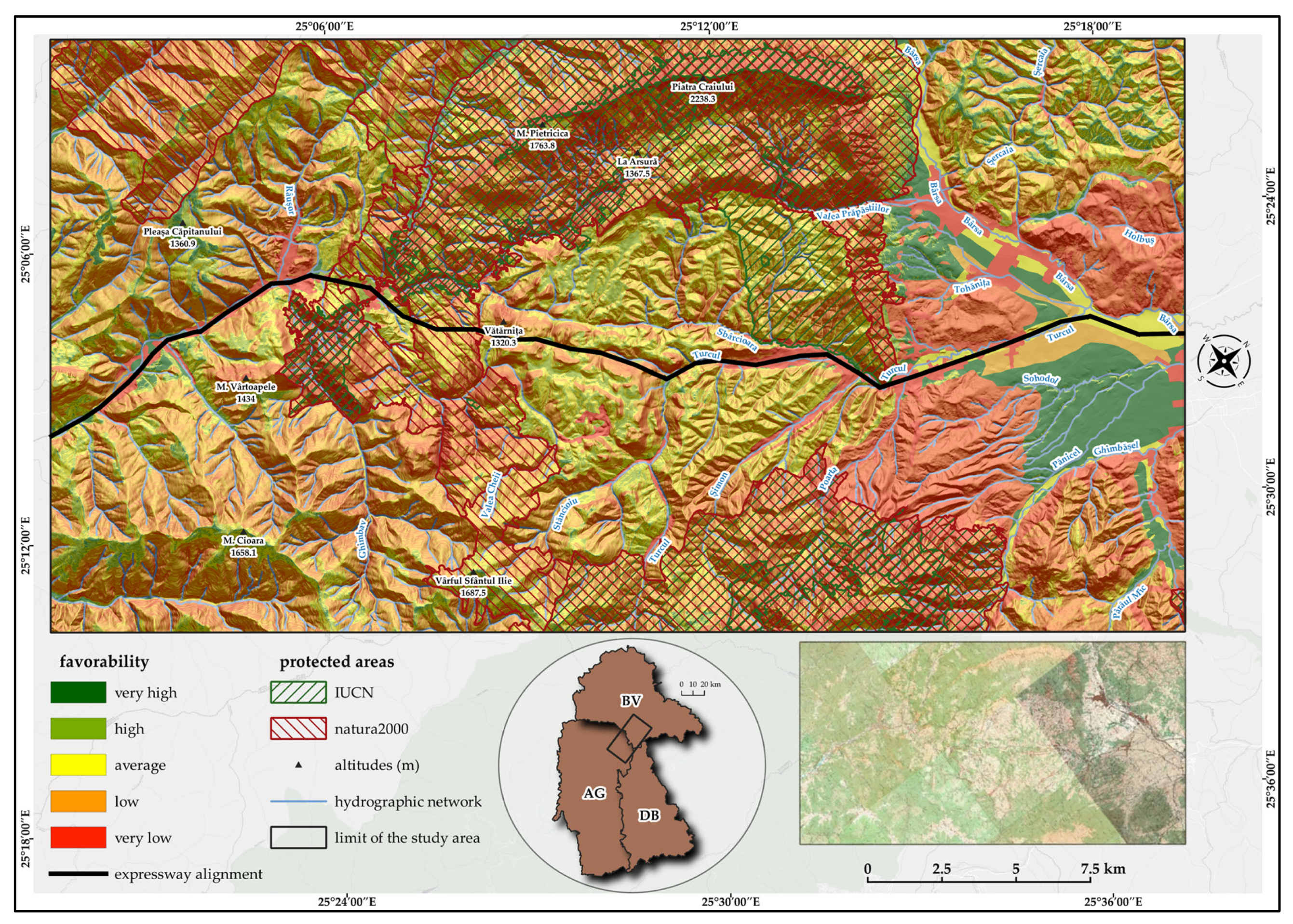
The proposed expressway variant is 41.7 km long, connecting the localities of Rucăr with Bran and extending to Râșnov (
Figure 13). Avoid built-up areas by crossing protected natural areas, including a section that intersects the Natura 2000 site “Piatra Craiului”. The route complies with national and European standards for the design of expressways, featuring winding curves that adhere to the radii proposed in the specialized studies.
The project incorporates various structural solutions, including retaining walls, embankments, excavations, viaducts, and tunnels, dictated by topographic and environmental constraints. ArcMap 10.6.1 software facilitated the determination of these structures based on the Digital Elevation Model.
The expressway is composed of two main components: the infrastructure and the superstructure. The infrastructure includes earthworks, protective measures, and consolidation works, addressing the challenges posed by the topographic surface configuration. These include tunnels, embankments, viaducts, and retaining walls.
The superstructure refers to the upper part of the road, designed to provide a smooth and durable surface for safe and efficient traffic.
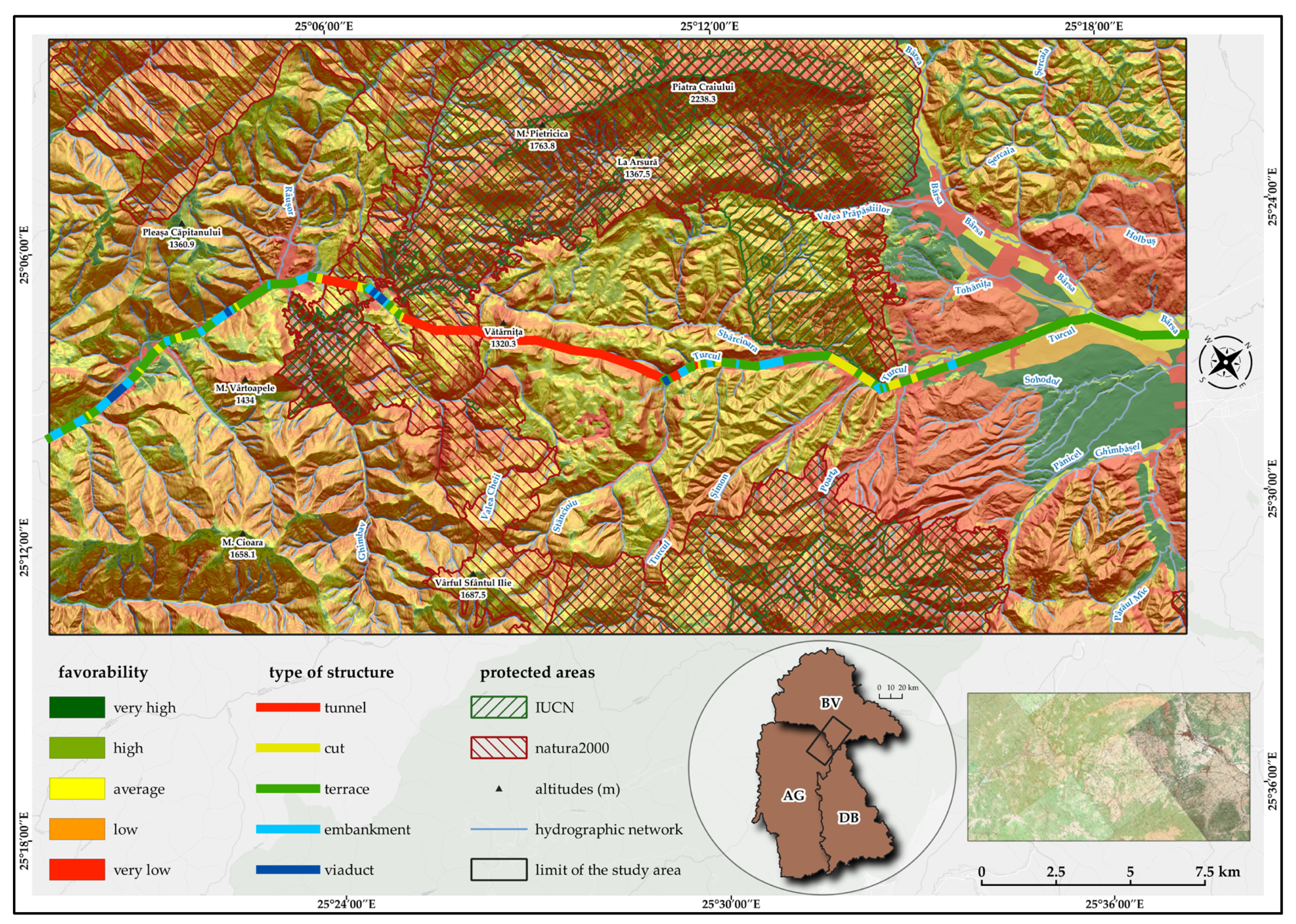
The proposed alternative includes the following structural elements (
Figure 14)–tunnels: a total length of 10.6 km, for rugged areas; cuts: a total length of 3.8 km, for sections requiring partial excavation; terraces: a total length of 20.2 km, for stabilizing quasi-horizontal terrain; embankments: a total length of 5.5 km, designed to raise the road surface above natural obstacles; viaducts: a total length of 1.6 km, used to cross significant topographic features or hydrographic networks.
Each type of structure is highly dependent on the geomorphological characteristics of the area. Their geographical location is based on the actual configuration of the area: tunnel–on the section between Rucăr (southeast) and Moieciu de Jos (west), especially on the steep northern slope of the Piatra Craiului Mountains, where the terrain is very rugged, and in the northwest part of the corridor, near the town of Moieciu, to bypass peaks or rock formations (for example, between Valea Seacă and Valea Moieciu); cut–in the southern part (near Rucăr), where the terrain has higher altitudes (for example, west of the town of Rucăr); terrace–on the steep slopes near the town of Fundata (northeast), where the terrain is fragmented, and in the contact area between the Bran Plateau and the slopes, where platforms are needed to support the uphill route; embankment–on the low meadows of the Dâmbovița River, near the town of Rucăr (southeast), where the land can be flooded, and in the wide valley area near the town of Bran (southwest), where the road may cross low-lying land; viaducts–at the points where the corridor crosses important valleys, such as the Dâmbovița Valley (near the town of Rucăr, southeast) and near the town of Bran (southwest), where a connection over the Bran Valley or other important lateral valleys might be necessary.
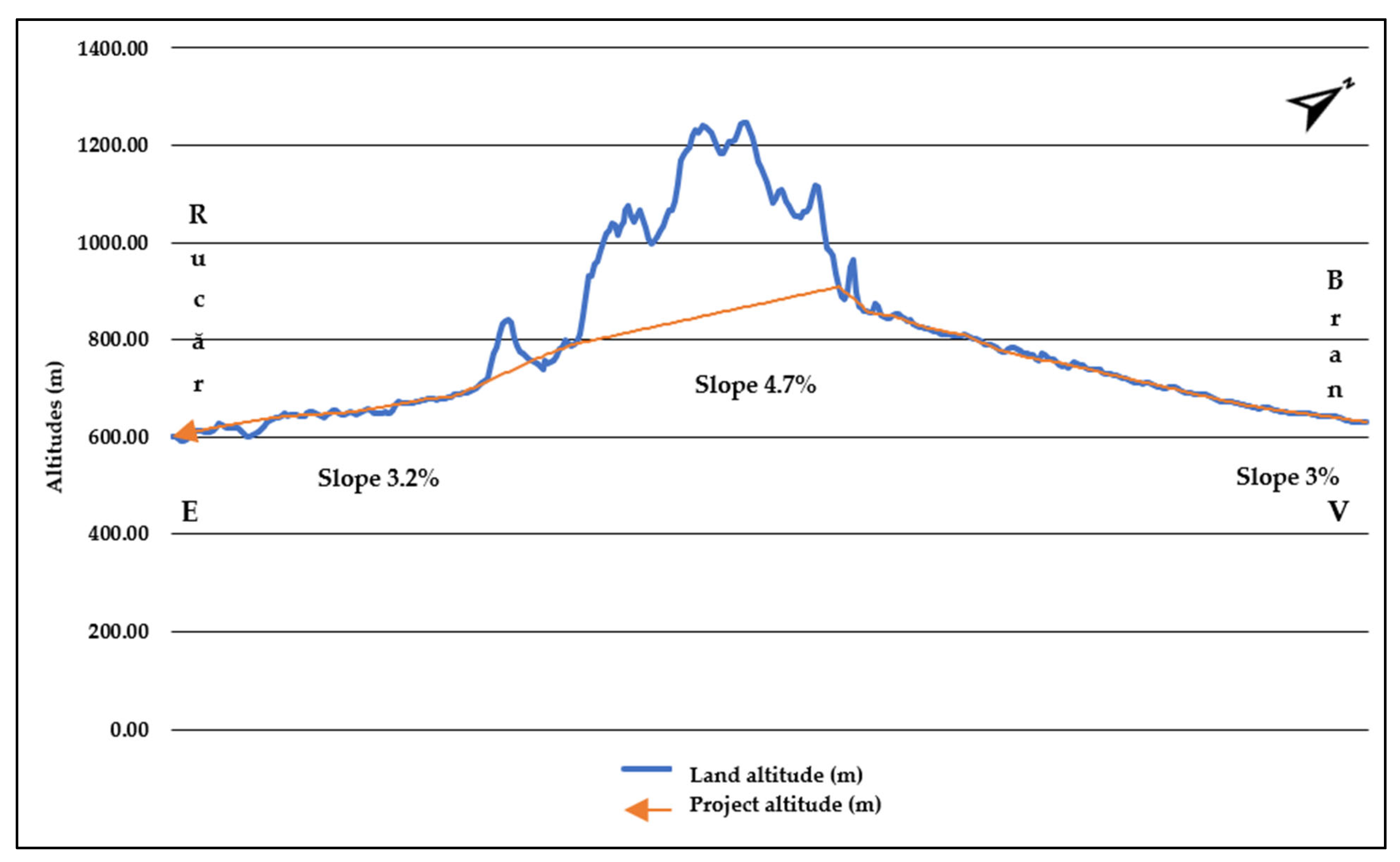
The longitudinal profile of the expressway (
Figure 15) predominantly shows sections where tiered arrangements are optimal. The blue line in the graphical representation illustrates the terrain profile, while the orange line reflects the profile of the proposed project, corresponding to the alternative identified in the study. This graphical overlay provides a solid basis for a detailed analysis of the level differences between the existing topography and the designed variant. As such, the proposed alignment follows the average altitude of the topographic surface and targets structures suitable for the most efficient development. Other types of structures, such as embankments and viaducts, are used to address intersections with rivers and the existing transportation network. Tunnels offer solutions in areas with rough terrain, ensuring slope stability and compatibility with environmental components.
Therefore, the longitudinal profile of the proposed expressway illustrates the variation in elevation between Rucăr and Bran, with segmental gradients explicitly indicated along the orange alignment line. The calculated slopes range between 1.5% and 4.9%, remaining below the maximum admissible value of 5% for motorway design according to Romanian and European technical standards [
33,
34]. The slope values shown in
Figure 15 were obtained by measuring elevation differences (Δh) and horizontal distances (ΔL) along the projected alignment using the longitudinal profile extracted from the DEM in QGIS. Gradients were calculated using the standard formula (Slope = Δh/ΔL × 100), resulting in values between 1.5% and 4.9%, consistent with motorway design standards [
33,
34]. These results confirm that the geometric configuration of the proposed route is consistent with both the geomorphological characteristics of the Rucăr–Bran corridor and the technical feasibility criteria for sustainable transport infrastructure.
The costs associated with the construction of the expressway are influenced by the terrain, soil characteristics, and the specific technical solutions required. These costs are influenced by price fluctuations. For the proposed alternative, the total estimated cost for the alignment is 613.1 million euros, with an average cost of 14.7 million euros per kilometre (
Table 5). The price reflects the complex conditions: steep slopes and high altitudes, and other factors such as the hydrographic network, built spaces, and protected natural areas.
The estimated costs presented in
Table 5 refer exclusively to structural elements (tunnels, cuttings, terraces, embankments and viaducts), which represent the geomorphologically dependent components of the route. The pavement structure was not included in the comparative cost assessment, as it would be identical for all route alternatives and depends primarily on traffic category and design standards rather than on topographic or lithological conditions. This assumption allows for a clearer isolation of the geomorphological influence on the overall construction cost.
Moreover, the present study did not explicitly integrate traffic-related parameters such as the Average Annual Daily Traffic (AADT) or the Equivalent Single Axle Load (ESAL), since the objective was to evaluate the geomorphological suitability of the Rucăr–Bran corridor rather than to design the pavement structure.
According to national transport planning documents, the corridor is classified as a regional expressway connection expected to support a medium-to-high traffic category (10,000–15,000 vehicles/day), which would require a standard pavement structure compliant with the technical norms [
33]. However, as the pavement composition and layer thickness are independent of the geomorphological variables analyzed, they were not included in the multicriteria evaluation or cost estimation.
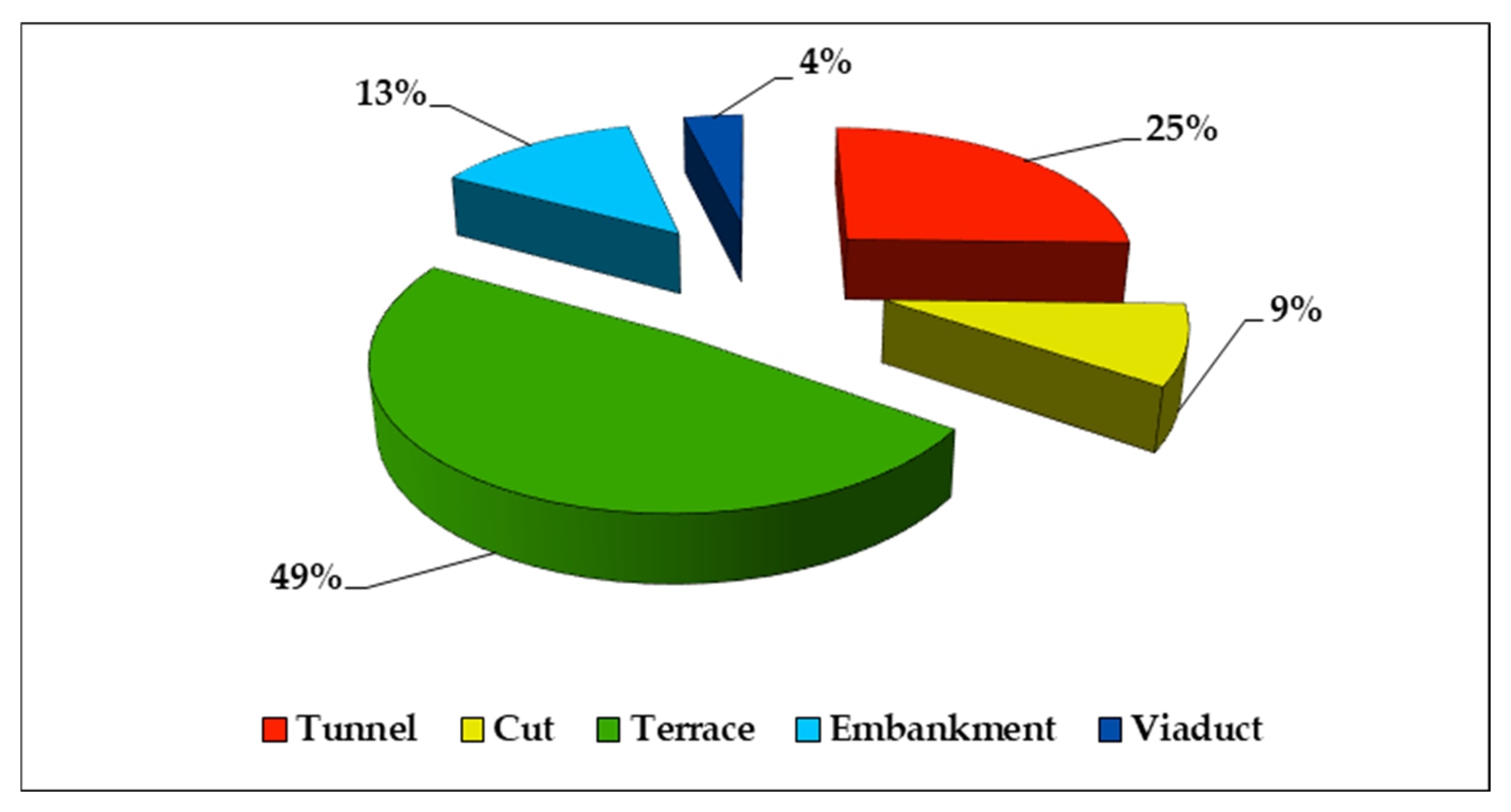
The percentage distribution of costs across the five types of structures is presented in
Figure 16.
Multicriteria GIS-based analysis using QGIS led to the selection of the most suitable route for the development of an expressway within the Rucăr–Bran Corridor. The study demonstrates the integration of geospatial data and thematic maps for identifying optimal infrastructure routes. The proposed expressway utilizes favourable terrain, mitigates challenges through engineering solutions, and aligns with regulatory requirements, contributing to the sustainable development of high-speed transport infrastructure.
6. Discussions
The geomorphological complexity of the Rucăr–Bran Corridor played an essential role in the design of the expressway. Geodeclivity analysis revealed that steep slopes are predominant in the area, especially in the mountainous region, necessitating significant adaptations in construction. This finding reiterates the critical role of terrain morphology in transportation planning, suggesting that it requires for detailed slope reclassification and adequate mapping, including current geomorphological processes. Additionally, the diversity of the petrographic substrate necessitated advanced engineering solutions for stabilizing areas formed of less favourable rock types.
Land use has emerged as a defining factor in determining the alignment of the expressway. Agricultural land and pastures demonstrated high suitability due to their minimal preparatory requirements, while protected natural areas, including the Natura 2000 site “Piatra Craiului”, presented significant constraints. The project demonstrates a fragile balance between development and conservation, reflecting the need to comply with national and European environmental regulations.
The study methodology was largely based on the use of Geographic Information Systems–the open-source programme QGIS for multi-criteria analysis, integrating slopes, rock, land use, and other critical factors (the hydrographic network, existing roads and communication routes, areas with collapse hazards, and settlement distribution). By converting vector data into raster formats and reclassifying datasets into suitability classes, the study achieved a standardized and replicable methodology for land suitability analysis.
The proposed alignment reflects a combination of innovative engineering solutions to overcome natural and anthropogenic constraints. The proposed technical structures, such as tunnels, viaducts, embankments, cuttings, tunnels, and platforms, illustrate the adaptability needed to build on rough terrain and humanized spaces. The prevalence of tunnels and viaducts in areas with rugged terrain underscores the importance of ensuring compliance with environmental regulations and minimizing disruptions (to the natural environment, human communities, the economy, and existing infrastructure).
The obtained slope classes and MCDA weighting structure are consistent with other corridor planning studies conducted in mountainous regions. For instance, Chen et al. [
28] and Saha et al. [
32] identified optimal gradients below 6% for sustainable highway design, similar to the range found in this study (1.5–4.9%). Likewise, the higher weighting assigned to slope (0.4) and lithology (0.3) aligns with findings by Banai-Kashani [
27], and Feizizadeh and Blaschke [
29], who emphasized topographic and geological stability as dominant decision factors in route optimization. In contrast, land use and soil criteria received moderate weights, reflecting their secondary but still significant role in construction feasibility, a pattern comparable to that observed by Yalcin [
30] in the Eastern Black Sea region. Additionally, the exclusion of proximity-based criteria (settlements, rivers) is justified by the corridor’s geomorphological constraints, as similarly applied by Malczewski [
26], and Jankowski and Richard [
25] in early MCDA–GIS transportation models.
Compared to similar international studies [
9,
10,
11], the present research advances a higher level of integration between detailed geomorphological analysis and multicriteria evaluation (MCE), applied to a fragmented mountain corridor (Rucăr–Bran). Most previous works focused primarily on optimizing transport routes according to cost and accessibility factors, relying on standardized GIS-based models. However, rarely included empirically calibrated geomorphological variables, such as slope, lithology, or structural stability, within a validated weighting framework supported by interdisciplinary expertise. Furthermore, this study extends the MCE methodology by integrating economic and environmental dimensions derived from European standards (unit construction costs and Natura 2000 protected areas), thus establishing a comprehensive analytical framework linking terrain morphology, infrastructure planning, and sustainability. This combination, bridging physical geography with economic and ecological feasibility, constitutes the study’s main innovative contribution and provides a replicable model for other mountain transport corridors in the Carpathian–Balkan or Alpine regions.
Future studies will need to consider improving the methodology by adapting to climate change, using modern materials, and involving the community. This study highlights the importance of a multidisciplinary approach to infrastructure planning. By considering geomorphological, environmental, economic, and technological factors, the proposed expressway demonstrates the potential to achieve sustainable development goals in areas with difficult terrain for construction. The research contributes to a broader understanding of the integration of natural and human systems in infrastructure design, paving the way for innovative solutions in future projects.
7. Conclusions
The interaction between infrastructure and landform dynamics is complex, with geomorphological processes influencing the design, construction, and long-term viability of transportation systems. As demonstrated in this analysis, incorporating geographical elements, primarily geomorphological ones, into infrastructure planning leads to a reduction in environmental impact and ensures long-term sustainability.
The study highlights the importance of an efficient transportation system for harnessing natural potential, especially in areas with complex geomorphological features. The integration of cartographic tools, along with the assessment of geomorphological processes, morphometry, land use, and geology, plays an essential role in road infrastructure, and this study demonstrates how these factors can be synthesized for future methodological development.
Multicriteria analysis allows for the evaluation of various environmental factors that influence infrastructure suitability. The use of GIS methodologies through QGIS software has highlighted the favourabilities and constraints of the Rucăr–Bran Corridor for the construction of expressways. Multilayer analysis combining slope, petrography, and land use demonstrated the complex relationship between geomorphology and transportation infrastructure planning.
Future infrastructure projects in areas with similar geographical characteristics can apply the developed methodology as a model. By combining geomorphological analysis with multi-criteria decision-making, we can identify sustainable and efficient solutions for road infrastructure.
The proposed route reflects the region’s topography, ensuring the prioritization of areas with high and very high favourability, and complies with national and European standards, taking into account the constraints imposed by certain elements such as protected areas, the hydrographic network, and humanized spaces. It incorporates a series of engineering solutions (tunnels, viaducts, embankments, cuttings, terraces) designed to manage the difficult mountainous terrain while ensuring the long-term functionality and sustainability of the infrastructure. The results obtained highlight a significant correlation between the dynamics of the relief and the distribution of transport infrastructure in the Rucăr–Bran Corridor, emphasizing the influence of geomorphological processes, such as landslides and erosion, on the location and durability of communication routes. In this context, the proposed route represents an efficient alternative for the analyzed area, being stable from a geomorphological perspective due to its adaptation to the local terrain, as well as financially, by optimizing construction and maintenance costs.
The limitations of this study stem from the accessibility and quality of the available historical and cartographic data, which imposed methodological constraints, influencing the level of precision in evaluating the interaction between landform dynamics and the development of transport infrastructure.
This study highlighted the geomorphological constraints influencing the development of transport infrastructure within the Rucăr–Bran Corridor through the integration of GIS and multi-criteria decision analysis (MCDA). Despite the robust methodological framework, several limitations should be acknowledged. The input datasets are based on sources of varying temporal accuracy, and the digital elevation model (DEM) resolution (30 m) may introduce local-scale generalizations in slope and aspect assessment. The model did not include dynamic hazard simulation or hydrological modelling, which would refine the spatial accuracy of risk-prone zones. Furthermore, factors related to traffic volume, geotechnical constructability, and design constraints were not integrated into the current analysis due to data availability and scale limitations.
Future research should address these aspects by incorporating updated DEMs, detailed landslide inventories, and hydrological parameters to better capture the spatial variability of geomorphic risks. Extending the model to include traffic simulation and formal environmental impact assessment (EIA) procedures would allow for a more comprehensive evaluation of transport corridor alternatives. Such developments would enhance the decision-support capacity of GIS–MCDA models in mountainous regions and contribute to more sustainable infrastructure planning.