Microbial Synergistic Interactions in Mixed Cultures for Improved and Sustainable Power Generation in Microbial Fuel Cells: A Review


 , and
, and
Abstract
1. Introduction
2. Extracellular Electron Transfer (EET) in Microbial Synergy in MFCs
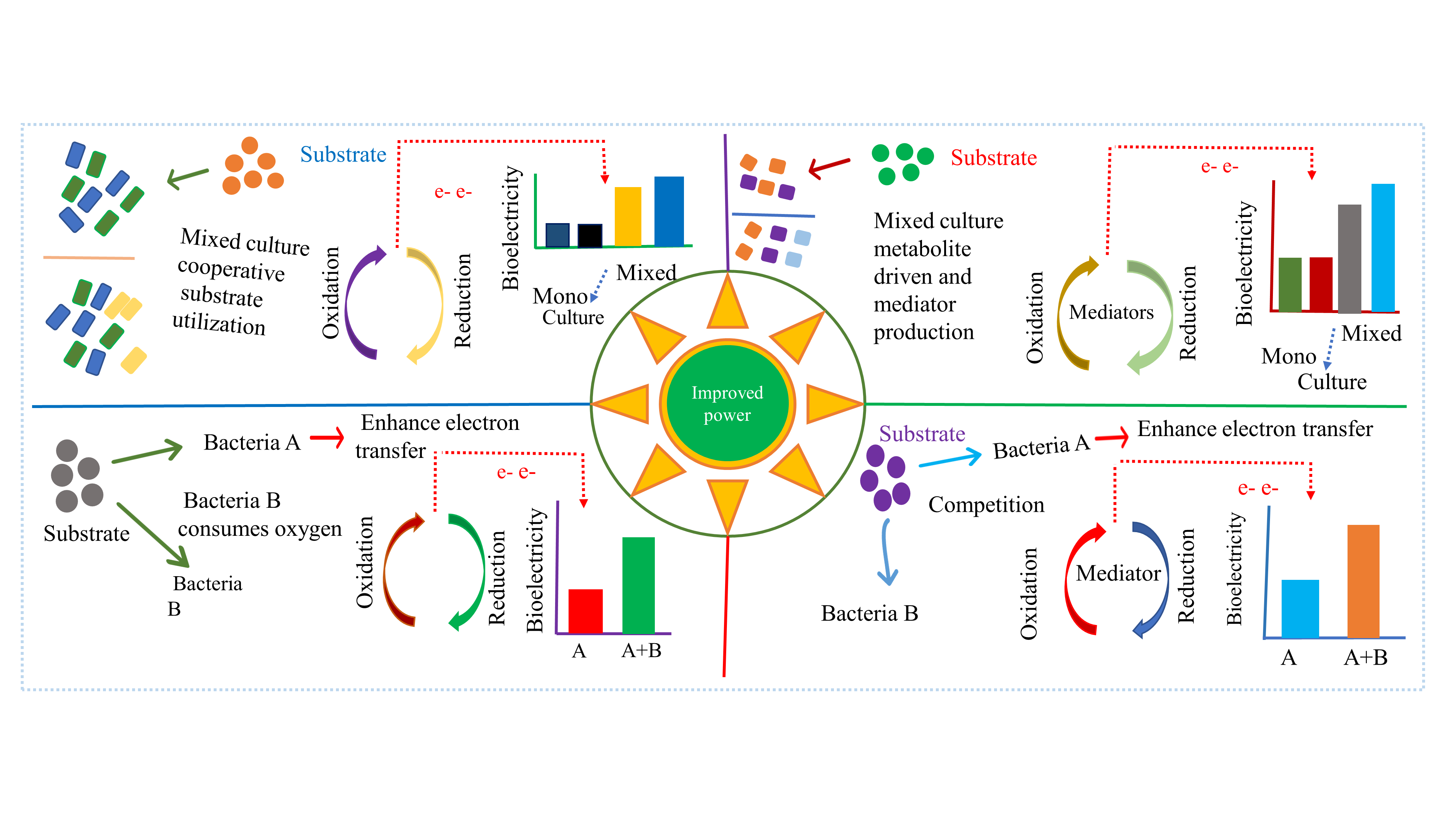
3. Mechanisms for Mixed Cultures to Enhance Power Generation in MFCs
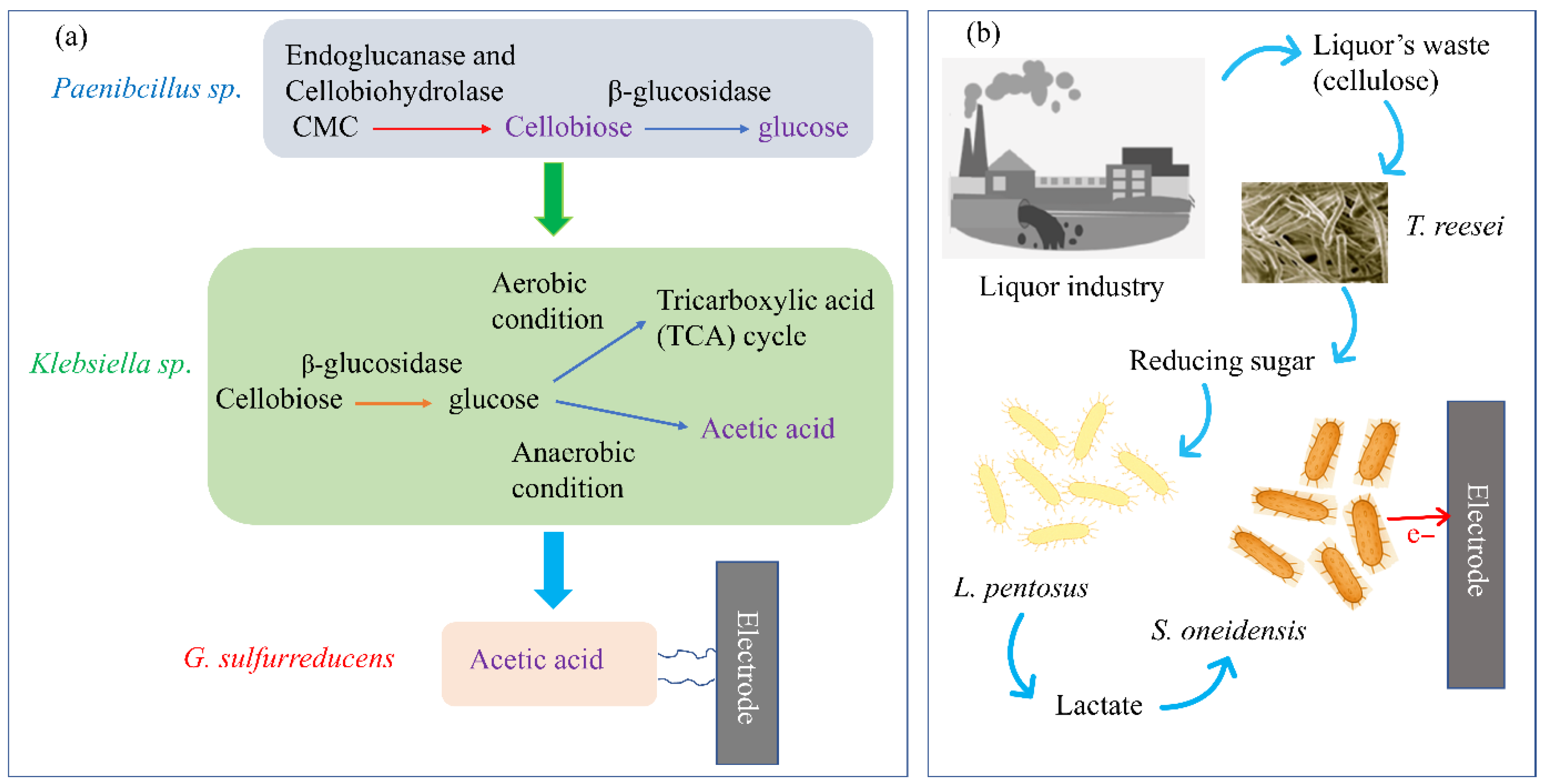
3.1. Cooperative Substrate Utilization Through Microbial Synergy

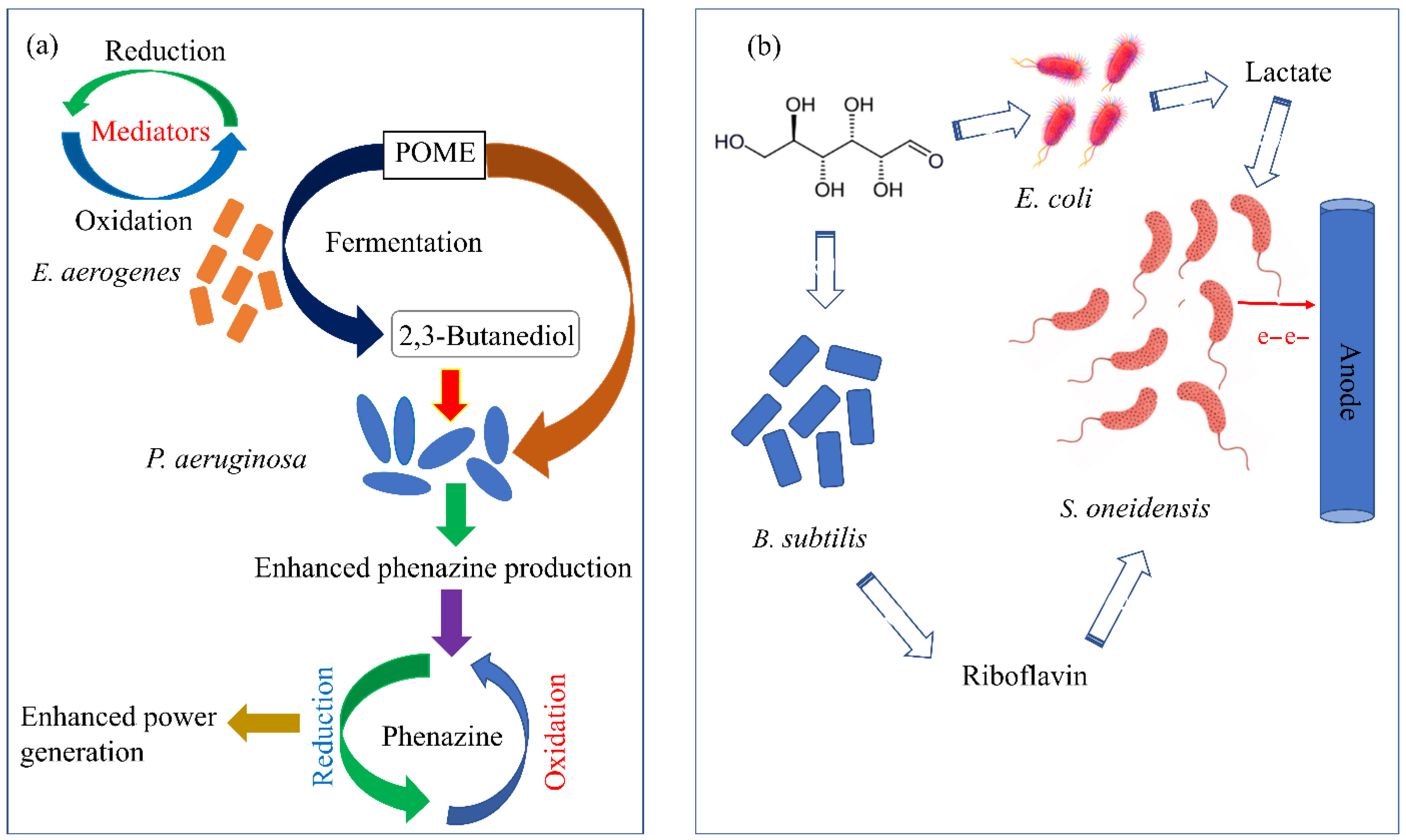
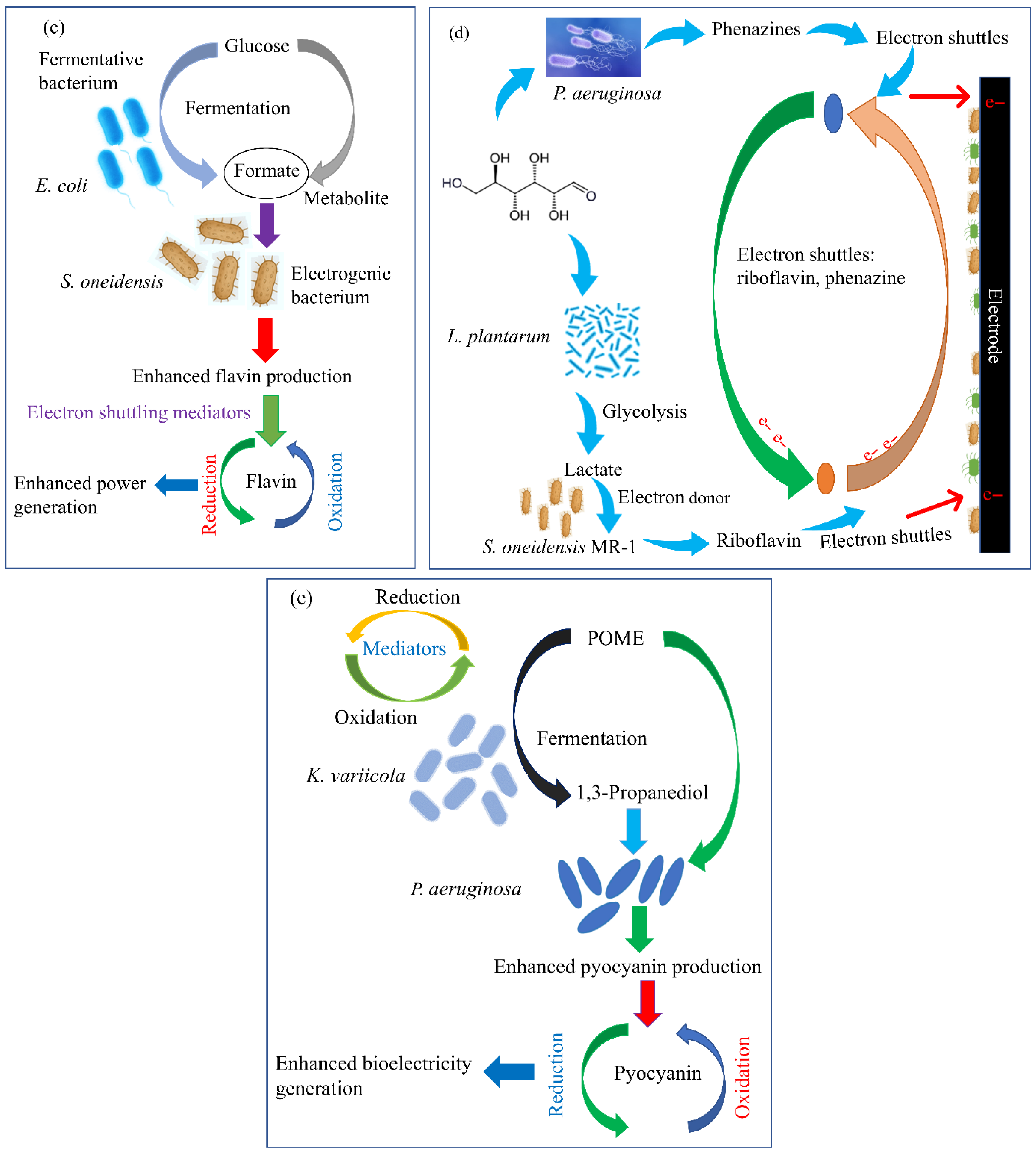
3.2. Metabolite-Enabled Mutualistic Interaction and Biosynthesis of Mediators



| Mixed Culture | Substrate | Efficiency of Pure Culture (a) | Efficiency of Pure Culture (b) | Efficiency of Pure Culture (c) | Efficiency of Mixed Cultures | Reference |
|---|---|---|---|---|---|---|
| S. oneidensis (a) and E. coli (b) | Glucose | 0.3 µAcm−2 | 0.28 µAcm−2 | 2.0 µAcm−2 | [55] | |
| S. oneidensis MR-1 (a), L. plantarum (b), and P. aeruginosa (c) | Glucose | 67.2 mWm−2 | 22.4 mWm−2 | 3.5 mWm−2 | 207 mWm−2 | [12] |
| S. marcescens AATB1 (a) and K. pneumoniae AATB2 (b) | STWW | 728.85 ± 36 mAm−2, 341.65 ± 17 mWm−2 | 642.19 ± 32 mAm−2, 257.51 ± 12 mWm−2 | NA | 869.11 ± 43 mAm−2, 398.69 ± 19 mWm−2 | [58] |
| P. aeruginosa (a) and K. variicola (b) | POME | 5.8 Wm−3 | 5.2 Wm−3 | NA | 14.78 Wm−3 | [24,59] |
| P. aeruginosa (a) and E. aerogenes (b) | Glucose | 3.25 ± 0.14 mAcm−2 | 2.53 ± 1.3 mAcm−2 | NA | 46.53 ± 6.4 mAcm−2 | [51] |
| K. pneumoniae (a) and L. starkeyi (b) | Glucose | 4.36 Wm−3 | 2.67 Wm−3 | NA | 12.87 Wm−3 | [21] |
| K. variicola (a) and B. cereus (b) | POME | 5.2 Wm−3 | 4.1 Wm−3 | NA | 11.8 Wm−3 | [13,24] |
| S. oneidensis MR-1 (a) and B. subtilis RH33 (b) | Sodium lactate | 56.9 mWm−2 | 6.9 mWm−2 | NA | 277.4 mWm−2 | [56] |
| S. oneidensis MR-1 (a) and E. coli (b) | Xylose | 92.8 mWm−2 | 91.76 mWm−2 | NA | 728.6 mWm−2 | [18] |
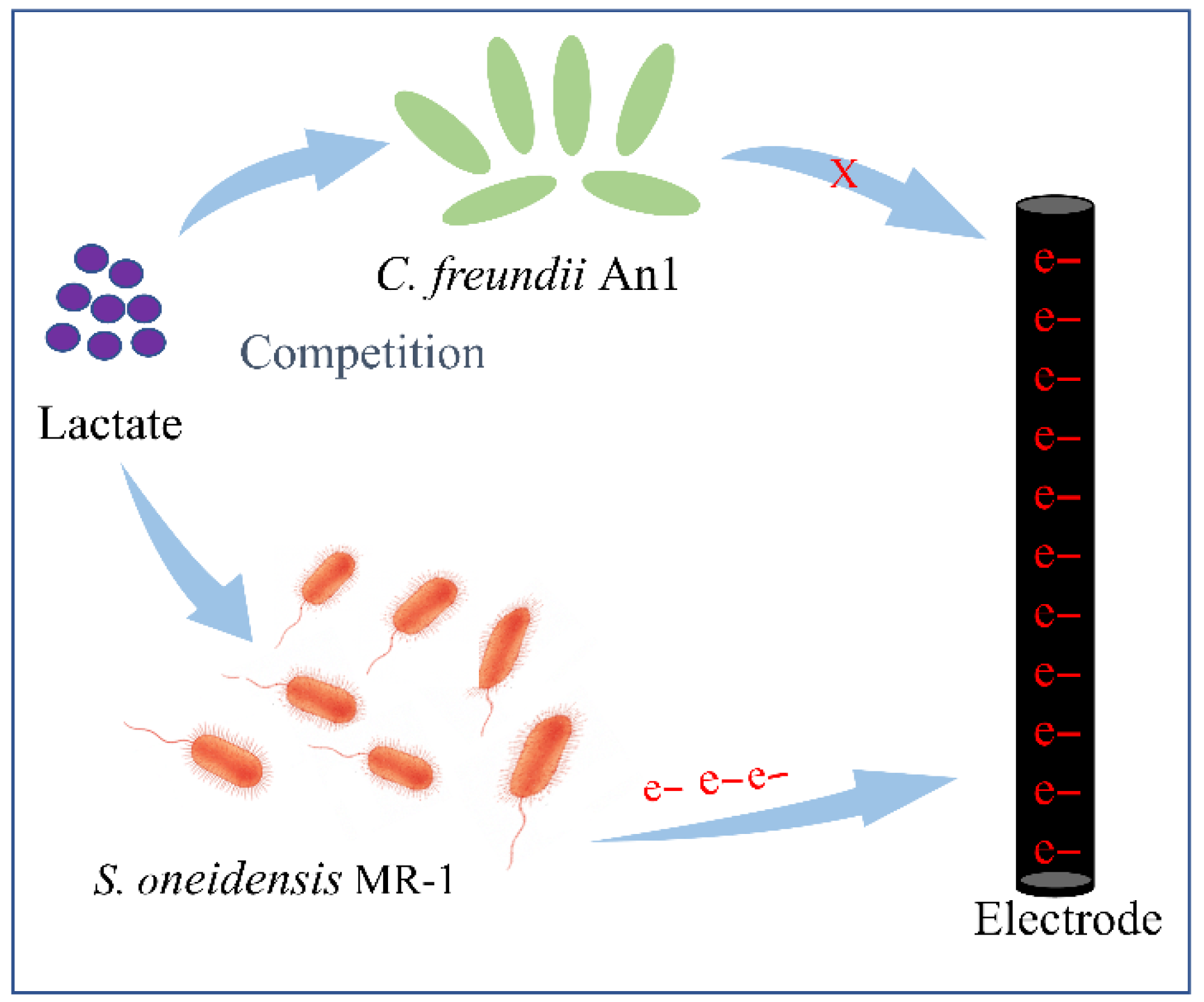
3.3. Microbial Interspecies Competition
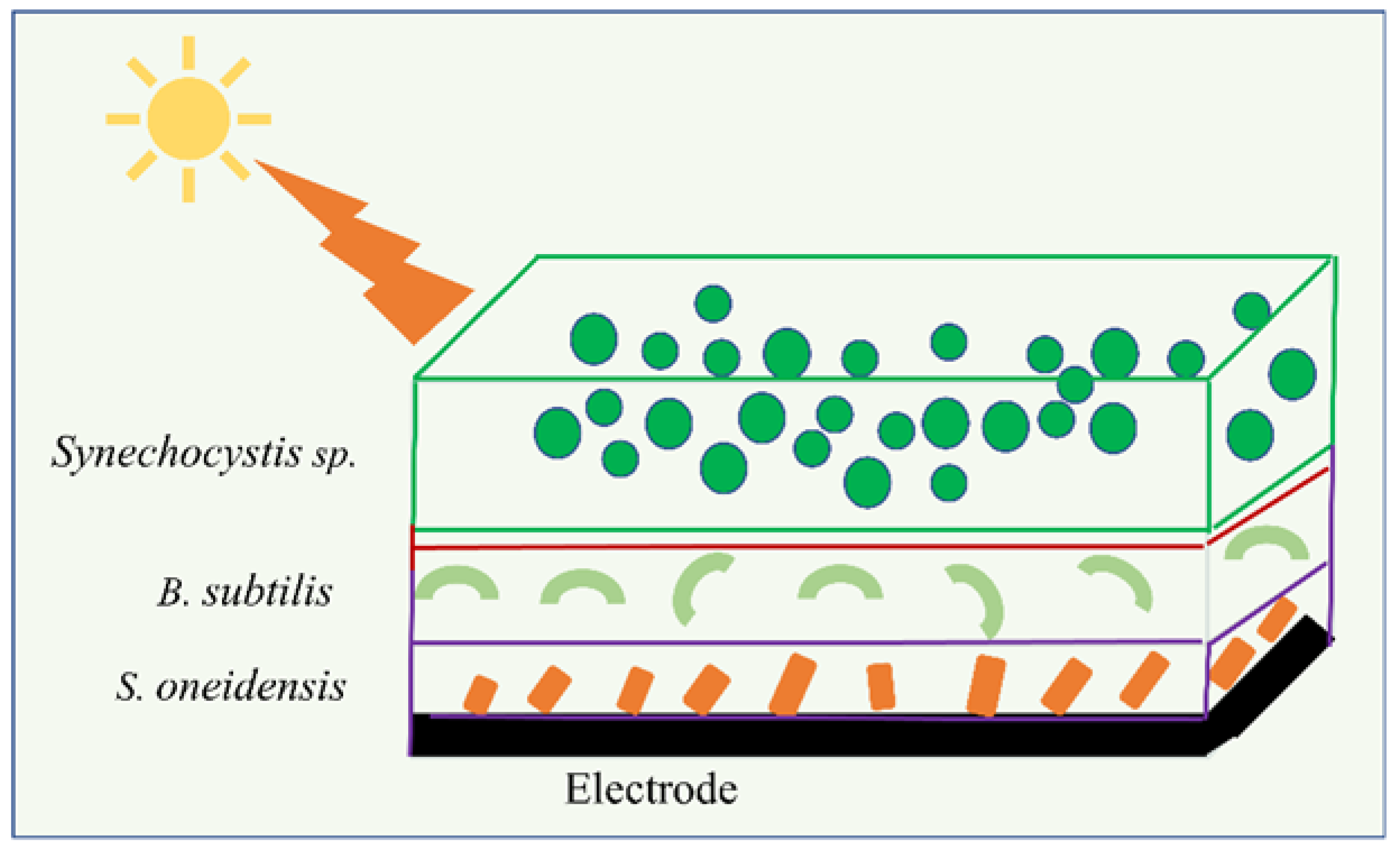
3.4. Enhancing the Stability of Synthetic Microbial Communities
3.5. Microbial Cooperation via Oxygen Depletion
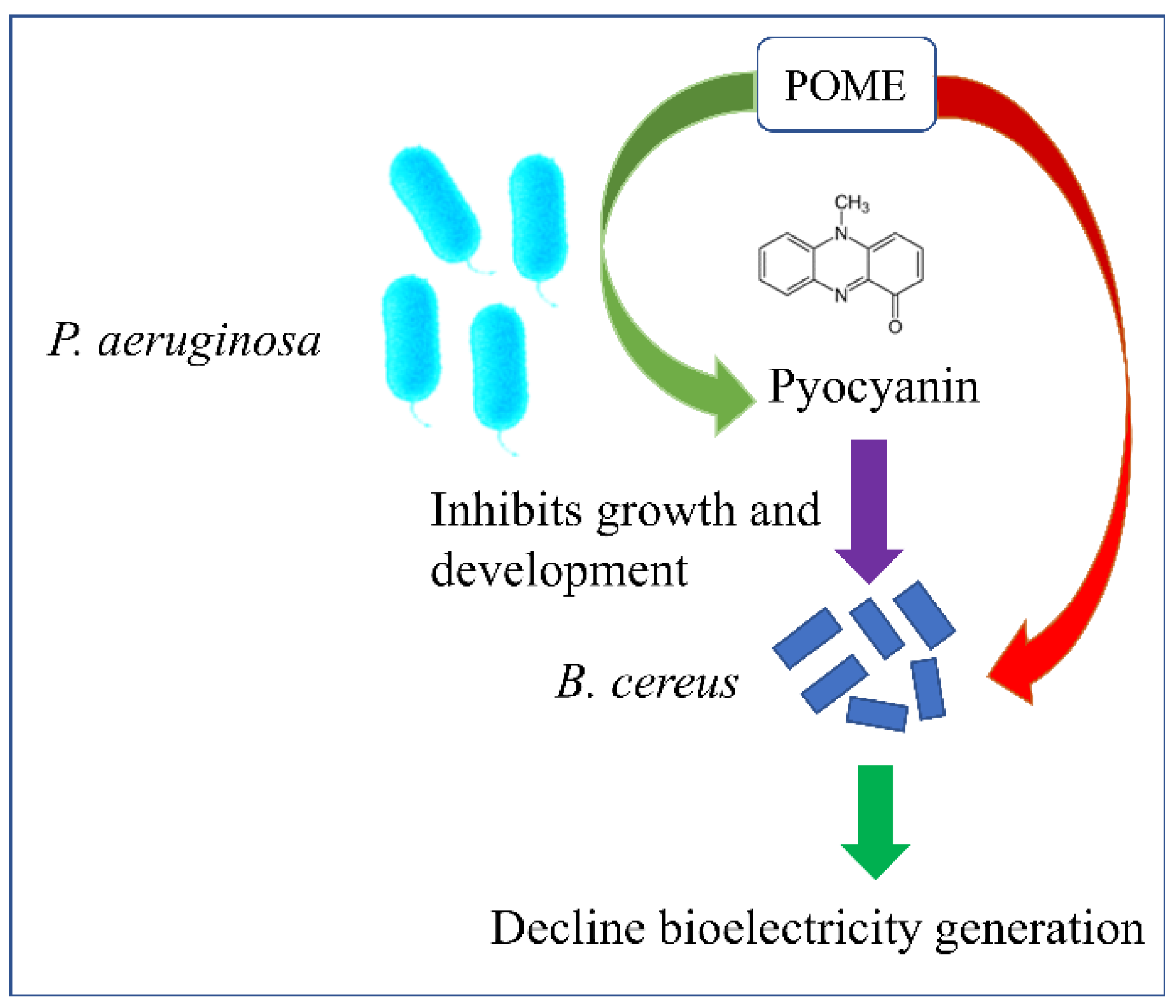
4. Microbial Antagonism on MFC Performance
5. Limitations of the Study
6. Challenges, Gaps, Future Direction, and Opportunities for Industrial Applications
- A continuous interdisciplinary research approach that spans microbial physiology, microbiology, electrochemistry, synthetic biology, and process engineering, etc., will be essential for turning the innovations into practical technologies for industrial and environmental applications.
- Future work will focus on the careful selection of high-performance exoelectrogenic strains and a better understanding of their intricate relationships.
- The cooperative interactions between binary or mixed cultures of exoelectrogenic and non-exoelectrogenic microbes can enhance bioelectricity generation in MFC, but these interactions are less studied compared to work focusing only on exoelectrogens. This will help in designing microbial mixed cultures that can achieve higher stability and maximum power output.
- Researchers will investigate new novel strains and use consortia with more than three microbes based on the growth ratio that helps improve power generation in MFCs.
- Most studies have focused on mixed-culture microbial cooperation, but more research is needed on microbial interspecies competition to improve bioelectricity generation.
- In addition, microbial synergies can be strategically utilized for bioremediation, enabling the simultaneous removal of contaminants and production of bioelectricity. Integrating optimized microbial consortia into MFC systems not only enhances energy recovery but also improves economic feasibility, paving the way for the transition of MFCs from laboratory-scale concepts to scalable, real-world solutions for clean energy and environmental management.
7. Conclusions
Author Contributions
Funding
Institutional Review Board Statement
Informed Consent Statement
Data Availability Statement
Acknowledgments
Conflicts of Interest
Abbreviations
| ARB | Anode-respiring bacteria |
| CMC | Carboxymethyl cellulose |
| DAPG | 2,4-diacetylphloroglucinol |
| EET | Extracellular electron transfer |
| ETMs | Electron transfer mediators |
| MFC | Microbial fuel cell |
| MFCs | Microbial fuel cells |
| NA | Not applicable |
| POME | Palm oil mill effluent |
| STWW | Septic tank wastewater |
References
- Kabeyi, M.J.B.; Olanrewaju, O.A. Sustainable energy transition for renewable and low carbon grid electricity generation and supply. Front. Energy Res. 2022, 9, 743114. [Google Scholar] [CrossRef]
- Elmaadawy, K.; Liu, B.; Hassan, G.; Wang, X.; Wang, Q.; Hu, J.; Hou, H.; Yang, J.; Wu, X. Microalgae-assisted fixed-film activated sludge MFC for landfill leachate treatment and energy recovery. Process Saf. Environ. Prot. 2022, 160, 221–231. [Google Scholar] [CrossRef]
- Ren, Z.; Ji, G.; Liu, H.; Yang, M.; Xu, S.; Ye, M.; Lichtfouse, E. Accelerated start-up and improved performance of wastewater microbial fuel cells in four circuit modes: Role of anodic potential. J. Power Sources 2022, 535, 231403. [Google Scholar] [CrossRef]
- Thapa, B.S.; Pandit, S.; Patwardhan, S.B.; Tripathi, S.; Mathuriya, A.S.; Gupta, P.K.; Lal, R.B.; Tusher, T.R. Application of microbial fuel cell (MFC) for pharmaceutical wastewater treatment: An overview and future perspectives. Sustainability 2022, 14, 8379. [Google Scholar] [CrossRef]
- Palacios, P.A.; Kleikamp, H.; Nielsen, J.L.; Jensen, M.B.; Bentien, A.; Kofoed, M.V. Quinone-mediated extracellular electron transfer processes in ex situ biomethanation reactors. Bioresour. Technol. Rep. 2023, 24, 101671. [Google Scholar] [CrossRef]
- Liang, B.; Yang, J.; Meng, C.-F.; Zhang, Y.-R.; Wang, L.; Zhang, L.; Liu, J.; Li, Z.-C.; Cosnier, S.; Liu, A.-H. Efficient conversion of hemicellulose into high-value product and electric power by enzyme-engineered bacterial consortia. Nat. Commun. 2024, 15, 8764. [Google Scholar] [CrossRef] [PubMed]
- Bian, B.; Shi, D.; Cai, X.; Hu, M.; Guo, Q.; Zhang, C.; Wang, Q.; Sun, A.X.; Yang, J. 3D printed porous carbon anode for enhanced power generation in microbial fuel cell. Nano Energy 2018, 44, 174–180. [Google Scholar] [CrossRef]
- Yu, Y.-Y.; Wang, Y.-Z.; Fang, Z.; Shi, Y.-T.; Cheng, Q.-W.; Chen, Y.-X.; Shi, W.; Yong, Y.-C. Single cell electron collectors for highly efficient wiring-up electronic abiotic/biotic interfaces. Nat. Commun. 2020, 11, 4087. [Google Scholar] [CrossRef] [PubMed]
- Cao, B.; Zhao, Z.; Peng, L.; Shiu, H.-Y.; Ding, M.; Song, F.; Guan, X.; Lee, C.K.; Huang, J.; Zhu, D. Silver nanoparticles boost charge-extraction efficiency in Shewanella microbial fuel cells. Science 2021, 373, 1336–1340. [Google Scholar] [CrossRef]
- Gaffney, E.M.; Minteer, S.D. A silver assist for microbial fuel cell power. Science 2021, 373, 1308–1309. [Google Scholar] [CrossRef]
- Simoska, O.; Gaffney, E.M.; Lim, K.; Beaver, K.; Minteer, S.D. Understanding the properties of phenazine mediators that promote extracellular electron transfer in Escherichia coli. J. Electrochem. Soc. 2021, 168, 025503. [Google Scholar] [CrossRef]
- Han, J.-Y.; Zhang, H.-L.; Guo, H.; Liu, A.-Q.; Nawab, S.; Liu, N.; Hui, M.; Zhai, D.-D.; Yong, Y.-C. A rational designed synthetic three-species alliance system for synergetic improvement on power generation from microbial fuel cell. Chem. Eng. J. 2024, 481, 148366. [Google Scholar] [CrossRef]
- Islam, M.A.; Ong, H.R.; Ethiraj, B.; Cheng, C.K.; Khan, M.M.R. Optimization of co-culture inoculated microbial fuel cell performance using response surface methodology. J. Environ. Manag. 2018, 225, 242–251. [Google Scholar] [CrossRef]
- Jiang, Y.; Dong, W.; Xin, F.; Jiang, M. Designing synthetic microbial consortia for biofuel production. Trends Biotechnol. 2020, 38, 828–831. [Google Scholar] [CrossRef]
- Cao, Y.; Mu, H.; Liu, W.; Zhang, R.; Guo, J.; Xian, M.; Liu, H. Electricigens in the anode of microbial fuel cells: Pure cultures versus mixed communities. Microb. Cell Factories 2019, 18, 39. [Google Scholar] [CrossRef]
- Ren, J.; Li, N.; Du, M.; Zhang, Y.; Hao, C.; Hu, R. Study on the effect of synergy effect between the mixed cultures on the power generation of microbial fuel cells. Bioengineered 2021, 12, 844–854. [Google Scholar] [CrossRef] [PubMed]
- Zhang, S.; Merino, N.; Okamoto, A.; Gedalanga, P. Interkingdom microbial consortia mechanisms to guide biotechnological applications. Microb. Biotechnol. 2018, 11, 833–847. [Google Scholar] [CrossRef] [PubMed]
- Yang, Y.; Wu, Y.; Hu, Y.; Cao, Y.; Poh, C.L.; Cao, B.; Song, H. Engineering electrode-attached microbial consortia for high-performance xylose-fed microbial fuel cell. ACS Catal. 2015, 5, 6937–6945. [Google Scholar] [CrossRef]
- Song, H.; Ding, M.-Z.; Jia, X.-Q.; Ma, Q.; Yuan, Y.-J. Synthetic microbial consortia: From systematic analysis to construction and applications. Chem. Soc. Rev. 2014, 43, 6954–6981. [Google Scholar] [CrossRef]
- D’Souza, G.; Shitut, S.; Preussger, D.; Yousif, G.; Waschina, S.; Kost, C. Ecology and evolution of metabolic cross-feeding interactions in bacteria. Nat. Prod. Rep. 2018, 35, 455–488. [Google Scholar] [CrossRef]
- Islam, M.A.; Ethiraj, B.; Cheng, C.K.; Yousuf, A.; Thiruvenkadam, S.; Prasad, R.; Rahman Khan, M.M. Enhanced current generation using mutualistic interaction of yeast-bacterial coculture in dual chamber microbial fuel cell. Ind. Eng. Chem. Res. 2018, 57, 813–821. [Google Scholar] [CrossRef]
- Che, S.; Men, Y. Synthetic microbial consortia for biosynthesis and biodegradation: Promises and challenges. J. Ind. Microbiol. Biotechnol. 2019, 46, 1343–1358. [Google Scholar] [CrossRef]
- Aiyer, K.S. Synergistic effects in a microbial fuel cell between co-cultures and a photosynthetic alga Chlorella vulgaris improve performance. Heliyon 2021, 7, e05935. [Google Scholar] [CrossRef] [PubMed]
- Islam, M.A.; Karim, A.; Mishra, P.; Dubowski, J.J.; Yousuf, A.; Sarmin, S.; Khan, M.M.R. Microbial synergistic interactions enhanced power generation in co-culture driven microbial fuel cell. Sci. Total Environ. 2020, 738, 140138. [Google Scholar] [CrossRef] [PubMed]
- Sharma, K.; Singh, V.; Pandit, S.; Thapa, B.S.; Pant, K.; Tusher, T.R. Isolation of biosurfactant-producing bacteria and their Co-culture application in microbial fuel cell for simultaneous hydrocarbon degradation and power generation. Sustainability 2022, 14, 15638. [Google Scholar] [CrossRef]
- Gao, S.-C.; Mai, T.-F.; Ding, Y.; Wang, Z.-W.; Fan, X.-X.; Zhang, Y.; Liu, G.-W.; Liu, Y. In-situ secreted riboflavin and cellulase enhanced energy of Geobacter sulfurreducens PCA using carboxymethyl cellulose by constructing the ternary culture. J. Environ. Chem. Eng. 2025, 13, 116313. [Google Scholar] [CrossRef]
- Jiang, Y.; Shi, M.; Shi, L. Molecular underpinnings for microbial extracellular electron transfer during biogeochemical cycling of earth elements. Sci. China Life Sci. 2019, 62, 1275–1286. [Google Scholar] [CrossRef]
- Kim, B.; Baek, G.; Kim, C.; Lee, S.Y.; Yang, E.; Lee, S.; Kim, T.; Nam, J.-Y.; Lee, C.; Chae, K.-J. Progress and prospects for applications of extracellular electron transport mechanism in environmental biotechnology. ACS EST Eng. 2024, 4, 1520–1539. [Google Scholar] [CrossRef]
- Elangovan, K.; Saravanan, P.; Campos, C.H.; Sanhueza-Gómez, F.; Khan, M.M.R.; Chin, S.Y.; Krishnan, S.; Viswanathan Mangalaraja, R. Outline of microbial fuel cells technology and their significant developments, challenges, and prospects of oxygen reduction electrocatalysts. Front. Chem. Eng. 2023, 5, 1228510. [Google Scholar] [CrossRef]
- Wang, X.; Han, M.; Li, W.; Liu, X.; Lv, L.; Gao, W.; Liu, X.; Sun, L.; Liang, J.; Zhang, G. Enhanced anaerobic digestion of landfill leachate based on a novel redox mediator: Synergistic mechanism of enhancing extracellular electron transfer. Chem. Eng. J. 2024, 490, 151649. [Google Scholar] [CrossRef]
- Ponomarova, O.; Patil, K.R. Metabolic interactions in microbial communities: Untangling the Gordian knot. Curr. Opin. Microbiol. 2015, 27, 37–44. [Google Scholar] [CrossRef] [PubMed]
- Jiang, Y.; Song, R.; Cao, L.; Su, Z.; Ma, Y.; Liu, Y. Harvesting energy from cellulose through Geobacter sulfurreducens in unique ternary culture. Anal. Chim. Acta 2019, 1050, 44–50. [Google Scholar] [CrossRef]
- Cestellos-Blanco, S.; Chan, R.R.; Shen, Y.-X.; Kim, J.M.; Tacken, T.A.; Ledbetter, R.; Yu, S.; Seefeldt, L.C.; Yang, P. Photosynthetic biohybrid coculture for tandem and tunable CO2 and N2 fixation. Proc. Natl. Acad. Sci. USA 2022, 119, e2122364119. [Google Scholar] [CrossRef]
- Mahto, K.U.; Das, S. Electroactive biofilm communities in microbial fuel cells for the synergistic treatment of wastewater and bioelectricity generation. Crit. Rev. Biotechnol. 2025, 45, 434–453. [Google Scholar] [CrossRef]
- Ratheesh, A.; Sreelekshmy, B.R.; T R, A.K.; Sasidharan, S.; Basheer, R.; Nair, K.S.; Nair, A.J.; Shibli, S.M.A. Integrated Bioelectrochemical Conversion of Bacillus subtilis-Pretreated Sugar Cane Bagasse: Metabolic Profile Optimization for Enhanced Microbial Fuel Cell Efficiency and Sustainable Biorefinery Applications. ACS Appl. Bio Mater. 2025, 8, 4924–4936. [Google Scholar] [CrossRef] [PubMed]
- Liu, X.; Zhan, J.; Jing, X.; Zhou, S.; Lovley, D.R. A pilin chaperone required for the expression of electrically conductive Geobacter sulfurreducens pili. Environ. Microbiol. 2019, 21, 2511–2522. [Google Scholar] [CrossRef] [PubMed]
- Deter, H.S.; Lu, T. Engineering microbial consortia with rationally designed cellular interactions. Curr. Opin. Biotechnol. 2022, 76, 102730. [Google Scholar] [CrossRef]
- Tsoi, R.; Dai, Z.; You, L. Emerging strategies for engineering microbial communities. Biotechnol. Adv. 2019, 37, 107372. [Google Scholar] [CrossRef]
- Xiao, Y.; Chen, G.; Chen, Z.; Bai, R.; Zhao, B.; Tian, X.; Wu, Y.; Zhou, X.; Zhao, F. Interspecific competition by non-exoelectrogenic Citrobacter freundii An1 boosts bioelectricity generation of exoelectrogenic Shewanella oneidensis MR-1. Biosens. Bioelectron. 2021, 194, 113614. [Google Scholar] [CrossRef]
- Abolore, R.S.; Jaiswal, S.; Jaiswal, A.K. Green and sustainable pretreatment methods for cellulose extraction from lignocellulosic biomass and its applications: A review. Carbohydr. Polym. Technol. Appl. 2024, 7, 100396. [Google Scholar] [CrossRef]
- Ren, Z.; Ward, T.E.; Regan, J.M. Electricity production from cellulose in a microbial fuel cell using a defined binary culture. Environ. Sci. Technol. 2007, 41, 4781–4786. [Google Scholar] [CrossRef]
- Cao, L.; Sun, H.; Ma, Y.; Lu, M.; Zhao, M.; Li, E.; Liu, Y. Analysis and enhancement of the energy utilization efficiency of corn stover using strain Lsc-8 in a bioelectrochemical system. Microb. Cell Factories 2023, 22, 54. [Google Scholar] [CrossRef]
- Mishra, A.; Chhabra, M. Co-culturing Chlorella vulgaris and Cystobasidium oligophagum JRC1 in the microbial fuel cell cathode for lipid biosynthesis. Environ. Sci. Pollut. Res. 2024, 31, 57338–57345. [Google Scholar] [CrossRef]
- Shrivastava, A.; Sharma, R.K. Evaluation of co-culture system to produce ethanol and electricity from wheat straw hydrolysate using Saccharomyces cerevisiae and Pichia fermentans. Biomass Convers. Biorefinery 2024, 14, 9407–9416. [Google Scholar] [CrossRef]
- Tang, R.; Zhang, B.; Dai, L.; Wang, Y.; Xin, G.; Liu, Z.; Li, F.; Song, H. Engineering Artificial Three-Species Microbial Consortium to Produce High-Power Bioelectricity from Discarded Cellulosic Biomass of Liquor Industry. ACS Sustain. Chem. Eng. 2024, 12, 17992–18003. [Google Scholar] [CrossRef]
- Lin, T.; Bai, X.; Hu, Y.; Li, B.; Yuan, Y.J.; Song, H.; Yang, Y.; Wang, J. Synthetic Saccharomyces cerevisiae-Shewanella oneidensis consortium enables glucose-fed high-performance microbial fuel cell. AIChE J. 2017, 63, 1830–1838. [Google Scholar] [CrossRef]
- Kim, C.; Song, Y.E.; Lee, C.R.; Jeon, B.-H.; Kim, J.R. Glycerol-fed microbial fuel cell with a co-culture of Shewanella oneidensis MR-1 and Klebsiella pneumonae J2B. J. Ind. Microbiol. Biotechnol. 2016, 43, 1397–1403. [Google Scholar] [CrossRef] [PubMed]
- Sharma, K.; Pandit, S.; Mathuriya, A.S.; Gupta, P.K.; Pant, K.; Jadhav, D.A. Microbial electrochemical treatment of methyl red dye degradation using co-culture method. Water 2023, 15, 56. [Google Scholar] [CrossRef]
- Sharma, K.; Pandit, S.; Thapa, B.S.; Pant, M. Biodegradation of Congo red using co-culture anode inoculum in a microbial fuel cell. Catalysts 2022, 12, 1219. [Google Scholar] [CrossRef]
- Zhou, L.; Tang, T.; Deng, D.; Wang, Y.; Pei, D. Isolation and electrochemical analysis of a facultative anaerobic electrogenic strain Klebsiella sp. SQ-1. Pol. J. Microbiol. 2024, 73, 143–153. [Google Scholar] [CrossRef]
- Venkataraman, A.; Rosenbaum, M.A.; Perkins, S.D.; Werner, J.J.; Angenent, L.T. Metabolite-based mutualism between Pseudomonas aeruginosa PA14 and Enterobacter aerogenes enhances current generation in bioelectrochemical systems. Energy Environ. Sci. 2011, 4, 4550–4559. [Google Scholar] [CrossRef]
- Montoya-Vallejo, C.; Gil Posada, J.O.; Quintero-Díaz, J.C. Enhancement of electricity production in microbial fuel cells using a biosurfactant-producing Co-culture. Molecules 2023, 28, 7833. [Google Scholar] [CrossRef]
- Li, F.; An, X.; Wu, D.; Xu, J.; Chen, Y.; Li, W.; Cao, Y.; Guo, X.; Lin, X.; Li, C. Engineering microbial consortia for high-performance cellulosic hydrolyzates-fed microbial fuel cells. Front. Microbiol. 2019, 10, 409. [Google Scholar] [CrossRef]
- Liu, Y.; Ding, M.; Ling, W.; Yang, Y.; Zhou, X.; Li, B.-Z.; Chen, T.; Nie, Y.; Wang, M.; Zeng, B. A three-species microbial consortium for power generation. Energy Environ. Sci. 2017, 10, 1600–1609. [Google Scholar] [CrossRef]
- Wang, V.B.; Sivakumar, K.; Yang, L.; Zhang, Q.; Kjelleberg, S.; Loo, S.C.J.; Cao, B. Metabolite-enabled mutualistic interaction between Shewanella oneidensis and Escherichia coli in a co-culture using an electrode as electron acceptor. Sci. Rep. 2015, 5, 11222. [Google Scholar] [CrossRef] [PubMed]
- Liu, T.; Yu, Y.Y.; Chen, T.; Chen, W.N. A synthetic microbial consortium of Shewanella and Bacillus for enhanced generation of bioelectricity. Biotechnol. Bioeng. 2017, 114, 526–532. [Google Scholar] [CrossRef] [PubMed]
- Sarmin, S.; Tarek, M.; Roopan, S.M.; Cheng, C.K.; Khan, M.M.R. Significant improvement of power generation through effective substrate-inoculum interaction mechanism in microbial fuel cell. J. Power Sources 2021, 484, 229285. [Google Scholar] [CrossRef]
- Thulasinathan, B.; Ebenezer, J.O.; Bora, A.; Nagarajan, A.; Pugazhendhi, A.; Jayabalan, T.; Nainamohamed, S.; Doble, M.; Alagarsamy, A. Bioelectricity generation and analysis of anode biofilm metabolites from septic tank wastewater in microbial fuel cells. Int. J. Energy Res. 2021, 45, 17244–17258. [Google Scholar] [CrossRef]
- Islam, M.A.; Ethiraj, B.; Cheng, C.K.; Yousuf, A.; Khan, M.M.R. An insight of synergy between Pseudomonas aeruginosa and Klebsiella variicola in a microbial fuel cell. ACS sustain. Chem. Eng. 2018, 6, 4130–4137. [Google Scholar] [CrossRef]
- Liu, L.; Mohammadifar, M.; Elhadad, A.; Tahernia, M.; Zhang, Y.; Zhao, W.; Choi, S. Spatial Engineering of Microbial Consortium for Long-Lasting, Self-Sustaining, and High-Power Generation in a Bacteria-Powered Biobattery. Adv. Energy Mater. 2021, 11, 2100713. [Google Scholar] [CrossRef]
- Lin, W.; Coppi, M.V.; Lovley, D. Geobacter sulfurreducens can grow with oxygen as a terminal electron acceptor. Appl. Environ. Microbiol. 2004, 70, 2525–2528. [Google Scholar] [CrossRef]
- Fan, Y.; Han, S.-K.; Liu, H. Improved performance of CEA microbial fuel cells with increased reactor size. Energy Environ. Sci. 2012, 5, 8273–8280. [Google Scholar] [CrossRef]
- Quan, X.-C.; Quan, Y.-P.; Tao, K. Effect of anode aeration on the performance and microbial community of an air–cathode microbial fuel cell. Chem. Eng. J. 2012, 210, 150–156. [Google Scholar] [CrossRef]
- Oh, S.; Kim, J.; Joo, J.-H.; Logan, B. Effects of applied voltages and dissolved oxygen on sustained power generation by microbial fuel cells. Water Sci. Technol. 2009, 60, 1311–1317. [Google Scholar] [CrossRef]
- Cheng, S.; Liu, H.; Logan, B.E. Increased power generation in a continuous flow MFC with advective flow through the porous anode and reduced electrode spacing. Environ. Sci. Technol. 2006, 40, 2426–2432. [Google Scholar] [CrossRef]
- Yang, J.; Cheng, S.; Li, P.; Huang, H.; Cen, K. Sensitivity to oxygen in microbial electrochemical systems biofilms. iScience 2019, 13, 163–172. [Google Scholar] [CrossRef] [PubMed]
- Qu, Y.; Feng, Y.; Wang, X.; Logan, B.E. Use of a coculture to enable current production by Geobacter sulfurreducens. Appl. Environ. Microbiol. 2012, 78, 3484–3487. [Google Scholar] [CrossRef] [PubMed]
- Bourdakos, N.; Marsili, E.; Mahadevan, R. A defined co-culture of Geobacter sulfurreducens and Escherichia coli in a membrane-less microbial fuel cell. Biotechnol. Bioeng. 2014, 111, 709–718. [Google Scholar] [CrossRef] [PubMed]
- Granato, E.T.; Meiller-Legrand, T.A.; Foster, K.R. The evolution and ecology of bacterial warfare. Curr. Biol. 2019, 29, R521–R537. [Google Scholar] [CrossRef]
- Cooper, R.M.; Tsimring, L.; Hasty, J. Inter-species population dynamics enhance microbial horizontal gene transfer and spread of antibiotic resistance. eLife 2017, 6, e25950. [Google Scholar] [CrossRef]
- Li, M.; Zhou, M.; Tian, X.; Tan, C.; McDaniel, C.T.; Hassett, D.J.; Gu, T. Microbial fuel cell (MFC) power performance improvement through enhanced microbial electrogenicity. Biotechnol. Adv. 2018, 36, 1316–1327. [Google Scholar] [CrossRef]
- Powers, M.J.; Sanabria-Valentín, E.; Bowers, A.A.; Shank, E.A. Inhibition of cell differentiation in Bacillus subtilis by Pseudomonas protegens. J. Bacteriol. 2015, 197, 2129–2138. [Google Scholar] [CrossRef]
- Varanasi, J.L.; Nayak, A.K.; Sohn, Y.; Pradhan, D.; Das, D. Improvement of power generation of microbial fuel cell by integrating tungsten oxide electrocatalyst with pure or mixed culture biocatalysts. Electrochim. Acta 2016, 199, 154–163. [Google Scholar] [CrossRef]
- Guo, X.; Zhan, Y.; Chen, C.; Zhao, L.; Guo, S. The influence of microbial synergistic and antagonistic effects on the performance of refinery wastewater microbial fuel cells. J. Power Sources 2014, 251, 229–236. [Google Scholar] [CrossRef]
- Ben Abdallah, D.; Frikha-Gargouri, O.; Tounsi, S. Bacillus amyloliquefaciens strain 32a as a source of lipopeptides for biocontrol of Agrobacterium tumefaciens strains. J. Appl. Microbiol. 2015, 119, 196–207. [Google Scholar] [CrossRef] [PubMed]
- Simoes, M.; Simões, L.C.; Pereira, M.O.; Vieira, M.J. Antagonism between Bacillus cereus and Pseudomonas fluorescens in planktonic systems and in biofilms. Biofouling 2008, 24, 339–349. [Google Scholar] [CrossRef] [PubMed]


Disclaimer/Publisher’s Note: The statements, opinions and data contained in all publications are solely those of the individual author(s) and contributor(s) and not of MDPI and/or the editor(s). MDPI and/or the editor(s) disclaim responsibility for any injury to people or property resulting from any ideas, methods, instructions or products referred to in the content. |
© 2025 by the authors. Licensee MDPI, Basel, Switzerland. This article is an open access article distributed under the terms and conditions of the Creative Commons Attribution (CC BY) license (https://creativecommons.org/licenses/by/4.0/).
Share and Cite
Getu, A.A.; Dessie, W.; Sugira Murekezi, J.; Sarker, M.S.; Chen, G.; Hazzan, O.O.; Xiao, Y. Microbial Synergistic Interactions in Mixed Cultures for Improved and Sustainable Power Generation in Microbial Fuel Cells: A Review. Sustainability 2025, 17, 10942. https://doi.org/10.3390/su172410942
Getu AA, Dessie W, Sugira Murekezi J, Sarker MS, Chen G, Hazzan OO, Xiao Y. Microbial Synergistic Interactions in Mixed Cultures for Improved and Sustainable Power Generation in Microbial Fuel Cells: A Review. Sustainability. 2025; 17(24):10942. https://doi.org/10.3390/su172410942
Chicago/Turabian StyleGetu, Asmamaw Abat, Wubliker Dessie, Juvens Sugira Murekezi, Md Sourav Sarker, Geng Chen, Oluwadamilola Oluwatoyin Hazzan, and Yong Xiao. 2025. "Microbial Synergistic Interactions in Mixed Cultures for Improved and Sustainable Power Generation in Microbial Fuel Cells: A Review" Sustainability 17, no. 24: 10942. https://doi.org/10.3390/su172410942
APA StyleGetu, A. A., Dessie, W., Sugira Murekezi, J., Sarker, M. S., Chen, G., Hazzan, O. O., & Xiao, Y. (2025). Microbial Synergistic Interactions in Mixed Cultures for Improved and Sustainable Power Generation in Microbial Fuel Cells: A Review. Sustainability, 17(24), 10942. https://doi.org/10.3390/su172410942